Days with 'Moderate' or higher air pollution
Updated 30 June 2026

© Crown copyright 2026
This publication is licensed under the terms of the Open Government Licence v3.0 except where otherwise stated. To view this licence, visit nationalarchives.gov.uk/doc/open-government-licence/version/3 or write to the Information Policy Team, The National Archives, Kew, London TW9 4DU, or email: psi@nationalarchives.gov.uk.
Where we have identified any third party copyright information you will need to obtain permission from the copyright holders concerned.
This publication is available at https://www.gov.uk/government/statistics/air-quality-statistics/days-with-moderate-or-higher-air-pollution-includes-sulphur-dioxide
Accredited Official Statistics
Air quality statistics in the UK, 1987 to 2025 - Days with ‘Moderate’ or higher air pollution
Updated 30th June 2026
1. Why quantify days of ‘Moderate’ or higher pollution?
Categorising ambient measured concentrations of pollutants into different bands related to their impacts on health helps inform the public about general exposure to air pollution. This is done because estimating the impact on health of numerical values taken directly from monitoring measurements is not intuitive.
Categorisation of concentrations of air pollutants in the UK is done according to the Daily Air Quality Index (DAQI), which was developed following advice from the Committee on Medical Effects of Air Pollutants (COMEAP). This index, numbered 1-10, standardises the measured values of different pollutants by categorising them into 4 bands (Low’, ‘Moderate’, ‘High’, and ‘Very High’). The DAQI provides information about the health risk of different levels of pollutants in a simple and comparable format and is similar to the sun index or pollen index used in weather forecasts.
2. Days with ‘Moderate’ or higher air pollution
2.1 All pollutants combined
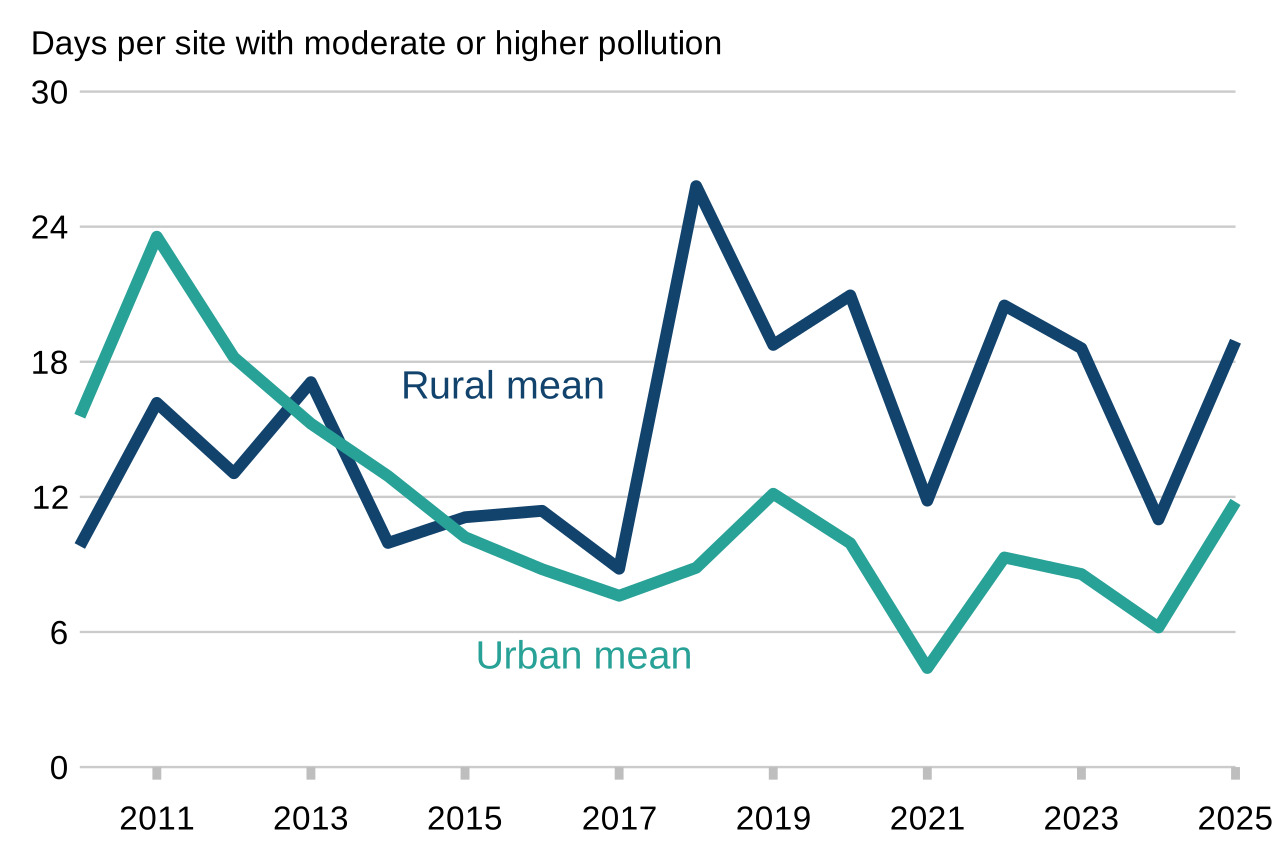
Figure 17: Mean number of days per station when air pollution was ‘Moderate’ or higher in the UK, 2010 to 2025
Notes:
-
For the purposes of this chart, where more than one pollutant exceeds the ‘Moderate’ threshold on any given day, only one day is counted, i.e. there is no double counting.
-
Please refer to the Statistical Tables that accompany this release for more details on the monitoring stations used and method applied to create this figure.
Download the data for this chart in CSV format
Figure 17 shows that there are differences in the average number of days of ‘Moderate’ or higher pollution at urban and rural locations, and these are driven by different pollutants as can be seen in Figures 18 and 19 below. Since 2015, the mean number of days of ‘Moderate’ or higher pollution has been higher at rural stations than urban stations due to ozone pollution.
Between 2011 and 2017, there was a year-on-year decrease in the average number of days of ‘Moderate’ or higher pollution at urban monitoring stations. The mean number of days of ‘Moderate’ or higher pollution increased from 8 days in 2017 to 12 days in 2019. This was followed by a decrease to 4 days in 2021, the lowest in the times series. The mean number of days of ‘Moderate’ or higher pollution increased to 12 days for urban stations in 2025.
Between 2017 and 2018, there was a notable rise in the average number of days of ‘Moderate’ or higher pollution, particularly at rural monitoring stations. The average number of days increased from 9 days in 2017 to 26 days in 2018. This was largely driven by a rise in ozone pollution between 2017 and 2018, which was more pronounced at rural monitoring stations than urban monitoring stations (see Figure 18 and 19). Since reaching the highest value in the time series in 2018, the number of days of ‘Moderate’ or higher air pollution has remained comparatively high but shows no clear trend.
2.2 Urban stations
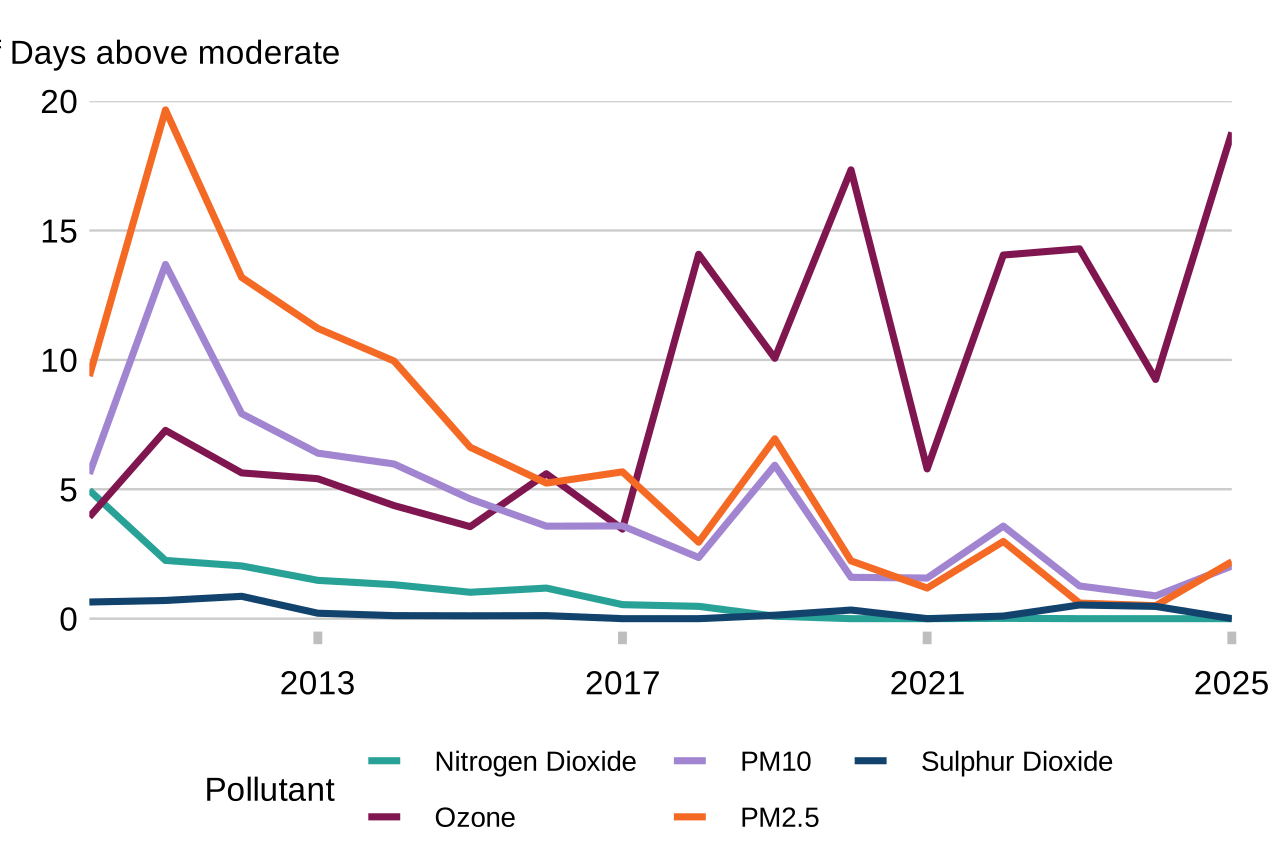
Figure 18: Average number of days when levels of ozone, particulate matter, nitrogen dioxide and sulphur dioxide were ‘Moderate’ or higher at urban stations in the UK, 2010 to 2025
Download the data for this chart in CSV format
In 2025, PM2.5 caused 2 days of ‘Moderate’ or higher pollution and PM10 has caused 2 days. At urban stations, the average number of days above the ‘Moderate’ threshold generally decreased year-on-year for both PM2.5 and PM10 since peaks in 2011. 2024 had the fewest days with ‘Moderate’ or higher PM10 and PM2.5 pollution in the time series.
The decreasing trend for both PM2.5 and PM10 was notably interrupted in 2019. Meteorological analysis indicated that two UK-wide particulate pollution episodes occurred in February and April of 2019. Both of these events were likely caused by a combination of warm, sunny weather resulting in increased local and foreign particulate suspension along with light, easterly winds transporting a substantial amount of particulate matter from Europe. It is probable that these events contributed to the relatively high number of hours of particulate matter pollution observed in 2019 - see Air Pollution in the UK, 2019.
Ozone caused on average 19 days of ‘Moderate’ or higher pollution in 2025. Prior to 2017 there was no trend in days of ‘Moderate’ or higher ozone pollution. However, between 2017 and 2018 there was a large increase in ‘Moderate’ or higher air pollution days attributable to ozone pollution, from 3 to 14 days per station. Since 2018, the average number of days of ozone pollution at urban stations have remained high and in 2020 this metric reached a peak (17 days per station) that was only surpassed in 2025. This recent trend is probably due to the prolonged hot and sunny conditions in spring and summer of most years since 2018. In 2020, reductions in NOx concentrations in urban environments as a result of COVID-19 restrictions were probably also a large contributing factor to increased ozone pollution since less nitrogen oxide (NO) will have been available to react with ozone.
Nitrogen dioxide has caused on average 0 days of ‘Moderate’ or higher pollution in urban areas during 2025 and this is the case since 2018. This represents a decline since 2010 which had 5 days per station of ‘Moderate’ or higher nitrogen dioxide pollution.
Sulphur dioxide caused on average 0 days of ‘Moderate’ or higher pollution in 2025. This reflects the large reductions in emissions since the early 1990s, following stricter limits being placed on the sulphur content of liquid fuels and a transition away from coal use in power stations.
2.3 Rural stations
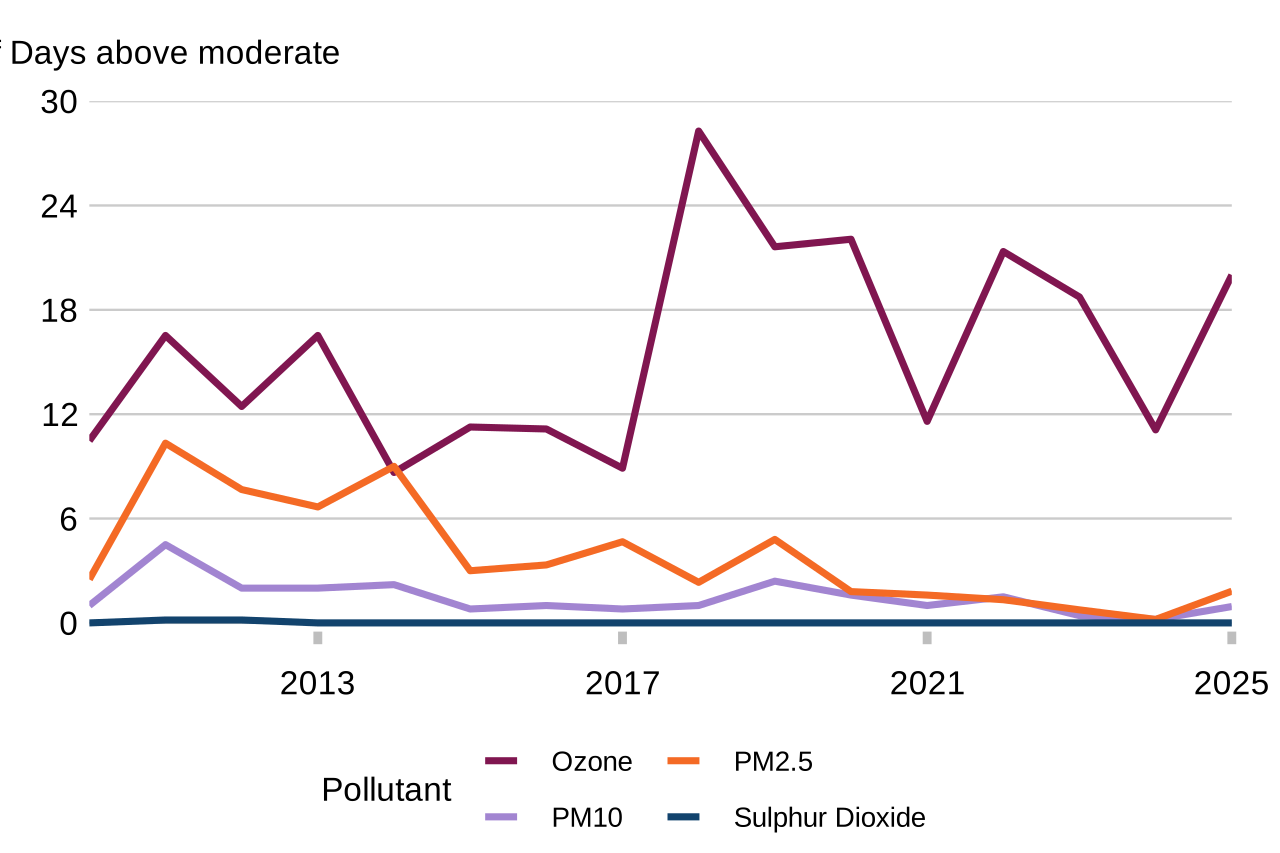
Figure 19: Average number of days when levels of ozone, particulate matter, and sulphur dioxide were ‘Moderate’ or higher at rural stations in the UK, 2010 to 2025
Notes:
- There were no days when levels of nitrogen dioxide were ‘Moderate’ or higher at rural stations in the UK between 2010 and 2025; hence data for this pollutant are not shown.
Download the data for this chart in CSV format
Across the time series, ozone has been the main cause of ‘Moderate’ or higher pollution days at rural stations. The number of days of ozone pollution has remained high since 2018 after a substantial increase from 9 days in 2017 to 28 days in 2018, the highest in the time series. This recent trend could be in part due to the prolonged hot and sunny conditions in spring and summer of most years since 2018.
PM10, PM2.5 and ozone caused all of the ‘Moderate’ or higher pollution days at rural stations in recent years, either separately or in combination with each other. Levels of these pollutants are particularly influenced by weather, which contributes to the variability over time.
Sulphur dioxide and nitrogen dioxide did not directly contribute to the ‘Moderate’ or higher pollution days at rural stations, with no recorded days of ‘Moderate’ or higher pollution attributed to these sources at any of the rural monitoring stations since 2013 and 2010, respectively.
3. Sections in this release
Background to concentrations of air pollutants
Concentrations of nitrogen dioxide
Concentrations of particulate matter (PM10 and PM2.5)
Methodology for calculating progress towards the PM2.5 targets