Particulate matter (PM10/PM2.5)
Updated 30 June 2026

© Crown copyright 2026
This publication is licensed under the terms of the Open Government Licence v3.0 except where otherwise stated. To view this licence, visit nationalarchives.gov.uk/doc/open-government-licence/version/3 or write to the Information Policy Team, The National Archives, Kew, London TW9 4DU, or email: psi@nationalarchives.gov.uk.
Where we have identified any third party copyright information you will need to obtain permission from the copyright holders concerned.
This publication is available at https://www.gov.uk/government/statistics/air-quality-statistics/concentrations-of-particulate-matter-pm10-and-pm25
Accredited Official Statistics
Air quality statistics in the UK, 1987 to 2025 - Particulate matter (PM10/PM2.5)
Updated 30 June 2026
1. Why measure PM?
Particulate matter (PM) is everything in the air that is not a gas and therefore consists of a huge variety of chemical compounds and materials, some of which can be toxic. Due to the small size of many of the particles that form PM, some of these toxins may enter the bloodstream and be transported around the body, lodging in the heart, brain and other organs. Therefore, exposure to PM can result in serious impacts on health, especially in vulnerable groups of people such as the young, elderly, and those with respiratory problems. As a result, particulates are classified according to size. The UK is currently focused on measuring the fractions of PM where particles are less than 10 micrometres in diameter (PM10) and less than 2.5 micrometres in diameter (PM2.5) based on the latest evidence on the effects of PM to health.
Both PM and the precursor pollutants that can form it can travel large distances in the atmosphere. A proportion of the concentrations of PM that people in the UK are exposed to come from naturally occurring sources such as pollen and sea spray (approximately 19 per cent) and water and secondary organic aerosol from vegetation (20 per cent). Another 21 per cent is transported to the UK from other European countries and international shipping. However, around 41 per cent of UK concentrations of PM comes from anthropogenic sources in the UK such as domestic wood burning and tyre and brake wear from vehicles.
The Air Quality Standards Regulations (2010) require that concentrations of PM in the UK must not exceed:
· An annual average of 40 µg/m3 for PM10;
· A 24-hour average of 50 µg/m3 more than 35 times in a single year for PM10;
· An annual average of 20 µg/m3 for PM2.5.
The Environmental Targets (Fine Particulate Matter) (England) Regulations 2023 require that in England by the end of 2040:
· Annual average concentrations are 10 µg/m3 for PM2.5 or lower.
· Population exposure to PM2.5 is at least 35 per cent less than in 2018.
Legal compliance is assessed using measurements at AURN monitoring stations. To meet the concentration target each monitoring station needs to be at or below the target concentration, see the PM2.5 targets chapter.
Population exposure refers to the average concentration someone in England is exposed to and compliance is based on the average of urban or in some case suburban background measurements which are representative of the type of environment most people live and work.
The Environmental Improvement Plan 2025 for England set interim targets that by December 2030:
· There is a maximum annual average concentration of 10 µg/m3 for PM2.5.
· Population exposure to PM2.5 is at least 30 per cent less than in 2018.
2. Trends in concentrations of PM10 in the UK, 1992 to 2025
2.1 Annual mean concentrations of PM10 in the UK, 1992 to 2025
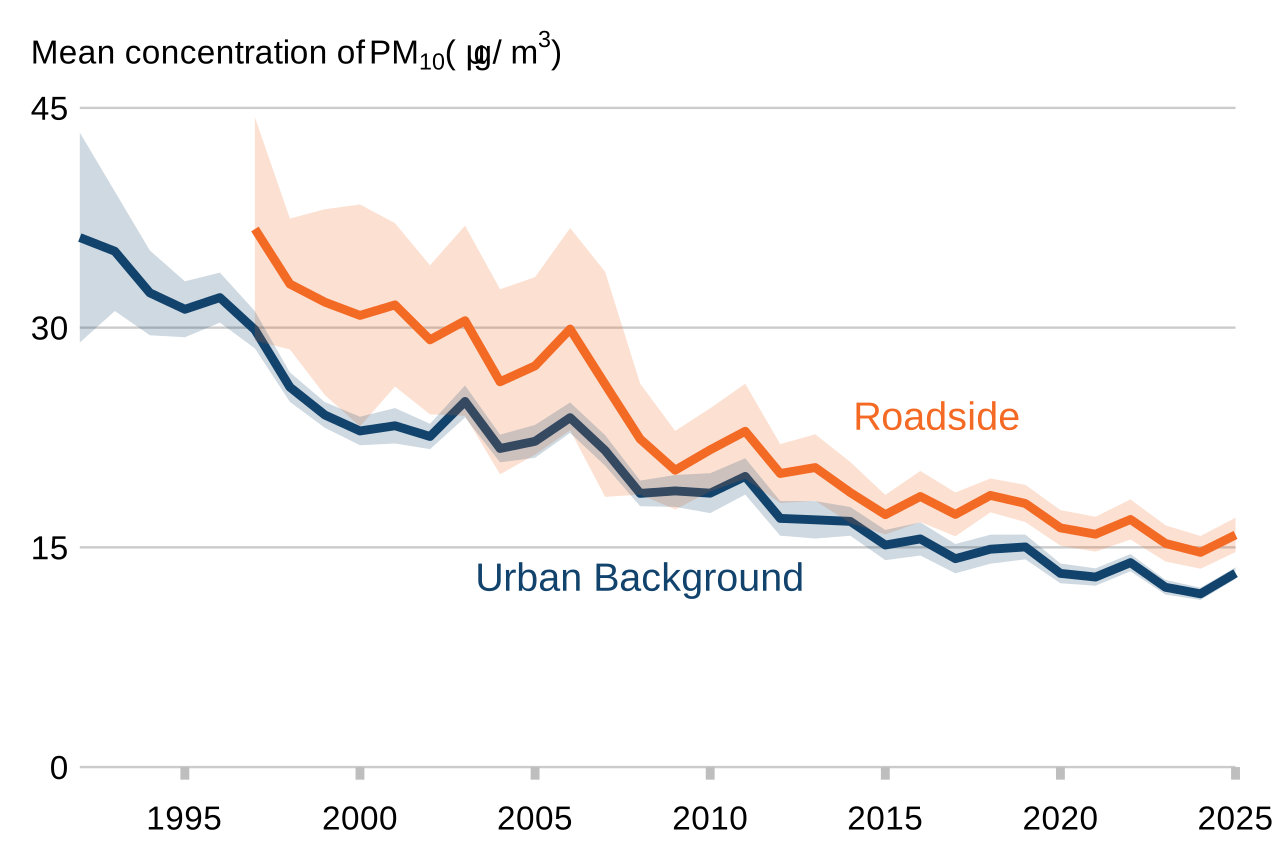
The PM10 index shows the annual mean, averaged over all included stations that had annual data capture greater than or equal to 75 per cent. The shaded areas represent the 95 per cent confidence interval for the annual mean concentration for roadside stations and urban background stations. These intervals narrow over time because of an increase in the number of monitoring stations for both roadside and urban background stations; and a reduction in the variation between annual means for PM10 measured at roadside stations. Annual means for individual stations can be found in the PM10 statistical tables that accompany this report.
Figure 5: Annual mean concentrations of PM10 in the UK, 1992 to 2025
Download the data for this chart in CSV format
Urban background PM10 pollution has reduced in the long-term. There has been an overall decrease in annual mean concentrations of PM10 at urban background stations from 36.1 µg/m3 in 1992 to 13.2 µg/m3 in 2025. The figure for 2025 is slightly higher than the historic low of 11.8 µg/m3 recorded in 2024, most likely due to the weather conditions in spring 2025. These weather conditions saw extensive high pressure over the UK in March 2025, which led to settled conditions for most of the month. These conditions would have resulted in less dispersion of PM2.5. In addition to this, March 2025 saw an unusual easterly wind direction which would likely have brought pollutants from mainland Europe – see Met Office report.
Between 1992 and 2000 inclusive, the annual mean PM10 concentration at urban background stations decreased by an average of 1.7 µg/m3 each year. This reduction could be a consequence of the large reduction in emissions of PM10 over the same period in the UK.
Between 2000 and 2006, the annual mean concentration fluctuated with no clear trend. Emissions of PM10 in the UK and Europe were still decreasing over this period, but the reductions were largely driven by changes to the fuels used for energy generation which may have a minimal impact on urban air quality.
Between 2006 and 2015 inclusive, the annual mean PM10 concentration at urban background stations decreased by an average of 1 µg/m3 each year. Concentrations were stable from 2015 to 2019. From 2019 to 2020, there was a notable decrease of 12 per cent to 13.2 µg/m3. Since then, concentrations have remained similar to 2020 levels with no clear trend.
Roadside PM10 pollution has reduced in the long-term. Annual average concentrations of PM10 at the roadside steadily declined from 36.7 µg/m3 in 1997 to 15.8 µg/m3 in 2025.
Between 1997 and 2015 inclusive, the annual mean PM10 concentration at roadside stations decreased by an average of 1.1 µg/m3 each year. This reduction was observed at most long-running monitoring stations across the UK. This reduction could be a consequence of the large reduction in emissions of PM10 over the same period in the UK, particularly from road transport sources.
Concentrations of PM10 at the roadside remained relatively stable between 2015 and 2019 before falling slightly in 2020 to 16.3 µg/m3. Since then, concentrations have remained below pre-2020 levels, despite rising slightly in 2022. Concentrations in 2024 were 14.7 µg/m3, which was the lowest levels on record. In 2025, roadside concentrations were slightly higher, as for urban background concentrations above.
The annual mean PM10 concentration in 2025 is greater at roadside stations compared to urban background stations. This is most likely due to the contribution of PM10 emissions from road transport sources, predominantly from non-exhaust sources (brakes, tyres and road wear), as well as the impact of resuspension of PM in the air due to vehicle movements.
3. Trends in concentrations of PM2.5 in the UK, 2009 to 2025
3.1 Annual mean concentrations of PM2.5 in the UK, 2009 to 2025
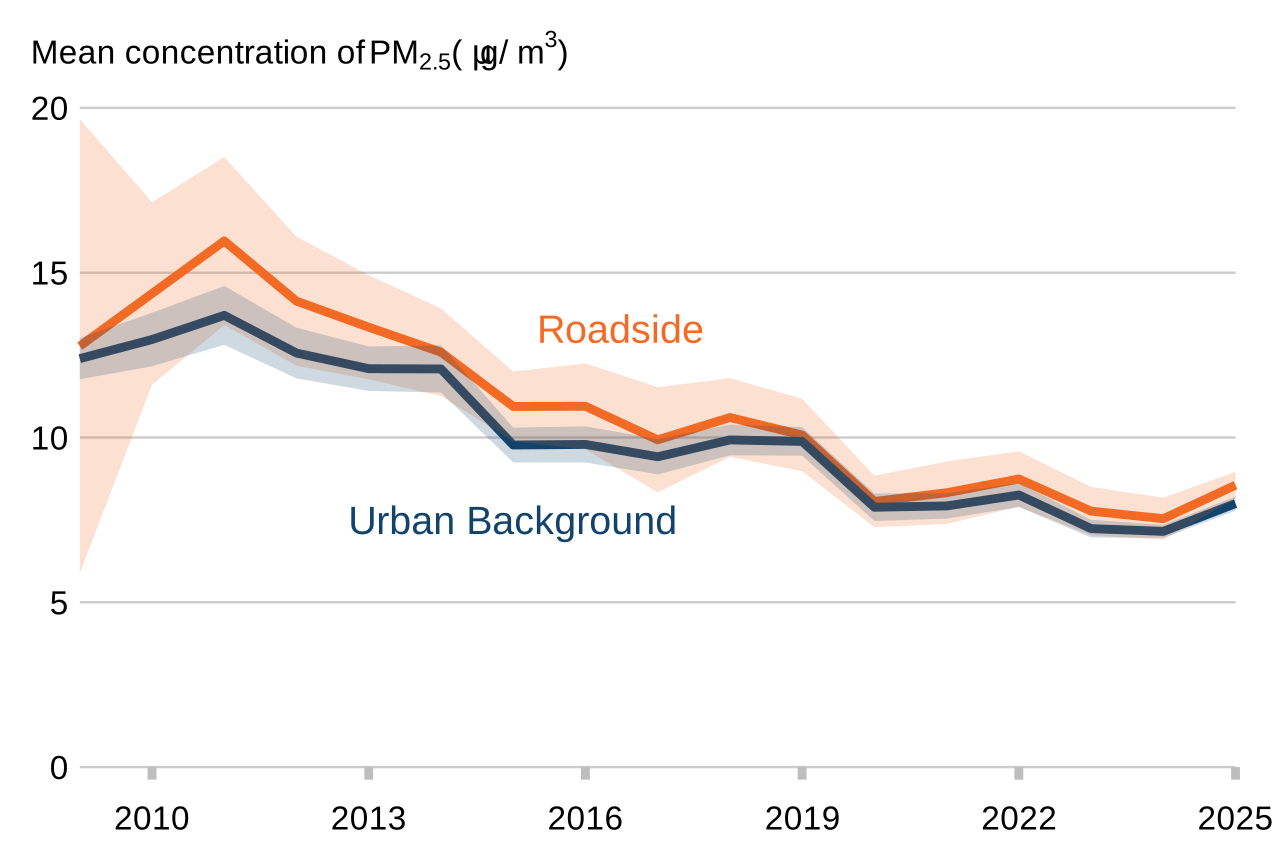
The PM2.5 index shows the annual mean, averaged over all included stations that had annual data capture greater than or equal to 75 per cent. The shaded areas represent the 95 per cent confidence interval for the annual mean concentration for roadside stations and urban background stations. The interval for roadside stations narrows over time because of an increase in the number of monitoring stations and a reduction in the variation between annual means for PM2.5 measured at roadside stations. Annual means for individual stations can be found in the PM2.5 statistical tables that accompany this report.
Figure 6: Annual mean concentrations of PM2.5 in the UK, 2009 to 2025
Download the data for this chart in CSV format
Urban background PM2.5 pollution has generally decreased despite a period of little change between 2015 and 2019
UK annual average concentrations of PM2.5 at urban background monitoring stations decreased from 12.4 µg/m3 in 2009 to 8.0 µg/m3 in 2025.
The trends in concentrations of PM2.5 at urban background stations approximately follow the trends seen for PM10 at urban background stations (PM2.5 is a subset of PM10).
Concentrations increased between 2009 and 2011, when a downward trend began towards 2015, followed by a period of relative stability through to 2019. Annual average concentrations fell in 2020 and have remained below 2019 levels ever since.
In 2025, mean concentrations showed an increase of 12 per cent from the low 2024 levels, most likely due to the weather conditions in spring 2025. These weather conditions saw extensive high pressure over the UK in March 2025, which led to settled conditions for most of the month. These conditions would have resulted in less dispersion of PM2.5. In addition to this, March 2025 saw an unusual easterly wind direction which would likely have brought pollutants from mainland Europe – see Met Office report.
Roadside PM2.5 pollution has generally decreased despite a period of little change between 2015 and 2019.
UK annual mean concentrations of PM2.5 at roadside monitoring stations have decreased from 12.8 µg/m3 in 2009 to a low of 7.5 µg/m3 in 2024 before rising slightly to 8.6 µg/m3 in 2025, similar to the increase for urban background concentrations above. The trends in concentrations of PM2.5 at roadside stations approximately follow the trends seen for PM10 at roadside stations (PM2.5 is a subset of PM10).
Concentrations of PM2.5 are typically higher at roadside locations compared to urban background locations, in part due to the contribution of emissions from road vehicles.
Concentrations of PM2.5 tend to be greatest in urban environments in the southern and eastern areas of the UK due to a variety of factors, including higher population density, weather conditions and greater exposure to pollution sources from mainland Europe. In 2025, the 5 monitoring stations in roadside or urban background environments with the greatest annual mean concentration of PM2.5 were located in the South or East (including London).
4. Average hours spent in ‘Moderate’ or higher PM pollution
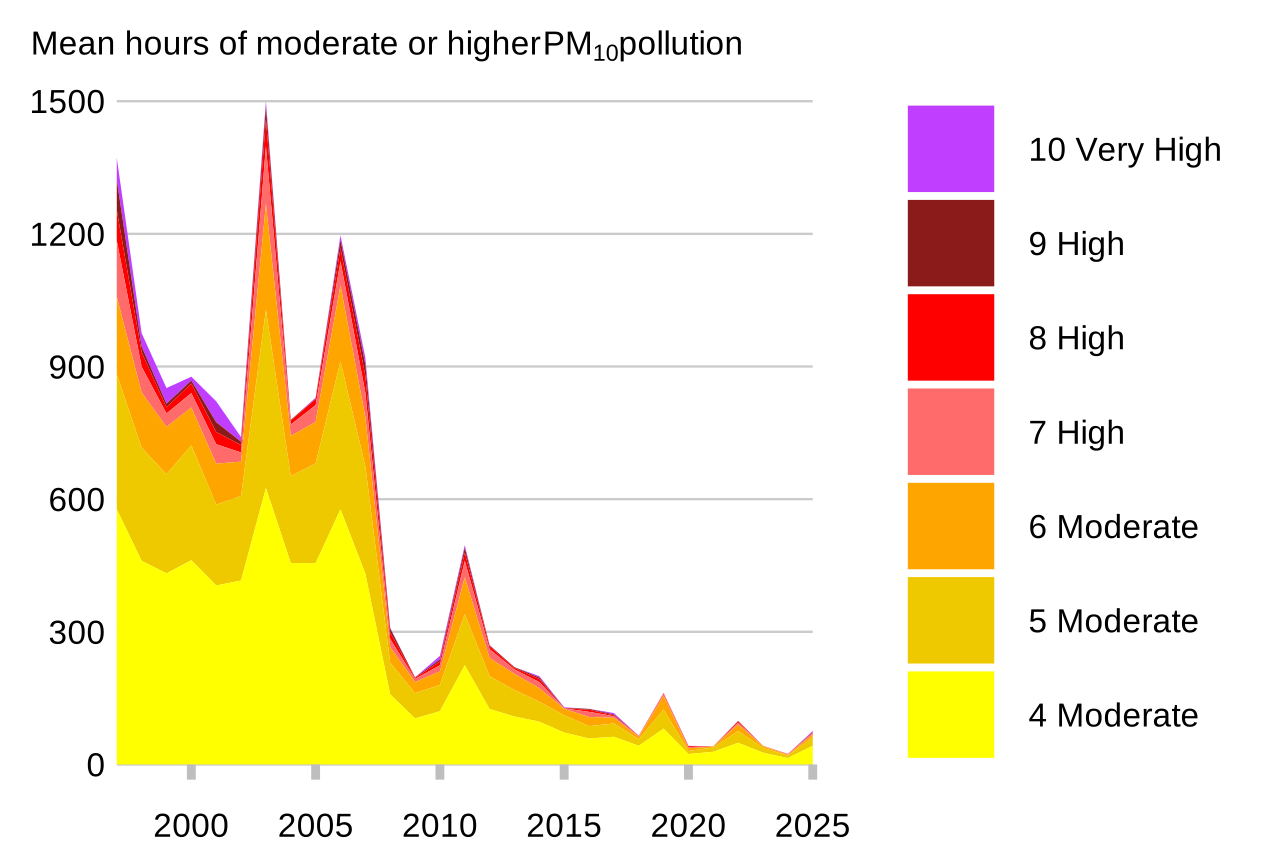
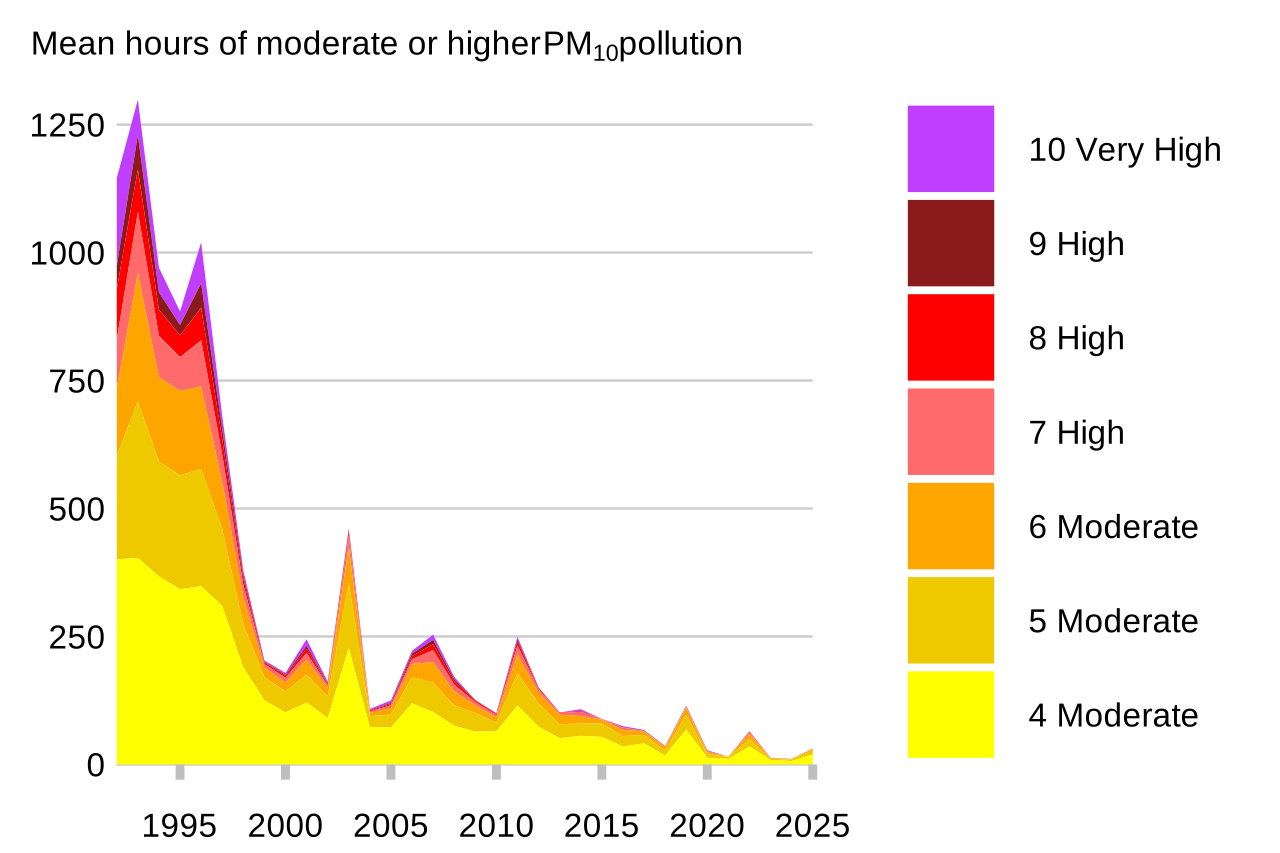
This metric measures the annual trend in the number of hours per monitoring station that concentrations are recorded at levels that may have impacts on human health. For example, ‘Moderate’ air pollution (which requires action by citizens who are vulnerable to the health impacts of air pollution) for PM10 is triggered when the latest 24-hour running mean concentration is greater than 50 µg/m3. The coloured categories relate to the categories of the Daily Air Quality Index (see Table 20 in the statistical tables that accompany this release).
Figure 7: Annual mean hours when PM10 pollution was ‘Moderate’ or higher, for roadside stations, 1997 to 2025
Download the data for this chart in CSV format
Figure 8: Annual mean hours when PM10 pollution was ‘Moderate’ or higher, for urban background stations, 1992 to 2025
Download the data for this chart in CSV format
Roadside and urban background monitoring stations have recorded fewer hours of ‘Moderate’ or higher PM10 air pollution over the long term.
At roadside monitoring stations, the mean number of hours with ‘Moderate’ or higher pollution decreased by 94 per cent between 1997 and 2025, to 76 hours in 2025. This is an average decrease of 46 hours per year over this period.
At urban background monitoring stations, the mean number of hours with ‘Moderate’ or higher pollution decreased by 97 per cent between 1992 and 2025. This is an average annual decrease of 34 hours per year over this period.
The downward trend in the time series has been interrupted in several years, most notably in 2003. In March and April 2003, meteorological analysis showed that concentrations at many monitoring stations were elevated due to airflows from Europe transporting primary emissions from Northern or Central Europe to the UK along with secondary particles caused by chemical reactions in the atmosphere. When cleaner Atlantic airflows became dominant in April 2003, pollution levels dropped considerably - see Air Pollution in the UK, 2003.
The downward trend was also interrupted in 2019 and in 2022, but to a lesser degree. Meteorological analysis indicated that two UK-wide particulate pollution episodes occurred in February and April of 2019. Both of these events primarily resulted from a combination of warm, sunny weather causing increased local and foreign particulate suspension along with light, easterly winds transporting a substantial amount of particulate matter from Europe. It is probable that these events contributed to the relatively high number of hours of PM10 pollution observed in 2019 - see Air Pollution in the UK, 2019. During 2022 there was a widespread particulate pollution episode recorded. The episode occurred in spring and coincided with low wind speeds and air masses transported over Europe – see Air Pollution in the UK, 2022.
In 2025, there was an increase in the mean number of hours with ‘Moderate’ or higher PM10 air pollution compared to 2024. This may be in part due to the adverse effects of the weather conditions experienced in the spring of 2025. These weather conditions saw extensive high pressure over the UK in March 2025, which led to settled conditions for most of the month. These conditions would have resulted in less dispersion of PM2.5. In addition to this, March 2025 saw an unusual easterly wind direction which would likely have brought pollutants from mainland Europe – see Met Office report.
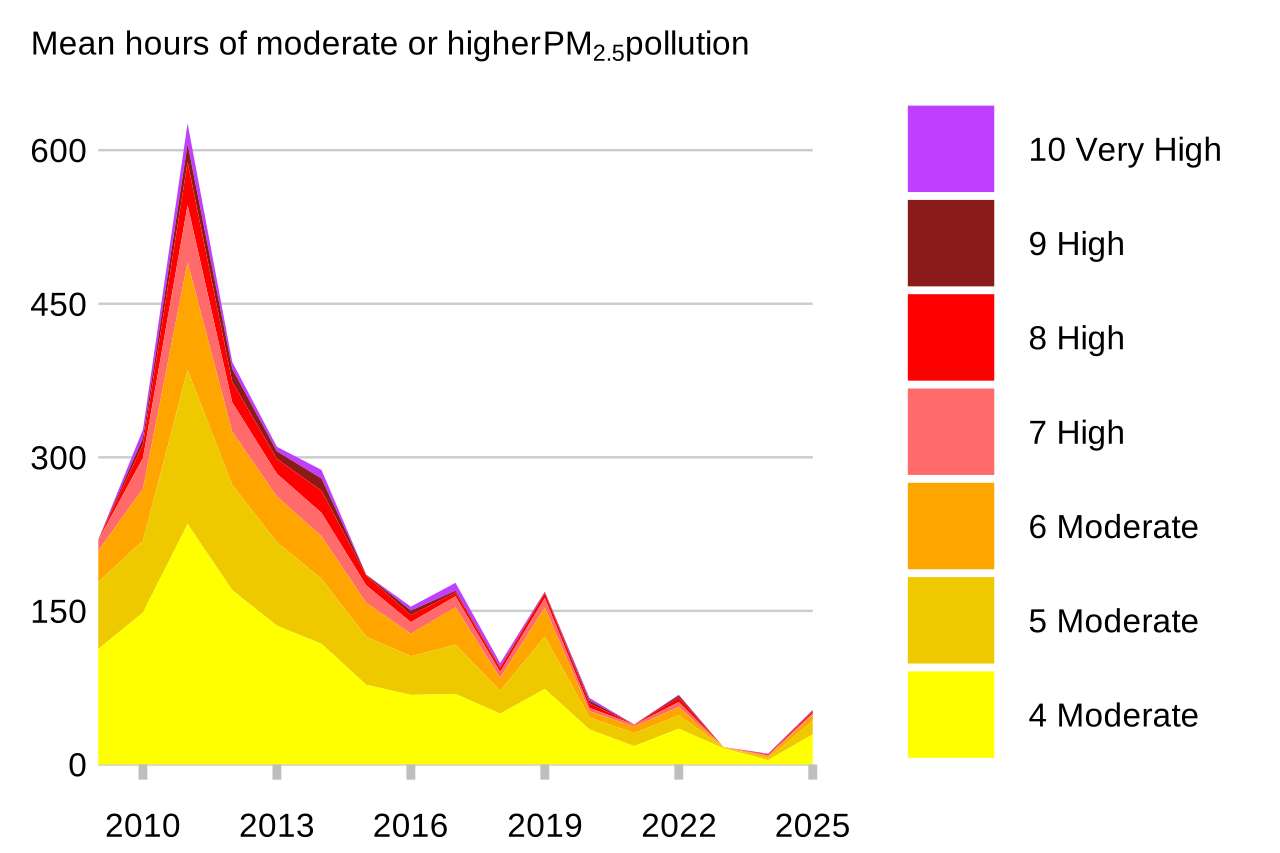
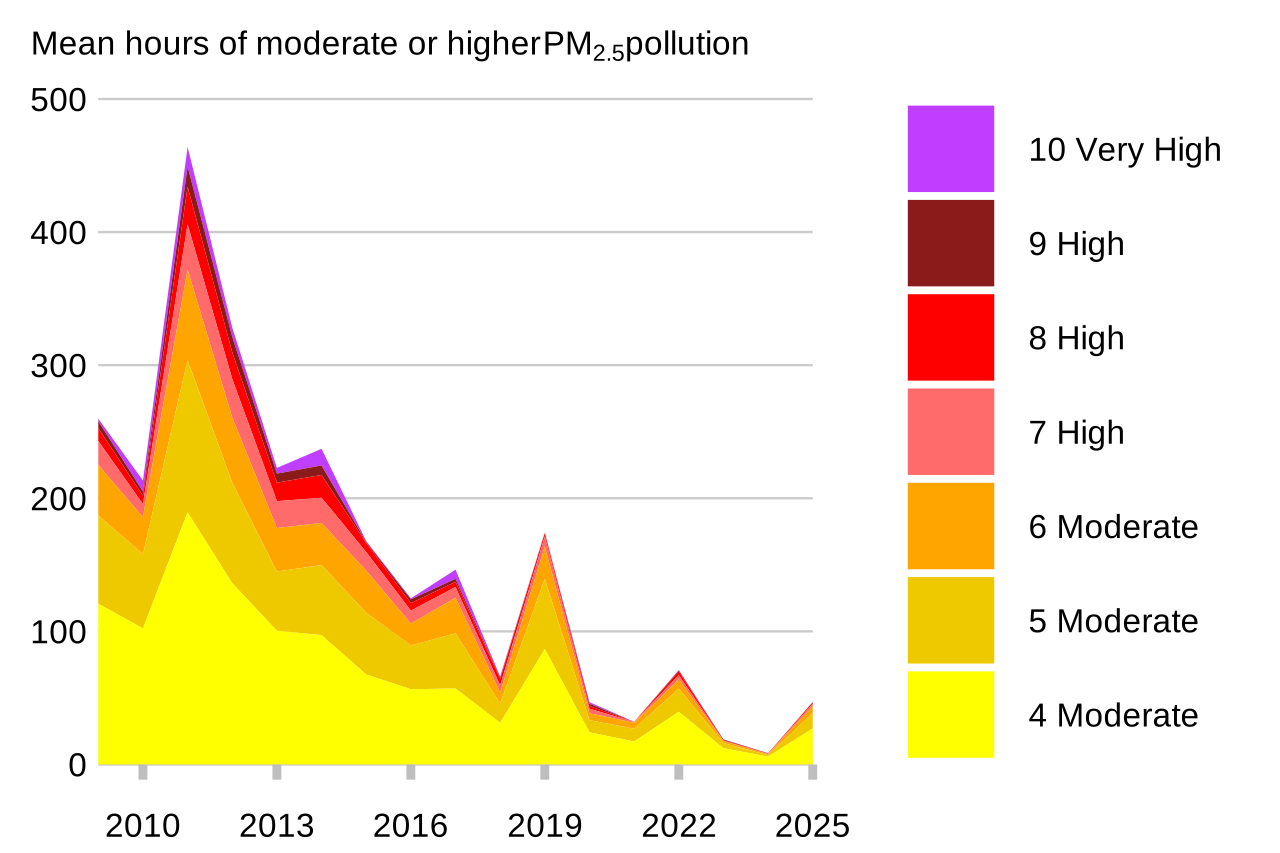
For PM2.5, ‘Moderate’ air pollution is triggered when the latest 24-hour running mean concentration is greater than 35 µg/m3. The coloured categories relate to the categories of the Daily Air Quality Index (see Table 20 in the statistical tables that accompany this release).
Figure 9: Annual mean hours when PM2.5 pollution was ‘Moderate’ or higher for roadside stations, 2009 to 2025
Download the data for this chart in CSV format
Figure 10: Annual mean hours when PM2.5 pollution was ‘Moderate’ or higher for urban background stations, 2009 to 2025
Download the data for this chart in CSV format
UK roadside and urban background monitoring stations have recorded a decreasing trend in the number of hours with ‘Moderate’ or higher PM2.5 air pollution since 2011.
At roadside monitoring stations, the mean number of hours where PM2.5 concentrations exceeded the ‘Moderate’ threshold decreased by 91 per cent from the peak in 2011 to 53 hours per station in 2025.
At urban background stations, the mean number of hours where PM2.5 concentrations exceeded the ‘Moderate’ threshold decreased by 90 per cent from the peak in 2011, to 47 hours per station in 2025.
Particulate pollution was particularly high in March and April 2011 due to a combination of secondary pollution being formed over mainland Europe and wind conditions carrying this pollution to the UK. A period of low wind conditions followed which allowed emissions from UK sources to build up in the atmosphere, leading to unusually high concentrations of particulate matter, see Air Pollution in the UK, 2011. Similar events occurred in February and April of 2019, resulting in a relatively high number of hours of PM2.5 pollution in that year - see Air Pollution in the UK, 2019. During 2022, there was a significant widespread particulate pollution episode recorded. The episode occurred in spring and coincided with low wind speeds and air masses transported over Europe – see Air Pollution in the UK, 2022.
In 2025, there was an increase in the mean number of hours with ‘Moderate’ or higher PM2.5 air pollution compared to 2024, from 8 hours at urban background stations in 2024 to 47 hours in 2025. This may be in part due to the adverse effects of the weather conditions experienced in the spring of 2025.
5. Temporal variations in concentrations of PM2.5 in the UK, 2025
5.1 Monthly variations
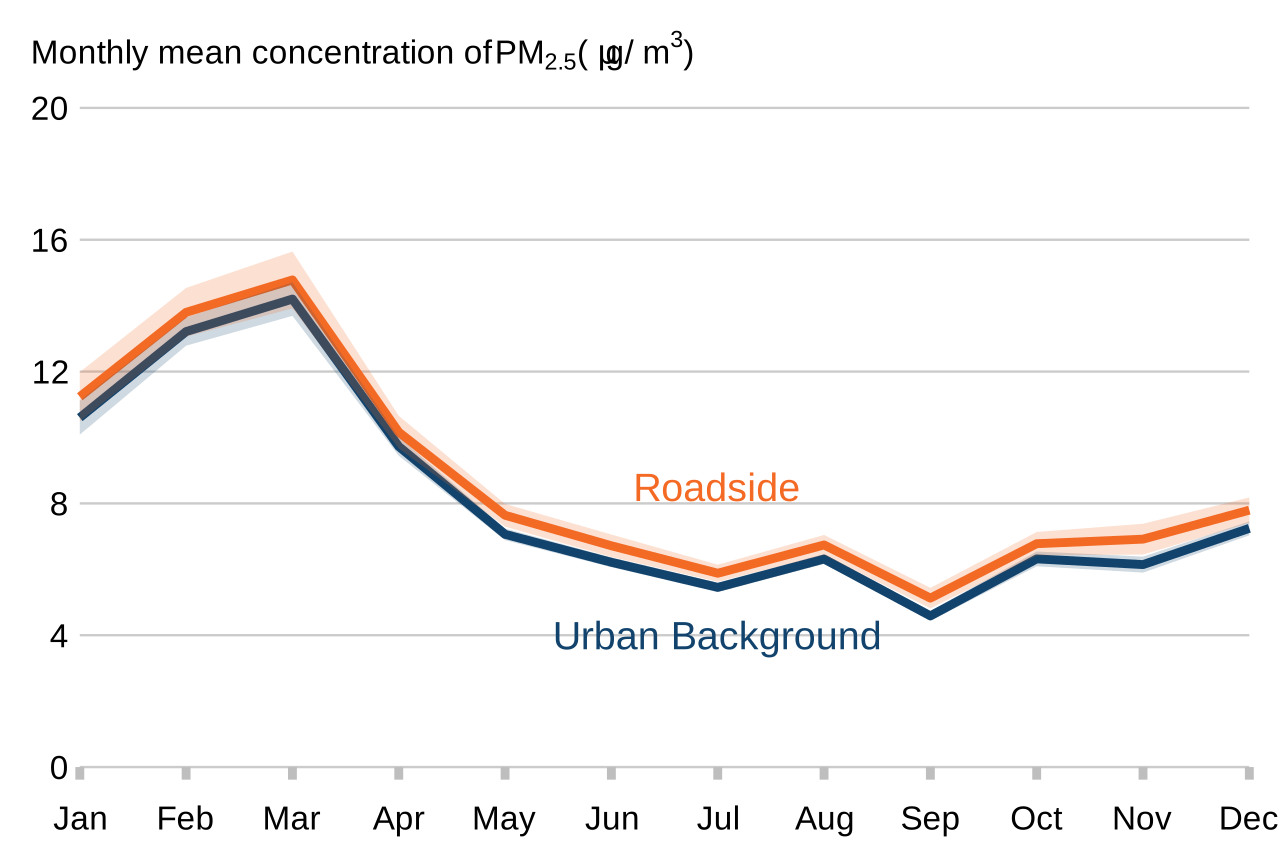
The PM2.5 index shows the monthly mean, averaged over all included stations that had monthly data capture greater than or equal to 75 per cent in a given year. The shaded areas represent the 95 per cent confidence interval for the monthly mean concentration for roadside stations and urban background stations.
Figure 11: Monthly mean PM2.5 concentration at roadside and urban background stations, 2025
Download the data for this chart in CSV format
For PM2.5, the highest concentrations in urban background and traffic locations tended to occur during the first few months in 2025. The greatest mean concentration in 2025 was in March (14.8 µg/m3 for roadside stations and 14.2 µg/m3 for urban background stations).
In March 2025, the weather conditions saw extensive high pressure over the UK, which led to settled conditions for most of the month. These conditions would have resulted in less dispersion of PM2.5. In addition to this, March 2025 saw an unusual easterly wind direction which would likely have brought pollutants from mainland Europe - see Met Office report.
A peak in early spring is typical for PM2.5 concentrations, as elevated concentrations of nitrates are transported from agricultural operations across continental Europe - see the AQEG report.
The next highest concentrations for both station types were in January and February. Residential combustion of wood and coal in stoves and open fires is a large contributor to emissions of particulate matter both in the UK and across Europe, and is a contributing factor towards elevated concentrations in winter months.
The lowest monthly mean concentrations of PM2.5 in 2025 were recorded in September (4.6 µg/m3 at urban background stations and 5.1 µg/m3 at roadside locations). September 2025 was a particularly wet month for much of the UK - see Met Office Report ; PM2.5 concentrations tend to be lower during periods of heavy rainfall, as the rain washes pollutants out of the air.
It should be noted that there are a large number of emission sources for particulate matter, and there may be other sources which contribute to this pattern. There can also be considerable contribution from sources originating outside of the UK. The level of transboundary derived particulates is determined by weather conditions and prevailing winds which in March 2025 were an atypical Easterly breeze, coming from mainland Europe.
5.2 Hourly variations
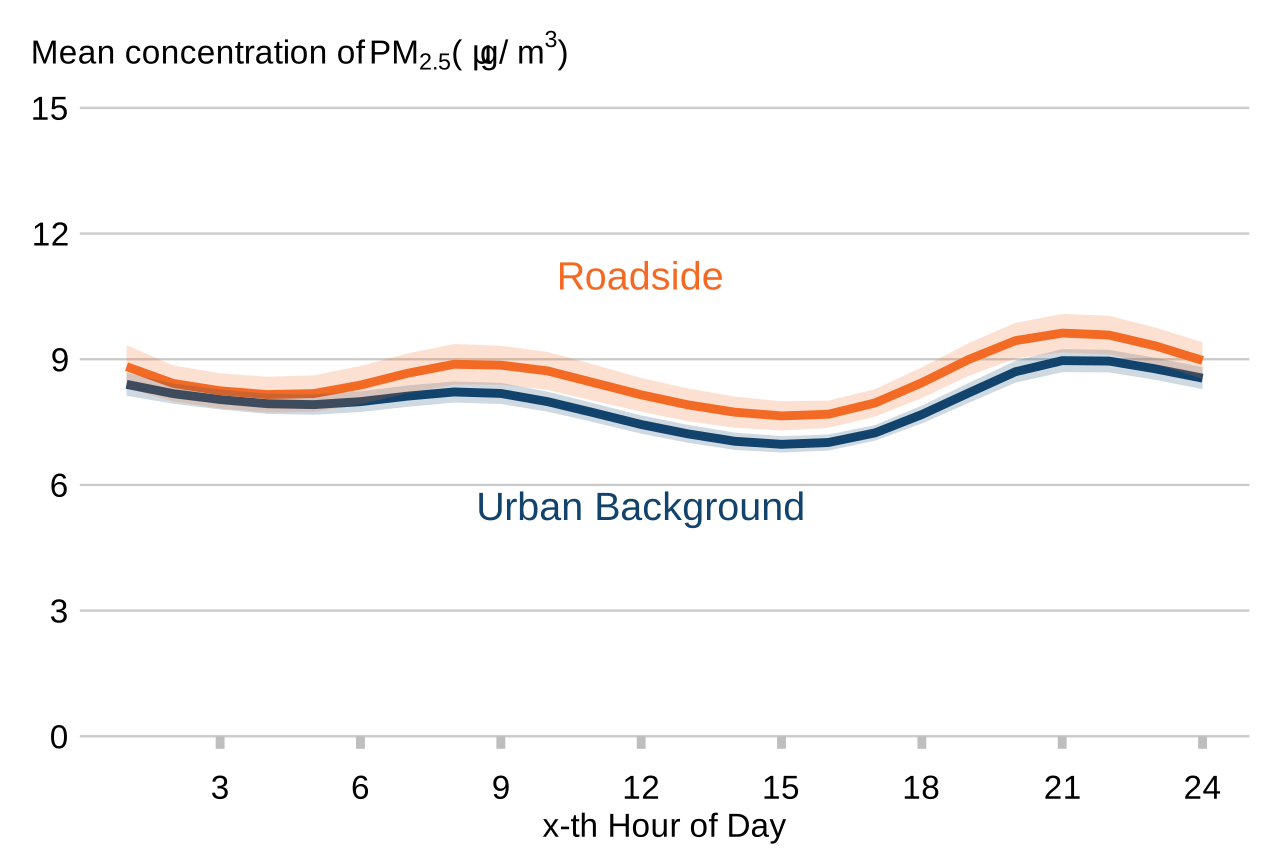
The PM2.5 index shows the hourly mean, averaged over all included stations that had data capture greater than or equal to 75 per cent for all instances of that hour in a given year. The shaded areas represent the 95 per cent confidence interval for the hourly mean concentration for roadside stations and urban background stations.
Figure 12: Hourly mean PM2.5 concentration at roadside and urban background stations, 2025
Download the data for this chart in CSV format
PM2.5 concentrations were greater in the evening compared to other times of the day; in 2025 the greatest mean concentrations were at 9pm for both roadside and urban background stations (9.6µg/m3 and 9 µg/m3 respectively). This is thought to be the result of households burning wood, coal or other solid fuels in stoves or open fires for heating in the evenings, particularly in winter months.
6. Sections in this release
Background to concentrations of air pollutants
Concentrations of nitrogen dioxide
Methodology for calculating progress towards the PM2.5 targets
Days with ‘Moderate’ or higher air pollution (includes sulphur dioxide)