Environmental Improvement Plan (EIP) 2025
Published 1 December 2025
Applies to England

© Crown copyright 2025
This publication is licensed under the terms of the Open Government Licence v3.0 except where otherwise stated. To view this licence, visit nationalarchives.gov.uk/doc/open-government-licence/version/3 or write to the Information Policy Team, The National Archives, Kew, London TW9 4DU, or email: psi@nationalarchives.gov.uk.
Where we have identified any third party copyright information you will need to obtain permission from the copyright holders concerned.
This publication is available at https://www.gov.uk/government/publications/environmental-improvement-plan-2025/environmental-improvement-plan-eip-2025
© Pete Holyoak via Getty Images
Foreword
From the green spaces that improve our health to the quality of air we breathe, to the water we drink, to the soil that grows our food – our environment shapes who we are as a nation. It underpins our economy, our wellbeing, our very sense of place. When the environment thrives, we thrive too.
For too long we have accepted a status quo that has failed our environment and our future. Our rivers and lakes suffer unacceptable levels of pollution. Climate change is devastating communities through flooding and drought. Our land and seas are under growing pressure to provide food, homes, clean energy and space for nature – all within finite limits.
This threatens more than our environment—it risks our nation’s economic resilience and security. In an era of supply chain disruption and conflict, protecting and restoring nature strengthens our resilience.
That is why this government is publishing a revised Environmental Improvement Plan – our roadmap for restoring England’s environment over the coming years. The plan sets out measurable commitments across every priority – from cleaner air and water to thriving wildlife and resilient landscapes.
But we have taken the challenge head on. Since we entered government, we have been delivering for the long term, taking actions to improve the environment across the country.
We are transforming the water sector. Our Water (Special Measures) Act is bringing in new, swifter penalties to clamp down on polluters and over the next 5 years through £104 billion in private investment will be spent to upgrade our water infrastructure and cut pollution.
We are investing a record £10.5 billion in flood defences, including nature-based solutions like woodland planting and wetland restoration that can restore habitats, improve water quality, and store carbon.
We have secured the most nature-friendly farming budget this country has ever seen, supporting farmers to produce food sustainably whilst protecting soil, water and wildlife. Last year brought the highest tree planting rate in 20 years, over 10 million trees, and we’ve started planting the first of 3 new National Forests.
We are taking action on air quality to protect public health and the environment, tackling pollution at source to restore nature whilst supporting communities to breathe cleaner air. By driving the circular economy forward, we are further reducing environmental harm, turning waste into opportunity and creating green jobs across the country.
These actions demonstrate our commitment to delivery. The previous administration’s Environmental Improvement Plan set out welcome goals but lacked the rigour and detail to turn intent into impact.
Our revised plan changes that. It sets clear goals and targets—from cutting population exposure to the most harmful air pollutant to human health by 30% by 2030 compared to 2018 levels, to creating or restoring 250,000 hectares of wildlife-rich habitat by 2030 – and provides the clarity and detail on the actions needed to deliver them.
As well as providing the detail, the plan gives us the overview we need to manage competing pressures on our limited land and water, integrating environmental action with our Plan for Change to grow the economy and make real improvements to the lives of working people.
Achieving our environmental ambitions requires collective action from individuals, communities, and organisations across all sectors. We will work in partnership to achieve them.
Together, we will create a future where nature flourishes, communities thrive, and our children inherit not the environmental challenges we faced, but the solutions we delivered.
The Rt Hon Emma Reynolds MP
Secretary of State for Environment, Food and Rural Affairs
The value of nature
We all need nature. It provides the air we breathe, the water we drink and the food we eat.
Nature is the foundation of our wellbeing, our economy and our communities. It builds resilience and minimises the impact of the changing climate on our homes, businesses, and infrastructure.
It is essential to growing the economy. In 2022, England’s nature services provided benefits exceeding £37.1 billion, more than any single manufacturing sector (Nature at work for people and the economy, Defra, 2024).
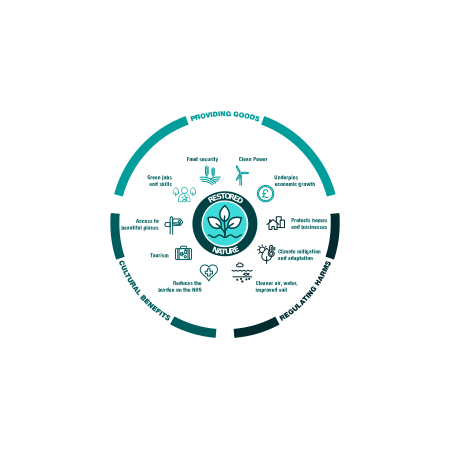
Figure 1: Illustrative summary of nature and growth
Meanwhile, risks including declining soil health, water scarcity and biodiversity loss could shrink our gross domestic product (GDP) by 3% over the next decade if we do not act (Nature Related Risks, Green Finance Institute (GFI) UK 2024).
We know England has become substantially nature depleted (State of Nature Partnership 2023). Iconic British species such as the turtle dove and hazel dormouse are at risk of national extinction. Our rivers, lakes and seas are polluted. Many of our treasured landscapes are in a poor condition, despite the best efforts of many.
It is imperative we come together, as a nation, to protect and restore nature. We must manage competing pressures on our limited land and water, and show nature is a vital component – not a blocker – to achieving our Plan for Change.
The Environmental Improvement Plan (EIP) sets out how the government will work alongside individuals, communities and businesses to achieve our nature ambitions.
Framework for protecting and improving the environment
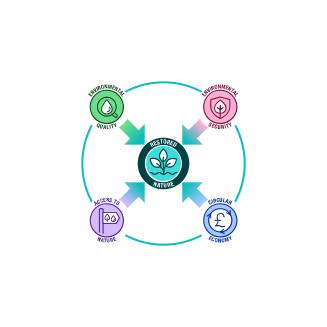
Figure 2: The 5 EIP chapters
The EIP is a strategic framework for improving England’s natural environment up to 2043. We revised the previous EIP and set new interim targets for the statutory Environment Act 2021 targets.
The EIP contains 10 goals and provides a clear plan for how we will deliver them. This includes the commitments we are making, and actions we will take across government.
There are 5 chapters which cover our goals.
Our over-arching goal (goal 1) is ‘Restored nature’. Nature provides the essential services that support healthy and prosperous lives.
We want everyone to experience thriving animals and plants in their naturally functioning habitats. We will progress our commitment to protect 30% of UK land and seas for nature by 2030 and improve our natural assets to protect the benefits they give us.
We will improve environmental quality through goals on air, water, chemicals and pesticides (goals 2, 3 and 4). We are cleaning up our rivers, lakes and seas, our countryside, and our streets to protect and reduce pressure on nature.
We will drive forward a circular economy through goals on waste and resources (goals 5 and 6). Our current approach of make, use and throw away is unsustainable and pollutes and degrades the environment. By transitioning to a circular economy, we will bolster supply chain resilience and make our economy more productive. It will open new investment and create skilled green jobs, including in product manufacturing and processing infrastructure.
We will achieve ‘environmental security’ through goals on climate, hazards and biosecurity (goals 7, 8 and 9). We are protecting and restoring nature in a rapidly changing world and must plan for, and manage, the impact of the changing climate on our natural environment.
Internationally, we are leading by example to reduce emissions, adapt to climate change and reduce risks of hazards like flooding, drought and wildfires. We are also investing in our biosecurity to protect the natural environment and ourselves.
Finally, we are putting people at the heart of our plan by increasing ‘access to nature’ (goal 10). We know spending time outdoors and connecting with the natural world is good for our physical, mental and emotional health. This government is creating 9 new river walks and 3 new national forests to create new opportunities for everyone to enjoy nature.
Environment Act 2021 targets
The Environment Act 2021 statutory targets are central to our long-term ambition to improve the natural environment.
In the EIP, we set interim targets that will keep us on track to meet our statutory long-term targets. We have revised existing interim Environment Act targets and introduced 2 new interim targets.
These are captured alongside other commitments within 5 of the EIP goals, and Annex 2 lists all of these targets. The EIP outlines how we plan to achieve the targets, and our Environment Act target delivery plans give further detail. We will continue to adapt our plans to reflect emerging evidence.
The remaining EIP goals do not have corresponding Environment Act 2021 targets. However, these goals make a critical contribution to our overarching goal to restore nature.
How the EIP delivers government missions
Nature will support the government’s mission-driven approach.
Kickstarting economic growth
Nature is one of our greatest sources of national wealth. English nature assets are valued at £1.3 trillion (Office for National Statistics (ONS), 2024). In 2022, England’s woodlands removed 8.3 million tonnes of CO2, valued at £2.3 billion, while nature in urban areas provided health benefits worth £823 million through air pollution removal (Defra, 2024).
To achieve our number one priority to kickstart the economy, we must consider natural capital alongside physical and human capital.
Each of our 10 EIP goals contributes to enabling, driving and protecting economic growth.
Nature enables economic growth: nature supports stronger local economies, improves public health, builds climate resilience and enhances people’s lives (European Commission 2025). We must work with nature to build 1.5 million homes, deliver clean power, secure our food supply, and meet our environmental goals.
Nature drives economic growth: we are leveraging public and private investment in green industries to raise living standards, create good jobs, and boost productivity. £104 billion is being invested by the water sector into critical infrastructure, and industry estimates that £10 billion is expected from new recycling systems under circular economy reforms (Environmental Services Association 2023).
Nature protects economic growth: nature-related risks could reduce UK GDP by up to 3% over the next decade (Green Finance Institute 2024). The World Economic Forum ranks biodiversity loss and ecosystem collapse as the third most severe global risk (World Economic Forum 2022).
Investing in flood defences, wildfire prevention, climate adaptation, biosecurity and addressing other risks will protect our economic security by safeguarding communities, businesses, supply chains and trade.
Building an NHS fit for the future
Our health mission is about prevention, not just treatment. Access to clean air (goal 2), water (goal 3), and green space supports people to live longer, healthier lives.
Through the EIP, we want to increase access to natural spaces (goal 10) that boost physical and mental wellbeing and make sure everyone can benefit from improvements to the natural environment.
Creating healthier environments close to where people live will ease pressure on the NHS so that it is there when we need it most.
Making our streets safer
The safer streets mission aims to reduce serious harm and increase public confidence in policing and the criminal justice system.
In goal 5 of the EIP on waste, we will continue to tackle waste crime such as fly-tipping in our beautiful landscapes, towns and cities.
Breaking down the barriers to opportunities
Our opportunity mission aims to make sure young people from every background can succeed in life.
Nature can support cognitive development in children and young people but access is unequal (Nguyen, L., and Walters, J., 2024). Young people in more deprived areas, and people from ethnic minorities, are often least able to access nature (The Health Foundation 2024).
Through goal 10 on access to nature, we want to increase accessible opportunities to overcome these barriers, to help every child and young person achieve and thrive.
Making Britain a clean energy superpower
The clean energy superpower mission will bring energy security and accelerate to net zero to protect billpayers, create good jobs, and help to protect future generations from the cost of climate breakdown.
Restoring nature (goal 1 goes hand in hand with delivering our clean power mission. We are working at pace to help farmers transition to greener practices. This includes increasing woodland cover and restoring peatland to store carbon and benefit biodiversity and moving towards a circular economy to reduce our demand for raw materials that harm the environment.
Under the Clean Power 2030 Action Plan, we are embedding nature recovery into new energy infrastructure, such as rewetting lowland peat soils beneath new solar farms or creating new wildlife corridors alongside or underneath power lines (goal 7).
Meanwhile, through the Offshore Wind Environmental Improvement Package, developers will contribute to a new Marine Recovery Fund so we can deliver compensation more strategically and deploy offshore wind more quickly.
Structure of the Environmental Improvement Plan
The EIP is a long-term delivery plan made up of 5 inter-related chapters setting out 10 goals, commitments and actions.
The EIP covers:
- 5 inter-related chapters driving improvements to the natural environment and enjoyment of it
- each chapter sets out how our goals are inter-related, the commitments we are making for the environment, and the actions we are taking to deliver them
The chapters cover:
- 10 long-term goals for the natural environment, covering restored nature, air, water, chemicals and pesticides, waste, resources, climate change, environmental hazards, biosecurity and access to nature
The goals set out:
- targets and commitments to achieve our long-term goals, monitored and reported on in our annual progress reports
- each commitment has a key metric and a contribution to the outcomes of the chapter, set out in the EIP Monitoring Plan
- key system connections between commitments are signposted in systems connections boxes
The commitments are delivered through the:
- actions we are taking across what government will do to deliver the plan and who is responsible for delivering them
- each goal includes an illustrative plan setting out the key upcoming actions
Our plan for improving the natural environment
Our approach
This government cannot improve the environment alone.
We will work in partnership with local government, landowners, businesses, farmers, fishermen, environmental organisations, communities and more to drive forward the EIP and restore nature.
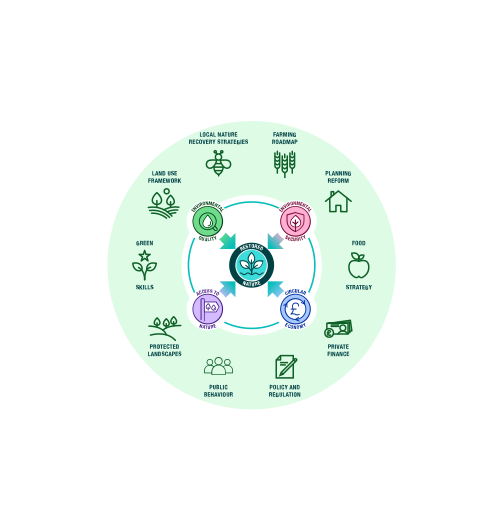
Figure 3: Our approach to improving the natural environment
Nature does not follow borders. We are working closely with devolved governments, who are largely responsible for their own environmental policy, where nature matters overlap.
There is the Northern Ireland EIP and the Scotland Environment Strategy, and Wales has the Environment (Wales) Act 2016 and is currently progressing further legislation.
Beyond the UK, we are committed to supporting the overseas territories to deliver their conservation priorities, as set out in the new UK Overseas Territories biodiversity strategy. We will also work together with Crown Dependencies who are responsible for their own environmental policy.
We are exploring opportunities for closer cooperation and collaboration with the EU, including through the existing structures set up under the UK-EU Trade and Cooperation Agreement.
This section describes some of the most important levers to achieve the EIP across national and local governments, businesses, landowners and land managers, and the public. These levers include key commitments that support multiple long-term EIP goals, included in later chapters (see Figure 3).
Effective environmental policymaking across government
The EIP is a statutory plan that applies across government, with shared responsibility for delivery.
The EIP recognises nature as an asset that provides essential services such as carbon sequestration, flood protection and urban cooling. We are focusing on actions and investment to:
- enhance the quantity and state of our critical natural capital assets
- capture more of the benefits from natural assets
- reduce the pressures on our natural capital assets from direct use and respond to external threats
The EIP sits alongside other provisions in the Environment Act 2021 to ensure there are steps to protect and enhance the environment throughout all of government policy.
The Environment Act introduced a duty on ministers to have due regard to the Environmental Principles Policy Statement when making policy.
This guides ministers and policymakers to prevent environmental damage and enhance the environment through interpreting and proportionately applying the following 5 principles:
- integration
- prevention of harm
- rectification at source
- polluter pays
- precautionary
The environmental principles help deliver outcomes for climate and environment, even where it is not the primary policy outcome.
The Biodiversity Duty under the Environment Act requires all public bodies, including government departments, to consider what actions can be taken to conserve and enhance biodiversity. This could include actions on estates, in land management, or in policymaking and decision taking. Public bodies then need to set policies and objectives to deliver that action.
Both these duties help ensure that action across government supports delivery of the EIP and underpins commitments on climate mitigation and the environment.
The cross-government Environmental Improvement Plan board (EIP board) coordinates and drives forward implementation of these duties as well as cross-government delivery of the EIP.
We are also reviewing the Greening Government Commitments - the actions we are taking to improve the environmental impact of our own estates and operations - to ensure that they align with our government priorities.
Mobilising business and private finance
To achieve the ambitious goals set out in the EIP, we need a whole-economy approach.
A healthy natural environment provides benefits to us all. It is only right that economic sectors and businesses which benefit from nature should share responsibility for restoring it.
This is an opportunity for UK business and financial services to step up, harnessing innovation and efficiency to mobilise significant flows of private investment to support a nature positive economy.
The private sector is rising to the challenge. There were 900 nature-related businesses in 2024, employing more than 21,000 people and generating more than £2 billion of revenue (Bloomberg NEF 2025).
Private investment in nature is increasing because of regulation-driven compliance markets such as biodiversity net gain (BNG), and voluntary markets such as the Woodland Carbon Code and the Peatland Code. In the water sector, 2024 price review (PR24) final determinations will see new investment in the water sector over the next 5 years, with water companies planning up to £3 billion of investment by 2030 into nature-based solutions and increasing biodiversity (Ofwat 2024).
We have provided a £790,000 grant to Ecosystems Knowledge Network and Green Finance Institute (GFI) to support commercial readiness of nature-based projects. We are also collaborating with the National Wealth Fund and other public finance institutions, to understand how best to catalyse private investment and increase investor confidence in the natural capital sector.
Alongside progress at home, we are championing the development of new international nature markets and promoting the integration of nature into decision making by businesses, financial institutions and governments. This will safeguard the UK’s prosperity and security by building resilience into the complex international supply chains that UK businesses, our jobs and economic growth depend on.
We have made significant progress. But, as the Corry Review highlighted, we need to do more to incentivise businesses to invest in minimising and compensating for their environmental impacts, and to deploy nature-based solutions to increase supply chain and infrastructure resilience.
The EIP presents an opportunity for businesses to improve productivity and resilience, and to open new income streams so that we can grow the economy sustainably and reduce nature-related risk.
We are working with representative business bodies and the Council for Sustainable Business (CSB) to communicate with business leaders on how they can engage with and support us.
Commitment 1:
Mobilise private investment and finance to restore and protect nature in England.
Actions for commitment 1:
- Develop Nature Positive Pathways for key sectors of the economy (including water quality and supply, agri-food supply chain and the built environment) through work led by the GFI, the Worldwide Fund for Nature (WWF), and the UK Centre for Ecology and Hydrology (UKCEH) with input from stakeholders in the private sector such as the Aldersgate Group and the Broadway Initiative, government, civil society and academia. We provided seed funding to enable the development of a pilot pathway for the agri-food system in 2026. Responsible: Defra, working with business sectors and representatives
- Respond to the call for evidence on the role of the private sector in nature recovery by early 2026. Use the findings of the call for evidence to support corporate and financial institutions to play their part in achieving environmental targets. Responsible: Defra
- Set out next steps later in 2026 on plans to streamline and strengthen nature market governance following the recent consultation on Voluntary Carbon and Nature Markets and Corry Review recommendation to explore a Nature Markets Accelerator. Responsible: Defra
- Sponsor the British Standards Institution’s (BSI) Nature Investment Standards Programme and introduce new standards for biodiversity, natural carbon and nutrient markets, to boost confidence and scale up investment for nature and sustainable farming. Responsible: Defra
- Provide £250,000 funding to the Taskforce on Nature related Financial Disclosures (TNFD) in financial year 2026 to 2027. Encourage UK organisations to familiarise themselves with the TNFD nature related risk management and disclosure framework through the Defra-funded GFI-led TNFD UK Consultation Group. Responsible: Defra
- Increase private investment through blended finance approaches, including our £30 million investment in the Big Nature Impact Fund to support woodland creation, peatland restoration and biodiversity net gain habitat bank projects, with first close expected by the end of the 2025 to 2026 financial year. The fund supports the England strategy of the UK Nature Impact Fund platform aiming to raise £120 million of investment and deliver long-term, risk-adjusted financial returns and measurable impact for a range of professional investors. Responsible: Defra
- Improve sustainability reporting by UK entities where they can play a role in supporting the climate and nature transition and the development of UK sustainability reporting standards. Responsible: DBT, Department of Energy Security and Net Zero (DESNZ), His Majesty’s Treasury (HMT)
- Increase private investment in woodland creation, restoration and management during this Parliament. Decide on inclusion of high-quality UK woodland removals under the Woodland Carbon Code in the UK Emissions Trading Scheme (ETS). Responsible: UK ETS Authority, Defra and the private sector
- Look at the development of a Woodland Carbon Purchase Fund, a financial transactions mechanism to support woodland developers and investors by purchasing woodland carbon up front. Responsible: Defra
Delivering local priorities more effectively
Delivering the EIP is not possible without community buy-in and local leadership.
The English Devolution and Community Empowerment Bill will enable local governments across England to establish Strategic Authorities. This will involve several councils working together to make decisions which drive economic growth and improve quality of life.
The preparation and delivery of 48 Local Nature Recovery Strategies (LNRS) are central to this. LNRS are a nationwide system of targeted, locally led spatial strategies that map where habitat should be created or improved to most effectively meet national and local targets and commitments. All 48 LNRS are expected to be published in the next few months, covering the whole of England with no gaps or overlaps.
The upcoming Land Use Framework (LUF) will set out the role of LNRS in supporting nature recovery and creating a national nature network. They will drive action across the country and encourage public, private and voluntary sectors to work together to deliver them.
LNRS will contribute widely to EIP delivery, particularly the restored nature goal. Alongside this, they will be important to meet commitments under the water, climate and hazards goals, and may also support the air, biosecurity, resources and access goals.
We will empower Strategic Authorities and LNRS responsible authorities to lead local environmental delivery. This will include convening partnerships and coordinating action, funding, and investment in nature recovery. They will also monitor and report on delivery.
Commitment 2:
Publish LNRS to cover the whole of England for use by public, private and voluntary sectors to deliver on nature recovery and wider environmental commitments by the end of 2025 or shortly after.
Actions for commitment 2:
- Complete preparation of the strategy for their area and oversee delivery of the actions proposed, with ongoing support from Natural England (NE), Environment Agency (EA) and Forestry Commission (FC). Responsible: LNRS responsible authorities
- Bring a new legal requirement into force for all tiers of planning to ‘take account’ of LNRSs. Responsible: Defra, Ministry of Housing, Communities and Local Government (MHCLG)
- Determine and announce timing for the first review and republication of all LNRSs to ensure that all LNRS are updated where necessary and continue to help us meet our targets. Responsible: Defra
In line with the Devolution Bill’s ambition, the Corry Review found that funding streams connected to place-based delivery should be reviewed to help local authorities and regulators deliver the government’s EIP and LNRS ambitions.
Defra will therefore test this as part of a programme exploring how place-based delivery approaches can build on existing best practices and infrastructure to improve the efficacy and efficiency of the Defra delivery system. We will run a programme of pathfinder projects with partners such as existing combined authorities and Protected Landscape organisations.
The pathfinders will design a blueprint for bringing together local actors to address local and national priorities more effectively across a range of outcomes, such as environment, planning, and growth.
Working in partnership with landowners and Protected Landscapes Organisations
We must work closely with landowners, land managers and Protected Landscapes Organisations to achieve our statutory nature targets and international commitment to achieve 30by30 in the UK.
These are the people and organisations who know their land best and often work together, and alongside advisory bodies and community groups to create, restore, connect and protect natural habitats at the large, landscape scales we need. This is especially true given competing demands on land for food, housing and infrastructure.
We have convened the National Estate for Nature (NEN) group, including England’s most significant landowners who collectively own around 10% of England’s land, to accelerate nature’s recovery on their estates and lead by example (Defra, 2025). Members include Defra, other government departments, government bodies, and private, institutional and third sector landowners.
Commitment 3:
Use the NEN group to support the delivery of statutory nature targets and 30by30 on members’ estates, trial innovative land management approaches and provide engagement routes to support and replicate action.
Action for commitment 3:
- Meet the NEN’s agreed minimum standard for environmental improvement on members’ estates, including application of the Land Use Framework principles (as currently published) and publication of estate management plans by April 2026 with SMART targets as clear contributions to terrestrial nature targets.Responsible: Defra and other members of the NEN group
From the Lake District to Cornwall, Protected Landscapes are our most iconic and inspiring places. The 10 National Parks and 34 National Landscapes cover 25% of England and contain a significant proportion of priority habitats including important carbon stores in peatlands and grasslands (Defra, 2024). They contain over half of our sites of special scientific interest (SSSI) land and are home to many precious and rare species.
They provide vital public environmental goods which everyone has a right to benefit from. Prioritising action here is essential to deliver nature recovery, climate mitigation and adaptation, water quality and access to nature outcomes.
Commitment 4:
Enable Protected Landscapes Organisations to make land greener, wilder, and more accessible to all.
Actions for commitment 4:
- Provide over £110 million direct funding to Protected Landscapes Organisations by April 2026 to support local action on nationally important priorities, including nature restoration and access for all. Responsible: Defra
- Champion Protected Landscapes by refreshing our national vision for these special places, eliminating bureaucratic barriers and ensuring teams have the tools and resources to achieve our ambitions. Responsible: Defra
Building green skills for the future
We are building green skills in important sectors such as water, forestry and agriculture, through apprenticeships, further education qualifications, and higher education courses to support more people into work.
The importance of providing training for high-demand roles in green sectors is already recognised by the Department of Education (DfE) in the additional funding for land-based programmes for 16 to 19-year-old students. The 16 to 19-year-old specialist programme cost weighting reflects the higher costs and specialist resources required to teach land-based skills and helps ensure a wide range of learners can access opportunities.
Skills England is the national body responsible for identifying skills needs and aligning training to deliver the government’s Plan for Change and Industrial Strategy, breaking down barriers to opportunity and driving economic growth. This includes in the green sector, where apprenticeships and technical education are playing a key role to help restore nature.
Skills England will assess what skills are needed, make sure apprenticeships and technical qualifications are in place, and work with devolved areas, industry and regional organisations to ensure we have the right green skills.
Commitment 5:
Build green skills for the future, including in agriculture, land management and water.
Actions for commitment 5:
- Fund land-based providers to deliver a broad range of courses and programmes, including T Levels, and expand provision for apprenticeships in a range of subjects including agriculture, horticulture, land security, land management, and forestry. Responsible: DfE, Department for Work and Pensions (DWP)
- Work with the water sector to ensure there is workforce planning and access to the skills required to deliver the planned investment over the next 5 years to improve infrastructure, following a Skills Summit in July 2025. Responsible: Water UK, Defra
- Deliver on the Water Skills Pledge and explore delivery of water-specific sector-based work academic programmes. Responsible: Defra, DWP
- Reflect land management skills feedback submitted through the Land Use consultation in the LUF and farming roadmap. Responsible: Defra
Enabling sustainable behaviour
Everyone has a role to play in living more sustainably. We can all reduce our footprint on the environment and act to help nature thrive, taking pride in where we live and work.
We are committed to helping the public to make informed sustainable choices. We will work with partners to help provide clear, evidence-based information highlighting impactful actions and best practice, while recognising different needs and circumstances to help ensure a fair transition to more sustainable living.
This may include land managers adopting sustainable practices, businesses and industries innovating to transition to a circular economy, local authorities managing green spaces for nature, communities cultivating wilder spaces, and educational institutions engaging children and young people in climate and nature action.
Individual actions can make a meaningful difference. Simple choices like using water and energy efficient technologies such as smart meters, as well as larger one-off changes such as installing heat pumps and better home insulation, help lower emissions and resource use, and reduce household bills. While easy steps such as following ‘reduce, reuse and recycle’ and food waste guidance support a more circular economy and can save families money.
Choosing to walk, cycle, wheel or use public transport where possible not only cuts carbon and reduces emissions but also promotes health and wellbeing. Practicing nature friendly gardening at home, as well as in workplaces and schools, can make a big difference for nature, through letting places grow wilder, planting native species, creating ponds, or responsibly using pesticides and herbicides.
Participating in community groups and citizen science initiatives can also play a significant role in informing both local and national policy and decision making.
Commitment 6:
Address barriers to sustainable choices across society.
Actions for commitment 6:
- Implement the approach set out in our upcoming public participation plan, which will set out how we will involve people and communities in our Clean Energy Superpower Mission and support them to access the benefits of climate and nature action. Responsible: DESNZ
- Design for, support and promote engagement with sustainable behaviours, to enable delivery by the public across relevant EIP goals, in alignment with the public participation plan principles and in partnership with government, civil society and research institutions. Responsible: Defra
Improving use of our land and sea
The EIP will inform the content of other key upcoming strategies, such as the Land Use Framework, farming roadmap and the food strategy.
Land Use Framework
We are asking more of our land than ever before.
The government will publish a Land Use Framework (LUF) that brings together the land-based targets in the EIP and sets a framework for government to manage trade-offs on our land so we can meet our nature and wider government ambitions.
The LUF will provide updated land-use analysis, for national and local government, landowners, businesses, farmers and nature groups to make informed decisions to meet the demands on our land.
The LUF will set out the changes needed to support multifunctional land use and sophisticated spatial planning and will feed into plans and strategies such as LNRS and Spatial Development Strategies.
The National Infrastructure and Service Transformation Authority (NISTA) will coordinate action across government on infrastructure and land use planning, working closely with Defra and other bodies to support implementation of the LUF. NISTA will identify and address spatial trade-offs, as well as synergies between infrastructure and wider land use policies, and embed a natural capital approach into earlier stages of infrastructure planning.
The LUF will inform future updates to the 10 Year Infrastructure Strategy and align with housing and energy spatial plans so we can deliver our Environment Act targets and EIP commitments, build 1.5 million new homes, and construct the infrastructure to transition to clean power by 2030.
Food and farming
Our national food security relies on the restoration of a healthy natural environment and climate.
67% of land in England is used for agriculture. Farmers and food producers have a critical role to ensure we can continue to grow the food that feeds the nation and meet our environmental targets (Agricultural land use in England, Defra 2024).
The transition must be fair. We are working with the sector to develop a farming roadmap that outlines our shared vision for farming to 2050 and sets the direction for how we get there. We will publish this in 2026.
In parallel, our food strategy will deliver a food system that grows the economy, feeds the nation, nourishes individuals, and protects the planet, now and in the future. It will help food producers achieve positive outcomes for nature and decarbonisation, keep costs down and put downward pressure on food prices.
Regulatory reform
Improving our regulatory system is vital for nature recovery and economic growth.
We will reform regulation to encourage innovation and investment from businesses and ensure those using natural assets contribute to the cost of restoring nature.
There are currently more than 3,000 Defra regulations, alongside associated guidance. We have committed to streamlining the cost of doing business, including cutting the administrative costs of government regulation (Delivering economic growth and nature recovery, Defra 2025).
The Defra Secretary of State commissioned the independent Corry Review of Defra’s regulatory landscape to make sure it is fit for purpose to support nature recovery and economic growth.
The published review sets out 29 recommendations. This includes setting clearer outcomes for regulators in our environmental regulation and enabling them to deliver these outcomes within the law while using more flexibility and discretion.
The review also identified significant opportunities to adopt more innovation in regulation and environmental protection, such as digital tools and artificial intelligence.
Planning and planning reform
Nature is not a blocker of economic growth, instead it is essential to underpin it. We are committed to a win-win for economic growth and nature recovery.
Our vision is for a planning system that delivers win-wins for nature and communities. The purpose of the planning system is to contribute to the achievement of sustainable development, which is underpinned by nature.
As set out in our plan for change, we will reform the planning system so that it is pro-growth and pro-infrastructure so that we can meet our ambitious targets to build 1.5 million homes and advance 150 major infrastructure projects.
Meeting these objectives need not come at the cost of the environment. They can help improve the state of nature across the country. We are committed to securing the development we desperately need while also protecting our most important habitats and species and reversing the trend of environmental decline.
The Planning and Infrastructure Bill provide for the creation of a Nature Restoration Fund (NRF) that will ensure developments support recovery of protected sites and species. By unlocking the positive impact development can have on improving our environment, the NRF will help deliver our climate and nature commitments, while ensuring the planning system is clear, fast and cost effective for developers.
Biodiversity net gain (BNG) also requires development to make a measurably positive contribution to biodiversity compared to what was there before. We are committed to evolving BNG to ensure it works effectively for nature and for development and will support the emerging private sector nature market. We have consulted on potential changes to do this.
We will continue to work closely with developers to implement BNG for Nationally Significant Infrastructure Projects by May 2026. We will improve the implementation of BNG for minor, medium and brownfield development, making it easier, quicker and cheaper for small developers to deliver gains for nature.
Leading internationally
We are committed to ambitious international action on nature and climate. Although we are an island nation, and the EIP is focused on England, our security and prosperity rely on the health of nature globally. Similarly, the health of the world’s ocean is directly linked to the prosperity of the UK’s coastal ecosystems, communities and economies.
Ecosystem degradation and collapse abroad will directly impact the UK. Heightened risk of regional conflict could destabilise key UK partners and markets.
We seek to restore the strong global leadership needed to tackle the climate and nature crises and push for an integrated approach to international action, including through the UN, G7 and G20.
We are committed to driving global ambition and collaboration through the full implementation of multilateral environmental agreements. These include the UN Framework Convention on Climate Change, the Convention on Biological Diversity, the UN Convention to Combat Desertification and the Glasgow Leader’s Declaration to halt and reverse forest loss and land degradation by 2030.
We will do this through nature-based solutions and joined-up design and delivery of Nationally Determined Contributions, National Biodiversity Strategy and Action Plans, National Adaptation Plans, and other relevant strategies.
We will work alongside the Joint Nature Conservation Committee and with the Bailiwick of Jersey, Bailiwick of Guernsey and the Isle of Man to implement the UK’s National Biodiversity Strategy and Action Plan.
We will lead by example, acting at home to deliver against our international commitments, such as those under the Kunming-Montreal Global Biodiversity Framework to protect 30% of the Earth’s land and seas by 2030.
We will continue partnering with other countries, including through Official Development Assistance funded programmes that work on the ground around the world to protect and restore natural environments.
Illustrative plan for cross-cutting enablers
Core strategies and plans: LNRS, Land Use Framework, Farming Roadmap
Delivery partners: Defra, DBT, DESNZ, DfT, MHCLG, LNRS responsible authorities, Skills England, UK Water
| Key commitments | Key actions |
|---|---|
| 1. Mobilise private investment and finance to restore and protect nature in England | • Develop Nature Positive Pathways for key sectors of the economy (including water quality and supply, agri-food supply chain and the built environment) through work led by the GFI, WWF, and UKCEH • Set out next steps later in 2026 on plans to streamline and strengthen nature market governance following the recent consultation on Voluntary Carbon and Nature Markets and Corry Review recommendation to explore a Nature Markets Accelerator • Provide £250,000 funding to the Taskforce on Nature related Financial Disclosures (TNFD) in the financial year 2026 to 2027. Encourage UK organisations to familiarise themselves with the TNFD nature related risk management and disclosure framework through the Defra-funded GFI-led TNFD UK Consultation Group • Increase private investment in woodland creation, restoration and management during this Parliament • Decide on inclusion of high-quality UK woodland removals under the Woodland Carbon Code in the UK Emissions Trading Scheme (ETS) |
| 2. Publish LNRS to cover the whole of England for use by public, private and voluntary sectors to deliver nature recovery and wider environmental commitments by the end of 2025 or shortly after | • Complete preparation of the strategy for their area and oversee delivery of the actions proposed, with ongoing support from NE, EA and FC • Bring a new legal requirement into force for all tiers of planning to ‘take account’ of LNRSs |
| 3. Use the National Estate for Nature (NEN) group to support the delivery of statutory nature targets and 30by30 on members’ estates, trial innovative land management approaches and provide engagement routes to support and replicate action | • Meet the NEN’s agreed minimum standard for environmental improvement on members’ estates, including application of the Land Use Framework principles (as currently published) and publication of estate management plans by April 2026 with SMART targets as clear contributions to terrestrial nature targets |
| 4. Enable Protected Landscapes Organisations to make land greener, wilder, and more accessible to all | • Provide over £110 million direct funding to Protected Landscapes Organisations by April 2026 to support local action on nationally important priorities • Champion Protected Landscapes by refreshing our national vision for these special places, eliminating bureaucratic barriers and ensuring teams have the tools and resources to achieve our ambitions |
| 5. Build green skills for the future, including in agriculture, land management and water | • Fund land-based providers to deliver a broad range of courses and programmes, including T Levels, and expand provision for apprenticeships in a range of subjects including agriculture, horticulture, land security, land management, and forestry • Reflect land management skills feedback submitted through the Land Use consultation in the LUF and farming roadmap |
| 6. Address barriers to sustainable choices across society | • Implement the approach set out in our upcoming public participation plan, which sets out how we will involve people and communities in our clean energy superpower mission and support them to access the benefits of climate and nature action • Design for, support and promote engagement with sustainable behaviours, to enable delivery by the public across relevant EIP goals, in alignment with the public participation plan principles and in partnership with government, civil society and research institutions |
Chapter 1: Restored nature
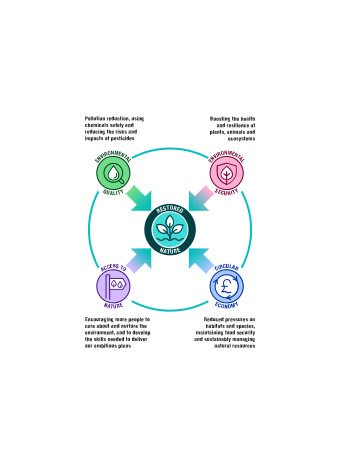
Figure 4: How the wider EIP supports restoring nature
Goal 1: Restored nature
We will create a network of bigger, better and more resilient habitats to help nature thrive.
We want people to hear birdsong in their neighbourhoods and see wildlife in our landscapes. We want everyone, regardless of where they live, to be able to experience nature.
Our overarching goal is to restore nature, including our Environment Act targets to halt and reverse the decline in species abundance. To achieve our goal and targets, we must deliver all EIP goals (see Figure 4) and reduce the pressures on habitats and species. This includes taking measures to support wildlife on farms, tackling pollution, and using chemicals and pesticides safely whilst maintaining food security and sustainably managing natural resources.
We must also plan for and manage the impact of the changing climate on our ecosystems. We must reduce the impact of invasive non-native species and enhance biosecurity to boost the health and resilience of plants, animals and ecosystems.
Nature provides essential services that underpin healthy and prosperous lives, including the food, water, resources, and the places we enjoy. Our plants, wildlife, and fungi rely on naturally functioning, well connected habitats and ecosystems.
Restoring nature has many wider benefits. For example, we can reduce the risk of floods that damage property and livelihoods and store carbon to help net zero. And we can provide cleaner water by creating woodlands, restoring or sustainably managing peatlands, and protecting, recovering and enhancing important coastal habitats such as seagrass.
We are delivering on the manifesto commitment to create 3 new national forests. The Western Forest announced in March 2025 was the first new national forest in 30 years and will stretch from the Cotswolds to the Mendips. The second national forest was confirmed for the Ox-Cam corridor (Oxford-Cambridge) in November 2025. A competition will launch in early 2026 to determine the third forest’s location in the Midlands or North of England.
These new forests will see millions of trees planted in the years ahead as part of a wider commitment to allocate over £1 billion this parliament to tree planting and support to the forestry sector. This will lead to thousands of people benefitting from better access to nature, whilst creating sustainable jobs and helping tackle climate change. We are already taking many of the right actions to help nature recover, but these need to be scaled up, better targeted and more coordinated.
We will create, restore and manage wildlife-rich habitat at greater scale and progress our commitment to protect 30% of the UK’s land by 2030. We will take targeted action for species recovery, including supporting the reintroduction of native species and restoring specific habitats. And we will improve management of habitats at sea and deliver our commitment to protect 30% of the UK’s seas by 2030.
Achieving these ambitions is vital yet challenging. Species abundance has dropped to an estimated 67% of its 1970 level and we have lost vast areas of habitats such as wildflower meadows, wetlands and lowland heathlands (Indicators of species abundance in England, Defra 2025).
Everyone has a role to play in restoring nature – from individuals managing our gardens and farmland for biodiversity, to those enjoying our parks, nature reserves and Protected Landscapes.
Businesses can lead by making supply chains nature positive, disclosing and addressing nature related risks, and ensuring development benefits, rather than harms, nature.
Achieving the restored nature goal demands broad collaboration and long-term investment. We are working with land managers, environmental charities, Protected Landscape organisations and local communities to ensure those closest to the land shape decisions.
To develop our EIP goals we used a systematic approach to evaluate which commitments and actions we need to collectively deliver goals. These relationships are displayed in theories of change which have been developed for each goal. Theories of change for each goal are presented EIP Monitoring Plan.
System connections
As the overarching goal of the EIP, delivery of all the EIP goals is relevant to the delivery of restored nature.
However, key additional commitments to this chapter are contained in the following goals:
- see Goal 2: Air on reducing ammonia emissions
- see Goal 3: Water removing aquatic pressures and delivering healthy water catchments for wildlife to flourish, through reduction of pollution
- see Goal 6: Resources sustainably managing natural resources such as timber, fisheries and soil
- see Goal 7: Climate change planning for and management of the impact of a changing climate on our land, seas, water, air and soil.
- see Goal 9: Biosecurity acting on invasive non-native species (INNS) to meet the statutory species abundance target
Progressing 30by30 on land in England
Nature recovery requires restoring and connecting habitats to support wildlife movement and resilience. We will strengthen England’s network of habitats to progress 30by30 and ensure long-term management of these areas to high standards, guided by published criteria. We will set out our 30by30 action plan in due course.
England’s National Parks and National Landscapes cover almost a quarter of our land but will deliver half of our statutory target to restore or create wildlife-rich habitat (Protected landscapes to be strengthened with new legislation and guidance to protect nature, Defra 2024).
We will go further and faster in Protected Landscapes to meet our national targets for nature’s recovery. We will enable and support the dedicated Protected Landscape organisations to convene and catalyse local action for nature, climate, and communities. We will use the Protected Landscapes Targets and Outcomes Framework to drive and measure progress.
Our 4,128 Sites of Special Scientific Interest (SSSIs) form the foundation of the 30by30 network. Our ambition is to bring 75% of them into favourable condition by 2042.
Commitment 7:
Effectively conserve and manage 30% of the UK’s land by 2030 (30by30).
Commitment 8:
By December 2030 50% of SSSI features to have actions on track to achieve favourable condition.
(This is an Environment Act interim target.)
Commitment 9:
Increase the contribution that Protected Landscapes are making to Environment Act and EIP targets, measured through the Protected Landscapes Targets and Outcomes Framework.
Actions for commitments 7 to 9:
- Support farmers and land managers to manage wildlife-rich habitat using appropriate agri-environment options for the habitat type, so the habitat can stay, or become of, sufficient quality. Responsible: Defra
- Foster multi-landscape, large scale nature recovery initiatives such as Big Chalk and Coastal Wildbelt through the Protected Landscape Partnership. Responsible: Protected Landscapes Partnership
- Deliver agri-environment schemes to support farmers and land managers taking actions that improve the condition of SSSIs, like addressing water pollution, changing grazing regimes, tackling invasive species and restoring rivers and lakes. Responsible: Defra, Natural England (NE)
- Deliver Protected Site Strategies for up to 12 sites - including the 5 current pilots - by March 2026 to restore and improve their condition, helping to address upstream environmental pressure such as pollution and habitat degradation. Use this evidence to inform the rollout to other protected sites, including by updating relevant site condition assessments. Responsible: Defra, NE
- Use the Nature Restoration Fund to pool developer contributions for environmental mitigations, allowing for strategic conservation measures at scale. In 2026 we will launch the first set of Environmental Delivery Plans to enable the roll-out of the fund. Responsible: Defra
- Complete the King’s Series of 25 new or large extensions to National Nature Reserves (NNRs) by 2028. Responsible: NE
- Publish a Trees Action Plan in 2026 to set out how we will improve the resilience and condition of England’s trees, woods and forests. Responsible: Defra
- Set a target to increase woodland management in 2026 to improve woodland condition, resilience and biodiversity. Responsible: Defra, Forestry Commission (FC), NE
- Manage the impact of mammals on woodlands better so that woodlands are more biodiverse, resilient and commercially viable. Responsible: Defra, FC, Animal and Plant Health Agency (APHA), NE
- Maintain current protections in the National Planning Policy Framework for ancient woodland and ancient and veteran trees and improve the implementation of the policy. Publish and complete updates to our Ancient Woodland Inventory by summer 2027. Responsible: MHCLG, Defra
- Build upon and review the evidence base for the value of long-established woodlands and consider their biodiversity status. Publish the Long-Established Woodland Inventory by the end of 2026. Responsible: Defra, NE
See our approach to improving the natural environment for more information on how the Land Use Framework and Local Nature Strategies will support these commitments and for more information on Protected Landscapes and the National Estate for Nature (NEN) group.
Commitment 10:
Restore or create a total of 250,000 hectares of a range of wildlife-rich habitats outside of protected sites by December 2030.
(This is an Environment Act interim target.)
Commitment 11:
Increase England’s tree canopy and woodland cover by 0.33% of land area by December 2030 from the 2022 baseline of 14.9%. (Equivalent to a net increase of 43,000 hectares).
(This is an Environment Act interim target.)
Commitment 12:
Support farmers and land managers to create or restore 48,000km of hedgerows by 2037 and 72,500km of hedgerows by 2050.
Commitment 13:
By 2043, increase saltmarsh by 15% compared to 2009 levels, seagrass by 15% compared to 2024 levels and create functional oyster reef habitat at ecosystem scales in 5 to 8 suitable English water bodies.
These commitments are interlinked. We expect at least 62% of the statutory tree target to contribute to the statutory wildlife-rich habitat target. Some of the delivery of the hedgerows and coastal habitats commitments will contribute to the wildlife-rich habitat target.
Actions for commitments 10 to 13:
- Deliver up to 300,000 hectares of wildlife-rich habitat creation and restoration by 2042 through agri-environment scheme agreements running since 2023. Deliver up to 200,000 hectares of peatland restoration and woodland creation. Responsible: Defra
- Introduce the mandatory biodiversity net gain (BNG) requirement for Nationally Significant Infrastructure Projects by May 2026 to ensure nature considerations are placed at the heart of development. Responsible: Defra
- Implement mandatory BNG for Town and Country Planning Act development by working through the consultation response on small, medium, and brownfield sites. Ensure that the nature market for off-site BNG continues to develop and grow so that developers have a good selection of competitively priced and high-quality biodiversity units available to meet their 10% gain. Responsible: Defra, NE
- Incentivise the planting of high-quality woodlands and trees outside of woodland with a further £816 million of funding between 2026 to 2027 and 2029 to 2030 financial years, including by continuing the England Woodland Creation Offer. Responsible: Defra, FC, NE, Environment Agency (EA)
- Improve the condition of ancient semi-natural woodland and restore plantations on ancient woodland sites back to semi-natural woodland habitat through our agri-environment schemes. We will monitor delivery of this action through our woodland management target. Responsible: Defra and FC
- Deliver on our commitment to enhance the biodiversity of all unrestored plantations on ancient woodland sites on the public forest estate. By 2042, we will increase the proportion of native tree species on all unrestored plantations on ancient woodland sites. Responsible: Forestry England
- Incentivise farmers and land managers to create and restore hedgerows through our hedgerow offers in agri-environment schemes and integrate hedgerow data into spatial mapping in England. Responsible: Defra
- Lead restoring meadow marsh and reef, a practical initiative working with our partners towards a more resilient English coast by restoring, recovering and enhancing priority habitats such as seagrass, saltmarshes and native oyster reefs. Responsible: Defra, EA
- Ensure government land contributes proportionately to achieving statutory environment targets and EIP goals for the government estate. We will set this out by March 2026. Responsible: Defra
For more information on:
- private investment in woodland creation, see our approach to improving the natural environment
- delivering healthy water catchments for wildlife to flourish, see Goal 3: Water
System connections
Delivering 30by30 on land relies on other commitments across the EIP.
See Goal 3: Water and Goal 7: Climate:
- Commitment 64: Restore approximately 280,000ha of peatland in England by 2050
- Commitment 28: Restore chalk streams to better ecological health, ensuring protections and investment towards these habitats
- Commitment 67: Make terrestrial protected site designation and management more dynamic and adaptive to the changing climate
Conserving and recovering plants, animals and fungi
Many threatened species need bespoke actions to improve their national conservation status.
We will take additional targeted actions to recover and conserve both threatened and non-threatened species.
Commitment 14:
Take targeted action to conserve and recover threatened species.
Actions for commitment 14:
- Use the Species Recovery Programme to support projects taking targeted action to conserve and recover our most threatened species, tracking the number of priority actions taken for threatened species. Responsible: NE
- Incentivise farmers and land managers through our agri-environment schemes to support the recovery of threatened species. Responsible: Defra
Commitment 15:
Halt the decline in species abundance by 2030.
(This is an Environment Act statutory target.)
Actions for commitment 15:
- Provide opportunities for conservation translocations and reintroductions of native species where benefits to the environment and people are clear. Responsible: Defra, NE
- Support the England Species Reintroduction Taskforce to provide evidence-led advice and guidance on existing and potential species conservation translocations in England. Responsible: Defra, NE
- Publish a new Pollinator Action Plan in 2026, setting out the activities required to support pollinator populations by all responsible parties. Responsible: Defra
- Manage widespread invasive species, through Local Action Groups and public awareness campaigns. Responsible: Defra, Defra arm’s length bodies
- Build the evidence base for delivering the species targets, including the biodiversity targets modelling programme, monitoring and evaluation programme and supporting on the ground surveys and monitoring. Responsible: Defra
- Assist the National Wildlife Crime Unit to help prevent and detect wildlife crime by obtaining and disseminating intelligence, highlighting local or national threats through detailed analysis, and assisting law enforcement investigations. Work with international partners to ensure the legal and sustainable trade in wildlife. Responsible: Defra
- Protect human health and safety and protect wildlife from harmful human activity, through compliance with wildlife management measures. Publish an animal welfare strategy later this year, which will include reaffirming our manifesto commitment to bringing an end to the use of snare traps in England. Responsible: Defra
For more information on how our invasive non-native species interim target supports this target, see Goal 9: Biosecurity.
Commitment 16:
By December 2030, double the number of farms providing sufficient year-round resources for farm wildlife, compared with 2025
(This is an Environment Act interim target.)
Action for commitment 16:
- Incentivise farmers and land managers through our agri-environment schemes to implement measures to support farm wildlife alongside productive farming, by providing year-round resources for farmland species. Responsible: Defra
Achieving clean, healthy, safe, productive and biologically diverse seas
Through England’s 181 Marine Protected Areas (MPAs), we will recover nature and improve biodiversity in our seas. We have already exceeded the marine coverage aspect of the 30by30 target (30by30 on land in England: confirmed criteria and next steps, Defra 2024). Our priority now is to ensure these areas are properly protected.
Protecting MPA species and habitats contributes to healthier marine ecosystems, and the maintenance and restoration of valuable ecosystem services. Ecosystem services are the goods and benefits we gain from having healthy ecosystems, such as the sequestration and long-term storage of carbon by benthic habitats helping to support net zero.
Ecosystem services support the healthy functioning of the marine environment. They can also generate tourism, provide recreational benefits, like scuba diving and sea angling, and contribute to human wellbeing.
To achieve this, we will ensure that management measures are introduced for the protected features of our MPAs before our interim target assessment. Alongside this, we are committed to managing our fisheries’ sustainability. This includes through publishing and implementing our suite of Fisheries Management Plans. In parallel, we will implement management measures for our Highly Protected Marine Areas (HPMAs).
Our regulators, like the Marine Management Organisation and Inshore Fisheries and Conservation Authorities, are enforcing existing byelaws on bottom towed gear in MPAs and have consulted on new byelaws. The MPA network is under pressure from a range of sources including offshore industry, some fishing activities and climate change (Marine Protected Areas and Highly Protected Marine Areas, Parliamentary Office of Science and Technology 2023).
The expansion of offshore wind is vital to our energy security and clean power ambitions. As well as our ability to mitigate climate change which threatens the marine environment (Harnessing offshore wind while preserving the seas, European Environment Agency 2024). However, the expansion of offshore wind will affect MPAs.
To manage this, the government will institute measures that support ambitions for both nature recovery and a clean energy future. We have consulted on reforms to environmental compensation requirements for offshore wind projects to increase measures available for developers to offset adverse impacts, whilst maintaining robust processes to ensure damage to the marine environment remains compensated.
These compensatory measures will be funded by the offshore wind industry through a new Marine Recovery Fund which will be established this year.
We will also review the English MPA network to determine whether sites are in the right places with the right protection. The review will explore ways to update protection and management approaches to better address the biodiversity crisis, improve climate change resilience, and support wider government priorities.
We have already introduced a bill to enable ratification of the Biodiversity Beyond National Jurisdiction Agreement, enabling greater conservation of the two-thirds of the ocean that lies outside national jurisdiction.
Commitment 17:
Make sure at least 49% of MPA protected features are in favourable condition and at least 46% in recovering condition, by December 2030.
(This is an Environment Act interim target.)
Commitment 18:
Effectively conserve and manage 30% of the UK’s seas for nature by 2030.
Actions for commitments 17 and 18:
- Protect MPAs and HPMAs by implementing fisheries management byelaws by the end of 2026, other fisheries measures by the end of 2028 and management measures for other damaging activities by the end of 2030. Responsible: Defra
- Review England’s MPA network by the end of 2028. Responsible: Defra
- Implement the Marine Strategy Regulations 2010 and work toward targets under the UK Marine Strategy for Good Environmental Status. Responsible: Defra
See Goal 6: Resources for more information.
Monitoring and reporting approach
The Environmental Indicator Framework (EIF) (previously Outcome Indicator Framework) monitors environmental change to understand our progress towards delivering the EIP goals. The EIF contains 66 indicators, arranged into 10 broad themes.
The EIF indicators for Goal 1: Restored nature are:
- C2: Seabed subject to high pressure from human activity
- C3: Status of mammals, birds and fish
- C4: Condition of seafloor habitats
- C5: Pelagic habitats
- C6: Threatened and declining features
- C7: Fish and shellfish
- C8: Marine food webs
- C9: Functioning of seafloor habitats
- D1: Habitats
- D2: Protected sites
- D3: Woodland
- D4: Relative species abundance
- D5: Conservation status
- D6: Relative priority species abundance
- D7: Species supporting ecosystems
- E9: Percentage of our seafood coming from healthy ecosystems, produced sustainably
- H4: Exposure and adverse effects of chemicals on wildlife in the environment
For England’s statutory biodiversity targets, we are developing a comprehensive monitoring and evaluation framework. This will enable us to be adaptive in how we deliver the targets, by feeding evaluation findings into delivery plans.
Our species indicators will be slow to show changes resulting from actions delivered by policies. Therefore, we are working on improving action-data from policies and developing medium-term indicators of recovery.
The Natural Capital and Ecosystem Assessment (NCEA) is Defra’s largest research and development programme. Through it we are assessing England’s land, freshwater, and coastal ecosystems to produce a baseline of our natural assets by 2028, enabling a natural capital approach to policy and decision making. The NCEA is transforming the way we make decisions and develop policy, helping to ensure we invest in environmental reforms that achieve maximum benefit.
Further detail on metrics and delivery contributions for the commitments in this goal and the goal theory of change is available in the EIP Monitoring Plan.
Illustrative plan for Goal 1
Goal 1: We will create a network of bigger, better and more resilient habitats to help thrive
Core strategies and plans: 30by30 Action Plan, LNRSs, National Adaptation Programme, Pollinator Action Plan, Protected Landscapes targets and outcomes framework, Protected Site Strategies, Tree Action Plan
Delivery partners: APHA, Defra, EA, FC
| Key commitments | Key actions |
|---|---|
| 7. Effectively conserve and manage 30% of the UK’s land by 2030 (30by30) 8. By December 2030 50% of Sites of Special Scientific Interest (SSSIs) features to have actions on track by 2030 to achieve favourable condition (This an Environment Act interim target) 9. Increase the contribution that Protected Landscapes are making to Environment Act and EIP targets, measured through the Protected Landscapes Targets and Outcomes Framework |
• Support farmers and land managers to manage wildlife-rich habitat using appropriate agri-environment options for the habitat type, so the habitat can stay, or become of, sufficient quality • Deliver Protected Site Strategies for up to 12 sites – including the 5 current pilots – by March 2026 to restore and improve their condition, helping to address upstream environmental pressure such as pollution and habitat degradation. Use this evidence to inform the rollout to other protected sites, including by updating relevant site condition assessments • Use the Nature Restoration Fund to pool developer contributions for environmental mitigations, allowing for strategic conservation measures at scale. In 2026 we will launch the first set of Environmental Delivery Plans to enable the roll-out of the fund • Publish a Trees Action Plan in 2026 to set out how we will improve the resilience and condition of England’s trees, woods and forests |
| 10. Restore or create a total of 250,000 hectares of a range of wildlife-rich habitats outside of protected sites by December 2030 (This is an Environment Act interim target) 11. Increase England’s tree canopy and woodland cover by 0.33% of land area by December 2030 from the 2022 baseline of 14.9% (equivalent to a net increase of 43,000 hectares) (This is an Environment Act interim target) 12. Support farmers and land managers to create or restore 48,000km of hedgerows by 2037 and 72,500km of hedgerows by 2050 13. By 2043, increase saltmarsh by 15% compared to 2009 levels, seagrass by 15% compared to 2024 levels, and create functional oyster reef habitat at ecosystem scales in 5 to 8 suitable English water bodies |
• Deliver up to 300,000 hectares of wildlife-rich habitat creation and restoration by 2042 through agri-environment scheme agreements running since 2023. Deliver up to 200,000 hectares of peatland restoration and woodland creation • Introduce the mandatory biodiversity net gain (BNG) requirement for Nationally Significant Infrastructure Projects by May 2026 to ensure nature considerations are placed at the heart of development • Incentivise the planting of high-quality woodlands and trees outside of woodland with a further £816 million of funding between 2026 to 2027 and 2029 to 2030 financial years, including by continuing the England Woodland Creation Offer • Improve the condition of ancient semi-natural woodland and restore plantations on ancient woodland sites back to semi-natural woodland habitat through our agri-environment schemes • Lead Restoring Meadow Marsh and Reef, a practical initiative working with our partners towards a more resilient English coast by restoring, recovering and enhancing priority habitats such as seagrass, saltmarshes and native oyster reefs |
| 14. Take targeted action to conserve and recover threatened species 15. Halt the decline in species abundance by 2030 (This is an Environment Act statutory target) 16. By December 2030, double the number of farms providing sufficient year-round resources for farm wildlife, compared with 2025 (This is an Environment Act interim target) |
• Use the Species Recovery Programme to support projects taking targeted action to conserve and recover our most threatened species, tracking the number of priority actions taken for threatened species • Incentivise farmers and land managers through our agri-environment schemes to support the recovery of threatened species • Support the England Species Reintroduction Taskforce to provide evidence-led advice and guidance on existing and potential species conservation translocations in England • Incentivise farmers and land managers through our agri-environment schemes to implement measures to support farm wildlife alongside productive farming, by providing year-round resources for farmland species |
| 17. Make sure at least 49% of MPA protected features are in favourable condition and at least 46% in recovering condition by December 2030 (This is an Environment Act interim target) 18. Effectively conserve and manage 30% of the UK’s seas for nature by 2030 |
• Protect MPAs and HPMAs by implementing fisheries management byelaws by the end of 2026, other fisheries measures by the end of 2028 and management measures for other damaging activities by the end of 2030 • Review England’s MPA network by the end of 2028 • Implement the Marine Strategy Regulations 2010 and work toward targets under the UK Marine Strategy for Good Environmental Status |
Chapter 2: Environmental quality
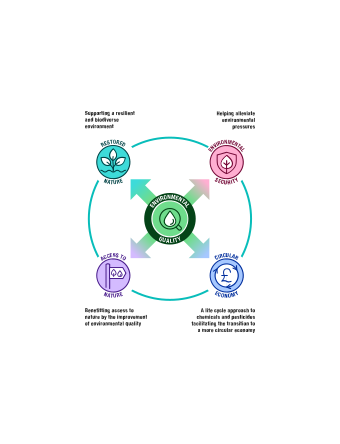
Figure 5: How improving environmental quality supports the wider EIP
We are improving environmental quality
We want to improve the quality of our environment. This means cleaning up our rivers, lakes and seas, improving the quality of the air we breathe and preventing harm from dangerous chemicals. Many of the actions we will take have multiple benefits (see Figure 5).
Creating wetlands and planting trees helps restore nature and improve water quality.
Cleaner air is good for our health and for nature. It encourages people to spend more time outdoors.
Managing chemicals and pesticides from production to end of life will protect ecosystems, restore nature and support our transition to a circular economy.
Goal 2: Air
We will achieve clean air.
Air quality in the UK has improved significantly in recent decades and overall, the air we breathe today is cleaner than at any time since before the industrial revolution (Air quality statistics, Defra 2025). These improvements have delivered significant benefits for our health, environment and economy (Improving air quality in European cities, European Environment Agency, 2017).
However, despite these improvements, air pollution remains one of the biggest environmental threats to human health, and continues to cause damage to the environment (A breath of fresh air, Royal College of Physicians 2025), Long-term exposure to air pollution can cause heart and lung disease, cancer and other health problems. Low-income communities disproportionately feel these health impacts, exacerbating health and social inequalities.
Air pollution damages the environment, it contributes to climate change, biodiversity loss and reduced crop yields. For example, ammonia emissions, primarily from farming along with nitrogen oxides (NOx), cause excessive nitrogen accumulation in soils. This can lead to loss of biodiversity as plants that thrive in higher nitrogen conditions dominate habitats at the expense of rarer species. It can reduce soil health through acidification and reducing nutrient availability.
It can worsen soil structure by disrupting microbial communities, reducing the ability of soil to retain water and carbon. Higher levels of nitrogen can initially increase tree growth in woodlands, however, continued deposition eventually stunts growth.
We can and should go further to reduce air pollution, and that is why this government is taking action. We set out in this chapter the measures we intend to take forward to further improve the quality of the air we all breathe and reduce the impact air pollutants have on the environment. In addition to this EIP, the Fit for the Future: 10 Year Health Plan for England sets out how the government is taking steps to reduce the health harms of air pollution.
Reducing emissions and population exposure to air pollutants
Air pollution is a transboundary issue, and we must act internationally to further improve air quality in the UK. We will work closely with partners across our region through the United Nations Economic Commission for Europe Convention on Long Range Transboundary Air Pollution to negotiate new long-term commitments under the 2012 Gothenburg Protocol. To further drive down harmful transboundary emissions across our region and support our domestic air quality objectives.
Improving the quality of the air we breathe requires action by all tiers of government and wider society. Local authorities and their air quality partners have legal responsibilities to improve air quality for their citizens and the powers necessary to do so. This government will support councils to continually improve air quality by providing them with clear guidance, advice and tools.
The burning of solid fuels is a large contributor to national emissions of fine particulate matter (PM2.5) and is a major source of air pollution, especially in urban areas. The World Health Organisation considers PM2.5 the most harmful pollutant to human health (Air pollution is responsible for 6.7 million premature deaths every year, World Health Organisation (WHO) 2025).
These particles can enter the bloodstream and internal organs, and there is a growing body of evidence linking exposure with a range of debilitating health conditions including cardiovascular disease and asthma. We will consult on further measures to reduce emissions from domestic burning.
Industrial processes are a key part of our growing economy and, although emissions have decreased significantly over time due to our regulatory framework, they are still a large source of pollution (Air pollutants, National Atmospheric Emissions Inventory 2023). Industrial installations are subject to an environmental permitting regime which sets conditions on pollution emissions and other environmental impacts.
Permit conditions are based on the Best Available Techniques, or other sectoral pollution standards, which are set out in legislation and Defra best available techniques: environmental permits guidance. The regulatory framework for industrial emissions has been effective in reducing pollution and is broadly supported by industry.
However, it requires reform to keep pace with and enable industrial transformation (Air pollutants, National Atmospheric Emissions Inventory 2023). We have consulted on wide-ranging reforms to industrial permitting that will reduce emissions of key pollutants and will publish a government response in due course.
As climate change and air pollution have many of the same contributing emission sources, the decarbonisation of the UK economy offers major opportunities to significantly reduce air pollution. We will work to ensure that the co-benefits of actions to achieve net zero and improved air quality are maximised.
Commitment 19:
Deliver 2030 emissions targets to reduce anthropogenic emissions for the following pollutants against a 2005 baseline level:
- ammonia (NH3) 16% reduction
- nitrogen dioxide (NO2) 73% reduction
- sulphur dioxide (SO2) 88% reduction
- Particulate Matter (PM2.5) 46% reduction
- non-methane volatile organic compounds (NMVOCs) 39% reduction
Commitment 20:
Deliver air pollution levels set out in the Air Quality Standards Regulations in local areas.
Commitment 21:
Deliver air quality targets for PM2.5 concentration and exposure:
- An annual mean concentration target of 10 micrograms per cubic metre to be achieved by December 2030.
- A population exposure reduction target of 30% compared to 2018 to be achieved by December 2030
(These are Environment Act interim targets.)
Actions for commitments 19 to 21:
- Refresh guidance, webinars and materials aimed at local authority air quality officers during 2025 to 2026, reducing the time and investment needed to take action at a local level. Responsible: Defra
- Pilot a new approach to streamline assessment of PM2.5 in the planning system with local authorities and developers, with work starting in 2025. Responsible: Defra
- Enhance data access to inform local interventions in communities where those most vulnerable to air pollution are exposed to higher levels, working in partnership with NHS and local authority public health bodies. We will target local authorities with the highest levels of air pollution linked to deprivation, using a tool that shows neighbourhood-level information based on demographic characteristics. Responsible: Defra and Department of Health and Social Care (DHSC) and UK Health Security Agency (UKHSA)
- Consult on new measures that cut emissions from domestic combustion, whilst minimising the impact on those that need to burn and respecting traditional celebratory festivals such as Bonfire Night and Diwali. Responsible: Defra
- Consider responses to the recent consultation on reforms to industrial permitting. This includes considering sectoral reforms for combustion, batteries and anaerobic digestion, and wider reforms to the overall framework. Responsible: Defra
- Explore options to reduce emissions from small industrial combustion plants. Responsible: Defra
- Ensure 80% of new cars and 70% of new vans sold in the UK will be zero emission by 2030 and 100% of new sales zero emission by 2035, supporting reductions in air pollution and CO2 emissions from road transport by 2030. This will be achieved through measures such as the Zero Emission Vehicle Mandate and vehicle incentives, including the Electric Car Grant; supporting the rollout of equitable access to widespread public charging infrastructure; and supporting private charge points in areas facing additional challenges. Responsible: Department for Transport (DfT)
- Take steps to decarbonise the UK heavy goods vehicle (HGV) fleet, including consulting on potential regulatory options to support; phase out of the sale of new non-zero emission HGVs by 2040. Support the transition to zero emission HGVs through a mix of policy measures and guidance, including publishing the data gathered as part of the Zero Emission HGV and Infrastructure Demonstrator (ZEHID). Responsible: DfT
- Support transitioning to a zero-emission bus (ZEB) fleet, including by: working with the Bus Manufacturing Expert Panel to develop a clear pipeline of future orders by November 2025; using powers in the Bus Services Act 2025 to lay regulations by the end of 2026 to end the use of new non-ZEBs on local routes in England from a date no earlier than 2030; and supporting investment with devolved funding settlements. Responsible: DfT
- Maintain air quality monitoring in up to 72 train stations across Great Britain until March 2030. Train operators and Network Rail will implement Air Quality Improvement Plans, including idling reduction and rail station ventilation improvements. Responsible: DfT
- Deliver the interim decarbonisation goal set through the Maritime Decarbonisation Strategy to reduce domestic shipping fuel lifecycle greenhouse gas emissions by 30% by 2030 (compared to 2008 levels), on the pathway to zero emissions by 2050. We will assess the impacts on air quality as we develop maritime decarbonisation policies and will set out next steps in 2026 including through a formal consultation on domestic fuel regulations. Responsible: DfT
- Work for adoption and implementation of the North Atlantic Emission Control Area at the earliest opportunity, extending air pollution controls to all UK waters. Responsible: DfT
- Support the International Civil Aviation Organization’s review of the existing aircraft engine emissions standard for NOx, recommending any updates in 2028. Responsible: DfT
- Deliver aviation decarbonisation, including through increasing the uptake of sustainable aviation fuels to 10% by 2030, delivering airspace modernisation, and supporting the development of low and zero emission aerospace technologies. This includes improving understanding of the wider environmental implications of these measures, such as on-air quality and non-CO2 impacts. Responsible: DfT
- Publish new statutory local transport plan guidance for local transport authorities in due course, which will set out the government’s ambitions for local transport plans. This will include expectations on improving air quality in the local transport context. Responsible: DfT
- Pursue legislative reform for micromobility vehicles, when parliamentary time allows, to provide a proportionate and more agile regulatory process. This will support our commitment to make smaller, lighter vehicles an everyday transport option and help make air quality improvements in our urban environments. Responsible: DfT
- Continue to support councils with a £616 million investment to build and maintain walking and cycling infrastructure. This is in addition to wider funding to support active travel including the £15.6 billion Transport for City Regions settlements, £2.3 billion Local Transport Grant and £24 billion for strategic and local roads. Responsible: DfT, Active Travel England
- Publish the third Cycling and Walking Investment Strategy in early 2026, setting out the government’s objectives for active travel. Responsible: DfT
- Publish an updated ‘Well Managed Highways Infrastructure’ Code of Practice. This will reflect best practices, technological advancements, policy and legislative changes relevant to a range of topics, including environment and air quality. Publication is planned incrementally to enable the earliest access. Responsible: DfT
- Draw on findings from published research on brake and tyre wear emissions to take a leading role in developing internationally harmonised regulations for limiting these emissions through the United Nations Economic Commission for Europe, targeting adoption by November 2026. Responsible: DfT
- Conduct a follow-up study in 2026 to assess air quality onboard trains, with a focus on newer bi-mode, tri-mode, and electric trains, and revisit trains with implemented mitigations to evaluate whether levels of NO2 and Particulate Matter have improved. Responsible: DfT
- Conduct research in 2026 to assess the feasibility of introducing in-service emissions testing for diesel trains, including whether cost-effective testing requirements could be developed for the rail industry. Responsible: DfT
- Funding the UK Shipping Office for Reducing Emissions (UK SHORE) programme by providing a further £448 million of research and development funding to accelerate technologies necessary to decarbonise the domestic maritime sector, while addressing air quality impacts and supporting coastal communities and green growth. Responsible: DfT
- Publish the final report of the first stage of the UK SHORE programme evaluation in early 2026, including assessment of the relevant impacts on greenhouse gas emissions. Future evaluation will consider non-greenhouse gas air pollutants. Responsible: DfT
- Use Environmental Outcomes Reports, the planned new approach to environmental assessment, to better identify and manage the impact of development on air quality to protect health and the environment whilst streamlining the assessment process and focusing on outcomes. Responsible: MHCLG
- Reduce ammonia emissions by supporting farmers and land managers to invest in low emission farm equipment and infrastructure, such as slurry storage covers, low emissions spreaders and slurry scrapers available through capital grant offers. Responsible: Defra
- Monitor the success of the industry-led approach to reducing ammonia from urea fertilisers, delivered through Red Tractor farm assurance standards and Fertiliser Advisers Certification and Training Scheme farm advisers, and introduce new regulation if necessary. Responsible: Defra
- Work with stakeholders to reduce ammonia emissions from farming through streamlined regulation and develop detailed proposals on the extension of environmental permitting for dairy and intensive beef farms for consultation. Responsible: Defra
- Provide farmers and land managers with information around options and actions they can take to reduce ammonia emissions through programmes such as Catchment Sensitive Farming. Responsible: Defra
Increasing public engagement with air quality matters
We want to ensure that the public has access to air quality information that is clear, relevant and up to date.
Implementing these improvements will increase public engagement with air quality. It will ensure that members of the public, and vulnerable groups in particular, have the information that they need to protect their health, reduce their exposure and demand improvements.
Commitment 22:
Improve communication of air quality information.
Actions for commitment 22:
- Publish updates to the health advice accompanying the Daily Air Quality Index (DAQI), Defra’s tool for communicating short-term changes in pollution levels, by March 2026. Responsible: Defra, DHSC and UKHSA
- Publish, where an emission target is missed or projected to be missed, an analysis of the abatement potential of the policies and measures under development. Responsible: Defra
- Provide the public with information about longer-term trends in local pollution levels, to complement the DAQI, on our updated air quality web services by March 2027. Responsible: Defra
- Launch a new air quality alert system by March 2026 to provide advanced warning of pollution to the people who need it most. Responsible: Defra, DHSC and UKHSA
- Work with the Royal College of Physicians and other professional bodies to ensure health care professionals have adequate knowledge to improve awareness and understanding of health impacts of air pollution by January 2029. Responsible: DHSC, UKHSA and Defra
Monitoring and reporting approach
The Environmental Indicator Framework (EIF) indicators monitoring environmental change for Goal 2: Air are:
- A1: Emissions for 5 key air pollutants
- A3: Concentrations of fine particulate matter (PM2.5) in the air
- A4: Rural background concentrations of ozone (O3)
- A5: Roadside nitrogen dioxide (NO2) concentrations
- A6: Exceedance of damaging levels of nutrient nitrogen deposition on ecosystems
- A7: Area of land exposed to damaging levels of ammonia (NH3) in the atmosphere
Further detail on metrics and delivery contributions for the commitments in this goal and the goal theory of change is available in the EIP Monitoring Plan.
Illustrative plan for Goal 2
Goal 2: We will achieve clean air
Core strategies and plans: Cycling and walking Investment Strategy (DfT), Daily Air Quality Index, Transport Decarbonisation Plan (DfT)
Delivery partners: Defra, DESNZ, DfT, DHSC, MHCLG
| Key commitments | Key actions |
|---|---|
| 19. Deliver 2030 emissions targets to reduce anthropogenic emissions for the following pollutants against a 2005 baseline level: • ammonia (NH3) 16% reduction • nitrogen dioxide (NO2) 73% reduction • sulphur dioxide (SO2) 88% reduction • Particulate Matter (PM2.5) 46% reduction • non-methane volatile organic compounds (NMVOCs) 39% reduction 20. Deliver air pollution levels set out in the Air Quality Standards Regulations in local areas 21. Deliver air quality targets for PM2.5 concentration and exposure: • an annual mean concentration target of 10 micrograms per cubic metre to be achieved by December 2030 • a population exposure reduction target of 30% compared to 2018 to be achieved by December 2030 |
• Consult on new measures that cut emissions from domestic combustion while minimising the impact on those that need to burn and respecting traditional celebratory festivals such as Bonfire Night and Diwali • Ensure 80% of new cars and 70% of new vans sold in the UK will be zero emission by 2030 andConsult on new measures that cut emissions from domestic combustion while minimising the impact on those that need to burn and respecting traditional celebratory festivals such as Bonfire Night and Diwali 100% of new sales zero emission by 2035, supporting reductions in air pollution and CO2 emissions from road transport by 2030. This will be achieved through measures such as the Zero Emission Vehicle Mandate and vehicle incentives, including the Electric Car Grant, supporting the rollout of equitable access to widespread public charging infrastructure, and supporting private charge points in areas facing additional challenges. • Take steps to decarbonise the UK HGV fleet, including consulting on potential regulation options to support phase out of the sales of new non-zero emission HGVs by 2040. • Support the transition to zero emission HGVs through a mix of policy measures and guidance, including publishing the data gathered as part of the Zero Emission HGV and Infrastructure Demonstrator • Support transitioning to a zero-emission bus (ZEB) fleet, including by working with the Bus Manufacturing Expert Panel to develop a clear pipeline of future orders by November 2025. Using powers in the Bus Services Act 2025 to lay regulations by the end of 2026 to end the use of new non-ZEBs on local routes in England from a date no earlier than 2030, and supporting investment with devolved funding settlements • Support the International Civil Aviation Organization’s review of the existing aircraft engine emissions standard for NOx, recommending any updates in 2028 • Publish new statutory local transport plan guidance for local transport authorities in due course, which will set out the government’s ambitions for local transport plans. This will include expectations on improving air quality in the local transport context • Publish an updated ‘Well-Managed Highways Infrastructure’ Code of Practice. This will reflect best practices, technological advancements, policy and legislative changes relevant to a range of topics, including environment and air quality. Publication is planned incrementally to enable the earliest access • Work with stakeholders to reduce ammonia emissions in line with the 2030 emission reduction target from farming through streamlined regulation and develop detailed proposals on the extension of environmental permitting for dairy and intensive beef farms for consultation |
| 22. Improve communication of air quality information | • Publish updates to the health advice accompanying the Daily Air Quality Index (DAQI), Defra’s tool for communicating short-term changes in pollution levels, by March 2026 • Provide the public with information about longer-term trends in local pollution levels, to complement the DAQI, on our updated air quality web services by March 2027 • Launch a new air quality alert system by March 2026 to provide advanced warning of pollution to the people who need it most • Work with the Royal College of Physicians and other professional bodies to ensure health care professionals have adequate knowledge to improve awareness and understanding of health impacts of air pollution by January 2029 |
Goal 3: Water
We will ensure English waters are clean, resilient and plentiful.
As part of a decade of national renewal, we will restore our rivers, lakes and seas to good health. We want a climate resilient and secure water system that continues to provide affordable world-leading clean drinking water, supports development and economic growth around the country, supports public health and recreation, improves the natural environment, and enables us to reach net zero and have food security.
Achieving this requires all of us – the public, water companies and investors, government, regulators and environmental groups – to work together to secure the investment to clean up our water.
We have begun to reset the water sector, putting consumers and the environment first and ensuring water companies are held accountable. The Water (Special Measures) Act 2025 gives regulators new powers to take tougher and faster action against water companies who are damaging the environment and failing their customers.
This includes measures to block water company executive bonuses, severe and automatic penalties, jail sentences for the most serious offences, and independent monitoring of sewage outlets.
We are rebuilding the water network from the ground up through one of the largest infrastructure projects ever seen in Britain. In the 2024 price review (PR24) final determinations, we secured £104 billion of private investment in the water sector over the next 5 years. We have been updating the water National Policy Statement to reflect these new priorities and challenges.
Together, this will guarantee our water security for households across the country, cutting leakage by around 17% over the next 5 years and building 9 new reservoirs. We have also ringfenced infrastructure investment so it must now only be spent on new sewage pipes and treatment works – not spent on shareholder payments or bonuses.
Building on this, the Independent Water Commission (IWC) launched in October 2024 to make sure we have a robust and stable regulatory framework to attract the future investment to clean up our waterways and restore public confidence.
The IWC published its final report, review of the water sector on 21 July 2025. On the same day, the Defra Secretary of State outlined that government would take forward 5 key recommendations:
- New single water regulator: there are currently 4 separate regulators responsible for the water industry. The government will abolish Ofwat and merge its functions with water functions across the Environment Agency, Natural England and the Drinking Water Inspectorate to form a single new regulator.
- New statutory water ombudsman: a single, free service to help customers resolve complaints such as incorrect bills, leaking pipes or water supply failures.
- Ending operator self-monitoring: we will end the era of water companies marking their own homework by ending operator self-monitoring and transition to open monitoring to increase transparency and help restore public trust.
- Greater local involvement: we commit to including a regional element to the new regulator to ensure greater local involvement in water planning and allow all sources of pollution to be addressed across the river catchment.
- Improved strategic direction: until the single water regulator is fully established, the existing regulators will continue to carry out their functions and enforcement responsibilities in full. The government will clarify its expectations to the existing regulators through a strategic policy statement and ministerial direction, expected to be published later this year.
Our root and branch reform will restore trust and accountability – building an industry that works for the British people.
Working in partnership with water companies, investors and communities, the government aims to introduce reforms through primary legislation when parliamentary time allows. A white paper setting out further detail will be published and consulted on this year.
The reforms will secure better outcomes for customers, investors and the environment, making the water sector one of growth and opportunity in line with our Plan for Change.
They will provide the clarity and direction required for a strong partnership between government, the sector and investors to attract billions of pounds of new investment.
This follows the Secretary of State’s commitment to cut sewage pollution from water companies in half by the end of this decade, making our rivers the cleanest since records began.
There is growing concern about the potential public health risks associated with exposure to a range of contaminants being released into natural waterways. Alongside the work of the IWC, we are exploring opportunities for minimising this risk and increasing health protections within the water sector regulatory framework.
We know that we need to rationalise the number of regulatory plans and merry-go-round of regulators to create a more efficient system. A systematic approach to improving drainage and wastewater systems means looking at the bigger picture – how these systems affect the environment, local communities, and other priorities like flood prevention and urban development.
We continue to work towards our obligation to restore 75% of water bodies to good ecological status (GES) and remain committed to securing continuous improvement for the water environment. We are considering recommendations made in the IWC on the future of GES.
We are also taking a leading role in tackling brake and tyre wear emissions which can have a detrimental impact on our air and soil and contaminate our waters.
We are supporting the agricultural sector to reduce pollution. Farmers are important partners in protecting our rivers, lakes and seas, and we are putting in place changes needed to deliver our ambitious target to reduced water pollution from agriculture.
We have already made progress by revising Enforcing the Farming Rules for Water guidance and begun co-designed reform of agriculture water regulations to make them clearer and more effective. We will consult on extending environmental permitting for dairy and intensive beef farms.
We will double funding to increase Environment Agency farm inspections by 2029 and improve the advice farmers receive to invest in new technologies. This will support farmers to comply with regulations and protect our rivers and wildlife.
We will also expand the EA’s advisory and regulatory work with farmers and bring in new technology such as remote sensing to strengthen enforcement. These are administered proportionately and range from warnings and notices through to civil sanctions and prosecution where serious environmental harm has or may occur.
These regulatory changes together with targeted use of Environmental Land Management schemes and infrastructure grants will help farmers to reduce impacts and support them to increasingly adopt choices which protect water from 2026.
Enabling nature to flourish in healthy water catchments
We are taking a catchment-based systematic approach to developing and delivering commitments to improve our water environment.
Commitment 23:
Support catchment partnerships as a framework for coordinating action between the public, private and third sectors.
Actions for commitment 23:
- Include a regional element within the new water regulator to ensure greater local involvement in water planning, as announced following the IWC. Responsible: Defra
- Support the catchment-based approach to facilitate wider public participation in local water systems in preparation for engagement with reforms suggested by the IWC. Responsible: Defra, Environment Agency (EA)
- Provide up to £1 million funding for comprehensive cross-border research to understand pollution and other pressures in the Wye catchment and develop plans to tackle these issues. Responsible: Defra, Welsh Government
Commitment 24:
Require standardised sustainable drainage systems (SuDS) in all new developments with drainage impacts and ensure sustainable maintenance arrangements are in place by 2029.
Actions for commitment 24:
- Consult on a set of national policies to support decisions including those relating to SuDS. Responsible: MHCLG
- Consult on legislative and policy options to reduce the prevalence of unadopted amenities on residential estates. The consultation will consider long-term maintenance and adoption options for SuDS. Responsible: MHCLG
Commitment 25:
Reduce phosphorus loadings from treated wastewater by 55% by December 2030 against a 2020 baseline.
(This is an Environment Act interim target.)
Action for commitment 25:
- Require water companies to upgrade 440 wastewater treatment works by 2030 to meet stricter phosphorus permit limits. Responsible: water companies, Defra, Ofwat, EA
Commitment 26:
Reduce total nitrogen, phosphoros and sediment pollution from agriculture to the water environment:
- By at least 12% by December 2030, compared to 2018 levels.
- By at least 18% in catchments containing protected sites in unfavourable condition due to nutrient pollution by December 2030 .
(These are Environment Act interim targets.)
Actions for commitment 26:
- Double the funding for EA advice-led farm inspections over the 3 years to 2029 to ensure farmers are compliant with water quality regulation. Responsible: Defra, EA
- Provide advice, guidance and training to encourage voluntary farmer action to reduce diffuse water pollution from agriculture, in addition to meeting regulatory requirements, for example through Catchment Sensitive Farming. Responsible: Defra, EA, Natural England
- Streamline and improve regulations controlling agricultural water pollution. To support this, we have reviewed and published updated statutory guidance for the Farming Rules for Water. Responsible: Defra
- Provide grants to improve slurry management, with impact shown by progress towards the interim target. Responsible: Defra
- Provide funding to encourage farmers and land managers to protect and enhance watercourses, such as through agroforestry, riparian and wider catchment woodland creation, boundary features and buffer strips. Responsible: Defra, Forestry Commission, local authorities, private sector
- Provide grants to spark innovation and use technology to develop solutions which address challenges related to farming pollution. Responsible: Defra
- Launch a free-to-use nutrient management planning tool to help farmers and land managers plan and manage the use of nutrients on their land in winter 2025. Responsible: Defra
- Develop a programme to boost delivery and monitoring of the agricultural water quality targets, including EA’s National Agricultural Programme for monitoring water quality improvements, so farmers adopt choices which reduce pollution. Responsible: Defra, EA
See Goal 2: Air for more information on our consultation on extending environmental permitting for dairy and intensive beef farms to benefit air and water quality.
Commitment 27:
Construct 8 mine water treatment schemes and 20 diffuse interventions to control inputs of target substances to rivers, and complete 55 catchment studies by December 2030.
(This is an Environment Act interim target.)
Actions for commitment 27:
- Identify priority sources of pollution for remediation and evaluate water quality improvements after construction of mine water treatment schemes and diffuse interventions. Responsible: EA
- Develop options for treatment scheme design and make recommendations on potential scheme locations. Design and plan schemes, apply for necessary planning and regulatory permissions. Responsible: Mining Remediation Authority (MRA)
- Construct and maintain new mine water treatment schemes and diffuse interventions. Responsible: MRA
- Investigate treatment and delivery options to improve treatment performance or lower lifecycle costs of remediation measures, or both. Responsible: MRA
Commitment 28:
Restore chalk streams to better ecological health, ensuring protections and investment towards these habitats.
Actions for commitment 28:
- Invest in chalk stream restoration through the Water Restoration Fund and Water Environment Improvement Fund over the next 2 years. Responsible: Defra, EA, Rural Payments Agency (RPA)
- Support and facilitate 11 flagship chalk stream restoration projects across England, through the EA’s area and national teams, and through research and funding, and holding water companies to account for delivery. Responsible: Defra, EA, RPA
- Drive over £2 billion investment from water companies into the restoration of chalk streams. This includes prioritising chalk streams as part of the record £11 billion of investment to improve nearly 3,000 storm overflows in England and Wales during PR24, with 75% of high priority sites needing to be improved by 2035 and the rest by 2045. Responsible: water companies, Ofwat, EA
- Implement the EA’s National Framework for Water Resources, a plan for securing long-term, resilient water supplies whilst protecting the environment, using cross-sector regional water resources groups’ work, and deliver water resources management plans. Responsible: EA, water companies, regional water resources groups
- Reduce water company abstraction from chalk streams by 126 million litres per day by 2030. Responsible: EA, water companies
Commitment 29:
Drive further investment to improve the water environment.
Actions for commitment 29:
- Support delivery of £24 billion of water company expenditure to improve the environment. This includes investment of over £10 billion to improve around 2,500 storm overflows in England, to deliver a 50% reduction in spills by 2030 from an average of 32 spills per year per overflow in 2024. Responsible: water companies, Defra, EA and Ofwat
- Direct funding to local catchment projects to improve the water environment and attract match funding through the Water Environment Improvement Fund. Funding allocations will run from April 2026 until 2028 or 2030, depending on spend type. Responsible: Defra, EA
- Deliver the Water Restoration Fund and direct £11 million of funding based on water company fines and penalties back into the water environment. The fund will be in operation until March 2028. Responsible: Defra, RPA
- Invest over £100 million in fines and penalties levied against water companies since October 2023, as well as future fines and penalties, into projects to clean up our waters, which could include local environmental programmes to address pollution and improve water quality. Responsible: Defra
Ensuring a sustainable supply of water to homes, public buildings and businesses
Based on current trajectories, by 2050 there will be a shortfall of nearly 5 billion litres of water per day in the UK (A summary of England’s revised draft regional and water resources management plans, Environment Agency 2024).
Our water demand target, and associated interim targets, will enable us to reduce water usage and have more water efficient practices.
The ministerial water delivery taskforce holds water companies to account for infrastructure delivery and ensures there is enough water and wastewater capacity for new homes and businesses. Work by Defra ministers this year has already unblocked 10,000 homes in Oxford and driven innovative water saving approaches in Cambridge.
Commitment 30:
Reduce the use of public water supply in England per head of population from a 2019 to 2020 baseline:
- By 9% by 31 March 2027.
- By 14% by 31 March 2032
(These are Environment Act interim targets.)
Use of public water will be reduced through the combined delivery of commitments 31 to 34.
Commitment 31:
Reduce household water use to 122 litres per person per day by 2038 from a 2019 to 2020 baseline.
Actions for commitments 31 and 32:
- Introduce a Mandatory Water Efficiency Labelling scheme on water products, such as showers and toilets, in 2026.Responsible: Defra
- Work with the manufacturing and retail sectors to improve or remove wasteful products and enable innovative water-saving products. Following the launch of a mandatory label, we will consider introducing minimum product standards and design guidance to reduce water wastage and remove inefficient or unclear products from the market. Responsible: Defra
- Review planning policy and processes in new household development. Progress work to consider the role of water companies in large scale developments, following the recommendations of the Independent Water Commission for an enhanced role in this process. Responsible: Defra, MHCLG
- Review water efficiency, water recycling and drainage standards to tighten standards, and explore opportunities to increase water efficient housing through technological innovation, including piloting water reuse systems in Ox-Cam, to drive increased water efficiency. Responsible: Defra, MHCLG
- Investigate dual-pipe systems and water reuse options for new housing development and consider a labelling and record system to map dual pipes for maintenance. As part of this, we will review and amend legislation to address wasteful product issues with toilets and enable new water efficient technologies. Responsible: Defra, Drinking Water Inspectorate, MHCLG
Commitment 32:
Reduce non-household water use by 9% by 2038.
Actions for commitment 32:
- Review planning policy and processes and investigate water reuse options for new non-household development. Consider voluntary schemes for non-household buildings and work with MHCLG and local authorities to improve knowledge and guidance of water reuse in planning processes. Responsible: Defra, Drinking Water Inspectorate, MHCLG
- Work with the retail market operator MOSL, retailers, regulators and water suppliers, to identify options to reduce non-household demand. This includes through MOSL’s Market Performance Framework standards, Ofwat’s new non-household performance commitment for water companies to reduce business demand for water (including managing penalties and rewards) and reviewing tariff structures in the non-household market to better understand incentives for water efficiency and demand reduction. Responsible: Water companies, Defra
Commitment 33:
Reduce leakage from a 2017 to 2018 baseline by:
- By 20% by 31 March 2027.
- By 30% by 31 March 2032.
(These are Environment Act interim targets.)
Actions for commitment 33:
- Work with Ofwat to hold water companies to delivery of leakage reduction targets – set at 17% for 2025 to 2030 in this period – through Ofwat’s rewards and penalties. Responsible: Defra, Ofwat, water companies
- Implement policies or standards associated with water usage data that enable water companies to incentivise more water efficient behaviours, reduce leakage, and amplify the benefits of their smart meter rollouts. This includes considering recommendations for government from Ofwat’s Baringa report and supporting its Smart Water Metering Delivery Group. Responsible: Defra, water companies, Ofwat
Commitment 34:
Ensure water companies deliver their water resources management plans, eliminating the water supply demand gap that grows to 5 billion litres a day by 2050.
Actions for commitment 34:
- Rapidly develop critical new water supply infrastructure, supported by a joint team called the Regulators’ Alliance for Progressing Infrastructure Development (RAPID) and the National Framework for Water Resources. Responsible: Water companies, Defra, Ofwat, EA, RAPID, regional water resources groups
- Review water company delivery regularly as part of the planning for water delivery taskforce meetings. Responsible: Defra, EA, Ofwat
Commitment 35:
Modernise the abstraction licensing system, including moving it into the Environmental Permitting Regulations (EPR). The government is considering the recommendations of the IWC.
Actions for commitment 35:
- Work with abstractors to find voluntary local solutions to reduce unsustainable abstraction or, if required, using powers to modify these abstraction licences. Responsible: EA, water companies, water users
- Consider the recommendations of the IWC and respond in this year. Responsible: Defra
Commitment 36:
Support the agricultural sector in ensuring collaborative sustainable water use, through enabling an increase in the number of water abstractor groups from 7 to 14 by 2030.
Actions for commitment 36:
- Deliver Local Resource Options screening studies to encourage farmers to work together to identify local water resilience solutions such as reservoirs, hydrocycles or water trading. Each group of farmers will receive a report detailing the best options for their area. Responsible: Defra, EA, agricultural water users
- Create new Water Abstractor Groups. Responsible: Defra, EA, agricultural water users
Delivering clean rivers, lakes and seas for people to enjoy
Our rivers, lakes and seas should be clean for people to enjoy. Clean seas support restored marine environments, our fishing fleet and communities that depend on this.
We are reforming the Bathing Water Regulations 2013. This will modernise regulations and strengthen the designation criteria, ensuring better and more targeted investments. Our proposals would enable Defra to consider physical safety and environmental protections and review the dates of the bathing season at sites that are used outside of these seasons.
Defra has worked with the devolved governments to legislate to ban wet wipes containing plastic across the UK. The ban is expected to come into force in Spring 2027 and will reduce plastic and microplastic pollution, particularly in our waterways. The government are supportive of industry efforts to encourage the correct disposal of wet wipes, including Water UK’s ‘Bin the Wipe’ campaign.
The Storm Overflows Discharge Reduction Plan (SODRP) sets targets for water companies to reduce the adverse impacts of discharges from storm overflows, as well as their frequency, and outlines which sites should be prioritised for the most urgent action.
Under the SODRP, by 2050, water companies will not be permitted to discharge from any storm overflows unless they can demonstrate that there is no local adverse ecological impact and only up to a maximum of an average of 10 spills per year. Defra’s target of reducing storm overflow spillages by 50% by 2030 is the first step to achieving this.
Commitment 37:
Reduce the impact of storm overflows on the environment and human health by reducing spill numbers and prioritising sensitive sites, in line with the SODRP.
Actions for commitment 37:
- Crack down on sewage pollution by holding water companies to account for delivering the targets set out in the SODRP. Responsible: Water companies, Ofwat, EA
- Invest over £10 billion into storm overflow improvements in England from 2025 to 2030 to improve over 2,500 overflows. Responsible: Water companies, Ofwat
- Publish a progress report on delivery against the SODRP by the end of 2025 and then every 5 years. Responsible: Defra
- Hold water companies accountable for meeting their statutory requirements, including the prevention of harm from storm overflows. Responsible: Defra, Ofwat, EA, water companies
- Use newly published guidance – setting out our expectations on targets, legal duties and prioritising – with water and sewerage companies, and regulators, to ensure a clear planning framework. Responsible: Defra
Commitment 38:
Review the regulatory framework for sewage sludge spreading to agricultural land to ensure it effectively manages the risks to the environment and health.
Action for commitment 38:
- Consider the recommendation for reform of sewage sludge regulations made by the Independent Water Commission. Outline next steps as part of Defra’s wider work on water reform. Responsible: Defra
Commitment 39:
Better understand the health impacts associated with polluted waters.
Action for commitment 39:
- Undertake research to assess the human health risks from human faecal-oral transmission of disease relating to wastewater contamination of inland waterways, including persistence of viable human pathogens from treated sewage. This will address a key evidence gap and improve understanding of the public health risks associated with recreational water activities. Responsible: DHSC
Monitoring and reporting approach
We have a suite of indicators that measure progress against this goal. These include:
- Environment Agency reporting
- Water company reporting on Distribution Input
- Progress reporting on the Storm Overflows Discharge Reduction Plan
- The Environmental Indicator Framework (EIF)
The EIF indicators monitoring environmental change for Goal 3: Water are:
- B1: Pollution loads entering waters
- B2: Serious pollution incidents to water
- B3: State of the water environment
- B4: Condition of bathing waters
- B5: Water bodies achieving sustainable abstraction criteria
- B6: Natural functions of water and wetland ecosystems
- B7: Health of freshwaters assessed through fish populations
- E8: Sustainable use of water
The Natural Capital and Ecosystem Assessment (NCEA) programme is also developing and capitalising on scientific innovation and new technology including the use of remote sensing from satellites and using AI to reduce field effort. NCEA is producing a statistically robust baseline assessment of the health of England’s rivers and lakes. The baseline data and outputs will be made publicly accessible, enabling the private sector, central and local governments and third sectors to use these products to understand the condition of our ecosystems and put nature at the heart of decision making.
Further detail on metrics and delivery contributions for the commitments in this goal and the goal theory of change is available in the EIP Monitoring Plan.
Illustrative plan for Goal 3
Goal 3: We will ensure English water are clean, resilient and plentiful
Core strategies and plans: Upcoming water White Paper, water National Policy Statement, Storm Overflows discharge Reduction Plan
Delivery partners: Defra, DHSC, Environment Agency, FC, Local Authorities, LNRS Responsible Authorities, MHCLG, Mining Remediation Authority, NE, Ofwat, Rural Payments Agency, Water companies
| Key commitments | Key actions |
|---|---|
| 23. Support catchment partnerships as a framework for coordinating action between the public, private and third sectors 24. Require standardised sustainable drainage systems (SuDS) in all new developments with drainage impacts and ensure sustainable maintenance arrangements are in place by 2029 25. Reduce phosphorus loadings from treated wastewater by 55% by December 2030 against a 2020 baseline (This is an Environment Act interim target) 26. Reduce total nitrogen, phosphorous and sediment pollution from agriculture to the water environment: a. by at least 12% by December 2030, compared to 2018 levels. b. by at least 18% in catchments containing protected sites in unfavourable condition due to nutrient pollution by December 2030. (These are Environment Act interim targets) 27. Construct 8 mine water treatment schemes and 20 diffuse interventions to control inputs of target substances to rivers, and complete 55 catchment studies by December 2030 (This is an Environment Act interim target) 28. Restore chalk streams to better ecological health, ensuring protections and investment towards these habitats 29. Drive further investment to improve the water environment |
• Include a regional element within the new water regulator to ensure greater local involvement in water planning, as announced following the IWC • Consult on a set of national policies to support decisions including those relating to SuDS • Require water companies to upgrade 440 wastewater treatment works by 2030 to meet stricter phosphorus permit limits • Double the funding for EA advice-led farm inspections over the 3 years to 2029 to ensure farmers are compliant with water quality regulation. • Provide grants to improve slurry management, with impact shown by progress towards the interim target • Construct and maintain new mine water treatment schemes and diffuse interventions • Drive over £2 billion investment from water companies into the restoration of chalk streams. This includes prioritising chalk streams as part of the record £11 billion of investment to improve nearly 3,000 storm overflows in England and Wales during PR24, with 75% of high priority sites needing to be improved by 2035 and the rest by 2045 • Support delivery of £24 billion of water company expenditure to improve the environment. This includes investment of over £10 billion to improve around 2,500 storm overflows in England, to deliver a 50% reduction in spills by 2030 from an average of 32 spills per year per overflow in 2024 |
| 30. Reduce the use of public water supply in England per head of population from a 2019 to 2020 baseline: • by 9% by 31 March 2027 • by 14% by 31 March 2032 (These are Environment Act interim targets) 31. Reduce household water use to 122 litres per person per day by 2038 from a 2019 to 2020 baseline 32. Reduce non-household water use by 9% by 2038 33. Reduce leakage from a 2017 to 2018 baseline: a. by 20% by 31 March 2027. b. by 30% by 31 March 2032. (These are Environment Act interim targets) 34. Ensure water companies deliver their water resources management plans, eliminating the water supply demand gap that grows to 5 billion litres a day by 2050 35. Modernise the abstraction licensing system, including moving it into the Environmental Permitting Regulations (EPR). The government is considering the recommendations of the IWC 36. Support the agricultural sector in ensuring collaborative sustainable water use, through enabling an increase in the number of Water Abstractor Groups from 7 to 14 by 2030 |
• Introduce a Mandatory Water Efficiency Labelling scheme on water products, such as showers and toilets, in 2026 • Review water efficiency, water recycling and drainage standards to tighten standards, and explore opportunities to increase water efficient housing through technological innovation, including piloting water reuse systems in Ox-Cam, to drive increased water efficiency • Review planning policy and processes and investigate water reuse options for new non-household development. Consider voluntary schemes for non-household buildings and work with MHCLG and local authorities to improve knowledge and guidance of water reuse in planning processes • Work with Ofwat to hold water companies to delivery of leakage reduction targets – set at 17% for 2025 to 2030 in this period – through Ofwat’s rewards and penalties • Rapidly develop critical new water supply infrastructure, supported by a joint team called the Regulators’ Alliance for Progressing Infrastructure Development (RAPID) and the National Framework for Water Resources • Working with abstractors to find voluntary local solutions to reduce unsustainable abstraction or, if required, using powers to modify these abstraction licences • Deliver Local Resource Options screening studies to encourage farmers to work together to identify local water resilience solutions such as reservoirs, hydrocycles or water trading. Each group of farmers will receive a report detailing the best options for their area |
| 37. Reduce the impact of storm overflows on the environment and human health by reducing spill numbers and prioritising sensitive sites, in line with SODRP 38. Review the regulatory framework for sewage sludge spreading to agricultural land to ensure it effectively manages the risks to environment and health 39. Better understand the health impacts associated with polluted waters |
• Invest over £10 billion into storm overflow improvements in England from 2025 to 2030 to improve over 2,500 overflows • Hold water companies accountable for meeting their statutory requirements, including the prevention of harm from storm overflows • Undertake research to assess the human health risks from human faecal-oral transmission of disease relating to wastewater contamination of inland waterways, including persistence of viable human pathogens from treated sewage. This will address a key evidence gap and improve understanding of the public health risks associated with recreational water activities |
Goal 4: Chemicals and pesticides
We will minimise environmental risks from chemicals and pesticides.
Chemicals and pesticides are a significant part of our daily lives – they are in our medicines, they clean our drinking water, protect the crops that feed us, and make the products we use last longer.
Chemicals, including pesticides, is a major export sector in the UK, with annual exports worth £29 billion (Office for National Statistics (ONS) 2025). The sector contributes £12 billion of gross value to the UK economy annually, employs 100,000 people directly, and indirectly supports a further 162,000 jobs (ONS 2025).
This chapter sets out how we plan to manufacture, use, manage and dispose of chemicals and pesticides safely, including the products that contain them so that they continue to benefit the public without dangerous impacts on health.
We aim to do this in a targeted, transparent and proportionate way that supports innovation in safer alternatives, working closely with our international partners.
Using and managing chemicals safely
We already have a robust regulatory regime and have made good progress in addressing chemicals that pose the highest risk. Yet there is more we can do, from understanding emerging chemicals of concern to committing to restrict hazardous substances.
As set out in our ‘New Approach to Ensure Regulators and Regulation Support Growth’ action plan, we want to reduce complexity for businesses, remove trade barriers, and provide the certainty that industry needs to grow and invest – while continuing to protect communities and the environment. We will do this by drawing on regulatory decision making in other trusted jurisdictions to enable new protections that can be applied faster, more efficiently, and in a way that is more aligned with our closest trading partners.
Per- and polyfluoroalkyl substances (PFAS) – known as ‘forever chemicals’ –have been used extensively for over 70 years due to their ability to repel water and oil, alongside their durability (Poly- and perfluoroalkyl substances (PFAS): sources, pathways and environmental data: summary, Environment Agency 2021). However, there is growing concern over their potential health risks.
We have already prohibited 3 key PFAS through our domestic legislation on persistent organic pollutants (POPs) and are investigating whether to restrict other PFAS in fire-fighting foams. Yet, due to the historic and embedded use of forever chemicals in our environment, we know addressing this issue will take time and we are prioritising work on a long-term plan.
Managing exposure to chemicals and pesticides requires global solutions and international cooperation. We remain committed to our obligations under internationally agreed, multilateral environmental agreements and, as a global scientific leader on chemicals management, we will continue to use science diplomacy and expertise to influence global environment policy.
The UK and EU agreed in May 2025 to pursue a new partnership that will include a Sanitary and Phytosanitary (SPS) Agreement providing for alignment of safety standards for pesticides. This will reduce barriers to trade and support growth while allowing the UK to ensure high standards of environmental protection.
Commitment 40:
Reform UK Registration, Evaluation, Authorisation, and Restriction of Chemicals (REACH) to enable protections that address chemical pollution to be applied more quickly, efficiently and in a way that is more aligned with our closest trading partners, especially the EU, by December 2028.
Actions for commitment 40:
- Take regulatory decisions made by other trusted jurisdictions as the starting point for UK regulatory decisions to enable new protections to be applied more quickly and more efficiently, and to align regulation more closely with our closest trading partners unless there are compelling reasons to diverge. We will protect people and the environment while reducing business complexity and trade barriers and provide industry with the certainty they need to grow and invest. Responsible: Defra
- Extend the industry deadlines for submitting transitional registration data under UK REACH, through legislation to be made by October 2026, following consultation which launched in July this year. Responsible: Defra
- Work in partnership with the devolved governments of Scotland and Wales, to implement a UK REACH restriction on lead in ammunition via legislation to be made by the end of August 2026. Responsible: Defra, Health and Safety Executive (HSE), Environment Agency (EA)
- Assess and, where appropriate, add substances to Annex XIV of UK REACH (‘the Authorisation List’) by the end of December 2027 to manage the risks they pose, and to encourage industry to use alternatives. Responsible: Defra, HSE
- Run the UK REACH authorisation process, to ensure that the risks related to substances of very high concern (SVHCs) on the Authorisation List are properly controlled and encourage their replacement. Responsible: Defra, HSE
- Publish an annual UK REACH work programme to set out priorities for UK REACH. Responsible: HSE
- Review the interim principles for additions to the UK REACH Candidate List of SVHCs by the end of December 2026, with a view to updating the Candidate List. Responsible: Defra
Commitment 41:
Take action on PFAS through a new PFAS plan.
Actions for commitment 41:
- Publish a PFAS Plan in 2026. In this plan, we will set out a range of regulatory and non-regulatory interventions, measures and initiatives with specific actions and delivery milestones. These will raise understanding and awareness of PFAS in the environment, identify and address releases of harmful PFAS and protect people and the environment from harm relating to PFAS exposure. The plan will set out a coordinated response, extending across government and industry. Responsible: Defra
- Provide advice, guidance and tools to support the management of PFAS at contaminated sites on an ongoing basis in response to contamination becoming apparent. This includes ensuring that technical guidance and tools are reviewed and updated as necessary. Responsible: EA
- Make a decision in 2027 on implementing a potential UK REACH restriction on PFAS in firefighting foams, based on a prior proposal to be provided by the HSE and with the consent of the devolved governments of Scotland and Wales. Responsible: Defra, HSE, EA
Commitment 42:
Implement targets and obligations agreed through multilateral environmental agreements and other forums.
Actions for commitment 42:
- Implement updates to the Stockholm Convention on POPs, through legislation to be made in accordance with the deadlines expected to be set by the convention in late 2025. Responsible: Defra
- Restrict the manufacture, import and export of additional mercury added products in line with the requirements of the Minamata Convention on Mercury, through domestic legislation that will come into force by the end of 2025. Responsible: Defra
Reducing the impact of legacy chemicals
We must also address the legacy of past pollution. Legacy chemicals, even after their use has been banned or restricted, can persist in the environment for long periods and continue to affect the environment and wildlife.
POPs are chemicals that remain intact in the environment for long periods. They are widely distributed across the country and globally. POPs are toxic to both humans and wildlife.
Many POPs have been banned for years, but there is an ongoing legacy of contamination. We are taking an evidence-based approach to ensure that POP waste is correctly identified, classified and disposed of, through destruction or irreversible transformation.
Polychlorinated biphenyls (PCBs) are synthetic chemicals that were widely used in various industrial and commercial applications, including electrical equipment, before being banned due to their harmful effects on human health and the environment.
Concentrations of PCBs globally remain high, particularly in the marine environment, with evidence that animals like whales, dolphins and porpoises are suffering population level effects which impair their reproductive functions and immune systems.
In line with our international obligations, we are working with industry to register and remove all legacy items of equipment that contain PCBs from use by the end of 2025.
Commitment 43:
Substantially increase the destruction of POPs found in waste by 2030.
Actions for commitment 43:
- Deliver a series of compliance campaigns related to the sampling and testing of waste for POPs to identify which waste streams are affected on an ongoing basis. This includes providing industry with practical guidance as necessary relating to the identification, classification and disposal of waste containing POPs. Responsible: EA, industry
- Deliver audits, sampling and testing at waste treatment sites on an ongoing basis to support the effective regulation of waste management facilities treating waste streams which have been identified as including POPs. This should ensure that POPs are destroyed and that appropriate monitoring and control of releases are in place. Responsible: EA
Commitment 44:
Seek to eliminate the use of PCBs in equipment by the end of 2025 to make sure there are negligible emissions to the environment in line with our commitments under the Stockholm Convention.
Actions for commitment 44:
- Take enforcement action where we find that equipment is in use beyond the legal deadline. Responsible: EA
- Make sure that equipment taken out of use is decontaminated or disposed of appropriately as soon as possible. Responsible: EA
Commitment 45:
Review the delivery of the contaminated land regulatory regime by assessing the use of existing powers and local authority performance through a new State of Contaminated Land Report by 2026.
Action for commitment 45:
- Survey all English local authorities to assess the condition of contaminated land in their respective area and report on these findings by spring 2027. Responsible: Defra, local authorities
Minimising the risks of pesticides whilst maintaining food security
The UK Pesticides National Action Plan (NAP) was published in March 2025. It sets out how the government will support increased use of sustainable practices to reduce potential harm from pesticides whilst protecting food security.
At the heart of the Pesticides NAP is encouraging the uptake of Integrated Pest Management (IPM) and ensuring that pesticides are used safely and legally. IPM provides a holistic approach that can be applied to all sectors. By prioritising nature-based solutions and alternative techniques, IPM supports environmental outcomes like enhancing biodiversity and improving soil health and water quality.
Arable farming accounts for around 85% to 90% of total pesticide use in UK agriculture and horticulture (NAP target explainer: a detailed explainer of the Pesticides NAP target and how it will be achieved, Defra 2025). We must support the sector to adopt more sustainable and nature-friendly practices that can protect yields while reducing environmental harm. The Pesticides NAP ensures coherence between supporting nature’s recovery and a productive, resilient and sustainable agricultural sector.
Defra is working to promote best practice in urban pest management to local authorities. We’re doing this by helping councils to share their knowledge and experience, and by providing local authorities with key tools such as Parks for London’s Integrated Weed Management guide, the publication of which Defra funded.
The use of some neonicotinoid insecticides in crop production has the potential to harm bees and other pollinating insects. We will prevent these products being used, including through emergency authorisations.
We have already taken steps to deliver a new approach to the use of certain neonicotinoids on crops grown in England December 2024 policy statement. We have published new guidance for applicants for emergency authorisation, which clarifies and strengthens how we will consider evidence on risks to pollinators, demonstrating our firm commitment to protecting crucial pollinators that are essential for British farming and nature recovery.
Commitment 46:
Deliver the domestic pesticides reduction target, as set out in the 2025 UK Pesticides NAP, to reduce each of the 20 metrics of the Pesticides Load Indicator (PLI) by at least 10% by 2030 in the arable sector compared to 2018.
Actions for commitment 46:
- Work with stakeholders to encourage uptake of IPM by developing and promoting tools and knowledge over the course of the NAP timeline (the NAP sets out a multi-year programme of actions). Responsible: Defra, industry (farmers, growers and manufacturers)
- Develop guidance to pesticide users and improve inspection and compliance regimes over the course of the NAP timeline to encourage the safe and responsible use of pesticides. Responsible: Defra, HSE, industry (farmers, growers and manufacturers)
Commitment 47:
End the use of neonicotinoid pesticides (clothianidin, imidacloprid and thiamethoxam) that are known to carry substantial risks to pollinator populations.
Action for commitment 47:
- Identify and assess potential changes to legislation that would stop the use of emergency authorisations for products containing clothianidin, imidacloprid or thiamethoxam. We will work with the devolved governments to do this by the end of 2027. Responsible: Defra, HSE
Monitoring and reporting approach
We have a suite of indicators that measure progress against this goal. These include:
- The Pesticides Load Indicator
- The EIF
The EIF indicators monitoring environmental change for Goal 4: Chemicals and pesticides are:
- H3: Emissions of mercury and persistent organic pollutants to the environment
- J5: Prevent harmful chemicals from being recycled
We also provide long-term chemicals monitoring in England to assess and manage risk from substances known to be harmful, and to inform policy development. Defra will continue to develop monitoring methods to allow water bodies to be scanned for a broad range of chemicals beyond those already monitored. This information, along with established targeted screening, will be fed into the prioritisation and early warning system programme to inform decision making and regulation.
Further detail on metrics and delivery contributions for the commitments in this goal and the goal theory of change is available in the EIP Monitoring Plan.
Illustrative plan for Goal 4
Goal 4: We will minimise environmental risks from chemicals and pesticides
Core strategies and plans: Agricultural Transition Plan, Global Framework on Chemicals, National Action Plan on Pesticides, National Planning Policy Framework, Persistent Organic Pollutants (POP) National Implementation Plan, UK Common Framework for Chemicals and Pesticides, UK Registration, Evaluation, Authorisation and Restriction of Chemicals (REACH)
Delivery partners: Defra, EA, HSE, industry (farmers, growers and manufacturers), local authorities, NE
| Key commitments | Key actions |
|---|---|
| 40. Reform UK Registration, Evaluation, Authorisation, and Restriction of Chemicals (REACH) to enable protections that address chemical pollution to be applied more quickly, efficiently and in a way that is more aligned with our closest trading partners, especially the EU, by December 2028 41. Take action on per- and polyfluoroalkyl substances (PFAS) through a new PFAS plan 42. Implement targets and obligations agreed through multilateral environmental agreements and other forums |
• Take regulatory decisions made by other trusted jurisdictions as the starting point for UK regulatory decisions to enable new protections to be applied more quickly and more efficiently, and to align regulation more closely with our closest trading partners unless there are compelling reasons to diverge. We will protect people and the environment while reducing business complexity and trade barriers and provide industry with the certainty they need to grow and invest • Publish a PFAS Plan in 2026. In this plan, we will set out a range of regulatory and non-regulatory interventions, measures and initiatives with specific actions and delivery milestones. These will raise understanding and awareness of PFAS in the environment, identify and address releases of harmful PFAS and protect people and the environment from harm relating to PFAS exposure. The plan will set out a coordinated response, extending across government and industry • Implement updates to the Stockholm Convention on persistent organic pollutants (POPs), through legislation to be made in accordance with the deadlines expected to be set by the convention in late 2025 • Restrict the manufacture, import and export of additional mercury added products in line with the requirements of the Minamata Convention on Mercury, through domestic legislation that will come into force by the end of 2025 |
| 43. Substantially increase the destruction of POPs found in waste by 2030 44. Seek to eliminate the use of polychlorinated biphenyls (PCBs) in equipment by the end of 2025 to make sure there are negligible emissions to the environment in line with our commitments under the Stockholm Convention 45. Review the delivery of the contaminated land regulatory regime by assessing the use of existing powers and local authority performance through a new State of Contaminated Land Report by 2026 |
• Deliver a series of compliance campaigns related to the sampling and testing of waste for POPs to identify which waste streams are affected on an ongoing basis. This includes providing industry with practical guidance as necessary relating to the identification, classification and disposal of waste containing POPs • Take enforcement action where we find that equipment is in use beyond the legal deadline • Survey all English local authorities to assess the condition of contaminated land in their respective area and report on these findings by spring 2027 |
| 46. Deliver the domestic pesticides reduction target as set out in the 2025 UK Pesticides National Action Plan (NAP), to reduce each of the 20 metrics of the Pesticides Load Indicator by at least 10% by 2030 in the arable sector compared to 2018 47. End the use of neonicotinoid pesticides (clothianidin, imidacloprid and thiamethoxam) that are known to carry substantial risks to pollinator populations |
• Work with stakeholders to encourage uptake of Integrated Pest Management by developing and promoting tools and knowledge over the course of the NAP timeline (the NAP sets out a multi-year programme of actions) • Identify and assess potential changes to legislation that would stop the use of emergency authorisations for products containing clothianidin, imidacloprid or thiamethoxam. We will work with the devolved governments to do this by the end of 2027 |
Chapter 3: Circular economy
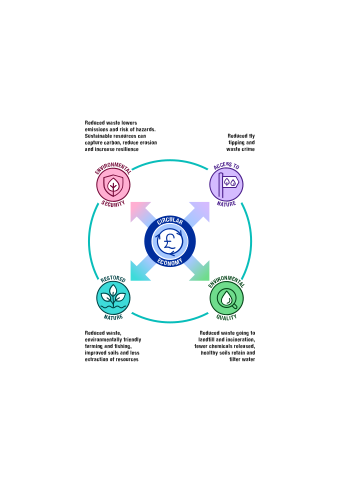
Figure 6: How creating a more circular economy supports the EIP
We are creating a more circular economy
A circular economy replaces the linear make, use and throw model. Sharing, repairing, refurbishing, remanufacturing and recycling creates a closed loop that gives products and materials a new life again and again.
Creating a more circular economy means less waste ending up in landfill and fewer greenhouse gas emissions. It means resilience in the face of global supply chain shocks, which is essential for our national security. And it means investment into new product and processing infrastructure, creating skilled green jobs and economic growth up and down the country (see Figure 6).
As part of this, we are responsibly managing resources to provide healthy soils and more sustainable timber and fishing industries, conserving our genetic resources, and setting out our plans to strengthen sustainable food production.
Goal 5: Waste
We will minimise waste by designing it out of the system, reusing and recycling materials wherever possible.
We are determined to improve economic growth and resilience by transitioning to a circular economy and turning waste into economic potential.
We are working with businesses to make this change. Together, we are developing a circular economy growth plan that will set out how we will progress this transition and provide businesses with the direction and certainty needed to invest in new infrastructure.
The plan will build on the transformative collection and packaging reforms, which champion circular economy principles like reduction, reuse, and recycling of materials. The reforms equip all 4 nations of the UK to lead a managed transition towards circularity and minimise the environmental impacts of packaging waste. Business-led organisations are delivering this change.
We have already taken other steps to transition the economy, such as the ban on the sale of single use vapes. Grant funding is increasing the capability and capacity for managing farm surpluses by the redistribution sector. Increasing the amount of waste that we recycle and preventing waste ensures that resources stay in circulation. This reduces rubbish from ending up in landfill and the amount of virgin material that we consume. Tackling waste crime will clean up our streets and communities and support the developing circular economy.
The EIP does not pre-empt the circular economy growth plan but recognises the link to goals on waste and resources.
Minimising waste
Each year, we burn 12 million tonnes of waste collected by councils and throw away £22 billion in edible food (Local authority collected waste management, Defra 2025).
To close the loop of the circular economy, we need to ensure that we redirect the vast majority of what currently ends up as residual, black bag, waste and reprocess it to its full potential. This reduces our reliance on finite resources, saves unnecessary costs and decreases the greenhouse gas emissions and environmental damage that comes from processing.
Remedying this requires changing packaging and product design, keeping products and materials in circulation for longer, and making it easier for people to segregate and recycle their waste. This requires collaboration between businesses, local authorities, environmental groups, government and the public.
We have 8 interim targets for the Environment Act waste target. These will be achieved mainly through the delivery of our collection and packaging reforms. More information about the interim targets is available in the target delivery plans.
Commitment 48:
Ensure that by December 2030 the total mass of:
- residual waste excluding major mineral waste in the most recent full calendar year does not exceed 437kg per capita
- residual waste excluding major mineral waste in the most recent full calendar year does not exceed 25.5 million tonnes
- residual municipal waste in the most recent full calendar year does not exceed 333kg per capita
- residual municipal plastic waste in the most recent full calendar year does not exceed 42kg per capita
- residual municipal paper and card waste in the most recent full calendar year does not exceed 74kg per capita
- residual municipal metal waste in the most recent full calendar year does not exceed 10kg per capita
- residual municipal glass waste in the most recent full calendar year does not exceed 7kg per capita
(These are Environment Act interim targets.)
Actions for commitment 48:
- Implement Extended Producer Responsibility for packaging (pEPR) to move the cost of dealing with household packaging waste to packaging producers. Responsible: PackUK (Defra), Environment Agency (EA)
- Instruct PackUK, the pEPR scheme administrator, to recover pEPR money paid to local authorities that are not spent on waste management services. This will ensure sufficient investment for improving recycling performance. Responsible: Defra
- Introduce the Deposit Return Scheme for drinks containers from October 2027. This will include single-use drinks containers from 150ml to 3 litres made of polyethylene terephthalate plastic, steel, and aluminium. Responsible: Defra, Deposit Management Organisation, EA
- Introduce Simpler Recycling in England from 2025, ensuring the same recyclable waste streams are collected for recycling from all households and workplaces. Responsible: Defra, local authorities, businesses
- Implement the Design for Life roadmap to transition the UK away from all avoidable single-use medtech products by 2045.Responsible: DHSC
- Introduce measures to drive the reduction and near-elimination of biodegradable municipal waste to landfill from 2028. We will support this through the collection and packaging reforms. Potential options beyond this include expanding the list of separately collected materials that are banned from landfill without some form of treatment process to include paper and card, food, garden waste, wood and textiles. Responsible: Defra, EA
- Pursue the near elimination of biodegradable non-municipal waste to landfill from 2028, identifying during 2026 which further wastes could be restricted from entering landfill. The circular economy growth plan will set out options to promote greater circularity in sectors which will be key to reducing residual waste, including that entering landfill. Responsible: Defra
Commitment 48d:
Ensure that by December 2030, the total mass of residual municipal food waste in the most recent full calendar year does not exceed 64kg per capita.
(This is an Environment Act interim target.)
Action for commitment 48d:
- Introduce separate food waste collections for all households from 2026. Responsible: Defra, local authorities
Removing criminal threats to a circular economy
Waste crime costs the economy £1 billion every year through evaded tax, lost legitimate business and environmental and social harm (Annual report and accounts for the financial year 2022 to 2023, Environment Agency 2023). It blights communities and damages the environment.
The government is committed to tackling waste crime, including illegal dumping and waste sites, misdescription of waste, producer responsibility fraud and illegal exports. We will improve regulation, bring certainty and a level playing field between operators, encourage investment in new technology and infrastructure, and tackle the gap of 23% in evasion from the duty to pay landfill tax (Landfill Tax fund: Backbench Business Debate, House of Commons Library 2023).
The latter results in approximately £150 million a year lost in tax revenue and taxpayers are forced to foot the bill (Measuring tax gaps 2025 edition: tax gap estimates for 2023 to 2024, HMRC 2025). We do not want freeloaders to undercut those playing by the rules.
Commitment 49:
Reduce illegal waste sites from 2023 to 2024 levels by 2029 to 2030.
Actions for commitment 49:
- Stop criminals using permit exemptions to hide illegal waste activity by removing 3 permit exemptions and tightening 7 more, stop allowing multiple exemptions on a single site or on sites with a permit, and introduce record-keeping requirements. Responsible: Defra, EA
- Reform carriers, brokers and dealers regulation by moving into the tougher environmental permitting system with stronger penalties to ensure that only the right people can transport and manage waste, making it easier for regulators to act against non-compliant operators. Responsible: Defra, EA
- Introduce a digital waste tracking service to modernise existing waste record keeping from 2026 to enable regulators to better detect illegal activity and tackle waste crime. Responsible: Defra, EA
Commitment 50:
Reduce fly-tipping incidents from local authority reported 2023 to 2024 levels by 2029 to 2030.
Action for commitment 50:
- Publish guidance in early 2026 to support local councils to seize and crush more vehicles used for fly-tipping, including using new technologies. Responsible: Defra, local authorities
Transitioning to a circular economy
We have convened a circular economy taskforce, formed of experts from across government, industry, academia and civil society, to help us drive forward delivery and develop a plan for delivering our circular economy ambitions for England.
The taskforce is working with businesses to assess how we can create the best possible conditions for success and fundamentally transform our economy to deliver greater value for money across the supply chain.
The plan will set out the biggest opportunities to support growth in sectors right across the economy, including: - agrifood - built environment - chemicals and plastics - electrical and electronic equipment - textiles - transport
It will include a vision, goals and indicator framework and will detail the interventions that we and others will make. The work led by the Green Finance Institute and Worldwide Fund for Nature to develop nature positive pathways will complement this, prioritising agrifood and built environment, alongside water as the first 3 systems to develop pathways.
This alignment will be supported by our strategic engagement with business through forums including the Council for Sustainable Business.
Commitment 51:
Publish the circular economy growth plan in early 2026, followed by its implementation.
Action for commitment 51:
- Monitor and evaluate progress towards circularity through the circular economy growth plan, showing how we expect government initiatives to effect change and achieve our wider goals and targets. Responsible: Defra, DESNZ
Monitoring and reporting approach
As part of the circular economy growth plan for England, we are developing progress indicators. In the interim, a suite of circular economy related indicators are available as official statistics.
The Environmental Indicator Framework (EIF) monitoring environmental change for Goal 5: Waste are:
- C1: Clean seas: marine litter
- J1: Carbon footprint and consumer buying choices
- J3: Municipal waste recycling rates
- J4: Residual waste arising by type and sector
- J6: Waste crime
Further detail on metrics and delivery contributions for the commitments in this goal and the goal theory of change is available in the EIP Monitoring Plan.
Illustrative plan for Goal 5
Goal 5: We are creating a more circular economy
Core strategies and plans: Circular economy plan, Design For Life Roadmap
Delivery partners: Businesses, Defra, Deposit Management Organisation, DESNZ, DHSC, EA, Local authorities
| Key commitments | Key actions |
|---|---|
| 48. Ensure that by December 2030 the total mass of: a. residual waste excluding major mineral waste in the most recent full calendar year does not exceed 437kg per capita. b. residual waste excluding major mineral waste in the most recent full calendar year does not exceed 25.5 million tonnes. c. residual municipal waste in the most recent full calendar year does not exceed 333kg per capita. d. residual municipal food waste in the most recent full calendar year does not exceed 64kg per capita. e. residual municipal plastic waste in the most recent full calendar year does not exceed 42kg per person. f. residual municipal paper and card waste in the most recent full calendar year does not exceed 74kg per capita. g. residual municipal metal waste in the most recent full calendar year does not exceed 10kg per capita. h. residual municipal glass waste in the most recent full calendar year does not exceed 7kg per capita. (These are Environment Act interim targets) |
• Implement Extended Producer Responsibility for packaging (pEPR) to move the cost of dealing with household packaging waste to packaging producers •Instruct PackUK, the pEPR scheme administrator, to recover pEPR money paid to local authorities that are not spent on waste management services. This will ensure sufficient investment for improving recycling performance • Introduce the Deposit Return Scheme for drinks containers from October 2027. This will include single-use drinks containers from 150ml to 3 litres made of polyethylene terephthalate plastic, steel, and aluminium. • Introduce Simpler Recycling in England from 2025, ensuring the same recyclable waste streams are collected for recycling from all households and workplaces • Implement the Design for Life roadmap to transition the UK away from all avoidable single use medtech products by 2045 • Introduce measures to drive the reduction and near-elimination of biodegradable municipal waste to landfill from 2028. We will support this through the collection and packaging reforms. Potential options beyond this include expanding the list of separately collected materials that are banned from landfill without some form of treatment process to include paper and card, food, garden waste, wood and textiles • Introduce separate food waste collections for all households from 2026 |
| 49. Reduce illegal waste sites from 2023 to 2024 levels by 2029 to 2030 50. Reduce fly-tipping incidents from local authority reported 2023 to 2024 levels by 2029 to 2030 |
• Stop criminals using permit exemptions to hide illegal waste activity by removing 3 permit exemptions and tightening 7 more, stop allowing multiple exemptions on a single site or on sites with a permit, and introduce record-keeping requirements • Reform carriers, brokers and dealers’ regulation by moving into the tougher environmental permitting system with stronger penalties to ensure that only the right people can transport and manage waste, making it easier for regulators to act against non-compliant operators • Introduce a digital waste tracking service to modernise existing waste record keeping from 2026 to enable regulators to better detect illegal activity and tackle waste crime • Publish guidance in early 2026 to support local councils to seize and crush more vehicles used for fly-tipping, including using new technologies |
| 51. Publish the circular economy growth plan for England in early 2026, followed by its implementation | • Monitor and evaluate progress towards circularity through the circular economy growth plan, showing how we expect government initiatives to effect change and achieve our wider goals and targets |
Goal 6: Resources
We will ensure that natural resources are produced, managed and consumed sustainably.
Our natural resources underpin our way of life. But these resources are finite. This scarcity can destabilise supply chains, raising costs and heightening inequality. Their extraction and use can damage the environment and cause – or exacerbate the effects of – climate change.
The sustainable production, management and consumption of resources is a vital part of our transition to a circular economy and ensuring that resources will continue to be there to keep growing our economy and provide British jobs.
Using resources sustainably means limiting overconsumption and only taking what we need. It means using existing resources when we can rather than relying on new ones and expanding the lifespan of what we do use. We can all contribute. For example, as consumers we can buy second-hand goods or use labelling schemes to inform our purchases, while businesses can work with their suppliers to select sustainable materials.
This goal focuses on timber, fishing, soil, genetic resources and our broader strategies for food and farming. Alongside this, we recognise the urgency to ensure that UK consumption of forest risk commodities is not driving deforestation overseas.
We also remain committed to the Glasgow Leader’s Declaration – led by the UK and signed at the United Nations Climate Change Conference26 – to halt and reverse forest loss and land degradation by 2030.
This goal will work in tandem with the work on a plan for the circular economy transition and the industrial strategy. It will grow the economy, create green jobs, protect our environment, and accelerate progress towards net zero.
Increasing the supply, harvesting and use of sustainable domestic timber
Sustainable domestic timber benefits our environment and economy. Well designed, well managed mixed and conifer woodlands which are UK Forestry Standard compliant provide important habitats for native species as well as being an important timber source. Timber can be used to decarbonise construction (as set out in the Timber in Construction Roadmap) and supports a circular economy, with fewer than 1% of timber and wood products in the UK going to landfill (What is a Whole Life Carbon Assessment?, Timber Development UK 2024).
However, the UK is losing conifer forests faster than they are being planted (Forestry Statistics 2024, Forest Research 2024). We are the second largest net importer of timber and wood products in the world (Forestry Statistics 2025, Forest Research 2025).
Yet, global demand for timber is expected to treble by 2050, putting pressure on supply chains (Global Timber Outlook 2025, Gresham House 2025). While imports will continue to play a primary role in securing our timber supply, there is an opportunity for homegrown timber to reduce our reliance on imports and support our energy infrastructure.
We want to support our domestic forestry and wood processing sectors to grow and innovate and move towards a circular forest economy in England. We must make it easier, quicker and more financially viable to grow trees. We must use tree breeding, species diversification and innovation in tree planting to make our forests more ecologically and economically resilient. And we must ensure that the sector has the skills, knowledge and capacity to make these changes.
Commitment 52:
Increase the proportion of conifer species contributing to national tree planting.
Actions for commitment 52:
- Leverage current grant schemes and green finance to increase conifer planting. Responsible: Defra, Forestry Commission (FC)
- Collaborate with local nature recovery strategies to encourage productive woodlands. Responsible: Defra, local authorities
Commitment 53:
Increase the use and manufacturing of hardwood species from 2024 levels.
Action for commitment 53:
- Invest in targeted innovations to harness private investment and develop more efficient ways to harness timber. Responsible: Defra, FC, private sector
Commitment 54:
Make sure there is sufficient capacity, skills and innovation in the timber and forestry sector to support tree planting and timber production.
Actions for commitment 54:
- Build resilience in the supply chain to extreme weather, biosecurity threats and economic shocks by supporting innovation, productivity and capital investment in tree and seed production. Responsible: Defra, FC
- Facilitate initiatives to enhance the quality, quantity and genetic diversity of domestically produced tree seed and planting stock. This includes investment in tree improvement programmes to select for resilience and productive traits, including through the Centre for Forest Protection and other Defra funded research. Responsible: Defra, FC, industry
- Work with key sector partners to implement actions in the Forestry Sector Skills Plan 2025, overcoming barriers to the take up and provision of forestry training at all levels. Responsible: Defra, FC, forestry industry
Commitment 55:
Increase the use of safe, best practice, high-performing timber in construction.
Action for commitment 55:
- Implement actions in the Timber in Construction Roadmap 2025. This roadmap sets out how the government will promote the use of timber to help reduce embodied carbon in the built environment and at end-of-life, and drive investment into tree planting, forest management and domestic supply chains. It will create new green jobs and industries. Responsible: Defra, FC, other government departments, private sector
Managing fisheries sustainably
The UK is a proud maritime nation and independent coastal state. This government will always support our fishing fleet, the seafood it produces, and the communities it supports. We recognise that a thriving fishing industry depends on healthy fish stocks, which is why sustainable fisheries management is at the heart of our approach.
The government has responsibilities under domestic and international law and is committed to sustainably managing our fisheries. Meeting our responsibilities will support vibrant, profitable, and sustainable fishing industries alongside a healthy and productive marine environment.
We are working closely with the fishing and seafood sectors to promote their sustainability and economic productivity. Through fisheries negotiations with other coastal states, our objective is to set Total Allowable Catches in line with the best available scientific advice. This will make sure that stocks are managed over the long term within sustainable limits.
Complementing this, our Fisheries Management Plans (FMPs) set out how to maintain or restore fish stocks to sustainable levels so that fishing can thrive for generations to come.
Commitment 56:
Manage our marine fisheries in a way designed to maintain or restore stocks to a sustainable level to achieve the environmental, economic and social commitments as required under the Joint Fisheries Statement and Fisheries Act 2020.
Actions for commitment 56:
- Deliver the FMP programme, which focuses on the sustainable management of stocks. This includes the publication of the next 5 plans in English waters by the end of 2025 and continuing to deliver the actions in the 6 existing published plans. Our delivery partners are leading on the preparation of a further 4 FMPs, to be published by the end of 2026. Responsible: Defra, delivery partners
- Negotiate with our international fisheries partners to seek to increase the overall number of stocks fished at sustainable levels. Responsible: Defra
- Extend the requirements for Vessel Monitoring Systems to all English-licensed fishing vessels and non-English fishing vessels operating in English waters this year. This is to ensure regulators have as accurate as possible an understanding of the spatial activities of all vessels, enabling better informed management of the marine environment. Responsible: Defra
- Deliver the Fishing and Coastal Growth Fund, investing £360 million over the next 12 years to support the next generation of fishermen and breathe new life into our coastal communities. The investment will secure our fishing industry for decades to come and make it fit for the 21st century. We will work with the industry to target investment where it matters most. Responsible: Defra
Managing, improving and protecting soil responsibly
Soil is one of our greatest natural assets. It plays a vital role in supporting biodiversity, water storage and quality, air quality, food security and contributing to climate change mitigation and adaptation. However, soils have been degraded, threatening the vital ecosystem services that they provide. Moreover, soils are under multiple stressors – from erosion and contamination to intensive farming – and once vital soil functions are lost, they often cannot be restored entirely.
The way we manage our soils has a significant impact on soil health: the physical, chemical and biological condition of the soil determining its capacity to provide ecosystem services.
Sustainable soil management can help maintain and improve the ecosystem services that soil provides. It also supports a circular economy by promoting resource efficiency, reducing waste and regenerating natural systems. Improving soil health is crucial to increasing soil resilience to climate change impacts and contributing to food security.
Responsible management, protection and improvement of this natural and non-renewable resource is not just an outcome; it is an enabler for many policies across the whole EIP and supports numerous other goals.
Commitment 57:
Bring at least 40% of England’s agricultural soil into sustainable management by 2028, increasing to 60% by 2030.
Actions for commitment 57:
- Publish principles of sustainable soil management by 2026. Encourage farmers and land managers to sustainably manage and protect their soils through agri-environment schemes Responsible: Defra
- Publish a methodology and guidance for consistent soil health monitoring by 2026, empowering farmers and land managers to establish baselines and implement sustainable soil management practices. Responsible: Defra
Commitment 58:
Improve the quality, consistency and availability of soil data by 2029.
Actions for commitment 58:
- Publish an initial statistic of soil health for England during 2026, aim to establish a soil health baseline by 2029. Responsible: Defra
Ensuring sustainable and resilient food production
Farming and food security are foundations of a healthy economy and environment. The upcoming farming roadmap will set the course of farming over the next 25 years. Our food strategy will define a vision that protects British farmers and will enable government, civil society and the food industry to work together to keep costs down, put downward pressure on food prices and make a generational change in our relationship with food.
The government will invest more than £2.7 billion per year in sustainable farming and nature recovery from 2026 to 2027 until 2028 to 2029. This will be an average of £2.3 billion through the Defra Farming and Countryside Programme. This will boost productivity and protect the natural ecosystems underpinning food production and broader economic activity, supporting food and economic security. This includes increasing support for farm wildlife through Environmental Land Management.
We are maintaining and enhancing the diversity of our plant and animal genetic resources, from crop plants to native livestock. This will preserve valuable traits to help future-proof the profitability of our sectors and maintain our native breeds.
Commitment 59:
Create and implement a new farming roadmap.
Action for commitment 59:
- Create the farming roadmap, setting out the government’s vision for England’s farming system in 2030 and 2050 and the long-term strategy for achieving this. This will provide clarity and stability for farmers, land managers and the wider supply chain. Responsible: Defra
Commitment 60:
Create and implement a new food strategy.
Action for commitment 60:
- Transform our food system through achieving the 10 priority outcomes of the food strategy. This will maintain food security by building resilience in the face of climate shocks, geopolitical changes and protect the supply chain which keeps us fed. It will support the farming roadmap to improve the impact of farming on soil, nature and biodiversity, as well as sustainable fisheries management in accordance with the Joint Fisheries Statement and Fisheries Act 2020. Responsible: Defra
Commitment 61:
Strengthen the conservation of genetic resources by 2030.
Actions for commitment 61:
- Work with stakeholders and update the UK Farm Animal Genetic Resources inventory, Breeds at Risk list and Native Breeds at Risk list, or their equivalents, annually. This will help monitor changes in native livestock populations, identify trends and potential threats and safeguard livestock diversity to conserve native breeds most at risk. Responsible: Defra
- Conserve plant genetic resources using gene banks and increase the utilisation of plant genetic resources through research. Responsible: Defra
Monitoring and reporting approach
We have a suite of indicators that measure progress against this goal. These include:
- Forest Research annual forestry statistics, which measure progress on timber supply
- The Environmental Indicator Framework (EIF)
The EIF indicators monitoring environmental change for Goal 6: Resources are:
- C10: Productive seas: fish and shellfish stocks safe and environmentally sustainable
- C11: Productive seas: status of sensitive fish and shellfish stocks
- E1: Area of productive agricultural land
- E2: Volume of agricultural production
- E3: Volume of inputs used in agricultural production
- E4: Efficiency of agricultural production measured by Total Factor Productivity
- E5: Percentage of the annual growth of trees in English woodlands that is harvested
- E6: Volume of timber brought to market per annum from English sources
- E7: Healthy soils
- J2: Raw material consumption
Further detail on metrics and delivery contributions for the commitments in this goal and the goal theory of change is available in the EIP Monitoring Plan.
Illustrative plan for Goal 6
Goal 6: We will ensure that natural resources are produced, managed and consumed sustainably.
Core strategies and plans: Farming Roadmap, Fisheries Management Plans, Food Strategy, Timber in Construction Roadmap
Delivery partners: Defra, FC, local authorities
| Key commitments | Key actions |
|---|---|
| 52. Increase the proportion of conifer species contributing to national tree planting 53. Increase the use and manufacturing of hardwood species from 2024 levels 54. Make sure there is sufficient capacity, skills and innovation in the timber and forestry sector to support tree planting and timber production 55. Increase the use of safe, best practice, high-performing timber in construction |
• Leverage current grant schemes and green finance to increase conifer planting. • Collaborate with local nature recovery strategies to encourage productive woodlands. • Invest in targeted innovations to harness private investment and develop more efficient ways to harness timber • Work with sector key partners to implement actions in the Forestry Sector Skills Plan 2025, overcoming barriers to the take up and provision of forestry training at all levels • Implement actions in the Timber in Construction Roadmap 2025. This roadmap sets out how the government will promote the use of timber to help reduce embodied carbon in the built environment and at end-of-life, and drive investment into tree planting, forest management and domestic supply chains. It will create new green jobs and industries |
| 56. Manage our marine fisheries in a way designed to maintain or restore stocks to a sustainable level to achieve the environmental, economic and social commitments as required under the Joint Fisheries Statement and Fisheries Act 2020 | • Deliver the Fisheries Management Plans programme, which focuses on the sustainable management of stocks. This includes the publication of the next 5 plans in English waters by the end of 2025 and continuing to deliver the actions in the 6 existing published plans. Our delivery partners are leading on the preparation of a further 4 FMPs, to be published by the end of 2026 • Deliver the ‘Fishing and Coastal Growth Fund’, investing £360 million over the next 12 years to support the next generation of fishermen and breathe new life into our coastal communities. The investment will secure our fishing industry for decades to come and make it fit for the 21st century. We will work with the industry to target investment where it matters most |
| 57. Bring at least 40% of England’s agricultural soil into sustainable management by 2028, increasing to 60% by 2030 58. Improve the quality, consistency and availability of soil data by 2029 |
• Publish principles of sustainable soil management by 2026. Encourage farmers and land managers to sustainably manage and protect their soils, through agri-environment schemes • Publish a methodology and guidance for consistent soil health monitoring by 2026, empowering farmers and land managers to establish baselines and implement sustainable soil management practices • Publish an initial statistic of soil health for England during 2026, aim to establish a soil health baseline by 2029 |
| 59. Create and implement a new farming roadmap 60. Create and implement a new food strategy 61. Strengthen the conservation of genetic resources by 2030 |
• Create the farming roadmap, setting out the government’s vision for England’s farming system in 2030 and 2050 and the long-term strategy for achieving this. This will provide clarity and stability for farmers, land managers and the wider supply chain • Transform our food system through achieving the 10 priority outcomes of the food strategy. This will maintain food security by building resilience in the face of climate shocks, geopolitical changes and protect the supply chain which keeps us fed. It will support the farming roadmap to improve the impact of farming on soil, nature and biodiversity, as well as sustainable fisheries management in accordance with the Joint Fisheries Statement and Fisheries Act 2020 |
Chapter 4: Environmental security
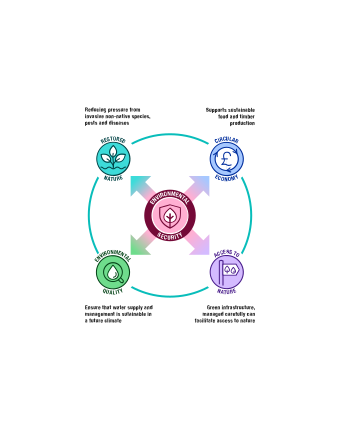
Figure 7: How environmental security supports the wider EIP
We are protecting environmental security
We need to protect and restore nature to maintain our environmental security.
We want to create a safe, healthy environment that supports our communities and gives us economic stability, while addressing the challenges posed by climate change, biosecurity risks and environmental hazards.
We are leading progress internationally to reduce emissions and adapt to the effects of climate change and, closer to home, we are safeguarding our biosecurity to protect the environment, plants, animals and people in it.
We must plan for and manage the impact of climate change on ourselves, our infrastructure, the economy, and on land, water and air (see Figure 7). Supporting our natural environment to adapt to climate change is imperative to achieve restored nature, improved water quality and healthy soils. Within this, nature-based solutions have a key part in making agriculture and food production more resilient.
Goal 7: Climate change
We will reduce greenhouse gas emissions to accelerate to net zero and work to prepare the natural environment for the effects of climate change.
Climate change is a significant risk now and in the future. We can expect more frequent heatwaves and droughts, more flooding from increased rainfall, sea levels to rise, and greater subsidence and coastal erosion (Consequences of climate change, European Commission 2025). Climate hazards can also lead to increased risks from pests, diseases and invasive non-native species.
Climate change impacts our lives, our health and our natural environment, with farmers and fishermen feeling the impacts acutely. It affects all areas of government policy, from migration to national security.
A thriving natural environment and stable climate are the foundations of a strong economy. It is essential we continue to adapt, whilst mitigating future impacts caused by past emissions.
The Climate Change Act 2008 sets out the legal requirement to reach net zero by 2050, reducing the level of climate change we need to adapt to in future.
We will use future-facing carbon budgets to continue progress towards this target and our international commitments under the United Nations Framework Convention on Climate Change. To date, we have published plans to deliver the fourth (2023 to 2027), fifth (2028 to 2032) and sixth (2033 to 2037) carbon budgets.
The Carbon Budget and Growth Delivery Plan, published on 29 October, sets out how the UK will continue to reduce emissions in a way that lowers bills and secures good jobs, in line with the landmark 2008 Climate Change Act. Looking ahead, the government will set Carbon Budget 7 by June 2026, in line with statutory duties.
The Climate Change Act 2008 also sets the requirement for the Defra Secretary of State to lay a report before Parliament with an assessment of the risks for the UK of the current and predicted impacts of climate change. The National Adaptation Programme (NAP) sets out our response to the risk assessment which legally must include the objectives, proposals, policies and their timescales. How we adapt to our changing climate is a whole government effort, led and coordinated by Defra. We will publish the fourth NAP in 2028.
System connections
As the environment is a complex system, the EIP is interrelated. This goal should be read alongside the following chapters to fully understand our ambitions:
-
Goal 1: Restored nature
Climate adaptation and mitigation are interrelated with restoring nature, including support for farm wildlife, increased tree cover, protected marine and land habitats and the protection of salt marshes -
Goal 6: Resources
The sustainable management of soil is key for climate adaptation and to reduce pressure on the environment
Preserving and enhancing nature’s potential to capture and store carbon and reduce greenhouse gas emissions
Nature-based solutions and sustainable land-use practices are critical to meeting our net zero target.
Natural habitats provide carbon sinks and stores that are crucial for climate, biodiversity and nature. We must create, protect and restore our land to increase carbon sequestration. This means targeting some incentives towards landscapes with the biggest potential to address climate change, delivered through the Land Use Framework and wider spatial prioritisation.
We must manage land sustainably and ensure it is adaptable and resilient to future challenges. This includes agricultural practices which must support food production while delivering nature restoration and decarbonisation. Trees, when properly integrated into a farm business, provide multiple benefits to farms while allowing the main agricultural production to continue.
They can offer additional products such as timber, fruit or nuts, store carbon, improve biodiversity, mitigate against floods and improve soil health.
We have also extended the protections to burning on peatlands to reduce harmful air pollution, lower flooding risks, and encourage landowners to use more sustainable forms of land management. These will lock in carbon and allow nature to thrive.
Coastal and marine habitats like saltmarshes and seagrasses are important carbon stores. They protect against flooding, provide nursery grounds for fish species, and improve water quality.
Defra is working with DESNZ and devolved governments through the UK Blue Carbon Evidence Partnership to better understand and value these habitats. This includes filling evidence gaps and producing a roadmap to potentially include saltmarsh in the UK’s greenhouse gas inventory.
Commitment 62:
Reduce and report on carbon emissions from farming and agricultural practices in line with government’s Carbon Budgets 4, 5 and 6 (2023 to 2037).
Actions for commitment 62:
- Support farmers and land managers to decarbonise agricultural emissions through advice, regulations and incentives to adopt sustainable land-management approaches, new technology, and innovative practices. Responsible: Defra
- Continue to internally monitor uptake of relevant actions through agreements under our farming schemes and publish data on a quarterly basis, as calculated from agreements data from the Rural Payments Agency. Responsible: Defra
- Review Farming and Countryside Programme objectives annually to ensure alignment with carbon budget delivery requirements. Responsible: Defra
- Work with industry to reduce methane emissions from livestock such as through our existing Animal Health and Welfare Pathway, and through new support mechanisms to stimulate the market and encourage uptake of new technologies like methane suppressing feed products from 2025. Responsible: Defra
- By 2028, develop and publish new quantified assessments for how at least 6 non-peat habitats – specifically, species-rich grasslands, floodplain mosaic habitats, saltmarsh, hedgerows and scrub – contribute to carbon storage and sequestration, with linked assessments of their biodiversity. Responsible: Natural England (NE)
- Develop guidance setting out minimum technical requirements that farm carbon accounting tools should meet to generate an actionable farm carbon audit, as well as a suite of standard calculation methodologies to support farm carbon accounting tools, by 2028. Responsible: Defra
- Work with industry (through the Defra Food Data Transparency Partnership) to better assess the environmental impact of food and drink across supply chains by standardising priority environmental footprint methodologies, including for carbon emissions, by 2030 and creating governance mechanisms for data sharing. Responsible: Defra
Commitment 63:
Restore approximately 280,000 hectares of peatland in England by 2050.
Actions for commitment 63:
- Legislate for a ban on the sale of peat and peat containing products when parliamentary time allows. Responsible: Defra
- Invest £85 million by 2030 in improving and restoring our peatlands, supporting us in our long-term ambitions to unblock delivery for up to 23MtCO2e savings by 2050. Responsible: Defra
- Fund water infrastructure, facilitation grants and paludiculture trials. This funding will enable farmers and land managers to make changes to their water management and undertake more sustainable actions on peat. Responsible: Defra, Environment Agency (EA), NE
- Work with partners, farmers and land managers to restore 40,000 hectares of peat before April 2030. The Nature for Climate Peatland Grant scheme will continue until March 2027. Peatland restoration will then be supported by Landscape Recovery and Countryside Stewardship, which will provide long-term funding to support large-scale restoration projects and plan future restoration projects. Responsible: Defra, EA, NE
- Mobilise private investment, including supporting the emergence of voluntary marketplaces for peat such as the Peatland Code. Responsible: Defra
- Publish the Peatland Restoration Register in 2026 as part of further investment in improving the new England Peat Map. The register will be a centralised geospatial record of restoration projects across England, allowing us to track progress and make it easier to identify peatland areas requiring restoration management. Responsible: Defra, NE
Commitment 64:
Increase the number of trees on farms, with a focus on silvoarable (trees with crops) and silvopastoral (trees with livestock) agroforestry systems.
Action for commitment 64:
- Incentivise land managers to integrate tree planting and food production into individual fields through our agri-environment schemes. Responsible: Defra
System connections
The following commitment in Goal 1: Restored nature is also key to delivery:
- Commitment 11: Increase England’s tree canopy and woodland cover by 0.33% of land area by December 2030 from the 2022 baseline of 14.9%. (Equivalent to a net increase of 43,000 hectares.) (This is an Environment Act interim target.)
See the Restored nature, Resources and Access to nature goals for more information on delivery.
Delivering climate resilient environment outcomes
The 2025 adaptation progress report published by the Climate Change Committee (CCC) was clear that significant progress on adaptation is required to ensure that the UK is climate resilient.
In recognition of this, the government is investigating the feasibility of stronger objectives on climate resilience which support work across government and the wider economy up to and beyond the next NAP.
Commitment 65:
Integrate climate resilience into decision making across the EIP programme to support the delivery of our outcomes in the context of climate change.
Actions for commitment 65:
- Develop new measurable and timebound climate resilience objectives and standards to support the next National Adaptation Programme (NAP4). Clarify the underpinning planning assumptions for the objectives and standards and develop suitable indicators of progress. Responsible: Defra
- Publish NAP4 in 2028 to report relevant actions and policies that will contribute towards our EIP goals and our legal requirements under the Climate Change Act 2008. Responsible: Defra
- Promote the use of the new monitoring, evaluation and learning framework by the end of 2025. It will provide an evidence-based framework for measuring progress on adaptation and evaluating policy in the context of climate impacts, with supporting resources and guidance. Responsible: Defra
Commitment 66:
Enhance the adaptive capacity and resilience of the treescape by increasing its extent, connectivity and diversity, improving its condition and conserving the genetic diversity within and between species.
Actions for commitment 66:
- Explore options to increase the diversity of climate-resilient forestry species. Identify core future species for productive forestry to focus research and tree breeding on, supported by an enhanced regulatory framework for emerging forestry species by 2028. Responsible: Defra, FC
- Make sure that new woodlands have current and future climate conditions considered in their design and species choice. Consider options for spatial targeting of woodland creation grants for resilient woodlands, integrating with the Land Use Framework. We will evaluate grant applications for new woodland by 2030 to assess progress against this action. Responsible: Defra, FC
- Revise the UK Forestry Standard Practice Guide on building wildfire resilience into forest management planning by 2028. Responsible: FC
See Goal 1: Restored nature commitments 9, 10, 11 and 12 for more information on tree planting and woodland management targets.
Commitment 67:
Make terrestrial protected site designation and management more dynamic and adaptive to the changing climate.
Actions for commitment 67:
- Complete initial climate change risk assessments for all Sites of Special Scientific Interest (SSSIs) as part of condition assessments by 2032. Responsible: NE
- Implement climate change adaptive delivery plans for at least 10% of SSSIs identified as being at high risk by 2030. Responsible: NE
- Further develop the adaptive management for features identified to be at high risk on NE-managed National Nature Reserves to support management planning by April 2026. Responsible: NE
System connections
The following commitments in Goal 1: Restored nature are also key to delivery:
- Commitment 17: Make sure at least 49% of Marine Protected Areas (MPA) protected features are in favourable condition and at least 46% in recovering condition, by December 2030 (This is an Environment Act 2021 interim target)
- Commitment 13: By 2043 increase saltmarsh by 15% (compared to 2009 levels, seagrass by 15% compared to 2024 levels, and create functional oyster reef habitat at ecosystem scales in 5 to 8 suitable English water bodies
See the Restored nature goal for more information.
Making society, infrastructure and the economy more resilient to the impacts of climate change
We have clear pathways to reduce emissions from sectors like waste, wastewater and fluorinated gases (F-gases). Alongside this, the government’s Clean Power 2030 Action Plan is accelerating the transition to low-carbon energy.
Our aim is to drive system-wide change. Treating all sectors as interconnected will help identify the most effective, joined-up solutions for cutting emissions and reaching net zero.
This plan recognises the vital role of the public. From the choices people make about food, travel and home energy use to how they engage with nature. Public action is key to both reducing emissions and adapting to climate impacts already underway.
Commitment 68:
Support the Clean Power 2030 pillar of the government’s clean energy superpower mission whilst protecting and enhancing the environment.
Commitment 69:
Support the Accelerate to Net Zero pillar of the clean power mission by reducing carbon emissions from other environment-related sectors beyond land-use and marine habitats to ensure reporting in line with the government’s Carbon Budgets 4, 5 and 6 (2023 to 2037).
Actions for commitment 68 and 69:
- Aid the National Energy System Operator to create a Strategic Spatial Energy Plan (SSEP) to align the rapid deployment of energy infrastructure with wider land use objectives. Throughout its development, the SSEP will consider wider demands on land and sea, including food production, transport, water supply, nature recovery and fisheries. The development of the SSEP is being informed by the analysis which underpins the Land Use Framework. The final methodology for the SSEP has now been published. Responsible: DESNZ, Defra
- Accelerate deployment of offshore wind through the Offshore Wind Environmental Improvement Package. We have consulted on proposed environmental compensation measures reforms for offshore wind for the sector this year and will launch a new Marine Recovery Fund by the end of 2025. Responsible: Defra
See Goal 5: Waste for actions to support the reduction of carbon emissions in the waste sector, including the move towards a circular economy.
Commitment 70:
Enable societal shift towards sustainable practices, to contribute to achieving net zero and adapting our society and environments to the impacts of climate change.
Actions for commitment 70:
- Provide UK Research and Innovation with £15 million to deliver a research programme to fund world-leading research projects to help improve the UK’s resilience to climate change impacts, including new approaches to managing climate impacts in urban areas, on vulnerable people and supporting increasing private investment in climate adaptation. Responsible: Defra
- Publish the transport adaptation strategy, following a consultation in 2024, aimed at enabling progress ahead of NAP4. Responsible: Department for Transport
See Enabling sustainable behaviour in Section 2 for more information on sustainable choices.
Commitment 71:
Enable business to contribute towards achieving net zero and adapt our economy and environments to the impacts of climate change.
Actions for commitment 71:
- Partner with business on an ongoing, cross-government basis to jointly work towards positive environmental outcomes. The Net Zero Council will help address cross-economy challenges and maximise opportunities. Ensure that objectives of the Council for Sustainable Business, which advises Defra on how businesses can help deliver the EIP, are aligned. Responsible: DESNZ, Defra
- Set out how the government’s integrity principles for voluntary carbon and nature markets, published in 2024, could be applied through policy, guidelines and regulatory oversight. This will build on the consultation paper published in April 2025, which the government will publish a response to early in 2026. Responsible:Defra, DESNZ, HMT
- Enable businesses to take informed decisions on sustainability through more consistent and accurate data on their emissions. For example, develop standard methods and infrastructure to improve how emissions from food and drink are understood across the supply chain through the Defra Food Data Transparency Partnership (FDTP). Research recommendations on standardised product level emissions are expected in 2025 and new models and guidance for farm level emissions are expected in 2028. Responsible: Defra
Monitoring and reporting approach
The Environmental Indicator Framework (EIF) indicators monitor environmental change for Goal 7: Climate change are:
- A2: Emissions of greenhouse gases from natural resources
- J1: Carbon footprint and consumer buying choices
Comprehensive monitoring and evaluation plans are published in government’s Carbon Budget and Growth Delivery Plan, and NAPs and we are developing suitable indicators to measure progress against NAP
The improved new England Peat Map and a Peat Restoration Register will provide a baseline for monitoring peat condition and location.
Our monitoring work in the Farming and Countryside Programme involves developing and tracking metrics, including how our actions are contributing to net zero.
Further detail on metrics and delivery contributions for the commitments in this goal and the goal theory of change is available in the EIP Monitoring Plan.
Illustrative plan for Goal 7
Goal 7: We will reduce greenhouse gas emissions to accelerate to net zero and work to prepare the natural environment for the effects of climate change.
Core strategies and plans: Carbon Budgets, National Adaptation Programme
Delivery partners: Defra, DBT, FC, NE, National Energy System Operator (NESO), UK Emissions Trading Scheme (ETS) Authority
| Key commitments | Key actions |
|---|---|
| 62. Reduce and report on carbon emissions from farming and agricultural practices in line with government’s Carbon Budgets 4, 5 and 6 (2023 to 2037) 63. Restore approximately 280,000 hectares of peatland in England by 2050 64. Increase the number of trees on farms, with a focus on silvoarable (trees with crops) and silvopastoral (trees with livestock) agroforestry systems |
• Support farmers and land managers to decarbonise agricultural emissions through advice, regulations and incentives to adopt sustainable land-management approaches, new technology, and innovative practices • Work with industry to reduce methane emissions from livestock such as through our existing Animal Health and Welfare Pathway, and through new support mechanisms to stimulate the market and encourage uptake of new technologies like methane suppressing feed products from 2025 • Legislate for a ban on the sale of peat and peat containing products when parliamentary time allows • Invest £85 million in improving and restoring our peatlands, supporting us in our long-term ambitions to unblock delivery for up to 23 million tonnes of carbon dioxide equivalent (MtCO2e) savings by 2050 • Publish the Peatland Restoration Register in 2026. The register will be a centralised geospatial record of restoration projects across England, allowing us to track progress and make it easier to identify peatland areas requiring restoration management • Incentivise land managers to integrate tree planting and food production into individual fields through our agri-environment schemes |
| 65. Integrate climate resilience into decision making across the EIP programme to support the delivery of our outcomes in the context of climate change 66. Enhance the adaptive capacity and resilience of the treescape by increasing its extent, connectivity and diversity, improving its condition and conserving the genetic diversity within and between species 67. Make terrestrial protected site designation and management more dynamic and adaptive to the changing climate |
• Develop new measurable and timebound climate resilience objectives and standards to support the next National Adaptation Programme (NAP4). Clarify the underpinning planning assumptions for the objectives and standards and develop suitable indicators of progress • Promote the use of the new monitoring, evaluation and learning framework by the end of 2025. It will provide an evidence-based framework for measuring progress on adaptation and evaluating policy in the context of climate impacts, with supporting resources and guidance • Explore options to increase the diversity of climate-resilient forestry species. Identify core future species for productive forestry to focus research and tree breeding on, supported by an enhanced regulatory framework for emerging forestry species by 2028 • Complete initial climate change risk assessments for all Sites of Special Scientific Interest (SSSIs) as part of condition assessments by 2032 • Implement climate change adaptive delivery plans for at least 10% of SSSIs identified as being at high risk by 2030 |
| 68. Support the Clean Power 2030 pillar of the government’s clean energy superpower mission while protecting and enhancing the environment 69. Support the Accelerate to Net Zero pillar of the clean power mission by reducing carbon emissions from other environment-related sectors beyond land-use and marine habitats to ensure reporting in line with the government’s Carbon Budgets 4, 5 and 6 (2023 to 2037) |
• Aid the National Energy System Operator to create a Strategic Spatial Energy Plan (SSEP) to align the rapid deployment of energy infrastructure with wider land use objectives. Throughout its development, the SSEP will consider wider demands on land and sea, including food production, transport, water supply, nature recovery and fisheries. The development of the SSEP is being informed by the analysis which underpins the Land Use Framework. The final methodology for the SSEP has now been published • Accelerate deployment of offshore wind through the Offshore Wind Environmental Improvement Package. We have consulted on proposed environmental compensation measures reforms for offshore wind for the sector this year and will launch a new Marine Recovery Fund by the end of 2025 |
| 70. Enable societal shift towards sustainable practices to contribute to achieving net zero and adapting our society and environments to the impacts of climate change 71. Enable business to contribute towards achieving net zero and adapt our economy and environments to the impacts of climate change |
• Provide UK Research and Innovation with £15 million to deliver a research programme to fund world-leading research projects to help improve the UK’s resilience to climate change impacts including new approaches to managing climate impacts in urban areas, on vulnerable people and supporting increasing private investment in climate adaptation • Publish the transport adaptation strategy, following a consultation in 2024, aimed at enabling progress ahead of NAP4 • Partner with business on an ongoing, cross-government basis to jointly work towards positive environmental outcomes. The Net Zero Council will help address cross-economy challenges and maximise opportunities. Ensure that objectives of the Council for Sustainable Business, which advises Defra on how businesses can help deliver the EIP, are aligned |
Goal 8: Reducing environmental hazards
We will reduce the risk of harm to people, the environment and the economy from natural hazards.
Natural hazards can harm our health, the environment, and the economy.
As our climate continues to change, we are experiencing more frequent and intense wildfires, floods, and droughts (Climate change explained, DESNZ 2023). Temperatures and sea levels are rising (Climate change explained, DESNZ 2023). Biodiversity and wildlife are threatened as habitats are destroyed.
Environmental hazards already affect millions of us, and that number will grow. We must bring local communities, businesses, national and local governments together to build resilience and manage these risks.
We will use nature-based solutions where possible, recognising their benefits and maximising delivery against other targets. For example, planting trees to slow the flow of water and reduce flood risk, managing peatland that stores carbon, or creating natural water storage such as wetlands.
System connections
As the environment is a complex system, the EIP is interrelated. This goal should be read alongside the following chapter to fully understand our ambitions:
Goal 3: Water
Commitments in Goal 8 on strengthening resilience and adaptation to droughts, flooding, and coastal erosion risks, closely relate to our plans for the water sector, delivering commitment 34 on water resources management plans and commitment 24 on sustainable drainage systems (SuDS) in Goal 3.
Strengthening resilience and adaptation to drought
Hotter, drier weather and population growth mean that England faces water shortages.
Without action, there would not be enough water to meet the growing demands of our population. More severe droughts linked to climate change are set to leave parts of England facing significant water shortages by 2050, particularly in the southeast.
We will work with water companies to ensure they close the gap between supply and demand, give farmers and businesses the tools to build resilience to drought, address environmental impacts such as targeted peat recovery, and make sure the public are better informed about how they use water. On top of driving progress towards our targets, this will drive further economic growth.
Commitment 72:
Monitor the delivery of water company drought resilience measures annually and review every 5 years to ensure that by 2040 we meet the target of only needing emergency measures once in 500 years.
Actions for commitment 72:
- Implement the Environment Agency (EA) National Framework for Water Resources, using cross sector regional water resource groups’ work. The water industry is expected to deliver sustained reductions in leakage through active management, mains pipe renewals and supporting customers with customer supply pipe leakage. Regional groups have an important strategic role in monitoring and tracking overall water demand and leakage regionally, as part of their wider monitoring and adaptive planning approach. Responsible: EA, Regional water resources groups
- Deliver water resources management plans, through the water industry building new water resources infrastructure and delivering sustained reductions in leakage through active management, mains pipe renewals and supporting customers with customer supply pipe leakage. Responsible: Water companies
- Implement drought management actions in drought plans to ensure a secure water supply. Responsible: Water companies
- Deliver Local Resource Options screening studies to encourage farmers to work together to identify local water resilience solutions such as reservoirs and create new water abstractor groups. Responsible: Defra, EA, agricultural water users
Strengthening resilience and adaptation to flood and coastal erosion risk
Protecting communities around the country from flooding is a key priority. We have set up a Flood Resilience Taskforce to provide oversight of national and local flood resilience and preparedness ahead of and after the winter flood seasons.
Investment in flood and coastal defences is part of our Plan for Change. It will boost economic growth in local communities by protecting businesses and delivering new jobs while also helping nature adapt to increasing risk of flooding and coastal erosion due to climate change.
Building on record investment of £2.65 billion in 2024 to 2026, we will invest a further £4.2 billion over 3 years from April 2026 to construct new flood schemes and maintain and repair existing flood defences across the country.
Recognising the need to invest for the long-term, the government is providing certainty over the budget for flood and coastal erosion defences by committing £7.9 billion of capital (financial year 2026 to 2027 to financial year 2035 to 2036) for a new 10 year floods and coastal erosion investment programme, Taking together the £2.65 billion that will be invested by March 2026 and our £7.9 billion 10 year investment starting in the financial year 2026 to 2027, this government will invest more than £10.5 billion into our flood and coastal erosion defences by March 2036, benefitting nearly 900,000 properties.
Nature-based solutions are a key part of our approach to mitigating flood risk and coastal erosion. We will invest at least £300 million in natural flood management over 10 years – the highest figure to date for the floods programme. These changes will support projects that not only reduce flood risk but also deliver wider benefits to communities and nature.
We are also exploring setting a multi-decade target for flood risk management in line with prior recommendations made by the Climate Change Committee, National Audit Office and National Infrastructure and Service Transformation Authority.
We inherited flood assets in their worst condition on record, with 92% of the Environment Agency’s 38,000 high consequence assets at required condition, which is why an additional £108 million is being re-prioritised into asset maintenance in 2024 to 2026, ensuring an additional 14,500 properties will have their expected level of protection maintained or restored.
On 14 October 2025, following consultation, we announced major changes to our flood and coastal erosion funding policy. The new funding policy will optimise funding between building new flood projects and maintaining existing defences and will ensure that deprived communities continue to receive vital investment. We will use government funding to unlock investment from public, private and charitable sources, making every £1 of government investment go further.
Our work to improve coordination of flood response, strengthen our preparedness, warning, and informing service, and invest in our flood and coastal defences will better protect communities from flooding and coastal erosion across the country.
We are committed to building high-quality homes and creating places that increase climate resilience and promote nature recovery. Planning policy is clear about avoiding development in areas at the highest risk of flooding. Where this is unavoidable, development should be flood resilient, safe for its users for the development’s lifetime, not increase flood risk overall, and provide wider sustainability benefits.
We are also committed to ensuring that developments having drainage implications use SuDS to help reduce surface water flood risk and deliver wider benefits. Updated national standards for SuDS were published in June 2025, supporting the amendments to national planning policy in the December 2024 update to the National Planning Policy Framework. Further planned action on SuDS is set out at in Goal 3: Water.
Commitment 73:
Better protect 52,000 properties from flooding by March 2026.
Action for commitment 73:
- Invest a record £2.65 billion over 2 years, from April 2024 to March 2026 as part of the Plan for Change. In the first year the target of 25,000 was exceeded with over 27,500 properties better protected from flooding. Responsible: Defra, EA
Commitment 74:
Make sure that 92% of Environment Agency maintained flood and coastal risk management assets are at or above target condition by March 2026.
Action for commitment 74:
- Restore and repair existing high-consequence defences by the end of March 2026, including those damaged in storms over recent and ongoing flood events. Responsible: Defra, EA
Commitment 75:
Consider whether further reforms to the planning system are required to manage flood risk and coastal change in new developments as part of a planning reform consultation this year.
Action for commitment 75:
- Publish a consultation on further planning reform by the end of 2025, including potential changes to manage flood and coastal risk. Responsible: Ministry of Housing, Communities and Local Government (MHCLG), Defra, EA
Understanding the risks from wildfires and taking action to mitigate and adapt
The Climate Change Risk Assessment highlights that wildfires are an increasing threat. A coordinated approach, with clear responsibilities and communication, is essential to preventing, mitigating and adapting to them.
Commitment 76:
Deliver an improved evidence base to monitor wildfires, through fire and rescue service incident data.
Actions for commitment 76:
- Work with stakeholders to develop the statistics and evidence base to enable their own analysis and research. This may include sharing incident data, supporting secondary analyses. Responsible: MHCLG
- Provide support and guidance to local authorities and other statutory bodies to ensure effective communication during high wildfire-risk periods. For example, Fire Kills provides resources to support prevention activities. Responsible: MHCLG
- Review the Wildfire Framework for England to provide clarity on roles and responsibilities. Responsible: MHCLG
- Include a category for wildfires in the fire and rescue service incident data, via the Fire and Rescue Data Platform (FaRDaP), following approval of the change to the Single Data List. Responsible: MHCLG
- Monitor usage and quality of the data supplied through the new categories in FaRDaP. Responsible: MHCLG
- Develop and publish wildfire statistics. Responsible: MHCLG
Commitment 77:
Fund research to address the risk of wildfire.
Actions for commitment 77:
- Conduct research on increasing the natural resilience of habitats to wildfires, such as through re-wetting or restoring hydrological function, including case studies of success, by 2030. An initial scoping review will be reported on in the annual progress report (APR) in 2027. This will develop our understanding of actions we can take to naturally reduce the risk of wildfires. Responsible: NE
Understanding the risks from climate change, such as increased storms and heat events, and taking action to mitigate and adapt
Using nature to reduce peak temperatures can help manage heat in towns and cities whilst supporting biodiversity goals. High temperatures pose risks to life and productivity, exacerbate air pollution, and are already affecting people in the UK. Adaptation actions are crucial to address this.
Environmental enhancements like tree planting and other urban greening can mitigate extreme heat. Urban areas with trees are cooler in summer and warmer in winter. This can reduce costs for heating and cooling homes and businesses and make our lives more comfortable. Well placed trees also improve building performance by acting as a buffer, reducing thermal gain in summer (Cities Are Heating Up. Better Infrastructure Can Cool Them Down, World Resources Institute 2025; Energy conservation potential of urban tree planting, Journal of Arboriculture 1993).
Commitment 78:
Work with local authorities to provide further tools and support through Natural England’s (NE) Green Infrastructure Framework and associated Green Flag Award standards to plan and deliver trees, quality green spaces and other natural features in towns and cities to support communities, help reduce peak temperatures, and support resilient ecosystems.
Actions for commitment 78:
- Develop the Urban Greening indicator and baseline by 2026. Responsible: NE
- Publish the Urban Tree Canopy Cover Standard User Guide by the end of December 2025. Responsible: NE
- Work with 100 local authorities to embed the Green Infrastructure Framework in their local plans and strategies, by 2030. This will involve engagement with local planning authorities before and during the plan-making process. Responsible: NE
See Goal 3: Water for more information about sustainable drainage systems.
Improving and restoring the resilience of the natural environment to environmental hazards
This is crucial for protecting ecosystems, safeguarding human health, and ensuring sustainable development.
Commitment 79:
Continue to support woodland creation and peatland restoration projects to protect soils, rivers and biodiversity, and provide natural flood management and climate mitigation and resilience benefits, through funding and by recording hectares planted or restored.
Actions for commitment 79:
- Incentivise the planting of high-quality woodlands and trees outside of woodland with a further £816 million of funding between the 2026 to 2027 and the 2029 to 2030 financial years, including by continuing the England Woodland Creation Offer. Responsible: Defra, FC, NE, EA
- Deliver up to 300,000 hectares of wildlife-rich habitat creation and restoration by 2042 through agri-environment scheme agreements running since 2023. Deliver up to 200,000ha of peatland restoration and woodland creation. Responsible: Defra See Goal 7: Climate Change for more information on peatland restoration.
Monitoring and reporting approach
We have a suite of indicators that measure progress against this goal. These include:
- EA Flood and coastal erosion risk management annual report
- The Environmental Indicator Framework (EIF)
The EIF indicators monitoring environmental change for Goal 8: Reducing environmental hazards are:
- F1: Disruption or unwanted impacts from flooding or coastal erosion
- F2: Communities resilient to flooding and coastal erosion
- F3: Disruption or unwanted impacts caused by drought
Further detail on metrics and delivery contributions for the commitments in this goal and the goal theory of change is available in the EIP Monitoring Plan.
Illustrative plan for Goal 8
Goal 8: We will reduce the risk of harm to people, the environment and the economy from natural hazards.
Core strategies and plans: Drainage & Wastewater Management Plans, Drought Plans, Shoreline Management Plans, Surface Water Management Plans, Water Resources Management Plans
Delivery partners: Defra, agricultural water users, EA, FC, MHCLG, NE, Regional Water Resources Groups, water companies
| Key commitments | Key actions |
|---|---|
| 72. Monitor the delivery of water company drought resilience measures annually and review every 5 years to ensure that by 2040 we meet the target of only needing emergency measures once in 500 years | • Implement the EA National Framework for Water Resources, using cross sector regional water resource groups’ work. The water industry is expected to deliver sustained reductions in leakage through active management, mains pipe renewals and supporting customers with customer supply pipe leakage. Regional groups have an important strategic role in monitoring and tracking overall water demand and leakage regionally, as part of their wider monitoring and adaptive planning approach • Deliver water resources management plans, through the water industry building new water resources infrastructure and delivering sustained reductions in leakage through active management, mains pipe renewals and supporting customers with customer supply pipe leakage |
| 73. Better protect 52,000 properties from flooding by March 2026 74. Make sure that 92% of Environment Agency maintained flood and coastal risk management assets are at or above target condition by March 2026 75. Consider whether further reforms to the planning system are required to manage flood risk and coastal change in new developments as part of a planning reform consultation this year |
• Invest a record £2.65 billion over 2 years, from April 2024 to March 2026 as part of the Plan for Change. In the first year the target of 25,000 was exceeded with over 27,500 properties better protected from flooding • Restore and repair existing high consequence defences by the end of March 2026, including those damaged in storms over recent and ongoing flood events • Publish a consultation on further planning reform by the end of 2025, including potential changes to manage flood and coastal risk |
| 76. Deliver an improved evidence-base to monitor wildfires, through fire and rescue service incident data 77. Fund research to address the risk of wildfire |
• Review the Wildfire Framework for England to provide clarity on roles and responsibilities • Include a category for wildfires in the fire and rescue service incident data, via the Fire and Rescue Data Platform (FaRDaP), following approval of the change to the Single Data List • Conduct research on increasing the natural resilience of habitats to wildfires, such as through re-wetting or restoring hydrological function, including case studies of success, by 2030. An initial scoping review will be reported on in the annual progress report (APR) in 2027. This will develop our understanding of actions we can take to naturally reduce the risk of wildfires |
| 78. Work with local authorities to provide further tools and support through Natural England’s Green Infrastructure Framework and associated Green Flag Award standards to plan and deliver trees, quality green spaces and other natural features in towns and cities to support communities, help reduce peak temperatures, and support resilient ecosystems | • Develop the Urban Greening indicator and baseline by 2026 • Work with 100 local authorities to embed the Green Infrastructure Framework in their local plans and strategies, by 2030. This will involve engagement with local planning authorities before and during the plan-making process |
| 79. Continue to support woodland creation and peatland restoration projects to protect soils, rivers and biodiversity, and provide natural flood management and climate mitigation and resilience benefits, through funding and by recording hectares planted or restored | • Deliver up to 300,000 hectares of wildlife-rich habitat creation and restoration by 2042 through agri-environment scheme agreements running since 2023. Deliver 200,000ha of peatland restoration and woodland creation |
Goal 9: Biosecurity
We will enhance biosecurity to protect our natural environment and boost the health and resilience of plants, animals, ecosystems and people.
Biosecurity is a critical component of national security, protecting the UK and its interests from biological threats, which can arise from natural outbreaks, accidental or deliberate releases. This includes non-native pests, and disease-causing organisms called pathogens. These pests and pathogens threaten the health of our wildlife, livestock, plants and trees in the same way they threaten the health of humans and other animals.
Our plants, animals and other forms of life have co-evolved and adapted in their ecosystems over millions of years. The delicate balance that allows nature to thrive faces new challenges from a rapidly changing climate, land use pressures and pollution.
When a new non-native species or disease enters an ecosystem, it can have devastating and far-reaching consequences, especially when combined with these extra pressures. Invasive non-native species (INNS) and threats to animal and plant health can have serious impacts on the environment, the economy and people (How invasive non-native species threaten our woods, Woodland Trust 2023). Established diseases of wildlife, such as squirrel pox virus, may be impossible to eradicate (Grey Squirrels and England’s Woodland – Policy and Action, Forestry Commission 2014).
INNS, animal and plant pests and diseases do not recognise geographical boundaries. We therefore take a strategic, transboundary approach to biosecurity, primarily set out in the Great Britain Invasive Non-native Species Strategy, the Plant Biosecurity Strategy for Great Britain and the 2023 UK Biological Security Strategy.
The EIP reaffirms our commitment to these strategies and highlights some of the ways we will deliver them. We will also update the England Wildlife Health Strategy, continue to implement the Animal Health and Welfare Pathway, and publish a new Trees Action Plan to protect and restore our nation’s trees and woodlands.
The cost of prevention or early eradication is much lower than dealing with established issues. Safeguarding biosecurity provides an annual value to the economy of around £15.7 billion, whereas the cost of INNS in Great Britain is estimated to be £1.84 billion per year (Plant biosecurity strategy for Great Britain (2023 to 2028), Defra 2023; Invasive non-native species report, Parliamentary Office of Science and Technology 2022).
We take biosecurity seriously. Our record £1 billion investment in a new National Biosecurity Centre at Weybridge will maintain and improve our ability to prevent, detect and respond to animal disease threats. We aim to eradicate bovine tuberculosis by 2038, and we are also providing grants to help landowners manage harmful tree diseases.
System connections
As the environment is a complex system, the EIP is interrelated. This goal should be read alongside the following chapter to fully understand our ambitions:
Goal 1: Restored nature:
The interim target on reducing the rate of establishment of INNS is important for delivering the legally-binding restored nature targets. In addition, the novel disease risks associated with wildlife species restoration and reintroduction, and habitat restoration programmes need to be managed with care.
Understanding current and future biosecurity threats
Understanding biosecurity threats allows us to direct our resources to best effect to reduce their adverse impacts. We will strengthen collective decision making and our responses by accessing and sharing a wider range of data, expert assessment and intelligence; using risk analysis to prioritise efforts; by horizon scanning for future threats; and using the latest evidence to inform best practice.
Commitment 80:
Maintain UK capacity and science capability to predict, detect and assess, respond to and recover from threats from INNS, animal and plant pests and diseases.
Actions for commitment 80:
- Horizon scan at least every 5 years, for INNS likely to arrive and establish over the next 10 years, with the results feeding into an INNS risk management exercise to identify priority species for contingency responses. The next scanning exercise will be completed by the end of March 2030. Responsible: Defra, Animal and Plant Health Agency (APHA)
- Review and update the Plant Health Risk Register monthly and use it to inform risk-based decision making. Responsible: Defra
- Maintain the Human Animal Infections and Risk Surveillance group’s specialist expertise and capability in host and pathogen interactions, environmental threats to human and animal health and risk assessment methodology across UK government. The group will continue meeting monthly to effectively identify signals to emerging and potentially zoonotic infections which may pose a threat to public or animal health. Responsible: Defra
- Make sure that Defra and Cefas Fish Health Inspectorate can provide resources, staffing levels and training that ensure specialist expertise is developed and maintained to stay up to date on the identification and characterisation of emerging aquatic animal diseases and aquatic animal diseases of concern under climate change. Responsible: Defra
- Continue to use the UK’s Veterinary Risk Group to effectively identify and assess how to manage new and re-emerging animal health and welfare threats in the UK, including wildlife threats, and report monthly to Defra and devolved governments. Responsible: Defra
Preventing biosecurity threats from introduction, establishment and spread
The most effective way to manage biosecurity threats is by preventing their introduction; INNS, animal and plant pests and diseases can be introduced through trade, travel and climate-driven expansion.
As announced at the UK-EU Summit on 19 May 2025, the government has agreed to work towards a common Sanitary and Phytosanitary (SPS) area with the EU to reduce trade barriers. Our ambition is to reach an agreement that reduces administrative burdens by streamlining SPS checks and certification and allows the UK to access EU databases and other systems.
Risks may also arise from animal and plant material brought into the UK by the public and amateur collectors travelling abroad. Outbreaks have risen sharply in recent decades – for example, 19 new tree pest incursions have been documented since 2000, compared to 5 in the 30 years before that (Plant biosecurity strategy for Great Britain (2023 to 2028), Defra 2023). We will implement the Plant Biosecurity Strategy for Great Britain and promote public awareness, increase partnerships between the government and industry to support a biosecure plant supply chain and domestic production, and draw on emerging technologies to ensure preparedness for future threats and outbreaks.
Commitment 81:
Reduce the rate of establishment of INNS by at least 50% by December 2030, compared to 2000 levels.
(This is an Environment Act interim target.)
Commitment 82: **
Maintain the effective structures, systems and governance processes the UK has in place to support the prevention of INNS, animal and plant pests and diseases.
Actions for commitments 81 and 82:
- Enable the Non-native Species Inspectorate (NNSI) to focus on meeting our interim target of a 50% reduction of establishment by 2030 by ensuring clear prioritisation of action and the maintenance of their capacity and resource through 6-monthly reviews at the GB INNS Programme Board. Responsible: APHA
- Complete INNS pathway action plans consultation by the end of 2025, with an annual review of progress on their implementation conducted through the GB INNS Programme Board. Responsible: Defra, Defra ALBs
- Undertake eradicative actions in response to newly detected INNS and monitor the success of those actions through annual review at the Great Britain INNS Programme Board. Responsible: Defra ALBs
- Operate a SPS imports regime which supports the protection of the UK’s biosecurity, public health and environment, with risks reviewed regularly and controls relevant to current threats. Responsible: Defra
- Set out commitments and timescales for reducing the risk of pests and diseases in the Trees Action Plan next year. Responsible: Defra,
- Incentivise more biosecure plant supply chains by ensuring that plant biosecurity requirements continue to be effectively incorporated into relevant government grants and contracts and ensuring that version 1.3 of the Plant Health Management Standard is used for audits. Responsible: Defra
- Deliver the Animal Health and Welfare Pathway to support land managers by offering financial support, encouraging market demand, and enacting regulatory changes to promote higher animal health and welfare standards – all review and follow-up visits to be completed by 19 June 2027 and all claims to be submitted by 19 September 2027. Responsible: Defra
- Update the England Wildlife Health Strategy by the end of 2026, focusing on tackling disease incursion into the wildlife population and improving wildlife health and resilience. Responsible: Defra
- Provide UK leadership and support the United Nations in establishing and operationalising a new independent evidence panel on anti-microbial resistance in early 2026, providing up to 5 years of financial support to help shape the Panel’s ways of working and priorities. Responsible: Defra
Minimising the risk of biosecurity threats through early detection and diagnosis
Detecting and identifying new INNS, and animal and plant pest and disease outbreaks rapidly limits their potential impact. The government has extensive aerial and ground-based surveillance systems, which provide early warning capability and use the latest technology like remote sensing.
They are supported by the provision of accurate information, for example, through the Non-Native Species Information Portal (NNSIP), modelling frameworks, and citizen science initiatives like TreeAlert which capture first reports of biological incidents from world-leading professional networks and the public.
Commitment 83:
Maintain UK capacity and technical capability to carry out surveillance and diagnosis of INNS, animal and plant pests and diseases.
Actions for commitment 83:
- Maintain an effective NNSIP through quarterly oversight meetings to assess ongoing delivery. Responsible: Defra
- Continue daily inspections by the NNSI to detect and respond to breaches of INNS related legislation, and quarterly oversight meetings with Defra. Responsible: APHA
- Invest in new technologies, such as novel diagnostics, remote sensing and artificial intelligence, to optimise the quality and efficiency of diagnostics and surveillance for quarantine pests and diseases of trees and wood products at the border and inland by 2028. Responsible: Defra
- Establish a new National Biosecurity Centre at Weybridge by 2034 with: completion of design by the end of 2026, approval of business cases for main build in summer 2027, completion of construction by the end of 2032, new animal and laboratory science buildings fully operational by the end of 2034, and completion by 2037. Responsible: Defra
- Apply outputs from the Genomics of Animal and Plant Health Disease Centre Phase 2 research programme to increase our ability to use novel techniques to diagnose, sequence and survey at the border, in wildlife, in the environment and to track disease outbreaks, with programme completion scheduled for March 2027. Responsible: Defra
Responding rapidly to biosecurity threats to eradicate or control them and prevent or lessen their impact
When INNS, animal and plant pests and disease outbreaks are detected, we need to be ready to respond and to support land managers to respond and recover from outbreaks. The Forestry Commission operates a comprehensive management programme to eradicate the eight-toothed spruce bark beetle (lps typographus) whenever an outbreak is identified. This includes deploying an extensive surveillance and trapping network and providing financial support and guidance to land managers.
We will continue to evolve and publish our well tested domestic contingency plans and control strategies for exotic notifiable diseases of animals, and for quarantine plant pests and pathogens that pose a threat to plant health.
Commitment 84:
Have plans and resources to respond to prioritised risks and issues, ensuring the delivery of contingency responses to, and recovery from, INNS and animal and plant pest and disease outbreaks.
Actions for commitment 84:
- Prevent, eradicate, contain and/or manage INNS in our environment, prioritised by greatest impact and the likelihood of success, by 2030. Responsible: Defra ALBs
- Manage a continuing programme of biocontrol feasibility studies, research and development (such as the Stenopelmus rufinasus weevil on Azolla Filiculoides water fern) alongside other management options for highly impactful INNS, animal and plant pests and diseases, enabling integrated management options to reduce ongoing costs and use of pesticides. Responsible: Defra
- Review, update and test contingency plans ensuring outbreak readiness for future plant health threats up to 2028 and up to date response protocols are in place. Responsible: Defra
- Continue to implement official management programmes for eradication or containment of regulated plant pests and diseases already present up to 2028. Responsible: Defra
- Provide targeted data, advisory services and funding to landowners and land managers to enable effective response and recovery from tree pest and disease outbreaks, up to 2028. Responsible: Defra, FC
- Make sure that the Fish Health Inspectorate within the Centre for Environment, Fisheries and Aquaculture Sciences has the right people, skills, knowledge and objectives to carry out disease control work for serious diseases of aquatic animals. To support this there is an annual review of the memorandum of understanding between Defra and Cefas on the provision of aquatic animal health services, covering elements like the delivery and enforcement of legislation, the provision of epidemiological risk, scientific and veterinary advice, investigation of emerging issues, diagnostic functions, and research programmes. Responsible: Defra, Cefas
Increasing public and stakeholder awareness of biosecurity threats
We all benefit from our interactions with the natural world and have a part to play in guarding against or responding to biosecurity threats. There are many simple ways to do this, including sourcing plants, animals and materials responsibly, cleaning equipment and clothing, and disposing of materials safely to avoid spreading species and diseases. Citizen science and reporting alert species, like the yellow-legged hornet, help inform rapid responses.
We want to ensure that even actions to boost native species, like translocations or reintroductions, are undertaken with care to avoid introducing or spreading animal and plant pests or diseases which can harm the very species they seek to help. Guidance and awareness raising campaigns help equip us to make good choices and know when to act, for example, through National Plant Health Week, and the ‘Check, Clean, Dry’ and ‘Be Plant Wise’ campaigns to help prevent the spread of harmful pests and diseases, and INNS in waterways, and from gardens and ponds.
The rapid response by government to 2025 European outbreaks of high impact transboundary animal diseases, has focussed on providing information to travellers, border staff and businesses around the risks of bringing back food or other products which could introduce disease to our livestock and wildlife.
Commitment 85:
Increase public and stakeholder awareness of the impact of INNS, animal and plant pests and diseases to drive positive behaviour change, including through strong community-based partnership.
Actions for commitment 85:
- Increase public and stakeholder awareness of INNS and animal and plant pest and disease outbreaks in England by conducting annual awareness raising campaigns, events-based education and guidance and training targeted to sectors, so that the public and stakeholders feel empowered to identify, report, or where possible take action to prevent or manage these. Responsible: Defra, Defra ALBs
- Increase public awareness of plant health and promote behaviour change, by 2028, by delivering annual National Plant Health week campaigns along with tailored communications, education and training programmes each year. Responsible: Defra
- Provide information to stakeholders on statutory responsibilities, disease recognition, biosecurity, trade matters and associated issues for aquatic animals in a clear, understandable way that supports effective delivery. This means using plain English, clear formatting, links to relevant legislation and practical examples where possible. Responsible: Defra
- Build awareness of, and compliance with, the English code and guidance for reintroductions and other conservation translocations, using qualitative disease risk evaluations particularly where wildlife is sourced from abroad or bred in captivity, guided by a clear product plan to 2034. Responsible: Defra, NE
Monitoring and reporting approach
The Environmental Indicator Framework (EIF) indicators monitoring environmental change for Goal 9: Biosecurity are:
- H1: Abatement of number of invasive non-native species entering and establishing against a baseline
- H2: Distribution of invasive non-native species and plant pests and diseases
Further detail on metrics and delivery contributions for the commitments in this goal and the goal theory of change is available in the EIP Monitoring Plan.
Illustrative plan for Goal 9
Goal 9: We will enhance biosecurity to protect our natural environment and boost the health and resilience of plants, animals, ecosystems and people
Core strategies and plans: Animal Health and Welfare Pathway, England Wildlife Health Strategy, Great Britain Invasive Non-native Species (INNS) Strategy, INNS Pathway Actions Plans and Contingency Plans, Plant Biosecurity Strategy for Great Britain, UK Biological Security Strategy
Delivery partners: Defra, APHA, Cefas, EA, FC, NE
| Key commitments | Key actions |
|---|---|
| 80. Maintain UK capacity and science capability to predict, detect and assess, respond to and recover from threats from invasive non-native species (INNS), animal and plant pests and diseases | • Horizon scan at least every 5 years, for INNS likely to arrive and establish over the next 10 years, with the results feeding into an INNS risk management exercise to identify priority species for contingency responses. The next scanning exercise will be completed by the end of March 2030 |
| 81. Reduce the rate of establishment of invasive non-native species by at least 50% by December 2030, compared to 2000 levels (This is an Environment Act interim target) 82. Maintain the effective structures, systems and governance processes the UK has in place to support the prevention of INNS, animal and plant pests and diseases |
• Enable the Non-native Species Inspectorate (NNSI) to focus on meeting our interim target of a 50% reduction of establishment by 2030 by ensuring clear prioritisation of action and the maintenance of their capacity and resource through 6-monthly reviews at the GB INNS Programme Board • Complete INNS pathway action plans consultation by the end of 2025, with an annual review of progress on their implementation conducted through the GB INNS Programme Board • Operate a Sanitary and Phytosanitary imports regime which supports the protection of the UK’s biosecurity, public health and environment, with risks reviewed regularly and controls relevant to current threats • Update the England Wildlife Health Strategy by the end of 2026, focusing on tackling disease incursion into the wildlife population and improving wildlife health and resilience |
| 83. Maintain UK capacity and technical capability to carry out surveillance and diagnosis of INNS, animal and plant pests and diseases | • Invest in new technologies, such as novel diagnostics, remote sensing and artificial intelligence, to optimise the quality and efficiency of diagnostics and surveillance for quarantine pests and diseases of trees and wood products at the border and inland by 2028 • Establish a new National Biosecurity Centre at Weybridge by 2034 with: completion of design by the end of 2026, approval of business cases for main build in summer 2027, completion of construction by the end of 2032, new animal and laboratory science buildings fully operational by the end of 2034, and completion by 2037 |
| 84. Have plans and resources to respond to prioritised risks and issues, ensuring the delivery of contingency responses to, and recovery from, INNS and animal and plant pest and disease outbreaks | • Prevent, eradicate, contain and/or manage INNS in our environment, prioritised by greatest impact and the likelihood of success by 2030 • Review, update and test contingency plans ensuring outbreak readiness for future plant health threats up to 2028 and up to date response protocols are in place |
| 85. Increase public and stakeholder awareness of the impact of INNS, animal and plant pests and diseases to drive positive behaviour change, including through strong community-based partnership | • Increase public and stakeholder awareness of INNS and animal and plant pest and disease outbreaks in England by conducting annual awareness raising campaigns, events-based education and, guidance and training targeted to sectors, so that the public and stakeholders feel empowered to identify, report, or where possible take action to prevent or manage these • Provide information to stakeholders on statutory responsibilities, disease recognition, biosecurity, trade matters and associated issues for aquatic animals in a clear, understandable way that supports effective delivery. This means using plain English, clear formatting, links to relevant legislation and practical examples where possible • Build awareness of, and compliance with, the English code and guidance for reintroductions and other conservation translocations, using qualitative disease risk evaluations particularly where wildlife is sourced from abroad or bred in captivity, guided by a clear product plan to 2034 |
Chapter 5: Access to nature
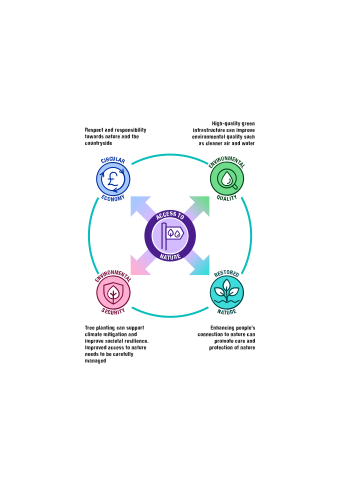
Figure 8: How access to nature supports the wider EIP
Goal 10: Access to nature
We will ensure inclusive access to nature and protect nature’s beauty and heritage.
Everyone should have the chance to benefit from nature. Whether playing sports in the local park, exploring our coasts, river and seas, or spotting wildlife in woodlands, we want to improve public access to nature for everyone. People are at the heart of our plans.
We are committed to our protected landscapes becoming greener and wilder whilst making them accessible.
Spending time in nature improves physical and mental health, lowering the risk of obesity and reduces blood pressure (Links between natural environments and physical health, Natural England 2022). 15% of international visitors to England visit the English coast, spending around £927 million each year (2016 Coastal Tourism, National Coastal Tourism Academy 2016). Urban green spaces alone support over 2 million people to meet weekly physical activity guidelines, avoiding approximately £1.4 billion in costs to the health service (Green Infrastructure, Natural England 2024). Weekly swimming saves more than £357 million per year through preventing and treating mental and physical conditions, including dementia and diabetes (Value of Swimming, Swim England 2023).
Experiencing and learning about the natural world should be part of all our lives, inside and outside the classroom, and through every level of education. We will support opportunities for children to connect with nature because we believe a strong understanding of our environment and environmental decision-making skills are essential for the future. This will also support the environmental sector by ensuring young people can access green careers (see Figure 8).
Currently, access to nature is unequal. People living in more deprived areas, ethnic minorities and younger people are more likely to live in areas with less access to green space (Inequalities in access to green space, The Health Foundation 2024). We want to remove barriers, so everyone feels safe and welcome to enjoy spending time in nature.
Defra will publicly consult on the Access to Nature Green Paper. We will bring together a range of sectors and communities to improve access to nature while balancing the needs of wildlife conservation and nature recovery.
We will work with government, public bodies, businesses, civil society and communities to support people engaging with nature in their own ways and encourage them to do this safely and appropriately through continued promotion of the countryside code. We want to equip communities with the resources, knowledge and skills so they can respond to societal and environmental issues in their neighbourhoods.
Improving public access to nature
People are most likely to visit nature when it is close to where they live (Recognizing the importance of near-home contact with nature for mental well-being, Ecology & Society, Lenda et al. 2023). We will design local green spaces in collaboration with communities, involving them in local decision making.
Local authorities can support this approach and put nature at the heart of communities by adopting voluntary guidance such as the Green Infrastructure Framework and by maintaining parks and green spaces to the Green Flag Award standards. Businesses can embed public access into estate strategies where it is safe and appropriate to open up green and blue spaces.
Commitment 86:
Make sure that everyone has access to green or blue spaces within a 15-minute walk from home.
Actions for commitment 86:
- Create 9 new National River Walks, one in every region of England. Responsible: Defra
- Establish 3 new national forests. Responsible: Defra
- Consult on measures to ensure that everyone has access to nature close to home and to strengthen the public’s legal rights to access through the Access to Nature Green Paper, to be published during this Parliament. This will include exploring the feasibility of increased access onto unregulated waterways. Responsible: Defra
- Launch an accreditation model by April 2026 for towns and cities to improve urban greening and access to green and blue space in areas with high environmental and social need. Ensure that up to 10 towns and cities achieve accreditation by the end of 2026. Responsible: Defra, Natural England (NE), National Trust, National Lottery Heritage Fund
- Repeal the cut-off date for recording historic rights of way by 2031. Responsible: Defra
- Provide advice on applying the accessible green space and urban greening factor standards as part of the green belt golden rules set out in the National Policy Planning Framework, to ensure that new residents in developments from 2025 can access good-quality green and blue spaces. Responsible: Defra
- Work with 100 local authorities and developers to embed NE’s Green Infrastructure Framework in development designs and planning decisions. Responsible: Defra, NE
- Identify how best to improve the quality and sustainability of parks and green spaces, including issues relating to planning, finance and inclusion, by working with third sector stakeholders. Responsible: Ministry of Housing, Communities and Local Government (MHCLG)
- Refresh the Green Flag Award scheme by 2026 to allow for a greater focus on biodiversity, addressing local environmental and health priorities and increasing community empowerment. Responsible: MHCLG
- Provide financial support to landowners and land managers using grants to improve access to nature through environmental land management schemes, the England Woodland Creation Offer and the Community Forests and Woodland Creation Partnerships. Responsible: Defra, Forestry Commission (FC), local authorities
- Develop indicators to measure the impact of the green infrastructure standards by the end of 2026. Responsible: NE
Reducing barriers to accessing nature
We know that access to nature is unequal. Some groups, such as low-income households, ethnic minorities and disabled people, are more likely to face physical or social barriers to access (Inequalities in access to green space, The Health Foundation 2024). We will promote and facilitate access that is meaningful and inclusive through actions that take account of different needs.
Commitment 87:
Reduce physical and intangible barriers to accessing green and blue spaces to increase the frequency of visits from those currently least likely to access them.
Actions for Commitment 87:
- Strengthen legislation to give National Parks and National Landscapes a clear mandate to widen the public’s access to nature by the end of this Parliament. Responsible: Defra
- Extend our Access for All programme to include National Trails from 2025. This will support accessibility infrastructure in the countryside such as improved paths, installation of disabled toilets and replacement of stiles with accessible alternatives. Responsible: Defra
- Champion Protected Landscapes by refreshing our national vision for these special places, eliminating bureaucratic barriers and ensuring teams have the tools and resources to achieve our ambitions.
Publish further details on supporting access to woodlands in a new Trees Action Plan, to be published in 2026. Responsible: Defra - Develop and publish Nature Community Principles and underpinning standards for engaging communities with nature in 2026. Responsible: NE
- See Goal 2: Air for actions we are taking on active travel, micromobility, and the third Cycling and Walking Investment Strategy that will contribute to reducing barriers to accessing nature.
Increasing enjoyment and improving connections with nature
We want to provide more people with the opportunity to visit our stunning landscapes, and to do so responsibly.
We will balance an increased number of visitors with the protection and enhancement of nature. The public can support this by following the Countryside Code, and landowners can ensure that land accessible to the public is safe and welcoming.
Commitment 88:
Develop measures to improve responsible access that protect and enhance nature and visitor experiences, aiming to increase the number of people visiting the countryside and coast for leisure and tourism purposes.
Actions for commitment 88:
- Deliver a new National Trail along the route of the Coast-to-Coast path by spring 2026. Responsible: NE, Defra
- Complete delivery of the King Charles III England Coast Path by spring 2026. Responsible: NE, Defra
- Create new publicly accessible woodlands, as part of the government’s tree canopy and woodland cover target, through expansion of the Public Forest Estate, with over 780 hectares of woodland added to the Public Forest Estate by the end of 2026. Responsible: Defra, Forestry England (FE)
- Create better facilities and infrastructure in the Public Forest Estate to increase the numbers of visitors and improve their experience. This includes investing £3 million in the financial year 2025 to 2026 in access for all facilities, such as accessible bike trails, all-terrain mobility scooters for hire and new changing facilities. Responsible: FE
- Extend the delivery of our Farming in Protected Landscapes (FiPL) programme to the end of March 2026, enabling farmers to support nature recovery and improve responsible access to landscapes. Responsible: Defra
- Invest £1.5 million fishing licence income annually from 2025 to the end of 2028 to deliver partnership projects which support and promote access to angling while contributing to nature recovery across England’s water bodies. Responsible: Environment Agency
Connecting all children with nature as part of everyday life
Every child deserves to have the opportunity to connect with nature. Children with good access to green space are healthier and have better cognitive development and educational attainment (Connection to Nature, Natural England 2022; Links between natural environments, learning and health: evidence briefing, Natural England 2022; Labour market returns in higher education and further education research report, Social Mobility Commission 2023).
Through our education and skills system, we seek to inspire young people to choose career paths in green industries.
Commitment 89:
Reduce barriers to access, boost children’s connection with nature and increase their understanding of the natural world and how to protect it.
Actions for commitment 89:
- Work with more education providers to add their grounds to a virtual National Education Nature Park (NENP). NENP brings together education providers to improve their sites for nature, participate in activities and learning, and contribute to community science. 25% of all schools are already engaged, nearly 3,500 settings have mapped more than 14 million square meters of habitat. Responsible: Department for Education (DfE)
- Work with all education settings to develop a holistic climate action plan which will include engaging young people in nature and enhancing the biodiversity of their sites. Responsible: DfE
- Work with land managers and owners to offer educational visits to woodland, farmland and the countryside. Responsible: Defra
- Evaluate the health and wellbeing benefits to pupils of increased green infrastructure in new school buildings, including biophilic pilot schools, with an evaluation starting in 2026. Responsible: DfE
- Develop a new GCSE in natural history to give young people the opportunity to learn about the natural world. The GCSE will help young people understand and respect the natural world and contribute to its protection and conservation. Responsible: DfE
- Enhance the climate education content which is already present in the national curriculum in the subjects of geography, science and citizenship, and include sustainability within the design and technology programme of study. Ensure that the relevant programmes of study introduce key concepts on climate education at primary level and make citizenship compulsory in key stages 1 and 2, ensuring primary aged children are introduced to key climate education content. Responsible: DfE
Protecting and enhancing landscapes’ character, natural beauty, geological and cultural heritage, and historic environment
Nearly a quarter of England is designated as a National Landscape or National Park (Natural England action for people and nature ahead of COP28, Natural England 2023).
England’s landscapes are more than just scenery; they reflect our history, culture, and traditions, and help shape our future. We want to protect and enhance the natural beauty and geological and cultural heritage of these landscapes.
The Land Use Framework will help ensure that England’s landscapes meet society’s future needs, as the setting for people’s lives, for growth, for food, energy and timber production, for recovering nature, managing climate change and for people’s enjoyment and connection with nature.
Commitment 90:
Improve the condition, diversity and character of our landscapes and the condition of the historic environment and heritage features, including designated geological sites and scheduled monuments.
Actions for commitment 90:
- Protect marine historic landscape and historic sites such as heritage coasts and protected wreck sites, when implementing marine plans, in line with the UK marine policy statement. These marine plans guide and direct licensing decisions in the waters adjacent to England, ensuring that developers must conserve and protect heritage assets. Responsible: Historic England, Marine Management Organisation
- Improve the condition of natural and cultural heritage, through an integrated approach with other action on nature, including through the delivery of agri-environment schemes, and the National Lottery Heritage Fund’s Heritage 2033 strategy. Responsible: Historic England, the National Lottery Heritage Fund, NE
- Protect and conserve the historic environment, through the collation and sharing of national data sets and sensitivity maps, including working with 47% of all local authorities by the end of 2026. This work will allow information sharing on non-designated heritage assets, which will inform decisions on land management activities, for example tree planting or felling. Responsible: FC
- Provide Protected Landscape teams training and resources on building partnerships with diverse and underrepresented groups and collect data on the diversity of visitor groups to National Parks and National Landscapes to inform where outreach needs to be targeted by April 2026. Responsible: Protected Landscapes Partnership
- Update Landscape and seascape character assessments advice by the end of 2026 to better inform future landscape and seascape change and help deliver the Land Use Framework. Responsible: NE
- Complete the King’s Series of 25 new or large extensions to National Nature Reserves (NNRs) by 2028. Responsible: NE
- Mentor and support partnerships of business, communities, Non-Government Organisations (NGOs), and others who manage existing and aspiring UNESCO Global Geoparks, through contribution to the quality assurance and evaluation process, including new applications from the Charnwood Forest Aspiring Geopark and the Cross-Channel/Transmanche Aspiring Geopark in 2026. Responsible: NE
- Deliver multifunctional benefits from England’s land, such as enhanced natural and cultural heritage, by reviewing implementation of the Council of Europe’s Landscape Convention by end of 2026. Responsible: NE, Historic England, Department for Culture, Media & Sport (DCMS), and Defra
- Achieve a year-on-year reduction in the number of heritage assets on the Heritage at Risk register through Defra’s existing Environmental Land Management schemes, the development of future farming schemes and Natural England’s work in NNRs. Responsible: Defra, NE, Historic England
Improving public health and wellbeing
The natural environment provides benefits worth over £400 billion annually in health outcomes alone (UK natural capital accounts: 2024, ONS 2024). By supporting more people to spend time in nature, we can help prevent ill health by reducing physical inactivity levels and reducing loneliness.
Our green social prescribing programme (GSP), for instance, led to improvements in participants’ wellbeing through partaking in nature-based activities. This reduces pressure on the NHS and leads to a more productive workforce. There was a social return on investment of £2.42 for every £1 invested (National Evaluation of the Preventing and Tackling Mental Ill Health through Green Social Prescribing Project: Final Report. Defra, University of Sheffield, Sheffield Hallam University, University of Exeter, University of Plymouth 2024).
Commitment 91:
Increase people’s time spent in nature for physical activity and nature-based activities to support both physical and mental health.
Actions for commitment 91:
- Publish an evaluation framework by April 2026 to improve how health and wellbeing outcomes from outdoor interventions are evaluated and included in decision making across sectors. Responsible: Department of Health and Social Care and NE
- Publish an evaluation report of phase 2 of the GSP programme by spring 2026. The report will build on findings from the previous evaluation and deepen understanding of value for money, data tracking through the GSP pathway, and explore sustainable funding options. Responsible: Defra
- Establish a metric on the number of people accessing green or blue space for nature-based activity specifically to improve health by March 2026, helping to track the impact of Green Social Prescribing. Responsible: Defra
- Create a nature for health investment partnership by the end of 2026 to develop investment pathways to create new markets and drive integrated funding models for nature-based solutions that deliver health benefits and economic growth. Responsible: NE
- Deliver Sport England’s Every move strategy, maximising the power that sport and physical activity have to help people spend time in nature and enable wider change on social and environmental issues through community engagement. Responsible: DCMS and Sport England
Monitoring and reporting approach
We have a suite of indicators that measure progress against this goal. These include:
- An official statistic in development on access to green and blue space in England
- The People and Nature Survey for England (PaNS), which includes a range of statistics on visits to green and blue spaces for different demographics including ethnicity, income and age. Active Lives Survey, Sport England, which measures the activity levels of people across England, including various activity types for different demographics including age, gender, ethnicity, socioeconomic groups, sexual orientation, disability and long-term health conditions. Reporting on the number of education settings registered for the National Education Nature Park.
The Environmental Indicator Framework (EIF) indicators for monitoring environmental change for Goal 10: Access to nature is:
- D3: Area of woodland in England
- G1: Changes in landscape and waterscape character
- G2: Condition of heritage features including designated geological sites and scheduled monuments
- G3: Enhancement of green and blue infrastructure
- G4: Engagement with the natural environment
- G5: People engaged in social action for the environment
- G6: Environmental attitudes and behaviours
- G7: Health and wellbeing benefits
- H5: Exposure to transport noise
Further detail on metrics and delivery contributions for the commitments in this goal and the goal theory of change is available in the EIP Monitoring Plan.
Illustrative plan for Goal 10
Goal 10: Everyone can access, enjoy and care for nature, and protect and enhance its beauty and heritage.
Core strategies and plans: Access to Nature Green paper, DfT Cycling and Walking Investment Strategy II, Sport England’s Every Move Strategy, Green Infrastructure Framework, DfE Sustainability and Climate Change Strategy, Tree Action Plan.
Delivery partners: DCMS, Defra, DfE, EA, DfT, DHSC, Historic England, NE, Protected Landscape Partnership, Sport England
| Key commitments | Key actions |
|---|---|
| 86. Make sure that everyone to have access to green or blue spaces within a 15-minute walk from home | • Create 9 new National River Walks, one in every region of England • Establish 3 new national forests • Consult on measures to ensure that everyone has access to nature close to home and to strengthen the public’s legal rights to access through the Access to Nature Green Paper, to be published during this Parliament. This will include exploring the feasibility of increased access onto unregulated waterways |
| 87. Reduce physical and intangible barriers to accessing green and blue spaces to increase the frequency of visits from those currently least likely to access them | • Extend our Access for All programme, to include National Trails from 2025. This will support accessibility infrastructure in the countryside such as improved paths, installation of disabled toilets and replacement of stiles with accessible alternatives • Publish further details on supporting access to new and existing woodlands in a new Trees Action Plan, to be published in 2026 |
| 88. Develop measures to improve responsible access that protect and enhance nature and visitor experiences, aiming to increase the number of people visiting the countryside and coast for leisure and tourism purposes | • Deliver a new National Trail along the route of the Coast-to-Coast path by spring 2026 • Complete delivery of the King Charles III England Coast Path by Spring 2026 • Create new publicly accessible woodlands, as part of the government’s tree canopy and woodland cover target, through expansion of the Public Forest Estate, with over 780 hectares of woodland added to the Public Forest Estate by the end of 2026 |
| 89. Reduce barriers to access, boost children’s connection with nature and increase their understanding of the natural world and how to protect it | • Work with more education providers to add their grounds to a virtual National Education Nature Park (NENP). NENP brings together education providers to improve their sites for nature, participate in activities and learning, and contribute to community science. 25% of all schools are already engaged, and nearly 3,500 settings have mapped more than 14 million square metres of habitats • Develop a new GCSE in natural history to give young people the opportunity to learn about the natural world. The GCSE will help young people understand and respect the natural world and contribute to its protection and conservation |
| 90. Improve the condition, diversity and character of our landscapes and the condition of the historic environment and heritage features, including designated geological sites and scheduled monuments | • Provide protected landscape teams training and resources on building partnerships with diverse and underrepresented groups and collect data on the diversity of visitor groups to National Parks and National Landscapes to inform where outreach needs to be targeted by April 2026 • Achieve a year-on-year reduction of the number of heritage assets on the Heritage at Risk register through Defra’s existing Environmental Land Management schemes, the development of future farming schemes and Natural England’s work in National Nature Reserves |
| 91. Increase people’s time spent in nature for physical activity and nature-based activities to support both physical and mental health | • Publish an Evaluation Framework by April 2026 to improve how health and wellbeing outcomes from outdoor interventions are evaluated and included in decision-making across sectors • Publish an evaluation report of phase 2 of the GSP programme by spring 2026. The report will build on findings from the previous evaluation and deepen understanding of value for money, data tracking through the GSP pathway, and explore sustainable funding options |
How we measure progress
A robust internal structure is in place to manage and track implementation of the EIP. We set senior responsible owners for each target and commitment, and implementation is actively managed by Defra ministers and the Defra executive team. We regularly review this through the Defra Environment Committee and the cross-government EIP Board, alongside outcome, portfolio and programme boards.
To report progress and maintain momentum, the Environment Act 2021 sets out a statutory reporting cycle for the EIP and the interim targets. Monitoring of progress toward the ambitions and goals of the EIP is through a statutory annual progress report.
The annual report describes what has been done to implement the EIP, considers whether the natural environment has, or aspects of it have, improved over the reporting period, considering progress made towards achieving any relevant statutory and interim targets.
A structured monitoring and evaluation framework underpins the report. The framework includes a comprehensive set of published outcome indicators that provides a systematic means of monitoring environmental change for our longer-term understanding of the effectiveness of policies and commitments.
The framework brings together specified metrics which are used to monitor progress against the commitments and actions set out in each goal chapter of the EIP.
Theories of change are in place for each goal to systematically show how actions and commitments feed into, and deliver against, relevant goals.
A comprehensive list of commitment metrics and goal theories of change are presented in the EIP Monitoring Plan.
Contextual information and learning from policy evaluations and EIP process and impact evaluations will support these. The EIF will continue to inform the evaluation framework as a systematic means of monitoring environmental change for our longer-term understanding of the effectiveness of policies and commitments.
Given the complex processes within our environment, it can take time to see the effects of our actions. That is why the EIP sets out the long-term plan up to 2043 and why we have long-term legally binding statutory targets for improving the natural environment.
As we learn more from our monitoring and evaluation about what works, we will use the annual progress report as a mechanism to show how the EIP will evolve in the specific actions that contribute to each goal and how they are delivered. This is an iterative process with each 5 year EIP review period providing an opportunity to make structural improvements.
As part of the Environment Act 2021, the statutory reporting cycle also requires the Office of Environmental Protection (OEP) to publish an annual EIP scrutiny report to assess government progress. The scrutiny report, alongside the annual progress report, provides external scrutiny and transparency to measuring progress.
As part of the EIP review, we reviewed and reset the approach to our annual progress reports for EIP25. The annual progress report will now include the government response to recommendations from the OEP scrutiny report and be used to actively update and iterate the EIP based on monitoring and evaluation learning.
Glossary
- 30by30: commitment to protect 30% of UK land and seas for nature by 2030 to support the global 30by30 target agreed at UN Biodiversity Summit (COP15) in 2022
- Agri-environment schemes: includes existing schemes Environmental Stewardship, Countryside Stewardship, Farming in Protected Landscapes and the newer Sustainable Farming Incentive and Landscape Recovery. This can also refer to future schemes which have not been created yet.
- Biosecurity: a set of precautions designed to prevent the introduction and spread of harmful organisms, such as invasive non-native species and animal and plant pests and pathogens.
- Ecosystem services: functions of the natural environment, that directly or indirectly provide benefits for people.
- Environmental security: the safeguarding of people, nature, and the economy by managing climate risks, environmental hazards, and biosecurity threats to ensure a healthy, resilient environment.
- Gene bank: a facility that preserves genetic material, such as seeds, tissues and DNA under controlled conditions to conserve genetic diversity.
- Genetic resources: plant, animal or microbial material - or material of other origin - containing functional units of heredity.
- Green infrastructure: a network of multi-functional green and blue spaces and other natural features – urban and rural – which is capable of delivering a wide range of environmental, economic, health and wellbeing benefits for nature, climate, local and wider communities.
- Green Infrastructure Framework: provides clear guidance to support the greening of England’s towns and cities and developments. The framework supports better planning for good quality green infrastructure and helps target the creation or improvement of this where it is needed most, to deliver environmental, economic, health and wellbeing benefits for nature, climate, local and wider communities.
- Integrated pest management: a sustainable approach to managing pests, weeds and diseases on land.
- Invasive non-native species: any non-native animal or plant species -a species intentionally or unintentionally introduced outside its native range by human actions - which has the ability to spread causing damage to the environment, the economy, our health, or the way we live.
- Major mineral waste: waste materials like concrete, bricks, sand and soils that are largely inert when treated as waste.
- National Planning Policy Framework: sets out government’s planning policies for England and how these are expected to be applied.
- Natural capital: stock of natural assets which provide benefits to people in the form of tangible things which are typically marketed - such as timber, fish stocks, minerals, and less tangible services - (such as air purification, recreational settings and flood prevention).
- Neonicotinoid insecticides: a class of insecticides chemically similar to nicotine, widely used in agriculture to control various insect pests by targeting their nervous systems. They are absorbed by plants and distributed throughout their tissues -, including pollen and nectar, making them effective against both chewing and sucking insects.
- Per- and polyfluoroalkyl substances (PFAS): known as ‘forever chemicals’, they have been used extensively for over 70 years due to their ability to repel water and oil, alongside their durability.
- Persistent organic pollutants (POPs): chemicals that remain intact in the environment for long periods. They are widely distributed across the country and globally. POPs are toxic to both humans and wildlife.
- Plantations on Ancient Woodland Sites (PAWS): ancient woodland sites that have been converted to plantations dominated by non-native tree species. These often retain some remnant features characteristic of Ancient Semi-Natural Woodland such as ground flora along rides or pre-plantation native trees.
- Polychlorinated biphenyls (PCBs): synthetic chemicals that were widely used in various industrial and commercial applications, including electrical equipment, before being banned due to their harmful effects on human health and the environment.
- Protected Landscapes: a collective term for National Parks and National Landscapes. These are areas of land designated because of their special qualities.
- Protected sites: Areas of land, inland water and the sea that have special legal status relating to the conservation of important habitats and species. These include our Sites of Special Scientific Interest (SSSIs), Marine Conservation Zones (MCZs), National Nature Reserves (NNRs), Special Areas of Conservation (SACs), Special Protection Areas (SPAs) and Ramsar sites.
- Red List Index: The England list encompasses the status of 8,259 species native to England for which a Great Britain Red List Category was available based on globally accepted methodology.
- Relative contribution: this is a rating from high to low. The rating measures how significantly the intervention contributes towards delivering the relevant outcome in the EIP goal.
- Residual waste: waste that is not recycled or reused, including material that is too degraded or contaminated for these purposes. Residual waste, when collected from households or commercial businesses, is often termed ‘black bag’ or ‘black wheelie bin’ waste. It can originate from households and commercial businesses but also from sectors such as construction and demolition; agriculture, forestry and fishing; mining and quarrying; and industry. It is treated by end-of-life treatment methods such as landfill, incineration and energy recovery.
- Resilient soil: soil that can recover its structure and function after being disturbed or suffering a shock event. Healthy soil is more able to recover from or adapt to stress, which makes it resilient. Soil stressors can include changing climate, drought, flood, contamination, extreme weather events, or agricultural disturbance.
- Responsible soil management: Employing management practices that protect or improve soil health, fertility, and productivity whilst minimising negative environmental impacts.
- Sites of Special Scientific Interest (SSSIs): Areas of land designated in accordance with the duty in law placed upon Natural England (in England) to notify as a SSSI any area of land which, in its opinion, is of special interest by reason of any of its flora, fauna, geological, or physiographical features.
- Soil health: the physical, chemical and biological condition of the soil determining its capacity to provide ecosystem services. A healthy soil can function and sustain plants, animals and humans as part of the Earths’ ecosystems. A healthy soil is also able to maintain or improve water and air quality and biodiversity. Factors that affect the health of a soil include the structure, chemistry, organic matter content and biology.
- Sustainable level of marine stock: a level of stock maintained above biomass levels capable of producing maximum sustainable yield (MSY). Where MSY is not available for a stock, the Fisheries Act requires our Fisheries Management Plans (FMPs) to set out policies for increasing or maintaining the level of the stock, as well as including plans for obtaining scientific evidence to enable an assessment of MSY, or explaining why we do not propose these plans. Where appropriate, we will use suitable proxies alongside MSY to assess the state of stocks and inform management choices. FMPs will use indicators so that fisheries managers can assess the effectiveness of the plan and report on the level of FMP stocks in accordance with the Fisheries Act.
- Sustainable soil management: practices that maintain or enhance the ecosystem services provided by the soil without impairing the functions enabling those services or being detrimental to other properties of the environment.
- Wildlife-rich habitat: The types of habitat that count as wildlife-rich and are listed in table 2 of: Environment Act Habitat Target Definitions and Descriptions
Annex 1: Summary of EIP Review
The government concluded a rapid review of the previous Environmental Improvement Plan (EIP23) on 30 January 2025 and published a statement of the key findings. The review was a key element of the statutory review and was used to shape the revised EIP. The following sets out the revisions and the reasons for them.
The rapid review was part of the wider statutory EIP review which considered: implementation of EIP23; whether the natural environment has improved; progress made towards meeting the statutory and interim Environment Act targets; and whether further or different steps should be taken to improve the natural environment and meet our Environment Act targets.
We used our annual progress reports and ongoing monitoring data and evaluation findings to inform the review.
We also considered advice from the Office for Environmental Protection including their annual reports. We worked across government and engaged with civil society, business and local government to seek views.
We co-delivered a ‘Collective Intelligence’ debate with a wide range of stakeholders in March 2025. This deepened our understanding of stakeholders’ views and insight into their environmental priorities as we developed the EIP.
The EIP rapid review revealed some key areas where improvements could be made, including:
- opportunities to better coordinate evidence with others to improve our collective understanding of where action is needed or can be better targeted or focused
- clarifying delivery and accountability in the EIP so it is easier to see what and who is contributing to a goal or target
- a clear process for prioritisation, which could help with assessing competing demands
- stronger engagement and collaboration with stakeholders
- simplified, sustained funding and tackling skills and capacity issues
We considered these improvement areas as we developed the revised EIP.
To develop the EIP we used a tool called a ‘theory of change’ which helped us identify the steps we need to take to achieve our end goal. This helped us focus on the change we want to see in the natural environment, and how our EIP commitments and actions stack up to achieve that. Theories of change have been developed for all EIP goals and can be found in the EIP Monitoring Plan 2025.
Our approach improved our understanding of how the EIP works as a system and how delivery of the goals is connected.
We also streamlined the actions in the EIP to better focus on our biggest priorities. It now clearly prioritises our work and sets out who is responsible for delivering actions across government and beyond.
Alongside this is a clearer framework for monitoring and evaluating our progress to inform our annual progress reports. This will improve transparency so people can see the measurable commitments we commit to and the metrics we will use to demonstrate progress.
Annex 2: Full list of revised EIP interim targets
Goal 1: Restored nature
The statutory Environment Act 2021 targets for restoring nature are:
- halt the decline in species abundance by 2030
- increase species abundance so that by 2042 it is greater than in 2022 and at least 10% greater than in 2030
- improve the Red List Index for England for species extinction by 2042 compared to 2022 levels
- restore or create more than 500,000 hectares of a range of wildlife-rich habitats outside protected sites by 2042
- increase tree canopy and woodland cover to at least 16.5% of total land area by 2050
- ensure that at least 70% of protected features in Marine Protected Areas (MPAs) are in favourable condition by the end of 2042, with the remainder in recovering condition
We have set the following interim targets for restoring nature, covered in chapter 1 and chapter 4:
- restore or create a total of 250,000 hectares of a range of wildlife-rich habitats outside of protected sites by December 2030
- by December 2030, 50% of Site of Special Scientific Interest (SSSI) features to have actions on track to achieve favourable condition
- by 2030, double the number of farms providing sufficient year-round resources for farm wildlife, compared with 2025
- reduce the rate of establishment of invasive non-native species (INNS) by at least 50% by December 2030, compared to 2000 levels
- increase England’s tree canopy and woodland cover by 0.33% of land area by December 2030 from the 2022 baseline of 14.9%. (Equivalent to a net increase 43,000 hectares.)
- at least 49% of Marine Protected Area (MPA) protected features are in favourable condition and at least 46% in recovering condition, by December 2030
We have removed the interim target for all SSSIs to have an up-to-date condition assessment by 2028 as this was unachievable in the timeframe. However, we remain committed to delivering this ambition by 2032 and actions to improve the condition of SSSI features will only count as being on track if they have an up-to-date condition assessment.
The farm wildlife and INNS interim targets are both new for this EIP. Specific support for farm wildlife encourages actions that allow species to survive, thrive and move across our agricultural landscape. Reducing the rate of establishment of INNS will help to reduce the future impacts on native species.
We updated the 2022 reference baseline for the tree canopy and woodland cover target because of new Forest Research data on tree cover becoming available.
The 49% figure within the new interim MPA target has been updated to reflect the likely additional progress in more features recovering to favourable condition before 2030, as opposed to 2028 for the old interim target. The inclusion of 5% of features neither in favourable or recovering condition has been introduced to support the government’s wider commitments, such as the net zero target
Goal 2: Air
The statutory Environment Act 2021 targets for PM2.5 in air are:
- to achieve at least a 35% reduction in population exposure to PM2.5 by 31 December 2040 compared to 2018 levels
- by 31 December 2040 the maximum annual mean level of PM2.5 in ambient air must be equal to or less than 10 micrograms per cubic metre
We have set the following updated interim targets for PM2.5 in air:
- an annual mean concentration target of 10 micrograms per cubic metre to be achieved by December 2030
- a population exposure reduction target of 30% compared to 2018 to be achieved by December 2030
Our annual average concentration interim target would see us achieve one of our statutory targets 10 years ahead of planned. We have also increased the ambition of our population exposure reduction interim, moving us closer to achieving both statutory targets.
Goal 3: Water
The statutory Environment Act 2021 targets for water are:
- halve the length of rivers polluted by harmful metals from abandoned metal mines by 2038, against a baseline of 1,491 km
- reduce total nitrogen, total phosphorus and sediment pollution from agriculture into the water environment by at least 40% by 2038, compared to a 2018 baseline
- reduce phosphorus loadings from treated wastewater by 80% by 2038 against a 2020 baseline
- reduce the use of public water supply in England per head of population by 20% by 2038 from a 2019 to 2020 baseline
We have set the following updated interim targets for water:
- construct 8 mine water treatment schemes and 20 diffuse interventions commitments to control inputs of target substances to rivers, and complete 55 catchment studies by December 2030
- reduce total nitrogen, phosphorus and sediment pollution from agriculture to the water environment by at least 12% by December 2030 compared to a 2018 baseline
- reduce total nitrogen, phosphorus and sediment pollution from agriculture to the water environment by at least 18% in catchments containing protected sites in unfavourable condition due to nutrient pollution by December 2030
- reduce phosphorus loadings from treated wastewater by 55% by December 2030 against a 2020 baseline
- reduce the use of public water supply in England per head of population from a 2019 to 2020 baseline by 9% by 31 March 2027 -reduce the use of public water supply in England per head of population from a 2019 to 2020 baseline by 14% by 31 March 2032
- reduce leakage by 20% from a 2017 to 2018 baseline by 31 March 2027
- reduce leakage from a 2017 to 2018 baseline by 30% by 31 March 2032
We have completed 55 catchment studies in addition to delivery of 8 mine water treatment schemes and 20 diffuse schemes by 2030. Our target for reducing agricultural pollution remains ambitious and challenging following a path from the previous target towards the long- term statutory target.
The interim target to reduce phosphorus in freshwater bodies which leads to poor ecosystem health and reduced biodiversity is an ambitious part of an unprecedented programme of water industry infrastructure investment. The interim target has been revised from 50% by 2028 to 55% by 2030, maintaining the level of ambition.
The interim targets for water demand remain ambitious and will set us on a glide path to achieve the long-term target.
Goal 5: Waste
The statutory Environment Act 2021 target for waste is:
- by 31 December 2042, the total mass of residual waste excluding major mineral waste for the calendar year 2042 does not exceed 287kg per capita, this is roughly the same as a 50% reduction from 2019 levels
We have set the following updated interim targets for waste:
- by December 2030, the total mass of residual waste excluding major mineral waste in the most recent full calendar year does not exceed 437kg per capita (24% reduction)
- by December 2030, the total mass of residual waste excluding major mineral waste in the most recent full calendar year does not exceed 25.5 million tonnes (21% reduction)
- by December 2030, the total mass of residual municipal waste in the most recent full calendar year does not exceed 333kg per capita (29% reduction)
- by December 2030, the total mass of residual municipal food waste in the most recent full calendar year does not exceed 64kg per capita (50% reduction)
- by December 2030, the total mass of residual municipal plastic waste in the most recent full calendar year does not exceed 42kg per capita (45% reduction)
- by December 2030, the total mass of residual municipal paper and card waste in the most recent full calendar year does not exceed 74kg per capita (26% reduction)
- by December 2030, the total mass of residual municipal metal waste in the most recent full calendar year does not exceed 10kg per capita (42% reduction)
- by December 2030, the total mass of residual municipal glass waste in the most recent full calendar year does not exceed 7kg per capita (48% reduction)
Residual, or ‘black bag’, waste is not recycled or reused, including material that is too degraded or contaminated for these purposes. For the purposes of the target, this is waste that is sent to landfill, put through incineration or used in energy recovery in the UK, or that is sent overseas to be used for energy recovery.
Major mineral waste is not included in the target as these materials – like concrete, bricks and sand – are largely inert when treated as waste. The target therefore focuses where the environmental impact per tonne of waste treatment is greatest.
Insufficient progress was made under the previous EIP23. These interim targets therefore set the same level of reduction but pushed back to 2030.
Our current and planned commitments account for 82% to 100% of the reduction in residual waste needed to meet the required targets; we will identify and deliver further commitments to reach these interim targets.
Goal 9: Biosecurity
The interim target on reducing the rate of establishment of invasive non-native species is important for delivering the legally-binding restored nature targets, this is included in the Restored nature section.
References
- Department for Environment, Food and Rural Affairs. ‘Research and development project: NERR001’ 2025
- Green Finance Institute. ‘UK nature-related risks full report’ 2024
- State of Nature Partnership. ‘State of Nature’ 2023
- Office for National Statistics. ‘UK natural capital accounts 2024’ 2024
- European Commission Joint Research Centre. ‘Natural capital drives EU regional growth’ 2025
- Environmental Services Association. ‘Sector policy scorecard July 2023’ 2023
- World Economic Forum. ‘The global risks report 2022’ 2022
- Nguyen L and Walters J. ‘Article on ecosystem services impacts’ 2024
- The Health Foundation. ‘Inequalities in access to green space’ 2024
- BloombergNEF. ‘The growing role of nature-related business in the UK economy’ 2025
- Ofwat. ‘UK government priorities and PR24 final determinations’ 2024
- Department for Environment, Food and Rural Affairs. ‘England’s major landowners to work together to drive nature recovery’ 2025
- Department for Environment, Food and Rural Affairs. ‘75th anniversary of the National Parks Act: new legislation to ensure protected landscapes are fit for the future’ 2024
- Department for Environment, Food and Rural Affairs. ‘Agricultural land use in England’ 2024