Adult social care provider statistics, England: quarterly update to February 2026
Published 5 March 2026
Applies to England

© Crown copyright 2026
This publication is licensed under the terms of the Open Government Licence v3.0 except where otherwise stated. To view this licence, visit nationalarchives.gov.uk/doc/open-government-licence/version/3 or write to the Information Policy Team, The National Archives, Kew, London TW9 4DU, or email: psi@nationalarchives.gov.uk.
Where we have identified any third party copyright information you will need to obtain permission from the copyright holders concerned.
This publication is available at https://www.gov.uk/government/statistics/adult-social-care-provider-statistics-england-quarterly-update-to-february-2026/adult-social-care-provider-statistics-england-quarterly-update-to-february-2026
Introduction
This statistical bulletin provides an overview on a range of information on adult social care settings in England.
Updates to current report
Care home occupancy statistics
From the March 2026 publication, the timeseries for care home occupancy by vacancy type breakdown, as reported in tables 4b, 4c and 4d of the accompanying ‘Occupancy, visiting and workforce statistics’ data tables, has been extended to report monthly figures from January 2023.
All occupancy figures reported in the quarterly statistics publication are now based on care homes that were active as of the most recent Care Quality Commission (CQC) registration data update in Capacity Tracker at the end of each month’s reporting window. Figures from January 2023 to February 2024 inclusive, which were previously based on the latest CQC registration data update in Capacity Tracker at the end of the February 2024 reporting window, have been revised from the March 2026 publication onwards.
Updates on future reports
The next publication will be released on 4 June 2026. Dates for future publications will be announced on the GOV.UK publication release calendar.
Main points
The main points outlined in this bulletin are that:
- 85.8% of total beds in care homes were occupied as of the week ending 16 February 2026
- there were 360,507 residents in the 94.3% of total care home providers that responded in the week ending 16 February 2026
- there were 505,886 people receiving CQC-regulated domiciliary care in the 84.9% of domiciliary care providers that responded in the week ending 16 February 2026
- 99.3% of care homes in England were able to accommodate residents receiving visitors as of the week ending 16 February 2026
- 0.1% of care home staff and 0.1% of domiciliary care staff were absent due to COVID-19-related reasons as of the week ending 16 February 2026
- 11.1% of total staff and 65.8% of total residents are known to have received a flu vaccination for the 2025 to 2026 season in the 99.1% of total care home providers that responded as of 16 February 2026
- 14.6% of total domiciliary care staff are known to have received a flu vaccination for the 2025 to 2026 season in the 96.8% of total domiciliary care providers that responded as of 16 February 2026
- as of December 2025, 82.0% of provider locations are estimated to have a digital social care record (DSCR)
These main points of interest are from the accompanying data tables on the Adult social care provider statistics, England: quarterly update to February 2026 page.
The chapters below contain detailed analysis on the published statistics.
1. Occupancy
As of the week ending 16 February 2026:
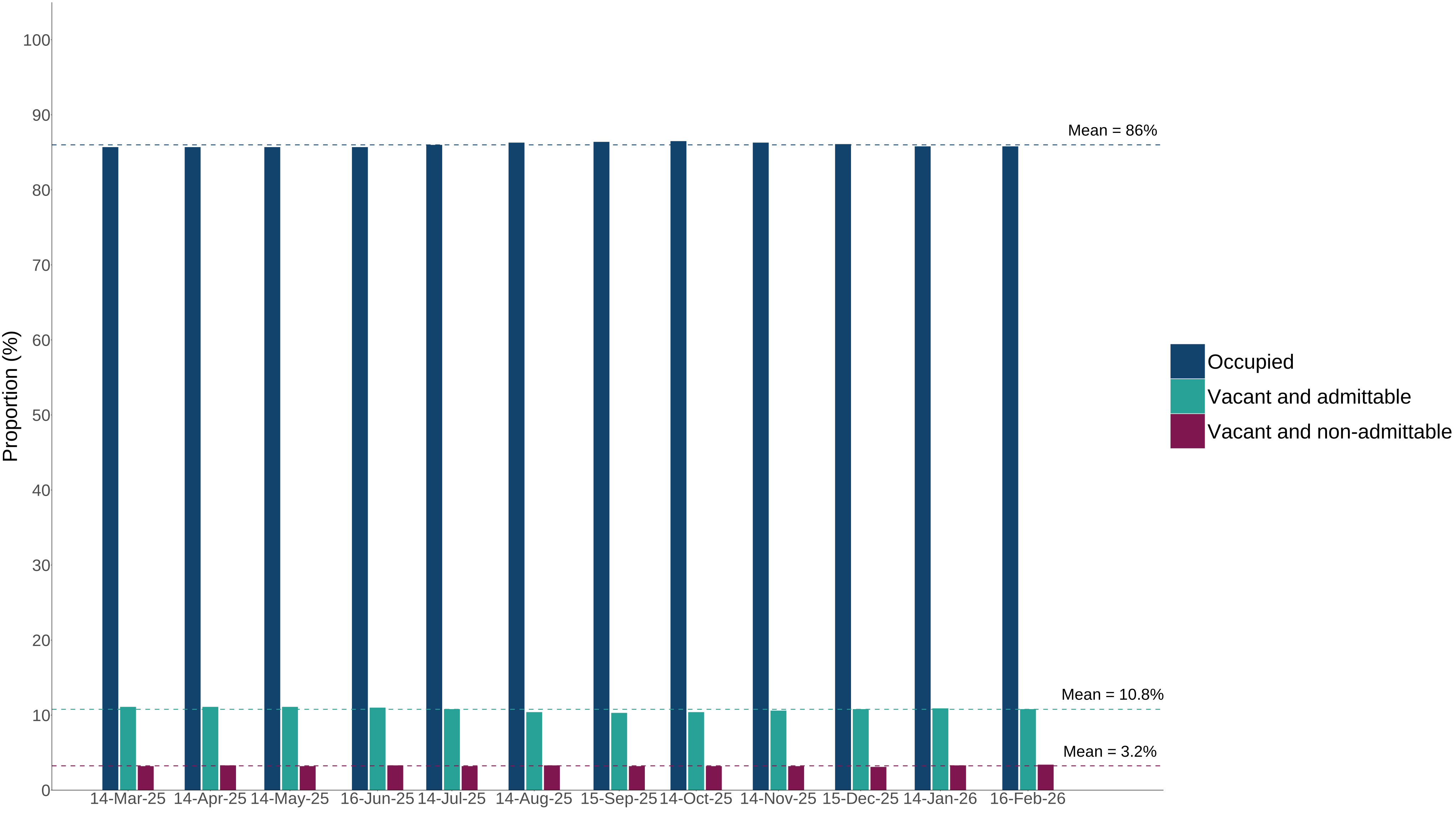
- 85.8% of total beds in care homes were occupied
- 10.8% of total beds in care homes were vacant and admittable
- 3.4% of total beds in care homes were vacant and non-admittable
Figure 1: proportion of occupied, vacant and admittable, and vacant and non-admittable care home beds, England, 14 March 2025 to 16 February 2026
Source: Capacity Tracker.
The main observations from figure 1 are:
- rates of occupied beds, vacant and admittable beds, and vacant and non-admittable beds have remained stable over the 12 months to February 2026
- the proportion of total beds occupied was below the 12-month average of 86.0% in March 2025, with this proportion remaining stable until June 2025. This increased to the 12-month average of 86.0% in July 2025, and continued to increase until October 2025, after which it has gradually decreased
- the proportion of total beds vacant and admittable remained at or above the 12-month average of 10.8% between March 2025 and July 2025. This proportion remained the same between March 2025 and May 2025, before decreasing slightly between May 2025 and September 2025. This figure increased slightly each month from October 2025 to January 2026, and decreased slightly in February 2026
- the proportion of total beds vacant and non-admittable was at the 12-month average of 3.2% in March 2025. This proportion then remained largely the same until November 2025, with the exception of slight increases in April 2025, June 2025 and August 2025, before decreasing slightly in December 2025. This figure increased slightly in January and February 2026
There was some regional variation in care home occupancy rates. As of the week ending 16 February 2026, the proportion of total care home beds that were:
- occupied varied from 82.4% in the East Midlands to 89.6% in London
- vacant and admittable varied from 7.8% in London to 13.8% in the East Midlands
- vacant and non-admittable varied from 2.2% in the North East to 4.1% in Yorkshire and the Humber
This data can be found in table 4a of the accompanying ‘Occupancy, visiting and workforce statistics, data to February 2026’ on the Adult social care provider statistics, England: quarterly update to February 2026 page, in addition to data by region and local authority.
Care home occupancy by vacancy type
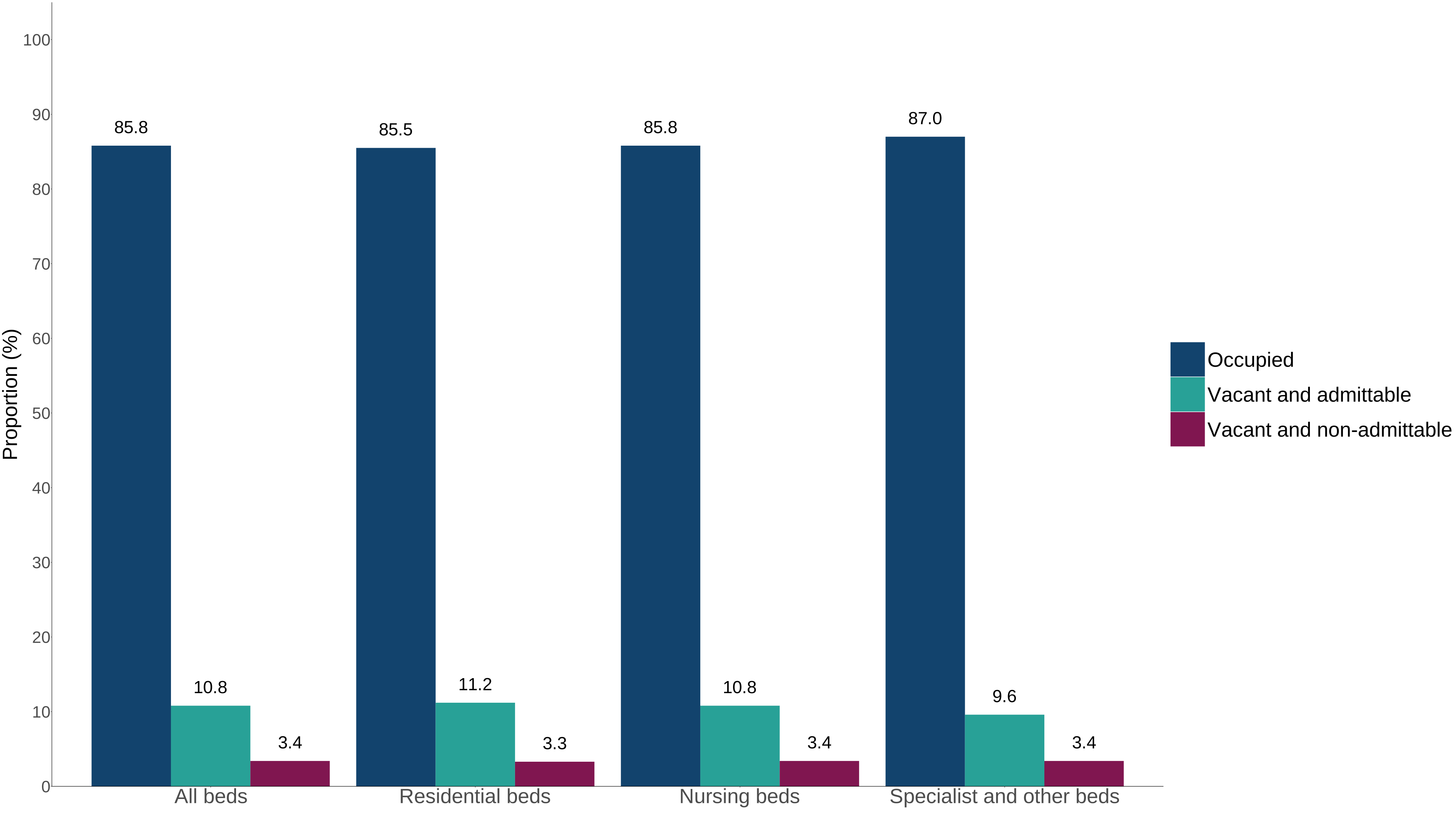
The proportions of total beds occupied by vacancy type, as of the week ending 16 February 2026, were:
- 85.5% of non-specialist residential beds
- 85.8% of non-specialist nursing beds
- 87.0% of specialist and other beds
The proportions of total beds vacant and admittable by vacancy type, as of the week ending 16 February 2026, were:
- 11.2% of non-specialist residential beds
- 10.8% of non-specialist nursing beds
- 9.6% of specialist and other beds
The proportions of total beds vacant and non-admittable by vacancy type, as of the week ending 16 February 2026, were:
- 3.3% of non-specialist residential beds
- 3.4% of non-specialist nursing beds
- 3.4% of specialist and other beds
Figure 2: proportion of occupied, vacant and admittable, and vacant and non-admittable care home beds by vacancy type, England, week ending 16 February 2026
Source: Capacity Tracker.
The main observations from figure 2 are:
- the proportions of occupied, vacant and admittable, and vacant and non-admittable beds were broadly similar among non-specialist residential, non-specialist nursing, and specialist and other vacancy types
- the proportion of occupied beds varied from 85.5% among non-specialist residential beds to 87.0% among specialist and other beds
- the proportion of vacant and admittable beds varied from 9.6% among specialist and other beds to 11.2% among non-specialist residential beds
- the proportion of vacant and non-admittable beds varied from 3.3% among non-specialist residential beds to 3.4% among non-specialist nursing and specialist and other beds
Data on occupancy and response rates can be found in tables 4a to 4d and 8 of the accompanying ‘Occupancy, visiting and workforce statistics, data to February 2026’ on the Adult social care provider statistics, England: quarterly update to February 2026 page.
2. Number of people receiving CQC-regulated adult social care services
Number of care home residents
As of the week ending 16 February 2026, there were 360,507 residents in the 94.3% of total care home providers that responded. This included:
- 334,445 residents in the 94.4% of older adult care home providers that responded
- 26,062 residents in the 93.9% of younger adult care home providers that responded
See the ‘Terminology’ section for definitions of younger and older adult care homes and see the provider statistics background quality and methodology for how this data can be used.
This data can be found in tables 1, 2 and 3 of the accompanying ‘Number of people receiving adult social care services, data to February 2026’ on the Adult social care provider statistics, England: quarterly update to February 2026 page, in addition to data by region and local authority. Response rates are given in tables 5, 6 and 7.
Number of people receiving CQC-regulated domiciliary care
As of the week ending 16 February 2026, there were 505,886 people receiving CQC-regulated domiciliary care in the 84.9% of domiciliary care providers which responded.
This data can be found in table 4 of the accompanying ‘Number of people receiving adult social care services, data to February 2026’ on the Adult social care provider statistics, England: quarterly update to February 2026 page, in addition to data by region and local authority. Response rates are given in table 8.
3. Visiting in care homes
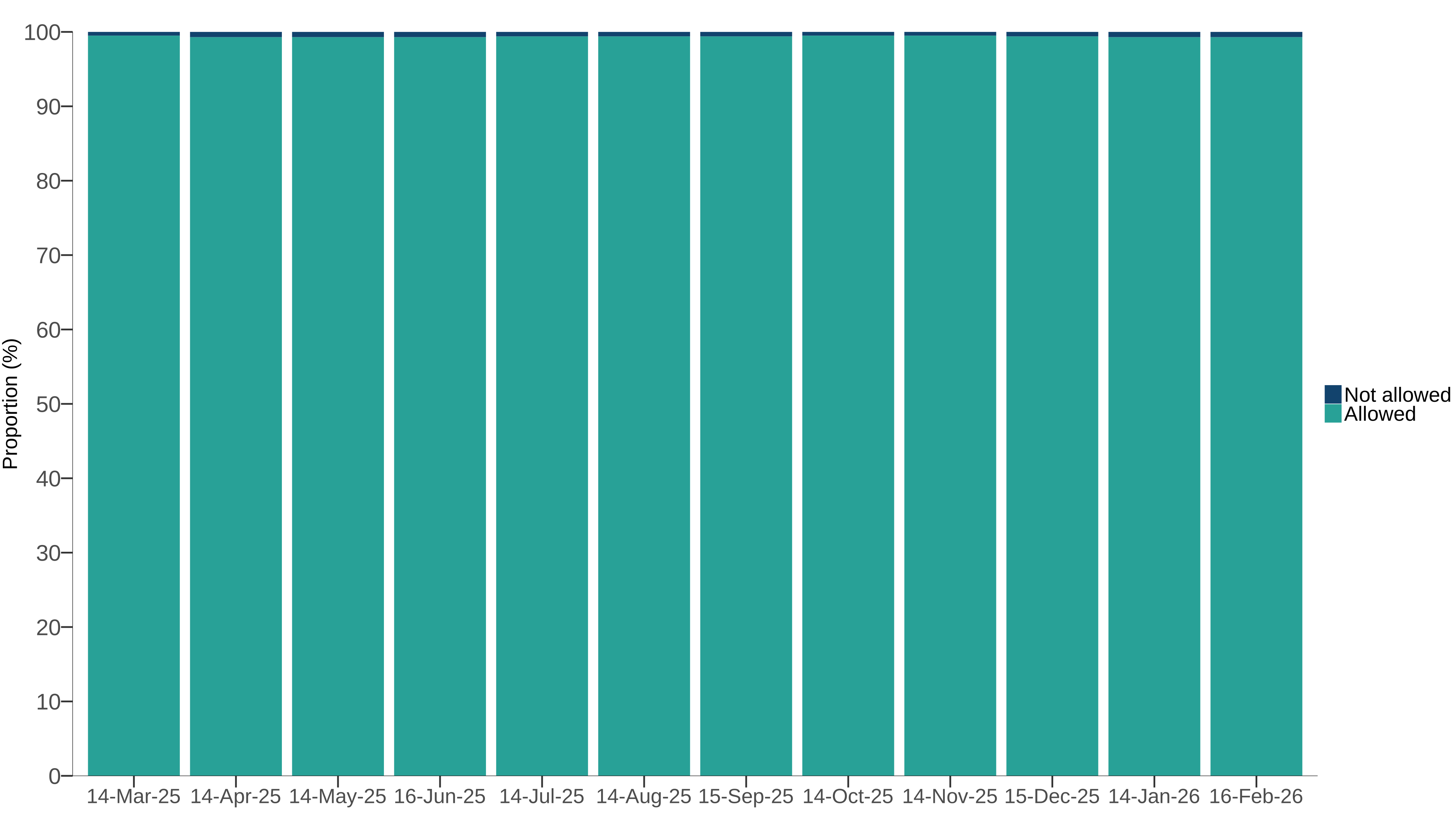
In the week ending 16 February 2026, 99.3% of care homes in England were able to accommodate residents receiving visitors. This figure has been stable since September 2022.
Figure 3: proportion of care homes accommodating or limiting visits for residents, England, 14 March 2025 to 16 February 2026
Source: Capacity Tracker.
The main observation from figure 3 is that the proportion of care homes accommodating visiting for residents has remained stable at a rate of between 99.3% and 99.5% over the 12 months to February 2026.
In the week ending 16 February 2026, there was some regional variation in the proportion of care homes able to accommodate visits in or out of the care home for residents in all circumstances, ranging from 98.6% in the East Midlands to 99.7% in the South East.
For more information, see the provider statistics background quality and methodology for these statistics.
This data can be found in tables 1 and 5 respectively, of the accompanying ‘Occupancy, visiting and workforce statistics, data to February 2026’ on the Adult social care provider statistics, England: quarterly update to February 2026 page, in addition to data by region and local authority.
4. Staff absences due to COVID-19
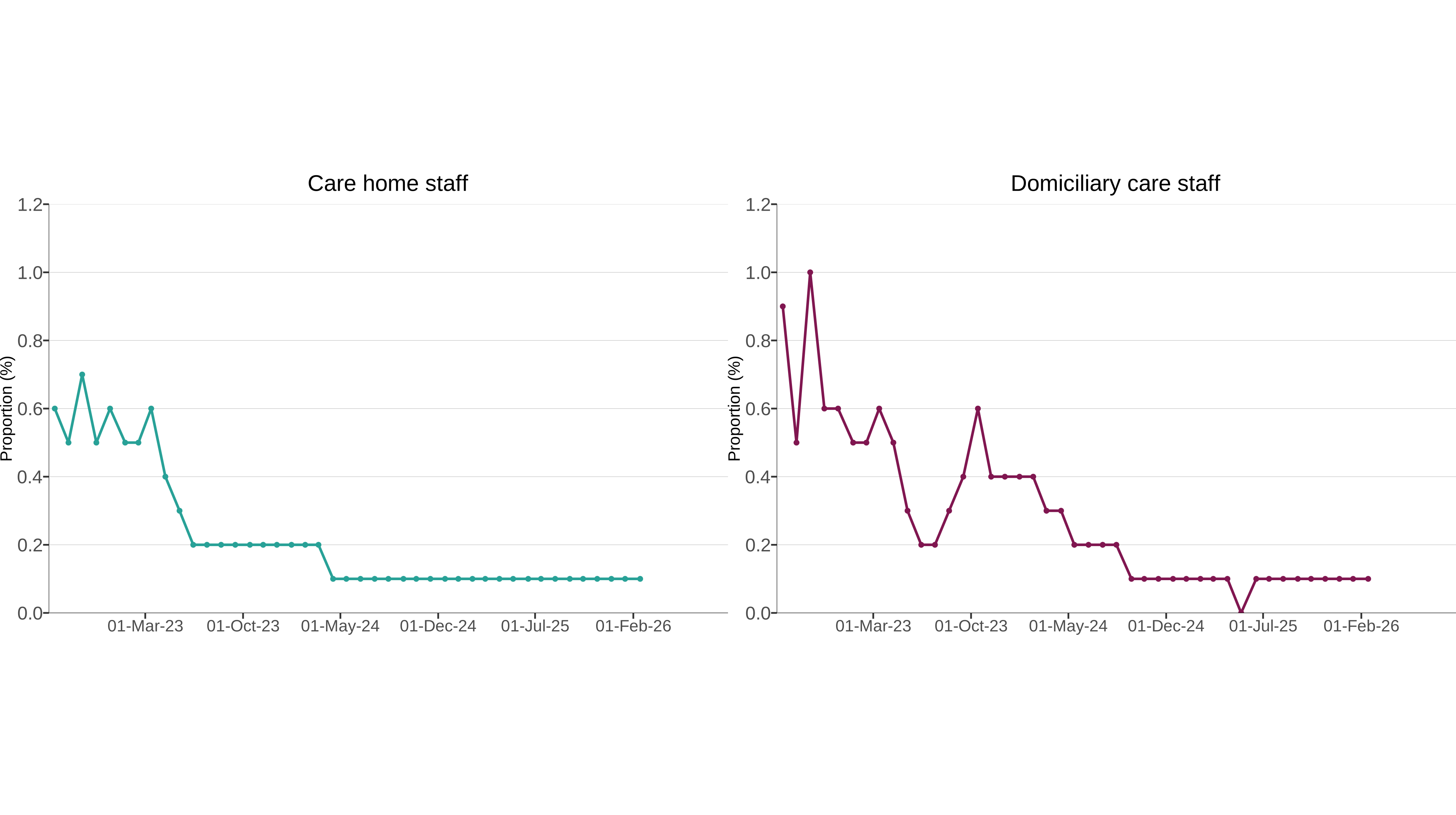
In the week ending 16 February 2026, 0.1% of care home staff and 0.1% of domiciliary care staff were absent due to COVID-19-related reasons.
These proportions stayed the same for both care home staff and domiciliary care staff in the last month.
Figure 4: proportion of staff absent due to COVID-19-related reasons, England, 15 August 2022 to 16 February 2026
Source: Capacity Tracker.
Users should note that the proportion of staff absent due to COVID-19-related reasons is not comparable across care settings.
The main observations from figure 4 are:
- absence rates due to COVID-19-related reasons among care home staff fluctuated around 0.6% between August 2022 and March 2023, before steadily decreasing to 0.2% between April and June 2023. This rate remained stable at 0.2% until April 2024, when it decreased to 0.1% and has remained the same since
- absence rates due to COVID-19-related reasons among domiciliary care staff broadly decreased from 0.9% in August 2022 to 0.1% in September 2024, with the exception of increases in October 2022, March 2023 and between July and October 2023. This rate has remained broadly stable at 0.1% since September 2024, with the exception of a slight decrease in May 2025
Staff absences due to COVID-19 in care homes
In the week ending 16 February 2026, there was little regional variation, with regions reporting COVID-19-related staff absence rates between 0.0% and 0.1% (to one decimal place). Since the week ending 14 January 2026, absence rates increased from 0.0% to 0.1% in London, decreased from 0.1% to 0.0% in the North West, and remained the same in all other regions.
Data on absences and response rates in care homes can be found in tables 2 and 6, respectively, of the accompanying ‘Occupancy, visiting and workforce statistics, data to February 2026’ on the Adult social care provider statistics, England: quarterly update to February 2026 page.
Staff absences due to COVID-19 in domiciliary care
Absence rates in domiciliary care settings are not directly comparable with those in residential care homes.
In the week ending 16 February 2026, there was some regional variation, with regions reporting COVID-19-related staff absence rates between 0.0% and 0.2% (to one decimal place). Since the week ending 14 January 2026, absence rates increased from 0.1% to 0.2% in London, decreased from 0.1% to 0.0% in the South West and remained the same in all other regions.
Data on absences and response rates in domiciliary care settings can be found in tables 3 and 7, respectively, of the accompanying ‘Occupancy, visiting and workforce statistics, data to February 2026’ on the Adult social care provider statistics, England: quarterly update to February 2026 page.
5. Flu vaccination in adult social care settings
Within the 99.1% of older adult care home providers who had updated their seasonal vaccination data as of 16 February 2026:
- 11.3% of total staff are known to have received a flu vaccination for the 2025 to 2026 season
- 66.7% of total residents are known to have received a flu vaccination for the 2025 to 2026 season
Within the 99.0% of younger adult care home providers who had updated their seasonal vaccination data as of 16 February 2026:
- 9.1% of total staff are known to have received a flu vaccination for the 2025 to 2026 season
- 54.5% of total residents are known to have received a flu vaccination for the 2025 to 2026 season
Within the 96.8% of domiciliary care providers who had updated their seasonal vaccination data as of 16 February 2026, 14.6% of total staff are known to have received a flu vaccination for the 2025 to 2026 season.
As data is self-reported by care providers, flu vaccination rates are affected by response rates. Only those who have updated Capacity Tracker since the first 2025 to 2026 seasonal vaccination questions were added on 1 September 2025 are included.
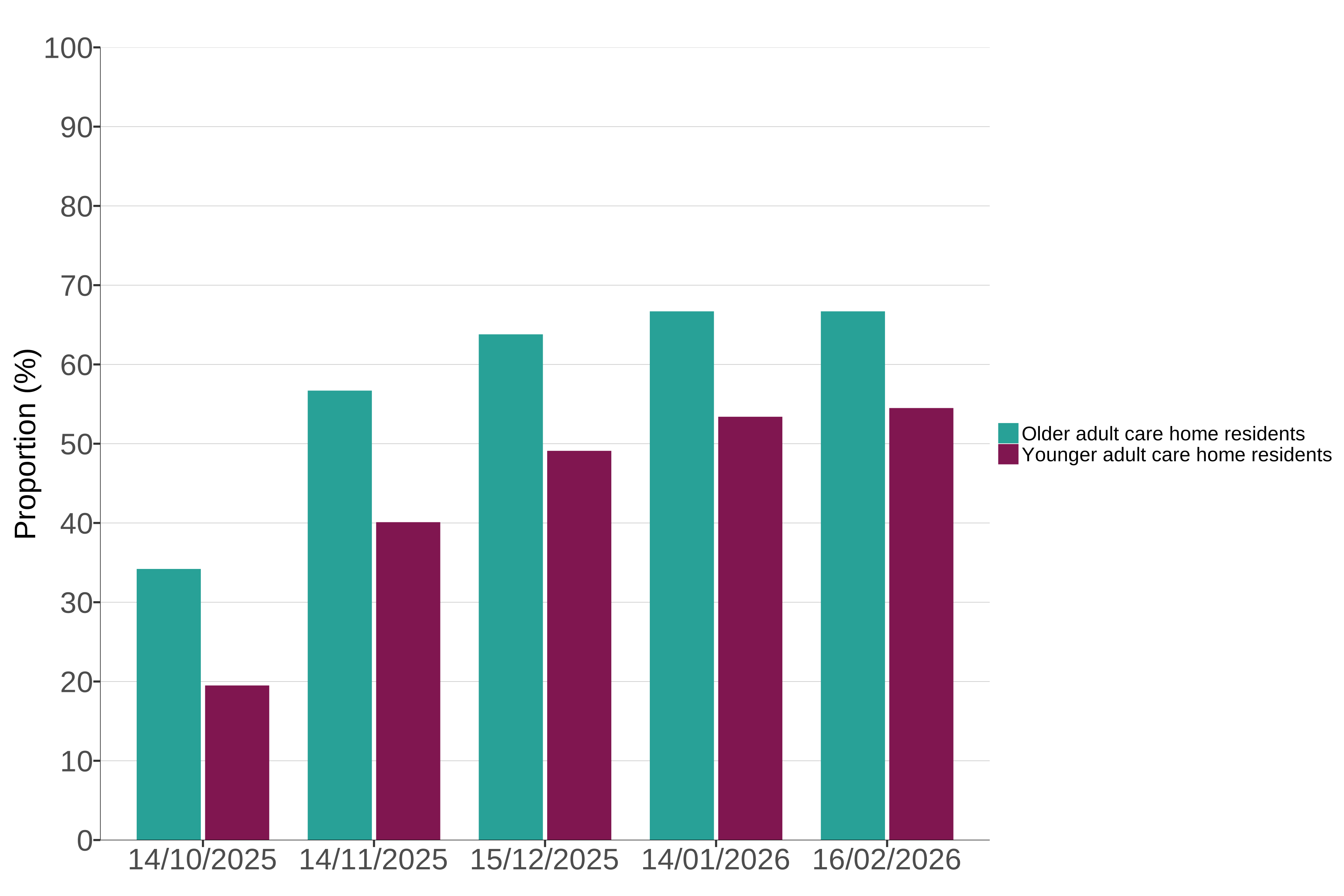
Figure 5: proportion of residents of older and younger adult care homes who have received a 2025 to 2026 flu vaccine, England, 14 October 2025 to 16 February 2026
Source: Capacity Tracker.
The main observations from figure 5 are:
- the proportion of older adult care home residents who have received a 2025 to 2026 flu vaccine has increased from 34.2% in October 2025 to 66.7% in February 2026
- the proportion of younger adult care home residents who have received a 2025 to 2026 flu vaccine has increased from 19.5% in October 2025 to 54.5% in February 2026
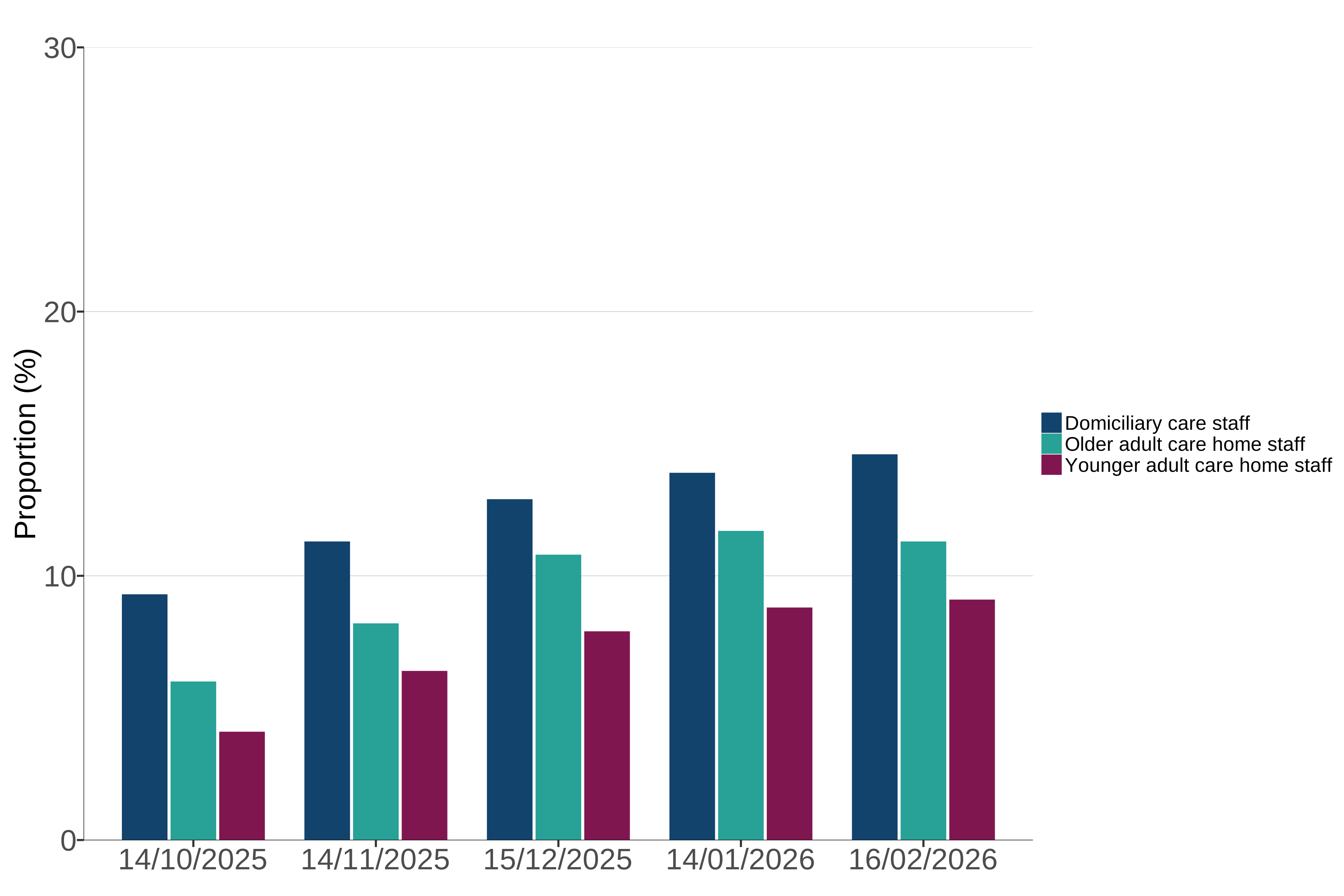
Figure 6: proportion of staff in older and younger adult care homes and domiciliary care who have received a 2025 to 2026 flu vaccine, England, 14 October 2025 to 16 February 2026
Source: Capacity Tracker.
Users should note that the proportion of staff receiving flu vaccinations is much lower than the proportion of residents (as presented in figure 5 above), so attention should be drawn to the y-axis scale.
The main observations from figure 6 are:
- the proportion of older adult care home staff who have received a 2025 to 2026 flu vaccine has increased from 6.0% in October 2025 to 11.3% in February 2026
- the proportion of younger adult care home staff who have received a 2025 to 2026 flu vaccine has increased from 4.1% in October 2025 to 9.1% in February 2026
- the proportion of domiciliary care staff who have received a 2025 to 2026 flu vaccine has increased from 9.3% in October 2025 to 14.6% in February 2026
Data on flu vaccination and response rates can be found in the accompanying ‘Flu vaccination statistics, data to February 2026’ and ‘Flu vaccination response rates, data to February 2026’, respectively, on the Adult social care provider statistics, England: quarterly update to February 2026 page, in addition to data by region and local authority.
6. Digital social care records
Data on the estimated uptake of DSCRs is available up until the end of December 2025.
Adult social care provider locations in England with a DSCR
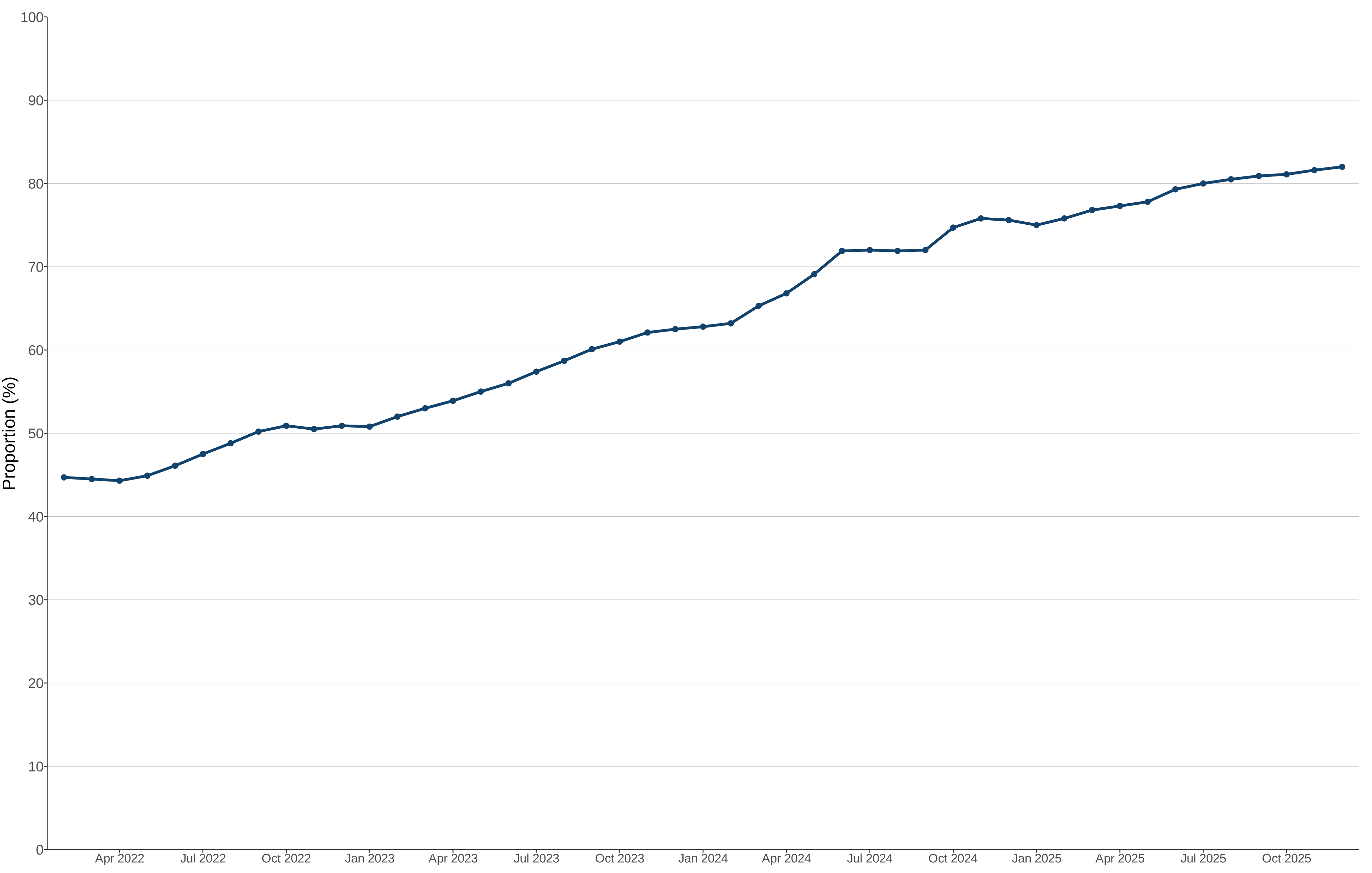
As of December 2025, 82.0% of CQC-registered adult social care provider locations in England are estimated to have a DSCR, compared to 75.6% in December 2024.
Information on the uptake of DSCRs is self-reported. Adult social care provider locations registered with CQC are required to provide an updated position on their DSCR usage annually. This means that data reported each month represents a snapshot in time from a sample of roughly one-twelfth of the CQC-registered adult social care provider location market. Due to the nature of this rotating sample, it is possible to see fluctuations in usage from one month to the next. To account for this potential for variation, the statistics presented in this report represent the reported use of DSCRs across the current and preceding 2 months.
For more information, see the provider statistics background quality and methodology for these statistics.
Figure 7: estimated proportion of adult social care provider locations that have a DSCR, England, February 2022 to December 2025
Sources: CQC PIR.
The main observation from figure 7 is that the proportion of adult social care provider locations estimated to have a DSCR has broadly increased between February 2022 and December 2025.
This data can be found in table 1 of the accompanying ‘Estimated uptake of digital social care records, data to December 2025’ on the Adult social care provider statistics, England: quarterly update to February 2026 page.
People receiving adult social care services in England with a DSCR
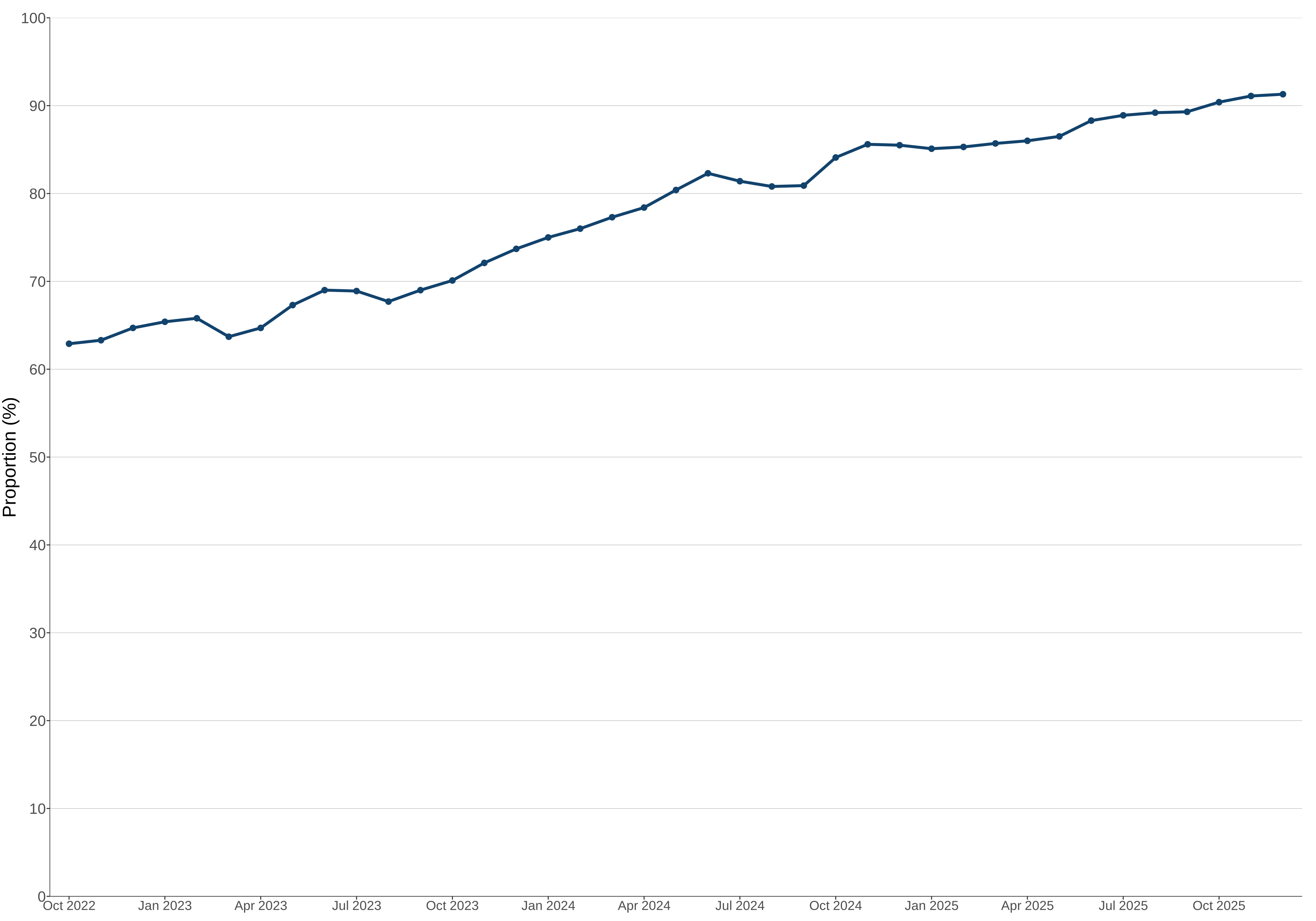
As of December 2025, 91.3% of people cared for by CQC-registered adult social care providers in England are estimated to have a DSCR, compared to 85.5% in December 2024.
Data on the estimated coverage of DSCRs among people receiving adult social care services is available from October 2022, capturing information provided since August 2022. This follows the commencement of the adult social care provider information provisions on 31 July 2022.
Figure 8: proportion of people cared for by adult social care providers estimated to have a DSCR, England, October 2022 to December 2025
Sources: CQC PIR and Capacity Tracker.
The main observation from figure 8 is that the proportion of people receiving adult social care services estimated to have a DSCR has broadly increased between October 2022 and December 2025.
This data can be found in table 2 of the accompanying ‘Estimated uptake of digital social care records, data to December 2025’ on the Adult social care provider statistics, England: quarterly update to February 2025 page.
Adult social care provider locations in England who are in the process of implementing a DSCR
As of December 2025, an estimated 9.6% of adult social care provider locations are in the process of implementing a DSCR.
This information is taken from Capacity Tracker, which is updated monthly. The question in Capacity Tracker relating to DSCR use is not mandatory and as such this data may not be fully representative. It should be viewed only as an indication of the proportion of provider locations who may have a DSCR in the near future.
This data can be found in table 3 of the accompanying ‘Estimated uptake of digital social care records, data to December 2025’ on the Adult social care provider statistics, England: quarterly update to February 2026 page. Due to differences in data sources and coverage between metrics, proportions published in the accompanying data tables cannot be added together.
Terminology
Active Capacity Tracker locations
Care homes which have a CQC active status, excluding those with a current dormancy start date.
Care home
Facilities providing residential care. The data in this bulletin refers to CQC-registered care homes.
Care provider location
The term used by CQC for a care home or home care agency, noting that some care home locations will also offer home care. The term also includes a small number of other social care locations which are neither care homes nor home care agencies.
Digital social care records (DSCRs)
Software solutions for recording a person’s care information. They replace paper records.
Domiciliary care
Services providing personal care for people living in their own homes. The data in this bulletin refers to domiciliary staff employed by independent CQC-registered providers.
Older adult care homes
Care homes serving any older people (aged 65 and over) as identified from the latest CQC data on care homes in the ‘older people service’ user band. A small number of residents within care homes serving older people may be aged under 65.
Staff
Unless specified, staff can refer to staff directly employed by a provider and/or through an agency.
Vacant and admittable beds
Beds which are vacant and available to accept an admission on the day of data submission, as self-reported by care providers in Capacity Tracker.
Vacant and non-admittable beds
Beds which are vacant but not available for admission on the day of data submission, as self-reported by care providers in Capacity Tracker. This includes the number of beds that are reported as ‘vacant and reserved’ and derived remaining beds that are classified as ‘vacant but not available for admission’.
Younger adult care homes
Care homes not serving any older people (aged 65 and over) as identified from the latest CQC data on care homes in the ‘older people service’ user band.
About these statistics
This is a quarterly publication by DHSC of official statistics on adult social care in England. Official statistics are produced in accordance with the Statistics and Registration Service Act 2007 and the Code of Practice for Statistics, and meet high standards of trustworthiness, quality and public value.
These statistics are being published as a part of a wider landscape of statistics on adult social care. The Government Statistical Service compiles a UK adult social care database of official statistics on adult social care across the 4 nations of the UK. This is updated on a monthly basis.
These statistics are assessed regularly and any improvements in quality are incorporated accordingly at the next available opportunity. The scope of the data included in this publication is also assessed to ensure the value of these statistics is maintained. Data collection may change in response to shifts in priorities, leading to corresponding adjustments in this bulletin’s reporting.
The UK Statistics Authority conducted a review of adult social care statistics in England, which called for:
- better leadership and collaboration across different organisations publishing official statistics. This publication has been produced in collaboration with other statistics providers of adult social care data and DHSC will endeavour to work with various stakeholders as more data is published through this publication
- addressing of gaps in available data, particularly in privately funded care. This bulletin aims to plug some of that gap by including data on residents privately funding their care in addition to those funded by local authorities
- improving existing official statistics. Statistics derived from Capacity Tracker are badged as official statistics and more data will be added iteratively based on user needs
Data sources
This section details the data sources used to produce the statistics.
Capacity Tracker
Data on the following is taken from self-reported data submitted by care providers in England through a data collection and insight tool called Capacity Tracker:
- occupancy in care homes
- number of care home residents
- number of people receiving regulated domiciliary care
- visiting in care homes
- staff absence in adult social care settings
- flu vaccination in adult social care settings
Since 31 July 2022, this data has been part of the subset of data that providers are required to submit on a monthly basis.
Data on the estimated proportion of adult social care provider locations that are in the process of implementing a DSCR is taken from Capacity Tracker. This question does not fall under the formal notice of a mandate and as such this data may not be fully representative.
CQC provider information return
Data on the estimated uptake of DSCRs by adult social care provider locations is obtained from the PIR. The PIR is managed by CQC. Each adult social care provider is required to complete their return annually, usually on the anniversary of their registration with CQC.
Methodology
More detailed information about data sources can be found in the provider statistics background quality and methodology for these statistics. This document also includes detailed information on:
- data coverage
- data quality
- relevance
- accuracy and reliability
- timeliness and punctuality
- comparability and coherence
- accessibility and clarity
- cost and burden
Revisions
Any revisions to past publications will be in line with DHSC’s revision policy and highlighted in future publications accordingly.
See the provider statistics background quality and methodology for more information on revisions.
Contact
We’d like feedback from our users about how you use our products, how well these products meet your needs and how they could be improved.
For feedback and any further questions, contact asc.statistics@dhsc.gov.uk.