Genuine dialogue requires respect for Ukraine’s sovereignty: UK statement to the OSCE
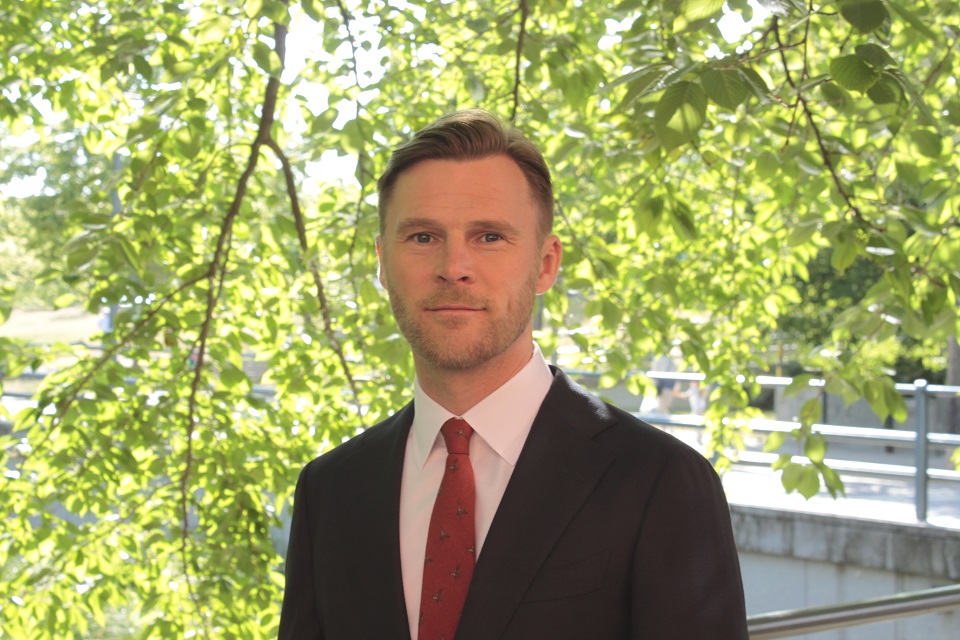
UK Chargé d’Affaires, Deputy Ambassador James Ford condemns Russia’s latest mass strikes against Ukraine and its continued denial of Ukrainian agency. Respect for sovereign equality, territorial integrity and Ukraine’s democratic choices is essential for genuine dialogue and any lasting peace settlement.
Thank you, Mr Chair.
The United Kingdom condemns Russia’s latest mass strikes against Ukraine.
Since the US President called for a ceasefire on attacks against energy infrastructure, Russia has repeatedly attacked Ukraine’s energy system. As of yesterday, Russia had carried out 86 such attacks, including a major assault that struck ten energy facilities and left more than 550,000 people without power. Russia carried out further attacks last night.
Over the same period, Russian attacks killed at least 98 civilians. These are not the actions of a state committed to restraint or to serious diplomacy.
Mr Chair, the OSCE was built to enable dialogue between states, particularly those that are not aligned. But genuine dialogue rest on the principle of sovereign equality. It requires every state to recognise the agency of others. It cannot work when one state claims the right to decide another’s government, borders, alliances or future.
That is why sovereign equality is at the heart of the Helsinki Final Act. It stands alongside territorial integrity, the inviolability of frontiers, non-intervention and the peaceful settlement of disputes.
Together, these principles make dialogue possible. Russia pledged to respect them. Instead, it has repeatedly undermined the sovereignty of Ukraine and other participating States.
In 2013, Russia applied intense political and economic pressure to prevent Ukraine from pursuing closer European integration.
In 2014, Russia seized Crimea and attempted its illegal annexation. It then supported and sustained armed conflict in eastern Ukraine.
In 2022, Russia launched its full-scale invasion, seeking to dictate Ukraine’s political direction through force.
Regrettably, Mr Chair, Russia applies the same approach in this Council. It speaks about Ukraine while refusing to treat Ukraine as a sovereign participant, with an equal voice in decisions about its future.
Russian propaganda repeatedly denies Ukraine’s agency. Russia’s repeated false claims about Boris Johnson and the Istanbul talks in 2022 are a classic example. Claims that US and European “puppet masters” control Ukraine are another.
Russia tries to reinforce this fiction by questioning the legitimacy of Ukraine’s democratic institutions. It refuses even to use the proper name of the Ukrainian Government, preferring derogatory labels and insults.
Of course, Russia is in no position to lecture Ukraine on democratic legitimacy. It has closed down political opposition, independent civil society and independent media. Its recent Duma elections fell short of its OSCE commitments, including failing to invite independent observation by the Office for Democratic Institutions and Human Rights. And it staged sham elections in the temporarily occupied territories of Ukraine, in violation of Ukraine’s sovereignty and independence. Ukraine, by contrast, has sustained democratic government while defending itself against a full-scale invasion.
Mr Chair, for dialogue to produce a lasting peace settlement, Russia will have to accept and respect Ukraine’s sovereignty. Only Ukraine can make decisions about its security and its sovereignty.
If Russia wants genuine dialogue, it must recognise that basic fact. Ukraine’s government is for Ukrainians to choose. Ukraine’s partnerships are for Ukraine to determine. And Ukraine must be central to any negotiation about its future.
This principle of sovereign equality is the foundation on which all OSCE dialogue rests.
Thank you, Mr Chair.