WorkWell Pilots Evaluation – Early Implementation Findings
Updated 23 October 2026

© Crown copyright 2026
This publication is licensed under the terms of the Open Government Licence v3.0 except where otherwise stated. To view this licence, visit nationalarchives.gov.uk/doc/open-government-licence/version/3 or write to the Information Policy Team, The National Archives, Kew, London TW9 4DU, or email: psi@nationalarchives.gov.uk.
Where we have identified any third party copyright information you will need to obtain permission from the copyright holders concerned.
This publication is available at https://www.gov.uk/government/publications/workwell-pilots-evaluation-early-implementation-findings/workwell-pilots-evaluation-early-implementation-findings
DWP research report no.1129
A report of research carried out by IFF Research on behalf of the Department for Work and Pensions.
Crown copyright 2026.
You may re-use this information (not including logos) free of charge in any format or medium, under the terms of the Open Government Licence. To view this licence, visit the National Archives.
Or write to the:
Information Policy Team The National Archives Kew London TW9 4DU
Email: psi@nationalarchives.gov.uk
This publication is also available on our website at Research at DWP.
If you would like to know more about DWP research, email socialresearch@dwp.gov.uk
First published May 2026
ISBN – 978-1-78659-958-2
Views expressed in this report are not necessarily those of the Department for Work and Pensions or any other government department.
Glossary of key terms
| Term | Definition |
|---|---|
| Biopsychosocial interventions | Interventions that take a holistic view of the barriers an individual experiences through their physical health, their psychological situation and their social situation. |
| Early intervention | WorkWell prioritises intervening at the earliest possible point, as evidence shows this is the most effective way of helping people to stay in work or go back to work. |
| Fit note | Issued by healthcare professionals to provide evidence of the advice they have given about an individuals’ fitness for work. They may be issued to individuals who are unwell and cannot work for more than 7 days, including weekends and bank holidays. |
| Grant funding Management Information (MI) | The grant funding data that pilot areas are expected to submit to the JWHD quarterly to satisfy the conditions of their funding. |
| Integrated care board (ICB) | NHS organisations responsible for planning health services for their local populations. They manage the NHS budget and work with local providers of NHS services, such as hospitals and GP practices. |
| Jobcentre Plus (JCP) | JCP is a funded by the Department for Work and Pensions, whose aim it is to help people of working age find employment in the UK. It is also responsible for delivering services that help people claim working age benefits. |
| Local authority (LA) | Also known as councils, LAs provide public services, including work and health support. They operate independently of central government. |
| Local System Partnerships | The group of organisations within a geographical area that have been convened to design and deliver WorkWell. |
| Participant Management Information (MI) | The participant profile data that pilot areas are expected to submit to the JWHD monthly to satisfy the conditions of their funding. This will support the local and national evaluation of WorkWell. |
| National Support Offer (NSO) | A support offer attached to the WorkWell programme, including provision across three core tiers nationally (National Support Team), regionally (Regional Programme Advisers), and locally (Learning and Change Managers). The NSO was set up to support pilots to meet their delivery targets as they compete with other high-level priorities in their local areas. The learning shared will support pilot areas to adjust their services appropriately and contribute to national learnings about which models work. |
| Outcome | An outcome is recorded by pilot areas as part of their management information submission, stating whether a participant has started at work, returned to work, remained in work, completed a plan or stopped participating before completion of an agreed plan. |
| Personal budget | An allocation of money directly paid to an individual for use on services to help them with their needs, to give them more choice about how their funding is spent. In the context of WorkWell, it would be expected that the personal budget is spent on work and/or health services. |
| Pilot area | The 15 ICB areas that were awarded funding to deliver WorkWell are referred to as pilot areas. Note such areas were previously called ‘vanguard partnerships’. |
| Referral route | The way in which an individual is initially passed into WorkWell services from local partners in work and health or via self-referral. The service will have multiple, clear referral routes for people both in work or who have recently fallen out of work. |
| ‘Return to work’ plan | Aimed at individuals who have recently fallen out of work due to a health condition. It will include clear objectives that address the service users’ biopsychosocial needs to support them to get back into suitable work. |
| Target beneficiaries | The individuals who are intended to receive support through WorkWell. |
| The Prospectus | National government guidance for Local System Partnerships of integrated care boards (ICBs), LAs and local Jobcentre networks who wished to apply for funding to deliver WorkWell services. The document describes the background of WorkWell, expectations of Vanguard Partnerships and describes the support package for Vanguard Partnerships. |
| ‘Thrive in work’ plan | Aimed at individuals at risk of falling out of work due to a health condition. It will include clear objectives that address the service users’ biopsychosocial needs to support them to stay in work, or find alternative work (if their existing employment doesn’t accommodate their health needs). |
| Triage | Once an individual is referred to the service, some pilot areas will undertake an assessment of eligibility and suitability to decide whether an individual is appropriate for WorkWell. Once someone is deemed eligible and suitable, WorkWell may connect participants into the rest of the local work and health infrastructure through signposting and referral. |
| Work and health assessment | Evidence-based, person-centred, low intensity work and health assessments that support individuals with their low-level occupational health needs and to overcome barriers to work. Undertaken by a work and health coach. |
| Work and health coach | A stipulated role in each pilot area, the work and health coach will be the first point of contact (POC) for individuals receiving support through WorkWell. They will deliver one to one coaching. |
| Work and Health Strategy | Pilot areas developed work and health strategies or built on existing ones where they are already in place, to support and drive a strategic approach to integrating work and health services at local level. |
Executive summary
This report presents the initial findings from the evaluation of the WorkWell programme pilots, a Department for Work and Pensions (DWP) and Department for Health and Social Care (DHSC) Joint Work and Health Directorate (JWHD) initiative. WorkWell is designed to support disabled people and those with health conditions stay and thrive in work or quickly return if they fall out. It aims to create a joined-up approach to supporting individuals with work and health needs and is being piloted across 15 local areas in England by integrated care boards (ICBs). While there are some core elements of WorkWell which all sites must deliver, pilot areas have flexibility to tailor their approach to local needs.
The evaluation, being delivered by IFF Research, York Health Economics Consortium (YHEC), and CECAN Ltd, was commissioned to assess this initiative, and specifically:
- the impact of the WorkWell pilots on participants, focusing on employment outcomes, earnings, benefits, sick leave and self-reported health outcomes
- how the WorkWell pilots are being implemented and delivered, and the mechanisms contributing to the outcomes observed
- the programme’s value for money
These initial findings cover the early phase of WorkWell pilot delivery, from its launch in October 2024, through to March 2025. As planned at this stage, no quantitative, longitudinal impact data is available due to the time it takes for this to materialise and estimate. Subsequent reports will cover outcomes for participants that started during this timeframe, as well as the experiences of those that began at a later date. This report draws on evidence from Management Information (MI) of participants that started WorkWell between October 2024 and March 2025 (5,661 participants), returned by 12 pilot sites[footnote 1]; a baseline survey of 1,089 participants across nine pilot sites (corresponding to a 30.7% response rate of those invited to take part); 60 qualitative interviews with participants; 15 interviews with senior stakeholders; and participatory systems mapping workshops in three of the pilot areas. Using this data, this report covers:
- the initial profile of participants that are receiving support through the WorkWell pilots, including their work and health status (using both MI and baseline survey data)
- WorkWell pilot sites’ experiences of mobilising service delivery (using qualitative data from interviews with senior stakeholders)
- initial feedback from participants on their experiences of the WorkWell ‘customer journey’ (using qualitative data from interviews with participants, and some baseline survey data)
- any early outcomes among participants that can be identified at this stage (using qualitative data from interviews with participants)
- lessons learned from the early stages of WorkWell pilot delivery (using all data sources stated)
The research findings cover the following topics.
Profile of participants (Chapter 4)
Between October 2024 and March 2025, 5,661 individuals began receiving support through WorkWell across 12 pilot sites. The largest numbers of participants were from NHS Northwest London ICB, NHS Greater Manchester ICB, and NHS North Central London ICB.
Looking at the MI submitted by 12 pilot sites, WorkWell pilot participants had a spread of characteristics in terms of age, sex, ethnicity, education, and health conditions. Just under two fifths (37%) identified as being from an ethnic minority background. Nearly half were experiencing a primary health barrier to work that was mental health related. The majority were not in employment in the month before starting the WorkWell pilot, and almost half of all participants with a long term health condition said it impacted the amount or type of paid work they were able to do in the month before WorkWell a great deal.
Service mobilisation and management (Chapter 5)
Across the 15 pilot sites, there is variation in terms of lead organisation, geographical coverage, level of urbanisation and rurality, and whether services are being delivered internally or externally. Some areas are led by ICBs, others by local authorities (LAs), each bringing different strengths. While ICBs usually had strong links to local health networks, such as primary care networks (including GPs), LAs usually had strong links to employment networks (including Jobcentres).
Coverage ranges from delivery across a whole ICB footprint, to targeted delivery in specific high-need areas, identified through local data on deprivation, unemployment, and health. Urban sites, such as the London ICBs, faced different challenges from rural or coastal sites, such as Cornwall, where transport and access to services are more limited.
Mobilising the WorkWell pilots required rapid set-up, with most sites facing tight timescales between funding approval and expected launch. This meant most sites were unable to launch in October 2024 as originally planned. Where sites were most successful in mobilising, they often built on pre-existing local partnerships and had prior experience delivering work and health programmes. Some sites, such as Bristol, had successes recruiting internally for delivery roles, but experienced delays in procuring external partners which disrupted their ability to mobilise. By March 2025, one site (Leicester, Leicestershire and Rutland) were not delivering any WorkWell service, in large part due to data governance issues.
Whether services are being delivered internally or externally also differed across the pilot areas, with some delivering services in-house, and others procuring external partners. Several have combined both approaches. Internal approaches to delivery benefited from existing staff pools and organisational knowledge, speeding up mobilisation and fostering commitment among work and health coaches. However, the use of fixed-term contracts due to short-term funding led to concerns about staff retention and continuity, especially with competing programmes offering more secure employment. Externally procured delivery was sometimes facilitated by existing contracts, but short mobilisation windows posed challenges for commissioning and contract management. The payment by results model raised concerns about referral quality, and some stakeholders worried that providers might prioritise quantity over suitability to meet targets.
System Integration (Chapter 6)
Participatory Systems Mapping (PSM) workshops examined the complexity of the ‘whole system’ in relation to local employment and health services in three ICB areas to understand how systems influence WorkWell outcomes and impacts achieved. Workshops highlighted the importance of system co-ordination and linking up to ensure sites are not just delivering a bespoke-light touch employment support offer but are acting as a ‘backbone’ for wider employment support offers. An important role in effective delivery of the pilots is for them to not to do everything but to ‘lubricate’ wider system connections, getting people to the right places and having clear hand-overs of responsibilities to and from WorkWell.
Customer journey (Chapter 7)
Pilot areas had used a range of approaches to raise awareness of the WorkWell pilot, including stakeholder engagement, community events, and targeted media campaigns such as social media and public transport advertising. Community outreach was particularly important in areas like Black Country, Cornwall, and Leicester to reach underrepresented groups. Facilitators for raising awareness included tailored promotional materials and leveraging existing professional networks, while face to face engagement helped generate appropriate referrals. Stakeholders reported challenges engaging primary care networks due to limited capacity, and noted that short-term funding made it difficult to build lasting partnerships.
Participants learned about the WorkWell pilot through various channels, including the Jobcentre Plus, GP surgeries, social media, and community organisations.
Looking at the MI, the most common referral route to WorkWell at this point in delivery was through Jobcentre Plus, accounting for 28% of participants, followed closely by self-referrals at 27% and GP or primary care referrals at 25%. Referral patterns varied by area, with GP referrals especially high in Cambridge and Peterborough (62%) and self-referral particularly common in Surrey (66%). Stakeholders reported mixed experiences generating referrals, with some areas facing high demand and waiting lists, while others struggled to meet expected participant volumes (largely due to delays in mobilising their service).
Many stakeholders had hoped for more referrals from Jobcentre Plus and primary care networks, but noted barriers such as low capacity, a lack of buy-in, and the need for stronger relationships with GPs. Innovative solutions, such as the Joy App for one-click GP referrals and paying for GP administrative time, had helped improve referral volumes in some areas.
Overall, participants generally found the referral process straightforward and appreciated the clear communication, but some wanted more information from their referrers about what to expect from the programme at the outset.
Part of the WorkWell pilot involves participants receiving an initial assessment of their work and health needs, of which only 70% of respondents to the baseline survey reported receiving. While some participants did not always recognise the interaction as a formal ‘assessment’, most had positive reflections on the experience, describing it as person-centred and supportive, helping them discuss their personal goals and needs. Participants valued staff who were friendly, considerate, and thorough, though some found the process lengthy and would have preferred more flexibility, such as completing forms in advance. Preferences for assessment format varied, with some participants that had their assessment by telephone or online favouring face to face meetings. They felt this would have helped to build trust and rapport.
Two thirds (66%) of participants that competed the baseline survey recalled creating an action plan. In the qualitative interviews, many participants did not recall a formal ‘return-to-work’ or ‘thrive-in-work’ plan but did discuss informal plans and setting goals and actions with their work and health coach. Wording in the survey originally used the latter two terms and has since been updated to match language used by delivery staff.[footnote 2] Furthermore, the timing of the baseline survey was intended to be as soon as possible after the participant joined the WorkWell pilot. Often action plans were set after the first meeting, meaning the participant may have completed the baseline survey prior to this point. Therefore, survey responses may not capture the full extent of the support received during the WorkWell pilot given the timing of the survey.
Action plans typically included both employment and non-employment goals, with shared responsibilities between participants and coaches. Participants generally found the plans helpful, relevant, and easy to follow, appreciating clear next steps and achievable milestones. Regular review and flexibility in updating plans were seen as important by participants for maintaining motivation and supporting progress.
The WorkWell triage function is intended to involve multi-disciplinary teams (MDTs) comprising both clinical and non-clinical roles, tailored to local needs to assess participants and connect them to relevant support. While some pilot areas had established comprehensive MDTs and effective triage processes, others were still developing these functions. Stakeholders highlighted the value of triage in helping participants navigate complex local support systems and preventing them from feeling overwhelmed or lost. Participants generally appreciated prompt and clear initial contact, though some wanted more information about the programme at this stage as well.
WorkWell participants received personalised one to one coaching, signposting, and referrals to health, employment, and community and voluntary sector services. Most valued the tailored support, which addressed employment, health, and wider barriers such as finances or housing. Meetings took place face to face, online, or by phone, depending on participant needs. Support with employer engagement, such as help with putting reasonable adjustments in place at work, was available but less commonly accessed.
Overall satisfaction (Chapter 8)
Overall, 70% of participants that completed the baseline survey said they were satisfied with the support they received from the WorkWell pilot. The main drivers of satisfaction were friendly and supportive coaches, clear advice, help with health conditions, job search support, and having a clear plan. Satisfaction was highest in South Yorkshire (82%) and lowest in North Central London (61%). Qualitative feedback highlighted the importance of the coach-participant relationship, emotional support, and holistic help with both work and health needs. A minority of participants expressed dissatisfaction, citing unclear aims of the support, poor communication, or feeling the support was not tailored to their needs. Suggestions for improvement included more regular contact, better coach understanding of participant needs, and clearer information about the support available.
Early outcomes (Chapter 9)
Even at this early stage, some WorkWell participants reported both soft and hard outcomes from the programme. Soft outcomes included increased awareness of local support services, improved self-esteem and motivation, and enhanced confidence in job-seeking skills. Participants appreciated the tailored support from coaches, which helped them identify suitable employment opportunities and negotiate workplace adjustments. Hard outcomes included improved physical and mental health, often through referrals to services like physiotherapy and mental health support. Some participants found employment or retained their jobs with the help of the WorkWell pilot, while others engaged in further education and training, feeling more prepared to pursue these opportunities. Although many participants continued to claim benefits, they viewed WorkWell as a positive step towards sustainable employment.
Conclusions and lessons learned (Chapter 10)
The WorkWell pilot is broadly reaching its intended beneficiaries. Participants are typically facing significant health-related barriers to work, most commonly mental health, followed by physical and cognitive issues. Participants self-report poor health, with a substantial proportion experiencing severe problems that greatly restrict their ability to work. While some participants were in paid work before joining, most were working less than full-time, and over half of those not in work had been unemployed for more than a year, suggesting the programme is potentially going beyond early intervention.
There have been challenges with both service mobilisation and delivery, with delays at some sites due to ambitious delivery timescales, recruitment difficulties, and complex procurement processes. Sites with established partnerships and relevant experience mobilised more quickly, and effective service management was supported by strong staff training and communication. The customer journey was generally positive, with straightforward and person-centred referral and assessment processes, and one to one coaching was highly valued. However, referral volumes often fell short of expectations, how action planning was implemented varied between sites, and onward referrals sometimes did not meet participants’ needs.
Overall, participant satisfaction with the WorkWell pilot was high, driven by supportive relationships with coaches and clear, useful advice. Early outcomes, gathered from qualitative interviews with participants, included increased confidence, motivation, and some self-reported improvements in health and employment, such as a better understanding of suitable roles and finding paid employment. More robust outcome and impact evidence will follow as the programme matures.
To further improve participant experience and service delivery, recommendations include strengthening and formalising referral pathways (especially with Jobcentre Plus) and standardising and clarifying communication with participants post-referral. Improving information sharing at the referral and assessment stages is also suggested. Offering flexible assessment formats is also advised, ensuring regular and consistent communication between coaches and participants, and enhanced training for coaches, particularly around supporting complex or neurodivergent needs. The programme should also recognise when more intensive, hands-on support is needed for those with the greatest barriers to work that could potentially exceed the scope of WorkWell.
In regard to recommendations for the JWHD, the Directorate should continue to monitor the establishment of multi-disciplinary teams (MDTs) across sites, ensuring they are functioning as intended. The JWHD should also review the role of employers in WorkWell, considering whether further action is needed to increase employer engagement in line with the programme’s vision.
1 Introduction
Background to WorkWell
The WorkWell pilot programme aims to support disabled people and those with health conditions by linking work and health, acting as a gateway into local services. Recognising that good health and employment outcomes cannot be achieved by local services acting in silos, WorkWell introduces a joined-up approach in pilot areas that brings together various organisations at local and national levels to provide a bespoke work and health offer tailored to local communities.
At an individual level, WorkWell provides locally designed and delivered, low-intensity work and health assessments, triage, and integrated referrals. WorkWell aims to get support to people early, helping them stay and thrive in work or quickly return if they fall out. Central to WorkWell services is an assessment of a person’s work and health needs, producing a ‘return to work’ or ‘thrive in work plan’ with clear objectives addressing the service users’ biopsychosocial needs.
The WorkWell prospectus was developed to provide guidance for Local System Partnerships of local ICBs who wished to enter a competitive tender process to become one of the 15 pilot sites who would receive grant funding to deliver WorkWell services in their area.
ICBs leading local system partnerships, are locally driven by a partnership of organisations across work and health, varying by pilot area in services offered, referral pathways, and delivery of mandated roles. The learnings from this pilot aim to inform future rollout decisions to more ICB geographies across England.
How are pilot areas expected to deliver WorkWell?
There are some standard elements to WorkWell that pilots must follow:
Eligibility
Delivery to certain groups based on broad eligibility criteria. Anyone with a disability or health condition who needs support:
- to remain in work
- managing a health condition to return to work from sickness absence
- to start work
And anyone whose home address or address of their GP or local Jobcentre falls within the pilot area.
Volume
The number of individuals offered support, based on the pilot’s estimates of how many people they could deliver to.
Type of support
Types of support include:
- a work and health assessment delivered by a work and health coach
- development of a thrive in work or return to work plan after the work and health assessment
- some level of follow-up engagement with the service user after the plan is developed
Roles
A work and health coach that sits within a multi-disciplinary team (MDT).
Governance
A work and health strategy produced by pilot areas as part of their funding agreement.
Sharing learning
Engagement with the National Support Offer[footnote 3] to share best practice across pilot and non-pilot areas.
Though funding is being delivered to ICBs, they are expected to co-produce WorkWell services with lead partners to join up services. These include other ICBs, Local Authorities, and Jobcentres. The 15 pilot areas have flexibility in delivering WorkWell to suit local needs, with no stipulated length of engagement or follow-up. Learnings from the pilot could potentially help to identify effective models for any future roll out of WorkWell.
Pilot sites believe the services they will be delivering through WorkWell are new or additional, providing support participants would not otherwise receive. Some existing services may be expanded, and individuals may be referred to existing provision after initial support, enhancing linkages between local employment and health support. Outcomes will likely result from both initial and signposted support.
2 Overview of the evaluation
This chapter discusses the agreed approach to evaluating the WorkWell programme pilots. This approach was agreed following a feasibility study, developed in Summer 2024, and published in June 2025.
The evaluation will be conducted over four years, with three interim reports being delivered over this period, culminating in a final report that is due to be delivered in June 2028. It consists of three separate elements; an impact evaluation, a process evaluation, and an economic evaluation. The evaluation is being conducted by IFF Research, York Health Economics Consortium (YHEC) at University of York, and CECAN Ltd.
Impact evaluation
The evaluation will assess the impacts of the WorkWell pilot programme as identified in the Theory of Change. The WorkWell pilots aim to achieve impacts both on individual participants and the local systems around employment and health. The evaluation of these will be approached separately.
Impacts on individual participants
WorkWell aims to support individuals with health conditions or disabilities who are either out of work or already working but facing challenges due to their health condition. The primary goal for those out of work is to help them find good quality employment, while for those already employed, the aim is to sustain appropriate employment.
To assess the pilot programme’s effectiveness, causality must be established to determine whether observed outcomes are due to the intervention rather than other factors. This involves comparing a treatment group (receiving WorkWell support) to a counterfactual group (not receiving the support). A randomised control trial (RCT) is the most robust method for this, but due to practical constraints, a quasi-experimental design (QED) has been selected for the pilot. Practical constraints included the rapid set up and mobilisation of WorkWell pilots and uncertainty around the volume of delivery that would be possible in the first year. Additionally, how the support was going to be delivered in practice across the pilot sites was also uncertain at the point of designing the evaluation.
Participant management information (MI) will be used to profile WorkWell participants, allowing for the identification of similar individuals to form a comparison group from other datasets. These individuals will be chosen from within a group of comparison areas that have been selected as good matches for each of the WorkWell pilots. The evaluation will compare relative changes over time in key outcomes for the treatment group (receiving WorkWell support) and the comparison group (receiving ‘business as usual’ services). It will do this by establishing measures at a baseline, and then following up at 6 and 12 month intervals.
The impact evaluation will draw on multiple datasets. The primary population of interest is WorkWell participants and a counterfactual group of people who complete the survey. This will allow for evaluation of all outcomes of interest, including employment, earnings and benefits using admin data, and self-reported health, healthcare resource use, productivity and sick leave using survey data. Additionally, the evaluation will consider the wider WorkWell participant population using only admin data, to evaluate employment, earnings and benefits. The exact approach for this is still to be decided between the evaluation team and JWHD.
A detailed breakdown of this impact evaluation and how analysis will be approached is outlined in a separate analysis plan.
Impacts on local systems around employment and health
To examine the complexity of the ‘whole system’ in relation to employment and health, and how this influences the outcomes and impacts achieved, Participatory Systems Mapping and Qualitative Comparative Analysis will be used.
Participatory Systems Mapping brings stakeholders together in facilitated sessions to create a causal systems map. This process helps participants reflect on how the local system operates and the factors influencing desired outcomes. The map provides a snapshot of the system at a specific time. The mapping exercise will be repeated three times over the course of the evaluation to track system evolution and encourage further reflection on achieving system change.
Qualitative Comparative Analysis is a structured method for comparing cases, such as individual WorkWell pilots or groups of participants with similar traits. It involves scoring each case for the presence or absence of factors of interest, like geographical characteristics or delivery approaches, and comparing their performance in achieving desired outcomes.
By analysing the combinations of factors present when outcomes are achieved (or not), it’s possible to identify which factors consistently contribute to certain outcomes. This analysis will be conducted later in the study to allow time for the outcomes or impacts of interest to have occurred.
Process evaluation
The aim of the process evaluation is to understand how the programme has been implemented and delivered, and how the pilot areas are operating. The process evaluation will test and explore the mechanisms and assumptions in the Theory of Change (ToC), as well as capture information about how and why outcomes and impacts are achieved or not achieved.
Throughout the process evaluation, findings will be drawn from a range of different sources:
Quantitative surveys with participants on three occasions
Participants are invited to complete a baseline survey online or over the phone, as soon as possible after joining the programme. Those that give recontact permission will then be invited to complete a follow up interview (online or over the phone), at 6 months after starting WorkWell, and again around 12 months after starting WorkWell.
Qualitative interviews with participants
85 in-depth interviews will be conducted with participants over two separate phases. The first phase, which has already been completed, comprised of 60 depth interviews, with the second to include 25.
Qualitative interviews with pilot senior stakeholders
30 in-depth interviews will be conducted with senior stakeholders across two phases, with up to two or three stakeholders in each interview. The first, which has already been completed, comprised 15 interviews (covering all pilot sites), and the second will also comprise of 15.
Focus groups with WorkWell work and health coaches
15 focus groups (up to 6 coaches in each), one per pilot area, will be conducted with work and health coaches. The exact timing of these focus groups is yet to be determined.
Focus groups with employers involved in the WorkWell programme
15 focus groups (up to 6 employers in each), one per pilot area, will be conducted with employers. The exact timing of these focus groups is yet to be determined.
Economic evaluation
For this evaluation, costs associated with providing the WorkWell pilot programme will be obtained from the quarterly expenditure schedule MI that pilots provide to JWHD. The total cost will be divided by numbers of participants to determine a cost per participant per pilot. The detail given in the quarterly expenditure schedule MI will enable analysis of where costs are being incurred. If the cost per participant varies widely between pilots, delivery plans could be evaluated to identify differences between pilots that may be driving this.
Alongside this, the economic analysis will examine and monetise, for example, changes in earnings and benefits; differences in sick leave; changes in self-reported health; and changes in healthcare resource use.
A detailed breakdown of how the economic evaluation is being approached, and how analysis will be conducted, is provided in an analysis plan.
The focus of this report
At this interim stage, this report aims to cover the initial process evaluation, looking to understand how the early implementation is going, what is working well or less well, how and for who. This report explores:
-
the initial profile of participants that received support through WorkWell in the first 6 months of delivery, including their work and health status
-
WorkWell pilot sites’ experiences of mobilising service delivery
-
initial feedback from participants on their experiences of the WorkWell ‘customer journey’
-
any early outcomes among participants that can be identified at this stage
-
lessons learned from the early stages of this evaluation
3 Methodology
This chapter describes the methodological approach taken for the quantitative and qualitative elements included in this report, that includes:
- an analysis of the profile of participants. There are two data sources used in this analysis:
- valid management information (MI) submitted by 12 pilot sites between October 2024 and March 2025
- baseline survey completes achieved between January and May 2025, from nine pilot sites (see Annex B). These individuals started receiving support from WorkWell between the months of October 2024 and March 2025
- an analysis of questions relating to participant experiences of the support from WorkWell. These include questions relating to:
- participant expectations at the point they started receiving support
- the types of support participants have received
- participant views on the types of support they received
- overall satisfaction with the programme
- findings from the first round of 60 qualitative interviews with participants. This includes participants from all 15 pilot sites
- findings from the first round of 15 interviews with pilot senior stakeholders. This includes pilot senior stakeholders from all 15 pilot sites.[footnote 4] Senior pilot stakeholders included Learning and Change Managers, WorkWell delivery managers, and Strategic Leads from the ICBs, LAs and (more rarely) contracted providers
Theory of Change
During the feasibility study, the draft Theory of Change (ToC) model that had been created by the JWHD was refined.
The ToC has six elements:
- the inputs and resources that are required to deliver the programme
- the core activities that are carried out with those resources
- the outputs that are the products that turn the activities into outcomes
- the outcomes (short and mid-term changes resulting from the activities)
- the impact of the programme and the ultimate effects of the combined outcomes
The components that make up each element of the ToC formed a crucial step in the design of this evaluation approach. The ToC shaped what is explored through the evaluation to allow for a demonstration of the programme’s value and helps to interpret learnings. Figure 18 in Annex A presents the final ToC for the WorkWell pilot.
Baseline survey of participants
Focus of the survey
To capture participant circumstances in relation to their health and employment prior to starting the WorkWell pilot, a rolling baseline survey is being conducted. This survey focuses on key participant characteristics that will be used in the assessment of impacts and outcomes over time, such as:
- health and wellbeing, including their engagement with different healthcare services and sickness absences
- benefits history, including whether they are claiming benefits and the total amount
- employment history, including the hours they were expected to work in their main job, or any other job, before starting WorkWell, and expected gross salary for this work
- employment and job search activities
- attitudes to work and health
- key demographics, such as age, sex, type of health condition, ethnicity, and education level
Due to a time lag between participants starting on the WorkWell pilot, and the JWHD being able to share their information for the survey, participants had already received some support at the point they completed the survey. To mitigate the impact of this, participants were asked to reflect on their circumstances prior to starting WorkWell. Most commonly, participants were asked to reflect on their circumstances in ‘the month before starting WorkWell’.
Sampling
As previously discussed, pilot areas are required to submit participant MI to the JWHD on a monthly basis. This MI includes information on the participants that started WorkWell in the month before the date of submission. This sample is then checked by the JWHD to make sure it is compliant (for example, ensuring no variables have missing information) who then pass it on for the survey.
Each month, the received sample is cleaned and processed to determine eligibility for the survey, following a range of steps. More detail on this can be found in Annex B.
Administering the survey
Eligible participants with a valid email address are initially invited to complete the survey via email. The survey remains live online for a month, with participants receiving three email reminders during this time. Participants that have not completed the survey after two weeks are then contacted by telephone. These individuals, along with those with a valid telephone number that were not initially invited due to not having an email address, are then called to see if they would like to take part. A breakdown of the number of participants that were available for fieldwork each month, including the response rate, is provided in Annex B.
Participants can be called up to six times over a two week period to see if they would like to participate. If participants say they would not like to take part in the survey at any time, they are removed and no longer contacted. The survey takes around 25 minutes to complete and participants are offered a £5 email voucher as a thank you for their time.
Analysis
The survey data was checked and processed using SPSS, verbatim responses were fully coded for analysis purposes, and then combined into categorised answer options and tabulated. The data was weighted in line with the overall population of eligible participants that started WorkWell in 12 pilot sites between October 2024 and March 2025. Significance testing was then undertaken, with any subgroup differences identified.
A calibration weight based on participants WorkWell start month, ICB and the type of plan (return to work or thrive in work) they received was applied. This weighting corrects the skew of survey respondents towards those that started WorkWell in later months. This skew was in large part due to sampling for the qualitative strand of the research (discussed in the next section) which used a large proportion of the sample received in the early months of delivery. This also impacted the ICB profile of participants as not all sites provided MI for all 6 months, meaning a greater proportion of sample from some ICBs was used in qualitative sampling in the early stages.
Finally, using the type of plan participants received in the weighting approach corrects for the fact that those marked as receiving a ‘thrive in work’ plan were under-represented in the survey compared to those receiving a return to work plan.
It is important to note that figures presented in this report may not sum precisely to the stated totals or net values due to rounding. Individual components have been rounded independently, which can result in minor discrepancies when aggregated. This is a standard practice to enhance readability and does not affect the overall accuracy or integrity of the data.
Qualitative depth interviews with participants
Focus of participant interviews
To capture evidence on how delivery of the WorkWell pilots had gone so far, the interviews focused on:
- participants’ background to work and health
- the participants’ WorkWell journey, from first finding out about WorkWell through to the support they had received. This also included participants’ reflections on the support, such as what worked well and what could be improved
Participant depth sampling
Between January and March 2025, participant sample received by the JWHD was ringfenced to be invited to take part in a qualitative depth interview. After the MI was cleaned and processed, as discussed in the previous section, a range of steps were followed to identify the qualitative sample. These are outlined in Annex C.
Participant recruitment
These individuals were then contacted to see if they would be interested in taking part in a qualitative interview. If participants agreed, a suitable time and date for the interview was arranged. The interviews were conducted over the phone or video call and lasted up to one hour.
Qualitative depth interviews with senior stakeholders
Focus of stakeholder interviews
These interviews aimed to understand how WorkWell delivery was going from the perspective of senior leaders within each pilot area, including how delivery was being monitored and quality assured, and pilot sites’ intended operating models and strategic outcomes. As such, the interviews focused on:
- the WorkWell journey of a participant, including referral, triage, delivery of support
- how the wider system was operating, including how well the ICB and LA were working together and what governance structures or systems were in place to ensure work and health objectives were met
Stakeholder recruitment
The contact details for a single point of contact (SPoC) from each WorkWell ICB were provided by JWHD. These individuals were then contacted via email, inviting them to take part in an interview. Stakeholders were also asked to nominate any other individuals they thought could make a valuable contribution to the interview. One interview was conducted with senior stakeholders from each of the 15 WorkWell ICBs. Each interview involved up to three stakeholders and was conducted via video call, lasting up to one hour. A full breakdown of these figures is provided in Annex C.
4 Profile of participants
This chapter profiles WorkWell pilot participants who began receiving support between October 2024 and March 2025. Using the MI submitted by 12 pilot sites, it breaks down participants by ICB, age, sex, ethnicity, education, health barriers, referral route, reason for referral, and employment status at first appointment. In total, 5,661 individuals started receiving WorkWell support within these areas during this period.
Further analysis was then carried out on the participants that started receiving support between October 2024 and March 2025 and completed the baseline survey. This focuses on metrics not captured by the MI, such as expected working hours and earnings, benefit status, and the impact of health conditions. This analysis is based on findings from 1,089 survey respondents, representing a 30.7% survey response rate.
Table 1 shows the distribution of participants by site that started receiving WorkWell support during this period, compared to their total target beneficiaries for the life of the pilot (October 2024 to March 2026) as stated in their initial bids.
According to the MI submitted by 12 pilot sites, between October 2024 and March 2025, 5,661 individuals began receiving support from WorkWell. At this point in delivery, the volumes of beneficiaries per site varied considerably. Nearly a quarter (22%) of these individuals were from NHS Northwest London ICB, with just under a fifth (19%) being from NHS Greater Manchester ICB. NHS North Central London ICB make up 16% of these starts, and NHS Cambridgeshire and Peterborough ICB 12%. The remaining eight pilot sites make up 30% of the total participant starts.
The 12 sites were also at very different points in terms of the volume of their overall target beneficiaries that they had reached. Whilst target volumes differ over the two years, sites were expected to reach 30% of their total volumes in year 1, followed by 70% in year 2. March 2025 represented a point around a third of the way into the delivery period (due to end in March 2026) and only two sites (NHS Northwest London ICB and NHS North Central London ICB) were close to reaching a third of their intended participants.
Table 1: Participants starting WorkWell between October 2024 and March 2025, across the 12 ICBs submitting valid MI
| ICB | Delivery model | Starting participants | Percentage of total WorkWell participants | Total target beneficiaries[footnote 5] | Progress against overall target |
|---|---|---|---|---|---|
| NHS Northwest London ICB | Contracted delivery partner (Shaw Trust) | 1,235 | 22% | 4,100 | 31% |
| NHS Greater Manchester ICB | Mixed delivery (including all listed in this table) | 1,099 | 19% | 8,000 | 14% |
| NHS North Central London ICB | Contracted delivery partner (Shaw Trust) | 902 | 16% | 3,000 | 30% |
| NHS Cambridgeshire and Peterborough ICB | Primary Care Systems | 678 | 12% | 3,000 | 23% |
| NHS South Yorkshire ICB | LA (devolved responsibility to LA level) | 466 | 8% | 3,750 | 12% |
| NHS Black Country ICB | ICB (including triage system to receive referrals from multiple sources) | 371 | 7% | 4,000 | 9% |
| NHS Bristol, North Somerset, and South Gloucestershire ICB | LA (devolved responsibility to LA level) | 298 | 5% | 3,000 | 10% |
| NHS Birmingham and Solihull ICB | ICB (including triage system to receive referrals from multiple sources) | 228 | 4% | 1,500 | 15% |
| NHS Surrey Heartlands ICB | LA (devolved responsibility to LA level) | 171 | 3% | 7,200 | 2% |
| NHS Coventry and Warwickshire ICB | LA (devolved responsibility to LA level) | 128 | 2% | 1,500 | 9% |
| NHS Cornwall and the Isles of Scilly ICB | Voluntary sector (Age UK) | 57 | 1% | 2,067 | 3% |
| NHS Lancashire and South Cumbria ICB | Mixed delivery (including all listed in this table) | 28 | <1% | 5,000 | 1% |
| Total | N/A | 5,661 | 100% | 46,117 | 12% |
Source: MI from 12 WorkWell pilot sites, submitted to JWHD between October 2024 and March 2025. Base: 5,661 participants.
Participant characteristics
Sex and age
Nearly half of all participants were aged 35 to 54 (45%), with just over a third (34%) aged 16 to 34. A fifth were over the age of 55 (21%).
Participants were relatively evenly split by gender (54% were women and 45% were men). Participants identifying as transgender men, transgender women, non-binary, or stating they would prefer not to say, make up 1% of the total.
Ethnicity
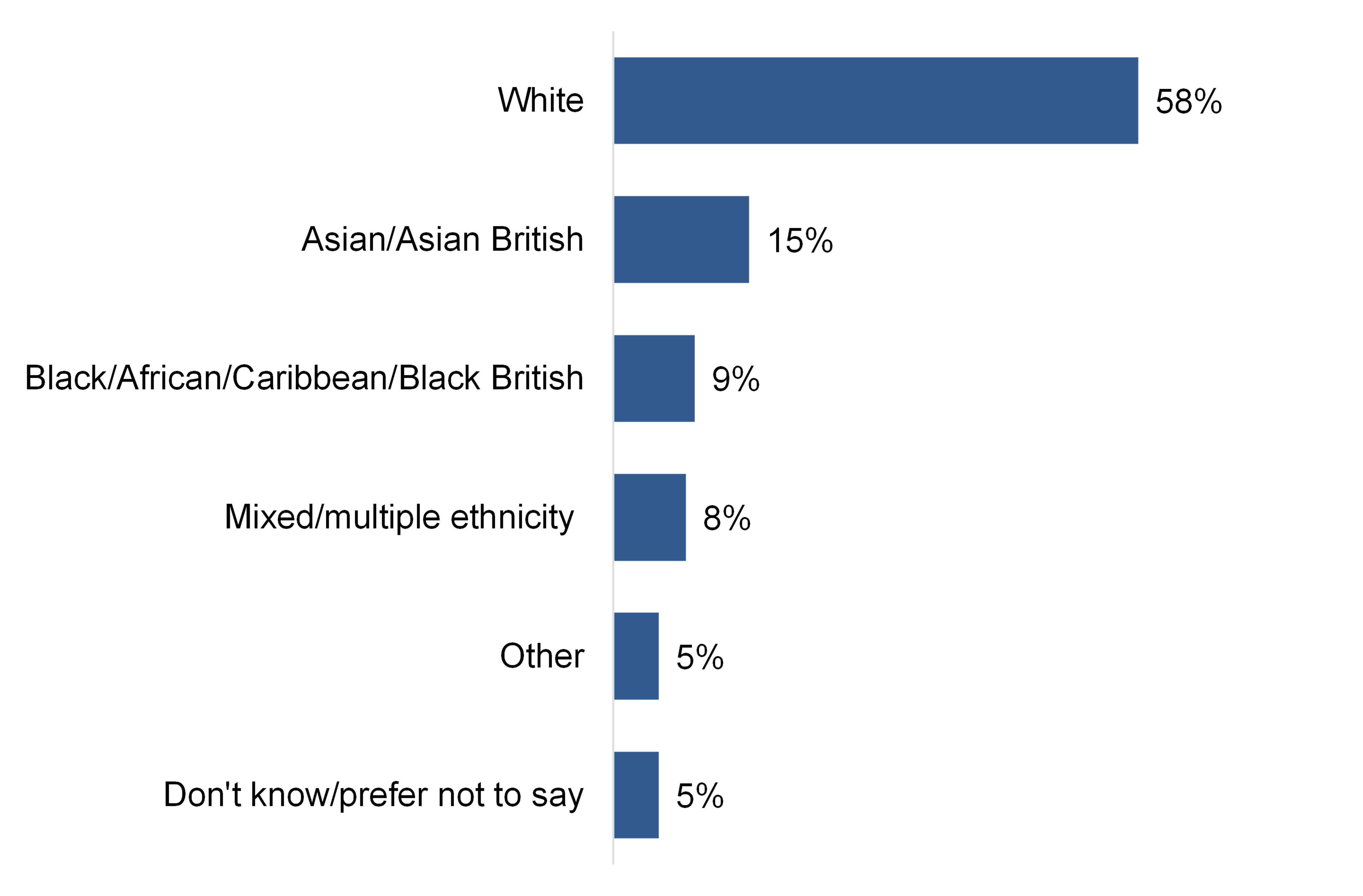
The majority of participants identified as being from a White background (58%), with 15% being from an Asian or Asian British background, and just under a tenth (9%) from a Black, African, Caribbean or Black British background. 8% identified as being mixed or multiple ethnicity, and 5% from another ethnicity.
Figure 1: Participant ethnicity
Source: MI from 12 WorkWell pilot sites, submitted to JWHD between October 24 and March 25. Base: 5,661 participants.
Education level
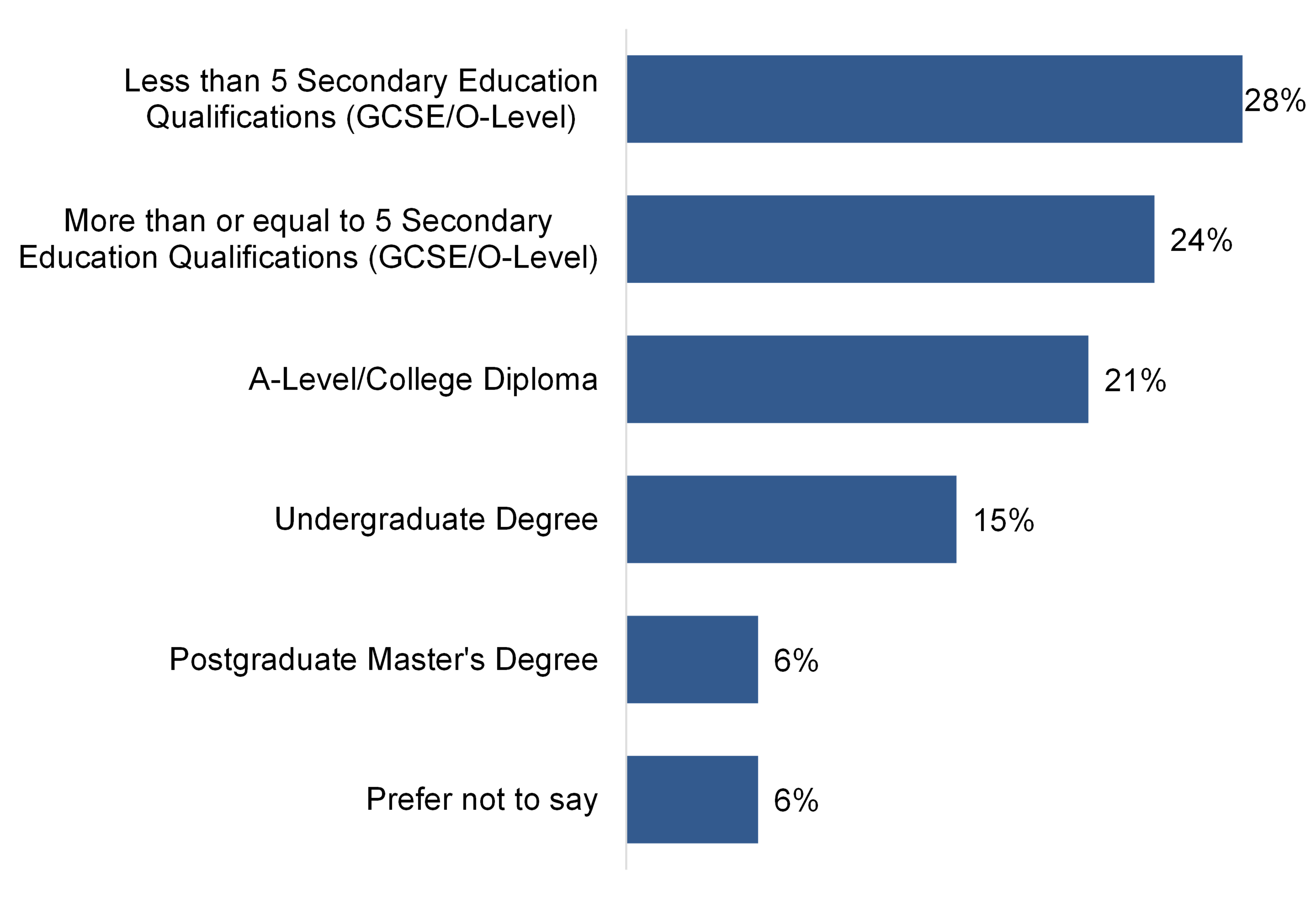
Most (66%) participants that started WorkWell between October 2024 and March 2025 held at least five or more secondary Education Qualifications (GCSE or O Level) or higher level qualifications, however 28% held only lower qualifications. Within this 66%, a quarter (24%) had more than or equal to five Secondary Education Qualifications (GCSE or O level), 21% held an A Level or College Diploma, 15% an Undergraduate Degree, and 6% a Postgraduate Master’s Degree. 6% said they would prefer not to say.
Figure 2: Participant education level
Source: MI from 12 WorkWell pilot sites, submitted to JWHD between October 24 and March 25. Base: 5,661 participants.
Participant health status
Primary health related barrier to work
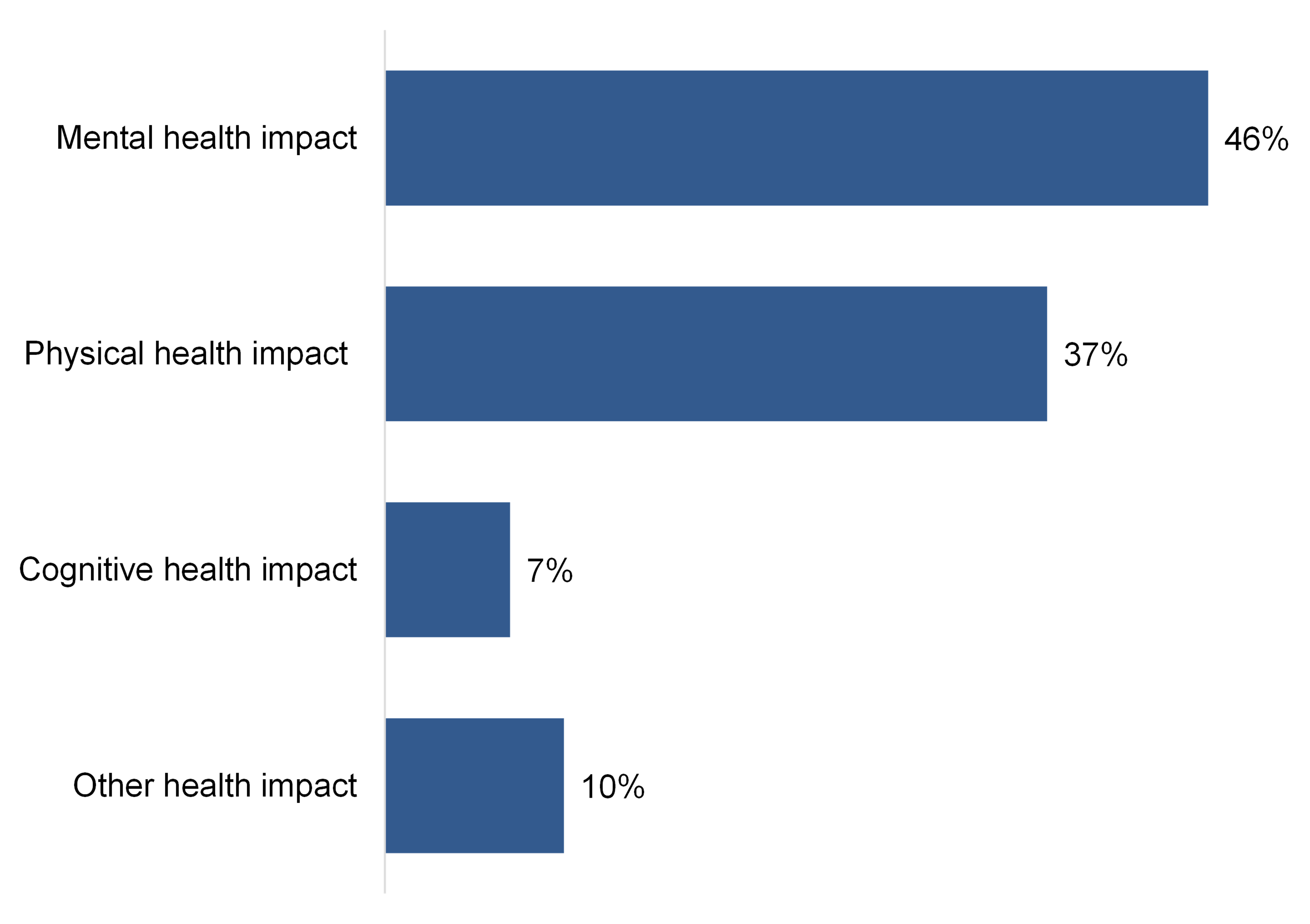
Within the MI, participants provided information on their primary health related barrier to work. This information was then categorised into four broad groups: physical health impact, mental health impact, cognitive health impact[footnote 6], and other health impact.
Using these categories, almost half of participants’ (46%) primary health barrier to work was mental health related, with just under two-fifths (37%) having a physical health impact as their main barrier. 7% were classed as having a cognitive health impact, and 10% noted a primary health barrier that does not fall into these categories, such as Parkinson’s disease or narcolepsy.
Figure 3: Participant primary health barrier to work
Source: MI from 12 WorkWell pilot sites, submitted to JWHD between October 24 and March 25. Base: 5,661 participants.
Breaking this down further, within the 46% that said their primary health barrier to work was mental health related:
- 37% said this was related to depression, bad nerves or anxiety
- 9% described this as mental Illness or suffering from phobias, panics or other nervous disorders
Within the 37% that said they were mainly experiencing physical health barriers to work:
- 10% said this was problems or disabilities with back or neck
- 7% said this was problems or disabilities with legs or feet
- 4% said this was problems or disabilities with arms or hands
- 3% said this was related to heart, blood pressure, or blood circulation problems
- 3% said this was related to stomach, liver, kidney or digestive problems
- 10% consists of other physical health conditions, ranging from diabetes to speech impediments
Within the 7% that experienced a cognitive health impact as their primary barrier to work:
- 4% said this was related to autism
- 3% said this was related to severe or specific learning difficulties
Whether participants have a health condition lasting or expecting to last 12 months or more
Data from the baseline survey shows that all WorkWell participants reported a health related barrier to work, and for almost nine in ten (86%) this was a physical or mental health condition or illness lasting or expecting to last 12 months or more. However, this was not the case for one in ten (11%).
Participants from NHS Northwest London ICB were less likely to say they had a physical or mental health condition lasting or expecting to last 12 months or more (81% compared to an average of 86%). This suggests this ICB has recruited slightly more individuals with short-term health conditions.
Participant employment status
Circumstances in the month before WorkWell
The WorkWell pilot programme was intended to meet the employment and health needs of both those in work and not in work. The indications from this early part of delivery were that it was successful in reaching both groups.
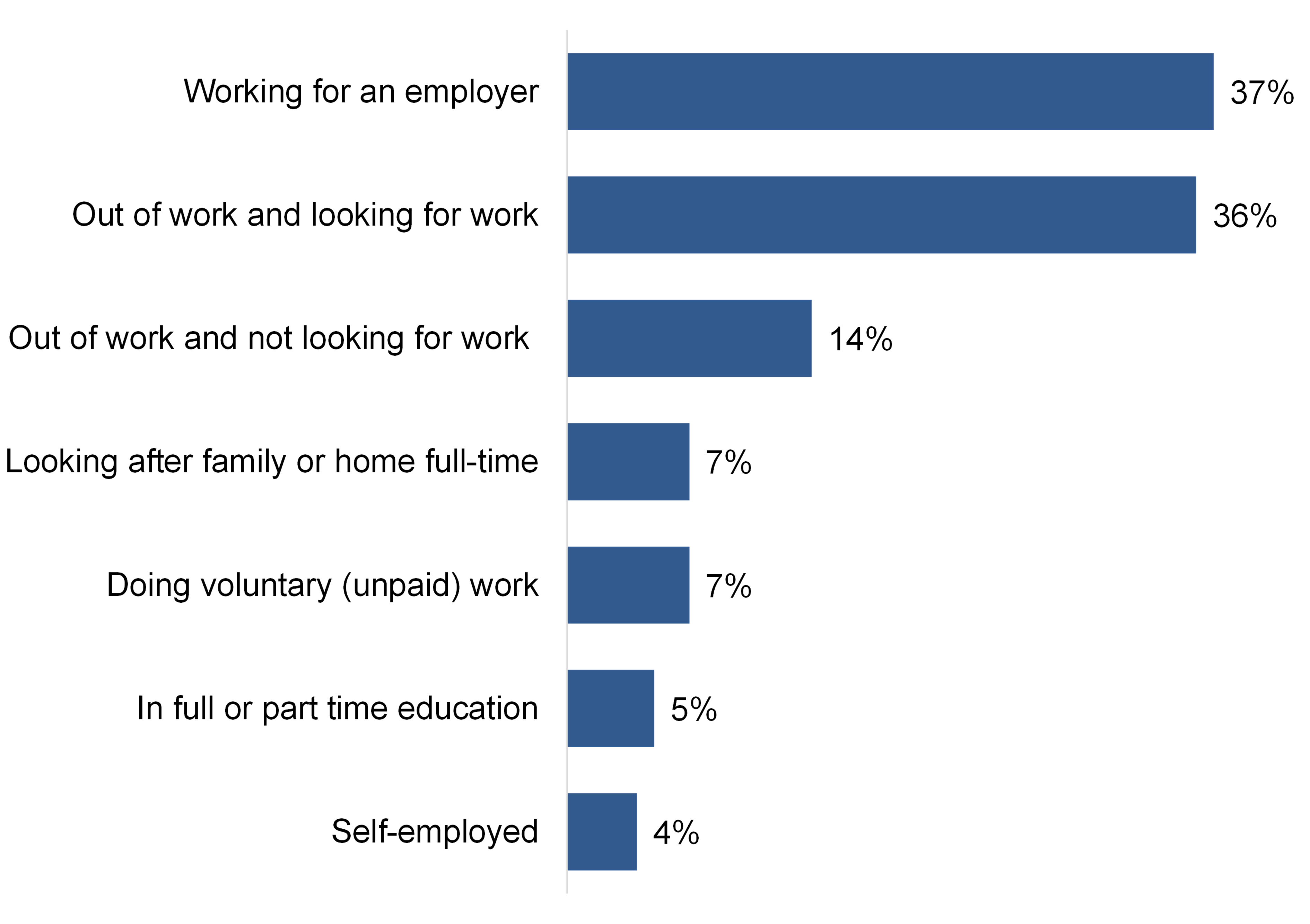
Overall, within the baseline survey, 40% of participants said they were in paid employment and 57% were not in paid employment in the month prior to starting WorkWell. Of those in paid employment, 37% said they were working for an employer, and 4% said they were self-employed.
Of those not in paid employment, over two-thirds (36%) said they were out of work and looking for work, under a fifth (14%) were out of work and not looking for work, and 7% were looking after family or their home full-time. 7% were also doing voluntary (unpaid) work, and 5% were in full or part time education.
Figure 4: Participant circumstances in the month before starting WorkWell
Source: IFF Research Baseline Survey of participants, conducted online and via telephone (A2). Base: All participants that started WorkWell between October 2024 and March 2025 and completed the survey (1,089).
Expected weekly hours and earnings in the month before WorkWell
Within the baseline survey, participants in paid employment were also asked the hours they were expected to work in their main job each week in the month before starting WorkWell. Two fifths (41%) were in full time employment, working over 35 hours a week, with just under a third (30%) working 16 to 34 hours each week. Just over a fifth (22%) were working less than 16 hours, and 7% said they don’t know or would prefer not to say.
Figure 5: Participants expected weekly hours in their main job in the month before starting WorkWell

Source: IFF Research Baseline Survey of participants, conducted online and via telephone (A5). Base: Participants in paid work in the month before starting WorkWell that provided sufficient evidence to be able to calculate their expected weekly hours (378).
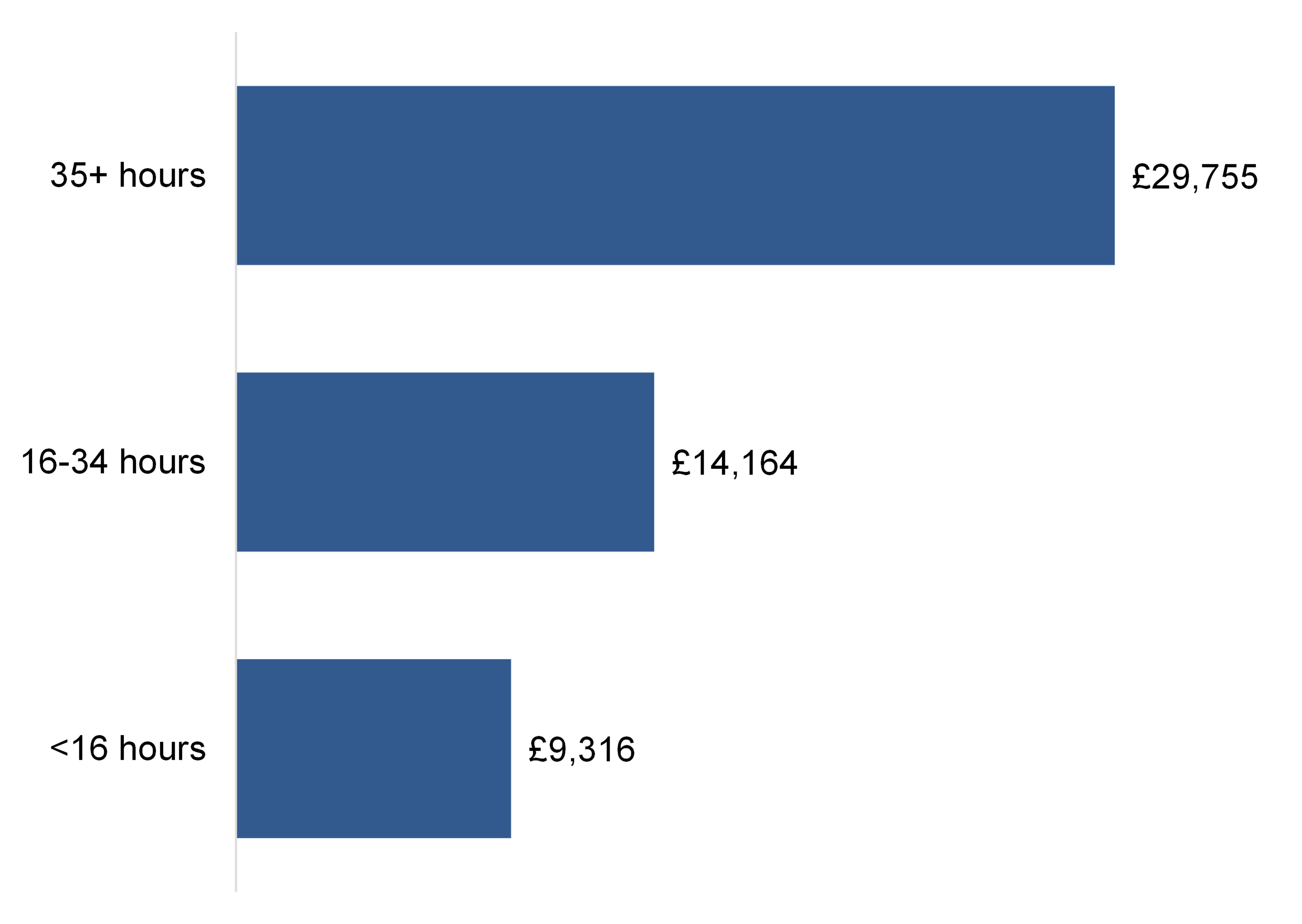
Within the baseline survey, participants in paid employment were asked to provide their usual gross pay for their main job in the month before they started the WorkWell pilot. For participants working less than 16 hours per week, their average yearly salary was £9,316. For those working between 16 and 34 hours a week, their average earnings amounted to £14,164 a year, and for those working full time (over 35 hours a week), their average salary equalled £29,755.
Figure 6: Participants’ (mean) average gross pay in the main work in the month before starting WorkWell
Source: IFF Research Baseline Survey of participants, conducted online and via telephone (A6). Base: Participants in paid work in the month before starting WorkWell that provided sufficient information to be able to calculate their expected earnings (379).
Contract type in the month before WorkWell
Within the survey, of the participants that said they were working for an employer in the month before starting WorkWell, the vast majority (72%) had a permanent or open-ended contract with their employer. Just under a tenth (9%) had a zero hour contract, 6% a casual or flexible contract, and 5% a temporary or fixed term or seasonal contract with more than three months remaining. The remaining 8% consists of participants stating they:
- had a temporary or fixed term or seasonal contract with less than three months remaining (1%)
- had no contract (1%)
- had an apprenticeship or other training scheme contract (1%)
- had another type of contract (1%)
- don’t know or would prefer not to say (3%)
Figure 7: The type of contract held by participants working for an employer in the month before they started WorkWell

Source: IFF Research Baseline Survey of participants, conducted online and via telephone (A4). Base: Participants working for an employer in the month before starting WorkWell (342).
Participants from NHS South Yorkshire ICB were more likely than the average to say they held a permanent or open ended contract in the month before starting WorkWell (88% and 72% respectively). Participants from NHS Northwest London ICB were less likely to have permanent or open ended contracts with their employer (54% compared to an average of 72%).
Those from NHS Cambridgeshire and Peterborough ICB were more likely to have a casual or flexible contract with their employer (12% compared to an average of 6%).
When those not in work last held employment
The WorkWell prospectus states that the WorkWell pilot programme is intended to ‘prioritise intervening at the earliest possible point’, that is, people who are at risk of becoming unemployed, or who have recently become unemployed. However, findings from the baseline survey indicated that individuals had generally been unemployed for a relatively long period.
Most participants that were not in paid work in the month before starting WorkWell had been out of work for 12 months or longer (51%). Within this, 39% had been out of work for more than two years before starting WorkWell, and 12% more than one to two years before. A quarter (24%) had been out of work for more than three months to one year before WorkWell, and 11% held paid employment in the last 3 months before starting. 11% said they didn’t know, and 3% said they’d prefer not to say.
Figure 8: The last time that participants not in work in the month before starting WorkWell held employment

Source: IFF Research Baseline Survey of participants, conducted online and via telephone (A9). Base: Participants not in paid work in the month before starting WorkWell (673).
Participants from NHS South Yorkshire ICB were more likely to have been out of work for 12 months or less (69% compared to an average of 35%). Participants from NHS Black Country ICB (24%) were more likely than the average (12%) to have been out of work for more than one to two years before starting WorkWell.
Impact of participant health conditions on employment
Impact of participant health conditions/illnesses/disabilities on the amount or type of paid work they were able to do in the month before the WorkWell pilot
Within the survey, participants were also asked the extent to which their health conditions, illnesses or disabilities affected the amount or type of paid work they were able to do in the month before they started receiving WorkWell support. The vast majority (75%) said their health condition, illness, or disability impacted this a great deal or to some extent. Within this, 46% said a great deal, and 28% said to some extent. Just 10% said not very much, and 8% said not at all[footnote 7]. 7% said don’t know or would prefer not to say.
Figure 9: Impact of participants health conditions, illnesses or disabilities on the amount or type of paid work they were able to do in the month before WorkWell

Source: IFF Research Baseline Survey of participants, conducted online and via telephone (C6). Base: All participants with a health condition lasting or expecting to last 12 months or more (928).
Participants from NHS Cambridgeshire and Peterborough ICB were more likely to say that their health conditions/illnesses/disabilities affected the amount or type of paid work they were able to do in the month before they started WorkWell a great deal (57% compared to an average of 46%). NHS Northwest London ICB participants were less likely to say they were affected a great deal (38% compared to an average of 46%), and more likely to say that their health conditions did not affect them at all (11% compared to 8%).
Additionally, participants noting a primary health barrier relating to mental health (78%) or stamina or breathing or fatigue (82%) were more likely than the average (75%) to say their health condition affected the amount or type of paid work they are able to do in the month before starting WorkWell a great deal or to some extent.
Confidence managing their health condition in the month before the WorkWell pilot
Participants that completed the survey were also asked the extent to which they were confident they could manage their health to minimise how much it affected their day to day activities and ability to work before they started WorkWell
Overall, participants were more likely to feel they lacked confidence in managing their health to minimise its impact on their daily activities and ability to work before starting WorkWell. Specifically, 42% disagreed that they could manage their health to reduce its effect on day-to-day activities (with 22% tending to disagree and 20% strongly disagreeing), compared to 32% who agreed (of which 20% tended to agree and 11% strongly agreed). 43% disagreed about managing its impact on their ability to work (with 21% tending to disagree and 22% strongly disagreeing) compared to a net of 28% who agreed (of which 17% tended to agree, and 12% strongly agreed).
A notable proportion of participants were unsure, with 22% neither agreeing nor disagreeing in regard to managing the impact on their day-to-day activities, and 21% on their ability to work. Additionally, 5% said they did not know whether they could manage the impact on their daily activities before WorkWell, and 7% for their ability to work.
Figure 10: The extent to which participants agreed or disagreed with the statement “You were confident you could manage your health to minimise how much it affected your day-to-day activities” before starting WorkWell

Source: IFF Research Baseline Survey of participants, conducted online and via telephone (C6a). Base: All participants that started WorkWell between October 2024 and March 2025 and completed the survey (1089).
Figure 11: The extent to which participants agreed or disagreed with the statement “You were confident you could manage your health to minimise how much it affected your ability to work” before starting WorkWell

Source: IFF Research Baseline Survey of participants, conducted online and via telephone (C6a). Base: All participants that started WorkWell between October 2024 and March 2025 and completed the survey (1,089).
Impact of health conditions on productivity whilst working
Reflecting the fact that the WorkWell pilot programme aims to help participants who may be in employment but struggling to sustain it or perform to their best ability, participants in paid work in the month before starting WorkWell were asked to rate on a scale of zero to ten the extent to which their health conditions affected their productivity, where zero meant that their health problems had no effect on their productivity, and ten meant that their health problem completely prevented them from working. Overall, the average score provided by participants was 6.6.
22% of participants said their health problems completely prevented them from working, and 29% provided an answer in the range of 7 to 9. Almost a quarter (23%) provided an answer of 4 to 6, 9% said 1 to 3, and just 5% said their health problems had no effect on their work. 12% said they don’t know.
Figure 12: The extent to which participant’s health conditions effected their productivity whilst working in the month before they started WorkWell

Source: IFF Research Baseline Survey of participants, conducted online and via telephone (D4). Base: Participants in paid work in the month before starting WorkWell (383).
Participants from NHS Cambridgeshire and Peterborough ICB were more likely than the average to say that their health problems completely prevented them from working in the month before they started WorkWell (35% and 22% respectively). Those from NHS South Yorkshire ICB were less likely to say this (8%).
Impact of participant health conditions on stopping their last paid work
Participants not working in the month before starting the WorkWell pilot were also asked to think about the extent to which they stopped their last paid employment as a result of their health condition or disability. The majority of participants (59%) said their health condition or disability did contribute, and within this, 42% said this was to a great extent, and 17% said to some extent. Just over a quarter (27%) said not at all, and 15% said don’t know or prefer not to say.
Figure 13: The extent to which participants not in paid work in the month before starting WorkWell stopped their previous employment as a result of their health condition or disability

Source: IFF Research Baseline Survey of participants, conducted online and via telephone (A10). Base: Participants not in paid work in the month before starting WorkWell (620).
Benefit status in the month before WorkWell
The majority of participants (56%) were claiming Universal Credit (UC) in the month before they started WorkWell, with 16% in receipt of Personal Independence Payments (PIP), and 15% receiving Housing Benefit. Of those in receipt of PIP, around seven in ten (73%) were also claiming UC. Additionally, 12% of participants were receiving Child Benefit, and 6% Employment Support Allowance. Almost a third of participants (30%) were not in receipt of any benefits. Other benefits participants were in receipt of include:
- Jobseekers Allowance (3%)
- Disability Living Allowance (2%)
- Chid Tax Credits (1%)
- Carers Allowance (1%)
- Income Support (1%)
- Industrial Injuries Disablement Benefit (<1%)
- Severe Disability Premium (<1%)
- another government benefit (1%)
- don’t know (2%)
Figure 14: The type of benefits being claimed by WorkWell participants

Source: IFF Research Baseline Survey of participants, conducted online and via telephone (B1). Base: All participants that started WorkWell between October 2024 and March 2025 and completed the survey (1,089).
Participants from NHS Greater Manchester ICB (46%) and NHS South Yorkshire ICB (56%) were more likely than the average (30%) to say they were not in receipt of any of these government benefits. Participants from NHS North Central London ICB (71%) and NHS Northwest London ICB (77%) were more likely to be in receipt of Universal Credit (average 56%).
Participants claiming benefits and in work, participants claiming benefits and not in work, and participants not claiming benefits
To estimate the impact of the WorkWell pilot programme, the evaluation structure is underpinned by three core groups: claimants that are in work, claimants that are not in work, and non-claimants. Currently, half of the participants (49%) that started WorkWell between October 2024 and March 2025 and completed the survey are claiming benefits and not in work. Just under third are not claiming benefits (32%), and 18% are claiming benefits and working. Of these participants in work and claiming benefits, three quarters (75%) are claiming UC, and just over a quarter (26%) are claiming PIP.
Figure 15: The number of participants that are claiming benefits and not in work, claiming benefits and in work, not claiming benefits in work and not claiming benefits out of work

Source: IFF Research Baseline Survey of participants, conducted online and via telephone. Base: All participants that started WorkWell between October 2024 and March 2025 and completed the survey (1,089).
Both NHS South Yorkshire ICB and NHS Greater Manchester ICB were more likely than the average to recruit participants that were not claiming benefits (57% and 47% respectively, compared to an average of 32%). NHS Northwest London ICB were less likely 16% compared to 32%). NHS Coventry and Warwickshire ICB were significantly more likely than the average to have participants that were claiming benefits but not in work (80% compared to an average of 49%).
5 Service mobilisation and management
This section explores the characteristics of pilot sites delivering the WorkWell pilot programme. It will also explore how pilot sites were delivering WorkWell, as well as how they managed the quality of the service. This qualitative evidence is drawn from information provided by pilot sites in their written bids for WorkWell funding, as well as interviews with pilot sites as part of the feasibility study and mainstage fieldwork.
Profile of pilot sites
Overview of pilot sites
WorkWell is a locally led approach to supporting people who are at risk of falling out of work, or who have already stopped working because of their health condition. The services are designed to draw on new and existing support in local areas. As such, the design of WorkWell services and who they are intended to support varies across pilot sites by a number of factors, including whether:
- the integrated care board (ICB) or local authority (LA) is the WorkWell lead
- WorkWell is delivered across the whole ICB geographical area, or specific areas
- the target population live in predominantly urban or rural areas, or a mix
- services are delivered internally or procured externally, or a mix
Lead organisation
While ICBs applied for WorkWell funding, applicants were required to demonstrate strong partnerships with other organisations in their area, including LAs.
In some pilot areas, ICBs were the lead organisation with oversight for WorkWell (for example, in Black Country ICB). In other areas, the LA was the lead organisation with oversight for WorkWell (for example, in Coventry and Warwickshire).
The type of lead organisation brought unique skills and experience to WorkWell oversight and delivery. Sites reported that ICBs usually had strong links to local health networks, such as primary care networks (including GPs), while LAs usually had strong links to local employment networks (including Jobcentres). This might indicate that the lead organisation could impact the volume of referrals from specific referral routes.
Geographical coverage
Whether or not the WorkWell pilot programme was being delivered across the whole ICB footprint, or to specific areas within this, varied by pilot site.
Some areas were delivering WorkWell to the whole ICB footprint without exclusion. Sites opting for this approach identified widespread need across the geography. Therefore, they considered this approach to be important in ensuring equitable access of opportunity to services across the ICB.
Despite the wider coverage, sites delivering the WorkWell pilot programme across the whole ICB footprint identified and supported local ‘pockets’ of need within this. For example, while Black Country ICB was delivering support across the four localities, they intended to deliver increased support in Sandwell and Wolverhampton as these areas were identified as having higher levels of deprivation by the site.
Other areas chose to focus delivery in selected areas within the ICB footprint. These sites identified concentrations of need and so felt this approach allowed them to better target groups identified as being most in need of support. For example, Birmingham and Solihull ICB were delivering WorkWell in the East Birmingham and North Solihull Levelling Up Zone (EBNS LUZ). The EBNS LUZ is a joint initiative by Birmingham City Council and Solihull Council to drive economic growth and improve living standards in the area. Pilot leads in Birmingham and Solihull chose to deliver WorkWell in this zone as they identified opportunities to reduce deprivation and poor health by linking communities to local employers.
Whether the WorkWell pilot programme was being delivered to the whole ICB footprint or in selected areas, local areas of need were identified by pilot sites through the analysis of local data. Sites analysed data on unemployment and economic activity, welfare and benefits, and health (including sickness absences from work and fit notes) to identify local populations to target through WorkWell. This analysis was included by sites in their delivery plans, as requested by the JWHD as part of the bidding process for WorkWell funding[footnote 8]. This indicates progress towards a short-term outcome in the logic model, which is that pilot areas have increased understanding of the local community at risk of unemployment through ill health. It also indicates progress towards a medium-term outcome, that the allocation of resources is efficiently redirected to those most in need.
Level of urbanisation and rurality
Some pilot sites were delivering WorkWell to populations living in predominantly urban areas (for example, London ICBs), whereas others were delivering the service to populations in significantly rural and coastal areas (for example, Cornwall ICB). Some areas flagged as predominantly urban also had ‘pockets’ of rurality (including Leicester City, Leicestershire and Rutland ICB, Coventry and Warwickshire ICB and Lancashire and South Cumbria ICB).
Pilot areas delivering WorkWell in significantly rural areas, or in predominantly urban areas with some rurality, reported specific challenges which limited local opportunities. For example, stakeholders in Cornwall reported that access to work, health services and support services were limited by poor local transport links and a high proportion of small and medium local employers.
Delivery of services internally or externally
The WorkWell pilot programme is a locally led service targeting individuals with a range of needs. As such, pilot areas had discretion about whether to deliver services internally, to procure services from local organisations, or a combination of both.
Some areas recruited staff internally to deliver the WorkWell pilot programme. For example, Hereford and Worcestershire recruited 11 work and health coaches which were based in primary care networks across the ICB, mainly working in GPs.
“It’s such a good example of not duplicating [services]… because the teams looked at all the different options [for setting up an MDT]. The solution was then to use an existing MDT that’s based within collaborative work within adult social care.”
(Stakeholder, Birmingham and Solihull ICB)
Other areas recruited staff entirely through external organisations. For example, North Central London procured Shaw trust (an employment charity) to recruit work and health coaches and a multi-disciplinary team. This team includes an employment specialist, an occupational therapist, and a mental health specialist.
Conversely, some areas both recruited staff internally and procured external services to deliver the WorkWell pilot programme. For example, Birmingham and Solihull ICB reported that they have an internal MDT team providing clinical support (for example, mental health support, occupational therapy, physiotherapy, social prescribing). They have also procured four external delivery partners because they believe they better understand local needs and can respond to them more effectively.
The delivery partners in Birmingham and Solihull ICB were:
- The Colebridge Trust – a local charity in Solihull supporting individuals with work and training, health and wellbeing, and deprivation
- Disability Resource Centre – a local charity in Birmingham supporting disabled people, carers and their friends and families
- Saheli Hub – a charity in Birmingham that supports women with their health and wellbeing
- Better Pathways – a charity in Birmingham supporting young people with mental health challenges, learning difficulties and learning disabilities through vocational activities
“We [created smaller contract areas] for the purposes of getting the best provider for that locality…local organisations that understand that community.”
(Stakeholder, Birmingham and Solihull ICB)
Whether services are being delivered internally or externally also varied within a pilot area. As pilot sites were allowed to operationalise WorkWell to suit local needs, some had further devolved delivery to different localities within their area. Therefore, there was sometimes multiple models in one pilot area. For example, Greater Manchester had a locally designed model in each of their 10 local authorities.
“The good thing about WorkWell is having that flexibility to build on the local assets [and] existing services within each locality. I think that’s been a massive benefit rather than having [a service] that’s prescribed.”
(Stakeholder, Greater Manchester ICB)
The profile of the 15 pilot areas is outlined in Table 2.
Table 2: Profile of pilot areas
| Pilot area | Lead organisation | Geographic coverage | Level of urbanisation and rurality | Delivery of services internally or externally |
|---|---|---|---|---|
| Birmingham and Solihull (B&S) ICB | ICB | Specific area(s) within ICB | Predominantly urban | In-house and procured partner(s) |
| Black Country (BC) ICB | ICB | Whole ICB footprint | Predominantly urban | In-house and procured partner(s) |
| Bristol, North Somerset, South Gloucestershire (BNSSG) ICB | ICB and LA | Specific area(s) within ICB | Predominantly urban | In-house and procured partner(s) |
| Cambridge and Peterborough (C&P) ICB | ICB | Whole ICB footprint | Significantly rural | In-house and procured partner(s) |
| Cornwall and the Isles of Scilly ICB | ICB | Whole ICB footprint | Significantly rural | Procured partner(s) |
| Coventry and Warwickshire (C&W) ICB | ICB and LA | Whole ICB footprint | Predominantly urban | In-house |
| Frimley ICB | ICB | Specific area(s) within ICB | Predominantly urban | In-house and procured partner(s) |
| Greater Manchester (GM) ICB | ICB | Whole ICB footprint | Predominantly urban | In-house and procured partner(s) |
| Hereford and Worcestershire (H&W) ICB | ICB | Whole ICB footprint | Significantly rural | In-house |
| Lancashire and South Cumbria (LSC) ICB | ICB | Specific area(s) within ICB | Predominantly urban | In-house and procured partner(s) |
| Leicester City, Leicestershire and Rutland (LLR) ICB | ICB | Whole ICB footprint | Predominantly urban | In-house |
| North Central London (NCL) ICB | ICB | Whole ICB footprint | Predominantly urban | Procured partner(s) |
| Northwest London (NWL) ICB | ICB | Whole ICB footprint | Predominantly urban | Procured partner(s) |
| South Yorkshire (SY) ICB | LA | Whole ICB footprint | Predominantly urban | Procured partner(s) |
| Surrey Heartlands (Surrey) ICB | ICB and LA | Whole ICB footprint | Predominantly urban | Procured partner(s) |
Experience of service mobilisation
Overview of experiences
Though the WorkWell pilot programme was intended to go live by 1 October 2024, some sites experienced challenges which meant they were not able to deliver a full WorkWell service at this time. This meant that pilot sites were at various stages of mobilisation at the point of conducting qualitative research in the mainstage study (during March 2025).
Most sites found it difficult to fully mobilise in October as planned. Sites reported that the timing between submitting a bid for WorkWell funding and service mobilisation was ambitious. They mentioned the short time scales made it difficult to complete the processes they needed to fully establish and mobilise a service, such as recruitment, procurement of external delivery partners, and staff training.
Sites delivering services in-house experienced mixed timelines to service mobilisation. While some were able to recruit to internal roles quickly, others found the process difficult which delayed service mobilisation. For example, Coventry and Warwickshire ICB started recruitment for some internal roles in October 2024 and were still recruiting for some roles at the time of conducting qualitative fieldwork in March 2025. This meant that some of their services were not yet live.
Sites delivering services externally also experienced mixed timelines to service mobilisation. While some sites were able to procure services more quickly, others experienced delays. For example, Surrey Heartlands ICB reported that the delivery of their mental health advisor service was delayed due to issues finalising the contract (this is explained as a barrier below). Again, this meant that some of their services were not live yet.
Therefore, sites often experienced a staged approach to service mobilisation. For example, Bristol, North Somerset and South Gloucestershire ICB experienced successful recruitment to internal roles and were able to launch the delivery of internal services. However, they experienced slow procurement of external services and intended for external services to go live in April 2025.
“One of the key [successes] has been how well Bristol has recruited the work and health coaches. I think that’s been exceptional.”
(Stakeholder, Bristol, North Somerset and South Gloucestershire ICB)
Two pilot sites were significantly delayed in their delivery of WorkWell services. Frimley ICB started delivering services in January 2025 and Leicester, Leicestershire and Rutland ICB started delivering services in March 2025. They reported experiencing data sharing difficulties which meant they were not able to start collecting data or generating referrals (this is explained as a barrier below). This affected the delivery of key elements of the WorkWell service. For example, both areas reported prioritising referrals over the development of multi-disciplinary teams.
Pilot areas identified key enablers and barriers to timely services mobilisation, which are described in ‘Enablers of service mobilisation’.
Enablers of service mobilisation
Availability of internal staff
Some areas recruited the work and health coach role from a pool of existing staff who were ready to move into the work and health role from other parts of the organisation. For example, Cambridge and Peterborough ICB reported that service mobilisation was quicker where they recruited work and health coaches from other parts of the organisation, compared to when they recruited new staff to roles. Internal hiring helped speed up the recruitment process and meant they had the necessary staff to deliver the service more quickly.
Existing relationships between partners
Existing relationships between lead organisations and providers enabled sites to mobilise more quickly. For example, in South Yorkshire ICB there was an existing working relationship between the lead organisation (South Yorkshire Mayoral Combined Authority) and the ICB because they had previously worked together on another work and health programme, Working Win. Having established relationships meant that key partners had a stronger foundation to deliver WorkWell from the outset.
Experience of existing work and health programmes
Sites that used WorkWell funding to build on existing work and health programmes, rather than building new programmes from scratch, were able to mobilise the service more quickly. For example, Lancashire and South Cumbria ICB reported choosing to deliver WorkWell in-house in some areas because they had already established work and health programmes that local partners had experience with. Cambridge and Peterborough ICB funded one hub to deliver similar services before WorkWell, which meant they had the mechanisms in place to deliver the service quickly. Previous experience of similar programmes meant partners were already familiar with the service and had the mechanisms in place to deliver it.
Using pre-established sector links
The use of pre-established sector links supported some pilot areas to procure external services. For example, Bristol, North Somerset and South Gloucestershire (BNSSG) ICB were finding it difficult to procure services. They started working with a Voluntary, Community and Social Enterprise (VCSE) brokerage service, a system-wide approach that aims to connect a wide range of VCSE organisations with health and social care partners to improve wellbeing and health. Using these pre-established sector links enabled BNSSG to progress procurement, with services planned to go live from April 2025.
Barriers to service mobilisation
Difficulties recruiting to internal roles
Some sites delivering the WorkWell pilot programme internally reported difficulties recruiting staff to short-term contacts. Sites could only offer short-term contracts to internal staff because of the short-term nature of WorkWell funding and in some cases they found this was unattractive to potential applicants. This made recruitment to internal roles (for example, work and health coaches) difficult which impacted referrals to the service.
Concerns about retaining staff
Despite being able to recruit staff to short-term contracts, some sites expressed concerns about staff retention towards the end of the programme. They felt staff would look for alternative longer-term contracts with other organisations or programmes (for example, the new DWP Connect to Work programme). Pilot sites were concerned that losing staff could impact the delivery of WorkWell in the future.
Delays in procuring external services
Some sites delivering the WorkWell pilot programme externally reported that delays in procuring external services impacted the delivery of WorkWell. They cited that procuring services took time due to the process of writing the service specifications and putting these out to tender, assessing bids, and finalising contracts. For example, Surrey Heartlands ICB reported that they put a mental health advisor service out to tender in advance but had experienced delays in finalising the contracts, which impacted the mobilisation of the service.
“[WorkWell] has been growing and developing, but there’s still elements now that are really challenging and not everything is fully live…. You know we’re not at the kind of stage we would have liked to be had we had more time to prepare.”
(Stakeholder, Surrey Heartlands ICB)
Issues agreeing information governance
One site reported difficulties getting information governance documents agreed between the ICB and the JWHD, which acted as a barrier to service mobilisation. Frimley ICB experienced challenges signing their Data Protection Impact Assessment (DPIA) with the JWHD due to the volume of information they were required to supply in the grant funding MI. The site stated that delays in being able to share the grant funding MI with the JWHD impacted service delivery until January 2025 which reduced referral volumes.
Another site reported difficulties getting information governance documents agreed between the ICB and their delivery partners because the JWHD was the main data controller, which caused concerns among partners who preferred the PCN or ICB to be the main data controller. In Leicester, Leicestershire and Rutland ICB, 21 of 26 primary care networks (PCNs) initially signed the required information governance documents meaning participant information could be shared between the PCN, the ICB and the JWHD. However, in January 2025, PCNs were advised by the British Medical Association (BMA)[footnote 9] not to sign new data sharing agreements with the WorkWell service due to concerns over workload and clinical responsibility transfer. This resulted in the site losing support of four PCNs, which impacted referrals and the speed at which the service could be mobilised.
“As you can imagine, [the BMA] created a whole lot of nervousness for the people [in the primary care network] that had already signed up or people that were interested.”
(Stakeholder, Leicester, Leicestershire and Rutland ICB)
Challenges referring to WorkWell
Some pilot sites found it challenging to establish effective referral routes between referrers and the WorkWell service, which impacted referral volumes and service mobilisation. For example, while Frimley ICB report low referral volumes overall, they experienced higher volumes from GPs North of Frimley compared to those South of Frimley. They noted this could be linked to the maturity of referral systems in both areas. For example, Slough (North of Frimley) was involved in a fit note proof of concept which meant a referral to WorkWell was automatically triggered when a patient requested a second fit note. In other GPs, automatic referrals like this were not available which could have impacted referral volumes. A more detailed exploration of referrals, including stakeholder experiences of generating them, is included in the next chapter.
Experience of joined up working
The WorkWell pilot programme recognises that supporting people with health conditions to retain or find work requires a joined-up approach between work and health services. To achieve this, WorkWell is intended to act as a single, joined-up gateway for individuals to access local services to address their needs. The service also aims to bring together various existing work and health initiatives under one coherent strategy, joining together often complex work and health systems.
This section will explore whether or not pilot areas had experienced joined up working to date and, where possible, what has contributed towards or challenged this.
Progress towards joined-up working
Joined up working involves two main elements:
- the extent to which WorkWell leads in the ICB and LA collaborate effectively to manage the service at a strategic level
- the extent to which the lead organisation collaborates with local delivery partners to deliver the service at an operational level
Partnership working between the ICB and LA
Most pilot sites reported that WorkWell encouraged joined up partnership working between the ICB and LA. However, the extent to which these relationships were already established prior to WorkWell varied across pilot sites.
In areas where these relationships were less established, joined-up partnership working between the ICB and LA were still in progress. For example, Bristol, North Somerset and South Gloucestershire ICB reported that the ICB and LA were beginning to collaborate following WorkWell. This indicates there was a limited relationship between the ICB and LA before WorkWell.
“I think we’re getting there, the ICB and LA and starting to recognise each other.”
(Stakeholder, Bristol, North Somerset and South Gloucestershire ICB)
In some areas, relationships between the ICB and LA were already established before WorkWell. For example, pilot leads in Birmingham and Solihull ICB reported that the ICB and LA had pre-existing relationships as they were working together as part of the East Birmingham and North Solihull Levelling Up Zone (EBNS LUZ). Even so, sites reported that WorkWell acted as a catalyst to making these relationships stronger and encouraged more work and health conversations.
“As an ICB, you work with local authorities, but [WorkWell] has ramped it up really.”
(Stakeholder, Leicester, Leicestershire and Rutland ICB)
Partnership working between the lead organisation and local delivery partners
Similarly, the extent to which relationships between the lead organisation and local delivery partners were already established prior to WorkWell varied across pilot sites. For example, Cornwall and the Isles of Scilly ICB reported building on existing relationships with local Voluntary, Community and Social Enterprise (VCSE) organisations.
Enablers of joined-up working
Dedicated roles working across the LA and ICB
Pilot sites reported being able to strengthen relationships between the ICB and LA as a result of formal changes to working arrangements. For example, Hereford and Worcestershire ICB reported establishing a documented role working across the NHS and LA, with clear lines of responsibility, which helped encourage joined up work and health conversations.
“Having duty as a joint programme director between [the] NHS and [the] local authority I think is a positive. We work together well with our local authority colleagues, but we’ve never done it in this [work and health] space before.”
(Stakeholder, Hereford and Worcestershire ICB)
Collaborative working practices
Pilot sites also reported being able to strengthen relationships between the ICB and LA as a result of more informal changes to working practices. For example, Bristol, North Somerset and South Gloucestershire ICB reported that ICB staff ‘hot desked’ in the LA office once a week to help build those relationships. These softer changes encouraged joined up working in a more subtle manner.
Mapping of local services
Some pilot sites reported mapping available local services to ensure new services delivered through WorkWell filled appropriate gaps and did not duplicate existing services (for example, Frimley ICB and Cambridge and Peterborough ICB). Identifying the local landscape indicates progress towards improved integration and coordination of services locally and the reduction of gaps and duplication in service provision. However, sites were in the early stages of delivery, so it is unclear whether this mapping has achieved these outcomes yet.
Coordination of local services
Some pilot sites established central referral points to make access to local services simpler for participants. For example, Frimley ICB uses the Joy App to coordinate support for participants. Pilot leads mentioned that an external delivery partner had reported an increase in referrals since WorkWell, which they believe indicates services are more joined up (for example, because of the Joy App). This indicates increased demand on local services, a short-term outcome in the logic model.
Barriers to joined-up working
Limited access to information across the ICB and LA
On the other hand, some ways of working discouraged collaborative working practices. Members of staff working in the LA sometimes felt they were not able to connect with health information in the ICB due to access restrictions. For example, a member of staff working at the LA in Surrey Heartlands ICB reported that members of the ICB were reluctant to share health information when they made enquires. They previously had access to this information in a role at the ICB. The lack of access to information made some staff in the LA feel limited in their role.
“Having come from an ICB before working for councils, I could have sat and run searches, patient searches, and refined things, or sat with people more closely to refine test and try out these things. Now, when I’m contacting someone from an ICB and they say, oh, you’re from the Council, I’m not quite sure if the response is the same.”
(Stakeholder, Surrey Heartlands ICB)
Working within ‘complex’ systems
Pilot areas delivering different versions of WorkWell across multiple localities found it more resource intensive to engage delivery partners, because they had more of them. For example, Frimley ICB reported having to have multiple conversations with delivery partners about joining up work and health (for example, Connect to Work). This could make it more challenging in some areas to achieve some of the outcomes in the logic model, including greater clarity and accountability for local work and health objectives and increased co-operation towards mutual work and health objectives.
“I’m not making excuses for our complex system and we have to get used to it. But it is complex and it is, you know, sometimes having the conversations more than once.”
(Stakeholder, Frimley ICB)
Delays to delivery
As described earlier in this section, some pilot sites experienced significant delays to the delivery of WorkWell. Both Frimley ICB and Leicester, Leicestershire and Rutland ICB reported challenges with data governance which meant they did not start delivering services until early 2025. At this point, they reported focusing on generating referrals to ensure people were accessing the service, over developing other elements of the WorkWell service, like the multi-disciplinary team (MDT). This is likely because funding was dependent on referral volumes. This might indicate a lack of joined-up working as the MDT teams were stipulated to ensure joined-up working between specialists across professions and areas.
Experience of service management
This section will explore the ways in which pilot areas manage the quality of WorkWell services. It will cover this in relation to both delivery types, in-house delivery and external procurement.
Approaches to service management
Training and ongoing professional development
Pilot areas reported that an enabler to successful in-house delivery was training and ongoing professional development for internal staff (for example, work and health coaches), particularly in relation to health. For example, Bristol, North Somerset and South Gloucestershire (BNSSG) ICB provided work and health coaches with comprehensive training on how to support WorkWell participants and understand their needs, as well as how to navigate clinical systems and refer to health related organisations. This helped upskill coaches in health and encouraged them to commit to the service’s joined-up work and health aims. However, BNSSG ICB mentioned challenges training staff due to the short service mobilisation timelines.
Compliance and audit checks
Some sites reported that they quality assured services through compliance and audit checks. In South Yorkshire ICB, this involved checking that an individual had been contacted within 24 hours following the initial phone call to WorkWell, checking the action plan was ‘smart’, and checking funds spent on behalf of the participant matched the actions in the plan. Stakeholders in South Yorkshire ICB also reported doing in-person visits to services to see the support in action.
“There are a number of quality checks that we do in terms of delivery of service.”
(Stakeholder, South Yorkshire ICB)
Key Performance Indicators
Some pilot sites established Key Performance Indicators (KPIs) to manage the quality of the service against key measures. For example, Cambridge and Peterborough ICB reported that they included KPIs in contracts with delivery hubs, requiring them to report against a common framework. KPIs enabled commissioners to manage the quality of service being delivered by outlining clear measurements of success for partners to report against. Pilot leads felt this contributed to greater clarity and accountability for local work and health objectives.
Qualitative participant case studies
Some pilot sites managed the quality of the service by collecting qualitative evidence in the form of participant case studies. In this context, participant case studies were a deep dive into an individual’s experience of the WorkWell service. Sites who procured delivery partners often stipulated the development of case studies in service contracts. For example, North Central London ICB stipulated the development of case studies in their contract with Shaw Trust, their main delivery partner. Sites collecting participant case studies also reported sharing them with wider stakeholders to demonstrate the success of the service.
“The case studies are where you get that qualitative side and understanding how it’s impacting individuals lives gives a real insight into the impact the programme has.”
(Stakeholder, South Yorkshire ICB)
However, some pilot sites reported challenges collecting evidence to develop participant case studies due to participant concerns about data sharing, despite reassurances they would be anonymous. North Central London ICB reported that this was particularly true if an individual was in employment due to concerns about how this could affect them at work.
“It’s understandable, even if it’s anonymous, that you know, some people just don’t want to share their journey. And we get that.”
(Stakeholder, North Central London ICB)
Experience surveys
Some pilot sites also reported that they monitored the quality of services through experience surveys. South Yorkshire ICB, Birmingham and Solihull ICB, Frimley ICB and Coventry and Warwickshire ICB all reported collecting feedback from participants following service usage to collect insight about their experiences. Frimley ICB reported using an app to disseminate the experience survey to service users. Sites collecting feedback hoped to use this to improve the service in the future.
While some pilot sites reported good response rates and high levels of satisfaction with the WorkWell service (such as Birmingham and Solihull ICB), others reported lower response rates (such as Coventry and Warwickshire ICB).
“We’ve got reasonable response rates and we’ve got 80% satisfaction…I reckon it’s going alright.”
(Stakeholder, Birmingham and Solihull ICB)
Governance structures
Pilot sites reported using governance structures as a means of establishing regular communication and accountability across key partners, including weekly check-ins and regular working group meetings between key partners.
These meetings were an opportunity for providers to present their service delivery progress and highlight any risks, challenges and key learnings. In Cambridge and Peterborough ICB, providers were required to report against the KPIs stipulated in contracts during these meetings. In North Central London ICB, the delivery partner Shaw Trust shared case studies during these meetings. These governance structures were seen as a good opportunity to improve clarity and accountability for local work and health objectives.
Pilot sites reported these meetings were a good opportunity to ensure providers were delivering against WorkWell objectives. For example, one pilot site reported that their main provider focussed delivery towards unemployed individuals because that was the cohort they normally supported. The site reported that this meant the majority of individuals accessing the service were unemployed individuals. The site identified this as a risk for delivery because WorkWell was also intended to support those in work, who were at risk of falling out due to their health. Therefore, governance structures were a good opportunity to re-clarify objectives and increase co-operation to work towards mutual work and health objectives.
“We have talked [with provider] in our meetings about how this programme was designed to be preventative and to be about people who are in work and at risk of falling out of work at least as much.”
(Stakeholder, ICB anonymised)
Pilot sites also reported that these meetings were an opportunity for collaborative thinking about the direction of work and health support in the future. This might indicate forward thinking about how to facilitate a sustainable approach to work and health support beyond WorkWell funding. It also indicates progression towards a mid-term outcome in the logic model around pilot areas developing learnings that could support future work and health workforce development.
“We offer the time for steering groups and working groups development. [That] is enabling us to work together to think about the continuing development of government policy in health and work.”
(Stakeholder, Birmingham and Solihull ICB)
6 Developing Whole-System Integration
To complement our findings on service mobilisation and joined up working presented in the previous chapter, this chapter explore the ‘whole system’ in relation to local employment and health services using Participatory Systems Mapping (PSM) and preparing for Qualitative Comparative Analysis (QCA) in the second year of the evaluation. This first wave of PSM workshops took place shortly after the period covered in this report, in July 2025, however these insights provide valuable context on how WorkWell is shaping, and being shaped by, local health and work systems.
Participatory Systems Mapping (PSM) brings local stakeholders together in facilitated workshops to build a shared visual representation of how their work and health system operates. This process helps participants reflect on how the local system operates and the factors influencing desired outcomes. Each map provides a snapshot of the system at a particular moment in time. The evaluation will repeat these workshops three times in total across the pilot to observe how systems evolve as WorkWell becomes more established, and to understand the conditions that support (or inhibit) system change.
While PSM focuses on understanding system dynamics in each area, Qualitative Comparative Analysis (QCA) takes the evidence from systems mapping and builds on it with a structured method for comparing cases, such as individual WorkWell pilots or groups of participants with similar traits. The method involves scoring each case for the presence or absence of causal factors of interest (‘attributes’) like geographical characteristics or elements of delivery approaches and understanding their role in achieving observable ‘outcomes’ across the cases.
QCA analyses the combinations of factors present when outcomes are achieved (or not) producing insight into the complex causality of the system. The QCA analysis will be conducted later in the evaluation to allow time for the outcomes or impacts of interest to have occurred and be observed. The QCA will build on the evidence concerning factors and causal mechanisms emerging in the ongoing waves of PSM work.
Activities
Three areas were chosen in consultation with IFF and DWP and DHSC colleagues to take part in the PSM workshops, these sites were Northwest London, Black Country and Lancashire and South Cumbria. These workshops were intended to explore how each of the pilots are approaching integration of work and health systems to deliver WorkWell objectives. Representatives from across the WorkWell partnership participated in the workshops. More detail on the selection of sites and year one evaluation activity is provided in Annex F. The workshops followed the following structure:
- a brief introduction to the evaluation as a whole and PSM
- brainstorming and discussion to identify the range of pilot outcomes and the causal factors affecting them
- development of a hard copy systems map using ‘magic whiteboard’, sticky notes and pens
- discussion and reflection on the development of the map, why factors being added to it, issues it raises
Following sessions the maps were transferred to a digital format using PRSM online mapping software for processing and the key issues raised in discussion extracted from the facilitators notes and the recordings of the sessions. The evidence emerging from these sessions and how it will be built on is presented in the next sections.
Emerging Evidence on Work and Health Systems Integration
Below is a summary of the evidence from individual pilot PSM workshops. The more detailed PSM maps are presented in Annex G.
Northwest London
The systems map for Northwest London (see Annex G) was developed by a fewer number of workshop attendees than the other two areas, which resulted in a more limited view. Even so, the map highlights key aspects of WorkWell programme delivery and development. A clearly articulated user journey runs from communications and engagement through to participant health and wellbeing and onwards into WorkWell outcomes. Above this, factors relating to service design, management, systems, strategy and partnership‑building appear in broad clusters. However, the links and relationships between individual factors and outcomes are not yet full articulated, and many factors remain high‑level or descriptive of what needs to be done rather than how it will be achieved.
Workshop discussions emphasised governance as a central issue. The scale and diversity of the Northwest London partnership (covering eight boroughs and a population of 2.1 million) was highlighted, and existing governance diagrams were viewed as depicting organisational involvement rather than mechanisms of governance. While strong and supportive relationships have been built, participants saw opportunities for WorkWell to help link together the wide range of local strategies, many of which extend beyond employment support.
Participants also raised the issue of fragmented visions across organisations, noting that stakeholders were “not crossing lanes to talk to one another”. One participant highlighted that there was further work needed to ensure senior leaders recognised WorkWell’s broader contribution, not only to employment but to reducing economic inactivity and supporting a thriving local economy. The role of data, insight and learning was also highlighted, particularly the challenge that no single organisation feels responsible for bringing this together. Data was seen as not consistently reaching those who could use it.
Future Systems Changes Desired
Participants identified a need to strengthen shared vision and leadership, including addressing potentially challenging issues around resourcing. This covered both continuity of WorkWell funding and the more effective use of existing resources across the systems, for example, reducing duplication, removing incentives not to collaborate, and redirecting individuals to more appropriate and cost‑effective support. One example discussed was using WorkWell services instead of relying on GPs to issue fit notes, which could benefit participants and be more economical.
Priorities identified by participants for systems development included development of the WorkWell infrastructure and operating model with a particular focus on more localised provision of employment support in Borough-based teams and the need for better systems for capturing evidence of the impact of employment support on, for example, participants’ salaries, health and treatment.
Black Country
The Black Country systems map (see Annex G) has good representation across the partnership (13 participants excluding facilitators). As with the other areas, there is a central focus on the user pathway and the outcomes linked to it. However, participants also identified a wider set of outcomes required for the effective operational development and delivery of WorkWell, including better clinical engagement, better awareness from employers, partnership links and progression, and both the quantity and quality of referrals.
Overall, the workshop discussions conveyed a strong sense of a well‑developed, well‑organised pilot with a high level of partner commitment and strong working relationships. An effective participant triage process was seen as central, and the pilot appeared to be as much about ensuring people reach the right service for their needs as it was about delivering a defined WorkWell offer. The approach emphasised co‑operation in getting participants to the right place rather than competing on service numbers.
As such, the pilot could be viewed as providing system coordination and integration for a broader set of employment support and health‑related activities in the Black Country. It is also taking on a leadership and advocacy role, helping to link up wider health and employment activity beyond direct service delivery.
The importance of communications was repeatedly highlighted as a strength. Partners were seen to understand their roles within the partnership and recognised that they cannot deliver WorkWell alone, making good communication essential for joint working. Long‑standing relationships and trust, built over years of developing and delivering similar partnerships, were viewed as a key factor in their effectiveness. From an early stage, it became clear that prioritising effective communication was essential in such a diverse partnership. Communication activity was understood not only as external promotion and participant recruitment but also as a vital enabler of internal partnership functioning. Communication support was designed to be facilitative and enabling of all partners’ activity.
Future Systems Changes Desired
The desire for the pilot to learn and adapt was evident. The pilot is now receiving data from its operations to date and has been building its data systems. Although there was already access to good clinical data systems, these have been expanded so that demographic data can be recorded as well. There is a clear ambition to use emerging data to understand who the service is reaching, and who it is not, and assess whether the service meets the needs across the partnership and the diverse demographics of the pilot area. This will inform consideration of core relationships that may need strengthening, for example with employers, GPs and primary care.
A second aspiration for future development was to shift the focus and balance of activity slightly from out‑of‑work participants towards those in‑work but at risk of poor health. While supporting people out of work will remain central to WorkWell, the interest in working with more in‑work participants and employers reflects a potentially important system transformation aspiration for the Black Country. This represents addressing employment and health at a higher causal level rather than responding only once people have already fallen out of work.
Participants also expressed a desire to consolidate work to date and create stability for the partnership. Some influencing factors lie outside the partnership’s control but have the potential for significant impact, for example, changes in ICB boundaries and remit, or continuity of funding for WorkWell and for other employment support offers that have been delayed or are on hold.
Lancashire and South Cumbria
The Lancashire and South Cumbria PSM map (see Annex G) sits between the Northwest London and Black Country maps in terms of its level of development and was created through a good representation across the partnership (15 participants). The map contains a relatively large number of factors, but they are less well connected than in the other two areas. The number of outcomes relative to general factors is also high. This likely reflects both the relatively early stage of the partnership’s development and the limited time partners have spent together aligning and narrowing the range of priority outcomes.
Clusters of factors appear across the map, including an accessible service ‘front door’ on the left-hand side leading into central elements; knowledge and awareness of WorkWell in the top centre; and user service provision on the middle right‑hand side of the map, which then leads into user and wider WorkWell outcomes in the bottom right. There are some clear focal points and pathways, although some act as terminating points that would normally be expected to lead on to further outcomes. Similarly, many valid factors were added but lack connections at this stage.
There are some clearly interconnected themed clusters, particularly around frontline approach and culture, which is well‑clustered and relatively well connected internally with some external links. Other clusters include collaboration, which overlaps with ‘service, systems and pathways’.
A good number of meaningful upstream factors are grouped under headings such as ‘strategy, policy and external factors’ and ‘data, analysis, knowledge’. Together with the collaboration and ‘service, systems and pathways’ clusters, these will serve well for the system aspects of the map. Intermediate outcomes link through to final outcomes and impacts, and the links back into upstream parts of the map suggest existing and potential feedback loops that could create self‑reinforcing benefits as WorkWell begins to show visible results.
Workshop discussions reflected good progress and a sense across the partnership that the foundational work and elements for successful delivery have been put in place. The importance of using senior leadership to involve the right people in discussions about enabling delivery was highlighted, along with building on activity related to wider strategies in the pilot area, such as Get Lancashire Working. This leadership activity would help WorkWell become embedded in practice by creating shared alignment on what WorkWell is and what it can contribute to wider strategic activity, positioning it as an enabler of economic productivity rather than a narrow employment support service.
Involvement and investment in the voluntary sector was also seen as important. The voluntary sector was recognised as able to add significant value to WorkWell through its ability to connect with target participants, respond flexibly to needs, and provide cost-effective delivery. However, although the voluntary sector had featured in the original delivery plans, reduced funding at award stage has limited the pilot’s ability to involve it to the extent originally planned.
As well as a focus on leadership, the need to engage with the public was emphasised, both around the design of WorkWell (its offer, opening hours and service locations) and at a higher level, ensuring the jobs being offered support good physical and mental health. This aspiration seeks to address health and work at a higher causal level, rather than responding only to symptoms such as poor health, unhealthy workplaces or people falling out of work.
Effective communication and connecting GPs and clinicians to WorkWell in ways they can access and trust was understood to be vital. This is being approached through peer‑to‑peer networks and by demonstrating the practical experience of WorkWell teams in getting people back to work to GPs and clinicians. WorkWell systems that collect good data and translate this into engaging stories underpin this work. However, participants felt more needs to be done to ensure data systems integrate and communicate with one another, an aspect missing from the current map.
There was a strong sense that the pilot has enabled experimentation and learning on what works and what does not. Delivery has been flexible, with staff encouraged to experiment and adapt. The focus is now shifting towards what is known to work, avoiding spreading effort too thinly where there is no evidence of impact. As more data flows through, the pilot is moving towards more codified ways of working, including operational manuals and higher‑level documentation.
The structure and frequency of WorkWell delivery group meetings have been designed to resolve issues while also capturing systemic issues identified through communities of practice and escalating these as needed. Data is being used to explore performance differences between areas and to support areas moving more slowly. This is being done collaboratively and supportively, rather than in a critical way.
Future Systems Changes Desired
Participants felt that the work to date has allowed them to develop a clear understanding of what the pilot needs to do and that the foundations have been laid for future delivery. The next stage is to build on progress, balancing continued learning and adaptation with codifying operational systems and sharing what works.
Senior leadership will be important in embedding WorkWell within wider strategic objectives and aligning understanding of what WorkWell is and the contribution it can make beyond narrowly defined employment support. Operationally, further work is needed to link up data systems and to engage users in the design and delivery of the WorkWell offer. Continued investment in the voluntary sector is key as a cost‑effective means of connecting into communities. More targeted communication is also required to engage GPs and clinicians, building on practical experience and case studies.
Cross-area analysis: merging the three maps
Examining the evidence from the three areas provides important insight into WorkWell delivery and supports a better understanding of the reality of complex causality in local work and health systems. Understanding this complexity is important in itself, as is unpacking each area’s system, how interventions are structured at different levels, and the types of system change being achieved. Each area also provides the evidence base for Qualitative Comparative Analysis (QCA).
Pulling the focus back from local detail to an overarching view across all three systems is also valuable. It enables the development of a strong QCA framework, supports drawing more generalised lessons for WorkWell about systems change from the PSM and qualitative evidence, and allows general findings or models to be brought back to local areas for testing or application.
Across the three area maps, there are strong core factors that more than one area identified, sometimes using different terminology, as well as factors that, although present in only one map, were clearly applicable more generally. To explore these cross‑case insights, we merged the three maps by identifying and combining nodes that represented equivalent concepts, inheriting all relevant links. This produced a large and complex merged map, including many sparsely connected or stand‑alone nodes (see Annex G).
To strengthen analytical value, factors were clustered into general areas (such as joint working, partner capacity, user outcomes). This revealed further opportunities for merging or removing nodes that were duplicative, weakly causal, disconnected or overly specific. The resulting map, containing 38 factors, retains the main themes and relationships across the three areas.
The reduced map was reorganised using two conceptual models, the Action Scales Model and the Viable System Model[footnote 10]. The version inspired by the Action Scales Model was found to be the most readable and analytically valuable. Both this and the earlier clustered version revealed a clear set of interconnected nodes with strong read‑across to WorkWell’s Theory of Change mid‑term outcomes and impacts, many of which were mentioned by at least two areas.
The interconnected group of outcome nodes from the merged map
- employment or job retention (as evidenced by employment indicators) [Black Country, Lancashire and South Cumbria]
- economic benefits to individuals and society [Northwest London, Lancashire and South Cumbria]
- participant health and wellbeing [Northwest London, Lancashire and South Cumbria]
- benefits to firms and businesses [Black Country, Lancashire and South Cumbria]
- reduced demand on healthcare, benefit system [Northwest London, Lancashire and South Cumbria]
- inclusive employment workplace culture and labour market [Northwest London, Lancashire and South Cumbria]
- reduced barriers to enter or sustain work [Northwest London]
- participant motivation and confidence [Lancashire and South Cumbria]
- happier and healthier workplaces [Lancashire and South Cumbria]
Further analysis of the merged map produced both expected and more insightful results. Ranking factors by network measures such as ‘leverage’ (the ratio of incoming to outgoing links for a node) or out‑degree (the number of outgoing links a node has) highlights what participants prioritised and viewed as influential. Notably, several high‑leverage or high out‑degree factors could be classified (or are self-proclaimed by the wording used by participants) as ‘outcomes’, and many relate to aspects of system integration. These outputs, and the identification of factors that map analysis suggests are influential, directly support the development of the QCA framework.
Table 3: Highest ‘Leverage’ factors in merged map
| Factor label | Leverage |
|---|---|
| Aligned, Accessible data [needs sharing and standardisation] (Black Country, Lancashire and South Cumbria, Northwest London) | 5 |
| Inclusive employment workplace culture and labour market (Lancashire and South Cumbria, Northwest London) | 2.5 |
| Support system and good engagement with local employers, especially SMEs (Lancashire and South Cumbria) | 2.5 |
| Knowledge or Feedback Sharing (including success stories) (Black Country, Northwest London) | 2 |
| Potential client or participant-facing effective communication - fully explained, promoted and understood (Northwest London, Black Country) | 2 |
| Participant Motivation & Confidence (Lancashire and South Cumbria) | 2 |
| Collaboration, colocation and System Working (Black Country, Lancashire and South Cumbria) | 1.5 |
Table 4 : Highest ‘Out-degree’ factors in merged map
| Factor Label | Out-degree |
|---|---|
| Inclusive employment workplace culture and labour Market (Lancashire and South Cumbria, Northwest London) | 5 |
| Overwide range of services or Schemes (Making it confusing - should have ‘Complement not compete’) and unhelpful local variations (Black Country, Lancashire and South Cumbria) | 5 |
| Support system and good engagement with local employers, especially SMEs (Lancashire and South Cumbria) | 5 |
| Unaligned, non-accessible data [needs sharing and standardisation] (Black Country, Lancashire and South Cumbria, Northwest London) | 5 |
| Effective centralised referral or Triage or Responsive System (Black Country, Lancashire and South Cumbria) | 4 |
| Employment or Job Retention (seen through employment indicators) (Black Country, Lancashire and South Cumbria) | 4 |
| Knowledge or Feedback Sharing (including success stories) (Black Country, Northwest London) | 4 |
| Potential client or participant-facing effective comms and communication - fully explained, promoted and understood (Northwest London, Black Country) | 4 |
Implications for QCA from PSM
QCA is a case‑based analytical approach that allows systematic comparison to understand complex causality, examining combinations of factors as well as the extent to which individual factors are present and equifinality, where there is more than one way to reach desired outcomes. QCA is particularly useful for WorkWell, which does not have a fully prescribed model, but nor does it promote completely free innovation or black‑box working.
The initial stage of QCA is qualitative consideration of the range of cases within a programme and of each case that is being used in the comparison - as well as an appreciation of what the cases under consideration represent, where they are not the full set. In this evaluation, each pilot area is an individual case, and we will consider all the pilot areas in the QCA. The broad approach that WorkWell areas are expected to take is known and our mapping exercises provide evidence of the extent to which areas are focusing on various factors and how they see those as linking together. The maps also help identify factors that demonstrate system change, what leads into those factors, and how WorkWell’s end outcomes and impacts depend on system‑change factors.
While areas may be undertaking similar activities, the extent to which they allocate resources to specific factors will vary, as will their operating contexts, creating subtle differentiation in how WorkWell is implemented Within its method, QCA defines ‘outcomes’ and the mapping has revealed a range of factors that can be viewed as outcomes from different perspectives. These, alongside the Theory of Change, need to be reduced to key QCA outcomes: primarily those representing system change, and secondarily the final WorkWell outcomes.
Emerging analysis suggests that potential system‑change outcomes align closely with the ‘structures’ category in the Action Scales Model version of the combined map. Final WorkWell outcomes are clearer and are identified consistently across areas by the workshop participants, including employment and job retention, benefits to firms and businesses, economic gains for individuals and society, reduced demand on government services, and improvements in participant health and wellbeing.
Two key system‑change outcomes summarised across area maps are integrated system alignment and collaboration, coalition and system working. When we form a QCA we look to factors that we treat as ‘attributes’ which by their presence or absence (or if we do a ‘fuzzy’ analysis, the extent of their presence or absence) affect the QCA outcomes.
Preliminary analysis of the merged map suggests that only a small number of factors directly affect system‑change outcomes (remember these maps are incomplete so this kind of analysis is exploratory, not conclusive). One standout factor is programme longevity or certainty, which appears as a key determinant. Two other factors, over‑wide range of services or schemes and effective centralised referral (triage or responsive) system, form part of a likely feedback loop whereby system change enables them, but they also support system change. These become clearer when considering the factors two steps back, such as better sharing and accessibility of data, improved understanding of the range of services, and knowledge and feedback sharing.
These insights from PSM will directly inform the development of the QCA framework, helping determine which factors should be tested as attributes and how system‑change and WorkWell outcomes should be operationalised.
Discussion
The key analytical challenge in understanding system change is to gather meaningful evidence on what the real-world systems are and how they operate and integrate. For us, this meant taking the evidence from workshops, that are in the early stages of activity and local reflection and relating it to the system changes we might expect to see.
The analytical steps that we undertook progressed the journey towards system change evidence, but that journey remains incomplete. The initial PSM has allowed us to engage pilots in a discussion that, while it was largely concerned with causal aspects of delivery, promoted the identification of system outcomes and aspects of system change that affected delivery. Our analysis then, after considering the individual areas, used the outputs to consider what systems integration looks like in general terms, from maps, pilot proposals, DWP information and other sources.
We have found that at least one existing model of system integration and change (the Action Scales Model, see previous section) that creates some useful insight and the step of considering the elements required for QCA (outcomes and attributes, see above) helped us to see the extent to which the evidence so far is valuable.
Our next considerations before going into the further development of the QCA framework and planning for re-engaging with the areas is to understand more fully the extent to which the key system elements are present, linked and sufficiently developed.
The further waves of PSM and engagement with the WorkWell areas will take analysis from a static to a dynamic view by seeking to understand how the balance of elements developing might change over time as WorkWell become more embedded. We may, for example, see a shift from responding to symptoms of poor health on employment to addressing causes such as poor work environments or unsupported communities. There are indications of this type of activity and aspiration from pilots from the year one work.
The importance of system co-ordination and linking up has also come through from the initial workshops. WorkWell, at least in the pilot areas we have examined, is developing a role of not just delivering a bespoke-light touch employment support offer but as a ‘backbone’ for wider employment support offers. Its role is not to do everything but to ‘lubricate’ system connections, get people to the right places and having clear hand-overs of responsibilities to and from WorkWell. This role may not be immediately clear if analysis looks only at individual elements of the delivery pathways.
As such future work will consider not just system integration to better deliver WorkWell objectives, but the wider systems change that it may drive over time in the pilot areas to more effectively support people to stay in productive and healthy work. Further detail on timeline of the next stages of work is outlined in Annex H.
7 Customer journey
This chapter describes participant experiences of the WorkWell pilot programme at each stage of the customer journey, as well as stakeholder reflections. It focuses on key stages of the customer journey, such as raising awareness of the programme, referrals, triage, assessment and one to one support. This chapter provides insight on the aspects of delivery that are working well and less well, as well as potential areas for improvement that were emerging.
Awareness of WorkWell
Approaches to raising awareness of WorkWell
Pilot areas were taking a variety of approaches to raising awareness of WorkWell. This included prioritising building relationships with stakeholders and utilising network opportunities such as, conferences, community events and board meetings. Stakeholders mentioned how they would use these events as an opportunity to present about WorkWell, including the aims of the programme and progress so far. Some pilot areas had promoted the programme through various media channels, for example through social media and posters on public transport, to raise awareness of WorkWell amongst professionals and potential participants. Moreover, pilot areas such as Black Country, Cornwall and Leicester were undertaking community outreach to build awareness of the programme within underrepresented groups.
“We’re looking at having work and health coaches going out into city, into libraries, to look at the community aspects. We’ve got mental health cafes, I talked at the cost of living crisis groups. So, we’ve got a bit of a wider audience that we want to target.”
(Stakeholder, Leicester, Leicestershire and Rutland ICB)
Enablers to raising awareness of WorkWell
Promotional campaigns to enhance public awareness
In qualitative interviews, stakeholders reflected on what worked well in raising awareness of the pilot programme. Some pilot areas, such as South Yorkshire, had designed their own promotional material, such as posters, to promote WorkWell on social media and public transport, and in newsletters and GP surgeries. They reflected on how this has been useful to improve public awareness and understanding of the programme, as well as encouraging self-referrals.
“We’ve done that using various methods whether it’s online, radio, bus stops, tram stops ad everything else”
(Stakeholder, South Yorkshire ICB)
Professional networking to encourage buy-in from stakeholders
Stakeholders also highlighted the importance of raising awareness and securing buy-in from local partners who could then signpost and refer to the programme. This was facilitated by strong existing networks and good partnership working within the pilot area. For example, some pilot areas, such as South Yorkshire and Birmingham, had access to existing strategic boards (for example Health and Wellbeing Boards) which they could attend to present about the WorkWell pilot programme to raise awareness amongst stakeholders.
Stakeholders in Cornwall noted how they made an effort to meet with key partners (such as senior stakeholders, referrers) face to face during the mobilisation period which was particularly valuable. This ensured partners understood the aims of the programme and made sure appropriate referrals were generated. Likewise, Frimley had established a Working Group for the programme and produced a regular ‘highlights report’ to share with wider stakeholders, which had been beneficial in raising awareness and generating referrals.
“A huge amount of energy and time and effort is going into building understanding of who this service is for, and helping more people who can benefit from it to get into it through. Activating the huge range of different professionals. Supporting people, employers and also people themselves knowing that this is available to them.”
(Stakeholder, Cornwall and the Isles of Scilly ICB)
Challenges to raising awareness of WorkWell
Lack of capacity within primary care
Some pilot areas identified General Practitioners (GPs) as a key source of referrals to WorkWell. Therefore, stakeholders highlighted the efforts that had been made to raise awareness of WorkWell within primary care networks (PCNs). However, stakeholders discussed the associated challenges due to the lack of capacity within primary care. They described how GPs don’t always have the time to engage with strategies, board meeting minutes or newsletters, where WorkWell would usually be advertised. Therefore, some pilot areas were undertaking targeted outreach to individual GP surgeries in order to raise awareness and gain buy-in for the programme. For example, in Hereford and Worcestershire, work and health coaches were making an effort to attend PCN meetings and clinical practice meetings in local areas. Stakeholders noted this approach enhanced awareness and encouraged referrals but required significant time and resource.
“Another pain point is working with kind of primary care and we don’t want to ask GPs to fill in referral forms. Because it just adds to their workload. They’re very reluctant to do that, but we would like primary care to be able to do some searches [for potential participants].”
(Stakeholder, Cornwall and the Isles of Scilly ICB)
Funding structures
Finally, stakeholders discussed the challenge related to securing buy-in from partners for a programme that is funded short term. They explained how other stakeholders and referrers were more likely to engage with a programme that existed for a long period of time. In addition, stakeholders emphasised the amount of resource that went into raising awareness of the programme, particularly related to building relationships with partners. As a result, the short term nature of funding presented a challenge in forming lasting partnerships and maintaining the necessary momentum for the programme’s long-term success. This often led to frustration amongst stakeholders who felt that their time investments might not lead to long lasting benefits.
“To get the full value and return on that investment in building the referrals and awareness of the service. It needs to be here for the long term. To get the value out of the public resource that is going into building awareness and referrals, into what participants are saying is a really good service. It would be a crying shame for it to be canned and something else started to help people with health barriers to work.”
(Stakeholder, Cornwall and the Isles of Scilly ICB)
Participant hopes for support
In the baseline survey, participants were asked what they were hoping to get out receiving support, when they first joined the programme. Over a third of participants (35%) said they hoped to receive support with finding a job. In addition, 12% of participants wanted to find a job that suited their health conditions and 10% were hoping to increase their confidence. Furthermore, 9% of participants wanted to receive support with managing a mental health condition.
Notably, over a fifth of participants said they were unsure (22% said ‘don’t know’) about what they were hoping to gain from support through WorkWell. This was particularly high in North Central London where 29% of participants said ‘don’t know’. This could indicate that the programme is being explained in different ways, depending on the pilot area. For example, over half of participants (51%) in Black Country hoped to get a job after receiving support, whereas only 26% of participants said this in North Central London. In addition, a quarter (25%) of participants in Bristol were hoping to find a job that suited their health needs, whereas only 7% of participants stated this in Greater Manchester.
Participant experiences of finding out about WorkWell
How participants found out about WorkWell
WorkWell participants found out about WorkWell through a range of sources. These included through Job Centre Plus (JCP) in conversations with their work coach and their GP surgery (either through their GP directly or their surgery’s social prescriber).
In addition, participants mentioned learning about the WorkWell pilot programme through a variety of online sources, such as social media, online adverts or through general searches online for support. Some individuals also mentioned they were told about WorkWell by another voluntary or community based service they were already accessing.
Finally, there were numerous other sources which individual participants mentioned such as posters in public spaces, being told about WorkWell by their therapist, employer or through word of mouth from individuals in the community. Often, participants learned about the programme from different sources than those who referred them.
Participant reflections on finding out about WorkWell
Generally, participants who took part in the qualitative research felt the programme sounded promising and noted that they were excited to receive one to one support with health and employment related challenges. Likewise, several participants described the information they received about the WorkWell pilot programme as clear, detailed and helpful. However, some participants that were informed about WorkWell by a professional (for example a GP or JCP Staff) mentioned that they had limited knowledge on the type of support available which made them feel hesitant. They felt this was due to the programme being new.
In addition, participants highlighted how WorkWell promotional material (such as leaflets and posters) lacked specific detail on what the support involved. This resulted in participants lacking understanding about the support available which made them feel apprehensive. Therefore, participants suggested there could be more information about the support available to ease their anxiety, manage expectations and improve their understanding of the programme.
“I was hesitant because I didn’t know much about it.”
(Participant, Northwest London ICB)
Referrals[footnote 11]
Overall, across the 12 pilot sites that submitted valid MI between October 2024 and March 2025, 7,955 referrals were received.
Bristol (37%) had the lowest proportion of referrals actually start on the programme. On the other hand, Lancashire (93.3%) and South Yorkshire (82.5%) had the highest proportions. This could suggest that these areas are receiving more appropriate referrals or might be less selective about which referrals they accept. It could also reflect differences in how sites are capturing referrals in the MI. Finally, some pilot areas have referrals and starts happening on the same day which could result in their conversion rates being higher.
Table 5: Total referrals received from 12 pilot sites submitting valid MI between October 2024 and March 2025
| ICB | Total referrals | Percentage of total | Starting participants | Percentage of referrals who actually started |
|---|---|---|---|---|
| NHS Northwest London ICB | 1,648 | 21% | 1,235 | 74.9% |
| NHS Greater Manchester ICB | 1,345 | 17% | 1,099 | 81.8% |
| NHS North Central London ICB | 1173 | 15% | 902 | 76.9% |
| NHS Cambridgeshire and Peterborough ICB | 934 | 12% | 678 | 72.6% |
| NHS Black Country ICB | 806 | 10% | 298 | 37.0% |
| NHS South Yorkshire ICB | 565 | 7% | 466 | 82.5% |
| NHS Birmingham and Solihull ICB | 483 | 6% | 228 | 47.2% |
| NHS Bristol, North Somerset and South Gloucestershire ICB | 476 | 6% | 298 | 62.6% |
| NHS Surrey Heartlands ICB | 247 | 3% | 171 | 69.2% |
| NHS Coventry and Warwickshire ICB | 167 | 2% | 128 | 76.6% |
| NHS Cornwall and the Isles of Scilly ICB | 81 | 1% | 57 | 70.4% |
| NHS Lancashire and South Cumbria ICB | 30 | <1% | 28 | 93.3% |
| Total | 7,955 | 100% | 5,661 | 71.2% |
Source: MI from 12 WorkWell pilot sites, submitted to JWHD between October 2024 and March 2025. Base: 7,955 referrals.
Referral routes to WorkWell
The most common referral route to WorkWell was through the Jobcentre Plus, with 28% of participants being referred this way. Furthermore, 27% of participants self-referred to WorkWell, which was the second most common referral route. In addition, a quarter (25%) of participants were referred by their GP or other primary care professional. 9% noted they were referred by another source not identified in the MI, 4% by local health services and voluntary or community sector organisations, and 2% by their LA. The remaining 1% consists of referrals by employers, and no referral route being provided. Most sites were initially expecting a reasonable proportion of referrals to come through employers so this volume was surprisingly low.
Figure 16: Most common referral routes for participants referred to WorkWell between October 2024 and March 2025, according to MI from 12 pilot areas

Source: MI from 12 WorkWell pilot sites, submitted to JWHD between October 2024 and March 2025. Base: 7,955 referred individuals.
In some ICB areas, certain referral routes were more common. Over half of referrals (62%) in Cambridge and Peterborough came from a GP or primary care setting. This route was also common in Greater Manchester as 34% of referrals were from this source (compared to the overall average of 25% across all areas). In addition, self-referral was a particularly common source in Surrey, with 66% of referrals coming via this route, compared to the overall average of 27%. Despite being the most common source overall (28%), Birmingham and Solihull had 0% of referrals come via the Jobcentre Plus. Greater Manchester also had low numbers from this source, with 6% of all referrals coming from the Jobcentre Plus. This variation is to be expected as the programme prospectus did not specify a particular approach to referrals, which meant that pilot areas were free to design their service with any routes they preferred.
Stakeholder experiences of generating referrals
Stakeholders had mixed views on how referrals had gone so far. Some pilot areas such as Northwest London, Bristol and Birmingham and Solihull, had experienced a high demand for the service.
“They’ve been steadily rising month by month.”
(Stakeholder, Birmingham and Solihull ICB)
However, the vast majority of stakeholders noted that referrals had not met their expectations and were concerned they would not meet their targets by the end of the delivery period. As described in Chapter 5, some pilot areas, such as Leicester and Frimley, referenced the challenges they had experienced related to mobilisation resulting in delivery being delayed, which had impacted referral numbers.
Stakeholder reflections on sources of referrals
Some stakeholders described how they expected the JCP to be a bigger source of referrals than had been so far. Stakeholders from Hereford and Worcestershire explained that the JCP were predominantly signposting to WorkWell, instead of completing direct referrals. This was described as standard for voluntary programmes and if pilot areas have not funded JCP Work Coach time to complete direct referrals. However, stakeholders mentioned how it would boost referral volumes if JCP staff completed more direct referrals.
In addition, some stakeholders explained how referrals from PCNs were lower than expected, but many felt this would increase over time, as awareness improved and relationships formed. This was for multiple reasons such as low suitability, limited capacity from GPs to make referrals and lack of buy-in for the programme, as a result of it being relatively new.
“I think we thought the volumes would be higher than they are, and I think there’s a few things that have taken the coaches longer for training and to get them up and running. They’ve had to do a really big piece on building relationships in the PCN. So, getting the GPs on board, being in front of them, that’s taken longer than we first thought.”
(Stakeholder, Hereford and Worcestershire ICB)
Efforts to generate referrals from GPs
Despite this, some stakeholders highlighted their efforts to develop an integrated pathway for GPs to encourage referrals. For example, several areas noted use of the Joy App to enable GPs to refer in ‘one click’. As described in Chapter 5, stakeholders in Frimley noted how the Joy App had been an important enabler in encouraging and monitoring referrals, as it coordinates support for participants and enables the gathering and sharing of information.
“The Joy app has the ability to be able to identity the touch points for the person in the pathway. So we will be able to get an idea of when a participant is referred, when they’re seen by social prescribing, other interventions they are referred to. So it will give us an end to end pathway as to what’s happened. The personalised care support plan can be uploaded on there to. So again, that can be visible by any of the agencies that are supporting the individual.”
(Stakeholder, Frimley ICB)
Similarly, both Birmingham and Solihull and Hereford and Worcestershire noted how they have developed an approach that allows GPs to make referrals through an integrated page on their desktop. In particular, stakeholders in Birmingham and Solihull mentioned how this has positively impacted referral volumes from GPs. Other stakeholders described how they are financially reimbursing GPs for the time they spend making referrals to the programme. For example, Cambridge and Peterborough described their local incentive scheme which involves paying for the administrative time that goes into a member of staff reviewing fit notes, checking suitability for WorkWell and then completing a referral with the participant’s consent. Stakeholders reflected that these approaches have resulted in increased referral volumes from GPs and improved their relationship with PCNs. This is echoed by the data on referrals, as 62% of referrals in Cambridge and Peterborough were from primary care.
“So, we calculated how long would this fit note review process would take. So, it’s just paying for that admin time, we’re not paying for numbers of referrals in.”
(Stakeholder, Cambridge and Peterborough ICB)
“We’ve been able to appropriately pay for people’s time, which has given us a very different relationship, and a very different status in primary care, compared to some of the other transformation and pilots we’ve been trying to get going at the same time.”
(Stakeholder, Birmingham and Solihull ICB)
Finally, multiple sites explained how they had set up automated text messages to be sent to individuals applying for fit notes through their GP that encouraged them to access the WorkWell pilot programme. However, at the time of interview, stakeholders from North Central London felt that there had been limited uptake from this approach.
“The difficulty is that people not taking up that offer. So, it’s only 8% of our referrals [that] are coming from GPs.[footnote 12]”
(Stakeholder, North Central London ICB)
Stakeholders reflected on how a challenge to increasing referrals was embedding WorkWell into the everyday practice of GPs. Some described how a culture shift is needed within PCNs to encourage professionals to view work and health as interrelated, and address barriers to employment instead of signing individuals off sick. Stakeholders highlighted how this shift will take time, as strong relationships and partnership working needs to be developed to change working practices.
“The challenge is then, how do you embed referrals to WorkWell within the everyday of work, in particularly within primary care.”
(Stakeholder, Northwest London ICB)
Participant experiences of the referral process
Simple referral process and good communication
Overall, participants reported that they found the referral process easy and straightforward. Some participants who self-referred to the pilot programme appreciated receiving an email confirmation straight after submitting the referral form. In addition, participants described how there was regular communication (such as text or email updates) throughout the process to keep them informed on the progress of their application. Some participants got help with completing the referral from an organisation they were already involved with and appreciated this support as it made the process less burdensome.
“I received email confirmation that it was received and someone would be in touch, so expectations were managed all the way through. I knew exactly what was happening and never at any point felt I had been left hanging.”
(Participant, Cornwall and the Isles of Scilly ICB)
More communication from referrers to manage expectations
On the other hand, some participants who were referred to the WorkWell pilot programme by a professional, felt they weren’t given enough information about the programme or kept informed about the status of their referral. This was mentioned particularly by participants who were referred by their GP.
“I was told I would receive a phone call or text message, and I did receive that the following week or a couple of weeks after. There wasn’t much information about what the programme was about or next steps, so I was not aware, just waiting to hear back.”
(Participant, Birmingham and Solihull ICB)
This mixed feedback suggests there is an inconsistent approach to referrals in pilot areas. Overall, participants had a positive experience when they knew what was going on (for example, receiving an email confirmation after self-referring).
Initial assessment
Overview of WorkWell assessments
In the survey, when asking about the type of support they had received from WorkWell, 70% of participants said they received an initial assessment of their work and health needs. Those from NHS South Yorkshire ICB were particularly likely to recall having had this type of interaction (89%).
During qualitative interviews, some participants were unsure if they had an assessment and struggled to distinguish this from other contact they had with the programme. This suggests that some participants may not have been familiar with the term ‘assessment’ and may have perceived it as just a conversation. As a result, some participants may have reported not receiving an assessment in the survey, even though they had actually taken part in one.
Participants who recalled an assessment described the assessment as a positive experience that made them feel supported. The staff who facilitated the assessments were described as friendly, helpful and considerate. This was an opportunity for participants to build a relationship with their coach and to discuss their personal needs and goals for the future.
“She was very helpful, very kind, and opened my mind up to what I could possibly look at.”
(Participant, Cambridge and Peterborough ICB)
Participant experiences of the initial assessment
Tailored and person-centred assessments
Participants valued the person-centred approach to the assessment. They felt it was tailored to their personal goals and that appropriate support methods to help them achieve these were discussed. Individuals also felt listened to as the professional took the time to understand their current situation and personal needs, to ensure the support could fit around their lives. This enabled them to leave the assessment feeling confident about the future of support.
“They were just trying to get to know me really and what kind of person I was, what experience I’ve got, what my work history was about, what my health issues were and whether they could support me with that.”
(Participant, Birmingham and Solihull ICB)
Thorough and detailed assessments
Likewise, the assessment was also described by participants as thorough. Participants described being given in-depth information about the programme, next steps and what the support would look like, which they appreciated. On the other hand, some individuals described the assessment as lengthy and time consuming. They would have preferred to fill in an online form instead of being on the phone for a long period of time. One participant suggested giving individuals an initial form to complete and then having a follow up meeting with a professional for a discussion to fill in any gaps.
Varied preferences for assessment formats
Participant experiences of the format of the assessment varied, with some having this online (such as via video call), others having this via telephone and some having this face to face. Some participants that had their assessment online or via telephone commented that they would have preferred a face to face format. They felt this would have helped to build trust and rapport with the professional and also noted they would have appreciated support with filling in paperwork (such as assessment forms).
In addition, some participants highlighted how they would have liked to receive some information in advance of the assessment in order to prepare. They explained how this would have been useful to manage their expectations and ease anxiety.
“I found that quite difficult, actually, and I feel a lot of things maybe got missed. We were trying to do it in quite a short space of time, and over a call wasn’t the easiest way of doing it.”
(Participant, North Central London ICB)
Action planning
Definition of action plans
Following the initial assessment, participants are expected to agree ‘return-to-work’ or ‘thrive-in-work’ action plans with WorkWell staff. Plans are intended to be personal and have clear goal-based objectives to address physical, psychological and social needs to help participants return to, and thrive in, work. Plans may include multi-disciplinary in-house support such as employer liaison, work and health coaching, and advice on workplace adjustments. Plans can also include triage, signposting and referral to external services such as healthcare professionals, Council and community services, education and training, and finance and benefits advice. Staff follow-up with participants to review the objectives set and to track progress.
The following findings on action plans are based on participant data. The stakeholders interviewed did not have oversight of the day-to-day delivery of the WorkWell pilot programme and therefore did not have direct experience of action plans.
Experience of action plans
Two thirds of participants (66%) in the baseline survey recalled creating an action plan with their work and health coach. There were significantly lower levels of participants who recalled creating a plan in Cambridgeshire and Peterborough (53%). Participants in Northwest London were significantly more likely to recall having created a plan (81%).
In the qualitative interviews, participants recalled setting goals and actions, but many participants did not recognise the specific terms ‘return-to-work’ plan or ‘thrive-in-work’ plan.
Whilst recall was low, this doesn’t indicate that participants didn’t create an action plan. Interviews with stakeholders highlighted that work and health coaches did not tend to use the terms ‘return-to-work’ and ‘thrive-in-work’ with participants. They instead often simplified the terminology and referred to ‘action planning’. Following this, wording in the survey was amended to ‘action planning’ to reflect the terms used by delivery staff[footnote 13].
“She said she’d email me about it. She just said, I’ll put it in the email what we talked about and what you can do, what we discussed. I guess it is a bit of an action plan, but I didn’t really see it as that.”
(Participant, Cambridge and Peterborough ICB)
Additionally, lower levels of awareness may be linked to the timing of the baseline survey. The survey was administered at the start of the WorkWell pilot and may have been prior to the session focused on creating an action plan for some participants.
Participant recall of setting action plans
Action plans were most commonly set at the second WorkWell session. This gave work and health coaches time in the first session to understand the participant’s circumstances and what they wanted to achieve. Generally, the action plans were developed together by the participant and the work and health coach, and no other staff were involved in setting the plans. On the whole, participants felt action plans reflected their personal aims and circumstance.
“I remember going through what outcomes I wanted to achieve, which if I remember, was understanding what support groups were available and what in-work support might be available that I might, or my employer might, have been unaware of… we agreed a date we would touch base again to review what happened. The coaching was very supportive and very enabling and empowering.”
(Participant, Cornwall and the Isles of Scilly ICB)
The extent to which participants described their action plan as a formal document varied which suggests that action planning may not be approached consistently across areas. In the baseline survey, the proportion of participants who reported creating a formal action plan varied amongst pilot areas. This ranged from 19% to 64%.
Some participants did not recall creating a formal plan. These participants mentioned setting actions more informally via conversation with some saying the agreed actions were then sent via email. Others said the actions were not documented but work and health coaches would email details of organisations they could contact for further support. Those participants with a formal plan found having their goals and actions documented beneficial as it made them and their work and health coach accountable.
“Not so much a personalised plan. There were a few things that they sent me in several emails.”
(Participant, Greater Manchester ICB)
“I don’t think we got to do that. We did spend a lot of our time talking about different outcomes if that was the same thing but not written down on paper. I don’t recall an action plan as such.”
(Participant, Birmingham and Solihull ICB)
Types of actions set
Participants discussed how plans included actions for both themselves and their work and health coach. Participants were positive about the ownership of actions being shared as it made them feel supported. Some participants felt it helped them progress with their goals. This was because the work and health coach helped them find suitable roles, training, or further support from other organisations to achieve their goals.
Examples of participant actions included finding work of interest, accessing debt and benefits support, and enrolling on training and education courses. Actions for work and health coaches were related to employment-related support. This included help with CV writing and interview questions and making contact with employers. Work and health coaches also provided non-employment support such as finding gym memberships, contacting organisations about benefits, securing travel passes and finding suitable referral organisations.
Participants found small, achievable milestones most beneficial in helping them make progress. These types of actions were considered less daunting and increased participant motivation. One participant noted their work and health coach set them simple actions such as going for a walk every day which had improved their mental health.
“It felt like starting from little bits of habit, into moving forward when you’ve done that habit and then we’ll add another one or two, and then you put it all together and see how you go…It’s really nice because at least I’m not overwhelmed with information and all.”
(Participant, Northwest London ICB)
Participant reflections on action plans
Participants were generally positive about the plans. In the baseline survey, around four fifths of those who recalled creating a ‘return-to-work’ or ‘thrive-in-work’ plan said they had a choice about what went into the plan (81%). A similar number said the plan took into consideration their individual needs and circumstances (78%) and the plan was relevant to them (77%). Seven in ten participants (70%) who recalled creating a plan said it helped them to achieve their goals. Participants from the Black Country were particularly positive about their plans. Around nine in ten felt they had a choice of what went into their plan (92%), it took into consideration their individual needs and circumstances (91%) and the plan would help them to achieve their goals (86%). North Central London participants were least likely to agree that their plan will help them to achieve their goals (60% compared to 70% overall).
In the qualitative interviews, participants commented on the action plans being easy to follow with clear next steps and clarity about responsibilities. It was felt action plans were set at the right pace for most participants and were amended and added to as participants progressed. For example, one participant had a change in their health condition whilst on the pilot. They said their work and health coach was flexible in adapting their actions and finding referral organisations to help the participant recover.
Participants who felt their work and health coach had taken the time to listen to them and understand their needs were more positive about the actions set being relevant to their situation and helping them to progress.
“That is what I needed – someone to point me in the right direction.”
(Participant, Greater Manchester ICB)
Work and health coaches being clear on the support that the WorkWell pilot programme could provide aided action planning. One participant discussed their goal of getting into volunteering to develop their skills which in the long term would improve their search for employment. They felt their work and health coach understood their goal and actively supported them with it. Conversely, one participant found setting goals difficult as they were not clear about the support that was available or what support the WorkWell pilot could refer them to.
“It wasn’t super clear what they could help with. It’s hard to make goals when you’re not sure what they can do for you.”
(Participant, South Yorkshire ICB)
Reviewing action plans
Generally, actions were revisited at each meeting with the work and health coach, although how this was completed varied by participants. For some, this was done formally and actions were amended or added to the plan as needed. For others, the actions were discussed informally via a conversation to review how the participant was progressing. The review of actions was generally considered useful, irrespective of how it took place. It ensured participants were kept accountable, motivated and they were progressing towards their goals.
“Every time I have a meeting with [work and health coach], we go through what we put in previously and look to see if I have done it and what has changed… we always add new plans, so three or four new steps of what I need to go and do and stuff she is looking at for me.”
(Participant, Greater Manchester ICB)
However, not all participants reviewed their action plans, and some did not feel they were held to account. One participant commented that their action plan was not referred back to after the initial meeting which limited the impact it had on their progress.
“I wouldn’t be able to tell you actually what was written in that plan, because it’s never been referred back to.”
(Participant, North Central London ICB)
Triage
Overview of the WorkWell triage function
The WorkWell prospectus outlines how the pilot’s multi-disciplinary team (MDT) should include non-clinical and clinical roles. Pilot areas were asked to tailor these roles to meet the specific skills needed for effective support. Non-clinical roles were intended to focus on assessing needs and connecting people with resources and support services. They were expected to utilise expertise from social prescribers, occupational health specialists, and employment experts. Clinical roles, such as occupational therapists and physiotherapists, were intended to provide detailed assessments and onward referrals. WorkWell MDTs are not required to deliver clinical services however funding is available to develop new roles and provide training.
The prospectus also outlines how pilots should serve as a triage function, connecting participants to the rest of the local work and health infrastructure through signposting and referral. In addition, where there are needs that go beyond what can be offered by the multi-disciplinary team (MDT), the WorkWell pilot programme is intended to connect them to other local services and add this into the participants’ return to work or thrive in work plan.
Stakeholders experience of the triage function
Effective triage and a multi-disciplinary approach
The way stakeholders understood triage and had operationalised this by March 2025, varied across pilot areas. For some areas, such as Northwest London, North Central London and South Yorkshire, the triage function was described by delivery staff as working well and consistent with the prospectus. For these pilot areas, triage involved supporting individuals to navigate the system and access a variety of support. Stakeholders reflected on how this was beneficial to prevent participants from becoming overwhelmed by a complex network of support organisations.
Stakeholders in these pilot areas also highlighted how pre-existing and well-established local networks were a key facilitator to ensuring triage involved an MDT. Northwest London described their MDT as comprehensive as this included various professionals such as an occupational health practitioner, a mental health practitioner and an employment retention specialist. They reflected on how the combination of clinical and non-clinical specialisms had been useful to ensure a holistic approach to triage.
“You have to build those networks up. You have to find those different interventions and they’re out in the community and you’ve got to link people to them.”
(Stakeholder, Birmingham and Solihull ICB)
“It works so well because as I said before, hide all the wiring so that residents and patients and stakeholders don’t have to get confused by the complex landscape. And it’s also worked really well having those clinical roles within our MDT team. So that way we have allied health professionals that can help us make the right decisions.”
(Stakeholder, Northwest London ICB)
Future MDT development
On the other hand, some pilot areas were utilising triage as a way to gain consent, identify participant needs and assess eligibility. Stakeholders in these areas reflected that they were still in the early stages of establishing an MDT but were hoping to involve more professionals in the future. For example, Frimley and Hereford and Worcestershire were currently using the Joy App and relying on input from social prescribers to perform the triage function and connect participants to other support services. As described in Chapter 5, both of these areas experienced some delays to delivery and challenges to mobilisation, so were prioritising getting referrals underway over establishing a comprehensive MDT. Despite this, there was an emphasis from the majority of stakeholders on the intention of the WorkWell pilot programme to prevent individuals from ‘getting lost’ in the system and facilitating access to other support if an individual is ineligible for the WorkWell pilot programme.
Participant experiences of triage
During qualitative interviews, it was unclear whether participants could recall experiencing triage and coming into contact with the MDT. Stakeholders highlighted that this could be expected, as the purpose of triage was to understand a participant’s needs and facilitate onward signposting and referrals to other support services. Therefore, participants would not necessarily be aware of a formal triage process and structured MDT, as these were interactions that took place between professionals. The participant experience of receiving support related to signposting and onward referral is explored later on in this chapter.
Types of support provided
Overview of support
Work and health coaches provided three different types of support to participants:
- one to one coaching between the work and health coach and participant
- signposting and onward referrals to other support
- employer engagement
One to one coaching
In the baseline survey, around two thirds (63%) of participants said they had received one to one coaching from their work and health coach as part of their WorkWell support so far. Black Country participants were most likely to have received one to one coaching (76%). Conversely, only around half of the Cambridgeshire and Peterborough participants accessed this type of support (56%) at the time of the survey.
Format of one to one coaching
It was most common for individuals to meet for one to one coaching either weekly or biweekly for around an hour. Participants considered the one to one meetings as an opportunity to check-in with their work and health coach, review progress and get further support. The format of meetings varied between participants and included face to face meetings, phone calls and meetings via video call. Some participants noted their work and health coach took the time to understand their situation and needs and tailored the format of the meetings to suit them. For example, one participant had online meetings to fit around their childcare arrangements. For others, having a face to face meeting was viewed as positive as it encouraged them to leave their home and this in turn had a positive impact on their mental health.
“It’s getting me out because [work and health coach] doesn’t just meet me where he’s actually stationed… we go for a walk around the park.”
(Participant, Lancashire and South Cumbria ICB)
Support provided by one to one coaching
The one to one coaching related to employment support included help with CV writing, job searching and applying for jobs, answering interview questions, and applying for training or volunteer work. Participants were positive about this one to one support and said it enabled them to feel more confident when applying for jobs.
In addition to employment support, participants received one to one support from their work and health coach relating to their health needs. This included support with booking medical appointments and getting medication. Some participants received support in getting gym membership and access to other fitness and leisure facilities with the aim of improving their physical and mental health. Some participants received support with non-employment or health related barriers to work. This included support with housing and finances, for example applying for benefits and rebates, and support with budgeting, travel and food packages. Personal budgets were used to fund the purchase of laptops, courses, travel and gym membership. Participants were pleased to receive support with aspects other than work-related support.
“It was honestly a pleasant surprise, because I was expecting it to be entirely focused on the work, but, like yes, we also looked at other stuff as well. So that was good for me.”
(Participant, Black Country ICB)
“They did provide me with a free bus pass for 4 weeks…to go to interviews and that kind of thing…that was particularly helpful financially. And then just like emotional support, really.”
(Participant, Birmingham and Solihull ICB)
Participant reflections on one to one coaching
In the baseline survey, around three quarters (77%) of those who had received one to one coaching expressed satisfaction with the WorkWell pilot overall. In the qualitative interviews, participants reported that the one to one coaching provided by their work and health coach helped to increase their confidence and motivation and in turn, improved their overall wellbeing. One participant commented that the one to one support had increased their confidence which led to them discussing reasonable adjustments with their employer and implementing reduced working hours. For some, the one to one coaching had an added benefit of providing emotional support.
“Having the same person and having the consistency of the routine…I can message him at any time and he’ll reply really quickly…I think it’s helped my confidence a lot.”
(Participant, Bristol, North Somerset, South Gloucestershire ICB)
The amount of contact varied amongst participants. Some commented they could contact their work and health coach at any time. Conversely, a few individuals had issues with contact and described periods where they had little to no contact. This resulted in the support feeling inconsistent and affected the relationship between the individual and their work and health coach.
Another participant did not feel the one to one coaching was suitable and did not feel confident their work and health coach was providing the right information or advice.
“There doesn’t seem to be a great understanding of the information and advice they give you at times…the person doing the job might not have as much knowledge as they should.”
(Participant, Birmingham and Solihull ICB)
Signposting and onward referrals
In addition to one to one coaching, participants were signposted or referred to a range of other support to enable them to return to, or thrive at, work.
In the baseline survey, a third of participants (35%) received an onward referral to another health-related support service. Just under a fifth (23%) had an onward referral to another employment support service. Just one percent had an onward referral to another support service (such as support with benefits, housing or food banks). Participants in South Yorkshire and North Central London were more likely to have had an onward referral to another health-related support service (50% and 46% respectively). Fewer participants in the following areas were referred to health-related support services: Bristol, North Somerset and South Gloucestershire (14%), Birmingham and Solihull (17%), Black Country (25%) and Northwest London (29%). There was little difference between areas in referrals to other employment support services. It is worth bearing in mind that for most participants, the baseline interview was conducted relatively early in their WorkWell journey so they might still go on to receive referrals later.
Type of referral or signposted organisations
For health-related referrals, participants were sometimes referred or signposted to support for mental health and wellbeing. Examples of support included peer support groups, counselling, neurodiversity support groups and bereavement support. Participants were also referred or signposted to support for their health conditions such as physiotherapy, occupational health and clinics related to the participant’s specific condition.
For employment support, work and health coaches referred or signposted participants to external employment organisations and colleges for training and education.
Participants were also signposted or referred to external organisations for help with other issues. This included Citizens Advice to support with benefit applications and charities to support with housing.
Participant reflections of referrals and signposting
In the baseline survey, there was little difference in overall satisfaction between those who had been referred to health-related support (82%) and those who had been referred to an employment-related support (79%).
A few participants in the qualitative interviews noted they found attending support groups challenging as they did not feel confident or mentally able to attend. This suggests that work and health coaches may need to do more to support participants accessing external support, for example attending the first session with them.
In some cases, participants noted the support they were signposted or referred to was not relevant or accessible. For example, one participant was referred to a clinic for a specific health issue but found the provision was not available in their local area. Another was referred for counselling but was unable to take this up as funding was not available. This highlights that work and health coaches should be aware of local support and funding and ensure external support is tailored to the participant’s needs.
Employer engagement
Work and health coaches can also engage directly with employers to support participants to return to, or thrive at, work. This includes discussing participant circumstances with employers and how employers can best support participants at work. Equally, as part of the one to one coaching, coaches can provide advice and guidance to participants on how best to engage with their employer themselves.
In the baseline survey, one in ten participants (11%) had received assistance from their work and health coach in communicating with their employer. When looking at just those in employment, this figure increased to 28%. Few participants in the qualitative interviews had received support from their work and health coach with employer engagement.
Type of employer engagement support provided
Work and health coaches helped participants to discuss reasonable adjustments and reduced hours with employers. They also facilitated communication between one participant and their employer whilst the participant was on sick leave. Advice and guidance on how to manage communication from the employer was also provided.
Take up of employer engagement support
For most participants this support was not required as they were not in work. For those in employment, many said they did not want or require their work and health coach to liaise with their employers. This was either because they wanted to do it themselves or they did not feel it was appropriate. Two participants were concerned that using external support would be seen negatively by their employer and would not help their case. A couple of participants were being supported by their trade unions and felt they did not need further support.
Participant reflections on employer engagement
In the qualitative interviews, participants who had their work and health coach engage with their employer found it helpful. It helped participants feel supported to return to work or to find a new job. Participants said their work and health coach had helped them agree reasonable adjustments and reduced hours with their employer. As well as practical help, some participants commented positively on receiving emotional support from their work and health coach and the impact this had on their ability to perform at work.
“I feel very much supported, and I feel the confidence now to go back at work and address things with her help, because she said she would be around with me once I go in, she will be around even to the extent she will come even at work and make sure I am okay.”
(Participant, North Central London ICB)
However, there were a few individuals who expected their Work Coach to actively engage with potential employers to arrange reasonable adjustments for them. In such cases, they were disappointed by the outcomes of the support.
Participant awareness of employer engagement
Awareness among participants that work and health coaches could liaise with employers on their behalf varied; a few were unaware that this support existed. They noted they would have found this helpful and felt support from their work and health coach would have helped achieve a positive outcome with their employer. Others were aware work and health coaches provided this support. Some commented that they would consider asking their work and health coach to engage with future employers if necessary. One would have liked this support but did not receive it.
8 Overall satisfaction
Overall, participants were satisfied with the support received through the WorkWell pilot.[footnote 14]
Satisfaction with overall service
In the baseline survey, seven in ten participants (70%) reported satisfaction with the overall support received from the WorkWell pilot programme. The main reason for satisfaction was friendly and supportive work and health coaches (43%). This was followed by clear and useful advice (13%), receiving support and advice on a health condition (12%), support with looking for a job (11%) and having a clear and positive plan (9%).
Participants in South Yorkshire had the highest levels of satisfaction (82%) followed by those in the Black Country (78%), Bristol, North Somerset and South Gloucestershire (76%) and Northwest London (75%). Participants in North Central London (61%) and Cambridgeshire and Peterborough (63%) had the lowest levels of satisfaction.
Figure 17: Overall satisfaction by pilot area
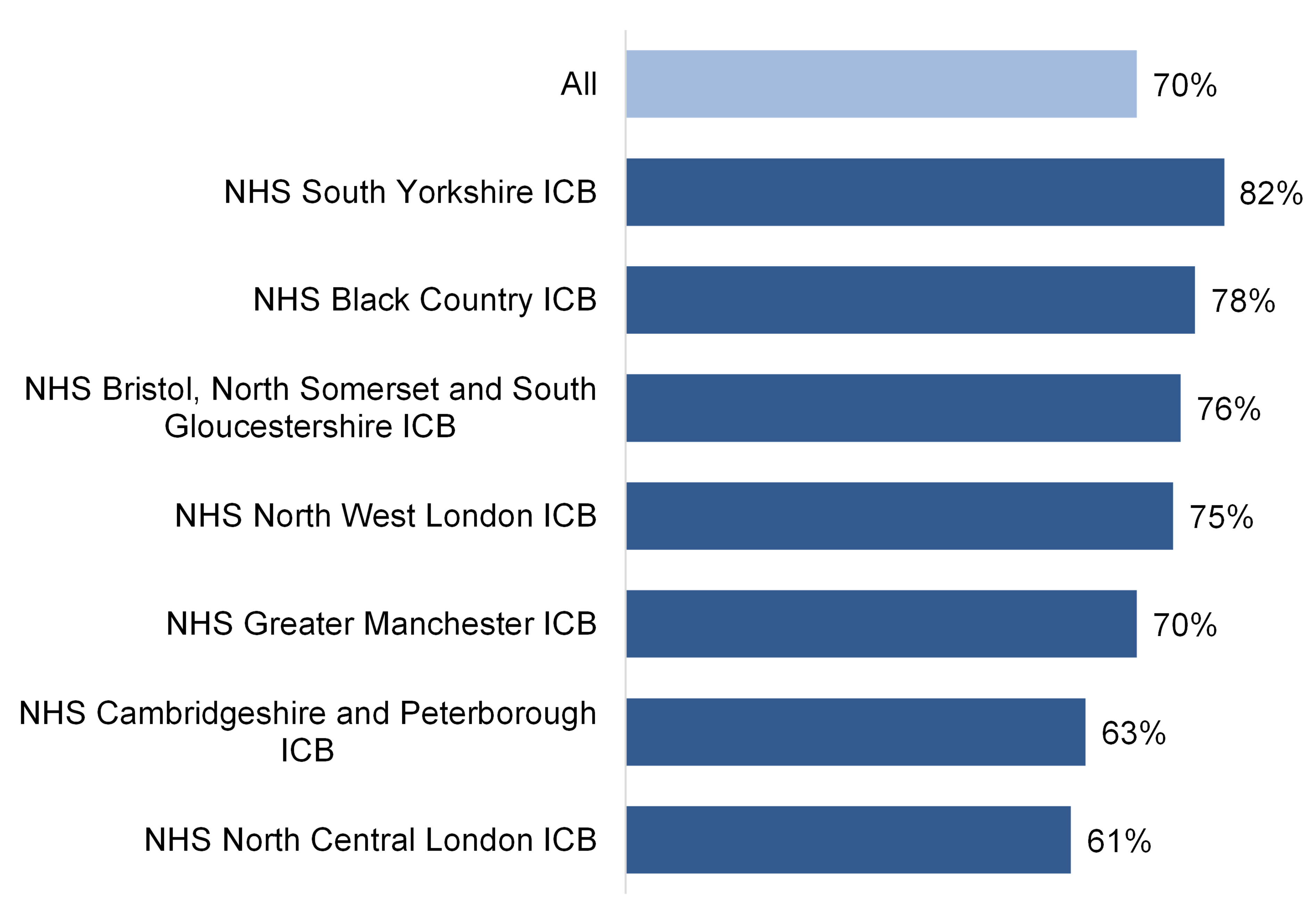
Source: IFF Research baseline survey of participants, conducted online and via telephone (F4). Base: All participants (1,089), NHS South Yorkshire ICB (135), NHS Black Country ICB (96), NHS Bristol, North Somerset and South Gloucestershire ICB (54), NHS Northwest London ICB (315), NHS Greater Manchester ICB (165), NHS Cambridgeshire and Peterborough ICB (151), NHS North Central London ICB (138). ICBs with a base of less than 30 participants have been excluded from the chart.
Similar findings emerged in the qualitative interviews with participants generally expressing satisfaction with the support. The relationship to the work and health coach played a large part in satisfaction. Those who felt supported, had a good rapport with their coach and felt their coach understood them reported higher levels of satisfaction.
“It’s nice to have somebody external who can hold me accountable … a friendly, supportive voice.”
(Participant, Cambridge and Peterborough ICB)
“At all points it was about what mattered to me and the outcomes I was looking for… I was fortunate with the coach I had who was clearly very experienced … it was all very professional, objective and focused on the outcomes I wanted.”
(Participant, Cornwall and the Isles of Scilly ICB)
For a few participants, having emotional support and someone to talk to was important. Others mentioned they appreciated being able to contact their work and health coach outside of their scheduled meetings. This made them feel supported and that the work and health coach cared for them.
The support provided had positively impacted some of the participants and they reported increased confidence and reduced anxiety.
reported increased confidence and reduced anxiety.
“The confidence that she helped give me, or the hope, I suppose at that stage was probably the biggest help. Knowing that there’s someone there who actually seemed like she was invested in helping me make my life better.”
(Participant, South Yorkshire ICB)
“I was really struggling to think about how I might make my voice heard if issues came up. But I’ve had a lot less anxiety and worry around that now, because if there are any issues I’ve got him there to support me.”
(Participant, Greater Manchester ICB)
For some participants, having support with other aspects of their life, such as health and finances, was seen as a positive aspect of the WorkWell pilot programme. It was noted this was different from previous support they had received. In particular, having support with their health condition was seen as beneficial in returning to, or thriving in, work.
“The mental health, and the physical… the work - It’s all combined in one service… It covers all the barriers to going into work.”
(Participant, Greater Manchester ICB)
One participant commented they found having the one to one coaching sessions alongside the referrals helpful for reviewing progress.
“It’s been helpful to keep checking in how things are going with referrals”
(Participant, Cambridge and Peterborough ICB)
Dissatisfaction with overall service
Few participants were dissatisfied with the service. In the baseline survey, one in ten (11%) were dissatisfied with the support received, and a further 13% said they were neither satisfied nor dissatisfied. The main reason for not being satisfied was they did not find the support helpful (31%). Other reasons included poor communication from their work and health coach (18%) and the support not being what the participant expected (11%). Other participants were not satisfied as they did not receive support: finding a job (8%), did not receive support with their health condition (8%) or they had not yet found employment (7%).
Those participants who expressed dissatisfaction in the qualitative interviews often did so as they did not feel clear about the aims of the WorkWell pilot programme. This uncertainty was both at referral to the WorkWell pilot and also whilst receiving WorkWell support. Some participants described their initial meetings with their work and health coach as disorganised. They felt their coaches did not have a good understanding of the support that was available both in terms of what the WorkWell pilot covered and external support that could be accessed. For others, the wealth of support and information was overwhelming at the start of the WorkWell pilot. Some participants did acknowledge that WorkWell was a pilot and staff were learning about the support on offer. One participant felt the lack of staff understanding of the support available had a detrimental impact on their initial experience.
“When I first went to the WorkWell programme, I think people were quite unsure of…what they were actually doing. It was like it was a little bit disorganised. There seemed to be a misunderstanding of what was happening with the support I would get to keep me in work or help me to get to work.”
(Participant, Birmingham and Solihull ICB)
Other participants said they did not receive sufficient support from the WorkWell pilot programme. They felt they had just been referred to external support and did not receive support from the WorkWell pilot itself. Some did not feel the support was tailored to their needs and the work and health coach could have been better equipped to deliver more relevant support. For example, one participant did not feel the work and health coach understood their health needs and did not tailor sessions to their neurodivergent needs. As a result, they were concerned they were not getting the correct support. Often support was suggested at one to one sessions but on signposting or referral the participant found they were not eligible for the support. This participant dropped out from the pilot as they felt it was negatively impacting their mental health.
Others felt the support offered was less relevant to them as they were already receiving similar support from other organisations, such as ACAS and the JCP.
The findings from the qualitative interviews indicate that work and health coaches sometimes needed adequate training to understand the support the WorkWell pilot could provide. Work and health coaches also sometimes needed more training to recognise the complex needs of WorkWell participants to ensure the correct support was provided.
“There were quite a few problems with the sessions I had… He was trying to constantly coach me, but in a very overly sticking to a coaching style process. What that meant was that I would tell him something, he would then ask me an open or a probing question off the back of it, and I would then answer. But the problem is that’s where it’s not understanding my disability and my circumstances. All that does to an ADHD person is I just talk excessively and then what happens is I just lose my train of thought and talk gibberish, and I go round and round in circles.”
(Participant, Bristol, North Somerset, South Gloucestershire ICB)
Participant views on improvements to WorkWell sessions
Whilst most participants in the qualitative interviews were positive about their progress with the WorkWell pilot, some participants felt WorkWell sessions could be improved. Some would like more sessions with their work and health coach to ensure all their actions were achieved. A few participants would have liked meetings with their work and health coach to be more frequent to ensure progress was maintained.
“I was optimistic about it, but I was still waiting for things to happen. Weeks were going on but things were not so much happening. I was kind of hoping that we’d meet more regularly and something would happen as a result of it.”
(Participant, Greater Manchester ICB)
9 Early outcomes
This section explores early outcomes experienced by individuals participating in the WorkWell pilot programme. The evidence comes from qualitative interviews with WorkWell participants. A small proportion of participants were interviewed, meaning the outcomes described below are not an exhaustive list of outcomes experienced by individuals receiving support through WorkWell, nor should they be considered to be representative of the experience of all WorkWell participants. Instead, these examples should be considered illustrative of the experiences of participants.
The logic model outlines the short-term outcomes and mid-term outcomes that participants are expected to achieve, along with those that are anticipated in the longer term. Logic model outcomes would not be anticipated at this stage as most individuals were still receiving support through WorkWell when they took part in the research. Later stages of the evaluation will look at these by comparing outcomes for the participant group with a comparison group using statistical impact analysis. However, some early outcomes were reported by participants who were still receiving support, or who had recently finished support.
Achievement of soft outcomes
Some participants reported soft outcomes following support through the WorkWell pilot programme. These are outcomes that are often smaller steps towards achieving harder and more quantifiable outcomes, like employment. They included improved awareness of the local support on offer, improved self-esteem and motivation, and the development of employment-related skills.
Types of soft outcomes achieved
Awareness of local services available
Participants reported having a greater understanding of the support available to them in their local area following support through the WorkWell pilot programme. They also reported understanding how to access this support better. This was mainly because the service acted as a central referral point, assessing the individuals’ needs and referring them to the appropriate support. This indicates progress towards individuals having increased knowledge of how and where to seek appropriate help for work or health-related issues, a short-term outcome in the logic model.
“I’m more aware of organisations that can help me as a neurodiverse person when it comes to entering the world of work.”
(Participant, North Central London ICB)
General motivation and confidence
Participants reported improved self-esteem and motivation following support through the WorkWell pilot programme. This was generally because ongoing mentoring and emotional support from a work and health coach made individuals feel listened to and valued. This gave participants a general sense of purpose, fostering alternate outlooks on life which supported progress towards improved health and employment.
“She’s really good in terms of showing me or making me feel or reminding me who I am in this world. That I matter that I am of value…It really gave me a boost.”
(Participant, Northwest London ICB)
Raising aspirations about work
As well as building general motivation and confidence, some individuals reported that their work and health coach helped them feel more confident about their health condition and how to navigate this at work. For example, one participant mentioned their work and health coach encouraged them to reframe their neurodiversity as a positive, helping them understand how it could be a benefit to employers. This helped individuals feel more confident about finding work in the future. This indicates that individuals’ experienced increased work-related motivation, confidence and resilience, a short-term outcome in the logic model.
“She definitely helped me gain confidence in myself again… I feel like it’s more possible now, that I’ll find a job that will work for me and my needs.”
(Participant, Bristol, North Somerset, South Gloucestershire ICB)
Developing job-related skills
In the qualitative interviews, participants reported that they had had the opportunity to develop job search, job application and interview skills. Individuals developed these skills through one to one coaching with their work and health coach and, in some cases, through referrals to other employment services. For example, one individual who had been signposted to an employer support service was able to practice interview questions and do mock interviews using their platform. They were then able to use these skills during a job interview for a large retailer.
One to one support and the development of job-related skills helped individuals feel confident about searching for jobs and employment in the future. This indicates progress towards individuals developing new skills, a short-term outcome in the logic model.
Raised awareness of suitable employment
Furthermore, work and health coaches often supported individuals to think about the types of roles that would be suitable to them. Through coaching, they helped individuals to develop action plans with achievable goals, identify priorities, and understand their personal needs and skills. This helped participants to identify the types of jobs that would be suitable for them. For example, considering part-time work to balance childcare responsibilities, or jobs closer to home meaning less public transport (for those who didn’t drive), jobs that helped individuals balance their health. This indicated progress towards individuals with health conditions having increased understanding of job roles they can successfully fulfil, a short-term outcome in the logic model.
“She helped me to understand what I want, what is possible, what is not… she helped me to understand it for myself. Where I can move, what is available and how I can get it if I want.”
(Participant, Bristol, North Somerset, South Gloucestershire ICB)
Confidence having health-related conversations with employers
Participants both in and out of work felt more confident having health-related conversations with their employer, or potential employers, after receiving support through WorkWell.
Work and health coaches supported individuals in work to request reasonable adjustments from their employer, so they can better manage their health at work. They coached individuals on how to effectively have these conversations so they felt well equipped.
“Having a conversation with my employer is now easier. I can do it in a way where I don’t fear the next conversation is going to be my [them] saying we are going to have to let you go.”
(Participant, Cornwall and the Isles of Scilly ICB)
Work and health coaches also supported individuals not in work to disclose health conditions during the application process, so they could enquire about the role and how they would be supported with their health. This indicates progress towards individuals with health conditions having increased understanding of job roles they can successfully fulfil, a short-term outcome in the logic model.
“As I said, it’s sort of tailored toward people with health conditions… there was a time where I wanted to apply for a job, and I wasn’t quite sure about the adjustment. So, with [work and health coach], he was able to arrange the appointment for me to talk to someone about the job before I applied…”
(Participant, Coventry and Warwickshire ICB)
Unfortunately, some individuals had some concerns about disclosing health conditions and requesting support due to fears of employer discrimination, which might limit progress towards this outcome.
Achievement of hard outcomes
Some participants reported hard outcomes following support through the WorkWell pilot programme. These are outcomes that are more quantifiable and are usually achieved after the achievement of softer outcomes, like confidence. They included improved health, employment outcomes (such as job interviews and employment), and the achievement of qualifications.
Types of hard outcomes achieved
Improved management of physical health
Some individuals who participated in the qualitative research reported taking positive steps to manage their physical health after receiving support through the WorkWell pilot programme. This was often because of referrals to other services, such as physiotherapy[footnote 15]. This indicates progress towards a short-term outcome in the logic model, that individuals have increased ability to manage their own health condition.
“[Physiotherapy] hasn’t got me any closer to curing myself or treating myself but it has made me think I should do more strength-based exercise.”
(Participant, South Yorkshire ICB)
Despite some improvements, physical health remained a barrier for some individuals. For instance, some individuals were still deemed unfit for work because of their health condition. This limited the extent to which they could engage with work-related activities.
Improved mental health and wellbeing
Additionally, some individuals reported improved mental health and wellbeing after receiving support through the WorkWell pilot programme. This was particularly from those who were already suffering from poor mental health. Individuals reported that improvements were usually as a result of the ongoing support from a work and health coach, referrals to other services (for example, NHS mental health support) or through social prescribing (for example, signposting to gardening classes). This suggests progress towards improved general health and wellbeing, a medium-term outcome in the logic model.
“[My work and health coach] did a few phone calls as well to check in on me to support me, and I felt very grateful because I didn’t have anybody else to turn to. I felt very isolated.”
(Participant, Birmingham and Solihull ICB)
Finding paid employment
Amongst those who participated in the qualitative research, a few said they had found paid employment after receiving support through the WorkWell pilot programme. For example, after submitting their CV to Indeed, one individual went to interview with a company and was subsequently offered a job. The job interview and CV preparation support from their work and health coach supported this. This suggests progress towards a medium-term outcome in the logic model, that individuals find suitable work.
“[Employer] asked me to fill in the whole registration form for their agency, which was quite a long process and when I had issues about where to get documents and how to upload them, [work and health coach] really helped me with that.”
(Participant, Greater Manchester ICB)
Remaining in work
Some individuals were able to retain their existing job through support from the WorkWell pilot programme. One individual reported that their work and health coach had encouraged them to consider part-time hours at their current job, rather than finding new work, to help them better manage their caring responsibilities. The work and health coach supported the individual to negotiate new conditions with their employer. This indicates increased knowledge of how and where to seek appropriate help for work and/or health issues, including employee rights, a short-term outcome in the logic model. It also suggests progress towards a medium-term outcome in the logic model, that individuals remain in suitable work.
Returning to work
Some individuals who were off work due to their health condition reported being able to return to their existing job following support through WorkWell. This was mainly because of referrals to other services, such as Occupational Health (OH), which supported the transition. For example, one individual went through an OH assessment which suggested a phased return to work. Because of the support received from their work and health coach which helped them to navigate conversations with their employer calmly, the individual felt prepared to discuss this adjustment with their employer before going back to work.
“I have been calmer…Instead of having anxiety going back, I’m more calm and collected… I’m more vocal in a way because before I tend to just keep it to myself.”
(Participant, Northwest London ICB)
New skills and qualifications
Some individuals reported developing new skills and qualifications through further education and training. Examples included a counselling course, a Construction Skills Certification Scheme, and recovery college[footnote 16]. In some cases, the work and health coach signposted individuals to appropriate opportunities. The support from a work and health coach also raised individuals’ general confidence which helped them feel more prepared to engage with the opportunities. Individuals hoped developing new skills and qualifications would help them find work in the future.
“[Work and health coach] was just fantastic. I had never even heard of the Recovery college but now that I’ve done one course with them there could be an option for me to volunteer with them. There may be chances of getting paid employment with them further down the line… and it’s somewhere I’d never even heard of.”
(Participant, Black Country ICB)
10 Conclusions and lessons learned so far
Profile of participants
Generally, the WorkWell pilot programme seems to be reaching the intended beneficiaries.
WorkWell participants who joined the programme in the first six months of delivery were experiencing a range of health-related barriers to work. Looking at the MI submitted by 12 pilot sites, for almost half (46%), their primary health related barrier to work was mental health related, followed by physical health (37%) or cognitive health (7%). Almost half (46%) of WorkWell participants that completed the baseline survey with a long-term health condition or disability said that their health was impacting the amount or type of paid work they were able to do “a great deal”. Baseline survey findings closely reflect the MI, showing a consistent picture of participants’ significant health‑related barriers and employment circumstances.
Two-fifths (40%) of those surveyed were in paid work immediately before starting to receive WorkWell support, typically working for an employer (37%). Just over half of those in-work were working less than full-time (52% less than 35 hours per week, of which 30% were working 16-34 hours per week, and 22% less than 16 hours). Of the 57% not in paid work, most (63%) were actively looking for work. Although WorkWell is in intended to support primarily those at risk of unemployment, or recently unemployed, over half (51%) of those not in-work had been unemployed for more than 12 months. This indicates that the WorkWell service is potentially going beyond fulfilling an ‘early intervention’ role in work and health support.
There is some variation in the profile of participants by site which could indicate tailoring to local needs as intended.
Service mobilisation and management
Six months into the 18-month funding period, not all sites were fully operational.
The WorkWell pilots were intended to be ‘live’ from October 2024, however many experienced delays with aspects of mobilisation, and six months into delivery, one site was not yet delivering WorkWell at all. Stakeholders felt that the timing between submitting a bid for WorkWell funding and launching the service was ambitious. The short time scales made it difficult for sites to complete the processes they needed to mobilise in time, such as recruitment, procurement, and staff training.
Factors that supported more rapid mobilisation included having preexisting relationships with partner organisations, experience of delivering other work and health programmes, obtaining support to facilitate procurement, and being able to recruit internally for work and health coach roles. Factors that contributed to delays in mobilisation included difficulties in attracting both staff and participants, with sites experiencing recruitment and retention issues due to the short-term nature of the pilot, and low referral volumes. Sites also noted that the multiple stages involved in external procurement necessitated additional time, as did reaching agreement about information governance protocols due to the multiple partners involved in delivery.
Sites were at a relatively early stage in terms of service management, however, they highlighted a number of elements that they felt contributed to strong service delivery. These included sufficient training of work and health coaches, clear lines of communication and oversight, compliance and audit checks, seeking feedback from service users, and for externally procured services, agreeing Key Performance Indicators.
Partnerships between lead organisations within WorkWell pilots were at different stages of development by the end of March 2025. For sites with previous strong relationships between lead organisations, joined-up working was a natural continuation of existing behaviours. For other sites, despite feeling like there was a positive relationship between the LA and the ICB, the practicalities of integrated working between multiple organisations were still proving to be a challenge.
Customer journey
Pilot sites had established a range of referral routes and promising progress had been made in some sites in engaging PCNs in referrals although others were still finding this challenging.
Pilot sites reported using various methods, such as stakeholder engagement, community events, and media campaigns, to raise awareness of the WorkWell pilot programme. Targeted outreach in underrepresented communities and strong professional networks was felt to facilitate stakeholder buy-in and enhance programme visibility. However, some pilot areas did report that they were experiencing difficulties in raising awareness of the service amongst primary care networks, due to lack of capacity amongst GPs and therefore a lack time to engage with the service.
To overcome issues with engaging GPs, pilot areas cited a range of approaches from simplifying referral processes by using a dedicated app, through to reimbursing GPs for time spent on referrals. There are signs that these approaches are effective, as amongst all referrals, GPs and primary care were one of the top three referral routes to WorkWell to date, alongside Jobcentre Plus and self-referrals. Despite these efforts, however, many pilots did note that overall referral volumes had not aligned with their expectations, with some attributing this to the programme not yet being embedded. Some sites did report concerns that they would be unable to meet their referral targets.
Referrals from employers were very rare.
Participants in the qualitative research provided positive feedback of referral to WorkWell, reporting that the process was straightforward and generally clearly communicated, although a few felt that referrers could have provided more information about the what the support involves to help set expectations. Participants were not usually aware of the triage aspect of the WorkWell service, however stakeholders indicated that this could be expected, as aspects of triage took place ‘behind the scenes’ through discussions between professionals. Whilst some sites felt their triage offer was working well and consistent with the prospectus, others were still in the early stages of establishing an MDT and therefore were delivering triage in a more simplistic manner.
Evidence suggests that most of the prescribed elements of the WorkWell customer journey were happening as intended.
Most WorkWell participants recalled having an assessment, and reported a positive experience of this, in particular reporting that their assessment tailored and person-centred. Assessments were also described as thorough, providing in-depth information about the programme and next steps, although some participants found them excessively lengthy and suggested alternative formats, such as completion of an initial online forms followed by a discussion may have better suited their needs.
Recollection of action planning was more mixed amongst participants in the qualitative research, with indications that the extent to which the action plan is a formalised document varies between pilot sites. However, participants did share positive feedback about the role of action planning in supporting them to meet their goals, in both work and health domains, and favourable rating of actions plans by participants across a number of dimensions in the survey.
Similarly, participants who had received one to one coaching felt that this was beneficial, person-centred and holistic in the approach taken, with particular appreciation for support that was provided that was not primarily focused on obtaining or retaining employment. The frequency and consistency of communication between coaches and participants, and the perceived level of training and expertise of the coach was highlighted qualitatively as a strong driver to the strength of the relationship between the two.
Emerging feedback about onward referrals from WorkWell suggests that this could be an area of the service requiring improvement to ensure that the service is delivering on its intention to make the complex health and work system easier for individuals to navigate.
Areas of difficulty flagged by participants included being signposted to external support, but participants not feeling sufficiently confident or mentally able to attend, or in other cases, being signposted or referred to support that was not relevant or accessible. Participants felt greater consideration could be given to their individual needs regarding onward referral, and health and work coaches could be more informed about relevant services to refer on to.
For participants in employment, or re-entering employment, engagement between their work and health coach and their employer was generally seen as helpful. The support made them feel more confident about returning to work or finding new employment and often led to agreed adjustments like reduced hours and phased return to work. However, a few participants expected more proactive involvement, such as the coach directly arranging adjustments with potential employers, and were disappointed when this did not happen.
Satisfaction with WorkWell
The majority of participants were positive about the support provided by the WorkWell pilot programme.
In the baseline survey, 70% reported overall satisfaction, with the most commonly cited reason being the friendly and supportive nature of their work and health coach (43%). Participants also valued clear and useful advice (13%), support with health conditions (12%), help with job searching (11%), and having a clear and positive plan (10%). Qualitative interviews reinforced these findings, highlighting the importance of a strong, understanding relationship with the coach, emotional support, and the holistic nature of the service. Many participants reported increased confidence and reduced anxiety as a result of the support they received.
However, a small proportion of participants expressed dissatisfaction. In the survey, 11% reported being dissatisfied, and a further 13% were neutral. The most common reason for dissatisfaction was that the support was not helpful (31%). Other concerns included poor communication with the coach (18%), unmet expectations (11%), and lack of support with employment or health needs (8% each). Qualitative feedback revealed that some participants felt unclear about the aims of WorkWell, found the support disorganised, or felt it duplicated services they were already receiving. A few also felt the support was not tailored to their specific needs, particularly in cases involving neurodivergent conditions.
These findings suggest that while WorkWell’s person-centred and integrated approach was well-received by most, there is a need for clearer communication at the outset and improved training for coaches to ensure support is relevant, consistent, and responsive to the diverse needs of participants.
Early outcomes
There were some promising signs of positive outcomes from WorkWell but more robust evidence about these will follow later in the evaluation.
While the delivery of the WorkWell pilot programme was in the early stages and outcomes were not necessarily expected at this stage, participants reported some early outcomes during qualitative interviews. They reported both softer outcomes and harder, more tangible outcomes.
Softer outcomes included raised awareness of local services, improved general motivation and confidence, raised aspirations around work, development of job-related skills, better understanding of roles suitable for their situation, and confidence having health-related conversations with employers. These outcomes are important to building the foundations for individuals to progress towards work, or to better manage work, in the future.
Harder outcomes included improved physical health, improved mental health and wellbeing, finding paid employment, remaining in work, returning to work, and the development of new skills and qualifications.
These outcomes are key measures of success of the WorkWell pilot programme and indicate that the programme has had positive, tangible impact on individuals. However, the harder outcomes were experienced by fewer individuals so, as WorkWell progresses, we would expect these outcomes to be experienced by a higher volume of individuals.
Recommendations
Recommendations for improving participant experience and service delivery
Strengthen referral pathways: explore formal agreements with Jobcentre Plus (JCPs) to enable them to complete referrals directly, rather than relying solely on signposting.
Standardise communication post-referral: ensure all participants (whether referred by professionals or self-referred) receive consistent, clear information about:
- what to expect next (for example who will contact them and when)
- what WorkWell can and cannot support with – consider providing printed materials or automating email confirmations at the point of referral
Improve information sharing at referral stage:
- enable referrers to pass on more relevant information to support the initial assessment
- consider allowing participants to self-complete some information in advance to streamline the process
Offer flexible assessment options: provide participants with a choice of format for their initial assessment, for example online, telephone, or face to face, to suit individual preferences and accessibility needs.
Document and share action plans: develop a standardised template for return-to-work or thrive-in-work plans. Ensure printed or electronic copies of these are shared with participants and regularly revisited to promote accountability and progress.
Ensure consistent communication: maintain regular and reliable contact between participants and their work and health coach to build trust and strengthen the working relationship.
Enhance staff training: provide comprehensive training for work and health coaches to:
- understand the full scope of WorkWell support
- navigate local service availability
- respond appropriately to participants with complex or specific needs (such as neurodivergence)
Recognise varying levels of need: acknowledge that for some individuals, signposting or referral alone may not be sufficient. These participants may require more intensive, hands-on support, which could exceed the current scope of WorkWell.
Recommendations for the DWP, DHSC and JWHD
The JWHD could consider the following recommendations to further support the successful delivery of the WorkWell pilot.
Continue to monitor sites’ progress in establishing MDTs
As MDTs were intended to be a key attribute of WorkWell, the JWHD should consider whether sites have operationalised this element as expected, or whether more support is required by some areas.
Reflect on anticipated role of employers in WorkWell
As there is limited evidence of employment engagement with WorkWell at this stage, the JWHD should review whether this is in line with the WorkWell vision, or whether sites should be encouraged to take more action to engage this group.
11 Annex
Annex A: Theory of Change
Figure 18: WorkWell evaluation Theory of Change
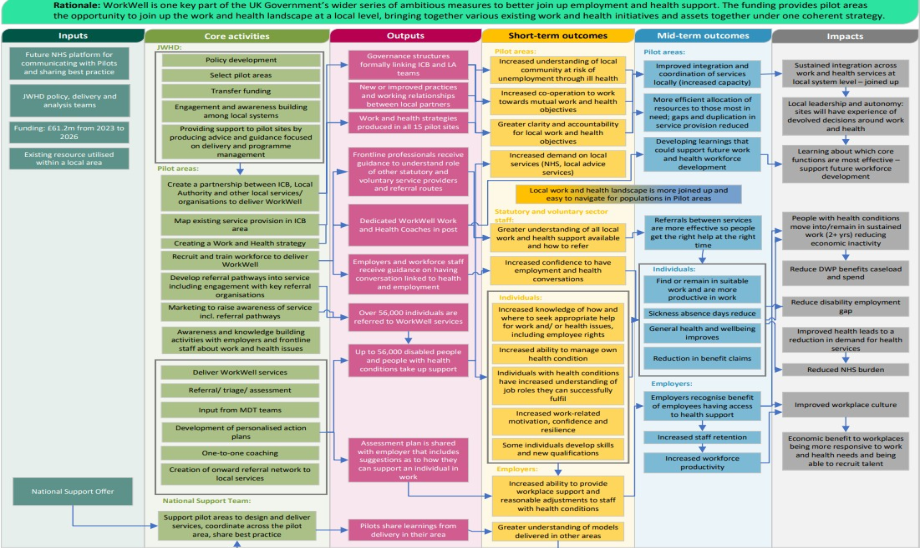
Inputs
The inputs column on the left-hand side of the Theory of Change describes the resources, funding, policy and stakeholders. They are required to deliver the key activities of the WorkWell Pilot, and which are necessary to bring about the desired outcomes and impacts.
The policy, delivery and analysis teams at the JWHD have been instrumental in the planning and delivery of the WorkWell Pilot so far, and will continue to feed into the development of the policy at a national level, learning from feedback and suggestions from Pilot sites. The WorkWell Pilot will be funded by the JWHD. To support shared learning a digital Future NHS platform will be provided. This platform will provide Pilot areas, and eventually non-Pilot areas, with the opportunity to communicate and share best practice in regard to their WorkWell delivery. The delivery of WorkWell relies on existing local resources like the workforce, stakeholder partnerships, networks, and support offers. A key aim is to integrate health and work services locally, making existing provisions crucial for the programme’s success.
Activities
The core activities column summarises how the inputs will be utilised to bring about the programme’s intended outcomes and impacts. The programme activities are broadly delivered by three key groups: the JWHD; Pilot areas; and the National Support Team. The service provided by Pilot areas is anticipated to be the most important driver of outcomes, and so this will be a key focus of the evaluation.
Before this evaluation was commissioned, the JWHD completed some work to ensure the smooth delivery of the WorkWell Pilot, including policy development and the selection of Pilot areas (after they had submitted bids for funding). The JWHD will support the wider success of the Pilot by building engagement and awareness among local systems, and providing support to pilot sites by producing advice and guidance focussed on delivery and programme management.
Pilot areas will deliver a WorkWell service which includes the first steps for service users, which is referral to the WorkWell service, assessment of need in relation to work and health, and triage to the appropriate services. This three-step process will involve the input of the required multi-disciplinary team (MDT), including the work and health coach and the learning and change manager. The Pilot area will then deliver the service to the service user, including the development of a personalised action plan, one to one coaching, and an onward referral network to local services.
Pilots will carry out additional activities to ensure the delivery of their WorkWell service is successful. They will create a partnership between the ICB, LA and the other local services and organisations delivering WorkWell. To support this, Pilots will create a mandated Work and Health Strategy to ensure such organisations are strategically aligned. In addition to this, Pilots will map existing service provision in their area to identify the work and health services that are already available. This will identify gaps so their WorkWell service can meet the varied needs of individuals.
In regard to supporting referrals, Pilots will engage with key referral organisations to develop referral pathways into WorkWell, ensuring individuals have access to the service and supporting Pilot areas to meet their referral targets. Pilots will also market the service to raise awareness, including the various referral pathways that can be used to access the service. Additionally, some Pilot areas have expressed intent to carry out awareness and knowledge building activities with employers and frontline staff about work and health issues. Pilots will also recruit and train a workforce to deliver WorkWell, including the mandated work and health coach and learning and change manager.
Finally, the National Support Team will support Pilot areas to design and deliver services by coordinating shared learning across the Pilot area, supporting the sharing of best practice.
Outcomes (and the outputs that will translate the activities to outcomes)
Short-term outcomes
In the short-term, by creating local partnerships, mapping existing services, and creating a Work and Health Strategy, it is anticipated that formal governance structures linking the ICB and LA teams will be established, and that new or improved working practices or relationships will be developed between local partners. It is required that all 15 Pilot sites will produce a Work and Health Strategy. For Pilot areas, this should lead to an increased understanding of local communities at risk of unemployment through ill health, increase co-operation to work towards mutual work and health objectives, and give greater clarity and accountability for local work and health objectives.
Through the development of referral pathways into the service and awareness raising around the service (including referral pathways), it is expected that up to 56,000 individuals will take up support. In the shorter term, it is predicted that this will create temporary increased demand on local services in each Pilot area, such as the National Health Service or local advice services, as service users begin to take up the support on offer.
It is intended that individuals receiving support through WorkWell will see many health and work-related benefits, such as increased knowledge of how and where to seek appropriate help for work and/or health issues, hopefully leading to increased ability to manage own health condition; increased understanding of job roles they can successfully fulfil, increased work-related motivation, confidence and resilience, and potentially the development of new skills and qualifications.
Pilot sites will recruit experienced individuals, including dedicated work and health coaches. Training will help frontline professionals understand the roles of statutory and voluntary groups, referral routes, and how to discuss work and health. In the short term, this aims to enhance understanding of local work and health support and increase confidence in related conversations.
In delivering WorkWell, some Pilot areas are planning to engage employers to help them achieve their aims of supporting people with a health condition or disability to get in and on work. For example, they might share (with participant permission) an individual’s ‘return to work’ or ‘thrive in work’ plan with an employer that includes suggestions on how they can support their employee in work. It is intended that this engagement helps employers provide workplace support and reasonable adjustments to employees with health conditions.
The National Support Team will support Pilots to design and deliver their WorkWell services. They will also set up infrastructure to encourage Pilots to share learning and best practice about delivery in their area, such as the learning and change network and the digital Future NHS Platform. It is the intention that this leads to a greater understanding of models delivered in other areas. This then links back to activities, as it is the intention that this greater understanding feeds into the agile adaptation of service design and delivery.
Mid-term outcomes
In the mid-term, it is anticipated that each pilot’s increased understanding of their local community, increased cooperation towards mutual work and health objectives, and greater clarity and accountability around such objectives, leads to improved integration and coordination of services locally. This streamlining should increase the capacity of services through the efficient allocation of resources to those most in need. Furthermore, it is anticipated that this will fill gaps and remove duplication in services. For Pilot areas, it is likely that these outcomes together will lead to a more joined up work and health landscape that is easier to navigate for populations in Pilot areas, an outcome which is anticipated to occur in the shorter- and mid-term.
It is anticipated that having a dedicated WorkWell work and health coach in post will lead, in the mid-term, to the development of learnings that could support future workforce development. Furthermore, since statutory and voluntary sector staff should have a greater understanding of the local work and health support available and how to refer to such services, it is intended that referrals between services become more effective. This will ensure people get the right help at the right time. It is anticipated that this, along with the intention that statutory and voluntary sector staff have increased confidence to have employment and health conversations, then leads to the mid-term individual outcomes.
These mid-term individual outcomes include being able to get back into suitable work if they have recently fallen out due to a health condition, to stay in work if they’re at risk of falling out of work due to a health condition, or to find alternative work if their existing employment doesn’t accommodate their health needs. It is also anticipated that individuals become more productive in work, sickness absence days reduce, general health and wellbeing improves, and that this leads to a reduction in benefit claims. It is anticipated that individual short-term outcomes (discussed above, i.e. increased knowledge of work and health support available, increased ability to manage their own health condition, and increased understanding of suitable job roles) will also lead to these mid-term individual outcomes.
In those Pilot areas engaging with employers, it is anticipated that employers’ increased ability to provide workplace support and reasonable adjustments to employees with health conditions will lead, in the mid-term, to a recognition of the benefits associated with employees having access to health support. It is intended this will ultimately increase staff retention and workforce productivity, if individuals recognise their employer is supportive to disabled people and people with a health condition.
Impacts
There are three key levels where impacts have been identified in the WorkWell Theory of Change. At the Pilot area level, it is anticipated that local integration and joining up of work and health services will be sustained beyond the funding period of WorkWell. It is also anticipated that through delivering WorkWell, sites will have experience of devolved decisions around work and health, which will be beneficial considering the increased devolution of work and health support that is anticipated. It is intended that the learnings around the future work and health workforce development (from the dedicated work and health coach) will lead to some learning about which core functions are most effective to support future workforce development.
At the national level, it is anticipated that the individual and employer benefits achieved in the short- and mid-term lead to sustained work of two or more years for people with health conditions or a disability. In turn, this reduces economic inactivity in pilot areas. Ultimately, this should reduce the DWP benefits caseload and spend and reduce the disability employment gap. From a health perspective, while it is anticipated that local services will initially see increased demand, it is intended that improved health through WorkWell ultimately leads to a reduction in demand for health services, reducing the burden on the NHS. Furthermore, it is anticipated that shared learnings around WorkWell delivery, facilitated by the National Support Team, ensures that work and health policies, programmes and systems are evidence-based in the longer term.
Where Pilot areas are engaging with employers, at the employer level, it is intended that their engagement with joined up work and health support will lead to them being more responsive to work and health needs. This ultimately improves workplace culture in their organisation. Ideally, this would lead to economic benefits such as improved retention and the recruitment of talent.
Although the evaluation will aim to capture data to evidence impacts, it may not be possible to include all of these within the scope of the evaluation. It may also be that some of these impacts are not achieved within the timescales of the evaluation.
Annex B: Participant baseline survey methodology
Sample processing
- The sample was compared to previous months, and participants that had previously been invited to take part in the survey were removed.
- The sample was then checked to ensure only those that started WorkWell in the correct month were included[footnote 17].
- Then, only participants that had their status marked as ‘Eligible-agreed to start’ or ‘Eligible-started’ were kept in.
- Finally, the sample was checked to ensure only participants that were marked as either receiving a ‘Return to Work Plan’ or a ‘Thrive in Work Plan’ were included.
Due to issues with data sharing between the JWHD and pilots, and delays with some sites being able to deliver WorkWell, sample was received for 12 out of 15 sites between October 2024 and March 2025. Of these, nine provided eligible sample that could be invited to take part in the survey. For the three that did not, this was due to the participants having started WorkWell outside of the relevant time period[footnote 18], meaning a ‘baseline’ consistent with other participants could not be captured for these individuals. Table 6 provides an overview of this.
Of the 12 pilot sites that provided sample, three did not provide eligible sample that could be invited to take part in the survey, meaning participants from those sites are not represented in the survey findings. Two of these sites (Surrey Heartlands and Lancashire and South Cumbria) have similar delivery models to participating sites, meaning feedback on these models is represented in the survey findings through other sites. One of these sites (Cornwall and the Isles of Scilly) has a unique delivery model through the voluntary sector. As such, feedback on this model is not represented in the survey findings.
Table 6: Whether pilot sites submitted MI between October 2024 and March 2025, and whether survey completes were achieved between January and May 2025
| Pilot Area | Whether MI received between October and March | Whether survey completes achieved January to May |
|---|---|---|
| NHS Birmingham and Solihull ICB | yes | yes |
| NHS Black Country ICB | yes | yes |
| NHS Bristol, North Somerset and South Gloucestershire ICB | yes | yes |
| NHS Cambridgeshire and Peterborough ICB | yes | yes |
| NHS Cornwall and the Isles of Scilly ICB | yes | no |
| NHS Coventry and Warwickshire ICB | yes | yes |
| NHS Greater Manchester ICB | yes | yes |
| NHS Surrey Heartlands ICB | yes | no |
| NHS Lancashire and South Cumbria ICB | yes | no |
| NHS North Central London ICB | yes | yes |
| NHS Northwest London ICB | yes | yes |
| NHS South Yorkshire ICB | yes | yes |
| NHS Leicester, Leicestershire and Rutland ICB | no | no |
| NHS Frimley ICB | no | no |
| NHS Hereford and Worcestershire ICB | no | no |
In total, 4,378 contacts were transferred by the JWHD at the planned time each month between November 2024 and April 2025. This included participants that had been referred to WorkWell with an intended start date in the previous month. This figure is lower than the 5,661 reported on in the ‘Profile of Participants’ chapter for two reasons:
- some of the eligible sample was ringfenced to be invited to qualitative interviews (as outlined in Table 6)
- due to data transfer or compliance issues, the JWHD provided updated sample files with additional participants each month. However, many of these participants could not be contacted for fieldwork as by the time they were received by IFF, they had started WorkWell too long ago, and an accurate baseline could not be captured
Of the 4,378 pieces of sample that were transferred at the correct time each month, 3,547 were loaded for fieldwork (an average of 81% over the 5 months), and an average response rate of 31.33% achieved. This difference is due to some sample not meeting certain criteria when being processed (stages outlined at the start of Annex B), for example not actually having started WorkWell.
Table 7: The total sample received each month, the amount loaded for fieldwork, and the response rate achieved each month
| Start month | Total sample received | Total loaded for fieldwork | Percentage loaded for fieldwork | Response rate |
|---|---|---|---|---|
| November | 446 | 303 | 68% | 31.6%[footnote 19] |
| December | 325 | 200 | 61% | 31.6% |
| January | 1,033 | 748 | 72% | 30.9% |
| February | 1,151 | 903 | 78% | 31.9% |
| March | 1,422 | 1,393 | 98% | 30.9% |
Annex C: Qualitative depth interview methodology
Sample stages for the participant qualitative depth interviews
As discussed in the methodology section, after the MI was cleaned and processed, a range of steps were followed to identify the qualitative sample, outlined below:
- the following sampling quotas were established to ensure an even spread of participants:
- ICB
- within ICB: type of health barrier (physical, mental, cognitive or no impact)
- within ICB: employment status (in employment or not in employment)
- to achieve the established quotas, the total sample to be drawn was then calculated using a ratio of one to ten
- the sample was then drawn at random
This process was iterated each month based on the number of interviews that had been completed and booked within each ICB area to date. Sample volumes were then drawn to ensure remaining targets could be met.
Due to difficulties identifying an even split across health condition type, this sampling quota was dropped and allowed to fall out naturally. Furthermore, the ICB sampling quota was relaxed due to limited sample in some areas. The total figures drawn for each start month and interviews achieved are outlined in the table below.
Table 8: Total sample drawn for the qualitative depth interviews each month, and interviews achieved
| Start month | Total sample drawn | Total completes |
|---|---|---|
| October, November or December | 256 | 5 (October) 9 (November) 14 (December) |
| January | 241 | 22 |
| February | 241 | 10 |
| Total | *738 | 60 |
Table 9: Interview distribution for senior stakeholders across each ICB
The table outlines the number of senior stakeholders interviewed in each ICB.
| ICB | Number of participants in interview |
|---|---|
| NHS Birmingham and Solihull ICB | 3 |
| NHS Black Country ICB | 3 |
| NHS Bristol, Somerset, and South Gloucestershire ICB | 2 |
| NHS Cambridge and Peterborough ICB | 4 |
| NHS Cornwall and the Isles of Scilly | 2 |
| NHS Coventry and Warwickshire ICB | 2 |
| NHS Frimley ICB | 2 |
| NHS Greater Manchester ICB | 4 |
| NHS Herefordshire and Worcestershire ICB | 3 |
| NHS Lancashire and South Cumbria ICB | 3 |
| NHS Leicester, Leicestershire and Rutland ICB | 1 |
| NHS North Central London ICB | 3 |
| NHS Northwest London ICB | 3 |
| NHS South Yorkshire ICB | 2 |
| NHS Surrey Heartlands ICB | 3 |
| Total: | 40 |
Annex D: Changes to action plan terminology
Due to issues with participant recall of ‘return to work’ and ‘thrive in work’ plans, a response option to the following multi-response survey question was amended:
“Since [start month], what type of support have you received through WorkWell?”
Table 10 outlines the change.
Table 10: Changes to action plan terminology
| Group | Before change | After change |
|---|---|---|
| In-work | Creation of a return to work plan with my WorkWell work and health coach | Creation of an action plan with my WorkWell work and health coach. For example, this may include goals you want to work towards. |
| Not in-work | Creation of a thrive in work plan with my WorkWell work and health coach | Creation of an action plan with my WorkWell work and health coach. For example, this may include goals you want to work towards. |
A change was also made to the follow-up question.
It changed from: “Thinking about the return to work plan (for those not in-work) or thrive in work plan (for those in-work) that you created with your work and health coach after being referred to WorkWell in [start month], where 1 is strongly disagree and 5 is strongly agree, to what extent do you agree with the following statements?”
To: “Thinking about the action plan that you created with your work and health coach after being referred to WorkWell in [start month], where 1 is strongly disagree and 5 is strongly agree, to what extent do you agree with the following statements?” (for all participants).
Annex E: Weighting targets
The following table outlines how the weighting affected the overall proportions of survey sample across key variables. The sample was weighted by WorkWell start month, ICB and plan type.
Table 11: Weighting targets
| Variable name | Variable categories | Unweighted percentage % | Weighted % |
|---|---|---|---|
| WorkWell start month | October 2024 | 1 | 5 |
| WorkWell start month | November 2024 | 8 | 12 |
| WorkWell start month | December 2024 | 6 | 11 |
| WorkWell start month | January 2025 | 21 | 21 |
| WorkWell start month | February 2025 | 26 | 24 |
| WorkWell start month | March 2025 | 37 | 26 |
| ICB | NHS Birmingham and Solihull ICB | 1 | 4 |
| ICB | NHS Black Country ICB | 9 | 7 |
| ICB | NHS Bristol, North Somerset and South Gloucestershire ICB | 5 | 6 |
| ICB | NHS Cambridgeshire and Peterborough ICB | 14 | 13 |
| ICB | NHS Coventry and Warwickshire ICB | 2 | 2 |
| ICB | NHS Greater Manchester ICB | 15 | 20 |
| ICB | NHS North Central London ICB | 13 | 17 |
| ICB | NHS Northwest London ICB | 29 | 23 |
| ICB | NHS South Yorkshire ICB | 12 | 9 |
| Type of plan | Thrive in Work | 31 | 36 |
| Type of plan | Return to Work | 69 | 64 |
Annex F: Whole System approach: Site selection and year one activity
Table 12: Sites selected for Workshops
| WorkWell pilot area | Date of workshop | Workshop location | Number of participants excl. facilitators |
|---|---|---|---|
| Northwest London | 1 July 2025 | Ealing | 7 |
| Black Country | 21 July 2025 | Wolverhampton | 13 |
| Lancashire and South Cumbria | 24 July 2025 | Preston | 15 |
The three areas were chosen in consultation with IFF, and DWP and DHSC colleagues to, as far as possible, balance a mix of sites with different criteria, such as:
- being on track or not on track with targets (starts with programme)
- building on existing infrastructure or starting anew
- sites with different referral sources (for example mostly GP, or mostly JCP)
- those delivering services in-house or outsourcing
- geographical footprint (for example whole ICB, or specific site and rural or urban split)
Table 13: Summary of activity in year one
| Phase of work | Activities |
|---|---|
| Preliminary work | Setup of objectives and inquiry approach including selection of areas criteria and area choice. |
| Workshop preparation and event | - Introduction to key contacts in each area, briefing and explanation of PSM; liaison over needs for workshops including attendee profile. - Document-based preparation. - Workshop preparation and holding events. |
| Post-workshop process | - Initial analysis - transfer of map to digital format and high-level analysis. - Tidying of maps - removal of duplication, rewording, rearrangement to improve readability. |
| Secondary map processing | - Combining three maps into one map with documented changes, - Creation of reduced versions of maps focusing on most pertinent factors. |
| Analysis | - Analysis of maps, documents and workshop notes or transcripts, - Re-arrangement of maps, drawing on systems thinking conceptual models, to gain further insight. |
| Reporting | Summary interim reporting. |
| Year two preparation or future work | - Conduct further engagement with WorkWell lead contacts, - Review the wider year 1 findings for their relevance to systems integration and change theme, - Complete the initial assessment evidence to shape the QCA, - Shape the year two workshop initial objectives or expectations - Present to or discuss with DWP and IFF Advisory Board. |
Annex G: Participatory Systems Maps
Figure 19: Northwest London PSM map
Description can be found in ‘Emerging Evidence on Work and Health Systems Integration’.
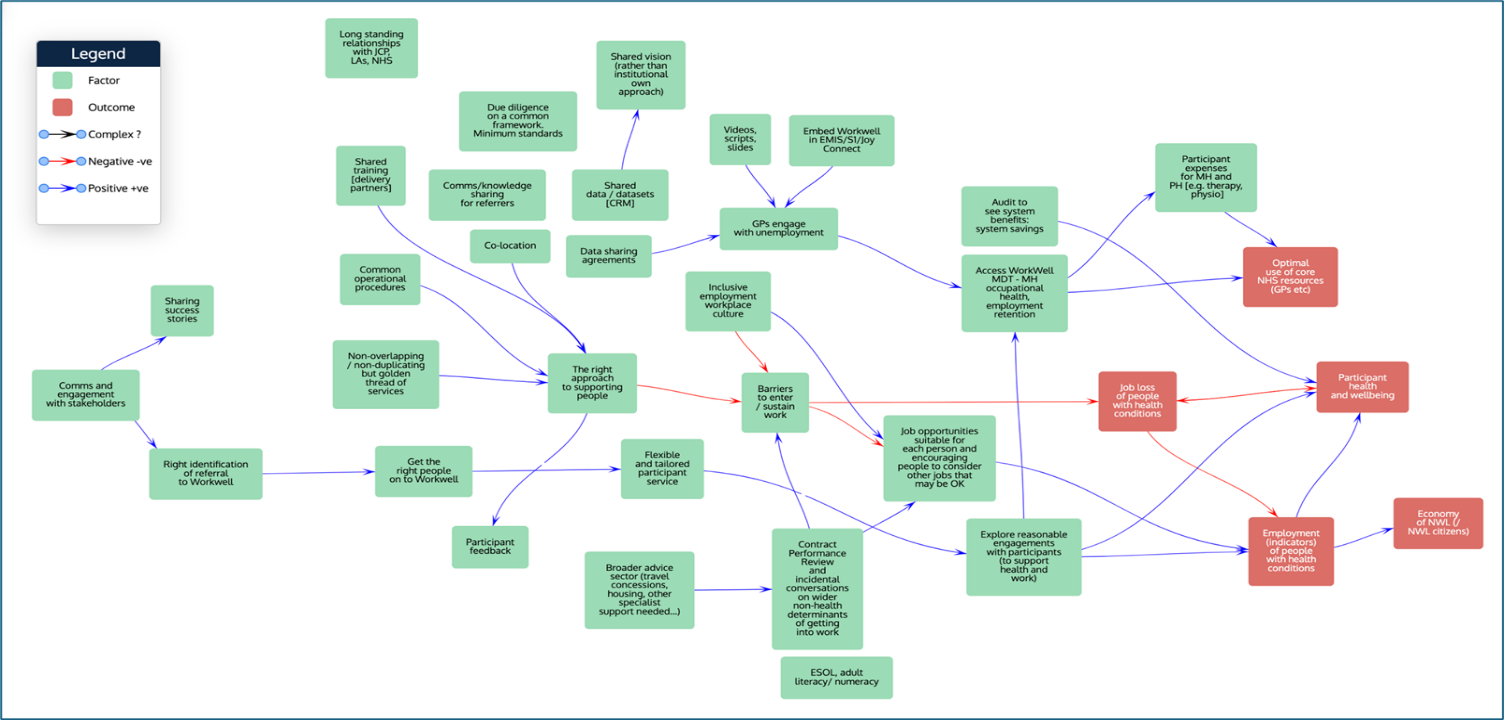
Figure 20: Black Country PSM map
Description can be found in ‘Emerging Evidence on Work and Health Systems Integration’.
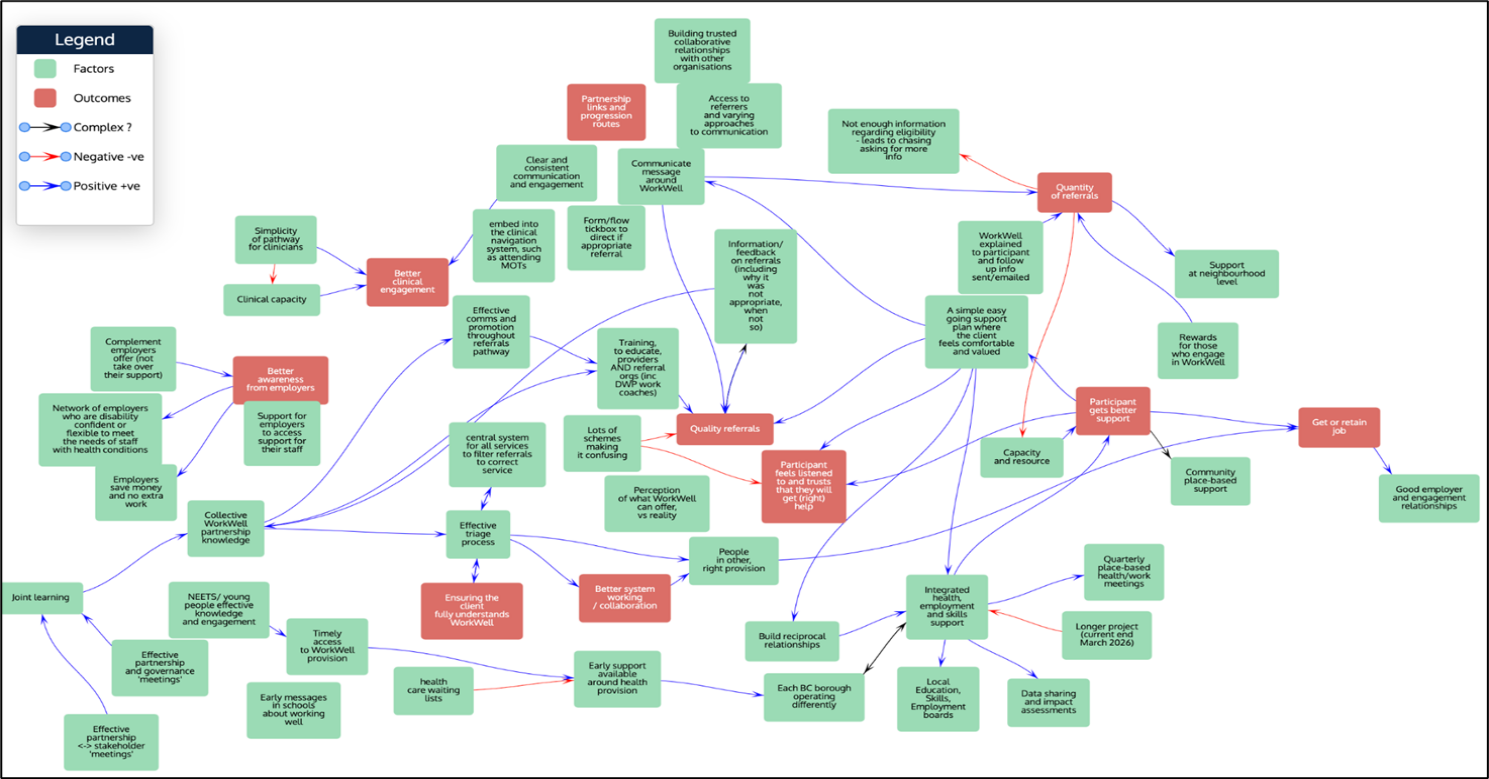
Figure 21: Lancashire and South Cumbria PSM map
Description can be found in ‘Emerging Evidence on Work and Health Systems Integration’.
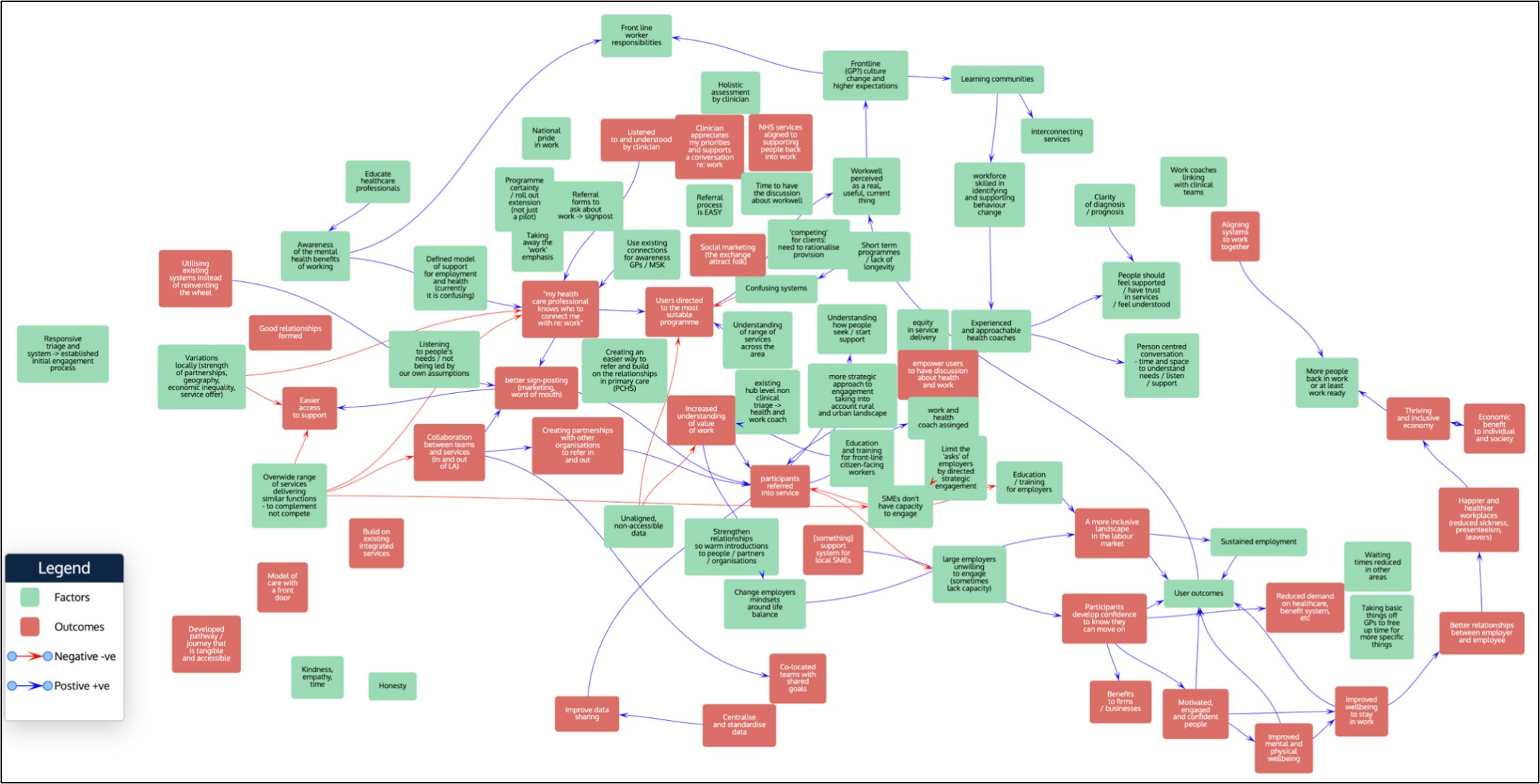
Figure 22: Action Scales Model Presentation of Merged Area Maps
Description can be found in ‘Cross-area analysis: merging the three maps’.
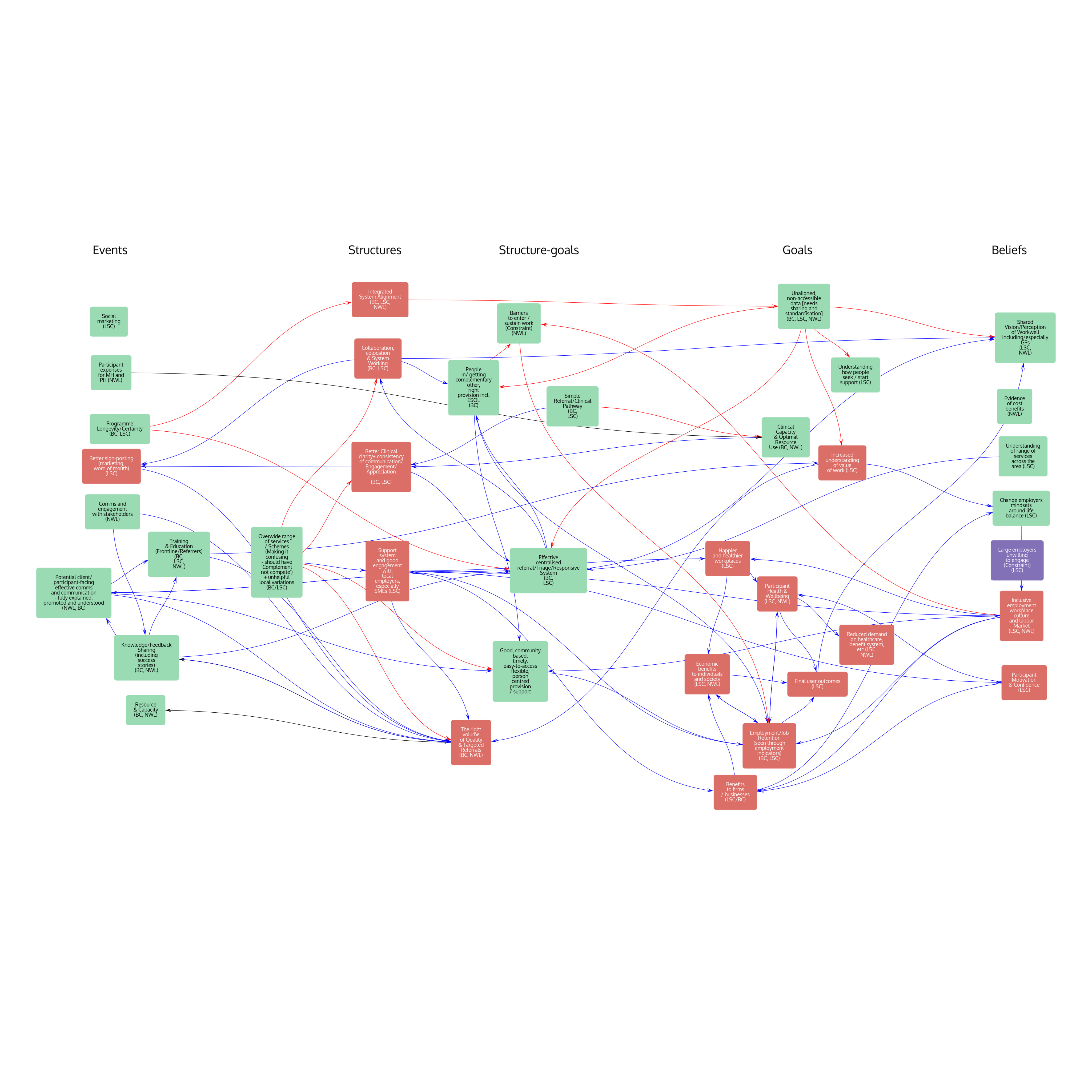
Annex H: System Integration next steps timeline
Immediate – October to November 2025
Validation and development of maps and processes with WorkWell pilot leads
Additional data and developing framework for systems change
Do this through follow up sessions with small groups in each area to:
-
Show and discuss map – and use action scales framework to explore
-
Ask about how well the system integration elements we have identified are developed in each area – strong, weak, absent and have we missed anything? Indication of data availability to quantify presence or absence of factors for QCA
-
Clarify their systems integration/change aspirations:
- what does system integration or change look like in second and third years
- what are system integration and systems change challenges they want to address and how
- what effect would it have and how would they know
Spring 2026
Reconvene PSM workshops – half day workshop revisiting initial map, reorganised versions map and insights from work as a whole
Timing of workshops to ensure outputs available for second interim report
Autumn 2026
QCA process development so ready for Spring 2027
Spring 2027
Third round PSM workshops
QCA data gathering, processing and analysis
Completion by Summer 2027 of whole systems element, pending feeding into final reporting
-
Due to issues with data sharing between the JWHD and pilot sites, and delays with some sites being able to deliver WorkWell, sample was received for only 12 out of 15 sites between October 2024 and March 2025. ↩
-
The questions before and after the change are referenced in Annex D. Those who started the programme in February 2025 were asked the new set of questions (though the amend was made at the beginning of fieldwork for February starters, so a small proportion were asked the previous set). Figures reported in this document reflect answers post questionnaire change. ↩
-
The National Support Offer (NSO) are a team responsible for working with local systems to enable them to go faster and further in delivering WorkWell services. The NSO includes provisions across three core tiers, all of which provide ongoing points of engagement with pilot sites. These are: Regional Advisors, a National Support Team, and Local area Learning and Change Managers. ↩
-
During recruitment, we requested participation from two to three stakeholders, including at least one individual from the ICB and one individual from the local authority. Some individuals also took part in the preceding feasibility study. ↩
-
Estimated participant volumes across 18 month pilot from October 2024 to April 2026 ↩
-
Cognitive health impacts resulting from a long-term health condition include those related to: learning or understanding or concentrating; memory; or socially or behaviourally (for example, associated with autism spectrum disorder (ASD) which includes Asperger’s, or attention deficit hyperactivity disorder (ADHD)). ↩
-
Participants from North-West London ICB were more likely than average to report that their health conditions, illnesses or disabilities affected the amount or type of paid work they were able to do “not at all” before they started WorkWell (11%, compared to 8% average). They were also more likely than average to report not having a long-term health condition (15%, compared to 11% average). ↩
-
The delivery plans stated: “Pilot areas will be expected to support and drive a strategic approach to integrating work and health services at a Place level. Doing so will require a strong understanding of the geography and demography of the pilot area’s footprint. A Grant Applicant should demonstrate, with evidence, their current understanding of both the geographic and demographic context within which they propose to deliver a WorkWell service. A Grant Applicant should offer a rationale for the coverage area proposed, whether that’s the entire ICB area or a subsection of it. This should include reference to the demography of the area and the specific level of need there for work and health support, for those in work as well as out of work. In terms of providing evidence, a Grant Applicant should consider providing information such as data relating to the area’s: Working age population; Levels of inactivity; Known measures of deprivation; Local healthy life expectancy; and Employment rates.” ↩
-
The British Medical Association is a trade union for doctors in the United Kingdom. ↩
-
See, for example, Chapter 12 Viable System Model, in Williams and Hummelbrunner, 2011, Systems Concepts in Action: A Practitioners Toolkit, Stanford University Press. ↩
-
WorkWell MI has been published for an extended period of October 2024 to November 2025: WorkWell Pilot Management Information from 1 October 2024 to 30 November 2025 ↩
-
MI for North Central London indicates that 27% of referrals were from a GP or primary care source (based on MI submitted to JWHD between October ‘24 and March ’25), suggesting an increase from the time of interview. ↩
-
The questions before and after the change are referenced in Annex D. Those who started the programme in February 2025 were asked the new set of questions (though the amend was made at the beginning of fieldwork for February starters, so a small proportion were asked the previous set). Figures reported in this document reflect answers post questionnaire change. ↩
-
Scores reported in this chapter may differ from scores reported by pilot sites under their performance management reporting. This is due to different methods of data collection. ↩
-
WorkWell was not designed to provide physical health support directly to participants. ↩
-
A recovery college is a learning environment focussed on mental health and wellbeing through learning and education. ↩
-
In some situations, exceptions to this rule have been made to allow for MI from pilot sites who have experienced prolonged data sharing issues between themselves and the JWHD to be put into field. However, this would only apply for participants that have a start month that is incorrect by a maximum of one month (for example, where a participant should have a March start month to be eligible for the survey when it is being launched, but they have a February start month). ↩
-
Individuals who started WorkWell in the same month were sampled for each phase of the baseline survey (for example, one phase included April starts, and the following phase included May starts). As such, if pilot sites provided data for individuals who started WorkWell in another month, they were not included. ↩
-
A collective response rate is provided for November and December sample as when the baseline survey was launched in January, they were launched together. ↩