Country and policy information note: humanitarian situation, Syria, June 2026 (accessible)
Updated 24 July 2026

© Crown copyright 2026
This publication is licensed under the terms of the Open Government Licence v3.0 except where otherwise stated. To view this licence, visit nationalarchives.gov.uk/doc/open-government-licence/version/3 or write to the Information Policy Team, The National Archives, Kew, London TW9 4DU, or email: psi@nationalarchives.gov.uk.
Where we have identified any third party copyright information you will need to obtain permission from the copyright holders concerned.
This publication is available at https://www.gov.uk/government/publications/syria-country-policy-and-information-notes/country-and-policy-information-note-humanitarian-situation-syria-june-2026-accessible
Version 3.0
June 2026
Executive summary
The civil war in Syria resulted in a severe humanitarian crisis and devastated the country’s economy. Since the fall of the Al-Assad regime in December 2024, economic and humanitarian conditions have improved slightly, but serious challenges remain. The economic crisis is a key driver of humanitarian needs across the country, with many families lacking sufficient income to cover their basic needs.
The UN’s Office for the Coordination of Humanitarian Affairs (OCHA) estimated that 15.6 million people (about 60% of the population) are in need of humanitarian assistance in 2026. The OCHA classified 85 of Syria’s 272 sub-districts as having ‘extreme’ levels of need and 177 as having ‘severe’ levels of need. Humanitarian aid organisations are insufficient to support all of those requiring assistance. Aid programmes therefore prioritise those with the highest levels of need.
The general humanitarian situation in Syria is not so severe that there are substantial grounds for believing there is a real risk of serious harm because conditions amount to torture or inhuman or degrading treatment as defined in paragraphs 339C and 339CA(iii) of the Immigration Rules/Article 3 of the European Convention on Human Rights (ECHR).
However, each case must be considered on its individual facts. Even where there is not, in general, a real risk of serious harm because of the general humanitarian situation, a person may still face a real risk of serious harm because of their specific circumstances. Decision makers must therefore consider any and all relevant factors that might impact the person’s living conditions upon return.
Based on the findings in OA (Somalia) (CG) [2022] UKUT 33 (IAC) (2 February 2022), the threshold for granting humanitarian protection in an Article 3 ‘living conditions’ case is very high. Applying these findings in relation to Syria, the onus is on the person to demonstrate that they would be unable to obtain food, water, accommodation and other essentials on return (including through their support networks and any possible financial assistance) and that this would cause intense suffering which would be ‘serious, rapid and irreversible’.
In general, a person is unlikely to need to internally relocate to escape a breach of Article 3 caused by their living conditions. This is because living conditions in Syria are not, in general, so severe that they would lead to ‘serious, rapid and irreversible’ suffering. However, a person’s individual circumstances may mean that they are likely to be at risk of encountering this level of suffering. In such cases, a person is unlikely to be able to internally relocate to escape that risk unless there is another area of Syria where they have a support network that would enable them to meet their basic needs.
Where a claim is refused, it is unlikely to be certifiable as ‘clearly unfounded’ under section 94 of the Nationality, Immigration and Asylum Act 2002.
Each case must be considered on its individual facts. The onus is on the person to demonstrate they face persecution or serious harm.
Assessment
Section updated: 29 June 2026
About the assessment
This section considers relevant evidence – including country information, refugee and human rights law and policy, and case law – to assess whether, in general:
-
the humanitarian situation is so severe that there are substantial grounds for believing that there is a real risk of serious harm because conditions amount to inhuman or degrading treatment as within paragraphs 339C and 339CA(iii) of the Immigration Rules/Article 3 of the European Convention on Human Rights
-
internal relocation is possible to avoid persecution/serious harm
-
a claim, if refused, is likely or not to be certified as ‘clearly unfounded’ under section 94 of the Nationality, Immigration and Asylum Act 2002.
Each case must be considered on its individual facts.
For details on how CPIT makes its assessments, and information on disclaimers (including the use of Artificial Intelligence (AI) in developing CPINs), see About country policy and information notes.
1. Material facts, credibility and other checks/referrals
1.1 Credibility
1.1.1 Decision makers must:
-
assess credibility (see the Asylum Instruction on Assessing Credibility and Refugee Status).
-
check if there has been a previous application for a UK visa or another form of leave. Asylum applications matched to visas should be investigated prior to the asylum interview (see the Asylum Instruction on Visa Matches, Asylum Claims from UK Visa Applicants).
-
consider making an international biometric data-sharing check, when one has not already been undertaken (see Biometric data-sharing process (Migration 5 biometric data-sharing process)).
-
consider language analysis testing, where available, in cases where there are doubts surrounding a person’s claimed place of origin (see the Asylum Instruction on Language Analysis).
Official – sensitive: Not for disclosure – Start of section
Official – sensitive: Not for disclosure – End of section
1.2 Exclusion
1.2.1 Under the Al-Assad regime, human rights violations were systematic and widespread. Civilians also suffered human rights abuses at the hands of other parties to the conflict.
1.2.2 Decision makers must consider whether there are serious reasons to apply one (or more) of the exclusion causes. Each case must be considered on its individual facts.
1.2.3 If the person is excluded from the Refugee Convention, they will also be excluded from a grant of humanitarian protection, which has a wider range of exclusions than refugee status.
1.2.4 For guidance on exclusion and restricted leave, see the Asylum Instruction on Exclusion under Articles 1F and 33(2) of the Refugee Convention, Humanitarian Protection and the instruction on Restricted Leave.
Official – sensitive: Not for disclosure – Start of section
The information on this page has been removed as it is restricted for internal Home Office use.
Official – sensitive: Not for disclosure – End of section
2. Convention reason(s)
2.1.1 A severe humanitarian situation does not of itself give rise to a well-founded fear of persecution for a Refugee Convention reason.
2.1.2 In the absence of a link to one of the 5 Refugee Convention grounds necessary to be recognised as a refugee, the question to address is whether the person will face a real risk of serious harm in order to qualify for Humanitarian Protection (HP).
2.1.3 However, before considering whether a person requires protection because of the general humanitarian situation, decision makers must consider if the person faces persecution for a Refugee Convention reason. Where the person qualifies for protection under the Refugee Convention, decision makers do not need to consider if there are substantial grounds for believing the person faces a real risk of serious harm meriting a grant of HP.
2.1.4 For further guidance on the 5 Refugee Convention grounds, see the Asylum Instruction on Assessing Credibility and Refugee Status.
3. Risk
3.1.1 The general humanitarian situation in Syria is not so severe that there are substantial grounds for believing there is a real risk of serious harm because conditions amount to torture or inhuman or degrading treatment as defined in paragraphs 339C and 339CA(iii) of the Immigration Rules/Article 3 of the European Convention on Human Rights (ECHR).
3.1.2 Although humanitarian and economic conditions in Syria are very challenging, available information does not indicate that a significant proportion of the population is facing issues that would result in ‘serious, rapid and irreversible’ suffering (see paragraphs 3.1.4 and 3.1.5 below).
3.1.3 Even where there is not, in general, a real risk of serious harm because of the general humanitarian situation, a person may still face a real risk of serious harm because of their specific circumstances. Each case must be considered on its individual facts.
3.1.4 When considering this, decision makers should note the Upper Tribunal (UT)’s findings and general approach to assessing humanitarian conditions in OA (Somalia) (CG) [2022] UKUT 33 (IAC) (2 February 2022):
‘In an Article 3 “living conditions” case, there must be a causal link between the Secretary of State’s removal decision and any “intense suffering” feared by the returnee. This includes a requirement for temporal proximity between the removal decision and any “intense suffering” of which the returnee claims to be at real risk. This reflects the requirement in Paposhvili [2017] Imm AR 867 for intense suffering to be “serious, rapid and irreversible” in order to engage the returning State’s obligations under Article 3 ECHR. A returnee fearing “intense suffering” on account of their prospective living conditions at some unknown point in the future is unlikely to be able to attribute responsibility for those living conditions to the Secretary of State, for to do so would be speculative.’ (Headnote 1)
‘… There will need to be a careful assessment of all the circumstances of the particular individual in order to ascertain the Article 3, humanitarian protection or internal relocation implications of an individual’s return.’ (Headnote 12).
3.1.5 Based on the findings in OA, the threshold for granting humanitarian protection under paragraphs 339C and 339CA(iii) of the Immigration Rules in an Article 3 ECHR “living conditions” case is very high. Applying these findings in relation to Syria, the onus is on the person to demonstrate that they would be unable to obtain food, water, accommodation and other essentials on return (including through their support networks and any financial assistance) and that this would cause intense suffering which would be ‘serious, rapid and irreversible’.
3.1.6 When determining this, decision makers must carefully consider the person’s individual circumstances. These include, but are not limited to, factors such as gender, age, marital status, dependants (e.g. children), work experience/skills, financial savings, remittances, and medical conditions. Another key consideration is whether the person will have access to a support network upon return that could help them to meet their basic needs. Humanitarian aid organisations also operate in Syria but are unable to reach all of those in need, leading them to prioritise those with the most severe needs. In addition, UNHCR may be able to assist with return and reintegration support upon a person’s return to Syria. Decision makers should also take into account that the Home Office can offer financial assistance of up to £3,000 via the voluntary returns service (see Access to humanitarian aid).
3.1.7 The civil war devastated the Syrian economy and resulted in a sustained economic crisis. Since the fall of the Al-Assad regime in December 2024, the economy has seen modest improvements, and there are signs that it is slowly recovering from years of stagnation. However, serious challenges remain, such as cash liquidity shortages, heavily reliance on imports, reduced agricultural production and significant external debt (see Economy).
3.1.8 Sources consistently report that the poor economic situation – particularly the cost of living and lack of livelihood/employment opportunities – is a key driver of needs across all humanitarian sectors, with many families struggling to afford basic goods and services. To meet their needs, many families resort to unsustainable coping mechanisms such as borrowing money, selling productive assets, or taking on high-risk or degrading work. Salaries vary widely by sector, skills, location and season (for the agricultural sector), but sources generally report that the average salary for unskilled workers is around 75 GBP per month. Formal full-time employment is rare, with most workers relying on informal daily wage labour. Average wages for unskilled labour range from roughly 2 to 5 GBP per day. Many employers hire workers through personal networks or local labour networks, meaning that someone without such connections may have more difficulty finding work. In a November 2025 survey of 5 governorates, 77% of assessed households reported that their main income source was not regular. The World Food Programme calculated the national average minimum expenditure basket (the cost of monthly essential needs for a family of five, excluding rent) to be 166 GBP in March 2026 (see Salaries and cost of living, Employment).
3.1.9 Most households live in property that they own. However, according to a nationwide survey conducted in early 2026, only 37% of refugee returnees live in their own property, meaning they are more likely to be hosted by family/friends or rent property. In another humanitarian survey, 42% of 1,221 assessed communities reported that no vacant and safe housing units were available for rent or purchase in their community, while 35% reported limited availability, and only 3% reported wide availability. The same survey found that, in 60% of assessed communities, the average rental price of a 2-bed housing unit was under 37 GBP per month. However, prices vary significantly by location. For example, sources indicate that prices in Damascus and Aleppo are far higher than 37 GBP per month. One source stated that renting or purchasing property in Damascus is unaffordable for most returnees (see Renting).
3.1.10 The humanitarian situation has improved slightly since the fall of the Al-Assad regime but needs remain high across the country. The UN’s Office for the Coordination of Humanitarian Affairs (OCHA) estimated 15.6 million people (about 60% of the population) to be in need of humanitarian assistance in 2026, compared to 16.5 million in 2025. The OCHA also indicated that the number of Syria’s 272 sub-districts with extreme levels of need declined from 132 (2025) to 85 (2026). However, the OCHA noted that this decline in humanitarian need is only partially the result of material improvements in conditions, with the other reasons being stricter scope setting and access to better planning data. Governorates in northwest, northeast and southern Syria have the highest severity of needs and the highest numbers of people in need. Needs are greater among certain vulnerable groups, particularly households headed by women (see the CPIN Syria: Women), households headed by people with disabilities, and internally displaced person (IDP) households (see Overview of humanitarian situation).
3.1.11 The OCHA estimated that about 6.2 million people require shelter assistance and over 6.3 million require non-food items (NFI) support (e.g., bedding, heating/insulation materials, hygiene items, and other essentials). The conflict resulted in significant damage to Syria’s housing stock, with the United Nations Development Programme indicating that 1.3 million housing units (roughly one third of all housing) have been destroyed or severely damaged. A housing damage assessment found that 89% of 1,221 assessed communities reported some degree of housing damage. However, only 17% of the damaged housing was reported to be completely damaged, with 48% negligibly damaged and 35% partially damaged. Many people, particularly returnees (both from abroad and from internal displacement), live in damaged housing (see Housing).
3.1.12 According to the OCHA, 13.3 million people in Syria are food insecure. A nationwide 2025 Food Security Assessment conducted by the Government of Syria and WFP found that 18.4% of households (excluding those living in IDP camps) were food secure in 2025, marking an improvement from 11.1% in 2024. Low household income is a major driver of food insecurity. Drought-like conditions and ongoing insecurity in some areas have also had a negative impact. Although humanitarian sources indicate that the majority of the population is food insecure, decision makers should note that there are differing levels of food insecurity and that a person classified as food insecure is not necessarily likely to be subject to ‘serious, rapid and irreversible’ suffering (see paragraph 3.1.2). For example, one humanitarian assessment found that 68% of 5,302 assessed households had ‘Acceptable’ food consumption, but that only 9% of the households were food secure. The reason for this was that many households relied on coping strategies to be able to afford sufficient food. Coping strategies range from relatively moderate actions like relying on less preferred/cheaper foods, to unsustainable practices such as going into debt, to seriously harmful practices such as child labour (see Food security).
3.1.13 Syria’s healthcare system suffered greatly as a result of the conflict and remains under significant strain. As of May 2025, only 57% of hospitals and 30% of primary healthcare centres were fully functional. The OCHA estimated 12.8 million people to be in need of healthcare assistance in 2026. The healthcare system suffers from severe shortages of staff, medicines, equipment and electrical power. In addition, humanitarian funding cuts have impacted hundreds of healthcare facilities. Public healthcare in Syria is partially subsidised rather than being entirely free at the point of use. While primary healthcare and emergency services are generally free, patients frequently pay for hospital services, medicines, and specialist care. One humanitarian survey found that 91% of respondents pay for health services. In another survey, 72% of assessed communities reported problems accessing healthcare and 57% reported a lack of medicine. Multiple sources indicate that affordability is a major barrier that prevents significant numbers of people from accessing sufficient healthcare. Other barriers include transportation costs and the absence of nearby health facilities. Mental health needs are high but access to mental health services is very limited (see Health).
3.1.14 The OCHA estimated 12 million people to be in need of Water, Sanitation and Hygiene (WASH) assistance in 2026. A nationwide humanitarian survey conducted in late 2025 found that 96% of assessed households use ‘improved’ drinking water sources (piped/network, bottled water, protected spring/well, water trucking). However, in some areas water access is highly dependent on water trucking, which can be expensive. The survey also included the following findings: 99% of households have access to some form of functional toilet; 20% of households have open sewage channels in their area; 73% of households have access to a functioning waste collection system. The survey’s findings may appear inconsistent with the OCHA’s estimate that 12 million people (about 46% of the population) are in need of WASH assistance, but households with an improved water source and a functioning toilet can still be classified as ‘in need’ if, for example, their water access is unreliable or they lack sufficient hygiene items. Another humanitarian assessment found that over 22% of households are not connected to sewage collection networks and that over 18% of households suffer from limited access to household sanitation facilities and hygiene items (see Water, Sanitation and Hygiene (WASH)).
3.1.15 Since December 2024, 1.9 million IDPs have returned from displacement, including 1.1 million who were living in IDP sites. In total, there are currently over 5.5 million IDPs in Syria, with 1.2 million in IDP sites as of December 2025. IDP site residents are among the most vulnerable groups in the country in terms of humanitarian needs. IDP sites suffer from very poor conditions, with issues such as overcrowding, limited access to basic services, vulnerability to weather events (e.g., flooding) and high levels of food insecurity. Many IDPs face difficulties after returning home as they attempt to reintegrate into their communities and restart their lives. The influx of returning IDPs has also placed additional strain on services in areas of return (see Internally displaced persons (IDPs)).
In some respects, returnees from abroad face greater challenges than those already living in Syria. For example, a nationwide survey conducted in early 2026 found that unemployment is higher among returnees than host communities. The survey also found that limited access to housing and basic services is a major barrier to return. A separate survey, conducted in June 2025, found that unemployment and the high cost of living were the greatest challenges preventing people from returning. Many returnees (both from abroad and from internal displacement) face difficulties reclaiming their property. Property records and ownership documents have often been lost, destroyed, or disputed as a result of the conflict, and limited legal remedies further exacerbate the problem. The challenges facing returnees are not, in general, likely to result in ‘serious, rapid and irreversible suffering’ (see paragraph 3.1.2), unless they lead to a person being unable to meet their basic needs (see Returnees, Housing, land and property (HLP) rights).
3.1.16 According to the OCHA, humanitarian aid programmes reached an average of 3.82 million people per month in 2025, which was 32% of the total targeted population of 10.6 million. This was a 25% increase in the number of people reached compared to 2024. Most assistance in 2025 prioritised those with the highest needs, and the OCHA’s humanitarian response plan for 2026 adopts the same approach, aiming to meet the needs of all people with ‘extreme’ levels of need. However, funding shortfalls and other issues prevent aid providers from reaching all the people they intend to assist. The 2025 humanitarian response plan was only 33.4% funded, leading to significant gaps in aid provision. Overall, humanitarian assistance is insufficient to reach all of those in need, but those with the highest levels of need are more likely to be prioritised by aid providers (see Access to humanitarian aid).
3.1.17 For further guidance on assessing risk, see the Asylum Instruction on Assessing Credibility and Refugee Status.
4. Protection
4.1.1 The state is not able to provide protection against a breach of Article 3 because of general humanitarian conditions if this occurs in individual cases.
4.1.2 For further guidance on assessing state protection, see the Asylum Instruction on Assessing Credibility and Refugee Status.
5. Internal relocation
5.1.1 In general, a person is unlikely to need to internally relocate to escape a breach of Article 3 caused by their living conditions. This is because living conditions in Syria are not, in general, so severe that they would lead to ‘serious, rapid and irreversible’ suffering (see Risk).
5.1.2 However, a person’s individual circumstances may mean that they are likely to be at risk of encountering this level of suffering (see Risk). In such cases, a person is unlikely to be able to internally relocate to escape that risk unless there is another area of Syria where they have a support network that would enable them to meet their basic needs.
5.1.3 For further information, see the CPIN Syria: Internal relocation.
5.1.4 For further guidance on internal relocation and factors to consider, see the Asylum Instruction on Assessing Credibility and Refugee Status.
6. Certification
6.1.1 Where a claim is refused, it is unlikely to be certifiable as ‘clearly unfounded’ under section 94 of the Nationality, Immigration and Asylum Act 2002.
6.1.2 For further guidance on certification, see Certification of Protection and Human Rights claims under section 94 of the Nationality, Immigration and Asylum Act 2002 (clearly unfounded claims).
Country information
About the country information
For details on how CPIT gathers and presents country information, including the research methodology, see About country policy and information notes.
The COI included in this note was published or made publicly available on or before 15 May 2026. Any event that took place or reports published after this date are not included.
Maps, where included, are not intended to reflect the UK Government’s views on any boundaries.
Decision makers must use relevant COI as the evidential basis for decisions.
USD to GBP currency conversions were calculated using Xe.com[footnote 1]. SYP to GBP conversions were calculated using SP Today’s black market exchange rate[footnote 2], except where figures were already provided in USD or where the source provided an SYP to USD exchange rate. In these cases, Xe.com’s USD to GBP exchange rate was applied.
At the time of writing, Syria is undergoing a currency redenomination, involving the gradual withdrawal of existing banknotes and the introduction of new banknotes with two zeros removed (100 old SYP = 1 new SYP). All sources cited in this CPIN reported prices in old SYP.
7. Socio-economic situation
7.1 Basic indicators
7.1.1 CPIT produced the following table using information from the United Nations Population Fund (UNFPA), the United Nations Children’s Fund (UNICEF), the United Nations Office for the Coordination of Humanitarian Affairs (OCHA) and the World Bank:
| Population | 25.6 million[footnote 3] (2025 estimate) |
|---|---|
| Life expectancy (male) | 71 years (2025 estimate)[footnote 4] |
| Life expectancy (female) | 75 years (2025 estimate)[footnote 5] |
| Maternal mortality rate (deaths per 100,000 live births) | 20 (2023 estimate)[footnote 6] |
| Infant mortality rate (deaths per 1,000 live births) | 17.7 (2024 estimate)[footnote 7] |
| Population living in extreme poverty (less than 2.15 USD [1.60 GBP] per day, 2017 PPP [Purchasing Power Parity[footnote 8]]), | 24.8% (2022 estimate)[footnote 9] |
| Population living below Lower Middle Income poverty line (3.65 USD [2.72 GBP] per person per day, 2017 PPP[footnote 10],) | 67% (2022 estimate)[footnote 11] |
| Child malnutrition (number of stunted children under 5) | 650,000 (2023 estimate)[footnote 12] |
| Literacy rate (age 15 and older) | 94%[footnote 13] |
| Primary education enrolment rate (2017-2024) | 78[footnote 14] |
| Lower secondary education enrolment rate (2017-2024) | 49[footnote 15] |
| Upper secondary education enrolment rate | 27[footnote 16] |
| Population completing primary education (% of relevant age group) | 60% (2024 estimate)[footnote 17] |
7.2 Economy
7.2.1 In July 2025, the European union Agency for Asylum (EUAA) published a COI report on Syria (the July 2025 EUAA report) which stated, citing various sources:
‘The US sanctions on Syria, progressively isolating the country from the international trade and financial systems since the beginning of the conflict, were lifted in May 2025. In the same month, the EU lifted its sanctions and Syria’s arrears to the World Bank were cleared, with financial backing from Saudi Arabia and the State of Qatar.
‘Despite these developments, Syria continued to face an economic contraction rooted in years of conflict, reduced agricultural production and underfunded humanitarian assistance … External debt remained significant in proportion to the country’s limited repayment capacity.
‘In April 2025, the World Food Programme (WFP) reported that cash liquidity remained limited, with continued restrictions on bank withdrawals and disruptions to online payment systems. While some electronic payments had resumed, transactions were subject to a daily cap of 1 million Syrian pounds (SYP) [74.64 GBP].
‘Additional reporting indicated that both public and private banks have imposed strict daily withdrawal limits not exceeding 200 000 Syrian pounds (equivalent to about USD 20 [14.93 GBP]), with higher caps up to 500 000 pounds [37.32 GBP] in limited circumstances.’[footnote 18]
7.2.2 In July 2025, the UN’s Office for the Coordination of Humanitarian Affairs (OCHA) published a report which outlined the priorities for the humanitarian response in Syria in the period January – December 2025 (the July 2025 OCHA report). The report stated:
‘Syria’s economic crisis, characterized by soaring inflation, currency devaluation, and rising commodity and services prices, continues to drive needs across the country … With 90 per cent of Syrians living below the poverty line, many families are being forced to cut spending on essentials such as food, water, healthcare, and education.
‘… Unemployment, job losses, and limited access to essential services continue to be major obstacles for households in meeting their basic needs. Many families resort to unsustainable coping mechanisms such as borrowing money, selling productive assets, or taking on high-risk or degrading work.’ [footnote 19]
7.2.3 In September 2025, REACH, a ‘leading humanitarian initiative’ which ‘directly feeds into aid response and decision-making by providing accessible and precise information on the humanitarian situation of crisis-affected populations’[footnote 20], published a report outlining the humanitarian situation in Syria in the period July – August 2025 (the September 2025 REACH report). The report was based on interviews with key informants (KIs) across all governorates except Suweida and Quneitra, with KIs providing insights into the humanitarian needs in their communities. The interviews took place between 27 July and 5 August 2025 and covered 742 communities in total[footnote 21]. The report stated:
‘Economic constraints remain a cross-cutting driver of humanitarian needs across all sectors. While sector-specific barriers such as limited service availability, damaged infrastructure, or restricted access were reported, the cost of essential goods and services consistently emerged as one of the most significant obstacles. Across health, education, water, shelter, and food security, key informants highlighted that limited income opportunities, reduced purchasing power, and high market prices are preventing households from accessing basic services and meeting their needs. This highlights the strong link between sectoral vulnerabilities and wider livelihood and economic challenges, which stem not only from service availability but also from pervasive economic barriers.’[footnote 22]
7.2.4 In December 2025, the Danish Immigration Service (DIS) published a COI report on Syria, covering events between 8 December 2024 and 31 October 2025, which summarised the economic situation as follows:
‘Economic conditions continue to be severe, with minimal improvement in living standards despite wage increases and government initiatives within different sectors. The Ministries of Economy and Finance have sought to encourage investment and reform of the financial sector by renewing international economic relations and preparing new legislation. Nonetheless, deep-rooted structural problems, low confidence in financial institutions, and limited liquidity have constrained progress. Although the Syrian pound has experienced a degree of stabilisation, this has not resulted in tangible benefits for the population. Unemployment remains widespread, and more than 90 percent of Syrians live below the poverty line.’[footnote 23]
7.2.5 In March 2026, the Famine Early Warning Systems Network (FEWS NET), a food security analysis organisation established by the United States Agency for International Development (USAID)[footnote 24], published a report entitled ‘Syria – Food Security Outlook: February – September 2026’ (the March 2026 FEWS NET report). Citing various sources, the report stated:
‘Syria’s economy remains fragile in the post-Assad transitional period. Although some macroeconomic improvements occurred in 2025, including modest increases in remittance inflows and public-sector salaries and an easing of food inflation in localized areas, purchasing power remains constrained by persistently high prices for food, fuel, and other essential goods … Heavy reliance on imports, past years of currency depreciation, and weak domestic production continue to sustain elevated staple food prices … High fuel costs, transport constraints, liquidity shortages, and limited livelihood opportunities also restrict economic activity and income generation across much of the country. As a result, relative improvements in economic conditions are fragile and uneven, especially in drought‑affected or insecure regions.’[footnote 25]
7.2.6 In April 2026, the OCHA published a report entitled ‘Syrian Arab Republic: Humanitarian Needs and Response Plan’ (the April 2026 OCHA report) which stated:
‘In 2025, several important steps that are shaping the future trajectory of Syria were taken by the Government of Syria and the international community, including progress towards the easing of sanctions and the liberalisation of the economy. Syrian authorities remain committed to revitalising economic growth and improving living standards and, despite significant challenges, are making notable efforts to unify the country’s macroeconomic, fiscal, and monetary policies. In this context, recent World Bank assessments project a modest recovery of approximately one per cent gross domestic product growth in 2025.’[footnote 26]
7.2.7 In April 2026, the World Bank published a report entitled ‘Macro Poverty Outlook’. The section on Syria stated:
‘Syria shows steady signs of economic recovery as sanction relief, national reconciliation, accelerating refugee returns, improved electricity supply, major public-private investment, and substantial reconstruction needs are expected to lift growth. Violence, high living costs, limited aid, banking constraints, and security risks weigh on the outlook. Years of conflict have disrupted statistical systems and data production, increasing uncertainty around economic estimates.
‘… One year after the fall of the Assad regime, Syria continues its steady but fragile transition from conflict … Economic activity picked up through 2025 and into 2026 as security improved and sanctions were lifted. At the same time, ongoing localized violence continues to constrain Syria’s economy and social cohesion with fatalities rising in 2025 according to Armed Conflict Location and Event Data.
‘… While official data remains limited, and of uneven reliability, high frequency indicators point to an incipient economic recovery. The sum of daily nighttime light intensity rose in 2025, reflecting easing sanctions, renewed trade, higher public sector wages, and refugee returns. Real GDP growth is expected to have strengthened in 2025, with estimates ranging between 2.0–4.0 percent. External connectivity improved markedly: air traffic more than doubled, while port traffic increased over sixfold, albeit from very low levels.
‘… Since early 2025, Syria has advanced a broad reform agenda covering governance, civil service, fiscal management, taxation, banking regulation, and investment policy, aimed at modernizing institutions and supporting economic stabilization and reconstruction.
‘The Syrian pound has been appreciating since December 2024, reflecting improved external conditions and policy reforms. Inflation has eased, estimated at 11.5 percent in 2025, down from 72.1 per cent in 2024. By December 2025, the World Food Programme’s Minimum Expenditure Basket was 25 percent lower year on year but remained high at SYP 2.2 million [117.75 GBP] …,triple the official minimum wage, leaving nearly 90 percent of households facing difficulties in meeting basic needs.
‘… Subject to high uncertainty, economic activity is expected to continue modestly strengthening in 2026, weighted down by the conflict in the Middle East, which could reverse recent improvements by dampening trade, tourism, investment and electricity provision. Growth is expected to be still supported by recovering domestic demand from the return of refugees, higher public wages, increased business registration, and higher oil and gas output.
‘… The outlook remains subject to risks stemming from evolving security dynamics, transitional institutional arrangements with the northeast, and the duration and the scale of the conflict in the Middle East … High dependence on imported food, fuel, and consumer goods heightens vulnerability to external price shocks, which are rapidly transmitted to domestic inflation and erode household purchasing power. A precarious labor market and low aid funding would continue to exert downward pressure on household income, with poverty projected to increase slightly in 2026.’[footnote 27]
7.3 Salaries and cost of living
7.3.1 The figures provided by sources differ significantly in some cases. This is likely to be the result of different methodologies. For example, sources may not all include the same items in their definition of the ‘minimum expenditure basket’.
7.3.2 The July 2025 OCHA report stated:
‘The cost of living, as measured by the minimum expenditure basket (MEB), rose by 21 per cent in a year and more than tripled in just two years. Given this rise in costs, the minimum wage can only cover 16 per cent of the food component of the MEB, reflecting the growing challenges families face in meeting their basic needs. This economic hardship, combined with limited employment opportunities, is pushing more households into poverty and aid dependency, driving up response costs and eroding the impact of humanitarian efforts.
‘… Income-expenditure gaps persist across all regions, with household expenses consistently exceeding incomes, even in families with multiple earners. The rising cost of basic needs has left over 82 per cent of communities reporting that income does not cover household expenses[, according to a nationwide humanitarian survey conducted between December 2024 and January 2025[footnote 28]].’[footnote 29]
7.3.3 In October 2025, ‘independent Syrian news agency’[footnote 30] North Press Agency (NPA) reported:
‘Secretary of the Consumer Protection Association in the Syrian transitional government, Abdul Razzaq Habza, told North Press on Saturday [11 October 2025] that the average monthly expenditure for a family of five in Syria has reached nearly seven million Syrian pounds (SYP, about $625 [466.51 GBP]), reflecting a deepening economic crisis and declining purchasing power.
‘Habza explained that households are facing mounting financial strain, particularly with the approach of winter, as families struggle to secure heating materials, fuel, and winter clothing.
‘He warned that most Syrian families are unable to meet even basic heating needs, predicting that the coming winter “will be especially harsh for low-income households.”
‘Habza added that the recent 200 percent public sector salary increase has had little effect in easing the crisis, as the sharp and ongoing rise in prices, coupled with fluctuations in the exchange rate, has severely eroded the real value of wages.
‘Despite repeated government promises of reform and wage adjustments, the average monthly income remains far below the cost of living. According to economic observers, even after the latest salary hike, most state employees earn less than one million SYP (about $90 [67.17]) per month—barely enough to cover a few days of basic household expenses.’[footnote 31]
7.3.4 In December 2025, Syria in Transition, a monthly magazine which aims to ‘provide critical and clear insight and understanding into Syria’s evolving reality’[footnote 32], published an opinion piece about the cost of living which stated:
‘Against the backdrop of runaway inflation, attempts by some economic commentators to paint a rosy picture of living conditions ring hollow. Yes, salaries have risen nominally – from around 300,000 Syrian pounds (roughly $25 [18.65 GBP]) to about 1.2 million pounds (around $100 [74.62 GBP]). But this increase exists largely on paper, quickly swallowed by an unprecedented surge in prices.
‘Citizens are told their wages have improved. They respond with simple arithmetic. A standard bundle of bread that cost 400 Syrian pounds [0.02 GBP] under the previous regime now costs 4,000 [0.24 GBP]. A family needing two bundles a day once spent about 24,000 pounds [1.49 GBP] a month; today, the bill is closer to 240,000 [14.93 GBP]. A gas cylinder for household cooking has jumped from 18,000 pounds [1.11 GBP] to around 125,000 [7.77 GBP]. Transport fares have tripled. In real terms, the additional million pounds in monthly income does not compensate for inflation at all. To keep pace with prices, a household would need more than three million pounds a month (roughly $250 [186.65 GBP]).
‘Over the same period, some food items have risen tenfold. Vegetables, meat, dairy products, transport, electricity and communications have all followed the same upward path. Under these conditions, salary increases lose their meaning.
‘The widening gap between wages and prices has turned official talk of “improved living standards” into a subject of bitter street humour. A public employee who once struggled to cover half a month’s expenses now finds himself unable to meet the needs of even one week.’[footnote 33]
7.3.5 In December 2025, REACH published a ‘Joint Market Monitoring Initiative’ (JMMI) report detailing the cost of essential goods in Syria in October 2025 (the December 2025 REACH report). The report stated:
‘In October 2025, the national median SMEB [Survival Minimum Expenditure Basket, defined as ‘the minimum culturally appropriate goods required to sustain a household of six for one month’[footnote 34]] reached 165 USD [123.18 GBP], marking a 3% quarterly increase … Regionally, the largest quarterly increases in USD were observed in northeastern Syria (+8%, 170 USD [126.91 GBP]), followed by northwestern Syrian (+3%, 157 USD [117.20 GBP]), and central-southern Syria (+2%, 172 USD [128.40 GBP]).
‘… When expressed in Syrian pounds (SYP) and Turkish lira (TRY), however, quarterly changes in median SMEB prices were substantially higher than those recorded in USD. Nationally, the SMEB increased by 15% (reaching 1,894,830 SYP [123.18 GBP]). Regionally, increases were 20% in northeastern Syria (1,964,934 SYP [126.91 GBP]), 15% in central–southern Syria (1,980,727 SYP [128.40 GBP]), and 7% in northwestern Syria (6,625 TRY [117.20 GBP]) [the Turkish lira is the dominant currency at markets in this region[footnote 35]].
‘These higher increases in local-currency terms are consistent with the depreciation of the SYP and TRY against the USD over the same period. Between July and October, the SYP depreciated by approximately 12.5%, and the TRY by 4%. The proportionality between local-currency SMEB inflation and currency depreciation suggests that a significant share of SMEB price dynamics continues to be driven by foreign exchange rate fluctuations.’[footnote 36]
7.3.6 In January 2026, the World Food Programme (WFP) published a ‘Monthly Market Price Bulletin’ report on Syria which stated:
‘The national daily wage for unskilled labor increased by four percent in November 2025 compared to the previous month, reaching an average of approximately SYP 67,013 [3.62 GBP] per day.
‘The South region continued to report the highest average wage, at SYP 85,876 [4.64 GBP], for the sixth consecutive month, mainly due to higher wage levels in Rural Damascus, Damascus and Quneitra following the July 2025 increase in official minimum wages and higher cost of living in these areas, while the lowest average was recorded in the Northeast region at SYP 40,286 [2.18 GBP].’[footnote 37]
7.3.7 In February 2026, Hawar News Agency published an article which stated:
‘Al-Akhbar newspaper cited a research study showing that a Syrian family of four needs approximately 7.7 million Syrian pounds [415.79 GBP] per month to secure minimum living requirements, while the cost of a decent standard of living reaches nearly 11 million pounds [593.98 GBP]. This comes as the minimum wage does not exceed 750,000 pounds [40.50 GBP]. According to the study, the monthly salary covers only about 10% of basic needs, meaning it is sufficient for just three days.’[footnote 38]
The source did not provide details about the methodology nor specify what is included in the ‘minimum living requirements’ calculation. The figure is significantly higher than those provided by the other sources cited in this section. One possible reason for this is that the figure may include the cost of rent (see Renting for information on rent prices).
7.3.8 Citing various sources, the March 2026 FEWS NET report stated: ‘Average monthly salaries (between 75-150 USD [56.01-112.02 GBP]) remain near or below the cost of the Survival Minimum Expenditure Basket … [S]harp increases in telecommunications and electricity costs — reaching up to 1,000 percent and 6,000 percent, respectively — are placing further strain on household budgets.’[footnote 39]
7.3.9 In March 2026, international NGO[footnote 40] the Danish Refugee Council (DRC) published a ‘Labour Market Assessment Report’ for Syria (the March 2026 DRC report). The report, based on interviews and focus group discussions conducted by DRC in Aleppo, Homs, Dara’a, Damascus and Rural Damascus governorates in August and September 2025, ‘provides an in-depth analysis of the agriculture, construction, and textile sectors’[footnote 41]. Its objective was ‘to identify key economic opportunities, constraints, and market system dynamics to inform policy and market interventions led by duty bearers, civil society and private sector entities’[footnote 42]. The report stated:
‘Wages are low and irregular, often insufficient to meet basic living costs. Daily workers in construction earn between 7-12 USD [5.22-8.96 GBP] per day, while factory and agricultural workers average below 100 USD [74.68 GBP] per month. Payment delays are common.
‘… The employment conditions of construction workers vary greatly according to the size of the business and the skills of the employee. Across the majority of surveyed employers, the wages are paid in cash in SYP. The following table shows reported wages, using the official exchange rate of 11,000 SYP to the dollar:
| Skills/positions | Medium enterprise | Small enterprise |
|---|---|---|
| Unskilled | 55-64 USD per week or 100 USD per month | 45-55 USD per week |
| Skilled | 82-136 USD per week | 100-127 USD per week |
| Engineer | About 90 USD per week or 350 U5D per month | Not available |
| Project manager | A broad range between 273 and 1,000 U5D per month | Not available |
‘[Construction workers who participated in focus group discussions in Aleppo and Homs]…agree that wages are low and unattractive compared to the effort and hours worked, and that they are often insufficient to cover living costs, with many saying they work without a guarantee of payment. Some said that they face non-payment, and several agreed that there is a recurrent exploitation by employers in this sector.
‘… Weak job security and employment continuity, driven by the project-based nature of construction and seasonal fluctuations, are recurring problems. All youth, returnees and displaced persons interviewed through the FGDs [Focus Group Discussions] said that they face major barriers and must accept whichever construction-related work they are skilled at due to a lack of other opportunities. This contrasts with what interviewed business owners mentioned that they provide competitive wages and good working conditions.
‘… The employment conditions in the textile sector vary widely depending on the size and formality of the business. Medium-sized enterprises tend to offer more structured and regulated employment environments compared to small and micro businesses, which remain largely informal.
‘… For instance, in medium enterprises, unskilled workers earn around USD 100-150 [74.68-112.06 GBP] per month, skilled workers between USD 300-400 [224.12-298.83 GBP], and middle management up to USD 800 [597.44 GBP]. In smaller enterprises, weekly wages range from USD 20 to 60 [14.93-44.80 GBP], depending on skill level, with skilled seamstresses and skilled machine operators receiving the highest pay, reflecting scarcity. Overtime is common and usually compensated at higher rates. It appears that medium-sized enterprises consider monthly wages while for small businesses, weekly pay seems to be the norm. The below table shows the reported wages, using the official exchange rate of 11,000 SYP to the dollar:
| Skills/positions | Medium enterprise | Small enterprise |
|---|---|---|
| Unskilled | 100-150 USD per month | 23-45 USD per week |
| Skilled | 300-400 USD per month | 45-60 USD per week |
| Middle management or supervisor | Up to 800 USD per month | 45-55 USD per week |
‘… Agricultural work is precarious and cash-based, with low and fluctuating wages that vary according to the season (averaging between 4.5-5.5 USD [3.35-4.10 GBP] per day) and little access to social insurance or written agreements. Workloads peak during planting and harvest periods, often without overtime pay or adequate safety measures … Labour demand is heavily seasonal, and recruitment is driven almost entirely by personal networks, excluding newcomers and marginalized groups.’[footnote 43]
7.3.10 In April 2026, FEWS NET published a report entitled ‘Syria – Food Security Outlook Update: April – September 2026’. The report stated: ‘Although a public sector salary increase is planned in May [2026], associated price increases are likely to offset most gains and further disadvantage poor households reliant on informal and daily wage labor and remittances. As a result, household purchasing power is expected to remain weak through September [2026], with many households relying on credit, reducing non‑food expenditures, and limiting diet quality and quantity.’[footnote 44] For further information on coping strategies used by households to secure their food needs, see Food security.
7.3.11 In May 2026, the World Food Programme (WFP) published a report on Syria which stated:
‘The Syrian government announced major wage reforms effective from May 2026, including a 50 percent increase in public sector salaries, raising the minimum wage from 750,000 Old SYP [46.81 GBP] to 1,257,000 Old SYP [78.45 GBP], along with additional sector-specific increases for selected institutions.
‘… The national daily wage for unskilled labor increased by 8 percent in March 2026 compared to the previous month, reaching an average of approximately Old SYP 63,000 [3.92 GBP] per day. This increase can be attributed to increased demand on agriculture non-skilled labor during the seasonality.
‘The northeastern region reported the highest average wages at Old SYP 83,000 [6.93 USD] [5.17 GBP]. Meanwhile, the lowest average was recorded in the central region at Old SYP 49,000 [3.05 GBP].
‘… In March 2026, the national average Minimum Expenditure Basket (MEB) [defined as what a family of five requires to meet monthly essential needs, including the cost of food, utilities, services and resources[footnote 45]] —a key indicator of Syria’s cost of living—increased by 9 percent, reaching an average of Old SYP 2,653,738 [165.61 GBP] for a family of five. Although the MEB is 18 percent higher than in March 2025, this month’s increase [i..e, the increase from February 2026 to March 2026] was mainly driven by higher prices for tomatoes, gas cylinder in the parallel market , chicken meat, eggplants, parsley, carrots, and potatoes due to seasonality high demand during Ramadan and winter season month and shortages in supplies.
‘Meanwhile, the official monthly minimum wage (Old SYP 750,000 [46.81 GBP]) covers only 28 percent of the total Minimum Expenditure Basket (MEB) and 43 percent of its food component, which is valued at Old SYP 1,735,251 [108.25 GBP].’[footnote 46]
7.3.12 For information on the cost of renting property, see Renting.
7.4 Employment
7.4.1 The International Labor Organization (ILO) estimated the 2025 unemployment rate to be 13.6%[footnote 47] and the youth (ages 15 – 24) unemployment rate to be 33.1%[footnote 48]. However, an August 2025 ILO report on Syria noted that ‘[l]abour market data remains limited and outdated’[footnote 49]. Statistics relating to employment should therefore be treated with caution.
7.4.2 Citing various sources, the July 2025 EUAA report stated: ‘Unemployment reached 24 % in 2024. Labour force participation remained low, with significant [sic] number of people unable to access job opportunities due to the conflict and displacement.’[footnote 50]
7.4.3 In November 2025, three NGOs – Welthungerhilfe (WHH)[footnote 51], the Syrian Association for Relief and Development (SARD)[footnote 52] and the International Humanitarian Relief Association (IYD)[footnote 53] – conducted a ‘Joint Multi-Sectoral Needs Assessment’ (JMSNA) in the governorates of Aleppo, Idleb, Dara’a, Hama and Homs. In December 2025, they published a report detailing the findings of the assessment (the December 2025 WHH/SARD/IYD report). Citing the results of a survey of 3,061 households across the 5 governorates[footnote 54], the report stated:
‘Most households depended on fragile income sources, with 40.16% reporting that their main work was temporary and not guaranteed, 18.34% relying on irregular work, and 13.45% on seasonal employment. Only 21.00% reported having a stable and permanent income, while 7.05% had no work at all, highlighting widespread livelihood insecurity.
‘… Data was collected on the respondents’ main sources of income, revealing that daily labour (unskilled) 37.34%, loans 31.43%, daily labour (skilled) 26.07%, and employment 20.61% were the primary income sources among the assessed households.
‘… Only 23.29% of assessed households reported that their main income source is regular, while 76.71% reported it is not regular.’[footnote 55]
7.4.4 The March 2026 FEWS NET report stated: ‘Livelihoods vary across Syria’s diverse ecological and economic zones. Rural households rely primarily on crop and livestock production, seasonal agricultural labor, petty trade, remittances, and food assistance, while urban households depend mainly on wage labor, small trade, and limited formal employment …’[footnote 56]
7.4.5 The March 2026 DRC report stated:
‘Across sectors [construction, textiles and agriculture], labour markets are dominated by informality, fragmentation (between business to customer and business to business), and gender norms that limit female participation.
‘Youth, under 30 years old, comprise the majority of the workforce, employed mostly in daily or temporary jobs. Their skill levels are generally low, and the collapse of vocational training and infrastructure constrains upskilling.
‘… Agriculture remains the largest employer in Dara’a, Homs, and Rural Damascus, characterized by seasonal and informal labour, smallholder and family-based farms with very limited mechanization or irrigation.
‘… The construction sector is dynamic and rapidly expanding due to massive reconstruction demand, characterized by interdependence among micro, small, and medium-sized enterprises that creates both efficiency and systemic vulnerabilities.
‘… All interviewed enterprises [in the construction sector] recruit their workers through personal networks or local labour networks. Workers are recruited based on their reputation and prior work experience. Employers rely on referrals and trial periods of workers, with no job advertisements.’[footnote 57]
7.4.6 In April 2026, the United Nations High Commissioner for Refugees (UNHCR) published a report on Syria which ‘analyses return dynamics, reintegration conditions, and protection risks affected refugee returnees, IDP [internally displaced person] returnees, and host communities’[footnote 58] (the April 2026 UNHCR report). The report’s ‘Methodology and Scope’ section stated:
‘The findings in this report are based on 7,120 structured household interviews with refugee and IDP returnees, and host community members, including internally displaced persons, conducted during the first quarter of 2026 … Covering all the 14 Governorates in Syria and 136 sub-districts [out of 270], this report [sic] findings are representative at the governorate level, with the exception of Idleb and Damascus. Of the households interviewed, 52% were refugee returnees, 25% IDP returnees, and 23% host community members. In addition, 58% of households were located in rural areas, while 42% were in urban areas.’[footnote 59]
7.4.7 The same source also stated:
‘Livelihood findings indicate persistently high unemployment, with 30% of respondents of working age reporting no employment and broadly similar rates across population groups. Unemployment was slightly higher among women (33%) than men (28%). Access to formal employment remained very limited, at only 6–7%, underscoring constrained opportunities for stable income.
‘… Clear gender disparities are evident in the type of economic engagement. Men were predominantly engaged in informal work (30%) and daily wage or casual labour (19%), whereas women were largely concentrated in unpaid domestic work (44%), with minimal participation in informal employment (5%) or casual labour (4%). These trends point to entrenched gendered divisions of labour and limited economic opportunities affecting both returnee and host community populations.’[footnote 60]
8. Overview of humanitarian situation
8.1 Background
8.1.1 The April 2026 OCHA report stated:
‘The humanitarian situation in Syria remains critical with extensive needs across all sectors due to the 14 years of conflict, climatic shocks and socio-economic challenges. In 2026, 15.6 million people [out of a total population of 25.6 million[footnote 61]] have been assessed to require humanitarian assistance, a 6.59 per cent reduction compared to 2025. The decline is attributed to some nominal improvements, stricter scope setting and access to better planning data.
‘… Following the change in authorities in December 2024, Syria witnessed major contextual changes. While humanitarian needs remain, and have expanded in some locations, some milestones progress were achieved in 2025, with potentials to lay the required groundwork for the transition from emergency relief towards recovery, reconstruction and development.
‘… Despite the highlighted positive steps and milestone achievements, the country continues to grapple with a complex humanitarian situation, including massive population displacement – both protracted and new displacements, critical gaps in basic service provision, and access across all sectors, protection concerns and the effects of the socio-economic challenges and climatic shocks.’[footnote 62]
8.2 Number and location of people in need
8.2.1 The April 2026 OCHA report used the Joint and Intersectoral Analysis Framework (JIAF) 2.0, which provides a ‘methodology to generate the estimations of humanitarian needs that inform the Humanitarian Programme Cycle’[footnote 63], to assess the scale and severity of humanitarian needs. The JIAF 2.0 Technical Manual defines ‘People in Need’ as follows: ‘People in Need are a sub-set of the affected population whose physical security, basic rights, dignity and living conditions are threatened or have been disrupted, and whose current levels of access to basic services, goods and social protection is inadequate to re-establish normal living conditions with their accustomed means in a timely manner without additional assistance.’[footnote 64] The manual also defines the 5 ‘severity levels’ on a scale designed to assess the overall, intersectoral severity of needs in an area. The following table provides these definitions:
1. Minimal
Area has: Essential basic services and ability to meet basic needs for survival, protection and dignity
2. Stressed
Area has: Deterioration of physical or mental wellbeing; Sporadic threats to human rights and/or use of stress coping strategy; Stressed basic services and borderline inability to meet basic sectoral needs
3. Severe
Area has: Elevated and increasing deterioration of physical or mental wellbeing and human rights, AND Regular threats to human rights and/or accelerated erosion of strategies and/or assets, AND Moderate strain on basic services and moderate inability to meet basic needs for survival, protection, and dignity.
4. Extreme
Area has: Elevated mortality or risk of death, AND Widespread violations of human rights and/or unsustainable reliance on negative coping strategies, AND High strain on basic services and/or extreme inability to meet basic needs for survival, protection, and dignity
5. Catastrophic
Area has: Widespread mortality or risk of death, AND Widespread and systemic violations of human rights and/or exhaustion of coping options and mechanisms, AND Collapse of basic services and/or total inability to meet basic needs for survival, protection, and dignity.
8.2.2 The April 2026 OCHA report stated:
‘At least 15.6 million people have been assessed to require humanitarian assistance in 2026, representing a modest reduction of 900,000 people compared to 2025. ‘
‘According to the JIAF 2.0’s needs and severity analysis for 2026, humanitarian needs remain high across all sectors, and all 14 governorates across the country have people in need of humanitarian assistance with the highest severity of needs concentrated in 85 sub-districts across 12 governorates that have extreme inter-sectoral levels of needs (level 4); while 177 sub-districts have been classified as having severe levels of needs (level 3) across all 14 governorates. Notably the numbers of sub-districts with extreme levels of need declined from 132 in the last planning cycle to 85 in 2026, while those with severe levels of need increased from 136 to 177. This indicates that while some areas have seen improvements, with needs shifting from extreme to severe levels, humanitarian needs remain widespread and significant, affecting a high number of locations at a slightly lower but still critical level of severity.
‘Governorates in Northwest, Northeast and southern parts of the country continue to have the highest severity of needs and numbers of people in need. These parts of the country also host the bulk of IDPs, and some parts were affected by both conflict and natural disasters in 2025. Aleppo and Idlib governorates were impacted by both the harsh winter conditions and flooding.’[footnote 66]
8.2.3 The same source included the following infographic:
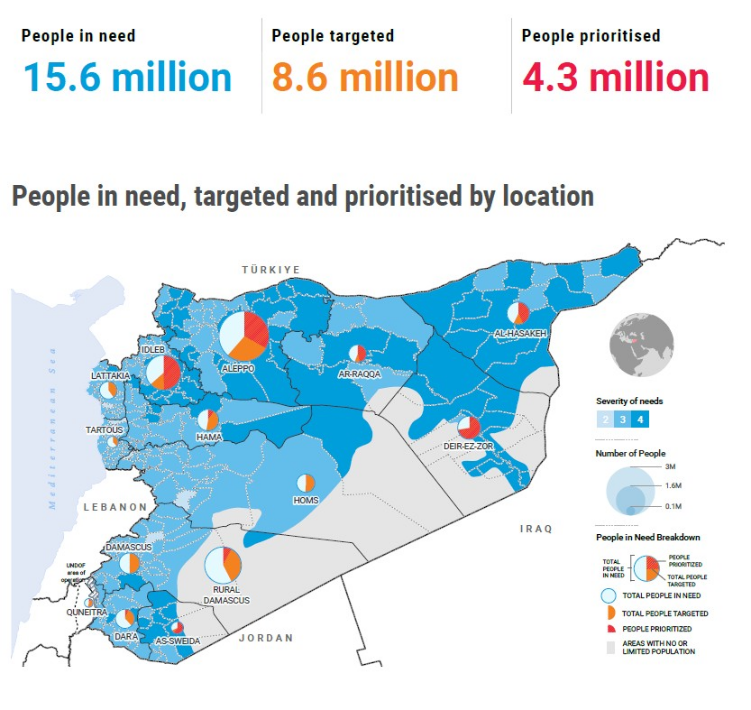
- People in need: 15.6 million
- People targeted: 8.6 million
- People prioritised. 4.3 million
8.3 Vulnerable groups
8.3.1 In April 2026, humanitarian organisation[footnote 68] GOAL, published a ‘Multi-Sector Needs Assessment’ report (the April 2026 GOAL report), based on 5,302 household interviews conducted across 11 governorates in November and December 2025, and several Focus Group Discussions (FGDs) conducted in 5 governorates in December 2025[footnote 69]. The report stated:
‘Female-headed households, households headed by persons with disabilities, and internally displaced persons (IDPs) consistently showed worse food security outcomes than comparison groups.
‘… Focus group discussions with widowed and sole-provider women revealed the near-impossibility of meeting food, heating, and healthcare costs simultaneously on unstable informal wages. To cope, these women frequently resort to emergency strategies, including withdrawing children from school for informal labor, and routinely reduce their own dietary intake (evidenced by very low Minimum Dietary Diversity) so that their children can eat.
‘… Households headed by a person with a disability recorded the highest aggregate food insecurity severity, … The primary driver of this disparity is the extreme financial burden of specialized healthcare, which heavily crowds out the household food budget. Focus group participants with disabled household members reported spending approximately USD 50 [37.33 GBP] per month on treatments, medications, and physiotherapy—an insurmountable cost in an economy where monthly incomes often fall below USD 50–100 [37.33-74.66 GBP]. Consequently, food and nutrition are systematically deprioritized when medical costs escalate.
‘… Across all three sectors, the analysis consistently identifies female-headed households, households with disabled members, and IDP households as facing compounding vulnerability at the intersection of food insecurity, nutritional risk, and WASH service gaps.’[footnote 70]
8.3.2 In May 2026, the World Health Organisation (WHO) published a Public Health Situation Analysis (PHSA) report on Syria (the May 2026 WHO report) which stated:
‘Women and Girls: The multi-dimensional crisis facing Syrians, in which conflict-related, human rights, economic, social and natural factors co-exist, disproportionately affects women and girls and limits the enjoyment of their basic human rights. The crisis disproportionately affected women and girls and other marginalised groups and reduced their resilience, leaving them vulnerable to GBV [gender-based violence]. Almost every third family is headed by a woman, assuming the role of a caretaker and breadwinner, thus significantly contributing to the economy, society and family. However, often widows and divorced women and girls are considered a burden for the family and are prevented from working, mainly by male family members, not to fuel rumours and social stigma against the family.
‘Children: Alarming statistics from UNICEF reveal that over 6.5 million children are in need, with the number of children needing help rising by more than 7% between 2021-2023. Children in Syria continue to struggle with both physical and psychological injuries …
‘Older People: Older people are a vulnerable group within Syria. A July 2024 survey found that approximately 3 out of 4 of older respondents believe that older people have partial to no access to basic services, transportation and health services. A perception was also reported that older people struggle to fully provide for their family’s financial needs, partially influenced by unequal workplace opportunities for older individuals, including between gender. Approximately 2 out of 3 older people perceive older women as not receiving equal pay compared to older men in the same roles and workplaces.
‘People with Disability (PwD): An estimated 17% of the Syrian population lives with a disability. A 2023 report from Northern Syria found that 52% of the population over two years of age had some kind of disability or difficulties in performing daily tasks. This is over three times the global average …
‘Returnees: Syrians returning from displacement are having to navigate safety, rebuilding of their livelihoods, and reintegrating into changed communities. Increasing returnee movements have exacerbated housing, land, and property issues and led to heightened tensions. Returnees are generally resuming life in areas with damaged infrastructure, limited services, and a lack of livelihood opportunities.’[footnote 71]
8.3.3 For further information on IDPs and returnees, see Internally displaced persons (IDPs) and Returnees.
8.3.4 For further information on women, see the CPIN Syria: Women.
8.3.5 For further information on children, see the CPIN Syria: Children.
9. Housing
9.1 Overview
9.1.1 The April 2026 OCHA report stated: ‘About 6.2 million people require shelter assistance and over 6.3 million require NFI [non-food item] support. More than 5.5 million people remain internally displaced, including 1.2 million in tents, unfinished buildings, or overcrowded collective centres. Seasonal exposure to winter storms, flooding, and heatwaves further increases reliance on both shelter rehabilitation and winterization assistance.’[footnote 72]
9.1.2 The same source also stated:
‘Syria continues to face one of the most complex shelter and basic household assistance crises globally, driven by protracted conflict, environmental shocks, economic decline, and ongoing displacement and return dynamics. Housing damage, deteriorated living conditions, and insufficient access to essential NFIs are deeply interconnected with protection risks, service collapse, and return sustainability.
‘… [M]illions of households lack access to essential household items necessary for safe and dignified living. Core NFIs, including bedding, mattresses, kitchen sets, hygiene items, and household materials, remain critical for newly displaced families, protracted IDPs, returnees reoccupying damaged homes, and vulnerable host communities. Winter NFIs, such as heaters, winter clothing, blankets, and insulation materials, are vital given Syria’s severe seasonal exposure.
‘Damage is largely dispersed, requiring area-based approaches rather than isolated interventions. Returns continue despite housing constraints, with communities reporting occupation of damaged and even destroyed housing. However, many returnees lack the minimum household items needed to make repaired homes habitable. Shelter rehabilitation without adequate Core and Winter NFIs limits sustainability and protection outcomes.’[footnote 73]
9.2 Condition of housing
9.2.1 The July 2025 EUAA report stated: ‘According to [a report published in February 2025 by] UNDP [United Nations Development Programme], about one-third of housing units – corresponding to 1.3 million – have been either destroyed or severely damaged over the conflict.’[footnote 74]
9.2.2 In a TV news interview in September 2025, the Minister of Public Works and Housing said that a quarter of the population live in unsafe housing and that approximately one million homes have been destroyed[footnote 75].
9.2.3 In January 2026, REACH, the Global Shelter Cluster[footnote 76] and UNHCR published a report entitled ‘Syria Nationwide Housing Damage Assessment’ (the January 2026 REACH report). The report’s methodology section indicated that the assessment ‘was conducted using Key Informant Interviews (KIIs) with individuals possessing substantial, context-specific knowledge of housing conditions at the community level across Syria’. It added that, ‘[b]etween 14 October and 4 December 2025, a total of 1,725 KIIs were conducted across 1,221 communities’[footnote 77]. The report cautioned that its findings were ‘highly indicative’ and should not be considered ‘statistically representative estimates’[footnote 78]. Key findings included the following:
‘Housing damage is widespread across assessed communities in Syria, though its scale and severity vary considerably by location. Overall, 89% of assessed communities reported some degree of housing damage, with nearly half indicating that more than half of their housing stock was affected. Severe damage was disproportionately reported in southern and north-western governorates, reflecting differing conflict and shock dynamics across the country.
‘While damage is extensive, the national housing damage profile is predominantly characterised by low to moderate severity, with high-severity destruction affecting a smaller share of the housing stock. On average, nearly half (48%) of damaged housing was reported as negligibly damaged, over one-third (35%) as partially damaged, and less than one-fifth (17%) as completely damaged. Conflict-related damage was consistently associated with higher severity levels, whereas housing affected by environmental hazards was more often reported as low-severity damage.
‘Damaged housing is widely inhabited, particularly by returnees, reflecting a gap between housing conditions and return dynamics. Nearly all communities reporting housing damage indicated continued habitation across all severity categories, including in structurally compromised units.
‘… Housing damage scale and severity and essential services functionality were found to be closely interlinked. Communities experiencing larger-scale and higher-severity housing damage also report reduced availability and functionality of electricity, water, sanitation, health, and education services, constraining safe habitation, shelter recovery, and broader area-based recovery outcomes.
‘… Significant geographic variation in the distribution of housing damage severity was also observed. Governorates in the northwest and central regions, particularly Hama (27% of housing stock completely damaged), Idleb (22%), Rural Damascus (17%), and Homs (17%), reported the highest average shares of complete damage, consistent with areas exposed to intense and sustained conflict.
‘… Findings indicate that damaged housing stock continues to be inhabited due to a combination of economic and structural constraints, … Across communities, the most frequently cited reason for remaining in damaged housing was the lack of financial resources to secure alternative shelter, reported by 91% of communities. This was followed by the limited availability of vacant, undamaged housing (48%) and insufficient assistance or support for relocation or repairs (46%).
‘… Returnees constitute the population most frequently estimated to reside in damaged housing units across the communities assessed, underscoring the acute vulnerability of returning households attempting to re-establish livelihoods in damaged shelter.
‘Nationwide, returnees were estimated to occupy damaged housing by 71% of communities. Host or non-displaced households were also estimated by 63% of communities, while internally displaced persons (IDPs) were mentioned by 44% of communities.’[footnote 79]
9.2.4 The same source included the following table showing the distribution of damaged housing stock by severity level in each governorate. N is the number of communities surveyed. The second table provides definitions for the different severity levels.’[footnote 80]
| Negligible damage | Partial damage | Complete damage | |
|---|---|---|---|
| Damascus (N=1) | N/A | N/A | N/A |
| Hama (N=94) | 39% | 33% | 27% |
| ldleb (N=193) | 37% | 41% | 22% |
| Rural Damaiscus (N=55) | 48% | 32% | 19% |
| Homs (N=48) | 50% | 31% | 19% |
| Quneitil’a (N=8) | 32% | 52% | 16% |
| Aleppo (N=299) | 47% | 37% | 16% |
| Lattakia (N=60) | 45% | 39% | 16% |
| As-Sweida (N=42) | 48% | 36% | 16% |
| Deir-ez-Zor (N=67) | 53% | 33% | 14% |
| Ar-Raqqa (N=57) | 69% | 19% | 12% |
| Dar’a (N=49) | 61% | 2.9% | 10% |
| AI-Hasakeh (N=74) | 54% | 39% | 7% |
| Tartous (N=36) | 58% | 38% | 4% |
Qualitative severity catiegories adopted for the assessment and the corresponding definitions applied to community-level housing damage
Negligible damage: Cosmetic or aestlhetic damage only; safe and functional; Fully habitable
Partial damage: lncludes minor, moderate, or heavy damage; structure may remain safe or require rehabilitation; Conditionally habitable
Complete damage: Fully or largely collapsed; requires major structural works or full reconstruction: Not habitable
9.3 Housing, land and property (HLP) rights
9.3.1 Citing various sources, the July 2025 EUAA report stated:
‘A NRC [Norwegian Refugee Council] report based on over 4 300 interviews and surveys carried out between December 2024 and February 2025 with refugee returnees, IDPs and humanitarian staff identified six main barriers to sustainable return … Over 40 % of returnees interviewed reported no access to housing and issues related to HLP rights such as lacking ownership documents.
‘… Over 40 % of surveyed returnees by NRC lacked access to adequate shelter. In areas like Aleppo and Rural Damascus, disputes over property rights and duplicated ownership claims were commonly reported with some people having official documentation proving housing or land ownership, and others lacking the necessary official papers to reclaim property. A source interviewed by The [New] Humanitarian [in December 2024] highlighted that “property violations, and poor real estate documentation lasted for years,” and that “many houses that weren’t destroyed are now inhabited by new residents.”’[footnote 81]
9.3.2 In January 2026, Syrian Investigative Reporting for Accountability Journalism (SIRAJ), a ‘pioneering initiative dedicated to promoting investigative journalism and accountability in Syria’[footnote 82], published a report entitled ‘Residential Property Claims in Syria: A Growing Challenge for Returnees’ which stated:
‘Syrians returning to their homes after years of displacement, following the fall of the ousted Assad regime in December 2024, are facing harsh challenges in proving ownership of their properties. This is especially true in neighborhoods that were extensively destroyed, where official documents were lost or burned. In addition, widespread cases of property seizure through forgery and the alteration of owners’ names have further complicated matters, plunging returnees into lengthy and complex legal battles to reclaim their usurped rights.
‘… Many [Syrians] are unable to prove ownership of properties that, in many cases, were transferred to strangers during their absence, with ownership altered or homes seized because they stood vacant.
‘The suffering is compounded in informal housing areas in Damascus and its suburbs, where most sales, purchases, and transfers took place outside official institutions through customary contracts not registered in real estate courts, due to the absence of formal title deeds … Similar complications arise in areas subject to urban redevelopment plans imposed under complex regulatory laws.
‘… The loss of official documents, the burning of real estate records, the absence of accurate inheritance registries, and the continued enforcement of laws enacted at the height of the war under the Assad regime have all turned the process of proving ownership into a long, costly judicial path, often with no outcome.’[footnote 83]
9.3.3 The April 2026 OCHA report stated:
‘Risks related to HLP issues are widely reported, driven by widespread housing destruction, lack of compensation or rehabilitation, lost or non-recognised ownership documents, and inheritance disputes. Over 4.1 million Syrians are estimated as in need of HLP support, including returnees. Returnees frequently encounter secondary occupations, damaged property, or informal transactions made during their absence. For many, the lack of civil and/or HLP documentation or functional legal pathways creates a direct barrier to safe, dignified, and sustainable return. Women face entrenched obstacles to exercising HLP rights due to discriminatory social norms and limited access to legal remedies.’[footnote 84]
9.3.4 See Internally displaced persons (IDPs) and Returnees for further information on the challenges faced by IDPs and returnees.
9.4 Renting
9.4.1 On 16 February 2025, ‘independent Syrian nonprofit … media organization’[footnote 85] Enab Baladi published an article entitled ‘House rents in Syria: Inflation without intervention’ which stated:
‘This increase [in rental prices] is attributed to several main factors, most notably the growing demand for housing due to the return of some Syrians after the fall of the Syrian regime, the scarcity of available apartments, and the inability of many residents to purchase properties, as reported by Enab Baladi. This has led them to rely on renting despite the high cost.
‘Rental prices vary greatly between neighborhoods within major cities, where factors such as geographic location, availability of essential services, and proximity to the city center play a crucial role in determining prices.
‘Zaher, a real estate office owner in the Rukn al-Din neighborhood of Damascus, told Enab Baladi that rents in upscale areas of the capital range from 7 to 10 million Syrian pounds per month (between 700 and 1000 USD [522.82 – 746.88 GBP] on average based on black market exchange rates), and they can reach up to 100 million pounds when paid annually (about 10,000 USD [7,468.89 GBP]), noting that prices vary based on location and building modernity.
‘In middle-class neighborhoods like Rukn al-Din and Nahr Aisha, prices range from 4 to 5 million pounds per month (approximately 400 to 500 USD [298.75 – 373.46 GBP]), while in popular [i.e., less affluent] areas, prices range from 1 to 2.5 million pounds (about 100 to 250 USD [74.69 GBP to 186.73 GBP), according to the real estate office.
‘… In rural Damascus, Fares Ahmad Zain, a real estate office owner in Eastern Ghouta, told Enab Baladi that rents in the area start from 1 million pounds [74.68 GBP] per month, explaining that the availability of housing was greater during the previous regime, but the return of residents after its fall has led to increased demand against a backdrop of supply shortages.
‘On the other hand, an Enab Baladi correspondent in Aleppo province reported that annual rents range between 15 and 30 million Syrian pounds (between 1500 and 3000 USD [1,120.33 to 2,240.66 GBP]), while in some upscale areas, they reach much higher levels, with most properties rented on annual contracts.
‘Although prices are relatively lower in popular [i.e, less affluent] neighborhoods, they remain a significant burden on low-income families.’[footnote 86]
9.4.2 Citing an interview with human rights organisation[footnote 87] the Syria Justice and Accountability Centre (SJAC) conducted in June 2025, the July 2025 EUAA report stated:
‘Due to widespread destruction in the suburbs of Damascus, there is a severe shortage of housing and limited availability of residential areas. Additionally, property prices in Damascus city are very high, making renting or purchasing unaffordable for most returnees. While some housing may be available on the outskirts or in more remote areas, the living conditions in these locations are generally poor.
‘… There is a degree of social discrimination against individuals relocating to Damascus from other parts of the country. While not driven by state policy, this bias stems from a long standing distinction between Damascenes and non-locals. Locals are often reluctant to rent to newcomers or charge them higher prices, based on the perception that they may not properly maintain the property.’[footnote 88]
9.4.3 In October 2025, The Syria Report, which describes itself as ‘the leading source of economic information on Syria’[footnote 89], published an article entitled ‘Rental Prices in Aleppo Soar Following Return of Refugees’ which stated:
‘Property rental prices in Aleppo have risen in recent months driven both by increased demand fuelled by refugee returns and by real-estate agents acting as intermediaries in social media pages that are pushing these prices even higher.
‘Ziad Ismail, the owner of a real estate office in the Al-Furqan neighbourhood in western Aleppo, explained that Aleppans returning from Turkey post-Assad have played the most prominent role in driving up housing prices and rents, due to the increased demand. As most of the returnees are families with children in various stages of education who sought to return before the new school year, Mr Ismail expects the supply and demand to rebalance and rental prices to decline in the short term.
‘… Real estate office owners and people active on social media marketing pages explained that current housing rents in Aleppo are five times higher than they were before the fall of the Assad regime on [sic] December [20]24. Today, the monthly rent for a flat in the western neighbourhoods ranges between USD 500 [373.40 GBP] and USD 1,000 [746.80 GBP] depending on its size and location. Most landlords rent their flats under annual, and sometimes semi-annual, contracts. As a result, tenants pay the entire rent upfront in U.S. dollars, in addition to the real-estate office’s commission – equivalent to one month’s rent – and a security deposit of at least USD 700 [522.76 GBP] for furnished flats.
‘This situation has caused a crisis for long-time tenants in western Aleppo, as the new rent levels exceed their incomes, forcing many to move from the western neighbourhoods to the eastern parts of the city, which remain largely damaged due to the fighting from 2012 to 2016, and the aftermath of the February 2023 earthquake.
‘Ahmad Al-Omari, the owner of a real estate office in the Al-Shaar neighbourhood in the eastern part of the city, said that the phenomenon of rising rents “has moved from the west of the city to its east.” He noted that the average rent for a medium-sized flat in eastern Aleppo, which constitutes more than half of the city’s area, currently stands at about USD 150 [112.03 GBP] per month, whereas it was previously around SYP 150,000 on average before the fall of the regime in December (equivalent to just around USD 10 [7.46 GBP] at the time, when the dollar was worth SYP 15,000).’[footnote 90]
9.4.4 In November 2025, the UN’s International Organization for Migration (IOM) published a report based on interviews conducted in November 2025 with 36,606 Key Informants (KIs) across 10,089 locations[footnote 91]. The findings should be treated as indicative rather than statistically accurate. The report stated: ‘While most Syrians are residing in homes they own (78%), a notable share of individuals are living in more temporary arrangements, including being hosted for free (14%), renting (7%), or squatting (1%).’[footnote 92]
9.4.5 Citing the results of a survey of 3,061 households across 5 governorates (Aleppo, Idleb, Dara’a, Hama and Homs), the December 2025 WHH/SARD/IYD report stated:
‘The findings showed that shelter ownership was the dominant tenure arrangement among assessed households. Overall, 63% of households reported living in their own housing, indicating a relatively high level of tenure stability for a majority of respondents. However, a significant proportion of households lived in more precarious arrangements, with 22% residing in rented accommodation and 14% living in hosted settings, reflecting continued reliance on rental markets and social networks.
‘… Clear differences emerged by population status. Residents were the most likely to live in owned housing, with 74.79% reporting ownership, reflecting comparatively greater housing stability. In contrast, IDPs were predominantly living in rented accommodation, reported by 60.33%, and hosted arrangements at 20.65%, highlighting their greater exposure to rental costs, eviction risks, and dependence on host communities. Returnees showed a mixed pattern, with 64.55% living in owned housing but also notable shares in hosted 16.57% and rental 17.51% arrangements, reflecting partial recovery of housing assets alongside ongoing vulnerabilities.
‘… Tenure patterns also varied by governorate. Ownership was most prevalent in Idleb, Hama, and Homs, where more than half of households reported owning their shelter, indicating relatively stronger tenure security. Rental housing was particularly high in Aleppo at 35.66% and Dara’a at 26.69%, suggesting stronger pressure on rental markets in these locations.’[footnote 93]
9.4.6 The January 2026 REACH report stated:
‘At the national level, the availability of vacant and safe housing units for rent or purchase was reported to be highly limited across assessed communities.
‘Overall, 42% of communities indicated that no such housing was available, while a further 35% reported only limited availability. Only 3% of communities reported wide availability of vacant housing. Relatively higher availability was observed in Al-Hasakeh, Aleppo, and Ar-Raqqa, where 47%, 45%, and 20% of communities respectively reported moderate to wide availability.
‘Across the country, the majority of communities (60%), across most governorates, reported that the average rent for a two-bedroom housing unit remained below 50 USD [37.33 GBP] per month. A notable exception was Damascus, where average rents were reported to exceed 300 USD [223.98 GBP] per month.
‘… Findings point to a nationwide increase in rental prices over the past year. This trend was consistently reported across most governorates and is largely attributed to population return, increasing repair costs and increased pressure on an already limited supply of available rental housing. At the national level, 70% of assessed communities reported an increase in average rental prices of a 2-bedroom housing unit over the past year. This pattern was also observed at the governorate level, with the majority of communities in nearly all governorates, except Lattakia, reporting rising rental costs. In Quneitra, Damascus, Dar’a, and Hama, this increase was described as particularly pronounced, with most or all assessed communities indicating significant rent inflation (noting that Damascus constitutes a single-community governorate).’[footnote 94]
10. Food security
10.1 Overview
10.1.1 In January 2026, the Government of Syria and WFP published a report detailing the results of a nationwide food security assessment (the January 2026 Government of Syria/WFP report). The assessment was based on a survey of 34,820 households across the country, as well as 2,429 households residing in camps in Idlib, Aleppo, Hasakah, Deir Ezzor and Raqqa governorates. The data was collected between July and October 2025, and the assessment used the Consolidated Approach for Reporting Indicators of Food Security (CARI) methodology[footnote 95]. The WFP’s technical guidance on CARI includes the following table defining the four food security classification levels:
Table 3: Description of the overall WFP food security classifications
Food secure: Able to meet food needs without engaging in reduced and livelihood coping strategies for food security.
Marginally food secure: Has minimally inadequate food consumption, relies on reduced coping and applies stress coping strategies to secure food needs.
Moderately food insecure: Has food consumption gaps and unable to meet required food needs without applying crisis coping strategies.
Severely food insecure: Has extreme food consumption gaps, or has extreme loss of livelihood assets will lead to food consumption gaps, or worse.[footnote 96]
10.1.2 The January 2026 Government of Syria/WFP report included the following findings:
‘The proportion of food-secure households reached about 18.4% of all households in Syria (excluding camps), while this percentage drops to around 4.2% among households living in camps.
‘The proportion of food-secure households living in urban areas is 19%, compared with only 16.4% in rural areas.
‘Small households consisting of 1–4 members record the highest proportion of food-secure families at around 20.3%. This percentage decreases as household size increases. This is likely due to higher living expenses and increased pressure on available resources, which makes larger households more vulnerable to food insecurity.
‘… The group of permanent residents records the highest proportion of food-secure households at around 18.9%. In contrast, the internally displaced population records the lowest rate, not exceeding 11.8%, reflecting a high level of food vulnerability resulting from the loss of livelihoods and stability.
‘… Households that rely on trade as their main source of income enjoy better levels of food security compared to households that depend on other income sources, while households that rely on unskilled manual labor as their source of income are the most vulnerable, at a rate of 10.5%.
‘… The level of food security among Syrian households improved in 2025, with the proportion of food-secure households rising to around 18.4% of all households, compared with 11.1% in 2024. The data also showed an increase in the percentage of food-secure households residing in camps.
‘… The rate of remittances from abroad increased, with the proportion of households receiving remittances rising to 21.8% in 2025, compared with 6.9% in 2024. This contributed to improving households’ access to the resources needed to obtain food.’[footnote 97]
10.1.3 The March 2026 FEWS NET report used the Integrated Food Security Phase Classification (IPC) system’s Acute Food Insecurity Scale, which is outlined in the table below:
Phase 1: Minimal
Households are able to meet essential food and non-food needs without engaging in atypical and unsustainable strategies to access food and income.
Phase 2: Stressed
Households have minimally adequate food consumption but are unable to afford some essential non-food expenditures without engaging in stress-coping strategies.
Phase 3: Crisis
Households either:
- Have food consumption gaps that are reflected by high or above-usual acute malnutrition; or
- Are marginally able to meet minimum food needs but only by depleting essential livelihood assets or through crisis-coping strategies.
Phase 4: Emergency
Households either:
- Have large food consumption gaps which are reflected in very high acute malnutrition and excess mortality; or
- Are able to mitigate large food consumption gaps but only by employing emergency livelihood strategies and asset liquidation.
Phase 5: Famine
Households have an extreme lack of food and/or other basic needs even after full employment of coping strategies. Starvation, death, destitution, and extremely critical acute malnutrition levels are evident. (For Famine Classification, area needs to have extreme critical levels of acute malnutrition and mortality.)[footnote 98]
10.1.4 FEWS NET’s explanation of the scale notes that, ‘[i]n order for a geographic area to be classified in a given IPC Acute Food Insecurity Phase, at least 20 percent of the area’s population must meet the specific classification description for that Phase or a higher Phase’[footnote 99].
10.1.5 The March 2026 FEWS NET report stated:
‘Across Syria, outcomes aligned with Crisis (IPC Phase 3) and Stressed (IPC Phase 2) are likely ongoing and expected to persist through September. Multi-year drought, the impacts of the 2011-2024 civil war and ongoing insecurity, and weak economic conditions are key shocks. Repeated poor rainfall seasons have reduced cereal production, degraded rangelands, and weakened agricultural labor demand. Conflict-related damage to irrigation systems and infrastructure continues to constrain cultivation and economic activity, while periodic clashes, population displacement, and shifting territorial control disrupt market functionality and livelihoods. Limited foreign currency reserves and economic constraints are expected to restrict import capacity, increasing the risk of national food supply shortfalls. Inflation and weak labor demand will continue to constrain access to food countrywide.
‘The population in need of food assistance is currently estimated to be 6.0-6.99 million during the January-April lean season and is expected to decline modestly following summer harvests. Northwest (NWS) and Northeast (NES) Syria are areas of highest concern. Within these areas, internally displaced persons (IDPs) and returnees are of highest concern due to limited livelihood opportunities and high market reliance. Worst-off households in parts of NES and some internally displaced person (IDP) households in NWS likely face outcomes aligned with Emergency (IPC Phase 4). In NWS, recent flood damage and winter storms are leading to more severe outcomes. In NES, disruptions to the oil-linked economy following shifts in control of key oil assets have further reduced labor opportunities and household income.’[footnote 100]
10.1.6 The April 2026 OCHA report stated:
‘An estimated 13.3 million people across Syria remain food insecure, with 7.2 million acutely food insecure, of whom 0.7 million are severely food insecure, according to the 2025 Food Security Assessment (FSA) [note: this is the same assessment referenced in paragraph 9.1.2]. Despite the improvement and projected reduction of total PiN in 2026 (13.3 million) compared to 2025 (14.5 million), the situation remains fragile with around 6.2 million people estimated to be at risk of falling into food insecurity in 2026 (an increase from 5.4 million in 2025) amidst continued instability, sharp funding decline, impacts of a year of severe drought, and economic hardship impacting the most vulnerable groups. [Note: the source did not define ‘acutely food insecure’ or ‘severely food insecure’ nor explain which food security classification methodology these terms belong to].
‘… According to the FSA, food insecurity remains widespread and uneven, with higher rates among displaced populations and camp residents, where 47.5 per cent of households are acutely food insecure. Vulnerable groups, including female headed households (37.9 per cent), and households with persons with disabilities (41.4 per cent) all continue to face disproportionate challenges. While progress has been recorded, millions of families remain unable to meet their basic food needs without regular humanitarian support in the form of food and agricultural assistance.
‘FSAL [Food Security and Agricultural Livelihoods sector] reported a significant increase in subdistricts facing high food insecurity in 2025. This deterioration is largely driven by persistent challenges, most critically the severe water scarcity and the unprecedented drought of 2025, the worst drought in nearly 40 years (FAO Drought Alert June 2025). This drought period affected over 75 per cent of cultivated crops and grazing areas, causing catastrophic losses in rainfed wheat and barley areas (over 95 per cent), a significant decline in irrigated crop yields, a 100–300 per cent rise in animal feed prices, and a 40 per cent drop in livestock numbers, deterioration in the health and nutritional status of animals, the spread of diseases, with high mortality rates among newborns. The combined effects of drought, reduced irrigation functionality, rising input costs and constrained public financing have transformed food insecurity from a primarily household-level vulnerability into a systemic food systems risk. Without sustained humanitarian and early recovery support, localised shocks risk cascading into broader market instability and increased fiscal pressure on food subsidy systems.
‘… Improved economic conditions, and sustained assistance have contributed to improving the food security situation, as recorded by the 2025 FSA [Food Security Assessment]. There are some positive signs in Syria; market conditions in 2025 show moderate yet encouraging improvements in household economic well-being. By December 2025, the Minimum Expenditure Basket (MEB) fell to 2.2 million SYP [117.75 GBP], a 25 per cent decrease from the previous year (2024). Although some prices remain unstable, families found it slightly easier to meet basic needs, supported by a 34 per cent rise in the official minimum wage. Market availability also generally improved, which enhanced access to essential goods. Late-2025 rainfall further raised hopes for better crop and pasture conditions, depending on favorable rain distribution in 2026.’[footnote 101] See also Salaries and cost of living.
10.1.7 The April 2026 GOAL report stated:
‘The Food Consumption Score measures dietary diversity and food frequency over the preceding seven days, weighting eight food groups by nutritional importance. A score below 28 indicates Poor food consumption; 28.5–42 is Borderline; above 42 is Acceptable. Across the full assessment sample (N=5,302), the distribution was as follows:
‘…
| FCS category | Percentage of households |
|---|---|
| Poor (<28) | 8% (N=424) |
| Borderline (28.5-42) | 24% (N=3,273) |
| Acceptable (>42) | 68% (N=3,605) |
| Total | 100% |
‘… FGDs participants confirmed that food physical availability is not the binding constraint — affordability is.
‘… The rCSI [Reduced Coping Strategy Index] measures the frequency with which households used five stress-related food coping behaviours in the preceding seven days …
| rCSI Behaviour (7-day recall) | Percentage using | Relative frequency |
|---|---|---|
| Rely on less preferred/cheaper foods | 44% | 9 |
| Reduce number of meals per day | 22% | 4 |
| Limit portion sizes | 14% | 3 |
| Reduce aduIt consumption for chi ldren | 11% | 2 |
| Rely on aid from friends/family | 10% | 2 |
‘… The Livelihood Coping Strategies Index (LCSI) classifies households according to the severity of livelihood-based coping mechanisms used to manage food or income shortfalls: No Strategies, Stress, Crisis, and Emergency. Unlike the rCSI, which captures short-term food consumption coping, the LCSI captures coping behaviors that may erode household assets and weaken longer-term resilience.
‘… Across all assessed households (N=5,302), 16% reported no livelihood coping strategies, 34% were classified in the Stress category, 27% in Crisis, and 23% in Emergency. Combined, this indicates that 50% of surveyed households were relying on Crisis or Emergency livelihood coping strategies, pointing to substantial pressure on household resilience and limited capacity to absorb further shocks.
‘… The shift from Stress to Crisis and Emergency livelihood coping — affecting 50.1% of households in the quantitative data — is reflected in FGD [focus group discussion] narratives as a structural, not purely situational, deterioration. In Harim (female FGD), participants described child labour and school dropout as livelihood coping strategies, with three participants reporting withdrawing children from school and placing them in apprenticeships or informal work due to inability to cover school costs… These narratives illustrate how severe livelihood pressures translate into negative coping choices at household level.
‘… The Consolidated Approach for Reporting Indicators of Food Security (CARI) synthesizes the Current Consumption Status (FCS + rCSI) with the Coping Capacity score (LCSI + FES) to produce a four-tier severity classification. CARI is the primary food security severity indicator for programming and response targeting in this assessment … [see paragraph 9.1.1 for definitions of the CARI food security classification levels]
| CARI category | Food secure (1) | Marginally food insecure (2) | Moderate (3) | Severe (4) |
|---|---|---|---|---|
| All households (N=5,302) | 9% | 47% | 40% | 4% |
Food insecure (Marginal+ Moderate+ Severe): 91% of assessed households
Moderate and Severe food insecure: 44% of assessed households’[footnote 102]
10.1.8 For detailed tables showing the survey results by district (the survey covered 44 districts), see pages 61 – 71 of the report.
10.2 By governorate
10.2.1 The January 2026 Government of Syria/WFP report stated:
‘At the geographic level, Tartous Governorate recorded the highest proportion of food-secure households at around 29.9% of all households in the governorate, followed by Rural Damascus at around 27.6%, and Damascus at around 21.9%. In contrast, Raqqa Governorate recorded the lowest proportion of food-secure households at around 4.2%, followed by Al-Hasakeh at around 4.6%, and As-Suwayda at 5.4%.
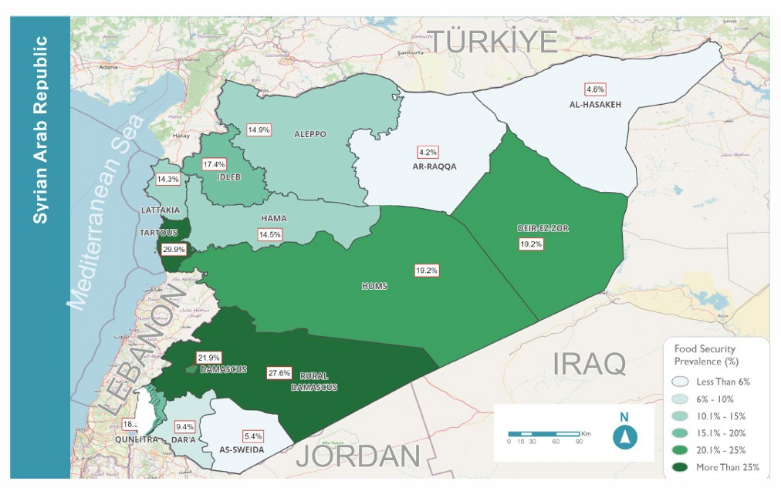
‘… Stability and the security situation in the governorates played an important role in determining food security levels, as governorates experiencing security challenges recorded lower food security levels than other governorates (Al-Hasakeh, Raqqa, and As-Suwayda).’[footnote 103]
10.2.2 The March 2026 FEWS NET report included the following map showing the level of food insecurity in different governorates, using the IPC scale outlined in paragraph 9.1.3:
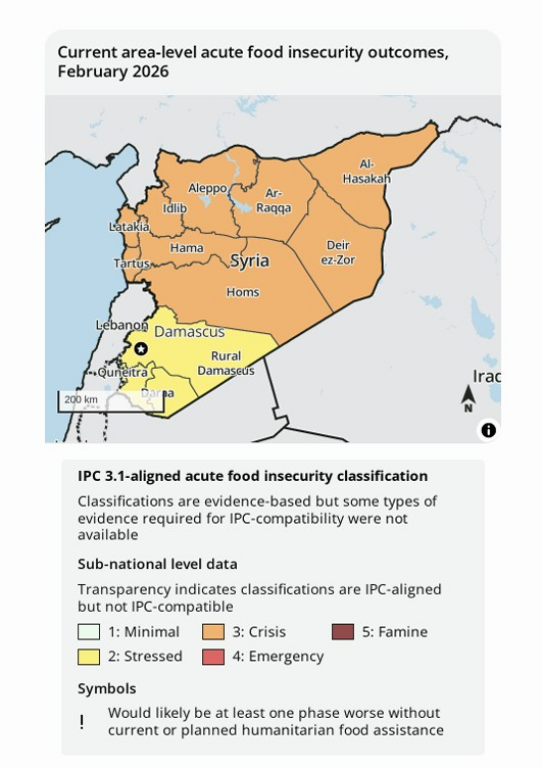
10.2.3 For information on the factors impacting food security in different regions of Syria, see pages 5-6 of the March 2026 FEWS NET report.
10.2.4 The April 2026 OCHA report included the following map in a section on ‘Food Security and Agricultural Livelihoods’:
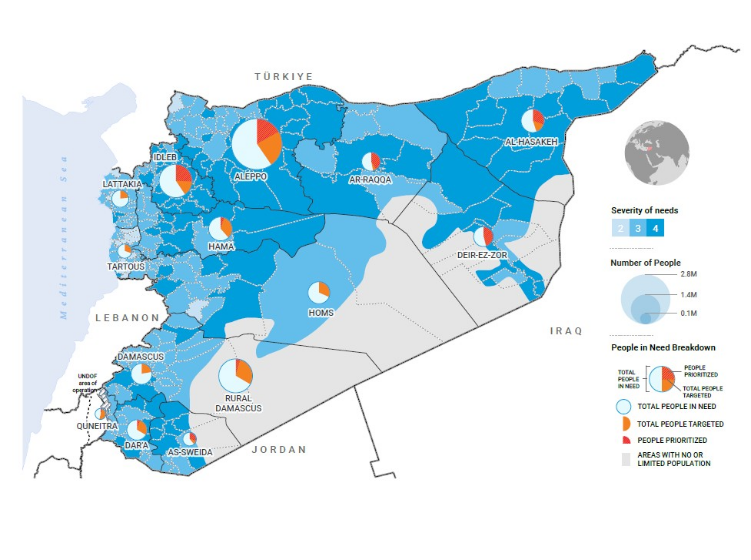
10.2.5 The April 2026 GOAL report included the following table showing CARI food security classification by governorate (see paragraph 9.1.1 for an explanation of CARI):
| Governorate | N | Food secure | Marginal | Moderate | Severe | Moderate and severe |
|---|---|---|---|---|---|---|
| Hama | 698 | 1% | 32% | 58% | 9% | 67% |
| Aleppo | 648 | 6% | 41% | 45% | 8% | 53% |
| As-Sweida | 131 | 9% | 42% | 47% | 2% | 49% |
| Lattakia | 363 | 5% | 47% | 45% | 4%48% | |
| Homs | 810 | 5% | 47% | 43% | 4% | 47% |
| Ar-Raqqa | 441 | 14% | 43% | 42% | 2% | 44% |
| Damascus | 146 | 12% | 45% | 40% | 4% | 43% |
| Deir-ez-Zor | 372 | 10% | 48% | 38% | 5% | 43% |
| ldleb | 743 | 7% | 58% | 35% | 1% | 36% |
| Rural Damascus | 496 | 18% | 54% | 26% | 3% | 28% |
| Dar’a | 454 | 22% | 64% | 13% | 1% | 14% |
11. Health
11.1 Overview
11.1.1 In April 2025, UNHCR launched a website called Syria is Home, which is ‘an information platform designed and developed by UNHCR to support Syrian refugees abroad and Internally Displaced Persons (IDPs) inside Syria’[footnote 107]. The website has a page on healthcare which states:
‘If you are Syrian, you can access all levels of care at the standard rate set by the Ministry of Health.
‘You can access any public primary health center to receive, if available, the package of primary health care services free of charge. Some NGO centers offer services for flat rates.
‘… Hospital services in autonomous hospitals of the Ministry of Health, university hospitals and NGO hospitals are generally charged at a national rate for Syrians in addition to the cost of medical supplies, if required. While non-autonomous hospitals affiliated with Departments of health are free of charge except for the cost of medicines, medical supplies and devices.
‘Emergency services/departments in hospitals receive patients for life saving services free of charge regardless of their identity and nationality, up to the stabilization phase.’[footnote 108]
11.1.2 In November 2025, the WHO’s Acting Representative to Syria gave a speech in which she said:
‘As Syria moves from emergency to recovery, a transition gap has opened where humanitarian funding declines before national systems can take over.
‘… Since mid-year [2025], 417 health facilities have been hit by funding cuts, with 366 suspending or reducing services. 7.4 million people have already seen access to medicines and treatment shrink.
‘Only 58% of hospitals and 23% of primary health-care centres are fully functional. Chronic shortages of medicines, power and equipment keep services fragile.’[footnote 109]
11.1.3 In March 2026, ReBUILD for Resilience, an ‘international consortium of organisations’ which ‘examines health systems in fragile settings’[footnote 110], published a report on health financing in Syria which stated:
‘After more than a decade of conflict, Syria’s health financing system faces a double challenge. Humanitarian aid remains essential in many areas, yet this model has left the system fragmented, vulnerable to donor volatility, and poorly equipped for a longer-term transition towards equity and financial protection. Even before the conflict, out-of-pocket spending was high and financial protection incomplete, with public support for national health insurance closely tied to affordability and protection for poorer groups. During the conflict, humanitarian actors became central in some areas, while households continued to bear substantial costs for medicines, diagnostics, transport, and specialist care.
‘… Before 2011, Syria’s health system relied mainly on public revenues, supplemented by user fees and limited insurance arrangements for selected groups. However, financial protection was incomplete and inequities existed. The conflict disrupted this architecture in uneven ways. In Northwest Syria, humanitarian grants and NGO-managed programmes became central. In other areas, constrained public financing persisted alongside rising household payments.’[footnote 111]
11.1.4 In a section on health, the April 2026 OCHA report stated:
- People in need: 12.8 million
- People targeted: 8.2 million
- People prioritised: 4.0 million
- Requirements (US$): $291.6M
- Prioritised requirements: $142.7M
‘After 14 years of conflict, Syria’s health system remains under strain due to overlapping political, economic, security and climate-related pressures, prolonged displacement, and cumulative erosion of institutional capacity. Vulnerabilities persist on a scale, and millions of people continue to require life-saving and life-sustaining health assistance. According to MSNA [Multi-Sectoral Needs Assessment] 2025, 83 per cent of households spent money on health in the past six months, highlighting widespread out-of-pocket expenditure and affordability barriers.
‘As of January 2026, the humanitarian situation remains volatile and uneven across northern and eastern governorates (Aleppo, Ar-Raqqa, Deir-ez-Zoir and Al-Hassakeh) and southern governorates (As-Sweida, Dar’a and Quneitra). Displacement-affected areas and areas of return face heightened health risks linked to degraded infrastructure, overcrowding and limited-service availability. Based on HeRAMS [Health Resources and Services Availability Monitoring System] 2025, only 57 per cent of hospitals and 30 per cent of primary health care (PHC) centres are fully functional, while the remainder are partially functional or non-functional due to shortages of staff, equipment, medicines and utilities.’[footnote 112] These statistics from HeRAMS were valid as of May 2025[footnote 113].
11.2 Key issues
11.2.1 The April 2026 OCHA report stated:
‘Communicable diseases remain a major public health concern. Recurrent increases AWD [Acute Watery Diarrhoea]/ suspected cholera, measles, influenza-like illness, acute respiratory infections, tuberculosis and cutaneous leishmaniasis have been reported in recent years. In 2025, 1,800 AWD-related alerts were investigated through EWARS [Early Warning Alert and Response System], with transmission linked to drought, damaged water systems and poor sanitation. Cutaneous leishmaniasis remains endemic, particularly in Aleppo, Idlib and Al-Hassakeh. Vaccination coverage remains suboptimal, with BCG at 84 per cent, DTP1 at 81 per cent, DTP3 at 73 per cent and MCV1 at 74 per cent, with significant disparities between urban and rural or hard-to-reach areas, increasing the risk of outbreak-prone diseases.
‘Non-Communicable diseases [NCDs] represent a major burden. According to the Ministry of Health Strategic Plan 2026-2028, NCDs contribute to approximately 70 per cent of mortality. MSNA 2025 indicates that 58 per cent of communities’ report unavailability of medicines for NCD treatment, while 56 per cent report limited availability of mental health services. Diagnostic constraints, treatment interruptions and medicine shortages continue to affect outcomes, including for people living with cancer, diabetes and chronic respiratory diseases.
‘Maternal, newborn, child and adolescent health needs remain significant. Antenatal care coverage was approximately 62 per cent in 2022, while postnatal care coverage was 43 per cent, reflecting gaps in access to comprehensive reproductive, maternal and newborn services. Persistent shortages of midwives, obstetricians, incubators and functional referral systems undermine safe delivery and neonatal survival, particularly in peripheral and newly accessible areas. Leading causes of child morbidity and mortality include prematurity, birth asphyxia, acute respiratory infections, diarrheal diseases and malnutrition, as outlined in the MoH [Ministry of Health] Strategic Plan 2026-2028.
‘Food insecurity and malnutrition continue to pose serious risks to child health and development. Severe acute malnutrition cases requiring therapeutic feeding persist, while stunting affects 17.1 per cent of children under five, according to SMART 2025 [malnutrition data gathered using the Standardized Monitoring and Assessment of Relief and Transitions methodology]. Nutrition services within PHC facilities remain limited, with gaps in screening, growth monitoring and counselling. Infant and young child feeding practices remain inadequate, with only 35 per cent of children continuing breastfeeding until the age of two (SMART, December 2025).
‘Mental health needs remain high due to prolonged stress, repeated displacement and exposure to violence. Common conditions include depression, anxiety and post-traumatic stress disorder, alongside severe mental illnesses. Specialist services are limited, and integration of mental health into PHC remains uneven. MSNA 2025 highlights increasing substance use as a coping mechanism, further straining available services.
‘Environmental and injury-related risks further compound health needs. Explosive ordnance contamination continues to pose a grave threat. In 2025, 870 incidents were recorded, resulting in 589 deaths and 1,013 injuries, many involving children (Mine Action sub-sector working group, December 2025). Water scarcity represents an additional public health concern; drought-like conditions in 2025 reportedly the worst in 36 years reduced access to safe water and increased the risk of waterborne and respiratory diseases.
‘… Syria’s health workforce density remains critically low. Shortages are particularly acute in family medicine, nursing, midwifery and key specialties. Low remuneration, limited career opportunities and poor working conditions continue to undermine retention, with anecdotal evidence of continued out-migration of trained health professionals, as reflected in the MoH Strategic Plan 2026–2028.’[footnote 114]
11.2.2 The May 2026 WHO report stated:
‘Challenges in service delivery, workforce shortages, and limited primary health care (PHC) capacity hinder both access and quality of care, resulting in low PHC utilization rates. Public health financing is severely constrained, forcing households to pay high out-of-pocket costs, while Syria’s traditional hospital-centric, curative-care model no longer matches current health needs
‘… More than a decade of war in Syria has exposed women, girls, men and boys to violence, trauma and multiple displacement along with extremely harsh living conditions. One in 10 people are living with a mild to moderate mental health condition in Syria, while one in 30 are likely to suffer from more severe conditions that can have a crippling impact on their daily lives.’[footnote 115]
11.3 Severity of needs by area
11.3.1 The April 2026 OCHA report included the following map in its section on health:
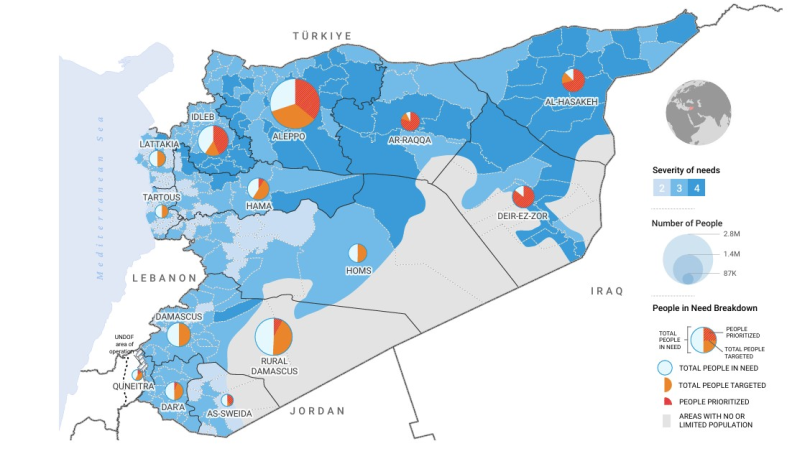
11.4 Access to healthcare
11.4.1 Dünya Doktorları Derneği (DDD) is a Turkish ‘civil society organisation that facilitates access to healthcare for people affected by armed conflict, violence, natural disasters, disease, and poverty’[footnote 117]. In 2025 and 2026, the organisation published several ‘multi-sectoral needs assessments’ (MSNAs) covering different parts of Syria. The assessments were based on interviews with hundreds of people in each area (see the methodology section of each report for further details). Some of the findings on healthcare access are outlined in the following table:
| Date of assessment | Area | Healthcare access findings |
|---|---|---|
| April 2025 | Four cities in northern Syria: Afrin, Al-Bab, Aleppo and Idlib. | ‘Overall, 68% of the respondents reported that they are able to access [healthcare] services any time and 31% reported intermittent access due to the certain barriers, which are reported as the cost of medication, lack of cost-free medication, lack of specialized services, distance of the service providers and/or the transportation costs.’[footnote 118] |
| September 2025 | Homs and Hama governorates | ‘62% can access healthcare intermittently; 15% no access at all.’[footnote 119] |
| October 2025 | Daraa governorate | ‘Only 19% [of respondents] reported always being able to obtain the needed care, 66% sometimes, and 15% not at all.’[footnote 120] |
| November 2025 | Lattakia and Tartous governorates | ‘Only 40% of households can reliably access health care, while 12% cannot access care at all.’[footnote 121] |
| March 2026 | Deir Ezzor governorate | ‘Overall, 68% of households reported illness during the previous three months. Yet only 28.5% said they could access health care whenever needed. The remaining households faced either partial access (60%) or complete lack of access (11.5%). ‘Affordability is the core constraint. Among respondents who answered the medication-access question, 52% said medicines were not available free of charge at all and only 1.7% said they were always free. The main reasons for incomplete or absent health access were medication costs (62.2% of affected households), transportation costs (61.5%), lack of medicines (60.8%), lack of specialised services (37.8%), and absence of services altogether (34.3%).’[footnote 122] |
11.4.2 The MSNAs conducted by DDD also indicated that mental health problems are common in all assessed areas but that a very small proportion of respondents had accessed professional mental health and psychosocial support services (MHPSS)[footnote 123] [footnote 124] [footnote 125] [footnote 126] [footnote 127].
11.4.3 In November 2025, Medecins Sans Frontieres (MSF) published an article based on the findings of a needs assessment in Hasakah governorate (the November 2025 MSF article). For the assessment, MSF staff interviewed over 150 families, consisting of both local families and IDPs. The article stated: ‘MSF’s assessment in June [2025] confirmed people face severe barriers to accessing basic services. Among respondents, 90 per cent reported postponing or avoiding healthcare due to high costs for consultations and medication, the lack of nearby or functioning facilities, and the burden of transportation.’[footnote 128]
11.4.4 In April 2026, REACH published a report on the humanitarian situation in Syria, based on interviews with key informants across all 14 governorates. The interviews took place in March 2026 and covered 747 communities in total. The report included the following infographic, which compares the overall results to REACH’s November 2025 assessment and shows the results for the six governorates that recorded the highest percentages for each question:

11.4.5 The May 2026 WHO report stated:
‘Access barriers remain widespread. MSNA 2025 indicates that 91% of respondents pay for health services, rising to 95% among returnees, while high medicine costs, transport expenses and long waiting times continue to restrict access.
‘… Since January 2025, Syria’s healthcare system continues to struggle under the heavy burden of soaring costs and limited access, further exacerbated by the country’s dire economic conditions. With more than 90% of Syrians living below the poverty line, many families face catastrophic out-of-pocket expenses for essential medical services, forcing them to postpone or forgo treatment altogether. Health facilities, particularly in rural and conflict-affected regions, remain damaged and under-resourced, with persistent shortages of qualified medical personnel due to ongoing displacement and insecurity.
‘Transportation barriers and security concerns further restrict access, disproportionately impacting vulnerable populations such as women, children, and the elderly. This combination of financial and physical obstacles leads to low vaccination rates, untreated chronic illnesses, and preventable deaths. The strained health system increasingly relies on costly emergency interventions rather than preventive care, hampering effective disease control and worsening public health outcomes.’[footnote 130]
12. Water, Sanitation and Hygiene (WASH)
12.1 Overview
12.1.1 Citing the findings of a survey of 5,302 household households across 11 governorates, the April 2026 GOAL report stated:
‘Access to clean drinking water was assessed through primary and secondary source type, interruption frequency, coping mechanisms, and household satisfaction. The JMP [WHO/UNICEF Joint Monitoring Programme] definition of improved drinking water sources (piped/network, bottled water, protected spring, and protected public well) was applied as the primary benchmark, with water trucking/tankers also considered improved in the humanitarian context per WASH Cluster Syria norms.
Access to improved water sources
-
96% of households use an improved drinking water source (including water tankers)
-
73% use strictly improved sources (piped network, bottled, protected spring/well)
-
67% rely on the piped/mains network as their primary source
‘The piped water network is the dominant primary [water] source, serving 67% of surveyed households. Water tankers constitute the second most common source at 22%, followed by private wells (4%), bottled water (4%), and public/communal wells (3%). Collectively, 96% of households draw from an improved source when water tankers are classified as improved, reflecting strong formal infrastructure coverage.
‘… Service continuity is a critical vulnerability: more than half of surveyed households (57%) reported interruptions to their primary water source in the three months preceding the survey. Nearly one in seven households (14%) experienced high-frequency disruptions of five or more times per month, indicating near-chronic unreliability for a significant minority.
‘… Three-quarters of households (74%, n=3,924) report satisfaction with primary source water quality, a figure that reflects reasonable confidence in the network system for those who have it. Nonetheless, 14% (n=768) express dissatisfaction, and the remaining 12% are neutral — pointing to a sizable minority with quality concerns. Among the affordability constraints driving water insecurity, the most common reasons households cannot access sufficient water are: the high price of water (n=341), inadequate household storage capacity (n=314), and weak water pressure (n=245).
‘…
- 99% of households have access to some form of functional toilet
- 98% have exclusive private toilet access (highest JMP category)
- 1% report no access to a toilet (open defecation risk context)
- 78% of village households have access to functioning sewer lines
- 20% of households report open sewage channels in their area
‘…
- 73% of households have access to a funct ioning waste collection system
- 77% have a designated waste disposal point in proximity to their home
- 27% lack any functioning waste collection service
12.1.2 For detailed tables showing the survey results by district (the survey covered 44 districts), see pages 72 – 77 of the report.
12.1.3 The April 2026 OCHA report stated:
‘The 14-year conflict, the economic crises, the environmental and climate change impacts and the deterioration of the public sector capacities and services were the main drivers for the WASH vulnerability in Syria. The WASH Sector vulnerability assessment and the MSNA highlighted that safe and sufficient access to WASH services remains a challenge for many communities in Syria. According to the WASH needs overview, more than 12 million people in Syria have limited access to basic WASH services, including water, sanitation, hygiene, and solid waste.
‘Access to water remains one of the main challenges affecting the daily lives and livelihoods of millions of Syrians. The damage to water infrastructure in more than 30 per cent of Syrian communities, the power supply shortage, the climate change impacts, and the limited technical and operational capacities of service providers have limited access to improved water sources for more than 30 per cent of Syrian households.
‘Moreover, reduced precipitation and drought-like conditions in 2025 have severely affected Syria’s primary water resources, including the Euphrates River, groundwater aquifers, and springs, by 30 per cent to 50 per cent. This severe strain on Syria’s main water resource has reduced access to water for more than 10 million people already struggling to meet their basic needs. Households in these communities are adopting several coping mechanisms to secure the minimum amount of water for drinking and domestic use. These coping mechanisms include purchasing high-cost trucked water, relying on unsafe sources such as agricultural wells, or reducing water consumption, while neglecting the associated social, health, and nutrition risks and challenges.
‘Regarding community sanitation services, more than 22 per cent of Syrian households are not connected to sewage collection networks and rely on alternative systems, including septic tanks and open drainage. Moreover, the limited technical, financial, and operational capacities of water services providers are affecting their ability to maintain sufficient sanitation services, resulting in wastewater accumulation and environmental contamination in many communities in Rural Damascus, Deir-ez-Zor, Homs and other areas.
‘At the household level, according to the 2025 MSNA, more than 18 per cent of families suffer from limited access to household sanitation facilities and hygiene materials, either due to insufficient toilets or a lack of water/soap at handwashing facilities.
‘… Regarding solid waste, most Syrian communities and camps are covered by public waste collection services; more than 45 per cent of the Syrian communities suffer occasional or frequent solid accumulation. Moreover, the unofficial and unregulated dumping sites and landfills are becoming a serious environmental hazard affecting water resources and public health in these areas.’[footnote 132]
12.1.4 The same source included the following infographic about the WASH sector:
- People in need: 12 million
- People targeted: 7. 7 million
- People prioritised: 4.0 million
- Requirements (US$): $325.3M
- Prioritised requirements: $168.7M[footnote 133]
12.1.5 The November 2025 MSF report stated:
‘In northeast Syria, widespread water scarcity, driven by climate change, the weaponization of water resources, prolonged droughts, and excessive groundwater extraction have been made worse by frequent damage to water infrastructure, including Alouk and Tishreen water stations.
‘Since 2019, repeated interruptions to Alouk station, the main source of safe water for nearly one million people, have forced families to rely on unsafe and unregulated water sources. Survey results indicated only 37 per cent of households [out of 150+ households interviewed in Hasakah governorate] can consistently access sufficient water to meet basic hygiene and domestic needs.’[footnote 134]
12.1.6 DDD’s MSNA for Lattakia and Tartous governorates, which was based on a survey of 641 households conducted in November 2024[footnote 135], stated:
‘Despite the reported access to protected water sources (89%), 19% of households experienced diarrhea within the last month, and only 39% sought care.
‘While the poor hygiene of drinking water is not reported widely as the diagnosed reason of the diarrhea but only by 6% (2 out of 31), observing a 30% rate of food poisoning might still indicate public health risks related to the hygiene of the drinking water.’[footnote 136]
12.1.7 DDD’s MSNA for Daraa governorate, which was based on a survey of 401 households conducted in October 2025[footnote 137], stated: ‘Diarrhea affects 31% of households within a 30‑day window, yet only 37% sought care, suggesting both service and knowledge barriers. Reported causes point to hygienic risks linked to water quality and food safety, compounded by service interruptions and limited household resources for safe storage and treatment.’[footnote 138]
12.1.8 DDD’s MSNA for Deir Ezzor governorate, which was based on a survey of 200 households conducted in March 2026[footnote 139], stated:
‘WASH indicators show a mixed picture. Onthe [sic] one hand, 90.5% of households reported access to a protected drinking water source and 88.5% said they had enough clean water for their needs. On the other hand, the system appears fragile, highly dependent on trucked water, and insufficient to prevent public-health risks.
‘Sterilised water trucks were the dominant water source in the sample, far exceeding piped networks. This signals continued dependence on costly and potentially unstable supply chains rather than durable service restoration.
‘Twenty-point-five per cent of households reported diarrhea during the previous 30 days. Reported causes included weather, poor hygiene of drinking water and food poisoning.’[footnote 140]
12.2 Severity of needs by area
12.2.1 The April 2026 OCHA report included the following map about the WASH sector:
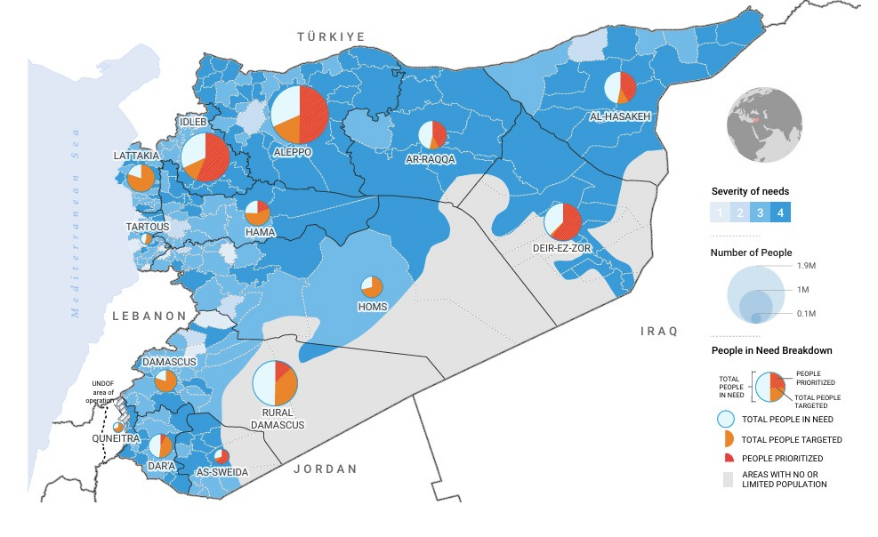
13. Internally displaced persons (IDPs)
13.1 Numbers and recent movements
13.1.1 The April 2026 OCHA report stated:
‘In 2025, Syria witnessed significant returns of IDPs from camps and out-of-camp locations. According to the IDP Taskforce, 1.5 million IDPs returned, and according to CCCM [Camp Coordination and Camp Management] approximately 1.01 million returned from camps, leading to the closure of a total of 696 IDP-camps.
‘… About 5.542 million IDPs remain in Syria, with concentrations in the northeast and northwest, including in camps and in camp-like situations. Return movements are increasing, and national mechanisms enabling returns - including from camps - are being established. Return movements are placing pressures on returnee and host communities, while vulnerable returnees face lack of shelter, damaged or destroyed housing, lack of livelihoods and lack or limited access to protection and basic services in areas of return. Protracted displacement for those who cannot return due to specific protection needs or vulnerability, is becoming semi-permanent, increasing risks of dependency, social tension, and secondary displacement. This requires protection-sensitive returns and reintegration support whilst ensuring continued support to those who cannot return.’[footnote 142]
13.1.2 In May 2026, UNHCR published a report which provided the following figures: ‘An estimated 5.54 million IDPs remain displaced in Syria. About 76% [are] living outside IDP sites while 24% are hosted in formal IDP sites … Between December 2024 and 7th May 2026, [an] estimated total of 1,898,870 IDPs returned.’[footnote 143]
13.1.3 The same source reported that an estimated 1,108,164 IDPs had departed from camps as of 7 May 2026[footnote 144].
13.2 Conditions in IDP camps
13.2.1 The April 2026 OCHA report stated:
‘At the end of 2025, according to the CCCM sector, 1.2 million IDPs remain in camps and sites designed to act as a last resort for the short term. Most last resort sites such as informal settlements/camps, planned camps and collective centres are characterised by a lack of camp management systems, poor shelter conditions, overcrowding and varying degrees of access to basic services, increasing the exposure to GBV [gender-based violence] of women, boys and girls and leaving IDPs in camps vulnerable and in need of humanitarian aid.
‘… At least 70 per cent of camps lack access to piped water, while 50 per cent have no sewage connections. These challenges were further exacerbated by the drought conditions that severely affected Syria in 2025.
‘… In the IDP camps and shelters in Aleppo, Al-Hasakeh, As-Sweida, Deir-ez-Zor and Idlib, the households are struggling to maintain basic WASH services. More than 70 per cent of the camps are not connected to water networks, and more than 50 per cent are not connected to sewage collection services. Therefore, the households in these camps rely mainly on trucked water to meet their basic water needs and septic tanks and open drainage systems for sewage collection and disposal.
‘… 69.5 per cent of the IDP sites (87 per cent-unplanned) are overcrowded sites, facing increased risks of disease outbreaks, fires, and safety hazards … 30 per cent of IDP sites flooded in 2025 with properties destroyed and humanitarian access in some camps in Idleb and Aleppo hindered … 67 per cent of IDP sites have invalid or pending HLP [housing, land and property] status, increasing the risk of evictions, land disputes, and the potential for forced evictions.
‘… According to the FSA [food security assessment], food insecurity remains widespread and uneven, with higher rates among displaced populations and camp residents, where 47.5 per cent of households are acutely food insecure.
‘… Children in IDP camps and return areas face particularly severe risks due to overcrowding, lack of services, disrupted schooling, limited civil documentation, and exposure to EO [explosive ordnance] contamination.’[footnote 145]
13.3 Issues faced by IDPs living outside of camps
13.3.1 The April 2026 OCHA report stated:
‘According to the IDP Taskforce, over 4.186 million IDPs reside outside of camps in Syria. The majority of IDPs out of camps are concentrated in Aleppo (20 per cent), Rural Damascus (19 per cent) Idleb (15 per cent), Damascus (12 per cent) and Lattakia (9 per cent) Governorates, according to August 2025 Population Task Force data. This group consists of people displaced by hostilities – many of whom are in protracted displacement or have been displaced multiple times and face heightened protection risks. This concentration of displaced populations exacerbates the shortages and access limitations present throughout the country. Out of camp IDPs face psychosocial distress due to disruption in daily routines, exposure to forced evictions, lack of access to land tenure and breakdown in the social fabric.’[footnote 146]
14. Returnees
14.1.1 In May 2025, international NGO[footnote 147] the Norwegian Refugee Council (NRC) published a report entitled ‘Beyond return: Ensuring sustainable recovery & (re)-integration in Syria’ which stated:
‘In February 2025, NRC surveyed 50 households who returned to Syria after 8 December [2024]. None had formal education or any professional training qualifying them to access local labour markets. 76% were trying to find job opportunities or start income generation, but only 31% had been able to find temporary work, with the rest reliant on a range of support including from friends and family, communities, savings or remittances. None of the 50 families were able to meet their basic needs. Additionally, a separate market and employment assessment conducted amongst returnees, showed the vast majority of families are in debt, particularly in Aleppo, Daraa, and Rural Damascus.’[footnote 148]
14.1.2 Citing various sources, the December 2025 DIS report stated:
‘… [M]any [returnees] do not remain in Syria; numerous returnees re-enter to check homes or recover property and then leave again, discouraged by economic decline, lack of services and jobs, insecurity, and political instability.
‘According to the Syrian embassy in Beirut, approximately 100,000 people have returned from Lebanon to Syria since December 2024. However, many later went back to Lebanon for work due to higher salaries there.
‘Experience from Türkiye, Lebanon, and Jordan indicates a decreasing willingness to return as awareness of conditions grows; some initial returnees have gone back to the camps or the host countries where they lived in search of more stable access to schooling, healthcare, and livelihood opportunities for their children and household, as these were lacking in the areas of Syria to which they returned.
‘An international NGO had received reports from returnees regretting early return decisions, citing reliance on incomplete information from relatives about destruction and service gaps; these returnees now advise others outside the country that conditions are not yet conducive.
‘However, return experiences vary widely by area, community, and individual circumstances … The extent of challenges varies depending on whether returnees settle in major urban centres or in rural areas, which are generally characterised by limited service provision; higher levels of destruction and mine contamination (particularly in Idlib and Aleppo governorates); weaker infrastructure and fewer livelihood opportunities. An example of limited access to services is schools in Rural Damascus, where classrooms designed for 30 pupils host around 50 after influxes of returnees, overwhelming the school system.
‘Return to rural and semi-rural areas often involves entire communities returning together. Returns tend to be more successful where basic needs can be met. However, some are returning to areas with very poor educational services and entirely destroyed houses without any services (e.g. water supply), which makes it difficult for people to remain in their area of return.
‘Despite better livelihood opportunities and services in the major cities, urban returns are characterised by higher communal tension and greater competition for limited resources. Access to services, such as water trucking, is often significantly more expensive in major cities than in rural areas. In addition, access to housing is limited in urban areas relative to the number of people returning; a situation further exacerbated by the fact that families who fled years ago have often grown substantially (e.g. a family of five becoming a family of fifteen), leading to overcrowding and limited rental capacity in many neighbourhoods.
‘Principal barriers to return mentioned by the consulted sources include lack of shelter following widespread destruction, fragile security, limited access to basic public services and scarce livelihoods.
‘According to a report published in June by the International Organization for Migration (IOM) based on data collected in June 2025, the main challenges to sustainable return reported by returnees included unemployment (77 percent), high cost of living (74 percent), poor infrastructure and living conditions (57 percent), and lack of humanitarian or development support (52 percent).’[footnote 149]
14.1.3 The April 2026 UNHCR report stated:
‘While overall livelihood patterns are similar across population groups, noteworthy differences persist, including higher unemployment among refugee returnees and relatively better access to formal employment among host communities.
‘… Concerning housing, returnees experience lower housing stability compared to host communities. While most host community households reside in their own property (62%), this proportion is notably lower among IDP returnees (49%) and refugee returnees (37%).
‘Refugee returnees in particular rely heavily on hosting arrangements with family or friends (36%), while rental accommodation remains common across all groups (around one quarter), indicating persistent housing vulnerability among returnees.
‘… Barriers to return continue to persist. Limited access to housing and basic infrastructure (including electricity and water), coupled with resource constraints and ongoing security concerns, were cited by the respondents as the main factors preventing Syrian refugees from returning to Syria.
‘… Shelter and housing remain a particularly acute concern for returnees—reported by 48% of refugee returnees and 40% of IDP returnees—compared to 18% of host community households, reflecting challenges linked to return and reintegration. Housing damage or destruction, along with high rental costs, were frequently cited as the main shelter‑related constraints.’[footnote 150]
15. Access to humanitarian aid
15.1 Numbers of people receiving aid
15.1.1 The April 2026 OCHA report stated: ‘Between January and December 2025, humanitarian actors reached an average of 3.82 million people each month with direct assistance – 32 per cent of the targeted 10.6 million, with multi-sectoral assistance; representing a 25 per cent increase compared to 2024. Most assistance prioritised those with the highest severity level of needs (level 4 and 5, 67 percent).’[footnote 151]
15.1.2 The same source also stated:
‘The response which humanitarian partners will deliver under the 2026 HNRP has been prioritised based on the needs analysis premised on the outcomes of sectoral level assessments that were conducted in 2025 and the MSNA. Current needs as well as expected trends in needs and the overall context were cross-checked against existing response capacity (such as progress towards 2025 sector targets, current operational presence and reach, and resources) and intended response coverage.
‘The 2026 HNRP therefore targets 8.6 million of the 15.6 million people assessed to be in need of humanitarian assistance. Due to limited available resources and funding that is not commensurate with the needs, the humanitarian community has prioritised 100 per cent of people with extreme levels of need (severity 4) and some portion of those with severe needs (severity 3).
‘… Programming under this HNRP is focused on sub-districts which indicate the highest severity levels of need. In 2026 out of 272 sub-districts in Syria, need severity is considered severe (177), and extreme (85) … Due to the limited funding resources that is not commensurate to the needs, this HNRP response will focus on providing the required support to meet the needs of all people in need in sub-districts with extreme needs (severity 4) and some portion of those with severe needs (severity 3) prioritised based on urgency and criticality of needs.’[footnote 152]
15.1.3 The same source included the following map:
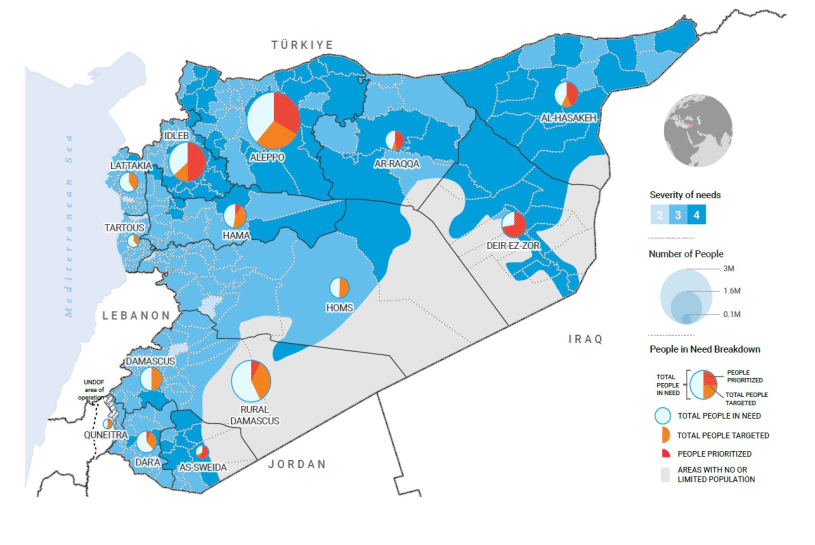
15.1.4 In February 2026, the OCHA published a report providing an overview of the humanitarian response in Syria in the year 2025. The report included the following infographic showing the total number of people who received different kinds of humanitarian assistance:
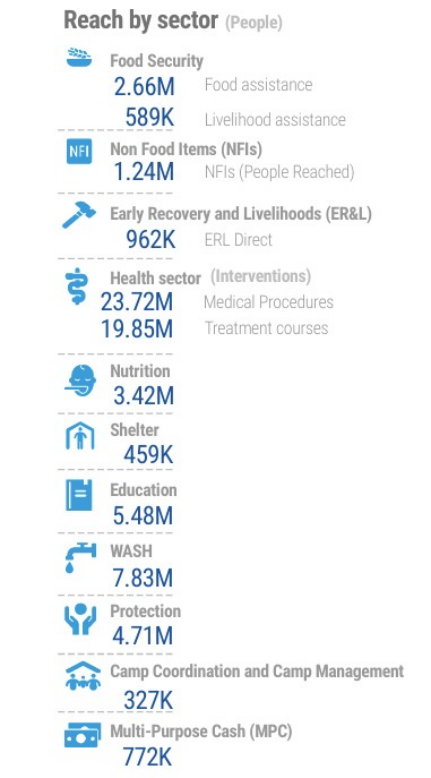
15.1.5 For more detailed information regarding these statistics, see the full report, which provides maps illustrating the number of people assisted by each sector in different parts of the country, along with graphics showing the ‘severity of needs’ levels of the people assisted.
15.2 Survey findings on aid access
15.2.1 DDD’s multi-sector needs assessments included findings on access to humanitarian aid which are outlined in the table below:
| Date of assessment | Area | Healthcare access findings |
|---|---|---|
| October 2025 | Daraa governorate | ‘Only around 7% [of households] report receiving regular food or cash support – well below observed needs … Only 12% of households report receiving any humanitarian assistance in the past six months, mostly food, NFI, cash, or health support – far from meeting aggregate needs.’[footnote 155] |
| April 2025 | Four cities in northern Syria: Afrin, Al-Bab, Aleppo and Idlib. | ‘This MSNA enquired whether the respondents had received any humanitarian assistance in the past six months. Overall, 80% reported having received humanitarian assistance, which decreases to 47% in Aleppo. ‘Almost all of the respondents, who received humanitarian assistance in the past six months, reported the available assistance is the provision of health care services. WASH sector services are reported largely in Afrin by the respondents, who reside in the camp settings. It is notable that no assistance to address food security related or the livelihoods related needs of the communities is available in the target locations.’[footnote 156] See the full report for graphs showing the percentages of respondents who received different kinds of humanitarian assistance in each of the four cities. |
| November 2025 | Lattakia and Tartous governorates | ‘[L]ess than 6% [of households] receive [food] assistance … Humanitarian assistance from NGOs is extremely limited: only 5% of households received any support in the past 6 months, and no households reported receiving protection services.’[footnote 157] |
| September 2025 | Homs and Hama governorates | ‘Only 3% [of households] reported receiving food kits or cash assistance.’[footnote 158] |
| March 2026 | Deir Ezzor governorate | ‘Regular assistance coverage is inadequate. Only 10% of households reported regular receipt of food kits or cash assistance, and 79.5% reported receiving no humanitarian assistance across any sector (food, cash, health, WASH, protection) from NGOs during the previous six months. This coverage gap stands in stark contrast with the breadth of needs identified in the survey.’[footnote 159] |
15.2.2 Citing the results of a survey of 3,061 households across 5 governorates, the December 2025 WHH/SARD/IYD report stated:
‘During the last three weeks from the data collection phase, cash assistance coverage remained extremely limited, with only 2.45% of respondents reporting that they had received cash assistance from the government, UN agencies, or INGOs/NGOs [International Non-Governmental Organisations/Non-Governmental Organisations], while the vast majority 97.55% reported receiving no support … Geographically, receipt of cash assistance was highly concentrated, with Aleppo accounting for 45.33% of all recipients, followed by Homs 25.33%, Hama 17.33%, Dara’a 10.67%, and Idleb 1.33%, reflecting uneven coverage across governorates. By population type, returness represented the largest share of recipients at 45.33%, followed by residents’ households at 40.00%, while IDPs accounted for only 14.67%, stressing that IDPs remain comparatively underreached despite their high vulnerability.’[footnote 160]
15.2.3 The April 2026 UNHCR report stated:
‘Among interviewed households, 45% reported being able to access humanitarian services to meet their needs, while 55% reported being unable to do so. Among those who accessed assistance, support was most commonly provided by INGOs/NGOs (38%) and community groups (36%), followed by UN agencies (15%) and government actors (11%). However, among respondents who were unable to access humanitarian services, the main barriers were the unavailability of needed services (72%), lack of information on available support (23%), and the absence of service providers (17%).’[footnote 161]
15.3 Food security assistance
15.3.1 In February 2026, OCHA published a report outlining the numbers of people who received humanitarian assistance in the year 2025, excluding the humanitarian response to the escalation in southern Syria between July and December. The report included the following infographic:
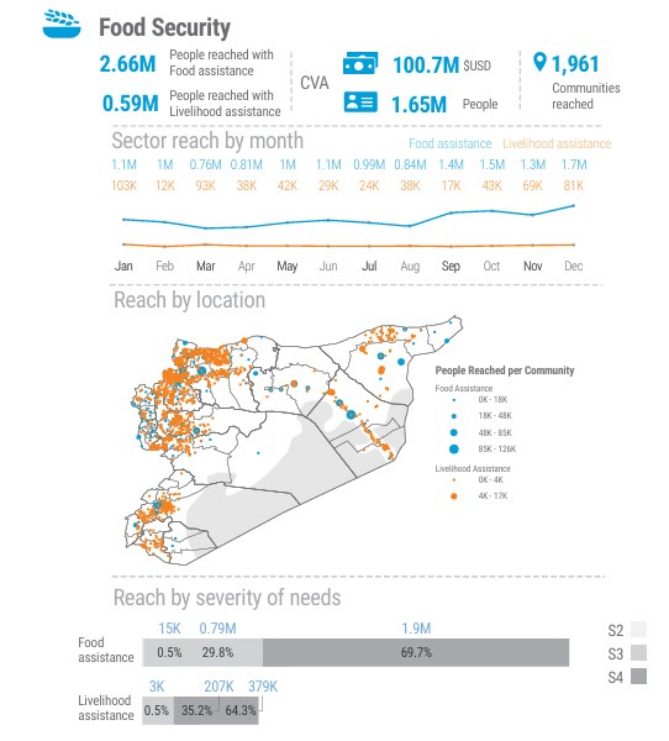
15.3.2 In March 2026, the WFP published a report on Syria which stated: ‘In February, WFP reached 1.2 million people with targeted food and cash assistance, while the second phase of the bread subsidy project continued across six governorates, supporting 5.3 million people with daily subsidized bread through over 300 bakeries.’[footnote 163] Due to funding constraints, WFP halted its bread subsidy project in May 2026 and significantly reduced its emergency food assistance (see paragraph 14.5.4).
15.3.3 The March 2026 FEWS NET report stated:
‘Humanitarian food assistance has become an important component of household food access following years of conflict, displacement, and poor economic conditions. Assistance programs implemented by humanitarian agencies and local partners have supported displaced populations and other acutely food-insecure households across the country. However, the scale, coverage, and consistency of assistance have varied over time due to operational constraints, funding availability, and access challenges associated with Syria’s fragmented governance landscape.
‘… Humanitarian assistance remains a critical lifeline for millions across Syria, but deepening funding shortfalls have forced agencies to scale back support. Food assistance deliveries in 2025 dropped below levels recorded in 2024 due to funding gaps and operational constraints, including insecurity, infrastructure damage, electricity outages, and fuel shortages that reduced distribution capacity countrywide. Assistance distributions are thus increasingly prioritized for areas where the impacts of conflict, drought, and other shocks are most acute, while other regions, such as parts of Damascus, receive comparatively limited coverage … [T]he quantity of food assistance provided remains insufficient to prevent widespread food consumption gaps.’[footnote 164]
15.3.4 In May 2026, WFP published an article entitled ‘WFP scales back food assistance in Syria amid funding shortfalls’ (the May 2026 WFP article) which stated: ‘In 2025, WFP reached 5.8 million people across all 14 governorates through a combination of emergency food assistance, bread subsidies, nutrition support, livelihoods programmes, and social protection.’[footnote 165] A WFP report published in January 2026 noted that WFP’s work in Syria in 2025 was based on a ‘highly prioritized plan focused on the most severely food insecure.’[footnote 166]
15.4 Groups with reduced access
15.4.1 The April 2026 OCHA report stated: ‘Across Syria, women and girls continue to face greater barriers than men and boys in safely accessing aid and essential services.’[footnote 167] For further information see the CPIN Syria: Women.
15.5 Funding constraints
15.5.1 The Syria section of the OCHA’s ‘Global Humanitarian Overview 2026’, published in December 2025, stated:
‘As of 6 November 2025, the Syria 2025 Humanitarian Response Priorities is funded at only 26 per cent, leaving critical gaps across sectors:
‘… 15.4 million people, or 65 per cent of the Syrian population, will continue to be exposed to the risks from EO contamination.
‘89 per cent of IDP sites (1,526 sites) across northwest, northeast, and southern governorates, will remain highly vulnerable to flooding, fires, and disease outbreaks during the 2025–2026 winter season.
‘About 2 million children and adults will not receive education assistance in 2025. …
‘One million severely food-insecure people and those at risk of severe food insecurity have been left without monthly food assistance, while only 8 per cent of the targeted families received emergency agricultural livelihood support.
‘The operation of 417 health facilities has been affected, with 366 (15 per cent) suspended or operating at reduced capacity, leaving 7.4 million people without access to basic health services.
‘Over 500,000 targeted people in need are at risk of being left without adequate shelter, exposing them to overcrowding, lack of privacy, and heightened protection concerns, including increased GBV [gender-based violence] risks.
‘More than 1,500,000 prioritised people in need will not have access to essential winterization assistance, leaving them vulnerable to harsh weather conditions and associated health complications.
‘Over 1,200,000 prioritised vulnerable people in need will remain without access to basic NFIs, significantly compromising their well-being and ability to recover.
‘WASH partners decreased or suspended the provision of the WASH humanitarian response in more than 350 camps in northeast and northwest Syria, leaving more than 250,000 IDPs with limited access to basic WASH services.
‘In northeast Syria, WASH partners suspended/decreased the provision of trucked water to the most vulnerable communities in Al Hasakeh, impacting access to water for more than 100,000 people.’[footnote 168]
15.5.2 The January 2026 WFP report stated:
‘Funding shortfalls amid persistent humanitarian needs are severely constraining WFP’s capacity to respond to Syria’s overlapping crises … WFP urgently requires USD 160 million [approx. 119.5 million GBP] over the next six months (February – July 2025) to keep hope alive for millions of Syrians. Without a minimum of USD 100 million [approx. 74.7 million GBP] secured by February 2026, pipeline will break by April, forcing WFP to halt the nationwide bread subsidy project - currently the country’s only humanitarian large-scale social support system - and scale-down emergency food assistance from 1.6 million to 1 million people monthly. Nutrition programs supporting over 100,000 pregnant and lactating women, girls, and children will also face suspension starting in April.’[footnote 169] In May 2026, WFP halted its bread subsidy project and significantly reduced its emergency food assistance (see paragraph 14.5.4).
15.5.3 The April 2026 OCHA report stated:
‘Due to funding reduction, humanitarian assistance will remain incommensurate to the needs and therefore targeting will have to be prioritised and the limited resources will be allocated to address the most critical needs in areas with the highest severity of needs.
‘… The 2026 HNRP targets only 8.6 of the 15.6 million Syrians in need of humanitarian assistance. The targeting has been strictly conducted based on the severity of needs with only those with the extreme (severity 4) and some portion of those with severe needs (severity 3). At least 7.3 million people with severe levels of need (severity 3), as well as 53,100 people in Intersectoral severity 2, will not be targeted under this HNRP. The reduction in targeting reflects prioritisation due to resource constraints rather than a structural decline in vulnerability. Millions with moderate or severe needs remain at risk of deterioration, particularly in economically fragile and high-return areas.
‘While the humanitarian community recognizes and remains committed to addressing the needs of all who require humanitarian assistance across the country, prioritisation has to be enforced due to major resource gaps/funding shortfalls across all sectors. In 2025 the HRP was only funded at 33.4 per cent while in 2024 it was funded at 37.5 per cent, limiting the capacity of the humanitarian community to respond at scale – on average only 3.82 million people out of the targeted 10.3 million were reached with humanitarian assistance per month across all sectors.
‘Immediate additional funding to the humanitarian response in Syria is required at this critical time. Without adequate funding, humanitarian partners will be unable to address the situation, and progress achieved thus far will be reversed.’[footnote 170]
15.5.4 In May 2026, WFP reported:
‘Critical funding shortfalls are forcing the United Nations World Food Programme (WFP) to significantly scale back its operations in Syria. WFP has reduced its emergency food assistance by 50 percent, from 1.3 million people to 650,000 in May [2026], and halted a nationwide bread subsidy programme that has supported millions daily.
‘In 2025, WFP reached 5.8 million people across all 14 governorates through a combination of emergency food assistance, bread subsidies, nutrition support, livelihoods programmes, and social protection. Even though these programmes address the most urgent needs, ongoing funding constraints are now forcing a further reduction in [WFP’s] coverage from fourteen to just seven governorates.
‘… WFP requires USD 189 million [143 million GBP] over the next six months (June–November 2026) to sustain and restore life-saving assistance inside Syria. Timely funding will allow WFP to reach 1.6 million of the most vulnerable people, maintain critical nutrition support, safeguard access to affordable bread for millions more and help prevent further deterioration at a moment that remains pivotal for Syria’s recovery.
‘Despite constraints, WFP continues to prioritize emergency food assistance, targeted nutrition programmes, and support to livelihoods and national systems, while working with partners to mobilize additional funding and scale up operations as resources allow.’[footnote 171]
15.6 Assistance specifically designated for returnees
15.6.1 The Syria is Home website’s Frequently Asked Questions page stated:
‘Is financial support or cash assistance available for returnees?
‘… If you were a Syrian refugee who has returned permanently to Syria, your family may be considered for a one-time cash grant of USD 600 [448.00 GBP] from UNHCR Syria to help support your return and reintegration. Support will be prioritized for the most vulnerable households, and each case will be assessed individually in line with established eligibility criteria.
‘… Is food assistance available for returnees?
‘The World Food Programme (WFP) provides food assistance to returnees on the move at border crossing points in close coordination with UNHCR Syria …
‘… What support and services by UNHCR are available in Syria?
‘UNHCR Syria provides assistance to Syrian refugee returnees and Internally Displaced People (IDPs) inside Syria through a wide network of community centres and mobiles units across 14 governorates.
‘The assistance and support offered by UNHCR include:
‘Protection services: delivered through the UNHCR-supported community centres and mobile units– include legal assistance to access to civil documentation and housing, land and property (HLP) rights, child protection, psychosocial support services, specialized services for those living with disabilities, support to vulnerable cases, including survivors of gender-based violence.
‘Assistance: UNHCR may also provide shelter, livelihood and cash assistance, as well as core relief items for cases in need, in line with established eligibility criteria.’[footnote 172]
15.6.2 The same website’s page on ‘Employment and economic conditions’ stated: ‘Several organizations, including UN agencies, NGOs, and local national institutions, offer livelihood programs to support returnees. However, the availability of these programs depends on your location and specific circumstances. It is recommended that you check with the nearest UNHCR community centre or municipality, to understand what support is currently available.’[footnote 173]
15.6.3 The Syria is Home website also provides information on the following topics:
-
Documentation and legal matters
-
Border and customs regulations
-
Protection and safety
-
Assistance and financial support
-
Housing and shelter, land and property
-
Employment and economic conditions
-
Healthcare
-
Education
15.6.4 In December 2025, UNHCR published a report about its cash assistance programme for Syrian returnees. The report stated:
‘In Syria, UNHCR provides targeted one-off cash assistance to vulnerable refugee returnees to support priority needs and immediate stability upon return. Eligibility is based on vulnerability and limited to individuals whose cases were closed in the country of asylum due to return, who previously qualified for basic subsistence assistance. The cash assistance is designed to address a range of critical needs, including basic subsistence, shelter, health, education, and protection-related priorities, contributing to safer and more sustainable return. Until mid-November 2025, more than 36,000 refugee returnee families (over 115,000 individuals) were supported upon arrival to Syria through this assistance. Each household initially received USD 600 [448.00 GBP].
‘In parallel, UNHCR provided shelter grants to 6,194 vulnerable individuals, including internally displaced persons (IDPs), IDP returnees, refugee returnees, and host community members. Eash assisted household received USD 1,300- 3,500 [971- 2,613 GBP] for shelter repairs, with the amount determined by the level of assessed shelter damage. Assistance also included return grants for IDP returnees from Areesha camp. Complementing shelter and basic needs support, UNHCR delivered cash for livelihoods assistance to 1,439 households, amounting to USD 2.2 million [approx. 1.6 million GBP], to support income-generating activities and strengthen self-reliance.’[footnote 174]
Terms of reference
The ‘Terms of Reference’ are the main topics and issues relevant to the scope of this note and provide the framework for the country information. In this note, they were:
-
socio-economic indicators, including statistics on life expectancy, literacy, school enrolment, poverty rates, levels of malnutrition
-
socio-economic situation, including access and availability to:
-
food
-
water for drinking and washing
-
accommodation and shelter
-
employment
-
healthcare – physical and mental
-
support providers, including government and international and domestic non-governmental organisations
-
variation of conditions by location and/or group
-
whether government is purposely withholding or not delivering support services, if so to which areas/groups
-
-
internally displaced persons (IDPs) – numbers and living conditions
-
returnees – living conditions and unique challenges
Bibliography
Sources cited
Al-Ikhbariah, Minister of Public Works: The issue of informal settlements and destroyed areas is a priority and we are working to build 100,000 homes (translated by CPIT), 20 September 2025. Accessed: 27 March 2026
Danish Immigration Service (DIS), Syria: Security Situation, Return and Documents, December 2025. Accessed: 19 May 2026
Danish Refugee Council (DRC),
-
About us, no date. Accessed: 20 March 2026
-
Syria: Labour Market Assessment Report, 17 March 2026. Accessed: 20 March 2026
Dünya Doktorları Derneği (DDD),
-
Home, no date. Accessed: 16 May 2026
-
Multi-sectoral needs assessment report – Deir Ezzor Governorate, Northeast Syria (March 2026), 14 April 2026. Accessed: 14 April 2026
-
Multi-sectoral needs assessment – Syria after the new order: “quo vadis?” - I, 13 June 2025, Accessed: 14 April 2026
-
Multi-sectoral needs assessment – Syria after the new order: “quo vadis?” – II (September 2025), 12 September 2025. Accessed: 14 April 2026
-
Multi-sectoral needs assessment – Syria after the new order: “quo vadis?” – III (October 2025), 30 October 2025. Accessed: 14 April 2026
-
Multi-sectoral needs assessment – Syria after the new order: “quo vadis?” - IV, 27 November 2025. Accessed: 14 April 2026
Enab Baladi,
-
About us, no date. Accessed: 20 May 2026
-
House rents in Syria: Inflation without intervention, 16 February 2025. Accessed: 20 May 2026
European Union Agency for Asylum (EUAA), Syria: Country Focus, 7 July 2025. Accessed: 18 May 2026
Famine Early Warning Systems Network (FEWS NET),
-
About FEWS NET, no date. Accessed: 19 May 2026
-
Syria Food Security Outlook: Insecurity, drought, and economic constraints drive outcomes aligned with Crisis (February – September 2026), 10 March 2026. Accessed: 19 May 2026
-
Syria Food Security Outlook Update: April – September 2026, April 2026. Accessed: 19 June 2026
-
What is the IPC?, no date. Accessed: 19 May 2026
GOAL,
-
Multi-Sector Needs Assessment, 15 April 2026. Accessed: 12 May 2026
-
Who we are, no date. Accessed: 12 May 2026
Government of Syria and World Food Programme (WFP), Syria: Food Security Assessment 2025 – Summary of results, 11 January 2026. Accessed: 16 May 2026
Hawar News Agency, Living crisis in Syria, anticipation of Geneva negotiations dominate media coverage, 17 February 2026. Accessed: 12 May 2026
International Humanitarian Relief Association (IYD), About IYD Relief, no date. Accessed: 2 June 2026
International Labor Organization (ILO), Syrian Arab Republic: The Employment, Environment, Climate Nexus Factsheet, 23 October 2025. Accessed: 22 June 2026
International Organization for Migration (IOM), Syrian Arab Republic – Population Mobility and Baseline Assessment – Round 10 (November 2025), 19 December 2025. Accessed: 20 May 2026
Médecins Sans Frontières (MSF), MSF Syria: Challenges in northeast persist, humanitarian needs increasing, 6 November 2025. Accessed: 19 May 2026
North Press Agency (NPA),
-
About us, no date. Accessed: 19 May 2026
-
Salary increases fail to ease economic hardship – Syrian official, 11 October 2025. Accessed: 19 May 2026
Norwegian Refugee Council (NRC),
-
About NRC, no date. Accessed: 22 June 2026
-
Beyond return: Ensuring sustainable recovery & (re)-integration in Syria, 15 May 2025. Accessed: 22 June 2026
REACH,
-
Humanitarian Situation Overview of Syria (HSOS) July – August 2025, 22 September 2025. Accessed: 18 May 2026
-
Syria: Humanitarian Situation Monitoring (HSM) Factsheet, March 2026, 30 April 2026. Accessed: 21 May 2026
-
Syria: Joint Market Monitoring Initiative (JMMI) 13-20 October 2025, 4 December 2025. Accessed: 17 May 2026
-
Syria Nationwide Housing Damage Assessment, 23 January 2026. Accessed: 20 May 2026
-
Unpacking the effects of thirteen years of crisis: A snapshot of humanitarian needs in post-Assad Syria (January 2025 – Whole of Syria), 22 January 2025. Accessed: 2 June 2026
-
What we do, no date. Accessed: 18 May 2026
ReBUILD for Resilience,
-
About us, no date. Accessed: 23 June 2026
-
Health financing in Syria: From fragmentation and donor dependence to a phased and nationally-led transition, March 2026. Accessed: 23 June 2026
ReliefWeb, Shelter Cluster, no date. Accessed: 25 March 2026
SP Today, Home, accessed 18 May 2026
Syria is Home,
-
About, no date. Accessed: 21 May 2026
-
Frequently Asked Questions, no date. Accessed: 21 May 2026
-
Healthcare, no date. Accessed: 23 June 2026
Syria Justice and Accountability Centre (SJAC), About, no date. Accessed: 26 March 2026
Syria in Transition,
-
About, no date. Accessed: 23 March 2026
-
We need to talk about cost of living, 29 December 2025. Accessed: 23 March 2026
Syrian Association for Relief and Development (SARD), Home, no date. Accessed: 2 June 2026
The Syria Report,
-
About The Syria Report, no date. Accessed: 27 March 2026
-
Rental Prices in Aleppo Soar Following Return of Refugees, 7 October 2025. Accessed: 27 March 2026
United Nations Office for the Coordination of Humanitarian Affairs (OCHA),
-
Global Humanitarian Overview 2026: Syrian Arab Republic, 8 December 2025. Accessed: 20 May 2026
-
Syrian Arab Republic: Humanitarian Needs and Response Plan, 2 April 2026. Accessed: 18 May 2026
-
Syrian Arab Republic: Humanitarian Response Priorities (January to December 2025), 24 July 2025. Accessed: 16 May 2026
-
Syrian Arab Republic: Overview of humanitarian response (January – December 2025), 13 February 2026. Accessed: 18 May 2026
United Nations High Commissioner for Refugees,
-
Comprehensive Overview of IDPs and IDP Returns Dashboard, 7 May 2026. Accessed: 7 May 2026
-
Syria: Protection and Reintegration Insights – Voices of returnees and host communities across Syria (January – March 2026), 28 April 2026. Accessed: 21 May 2026
United Nations Children’s Fund (UNICEF), UNICEF Data Warehouse, no date. Accessed: 20 May 2026
United Nations Population Fund (UNFPA), Syrian Arab Republic Population 2025, no date. Accessed: 20 May 2026
World Bank, Macro Poverty Outlook, April 2026. Accessed: 19 June 2026
World Bank Blogs, What do the revised 2017 Purchasing Power Parities (PPPs) mean for global poverty?, 6 June 2024. Accessed: 20 May 2026
World Bank Data,
-
Literacy rate, adult total (% of people ages 15 and above) – Syrian Arab Republic, no date. Accessed: 18 May 2026
-
Unemployment, youth total (% of total labor force ages 15-24) (modelled ILO estimate) – Syrian Arab Republic, no date. Accessed: 19 June 2026
World Bank, Data: Syrian Arab Republic, no date. Accessed: 18 May 2026
Welthungerhilfe, About us, no date. Accessed: 2 June 2026
Welthungerhilfe (WHH), Syrian Association for Relief and Development (SARD), and International Humanitarian Relief Association (IYD), Syria: Joint Multi-Sectoral Needs Assessment (JMSNA) December 2025, 31 December 2025. Accessed: 12 May 2026
World Food Programme (WFP),
-
Technical Guidance for WFP: Consolidated Approach to Reporting Indicators of Food Security (CARI), December 2021. Accessed: 19 May 2026
-
WFP scales back food assistance in Syria amid funding shortfalls, 13 May 2026. Accessed: 19 June 2026
World Food Programme (WFP) Syria,
-
Monthly Market Price Bulletin, March 2026 (page 4, footnote 2), 14 May 2026. Accessed: 20 May 2026
-
Monthly Market Price Bulletin: November 2025, 4 January 2026. Accessed: 20 May 2026
-
WFP Syria External Situation Report, December 2025, 28 January 2026. Accessed: 20 May 2026
World Health Organization (WHO),
-
Public Health Situation Analysis – Syrian Arab Republic, 4 May 2026. Accessed: 20 May 2026
-
Remarks by Christina Bethke, WHO Acting Representative to Syria at the UN Press Briefing in Geneva on Syria’s health transition gap, 4 November 2025. Accessed: 19 June 2026
Xe.com, 1 USD to GBP – Convert US Dollars to British Pounds, accessed 18 May 2026
Sources consulted but not cited
ACAPS, Country analysis: Syria, no date. Accessed: 12 May 2026
Action for Humanity, Civilian Perspectives on Humanitarian Needs and Recovery Priorities in Syria, 13 March 2026. Accessed: 11 May 2026
Arab News, What the World Bank’s latest growth projection reveals about Syria’s economy, 15 October 2025. Accessed: 12 May 2026
BBC News, Syria’s worst drought in decades pushes millions to the brink, 17 September 2025. Accessed: 12 May 2026
Enab Baladi, Low Teacher Pay Puts Pressure on Education Quality in Darayya, 14 February 2026. Accessed: 30 March 2026
Etana Syria, Syria’s economic recovery depends on small businesses and community initiatives, no date. Accessed: 12 May 2026
Food and Agriculture Organization of the United Nations (FAO) and World Food Programme (WFP), Hunger Hotspots: FAO – WFP early warnings on acute food insecurity, November 2025 to May 2026 outlook, 12 November 2025. Accessed: 12 May 2026
GOAL, International Rescue Committee (IRC), Mercy Corps, Solidarités International, Syria Returnee Rapid Assessment (May 2025), 19 June 2025. Accessed: 13 March 2026
Global Hunger Index, Syrian Arab Republic, no date. Accessed: 1 April 2026
Health Cluster and World Health Organization (WHO),
-
Syria: Health Sector Bulletin – March 2026, 1 April 2026. Accessed: 1 April 2026
-
Syria: Health Sector Bulletin – January 2026, 1 April 2026. Accessed: 1 April 2026
-
Whole of Syria Health Sector Annual Highlights 2025, 1 April 2026. Accessed: 12 May 2026
House of Commons Library, Syria one year after Assad: Reconstruction and sanctions, 22 December 2025. Accessed: 18 March 2026
Kassioun, 7.2 million: The minimum living costs for a family at the start of 2026 (translated by CPIT), 29 December 2025. Accessed: 19 May 2026
Médecins Sans Frontières (MSF), What does Syria look like a year since the fall of Assad?, 11 December 2025. Accessed: 30 April 2026
REACH,
-
Humanitarian Situation Overview in Syria (HSOS) April 2025, 30 April 2025. Accessed: 24 March 2026
-
Syria Nationwide Market Network Analysis (July – August 2025), 3 November 2025. Accessed: 21 May 2026
Syria Direct, How has Syria’s economy changed in a year without Assad?, 16 December 2025. Accessed: 20 May 2026
Syrian Future Movement,
-
The housing crisis in Syria between destruction and slums, 21 September 2025. Accessed: 27 March 2026
-
Results of the Household Food Security Survey in Syria, 15 January 2026. Accessed: 15 May 2026
Syrian Investigative Reporting for Accountability Journalism (SIRAJ),
-
Residential Property Claims in Syria: A Growing Challenge for Returnees, 27 January 2026. Accessed: 22 June 2026
-
Who we are, no date. Accessed: 22 June 2026
The Syria Report, Reconstruction Boom in Southern Idlib Countryside Leads to a Hike in Construction Wages, 28 October 2025. Accessed: 20 March 2026
United Nations Office for the Coordination of Humanitarian Affairs (OCHA),
-
Briefing to the Security Council on the humanitarian situation in Syria by Lisa Doughten, Director, Financing and Partnerships Division, OCHA, on behalf of Tom Fletcher, USG for Humanitarian Affairs and Emergency Relief Coordinator, 13 February 2026. Accessed: 13 May 2026
-
Syrian Arab Republic: At a glance – Urgently Prioritized Humanitarian Response Priorities 2025, 24 July 2025. Accessed: 12 May 2026
-
Syrian Arab Republic: Flash Update No. 2 | The Humanitarian Situation in East Syria (As of 26 January 2026), 26 January 2026. Accessed: 22 March 2026
-
Syrian Arab Republic: Humanitarian Overview Issue No. 3 – December 2025 – A Year in Review, 3 February 2026. Accessed: 12 May 2026
-
Syrian Arab Republic: Humanitarian Overview Issue No. 2 – November 2025, 23 December 2025. Accessed: 12 May 2026
-
Syria: Humanitarian Response in Aleppo and the North-East – Humanitarian Situation Report No. 4 (As of 4 March 2026), 8 March 2026. Accessed: 8 May 2026
United Nations High Commissioner for Refugees (UNHCR),
-
Coming Home: One Year into Syria’s Transition, 11 December 2025. Accessed: 14 May 2026
-
UNHCR Syria Shelter and Infrastructure, November 2025, 25 December 2025. Accessed: 21 May 2026
United Nations Children’s Fund (UNICEF), UNICEF Syrian Arab Republic Humanitarian Situation Report No. 15 – September 2025, 29 October 2025. Accessed: 8 May 2026
World Bank,
-
Syria’s Post-Conflict Reconstruction Costs Estimated at $216 billion, 21 October 2025. Accessed: 27 March 2026
-
Syria Macro-Fiscal Assessment, 30 June 2025. Accessed: 20 May 2026
World Food Programme (WFP), WFP: Relative improvement in food security in Syria; 6.7 million assisted in January, 10 March 2026. Accessed: 1 April 2026
World Health Organization (WHO),
-
Public Health Situation Analysis – Syrian Arab Republic, 23 July 2025. Accessed: 22 May 2026
-
Syrian Arab Republic: WHO Health Emergency Appeal 2026, 3 February 2026. Accessed: 7 May 2026
Version control and feedback
Clearance
Below is information on when this note was cleared:
-
version 3.0
-
valid from 29 June 2026
Official – sensitive: Not for disclosure – Start of section
The information on this page has been removed as it is restricted for internal Home Office use.
Official – sensitive: Not for disclosure – End of section
Changes from last version of this note
Updated COI and Assessment.
Feedback to the Home Office
We welcome feedback on how to improve our products. If you would like to comment on this note, please email the cipu@homeoffice.gov.uk.
Independent Advisory Group on Country Information
The Independent Advisory Group on Country Information (IAGCI) was set up in March 2009 by the Independent Chief Inspector of Borders and Immigration to support them in reviewing the efficiency, effectiveness and consistency of approach of COI produced by the Home Office.
The IAGCI welcomes feedback on the Home Office’s COI material. It is not the function of the IAGCI to endorse any Home Office material, procedures or policy. The IAGCI may be contacted at:
Independent Advisory Group on Country Information
Independent Chief Inspector of Borders and Immigration
3rd Floor
28 Kirby Street
London
EC1N 8TE
Email: chiefinspector@icibi.gov.uk
Information about the IAGCI’s work and a list of the documents which have been reviewed by the IAGCI can be found on the Independent Chief Inspector’s pages of the gov.uk website.
-
Xe.com, 1 USD to GBP – Convert US Dollars to British Pounds, accessed 18 May 2026 ↩
-
UNFPA, Syrian Arab Republic Population 2025, no date ↩
-
UNFPA, Syrian Arab Republic Population 2025, no date ↩
-
UNFPA, Syrian Arab Republic Population 2025, no date ↩
-
UNFPA, Syrian Arab Republic Population 2025, no date ↩
-
UNICEF, UNICEF Data Warehouse, no date ↩
-
World Bank Blogs, What do the revised 2017 Purchasing Power Parities…, 6 June 2024 ↩
-
World Bank, Syria Macro-Fiscal Assessment (page 6), 30 June 2025 ↩
-
World Bank Blogs, What do the revised 2017 Purchasing Power Parities…, 6 June 2024 ↩
-
World Bank, Syria Macro-Fiscal Assessment (page 6), 30 June 2025 ↩
-
UNOCHA, 2024 Humanitarian Needs Overview: Syrian Arab… (Page 81), 3 March 2024 ↩
-
World Bank Data, Data: Literacy rate, adult total…, no date ↩
-
UNFPA, Syrian Arab Republic Population 2025, no date ↩
-
UNFPA, Syrian Arab Republic Population 2025, no date ↩
-
UNFPA, Syrian Arab Republic Population 2025, no date ↩
-
World Bank, Data: Syrian Arab Republic (Education), no date ↩
-
EUAA, Syria: Country Focus (page 65), 7 July 2025 ↩
-
OCHA, Syrian Arab Republic: Humanitarian Response Priorities… (pages 8, 30), 24 July 2025 ↩
-
REACH, What we do, undated ↩
-
REACH, Humanitarian Situation Overview of Syria… (pages 1, 3), 22 September 2025 ↩
-
REACH, Humanitarian Situation Overview of Syria… (page 2), 22 September 2025 ↩
-
DIS, Syria: Security Situation, Return and Documents (page 7), December 2025 ↩
-
FEWS NET, About FEWS NET, no date ↩
-
FEWS NET, Syria Food Security Outlook: Insecurity, drought… (page 2), 10 March 2026 ↩
-
OCHA, Syrian Arab Republic: Humanitarian Needs and Response Plan (page 8), 2 April 2026 ↩
-
World Bank, Macro Poverty Outlook (pages 184 – 185), April 2026 ↩
-
REACH, Unpacking the effects of thirteen years of crisis: A snapshot… (page 4), 22 January 2025 ↩
-
OCHA, Syrian Arab Republic: Humanitarian Response Priorities… (pages 8, 30), 24 July 2025 ↩
-
NPA, Salary increases fail to ease economic hardship – Syrian official, 11 October 2025 ↩
-
Syria in Transition, We need to talk about cost of living, 29 December 2025 ↩
-
REACH, Syria: Joint Market Monitoring Initiative… (page 1), 4 December 2025 ↩
-
REACH, Syria: Joint Market Monitoring Initiative… (page 9), 4 December 2025 ↩
-
REACH, Syria: Joint Market Monitoring Initiative… (page 3), 4 December 2025 ↩
-
WFP Syria, Monthly Market Price Bulletin: November 2025 (pages 3 – 4), 4 January 2026 ↩
-
Hawar News Agency, Living crisis in Syria, anticipation of Geneva…, 17 February 2026 ↩
-
FEWS NET, Syria Food Security Outlook: Insecurity, drought… (page 2), 10 March 2026 ↩
-
DRC, Syria: Labour Market Assessment Report (page 5), 17 March 2026 ↩
-
DRC, Syria: Labour Market Assessment Report (page 5), 17 March 2026 ↩
-
DRC, Syria: Labour Market Assessment Report (pages 6, 18, 19, 29, 43), 17 March 2026 ↩
-
FEWS NET, Syria – Food Security Outlook Update: April… (page 1), April 2026 ↩
-
WFP Syria, Monthly Market Price Bulletin, March 2026 (page 4, footnote 2), 14 May 2026 ↩
-
WFP Syria, Monthly Market Price Bulletin, March 2026 (pages 1, 3, 4), 14 May 2026 ↩
-
World Bank, Data: Syrian Arab Republic (Economic), no date ↩
-
World Bank, Unemployment, youth total (% of total labor…, no date ↩
-
ILO, Syrian Arab Republic: The Employment, Environment, Climate… (page 1), 23 October 2025 ↩
-
EUAA, Syria: Country Focus (page 68), 7 July 2025 ↩
-
IYD, About IYD Relief, no date ↩
-
WHH/SARD/IYD, Syria: Joint Multi-Sectoral Needs… (pages 4, 20), 31 December 2025 ↩
-
WHH/SARD/IYD, Syria: Joint Multi-Sectoral Needs… (pages 5, 34, 37), 31 December 2025 ↩
-
FEWS NET, Syria Food Security Outlook: Insecurity, drought… (page 2), 10 March 2026 ↩
-
DRC, Syria: Labour Market Assessment Report (pages 4, 6, 19), 17 March 2026 ↩
-
UNHCR, Syria: Protection and Reintegration Insights… (page 3), 28 April 2026 ↩
-
UNHCR, Syria: Protection and Reintegration Insights… (page 4), 28 April 2026 ↩
-
UNHCR, Syria: Protection and Reintegration Insights… (pages 5, 6), 28 April 2026 ↩
-
UNFPA, Syrian Arab Republic Population 2025, no date ↩
-
OCHA, Syrian Arab Republic: Humanitarian Needs and Response Plan (pages 8, 9), 2 April 2026 ↩
-
OCHA, Joint and Intersectoral Analysis Framework… (page 5), 31 July 2024 ↩
-
OCHA, Joint and Intersectoral Analysis Framework… (page 6), 31 July 2024 ↩
-
OCHA, Joint and Intersectoral Analysis Framework… (page 46), 31 July 2024 ↩
-
OCHA, Syrian Arab Republic: Humanitarian Needs and Response Plan (page 12), 2 April 2026 ↩
-
OCHA, Syrian Arab Republic: Humanitarian Needs and Response Plan (page 46), 2 April 2026 ↩
-
GOAL, Who we are, no date ↩
-
GOAL, Multi-Sector Needs Assessment (pages 9, 19, 13), 15 April 2026 ↩
-
GOAL, Multi-Sector Needs Assessment (pages 6, 29, 30, 60), 15 April 2026 ↩
-
WHO, Public Health Situation Analysis – Syrian Arab Republic (page 5), 4 May 2026 ↩
-
OCHA, Syrian Arab Republic: Humanitarian Needs and Response Plan (page 63), 2 April 2026 ↩
-
OCHA, Syrian Arab Republic: Humanitarian Needs and Response Plan (page 62), 2 April 2026 ↩
-
EUAA, Syria: Country Focus (page 71), 7 July 2025 ↩
-
Al-Ikhbariah, Minister of Public Works: The issue of… (translated by CPIT), 20 September 2025 ↩
-
ReliefWeb, Shelter Cluster, no date ↩
-
REACH, Syria Nationwide Housing Damage Assessment (page 1), 23 January 2026 ↩
-
REACH, Syria Nationwide Housing Damage Assessment (pages 1, 2), 23 January 2026 ↩
-
REACH, Syria Nationwide Housing Damage Assessment (pages 2, 7, 15, 16), 23 January 2026 ↩
-
REACH, Syria Nationwide Housing Damage Assessment (page 15), 23 January 2026 ↩
-
EUAA, Syria: Country Focus (pages 82, 72), 7 July 2025 ↩
-
SIRAJ, Who we are, no date ↩
-
SIRAJ, Residential Property Claims in Syria: A Growing Challenge for Returnees, 27 January 2026 ↩
-
OCHA, Syrian Arab Republic: Humanitarian Needs and Response Plan (page 38), 2 April 2026 ↩
-
Enab Baladi, House rents in Syria: Inflation without intervention, 16 February 2025 ↩
-
EUAA, Syria: Country Focus (page 78), 7 July 2025 ↩
-
The Syria Report, About The Syria Report, no date ↩
-
The Syria Report, Rental Prices in Aleppo Soar Following Return of Refugees, 7 October 2025 ↩
-
IOM, Syrian Arab Republic – Population Mobility and… (page 8), 19 December 2025 ↩
-
IOM, Syrian Arab Republic – Population Mobility and… (page 3), 19 December 2025 ↩
-
WHH/SARD/IYD, Syria: Joint Multi-Sectoral Needs… (pages 69, 70), 31 December 2025 ↩
-
REACH, Syria Nationwide Housing Damage Assessment (page 19), 23 January 2026 ↩
-
WFP, Technical Guidance for WFP: Consolidated Approach to… (page 5), December 2021 ↩
-
WFP, Technical Guidance for WFP: Consolidated Approach to… (page 14), December 2021 ↩
-
Government of Syria/WFP, Syria: Food Security Assessment… (pages 2 – 5), 11 January 2026 ↩
-
FEWS NET, What is the IPC?, no date ↩
-
FEWS NET, What is the IPC?, no date ↩
-
FEWS NET, Syria Food Security Outlook: Insecurity, drought… (page 1), 10 March 2026 ↩
-
OCHA, Syrian Arab Republic: Humanitarian Needs and Response… (pages 49, 50), 2 April 2026 ↩
-
GOAL, Multi-Sector Needs Assessment (pages 20 – 28), 15 April 2026 ↩
-
Government of Syria/WFP, Syria: Food Security Assessment… (pages 3, 5), 11 January 2026 ↩
-
FEWS NET, Syria Food Security Outlook: Insecurity, drought… (page 5), 10 March 2026 ↩
-
OCHA, Syrian Arab Republic: Humanitarian Needs and Response Plan (page 49), 2 April 2026 ↩
-
GOAL, Multi-Sector Needs Assessment (page 30), 15 April 2026 ↩
-
Syria is Home, Healthcare, no date ↩
-
WHO, Remarks by Christina Bethke, WHO Acting Representative…, 4 November 2025 ↩
-
ReBUILD for Resilience, Health financing in Syria: From fragmentation… (page 2), March 2026 ↩
-
OCHA, Syrian Arab Republic: Humanitarian Needs and Response Plan (page 54), 2 April 2026 ↩
-
OCHA, Syrian Arab Republic: Humanitarian Response Priorities… (page 38), 24 July 2025 ↩
-
OCHA, Syrian Arab Republic: Humanitarian Needs and Response … (pages 54, 55), 2 April 2026 ↩
-
WHO, Public Health Situation Analysis – Syrian Arab Republic (pages 2, 11), 4 May 2026 ↩
-
OCHA, Syrian Arab Republic: Humanitarian Needs and Response Plan (page 54), 2 April 2026 ↩
-
DDD, Multi-sectoral needs assessment – Syria after… (page 6), 13 June 2025 ↩
-
DDD, Multi-sectoral needs assessment – Syria after… (page 3), 12 September 2025 ↩
-
DDD, Multi-sectoral needs assessment – Syria after… (page 5), 30 October 2025 ↩
-
DDD, Multi-sectoral needs assessment – Syria after… (page 5), 27 November 2025 ↩
-
DDD, Multi-sectoral needs assessment report – Deir… (page 6), 14 April 2026 ↩
-
DDD, Multi-sectoral needs assessment – Syria after… (page 14), 13 June 2025 ↩
-
DDD, Multi-sectoral needs assessment – Syria after… (page 10), 30 October 2025 ↩
-
DDD, Multi-sectoral needs assessment – Syria after… (page 8), 12 September 2025 ↩
-
DDD, Multi-sectoral needs assessment – Syria after… (page 9), 27 November 2025 ↩
-
DDD, Multi-sectoral needs assessment – Syria after… (page 7), 27 November 2025 ↩
-
MSF, MSF Syria: Challenges in northeast persist, humanitarian needs increasing, 6 November 2025 ↩
-
REACH, Syria: Humanitarian Situation Monitoring (HSM) Factsheet… (page 2), 30 April 2026 ↩
-
WHO, Public Health Situation Analysis – Syrian Arab Republic (pages 17, 18), 4 May 2026 ↩
-
GOAL, Multi-Sector Needs Assessment (pages 46 – 50), 15 April 2026 ↩
-
OCHA, Syrian Arab Republic: Humanitarian Needs and Response… (pages 66, 67), 2 April 2026 ↩
-
OCHA, Syrian Arab Republic: Humanitarian Needs and Response… (pages 66, 67), 2 April 2026 ↩
-
MSF, MSF Syria: Challenges in northeast persist, humanitarian needs increasing, 6 November 2025 ↩
-
DDD, Multi-sectoral needs assessment – Syria after… (pages 3, 4), 27 November 2025 ↩
-
DDD, Multi-sectoral needs assessment – Syria after… (page 9), 27 November 2025 ↩
-
DDD, Multi-sectoral needs assessment – Syria after… (page 4), 30 October 2025 ↩
-
DDD, Multi-sectoral needs assessment – Syria after… (page 10), 30 October 2025 ↩
-
DDD, Multi-sectoral needs assessment report – Deir… (page 2), 14 April 2026 ↩
-
DDD, Multi-sectoral needs assessment report – Deir… (page 8), 14 April 2026 ↩
-
OCHA, Syrian Arab Republic: Humanitarian Needs and Response Plan (page 66), 2 April 2026 ↩
-
OCHA, Syrian Arab Republic: Humanitarian Needs and Response Plan (page 8, 37), 2 April 2026 ↩
-
UNHCR, Comprehensive Overview of IDPs and IDP Returns…, 7 May 2026 ↩
-
UNHCR, Comprehensive Overview of IDPs and IDP Returns…, 7 May 2026 ↩
-
OCHA, Syrian Arab Republic: Humanitarian Needs … (pages 11, 19, 38, 41, 49, 66), 2 April 2026 ↩
-
OCHA, Syrian Arab Republic: Humanitarian Needs and Response Plan (page 19), 2 April 2026 ↩
-
NRC, Beyond return: Ensuring sustainable recovery &… (page 9), 15 May 2025 ↩
-
DIS, Syria: Security Situation, Return and Documents (pages 28 – 30), December 2025 ↩
-
OCHA, Syrian Arab Republic: Humanitarian Needs and… (pages 5, 7, 11, 22), 2 April 2026 ↩
-
OCHA, Syrian Arab Republic: Humanitarian Needs and Response Plan (page 24), 2 April 2026 ↩
-
OCHA, Syrian Arab Republic: Humanitarian Needs and Response… (pages 21, 22), 2 April 2026 ↩
-
OCHA, Syrian Arab Republic: Humanitarian Needs and Response Plan (page 21), 2 April 2026 ↩
-
OCHA, Syrian Arab Republic: Overview of humanitarian response… (page 1), 13 February 2026 ↩
-
DDD, Multi-sectoral needs assessment – Syria after… (pages 8, 9), 30 October 2025 ↩
-
DDD, Multi-sectoral needs assessment – Syria after… (page 6), 13 June 2025 ↩
-
DDD, Multi-sectoral needs assessment – Syria after… (pages 8, 12), 27 November 2025 ↩
-
DDD, Multi-sectoral needs assessment – Syria after… (page 7), 12 September 2025 ↩
-
DDD, Multi-sectoral needs assessment report – Deir… (page 7), 14 April 2026 ↩
-
WHH/SARD/IYD, Syria: Joint Multi-Sectoral Needs… (page 91), 31 December 2025 ↩
-
UNHCR, Syria: Protection and Reintegration Insights… (page 22), 28 April 2026 ↩
-
OCHA, Syrian Arab Republic: Overview of humanitarian response… (page 2), 13 February 2026 ↩
-
WFP Syria, WFP Syria Country Brief, March 2026 (page 2), 26 March 2026 ↩
-
FEWS NET, Syria Food Security Outlook: Insecurity, drought… (pages 3, 4), 10 March 2026 ↩
-
WFP, WFP scales back food assistance in Syria amid…, 13 May 2026 ↩
-
WFP Syria, WFP Syria External Situation Report, December 2025 (page 1), 28 January 2026 ↩
-
OCHA, Syrian Arab Republic: Humanitarian Needs and Response Plan (page 30), 2 April 2026 ↩
-
OCHA, Global Humanitarian Overview… (Consequences of funding cuts), 8 December 2025 ↩
-
WFP Syria, WFP Syria External Situation Report, December 2025 (page 1), 28 January 2026 ↩
-
OCHA, Syrian Arab Republic: Humanitarian Needs and Response… (pages 14, 28), 2 April 2026 ↩
-
WFP, WFP scales back food assistance in Syria amid…, 13 May 2026 ↩
-
Syria is Home, Frequently Asked Questions, no date ↩
-
Syria is Home, Employment and economic conditions, no date ↩
-
UNHCR, UNHCR cash assistance for Syrian returnees 2025 (page 2), 22 December 2025 ↩