HIV Action Plan for England, 2025 to 2030
Updated 5 December 2025
Applies to England

© Crown copyright 2025
This publication is licensed under the terms of the Open Government Licence v3.0 except where otherwise stated. To view this licence, visit nationalarchives.gov.uk/doc/open-government-licence/version/3 or write to the Information Policy Team, The National Archives, Kew, London TW9 4DU, or email: psi@nationalarchives.gov.uk.
Where we have identified any third party copyright information you will need to obtain permission from the copyright holders concerned.
This publication is available at https://www.gov.uk/government/publications/hiv-action-plan-for-england-2025-to-2030/hiv-action-plan-for-england-2025-to-2030
Ministerial foreword
We have made huge progress on HIV in England.
When I was growing up in the 1980s and 1990s, an HIV diagnosis was more often than not a death sentence. People living with HIV often faced severe illness, with limited treatment, little hope and little sympathy. Today, the picture is so much brighter. Early diagnosis, better treatments and easier access to them, mean people living with HIV can lead long and healthy lives, with no risk of passing on the virus. That is an incredible achievement. And while the toxicity of stigma and fear remains, social attitudes to HIV are largely much better.
However, there is more to do to ensure that everyone, everywhere, gets the support, treatment and care they need when they need it. This is not something one single organisation or individual can achieve, which is why the HIV Action Plan is a collective commitment to one of the most ambitious public health goals of our time: ending new HIV transmissions in England by 2030.
We are trying to do something that has never been done before: to stop the onward transmission of a virus without a vaccine or a cure. We are determined to succeed.
Our plan is built on collaboration and real-world insight. Over the last year, we have engaged widely - 10 roundtables with over 250 system partners, from industry and primary care to local government, charities and people living with HIV. We added 2 dedicated sessions with more than 60 voluntary and community sector (VCS) representatives, ensuring voices from across the country shaped our approach. This plan is both informed and inclusive. It is also backed by investment of more than £170 million.
To make good on our ambition to end HIV transmission, we will continue the success of the blood-borne virus emergency department opt-out testing programme, trial HIV testing within the NHS App and improve awareness of HIV prevention for people at risk. We will also take action on the quiet crisis of people diagnosed with HIV but still not accessing treatment due to experience of stigma, discrimination and inequality - backed by the first ever national investment in retention and re-engagement initiatives. This approach builds on the previous action plan and the work of the independent HIV Commission - something I was proud to contribute to as a member.
Our plan goes further to champion collaboration and inclusivity across every level of the system because it is a plan for all of us: local government, the NHS, the UK Health Security Agency (UKHSA), the VCS, people living with HIV, the general public, researchers, clinicians and advocates. And for the first time, the action required to accelerate progress, strengthen leadership and heighten accountability at every level is set out to ensure our efforts remain focused where the need is greatest.
The startling truth about healthcare in our society is that it can be unequal and unjust. This plan gives us a once in a generation opportunity to shift the dial toward equality and justice. The ingredients for success are within our reach: world-class surveillance and data, evidence-based tools, committed partners and the lessons of the past. But that alone is not enough. To succeed fully, we must have the courage to innovate, the humility to listen and the determination to leave no one behind. Ending new HIV transmissions will not only save lives, it will stand as a defining achievement of compassion, science and collaboration.
Our task is now clear: to turn decades of progress into lasting change and end HIV transmission, with a bright future for those living with HIV.
Wes Streeting
Secretary of State for Health and Social Care
Executive summary
We are united with our partners in our ambition to end new HIV transmission within England.
Ending HIV transmission is a national priority, set out in our manifesto and 10 Year Health Plan, and is backed by cross-government and cross-party support. This ambition will be supported by the 3 major shifts our health system needs, and which we are delivering: from hospital to community, from treatment to prevention, and from analogue to digital.
This plan has been developed by the Department of Health and Social Care (DHSC), in partnership with UKHSA and NHS England, and informed through extensive engagement with other government departments, local government, voluntary and community sector partners, sexual health stakeholders and people with lived experience. We know that change is possible. Indeed, incredible progress has already been made - UKHSA has provisionally estimated that in 2024 the UNAIDS 95-95-95 targets were once again achieved in England with 95% of all adults living with HIV diagnosed, 99% of adults diagnosed receiving treatment, and 98% of adults on treatment having suppressed viral loads. This is a phenomenal achievement but we know there is still more to be done.
This plan turns commitment and ambition into action, and progress into lasting impact. It is built on partnership, robust evidence and lived experience. Building on the listening exercise for the 10 Year Health Plan, we have incorporated the voices of over 250 key system partners at multiple roundtables - including representatives from industry, primary care, local government, charities and people living with HIV - alongside engagement sessions involving more than 60 VCS representatives. Delivery will require the combined efforts, commitment and innovation of all the people and organisations who have contributed to the development of this plan and the government will work in partnership to turn our shared ambitions into reality.
Our HIV Action Plan 2025 to 2030
Supported with over £170 million in funding our plan sets out 5 strategic priorities to drive action and galvanise leadership nationwide:
1. Prevent - equitable access to prevention
Prevention remains the cornerstone of our efforts to reduce new HIV transmissions. It gives individuals the knowledge and tools to act, ensuring they understand how HIV is transmitted and how they can protect themselves with interventions such as pre-exposure prophylaxis (PrEP) and condom use. We are determined to ensure services are equally accessible to everyone who needs them. To achieve this, we will:
- commission a new national HIV Prevention England programme backed by a total of £4.8 million funding from April 2026 to March 2029. This will focus on improving awareness of HIV prevention among at-risk and underserved populations alongside safer sex promotion, testing and education - including raising awareness of undetectable = untransmittable (U=U)
- drive forward service improvement and innovation for HIV prevention services, with a focus on increasing the proportion of heterosexuals and Black and ethnic minority populations offered PrEP by sexual health services (SHSs)[see note 1] by 2028, and improvements in the remote provision of PrEP and post-exposure prophylaxis (PEP)
- fund formula milk (and related sterilising equipment) for the infants of women living with HIV
Note 1: sexual health services may include any combination of services for genitourinary medicine, HIV, and sexual and reproductive health.
2. Test - scale up HIV testing
HIV testing is crucial in saving lives and preventing new transmissions. It identifies people living with undiagnosed HIV, linking them to treatment and care, while also creating opportunities to discuss HIV prevention with those who test negative. To reach the people who need it most we will:
- invest £108 million from April 2026 to March 2029 to deliver opt-out HIV testing in emergency departments (EDs) in very high and high HIV prevalence areas. Ongoing monitoring will inform delivery and maximise efficient use of resources, modifying our approach as required to amplify impact
- invest £48 million from April 2026 to March 2029 to continue hepatitis B and C testing as part of the ED opt-out programme
- expand digital provision of HIV testing, by trialling HIV home testing, in the NHS App, in partnership with existing home test providers by the end of 2026. This is backed by £5 million in 2025 to 2026 and will include information on HIV prevention and a digital front door for a wider range of local sexual health services
- from 2026 onwards, review options for expanding digital provision to HIV prevention, including online provision of PrEP, and other testing services through the NHS App
3. Treat - rapid linkage and retention in care
Rapidly connecting people recently diagnosed with HIV to treatment is vital to achieving good health outcomes for individuals and reducing the risk of HIV transmission. Yet some people still face barriers to accessing care after diagnosis or are not retained in care. To address these challenges, we will:
- invest a total of £9 million from April 2026 to March 2029 in the first ever national retention and re-engagement initiative. We will amplify existing work within local services and partner with VCS and industry to increase the number of patients re-engaged in their care. This will support individual care and clinical outcomes, as well as prevent new infections
- continue to invest up to £9.4 million [see note 2] from April 2026 to March 2029 of ED opt-out testing programme funding to maintain peer and other support provided by NHS and VCS organisations, including re-engaging people who are not retained in care
- ensure local sexual health and HIV services engage with and learn from retention in care reviews to strengthen pathways
Note 2: this is included within the £108 million ED opt-out funding set out in priority 2 - test.
4. Thrive - address stigma and improve quality of life
Stigma still affects too many people living with HIV. Despite significant advances in HIV treatment and awareness, too many people living with HIV continue to face stigma, racism, homophobia, discrimination and other challenges that affect their wellbeing and access to care. We are committed to addressing these challenges so everyone can thrive. We will:
- commission new anti-HIV stigma programmes across trusts participating in the ED opt-out programme
- ensure health and social care staff receive training on HIV awareness, stigma reduction and inclusive care by embedding HIV education into workforce development programmes, safeguarding training and induction processes
- ensure the needs of women living with HIV are considered and addressed in future work and the role of care for menopausal women living with HIV is included in women’s health hubs best practice
5. Collaborate - strengthen, and partner across, sexual and reproductive health (SRH) and wider systems
Real progress cannot be achieved in silos - change only happens when we work together. We are empowering effective collaboration through strengthening the wider healthcare system, building a stronger and more connected system. To make this possible we will:
- work with local partners to carry out a comprehensive HIV needs assessment, using existing data tools and engaging with communities to identify service gaps and priorities. The findings should inform the development and publication of local HIV plans across the country during the 2026 financial year, that align with national objectives and reflect local population needs
- continue our long-standing support of the global health organisations at the core of the international response to HIV and AIDS
- improve recruitment and retention in genitourinary medicine (GUM) and related workforces, for example, by working with the Medical and Dental Recruitment Service to offer a year of GUM training in their geography of choice for those resident doctors unable to secure their higher specialty choice in that geographical region
Reaching 2030 and beyond
Ending new HIV transmissions
While there is no single global definition of ‘ending’ new HIV transmissions, the latest UNAIDS recommendations include 3 goals to reach by 2030, in order to end AIDS as a public health threat:
- reduce new HIV infections by 90% from 2010 and a continued 5% decline per year after 2030
- reduce AIDS-related deaths by 90% from 2010
- secure the sustainability of the HIV response through 2030 and beyond
These will be used as our overarching ambitions, assessing progress annually through the HIV Action Plan monitoring and evaluation framework, published by UKHSA.
Five populations to ensure equitable progress
This plan is committed to supporting everyone in England, with a particular focus on people who are at greater risk of HIV or people living with HIV. To ensure equitable progress toward ending HIV transmission, we will measure progress on 5 populations disproportionately affected by HIV, including:
- ethnic minority gay, bisexual and other men who have sex with men (GBMSM), which includes GBMSM of Black African ethnicity, Black Caribbean ethnicity, Black other ethnicity, Asian ethnicity and other ethnicity or mixed ethnic background
- White GBMSM
- Black African heterosexual men
- Black African heterosexual women
- ethnic minority heterosexual adults, which includes heterosexual adults of Black Caribbean ethnicity, Black other ethnicity, Asian ethnicity and other ethnicity or mixed ethnic background
Please note throughout this plan, the ethnic minority GBMSM population does include people of Black African ethnicity, however the ethnic minority heterosexual population does not, as data related to Black African heterosexual men and women is presented separately. The phrase ‘ethnic minority heterosexuals (not including Black Africans)’ is used to indicate this distinction.
UKHSA will continue to monitor HIV across all populations and promptly identify any new trends to ensure England’s response remains agile and aligned to both national needs and changing global patterns.
Governance and delivery
We have set out the following clear roles and responsibilities for the delivery of our priorities:
-
DHSC holds overall accountability for delivery of the plan, supported by a National Delivery Group (NDG) representing national and local government, the NHS, UKHSA, clinical experts and VCS organisations
-
local authorities, integrated care boards (ICBs) and emerging pan-ICB structures will lead commissioning of HIV prevention, testing, treatment and care, working with partners to provide joint leadership and deliver impact
-
regional, sub-regional and local HIV Action Plans across England will be developed during the 2026 financial year. Regional directors of public health (RDsPH), with UKHSA support, will assure local delivery, reporting annually to the NDG, ensuring that progress is visible and celebrated
This plan is designed to be dynamic and responsive, not a static document - it is built for flexibility, innovation and change. We will therefore include a dedicated mid-plan review point in 2028, providing space to adapt, evolve, innovate and accelerate.
Over the next 5 years, we aim to build strong, collaborative structures nationwide, driving the 10 Year Health Plan shifts from hospital to community, analogue to digital and sickness to prevention. Clear accountability at all levels will foster ownership, shared learning and a national movement towards our 2030 ambitions.
Introduction
England is at a pivotal moment in the fight against HIV. In the past 5 years, we’ve made major progress in prevention, testing, PrEP use and treatment. Over 2 decades, the epidemic has been transformed.
Yet progress is slowing. New diagnoses rose from 2,240 in 2020 to 2,838 in 2023, falling slightly to 2,773 in 2024, with variation across groups. Today’s epidemic is broader and more complex, requiring an equitable, evidence-driven response.
Our ambition is clear: end new HIV transmissions in England by 2030. This is not just a policy statement - it is a national priority, backed by the Prime Minister and Secretary of State for Health and Social Care, with a manifesto commitment, cross-government support and over £170 million funding.
This plan empowers partners across national and local government, NHS, UKHSA, academia, industry, VCS and people living with HIV to unite behind the 2030 goal - driving prevention, testing, treatment and tackling stigma. Success demands system-wide commitment and co-ordination.
We have 5 years to achieve something extraordinary. To do so, we will focus on 5 populations particularly affected by HIV, across 5 priority areas, with progress measured through the HIV Action Plan monitoring and evaluation framework.
We have made huge progress
In December 2020, a HIV commission report on ending new cases of HIV in England by 2030 was published with support from Terrence Higgins Trust, National AIDS Trust and Elton John AIDS Foundation. This was developed by a range of high-profile multidisciplinary stakeholders, including people living with HIV and the current Secretary of State for Health and Social Care.
In December 2021, the previous government published the first HIV Action Plan for England and set an ambition to reduce HIV transmission by 80%, and AIDS and HIV related deaths by 50%, between 2019 and 2025. The 2024 report of the HIV Action Plan monitoring and evaluation framework concluded that the main ambitions were unlikely to be met. Despite this, there has been extraordinary progress worth celebrating.
England continues to provide world-class HIV prevention and care
The UNAIDS 95-95-95 targets were met again in 2024: provisional data shows 95% of all people with HIV were diagnosed, 99% of people diagnosed were receiving treatment and 98% of people receiving treatment were virally suppressed and unable to pass on the virus.
HIV diagnoses have begun to fall again
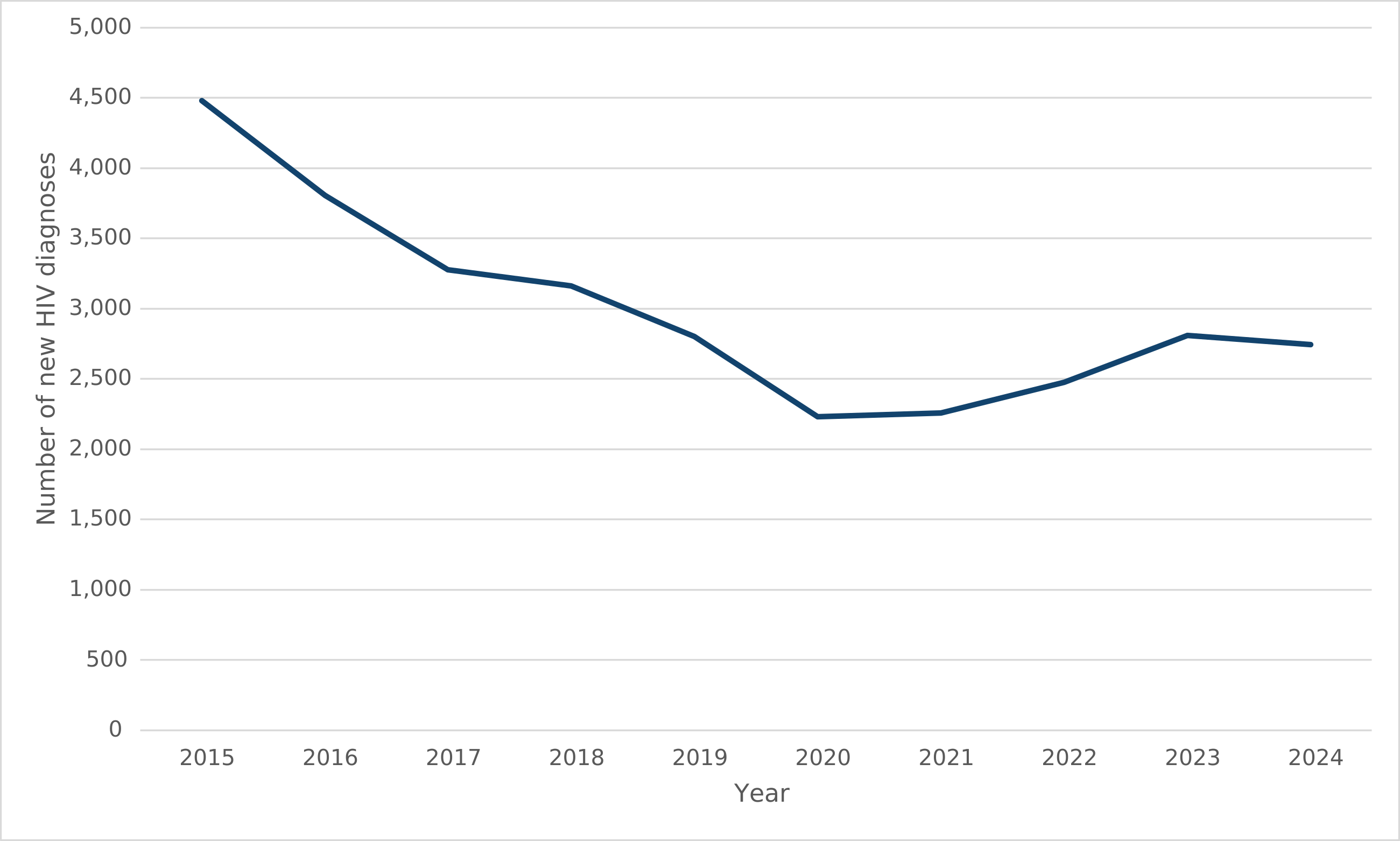
Over the last decade, new HIV diagnoses for adults in England have fallen substantially, from 4,478 in 2015, to 2,746 in 2024 (see figure 1). Following a rise in HIV diagnoses between 2020 and 2023, HIV diagnoses have begun to fall again from 2,838 in 2023 to 2,746 in 2024. This reduction has happened despite the additional diagnoses made through the ED opt-out blood-borne virus (BBV) testing programme, which comprised 8% of all diagnoses in 2024.
Figure 1: number of new HIV diagnosis for adults in England, 2015 to 2024
Source: annual HIV surveillance data published by UKHSA.
HIV testing and PrEP use has increased
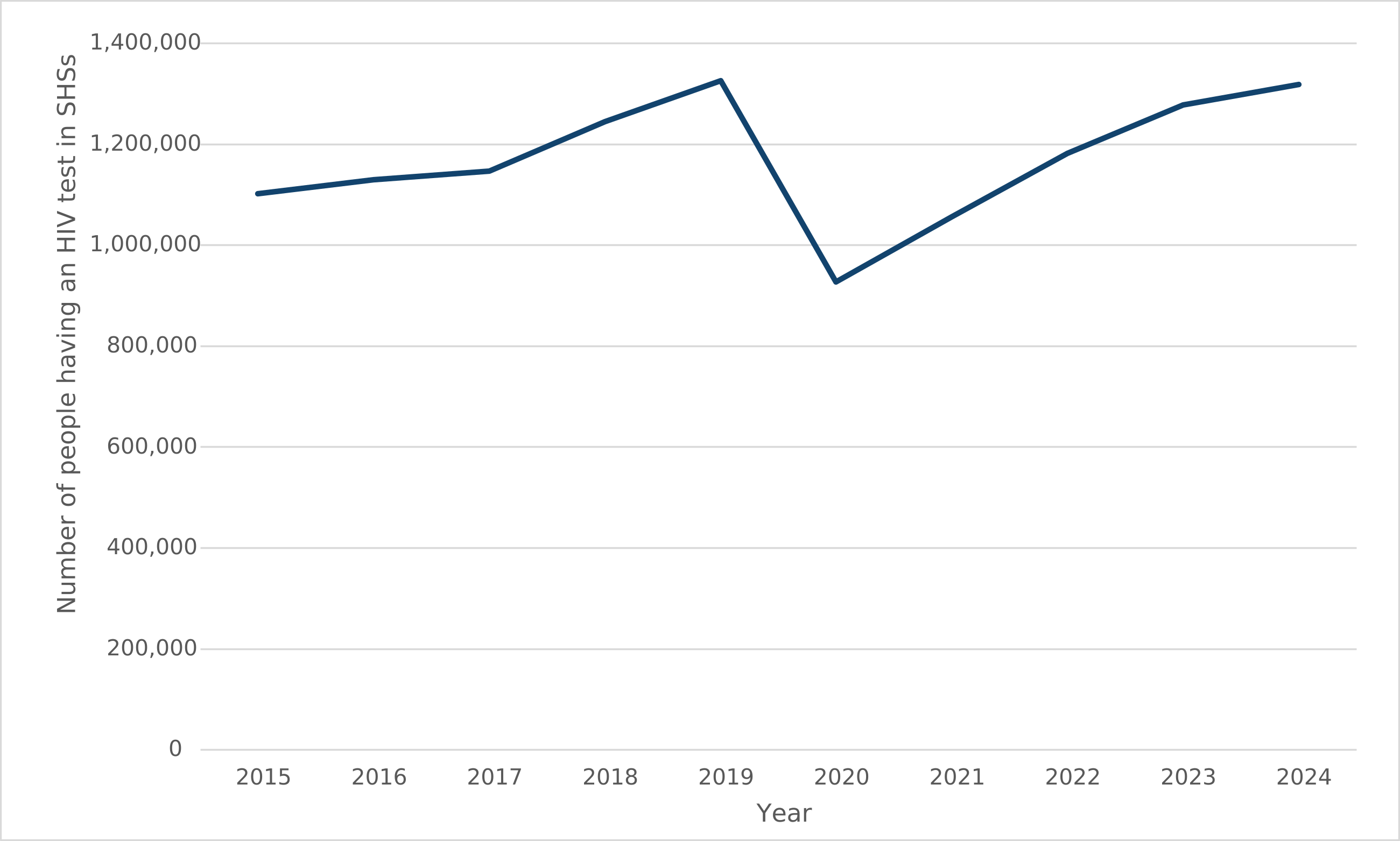
The overall number of people tested in sexual health services and taking PrEP continues to increase year on year. Figure 2 shows the number of people having an HIV test in SHSs increased from 1,102,628 in 2015 to 1,318,795 in 2024, after a fall in 2020 due to the COVID-19 pandemic. The number of people attending SHSs who are in need of PrEP and who initiated or continued PrEP, has also increased consistently since its introduction, rising from 61,411 in 2021 to 111,123 in 2024.
Figure 2: number of people having an HIV test at SHSs, England, 2015 to 2024
Source: annual HIV surveillance data published by UKHSA.
Sexual health services continue to adapt and innovate
England’s sexual health services have rapidly adapted to emerging threats, responding to mpox, addressing gonorrhoea antimicrobial resistance and expanding PrEP access. New vaccination and prevention programmes highlight the essential role of GUM and SRH services, where integrated sexually transmitted infection (STI) and HIV prevention remains central to protecting communities and sustaining progress towards ending HIV transmission.
The emergency department opt-out testing programme continues to succeed
The ED opt-out testing programme has made a significant contribution to the number of HIV tests delivered in high and very high prevalence areas, identifying hundreds of people who were not diagnosed previously with HIV or diagnosed but not linked with care since April 2022. Of those newly diagnosed with HIV, over 50% were late diagnoses. This programme provides an opportunity to find people living with undiagnosed HIV who have not been tested for HIV before and who may not attend sexual health clinics, and to re-engage people with diagnosed HIV who are not currently attending specialist HIV care.
Retention and re-engagement in HIV care have stabilised
The number and the proportion of adults who were not retained in specialist HIV care in 2023 were similar to 2019, falling after 3 years of higher levels due to changes in access to care and health-seeking behaviour following the COVID-19 pandemic. This shows good progress but still represented around 5,000 people in 2023.
HIV-related stigma and discrimination remain a challenge, but are reducing
HIV-related stigma and discrimination affect people across the HIV pathway. A recent European survey showed that HIV-related stigma and discrimination in healthcare settings exists in the UK but is lower among healthcare workers with good knowledge of HIV. This highlights the potential impact educating frontline staff in healthcare settings on HIV can have on stigma reduction, outcomes for people living with HIV and HIV transmission.
The number of deaths among people with HIV have decreased
The number of deaths due to all-cause mortality among people with HIV has fallen between 2023 and 2024, with 643 deaths recorded in 2024, compared to 751 in 2023. Of those, preliminary data suggests that approximately 10% were AIDS-related deaths. Decreases were seen among all population groups except Black African heterosexual women.
And we must go further
Overall trends mask variation in progress between different groups.
Progress in reducing HIV diagnoses has been uneven. Evidence shows certain groups are disproportionately affected by HIV, in particular: ethnic minority GBMSM, White GBMSM, Black African heterosexual men, Black African heterosexual women and all other ethnic minority heterosexual adults.
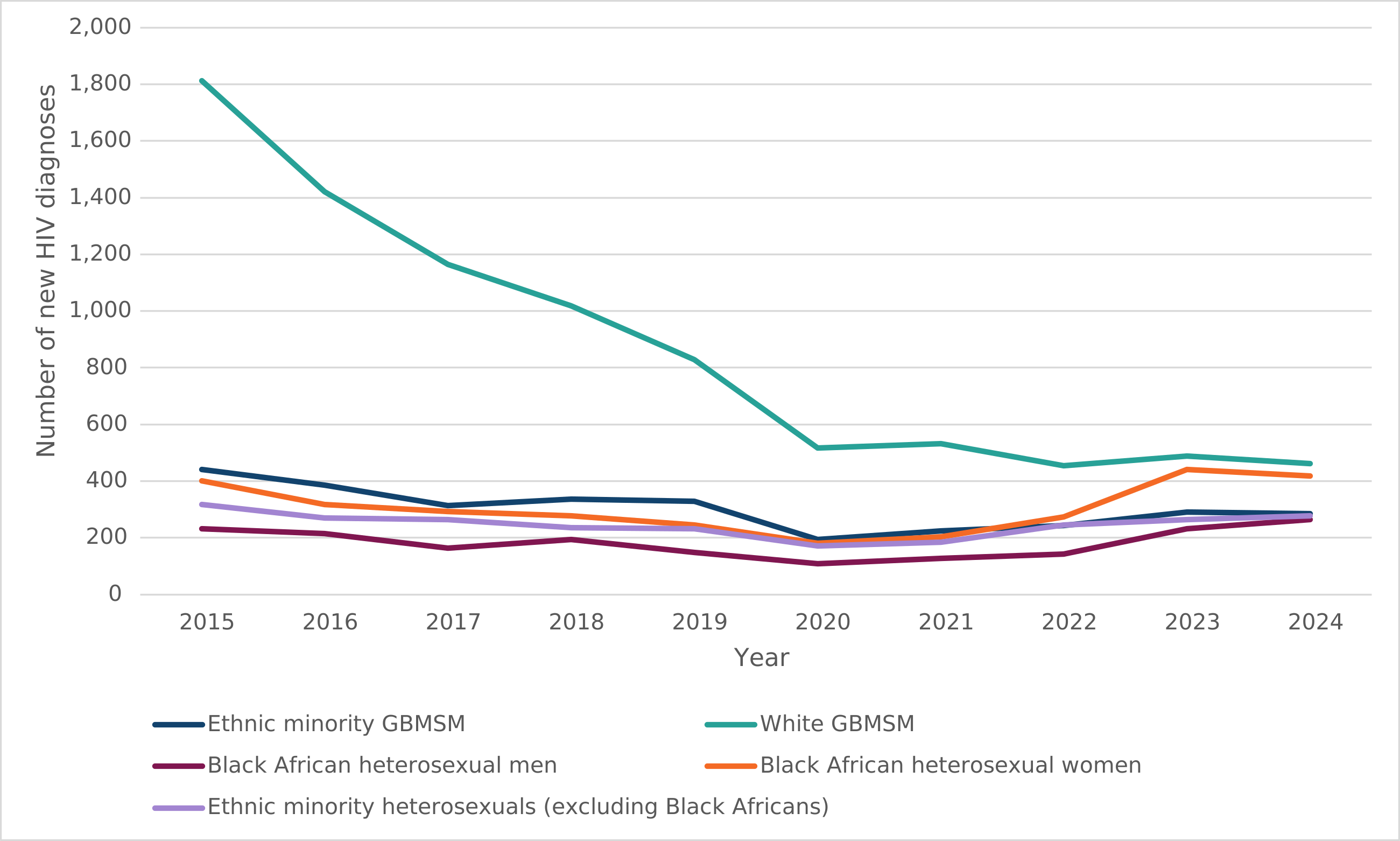
Figure 3 highlights that trends in HIV diagnoses among these groups have changed over the last 10 years. In the last 5 years these groups have experienced different trends in HIV diagnoses. For example, in White GBMSM, diagnoses fell by 11% from 517 in 2020 to 461 in 2024, but among ethnic minority GBMSM they rose by almost 50% from 194 to 285 over the same time period. New diagnoses have more than doubled among Black African heterosexual men (from 109 to 265) and women (from 181 to 418) between 2020 and 2024. New diagnoses increased in other ethnic minority heterosexual adults (not including Black Africans) by over 60% from 172 in 2020 to 277 in 2024.
Figure 3: number of new HIV diagnosis in 5 populations, England, 2015 to 2024
Source: annual HIV surveillance data published by UKHSA.
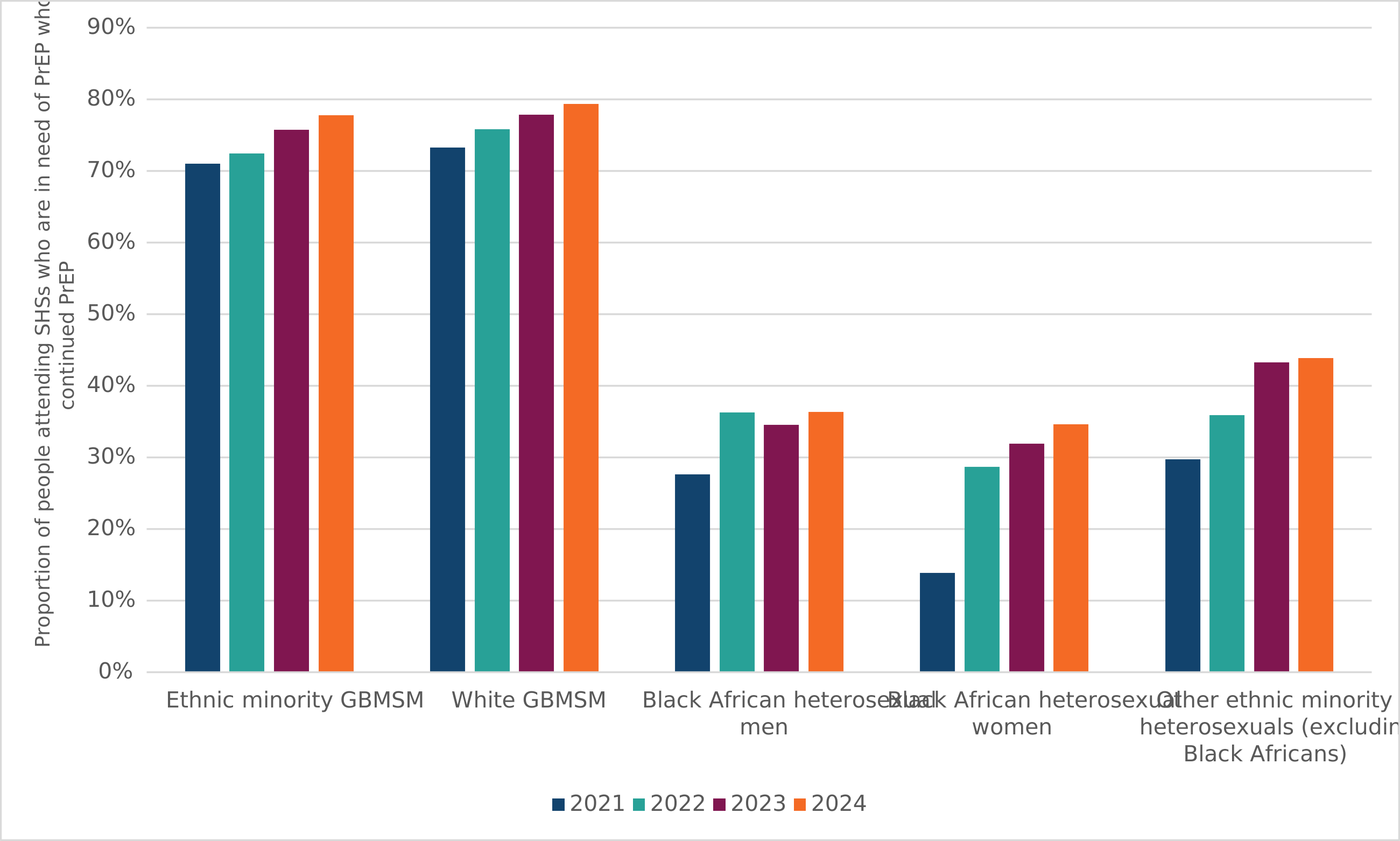
There are also inequalities in access to HIV prevention interventions, treatment, ongoing care, quality of life and stigma. These inequalities are widening across most demographic characteristics, in particular, age, ethnicity, gender identity and route of exposure. For example, there has been a consistent increase in the proportion of people attending SHSs who are in need of PrEP and who initiated or continued PrEP across all of the 5 populations from 2021 to 2024. However, there is variation between these populations.
Figure 4 shows in 2024, ethnic minority GBMSM and White GBMSM had a high proportion of PrEP need met (78% and 79% respectively), compared to a lower proportion of PrEP need met in Black African men and women (36% and 35% respectively) and other ethnic minority heterosexuals (44%).
Figure 4: proportion of people attending SHSs who are in need of PrEP and who initiated or continued PrEP in 5 populations, England, 2021 to 2024
Source: annual HIV surveillance data published by UKHSA.
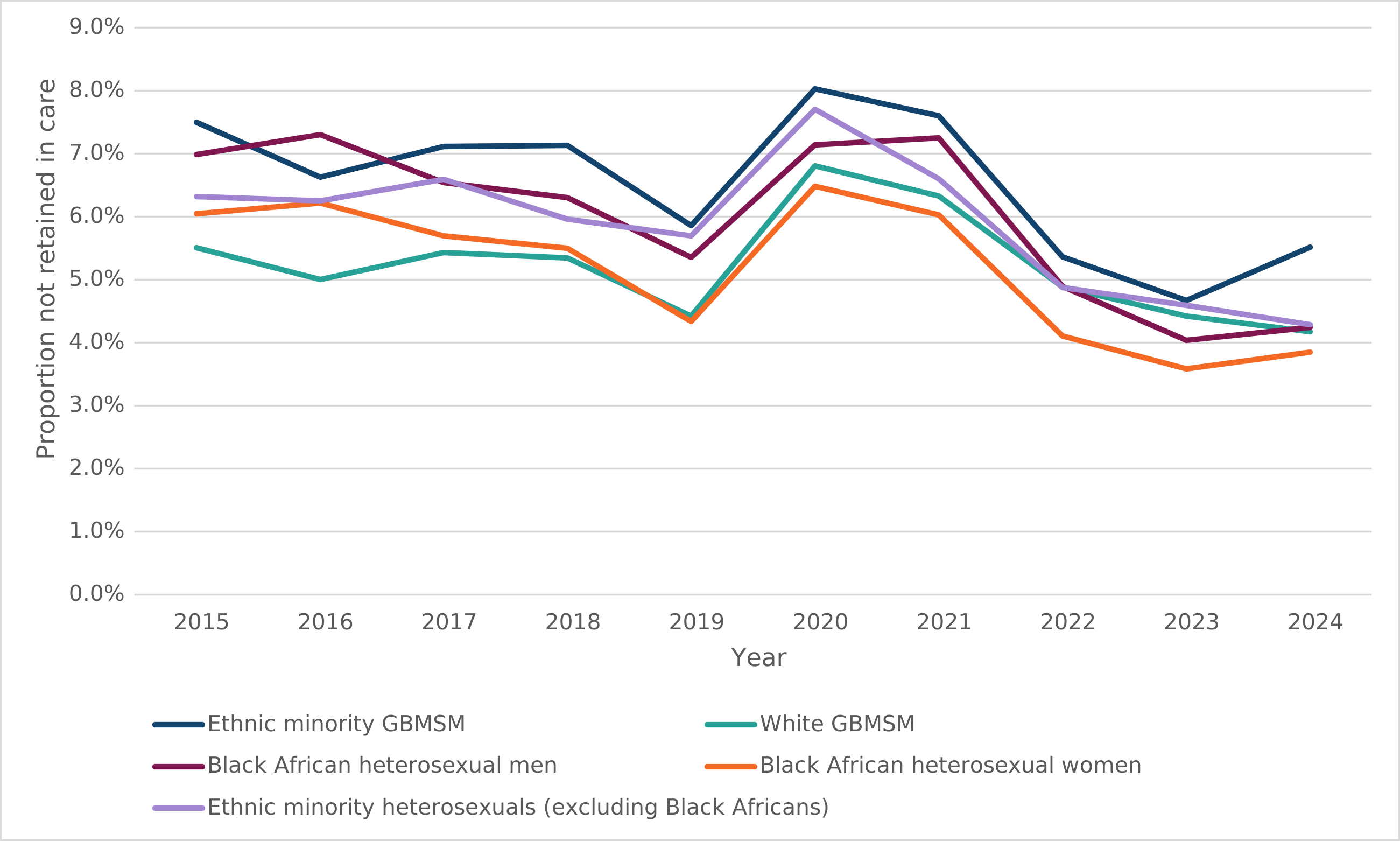
Among some of the 5 populations, there has also been an increase in the proportion of people who are diagnosed with HIV but are not retained in care for at least 15 months.
Figure 5 shows the proportion of people diagnosed with HIV but not retained in care has increased from 2023 to 2024 in ethnic minority GBMSM (from 4.7% to 5.5%), Black African heterosexual men (from 4.0% to 4.2%) and Black African heterosexual women (from 3.6% to 3.9%). Although the proportion of people diagnosed with HIV but not retained in care has fallen from 2023 to 2024 among ethnic minority heterosexuals (not including Black Africans) (from 4.6% to 4.3%) and White GBMSM (from 4.4% to 4.2%), these groups still face challenges.
Figure 5: proportion of people with diagnosed HIV not retained in care for at least 15 months in 5 populations, England, 2015 to 2024
Source: analysis generated from provisional HIV surveillance data from UKHSA. This will be published in the monitoring and evaluation framework.
We know what works - regular HIV testing, accessible preventative medication and use of condoms, connecting people with care quickly, and keeping people well on life-saving treatment and engaged in their care. Now we must go further, accelerating current progress and prioritising interventions for people who are at greatest risk and those least likely to access sexual health services, including people who believe the acquisition of HIV is unlikely, people who have complex health and care needs, people who face HIV stigma and people who face structural and socioeconomic disadvantages.
While maintaining our focus on GBMSM, Black African and other ethnic minority heterosexual communities, who are historically among the most affected, we must adapt to today’s changing epidemic. Heterosexual ethnic minority populations, migrants from high-prevalence countries, ethnic minority and younger GBMSM all face rising risk. Providing tailored and culturally competent responses is crucial to ensure that prevention, testing, treatment and support reach all population groups.
The global context of HIV
An estimated 40.8 million people are living with HIV globally. Of these, an estimated 104,000 (0.2%) are in England.
The UK government continues to play a significant role in the global response to HIV including through our support to organisations such as the Global Fund (to Fight AIDS, Tuberculosis (TB) and Malaria), the World Health Organization (WHO), Unitaid, UNAIDS and the Robert Carr Fund. Global efforts to end HIV transmission by 2030 strongly influence our ability to realise our ambitions in England.
Domestically, we are proud that in 2024, through our world-class HIV prevention, treatment and care we met UNAIDS 95-95-95 targets. Provisional data shows 95% of all people with HIV being diagnosed, 99% of people diagnosed receiving treatment, and 98% of people treated being virally suppressed and thus unable to pass on the virus (95-99-98). This compares to an average of 91-93-96 among high income countries.
UKHSA also provides world-leading surveillance on HIV, including information on people who are not retained in care. We have the ability to account for people with missing and incomplete information that can be used to adjust the UNAIDS 95-95-95 estimates. Adjusted data in 2023 shows 96% of all people with HIV being diagnosed, with 94% of those receiving treatment and between 96% and 92% of those being virally supressed. While not possible to compare internationally, this highlights the importance of focusing on people not retained in care, and the need to re-engage them. Levels of PrEP uptake are also relatively high in the UK compared to the rest of Europe.
International comparison also highlights shared challenges, with inequalities among demographic groups leading to disparities in accessing HIV prevention, treatment and care.
The government is committed to learning from innovative practice in other parts of the world to strengthen our own response, as well as sharing learning from our own success, particularly with the devolved governments of the United Kingdom.
Our new HIV Action Plan: 5 years, 5 populations, 5 priorities
Produced by DHSC, UKHSA and NHS England, and shaped in close collaboration with local government, VCS partners and people with lived experience, this plan is backed by over £170 million. We have updated our ambitions to reach the goal in line with updated UNAIDS recommendations and focus the plan on 5 priority population groups to ensure that no one is left behind. Aligned with the 10 Year Health Plan, it champions the shifts from hospital to community, treatment to prevention and analogue to digital.
For the first time, we set out clear, actionable commitments that accelerate progress and embolden leadership at every level - national, regional and local - to turn ambition into reality. ICBs, local government and VCS partners will collaborate and lead tailored interventions that reflect local needs, tackle inequalities and deliver results.
Our plan is built on collaboration and real-world insight. It has been informed by a wide range of partners through 10 roundtable events with over 250 system partners - spanning health, local government, charities and more - 2 sessions with 60 VCS representatives from across the country (see annex 2) and supported by a range of published evidence including:
- HIV official statistics (October 2024)
- HIV Action Plan monitoring and evaluation framework (November 2024)
- HIV Positive Voices 2022 survey (January 2024)
- HIV prevention barriers and facilitators qualitative study (December 2024)
- National Survey of Sexual Attitudes and Lifestyles, National Aids Trust and One Voice Network: unheard voices (October 2024)
- National Aids Trust: HIV services at the crossroads (May 2025)
- Sophia Forum and Gilead: Systematically Excluded and Ignored report (March 2025)
- Viiv’s Risk to Reasons campaign (October 2025)
This builds on the extensive engagement behind the 10 Year Health Plan, making this plan truly informed and inclusive.
As we progress to 2030, we remain committed to listening and learning from people and evidence. For example, the ongoing LGBT+ health evidence review is considering how we can better understand LGBT+ healthcare needs, provide expert insight and recommendations and build a foundation for future action on health inequalities.
5 years: ending new HIV transmissions by 2030
There is no single global definition of ’ending’ new HIV transmissions. A meeting convened by UNAIDS previously discussed various definitions of epidemic control such as less than one new HIV diagnosis per 10,000 people. Using this definition, England has already achieved epidemic control at a whole population level, with a rate of 0.62 new HIV diagnosis per 10,000 people in 2024. However, across populations affected by HIV, such as GBMSM and Black African heterosexuals, the rate of diagnoses per 10,000 population is currently above one, highlighting the need for more specific ambitions.
In March 2025, UNAIDS published updated recommendations, that include 3 goals to reach by 2030, in order to end AIDS as a public health threat:
- reduce new HIV infections by 90% from 2010 and a continued 5% decline per year after 2030
- reduce AIDS-related deaths by 90% from 2010
- secure the sustainability of the HIV response through 2030 and beyond
These recommendations set ambitions to end new HIV transmissions by 2030, reduce AIDS-related deaths and ensure a sustainable response beyond 2030. They will be proposed for adoption by United Nations member states at the 2026 United Nations High-Level Meeting on HIV/AIDS.
New HIV diagnoses are used as a proxy for transmission, though they do not equal incident infections, as people may live undiagnosed for years. Despite limitations, this measure is practical given strong testing coverage and fewer late diagnoses. Trends are influenced by testing, migration, service access and reporting, while modelled incidence estimates are less useful due to uncertainty and lack of breakdowns available for population geographies and/or characteristics.
Progress will be assessed annually through the monitoring and evaluation framework, including a dedicated review in 2028. We recognise that support for people living with HIV and prevention efforts must continue beyond 2030.
Five populations
This plan will support everyone in England, with a particular focus on people who are at greater risk of acquiring HIV or people living with HIV. This universal approach ensures that everyone receives comprehensive prevention, treatment and care, including awareness of HIV, access to testing and prevention tools, and efforts to reduce stigma. However, to ensure we progress toward ending HIV transmission by addressing inequalities, the plan will also measure progress for the following 5 population groups.
Ethnic minority GBMSM
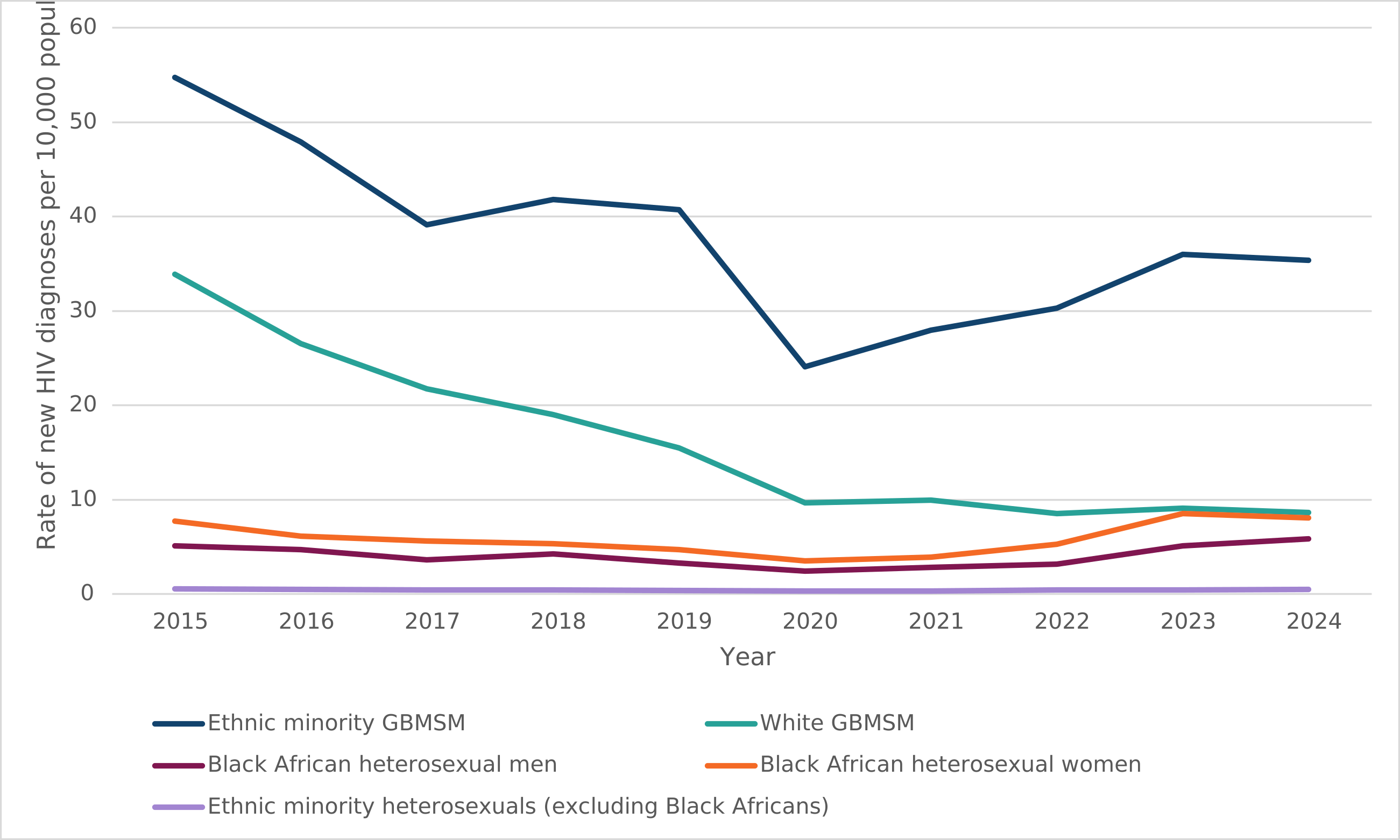
Ethnic minority GBMSM includes adult men of Black African ethnicity, Black Caribbean ethnicity, Black other ethnicity, Asian ethnicity and other ethnicity or mixed ethnic background. It does not include men from White ethnicities. Ethnic minority GBMSM experience the highest rates of HIV diagnoses, 35.4 per 10,000 in 2024 (see figure 6 below), driven by intersecting inequalities such as structural racism, homophobia, stigma and inadequate access to culturally competent preventive and treatment services. Within this group are some GBMSM who may have migrated to the UK, often from lower prevalence countries, and may be at risk of acquiring HIV here. There is progress to celebrate: HIV testing has increased in this community alongside PrEP uptake that is comparable to those in White GBMSM. However, HIV test positivity remained highest among this group in 2024. Co-produced awareness-raising initiatives and increased testing alongside trusted peer-led programmes, and inclusive sexual health services are essential. Organisations such as the Love Tank, Positive East and other initiatives demonstrate promising practices for engaging this diverse and growing group of men.
White GBMSM
White GBMSM includes adult men of White British, White Irish and White other ethnicities. White GBMSM continue to represent a high proportion of new HIV diagnoses in 2024, with a rate of 8.6 new HIV diagnoses per 10,000 in 2024 (see figure 6 below). While new HIV diagnoses have fallen sharply over recent years thanks to good access to PrEP, regular testing, high HIV prevention awareness levels and early treatment, new diagnoses persist. Factors such as stigma, social pressures, homophobia, having sex without a condom or PrEP, or barriers to accessing preventative interventions keep this community at continued risk of acquiring HIV. Maintaining momentum is critical to sustain ending HIV transmission and avoid resurgence. Community-led programmes, peer support networks and strong NHS and VCS partnerships have proven highly effective in normalising testing and promoting U=U awareness.
Black African heterosexual men
New HIV diagnoses are rising among Black African heterosexual men, with a diagnosis rate of 5.8 per 10,000 in 2024 (see figure 6 below). This is often linked to barriers in accessing testing, PrEP and healthcare, due to stigma, racism and discrimination accompanied by lack of awareness of health systems in England. However, it is encouraging that testing in this group increased by over 20% in 2024 and HIV test positivity is decreasing. Community evidence highlights the importance of normalising HIV testing and providing culturally competent, male-focused outreach in workplaces, faith and community settings. Engaging trusted community leaders and expanding opt-out and digital testing can drive earlier diagnosis and equitable access to prevention interventions.
Black African heterosexual women
Black African heterosexual women remain among the groups most affected by HIV in England, with a diagnosis rate of 8.1 per 10,000 in 2024 (see figure 6 below). Structural inequalities including poverty, racism and sexism, late testing and HIV stigma continue to shape their increased risk. Empowering women through accessible, gender-responsive care, culturally competent reproductive and maternity services, integrated sexual and reproductive health services, and peer mentorship is vital. Initiatives like GROWS (Women Growing Older and Stronger) and Sunflower Clinic show that culturally safe, women-centred approaches can transform outcomes.
Ethnic minority heterosexual adults (excluding Black Africans)
Ethnic minority heterosexual adults includes adults of Black Caribbean ethnicity, Black other ethnicity, Asian ethnicity and other ethnicity or mixed ethnic background. It does not include adults from White and Black African ethnicities. Although the rate of new HIV diagnoses is lower in this group (0.47 new HIV diagnosis per 10,000 in 2024 - see figure 6 below), the number of new diagnoses has increased by over 60% since 2020, with late diagnoses rising by 49% in 2024, an emerging and concerning trend. Persistent stigma, racism and discrimination, and a lack of perceived risk contribute, among other factors, to under-testing and delayed HIV diagnosis. Surveillance data combined with insights from local communities and health services provide insights into the changing HIV epidemic, with new and emerging populations requiring HIV prevention support. Culturally tailored communication, expanded community outreach and integrated primary care approaches are essential. Strengthening local partnerships and embedding HIV awareness in broader sexual health and inclusion strategies will help reverse these inequalities.
The HIV epidemic is changing with new trends emerging. Figure 6 highlights the high or increasing rates of HIV diagnosis in the 5 populations described above. The HIV diagnosis rates in White GBMSM show a downward trend from 2015 to 2024 and continue to represent a high proportion of new HIV diagnoses. The HIV diagnosis rates in the other 4 populations decreased from 2015 to 2020, then increased from 2020 to 2024.
The rates of HIV diagnoses in the 5 populations highlight the need to have an additional focus on these populations alongside our overall ambition to end new HIV transmissions in England for all. We will therefore measure our ambition to end new HIV transmissions across the 5 populations, as well as England as a whole (see table 1).
AIDS-related deaths, when broken down by the 5 population groups, become a risk of disclosure, so we will focus on data at England level only for this ambition (see table 2).
Progress against these ambitions will be assessed annually in the monitoring and evaluation framework.
Figure 6: trends in rate of HIV diagnoses per 10,000 population in 5 populations, England, 2015 to 2024
Source: analysis generated from annual HIV surveillance data published by UKHSA, and 2021 Census data. Please note, as the denominator for this graph is taken from the 2021 Census it may be less accurate for the earlier and later years of the decade.
Table 1: ambition to reduce new HIV infections by 90% from 2010 to 2030, for England and the 5 populations
| Population | Number of new HIV diagnoses in 2010 | Number of new HIV diagnoses in 2024 | Percentage change in new HIV diagnoses from 2023 to 2024 | Ambition for number of new HIV diagnoses in 2030 |
|---|---|---|---|---|
| England [see note 3] | 5,321 | 2,773 | 2% decrease | 532 |
| Ethnic minority GBMSM | 443 | 285 | 2% decrease | 44 |
| White GBMSM | 1,841 | 461 | 6% decrease | 181 |
| Black African heterosexual women | 977 | 418 | 5% decrease | 98 |
| Black African heterosexual men | 535 | 265 | 15% increase | 54 |
| Ethnic minority heterosexuals (excluding Black Africans) | 410 | 277 | 5% increase | 41 |
Note 3: data for England is not cumulative as it captures all people, including the 5 populations.
Table 2: ambition to reduce AIDS-related deaths by 90% from 2010 to 2030, for England
| Ambition | Number of AIDS-related deaths in 2010 | Number of AIDS-related deaths in 2024 | Number of AIDS-related deaths in 2030 |
|---|---|---|---|
| England | 197 | 65 (to be confirmed) | 20 |
Measuring equitable progress
Ending HIV transmission is not just about reducing numbers - it is about doing so fairly and inclusively. Alongside tracking the number of new HIV diagnoses and number of AIDS-related deaths, we will measure progress on all parts of the HIV pathway, for all disproportionately affected populations - ensuring improvement is equitable across prevention, testing, treatment and living well with HIV. We have therefore selected 4 priority key indicators that reflect progress across the HIV pathway, which are:
- PrEP uptake among those with an estimated PrEP need
- number and proportion of late diagnoses and the proportion of people newly diagnosed in England
- proportion (and number) of adults not attending care for at least 15 months (‘not retained in HIV care’)
- anticipated stigma in healthcare (proportion of people not contacting healthcare due to stigma)
We will strive for a continuous improvement across all indicators for all 5 population groups and across England, driving us towards ending new HIV transmissions, while proactively reducing inequalities, ensuring no population is left behind. Progress against these indicators in the HIV Action Plan, in addition to a more detailed set of indicators under each HIV Action Plan priority, will be monitored and published annually in the monitoring and evaluation framework.
We know that the HIV epidemic is dynamic, influenced by demographic shifts, health inequalities, social and economic trends, migration and global transmission patterns. UKHSA will continue to promptly identify new trends and monitor HIV across all affected populations, including for underserved groups such as trans people, people who inject drugs and people from high-prevalence countries.
By maintaining a vigilant, evidence-based approach, England’s response will remain agile, targeted and aligned with national needs and the realities of the global epidemic.
Five priorities
Setting clear priorities for the national HIV Action Plan is essential to drive focused, co-ordinated action to reduce HIV transmission nationwide. As we approach 2030, the following priorities will guide how we invest, innovate and accelerate our collective response to HIV.
Priority 1: prevent
We will prevent HIV transmission through equitable access to HIV prevention services.
Priority 2: test
We will scale up HIV testing to reduce HIV transmission and protect people’s health.
Priority 3: treat
We will rapidly link and retain people living with HIV in care, ensuring individuals can live healthy lives and reducing transmission.
Priority 4: thrive
We will address stigma and improve the quality of life of people living with HIV.
Priority 5: collaborate
We will strengthen the healthcare system to improve HIV care and wider sexual health.
Within each priority, we have set out what we know is needed and detailed the actions we will take to reach the 2030 ambition.
Priority 1: prevent
Prevent HIV transmission through equitable access to HIV prevention services.
The need for HIV prevention programmes
Aligned with the 10 Year Health Plan, prevention programmes remain central to reducing HIV transmission. They raise awareness of transmission, testing, protection and treatment effectiveness. Condoms prevent HIV, other STIs and unwanted pregnancies, while PrEP is highly effective.
Progress, however, is uneven. Barriers such as low awareness and structural factors limit access for many. PrEP uptake is lower among many groups, especially Black African communities, as highlighted in the BASHH/BHIVA guidelines on use of PrEP. Condom use also remains low due to knowledge gaps and limited prevention campaigns in healthcare and public spaces.
To close this gap, it is vital that actions are taken to engage with these communities and reduce missed prevention opportunities. UKHSA’s recent HIV prevention barriers and facilitators study calls for scaled up national or local awareness-raising initiatives on HIV prevention interventions using established social media channels, applications and platforms with a particular ask to engage younger populations. New and emerging PrEP technologies, such as injectable PrEP, also have an important role to play.
Nationally co-ordinated action through HIV Prevention England, delivered by Terrence Higgins Trust (2021 to 2026), has helped in increasing testing and awareness. In 2025, its ‘PrEP protects’ campaign addressed Black African heterosexuals and women. The report on prevention barriers and facilitators highlighted a need for ongoing and visible public health campaigns targeted to 5 population groups. A new £4.8 million national HIV prevention programme (2026 to 2029) will focus on targeted testing and promoting combination prevention for high-risk groups.
Equitable access to prevention must extend across all settings. Needle and syringe provision, alongside opioid substitution treatment, has been successful in preventing HIV transmission among people who inject drugs (PWID). The Unlinked Anonymous Monitoring (UAM) Survey of HIV and viral hepatitis among PWID in England, Wales and Northern Ireland (EWNI) found that HIV prevalence among survey participants has remained low and stable over the past decade and was 1% in 2023. This emphasises the importance of ongoing needle and syringe provision locally.
The Positive Voices 2022 survey highlighted chemsex (the use of drugs before and/or during sex to sustain and/or enhance the experience), especially in younger GBMSM. Chemsex can lead to sexual behaviour (for example, condomless sex) that increases the risk of transmission of HIV, hepatitis B and C and other STIs. Encouraging collaboration and shared learning between sexual health and drug and alcohol services, and awareness raising, is essential to meet the needs of these individuals.
Access to prevention strategies including PEP and PrEP must align to BASHH standards for the management of sexual health in UK prisons and monitored at local, regional and national level. DHSC will now fund formula milk and sterilising equipment provision for infants born to women living with HIV, in line with updated BHIVA guidance: interim BHIVA position statement on HIV and mixed infant feeding (PDF, 112KB).
The most effective way to reduce HIV incidence is through comprehensive combination prevention strategies that tackle biomedical, behavioural and structural factors. Integrating these principles into local commissioning - supported by education, innovative care models and anti-stigma policies - creates a holistic, enabling environment that accelerates progress and reduces inequalities.
Effective prevention combines universal access with targeted investment, evaluating interventions like PrEP and condoms, while advancing new technologies. It must be culturally competent, holistic and inclusive, addressing underserved groups - Black African communities, women, trans people, migrants, sex workers, people who inject drugs and those experiencing homelessness. A one-size-fits-all approach will not work - strategies must be people-centred, flexible and rooted in equity.
Actions to improve HIV prevention
Action: reduce inequalities in education, access and uptake of HIV prevention interventions, particularly for people most in need, such as the 5 populations
To achieve this at a national level, we will:
- commission a new national HIV Prevention England programme backed by a total of £4.8 million funding from April 2026 to March 2029. This will focus on improving awareness of HIV prevention among at-risk and underserved populations alongside safer sex promotion, testing and education (including raising awareness of U=U). Lead: DHSC
- fund formula milk (and related sterilising equipment) for the infants of women living with HIV. Lead: DHSC
- develop potential commercial partnerships to support HIV prevention, including uptake and access of PrEP. This could utilise a ‘pay for outcomes’ model. Lead: DHSC
- publish an updated national model specification for integrated specialist sexual health services by 2027. This will reflect the changing epidemic and supports current best practice HIV prevention interventions, including PrEP, outreach and non-clinical partners. Lead: DHSC
- work with local government on wider implementation of new PrEP approaches and technologies. This includes building and promoting the evidence around alternative delivery settings, digital platforms for remote PrEP prescribing and new injectable PrEP medications (following regulatory due process). Lead: DHSC, NHS England
- report PrEP indicators at local level to inform action to reduce inequalities in offer and uptake. Lead: UKHSA
- promote awareness of PrEP among young people, through explicit mention of PrEP in updated statutory relationships, sex and health education (RSHE) guidance. Lead: Department for Education (DfE)
- promote the newly procured Online Sexual Health Services Framework to sexual health services and other relevant providers, offering a convenient route for provision of online PrEP and PEP, contraception and postal STI testing (including hepatitis B and C). Lead: NHS Shared Business Services
- update the migrant health guidelines to improve awareness of HIV prevention interventions and the importance of signposting negative test results as an opportunity for prevention among healthcare practitioners. Lead: DHSC
- following system transformation (including NHS England and DHSC changes, due to be completed in 2027), review need for additional guidance on improved NHS and local government joint working on HIV prevention, and wider SRH. Lead: DHSC
- conduct a new needs assessment of HIV in commercial sex workers to share recommendations for improvements. Lead: UKHSA, DHSC
To achieve this at a local, sub-regional and regional level, we will:
- drive forward service improvement and innovation for HIV prevention services, with a focus on increasing the proportion of heterosexuals and Black and ethnic minority populations offered PrEP by sexual health services by 2028, and improvements in the remote provision of PrEP and PEP. Lead: directors of public health (DsPH)
- work with DHSC to optimise new national provision of formula milk (and related sterilising equipment) for the infants of women living with HIV, including NHS partners, VCS organisations and maternity services. Lead: local governance arrangements
- work with VCS organisations and community and/or local leaders, to co-design and deliver culturally competent campaigns, community-based outreach, and peer-led education that improve awareness and understanding of HIV prevention among populations most affected by HIV. Lead: DsPH
- embed HIV messaging into broader health and wellbeing programmes, use targeted outreach in priority settings and ensure materials are accessible in multiple languages and formats. Lead: DsPH
- maximise all touch points for education and condom provision for young people, including within youth justice, those who have experienced care, and other local delivery aimed at young people. Lead: DsPH
- collate evidence and share best and/or promising practice of PrEP provision in other settings, to improve accessibility and uptake for people in need. Lead: English HIV and Sexual Health Commissioners Group
- support links and shared learning between sexual health, social care and public health services, especially drug and alcohol and mental health services, to better respond to the needs of people who inject drugs, people engaged in chemsex and other overlapping needs. Lead: DsPH
Action: make HIV prevention the responsibility of the whole health service
To achieve this at a national level, we will:
- during NHS England and DHSC transformation, ensure national expert HIV clinical advice is maintained. Lead: NHS England
To achieve this at a local, sub-regional and regional level, we will:
-
lead system-wide co-ordination, ensuring that all frontline services are equipped to support HIV prevention through training, inclusive policies and partnership working. This includes working with ICBs, NHS providers and VCS organisations to promote a status-neutral approach to sexual health, normalise HIV testing and reduce stigma across all points of care. Lead: DsPH
-
identify and support HIV champion councillors to advocate for HIV prevention, treatment and care across local authority functions and partnerships. These champions can raise awareness, challenge stigma, promote inclusive policies, and ensure HIV remains a priority in local decision-making, including within health and wellbeing boards, scrutiny committees, and integrated care system (ICS) governance. Their leadership can help embed HIV prevention as a shared responsibility across the whole health service and strengthen accountability for local delivery of the HIV Action Plan. Lead: DsPH
Promising practise - partnership working in the ExPAND-NEL programme
The Expanding PrEP Access through novel delivery in North East London (ExPAND-NEL) programme is a pilot funded by the Elton John AIDS Foundation (EJAF), focusing on increasing uptake of PrEP through novel delivery methods, including a digital PrEP service. The pilot aims to increase uptake in under-represented groups, particularly people from Black African communities, women and heterosexual men.
The programme adopts a partnership approach, bringing together NHS providers, local authorities, community organisations and digital health platforms to deliver a multi-channel, inclusive service model. This collaborative approach has been key to reaching underserved groups and embedding PrEP into broader healthcare pathways.
Demand for digital PrEP significantly outstripped expectations in the first quarter, with 355 prescriptions issued, 67% above the monthly target. Nearly 30% of users had not previously been aware of PrEP, underscoring the effectiveness of the model. Early outcomes show strong reach into underserved communities, with over half identifying as being from an ethnic minority community and significant uptake among individuals from more deprived areas.
This has been supported by dedicated community outreach, led by The Love Tank and Positive East. The programme hosted 11 events which reached over 80 individuals, using multilingual materials and service demonstrations. Community outreach has supported people to start PrEP, including among groups historically underrepresented in HIV prevention, such as women, trans and non-binary individuals, and those not identifying as GBMSM.
Training delivered by NHS partners has further embedded PrEP into routine care. In Newham, 75 GPs were trained, with 93% more likely to offer HIV testing and 87% more confident discussing PrEP following the session. This system-wide capacity building for HIV prevention supports long-term sustainability and integration into primary care.
The ExPAND-NEL programme demonstrates that partnership working enhances service delivery and ensures interventions are inclusive, responsive and sustainable. By leveraging the strengths of diverse stakeholders, the programme is successfully expanding PrEP access and reducing health disparities in North East London.
This example has been assessed against the Nesta Standards of Evidence, a 5-level framework to assess whether an innovation is making a positive impact. This example met level 2.
Priority 2: test
Scale up HIV testing to reduce HIV transmission and protect people’s health.
The need for scaling up HIV testing
HIV testing is essential to reduce transmissions - identifying the estimated 4,700 undiagnosed people, linking them to treatment and preventing onward infection. For those testing negative, it’s a vital opportunity to discuss prevention options.
Testing in sexual health services rose 3% between 2023 and 2024, but inequalities persist: GBMSM have the highest rates, while heterosexual men and women remain far lower. Expanding testing beyond SHSs is vital. Opt-out BBV testing in EDs has been highly successful, diagnosing 719 new cases (half late) and re-linking 291 previously diagnosed individuals. This approach reaches older, ethnic minority and heterosexual populations who are less likely to access SHSs.
Opt-out testing style approaches should extend to other settings with low coverage - SRH, abortion and primary care - serving high-risk groups such as women, young people and migrants. Normalising HIV testing in these environments, using learning from the ED-opt testing programme and GP Champions Pilot (see ‘Promising practice’) will reduce stigma and enable earlier diagnosis.
Community testing survey results highlight testing works best when targeted and delivered through local VCS engagement, reaching people who are less likely to access traditional venues. Online and postal HIV and/or STI testing improves access, scalability and links to PrEP and other services. However, the ASSIST study shows uptake is higher among White and affluent populations, risking widening inequalities. Postal services for HIV self-testing must be part of a broader programme with clear pathways to PrEP and rapid, equitable HIV care.
Partner notification remains an extremely effective intervention with a high positivity among people tested (5% in 2024). However, levels of partner notifications have not recovered to those seen pre-pandemic. Due to an increase in online testing since the pandemic, it is crucial to integrate partner notifications into the existing online platforms.
BHIVA/BASHH/BIA testing guidelines 2020 and National Institute for Health and Care Excellence (NICE) 2016 guidelines provide recommendations for HIV testing, including new registrations in general practice in areas of high and very high HIV prevalence. Guidelines for low-prevalence areas are limited and implementation across primary care and sexual health services is inconsistent. Promising electronic prompts for HIV indicator conditions in general practice and lessons from London’s Fast Track HIV champions could support wider scale-up.
Testing must remain central - earlier, easier and more inclusive. Advances in diagnostics, digital platforms and self-testing offer new opportunities. We will continue opt-out testing in EDs and expand testing in other healthcare and community settings. HIV testing should be normalised as part of sexual and reproductive health, especially for women, ethnic minorities and inclusion health groups. Integrating testing into digital pathways and ensuring linkage to care are key to ending undiagnosed HIV.
Actions to scale up HIV testing
Action: expand, monitor and optimise opt-out HIV testing to reach people in need, such as the 5 populations
To achieve this at a national level, we will:
- invest £108 million from April 2026 to March 2029 to deliver opt-out HIV testing in EDs in very high and high HIV prevalence areas. Ongoing monitoring will inform delivery and maximise efficient use of resources, modifying our approach as required to amplify impact. Lead: NHS England, UKHSA
- invest £48 million from April 2026 to March 2029 to continue hepatitis B and C testing as part of the ED opt-out programme. Lead: NHS England
- include opt-out HIV testing approaches within the revised national model specification for integrated sexual health services by 2027 to support their implementation, as advised in BHIVA testing guidelines. Establish if changes to the SHRAD data set to collect data on HIV testing are required to promote HIV testing uptake. Lead: DHSC, BASHH
- champion opt-out HIV testing in sexual health services. Lead: BASHH, BHIVA
- share learning from the ED opt-out experience with local areas to encourage opt-out HIV testing approaches in sexual health services and reduce inequalities in testing. Lead: NHS England
- support implementation of guidance for ICBs commissioning abortion services which asks commissioners to utilise standardised quality and performance measures, including monitoring of the percentage of patients being offered and receiving a HIV test through local contracts. Lead: NHS England
- promote opt-out HIV testing within primary care in areas of very high and high HIV prevalence. This includes testing for people who have recently registered, and for people who are having blood tests and have not had an HIV test in the last 12 months, in line with NICE and BHIVA HIV testing guidelines. Lead: DHSC
- following the update to the BHIVA HIV testing guidelines, assess whether the NICE HIV testing guideline should be updated and how to enhance the visibility of HIV testing requirements in other relevant NICE guidelines. Lead: NICE
- ensure the revised (by 2027) national model specification for integrated sexual health services supports improvements to partner notification, HIV testing for children and young people, health advising and community-based testing ambitions. Lead: DHSC
- review effectiveness of HIV testing across all settings to inform targeted HIV testing in key populations, syndemics testing and settings outside of sexual health services and ED by January 2026. Lead: UKHSA
To achieve this at a local, sub-regional and regional level, we will:
- use local prevalence data to inform planning and decisions around expanding opt-out HIV testing in other high-volume settings. Lead: ICBs
- monitor uptake and outcomes using UKHSA dashboards and use local data to identify gaps and improve equity in access. Lead: local governance arrangements
- commission and champion opt-out HIV testing approaches in SHSs and other locally relevant public health settings by embedding testing into routine care pathways, ensuring staff are trained and supported, and using local data to target underserved populations. Lead: DsPH
- include the percentage of patients being offered and receiving a HIV test in performance and quality metrics, when commissioning abortion services. Lead: ICBs
- work with GP practices to promote HIV testing into routine primary care pathways, particularly in areas of very high and high HIV prevalence. Support training, data sharing and commissioning models that enable GPs to offer HIV testing as part of holistic health checks, and align with national guidance to normalise testing and reduce stigma. Lead: DsPH
- share promising practice examples of HIV testing in GP practices. See case study below. Lead: DsPH
- assess and implement new models to improve partner notification, HIV testing for children with parents living with HIV, health advising and community-based testing. Lead: DsPH
- maximise opportunities for syndemic testing (for example with TB, BBVs) across different life stages, as informed by guidance, in line with epidemiology and population health needs. Lead: DsPH
Action: increase accessibility of HIV testing to reach people in need, such as the 5 populations
To achieve this at a national level, we will:
- expand digital provision of HIV testing, by trialling HIV home testing in the NHS App in partnership with existing home test providers by the end of 2026. This is backed by £5 million in 2025 to 2026, and will include information on HIV prevention, and a digital front door for a wider range of local sexual health services. From 2026 onwards we will also review options for expanding digital provision to HIV prevention, including online provision of PrEP and other testing services through the NHS App. Lead: NHS
- provide targeted HIV testing initiatives as part of the new national HIV Prevention England programme 2026 to 2029. This will reach communities with unmet need and those who are less likely to access sexual health services or other health settings. Lead: DHSC
To achieve this at a local, sub-regional and regional level, we will:
- support the NHS-led trial of HIV home testing through the NHS App by promoting awareness locally, ensuring information on HIV prevention, treatment and care is accessible and inclusive, and aligning local digital health strategies to maximise uptake among high-risk populations. Lead: local governance arrangements
- work with VCS partners and community groups to ensure digital provision complements existing outreach and testing services. Lead: DsPH
Action: reduce the number of late diagnoses of HIV
To achieve this at a national level, we will:
- implement a national review of late diagnoses by March 2026. Lead: UKHSA
- develop and disseminate late diagnosis reviews twice a year with sexual health and HIV services. Lead: UKHSA
To achieve this at a local, sub-regional and regional level, we will:
- actively engage with and learn from UKHSA’s late diagnosis reviews by embedding findings into service improvement plans, commissioning decisions and workforce training. Support earlier HIV diagnosis by promoting routine testing in high-risk settings, reducing stigma and improving access to culturally competent care, particularly for underserved populations. Lead: DsPH, ICBs
Patient story - facing HIV in your 50s
After over a year of neuropathic pain and severe illness, 50-year-old Ayo was rushed to hospital and through the blood-borne virus opt-out testing was found to be HIV positive.
Like many, Ayo was shocked by this news, and his immediate concern was his family. After multiple tests, his wife was confirmed to be HIV negative. Although Ayo was relieved, the emotional toll of his recent diagnosis remained overwhelming. Ayo’s HIV was advanced, impacting his ability to walk, speak and write, and he was unable to work. Antiretroviral medication addressed the secondary conditions which were impacting his day-to-day life, such as his parasitic disease, toxoplasmosis and neuropathic pain. Alongside his medication Ayo received emotional support from a HIV support charity, the George House Trust.
Ayo noted the frustration of his late diagnosis and the lack of testing from his GP or healthcare professionals, as well as the impact of stigma on people getting tested:
Even though I’m getting better, I know stigma is still a huge issue. People don’t want to talk about HIV and that makes it harder for others to come forward or even consider getting tested.
Promising practice - GP Champions Pilot
Primary care plays a crucial role in supporting people living with HIV, helping them to get diagnosed and access care, and reducing stigma in HIV. The GP Champions pilot was run as part of Fast Track Cities London from January 2024 to March 2025. The pilot established a network of 16 GP champions across the 5 London ICSs, working closely with a HIV consultant in each ICS area, as well as voluntary and community partners. The aim was to work collaboratively between all care settings to support people living with HIV, reducing obstacles to treatment and care and improving health and quality of life.
The pilot was supported by £275,000 over 15 months, including funding for project support and small grants for targeted projects, as well as the agreed work programme. It was led by Dr Aneesha Noonan, Deputy Medical Director, NHS England London.
The impacts the pilot found were:
- improved HIV testing and early diagnosis. For example, in South West London, there was a 29% increase in HIV testing from 2023 to 2024 (7,910 to 10,232)
- strengthened primary-secondary communications
- enhanced efforts to increase engagement and re-engagement in HIV care
- progress in tackling stigma through education awareness to over 2,025 primary care professionals
- improved preventative care - with an increase in statin prescriptions for people living with HIV aged over 40
- enhanced engagement with voluntary, community and social organisations
Many of the primary care clinicians noted that the resources had empowered them and increased their confidence to discuss HIV testing with patients, ultimately benefiting their clinical practice - an independent evaluation of the pilot was conducted by King’s College London.
This example has been assessed against the Nesta Standards of Evidence, a 5-level framework to assess whether an innovation is making a positive impact. This example met level 2.
Priority 3: treat
Rapidly link and retain people living with HIV in care, ensuring individuals can live healthy lives and reducing transmission.
The need for rapidly linking and retaining people in treatment
Rapid linkage to HIV treatment enables viral suppression (U=U), improving health and preventing transmission. NHS services must follow national protocols for retention and re-engagement, as set out in the national HIV service specification, supported by UKHSA lists of disengaged patients. From April 2026 to March 2029, £9 million will fund the first national initiative to boost retention and re-engagement, partnering with VCS and industry to re-engage patients and prevent new infections.
The estimated number of adults living with transmissible levels of virus in 2023 was between 15,800 and 18,900 - this is 15% to 18% of people estimated to be living with HIV in England. These include people living with undiagnosed HIV, diagnosed but not linked to, or not seen, for specialist HIV care, not on treatment or with no evidence of viral suppression. Over 25% of people with transmissible levels of virus were from a Black African background.
The progress made in recent years on linking people diagnosed with HIV to treatment rapidly is clear - of the 2,838 adults diagnosed with HIV in England in 2023, 82% were linked to specialist HIV care within 2 weeks, compared to 71% in 2019. However, challenges remain. Not all people living with HIV are able to maintain adherence to their treatment - particularly people experiencing personal, financial, housing, immigration, or mental health difficulties, with a disproportionate impact on Black African communities and women. Reports such as Systematically Excluded and Ignored and Unheard Voices highlight urgent action: involve affected communities in service design, scale integrated models for women and expand gender-specific peer support - such as GROWS, Sunflower Clinic and CliniQ - ensuring clinics consider women when designing services, and the availability of gender-specific peer support to all women living with HIV.
Retention and rapid re-engagement in HIV care are strongest when services combine data-driven recall (robust protocols to follow up people not in care) with person-centred support. Peer navigation and in-clinic peer support, piloted through Fast-Track Cities, have re-connected a majority of referred patients and improved wellbeing, illustrating the value of lived-experience support. A growing evidence base also shows peer navigation improves initiation and retention for key populations, supporting viral suppression. BHIVA Standards of Care for people living with HIV emphasise holistic care (including mental health) and peer support, particularly for people ageing with HIV, as crucial to sustaining engagement.
Services must adapt to evolving needs - rapid access, retention and re-engagement -through high-quality, culturally competent care and wraparound support such as peer navigators, mental health and housing. Tackling racial discrimination is important. Strong links with primary care, mental health and community services, plus workforce development, digital innovation and partnerships, are key to success.
Actions to rapidly link and retain people in treatment
Action: improve retention and re-engagement in care and treatment for people diagnosed with HIV
To achieve this at a national level, we will:
- invest a total of £9 million from April 2026 to March 2029 in the first ever national retention and re-engagement initiative. We will amplify existing work within local services, and partner with VCS and industry to increase the number of patients re-engaged in their care. This will support individual care and clinical outcomes, as well as preventing new infections. Lead: NHS England
- continue to invest up to £9.4 million [see note 4] from April 2026 to March 2029 of ED opt-out testing programme funding to maintain peer and other support provided by VCS organisations, including re-engaging people who are not retained in care. Lead: NHS England
- develop and disseminate reviews of retention in care twice a year to HIV treatment and care clinics. Lead: UKHSA
Note 4: this is included within the £108 million funding for opt-out HIV in EDs, set out in priority 2 - test.
To achieve this at a local, sub-regional and regional level, we will:
- work with clinics, VCS organisations and primary care providers to identify people diagnosed with HIV who are not retained in care and offer flexible, person-centred re-entry pathways, to improve retention and re-engagement in care. Lead: local governance arrangements
- share learning from UKHSA audits with local networks and encourage the provision of peer support and psychological support within HIV treatment services. Lead: DsPH
- ensure commissioning arrangements are in place with local providers for HIV peer support provision. Lead: ICBs
- ensure local sexual health and HIV services engage with and learn from retention in care reviews to strengthen pathways. Lead: DsPH, ICBs
Patient story - Manchester Action on Street Health
Manchester Action on Street Health (MASH) works with women who sex work, and helps them to experience good health, safety and emotional wellbeing. Below is the story of one person who MASH has supported, which highlights the importance of navigating complexity when supporting some people living with HIV.
Hayley [name has been changed] attended a MASH drop-in clinic using a crutch due to an ulcer appearing on her right foot. Hayley is a 52-year-old woman who street sex works, uses heroin and has not engaged with HIV services since 2020.
Within the consultation, the MASH nurse Jan learned that Hayley had been to an ED and was on antibiotics for her foot. However, due to a recent bereavement, Hayley hadn’t been taking her HIV medication consistently. This is concerning, as if this medication is restarted after a prolonged break, the body can become resistant.
Jan assisted in triaging Hayley’s care with a radiologist, GP and case worker to ensure that an entire health check was completed. In doing so, a needle within Hayley’s femoral artery in her groin was discovered. Her treatment was then organised, alongside safely restarting her HIV medication. This holistic approach to Hayley’s care included on-going emotional support, HIV care and clinical care for her injury.
Peer support story - thriving, not just surviving
Over the last 2 years Ben has been working as a peer navigator with George House Trust in partnership with NHS Manchester Foundation Trust. Peer support can be crucial in supporting people living with HIV and he shared his experiences with NHS England:
Every person diagnosed with HIV deserves to live a life full of joy, purpose and possibility, and be free from the weight of stigma and isolation. As someone who has been living with HIV since my late teens, I know just how much things can change and I’m here to share how change is possible. In fact, it’s already happening. For 12 years, I’ve carried this diagnosis and with each year I’ve seen more progress, more support and a shift in how we view HIV. It’s no longer just about survival; it’s about living well.
That’s why I am so passionate about the value that lived experience brings to people living with the virus. It’s a compassionate, holistic approach that ensures people living with HIV not only access the care they need but also have the emotional and social support to thrive with it. Living with HIV should not be about surviving, it’s about thriving.
As a Peer Support Team Leader for the George House Trust, a partnership with Manchester University NHS Foundation Trust, I’m proud to represent what living well with HIV looks like. It’s more than just taking medication. It’s about creating a safe space for people to share their experiences, reduce stigma and reengage with their care.
Priority 4: thrive
Address stigma and improve the quality of life for people living with HIV.
Despite progress in HIV treatment and awareness, many people still face stigma and discrimination alongside additional health and social needs. The Positive Voices 2022 survey found high unmet demand for services such as support for long-term conditions, psychological care and peer groups. Linking mental health, long-term condition pathways and HIV care, while tackling structural inequalities through multi-agency support, is essential for longer, healthier lives. Inequalities in stigma experience persist too - disproportionately affecting younger people, women, people from ethnic minorities and those in poverty.
Stigma remains across the HIV pathway, including healthcare, where one in 7 fear being treated differently, leading to poorer outcomes. Knowledge matters: a recent European survey showed that HIV-related stigma and discrimination is less prominent among healthcare workers with good knowledge of HIV. Training, education and initiatives like the HIV Confident charter and anti-stigma programmes - successful in Manchester (seen in promising practice below) - should be scaled up across health and care settings, including in primary care, to reach different communities.
Stigma extends beyond healthcare. Since 2022, people living with HIV can apply for the majority of roles across the armed forces provided they are taking treatment and have un-detectable virus levels. The Ministry of Defence (MOD) is leading further work to increase HIV screening and lift additional medical restrictions to ensure personnel living with HIV do not experience stigma or discrimination.
Over half of people with HIV are now over 50; some enjoy healthy lives, while others may experience multiple challenges such as co-morbidity, economic challenges and lack of access to good housing. Holistic and integrated support should be provided to cater for complex needs so people living with HIV can age well.
A strong voluntary sector remains vital. Community-led organisations deliver prevention, testing, treatment support and advocacy, offering culturally competent care and amplifying marginalised voices. They are key partners in ending transmissions and enabling people with HIV to thrive.
Looking to 2030 and beyond, the goal is clear: help people living with HIV to thrive and have a good quality of life. Many will age well with HIV. Organisations must end discrimination within health services, employment, housing and society, including racism and homophobia. Removing these barriers is essential to ensure people with HIV live long, healthy, fulfilling lives, free from stigma.
Actions to address stigma and improve the quality of life for people living with HIV
Action: ensure all health and social care staff have the right knowledge on HIV and can tackle stigma and discrimination
To achieve this at a national level, we will:
- commission new HIV anti-stigma programmes to be rolled out across trusts within the ED opt-out testing programme. Lead: NHS England
- update the migrant health guidelines to raise awareness of HIV stigma among healthcare practitioners when supporting the needs of migrant patients. Lead: DHSC
To achieve this at a local, sub-regional and regional level, we will:
- encourage commissioned services to implement HIV anti-stigma and discrimination training. Lead: DsPH
- ensure health and social care staff receive training on HIV awareness, stigma reduction and inclusive care by embedding HIV education into workforce development programmes, safeguarding training and induction processes. Lead: local governance arrangements
- work with NHS partners, VCS organisations and local leaders to promote a culture of understanding and respect and monitor progress through staff surveys, service user feedback and quality assurance mechanisms. Lead: local governance arrangements
Action: improve the quality of life for people living with HIV, especially for people living with HIV into older age and individuals with complex health and care needs
To achieve this at a national level, we will:
- update guidance to support the integration of care for HIV and co-morbidities. Lead: BASHH, BHIVA
- share communication and best practice to highlight and increase awareness of primary care’s role in providing support for people living with HIV. This could include training resources and case studies. Lead: DHSC, NHS England
- improve public awareness and support local initiatives to reduce self-stigma and stigma within communities that are disproportionately affected by HIV, as part of the new national HIV Prevention England programme. Lead: DHSC
To achieve this at a local, sub-regional and regional level, we will:
- improve the quality of life for people living with HIV, including promotion of U=U, particularly for older adults and people with complex health and care needs, by commissioning integrated, person-centred support services that address physical, mental and social wellbeing. Lead: local governance arrangements
- support the delivery of changes to national guidance and commission services such as peer support and chronic disease management to meet local population needs. Lead: local governance arrangements
Action: ensure all women living with HIV are supported to manage their needs
To achieve this at a national level, we will:
- ensure the needs of women living with HIV are considered and addressed in future work, and the role of care for menopausal women living with HIV is included in women’s health hubs best practice. Lead: DHSC
- support HIV clinics with education for women living with HIV through the BHIVA Women’s HIV Special Interest Group and e-learning for healthcare module. Lead: BHIVA
To achieve this at a local, sub-regional and regional level, we will:
- ensure services provide a holistic approach to HIV care for women, signposting to other services, such as partner violence services and menopause clinics, when needed. Lead: ICBs
- work with HIV clinics, VCS organisations and women’s health services to ensure all women living with HIV are supported to manage their physical, mental and social needs through tailored care pathways, peer support and access to psychological services. Lead: local governance arrangements
- embed HIV awareness into wider women’s health strategies and ensure services are inclusive, trauma-informed and responsive to the diverse experiences of women living with HIV. Lead: local governance arrangements
- consider how schemes like Healthy Start can be leveraged or adapted to meet these needs and work with health visitors to provide tailored support, advice and referrals that promote infant health and reduce barriers for mothers living with HIV. Lead: local governance arrangements
Action: reduce stigma and discrimination for serving personnel in the armed forces living with HIV
To achieve this at a national level, we will:
- offer BBV screening, including HIV, for all new recruits to the armed forces, to normalise HIV testing and link personnel to treatment and care. Lead: MOD
- review policies relating to aircrew and air traffic controllers that may prevent people living with HIV serving in these roles. Lead: MOD
Promising practice - Newcastle Hospitals awarded HIV Confident recognition
Newcastle Hospitals NHS Foundation Trust is the second trust to be awarded official recognition as an HIV Confident organisation. HIV Confident, a national initiative led jointly by National AIDS Trust, aidsmap, Positively UK and Fast Track Cities, was set up in response to the HIV Action Plan 2022 to 2025.
To establish their HIV Confident recognition, the trust introduced multiple initiatives, including:
- a trust-wide review of staff knowledge and attitudes around HIV
- a review of employment, health and safety, and data protection policies and procedures
- roll-out of anti-stigma e-learning for all members of staff
- introduction of anonymous stigma reporting tools for both patients and staff
Dr Kate Reilly, HIV clinical psychologist and lead of HIV Confident at Newcastle Hospitals said:
We are so delighted to be a HIV Confident organisation. Stigma is the biggest barrier to living well with HIV, and it is something we can change. We want people living with HIV to feel safe in the knowledge that they will have excellent, informed, non-stigmatising care in Newcastle Hospitals, to increase their ability to engage with their care and live well. We also really want people living with HIV to feel confident as a valued part of our workforce.
Annie Laverty, CEO of Newcastle Hospitals and executive for HIV Confident, echoed this, sharing how proud she is of this achievement and of the team’s dedication to tackle stigma and increase access to vital HIV services.
This example has been assessed against the Nesta Standards of Evidence, a 5-level framework to assess whether an innovation is making a positive impact. This example met level 1.
Promising practice - HIV stigma and discrimination training
Manchester Foundation Trust (MFT) is part of the Greater Manchester Fast Track City initiative and has developed a mandatory HIV stigma training module, in collaboration with George House Trust and Dibby Theatre. HIV-related stigma remains a major barrier to early diagnosis, equitable care and wellbeing, with stigma often experienced even within healthcare settings.
The training launched in April 2021 and included lived experiences from people living with HIV to highlight the real impact of stigma. This began as voluntary training, but uptake was low due to existing training demands. After the training became mandatory, uptake rose from 250 completions in 30 months to 25,500 in 12 months.
Staff who had completed the training reported that their knowledge and confidence of HIV improved significantly: the proportion who understood stigma rose by 25%, the proportion who felt confident talking about HIV care rose by 34%, and the proportion who felt confident about what language to use around HIV rose by 36%.
This example has been assessed against the Nesta Standards of Evidence, a 5-level framework to assess whether an innovation is making a positive impact. This example met level 2.
Promising practice - Can’t Pass It On training
Terrence Higgins Trust has designed the Can’t Pass It On training programme aimed at tackling misconceptions about HIV transmission among both social care and healthcare professionals. The training seeks to improve knowledge that when on effective treatment, people living with HIV cannot pass the virus on, and build confidence in communicating this to those they work with.
Terrence Higgins Trust created 2 self-directed learning modules, one tailored for adult social care practitioners and another for other healthcare professionals. Each module is organised into flexible sections, allowing participants to learn at their own pace, revisit material and delve into specific topics as needed. The structure was specifically chosen to accommodate the varied schedules and learning needs within these sectors.
Accompanying the modules are a range of resources designed to support ongoing learning and reinforce accurate information about HIV and its transmission. The training provides practical guidance and evidence-based updates, empowering professionals to confidently challenge misconceptions and promote the key message that effective HIV treatment prevents transmission.
This example has been assessed against the Nesta Standards of Evidence, a 5-level framework to assess whether an innovation is making a positive impact. This example met level 1.
Priority 5: collaborate
Strengthen the healthcare system to improve HIV care and wider sexual health.
The need for collaboration
Ending new HIV transmissions by 2030 will only be possible through strengthened and co-ordinated collaboration at every level of the health and care system. HIV prevention, testing, treatment, care and anti-stigma work all sit within a wider system that includes NHS services, local government public health, VCS organisations and national agencies.
With HIV trends, needs and challenges varying by region, a solely nationally-driven approach to ending new HIV transmissions by 2030 is not sufficient. To effectively address the ongoing challenges of HIV prevention and care, place-based leaders should work with a range of organisations in their respective regions to meet the needs of their local communities. Local leaders must be empowered to work together across boundaries to design place-based solutions, while national bodies support with data, a strategic direction of travel, and clarity on organisational roles and responsibilities. Together we can deliver tailored solutions that make a real difference.
The HIV Action Plan has been shaped through extensive engagement with healthcare professionals, local government, VCS and more. This collaborative foundation, supported by a wide body of published evidence, ensures our actions are informed, inclusive and grounded in real-world experience. This must continue.
Integration is key. Action on HIV must be integrated within the broader SRH system, including activity to reduce harm and inequalities from other STIs and infections. The overlap in population groups who are at greater risk means there is a particularly strong case for integrated action on HIV and syphilis. The same case also applies to HIV, TB and BBV testing.
Finally, we also need effective national and local oversight of the GUM workforce who deliver HIV prevention and care, as well as wider workforces including community sexual and reproductive health (CSRH), public health, nursing, infectious disease, paediatrics and other health professionals, and non-clinical colleagues, including from the VCS.
Actions to strengthen collaboration across the healthcare system
Action: deliver tailored and targeted HIV prevention, treatment and care services to meet the needs of local populations and address inequalities
To achieve this at a national level, we will:
- deliver 6 HIV care pathway workshops each year, to support local areas to develop data-driven action plans that improve service delivery, population health outcomes and reduce inequalities. Lead: UKHSA
- publish new summary of existing SRH commissioning responsibilities to ensure clarity on who is responsible for what in each area (see annex 3). Lead: DHSC
- support regional partners to complete and review the BBV and STI prisons audit to understand provision of HIV prevention and care in prisons from primary care and sexual health services. Lead: NHS England, UKHSA
To achieve this at a local, sub-regional and regional level, we will:
- work with local partners to carry out a comprehensive HIV needs assessment, using existing data tools and engaging with communities to identify service gaps and priorities. The findings should inform the development and publication of local HIV plans across the country during the 2026 financial year that aligns with national objectives and reflects local population needs. Lead: DsPH
- co-ordinate HIV efforts across the local system by establishing or strengthening a multi-agency group (whether new or existing, or HIV specific and/or wider) during the 2026 financial year to drive local action on HIV. The structure, scope and membership of the group should be determined locally. Where robust partnerships already exist, such as sexual health networks, Fast Track Cities programmes, or integrated health and wellbeing boards, local partners are encouraged to build on these foundations. Lead: DsPH
- complete and review BBV and STI prisons audit to understand provision of HIV prevention and care in prisons from primary care and sexual health services. Lead: local governance arrangements
Action: support the GUM and CSRH workforce who deliver HIV prevention, care and wider sexual and reproductive healthcare
To achieve this at a national level, we will:
- improve recruitment and retention in GUM and related workforces, for example by working with the Medical and Dental Recruitment Service to offer a year of GUM training in their geography of choice for those resident doctors unable to secure their higher specialty choice in that geographical region. Lead: NHS England
- support and encourage the roll-out of the STI foundation course, to strengthen clinical knowledge throughout the system regarding the diagnosis, management and referrals of STIs including HIV. Lead: BASHH
- update the model integrated sexual health service specification by 2027 to include hosting and supporting doctors and nurses training in GUM, to ensure sexual health services across England are supporting vital workforce training. Lead: DHSC
To achieve this at a local, sub-regional and regional level, we will:
- ensure appropriate clinical leadership of GUM consultants in sexual health services, to bring all services in line with best practice. Lead: DsPH
- identify opportunities to work with social care to better understand how the social care workforce can support people living with HIV. This could include specialist care managers for HIV (for example) to provide advice and information, assess client needs and arrange appropriate services (where available) such as respite care, support in the home, accommodation and daytime activities. Lead: DsPH
- conduct a local GUM and CSRH workforce audit to assess staffing levels, skills mix, vacancies and training needs, in order to inform planning and investment, and to address the specific needs of children and young people. Lead: local governance arrangements
Action: adopt new technologies and interventions for HIV prevention, treatment and care
To achieve this at a national level, we will:
- assess and implement new technologies and interventions through regular horizon scanning and work with NICE to enable access for patients and support system-wide innovation. Lead: NHS England
- support high quality proposals in vaccine and therapeutic development research, including those relevant to HIV. Lead: Medical Research Council
- optimise use of genomic surveillance data to identify transmission clusters in populations and geographic regions, to inform prevention and intervention measures. Lead: UKHSA
To achieve this at a local, sub-regional and regional level, we will:
- share culturally competent education and awareness of new technologies as they become available to enhance national messaging. Identify gaps in provision, test new technologies in real world settings and build the case for further roll-out. Lead: DsPH
- accelerate the uptake of recommended innovations in HIV prevention and care, improve access to emerging technologies for underserved populations, and embed innovation into commissioning, service delivery and evaluation processes. This includes auditing the current use of HIV technologies such as PrEP, testing kits and injectable treatments to identify gaps and opportunities for scaling up effective interventions. Lead: local governance arrangements
Action: drive further HIV research towards ending new HIV transmissions by 2030
To achieve this at a national level, we will:
- identify current gaps and agree priorities for further research, bringing together relevant partner agencies by December 2026. Lead: UKHSA
To achieve this at a local, sub-regional and regional level, we will:
- collaborate with academic institutions and NHS partners to pilot and evaluate local interventions, such as opt-out HIV testing in EDs and primary care. Lead: DsPH
- facilitate community-led research, especially among populations disproportionately affected by HIV (for example ethnic minorities, women and heterosexual individuals). Lead: DsPH
Action: improve HIV prevention, treatment and care in low prevalence areas
To achieve this at a national level, we will:
- publish and support implementation of the HIV Low Prevalence Toolkit to encourage HIV work in low prevalence areas. Lead: DHSC
To achieve this at a local, sub-regional and regional level, we will:
- apply and promote the HIV Low Prevalence Toolkit to guide local planning, commissioning and evaluation and strengthen outreach, primary care partnerships and service visibility to ensure equitable access to prevention, treatment and care in low prevalence areas. Lead: DsPH
Action: reduce harms and inequalities from non-HIV STIs
To achieve this at a national level, we will:
- support local areas to apply the STI Prioritisation Framework through implementation support, stakeholder workshops and a monitoring and evaluation framework. Lead: UKHSA
- monitor and evaluate the use and impact of doxycycline post-exposure prophylaxis (doxyPEP). Lead: UKHSA
- develop potential options to integrate syphilis within existing testing pathways, including within the BBV ED opt-out programme. Lead: DHSC
- continue national roll-out of Bexsero (4CMenB) for gonorrhoea infection, alongside national roll-out of mpox vaccinations in sexual health services. Lead: NHS England
- support implementation of the updated statutory RSHE guidance, to promote good sexual health among young people, including through lesson materials provided by Oak National Academy. Lead: DfE
- share the latest HIV prevention resources with student services across further and higher education. Lead: DfE
- work with the National Institute for Health and Care Research (NIHR) to commission research on condom use in young people to understand different attitudes towards their use, including the ability or willingness to access them. Lead: DHSC
To achieve this at a local, sub-regional and regional level, we will:
- share and use the STI Prioritisation Framework. Lead: DsPH
- deliver inclusive, sex-positive public health messaging, community engagement and empowerment strategies for all groups at risk of STIs and HIV, to complement roll-out of emerging biomedical interventions such as doxyPEP for syphilis and Bexsero (4CMEnB) vaccine for gonorrhoea infection. Lead: DsPH
- support integration of syphilis testing within BBV testing pathways. Lead: DsPH
- continue to raise awareness, support local implementation and assure equitable access and uptake of all vaccinations delivered in sexual health services, including for hepatitis A and B and new programmes such as Bexsero (4CMenB) vaccine for gonorrhoea infection and mpox vaccinations. Lead: DsPH
- build on existing partnerships with schools, colleges and youth services to support the delivery of inclusive, age-appropriate sexual health education and outreach. This work should aim to reduce harms and inequalities from HIV and non-HIV STIs among young people. Lead: DsPH
- ensure local plans and strategies for children and young people consider how to empower them to test for STIs and HIV as part of normalised healthcare and tailor interventions to suit specific audiences. Lead: local governance arrangements
- maximise a range of condom distribution schemes. Schemes should be available in a range of environments including colleges, youth centres, GP practices, pharmacies and online. Lead: DsPH
Action: support the global HIV response to prevent new infections and end AIDS as a public health threat by 2030
To achieve this at a national level, we will:
- continue our long-standing support of the global health organisations at the core of the international response to HIV and AIDS. Lead: Foreign, Commonwealth and Development Office (FCDO)
Promising practise - Fast-Track Cities UK and Ireland Network
The Fast-Track Cities UK and Ireland Network brings together leaders from the HIV community, local authorities, NHS, voluntary sector, public health, academia, national agencies and prevention programmes to accelerate progress toward ending new HIV transmissions, tackling stigma and improving the quality of life for people living with HIV. The network is a collaborative platform which values equal participation and shared responsibility, with every partner contributing insights, experiences and priorities that guide collective action.
Since its inception, the Fast-Track Cities UK and Ireland Network has:
- strengthened collaboration between cities and sectors, aiming to break down silos and ensure consistency in addressing HIV
- created a culture of learning, with partners sharing their own innovations, and learning from others
- elevated the voices of people living with HIV in decision-making, ensuring that those most affected must be central to solutions
- united cities to create Fast-Track nations, enabling both cities and rural areas to progress towards ending new HIV transmissions, tackling stigma and improving the quality of life of people living with HIV
In January 2025, the network held an ‘Unconference’ featuring community-led sessions on stigma reduction and engagement with marginalised groups, as well as knowledge exchange workshops exploring strategies for improving HIV testing, increasing peer support, and tackling stigma and barriers to treatment adherence.
This example has been assessed against the Nesta Standards of Evidence, a 5-level framework to assess whether an innovation is making a positive impact. This example met level 1.
Next steps, leadership and governance
Leading to 2030 and beyond
Strong leadership, clear accountability and coherent governance will be essential to delivering the HIV Action Plan and achieving our 2030 goals. UNAIDS has long emphasised the importance of multisectoral governance and community engagement in national HIV responses, while the experience from the previous HIV Action Plan and Fast-Track Cities programmes has shown that effective local leadership, particularly between NHS and local government, is crucial for progress.
Strong leadership at every level, national, regional and local, will also be essential. Evidence from global HIV responses shows that sustained political leadership drives investment, accountability and the policy changes required to scale prevention and care. National leadership sets the vision and provides resources, but regional and local political commitment ensures delivery reflects the needs of diverse communities.
Local leaders play a unique role in shaping health priorities, commissioning services and engaging directly with communities most affected. Where local political leadership has been strong, progress has been faster and more inclusive. Political commitment must therefore remain visible, cross-party and unwavering - mobilising all parts of the system, tackling stigma and ensuring HIV prevention, testing, treatment and care remain firmly on the agenda until the 2030 ambition is achieved.
Strengthening local to national leadership and co-ordination
As we move forward, alignment across national, regional and local systems is essential, recognising England’s diverse geography, demographics and HIV epidemiology. Governance must balance ambition with achievability: nationally aligned, yet locally driven. Building on best practice and enabling place-based innovation will ensure that every part of the country has the leadership, tools and accountability mechanisms needed to accelerate delivery, measure progress and achieve change.
DHSC holds overall accountability for the HIV Action Plan, with specific actions owned by named organisations or roles. Progress towards ending new HIV transmissions by 2030 will be tracked by the 10 Year Health Plan Prevention Portfolio Board, with delivery overseen by a NDG comprising stakeholders from local government, UKHSA, VCS and clinical partners. DHSC will prioritise setting up the NDG in early 2026. At the NDG, action owners will propose prioritisation and sequencing for their actions. The NDG will keep track of the delivery of actions and horizon scan for emerging opportunities and challenges.
Every area in England should be covered by a regional, sub-regional or local HIV Action Plan, which reflects local priorities and populations. Local and regional partners should have conversations to agree the appropriate level and confirm plans during the 2026 financial year. The exact delivery arrangements will differ across England, utilising appropriate existing structures, which may be HIV specific or broader (for example prevention or health protection).
Within DHSC and NHS England regions, regional directors of public health, supported by UKHSA, will assure local implementation and delivery of the plan across their regions. Appropriate existing structures (such as Fast Track Cities) can be included and the NDG will receive annual regional reports on progress.
Delivery of the HIV Action Plan will require the involvement of local authorities, ICBs and emerging pan-ICB commissioning structures as the main commissioners of HIV prevention, testing, treatment and care services, working together with relevant partners to provide joint leadership and co-ordination (existing HIV and SRH commissioning responsibilities are outlined in annex 3). Therefore, RDsPH and ICB representatives have particularly important leadership roles at system and place. Regions will also likely want to include NHS and other providers, local government commissioners and community-based organisations in discharging these responsibilities, as well as people living with HIV to ensure service design and delivery reflects their needs.
We also want people living with HIV to inform national delivery of the plan going forward and will engage regularly with people living with HIV, as well as with VCS organisations. We will also consider how best to engage other relevant stakeholders, including industry partners.
Monitoring and evaluation of progress
Monitoring and evaluation will be vital to the success of the HIV Action Plan over the next 5 years. As we approach the 2030 ambition to end new HIV transmission, we must be more rigorous, timely and targeted in how we measure progress, focusing on the populations and places most affected by HIV. Local leaders must be empowered to understand and use their data to improve outcomes and communities must be engaged in interpreting the data, knowing who is affected, why and what is changing.
By linking robust surveillance with agile delivery, we will ensure that resources are directed where they’re most needed and that we stay on course to achieve our collective ambition of ending new HIV transmission by 2030. UKHSA will continue to undertake the monitoring and evaluation of the HIV Action Plan, including through the annual publication of the monitoring and evaluation framework. This will involve tracking progress towards ending new HIV transmission with a specific focus on the 5 population groups and developing progress measures based on existing outcomes and performance indicators included in previous monitoring and evaluation frameworks.
Given the dynamic nature of the epidemic, we will adopt a flexible approach, utilising the routine surveillance data from UKHSA alongside evidence and insights from other partners to assess progress of our actions and interventions and adjust them where necessary to respond to emerging trends and population needs. Progress and impacts of actions will be further reviewed during 2028 to determine how the plan should continue to adapt to ensure we maximise progress to reach our shared ambitions.
Acknowledgments
We are very grateful to Professor Kevin Fenton for his guidance and expertise as chief advisor on HIV.
We are also incredibly grateful to the huge range of other organisations and individuals, including local authorities, health organisations, charities and people with lived experience, who have shared their views through a series of roundtables and engagement sessions. This plan could not have been developed without their ideas, experiences and passion to improve the experience of people living with HIV. We also thank the All-Party Parliamentary Group on HIV, AIDS and Sexual Health for their continued support to address this epidemic.
Annex 1: glossary
This glossary provides an overview of the terms we use throughout the plan.
Table 3: glossary
| Term | Definition |
|---|---|
| Antiretroviral therapy (ART) | Medication for treating HIV infection |
| Blood-borne virus (BBV) | Viruses transmitted through blood (for example HIV, hepatitis B and hepatitis C) |
| Digital PrEP (DPrEP) | Digital platform for PrEP delivery |
| Estimated glomerular filtration rate (eGFR) | Kidney function test |
| Gay, bisexual and other men who have sex with men (GBMSM) | Population group affected by HIV |
| Genitourinary medicine (GUM) | Medical specialty and/or service area for sexual health |
| Integrated care board (ICB) | NHS commissioning body |
| Integrated care system (ICS) | NHS regional partnership structure |
| Long-acting reversible contraception (LARC) | Contraceptive method |
| Multi-parameter evidence synthesis (MPES) | Statistical modelling method for estimating HIV prevalence and/or incidence |
| National Survey of Sexual Attitudes and Lifestyles (NATSAL) | Major UK sexual health survey |
| National Delivery Group (NDG) | National HIV Action Plan oversight group |
| Post-exposure prophylaxis (PEP) | Medication to prevent HIV after potential exposure |
| Pre-exposure prophylaxis (PrEP) | Medication to prevent HIV acquisition before exposure |
| Patient reported outcome measures (PROMs) | Tools for assessing patient outcomes |
| People who inject drugs (PWID) | Noted due to risk of HIV infection through needle sharing |
| Quality outcomes framework (QOF) | NHS performance measurement framework |
| Relationships, sex and health education (RSHE) | Statutory education in schools |
| Sexual health services (SHSs) | Sexual health services may include any combination of services for genitourinary medicine, HIV, and sexual and reproductive health |
| Sexual Health and Reproductive Activity Dataset (SHRAD) | National sexual health data collection |
| Sexual and reproductive health (SRH) | Broader area including reproductive health |
| Sexually transmitted infection (STI) | Infections transmitted through sexual activity |
| Voluntary and community sector (VCS, VCSs) | Charities and community organisations (and its plural form) |
| Undetectable = untransmittable (U=U) | People with a positive HIV diagnosis but an undetectable HIV viral load cannot pass on HIV |
Terminology used for gender identity, sexual orientation and probable route of exposure
For gender identity, sexual orientation and probable route of exposure, we use the following descriptions of the groups:
- gay, bisexual and men who have sex with men, abbreviated to GBMSM
- heterosexual men or men who acquired HIV through sex with women, abbreviated to heterosexual men
- heterosexual and bisexual women
DHSC has decided to use the above more precise language, which slightly differs from the HIV official statistics released in October 2025, which uses the terms set out below:
- gay, bisexual and all men who have sex with men, abbreviated to gay and bisexual men
- heterosexual and bisexual women or women who acquired HIV through sex with men, abbreviated to heterosexual women
When referring to Black African populations, this refers to a self-identified ethnic group, not region of birth.
Annex 2: summary of stakeholder engagement
Collaboration is at the core of the new HIV Action Plan. Therefore, we have engaged with a range of system partners as part of its development. In total, we held 10 roundtable discussions, hosted by Professor Kevin Fenton, the government’s chief advisor on HIV, with over 250 key system partners, and held 2 engagement sessions in London and Manchester, with more than 60 VCS representations.
The focus of the roundtables was to discuss with key system partners the previous HIV Action Plan, including:
- its principles, priorities and accomplishments
- the key priorities for the new HIV Action Plan at a national, regional and local level
- how leadership, partnership working and accountability can be strengthened for the delivery of the new HIV Action Plan
- what is the most effective approach to measure progress
The VCS engagement sessions focused on specific changes to the objectives of the new HIV Action Plan and ways in which the VCS can continue to engage and hold government accountable in the production and implementation of the new HIV Action Plan.
The following roundtables and engagement sessions were held:
- Fast Track Cities - 26 September 2024
- regional leadership - 7 November 2024
- professional bodies - 3 December 2024
- UKHSA - 23 January 2025
- primary care - 7 March 2025
- Association of Directors of Public Health (ADPH) - 13 March 2025
- industry - 20 March 2025
- place-based leadership - 28 March 2025
- ICB leads - 11 April 2025
- people with lived experience - 6 May 2025
- VCS engagement: London - 9 May 2025
- VCS engagement: Manchester - 14 May 2025
This annex follows the structure of the new action plan, and the content is aligned to the plan. Some attendees of the engagement sessions had aspirations beyond our organisational responsibilities and what is financially achievable. Therefore, this annex outlines which feedback has been considered and integrated within the plan and which has not been prioritised.
Prevent: prevent HIV transmission through equitable access to HIV prevention services
Public education and awareness
Comments from attendees
Comments raised the need for improved public understanding of HIV risks, prevention methods and treatment options through targeted education campaigns and clear communication strategies. Comments included:
- increasing education and health literacy around HIV and risk-awareness to protect young people and improve safe-sex behaviours
- improving awareness campaigns and community outreach to reach at-risk populations
- making HIV-related information accessible to the public to create accountability and encourage community involvement in achieving the 2030 goals
DHSC response
This feedback has been considered and integrated throughout the plan, particularly within the prevention priority section.
Targeted population approaches
Comments from attendees
Comments addressed the specific needs of different demographic groups affected by HIV, including women, transgender individuals, migrants and ageing populations, requiring tailored strategies and prevention services. Comments included:
- adapting tools and policies for low-prevalence areas and monitoring migration-related risks to ensure continuity of care
- tailoring approaches for different populations to better understand areas with low HIV prevalence and low PrEP uptake, to develop appropriately targeted interventions
DHSC response
This feedback has been considered and integrated throughout the plan, with particular actions focusing on women and migrants.
The plan will also include actions to support low prevalence areas to improve HIV prevention, treatment and care.
Data systems and evidence-based approaches
Comments from attendees
Comments highlighted the need for improved data collection, sharing and analysis to inform prevention strategies, with more comprehensive qualitative and quantitative information. Comments included:
- leveraging existing resources like the UK HIV drug database and national data to understand and track epidemiology and co-ordinate effective responses between national and local stakeholders
- strengthening partner notification and data systems by enhancing contact tracing, partner notification systems and consistent data reporting to identify undiagnosed HIV cases
DHSC response
The use of the UK HIV drug database has not been prioritised at this stage. Actions within the plan, however, focus on improving data sharing and analysis to support local areas to develop local action plans and inform planning and decisions around HIV opt-out testing.
There is also a focus for regional and local areas to assess and implement new models to improve partner notification.
Expand HIV testing and prevention
Comments from attendees
Comments emphasised the need for broader implementation of HIV testing across various healthcare settings, innovative prevention strategies like PrEP and targeted approaches for different populations and regions. Comments included:
- expanding HIV opt-out testing, for example into primary care, to provide a more holistic approach that makes better use of resources while reducing stigma
- improving health literacy to address low self-risk awareness and late diagnoses
- normalising HIV testing through digital, community-based and proactive approaches
- consider implementing structured testing models (for example, similar to the TB Flag 4 system) to reach underdiagnosed populations
- targeting prevention strategies, for example, to older populations and migrant populations, adapting to changing epidemiology by leveraging community organisations to address barriers to testing and treatment
- services to consider using traditional and new prevention methods to promote condom usage alongside monitoring the impact of new prevention methods like DoxyPEP
DHSC response
The importance of expanding HIV testing and prevention has been reflected throughout the plan, highlighted by the key priority areas ‘prevent’ and ‘test’. Expanding HIV opt-out testing into primary care has not been prioritised at this time.
Test: we will scale up HIV testing to reduce HIV transmission and protect people’s health
Targeted population approaches
Comments from attendees
Comments addressed the challenges in testing among different demographic groups affected by HIV and who are less likely to test, requiring targeted testing strategies and campaigns. Comments included:
- strengthening emphasis on vulnerable groups (such as women and young people), including routine HIV testing in women’s health services and partnerships with women’s health hubs
- targeting outreach for underrepresented populations such as heterosexual-identifying men who have sex with men and Latin American populations
- expanding HIV testing for women across healthcare settings (such as abortion care and antenatal services), with a shift towards holistic care beyond reproductive health
DHSC response
This feedback has been considered and integrated throughout the plan. It will encourage targeting outreach of underrepresented populations and explore the increase of HIV testing for women across healthcare settings where locally relevant. It also for local areas to consider their own locally relevant populations.
Data systems and evidence-based approaches
Comments from attendees
Comments highlighted the need for improved data collection, sharing and analysis to inform testing strategies, with better co-ordination between different data systems and more comprehensive qualitative and quantitative information. Comments included:
- better understanding of localised patterns that do not align with general prevalence data through a nuanced analysis of HIV diagnoses
DHSC response
This feedback has been considered and integrated throughout the plan.
Treat: we will rapidly link and retain people in treatment, protecting their health and wellbeing and reducing transmission
Sustainable funding and resource allocation
Comments from attendees
Comments addressed the need for consistent, transparent and adequate funding for HIV services, with clear accountability for how resources are allocated and used across the system. Comments included:
- clearer responsibilities and funding guidance for ICBs to deliver HIV services across regions
- greater transparency and accountability in how HIV funding is allocated and used at local and national levels
- long-term funding secured to sustain successful programmes, such as Fast Track Cities and opt-out testing
- dedicated and sustainable funding through the public health grant, including continued support for PrEP provision
- review of funding distribution to ensure HIV support organisations, particularly smaller and women’s services, are adequately resourced
DHSC response
NHS England is the accountable commissioner for HIV care and treatment for both adults and children, from the point of referral of a confirmed HIV diagnosis. Commissioning responsibility for adult HIV services has been transferred to ICBs. The NHS spends around £358 million on medicines for HIV treatment, PrEP and PEP and around £461 million on HIV care and treatment services annually.
Individual local authorities are responsible for funding and commissioning decisions about the sexual health services that best meet the needs of their local populations. This includes HIV testing and prevention and funding for the voluntary and community sector.
This is funded through the ringfenced public health grant. In 2025 to 2026 the public health grant rose to £3.884 billion, providing local authorities with an average 6.1% cash increase and 3.4% real-terms increase. This marks the biggest real-terms increase after nearly a decade of reduced spending (between 2016 and 2024). From the 2026 financial year we will bring together over £4 billon of public health funding for local government, by consolidating service specific grants into the public health grant. The government intends to publish 3-year April 2026 to March 2029 local authority public health grant allocations, in line with the Local Government Finance Settlement.
This plan is backed by over £170 million in new funding until March 2029.
A commissioning overview is included in annex 3 of the plan and the governance structures and accountability mechanisms have been outlined within the plan.
Data systems and evidence-based approaches
Comments from attendees
Comments highlighted the need for improved data collection and sharing with more comprehensive qualitative and quantitative information. Comments included:
- strengthening use of local, contextual data to design tailored responses, understand epidemic patterns and address inequalities in HIV treatment and care across populations
- leveraging digital innovation to improve patient-led care, integrating HIV into health system reforms and improving data sharing
- using qualitative research to capture the lived experiences and needs of vulnerable groups often missed in quantitative data
DHSC response
This feedback has been considered and integrated throughout the plan.
Stigma reduction and inclusive care
Comments from attendees
Comments addressed the need to tackle HIV-related stigma through education, training and culturally competent approaches that create inclusive healthcare environments. Comments included:
- targeting interventions to address and reduce stigma, particularly for ageing populations requiring end-of-life care and in general practice settings where patients with co-morbidities need engagement
- communicating clearly the concept of U=U to improve understanding and counter misinformation
- reducing stigma through peer support and broader staff education beyond sexual health services such as improved anti-sigma training
- tackle misunderstandings about HIV status disclosure - particularly among those unfamiliar with the UK system to encourage people to seek care
- address barriers to HIV care among the transgender community, who face marginalisation and inappropriate referrals
DHSC response
This feedback has been considered and integrated throughout the plan, particularly within the ‘thrive’ objective.
We will ensure all prevention efforts target underserved populations, including trans people. Though not specifically captured in the 5 population groups, UKHSA will continue to monitor HIV in all populations affected by HIV and highlight any new and emerging rises in populations outside of these categories, including the transgender community.
Retention and re-engagement in care
Comments from attendees
Comments focused on the need to engage and retain people in care to address gaps in continuity of treatment by improving healthcare co-ordination, system integration and navigation. Comments included:
- addressing intersectional inequalities in access to HIV care linked to poverty, race, migration and geography through equitable service provision and anti-stigma interventions
- eliminating regional disparities by setting national standards for retention and re-engagement in care
- improving service integration and co-ordination across primary care, specialist services and social care to support continuity of care
- increasing community involvement in service planning, delivery and monitoring to ensure care reflects lived experience and local needs - including sharing of best-practice where pockets of excellence can be used as models
- ensuring services are culturally competent, accessible and responsive to the needs of diverse and ageing populations
- strengthening peer support, digital tools and patient-centred approaches to improve engagement and long-term retention in care
- enhancing cross-sector collaboration and leadership to simplify care pathways and reduce system fragmentation
- developing long-term actions that account for future care needs beyond 2030, including for those with co-morbidities
- integrating social determinants of health into HIV strategies, recognising their impact on treatment access and outcomes
- using both qualitative and quantitative data to better understand and address barriers to sustained engagement in care
- connecting HIV services with family hubs to support families affected by HIV, with health visitors and BBV champions supporting vulnerable populations by leveraging their regular touchpoints throughout a child’s early years
- explore opportunities for improving co-ordination between HIV clinics and primary care to reduce burden on patients managing their own care and improve system navigation
- implementing PROMs to improve care quality and assess the effectiveness of HIV services from the patient perspective
DHSC response
This feedback has been considered and integrated throughout the plan, particularly within the ‘treat’ objective.
We will invest a total of £9 million from April 2026 to March 2029 to improve retention and re-engagement of patients. This will include looking at strengthening local services to support these efforts and partnering with the VCS to increase patient re-engagement in care.
Thrive: address stigma and improve the quality of life for those living with HIV
Community engagement and lived experience
Comments from attendees
Comments raised the importance of involving people with lived experience of HIV in service design and implementation, while strengthening partnerships with community organisations to improve outreach and support. Comments included:
- leveraging community support groups and the VCS to improve service delivery, including implementing nationwide locally delivered peer-support and mentoring programs
- strengthening involvement of community advisory groups with transparent progress reporting mechanisms
- establishing partnerships with smaller community organisations that have the cultural competence to engage emerging and marginalised communities
- working with community organisations to better understand barriers to accessing support services, with care integrated into general practice and community settings for more accessible and comprehensive support
- developing more direct methods to hear from people living with HIV through surveys and national activities that bypass organisational filters to include diverse voices
DHSC response
This feedback has been considered and integrated throughout the plan.
Local areas are encouraged to work with VCS to promote a culture of understanding and respect throughout the whole health service. As outlined in the HIV service specification, services are required to provide person-centred care involving patients and the views of service users to ensure continuous service improvement, provision of high-quality service and a service responsive to the population needs. Services should also ensure access to peer support and psychosocial care, recognising the vital role of VCSs in delivering holistic, community-led support that reflects the lived experiences and evolving needs of diverse populations.
Addressing healthcare inequalities
Comments from attendees
Comments called for a reduction in disparities in HIV care access and outcomes across different regions, populations and social groups, with particular attention to vulnerable and marginalised communities. Comments included:
- addressing barriers to healthcare registration among vulnerable populations like refugees, asylum seekers and homeless individuals
- tackling intersectional inequalities related to poverty, race and geographical location, including distribution of HIV care and peer-support services across different regions
- addressing regional disparities by ensuring consistent standards and access to prevention, testing and treatment across all regions, while also reflecting regional epidemiological differences
- addressing how social determinants of health and intersectionality affect HIV outcomes across different communities
- expanding HIV initiatives beyond high-prevalence urban areas to regional levels, requiring co-ordination across administrative boundaries, based on population needs rather than local divisions
- acknowledging and addressing the wider social and economic factors that influence HIV risk, prevention and treatment outcomes
- supporting vulnerable populations and those disengaged in care who require specialised support to navigate the healthcare system, including clear information about resources and points of contact
DHSC response
This feedback has been considered and integrated throughout the plan.
Addressing healthcare inequalities is a core part of the new HIV Action Plan. Services should consider how they effectively address barriers to healthcare registration among underserved populations and understand how social determinants of health and intersectionality affect HIV outcomes across different communities.
Place-based delivery of the HIV Action Plan will enable greater ownership at all levels, national, regional and local, and create a stronger foundation for shared learning and collaboration and allow the needs and inequalities of local areas to be addressed.
We will also invest a total of £9 million from April 2026 to March 2029 to improve retention and re-engagement of patients. This will include looking at strengthening local services to support these efforts and partnering with the VCS to increase patient re-engagement in care.
Addressing the wider social and economic factors, however, is beyond the scope of the HIV Action Plan.
Targeted population approaches
Comments from attendees
Comments focused on the need for targeted population approaches to address the needs of different demographics. Comments included:
- consider linking HIV services with family hubs to support families affected by HIV, with health visitors and BBV champions supporting vulnerable populations by leveraging their regular touchpoints throughout a child’s early years
- incorporating women’s health strategies and addressing gender-specific inequalities through culturally competent services
- supporting diverse and changing populations to address the changing needs of an ageing HIV-positive population, including management of co-morbidities
- recognising the increasing impact of HIV on women with specialised care addressing reproductive health, menopause, bone health and breastfeeding support
DHSC response
This feedback has been considered and integrated throughout the plan within the ‘thrive’ section and throughout the governance of the plan, which focuses on strengthening local to national leadership and co-ordination. Regional, sub-regional and local areas are expected to work collaboratively with local partners (including NHS, local government and VCS organisations) to support the needs of their local populations. Areas should develop a local plan that aligns with national objectives and reflects local population needs. This will be supported by UKSHA data.
Collaborate: strengthen the healthcare system to improve HIV and wider sexual health
Multisector partnerships and collaboration
Comments from attendees
Comments emphasised the importance of collaboration between healthcare agencies, government, industry and community organisations to create effective and co-ordinated HIV responses. Comments included:
- improving collaboration across NHS, local government, ICBs, industry and communities to ensure joint ownership of HIV responses, enhance patient identification, reduce barriers to testing and improve treatment pathways
- promoting shared best practices and models of excellence, integrated governance and regular forums for communication between health, government and community stakeholders - leveraging existing healthcare governance structures to address diverse needs
- supporting international collaboration and advocacy
DHSC response
This feedback has been considered and integrated throughout the plan, particularly within the ‘collaborate’ priority section.
Healthcare system integration and co-ordination
Comments from attendees
Comments focused on improving co-ordination between different parts of the healthcare system, addressing fragmentation and creating clear governance structures to effectively implement HIV strategies across local, regional and national levels. Comments included:
- strengthening joint commissioning and care and/or integration, particularly between HIV clinics and primary care, to account for regional differences in epidemiology, promote innovation and improve patient-centred pathways
- improving navigation and accountability through clear governance structures, including co-ordination through ICBs and frameworks like Fast Track Cities
- a clear overview of commissioning across the sexual and reproductive health system
DHSC response
This feedback has been considered and integrated throughout the plan, particularly within the ‘collaborate’ priority section.
Strengthened role for primary care
Comments from attendees
Comments focused on strengthening the role of primary care in HIV prevention, testing and treatment through better training, integration frameworks and accountability measures. Comments included:
- expanding HIV prevention and testing within primary care through targeted education, accountability structures and frameworks like the HIV Confident Charter
- increasing primary care’s role in PrEP delivery, screening and early intervention, especially in underserved and rural areas
- consideration of implementing the quality outcomes framework (QOF) measures for accountability, with commissioning based on local need
DHSC response
The importance of testing within primary care has been reflected throughout the plan. However, due to the fiscal context the role of primary care for delivering PrEP, the QOF and screening has not been prioritised at this stage.
Data systems and evidence-based approaches
Comments from attendees
Comments highlighted the need for improved data collection, sharing and analysis to inform HIV strategies, with better co-ordination between different data systems.
Comments included:
- improving data reporting and analysis with better integration across NHS England, DHSC and UKHSA and more granular analysis of HIV incidence patterns
- addressing fragmentation by linking clinical, epidemiological and primary care data to inform decision-making
- using granular, timely data to inform local actions and optimising resource allocation
DHSC response
This feedback has been considered and integrated throughout the plan.
Sustainable funding and resource allocation
Comments from attendees
Comments addressed the need for consistent, transparent and adequate funding for HIV services, with clear accountability for how resources are allocated and used across the system. Comments included:
- ensuring transparent, long-term funding structures with clear accountability, particularly for opt-out testing, support services, comprehensive screening programmes and prevention efforts
- clear governance and funding structures with clarity on ICB responsibilities, funding streams and minimum service standards
- addressing gaps in funding for small charities, women’s services and community-led interventions
- securing sustainable investment to maintain and scale successful programs like Fast Track Cities
DHSC response
NHS England is the accountable commissioner for HIV care and treatment for both adults and children, from the point of referral of a confirmed HIV diagnosis. Commissioning responsibility for adult HIV services has been transferred to ICBs. The NHS spends around £358 million on medicines for HIV treatment, PrEP and PEP and around £461 million on HIV care and treatment services annually.
Individual local authorities are responsible for funding open access HIV testing and prevention, through the ringfenced public health grant. In 2025 to 2026 the public health grant rose to £3.884 billion, providing local authorities with an average 6.1% cash increase and 3.4% real-terms increase. From the 2026 financial year we will bring together over £4 billion of public health funding for local government, by consolidating service specific grants into the public health grant. The government intends to publish 3-year 2026 to 2029 local authority public health grant allocations, in line with the Local Government Finance Settlement.
This plan is backed by over £170 million in new funding until March 2029.
A commissioning overview is included in annex 3 of the plan and the governance structures and accountability mechanism have been outlined within the plan.
Annex 3: existing commissioning responsibilities for HIV and SRH services
Upper tier local authorities
Upper tier local authorities are responsible for commissioning comprehensive sexual health services. These include:
- STI testing and treatment in specialist services and those commissioned from primary care under local public health contracts, chlamydia screening as part of the National Chlamydia Screening Programme (NCSP), HIV testing and partner notification for STIs and HIV
- services for HIV PrEP and PEP (excluding medication costs)
- sexual health aspects of psychosexual counselling
- any sexual health specialist services, including young people’s sexual health services, outreach, HIV prevention and sexual health promotion, service publicity, services in schools, colleges and pharmacies (with the exception of the Pharmacy Contraception Service)
- contraception, including the costs of long-acting reversible contraception (LARC) devices for contraceptive purposes and prescription or supply of other methods including condoms (excluding sterilisation and vasectomy) and advice on preventing unintended pregnancy, in specialist services and those commissioned from primary care (GP and community pharmacy) under local public health contracts
Integrated care boards
Integrated care boards are responsible for commissioning:
- adult HIV treatment and care (commissioning responsibility)
- HIV testing when clinically indicated in ICB-commissioned services
- non-sexual health elements of psychosexual health services
- contraception primarily for gynaecological (non-contraceptive) purposes
- abortion services including HIV and STI testing and contraception provided as part of the abortion pathway
- specialist fetal medicine services
- antenatal screening (as part of maternity care)
- female sterilisation
- vasectomy (male sterilisation)
-
GP essential services including:
- testing and treatment for STIs (including HIV testing) in general practice when clinically indicated or requested by individual patients (not part of public health commissioned services, but relating to the individual’s care)
- contraception for pregnancy prevention (with the exception of intrauterine device (IUD) and/or intrauterine system (IUS) and implants), advice and referral in cases of unplanned pregnancy including advice about the availability of free pregnancy testing
- contraceptive services provided as an ‘additional service’ under the GP core contract
- the Pharmacy Contraception Service
NHS England [see note 5]
NHS England is responsible for commissioning:
- adult HIV treatment and care (commissioning accountability)
- Section 7A public health services including substance misuse, immunisations, vaccinations, cervical screening and sexual health elements of prison health services
- sexual assault referral centres
- ED BBV opt-out testing
- commissioning responsibility and accountability for HIV (inpatient and/or outpatient) paediatric services
- HIV PEP and PrEP medication
- HIV testing when clinically indicated in other NHS England-commissioned services
Note 5: subject to the will of Parliament, NHS England is expected to be abolished with many of its legal functions to be absorbed into the future DHSC. ICBs are expected to be strategic commissioners of local health services, responsible for all but the most specialised commissioning using multi-year budgets.
DHSC
DHSC is responsible for commissioning:
- the National HIV Prevention Programme 2021 to 2026 and 2026 to 2029