GRASP report: data to September 2026
Updated 5 November 2026
Applies to England and Wales

© Crown copyright 2026
This publication is licensed under the terms of the Open Government Licence v3.0 except where otherwise stated. To view this licence, visit nationalarchives.gov.uk/doc/open-government-licence/version/3 or write to the Information Policy Team, The National Archives, Kew, London TW9 4DU, or email: psi@nationalarchives.gov.uk.
Where we have identified any third party copyright information you will need to obtain permission from the copyright holders concerned.
This publication is available at https://www.gov.uk/government/publications/gonococcal-resistance-to-antimicrobials-surveillance-programme-grasp-report/grasp-report-data-to-september-2026
Main findings
Most isolates remain susceptible to ceftriaxone. However, 3 out of 1,383 cases (0.2%) of ceftriaxone-resistant Neisseria (N.) gonorrhoeae were detected in the GRASP sentinel surveillance programme in 2025. Ceftriaxone-resistant cases in the UK have been detected sporadically since 2015, although the first case in GRASP sentinel surveillance was not detected until 2024.
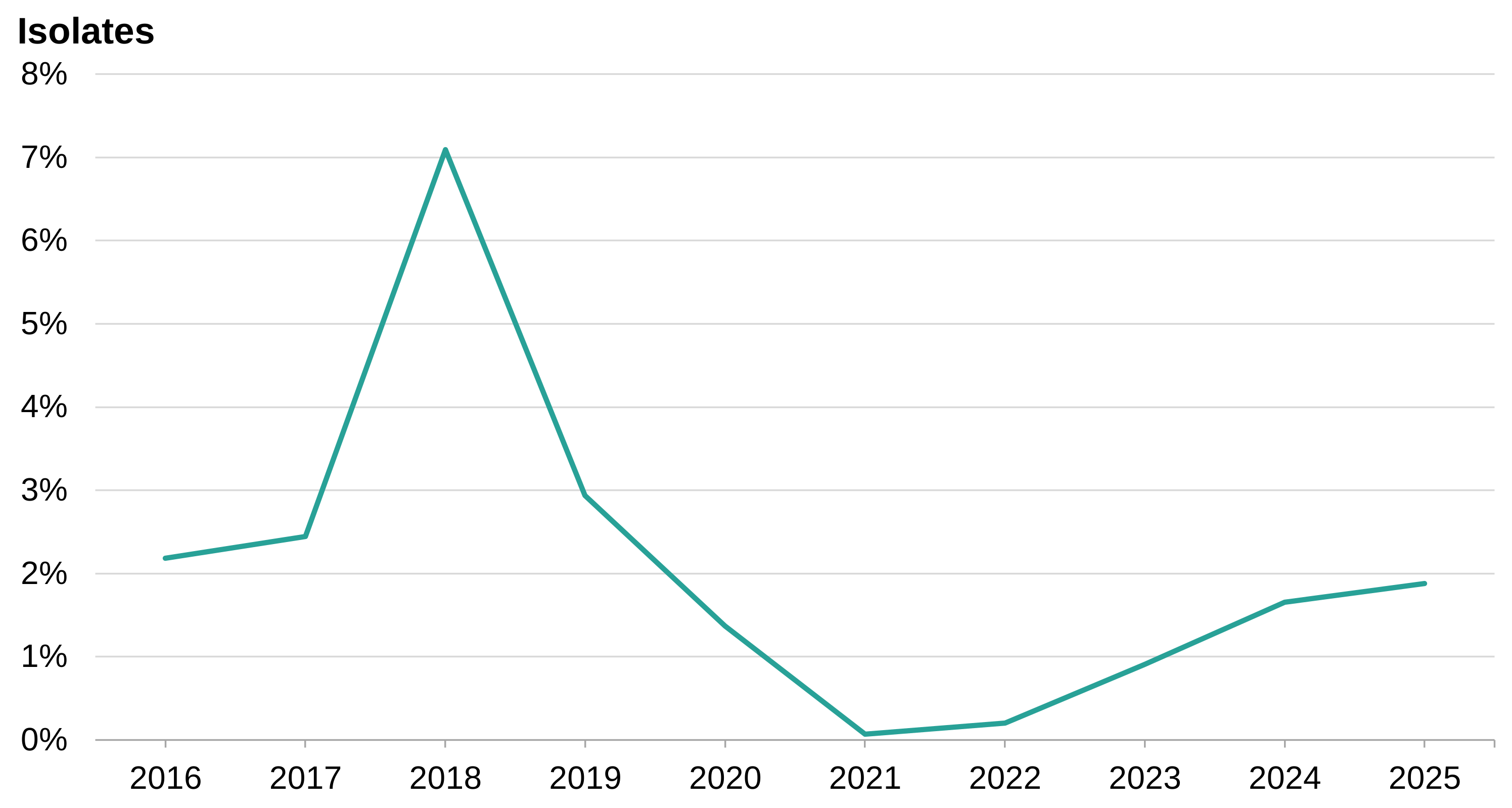
The percentage of isolates with reduced susceptibility to ceftriaxone (minimum inhibitory concentration (MIC) >0.03 mg/L) remains low at 1.9% but has increased annually since 2021.
Cefixime resistance decreased from a peak of 5.6% in 2023 to 2.1% in 2025.
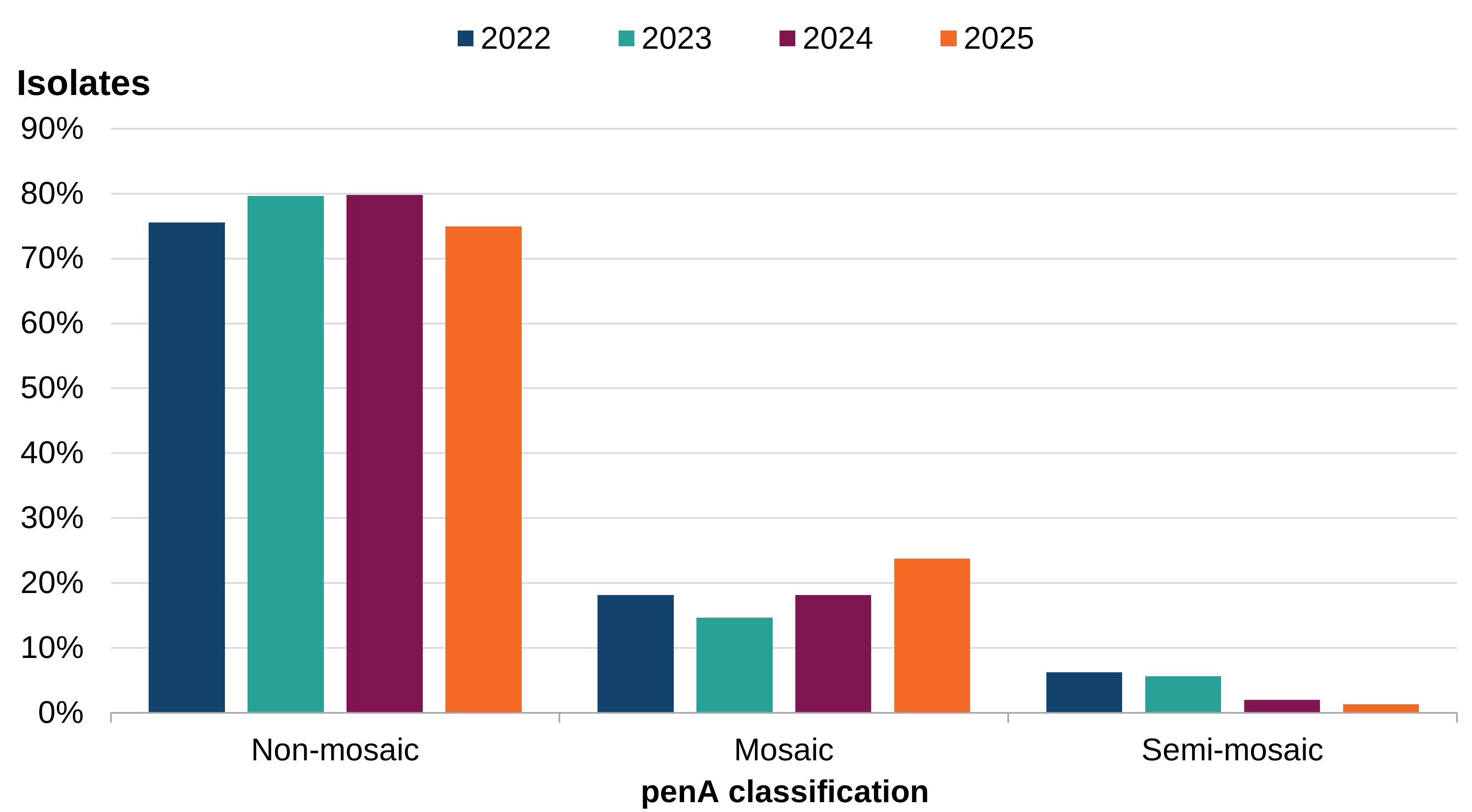
Reduced susceptibility to ceftriaxone and resistance to cefixime were both associated with the presence of mosaic or semi-mosaic penA alleles. Mosaic penA alleles were identified in 23.8% of isolates, the highest proportion observed since genomic surveillance began in 2022. However, reduced ceftriaxone susceptibility and cefixime resistance remained rare.
Reduced susceptibility to azithromycin (epidemiological cut-off value (ECOFF) >1 mg/L) doubled in the last year to 25.5%, mainly due to an increase in isolates with an MIC of 2.0 mg/L, just above the ECOFF.
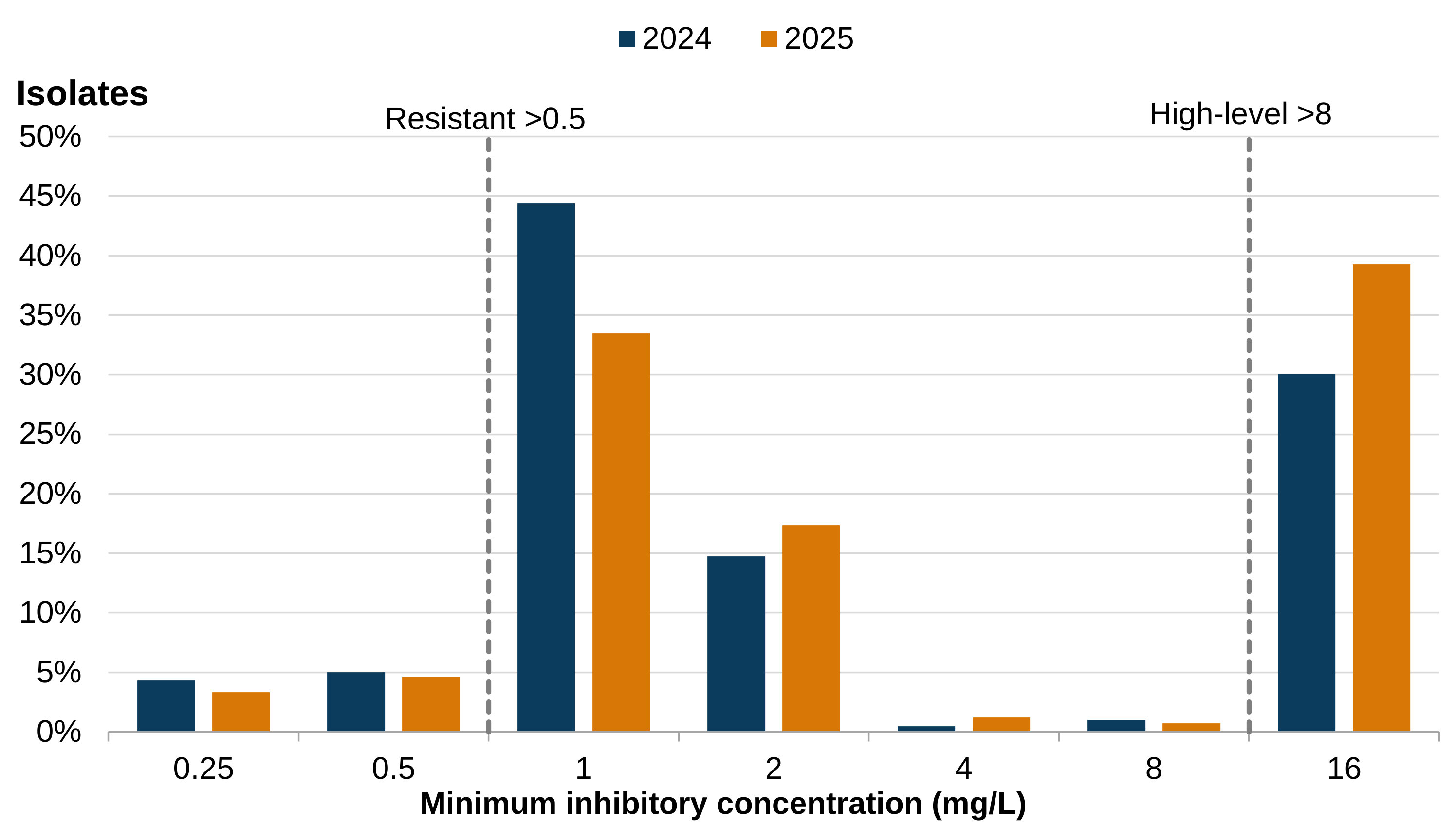
Most isolates (92.0%) were resistant to tetracycline (MIC >0.5 mg/L), while high-level (MIC >8 mg/L) plasmid-mediated resistance increased from 30.1% in 2024 to 39.2% in 2025.
Over a quarter of isolates (26.4%) were resistant to penicillin (MIC >1 mg/L), similar to the previous year.
Ciprofloxacin resistance was inferred from genomic data and increased to 51.6% in 2025.
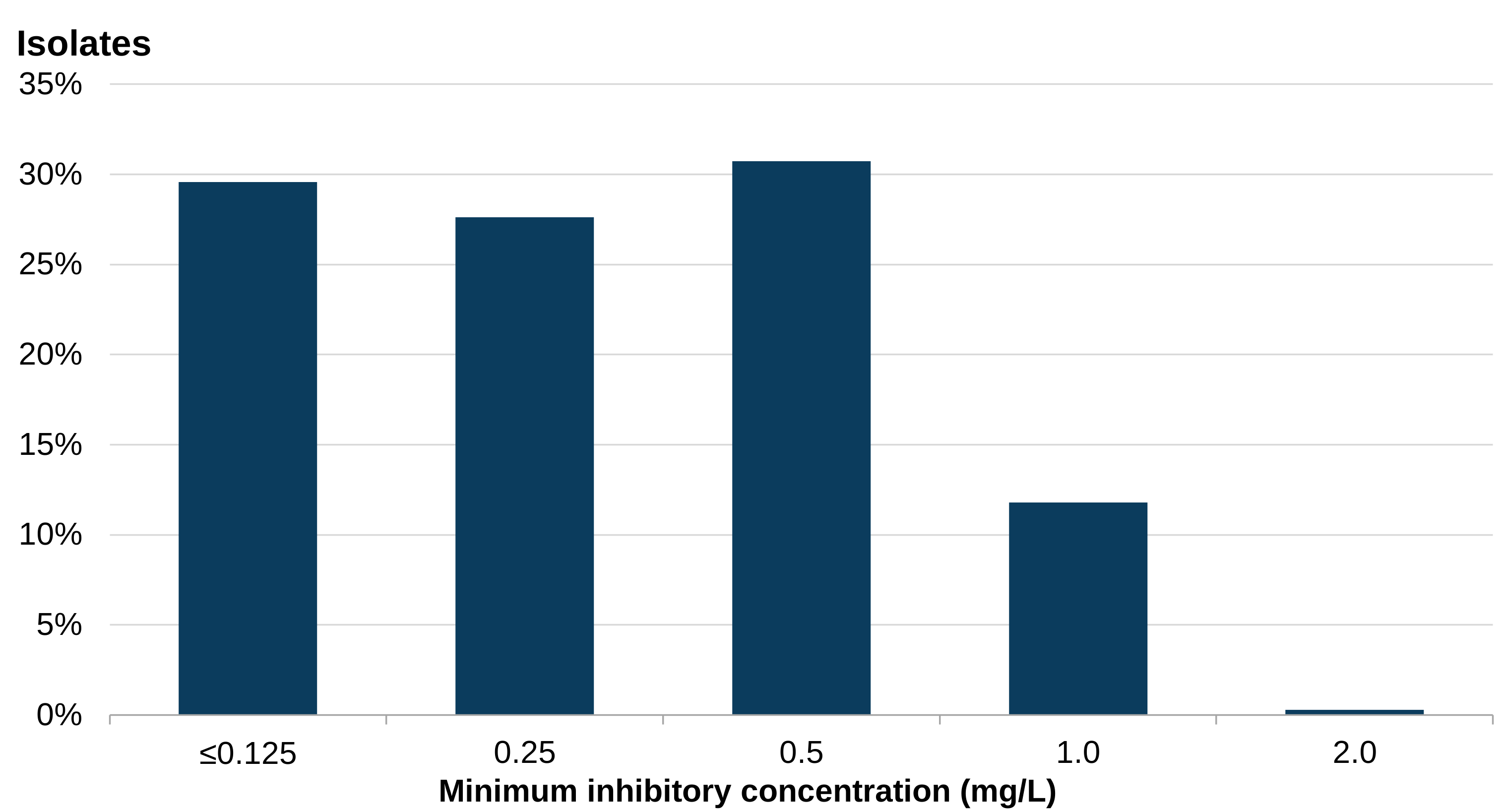
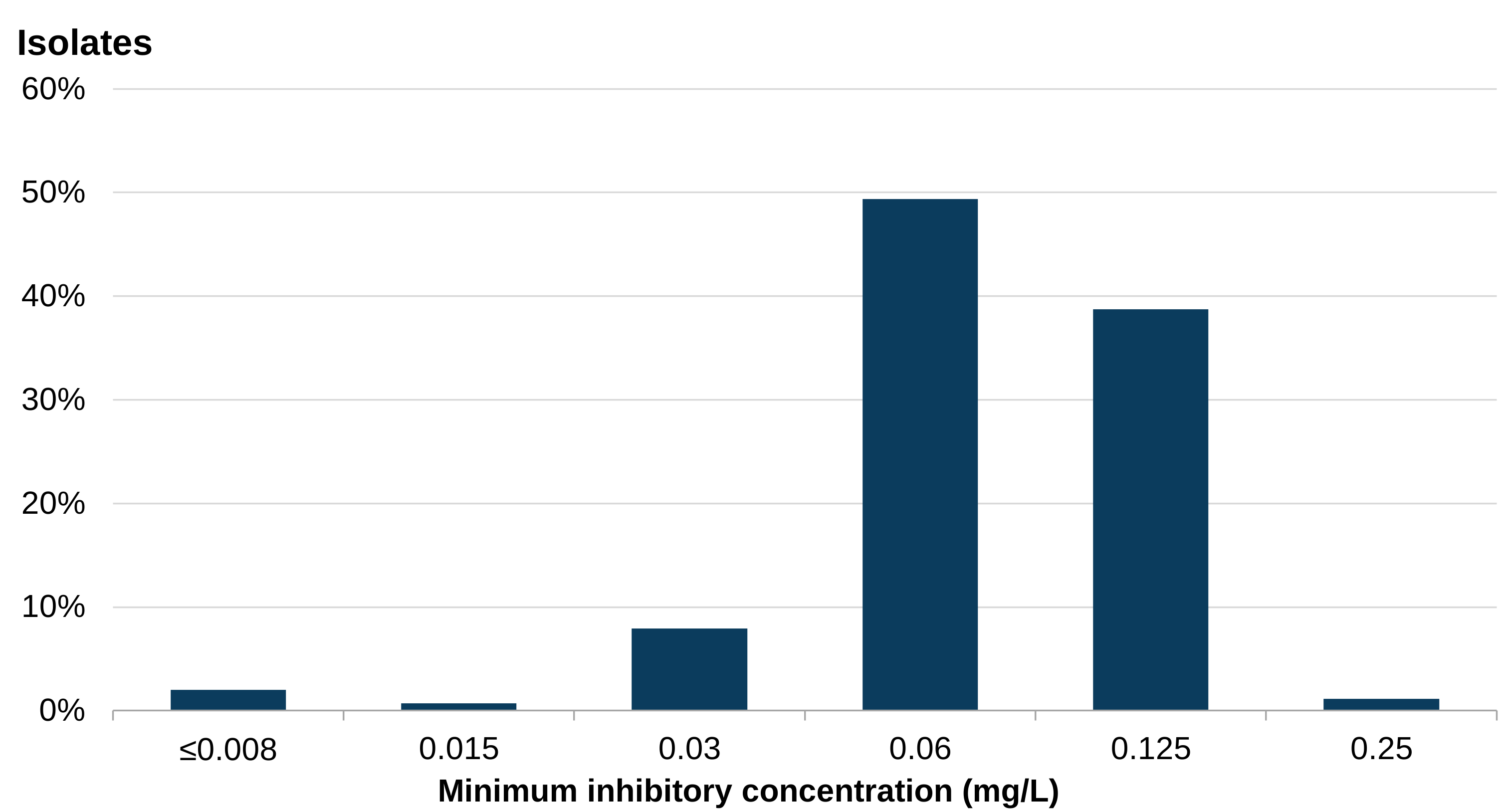
Antimicrobial susceptibility testing for gepotidacin and zoliflodacin has been included for the first time. The modal MIC was low at 0.5 mg/L for gepotidacin and none were above the ECOFF (MIC >2 mg/L). The modal MIC was also low for zoliflodacin at 0.06 mg/L and none were above a tentative breakpoint of >0.25 mg/L.
Multilocus sequence typing (MLST) identified increasing dominance of a small number of expanding gonococcal lineages. The 2 most common lineages together accounted for 33.1% of isolates sequenced in 2025. Major lineages differed in the proportions of isolates identified among sexual orientation groups, as well as in their antimicrobial resistance profiles, highlighting the impact of changing gonococcal population structure on resistance trends.
Prescribing data demonstrated excellent adherence to the UK guideline for managing infection with N. gonorrhoeae, with 98.1% of individuals receiving the recommended first-line of ceftriaxone 1g intramuscular (IM) monotherapy in 2025.
Recommendations
All primary diagnostic laboratories should test gonococcal isolates for susceptibility to ceftriaxone, the current recommended first-line therapy for gonorrhoea (1g IM monotherapy) in the UK.
Suspected ceftriaxone-resistant isolates (MIC >0.125 mg/L, European Committee on Antimicrobial Susceptibility Testing (EUCAST) breakpoint) should be referred to the Sexually Transmitted Infections Reference Laboratory (STIRL) for confirmatory testing and follow-up.
Possible cases of ceftriaxone treatment failure should be reported to UKHSA via the secure HIV and STI Data Exchange for registered users (contact grasp.enquiries@ukhsa.gov.uk for access).
Healthcare practitioners should ensure that all individuals diagnosed with gonorrhoea are treated and managed according to national guidelines.
In August 2025, England introduced the 4CMenB (Bexsero) vaccination programme for gonorrhoea prevention. The vaccine should be offered primarily to gay, bisexual and other men who have sex with men (GBMSM) at increased risk of gonorrhoea (those with a bacterial sexually transmitted infection (STI) in the previous 12 months or reporting 5 or more sexual partners in the previous 3 months).
Introduction
Gonorrhoea, caused by the bacterium Neisseria gonorrhoeae, is the second-most diagnosed STI in England. If untreated, gonorrhoea can lead to complications including chronic pelvic pain, pelvic inflammatory disease, ectopic pregnancy, epididymitis, prostatitis, and urethral strictures.
Gonorrhoea diagnoses in England are high, with 63,943 cases reported in 2025. Cases have continued to decrease since a peak of 85,297 cases in 2023. The decrease continued across gender and sexual orientation groups but was most prominent among women (23% decrease), followed by heterosexual men (14% decrease) and GBMSM (6% decrease). Diagnosis rates of gonorrhoea remained highest among specific population groups: GBMSM, young people aged 20 to 34 years, and individuals of Black Caribbean and Mixed ethnicities.
Ceftriaxone is an extended-spectrum cephalosporin (ESC) that is currently recommended in the UK as the first-line therapy for gonorrhoea (1g IM monotherapy). It is one of the remaining few licensed antimicrobials that can be effectively used as first-line empirical monotherapy for gonorrhoea. Ongoing monitoring of antimicrobial resistance (AMR), comprising the culture of isolates, test-of-cure (TOC) and comprehensive and enhanced surveillance, is vital to detect emerging trends and to ensure that first-line treatments for gonorrhoea remain effective. Ineffective treatment facilitates onward transmission of infections and resistant strains, and the development of sequelae.
GRASP includes a suite of surveillance systems to detect and monitor AMR in N. gonorrhoeae and to record potential treatment failures. These include the GRASP sentinel surveillance system, referrals to STIRL and reports of suspected treatment failures. This report presents trends in gonococcal susceptibility to current, prospective and historically used antimicrobials and explores the recent epidemiology and genomic characteristics of N. gonorrhoeae AMR in England and Wales.
The GRASP sentinel surveillance system
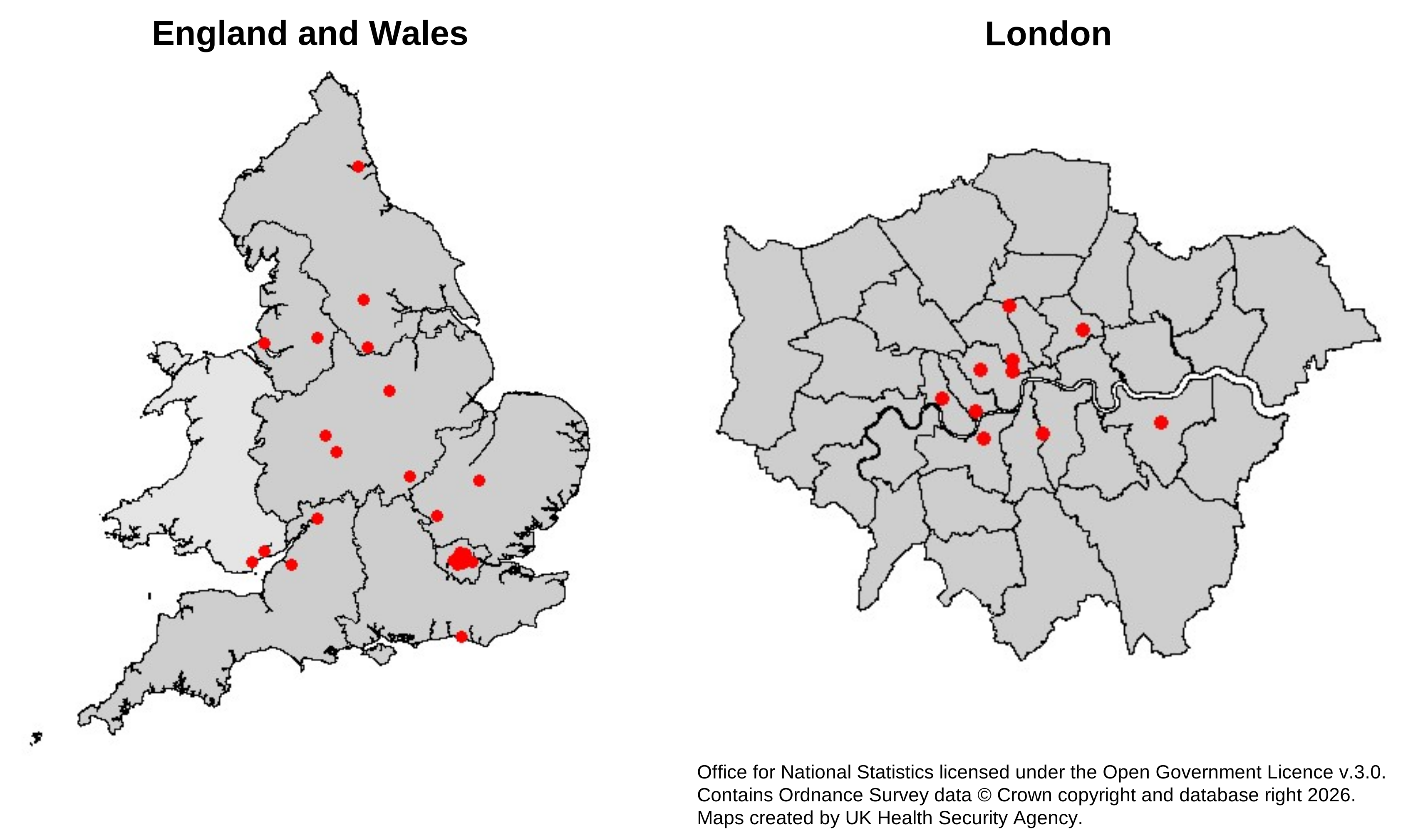
GRASP sentinel surveillance data is obtained annually from a network of 26 sexual health services (SHSs) across England and Wales and their associated laboratories. The number of participating services can vary between annual collections. In 2025, 26 SHSs (24 in England, 2 in Wales) and 19 laboratories participated in the programme. The geographical distribution of the 26 routinely participating SHSs is shown in Figure 1.
Participating laboratories are requested to collect consecutive N. gonorrhoeae isolates during August and September. All collected N. gonorrhoeae isolates are sent to STIRL for antimicrobial susceptibility testing. Antimicrobial susceptibility results are linked securely to the pseudonymised GUMCAD STI Surveillance System data to obtain demographic and clinical details. GUMCAD is a disaggregated, patient-level data set of all STI tests and diagnoses at SHSs in England. Supplementary demographic, clinical and behavioural data is submitted by participating SHSs to enhance GUMCAD data.
Two-sample tests of proportion and Chi-square tests for trend are used to define recent and longitudinal antimicrobial susceptibility trends, respectively. All isolates underwent whole-genome sequencing (WGS) to define the population structure and understand the molecular basis of resistance to antimicrobials.
Full details on the data sets and methodology used for the GRASP sentinel surveillance system are available in the GRASP protocol.
Figure 1. Map showing 26 sentinel SHSs participating in GRASP across UKHSA regions in England, Wales and local authorities in London (shown at larger scale), 2025
Source: data from GRASP sentinel surveillance system.
STI Reference Laboratory
As part of standard referral criteria, primary diagnostic laboratories in England are requested to submit all N. gonorrhoeae isolates with suspected ceftriaxone resistance (MIC >0.125 mg/L, EUCAST breakpoint) to STIRL for species confirmation, antimicrobial susceptibility testing and whole genome sequencing.
Treatment failures
Information on suspected ceftriaxone treatment failures in England is reported to UKHSA via the HIV and STI Data Exchange (contact grasp.enquiries@ukhsa.gov.uk for access).
Sentinel surveillance sample
Sampling frame
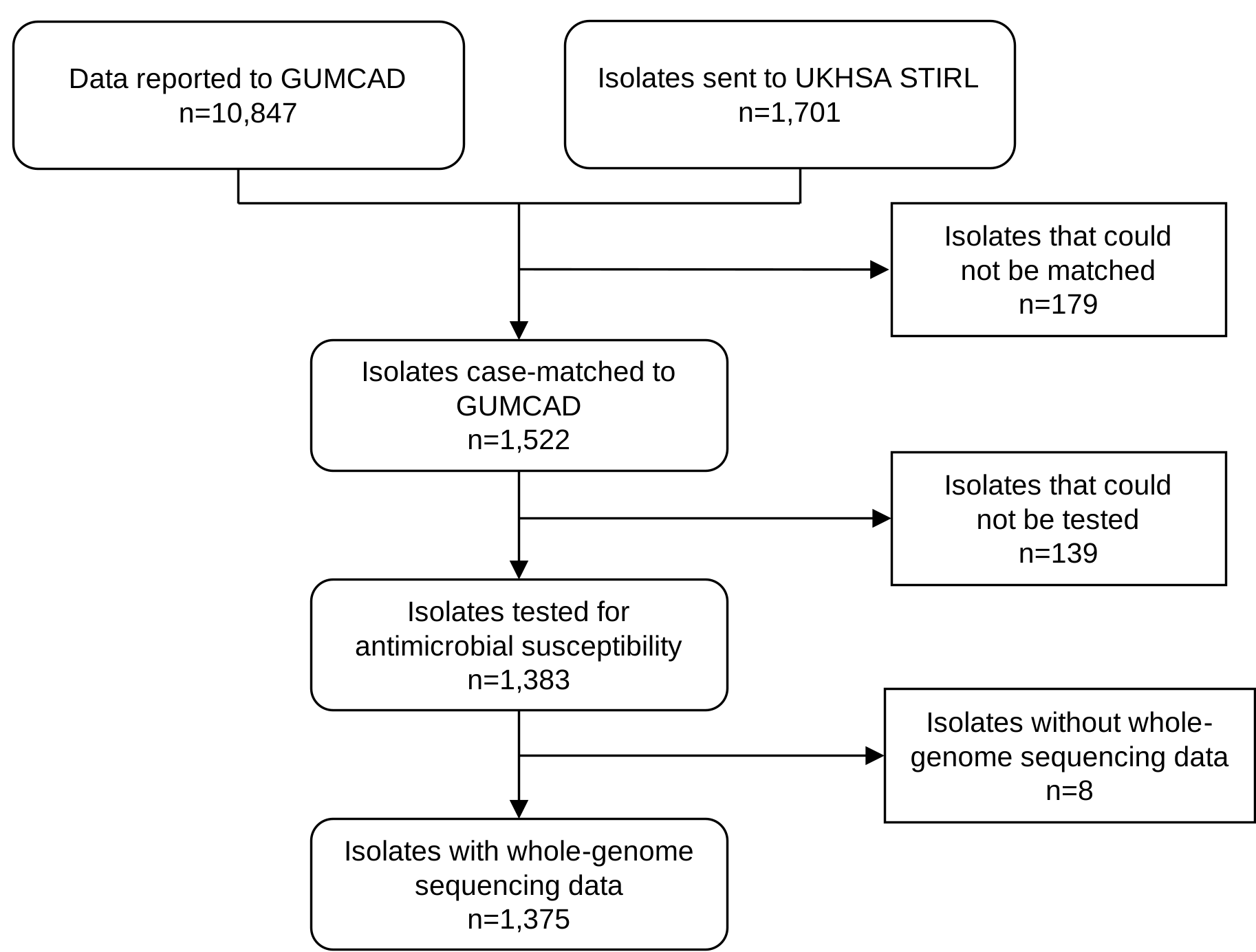
The 2025 GRASP collection took place between 1 August and 30 September 2025. During this period, 1,761 N. gonorrhoeae isolates were sent to STIRL for antimicrobial susceptibility testing (Figure 2). A total of 1,701 isolates were from SHSs in England and 60 isolates were from Wales. This represents 16% of all gonorrhoea diagnoses (n=10,847) reported to GUMCAD over the same period.
Isolates were included in analyses if they met both of the following criteria:
- could be case-matched to a participating GRASP SHS within the GUMCAD STI Surveillance System (n=1,522)
- had been successfully tested for susceptibility to the following antimicrobials: azithromycin, cefixime, ceftriaxone, gepotidacin, penicillin, tetracycline and zoliflodacin (n=1,383)
Figure 2. Sentinel surveillance sampling frame flowchart in GRASP 2025
Source: data from routine returns to the GUMCAD STI surveillance system and GRASP sentinel surveillance system.
Sentinel surveillance sample characteristics
Among 1,383 individuals with a N. gonorrhoeae isolate included in the sentinel surveillance sample, 87.2% were male, of whom 76.0% (842 out of 1,108) were GBMSM (Table 1a). Most individuals were White (64.2%) followed by individuals of Black ethnicity (13.8%) and Asian ethnicity (10.0%) (see Office for National Statistics ethnic groups). The modal age group was 25 to 34 years (42.4%), with ages ranging from 16 to 80 years. Just under half (46.6%) were resident in London. Among all individuals, 7.6% were living with HIV, and 93.2% (82 out of 88) of these were GBMSM. One-fifth (19.9%) had been diagnosed with gonorrhoea in the previous year and 18.2% were diagnosed with concurrent chlamydia at the gonorrhoea diagnosis considered within the GRASP analysis (Table 1b).
HIV PrEP use among HIV-negative individuals was most common in GBMSM, with 76.5% reporting HIV PrEP use at the time of gonorrhoea diagnosis (Table 1b). Data on STI prophylaxis use in the previous 3 months was only available for 16.1% (n=223) of individuals. Of these, 37.2% (83 out of 223) reported using doxycycline as STI prophylaxis in the 3 months prior to gonorrhoea diagnosis and 97.5% (79 out of 81) identified as GBMSM. No other antibiotics were used as STI prophylaxis.
Most individuals reported having either 0 to 1 (32.6%) or 2 to 5 (48.7%) sexual partners in the 3 months prior to their gonorrhoea diagnosis. Where data on sexual partners abroad (outside of the UK) was reported (39.7%), 12.9% of individuals reported having a sexual partner abroad in the same time interval (Table 1c).
New (2025) BASHH guidelines no longer recommend routine TOC for anogenital infections treated with 1g ceftriaxone that are ceftriaxone susceptible. TOC remains recommended for pharyngeal infections (amidst other criteria) of which 51.4% of individuals, having a pharyngeal infection, were reported to have received a TOC. This is however, substantially lower compared with 74.5% of those with a pharyngeal infection having a TOC in the year prior.
A comparison was made between demographic characteristics of individuals included in the GRASP sentinel sample and those diagnosed with gonorrhoea at SHSs in the GUMCAD surveillance system over the same period (August to September 2025). This showed that women were under-represented in GRASP (12.8% versus 17.5%, probability (p) value <0.001), whereas heterosexual men were over-represented (20.9% versus 17.6%, p=0.004). There were similar proportions of GBMSM, however. Those of White ethnicity were underrepresented in GRASP (64.2% versus 68.5%, p=0.002) whereas those of Black ethnicity were overrepresented (13.8% versus 11.6%, p=0.02).
Table 1a. Sites tested, site of infection and symptom status of individuals in GRASP, by gender identity and sexual orientation, 2025 [note 1]
| Characteristics | GBMSM | Heterosexual men | Women | Other and not reported [note 2] | Total |
|---|---|---|---|---|---|
| Metric |
n (% of N) [note 3] |
n (% of N) [note 3] |
n (% of N) [note 3] |
n (% of N) [note 3] |
n (% of N) [note 3] |
| Number of individuals (N) | 842 | 266 | 163 | 112 | 1,383 |
| Sample origin: genital |
260 (31.3%) |
241 (92.3%) |
105 (65.6%) |
46 (41.1%) |
652 (47.8%) |
| Sample origin: rectal |
359 (43.2%) |
7 (2.7%) |
9 (5.6%) |
39 (34.8%) |
414 (30.4%) |
| Sample origin: pharyngeal |
212 (25.5%) |
13 (5.0%) |
46 (28.8%) |
27 (24.1%) |
298 (21.8%) |
| Sample origin: other and not reported [note 2] |
11 | 5 | 3 | 0 | 19 |
| Site of infection: genital [note 4] |
375 (44.5%) |
258 (97.0%) |
141 (86.5%) |
72 (64.3%) |
846 (61.2%) |
| Site of infection: rectal [note 4] |
595 (70.7%) |
16 (6.0%) |
33 (20.2%) |
64 (57.1%) |
708 (51.2%) |
| Site of infection: pharyngeal [note 4] |
472 (56.1%) |
58 (21.8%) |
88 (54.0%) |
50 (44.6%) |
668 (48.3%) |
| Site of infection: multiple sites [note 4] |
451 (53.6%) |
80 (30.1%) |
85 (52.1%) |
59 (52.7%) |
675 (48.8%) |
| Symptoms: no |
437 (54.6%) |
51 (19.5%) |
88 (55.3%) |
38 (48.1%) |
614 (47.3%) |
| Symptoms: yes |
363 (45.4%) |
210 (80.5%) |
71 (44.7%) |
41 (51.9%) |
685 (52.7%) |
| Symptoms: not reported [note 2] |
42 | 5 | 4 | 33 | 84 |
Source: data from GRASP sentinel surveillance system.
Note 1: gender and sexual orientation are self-reported.
Note 2: ‘Other and not reported’ includes 14 individuals who were gender diverse, as numbers were too few to analyse separately. Of the remaining, 95 individuals were male and 3 did not report gender. ‘Not reported’ refers to instances where information was unknown or not stated.
Note 3: ‘N’ refers to all individuals in GRASP 2025 data set (by gender identity and sexual orientation) that have reported data for each characteristic and excludes individuals where data was not reported.
Note 4: sites of infection are not mutually exclusive and individuals can have infections at multiple sites, thus percentages do not add up to 100%. Not all individuals are tested for gonorrhoea at each site.
Note that the numbers in the table by site of infection exceed the numbers for sample origin as only one site is tested per individual as determined by the hierarchy described in the GRASP protocol.
Table 1b. Concurrent STI, previous gonorrhoea diagnosis and HIV PrEP use of individuals in GRASP, by gender identity and sexual orientation, 2025 [note 5]
| Characteristics | GBMSM | Heterosexual men | Women | Other and not reported [note 6] | Total |
|---|---|---|---|---|---|
| Metric |
n (% of N) [note 3] |
n (% of N) [note 3] |
n (% of N) [note 3] |
n (% of N) [note 3] |
n (% of N) [note 3] |
| Number of individuals (N) | 842 | 266 | 163 | 112 | 1,383 |
| Concurrent STIs: chlamydia [note 8] | 147 (17.5%) |
42 (15.8%) |
44 (27.0%) |
19 (17.0%) |
252 (18.2%) |
| Concurrent STI: other STIs [note 8] |
40 (4.8%) |
11 (4.1%) |
3 (1.8%) |
10 (8.9%) |
64 (4.6%) |
| Previously diagnosed with gonorrhoea (past year): no | 545 (73.7%) |
219 (92.4%) |
123 (92.5%) |
61 (81.3%) |
948 (80.1%) |
| Previously diagnosed with gonorrhoea (past year): yes | 194 (26.3%) |
18 (7.6%) |
10 (7.5%) |
14 (18.7%) |
236 (19.9%) |
| Previously diagnosed with gonorrhoea (past year): not reported [note 6] | 103 | 29 | 30 | 37 | 199 |
| HIV PrEP use at time of gonorrhoea diagnosis: no [note 9] | 164 (23.5%) |
234 (95.5%) |
129 (92.1%) |
37 (54.4%) |
564 (49.0%) |
| HIV PrEP use at time of gonorrhoea diagnosis: yes [note 9] | 534 (76.5%) |
11 (4.5%) |
11 (7.9%) |
31 (45.6%) |
587 (51.0%) |
| HIV PrEP use at time of gonorrhoea diagnosis: not reported [note 6][note 9] | 16 | 3 | 6 | 1 | 26 |
Source: data from GRASP sentinel surveillance system.
Note 5: gender and sexual orientation are self-reported.
Note 6: ‘Other and not reported’ includes 14 individuals who reported they were gender diverse, as numbers were too few to analyse separately. Of the remaining, 95 individuals were male and 3 did not report gender. ‘Not reported’ refers to instances where information was unknown or not stated.
Note 7: ‘N’ refers to all individuals in GRASP 2025 data set (by gender identity and sexual orientation) that have reported data for each characteristic and excludes all individuals where data was not reported.
Note 8: not all individuals are tested for each STI of chlamydia, syphilis, HIV, hepatitis B, hepatitis C, herpes, lymphogranuloma venereum (LGV), genital warts and Mycoplasma genitalium.
Note 9: denominator excludes individuals with a positive HIV diagnosis prior to gonorrhoea diagnosis.
Table 1c. Number of partners and reporting of sex abroad of individuals in GRASP, by gender identity and sexual orientation, 2025 [note 10]
| Characteristics | GBMSM | Heterosexual men | Women | Other and not reported [note 11] |
Total |
|---|---|---|---|---|---|
| Metric |
n (% of N) [note 3] |
n (% of N) [note 3] |
n (% of N) [note 3] |
n (% of N) [note 3] |
n (% of N) [note 3] |
| Number of individuals (N) | 842 | 266 | 163 | 112 | 1,383 |
| Total sexual partners (past 3 months): 0 to 1 |
154 (22.0%) |
119 (46.7%) |
85 (56.7%) |
23 (34.8%) |
381 (32.6%) |
| Total sexual partners (past 3 months): 2 to 5 |
354 (50.6%) |
127 (49.8%) |
58 (38.7%) |
31 (47.0%) |
570 (48.7%) |
| Total sexual partners (past 3 months): 6 to 10 |
111 (15.9%) |
5 (2.0%) |
3 (2.0%) |
7 (10.6%) |
126 (10.8%) |
| Total sexual partners (past 3 months): 11 and over | 80 (11.4%) |
4 (1.6%) |
4 (2.7%) |
5 (7.6%) |
93 (7.9%) |
| Total sexual partners (past 3 months): not reported [note 11] | 143 | 11 | 13 | 46 | 213 |
| Sex abroad (past 3 months): no | 223 (85.1%) |
139 (85.8%) |
85 (92.4%) |
31 (93.9%) |
478 (87.1%) |
| Sex abroad (past 3 months): yes | 39 (14.9%) |
23 (14.2%) |
7 (7.6%) |
2 (6.1%) |
71 (12.9%) |
| Sex abroad (past 3 months): not reported [note 11] | 580 | 104 | 71 | 79 | 834 |
Source: data from GRASP sentinel surveillance system.
Note 10: gender and sexual orientation are self-reported.
Note 11: ‘Other and not reported’ includes 14 individuals who reported they were gender diverse, as numbers were too few to analyse separately. Of the remaining, 95 individuals were male and 3 did not report gender. ‘Not reported’ refers to instances where information was unknown or not stated.
Note 12: ‘N’ refers to all individuals in GRASP 2025 data set (by gender identity and sexual orientation) that have reported data for each characteristic and excludes all individuals where data was not reported.
Whole genome sequencing
The integration of WGS into GRASP provides insights into the N. gonorrhoeae lineages that are driving AMR trends and makes it possible to monitor changes in lineages over time. Additionally, WGS facilitates the identification of molecular determinants of AMR and the prediction of antimicrobial susceptibility phenotype from genotype. All isolates were submitted for WGS, with genomes for 1,375 of 1,383 (99.4%) isolates meeting internal quality criteria.
Two molecular typing schemes are commonly used to describe the population biology of N. gonorrhoeae. The nucleotide sequences required for these typing schemes can be extracted from WGS data, enabling comparisons of molecular epidemiology with previous GRASP years, other laboratories, and published data. The schemes are:
- MLST: this catalogues variation in fragments of 7 housekeeping genes
- N. gonorrhoeae sequence typing for antimicrobial resistance (NG-STAR): this catalogues variation in 7 chromosomal genes associated with resistance to β-lactam antimicrobials, azithromycin and ciprofloxacin
Multilocus sequence typing (MLST)
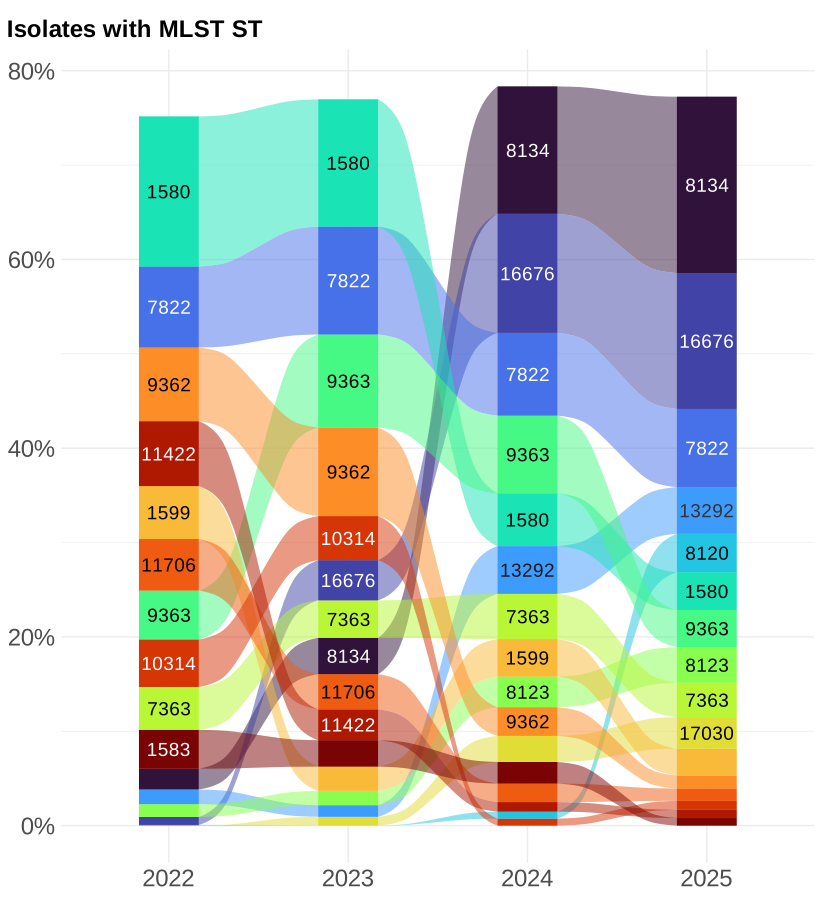
In 2025, complete MLST profiles were obtained for all 1,375 analysed genomes. There were 103 unique MLST sequence types (STs) in 2025, which was greater than in 2024 (n=94). The 10 most common STs accounted for 950 out of 1,375 (69.1%) isolates, which was similar to 2023 (67.9%) and 2024 (68.8%). In contrast, 85 STs each accounted for ≤1.0% of isolates, including 44 that were identified in only a single isolate. Although a greater number of MLST STs were identified in 2025, the population became increasingly dominated by a small number of expanding STs or ‘lineages’.
The top 10 STs from 2025 were compared with those from 2022 to 2024, highlighting changes in the frequency of predominant lineages over time (Figure 3). The 3 most common STs in 2025 were ST8134 (18.7%), ST16676 (14.4%) and ST7822 (8.3%), which were also the most common STs in 2024. ST8134 and ST16676 increased progressively between 2022 and 2025 and together accounted for 33.1% of sequenced isolates in 2025. ST7822 remained comparatively stable and was among the 3 most common STs in every year from 2022 to 2025.
Alongside the expansion of ST8134 and ST16676, ST1580 declined markedly between 2022 and 2025, falling from the most common sequence type (ST) in 2022 to the sixth most common ST in 2025. Turnover among other lineages was limited, with ST8120 and ST17030 entering the top 10 in 2025, replacing ST9362 and ST1599. The most notable year-on-year changes were the decline of ST9363 (8.2% in 2024 to 3.9% in 2025) and the increase in ST8120 (0.7% to 4.1%).
Figure 3. Distribution of prevalent MLST STs in 2025 compared with 2022 to 2024 [note 13]
Source: data from GRASP sentinel surveillance system.
Note 13: STs that ranked in the top 10 in at least one year (2022 to 2025) are shown.
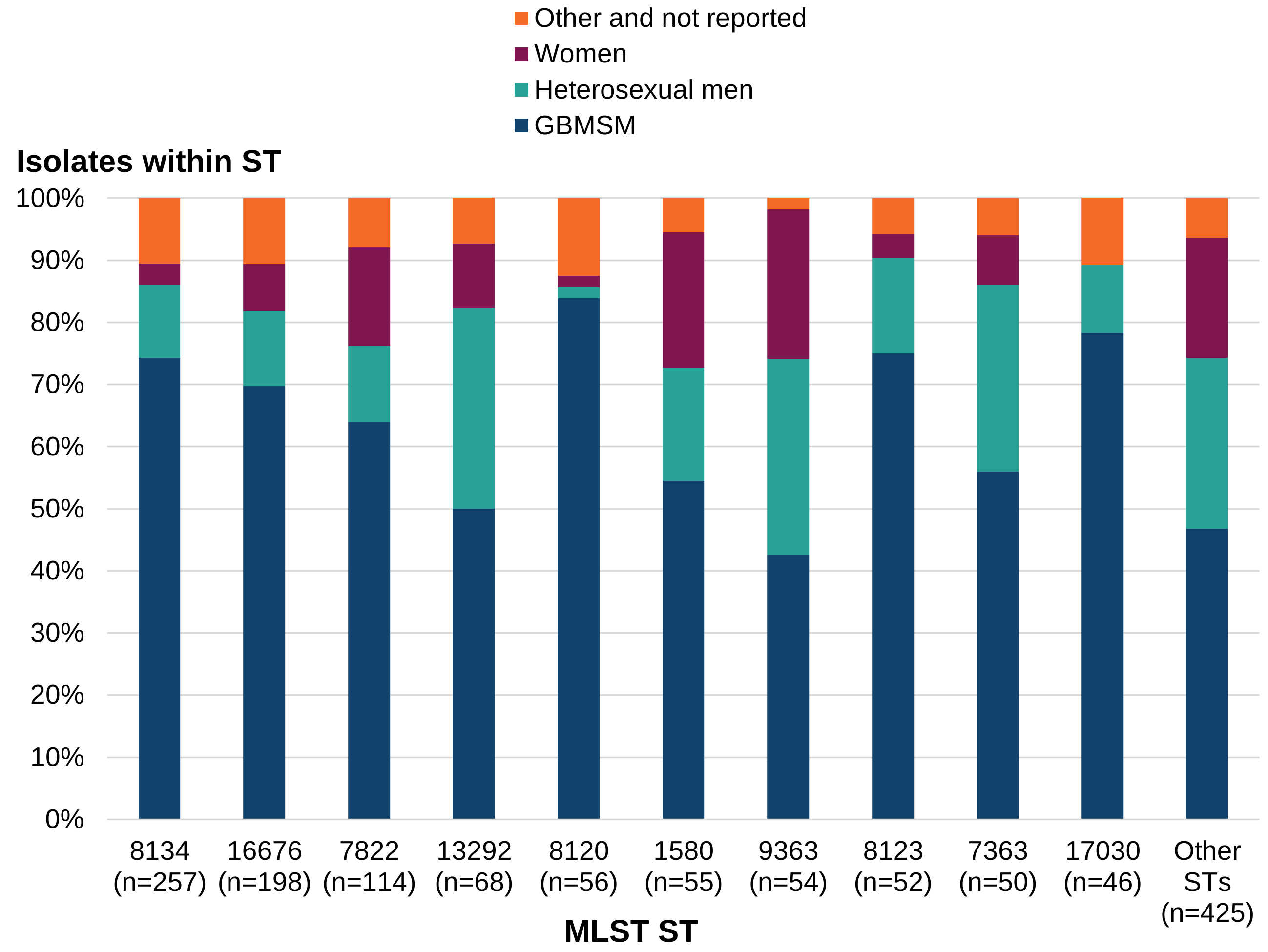
Combining MLST and demographic data identified variation in the sexual orientation distribution of the major lineages circulating in 2025 (Figure 4). Most of the commonest lineages were predominantly identified among GBMSM, including ST8134, ST16676, and ST8120, in which 69.7% to 83.9% of isolates were from GBMSM. In contrast, several less common lineages showed a more mixed distribution, particularly ST13292, ST9363 and ST1580, which contained relatively higher proportions of isolates from heterosexual men, and women.
Figure 4. Distribution of the 10 most common MLST STs by sexual orientation, 2025 [note 14]
Source: data from GRASP sentinel surveillance system.
Note 14: the top 10 STs from 2025 are shown individually with remaining isolates grouped as ‘Other STs’. STs are ordered based on rank abundance in 2025.
N. gonorrhoeae sequence typing for antimicrobial resistance (NG-STAR)
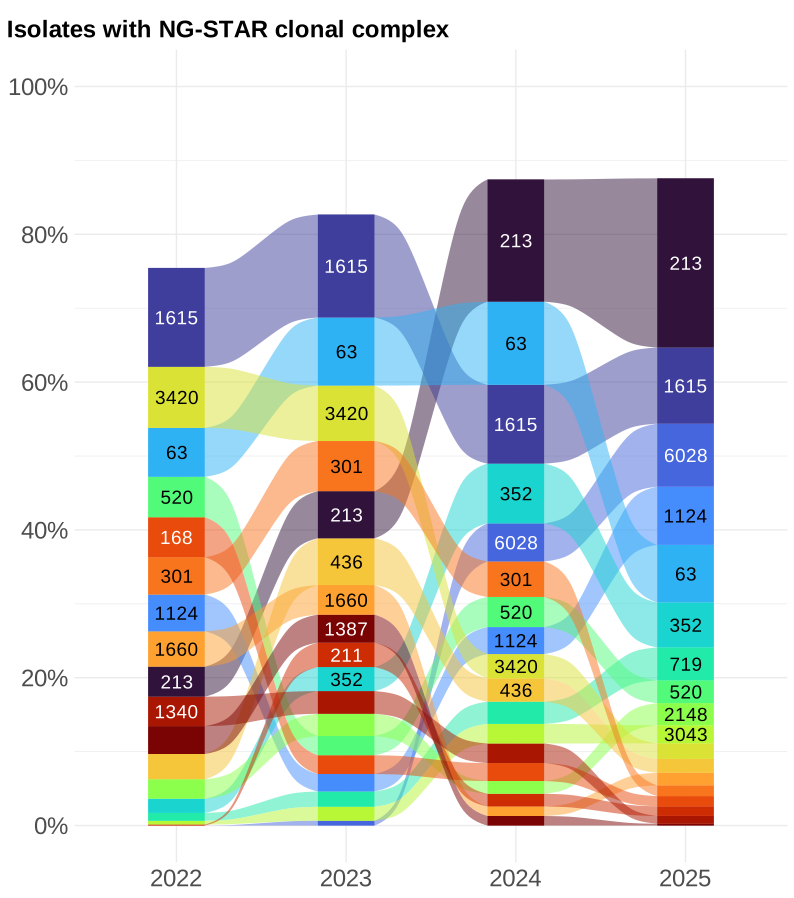
Complete NG-STAR profiles were obtained for all 1,375 genomes in 2025, corresponding to 243 NG-STAR STs. To aid interpretation of NG-STAR data, individual NG-STAR STs can be assigned to clonal complexes (CCs), which group similar antimicrobial resistance determinant profiles. Overall, 89.6% of isolates from 2025 could be assigned to a CC, corresponding to 53 NG-STAR CCs.
The distribution of major NG-STAR CCs fluctuated between 2022 and 2025 (Figure 5). The most common CCs among assigned isolates in 2025 were CC213 (22.9%), CC1615 (10.3%), and CC6028 (8.5%). CC213 expanded to become the most common CC in 2024 and 2025, while CC1615 remained prominent between 2022 and 2025 and was the second most common CC in 2025.
Figure 5. Distribution of prevalent NG-STAR CCs in 2025 compared with 2022 to 2024 [note 15]
Source: data from GRASP sentinel surveillance system.
Note 15: CCs that ranked in the top 10 in at least one year (2022 to 2025) are shown. Percentages were calculated using only isolates assigned to an NG-STAR CC.
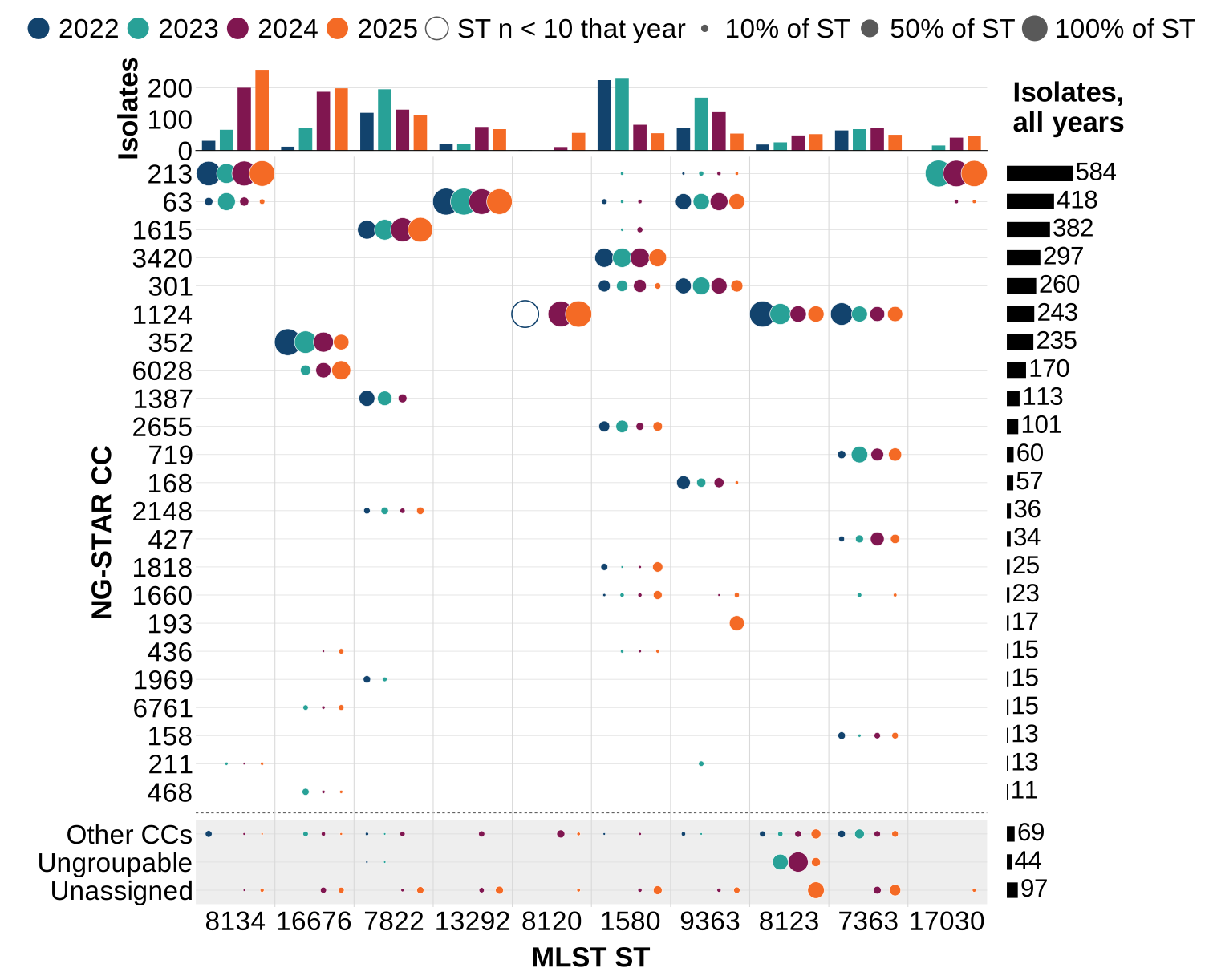
Figure 6 shows the relationship MLST lineages and NG-STAR CCs among the most common MLST lineages between 2022 and 2025. Comparison of MLST and NG-STAR data demonstrated strong correspondence between several major lineages and individual NG-STAR CCs. For example, ST8134 and ST17030 corresponded predominantly to CC213, ST7822 to CC1615, ST13292 to CC63, and ST8120 to CC1124. Other MLST lineages comprised multiple NG-STAR CCs, particularly ST16676, ST9363, and ST7363, indicating greater diversity in AMR determinant profiles within these lineages. The changing balance between CC352 and CC6028 within ST16676 illustrates how NG-STAR can identify shifts in AMR determinant profiles that are not apparent from MLST data alone.
Several prevalent NG-STAR CCs identified in GRASP corresponded to CCs previously described in genomic surveillance conducted across 21 European countries. In particular, CC213 and CC63 were associated with increasing azithromycin MICs in these countries between 2018 and 2020. The continued expansion of CC213 in GRASP, largely through MLST ST8134 and ST17030, demonstrates the ongoing importance of this antimicrobial resistance determinant profile. In contrast, CC1615 was reported as an emerging CC in Europe in 2020, whereas CC6028 was not among the predominant European CCs described at that time, indicating ongoing changes in circulating AMR determinant profiles.
Figure 6. NG-STAR CCs within the 10 most common MLST STs, 2022 to 2025 [note 16]
Source: data from GRASP sentinel surveillance system.
Note 16: MLST STs shown are the 10 most prevalent in 2025. Together they account for 3,347 of 5,971 isolates (56.1%) from 2022 to 2025.
Each circle in the central panel shows the percentage of isolates of a MLST ST in a given year that belong to an NG-STAR CC. Circle size is proportional to that percentage, which is calculated from all isolates of the ST in that year.
Within each ST, beads run left to right in year order and are coloured by year as shown in the legend. Hollow beads show years in which an ST had fewer than 10 isolates.
The upper panel shows the number of isolates of each ST in each year. The right-hand panel shows the number of isolates in each CC across the STs shown, 2022 to 2025 combined.
CCs with fewer than 10 isolates among the STs shown, 2022 to 2025 combined, are grouped as ‘Other CCs’ (23 CCs, 69 isolates, 2.1% of isolates shown).
‘Unassigned’ means the NG-STAR ST has not yet been assigned to a CC. ‘Ungroupable’ means the NG-STAR ST has been assessed but does not belong to a CC.
Antimicrobial resistance
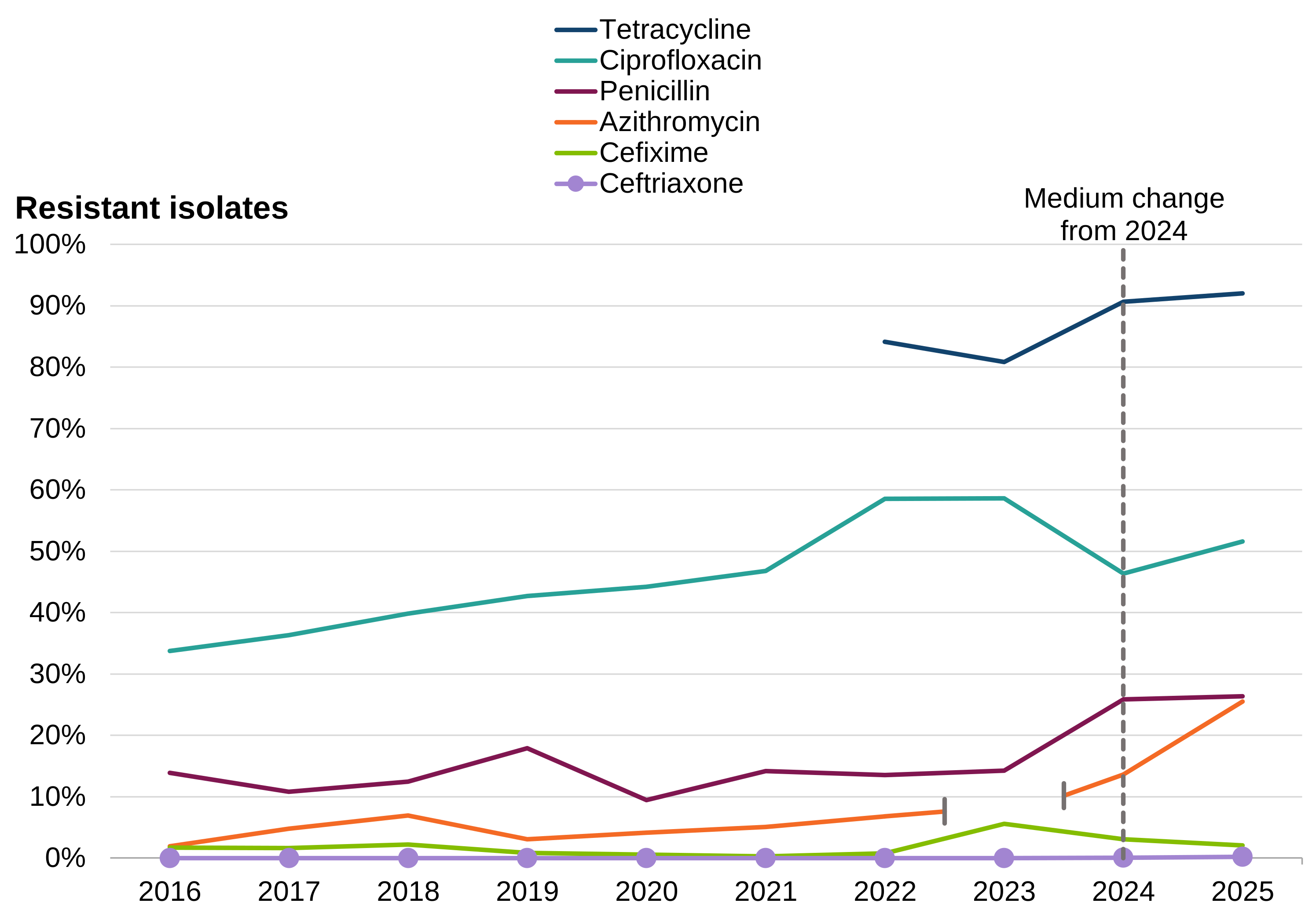
N. gonorrhoeae has developed resistance to all classes of antimicrobials historically recommended to treat gonorrhoea. Antimicrobial susceptibility results were interpreted using current EUCAST breakpoints where available (Table 2). Figure 7 and Table 3 show trends in the percentage of gonococcal isolates, collected through the GRASP sentinel surveillance system, resistant to selected antimicrobials in the past 10 years (2016 to 2025) then with a focus on more recent trends (2021 to 2025). Full trend data from 2000 can be found in the Appendix. Antimicrobial susceptibility results were also analysed in conjunction with MLST STs to explore lineage-associated patterns in AMR (Figure 8).
GRASP 2025 included antimicrobial susceptibility testing for gepotidacin and zoliflodacin for the first time. Gepotidacin, a triazaacenaphthylene, and zoliflodacin, a spiropyrimidinetrione, are novel antibiotics that have shown non-inferiority to ceftriaxone plus azithromycin for the treatment of uncomplicated urogenital gonorrhoea. Although both antibiotics have been approved for uncomplicated urogenital gonorrhoea in the USA by the Food and Drug Administration (FDA), they have not yet been approved for this use in the UK and EU.
Antimicrobial susceptibility testing for gentamicin and spectinomycin was not undertaken for GRASP 2025. No resistance breakpoint for gentamicin has been established, and previous data has shown that the modal MIC remains low, accordingly, intermittent monitoring will be undertaken going forward. Spectinomycin is no longer available in the UK, and it is therefore no longer included in GRASP’s antimicrobial susceptibility testing.
Table 2. Antimicrobial resistance definitions
| Antimicrobial | MIC breakpoint for resistance or ECOFF (mg/L) |
|---|---|
| Ceftriaxone | >0.125 |
| Azithromycin [note 17] | >1 (ECOFF) |
| High-level azithromycin [note 18] | ≥256 |
| Cefixime | >0.125 |
| Ciprofloxacin | >0.06 |
| Penicillin | >1 and/or beta-lactamase positive |
| Tetracycline | >0.5 |
| Gepotidacin [note 19] | >2 (ECOFF) |
| Zoliflodacin [note 20] | >0.25 |
Source: definitions from EUCAST where available.
Note 17: until 2018, EUCAST had set a breakpoint of MIC 0.5 mg/L for N. gonorrhoeae azithromycin resistance. This has since been replaced with an ECOFF of 1 mg/L. The previous breakpoint of 0.5 mg/L shown in previous GRASP reports is no longer retained as a historic reference point.
Note 18: high-level azithromycin resistance is not defined by EUCAST, but the definition of ≥256 mg/L is internationally recognised.
Note 19: EUCAST has proposed an initial ECOFF for gepotidacin based on MIC distribution data in the EUCAST reference database.
Note 20: although a EUCAST breakpoint and ECOFF for zoliflodacin have yet to be determined, the FDA have suggested a breakpoint of >0.25 mg/L.
Figure 7. Percentage of N. gonorrhoeae isolates in GRASP that were resistant to selected antimicrobials, England and Wales, 2016 to 2025 [note 21]
Source: data from GRASP sentinel surveillance system.
Note 21: due to changes to the medium used to test antimicrobial susceptibility from 2024 onwards, comparing MIC values before and after this change should be done with caution. The date of this change in medium is indicated by the vertical dashed black line.
Azithromycin data for 2023 is excluded due to a laboratory technical issue, indicated by the break in the trend line.
In 2023, EUCAST reduced the resistance breakpoint for tetracycline against N. gonorrhoeae from 1 mg/L to 0.5 mg/L. Breakpoint plates at 0.5 mg/L were introduced in 2022. Therefore, no data for this breakpoint is available prior to 2022.
Ciprofloxacin resistance in 2024 and 2025 was predicted using a subset of data where WGS results were available (99.4% of isolates in 2025).
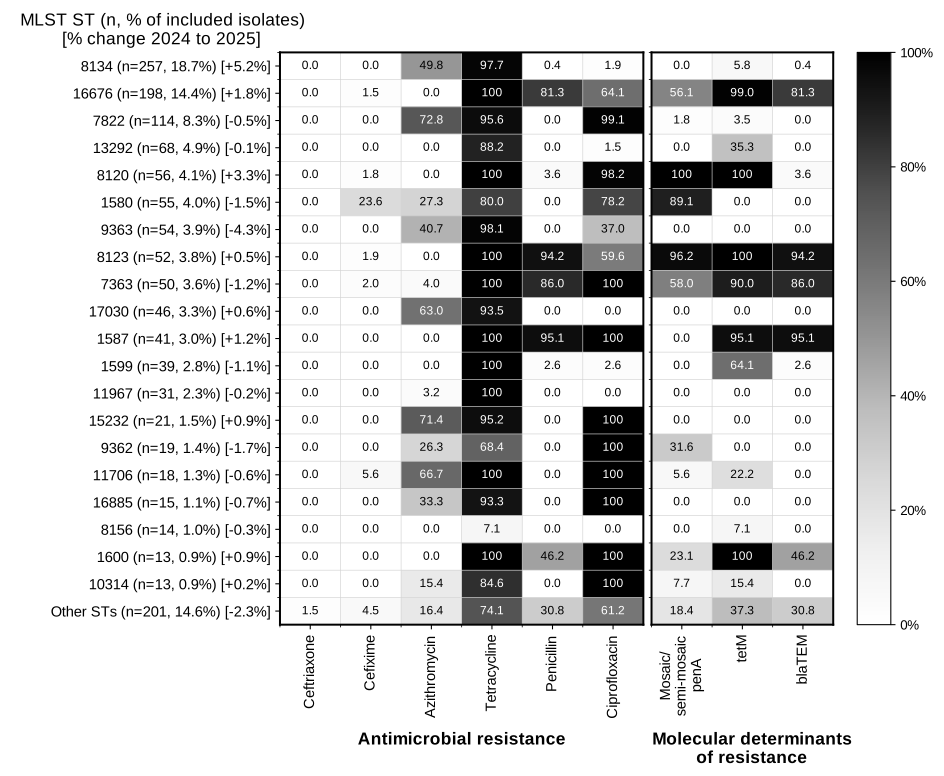
Figure 8. Resistance to selected antimicrobials across MLST STs in GRASP, 2025 [note 22]
Source: data from GRASP sentinel surveillance system.
Note 22: values in each row indicate the percentage of isolates from a given MLST ST with phenotypic resistance to key antimicrobials, predicted resistance to ciprofloxacin based on WGS, and select molecular determinants of resistance.
The top 20 STs from 2025 are shown individually in order of rank abundance with remaining isolates grouped as ‘Other STs’.
Isolate counts and percentage (of isolates with WGS data) are shown in round brackets after the ST, followed by percentage change relative to 2024 in square brackets.
Table 3. Number and percentage of N. gonorrhoeae isolates in GRASP that were resistant to selected antimicrobials, England and Wales, 2021 to 2025 [note 23]
| Antimicrobial MIC resistance breakpoint (mg/L) or ECOFF or genomic marker for resistance | 2021 N=1,459 |
2022 N=1,460 |
2023 N=1,762 |
2024 N=1,512 |
2025 N=1,383 |
|---|---|---|---|---|---|
| Ceftriaxone (>0.125 via agar dilution OR ETEST gradient strip) | 0 (0.0%) |
0 (0.0%) |
0 (0.0%) | 1 (0.1%) |
3 (0.2%) |
| Azithromycin (>1) [note 24] | 74 (5.1%) |
99 (6.8%) |
Not applicable | 206 (13.6%) |
353 (25.5%) |
| High-level azithromycin (≥256) [note 25] | 9 (0.6%) |
4 (0.3%) |
16 (0.9%) |
4 (0.3%) |
18 (1.3%) |
| Cefixime (>0.125) | 4 (0.3%) |
11 (0.8%) |
99 (5.6%) |
47 (3.1%) |
29 (2.1%) |
| Ciprofloxacin (>0.06 OR detection of resistance-associated GyrA codon 91 variant) [note 26] | 683 (46.8%) |
855 (58.6%) |
1,033 (58.6%) |
687 (46.4%) |
709 (51.6%) |
| Penicillin (>1) or beta-lactamase positive | 207 (14.2%) |
198 (13.6%) |
251 (14.2%) |
391 (25.9%) |
365 (26.4%) |
| Tetracycline (>0.5) [note 27] | Not applicable | 1,228 (84.1%) |
1,424 (80.8%) |
1,371 (90.7%) |
1,273 (92.0%) |
| Gepotidacin (>2) | Not applicable | Not applicable | Not applicable | Not applicable | 0 (0%) |
| Zoliflodacin (>0.25) | Not applicable | Not applicable | Not applicable | Not applicable | 0 (0%) |
Source: data from GRASP sentinel surveillance system.
Note 23: due to changes to the medium used to test antimicrobial susceptibility of sentinel surveillance isolates from 2024 onwards, comparing MIC values before and after this change should be done with caution.
Note 24: azithromycin data for 2023 has not been presented due to a laboratory technical issue.
Note 25: high-level azithromycin resistance is not defined by EUCAST, but the definition of ≥256 mg/L is internationally recognised.
Note 26: from 2024 onwards, ciprofloxacin resistance was predicted for the subset of isolates for which whole-genome sequencing results were available (98.0% of isolates in 2024 and 99.4% in 2025).
Note 27: in 2023, EUCAST updated the resistance breakpoint for tetracycline against N. gonorrhoeae from 1 mg/L to 0.5 mg/L. Breakpoint plates at 0.5 mg/L were introduced in 2022. Therefore, no data for this breakpoint is available prior to 2022.
Ceftriaxone
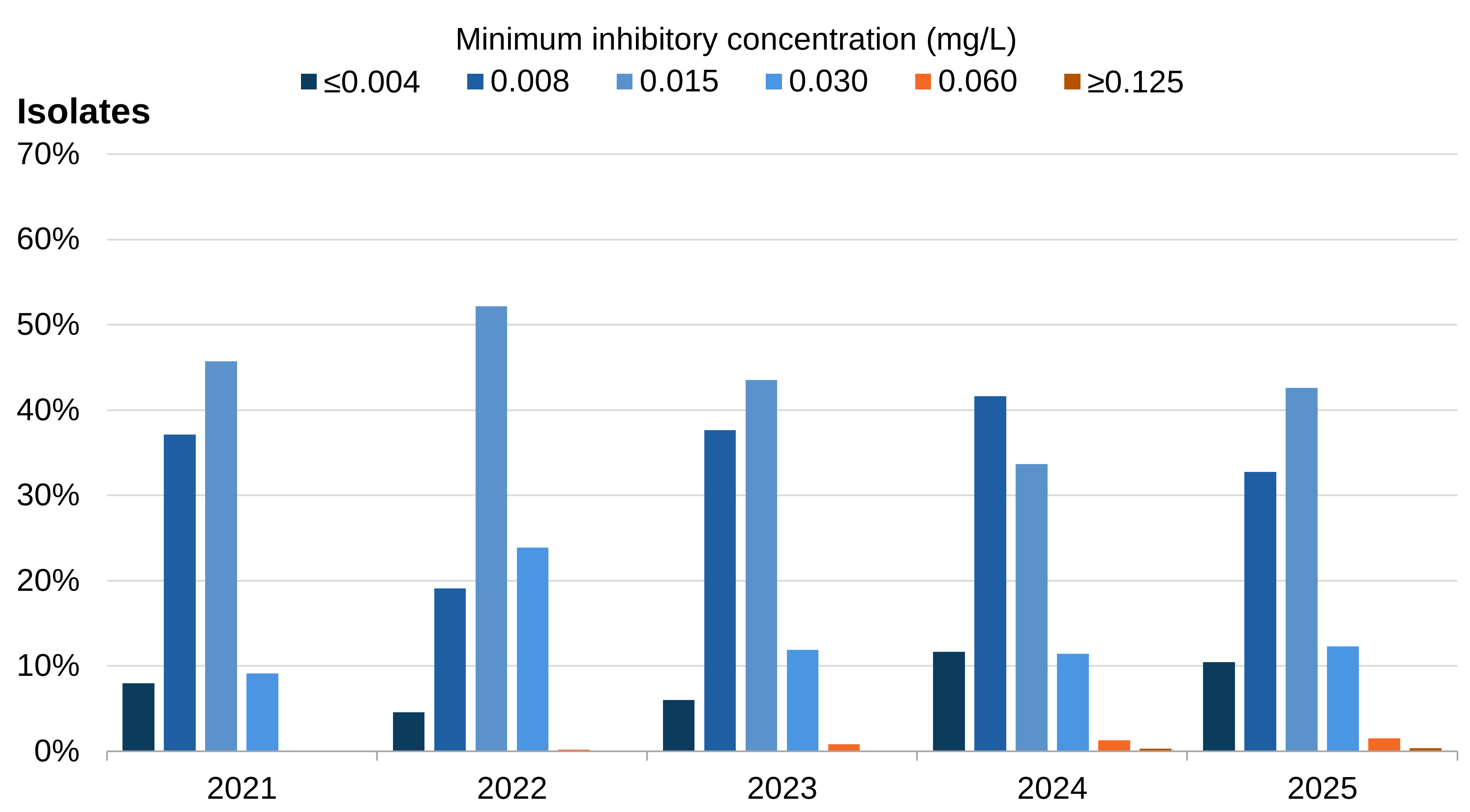
Among 1,383 isolates included in the sentinel surveillance sample in 2025, the majority (99.8%) remained susceptible to ceftriaxone (resistance breakpoint MIC >0.125 mg/L). The proportion of isolates with reduced susceptibility to ceftriaxone (defined here as an MIC >0.03mg/L) has increased from 0.1% (1 out of 1,459) in 2021 to 1.9% (26 out of 1,383) in 2025 (Figure 9). Nevertheless, reduced susceptibility remains well below the peak of 7.1% observed in 2018. With the exception of 2024, the modal ceftriaxone MIC has remained at 0.015 mg/L (Figure 10). The first time a ceftriaxone-resistant isolate was detected in GRASP was in 2024.
Figure 9. Percentage of N. gonorrhoeae isolates in GRASP with reduced susceptibility to ceftriaxone (MIC >0.03 mg/L), England and Wales, 2016 to 2025 [note 28]
Source: data from GRASP sentinel surveillance system.
Note 28: reduced susceptibility to ceftriaxone is defined here as MICs >0.03 mg/L.
Figure 10. Distribution of ceftriaxone MICs (mg/L) for N. gonorrhoeae isolates in GRASP, England and Wales, 2021 to 2025 [note 29]
Source: data from GRASP sentinel surveillance system.
Note 29: resistance to ceftriaxone is defined as MIC >0.125 mg/L. Resistant MICs are included in the ≥0.125 category shown as dark orange bars. Elevated or reduced susceptible MICs to cefixime (MIC >0.03 mg/L) are shown as orange bars.
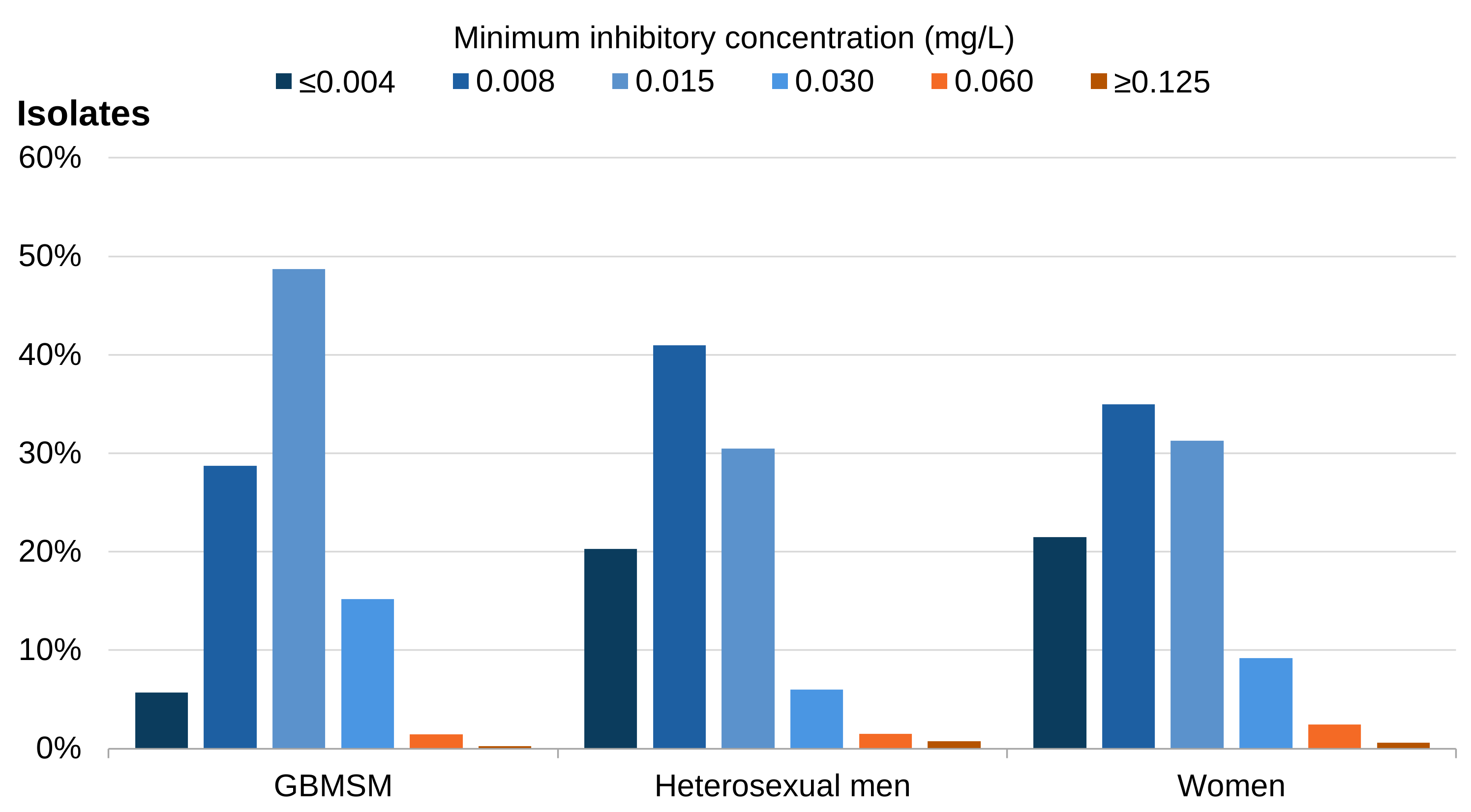
The modal MIC was one dilution higher among isolates from GBMSM (0.015 mg/L) compared with those from heterosexual men and women (0.008 mg/L) (Figure 11). While all groups shared a modal MIC of 0.008 mg/L in 2024, this difference is not unprecedented, as higher MICs among GBMSM were consistently observed between 2017 and 2021. The proportion of isolates with reduced susceptibility (MIC >0.03mg/L) remained similar across heterosexual men (2.3%), women (3.1%) and GBMSM (1.7%) (p=0.5).
Figure 11. Distribution of ceftriaxone MICs (mg/L) for N. gonorrhoeae isolates in GRASP, by gender identity and sexual orientation, England and Wales, 2025 [note 30]
Source: data from GRASP sentinel surveillance system.
Note 30: resistance to ceftriaxone is defined as MIC >0.125 mg/L. Resistant MICs are included in the ≥0.125 category shown as dark orange bars. Elevated or reduced susceptible MICs to cefixime (MIC >0.03 mg/L) are shown as orange bars.
In 2025, 3 isolates (0.2%) were resistant to ceftriaxone (MIC >0.125 mg/L). All 3 isolates (2 urethral and 1 pharyngeal) harboured the penA-60.001 allele associated with ceftriaxone resistance. All 3 individuals were heterosexuals (2 male, 1 female) with no known recent travel abroad. None of the isolates was directly referred to STIRL by the local laboratory because they were locally found to be susceptible.
When tested using the agar dilution method, the ceftriaxone MIC for 1 isolate was 0.25 mg/L making it phenotypically resistant, whereas the MICs for the remaining 2 were at the breakpoint (0.125 mg/L) and classified susceptible. Using the gradient strip method, however, these 2 isolates were resistant (MIC 0.25 mg/L). Conversely, the isolate originally resistant using agar dilution was found to be susceptible (MIC 0.125 mg/L) using gradient strip. In addition to ceftriaxone, all 3 isolates were also resistant to cefixime, penicillin and tetracycline, with susceptibility only to azithromycin.
Two ceftriaxone-resistant isolates corresponded to MLST ST11368 and NG-STAR ST7563 (NG-STAR CC7301), whereas the third corresponded to MLST ST13945 and NG-STAR ST8390 (not assigned to a CC). Both of these MLST STs were rare in the GRASP 2025 collection. The MLST ST11368 and NG-STAR ST7563 combination was, however, also identified among ceftriaxone-resistant isolates referred directly to STIRL. There were no known epidemiological links between the GRASP and referred MLST ST11368 and NG-STAR ST7563 cases, but they were from the same geographic region, suggesting potential undetected local transmission.
Molecular determinants of resistance
Penicillin-binding protein 2 (PBP2), encoded by the penA gene, is the primary target of ESCs. Alterations in penA are the main molecular mechanism of reduced susceptibility or resistance to ESCs. However, the resulting level of ESC susceptibility depends on the specific penA variant and on additional chromosomal determinants. Genetic variation in penA arises through point mutations and recombination with other Neisseria species.
The penA variants most strongly associated with reduced ESC susceptibility are mosaic alleles, which arise through recombination with other Neisseria species and contain 60 to 70 amino acid substitutions compared with non-mosaic N. gonorrhoeae PBP2. Mosaic alleles such as penA-10 and penA-34 have been associated with reduced ESC susceptibility, particularly to cefixime, while penA-60 and penA-237 have emerged amongst cefixime- and ceftriaxone-resistant strains reported internationally. Semi-mosaic alleles contain smaller recombinant regions. Non-mosaic alleles lack recombinant fragments but may still contain amino acid substitutions that contribute to reduced ESC susceptibility. Regardless of penA classification, reduced ESC susceptibility typically arises from multiple determinants acting in combination, including alterations in PBP2, PorB, PonA, and the MtrCDE efflux pump.
Historically, penA alleles were classified into types based on variation at 82 key PBP2 amino acid positions (for example ‘penA-34’). More recently, additional nucleotide-level variation has been incorporated using decimal notation (for example ‘penA-34.001’), allowing multiple genetic variants to be distinguished within a single penA type. Consequently, the number of penA variants exceeds the number of penA types.
In 2025, penA alleles were assigned for all 1,375 isolates with WGS data. A total of 32 penA types and 48 nucleotide-level variants were identified, compared with 26 types and 38 variants in 2024. Non-mosaic alleles remained predominant, present in 74.9% of isolates, whereas 23.8% and 1.3% carried mosaic and semi-mosaic alleles, respectively. The proportion of isolates carrying mosaic penA alleles increased from 18.2% in 2024 to 23.8% in 2025, representing the highest level observed since WGS was introduced in 2022 (Figure 12). However, as in previous years, most isolates carrying mosaic alleles remained below thresholds used to define reduced susceptibility or resistance to ceftriaxone.
As in previous years, mosaic and semi-mosaic alleles were associated with reduced ceftriaxone susceptibility. Elevated ceftriaxone MICs (>0.03 mg/L) were identified in 19 of 345 (5.5%) isolates carrying mosaic or semi-mosaic alleles, compared with 7 of 1,030 (0.7%) isolates carrying non-mosaic alleles (odds ratio (OR) 8.52, p<0.001). Isolates with elevated ceftriaxone MICs were distributed across 14 MLST STs, although 9 belonged to ST1580.
Among mosaic alleles, penA-34 predominated, accounting for 303 of 327 (92.7%) isolates. The proportion of isolates carrying penA-34 increased from 16.1% in 2024 to 22.0% in 2025, largely accounting for the overall increase in mosaic penA. Mosaic and semi-mosaic alleles remained concentrated within a few MLST lineages. These alleles were identified in all ST8120 isolates (100%) and were also common among ST8123 (96.2%), ST1580 (89.1%), ST7363 (58.0%), and ST16676 (56.1%) (Figure 8). Notably, the proportion of ST16676 isolates carrying mosaic penA alleles increased from 34.2% in 2024 to 55.6% in 2025. Although mosaic and semi-mosaic alleles were associated with elevated ceftriaxone MICs overall, reduced susceptibility remained uncommon within most mosaic-containing lineages, suggesting that additional genetic factors contributed to the observed phenotype. Among the 1,030 isolates carrying non-mosaic alleles, penA-14 (37.9%), penA-2 (32.5%) and penA-5 (17.4%) were the most common types.
Figure 12. Distribution of penA mosaic classifications by year, 2022 to 2025
Source: data from GRASP sentinel surveillance system.
Direct referrals to STIRL
Outside of GRASP sentinel surveillance, the reference service in STIRL conducts confirmatory testing of suspected ceftriaxone-resistant N. gonorrhoeae isolates identified by primary diagnostic laboratories, which allows real-time detection of emerging resistance and implementation of measures to control onwards transmission. Through this service, there were 21 ceftriaxone-resistant N. gonorrhoeae cases confirmed in the first 8 months of 2026. Further information on ceftriaxone-resistant cases identified in England via direct referrals can be found in the STI quarterly report, June 2026.
Cefixime
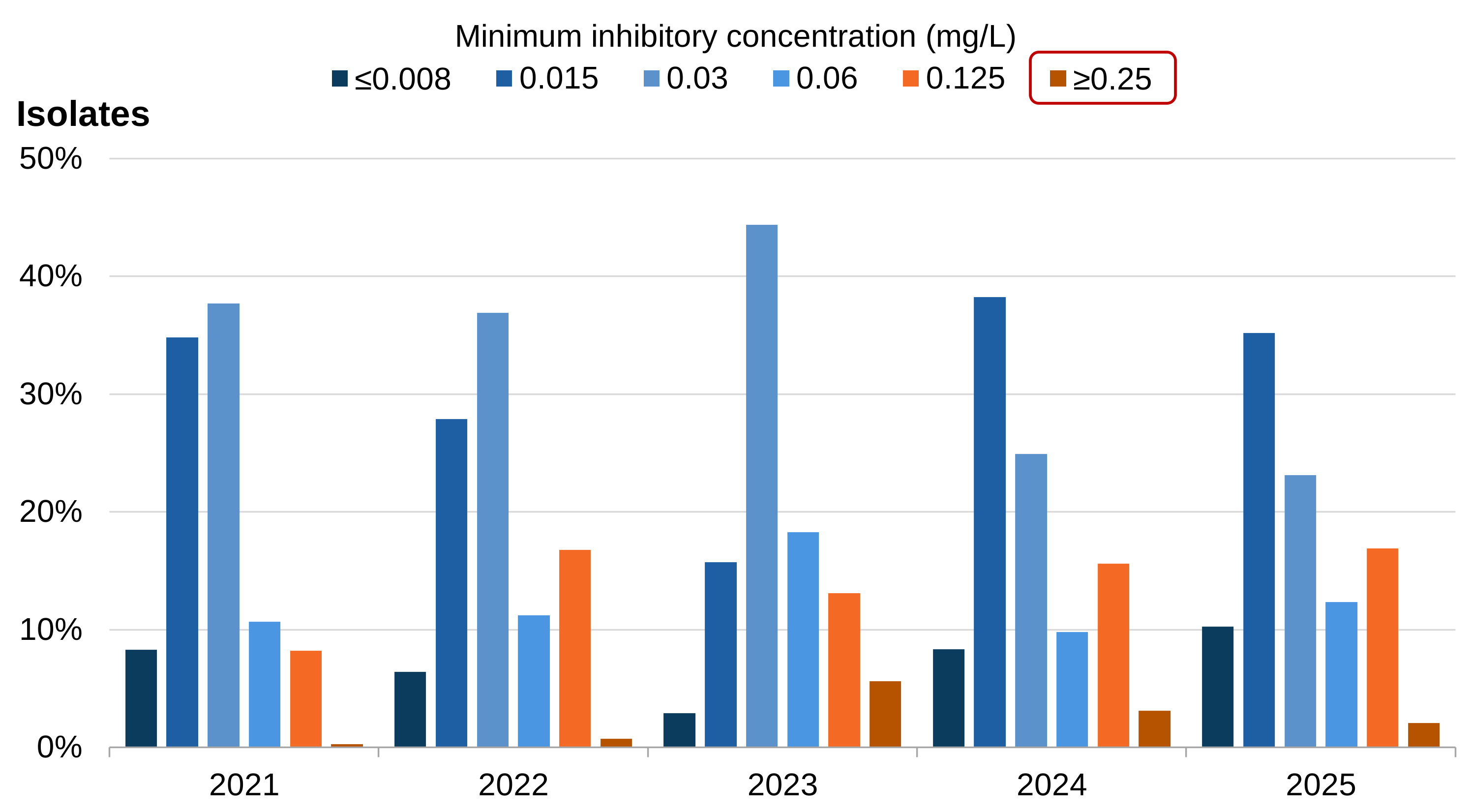
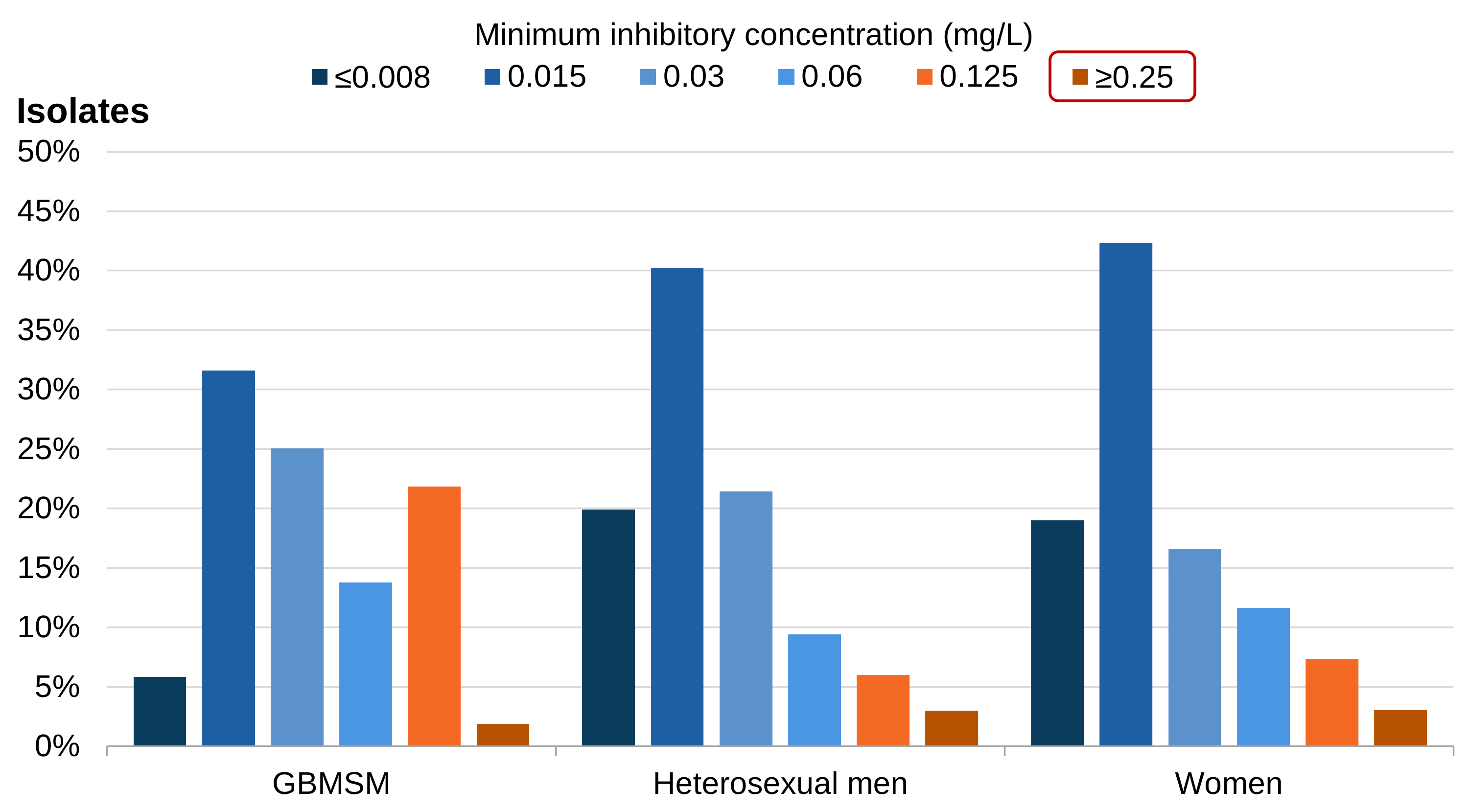
The proportion of cefixime-resistant (MIC >0.125 mg/L) isolates continued to decrease from 5.6% in 2023 to 2.1% in 2025 (p<0.001) (Figure 7, Table 3) whilst this proportion had ranged from 0.3% to 2.2% between 2016 to 2022. The modal MIC in 2025 was 0.015 mg/L both overall (Figure 13), and across all gender and sexual orientation groups (Figure 14). The proportion exhibiting cefixime resistance (MIC >0.125 mg/L) was similar between GBMSM (1.9%), heterosexual men (3.0%) and women (3.1%) in 2025. In contrast, the proportion of isolates with a cefixime MIC of 0.125 mg/L was significantly higher among GBMSM (21.9%) than among heterosexual men (6.0%) and women (7.4%) (both p<0.001). It should be noted that the change in culture medium between 2023 and 2024 was associated with a modest decrease in MICs, reflected by the one-dilution decrease in the modal MIC (Figure 13).
Figure 13. Distribution of cefixime MICs (mg/L) for N. gonorrhoeae isolates in GRASP, England and Wales, 2021 to 2025 [note 31]
Source: data from GRASP sentinel surveillance system.
Note 31: resistance to cefixime is defined using a breakpoint MIC of 0.125 mg/L. Resistant MICs are indicated by the red box in the legend. Elevated or reduced susceptible MICs to cefixime (MIC >0.06 mg/L) are shown as orange bars.
Note 32: due to changes to the medium used to test antimicrobial susceptibility of sentinel surveillance isolates from 2024 onwards, comparing MIC values before and after this change should be done with caution.
Figure 14. Distribution of cefixime MICs (mg/L) for N. gonorrhoeae isolates in GRASP, by gender identity and sexual orientation, England and Wales, 2025 [note 33]
Source: data from GRASP sentinel surveillance system.
Note 33: resistance to cefixime is defined using a breakpoint MIC of 0.125 mg/L. Resistant MICs are indicated by the red box in the legend. Elevated or reduced susceptible MICs to cefixime (MIC >0.06 mg/L) are shown as orange bars.
Molecular determinants of resistance
Mosaic and semi-mosaic penA alleles were associated with reduced susceptibility to cefixime in 2025, as in previous years. Elevated cefixime MICs (>0.06 mg/L) were identified in 249 of 345 (72.2%) isolates carrying mosaic or semi-mosaic penA alleles, compared with only 13 of 1,030 (1.3%) isolates carrying non-mosaic alleles (OR 202.9, p<0.001). However, only a minority of isolates were cefixime-resistant, with resistance identified in 28 of 345 (8.1%) isolates carrying mosaic or semi-mosaic penA alleles and 1 of 1,030 (0.1%) isolates carrying non-mosaic alleles (OR 90.9, p<0.001).
WGS data was available for all 29 cefixime-resistant isolates from 2025. Twenty-eight carried mosaic penA alleles, most commonly penA-34.001 (n=15), followed by penA-34.007 (n=4) and penA-60.001 (n=3). The single non-mosaic allele corresponded to penA-2.001. Cefixime-resistant isolates were distributed across 14 MLST STs. Mosaic and semi-mosaic penA alleles were common in several major lineages (Figure 8). However, the cefixime MICs for most isolates carrying these alleles were at or just below the resistance breakpoint, with MICs of 0.125 mg/L and 0.06 mg/L recorded for 64.1% and 26.1% of isolates, respectively.
ST1580 accounted for 13 of the 29 (44.8%) cefixime-resistant isolates and, as in 2024, had the highest prevalence of resistance among major lineages (23.6%) (Figure 8). The prevalence of ST1580, a lineage distributed across GBMSM, heterosexual men, and women, has declined markedly since 2023 (Figure 4), coinciding with the decrease in cefixime resistance over this period.
Azithromycin
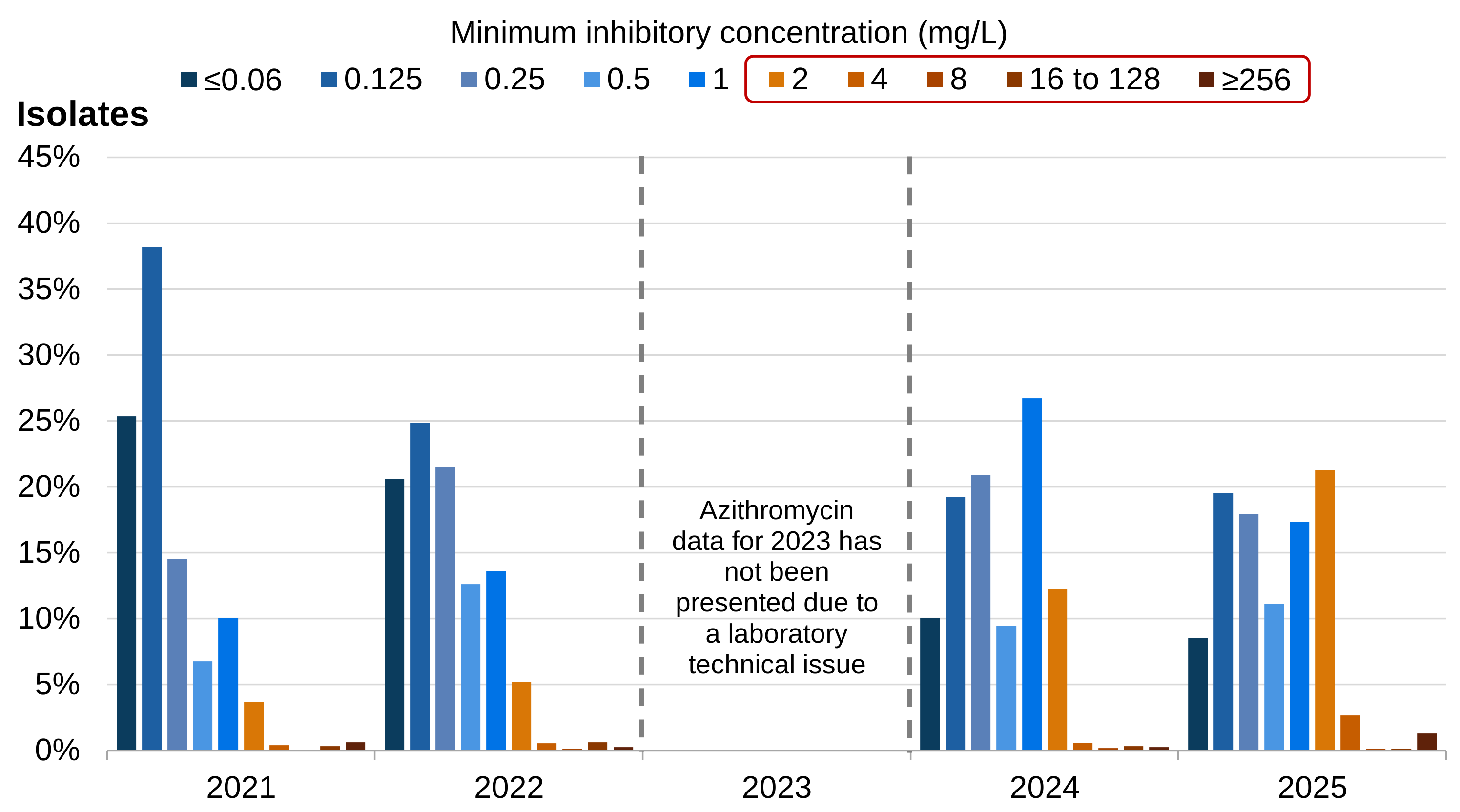
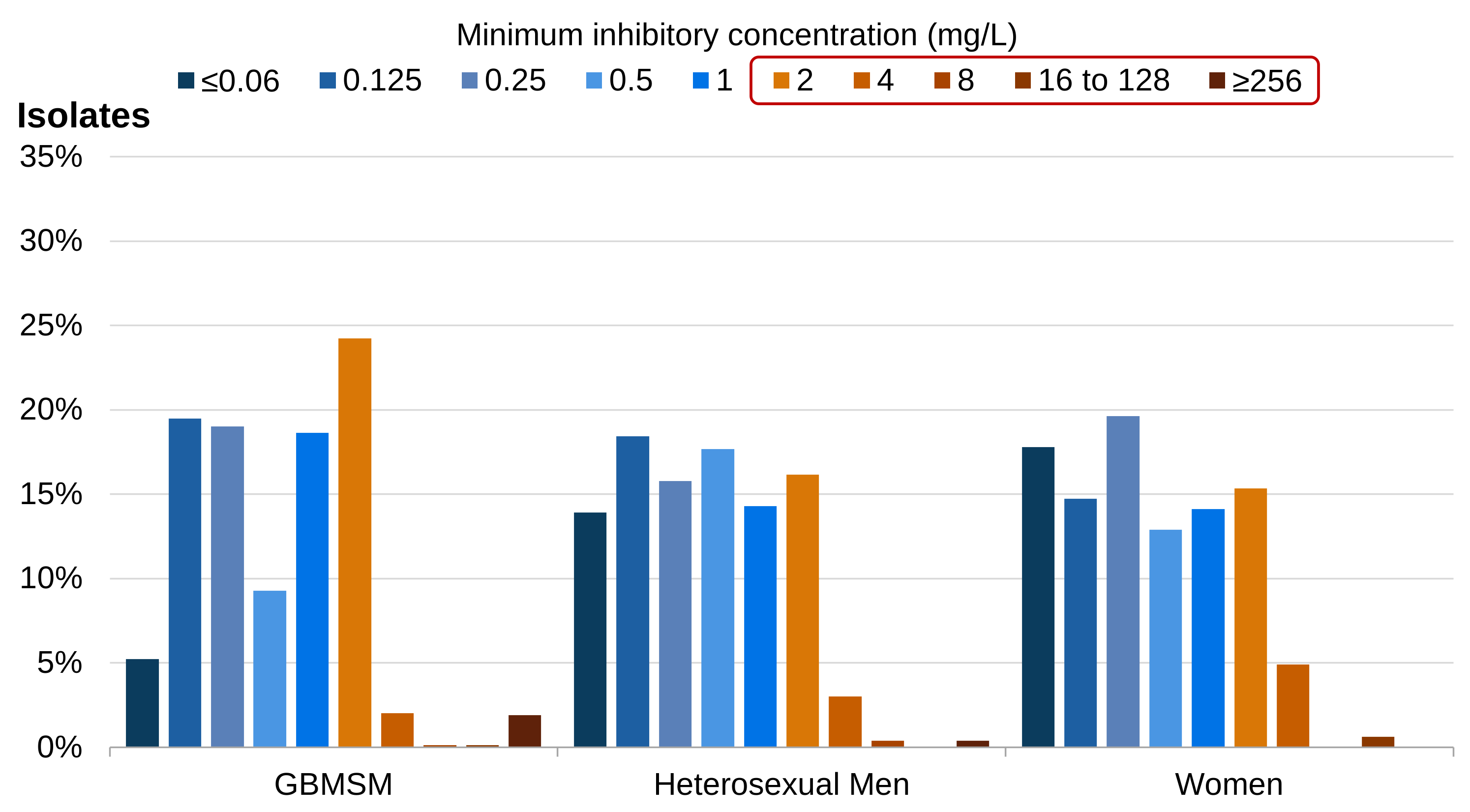
Resistance breakpoints for azithromycin were removed by EUCAST in 2019 and replaced with an ECOFF of 1 mg/L (Table 2). Reduced susceptibility to azithromycin (>1 mg/L) increased markedly in 2025, rising from 13.6% to 25.5% (p <0.001), mainly due to an increase in isolates with an MIC of 2 mg/L, and coincided with a shift in the modal MIC from 1 mg/L to 2 mg/L (Figure 15). Most azithromycin MICs that were above the ECOFF were 2 mg/L (83.3%), followed by 4 mg/L (10.5%). The modal MIC for isolates from GBMSM was 2 mg/L compared with 0.125 mg/L among isolates from heterosexual men and 0.25 mg/L among women (Figure 16).
Isolates with azithromycin MICs above the ECOFF were identified among 26 MLST STs in 2025. The increase in reduced susceptibility was primarily driven by the expansion of ST8134, which increased from 13.5% of isolates in 2024 to 18.7% in 2025 (Figure 3), together with a marked increase in the proportion of ST8134 isolates with MICs above the azithromycin ECOFF (13.0% to 49.8%). Additional contributions were made by ST7822, ST17030, as well as other less common lineages (Figure 8). ST8134, ST7822, and ST17030 were predominantly identified among GBMSM, who accounted for 64.0% to 78.3% of isolates within these lineages in 2025 (Figure 4).
Overall, 1.3% (n=18) of azithromycin MICs were ≥256 mg/L, an internationally recognised measure of high-level resistance. This represented an increase from 0.3% (n=4) in 2024 and exceeded the frequencies observed between 2016 and 2024, which ranged from 0.16% (2 of 1,281 isolates) to 1.0% (17 of 1,701 isolates). Of the 18 high-level azithromycin resistant isolates identified in 2025, 17 belonged to MLST ST9363, NG-STAR CC193. These isolates carried the A2045G mutation (N. gonorrhoeae numbering) in all 4 copies of the 23S rRNA gene, which is known to confer high-level azithromycin resistance. Where sexual orientation was available, all 16 isolates were identified among GBMSM and geographically distributed across regions. The remaining isolate with an azithromycin MIC ≥256 mg/L was from a heterosexual man and belonged to a distinct lineage (ST13765 and NG-STAR ST8374, unassigned to a CC). This isolate also carried the same A2045G mutation in all 4 copies of the 23S rRNA gene.
Figure 15. Distribution of azithromycin MICs (mg/L) for N. gonorrhoeae isolates in GRASP, England and Wales, 2021 to 2025 [note 34]
Source: data from GRASP sentinel surveillance system.
Note 34: resistance to azithromycin is defined using an ECOFF of 1 mg/L. MICs above the ECOFF are indicated by the red box in the legend and shown as orange bars.
Note 35: due to changes to the medium used to test antimicrobial susceptibility of sentinel surveillance isolates from 2024 onwards, comparing MIC values before and after this change should be done with caution.
Figure 16. Distribution of azithromycin MICs (mg/L) for N. gonorrhoeae isolates in GRASP, by gender identity and sexual orientation, England and Wales, 2025 [note 36]
Source: data from GRASP sentinel surveillance system.
Note 36: resistance to azithromycin is defined using an ECOFF of 1 mg/L. MICs above the ECOFF are indicated by the red box in the legend and shown as orange bars.
Tetracycline
Tetracycline resistance remained widespread in 2025, rising slightly from 90.7% in 2024 to 92.0% (Figure 7). However, the MIC distribution shifted further towards higher values, with high-level (typically plasmid-mediated) tetracycline resistance (MIC >8 mg/L) increasing from 30.1% in 2024 to 39.3% in 2025 (Figure 17), more than double the proportion observed in 2023 (16.8%). The increase was most prominent in GBMSM, among whom high-level resistance rose from 31.0% to 44.3%.
Although tetracycline resistance was extremely prevalent across all demographic groups, it was significantly more prevalent among GBMSM (97.3%) than heterosexual men (85.0%) or women (74.9%) (p<0.001 for both comparisons), and higher among isolates from heterosexual males than women (p=0.01). Similarly, high-level resistance, was more prevalent among GBMSM (44.3%), compared to heterosexual men (31.6%) and women (22.1%) (p<0.001 for both GBMSM comparisons and p=0.03 for heterosexual men versus women).
Figure 17. Distribution of tetracycline MICs (mg/L) for N. gonorrhoeae isolates in GRASP, England and Wales, 2024 to 2025
Source: data from GRASP sentinel surveillance system.
Tetracycline resistance occurred in 85 MLST STs and exceeded 95% in 13 of the 20 most common lineages (Figure 8). The increase in high-level tetracycline resistance is due to increased prevalence of the plasmid-mediated resistance determinant tetM, which was seen in 40.1% of isolates with WGS versus 31.0% in 2024. This increase reflected both the expansion of lineages with high tetM prevalence and increasing tetM carriage within established lineages. The largest contributions from lineage expansion were associated with MLST ST8120 and ST16676, which were both predominantly identified among GBMSM (Figure 8, Figure 4). Increased tetM carriage was also observed in common lineages such as ST8134 (0.0% in 2024 to 5.8% in 2025), ST13292 (20% to 35.3%), and ST1587 (77.8% to 95.1%), as well as among rare STs (29.6% to 37.3%) (Figure 8).
Doxycycline, a tetracycline, is used for STI prophylaxis but is not recommended for the prophylaxis or treatment of Neisseria gonorrhoeae infections. Data on STI prophylaxis use in the previous 3 months was only available for 16.1% (n=223) of individuals. Among GBMSM, there was no difference in high-level tetracycline resistance between those who had and had not used STI prophylaxis in the last 3 months (p=0.5), although the sample size was small (n=163).
Penicillin
The proportion of isolates resistant to penicillin remained elevated at 26.4% following a large increase in 2024, which had been the highest prevalence of penicillin resistance to date. Penicillin resistance has fluctuated but remained relatively stable between 9.5% and 17.9% from 2016 to 2023 (Figure 7).
Penicillin resistance was observed across 35 MLST STs. However, most (80.2%) resistant isolates were concentrated in 4 STs, including ST16676 (81.3%), ST7363 (86.0%), ST8123 (94.2%), and ST1587 (95.1%) (Figure 8). These were also the major penicillin-resistant lineages identified in 2024, following their substantial expansion that year (Figure 3). Together, they continued to account for the majority of penicillin-resistant isolates in 2025 despite modest declines in resistance prevalence within each lineage. The distribution of the β-lactamase determinant blaTEM mirrored that of penicillin resistance (Figure 8). All penicillin-resistant isolates carried blaTEM, while the determinant was not identified among penicillin-susceptible isolates, indicating plasmid-mediated β-lactamase production was the primary driver of penicillin resistance in 2025.
Ciprofloxacin
Ciprofloxacin resistance was inferred from WGS data based on the amino acid predicted at GyrA codon 91. Overall, there was a 5.2% increase in predicted ciprofloxacin resistance compared with 2024 (46.4% to 51.6%, p=0.006). Three amino acids were detected at GyrA codon 91 in 2025: serine (GyrA S91, 48.4%, wildtype, predicted susceptible), phenylalanine (GyrA S91F, 50.3%, non-wildtype, predicted resistant), and isoleucine (GyrA S91I, 1.2%, non-wildtype, predicted resistant).
Ciprofloxacin resistance was widespread, occurring in 72 MLST STs. The increase in resistance was driven by both expansion of ciprofloxacin-resistant lineages and increasing resistance within established lineages. ST16676 was the largest individual contributor to the observed increase: the lineage increased in frequency by 1.2%, and the proportion of isolates predicted to be ciprofloxacin-resistant increased from 39.6% to 64.1% (Figure 8). This change coincided with a shift from NG-STAR CC352 to CC6028 within the ST16676 (Figure 6), consistent with expansion of a ciprofloxacin-resistant subpopulation. Expansion of ST8120, which was almost universally resistant to ciprofloxacin, also contributed to the overall increase (Figure 8). Additional increases were observed among the heterogeneous group of rare STs, with ciprofloxacin resistance increasing from 52.8% to 67.6% (Figure 8).
Gepotidacin
Based on the EUCAST ECOFF of 2 mg/L, no isolates exhibited reduced susceptibility to gepotidacin (Figure 18). The MIC required to inhibit 50% of isolates (MIC50) was 0.25 mg/L and the MIC required to inhibit 90% of isolates (MIC90) was 1 mg/L, which corresponded to EUCAST’s reference database MICs. However, MIC50 was higher among GBMSM at 0.5 mg/L compared to both heterosexual men and women (MIC50=0.25 mg/L for both). The modal MIC overall was low at 0.5 mg/L.
Figure 18. Distribution of gepotidacin MICs (mg/L) for N. gonorrhoeae isolates in GRASP, England and Wales, 2025
Source: data from GRASP sentinel surveillance system.
Zoliflodacin
A EUCAST breakpoint for zoliflodacin has yet to be determined. We have instead used the FDA breakpoint of 0.25 mg/L. There were 16 isolates (1.2%) with MICs of 0.25 mg/L (Figure 19). The MIC50 was 0.06 mg/L and MIC90 was 0.125 mg/L, both overall and across all gender and sexual orientation groups. The modal MIC was low at 0.06 mg/L.
Figure 19. Distribution of zoliflodacin MICs (mg/L) for N. gonorrhoeae isolates in GRASP, England and Wales, 2025
Source: data from GRASP sentinel surveillance system.
Prescribing practices
Antimicrobial prescribing data was reported for 1,396 individuals diagnosed with gonorrhoea at SHSs participating in GRASP in 2025, irrespective of whether a N. gonorrhoeae isolate was available for antimicrobial susceptibility testing. Of these, 98.1% (1,369 out of 1,396) received ceftriaxone (1g IM), in accordance with BASHH first-line treatment recommendations. This proportion was similar for GBMSM (98.1%), heterosexual men (99.3%), and women (96.7%). The remaining 27 individuals were prescribed second-line treatments. Of these, 13 received gentamicin and azithromycin, 11 received azithromycin 2g monotherapy, 2 received cefixime and azithromycin, and 1 received ciprofloxacin 500mg.
Discussion
Following the first case of ceftriaxone resistance (MIC >0.125 mg/L) to be detected in the GRASP sentinel surveillance programme in 2024, 3 cases of ceftriaxone resistance were detected in 2025, yielding a prevalence estimate of 0.2% (3 out of 1,383). All 3 cases carried the mosaic penA-60.001 allele commonly associated with ceftriaxone resistance originating in the Asia-Pacific region, where ceftriaxone resistance is widespread. However, none had known travel links abroad, which suggests possible local transmission of isolates carrying penA-60.001 within the UK.
Using agar dilution methodology, only one of the ceftriaxone-resistant isolates was phenotypically resistant with a MIC of 0.25 mg/L, while the MICs for the remaining 2 isolates were one dilution lower, at the breakpoint of 0.125 mg/L. However, using gradient strip methodology, the MICs for these 2 isolates were 0.25 mg/L and the third (resistant using agar dilution) yielded a MIC of 0.125 mg/L. The variation is unsurprising especially when using different methods. MIC values that differ by one doubling dilution are generally not considered meaningfully different, as this falls within the expected technical variability of susceptibility testing.
An observational genotype-phenotype study published in 2025 found that, although penA-60.001 and penA-237.001 were associated with ceftriaxone resistance, ceftriaxone MICs for a few isolates carrying these alleles were ≤0.125 mg/L, at or below the EUCAST breakpoint of 0.125 mg/L. None of the 3 isolates were referred by the local laboratory to STIRL for confirmation in real-time as they were locally found to be susceptible. Therefore, it is possible that isolates harbouring the penA-60.001 or penA-237.001 allele are circulating undetected, as some strains will demonstrate susceptible phenotypes in routine laboratory testing and patients are successfully treated, reducing the likelihood of further investigation and detection.
Due to the rarity of ceftriaxone-resistant isolates in GRASP, reduced susceptibility to ceftriaxone (MIC >0.03mg/L) is monitored, as there may be an increase at this threshold before MICs cross the breakpoint for resistance. The increase in reduced susceptibility to ceftriaxone was subtle but has increased successively from 0.1% in 2021 to 1.9% in 2025. Isolates with elevated ceftriaxone MICs were distributed across multiple MLST lineages, suggesting that the increase was not attributable to expansion of a single genetic background.
Cefixime is an ESC recommended in the UK as an alternative treatment regimen for gonorrhoea (together with azithromycin) if IM treatment is contraindicated or refused. Cefixime resistance decreased from a peak of 5.6% in 2023 to 2.1% in 2025. Nearly all resistant isolates carried mosaic penA alleles, consistent with the role of mosaic PBP2 in cefixime resistance. Although resistant isolates were distributed across multiple lineages, ST1580 accounted for almost half of all cefixime-resistant isolates in 2025. The continued decline of ST1580, a lineage characterised by elevated frequencies of mosaic penA alleles and cefixime resistance, may have contributed to the reduction in cefixime resistance observed since 2023.
Reduced susceptibility to azithromycin nearly doubled in the past year to 25.5% in 2025, however the MIC for most of these isolates was 2.0 mg/L, only one doubling dilution above the ECOFF. 1.3% (n=18) of all isolates had high-level azithromycin resistance (MIC ≥256 mg/L), 16 of which were from GBMSM. The difference in MIC distribution between sexual orientations is increasingly prominent, as the modal MIC for isolates from GBMSM was 3 and 4 doubling dilutions higher than that of women and heterosexual men, respectively.
Tetracycline resistance remains high with 92.0% of isolates classified as resistant. Notably, the prevalence of high-level plasmid-mediated tetracycline resistance (MIC >8 mg/L) increased to 39.3%, approximately twice that observed in 2023. Both expansion of lineages with high tetM prevalence and increasing tetM carriage within established lineages contributed to this trend. Although this trend may reflect selective pressure associated with the use of doxycycline post-exposure prophylaxis (doxyPEP), current data is insufficient to establish a causal relationship.
All isolates were susceptible to gepotidacin based upon an ECOFF of 2 mg/L. These findings are consistent with World Health Organization Enhanced Gonococcal Antimicrobial Surveillance Programme (WHO EGASP) data from 5 Asia-Pacific countries and 3 African countries, with identical MIC50 and MIC90 values despite a high level of ceftriaxone resistance in the WHO sample (4.3% (n=125) of EGASP isolates). Notably, EGASP identified 5 isolates with a gepotidacin MIC of 4 mg/L and a higher proportion of isolates with MICs at the ECOFF of 2 mg/L (0.3% in GRASP versus 4.7% in EGASP).
Zoliflodacin currently has no established breakpoint or ECOFF, but MICs in GRASP were comparable to those reported in a Shanghai study, with identical MIC50 and MIC90 values despite the Chinese study including only urogenital isolates. GRASP MICs were also comparable to those observed for anogenital isolates in a USA study. However, the study showed poorer susceptibility of pharyngeal isolates, which was associated with reduced microbiological cure rates for zoliflodacin 2g and 3g compared with ceftriaxone 500mg.
Molecular typing information extracted from WGS data provided insights into the underlying gonococcal population structure. The 10 most common MLST STs accounted for 69.1% of isolates, indicating continued concentration of the population within a relatively small number of lineages. ST8134 and ST16676 together represented over one-third of sequenced isolates and increased further in frequency compared with 2024, while ST8120 emerged among the 10 most common lineages. Major lineages showed distinct sexual orientation compositions and antimicrobial resistance patterns, highlighting the contribution of population structure to the resistance trends observed in 2025.
Prescribing data collected through the sentinel surveillance system demonstrates 100% compliance with UK guidelines, with nearly all individuals receiving the recommended first-line therapy of ceftriaxone 1g IM monotherapy.
Treatment failure with ceftriaxone 1g is rare in England, even in cases with phenotypic ceftriaxone resistance (MIC >0.125 mg/L). Seven cases of treatment failure (the first 4 cases were published in the Journal of Antimicrobial Chemotherapy) have been confirmed to date in England (1 in 2015, 2 in 2018, 1 in 2024, 3 in 2026) with MICs ranging from 0.25 to 1 mg/L. Both cases in 2018 were cleared with 3 days of ertapenem (1g IV) after unsuccessful treatment with ceftriaxone (1g IM), while the 2024 case was cleared with a single dose of ertapenem (1g IV) following unsuccessful treatment with both ceftriaxone (1g IM) and separately azithromycin (2g orally). Case 1 in 2026 was cleared with azithromycin 2g and cases 2 and 3 were cleared with ceftriaxone 1g plus azithromycin 2g (following confirmation of azithromycin susceptibility in all cases). All documented treatment failures occurred at extragenital sites of infection (6 pharyngeal, 1 rectal).
Conclusions
Ceftriaxone resistance remains rare in gonococci. However, as ceftriaxone is the last remaining option for empirical monotherapy, even a low prevalence of resistance would pose a significant threat to the clinical management and control of gonorrhoea. The 3 cases of ceftriaxone resistance detected in the GRASP 2025 sentinel surveillance sample all harboured the penA-60.001 allele but had no known travel links. Moreover, an increasing number of ceftriaxone-resistant cases detected outside of GRASP also lack travel links, which signals that resistance is already circulating in the UK. Despite this, surveillance indicates that most N. gonorrhoeae infections remain susceptible to ceftriaxone and 1g ceftriaxone continues to be effective, even for infections classed as resistant according to EUCAST breakpoints. Health practitioners, microbiologists and public health authorities should be alert for suspected ceftriaxone resistance, as spread of these strains in highly dense networks is a foreseeable threat to the effectiveness of ceftriaxone.
The decline in cefixime resistance is encouraging, especially as cefixime provides an easily administered oral alternative for patients in whom ceftriaxone is contraindicated. Azithromycin resistance levels are concerning and may have implications for its use as a second-line treatment in the future. The high prevalence of tetracycline resistance may limit the effectiveness of doxyPEP against gonorrhoea, though the extent of this remains uncertain.
A high level of vigilance is required to facilitate the timely detection of emerging trends in resistance and ensure the continued effectiveness of first-line treatments. Culture and antimicrobial susceptibility testing of isolates, TOC, and notification and management of sexual partners remain vital. Continued strong adherence to treatment guidelines and referral of isolates to STIRL for confirmatory antimicrobial susceptibility testing, where isolates are locally identified to be ceftriaxone-resistant, are also essential.
As evidence and clinical experience continue to accumulate, treatment guidelines may be updated to include gepotidacin and zoliflodacin as recommended treatment options for gonorrhoea. If these antibiotics are introduced into clinical use, it will be critical to monitor trends in antimicrobial resistance and ensure the continued effectiveness of these new treatment options.
Appendix
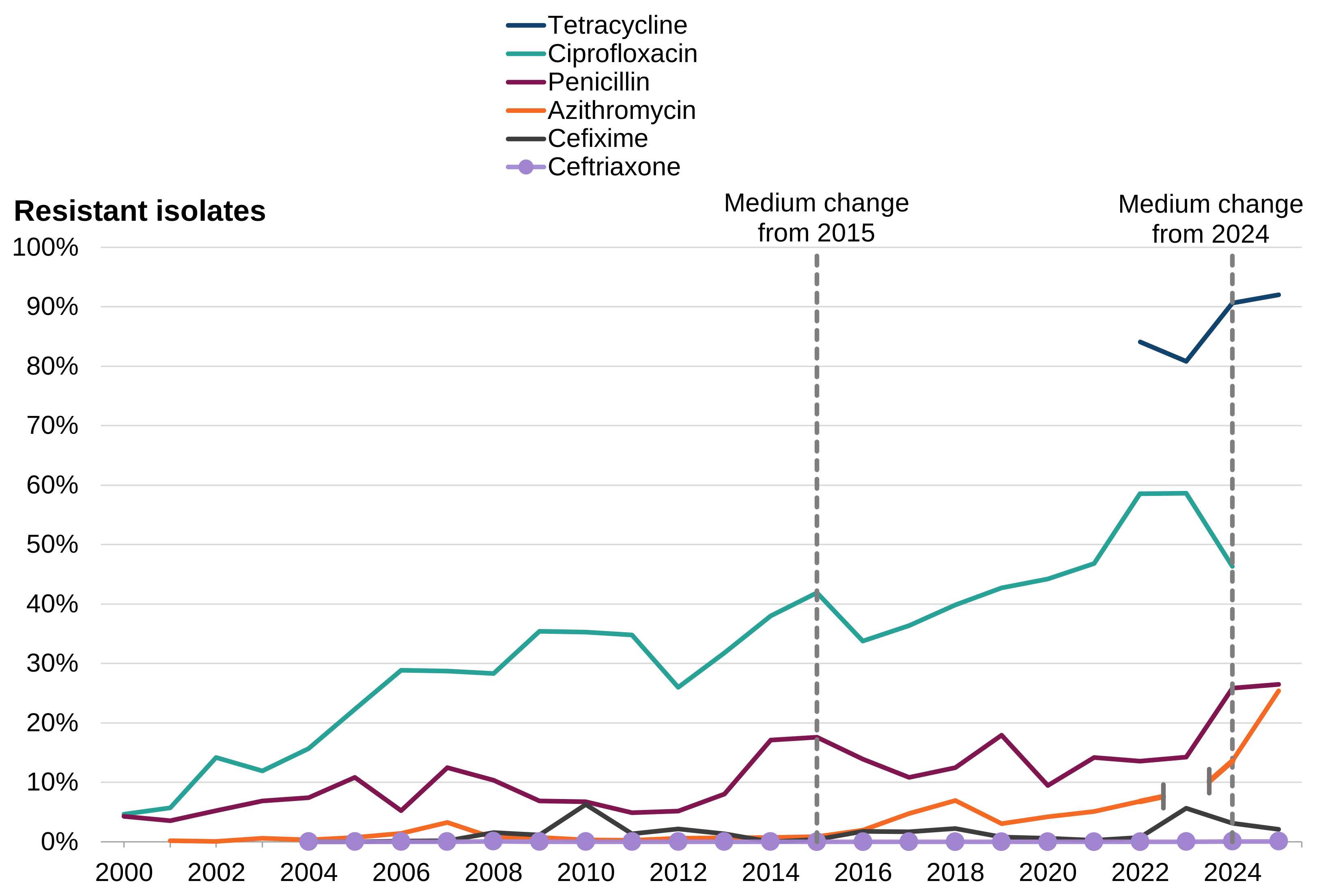
Percentage of N. gonorrhoeae isolates resistant to selected antimicrobials from 2000 to 2025
Figure 20. Percentage of N. gonorrhoeae isolates in GRASP that were resistant to selected antimicrobials, England and Wales, 2000 to 2025 [note 37]
Source: data from GRASP sentinel surveillance system.
Note 37: due to changes in the medium used to test antimicrobial susceptibility of sentinel surveillance isolates, MICs and trends from 2000 to 2014 compared with 2015 to 2023 must be interpreted with caution, particularly for azithromycin data. Further changes to the medium used to test antimicrobial susceptibility of sentinel surveillance isolates for GRASP 2025 mean that MICs for the 2024 collection and thereafter must also be interpreted with caution compared with previous years. Points of medium change are indicated by dashed vertical lines.
Azithromycin data for 2023 has not been presented due to a technical issue as indicated by the break in the trend line.
In 2023, EUCAST updated the resistance breakpoint for tetracycline against N. gonorrhoeae from 1 mg/L to 0.5 mg/L. Breakpoint plates at 0.5 mg/L were introduced in 2022. Therefore, no data for this breakpoint is available prior to 2022 and trend data is not presented.
From 2024 onwards, ciprofloxacin resistance was predicted for the subset of isolates for which whole-genome sequencing results were available (98.0% of isolates in 2024 and 99.4% in 2025).
Acknowledgements
GRASP would like to thank the collaborating centres and the advisory group for their continued support, SHSs for the prompt submission of clinical data and laboratories for sending isolates to UKHSA STIRL Colindale.
Advisory group members (listed alphabetically)
R Browne, C Curtis, H Donaldson, C Ison, DM Livermore, S Palanivel, M Rayment, J Ross, T Sadiq, K Sibson, S Soni, K Templeton.
Collaborating centres
- Birmingham (D Ezeagu, E Glenister, T Haque, S Kumar, J Phattey, J Ross, S Thomas, H Ahmed, R Chaudhry, M Hamad)
- Brighton (G Dean, S Soni, G Jones, I Martinjorge, K Parker)
- Bristol (M Griffin, A Wolujewicz, S Brazier, N Dempster, K Stanley, M Williams)
- Cambridge (H Donson, E Hodges, C Krause, C Baker, M Grayson, R Smith, R White)
- Cardiff (R Drayton, L Davies, L Jones, M Mentasti, M Wootton)
- Central and Northwest London (M Ali, R Browne, D Carta, M Mansoor, L Matthews, M Nur, M Vasconcelos, C Baker, M Grayson, R Smith, R White)
- Chelsea and Westminster (A Bradfield, S Connolly, S Goh, E Harbinson, A Kufuor, S Lim, K Lyons, C Scott, T Silva Carvalho, K Bide, I Bloomfield, M Campbell, I Clapp, A Colcutt, B Cookhorn, J Greenham, N Jeyapalan, I Mavropoulos, K Steele, G Whitlock, M Vonschweitzer, O Dosekun, J Perkins, Imperial Ship Team, D Ainsworth, C Bowe, J Hardie, G Jagjitsingh, A Montaser, Z Nwaosu, S Obi, E Peres, A Bari, S Goonesekera, D Hugo, S Shah)
- Falcon Road (L Aitken, K Stegmann, L Vuillermoz, C Baker, M Grayson, R Smith, R White)
- Gloucester (A DeBurgh Thomas, A Godwin, J Nightingale, J Boyes, J A Lewis, S Byrne, M Simon)
- Homerton (F Abbs, N Begley, C Delahunty, P Horne, T Karadag, A Keirs, D Ball, T Karadag, N Marshall, N North)
- King’s College Hospital (S Bholah, M Brady, R Elsheikh, N Kaur, C Mcdonald, N Parkes, K Terrence, L Bryan, G Maloney, R Stow)
- Leeds (T Ahmad, S Birdi, D Desilva, A Evans, J Firth, I Cocking, K Sibson)
- Liverpool (E Clarke, A Elmer, G McCarthy, S Rajapakse, J Anson, C Brookfield, H Carney)
- Luton (G Keight, S Mottershaw, J Turner, K Zyla, D Karim, D Karim, R Mulla)
- Manchester (S Buckley, S Flaherty, H Guegan)
- Newcastle (M Knops, A Oliver, J Harwood)
- Newport (C Knapper, S Taylor, N Berry, Z Kempson, J Rawling)
- Northampton (K Morris, L Riddell, N Tomkins, B Alouanti, E Chiriseri)
- Nottingham (C Okafor, M Pammi, L Pillai, F Radhi, J Bowskill, J Dengate, M Habib)
- Sheffield (C Dewsnap, K Fenton, C Turnock, C Megson, H Parsons, I Wearmouth)
- Trafalgar (S Kegg, R Mensah, C Baker, M Grayson, R Smith, R White)
- Wolverhampton (R Mccathie, K Whitehouse, D Dobie, J Hudson, S Lovegrove, G Staite, V Thomas)
Authors
Suzy Sun, Melissa Jansen van Rensburg, Anna Vickers, Sandhya Vivekanand, Sandra David, Ella Breese, Laura Tingley, Prarthana Narayanan, Emma Callan, Rachel Pitt-Kendall, Michelle Cole, Hamish Mohammed, Katy Sinka, Penny Cliff, Sarah Alexander, Helen Fifer.
Suggested citation
Suzy Sun, Melissa Jansen van Rensburg, Anna Vickers, Sandhya Vivekanand, Sandra David, Ella Breese, Laura Tingley, Prarthana Narayanan, Emma Callan, Rachel Pitt-Kendall, Michelle Cole, Hamish Mohammed, Katy Sinka, Penny Cliff, Sarah Alexander, Helen Fifer. GRASP report: data to September 2026. November 2026, UK Health Security Agency, London