Sexually transmitted infections quarterly report, England, June 2026
Updated 16 September 2026
Applies to England

© Crown copyright 2026
This publication is licensed under the terms of the Open Government Licence v3.0 except where otherwise stated. To view this licence, visit nationalarchives.gov.uk/doc/open-government-licence/version/3 or write to the Information Policy Team, The National Archives, Kew, London TW9 4DU, or email: psi@nationalarchives.gov.uk.
Where we have identified any third party copyright information you will need to obtain permission from the copyright holders concerned.
This publication is available at https://www.gov.uk/government/publications/sti-quarterly-surveillance-reports-provisional-data/sexually-transmitted-infections-quarterly-report-england-june-2026
Interpretation notes are available for the data on diagnoses of syphilis and gonorrhoea data in England.
Diagnoses of syphilis and gonorrhoea by gender identity and sexual orientation from January 2019 to December 2025
For the June 2026 quarterly report, the number of diagnoses of syphilis and gonorrhoea from January 2019 to December 2025 provide a quarterly breakdown of the complete data set up to the end of 2025. This is consistent with the annual STI official statistics published on 2 June 2026, which include more detailed information on all sexually transmitted infections (STIs). The quarterly presentation indicates the within year trajectory of the trends.
Main points
Diagnoses of infectious syphilis (primary, secondary and early latent stages) at sexual health services (SHSs) in England decreased slightly in quarter 4 (October to December) to 1,976 (1,156 in gay, bisexual and other men who have sex with men [GBMSM] and 820 in other groups), down from 2,074 (1,339 in GBMSM and 735 in other groups) in the previous quarter. This follows a levelling of the trajectory during 2024 (Figure 1a).
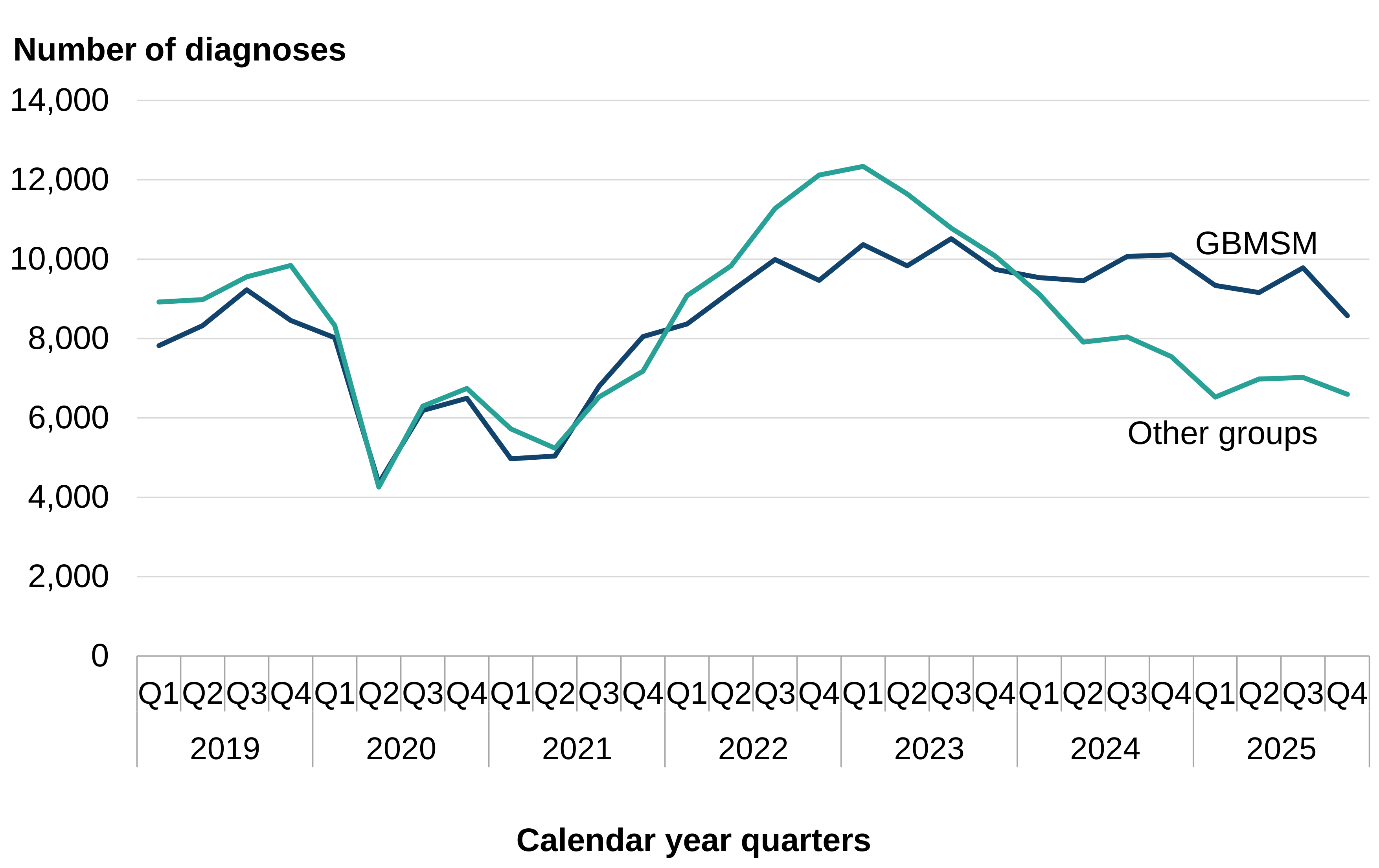
There were 15,162 diagnoses of gonorrhoea (8,570 in GBMSM and 6,592 in other groups) at SHSs in England in quarter 4 (October to December) 2025, lower than 16,793 (9,778 in GBMSM and 7,015 in other groups) in the previous quarter. The decrease in GBMSM is a continuation of the preceding downward trajectory since quarter 2 (April to June) 2023 (Figure 1b).
Between August and December 2025, there was a total of 24,396 attendances at SHSs in England by people prescribed doxycycline post-exposure prophylaxis (doxyPEP) (Figure 2a).
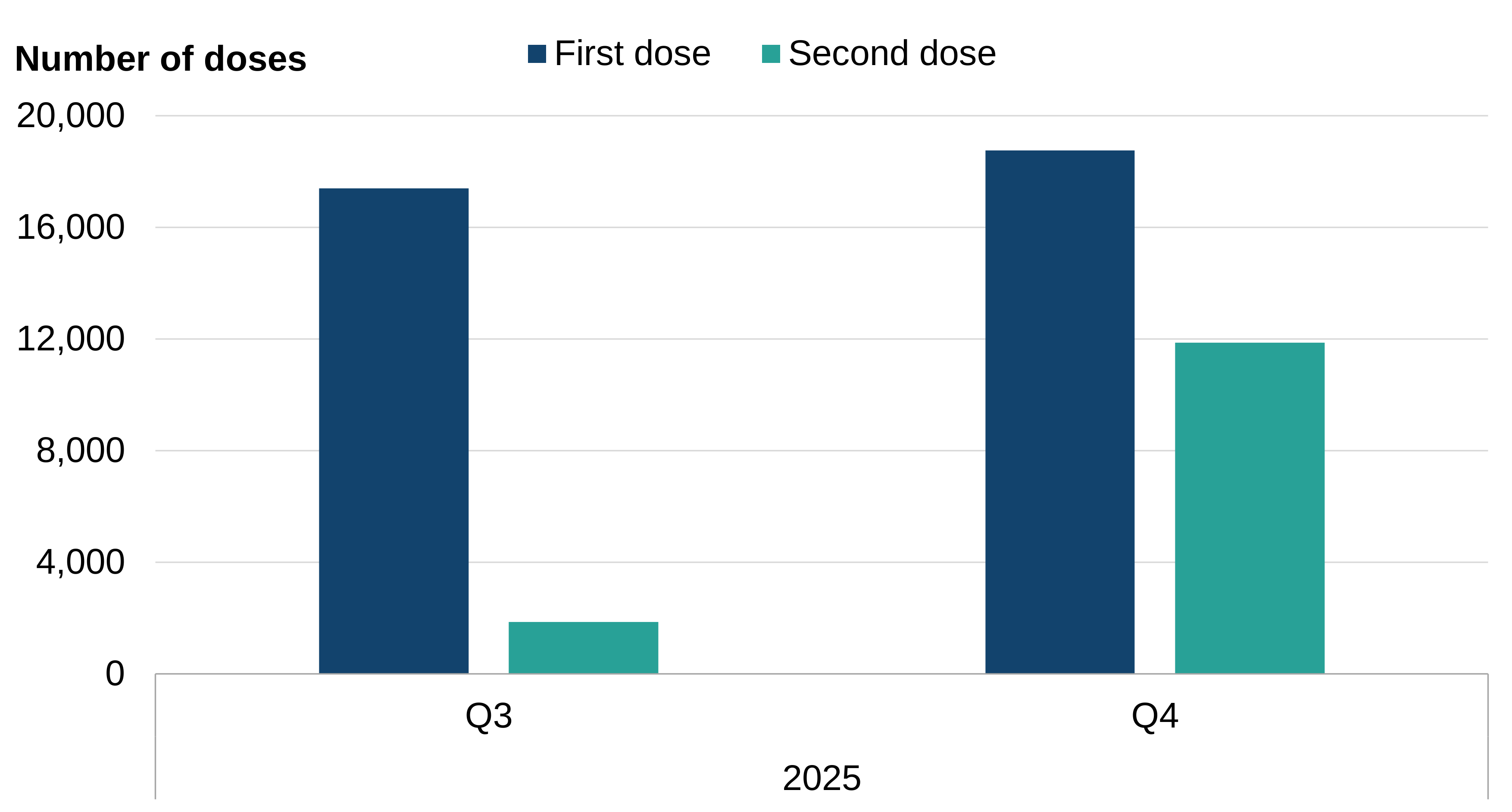
Between August 2025 and December 2025, a total of 36,090 first doses and 13,720 second doses of 4-component serogroup B meningococcal (4CMenB) vaccine for gonorrhoea prevention were provided by SHSs in England (Figure 2b).
Background information
There has been an overall increasing trend in infectious syphilis and gonorrhoea diagnoses since the early 2000s. A marked but temporary decline in diagnoses of both infections was seen during 2020 and 2021, largely explained by a fall in testing during disruption to SHSs caused by the COVID-19 pandemic.
The number of STI diagnoses has been stratified into GBMSM and other groups to follow trends that may be related to targeted preventative interventions (such as doxyPEP and 4CMenB vaccine, both of which were introduced in summer 2025) more easily and allow interpretation of overall long-term trends in light of these changes. More information about the UK Health Security Agency (UKHSA)’s planned analyses to assess the impact of doxyPEP and 4CMenB on STIs is published on GOV.UK.
Also see the Sexual and reproductive health in England: local and national data guide for other presentations of STI data.
Figures 1a and 1b show data on diagnoses of infectious syphilis and gonorrhoea by gender identity and sexual orientation in England by quarter.
Figure 1a. Diagnoses of infectious syphilis [note 1] by gender identity and sexual orientation [note 2] in England by quarter, January 2019 to December 2025
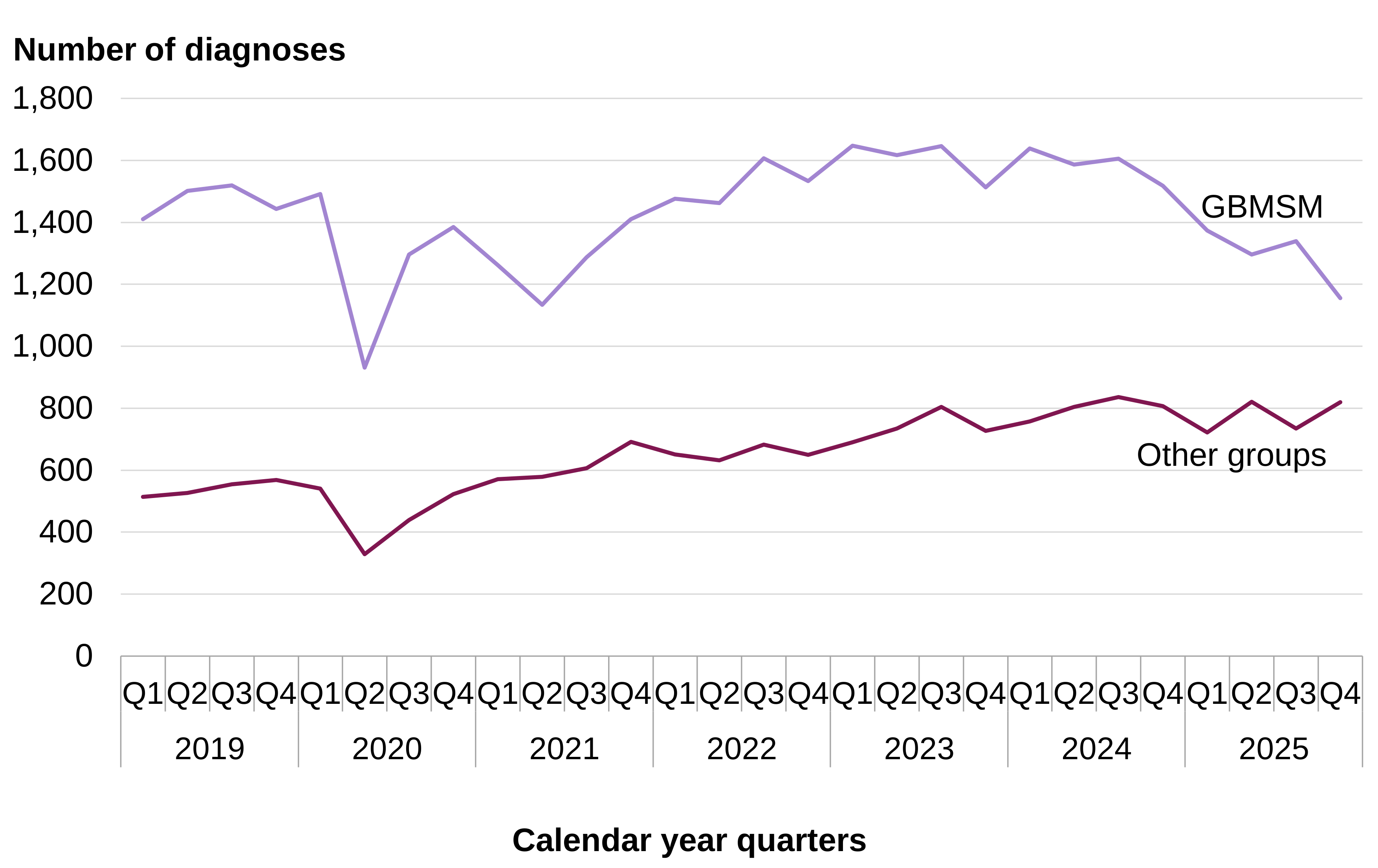
Figure 1b. Diagnoses of gonorrhoea by gender identity and sexual orientation [note 2] in England by quarter, January 2019 to December 2025
Source: data from routine returns to the GUMCAD STI Surveillance System.
Note 1: infectious syphilis refers to primary, secondary and early latent stages.
Note 2: the category ‘Other groups’ is comprised of heterosexual men and women, lesbians, and people where information about their gender identity or sexual orientation was not reported.
Trends in doxyPEP use and 4CMenB vaccine doses in SHS attendees
The provision of DoxyPEP and 4CMenB vaccine at SHSs began from Q3 (July to September) 2025.
Both interventions are provided only by the 221 SHSs providing face-to-face consultations. Of these, data for Q3 is based on 45% (99 out of 221) of SHSs reporting doxyPEP and 73% (162 out of 221) of SHSs reporting 4CMenB data to GUMCAD. Similarly, data for Q4 (October to December) is based on 59% (129 out of 218) of SHSs reporting doxyPEP and 84% (183 out of 218) of SHSs reporting 4CMenB data to UKHSA via GUMCAD.
The figures published here present the earliest available data and will be under-reported during the initial period while the programmes are fully implemented and reported through routine GUMCAD submissions. Figure 2a reports use of doxyPEP and figure 2b reports doses of 4CMenB vaccine given by quarter.
Figure 2a. Number of attendances at SHSs by people prescribed doxyPEP [note 3] by quarter, England 2025
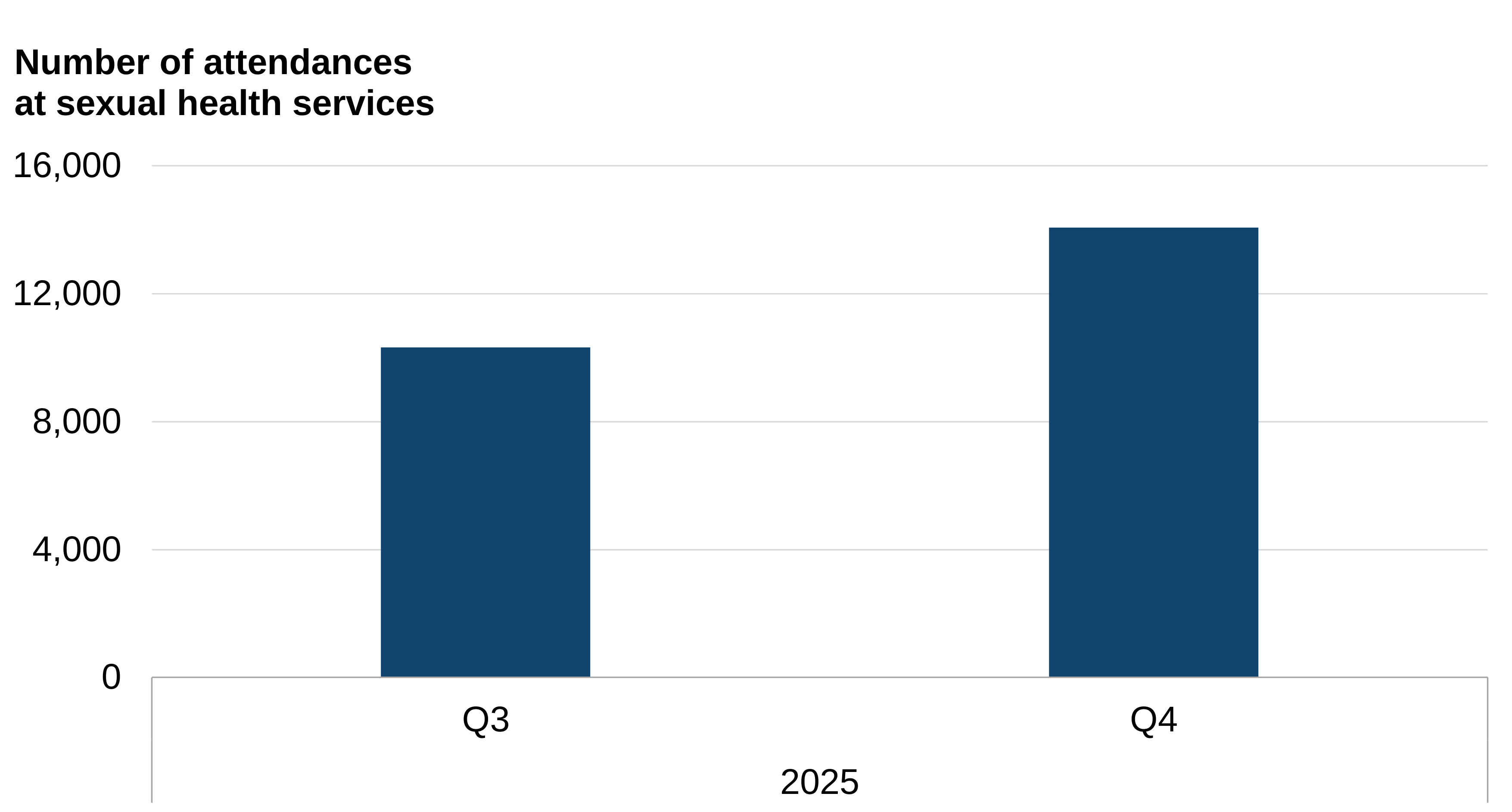
Figure 2b. Number of doses of 4CMenB vaccine for gonorrhoea prevention provided by SHSs by dose and quarter, England 2025
Source: data from routine returns to the GUMCAD STI Surveillance System.
Note 3: figures includes doxyPEP provided at current SHS, another SHS or privately obtained.
Details on GUMCAD submission completeness are available in Table 1.
Table 1. GUMCAD submission completeness in England, 2025
| GUMCAD submissions | Quarter 1 (January to March) |
Quarter 2 (April to June) |
Quarter 3 (July to September) |
Quarter 4 (October to December) |
|---|---|---|---|---|
| Required [note 4] |
231 | 230 | 227 | 224 |
| Received | 231 | 230 | 227 | 224 |
| Completeness | 100% | 100% | 100% | 100% |
Note 4: the number of required GUMCAD submissions may change between quarters where SHSs open or close mid-year.
All diagnoses of ceftriaxone-resistant Neisseria gonorrhoeae to 8 May 2026
Main points
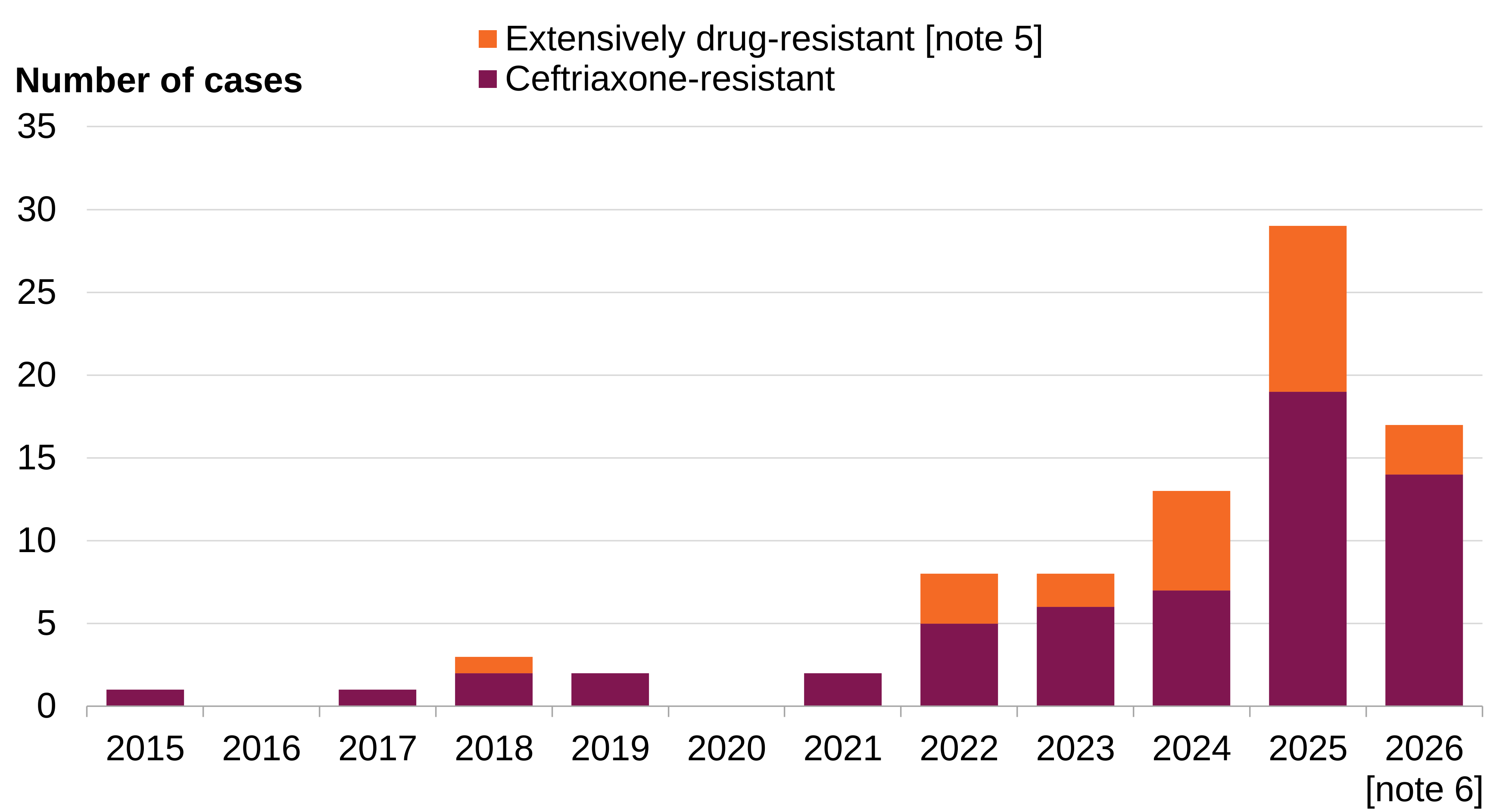
Ceftriaxone-resistant Neisseria gonorrhoeae (the bacterium that causes gonorrhoea) was first detected in England in 2015. By 8 May 2026, a total of 84 cases had been reported in England, an increase of 14 cases since publication of the last quarterly report in February 2026. Of these 84 cases, 25 were extensively drug-resistant (XDR), that is, resistant to first- and second-line antibiotics (Figure 3).
The frequency of detecting ceftriaxone-resistant Neisseria gonorrhoeae has increased since 2021. There were 29 cases reported in 2025 which is more than double the number of cases (13) reported in 2024. This increasing trend continues with 17 cases reported to date in 2026.
Background information
Neisseria gonorrhoeae has developed resistance to every class of antibiotics used to treat it, and cephalosporins are the last remaining class of antibiotics available for use as empirical monotherapy. The currently recommended first-line therapy is 1g ceftriaxone (a cephalosporin) and, while the vast majority of gonorrhoea cases in England are susceptible to ceftriaxone, cases of ceftriaxone-resistant Neisseria gonorrhoeae detected in England are increasing. Most ceftriaxone-resistant cases are associated with travel to or from the Asia-Pacific region, where the prevalence of ceftriaxone resistance is high.
Guidance is available on the management of ceftriaxone-resistant gonorrhoea. Suspected ceftriaxone treatment failures should be reported to UKHSA via the ‘Gonorrhoea treatment failure report form’ on the HIV and STI Data Exchange. For any queries, please contact grasp.enquiries@ukhsa.gov.uk
Ceftriaxone-resistant isolates should be referred to the UKHSA sexually transmitted infections reference laboratory (STIRL). Annual data on trends in antimicrobial resistance and decreased susceptibility in gonococcal infection in England and Wales are published in the Gonococcal resistance to antimicrobials surveillance programme (GRASP) report.
Figure 3. Number of cases of infection with ceftriaxone-resistant Neisseria gonorrhoeae in England, January 2015 to 8 May 2026
Source: referrals to the STIRL at UKHSA from SHSs in England.
Note 5: extensively drug-resistant (XDR) infections are defined as resistant to both first- and second-line treatment options and to other antibiotics.
Note 6: 2026 shows data from January to 8 May 2026.