ESPAUR report 2025 to 2026: Chapter 2. Antimicrobial resistance (AMR)
Published 12 November 2026

© Crown copyright 2026
This publication is licensed under the terms of the Open Government Licence v3.0 except where otherwise stated. To view this licence, visit nationalarchives.gov.uk/doc/open-government-licence/version/3 or write to the Information Policy Team, The National Archives, Kew, London TW9 4DU, or email: psi@nationalarchives.gov.uk.
Where we have identified any third party copyright information you will need to obtain permission from the copyright holders concerned.
This publication is available at https://www.gov.uk/government/publications/english-surveillance-programme-for-antimicrobial-utilisation-and-resistance-espaur/espaur-report-2025-to-2026-chapter-2-antimicrobial-resistance-amr
Main messages
Bacteraemia
The number of patient episodes of bacteria isolated from blood (bacteraemia) increased by 22.9% between 2019 and 2025. Trends in coagulase-negative staphylococci (CoNS) reporting were a major driver of the overall increase in bacteraemia between 2019 and 2025, accounting for nearly half (44.6%; 15,583 of 34,940 additional episodes) of the increase. As CoNS are common blood culture contaminants, the drivers and clinical significance of this increase remain unclear and warrant further investigation at local and national levels.
The estimated AMR burden
The overall burden of resistance, estimated from cases of bacteraemia resistant to one or more critically important antibiotics (see Table 2.1 for antibiotic list) increased by 16.8% between 2019 and 2025, reaching 21,129 episodes in 2025, equivalent to 406 episodes each week. Enterobacterales remained the predominant contributors to AMR burden, accounting for approximately 85.5% of resistant bacteraemia episodes. Of all bacteraemia episodes for AMR burden pathogens, 22% (21,129/ 94,181) were resistant to one or more defined antibiotics in 2025, showing little variation since 2019 (21%; 18,086/ 88,160).
AMR burden increased markedly with age, with individuals aged ≥75 years accounting for around half of all episodes and experiencing the highest rates of resistance. However, infants aged <1 year also experienced a disproportionately high AMR burden, second only to that observed in the oldest age group.
Marked differences were observed in AMR burden across ethnic groups, with 42.4% resistant episodes in the Asian or Asian British ethnic group, 32.8% in the Black, African, Caribbean or Black British ethnic group, compared with 20.7% in the White ethnic group. These differences persisted across most adult age groups and in both sexes and may be masked when examining overall population estimates alone.
AMR burden rates increased between 2019 and 2025 for all deprivation quintiles, however there were consistently higher rates in more deprived populations. The gap between the most and least deprived quintiles increased from 29% in 2019 to 44.2% in 2025, with rates of 44.4 and 30.8 per 100,000 population, respectively.
UK 2024 to 2029 AMR National Action Plan
England remains above the FY 2019 to 2020 baseline for both infection-related National Action Plan targets. Specified drug-resistant infections (Target 1a) increased by 25.7%, driven primarily by third-generation cephalosporin-resistant E. coli and K. pneumoniae, while Gram-negative bloodstream infections (Target 1b) increased by 8%, largely due to rising Klebsiella species bloodstream infections.
Acquired carbapenemase-producing Gram-negative organisms (CPO)
In 2025, New Delhi metallo-beta-lactamase (NDM) and Oxacillinase-48-like (OXA-48-like) were the predominant CPO mechanisms detected in England, each accounting for just under 40% of cases. However, marked geographical variation in CPO notification rates and mechanisms were observed across England. This variation was substantially greater at integrated-care-board (ICB) level than at regional level, indicating that regional averages may mask local areas of high burden. This suggests the need for surveillance, infection prevention and control, diagnostic and antimicrobial treatment resources that reflect local epidemiology.
All-cause mortality in resistant Gram-negative bacteraemia
All-cause mortality increased with increasing antimicrobial resistance. In 2025, the 30-day all-cause mortality rate remained highest among patients with a CPO isolated from a sterile site specimen (21.2%, estimated number of deaths = 62), exceeding that observed among patients with selected Gram-negative bacteraemia (14.9%, est. n= 8,552) or among patients infected with a strain resistant to one or more antibiotics defining AMR burden (16%, est. n= 2,318).
Resistance trends in bacteraemia
Resistance increased across most antibiotic classes in both E. coli and K. pneumoniae between 2019 and 2025. However, the largest increase was observed for piperacillin-tazobactam in K. pneumoniae, reaching 22.8% in 2025, almost twice the level observed in E. coli (11.9%). In contrast, co-amoxiclav resistance remained higher in E. coli than in K. pneumoniae (43.1% versus 32.4%).
In 2025, MRSA accounted for 7.3% of S. aureus bacteraemia episodes. Rising resistance to second-line antibiotics remains a concern in both MRSA and MSSA with resistance to macrolides and clindamycin reaching approximately 20% in MSSA and over 40% in MRSA. Tetracycline resistance in MRSA more than doubled between 2019 and 2025, rising from 13.3% to 31.3%.
Resistance in S. pneumoniae bacteraemia remained relatively low in 2025, with penicillin resistance at 2.8%.
Enterococcal bacteraemia episodes increased by over 20% between 2019 and 2025. In 2025, E. faecalis and E. faecium contributed equally to the burden of disease, each accounting for approximately 45% of cases. Approximately 1 in 5 E. faecium isolates were resistant to vancomycin and/or teicoplanin.
Antibacterial resistance in specialist areas
Mycoplasma genitalium is a sexually transmitted pathogen with concerning resistance to first-line (azithromycin) and second-line (moxifloxacin) therapies. In 2025, almost two-thirds of specimens harboured markers predictive of macrolide resistance, while dual resistance to both macrolides and fluoroquinolones was identified in nearly 1-in-5 specimens.
Despite the resurgence of Mycoplasma pneumoniae activity in 2024, macrolide resistance remained uncommon in England (<4%). Interpretation of temporal trends is complicated by changes in diagnostic and surveillance practices, including increased use of PCR testing and enhanced resistance surveillance.
Antifungal resistance
The incidence of fungaemia continued to rise in 2025, reaching 4.1 per 100,000 population, a 32.4% increase since 2019. Candida albicans remained the most frequently isolated yeast species, accounting for approximately 40% of all fungaemia episodes.
Candidozyma auris remained an important cause of healthcare-associated infection in England, with hospital outbreaks continuing to drive its epidemiology. In 2025, 213 patients were newly identified with C. auris, of whom 38 had invasive infection and 60% (127/213) were linked to declared outbreaks, predominantly in London and the South-East of England. In April 2025, C. auris was classified as a notifiable organism under schedule 2 of the Health Protection (Notification) Regulations 2010.
Antiviral resistance
Antiviral resistance among circulating influenza viruses remained rare during the 2025 to 2026 influenza season. Mutations associated with reduced susceptibility to neuraminidase inhibitors and baloxavir marboxil were detected in fewer than 1% of influenza A viruses and occurred predominantly in immunocompromised patients receiving antiviral treatment. Persistent viral detection despite antiviral therapy, particularly in immunocompromised patients, should prompt consideration of antiviral resistance and further virological investigation.
Antiparasitic resistance
Artemisinin-based combination therapies (ACTs) remain highly effective against imported Plasmodium falciparum malaria in the UK. Markers associated with reduced susceptibility to artemisinin or lumefantrine were detected at low frequency. Most imported malaria cases continue to occur in travellers who did not take recommended chemoprophylaxis, highlighting the need to improve uptake of preventive measures alongside continued resistance surveillance.
Introduction to Chapter 2
This chapter presents findings from antimicrobial resistance (AMR) surveillance, focusing predominately on resistance trends among pathogens of public health importance causing bacteraemia and fungaemia, undertaken by the UK Health Security Agency (UKHSA). It reports bacteraemia resistance trends as recommended for surveillance by the Advisory Committee on Antimicrobial Prescribing, Resistance and Healthcare-Associated Infections (APRHAI) (1), and resistance related to Mycobacterium tuberculosis, Neisseria gonorrhoeae, and other common bacterial, fungal, viral, and parasitic infections. This chapter focuses on organisms isolated from blood cultures (bacteraemia and fungaemia for bacteria and fungi respectively) due to the severity and impact of AMR on these clinical infections. However, evolving resistance in pathogens causing blood-borne viral infections, gastrointestinal infections, respiratory viral infections as well as malaria are also covered, given their considerable clinical impact. All data pertaining to antimicrobial consumption in England is detailed in Chapter 3.
The estimated burden of bacteraemia attributable to antibiotic resistance of public health importance (‘AMR burden’) in England was calculated using previously described methodology (2). Briefly, this is calculated using estimates of the number of isolates of each selected pathogen resistant to one or more specified antibiotics; these organisms and defined antibiotic combinations are listed in Table 2.1, with further details provided in the accompanying annexe. Monitoring and preventing any increase in the burden of AMR (‘AMR burden’) in humans is one of the UK government’s targets to confront AMR (more details on this are available in Box 2.1.
Table 2.1. Bacteria of public health importance due to association with antibiotic resistance, and selected resistance profiles used to estimate AMR burden
| Pathogens | Antibiotic class resistance |
|---|---|
| Gram-negative bacteria | |
| Escherichia coli | carbapenems, third-generation cephalosporins, aminoglycosides, or fluoroquinolones |
| Klebsiella pneumoniae | carbapenems, third-generation cephalosporins, aminoglycosides, or fluoroquinolones |
| Klebsiella oxytoca | carbapenems, third-generation cephalosporins, aminoglycosides, or fluoroquinolones |
| Acinetobacter spp. | aminoglycosides and fluoroquinolones, or carbapenems |
| Pseudomonas spp. | 3 or more antimicrobial groups, or carbapenems |
| Gram-positive bacteria | |
| Enterococcus spp. | glycopeptides |
| Staphylococcus aureus | methicillin |
| Streptococcus pneumoniae | penicillin and macrolides, or penicillin alone |
Data on antimicrobial-resistant bacteraemia for the period 2019 to 2025 are presented as trends in either numbers of patient episodes (defined in the annexe accompanying this report), percentage resistance or as a rate per 100,000 population. More detailed analysis of AMR burden pathogens, stratified by patient age group, biological sex, regional location within England, 30-day all-cause case fatality rate (2025 data only), deprivation index, and ethnicity, are presented within the chapter or its appendices. Statistical significance, defined where p<0.05, is presented throughout the report. Details of how this is calculated can be found in the annexe.
The primary data source used was the UKHSA’s Second Generation Surveillance System (SGSS, described further in previous reports) (2, 3). Additional data sources, analytical methods, caveats, and additional resources are described in more detail in the annexe accompanying this report. Data and figures are presented in the data spreadsheets and downloadable slidedecks, respectively.
Priority pathogens causing bacteraemia
In 2025, there were 187,254 patient episodes of bacteria isolated from blood (bacteraemia) identified through reports received from laboratories in England (see accompanying data tables). This is a 1.6% increase compared to episodes reported in 2024 (n = 184,281), and a 22.9% increase since 2019 (n = 152,314). Nearly half (44.6%) of this increase between 2019 and 2025 can be explained by increases in coagulase-negative staphylococci (CoNS). Increases in other organisms each contributed less than 7% of the overall increase, with the largest contributions arising from E. coli, K. pneumoniae, and S. aureus. As CoNS are common blood culture contaminants, increases in CoNS reporting may reflect changes in clinical or laboratory practice and reporting, increased blood culture sampling, or variations in contamination rates, rather than a corresponding increase in true bloodstream infections. However, the drivers and clinical significance of this increase remain unclear and warrant further investigation at local and national levels.
In 2025, a reported 89.4% (n = 167,156) of episodes were monomicrobial (a single organism isolated from blood). Similar to previous reports (3, 4), the organisms most frequently isolated from monomicrobial bacteraemia were CoNS (28.6%), E. coli (21.6%) and S. aureus (7.2%). Among the 10.6% (n=20,098) of episodes that were polymicrobial (more than one bacterial or fungal species isolated from blood), the most frequently identified organisms were CoNS (17.4%), E. coli (12.7%), and K. pneumoniae (4.6%). The proportion of polymicrobial bacteraemia has shown little variation since 2019, remaining consistently around 11% of all reported episodes.
The overall bacteraemia burden (Table 2.1) in 2025 was higher than that reported in 2019, following a decline and subsequent increase during and after the COVID-19 pandemic. The 2025 incidence rates of bacteraemia due to Acinetobacter spp., K. pneumoniae, K. oxytoca, Enterococcus spp., Pseudomonas spp. and S. aureus have all surpassed their respective rates in 2019, with the most notable increase being the 28% increase in K. pneumoniae (Figure 2.1). Whilst the incidence rates of E. coli and S. pneumoniae bacteraemia have increased in recent years, they still remain below pre-pandemic levels. More detail on the trends in incidence and mandatory national surveillance for E. coli, S. aureus, K. pneumoniae and Pseudomonas aeruginosa bacteraemia are available in the annual epidemiological commentary. In addition, incidence and resistance data for other Gram-negative organisms such as Serratia spp., Enterobacter spp., Citrobacter spp., Proteus spp., Providencia spp., Morganella spp. and Stenotrophomonas spp. are included in the accompanying data tables.
Figure 2.1. Annual incidence rate of selected pathogens [note1] of public health importance [note2] causing bacteraemia, per 100,000 population, England 2019 to 2025
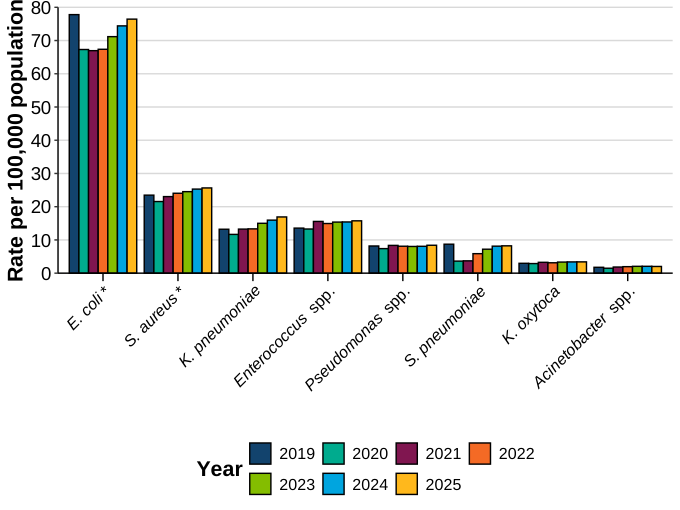
Note 1: In this graph, the asterisk denotes that data for E. coli and S. aureus incidence is based on mandatory surveillance data, while reporting of the other pathogens was voluntary.
Note 2: See Table 2.1.
Antibacterial resistance
AMR burden
The burden of resistance, estimated by the total number of bacteraemia episodes due to bacteria of public health importance resistant to one or more defined antibiotics (Table 2.1), increased by 16.8% between 2019 (n = 18,086) and 2025 (n = 21,129; Figure 2.2). The AMR burden rate increased from 32.2 per 100,000 population in 2019 to 36 per 100,000 population in 2025. In 2025, the total AMR burden equates to an average of 406 patient episodes of resistant bacteraemia each week. The estimated burden continued to increase between 2024 and 2025 (3.2%), but at a third of the rate of increase observed between 2023 and 2024 (9.3%). Of all bacteraemia episodes caused by AMR burden pathogens, 22% (21,129/ 94,181) were resistant to one or more defined antibiotics (see Table 2.1) in 2025. This proportion has remained relatively stable since 2019 (21%; 18,086/ 88,160).
Figure 2.2. Annual estimated total of the burden of antibiotic-resistant bacteraemia episodes, England 2019 to 2025
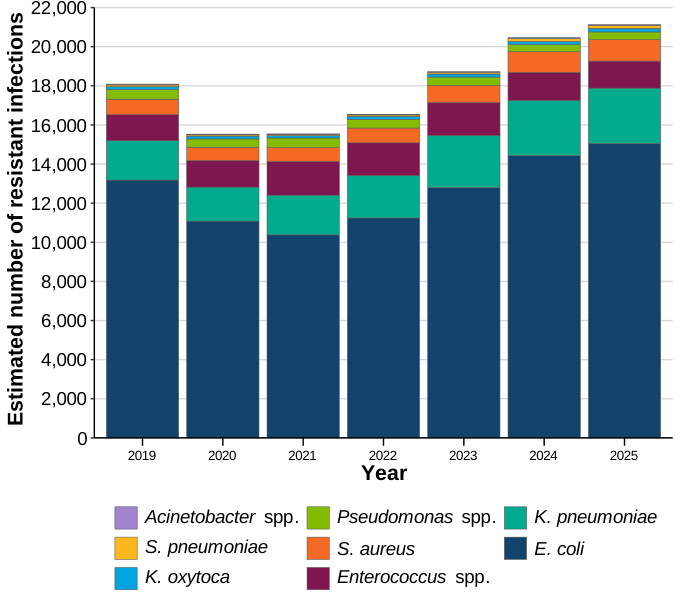
Enterobacterales (E. coli, K. pneumoniae, and K. oxytoca) dominated the burden of antibiotic-resistant bacteraemia, comprising 85.5% of resistant bacteraemia episodes in 2025. E. coli remained the predominant pathogen, accounting for around 70% of the burden over the past 7 years. The relative proportion of K. pneumoniae has risen over time, from 11.1% in 2019 to 13.4% in 2025. E. coli and K. pneumoniae were responsible for most (88.4%) of the 16.8% increase in resistant bacteraemia seen from 2019 to 2025.
Whilst the proportion of antibiotic-resistant bacteraemia due to common Gram-positive pathogens remained broadly stable, with Gram-positive organisms accounting for 12.5% of the overall AMR burden in 2025 (Enterococcus spp. [6.5%], S. aureus [5.2%], S. pneumoniae [0.7%]). The number of resistant bacteraemia due to Enterococcus spp. has reduced by 14.4% between 2019 and 2025, however, resistant bacteraemia has risen by 38.3% (n=1,098 in 2025) for S. aureus and by 69.6% for S. pneumoniae (n=153).
Further detail is available in the data tables accompanying this report.
Box 2.1. Progress against the UK 2024 to 2029 AMR National Action Plan’s human health targets: England data
The UK government’s 2024 to 2029 AMR National Action Plan (NAP), Confronting antimicrobial resistance 2024 to 2029, includes 5 human health targets.
Target 1a states that by 2029, the UK aims to prevent any increase in a specified set of drug-resistant infections in humans from FY 2019 to 2020. The target 1a metric is a subset of the broader ESPAUR bacteraemia AMR burden estimates presented in the previous section (Table 2.1) and includes only selected pathogen-antibiotic combinations selected in the UK AMR NAP. Further information on included pathogen-antibiotic combinations included in the Target 1a metric can be found in the annexe.
In England, a 25.7% increase in the specified set of drug-resistant infections was recorded between FY 2019 to 2020 and FY 2025 to 2026 (from 9,922 to 12,470; Box Figure 2.1.1). The increase was predominately driven by E. coli and K. pneumoniae resistant to third-generation cephalosporins (62.5% and 14.5% of antibiotic-resistant bacteraemia, respectively, in FY 2025 to 2026) (5).
Target 1b states that by 2029, the UK aims to prevent any increases in Gram-negative bloodstream infections (GNBSI) (E. coli, Klebsiella species and P. aeruginosa) from the 2019 to 2020 FY baseline. In England, an 8% increase in GNBSI was recorded between FY 2019 to 2020and FY 2025 to 2026 (from 58,857 to 63,544 cases). The increase was primarily driven by infections due to Klebsiella spp. (25.8% increase). Infections due to E. coli and P. aeruginosa increased to a lesser extent.
The infection-related targets presented in this chapter should be interpreted alongside the antimicrobial consumption national action plan targets described in Chapter 3. Together, these indicators provide complementary measures of progress towards reducing the impact of antimicrobial resistance in England.
Box Figure 2.1.1. Estimated number of antibiotic-resistant bacteraemia by FY in England, FY 2019 to 2020 to FY 2025 to 2026 [note1] [note2]
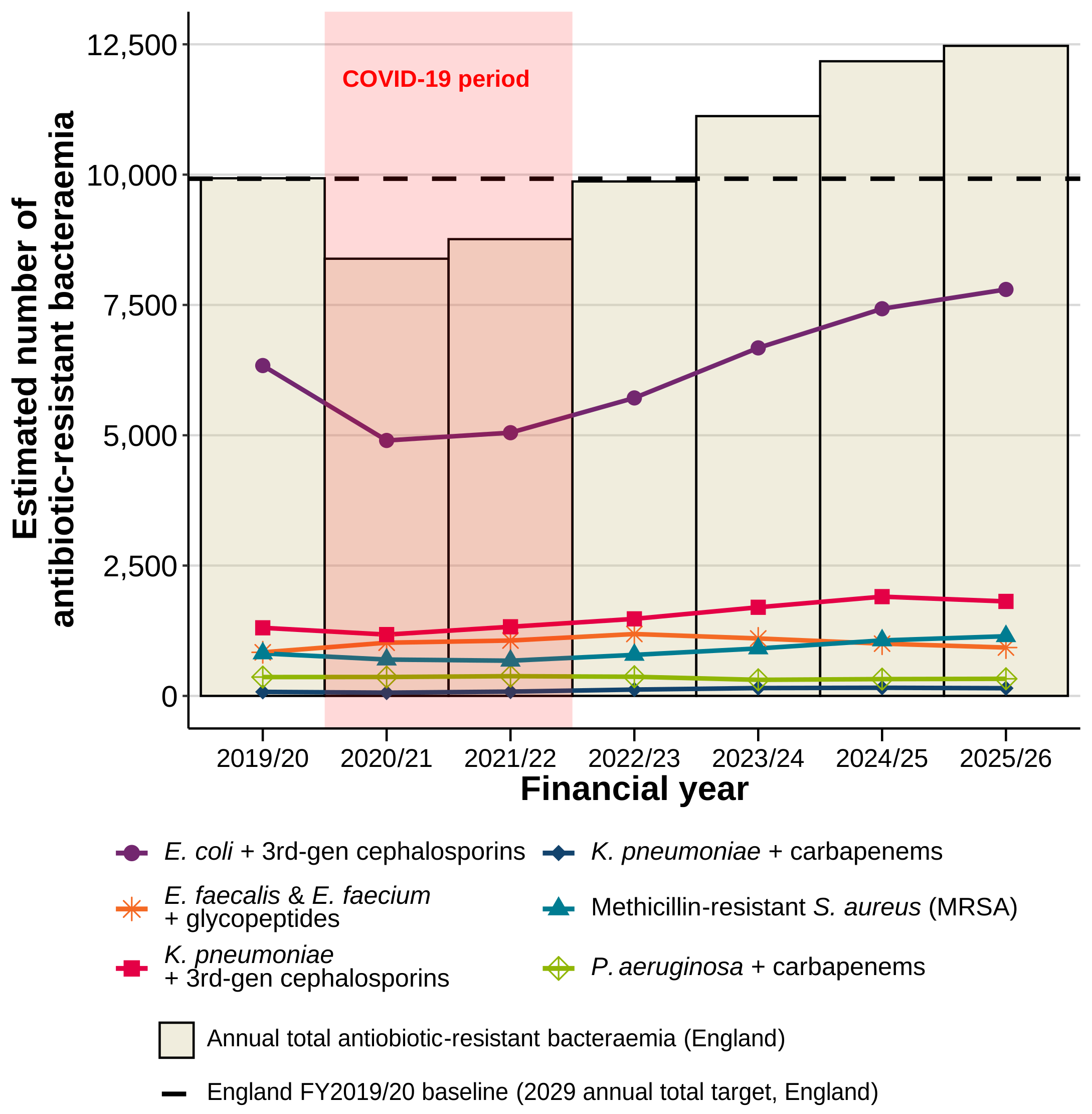
Note 1: The following combinations are not shown individually due to small numbers (refer to the data tables accompanying this report for further detail): E. coli resistant to carbapenems, P. aeruginosa resistant to 3 or more antibiotic classes (excluding carbapenems), Acinetobacter spp resistant to carbapenems, Acinetobacter spp. resistant to aminoglycosides and ciprofloxacin, S. pneumoniae resistant to penicillin, and S. pneumoniae resistant to penicillin and macrolides.
Note 2: The UK’s 2024 to 2029 AMR NAP is UK-wide – this figure depicts a calculation of the target based on data from England only and only includes estimates for England.
Geographical distribution
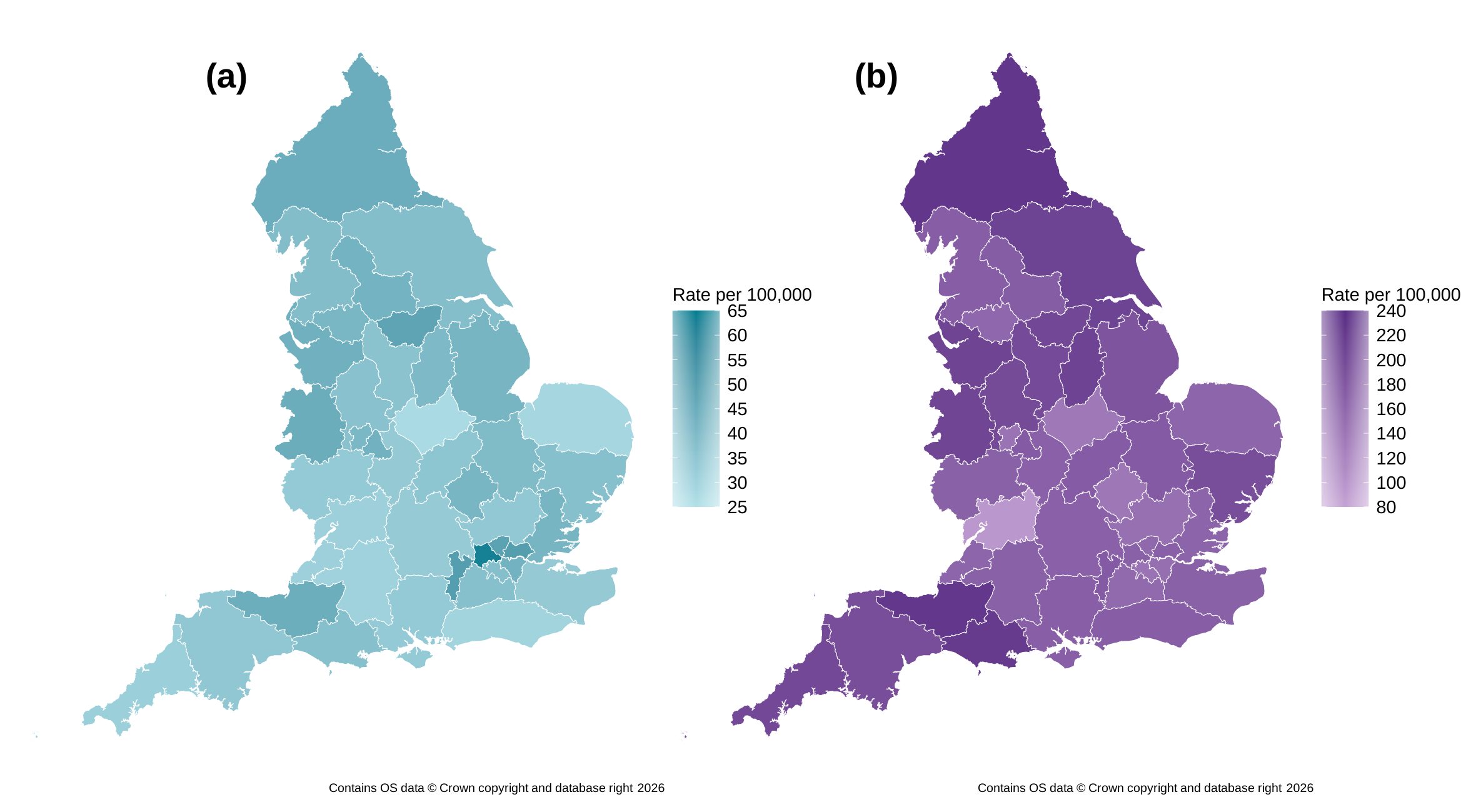
The geographical distribution of the estimated rate of bacteraemia and AMR burden is shown in Figure 2.3 and can be found in the accompanying data tables.
The London region reported the highest AMR burden rate (44.7 per 100,000 population), while the South West had the lowest (30.2 per 100,000 population). The North East recorded the highest overall bacteraemia incidence (207.5 per 100,000 population), with the second highest resistant bacteraemia rate (42 per 100,000 population). Conversely, London had the lowest overall bacteraemia incidence (143.8 per 100,000 population) despite its high AMR burden rate.
AMR burden varied more markedly between ICBs than between regions, highlighting substantial local variation that may be masked by regional averages. The NHS North West London ICB reported the highest AMR burden rate (63.3 per 100,000 population), followed by NHS North East London ICB and NHS Frimley ICB (51.1 and 50.8 per 100,000 population, respectively). The lowest AMR burden rate was reported in NHS Leicester, Leicestershire and Rutland ICB (27.4 per 100,000 population). The NHS North East and North Cumbria ICB had the highest incidence of bacteraemia (226 per 100,000), and a relatively high AMR burden rate (44.9 per 100,000), whereas NHS Gloucestershire ICB had the lowest bacteraemia rate (95.3 per 100,000 population).
The geographical variation in resistant bacteraemia described here should be considered alongside regional and ICB-level differences in antimicrobial consumption presented in Chapter 3 (Figure 3.2). Together, these findings highlight the importance of using local epidemiological and prescribing data to inform antimicrobial stewardship and infection prevention interventions.
Figure 2.3. Geographical distribution in rate per 100,000 population of the (a) estimated burden of AMR and (b) estimated rate of bacteraemia by ICB (n = 42), in England 2025
Contains OS data © Crown copyright and database right 2026
Age and sex distribution
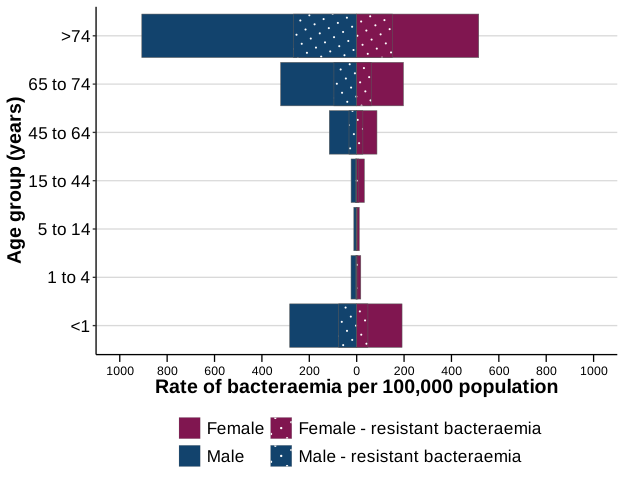
Bacteraemia and AMR burden differed according to age group and sex in 2025 (Figure 2.4). Data behind the figure is available in the chapter 2 data table accompanying this report. The highest number and incidence rates of both bacteraemia and resistant bacteraemia were observed in individuals aged over 74 years old (males and females, with 22.7% and 22.7% of episodes respectively being resistant). However, infants aged <1 year also experienced a disproportionately high incidence of bacteraemia, second only to that observed in the oldest age group. Males had the greatest burden of resistance across all ages except the 1 to 4 year olds.
Adults aged 45 and over accounted for the majority of cases of bacteraemia and resistant bacteraemia, comprising 88.2% and 89.3% respectively. Individuals over 74 accounted for nearly half of all reported cases in both categories, with 47,136 bacteraemia (49.3%) and 10,706 (49.7%) resistant bacteraemia episodes. Sex differences in percentage of resistant episodes were seen in the 1 to 4 age group (p<0.01) and in the 15 to 44 age group (p<0.05), where in both age groups resistance was higher in women) than in men (23.1% versus 13.5% and 21.9% versus 20.3%, respectively).
Figure 2.4. The rate of bacteraemia and AMR burden by age group and sex in England in 2025 [note 1]
Note 1: Information about patient age or sex is recorded in 99.9% of bacteraemia episodes and 99.8% of resistant bacteraemia episodes.
Ethnicity and deprivation
Among individuals with a reported ethnicity (99.8%, n = 91,126), the highest number and rate of bacteraemia episodes were recorded in people from the White ethnic group (164.1 per 100,000 population), who accounted for 87.7% of bacteraemia episodes (n = 79,891). The second highest incidence was observed in the Black, African, Caribbean or Black British ethnic group (137.9 per 100,000 population), followed by Asian or Asian British (110.0 per 100,000 population).
While the White ethnic group accounted for the largest number of resistant bacteraemia episodes (79.9%; n = 16,513), the highest percentage of resistant bacteraemia was observed in the Asian or Asian British ethnic group, with 42.4% of bacteraemia episodes resistant (46.6 per 100,000 population), accounting for 12.4% of all resistant bacteraemia. This was followed by the Black, African, Caribbean or Black British ethnic group (32.8%, 45.2 per 100,000 population), Any other ethnic group (30.4%, 12.5 per 100,000 population), and Mixed or multiple ethnic groups (29.4%, 22.2 per 100,000 population). The White ethnic group had the lowest percentage of resistant bacteraemia episodes (20.7%, 33.9 per 100,000 population).
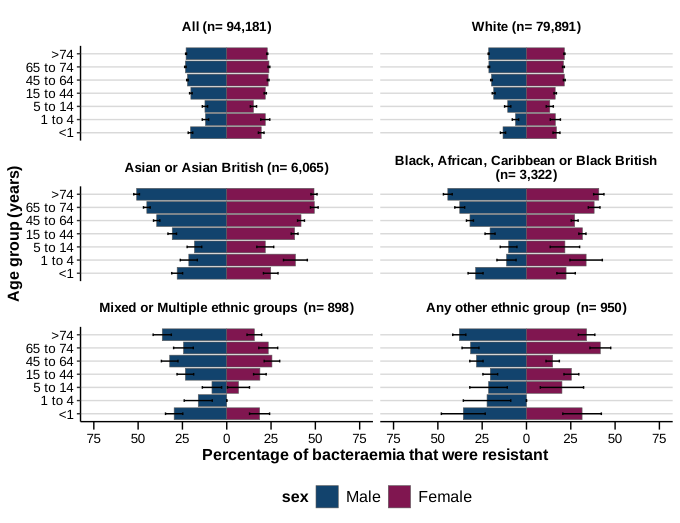
There are known differences in the age and sex distribution of ethnic groups in England, and both older age and male sex are associated with higher rates of bacteraemia and resistant bacteraemia (Figure 2.4). To enable fairer comparisons of rates between ethnic groups, Figure 2.5 presents the proportion of bacteraemia episodes that were resistant by age group, sex and ethnicity, helping to distinguish ethnic differences in resistance from underlying demographic variation (Figure 2.5) (6).
The percent of bacteraemia that were resistant in the ‘Asian or Asian British’ population was higher than in the White population across age and sex groups, with a maximum of 50.9% resistance among males aged ≥75 years, compared to 21.4% in the corresponding White population. Resistance increased with age across all ethnic groups; however, the white population generally had lower resistance rates than other ethnic groups, particularly among adults. The resistance rates observed in the overall population closely reflected those seen in the White population (accounting for 87.7% of bacteraemia episodes), highlighting the importance of stratifying resistance rates by ethnicity, age and sex to avoid population structure masking important differences between ethnic groups.
Further detail on bacteraemia and resistant bacteraemia rates by ethnic group at an ICB-level is available in the chapter 2 data tables accompanying this report.
Figure 2.5. The percentage of bacteraemia episodes that were resistant by age group, sex and ethnic group in England in 2025 [note 1]
{:#Fig2five}
Note 1: Resistant bacteraemia in the paediatric population was low, so caution should be taken when interpreting trends due to small sample sizes.
In 2025, the AMR burden differed according to indices of multiple deprivation (IMD), measured by quintile (where the first quintile represents the population in the most deprived 20% of areas in England and the fifth quintile represents the least deprived 20% of areas) (Figure 2.6). There are complex interactions between ethnicity and deprivation, which are not currently adjusted for in these analyses.
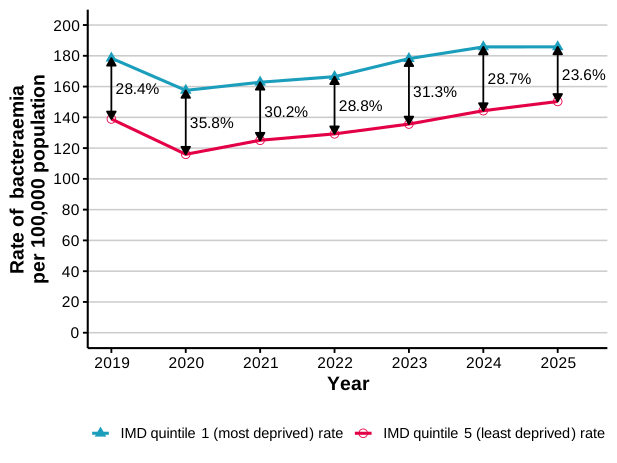
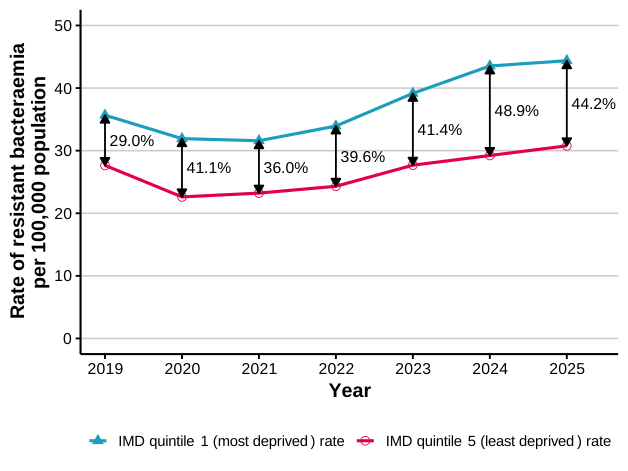
Of those individuals with a reported IMD quintile (99.5%; n = 93,737) in 2025, the highest number and rate of bacteraemia as well as resistant bacteraemia were recorded in people in the most deprived quintile (22.4% of bacteraemia episodes; n = 20,998, rate = 44.4 per 100,000 population). The rate of resistant bacteraemia in the most deprived quintile was 44.2% higher than in the least deprived quintile (44.4 versus 30.8 per 100,000 population; p < 0.05). While the gap in overall bacteraemia rates narrowed between 2019 and 2025 (from 28.4% to 23.6%; Figure 2.6a), the gap in resistant bacteraemia widened from 29% in 2019 to 44.2% in 2025 (Figure 2.6b).
Further data on bacteraemia and resistant bacteraemia rates by IMD quintile at an ICB-level is available in the chapter 2 data table accompanying this report.
Figure 2.6. Rate of bacteraemia (a) and resistant bacteraemia (b) per 100,000 population of most and least deprived IMD quintiles, 2019 to 2025
(a)
(b)
The percent of bacteraemia that are resistant per age group and sex category by IMD quintile are displayed in Figure 2.7. In 2025, resistance rates did not differ substantially across age and sex groups across the quintiles, however resistance was consistently higher per age and sex group in the most deprived compared to the least deprived quintile.
Figure 2.7. The percentage of resistant bacteraemia episodes by age group, sex and IMD quintile in England in 2025 [note 1]
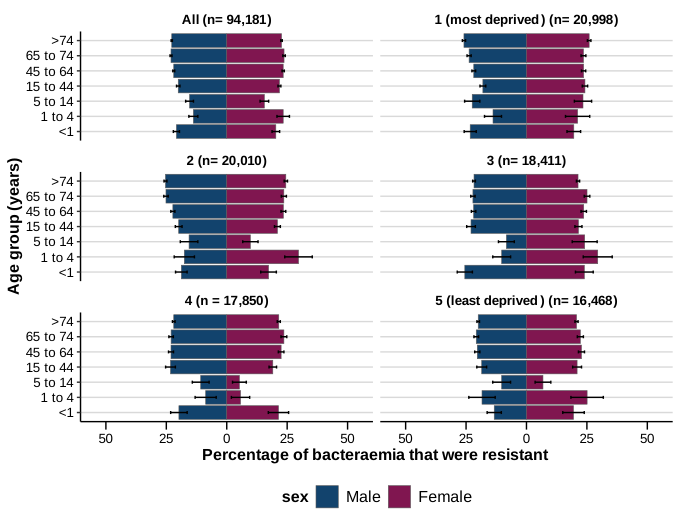
Note 1: Resistant bacteraemia in the paediatric population was low, so caution should be taken when interpreting trends due to small sample sizes.
Chapter 3 describes variation in antimicrobial prescribing by deprivation and ethnicity. Considered together, these findings provide important context for understanding inequalities in antimicrobial resistance and may help inform targeted stewardship and prevention strategies.
Gram-negative bacterial infections
Data presented in this section focuses on the most commonly isolated Gram-negative bacteria and their phenotypic profiles. More extensive pathogen and antibiotic combination analysis can be found in the data and figure appendices accompanying this report. Data on acquired carbapenemase-producing Gram-negative organisms (CPO) is presented separately in the following section.
Resistance trends in bacteraemia
Reports of E. coli resistant to the following antibiotics increased between 2019 and 2025 (Figure 2.8a): the aminoglycosides, amikacin (0.9% to 2.7%) and gentamicin (10.7% to 12%), piperacillin with tazobactam (9.1% to 11.9%), carbapenems (0.1% to 0.2%). Resistance to both third-generation cephalosporins and ciprofloxacin rose year-on-year from 2021 onwards (13.5% to 17.2% and 17.1% to 19.9%, respectively). Resistance to co-amoxiclav remained consistently high at 43.1% in 2025, highlighting its limited suitability as empirical monotherapy for suspected sepsis of uncertain aetiology.
Figure 2.8a. Trends in resistance to specified antibiotics in Escherichia coli bacteraemia, between 2019 and 2025, England [note1, note 2]
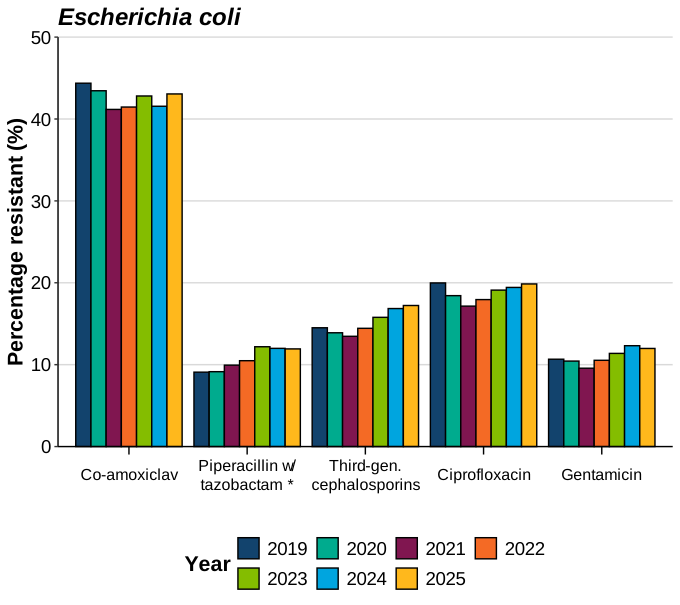
Note 1: EUCAST piperacillin with tazobactam breakpoints for Enterobacterales changed in 2021 (7) (see Box 2.3 in ESPAUR 2023 to 2024 report for more details).
Note 2: Amikacin and carbapenem resistance are not displayed as the percentage resistance remained below 5.0% between 2019 and 2025 (see accompanying data tables).
Resistance in K. pneumoniae increased across all reported antibiotic classes between 2019 and 2024, before declining slightly in 2025 for all antibiotics (Figure 2.8b). The largest increase was observed for piperacillin with tazobactam resistance, which rose from 15.1% in 2019 to 22.8% in 2025. Interpretation of temporal trends for piperacillin with tazobactam should take into account the EUCAST breakpoint revision introduced in 2021 (see Box 2.3 in ESPAUR 2023 to 2024 report for more details). Unlike co-amoxiclav resistance, which remained lower than that observed in E. coli (32.4% versus 43.1% in 2025), piperacillin with tazobactam resistance was substantially higher in K. pneumoniae (22.8% versus 11.9% in 2025). This level of resistance highlights the need for caution in assuming piperacillin with tazobactam activity where Klebsiella spp. are known to be the causative organism.
Figure 2.8b. Trends in resistance to specified antibiotics in Klebsiella pneumoniae bacteraemia, between 2019 and 2025, England [note1, note 2]
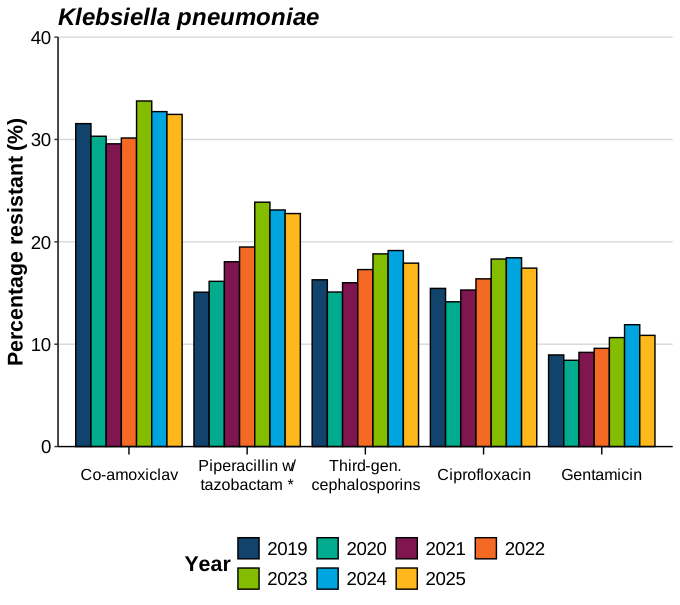
Note 1: EUCAST piperacillin with tazobactam breakpoints for Enterobacterales changed in 2021 (7); see Box 2.3 in ESPAUR 2023 to 2024 report for more details.
Note 2: Amikacin and carbapenem are not displayed as the percentage resistance remained below 5% between 2019 and 2025 (see accompanying data tables).
In 2025, Pseudomonas spp. bacteraemia resistance remained largely stable, with <9% resistance across major antibiotic classes in 2025 (Figure 2.9). In 2025, 85.4% of Pseudomonas spp. episodes were P. aeruginosa.
Figure 2.9. Trends in resistance to specified antibiotics in Pseudomonas spp. bacteraemia, between 2019 and 2025, England [note1]
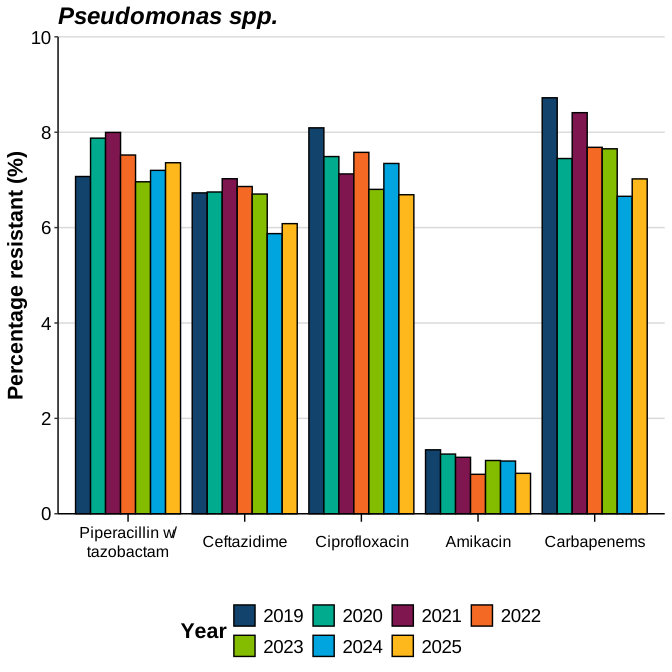
Note 1: In this figure, ‘carbapenems’ refers only to meropenem or imipenem, as described in the annexe (Table 2.1) accompanying this report.
In 2025, 20.1% (n = 238) of Acinetobacter spp. isolated from blood were Acinetobacter baumaunii, an increase from 17.3% (n = 214) in 2024. Of 1,071 tested Acinetobacter spp. isolates, 19 (1.8%) were carbapenem-resistant, of which 14 (6.3%) were carbapenem-resistant A. baumannii (CRAB). Further details of antibiotic resistance trends in Acinetobacter spp. can be found in the accompanying data tables.
Laboratories are reminded to submit isolates with ‘exceptional’ antibiotic resistant phenotypes to the AMRHAI Reference Unit for confirmation – see the Bacteriology Reference Department user manual for referral criteria.
All-cause mortality in Gram-negative bacteraemia
The overall rate for 30-day all-cause mortality in patients with selected Gram-negative bacteraemia (E. coli, K. pneumoniae, Pseudomonas spp., Acinetobacter spp.) was 14.9% in 2025 (estimated number of deaths (est.) =8,552), the lowest mortality rate since 2019. Mortality was lowest in children aged one to 14 years (2.6%, est.=14) and highest in adults aged 85 years and over (21.5%, est.=2,620). The 30-day all-cause mortality in infants <1 year old in 2024 was 10.1% (est.=85).
Male patients had a higher crude mortality rate (15.9%, est.=4,886) than female patients (13.7%, est.=3,661). Patients infected with a strain resistant to one or more antibiotics defining AMR burden (Table 2.1) had a higher crude mortality rate (16%, est.=2,318) compared to those with a susceptible strain (14.4%, est.=6,129). These findings were significant at a 5% level of statistical confidence.
The mortality rate varied by organism in 2025, where patients with Pseudomonas spp. bacteraemia had the highest crude mortality rate (21.1%, est.=1,018) followed by K. pneumoniae (15.9%, est.=1,539), and E. coli (14.0%, est.=5,856). Patients infected with an E. coli or K. pneumoniae strain resistant to one or more AMR burden-defined antibiotics had a statistically significant (p<0.05) higher crude mortality rate (15.4%, est.=1,816; 18.5%, est.=423 respectively) compared to those with a susceptible strain (13.4%, est.=3,985; 15.1%, est.=1,102 respectively).
Among individuals with a reported ethnicity, the crude 30-day all-cause mortality rate was highest in the White ethnic group (15.5%, est.=7,529). Rates were lower in the Black, African, Caribbean or Black British group (9.8%, est.=196) and the Asian or Asian British ethnic group (9.9%, est.=389). As mortality is higher in older age groups and the age-sex distribution varies between ethnic groups, crude 30-day all-cause mortality rate was calculated for males and females over 75 years by ethnic group. Among individuals with recorded ethnicity information and more than 20 fatalities, case fatality was highest among males in the Black, African, Caribbean or Black British ethnic group (20.7%, est.=55) and among females the White ethnic group (18%, est.=2,128). The mortality rate for the Asian or Asian British ethnic group was 14.4% for males (est.=95) and 14.3% for females (est.=86).
Crude mortality rates for bacteraemia cases in the most deprived IMD quintile was 14.9% (est.=1, 859) compared to 15.1% for the least deprived IMD quintile (est.=1,553). Further work is underway looking at mortality across different ethnic groups and deprivation together.
Overall, all-cause mortality increased with higher levels of antimicrobial resistance. However, the relative contribution of delays in identification, timeliness of effective therapy, and underlying patient characteristics cannot be determined from this data. Further work is ongoing to better understand these associations.
Acquired carbapenemase-producing Gram-negative organisms (CPO)
Notification data
From 1 October 2020, diagnostic laboratories in England have had a statutory duty to report acquired CPOs isolated from human samples (8). Since then, notifications of CPO have been published weekly and quarterly at national and regional levels, with the recent addition of ICB breakdown to the quarterly report. Details on notification definition, de-duplication and sample type categorisation are available in Chapter 2 of the annexe accompanying this report.
In 2025, there were 7,052 CPO notifications from all specimen types, reported in 5,447 individuals in England. Rates of reported CPO notifications increased substantially following the introduction of mandatory reporting, rising from 4.8 per 100,000 population in 2021 to 12.8 per 100,000 in 2024. Rates of reported CPO notifications remained elevated in 2025 at 12 per 100,000.
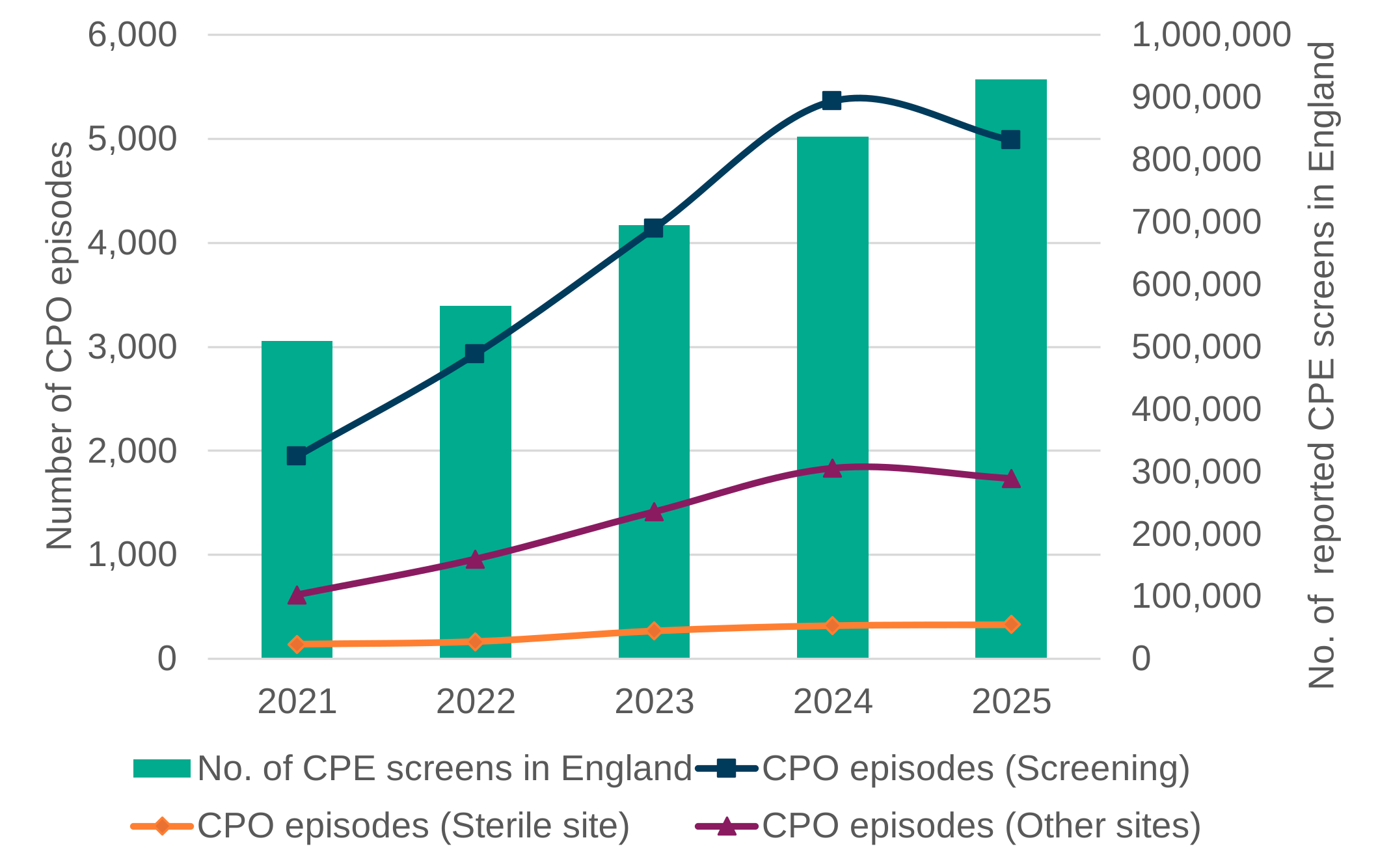
Whilst the proportion of CPO episodes by specimen type remained stable between 2021 and 2025, with 71.3% identified through screening samples, 4.5 % from sterile sites and 24.2% from other sample types, the absolute number of episodes increased across all categories up to 2024 (screening: 175.3% increase; sterile site: 131.7% increase; other sites: 198.4%). Between 2024 and 2025, sterile site CPOs marginally increased by 2.8% and CPO detection decreased for screening (7%) and other specimen sites (5.4%) (Figure 2.10). The number of reported quarterly mandatory laboratory returns (QMLR) for rectal swabs and faecal specimens taken for CPE screening in England reported by NHS acute trusts continued to rise steadily between 2021 (n = 375,515) and 2025 (n=929,029), suggesting a reduction in the proportion of specimens testing positive in 2025 compared with 2024.
Figure 2.10. Number of CPO episodes by specimen type and the reported number of carbapenemase-producing Enterobacterales screens performed nationally in England, 2021 to 2025
In 2025, New Delhi metallo-beta-lactamase (NDM) and Oxacillinase-48-like (OXA-48-like) were the predominant CPO mechanisms detected in England (39.1%, n=2,755 and 39.1%, n=2,756, respectively), followed by K. pneumoniae carbapenemase (KPC; 14.4%, n=1,018). The high proportion of NDM-producing organisms remains of clinical concern because these organisms are among the most resistant and challenging to treat, with extremely limited therapeutic options. Reported Verona Integron-Mediated Metallo-beta-lactamase (VIM) and Imipenemase Metallo-beta-lactamase (IMP) mechanisms remained rare (<10% of reported CPOs; 1.7%, n=123 and 5.5%, n=386, respectively). The proportion of episodes with multiple CPO mechanisms increased year-on-year, from 3.6% in 2021 to 7.3% in 2025.
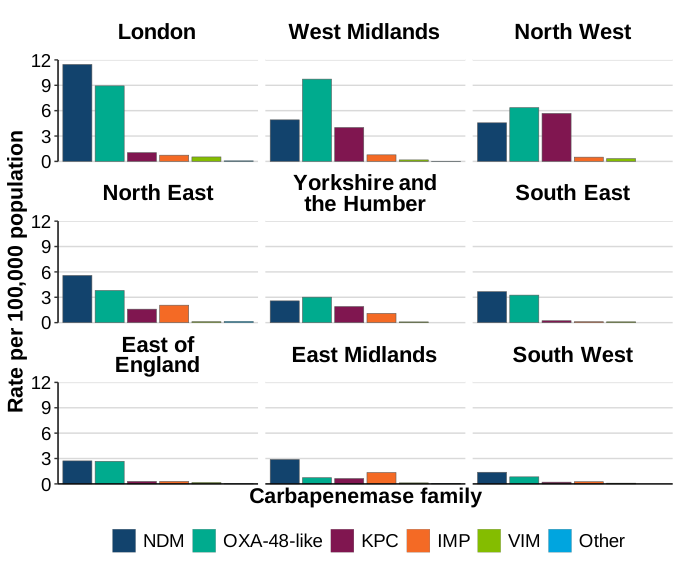
In 2025, the North West and London continued to report the highest number of CPOs, a trend observed since national reporting began. There continued to be marked regional variation in both the frequency and type of carbapenemases recorded (Figure 2.11 and Figure 2.12). Variation was even more pronounced at the integrated care board level (ICB), where a small number of ICBs reported substantially higher rates than surrounding areas. For example, the NHS North West London ICB reported 36.6 CPO episodes per 100,000 population, compared to 7.5 CPO episodes per 100,000 population for NHS South West London ICB. Variation in CPO burden at ICB level will have important implications for healthcare resource allocation. Recognising local variation can help target surveillance and infection prevention and control interventions, and support advocacy for resources commensurate with local burden, including screening programmes and antimicrobial treatment resources.
Differences in local or regional screening policies and the presence of regional foci, potentially related to prolonged outbreaks, are likely to influence these patterns.
Figure 2.11. Notifications per 100,000 population of acquired carbapenemase-producing Gram-negative bacteria by (a) region and (b) integrated care board, England, 2025
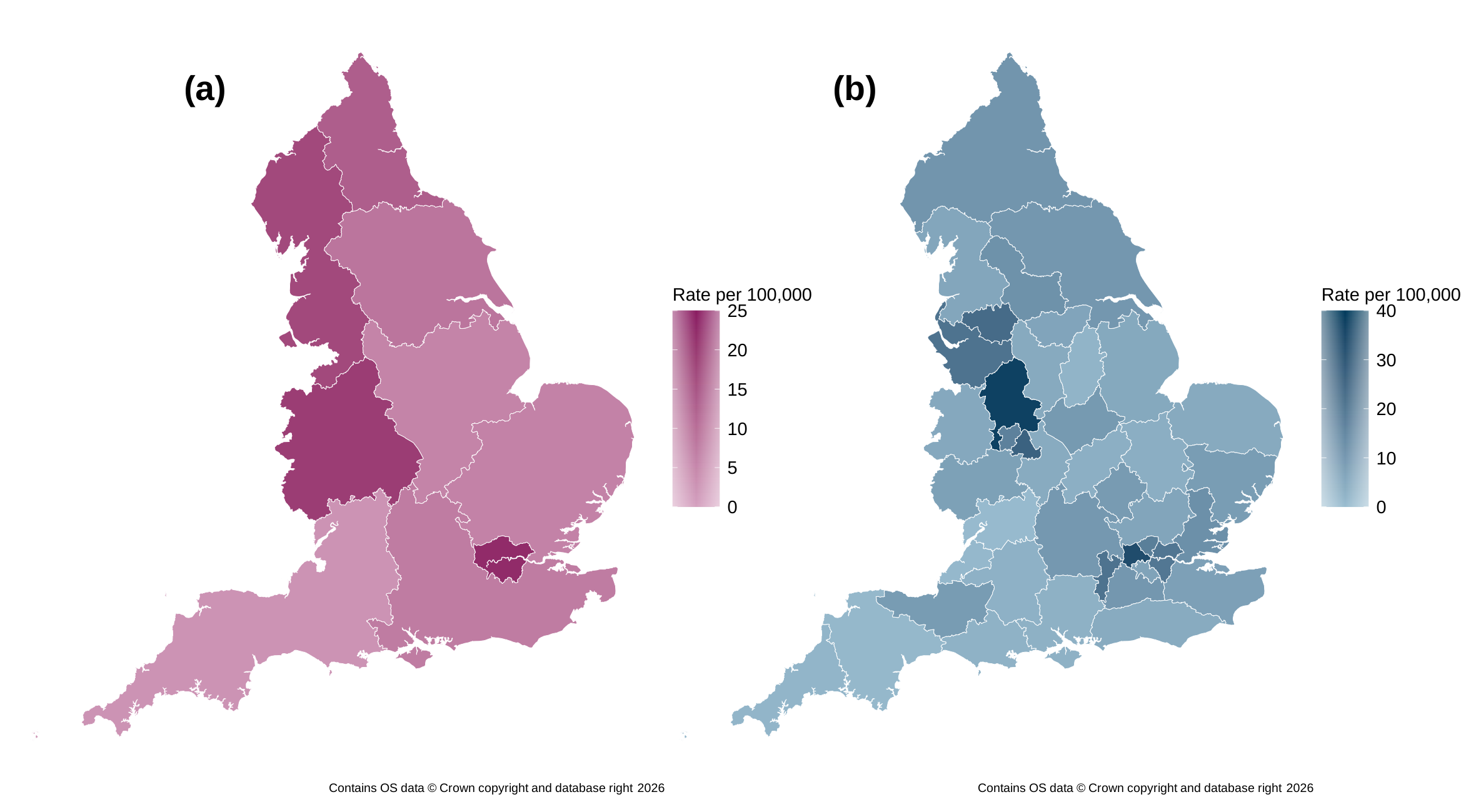
Figure 2.12. Regional notifications per 100,000 population of acquired carbapenemase-producing Gram-negative bacteria by carbapenemase family in England, 2025
In 2025, the overall rate for 30-day all-cause mortality in patients with a CPO (isolated from a sterile site specimen) was 21.2% (estimated number of deaths=62), compared to the 14.9% (est.=8,552) observed in selected Gram-negative AMR burden pathogens (isolated from a sterile site blood specimen; E. coli, K. pneumoniae, Pseudomonas spp., Acinetobacter spp.) mentioned in the previous section.
The increasing burden of CPO described in this chapter provides important clinical context for antimicrobial consumption trends presented in Chapter 3. This includes increasing use of the newer reserve antibiotics, ceftazidime-avibactam and cefiderocol, which are important treatment options for selected infections caused by carbapenemase-producing Enterobacterales and other multidrug-resistant Gram-negative bacteria. Further information on recently licensed antibiotics used within the NHS, including those in the Antimicrobial Product Subscription Model can be found in Chapter 3.
National AMR reference laboratory
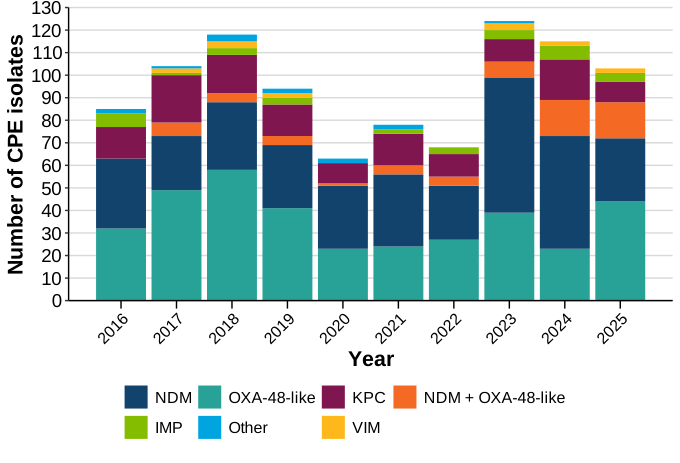
The Antimicrobial Resistance and Healthcare-Associated Infections (AMRHAI) Reference Unit screens all Enterobacterales sent for investigation of carbapenem resistance with a multiplex PCR targeting all carbapenemase gene families that have been identified amongst submissions. In 2025, 789 Enterobacterales isolates (103 of which were isolated from blood cultures) referred to the AMRHAI Reference Unit were confirmed as positive for at least one carbapenemase. The ‘big 5’ carbapenemase families (KPC, OXA-48-like, NDM, VIM and IMP) and combinations thereof, continue to dominate and account for >98% of carbapenemase-producing Enterobacterales (CPE) received. Of the referred carbapenemase-positive isolates in 2025, 12.5% harboured more than one carbapenemase gene, with NDM + OXA-48-like the most common combination detected (Figure 2.13a). In 2025, the proportion of CPE submissions originating from blood increased compared with 2024 (13.1% in 2025 compared with 10.1% in 2024) (Figure 2.13b). Data represented in the graph is available in the Chapter 2 data table accompanying this report.
In 2025, one blaKPC variant (blaKPC-74) that conferred resistance to ceftazidime/avibactam was identified by whole-genome sequencing in a K. pneumoniae isolate. The emergence of such ‘mutant’ KPCs variants is of concern as they may not be detected by some methods in use in diagnostic laboratories (particularly immunochromatographic tests) and highlight the importance of using a combination of tests for CPE screening (9). However, based on referrals to AMRHAI, ‘mutant’ KPC variants still appear to be rare in England. Laboratories are reminded to refer metallo-carbapenemase-negative isolates that are resistant to ceftazidime/avibactam (meropenem/vaborbactam and/or imipenem/relebactam) to AMRHAI for confirmation of resistance and further characterisation.
Non-‘big 5’ carbapenemase genes detected included blaIMI (n = 5), blaGES (n = 3) and blaOXA-23 (n = 1), highlighting the need to refer suspected carbapenemase-producing isolates negative for the ‘big 5’ families to AMRHAI for screening for rarer carbapenemase families.
Figure 2.13a. Number of confirmed CPE isolates referred to the UKHSA’s AMRHAI Reference Unit (excluding blood cultures), 2016 to 2025 [note1] [note2]
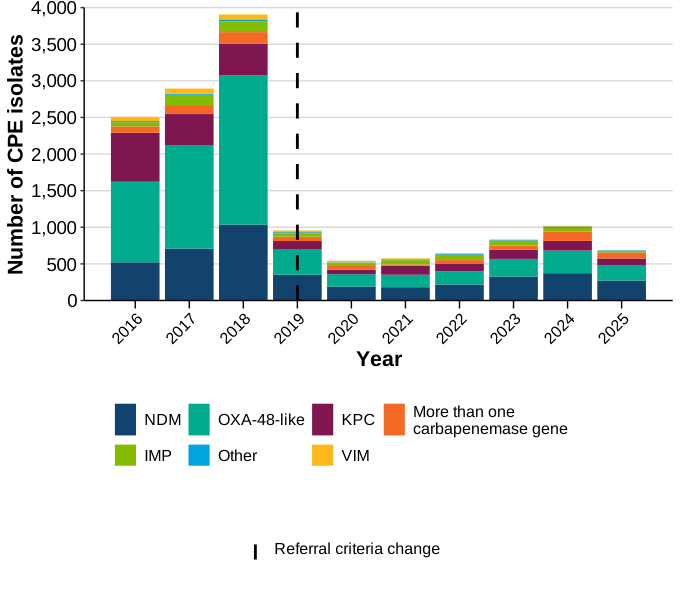
Note 1: Other includes FRI, GES, GIM, IMI, OXA-23 (in Enterobacterales) and SME.
Note 2: Following a change to the referral criteria in 2019, submission of confirmed CPE isolates representing colonisation to the AMRHAI Reference Unit was no longer encouraged.
Figure 2.13b Number of confirmed CPE blood culture isolates referred to the UKHSA’s AMRHAI Reference Unit, 2016 to 2025 [note 1]
Note 1: Other includes GES, IMI, SME, IMP + OXA-48, KPC + NDM and KPC + OXA-48.
For Pseudomonas spp., the metallo-carbapenemase enzymes NDM and VIM continue to dominate but other metallo-carbapenemase enzymes (IMP and DIM) as well as non-metallo carbapenemase families (GES and KPC) and isolates with 2 carbapenemase families have been identified (Table 2.2). Review the referral criteria for when to suspect an acquired carbapenemase in a Pseudomonas spp. isolate.
Table 2.2. Distribution of carbapenemase gene families amongst Pseudomonas spp. referred to the UKHSA’s AMRHAI Reference Unit from all sources, England, 2017 to 2025
| Year | VIM | IMP | NDM | GES | Other (number) |
|---|---|---|---|---|---|
| 2017 | 111 | 22 | 19 | 8 | DIM (1); OXA-48-like (2) |
| 2018 | 99 | 17 | 41 | 9 | DIM (2); KPC (3); OXA-48-like (2) |
| 2019 | 86 | 11 | 27 | 11 | DIM (1); KPC (1); OXA-48-like (1); SIM (1) |
| 2020 | 33 | 10 | 19 | 8 | DIM (2); KPC (1) |
| 2021 | 33 | 4 | 13 | 9 | - |
| 2022 | 21 | 19 | 18 | 8 | GIM (1), OXA-48-like (1) |
| 2023 | 35 | 5 | 25 | 5 | DIM (1); GIM (5); KPC (1) |
| 2024 | 24 | 5 | 31 | 8 | IMP + NDM (1); KPC + NDM (1); KPC + VIM (1); DIM (5); OXA-48-like (1) |
| 2025 | 13 | 5 | 27 | 5 | DIM (1); KPC (1); IMP + NDM (1); IMP + VIM (2) |
Gram-positive bacterial infections
Resistance trends in bacteraemia
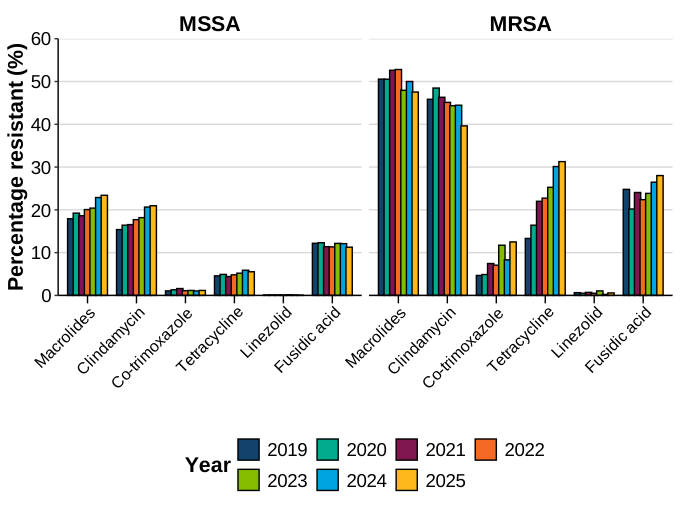
In 2025, methicillin-resistant S. aureus (MRSA) comprised 7.3% of the total S. aureus isolates from blood. As shown in Figure 2.14, resistance to a range of antibiotics was higher in MRSA compared with methicillin-susceptible S. aureus (MSSA).
Resistance to second line antibiotics continued to increase in bacteraemia caused by MSSA. Between 2019 and 2025, there was increased resistance to macrolides (17.9% to 23.4%), clindamycin (15.4% to 21.0%) and tetracycline (4.6% to 5.5%) (Figure 2.14). In MRSA bacteraemia (Figure 2.14), resistance to tetracycline more than doubled between 2019 and 2025 from 13.3% to 31.3%, whereas resistance to macrolides (47.5% resistance in 2025), and clindamycin (39.6%) remained high but stable.
Figure 2.14. Trends in resistance to specified antibiotics in methicillin-susceptible S. aureus (MSSA) and methicillin-resistant S. aureus (MRSA) bacteraemia, between 2019 and 2025, England [note1]
Note 1: The S. aureus data in this chart is based on voluntary reports of methicillin resistance. Further details on antibiotic class groupings can be found in the annexe (Table 2.1) accompanying this report.
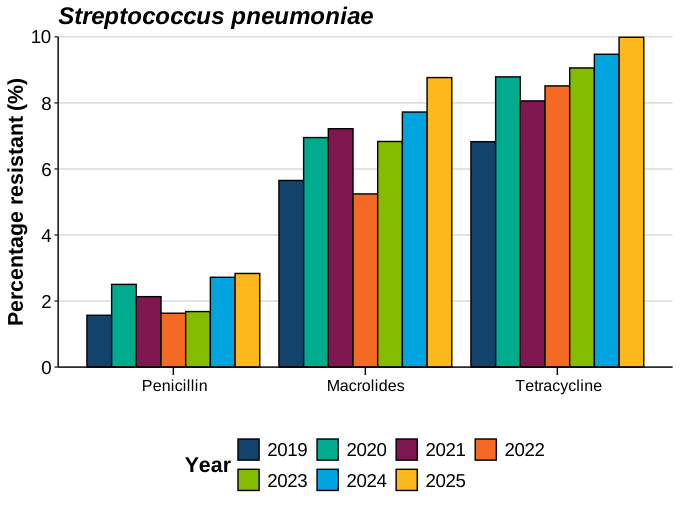
Data on the susceptibility of S. pneumoniae bacteraemia is shown in Figure 2.15. The percentage of isolates resistant to penicillin, tetracycline and macrolides increased between 2019 and 2025, from 1.6% to 2.8%, 6.8% to 10%, and 5.7% to 8.8%, respectively. Full 7-year trend tables are available in the Chapter 2 data tables accompanying this report.
Beta-lactam antibiotics remain the preferred treatment option for susceptible infections caused by Streptococcus spp. and MSSA. With resistance to macrolides, clindamycin and tetracyclines continuing to increase, optimising access to beta-lactam therapy is increasingly important. Penicillin allergy assessment and de-labelling, where appropriate, can improve access to first-line treatment and support antimicrobial stewardship by enabling the use of narrower spectrum and more efficacious agents.
Figure 2.15. Trends in resistance to specified in antibiotics in Streptococcus pneumoniae bacteraemia, England between 2019 and 2025
Enterococcus species
In 2025, E. faecium and E. faecalis were the predominant species causing enterococcal bacteraemia, responsible for 44.6% and 44.7% of cases, respectively. Overall, the reporting of both E. faecium and E. faecalis episodes increased from 2019 to 2025 by 27.3% and from 2024 to 2025 by 2.5%. The number of reported episodes for all Enterococci has increased by 21.1% between 2019 and 2025 (n = 7,624 to 9,230).
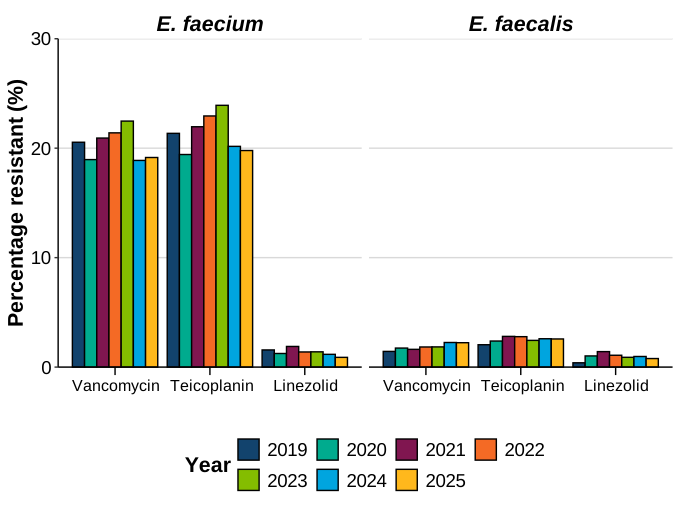
As seen in 2024, resistance in E. faecium to both teicoplanin and vancomycin remained below 2019 pre-pandemic levels in 2025, at 19.8% and 19.1%, respectively (Figure 2.16). Teicoplanin and vancomycin resistance in E. faecalis remained low in 2025 (<3%). The marked species-specific differences in glycopeptide resistance further highlight the potential value of rapid species identification from positive blood cultures to support early antimicrobial decision-making. Resistance to linezolid remained low, at 0.9% in E. faecium and 0.8% in E. faecalis in 2025.
Figure 2.16. Trends in resistance to specified antibiotics in Enterococcus faecium and Enterococcus faecalis bacteraemia, between 2019 and 2025, England
There are no EUCAST breakpoints for daptomycin for Enterococcus spp. Clinicians wishing to treat enterococcal bacteraemia or endocarditis with daptomycin should be aware of the uncertainties around testing (refer to the annexe). Daptomycin susceptibility testing results were reported in fewer than 7% of E. faecalis and E. faecium episodes in 2025, with ‘resistant’ results recorded for 2.1% and 2.5% in 2025, respectively. However, in the absence of defined EUCAST clinical breakpoints these figures should be interpreted with caution.
Laboratories are reminded to send isolates with exceptional antibiotic resistant phenotypes to the AMRHAI Reference Unit for confirmation. Further referral criteria and guidance on how to do this is available in the Bacteriology Reference Department user manual.
Antibacterial resistance in specialist areas
Surveillance of antibiotic resistance in Neisseria gonorrhoeae – PROVISIONAL DATA subject to change
Surveillance of antimicrobial resistance (AMR) in Neisseria gonorrhoeae is monitored through the Gonococcal Resistance to Antimicrobials Surveillance Programme (GRASP), which detects and monitors AMR in N. gonorrhoeae and records confirmed treatment failures. Trend data is derived from the national sentinel surveillance system, which collects gonococcal isolates from consecutive patients attending a network of 26 participating sexual health services (SHSs) (24 in England, 2 in Wales) over a 2-to-3-month period each year. Gonococcal isolates are referred to the UKHSA national STI reference laboratory (STIRL) for antimicrobial susceptibility testing and whole-genome sequencing, and the results are linked to patient demographic, clinical and behavioural data for analysis of antimicrobial susceptibility trends in patient sub-groups.
Ceftriaxone is an extended-spectrum cephalosporin (ESC) that is currently recommended in the UK as the first-line therapy for gonorrhoea (1g IM monotherapy). ESCs are among the few licensed antimicrobials that can be effectively used as first-line monotherapy for gonorrhoea. Three cases of ceftriaxone resistance (determined either by phenotypic or genotypic methods) were detected in 2025 yielding a prevalence estimate of 0.2%. All 3 cases carried the mosaic penA-60.001 allele commonly associated with ceftriaxone resistance originating in the Asia Pacific region, where ceftriaxone resistance is widespread. The frequency of ceftriaxone-resistant cases reported outside of the programme has continued to increase with 20 cases reported in 2026 (to the end of July), 29 in 2025 and 13 in 2024. Approximately a third of all cases to date are considered extensively drug-resistant (XDR) with resistance to both first- and second-line treatment options and to other antibiotics. Most cases continue to have travel links with the Asia-Pacific region, which has been shown to have the highest prevalence of ceftriaxone-resistant N. gonorrhoeae globally. However, as some cases appear to have acquired infection within the UK and as not all partners could be contacted, undetected transmission within England is possible.
Figure 2.17. Percentage of N. gonorrhoeae isolates in the GRASP sentinel surveillance system that was resistant to selected antimicrobials, England and Wales, 2016 to 2025 [notes]
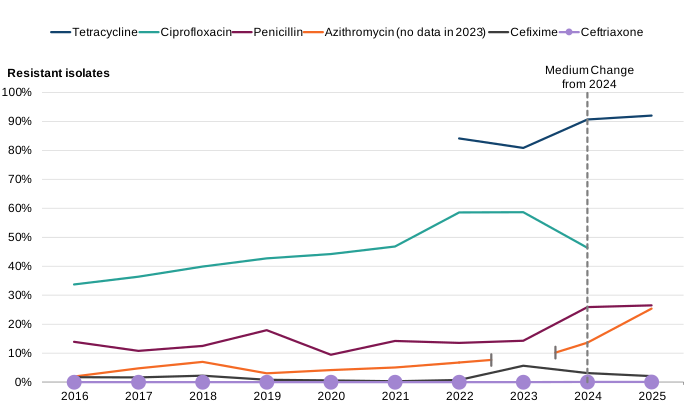
Note 1: Due to changes to the medium used to test antimicrobial susceptibility from 2024 onwards, comparing MIC values before and after this media change should be done with caution (Appendix 1). Point of change in medium is indicated by the vertical dashed black line.
Azithromycin data for 2023 has not been presented due to a laboratory technical issue as indicated by the break in the trend line.
In 2023, EUCAST updated the resistance breakpoint for tetracycline against N. gonorrhoeae from 1 mg/L to 0.5 mg/L. Breakpoint plates at 0.5 mg/L were introduced in 2022. Therefore, no data for this breakpoint is available prior to 2022.
Ciprofloxacin resistance in 2024 and 2025 was predicted using a subset of data where WGS results were available (99.4% of isolates in 2025).
Figure 2.17 describes the trends in tetracycline, ciprofloxacin, penicillin, azithromycin, cefixime and ceftriaxone resistance. Tetracycline resistance (MIC >0.5 mg/L) is high with nearly all isolates (92%) considered resistant. Notably, the prevalence of high-level plasmid-mediated tetracycline resistance (MIC >8 mg/L) increased to 39.3%, approximately twice that observed in 2023, which was supported by the expansion of lineages with high tetM prevalence and increasing tetM carriage within established lineages.
A quarter of isolates (26.4%) are penicillin-resistant (MIC >1 mg/L). Ciprofloxacin resistance was inferred from genomic data and increased to 51.6% in 2025.
Reduced susceptibility to azithromycin nearly doubled in the past year to 25.5% in 2025, mainly due to an increase in isolates with an MIC of 2 mg/L, only one doubling dilution above the epidemiological cut-off value (ECOFF) (MIC >1 mg/L).
Cefixime resistance has continued to decrease from a peak of 5.6% in 2023 to 2.1% in 2025. Nearly all resistant isolates carried mosaic penA alleles, consistent with the role of mosaic PBP2 in cefixime resistance.
Antimicrobial susceptibility testing for gepotidacin and zoliflodacin have been included for the first time. The modal MIC was low at 0.5 mg/L for gepotidacin and none were above the ECOFF (MIC >2 mg/L). The modal MIC was also low for zoliflodacin at 0.06 mg/L, and none were above a tentative breakpoint of >0.25 mg/L.
Prescribing data collected through the sentinel surveillance system demonstrates excellent compliance with the UK guidelines, with 98.1% of individuals receiving the recommended first-line therapy of ceftriaxone 1g IM monotherapy. Health practitioners are encouraged to continue reporting all possible cases of ceftriaxone treatment failure to UKHSA via the HIV and STI Data Exchange.
Further AMR in N. gonorrhoeae data as well as whole genome sequencing data is available online in the GRASP report.
Surveillance of antibiotic resistance in Mycoplasma genitalium
Mycoplasma genitalium is a sexually transmitted pathogen of public health concern due to antimicrobial resistance to the recommended first- and second-line treatments, azithromycin (a macrolide) and moxifloxacin (a fluoroquinolone).
The UKHSA M. genitalium Antimicrobial Resistance Surveillance (MARS) Programme monitors annual trends in macrolide and fluoroquinolone resistance in England and examines the distribution of key demographic factors such as gender identity, sexual orientation, and age. Pilot collections were conducted in 2019 and 2020, and MARS was launched as an annual programme in 2023
Full details of MARS methodology are available in the protocol (10). Briefly, M. genitalium specimens collected at sentinel sexual health services across England are tested for molecular markers predictive of macrolide and fluoroquinolone resistance. Resistance data is combined with demographic and behavioural data collected as part of routine surveillance from GUMCAD.
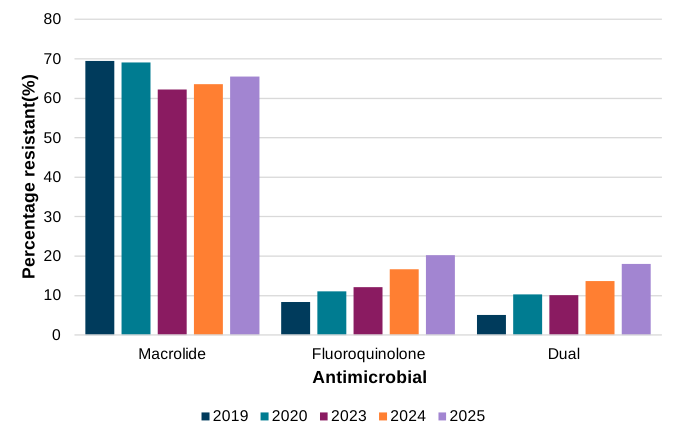
In MARS 2025, 65.5% (n=431/658) of sequenced specimens had mutations predictive of macrolide resistance, and 20.2% (n=127/628) had mutations associated with fluoroquinolone resistance. Dual resistance, defined as the presence of both macrolide- and fluoroquinolone- resistance-associated mutations, was identified in 18% (n=112/621) of specimens.
Figure 2.18 presents annual resistance trends across five years of MARS data. Macrolide resistance remains widespread and has increased steadily since 2023. Fluoroquinolone resistance has shown a more marked rise, more than doubling from 8.4% in 2019. The prevalence of dual resistance has also increased from 13.7% in 2024, largely driven by the rise in fluoroquinolone resistance.
The complete results from the 2025 MARS Programme are available online in the (11).
Figure 2.18. The percentage of M. genitalium specimens with molecular markers predictive of macrolide, fluoroquinolone, and dual resistance in the MARS pilots (2019 and 2020), MARS 2023, 2024, and 2025
Surveillance of antibiotic resistance in Mycoplasma pneumoniae
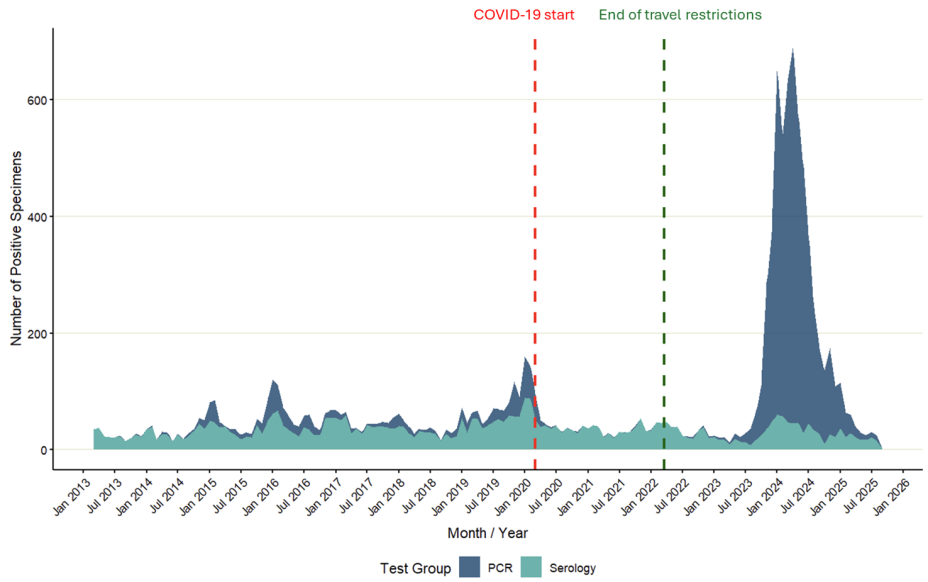
Mycoplasma pneumoniae is a common cause of respiratory infection and atypical pneumonia, particularly in children, and can occasionally result in severe disease and neurological complications. Epidemics typically occur in cyclical patterns every 4 to 7 years (12) and following a period of low activity during the COVID-19 pandemic, laboratory-confirmed infections increased substantially in 2024, consistent with the expected epidemic cycle. This resurgence was associated with increased hospital admissions and mirrored increases reported globally (13).
M. pneumoniae is not detected by routine bacterial culture and diagnosis increasingly relies on molecular methods. The proportion of samples tested by PCR increased from 26% before the pandemic, to 82% after 2022, largely replacing serology as the principal diagnostic method. Interpretation of long-term trends should therefore be undertaken with caution.
Figure 2.19: Laboratory-confirmed M. pneumoniae specimens by test method (PCR and serology) from 1 March 2013 to 1 September 2025 within England
When antimicrobial treatment is required, macrolides remain the first-line treatment option for M. pneumoniae infection in both adults and children. Macrolide resistance testing is undertaken by the Respiratory and Vaccine Preventable Bacteria Reference Unit (RVPBRU), using PCR confirmation and sequencing to detect macrolide resistance-associated mutations. Resistance testing increased substantially during the post-pandemic period, with 2,454 samples tested compared with 136 before the pandemic and 17 during the pandemic period.
Following the national resurgence of M. pneumoniae activity in late 2023, UKHSA implemented enhanced surveillance, including a temporary request for referral of all PCR-positive samples for macrolide resistance testing. As a result, a substantially greater proportion of laboratory-confirmed cases underwent resistance testing (37.7% compared with 8.2% before the pandemic) while increased use of PCR-based diagnostics further expanded the number of specimens available for resistance testing. The demographic profile of tested patients also changed, with the median age decreasing from 26 years (IQR: 9-40) before the pandemic to 12 years (IQR: 6-34) post-pandemic period more closely reflecting the recognised epidemiology of M. pneumoniae infection.
Over this time, the proportion of tested samples demonstrating macrolide resistance increased from 1.5% before the pandemic to 3.6% after the pandemic. However, this apparent increase, should be interpreted in the context of substantial changes in surveillance and diagnostic methods. Nevertheless, resistance remained uncommon and macrolides continue to be an effective first-line treatment for M. pneumoniae when required.
Surveillance of antibiotic resistance in Mycobacterium tuberculosis infections
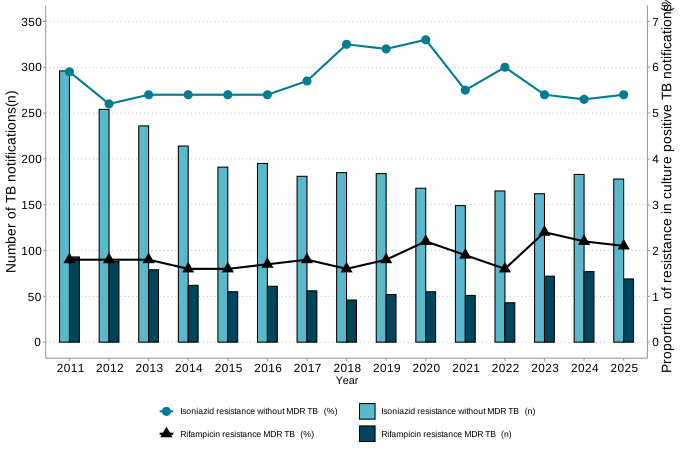
The number of tuberculosis (TB) disease notifications has increased since the peak-pandemic year of 2020, a rebound effect seen globally (World Health Organization Global TB report 2023). This year the numbers have stabilized, though still higher than 2020. England remains a low TB incidence country (notification rate less than 10 per 100,000 population) with a low incidence of multidrug-resistant (MDR) TB. After two years of slight increases in MDR numbers, both numbers and rates have stabilised this year. MDR/rifampicin resistant (RR) TB is defined here as TB resistant to both INH and rifampicin, or to rifampicin alone. Since 2011, MDR/ RR-TB has been diagnosed in under 2% of culture-positive notifications apart from 2020 and 2023 to2025, with the peak observed in 2023 at 2.4%. followed by 2.2% in 2024 and 2.1% in 2025 (corresponding to 72,76 and 69 people), respectively. This compares with 43 people in 2022, the largest year on year increase observed over this period and similar to numbers reported pre-2014 (Figure 2.20). Included in these numbers are people with acquired drug-resistant strains after initially having tested sensitive at diagnosis. Numbers and proportions of acquired drug resistance are low and have decreased in recent years. In 2024 and 2025, only one person acquired multi-drug resistance post diagnosis each year. Outcomes for patients with MDR TB are worse than for drug sensitive disease. The drugs used for treatment of MDR TB are often poorly tolerated and patients need careful monitoring because of toxicity. More detail on trends in drug resistance and treatment outcomes of MDR TB is presented in the most recent ‘Tuberculosis in England’ annual report, and official statistics.
Figure 2.20. Number and proportion of culture-confirmed notifications of people with drug-resistant Mycobacterium tuberculosis, England, 2011 to 2025
Critical antibiotic resistance in foodborne bacteria
UKHSA’s Gastrointestinal Bacteria Reference Unit routinely performs whole genome sequencing (WGS) on referred isolates of foodborne or zoonotic bacteria cultures from cases with gastroenteritis or bacteraemia. Overall, 10,249 isolates of Salmonella spp., 2,980 of Shiga toxin-producing E. coli (STEC) and 1,156 Campylobacter spp. from England underwent WGS and were reported for AMR genotyping assessment in 2025. The vast majority of these were isolated from humans (Salmonella spp. n = 10,027/10,249, 98%; STEC n = 2,944/2,980, 99%; Campylobacter spp. n = 707/1,156, 61%). Details on methodology can be found in the annexe.
In 2025, there were no genes encoding carbapenemases detected in STEC. There was one blaOXA-48 reported in Salmonella Wangata.
Mobile resistance genes conferring resistance to colistin (specifically mcr-1 and mcr-9) were found in isolates from STEC (n = 1 (mcr-9.1)) and Salmonella spp. (n = 13) cases. One isolate each of S. Chester and S. Typhimurium had mcr-1.1, and the mcr-9 variant was detected in one isolate each of S. Kentucky and S. Typhimurium Monophasic. S. Strathcona (n=5), S. Thompson (n=1), S. Kottbus (n=1), S. Montevideo (n=1) and S. Typhimurium Monophasic (n=1) all harboured mcr-9.1. Current literature does not support mcr variant 9.1 alone conferring phenotypic resistance to colistin (14).
Tetracycline resistance, specifically variants of the gene tet(X) were found in isolates from Salmonella spp. (n=18) cases, including serovars S. Kentucky (n=10), followed by S. Agona (n=3), S. Typhimurium monophasic (n=2), and S. Java (n=1), S. Stanley (n=1) S. Typhimurium (n=1). The tet(X) genes confer resistance to tetracyclines, including resistance to tigecycline, eravacycline and omadacycline, which are drugs often used in last-line regimes to treat infection caused by multidrug-resistant strains.
Overall, the frequency of critical resistance genes in foodborne bacteria in 2025 remains in line with detections from recent years.
Most foodborne bacteria cause self-limiting gastroenteritis, and antibiotics are rarely necessary. If treatment is required, first line treatment options remain available for most infections. However, there is growing concern that resistance genes encoded on mobile genetic elements can be transferred from foodborne pathogens to healthy gut bacteria in the human host, prior to the foodborne bacteria being cleared. Acquisition of resistance genes such as tet(X) or mcr by commensal bacteria that escape the gut and cause extraintestinal infections, could significantly reduce effective treatment options.
Thorough cooking of food to piping hot temperatures and maintaining good kitchen hygiene is one way of reducing the acquisition of foodborne infections (15, 16). Note: In the 2024 to 2025 ESPAUR report, 2 OXA-48 were reported in Salmonella Kentucky. These detections should have been reported in Salmonella Agona.
Antifungal resistance
Trends in incidence and antifungal resistance
The incidence of fungaemia (fungal bloodstream infection) was 4.1 per 100,000 population (n = 2,408) in 2025, and has increased year on year since 2019, with an overall increase of 32.4% since 2019 (3.1 per 100,000, n = 1,744). This is likely due to a combination of factors, including changing patient demographics, increases in at-risk patients (for example, immunocompromised patients), and improved detection and reporting. Candida albicans was the most frequently isolated yeast species across this time-period followed by Nakaseomyces glabratus (formerly Candida glabrata), accounting for 40% and 29% of fungaemia episodes, in 2025 respectively. Additional data on regional fungaemia incidence can be found in the ‘Laboratory surveillance of fungaemia in England: 2025 Health Protection Report’.
Routine laboratory surveillance reports submitted to the UKHSA’s SGSS showed that in 2025, 96.1% (2,315 out of 2,408) of yeasts isolated from blood were subjected to susceptibility testing. This section will focus on susceptibility testing results for amphotericin B, caspofungin and fluconazole to represent 3 classes of antifungal drug used in clinical practice (see Figure 2.21). Further detailed trend data, including numbers reported as susceptible or resistant, is available in the data tables accompanying the 2025 Fungaemia Health Protection Report (HPR). Supplementary analyses on fungaemia cases are available in the Chapter 2 annexe, which further outlines the rates of yeast isolated from blood cultures and regional breakdowns.
Figure 2.21. Percentage of a) C. albicans b) N. glabratus and c) C. parapsilosis isolates from blood displaying resistance to antifungals in England, 2019 and 2025
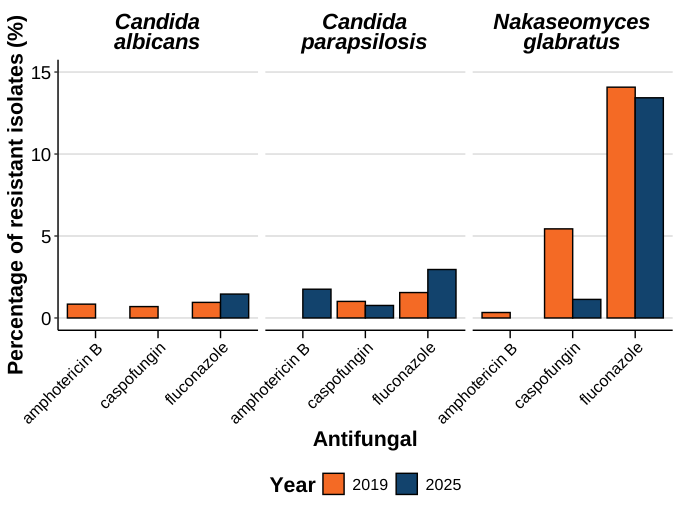
Figure 2.21 depicts the percentage of isolates resistant to 3 antifungals, comparing 2025 with 2019, for C. albicans, N. glabratus and C. parapsilosis. Percentages are based on isolates tested against the relevant antifungal agent. Denominators therefore vary by species, antifungal agent and year. In 2025, resistance to fluconazole was detected in 1.5% of C. albicans, 13.4% of N. glabratus and 3% of C. parapsilosis isolates. No resistance was detected to amphotericin B in C. albicans and N. glabratus in 2025 and in C. parapsilosis in 2019. No resistance was detected to caspofungin in C. albicans in 2025.
Candidozyma auris
Candidozyma auris (formerly Candida auris) is an emerging fungal pathogen with a global distribution. Designated a critical priority fungal pathogen by the World Health Organization (WHO), C. auris can cause severe invasive infection, mostly within healthcare settings. Resistance to the first-line antifungal agent fluconazole, combined with the ability to rapidly acquire resistance to other antifungal agents whilst on therapy, complicates the management of invasive disease. In non-UK settings, invasive disease has been associated with significant mortality. C. auris has high outbreak potential due to its propensity to colonise skin and survive in the environment for prolonged periods, allowing for rapid transmission within healthcare settings. C. auris healthcare-associated outbreaks can be disruptive, protracted and costly.
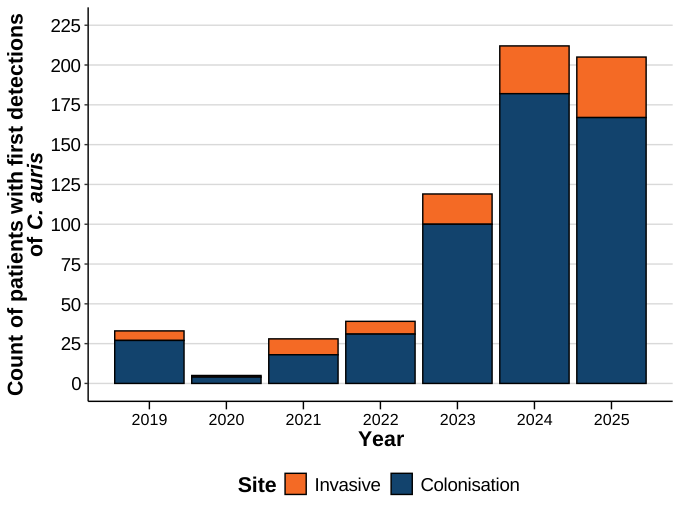
Following a period of significantly decreased C. auris detection in 2020 during the COVID-19 pandemic, cases increased year-on-year from 2020 to 2024 and decreased slightly in 2025 (Figure 2.22). Most detections of C. auris represent colonisation rather than infection (though colonisations can increase the risk of subsequent infections). Data from the UKHSA Mycology Reference Laboratory (MRL) indicates that fewer than 5% of C. auris isolates circulating in the UK are resistant to 2 or more antifungal classes and to date no pan-resistant isolates have been encountered.
In the years 2020 to 2025, 10 outbreaks have been reported in NHS hospitals located in London and the South-East of England, including 2 protracted outbreaks lasting longer than 6 months. These regions accounted for the majority of C. auris detections in England. In 2025, 213 patients were reported to the UKHSA with first detections of C. auris, of whom 38 (18%) had invasive infections. Of all cases in this time period, 60% (127/213 cases) were known to be associated with declared outbreaks.
Figure 2.22. Number of patients with first detections of C. auris in England, 2019 to 2025
The UKHSA published a briefing note to the healthcare system in January 2025 to alert to increasing incidence and outbreaks of C. auris in England. UKHSA manages public health emergencies as incidents (17). The level of incident (routine, standard, enhanced or severe) describes the severity of the incident and how the organisation will respond. In response to increasing case detections and outbreaks, UKHSA declared C. auris a national standard incident from February to September 2025. A multi-agency incident management team was established to coordinate the response, working with NHS organisations and partners to implement interventions to reduce risks to patients and limit transmission. Guidance for the laboratory investigation, management, and infection prevention and control of C. auris in acute and community healthcare settings was updated and published by UKHSA in 2025 (18). The guidance revised screening recommendations to include patients who have had an overnight stay in a healthcare facility outside the UK and patients coming from affected units within the UK. The UKHSA issued a briefing note to the healthcare system to highlight the publication of the updated guidance in March 2025 and further publicised the publication through a webinar held in partnership with the Healthcare Infection Society.
From September 2025, UKHSA began issuing monthly situational awareness reports to NHS and Independent healthcare provider organisations, outlining the number of cases and any outbreaks by hospital site to aid local risk assessment. In April 2025, C. auris was classified as a notifiable organism under Schedule 2 of the Health Protection (Notification) Regulations 2010. Further detail of C. auris epidemiology in England can be found in routine C. auris epidemiological commentaries which are published by UKHSA every 6 months.
Antiviral resistance
Influenza virus
During the 2025 to 2026 influenza season (week 40 2025 to week 20 2026) more than 1,900 viruses, representing 60% of all positive detections, were screened by whole genome sequencing (WGS) for antiviral susceptibility.
Overall, resistance-associated mutations were uncommon. Among 275 influenza A(H1N1)pdm09 (pandemic H1N1) and 1,611 influenza A(H3N2) viruses analysed, 15 (0.79%) carried neuraminidase (NA) mutations associated with reduced inhibition (RI) or highly reduced inhibition (HRI) to neuraminidase inhibitors (NAI), and 5 (0.26%) carried polymerase acidic (PA) gene mutations linked to reduced susceptibility to baloxavir marboxil. No known markers of resistance to NAIs or baloxavir marboxil were identified among 38 influenza B (Victoria lineage) viruses analysed.
Two A(H3N2) viruses carrying the E119V neuraminidase mutation, associated with markedly reduced susceptibility to oseltamivir, were identified. One was detected in serial samples from a child not known to have received antiviral treatment, where the proportion of resistant virus fluctuated markedly over time, and the other was detected in an immunosuppressed child following oseltamivir exposure.
Among influenza A(H1N1)pdm09 viruses, the H275Y mutation, known to confer highly reduced susceptibility to oseltamivir, was identified in serial samples from an immunosuppressed child receiving oseltamivir treatment, with the proportion of resistant virus increasing from 77% at initial detection to almost complete dominance within 8 days. A further H275Y virus was detected in an adult with an underlying condition who had also received oseltamivir treatment.
Two viruses carrying both H275Y and S247N substitution were detected in patients with underlying conditions who had received neuraminidase inhibitor treatment. The combination of S247N and H275Y substitutions has been shown to increase in vitro resistance by 5- to 10-fold compared with H275Y alone, but the clinical impact of this major shift remains uncertain (19).
An increased frequency of influenza A(H1N1)pdm09 viruses with an S247N substitution in NA has been observed since mid-2025 in some countries in Europe (20). In England during the 2025 to 2026 respiratory virus season, the NA S247N mutation was detected in the majority of A(H1N1)pdm09 viruses analysed (158/275; 57%). The presence of the single substitution NA-S247N is associated with lower susceptibility to oseltamivir in vitro, although still within the normal inhibition range, and the clinical relevance is unknown (21). There were no detections of the dual substitutions I223V and S247N in A(H1N1)pdm09 viruses previously associated with reduced susceptibility to NAI (22).
Mutations associated with reduced susceptibility to baloxavir marboxil were detected infrequently (0.26%). One A(H1N1)pdm09 virus with PA-I38T was detected in a patient from secondary care surveillance known to have received baloxavir marboxil treatment. Three A(H3N2) viruses carried PA-I38L and one carried PA-E198K – all were detected in patients with no known antiviral exposure.
These substitutions (PA-I38T, PA-I38L and PA-E198K) are associated with a range of reduced susceptibilities to baloxavir marboxil. Evidence is strongest for PA-I38T, which has been detected from patients following baloxavir treatment, whereas the clinical significance of PA-I38L and PA-E198K remains uncertain (23). Similar to previous observations, the majority of detections of A(H1N1)pdm09 viruses with H275Y or H275Y plus S247N were from immunocompromised individuals during NAI treatment. This highlights the potential for resistant variants to arise in these patient groups during prolonged infection and underscores the importance of ongoing surveillance and consideration of alternative antiviral therapies when viral replication persists despite treatment.
Recent global analysis of season 2024 to 2025, noted an elevated frequency of the H275Y mutation in A(H1N1)pdm09 viruses conferring RI/HRI to oseltamivir, particularly in regions with predominant circulation of A(H1N1)pdm09 (24). Despite this, antiviral resistance remains uncommon globally, with the vast majority of seasonal influenza viruses retaining susceptibility to neuraminidase inhibitors and baloxavir (23).
Intravenous and inhaled zanamivir is available for use in the UK in specific clinical contexts. Baloxavir, which inhibits the influenza virus polymerase acidic (PA) protein, has regulatory approval, with scope for use in specific clinical contexts including against NAI resistant viruses, though is not currently widely used outside of clinical trials. The UKHSA national antiviral guidance for seasonal influenza has been recently revised with publication earlier this year (Guidance on use of antiviral agents for the treatment and prophylaxis of seasonal influenza).
Further information on influenza virus trends and antiviral resistance testing for the 2025 to 2026 season can be found in the annual report. Influenza in the UK, annual epidemiological reports.
Human immunodeficiency virus (HIV)
HIV sequences generated as part of routine clinical care are collected by the UK HIV Genomics Database at UKHSA. The data used for this report comes from 2 UKHSA and 3 NHS laboratories for the period 2021 to 2025.
HIV drug resistance in drug-naïve individuals (transmitted drug resistance)
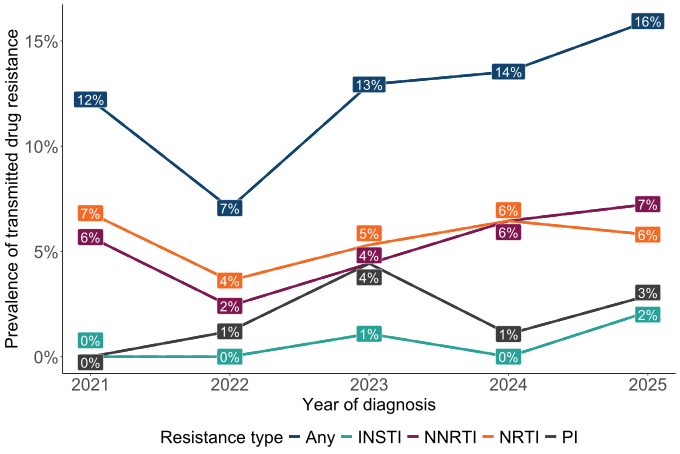
Transmitted drug resistance was determined by the presence of resistance in the HIV sequences of people with an antibody avidity test indicating recent acquisition, and where the HIV sequence was in a sample collected within 90 days of diagnosis. In total, 456 drug-naïve individuals were included.
Overall, there was an increase in drug-resistance over time, at 12% in 2021 and 16% in 2025, although with some fluctuation (Figure 2.23). This was driven by slight increases in resistance to protease inhibitors (PI), with a prevalence increasing from 0% to 3%, and to Integrase strand transfer inhibitors (INSTI), with a prevalence increasing from 0% to 2%. However, the absolute number of individuals with PI or INSTI resistance was very low and resistance remained rare at ≤3%. These apparent changes may therefore reflect random variation, but continued surveillance is needed. There was a stable prevalence of resistance to nucleos(t)ide reverse transcriptase inhibitors (NRTIs) at 7% in 2021 and 6% in 2025, and to non-nucleoside reverse transcriptase inhibitors (NNRTI) at 6% in 2021 and 7% in 2025.
Figure 2.23. The prevalence of transmitted HIV drug resistance, 2021 to 2025
Source: Antiviral Unit, UKHSA
HIV drug resistance in drug-experienced individuals (acquired drug resistance)
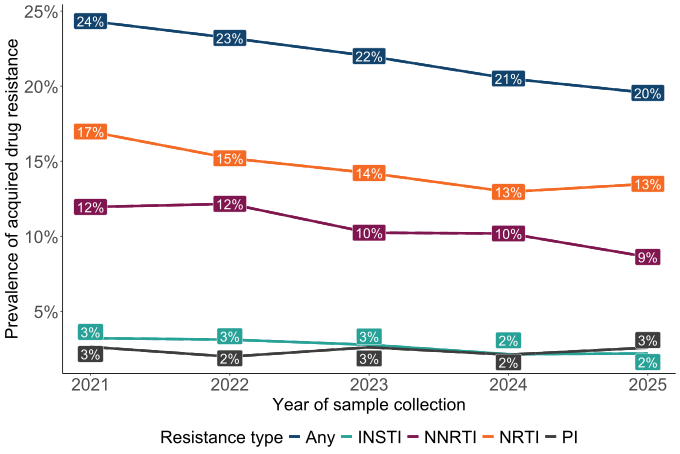
Acquired drug resistance was determined by the presence of resistance in the HIV sequence of people whose sample was collected at least 90 days after initiation of antiretroviral therapy. Individuals were included for each year in which they were sampled, but only once per year, for the period 2021 to 2025 (n=7,763).
Overall, drug resistance declined from 24% to 20%, predominantly driven by a fall in NRTI resistance from 17% to 13% and in NNRTI resistance from 12% to 9% (Figure 2.24). By contrast, the prevalence of INSTI and PI resistance remained consistently rare at between 2% and 3% throughout the period.
Figure 2.24. The prevalence of acquired HIV drug resistance, 2021 to 2025
Source: Antiviral Unit, UKHSA
Hepatitis C virus (HCV)
Since October 2024, UKHSA has undertaken national HCV genomic surveillance using whole genome sequencing (WGS) of residual samples collected through routine care to support HCV elimination goals and monitor antiviral drug resistance, transmission networks and viral subtype distribution. HCV genomic data generated through this surveillance programme in 2025 were used to assess resistance to the 3 major classes of direct-acting antiviral (DAA) drugs used to treat HCV infection: NS3 protease inhibitors, NS5A inhibitors and NS5B polymerase inhibitors.
A total of 1,554 HCV sequences from 56 hospitals in England were included in the analysis, comprising 1,461 epidemic subtype infections and 93 endemic subtype infections. Epidemic subtypes (1a, 1b, 2a, 2b, 3a and 4d ) are globally prevalent and account for the majority of HCV infections in the UK, whereas endemic subtypes are less common in the UK and are typically associated with specific geographical regions such as sub-Saharan Africa or Asia.
As direct-acting antiviral (DAA) therapy achieves cure rates exceeding 90%, most sequences included in this analysis are likely to have been generated from samples collected before treatment initiation. However, some sequences may have originated from patients who had experienced DAA treatment failure and may therefore have been more likely to harbour resistance-associated mutations.
Resistance to NS3 inhibitors was detected at low levels in both epidemic and endemic subtypes and is unlikely to have significant clinical impact given the effectiveness of current HCV treatments. Resistance to NS5A inhibitors was more prevalent in endemic than epidemic subtypes (36.9% versus 15.9%), although current HCV treatments can usually overcome this inherent resistance. Resistance to NS5B inhibitors remained low in both subtype groups (<7%), indicating no significant clinical impact of resistance to this drug class.
Figure 2.25. The prevalence of resistance to Hepatitis C virus Direct Acting Antiviral drug classes in samples received from 56 hospitals in England 2025
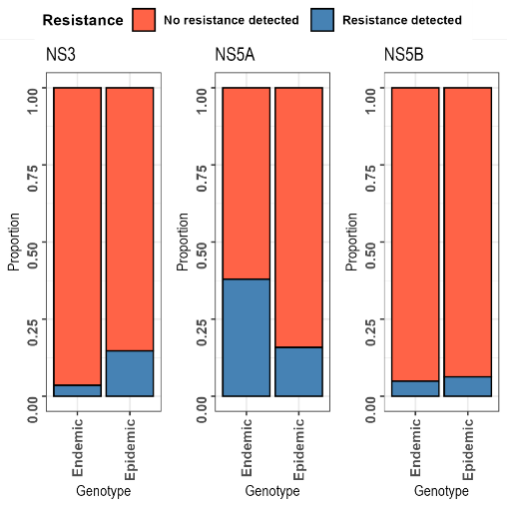
Antiparasitic resistance
Malaria
In 2025, 1,629 cases of imported malaria (all species) were reported to the UK MRL. The overwhelming majority were due to Plasmodium falciparum which causes the most clinically severe infection among the 5 Plasmodium species that infect humans and also accounts for the vast majority of drug-resistant malaria parasites.
In the UK, clinical management of uncomplicated P. falciparum malaria is with oral artemisinin-based combination therapies (ACT). Since their introduction from 2004, the efficacy of ACT in sub-Saharan Africa has remained high. In south-east Asia, however, waning efficacy of ACT, characterised by slow parasite clearance after treatment, has been reported since 2008 (25). This is associated with certain mutations in the propeller domain of the P. falciparum kelch protein K13, which have now emerged independently in Africa (26).
The Malaria Reference Laboratory (MRL) has been routinely monitoring reports of ACT treatment failure in UK travellers since 2016 (27). As of May 2026, 50 P. falciparum isolates of African origin have been evaluated for in vitro susceptibility to artemisinin, lumefantrine and chloroquine (28). Of these, a handful carried propeller domain mutations in the pfk13 locus (Table 2.3).
Table 2.3. Variants in pfk13 locus identified by year and country of travel
| Variants | Country of travel | Year |
|---|---|---|
| A446I | Kenya | 2022 |
| A675V | Uganda (2 isolates) | 2022 |
| N458D | Côte d’Ivoire | 2023 |
| N458D | Uganda | 2023 |
| P443S | Namibia | 2023 |
| sC469Y | Uganda | 2024 |
We had previously reported on an additional 2022 isolate, also of Ugandan origin, derived from a UK patient with post-artemether-lumefantrine P. falciparum recrudescence. This parasite line, HL2208, did not harbour a pfk13 propeller domain mutation but showed equally significant reduction in susceptibility to both artemisinin and lumefantrine (29). The emergence of lumefantrine resistance in concert with the recently described increase in pfk13 variants, poses a potential threat to therapeutic management of falciparum malaria in travellers returning from East Africa, and Uganda in particular. It is assumed that mutations at additional parasite loci underly this reduced lumefantrine efficacy, but these are yet to be identified. Overall, however, artemether-lumefantrine (Riamet®) retains good efficacy against the overwhelming majority of imported falciparum malaria infections in the UK. To cover those instances where treatment failure (recrudescence) in falciparum malaria occurs, the UKHSA Malaria Expert Advisory Group (MEAG, formerly known as ACMP) has published guidance on alternative ACT for use whilst the full UK Malaria Treatment Guidelines are undergoing full revision. See Management of treatment failure (recrudescence) in falciparum malaria.
In contrast to the overuse of antibiotics, there is significant underutilisation of antimalarial prophylactic drugs by travellers from the UK visiting malarious areas. In 2023, where the history of chemoprophylaxis was recorded, 89% of those diagnosed with imported malaria in the UK took no chemoprophylaxis, a similar pattern to previous years. Given that the regimens currently advised for UK travellers provide at least 90% protection, this represents a substantial failure of preventative advice. The MRL is actively engaging with relevant groups of travellers to develop better approaches to communicate the message in an acceptable form and improve uptake. The following chapter on antimicrobial consumption discusses antimalarial consumption data in England in further detail.
Giardiasis
In the past 2 decades, clinicians have experienced increasing rates of nitroimidazole (metronidazole or tinidazole) treatment failure (30, 31).
At the Hospital for Tropical Diseases (HTD) in London, in patients who acquire Giardia infections in India, approximately 55% fail treatment with metronidazole or tinidazole. Second line treatment with a nitroimidazole in combination with albendazole, and third line treatment with mepacrine, are effective in nitroimidazole-refractory giardiasis and clinical advice on these regimens is available from HTD (31) .
Unfortunately, in vitro antimicrobial susceptibility testing is not routinely available in clinical laboratories, as Giardia has limited ability to grow in culture. Whole genome sequencing studies to identify molecular markers of drug resistance are underway.
UK participation in international surveillance of AMR
The most recent WHO global antimicrobial resistance and use surveillance system (GLASS) report was published in October 2025, and includes modelled resistance estimates based on data from the UK, covering blood, urine, stool and urogenital isolates from 2018 to 2023, and a description of the current status of AMR surveillance nationally. The most up-to-date UK data is readily available in the WHO GLASS Dashboard.
Annual submissions are provided to the WHO Central Asian and European Surveillance of Antimicrobial Resistance (CAESAR) network with UK data. The 2023 data were included in the 2024 report, Antimicrobial resistance surveillance in the WHO European Region 2024: data 2023.
Main AMR resources and reports
In addition to ESPAUR, the UKHSA routinely publishes a range of reports on AMR and infections, a number of which are shown below. A longer list of AMR resources and reports is available in the ‘Methods and caveats’ section of the annexe accompanying this report. Research-based outputs including peer reviewed publications using the data referred to in this report and the listed resources are documented in the Research chapter (Chapter 8) and include:
-
carbapenemase-producing Gram-negative bacteria laboratory surveillance quarterly reports
-
weekly carbapenemase Notifications of Infectious Diseases (NOIDs) reports
-
annual epidemiological commentary: Gram-negative, MRSA, MSSA bacteraemia and C. difficile infections
-
pyogenic and non-pyogenic Streptococcal bacteraemia annual data from voluntary surveillance
-
UK One Health report: Joint report on antibiotic use, antibiotic sales and antibiotic resistance
- Gonococcal resistance to antimicrobials surveillance programme GRASP
-
Monitoring and evaluation plan of doxycycline post-exposure prophylaxis (doxyPEP)
-
Mycoplasma genitalium antimicrobial resistance surveillance (MARS)
-
Mycoplasma pneumoniae surveillance in England and Wales, October 2020 to September 2025
-
Enteric fever (typhoid and paratyphoid) England, Wales and Northern Ireland
-
Laboratory surveillance of Enterococcus spp. bacteraemia (England)
- UK 2024 to 2029 AMR National Action Plan: Confronting antimicrobial resistance 2024 to 2029
References
-
Public Health England (PHE). ‘Advisory Committee on Antimicrobial Prescribing, Resistance and Healthcare Associated Infection Annual report 2015’ 2015
-
PHE. ‘English Surveillance Programme for Antimicrobial Utilisation and Resistance (ESPAUR) Report: 2019 to 2020’ 2020
-
UKHSA. ‘English Surveillance Programme for Antimicrobial Utilisation and Resistance (ESPAUR) Report: 2020 to 2021’ 2021
-
UKHSA. ‘English Surveillance Programme for Antimicrobial Utilisation and Resistance (ESPAUR) Report: 2021 to 2022’ 2022
-
Office for National Statistics. ‘Ethnic group by age and sex, England and Wales: Census 2021’ 2023
-
European Committee on Antimicrobial Susceptibility Testing. ‘Archive of EUCAST tables and documents’ 2024
-
PHE. ‘Health protection report’ 2020
-
Benhadid-Brahmi Y AHC, Abdelmoumene L, Jaouen E, Magnan M, Gits-Muselli M, Lescat M, Tenaillon O, Bonacorsi S, Birgy A. ‘Evaluation of phenotypic and genotypic methods for detecting KPC variants’ Antimicrobial Agents and Chemotherapy 2025: volume 69, issue 5, pages e0008225
-
UKHSA. MARS protocol 2026
-
UKHSA. ‘Mycoplasma genitalium antimicrobial resistance surveillance (MARS)’ 2020
-
Brown RJ, Nguipdop-Djomo P, Zhao H, Stanford E, Spiller OB, Chalker VJ. ‘Mycoplasma pneumoniae epidemiology in England and Wales: a national perspective’ Frontiers in Microbiology 2016: volume 7, issue 157
-
European Centre for Disease Prevention and Control (ECDC). ‘Acute respiratory infections in the EU/EEA: epidemiological update and current public health recommendations’ 2023
-
Macesic N and others. ‘Silent spread of mobile colistin resistance gene mcr-9.1 on IncHI2 “superplasmids” in clinical carbapenem-resistant Enterobacterales’ Clinical Microbiology and Infection 2021: volume 27, issue 12, pages 1856.e1857–1856.e1813
-
e-Bug. ‘Food Hygiene: User Journey’ 2022
-
Food Standards Agency. ‘Food safety and hygiene at home’ 2025
-
UKHSA. Incident response plan
-
UKHSA. ‘Candidozyma auris: guidance for acute healthcare settings’ 2016
-
Hurt AC. Lee RT, Leang SK, Cui L, Deng YM, Phuah SP, Caldwell N, Freeman K, Komadina N, Smith D, Speers D, Kelso A, Lin RT, Maurer-Stroh S, Barr IG. ‘Increased detection in Australia and Singapore of a novel influenza A(H1N1)2009 variant with reduced oseltamivir and zanamivir sensitivity due to a S247N neuraminidase mutation’ Eurourveillance 2011
-
Saubi N and others. ‘Expansion of influenza A(H1N1)pdm09 NA:S247N viruses with reduced susceptibility to oseltamivir, Catalonia, Spain, and in Europe, July to October 2025’ Eurosurveillance 2025: volume 30, page 48
-
Leung RC, Ip JD, Chen LL, Chan WM, To KK. ‘Global emergence of neuraminidase inhibitor-resistant influenza A(H1N1)pdm09 viruses with I223V and S247N mutations: implications for antiviral resistance monitoring’ Lancet Microbe 2024: volume 5, pages 627 to 628
-
Hussain S and others. ‘Global update on the susceptibilities of influenza viruses to neuraminidase inhibitors and the cap-dependent endonuclease inhibitor baloxavir, 2020-2023’ Antiviral Research 2025: volume 241, page 106,217
-
Ashley E and others. ‘Spread of artemisinin resistance in Plasmodium falciparum malaria’ New England Journal of Medicine 2014: volume 371, pages 411 to 423
-
Uwimana A and others. ‘Emergence and clonal expansion of in vitro artemisinin-resistant Plasmodium falciparum kelch13 R561H mutant parasites in Rwanda’ Nature Medicine 2020: volume 26, issue 10, pages 1,602 to 1,608
-
Sutherland CJ and others. ‘pfk13-Independent Treatment Failure in 4 Imported Cases of Plasmodium falciparum Malaria Treated with Artemether-Lumefantrine in the United Kingdom’ Antimicrobial Agents and Chemotherapy 2017: volume 61, issue 3
-
Pratt S and others. ‘Novel Pfk13 and Pfubp1 genotypes in African Plasmodium falciparum isolates exhibiting reduced susceptibility to the antimalarials artemisinin and lumefantrine’ mBio 2026: volume 17, issue 4, page e0367625
-
van Schalkwyk DA and others. ‘Treatment Failure in a UK Malaria Patient Harboring Genetically Variant Plasmodium falciparum From Uganda With Reduced In Vitro Susceptibility to Artemisinin and Lumefantrine’ Clinical Infectious Diseases 2024: volume 78, issue 2, pages 445 to 452
-
Munoz Gutierrez J and others. ‘Refractory giardiasis in Spanish travellers’ Travel Medicine and Infectious Disease 2013: volume 11, issue 2, pages 126 to 129
-
Nabarro LE and others. ‘Increased incidence of nitroimidazole-refractory giardiasis at the Hospital for Tropical Diseases, London: 2008-2013’ Clinical Microbiology and Infection 2015: volume 21, issue 8, pages 791 to 796