DWP annual report and accounts 2024 to 2025
Updated 17 June 2026

© Crown copyright 2026
This publication is licensed under the terms of the Open Government Licence v3.0 except where otherwise stated. To view this licence, visit nationalarchives.gov.uk/doc/open-government-licence/version/3 or write to the Information Policy Team, The National Archives, Kew, London TW9 4DU, or email: psi@nationalarchives.gov.uk.
Where we have identified any third party copyright information you will need to obtain permission from the copyright holders concerned.
This publication is available at https://www.gov.uk/government/publications/dwp-annual-report-and-accounts-2024-to-2025/dwp-annual-report-and-accounts-2024-to-2025
Annual Report and Accounts 2024 to 2025 for the year ended 31 March 2025.
Accounts presented to the House of Commons pursuant to section 6 (4) of the Government Resources and Accounts Act 2000.
Annual Report presented to the House of Commons by Command of His Majesty.
Ordered by the House of Commons to be printed on 10 July 2025.
© Crown copyright 2025
This is part of a series of departmental publications which, along with the Main Estimates 2025 to 2026 and the document Public Expenditure: Statistical Analyses 2025, present the government’s outturn for 2024 to 2025 and planned expenditure for 2025 to 2026.
This publication is licensed under the terms of the Open Government Licence v3.0 except where otherwise stated. To view this licence, visit: www.nationalarchives.gov.uk/doc/open-government-licence/version/3/.
Where we’ve identified any third-party copyright information you will need to obtain permission from the copyright holders concerned.
This publication is available at: www.gov.uk/official-documents
Any enquiries regarding this publication should be sent to DWP at:
Finance Director General’s Office
5th Floor, Caxton House
6-12 Tothill Street
London
SW1H 9NA
ISBN 978-1-5286-5745-7
E03367490 07/25
HC 995
Secretary of State’s Foreword
In the DWP, we are showing how an active government changes people’s lives for the better.
Every day, our hardworking colleagues make a real difference in their communities. Whether it’s supporting struggling families, helping people to get into and get on at work, giving disabled people the dignity they deserve or ensuring security in retirement, people are at the heart of everything we do.
This gives us a decisive role to play in delivering the government’s Plan for Change. Firstly, by raising living standards through helping more people to get good, well-paid work. And secondly, by giving children the best start in life through tackling the scourge of child poverty - perhaps the single most important step to transforming equality and opportunity in this country.
We have wasted no time in taking the urgent action necessary to meet these challenges.
Through our Get Britain Working plans, backed by an additional £240 million of investment, we are delivering the biggest reforms to employment support in a generation.
These include a new Jobs and Careers Service with more personalised support and a greater focus on the needs of employers, a Youth Guarantee so every young person is earning or learning, and devolving power so that those who know their communities best can join up work, health and skills support locally. Our Get Britain Working Trailblazers are leading the way on showing what this looks like in practice.
These changes sit alongside the radical reforms in our Pathways to Work Green Paper. This set out our vision for a more proactive, pro-work system for those who can work, helping us to protect those who can’t work, both now and for the long-term. As part of this, we announced £1 billion of employment support for disabled people and people with health conditions so that they have the same rights, chances and choices to work as everyone else. The independent Keep Britain Working review is also looking at what more employers can do to promote healthy and inclusive workplaces.
Helping more people into work is at the heart of our approach to tackling child poverty. Alongside this, to support families struggling right now, we have extended the Household Support Fund to help with the cost of essentials and introduced the Fair Repayment Rate, helping more than a million of the poorest households to keep more of their Universal Credit. I am also proud to be co-leading the cross-government Child Poverty Taskforce, which is looking across the board at how we can raise incomes, reduce costs and support families with better local services.
We have made the largest ever increase to the earnings limit in Carer’s Allowance, and thanks to our commitment to the Triple Lock, we are protecting the State Pension that serves as the bedrock of a secure retirement. At the same time, we have been delivering the biggest ever drive to increase uptake of Pension Credit so that pensioners get the support they are entitled to.
However, there is much more to do. We will continue to deliver the reforms we have set out to employment support and social security, and we have started the first phase of a wider review of the PIP assessment. The learnings of the Child Poverty Taskforce will inform our new Child Poverty Strategy, and the independent review into the earnings-related overpayments of Carer’s Allowance will help us to learn the lessons of what happened and put this right for the long-term.
To deliver these priorities, we must ensure every penny of taxpayers’ money is spent wisely. Thanks to our efforts we have reduced rates of Universal Credit fraud by a quarter, saving the equivalent of around £1.7 billion. However, we are determined to go further, which is why we have brought forward the biggest ever package to crack down on benefit fraud and error to achieve £9.6 billion of savings by 2030.
This sits alongside our wider work to deliver value for money in the system. As a Department that touches the lives of more than 20 million people, the DWP has a major part to play in delivering the more productive and agile state envisaged by the Prime Minister.
By harnessing the potential of AI and new technology, we will update our systems, drive efficiencies and free up resources to deliver modern, more personalised services that work better for the people who use them, and for the taxpayer too.
In doing so, we can focus on our goals to drive up employment and opportunity and drive down inactivity and poverty in every corner of the country. That is how we will unleash the talents of the British people and deliver economic growth, as part of a decade of national renewal.
Rt Hon Liz Kendall MP
Secretary of State for Work and Pensions
Permanent Secretary’s Overview
As one of the UK’s largest public services departments, DWP supports people to enter and thrive in employment. We steward the UK’s workplace pensions system, administer the State Pension, and deliver social security to around 23 million people. Over 2024 to 2025 we have continued to play an essential role in helping people right across the country every day.
We’ve continued to deliver this daily support whilst supporting new ministers. I revised the accountabilities of my Executive Leadership Team to reflect the Government’s priorities and mission-led approach. We’ve set the direction for how we plan to reform support to help people get into work and get on in work through the Get Britain Working White Paper and the Pathways to Work Green Paper. The Government launched a Pensions Review to ensure savers have greater security in retirement and, as part of this, we are introducing a Pension Schemes Bill in this parliamentary session.
The Universal Credit (UC) programme formally closed at the end of March, with the Department in a strong position to complete migration to UC from legacy benefits. The Workplace Transformation Programme has continued to return the jobcentre network to its pre-pandemic size by decommissioning temporary jobcentres, with 175 sites now decommissioned.
DWP is increasingly working with local partners to explore new approaches. WorkWell provides users with support for their health-related barriers to employment. Seventeen Trailblazers are now underway or imminent, developing new models to identify customers’ needs up front so we can effectively tailor support to different customer groups. We have taken jobcentre support into different settings such as community centres and GP surgeries. DWP also plays a leading role across government, for example in the establishment of the Child Poverty Taskforce, to join up policy across departments to create a comprehensive public service model for citizens.
When the Fraud and Error National statistics were published in May we saw the overpayment rate for fraud and error change from 3.6% in 2023 to 2024 to 3.3% in 2024 to 2025, which shows that we are seeing a downwards trend in the level of overpayments over recent years. In Universal Credit I am pleased to report that the overpayment rate has reduced by over a fifth compared to last year. However, we still need to go further, investing in preventative activity alongside our strong detect functions to ensure we are stopping incorrect payments from the outset or correcting as quickly as we are able. In addition to this we have introduced the Public Authorities (Fraud Error and Recovery) Bill into Parliament which will modernise our legislative framework, to help identify, prevent, and deter fraud and to enable better recovery of debt owed to the taxpayer.
We spent nearly £288 billion in Resource AME, which covers benefits paid through the welfare system in 2024 to 2025 including just over £123 billion on people of working age and approximately £164 billion on pensioners. Of total welfare spend, around £70 billion was spent on benefits to support disabled people and people with health conditions.
We have seen increased demand across our services and have actively managed our resources to respond to this. Following national and local media campaigns, we saw an 81% increase in Pension Credit applications between July 2024 and February 2025 compared to the previous year. As we continued to modernise how we design and deliver our services and grow the channels through which we connect with our customers, we also adopted generative AI in a controlled and considered way. For example, in 2024 to 2025 AI tools identified over 16,000 documents showing potentially at-risk customers. In January 2025, 85% of applicants applied for their State Pension online using our quick and easy Get Your State Pension service.
As I travel around the country visiting our jobcentres, service centres and offices, I see firsthand the dedication of our people to make a difference and support people. I have seen where we are making strides to enhance delivery of our support; and I also know there is more we can do to further streamline and improve our service.
Our Values have continued to guide us over the last year. ‘We deliver’ prompts us to focus on achieving our outcomes and changing lives for the better. ‘We adapt’ reminds us to think of new ways to do things, and to be open to other’s ideas. ‘We care’ about both our customers that we serve, and our colleagues. ‘We value everybody’ means we create an environment where everyone can achieve their potential, bringing together diverse perspectives. And finally, ‘we work together’ as one DWP and with our partners to achieve good outcomes for those who rely on us.
Peter Schofield
Permanent Secretary and Accounting Officer
Our 2024 to 2025 Performance at a glance
- £287.9 billion spent in pension and benefit
- £347 million savings from efficiencies delivered
- 86,640 Sector-based Work Academy Programme (SWAP) starts, exceeding the target of 80,000
- 19,000 employers registered with the Disability Confident scheme
- 81% increase in Pension Credit applications (July 2024 to Feb 2025 versus previous year)
- £842 million allocated to local authorities in England and Wales for the Household Support Fund
- 751,000 Child Maintenance Service arrangements in place for over 1 million children
- 120,000 children kept out of relative low-income due to child maintenance
- Over 11 million people enrolled in workplace pensions by March 2025
- 85% of State Pension applications made online in January 2025
- over 30 million digital forecasts generated via the Check Your State Pension service
- 42.9 million calls answered in 2024 to 2025 (up from 36.7 million)
- 69.7% of new claims processed within planned timescales
- 86% overall customer satisfaction (up from 85%)
- 55.6% of Senior Civil Servants (SCS) are women (up from 50% in 2021)
- 98% of customer-facing staff completed mental health training
- 57.6% of SCS roles based outside London and South-East
- 80% of services now hosted in the cloud
- 180 EV charge points installed in 2024
Performance Overview
This section provides a high-level summary of the Department for Work and Pensions’ (DWP) strategic purpose and performance over the entire financial year, from 1 April 2024 to 31 March 2025. It provides an overview of our organisational structure and the employment, pensions and welfare services we delivered to support people to thrive and achieve financial independence.
In line with HM Treasury guidance, the Performance Report is structured around our goals as agreed at the most recent spending review (SR25), in November 2024. Where material, this report notes the objectives and activities of the previous administration.
Our Vision, Our Values
Following the July 2024 general election Our Vision evolved ‘To enable and empower everyone to thrive’.
This vision is underpinned by Our Values. They shape the way we lead, collaborate, adapt, and strive to make a difference in people’s lives. They sit at the heart of everything we do for each other, our customers and our partners.
We care
We deliver
We adapt
We work together
We value everybody
Human Rights and Public Sector Equality Duty
We comply with the UK’s obligations under the European Convention on Human Rights and we support the implementation of the UN Convention on the Rights of Persons with Disabilities and work across government to implement and deliver it.
We are also fully committed to meeting our responsibilities under the Public Sector Equality Duty, as set out in Section 149 of the Equality Act 2010. This includes having due regard to the need to:
-
eliminate unlawful discrimination, harassment, victimisation, and other conduct prohibited by the Act
-
advance equality of opportunity between people who share a protected characteristic and those who do not
-
foster good relations between people who share a protected characteristic and those who do not
The duty applies to the 9 protected characteristics: age, disability, gender reassignment, pregnancy and maternity, race, religion and belief, gender, marriage and civil partnerships and sexual orientation.
In May 2024, the Equality and Human Rights Commission (EHRC) launched an investigation under Section 20 of the Equality Act 2006 into we failed to comply with the Public Sector Equality Duty. Details of the investigation are at the section ‘Equality and Human Rights Commission (EHRC) investigation’.
Our Structure
We are led by the Secretary of State for Work and Pensions, who has overall responsibility for our policies, and the Permanent Secretary who is our most senior civil servant, responsible for the effectiveness and efficiency of the Department’s work and its spending. Together, they provide strategic direction and oversee delivery of our priorities, operations and spending. The Secretary of State chairs the Departmental Board and works with her Ministerial Team to set the departmental strategy. The Permanent Secretary chairs the Executive Team Committee and works with directors general who lead major areas of responsibility. Together, they provide the corporate leadership for DWP. Detail of our governance structure and ministerial and director general responsibilities can be found in the Governance Statement section and is also available to read here[footnote 1].
At 31 March 2025, our departmental group includes the core Department (DWP) and ten public bodies, see ‘The departmental group’ section for further details.
Our Goals
The Secretary of State has set 5 goals for the Department which were agreed at the spending review (SR25). These replaced the strategic outcomes of the previous administration. The 5 goals are:
- Enable people to get into work and to get on at work, ensuring employment opportunity for all.
- Tackle child poverty and hardship, ensuring financial security for all.
- Shape the pensions system to serve the interests of savers and pensioners, ensuring decent, secure retirement incomes for all.
- Pursue a just, equal and inclusive society, ensuring independence and control for all disabled people.
- Deliver high quality efficient services, ensuring that people are treated with dignity and respect.
Delivery of these goals is supported by our corporate functions.
The following section provides a high-level summary of each goal and our corporate functions. Further information is contained in the Performance Analysis section of this report. This includes further details of our delivery and performance in 2024 to 2025.
Goal 1: Enable people to get into work and to get on at work, ensuring employment opportunity for all
Lead Directors General
- Directors, General, Labour Market and Poverty
- Chief Executive and Director General, Jobs and Careers Service
Goal 1 Outcomes
- employment rate of 18 to 66 year olds
- percentage of young people not engaged in education, employment or training (18 to 24 year olds)
- percentage of long-term sick inactive of all 18 to 66 year olds
Summary
Throughout the year, we supported people in finding good jobs, staying in work, progressing in their careers, and increasing their earnings by providing tailored interventions through jobcentre colleagues and improving employment opportunities.
We offered tailored support to young people and individuals with health conditions or disabilities who face particular disadvantages in the labour market.
We also collaborated with other government departments to assist those furthest from the labour market and individuals from under-represented groups in moving into and advancing in work.
Our long-term ambition is to achieve an 80% employment rate through increased employment opportunities and addressing economic inactivity caused by ill health.
Our Get Britain Working White Paper was published in November 2024 and sets out the significant and transformative reforms we are making to employment support including the creation of a new Jobs and Careers Service, a Youth Guarantee so every young person is earning or learning, and joining up work, health and skills support locally to help people get back to health and back to work.
In March 2025, we published the Pathways to Work: Reforming Benefits and Support to Get Britain Working Green Paper which consults on proposals to make workplaces more accessible and inclusive for people with a health condition or disability, and how employers can be better supported. The summary of Goal 4 provides further information on the Green Paper proposals for reforms to health and disability benefits.
Key services we provided to support this goal in 2024 to 2025
Jobcentre Plus provides personal, tailored employment advice which – when combined with detailed knowledge of local labour markets – matches people to suitable job vacancies and helps those in low-paid work to progress and increase their earnings.
Restart supports the long-term unemployed. The scheme is offered in England and Wales, with Scotland and Northern Ireland receiving consequential funding. From July 2024 Restart was extended until June 2026, with eligibility expanded to include unemployed people who have been on Universal Credit for 6 months or more.
Sector-based Work Academy Programme (SWAP) placements offer training, work experience and a guaranteed job interview to those ready to start a job. It allows people to learn the skills and behaviours that employers in particular industries look for.
Train and Progress supports Universal Credit customers to participate in full-time, work-related training for up to 16 weeks enabling jobseekers to access vocational courses, such as the Department for Education’s Skills Bootcamps.
The DWP Youth Offer supports unemployed 16 to 24 year olds in the Universal Credit intensive work search group with tailored coaching, skills training and employment opportunities. It also provides extra support for young parents and carers in the same age group.
Work and Health Programme provides personal support to those out of work for health-related reasons in England and Wales. Referrals to the programme closed in September 2024, but it will continue to support existing claimants until July 2026.
WorkWell was launched in October 2024 to tackle ill-health related economic inactivity by providing light touch support to help people stay in or return to work.
The Disability Confident employer scheme is a business-led scheme that encourages employers to think differently about disability and to take action to improve how they attract, recruit and retain disabled employees.
50PLUS employment support is provided through jobcentres and gives additional work coach time to eligible 50PLUS jobseekers on Universal Credit. It delivers more intensive, tailored support during the first 9 months of their claim.
See ‘Performance analysis’ section
UN Sustainable Development Goals supported SDG 1, 4, 8 and 10
- 1 No Poverty
- 4 Quality Education
- 8 Decent Work and Economic Growth
- 10 Reduced Inequalities
Goal 2: Tackle child poverty and hardship, ensuring financial security for all
Lead Directors General
- Directors General, Labour Market and Poverty
- Director General, Social Security, Disability and Pensions
- Chief Executive and Director General, Jobs and Careers Service
- Director General, DWP Services and Fraud
Goal 2 Outcomes
- percentage of children in relative poverty after housing costs
- percentage of working-age adults in relative poverty after housing costs
- real earnings component of real household disposable income amongst non-retired households (all ages)
Summary
We are committed to tackling child poverty and creating a fairer society, where every child has the opportunity to thrive. We are also committed to greater financial security for all, including by helping people increase their income. A ministerial child poverty taskforce, jointly chaired by Secretaries of State for Work and Pensions and for Education, was launched in July 2024.
The taskforce will deliver a child poverty strategy focusing on bringing about an enduring reduction in child poverty in this parliament, as part of a 10 year strategy for lasting change.
Support for separated parents is provided through the Child Maintenance Service, which now supports over one million children.
From April 2024, working-age benefits increased by 6.7% and relevant State Pension rates by 8.5%. In addition, we allocated £842 million to deliver the Household Support Fund across England, to help those in need locally with the cost of essentials. The devolved governments received consequential funding.
Key services we provided to support this goal in 2024 to 2025
The Child Maintenance Service supports separated parents to work together in the interests of their children and to set up family-based child maintenance arrangements when it is safe and appropriate to do so. The statutory scheme exists for parents that need it.
The Reducing Parental Conflict programme aims to decrease the number of children who have to live with damaging levels of parental conflict, by giving parents access to support to increase collaboration, whether they are together or separated.
Universal Credit is available to people living in the UK aged 18 or over who are on a low income or need help with living costs, including housing. Claimants may be out of work, working (including self-employed or part-time) or unable to work, for example, due to health conditions.
New Style Jobseeker’s Allowance is a contribution–based benefit paid to people seeking employment.
The Household Support Fund is a scheme for local authorities in England to provide discretionary support to households in the most need to meet essential costs. There are no set eligibility requirements, and local authorities have the discretion to design their schemes within the parameters of the DWP guidance and grant determination.
See ‘Performance analysis’ section ‘Interventions related to children’
UN Sustainable Development Goals supported SDG 1, 5 and 10
- 1 No Poverty
- 2 Gender Equality
- 10 Reduced Inequalities
Goal 3: Shape the pensions system to serve the interests of savers and pensioners, ensuring decent, secure retirement incomes for all
Lead Directors General
- Director General, Social Security, Disability and Pensions
- Director General, DWP Services and Fraud
Goal 3 Outcomes
- percentage of pensioners in relative poverty after housing costs
- Pensioner income levels
Summary
We are committed to a pensions system that delivers a secure and adequate retirement income for all, whilst also ensuring that the system helps to contribute towards economic growth.
We continued to support pensioners on low incomes through Pension Credit. Following national and local media campaigns, we saw an 81% increase in applications between July 2024 and February 2025 compared to the same period in the previous year.
We launched a digital application service for Attendance Allowance claims, enabling us to reduce processing time and serve customers better. The MoneyHelper online pensions dashboard, designed to support people in planning their retirement, is progressing well through development and testing stages.
Key services we provided to support this goal in 2024 to 2025
State Pension is available to people who have reached State Pension age and have sufficient qualifying years on their National Insurance record by working, receiving credits or paying voluntary contributions. The amount of State Pension received depends on the number of qualifying years they have.
Pension Credit protects pensioners on a low income by topping up any income already received to a standard minimum amount, with higher amounts for pensioners with caring responsibilities, a severe disability or certain housing costs.
Attendance Allowance helps customers living in England and Wales with extra costs if they have a disability or health condition severe enough that they need someone to look after them. People who have reached State Pension age and have a disability or health condition can apply. Attendance Allowance is devolved in Scotland.
The Money and Pensions Service ensures that people have access to the information and guidance they need to help them make effective financial decisions.
The Pensions Regulator protects UK workplace pensions by making sure employers, trustees, pension specialists and business advisers fulfil their duties to scheme members, and by ensuring they meet their automatic enrolment duties. The Pensions Ombudsman handles pension complaints and disputes.
See ‘Performance analysis’ section ‘Goal 3’
UN Sustainable Development Goals supported SDG 1, 5 and 10
- 1 No Poverty
- 2 Gender Equality
- 10 Reduced Inequalities
Goal 4: Pursue a just, equal and inclusive society, ensuring independence and control for all disabled people
Lead Directors General
- Director General, Social Security, Disability and Pensions
- Director General, DWP Services and Fraud
Goal 4 outcomes
- employment rate of disabled people 18 to 66 year olds
- disability employment rate gap
- rate of relative poverty, after housing costs, for individuals in families where someone is disabled
Summary
We are creating a more inclusive society where disabled people and people with health conditions have greater independence and control over their lives, including more opportunities to work if they are able to. In March 2025 we published the Pathways to Work: Reforming Benefits and Support to Get Britain Working Green Paper which consults on a range of proposals, specifically to improve health and disability benefit services, deliver a better experience for claimants, and better value for money.
Throughout the year we continued to deliver Personal Independence Payments, Disability Living Allowance for children and Employment and Support Allowance.
In September 2024 we made the process of determining benefit entitlement simpler for customers. The new Functional Assessment Service has replaced a multi-provider model with a single provider for all assessments in each of our 4 geographic areas.
Key services we provided to support this goal in 2024 to 2025
Personal Independence Payments help people aged 16 and over with the additional costs associated with a disability or long-term health condition. Those who start receiving it before reaching pension age can continue to receive it afterwards.
Disability Living Allowance is available for people under 16 in England and Wales to help with extra costs associated with mobility and/or long-term health conditions. This is devolved in Scotland.
Employment and Support Allowance supports people with a health condition that affects how much they can work. Applicants must be under State Pension age.
See ‘Performance analysis’ section ‘Goal 4’
UN Sustainable Development Goals supported SDG 1,4,8 and 10
- 1 No Poverty
- 4 Quality Education
- 8 Decent Work and Economic Growth
- 10 Reduced Inequalities
Goal 5: Deliver high quality efficient services, ensuring that people are treated with dignity and respect
Lead Directors General
- Director General, Strategy and Transformation
- Chief Executive and Director General, Jobs and Careers Service
- Director General, DWP Services and Fraud
- Chief Digital and Information Officer
Goal 5 Outcomes
- monetary value of fraud and error (overpayment/underpayment by rate and value)
- overall customer satisfaction with DWP
Summary
We are focused on improving our services and ensuring our customers are treated with dignity and respect.
Throughout 2024 to 2025, we continued to deliver a high quality service across the administration of benefits, the Jobcentre Plus network and the Child Maintenance Service. We also worked to make our services simpler, faster, and easier to use by moving them online, reducing paperwork and waiting times and enabling customers to self-serve, while also providing personalised support to those with complex needs.
We have continued to focus on fraud, error and debt. The Fraud, Error and Debt report section outlines how we have improved detection of fraud, reduced overpayments and prevented loss, and how we are managing debt recovery.
See ‘Performance analysis’ section
UN Sustainable Development Goals supported SDG 1, 5 and 10
- 1 No Poverty
- 2 Gender Equality
- 10 Reduced Inequalities
Corporate Performance
Lead Directors General
- Director General, Finance
- Director General, People and Capability
- Chief Digital and Information Officer
- Director General, Corporate Transformation
Summary
Our corporate functions are essential in enabling the achievement of our 5 goals and driving transformation across the Department.
They support the delivery of services in various ways, including recruiting and training employees, processing payments to customers, and managing our estate with a focus on sustainability. Additionally, our corporate functions oversee the implementation and maintenance of digital and online technology, ensuring that our systems are efficient and secure.
By coordinating the delivery of these functions, we enhance our operational capabilities and contribute to the overall success of the Department.
See ‘Corporate performance’ section
UN Sustainable Development Goals supported SDG 13 and 16
- 13 Climate Action
- 16 Peace, Justice and Strong Institutions
DWP’s most significant risks 2024 to 2025
Our risk management system is summarised within the ‘Accountability Report’ section.
We have continued to identify and track emerging risk themes for the Department.
The section below highlights the most significant risks across 2024 to 2025, and the mitigations we have taken to manage them. Four of our 8 principal risks are rated as Red reflecting the operating environment within which the Department is delivering its services. This has required us to constantly review the impact of mitigations that can be delivered by the Department within the funding secured through Spending Reviews.
Our principal risks are reviewed and revised by the Executive Team throughout the year, ensuring effective corporate leadership against a range of pressures.
We will continue to monitor the effectiveness of our assurance regime to manage these risks, ensuring consistency with the principles and practices of the Orange Book[footnote 2] reporting to the Departmental Audit, Risk and Assurance Committee, the Executive Team Committee and the Departmental Board.
*Service modernisation
Latest risk assessment as of 31 March 2025: Medium
Risk trend as of 31 March 2025: Risk decrease
There is a risk that we fail to deliver transformed digital and improved customer services to underpin our business strategy and deliver committed savings.
This remains amber due to the scale and complexity of the Programme.
Key controls and mitigating activities 2024 to 2025:
-
The programme continued to contribute to DWP efficiency with the end of year position showing a positive trajectory, on track to exceed financial and full-time equivalent savings.
-
The programme is in the government’s major projects portfolio and subject to scrutiny/reporting by the National Infrastructure and Service Transformation Authority (formerly the Infrastructure and Programme Authority).
-
Our Change Portfolio Board review Programme progress and seek assurance from the Senior Responsible Owner on the impact of mitigations to risks at an operational level.
**Fraud and error
Latest risk assessment as of 31 March 2025: High
Risk trend as of 31 March 2025: Risk unchanged
There is a risk that plans to reduce fraud and error are not successfully executed; and/or cannot mitigate the increased propensity of fraud in wider society.
This remains Red as whilst some progress in reducing the monetary Value of Fraud and Error can be seen and is further described in the Fraud, Error and Debt section, the clear intention of the Department’s target is to see levels return to those pre-pandemic.
Key controls and mitigating activities 2024 to 2025:
-
Organisational changes to integrate policy and support operational delivery with key priorities.
-
Setting of an in-year target for Annually Managed Expenditure (AME) savings from ‘detect’ activity.
-
Transition to a ‘prevent first’ focus and multi-disciplinary approach.
-
A strategic controls framework has been developed and will be expanded through 2025.
-
Further fraud, error, and debt measures were agreed at the 2024 Autumn Budget, delivering additional savings over the next 5 years.
-
Introduction of the Public Authorities (Fraud, Error and Recovery) Bill which makes provisions to identify, prevent and deter fraud and error in the benefits system.
**Delivery of strategic outcomes
Latest risk assessment as of 31 March 2025: High
Risk trend as of 31 March 2025: Risk unchanged
There is a risk that insufficient funding, ambitious plans and constrained resources means the Department fails to deliver its strategic outcomes and objectives.
This has remained Red as we continue to support the Spending Review 2025 process that will confirm future resources that can be allocated to deliver our agreed outcomes and objectives.
Key controls and mitigating activities 2024 to 2025:
-
Effective control monitoring and reporting mechanisms against key measures and indicators to the Executive Team Committee and Departmental Board.
-
Key planning assumptions and risks were routinely assessed to support decision making and assure delivery.
-
Deliverability assessments for refreshed plans and fiscal events highlighted constraints which may have impacted achievement of goals.
**Performance stability and quality
Latest risk assessment as of 31 March 2025: Medium
Risk trend as of 31 March 2025: Risk unchanged
There is a risk that we are unable to effectively prioritise and balance supply of resource to pressures of demand, leading to inconsistent and/or inaccurate services, reducing customer outcomes.
This has remained at Amber due to the need to consider prioritisation of investment against heads of work in each service line.
Key controls and mitigating activities 2024 to 2025:
-
Mechanisms were in place to manage and monitor capacity and demand pressures.
-
Performance and planning forums were supported by delivery optimisation teams to drive performance and compliance.
-
Continuing to transform and evaluate our approach to quality.
*Health Assessment transition
Latest risk assessment as of 31 March 2025: Low
Risk trend as of 31 March 2025: Risk decrease
There is a risk that we are not able to deliver enough health and disability benefit assessments and decisions due to demand on transition to new assessment contracts.
This has moved to Green following the successful transition of services to new Functional Assessment Service providers.
Key controls and mitigating activities 2024 to 2025:
-
Monitoring of the completion of transition and return to pre-transition performance levels.
-
All performance management related processes and governance supporting new assessment contracts were managed, reviewed and embedded.
-
An independent review confirmed that payment processes were well designed, and effective controls were in place.
**Workforce participation
Latest risk assessment as of 31 March 2025: High
Risk trend as of 31 March 2025: Risk unchanged
There is a risk that economic conditions deteriorate with global and economic shocks affecting deliverability, scale and impact of planned initiatives.
This remained at Red as work continued through the year to turn policy intent into programmes of delivery that are and will be subject to key authorisation milestones both within the Department and with Treasury.
Key controls and mitigating activities 2024 to 2025:
-
The Get Britain Working White Paper set out reforms to the labour market and employment support system to tackle inactivity, through a comprehensive package of reform proposals.
-
Delivery plans are being developed, requiring new ways of working for DWP, local authorities and devolved governments, to ensure that services can be tailored to more localised employment support.
-
A jobcentre activity review is assessing how we can most effectively support customers and deliver new priorities.
-
Proposals will feed into work to develop the future employment support offer including providing more support for those further away from the labour market.
**Cyber and data threats, system infrastructure
Latest risk assessment as of 31 March 2025: High
Risk trend as of 31 March 2025: Risk unchanged
There is a risk that internal or external cyber threats could exploit known cyber security flaws/vulnerabilities, resulting in denial of service and/or loss of data. Remediation of legacy systems is necessary to eliminate failure.
This remained at Red due to the inherent risk of cyber-attack. Mitigations as well as monitoring of risk and active review of contingencies are therefore equally weighted in our work.
Key controls and mitigating activities 2024 to 2025:
-
Adoption of the new security assurance framework GovAssure to measure and ensure cyber resilience.
-
Embedding of secure-by-design principles.
-
Future proofing of DWP’s IT by reducing reliance on outdated and obsolete systems.
-
Continued implementation of our data strategy to strengthen data capabilities, governance and improved quality, availability, and accessibility of data.
**People Safety
Latest risk assessment as of 31 March 2025: Medium
Risk trend as of 31 March 2025: Risk unchanged
There is a risk that we expose our people, partners, customers and property to potential harm.
This has remained at Amber due to the inherent risk in providing services.
Key controls and mitigating activities 2024 to 2025:
-
DWP’s people strategy aims to achieve exemplar status in our health and safety policies, processes and practices to ensure our people work in a safe environment and engage in safe interactions with our customers.
-
Enhancement of specialist support, systems, tools and training to improve compliance with DWP’s health and safety policies.
-
Monitoring safer interactions is now part of the Risk Assurance Board’s remit, with concerns escalated to Executive Team Committee.
-
Implementing a programme of works to raise the quality of core strategic assets and security infrastructure.
Notes:
Assessment of the risks in this section are indicative only and aim to evaluate the risk remaining after mitigations (or residual risk) to end of March 2025. In the section above, * illustrates de-escalated risks following September 2024 risk refresh and ** illustrates new or revised risks at September 2024 risk refresh.
Chief Finance Officer Overview
In 2024 to 2025 we spent £287.9 billion in Annually Managed Expenditure which provided financial support to approximately 23 million people across Great Britain. We also spent £9.9 billion in departmental expenditure.
The departmental budget and how it is set
The departmental budget is split into the following spend categories:
Annually Managed Expenditure (AME): these are costs that are demand-led and not easily controlled. Most welfare spending is classified as AME.
Departmental Expenditure Limit (DEL): these are primarily costs for delivering services and running the Department. DEL costs are split between Programme (which covers costs to deliver policy objectives, services to the public and programme costs such as the Household Support Fund) and Administration (which covers the core running costs of the Department).
Both DEL and AME are split into 2 further categories. Resource spending is money that is spent on day-to-day activities like welfare expenditure and our operational services in jobcentres. Capital spending is largely spent on investment. For further explanation on spend categories, go to How to understand public sector spending[footnote 3].
Departmental budget vs actual spend in 2024 to 2025
The table below sets out the Department’s actual spend in 2024 to 2025 against budget
| Spend Category | Budget (£bn) | Actual (£bn) | Variance (£bn) |
|---|---|---|---|
| Resource AME | 294.3 | 287.7 | -6.6 |
| Capital AME | 0.5 | 0.2 | -0.2 |
| Total AME | 294.8 | 287.9 | -6.8 |
| DEL Administration | 1.1 | 1.0 | -0.1 |
| DEL Programme | 8.5 | 8.4 | -0.1 |
| Total Resource DEL | 9.6 | 9.4 | -0.2 |
| Total Capital DEL | 0.6 | 0.5 | -0.1 |
| Total Managed Budget Vs Actual Spend[footnote 4] | 304.9 | 297.8 | -7.1 |
For further details, including trends over the past 5 years, see the ‘Core Tables’[footnote 5] section.
Annually Managed Expenditure
Welfare spend in 2024 to 2025
Resource Annually Managed Expenditure
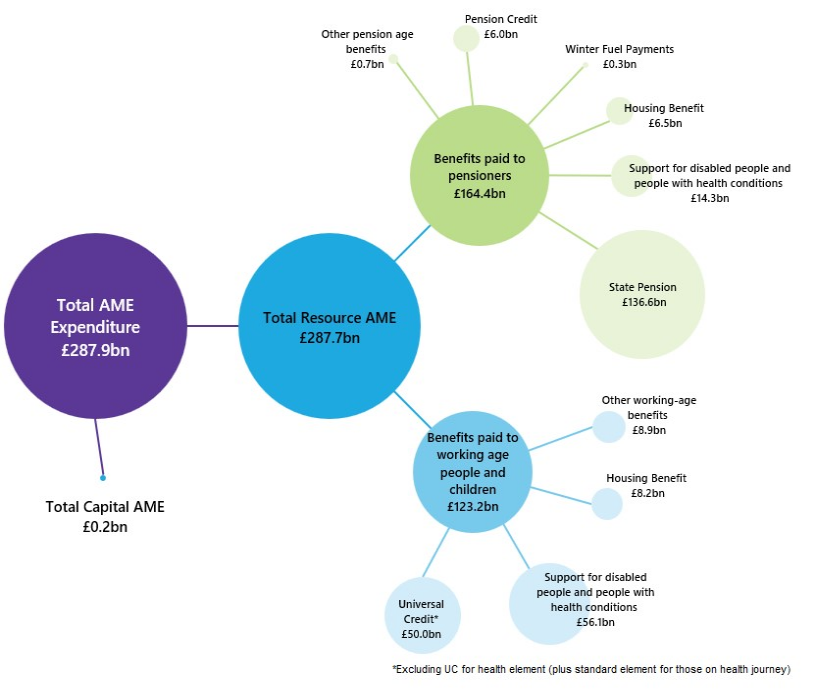
In 2024 to 2025, Resource AME was £287.7 billion. This was £21.8 billion (8.2%) more than in 2023 to 2024, largely due to the annual uprating of pensions by 8.5% and other benefits by 6.7%, as well as the continued migration of claimants receiving personal Tax Credits to Universal Credit. This was partially offset by the government’s decision to restrict eligibility to Winter Fuel Payments and the ending of Cost of Living Payments.
How we spent Resource AME
57% of Resource AME in 2024 to 2025 was paid to pensioners, with the State Pension accounting for £136.6 billion and Pension Credit for £6 billion. The cost of the State Pension increased by £12.5 billion (10.1%) compared to 2023 to 2024, reflecting the rise in the pensioner population and uprating in line with the triple lock[footnote 6].
We spent £0.3 billion on Winter Fuel Payments in 2024 to 2025. This was £1.7 billion less than in 2023 to 2024[footnote 7]. This was due to the government’s decision to restrict eligibility to Winter Fuel Payments to those on Pension Credit or certain other means-tested benefits.
43% of Resource AME in 2024 to 2025 was paid to people of working age and children. This includes £50.0 billion on Universal Credit[footnote 8]. This was £11 billion more than was spent on Universal Credit in 2023 to 2024[footnote 9] reflecting some changes in categorisation, the impact of people moving from legacy benefits to Universal Credit (UC) as part of move to UC and the uprating of allowances.
£70.3 billion of Resource AME (24%) supported people with a disability or health condition[footnote 10], £14.3 billion to pensioners and £56.1 billion to working-age people and children[footnote 11]. This was £9.6 billion more than in 2023 to 2024[footnote 12].
Capital Annually Managed Expenditure
We spent £240.7 million on Capital AME in 2024 to 2025, £83.6 million more than in 2023 to 2024[footnote 13]. This spend includes £266.6 million on Universal Credit advances and £46.4 million on Support for Mortgage Interest payments. This spend was offset by £49.6 million of Social Fund loan net repayments[footnote 14].
See more detailed information on benefit expenditure outturn and forecasts in the DWP benefit expenditure tables on GOV.UK[footnote 15].
Annually Managed Expenditure Forecasts
The Office for Budget Responsibility (OBR) forecasts welfare expenditure twice a year. The forecasts take account of any changes to the OBR’s underlying assumptions about the economy, modelling changes, and tax and spending measures announced by the government. The OBR publishes the details of the forecasts in the Economic and Fiscal outlook (EFO)[footnote 16].
Welfare Cap
As part of its welfare expenditure forecasts, the OBR assesses whether the government will meet the welfare cap. The cap is a limit on the amount the government aims to spend on social security benefits. It excludes spending on the State Pension, jobseekers, and Tax Credits. Around half of welfare spending is included in the cap, and a margin is set on top of the cap to account for future uncertainty in the expenditure forecast. The welfare cap is breached if forecast expenditure is above the cap and margin when the cap is formally assessed at the first fiscal event of any new Parliament.
As Autumn Budget 2024 was the first fiscal event of the current Parliament, the OBR made a formal assessment of the welfare cap covering the period from 2019-20 to 2024-25. It judged the government would breach the welfare cap and margin by £8.6 billion in 2024 to 2025 due to higher than forecast spending on disability benefits, Universal Credit and legacy benefits. As a result, the Minister for Employment led a debate in the House of Commons to explain the breach.
At Autumn Budget 2024, the government set a new cap for the period 2024-25 to 2029-30. The new cap is set at £194.5 billion based on OBR’s Autumn Budget 2024 forecast with a 5% margin. The next formal assessment of the cap will be at the first fiscal event of the new Parliament.
At Spring Statement 2025, the OBR estimated that welfare spend subject to the cap would be £190.7 billion in 2029 to 2030, a reduction of £3.8 billion since Autumn Budget 2024. This decrease is primarily driven by the policy measures announced at Spring Statement 2025, which reduce forecast expenditure on Personal Independence Payment, Universal Credit and Carer’s Allowance.
Resource Departmental Expenditure Limit Budget
DWP’s 2024 to 2025 Resource DEL budget was set at £8.5 billion (including depreciation) at the Main Estimate 2024. HM Treasury made additional funding available, which was announced at the Autumn Budget. This included increased funding: to support those most in need by extending the Household Support Fund, to meet increased demand for Pension Credit following the announcement of the means testing of the Winter Fuel Payment, and for Universal Credit (UC) due to the acceleration of the migration of Employment and Support Allowance claimants to UC (Move to UC).
We ended the year within our agreed funding allocation which allowed us to agree with HM Treasury to transfer £98 million of funding from 2024-25 to 2025-26. As a result, we agreed a Resource DEL budget of £9.6 billion (including depreciation) for 2024 to 2025 at Supplementary Estimate.
Capital Departmental Expenditure Limit Budget
Our 2024 to 2025 Capital DEL budget was set at £579 million at the Main Estimate 2024. HM Treasury made additional funding available, which was announced at the Autumn Budget, including additional funding to undertake lease commitments within our estate.
We ended the year within our agreed funding allocation which allowed us to agree with HM Treasury to transfer £25 million of funding from 2024-25 to 2025-26. As a result, we agreed a Capital DEL budget of £625 million for 2024 to 2025 at Supplementary Estimate.
Departmental Expenditure Limit Expenditure
Departmental spend in 2024 to 2025[footnote 17]
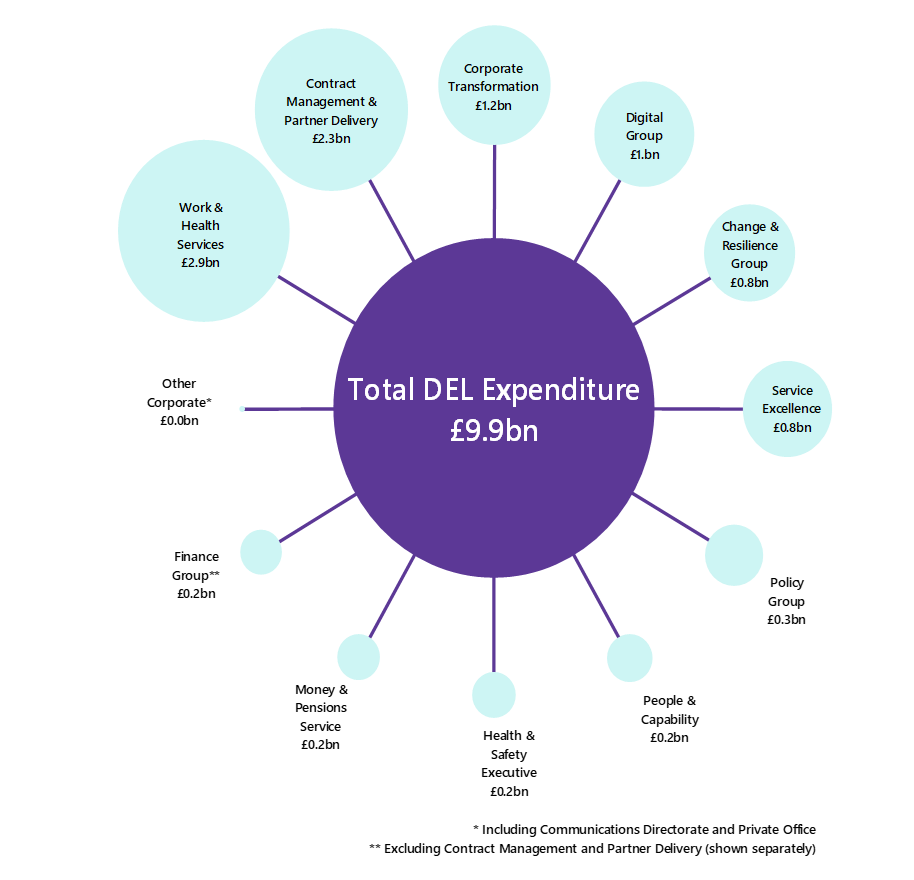
We have ended 2024 to 2025 within the funding agreed with HM Treasury. The main areas of financial uncertainty during the year were in the following areas of spend:
-
Access to Work, where spend increased by a further £57 million to £306 million and backlogs of claims also rose. This is due to an increase in the number of people accessing the scheme and a rise in the average cost of claims for example, on support worker rates and travel to work.
-
The new Functional Assessment Service (FAS) contract which delivers Work Capability and Personal Independence Payment (PIP) assessments which are critical gateways for accessing benefits. The new service was successfully implemented this year but likely levels of provider performance and cost were hard to predict.
-
Capital expenditure on building leases. We did not undertake as many new lease commitments as we had planned in part because of timing of complex commercial negotiations. This made forecasting capital impacts under the appropriate accounting treatment for lease expenditure (IFRS16), particularly challenging as the accounting for all expenditure is undertaken in its entirety at the point of the Department having the right of use of the asset. As we enter into lease commitments, we are mindful of the importance of ensuring accounting treatment does not result in decisions that represent poor value for money for the taxpayer.
Increasing Efficiency
We continued to identify efficiencies across the Department, meeting the Spending Review efficiency challenge and delivering on the government efficiency framework’s efficiency drivers.
We have driven efficiency across the Department – examples include reducing the size and cost of our estate, contracts efficiencies, digital transformation to improve staffing efficiency and buying cheaper laptops and mobile phones and replacing out-of-date systems. We have also made our operational services more efficient by digitising our processes and increasing claimants’ ability to self-serve and increasing the number of cases per work coach.
As a result, we delivered £347 million in efficiencies in 2024 to 2025 against our Spending Review baseline, exceeding our target of £270 million.
Performance analysis
This section builds on the Performance Overview and includes details of our activities and progress against our performance outcomes covering the period 1 April 2024 to 31 March 2025.
Goal 1: Enable people to get into work and to get on at work, ensuring employment opportunity for all
Introduction
The government is committed to delivering an employment support system that helps people get on in work and increase their earnings. The Get Britain Working White Paper[footnote 18], published in November 2024, outlines the government’s strategy to reform employment, health and skills support, with the aim of reducing economic inactivity and fostering an inclusive labour market. It sets out policy and delivery reforms to meet the ambition of an 80% employment rate.
The government recognises that there are many components of a sustained improvement to the labour market. We have published the key indicators[footnote 19] that the government will continue to monitor closely as we carry out our work.
Our activities against this goal centre around these indicators, which support the aims of increasing the employment rate for individuals aged 18 to 66 years old and increasing real household disposable income. Delivery of this goal supports the government’s mission of kickstarting economic growth.
There are 4 main areas of activity in this goal:
- employment services
- supporting young people into training, education and employment
- supporting higher employment rates among parents
- supporting more people with ill health and more disabled people to enter and stay in work
Spotlight on the new Jobs and Careers Service
We are reforming Jobcentre Plus to create a new service that will enable everyone to access support to find good, meaningful work, and support them to progress in work, including through an enhanced focus on skills and career choices. We will develop the new service across 5 key pillars, as set out in the Get Britain Working White Paper.
-
Pillar 1: a new enhanced relationship with and service for employers.
-
Pillar 2: a revised focus on supporting progression and good work through aligning employment support and having it work better with skills and careers advice.
-
Pillar 3: a locally responsive, embedded and engaged organisation.
-
Pillar 4: a digital, universal and fully inclusive service.
-
Pillar 5: a provider of high-quality personalised support to help people into work, support training, and get on in work.
We want to create a new service that employers, of all sizes, want to engage with, including those requiring skills and specialist talent to find candidates that meet their recruitment needs. In January 2025, the Secretary of State outlined our approach to re-setting our engagement with employers through several key steps, including:
-
hosting summits with employers and stakeholder representative groups across sectors crucial to growth starting with construction, health and social care and clean energy
-
boosting the number of training programmes in these sectors on offer at jobcentres to upskill jobseekers and provide employers with the work ready staff they need
-
serving employers through a dedicated team with highly experienced experts to provide recruitment support, including designing tailored campaigns to tackle large numbers of vacancies
-
providing an account manager for employers to get more information about how Jobcentre Plus can help them and provide recruitment support – following feedback from businesses that they established a single contact
Employment services
Reforming the system of employment support to increase employment
The government will create a new single and universal service, reforming Jobcentre Plus and providing a stronger focus on skills and careers. The new service will cover Great Britain but will be flexible, operating differently in different areas to reflect local systems and needs – including reflecting devolution settlements in Scotland and Wales. It will provide support for anyone who is looking for work, who wants to get on in work, or who wants to change their career or retrain. It will prioritise providing genuine support for people over monitoring compliance and benefits administration. It will be a service that values employer engagement, working with employers to understand and support their current and future recruitment needs.
In England, we are bringing together Jobcentre Plus and the National Careers Service to create a greater focus on skills and careers and better join-up between employability and careers provision. In Scotland and Wales, the Department will work closely with the devolved governments to ensure the new service works effectively with the devolved services. The initial Jobs and Careers Service pathfinder, in Wakefield, will begin in April 2025.
Keep Britain Working Review
In January 2025, the Secretary of State asked Sir Charlie Mayfield, the former Chair of the John Lewis Partnership, to lead an independent review into the role of employers in reducing health-related inactivity and promoting healthy and inclusive workplaces.
The findings of the review’s discovery phase[footnote 20] were published in March 2025. The review will conclude in autumn 2025.
Youth Support Reforms
We have worked with the Department for Education and 8 mayoral strategic authorities on the design and delivery of the Youth Guarantee trailblazers. These will test how new local leadership, accountability structures and existing provision can be integrated into a cohesive education, training and employment support offer for young people aged 18 to 21.
We will work in partnership with organisations at a national and local level to join up, enhance and champion their inspiring work in sectors such as sports, arts and culture. We launched partnerships in November 2024 with Channel 4, The Royal Shakespeare Company and the Premier League. These partnerships will connect young people to nationwide job opportunities and training courses, helping them to secure employment in the future.
Throughout the year we have offered assistance for jobseekers to prepare for and enter employment and worked with employers to fill vacancies.
Sector-based Work Academy Programmes (SWAPs)
This programme offers eligible jobseekers training, work experience and a guaranteed interview for a job or apprenticeship. We delivered 86,640 SWAPs starts in 2024 to 2025, exceeding the ambition of 80,000 starts[footnote 21].
We published an impact assessment of SWAPs in February 2025[footnote 22]. This showed that individuals who start a SWAP spent, on average, 90 days more in employment and earned £1,400 more during the 24 months following a SWAP start than someone who did not.
In February 2025 the government announced a further expansion of the scheme to 100,000 customers in 2025 to 2026. As part of this, we will deliver hospitality SWAPs working with UK Hospitality across 26 new areas, including 13 coastal towns such as Scarborough and Blackpool.
The Restart Scheme
This scheme provides up to 12 months tailored and intensive support to customers who have been out of work to find jobs in their local area. In July 2024, eligibility for the scheme moved from at least 9 months unemployed to at least 6 months unemployed. Since first referrals in July 2021 to April 2025, 840,000 people started the scheme with 320,000[footnote 23] of these having moved back into work whilst participating in the scheme. Between April 2024 and March 2025 over 85,000 people receiving Restart’s support moved into employment, and 217,000 new participants joined the scheme.
Support for Older Workers
Across our jobcentre network over 70 50PLUS Champions worked collaboratively with work coaches, employers, and stakeholders to raise awareness of the importance of supporting older job seekers and to drive locally tailored employment support for them. The Mid-life MOT, where work coaches work with claimants to encourage planning for later life and help boost their confidence continued, with 48,919 customers being referred into the Jobcentre Plus service and 36,646 attending the service in the year.
Supporting young people into training, education, or employment
Across the UK, 18 to 21 year olds have lower employment rates than 22 to 24 year olds, even when accounting for higher education participation. While a range of factors will contribute to this, low attainment is a significant risk factor. Young people not in education, employment, or training (NEET) are more likely to have lower qualifications.
There is a prevalence of special educational needs and disabilities (SEND) among NEET young people, with 10.6% having learning difficulties in 2023, compared to 5.5% in 2020. Young people from low-income families struggle to secure stable education or jobs, with disadvantaged pupils significantly behind in GCSEs and other subjects.
Care leavers are particularly vulnerable, with 38% of 19 to 21 year old care leavers in England not participating in education or employment, compared to 13% of their peers. Additionally, 66% of children in custody have been in care. Young people at risk of serious violence are also more likely to be NEET, due to various challenges they face.
During 2024 to 2025, we supported young people aged 16 to 24 claiming Universal Credit in the intensive work search group through the DWP Youth Offer. This included tailored work coach support, access to skills training and employment opportunities through the Youth Employment Programme youth employability coaches for young people with additional barriers to finding work, and Youth Hubs across Great Britain. We also provided additional support for young parents and carers in this age group. In addition, we have started delivering the government’s Youth Guarantee for all 18 to 21 year olds to access further learning, help to get a job or an apprenticeship.
Schools Advisers
Schools advisers assisted young people who were identified as being at risk of becoming NEET, or who were otherwise disadvantaged in the labour market as they prepared to leave education – for example those with a health or learning disability, and those educated within alternative provision.
Care leavers
We supported care leavers, who often face a difficult transition to adulthood, through measures to improve their interaction with the benefit system. Our pledges under the Care Leaver Covenant list our offer to care leavers and are published on GOV.UK[footnote 24]. For example, this includes an exemption from the Shared Accommodation Rate, which enables care leavers to claim the higher local Housing Allowance one bedroom rate of either Housing Benefit or Universal Credit until their 25th birthday if they are in the private rented sector.
Supporting higher employment rates among parents
Through targeted support we have addressed the structural barriers parents face to labour market participation.
Supporting Families Employment Advisers (SFEAs)
Our network of around 300 Supporting Families employment advisers worked as part of the Department for Education-led Supporting Families Programme to support 10,000 families who faced complex barriers to move closer to or into employment. The Supporting Families Programme ended on 31 March 2025 and was replaced by Family Help from 1 April 2025.
Flexible Support Fund (FSF) Upfront Childcare Costs
The Flexible Support Fund improves people’s job prospects by helping to pay for things like travelling to a job interview, clothing or equipment needed for work, and attending training. It also helps claimants with childcare costs, including upfront costs by covering the initial payments prior to claimants applying for Universal Credit childcare. Payments through the Flexible Support Fund are paid directly to the provider.
Universal Credit Childcare
This payment supports working parents by reimbursing up to 85% of their registered childcare costs each month up to a maximum amount of £1,014.63 a month for one child and £1,739.37 a month for 2 or more children. In 2024 to 2025 we supported 172,500 eligible households across Great Britain, enabling customers to take up work or increase their working hours.
Lead carers and lone parents
Our work coaches supported lead carers and lone parents to find employment and increase their earnings by helping them with childcare, skills development, and transport costs. Lone parents are eligible for early access to the Restart scheme, which provides more intensive support.
Supporting more people with ill health and more disabled people to enter and stay in work
Long-term sickness is the most common reason for economic inactivity among the working-age population. Along with ‘Get Britain Working’ we also published the ‘Pathways to Work: Reforming Benefits and Support to Get Britain Working’ Green Paper in March 2025 which sets out that support will be brought together into a ‘Pathways to Work’ offer. We launched 17 trailblazers to test ways of reducing economic inactivity whilst Connect to Work areas will go live during 2025 to 2026.
The Work and Health Programme
This programme provides personal support to those out of work due to a health condition or disability in England and Wales to help them gain employment. In 2024 to 2025 we supported around 19,000[footnote 25] participants into job outcomes (data to February 2025). The programme closed for referrals in September 2024.
Access to Work
Access to Work provides support to people with a health condition or disability to get into, or stay in, work. We experienced a continued increase in demand over the last year, with applications received up 6.4% compared to 2023 to 2024. The service is also seeing greater caseload complexity and in 2024 to 2025 we approved around 69% (88,600) of the applications we cleared compared to 72% approval of those cleared in the previous year. Over the last year we have taken initial steps, as set out in the Pathways to Work green paper, to address this challenge and to adjust the scheme to improve its effectiveness, efficiency, and reach. We also increased resource in this area by 27%, from 502 full time equivalent (FTE) at the start of the year to 637 FTE by the year end. This was achieved through a mix of recruiting new employees as well as moving people from other business areas to support delivery. At the end of the year nearly 128,000 applications had been cleared with 62,000 claims waiting for a decision.
We have seen a significant increase in the cost of this scheme, with grant expenditure rising from around £177 million 2022 to 2023 to £306 million in 2024 to 2025. The Pathways to Work Green Paper is consulting on this programme’s purpose and what its future delivery model should be to ensure we can continue to support disabled people to gain and remain in work.
Employment Advisors in NHS Talking Therapies
This is a joint DWP and DHSC service to improve both mental health and employment outcomes. We have provided employment support across 156 sites in all 42 NHS integrated care boards (ICBs). The project reached 81,833 service users in 2024 to 2025 and we met the goal of providing employment support in every NHS ICB by March 2025.
Getting It Right First Time Musculoskeletal Community Delivery Programme
This programme enhances access to quality treatment for musculoskeletal conditions and reduces waiting times for community musculoskeletal appointments, improving health outcomes and reducing health-related barriers to work.
The initiative has reduced the waiting list backlog in England by 19,218 since December 2024 and we have supported 17 of the 42 NHS ICB areas across England to strengthen musculoskeletal leadership, helping to alleviate ill health related economic inactivity.
Occupational Health
The Occupational Health Innovation Fund continued to support 5 digital projects during 2024 to 2025, increasing access to occupational health services for employers, providing expertise, reducing costs and improving efficiency. These projects completed in March 2025 with impact data available by June 2025. The Occupational Health Workforce Expansion project funded 204 Doctors and 38 Nurses completing courses or exams during 2024 to 2025. The project closed in January 2025.
The Disability Confident scheme
The scheme encourages employers to create disability inclusive workplaces and to support disabled people to get into, and get on in, work. It provides employers with the knowledge, skills, and confidence they need to attract, recruit, retain and develop disabled people in the workplace. It continued to grow and had approximately 19,000 employer members on the scheme as of 31 March 2025.
Disability Employment Advisers
Work coaches received specialist support from 749 disability employment advisers (DEAs) and 98 DEA leaders (DEALs) on how to tailor their support to help disabled customers move closer to, or into, work. Customers who require additional help can receive one-to-one support from a DEA, who will use their knowledge of local labour market opportunities and other support to develop a tailored support plan to move the customer closer to or into the labour market.
Additional Work Coach Support
The service provides disabled people and people with health conditions, with increased one-to-one personalised support from their work coach to help them move towards, and into, work where suitable. Published analysis[footnote 26] of the support in March 2025 showed favourable outcomes with participants being 33% more likely to be in work 12 months later compared to 8% for the comparison group that did not receive the additional support.
Neurodiversity in the Workplace
We established an expert panel of senior academics in neurodiversity and disability in January 2025 to review the evidence base on neurodiversity and workplace inclusion. The panel will make recommendations in summer 2025.
Support with Employee Health and Disability Support
Support with employee health and disability is an online service to help employers support employees with health conditions and disabilities in the workplace. It is primarily aimed at smaller businesses, many of which do not have in-house HR support or access to an occupational health service. The service, launched in 2024, is testing well with users, while we continue to improve its visibility.
Health-related Economic Inactivity Reforms: WorkWell
This was launched in October 2024, piloting locally designed and delivered work and health support to meet the needs of local populations in England.
Delivered by 15 NHS integrated care boards, WorkWell provides users with support for their health-related barriers to employment, such as employer liaison and work and health coaching. Where needed, users receive onward referral into services that are available locally to tackle their specific needs. This could include musculoskeletal services, physiotherapy, occupational health, mental health services, and more. WorkWell boosts capacity in the services that address health related barriers to work and, by focusing on patients’ work and health needs, complements work undertaken by NHS clinical professionals. The evaluation of the pilot programme is currently underway, and a final report will be available in October 2028.
Health-related Economic Inactivity Reforms: Connect to Work
This is a voluntary, locally led programme primarily for people with a disability, health condition or complex barriers to employment to help them to get into, and stay in, work. It follows the supported Employment model that places participants in work as early as possible and provides ongoing support. Grant guidance was published in November 2024 to support local authorities with the development of their local delivery plans by May 2025. Across 2025 to 2026 we will build on the foundations of this early work to enable 100,000 people to be supported into work during 2026 to 2027 and over 300,000 individuals to be supported through a high-quality supported employment fidelity model by the end of 2029 to 2030.
Health-related Economic Inactivity Reforms: Pathways to Work offer
March’s green paper, ‘Pathways to work: reforming benefits and support to Get Britain Working’, set out a vision for a coherent employment support offer for disabled people and those with health conditions that brings together and builds on existing provision. We will hold engagement events in 2025 to inform its design.
Goal 1 Outcomes
Employment rate of 18 to 66 year olds[footnote 27]
The employment rate of people aged 18 to 66 was 75.7% for the period January to March 2025 compared to 75.1% for January to March 2024 and 72.4% for January to March 2014.

Source: DWP analysis of the ONS Labour Force Survey
Percentage of young people not engaged in education, employment or training (18 to 24 year olds)
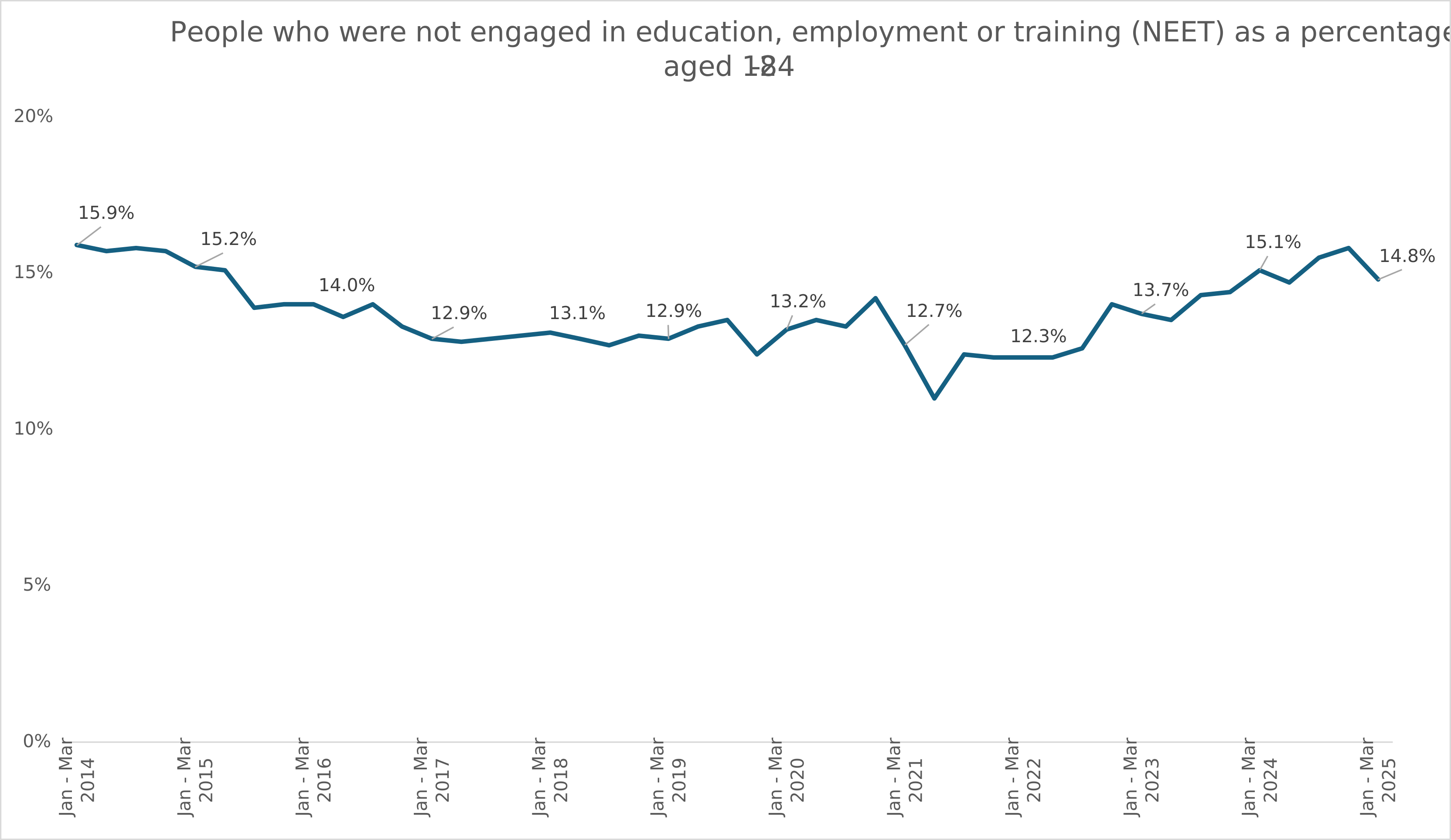
The rate of 18 to 24 year olds not in education, employment or training for the period January to March 2025 was 14.8%. This compares to 15.1% for January to March 2024 and 15.9% for January to March 2014.
Source: Young people not in education, employment or training (NEET) - Office for National Statistics
Percentage of long-term sick inactive of all 18 to 66 year olds
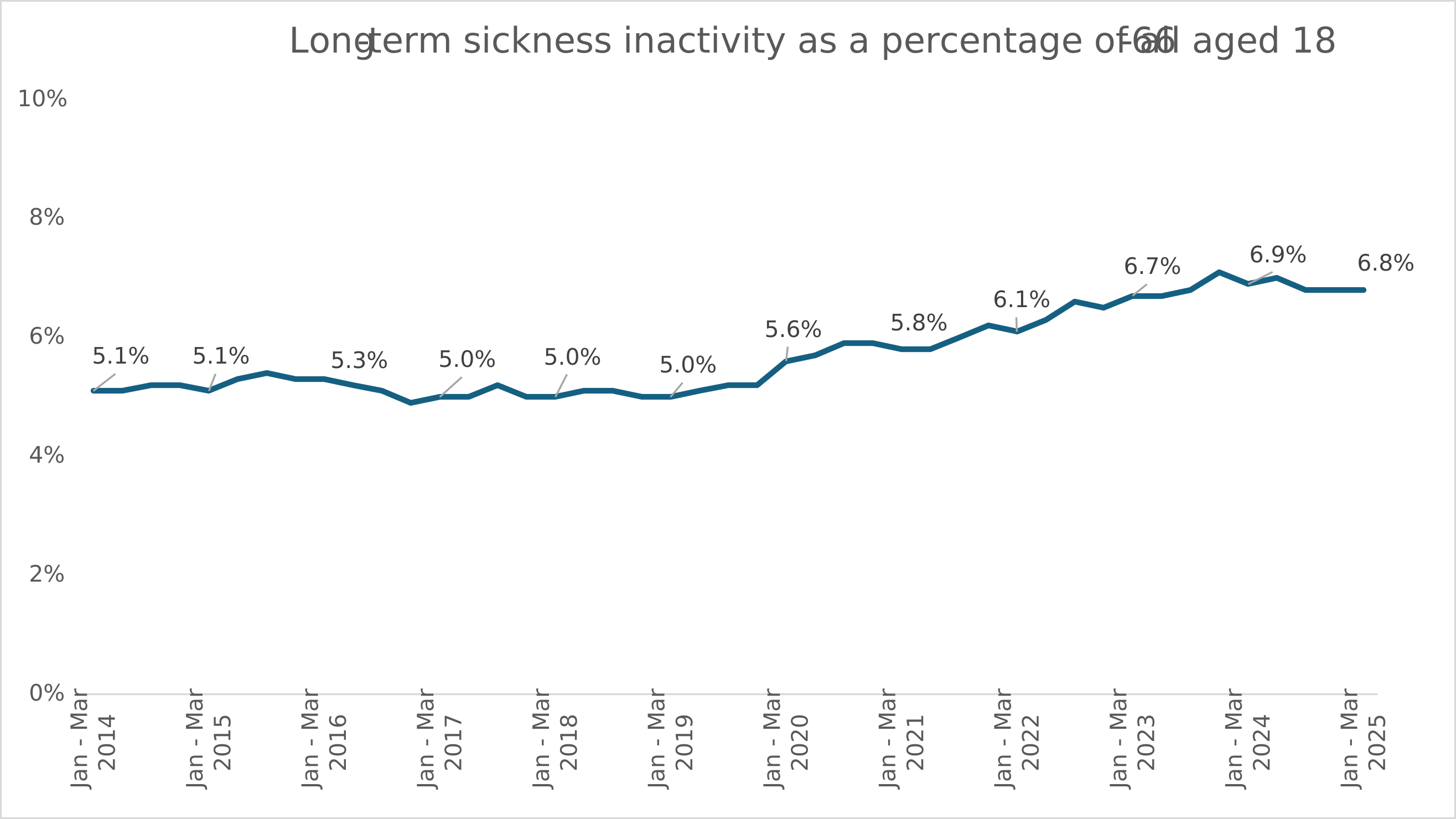
The percentage of all 18 to 66 year olds who reported that they were inactive due to long-term sick was 6.8% in the period January to March 2025. This compares to 6.9% of those in the period January to March 2024, 5.6% of those in the period January to March 2020 (pre-pandemic) and 5.1% in the period January to March 2014.
Source: DWP analysis of the ONS Labour Force Survey
The Department also publishes a broader suite of Get Britain Working outcomes[footnote 28] on GOV.UK.
Goal 2: Tackle child poverty and hardship, ensuring financial security for all
Introduction
The UK government is committed to reducing child poverty, creating a fairer society where every child can thrive, and supporting long-term social aims that will break the link between young people’s backgrounds and their future success, supporting economic growth. It is also committed to greater financial security for all by helping people increase their income, reducing the cost of living and building financial resilience. Delivery of this goal supports the government’s mission to break down barriers to opportunity.
There are 4 main areas of activity in this goal:
- Publishing an ambitious Child Poverty Strategy informed by the work of the cross-government Child Poverty Task Force.
- Developing a new vision and approach for local crisis support.
- Completing the annual review of benefit rates in the autumn.
- Reviewing aspects of Universal Credit, the main working-age social security payment.
Interventions related to children
Child maintenance
Our Child Maintenance Service (CMS) supports separated parents to work together in the interests of their children by delivering an effective statutory scheme of arranging and collecting child maintenance. Child maintenance keeps around 120,000 children out of relative low-income before housing costs each year (80,000 due to non-statutory arrangements and 40,000 due to arrangements through the CMS).
At the end of December 2024, the CMS was managing 751,000 arrangements for 682,000 paying parents and over 1 million children. There has been a 7% increase in the number of arrangements since the end of December 2023. This increase follows the removal of the £20 application fee in February 2024 and more services being made available online. In the quarter ending March 2025, 69% of people paid at least some of their liability, the same rate as the quarter ending March 2024.
Reducing Parental Conflict programme
The Reducing Parental Conflict (RPC) programme works closely with partners across local and national government, and a range of family service providers, to give parents access to support which will help them to address parental conflict – whether they are together or separated.
In August 2023 we published an evaluation[footnote 29] of the performance of the RPC programme between 2018 and 2022. The evaluation showed that participating parents saw significant improvements in their relationship with the other parent and their children showed statistically significant improvements in their mental health and wellbeing.
A further evaluation[footnote 30] covering 2022 to 2025 was published in February 2025. This resulted in improved practitioner confidence through training and awareness-raising and broad prioritisation of RPC across early help services. Our approach to RPC activity over the 2025 to 2026 financial year was informed by these findings.
Spotlight on Child poverty strategy
The Prime Minister launched the new ministerial child poverty taskforce in July 2024, jointly chaired by the Secretaries of State for Work and Pensions and for Education. The taskforce is developing a ten year child poverty strategy that will bring about an enduring reduction in child poverty.
To support the strategy, we have:
- supported the establishment of the ministerial child poverty taskforce and the Child Poverty Unit in the Cabinet Office
- developed and agreed a range of metrics for the child poverty strategy, including the internationally recognised ‘relative poverty after housing costs’ measure, and a deep poverty metric based on our work on the material deprivation measure
We will publish the child poverty strategy in 2025. The strategy will tackle overall relative child poverty after housing costs, and will focus on children in the deepest poverty who are lacking essentials, and what is needed to give every child the best start in life.
Family community work coaches
Our Supporting Families Employment Advisers supported an average caseload of 10,000 families with multiple, complex barriers throughout 2024 to 2025, helping them to move closer to or into employment. Following the announcement that the Supporting Families programme was closing, we have committed to continuing this support to such families through a new family community work coach role.
Sure Start Maternity Grant
The Sure Start Maternity Grant provides a one-off payment of £500 to those who satisfy the eligibility criteria and can help with the costs associated with the expenses of a baby (or babies in the event of a multiple birth). The latest data available in the Social Fund White Paper account shows that the total amount of grant paid out in 2023 to 2024 was £23.6 million, equating to around 47,200 grants.
Financial security interventions
Local crisis support
We provided £842 million to extend the Household Support Fund, a scheme enabling local authorities across England to deliver discretionary support to vulnerable households, covering essentials such as energy, water and food. Local authorities have the flexibility to design and deliver their schemes through a variety of routes, including offering vouchers to households, directly providing food, or issuing grants to third parties. Local authorities provide management information on the distribution of the Household Support Fund, which we publish[footnote 31] on GOV.UK. Devolved governments received consequential funding.
Housing support
Ensuring people have a safe, stable, and affordable place to live is vital to tackling child poverty and ensuring financial security for all.
We provide support for low-income households towards the cost of renting a home in both the social and private rented sectors. In 2024 to 2025 we estimate spending £36 billion[footnote 32] (in real terms) on Housing Benefit and the housing element of Universal Credit to support with rental costs.
The Local Housing Allowance (LHA) determines the maximum housing support private renters can claim through Housing Benefit or Universal Credit. The amount a household receives depends on the area that a person lives in and the age and composition of the household. LHA is not intended to cover all rents in all areas.
In April 2024, LHA rates were increased to the 30th percentile of local market rents benefitting 1.8 million private renters who gained an average of around £800 a year. For the Department, this was an additional cost of £1.2 billion in 2024 to 2025 and around £7 billion over 5 years.
We also maintained Discretionary Housing Payment support, delivered through local authorities, at £100 million for England and Wales in 2024 to 2025.
Annual review of benefit rates
The Secretary of State is required by law to undertake an annual review of State Pension and benefit rates following a review of trends in prices and earnings over the previous year.
In November 2023, the previous administration up-rated working-age and extra-costs disability benefit rates by 6.7%, and relevant State Pension rates by 8.5% for 2024 to 2025.
In October 2024 the Secretary of State conducted a review, concluding that in 2025 to 2026 working-age and extra-costs disability benefits will rise by 1.7%, in line with the Consumer Prices Index rate of inflation in September 2024 and the relevant State Pension rates will increase by 4.1%, in line with the annual increase in the Average Weekly Earnings index for May to July 2024.
Changes to create a fairer system
Pursuing our ambition of a just, equal and inclusive society in the last year has involved reviewing our systems to make them fairer for our claimants.
We launched the Carer’s Allowance Overpayments Independent Review in December 2024. It is assessing how overpayments link to earnings, what could be done to support those who accrue them, and how to reduce the risk of these problems reoccurring. We have developed an extensive stakeholder plan and communications strategy to support the review. Delivery of the review is on track with the review planned to be completed in summer 2025.
The government also committed to reviewing Universal Credit in its manifesto, which we are fulfilling by taking stock of its core structures and policies, considering the support Universal Credit provides across 3 main themes:
- tackling poverty and helping people manage their money
- making work pay and improving work incentives
- maximising Universal Credit’s potential and its impact on customers
As part of the review of Universal Credit, the government announced a Fair Repayment Rate on Universal Credit deductions, to take effect from April 2025. This reduced the overall cap on Universal Credit deductions from 25% to 15% of a customer’s standard allowance. This will support approximately 1.2 million Universal Credit households to retain more of their award, on average £420 a year – or £35 per month.
The review is taking place alongside the work on the child poverty strategy, health and disability reform, Fraud, Error and Debt Bill, and the Get Britain Working White Paper.
Goal 2 Outcomes
The UK government’s preferred poverty measure is relative poverty after housing costs, as it reflects changes in standards of living over time. The latest statistics were published in March 2025 for the year 2023 to 2024 and we provide comparison to the previous year and ten year time period.
Relative low-income rate, after housing costs, for children
In 2023 to 2024, 31% of all children in the UK were living in relative low-income households after housing costs. This compares with 30% in 2022 to 2023 and 29% in 2014 to 2015.
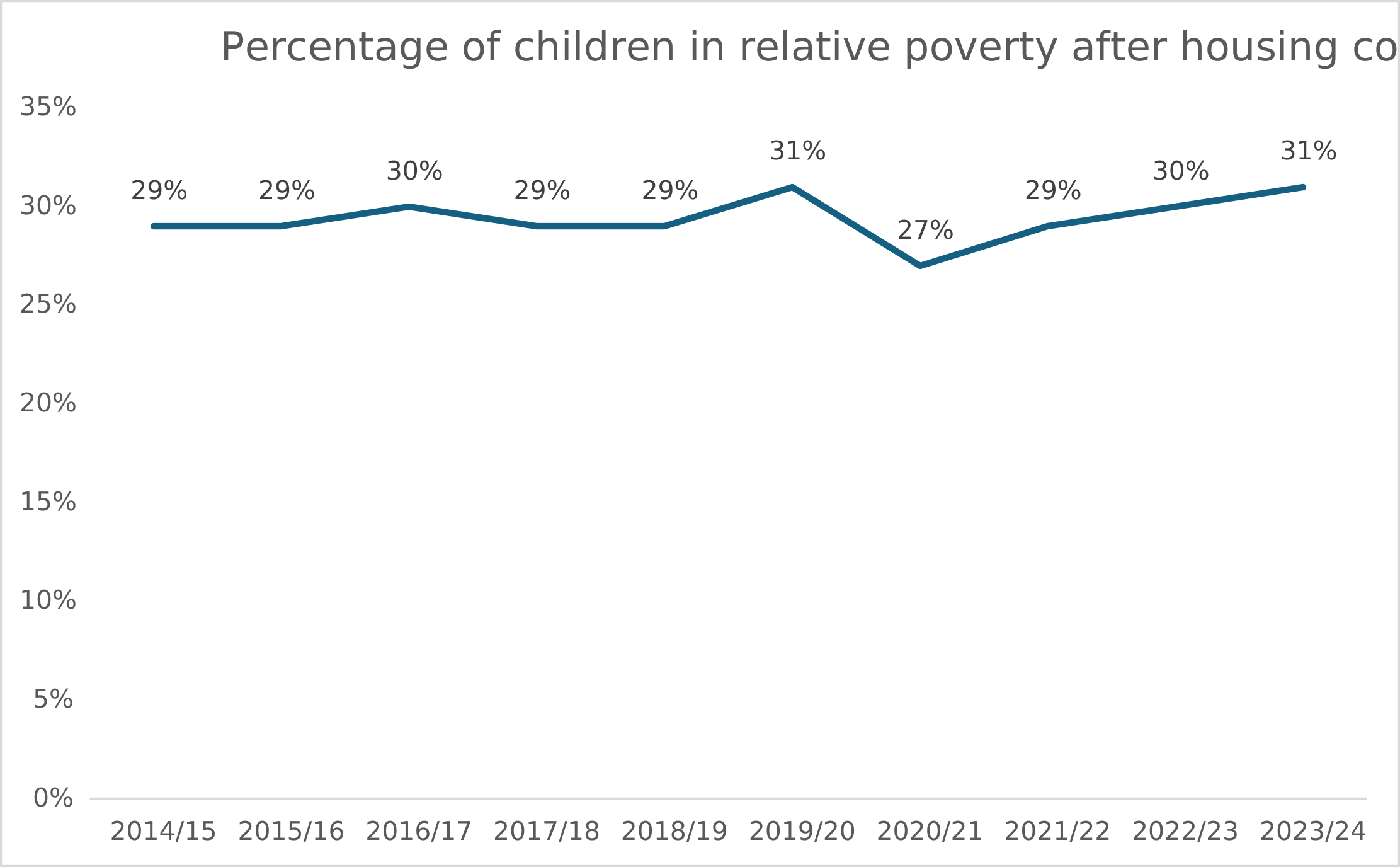
Source: Households below average income (HBAI) statistics - GOV.UK
Relative low-income rate, after housing costs, for working-age adults
In 2023 to 2024, 19% of all working-age adults in the UK were living in relative low-income households after housing costs. This compares with 20% in 2022 to 2023 and 21% in 2014 to 2015.
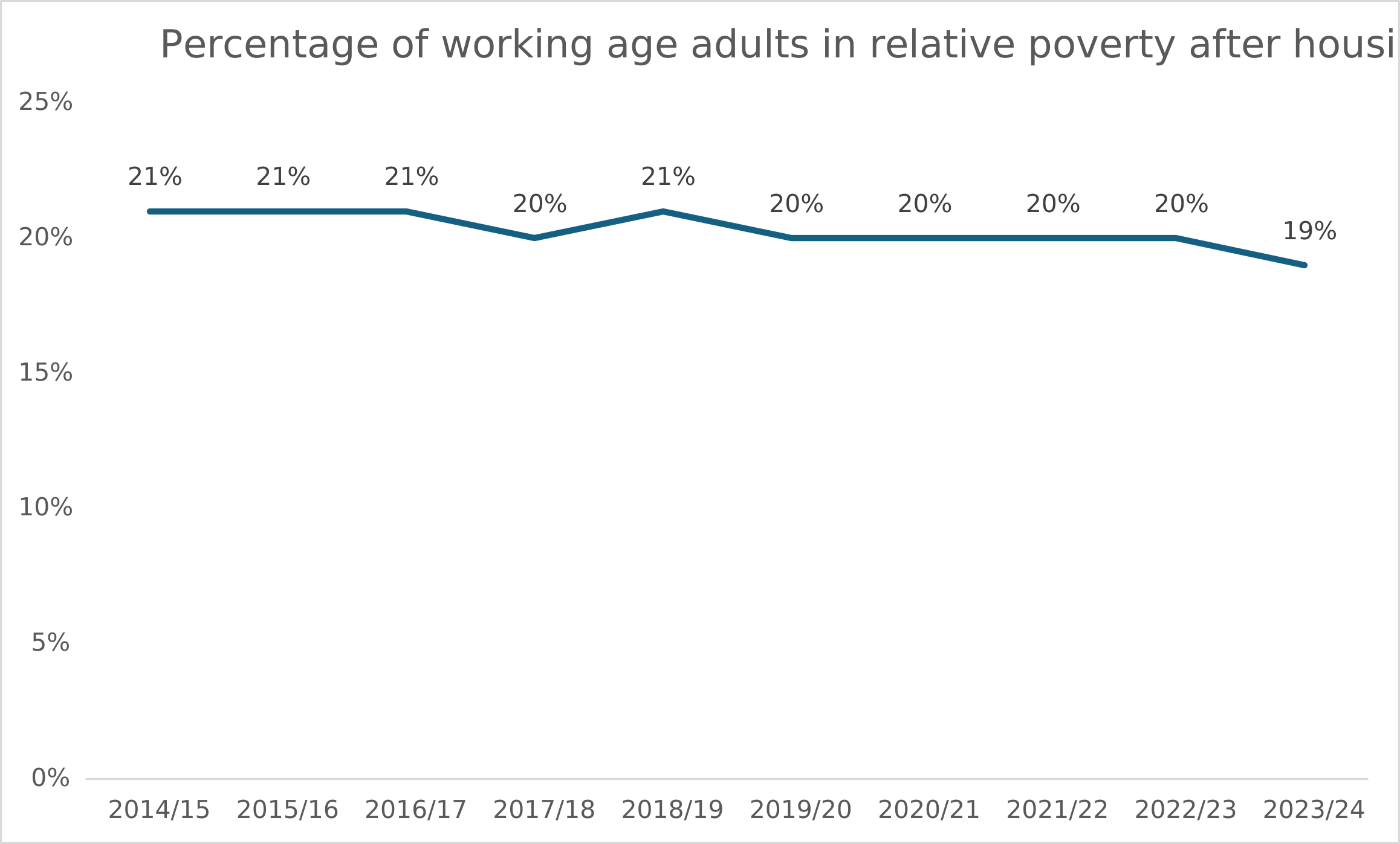
Source: Households below average income (HBAI) statistics - GOV.UK
Real earnings component of real household disposable income amongst non-retired households (all ages)
For those in the first decile the real earnings component was £9,408 in 2023 to 2024, a fall of £2,088 (18%) from £11,496 in 2022 to 2023. The average real earnings component for all individuals fell by £1,264 (2%) in 2023 to 2024 compared to the previous year.
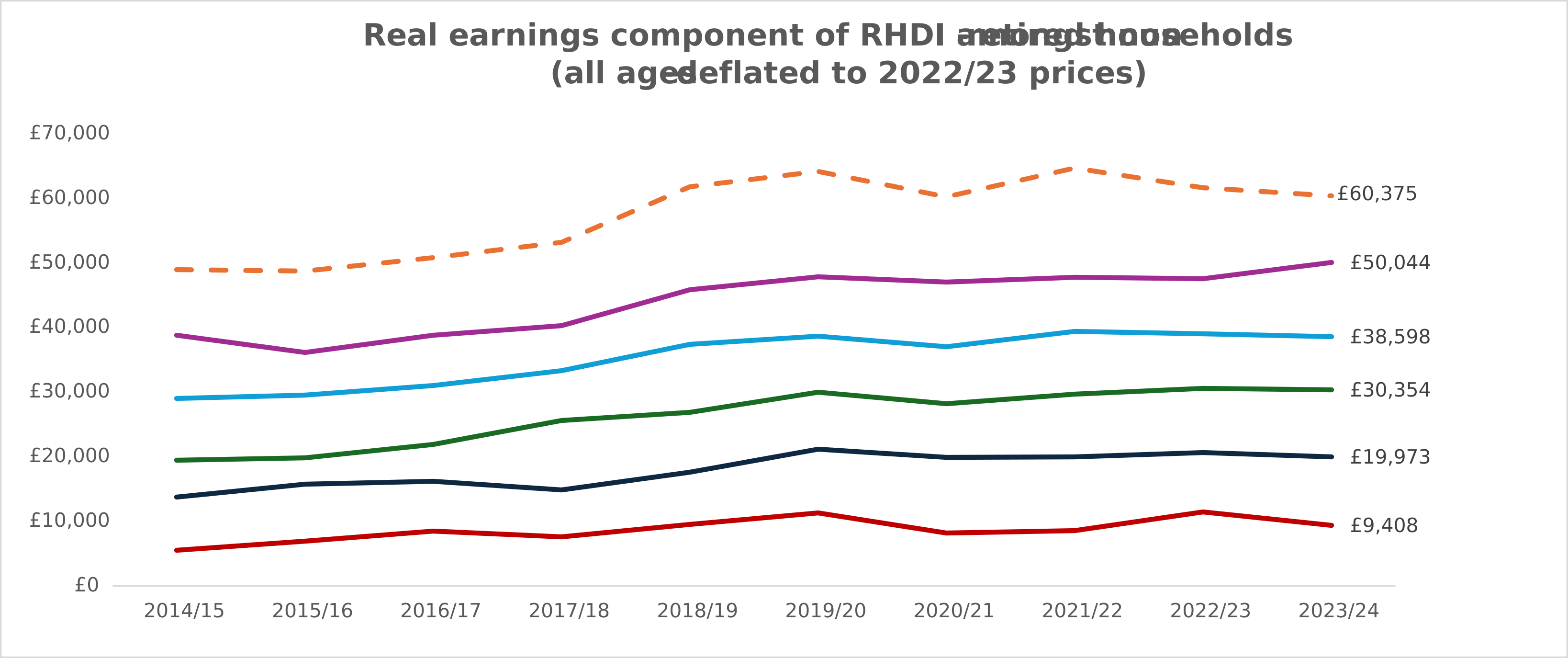
Source: DWP analysis of the ONS’ ‘The effects of taxes and benefits on household income, disposable income estimate’
Goal 3: Shape the pensions system to serve the interests of savers and pensioners, ensuring decent, secure retirement incomes for all
Introduction
We are committed to enabling savers and pensioners to have greater security in retirement, with a focus on ensuring that the State Pension continues to provide a sustainable foundation to support people’s individual savings for retirement.
Over the last year, we have made sure that the triple lock continues to contribute towards decent, secure retirement incomes for those who have reached State Pension age, with Pension Credit providing support for those on low incomes.
In July 2024, the King’s Speech announced the government’s intention to boost the pension pots of the average earner and support economic growth through increased investment. Following this announcement, the government launched pensions review to ensure savers have greater security in retirement. As part of this initiative, we will introduce a Pension Schemes Bill in this parliamentary session, which will legislate for the measures outlined in the King’s Speech and further support growth, building on the first stage of our landmark pensions review.
To build on the foundation provided by the State Pension, we have continued to ensure that people are enabled to save for their retirement through automatic enrolment, with the numbers of eligible workers enrolled and employers who have complied with their automatic enrolment duties continuing to increase to 11.25 million at March 2025 (11.0 million at March 2024).
We are committed to reducing the number of older people who are unemployed or economically inactive so they can save adequately for retirement. Our work under this goal therefore complements our work on improving employment for those in their late 50s and 60s described in Goal 1.
Shaping the pensions system and modernising our services to ensure decent, secure retirement incomes for all – Shaping the pension system
State Pension and the triple lock
The government is committed to ensuring decent, secure incomes for all through the triple lock, the commitment to increase the basic and new State Pension each year by the highest of either inflation, average earnings growth, or 2.5%.
As a result, the basic and new State Pensions increased 8.5% from April 2024 as earnings growth was the highest relevant rate. The triple lock is estimated to increase people’s yearly State Pension by up to £1,900 by the end of the Parliament. Spending on the State Pension is forecast to rise by over £31 billion across this Parliament.
Spotlight on Pension Credit
In July 2024 the Chancellor of the Exchequer announced that from 2024 to 2025, Winter Fuel Payment in England and Wales would no longer be payable to all pensioners, but only to those in receipt of Pension Credit or other qualifying means-tested benefits. To support the delivery of the Winter Fuel Payment eligibility change, we have continued to promote Pension Credit to ensure that low-income pensioners receive financial support, as well as access to passported benefits.
Between July 2024 and February 2025, we received 235,000 Pension Credit applications. This was an 81% increase on the number of applications received between July 2023 and February 2024 and we deployed over 500 extra staff to process the increase in applications and determine eligibility.
Pension Credit communications campaign
To promote the uptake of Pension Credit, we developed a comprehensive communications campaign. This included adverts on television, radio, social media, and in the press. We also conducted local outreach, such as advertising on screens in GP surgeries and post offices and holding advice sessions in local communities. We engaged proactively with other government departments, local councils, housing associations, community groups, local libraries, and charities.
As a result of these efforts, 117,800 new Pension Credit awards were made during this period, which is 45,800 more than in the same period in 2023 to 2024. We continue to advise all customers who think they might be eligible with making a claim to do so, accepting that some may not be entitled.
Parliamentary and Health Services Ombudsman (PHSO) investigation – women’s State Pension age
The Parliamentary and Health Service Ombudsman (PHSO) report on women’s State Pension age communications[footnote 33] found that there had been a 28-month delay in writing personalised letters to women born in the 1950s. This delay, in 2005 to 2007, led to some of these women losing opportunities to make informed decisions, diminishing their sense of personal autonomy and financial control.
In December 2024, after detailed consideration, we responded[footnote 34] to the PHSO report. We apologised for the delay, and committed to learn lessons from it. We are working on an Action Plan with support from the Ombudsman and will publish it in due course.
Extension to the deadline for voluntary National Insurance Contributions (vNICs)
To ensure secure incomes for all, we extended the deadline for people making voluntary National Insurance Contributions (vNICs) to fill gaps in their National Insurance record to 5 April 2025. By doing so, people can increase their eligibility for the new State Pension.
There was considerable additional demand to make vNICs payments before the deadline. We worked with HMRC to make sure as many people as possible were able to fill their National Insurance records in this way (see Modernising our Services below).
Modernising our services
As part of DWP’s Service Modernisation programme, we are transforming delivery of our Later Life services so people in retirement can locate, access, and engage with the services they rely on.
Check your State Pension forecast service
This includes the digital Check your State Pension service, which allows people to find out when they could receive their payments, how much they could get and what they could do to increase their State Pension. Since its launch in 2016, the service has created over 30 million digital forecasts.
In April 2024, we worked with HMRC to further develop the Check your State Pension service for customers pre-State Pension Age who aren’t self-employed, to allow them to check their National Insurance record, identify gaps, and make payments without contacting us or HMRC. This enhanced online service considerably improved people’s ability to add vNICs to their National Insurance record, further ensuring secure incomes for all.
Get Your State Pension service
In January 2025, 85% of applicants applied for their State Pension online using our quick and easy Get Your State Pension service. 83% of applications using Get Your State Pension were either fully automated, processed with no agent intervention, or were completed by an agent in a single transaction, speeding up awards for customers and increasing efficiency.
Pensions dashboards
Pension dashboards will allow people to view all their pensions securely and in one place, helping savers better engage with their pensions and retirement planning. Significant progress has been made with the delivery of pensions dashboards over 2024 to 2025. The Pensions Dashboards Programme (PDP), led by the Money and Pensions Service, is responsible for delivery. Since May 2024, the PDP has focused on testing connections with volunteer participant organisations and the State Pension. This testing has successfully demonstrated that the PDP’s technology works as designed. As a result, pension schemes and providers began connecting to the system from April 2025, in line with our timetable.
Serving the interests of savers and supporting financial resilience in later life
Spotlight on Pension Schemes Bill
Our Pension Schemes Bill supports the government’s mission of growth. It includes measures to create fewer, bigger, and better-run pension schemes that deliver more for savers by investing productively. This includes the consolidation of Defined Contribution (DC) schemes and the introduction of a regulatory regime for commercial Defined Benefit (DB) consolidators.
The Bill further supports the interests of savers and pensioners by introducing a new value for money framework for DC schemes. Schemes will have to show how they are performing and how they will improve, resulting in increased comparability, transparency, and competition between them. This will help savers get the best possible value for money from their pensions.
Because pensions can be complex for savers, the Bill will also require DC workplace schemes to help savers make more informed decisions about what to do with their pensions. The Bill will help them think about how their pension will support them in retirement and will include providing default options for savers who do not actively engage with retirement decisions so that they have good outcomes.
The Bill also tackles the challenge of deferred small pots. There are millions of small value pension pots into which savers no longer make contributions, but which pension providers continue to administer. Some savers may have multiple small pots built up over their working lives. Small pots are estimated to cost the industry up to £225 million annually, which reduces the value for money that schemes can provide for their savers. The Bill introduces a new system to enable the automatic consolidation of small pots into several high-quality pension schemes.
Collectively, these Bill measures are estimated to boost the pension pot of an average earner who saves over their lifetime in a DC scheme by over £31,000.
Pension Review
Our policies on workplace pensions have continued to support savers security in retirement. The Chancellor of the Exchequer launched a landmark Pensions Review in July 2024 to further develop our reform agenda and support that mission.
The Review was an acknowledgement that, 2 decades on from the Pension Commission’s 2004 review into pension adequacy – while the fundamentals of our pension system are strong – many people are not saving enough to ensure a secure retirement, and that the UK needs a robust, future-proof model for its pension savers.
The first phase, the Pension Investment Review, explored new ways to boost investment, increase saver returns, and tackle waste in the pensions system. This included the consolidation of schemes and encouraging them to increase returns through broader investment strategies.
The interim report was published in November 2024 and outlined proposals to consolidate the defined contribution workplace pension market. This will require all 86 administering authorities of the Local Government Pension Scheme (of England and Wales) to delegate management of their investments to pools. These measures will deliver fewer, bigger, better-run pension schemes, also known as ‘megafunds’, which will be more able to deliver for savers and local taxpayers and be better positioned to invest productively. We estimate that they could unlock around £80 billion of productive investment to support the government’s growth mission, while further boosting savers’ pension pots.
The consultation on these measures closed in January 2025. We will publish the scope of the second phase of the Pension Review in due course. It will broaden out the review and consider further steps to improve pension outcomes, including assessing retirement adequacy, building on the success of automatic enrolment.
Automatic enrolment
Automatic enrolment has continued to support most workers in the UK save for their retirement. By March 2025, over 11 million people had been automatically enrolled into schemes. Pension participation continues to be strong. The latest statistics (to Feb 25)[footnote 35] show that 88% of eligible employees are participating in a pension, and that the proportion of savers stopping saving remains at around 1%.
Defined Benefit schemes
Alongside the Pension Review, we announced changes to allow Defined Benefit (DB) pension trustees the flexibility to use some of the billions of pounds of surplus funding in pension schemes to benefit employers and members, as well as changes to the Pension Protection Fund levy that will unlock millions of pounds for schemes to invest and for employers to grow their businesses. We ran a consultation in February 2024 on the treatment of scheme surplus and will publish a response in the spring 2025.
We are progressing with the consolidation of the DB market. Pension superfunds consolidate DB pension schemes, removing the burden of costs from employers, offering a greater likelihood that savers will receive their full promised pension and achieving a scale that may support more productive investment and the government’s growth mission. The Pensions Bill will introduce measures for a permanent legislative regime for a DB superfund consolidator which will provide certainty to that market and stimulate consolidation.
Goal 3 Outcomes
Relative low-income rate, after housing costs, for pensioners (UK)[footnote 36]
In 2023 to 2024, 16% of all pensioners in the UK were living in relative low-income households after housing costs. This is the same rate in 2022 to 2023 and compares to 14% in 2014 to 2015.

Source: Households below average income (HBAI) statistics - GOV.UK
Pensioner income levels
Pensioner median income levels were £407 per week in 2023 to 2024. This compares to £410 in 2022 to 2023 and £395 in 2014 to 2015.

Source: Pensioners’ Incomes: financial years ending 1995 to 2024 - GOV.UK
Goal 4: Pursue a just, equal and inclusive society, ensuring independence and control for all disabled people
Introduction
We are committed to fostering a just, equal, and inclusive society for disabled individuals. In 2024 to 2025, we focused on enhancing independence, supporting people into work, and managing the extra costs associated with disabilities through key services such as Personal Independence Payment, Disability Living Allowance for Children, and Employment and Support Allowance.
Significant reforms were introduced, including the Pathways to Work Green Paper in March 2025, which outlined plans to modernise the benefits system and improve employment support. The Health Transformation Programme is how we are developing future plans to streamline health assessments and improve customer experiences.
Despite growing demand, we maintained stability and efficiency by increasing staffing levels and adopting new approaches to health assessments. Our dedication to creating a fairer system was evident through ongoing reviews and initiatives aimed at ensuring financial sustainability and better support for claimants.
With the change of government in 2024, programmes were reviewed. The plans set out by the previous government in the Modernising Support Green Paper were not taken forward. However, the drive to create a better system is an enduring goal and so many of the service improvements continued over 2024 and new reform plans were set out in the Pathways to Work Green Paper.
Disability Services
Personal Independence Payment (PIP)
PIP is a benefit to help with the extra living costs faced by working-age adults with a disability or long-term health condition that affects their ability to do everyday tasks or move around.
Delivery of PIP has remained stable despite the continuing upward trend in demand, allowing us to continue to provide invaluable support. As of 31 March 2025, there were 3.7 million claimants entitled to PIP in England and Wales, an increase from 3.3 million in March 2024. The average time from registering a new claim to PIP to a decision on eligibility being made in March 2025 was 16 weeks for normal rules cases (excludes cases of terminal illness). This is up from 15 weeks in March 2024 – see also Goal 5 in the ‘Performance report’ section for further information on performance. For more detail on how we prevent unfulfilled eligibility by supporting customers to claim what they are entitled to see the ‘Unfilled eligibility’ section.
Disability Living Allowance for Children (DLAc)
DLAc is a benefit to help with the extra costs of looking after a child who has difficulties walking, or needs much more looking after than a child of the same age who does not have a disability. Claims for DLAc continued to trend upwards in 2024 to 2025, with caseloads increasing to 753,000 by August 2024, from 703,000 in February of that year. We recruited additional resource to manage the increased demand. See the section ‘Our performance’ information on performance in the year.
Employment and Support Allowance (ESA)
By optimising our health assessment channels as part of the Health Transformation Programme (see below) and undertaking paper-based assessments whenever possible, by the year end we have reduced the time between making an ESA claim to a decision on eligibility. However, overall timeliness of claims processing within our target fell from 39.5% last year to 24.1% in 2024 to 2025.
Structural Reform
In April 2024 the previous administration launched Modernising Support for Independent Living: The Health and Disability Green Paper. The government has not taken these proposals forward. Instead, the Pathways to Work: Reforming Benefits and Support to Get Britain Working Green Paper was published.
The Pathways to Work Green Paper also announced a review of the PIP assessment, led by the Minister for Social Security and Disability Sir Stephen Timms. Initial work for this review began in spring 2025. The review will involve experts, stakeholders and disabled people to consider how the PIP assessment can be adapted for the future.
Spotlight on the Pathways to Work: Reforming Benefits and Support to Get Britain Working Green Paper:
In March the government published its Pathways to Work: Reforming Benefits and Support to Get Britain Working Green Paper. This paper set out fundamental reforms to the benefits system that the government plans to bring forward and began a consultation to gather views on many of these changes.
The paper outlined reforms to stop people from falling into long-term economic inactivity and remove disincentives to trying work, including:
- plans to replace the Work Capability Assessment and use the Personal Independence Payment assessment to determine entitlement for a new universal credit health element
- consulting on establishing a new ‘unemployment insurance’ contributory benefit
- taking steps to remove barriers that stop people trying work
- rebalancing the Universal Credit standard allowance and health element
- new pathways to work offer, building on and extending existing employment support provisions and backed by £1 billion of funding by 2029 to 2030
- the introduction of a support conversation that will provide early intervention to enable individuals to understand what support is available for them
- the paper consults on the future of access to work
- there is also consultation on young people and the health and disability benefits system, including delaying access to the Universal Credit health element until 22, and raising the age at which people can claim PIP to 18
The paper also set out measures to ensure that the system is financially sustainable so that we can continue to provide for those who need it most, including:
- introducing a new requirement to the PIP assessment for people to score at least 4 points in one daily living activity
- freezing the rate of the Universal Credit health element for existing claimants
- reducing then freezing the Universal Credit health element for new claimants from April 2026
Modernising services
The Health Transformation Programme aims to modernise health and disability benefits by providing streamlined, tailored and claimant-focused services.
During 2024 to 2025, the programme delivered:
-
The establishment of 2 learning environment sites which bring together PIP, healthcare professionals and Universal Credit work coaches. The sites in Handsworth, Birmingham (launched July 2024), and Barnet, London (launched September 2024) are working with customers to test and design the most effective approach to employment support.
-
On 30 September 2024, we launched our new online application service for PIP, initially supporting a limited number of claimants in selected areas. Since December 2024, the modern digital system has been processing claims from application through to decision and payment. As with the new health assessment service, this system will be gradually rolled out to more claimants as development progresses.
-
In January 2025 we introduced an early version of a new case management approach for all customers in the new PIP service. Customers have their needs assessed and are provided with tailored support throughout their application journey, which includes signposting to other benefits and services.
-
There was a successful transition to the new Functional Assessment Service in September 2024. This service is used to determine benefit entitlement for PIP and ESA Work Capability Assessments. Two million health assessments will be conducted annually by outsourced professionals. The Functional Assessment Service contracts have replaced the previous multi-provider model with a single provider for all assessments in each of our 4 geographical areas. The transition was managed with minimal disruption to service levels.
As set out in the Pathways to Work Green Paper, we will continue to improve our services going forward through recording assessments as standard, increasing face-to-face assessments, and developing a new safeguarding approach.
Goal 4 Outcomes
Employment rate of disabled 18 to 66-year-olds and Disability Employment Rate Gap
In the quarter January to March 2025 the employment rate of disabled people aged 18 to 66 was 53.4% compared to 52.4% for January to March 2024 and 42.7% for January to March 2014. The gap between the employment rate of disabled people and the employment rate for non-disabled people was 29.9 percentage points (ppts) at March 2025 compared to 30.5ppts at March 2024 and 36.1ppts at March 2014.
Source: DWP analysis of the ONS Labour Force Survey[footnote 37]
Rate of relative poverty, after housing costs, for individuals in families where someone is disabled[footnote 38]
In 2023 to 2024 the rate of relate poverty after housing costs for individuals in a family where someone is disabled was 23%. This compares to 25% in 2022 to 2023 and 30% in 2014 to 2015.
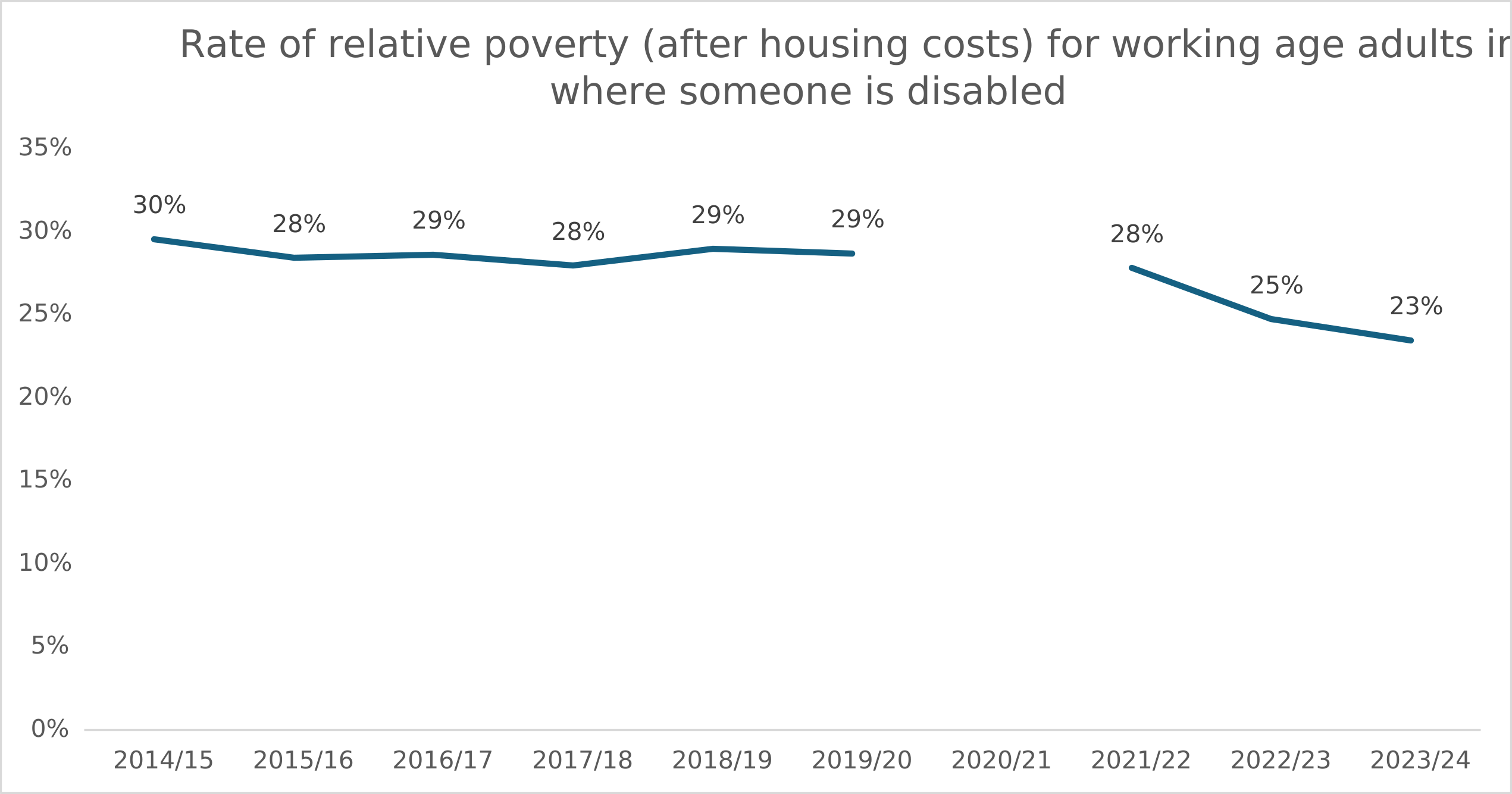
Source: Households below average income (HBAI) statistics - GOV.UK
Goal 5: Deliver high quality, efficient services, ensuring that people are treated with dignity and respect
Introduction
In this section we will discuss the operational performance of our services during 2024 to 2025, highlighting efforts to deliver high-quality, efficient services while ensuring dignity and respect for all individuals.
This section provides an analysis of performance indicators, including telephony, claim processing, backlog management, and quality improvements. We also highlight specific service areas such as the new online claim service for Attendance Allowance and the impact of increased demand on services like Pension Credit and child maintenance.
Modernising Services
We have continued to replace outdated legacy systems, embedding a culture of innovation and digitally enabled delivery with greater access to services for our customers.
This is allowing more customers to self-serve where they can, helping us to better manage demand on our services and equipping us to deliver an improved service for all customers, including those with additional needs.
We have significantly increased our ability to provide online channels for customers across various services, including Attendance Allowance claims, improvements to child maintenance online services, and enhancements to the Pension Credit online service to improve the customer experience.
Looking ahead, we plan to expand the adoption of improved technology, including automation and artificial intelligence (AI), in more of our services. Continued modernisation will be developed and implemented carefully, with improved customer experience at its heart. We aim to equip frontline colleagues with the tools, systems, and support needed to deliver these enhanced services.
The section below provides examples of some of the services that we have introduced:
We are delivering outcomes across DWP services
- 60% of Maternity Allowance customers are benefitting from a simplified process using automated HMRC data to support the calculation of their entitlement. In time this will remove the need for customers to submit documentary evidence of earnings.
- 1.4m - Child Maintenance customer now have an active My Child Maintenance Case (MCMC) account with 82% of contact now only through MCMC.
- Over 45 million calls have now passed through Conversational Platform (CP) for Benefit and Jobcentre Enquiry Lines, with CP correctly identifying the reason for call for over 97% of customers who have interacted with the virtual agent.
- Attendance Allowance - by modernising the application process for Attendance Allowance through the creation of an online claim service, customers are now able to submit their claims significantly more quickly compared to the traditional paper application process.
- Over 55,000 customers have used the Respond to Child Maintenance Application online service.
- In January 2025, 85% of State Pension claims were made online. 83% of these were either fully automated with no agent intervention, or completed by an agent in a single interaction.
Spotlight on Attendance Allowance Online
In May 2024, we introduced an online application channel for Attendance Allowance.
The new online claim service offers an alternative to the previous 32-page paper application form by only asking for information relevant to the customer’s circumstances.
By the end of February 2025, we had received over 110,000 applications online. The new service has been well received with a 74% customer satisfaction score as of the end of February 2025 and lots of positive customer feedback, including:
“Found it very easy to use, don’t think you could make it easier.”
“I found the questions very straightforward and in straightforward language, so can’t think of any improvements that could make it easier.”
“It’s great that DWP are making advances to being online.”
Our Performance
Telephony
Telephony demand increased for many services, including State Pension and Pension Credit. We answered 43.0 million calls in 2024 to 2025 compared to 36.7 million in 2023 to 2024. Our call answering rate increased to 86.0% (from 84.9%), and the average answering time improved from 8 minutes 34 seconds to 7 minutes 22 seconds. This includes calls answered by DWP and outsourced partners.
Throughout the year we made a number of improvements to our telephony service. For example, we began rolling out the ’conversational platform’ which better routes customers to the right service at the right time by inviting them to say why they are calling at the start of the call. Once fully deployed across all service lines, this will reduce the time callers spend listening to a menu of choices.
New claims
Reflecting increased demand on our services the Department processed 15% more claims throughout 2024 to 2025 compared to the previous year 2023 to 2024.
The chart below shows that in 2024 to 2025, 69.7% of new claims for Universal Credit (UC), Jobseeker’s Allowance (JSA), Employment and Support Allowance (ESA), State Pension (SP), Pension Credit (PC), Disability Living Allowance (DLA), Personal Independence Payment (PIP) and child maintenance (CMS) were processed within planned timescales.
Due to a delay in the availability of UC new claims household data the latest quarterly UC timeliness performance cannot be included. To provide a comparable aggregated view to previous years, we have used the latest published year (November 2023 to October 2024) of UC performance.
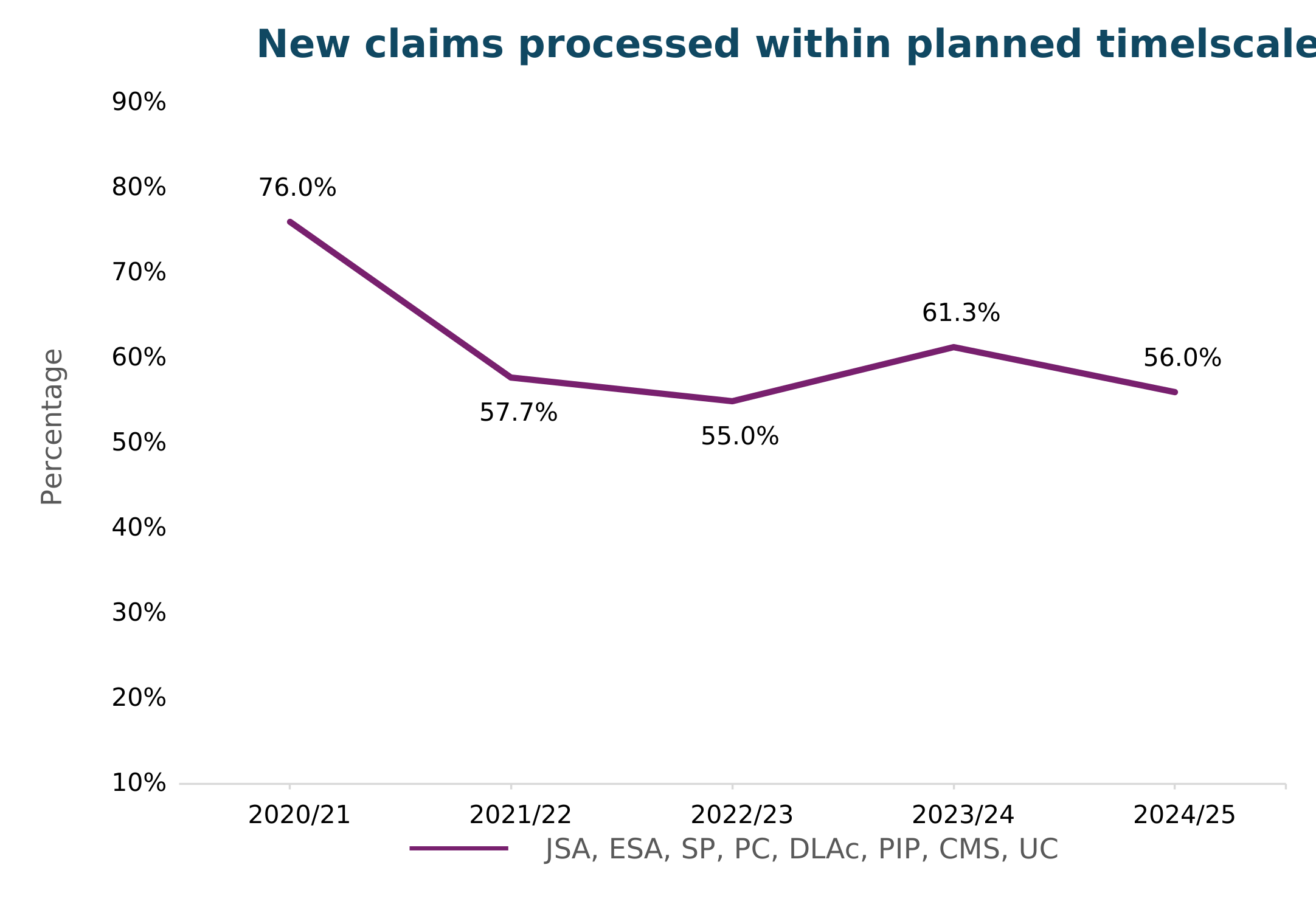
Source: internal DWP MI data
The table below shows a breakdown of performance by service line.
New claims timeliness by service
| Service | 2020-21 | 2021-22 | 2022-23 | 2023-24 | 2024-25 |
|---|---|---|---|---|---|
| Jobseeker’s Allowance | 82.5% | 87.1% | 67.8% | 58.7% | 51.5% |
| Employment & Support Allowance | 70.9% | 42.5% | 47.4% | 39.5% | 22.8% |
| State Pension | 76.2% | 45.6% | 72.0% | 96.2% | 97.0% |
| Pension Credit | 88.2% | 74.3% | 45.7% | 77.7% | 62.4% |
| Disability Living Allowance (Child) | 92.1% | 35.6% | 4.6% | 3.5% | 3.5% |
| Personal Independence Payment | 23.0% | 6.8% | 38.4% | 51.7% | 51.0% |
| Child Maintenance Service | 84.3% | 84.3% | 79.4% | 79.6% | 79.3% |
| Universal Credit | 90.9% | 85.7% | 84.4% | 83.6% | 80.8% |
| Overall | 82.3% | 61.8% | 62.7% | 72.2% | 69.7% |
Source: internal DWP management information
The Pension Credit media campaign was aimed at encouraging eligible customers to apply. As a result, we cleared 273,800 Pension Credit claims from 29 July 2024 to 30 March 2025, representing a 90% increase in clearances compared to 144,100 cleared Pension Credit claims for the comparable 2023 to 2024 period (31 July 2023 to 31 March 2024).
Personal Independence Payment (PIP) performance has remained stable despite the continuing upward trend in demand. The PIP caseload in March 2025 was 3.7 million compared to 3.5 million in March 2024 and has significantly increased post-pandemic from 1.9 million in March 2019.
We cleared 849, 000 applications between April 2024 and March 2025 compared to 799,000 than during the equivalent period in 2023.
In the case of Disability Living Allowance for children (DLAc), timeliness performance remained poor – primarily due to demand being higher than the staffing available. In 2024 to 2025 demand for DLAc continued to trend upwards, with the caseload increasing to 753,000 by August 2024, a 14% increase on the same period in 2023 to 2024 and 44% higher than the pre-pandemic figure of 521,000 (February 2020). Between October 2024 to March 2025, we deployed around 100 case managers to support recovery with an aim to meet timeliness standards of 85% New Claims cleared within 40 working days and aim to recover by Q1 of the New Operational Year. However, lead times for completing training, combined with potential for further growth in demand, represents risks to this recovery plan.
Across the year we continued to process claims in date order to ensure fairness for customers and are continuing to explore options for wider transformational change. The quality of service delivered to customers remains a key priority, with 87% of DLA customers surveyed reporting that they are satisfied with the service they received.
Child Maintenance Service (CMS) maintained its performance, with the percentage of child maintenance applications processed up to the initial calculation stage rising from 87.6% in March 2024 to 93.8% in January 2025.
We are reviewing our timeliness standards and developing an approach for 2025 to 2026 to ensure that the standards reflect the current policy and process and drive the right customer outcomes.
Backlogs in Service Delivery
We will always have work (for example claims) pending of varying levels as it is part of the natural administering of our caseload. However, backlogs, which would be where we consider the amount of work outstanding to be higher than would be optimal for efficient throughput, continued to be a challenge during the financial year in some areas including Disability and Retirement Services. As a result, where those levels of outstanding work and/or customer journeys increased beyond optimal levels, we looked to a number of opportunities to improve performance including redeploying resources and introducing modernisation solutions. With that approach, we cleared a number of backlogs including Carer’s Allowance claims, Child Maintenance change of circumstance and Personal Independent Payment mandatory reconsiderations.
Quality
During 2024 to 2025 we continued to focus on achieving quality outcomes for customers by getting things right first time and reducing error (see the ‘Fraud, Error and Debt report’ section).
We have a robust quality assurance framework for all business areas which improves the quality and accuracy of services. This allows us to target areas that cause the most error, examine when, how and why things go wrong, and identify improvement measures to prevent errors happening in the future.
We enhanced the skills of our colleagues through initiatives such as creating training videos to increase knowledge of Identity Verification (IDV) standards. These products were launched and communicated internally, supported by team leader briefings to embed and consolidate learning. Overpayments associated with IDV processes in Universal Credit reduced by 1.8% points to 0.63% for the first assessment period – a near 75% improvement. We also introduced enhancements in the Universal Credit system, to reduce payment errors linked to incorrect assessment of customer capital, reducing the need for benefit recovery and minimising disruption to customers.
In addition, we have piloted process checklists in Pension Credit and Employment and Support Allowance to increase understanding of entitlements to disability premiums, ensuring our customers receive the benefits they are entitled to.
During 2024 to 2025 we have delivered several further improvements to support the quality and delivery of services including:
- producing new quality assurance data segmentation to help service lines identify areas for improvement
- enhancing ‘claimant commitments’ to empower customers to take ownership of their job search activities, fostering a sense of responsibility and motivation, and ensuring they receive the right support to move into work
- developing bite-sized learning products to improve our colleagues’ capability in determining the correct Disability Premiums for customers
Customer satisfaction and feedback
Our Customer Experience Survey measures customer satisfaction with the overall service they received across 8 of DWP’s benefit lines: Universal Credit, Personal Independence Payments, Employment and Support Allowance, Disability Living Allowance (child), Attendance Allowance, Carer’s Allowance, State Pension and Pension Credit.
In the first 3 quarters of 2024 to 2025 (April to December 2024), overall customer satisfaction with our services remained above our 85% benchmark for good performance. The overall satisfaction score has remained stable, increasing by one percentage point to 86% compared to 2023 to 2024 (not a statistically significant change).
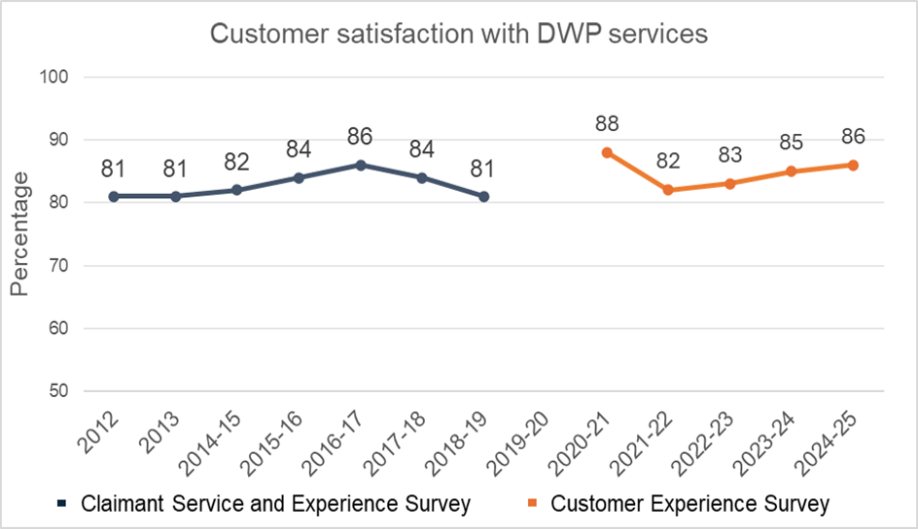
Source: internal DWP MI. This graph shows annual data for all years, except 2024 to 2025, where data for the full year is not yet available. The 2024 to 2025 score is based on the first 3 quarters of the year only (April to December 2024).
Percentage of customers who were satisfied with the services provided by the Department by benefit
| Benefit line | 2020-21 | 2021-22 | 2022-23 | 2023-24 | 2024-25 |
|---|---|---|---|---|---|
| DWP Overall | 88% | 82% | 83% | 85% | 86% |
| Universal Credit | 89% | 83% | 83% | 84% | 86% |
| Employment and Support Allowance | 83% | 78% | 81% | 81% | 78% |
| Personal Independence Payment | 77% | 75% | 77% | 83% | 81% |
| Disability Living Allowance for Children | 95% | 89% | 88% | 88% | 87% |
| State Pension | 92% | 87% | 93% | 91% | 94% |
| Pension Credit | 93% | 88% | 89% | 91% | 91% |
| Attendance Allowance | 96% | 94% | 94% | 95% | 93% |
| Carer’s Allowance | 93% | 89% | 91% | 92% | 91% |
Source: Source: internal DWP MI. This table shows annual data for all years, except 2024 to 2025, where data for the full year is not yet available. The 2024 to 2025 score is based on the first 3 quarters of the year only (April to December 2024). Please note none of the changes in scores from 2023 to 2024 to 2024 to 2025 are statistically significant.
Customer complaints
We operate a single-tier complaints service, which focuses on early resolution. If a customer remains dissatisfied with our response, they can escalate their complaint to the Independent Case Examiner (ICE). Following an investigation by ICE, if a customer continues to remain dissatisfied, they can escalate to the Parliamentary and Health Service Ombudsman (PHSO) via their MP.
Total complaints have remained stable year-on-year between 2023 to 2024 and 2024 to 2025, at around 23,700. The number of complaints about our service continue to represent less than 1% of our customer base.
We publish quarterly volumes of complaints[footnote 39] on GOV.UK. The table below shows the number of complaints every quarter to the end of 2024 to 2025, for each of our business areas for the last 2 years.
| Date | Retirement Services | Universal Credit (UC) | Working Age (excluding UC) | Disability Services | Child Maintenance Service[footnote 40] | Counter Fraud Compliance and Debt |
|---|---|---|---|---|---|---|
| April to June 2023 | 1,340 | 2,000 | 340 | 830 | 1,285 | 320 |
| July to September 2023 | 1,055 | 1,845 | 385 | 780 | 1,385 | 325 |
| October to December 2023 | 925 | 2,085 | 260 | 695 | 1,260 | 340 |
| January to March 2024 | 1,050 | 2,250 | 270 | 845 | 1,435 | 380 |
| April to June 2024 | 855 | 2,020 | 245 | 775 | 975 | 295 |
| July to September 2024 | 790 | 2,200 | 255 | 710 | 980 | 325 |
| October to December 2024 | 1,155 | 2,755 | 230 | 770 | 1,260 | 320 |
| January to March 2025 | 1,105 | 2,865 | 245 | 1,010 | 1,240 | 300 |
We continue to make significant improvements to our complaints service by making processes simpler and easier for customers. During 2024 to 25 insight from our quality measures highlighted inconsistent levels of capability within our complaint resolution teams. To improve this, we developed a bespoke accredited learning programme which has enhanced the skills and capability of our complaint handlers and created a professional complaints service.
Independent Case Examiner (ICE)
Customers who have completed our complaint process and remain dissatisfied can ask the ICE to investigate their complaint.
In 2024 to 2025, ICE received 6,960 complaints against the Department and cleared 2,143. ICE continued to experience high intake volumes, with a 24% increase in approaches and a 20% increase in the number of accepted cases on the previous operational year.
Of the 2,143 complaints ICE cleared:
- 53 were withdrawn by the complainant
- 629 were resolved or settled with the complainant’s agreement
- 879 were upheld, fully or partially by the ICE
- 578 were not upheld by the ICE
- 4 cases where the ICE was unable to reach a finding
ICE also investigates complaints relating to contracted providers, the Department for Communities (DfC) and the Child Maintenance Service in Northern Ireland (NI CMS).
| All complaints including DWP, contracted providers, DfC and NI CMS | 2023-24 | 2024-25 |
|---|---|---|
| Received by ICE | 5,824 | 7,149 |
| Accepted for examination by ICE | 1,861 | 2,214 |
| Cleared by ICE | 2,658 | 2,236 |
| ICE partially/fully upheld | 765 | 893 |
| PHSO partially/fully upheld all complaints | 0 | 0 |
In addition to investigating case-specific complaints of maladministration, ICE also identifies wider Service Improvement Observations (SIOs) which aim to limit the scope for future service failures and improve the service provided to customers. In 2024 to 2025 ICE highlighted 14 SIOs to us.
For example, ICE identified a need for CMS colleagues to understand better guidance and legislation for same sex parents, following consideration of a case in which, on multiple occasions, CMS misunderstood the difference between parental responsibility and parentage. Once alerted to the issue, CMS acknowledged that although appropriate information and guidance is in place, these can be complex issues which colleagues may not encounter routinely. CMS, therefore, updated relevant guidance so that it directs colleagues to our parentage single point of contact team, who will advise on the correct action to take in such cases.
The ICE’s annual report on complaints from 1 April 2023 to 31 March 2024 is available on GOV.UK providing details of SIOs, along with our response.
Complaints investigated by the Parliamentary and Health Service Ombudsman (PHSO)
If customers remain dissatisfied with the outcome of ICE’s intervention, they may pursue their case with the PHSO. An update on the PHSO investigation into complaints about women’s State Pension age is at the section ‘Parliamentary and Health Services Ombudsman (PHSO) investigation – women’s State Pension age’.
PHSO’s annual report and accounts[footnote 41] gives details about the complaints they receive. The PHSO publishes its figures a year behind other data.
| Complaints investigated by the PHSO | 2022-23 | 2023-24 |
|---|---|---|
| Number of complaints investigated | 21 | 27 |
| Number not upheld | 10 | 12 |
| Number partly upheld | 7 | 8 |
| Number upheld | 4 | 7 |
| Number other outcomes | 0 | 0 |
| % not upheld | 48% | 44% |
| % partly upheld | 33% | 30% |
| % upheld | 19% | 26% |
| % other outcomes | 0% | 0% |
Ministerial correspondence
The ministerial correspondence team is responsible for drafting responses from ministers to policy-related correspondence from elected officials and members of the public.
Since the election, the majority of correspondence received reflects policy areas that have had the most media attention, meaning related to Winter Fuel Payments, the Parliamentary Health Service Ombudsman’s report on State Pension age, and Health and Disability Benefit Reform. The lower-than-average performance reflects an overall increase in letters received across these areas. The Department continues to receive correspondence on other areas including on uprating, the Child Maintenance Service and Fraud.

Real Time Information disputes
Real Time Information (RTI) is the HM Revenue and Customs database that holds Pay As You Earn information. We hold RTI information in our Real Time Earnings database. The calculation of a customer’s earned income for an assessment period in Universal Credit is based on the actual dates and amounts reported by the employer.
Disputes are received when a customer disagrees with the amount of earnings used in their Universal Credit award calculation. The table below shows the RTI disputes data for 2024 to 2025 compared to previous year:
| Date range | 2023-24 | 2024-25 |
|---|---|---|
| Earnings retrieved from RTI[footnote 42] | 78,200,000 | 89,900,000 |
| RTI disputes raised[footnote 43] | 371,000 | 386,000 |
| RTI disputes raised as a proportion of RTI earnings retrieved | 0.5% (0.475%) | 0.4% (0.429%) |
| RTI disputes processed[footnote 44] | 329,000 | 329,000 |
| RTI disputes processed, and dispute upheld by agent | 65,600 | 77,500 |
| RTI disputes processed, and dispute not upheld by agent | 190,200 | 165,200 |
| RTI disputes processed and dispute outcome unknown[footnote 45] | 73,400 | 86,100 |
| RTI disputes processed and known to be upheld as a proportion of Total RTI earnings retrieved | 0.08% | 0.09% |
| RTI disputes processed with dispute outcome unknown as a proportion of Total RTI earnings retrieved[footnote 46] | 0.09% | 0.10% |
Less than 1% of RTI disputes processed are upheld in the customer’s favour. RTI remains an efficient and accurate method of calculating Universal Credit payments.
Impact of our policies
Our policies impact a significant percentage of the population. We work hard to understand the impact of proposed changes to policies, to ensure that they are proportionate and effective. We often consult members of the public, trade bodies and other interested parties, through a public consultation process prior to introducing or amending policies. We take any feedback received into consideration when making final policy decisions.
When we modernise our powers, we consider the legal justification for any potential Human Rights infringements. For example, we assessed the compatibility of the Public Authorities (Fraud, Error and Recovery) Bill 2025, with Convention rights such as the right to private and family life. Our lawyers also regularly consider the merits of human rights challenges to our policies and decisions in litigation cases.
Prior to introducing policy changes we also conduct Equality Impact Assessments to test whether our proposed approach is not only proportionate, but to also understand the effect that policies, services and procedures have on people from protected groups. Through the UK judicial review system, individuals and affected organisations can challenge the legality of our decisions. We scrutinise the decisions of the courts to ensure we understand the human rights impacts of our policies.
Equality and Human Rights Commission (EHRC) investigation
On 22 May 2024, the Equality and Human Rights Commission (EHRC) launched an investigation under Section 20 of the Equality Act 2006 into whether we had failed to make reasonable adjustments when making health assessment determinations for disabled customers with mental health impairments.
The EHRC, using their powers under Section 31, has also been assessing whether in developing and implementing the related policy guidance we failed to comply with the Public Sector Equality Duty.
We have worked transparently and constructively with the EHRC as they conduct their investigation and assessment. The Secretary of State and Permanent Secretary met with the EHRC’s Chair and CEO in October 2024. This was a welcomed opportunity to express our commitment to putting right any areas the Commission may identify that require improvement.
The Department has responded to all the requests for information received to date from EHRC for the Section 20 investigation and Section 31 assessment and we continue to cooperate fully with the EHRC. We will provide further updates once we have reviewed the Commission’s findings and recommendations in due course.
As a learning Department we want to use this investigation, assessment, and the Commission’s expertise, to understand where our services can be improved to ensure they meet the needs of our customers who may require reasonable adjustments.
Supporting our most vulnerable customers
Building on our Values, we are embedding a culture and practice that strives to provide the best for the people we serve, ensuring they are treated with dignity and respect. We offer a tiered system of support for our most vulnerable customers. All colleagues are trained to identify vulnerabilities and put in place the right support. We then have specialist help for the most complex cases. We use insight and data to improve the experience of all customers when accessing our services, especially when additional help is needed.
DWP Frontline Operations - All DWP colleagues are trained to help support the most vulnerable customers.
Advanced Customer Support - Specialist help is also available if and when it is needed by customers.
Learning from experience - We use insight to improve what we do and this informs design and delivery.
In 2024 to 2025 we have:
-
Published fully accessible information explaining the support available to customers when making and managing their benefit claim[footnote 47].
-
Worked in partnership with local organisations, testing new ways of working, taking our services out into the local community, addressing barriers to work with plans to extend this work across Great Britain. Working out of places like a library or GP surgery creates a safe and supportive space for customers to talk to us, which helps build trust.
-
Created an enhanced Move to Universal Credit support journey for potentially vulnerable ESA and Income Support customers by recruiting 105 complex case coaches to provide additional support, including additional outbound calls, home visits and help with navigating the claim process. We continue to provide support for other Move to Universal Credit customers through our visiting service and Advanced Customer Support Senior Leaders.
-
Introduced new systems to monitor the wellbeing and circumstances of customers. For example, the Universal Credit system now displays current and previously declared support needs, giving a holistic view of each customer to tailor the right support.
-
Continued to strengthen engagement with multi-agency partnerships that lead and oversee adult safeguarding within local areas (Safeguarding Adult Boards), creating new channels to provide and share information on joint customers. Where appropriate, Advanced Customer Support Senior Leaders support Safeguarding Adult Boards’ multi-disciplinary meetings and can escalate any concerns they identify. Advanced Customer Support Senior Leaders now have relationships with more than 80% of Safeguarding Adult Boards across Great Britain.
DWP visiting service and Advanced Customer Support Senior Leaders (ACSSLs)
Our visiting service provides valuable face-to-face support to customers who cannot access our services in any other way because, for example, they have complex needs, are disabled, are a vulnerable person making a claim for the first time, have nobody else to support them, or they cannot claim benefits in any other way.
Across 2024 to 2025, our visiting service received 237,866 referrals, of which 217,145 were from internal colleagues and 20,721 from external partners. These referrals resulted in 146,478 visits and generated 193,824 inbound calls from customers or their representatives. For more information on how we support our existing claimants to understand what they may be eligible for and claim what they are entitled to, please see the section on ‘Unfulfilled eligibility’.
Our ACSSL network provides advice, coaching and links into external partners (such as local authorities, social services and local charities or support organisations). These external relationships allow ACSSLs to be aware of key issues that may be unique to customers in their own local area, tailoring support with the aim of designing local solutions to support vulnerable customers.
During 2024 to 2025, the ACSSL community formed relationships with 1,620 external partners, creating more referrals and escalation routes to support customers. ACSSLs supported 12,202 customer cases, of which 6,768 were referrals from colleagues and 5,434 from external organisations. Through developing their local relationships, the proportion of external referrals made to ACSSLs has increased to 45% of all referrals in 2024 to 2025 (up from 41% in 2023 to 2024).
A key part of the ACSSL role is to deliver learning and coaching to build capability across the teams who work with our customers, helping them support our most vulnerable customers and those at risk in the best way.
During 2024 to 2025, ACSSLs and their delivery teams delivered 718 learning sessions impacting 27,628 people supporting frontline colleagues on issues including: domestic abuse, modern slavery, identifying vulnerabilities, homelessness, appointees and the importance of professional curiosity.
Customer accessibility
We strive to continuously improve accessibility for customers using our services. During the past operational year, we have:
-
implemented changes to call scripts, asking for and recording alternative formats and reasonable adjustment questions earlier in the journey
-
made amendments to guidance so colleagues can better support customers
-
added additional questions to the Employee and Support Allowance online claim journey to capture alternative format requirements
-
developed learning resources to support colleagues’ understanding of customer accessibility
-
developed and maintained an interactive online community for information and colleague advice, the combined audience of which is over 5,000
-
delivered live calls and podcast-style content focusing on areas that colleagues need support with, attracting live audiences of up to 1,000 per month
-
made improvements to the process for email as a reasonable adjustment across Employee and Support Allowance, Personal Independence Payment and Jobseeker’s Allowance – 20 Jobcentres commenced delivery of a VRI service as part of a pilot from 6 January 2025 for UC British Sign Language (BSL) users. This allows us to provide 3-way video calls between customers, DWP users and interpreters. The service was evaluated in March, and we gained agreement to roll this out to a further 40 sites, with the aspiration for full roll-out later in the year.
-
used our dedicated BSL YouTube channel to publish content covering important and helpful information including information on benefits and services, becoming one of the departments leading the way on production of BSL public communications. Our BSL social media content has grown by over 7 hours in the last year.
Our ambition is to identify and record our customers’ additional needs through our systems, making benefits accessible to all. This is a key part of our modernisation strategy to enable us to improve customers’ experience.
We continue to use speech analytics software to transcribe and analyse calls, providing useful insight to improve service delivery and identify where a customer may be at risk of harm.
Social media analysis is used to track public online content, conversations, and behaviours, which enables us to identify and analyse trends and emerging topics affecting customers and citizens.
Operational Stakeholder Engagement Forum (OSEF)
Each month we host OSEF, a trusted forum that enables us to gather insights and engage with key national organisations representing customers. Over 2024 to 2025 we facilitated over 60 stakeholder insight workshops and more than 70 individual collaboration sessions to better understand how our services impact on customers. This has resulted in improvements, including:
-
the introduction of PIP ‘how to’ guides and Winter Fuel Payment information videos
-
improving how customers with both physical and mental health conditions access our services via telephone, recommending ‘conversational platform’ script changes to ensure a customer’s call is routed to the team best placed to support them
Organisational learning
We continue to develop as a learning organisation, notably from serious cases, customer complaints, observations, call listening, ACSSL and visiting service insight, feedback from external organisations and from ICE reports. This range of evidence is shared with colleagues delivering customer-facing services.
We maintain a dedicated, independent team who undertake Internal Process Reviews of serious cases to consider if our processes were followed and, if not, to understand why so that we can improve customers’ experience in the future.
Throughout the year, the team have delivered awareness sessions across the Department to increase understanding of IPRs and the learning process from serious cases. This led to an increase in the number of cases referred and accepted for an IPR. During 2024 to 2025 we received 99 IPR referrals from colleagues, of which 90 met the criteria and were accepted for investigation.
Of those referrals accepted, 59 were made following the Department being notified of a customer’s death, and 31 where a customer suffered serious harm.
The following chart shows the primary service lines relating to the customers’ cases accepted for IPRs across 2024 to 2025.
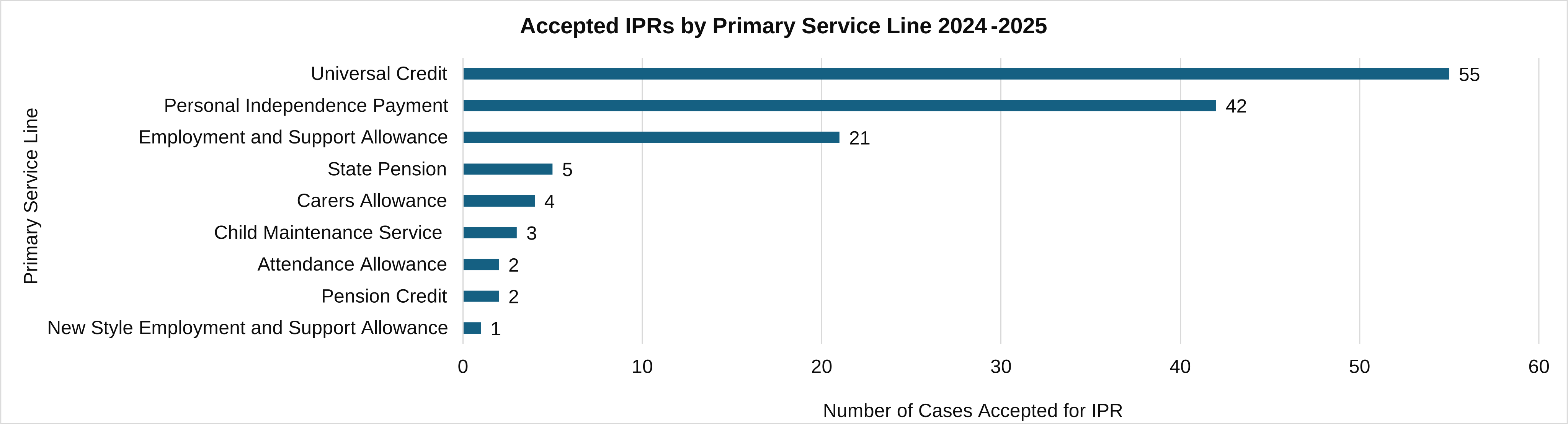
Note that cases received for IPRs can cover more than one DWP service line, as customers may have more than one benefit in payment, meaning they can have more than one primary service line recorded for the IPR.
We identified 211 key findings from IPRs completed across 2024 to 2025, and this learning insight and evidence is shared with product leaders who agree action and ownership for continuous improvement activity. Where there are themes from serious cases, these are referred to the serious case panel for discussion and support in delivering change in the Department.
To strengthen organisational learning across our health and disability benefits, our Chief Medical Advisor established the Clinical Governance and Excellence Board in April 2024. This board focuses on topics and themes arising as a result of clinical governance. Recommendations are then taken forward across both the Department and our assessment providers.
Serious case panel
The serious case panel[footnote 48] continues to consider themes and issues that have been identified from serious cases, agreeing improvement activity and overseeing progress.
In 2024 to 2025 the panel discussed the identification of vulnerabilities and how we could better tailor the support we offer customers based on their needs.
Work to address some of those challenges included:
-
strengthening our safeguarding measures as part of the referral and sanctions process, including the assessment of vulnerability before putting a sanction in place
-
the introduction of a Customer Additional Needs framework across Universal Credit to update our existing customer support strategies. It promotes an integrated and aligned way of working to ensure appropriate networks and processes are utilised to deliver an effective service, whilst also addressing customers’ complex needs, barriers and health conditions, applying a trauma-informed approach.
-
in delivery of the first phase of a new digital service which allows over 6,000 colleagues to view customers’ records for multiple benefits in one place, with information such as payments and contact history. This enables colleagues to answer simple queries across benefit lines, creating a better experience for our customers.
-
the introduction of an Artificial Intelligence tool in December 2023 identified if a customer needed urgent support from the documents and messages they sent us. Following a review by experienced colleagues of communications highlighting potentially at risk customers, 317 were escalated to ensure the customer received the support they needed.
In line with our commitment to be more transparent, the serious case panel endorsed the publication of an annual report detailing how we improved our support for vulnerable customers[footnote 49].
Unfulfilled eligibility
Unfulfilled eligibility refers to cases where claimants are eligible for a higher award but have not provided the correct information needed to calculate that award. The claimant might have provided the wrong information or failed to inform and report about changes to their circumstances which would have resulted in a higher award.
On 15 May 2025 we published our most recent estimates on unfulfilled eligibility[footnote 50].
For information on how we continue to deliver key services to claimants, simplify processes and provide additional support to claimants with complex needs to support individuals to claim what they are entitled to, see supporting our most vulnerable customers in the section ‘Supporting our most vulnerable customers’. For information on how we have supported disabled people and those with health conditions see Goal 4. For information on how we are trying to improve take up of benefits see Goal 4. In the 2024 to 2025 unfulfilled eligibility estimates, Disability Living Allowance (DLA), Personal Independence Payment (PIP) and Universal Credit (UC) account for 80% of the total value of unfulfilled eligibility. In particular, PIP and UC account for some of the highest levels of unfulfilled eligibility in the benefits system and therefore additional focus is given on these areas as detailed below.
What have we done to support people claim what they are eligible for during 2024 to 2025?
The following section highlights the approach being taken to reducing levels of unfulfilled eligibility in key benefit areas.
Disability benefits
Disability benefits, including Personal Independence Payment (PIP) and Disability Living Allowance (DLA), are important non-means tested benefits for eligible disabled people and people with long-term health conditions. Our approach to ensuring our claimants get what they are eligible for is underpinned by the principle of treating people with dignity and respect.
Promoting claimant understanding of eligibility criteria and evidence requirements is one of the ways we try to prevent unfulfilled eligibility across disability benefits. In doing this, claimants should be in a better position to inform us when they could be eligible for more entitlement. Claimants are provided with this information from the outset of a claim via GOV.UK, which includes instructions on reporting a change of circumstances. We encourage all claimants to let us know straight away if their needs have reduced or, regarding unfulfilled eligibility, if they have increased. When a claimant reports a change of circumstances, we prioritise their case to ensure they receive the rate of benefit to which they are entitled.
We also promote claimant understanding and awareness of their responsibilities to report changes that could lead to greater entitlement through our letters. They set out these requirements, with a list of the main types of changes provided. PIP letters list change of condition and a claimant becoming terminally ill as examples of when they should contact us.
If a claimant has experienced a change to their circumstances that could make them eligible for increased entitlement, these changes can be reported to us via multiple routes, including by telephone or clerically via postal channels. For more information on the work we are doing to support disabled people and people with health conditions, see Goal 4.
Universal Credit
Universal Credit (UC) is an in and out of work benefit that supports people either currently unable to work, looking for work or working on a low income. It is paid in relation to the household, and the household’s circumstances.
As in other benefits, for UC we provide information to claimants from the outset of a claim to support their understanding of eligibility requirements and support them in claiming what they are entitled to. This information is reinforced during their claimant commitment interview with a work coach.
Changes to the household are reported through the claimant’s UC account, and the claimant is reminded to report any changes every month in their UC statement. This includes as standard a message explaining that the claimant should report any changes to us as well as signposting to other support the claimant may be able to receive. Claimants can receive additional assistance through their UC journal, by contacting a service centre or speaking with their work coach.
UC utilises real time earnings information provided by HM Revenue and Customs to accurately record the correct level of earnings received for the period, raising the UC award where earnings may have dropped and ensuring we are paying the right person the right amount of money at the right time.
Childcare costs support is one example of an area where action has been taken to help support working parents on UC who may be entitled to greater support. A national Childcare Choices advertising campaign recently ran to bring attention to the additional support that could be available to UC claimants as well as information explaining how the UC offer works in conjunction with other government offers, such as the Department for Education’s funded childcare hours.
Customer Experience – Visiting Service
As outlined in the section ‘Supporting our most vulnerable customers’ our national Visiting Service provides face-to-face support to claimants who cannot access our services in any other way. When it comes to unfulfilled eligibility this service can be used for support with an existing claim for benefit and across 2024 to 2025 there were 28,163 cases referred for a visit to support reviews of existing claims. These visits can include verifying information provided by the claimant, ensuring accurate collection of information, providing the claimant with an explanation of the potential impact on other benefits or a benefit entitlement check being undertaken to ensure the claimant is receiving their full entitlement.
Customer Experience – Operational Stakeholder Engagement Forum
As outlined in the section ‘Supporting our most vulnerable customers’ the Operational Stakeholder Engagement Forum (OSEF) gathers insight and engages with key national organisations representing customers across all benefit areas. When it comes to unfulfilled eligibility, the forum gives us an opportunity to promote initiatives to increase the reporting of changes which our members can support our claimants with. Some examples being:
-
improving the wording in Pension Credit claim forms making it as easy as possible for pensioners to claim Pension Credit
-
using the members to promote claiming Pension Credit and explaining the options available to pensioners
Work is currently in train on how our members can support claimants with knowing what and when to notify us of changes and what those changes could mean to our claimants.
Unfulfilled eligibility estimates
We measure unfulfilled eligibility to understand the levels, trends, and reasons behind it – helping us identify what we can do to reduce the level of unfulfilled eligibility in the benefit system.
The total benefit expenditure increased to £292.2 billion in 2024 to 2025, from £266.2 billion in 2023 to 2024. The total unfulfilled eligibility rate for 2024 to 2025 was 1.3% (£3.7 billion) across all benefit expenditure, compared to 1.2% (£3.1 billion) in 2023 to 2024.
The analysis showed for 2024 to 2025, Disability Living Allowance (DLA), Personal Independence Payment (PIP), and Universal Credit (UC) accounted for 80% of the total value of unfulfilled eligibility. DLA was not measured in the 2024 to 2025 Unfulfilled Eligibility statistics and so we have assumed the same rate moving from last year to this year.
Universal Credit
The rate of unfulfilled eligibility in Universal Credit (UC) was 1.5% of UC expenditure compared with 1.4% in 2023 to 2024, with a financial value of £980 million, compared to 1.4% (£730 million) the previous year. The largest source of unfulfilled eligibility in UC for 2024 to 2025 was due to claimants failing to report increases in their rent amount or for not claiming housing costs they were entitled to, equivalent to around 0.5% of UC expenditure.
Personal Independence Payment
The rate of unfulfilled eligibility in Personal Independence Payment (PIP) was 4.1% in 2024 to 2025, compared to 4.0% in 2023 to 2024. The financial value was £1,060 million – accounting for 30% of unfulfilled eligibility – compared to £870 million last year. All unfulfilled eligibility in PIP was due to claimants not informing us that they needed more help or that their conditions had deteriorated.
Disability Living Allowance
Unfulfilled eligibility in Disability Living Allowance was not measured in 2024 to 2025. However, the previous rate of 11.1% measured in 2023 to 2024 has been applied to the expenditure for 2024 to 2025. Disability Living Allowance has the highest unfulfilled eligibility rate but with a relatively low expenditure. This has resulted in a monetary value of £850 million for Disability Living Allowance in unfulfilled eligibility. It accounts for a similar value of unfulfilled eligibility when compared to Universal Credit and Personal Independence Payment in 2024 to 2025.
Other
Other benefits account for much smaller amounts of total unfulfilled eligibility compared to PIP, DLA, and UC in 2024 to 2025. The drivers of this unfulfilled eligibility were largely due to claimants not informing us of changes in household composition (Pension Credit) and not telling us about changes in housing costs (Housing Benefit).
Devolved governments
We continue to work closely with all 3 devolved governments.
Scotland
The Scottish Government introduced its Carer Support Payment (which replaces Carer’s Allowance) in November 2023, and we have since supported its phased expansion in line with the Scottish Government’s timetable, with new claims becoming available across the whole of Scotland in November 2024. The transfer of around 120,000 existing Scottish Carer’s Allowance cases from DWP to Social Security Scotland is almost complete.
We have also supported the Scottish Government’s introduction of 2 new disability benefits. In October 2024, the Scottish Government introduced its Pension Age Disability Payment (PADP) this replaced Attendance Allowance (AA) in 5 local authority areas in Scotland. We introduced legislation that will allow PADP to be treated in the same way as AA for the purposes of accessing reserved premia and additional payments. We supported Social Security Scotland’s planned expansion to more local authority areas in March 2025. The transfer of around 169,000 existing AA cases to PADP began in February 2025.
In March 2025, the Scottish Government introduced Scottish Adult Disability Living Allowance (SADLA) to replace DLA for existing claimants aged 18 and over. We launched legislation that will allow SADLA to be treated in the same way as DLA for the purposes of accessing reserved premia and additional payments. In March 2025, the process of transferring existing Scottish DLA cases to Social Security Scotland started.
The remaining PIP cases for people living in Scotland were identified for transfer to Social Security Scotland. We expect all these to be receiving Adult Disability Payment (Scottish Government’s replacement for PIP) by April 2025.
We continued to share data to allow Social Security Scotland to determine eligibility for their Winter Heating Payment (replacement for Cold Weather Payment). DWP delivered the Pension Age Winter Heating Payment to 120,000 customers on behalf of the Scottish Government in 2024 to 2025.
We continue to deliver the Industrial Injuries Disablement Benefit and Severe Disablement Allowance on behalf of the Scottish Government under the terms of the respective agency agreements.
Northern Ireland
All our policy areas (apart from the private pensions regulatory regime) are transferred (devolved) in Northern Ireland and decisions about policy and delivery are the responsibility of the Northern Ireland Executive. Historically the Department for Communities has maintained a similar system of social security, child maintenance and pensions to us, in line with the parity principle.
Wales
Most matters covered by DWP are reserved to the UK government, but related areas such as skills, training, health, education, childcare, and social care are devolved to the Welsh Government. We worked closely with the Welsh Government to ensure devolved and reserved provision worked effectively together.
Fraud, Error and Debt report
Introduction
We are committed to reducing fraud and error in the benefits system and to the recovery of debts. Part 1 of the Fraud, Error and Debt (FED) report outlines what we have done to improve payment accuracy through preventing and detecting fraud and error. The chapter starts by focusing on how we are improving payment accuracy through better use of data and continuous improvement activity across our benefits, including Universal Credit. It then reports on performance against our 2024 to 2025 fraud and error target. This includes our core detect activities covering our counter fraud and targeted case review teams, savings from these activities in addition to upfront controls, and reporting on the 2024 to 2025 Fraud and Error National Statistics.
Part 2 of the report looks at how we are preventing and correcting underpayments to ensure people are paid their full entitlement.
Finally, when overpayments happen, we commit to recover the money for the taxpayer at the earliest opportunity. We will work with anyone who is struggling with their repayment terms and will always look to negotiate sustainable and affordable repayment plans. Part 3 of the report sets out the management of debt recovery.
Measuring incorrect payments
Fraud and error is made up of overpayments and underpayments[footnote 51] of benefit that fall into one or more of the below 3 categories. The categories are defined by how an incorrect payment is measured in the Fraud and Error National Statistics.
Fraud relates to claims where all 3 of the following conditions apply:
- The conditions for receipt of benefit, or the rate of benefit in payment, are not met.
- The claimant can reasonably be expected to be aware of the effect on their entitlement.
- Benefit payment stops or reduces as a result of a review of the claim.
Claimant error overpayments are where claimants have provided inaccurate or incomplete information or failed to report a change in their circumstances which has led to an overpayment, but there is no evidence of fraudulent intent on the claimant’s part.
Official error is where benefits have been paid incorrectly due to a failure to act, a delay or a mistaken assessment by the Department, a local authority or HM Revenue and Customs, to which no one outside of that department has materially contributed, regardless of whether the business unit has processed the information.
In our 2023 to 2024 accounts, we reported on a new statistical series, Unfulfilled Eligibility in the Benefit System (unfulfilled eligibility was previously classified as claimant error underpayments within the Fraud and Error National Statistics). The statistical series presents how much extra money benefit claimants could be getting if they had told us about their current circumstances correctly. The estimates relating to unfulfilled eligibility in the benefit system are reported on outside of the Fraud, Error and Debt report, but still within Goal 5 of this performance report.
The Monetary Value of Fraud and Error (MVFE) is the headline statistic for overpayments and underpayments and a recognised National Statistic[footnote 52]. Derived from detailed scrutiny of a random sample of benefit cases, this calculates the percentage of the total amount of benefit that is paid incorrectly. The estimated percentage is then applied to the overall benefit expenditure to estimate the monetary amount (in £s) of incorrectness.
Whilst the monetary amounts are more intuitive, it is recommended that the percentage rate of overpayment or underpayment is the better measure to use in any comparisons over time. Monetary amounts are not adjusted for inflation or any changes to benefit rates. For this reason, it is possible for the rate of expenditure overpaid or underpaid to decrease whilst the monetary value increases, and vice versa.
To calculate the level of incorrectness, the following methodology is used.
The Fraud and Error National Statistics calculate overpayments and underpayments in accordance with what is due under the law.
This year, the levels of fraud and error, and unfulfilled eligibility have been measured for Universal Credit, State Pension, Pension Credit, Housing Benefit (passported working-age), Personal Independence Payment and Carer’s Allowance. Carer’s Allowance was last measured in 2019 to 2020. For Housing Benefit, the working-age passported client group was last measured in 2018 to 2019. The make-up of this client group has changed significantly since 2018 to 2019 as it was originally a mixture of passported Jobseeker’s Allowance, Income Support and Employment Support Allowance (ESA) cases. This year only passported ESA cases (without Child Tax Credits) and Universal Credit cases were measured (due to managed migration plans and because these cases make up most of the caseload)[footnote 53].
To measure the levels, a sample of cases is selected from each benefit (around 13,000 cases were sampled for 2024 to 2025). Benefit records are sampled monthly, for each of the benefits being measured.
A preview is completed to collate information on the claimant’s case and circumstances based on information from the Department and local authority systems. We identify any inconsistencies and areas we would want to check and confirm with the claimant. The claimant is contacted by telephone and their circumstances are reviewed, following up on anything identified at the preview or during the call. At the end of the review the claimant is asked to provide evidence to verify their circumstances. This process identifies where a claimant may have been overpaid, underpaid and whether claimants have unfulfilled eligibility.
The results from the sample of benefit reviews are used to estimate rates of fraud and error and unfulfilled eligibility in the population. These rates are then applied to the benefit expenditure for the financial year to estimate the monetary amount of fraud and error and unfulfilled eligibility.
The fraud and error and unfulfilled eligibility estimates need to cover all benefit expenditure administered by us. Some benefits which were not measured this year were measured in previous years. For these benefits, the rate from the last time the benefit was measured is applied to the current year’s expenditure, to get an estimate of the monetary value of fraud and error and unfulfilled eligibility. Some benefits have a small amount of expenditure and therefore are unlikely to ever be selected for measurement. For each of the benefits that have never been reviewed, a similar or passporting benefit’s rate of fraud and error or unfulfilled eligibility is used as a proxy and applied to the expenditure on that unreviewed benefit to get an estimate of the monetary value of fraud and error or unfulfilled eligibility.
This year, the sampling period took place between November 2023 and October 2024 for most of the benefits sampled. The exceptions are for Personal Independence Payment, which took place between September 2023 and August 2024, and Carer’s Allowance which took place between March and September 2024. The review, evidence gathering, and measurement periods of the selected cases can span a wider time frame than the sample period itself, with some reviews and categorisations still being completed up until the end of February 2025. The sample year and the financial year do not align. This means a proportion of expenditure for benefits reviewed this year cannot be captured by the sampling process.
Parliament decides how benefits are targeted to focus eligibility on those most in need while balancing costs to the taxpayer. The amount of support an individual is entitled to or eligible for depends on their circumstances including, but not limited to, their household composition, earnings and savings. Social security legislation sets the rules for administering benefits, taking account of the inherent complexity of people’s lives. Administering this system is complex and the combination of these factors introduces opportunities for fraud and error.
The National Statistics for Fraud and Error in the Benefit System[footnote 54] show that in 2024 to 2025, the estimated level of overall overpayment expenditure in the benefit system was 3.3%, compared to 3.6% in 2023 to 2024. Fraud is the greatest cause of loss, at 2.2% of overall expenditure, compared to 2.7% the previous year.
Universal Credit has the second largest benefit expenditure (£65 billion in 2024 to 2025), behind State Pension, and is the largest source of overpayments in monetary terms, as shown in Chart A.
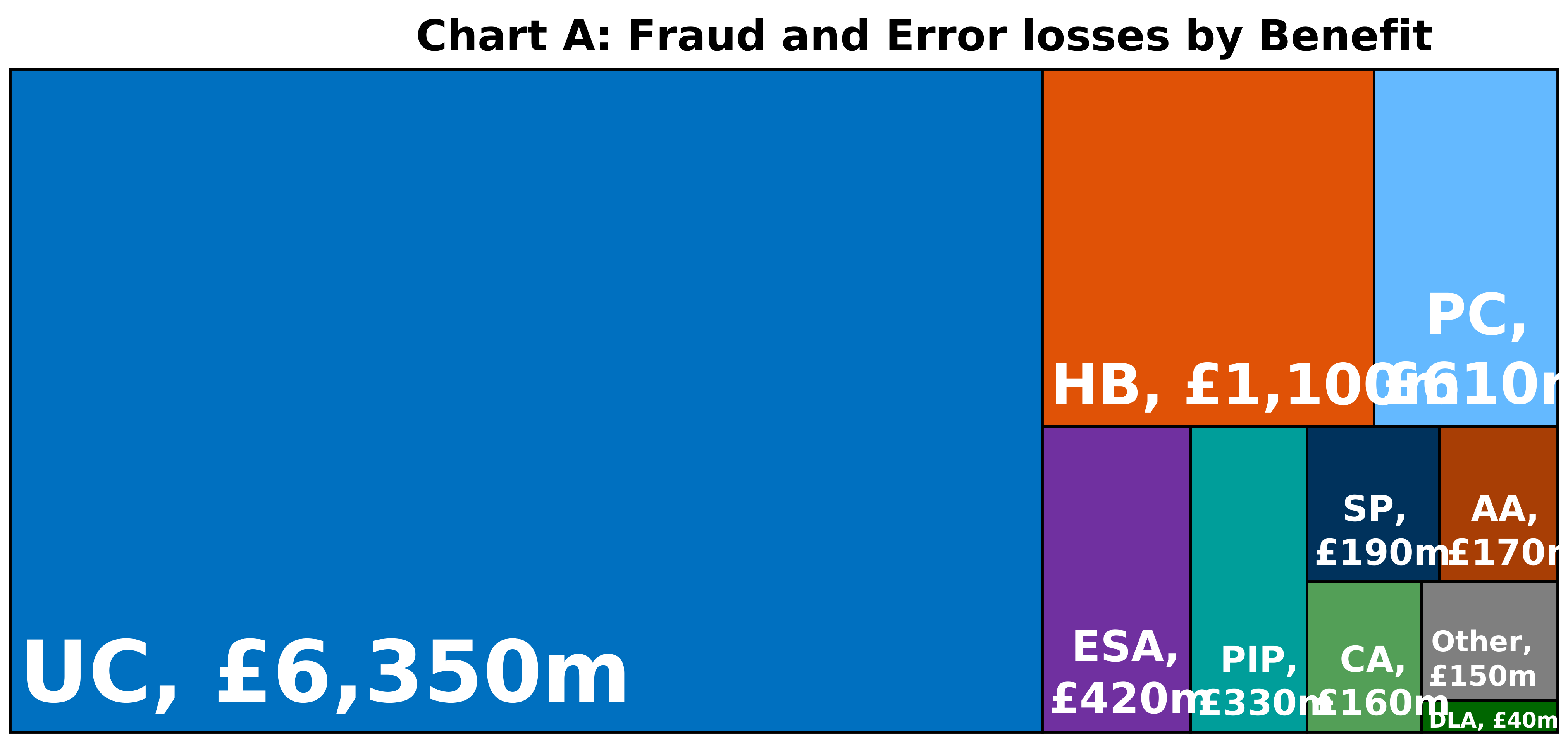
More details on the levels of fraud and error in the benefit system for 2024 to 2025 can be found in the section ‘Preventing and detecting fraud and error’.
Measuring savings in monetary terms
We also measure the impact of fraud and error controls and activities in terms of Annually Managed Expenditure (AME) savings – meaning how much the cost to the exchequer has reduced as a result of interventions. These savings are estimated by adding up both historic overpayments that have been identified (discounted to take account of debt recovery rates) and future overpayments estimated to have been prevented (based on assumptions about how long the overpayment would have continued to exist if it had not been found). For the purposes of this report, only the savings from future overpayments prevented that would have affected 2024 to 2025 expenditure are included. In addition, some interventions performed in previous years will have had an impact on 2024 to 2025 expenditure and are included in our savings. Interventions this year will also have a further impact on the expenditure of future years, but those savings are not included here. Savings estimates from our controls are calculated by comparing with a counter-factual world where that control does not exist.
Devolution
Following the devolution of social security powers to the Scottish Parliament under the Scotland Act 2016, the Scottish Government is in the process of developing its own responses to overpayments. We have been working with the Scottish Government to agree a process for tackling overpayments and to provide solutions for secure and legal two-way sharing of information between the Department and the Scottish Government, where appropriate. Social security benefits in Wales remain reserved to the Westminster Government. Social security policy is ‘transferred’ in Northern Ireland and delivered by the Department for Communities.
1. Preventing and detecting fraud and error
Management summary
We continue to work on reducing fraud and error levels by preventing and detecting incorrect payments across our benefits both at the point of claim and during the claim lifecycle. Last year we reported on our progress in reducing levels of fraud and error in the benefits system despite wider societal trends, such as worsening social attitudes towards fraud, which are widely acknowledged. For example, the National Audit Office[footnote 55] reported that there had been an increase from 2021 to 2023 in the proportion of people in the UK who had admitted to committing fraudulent conduct against a business or public body.
In 2024 to 2025, we have had successes across our detect activity, exceeding our Annually Managed Expenditure savings target to deliver around £2 billion savings and saving an estimated £25 billion from our up-front controls combined with our detect activity.
We have continued to improve payment accuracy and continued to learn and develop our understanding of the root causes of all types of fraud and error, taking steps to use this learning to ensure payment accuracy. We are making better use of data and continuing to detect and address inaccuracy where it already exists, in an effective and efficient way, to minimise the impacts of debt on our claimants.
This chapter will cover the following:
a) How we are improving payment accuracy, strengthening preventative controls and building on our continuous improvement activity. This will include the savings we have made through our upfront controls.
b) How we have exceeded the delivery of our £1.7 billion savings target in 2024 to 2025 by an additional £0.3 billion. This will also include updates on the corrective activity of our Targeted Case Review programme in Universal Credit as well as the activity of our dedicated counter fraud teams.
c) We will provide detail on the levels of fraud and error reported through the national statistics, the Spring Statement 2025 fraud and error forecast, and our plan to set a multi-year ambition to reduce the monetary value of fraud and error (MVFE).
d) Some detail on our progress in transforming our future approach through a legislative agenda to modernise our investigative and verification powers to improve payment accuracy and debt recovery.
Tackling fraud and error
Delivery of our core controls
We estimate that we have saved around £25 billion this year through preventative activity through frontline controls and detection by counter fraud teams. This is an increase on last year’s £22 billion.
This is the third year we have attempted to estimate the level of savings this way. The estimate remains an experimental metric as the methodology continues to be developed and refined. We have made significant enhancements to the analysis which means it is necessary to restate the estimate for 2023 to 2024 from £18 billion to £22 billion. This is largely a result of improving the method for evaluating downward adjustments within Universal Credit.
Chart B below presents the estimate for how much higher current benefit spend would be against a counterfactual scenario where benefits were paid out on demand. It therefore estimates the value of the work completed to verify eligibility or ensure that entitlement remains correct by processing claimants’ circumstances. The activities and controls that protect the benefit system from overpayments include:
-
up-front checks which prevent incorrectness from getting into the system at the claim start, such as verification of claimant-provided information and of basic conditions of entitlement such as identity
-
functional assessments which confirm entitlement to disability benefits
-
other downward adjustments such as the processing of changes of circumstances reported by claimants, whether reported on-time or late, or identified through the automated use of Real Time Earnings information from HM Revenue and Customs
-
pro-active counter fraud and error activities and Targeted Case Reviews
Chart B: Amount of potential expenditure loss from overpayments saved - broken down by function
| Dedicated counter-fraud and error resource | 2023-24 | 2024-25 |
|---|---|---|
| Counter Fraud and Compliance Directorate | £1.2bn | £1.4bn |
| Targeted Case Reviews | £0.1bn | £0.5bn |
| Verify Earnings and Pensions (VEPs) | £0.1bn | £0.1bn |
| Subtotal | £1.4bn | £2.0bn |
| Of which: Expected recoveries from debt referrals | £0.5bn | £0.7bn |
| Of which: Prevented future overpayments | £0.9bn | £1.3bn |
| Other downward adjustments to current or past entitlement | 2023-24 | 2024-25 |
|---|---|---|
| Where an overpayment was identified | £3.0bn | £3.2bn |
| In advance of an overpayment occurring | £9.6bn | £10.7bn |
| Subtotal | £12.7bn | £13.9bn |
| Of which: Expected recoveries from debt referrals | £0.6bn | £0.7bn |
| Of which: Prevented future overpayments | £12.0bn | £13.1bn |
| Specific upfront checks on claimant entitlement | 2023-24 | 2024-25 |
|---|---|---|
| Functional health assessments | £5.4bn | £6.3bn |
| Other disallowances | £2.5bn | £2.7bn |
| Of which: Universal Credit Identity Verification | £0.3bn | £0.3bn |
Total expenditure saved for 2023 to 2024: £21.9bn
Total expenditure saved for 2024 to 2025: £24.9bn
Notes
- Functional health assessments - these are checks done on conditions of entitlement at the start of a disability benefit claim.
- Other disallowances - checks done on conditions of entitlement at the start of a non-disability benefit claim for other benefits, this year Universal Credit (UC) and Pension Credit have been incorporated.
- UC Identity Verification (IDV) - savings associated specifically with the checking of a claimant’s identity at the start of a UC claim.
- Measuring the savings associated with all these processes requires a variety of estimation methodologies and analysis of different data, meaning some elements of the overall estimate are more robust than others. The estimated savings from dedicated fraud and error resource (Counter-Fraud, Compliance and Debt Directorate; Targeted Case Reviews; Verify Earnings & Pensions programme) are based on established methodologies which are considered more robust than those used to evaluate savings from front-line controls.
- The scope of the metric (benefits with smaller, or declining caseloads have been excluded) and the nature of the assumptions used means that all the figures are more likely to be an underestimate than an overestimate. In particular: we are not currently able to accurately measure savings achieved from the verification of claimant-provided information such as the amount of capital and household composition.
- We have not attempted to estimate the additional savings that arise from deterring claimants from committing fraud and making mistakes in the first place, as a consequence of the things that we have done and the messages that have been promoted.
- The estimate of £21.9 billion for 2023 to 2024 is a restatement of the estimate of £18.4 billion published in last year’s Annual Report and Accounts. The majority of the restatement is due to an improvement in the methodology for evaluating the Universal Credit element of the “Other downward adjustments to current entitlement - In advance of an overpayment occurring” line of the table, which increased by £2.4 billion.
- Numbers in the table may not sum due to rounding.
How this relates to the level of overpayments paid out
The published level of overpayments paid out this year was 3.3% of benefit expenditure (£9.5 billion). By considering the amount of estimated savings from Chart B that are from prevention, we estimate that a further 8.0% of expenditure has been prevented from being overpaid as a result of counter fraud activities and controls. Without our efforts, overpayments would have been at least 11.3% (£33.0 billion).
Chart C: Percentage of expenditure overpaid and prevented from being overpaid[footnote 56]
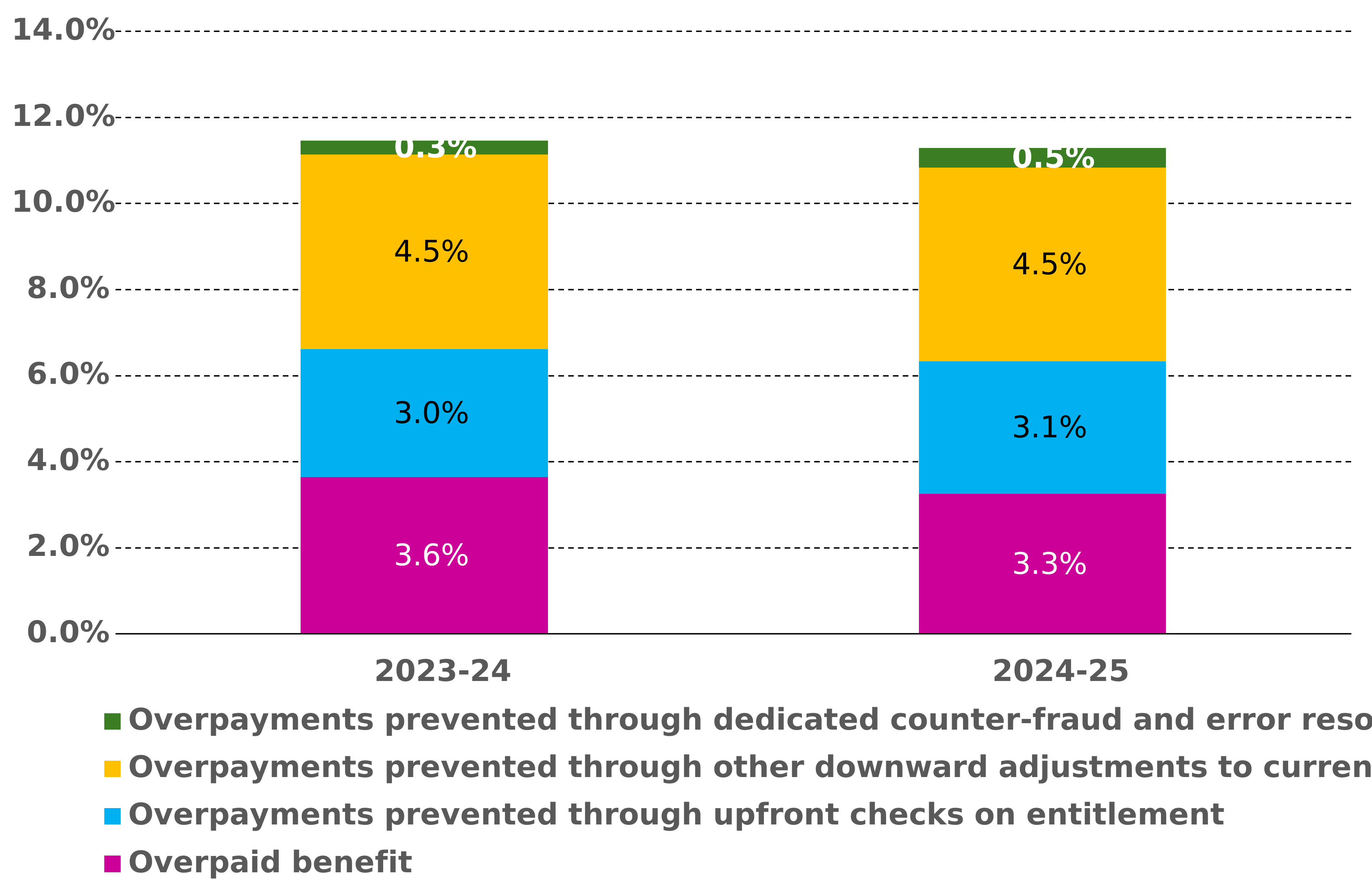
8.0% of DWP benefit expenditure was saved due to prevented overpayments.
3.3% of DWP benefit expenditure was overpaid.
Chart D: Amount of expenditure overpaid and prevented from being overpaid[footnote 57]
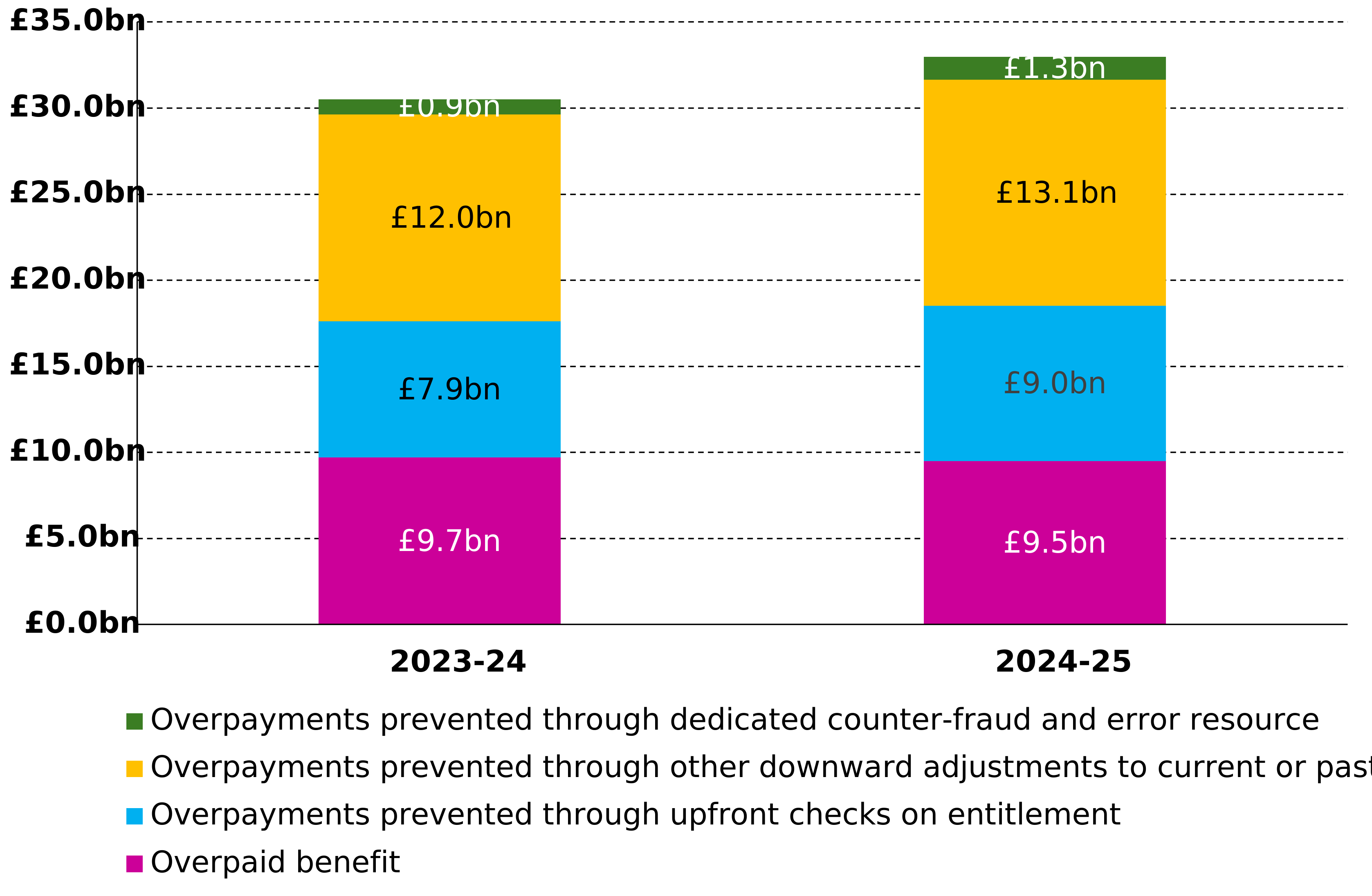
£23.5 billion of DWP benefit expenditure was prevented from being overpaid.
£9.5 billion of DWP benefit expenditure was overpaid.
Assessing control effectiveness
We will reduce fraud and error through a system-wide approach, underpinned by the Strategic Controls Framework. As above, we reported that our controls saved the exchequer an estimated £25 billion in 2024 to 2025.
The control measures currently in place are key defences designed to prevent fraud and error entering the benefit system and ensure that we pay everyone their correct entitlement. The Strategic Controls Framework review is an ongoing programme of work that ensures our control measures are consistently assessed for their effectiveness and value for money in mitigating fraud and error. This allows us to identify areas to strengthen and ensure controls remain as robust and cost-effective as possible and responsive to evolving risks.
Data and analytics
This section looks at how we are working to make better use of data and analytics to prevent and detect fraud and error. It also looks at how we make use of our data capabilities and advanced analytics in fraud. The section ends with some details of how we safeguard claimants when using machine learning, to ensure we are being fair.
Better use of data and analytics to prevent, detect and correct fraud
Effective use of data is crucial in identifying and correcting cases, enabling us to take proactive measures to prevent, detect, and correct fraud and error, for example, through the collection of real-time information on Pay As You Earn (PAYE) earnings data shared by HM Revenue and Customs to verify earnings in Universal Credit. We are also actively pursuing new opportunities, including the Eligibility Verification Measure, which is detailed later in this publication (see section on ‘Legislation’), and further investment in resource to action data alerts. This will enable us to more promptly detect and correct under and overpayments, where claimants have not reported changes in their circumstances.
The National Audit Office emphasises the critical role of data in reducing fraud and error, encouraging government to use data to prevent incorrect payments[footnote 58]. To support this, we are committed to continuously improving processes and technology to ensure effective use of data. This approach aims to deliver efficient and high-quality services to claimants, while maintaining robust data governance and ethical use of information.
Last year, we collaborated with data experts and industry specialists to explore opportunities to enhance our data capabilities which included considering best practice from the private sector.
Following this, we are now focusing on incorporating data sources earlier in the claimant journey to support upfront eligibility verification, utilising advanced analytics techniques to detect fraud risks sooner and making better use of data that is not in standard format, such as journal messaging.
This will further enhance the accuracy of information used for calculating entitlements and to modernise current processes, thereby improving our ability to effectively and efficiently prevent fraud and error from entering the benefit system.
Current use of data capabilities and advanced analytics in fraud
We are continuing to test, develop, and invest in advanced analytics, including machine learning. Today this activity is only a small part of our overall response to the challenge of reducing fraud but if this approach proves successful it ought to make a significant contribution in the future.
These tools can supplement our efforts in detecting and preventing fraudulent activities to protect public funds as machine learning has the potential to provide the additional tools for us to focus attention on cases that have potential fraud and error risks.
There is currently one fraud and error machine learning model in full deployment on Universal Credit Advances and a small number of others at various stages of testing and development
Safeguards
When using advanced analytics to tackle fraud and error, we ensure that appropriate safeguards are in place to guarantee the lawful, proportionate, and ethical use of data and technology. These safeguards align with best practices elsewhere, and government standards, codes and working principles. For more information, see the digital governance section on artificial intelligence (AI) in the Accountability report in the section ‘Artificial Intelligence (AI)’.
There is no automated decision making used in our counter fraud and error activities and our use of advanced analytics does not replace human judgement. Decisions regarding benefit entitlement or payment are made by our colleagues who look at all available evidence before making a decision.
Fairness assessment
At critical stages of model development, we ensure checks and balances are in place and have safeguards to minimise the risk of unfair treatment or detrimental impact on legitimate claimants, irrespective of their protected characteristics. At appropriate times we conduct fairness analyses of our models to identify any unexpected disparities that might require further investigation.
Across the public sector, we are at the forefront of producing fairness assessments regarding the use of advanced analytics to tackle fraud. There is no set standard for statistical analysis of fairness of these tools, therefore we have had to adopt a test and learn approach.
We have reflected on how we can assure Parliament and the public of our processes and have committed to a new approach to fairness assessments of machine learning models designed to tackle fraud. To introduce additional independence and scrutiny into the process, we are:
-
improving upon existing governance around the fairness assessment to determine whether each model is an effective fraud control and remains reasonable and proportionate
-
ensuring assurance of both the statistical analysis and the assessment will be overseen by a team independent of those running the machine learning models, with reference back to the appropriate internal governance board should areas be identified that require further consideration
-
ensuring fairness assessments will be drafted in such a way that they can be published unredacted, setting out the rationale for why we assess the models to be reasonable and proportionate but without divulging the detail of our fraud and error controls that would put public money at risk
In 2024, we set out our position that the fairness analysis on the UC Advances model did not present any immediate concerns of discrimination, unfair treatment or detrimental impact on claimants. This assessment is in the process of being updated with new analysis. We committed at the Work and Pensions Select Committee to publish this fairness assessment and this will therefore be published in the summer.
Spotlight on One Login Digital
Government Digital Service (GDS) are focused on building a simple, joined-up and personalised experience of government for everyone and have delivered a single sign-on and identity checking system, GOV.UK One Login. It is a centralised identity solution, streamlining entry to a wide range of government digital services.
It supports our agenda to prevent fraud and error as through this there are reduced identification failures alongside enhanced security. It does this by allowing users to verify their identity and then subsequently sign in and manage multiple public utilities online through a single-entry point. It provides an improved experience for people with a debt to repay. This is a great example of collaboration with GDS. We have rigorously tested and worked through technical challenges in how we safely integrate our ‘Repay and Manage Benefit Monies You Owe’ digital self-service tool with One Login. In November 2024, this became our first service to onboard to the platform, and our solution caters for new users, those with an existing DWP Identity Credential and those who have already set up a One Login Identity via another government department.
Driving continuous improvement
Universal Credit
The latest Fraud and Error National Statistics show that we have reduced Universal Credit (UC) fraud and error by 21% and have specifically reduced UC fraud by over a quarter (26%) saving the equivalent of around £1.7 billion. The key loss areas in UC are overpayments caused by undeclared earnings (predominantly self-employed earnings), undeclared partner (‘living together’), and undeclared capital. There has been a decrease in the central estimate of most of the key loss areas in 2024 to 2025.
Chart E: Percentage of Universal Credit expenditure overpaid by key loss area
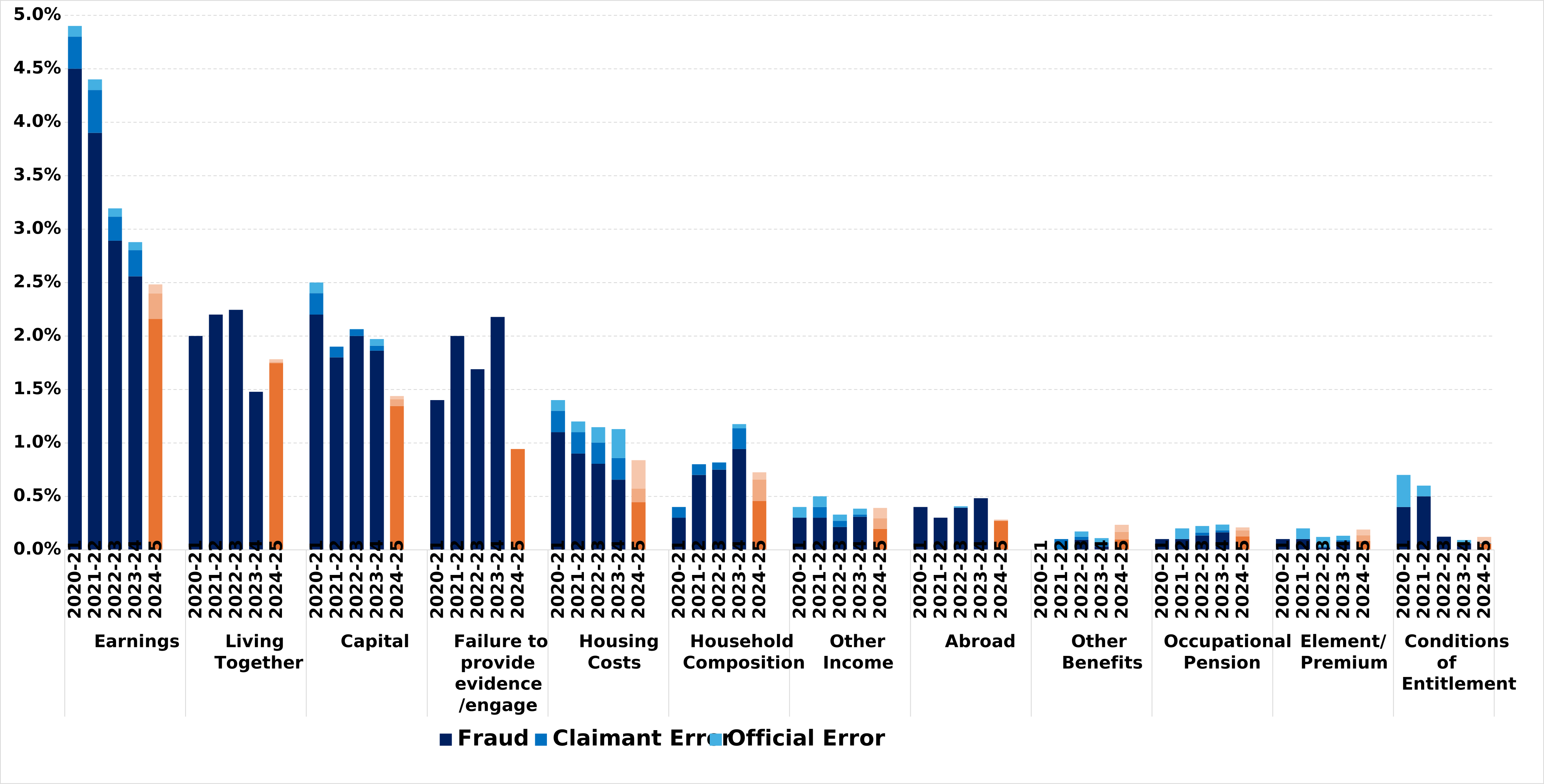
We know much of the reduction in the UC overpayment rate is a reflection of improvements we have made to the UC service (please see below table), in addition to increasing the number of internal agents checking claims as part of Targeted Case Review.
Our approach to reducing fraud and error in UC brings together multi-disciplinary teams to focus on activity to reduce the levels of loss. There is a team for each loss area responsible for understanding insight and learning from key activities such as Targeted Case Review to identify the root causes of fraud and error that need resolving to target preventative measures and prevent future losses. This enables Universal Credit to focus on delivering our mission to pay the right claimant the right amount at the right time.
To do this we:
- use a variety of evidence (including seeking advice from frontline colleagues and using data) to identify potential improvements in UC processes
- go through a testing process to understand whether the proposed changes will be successful and therefore can be implemented across the service
- focus our proposed changes on prevention of fraud and error entering the system
Examples of continuous improvement initiatives in 2024 to 2025
Throughout 2024 to 2025, we have undertaken several initiatives to enhance the UC service to prevent fraud and error:
Chart F: Continuous improvement initiatives in Universal Credit
Risk Area: Earnings (including self-employment) causes overpayments of 2.5% of expenditure.
Universal Credit continuous improvement activity underway – we have:
-
Improved information available online to self-employed claimants to assist them to accurately report their expenses and to declare multiple sources of income.
-
Started testing an improved verification process for self-employed claimants by requesting evidence of business activity such as receipts for expenses. This has been trialled and will be introduced over the next financial year. Introduction of this measure is expected to save around £0.6 billion across the next 5 years.
Risk Area: Capital causes overpayments of 1.4% of expenditure.
Universal Credit continuous improvement activity underway – we have:
-
Continued to improve the UC service approach to verifying claimants’ savings and investments. We now require claimants to tell us the balance of their bank account that the UC award is paid into and to provide details of other bank accounts including savings.
-
Started testing an enhanced verification process by asking claimants to provide evidence of their financial assets (bank statements) through either connecting their bank account to UC via Open Banking[footnote 59] or physically in the jobcentre. This new verification process is to support claimants to accurately report their savings and investments. This measure is expected to lead to around £0.1 billion of savings over the next 5 years.
Risk Area: Conditions of Entitlement causes overpayments of 0.1% of expenditure.
Universal Credit continuous improvement activity underway – to receive UC, claimants must live in the UK. We have improved the UC service by:
-
Improving reporting - if a claimant is going abroad, they can declare the period of time they will be out of the country and the service will determine the correct pathway for that claimant to report this accurately and be paid correctly.
-
Making better use of data, to confirm UK immigration status and where appropriate move towards greater automation.
Risk Area: Housing Costs causes overpayments 0.8% of expenditure.
Universal Credit continuous improvement activity underway – we have:
-
Made improvements when claimants tell us about a change to their housing costs.
-
Completed the annual verification check for housing costs in the social rented sector .
Household Composition causes overpayments of 0.7% of expenditure.
Universal Credit continuous improvement activity underway – we have:
- Maintained the process introduced last year, asking claimants with children/young people between the age range of 16 to 18 to confirm their education status. This is estimated to have prevented losses of over £300 million this year.
Risk Area: Living Together causes overpayments of 1.8% of expenditure.
Universal Credit continuous improvement activity underway – we have:
-
Made improvements to claimant guidance to support them to understand the definition of living together to ensure we have their correct relationship status.
-
Continued to encourage claimants who declare a change to their relationship status, to report other changes in their circumstances.
Upcoming UC continuous improvement initiative – periodic redeclaration
We are committed to supporting claimants to manage their claim effectively to ensure they are paid correctly. As part of this we are planning to introduce periodic redeclaration of UC claims which will prompt claimants to review their declared circumstances and report any changes. This will be checked through our verification processes. If a claimant does not engage with this process, we will suspend their claim. After 30 days, if they have not engaged, we will close their claim. The claimant has 30 days to request a reconsideration of this decision if they believe this is an error. We expect to save around £1 billion from this measure over the next 5 years, whilst preventing claimants building up avoidable debt.
Whilst it remains the claimant’s responsibility to provide us with up-to-date details of their circumstances, these measures will enable us to help claimants keep their account up to date. It will deliver a better service, reducing the number of claimants getting into debt and reduce the numbers of claimants whose incorrect details lead to unfulfilled eligibility. Claims that are selected will be checked for vulnerabilities and the Department has strict controls in place to ensure individuals with particular characteristics are not targeted.
Other benefits
For benefits other than Universal Credit, many of the key losses are specific to each benefit. However, some loss areas are common across multiple benefits with incorrect capital as an important example. As charts G and H below show, the National Statistics for Fraud and Error show undeclared capital as the biggest source of overpayments in the other means-tested benefits and this supports our intention to introduce the Eligibility Verification measure (see section on ‘Legislation’) to enable us to identify undeclared capital.
Chart G: Percentage of Pension Credit expenditure overpaid by the key loss area
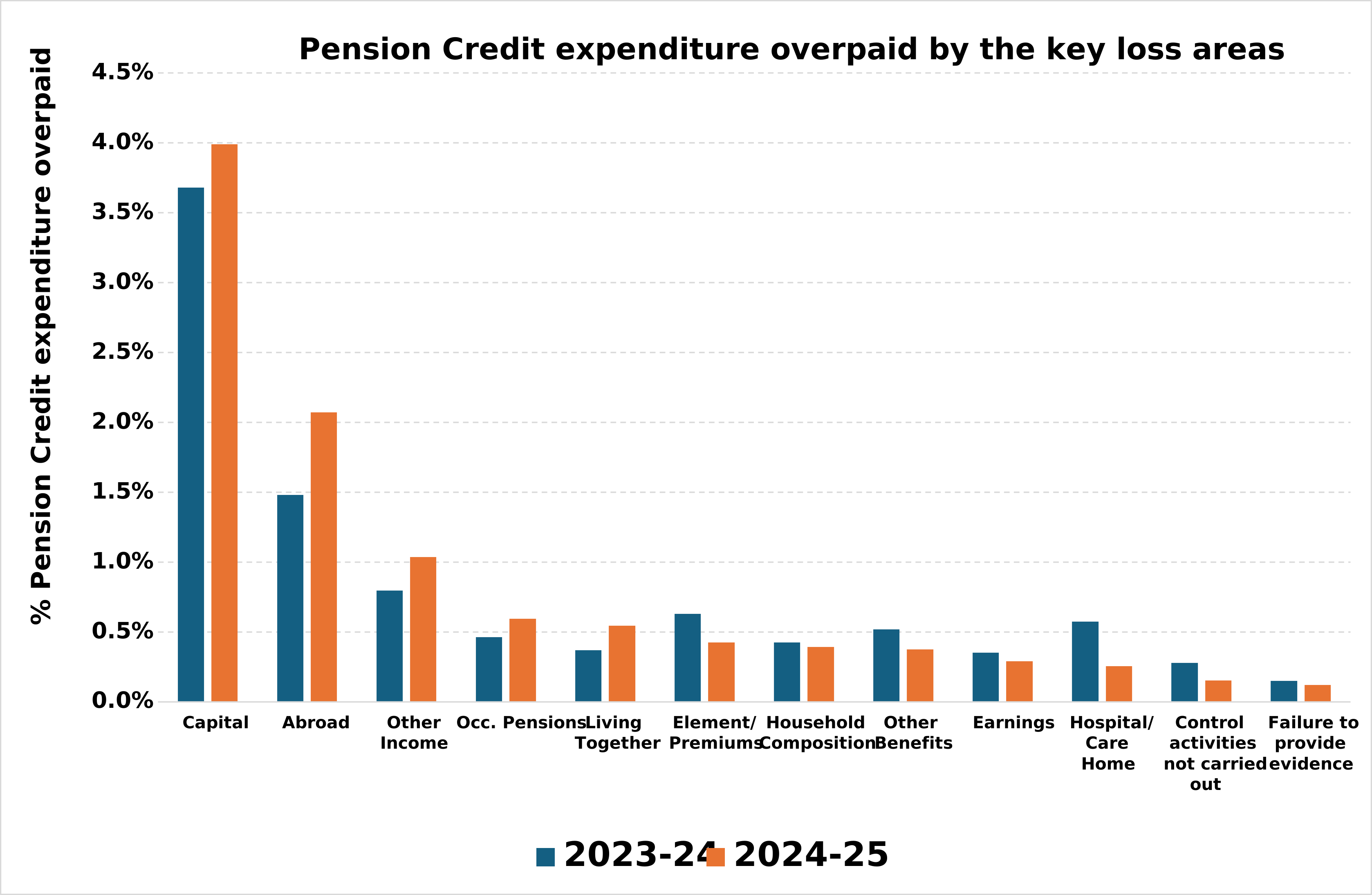
Chart H: Percentage of Housing Benefit expenditure overpaid by the key loss area

The statistics show that overpayments due to Pension Credit claimants going abroad for longer than the permitted duration appears to be a growing problem in addition to not reporting capital changes. Abroad and capital are the 2 largest reasons for fraud overpayments and account for 76% of fraud overpayments in 2024 to 2025 (and around 60% of all Pension Credit overpayments relate to abroad and capital).
In 2024 to 2025 the Housing Benefit caseload sampled for review included claims in the passported working-age group. The make-up of the working-age caseload for Housing Benefit is becoming increasingly dominated by Universal Credit claimants who are in supported or temporary accommodation. This group are not eligible to claim the Housing Costs element of Universal Credit. These claimants tend to be more prone to moving around than other types of Housing Benefit claimants and this may impact unstable lifestyles. We are therefore seeing higher amounts of overpayments resulting from claimants who are consistently failing to engage with the measurement process. As you will see from Chart I below we are continuing to deliver Housing Benefit Award Accuracy (HBAA) to help local authorities target full case reviews to ensure claims remain accurate.
The Carer’s Allowance overpayment rate was 3.9% (£160 million) in 2024 to 2025, compared with 5.2% (£150 million) when it was last measured in 2019 to 2020. This was the lowest recorded level to date. An independent review of earnings-related overpayments of Carer’s Allowance is underway. The review is investigating how overpayments of Carer’s Allowance have occurred; what can best be done to support those who have accrued them; and how to reduce the risk of these problems occurring in future. We will carefully consider the findings of the review and its recommendations. Both the report from the independent review and the government’s response will be published.
As in Universal Credit, across other benefits there are multi-disciplinary teams set up to work together to drive fraud and error reduction activity. Below are some of the key activities and initiatives that have been progressed during 2024 to 2025 as well as upcoming activities.
Chart I: Improvement initiatives in other benefits (excluding Universal Credit)
Improvement area: Communications
Key activity:
-
For Carer’s Allowance we have improved communications to help carers report change of circumstances. We will continue to review and improve communications, including undertaking trials during 2025, so carers are more aware of what changes they need to report and are regularly reminded to do so in a way that suits them.
-
We continue to utilise learning from the current pilot to inform our future communications strategies that remind carers of their obligations to report changes of circumstances to us.
Improvement area: Data alerts
Key activity:
-
We have obtained additional funding to increase staffing to action notifications received on changes to earnings and pensions across benefits in a timely way in Carer’s Allowance and Pension Credit. This initiative aims to ensure carers and pensioners receive the correct amount of benefit at the right time, despite not fulfilling their responsibilities to tell us about changes of circumstances. While we expect overpayments to reduce, this improvement will not be immediate as we skill up our teams and work through the backlog of cases.
-
We are also continuing to use these notifications for Housing Benefit (HB) claims, exploring how to go further to tackle fraud and error challenges.
-
For HB, we are continuing to deliver Housing Benefit Award Accuracy information to help local authorities target full case reviews in the remaining parts of the caseload as working-age claims migrate to Universal Credit. We continue to provide local authorities with support through funding, performance monitoring and data sharing to help keep claims right and tackle fraud and error.
Improvement area: Verifying claimant entitlement and changes in circumstances
-
The new Public Authorities (Fraud, Error and Recovery) Bill will help us identify incorrect payments in various benefits sooner, by utilising data from banks and financial institutions through the Eligibility Verification measure, ensuring that claimants are paid more accurately, reducing the likelihood of incurring debt. Please the section ‘Legislation’ for more information on our legislative plans.
-
Data sharing opportunities are being explored to reduce fraud and error resulting from claimants not meeting residency requirements whilst claiming from abroad or being out of the country longer than the period specified within benefit conditions of entitlement.
Improvement area: Modernising our internal systems and processes
- Get Your State Pension enables people to claim their new State Pension through their channel of choice with most completing their application online. The streamlined application process is more efficient and reduces the opportunity of inaccurate State Pension claims through better use of data and automation.
What has changed?
Delivering £2 billion AME savings
We exceeded our 2024 to 2025 £1.7 billion Annually Managed Expenditure (AME) savings target by achieving savings of £2 billion[footnote 60]. This included activities delivered through our Counter Fraud and Compliance function, the Universal Credit Targeted Case Review, and verifying earnings in Housing Benefit, Carer’s Allowance, Pension Credit and Employment and Support Allowance to detect fraud and error, and correct claims.
Chart J: AME savings actuals – broken down by function
| Function | 2024 to 2025 AME savings actuals[footnote 61] |
|---|---|
| Counter Fraud and Compliance | £1.4 billion |
| Targeted Case Review | £0.5 billion |
| Verify Earnings and Pensions | £0.1 billion |
| Totals | £2.0 billion |
Correcting error
Targeted Case Review
Tackling incorrectness in Universal Credit (UC) remains at the forefront of our mission to reducing fraud and error in the social security system. Targeted Case Review (TCR) has continued to support this aim by proactively reviewing the entitlements and circumstances of UC claims that are at risk of being incorrect, detecting unreported changes in circumstances and correcting claims retrospectively to ensure claimants are receiving the right payment and support.
The focus in 2024 to 2025 has remained on continuing to scale and stabilise the operation. This financial year, TCR reviewed over 920,000 claims, finding and correcting almost 188,000 claims, and saving £478 million.
By September 2024, we had completed the recruitment of circa 3,500 internal agents. Following the decision to move to a hybrid delivery model in May 2023, whereby we deliver reviews utilising a blend of our own and external provider agents, we concluded the subsequent tender process. We awarded Teleperformance a contract in June 2024 to assist in scaling up to 5,930 full time equivalent reviewing agents by the end of March 2025. The programme achieved this milestone one month ahead of schedule in February 2025, following the successful onboarding of external provider agents.
The predicted savings for TCR are reliant on several factors, including the number of completed reviews, number of reviewed cases found to be incorrect, and the average value of the incorrectness on each claim.
Chart K: TCR performance drivers
| Performance drivers | Outturn |
|---|---|
| Productivity: cases reviewed per day, per FTE[footnote 62] agent, average monthly productivity rate | 1.07 |
| Hit rate: claims reviewed found to be incorrect, annual average | 20.3% |
| AME[footnote 63] per hit: average savings per incorrect claim, annual average | £4,788 |
| AME savings achieved in 2024 to 2025 | £478.4m |
Performance has exceeded expectation in 2024 to 2025, with productivity above profile to achieve almost £78 million more in savings than our scored saving of £401 million[footnote 64]. This brings total TCR savings since its inception up to March 2025 to £581 million. This figure attributes the savings to the year in which their impact on the government’s finances is felt. This is necessary to align with the way the Office for Budget Responsibility (OBR) tracks spending and savings.
When including savings that will be realised in future years, TCR has achieved total savings of £1 billion by reviewing over 1 million UC claims.
These figures include savings from detecting historic errors and preventing future payments that would have been made erroneously had TCR not reviewed the case[footnote 65].
The performance data reflects a period of consolidation and training for new external provider agents. As expected, the rapid recruitment of agents from September onwards has impacted the hit rate. This is because cases without error take on average less time to complete and we expect the hit rate to be lower whilst new agents accumulate a caseload of claims to review.
We committed to a continuation of TCR for a further 2 years at Autumn Budget 2024. This commitment means TCR is forecast to generate an additional £3.8 billion in savings, totalling £13.6 billion by March 2030 with the majority of savings achieved in later years of the scorecard.
Building on the approach in previous years, TCR will continue to take an agile-based approach to designing the service and iterate processes based on insight. With the operation now at full scale, the programme will examine opportunities to collect more information on customer service in line with other service improvement prioritisations in the next financial year.
TCR is continuing to enhance our understanding of how incorrectness enters UC. This includes a trial to gather insights from reviewing agents after they complete a review. The goal is to learn more about the nature of inaccuracies and their points of entry into UC. Insight from TCR is already helping to shape continuous improvement across UC with changes to new claim applications and testing periodic redeclaration of circumstances.
This will support us in shaping future preventive measures, through changes to policies, service design and operational delivery to minimise future fraud and error in the social security system.
Dedicated counter fraud activity
Counter Fraud and Compliance function
We deploy our Counter Fraud and Compliance (CFC) resources to emerging and high-risk areas, detecting and correcting where needed and pro-actively looking to prevent and disrupt fraud at the earliest opportunity. This approach has seen CFC deliver £1.4 billion savings for 2024 to 2025.
We target work with the highest areas of loss of public funds, using a mixture of early triage and data driven risk-based scoring, or where we suspect criminality, to ensure we have a robust societal deterrent to fraud. In addition to tackling fraudsters, we play an important role in safeguarding vulnerable claimants, for example by stopping human trafficking and modern slavery.
CFC has different approaches to tackling fraud depending on the nature and severity of the fraud. Using a diverse range of expertise, technology and intelligence, the teams tackle all types of fraud from non-criminal fraud cases through to sophisticated attacks on our benefits system, correcting benefit where appropriate and bringing the most serious cases to justice (see Chart L below).
Chart L: Counter Fraud and Compliance teams
| Team | Purpose | Outputs 2024 to 2025 | Net AME savings 2024 to 2025 |
|---|---|---|---|
| Enhanced Review Team (ERT) | Tackle incorrectness through conducting robust and challenging interviews, pre-payment verification and post-payment disruption activity | 140,695 cases reviewed and corrected payments on 49,059 | £698 million |
| Interventions | Tackle incorrectness through scripted interviews; cases identified by data matching rules and pre-payment staff referrals | 242,185 cases reviewed and corrected payments on 89,253 | £281 million |
| Compliance | Tackle incorrectness through robust and challenging interviews; cases identified by data matching, staff, and public referrals | 152,804 cases have been checked and 44,379 of them have had their payments corrected with 13,721 Civil Penalties issued[footnote 66] | £321 million |
| Investigations | Tackling fraud by delivering criminal sanctions against the most serious cases, bringing criminals to account, and providing a deterrence impact | Fraud Investigations teams reviewed10,266 cases, securing 272 Administrative Penalties and 639 prosecutions[footnote 67] | £64 million |
| Economic, Serious and Organised Crime (ESOC) | Tackling serious and organised crime and exploitation of individuals, creating jeopardy for organised crime gangs | ESOC intervention has led to 80 suspects arrested, 35 charged and 26 convictions for serious organised crime. They continue to feed work to ERT for their action. | £1 million[footnote 68] |
| Campaigns | Tackle incorrectness through use of nudges to prompt claimants to report changes of circumstances, cases identified by staff and public referrals | 1,546 claimants have closed or amended their Universal Credit contracts following a campaigns prompt | £12 million |
Note: Totals may not sum due to rounding.
In addition to the savings shown in the table, CFC also saved:
- £16 million tackling incorrectness where capital assets are identified.
- £3 million prevented by taking fraudulent documents out of circulation.
- £1 million savings generated within counter fraud testing.
Enhanced Review Team (ERT)
The ERT function has evolved, and the team now conducts full reviews of cases that have been identified by either the Integrated Risk and Intelligence Service (IRIS) or operational colleagues as having an increased risk of incorrectness and fraud and then takes corrective action where appropriate.
To do this, ERT conducts fast-paced, robust interventions to prevent and detect fraud and error and through this work ERT has generated in excess of £1.2 billion in savings in 2023 to 2024 and 2024 to 2025.
This year ERT has continued to focus on both expanding the range of benefits that they review and how they respond to the changes in the fraud and error that is encountered.
Outcomes: 2024 to 2025 National Fraud and Error Statistics and forecast
In May 2025 we published estimates of the levels of fraud and error in 2024 to 2025. The overall level of overpayments across all of our benefits was 3.3% (£9.5 billion) of benefit expenditure. This contrasts to the overall level of 3.6% (£9.7 billion) in 2023 to 2024[footnote 69]. Overall, the published rate of overpayments due to fraud and error has changed by 10% compared to last year, which equates to a monetary saving of £1.1 billion when applied to total benefit expenditure. As Chart M below shows, the rate of overpayment due to fraud and error within Universal Credit (UC) dropped significantly in 2024 to 2025, from 12.4% to 9.7% of expenditure and it no longer has the highest rate of overpayments. Pension Credit overpayments rose to 10.3% in 2024 to 2025, compared to 9.7% in 2023 to 2024. However, due to the size of its expenditure (£6 billion in 2024 to 2025), Pension Credit is only the third largest source of overpayments in monetary terms.
Chart M: Overpayments and underpayments by benefit[footnote 70]
| Overpayments FYE 2025 % | Overpayments FYE 2025 £m | Overpayments FYE 2024 % | Overpayments FYE 2024 £m | Underpayments FYE 2025 % | Underpayments FYE 2025 £m | Underpayments FYE 2024 % | Underpayments FYE 2024 £m | |
|---|---|---|---|---|---|---|---|---|
| All benefits | 3.3 | 9,500 | 3.6 | 9,700 | 0.4 | 1,200 | 0.4 | 1,100 |
| Universal Credit – measured in FYE 2025 | *9.7 | 6,350 | 12.4 | 6,410 | *0.6 | 390 | 0.3 | 180 |
| State Pension – measured in FYE 2025 | 0.1 | 190 | 0.1 | 170 | 0.3 | 450 | 0.4 | 470 |
| Personal Independence Payment – measured in FYE 2025 | *1.3 | 330 | 0.4 | 90 | 0.2 | 40 | 0.4 | 80 |
| Housing Benefit – measured in FYE 2025 | *7.2 | 1,100 | 6.4 | 980 | 0.4 | 60 | 0.4 | 60 |
| Pension Credit – measured in FYE 2025 | 10.3 | 610 | 9.7 | 530 | 1.2 | 70 | 1.0 | 50 |
| Carer’s Allowance – measured in FYE 2025 | 3.9 | 160 | 5.2 | 150 | - | - | - | - |
* Statistically significant difference.
Chart N below shows how the make-up of our overall level of overpayments has changed over the last ten years.
Chart N: Percentage of departmental expenditure overpaid each year, broken down by benefit[footnote 71]
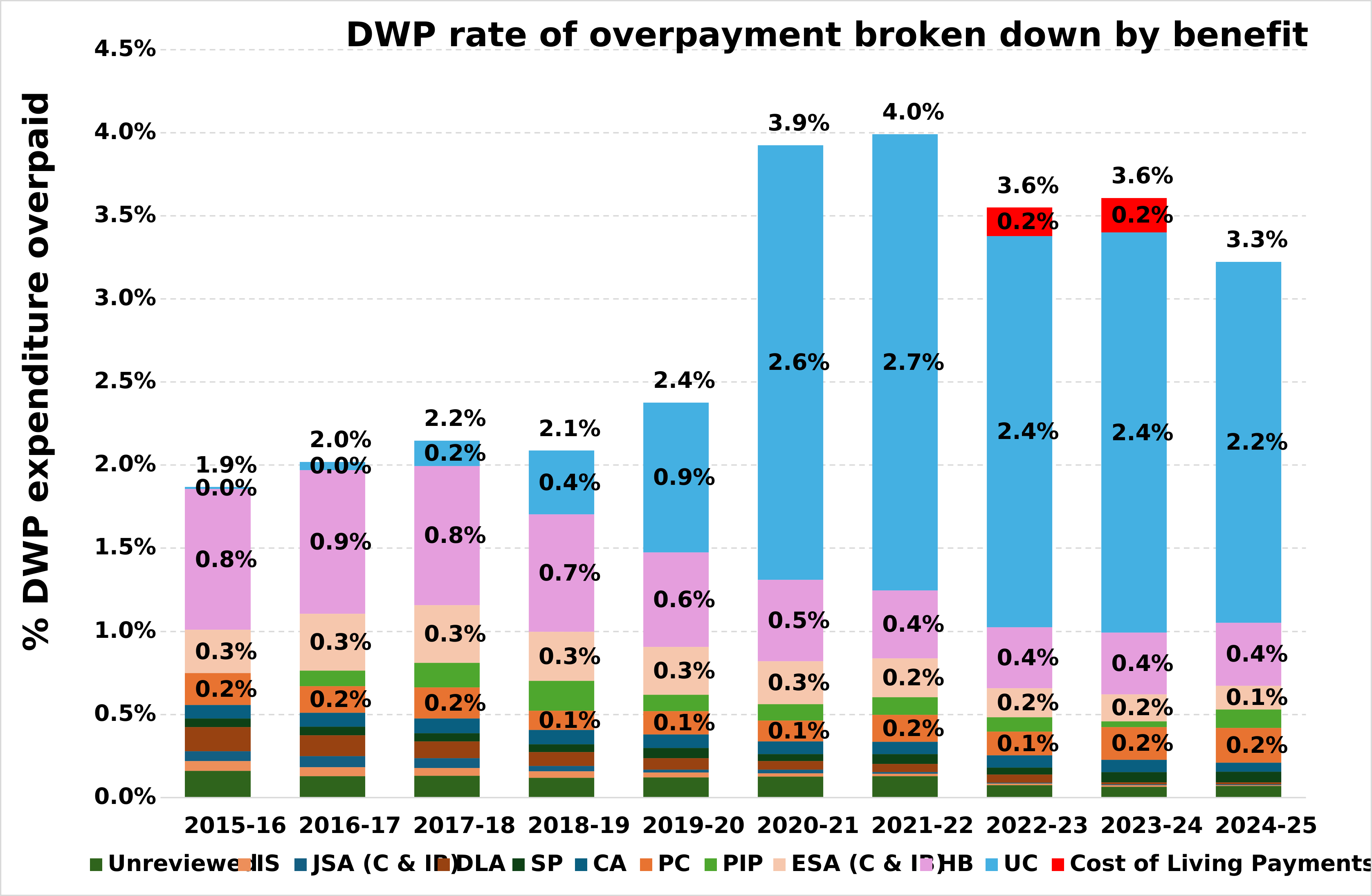
The fall in the level of overpayments in Universal Credit (UC) is the main reason for the drop in our overall level of overpayments in 2024 to 2025. UC has a higher-than-average fraud and error rate and so the growth of UC expenditure relative to the expenditures of the other benefits in 2024 to 2025 could have pushed up the overall level of overpayments. However, as the waterfall chart below (Chart O) shows, that was more than off-set by the significant drop in the UC rate of fraud and error.
If the 2023 to 2024 rate of overpayments in UC of 12.4% had been maintained in 2024 to 2025, the total value of overpayments would have been £1.7 billion higher. We therefore estimate that the totality of our efforts has resulted in a saving of £1.7 billion.
Chart O: Factors contributing to the change in the global overpayments level
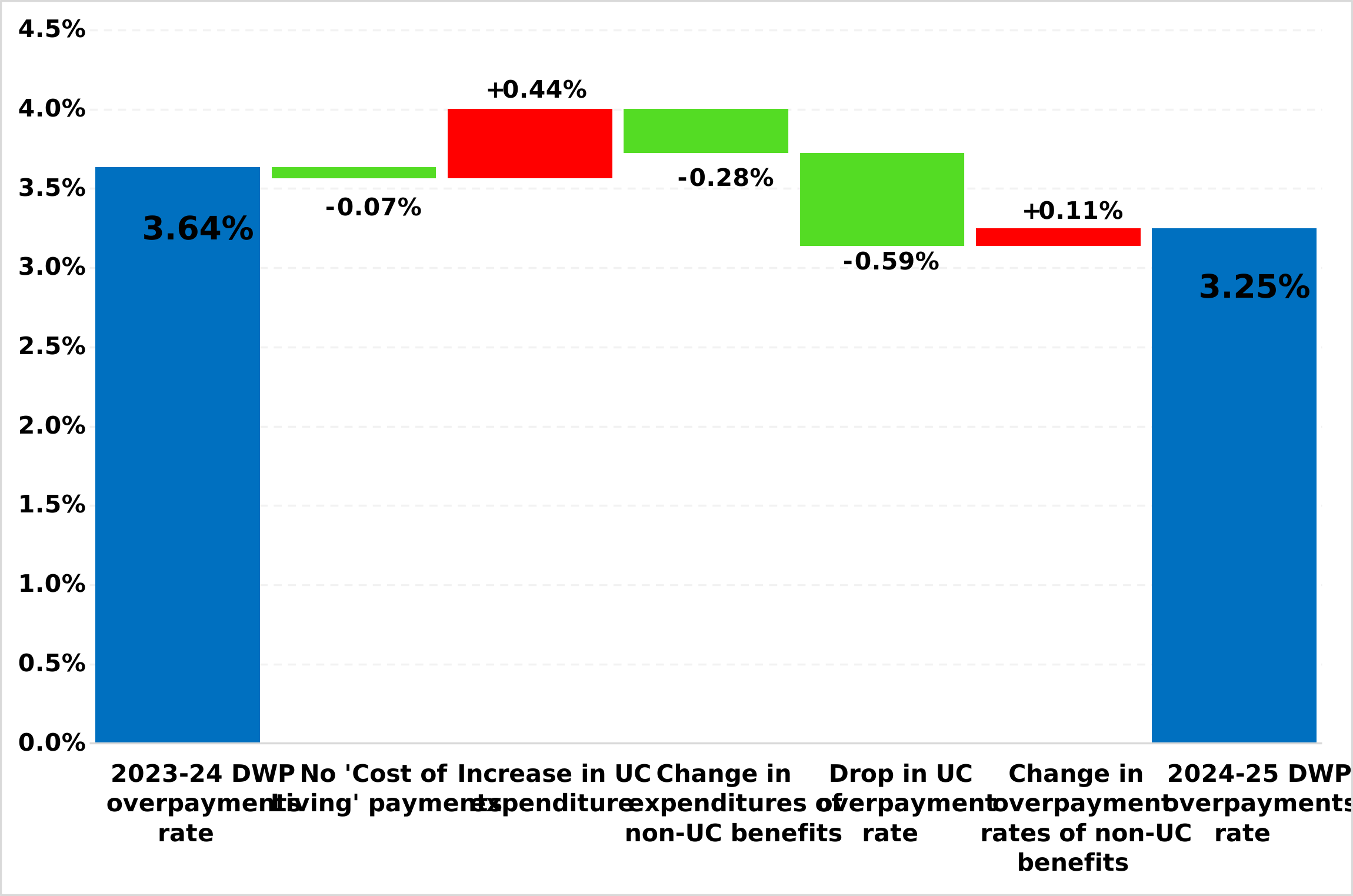
Chart P: Spring Statement 2025 forecast for Universal Credit overpayments
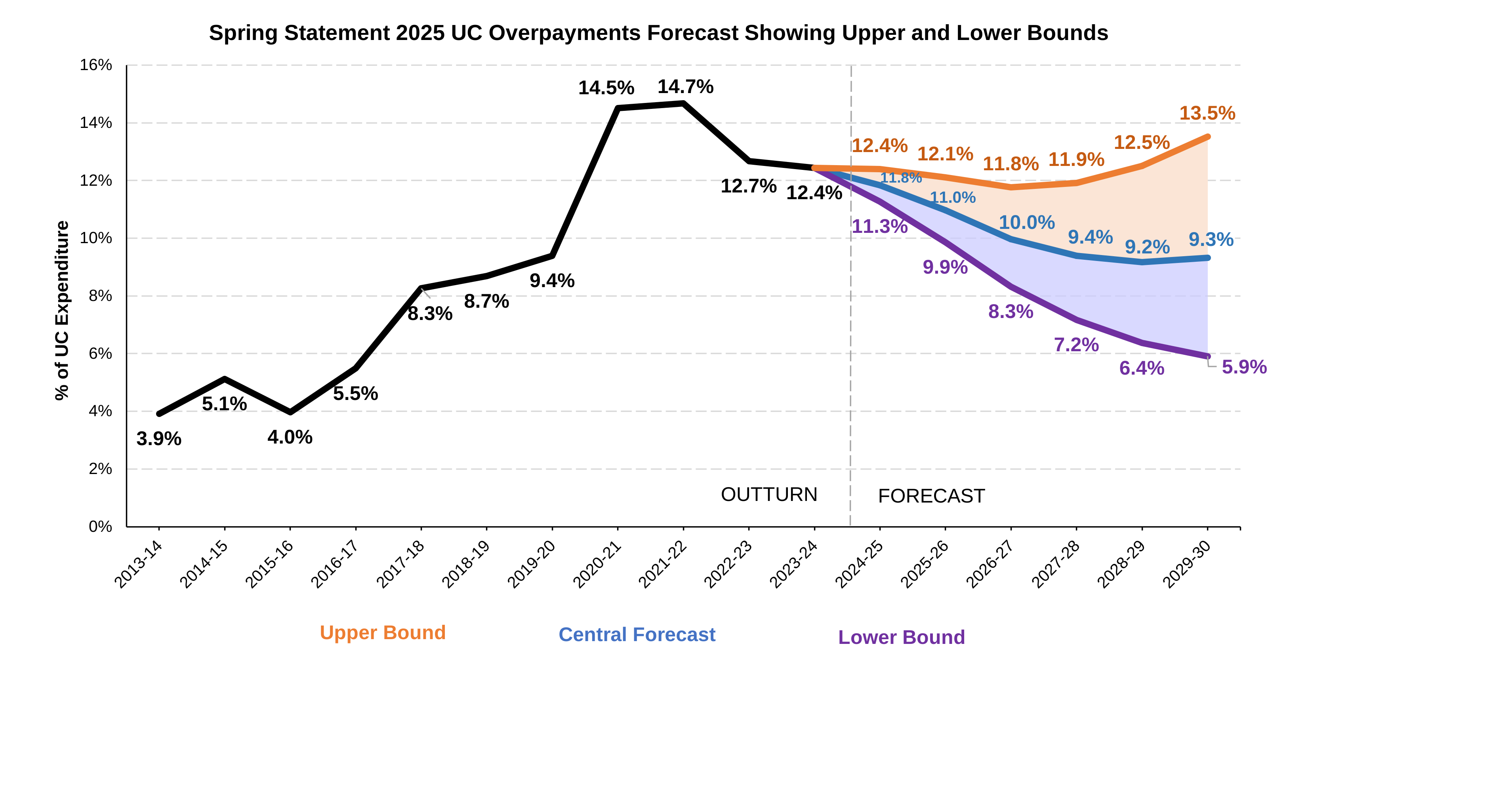
The Spring Statement 2025 central forecast for UC was created before the release of the official 2024 to 2025 fraud and error statistics. It was created by first estimating a baseline level of overpayments that would be expected to occur if we did not introduce any new or expanded measures and then by subtracting the expected savings from the planned additional activities, such as Targeted Case Reviews. The baseline is estimated by applying the latest available fraud and error rate estimates, which at the time of Spring Statement was for financial year ending 2024, to internal forecasts of how the UC caseload composition is expected to change over time. Additionally, the baseline accounts for external factors outside of the Department’s control that could lead to an increase in fraudulent activity. We do this by applying a 5% upwards pressure assumption, based on evidence of trends in wider society. The forecast accounts for uncertainty by applying alternative assumptions of 10% and 0% upwards pressure, to create an upper bound and lower bound estimate respectively.
At the time of the 2025 Spring Statement, the rate of overpayments in UC for 2024 to 2025 was forecast to be 11.8% of UC expenditure, with a steady decline in the rate of UC overpayments over the next 5 years. The outturn UC 2024 to 2025 overpayment rate published in the National Statistics in May 2025 was lower, at 9.7%. This may indicate that some of our forecasting assumptions were too conservative. We will be reviewing our forecasting methodology over the forthcoming year.
MVFE multi-year ambition
We recognise that there is still work to be done in reducing overpayments resulting from payment inaccuracy across our benefit lines. The Monetary Value of Fraud and Error (MVFE) estimate of the rate of overpayments paid out by the Department is the best outcome measure of our departmental progress with regards to fraud and error in the benefit system. MVFE is an outcome measure, which reflects the totality of activities across the Department and the residual fraud and error levels in the system. This metric is therefore aligned with our agenda to prevent fraud and error entering the system in the first place, alongside our strong detect and correct functions.
We have an ambition to reduce cross-welfare overpayment levels to pre-pandemic levels. Chart Q below shows that, prior to the pandemic (2019 to 2020), the cross-welfare overpayment level was 3.1% of expenditure. We include Tax Credits expenditure and its error and fraud and overpayment levels in the comparison, to account for the migration of Tax Credits to the Department, as this provides a consistent long-term caseload to compare against[footnote 72].
The Spring Statement 2025 central estimate forecasts that, based on current plans, we will reach pre-pandemic levels by 2028 to 2029. This will be near to historic low levels (3.0%) seen in 2014 to 2015. However, the annual published National Fraud and Error Statistics for 2024 to 2025 shows that our outturn (3.3%) is below the forecast level for 2024 to 2025 (3.7%), and so it may be possible to achieve our ambition sooner than 2028 to 2029. We will continue to publish our annual Spring Statement forecast in the Annual Report and Accounts, to measure our progress against our ambition of reaching pre-pandemic levels of fraud and error.
Chart Q: Spring Statement 2025 forecast for cross-welfare overpayments (DWP benefits plus Tax Credits)[footnote 73]
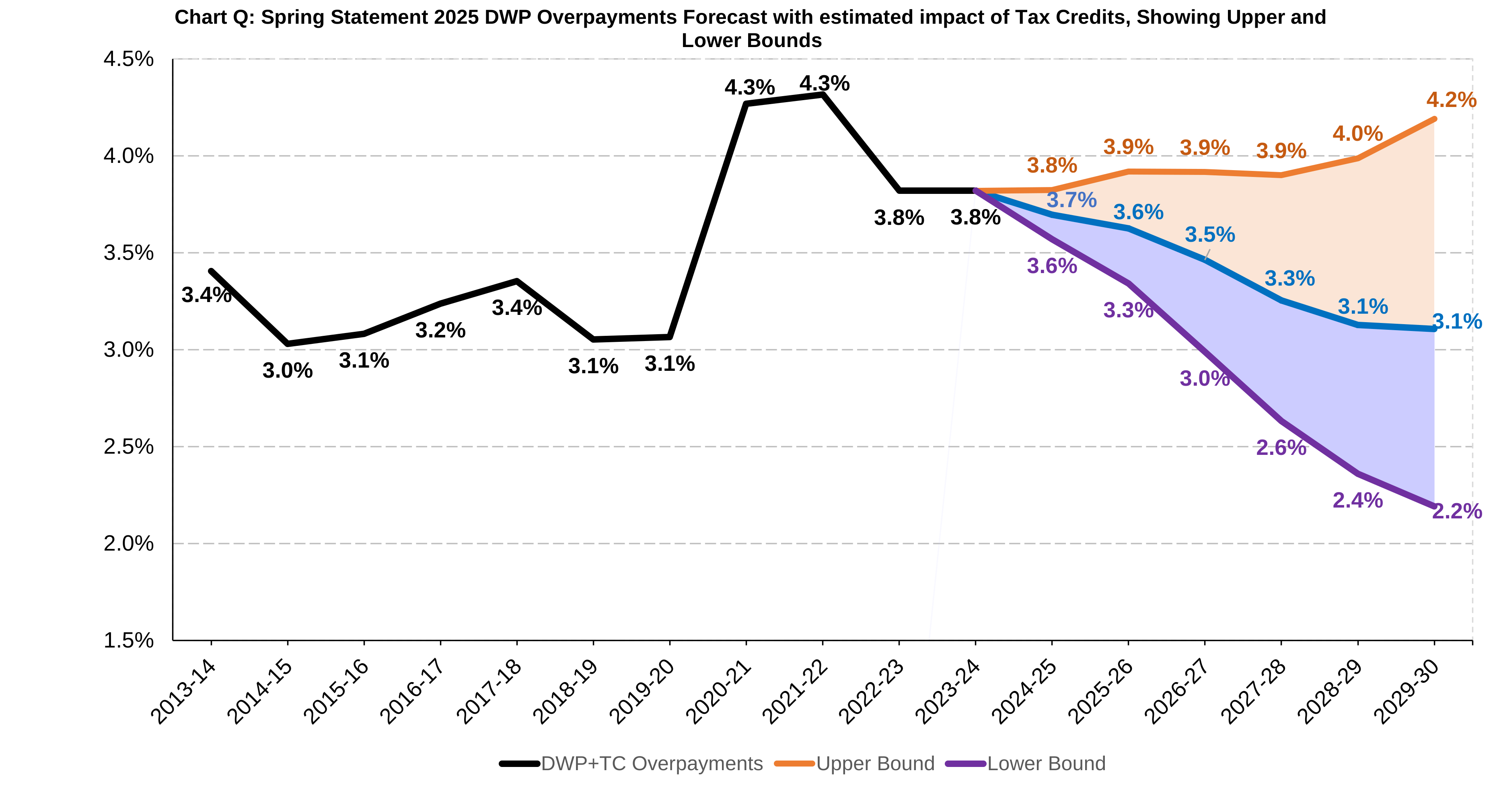
In 2023 to 2024 and 2024 to 2025 we published and exceeded our savings targets, delivering £1.35 billion savings against our £1.3 billion target in 2023 to 2024 and £2 billion savings against our £1.7 billion target in 2024 to 2025. We will continue to report on our savings progress on an annual basis in the Annual Report and Accounts.
Looking ahead
External communications campaign
We are developing an external communications campaign, with a view to informing claimants of their responsibility to report changes in circumstance, and the subsequent penalties of not doing that. Research was conducted through the second half of 2024, speaking to Universal Credit claimants, providing insight into the effectiveness of a range of messages.
This insight provided the foundation for a pilot campaign designed to further test messaging, rather than a small-scale test of the full campaign.
The pilot ran from February to March 2025 across Meta platforms only (Facebook and Instagram), concentrating on 3 messages and 4 calls to action, alongside a link to a website page. The output of this pilot will be analysed to help develop the focus of a full external communications campaign.
Legislation
The Public Authorities (Fraud Error and Recovery) Bill was introduced to Parliament on Wednesday 22 January. The Bill will help to address the significant challenge of public sector fraud and error, which costs the taxpayer billions of pounds annually.
The Bill will modernise our legislative framework, to help identify, prevent, and deter fraud and to enable better recovery of debt owed to the taxpayer. It will also further help us to protect claimants by stopping errors earlier, minimising debts.
Chart R: Measures proposed in the Public Authorities (Fraud, Error and Recovery) Bill
| Bill measure | Purpose |
|---|---|
| Eligibility Verification | This new measure will help us identify incorrect payments in the social security system sooner by utilising data from banks and financial institutions, ensuring that claimants are paid more accurately, and any questions of incorrectness can be addressed more quickly, minimising debts. |
| Information Gathering | Modernised powers will enable investigators to gather information more effectively to prove or disprove allegations of fraud, helping us keep pace with the increasingly sophisticated nature of fraud. |
| Debt Recovery | New powers will bring greater fairness to debt recoveries, allowing us to improve recoveries from those not on benefits or in Pay As You Earn (PAYE) employment who have other income streams and capital. The Bill includes new enforcement powers to be able to recover money directly from the bank accounts of those who can afford to repay but refuse to do so as well as powers to disqualify people from driving as a last resort where people continually evade repayment. |
| Search and Seizure | New powers will enable our serious organised crime specialist investigators to take greater control of investigations into suspected fraud, reducing the burden on other public services such as the police. |
| Penalties System | The Bill will broaden the type of cases where an administrative penalty can be offered to include fraud in other payments we make, such as grants (in addition to benefit fraud). The Bill will also remove the loss of benefit penalty where someone remains eligible for benefits and has accepted an administrative penalty, to improve fairness and proportionality. This means the most serious consequences are reserved for the most serious offences. |
The Bill includes safeguards, reporting mechanisms and independent oversight to ensure the proportionate and effective use of the powers. Further information on the detail of the Bill can be found on GOV.UK[footnote 74].
The Bill is expected to deliver benefits to the taxpayer of £1.5 billion over the next 5 years. It represents a significant step forward in safeguarding public money and protecting the economic well-being of the country by reducing public sector fraud and error.
2. Underpayments
Overview
We always look to address any underpayments at the earliest opportunity. This section (Part 2) of the report describes how this is being done for a number of Legal Entitlements Administrative Practice (LEAP) exercises. Targeted Case Review (TCR) is detecting underpayments in Universal Credit (UC) claims. By proactively reviewing UC claims and discussing claimant circumstances, TCR identifies and corrects inaccuracies, ensuring that claimants receive their full entitlement.
This section covers in more detail the work done to correct State Pension awards where underpayments have occurred as well as those within disability benefits and means-tested benefits (means-tested benefits can be claimed where claimants can demonstrate that their benefit unit’s income and capital fall below a defined financial level).
The overall rate of underpayments in 2024 to 2025 was 0.4% (£1.2 billion), compared with 0.4% (£1.1 billion) in 2023 to 2024. In UC, the underpayment rate in 2024 to 2025 was 0.6% compared with 0.3% in 2023 to 2024. Official error where we have incorrectly underpaid any premiums (Element/Premiums/Components) was the largest reason of underpayments in UC. There was a statistically significant increase seen in the proportion of UC claims underpaid, increasing from 1 in 100 to 2 in 100. We are continuously improving the UC service to reduce the risk of both overpayments and underpayments. Incremental changes will enable us to respond effectively and help reduce official error.
The overall rate of underpayments specifically due to official error in Personal Independence Payment (PIP) was 0.2% (£40 million) in 2024 to 2025 compared with 0.4% (£80 million) in 2023 to 2024. For more information about potential increases in benefit entitlement where a claimant has not notified us of a change in their circumstances, please see the section in the wider Performance report on ‘Unfulfilled eligibility’. Underpayments were predominantly caused by us making errors when determining the appropriate award levels. There was a statistically significant decrease in the proportion of PIP claims underpaid, decreasing from 1 in 100 to 0 in 100 claims (with rounding).
Underpayments are treated seriously, and we will always look to ensure that individuals receive the correct level of payment.
Official error underpayments
Legal Entitlements and Administrative Practice (LEAP) exercises background
A LEAP exercise is relevant when there is an error on the part of a government department, and the error could have deprived groups of individuals of legal rights.
From time to time we become aware of situations where claimants have not received what they are entitled to or where we have not followed our statutory processes. This situation may occur when:
-
the Upper Tribunal or a higher court makes a ruling which widens access to benefits for groups of our claimants
-
or there is an error in the implementation of guidance, procedures, or systems which has resulted in groups of claimants being underpaid benefit or not receiving their correct statutory entitlement
We are required to correct these issues, as soon as is reasonably possible, and the process for doing so is called LEAP.
When we need to undertake a LEAP exercise, we manage it by:
-
changing our approach so claimants receive the correct entitlement going forward
-
agreeing procedures and instructions for carrying out the LEAP exercise
-
conducting an exercise to try to ensure those who have missed out receive what they are entitled to
-
on completion, carrying out a lessons learned review to inform future exercises
Progress continues to be made against each of the LEAPs outlined below. Up to 31 March 2025, we have paid arrears of £1.6 billion with administrative costs of £122 million since the commencement of the exercises below.
Corrective action to address (i) State Pension underpayments and (ii) historic recording of Home Responsibilities Protection have progressed during 2024 to 2025 and costs are outlined in the table below. Further details can be found in the section ‘State Pension’ in the ‘Performance report’.
Details relating to the action to address the legacy Employment and Support Allowance Severe Disability Premium (ESA SDP) exercise and explanation relating to publicised figures can be found in the section ‘Legacy ESA and SDP Premia’ in the ‘Performance report’.
Chart S: New LEAP exercises
| Name of LEAP Exercise | Nature of the Error | Estimated Number of Records to be Reviewed over course of LEAP exercise[footnote 75] | Number of Records Reviewed to 31/3/25 | Total Arrears of Benefit Paid to 31/3/25 |
|---|---|---|---|---|
| PIP No National Insurance Number | A PIP claim can be made without a National Insurance number (NINo). A number of claimants without a National Insurance number had not had their application progressed correctly. | NA* | 455 | £0.5m |
| PIP Suspensions | Transfer of PIP claimants to Adult Disability Payment [Social Security Scotland] led to the identification of a number of cases with a payment suspension leading to a loss of entitlement. | 4867 | 4691 | £13m |
| UC Work Allowance | In June 2021, it was discovered that Universal Credit guidance and processes did not align with the regulations in relation to Work Allowances for people living in Supported Housing leading to the Lower Work Allowance being incorrectly applied to residents of Supported Housing and those in Temporary Accommodation in error since 2018. | 17,000 | 17,000 | £5.1m |
* Qualifying conditions are advertised on GOV.UK, claimants who potentially fall into scope are being asked to self-present.
Chart T: Ongoing LEAP exercises
| Name of LEAP Exercise | Nature of the Error | Estimated No. Records to be Reviewed over course of LEAP exercise[footnote 76] | Total No. of Records Reviewed to 31/03/24 | Total No. of Records Reviewed to 31/03/25 | Total Arrears of Benefit Paid to 31/3/25 |
|---|---|---|---|---|---|
| PIP Daily Living Activity 9 (MM) | Concerns the definition of ‘social support’ in activity 9 of the PIP regulations, and how far in advance that social support can be provided. | 633,338 | 219,080 | 308,665 | £250m |
| Disallowed export of non-contributory cash sickness benefits | Court ruling where claimants whose cash sickness benefits were stopped between 2012 and 2020 solely because they had moved to the EEA/Switzerland. | NA* | 408 | 269** | £2.4m |
| Legacy ESA SDP Premia | Errors identified through national statistics in both under and overpayment of Severe Disability Premia payments for ESA claimants. | 167,000 | 141,000 | 154,000 | £452m |
| Inherited Pensions | Inherited pensions were not disregarded when claimants made a claim for NSJSA during the COVID-19 pandemic due to easements in processes. | 22,000 | 5,000 | 22,000 | £0.06m |
* Qualifying conditions are advertised on GOV.UK, claimants who potentially fall into scope are being asked to self-present. ** This number has dropped as previous reporting included reviews which fell outside the scope of the exercise.
Chart U: LEAP exercises completed during 2024 to 2025
| Name of LEAP Exercise | Nature of the error | Claimant Records Reviewed | Total Arrears of Benefit Paid |
|---|---|---|---|
| Irregular Award of Income Support | After the introduction of ESA, new claims for IS on the ground of disability were to be treated as claims for ESA save for a number of exceptions. A misunderstanding of the exceptions resulted in some claimants being awarded IS on the ground of disability instead of ESA. As a result, some claimants may have been underpaid. | 35 | £0.1m |
| Reg 27 | DWP unlawfully restricted the mobility component of Personal Independent Payment for pensioners over State Pension age (SPa) in receipt of the standard rate for mobility, where new medical evidence provided grounds to increase the mobility component to the enhanced rate. | 712 | £0 |
| State Pension Underpayments* | Some married individuals, widows/widowers and people who have reached age 80 are being underpaid State Pension because their current payment does not include additional entitlement. | 877,508 | £805m |
| Home Responsibilities Protection* | Issues identified with cases of State Pension awards which appear to have arisen from historic recording of Home Responsibilities Protection (HRP) (administered by HM Revenue and Customs) on claimants’ National Insurance records. HRP was a scheme to help protect parents’ and carers’ State Pensions, reducing the number of qualifying years needed for the full basic State Pension. | 21,878 | £104m |
* For SPU and HRP there will be a small number of cases that will still progress through business as usual processes following closure of the LEAP exercises
State Pension Background
State Pension makes up 48% of benefit expenditure. The overwhelming majority of pension expenditure is paid correctly, but a relatively small number of people have received less than they should.
The State Pension underpayments most often identified fall into the following broad categories:
-
cases covered by the State Pension Underpayment (LEAP) exercise, where State Pension underpayments occurred across certain pensioner groups
-
home Responsibilities Protection (HRP) cases, where HRP has not been recorded accurately on National Insurance (NI) records – meaning some people have missed out on additional qualifying years of NI towards their State Pension
This section explains how historic State Pension underpayments are being addressed, before going on to talk more about HRP and NI Credits.
State Pension Underpayment LEAP exercise
The State Pension LEAP exercise was established to identify where State Pension underpayments may have occurred in respect of the following pensioner groups.
Category BL (Cat BL) – people who are married or in a civil partnership who reached State Pension age before 6 April 2016 and should be entitled to a Category BL uplift based on their partner’s NI contributions.
Missed conversions – people who have been widowed and their State Pension was not increased to include any amounts they are entitled to inherit from their late husband, wife or civil partner.
Category D (Cat D) – people who reach age 80 and who are getting some basic State Pension but less than £105.70 a week (in 2025 to 2026) and may therefore, subject to satisfying the appropriate residency conditions, be entitled to Cat D State Pension of £105.70 a week.
The Annual Report and Accounts (ARA) for 2020 to 2021, 2021 to 2022, 2022 to 2023 and 2023 to 2024 contain details on the scope of the exercise, progress to date and plans to address outstanding work. We have regularly published management information on the exercise[footnote 77].
Following completion of the Cat BL and Cat D cases as reported in the 2023 to 2024 ARA, and completion of missed conversions cases in 2024, the State Pension LEAP exercise closed as planned at the end of December 2024.
The exercise has been a complex undertaking with around 1,500 staff deployed at its peak to correct cases and pay arrears due. Despite the challenges we have completed the exercise as planned, as outlined in the previous ARA.
We have taken steps to prevent future errors of this type from occurring. We have reviewed and updated our operational instructions and have provided additional learning and development to our employees. Our IT systems have been amended to ensure that prompts to review State Pension awards are prioritised and actioned in a timely manner.
Rules for the General Matching Service, which uses data across several benefit systems to reveal potential overpayments or underpayments of a benefit, have been developed to identify the State Pension Underpayment LEAP error types for timely correction.
There remain a small number of cases where we are awaiting further information from a pensioner or a third-party. We are prioritising these cases on receipt. Pensioners have up to 2 years to return information, so there may continue to be a small number of Cat BL and Cat D cases through 2025 and missed conversions to 2026. We are prioritising these cases on receipt through our business-as-usual processes.
Between 11 January 2021 and the end of March 2025, the checking process has identified 130,948 underpayments, with a total of £804.7 million owed. The table below (Chart V) shows the full position on the cases reviewed and arrears paid, at 31 March 2025.
Chart V: State Pension Underpayment LEAP – position on 31 March 2025
| Category | Cases reviewed (notes 1 and 2) | Underpayments identified (note 3) | Average arrears payment (note 4) | Total amount repaid |
|---|---|---|---|---|
| Married (Cat BL) | 321,439 | 47,004 | £5,553 | £252.8m |
| Widowed | 465,316 | 50,261 | £11,725 | £483.4m |
| Over 80 | 90, 753 | 33,683 | £2,203 | £68.5m |
Notes to table
- Cases may be checked for more than one potential cause of error; therefore, an individual State Pension claim may be counted in more than one category.
- Cases reviewed include cases which have been deemed out of scope of the LEAP exercise through an automated process.
- These are cases for which a current or historical underpayment of State Pension has been identified. This may include cases for which a corresponding overpayment of another benefit (for example, Pension Credit) has occurred as a result, meaning that there was no net underpayment to the individual as well as some cases where the pensioner is deceased, and we have so far been unable to identify an estate to which to pay the arrears due.
- This average includes cases where the arrears amount owed is £0 due to offset of another benefit already paid such as Pension Credit.
Current estimates of the total arrears due is £906 million to 135,000 pensioners and recognised a provision of £92 million, reflecting the outstanding amounts we still expect to repay. Last year it was estimated that we underpaid £970 million to 133,000 pensioners. The final total value of the underpayments will only be confirmed by the end of 2026.
Home Responsibilities Protection LEAP exercise
Home Responsibilities Protection (HRP) was available between 1978 and 2010 for people in receipt of Child Benefit and those caring for sick and disabled people. For people reaching State Pension age before 6 April 2010, HRP reduced the number of qualifying years needed for a basic State Pension.
Following the fraud and error exercise for 2021 to 2022, we identified an issue with the historical recording of HRP on some people’s National Insurance records. Most people received HRP automatically where there was a claim for Child Benefit, however, in some cases this has not happened. State Pension eligibility is calculated based on National Insurance records, so this issue has led to some underpayments of State Pension.
Government has undertaken an extensive exercise to correct the issue. As it is not possible to identify individuals affected or to correct their records automatically, people who may be affected were identified by HM Revenue and Customs via a scan of their systems and then invited to make an application to HM Revenue and Customs for any missing HRP years. Since autumn 2023, HM Revenue and Customs has issued over 370,000 letters to potentially affected people, of whom around 257,000 were above State Pension age, to invite them to make a claim for missing HRP and has now moved on to contact those under State Pension age. There have been over half a million hits on the online Eligibility Checker.
This work has been supported by an extensive HM Revenue and Customs-led communications campaign. This is to increase public awareness and encourage those who receive a letter to act and to reach pensioners who have not received a letter as they cannot be identified through the scans.
Government has engaged with consumer champions, secured coverage in national television and local newspapers and radio, and engaged with third sector organisations, disseminating a toolkit to help them reach and support those with missing HRP.
Correction
Correcting HRP is inherently challenging. We have always been clear that our estimates reflect a degree of uncertainty surrounding the value of underpayments and the volume of cases that will be corrected.
The number of people applying to correct their missing HRP has been low. Substantial numbers of people have not responded to government calls for them to apply to add missing HRP and the exercise has resulted in much lower activity levels and State Pension Annual Managed Expenditure spend than previously forecast. Between 8 January 2024 and 31 March 2025, HM Revenue and Customs has corrected records which has led to the identification of 12,379 State Pension underpayments, these payments made totalling around £104 million.
Research
To better understand the reason(s) for the low number of applications, we commissioned research to understand why people have not applied for missing HRP. This research was published on 22 May 2025[footnote 78].
The research identified that the main reasons for low take up come from the inherent challenges of the exercise that relates to people’s lives many decades before. Respondents are also risk averse and worry that letters inviting them to claim HRP are a scam. Some had problems understanding the relevance of HM Revenue and Customs’ letter to their current circumstances and using the internet to respond online.
Government anticipated many of these challenges and implemented a number of mitigations. HM Revenue and Customs created a webpage to check that the HRP letter was genuine, letters to potentially affected individuals were user-tested and drafted with internal support from specialists. Government collaborated closely with stakeholders to raise awareness of the exercise and the support available. Pensioners could fill in a paper version of the application.
Continuing support for pensioners with missing HRP
Following considerable operational effort and extensive communications, government decided to close the dedicated exercise to correct affected cases from April 2025 and will manage further HRP cases following business-as-usual processes.
The range of barriers identified in this research make clear that a one-off campaign is less effective in situations such as these, given the need for providing historical information coupled with a complex issue with uncertain outcomes.
We now intend to take a different approach, supporting people on an ongoing basis to apply for missing periods of HRP to be added to their National Insurance record. Government will continue to support people in this, including through the following activities:
-
undertaking regular communications activity throughout the year highlighting the importance of people checking their National Insurance records, including for HRP, Child Benefit and other Credits, signposting people to the routeways and support available
-
revising the materials on GOV.UK, reflecting feedback on the language used from the research work, and maintaining these going forward
-
adding material in our annual uprating letters, using language that reflects the research findings
-
strengthening ongoing relationships with external stakeholder groups (for example local authorities, primary care practitioners and social housing providers) to enable them to reach and support potentially eligible customers in ways that best work for them
If people think they have missing HRP, they can go to GOV.UK and search ‘Home Responsibilities Protection’. There is an online eligibility checker, and they can claim online. We encourage all those who think they could be affected by missing HRP to check on GOV.UK to see if they are eligible to apply.
Legacy ESA SDP Premia
Employment and Support Allowance (ESA) was introduced in 2008 and has 2 strands, income-related and contributory. Income-related ESA is paid at different rates depending on an individual’s household circumstances and stage of the claim process. Flat rate premiums may be paid for groups in receipt of income-related ESA who are recognised as having additional needs – for example, carers, severely disabled people and people over State Pension age. These premiums, including the Severe Disability Premium (SDP), should be paid automatically once entitlement has been confirmed. But to enable this, claimants are required to provide up-to-date information on their individual circumstances for example, the number of non-dependents living in their household.
Although in some cases the information required can be found on our systems, in practice, there is often a requirement for further information from claimants on their current circumstances to confirm their entitlement. In the cases where further information is required, this can result in these claimants missing out on additional premiums alongside their benefit award, particularly if they have not notified us of changes in their circumstances.
We are working to both correct existing errors and to prevent new errors in the new premiums cases. This work is being undertaken alongside moving income-related ESA claimants to Universal Credit (as part of Move to Universal Credit) to ensure that it is aligned and to ensure no inter-dependencies manifest themselves.
To date there are approximately 13,000 referrals to be cleared. The total arrears paid to claimants as part of this exercise is £452 million and we intend to finish work to correct these errors by September 2025.
Joint working with HM Revenue and Customs on National Insurance records
The Department and HM Revenue and Customs have implemented a senior joint oversight group to oversee the progress of joint audit activities. This group oversees the ongoing work focused on the integrity of National Insurance data and the effectiveness of data shared between both departments. We continue to work together to progress audit activities focused on integrity of data. Regular meetings with internal audit are used to track and agree closure of defined actions. This approach is delivering clarity of data, process and opportunities to streamline processes and deliver cost effective working.
3. Debt recovery
Overview
This section looks at how our Debt Management Unit recovers money.
The Secretary of State has an obligation to protect public funds and to ensure that, wherever legislated, overpayment and penalty debt is recovered.
We continue to have a good track record in recovering debt when it is identified, including benefit overpayments, Tax Credit debt, Universal Credit Advances and Social Fund loans. Debt Management also continues to recover money from insurance companies (where people have received compensation for an accident, injury or disease having already claimed benefits) and on behalf of the NHS (where ambulance or hospital costs have been incurred in connection with an accident).
Debt recovery totals
We recover significant sums of money for the exchequer responsibly, balancing the interests of people with debts and taxpayers through application of the relevant legislation.
Our total recovery in 2024 to 2025 amounted to £3.10 billion (excluding Housing Benefit recovered by local authorities but including £50 million Housing Benefit debt recovered by us).
This figure is up from £2.68 billion in 2022 to 2023 and £2.81 billion in 2023 to 2024. The percentage of cases that are in recovery has risen steadily over the last few years from 64.9% in 2019 to 2020 to 76.9% in 2024 to 2025. Our overall approach to recovery continues to demonstrate a balance between the need to protect public funds by maintaining recovery levels, while providing a compassionate service to all regardless of their circumstances.
2024 to 2025 recovery
The table below (Chart W) sets out total recoveries for 2024 to 2025 and shows the breakdown between benefit overpayments and other debt types. 73% of the £3.10 billion total recoveries are via deductions from benefit, where there are maximum deduction limits in place – for example, in Universal Credit deductions were limited to 25% of the Standard Allowance in 2024 to 2025.
Chart W: Debt Management recovery 2024 to 2025
| Debt Type | Definition | Value (£m) - 2022 to 2023 | Value (£m) - 2023 to 2024 | Value (£m) - 2024 to 2025 |
|---|---|---|---|---|
| Advances | Recovery of Universal Credit Advances - including Budgeting Advances, New Claim Advances and Benefit Transfer Advances | 851 | 934 | 1,104 |
| Overpayments | Benefit overpayments including Universal Credit and non-Universal Credit overpayments | 692 | 769 | 814 |
| Tax Credit | Recovery of Tax Credit debt that has migrated from HM Revenue and Custom | 428 | 390 | 485 |
| Social Fund | Recovery of Crisis and Budgeting Loans, including Funeral Payments | 342 | 310 | 244 |
| Compensation recovery | Recoveries from insurance companies for compensation claims made by benefit recipients | 303 | 324 | 361 |
| Housing Benefit | Housing Benefit overpayments | 44 | 46 | 50 |
| Recoverable Hardship Payments | Repayment of loans associated with sanction activity | 18 | 26 | 33 |
| Other | Includes Administrative and Civil Penalties. Also includes sums held in suspense awaiting allocation at the time the data was collected | 6 | 15 | 9 |
| Total | No data | 2,683 | 2,814 | 3,101 |
Note: Totals may not sum due to rounding.
We also recovered debt on behalf of the Home Office and eligible credit unions in 2024 to 2025.
Chart X: Debts recovered on behalf of the Home Office in 2024 to 2025
| Debt Type | Definition | Value (£m) |
|---|---|---|
| Home Office Integration Loans | Fund to help refugees with the cost of integrating into UK society | 1.6 |
| Eligible Loan Deduction Scheme | Government initiative to allow eligible lenders such as credit unions to recover loans from benefits | 2.8 |
| Total | No data | 4.5[footnote 79] |
Note: Totals may not sum due to rounding.
Supporting customers with outstanding debts (affordability and safeguarding)
We recognise the importance of safeguarding the welfare of those who have incurred debt and remain committed to supporting people who may be in hardship and struggling with repayments.
We are committed to working with anyone who is struggling with their repayment terms, and our approach balances the need to protect public funds by maintaining recovery levels, whilst providing a compassionate service which considers someone’s circumstances. We strive to set affordable and sustainable repayment plans and encourage people to make contact if they are unable to afford the proposed repayment rate.
When someone makes contact because they are experiencing financial hardship through repayment of the money that they owe, the rate of repayment can be reduced or, depending on their financial circumstances, a temporary suspension of repayment can be agreed. Customers are never pressured to pay a set amount. Negotiations are based on individual circumstances and not the amount owed.
We continue to maintain a review period of 2 years for those with a negotiated affordable repayment rate, recognising that peoples’ financial circumstances typically do not change rapidly. Customers may also contact us at any time to re-negotiate affordable repayment terms.
We do not capture data on the reasons why people seek a lower rate of repayment as this is based on their individual circumstances. Typically, a person will advise that they cannot afford the proposed repayments.
Our communications make it clear that someone can request a reduction in their repayment terms. There is no minimum rate of repayment someone is required to pay (although in fraud cases, repayments can only be reduced in exceptional circumstances, or where there are children in the household). In very exceptional circumstances, and in line with legislation and policy, consideration can be given to waiving a debt – with each case considered on its individual merits.
We seek to ensure that everyone is aware of their options and can make an informed decision on whether they ask for a reduction in their repayment terms; in some cases, the amount deducted to repay an overpayment may have reduced as a result of other, higher priority, deductions and a person may be comfortable with the lower rate of the overpayment deduction resulting from this.
Supporting the most vulnerable
Safeguards are in place to help protect vulnerable customers.
We have a network of Advanced Customer Support Senior Leaders who provide additional support to our most vulnerable customers. In addition, we have implemented a process by which agents can refer people directly through the Severe Financial Hardship routeway. We encourage anyone unable to afford the proposed rate of repayment to contact us at the earliest opportunity.
We continue to work in partnership with the Money Adviser Network (MAN) offering free professional independent and impartial money and debt advice. Indebted customers are routinely offered a referral to this service with their consent.
Debt Management have also introduced the Vulnerability Hub as a single source of information relating to vulnerable customers. It contains information, guidance, and tools for Debt Management colleagues to support people in a variety of challenging circumstances where they may need additional support. It ensures vulnerable people or people with complex needs are supported to manage any debts.
We continue to remain committed to HM Treasury’s Breathing Space policy, which provides those with problem debt the right to legal protections from creditor action for a period of 60 days to enable them to receive debt advice and enter an appropriate debt solution.
Debt Management continues its longstanding commitment to the Customer Service Excellence Standard which tests customer priority areas, and considers various criteria such as focus on delivery, timeliness and professionalism. This is an external assessment by an independent certification body which compares delivery against the specific criteria of the standard. This year we received its strongest Customer Service Excellence score, being compliant across all measures, with 56% of measures assessed as exemplary.
Whilst debt recovery is key, reaching out to people and having conversations in a compassionate and caring fashion is paramount. The Debt Fairness Charter[footnote 80] makes clear to customers what they can expect. This is demonstrated in desired ethos to get ‘people out of debt’ rather than ‘debt out of people’. Likewise, our outreach to disadvantaged groups was described as impressive. The support provided by the Department’s Debt Management to customers and liaison with charitable groups such as Citizens Advice, Christians Against Poverty and Money Advice is consistently insightful and beneficial to understanding people’s needs and preferences.
Means of debt recovery
Recovery from benefit is the most efficient means of recovery
In 2024 to 2025, 73% of the £3.10 billion total recoveries were made through deductions from benefit, up from 71% in 2023 to 2024.
The overall amount we can recover by deduction from benefit is set by regulations, and priority is given to a number of other deductions above those for overpayment recovery. Deductions from benefit remains the main source of recovery.
Our Debt Enforcement team is aimed at people with debt who are not in receipt of benefit or in Pay As You Earn employment, and are not making repayments, who can repay but decline to do so. The service was set up in February 2022; to date 110,779 customers have been contacted and 18,025 plans have subsequently been set up with recoveries worth £36.6 million. In 2024 to 2025, 44,484 customers were contacted, and 9,546 plans set up with recoveries worth £19.1 million.
Out of a total of 5.8 million accounts held by Debt Management, the number of customers currently in active recovery is 4.5 million (76.9%) compared to 3.9 million (75.3%) last year.
Chart Y: Recovery breakdown
| Recoveries by Method | Value (£m) - 2022-23 | Value (£m) - 2023-24 | Value (£m) - 2024-25 |
|---|---|---|---|
| Deductions from Universal Credit | 1,385 | 1,520 | 1,878 |
| Deductions from other benefits | 185 | 205 | 187 |
| Direct Earnings Attachments (deduction from earnings) | 137 | 112 | 106 |
| Private sector suppliers | 15 | 3 | 0 |
| Voluntary repayments | 378 | 383 | 368 |
| Repayments from benefits via Social Fund Computer System (SFCS) | 279 | 267 | 200 |
| Recovery from awards of compensation | 303 | 324 | 361 |
| Total | 2,683 | 2,814 | 3,101 |
Notes: Totals may not sum due to rounding.
Debt stock totals
The debt stock increased in 2024 to 2025 as a result of continued focus on high-risk fraud and error, as well as due to the migration of Tax Credit debt to us. Tax Credit migration ended in March 2025. During 2024 to 2025 the total debt stock has increased by £1.2 billion (this is actual money recorded as outstanding for collection, as opposed to the estimated figures itemised in the fraud and error publication). The amount recorded by Debt Management differs significantly from the estimated overpayment figures published. This is because recovery can only be attempted where a specific overpayment is detected and referred to Debt Management, and not all overpayments are detected. There has been £1.8 billion of detected overpayments added to the debt stock in 2024 to 2025.
The balance of the 5.8 million accounts held by Debt Management at the end of 2024 to 2025 totalled £10.6 billion. This included outstanding Universal Credit Advances of £1.9 billion and 0.1 million accounts on the Social Fund system with a balance of £0.03 billion. The debt stock continues to increase as the value of new debt recorded is higher than the amount of debt recovered.
Chart Z: Summary of debts referred to Debt Management
| New Debts Referred | Financial Year 2022-23 Debts | Financial Year 2022-23 Values | Financial Year 2023-24 Debts | Financial Year 2023-24 Values | Financial Year 2024-25 Debts | Financial Year 2024-25 Values |
|---|---|---|---|---|---|---|
| Debt Mgt. core recovery | 4.7m | £3.2bn | 5.0m | £3.0bn | 6.5m | £4.0bn |
| Social Fund | 0.1m | £0.02bn | 0.4m | £0.06bn | 0.2m | £0.05bn |
| Total | 4.8m | £3.2bn | 5.5m | £3.1bn | 6.7m | £4.1bn |
Notes: Totals may not sum due to rounding.
Chart AA: Summary of debt stock
| Debt Stock | March 2023 Debtors | March 2023 Values | March 2024 Debtors | March 2024 Values | March 2025 Debtors | March 2025 Values |
|---|---|---|---|---|---|---|
| Debt Mgt. core recovery | 4.9m | £8.9bn | 5.2m | £9.4bn | 5.8m | £10.6bn |
| Social Fund | 0.3m | £0.1bn | 0.3m | £0.1bn | 0.1m | £0.0bn |
| Total | 5.2m | £9.0bn | 5.4m | £9.5bn | 6.0m | £10.7bn |
Notes: Totals may not sum due to rounding.
Chart AB: Debt stock breakdown
| Debt Type | March 2023 Value (£bn) | March 2024 Value (£bn) | March 2025 Value (£bn) |
|---|---|---|---|
| Overpayments | £4.4bn | £4.9bn | £5.7bn |
| Advances and Hardship | £1.5bn | £1.7bn | £2.0bn |
| Tax Credit | £2.5bn | £2.4bn | £2.5bn |
| Housing Benefit | £0.3bn | £0.3bn | £0.3bn |
| Social Funds (DM) | £0.1bn | £0.1bn | £0.1bn |
| Social Fund (SFCS) | £0.1bn | £0.1bn | £0.0bn |
| Other Debts | £0.0bn | £0.0bn | £0.0bn |
| Total | £9.0bn | £9.5bn | £10.7bn |
Notes: Totals may not sum due to rounding.
Tax Credits debt transfer
HM Revenue and Customs Tax Credits has closed with eligible claimants moving to Universal Credit or Pension Credit. The transfer of Tax Credits overpayments from HM Revenue and Customs to the Department ceased on 31 March 2025. Tax Credit debts can still transfer in future, when someone with a debt makes a Universal Credit claim or as procedural appeals are resolved.
At the end of 2024 to 2025, the debt stock included £2.5 billion of Tax Credit debt, which is an increase from £2.4 billion at the end of 2023 to 2024. In 2024 to 2025 a total of £0.6 billion Tax Credit debt was transferred to the Department for recovery.
We continue to work closely with HM Revenue and Customs to safeguard public funds after transfer and recover overpaid Tax Credits. We also support people to understand and repay their Tax Credit debt.
Legislative impacts on future efficiency of debt recovery
The Public Authorities (Fraud Error and Recovery) Bill is proposed to become operational in 2026. The debt recovery powers would have an incentive effect, encouraging people to repay voluntarily without the need for them to actually be applied. However, where all other attempts to negotiate an affordable and sustainable repayment plan have not been successful, the powers will be applied as a last resort. Further detail on the Bill can be found in our ‘Legislation’ section. We have published a factsheet with further information specifically on the Debt Recovery Measure[footnote 81].
Spotlight on continued Debt Self-Service expansion
We continue to invite customers to use the self-service channel (Repay and Manage Benefit Money You Owe), which is a new customer-facing service allowing people to manage their debt online providing a more efficient and cost-effective service. The service continues to be developed and is currently available to people who are no longer in receipt of a benefit and includes functionality that allows people to view their debt, set up repayment plans, and where appropriate manage their repayments without needing to make contact.
This year we have had 201,691 off-benefit customers use the service with £61.13 million recovered. The service has now been expanded to support eligible Universal Credit claimants. An income and expenditure feature has been developed to enable people to understand their disposable income and, in turn, what they could afford to repay. The service also incorporates the relevant help and support for people, including a dedicated Debt Management telephone number and signposting to relevant external support.
Corporate performance
Our People
The Department is dedicated to supporting its people and our people strategy continued to support the delivery of our priorities. We have continued to invest in our future talent and enhanced our workforce through targeted outreach. Our commitment to continuous learning and modernising services has led to significant improvements in efficiency and employee experience in 2024 to 2025.
We have filled over 11,000 vacancies this year to deliver our organisational priorities and support our customers
On 31 March 2024 the Department had 81,679 FTE colleagues, supplemented by contingent labour and outsourcing. With the renewed focus on economic growth and expanding opportunities for all, and in the face of increased demand for our services, our workforce grew to 84,413 FTE on 31 March 2025 – an increase of 3.3% (2,735 FTE).
Launch of 657 campaigns for 1204 roles in Corporate Functions and 434 campaigns for 7,120 operational roles in 2024 to 2025.
Filled approximately 11,205 vacancies across operational areas and corporate functions in the Department, with a healthy pipeline of 2,127 offers accepted.
2024 to 2025 Workforce Plans (WFPs) set out affordable supply ambitions linked to operational demand and departmental priorities, this included some planned growth. At March 2025 we were at 84,413 FTE – which fell slightly below the 85,554 planned position in WFPs.
Overall Corporate Functions finished 2024 to 2025 at 11,858 FTE which is circa 250 FTE or 2.1% below planned supply at March 2025. The largest planned growth within corporate functions was within Corporate Transformation, this growth was primarily required to deliver Synergy Programme for the Synergy cluster group (corporate technology programme spanning DWP, Home Office, Ministry of Justice and Department for Food, Environment and Rural Affairs) (240 FTE 2024 to 2025), the headcount for which is funded separately via a dedicated budget from HM Treasury.
We are continuing to invest in our talented staff in junior grades through leadership schemes and apprenticeships.
This includes developing a strong and diverse pipeline of future leaders. In 2024, more than 150 colleagues took part in 2 internal talent development programmes: ‘Leaders Like You’, a one year initiative providing targeted career support to middle-manager colleagues from diverse groups; and ‘Summer School’, our flagship programme aimed at talented staff in junior grades.
Summer School is sponsored by the Permanent Secretary and has run since 1955. Participants engaged in both residential and virtual learning designed to support their development and prepare them for future leadership roles. Applicants were overwhelmingly positive about their experience and their confidence to progress within the Department.
Going forward we will track the progression of participants to ensure these talent offers are positively impacting our talent pipeline.
In 2024 to 2025 we expanded our leadership training, including on coaching techniques across senior leaders, middle leaders and entry-level leaders. Approximately 7,500 colleagues participated in our facilitated core leadership essentials webinars, and over 800 colleagues engaged with our advanced leadership offer.
Additionally, we piloted a systems leadership programme for Senior Civil Servants to support mission-led government. We are embedding the Civil Service Line Manager Standards in various ways, including by trialling the line manager development tool.
Overall, our apprenticeship numbers have declined from 5,070 in 2023 to 2024 to 3,527 in 2024 to 2025 as we prioritised improving the quality of our apprenticeship programmes and secured new training provider contracts. This year we achieved 11th place in the Top 100 Apprenticeship Employers (2024) and were recognised as the top public sector employer for the fourth consecutive year. 40% of our apprentices come from low socio-economic backgrounds. We have also successfully seen the initial cohort of the school leaver social mobility apprenticeship pilot transition to permanent contracts. Currently, 2.4% of our colleagues are apprentices, just below the civil service average of 2.6%.
We delivered 273,569 delegate days of learning during 2024 to 2025, reflecting a small decrease in learning demand of 16,335 compared to the 289,904 days delivered in 2023 to 2024. This included delivery of technical learning to 9,126 DWP new starters, of which 3,962 were work coaches. 6,000 colleagues completed the Targeted Case Review learning contributing to our commitment to reduce fraud and error.
We continue to support departmental priorities, including the migration of working-age benefit claimants from Employment and Support Allowance to Universal Credit through the Move to UC programme. 22,000 colleagues have undertaken Move to UC learning.
In addition to our technical learning, 18,165 of our customer-facing colleagues also completed mental health learning. This ensures colleagues are better equipped to support and respond to the needs of our most vulnerable customers and signpost appropriately.
To enhance the skills of our customer-facing colleagues engaging with vulnerable customers, we have collaborated with our psychologists, clinical experts, and external subject matter experts from academia to develop a consistent, department-wide training programme. 98% of colleagues had completed this at the end of March 2025 and, while there will always be new people joining, we are on target to achieve 100% completion by the end of quarter 1 2025 to 2026.
Our one-day digital confidence course delivers core digital learning to new entrants, and 10,418 colleagues completed the course in 2024 to 2025. Our network of around 900 digital workplace champions provides face-to-face local digital learning and support. Additionally, our new ‘essential digital skills checker’ identifies learning needs and creates a bespoke learning plan. Over 10,000 colleagues signed up to our digital upskilling week held in March 2025.
As our capability strategy 2021 to 2025 concludes, the Department’s vision of a culture of continuous learning remains integral to delivering an organisation where people work across service and product lines. Within the Service Modernisation programme, we have created an ‘excellence in customer service’ learning product which has wider application across our customer operation. We have also developed training for the new Service Modernisation colleague view service, which supports colleagues to handle basic queries across multiple service lines.
Over 60,000 colleagues participated in the Cabinet Office’s One Big Thing 2024 initiative, building their skills of innovation as part of their continuous learning.
Modernising our colleague services and improving experience
From 1 March 2024, we streamlined the annual leave process by implementing a common leave year and launching MyHR, a modern self-service HR platform. This user-friendly platform has improved the management of annual leave, increased resource visibility for customer service demand, enhanced compliance and reduced accruals.
We also asked colleagues to centrally record their profession and function to give a clearer picture of our professional skills. 94% of colleagues shared their data which has resulted in more accurate reporting and highlighted learning requirements for colleagues in the Department. Our professions hub, an online resource available to all colleagues, showcases all aspects of professional capability building in one place and receives an average of 17,000 visits each month.
We have developed and tested a bespoke generative Artificial intelligence tool, GAIL (Generative AI in Learning), to improve efficiency in extracting information from our systems, allowing learning designers to focus on creativity and enhanced learner engagement. GAIL launched as a minimum viable product in March 2025. See the section ‘Artificial Intelligence (AI)’ in the ‘Accountability report’ for further detail on how we use AI.
We launched the people change community in June to help colleagues working on people change collaborate better. People change consultants supported programmes, including Health Transformation and Service Modernisation, to develop people impact analyses, identifying changes impacting colleagues and developing mitigations to support them.
Enhancing our workforce through targeted outreach and supportive workplace adjustments
We continue to tailor onboarding to help colleagues from a wide range of backgrounds into work. The Cabinet Office has an ambition that we will fill 5% of all suitable Administrative Officer and Executive Officer civil service vacancies using Life Chances schemes, including direct temporary recruitment and social mobility apprentices, targeting those furthest from the labour market. In 2024 to 2025 we achieved 8%.
We surpassed our 2024 commitment to deliver 1,800 Movement to Work placements by 43%, providing 2,576 opportunities. These placements support young people aged 16 to 30 facing barriers to work. We offered 58 of these individuals fixed term appointments in the Department. After receiving 65 nominations at the Movement to Work Youth Employability Awards 2024, we won Employer of the Year.
We have an established employer brand, supporting colleagues with recruitment campaigns and outreach activities. We also recently published an AI candidate guide on the Civil Service Careers website to support candidates in using AI appropriately.
DWP is a Disability Confident Leader (level 3) and is recognised as a Visibly Better Employer by the Royal National Institute of Blind People (RNIB). We partner with Vercida, an online jobs board that targets applicants with protected characteristics to reach underrepresented groups and were shortlisted for 7 awards in Vercida’s Employer Excellence Awards 2025, winning ‘Most Inclusive Job Ad’.
In the 2024 people survey, 78% of disabled colleagues reported positive managerial support for workplace adjustments, 5% above the civil service average. We launched our centralised workplace adjustments team in January 2024 to streamline the process for making adjustments. Previously complex and time consuming, the new approach has reduced wait times for adjustments such as specialist furniture, building modifications, and flexible working arrangements. Developed in collaboration with employees, managers, and external experts, the service has improved employee experience and service delivery across the Department.
Health, Safety and Environment Performance Overview
Our health and safety practices continually evolve, aiming to be consistent with assessment frameworks for other functions (ISO9001 Quality Management and ISO14001 Environmental Management). Senior leaders benefit from a coherent view of performance across all functions across the department. Our approach reflects ISO45001 Occupational Health and Safety Management, which we use as the primary benchmark for safety compliance and improvement.
We have a health and safety management system comprising our policy, standards, procedures and guidance. Designed to help colleagues work safely and avoid harm, it sets out how we manage safety and helps colleagues understand their role and responsibilities.
The table below presents the health and safety data recorded between April 2023 and March 2024, and between April 2024 and March 2025.
| Health and safety data | 2023-24 | 2024-25 |
|---|---|---|
| Incidents (both major and minor) | 1607 | 1768 |
| Accidents | 3623 | 4222 |
| Near Miss | 550 | 300 |
| RIDDORs[footnote 82] | 20 | 15 |
While accidents were trending upwards earlier in 2024, we have seen a decline the last quarter of the year. Of our 47 recorded accident categories, slips, trips and falls remains our most common cause, accounting for 16% of all accidents – notably lower than the national figure reported by the Health and Safety Executive (31%).
Anti-bribery and corruption
We have established protocols, policies, and commercial agreements with suppliers and providers to prevent, detect, and respond to fraud, bribery, and corruption. We investigate any allegations and take appropriate action including legal and disciplinary measures.
We foster a culture that actively combats fraud through ongoing education and training for all staff, as well as regular fraud awareness initiatives and themed events. All colleagues participate in annual security and data protection training and Fraud and Error awareness training events.
The Government Internal Audit Agency provides specialised counter fraud services to the Department, including investigations and engagement with senior leaders and other internal stakeholders, to understand our vulnerability and exposure to fraud and enhance our counter fraud response through robust preventative action. For further information, please see the ‘Whistleblowing’ section.
Digital, innovation and data
We have continued to deliver high-performing, sustainable, and accessible digital services for colleagues and customers by leveraging cutting-edge technology and data analytics. This has led to improved service efficiency, security, and flexibility, with a strong emphasis on continuous innovation, placing humans at the heart of our digital-first transformation agenda.
Transforming the use of data and analytics
Throughout 2024 to 2025, we focused on delivering our multi-faceted data strategy. We have started to help shape digital government reform by collaborating with the Department of Science, Innovation and Technology (DSIT) on development of the ‘Government Digital and AI roadmap’, DSIT’s plan for digital reform, which aims to join up services, harness the power of AI and strengthen and extend our digital and data public infrastructure.
To set the foundations for delivery of this strategy, we completed a multi-year upgrade of our data warehouse to a new, supportable infrastructure of over 400 servers that provides improved security and resilience for the data used across DWP, other government departments and private sector partners. This provides a stable foundation to build our next generation data platforms to better use data in decision-making and our services.
This year we created a central data hub to support the Department in meeting our data demands and ensuring business areas can obtain data. This gives colleagues more flexibility in developing their own insights and data products.
We delivered new data sets and extended the use of existing data to meet critical user needs, including ministerial requirements. We have expanded the range of data sets being regularly shared between departments under updated data sharing agreements.
Exploiting AI technology
We continued to enhance our AI capability through several proof of concepts to explore, in a safe and secure test environment, possibilities for applying this technology in the Department. We developed DWP Ask, our first generative AI application for frontline staff to enable them to better serve their customers through more focused conversations. In addition, learning designers have started using Generative AI for Learning (GAIL) to assist with generating training material - see section ‘Artificial Intelligence (AI)’ in the ‘Accountability report’ for detail.
We take a responsible and ethical approach to AI, deploying this technology safely and in a way that maximises value for money. We have put in place appropriate governance arrangements to assure this and the detail can be found in the Governance Statement.
Supporting reduction of fraud, error and debt
In 2024 to 2025, our new Counter Fraud and Error Management System replaced the old Fraud Analysis and Intervention Management System, automating fraud referrals and increasing operational effectiveness.
Debt self-service uses OneLogin, the cross-governmental solution which provides a secure and streamlined way for citizens to access multiple applications and services using a single set of credentials. OneLogin also supports fraud and error reduction by enhancing the security of identity checks and therefore preventing fraudulent claims.
Delivering high quality, efficient services
Throughout 2024 to 2025, we delivered secure and available services, recovering efficiently following any loss of online service to provide continuity of service for colleagues and customers. Despite increased demand, service availability remained strong, outperforming our target of less than 0.25% hours lost of total service hours available with an end of year loss of 0.13%.
To address the impact of our outdated IT services, we developed plans to take a new risk-based approach to identify legacy services where 70% of current benefit and pension caseload is processed. This forms the focus for future, targeted investment in years ahead. Moving to a stable and secure Cloud environment further reduced our reliance on outdated IT, reduced costs and enhanced flexibility, with around 80% of services now hosted in the Cloud.
The introduction of the Common Service Data Model, a leading best practice standard, provided us with an improved enterprise-wide view of our services, maximising opportunities for service efficiency and automation.
In 2024 to 2025, we defined how a digital-first culture can prioritise the use of technology to solve problems that improve customer experiences and support the shift to digital channels. This activity has united Digital Group and the Department under one agreed, future focused mission – looking to technology first in solving our problems to improve services to customers.
To enable us to be more innovative, we reviewed wider government service ownership models and co-designed proposals for how we can apply this in DWP, bringing sole accountability for delivery of an end-to-end service model. We have applied this service ownership model to Working Age Services.
We improved how we operate in Digital Group this year to better support departmental priorities whether through partnering with wider business counterparts, enhancing how demand on the group is received, assessed and managed, or becoming involved in commercial opportunities earlier to determine whether we build internally or buy, and supporting efficiencies with new resourcing and capability models.
Evolving how we design IT solutions has led to the reuse of common componentry rather than repeatedly building new solution from new. This has provided a springboard for our digital transformation programmes to further exploit reusable componentry enabling us to better meet future business demand with greater speed and lower cost.
Place and property
The Department is currently based in more than 770 buildings, a reduction from the post-pandemic peak of over 900.
With our Workplace Transformation programme, over the year we have continued to deliver a smaller, better and greener estate with improved use of space, creating a better experience for both colleagues and customers whilst ensuring we remain open, safe and accessible. This also provides better value for money.
This year we have:
-
Continued to decommission temporary jobcentres, returning the jobcentre network to its pre-pandemic size – in total, 175 sites have now been exited and closed to the public.
-
Exited 2 jobcentres moving colleagues and services to better premises.
-
Made improvements at 7 Service and Support Centres, while work has commenced at 31 jobcentres, creating better environments for both customers and colleagues.
-
Opened a new, high-quality and sustainable Service and Support Centre in Blackpool, known as Fylde View, which will create long-term financial savings – over 3,000 colleagues who were previously based at Warbreck House, Blackpool are moving into the new site.
-
Announced plans to vacate our headquarters in Caxton House, London. We will move to Sanctuary Buildings, joining the Department for Education. This will provide an opportunity to share space with another department that has close links with much of our social policy agenda and create financial savings across the government estate.
-
Announced plans to exit Benton Park View and Tyneview Park in Newcastle and relocate the majority of affected colleagues to Pilgrim Place in Newcastle city centre by 2027. This will make better use of space, has good public transport links and will create financial efficiencies.
The Workplace Transformation programme has delivered net recurrent cashflow savings of £35.2 million through to 2023 to 2024 and further estimated net recurrent cashflow savings of £36.5 million per annum from 2024 to 2025.
Supporting the government’s missions of kickstarting economic growth and breaking down barriers to opportunities, the programme worked closely with colleagues to undertake extensive modelling on proposals to transform jobcentres and the National Careers Service into a unified service.
Our estate is entirely leasehold. By engaging early and negotiating with landlords around lease renewal expectations, we aim to reduce the risk of unmanageable lease peaks, secure better value for money, mitigate unanticipated relocations and delivery disruptions, and bring us closer to our customers.
Essential works
In addition to the Workplace Transformation programme, we are implementing a structured programme of essential works to ensure our buildings remain open, safe and fit for purpose for both customers and colleagues.
Throughout the year we continued to deliver our ongoing preventative lifecycle works programme to mitigate the effects of an aging estate. By addressing aging assets now, we minimise rising repair costs, and the service disruption associated to major incidents such as heating failure and roof repairs.
Taking a proactive approach ensures that we maintain safety standards and protect our reputation and legal standing, while targeting improvements on long-term sites, addressing equality and diversity requirements and avoiding potential legal challenges.
We continued to deliver our critical security infrastructure programme, which replaces obsolete technology and introduces new alternatives to help keep people and places safe in modern, efficient ways. In March 2025, we completed the initial 3 year programme, introducing new technology at 460 sites. Evaluation found the majority of respondents felt the new installations positively improved safety at their buildings.
Workplace services
We have designed, procured, and awarded major new facilities management contracts, prior to the existing contracts ending. These new contracts ensure that our premises remain secure, open, and safe. These contracts safeguard continued frontline delivery, ensure value for money, and facilitate social savings through the employment support provided through jobcentres. Our current focus is on ensuring relevant supporting systems, processes and business practices are in place and tested for when the new contracts go live.
Places for Growth
We continued to make progress against our Places for Growth targets in 2024 to 2025.
Target 1: Less than 50% of SCS roles to be based outside of London and the South-East.
We continued to increase the percentage of Senior Civil Service (SCS) roles outside of London. In March 2025, 57.6% of SCS roles were based out of London and the South-East. In the last 12 months, 61% of new SCS appointments have been outside of London.
Target 2: Reduce SCS roles in functional areas based in London to below 40%.
We achieved this target by December 2022 and in March 2025, 36.9% of functional SCS are based in Caxton House, London.
Target 3: We announced a headquarters location outside of London by designating Quarry House in Leeds as our second headquarters.
Target 4: We committed to moving 400 jobs out of London and the South-East by 31 March 2025. We delivered this and up to March 2025, we have relocated an additional 870 job roles out of London.
89% of our total workforce is based outside of London. We have continued to develop our talent and enable career progression in the regions, using our Service and Support Centre sites in Glasgow, Treforest, Birmingham, Leeds, Sheffield, Newcastle, Manchester and Blackpool. This further supports delivery of Places for Growth.
ARA Spotlight – Fylde View
As Blackpool seeks to regenerate its town centre in a bid to create more jobs and opportunities for local people, we have worked closely with Blackpool council to deliver over 15,000 square metres of Class A office space in a new civil service hub, known as Fylde View. Construction of the new site began in January 2023 and completed in March 2025.
Fylde View will become home to over 3,000 colleagues from sites in and around Blackpool, bringing local Service Delivery teams together in one modern building located centrally within the town. Colleagues are moving into the new building in phases. The first phase of colleagues moved into Fylde View on 31 March 2025 with all phases completed by June 2025.
The design of the new office space incorporates several energy efficient technologies and includes new pedestrian and cycle paths and cycle storage. The office is also located just a few minutes’ walk from public transport links including bus, train and tram.
The project has achieved the Building Research Establishment Environmental Assessment Methodology (BREEAM) ‘excellent’ rating. This illustrates the project’s commitment to minimising its environmental impact and incorporating innovative solutions to ensure long-term sustainability. As a result, the building delivers a reduction in utilities costs of more than £470,000 per year, alongside annual savings of 968 tonnes of carbon and 6,198 cubic metres of water.
The project has created over 220 employment construction opportunities for citizens alongside 548 weeks of apprentice training, directly benefiting people who live in Blackpool and the surrounding area. In addition more than £27.4 million of contracts have been awarded to companies through the project, supporting jobs in the community and the local economy.
Sustainability report
This provides a summary of the Department’s sustainability performance across our operations, and delivery against the Greening Government Commitments (GGC). Performance against the GGC framework is published by the Department of Environment, Food and Rural Affairs [footnote 83].Throughout the year, our Estates sustainability team has made significant strides towards net zero by 2050, with projects such as LED lighting replacements, solar installations, and heating system decarbonisation.
We have also focused on climate change adaptation, ensuring our governance and risk management frameworks incorporate climate-related considerations. Our compliance with the Taskforce on Climate-Related Financial Disclosures underscores our commitment to transparency in managing climate risks.
This report details our efforts in sustainable procurement, rural proofing, digital sustainability, and policy development. By working collaboratively, we aim to support the transition to a greener economy and contribute to the government’s broader sustainability goals.
Estates sustainability
Over the past year, we continued to deliver against the Greening Government Commitments. Key projects delivered by our estates sustainability team to support the UK’s commitment to Net Zero by 2050 include:
-
LED lighting replacements with smart controls at 46 sites
-
solar installations at 3 sites
-
three heating system decarbonisation projects, with a further 8 in progress
In addition, we have successfully centralised Building Management Systems (BMS) across another 57 sites, giving us enhanced control and optimisation of heating and ventilation systems.
To support future low carbon initiatives, we have completed option appraisal surveys for heating solutions at 14 additional sites.
Other projects aligning with the Greening Government Commitments 2021 to 2025, include:
Minimising waste and promoting resource efficiency
Working with our waste collector to comply with the ‘Simpler Recycling’[footnote 84] legislation in England and maximise the opportunity to recycle, we have added food and glass recycling at all sites, arranging bins in a waste station set-up to improve bin accessibility. To ensure consistency across our estate, we are applying these changes in Scotland.
Reducing consumer single use plastics
In the estates sustainability team, this year we have continued to reduce consumer single use plastics (CSUP) across our estate. Following the success of our reusable coffee cup trial, we swapped disposable coffee cups to reusable, loanable cups in our main hub sites. We have also swapped out plastic bottles across our vending machines and replaced them with aluminium can alternatives which can be infinitely recycled. We have removed single use plastic cutlery and have also swapped out 10% of items from our core stationary list for non-plastic more sustainable alternatives. We will continue to explore opportunities to reduce CSUP year-on-year.
Reducing water use
We have surpassed our 8% water target during this GGC period with a reduction of 32% across the estate. All water supplies on the DWP corporate contract are metered water supplies and we are transitioning to automated meter readings across the estate to better identify uncontrolled consumption. Through staff engagement mission campaigns we continue to promote mindful water use and encourage staff to report leaks when spotted.
Nature recovery and biodiversity action planning
We have a largely urban estate with no landholdings; however, we continue to identify sites where we can support the government’s commitment to improve nature by enhancing biodiversity on our estate. In 2024 to 2025, 4 new nature spaces were installed which included bug hotels that supported native species.
Procurement of food and catering
All food and catering services are provided through our facilities management contract and comply with the government buying standards for food and catering. Our catering supplier is a signatory of the ‘Step up to the Plate’ pledge, UK Food Waste Roadmap and WRAP Courtauld Commitment 2025.
Sustainable construction
Sustainability is embedded into the delivery of significant construction and refurbishment projects. Environmental performance requirements are incorporated into the selection and contracting processes to ensure alignment with our sustainability objectives and DWP design standards. For qualifying projects, we applied the Building Research Establishment Environmental Assessment Method (BREEAM) in line with Government Buying Standards, helping to ensure that our projects meet recognised benchmarks for environmental performance and contributed to our broader sustainability commitments.
Adapting to climate change
We have developed a flood risk baseline for the estate. Additionally, we have started to identify sites with other climate related risks such as extreme heat and drought.
Climate change adaptation
Climate change adaptation is embedded within our overall governance, decision making and assurance processes as detailed in the ‘Taskforce on Climate-Related Financial Disclosures (TCFD) disclosure of governance arrangements’ section.
We comply with the Environmental Principles Duty and Green Book guidance on the effective use of evidence in policy making, which includes adaptation and is discussed further in the section ‘Policy’ in the ‘Performance report’. Our Strategy and Transformation Group provides guidance for projects and programmes that includes sustainability impact assessment and reporting. In 2024 to 2025, we have:
-
undertaken a series of workshops run with change programmes, to assess their requirements and enable better sustainability reporting and monitoring of environmental impact assessments
-
worked to consider how the Environmental Principles Duty has been embedded in our policy making to enable the Department to mature its approach
Cross-departmental sustainability
Across the Department, teams continue to own and deliver against sustainability targets. In 2024 to 2025 this included:
Workplace Transformation programme
To read more about how the programme is delivering a ‘smaller, better, greener’ estate, see the section ‘Place and property’. The programme is also contributing to the delivery of the government fleet commitment by continuing to install electric vehicle charging infrastructure, see the section ‘Ultra Low Emission Vehicles’.
Sustainable procurement
We apply Procurement Policy Note 06/21: Taking account of Carbon Reduction Plans in the procurement of major government contracts[footnote 85] to procurements over £5 million, ensuring all suppliers in this category provide a carbon reduction plan at the point of bidding. Our contracts also include an obligation for suppliers to provide a sustainability plan, to confirm how impacts will be reduced. Additionally, we comply with Government Buying Standards (GBS) in our procurement practices. In May 2024, our application of PPN06/21 was included in a Government Internal Audit Agency review and compliance was confirmed with no risks or recommendations raised. Our Small Medium Enterprise (SME) plan will be updated and republished in May 2025, including details of:
-
what we are doing to tackle the barriers to small business becoming part of our supply chain
-
new departmental self-set spend targets in line with new Cabinet Office requirements
The Department embeds compliance with Government procurement policy evidenced by compliance with Commercial Functional Standard (GovS 008) using the Commercial Continuous Improvement Assessment Framework (CCIAF), engagement with Cabinet Office and cross-government policy groups and internal commercial assurance.
As well as complying with GBS, we are actively working towards strengthening our sustainability strategy with measurable outcomes, including embedding sustainability-focused clauses into contracts, and business-led sustainability requirements. We also measure and report wider Scope 3 greenhouse gas emissions arising from supply chain to identify high-impact areas, continue to engage with suppliers and support learning and development across commercial and procurement teams.
Rural proofing
We have worked closely with local councils and teams to deliver local minibus services to customers living in rural areas, as well as launching outreach services to young people.
Local jobcentres have the flexibility to work alongside organisations to help meet the needs of their communities and determine how best to engage customers, including video appointments. Our employer and partnership teams also support businesses of all sizes operating in rural areas to fill vacancies.
Embedding sustainability impact assessments into programmes
In 2024 to 2025 our sustainability team begun working closely with our Departmental Change Portfolio Office and programmes to develop guidance on sustainability impact assessments and processes for including the results of these assessments in programme/project gateway reviews. This work is ongoing and being aligned with HM Treasury Greenbook guidance.
Ultra Low Emission Vehicles
We continue to make progress in the transition to a zero-emission fleet. As of January 2025, 89% of our fleet is either Ultra Low Emission Vehicles (ULEVs) or in the process of being transitioned from internal combustion engine vehicles to ULEV. 21% of the fleet are now fully Battery Electric Vehicles (BEVs). To support this transition, petrol and diesel vehicles are being replaced with BEVs as leases expire and we installed 180 charge points in 2024, prioritising high-use sites.
Digital
This year we have continued to work collaboratively across government to engage our supply chain through the Government Digital Sustainability Alliance (GDSA).
Additionally, we have taken steps internally to:
-
ensure the largest of our digital suppliers meet social value requirements
-
improve data quality of digital sustainability reporting
Our digital sustainability team ran a series of engagement sessions to educate colleagues across government, and in the Department. A variety of resources have been developed which include:
-
tools such as a prototype of a web-based work-related carbon calculator and a print dashboard for colleague use
-
learning resources aimed at digital colleagues, including an e-learning module and digital sustainability induction session
Policy
Following the implementation of the Environmental Legal Duty in 2023, we continue to support ministers to consider any environmental effects when making policy.
Policy Group supports our objectives on sustainability and the environment through work on green jobs and private pensions, examples include:
-
The ability to connect jobseekers looking for roles with employers requiring workers at the right time and in the right places. This is vital to support the transition to net zero.
-
Jobcentre Plus offers a flexible and demand-driven package of support for employers and jobseekers, which will respond to the growing demand for green jobs. This package benefits both jobseekers and employers by ensuring the roles are filled effectively. The broad suite of support available, from work coach time, skills interventions such as Sector-based Work Academy Programmes (SWAPs), jobs fairs, funding, and the Find a Job website, are all applicable to green jobs.
-
Establishing support for our claimants to apply for green jobs. The strategic relationship team has utilised employer and partner expertise to create digital resources for work coaches and employer advisors, so they are aware of the green job opportunities available to claimants.
-
Showcasing the government’s support to businesses, and how to access this to grow and upskill the workforce through collaborative work with the Office for Clean Energy Jobs that published the Clean Energy Employer handbook in January 2025.
On private pensions, building on TCFD reporting requirements, the government committed to require listed companies and financial institutions, including pension schemes, to disclose and implement credible transition plans that align with the Paris Agreement. We have drafted a contribution on pensions and the government plans to consult on the way forward in the first half of 2025 to 2026.
Taskforce on Climate-Related Financial Disclosures (TCFD) compliance statement
We have reported on climate-related financial disclosures consistent with HM Treasury’s TCFD-aligned disclosure application guidance, which interprets and adapts the framework for the UK public sector, including:
-
governance – recommended disclosures (a) and (b) – see section ‘Taskforce on Climate-Related Financial Disclosures (TCFD) disclosure of governance arrangements’
-
risk management – recommended disclosures (a) to (c) – see section ‘Taskforce on Climate-Related Financial disclosure of risk management arrangements’
-
metrics and targets – recommended disclosures (b) – see section on ‘Greening Government Commitments (GGCs): assessing our progress’
While we have implemented dedicated governance arrangements since 2023 to manage climate-related risks, they have not featured in our principal risk set which has tended to focus on near-term delivery risks that we can influence. Climate risks are routinely assessed in DWP through specific capabilities, risk assessments and plans which provide a high degree of confidence in controls for events with the potential to cause significant service disruption. As we do not hold climate change as a principal risk, we are not required to report on metrics and targets recommended disclosures (a) and (c) and are compliant with TCFD Phase 2.
We continue to track and identify emerging risk themes and have revised our assessment of the principal risks for 2025 to 2026 to reflect challenges which include sustainability, net zero and reporting obligations.
Taskforce on Climate-Related Financial Disclosures (TCFD) disclosure of governance arrangements
Our governance arrangements on sustainability and climate align with departmental governance statement found in the section ‘Governance statement’ and are as follows:
-
our Senior Civil Servant-level ‘Sustainability Leadership Forum’, and its working group, are convened on a quarterly basis and focus on sustainability and climate strategy, performance and risk
-
there are dedicated sustainability teams, who have active roles in managing sustainability and climate-related issues, within Corporate Transformation and Digital Group
-
the sustainability strategy team reports to the Executive Team (ET) on sustainability and climate on an ad hoc basis, when for example a decision from ET is required
-
there is also ministerial oversight for climate change, with the Minister for Transformation’s portfolio including sustainability in areas such as estates and workplace transformation
-
at departmental board level, one of our non-executive directors includes sustainability, net zero and climate within their portfolio
Taskforce on Climate-Related Financial disclosure of risk management arrangements
Our risk management arrangements for sustainability and climate are as follows:
-
Climate risk is managed as part of our overall risk management framework. Sustainability and climate risk is reported on monthly by the sustainability strategy team as a ‘keep-in-view’ risk.
-
Climate risks are assessed according to their likelihood and impact in-line with our risk framework and scoring processes. Decisions are made on whether to mitigate, transfer or accept or control those risks.
-
Information from various sources is used to assess risks, including the Cabinet Office national security risk assessment, Climate Change Committee’s UK Climate Change Risk Assessment (UKCCRA), DEFRA’s National Adaptation Plan (NAP), and Cabinet Office briefing rooms unit six-monthly forward look. This intelligence is used to develop and review resilience and response planning for risks such as flooding, storms, snow and ice, heatwaves and droughts.
-
We also work with lead government departments to collectively review risks and complete commissions, assessing impacts and mitigation planning, based on loss of people, premises, providers, and processes.
-
We are planning to improve and expand our climate related risk identification, prioritisation and materiality assessment process over the next 12 months in order to disclose our full risks in next year’s Annual Report and Accounts.
United Nations (UN) Sustainable Development Goals
Please see the Performance Overview for more information on how our goals map against the UN Sustainable Development Goals.
Greening Government Commitments (GGC): assessing our progress
We continue to support the government’s commitment to reduce its impact on the environment. The table below gives a summary of our progress since 2017 to 2018 baseline (as set by the Department for Environment Food and Rural Affairs (DEFRA) within the GGC reporting framework) and reports against the new government targets published in 2021. Note that this data excludes arm’s length bodies (ALBs) and is for DWP only. Our full GGC return to DEFRA includes both DWP and ALBs. Metrics are calculated by DEFRA in their GGC reporting template based on raw data provided by DWP.
Table 1 – DWP performance against Greening Government Commitments[footnote 86]
Target: Reduce overall greenhouse gas emissions by 45% and direct greenhouse gas emissions from estate and operations by 17% from a 2017 to 2018 Baseline by 2024 to 2025.
Sub-target: Reduce the emissions from domestic business flights by at least 30% from a 2017 to 2018 baseline and report the distance travelled by international business flights, with a view to better understanding and reducing related emissions where possible.
| 2017-18 Baseline | 2021-22 Performance | 2022-23 Performance | 2023-24 Performance | 2024-25 Performance | Reduction against baseline year | |
|---|---|---|---|---|---|---|
| Total greenhouse gas emissions TCO2e | 108,167 | 78,543 | 74,852 | 63,203 | 59,068 | -45% |
| Scope 1 carbon emissions – direct emissions from owned or controlled source TCO2e | 41,345 | 44,631 | 40,072 | 31,926 | 30,428 | -26% |
| Emissions from domestic flights (tonnes) | 303 | 21 | 104 | 208 | 209 | -31% |
| Distance travelled by international business flights (km) | 817,234 | 44,861 | 716,558 | 810,978 | 786,444 | -4% |
| Gas consumption kWh — supporting indicator | 196,603,589 | 239,458,080 | 210,262,556 | 163,743,017 157,897,901 | -20% | |
| Oil consumption kWh — supporting indicator | 4,579,998 | 2,542,519 | 2,617,387 | 2,253,006 | 1,482,378 | -68% |
| Scope 2 carbon emissions – indirect emissions from the generation of purchased electricity consumed TCO2e — supporting indicator | 50,839 | 29,757 | 28,154 | 23,950 | 21,922 | -57% |
| Electricity consumption kWh — supporting indicator | 144,511,209 | 139,594,282 | 145,586,579 | 14,780,963 | 104,932,833 | -27% |
| Scope 2 carbon emissions – indirect emissions from the generation of purchased electricity consumed TCO2e | 50,839 | 29,757 | 28,154 | 23,950 | 21,922 | -57% |
| Electricity consumption kWh | 144,511,209 | 139,594,282 | 145,586,579 | 14,780,963 | 104,932,833 | -27% |
| Purchased heat via district heat networks kWh | 246,141 | 3,224,085 | 5,405,999 | 5,066,079 | 5,572,109 | +2164% |
| Scope 3 carbon emissions – other indirect emissions that occur in DWP’s value chain TCO2e (GGCs cover Scope 3 business travel plus electricity transmission and distribution only) | 15,983 | 4,156 | 6,627 | 7,327 | 6,718 | -58% |
| Distance travelled by domestic business flights (km) | 2,142,833 | 164,998 | 803,050 | 1,292,246 | 1,296,739 | -39% |
| Total number of domestic business flights[footnote 87] | No data | No data | 1,798 | 1,982 | 2010 | N/A |
| Distance travelled by international business flights (short haul, km) | 265,159 | 22,598 | 100,684 | 262,679 | 167,171 | -37% |
| Distance travelled by international business flights (long haul, km) | 552,075 | 22,263 | 615,874 | 548,298 | 619,273 | +12% |
Targets: Meet the government fleet commitment for 25% of the government car fleet to be Ultra-Low Emission Vehicles (ULEV) by 31/12/22, and for 100% of the government car and van fleet to be fully zero emissions at the tailpipe by 31/12/27.
| 2017-18 Baseline | 2021-22 Performance | 2022-23 Performance | 2023-24 Performance | 2024-25 Performance | Reduction against baseline year | |
|---|---|---|---|---|---|---|
| Fleet percentage categorised as ultra-low emission vehicles (includes vehicles on order) | 0% | 0% | 33% | – | – | – |
| This data is as at 31 December 2022 | 67% | 89% | N/A | – | – | – |
Target: Reduce the amount of waste we generate by 15% from a 2017-18 baseline by 2024 to 2025.
Sub-targets: Reduce the amount of waste going to landfill to less than 5% of overall waste. Increase the proportion of waste which is recycled to at least 70% of overall waste.
| 2017-18 Baseline | 2021-22 Performance | 2022-23 Performance | 2023-24 Performance | 2024-25 Performance | Reduction against baseline year | |
|---|---|---|---|---|---|---|
| Total waste arising (tonnes)[footnote 88] | 10,121 | 5,872 | 6,995 | 7,058 | 5,827 | -42% |
| Percentage of total waste to landfill | 32% | 1% | 4% | 3% | 2% | N/A |
| Percentage of total waste recycled[footnote 89] | 67% | 56% | 62% | 65% | 69% | N/A |
| Total waste recycled (tonnes)[footnote 90] — supporting indicator | 6,774 | 3,300 | 4,310 | 4,574 | 4,036 | N/A |
| Total ICT waste recycled, reused and recovered externally (tonnes)[footnote 91] — supporting indicator | No data | No data | 49 | 52 | 124 | N/A |
| Total waste composted/food waste (tonnes) — supporting indicator | No data | 12 | 10 | 14 | 32 | N/A |
| Total waste incinerated for energy recovery (tonnes) — supporting indicator | No data | 2,505 | 2,417 | 2,293 | 1,675 | N/A |
| Total waste incinerated without energy recovery (tonnes)[footnote 92] — supporting indicator | No data | 0 | 0 | 0 | 0 | N/A |
| Total waste to landfill (tonnes)[footnote 93] — supporting indicator | 3,347 | 67 268 | 192 | 116 | -97% |
Target: Reduce the amount of paper used by 50% from a 2017 to 2018 baseline by 2024 to 2025.
| 2017-18 Baseline | 2021-22 Performance | 2022-23 Performance | 2023-24 Performance | 2024-25 Performance | Reduction against baseline year | |
|---|---|---|---|---|---|---|
| A4 (Reams) | 600,101 | 147,360 | 167,864 | 167,667 | 169,315 | -72% |
| A3 (Reams) | 2,165 | 555 | 1,245 | 892 | 807 | -63% |
Target: Reduce water consumption by at least 8% from a 2017 to 2018 baseline by 2024 to 2025.
| 2017-18 Baseline | 2021-22 Performance | 2022-23 Performance | 2023-24 Performance | 2024-25 Performance | Reduction against baseline year | |
|---|---|---|---|---|---|---|
| Total water consumption (m3) | 676,727 | 562,911 | 550,323 | 410,926 | 458,669 | -32% |
Table 2 – DWP sustainability related financial disclosures
| Financial information | 2021-22 Performance | 2022-23 Performance | 2023-24 Performance | 2024-25 Performance |
|---|---|---|---|---|
| Gross expenditure on the purchase of energy | £28,804,079 | £40,800,265 | £36,585,285 | £38,778,384 |
| Reported areas of energy gas | £6,869,380 | £13,243,435 | £7,584,354 | £8,644,158 |
| Reported areas of energy oil | £195,982 | £291,568 | £200,438 | £109,835 |
| Reported areas of energy electricity | £21,464,200 | £26,954,889 | £28,414,786 | £29,559,878 |
| Reported areas of energy heat | £274,517 | £310,373 | £385,706 | £464,512 |
| Expenditure on accredited offset purchases | £0 | £0 | £0 | £0 |
| Total expenditure on official business travel[footnote 94] | £6,233,777 | £16,249,489 | £22,702,087 | £23,409,409 |
| Total expenditure on waste[footnote 95] | £1,697,080 | £2,265,402 | £2,295,468 | £2,488,023 |
| Total expenditure on waste recycled[footnote 96] | £1,000,751 | £1,366,706 | £1,505,937 | £1,574,820 |
| Total expenditure on waste sent to landfill | £78,111 | £69,628 | £53,678 | £45,273 |
| Total expenditure on composted/food waste | No data | £3,573 | £3,367 | £10,337 |
| Total expenditure on waste incinerated | £614,561 | £807,581 | £727,649 | £796,281 |
| Total expenditure on ICT waste recycled, reused and recovered (externally)[footnote 97] | No data | £198,980 | £208,954 | £1,372,729 |
| Paper costs (inc. vat) | £362,429 | £543,376 | £666,141 | £626,728 |
| Total water cost (inc. water and sewerage costs) | £2,750,275 | £2,375,458 | £2,203,265 | £2,211,758 |
Sir Peter Schofield KCB
Permanent Secretary
3 July 2025
Accountability report 2024 to 2025
The Accountability report sets out how we meet the key requirements to Parliament. It is broken down into 3 areas:
-
the Corporate Governance Report which provides an overview of the Department’s leadership and our risk management approach
-
remuneration and staff report which details remuneration and staff expenses and policies
-
parliamentary accountability which contains the Statement of Outturn against Parliamentary Supply, associated notes, and audit certificate
Corporate Governance Report
The purpose of the Corporate Governance Report is to explain the composition and organisation of the Department’s governance structures and show they support the achievement of the Department’s objectives.
Lead Non-executive Director’s report
Last year, the general election gave us a new government with clearly defined missions. I am very pleased that the team of non-executives have continued to have the opportunity to provide support, insight and healthy challenge to the Department. We’ve worked closely with the Rt. Hon. Liz Kendall, Secretary of State and her team of ministers while also continuing collaboration with the Permanent Secretary and Executive Team Committee.
After a busy year of public appointment recruitment, we welcomed Taalib Shaah as a new non-executive director and member of the Departmental Audit and Risk Assurance Committee (DARAC), as well as 5 new non-executive members to various committees and boards: Richard Newsome, Gayle Sparkes, Oliver Rowlands, Martin Duggan and Professor Malcolm Morley OBE. Each of them brings valuable external expertise to provide supportive challenge and advice to DARAC, the Transformation Advisory Committee and the Workplace Transformation Programme Board respectively.
Since July 2024, the non-executives have pivoted their focus to challenging and supporting the Department as it creates a strategic approach to support the Government’s 5 missions for the UK.
Valerie Hughes-D’Aeth, with her extensive knowledge of human resources, continues to work with the Labour Market Policy Directors General and the Minister for Employment to build on the vision and approach set out in the ‘Get Britain Working’ White Paper in November 2024. Gina Radford, who has had a long career in public health, and David Bennett, who has over 40 years in retail banking and financial services, are both working with the Minister for Social Security and Disability and the Minister for Lords to support the government’s commitment to reform the health and disability benefits system, while also protecting our most vulnerable customers.
Arabel Bailey brings experience of technology-driven transformation. Charlie Steel, Chief Financial Officer of IWG, brings extensive knowledge of transformation and finance. They ensure we continue to manage our resources effectively in the here-and-now while supporting the Minister for Transformation to transform delivery of the welfare system to be fit for purpose, efficient and modernised. Taalib Shaah, Group Chief Risk Officer at Barclays has driven a refreshed approach to our management of enduring risk and dynamic risks across the Department. As the Department looks for efficiencies and to continue to improve how it runs its services, I led a panel of external experts working with HM Treasury officials to undertake a zero-based review of the department’s budget and to gain ideas, expertise, and innovation from the private sector to drive reform and value for money.
While each of us bring different experiences into the Department and have different perspectives on it; we strive to work together to be more than the sum of our parts, and always aim to be inquisitive, open and honest in how we support and challenge the Department.
Ashley Machin
Lead Non-executive Director
Director’s Report
DWP Ministers
Ministers at 31 March 2025.
The Rt Hon Liz Kendall MP
Secretary of State for Work and Pensions (from 5 July 2024)
Portfolio:
- overall responsibility for the business of the Department, including the Departmental Strategy, planning and performance, reporting and governance requirements
- direct responsibility for departmental expenditure
The Rt Hon Sir Stephen Timms MP
Minister of State (Minister for Social Security and Disability) (from 8 July 2024)
Portfolio:
- disability policy and cross-government responsibility for disabled people
- Universal Credit and legacy benefits delivery
- contributory benefits, Personal Independence Payment, Disability Living Allowance and Employment and Support Allowance
- Access to Work
- Carer’s Allowance
- Housing
- Serious Case Panel
- Uprating and Benefit Cap
- Oversight of Disability Unit
- conditionality/sanctions
- arm’s length body: Health and Safety Executive
Alison McGovern MP
Minister of State (Minister for Employment) (from 8 July 2024)
Portfolio:
- Labour Market – including employer engagement
- Jobcentre Plus and National Jobs and Careers Service reform
- poverty
- addressing economic inactivity
- locally led employment support
- skills and in work progression
- occupational health and Statutory Sick Pay
- Childcare and Parental Employment
- Youth Guarantee
- disability employment
Torsten Bell MP
Parliamentary Secretary and Parliamentary Under-Secretary of State (Minister for Pensions) (from 14 January 2025)
Portfolio:
- State Pension
- pensioner benefits
- private pensions
- Social Fund
- Net Zero
- Shadow Lords (including Child Maintenance Service and Disadvantaged Groups)
- HM Treasury responsibilities
- arm’s length bodies: Money and Pensions Service, National Employment Savings Trust, The Pensions Ombudsman, Pension Protection Fund and The Pensions Regulator
Andrew Western MP
Parliamentary Under-Secretary of State (Minister for Transformation) (from 9 July 2024)
Portfolio:
- fraud, error and debt
- digital, Artificial Intelligence (AI) and service modernisation
- devolution (national)
- international
- customer experience
- Deputy for Ministers of State/Legislation in Parliament
- arm’s length bodies: Industrial Injuries Advisory Council and the Office for Nuclear Regulation
Baroness Sherlock OBE
Minister of State (Minister for Lords) (from 17 December 2024)
Portfolio:
- estates
- departmental oversight including Commercial and Research
- legislation coordination
- Disadvantaged Groups
- Shadow Fraud in the House of Lords
- Social Security Advisory Committee oversight
- Child Maintenance, Family Test and Reducing Parental Conflict
DWP Executives
Executives at 31 March 2025.
Sir Peter Schofield KCB
Permanent Secretary and Principal Accounting Officer
Appointment: January 2018
- Executive Team Committee (Chair)
- Departmental Board
- Executive Leadership Board
Debbie Alder CB
Director General, Corporate Transformation
Appointment: January 2014
- Executive Team Committee
Neil Couling CB CBE
Director General, Fraud, Disability and Health
Appointment: October 2014
- Executive Team Committee
Amanda Reynolds [footnote 98]
Director General, Strategy and Transformation
Appointment: February 2021
-
Executive Team Committee
-
Transformation Advisory Committee
Katie Farrington [footnote 99]
Director General, Social Security, Disability and Pensions Policy
Appointment: March 2021
- Executive Team Committee
Barbara Bennett
Director General, Operations
Appointment: June 2022
- Executive Team Committee
Catherine Vaughan CB
Director General, Finance
Appointment: November 2022
-
Executive Team Committee
-
Departmental Board
-
Departmental Audit and Risk Assurance Committee
Sophie Dean and Katherine Green (job sharing)
Director General, Labour Market and Poverty Policy
Appointment: December 2022
- Executive Team Committee
Julie Blomley
Director General, People and Capability
Appointment: 1 April 2024
- Executive Team Committee
- Departmental Board
- Executive Leadership Board (Talent and succession planning conversations only)
Helen Wylie [footnote 100]
Interim Director General, Chief Digital and Information Officer Digital Group
Appointment: 1 November 2024
- Executive Team Committee
- Transformation Advisory Committee
DWP non-executive board members
Non-executives at 31 March 2025.
Ashley Machin
Lead non-executive
Appointment: September 2022
- Departmental Board
- Executive Leadership Board
Valerie Hughes-D’Aeth
Reappointment: February 2024
- Departmental Board
- Executive Leadership Board
David Bennett
Reappointment: May 2024
- Departmental Board
- Serious Case Panel (Chair)
Charlie Steel
Appointment: March 2023
- Departmental Board
- Departmental Audit and Risk Assurance Committee (Chair)
Reverend Professor Gina Radford
Appointment: March 2023
- Departmental Board
- Health Transformation Board (Chair)
- Clinical Governance and Excellence Board (Chair)
Arabel Bailey
Appointment: February 2024
- Departmental Board
- Transformation Advisory Committee (Chair)
Taalib Shaah
Appointment: August 2024
- Departmental Board
- Departmental Audit and Risk Assurance Committee (vice Chair)
Other non-executives at 31 March 2025
Sally Cheshire CBE
Departmental Audit and Risk Assurance Committee
Reappointment: August 2023
Ian Wilson
Departmental Audit and Risk Assurance Committee
Reappointment: August 2023
Simon Sear
Transformation Advisory Committee
Reappointment: September 2024
Richard Newsome
Departmental Audit and Risk Assurance Committee
Appointment: December 2024
Gayle Sparkes
Departmental Audit and Risk Assurance Committee
Appointment: December 2024
Oliver Rowlands
Transformation Advisory Committee
Appointment: December 2024
Martin Duggan
Transformation Advisory Committee
Appointment: December 2024
Professor Malcolm Morley OBE
Workplace Transformation Programme Board
Appointment: January 2025
A comprehensive list of directors and non-executive board members’ interests as of 31 March 2025 is available at DWP register of board members’ interests on GOV.UK.
Department board and committee attendance 2024 to 2025, by member, of meetings eligible to attend
| Departmental Board | Departmental Audit and Risk Assurance Committee | Nominations Committee / Executive Leadership Board | Transformation Advisory Committee | |
|---|---|---|---|---|
| Number of meetings held | 4 | 6 | 2 | 8 |
| Ministerial Team [footnote 101] | Departmental Board | Departmental Audit and Risk Assurance Committee | Nominations Committee / Executive Leadership Board | Transformation Advisory Committee |
|---|---|---|---|---|
| The Rt Hon Liz Kendall MP | 1/3 | - | - | - |
| Alison McGovern MP | 2/3 | - | - | - |
| The Rt Hon Sir Stephen Timms MP | 2/3 | - | - | - |
| Andrew Western MP | 2/3 | - | - | - |
| Torsten Bell MP (Feb 2025) | 0/1 | - | - | - |
| Baroness Sherlock OBE | 2/3 | - | - | - |
| Emma Reynolds MP (July 2024 to Feb 2025) | 2/2 | - | - | - |
| Ministerial Team – up to 4 July 2024 | Departmental Board | Departmental Audit and Risk Assurance Committee | Nominations Committee / Executive Leadership Board | Transformation Advisory Committee |
|---|---|---|---|---|
| The Rt Hon Mel Stride MP | 1/1 | - | - | - |
| Mims Davies MP | 1/1 | - | - | - |
| Viscount Younger | 1/1 | - | - | - |
| Paul Maynard MP | 0/1 | - | - | - |
| Jo Churchill MP | 1/1 | - | - | - |
| Non-executives | Departmental Board | Departmental Audit and Risk Assurance Committee | Nominations Committee / Executive Leadership Board | Transformation Advisory Committee |
|---|---|---|---|---|
| Ashley Machin | 4/4 | - | 2/2 | - |
| Valerie Hughes-D’Aeth | 4/4 | - | 2/2 | - |
| David Bennett | 4/4 | - | - | - |
| Reverend Professor Gina Radford | 4/4 | - | - | - |
| Charlie Steel | 4/4 | 6/6 | - | - |
| Arabel Bailey | 3/4 | - | - | 7/8 |
| Taalib Shaah | 1/2 | 3/3 | - | - |
| Sally Cheshire CBE | - | 6/6 | - | - |
| Ian Wilson | - | 6/6 | - | - |
| Simon Sear | - | - | - | 8/8 |
| Richard Newsome | - | 1/1 | - | - |
| Gayle Sparkes | - | 1/1 | - | - |
| Oliver Rowlands | - | - | - | 3/3 |
| Martin Duggan | - | - | - | 3/3 |
| Executives | Departmental Board | Departmental Audit and Risk Assurance Committee | Nominations Committee / Executive Leadership Board | Transformation Advisory Committee |
|---|---|---|---|---|
| Sir Peter Schofield KCB | 4/4 | 1/1 | 2/2 | - |
| Amanda Reynolds | - | - | - | 5/8 |
| Catherine Vaughan CB | 4/4 | 6/6 | - | - |
| Richard Corbridge | - | - | - | 2/4 |
| Helen Wylie | - | - | - | 4/4 |
| Julie Blomley | 4/4 | - | - | - |
Changes to our board and executives in 2024 to 2025
Following the general election on 4 July 2024, the following ministers left the Department on 4 July 2024:
- Secretary of State for Work and Pensions: The Rt Hon Mel Stride MP
- Minister of State (Minister for Employment): Jo Churchill MP
- Parliamentary Under Secretary of State (Minister for Disabled People, Health and Work): Mims Davies MP
- Parliamentary Under Secretary of State (Minister for Pensions): Paul Maynard MP
- Parliamentary Under Secretary of State (Minister for Work and Pensions in the Lords): Viscount Younger
The following changes took place between 1 April 2024 and 31 March 2025:
Ministerial changes
| Role | Name | Change |
|---|---|---|
| Secretary of State for Work and Pensions | The Rt Hon Liz Kendall MP | Appointed 5 July 2024 |
| Minister for Social Security and Disability | The Rt Hon Sir Stephen Timms MP | Appointed 8 July 2024 |
| Minister for Employment | Alison McGovern MP | Appointed 8 July 2024 |
| Minister for Pensions | Emma Reynolds MP | Appointed 9 July 2024 |
| Minister for Transformation | Andrew Western MP | Appointed 9 July 2024 |
| Parliamentary Under Secretary of State | Baroness Sherlock OBE | Appointed 9 July 2024 until 17 December 2024 |
| Minister for Lords | Baroness Sherlock OBE | Appointed 17 December 2024 |
| Minister for Pensions | Emma Reynolds MP | Left the Department on 14 January 2025 |
| Minister for Pensions | Torsten Bell MP | Appointed 14 January 2025 |
Executive level changes
| Role | Name | Change |
|---|---|---|
| Director General, People and Capability | Julie Blomley | Appointed 1 April 2024 |
| Interim Director General, People and Capability | Helen Pickles | Stepped down 19 April 2024 |
| Interim Director General, Chief Digital and Information Officer Digital Group | Helen Wylie | Appointed 1 November 2024 |
| Director General, Chief Digital and Information Officer Digital Group | Richard Corbridge | Left the Department on 15 November 2024 |
Non-executive level changes
| Role | Name | Change |
|---|---|---|
| Non-executive director | Taalib Shaah | Appointed 12 August 2024 |
| Non-executive member | Richard Newsome | Appointed 2 December 2024 |
| Non-executive member | Gayle Sparkes | Appointed 2 December 2024 |
| Non-executive member | Oliver Rowlands | Appointed 2 December 2024 |
| Non-executive member | Martin Duggan | Appointed 2 December 2024 |
| Non-executive member | Professor Malcolm Morley OBE | Appointed 6 January 2025 |
Direct appointment changes
| Role | Name | Change |
|---|---|---|
| Universal Credit Programme Board Chair | John McGlynn | Left the Department 31 March 2025 |
The departmental group
At 31 March 2025, our departmental group includes the core Department (DWP) and 10 public bodies [footnote 102]. A public body is an organisation that delivers a public service but is not a ministerial government department. Our public bodies consist of non-departmental public bodies, tribunal or advisory bodies and public corporations. They operate independently but are accountable to the Department. Collectively our public bodies have a net expenditure of around £487 million [footnote 103].
The Department manages our relationships with our public bodies in accordance with the Cabinet Office’s Arm’s Length Body Sponsorship Code of Good Practice [footnote 104] - which ensures a consistent approach.
The table below sets out our public bodies.
| Classification | Pension bodies | Other bodies |
|---|---|---|
| Public corporations | Pension Protection Fund, National Employment Savings Trust Corporation | Office for Nuclear Regulation |
| Executive non-departmental public bodies | The Pensions Regulator | Health and Safety Executive, Money and Pensions Service, Disabled People’s Employment Corporation (GB) Ltd |
| Tribunal or advisory non-departmental public bodies | The Pensions Ombudsman | Industrial Injuries Advisory Council, Social Security Advisory Committee |
| Other | - | Remploy Pension Scheme Trustees Ltd |
Data incidents
During 2024 to 2025, we notified 14 Personal Data related incidents to the Information Commissioner’s Office (ICO). The table below sets out the detail:
Number of breaches reported to the ICO
| Category | 2022 to 2023 | 2023 to 2024 | 2024 to 2025 |
|---|---|---|---|
| Alteration of personal data | 1 | 2 | 1 |
| Failure to redact | 0 | 0 | 0 |
| Loss/theft of paperwork or data left in insecure location | 1 | 2 | 0 |
| Verbal or written disclosure (including Postal Security Incidents) | 4 | 3 | 6 |
| Processing of wrong citizen’s personal data | 2 | 2 | 2 |
| Unauthorised access (staff member) | 2 | 2 | 2 |
| Other | 3 | 8 | 2 |
| Total | 13 | 19 | 14 |
Statement of Accounting Officer’s responsibilities
Under the Government Resources and Accounts Act 2000 (GRAA), HM Treasury has directed me, Peter Schofield, as Principal Accounting Officer, to prepare, for each financial year, consolidated resource accounts detailing the resources acquired, held or disposed of, and the use of resources, during the year by the Department and its sponsored public bodies designated by order made under the GRAA by Statutory Instrument 2024 No.295 together known as the ‘departmental group’, consisting of the Department and sponsored bodies listed in the ‘departmental group’ section.
The accounts are prepared on an accruals basis and give a true and fair view of the state of affairs of the Department and the departmental group and of the income and expenditure, Statement of Financial Position and cash flows of the departmental group for the financial year. The accounts also include the departmental group’s net resource outturn, application of resources and changes in taxpayers’ equity for the financial year.
In preparing the accounts I have complied with the requirements of the Government Financial Reporting Manual (FReM). In particular, I have:
-
observed the Accounting Direction issued by HM Treasury, including the relevant accounting and disclosure requirements, and applied suitable accounting policies on a consistent basis
-
ensured that I have in place appropriate and reliable systems and procedures to carry out the consolidation process
-
made judgements and estimates on a reasonable basis, including those judgements involved in consolidating the accounting information provided by our public bodies
-
stated whether applicable accounts standards, as set out in the FReM, have been followed, and disclosed and explained any material departures in the accounts
-
prepared the accounts on a going-concern basis
HM Treasury appointed me as the Principal Accounting Officer of the Department for Work and Pensions. I have appointed the chief executive or equivalent as the Accounting Officer for each arm’s length body. The chief executives of each DWP public corporation, whilst not accounting officers, have similar responsibilities. I remain responsible for ensuring that appropriate and reliable systems and controls are in place to ensure that monies paid to our public bodies are used for the purposes intended and that such expenditure and the other income and expenditure of the sponsored bodies are properly accounted for, for the purposes of consolidation within the resource accounts. Under their terms of appointment, the Accounting Officers of the sponsored bodies are accountable for the use, including the regularity and propriety, of the grants received and the other income and expenditure of the sponsored bodies.
I confirm that this Annual Report and Accounts 2024 to 2025 as a whole is fair, balanced and easy to understand. I take personal responsibility for the annual report and accounts and the judgements required for the determining that it is fair, balanced and understandable.
As the Accounting Officer, I have taken all the appropriate steps that I ought to have taken to make myself aware of any relevant audit information and to establish that the auditors are aware of that information. So far as I am aware, there is no relevant audit information of which the auditors are unaware.
The responsibilities of an Accounting Officer, including responsibility for the propriety and regularity of the public finances for which the Accounting Officer is answerable, keeping proper records and safeguarding the assets of the Department for Work and Pensions, are set out in Managing Public Money published by HM Treasury.
Sir Peter Schofield KCB
Permanent Secretary
Governance statement
Our Accounting Officer System Statement (AOSS), available on GOV.UK sets out how the Permanent Secretary, as the Principal Accounting Officer, fulfils his responsibilities. It describes the accountability system in place for all the expenditure of public money through the Department’s Estimate [footnote 105]. This includes money made available to certain locally governed organisations, all public money raised as income, major contracts and outsourced services. It also sets out how the Department gains assurance about the satisfactory use of the money.
This governance statement sets out the Department’s governance structure, risk management framework and internal control procedures. It reflects current arrangements and outlines any changes made to increase the robustness and efficacy of governance through 2024 to 2025 and to the date of certification of these accounts. Additionally, it provides assurance which the Permanent Secretary has received from his directors general, risk management and internal audit colleagues on how the system of control described in the AOSS has operated during the period covered by this statement. It concludes with his assessment of the effectiveness of the system of control and challenges for 2025 to 2026.
The system of control
The Department is governed by:
-
the Secretary of State’s overall responsibility for the Department and its public bodies
-
the Permanent Secretary’s responsibility, both to the Secretary of State and directly to Parliament, as the Accounting Officer for the Department’s expenditure and management
-
the Departmental Board’s collective responsibility in providing strategic advice to achieve the Department’s goals effectively
The system of control also includes the Departmental Board sub-committees, the Executive Team Committee and its sub-committees, along with our control framework which is supported by internal and external assurance processes.
Senior governance board’s structure
The chart below sets out the structure of the Department’s senior boards for 2024 to 2025. These are the cross-cutting boards and committees that enable the Department’s senior leadership to set the strategic direction of the Department, manage performance and risk, and prioritise the allocation of resources against key priorities. This structure, and board or sub-committee terms of reference and membership, are kept under regular review.
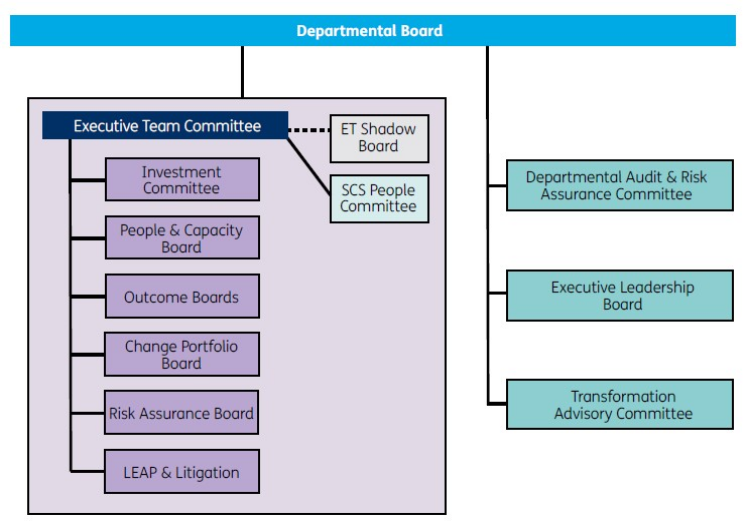
This chart does not include the additional boards that carry out management and assurance functions within the Department but report into the main boards above.
The Departmental Board
Chair: The Rt Hon Liz Kendall, Secretary of State
Meetings in 2024 to 2025: 4
Purpose
Comprising the collective strategic leadership of the Department, its purpose is to provide strategic advice to achieve the Department’s goals effectively. The Departmental Board acts in compliance with the main principles in ‘Corporate governance in central government departments: code of good practice’.
Activities and focus in 2024 to 2025
-
Assessment and review of progress against the Outcome Delivery Plan, including performance and delivery critical milestones. The Departmental Board received data through good quality systems; it scrutinises performance via a dashboard containing clear, consistent, and comparable information.
-
Reflection on departmental priorities with a new Ministerial Team.
-
Understanding the financial envelope for 2025 to 2026.
-
Alignment of transformation and people vision with broader strategic initiatives to deliver our outcomes.
-
Overview of strategic risks for next 12 months.
-
Board induction for new ministers including overview of how the Department is governed and lines of accountability.
Board effectiveness
A board effectiveness evaluation was conducted at the end of the year by the Lead Non-executive Director. Early insights suggest that the Board is generally effective in providing strategic clarity, with positive feedback on the performance information received. The roles within the Board are well-defined, contributions are valued, and relationships among board members are described as positive and collaborative. The Board recognised the need for a more structured and comprehensive approach to risk management. DARAC led a review to better reflect the enduring nature of risk, and this has been shared with Departmental Board members.
Executive Leadership Board/Nominations Committee
(Departmental Board sub-committee)
Chair: Valerie Hughes-D’Aeth, Non-executive board member
Meetings in 2024 to 2025: 2
Purpose
To provide a forum for strategic discussions and decisions on talent, succession planning, pay and performance of directors general.
Activities and focus in 2024 to 2025
-
Executive Team development, performance and accountabilities.
-
Reviewed both end of year reward arrangements and refreshed director general succession plans to provide appropriate scrutiny.
Following a review of people governance, this sub-committee was renamed from Nominations Committee to the Executive Leadership Board and guided by strengthened terms of reference.
Departmental Audit and Risk Assurance Committee
(Departmental Board sub-committee)
Chair: Charlie Steel, Non-executive Director
Meetings in 2024 to 2025: 6
Purpose
To support the Accounting Officer by providing an independent view as to the appropriateness, integrity, adequacy and overall value for money of the governance, risk, control, audit, accounting and reporting and associated assurance processes that are in place in the Department and its public bodies.
Activities and focus in 2024 to 2025
-
Every meeting has received updates on departmental risks, internal audit from the Government Internal Audit Agency, external audit and value for money from the National Audit Office, risk, and progress of the Annual Report and Accounts preparation
-
Non-executives have challenged the Department to understand the aggregated view of risk, how we categorise and prioritise risks and their governance
-
Specific focus has been given to the following risks, incidents or policy change impacts:
-
transition to Functional Assessment Service
-
changes to Winter Fuel Payments/Pension Credit
-
the Department’s use of reinforced autoclaved aerated concrete
-
Change Portfolio’s status
-
Government Internal Audit Agency’s recommendations on Life Certification and National Insurance credits
-
Spending Review updates
-
-
Ongoing focus from previous years included:
-
assurance on arm’s length bodies
-
legal entitlement and administrative practices (LEAP) updates, including State Pension underpayments and Home Responsibility Protection
-
fraud, error and debt strategy
-
whistleblowing processes
-
Three non-executives were recruited in 2024 to 2025 to strengthen the committee’s skills and membership, as advised in the 2023 to 2024 effectiveness review.
Transformation Advisory Committee
(Departmental Board sub-committee)
Chair: Arabel Bailey, Non-executive board member
Meetings in 2024 to 2025: 8
Purpose
To provide independent expert advice to explore and guide the potential for transformation of the Department’s service delivery through digitalisation and alignment with departmental strategy to 2030.
Activities and focus in 2024 to 2025
-
Advised on a broad focus of transformation, guiding the creation of the departmental strategy.
-
Supported the aims of the departmental strategy while preparing for the Spending Review.
-
Guided and scrutinised the Service Modernisation Programme and Data Strategy.
Executive Team Committee
Chair: Sir Peter Schofield KCB, Permanent Secretary
Meetings in 2024 to 2025: 51
Purpose
To provide executive leadership and management of the Department. As the senior decision-making body of the Department, it sets the strategic direction for the Department by overseeing strategy, fiscal events, performance and risk.
Activities and focus in 2024 to 2025
-
Prepared for the 2024 general election.
-
Agreed the departmental strategy through to 2030 and supporting strategies for delivering new ministerial objectives such as ‘Get Britain Working’ and the new Jobs and Careers Service.
-
Took key decisions on future departmental spending to meet the efficiencies/savings required from the period covered by the 2025 Spending Review, while ensuring alignment with the Department’s 2030 Strategy.
-
Agreed departmental funding allocations and assessed deliverability against the Departmental Plan.
-
Managed performance against the Department’s strategic goals.
-
Signed off key people matters, such as the 2024 colleague pay award, operational delivery working hours and resourcing.
-
Reflected on the results of the 2024 People Survey and provided steers on where further work should be undertaken with a view to improve colleague engagement.
-
Scrutinised the Department’s digital and data strategies, capability and technical debt.
-
Reviewed and agreed a refreshed set of Principal Risks.
People and Capacity Board/Capacity Board
(Executive Team Committee sub-committee)
Chair: Julie Blomley, Director General, People and Capability
Meetings in 2024 to 2025: 5
Purpose
Maintain strategic oversight of the Department’s people agenda and cross-cutting issues, commission and approve the annual workforce plans and 5 year strategic workforce plans, guide actions impacting workforce capacity and capability, and monitor performance with the new people dashboard.
Activities and focus in 2024 to 2025
-
Approved supply and recruitment levels at the start of the year and reviewed the in-year workforce plans progress, aligned to financial allocations.
-
Discussed and steered development of strategic planning up to 2030, including the challenges and priorities of capacity issues, headcount controls and service delivery planning to demand.
-
Reviewed the new people strategy to drive ambition for how the Department will attract, engage, develop, support, retain and reward colleagues.
-
Addressed contingent labour use, advocating a strategic approach to reduce reliance on contingent workers.
-
Monitored performance against desired people outcomes, using the new people dashboard.
-
Other matters discussed include people survey results, colleague pay, employee relations, diversity and inclusion.
Following a review of people governance, Capacity Board was expanded to People and Capacity Board to provide greater oversight of the full people agenda and cross-cutting people issues.
Change Portfolio Board
(Executive Team Committee sub-committee)
Chair:
-
Neil Couling CB CBE, Director General, Change and Resilience to October 2024
-
Nagesh Reddy, Chief Portfolio Officer from November 2024 to date
Meetings in 2024 to 2025: 7
Purpose
To oversee all change activity within the Department, providing a single view of change that is aligned with departmental priorities. It is responsible for performance, deliverability, resource allocation and risk management of the change portfolio.
Activities and focus in 2024 to 2025
-
Regularly reviewed the status and updates of various programmes and projects, highlighting operational risks, delivery confidence, and the impact of external factors like elections.
-
Detailed updates on several programmes, including the Health Transformation Programme, Counter Fraud and Error Management System, and the Pensions Dashboard Programme were provided.
-
Insights on programme board effectiveness, business case governance, and changes to approval processes for non-business-as-usual business cases were provided.
-
Updates on financial positions, audit recommendations, and spending reviews were provided.
-
Updates on the change gateway and support for new change initiatives through structured discovery processes were discussed.
-
Maintained close links with Investment Committee supporting the assessment of the value for money and deliverability of proposed new programmes prior to them being accepted on to the Change Portfolio.
-
Maintained close links with Investment Committee supporting the assessment of the value for money and deliverability of proposed new programmes prior to them being accepted on to the Change Portfolio.
Investment Committee
(Executive Team Committee sub-committee)
Chair: Catherine Vaughan CB, Director General, Finance Group
Meetings in 2024 to 2025: 17
Purpose
To provide assurance on large-scale investments, taking decisions on the prioritisation and commencement of new activities and business-as-usual investments that exceed Investment Committee approval limits. It also oversees the Department’s in-year financial position, balancing affordability and delivery considerations.
Activities and focus in 2024 to 2025
-
Considered and approved 27 business cases to modernise and transform DWP services, and for programmes to help individuals find work and support vulnerable people.
-
Created an internal review panel with financial, analytical, and commercial experts to advise Investment Committee on complex business cases, ensuring value for money end effective programme delivery and evaluation.
-
Supported re-prioritisation where planned activity has exceeded programme budgets.
-
Effectively managed the Department’s Central Risk Reserve budget, overseeing and scrutinising expenditure plans, and providing formal governance approval for allocations and new claims throughout the year.
-
Embedded the pipeline process to give Investment Committee early visibility of commercial, digital, and estates activities, clarifying the level of scrutiny required for approval by Investment Committee.
LEAP and Litigation Board
(Executive Team Committee sub-committee)
Chair: Catherine Vaughan CB, Director General, Finance
Meetings in 2024 to 2025: 3
Purpose
To monitor and proactively manage legal entitlement and administrative practices (LEAP) and litigation activity across the Department.
Activities and focus in 2024 to 2025
-
Monitored active litigation high risk cases and ensured lessons learned from litigation cases are captured and implemented.
-
Oversaw departmental LEAP activity, encompassing financial management and resource allocation. Emphasised analysing lessons learned from completed exercises to enhance future LEAPs. Specifically concentrated on uptake of Home Responsibilities Protection and the successful conclusion of the State Pension Underpayment exercise. Strengthened the governance and communication structures for new LEAP exercises.
-
Considered the implications of investigations by the Equality and Human Rights Commission on disabled benefits claimants and by the Parliamentary and Health Service Ombudsman on State Pension age.
Following a review, this board closed in March 2025. LEAP and litigation activities will utilise other relevant existing governance routes
Risk Assurance Board
Chair: Nicholas Hamer, Chief Risk Officer
Meetings in 2024 to 2025: 9
Purpose
To ensure there is an effective risk management process in operation across the Department. It considers and agrees new and emerging risks which should be escalated to the Executive Team Committee and de-escalates risks back to the business where the criticality of a risk is reduced.
Activities and focus in 2024 to 2025
-
Provided scrutiny and oversight of the effectiveness of risk management through:
-
deep dives into Principal Risks and emerging risk themes, seeking assurance on the effectiveness of controls to reduce exposure and bring risks to an acceptable level
-
reviews of risk management maturity assessments
-
identification of delivery risks and challenges through election transition, budget and Spending Review settlements
-
tracking and assurance of recommendations from internal audit and assurance activity
-
-
Provided assurance to the Executive Team Committee and the Departmental Audit and Risk Assurance Committee that senior responsible risk owners are managing risks effectively.
Following a review, this board was replaced in March 2025 by a refreshed Departmental Risk Board with an increased management focus on scrutiny and challenge of mitigation plans to ensure that they make a difference to the risk position.
Outcome Boards
(Executive Team sub-committee)
Purpose
To drive the progress and achievement of the departmental outcomes.
There are 4 Outcome Boards aligned to each of the strategic outcome pillars:
-
Labour Market: chaired by Sophie Dean and Katherine Green, Director General, Labour Market and Poverty
-
Standards of Living: chaired by Sophie Dean and Katherine Green, Director General Labour Market and Poverty
-
Health and Disability: chaired by Katie Farrington, Director General, Social Security, Disability and Pensions
-
Later Life: chaired by Katie Farrington, Director General, Social Security, Disability and Pensions
Activities and focus in 2024 to 2025
-
Development of strategy and policy options during the pre-election period to support an incoming government.
-
Drove prioritisation in preparation for the Autumn Budget and Phase one and 2 of the Spending Review. Proposed departmental funding allocations for 2025-26 and assessed the deliverability of the Departmental Plan for the period.
-
Developed the performance approach and metrics to support delivery and monitoring of the government’s objectives.
Labour Market
(15 meetings)
-
Oversaw work to build the new labour market programme, including development and delivery of Get Britain Working White Paper.
-
Ensured policy thinking supports operational delivery across our jobcentre network.
-
Provided input to Universal Credit prioritisation phases for Labour Market outcomes.
Standards of Living
(9 meetings)
-
Steered longer-term approach to local welfare.
-
Discussed the scope of the Child Poverty Strategy and how that links with other key departmental priorities.
-
Monitored a wide range of poverty metrics including data gathered from external organisations.
Health and Disability
(11 meetings)
-
Supported the new government to develop their priorities of support for individuals, pathways to work, and fiscal sustainability.
-
Oversaw the development of the Pathways to Work Green Paper.
Later Life
(28 meetings)
-
Ensured means-tested Winter Fuel Payments were delivered at pace: managing resourcing, finance, and fraud and error risks.
-
Supported stakeholder engagement and communications activities to increase eligible citizens’ uptake of Pension Credit.
-
Hosted a meeting with all pension-related arm’s length bodies to steer priorities for improving support to address common issues and challenges.
Clinical governance
The Chief Medical Advisor has delegated responsibility for clinical governance within the Department.
The Department is responsible for over 5,500 registered clinicians. They are either directly employed, loaned to or contracted by the Department. They provide leadership, policy and innovation advice, clinical audit, health assessments and support colleagues in our jobcentres. Some are employed by the health assessment providers who undertake over 2 million health assessments per year.
During 2024 to 2025, following an external review of our Clinical Governance processes we have aligned the Department’s clinical governance to NHS best practice. Clinical training has been strengthened, we have appointed a Caldicott Guardian [footnote 106] and Clinical Safeguarding lead and improved the governance of all policies and procedures relating to clinical governance.
We have established a new Clinical Governance and Excellence Board convened by the Chief Medical Advisor and chaired by a non-executive director. The board guides the clinical governance strategy, monitors performance, advises on significant risks and provides assurance.
In 2024, our Chief Medical Advisor was formally appointed to the role as responsible officer. The Responsible Officer is supported by a multidisciplinary team with external expertise who hold the Department to account to ensure our processes align with best practice.
Change governance
We maintain a single view of all change across the Department on the Departmental Change portfolio. Prospective initiatives for joining the Change portfolio are routed through a single gateway, helping to provide a pipeline view of activity. During 2024 to 2025, we strengthened our approach to on-boarding projects and programmes that require a period of discovery activity, providing a more structured approach to request change support and in a way that helps ensure the sound management of the portfolio.
The Change Portfolio Board provided high-level oversight of programme closures, helping to ensure a smooth transition to new ways of working and cascade the lessons learned. In March 2025, the Universal Credit programme – part of the Government’s Major Projects Portfolio – was formally closed. The Building Safety Regulator (delivered by Health and Safety Executive programmes) also closed in March 2025. With that, the Department currently now has 5 programmes on the Government’s Major Projects Portfolio:
-
Health Transformation Programme
-
Service Modernisation Programme
-
Workplace Transformation
-
Connect to Work (formerly Universal Support)
-
Pensions Dashboards Programme (delivered by the Money and Pensions Service)
In addition, the Department’s Permanent Secretary is the Accounting Officer for the Synergy Shared Services Programme on behalf of 4 departments in the cluster. During the year, the Change Portfolio Board were asked to increase their support and oversight of Synergy as part of strengthening assurance to the Accounting Officer.
To support the successful delivery of these, and other, programmes, we have continued to build the expertise and professionalism of the project profession. Notably, around 150 colleagues are now accredited through the Infrastructure Projects Authority Accreditation Scheme. We have also established 10 Communities of Practice to share skills, knowledge and experience across programmes.
Annually managed expenditure
The Department jointly manages its annually managed expenditure (AME) with HM Treasury. HM Treasury is involved in all decisions involving DWP AME spend as the Department, while being responsible for the spend, has no delegated authority. We meet regularly throughout the year to monitor AME spend and its trajectory against the welfare cap. See the Chief Finance Officer report for further detail on the welfare cap.
Within the Department:
-
The Director General, Finance holds executive level accountability for AME controls, including that the Department secures the necessary HM Treasury spending approvals.
-
The Director General, Social Security, Disability and Pensions Policy holds executive level accountability around the welfare cap, monitoring longer term risks to AME spend providing policy leadership to fiscal event processes.
They are supported in this role by the internal AME Board and by the Senior Welfare AME Group, which has membership from within the Department and HM Treasury. Both boards are chaired by the Director General, Social Security, Disability and Pensions. The board oversees all departmental activity related to management of AME spend, including the monitoring of all risk to AME spend. The board also reviews liabilities in relation to benefit expenditure for reasons such as judicial reviews, legal cases and appeals as provisions.
Management of interests
All of our colleagues are bound by the Civil Service Code – the framework on which the Department’s standards of behaviour are built. The Department’s Standards of Behaviour Policy and Procedures apply to colleagues at all grades.
It is mandated in the Department’s Standards of Behaviour Procedures that colleagues’ interests and activities outside of work must not create a conflict of interest or the potential for a perceived conflict of interest with their official role and they must not bring the Department into disrepute.
Our Senior Civil Servants and non-executive directors and members are required to declare any interests which they hold to the Permanent Secretary on an annual basis. The information has been gathered during the year and has been reviewed by the Permanent Secretary. The returns were also scrutinised by the Departmental Audit and Risk Assurance Committee. A list of Senior Civil Servants outside remuneration as at 31 March 2025, agreed through the process of declaration and management of outside interests, is reported at DWP register of senior civil servants’ secondary paid employment - GOV.UK in accordance with The Code of Good Practice and HM Treasury Public Expenditure System (PES) guidance.
At the beginning of every Departmental Board and its sub-committees all members are asked to declare any new potential conflicts of interest. These are noted in the minutes along with the appropriate action taken to manage them. Where a board member declares a potential conflict at a meeting, it is recorded in the minutes and the board member takes no part in any discussions relating to that matter. There was only one conflict of interest registered during board meetings in 2024 to 2025.
In line with the current Declaration of Interest policy for special advisers, all special advisers have declared any relevant interest or confirmed they do not consider they have any relevant interests. The Permanent Secretary has considered these returns and there are no relevant interests to be published.
Additionally, none of our ministers held directorships that conflicted with their management responsibilities in 2024 to 2025.
Management of business appointments
The government’s Business Appointment Rules require any employee wishing to accept a job offer made by a person, company or firm with whom they formed a relationship during their official duties to seek permission. The Business Appointment Rules are published internally, on GOV.UK, and individuals leaving the Department must be made aware of them under the department’s leaving procedures. Applications under these rules are initially considered by someone in a position to understand the potential issues arising from the applicant’s proposed outside appointment and judge the possible public perceptions should the appointment be taken up as proposed. This would normally be someone in the applicant’s line management chain.
Our People and Capability team scrutinise countersigned applications for assessment and ensure consistency between applications that are approved (either unconditionally or with conditions) or rejected. Any restrictions are proportionate to the grade and previous role(s) of the applicant and can apply for up to 2 years after the employee has left.
In compliance with Business Appointment Rules (BARs), the Department is transparent in the advice given to individual applications for senior staff, including special advisers. Advice regarding specific business appointments has been published on www.gov.uk.
During 2024 to 2025 the number of requests made is contained in the table below.
| SCS3 | SCS2 | SCS1 | Total | |
|---|---|---|---|---|
| Number of Senior Civil Service exits from DWP | 1 | 9 | 22 | 32 (15 of these exits were to other government departments) |
| Number of exits where Business Appointment Rules applications were required | 1 | 4 | 0 | 5 |
| Number of exits that did not require a Business Appointment Rules | 0 | 5 | 22 | 27 |
| Number of exits where Business Appointment Rules conditions were set | 0 | 4 | 0 | 4 |
| Number of applications that were found to be unsuitable | 0 | 0 | 0 | 0 |
| Number of breaches of the rules in the preceding year | 0 | 0 | 0 | 0 |
The Advisory Committee on Business Appointments (ACOBA) considers applications from the most senior levels:
-
Ministers
-
Permanent secretaries (and their equivalents)
-
Directors general (and their equivalents
Advice given by ACOBA regarding specific business appointments is published on GOV.UK.
In 2024 to 2025 Richard Corbridge, Chief Digital and Information Officer left the Department and has disclosed through a statement made to ACOBA that he did not follow the exit rules after his appointment with Segro plc. Details of this were published by ACOBA on GOV.UK.
Whistleblowing
The Department and the Government Internal Audit Agency (GIAA) continued to collaborate to ensure that through GIAA’s arm’s length management of the Department’s whistleblowing hotline and its triaging of all whistleblowing cases, colleagues are guaranteed access to an independent and professional team with which they may raise concerns. This is in addition to colleagues being able to raise concerns externally, should they choose, with either the Civil Service Commission or the Comptroller and Auditor General at the National Audit Office (NAO).
Following the cross-government review of whistleblowing carried out by the NAO and discussed at a hearing of the Public Accounts Committee in April 2024, we worked with the Government People Group (GPG) at the Cabinet Office to identify improvements to whistleblowing for 2024 to 2025. The Department has appointed a new senior whistleblowing champion to help raise the profile of whistleblowing further.
In 2024 to 2025, our communications to our colleagues and participation in the civil service’s ‘National Speak Up Week’ maintained the previous year’s high level of awareness of whistleblowing. Results from the DWP’s People Survey 2024, involving over 60,800 respondents, showed 92% of our colleagues understand the standards set out in the Civil Service Code, 74% understand how to raise a concern and 73% are confident that if they raised a concern, it would be thoroughly investigated. This success in maintaining relatively high awareness resulted in 60 whistleblowing cases being registered up to 31 March 2025, consistent with the previous year’s 56 cases.
In 2024 to 2025 we closed 57 whistleblowing cases. Thirteen cases were found to have a case to answer with 6 breaching the Civil Service Code. Nine cases resulted in disciplinary action against individuals and 4 cases were to do with organisational approach/culture, which could lead to change to a policy or some promotional work on the Civil Service Code.
Once outstanding investigations have been completed to determine outcomes, anonymous details of all 60 cases will be reported internally to the Departmental Audit and Risk Assurance Committee and externally to the Cabinet Office.
Controls and assurances
Functional Standards
A function is a grouping aligned across government to manage functional work such as human resources, commercial, or finance. Functions are embedded in departments and arm’s length bodies (ALBs). Functional standards exist to create a coherent, effective and mutually understood way of doing business within government organisations. These standards are mandated for use across central government and provide a stable basis for assurance, risk management and capability improvement, supporting value for money for the taxpayer.
Each central function (primarily in Cabinet Office or HM Treasury) is responsible for managing its own standards and commissioning departments and ALBs to demonstrate their compliance.
In 2024 to 2025, the Department supported the Cabinet Office to pilot an assessment framework for GovS001, the overarching functional standard which sets expectations for the direction and management of functions across government and within organisations. The pilot enhanced our understanding of function management, highlighting strengths such as the Capability and Skills function (rated ‘Good’) and identifying areas for improvement, particularly in cross-functional consistency. The Department continues to support development and application of the framework across government. Our central team oversees compliance, promotes best practices, including through our cross-functional working group, and provides an annual assurance letter for the Permanent Secretary. Functions are increasingly adopting continuous improvement assessment frameworks (CIAFs) to measure their adherence to standards. Notable updates in 2024 to 2025 include the Finance function fully embedding the CIAF, with most areas scoring Better or Best, and the DWP Grants function improving from ‘Good’ to ‘Better’. We remain committed to driving consistency and continuous improvement with robust performance data.
Risk management
DWP’s approach to managing risks aligns with HM Treasury’s guidance – ‘The Orange Book’. The Accounting Officer System Statement available on GOV.UK describes the risk management and internal control systems that are in place across the department and outlines our approach to managing risks across DWP over the reporting period.
The principal risk themes for 2024 to 2025, affecting delivery of departmental objectives, are summarised in the Performance Report under ‘DWP’s most significant risks 2024 to 2025’.
The department continues to operate in a complex environment with both external uncertainty and internal challenges. Many of our risks are enduring, driven by the nature of the organization, external factors or shifts in policy, for example demand pressures such as the increase in Pension Credit applications. We have continually monitored and worked to mitigate these enduring risks throughout the year, revising our plans as appropriate.
Despite this, we have effectively mitigated several risks this year - for example prolonged strike action by employees of a supplier and the transition of a major service contract. The department continues to seek assurance that new and emerging risks are being effectively identified and managed, through planned controls that will reduce their severity.
Risks relating to people safety and our IT infrastructure have been escalated to principal risks during the year, however these are not new risks and have been previously managed and monitored across the Department. New accident and incident reporting systems have been introduced to enable effective benchmarking and analysis, driving continuous improvement, staff training and awareness activities in health and safety management. Our IT infrastructure is being modernised to meet increasingly complex demands. Where IT systems cannot be replaced, we are prioritising remediation of legacy IT infrastructure through a programme of work to improve our systems and support delivery of departmental priorities.
The challenging operating environment requires continuous strengthening of the assurance regime and rigorous testing to ensure that risk assessments are realistic and that risk management plans will bring them within tolerance and appetite.
As a result, we have re-assessed our risk management approach – alongside wider reviews of departmental governance and are working towards a full refresh of our principal risk set to better reflect the enduring nature of risk, ministerial priorities and more clearly align with the Orange Book.
Security and information management
Departmental security is managed and overseen by the Chief Security Officer (CSO), who reports to the Director General, Finance and attends both the Risk Assurance Board and the Departmental Audit and Risk Assurance Committee (DARAC). The CSO provides DARAC 6 monthly reports focussed on our progress with agreed security priorities. Deep dives on the potential impact of Artificial Intelligence on fraud and our approach to supply chain assurance have also been presented to DARAC members outside of formal meetings.
During 2024 to 2025, we have focussed on 5 key priorities, which were endorsed by our audit committee, to improve our departmental security further:
-
Supplier Assurance: Joint assurance is undertaken with our commercial colleagues pre and post contract award building on targeted education and changes to commercial governance. Alongside this we’ve worked with Business Continuity colleagues to improve understanding of the Department’s supply chain in the context of our most critical services.
-
Physical Security: We’ve implemented a revised physical security operating model to improve the management of physical security risk and controls. We’ve met targets to complete physical security assurance assessments across 50% (around 425 sites) of our estate, including 100% of our highest impact sites.
-
Critical National Infrastructure (CNI) and Internet Facing (Citizen) Services: We’ve extended our comprehensive controls-based approach, by testing our preparedness for a severe cyber-attack against our systems. Testing included table-top exercises with several business areas on CNI systems and related critical services. We’ve enhanced the automation of our controls to keep our defences current against the growing global threat. This aligns with National Cyber Security Centre threat reporting on attack methodologies.
-
Personnel Security: We’ve had a strong focus on Insider Threat joining up insight across operational activities, investigations and a range of data and intelligence sets. In 2025 we achieved an independently assured rating of level 3 ‘competent’ for our implementation of The National Protective Security Authority (NPSA) Personnel Security Maturity Model, which has established a framework for assessment of the Department’s Personnel Security operations and its continued maturity in building resilience against Insider Risks and Threats.
-
Capability: We’ve established a cross-government Security academy which will provide the Department all the benefits of the DWP Academy at a reduced cost to us. Graduates will join the Department with greater cross-government security knowledge.
These priorities were developed and informed by results from the Departmental Security Health Check and the Cyber Assessment Framework to enable the Department to focus on areas of greatest risk. These priorities are under constant review as we continue to analyse the threats and risks.
We continue to support cross-government work in several areas, most notably during 2024 to 2025, in providing the cross-Government Security Academy but also in continuing to provide security education and awareness for civil servants across departments.
The Department also holds the chair of the Vetting Executive Challenge Board, the principal customer board for vetting transformation and is a member of the Ministerial Vetting Oversight board chaired by Cabinet Office and Home Office Ministers.
During 2024 to 2025, the Data Protection Officer reported 14 incidents to the Information Commissioner’s Office, details of which are recorded in the table under ‘Data incidents’.
During 2024 to 2025 the Department received 30,389 Subject Access Requests (SARs) with 29,600 completed. We completed 20,624 (71%) within the statutory UK General Data Protection Regulations deadline. In 2023 to 2024 we completed 21,231 (80%) within the statutory deadline. The decreased performance was addressed in year with the deployment of a recovery plan and in the longer term, digital transformation of the DWP’s SAR Service is expected to deliver further performance improvements.
We continued to review many of the Department’s historical corporate records with 22,731 records being processed. This activity helps to preserve the Department’s most significant corporate memory and fulfils our obligations under the Public Records Act.
Freedom of Information (FOI) performance within the Department remains strong. There has been another increase in the volume of new requests received consistent with the trend experienced over recent years. We exceeded the Information Commissioner’s Office monthly 90% minimum target, for replying to responses within 20 working days, in every month, achieving an overall yearly performance score of 98%.
The formal FOI performance statistics are published by the Cabinet Office on GOV.UK in the Freedom of Information statistics.
Departmental Security Health Check and Cyber Assessment Framework
The Department continues to engage with the mandatory Departmental Security Health Check (DSHC) and the Cyber Assessment Framework (CAF). These 2 programmes of work are designed to give departments insight, learning and assurance with regards to their security activities. We have now put a total of 4 CNI systems through the CAF process and have taken forward the learning to focus our activities for the following year.
Artificial Intelligence (AI)
The Department has established an overarching governance and assurance framework approach that can assure cross-cutting technology and capability.
Within this, we are developing a Responsible AI Framework which will be used to assure applicable specific AI initiatives. The Responsible AI Framework has governance in place to ensure we are using AI in a safe, ethical and transparent way. The Department’s use of AI adheres to 6 principles:
- explainable
- mitigated
- controlled
- understood
- value-led
- governed
AI Delivery Board
The AI Delivery Board allows for a holistic view of proposed AI projects before granting approval for development to begin or continue. The board is responsible for:
-
providing advice, assurance, and support for the delivery of all elements within the scope of the AI and Innovation unit
-
championing the project, supporting its successful and safe delivery, ensuring that effective risk management is applied and provide continuing assurance and compliance with the Department’s policies, procedures, and guidance
AI Independent Advisory Group
The AI Independent Advisory Group is chaired by the Department’s Deputy Chief Data Officer. The focus of the advisory group is to enable the Department to comply with Government Digital Service’s requirements relating to the Algorithmic Transparency Recording Standard (ATRS). This enables the Department to provide clear information about the algorithmic tools it uses. The first ATRS record was published in February 2025, following approval by the AI Independent Advisory Group.
The Department records all AI developments in an AI and Algorithmic Register that includes the project, a description of what is being built, its usage and its possible effects. This inventory has been aligned to the Department for Science, Innovation and Technology’s Algorithmic Transparency Recording Standard.
Digital Design Authority
AI initiatives are taken to Digital Design Authority advisory and approvals which is part of existing digital governance. The authority review allows for technical experts to assess and raise any concerns around technical risks such as security, data privacy, architectural design, and to ensure that suitable mitigations are in place.
The Department continues to review and iterate its AI governance and assurance framework so that it remains relevant, robust and includes expert representatives from across key areas (data, legal, cyber, risk, etc.) for advice, oversight and assurance throughout the development lifecycle.
For more information, see the section on data and analytics Fraud, error and debt report.
Commercial and contract management
2024 to 2025 saw implementation of the Procurement Act 2023 and a new National Policy Procurement published in February 2025. Alongside maximising the opportunities presented by the flexibilities introduced in the new regulations, we are conscious of the increased risk of an extended period of dual running with procurements under Public Contract Regulations 2015 and Procurement Act 2023. To mitigate this risk, our commercial team has completed an internal re-structure to create a dedicated compliance function focussed on assurance of key risk areas. The team will be fully operational later in the year.
Commercial Standards Contract Management
The commercial function is assessed against Government Functional Standards at regular intervals. The most recent assessment completed in January 2025 was peer reviewed by the Ministry of Justice providing independent assurance. We achieved increased performance against a substantial number of metrics when comparing 2025 to 2022; these 2 data points have been selected as both of these assessments were externally peer reviewed, and therefore a valid basis for comparison. This resulted in an overall average rating of 90% in March 2025, equating to an overall rating of ‘Best’. The average for the cohort was 72%.
Given that high performance, we have only a limited number of improvement metrics, including contract management capability accreditation levels. Early in 2024 to 2025 the Cabinet Office Contract Management Capability Programme paused for a refresh, slowing progress in this area during the year. We will renew focus in this area with improved data supporting identification of relevant contract managers and targeted focus on enrolment and accreditation.
Commercial Controls
Late in 2023 to 2024 the Department raised its Commercial Approval Board entry threshold from £100,000 to £400,000, introducing a light touch procurement commissioning template for transactions between £100,00 and £400,000, and reducing the volume of commercial decisions requiring full board approval by approximately 50%. This change was subject to assurance throughout 2024 to 2025 and the date these accounts are certified, with iterative changes to the process made to ensure it continues to provide robust control. The change has introduced consistency in decision making and audit trails, at the same time as releasing capacity to focus on more complex activity.
We have introduced an explicit declaration in the governance process to attest to the checks undertaken to manage potential conflicts of interest, strengthening controls in this area.
Assurance
During 2024 to 2025 we completed a pilot of external assurance reviews, concluding they add value to complex procurements, particularly at invitation to tender and evaluation outcome stage.
The commercial team completed assurance of its contract portfolio against applicable contract management standards as part of a sampling exercise throughout 2024 to 2025 and the date these accounts are certified. For the most critical contracts, compliance with standards was high. Compliance levels were lower for less critical contracts, particularly in respect of compliance with contract management products such as contract management plans. Improvement plans are in progress, including a more proportionate product set for contracts in the lower risk categories. Government Internal Audit Agency have reviewed the approach and closed the related outstanding recommendations.
Analytical Models Management
In line with the Macpherson recommendations the Department continues to use a quality assurance framework that is embedded in our processes which covers our business-critical models within the Analytical Community and Finance Group. The relevant deputy directors are accountable for the quality of the models and forecasts in their area, and we continue to develop and provide best practice guidance and training to all staff developing models. We have a list of business-critical models which are owned by the analytical community and Finance Group includes information on quality assurance, ownership and impact.
Our Policy Costings Scrutiny Committee and Review Scrutiny Panels, scrutinise the different aspects of costings for each fiscal event. The Office for Budget Responsibility (OBR) examine our forecasts, costings and wider economic impacts of changes to policy. We work closely with the OBR, liaising with them throughout the year on the key changes and issues ahead of the next fiscal event. This ensures their views on the economy and/or best practice are accurately and fully reflected in these models. After each fiscal event we conduct lessons learned exercises to identify what works, and areas we can improve on in the future. We also continue to oversee a programme of development activity to the process of producing resource forecasts, including the development of new modelling capability to provide enhanced scenario functionality.
Assurance covering grants
The Director General, Finance has overall responsibility for providing assurance that financial controls are sufficient to mitigate financial risks in all areas, including grants. The Senior Functional Grants Lead provides assurance on all aspects of grants, including ensuring compliance with the Government Grants Functional Standard and the Global Design Principles.
We award grants to a range of organisations across different sectors, to help achieve delivery of departmental objectives. Examples include Help to Claim, Household Support Fund and Flexible Support Fund schemes.
We have a comprehensive grants framework that provides guidance on the end-to-end process for grants. This content has been enhanced by incorporating links to the Cabinet Office’s Government Grants Functional Standard. For schemes that are high-risk, novel, contentious or repercussive, the Department uses the Cabinet Office’s Complex Grants Advice Panel.
The Department’s Grants Approval Board, chaired by the Department’s Senior Functional Grants Lead, the Deputy Director, Challenge, Oversight, Governance and Strategic Support Division Directorate has responsibility for ensuring that new schemes and grant extensions, equal to or above £100,000, are compliant with the Government Grants Functional Standard. The board ensures that grant owners demonstrate how all aspects of the functional standard are met before a scheme is approved. In 2024 to 2025 18 new grants and extensions were considered by the Grants Approval Board totalling £2.6 billion. The reason for the significant increase in the value of grants this year is mainly due to the new government’s focus on boosting employment and tackling economic inactivity through the introduction of the “Get Britain Working” initiative.
Assurance from Executives
The Accounting Officer issues a formal letter to each director general setting out their delegated accountabilities and authority. The Executive Team Committee has responsibility for delivery of their shared team objectives, supporting the delivery of departmental strategic objectives and they review their collective delivery of these on a quarterly basis.
During 2024 to 2025, each director general provided the Accounting Officer with a letter of assurance covering the full reporting year. Letters of assurance provide an assessment of the effectiveness of the internal controls that support delivery of business objectives and departmental policies. This year we have enhanced the scrutiny of the returns to further test their controls and processes, providing an extra layer of assurance to the Accounting Officer. In addition, to support this process, we continue to apply a risk management assessment to evidence the effectiveness of risk management and controls within each group.
The Accounting Officer is satisfied that, collectively, his directors general effectively manage the governance and internal control structures within the business areas they lead and that he can rely on them to manage risks within their business.
The directors general have identified several challenges this year which they are managing effectively within their teams. These include but are not restricted to tackling levels of fraud, error and debt, and the move to prevention, managing capacity and capability pressures, alongside growing demand for our services.
Assurances covering our public bodies
For 2024 to 2025 the Director General, Disability, Health and Pensions policy provided assurance on the governance and control arrangements for the public bodies which deliver outcomes on our behalf. Our Arm’s Length Bodies Partnership Division was responsible for holding relevant public bodies to account and ensuring that they worked to the high standards expected of them [footnote 107]. We have a range of oversight activity in place to provide assurance that each body is working effectively through robust governance arrangements.
Our annual assurance assessment involves a deep dive into each of our public bodies, with input from functional colleagues across the Department and other government department policy areas where relevant, to assess the level of risk posed by each to the Department. The outcome of this assessment is reported into the Departmental Audit and Risk Assurance Committee, and we additionally provide a light touch quarterly dashboard to update progress throughout the year. Our ongoing programme of engagement and assurance activity includes our quarterly accountability reviews with the bodies, our attendance at the bodies’ audit and risk assurance committees and ongoing senior day to day engagement with the bodies. This ensures that we have proportionate oversight and understanding of the risks and opportunities that our bodies present to the Department.
Our risk management approach is written into the framework documents that govern our relationship with our bodies. Each of the public bodies is responsible for identifying their own risks and risk management is overseen by their audit and risk assurance committees. Our Arm’s Length Bodies Partnership Division reviews risk as part of the quarterly accountability review process, with functional expertise provided by the Department’s Risk Management Directorate. Our oversight arrangements support the performance of each body, enhance the protection given to the Permanent Secretary as Principal Accounting Officer and assure the Departmental Board, the Executive Team Committee and the Departmental Audit and Risk Assurance Committee that we have a good overview of our public bodies and meet HM Treasury and Cabinet Office expectations of assurance.
We have strengthened arm’s length bodies’ links to our own governance arrangements. For example, arm’s length bodies delivering Government Major Projects Portfolio programmes where the Department is the policy sponsor will be required to regularly attend the Change Portfolio Board, as well as the Investment Committee.
Our public appointments team, within the Arm’s Length Bodies Partnership Division, conducts our public bodies’ appointments exercises (chairs, most non-executive directors and members, and the Pensions Ombudsman and Deputy Pensions Ombudsman) on behalf of ministers. The team collates statistics and information from each recruitment campaign to enable the Permanent Secretary to provide formal annual assurance to the Commissioner for Public Appointments that all public appointments made by our ministers are fully compliant with the Cabinet Office governance code on public appointments. All public body appointments activity for 2024 to 2025 is listed in the following table.
| Public body | New appointment (up to 5 years) | Reappointment (up to 5 years) | Extension (up to 12 months) |
|---|---|---|---|
| Health and Safety Executive | Non-executive directors: Catherine Mackay (Terms signed on 30/09/24 and the appointment began on 1/10/24), Christopher Johnson (Terms signed on 28/09/24 appointment began on 1/10/24) | Chair: Sarah Newton 2 years extension (Terms signed on 4/02/25 appointment begins on 1/08/25) | - |
| Money and Pensions Service | Non-executive directors: Jaspal Dhillon (Terms signed on 20/05/24 and appointment began on 8/06/24), Richard Harvey (Terms signed on 17/05/24 and the appointment began on 1/06/24) | - | - |
| Industrial Injuries Advisory Council | Chair: Professor Gillian Leng (Terms signed on 21/03/25 and appointment begins on 1/04/25) | Members: Lesley Francois (Terms signed 17/06/24 and appointment began on 1/09/24), Dr Jennifer Hoyle (Terms signed 20/06/24 and appointment began on 1/09/24), Dr Daniel Shears (Terms signed 20/06/24 and appointment began on 1/09/24) | - |
| Social Security Advisory Committee | - | Members: Carl Emmerson (Terms signed 12/09/24 and appointment began on 1/02/25), Phil Jones (Terms signed 12/09/24 and appointment began on 1/02/25) | Members: Carl Emmerson (extended to 31/01/25), Phil Jones (extended to 31/01/25) |
| The Pensions Ombudsman | New Deputy Ombudsman: Camilla Barry (Terms signed on 1/11/24 and appointment began on 9/12/24 [footnote 108]) | Non-executive director: Emir Faisal (01/05/2024 to 30/04/2027) | Interim Chair: Anthony Arter (extended until 30/06/2025), Non-executive director: Robert Branagh (Extended until 30/04/26), Myfanwy Barrett (Extended until 30/04/26) |
| The Pensions Regulator | N/A – no regulated appointments for TPR | - | - |
| The Office for Nuclear Regulation | Chair: Dr Nicola Crauford (Terms signed on 21/12/24 and appointment began on 1/03/25) | Non-executive director: Janet Wilson (Terms signed on 31/10/24 appointment begins 1/04/25) | Non-executive director: Tracey Mathews (Extended until 1/06/25) |
| National Employment Savings Trust | Board Members: Michael Gordon (Terms signed on 24/10/24 and appointment began on 25/11/24), Stuart White (Terms signed on 24/10/24 and appointment began on 25/11/24), Catherine Howarth (Terms signed on 30/10/24 and appointment began on 25/11/24), Faith Reynolds (Terms signed on 28/10/24 and appointment began on 25/11/24), Howard Walpole (Terms signed on 5/11/24 and appointment began on 25/11/24) | - | - |
Assurance from HM Revenue and Customs (HMRC)
HM Revenue and Customs has provided the Department a letter of assurance that has been approved by its Audit and Risk Assurance Committee. It contains detail about its capacity to handle risk and highlights any significant issues that may impact on their control and management of the National Insurance record and real time information shared with the Department for the year ended 31 March 2025.
Two areas of assurance risks were raised in the letter of assurance: the accuracy of data provided to HM Revenue and Customs from third parties, including employers and the DWP and, the effectiveness and accuracy of the HM Revenue Customs systems (people, process, and technology) that record, process and transmit data.
A joint oversight group, jointly chaired by the Director of Operational Excellence (HMRC) and Director of Retirement Services (DWP) continues to support internal assurance activities across our departments. The group oversee the management of risks and issues impacting on the National Insurance record, including missing Home Responsibilities Protection, payment and recording of voluntary National Insurance contributions. Further detail on these areas is contained in the fraud and error section of the Annual Report and Accounts section and the Performance Report section.
Additionally, the group continue to oversee the recommendations from a joint internal audit review. Significant progress has been made on the 4 joint recommendations from HM Revenue and Customs Internal Audit. Three of these recommendations are now closed. Plans are in place to complete the outstanding recommendation later this year. Two HM Revenue Customs only recommendations have also been closed. Furthermore, a review relating to missing Home Responsibilities Protection is underway. There is still work to do to review and ensure that all necessary controls are in place to maintain the integrity of the National Insurance account. However, good progress has been made in 2024 to 2025 and will continue under the supervision of the Joint Oversight Group.
Shared Services Connected Ltd
Shared Services Connected Ltd (SSCL) is the largest provider of critical business support services for government, police and defence clients delivering a contracted out shared finance, human resources and procurement services.
To facilitate the delivery of the shared services, SSCL is also responsible for the management of the Single Operating Platform (SOP) system including its data, hosting, infrastructure management support, application management support, service management and performance management.
Cabinet Office Government People Group (GPG) is responsible for the Memorandum of Agreement for shared services between the Cabinet Office and the government departments. They provide an annual letter of assurance to all customers based upon the overall SSCL audit and assurance programme.
GPG have summarised the findings from these various sources of assurance in the 2024 to 2025 Letter of Assurance as follows:
-
PwC provided reasonable assurance based on 6 government specific reviews. This is consistent with the opinion provided for 2023 to 2024. Governance, risk management and control in relation to business-critical areas is generally satisfactory but with some areas of weakness and / or non-compliance. There are no DWP specific findings, the findings are related to generic framework level provision.
-
The Government Internal Audit Agency completed 3 end-to-end audits and have provided a moderate opinion. This is an improved opinion from the previous years limited opinion. The main concern is:
- staff overpayments and recovery audit and the requirement for improved management information to provide a high-level overview of total overpayment balances and recoveries
Most findings are generic to services provided by SSCL for all government departments, including DWP.
The Department is content with the consistent level of assurance from last year regarding the governance, risk management and control environment operating within SSCL based on the PwC audit activity during 2024 to 2025.
We also acknowledge the improved overall assurance rating from the Government Internal Audit Agency from limited last year to moderate this year, based on their audit work relative to both Departments and SSCL.
The findings provide the Department with sufficient assurance of the effectiveness of the controls employed by SSCL that were examined during 2024 to 2025. There are no DWP specific concerns apparent that are likely to materially impact the statements included in the Annual Report and Accounts.
Assurance opinion of the DWP Group Chief Internal Auditor
The Department’s Group Chief Internal Auditor (GCIA) provides independent assurance to the Permanent Secretary and the Departmental Board (via the Departmental Audit and Risk Assurance Committee (DARAC)). The assurance opinion is derived from a risk-based plan of work which has been approved by the Executive Team Committee and endorsed by DARAC, together with the GCIA’s wider knowledge of the business and other assurance provision. As with prior years, there were some changes to the planned programme of work during the year to ensure that it remained aligned to the changing risk landscape.
The GCIA has provided moderate assurance on the Department’s governance, risk management and control framework in 2024 to 2025. This opinion has been presented in accordance with the areas of the Risk Control Framework set out in the Orange Book [footnote 109] and reflects the Department’s governance, risk management and controls, with concerns remaining over people issues and risk management.
The overarching themes covered by the GCIA’s report including key feedback were:
Risk management processes across the Department: We’ve recognised this as a priority and good progress has been made towards the development and implementation of a refreshed approach.
Cyber resilience remains a key priority for the Department, and we’re progressing towards achievement of the ‘adaptive’ tier of the NIST Cyber Security Framework.
The level of complexity in processing claimant commitments is impacting on the delivery of policy intent, for example the Government Internal Audit Agency identified issues in both Universal Credit and Job Seekers Allowance.
In May 2025 the Department published estimates of the levels of fraud and error in 2024 to 2025. In Universal Credit (UC) rates dropped significantly in 2024-25, from 12.4% to 9.7% of expenditure and it no longer has the highest rate of overpayments. In addition to this DWP reported on its successes across core detect activity, exceeding their Annually Managed Expenditure savings target to deliver around £2 billion savings.
Transitioning programmes: We’ve successfully transitioned programmes from change into live running, most notably UC for tax credit customers.
A review into Management of Overtime identified a need to strengthen controls in relation to the governance and oversight of processes in place to manage overtime working.
Capacity and capability remain an ongoing concern. We need to prioritise staff training and development to embed a true learning culture.
Revised operating procedures in Pension Credit: We manged the response to changes in eligibility to Winter Fuel Payments, supported by a robust risk and impact assessment. Revised operating procedures will be reviewed to identify and correct any resultant fraud, error, and debt.
We also need to tighten our current procedures for Access to Work to effectively manage expenditure levels and ensure support is appropriately targeted.
Governance and oversight of key Departmental Change Programmes: A greater focus on governance, benefits management and lessons learned will safeguard success. The Synergy Programme, which was reviewed by the National Infrastructure and Service Transformation Authority in both December 2024 and March 2025, has since made significant progress. The GCIA has noted improvements in governance, leadership and planning.
Assurance from other sources
The National Audit Office:
During 2024 to 2025, the National Audit Office (NAO) undertook value for money (VFM) studies and investigations and published 4 reports. It completed one VFM study specific to the Department: DWP customer service, published on 23 July 2024. The NAO also published an investigation into the Pensions Dashboards Programme on 10 May 2024, a report on Carer’s Allowance on 11 December 2024, and a report on Supporting people to work through jobcentres on 31 March 2025. The NAO also published its annual Departmental Overview on 11 October 2024.
DWP customer service report noted that there was increasing demand for DWP services, and that call handling performance, customer satisfaction levels and uptake of digital channels varied across services. The report on the Investigation into the Pensions Dashboards Programme, found that multiple factors had contributed to delivery problems, and that DWP had identified a need to clarify accountabilities with arm’s length bodies on programme delivery and consider how bodies could be appropriately supported while remaining at arm’s length. The Carer’s Allowance report found that the amount of total outstanding overpayment debt had increased since 2018 to 2019, and that the amount of debt recovered by DWP had increased, while the average value of new overpayments identified had fallen. The report on Supporting people into work through jobcentres found that demand for support from work coaches had increased. More than half of jobcentres have used a flexibility framework to reduce the support provided to Universal Credit claimants when demand is too high.
We engage with several reports that are cross-government studies and insight reports identifying good practice and lessons learned across government, including for example: Making public money work harder, An Overview of the impact of fraud and error on public funds for the new Parliament 2023 to 2024, Maintaining public service facilities, Estimating and reporting fraud and error in annual reports and accounts, Good practice in annual reporting, and Overcoming challenges to managing risks in government. NAO reports on the Department are available at the National Audit Office.
The NAO’s reports are presented to Parliament. The Public Accounts Committee may hold an inquiry on the NAO reports and invite the Department to answer questions on it. The Public Accounts Committee will produce its own report with recommendations and the Department responds to HM Treasury as appropriate.
During 2024 to 2025, the Department attended 3 Public Accounts Committee (PAC) oral evidence sessions. The Public Accounts Committee subsequently published reports on Progress in implementing Universal Credit in April 2024 as well as a report on DWP Customer Service and Accounts 2023 to 2024 in December 2024. Cross government reports with DWP participation include Whistleblowing in the Civil Service and Tackling Homelessness. PAC reports are available at PAC publications.
National Infrastructure and Service Transformation Authority (NISTA):
We continue to work closely with NISTA (formerly known as the Infrastructure Projects Authority) and HM Treasury who provide independent assurance of our Government’s Major Projects Portfolio (GMPP) projects and programmes, including potential new programmes.
During 2024 to 2025, NISTA (the Infrastructure Projects Authority) undertook 7 independent reviews of the following programmes [footnote 110]:
- Synergy
- Workplace Transformation
- Universal Credit
- Health Transformation
- Connect to Work
- Pensions Dashboard
- Building Safety Regulator
These reviews support the approvals and assurance of business cases and provide assurance to senior responsible owners and accounting officers. With regards to Synergy areas of significant risks were identified.
The Synergy Programme’s aim is to improve the way HR, payroll, finance and procurement are done across 4 departments and their arm’s length bodies, to enable better data sharing, better decision-making and simpler processes. The complexity in delivering business transformation across multiple departments to challenging timescales has caused early delays to the Programme.
In October 2024, the previous senior responsible owner reported significant risks. As a result, a remedial plan was developed in consultation with the National Infrastructure and Service Transformation Authority. A new senior responsible owner and programme director are now in post and are delivering a plan to resolve key delivery issues. One critical issue is the agreement of a fully costed and deliverable integrated plan in summer 2025 following work to extend common design and rephase and replan the release dates for departments to move over to Synergy services.
Government Banking:
The Department accesses its domestic and overseas money transmission services through contracts operated by Government Banking. A memorandum of understanding between the Department and Government Banking acts as the agreement through which services are delivered. To meet the obligations of the agreement, Government Banking provides us with an annual letter of assurance on the suppliers’ performance, including service quality, cost effectiveness, continuous improvement, security accreditation and sustainability. The letter is received after the publication of the Annual Report and Accounts, however, there are no indications of any material concerns about how the contracts have been delivered 2024 to 2025, which is consistent with previous years’ letters.
Accounting Officer’s assessment of the system of control and challenges for 2025 to 2026
Following in-year discussions with my Executive Team, Chief Risk Officer, Group Chief Internal Auditor, and assurances I have received; I share the Group Chief Internal Auditor’s view that the controls provide moderate assurance.
As shown throughout this document, our system of control encompasses clear Ministerial priorities and established accountabilities. Running through this is strong and transparent governance, sound risk management, and a robust approach towards functions and compliance. All of this is underpinned by our values of we care, we deliver, we work together, we adapt, and we value everybody. We apply this internally, through the wider department, and with the increasing range of partners we work with.
As we enter 2025 to 2026 against a challenging operating environment, the Department will continue to focus on providing employment support and payment of benefits including the State Pension. Supporting disabled people and those with health conditions to live independently will also be a priority. We will continue to focus on achieving government priorities and improving the customer experience by simplifying and modernising our services. We will pay particular attention to the following areas.
Policy and welfare reform
The Department is working towards reforming our employment support and welfare delivery, in an uncertain economic environment. To enable the Department to move closer to our ambition of an 80% employment rate, we will make our plan to Get Britain Working a reality and rebalance social security spending to better support people into work and reduce the risk of long-term inactivity.
We will support disabled people and people with health conditions by breaking down barriers to work and creating more opportunities, building a fairer, more modern health and disability benefits system and streamlining the assessments process.
We will strengthen a pensions system that prioritises savers and pensioners, ensuring decent, secure retirement incomes for all, reviewing the private pensions system and continuing to drive take-up of Pension Credit.
We are also committed to reducing and alleviating child poverty and improving children’s lives through a cross-government Child Poverty Taskforce. In 2025, we will publish an ambitious cross-government Child Poverty Strategy to improve financial security and create better opportunities for children and families.
People and capability
The demands on our people continue, given budget constraints and increased demand for our services. We are aligning our workforce capacity in a flexible way to support our priorities. Learning and development will continue to remain a focus to ensure that the workforce is readily adaptable to deliver as we reform our services.
Capability will also be supported through redesigning our reward strategy and progressing the Synergy Programme, which will streamline and modernise our HR, Finance, Payroll, and Procurement systems.
Fraud and Error
Although we have made good progress this year in detecting and preventing fraud and error, we still need to go further, investing in preventative activity alongside our existing strong detect functions to ensure we are stopping incorrect payments from the outset or correcting them as quickly as we are able. Our Public Authorities (Fraud Error and Recovery) Bill will modernise our legislative framework, helping identify, prevent, and deter fraud; and enabling better recovery of debt owed to the taxpayer. Further information is set out in the Fraud, error and debt report sections.
Remuneration and staff report
The remuneration report provides details on our policies as well as the cost of our leadership team and staff. This section also includes details of our staff engagement and diversity and inclusion information.
Remuneration policy
The pay of most Senior Civil Servants is set by the Prime Minister, following independent advice from the Senior Salaries Review Body. Details are available on GOV.UK. This body also advises the Prime Minister on peers’ allowances; the pay, pensions, and allowances of MPs; and others whose pay is determined by the Ministerial and Other Salaries Act 1975.
Salaries are solely for the period in the year when an individual served as a member of our Executive Team.
Appointment of directors
Civil service appointments are made in accordance with the Civil Service Commissioner’s Recruitment Principles. These principles require appointments to be made on merit and based on fair and open competition. However, there may be exceptions to this principle.
Unless stated otherwise, all appointments are open-ended. Early termination, other than for misconduct, would result in the individual receiving compensation as set out in the Civil Service Compensation Scheme.
Further information about the work of the Civil Service Commission can be found at Civil Service Commission.
Salary
Salary includes gross salary, overtime, reserved rights to London weighting or London allowances, recruitment and retention allowance, private office allowances and any other allowance to the extent that they are subject to UK taxation. This report is based on accrued payments made by the Department and thus recorded in these accounts. In respect of ministers in the House of Commons, departments bear only the cost of the additional ministerial remuneration; the salary for their services as an MP £91,346 (from 1 April 2024)[footnote 111] and various allowances to which they are entitled are borne centrally. However, the arrangement for ministers in the House of Lords is different in that they do not receive a salary but rather an additional remuneration, which cannot be quantified separately from their ministerial salaries. This total remuneration, as well as the allowances to which they are entitled, is paid by the Department, and is therefore shown in full in the figures in the ‘Remuneration and pension entitlements for ministers and executive directors’ section.
Bonuses
Bonuses are non-consolidated variable performance related payments awarded to our civil servants below SCS grade at the end of the year. To be eligible, staff need to be in post on 31 March and 1 July and must not be undergoing formal poor performance action. Bonus payments are normally paid in July for performance in the preceding financial year, therefore payments made in 2024 to 2025 relate to performance between 1 April 2023 and 31 March 2024.
In addition, SCS bonus payments are based on performance assessments against the framework for SCS Performance Management and Pay prescribed by Cabinet Office. Those that are assessed as ‘Exceeding’ or ‘High Performing’ are eligible for a non-consolidated performance related payment.
Benefits in kind
The monetary value of benefits in kind covers any benefits provided by the Department and treated by HM Revenue and Customs as a taxable emolument.
Conflict of interest
We keep a register of our directors’ interests. This contains details of company directorships and other significant interests held by those members. None of our directors or ministers held directorships that conflicted with their management responsibilities in 2024 to 2025.
A list of ministerial board members’ interests can be viewed online on DWP register of board members’ interests.
Remuneration and pension entitlements for ministers and executive directors
Ministers’ pay 2024 to 2025
(This information is subject to audit)
| Ministers | Salary £ | Full year equivalent £ | Severance payments £ | Pension benefits to nearest £1,000[footnote 112] | Total to nearest £1,000[footnote 113] |
|---|---|---|---|---|---|
| Rt Hon Liz Kendall MP from 5 July 2024 | 49,903 | 67,505 | - | 13,000 | 63,000 |
| Rt Hon Sir Stephen Timms MP from 8 July 2024 | 23,164 | 31,680 | - | 6,000 | 29,000 |
| Alison McGovern MP from 8 July 2024 | 23,164 | 31,680 | - | 6,000 | 29,000 |
| Emma Reynolds MP from 9 July 2024 Left 15 January 2025 | - | - | - | - | - |
| Andrew Western MP from 9 July 2024 | 16,300 | 22,375 | - | 4,000 | 21,000 |
| Baroness Sherlock OBE from 9 July 2024 | 34,215 | 81,485 | - | 5,000 | 39,000 |
| Torsten Bell MP from 15 January 2025 | - | - | - | - | - |
| Rt Hon Mel Stride MP from 25 October 2022 (Left 5 July 2024) | 17,784 | 67,505 | 16,876 | 4,000 | 39,000 |
| Mims Davies MP from 27 October 2022 (Left 5 July 2024) | 8,036 | 31,680 | 7,920 | 1,000 | 17,000 |
| Viscount James Younger from 1 January 2023 (Left 5 July 2024) | 28,276 | 107,335 | - | 2,000 | 30,000 |
| Jo Churchill MP from 13 November 2023 (Left 5 July 2024) | 8,346 | 31,680 | 7,920 | 2,000 | 18,000 |
| Paul Maynard MP from 13 November 2023 (Left 5 July 2024) | 5,894 | 22,375 | 5,593 | 1,000 | 13,000 |
| Guy Opperman MP from 27 October 2022 (Left 12 November 2023) | - | - | - | - | - |
| Tom Pursglove MP from 27 October 2022 (Left 6 December 2023) | - | - | - | - | - |
| Laura Trott MBE MP from 27 October 2022 (Left 12 November 2023) | - | - | - | - | - |
Ministers’ pay 2023 to 2024
(This information is subject to audit)
| Ministers | Salary £ | Full year equivalent £ | Severance payments £ | Pension benefits to nearest £1,000[footnote 112] | Total to nearest £1,000[footnote 113] |
|---|---|---|---|---|---|
| Rt Hon Liz Kendall MP from 5 July 2024 | - | - | - | - | - |
| Rt Hon Sir Stephen Timms MP from 8 July 2024 | - | - | - | - | - |
| Alison McGovern MP from 8 July 2024 | - | - | - | - | - |
| Emma Reynolds MP from 9 July 2024 Left 15 January 2025 | - | - | - | - | - |
| Andrew Western MP from 9 July 2024 | - | - | - | - | - |
| Baroness Sherlock OBE from 9 July 2024 | - | - | - | - | - |
| Torsten Bell MP from 15 January 2025 | - | - | - | - | - |
| Rt Hon Mel Stride MP from 25 October 2022 (Left 5 July 2024) | 67,505 | 67,505 | - | 18,000 | 86,000 |
| Mims Davies MP from 27 October 2022 (Left 5 July 2024) | 22,375 | 22,375 | - | 6,000 | 28,000 |
| Viscount James Younger from 1 January 2023 (Left 5 July 2024) | 107,335 | 107,335 | - | 58,000 | 165,000 |
| Jo Churchill MP from 13 November 2023 (Left 5 July 2024) | 11,248 | 31,680 | - | 3,000 | 14,000 |
| Paul Maynard MP from 13 November 2023 (Left 5 July 2024) | 8,577 | 22,375 | - | 2,000 | 11,000 |
| Guy Opperman MP from 27 October 2022 (Left 12 November 2023) | 20,655 | 31,680 | - | 5,000 | 26,000 |
| Tom Pursglove MP from 27 October 2022 (Left 6 December 2023) | 23,760 | 31,680 | - | 5,000 | 29,000 |
| Laura Trott MBE MP from 27 October 2022 (Left 12 November 2023) | 14,917 | 22,375 | - | 3,000 | 18,000 |
Emma Reynolds MP was an unpaid minister by the Department until her departure in January 2025. Torsten Bell MP joined in January 2025 and is an unpaid minister by the Department. Baroness Sherlock OBE was an unpaid minister until December 2024.
The Prime Minister has determined that government ministers in the Commons should receive salaries set at the same rate as that claimed by equivalent ministers under the government from 2015 to 2017. This rate is less than what the Ministerial and Other Salaries Act 1975 entitles ministers to. The table above shows salaries received and not salaries entitled to.
No minister received any benefit in kind.
Executive directors’ pay 2024 to 2025
(This information is subject to audit)
| Executive directors | Salary £000 | Bonus payments £000 | Pension benefits to nearest £1,000[footnote 114] | Benefit in kind to nearest £100 | Total to nearest £1,000[footnote 115] |
|---|---|---|---|---|---|
| Sir Peter Schofield KCB from 18 July 2016 | 205 to 210 | 10 to 15 | 55 | - | 280 to 285 |
| Debbie Alder CB from 1 January 2014[footnote 117] | 105 to 110 (FYE 170 to 175) | - | 57 | - | 160 to 165 |
| Neil Couling CB CBE from 1 October 2014 | 190 to 195 | - | 127 | - | 315 to 320 |
| Amanda Reynolds from 1 February 2021 | 175 to 180 | 10 to 15 | 70 | - | 260 to 265 |
| Katie Farrington from 15 March 2021[footnote 118] | 130 to 135 (FYE 145 to 150) | 0 to 5 | 78 | - | 215 to 220 |
| Barbara Bennett from 20 June 2022[footnote 119] | 170 to 175 (FYE 185 to 190) | 0 to 5 | 66 | - | 235 to 240 |
| Catherine Vaughan CB from 1 November 2022 | 160 to 165 (FYE 165 to 170) | 10 to 15 | 53 | - | 230 to 235 |
| Sophie Dean from 5 December 2022[footnote 120] | 90 to 95 | 10 to 15 | 59 | - | 160 to 165 |
| Katherine Green from 5 December 2022[footnote 120] | 90 to 95 | 10 to 15 | 60 | - | 160 to 165 |
| Julie Blomley[footnote 121] from 1 April 2024 | 160 to 165 | 0 to 5 | 48 | - | 210 to 215 |
| Helen Pickles from 1 August 2023 (Left 19 April 2024) | 10 to 15 (FYE 130 to 135) | - | 9 | - | 15 to 20 |
| Richard Corbridge from 11 April 2023 (Left 15 November 2024) | 135 to 140 (FYE 205 to 210) | - | - | - | 135 to 140 |
| Helen Wylie from 1 November 2024 | 70 to 75 (FYE 175 to 180) | - | 29 | - | 100 to 105 |
| Simon McKinnon CB CBE from 1 January 2019 (Left 30 June 2023) | - | - | - | - | - |
Executive directors’ pay 2023 to 2024
(This information is subject to audit)
| Executive directors | Salary £000 | Bonus payments £000 | Pension benefits to nearest £1,000[footnote 116] | Benefit in kind to nearest £100 | Total to nearest £1,000[footnote 115] | |
|---|---|---|---|---|---|---|
| Sir Peter Schofield KCB from 18 July 2016 | 195 to 200 | 10 to 15 | 118 | - | 330 to 335 | |
| Debbie Alder CB from 1 January 2014[footnote 117] | 120 to 125 | 10 to 15 | 48 | - | 185 to 190 | |
| Neil Couling CB CBE from 1 October 2014 | 180 to 185 | 0 to 5 | 58 | - | 240 to 245 | |
| Amanda Reynolds from 1 February 2021 | 170 to 175 | 0 to 5 | 65 | - | 235 to 240 | |
| Katie Farrington from 15 March 2021[footnote 118] | 130 to 135 | 10 to 15 | 65 | - | 210 to 215 | |
| Barbara Bennett from 20 June 2022[footnote 119] | 165 to 170 | - | 65 | - | 230 to 235 | |
| Catherine Vaughan CB from 1 November 2022 | 160 to 165 | 10 to 15 | 62 | - | 235 to 240 | |
| Sophie Dean from 5 December 2022[footnote 120] | 85 to 90 | - | 60 | - | 145 to 150 | |
| Katherine Green from 5 December 2022[footnote 120] | 85 to 90 | - | 63 | - | 145 to 150 | |
| Julie Blomley[footnote 121] from 1 April 2024 | - | - | - | - | - | - |
| Helen Pickles from 1 August 2023 (Left 19 April 2024) | 90 to 95 | (FYE 130 to 135) | 10 to 15 | 145 | - | 250 to 255 |
| Richard Corbridge from 11 April 2023 (Left 15 November 2024) | 190 to 195 (FYE 195 to 200) | 0 to 5 | 75 | - | 270 to 275 | |
| Helen Wylie from 1 November 2024 | 70 to 75 (FYE 175 to 180) | - | - | - | - | - |
| Simon McKinnon CB CBE from 1 January 2019 (Left 30 June 2023) | 40 to 45 (FYE 160 to 165) | - | 16 | - | 60 to 65 |
All pension benefits for 2024 to 2025 are quoted gross and do not take account of any actual or potential reduction to amounts received resulting from taxation which may be due when pension benefits exceed the annual allowance or are taken in excess of the lifetime allowance.
Caroline Croft (appointed May 2023) holds the role of Director General, Employment with Economic Recovery and UK Governance and is our legal advisor. Prior to Caroline’s appointment Mel Nebhrajani (appointed October 2021 to May 2023) held the role. Our legal services are provided by the Government Legal Department (GLD) and as such, their remuneration is disclosed in GLD’s Annual Report and Accounts 2024 to 2025.
Fair pay disclosure
(This information is subject to audit)
Reporting bodies are required to disclose the relationship between the remuneration of the highest-paid director in their organisation and the lower, median and upper quartile remuneration of the organisation’s workforce.
Total remuneration includes salary, non-consolidated performance related pay and benefits-in-kind. It does not include severance payments, employer pension contributions and the cash equivalent transfer value of pensions.
The banded remuneration of the highest-paid director in the DWP in the financial year 2024 to 2025 was £220,000 to £225,000 (2023 to 2024: £210,000 to £215,000). This was 7.16 times (2023 to 2024: 6.82) the median remuneration of the workforce, which was £31,075 (2023 to 2024: £31,150).
The table below shows further analysis of the DWP remuneration pay ratios across the workforce.
| Year | 25th Percentile Pay Ratio | Median Pay Ratio | 75th Percentile Pay Ratio |
|---|---|---|---|
| 2024 to 2025 | 7.69:1 | 7.16:1 | 6.22:1 |
| 2023 to 2024 | 7.36:1 | 6.82:1 | 5.96:1 |
The increase in the ratios at the 25th, median and 75th centiles is due to:
-
The increase in total remuneration of the highest paid director being greater than the increase of the employees at these centiles.
-
Additionally, the increase in the 75th centile is not as great as the 25th and median centiles due to the split of the pay award amongst delegated grades. SEO and Grade 7 received consolidated uplifts of 6% whilst colleagues between AA-EO who make up 80% of the headcount received between 4% and 5.5 %.
-
In 2023 to 2024 the majority of colleagues at delegated grade were eligible for a non-consolidated, pro-rated, payment of £1,500 which was not repeated in 2024 to 2025.
Pay and benefits of employees
The tables below show the total remuneration and the salary element of total remuneration for each of the quartiles.
| 25th Percentile total remuneration | Median total remuneration | 75th Percentile total remuneration | |
|---|---|---|---|
| Total pay and benefits 2024 to 2025 | £28,927 | £31,075 | £35,778 |
| Salary component 2024 to 2025 | £28,576 | £30,975 | £35,678 |
| 25th Percentile total remuneration | Median total remuneration | 75th Percentile total remuneration | |
|---|---|---|---|
| Total pay and benefits 2023 to 2024 | £28,866 | £31,150 | £35,629 |
| Salary component 2023 to 2024 | £27,223 | £29,500 | £33,979 |
In 2024 to 2025 and 2023 to 2024 no employees received remuneration in excess of the highest-paid director. Banded remuneration ranged from £22,000 - £22,500, to £220,000 - £225,000 (2023 to 2024: £22,000 - £22,500 to £205,000 - £210,000).
Percentage change in remuneration from 2023 to 2024
The table below shows the overall percentage change in total remuneration across DWP workforce.
| Percentage change from prior year | Salary and allowances | Performance pay and bonuses payable | Total remuneration |
|---|---|---|---|
| Highest paid director | 5% | 0% | 5% |
| Employees | 6% | -87% | 2% |
On average, employees, including the highest paid director, had a pay and benefits increase of 5% in accordance with Civil Service Pay Remit 2024 to 2025, Senior Civil Service Pay Award 2024 to 2025 and PSRC guidance. In 2023 to 2024, colleagues in delegated grades in DWP received a one-off, non-consolidated, pro-rated, payment of £1,500 for colleagues in delegated grades in DWP. This was in addition to the usual end of year consolidated awards. This one-off payment explains the significant decrease in Performance pay and bonuses payable to employees.
The highest paid director had an increase in total remuneration in line with the pay award.
The employees had an increase in total remuneration due to an increase in salary and allowances and a decrease in performance pay and bonuses as the 2023 to 2024 cost of living payment was not repeated.
Non-executive directors’ fees
(This information is subject to audit)
| Non-executive directors | Board | Fees 2024 to 2025 to the nearest £1,000 | Benefit in kind 2024 to 2025 to the nearest £100 | Fees 2023 to 2024 to the nearest £1,000 | Benefit in kind 2023 to 2024 to the nearest £100 |
|---|---|---|---|---|---|
| Ashley Machin re-appointed 13 January 2024 re-appointed to 11 July 2025 | Departmental Board, and Executive Leadership Board | 20,000 | - | 20,000 | - |
| Sally Cheshire CBE re-appointed 10 August 2023 re-appointed to 9 August 2026 | DARAC | 15,000 | - | 15,000 | - |
| Ian Wilson re-appointed from 10 August 2023 re-appointed to 9 August 2026 | DARAC | 15,000 | - | 15,000 | - |
| Valerie Hughes-D’Aeth re-appointed 9 Feb 2024 re-appointed to 8 Feb 2027 | Departmental Board, Executive Leadership Board | 20,000 | - | 20,000 | - |
| David Bennett re-appointed 24 Feb 23 to 23 May 2024 re-appointed to 12 May 2027 | Departmental Board, Serious Case Panel (Chair) | 20,000 | - | 20,000 | - |
| John McGlynn re-appointed 5 August 2024 re-appointed to 31 May 2025 (Left 31 March 2025) | UC Programme Board Chair | Fee waived | - | Fee waived | - |
| Charlie Steel from 3 September 2021 to 2 September 2024 re-appointed to 26 March 2026 | DARAC (Chair), Departmental Board | 20,000 | - | 20,000 | - |
| Simon Sear from 3 September 2021 to 2 September 2024 re-appointed to 2 December 2027 | Transformation Advisory Committee | 15,000 | - | 15,000 | - |
| Arabel Bailey from 3 September 2021 to 2 September 2024 re-appointed to 18 February 2027 | Transformation Advisory Committee (Chair) | 20,000 | - | 20,000 | - |
| Reverend Professor Gina Radford from 30 March 2023 to 29 March 2026 | Departmental Board, Health Transformation Board (Chair), Clinical Governance and Excellence Board (Chair) | 20,000 | - | 19,000 | - |
| Taalib Shaah from 12 August 2024 to 11 August 2027 | DARAC (vice Chair) | 10,000 | - | - | - |
| Martin Duggan from 2 December 2024 to 1 December 2027 | Transformation Advisory Committee | 5,000 | - | - | - |
| Richard Newsome from 2 December 2024 to 1 December 2027 | DARAC | 5,000 | - | - | - |
| Oliver Rowlands from 2 December 2024 to 1 December 2027 | Transformation Advisory Committee | 5,000 | - | - | - |
| Gayle Sparkes from 2 December 2024 to 1 December 2027 | DARAC | 5,000 | - | - | - |
| Professor Malcolm Morley OBE from 6 January 2025 to 5 January 2028 | Workplace Transformation Programme Board | 4,000 | - | - | - |
| Total | - | 198,000 | - | 163,000 | - |
Totals may not sum due to rounding of individual figures.
Ministers’ and executive directors’ pensions
(This information is subject to audit)
| Ministers | Total accrued pension at age 65 as at 31 March 2025 £000 | Real increase in pension at age 65 £000 | Cash equivalent transfer value at 31 March 2025 £000 | Cash equivalent transfer value at 31 March 2024 £000 | Real increase in cash equivalent transfer value £000 |
|---|---|---|---|---|---|
| Rt Hon Liz Kendall MP | 0 to 5 | 0 to 2.5 | 14 | 0 | 9 |
| Alison McGovern MP | 0 to 5 | 0 to 2.5 | 6 | 0 | 3 |
| Rt Hon Sir Stephen Timms MP | 15 to 20 | 0 to 2.5 | 327 | 326 | 5 |
| Andrew Western MP | 0 to 5 | 0 to 2.5 | 4 | 0 | 2 |
| Baroness Sherlock OBE | 0 to 5 | 0 to 2.5 | 7 | 0 | 4 |
| Rt Hon Mel Stride MP | 0 to 5 | 0 to 2.5 | 87 | 81 | 3 |
| Mims Davies MP | 0 to 5 | 0 to 2.5 | 43 | 41 | 1 |
| Viscount James Younger | 20 to 25 | 0 to 2.5 | 379 | 374 | 1 |
| Jo Churchill MP | 0 to 5 | 0 to 2.5 | 50 | 47 | 2 |
| Paul Maynard MP | 0 to 5 | 0 to 2.5 | 27 | 25 | 1 |
| Tom Pursglove MP | - | - | - | 24 | - |
| Laura Trott MBE MP | - | - | - | 5 | - |
| Guy Opperman MP | - | - | - | 68 | - |
Where a minister joined or left our Department part way through the year, the ‘cash equivalent transfer value’ column refers to those dates and not 31 March.
| Executive directors | Accrued pension at pension age as at 31 March 2025 £000 | Real increase in pension and related lump-sum at pension age £000 | Cash equivalent transfer value at 31 March 2025 £000 | Cash equivalent transfer value at 31 March 2024 £000[footnote 122] | Real increase in cash equivalent transfer value £000 |
|---|---|---|---|---|---|
| Sir Peter Schofield KCB | 95 to 100 plus a lump-sum of 175 to 180 | 2.5 to 5 plus a lump sum of -2.5 to 5[footnote 123] | 2,013 | 1,877 | 32 |
| Debbie Alder CB | 55 to 60 | 2.5 to 5 | 991 | 864 | 46 |
| Neil Couling CB CBE | 90 to 95 plus a lump-sum of 235 to 240 | 5 to 7.5 plus a lump-sum of 5 to 7.5 | 2,187 | 2,060 | 118 |
| Amanda Reynolds | 15 to 20 | 2.5 to 5 | 251 | 178 | 46 |
| Katie Farrington | 45 to 50 plus a lump-sum of 105 to 110 | 2.5 to 5 plus a lump-sum of 2.5 to 5 | 980 | 875 | 62 |
| Barbara Bradley | 10 to 15 | 2.5 to 5 | 158 | 97 | 40 |
| Sophie Dean | 40 to 45 | 2.5 to 5 | 791 | 711 | 47 |
| Katherine Green | 35 to 40 plus a lump-sum of 95 to 100 | 2.5 to 5 plus a lump-sum of 2.5 to 5 | 794 | 716 | 45 |
| Catherine Vaughan CB | 35 to 40 | 2.5 to 5 | 563 | 479 | 34 |
| Helen Pickles | 50 to 55 | 0 to 2.5 | 927 | 915 | 7 |
| Helen Wylie from November 2024 | 25 to 30 | 0 to 2.5 | 347 | 324 | 17 |
| Julie Blomley from April 2024 | 10 to 15 | 2.5 to 5 | 154 | 108 | 30 |
| Richard Corbridge resigned November 2024 | - | - | - | 63 | - |
| Simon McKinnon CB CBE Left 30 June 2023 | - | - | - | 1,113 | - |
All pension benefits for 2024 to 2025 are quoted gross and do not take account of any actual or potential reduction to amounts received resulting from taxation which may be due when pension benefits are taken in excess of the lifetime allowance.
Where an executive director leaves or joins our department part way through the year, the ‘cash equivalent transfer value’ column refers to the value at the date of joining or leaving.
Richard Corbridge resigned in November 2024 leaving the civil service with less than 2 years in the pension scheme. Under the terms of the scheme, 2 years’ is the minimum qualifying service. Any benefits built up will have either been refunded or transferred to another pension arrangement.[footnote 124]
Ministerial pensions
Pension benefits for ministers are provided by the Parliamentary Contributory Pension Fund (PCPF). The scheme is made under statute and the rules are set out in the ministers’ etc. Pension Scheme 2015, available at The Parliamentary Contributory Pension Fund.
Ministers who are Members of Parliament (MP) may also accrue an MP’s pension under the PCPF (details of which are not included in this report). A new MP’s pension scheme was introduced from May 2015, although members who were aged 55 or older on 1 April 2013 have transitional protection to remain in the previous final salary pension scheme.
Benefits for ministers are payable from State Pension age under the 2015 scheme. Pensions are revalued annually in line with Pensions Increase legislation both before and after retirement. The contribution rate from May 2015 is 11.1% and the accrual rate is 1.775% of pensionable earnings.
The figure shown for pension value includes the total pension payable to the member under both the pre and post 2015 ministerial pension schemes.
Further details of the scheme are available at The Parliamentary Contributory Pension Fund.
Civil Service Pensions
Pension benefits are provided through the civil service pension arrangements. Before 1 April 2015, the only scheme was the Principal Civil Service Pension Scheme (PCSPS), which is divided into a few different sections – classic, premium, and classic plus provide benefits on a final salary basis, whilst nuvos provides benefits on a career average basis. From 1 April 2015 a new pension scheme for civil servants was introduced – the Civil Servants and Others Pension Scheme or alpha, which provides benefits on a career average basis. All newly appointed civil servants, and the majority of those already in service, joined the new scheme.
The PCSPS and alpha are unfunded statutory schemes. Employees and employers make contributions (employee contributions range between 4.6% and 8.05%, depending on salary). The balance of the cost of benefits in payment is met by monies voted by Parliament each year. Pensions in payment are increased annually in line with the Pensions Increase legislation. Instead of the defined benefit arrangements, employees may opt for a defined contribution pension with an employer contribution, the partnership pension account.
In alpha, pension builds up at a rate of 2.32% of pensionable earnings each year, and the total amount accrued is adjusted annually in line with a rate set by HM Treasury. Members may opt to give up (commute) pension for a lump-sum up to the limits set by the Finance Act 2004. All members who switched to alpha from the PCSPS had their PCSPS benefits ‘banked’, with those with earlier benefits in one of the final salary sections of the PCSPS having those benefits based on their final salary when they leave alpha.
The accrued pensions shown in this report are the pension the member is entitled to receive when they reach normal pension age, or immediately on ceasing to be an active member of the scheme if they are already at or over normal pension age. Normal pension age is 60 for members of classic, premium, and classic plus, 65 for members of nuvos, and the higher of 65 or State Pension Age for members of alpha. The pension figures in this report show pension earned in PCSPS or alpha – as appropriate. Where a member has benefits in both the PCSPS and alpha, the figures show the combined value of their benefits in the 2 schemes but note that the constituent parts of that pension may be payable from different ages.
When the government introduced new public service pension schemes in 2015, there were transitional arrangements which treated existing scheme members differently based on their age. Older members of the PCSPS remained in that scheme, rather than moving to alpha. In 2018, the Court of Appeal found that the transitional arrangements in the public service pension schemes unlawfully discriminated against younger members (the “McCloud judgment”).
As a result, steps are being taken to remedy those 2015 reforms, making the pension scheme provisions fair to all members. The public service pensions remedy[footnote 125] is made up of 2 parts. The first part closed the PCSPS on 31 March 2022, with all active members becoming members of alpha from 1 April 2022. The second part removes the age discrimination for the remedy period, between 1 April 2015 and 31 March 2022, by moving the membership of eligible members during this period back into the PCSPS on 1 October 2023.
The accrued pension benefits, Cash Equivalent Transfer Value and single total figure of remuneration reported for any individual affected by the Public Service Pensions Remedy have been calculated based on their inclusion in the PCSPS for the period between 1 April 2015 and 31 March 2022, following the McCloud judgment. The Public Service Pensions Remedy applies to individuals that were members, or eligible to be members, of a public service pension scheme on 31 March 2012 and were members of a public service pension scheme between 1 April 2015 and 31 March 2022. The basis for the calculation reflects the legal position that impacted members have been rolled back into the PCSPS for the remedy period and that this will apply unless the member actively exercises their entitlement on retirement to decide instead to receive benefits calculated under the terms of the alpha scheme for the period from 1 April 2015 to 31 March 2022.
The partnership pension account is an occupational defined contribution pension arrangement which is part of the Legal & General Mastertrust. The employer makes a basic contribution of between 8% and 14.75% (depending on the age of the member). The employee does not have to contribute but, where they do make contributions, the employer will match these up to a limit of 3% of pensionable salary (in addition to the employer’s basic contribution). Employers also contribute a further 0.5% of pensionable salary to cover the cost of centrally provided risk benefit cover (death in service and ill health retirement).
Further details about the civil service pension arrangements can be found at the website Civil Service Pensions.
Cash equivalent transfer value (CETV) – ministers and executive directors
(This information is subject to audit)
This is the actuarially assessed capitalised value of the pension scheme benefits accrued by a member at a particular point in time. The benefits valued are the member’s accrued benefits and any contingent spouse’s pension payable from the scheme.
A CETV is a payment made by a pension scheme or arrangement to secure pension benefits in another pension scheme or arrangement when the member leaves a scheme and chooses to transfer the benefits accrued in their former scheme.
The pension figures shown relate to the benefits the individual has accrued from their total service. For ministers that is all their time as a minister, not just their current employment. For executive directors, that is all the time they have been a member of that pension scheme, not just the time they were in a senior role.
The figures include the value of any pension benefit in another scheme or arrangement, which the member has transferred to the civil service pension arrangements. They also include any additional pension benefit accrued to the member as a result of their buying additional pension benefits at their own cost.
CETVs are calculated in accordance with the Occupational Pension Schemes (Transfer Values) (Amendment) Regulations 2008. They don’t take account of any actual or potential reduction to benefits resulting from lifetime allowance tax that may be due when pension benefits are taken.
CETV figures are calculated using the guidance on discount rates for calculating unfunded public pension contribution rates that was extant at 31 March 2025.
Real increase in the value of the CETV
This is the element of the increase in accrued pension funded by the Exchequer for ministers and by the employer for executive directors. It excludes increases in accrued pension due to inflation and contributions paid by the minister or employee. It is worked out using common market valuation factors for the start and end of the period.
Average staff numbers and composition [footnote 126]
(This information is subject to audit)
The average number of whole-time equivalent people employed during the year is shown in the table below.
| Permanent staff | Others | Ministers | Special Advisers | 2024 to 2025 Number Total | 2023 to 2024 Number Total | |
|---|---|---|---|---|---|---|
| Number of staff | 86,240 | 2,988 | 5 | 3 | 89,236 | 83,596 |
| Staff engaged on capital projects | 224 | 9 | 0 | 0 | 233 | 250 |
| Total | 86,464 | 2,997 | 5 | 3 | 89,469 | 83,846 |
| Of which: Core Department | 82,099 | 2,792 | 5 | 3 | 84,899 | 79,362 |
| Of which: Arm’s Length Bodies | 4,365 | 205 | 0 | 0 | 4,570 | 4,484 |
| Total | 86,464 | 2,997 | 5 | 3 | 89,469 | 83,846 |
Senior Civil Servants
Our executive directors are all Senior Civil Servants. In total there were 302 individual Senior Civil Servants, totalling 294.3 whole-time equivalents, as at 31 March 2025.
| Senior Civil Servant headcount by pay band | March 2020 | March 2021 | March 2022 | March 2023 | March 2024 | March 2025 |
|---|---|---|---|---|---|---|
| Permanent Secretary | 1 | 1 | 1 | 1 | 1 | 1 |
| SCS3 | 5 | 7 | 7 | 9 | 9 | 9 |
| SCS2 | 46 | 46 | 55 | 61 | 57 | 55 |
| SCS1 | 165 | 186 | 205 | 215 | 235 | 237 |
| Total | 217 | 240 | 268 | 286 | 302 | 302 |
Staff expenditure
(This information is subject to audit)
| Permanently employed staff £000 | Others £000 | Ministers £000 | 2024 to 2025 Total £000 | 2023 to 2024 Total £000 | |
|---|---|---|---|---|---|
| Wages and salaries | 3,045,366 | 245,142 | 253 | 3,290,761 | 3,080,207 |
| Employers’ National Insurance | 317,081 | 1,804 | 24 | 318,909 | 301,600 |
| Superannuation and pension costs | 856,996 | 0 | 0 | 856,996 | 720,959 |
| Total | 4,219,443 | 246,946 | 277 | 4,466,666 | 4,102,766 |
| Less recoveries in respect of outward secondments | -414 | 0 | 0 | -414 | -581 |
| Total net costs | 4,219,029 | 246,946 | 277 | 4,466,252 | 4,102,185 |
| Charged to staff budgets £000 | Charged to Capital budgets £000 | Total £000 | |
|---|---|---|---|
| Core Department | 4,129,529 | 13,990 | 4,143,519 |
| ALBs | 337,137 | 977 | 338,114 |
| Total | 4,466,666 | 14,967 | 4,481,633 |
The Principal Civil Service Pension Scheme (PCSPS) and the Civil Servant and Other Pension Scheme (CSOPS) – known as ‘alpha’, are unfunded multi-employer defined benefit schemes. However, it is not possible to identify our share of the underlying assets and liabilities. A full actuarial valuation was carried out as at 31 March 2020. Details can be found in the resource accounts of the Cabinet Office at Civil Service Pensions.
For 2024 to 2025, we paid employer contributions of £850 million to the PCSPS and the CSOPS (2023 to 2024: £715 million). This was at one rate of 28.97% from 1 April 2024 (2023 to 2024: 4 rates between 26.6% to 30.3%) of pensionable pay, based on salary bands. The scheme actuary reviews employer contributions usually every 4 years following a full scheme valuation. The contribution rates are set to meet the cost of the benefits accruing during 2024 to 2025 to be paid when the member retires and not the benefits paid during this period to existing pensioners.
Outstanding contributions of £86 million (2023 to 2024: £75 million) were payable to the Civil Superannuation Vote at 31 March 2025 and are included in trade payables and other liabilities (see note 15).
Employees can opt to open a partnership pension account, a stakeholder pension with an employer contribution. In total we paid employers contributions of £3.8 million (2023 to 2024: £3.3 million) to appointed stakeholder pension providers. Employer contributions are age-related and ranged from 8% to 14.75%. We also match employee contributions up to 3% of pensionable pay. In addition, employer contributions of £0.1 million were payable to the PCSPS to cover the cost of the future provision of lump-sum benefits on death in service or ill health retirement of these employees.
Contributions due to the partnership pension providers at the reporting period date were £0.4 million. There were no prepaid contributions at that date.
In 2024 to 2025, 107 people (2023 to 2024: 108 people) retired early on ill-health grounds. The total additional accrued pension liabilities in the year were £508,465 (2023 to 2024: £537,002).
Reporting of Civil Service and other compensation schemes - exit packages
(This information is subject to audit)
Table 1 (2024 to 2025)
Core Department:
| Exit package cost band | [footnote 127]Number of compulsory redundancies | Number of other departures agreed | Total number of exit packages by cost band |
|---|---|---|---|
| < £10,000 | 57 | 2 | 59 |
| £10,001 to £25,000 | 29 | 0 | 29 |
| £25,001 to £50,000 | 42 | 0 | 42 |
| £50,001 to £100,000 | 26 | 0 | 26 |
| £100,001 to £150,000 | 2 | 0 | 2 |
| £150,001 to £200,000 | 0 | 0 | 0 |
| Total number of exit packages | 156 | 2 | 158 |
| Total cost £000 | 4,286 | 4 | 4,290 |
Departmental group:
| Exit package cost band | [footnote 127]Number of compulsory redundancies | Number of other departures agreed | Total number of exit packages by cost band |
|---|---|---|---|
| < £10,000 | 57 | 7 | 64 |
| £10,001 to £25,000 | 36 | 4 | 40 |
| £25,001 to £50,000 | 49 | 2 | 51 |
| £50,001 to £100,000 | 27 | 2 | 29 |
| £100,001 to £150,000 | 3 | 0 | 3 |
| £150,001 to £200,000 | 0 | 0 | 0 |
| Total number of exit packages | 172 | 15 | 187 |
| Total cost £000 | 4,864 | 343 | 5,207 |
Table 2 (2023 to 2024)
Core Department:
| Exit package cost band | Number of compulsory redundancies | Number of other departures agreed | Total number of exit packages by cost band |
|---|---|---|---|
| < £10,000 | 48 | 10 | 58 |
| £10,001 to £25,000 | 36 | 56 | 92 |
| £25,001 to £50,000 | 47 | 190 | 237 |
| £50,001 to £100,000 | 29 | 11 | 40 |
| £100,001 to £150,000 | 2 | 0 | 2 |
| £150,001 to £200,000 | 0 | 0 | 0 |
| Total number of exit packages | 162 | 267 | 429 |
| Total cost £000 | 4,583 | 8,542 | 13,125 |
Departmental group:
| Exit package cost band | Number of compulsory redundancies | Number of other departures agreed | Total number of exit packages by cost band |
|---|---|---|---|
| < £10,000 | 49 | 15 | 64 |
| £10,001 to £25,000 | 43 | 57 | 100 |
| £25,001 to £50,000 | 47 | 191 | 238 |
| £50,001 to £100,000 | 30 | 18 | 48 |
| £100,001 to £150,000 | 2 | 1 | 3 |
| £150,001 to £200,000 | 0 | 1 | 1 |
| Total number of exit packages | 171 | 283 | 454 |
| Total cost £000 | 4,767 | 9,373 | 14,140 |
We’ve paid redundancy and other departure costs in accordance with the provisions of the Civil Service Compensation Scheme, a statutory scheme made under the Superannuation Act 1972. The table above shows the total cost of exit packages agreed and accounted for in 2024 to 2025 was £5.2 million (£14.1 million in 2023 to 2024). We account for exit costs in full when the early retirement programme becomes binding but actual dates of departure may fall in the following reporting period. Where we’ve agreed early retirements, we, not the Civil Service Pension Scheme, meet the additional costs. Ill-health retirement costs are met by the pension scheme and are not included in the table.
From 22 December 2010, new civil service compensation terms were introduced for Early Release schemes. All voluntary exit costs payable by us are now made in the form of lump-sum payments. Payments made in respect of schemes prior to this date were made as both lump-sum payments and annual compensation payments. The liability in respect of these annual payments is included in other provisions in note 17.
Reporting the tax arrangements of public sector appointees
All government departments and their arm’s length bodies (ALBs) which employ appointees off-payroll have to report to HM Treasury about the financial arrangement to make sure it is transparent and that the appointee in question is paying the right amount of tax and National Insurance. Off-payroll engagements include any appointee who is not on the Department’s payroll.
We continuously review the way we employ appointees to ensure our processes are robust. We have the right to request assurances, and do so, from the appointees. We can terminate the individual’s contract if these assurances are not provided. The tables below outline the off-payroll arrangements for 2024 to 2025.
Off-payroll
Table 1: Highly paid off-payroll worker engagements as at 31 March 2025, that were paid £245 per day or greater
| Core Department | ALBs | Departmental group | |
|---|---|---|---|
| No. of existing engagements as of 31 March 2025 | 1440 | 107 | 1547 |
| No. that existed < 1 year at time of reporting | 667 | 80 | 747 |
| No. that have existed for between 1 and 2 years at time of reporting | 337 | 19 | 356 |
| No. that have existed for between 2 and 3 years at time of reporting | 181 | 8 | 189 |
| No. that have existed for between 3 and 4 years at time of reporting | 113 | 0 | 113 |
| No. that have existed for 4 or more years at time of reporting | 142 | 0 | 142 |
Table 2: All highly paid off-payroll workers engagements engaged at any point during the year ended 31 March 2025, earning £245 per day or greater
| Core Department | ALBs | Departmental group | |
|---|---|---|---|
| No. of temporary off-payroll workers engaged during the year ended 31 March 2025 | 2,223 | 177 | 2,400 |
| No. of appointments to which the off-payroll legislation does not apply | 2,178 | 107 | 2,285 |
| No. assessed as caught by IR35 (In scope) | 39 | 64 | 103 |
| No. assessed as not caught by IR35 (Out of scope) | 6 | 6 | 12 |
| No. of engagements reassessed for consistency/assurance purposes during the year | 1 | 53 | 54 |
| No. of engagements that saw a change to IR35 status following consistency review | - | - | - |
-
Off-Payroll Working Rules (IR35 legislation) requires public sector bodies, where they engage off-payroll workers, to ensure they correctly assess their “employment status” including correct tax treatment
-
To do this, DWP utilised HM Revenue and Customs’ CEST (Check Employment Status Tool)
-
All engagements of highly paid workers, which are not on the Department’s payroll, are included in the off-payroll tables
-
Highly paid engagements includes payments to individuals of at least £245 per day
During 2024 to 2025 DWP operated additional governance over external resource approvals, including the External Resources Approvals Board (ERAB) and Strategic Resource Oversight Board (SROB). During this period the number of external resource working in the Department for more than 2 years has reduced.
Table 3: For any off-payroll engagements of board members, and/or, senior officials with significant financial responsibility, between 1 April 2024 and 31 March 2025
| Core Department | Arm’s Length Bodies | Departmental group | |
|---|---|---|---|
| No. of off-payroll engagements of board members, and/or, senior officials with significant financial responsibility, during the financial year. | - | - | - |
| Total no. of individuals on payroll and off-payroll that have been deemed “board members, and/or, senior officials with significant financial responsibility”, during the financial year. This figure should include both on payroll and off-payroll engagements. | 69 | 15 | 84 |
These are our most senior officials who hold the highest levels of delegated financial authority.
Consultancy and temporary staff
We occasionally use professional service providers to help with specialist work – including consultancy and contingent labour where it is necessary and prudent to do so.
| Consultancy (£ million) | 2024 to 2025 | Restated 2023 to 2024 |
|---|---|---|
| Core Department | 8.9 | 5.6 |
| Arm’s Length Bodies | 0.3 | 3.7 |
| Departmental group | 9.2 | 9.3 |
| Temporary (off-payroll) staff (£ million) | 2024 to 2025 | 2023 to 2024 |
|---|---|---|
| Core Department | 169.2 | 154.9 |
| Arm’s Length Bodies | 17.7 | 19.0 |
| Departmental group | 186.9 | 173.9 |
We have restated the position of consultancy spend in 2023 to 2024 following a detailed exercise examining spend allocated to the consultancy account code. In some cases, spend had been incorrectly classified as consultancy. In most of these instances, spend was for professional services rather than consultancy.
Staff absence and sickness
We recognise the costs associated with high levels of employee absence. Our wellbeing approach to sickness absence is focused on health promotion and absence prevention, while supporting employees who are absent to return to work.
We develop policies, standards, procedures, and guidance covering Health and Safety issues to ensure our employees remain safe.
At end of March 2025 there were 5,203 open absences in the Department (including all sickness and non-sickness categories). This represents 5.5% of the Department’s workforce which is slightly higher than at end March 2024 at 5.1%. Whilst we have no concerns at this time, we continue to monitor and report all sickness absence data at departmental and director level.
For sickness absence only, at end of March 2025 there were 3,507 absences representing 3.7% of the workforce. This has increased slightly from 3.5% in March 2024.
Staff Engagement
In 2024 the People Survey provided an important opportunity for us to hear about the things that matter to colleagues. Just over 60,800 colleagues shared their views, the most colleagues we have had complete the survey. This gives us a stronger understanding of how colleagues are feeling and where we need to act to improve the employee experience.
Our staff engagement score remains high and improved this year from 61% to 62%.
The 2024 People Survey core themes showed improvement in 8 out of the 9 of the theme scores, including My work (74%), My team (84%), Learning and development (63%), My manager (79%), Inclusion and fair treatment (81%), and Leadership and managing change (52%).
For ‘Organisational objectives and purpose’, we achieved 87% (increase by 1 percentage point) which indicates many of our colleagues feel connected to the Department and the difference we make to people’s lives. We did see a drop in ‘Pay and benefits’ to 30%, although it should be noted that the survey took place before this year’s pay award was announced.
For 2025 to 2026 we will continue to build upon our work so far on wellbeing, pay, line management, change management and disability. Ways of working, resources and workload are key areas of concern raised by colleagues, and (as with our customers) they continue to face cost of living pressures.
This year, the Bullying, Harassment, and Discrimination (BHD) scores have reduced to 9% and 10% respectively, down from 10% and 11% in previous years. The Department is committed to developing a preventative approach to reduce BHD, guided by evidence and insights. Achieving a successful reduction in BHD relies on good practices and behaviours within teams, strong and visible leadership, and being supported by clear policies and processes, as well as consistent and effective messaging. Additionally, we have a community of trained Ambassadors for Fair Treatment who can guide individuals experiencing BHD.
Amidst the increasing demand that our services are seeing – particularly with regards to our wellbeing offer – the Department’s scores for PROXY stress and PERMA indices (which measure factors associated with stressful or flourishing workplace environments) have improved slightly from last year at 27% (civil service overall 27%) and 75% (civil service overall 75%) respectively. These results show that the Department is responding well, noting the Civil Service 2024 scores overall. The People Survey question in relation to my organisation provides support for employee health, wellbeing and resilience is up 2 percentage points from 2023 to 71% and 11 percentage points higher than the civil service overall.
We continue to offer comprehensive wellbeing support and financial resources including our Occupational Health and Employee Assistance Programme, with a new 3 year contract awarded in July 2024, driving best practice and innovation. During 2024 we continued to focus on our refreshed Wellbeing Strategy and the 7 key priorities. We have continued to refresh the ‘My Wellbeing’ button, Wellbeing Hub and Wellbeing Calendar and delivered further Mental Health First Aid training to strengthen resources for our colleagues. We have also put into place a programme to support workplace adjustments which was a success and is now being rolling out across the Department in 2025 to 2026.
The survey gives us vital insight on what more we need to do to make sure that everyone who works in the Department feels supported and valued. As part of our ongoing listening programme, we will continue to undertake regular pulse and insight activities to measure colleague experience and inform actions to continue its improvement.
Staff Turnover
The all-staff 12-month moving average turnover rate for the Department at March 2025 was 6.22%, down from 7.28% in March 2024, and is now at levels similar to those pre-pandemic. DWP continues to provide a broadly competitive staff offer and continues to regularly monitor this rate closely.
The turnover rate had been historically high in the years from March 2022 to March 2024 because, during the COVID-19 pandemic, the proportion of the Department’s employees on fixed term/temporary contracts increased significantly and these members of staff tend to have much higher turnover rates than permanent staff. The proportion of the Department’s workforce on fixed term/temporary contracts has now significantly reduced again from a peak of 22% of the workforce in September 2021 to 1% in March 2025. The rate reduction in the year to March 2025 has primarily been driven by a lower rate of staff leaving the Department on transfers to other government departments.
Note that there was a methodological change from April 2021; the methodology was changed to better align with the turnover definition used by Cabinet Office.
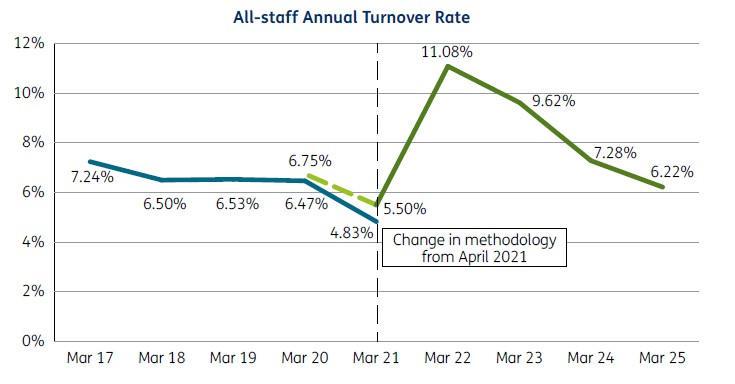
Trade union facility time
| DWP Facility Time | Figures |
|---|---|
| Number of trade union representatives | 1,014 |
| Number of representatives with trade union facility time 0 % | 0 |
| Number of representatives with trade union facility time (between 1% and 50% of contracted hours) | 1,014 |
| Number of representatives with trade union facility time (between 51% and 99% of contracted hours) | 0 |
| Number of representatives with trade union facility time (100 %) | 0 |
| Total time spent (hours) | 87,679 |
| Cost of facility time (£) | 936,412 |
| Total paybill (£) | 3,940,838,722 |
| Facility time as a percentage of the Department’s annual pay bill | 0.02% |
| Time spent on paid trade union activities as a percentage of total paid facility time hours | 0% |
| HSE Facility Time | Figures |
|---|---|
| Number of trade union representatives | 72 |
| Number of representatives with trade union facility time 0 % | 0 |
| Number of representatives with trade union facility time (between 1% and 50% of contracted hours) | 72 |
| Number of representatives with trade union facility time (between 51% and 99% of contracted hours) | 0 |
| Number of representatives with trade union facility time (100 %) | 0 |
| Cost of facility time (£) | 207,964 |
| Total paybill (£) | 192,982,856 |
| Facility time as a percentage of the Department’s annual pay bill | 0.11% |
| Time spent on paid trade union activities as a percentage of total paid facility time hours | 0% |
The number of trade union representatives (1,014) is the total headcount of representatives in DWP from the PCS, FDA and Prospect trade unions. This equates to 929 FTE.
In addition some representatives hold multiple roles, so included in the total figure of 1,014 are 360 Health and Safety Representatives and 77 Union Learning Representatives (ULR).
DWP recognises 3 Trade Unions, PCS, FDA and Prospect. Exact membership levels are not known although PCS are the largest of the 3 unions. Each Union has a different target membership which reflects their different priorities. The Trade Unions represent approximately 49% of the workforce in DWP.
The relationships with DWP’s 3 Trade Unions remain professional and the Employee Relations team manage the relationship. There is extensive engagement with the Trade Unions about Departmental matters and there is also extensive engagement at the local level.
Staff seconded and loaned
The Department made a small number of secondments and loans of members of staff to other government departments during 2024 to 2025. The numbers of secondments into and from external organisations is quite evenly balanced but there are significantly more outward loans to Other Government Departments (OGDs) than loans into the Department. This could be due to increased cross-government working, and/or advertised short term career development opportunities in OGDs for colleagues to develop their skill set in another area outside of the Department.
| Outward Secondments (from DWP to outside the civil service) | AO | EO | HEO | SEO | G7 | G6 | SCS1 | SCS2 | NK | Total |
|---|---|---|---|---|---|---|---|---|---|---|
| 1. Number who went on secondment since 1 April 24 | - | 5 | 1 | - | 1 | 1 | - | - | - | 8 |
| 2. Number who were already on secondment prior to 1 April 24 and are expected to be throughout this year (beyond 31 March 2025) | - | 3 | 1 | 1 | 6 | 4 | 1 | 2 | - | 18 |
| 3. Number who were already on secondment prior to 1 April 24 and have or are expected to end this year (up to 31 March 2025) | - | 4 | - | - | - | - | - | - | - | 4 |
| Grand Total (All outward secondments) | - | 12 | 2 | 1 | 7 | 5 | 1 | 2 | - | 30 |
| Inward Secondments (from outside the civil service to DWP) | AO | EO | HEO | SEO | G7 | G6 | SCS1 | SCS2 | NK | Total |
|---|---|---|---|---|---|---|---|---|---|---|
| 1. Number who are seconded to DWP since 1 April 24 | - | 1 | 2 | 7 | 9 | 1 | - | 1 | - | 21 |
| 2. Number who were already on secondment to DWP prior to 1 April 24 and are expected to be throughout this year | - | - | - | 1 | 1 | - | - | - | - | 2 |
| 3. Number who were already on secondment to DWP prior to 1 April 24 and have or are expected to end this year | - | - | - | 1 | 3 | 1 | - | - | - | 5 |
| Grand Total (All inward secondments) | - | 1 | 2 | 9 | 13 | 2 | - | 1 | - | 28 |
| Outward Loans (from DWP to OGD/NDPB) | AO | EO | HEO | SEO | G7 | G6 | SCS1 | SCS2 | NK | Total |
|---|---|---|---|---|---|---|---|---|---|---|
| 1. Number who went on loan since 1 April 24 | 1 | 6 | 8 | 5 | 3 | 3 | 1 | 1 | 1 | 29 |
| 2. Number who were already on loan prior to 1 April 24 and are expected to be throughout this year (beyond 31 March 2025) | - | 5 | 4 | 1 | 3 | - | - | - | - | 13 |
| 3. Number who were already on loan prior to 1 April 24 and have or are expected to end this year (up to 31 March 2025) | - | 2 | 1 | - | 2 | 1 | - | - | 1 | 7 |
| Grand Total (All outward loans) | 1 | 13 | 13 | 6 | 8 | 4 | 1 | 1 | 2 | 49 |
| Inward Loans (from OGD/NDPB to DWP) | AO | EO | HEO | SEO | G7 | G6 | SCS1 | SCS 2 | Total |
|---|---|---|---|---|---|---|---|---|---|
| 1. Number on loan to DWP since 1 April 24 | - | - | - | - | - | - | - | 1 | 1 |
| 2. Number who were already on loan to DWP prior to 1 April 24 and are expected to be throughout this year (beyond 31 March 2025) | - | - | - | - | - | - | - | - | - |
| 3. Number who were already on loan to DWP prior to 1 April 24 and have or are expected to end this year (up to 31 March 2025) | - | 1 | - | - | - | - | - | - | 1 |
| Grand Total (All inward loans) | - | 1 | - | - | - | - | - | 1 | 2 |
Diversity and inclusion
The Department is committed to providing services which embrace diversity and promotes equality of opportunity for all. As an employer we are also committed to equality and valuing diversity within our workforce. Our goal is to ensure that these commitments, reinforced by our Values, are embedded in our day to day working practices with all our customers, colleagues and partners. Our diversity and inclusion ambition continues to be to:
-
increase the representation of currently under-represented groups to make the Department more reflective of the citizens and communities we serve
-
build an inclusive environment, where our colleagues are able to be their authentic selves at work, feel they have a voice and belong, see their reflection in senior leaders across the organisation, feel supported, empowered, valued, respected and fairly treated
Our priorities support the commitments set out in the Civil Service Diversity and Inclusion Strategy 2022 to 2025, “Promoting Fairness and Performance” which are to:
- attract talent from all backgrounds
- invest in our people capabilities
- drive a performance culture that delivers improved outcomes for our citizens
The Department has made significant progress in attracting a more diverse range of talent and laying the foundations of a strong ethos for inclusion since 2020. Disability representation has increased from 15.1% in March 2020 to 22.4% as of 31 March 2025, above the economically active population in Great Britain representation (of 20.4%). We are fully committed to increasing representation of disabled people in HEO to G6 levels ensuring a stable talent pipeline to the SCS.
Ethnic minority representation has risen from 11.6% on 31 March 2020 to 20.7% as of 31 March 2025 (against the economically active population of 17.2%) with increases across all grades, particularly at the EO grade.
The representation of female staff has remained over 60%, with 62.6% as of March 2025. The percentage of Senior Civil Servants (SCS) who are female has increased from 50% in March 2021 to 55.6% in March 2025.
We continue to make progress in the percentage of staff who have shared details of their sexual orientation and religious beliefs information (information on marriage and civil partnership is also captured via a central recording system, but no information on gender re-assignment is currently captured).
We have also seen improvements in many areas of representation where we are beginning to look and feel much more like an organisation that mirrors the communities we serve. Ethnic minority representation exceeds UK working population average in all regions with the exception of Scotland, Wales and North East. Disability representation exceeds UK working population average in all regions with the exception of Scotland, Yorks and Humber and North East.
To ensure a greater understanding of our Public Sector Equality Duty and personal responsibilities in relation to both our staff and customers, we have developed and rolled-out mandatory e-learning to all our employees. As of 31 March 2025, 94.5% of employees have completed the learning.
Representation Data
We continue to have an increasingly diverse staffing group when compared to the national average. We encourage individuals to voluntarily share their personal diversity information and promote the benefits of gathering this through communications and new starter induction. Not every member of staff is willing to share their details and in previous years we have only included data from those colleagues who have shared their details with us (positively declared). This year, for consistency across characteristics, we are reporting representation figures for all colleagues, including those who have not recorded their information or have preferred not to say. The trend data from previous years has been updated to reflect all declarations and not just those who have positively declared.
Although the Department’s figures are above the Economically Active Population and are steadily growing, there is still much more work to do. As part of this, we have launched a new DWP Equity, Diversity and Inclusion approach, including a new EDI Steering Group and partnership forum linking all our networks and EDI experts.
Representation of female staff, ethnic minority staff and disabled staff
| Year (March) | Total number of staff | Female | Ethnic Minority | Not recorded / prefer not to say (NR/PNTS)(merged percentages) | Disabled | NR/PNTS (merged percentages) |
|---|---|---|---|---|---|---|
| Economically Active Population in Great Britain (2024)* | - | 47.9% | 17.2% | N/A | 20.4% | N/A |
| 2025 | 93,803 | 62.6% | 20.7% | 9.4% | 22.4% | 7.6% |
| 2024 | 90,779 | 63.0% | 18.3% | 9.1% | 21.0% | 7.6% |
| 2023 | 84,944 | 64.3% | 15.9% | 9.9% | 20.1% | 7.6% |
| 2022 | 91,452 | 64.6% | 15.6% | 10.7% | 17.3% | 8.1% |
| 2021 | 92,690 | 65.2% | 14.8% | 11.3% | 16.7% | 7.9% |
| 2020 | 75,590 | 65.9% | 11.6% | 14.0% | 15.1% | 7.6% |
*Source ONS Annual Population Survey January to December 2024 data, published April 2025.
Annual communications campaigns to promote declaration of characteristics on SOP have led to significant increases in the number declaring. The Department’s efforts have led to significant progress in increasing representation across these groups. The representation of female staff has remained over 60%, with a notable increase in the percentage of Senior Civil Servants who are female. Similarly, ethnic minority representation has risen significantly, particularly at the EO grade, and disability representation has also seen a substantial increase. These achievements are a result of the Department’s continuous efforts to create a workplace that mirrors the communities it serves and supports all employees in being their authentic selves at work.
Representation by Sex (Gender)
| Staff Diversity – % Women | March 2021 | March 2022 | March 2023 | March 2024 | March 2025 |
|---|---|---|---|---|---|
| Workforce | 65.5% | 64.6% | 64.3% | 63.0% | 62.6% |
| Senior Civil Servants | 50.0% | 53.2% | 54.0% | 55.4% | 55.6% |
| Executive Team | 33.3% | 37.5% | 63.7% | 72.7% | 81.8% |
Representation by Age
| Percentage of DWP Workforce by age range | March 2021 | March 2022 | March 2023 | March 2024 | March 2025 |
|---|---|---|---|---|---|
| 16 to 24 | 4% | 5% | 3% | 3% | 3% |
| 25 to 34 | 14% | 15% | 15% | 17% | 18% |
| 35 to 44 | 20% | 20% | 19% | 20% | 20% |
| 45 to 54 | 31% | 28% | 28% | 26% | 25% |
| 55 to 64 | 28% | 29% | 31% | 30% | 29% |
| 65 and over | 3% | 3% | 4% | 4% | 4% |
Representation by caring responsibilities
As of March 2025, 20.8% of staff declared that they had caring responsibilities and 53.6% did not. 25.6% of staff either did not declare or preferred not to say.
Key Achievements in 2024 to 2025:
Inclusion:
-
Inclusion Team: Transformed ways of working to focus on delivering targeted and data-led interventions
-
Sexual Harassment Prevention: Delivered targeted project outcomes to proactively prevent sexual harassment
-
Employee Engagement: Increased engagement with the available support for inclusion and wellbeing
-
Learning and Development: Provided continuous learning to increase confidence and capability in supporting colleagues
Ethnicity:
-
Progress: Consistent improvement in ethnic minority representation across all grades, with notable progress at the EO grade (24.5%) and HEO grade (15.7%)
-
Race Plan: Continued support for the departmental Race Plan 2023 to 2025, focusing on joining, developing, and leadership behaviour
Disability:
-
Disability Confident Leader: Commitment to retaining and supporting colleagues with disabilities through a comprehensive approach
-
Strategic Priorities: Focus on optimising an inclusive workplace, building capability, and raising awareness of disability in the workplace
Faith and belief:
-
Support Network: Continued support for the DWP Faith and Belief Network, providing a safe space for colleagues to connect and share experiences
-
Listening Circles: Ran a series of listening circles to understand colleagues’ concerns and challenges
Gender:
-
Health and Wellbeing: Initiatives such as DWP Man Down sessions, DWP Dad’s United sessions, and the Women’s Health Hub
-
Support and Development: Ongoing promotion of coaching, mentoring, and progression opportunities, including the Crossing Thresholds Programme and Women into Leadership
Age:
-
Mid-Life MOT: Developed a tool providing advice on wellbeing, finances, retirement, and learning opportunities
-
Flexible Working: Promoted flexible working options, including partial retirement
Caring Responsibilities:
-
Carer’s Passports: Promotion and adoption of Carer’s Passports and Line Managers toolkit
-
Wellbeing Toolkit: Introduction of a Carer’s Wellbeing toolkit
LGBT+:
-
Support Network: Active LGBT+ staff network delivering successful events and communications.
-
Declaration Increase: Positive increase in the declaration of sexual orientation, rising from 57.9% in June 2020 to 81.1% in March 2025
Social Mobility:
-
Events and Community: The Social Mobility Network organised events and supported a growing community of allies
-
Development Programmes: Continued promotion of initiatives to support development and progression, including the Leaders Like You programme
Gender Pay Gap
Organisations with 250 or more employees are required to report annually on their gender pay gap. Government departments are covered by the Equality Act 2010 (Specific Duties and Public Authorities) Regulations 2017 which came into force on 31 March 2017. These regulations underpin the Public Sector Equality Duty and require relevant organisations to publish their gender pay gap annually.
This includes:
- the mean and median ordinary gender pay gaps
- the mean and median gender bonus gaps
- the proportion of men and women who received bonuses
- the proportions of men and women employees in each pay quartile
For 2023 to 2024, the Gender Pay Gap figures were published in the Annual Civil Service Employment Survey (ACSES) on 31 July 2024. These figures provide an overall picture across government for the reporting period 1 April 2023 to 31 March 2024 - updated 2024 to 2025 data will be published in July. This report fulfils the Department’s reporting requirements and sets out the actions we are taking in relation to addressing the gender pay gap and improving gender parity. This information is published on GOV.UK and the Government Equality Office (GEO) portal. Where any percentage figures in this report do not add to 100%, this is due to rounding.
In March 2024:
- The Department’s mean ordinary GPG: 4.8% (decreased by 0.7 percentage points (ppt) since 2023)
- The Department’s median ordinary GPG: 0.0% (unchanged since 2023)
- The Department’s mean bonus GPG: 8.8% (decreased by 3.1 ppt since 2023)
- The Department’s median bonus GPG: 12.5% (increased by 2.4 ppt since 2023)
We are one of the largest government departments. In the 2024 report, 90,306 individuals are included in the ordinary pay gap figures and 91,745 individuals are included in the bonus gap figures, as per the government guidance on scope. There is a positive story for the Department this year, with many of the headline figures improving:
-
The Department continues to perform favourably when compared to the wider civil service, where the overall ordinary mean GPG is 7.4%
-
The Department also compares favourably with the mean bonus GPG for the civil service of 25.7%, and the median bonus GPG of 22.4%
-
Women represent 63% of the Department’s workforce and we have continued to make positive progress in female representation at the most senior grades. At SCS, female representation has continued to increase to 55.6% at March 2024.
Mean ordinary GPG (decreased by 0.7 ppt)
Our mean gender pay gap has decreased due to changes in our grade distribution, women represented within each grade and changes to mean salaries due to pay awards, as well as joiners and leavers.
Median ordinary GPG (unchanged)
The median pay gap remains at 0.0%. This is primarily due to the existence of an Executive Officer (EO) grade spot rate (rather than a pay scale with a minimum and maximum rate of pay per grade and pay zone, a spot rate means that everyone within the same grade and pay zone is on the same rate of pay). As of March 2024, 50.4% of all males were EO grade and 53.8% of females were at EO grade and most were on the spot rate. As a result, the median employee fell within the EO range for both genders.
Mean bonus GPG (decreased by 3.1 ppt)
There has been a notable decrease in the mean bonus pay gap, mainly due to an improvement to our end of year only bonus gap in delegated grades where there is a greater proportion of women.
Median bonus GPG (increased by 2.4 ppt)
The median bonus gap is heavily influenced by end of year bonuses, which vary by grade and are pro-rated for part-time employees. The median end-year bonus for men was the full-time EO rate, for women this was below full-time EO due to more women working part-time. This resulted in an increase in the bonus gap in favour of men.
Overall, we are confident that our pay strategy is non-discriminatory in its design. Our analysis demonstrates the pay gap to be largely attributed to the grade distribution of the workforce, specifically lower representation of women in higher grades. The GPG will continue to be a key consideration as we develop our future reward strategy.
Parliamentary accountability disclosures - Statement of Outturn against Parliamentary Supply (SOPS)
(This information is subject to audit)
Introduction
In addition to the primary statements prepared under International Financial Reporting Standards (IFRS), the Government Financial Reporting Manual (FReM) requires us to prepare a statement of Outturn against Parliamentary Supply (SOPS) and supporting notes.
The SOPS and related notes are subject to audit, as detailed in the Certificate and Report of the Comptroller and Auditor General to the House of Commons.
The SOPS is a key accountability statement that shows, in detail, how an entity has spent against their Supply Estimate. Supply is the monetary provision (for resource and capital purposes) and cash (drawn primarily from the Consolidated Fund), that Parliament gives statutory authority for entities to utilise. The Estimate details supply and is voted on by Parliament at the start of the financial year.
Should an entity exceed the limits set by their Supply Estimate, called control limits, their accounts will receive a qualified opinion.
The format of the SOPS mirrors the Supply Estimates, published on GOV.UK, to enable comparability between what Parliament approves and the final outturn.
The SOPS contain a summary table, detailing performance against the control limits that Parliament have voted on, cash spent (budgets are compiled on an accruals basis and so outturn won’t exactly tie to cash spent) and administration.
The supporting notes detail the following:
- Outturn by Estimate line, providing a more detailed breakdown (note 1)
- A reconciliation of outturn to net operating expenditure in the Statement of Consolidated Net Expenditure (SoCNE), to tie the SOPS to the financial statements (note 2)
- A reconciliation of outturn to net cash requirement (note 3); and
- An analysis of income payable to the Consolidated Fund (note 4)
The SOPS and Estimates are compiled against the budgeting framework, which is similar to, but different from, IFRS. Further information on the Public Spending Framework and the reasons why budgeting rules are different to IFRS can also be found in chapter 1 of the Consolidated Budgeting Guidance, available on GOV.UK.
Total spend included in the Statement of Outturn against Parliamentary Supply
| Spend Category | Actual (£bn) |
|---|---|
| Voted Resource DEL | 8.74 |
| Non-voted Resource DEL | 0.68 |
| Total Resource DEL | 9.42 |
| Voted Capital DEL | 0.47 |
| Non-voted Capital DEL | 0.05 |
| Total Capital DEL | 0.52 |
| Total DEL | 9.94 |
| Total Non-budget (Resource) | 0.41 |
| Voted Resource AME | 144.69 |
| Non-voted Resource AME | 143.01 |
| Total Resource AME | 287.70 |
| Voted Capital AME | 0.29 |
| Non-voted Capital AME | (0.05) |
| Total Capital AME | 0.24 |
| Total AME | 287.94 |
| Total spend included in the Statement of Outturn against Parliamentary Supply | 298.30 |
- Voted expenditure of £154.61 billion[footnote 128] is funded by Parliament from the Consolidated Fund
- Voted expenditure funded from the Consolidated Fund includes £0.41 billion cash for the Social Fund administered by DWP which, for budgeting purposes, is classified as non-budget
- Expenditure from the Social Fund is classified as non-voted budget DEL and AME. Therefore, SOPS includes both the cash paid into the Social Fund and the spend incurred by the Social Fund
- Other non-voted expenditure of £143.28 billion is funded by the National Insurance Fund
- Values may not sum due to rounding
The SOPS provides a detailed view of financial performance, in a form that is voted on and recognised by Parliament. The financial review, in the Performance Report, provides a summarised discussion of outturn against Estimate and functions as an introduction to the SOPS disclosures.
Statement of Outturn against Parliamentary Supply
(This information is subject to audit)
| Note | Outturn: Voted 2024 to 2025 £000 | Outturn: Non-Voted 2024 to 2025 £000 | Outturn: Total 2024 to 2025 £000 | Estimate: Voted 2024 to 2025 £000 | Estimate: Non-Voted 2024 to 2025 £000 | Estimate: Total 2024 to 2025 £000 | Outturn vs Estimate Saving/(excess): Voted 2024 to 2025 £000 | Outturn vs Estimate Saving/(excess): Total 2024 to 2025 £000 | Prior Year Outturn Total: 2023 to 2024 £000 | |
|---|---|---|---|---|---|---|---|---|---|---|
| Departmental Expenditure Limit (DEL): Resource | 1 | 8,742,156 | 677,738 | 9,419,894 | 8,916,389 | 674,600 | 9,590,989 | 174,233 | 171,095 | 8,956,592 |
| DEL: Capital | 1 | 473,138 | 48,919 | 522,057 | 567,889 | 57,000 | 624,889 | 94,751 | 102,832 | 632,445 |
| Total DEL | - | 9,215,294 | 726,657 | 9,941,951 | 9,484,278 | 731,600 | 10,215,878 | 268,984 | 273,927 | 9,589,037 |
| Annually Managed Expenditure (AME): Resource | 1 | 144,690,236 | 143,010,700 | 287,700,936 | 147,877,456 | 146,384,714 | 294,262,170 | 3,187,220 | 6,561,234 | 265,923,224 |
| AME: Capital | 1 | 290,301 | (49,602) | 240,699 | 440,327 | 20,053 | 460,380 | 150,026 | 219,681 | 157,096 |
| Total AME | - | 144,980,537 | 142,961,098 | 287,941,635 | 148,317,783 | 146,404,767 | 294,722,550 | 3,337,246 | 6,780,915 | 266,080,320 |
| Total budget: Resource | - | 153,432,392 | 143,688,438 | 297,120,830 | 156,793,845 | 147,059,314 | 303,853,159 | 3,361,453 | 6,732,329 | 274,879,816 |
| Total budget: Capital | - | 763,439 | (683) | 762,756 | 1,008,216 | 77,053 | 1,085,269 | 244,777 | 322,513 | 789,541 |
| Total Budget Expenditure | - | 154,195,831 | 143,687,755 | 297,883,586 | 157,802,061 | 147,136,367 | 304,938,428 | 3,606,230 | 7,054,842 | 275,669,357 |
| Non-budget: Resource | 1 | 412,649 | - | 412,649 | 908,255 | - | 908,255 | 495,606 | 495,606 | 4,661,139 |
| Total Budget and Non-budget | - | 154,608,480 | 143,687,755 | 298,296,235 | 158,710,316 | 147,136,367 | 305,846,683 | 4,101,836 | 7,550,448 | 280,330,496 |
Net Cash Requirement 2024 to 2025
| SoPS Note | 2024 to 2025 Outturn £000 | 2024 to 2025 Estimate £000 | Outturn vs Estimate: Saving/ (Excess) £000 | 2023 to 2024 Outturn £000 |
|---|---|---|---|---|
| 3 | 152,533,297 | 158,613,940 | 6,080,643 | 145,018,749 |
Administration Costs 2024 to 2025
| SoPS Note | 2024 to 2025 Outturn £000 | 2024 to 2025 Estimate £000 | Outturn vs Estimate: Saving/ (Excess) £000 | 2023 to 2024 Outturn £000 |
|---|---|---|---|---|
| 1 | 1,004,895 | 1,096,612 | 91,717 | 979,637 |
Although not a separate voted limit, any breach of the administration budget will also result in an excess vote.
Notes to the Statement of Outturn against Parliamentary Supply
(This information is subject to audit)
SOPS 1. Outturn Detail by Estimate Line
1.1 Analysis of Resource Outturn by Estimate Line: [footnote 129]
| Spending in Departmental Expenditure Limit (DEL) | Outturn: admin: gross 2024 to 2025 £000 | Outturn: admin: income 2023 to 2024 £000 | Outturn: admin: net 2024 to 2025 £000 | Outturn: programme: gross 2024 to 2025 £000 | Outturn: programme: income 2024 to 2025 £000 | Outturn: programme: net 2024 to 2025 £000 | Outturn: total 2024 to 2025 £000 | Estimate: total 2024 to 2025 £000 | Estimate: virements 2024 to 2025 £000 | Estimate: total including virements 2024 to 2025 £000 | Outturn vs Estimate saving/(excess) £000 | Outturn: total 2023 to 2024 £000 |
|---|---|---|---|---|---|---|---|---|---|---|---|---|
| Voted: A - Core Department | 964,247 | (35,116) | 929,131 | 6,156,284 | (737,812) | 5,418,472 | 6,347,603 | 6,455,529 | (3,005) | 6,452,524 | 104,921 | 6,251,621 |
| Voted: B - Health and Safety Executive (Net) | 57,345 | - | 57,345 | 122,266 | - | 122,266 | 179,611 | 176,046 | 3,565 | 179,611 | - | 181,312 |
| Voted: C - Money and Pensions Service (Net) | - | - | - | 164,139 | - | 164,139 | 164,139 | 171,005 | 3,063 | 174,068 | 9,929 | 164,850 |
| Voted: D - Other Arm’s Length Bodies (Net) | 18,419 | - | 18,419 | 100,058 | - | 100,058 | 118,477 | 113,096 | 5,381 | 118,477 | - | 116,240 |
| Voted: E - Employment Programmes | - | - | - | 765,353 | 44 | 765,397 | 765,397 | 806,926 | (11,875) | 795,051 | 29,654 | 753,432 |
| Voted: F - Support for Local Authorities | - | - | - | 212,104 | - | 212,104 | 212,104 | 209,233 | 2,871 | 212,104 | - | 205,814 |
| Voted: G - Funding for Public Corporations | - | - | - | 28,814 | (51,025) | (22,211) | (22,211) | (21,707) | - | (21,707) | 504 | (20,074) |
| Voted: H - Other Benefits | - | - | - | 1,030,869 | (53,833) | 977,036 | 977,036 | 1,006,261 | - | 1,006,261 | 29,225 | 979,473 |
| Total Voted DEL | 1,040,011 | (35,116) | 1,004,895 | 8,579,887 | (842,626) | 7,737,261 | 8,742,156 | 8,916,389 | - | 8,916,389 | 174,233 | 8,632,668 |
| Non-voted: I - National Insurance Fund - Core Department | - | - | - | 646,687 | - | 646,687 | 646,687 | 646,687 | - | 646,687 | - | 300,703 |
| Non-voted: J - Social fund | - | - | - | 31,051 | - | 31,051 | 31,051 | 27,913 | - | 27,913 | (3,138) | 23,221 |
| Total Non-Voted DEL | - | - | - | 677,738 | - | 677,738 | 677,738 | 674,600 | - | 674,600 | (3,138) | 323,924 |
| Total spending in DEL | 1,040,011 | (35,116) | 1,004,895 | 9,257,625 | (842,626) | 8,414,999 | 9,419,894 | 9,590,989 | - | 9,590,989 | 171,095 | 8,956,592 |
| Spending in Annually Managed Expenditure (AME) | Outturn: admin: gross 2024 to 2025 £000 | Outturn: admin: income 2023 to 2024 £000 | Outturn: admin: net 2024 to 2025 £000 | Outturn: programme: gross 2024 to 2025 £000 | Outturn: programme: income 2024 to 2025 £000 | Outturn: programme: net 2024 to 2025 £000 | Outturn: total 2024 to 2025 £000 | Estimate: total £000 | Estimate: virements 2024 to 2025 £000 | Estimate: total including virements 2024 to 2025 £000 | Outturn vs Estimate saving/(excess) £000 | Outturn: total 2023 to 2024 £000 |
|---|---|---|---|---|---|---|---|---|---|---|---|---|
| Voted: K - Severe Disablement Benefit | - | - | - | 53,809 | - | 53,809 | 53,809 | 54,701 | - | 54,701 | 892 | 56,453 |
| Voted: L - Industrial Injuries Benefits Scheme | - | - | - | 752,049 | - | 752,049 | 752,049 | 767,890 | - | 767,890 | 15,841 | 735,743 |
| Voted: M - Universal Credit | - | - | - | 66,545,527 | - | 66,545,527 | 66,545,527 | 68,636,692 | (40,065) | 68,596,627 | 2,051,100 | 52,038,557 |
| Voted: N - Employment and Support Allowance (Income-Related) | - | - | - | 7,169,362 | - | 7,169,362 | 7,169,362 | 7,321,918 | - | 7,321,918 | 152,556 | 7,445,650 |
| Voted: O - Income Support | - | - | - | 280,078 | (233) | 279,845 | 279,845 | 285,700 | - | 285,700 | 5,855 | 647,286 |
| Voted: P - Pension Credit | - | - | - | 6,007,695 | - | 6,007,695 | 6,007,695 | 6,204,561 | - | 6,204,561 | 196,866 | 5,467,138 |
| Voted: Q - Financial Assistance Scheme | - | - | - | 162,371 | - | 162,371 | 162,371 | 147,252 | 15,119 | 162,371 | - | (270,726) |
| Voted: R - Attendance Allowance | - | - | - | 7,766,559 | - | 7,766,559 | 7,766,559 | 7,802,377 | - | 7,802,377 | 35,818 | 6,695,944 |
| Voted: S - Personal Independence Payment | - | - | - | 25,897,564 | - | 25,897,564 | 25,897,564 | 26,159,208 | - | 26,159,208 | 261,644 | 21,689,145 |
| Voted: T - Disability Living Allowance | - | - | - | 7,722,582 | - | 7,722,582 | 7,722,582 | 7,803,208 | - | 7,803,208 | 80,626 | 6,862,281 |
| Voted: U - Carer’s Allowance | - | - | - | 4,239,296 | - | 4,239,296 | 4,239,296 | 4,274,731 | - | 4,274,731 | 35,435 | 3,737,836 |
| Voted: V - Housing Benefit | - | - | - | 14,677,486 | - | 14,677,486 | 14,677,486 | 14,851,356 | - | 14,851,356 | 173,870 | 15,161,615 |
| Voted: W - Statutory Maternity Pay | - | - | - | 3,054,000 | - | 3,054,000 | 3,054,000 | 3,029,668 | 24,332 | 3,054,000 | - | 2,881,000 |
| Voted: X - Christmas Bonus (Non-Contributory) | - | - | - | 50,570 | - | 50,570 | 50,570 | 51,004 | - | 51,004 | 434 | 45,524 |
| Voted: Y - Jobseekers Allowance (Income-Related) | - | - | - | 91,051 | (11) | 91,040 | 91,040 | 106,034 | - | 106,034 | 14,994 | 144,717 |
| Voted: Z - State Pension (Non-Contributory) | - | - | - | 229,447 | - | 229,447 | 229,447 | 266,772 | - | 266,772 | 37,325 | 223,649 |
| Voted: AA - Support for Mortgage Interest | - | - | - | 9,743 | (5,252) | 4,491 | 4,491 | 3,877 | 614 | 4,491 | - | 2,498 |
| Voted: AB - Cost of Living support payments | - | - | - | (3,907) | - | (3,907) | (3,907) | 106,421 | - | 106,421 | 110,328 | 7,792,366 |
| Voted: AC - Other Expenditure | - | - | - | (9,484) | - | (9,484) | (9,484) | 2,621 | - | 2,621 | 12,105 | (1,536) |
| Voted: AD - Other Expenditure EALBs (Net) | - | - | - | (66) | - | (66) | (66) | 1,465 | - | 1,465 | 1,531 | 551 |
| Total Voted AME | - | - | - | 144,695,732 | (5,496) | 144,690,236 | 144,690,236 | 147,877,456 | - | 147,877,456 | 3,187,220 | 131,355,691 |
| Non-voted: AE - Social Fund: Winter Fuel | - | - | - | 301,685 | - | 301,685 | 301,685 | 346,906 | - | 346,906 | 45,221 | 4,654,575 |
| Non-voted: AF - Incapacity Benefit | - | - | - | 894 | - | 894 | 894 | 431 | - | 431 | (463) | (908) |
| Non-voted: AG - Social Fund: Other | - | - | - | 78,492 | - | 78,492 | 78,492 | 523,470 | - | 523,470 | 444,978 | 79,569 |
| Non-voted: AH - Employment and Support Allowance (Contributory) | - | - | - | 5,168,019 | - | 5,168,019 | 5,168,019 | 5,337,322 | - | 5,337,322 | 169,303 | 4,911,445 |
| Non-voted: AI - Maternity Allowance | - | - | - | 402,552 | - | 402,552 | 402,552 | 413,838 | - | 413,838 | 11,286 | 412,197 |
| Non-voted: AJ - Bereavement Benefits | - | - | - | 349,439 | - | 349,439 | 349,439 | 380,365 | - | 380,365 | 30,926 | 330,259 |
| Non-voted: AK - Christmas Bonus (Contributory) | - | - | - | 130,278 | - | 130,278 | 130,278 | 133,828 | - | 133,828 | 3,550 | 127,978 |
| Non-voted: AL - Jobseekers Allowance (Contributory) | - | - | - | 222,372 | - | 222,372 | 222,372 | 230,885 | - | 230,885 | 8,513 | 168,576 |
| Non-voted: AM - State Pension (Contributory) | - | - | - | 136,356,969 | - | 136,356,969 | 136,356,969 | 139,017,669 | - | 139,017,669 | 2,660,700 | 123,883,842 |
| Total AME Non-voted | - | - | - | 143,010,700 | - | 143,010,700 | 143,010,700 | 146,384,714 | - | 146,384,714 | 3,374,014 | 134,567,533 |
| Total spending in AME | - | - | - | 287,706,432 | (5,496) | 287,700,936 | 287,700,936 | 294,262,170 | - | 294,262,170 | 6,561,234 | 265,923,224 |
| Non-budget resource | Outturn: admin: gross 2024 to 2025 £000 | Outturn: admin: income 2023 to 2024 £000 | Outturn: admin: net 2024 to 2025 £000 | Outturn: programme: gross 2024 to 2025 £000 | Outturn: programme: income 2024 to 2025 £000 | Outturn: programme: net 2024 to 2025 £000 | Outturn: total 2024 to 2025 £000 | Estimate: total 2024 to 2025 £000 | Estimate: virements 2024 to 2025 £000 | Estimate: total including virements 2024 to 2025 £000 | Outturn vs Estimate saving/(excess) £000 | Outturn: total 2023 to 2024 £000 |
|---|---|---|---|---|---|---|---|---|---|---|---|---|
| Voted: AN - Cash paid in to the Social Fund | - | - | - | 412,649 | - | 412,649 | 412,649 | 908,255 | - | 908,255 | 495,606 | 4,661,139 |
| Total spending in Non-budget | - | - | - | 412,649 | - | 412,649 | 412,649 | 908,255 | - | 908,255 | 495,606 | 4,661,139 |
| Total Resource | 1,040,011 | (35,116) | 1,004,895 | 297,376,706 | (848,122) | 296,528,584 | 297,533,479 | 304,761,414 | - | 304,761,414 | 7,227,935 | 279,540,955 |
1.2 Analysis of Capital Outturn by Estimate Line: [footnote 130]
| Spending in Departmental Expenditure Limit (DEL) | Outturn: programme: gross 2024 to 2025 £000 | Outturn: programme: income 2024 to 2025 £000 | Outturn: programme: net 2024 to 2025 £000 | Estimate: total 2024 to 2025 £000 | Estimate: virements 2024 to 2025 £000 | Estimate: total including virements 2024 to 2025 £000 | Outturn vs Estimate saving/(excess) £000 | Outturn: total 2023 to 2024 £000 |
|---|---|---|---|---|---|---|---|---|
| Voted: A - Core Department | 526,051 | (56,778) | 469,273 | 532,661 | (1,200) | 531,461 | 62,188 | 474,698 |
| Voted: B - Health and Safety Executive (Net) | 9,032 | - | 9,032 | 20,044 | - | 20,044 | 11,012 | 25,544 |
| Voted: C - Money and Pensions Service (Net) | 11,516 | - | 11,516 | 13,251 | - | 13,251 | 1,735 | 5,569 |
| Voted: D - Other Arm’s Length Bodies (Net) | (17,883) | - | (17,883) | 1,933 | - | 1,933 | 19,816 | 12,486 |
| Voted: G - Funding for Public Corporations | 1,200 | - | 1,200 | - | 1,200 | 1,200 | - | 63,000 |
| Total Voted DEL | 529,916 | (56,778) | 473,138 | 567,889 | - | 567,889 | 94,751 | 581,297 |
| Non-voted: I - National Insurance Fund - Core Department | - | - | - | - | - | - | - | - |
| Non-voted: J - Social fund | 49,743 | (824) | 48,919 | 57,000 | - | 57,000 | 8,081 | 51,148 |
| Total Non-Voted DEL | 49,743 | (824) | 48,919 | 57,000 | - | 57,000 | 8,081 | 51,148 |
| Total spending in DEL | 579,659 | (57,602) | 522,057 | 624,889 | - | 624,889 | 102,832 | 632,445 |
| Spending in Annually Managed Expenditure (AME) | Outturn: programme: gross 2024 to 2025 £000 | Outturn: programme: income 2024 to 2025 £000 | Outturn: programme: net 2024 to 2025 £000 | Estimate: total 2024 to 2025 £000 | Estimate: virements 2024 to 2025 £000 | Estimate: total including virements 2024 to 2025 £000 | Outturn vs Estimate saving/(excess) £000 | Outturn: total 2023 to 2024 £000 |
|---|---|---|---|---|---|---|---|---|
| Voted: M - Universal Credit | 580,805 | (314,188) | 266,617 | 336,511 | (183) | 336,328 | 69,711 | 129,212 |
| Voted: AA - Support for Mortgage Interest | 55,230 | (8,802) | 46,428 | 47,881 | - | 47,881 | 1,453 | 30,324 |
| Voted: AC - Other Expenditure | (22,927) | - | (22,927) | 55,935 | - | 55,935 | 78,862 | 46,287 |
| Voted: AD - Other Expenditure EALBs (Net) | 918 | (735) | 183 | - | 183 | 183 | - | - |
| Total Voted AME | 614,026 | (323,725) | 290,301 | 440,327 | - | 440,327 | 150,026 | 205,823 |
| Non-voted: AG - Social Fund: Other | (49,602) | - | (49,602) | 20,053 | - | 20,053 | 69,655 | (48,727) |
| Total AME Non-voted | (49,602) | - | (49,602) | 20,053 | - | 20,053 | 69,655 | (48,727) |
| Total spending in AME | 564,424 | (323,725) | 240,699 | 460,380 | - | 460,380 | 219,681 | 157,096 |
| Total Capital | 1,144,083 | (381,327) | 762,756 | 1,085,269 | - | 1,085,269 | 322,513 | 789,541 |
The total Estimate columns include virements. Virements are the reallocation of provision in the Estimates that do not require parliamentary authority (because Parliament does not vote to that level of detail and delegates to HM Treasury). Further information on virements is provided in the Supply Estimates Manual, available on GOV.UK.
The outturn vs Estimate column is based on the total including virements. The Estimate total before virements have been made is included so that users can tie the Estimate back to the Estimates laid before Parliament.
SOPS 2. Reconciliation of Outturn to Net Operating Expenditure
(This information is subject to audit)
| Total resource outturn in Statement of outturn Against Parliamentary Supply | Note | 2024 to 2025 outturn £000 | 2023 to 2023 outturn £000 |
|---|---|---|---|
| Budget | 1.1 | 297,120,830 | 274,879,816 |
| Non-budget | 1.1 | 412,649 | 4,661,139 |
| Total resource outturn | – | 297,533,479 | 279,540,955 |
| Add: Capital Grants | – | (324,010) | (140,581) |
| Add: Capital Research and Development | – | 16,222 | 11,698 |
| Add: Service Concession Adjustments | – | 15,859 | (1,498) |
| Sub-total | – | (291,929) | (130,381) |
| Less: Income payable to the Consolidated Fund | 4 | (25,195) | (22,389) |
| Less: Cash paid to the Social Fund – Voted Non-budget | – | (412,649) | (4,661,139) |
| Sub-total | – | (437,844) | (4,683,528) |
| Net operating costs in Consolidated Statement of Comprehensive Net Expenditure | – | 296,803,706 | 274,727,046 |
As noted in the introduction to the SOPS, the outturn and the Estimate are compiled against the budgeting framework, which is similar to, but different from, IFRS. Therefore, this reconciliation bridges the resource outturn to net operating expenditure, linking the SOPS to the financial statements.
Reconciling items
Provided below is an explanation of the reconciling items between resource outturn and net operating costs.
Capital grants (whether received or issued) and capital research and development are budgeted for as capital, but accounted for as resource spend in the SoCNE.
Service Concession Arrangements are treated as on-SoFP (Statement of Financial Position) for Accounts but treated as off-SoFP for Estimates and Budgets. Spend is therefore recognised differently in net resource outturn and the SoCNE, and a reconciling adjustment is required.
Income payable to the Consolidated Fund is excluded from the SOPS because Parliament did not authorise the Department to retain the income and the income will be returned to the Consolidated Fund. However, in line with IFRS, income earned by the Department is recognised in the SoCNE.
Cash paid to the Social Fund from the Consolidated Fund is included in SOPS as non-budget but is excluded from the SoCNE. The SoCNE only includes the expenditure incurred by the Social Fund (also included in SOPS as spend within Budget).
SOPS 3. Reconciliation of Net Resource Outturn to Net Cash Requirement
(This information is subject to audit)
| Note | 2024 to 2025 outturn £000 | 2024 to 2025 estimate £000 | Outturn v estimate: saving/(excess) £000 | |
|---|---|---|---|---|
| Total Resource outturn | SoPS 1.1 | 297,533,479 | 304,761,414 | 7,229,006 |
| Total Capital outturn | SoPS 1.2 | 762,756 | 1,085,269 | 322,513 |
| Adjustments for ALBs: Remove voted resource and capital | – | (465,010) | (496,840) | (32,901) |
| Adjustments for ALBs: Add cash grant in aid | – | 505,260 | 400,120 | (105,140) |
| Adjustments to remove non-cash items: Non-cash items | – | (1,102,136) | (1,405,183) | (303,047) |
| Adjustments to reflect movements in working balances: Changes in working capital other than cash | – | (1,400,565) | 1,000,000 | 2,400,565 |
| Adjustments to reflect movements in working balances: Use of provisions | – | 387,268 | 405,527 | 18,259 |
| Non-Voted Budget | – | (143,687,755) | (147,136,367) | (3,448,612) |
| Net Cash Requirement | – | 152,533,297 | 158,613,940 | 6,080,643 |
As noted in the introduction to the SOPS, outturn and the Estimate are compiled against the budgeting framework, not on a cash basis. Therefore, this reconciliation bridges the resource and capital outturn to the net cash requirement.
SOPS 4. Analysis of income payable to the Consolidated Fund
(This information is subject to audit)
In addition to income retained by the Department, the following income is payable to the Consolidated Fund.
| Outturn 2024 to 2025 income £000 | Outturn 2024 to 2025 receipts £000 | Outturn 2023 to 2024 income £000 | Outturn 2023 to 2024 receipts £000 | |
|---|---|---|---|---|
| Income outside of the ambit of the Estimate | 25,195 | 25,458 | 22,389 | 22,906 |
| Excess cash surrenderable to the Consolidated Fund | 1,654 | 1,654 | 351,487 | 351,487 |
| Total amount payable to the Consolidated Fund | 26,849 | 27,112 | 373,876 | 374,393 |
Income payable to the Consolidated Fund is excluded from our Estimate because Parliament did not authorise the Department to retain the income, it will be returned to the Consolidated Fund. However, in line with IFRS, income earned by the Department is recognised in the SoCNE.
Included in the above Consolidated Fund income for 2024 to 2025 of £26.8 million are costs recovered from the automatic enrolment fines collected by The Pensions Regulator (£11.9 million), income received in respect debt recoveries (£1.1 million) and collection of civil penalties (£3.3 million).
In 2023 to 2024, excess cash surrenderable to the Consolidated Fund included £350.0 million surplus cash from the Social Fund which had been returned to HM Treasury. This had arisen due to recoveries exceeding new loans paid out, as claimants migrate to Universal Credit.
Consolidated Fund income shown above does not include any amounts we collect from the Financial Assistance Scheme (FAS) while acting as agent of the Consolidated Fund rather than as principal. Details of income collected as agent for the Consolidated Fund were in previous years disclosed in a FAS Trust Statement, but as the revenue is no longer material to DWP the need to produce a Trust Statement no longer exists.
FAS does, however still hold annuity policies, transferred from FAS qualifying pension schemes, and continues to collect the income arising from those assets and pay the resulting cash over to the Consolidated Fund. In the year to 31 March 2025, FAS collected income totalling £7.8 million, consisting of annuity and other income of £7.8 million and scheme transfer income of £nil (2023-24: £8.3 million, consisting of annuity and other income of £8.2 million, scheme transfer income was £0.1 million). £8.0 million was paid over to the Consolidated Fund during the year (2023-24: £8.4 million). At 31 March 2025, FAS illiquid assets were valued at £83.5 million (2023-24: £90.4 million) and FAS held cash awaiting transfer to the Consolidated Fund of £0.3 million (2023 to 2024: £0.4 million).
Variances
The disclosed variances are those which meet the following criteria:
- Variance of at least £10 million and 10%
- Variances material by nature
The variances are stated in the order they appear in the Statement of Outturn against Parliamentary Supply and are calculated by comparing the total net figure from the Supplementary Estimate 2024 to 2025 with the final net outturn figure for 2024 to 2025. These variances are calculated prior to virements.
SOPS 1.1 and 1.2
Voted Expenditure – DEL
A – Core Department – Capital:
Outturn is £63.4 million below the Supplementary Estimate, which was due to rent uplifts being negotiated below forecast and agreement of some other lease commitments moving to the following year.
B – Health and Safety Executive (Net) – Capital:
Outturn is £11.0 million lower than the Supplementary Estimate because of final changes made in the HSE accounts for 23-24 following closure of the 23-24 DWP accounts for changes in the capitalisation treatment of intangible assets and the treatment of PFI property charges.
D – Other Arm’s Length Bodies (Net) – Capital:
Outturn is £19.8 million lower than the Supplementary Estimate because of a change in the capitalisation of Microsoft Licenses in The Pensions Regulator for prior years.
AME
The Office of Budget Responsibility forecasts of benefit expenditure, on which our Estimate are based, are central estimates. Each year we apply a margin to reflect the inherent uncertainty that these forecasts are equally likely to go up or down.
Voted Expenditure – AME
M – Universal Credit – Capital:
Outturn is £69.9 million lower than the Supplementary Estimate because we did not use the margin included to take account of uncertainty around the take up and average award for Budgeting Advances, and the rate of repayments against all advances.
Q – Financial Assistance Scheme – Resource:
Outturn is £15.1 million higher than the Supplementary Estimate predominately due changes in actuarial assumptions, which has reduced the estimate compared to the figure used at Supplementary Estimate.
Y – Jobseeker’s Allowance (Income-Related) – Resource:
Outturn is £15.0 million lower than the Supplementary Estimate because we did not use the margin included to take account of the uncertainty of the move to Universal Credit timeline.
Z – State Pension (Non-contributory) – Resource:
Outturn is £37.3 million lower than the Supplementary Estimate. This is primarily due to payments under DWP’s reciprocal agreement with the Isle of Man which were forecast in non-contributory State Pension, however outturn was recorded in the contributory State Pension.
AB – Cost of Living support payments – Resource:
Outturn is £110.3 million lower than the Supplementary Estimate because we did not use the margin included to take account of the uncertainty of the number of remaining Cost of Living payments to be made, and the impact of higher than forecast recovery of overpayments.
AC – Other Expenditure – Resource and Capital :
Resource outturn is £12.1 million lower than the Supplementary Estimate due to a reduction in provisions held for the cost of Estates dilapidations forecast to be settled at the end of the lease term.
Capital outturn is £78.9 million lower than the Supplementary Estimate forecast because we reached a settlement on some dilapidations in 2024-25, reducing the value of our Estates Dilapidation provision.
Non-voted Expenditure – AME
AE – Social Fund: Winter Fuel – Resource:
Outturn is £45.2 million lower than the Supplementary Estimate. Although there was a significant increase in successful Pension Credit claims, and therefore eligibility for Winter Fuel Payment, there were still fewer pensioners receiving Winter Fuel Payments than we estimated at Supplementary Estimate on the basis of the OBR Autumn Budget 2024 forecast.
AG – Social Fund: Other – Resource and Capital :
Resource outturn is £445.0 million lower than the Supplementary Estimate because we did not use the large margin that was included in the Supplementary Estimate to account for the unpredictable nature of Cold Weather Payments.
Capital outturn is £69.7 million lower than the Supplementary Estimate because we did not use the margin included to take account of volatility in new loan demand and recoveries. Whilst DWP aims to fund new loans from recoveries, a margin was applied to the net position to ensure the Department can continue to support vulnerable citizens in times of financial hardship. In addition, budgeting and crisis loans recoveries exceeded the value of new loans issued.
Non-budget
AN – Cash paid into the Social Fund:
Cash paid into the Social Fund is £495.6 million lower than Supplementary Estimate due to the large margin for Cold Weather Payments included in Supplementary Estimate that was not utilised in outturn, and the variance in Winter Fuel Payments explained above.
SOPS 3
Total net cash requirement was £6.1 billion lower than Supplementary Estimate. Underspend against resource and capital budgets contribute to this. Where they have a cash impact, significant variances are explained above.
Other movements are due to variations in provisions, working capital and non-voted budget items.
Core Tables
(This information is not subject to audit)
Table 1: Public spending for the Department for Work and Pensions
| Resource DEL [2] | 2020 to 2021 Outturn (£million) | 2021 to 2022 Outturn (£million) | 2022 to 2023 Outturn (£million) | 2023 to 2024 Outturn (£million) | 2024 to 2025 Outturn (£million) | 2025 to 2026 Plans (£million) |
|---|---|---|---|---|---|---|
| Section A: Core Department | 4,667 | 5,990 | 6,044 | 6,252 | 6,348 | 7,767 |
| Section B: Health and Safety Executive (Net) | 165 | 162 | 157 | 181 | 180 | 179 |
| Section C: Money and Pensions Service (Net) | 139 | 150 | 156 | 165 | 164 | 210 |
| Section D: Other Arm’s Length Bodies (Net) | 106 | 105 | 108 | 116 | 118 | 133 |
| Section E: Employment Programmes | 293 | 790 | 815 | 753 | 765 | 790 |
| Section F: Support for Local Authorities | 237 | 214 | 212 | 206 | 212 | 203 |
| Section G: Funding for Public Corporations | (13) | (1) | (9) | (20) | (22) | (8) |
| Section H: Other Benefits | 344 | 813 | 978 | 979 | 977 | 864 |
| Section I: National Insurance Fund - Core Department | 687 | 714 | 211 | 301 | 647 | 516 |
| Section J: Social Fund | 36 | 34 | 26 | 23 | 31 | 22 |
| Total Resource DEL | 6,661 | 8,972 | 8,696 | 8,957 | 9,420 | 10,677 |
| Staff costs | 3,499 | 3,865 | 3,756 | 4,096 | 4,458 | 4,607 |
| Purchase of goods and services | 2,237 | 2,504 | 2,324 | 2,528 | 2,722 | 3,840 |
| Income from sales of goods and services | (294) | (229) | (222) | (192) | (191) | (283) |
| Current grants to local government (Net) | 640 | 1,106 | 1,236 | 1,224 | 1,257 | 983 |
| Current grants to persons and non-profit bodies (Net) | 464 | 1,672 | 1,520 | 1,279 | 1,341 | 1,160 |
| Current grants abroad (Net) | (186) | (283) | (556) | (541) | (538) | - |
| Subsidies to public corporations | 48 | 48 | 39 | 35 | 35 | 6 |
| Rentals | 54 | 18 | 34 | 42 | 17 | 80 |
| Depreciation [3] | 185 | 264 | 565 | 558 | 416 | 448 |
| Take up of provisions | 8 | 8 | - | - | 3 | - |
| Change in pension scheme liabilities | 27 | - | - | - | - | - |
| Other resource | (23) | (1) | 1 | (73) | (100) | (164) |
| Resource AME [4] | 2020 to 2021 Outturn (£million) | 2021 to 2022 Outturn (£million) | 2022 to 2023 Outturn (£million) | 2023 to 2024 Outturn (£million) | 2024 to 2025 Outturn (£million) | 2025 to 2026 Plans (£million) |
|---|---|---|---|---|---|---|
| Section K Severe Disablement Benefit | 72 | 62 | 58 | 56 | 54 | 49 |
| Section L: Industrial Injuries Benefits Scheme | 723 | 705 | 695 | 736 | 752 | 737 |
| Section M: Universal Credit | 38,082 | 40,592 | 41,170 | 52,039 | 66,546 | 75,993 |
| Section N: Employment and Support Allowance (Income-Related) | 8,817 | 8,182 | 7,561 | 7,446 | 7,169 | 2,679 |
| Section O: Income Support | 1,074 | 768 | 866 | 647 | 280 | - |
| Section P: Pension Credit | 5,071 | 4,834 | 4,935 | 5,467 | 6,008 | 5,948 |
| Section Q: Financial Assistance Scheme | 281 | 945 | (1,664) | (271) | 162 | 177 |
| Section R: Attendance Allowance | 5,345 | 5,307 | 5,668 | 6,696 | 7,767 | 8,307 |
| Section S: Personal Independence Payment | 13,692 | 15,209 | 17,637 | 21,689 | 25,898 | 28,519 |
| Section T: Disability Living Allowance | 5,808 | 5,696 | 5,975 | 6,862 | 7,723 | 8,017 |
| Section U: Carer’s Allowance | 3,039 | 3,075 | 3,250 | 3,738 | 4,239 | 4,469 |
| Section V: Housing Benefit | 17,027 | 15,545 | 14,876 | 15,162 | 14,677 | 11,552 |
| Section W: Statutory Maternity Pay | 2,594 | 2,569 | 2,629 | 2,881 | 3,054 | 3,167 |
| Section X: Christmas Bonus (Non-contributory) | 36 | 37 | 41 | 46 | 51 | 53 |
| Section Y: Jobseeker’s Allowance (Income-Related) | 435 | 300 | 225 | 145 | 91 | - |
| Section Z: State Pension (Non-contributory) | 135 | 160 | 179 | 224 | 229 | 214 |
| Section AA: Support for Mortgage Interest | 6 | 3 | 2 | 2 | 4 | (1) |
| Section AB: Cost of Living Support Payments | - | - | 5,665 | 7,792 | (4) | 5 |
| Section AC: Other Expenditure | (49) | 6 | 29 | (2) | (9) | - |
| Section AD: Other Expenditure EALBs (Net) | (1) | - | - | 1 | - | - |
| Section AE: Social Fund: Winter Fuel | 1,957 | 1,974 | 4,566 | 4,655 | 302 | 316 |
| Section AF: Incapacity Benefit | 5 | (9) | 12 | (1) | 1 | - |
| Section AG: Social Fund: Other | 145 | 10 | 192 | 80 | 78 | 86 |
| Section AH: Employment and Support Allowance (Contributory) | 4,567 | 4,507 | 4,527 | 4,911 | 5,168 | 4,975 |
| Section AI: Maternity Allowance | 384 | 362 | 390 | 412 | 403 | 424 |
| Section AJ: Bereavement Benefits | 498 | 341 | 399 | 330 | 349 | 311 |
| Section AK: Christmas Bonus (Contributory) | 123 | 124 | 126 | 128 | 130 | 132 |
| Section AL: Jobseeker’s Allowance (Contributory) | 611 | 190 | 108 | 169 | 222 | 249 |
| Section AM: State Pension (Contributory) | 101,901 | 104,533 | 110,355 | 123,884 | 136,357 | 145,404 |
| Total Resource AME | 212,378 | 216,030 | 230,471 | 265,923 | 287,701 | 301,780 |
| Current grants to local government (Net) | 17,027 | 15,545 | 14,876 | 15,162 | 14,677 | 11,552 |
| Current grants to persons and non-profit bodies (Net) | 194,051 | 198,889 | 217,830 | 251,524 | 273,993 | 290,271 |
| Depreciation [3] | (107) | 224 | (1,476) | 137 | 96 | 392 |
| Take up of provisions | 1,555 | 1,504 | (399) | (512) | (811) | 177 |
| Release of provision | (394) | (498) | (750) | (774) | (704) | (953) |
| Change in pension scheme liabilities | (26) | 2 | 2 | 2 | 2 | - |
| Other resource | 271 | 364 | 389 | 385 | 448 | 342 |
| Total Resource Budget | 219,039 | 225,002 | 239,167 | 274,880 | 297,121 | 312,457 |
| Depreciation [3] | 78 | 488 | (911) | 695 | 512 | 840 |
| Capital DEL [5] | 2020 to 2021 Outturn (£million) | 2021 to 2022 Outturn (£million) | 2022 to 2023 Outturn (£million) | 2023 to 2024 Outturn (£million) | 2024 to 2025 Outturn (£million) | 2025 to 2026 Plans (£million) |
|---|---|---|---|---|---|---|
| Section A: Core Department | 279 | 442 | 231 | 475 | 469 | 678 |
| Section B: Health and Safety Executive (Net) | 11 | 17 | 14 | 26 | 9 | 13 |
| Section C: Money and Pensions Service (Net) | 1 | - | 12 | 6 | 12 | 15 |
| Section D: Other Arm’s Length Bodies (Net) | 8 | 6 | 8 | 12 | (18) | 1 |
| Section G: Funding for Public Corporations | 108 | 113 | 140 | 63 | 1 | - |
| Section J: Social Fund | 62 | 49 | 46 | 51 | 49 | 50 |
| Total Capital DEL | 468 | 626 | 450 | 632 | 522 | 756 |
| Staff costs | 2 | 3 | 3 | 6 | 9 | 10 |
| Purchase of goods and services | 3 | 14 | 8 | 6 | 8 | 20 |
| Capital grants to private sector companies (net) | - | - | 3 | 9 | (3) | 12 |
| Capital support for public corporations | 108 | 110 | 138 | 61 | 48 | 86 |
| Purchase of assets | 319 | 457 | 286 | 621 | 462 | 580 |
| Income from sales of assets | (25) | (2) | (34) | (125) | (48) | - |
| Net lending to the private sector and abroad | 62 | 49 | 46 | 51 | 49 | 50 |
| Other capital | - | (4) | - | 3 | (2) | - |
| Capital AME | 2020 to 2021 Outturn (£million) | 2021 to 2022 Outturn (£million) | 2022 to 2023 Outturn (£million) | 2023 to 2024 Outturn (£million) | 2024 to 2025 Outturn (£million) | 2025 to 2026 Plans (£million) |
|---|---|---|---|---|---|---|
| Section M: Universal Credit | 168 | 70 | 110 | 129 | 267 | 462 |
| Section AA: Support for Mortgage Interest | 29 | 18 | 16 | 30 | 46 | 71 |
| Section AC: Other Expenditure | - | - | 7 | 46 | (23) | 45 |
| Section AG: Social Fund: Other | (51) | (58) | (63) | (49) | (50) | (60) |
| Total Capital AME | 146 | 30 | 70 | 157 | 241 | 518 |
| Net lending to the private sector and abroad | 443 | 475 | 197 | 263 | 578 | 554 |
| Other Capital | (298) | (445) | (134) | (156) | (314) | (82) |
| Take up of provisions | - | - | 7 | 50 | 3 | 45 |
| Capital Grants to Private Sector Companies (Net) | - | - | - | - | (5) | - |
| Release of provision | - | - | - | - | (20) | - |
| Total Capital Budget | 614 | 656 | 520 | 790 | 763 | 1,274 |
| Total departmental spending | 219,574 | 225,170 | 240,598 | 274,975 | 297,371 | 312,892 |
| Total DEL | 6,944 | 9,334 | 8,581 | 9,031 | 9,526 | 10,985 |
| Total AME | 212,630 | 215,836 | 232,017 | 265,943 | 287,845 | 301,906 |
-
These tables are not reported on the same basis as the financial statements disclosures, with differing categories and headings.
-
DEL resource and capital is set for each year in the spending review process (amended to incorporate transfers of functions to and from other government departments as they have arisen).
-
Depreciation includes impairments.
-
AME limits are set as part of the Autumn Statement and Spring Budget process.
-
Expenditure on tangible and intangible fixed assets is net of sales.
-
Total departmental spending is the sum of the resource budget and the capital budget less depreciation. Similarly total departmental expenditure limit (DEL) is the sum of the resource budget DEL and capital budget DEL less depreciation in DEL.
-
Table 1 is aligned to the HM Treasury System (Online System for Central Accounting and Reporting (OSCAR)) which is used by all central government departments to record their spending and plans. At 31 March 2025, OSCAR reflects the planned Main Estimate 2025 position, with plan year 2025 to 2026 reflecting Spending Review 2025 Phase 1 and updates from the subsequent fiscal events. In the event of structural changes or Machinery of Government transfers this may not match the outturn in previous years’ financial statements and some spending may also appear on different lines.
-
Expenditure is stated net of income from sales of goods and services.
-
Totals may not sum due to rounding.
-
The impacts of the adoption of IFRS 16 are shown from 2022 to 2023 onwards, and cause higher DEL capital and depreciation figures than in other years.
-
Estimate lines N Employment and Support Allowance (Non-Contributory) and Y Jobseekers Allowance (Non-Contributory) were renamed Employment and Support Allowance (Income-Related) and Jobseekers Allowance (Income-Related) as part of the 2025-26 Main Estimate.
Table 2: Administration budget for the Department for Work and Pensions
| Resource DEL | 2020 to 2021 Outturn (£million) | 2021 to 2022 Outturn (£million) | 2022 to 2023 Outturn (£million) | 2023 to 2024 Outturn (£million) | 2024 to 2025 Outturn (£million) | 2025 to 2026 Plans (£million) |
|---|---|---|---|---|---|---|
| Core Department | 832 | 841 | 800 | 907 | 929 | 1,265 |
| Health and Safety Executive (Net) | 61 | 60 | 57 | 55 | 57 | 61 |
| Other Executive Arm’s Length Bodies (Net) | 17 | 19 | 17 | 17 | 18 | 1 |
| Total administration budget | 911 | 920 | 874 | 980 | 1,005 | 1,328 |
| Staff costs | 524 | 519 | 554 | 589 | 620 | 236 |
| Purchase of goods and services | 436 | 392 | 297 | 389 | 400 | 1,074 |
| Income from sales of goods and services | (114) | (38) | (41) | (47) | (39) | (39) |
| Rentals | 15 | (7) | 9 | 10 | 4 | - |
| Depreciation | 34 | 41 | 43 | 33 | 26 | 55 |
| Other resource | 15 | 13 | 13 | 6 | (7) | 2 |
| Current grants to persons and non-profit bodies (net) | - | - | - | 1 | - | - |
-
These tables are not reported on the same basis as the financial statements disclosures, with differing categories and headings.
-
This table represents DEL administration expenditure (amended to incorporate transfers of functions to and from other government departments as they have arisen).
-
Depreciation includes impairments.
-
Table 2 is aligned to the HM Treasury System (Online System for Central Accounting and Reporting (OSCAR)) which is used by all central government departments to record their spending and plans. At 31 March 2025, OSCAR reflects the planned Main Estimate 2025 position, with plan year 2025 to 2026 reflecting Spending Review 2025 Phase 1 and updates from the subsequent fiscal events. In the event of structural changes or Machinery of Government transfers this may not match the outturn in previous years’ financial statements and some spending may also appear on different lines.
-
Totals may not sum due to rounding.
-
The impacts of the adoption of IFRS 16 are shown from 2022 to 2023 onwards, and cause higher depreciation than in other years.
Regularity of expenditure
(This information is subject to audit)
We are custodian of taxpayers’ funds and have a duty to Parliament to ensure the regularity and propriety of our activities and expenditure. We manage public funds in line with HM Treasury’s Managing Public Money [footnote 131].
The importance of operating with regularity and the need for efficiency, economy, effectiveness and prudence in the administration of public resources to secure value for public money, is the responsibility of our Accounting Officer whose responsibilities are also set out in Managing Public Money. They include responsibility for the propriety and regularity of the public finances for which the Accounting Officer is answerable.
To discharge this responsibility and ensure our control totals are not breached the following activities are in place:
- formal delegation of budgets
- detailed monitoring of expenditure
- monthly management reporting against control totals
In addition, we operate the 3 lines of defence model, which also forms part of our risk management framework.
In 2024 to 2025, we did not breach any of our control totals, details are provided in the Statement of Outturn against Parliamentary Supply section.
Our accounts have been qualified this year, as has been the case since 1988 to 1989, due to a material level of irregular benefit expenditure, arising from fraud and error. More details on this control issue can be found in our Accounting Officer’s assessment of the system of control and the significant control challenges.
Losses and Special Payments
(This information is subject to audit)
These losses and special payments relate to the running of the departmental group.
| 2024 to 2025 Core department £000 | 2024 to 2025 Departmental group £000 | 2024 to 2025 Core department cases | 2024 to 2025 Departmental group cases | 2023 to 2024 Core department £000 | 2023 to 2024 Departmental group £000 | 2023 to 2024 Core department cases | 2023 to 2024 Departmental group cases | |
|---|---|---|---|---|---|---|---|---|
| Losses | 478,584 | 480,319 | 1,099,417 | 1,100,830 | 417,997 | 419,092 | 1,023,564 | 1,024,535 |
| Special Payments | 6,069 | 6,099 | 11,638 | 11,640 | 31,334 | 31,335 | 65,669 | 65,671 |
Overpayments due to fraud and error are not considered losses until recovery options have been exhausted, for more information please see note 1.12.
(i) Losses arising from benefit overpayments, grants and subsidies
| Description | 2024 to 2025 £000 | |
|---|---|---|
| Non-recoverable benefit overpayments | During the year we write off non-recoverable overpayments of benefit and tax credits. These are where we can’t legally enforce repayment or it’s not in the public interest to do so. | 365,636 |
| Customer Fraud | We write off overpayments resulting from customer fraud once we’ve exhausted our debt recovery processes. | 5,807 |
| Duplicate Christmas Bonus | We sometimes pay duplicate Christmas bonuses because more than one benefit system can generate the payment. This is classed as official error and the Department has no legal right to recovery. | 873 |
| Social Fund | We make low-cost funeral expense payments to people who receive (or whose partners receive) a qualifying benefit or tax credits. These are recoverable from the estate of the deceased but we write them off when there are not enough assets in the estate. This year we wrote off 23,245 funeral expense payments with a total value of £46.8 million. Budgeting and crisis loans which can’t be recovered are written off subject to strict criteria. This year we wrote off 16,626 of these loans with a total value of £2 million. We also wrote off £1.9 million of irrecoverable overpayments. £1.7 million relates to Winter Fuel Payments of which £0.9 million relates to official error. £0.6 million relates to Cold Weather Payments. | 51,438 |
| Hijacked Identities | Losses are attributed to fraudulent Universal Credit, New Style JSA and New Style ESA claims made using a hijacked identity, predominantly during the pandemic. Criminals exploited the Trust & Protect easement introduced to the identity verification process to ensure access to welfare benefits was maintained throughout. DWP believes it has done all it reasonably can to identify the criminals. Counter fraud have conducted in-depth investigations leading to numerous arrests, 3 recent convictions and in some cases the disruption of sophisticated Organised Crime Groups. The Department will continue to work with the Crown Prosecution Service to recover as much debt as possible through the Proceeds of Crime Act. Any funds subsequently recovered will be remitted to HM Treasury. Alongside this, work continues to cleanse the innocent citizens’ data records including the disassociation of any debts. | 32,130 |
(iii) Realised Exchange Rate Fluctuation
| Description | 2024 to 2025 £000 | |
|---|---|---|
| European Social Fund (ESF) Exchange Rate Loss | We carry a risk (and opportunity) on ESF transactions due to exchange rate fluctuations between payment application submission to the European Commission and payment to DWP, and between receiving pre-financing and repaying it to the European Commission. In 2024 to 2025, a net loss on foreign exchange of £4.905 million materialised. | 4,905 |
(iv) Special Payments
| Description | 2024 to 2025 £000 | |
|---|---|---|
| Personal Injury Legal costs staff or contractors | These are legal costs arising from personal injury payments suffered by civil servants or contractors, £0.310 million of which relates to a payment to a widow of a former DWP employee who was diagnosed with mesothelioma as a result of asbestos exposure in the course of his work duties. | 1,120 |
| Consolatory Payments | These are ex gratia consolatory payments to claimants in receipt of non-contributory benefits that are not funded by the National Insurance Fund in order to restore confidence and relieve anxiety as a result of departmental failure or delay. | 860 |
| Employment Tribunal awards | Payments to employees, contractors and others, as a result of an Employment Tribunal. | 399 |
| Special Severance | These are payments to employees, contractors and others, outside of normal statutory or contractual requirements when leaving employment in public service whether they resign, are dismissed or reach an agreed termination of contract. There have been 21 Special Severance payments made in this financial year. The total amount paid out this year was £370,000. The maximum payment was £96,000, minimum was £125 and median value of all payments made was £10,000. | 370 |
| Legal Settlements | These are payments for ex gratia out of court legal settlements. | 1,588 |
| Loss of Statutory Entitlement Payments | These are special payments for financial redress to cover loss of statutory entitlement (LOSE) payments. They are paid if maladministration has caused a claimant to lose entitlement to statutory benefit payments. | 452 |
| Compensation Payments | These are ex gratia payments to claimants in receipt of non-contributory benefits not funded by the National Insurance Fund for compensation resulting from departmental failure or delay including the erosion of monetary value. | 317 |
| Legal Payments on Account | Interim payments on account to the customer’s legal representative when a case has gone to court and DWP is ordered to pay the litigant’s legal costs. | 352 |
(v) Constructive Losses
| Description | 2024 to 2025 £000 | |
|---|---|---|
| Decommissioned Sites | This loss is the total amount of rent DWP has paid relating to vacant property. This is linked to the planned decommissioning of a series of properties following the peak of the COVID-19 pandemic and in alignment with the DWP Estates Strategy, in order to deliver savings on site running costs and operational overheads and ensure readiness for divestment. These sites were taken on a 5 year lease, with a breakpoint at year 3. The Department has served notice to exit at the breakpoint but are committed to pay for these leases until that time. The lease liability for the decommissioned sites in 2024 to 2025 paid out is £7.9 million. | 7,935 |
| Temporary Jobcentre Sites | To meet the regulations and increased demand on services during the COVID-19 pandemic DWP took leases for some temporary Jobcentres Plus properties. These sites contained assets that were added to the Asset Register with a Useful Economic life to the end of the lease(s). With landlord agreement, we have also been able to surrender some sites earlier than anticipated before the lease-end date including the assets within. This early return of sites including the assets to the Landlord(s) led to a loss on disposal as these assets were not fully depreciated. | 1,967 |
| Employment Vacancy Data Provider Product | The Employment Vacancy Data Provider Product (a developed software) was created to bring job vacancy data into DWP. This is part of the infrastructure and common data services called Data Access Layer (DAL) and this was needed to deliver useable, accessible and governed data products so that we can deliver intelligence products. When the Employment Vacancy Data Provider (EVDP) Product was completed, it was to serve a specific user need. The Local Labour market Intelligence Tool that was delivered through DWP MI had negated the need for the EVDP Product. | 344 |
(vi) Other accountability issues
Counter Fraud and Investigation – DWP Other Accountability Fraud Data 2025
2024 to 2025 (£000): 1,758
1 April 2024 to 31 March 2025: The Government Internal Audit Agency’s Counter Fraud and Investigation team provides counter fraud services to DWP. This includes the investigation of internal fraud and/or other serious breaches of the Department’s Standards of Behaviour by DWP employees, contractors and providers. Recovery action is taken at a local level and recoveries are not recorded separately for disclosure.
Internal Fraud: Salary, expenses and other non-benefit losses: 22 investigations were completed, resulting in proven losses of £43,886.76.
Benefit related losses for example, employee benefit fraud or diversion of payments:
25 investigations were completed, resulting in proven losses of £1,713,809.18.
In one case an employee abused customer ID verification processes, and approved payments by circumventing existing controls. The employee was arrested by the police and dismissed. In the second investigation, detection controls identified that an employee verified multiple customer identities and claims, with no evidence to support them. The employee was dismissed and the criminal investigation is ongoing.
The Department is cooperating fully with the ongoing criminal proceedings and have initiated a review of the internal controls featured in both investigations.
Remote contingent liabilities
(This information is subject to audit)
These are remotely possible obligations that arise from past events whose existence will be confirmed only by the occurrence of one or more uncertain future events not wholly within our control. They are incorporated under parliamentary reporting requirements and not under IAS 37.
National Employment Savings Trust (NEST)
The Pension Schemes Act 2017 introduced the definition of a Master Trust and signalled the start of a robust new authorisation and supervision regime, administered by the Pensions Regulator to ensure that Master Trusts being used for automatic enrolment are safe for the many millions of people now saving in these schemes. To be able to operate as a Master Trust (MT), of which Nest is one, schemes are required to meet 5 authorisation criteria prescribed in the 2017 Act.
One of the criteria is that the scheme must be financially sustainable. This means that in the event of a triggering event, an event that would put the scheme at risk of needing to wind up, the scheme must hold sufficient financial reserves to cover its gradual closure, without putting these additional costs onto scheme members.
Due to the nature of its financial arrangements with government, Nest, which has been an authorised MT scheme since 2019, is unable to build up the financial reserves needed to meet the financial sustainability criteria. Specifically, this is to hold sufficient funds to meet running costs for 24 months and any one-off costs associated with scheme closure. Using figures produced by Nest for The Pensions Regulator, if a triggering event was to occur, then the maximum size of the contingent liability required to be made available to Nest would be £329 million. This was the amount estimated by Nest in 2019, subsequently restated and accepted by The Pension Regulator. Since then and prior to entering the supervisory process the amount of the liability is reviewed annually. As part of the annual review of Nest’s funding settlement the Department has agreed that Nest can hold capital sufficient to meet the difference between potential costs and the original assessment, so there is no change to the Department’s liability.
The Department has estimated that the risk of full crystallisation as remote (at £16.45 million (5%)). The contingent liability is underwritten through a ‘Letter of Comfort’ in order that Nest can comply with the Master Trust supervisory regime which came into effect in October 2020.
Dormant ESA SDP underpayments
Some income-related ESA claimants should receive an additional element called a Severe Disability Premium if they are eligible. A claimant cannot apply for these as they are part of the benefit. To enable payment, claimants are required to provide up-to-date information that the Department requests on their individual circumstances. As a result of a combination of information not being provided, not being held and the Department not effectively assessing entitlement, some customers have missed out on additional premiums alongside their benefit award.
Unfortunately, some underpayments may be owed to customers who no longer have an active ESA claim and restrictions in data make it difficult to identify, assess and correct these errors.
The Department is therefore disclosing an unquantified remote contingent liability.
Universal Credit Payments to Customers Above State Pension Age
The Department is aware of a cohort of customers who have continued to receive Universal Credit beyond their State Pension age, despite no longer being eligible.
The Department is investigating to determine the correct course of action to regularise these payments and put right any shortfall. State Pension cannot be automatically paid to customers who reach pension age as it must be claimed, and claims for State Pension, Pension Credit and Pension Age Housing Benefit cannot be backdated beyond 12 and 3 months respectively. It is anticipated the net impact will be minimal however further investigation is required. An automated process has since been introduced to move State Pension age customers off Universal Credit at the appropriate time, which has stopped this issue from growing.
Reconciliation of contingent liabilities included in the Supply Estimate to the accounts
(This information is not subject to audit)
Quantifiable Contingent Liabilities
| Description of contingent liability | Supply Estimate | Amount disclosed in ARA | Variance (Estimate – Amount disclosed in ARA) |
|---|---|---|---|
| Legal Cases[footnote 133] | £275,000,000 | £372,000,000 | (£97,000,000) |
| Document and Data Management Services Contract | £1,880,000 | £1,900,000 | (£20,000) |
| National Employment Savings Trust (NEST) – Remote | £16,450,000 | £16,450,000 | - |
Unquantifiable Contingent Liabilities
| Description of contingent liability | Included in Supply Estimate (Yes or No) | Disclosed in the ARA (Yes or No) | Explanation of difference |
|---|---|---|---|
| Benefit Underpayments | Yes | Yes | N/A |
| European Social Fund (ESF) repayments | Yes | No | Liability revised after supply estimate submission |
| The Rent Service employee pensions | Yes | Yes | N/A |
| Compensation claims | Yes | Yes | N/A |
| Dilapidation liability for leased property | Yes | Yes | N/A |
| Capital Diminution | Yes | Yes | N/A |
| Bauer Judgement (FAS) | Yes | Yes | N/A |
| Employment programmes – Access to Work | No | Yes | Liability revised after supply estimate submission |
| Occupational Health Contract | No | Yes | Liability revised after supply estimate submission |
| State Pension Underpayment exercise (Remote) | Yes | No | Liability revised after supply estimate submission |
| Dormant Employment and Support Allowance (ESA) Severe Disability Premium underpayments (Remote) | Yes | Yes | N/A |
| Universal Credit Payments to Customers Above State Pension Age | No | Yes | Remote Contingent liability confirmed after submission of Supply Estimate |
Bodies outside the boundary
(This information is subject to audit)
The following are arm’s length bodies of DWP outside our accounting boundary:
- Office for Nuclear Regulation
- Pension Protection Fund
- National Employment Savings Trust Corporation
Sir Peter Schofield KCB
Permanent Secretary
July 2025
The Certificate of the Comptroller and Auditor General to the House of Commons
The Certificate of the Comptroller and Auditor General to the House of Commons and Report by the Comptroller and Audit General are produced by National Audit Office. The Department is unable to publish these in HTML format. The Report by the Comptroller and Audit General is available as a PDF direct on National Audit Office’s website.
The Certificate of the Comptroller and Auditor General to the House of Commons PDF is also available.
Financial statements
Introduction to the financial statements
These financial statements present the operating costs, financial position and cash flows of the Department for Work and Pensions for the year ended 31 March 2025.
In addition to our functions of paying benefits for welfare and pensions, our accounts include the following areas of spending:
National Insurance Fund (NIF)
HM Revenue and Customs is responsible for the NIF. We administer the benefits funded from the NIF (see note 5b) on HM Revenue and Custom’s behalf. We include these in our Statement of Comprehensive Net Expenditure (SoCNE) and recover this expenditure, together with the associated cost of administration, from the NIF. Financing from the NIF is included in our Statement of Cash Flows.
Social Fund
We’re responsible for the Social Fund, which is used to make grants and repayable loans to individuals. It makes regulated payments of Funeral Expenses Payments, Sure Start Maternity Grants, Winter Fuel Payments and Cold Weather Payments plus discretionary payments for Budgeting Loans. Where appropriate, we include these in our SoCNE and any related receivables in the Statement of Financial Position (SoFP).
Child Maintenance Service (CMS)
We have responsibility for the management of client funds relating to the statutory child maintenance schemes operated through the Child Maintenance Service (CMS). Ongoing Child Maintenance and Legacy Child Support Agency (CSA) arrears only cases are managed through the CMS launched in 2012, following the closure of the CSA systems in August 2020. Although all managed through the CMS, cases are administered according to the rules of the particular scheme that was in effect when the arrears arose.
The running costs of CMS are charged to the Department however the funds they collect are not departmental assets and are not included in these accounts. CMS acts purely as custodian and the Department is required, by HM Treasury, to publish Client Funds Accounts separately.
European Social Fund (ESF)
The European Social Fund is one of the European Union structural funds designed to strengthen economic and social cohesion. It helps unemployed and socially excluded people find work or become more employable. It can also be used to help prevent people in work from becoming unemployed. We record the expenditure and income related to ESF programmes in our SoCNE. The ESF 2014 to 2020 programme will continue through to closure in 2025 to 2026. It will then be replaced by the UK Shared Prosperity Fund which will be delivered by Ministry of Housing, Communities and Local Government.
Other expenditure
This includes other expenditure that is voted to us by Parliament including the costs of running the Department and subsidies paid by grants to local authorities that administer and pay Housing Benefit. Grant in aid and grant payments to our arm’s length bodies are recorded as expenditure.
Arm’s length bodies
Our arm’s length bodies are shown under ‘The departmental group’ in the Accountability report. They are administered separately from the Department and they produce their own Annual Reports and Accounts. Excluding public corporations which fall outside of our accounting boundary, the arm’s length bodies are consolidated to inform the group accounts.
Consolidated Statement of Comprehensive Net Expenditure
For the year to 31 March 2025.
The notes under ‘Notes for the accounts’ form part of these accounts.
| Expenditure | Note | 31 March 2025: Core Department £000 | 31 March 2025: Departmental group £000 | 31 March 2024: Core Department £000 | 31 March 2024: Departmental group £000 |
|---|---|---|---|---|---|
| Staff expenditure | 3 | 4,129,529 | 4,466,666 | 3,785,503 | 4,102,766 |
| Purchase of goods and services | 4 | 3,441,131 | 3,159,330 | 3,334,668 | 3,041,602 |
| Benefit and Social Fund expenditure | 5 | 290,769,165 | 290,769,165 | 268,516,641 | 268,516,641 |
| Depreciation and impairment charges | 6 | 504,701 | 515,615 | 676,630 | 692,597 |
| Provision expense | 6 | (812,360) | (812,332) | (508,853) | (508,787) |
| Total operating expenditure | 298,032,166 | 298,098,444 | 275,804,589 | 275,844,819 | |
| Operating income | 7 | (872,900) | (998,509) | (869,919) | (981,397) |
| Total operating income | (872,900) | (998,509) | (869,919) | (981,397) | |
| Finance income | 7 | (38,877) | (39,511) | (36,299) | (37,002) |
| Finance expense | 4 | 15,690 | 57,470 | 15,440 | 49,077 |
| Net expenditure for the year | 297,136,079 | 297,117,894 | 274,913,811 | 274,875,497 | |
| Donated assets | 8 | (314,188) | (314,188) | (148,451) | (148,451) |
| Net operating costs for the year | 296,821,891 | 296,803,706 | 274,765,360 | 274,727,046 |
Other comprehensive net expenditure
Items that will not be reclassified to net operating expenditure.
| Net loss/ (gain) | Net loss/ (gain) | Net loss/ (gain) | Net loss/ (gain) | |
|---|---|---|---|---|
| Revaluation of property, plant and equipment | - | - | - | (2,240) |
| Revaluation of intangibles | (53,618) | (52,969) | (56,628) | (56,875) |
| Revaluation of pension fund | (1,932) | (1,932) | (1,766) | (1,766) |
| Total comprehensive net expenditure for the year ended 31 March 2025 | 296,766,341 | 296,748,805 | 274,706,966 | 274,666,165 |
All income and expenditure is derived from continuing operations.
Consolidated Statement of Financial Position
For the year to 31 March 2025.
The notes under ‘Notes for the accounts’ form part of these accounts.
| Note | 31 March 2025: Core Department £000 | 31 March 2025: Departmental group £000 | 31 March 2024: Core Department £000 | 31 March 2024: Departmental group £000 | |
|---|---|---|---|---|---|
| Non-current assets: Property, plant and equipment | 9 | 1,246,347 | 1,376,763 | 1,247,714 | 1,382,388 |
| Non-current assets: Intangible assets | 10 | 566,345 | 601,291 | 517,508 | 558,880 |
| Non-current assets: Trade receivables, financial and other assets | 14 | 7,550,390 | 7,553,106 | 6,757,775 | 6,760,015 |
| Total non-current assets | - | 9,363,082 | 9,531,160 | 8,522,997 | 8,701,283 |
| Current assets: Trade receivables, financial and other assets | 14 | 3,601,220 | 3,680,633 | 3,867,838 | 3,929,881 |
| Current assets: Cash and cash equivalents | 13 | 643,149 | 647,303 | 379,949 | 382,251 |
| Total current assets | - | 4,244,369 | 4,327,936 | 4,247,787 | 4,312,132 |
| Total assets | - | 13,607,451 | 13,859,096 | 12,770,784 | 13,013,415 |
| Current liabilities: Trade payables and other liabilities | 15 | (13,636,587) | (13,709,512) | (10,783,912) | (10,866,000) |
| Current liabilities: Provisions for liabilities and charges | 17 | (1,034,351) | (1,034,351) | (1,186,618) | (1,186,743) |
| Total current liabilities | - | (14,670,938) | (14,743,863) | (11,970,530) | (12,052,743) |
| Total assets less current liabilities | - | (1,063,487) | (884,767) | 800,254 | 960,672 |
| Non-current liabilities: Provisions for liabilities and charges | 17 | (3,636,744) | (3,637,294) | (5,024,166) | (5,024,712) |
| Non-current liabilities: Other payables | 15 | (746,768) | (893,313) | (956,222) | (1,044,748) |
| Non-current liabilities: Pension liability | 18 | - | (860) | - | (887) |
| Total non-current liabilities | - | (4,383,512) | (4,531,467) | (5,980,388) | (6,070,347) |
| Assets less liabilities | - | (5,446,999) | (5,416,234) | (5,180,134) | (5,109,675) |
| Taxpayers’ equity and other reserves: General fund | - | (5,543,044) | (5,551,708) | (5,241,356) | (5,210,975) |
| Taxpayers’ equity and other reserves: Revaluation reserve | - | 96,045 | 135,474 | 61,222 | 101,300 |
| Total equity | - | (5,446,999) | (5,416,234) | (5,180,134) | (5,109,675) |
Sir Peter Schofield KCB
Permanent Secretary
3 July 2025
Consolidated Statement of Cash Flows
For the year ended 31 March 2025.
| Note | 31 March 2025: Core Department £000 | 31 March 2025: Departmental group £000 | 31 March 2024: Core Department £000 | 31 March 2024: Departmental group £000 | |
|---|---|---|---|---|---|
| Cash flows from operating activities (CFOA): Net cost for the year | - | (296,821,891) | (296,803,706) | (274,765,360) | (274,727,046) |
| CFOA: Adjustments for non-cash transactions | 6,7 | (302,862) | (291,603) | 170,422 | 188,464 |
| CFOA: Adjustments for Capital Grant in Kind transfers | 8 | (314,188) | (314,188) | (148,451) | (148,451) |
| CFOA: Decrease/(increase) in trade and other receivables | 14 | (525,997) | (543,843) | (102,009) | (111,849) |
| CFOA: Movements in receivables relating to items not passing through the Statement of Comprehensive Net Expenditure | - | 300,844 | 293,840 | 111,557 | 109,885 |
| CFOA: Increase/(decrease) in trade and other payables | 15 | 2,407,744 | 2,456,496 | 1,423,919 | 1,409,173 |
| CFOA: Movements in payables relating to items not passing through the Statement of Comprehensive Net Expenditure | - | (94,998) | (145,177) | (7,453) | (6,705) |
| CFOA: Utilisation of provisions | 17 | (724,863) | (724,958) | (777,919) | (778,613) |
| Net cash outflow from operating activities | - | (296,076,211) | (296,073,139) | (274,095,294) | (274,065,142) |
| Cash flows from investing activities (CFIA): Purchase of property, plant and equipment | 9b | (188,639) | (194,185) | (189,722) | (198,559) |
| CFIA: Purchase of intangible assets | 10a | (122,902) | (115,986) | (109,818) | (130,257) |
| CFIA: Proceeds of disposal of property, plant and equipment and intangible assets | - | 206 | 341 | - | 7 |
| CFIA: Proceeds of disposal of assets held for resale | - | 10,827 | 10,827 | - | - |
| CFIA: Loans to other bodies – repayments | - | 7,654 | 7,654 | 1,508 | 1,508 |
| CFIA: Loans to other bodies | - | (55,308) | (55,308) | (63,000) | (63,000) |
| Net cash outflow from investing activities | - | (348,162) | (346,657) | (361,032) | (390,301) |
| Cash flows from financing activities (CFFA): From the Consolidated Fund (supply) current year | - | 152,670,821 | 152,670,821 | 145,073,905 | 145,073,905 |
| CFFA: Net financing from the National Insurance Fund | - | 143,991,287 | 143,991,287 | 129,998,803 | 129,998,803 |
| CFFA: Capital element of payments in respect of leases and on-Statement of Financial Position PFI contracts | - | (185,827) | (188,656) | (239,092) | (246,816) |
| Net financing | - | 296,476,281 | 296,473,452 | 274,833,616 | 274,825,892 |
| Net increase/(decrease) in cash and cash equivalents in the period before adjustment for receipts and payments to the Consolidated Fund | - | 51,908 | 53,656 | 377,290 | 370,449 |
| Payments of amounts due to the Consolidated Fund | - | (24,185) | (24,185) | (371,915) | (371,915) |
| Net (decrease)/increase in cash and cash equivalents in the period after adjustment for receipts and payments to the Consolidated Fund | 13 | 27,723 | 29,471 | 5,375 | (1,466) |
| Cash and cash equivalents at the beginning of the period | 13 | (1,206,581) | (1,204,355) | (1,211,956) | (1,202,889) |
| Cash and cash equivalents at the end of the period[footnote 134] | 13 | (1,178,858) | (1,174,884) | (1,206,581) | (1,204,355) |
The notes under ‘Notes for the accounts’ form part of these accounts.
Consolidated Statement of Changes in Taxpayers’ Equity
For the year ended 31 March 2025.
The notes under ‘Notes for the accounts’ form part of these accounts.
| Note | General Fund: Core Department £000 | General Fund : Departmental group £000 | Revaluation Reserve: Core Department £000 | Revaluation Reserve: Departmental group £000 | Total Reserves: Core Department £000 | Total Reserves: Departmental group £000 | |
|---|---|---|---|---|---|---|---|
| Balance at 31 March 2023 | - | (5,167,815) | (5,175,748) | 49,280 | 86,871 | (5,118,535) | (5,088,877) |
| Net parliamentary funding drawn down (current year) | - | 145,073,905 | 145,073,905 | - | - | 145,073,905 | 145,073,905 |
| Repayments to the Consolidated Fund | SOPS 4 | (351,487) | (351,487) | - | - | (351,487) | (351,487) |
| Net parliamentary funding – deemed | - | 33,427 | 33,427 | - | - | 33,427 | 33,427 |
| Funding from National Insurance Fund | - | 129,998,803 | 129,998,803 | - | - | 129,998,803 | 129,998,803 |
| Supply payable adjustment | 15 | (88,583) | (88,583) | - | - | (88,583) | (88,583) |
| CFERS payable to the Consolidated Fund | SOPS 4 | (22,389) | (22,389) | - | - | (22,389) | (22,389) |
| Net costs for the year | - | (274,765,360) | (274,727,046) | - | - | (274,765,360) | (274,727,046) |
| Non-cash adjustments: Non-cash charges – Auditor’s remuneration | 6 | 1,691 | 1,691 | - | - | 1,691 | 1,691 |
| Non-cash adjustments: Actuarial revaluation on pension | 18 | 1,766 | 1,766 | - | - | 1,766 | 1,766 |
| Movement in reserves: Recognised in Statement of Comprehensive Net Expenditure | - | - | - | 56,628 | 59,115 | 56,628 | 59,115 |
| Movement in reserves: Transfers between reserves | - | 44,686 | 44,686 | (44,686) | (44,686) | - | - |
| Balance at 31 Mar 2024 | - | (5,241,356) | (5,210,975) | 61,222 | 101,300 | (5,180,134) | (5,109,675) |
| Net parliamentary funding drawn down (current year) | - | 152,670,821 | 152,670,821 | - | - | 152,670,821 | 152,670,821 |
| Repayments to the Consolidated Fund | SOPS 4 | (1,654) | (1,654) | - | - | (1,654) | (1,654) |
| Net parliamentary funding – deemed | - | 88,583 | 88,583 | - | - | 88,583 | 88,583 |
| Funding from National Insurance Fund | - | 143,991,287 | 143,991,287 | - | - | 143,991,287 | 143,991,287 |
| Supply payable adjustment | 15 | (226,107) | (226,107) | - | - | (226,107) | (226,107) |
| CFERS payable to the Consolidated Fund | SOPS 4 | (25,195) | (25,195) | - | - | (25,195) | (25,195) |
| General Fund - Other | - | - | (57,230) | - | (57,230) | ||
| Net costs for the year | - | (296,821,891) | (296,803,706) | - | - | (296,821,891) | (296,803,706) |
| Non-cash adjustments: Non-cash charges – Auditor’s remuneration | 6 | 1,741 | 1,741 | - | - | 1,741 | 1,741 |
| Non-cash adjustments: Actuarial revaluation on pension | 18 | 1,932 | 1,932 | - | - | 1,932 | 1,932 |
| Movements in reserves: Recognised in Statement of Comprehensive Net Expenditure | - | - | - | 53,618 | 52,969 | 53,618 | 52,969 |
| Movements in reserves: Transfers between reserves | - | 18,795 | 18,795 | (18,795) | (18,795) | - | - |
| Balance at 31 March 2025 | - | (5,543,044) | (5,551,708) | 96,045 | 135,474 | (5,446,999) | (5,416,234) |
(a) The general fund represents the total assets less liabilities of the entities within the accounting boundary, to the extent that the total is not represented by other reserves and financing items.
(b) The revaluation reserve reflects the unrealised element of the cumulative balance of indexation and revaluation adjustments.
Notes to the accounts
1. Statement of accounting policies
Basis of preparation and statement of compliance
These financial statements have been prepared in accordance with the 2024 to 2025 government Financial Reporting Manual (FReM) issued by HM Treasury. The accounting policies in the FReM apply International Financial Reporting Standards (IFRS) as adapted or interpreted for the public sector.
Where the FReM lets us choose an accounting policy, we’ve selected the one that we think is the most appropriate to our circumstances and which gives a true and fair view. The policies we’ve adopted are set out below. We’ve applied them consistently in dealing with items that we consider are material to the accounts.
As well as preparing the primary statements under IFRS, we are required under the FReM to prepare the Statement of Outturn against Parliamentary Supply. This statement shows outturn against estimate in terms of our net resource requirement and net cash requirement.
These accounts have been prepared on a going concern basis. In common with other government departments, the Department’s obligations and liabilities are expected to be met by future grants of supply approved annually. Parliament has demonstrated its commitment to fund the Department (and its bodies) for the foreseeable future.
1.2 Accounting standards, interpretations and amendments
We’ve adopted all IFRS, International Accounting Standards (IAS), International Financial Reporting Interpretations Committee (IFRIC) interpretations and amendments to published standards that were effective at 31 March 2025. We’ve also taken into account the specific interpretations and adaptations included in the FReM.
IFRS 17 (Insurance Contracts) effective from 1 April 2025
IFRS 17: Insurance Contracts replaces IFRS 4: Insurance Contracts and is effective from 1 April 2025. It is included in the FReM for mandatory implementation from 2025 to 2026.
An insurance contract is a contract under which one party (the issuer) accepts significant insurance risk from another party (the policyholder) by agreeing to compensate the policyholder if a specified uncertain future event (the insured event) adversely affects the policyholder. IFRS 17 establishes the principles for the recognition, measurement, presentation and disclosure of insurance contracts within the scope of the Standard.
This standard is unlikely to have an impact on the financial statements or budgets of DWP.
Social Benefits
From 2025 to 2026 the FReM will include new guidance on accounting for social benefits. The 2025 to 2026 FReM will define social benefits as ‘current transfers received by households (including individuals) intended to provide for the needs that arise from certain events or circumstances, for example, sickness, unemployment, retirement, housing, education, or family circumstances.’
The 2025 to 2026 FReM clarifies that expenditure in respect of social benefit payments should be recognised at the point at which the social benefit claimant meets the eligibility requirements to receive the benefit. Only the expenditure for the period of entitlement that falls within the accounting year should be recognised.
The Department does not anticipate a material impact on the overall net expenditure.
IAS 8 (Accounting Policies, Changes in Accounting Estimates and Errors) effective from 1 April 2025
DWP is reviewing and preparing to adopt changes to the valuation of non-investment assets, particularly intangible assets effective from 1 April 2025. These changes are included in FReM and follow HM Treasury’s Thematic Review of Non-Investment Asset Valuation. The revised valuation approach will be applied prospectively, with no restatement of prior year figures.
This change is not expected to have a material impact on the financial statements or budgets of the Department.
1.3 Accounting convention
We’ve prepared these financial statements on an accruals basis under the historical cost convention modified to account for the revaluation of property, plant and equipment, intangible assets, inventories and some financial assets and liabilities.
These financial statements are prepared in £ sterling, which is our functional currency.
1.4 Basis of consolidation
These statements cover the whole departmental group. By this, we mean the core department, which is supply financed (parliament has given statutory authority to utilise funding), plus all of our arm’s length bodies that fall within the departmental boundary. We’ve eliminated all material transactions between entities included in this consolidation.
1.5 Critical accounting judgements and key sources of estimation uncertainty
Critical judgements
In preparing the financial statements, we have to make critical judgements, apart from those involving estimations (which are presented separately below), that affect the application of policies and have impacts on the reported amounts of our assets and liabilities, income and expenditure.
Incorrect payments
We’re responsible for paying claimants the right benefit at the right time. However, administrating over 25 different benefits is a complex business which may introduce a risk of fraud and error leading to some incorrect payments.
Incorrect payment estimates are produced to the standards of the UK Statistics Authority national statistics protocols. Further information on our estimation strategy can be found at GOV.UK (within the latest National Statistics publication, and the accompanying background information and methodology document).
Last year, a planned review of the ‘Fraud and error in the benefit system’ statistics determined that the estimates previously published as Claimant Error underpayments do not fit the legal definition of underpayments. In benefit legislation, claimants are not eligible for increases in their benefit until they accurately report changes in their circumstances to the Department. Due to this, from 2023 to 2024, estimates that were previously reported as Claimant Error underpayments have been removed from the ‘Fraud and error in the benefit system’ publication and are reported separately in a new ‘Unfulfilled eligibility in the benefit system’ publication. Further details are available in the Unfulfilled Eligibility publication and in note 20.
We estimate the level of overpayment and underpayments in benefit expenditure each year based on a sample of benefit records, and these are reported in our incorrect payments note (note 19). It is estimated that 96% of £292.2 billion of benefit payments were made correctly in this reporting year.
The overpayment debt and underpayment liabilities, along with the related movements in the SoCNE, implied by these estimates are not recognised in these financial statements because the specific rights of and obligations to individual claimants of potential overpayment and underpayments have not been identified. We correct all individual cases sampled where we identify overpayment or underpayments.
Benefit expenditure
As there are no specific IFRS or FReM regulations currently in effect regarding benefit expenditure, the 2024 to 2025 financial statements have been produced in alignment with the relevant legislation, using the Departments long standing accounting policy in relation to benefit expenditure.
The Department’s judgement is that expenditure in respect of social benefit payments is recognised at the point at which the claimant is deemed to be eligible to the social benefit or activity that gives rise to a liability (defined as the period of entitlement or in the case of new claims, the date of the first payment being made). Only the expenditure for the period of entitlement that falls within the accounting year should be recognised. Further details are contained in 1.7.
Expected credit loss
As the Department does not assess credit risk, the lifetime expected credit loss approach is adopted for benefit related receivables, further details on our approach is outlined in section 1.11.
Key sources of estimation uncertainty
The key assumptions concerning the future, and other key sources of estimation uncertainty at the reporting period may have a significant risk of causing a material adjustment to the carrying amounts of assets and liabilities within the next financial year, are discussed below.
Financial Assistance Scheme (FAS)
For the FAS provision (note 17), DWP estimates the net present value of the likely assistance payments, based on an actuarial model of likely caseload provided by the Pension Protection Fund who manage the scheme. Cash flows are discounted to give their present value at 31 March 2025. The rates used take account of the latest economic conditions and are updated annually.
The FAS assets, which are not recognised in the DWP balance sheet, are mostly held as annuities. The income streams from these are generally not affected by any market volatility, although the present value placed on them will depend on the discount rate, which could be impacted. The income streams, and therefore the present value, will also be impacted by the mortality experienced by the members the annuities relate to.
Due to the long-term nature of the liabilities and the assumptions on which the estimate of the provision is based, some uncertainty about the value of the liability remains. All key assumptions requiring some level of judgement are detailed in note 17 along with a sensitivity analysis table to demonstrate the impact on the estimate when key assumptions are adjusted.
Impairment of financial instruments
To calculate our impairment for benefit overpayments, we continue to review historic rates of debt recovery and write-off to give basis of future expected credit loss. Benefit overpayment debts are assumed to have an asset life of 20 years from the reporting date. We group debts by benefit and age then forecast recoveries and write-offs in a model which considers historical data. We’ve provided more detail in note 1.11.1.
Benefit provisions and underpayments
Benefit provisions and underpayments arise from ongoing Legal Cases against the Department or are identified as a result of internal procedures such as Legal Entitlements and Administrative Practice (LEAP) exercises. These provisions are estimated using data provided by analysts which is based on sampling and other analytical data. The estimates are reviewed and updated regularly based on the latest data. We don’t provide for benefit provisions or underpayments that are below a set de minimus limit (see note 1.12).
The Department does not include an estimate within its accounts of general underpayments caused by official error. This is because the amount cannot be reliably measured. Instead, we disclose a contingent liability in accordance with IAS 37 (Provisions, Contingent Liabilities and Contingent Assets) (see note 21).
State Pension underpayments
We disclose a provision for a liability in relation to 2 State Pension exercises to correct historic underpayment: State Pension Underpayment (SPU) and Home Responsibilities Protection (HRP). For both exercises the provision is calculated using analytical estimates of the number of people affected and the level of arrears. A description of the methodologies and further detail, including the impact of sensitivity analysis on the key assumptions, is in Note 17.
1.6 Revenue recognition (income)
We comply with IFRS 15 (Revenue from Contracts with Customers) for income streams and recognise revenue when earned. For the European Social Fund, where we act as an agent, we recognise income in the accounting periods in which the EU sponsored projects are funded.
1.7 Benefit expenditure
For 2024 to 2025, expenditure in respect of social benefit payments is recognised in the financial statements at the point at which the claimant is deemed to be eligible and the payment is due to the customer. Future changes to accounting for social benefits are outlined in 1.2.
Payments made are structured into periods of entitlement. Customers are eligible for payment if they meet qualifying criteria throughout the entitlement period.
The majority of payments are made in arrears, by which time the entitlement period will have been fully completed. There are however certain options to receive payment in advance relating to specific circumstances predominately on the initial claim to people of pension age or to terminally ill customers.
The frequency of benefit payments can be seen online at How and when your benefits are paid. Due to the frequency of the majority of payments being fortnightly or longer, it is common that an entitlement period will cross 2 financial years. In such a situation, accounting adjustments are made to ensure only the amount relating to each financial year is recognised within it. For example, when a payment is made in April 2025, and where an element of the entitlement period falls in March 2025, we’ve accrued expenditure relating to 2024 to 2025 to ensure it is recognised in the correct financial year.
Universal Credit is assessed and paid in arrears, on a monthly basis and in a single payment. State Pension is usually paid every 4 weeks in arrears. Universal Credit and State Pension equate to circa 81% of all arrears payments made. Other working-age benefits are paid a minimum of fortnightly in arrears and have a common payday.
Benefit advances are classed as financial assets rather than expenditure (see note 1.11.1). As such they are recognised in the SoFP at the time of payment. Repayments of the advance are deducted from future benefit payments. Deductions to repay advances and other receivables do not impact the total benefit expenditure which is recognised from the underlying entitlement.
1.8 Property, plant and equipment
Property, plant and equipment are stated at fair value. However, as permitted by the FReM, we’ve adopted a depreciated historical cost basis as a proxy for fair value where non-property assets have a short useful life or are of relatively low value. This applies to most IT hardware, motor vehicles, plant and machinery and furniture and fittings.
Assets are capitalised where they have an expected useful life of more than one year and where the original cost of the item exceeds the capitalisation threshold. Where appropriate, intangible assets are pooled. Current departmental policy does not allow for pooling of tangible assets. The following thresholds apply:
-
leasehold improvements £5,000 (threshold for Leasehold Improvements has changed since April 2024 post decision made in the Capital board meeting)
-
other tangible assets £5,000
-
information technology £5,000
All expenditure on repairs and maintenance is charged to the SoCNE during the financial year in which it’s incurred.
1.8.1 Land and buildings
We measure land and buildings initially at cost, restated to current value using external professional valuations. This is in accordance with IAS 16 (Property, Plant and Equipment), as interpreted by the FReM. Inspections of each property are performed at least every 5 years. In the intervening years, the valuers use an indexation model developed to be appropriate to the property location to value the land and building asset.
Health and Safety Executive (HSE) Assets like Redgrave Court are valued on an existing-use basis and Buxton laboratory site is an exception that is included at depreciated replacement cost as provided under IAS 16, adapted and interpreted for the public sector to limit the circumstances in which a valuation is prepared under IFRS 13 (Fair Value Measurement).
Spending on major refurbishment and improvement of properties is capitalised and reported as land and buildings or leasehold improvements, depending on its nature. This is appropriate because the expenditure provides a long-term continuing benefit.
Currently DWP do not own any Land and Buildings. However, independent valuations have been performed on Buxton and Redgrave land and buildings (owned by HSE). In each case, the valuations were performed on a fair-value basis by members of the Royal Institution of Chartered Surveyors, in accordance with their Appraisal and Valuation Standards.
The following independent valuations have been performed on land and buildings:
| Building | Valuations performed by | Date of last full valuation |
|---|---|---|
| HSE Redgrave Court, Bootle | BNP Paribas Real Estate Advisory & Property Management UK | 31 March 2025 |
| HSE Health and Safety Laboratory, Buxton | NPS Property Consultants | 31 March 2025 |
1.9 Intangible assets
Whether we acquire intangible assets externally or generate them internally, we measure them initially at cost, with subsequent measurement at fair value. Where an active market exists for the asset, it is carried at a revalued amount based on market value at the end of the reporting period. Where no active market exists, we revalue assets using appropriate indices to indicate depreciated replacement cost as an alternative for fair value.
We revalue internally developed software and software licences using the most recent Office for National Statistics published indices.
Purchased software licences
We capitalise software licences and applications at cost as intangible assets if they are in use for more than one year and cost more than £5,000.
Multi-year software as a service agreement, comprising software licence and service elements paid for on a subscription basis, are reviewed individually to determine the extent of the service provision. Any licencing component in the agreement is assessed against IAS 38 (Intangible Assets) to determine whether it meets the criteria for recognition as an intangible asset and where it does, a threshold of £1 million is applied. We later revalue these using appropriate indices as a proxy for fair value. As we own so many software licences, we account for them on a pooled basis.
IP addresses are held as a specific sub-category until the point they satisfy the criteria to be reclassified as assets held for sale. They are held at market value, based on an estimate of the income they would currently return in the IP address market.
Spending on annual software licences is charged to the SoCNE when incurred.
Internally developed software
We capitalise internally developed software if it meets the criteria in IAS 38 (Intangible Assets). We classify development costs as assets under the course of construction until the asset is available for use. At that point, we transfer it to the relevant asset class.
Website development costs
We capitalise website development costs in line with the requirements of Standard Interpretations Committee (SIC) 32 (Intangible Assets – Web Site Costs).
1.10 Depreciation and amortisation
We charge depreciation on property, plant and equipment and calculate amortisation on intangible assets with a finite life using the straight-line method to reflect the consumption of economic benefits. Depreciation and amortisation are charged to either administration or programme costs in accordance with how the associated assets are being used.
Depreciation
No depreciation is charged on freehold land. Estimated useful asset lives are within these ranges:
| Asset | Depreciation |
|---|---|
| Freehold buildings | The shorter of 50 years or remaining life as assessed by valuers |
| Leasehold land and buildings | Period remaining on lease or to next rent review |
| Health and Safety Executive / Health and Safety Laboratory Private Finance Initiative (PFI) leasehold buildings | 60 years designated life |
| Leasehold improvements | Period remaining on lease (up to 20 years) |
| Information technology | 2 to 15 years |
| Plant and machinery | 5 to 10 years (5 to 20 years for HSE’s Science Division) |
| Furniture and fittings | >1 to 15 years (>1 to 30 years for HSE’s Science Division) |
| Motor vehicles | 3 to 10 years |
Amortisation
| Asset | Amortisation |
|---|---|
| Purchased software licences | The shorter of the licence period or a period from >1 to 15 years as aligned to the useful economic life (UEL) of the application/developed software the licence provides access to |
| Internally developed software | >1 to 20 years |
| Websites | 5 to 7 years |
1.11 Financial Instruments
In line with the government Financial Reporting Manual adaptation of IAS 32 (Financial Instruments: Presentation) and IFRS 9 (Financial Instruments), we recognise financial assets and liabilities when we become party to the contracts or legislation that give rise to them. For financial assets, this includes benefit overpayments, benefit advances and Tax Credits receivables.
1.11.1 Financial Assets
Financial assets include cash and cash equivalents, trade and other receivables, loans, benefit advances, benefit overpayments and Tax Credits receivables. The Department determines the classification of its financial assets at initial recognition. Our policy is not to trade in financial instruments. The Department holds all assets in order to collect cash flows, there is no intention to sell financial assets. The contractual cash flows are solely repayments of principal debt and therefore the debt is measured at amortised cost.
Financial assets are recognised initially at fair value, normally being the transaction price plus, in the case of financial assets not at fair value through profit and loss (FVTPL), directly attributable costs. Further details on the recognition and measurement of specific classes of financial assets are included below.
Trade and other receivables, and loans
Trade and other receivables have fixed or determinable payments that are not quoted on an active market and they do not carry interest. The initial recognition of trade and other receivables is usually the original invoiced amount.
Subsequent recognition of the trade and other receivables is at amortised cost using the effective interest method. The appropriate impairment allowance is detailed below.
Benefit overpayments
As part of assessing and paying benefits, people can be paid more than they are legally entitled to under the relevant benefit legislation either due to fraud or error. Where overpayments to individuals are identified, and the Department has a legal right to recover the excess amount paid, the amount owed is recognised as a benefit overpayment receivable.
We hold all benefit overpayments to collect the cash flows due. Benefit overpayments are not quoted on any active market and do not carry interest. Cash flows consist of the repayment of principal only. They are therefore measured at amortised cost, less recoveries to date, and subject to impairment for expected credit losses.
The Secretary of State has an obligation to protect public funds and to ensure that, wherever possible, overpayments are recovered. We seek to recover all benefit overpayments where we have the legal basis to do so unless it would cause financial hardship or would not be cost-effective. Where recovery isn’t cost-effective, we write off overpayments, with the exception of fraud cases which are exhausted as far as possible. Our write-off policy has been agreed with HM Treasury. Debts are normally recovered through deductions of voluntary agreements with debtors or deductions from earnings.
We do not recognise certain categories of identified benefit overpayment as receivables, including:
- those due to official error where there is no statutory right of recovery
- cases satisfying Secretary of State waiver policies
- where the claimant has died, and the estate isn’t large enough to recover the overpayment
These losses are included in the Losses and Special Payments note.
In addition to the above, the balance of gross benefit overpayments does not include all the estimated overpayments reported in note 18, Incorrect Payments, based on the estimates arising from the annual fraud and error measurement exercise in this year (or prior years) because a receivable cannot be recognised if:
- the overpayment has not been identified by the Department
- an identified overpayment has not been properly referred for collection
- the referred overpayment has not been processed and communicated to the claimant
These overpayments are excluded from the financial statements because the relevant process - required under benefit legislation to establish the underlying rights for the receivable - is incomplete and an asset cannot be recognised (see note 1.5).
Benefit advances
Benefit advances mainly relate to Universal Credit and are, in effect, an advancement of a claimant’s first indicative award. They are intended to provide support for individuals in the period between a benefit claim and the first benefit payment. The cash advance paid is recognised as a benefit advance receivable.
We hold all benefit advances to collect the cash flows due. Benefit advances are not quoted on any active market and do not carry interest. Cash flows consist of the repayment of principal only. They are therefore measured at amortised cost, less recoveries to date, and subject to impairment for expected credit losses.
Benefit advances are subject to the same recovery and write-off policies as for benefit overpayments.
Tax Credits
In April 2016, we started to take on the receivables associated with HM Revenue and Customs Personal Tax Credits for customers who have made a claim to Universal Credit (UC) and have existing Tax Credits debt or have migrated from Tax Credits to UC. The transfer of receivables is planned to continue as more customers move to UC. HM Revenue and Customs have also transferred additional Tax Credit receivables not related to UC claimants to make use of DWP’s recovery powers.
The transfer of Tax Credits overpayments from HM Revenue and Customs to the Department ceased on 31 March 2025. Tax Credit debts can still transfer in future, when a debtor makes a Universal Credit claim or as procedural appeals are resolved.
In line with the government Financial Reporting Manual adaptation of IAS 20 (Accounting for Government Grants and Disclosure of Government Assistance) this transfer has been treated as a donated asset capital grant in kind and disclosed as such throughout the Financial Statements. The receivables have been transferred to us at the carrying value which was calculated at the point of transfer by HM Revenue and Customs using their impairment rate applied to the gross debt.
We hold all Tax Credit receivables to collect the cash flows due. Tax Credit receivables are not quoted on any active market and do not carry interest. Cash flows consist of the repayment of principal only. They are therefore measured at amortised cost, less recoveries to date, and subject to impairment for expected credit losses.
Following the transfer, Tax Credit receivables are subject to the same policies as those set out for benefit overpayments.
Impairment of Financial Assets
Trade and other receivables:
All departmental assets are impaired using the IFRS 9 (Financial Instruments) simplified approach, whereby a historical recovery rate is calculated and applied to the debts according to age profile. These have been detailed within Note 14. Within the Trade and other receivables category we have debts relating to Support for Mortgage Interest, other government departments, payroll overpayments and recovery of administrative penalties (Ad Pen).
Benefit related financial assets:
Unlike commercial credit arrangements, the assessment and payment of benefits occurs under specific legislation, without reference to credit risk and frequently without agreed contractual cash flows for repayment. Consequently, when these assets are assessed for impairment under IFRS 9 (Financial Instruments), changes in credit risk cannot be used to assess whether lifetime expected credit losses should be recognised, and contractual cash flows cannot be used as an indicator of credit risk or default. We have therefore chosen to provide for lifetime expected credit losses for the following categories of benefit related financial assets:
-
benefit overpayments
-
benefit advances
-
Tax Credit receivables
-
Social Fund loans
Receivables are grouped by the benefit they relate to, with impairments calculated on a collective basis for each group. This approach reflects the different demographics and socio-economic backgrounds of claimants to different benefits.
Our impairment calculation considers the expected recoveries over the lifetime of the debt and impairs the debt balance. We further discount using the HM Treasury provided discount rate. The Department’s impairment calculation:
-
Uses historic performance to assess future recoveries.
-
Assumes recovery rates are linked to the age of the debt.
-
Assumes that debts have a lifespan of 20 years.
Further details are explained in Note 14a.
Cash and cash equivalents:
Cash and cash equivalents comprise cash in hand, short term deposits with an initial maturity of 3 months or less and current balances with banks and similar institutions. For the purpose of the Consolidated Statement of Cash Flows, cash and cash equivalents are net of outstanding bank overdrafts. We include bank overdrafts in current liabilities in the Statement of Financial Position.
Derecognition of Financial assets:
Financial assets are derecognised when the rights to receive future cash flows have expired or are transferred and the risks and rewards of ownership have been substantially transferred.
1.11.2 Financial Liabilities
Financial liabilities are measured at amortised cost. Financial liabilities include trade and other payables and loans. The Department does not currently have financial liabilities measured at fair value through profit or loss and neither does it have complex derivative financial instruments.
Trade and other payables
Trade and other payables excluding accruals, are generally not interest bearing and are stated at their invoice value on initial recognition. Subsequently they are measured at amortised cost.
Accruals
Accruals are generally not interest bearing and are stated at their invoice value on initial recognition. Accrued benefit expenditure relates to benefit payments paid in April 2025 relating to entitlement weeks within 2024 to 2025 and are, therefore, recognised as accrued expenditure in these financial statements. These will fluctuate year-on-year depending on the specific benefit payday that the last working day falls.
Derecognition of financial liabilities
Financial liabilities are derecognised when the obligation is discharged, cancelled or expires.
1.12 Provisions
We recognise provisions in accordance with IAS 37 (Provisions, Contingent Liabilities and Contingent Assets). They are valued using the best estimate of the expenditure required to settle the obligation. Where the effect of the time value of money is significant, we discount the estimated risk-adjusted cash flows using the real rate set by HM Treasury.
Financial Assistance Scheme (FAS) and other provisions
The de minimis threshold used for Benefit provisions does not apply to FAS and our other provisions (Note 17a and 17e) although clearly immaterial items will not be provided for.
Benefit provisions and underpayments
Benefit provisions are in relation to ongoing legal cases against the Department or have been identified as a result of internal procedures such as Legal Entitlements and Administrative Practice (LEAP) exercises. These provisions are estimated using data provided by analysts which is based on sampling and other analytical data. The estimates are reviewed and updated regularly based on the latest data.
We apply a de minimis threshold for provisions and contingent liabilities associated with the social security benefits the Department administers.
The threshold of the de minimis is £10 million for individual liabilities and a £90 million de minimis is applied in aggregate. The thresholds will be reviewed annually to ensure they remain appropriate.
Distinct from legal cases, the Department acknowledges that official error by its staff will sometimes result in the underpayment of benefit. At present there is no mechanism by which we can calculate the value of historic official error corrected in year, to support an overall quantification of the outstanding liability. We therefore disclose a contingent liability, see Note 21.
State Pension underpayment provisions
These are specific liabilities relating to underpayment of benefit. As such, we adopt the same policy as set out for Benefit provisions. These items however merit separate disclosure in Note 17 (Provisions for liabilities and charges) due to their materiality and likely interest to readers of the accounts.
1.13 Pensions
The provisions of the Principal Civil Service Pension Scheme (PCSPS) cover past and present employees. The defined benefit schemes are unfunded and are contributory public service occupational pension schemes made under the Superannuation Act 1972. In accordance with the FReM paragraph 8.2 adaptation of IAS 19, the Department accounts for these as defined contribution schemes and recognised contributions it pays as an expense in the year in which they are incurred. Liability for payment of future benefits is a charge on the civil service pension arrangements.
In respect of the defined contribution schemes, we recognise the contributions payable for the year.
Full information about civil service pension arrangements can be found at www.civilservicepensionscheme.org.uk
For information regarding our Remploy pension scheme, please see Note 18.
1.14 Leases
DWP account for leases under IFRS 16 (Leases) which sets out the principles for the recognition, measurement, presentation and disclosure of leases. The objective is to ensure that lessees and lessors provide relevant information in a manner that faithfully represents those transactions. This information gives a basis for users of financial statements to assess the effect that leases have on the financial position, financial performance and cash flows of an entity.
IFRS 16 (Leases) requires recognition of all qualifying leases on the balance sheet.
The result is the recognition of a right to use asset, measured at the present value of future lease payments, with a matching lease liability.
IFRS 16 (Leases) defines a lease as a contract that ‘conveys the right to control the use of an identified asset for a period of time in exchange for consideration.’ This definition applies both to lessees and lessors.
Therefore, in order to contain a lease, a contract must:
- depend on the use of an identified asset and
- provide the customer with the right to control the use of that identified asset
IFRS 16 (Leases) defines the lease term as the non-cancellable period for which a lessee has the right to use an underlying asset, together with both:
i) periods covered by an option to extend the lease if the lessee is reasonably certain to exercise that option; and
ii) periods covered by an option to terminate the lease if the lessee is reasonably certain not to exercise that option
Lease liability
The lease liability is initially measured at the present value of the lease payments that are not paid at the commencement date, discounted using the interest rate implicit in the lease, or if that cannot be readily determined, the rate provided by HM Treasury. The HM Treasury discount rates were 4.72% for leases entered into prior to 31 December 2024, or 4.81% after 1 January 2025.
The lease liability is measured at amortised cost using the effective interest method. It is re-measured when there is a change in future lease payments arising from a change in the index or rate, if there is a change in the Department’s estimates of the amount expected to be payable under a residual value guarantee, or if the Department changes its assessment of whether it will exercise a purchase, extension, or termination option.
Lease payments included in the measurement of the lease liability comprise the following:
-
fixed payments, including in-substance fixed payments
-
variable lease payments that depend on an index or a rate, initially measured using the index rate as at the commencement date
-
amounts expected to be payable under a residual value guarantee
The exercise price under a purchase option that the Department is reasonably certain to exercise, lease payments in an optional renewal period if the Department is reasonably certain to exercise an extension option, and penalties for early termination of a lease unless the Department is reasonably certain not to terminate early.
When the lease liability is re-measured, a corresponding adjustment is made to the right of use asset or recorded in the SoCNE if the carrying amount of the right of use asset is zero.
DWP presents right of use assets that do not meet the definition of investment properties per IAS 40 as right of use assets on the SoFP. The lease liabilities are included within Lease liabilities within current and non-current liabilities on the SoFP.
Right of use asset
The right of use asset is initially measured at cost, which comprises the initial amount of the lease liability adjusted for initial direct costs, prepayments or incentives, and costs related to restoration at the end of a lease.
The right of use assets are subsequently measured at either fair value or current value in existing use in line with property, plant, and equipment assets. The cost measurement model in IFRS 16 (Leases) is used as an appropriate proxy for current value in existing use or fair value for the majority of leases (consistent with the principles for subsequent measurement of property, plant, and equipment) except for those which meet one of the following:
-
a longer-term lease that has no provisions to update lease payments for market conditions or if there is a significant period of time between those updates; and;
-
the fair value or current value in existing use of the underlying asset is likely to fluctuate significantly due to changes in market prices
The right of use asset is depreciated using the straight-line method from the commencement date to the earlier of the end of the useful life of the right of use asset or the end of the lease term. The estimated useful lives of the right of use assets are determined on the same basis as those of property, plant and equipment assets.
DWP include an estimate of known costs to be incurred in dismantling and removing the underlying asset, restoring the site on which it is located or restoring the underlying asset to the condition required by the terms and conditions of the lease, unless those costs are incurred to produce inventories. The obligations for such costs are recognised and measured applying IAS 37 Provisions, Contingent Liabilities and Contingent Assets.
Exemptions
-
short term leases (leases where the term is less than 12 months)
-
low value assets (leases where the underlying asset value is less than £5,000)
-
intangible assets
-
extension and termination options reasonably certain to be exercised
-
variable lease payments based on an index or rate
Subleases
At the commencement of a lease where a sub-leasing arrangement is present and DWP is the intermediate lessor, DWP recognises a lease receivable at an amount equal to the net investment in the lease (IFRS 16.67). The net investment in the lease is the sum of the following (discounted using HM Treasury discount rates as default):
-
the lease payments receivable by DWP; and
-
any unguaranteed residual value
-
residual value guarantees (a guarantee made to a lessor that the value [or part of the value] of an underlying asset at the end of a lease will be at least a specified amount)
-
advance payments
-
previously included non-lease/service components (where possible DWP has separated lease and service components [maintenance, security etc.] and have only capitalised amounts relating to lease components)
1.15 Contingent liabilities
We disclose contingent liabilities in accordance with IAS 37 (Provisions, Contingent Liabilities and Contingent Assets). They are valued using the best estimate of the expenditure required to settle the obligation where it is possible to do so.
We apply the same de minimis threshold for recognition of contingent liabilities associated with the social security benefits the Department administers as a provision, see note 1.12.
For some statutory and non-statutory contingent liabilities, the likelihood of transfer of economic benefits is remote. However, we disclose these for parliamentary reporting and accountability purposes in the Remote Contingent Liabilities section within the accountability report.
1.16 Grant in aid
Grants in aid to our arm’s length bodies are treated as expenditure in our SoCNE. In the accounts of the arm’s length bodies, these grants are treated as financing, and are credited to their reserves. Grants in aid are accounted for on a cash basis.
2. Statement of operating costs by operating segment
Our operating segments are reported to their respective decision-making committees based on the expenditure type.
Statement of Outturn Against Parliamentary Supply (SOPS) and supporting notes reflect the net resource and capital outturn in line with the control totals voted by Parliament. The totals in our operating segments align with the SOPS.
We have 2 types of expenditure:
- Departmental Expenditure Limit (DEL)
- Annually Managed Expenditure (AME)
DEL
Spending which is generally within our control and managed in fixed multi-year limits. Some elements may be demand led.
Our Investment Committee is the chief decision-making body within the Department for DEL expenditure and receives updates on our monthly management accounts. The monthly management accounts are based on our DEL operating segments and detail our spending and any financial issues they need to be aware of.
This year we have disclosed our DEL segments as:
-
Fraud, Disability and Health - Incorporates Counter Fraud Compliance and Debt, Accessibility, Disability Services, Disputes and Resolution, Customer Experience and Service Planning and Delivery
-
Operations Group - This brings together Child Maintenance, Retirement Services, Deployment, Working Age and Universal Credit Operations
-
Corporate functions as follows:
-
Finance Group - our core finance: Strategy; Payment Systems; Planning; Security and Risk Management; and Commercial and Contract Management and Partner Delivery. Also, included are health and employment programmes and grants, and our DEL spend for local authorities
-
Digital Group - our IT Contracts and digital services for colleagues and customers
-
Policy Group - our policy functions support our ministers and DWP ET. Policy Group also supports ALB’s including Health and Safety Executive, the Money and Pensions Service, the Pension’s Regulator and the Pension Protection Fund
-
People and Capability - our core HR functions
-
Corporate Transformation - corporate function incorporating Estates contract management and Synergy
-
Other corporate functions - Communications; Central Analysis, Science, Ministers, Governance and Strategy
-
Strategy and Transformation - our investment programmes and projects. In 2024 to 2025 the largest programmes were Universal Credit, Workplace Transformation, Health Transformation and Service Modernisation. Also included were Fraud, Error and Debt, Enhanced Customer Support, Universal Support, New Style Transformation, Customer Experience and Synergy
-
-
Arm’s length bodies - the expenditure incurred by the bodies within our accounting boundary
| Expenditure | 2024 to 2025 £000 | 2023 to 2024 Reclassified[footnote 135] £000 | 2023 to 2024 £000 |
|---|---|---|---|
| Service Delivery[footnote 136]: Fraud, Disability and Health | 1,223,312 | 1,126,938 | - |
| Service Delivery: Operations | 2,418,990 | 2,241,988 | - |
| Service Delivery: Service Excellence | - | - | 753,477 |
| Service Delivery: Work and Health Services | - | - | 2,615,449 |
| Corporate: Finance Group[footnote 137] | 2,436,409 | 2,388,763 | 139,237 |
| Corporate: Contract Management and Partner Delivery (CMPD) | - | - | 2,222,701 |
| Corporate: Digital Group | 955,171 | 996,500 | 996,500 |
| Corporate: Policy Group | 226,625 | 166,649 | 166,649 |
| Corporate: People and Capability | 202,312 | 198,505 | 198,505 |
| Corporate: Corporate Transformation | 1,222,199 | 1,360,971 | 1,360,971 |
| Corporate: Other corporate (Communications; Central Analysis, Science, Ministers, Governance and Strategy) | (4,995) | (47,708) | (29,176) |
| Corporate: Strategy and Transformation[footnote 138] | 797,019 | 650,430 | - |
| Corporate: Change and Resilience | - | - | 658,723 |
| Corporate: Arm’s Length Bodies | 464,909 | 506,001 | 506,001 |
| Total resource and capital DEL | 9,941,951 | 9,589,037 | 9,589,037 |
AME
Spending which is generally less predictable and controllable than spending in DEL. This covers expenditure on benefits for welfare, pensions and Social Fund.
Our AME expenditure is managed jointly by the Department for Work and Pensions and HM Treasury and reported to the AME Board which is instrumental in the AME decision making process. Additionally, AME expenditure is subject to review within the monthly departmental management accounts review meeting chaired by the Finance Director General. This forum was used in 2024 to 2025 to review and approve the Department’s AME strategy for Supply Estimates and subsequently reviewed AME forecasts versus the funding granted by Parliament.
| 2024 to 2025 £000 | 2023 to 2024 £000 | |
|---|---|---|
| Total resource and capital AME | 287,941,635 | 266,080,320 |
| Total resource and capital DEL and AME | 297,883,586 | 275,669,357 |
SOPS notes 1.1 and 1.2 provide details of resource and capital.
SOPS 2 reconciles SOPS resource to the Statement of Consolidated Net Expenditure.
This note does not include assets and liabilities, as they are not included in the management information that is provided to the Department’s boards.
The reconciling difference between the total of reportable segments’ net outturn (£297.9 billion, representing total resource and capital DEL and AME) to net expenditure shown in the SoCNE (£296.8 billion) is made up of:
(i) Total Capital Outturn (£0.8 billion)
(ii) Other immaterial reconciling items (£0.3 billion)
3. Staff expenditure
| Expenditure | 2024 to 2025: Core Department £000 | 2024 to 2025: Departmental group £000 | 2023 to 2024: Core Department £000 | 2023 to 2024: Departmental group £000 |
|---|---|---|---|---|
| Wages and salaries | 3,039,930 | 3,290,761 | 2,839,828 | 3,080,207 |
| Employers’ National Insurance | 291,658 | 318,909 | 276,423 | 301,600 |
| Superannuation and pension costs | 797,941 | 856,996 | 669,252 | 720,959 |
| Total staff costs | 4,129,529 | 4,466,666 | 3,785,503 | 4,102,766 |
We’ve presented the full staff and related expenditure disclosure in the remuneration and staff report.
4. Expenditure
| Purchase of goods and services | Note | 2024 to 2025: Core Department £000 | 2024 to 2025: Departmental group £000 | 2023 to 2024: Core Department £000 | 2023 to 2024: Departmental group £000 |
|---|---|---|---|---|---|
| Goods and services | - | 1,148,166 | 1,252,281 | 1,028,290 | 1,134,425 |
| Accommodation expenditure | - | 541,711 | 562,046 | 597,083 | 616,364 |
| IT services | - | 544,528 | 586,342 | 535,223 | 563,808 |
| Grant in aid | - | 505,260 | - | 507,344 | - |
| Other costs | - | 150,027 | 205,377 | 119,716 | 177,432 |
| Non-cash goods and services | 6 | 6,257 | 6,574 | 4,689 | 6,698 |
| Rentals costs | - | 1,242 | 2,441 | 1,797 | 2,050 |
| Agency payments on behalf of EU to third-parties | 543,865 | 543,865 | 540,439 | 540,439 | |
| Audit fee | - | - | 329 | - | 299 |
| Non-audit services fee | - | 75 | 75 | 87 | 87 |
| Purchase of goods and services total | - | 3,441,131 | 3,159,330 | 3,334,668 | 3,041,602 |
| Finance expense: PFI service charges[footnote 139] | - | 2,481 | - | 27,826 | |
| Finance expense: Lease charges | 15,690 | 54,989 | 15,440 | 21,251 | |
| Total finance expense | 15,690 | 57,470 | 15,440 | 49,077 |
During the year the Department paid £75,000 for other audit services not relating to the statutory audit of these accounts. These services were to provide a non-statutory audit opinion to the Department on benefit expenditure recharged to Social Security Scotland in relation to devolved benefits administered by the Department under Agency Agreements. This opinion will be shared with Social Security Scotland.
The audit fee for the Department and its agencies of £1.7 million is shown in non-cash expenditure, see note 6.
5. Benefit and Social Fund Expenditure
| Expenditure | Note | 2024 to 2025: Core Department £000 | 2024 to 2025: Departmental group £000 | 2023 to 2024: Core Department £000 | 2023 to 2024: Departmental group £000 |
|---|---|---|---|---|---|
| Voted expenditure | 5a | 146,330,580 | 146,330,580 | 133,564,101 | 133,564,101 |
| Non-voted expenditure | 5b | 143,622,385 | 143,622,385 | 129,856,181 | 129,856,181 |
| Social Fund expenditure[footnote 140] | 360,130 | 360,130 | 4,705,045 | 4,705,045 | |
| Programme balances written off | 456,070 | 456,070 | 391,314 | 391,314 | |
| Total | 290,769,165 | 290,769,165 | 268,516,641 | 268,516,641 |
5a. Voted expenditure
| Expenditure | 2024 to 2025: Core Department £000 | 2024 to 2025: Departmental group £000 | 2023 to 2024: Core Department £000 | 2023 to 2024: Departmental group £000 |
|---|---|---|---|---|
| Universal Credit | 66,283,569 | 66,283,569 | 51,771,738 | 51,771,738 |
| Personal Independence Payment | 25,898,034 | 25,898,034 | 21,688,359 | 21,688,359 |
| Amounts paid to local authorities | 15,934,813 | 15,934,813 | 16,385,857 | 16,385,857 |
| Employment and Support Allowance | 7,114,446 | 7,114,446 | 7,629,516 | 7,629,516 |
| Disability Living Allowance | 7,677,014 | 7,677,014 | 6,844,935 | 6,844,935 |
| Cost of Living Payment [footnote 141] | (14,068) | (14,068) | 7,790,417 | 7,790,417 |
| Attendance Allowance | 7,718,724 | 7,718,724 | 6,653,415 | 6,653,415 |
| Pension Credit | 5,946,844 | 5,946,844 | 5,409,928 | 5,409,928 |
| Carer’s Allowance | 4,214,581 | 4,214,581 | 3,711,255 | 3,711,255 |
| Statutory Sick Pay and Statutory Maternity Pay | 3,054,000 | 3,054,000 | 2,881,000 | 2,881,000 |
| Industrial Injuries Benefits Scheme | 750,679 | 750,679 | 734,977 | 734,977 |
| Income Support | 270,799 | 270,799 | 649,030 | 649,030 |
| Jobseeker’s Allowance | 87,740 | 87,740 | 149,285 | 149,285 |
| Employment Programmes - Restart | 358,204 | 358,204 | 367,805 | 367,805 |
| Employment Programmes - Other | 486,062 | 486,062 | 416,822 | 416,822 |
| Severe Disablement Allowance | 53,588 | 53,588 | 56,155 | 56,155 |
| Other expenditure | 495,551 | 495,551 | 423,607 | 423,607 |
| Total | 146,330,580 | 146,330,580 | 133,564,101 | 133,564,101 |
5b. Non-voted expenditure (financed by the National Insurance Fund)
| Expenditure | 2024 to 2025: Core Department £000 | 2024 to 2025: Departmental group £000 | 2023 to 2024: Core Department £000 | 2023 to 2024: Departmental group £000 |
|---|---|---|---|---|
| State Pension | 137,358,554 | 137,358,554 | 123,912,730 | 123,912,730 |
| Employment and Support Allowance | 5,160,966 | 5,160,966 | 4,904,163 | 4,904,163 |
| Bereavement Benefits | 349,076 | 349,076 | 330,353 | 330,353 |
| Maternity Allowance | 402,135 | 402,135 | 412,038 | 412,038 |
| Jobseekers Allowance | 222,108 | 222,108 | 168,377 | 168,377 |
| Christmas Bonus | 130,186 | 130,186 | 127,934 | 127,934 |
| Incapacity Benefit[footnote 142] | (640) | (640) | 586 | 586 |
| Total | 143,622,385 | 143,622,385 | 129,856,181 | 129,856,181 |
6. Non-cash expenditure
| Expenditure | Note | 2024 to 2025: Core Department £000 | 2024 to 2025: Departmental group £000 | 2023 to 2024: Core Department £000 | 2023 to 2024: Departmental group £000 |
|---|---|---|---|---|---|
| Auditor’s remuneration | - | 1,741 | 1,741 | 1,691 | 1,691 |
| Loss on disposal of assets | - | 2,587 | 2,716 | 1,273 | 1,480 |
| Revaluation (gain)/loss | - | (3) | 185 | (41) | 1,761 |
| Movements on pension liability | - | 1,932 | 1,932 | 1,766 | 1,766 |
| Subtotal | - | 6,257 | 6,574 | 4,689 | 6,698 |
| Depreciation and amortisation of non-current assets | 9 and 10 | 401,144 | 411,115 | 474,968 | 490,487 |
| Impairment of non-current assets[footnote 143] | - | 7,152 | 7,206 | 69,805 | 69,876 |
| Movement in impairment of receivables[footnote 144] | 14 | 96,405 | 97,294 | 131,857 | 132,234 |
| Subtotal | - | 504,701 | 515,615 | 676,630 | 692,597 |
| Movement in provisions | 17 | (1,005,729) | (1,005,701) | (754,671) | (754,605) |
| Borrowing costs of provisions | 17 | 193,369 | 193,369 | 245,818 | 245,818 |
| Subtotal | - | (812,360) | (812,332) | (508,853) | (508,787) |
| Total | - | (301,402) | (290,143) | 172,466 | 190,508 |
7. Income
| Income | 2024 to 2025: Core Department £000 | 2024 to 2025: Departmental group £000 | 2023 to 2024: Core Department £000 | 2023 to 2024: Departmental group £000 |
|---|---|---|---|---|
| Operating income: HSE income | - | 122,684 | - | 110,601 |
| Operating income: Pension levy receipts | 113,498 | 113,498 | 110,467 | 110,467 |
| Operating income: EU income[footnote 145] | 537,967 | 537,967 | 540,693 | 540,693 |
| Operating income: Other income | 103,114 | 106,039 | 81,266 | 82,143 |
| Operating income: Mesothelioma recoveries | 53,833 | 53,833 | 50,931 | 50,931 |
| Operating income: Income from other government departments | 39,293 | 39,293 | 64,173 | 64,173 |
| Operating income: CFER income | 25,195 | 25,195 | 22,389 | 22,389 |
| Total operating income | 872,900 | 998,509 | 869,919 | 981,397 |
| Finance income: Investment income | 37,417 | 38,051 | 34,255 | 34,958 |
| Finance income (non-cash): ESF foreign exchange gain | 1,460 | 1,460 | 2,044 | 2,044 |
| Total financial income | 38,877 | 39,511 | 36,299 | 37,002 |
| Total income | 911,777 | 1,038,020 | 906,218 | 1,018,399 |
EU income relates to the European Social Fund (ESF) 2014 to 2020 programme which funds projects across the UK. The Department’s income from the EU is included within other income.
ESF foreign exchange gains relate to the European Social Fund (ESF) 2014 to 2020.
Income from other government departments has reduced as Scottish claimant health assessment contracts migrate to Scottish Government.
8. Donated assets
| Asset | 2024 to 2025: Core Department £000 | 2024 to 2025: Departmental group £000 | 2023 to 2024: Core Department £000 | 2023 to 2024: Departmental group £000 |
|---|---|---|---|---|
| Non-cash: Gross Tax Credits transfer | (584,384) | (584,384) | (301,714) | (301,714) |
| Non-cash: Tax Credits transfer impairment | 270,196 | 270,196 | 149,315 | 149,315 |
| Non-cash: Total | (314,188) | (314,188) | (152,399) | (152,399) |
| Transfer of Assets | - | - | 3,948 | 3,948 |
| Transfer of Assets: Total | - | - | 3,948 | 3,948 |
| Total Capital Grants in Kind | (314,188) | (314,188) | (148,451) | (148,451) |
In April 2016 the Department started to take on the debt associated with HM Revenue and Customs personal Tax Credits for customers who have made a claim to Universal Credit and have existing Tax Credits debt or have migrated from Tax Credits to Universal Credit.
The transfer of Tax Credits overpayments from HM Revenue and Customs to the Department ceased on 31 March 2025. Tax Credit debts can still transfer in future, when a debtor makes a Universal Credit claim or as procedural appeals are resolved.
Whilst we regularly agree Tax Credits debt to transfer with HM Revenue and Customs, the amounts that are disclosed in our respective accounts may not agree due to timing differences. See note 1.11 for more information on Tax Credits receivables.
In 2023 to 2024, the transfer of assets relates to leasehold improvement works completed at Caxton House, management of this property has now been taken on by the Government Property Agency (GPA), which is an executive agency of the Cabinet Office.
9. Property, plant and equipment
2024 to 2025
| Land and buildings £000 | Leasehold improvements £000 | Information Technology £000 | Plant and machinery £000 | Furniture and fittings £000 | Motor vehicles £000 | Payments on account and assets under construction £000 | Total | |
|---|---|---|---|---|---|---|---|---|
| Cost or valuation: At 1 April 2024 | 1,296,405 | 375,236 | 248,516 | 61,070 | 66,903 | 1,048 | 251,599 | 2,300,777 |
| Cost or valuation: IFRS 16 Adjustments | - | - | - | - | - | - | - | - |
| Cost or valuation: Additions[footnote 146] | 161,084 | 195 | 18,237 | 3,707 | 94 | 95 | 158,000 | 341,412 |
| Cost or valuation: Disposals | (40,889) | (61,195) | (145,810) | (959) | (377) | (228) | - | (249,458) |
| Cost or valuation: Modifications | (35,091) | - | - | - | - | - | - | (35,091) |
| Cost or valuation: Impairment | (3,532) | - | (238) | - | (78) | - | (1,016) | (4,864) |
| Cost or valuation: Reclassifications | 37 | 103,418 | (10,563) | 9,813 | (42) | - | (103,885) | (1,222) |
| Cost or valuation: Revaluations | 40 | - | - | - | - | - | - | 40 |
| Cost or valuation: At 31 March 2025 | 1,378,054 | 417,654 | 110,142 | 73,631 | 66,500 | 915 | 304,698 | 2,351,594 |
| Depreciation: At 1 April 2024 | 388,934 | 257,459 | 207,360 | 26,642 | 37,211 | 783 | 0 | 918,389 |
| Depreciation: Charged in year | 165,081 | 96,912 | 23,304 | 10,883 | 6,607 | 84 | - | 302,871 |
| Depreciation: Disposals | (40,481) | (59,259) | (145,365) | (762) | (363) | (199) | - | (246,429) |
| Depreciation: At 31 March 2025 | 513,534 | 295,112 | 85,299 | 36,763 | 43,455 | 668 | 0 | 974,831 |
| Depreciation: Carrying amount at 31 March 2024 | 907,471 | 117,777 | 41,156 | 34,428 | 29,692 | 265 | 251,599 | 1,382,388 |
| Depreciation: Carrying amount at 31 March 2025 | 864,520 | 122,542 | 24,843 | 36,868 | 23,045 | 247 | 304,698 | 1,376,763 |
| Asset financing: Owned | 13,045 | 122,542 | 18,612 | 33,815 | 22,086 | 247 | 304,698 | 515,045 |
| Asset financing: Leased | 779,907 | - | 6,231 | 3,053 | - | - | - | 789,191 |
| Asset financing: PFI contracts | 71,568 | - | - | - | 959 | - | - | 72,527 |
| Asset financing: Carrying amount at 31 March 2025 | 864,520 | 122,542 | 24,843 | 36,868 | 23,045 | 247 | 304,698 | 1,376,763 |
| Of the total: Department | 759,657 | 116,174 | 16,842 | 30,809 | 20,042 | 2 | 302,821 | 1,246,347 |
| Of the total: Arm’s length bodies | 104,863 | 6,368 | 8,001 | 6,059 | 3,003 | 245 | 1,877 | 130,416 |
| Of the total: Carrying amount at 31 March 2025 | 864,520 | 122,542 | 24,843 | 36,868 | 23,045 | 247 | 304,698 | 1,376,763 |
2023 to 2024
| Land and buildings £000 | Leasehold improvements £000 | Information Technology £000 | Plant and machinery £000 | Furniture and fittings £000 | Motor vehicles £000 | Payments on account and assets under construction £000 | Total | |
|---|---|---|---|---|---|---|---|---|
| Cost or valuation: At 1 April 2023 | 1,166,377 | 521,781 | 412,588 | 33,201 | 66,905 | 885 | 155,818 | 2,357,555 |
| Cost or valuation: IFRS 16 Adjustments | 1,295 | - | - | - | - | - | - | 1,295 |
| Cost or valuation: Additions[footnote 147] | 278,319 | 914 | 21,838 | 8,573 | 1,587 | 43 | 212,515 | 523,789 |
| Cost or valuation: Disposals | (36,365) | (210,435) | (185,561) | (8,042) | (2,049) | 120 | - | (442,332) |
| Cost or valuation: Modifications | (86,168) | - | (978) | - | - | - | - | (87,146) |
| Cost or valuation: Impairment | (23,969) | - | - | - | - | - | (22,833) | (46,802) |
| Cost or valuation: Reclassifications | (77) | 62,976 | 629 | 27,338 | 460 | - | (93,901) | (2,575) |
| Cost or valuation: Revaluations | (3,007) | - | - | - | - | - | - | (3,007) |
| Cost or valuation: At 31 March 2024 | 1,296,405 | 375,236 | 248,516 | 61,070 | 66,903 | 1,048 | 251,599 | 2,300,777 |
| Depreciation: At 1 April 2023 | 219,334 | 324,981 | 340,133 | 22,817 | 32,613 | 591 | - | 940,469 |
| Depreciation: Charged in year | 206,804 | 117,148 | 52,536 | 10,805 | 6,601 | 74 | - | 393,968 |
| Depreciation: Disposals | (33,757) | (206,388) | (185,381) | (6,982) | (2,004) | 120 | - | (434,392) |
| Depreciation: Impairment | - | 21,718 | 72 | - | - | - | - | 21,790 |
| Depreciation: Reclassification | (1) | - | - | 2 | 1 | (2) | - | - |
| Depreciation: Revaluations | (3,446) | - | - | - | - | - | - | (3,446) |
| Depreciation: At 31 March 2024 | 388,934 | 257,459 | 207,360 | 26,642 | 37,211 | 783 | 0 | 918,389 |
| Depreciation: Carrying amount at 31 March 2023 | 947,043 | 196,800 | 72,455 | 10,384 | 34,292 | 294 | 155,818 | 1,417,086 |
| Depreciation: Carrying amount at 31 March 2024 | 907,471 | 117,777 | 41,156 | 34,428 | 29,692 | 265 | 251,599 | 1,382,388 |
| Asset financing: Owned | 10,417 | 117,777 | 30,078 | 30,793 | 28,634 | 265 | 251,599 | 469,563 |
| Asset financing: Leased | 823,491 | - | 11,078 | 3,635 | - | - | - | 838,204 |
| Asset financing: PFI contracts | 73,563 | - | - | - | 1,058 | - | - | 74,621 |
| Asset financing: Carrying amount at 31 March 2024 | 907,471 | 117,777 | 41,156 | 34,428 | 29,692 | 265 | 251,599 | 1,382,388 |
| Of the total: Department | 798,945 | 110,610 | 32,473 | 29,905 | 26,056 | 4 | 249,721 | 1,247,714 |
| Of the total: Arm’s length bodies | 108,526 | 7,167 | 8,683 | 4,523 | 3,636 | 261 | 1,878 | 134,674 |
| Of the total: Carrying amount at 31 March 2024 | 907,471 | 117,777 | 41,156 | 34,428 | 29,692 | 265 | 251,599 | 1,382,388 |
a. Right of use assets
The figures in the table below are included within the consolidated property, plant and equipment note above.
| Land and buildings £000 | Information Technology £000 | Plant and machinery £000 | Total £000 | |
|---|---|---|---|---|
| Cost or valuation: At 1 April 2024 | 1,205,800 | 23,137 | 4,690 | 1,233,627 |
| Cost or valuation: Additions | 160,498 | 549 | 854 | 161,901 |
| Cost or valuation: Disposals | (40,805) | (549) | (475) | (41,829) |
| Cost or valuation: Modifications | (35,091) | - | - | (35,091) |
| Cost or valuation: Impairment | (3,532) | - | - | (3,532) |
| Cost or valuation: Revaluations | 228 | - | - | 228 |
| Cost or valuation: At 31 March 2025 | 1,287,098 | 23,137 | 5,069 | 1,315,304 |
| Depreciation: At 1 April 2024 | 383,374 | 12,060 | 1,055 | 396,489 |
| Depreciation: Charged in year | 165,352 | 5,303 | 1,248 | 171,903 |
| Depreciation: Disposals | (40,469) | (457) | (287) | (41,213) |
| Depreciation: At 31 March 2025 | 508,257 | 16,906 | 2,016 | 527,179 |
| Depreciation: Carrying amount at 31 March 2024 | 822,426 | 11,077 | 3,635 | 837,138 |
| Depreciation: Carrying amount at 31 March 2025 | 778,841 | 6,231 | 3,053 | 788,125 |
b. Cash flow reconciliation
| Cash flow | 2024 to 2025 £000 | 2023 to 2024 £000 |
|---|---|---|
| Capital payables and accruals at 1 April | 39,113 | 10,255 |
| Capital additions | 341,412 | 523,789 |
| Less: leased capital additions | (161,880) | (296,372) |
| Capital payables and accruals at 31 March | (24,460) | (39,113) |
| Purchases of property, plant and equipment as per Statement of Cash Flows | 194,185 | 198,559 |
| Of the total: Department | 188,639 | 189,722 |
| Of the total: Arm’s length bodies | 5,546 | 8,837 |
| Total | 194,185 | 198,559 |
10. Intangible assets
| Websites £000 | Purchased software licences £000 | Internally developed software £000 | Payments on assets under construction £000 | Total £000 | |
|---|---|---|---|---|---|
| Cost or valuation: At 1 April 2024 | 881 | 137,519 | 810,896 | 140,359 | 1,089,655 |
| Cost or valuation: Additions[footnote 148] | – | 7,398 | 5,137 | 91,552 | 104,087 |
| Cost or valuation: Disposals | (539) | (32,669) | (5,698) | – | (38,906) |
| Cost or valuation: Impairments | – | (100) | (5) | (2,237) | (2,342) |
| Cost or valuation: Reclassifications | 90 | 7,332 | 95,111 | (112,138) | (9,605) |
| Cost or valuation: Revaluations | – | 622 | 78,820 | – | 79,442 |
| At 31 March 2025 | 432 | 120,102 | 984,261 | 117,536 | 1,222,331 |
| Amortisation: At 1 April 2024 | 755 | 80,822 | 449,198 | – | 530,775 |
| Amortisation: Charged in year | 72 | 25,992 | 76,293 | – | 102,357 |
| Amortisation: Disposals | (540) | (32,666) | (5,356) | – | (38,562) |
| Amortisation: Revaluations | – | 273 | 26,197 | – | 26,470 |
| At 31 March 2025 | 287 | 74,421 | 546,332 | – | 621,040 |
| Carrying amount at 31 March 2025 | 145 | 45,681 | 437,929 | 117,536 | 601,291 |
| Carrying amount at 31 March 2024 | 126 | 56,697 | 361,698 | 140,359 | 558,880 |
| Of the total: Department | – | 45,660 | 432,844 | 87,841 | 566,345 |
| Of the total: Arm’s length bodies | 145 | 21 | 5,085 | 29,695 | 34,946 |
| Carrying amount at 31 March 2025 | 145 | 45,681 | 437,929 | 117,536 | 601,291 |
| Cost or valuation: At 1 April 2023 | 41,996 | 176,794 | 827,062 | 103,680 | 1,149,532 |
| Cost or valuation: Additions | 81 | 44,987 | 2,837 | 95,541 | 143,446 |
| Cost or valuation: Disposals | (41,196) | (87,421) | (128,933) | – | (257,550) |
| Cost or valuation: Impairments | – | (9) | – | (1,275) | (1,284) |
| Cost or valuation: Reclassifications | – | 1,833 | 28,806 | (57,587) | (26,948) |
| Cost or valuation: Revaluations | – | 1,335 | 81,124 | – | 82,459 |
| At 31 March 2024 | 881 | 137,519 | 810,896 | 140,359 | 1,089,655 |
| Amortisation: At 1 April 2023 | 41,877 | 136,502 | 487,848 | – | 666,227 |
| Amortisation: Charged in year | 74 | 31,212 | 65,233 | – | 96,519 |
| Amortisation: Disposals | (41,196) | (87,405) | (128,914) | – | (257,515) |
| Amortisation: Revaluations | – | 513 | 25,031 | – | 25,544 |
| At 31 March 2024 | 755 | 80,822 | 449,198 | – | 530,775 |
| Carrying amount at 31 March 2024 | 126 | 56,697 | 361,698 | 140,359 | 558,880 |
| Carrying amount at 31 March 2023 | 119 | 40,292 | 339,214 | 103,680 | 483,305 |
| Of the total: Department | – | 43,578 | 355,867 | 118,063 | 517,508 |
| Of the total: Arm’s length bodies | 126 | 13,119 | 5,831 | 22,296 | 41,372 |
| Carrying amount at 31 March 2024 | 126 | 56,697 | 361,698 | 140,359 | 558,880 |
a) Intangible asset cash flow reconciliation
| 2024-25 £000 | 2023-24 £000 | |
|---|---|---|
| Capital payables and accruals at 1 April | 22,875 | 9,686 |
| Capital additions | 104,087 | 143,446 |
| Capital payables and accruals at 31 March | (10,976) | (22,875) |
| Purchases of intangible assets as per Statement of Cash flows | 115,986 | 130,257 |
| Of the total: Department | 122,902 | 109,818 |
| Arm’s length bodies | (6,916) | 20,439 |
| Total | 115,986 | 130,257 |
11. Commitments under non-PFI leases
Leases
Total future minimum lease payments are given in the table below for each of the following periods:
| Obligations under lease for the following period comprise: | 31 March 2025 Core Department £000 | 31 March 2025 Departmental group £000 | 31 March 2024 Core Department £000 | 31 March 2024 Departmental group £000 |
|---|---|---|---|---|
| Buildings: Not later than one year | 179,181 | 182,993 | 209,546 | 213,446 |
| Buildings: Later than one year and not later than 5 years | 413,336 | 426,280 | 467,394 | 480,387 |
| Buildings: Later than 5 years | 411,532 | 424,621 | 361,368 | 375,725 |
| Total | 1,004,049 | 1,033,894 | 1,038,308 | 1,069,558 |
| Buildings: Less interest element | (101,048) | (107,416) | (78,988) | (85,583) |
| Buildings: Present value of obligations | 903,001 | 926,478 | 959,320 | 983,975 |
| Other: Not later than one year | 5,814 | 5,814 | 6,145 | 6,145 |
| Other: Later than one year and not later than 5 years | 4,188 | 4,188 | 9,460 | 9,460 |
| Other: Later than 5 years | – | – | – | – |
| Total | 10,002 | 10,002 | 15,605 | 15,605 |
| Other: Less interest element | (347) | (347) | (565) | (565) |
| Other: Present value of obligations | 9,655 | 9,655 | 15,040 | 15,040 |
12. Other financial commitments
The Department has entered into non-cancellable contracts (which are not leases, PFI contracts or other service concession arrangements), for the provision of goods and services. The payments to which the Department are committed are as follows.
| 31 March 2025 Core Department £000 | 31 March 2025 Departmental group £000 | 31 March 2024 Core Department £000 | 31 March 2024 Departmental Group £000 | |
|---|---|---|---|---|
| Not later than one year | 1,682,634 | 1,697,972 | 1,871,093 | 1,884,942 |
| Later than one year and not later than 5 years | 3,028,615 | 3,043,818 | 2,556,449 | 2,567,661 |
| Later than 5 years | 850,192 | 858,572 | 153,886 | 162,225 |
| Total | 5,561,441 | 5,600,362 | 4,581,428 | 4,614,828 |
Total commitments include some volume and/or results driven contracts where actual expenditure may be lower than the estimated commitment.
13. Cash and cash equivalents
| 31 March 2025 Core Department £000 | 31 March 2025 Departmental group £000 | 31 March 2024 Core Department £000 | 31 March 2024 Departmental Group £000 | |
|---|---|---|---|---|
| Balances at 1 April | (1,206,581) | (1,204,355) | (1,211,956) | (1,202,889) |
| Net change in cash and cash equivalent balances | 27,723 | 29,471 | 5,375 | (1,466) |
| Balances at 31 March | (1,178,858) | (1,174,884) | (1,206,581) | (1,204,355) |
| Represented by: Cash and cash equivalents | 643,149 | 647,303 | 379,949 | 382,251 |
| Represented by: Bank overdraft | (1,822,007) | (1,822,187) | (1,586,530) | (1,586,606) |
| Total | (1,178,858) | (1,174,884) | (1,206,581) | (1,204,355) |
The following balances were held at:
| 31 March 2025 Core Department £000 | 31 March 2025 Departmental group £000 | 31 March 2024 Core Department £000 | 31 March 2024 Departmental Group £000 | |
|---|---|---|---|---|
| Government Banking Services | (1,179,016) | (1,179,196) | (1,206,614) | (1,206,698) |
| Commercial banks and cash in hand | 158 | 4,312 | 33 | 2,343 |
| Total | (1,178,858) | (1,174,884) | (1,206,581) | (1,204,355) |
The bank overdraft relates to cash-in-transit due to a timing difference between the payment being processed and the date that our customers are paid.
14. Trade receivables, financial and other assets
| Amounts falling due within one year | Note | 31 March 2025 Core Department £000 | 31 March 2025 Departmental group £000 | 31 March 2024 Core Department £000 | 31 March 2024 Departmental Group £000 | |
|---|---|---|---|---|---|---|
| Trade receivables | – | 156,686 | 194,840 | 167,749 | 198,218 | |
| Benefit overpayments | – | 1,099,078 | 1,099,078 | 1,037,252 | 1,037,252 | |
| Benefit advances | – | 849,216 | 849,216 | 694,086 | 694,086 | |
| Housing Benefit subsidy | – | 520,272 | 520,272 | 369,114 | 369,114 | |
| Prepayments and accrued income | – | 721,624 | 770,518 | 880,049 | 915,168 | |
| Social Fund loans | – | 67,023 | 67,023 | 94,297 | 94,297 | |
| Tax Credits | – | 347,193 | 347,193 | 337,144 | 337,144 | |
| European Social Fund[footnote 149] | – | 154 | 84,331 | 84,331 | 441,115 | 441,115 |
| Value Added Tax | – | 70,253 | 74,004 | 56,920 | 63,522 | |
| CFERS receivable | – | 2,087 | 2,087 | 2,350 | 2,350 | |
| Other receivables | – | 18,773 | 19,042 | 21,538 | 22,157 | |
| Current part of Loans | 14b | 1,737 | 1,737 | – | – | |
| Gross receivables | – | 3,938,273 | 4,029,341 | 4,101,614 | 4,174,423 | |
| Less: impairment of receivables | 14a | (337,053) | (348,708) | (233,776) | (244,542) | |
| Net receivables | – | 3,601,220 | 3,680,633 | 3,867,838 | 3,929,881 |
| Amounts falling due within one year | Note | 31 March 2025 Core Department £000 | 31 March 2025 Departmental group £000 | 31 March 2024 Core Department £000 | 31 March 2024 Departmental Group £000 |
|---|---|---|---|---|---|
| Trade receivables | – | 45,095 | 45,095 | 42,748 | 42,748 |
| Benefit overpayments | – | 4,627,527 | 4,627,527 | 3,870,948 | 3,870,948 |
| Benefit advances | – | 1,129,653 | 1,129,653 | 963,248 | 963,248 |
| Loans and investments | 14b | 1,453,598 | 1,453,598 | 1,361,641 | 1,361,641 |
| Social Fund loans | – | 77,743 | 77,743 | 98,805 | 98,805 |
| Tax Credits | – | 2,128,652 | 2,128,652 | 2,064,165 | 2,064,165 |
| Prepayments and accrued income | – | – | 13 | – | 135 |
| Other receivables | – | 121,350 | 124,053 | 126,324 | 128,429 |
| Gross receivables | – | 9,583,618 | 9,586,334 | 8,527,879 | 8,530,119 |
| Less: impairment of receivables | 14a | (2,033,228) | (2,033,228) | (1,770,104) (1,770,104) | |
| Net receivables | – | 7,550,390 | 7,553,106 | 6,757,775 | 6,760,015 |
| Total net receivables | – | 11,151,610 | 11,233,739 | 10,625,613 | 10,689,896 |
a) Impairment of receivables
| Impairment of receivables less than 1 year | 31 March 2025 Core Department £000 | 31 March 2025 Departmental group £000 | 31 March 2024 Core Department £000 | 31 March 2024 Departmental Group £000 |
|---|---|---|---|---|
| Benefit overpayments | (225,501) | (225,501) | (192,986) | (192,986) |
| Tax Credits | (20,972) | (20,972) | (16,857) | (16,857) |
| Benefit advances | (73,528) | (73,528) | (5,511) | (5,511) |
| Social Fund | (7,558) | (7,558) | (5,774) | (5,774) |
| Other | (9,494) | (21,149) | (12,648) | (23,414) |
| Total | (337,053) | (348,708) | (233,776) | (244,542) |
| Impairment of receivables greater then 1 year | 31 March 2025 Core Department £000 | 31 March 2025 Departmental group £000 | 31 March 2024 Core Department £000 | 31 March 2024 Departmental Group £000 |
|---|---|---|---|---|
| Benefit overpayments | (1,165,764) | (1,165,764) | (988,568) | (988,568) |
| Tax Credits | (587,886) | (587,886) | (545,593) | (545,593) |
| Benefit advances | (195,883) | (195,883) | (159,473) | (159,473) |
| Social Fund | (41,507) | (41,507) | (43,631) | (43,631) |
| Other | (42,188) | (42,188) | (32,839) | (32,839) |
| Total | (2,033,228) | (2,033,228) | (1,770,104) | (1,770,104) |
Our impairment measurement approach reflects our experience of recovering a developing portfolio of debts. For the most significant benefit related financial instruments (benefit overpayments, benefit advances and Tax Credits), the following table provides a reconciliation of the movements in impairment from March 2024 to March 2025.
| Movement in impairment due to: | Benefit overpayments (excluding Universal Credit) £000 | Benefit overpayment – Universal Credit £000 | Benefit Advances £000 | Tax Credit £000 | Social Fund Loans £000 | Total £000 |
|---|---|---|---|---|---|---|
| Impairment at 1 April 2024 | (833,696) | (347,858) | (164,984) | (562,450) | (49,405) | (1,958,393) |
| Impairment of debts recognised in 2024-25 | (192,556) | (91,005) | (84,688) | (89,885) | (56,961) | (515,095) |
| Reduction in level of debts written off | 101,041 | 1,741 | 1,569 | 3,913 | 11,442 | 119,706 |
| Increase in level of debt recoveries and other movements | 103,026 | 32,420 | 64,809 | 74,507 | 57,240 | 332,002 |
| Change in rate utilised | (69,782) | (17,861) | (67,876) | (25,339) | (12,751) | (193,609) |
| Change in Discount Rate utilised | 4,706 | (81,441) | (18,241) | (9,604) | 1,370 | (103,210) |
| Impairment at 31 March 2025 | (887,261) | (504,004) | (269,411) | (608,858) | (49,065) | (2,318,599) |
The Department continues to:
- Review historic rates of debt recovery and write-off to estimate future Expected Credit Loss
- Apply a discount rate provided by HM Treasury to future recoveries
- Group debts by benefit and age within the model
- Annually consider forward-looking events in determining Expected Credit Loss
The potential impact of wider economic and social factors on future recoveries is assessed by exploring the relationship between recoveries and the following indicators: inflation, interest rates, unemployment rate, and mortality rate. Based on the latest analysis, we are satisfied that historic rates provide the most reliable estimate for future impairment.
b) Financial assets
Our financial assets of £1.4 billion consist of loans to organisations within our departmental family and Support for Mortgage Interest loans.
National Employment Savings Trust Corporation (NEST)
This loan provides ongoing funding to NEST Corporation for the administration and operation of the NEST pension scheme. The scheme’s income and assets under management continue to grow, as scheme membership increases, and will eventually be sufficient to fund NEST Corporation’s ongoing costs and repay the loan. The total amount outstanding at 31 March 2025 is £1.189 billion (2023 to 2024: £1.195 billion). NEST began repayment of the loan in 2024 to 2025 and it is expected to be fully repaid by January 2038.
Office for Nuclear Regulation (ONR)
We’ve provided the ONR with a working capital loan and a short-term loan facility to provide them with adequate working capital to discharge their statutory obligations. During the year, we loaned ONR a further £1.2 million. The total amount outstanding is £9.5 million (2023 to 2024: £9.9 million). It is expected that £1.7 million will be repaid during 2025 to 2026.
Payment Protection Fund (PPF)
We’ve provided PPF with a new £54.1 million loan to provide compensation to several pension schemes which have suffered from fraudulent activity. Once all payments have been made, the loan will be repaid from the Fraud Compensation Levy. As at 31 March 2025, no repayments have been made.
Support for Mortgage Interest (SMI)
The value of SMI loans now stands at £202.7 million (2023 to 2024: £156.7 million). The majority of the increase is a result of new debt and standard interest rate applicable to new debt increasing to 3.66% during 2024 to 2025.
15. Trade payables and other liabilities
| Amounts falling due within one year | Note | 31 March 2025 Core Department £000 | 31 March 2025 Departmental group £000 | 31 March 2024 Core Department £000 | 31 March 2024 Departmental group £000 |
|---|---|---|---|---|---|
| Taxation and social security | – | 69,679 | 75,386 | 64,262 | 69,349 |
| Superannuation | – | 80,494 | 86,147 | 69,993 | 74,963 |
| Trade payables | – | 203,251 | 209,473 | 182,379 | 191,346 |
| Accruals and deferred income | – | 10,765,418 | 10,811,242 | 8,368,404 | 8,417,885 |
| Capital payables and accruals | 9,10 | 30,267 | 31,130 | 41,867 | 48,716 |
| Bank overdrafts | 13 | 1,822,007 | 1,822,187 | 1,586,530 | 1,586,606 |
| Imputed finance lease element of on-Statement of Financial Position PFI contracts | – | – | 6,869 | – | 3,832 |
| Lease obligations | – | 170,967 | 174,253 | 197,494 | 200,851 |
| CFERs due to be paid to the Consolidated Fund – Received | – | 11,418 | 11,418 | 8,491 | 8,491 |
| CFERs due to be paid to the Consolidated Fund – Receivable | – | 2,087 | 2,087 | 2,350 | 2,350 |
| Amounts issued from the Consolidated Fund for supply but not spent at year end | – | 226,107 | 226,107 | 88,583 | 88,583 |
| Third-party payments | – | 47,920 | 47,920 | 48,795 | 48,795 |
| European Social Fund | – | 161,546 | 161,546 | 59,626 | 59,626 |
| Other payables | – | 45,426 | 43,747 | 65,138 | 64,607 |
| Total | – | 13,636,587 | 13,709,512 | 10,783,912 | 10,866,000 |
| Amounts falling due after more than one year | Note | 31 March 2025 Core Department £000 | 31 March 2025 Departmental group £000 | 31 March 2024 Core Department £000 | 31 March 2024 Departmental group £000 |
|---|---|---|---|---|---|
| Imputed finance lease element of on-Statement of Financial Position PFI contracts | – | – | 126,354 | – | 67,226 |
| Lease obligations | – | 741,690 | 761,881 | 777,182 | 798,482 |
| European Social Fund | – | – | – | 164,322 | 164,322 |
| Accruals and Deferred Income | – | 772 | 772 | 1,446 | 1,446 |
| Capital Accruals | 9,10 | 4,306 | 4,306 | 13,272 | 13,272 |
| Sub-total | – | 746,768 | 893,313 | 956,222 | 1,044,748 |
| Total payables | – | 14,383,355 | 14,602,825 | 11,740,134 | 11,910,748 |
16. Financial instruments
Our financial instruments include loans and receivables.
| Financial assets | Note | 31 March 2025 Core Department £000 | 31 March 2025 Departmental group £000 | 31 March 2024 Core Department £000 | 31 March 2024 Departmental group £000 |
|---|---|---|---|---|---|
| Loans and investments | 14 | 1,455,335 | 1,455,335 | 1,361,641 | 1,361,641 |
| Benefit advances | 14 | 1,978,869 | 1,978,869 | 1,657,334 | 1,657,334 |
| Other receivables | – | 215,771 | 254,093 | 227,324 | 258,214 |
| Cash and cash equivalents | 13 | 643,149 | 647,303 | 379,949 | 382,251 |
| Housing Benefit subsidy | 14 | 520,272 | 520,272 | 369,114 | 369,114 |
| Benefit overpayments | 14 | 5,726,605 | 5,726,605 | 4,908,200 | 4,908,200 |
| Tax Credits | 14 | 2,475,845 | 2,475,845 | 2,401,309 | 2,401,309 |
| Social Fund loans | 14 | 144,766 | 144,766 | 193,102 | 193,102 |
| European Social Fund | 14 | 84,331 | 84,331 | 441,115 | 441,115 |
| Total | – | 13,244,943 | 13,287,419 | 11,939,088 | 11,972,280 |
| Less: impairment of financial instruments | – | (2,370,281) | (2,381,936) | (2,003,880) | (2,014,646) |
| Sub-total | – | 10,874,662 | 10,905,483 | 9,935,208 | 9,957,634 |
| Financial liabilities | Note | 31 March 2025 Core Department £000 | 31 March 2025 Departmental group £000 | 31 March 2024 Core Department £000 | 31 March 2024 Core Department £000 |
|---|---|---|---|---|---|
| Other payables[footnote 150] | – | 11,916,671 | 11,993,057 | 9,582,044 | 9,671,998 |
| Bank overdraft | 13 | 1,822,007 | 1,822,187 | 1,586,530 | 1,586,606 |
| European Social Fund | 15 | 161,546 | 161,546 | 223,948 | 223,948 |
| Total | – | 13,900,224 | 13,976,790 | 11,392,522 | 11,482,552 |
Fair value
The carrying value of trade receivables and payables less impairment is assumed to approximate their fair value. The book values of our financial assets and liabilities at 31 March 2025 aren’t materially different from their fair values, so we have not shown them separately.
Exposure to risks
There are no material liquidity, market and credit risks associated with our financial instruments.
17. Provisions for liabilities and charges
| Note | 31 March 2025 Core Department £000 | 31 March 2025 Departmental group £000 | 31 March 2024 Core Department £000 | 31 March 2024 Departmental group £000 | |
|---|---|---|---|---|---|
| Financial Assistance Scheme (FAS) provision | 17a | 3,744,993 | 3,744,993 | 3,830,144 | 3,830,144 |
| Benefit provisions | 17b | 734,309 | 734,309 | 755,672 | 755,672 |
| State Pension | 17c | 92,446 | 92,446 | 368,621 | 368,621 |
| Home Responsibilities Protection (HRP) | 17d | 29,830 | 29,830 | 1,152,624 | 1,152,624 |
| Other provisions | 17e | 69,517 | 70,067 | 103,723 | 104,394 |
| Total | – | 4,671,095 | 4,671,645 | 6,210,784 | 6,211,455 |
Analysis by type
a. FAS provision
| FAS provision (a) | 31 March 2025 Core Department £000 | 31 March 2025 Departmental group £000 | 31 March 2024 Core Department £000 | 31 March 2024 Core Department £000 |
|---|---|---|---|---|
| Balance at 1 April | 3,830,144 | 3,830,144 | 4,349,512 | 4,349,512 |
| Provided in year | 7,093 | 7,093 | 100,093 | 100,093 |
| Provisions not required written back | – | – | – | – |
| Change in discount rate | (21,618) | (21,618) | (520,770) | (520,770) |
| Utilised in year | (247,493) | (247,493) | (248,511) | (248,511) |
| Borrowing costs (unwinding of discount) | 176,867 | 176,867 | 149,820 | 149,820 |
| Balance at 31 March | 3,744,993 | 3,744,993 | 3,830,144 | 3,830,144 |
The Financial Assistance Scheme (FAS) provides assistance to members of defined benefit occupational pension schemes that were wound up under-funded when their employers became insolvent during the period 1 January 1997 to 5 April 2005. The FAS provision has been created to fund the liabilities arising from those qualifying schemes once the assets from such schemes have transferred to government. The provision is an estimate of the current liability required to make payments to pensioners under the FAS scheme.
The provision is calculated by using a long-term cash forecast model provided by Pension Protection Fund (PPF) who manage the administration of FAS. The cash flows are then discounted, at rates provided by HM Treasury, to give their present value at the year end.
The long-term cash forecast provided by PPF includes actuarial assumptions such as future rates of price inflation, potential life span and ill health of scheme members as well as adjustments to reflect the impact of legal judgements where they may affect the payments made to pensioners under the scheme. Some members benefits have already been uplifted to reflect the outcome of various legal judgements, and their revised benefits are included in the data. Approximate loadings (expressed as a fixed multiple of the cash flows) are applied for the estimated impact where the actual impact is not yet included in the data or is not yet known (explained in more detail below).
Movement in provision from prior year (2023 to 2024)
Movement from prior year of £0.1 billion (reduction) is due to increased discount rates as issued by HM Treasury, partially offset by higher cashflow projections relating to forecasted increased allowances for the Hampshire Judgement and marginally higher inflation assumptions.
Sensitivities for 2024 to 2025
The FAS provision is long-term and is therefore more sensitive to changes in economic and demographic conditions.
The table below sets out a sensitivity analysis for the most significant assumptions used to estimate the FAS provision. It illustrates the potential impact of changes in assumptions on the value of the provision.
| Original £ million | Discount rate £ million | Mortality rate £ million | Pension payments £ million | Deferred pension revaluation rate £ million | |
|---|---|---|---|---|---|
| Assumption | - | 0.5% decrease | 10% increase p.a. | 0.5% increase p.a. | 0.5% increase p.a. |
| Provision as at 31 March 2025 | 3,745 | 3,950 | 3,649 | 3,810 | 3,781 |
| Increase/(decrease) in provision | - | 205 | (96) | 65 | 36 |
| Percentage change | - | 5.47% | (2.56%) | 1.74% | 0.96% |
Original – This is the actual FAS provision which has been posted into our accounts and is used as the “baseline” position for the other scenarios.
Discount rate decrease – The assumption in this scenario is that assuming the cash flows remain the same and only the discount rates (as advised by HM Treasury) decreased by 0.5%, then the impact would create an increase in the provision of £205 million (5%).
Mortality increase – The assumption in this scenario is that there is a 10% increase to the mortality of pensioners after allowing for projected mortality improvements, rather than applying the 10% increase to the current mortality rate. This has the impact of reducing the amount of cash flows as pensioner numbers reduce – the 10% reduction having a £96 million (3%) reduction in the provision.
Pension increase – The assumption is the pensions will increase by 0.5% per annum for all future years where the actual rates are not yet known. Where the actual rates are known then these actual rates have been used. This has the impact of increasing the amount of cash flows – having a £65 million (2%) increase in the provision.
Deferred revaluation increase – The assumption is that there is a change to the revaluation rate in deferment of people’s pensions and this will increase by 0.5% per annum for all future years where the actual rates are not yet known. Where the actual rates are known then these actual rates have been used. This has the impact of increasing the amount of cash flows – having a £36 million (1%) increase in the provision.
There are other assumptions included in the cashflows which are not considered to be significant. These include the age difference between male and female survivors; the proportion that are married and ill health decrements.
There have been a number of legal challenges to pension entitlements in recent years. Where relevant to the FAS, these are reflected in the assumptions which underpin the cash flow.
Legal Cases
There have been a number of legal challenges to pension entitlements in recent years. Where relevant to the FAS, these are reflected in the assumptions which underpin the cash flow. This has recently included allowances for judgements made in the Hampshire’, and ‘Bauer’ cases.
This year, due to the uncertainty around the impact of the Bauer judgement, no Bauer loading has been included in the scaling factor. The explicit Bauer allowance has been removed from cashflow projections and the Department has recognised a contingent liability instead.
Hampshire Judgement Further Detail
In previous years, a Hampshire loading was included in the scaling factor to make approximate allowance in the projected cash flows for the impact of the Hampshire judgement for members where the uplift was not already included in the data.
This year no Hampshire loading has been included in the scaling factor. Hampshire calculations have now been completed for all FAS members, with virtually all uplifts to assistance being implemented by 30 November 2024. There are a very small number of FAS members where Hampshire uplifts to assistance were not implemented by 30 November 2024, but no Hampshire loading has been applied as the impact on the results from the remaining few members is not expected to be material in the context of the overall cash flows.
In addition, arrears are payable to in-payment members who are entitled to an uplift in assistance as a result of the Hampshire judgement. Around £26 million of arrears had been paid by 31 March 2024 (£11 million by 31 March 2022, £5 million in FY 2022-23 and £10 million in FY 2023-24). A further £11 million of arrears was paid in FY 2024-25. No further arrears are expected to be paid from FY 2025-26 onwards.
Virgin Media Ltd v NTL Pension Trustees II Ltd
A High Court ruling was made in the Virgin Media Ltd v NTL Pension Trustees II Ltd case in June 2023, which could have material consequences for some defined benefit pension schemes. Following confirmation in September 2024 that there would be no further appeal, uncertainty around the impact of the judgement persists, no allowance has been made in the projected cash flows for the potential impact of this ruling to date.
b. Benefit provisions
| Benefit provisions (b) | 31 March 2025 Core Department £000 | 31 March 2025 Departmental group £000 | 31 March 2024 Core Department £000 | 31 March 2024 Departmental group £000 |
|---|---|---|---|---|
| Balance at 1 April | 755,672 | 755,672 | 1,163,536 | 1,163,536 |
| Provided in year | 155,919 | 155,919 | 136,904 | 136,904 |
| Provisions not required written back | (51,230) | (51,230) | (315,621) | (315,621) |
| Utilised in year | (141,317) | (141,317) | (252,338) | (252,338) |
| Borrowing costs (unwinding of discount) | 15,265 | 15,265 | 23,191 | 23,191 |
| Balance at 31 March | 734,309 | 734,309 | 755,672 | 755,672 |
These provisions arise from liabilities relating to benefit payments. This section excludes our provision for State Pension underpayments (as mentioned in the State Pension Underpayment provision section) which, although a benefit provision, merits separate disclosures in Note 17c and Note 17d due to its materiality and likely interest to readers of the accounts.
These liabilities are in respect of:
Legal cases
In the course of administering a complex benefit system across Great Britain it is inevitable that the Department will face legal challenge, which may result in liabilities. Where future economic outflow is probable, but the final verdict has not been heard, we’ve estimated a provision. In order to avoid prejudicing continuing legal matters, separate disclosure is not provided. In aggregate we consider £403 million to be our best estimate.
Legal Entitlement and Administrative Practice (LEAP) Exercises
We’re continuously learning and improving but from time to time, the Department becomes aware of situations where we’ve not paid our customers the right amount of money. This could be because of an official error or as a result of a court ruling which widens benefit entitlement. In these circumstances it is necessary to conduct a LEAP exercise to correct customer underpayments. In aggregate we consider £332 million to be our best estimate, which includes the ESA SDP Corrective Exercise (£132 million). More information is disclosed in the State Pension Underpayment provision section.
ESA SDP Corrective Exercise
Some income-related ESA claimants should receive an additional element called a Severe Disability Premium if they are eligible. A claimant cannot apply for these as they are part of the benefit. To enable payment, claimants are required to provide up-to-date information that the Department requests on their individual circumstances. As a result of a combination of information not being provided, not being held and the Department not effectively assessing entitlement, some customers have missed out on additional premiums alongside their benefit award. The Department is currently working to correct existing errors on live premia cases. Further details of this exercise can be found in the Legacy ESA SDP Premia section. The estimated value of underpayments existing on live claims at 31 March is £132 million.
Benefit provisions are estimated using detailed forecasting data and established methodology.
c. State Pension Underpayment provision
| State Pension Underpayment provision (c) | 31 March 2025 Core Department £000 | 31 March 2025 Departmental group £000 | 31 March 2024 Core Department £000 | 31 March 2024 Core Department £000 |
|---|---|---|---|---|
| Balance at 1 April | 368,621 | 368,621 | 835,039 | 835,039 |
| Provided in year | – | – | 26,662 | 26,662 |
| Provisions not required written back | (64,544) | (64,544) | (228,965) | (228,965) |
| Utilised in year | (211,631) | (211,631) | (270,317) | (270,317) |
| Borrowing costs (unwinding of discount) | – | – | 6,202 | 6,202 |
| Balance at 31 March | 92,446 | 92,446 | 368,621 | 368,621 |
Background
The Department commenced a formal Legal Entitlements and Administrative Practices (LEAP) exercise in January 2021 to address State Pension cases where people were being underpaid – specifically some people married or in a civil partnership (Category BL), widows (Missed Conversions) and people aged 80 years and over (Category D). Correcting these underpayments remains a key priority for the Department. The Category D and Category BL exercises were completed in December 2023. The Missed Conversions exercise closed in December 2024; however, there remain a small number of cases where the Department is awaiting further information from a customer or a third-party. The outstanding provision is for the Missed Conversions (widows) category only.
As with any LEAP exercise, the estimate contains significant uncertainty, and the final value will only be confirmed once the exercise has been completed.
Methodology and data
The methodological approach for estimating Missed Conversions provisions is similar to last year.
The Department has estimated the value of this provision using the best available data held by the Department as at the end of March 2025.
The arrears value is adjusted for the expected timing of clearances, so that the final value accounts for any additional arrears which may accrue up to the point of correction.
PSCS refinement
The Department has also refined the PSCS scan to ensure only individuals needing review are being reviewed.
Value and volume estimate
The Department estimates that approximately 54,000 widows (missed conversions) in total have been underpaid; around 50,000 of these underpayments have been found so far, with 4,000 affected remaining using departmental estimates (See Table 1). This latest estimate is a reduction from 55,000 underpayments reported last year. This fall is predominantly due to further work refining the volume of individuals needing a review. The total undiscounted remaining provision is estimated to be £92 million, a reduction in the provision for Missed Conversions of £277 million from last year (See Table 1). The fall in the remaining provision since last year is a result of 1) the Department paying out £211 million in missed conversion arrears and 2) a reduction in the overall estimate for the Missed Conversions category due to the use of latest management information.
Table 1 – Value and volume estimates
| Value of Provision of Unpaid Arrears as at 31 March 2025 £m | Remaining volume of customers affected as at 31 March 2025 000’s | Value of Provision of Unpaid Arrears as at 31 March 2024 £m | Remaining volume of customers affected as at 31 March 2024 000’s | |
|---|---|---|---|---|
| Missed Conversions | 92 | 4 | 369 | 33 |
In total the Department estimates it underpaid £585m (arrears only) to 54,000 pensioners for the Missed Conversions category of the SPU LEAP exercise.
Arrears values reported are net of any abatement of overpaid benefits.
Uncertainties and sensitivity analysis
The sensitivity analysis is conducted using Monte Carlo analysis. This statistical method allows us to simultaneously – and randomly – vary the most uncertain assumptions between a low and high range and measure the total impact. By running 1,000 scenarios, we obtain a set of outputs that shows the range of uncertainty/variation built into the modelling.
Results
The 1,000 simulations produced by the Monte Carlo allows us to summarise the uncertainty in the forecast.
Table 2: Sensitivity analysis results – total arrears
| Sensitivity Analysis | Low | Central | High | Min | Max |
|---|---|---|---|---|---|
| MC | £496m | £585m | £655m | £493m | £712m |
The low and high estimates show the range within which we can be 95% confident the final value will fall between.
The min and max estimates are if all the assumptions are equal to their minimum and maximum value at the same time, respectively. The minimum estimate is closer to that of the central than the maximum estimate. This is because of how many underpayments have already been identified, meaning there is only so low the total estimate for the Missed Conversions exercise can now be. This effect is reduced in the low/high estimates, because the extreme high values are removed due to applying a 95% confidence interval.
d. Home Responsibilities Protection provision
| Home Responsibilities Protection (d) | 31 March 2025 Core Department £000 | 31 March 2025 Departmental group £000 | 31 March 2024 Core Department £000 | 31 March 2024 Departmental group £000 |
|---|---|---|---|---|
| Balance at 1 April | 1,152,624 | 1,152,624 | 1,043,245 | 1,043,245 |
| Provided in year | 77,094 | 77,094 | 45,145 | 45,145 |
| Provisions not required written back | (1,099,604) | (1,099,604) | – | – |
| Utilised in year | (101,503) | (101,503) | (2,195) | (2,195) |
| Borrowing costs (unwinding of discount) | 1,219 | 1,219 | 66,429 | 66,429 |
| Balance at 31 March | 29,830 | 29,830 | 1,152,624 | 1,152,624 |
Missing Home Responsibilities Protection (HRP) Provision
Home Responsibilities Protection (HRP) was available between 1978 and 2010 for people in receipt of Child Benefit and those caring for sick and disabled people.
This revised AME arrears estimate is now largely informed by management information[footnote 151] from the delivery of the HRP exercise and is regarded as more robust than earlier versions. The final value of State Pension underpayments due to missing HRP from 2023-24 to 2025-26 has a central estimate of £134 million with a range of £111 million to £167 million. This range is driven by uncertainty surrounding the value of underpayments and the volume of cases that will eventually be corrected.
The value of the provision reflects the current estimate of arrears still to be paid out after the end of 2024 to 2025 to correct State Pension underpayments due to missing HRP. This is estimated to be around £30 million. At this stage of the corrective activity, the estimate still holds some uncertainty as the final value of underpayments will only be confirmed once all remaining cases have been corrected.
Value and Volume estimate
The current central estimate of underpayments to end of 2025-26 is £134 million, with around 14,000 cases who may have an underpayment of State Pension and for whom the Department expects to correct. The substantial change compared to previous estimates is driven by revised (and much lower) take up assumptions. Table 1 below shows the value of the provision of unpaid arrears and the estimate of the number of individuals across all groups at 31 March 2025 who may still be affected and which may result in an arrears underpayment being identified.
Table 1 – Volume and arrears value estimates for each underpayment group
| Remaining volume of SP customers affected 000’s | Value of arrears expected to be paid £m | |
|---|---|---|
| 31 March 2025 | 3 | 30 |
Totals are expressed to the nearest 1,000 customers or £1m.
When calculating arrears owed in State Pension, the case is reviewed to identify where an individual may have been overpaid any other departmental benefit or may have any outstanding debt. Arrears values reported are therefore net of debt and/or overpaid benefit(s).
Methodology Updates
The methodology for this provision is largely unchanged from last year’s estimate. The main revisions are the following:
- Using live management information from the exercise – mainly to inform 1) average arrears, 2) take up assumptions, and 3) the proportion of cases cleared by the Department that will have an underpayment identified.
- Updating the error rate based on combining 3 years’ worth of DWP fraud and error exercise data (2021-22 to 2023-24).
- Deceased cases provision has been updated in line with the small volume of deceased cases observed during 2024 to 2025.
- One small group, those inheriting State Pension from a spouse or civil partner due to added HRP, have been included.
Delivery Timetable
The work to correct affected cases has moved to a new phase with further cases of missing HRP being corrected through business as usual processes. This decision was informed by the lower number of people applying to correct their missing HRP than previously estimated. A deeper understanding of the reasons for this has been informed by qualitative research commissioned by the Department. This research was published on 22nd May 2025 and can be found in this location: Exploring take-up of missing Home Responsibilities Protection – GOV.UK.
During business as usual, government will offer an ongoing campaign to reach others with missing HRP who have not yet responded (see the Home Responsibilities Protection LEAP exercise section). Customers will continue to be able to correct their National Insurance records by applying to add their missing HRP and have their State Pension revised.
Sensitivity Analysis
Modelling assumptions have been updated using management information from the exercise and the use of larger and more recent samples from fraud and error exercises. These assumptions were agreed by expert DWP and HMRC Governance Groups and are intended to reflect the uncertainty in the estimate.
Monte Carlo simulation has continued to be used to compute the most robust range around the central estimates.
The following Table 2 shows the key modelling assumptions impacting liability. The central assumption represents how each element has been treated in the provision. Low and high scenarios inform Monte Carlo simulation.
Table 2 Assumptions used to inform Monte Carlo simulations
| Group | Uncertainty | Low Scenario | Central Assumption | High Scenario |
|---|---|---|---|---|
| Above State Pension age | Volume of affected cases | 120,000 | 160,000 | 210,000 |
| Above State Pension age | Average Arrears | £7,800 | £8,400 | £9,000 |
| Above State Pension age | Take Up | 6.2% | 8.0% | 10.4% |
| Deceased | Volume of cases paid arrears | 40 | 50 | 64 |
| Deceased | Average Arrears | £2,200 | £5,200 | £8,100 |
Notes to table:
-
Average arrears estimates are rounded to the nearest £100.
-
Above State Pension age volumes are rounded to the nearest 10,000.
Table 3 below sets out the central estimate of the unpaid arrears provision, with its sensitivity range from low and high based on the Monte Carlo simulation. This is based on varying the average arrears, volumes, and take up assumptions between their low and high values.
Table 3 – Sensitivity analysis results for value of provision of unpaid arrears as of 31 March 2025
| Low | Central | High | |
|---|---|---|---|
| Present Value (£m) | 7 | 30 | 63 |
e. Other provisions
| Other provisions (d) | 31 March 2025 Core Department £000 | 31 March 2025 Departmental group £000 | 31 March 2024 Core Department £000 | 31 March 2024 Core Department £000 |
|---|---|---|---|---|
| Balance at 1 April | 103,723 | 104,394 | 55,930 | 57,136 |
| Provided in year | 4,514 | 4,518 | 52,930 | 53,214 |
| Provisions not required written back | (15,943) | (15,973) | (291) | (416) |
| Change in discount rate | 124 | 124 | (464) | (464) |
| Utilised in year | (22,919) | (23,014) | (4,558) | (5,252) |
| Borrowing costs (unwinding of discount) | 18 | 18 | 176 | 176 |
| Balance at 31 March | 69,517 | 70,067 | 103,723 | 104,394 |
The remaining other provisions comprise:
-
Onerous contracts and refurbishment work required on vacation of leased properties
-
Expected future costs of industrial injuries benefits permanent allowance payments to our employees who are injured at work and cannot perform their job as a result
-
Utilised in year mainly relates to dilapidations payments made related to recently divested leased property, to cover the cost of repairs and restoration of property to its original condition, as agreed in the lease
Analysis of expected timing of discounted flows
| FAS provisions Core Department £000 | FAS provisions Departmental group £000 | Benefit provisions Core Department £000 | Benefit provisions Departmental group £000 | State Pension provisions Core Department £000 | State Pension provisions Departmental group £000 | |
|---|---|---|---|---|---|---|
| Not later than one year | 249,257 | 249,257 | 650,816 | 650,816 | 92,446 | 92,446 |
| Later than one year and not later than 5 years | 931,238 | 931,238 | 83,493 | 83,493 | – | – |
| Later than 5 years | 2,564,498 | 2,564,498 | – | – | – | – |
| Balance at 31 March 2025 | 3,744,993 | 3,744,993 | 734,309 | 734,309 | 92,446 | 92,446 |
| HRP Core Department £000 | HRP Departmental group £000 | Other provisions Core Department £000 | Other provisions Departmental group £000 | Total Core Department £000 | Total Departmental group £000 | |
|---|---|---|---|---|---|---|
| Not later than one year | 29,830 | 29,830 | 12,002 | 12,002 | 1,034,351 | 1,034,351 |
| Later than one year and not later than 5 years | – | – | 53,374 | 53,381 | 1,068,105 | 1,068,112 |
| Later than 5 years | – | – | 4,141 | 4,684 | 2,568,639 | 2,569,182 |
| Balance at 31 March 2025 | 29,830 | 29,830 | 69,517 | 70,067 | 4,671,095 | 4,671,645 |
18. Remploy Pension Scheme
The Secretary of State for Work and Pensions (the Sponsor) operates a defined benefit pension arrangement called the Remploy Limited Pension and Assurance Scheme (the Scheme). The Scheme provides benefits based on final salary and length of service on retirement, leaving service or death.
The Scheme is subject to the Statutory Funding Objective under the Pensions Act 2004. A valuation of the Scheme is carried out at least once every 3 years to determine whether the Statutory Funding Objective is met. As part of the process the Sponsor must agree with the Trustees of the Scheme the contributions to be paid to meet the Statutory Funding Objective.
The Scheme is managed by a board of Trustees appointed in part by the Sponsor and in part from elections by members of the Scheme. The Trustees have responsibility for obtaining valuations of the fund, administering benefit payments, and investing the Scheme’s assets. The Trustees delegate some of these functions to their professional advisers where appropriate.
The Scheme exposes the Sponsor to a number of risks:
-
Investment risk. The Scheme holds investments in asset classes, such as bonds and multi asset credit, which have volatile market values and, while these assets are expected to provide real returns over the long-term, the short-term volatility can cause additional funding to be required if deficits emerge.
-
Interest rate risk. The Scheme’s liabilities are assessed using market yields on high quality corporate bonds to discount the liabilities. As the Scheme hedges some interest rate risk using Liability Driven Investment, the value of the assets is expected to move broadly in the same way as the liabilities.
-
Inflation risk. A significant proportion of the benefits under the Scheme are linked to inflation. Although the Scheme’s assets are expected to provide a good hedge against inflation over the long-term, movements over the short term could lead to deficits emerging.
-
Mortality risk. In the event that members live longer than assumed deficits may emerge in the Scheme.
-
Liquidity risk. The Scheme is holding significant portions of illiquid assets (such as property and direct lending in addition to leveraged Liability-Driven Investing (LDI) funds). The Scheme monitors liquidity requirements to ensure any collateral calls and benefit payments can be met when required.
Risk mitigation strategies
An LDI strategy has been put in place to hedge against movements in interest rates and inflation. The Scheme has no other asset-liability strategies in place.
Effect of the Scheme on Sponsor’s future cash flows
The most recent comprehensive actuarial valuation of the Scheme was carried out as at 31 March 2022 and the next valuation of the Scheme is due as at 31 March 2025. The Trustees and Sponsor agreed no further contributions were required as the funding level would reach 100% via investment returns alone. In the event that the 2025 valuation reveals a larger deficit than expected the Sponsor may be required to recommence contributions.
The Scheme currently has a surplus on the IAS19 basis. The Sponsor does not consider that it has an unconditional right to a future refund of this surplus, so an asset ceiling applies under IFRIC14 and the balance sheet asset is restricted to be nil. As no further contributions are due under the current Schedule of Contributions the Sponsor is not required to recognise any additional liabilities under IFRIC14.
The Sponsor expects to pay no contributions in the year to 31 March 2026.
The weighted average duration of the defined benefit obligation is 12 years.
Guaranteed Minimum Pension (GMP) equalisation
The previous disclosures included an allowance for GMP equalisation for the liabilities of the current members of the Scheme. This allowance was equivalent to 1.0% of the value of the liabilities. I have made the same allowance this year.
I have also included, in the value of the liabilities, an allowance for top-ups to previous transfers, of £271,000 at the Review Date, which is slightly higher than last year’s allowance of £246,000.
Scheme surplus
At the Review Date there was a surplus in the Scheme of £34,657,000. This compares to a surplus of £26,795,000 at the previous review date. Although the surplus at the Review Date is £34,657,000, the final figure to be disclosed in the accounts is a net liability of £0. This is due to the effect of an asset ceiling.
The reasons for the change in the surplus over the period can be summarised as follows:
- An increase in the discount rate and decrease in future RPI assumptions has reduced the liability value by £63 million.
- Changes to the Scheme’s mortality improvement assumptions has reduced the liability value by £1 million.
- Lower than expected inflation over the period has reduced the liability value by £2m.
- These improvements have been than offset by asset returns being lower than interest on the assets by £58 million.
Pension Protection Fund levies
At present the Scheme remains exempt from paying the Pension Protection Fund levy, therefore there is no allowance in the calculation of the Scheme’s liability or service cost for any amounts payable in respect of Pension Protection Fund levies.
Virgin Media vs NTL Trustees High Court judgement
A potentially landmark judgment in the High Court case of Virgin Media vs NTL Trustees was handed down on 16 June 2023. The Court of Appeal dismissed an appeal to this judgment on 25 July 2024. The judge in the original case ruled that, where benefit changes were made without a valid ‘section 37’ certificate from the Scheme Actuary, those changes could be considered void. The judgment could have material consequences for some defined benefit schemes which previously contracted-out of the state pension scheme, but uncertainty around the ruling persists. The Sponsor may wish to obtain legal advice on this issue, for example to determine the potential scope of Scheme benefit changes that may be affected. In the absence of further information at this time, the disclosures have been calculated assuming that this ruling will not affect the Scheme’s benefits.
The government has since recognised the need for clarity around scheme liabilities and member benefit levels and therefore will introduce legislation to give affected pension schemes the ability to retrospectively obtain written actuarial confirmation that historic benefit changes met the necessary standards. This may impact scheme obligations.
Disclosures for IAS19 (Employee Benefits) Table of assumptions used in calculations
Figures for disclosure in accounts for period ending 31 March 2025 under IAS19. Results are shown in pounds, rounded to the nearest £1,000.
| Principal actuarial assumptions | At 31 March 2025 | At 31 March 2024 |
|---|---|---|
| Discount rate | 5.70% p.a. | 4.85% p.a. |
| Inflation (RPI) | 3.15% p.a. | 3.20% p.a. |
| Inflation (CPI) | 2.70% p.a. | 2.70% p.a. |
| Pension increase (Pre 1 April 1997 excess – CPI uncapped) | 2.70% p.a. | 2.70% p.a. |
| Pension increase (1 April 1997 – 1 April 2005 – CPI (capped at 5%)) | 2.65% p.a. | 2.65% p.a. |
| Pension increase (Post 1 April 2005 – RPI (capped at 5%)) | 3.05% p.a. | 3.10% p.a. |
| Post-retirement mortality | Remploy-specific table based on Remploy experience between 2007 and 2012 with CMI 2023 projections using a long-term improvement rate of 1.25% p.a. | Remploy-specific table based on Remploy experience between 2007 and 2012 with CMI 2022 projections using a long-term improvement rate of 1.25% p.a. |
| Commutation | 75% of members are assumed to take the maximum tax free cash possible | 75% of members are assumed to take the maximum tax free cash possible |
| Early Retirement | Non-pensioners over age 50 at 31 March 2016 retire at age 63, under age 50 retire at age 65 | Non-pensioners over age 50 at 31 March 2016 retire at age 63, under age 50 retire at age 65 |
| Ill health retirements | 0.25% loading (non-pensioners) | 0.25% loading (non-pensioners) |
| Allowance for GMP equalisation | Uplift to liabilities of approx 1% | Uplift to liabilities of approx 1% |
| Life expectancy at age 65 of male aged 45 | 19.8 | 19.8 |
| Life expectancy at age 65 of male aged 65 | 18.0 | 18.1 |
| Life expectancy at age 65 of female aged 45 | 23.0 | 22.9 |
| Life expectancy at age 65 of female aged 65 | 21.1 | 21.0 |
| The current asset split is as follows: | Bid values as at 31 March 2025 £ |
|---|---|
| Property | 69,644,000 |
| Buy and Maintain Bonds | 262,167,000 |
| LDI | 184,087,000 |
| Multi Asset Credit | 58,530,000 |
| Renewable infrastructure | 37,231,000 |
| Direct lending | 18,027,000 |
| Cash | 4,445,000 |
| Insured assets | 1,453,000 |
| Defined benefit assets | 635,584,000 |
| Money purchase assets | 7,184,000 |
| Total assets | 642,768,000 |
Note that the Assets labelled “LDI” actually include a number of different assets types, including derivatives.
| SoFP | At 31 March 2025 £ | At 31 March 2024 £ |
|---|---|---|
| Fair value of assets | 642,768,000 | 708,326,000 |
| Present value of funded obligations | (608,111,000) | (681,531,000) |
| Surplus/(deficit)* in scheme | 34,657,000 | 26,795,000 |
| Effect of asset ceiling | (34,657,000) | (26,795,000) |
| Net defined benefit asset/(liability) | 0 | 0 |
* Surplus/(deficit) shown prior to deferred taxation
| Amount recognised in Profit and Loss | At 31 March 2025 £ | At 31 March 2024 £ |
|---|---|---|
| Current service cost | 0 | 0 |
| Administration costs | 1,887,000 | 1,725,000 |
| Interest on liabilities | 31,771,000 | 32,600,000 |
| Interest on assets | (33,026,000) | (34,635,000) |
| Past service costs | 0 | 0 |
| Settlement and curtailment cost | 0 | 0 |
| Interest on effect of asset ceiling | 1,300,000 | 2,076,000 |
| Total charge to Profit and Loss | 1,932,000 | 1,766,000 |
| Re-measurements over the period | Period to 31 March 2025 £ | Period to 31 March 2024 £ |
|---|---|---|
| Loss/(gain) on assets in excess of interest | 57,886,000 | 36,444,000 |
| Experience losses/(gains) on liabilities | (2,403,000) | (1,697,000) |
| Losses/(gains) from changes to demographic assumptions | (1,462,000) | (6,062,000) |
| Losses/(gains) from changes to financial assumptions | (62,515,000) | (11,917,000) |
| Losses/(gains) from change in effect of asset ceiling | 6,562,000 | (18,534,000) |
| Total re-measurements | (1,932,000) | (1,766,000) |
| Change in value of assets | Period to 31 March 2025 £ | Period to 31 March 2024 £ |
|---|---|---|
| Fair value of assets at start | 708,326,000 | 747,927,000 |
| Money Purchase assets at start | (7,499,000) | (7,898,000) |
| Interest on assets | 33,026,000 | 34,635,000 |
| Company contributions | 0 | 0 |
| Contributions by Scheme participants | 0 | 0 |
| Benefits paid | (38,496,000) | (35,668,000) |
| Administration costs | (1,887,000) | (1,725,000) |
| Change due to settlements and curtailments | 0 | 0 |
| Return on assets less interest | (57,886,000) | (36,444,000) |
| Money Purchase assets at end | 7,184,000 | 7,499,000 |
| Fair value of assets at end | 642,768,000 | 708,326,000 |
| Actual return on assets | (24,860,000) | (1,809,000) |
| Change in value of the DB liabilities | Period to 31 March 2025 £ | Period to 31 March 2024 £ |
|---|---|---|
| Defined benefit obligation at start | 681,531,000 | 704,674,000 |
| Money Purchase liabilities at start | (7,499,000) | (7,898,000) |
| Current service cost | 0 | 0 |
| Contributions by Scheme Participants | 0 | 0 |
| Past service costs | 0 | 0 |
| Interest on liabilities | 31,771,000 | 32,600,000 |
| Benefits paid | (38,496,000) (35,668,000) | |
| Change due to settlements and curtailments | 0 | 0 |
| Experience (gain)/loss on liabilities | (2,403,000) | (1,697,000) |
| Changes to demographic assumptions | (1,462,000) | (6,062,000) |
| Changes to financial assumptions | (62,515,000) | (11,917,000) |
| Money Purchase liabilities at end | 7,184,000 | 7,499,000 |
| Defined benefit obligation at end | 608,111,000 | 681,531,000 |
| Reconciliation of effect of asset ceiling | Period to 31 March 2025 £ | Period to 31 March 2024 £ |
|---|---|---|
| Effect of asset ceiling at start | 26,795,000 | 43,253,000 |
| Interest on effect of asset ceiling | 1,300,000 | 2,076,000 |
| Actuarial losses/(gains) | 6,562,000 | (18,534,000) |
| Effect of asset ceiling at end | 34,657,000 | 26,795,000 |
| Reconciliation of net defined benefit liability (asset) | Period to 31 March 2025 £ | Period to 31 March 2024 £ |
|---|---|---|
| Net defined benefit liability (asset) at start | 0 | 0 |
| Current service cost | 0 | 0 |
| Past service cost and settlement and curtailment cost | 0 | 0 |
| Net interest expense (income) | 45,000 | 41,000 |
| Remeasurements | (1,932,000) | (1,766,000) |
| Administration costs | 1,887,000 | 1,725,000 |
| Employer contributions | 0 | 0 |
| Net defined benefit liability (asset) at end | 0 | 0 |
| Sensitivity of the value placed on the liabilities | Approximate effect on liability £ |
|---|---|
| Discount rate | +0.50% (31,666,000) |
| Discount rate | -0.50% 34,906,000 |
| Inflation | +0.50% 25,659,000 |
| Inflation | -0.50% (22,791,000) |
| Decrease mortality rates by a factor of 10% | 23,839,000 |
| Increase mortality rates by a factor of 10% | (21,482,000) |
19. Incorrect payments
Overview
We are responsible for paying claimants the right benefit at the right time. Social Security legislation sets out the basis on which we calculate and pay benefits. The purpose of this legislation is to provide a regulatory framework within which we operate to support those in need.
In many instances, the Parliament has targeted specific benefits to claimants’ needs and circumstances to ensure an efficient use of overall resources. However, this can introduce complexity and an attendant risk of fraud and error, leading to some incorrect payments. We administer over 25 benefits, ensuring that the very different conditions of entitlement are met in each individual instance. We take tackling incorrect payments seriously and pay around 96.3% of our £292.2 billion benefit expenditure correctly.
Rate of fraud and error in 2024 to 2025
For this financial year we have carried out full reviews on Universal Credit, Pension Credit, Housing Benefit (passported working-age cases), Personal Independence Payment and State Pension. We have also carried out a full review of Carer’s Allowance for the first time since 2019 to 2020. For benefits not measured this year we either roll forward rates from when the benefit was last measured or apply a proxy rate to the 2024 to 2025 expenditure. For more information, please see the Benefit fraud and error estimation uncertainty and assumptions section.
The 2024 to 2025 statistics (published in May 2025) indicate that fraud and error overpayments were 3.3% compared to 3.7% in 2023 to 2024. This amounts to a monetary value of £9.5 billion overpaid from a total expenditure of £292.2 billion this year. Fraud accounts for overpayments of 2.2% (£6.5 billion) of expenditure, whilst claimant error is 0.7% (£1.9 billion) and official error is 0.4% (£1.0 billion).[footnote 152]
We have an obligation to ensure that any overpaid benefit is recovered from the debtor in accordance with the appropriate social security legislation. We estimate £1.1 billion was recovered in 2024 to 2025[footnote 153]. The money recovered this year relates to overpayments this year and in prior periods[footnote 154].
The 2024 to 2025 statistics estimate that the proportion of benefit underpaid from Official Error remained at 0.4% (£1.2 billion) the same as 2023-24 (£1.1 billion).
Where we have been notified about an underpayment, and where there is a legal obligation, we will pay any arrears due. Where underpayments are identified because of official error, we will pay arrears in full at the earliest opportunity, subject to any legal considerations. Our fraud, error and debt strategy requires us to minimise underpayments and ensure that we pay claimants their full entitlement.
In 2020 to 2021 the Department became aware of an underpayment issue affecting State Pension. The types of errors leading to these underpayments had been identified in cases reviewed to estimate MVFE, therefore in year underpayments are included in the MVFE estimate. More information on this State Pension provision can be found in Note 17.
Two years ago, whilst contacting claimants as part of the full review of State Pension we identified an area of Official Error that we were not capturing in previous years. We have continued to find errors of this nature in 2023 to 2024 and 2024 to 2025. This related to Home Responsibilities Protection. For people reaching State Pension age before 6 April 2010, Home Responsibilities Protection (HRP) reduced the number of qualifying years needed for a basic State Pension where someone stayed at home to care for children for whom they received Child Benefit or a person who was sick or disabled. For people reaching SP age since 6 April 2010, previously recorded periods of HRP were converted into National Insurance credits. Errors occurred where periods when HRP was due, were not accurately recorded on their National Insurance record. More information on this can be found in Note 17.
Further details on our fraud and error strategy are included in the performance report.
Fraud and Error Statistics
Table 1. Overall 2024-25 fraud and error estimates
| Fraud | Claimant error | Official error | Total | |
|---|---|---|---|---|
| Overpayments | 2.8% (£6.5bn) | 0.7% (£1.9bn) | 0.4% (£1.0bn) | 3.3% (£9.5bn) |
| Underpayments | 0.0% (£0.0bn) | 0.0% (£0.0bn) | 0.4% (£1.2bn) | 0.4% (£1.2bn) |
| Total Expenditure | – | – | – | £292.2bn |
Table 2. Estimates for benefits reviewed in 2024-25
| Overpayments Fraud Expenditure | Overpayments Claimant error | Overpayments Official error | Overpayments Total | Underpayments Official error | Underpayments Total Expenditure | |
|---|---|---|---|---|---|---|
| Universal Credit | *8.0% (£5.2bn) | 0.9% (£0.6bn) | 0.8% (£0.5bn) | *9.7% (£6.4bn) | *0.6% (£0.4bn) | £65.3bn |
| State Pension | 0.0% (£0.0bn) | 0.1% (£0.1bn) | *0.1% (£0.1bn) | 0.1% (£0.2bn) | 0.3% (£0.5bn) | £142.0bn |
| Personal Independence Payment | 0.4% (£0.1bn) | 0.7% (£0.2bn) | 0.2% (£0.0bn) | *1.3% (£0.3bn) | 0.2% (£0.0bn) | £25.8bn |
| Housing Benefit | 4.1% (£0.6bn) | 2.5% (£0.4bn) | 0.6% (£0.1bn) | *7.2% (£1.1bn) | 0.4% (£0.1bn) | £15.4bn |
| Pension Credit | 4.5% (£0.3bn) | 4.1% (£0.2bn) | 1.7% (£0.1bn) | 10.3% (£0.6bn) | 1.2% (£0.1bn) | £5.9bn |
| Carer’s Allowance | 2.5% (£0.1bn) | 1.0% (£0.0bn) | 0.5% (£0.0bn) | 3.9% (£0.2bn) | 0.0% (£0.0bn) | £4.2bn |
Table 3. Estimates for benefits reviewed in previous years
| Overpayments Fraud Expenditure | Overpayments Claimant error | Overpayments Official error | Overpayments Total | Underpayments Official error | Underpayments Total Expenditure | |
|---|---|---|---|---|---|---|
| Employment and Support Allowance | 1.5% (£0.2bn) | 1.6% (£0.2bn) | 0.4% (£0.0bn) | 3.4% (£0.4bn) | 1.1% (£0.1bn) | £12.3bn |
| Attendance Allowance | 0.0% (£0.0bn) | 1.9% (£0.2bn) | 0.3% (£0.0bn) | 2.2% (£0.2bn) | 0.1% (£0.0bn) | £7.7bn |
| Disability Living Allowance | 0.1% (£0.0bn) | 0.2% (£0.0bn) | 0.2% (£0.0bn) | 0.5 (£0.0bn) | 1.0% (£0.1bn) | £7.6bn |
| Jobseeker’s Allowance | 3.1% (£0.0bn) | 0.3% (£0.0bn) | 1.2% (£0.0bn) | 4.6% (£0.0bn) | 1.2% (£0.0bn) | £0.3bn |
| Income Support | 2.4% (£0.0bn) | 1.0% (£0.0bn) | 0.4% (£0.0bn) | 3.9% (£0.0bn) | 0.3% (£0.0bn) | £0.3bn |
| Incapacity Benefit | 0.3% (£0.0bn) | 0.9% (£0.0bn) | 1.2% (£0.0bn) | 2.4% (£0.0bn) | 0.7% (£0.0bn) | £0.0bn |
Table 4. Estimates for benefits never reviewed and interdependencies
| Overpayments Fraud Expenditure | Overpayments Claimant error | Overpayments Official error | Overpayments Total | Underpayments Official error | Underpayments Total Expenditure | |
|---|---|---|---|---|---|---|
| Unreviewed benefits | 0.3% (£0.0bn) | 0.2% (£0.0bn) | 0.1% (£0.0bn) | 0.6% (£0.0bn) | 0.0% (£0.0bn) | £5.4bn |
| Interdependencies | z (£0.0bn) | z (£0.0bn) | z (£0.0bn) | z (£0.1bn) | z | z |
Notes to tables 1 to 4:
-
The 2024-25 data comes from DWP National Statistics: “Fraud and error in the benefit system: financial year 2024 to 2025 estimates”. Fraud and error rates for Universal Credit, Pension Credit, Housing Benefit and State Pension are based on cases sampled in the period November 2023 to October 2024. Personal Independence Payment rates are based on cases sampled in the period September 2023 to August 2024. Carer’s Allowance rates are based on cases sampled in the period March 2024 to September 2024.
-
Estimates for all benefits are based on estimated benefit expenditure for 2024-25. These are consistent with Spring Statement 2025 and were the latest available for the financial year at the time of producing the fraud and error estimate.
-
All monetary values are rounded to the nearest £100m and displayed in £bn.
-
Figures expressed as percentages (%) give the overpayments and underpayments as a % of the benefit paid out in the year (expenditure).
-
Rows and columns may not equal the totals due to rounding.
-
Carer’s Allowance underpayment estimates are zero as no underpayment cases were found in the sample.
-
The overpayment and underpayment figures above are central estimates and therefore there is a degree of uncertainty around them. The full statistical tables are available at GOV.UK on the “Fraud and error in the benefit system: financial year 2024 to 2025 estimates” page and show the 95% confidence intervals for all the figures above. These confidence intervals allow for statistical uncertainty caused by the sampling approach. Further uncertainties arise from imperfections in the review process. Where possible we have quantified these and incorporated them into the 95% confidence intervals.
-
Any figure marked with a * means that it has a statistically significant difference (at a 95% level of confidence) when comparing to the last time it was measured. Where changes are not statistically significant, differences are likely to be due to sampling variation. This suggests that these estimates are stable over time with little change year-on-year. Carer’s Allowance was last measured in 2019-20 and this year’s rates are compared to rates from that year. All other benefits are compared to the 2023-24 statistics. For the previous year figures please see Fraud and error in the benefit system: financial year 2024 to 2025 estimates - GOV.UK.
-
We review a selection of benefits for fraud and error each year. Estimates for other benefits come from previous review exercises, or proxies. Please refer to the latest National Statistics publication for further details. (See ‘Benefit fraud and error estimation and uncertainty assumptions’ section below for details).
-
“Interdependencies” is an estimate of the knock-on effects of DLA/PIP overpayments on caring and disability premiums on income-related benefits, which depend on the rate of DLA/PIP in payment.
-
A ‘z’ indicates not applicable.
How each benefit contributes to the overall level of overpayments and underpayments
Individual benefits make varying contributions to the overall fraud and error rate, and changes in the rates for each benefit from year to year have different impacts on the overall rate of fraud and error. The table below illustrates how each of the benefits contribute to the overall overpayment value (of £9.5 billion benefit expenditure, equating to an overall rate of 3.3%) and overall underpayment amount (of £1.2 billion benefit expenditure, equating to an overall rate of 0.4%). The table also shows how changes to the overpayment and underpayment rates for the individual benefits could affect the overall figures.
Table 5. Proportion that each benefit contributes to the overall overpayment rate
| Reviewed in 2024-25 | Universal Credit | State Pension | Personal Independence Payments | Housing Benefit | Pension Credit | Carer’s Allowance |
|---|---|---|---|---|---|---|
| Expenditure (£ billion) | 65.3 | 142.0 | 25.8 | 15.4 | 5.9 | 4.2 |
| Overpayment rate | 9.7% | 0.1% | 1.3% | 7.2% | 10.3% | 3.9% |
| Overpayment value (£m) | 6,350 | 190 | 330 | 1,100 | 610 | 160 |
| Contribution to overall OPs | 67% | 2% | 3% | 12% | 6% | 2% |
| Impact of a 10% change in monetary value of overpayment on the overall overpayment rate | 0.22% | 0.01% | 0.01% | 0.04% | 0.02% | 0.01% |
| Previously reviewed | Employment and Support Allowance | Attendance Allowance | Disability Living Allowance | Jobseeker’s Allowance | Income Support | Incapacity Benefit | Unreviewed |
|---|---|---|---|---|---|---|---|
| Expenditure (£ billion) | 12.3 | 7.7 | 7.6 | 0.3 | 0.3 | 0.0 | 5.4 |
| Overpayment rate | 3.40% | 2.20% | 0.50% | 4.60% | 3.90% | 2.40% | 0.60% |
| Overpayment value (£m) | 420 | 170 | 40 | 10 | 10 | 0 | 30 |
| Contribution to overall OPs | 4% | 2% | 0% | 0% | 0% | 0% | 0% |
| Impact of a 10% change in monetary value of overpayment on the overall overpayment rate | 0.01% | 0.01% | 0.00% | 0.00% | 0.00% | 0.00% | 0.00% |
Notes to table 5:
- The contribution to the overall overpayment rate percentage is calculated from unrounded figures and therefore may not tally with a rate calculated from the rounded figures above it. For example, Universal Credit currently contributes 67% of the overall overpayment value, the highest of all individual benefits. If the monetary value of overpayment on Universal Credit (currently £6,350 million) changed by 10%, this would lead to the overall overpayment rate of 3.3% changing by 0.22% (equating to around £635 million).
Table 6. Proportion that each benefit contributes to the overall official error underpayment rate
| Reviewed in 2024-25 | Universal Credit | State Pension | Personal Independence Payments | Housing Benefit | Pension Credit | Carer’s Allowance |
|---|---|---|---|---|---|---|
| Expenditure (£ billion) | 65.3 | 142.0 | 25.8 | 15.4 | 5.9 | 4.2 |
| Underpayment rate | 0.6% | 0.3% | 0.2% | 0.4% | 1.2% | 0.0% |
| Underpayment value (£m) | 390 | 450 | 40 | 60 | 70 | 0 |
| Contribution to overall UPs | 32% | 36% | 3% | 5% | 6% | 0% |
| Impact of a 10% change in monetary value of underpayment on the overall underpayment rate | 0.01% | 0.02% | 0.00% | 0.00% | 0.00% | 0.00% |
| Previously reviewed | Employment and Support Allowance | Attendance Allowance | Disability Living Allowance | Jobseeker’s Allowance | Income Support | Incapacity Benefit | Unreviewed |
|---|---|---|---|---|---|---|---|
| Expenditure (£ billion) | 12.3 | 7.7 | 7.6 | 0.3 | 0.3 | 0.0 | 5.4 |
| Underpayment rate | 1.1% | 0.1% | 1.0% | 1.2% | 0.3% | 0.7% | 0.0% |
| Underpayment value (£m) | 130 | 10 | 80 | 0 | 0 | 0 | 0 |
| Contribution to overall UPs | 11% | 1% | 6% | 0% | 0% | 0% | 0% |
| Impact of a 10% change in monetary value of underpayment on the overall underpayment rate | 0.00% | 0.00% | 0.00% | 0.00% | 0.00% | 0.00% | 0.00% |
Notes to table 6:
- The contribution to the overall underpayment rate percentage is calculated from unrounded figures and therefore may not tally with a rate calculated from the rounded figures above it. For example, State Pension currently contributes 36% of the overall official error underpayment value, the highest of all individual benefits measured this year. If the monetary value of official error underpayment on State Pension (currently £450 million) changed by 10%, this would lead to the overall official error underpayment rate of 0.4% changing by 0.02% (equating to around £45 million).
Benefit fraud and error estimation uncertainty and assumptions
We are rigorous in estimating the levels of fraud and error. Our estimates are produced to the exacting standards of the UK Statistics Authority protocols for National Statistics, ensuring their production is independent of departmental and ministerial influence.
Our strategy for estimating the level of incorrect payments considers the value of the benefit, its risk profile and previous experience of measuring the benefit. Our estimates are based on around 12,871 reviews of a random sample[footnote 155] of claimants on certain benefits.
Table 7. Number of cases reviewed for each benefit this year
| Sample size | Percentage of claimant population reviewed | ||
|---|---|---|---|
| Universal Credit | 3,995 | 0.07% | |
| State Pension | 1,556 | 0.01% | |
| Personal Independence Payment | 1,494 | 0.06% | |
| Housing Benefit | 2,989 | 0.13% | |
| Pension Credit | 1,987 | 0.15% | |
| Carer’s Allowance | 850 | 0.12% | |
| Total | 12,871 | 0.05% |
Further information on our estimation strategy can be found at GOV.UK (within the latest Fraud and Error in the benefit system National Statistics publication, and the supporting Background Information and Methodology note).
When interpreting the statistics, please bear in mind that we only sample cases that are in receipt of benefit. The figures do not include, for example, people who are entitled to benefit but don’t apply, those whose applications are incorrectly rejected, or benefit advances. One of the largest of these omissions is advances relating to Universal Credit. Analysis carried out by the Department, estimates that the monetary value of fraud and error on Universal Credit advances is between £0 and £60 million.
Statistical uncertainty and confidence intervals
The above tables contain estimates based on a sample of benefit claims and are therefore subject to a degree of statistical uncertainty. They are prepared to within a stated range of accuracy, described as confidence intervals. The estimates are provided to a 95% confidence level. For 2024-25, the rates of total overpayment lie in the range from 3.0% to 3.5% (monetary value £8.9 billion to £10.2 billion), whilst the corresponding range for Official Error underpayments is 0.4% to 0.5% (£1.0 billion to £1.5 billion).
When rolling forward historic rates of fraud and error, the level of uncertainty associated with those estimates increases. To reflect this rise in uncertainty, for any benefit that has rolled forward rates due to not being measured in the current year, the confidence intervals from the rates found when it was last measured are widened by a factor of 2. Due to the benefits measured this year making up around 87% of all expenditure, the impact this has had on the All Benefits confidence intervals is minimal.
Further information on these figures can be found at GOV.UK (within the latest Fraud and Error in the benefit system National Statistics publication, and the supporting Background Information and Methodology note).
‘Cannot Review’ assumption
‘Cannot Review’ cases are those that do not engage with the Performance Measurement review of their benefit award, resulting in their benefit being suspended. Prior to 2019-20 we classified all these cases as fraud. We now look at each of these cases individually and classify them as follows:
-
Benefit correct – if they come back on to benefit within 4 months with the same circumstances
-
Fraud – if there is a suspicion of fraud raised following initial data gathering prior to review
-
Inconclusive – where there is no information to suggest a suspicion of fraud or that the claimant has reclaimed benefit
Inconclusive cases are removed from the main fraud and error estimate and footnoted separately in the fraud and error statistical publication.
Inconclusive cases accounted for £2,160 million of expenditure in 2024 to 2025. Had all these cases been instead classed as fraud, then the total monetary value of overpayments would rise from £9.5 billion to £11.7 billion, and the overall overpayment rate would rise from 3.3% to 4.0%. Carrying out the same calculation to include the inconclusive expenditure on 2023 to 2024, the overpayment rate would have been 4.2%.
Further information on this assumption and the impact can be found at GOV.UK (within the latest Fraud and Error in the benefit system National Statistics publication, and the supporting Background Information and Methodology note).
State Pension
As the reviews for State Pension only cover cases from Great Britain, we also include an additional amount of Claimant Error to estimate the impact of non-notification of death on State Pension cases who live overseas. This adjustment is based on life certificate data from 2006. We are currently reviewing the best method of updating this figure.
Unreviewed Benefits
For the first time 2 years ago, the Department made extra payments, called Cost of Living Payments, to claimants on certain benefits. This was to give claimants extra support with cost of living. Cost of Living Payments ceased in 2023 to 2024 and were not paid during the 2024 to 2025 so are removed from the unreviewed benefits. Their removal has caused a large fall in the overpayment rate and expenditure associated with this unreviewed benefit group this year.
For 2024 to 2025, Winter Fuel Payments were paid via passporting from Pension Credit, therefore, overpayments on Winter Fuel Payments will only occur when the claimant is not entitled to Pension Credit. The proxy measure used to estimate levels of fraud and error on Winter Fuel Payments in 2024 to 2025 has been changed to use the loss of entitlement rate on Pension Credit.
20. Unfulfilled Eligibility
Unfulfilled eligibility refers to claimants who are already in receipt of a certain benefit but may not be getting the full award they could be eligible for. Unfulfilled Eligibility in the Benefit System estimates the percentage of benefit expenditure that could have been paid to people with unfulfilled eligibility, if they had provided the correct information. In financial year ending 31 March 2024, following a review of the fraud and error statistics, Claimant error underpayments were removed from the fraud and error publication and reclassified as Unfulfilled Eligibility in a separate publication. The review determined that the estimates now included in this unfulfilled eligibility publication should not be defined as underpayments. In benefit legislation, people are not eligible for increases in the amount of money they get until they tell us all of the correct information, including when their circumstances change. Unfulfilled Eligibility is therefore not classed as an incorrect payment and these figures no longer feature in the incorrect payment note. For more information on Unfulfilled Eligibility please see the Unfulfilled Eligibility publication and the Unfulfilled eligibility section of the accounts.
Unfulfilled Eligibility Statistics
Table 1. Overall estimates and estimates for benefits reviewed in 2024 to 2025
| Unfulfilled Eligibility | Last measured | Total Expenditure | |
|---|---|---|---|
| Overall Unfulfilled Eligibility | 1.3% (£3.7bn) | 1.2% (£3.1bn) | £292.2bn |
| Universal Credit | 1.5% (£1.0bn) | 1.4% (£0.7bn) | £65.3bn |
| State Pension | 0.0% (£0.0bn) | 0.0% (£0.0bn) | £142.0bn |
| Personal Independence Payment | 4.1% (£1.1bn) | 4.0% (£0.9bn) | £25.8bn |
| Housing Benefit | 1.2% (£0.2bn) | 1.1% (£0.2bn) | £15.4bn |
| Pension Credit | 1.7% (£0.1bn) | 1.5% (£0.1bn) | £5.9bn |
| Carer’s Allowance | 0.0% (£0.0bn) | 0.0% (£0.0bn) | £4.2bn |
Table 2. Estimates for benefits reviewed in previous years
| Unfulfilled Eligibility | Total Expenditure | |
|---|---|---|
| Employment and Support Allowance | 1.4% (£0.2bn) | £12.3bn |
| Attendance Allowance | 4.2% (£0.3bn) | £7.7bn |
| Disability Living Allowance | 11.1% (£0.9bn) £7.6bn | |
| Jobseeker’s Allowance | 0.3% (£0.0bn) | £0.3bn |
| Income Support | 0.4% (£0.0bn) | £0.3bn |
| Incapacity Benefit | 0.0% (£0.0bn) | £0.0bn |
Table 3. Estimates for benefits never reviewed
| Unfulfilled Eligibility | Last measured | Total Expenditure | |
|---|---|---|---|
| Unreviewed benefits | 0.6% (£0.0bn) | 0.2% (£0.0bn) | £5.4bn |
Notes to tables 1 to 3:
-
The 2024-25 data comes from DWP Official Statistics: Unfulfilled eligibility in the benefit system: financial year 2024 to 2025 estimates. Unfulfilled Eligibility rates for Universal Credit, Pension Credit, Housing Benefit and State Pension are based on cases sampled in the period November 2023 to October 2024. Personal Independence Payment rates are based on cases sampled in the period September 2023 to August 2024. Carer’s Allowance rates are based on cases sampled in the period March 2024 to September 2024.
-
Estimates for all benefits are based on estimated benefit expenditure for 2024-25. These are consistent with Spring Statement 2025 and were the latest available for the financial year at the time of producing the unfulfilled eligibility estimates.
-
All monetary values are rounded to the nearest £100 million and displayed in £bn.
-
Figures expressed as percentages (%) give the unfulfilled eligibility as a % of the benefit paid out in the year (expenditure).
-
Rows and columns may not equal the totals due to rounding.
-
There is no unfulfilled eligibility on Carer’s Allowance.
-
The Unfulfilled Eligibility figures above are central estimates and therefore there is a degree of uncertainty around them. The full statistical tables are available at GOV.UK on the “Unfulfilled eligibility in the benefit system: financial year 2024 to 2025 estimates” page and show the 95% confidence intervals for all the figures above. These confidence intervals allow for statistical uncertainty caused by the sampling approach. Further uncertainties arise from imperfections in the review process. Where possible we’ve quantified these and incorporated them into the 95% confidence intervals.
-
Any figure marked with a * means that it has a statistically significant difference (at a 95% level of confidence) when comparing to the last time it was measured. Where changes are not statistically significant, differences are likely to be due to sampling variation. This suggests that these estimates are stable over time with little change year-on-year. Carer’s Allowance was last measured in 2019 to 2020 and this year’s rates are compared to rates from that year. All other benefits are compared to the 2023 to 2024 statistics. For the previous year figures please see the “Unfulfilled eligibility in the benefit system: financial year 2024 to 2025 estimates” page on GOV.UK.
-
The Unfulfilled Eligibility rates are derived from the same sample that underpins the Fraud and Error National Statistics publication. This means that only a selection of benefits are reviewed each year for Unfulfilled Eligibility. Estimates for other benefits come from previous review exercises, or proxies. Please refer to the latest Official Statistics publication for further details.
How each benefit contributes to the overall level of unfulfilled eligibility
Individual benefits make varying contributions to the overall unfulfilled eligibility rate, and changes in the rates for each benefit from year to year have different impacts on the overall rate of unfulfilled eligibility. The table below illustrates how each of the benefits contribute to the overall unfulfilled eligibility value (of £3.7 billion benefit expenditure, equating to an overall rate of 1.3%). The table also shows how changes to the unfulfilled eligibility rates for the individual benefits could affect the overall figures.
Table 4. Proportion that each benefit contributes to the overall unfulfilled eligibility rate
| Reviewed in 2024-25 | Universal Credit | State Pension | Personal Independence Payments | Housing Benefit | Pension Credit | Carer’s Allowance |
|---|---|---|---|---|---|---|
| Expenditure (£bn) | 65.3 | 142.0 | 25.8 | 15.4 | 5.9 | 4.2 |
| Unfulfilled Eligibility rate | 1.5% | 0.0% | 4.1% | 1.2% | 1.7% | 0.0% |
| Unfulfilled Eligibility value (£m) | 980 | 30 | 1,060 | 180 | 100 | 0 |
| Contribution to overall UE | 26% | 1% | 28% | 5% | 3% | 0% |
| Impact of a 10% change in monetary value of unfulfilled eligibility on the overall unfulfilled eligibility rate | 0.03% | 0.00% | 0.04% | 0.01% | 0.00% | 0.00% |
| Previously reviewed | Employment and Support Allowance | Attendance Allowance | Disability Living Allowance | Jobseeker’s Allowance | Income Support | Incapacity Benefit | Unreviewed |
|---|---|---|---|---|---|---|---|
| Expenditure (£bn) | 12.3 | 7.7 | 7.6 | 0.3 | 0.3 | 0.0 | 5.4 |
| Unfulfilled Eligibility rate | 1.4% | 4.2% | 11.1% | 0.3% | 0.4% | 0.0% | 0.6% |
| Unfulfilled Eligibility value (£m) | 170 | 320 | 850 | 0 | 0 | 0 | 30 |
| Contribution to overall UE | 5% | 9% | 23% | 0% | 0% | 0% | 1% |
| Impact of a 10% change in monetary value of unfulfilled eligibility on the overall unfulfilled eligibility rate | 0.01% | 0.01% | 0.03% | 0.00% | 0.00% | 0.00% | 0.00% |
Notes to table 4:
- The contribution to the overall unfulfilled eligibility rate percentage is calculated from unrounded figures and therefore may not tally with a rate calculated from the rounded figures above it. For example, Personal Independence Payment currently contributes 28% of the overall unfulfilled eligibility value, the highest of all individual benefits measured this year. If the monetary value of unfulfilled eligibility on Personal Independence Payment (currently £1,060 million) changed by 10%, this would lead to the overall unfulfilled eligibility rate of 1.3% changing by 0.04% (equating to around £110 million).
Sampling uncertainty and confidence intervals
The above tables contain estimates based on a sample of benefit claims and are therefore subject to a degree of statistical uncertainty. They are prepared to within a stated range of accuracy, described as confidence intervals. The estimates are provided to a 95% confidence level. For 2024-25, the rate of total unfulfilled eligibility lies in the range from 1.2% to 1.4% (monetary value £3.4 billion to £4.1 billion).
21. Contingent liabilities
Benefit underpayments
Distinct from legal cases, the Department acknowledges that administrative errors (termed official error) will sometimes result in the underpayment of benefit. Where underpayments relating to official error are identified, we pay arrears in full at the earliest opportunity, sometimes this can be after an official corrective exercise has ended.
Through annual review of fraud and error statistics, the Department has an estimate of official error both for the current year (see note 19), and prior years from equivalent exercises. These estimates are based on statistical samples; as a result the Department does not hold a full list of underpaid benefits cases that it can correct. The Department cannot quantify the cumulative historic liability which may exist due to limitations in data. Therefore, a contingent liability exists for underpayments not yet found and corrected. This contingent liability includes unknown underpayments in relation to HRP, see the Home Responsibilities Protection provision section for more information.
The measures reported in the Incorrect Payments notes show an estimate of underpayments made in the reporting year. At present there is no mechanism by which we can calculate the value of historic official error corrected in year, to support an overall quantification of the outstanding liability. The Department will review processes and data sources available with a view to quantify this liability in future.
Legal cases
The ongoing legal cases (judicial reviews and appeals) may lead to possible obligations where the Department is facing legal challenge to the policy behind the legislation through the courts and the outcomes depend on the court rulings. In some early stage cases the legal challenges include numerous arguments that require a decision to be made by the Courts. In these cases, until further rulings are received, a reliable estimate is not always possible. However, there will be underpinning analysis done by the Department to support a number of estimates based on a range of different scenarios. Further disclosure of the details of the cases or the ranges is not provided as, in accordance with IAS 37 (Provisions, Contingent Liabilities and Contingent Assets), the Department considers that the disclosure of values for any legal contingent liabilities could be expected to seriously prejudice ongoing litigation. As at 31 March 2025 the Department is aware of 3 cases it considers to be a contingent liability (as described in note 1.12), which are currently estimated at £372 million.
The Rent Service employee pensions
The Rent Service transferred from us to the Valuation Office Agency on 1 April 2009. The Rent Service employed around 400 staff, who were members of the Local Government Pension Scheme, following the transfer they could continue to participate in the scheme. Whilst the scheme is currently balanced, if there is a pension deficit we will be liable to meet the shortfall, it is not practical to disclose an estimate of the financial effect or the timing of any outflow.
Compensation claims
Compensation payments may become due because of claims against us by staff and members of the public. Claims relate to employment tribunal, personal injury and Civil Service Appeals Board cases. There is significant uncertainty around the estimated liability and the timing of payments. This uncertainty can fluctuate based on factors such as medical evidence received, witness statements and whether claims proceed to trial or are settled early. Therefore, it is not practical to disclose an estimate of the financial effect or the timing of any outflow.
Dilapidation liabilities for leased property
The Department is obligated to reimburse some Landlords for any dilapidations incurred during DWP’s tenure on property leased from them. The timing and amount of these liabilities is presently unquantifiable. Where it has been established that an outflow of resources will be required to settle an obligation and a reliable estimate can be made of the amount of the obligation, the amount is recognised in the dilapidations provision.
Document and Data Management Services (DDMS) Indemnity
The DDMS Contract delivers a business critical service for post opening, scanning, email ingestion and indexing across DWP. The Department has extended the contract to allow sufficient time to transition the services to a replacement contract. In the unlikely event that TUPE will not apply at the end of the current contract, the indemnity protects the supplier against redundancy costs, creating a contingent liability with a value of circa £1.9 million. The likelihood of utilising the indemnity is low, as TUPE is expected to apply and is being actively managed, so the staff are expected to transfer to the new contract.
Capital Diminution
Universal Credit regulations set out rules for how much capital a claimant can have and still be eligible for the benefit. Where a claimant has capital over this limit and has not declared it, this can result in an overpayment. In working out the value of the overpayment, the Department considers how that capital would have reduced had the claimant used it to support themselves. The process for calculating that is called diminution.
In some historic UC capital overpayments, the Department identified that the diminution calculation was not correctly applied when calculating the amount of the recoverable overpayment. This has led to some recoverable overpayment values being determined at a higher amount than they should have been. In some cases, a refund has been due to the claimant where they had made repayments against this debt. Corrective action continues for the affected cases, as further refunds may be needed the Department is disclosing a contingent liability. Restrictions in data in some cases due to the length of time passed can make it difficult to estimate the value of any potential future refunds which could be owed; as a result, this liability is not quantified.
FAS – Bauer Judgement
While the United Kingdom was in the European Union, the Court of Justice of the European Union (CJEU) ruled that a reduction in the amount of occupational old age pension benefits paid to a member on account of their employer’s insolvency is manifestly disproportionate where, as a result of the reduction, the member is living below the at-risk-of-poverty threshold determined by Eurostat (Bauer). The Retained EU Law Bill that came into force from 1 January 2024 has removed the PPF’s (and FAS’s) obligation to implement the Bauer Judgement for members of schemes whose employers become insolvent from that date but it is unclear if the Bill removes the obligation to pay the Bauer supplement for members of schemes that have already transferred to the PPF (or FAS) or were in the PPF’s assessment period prior to 1 January 2024.
Therefore, there is considerable uncertainty as to the scope and number of payments which would become due.
This judgement was included in the FAS provision calculation in previous years.
Employment Programmes – Access to Work (AtW)
This addresses the potential liability in 2024 to 2025 for new AtW applications that have been received but are awaiting processing at the end of March 2025.
When a decision is made on a new claim, the award is given for a fixed period. In some instances, the AtW recipient may be entitled to claim appropriate costs that they have incurred over that period. This Contingent Liability recognises that potentially there will be claims processed after 31 March 2025 that will pay costs relating to previous periods.
Occupational Health and Employee Assistance Arrangements
As of 31 March 2025 the Department has a liability resulting from challenges to the award of contracts for these services. No further disclosure of details is provided as the Department considers that disclosure at this point may prejudice the final resolution.
22. Related party transactions
We sponsor the arm’s length bodies listed in the departmental group section. These include 3 public corporations: Pension Protection Fund, National Employment Savings Trust and Office for Nuclear Regulation.
In addition, we’ve had a significant number of transactions with other government departments. Most of these transactions have been with HM Revenue and Customs, Cabinet Office, Department for Communities – Northern Ireland, Ministry of Justice, Office for National Statistics, Scottish Government, HM Treasury, Home Office, Department of Health and Social Care and Department for Environment, Food and Rural Affairs. We also have transactions with other public bodies such as local authorities and NHS Foundation Trusts.
During the period 1 April 2024 to 30 September 2024, Credera Limited met the definition of a related party of an Executive Director. Within this period, the Department entered into transactions worth £3.6 million (1 April 2023 to 31 March 2024: £22.6 million). The transactions related to the purchase of services for digital transformation and were conducted at an arm’s length basis. As at 31 March 2025 £Nil was outstanding (31 March 2024: £0.9 million).
No minister, board member or other related parties has undertaken any material transactions with the Department during the year. A register of interests for our board members and a list of ministerial board members’ interests are published on GOV.UK. Details of remuneration for key management personnel can be found in the remuneration and staff report within the Accountability report.
23. Events after the reporting period
There have been no events after the reporting period.
This Annual Report and Accounts was authorised by the Accounting Officer for issue on the date of the Comptroller and Auditor General’s audit certificate.
Annex 1
(This information is not subject to audit)
Disaggregated information on arm’s length bodies
Our departmental family is shown within the Accountability report, the following bodies are those within our accounting boundary for 2024 to 2025 that contribute to the departmental group.
| Bodies | Total operating income £000 | Total operating expenditure £000 | Net expenditure for the year (including finance) £000 | Permanently employed staff: Number of employees | Permanently employed staff: Staff Costs | Other staff: Number of employees | Other staff: Staff costs |
|---|---|---|---|---|---|---|---|
| Health and Safety Executive | (125,599) | 288,602 | 204,580 | 2,901 | 193,151 | 53 | 7,047 |
| The Pensions Ombudsman | (10) | 12,246 | 12,253 | 149 | 10,013 | 1 | 5 |
| The Pensions Regulator | – | 106,591 | 106,103 | 849 | 74,153 | 124 | 9,982 |
| The Money and Pensions Service | – | 164,099 | 164,139 | 465 | 38,411 | 28 | 4,375 |
| Total | (125,609) | 571,538 | 487,075 | 4,364 | 315,728 | 206 | 21,409 |
| Health and Safety Executive £000 | The Pensions Ombudsman £000 | The Pensions Regulator £000 | The Money and Pensions Service £000 | |
|---|---|---|---|---|
| Total operating income | (125,599) | (10) | – | – |
| Total operating expenditure | 288,602 | 12,246 | 106,591 | 164,099 |
| Total Net Operating Expenditure | 163,003 | 12,236 | 106,591 | 164,099 |
| Finance Income | – | – | (634) | – |
| Finance Expense | 41,577 | 17 | 146 | 40 |
| Net Expenditure for the Year | 204,580 | 12,253 | 106,103 | 164,139 |
All tabled information was correct and accurate as at the approval date of the accompanying Annual Report and Accounts.
Also included within the departmental family are:
-
Industrial Injuries Advisory Council (staff and costs are included in our core department figures)
-
Social Security Advisory Committee (staff and costs are included in our core department figures)
-
Disabled People’s Employment Corporation (GB) Ltd was dissolved on 3 June 2024
-
Remploy Pension Scheme Trustees Ltd is registered on Companies House as a dormant company. The pension liability belongs to DWP and is shown in Note 18
The following are arm’s length bodies of DWP outside our accounting boundary:
-
Office for Nuclear Regulation
-
Pension Protection Fund
-
National Employment Savings Trust Corporation
-
Our governance - Department for Work and Pensions - GOV.UK ↩
-
Totals may not sum due to rounding ↩
-
A chart showing expenditure trends has not been included due to the wide variance in values across the different types of expenditure. A single chart with a shared y-axis would not accurately reflect the data and may lead to misinterpretation. To ensure clarity and consistency, the data is presented in table format in the section ‘Core Tables’. ↩
-
The triple lock guarantees that the State Pension increases annually by the highest of inflation, average earnings growth or 2.5% ↩
-
The Annual Report and Accounts 2023 to 2024 showed Winter Fuel Payments of £4.7 billion. Cost of Living Payments of £2.6 billion have been excluded when calculating the reduction in Winter Fuel Payments compared to 2023 to 2024. ↩
-
Excluding Universal Credit Health Element, and Standard Allowance paid to those in receipt of Health Element, which are captured in expenditure on disabilities and health conditions. ↩
-
This figure cannot be directly compared with the disclosed in the 2023 to 2024 Annual Report of £32.5 billion for Universal Credit expenditure. This is due to the inclusion of UC Carer’s element and UC Housing element for those receiving UC Health element, following the change in Disability definition described in footnote 5. ↩
-
Benefits defined as supporting those with a disability or health condition are: Severe Disablement Allowance, Universal Credit (Health Element, and Standard Allowance for those receiving the Health Element), Income Support (Incapacity), Attendance Allowance, Personal Independence Payment, Disability Living Allowance, Incapacity Benefit and Employment and Support Allowance. ↩
-
These figures do not sum due to rounding. ↩
-
This figure cannot be directly compared to the spending disclosed in the 2023 to 2024 Annual Report of £78 billion to support people with a disability or health condition. In 2024 to 2025 DWP has used a narrower definition to align to the DWP’s “Pathways to Work” Green Paper. The new definition does not include wider spending on those with a health condition relating to things like housing, carer benefits and industrial injuries. ↩
-
The Capital figure for 2023 to 2024 and 2022 to 2023 cannot be directly compared, due to a change in capitalisation policy for Universal Credit Advances. ↩
-
Social Fund loan net repayments are payments made for Crisis and Budgeting Loans (including Funeral Payments) less repayments made on these loans. ↩
-
Totals may not sum due to rounding. ↩
-
Sector-based Work Academy Programmes (SWAPs) Management Information, April 2021 to March 2025 - GOV.UK ↩
-
Sector-based Work Academy Programme: A Quantitative Impact Assessment - GOV.UK ↩
-
Department for Work and Pensions: Care Leaver Covenant offer - GOV.UK ↩
-
Work and Health Programme statistics to February 2025 - GOV.UK ↩
-
The impact of additional Jobcentre Plus support on the employment outcomes of disabled people - GOV.UK ↩
-
Oct-Dec 2018 – Labour Force Survey re-weighting discontinuity ↩
-
Reducing Parental Conflict programme 2018 to 2022: final evaluation report - GOV.UK ↩
-
Reducing Parental Conflict Programme 2022 to 2025: Local Grant Evaluation - GOV.UK ↩
-
Women’s State Pension age and associated issues: investigation summary - Parliamentary and Health Service Ombudsman (PHSO) ↩
-
Response to PHSO report on communication of changes to women’s State Pension age - GOV.UK ↩
-
Response to PHSO report on communication of changes to women’s State Pension age - GOV.UK ↩
-
Workplace pension participation and savings trends of eligible employees: 2009 to 2023 - GOV.UK ↩
-
The latest statistics were published in March 2025 for the year 2023 to 2024 and we provide comparison to the previous year and ten year time period. ↩
-
Oct-Dec 2018 – Labour Force Survey re-weighting discontinuity ↩
-
38 Data relating to 2020 to 2021 is not available due to data quality concerns affecting many of the HBAI estimates calculated below UK (headline) level for that year. Because of this, the changes in low-income numbers and rates for disabled people are reported compared to 2019 to 2020. The latest statistics were published in March 2025 for the year 2023 to 2024 and we provide comparison to the previous year and ten year time period. ↩
-
Complaints about DWP: financial year 2024 to 2025 - GOV.UK In the table, figures are rounded to nearest 5 and service line figures may not sum to published DWP total due to rounding. ↩
-
Complaints regarding the Child Maintenance Service (CMS) are also included within: Child Maintenance Service statistics - GOV.UK ↩
-
Number of earnings details successfully retrieved from HMRC’s RTI system. ↩
-
RTI disputes can be raised manually, or automatically where a claimant’s earnings from RTI are higher than expected. ↩
-
RTI disputes processed and logged as completed within the Financial Year – following breakdown may not sum due to rounding. ↩
-
More complex RTI disputes are processed by the specialised RTI disputes team, the outcomes of these disputes are not logged in structured data and cannot be reported on at this time. ↩
-
More complex RTI disputes are processed by the specialised RTI disputes team, the outcomes of these disputes are not logged in structured data and cannot be reported on at this time. ↩
-
Get extra help and support to manage your benefits or pension - GOV.UK ↩
-
Delivering support and transformation to help DWP customers with additional support needs - GOV.UK ↩
-
Unfulfilled eligibility in the benefit system: financial year 2024 to 2025 estimates - GOV.UK ↩
-
An overpayment happens when people are paid too much benefit, which happens in instances where fraud is being committed, where we have made an error, or the customer has made an error. An underpayment happens when people are not paid enough benefit, which happens in instances where we have made an error, classified as official error. ↩
-
Fraud and error in the benefit system, Financial Year Ending (FYE) 2025 - GOV.UK ↩
-
Most benefits are measured across Great Britain, but for devolved benefits Scotland is excluded. For Personal Independence Payment and Disability Living Allowance it is England and Wales only. ↩
-
Fraud and error in the benefit system: financial year 2024 to 2025 estimates - GOV.UK ↩
-
[National Audit Office, An Overview of the impact of fraud and error on public funds for the new Parliament 2023-24, se section 10, pg. 12 (https://www.nao.org.uk/overviews/the-impact-of-fraud-and-error-on-public-funds-2023-24/) ↩
-
This chart incorporates the savings from prevention from Chart B above. Figures may not sum due to rounding. ↩
-
The chart incorporates the saving from prevention from Chart B above. Figures may not sum due to rounding. ↩
-
National Audit Office, An overview of the impact of fraud and error on public funds for 2023-24 ↩
-
Open Banking is a safe and secure way for claimants to be able to share their balance and transactions with us, when required. The information will be used to automatically verify information on the claim to ensure that the Universal Credit award is accurate. ↩
-
Figures are rounded to the nearest £100 million. Data sourced from our management information. ↩
-
See footnote above. ↩
-
Full Time Equivalent ↩
-
Annually Managed Expenditure ↩
-
Scored savings refer to savings that have been certified by the Office for Budget Responsibility. ↩
-
Only includes Civil Penalties issued by Compliance teams and not more widely across the Department. ↩
-
Prosecutions refer to cases where the prosecuting authority (Crown Prosecution Service in England and Wales, Procurator Fiscal in Scotland) have reviewed the case and have deemed the case suitable for prosecution. ↩
-
The majority of ESOC AME savings are claimed in ERT due to cases being actioned there. ↩
-
The May 2025 publication of the Fraud and Error National Statistics included a restatement of the figures for 2023 to 2024. The initial estimate for 2023 to 2024, published in May 2024, showed an overall level of 3.7% (£9.7 billion). ↩
-
This chart includes restated figures from 2023 to 2024. ↩
-
Note that the absence of Cost of living Payments in 2024 to 2025 affects the overall amount of expenditure as well as the overall amount of overpayments, meaning that the overpayments in 2024 to 2025 are a higher proportion of expenditure than they would have been had Cost of Living Payments existed. This means that the net impact of the absence of Cost of Living payments is to reduce the overall rate of overpayments by only 0.07% of DWP expenditure, not the 0.2% shown here. This chart uses restated figures for 2023 to 2024. ↩
-
A full explanation can be found from page 58 in our Annual Report and Accounts 2021-22. ↩
-
Note that the forecast level for future years assumes that the rates of overpayments in Tax Credits is unchanged from the last published rates. As Tax Credits represents only a small proportion of the overall welfare expenditure in future years, the cross-welfare forecast is not sensitive to adjustments to that assumption. ↩
-
Public Authorities (Fraud, Error and Recovery) Bill 2025: factsheets - GOV.UK ↩
-
This number reflects the total number of records which will be reviewed over the lifetime of a LEAP exercise. ↩
-
The number reflects the total number of records which will be reviewed over the lifetime of a LEAP exercise. ↩
-
Exploring take-up of missing Home Responsibilities Protection - GOV.UK ↩
-
This figure is included in the total £3.1 billion debt recovery figures as part of the compensation recovery amount. ↩
-
DWP Debt recovery powers in the Public Authorities (Fraud, Error and Recovery) Bill: Factsheet - GOV.UK ↩
-
Reporting of Injuries, Diseases and Dangerous Occurrences Regulations. ↩
-
Simpler recycling: workplace recycling in England - GOV.UK ↩
-
Procurement Policy Note 06/21: Taking account of Carbon Reduction Plans in the procurement of major government contracts - GOV.UK ↩
-
All figures supplied are still subject to DEFRA Greening Government Commitments quality assurance checks, which will follow later. ↩
-
2022 to 2023 data is now available through internal reporting systems and has therefore been restated. ↩
-
2023 to 2024 figures have been restated due to improved data accuracy from supplier. ↩
-
Due to the paper reduction target which we have exceeded, paper represents a much lower proportion of our total waste which in turn impacts the proportion of our waste recycled. This is compounded by policies on confidential waste which is sorted into a different waste stream. Additionally, 2023 to 2024 figure has been restated due to improved data accuracy from supplier. ↩
-
2023 to 2024 figures have been restated due to improved data accuracy from supplier. ↩
-
Figures include End User Computing laptop and desktop devices only. Large increase in 2024 to 2025 was due to 2 large device refreshes. ↩
-
2023 to 2024 figures have been restated due to improved data accuracy from supplier. ↩
-
2023 to 2024 figures have been restated due to improved data accuracy from supplier. ↩
-
2022 to 2023 and 2023 to 2024 figures for Business Travel Expenditure have been restated due to improved methodology. ↩
-
2022 to 2023 and 2023 to 2024 figures have been restated due to improved data accuracy from supplier. ↩
-
2022 to 2023 and 2023 to 2024 figures have been restated due to improved data accuracy from supplier. ↩
-
Figures include End User Computing laptop and desktop devices only. Large increase in 2024 to 2025 was due to 2 large device refreshes. ↩
-
Amanda Reynolds left the Department on 25 April 2025. ↩
-
Katie Farrington left the Department on 31 May 2025. ↩
-
Helen Wylie was appointed Director General, Chief Information Officer Digital Group on 7 May 2025. ↩
-
Four Departmental Board meetings were scheduled; however, the Ministerial Team was unable to attend the meeting on 18 March 2025 due to being called to Parliament for urgent business. ↩
-
The Pensions Ombudsman is a single public body which supports the 2 legally separate roles of the Pensions Ombudsman and the Pension Protection Fund Ombudsman. Both Ombudsman roles are held by the same person. A further body, the Disabled People’s Employment Corporation (GB) Ltd dissolved in June 2024. ↩
-
Excluding public corporations which fall outside our accounting boundary. ↩
-
Cabinet Office’s Arm’s Length Body Sponsorship Code of Good Practice ↩
-
A document outlining a government Department’s proposed maximum spending for a specific financial year. ↩
-
A Caldicott Guardian is a senior role within a health and social care organisation responsible for protecting the confidentiality of patient and service user information and ensuring its appropriate use. ↩
-
Partnership responsibility for Nest Corporation moved to Automatic Enrolment and Defined Contribution Pensions Policy Division as part of a trial in June 2024 but returns from April 2025. Responsibility for partnership of the Industrial Injuries Advisory council and Social Security Advisory Committee moved to Disability and Health Support Directorate in February 2025. ↩
-
On 19 June 2025 Deborah Evans was announced as the new chair of The Pensions Ombudsman ↩
-
The most recent results are published in the annex of IPA Annual Report on Major Projects 2023-24 ↩
-
To calculate the pension benefits accrued during the year, we first take the real increase in pension and multiply it by 20 and add the real increase in any lump-sum. Then we subtract the contributions made by the individual. The real increase excludes increases due to inflation or any increase or decrease due to a transfer of pension rights. ↩ ↩2
-
Totals may not sum due to rounding on pension and totals column. ↩ ↩2
-
To calculate the pension benefits accrued during the year, we first take the real increase in pension and multiply it by 20 and add the real increase in any lump-sum. Then we subtract the contributions made by the individual. The real increase excludes increases due to inflation or any increase or decrease due to a transfer of pension rights. ↩
-
Sophie Dean and Katherine Green job share, working 0.6 FTE each. The FYE of the post is £150,000-155,000. ↩ ↩2 ↩3 ↩4
-
During the year, Julie Blomley received a reimbursement of £0-5,000 for benefit in kind related to her previous employment at another Government Department. The full amount was still outstanding from the other government department as at 31 March 2025. ↩ ↩2
-
The pension benefits of any members affected by the public service pensions remedy which were reported in 2022 to 2023 based on alpha membership for the period between 1 April 2015 and 31 March 2022 have been reported since 2023 to 2024 based on PCSPS membership for the same period. ↩
-
The pension benefits of any members affected by the public service pensions remedy which were reported in 2022 to 2023 based on alpha membership for the period between 1 April 2015 and 31 March 2022 have been reported since 2023 to 2024 based on PCSPS membership for the same period. ↩
-
Taking into account inflation, there has been a decrease in the value of the lump sum. ↩
-
How the public service pensions remedy affects your pension - GOV.UK ↩
-
The figures in the table above show the average number of whole-time equivalent people employed during the year, in the Performance report we disclose both the number of whole-time equivalent people employed at the end of the year (as at the 31 March). ↩
-
All of the compulsory redundancies relate to Inefficiency Dismissal With Compensation (IDWCs) cases. ↩ ↩2
-
This figure includes the voted non-budget amount of £0.41 billion. ↩
-
Estimate lines N Employment and Support Allowance (Non-Contributory) and Y Jobseekers Allowance (Non-Contributory) were renamed Employment and Support Allowance (Income-Related) and Jobseekers Allowance (Income-Related) as part of the 2025-26 Main Estimate. ↩
-
Estimate lines N Employment and Support Allowance (Non-Contributory) and Y Jobseekers Allowance (Non-Contributory) were renamed Employment and Support Allowance (Income-Related) and Jobseekers Allowance (Income-Related) as part of the 2025-26 Main Estimate. ↩
-
Liability revised after submission of the Supply Estimate ↩
-
Difference between cash and cash equivalents at the end of the period and the cash reported in the SoFP is the overdraft contained within Note 15. ↩
-
2023 to 2024 figures have been reclassified to reflect the restructuring of Service Delivery, Finance Group and Strategy & Transformation. ↩
-
Service Excellence and Work and Health Services have been restructured into Fraud, Disability & Health (formerly SE) and Operations (Work and Health Services). ↩
-
CMPD now sits with Finance Group as a result of the internal 2024 to 2025 restructure. ↩
-
Strategy and Transformation was formerly Change and Resilience prior to an internal restructure during 2024 to 2025. The difference between the reclassified 2023 to 2024 and 2023 to 2024 columns are as a result of change programmes moving to business as usual. ↩
-
2023 to 2024 includes £5 million HSE expenditure relating to 2022 to 2023. ↩
-
Social Fund Expenditure includes changes to the eligibility criteria for Winter Fuel Payments taking affect from July 2024. Only those receiving select means tested benefits became eligible. There were £Nil (2023 to 2024: £2.6 billion) relating to Pensioner Cost of Living Payments paid alongside their Winter Fuel Payment. The Winter Fuel Regulations for 2024 to 2025 also no longer include citizens resident in Scotland as this was devolved from 1 April 2024. ↩
-
The Department didn’t make any cost of living payments in 2024 to 2025 but raised overpayment debt causing the negative expenditure balance. ↩
-
The credit balance is due to the reversal of over accrued Isle of Man expenditure. ↩
-
The movement of impairment is due to mothballed sites and impairment of AUC balances in 2023 to 2024. ↩
-
Note 14 includes non-cash expenditure (note 6) and donated assets (note 8) impairment. ↩
-
EU income relating to ESF will continue through to closure in 2025 to 2026. It will then be replaced by the UK Shared Prosperity Fund administered by Ministry of Housing, Communities and Local Government (MHCLG). ↩
-
Land and buildings additions value includes upwards modifications of £34.4m relating to lease end date extensions, rent reviews and capitalised dilapidations provisions. ↩
-
Land and buildings additions value includes upwards modifications of £183m relating to lease end date extensions, rent reviews and capitalised dilapidations provisions. ↩
-
Included within additions is a credit of £11.4 million which related to prior years restatements published in the Annual Report and Accounts of The Pension Regulator due to the incorrect capitalisation of software licences. ↩
-
ESF will continue through to closure in 2025-26. It will then be replaced by the UK Shared Prosperity Fund administered by Ministry of Housing, Communities and Local Government (MHCLG). ↩
-
Accruals and deferred income, capital payables and accruals, trade payables and lease obligations. ↩
-
Management Information refers to actual data from the correction activity. ↩
-
We define fraud as where claimants deliberately claim money they are not entitled to. We split error into 2 categories: claimant error, which occurs when claimants provide inaccurate information, and official error, which occurs when we process information incorrectly or fail to apply rules. ↩
-
Benefit recovery is through the Department’s debt management function and local authorities. ↩
-
Money recovered this year comprises in-year 2024-25 figures for directly administered benefits plus figures for Housing Benefit for the period October 2023 to September 2024. Further information can be found at GOV.UK, Fraud and error in the benefit system: financial year 2024 to 2025 estimates - GOV.UK. ↩
-
Housing Benefit is a random sample stratified by Local Authority. ↩