BBV-related infection control breaches: toolkit for risk assessment, investigation and incident management
Updated 15 July 2026

© Crown copyright 2026
This publication is licensed under the terms of the Open Government Licence v3.0 except where otherwise stated. To view this licence, visit nationalarchives.gov.uk/doc/open-government-licence/version/3 or write to the Information Policy Team, The National Archives, Kew, London TW9 4DU, or email: psi@nationalarchives.gov.uk.
Where we have identified any third party copyright information you will need to obtain permission from the copyright holders concerned.
This publication is available at https://www.gov.uk/government/publications/bloodborne-virus-bbv-related-infection-control-breaches-management-toolkit/bbv-related-infection-control-breaches-toolkit-for-risk-assessment-investigation-and-incident-management
1. Introduction
This document has been written to support teams within the UK Health Security Agency (UKHSA) investigating incidents where an infection control breach or failure has led to potential risk of bloodborne virus (BBV) transmission.
Incidents should be investigated using standard procedures and any internal reporting or escalation of the incident should follow existing arrangements.
This toolkit aims to:
- give an overview of potential breaches of BBV infection control in health and social care settings
- describe some settings outside health and social care where BBV infection control breaches could potentially occur, with links to any guidance and regulations
- complement the communicable disease guidance by providing information on BBV-specific aspects of incident management, such as risk assessment, stakeholders, cross-match, and patient notification exercises (PNEs)
- facilitate access to documents, regulations and guidance that support practical incident management
1.1 Audience
The intended audience of this toolkit is health protection teams (HPTs) and Field Service Teams (FSTs) involved in leading or supporting the risk assessment of breaches of infection control that have led to possible exposure to BBVs. This includes incidents where UKHSA is required to:
- support or lead hospital-based incidents
- support or lead investigations in health or social care settings outside hospitals
- support or lead local authorities in investigating incidents in non-health or social care settings, for example tattoo studios, beauty salons or other therapies
1.2 Scope
This toolkit addresses BBVs only.
This guidance does not cover incidents where a healthcare worker (HCW) has been found to be living with a BBV. Guidance on the investigation of these incidents is available from the UK Advisory Panel on Healthcare Workers with BBVs (UKAP).
This toolkit does not cover incidents where there are concerns about non-BBV infection control risks, for example, Creutzfeldt-Jakob disease or bacterial and viral infections.
Nevertheless, Incident Management Teams (IMTs) should consider these other risks as part of their risk assessment. They should also seek advice about investigation and management in relation to non-BBV organisms as needed from the relevant expert teams, such as specialist epidemiology and/or microbiology colleagues.
1.3 Purpose and rationale of the guidance
Incidents with a risk of BBV transmission can be complex and there is often a lack of clarity about who should lead the investigation and coordinate the actions required.
Such incidents may occur in healthcare or non-healthcare settings. Within the scope of this guidance, a local investigating team (HPT or FST) can use the information in this toolkit to guide their investigation and if needed, can contact the BBV risk assessment team for further advice.
It is difficult to quantify the number of incidents that occur or the number that UKHSA teams advise on, due to the variety of ways in which they are managed and recorded. However, most HPTs deal with at least one incident of this nature per year and the BBV risk assessment group supports between 5 to 10 incidents per year.
1.4 Roles and responsibilities for risk assessment
UKHSA BBV risk assessment group
The UKHSA BBV risk assessment group work as an advisory group and comprises members of:
- the Blood Safety, Hepatitis, sexually transmitted infection (STI) and HIV Division (BSHSH)
- the Blood Borne Virus Unit (reference laboratory)
- the Infection Prevention and Control (IPC) team in the Health Equity directorate
- clinical scientists in the Antimicrobial Resistance and Healthcare Associated Infections division
The experts within the UKHSA BBV risk assessment group work as an advisory group and can be contacted by UKHSA staff only. The group members are available to join local IMTs if required and can give advice to regional colleagues.
This guidance has been prepared by members of the UKHSA BBV risk assessment group. The group provides expert support to internal and external stakeholders, drawing on laboratory, epidemiology and Field Service (FS) staff, including:
- virological or microbiological advice regarding decontamination of instruments and environments
- virological and epidemiological advice about risks of, or factors affecting, transmission of BBVs
- advice on investigation based on experience from a wide range of incidents
- links to expert advice in other organisations
- information on national data
- epidemiological data and its use in risk assessment and investigation
HPTs
Most incidents will initially be notified to the local HPT, who will then contact other parts of the UKHSA BBV risk assessment group for extra support or advice if needed.
Responses to these incidents vary and HPTs are not always involved in risk assessment or management or may be invited in at a later stage in the incident investigation.
UKHSA IPC team
In a community setting where no local IPC support has been identified, for example a private dentist, the UKHSA IPC team can be contacted by email by UKHSA staff to support with the IPC risk assessment (IPC@ukhsa.gov.uk). This may include joining meetings or, occasionally, a site visit, depending on risk assessment.
1.5 Types of incidents
Investigations of incidents covered in this guidance are usually triggered by identification of either:
- an ‘index case’ (first reported case) or
- an infection control breach
Index case
Where the trigger is an index case living with a BBV, it is important to risk assess and decide whether it is appropriate to investigate potential infection control breaches, as the infection may not stem from a BBV-related infection control breach in the UK, or may be longstanding. It may be difficult to find the primary source.
Acquisition overseas via a clinical or non-clinical exposure needs to be considered. An investigation will continue where the most plausible route of transmission is through poor IPC for a practice performed in a health, dental, or non-healthcare setting.
Infection control breaches
Examples of infection control breaches include:
- inadequate or inappropriate decontamination of hands, the environment or instruments
- re-use of single use instruments
- potential exposures in dialysis units or dental settings, for example, a patient with a BBV receiving dialysis without the appropriate IPC measures in place
- other identified lapses in IPC with associated risks of BBV transmission
- practices where there is no safe recommended procedure to reduce BBV transmission risk
1.6 Relevant settings
Incidents have occurred in a range of healthcare settings including:
- general hospital wards
- endoscopy and surgical services
- dialysis units
- dental surgeries
- general practice (GP) premises
Incidents have also occurred in non-healthcare settings including:
- beauty salons
- tattooists’ premises
- the use of equipment in a non-regulated setting, for example, in someone’s home
1.7 Patient safety incident guidance and duty of candour
UKHSA expectations around incident management are set out in the communicable disease outbreak management guidance. This will generally involve a risk assessment. In a BBV incident, a risk assessment or quantification of the risk of transmission of BBVs can be complex, but most commonly finds a very low or negligible level of risk. The IMT findings, combined with formal requirements on the organisations and individuals involved, will guide next steps. These may include seeking assurance, regulatory or enforcement action and communicating with individuals or organisations, as well as supporting individual and system learning.
Use of the Patient Safety Incident Response Framework (PSIRF) is a requirement for all NHS providers under the NHS Standard Contract; this includes:
- acute providers
- ambulance
- mental health providers
- community healthcare providers, such as maternity and specialised providers
Primary care providers may also wish to adopt the PSIRF, but it is not a requirement at time of publication.
A root cause analysis (RCA) may be conducted by the organisations involved, even if no evidence of actual harm was uncovered by the IMT investigation. This has historically been a mainstay of investigations and was intended to be system-based, but the PSIRF now shifts away from recommending an RCA to uncover a root cause, arguing that the learning from these has been under-realised. PSIRF advocates instead for the identification of a range of multiple contributory factors, including care and service delivery problems and individual acts. This system based approach to learning is set out in the PSIRF supporting guidance.
The statutory organisational duty of candour was placed on NHS Trusts and subsequently extended to all other health and social care providers registered with the Care Quality Commission (CQC). Regulation 20: Duty of candour puts a direct obligation on NHS trusts to be open and honest with patients, service users and their families. It defines procedures that should be followed when there has been an unintended or unexpected incident that appears to have caused or could lead to ‘moderate harm’ or worse in the future (known as a ‘notifiable safety incident’). ‘Moderate harm’ means harm that requires a moderate increase in treatment and significant, but not permanent, harm. Guidance is available on applying duty of candour responsibilities and disclosing audit results in NHS screening programmes.
Duty of candour rests with individual and registered healthcare professionals in line with their professional regulators’ requirements. Organisations registered with the CQC should have supporting procedures in place.
How the duty of candour is exercised will be incident dependent. The assessment of likely harm should be used to consider whether candour to patients and/or the public is due and how that will be exercised, for example by:
- face-to-face clinician-led meetings
- a PNE or
- a tailored duty of candour letter
UKHSA staff can seek further support around duty of candour from the following teams:
- the safeguarding team if the incident raises safeguarding issues (safeguarding.ukhsa@ukhsa.gov.uk)
- health equity and inclusion health team who can support incidents that involve communicating with marginalised communities and groups affected by notifiable incidents (healthequityinclusionhealth@ukhsa.gov.uk)
- Caldicott and information governance leads where the incident involves breach of confidential information (caldicott@UKHSA.gov.uk)
- the legal team for interpretation of the legislation regarding duty of candour and for incidents that may involve the UKHSA in coroner’s cases (see the UKHSA intranet, or email the legal business manager)
- group or corporate clinical quality leads for general advice and support regarding application of duty of candour
The UKHSA is not subject to the Health and Social Care Act duty of candour because its services are not registered with the CQC. However, the UKHSA is developing a duty of candour policy with associated guidance that seeks to support the responsibilities for duty of candour that its registered healthcare professionals carry. The policy will include exercising the UKHSA anticipated duties following passage of the Public Office (Accountability) Bill 2025. It will also align with the principles of the healthcare regulations to support instances in which UKHSA staff are involved, alongside partner agencies, in the response to incidents.
For more information, please contact the UKHSA’s Clinical and Health Protection Quality Team (qualityteam@ukhsa.gov.uk).
2. Breaches of infection control: any healthcare setting
Infection control risks can range from a breakdown in very basic general hygiene measures to specific failings with specialised equipment. Problems with equipment may arise from integral problems with the equipment, or failure to use it in the recommended way. All aspects of the process should be considered.
The sections below describe points where risks or failures may occur.
2.1 Decontamination of hands
HCWs are expected to wash their hands between patient contacts. It is extremely unlikely that ungloved hands contaminated with body fluids would not be washed before contact with a susceptible site in a subsequent patient.
Gloved hands, however, are more likely to present an infection control issue, if the HCW:
- fails to change body fluid-contaminated gloves between sequential patient contacts
- contaminates a surface with body fluid-contaminated gloves, then touches the contaminated surface with clean gloves, which later make contact with a susceptible site in another patient
2.2 Decontamination of the environment
Decontamination of the environment should take account of advice in the National infection prevention and control manual for England. If a clean (decontaminated) instrument is put on a surface contaminated by a non-decontaminated instrument, there is a substantial risk of contaminating the clean instrument.
It should be standard practice to have separate, distinct surfaces for dirty and clean equipment. There should be a clear dirty-to-clean flow of items to be reprocessed. Environmental decontamination and any risks from it should be seen in this context.
If surfaces are potentially contaminated with blood or body fluids (henceforth referred to as ‘dirty’) but no decontaminated instruments come into contact with them and no direct contact occurs between that surface and broken skin or mucous membranes, there is no BBV transmission risk.
Any surface that has had a dirty instrument in contact with it must be thoroughly decontaminated after the dirty instrument is removed and before any decontaminated (hereafter referred to as ‘clean’) instruments make contact with it. It will need cleaning and disinfection between every dirty and clean contact; less frequently is not sufficient.
A surface should be decontaminated if there has been a dirty-to-clean cross-contamination risk. The method of decontamination should have good coverage and reasonable length of exposure, with the agent used for the contact time and at the concentration recommended by the manufacturer. It is important to note that neutral detergent cleaning to remove any organic material is an essential step prior to disinfection. For this reason, it is not appropriate to use an alcohol wipe alone without prior cleaning. Dual purpose combined cleaning and disinfection agents are appropriate.
Disinfectants will only work while wet. They are also less effective in the presence of organic matter. Manufacturers’ instructions for the use of disinfectants must be followed throughout. If alcohol wipes are used, these evaporate rapidly, and a single wipe used on a large surface will get progressively drier (and therefore less effective) the more it is used.
2.3 Sterilisation and potential points of failure of processes
Health technical memoranda give comprehensive guidance on decontamination. The following sections give a short overview of some aspects which may arise in an incident, but the full text should be consulted where further detail is required.
Whilst surgical instruments need to be cleaned effectively for a wide variety of reasons, BBVs are readily killed by heat even within organic matter such as dried blood or fluids and tissue. Cleaning is far more relevant to decontamination processes that rely on chemical disinfection where organic matter can both inactivate the disinfectant and shield viruses within accumulations.
All equipment used in instrument reprocessing must be subject to maintenance and recalibration contracts, with rigorous record keeping. Staff using the equipment must be trained in their use and in the principles of IPC and decontamination.
Steam sterilisation
Steam sterilisation (autoclaving) is a robust process, designed to eliminate heat-resistant microbes such as bacterial endospores. BBVs are very susceptible to heat inactivation.
Before steam sterilisation, it is best practice to process instruments in a washer-disinfector, which delivers thermal disinfection. The microbial inactivation in this process is to make them safe to handle prior to subsequent sterilisation.
After effective thermal disinfection in an automated washer-disinfector, which is maintained and being used correctly, instruments should not present a BBV viral transmission risk. This is due to temperature inactivation. However, the instruments are not sterile from the perspective of bacterial risk, for example from bacterial endospores.
If there are failures in cleaning, for example visible blood on instruments, but the instruments have subsequently been through a validated, tested and maintained steam steriliser (autoclave) that is being used correctly, this does not constitute a BBV risk.
If there are failures in the thermal disinfection in surgical instrument washer-disinfectors, there is no BBV transmission risk to patients from instruments if they have subsequently been steam sterilised.
It is best practice in dental IPC to use a washer-disinfector for the cleaning step prior to steam sterilisation. However, acceptable alternatives to the washer-disinfector include the use of ultrasonic baths, or hand scrubbing of instruments, or both. Neither hand scrubbing nor ultrasonic baths are sufficient, alone or in combination, to stop BBV transmission risk, and therefore thermal washer-disinfectors are the preferred alternative to these processes.
If there is doubt about the efficacy of a steam steriliser or a washer-disinfector in any setting, then data logs or printouts of cycle parameters and maintenance records must be reviewed. Specialist assistance from the BBV risk assessment group may be helpful for this. The existence of standard operating procedures for the use of these devices in the setting is important as an indicator of good IPC standards.
Guidance published by the Department of Health (now the Department of Health and Social Care (DHSC)) on decontamination of surgical instruments (Health Technical Memoranda (HTM) 01-01), and dental instruments (HTM 01-05) focus mainly on best practice engineering standards and procedures to enable management of the duty of care. Each provider of acute care would usually retain the services of an external authorising engineer (decontamination), to assess validation and verification of engineering aspects of decontamination processes. This person could be useful in interpretation of engineering data in possible failures. They are normally contactable via a hospital’s estates and facilities department.
Low temperature sterilisation
There is increasing use of alternative low temperature sterilisation technologies to reprocess delicate instruments that would be damaged by heat. These are mostly robotic surgery instruments and therefore this sterilisation method is mostly used in hospitals. Sterilisation by these methods is a less effective method for reducing BBV risk than thermal disinfection in a washer-disinfector followed by steam sterilisation. Failures of sterilisation here could pose more of a risk of BBV transmission, but there is no related experience or body of knowledge. Contact with the BBV risk assessment group is recommended to support individual risk assessments.
Bespoke sterilisation
There are also bespoke chemical or chemo-thermal sterilisation processes for specific products such as human cadaver bone for transplant. Failures here would need careful scrutiny against the process validation, but it is worth noting there is no experience or body of evidence to act as a risk assessment guide. Incidents concerning these sterilisation methods need to be considered on a case-by-case basis. The national UKHSA IPC Team and the UKHSA BBV risk assessment group would likely be involved.
2.4 Decontamination (‘reprocessing’) of endoscopes: processes and points where failure could occur
Guidance on endoscope decontamination can be found in:
- Top ten tips: endoscope decontamination, Medicines and Healthcare Regulatory Agency (MHRA)
- Evidence from past incidents involving endoscope decontamination failure
- management and decontamination of flexible endoscopes, Department of Health
Flexible endoscopes
Flexible endoscopes are expensive, delicate, heat-sensitive, usually lumened instruments, which may have a complex system of channels designed to pass water, air and in some cases biopsy tissue samples between the handle and tip. The materials they are made from mean they cannot be cleaned or sterilised at high temperatures. Some flexible endoscopes can be sterilised using low temperature processes, but this is exceptional and tends to be used only for endoscopes used surgically.
Most flexible endoscopes are decontaminated by sequential cleaning and chemical disinfection in an automated washer-disinfector. Cleaning needs to be of good quality to ensure effective subsequent disinfection and the scope needs to be undamaged to prevent residual contamination of the external and internal surfaces. For this reason, a manual pre-clean and a leak test must be performed as soon as possible after use and before disinfection in the automated washer-disinfector.
The normal processes in decontamination of endoscopes are as follows.
-
‘Bedside’ clean: immediately after use, gross contamination is removed by wiping the outside and sucking water, with or without detergent, through the main (suction or biopsy) channel. If this is not done, subsequent processes may not be effective.
-
Leak test: if the scope has developed holes, there may be ingress of patient body fluids which could escape removal and disinfection. The body fluid can be expelled into subsequent patients as the scope is mobilised during use. All flexible scopes must be leak tested following every use. Poor leak testing technique can fail to spot holes.
-
Manual clean: the scope should be wiped externally and the suction or biopsy lumen brushed and irrigated and other smaller lumens irrigated.
-
Washer-disinfector clean: the scope should then be put in a washer-disinfector that will automatically irrigate the outside and the lumens to sequentially wash, disinfect, rinse and partially dry the scope.
-
Use and storage (lumened scopes only): the scope should either be used within 3 hours (as endoscopes are never fully dried by the washer-disinfector with bacteria remaining in damp lumens able to replicate) or be stored for more extended periods in a controlled storage cabinet.
Failures in step 5 (use and storage) are not a BBV risk and will not require a BBV lookback.
There are multiple types of failure that could be broadly classified into:
- manual clean process is unsatisfactory
- total failure to decontaminate, for example a clean-looking but un-decontaminated scope is used in error
- failure to irrigate channels: this can occur in multiple ways, for example:
- wrong connectors used
- lumens blocked
- fluid pumps broken
- washer-disinfector not programmed for a specific scope
- other problems in washer-disinfector programming
- irrigation does not use the correct chemical fluids (detergent and/or disinfectant) which can entail:
- the fluid reservoir is empty
- the fluid pump is not working
- the fluid reservoirs are incorrect, for example loaded with two canisters of detergent rather than one detergent and one disinfectant, for disinfectants that mix two components to form an active agent
- leak testing not routinely performed, performed inadequately or results suggesting leaks not acted upon
Nasoendoscopes
Nasoendoscope instruments may not have internal lumens. Rigorous decontamination of non-lumened endoscopes is less complex because the focus is on decontaminating the outer surface as there is no water held within the device during storage. As non-lumened endoscopes also have an outer water-tight casing, these also require leak testing. Automated reprocessing is the gold standard for these. However, there are some alternative methods using an agreed recommended process for decontamination. These should be carried out by trained staff, follow manufacturers’ instructions for consistent use and prevent recontamination of the scope.
Where an alternate reprocessing technique is used, it is important that the scope manufacturer has provided assurance that this technique is compatible with the scope and given approval for the use of any alternate products on their equipment. Reprocessing method manufacturer instructions must be followed rigorously. Expert IPC advice should be sought if necessary.
Ultrasound probes
Ultrasound probes can become contaminated when in direct contact with:
- a sterile tissue or body cavity
- broken skin or body fluids, for example:
- guided incision during surgery
- biopsy or line insertion
- intra-cavity devices, in direct contact with mucous membranes, for example:
- transvaginal
- transrectal
- transoesophageal echo
Such ultrasound probes can be contaminated by direct patient contact and/or by staff hands contaminated with patient body fluid. The whole instrument must be fully decontaminated after every use (not just the parts that come into direct patient contact), but especially:
- the first metre of cable along from the probe
- the control handles near the operator
- any cradle or surface on which the contaminated probe might have been placed
It cannot be assumed that the use of a probe cover, sheath or other barrier will reliably prevent contamination. Thus, the requirement for decontamination remains.
Disinfectants known to be effective against BBVs, used as part of a validated decontamination process, are required to safely decontaminate visibly clean ultrasound probes which are in direct contact with intact mucous membranes. These disinfectants also prevent BBV transmission if they are used to decontaminate probes for sterile procedures (sterile tissue or body cavity). However, other infections may not be prevented unless the probes are sterilised and commercial low temperature sterilisers are available for this. Examples of this type of disinfectant are:
- chlorine dioxide
- ultraviolet light (UV)
- hydrogen peroxide vapour
A range of disinfection options are available for probes which are in contact with mucous membranes. Each of these options will have limitations and disinfection can fail if:
- manufacturers’ instructions are not followed
- there are contaminated surfaces which have not had sufficient contact with the disinfectant
- surfaces have not been cleaned prior to disinfection, allowing ultrasound gel and body fluids to inactivate disinfectants or to prevent contact between the disinfectant and the surface
- inappropriate disinfectants are selected, for example disinfectants or disinfectant wipes that are only suitable for surface disinfection of hospital equipment and are not usually effective against BBVs, within a one-minute contact time
Automated disinfection (using a validated process) is always preferred as this provides assurance that standardised exposure and adequate contact times are consistently applied. Options using hydrogen peroxide vapour or UV are currently available and these can effectively disinfect a clean surface. As most manufacturers do not specify or provide any cleaning product, this will be specified locally and should also have been agreed with the manufacturer to confirm compatibility. Careful consideration should also be given to identifying potentially contaminated surfaces which are not disinfected in the hydrogen peroxide vapour or UV chamber.
Systems using manual decontamination wipes for invasive ultrasound probes will include a:
- specific cleaning wipe
- disinfectant wipe, for example with a foam activator, to liberate chlorine dioxide
- specific rinsing wipe
Cleaning wipes must be used in accordance with manufacturer instructions, to ensure all gel and visible soiling is removed before disinfection (so that disinfectants remain active and reach all surfaces). Disinfectant must be in contact with all cleaned surfaces for the specified contact time and rinsing is essential to remove residual chemical disinfectants, for example chlorine dioxide, before reuse. Failure to rinse does not impact on the BBV exposure risk but cleaning and disinfection must follow manufacturer instruction to ensure all surfaces are disinfected prior to re-use.
Further advice can be found in guidance for the decontamination of intracavity medical devices.
2.5 Re-use of single-use instruments
Single use instruments must not be decontaminated and re-used; the process is against manufacturer instructions. In the unlikely event of a single-use instrument being decontaminated and re-used, a thorough risk assessment will need to be carried out.
With regard to risk assessment, if instruments are capable of being decontaminated to the same standard as reusable instruments, for example, without risk of degradation of the material they are made of, or of failure of the decontamination process to appropriately access parts of the instrument for decontamination, and this is performed, there may potentially be no infection risk from decontaminating and reusing instruments designated as single use. If they are not decontaminated adequately, there are the same risks as for inadequately decontaminated reusable instruments.
2.6 Safe injection practices
Injection safety
Injection safety comprises the measures taken to perform injections in a safe manner for patients and HCWs. Safe injection practices prevent harms such as needlestick injuries and prevent transmission of infectious disease from:
- patient to patient
- patient to HCW
- HCW to patient
Resources for injection safety are available from several sources:
- Best practices for injections and related procedures toolkit, World Health Organization (WHO)
- Infection prevention and control, WHO
- Healthcare-associated infections: prevention and control in primary and community care, National Institute of Health and Care Excellence (NICE)
- Needlestick or sharps injuries, Health and Safety Executive (HSE)
Unsafe injection practices are described below.
Needle or other sharps re-use
Reusing needles is a well-documented risk factor for the transmission of BBVs, for example, hepatitis C transmission as a result of use of shared needles by people who inject drugs.
It may be acceptable for a syringe and needle to be re-used, such as in dental practices for administration and re-administration of local anaesthetic during a procedure on a single patient. However, where needles or other sharps or equipment used for injections are inappropriately re-used, it can give rise to potential disease transmission risks. Inappropriate re-use may be more common in non-hospital settings such as:
- GP surgeries
- care homes
- day centres
- aesthetic centres
- custodial settings
- schools
Examples of inappropriate use include the following.
Inappropriate blood glucose monitoring
Monitoring of blood glucose levels is frequently performed to guide therapy for persons with diabetes. The process usually involves the use of fingerstick devices (also called lancing devices) that are used to prick the skin and obtain drops of blood for testing on a testing strip. A handheld blood glucose meter can also be used to obtain a blood glucose level reading from a fingerstick device. Exposure to BBVs can occur as a result of:
- using fingerstick devices for more than one person
- using a blood glucose meter for more than one person without cleaning and disinfecting it in between uses
- failing to change gloves and perform hand hygiene between fingerstick procedures
Inappropriate insulin administration
Self or assisted insulin administration with insulin pens is common practice in diabetic patients. Insulin pens and other medication cartridges and syringes are for single patient-use only. Exposure to BBVs can occur if insulin pens are used for more than one person. This also includes the re-use of insulin demonstration pens from one individual to another during training sessions.
Vacutainer barrel re-use
Observational studies have shown that blood is frequently detected visually or chemically on vacutainer barrels after single and multiple use. The mechanism of contamination is likely by direct contact with blood at the venepuncture site or indirect contact via blood-stained gloves and other phlebotomy apparatus. Contamination of the vacutainer by blood escaping from the rubber tipped needle to which it is connected is considered less likely as a source of contamination.
Syringe re-use
The re-use of syringes has been implicated in many BBV transmission events and PNEs. Syringe re-use can be direct or indirect.
Direct syringe re-use (re-use of syringes to administer medication to multiple patients) involves using the same syringe from patient to patient, with or without the same needle.
Indirect syringe re-use involves contaminating a vial which is being used for more than one patient (usually meant as a single-patient, single-use vial). Contamination is caused by inappropriately re-accessing the vial with a syringe that has been used on a patient. This may have been for a direct blood draw, accessing a port or injecting into tubing a line. A staff member may consider this reasonable if two or more doses are being drawn up from the vial for the same patient.
The transmission risk occurs when the contaminated vial is then used to draw up medication for subsequent patients. Exchanging the needle and/or syringe will not then eliminate the risk of indirect syringe reuse as the vial may be contaminated with the BBV.
The Centers for Disease Control and Prevention (CDC) article and schematic shows a real example of how indirect syringe re-use can potentially lead to transmission of BBVs. A clean needle and syringe are used to inject a drug from a new vial into a patient who has a BBV, some of which is drawn back into the syringe as backflow from the injection. The syringe is re-used with a fresh needle to draw back from a vial of drug, and thus the syringe and the vial both potentially become vectors for BBV transmission if used on subsequent patients.
Re-use of Single-use injectable medications
This involves administration of medication from a single-dose or single-use vial to multiple patients. This can occur when vials containing quantities in excess of those needed for a single patient are purchased in the mistaken belief that they can be used in a multi-dose fashion or in a bid to reduce wastage and save money. Transmission occurs through contamination by a re-used syringe (indirect syringe re-use) or needle, or by keeping the vial in a patient treatment area where it might come into contact with contaminants.
Inappropriate handling of multi-dose medications
Under ideal circumstances, multi-dose preparations should be used for single patients only. However, this is not always practical and if multi-dose vials must be used for more than one person they should be stored and prepared in a dedicated medication preparation area.
BBV transmission can occur as a result of:
- using unsterile or re-using syringes (indirect syringe re-use) or needles to access multi-dose vials and give their contents to multiple patients
- keeping multidose vials in the immediate patient treatment area where they may come into contact with contamination
Sharing intravenous solutions
This involves using bags or bottles of intravenous solution as a common source of supply for multiple patients. This also includes the use of vials of water for injection or saline flushes. Routes of contamination are the same as in the previous section.
Failure to use aseptic technique
This involves failure to use aseptic technique when preparing and administering injections. Failure to maintain separation between clean and contaminated workspaces has been implicated in outbreaks of BBVs in hospital settings.
2.7 HCWs living with a BBV
Guidance on the management of HCWs living with hepatitis B, hepatitis C and HIV have evolved over time, guided by:
- emerging evidence on the risk of HCWs transmitting BBVs to their patients
- experience of PNEs
- the recommendations of authoritative national groups and panels
The main purpose of this guidance is to reduce the risk of transmission of a BBV from a HCW living with a BBV to a patient. It is therefore important for occupational health (OH) services that have the duty of training and employing HCWs living with BBVs to be aware of their responsibilities.
Risk assessment and management of a potential risk of transmission from HCWs living with a BBV to patients is beyond the scope of this guidance.
2.8 Other risks
Human origin products
Less common contamination issues include injection of unregulated stem cells or blood products, or use of breastmilk, which are available in private practice or for purchase via online websites. In these circumstances the concerns may be about:
- adequacy of donor screening
- lack of traceability in the system (should a donor subsequently seroconvert)
- production not operating to good manufacturing practice
- adequacy of sterility and virus screening and inactivation processes
Information on blood transfusion investigation is available on the NHS Blood and Transplant website.
Drug diversion
Drug diversion is the diversion of a drug intended for a patient to an HCW. It can be defined as any criminal act or deviation that removes a prescription drug from its intended path from the manufacturer to the patient. Risk of infection with BBVs can occur if a HCW tampers with injectable drugs meant for patients. This can lead to contaminated injection equipment and supplies being present in the patient care environment. Exposure of patients can occur from the use of contaminated drugs or equipment for patient injection or infusion. See the CDC article describing mechanisms by which a HCW with a BBV can expose patients to the risk of infection.
3. Breaches of infection control: specific healthcare settings
3.1 Renal dialysis units
There is high risk of BBV transmission in renal dialysis units. The UK Kidney Association (UKKA) has published national guidelines on the management of blood borne viruses within the haemodialysis unit that set out good practice for renal units.
Testing
All patients should be tested for hepatitis B, hepatitis C and HIV before starting haemodialysis. Management of patients on the dialysis unit with unknown virology status, those who test positive and regimes for ongoing testing including routine surveillance and testing prior to travel, are all detailed in the UKKA guidance. All patients starting haemodialysis should be demonstrated to be HBsAg negative before having dialysis on the main dialysis unit. This includes patients:
- with acute kidney injury
- returning to haemodialysis after another modality of renal replacement therapy
- following dialysis overseas
Immunisation against hepatitis B
All patients susceptible to hepatitis B should be immunised before undergoing dialysis. Those with chronic renal failure should be immunised against hepatitis B as soon as it is anticipated that they may require dialysis or transplantation. Chapter 18 of the green book sets out detailed recommendations about schedules and hepatitis B vaccines suitable for people living with renal failure. Post vaccination testing for antibody levels for kidney patients is set out in the UKKA guidance, alongside management of non-responders.
Dialysis for people living with BBVs
The UKKA guidance gives recommendations around use of segregated and dedicated dialysis machines for people living with BBVs and also includes management of a patient with a new BBV infection.
IPC procedures for equipment
The UKKA guidance should be followed carefully, having due regard to standard infection control precautions, use of parenteral medicines, and dialysis equipment, including machine segregation, disinfection and use of transducers.
Considerations for staff
Staff working on a dialysis unit should be vaccinated against hepatitis B as recommended in chapter 18 of the green book and UKKA guidance.
Guidance relating to health clearance and management of staff who have a BBV can be found in the UKAP guidance.
Incidents
HCWs should follow the UKKA recommended procedures when dealing with an incident, initially collecting data, and then conducting a risk assessment and deciding on actions to manage or mitigate the incident. Following a new case, enhanced surveillance and post exposure vaccination, with or without hepatitis B immunoglobulin, should be considered and the dialysis unit’s practice reviewed in relation to IPC.
Incident management and any duty of candour should be led by the NHS Trust. The dialysis unit will work with hospital infection control, virology and renal services and should inform the local HPT about the incident.
3.2 Dental practices
Infection control in dental settings
Dental practices have different arrangements from hospital and other primary care settings. There are ongoing challenges about who takes responsibility for infection control, particularly when an issue has arisen. Most primary care dentists are independent providers; they may practise entirely within an NHS contract, entirely privately, or a combination of the two. In relation to BBV transmission and IPC, it is reasonable to have the same expectations of purely independent dental settings as of those providing NHS services.
Careful consideration should be given to who should support the risk assessment depending on whether NHS services are provided, and who is the regulatory authority. Legally, all dental practices (NHS and private) are required to have detailed IPC policies that cover local governance; this is a CQC and General Dental Council (GDC) regulatory requirement.
Incidents involving dental practices or practitioners may come to light through a number of routes, including a report of an identified infection control breach or a situation where an acute BBV infection is notified to HPTs and a dental practice or procedure is the only identified risk factor.
In these situations, problems with infection control may arise where there is:
- failure to comply with, or meet, requirements for infection control standards, for example missing or poor infection control audit
- poor documentation of maintenance of washer-disinfector, or proper use of washer-disinfector is unclear
- failure of any part of the decontamination cycle
- staff not adequately trained in infection control procedures
- dentists using their own equipment which has not been properly processed, for example dental burs (drill pieces)
-
OH processes not followed, including:
- when clinical dental staff members are engaged at a practice and collection of their hepatitis B virus (HBV) vaccination status or BBV status, as necessary, does not occur
- a clinical dental staff member who is aware that they have a BBV, but does not immediately report it to a suitably qualified professional (OH) to determine whether the staff member may perform Exposure Prone Procedures (EPPs)
Dental advisors and consultants in dental public health at NHS England (NHSE), can support investigation in these settings and have useful links with the commissioning and contracting aspects of dental practice work. This can be invaluable in identifying patients or procedures undertaken. A consultant in dental public health should be notified of any incident and consulted at the earliest opportunity.
BBV status in dental practices
The UKAP integrated guidance is the main source of information in relation to dental HCWs. This supersedes the previous guidance: Medical and dental students: health clearance for tuberculosis, hepatitis B, hepatitis C and HIV, which is no longer current.
Additional relevant guidance comes from:
- Standards for the Dental Team, GDC
- Control of Substances Hazardous to Health (COSHH), HSE
- The Health and Social Care Act 2008 (Regulated Activities Regulations) 2014
Training settings’ duties around BBVs
Testing before commencing training is recommended for some dental professionals. Prospective dental students, hygienists and therapists should be tested before entry into dental school, as EPPs form an integral part of their training. Dental nurses are not routinely considered as being EPP workers so BBV testing is not mandated for them. However, each practice will be responsible for determining, through risk assessment, whether this is applicable and they should arrange OH screening if it is.
Dental professionals’ duties around their own health
The GDC’s Standards for the dental team (standard 9.2.1) states that ‘If you know, or suspect, that patients may be at risk because of your health, behaviour or professional performance, you must consult a suitably qualified colleague immediately and follow advice on how to put the interests of patients first’.
For those who may perform EPPs and have been diagnosed with a BBV, clear guidance is available. Chapter 3 of BBVs in healthcare workers: health clearance and management states: ‘Any HCW who may perform EPPs and who has been diagnosed with a BBV infection must seek expert OH advice to enable appropriate occupational healthcare to be provided and any restriction of working practice (if required) to be implemented. HCWs who are self-employed or working as a locum via an agency should arrange to take advice from an accredited specialist in occupational medicine (defined as someone who is on the specialist register for occupational medicine) independently if it is not provided by the locum agency or employer’.
Duties on dental employers
There are duties on a dental practice as an employer, both to protect their employees from acquiring a BBV, and to take the recommended steps to satisfy themselves that prospective staff have been suitably cleared.
HSE guidance sets out the employer’s duties in relation to BBVs, including the need to assess the risks to employees from exposure to BBVs under The Control of Substances Hazardous to Health Regulations 2002 (‘COSHH Regulations’). This includes:
- the employer duty to protect employees
- the duty on employers to pay for any necessary vaccinations for BBVs
- the rights of employees to know whether they are protected by immunisation
- the consent required for sharing that status
A dental practice (NHS or private) must be satisfied that dentists and dental hygienists and other staff have been suitably cleared in terms of BBV viral screening to undertake EPP work. This is in accordance with paragraph 8 of schedule 3 of The Health and Social Care Act 2008 (Regulated Activities Regulations) 2014 and in line with the principles set out in the integrated guidance. Those who are unable to provide the dental practice with evidence must be BBV screened before commencing EPP work.
It is worth noting that while the integrated guidance makes some references to those working for the NHS, the same principles would apply to those working purely in the independent sector. Thus, the UKAP guidance would apply to an independent dental setting and self-employed or private practitioners would be required to comply with the GDC fitness to practice requirements. This includes disclosure of poor health or a medical condition that significantly affects a dental professional’s ability to treat patients safely.
3.3 GP or primary care settings
A range of procedures are carried out in GP or primary care settings including immunisation and minor surgical procedures. The required knowledge for all healthcare staff delivering vaccination programmes, and the correct immunisation processes, are set out in:
- Immunisation procedures: the green book, chapter 4
- National minimum standards and core curriculum for immunisation training
There may be specific risks relating to the layout and equipment available. This includes limited facilities for decontamination, or more general issues including the re-use of single use equipment, for example:
- re-use of cautery tips
- re-use of syringes in multi-dose vial vaccinations
3.4 Social care settings
Procedures may be carried out in social care which can lead to a BBV exposure if IPC procedures are not followed, such as blood glucose monitoring or use of razors. The principles in this document can be applied in these settings.
4. Breaches of infection control: outside health or social care settings
There are a wide range of non-healthcare settings where a breach in infection control processes could lead to risk of exposure to BBVs. These include established or registered premises where tattooing and skin piercing, beauty treatments, acupuncture and other therapies are undertaken. They may also include mobile units or peripatetic practitioners who visit clients at home.
Requirements for the special treatment licensing conditions or safety precautions vary between individual local authorities. The Tattooing and body piercing guidance toolkit, Chartered Institute of Environmental Health (CIEH), has been developed to assist local authorities, practitioners and businesses in maintaining effective control of risk in these activities and to promote a consistent approach. Practitioners in the community who carry out activities that include skin piercing techniques (such as tattooing) should also be aware of their responsibilities with respect to the prevention of the spread of BBVs.
Practitioners in the aesthetic industry may sign up for accreditation on self-regulation sites such as Save Face and the Joint Council for Cosmetic Practitioners. Qualifications at various levels exist for beauticians, which must be obtained to perform certain procedures.
Relevant legislation in non-healthcare settings includes the Health and Safety at Work etc. Act 1974 and the Public Health (Control of Disease) Act 1984. More information is available from the HSE website.
Where an issue has arisen outside a health or social care setting, it is important to establish the precise details of procedures or treatments offered. Gathering photographs and detailed examples of what may have occurred in these settings can greatly help a risk assessment.
The lists below summarise some procedures which could lead to exposure to BBVs. This list is not exhaustive but is included to give examples of procedures to consider.
4.1 Acupuncture type treatment
Acupuncture type treatments including:
- Acupuncture
- Moxibustion
4.2 Tattooing type treatment
Tattooing type treatments including:
- micropigmentation (semi-permanent makeup)
- tattooing
- tattoo removal
- temptooing (temporary tattoos)
4.3 Cosmetic piercing type treatments
Cosmetic piercing type treatments including:
- beading
- bioskin jetting
- body piercing
- electrolysis
- microdermal anchors
- Platelet Rich Plasma injections
- other injection-based procedures for example vitamin B12 injections
- scarification
4.4 Other treatments
Other types of treatments including:
- Botulinum toxin injections
- cosmetic fillers
- wet cupping
- dermabrasion
- dermaroller
- manicures
- pedicures
- tongue splitting
- shaving
- haircutting
- some forms of laser treatment
4.5 Potential infection control issues in non-healthcare settings
Common issues that arise in non-healthcare settings include:
- lack of awareness of infection control requirements
- lack of guidance about what basic training is recommended for practitioners
- lack of appropriate equipment to undertake decontamination
- premises whose design, layout or equipment make it difficult to implement standard infection control practices, for example, lack of wipe-down surfaces or use of soft furnishings
- lack of procedure-specific guidance on IPC to protect against BBV transmission
4.6 Regulatory and record keeping issues
Regulatory and record keeping issues may include:
- lack of ‘health’ type records; often limited information about customers, making undertaking risk assessment more complicated
- no clear guidance or requirement about what patient information should be collected, where it should be stored or how long for
- no guidance about maintaining a record of supplies purchased nor what, where and for how long this information should be stored
4.7 Capacity to respond to incidents
Capacity to respond to incidents includes single-handed operators without support for communications to customers or affected persons.
4.8 Regulation and enforcement
Not all processes and services are regulated. For those that are, different regulatory requirements may influence how risks are mitigated.
Issues may include:
- a practitioner is not registered (where this is required)
- premises are not licensed (where this is required)
- no requirement to have registration or licensing for the procedure in question
- poor implementation of recommended practice or standards
5. Incident management and leadership: whom to involve
5.1 When to involve the BBV risk assessment group
HPTs should request input from the BBV risk assessment group if they need support with management of BBV infection control breaches. This group will also need to be involved whenever a cross-match is being considered and contribute to the decision whether to proceed with this. Specialist advice concerning decontamination effectiveness and related issues can also be sought from the IPC team.
The UKHSA BBV risk assessment group and the UKHSA IPC team can both be contacted via the IPC inbox (IPC@ukhsa.gov.uk). This email is monitored Monday to Friday, (9:00 am to 5:00 pm), excluding public holidays.
Contact should be made by the local HPT.
5.2 Leadership of incident investigation and management team
Incident management team
The Communicable disease outbreak management guidance sets out the principles of managing an incident and relations with external stakeholders.
After initial investigation and declaration of an outbreak, an IMT may be convened.
Specifically, the IMT should:
- oversee investigation of the incident
- agree the actions required to deal with the incident
- communicate and engage around the incident
In a BBV exposure situation, an IMT needs to seek assurance that the safety-related actions required by current regulations or the situation under investigation are carried out by the appropriate body. If assurance is lacking, then the IMT should decide whether their concern is sufficient to require escalation, including informing the relevant regulator.
All IMTs established to manage the implications of an IPC breach should include explicit consideration of how candour will be exercised for patients and members of the public who have been affected by the IPC breach, based on an assessment of likely harm.
Leadership
Leadership, including convening and chairing the incident control team, will be tailored to the institutional location of the incident. The UKHSA HPT will usually be involved and can call on the UKHSA BBV risk assessment group as needed.
Where it is on NHS premises, it will be led by the relevant trust in accordance with their operational plans but with the advice of the UKHSA. The lead could be the Director of IPC, a Medical Director, the Director of Nursing or a delegated deputy, depending on local arrangements.
In healthcare settings outside hospitals, for example primary care or dental practice, leadership should be agreed locally, and NHSE, the integrated care board (ICB), or HPT may lead.
In a prison or custodial setting, NHSE and the prison healthcare team should agree local leadership between them.
In community (non-health) settings, it will be more usual for the HPT to lead the investigation and chair the IMT.
For situations where there needs to be a PNE see Patient notification exercise (PNE).
Other potential IMT members will be chosen to be relevant to the setting and the incident. In community settings, it is important to include those with enforcement responsibilities. These may include the following.
General settings:
- directors of public health
- legal advisors, for example those based at the UKHSA legal department and/or local authority
- communications representative
- local Field Epidemiology team members (especially where there has been an infection control breach)
- HPT
Venue specific:
- local authority environmental health (especially relevant for incidents in a commercial, non-health setting), public health, licensing and trading standards
- NHSE dental commissioning (dental settings)
- dental public health consultants (NHSE Healthcare Public Health Department or ICBs), where available regionally
- CQC, MHRA, General Medical Council (GMC), GDC and other regulatory bodies
- CIEH
- medical directors
- commissioners of services, other than those above
6. Risk assessment
6.1 Risk assessment approach
Risk assessment requires an assessment of information on a number of different aspects of the incident. The process of risk assessment can be divided into 2 stages:
- gathering initial information and involving others as needed
- refining the risk assessment by assessing the hazards, their probability and considering potential mitigating factors
Excellent documentation is essential throughout the investigation.
Initial information gathering informs the risk assessment; further information may be required as the investigation progresses. Information gathering for the risk assessment sets out considerations around information gathering and important relevant questions for the IMT to address in order to assess risk appropriately.
Usually, the risk assessment divides the risk into broad categories, for example negligible, very low, low. The outcome of a risk assessment is rarely numerical and there is no simple cut-off for when further public health action is or is not indicated.
Every incident is different. The actions required will be informed by the public health risk assessment, but the IMT will also take into account other contextual factors.
6.2 Assessing risk of transmission
For transmission to occur there needs to be:
- a BBV in the source
- a process by which the BBV can be transmitted
- a recipient
The risk of transmission is often hard to define and depends on a number of factors. The likelihood of viral transmission is determined, in general, by:
- the infectivity of the virus in question
- the duration of exposure in the exposed person
- the concentration of viral particles forming the exposure
- the likelihood of contact between those viruses and a mucous membrane or bloodstream having occurred
6.3 Where the trigger for investigation is an identified IPC breach
Where the trigger for the investigation is an identified IPC breach, there are a number of steps which will support the risk assessment and help to identify who may have been exposed and how likely this is.
Estimating the prevalence in the source population
Estimating the prevalence in the source population is a first step. It is based on what we already know about prevalence in a defined group. However, not all BBVs will have been diagnosed, and it can only be an estimate.
Although the local population may offer a first approximation of BBV prevalence in the source population, it is important to consider how the source population may differ from the local population. When considering local population levels of BBVs as a guide to prevalence in the source population, demographic characteristics of the local population should be considered with respect to risk factors for BBVs. This will guide selection of the most comparable reference population for BBV prevalence. The following demographics may be useful:
- age
- sex
- ethnicity
- sexual orientation
- country of birth
- geography of residence
For specific questions that might be asked, see Appendix 2. Information gathering for the risk assessment. You should discuss the various sources of available information on BBV prevalence rates in reference populations with the local FSTs. The infectiousness of those living with BBVs in the population should also be considered, which will depend on many factors including treatment status.
For HIV, sources of information include:
- diagnosed HIV prevalence in the adult population by local authority (public health profiles)
- diagnosed HIV prevalence rates by ethnic group by UKHSA region
- estimates of total (undiagnosed and diagnosed) HIV prevalence in different risk groups
- antenatal screening data
For HBV, sources of information include antenatal screening data at a Trust level. For hepatitis C virus (HCV), these include modelled estimates of HCV prevalence at local authority level. A range of rates can be used to capture uncertainty, for example low and high estimates.
Where the source population is clearly defined, for instance on a hospital ward or in a clinic, it is also important to identify whether there are any previously known BBV diagnoses among the source population, and whether there is any assessment for BBVs. For example, if patients are asked about their BBV status or tested, and whether this is documented in the notes.
A cross-matching exercise may be considered necessary by the IMT to further refine the BBV risk assessment of the source population. This exercise checks whether people in the source population are known to have a BBV by checking their details against laboratory records and national databases.
Degree of contamination of devices
An assessment needs to be made as to whether the device in question has been exposed to body fluids possibly containing a BBV and to what extent. The assessment should also consider any decontamination failure and the individual significance of that or those failures.
Transmission risk of individual procedures
It is often very difficult to estimate the transmission risk of individual procedures. A literature review may identify evidence from past incidents. In addition, comparisons may be able to be made with routes of transmission where good evidence exists. The risk of hepatitis B transmission is typically much higher than hepatitis C, which in turn is much higher than HIV.
Any known transmission event will impact on the risk assessment. In addition, the results of any matching exercise of the exposed population to BBV databases may also alter the risk assessment.
In the case of a device not being decontaminated appropriately, it is important to consider:
- the particular use of the device with consideration of potential routes of transmission of BBV, for example percutaneous use
- the likely partial effectiveness of any cleaning measures in reducing BBVs
- the frequency of use of the device (and therefore the time period between use in sequential patients, relating to survival of BBVs)
It may be helpful to consider the number of times or length of time after a device has been used on a patient with a BBV beyond which there is unlikely to be an increased risk of BBV transmission. For example:
- due to partial effectiveness of cleaning employed
- or due to the length of time reducing survival of BBVs
The BBV risk assessment group can help risk assess the transmission risk in these situations.
Period of risk
It is important to try and define the period of increased risk over and above what may be expected in normal practice, for example from ascertaining the dates when:
- robust measures were last in place
- a particular device was used
- a particular operator was working
It may help to use routine test records to establish when a process was last verified as adequate. It may also help to get independent professional opinion as to expected normal and likely variation in practice.
6.4 Exposed population (where an IPC breach has been identified)
The characteristics of the exposed population also need to be considered regarding their increased susceptibility to, or complications from, acquiring a BBV, for example underlying liver disease or immunocompromised status.
6.5 Where the trigger for an investigation is an index case
If the trigger for an investigation is an index case, consider likely routes of acquisition, including:
- what procedures the index case underwent
- whether there were any known breaches of infection control during the likely period of acquisition (which varies by BBV)
If they have previous negative BBV test results, or stored serum that can be tested, for example antenatal, then this may be used to delineate the earliest time of the possible exposure.
For index cases who are patients, the investigation may need also to consider the potential for onward spread from this individual if subsequent procedures were carried out while they were infectious.
Where the index case is a staff member, the UKAP guidance will support a risk assessment, including looking at EPPs and the period of infectiousness and risks to patients from them.
In relation to staff to patient transmission, information on staff BBV status and EPPs conducted will help to prioritise. OH may have information on staff living with BBVs. The UKAP guidance gives information about classification of EPPs and more detailed assessment of individual procedures if available for most specialties. The focus is on good conduct of all procedures which have the potential to transmit infection.
6.6 Infectiousness of source persons, where identified
It is important to remember that not all people with chronic BBVs are necessarily infectious to others. For example, a very high proportion of people living with HIV in England are receiving treatment, and have undetectable blood levels of HIV.
If viral load (VL) is undetectable there should be no risk of transmission of BBVs to patients. The only evidence of transmission has been where there is detectable VL and a breach in IPC, where the VL is usually greater than 1000 copies per millilitre (mL), although the UKAP guidance recommends retesting if VL is greater than 50 copies per mL.
Most adults with chronic HBV have low VL and a large proportion of people with documented HCV have now been cured. Obtaining a VL from as close as possible to the time when the potentially infectious person may have been exposed to others may be useful, which may include testing frozen contemporaneous blood samples, where possible.
6.7 Outcome of initial risk assessment
Following the initial stage of risk assessment, it may be clear that there is no risk requiring further action so the investigation can be closed. A more likely situation is that there will be some uncertainty about the risk and further investigation is required.
The IMT will then decide on the basis of the initial risk assessment, what measures should be taken immediately, and what further information or actions may be needed. Consider:
- whether control measures are in place or needed
- if post exposure prophylaxis (PEP) has been given or is needed
- the identification of unanswered questions
- the identification of data that is still needed
- further individuals, teams or organisations to involve
- any communication to the public, media or the venue
- whether enforcement action or escalation to a regulator is needed
- if any transmission events have been identified
- if an IPC breach is identified, whether a cross match is needed
6.8 Using cross-matching to refine the risk assessment
‘Cross-matching’ a list of exposed patients, staff, or members of the public, as relevant, against databases or registers of known cases of BBV infections, can provide further refinement of the risk assessment.
It is important to recognise the limitations of cross-matching, in particular:
- not all people with a BBV infection have had it diagnosed
- different levels of reporting to databases (local versus national)
- the likelihood of testing for BBVs in different demographic groups
It is not always necessary to undertake a cross-matching exercise. The decision on whether to do cross-matching will be based on factors relating to:
- the type of infection control breach
- practical considerations regarding data available
- possible wider concerns within the reporting organisation
Appendix 4. Cross matching process describes the cross-matching process including information required by local and national teams.
6.9 Final risk assessment outcomes
Risk assessment is a dynamic process which can change as more information comes to light and as a result of recommended actions. The questions set out in Outcome of initial risk assessment can be reviewed in the light of the updated risk assessment.
If a transmission event is identified or suspected, further public health actions, for example identifying at risk population and consideration of patient notification, will almost always be indicated.
Outcomes may be:
- no risk is identified
- the identified risk is considered extremely small
- a risk to patients has been identified
Next steps are summarised below.
1. No risk identified: no action required
2. Risk considered extremely small or minimal and no further investigation required:
- consider whether communication to exposed patients or customers is needed
- consider whether regulation, improvement or enforcement action is required
- consider informing those potentially affected under duty of candour obligations in accordance with CQC guidance
3. Risk to patients identified:
- this may be described as quantifiable risk or on the description of the failed process
- local infection control team may investigate
- standard approaches to reporting risk (including messages to the public or media) should be followed
- consideration of the regulatory and guidance requirements including duty of candour obligations and PSIRF requirements
Terminology for risk for lay people can be found in Appendix 6. Terminology for describing risk to the public.
Quantification of the risk of transmission of BBVs in an incident is complex. Although it usually finds a very low (negligible) level of risk, the BBV risk assessment group can advise on the range of factors that need consideration. See a summary of duty of candour and the NHS Patient Safety Incident Response Framework requirements.
6.10 Patient notification exercise (PNE)
Once the risk assessment has been completed, a PNE may be indicated. A PNE in an NHS setting will be performed by an NHS body such as a Trust or an integrated care board (ICB). Outside of NHS settings a lead will need to be negotiated, most likely from the setting itself, with support and oversight.
There is a range of levels of PNE that could be considered including the following.
-
‘Information only’: providing information to patients about the risk or exposure but reassuring that, following expert risk assessment, no further action is required. This may be done as a duty of candour exercise.
-
Offering test or screening: providing information about the exposure, reassuring that risk is very low but offering testing (as a reassurance) if requested. This may include suggesting that tests are undertaken by GPs and will require close liaison with primary care or other services.
-
Recommending testing and screening: this would be the most ‘proactive’ approach to PNE and would be implemented when the highest level of concern is identified, for example an identified transmission event. It may include arranging dedicated testing and screening clinics, helplines and proactive media messages to ensure that all those exposed are made aware.
As standard for IMTs, after completion of the risk assessment and fulfilment of final actions, the incident should be closed, a report written, and learning from the incident should be identified and disseminated appropriately.
7. Appendix 1. Review of transmission risk
7.1 Quantifying risk
The presence of a BBV is one part of the chain of events required for BBV transmission and can be estimated through record linkage between the list of patients at risk and existing BBV (HIV, HBV and HCV) diagnosis databases. The estimated risk of transmission thereafter can be calculated by multiplying the independent probabilities of each step in the chain. It is important to note that there are no clearly defined numerical threshold values to decide whether action is required. The range of risk calculated is likely to be wide due to the inaccuracies in some of the data used and the number of assumptions that have to be made.
The risk cannot always be quantified and the IMT should decide whether it is appropriate to attempt to do so. The accuracy and utility of the calculation will depend on the estimates used to parametrise it. Appropriate peer-reviewed scientific papers can be sought if this is to be carried out, in addition to discussions with the BBV risk assessment group. Risk calculators may have been developed for other scenarios which may be adaptable.
In general, any quantified risk should be considered in conjunction with the qualitative assessment and should not be the deciding factor alone on subsequent actions.
7.2 Evidence from past incidents involving endoscope decontamination failure
The risk of BBV transmission with an inadequately decontaminated endoscope during endoscopic investigation is likely to be small although different BBVs pose different levels of infection transmission risk.
Gastrointestinal endoscopy decontamination failure and the risk of transmission of blood-borne viruses: a review identified literature on the risk of patient-to-patient transmission of BBVs at endoscopy associated with recognised lapses in endoscope decontamination. The results from the review suggested that the transmission risk of a BBV at endoscopy is low, even with inadequate decontamination procedures.
Of the bloodborne viruses, hepatitis B is known to be the most infectious. However, this systematic review of transmission of hepatitis B following endoscopy suggested that, although transmission of hepatitis B may occur following failure to decontaminate the endoscope adequately, the risk is likely to be small.
Based upon the lack of suitable and available documented evidence it is not possible to quantify what the associated levels of risk are. However, failure to decontaminate an endoscope adequately has been associated with the transmission of a number of bacterial infections from one patient to another. Implicated bacteria have included pseudomonas and mycobacteria (see Transmission of infection by gastrointestinal endoscopy and bronchoscopy and Infectious disease complications of GI endoscopy: Part II, exogenous infections).
Although transmission of BBVs has been associated with endoscopy, the nature of associated lapses in infection control procedures are unclear. The long incubation period of BBV infections may mean it is particularly difficult to associate acquisition of a BBV with an endoscopic procedure.
In May 2004, the Northern Ireland Adverse Incidents Centre informed the MHRA of an endoscope decontamination failure reported from a hospital. A medical advice alert was issued by the MHRA and an Endoscope Task Force was established. Its main objectives were to:
- review endoscope decontamination incidents
- ensure a co-ordinated approach in terms of risk communication
- provide advice on the management of incidents
- advise on further action required to protect public health
A systematic review of the evidence on patient-to-patient transmission of BBVs following upper or lower gastrointestinal endoscopy was also undertaken, to help the Endoscope Task Force in its consideration of decontamination failures. This covered incidents in England from 2003 to 2004 and indicated that endoscopy carried a very low risk of transmission of BBVs.
While HTM 01 06 remains the principal guidance, the Endoscope Task Force issued a list of 10 recommended best practice tips. Two points are particularly relevant here:
- all endoscope users must ensure that endoscopes are reprocessed and decontaminated according to the appropriate manufacturer’s instructions
- there is a requirement to be able to trace endoscopes through the decontamination process and be able to link the endoscope to the patients on whom they had been used; this information should be documented and subject to audit
8. Appendix 2. Information gathering for the risk assessment
8.1 General questions: all incidents
There are a number of settings where an incident could lead to exposure to BBVs and subsequent transmission beyond the setting identified.
Several key questions should be considered to gather some basic information around the incident that will help guide the risk assessment. This varies according to the situation, and to whether the trigger for the investigation is an identified failure of IPC, or an index case being identified.
General questions to consider include the following.
-
Pathogen: which BBV has been identified as a potential exposure?
-
Source population: what is the prevalence of the BBVs in question in the population that uses this procedure (if the investigation has started around a known breach in IPC)?
-
Setting: where did the incident and/or exposures occur?
-
Period: what period is covered in relation to the incident and/or exposure? For example:
- whether this was at a single point in time or a continuous exposure over a defined period
- the date and time when the incident and/or exposure occurred
- if the exact date of onset of failure of an automated decontamination process cannot be established, use routine test records to establish when a process was last verified as adequate, for example endoscope washer-disinfector last tested on a particular date and working adequately
- if the trigger for the investigation is an index case, the stage in disease at presentation or any previous negative BBV tests may help outline the period for the investigation to focus on
5. Source: has a source individual been identified (for investigations triggered by identification of a potential index case)?
8.2 Detailed procedural information to be gathered by incident investigation
Procedures
1. What procedures has the persons, or patients been subjected to? For example:
- dentistry
- endoscopic investigation
- haemodialysis
- cardiothoracic surgery
- stem cell treatment
- acupuncture
- alternative medical therapies
2. Who did what and when?
- ask staff to explain how they undertook the procedures
- speak to colleagues, for example dental assistants, to triangulate information and provide supporting evidence
- identify if any incidents were recorded or witnessed
3. What training did they have? Check whether:
- staff are appropriately trained, with the correct qualifications
- staff are on the appropriate registers for the work they are carrying out
Infection control risk assessment procedures
1. The following items can inform the risk assessment. Who did what and when?
- ask staff to explain exactly how they undertook procedures so as to understand whether IPC measures have been appropriate
- speak to colleagues, if needed, to triangulate information and provide supporting evidence
- record or witness any incidents
2. What infection control training have staff had and are they are suitably trained to use and/or decontaminate equipment?
3. Are the records of cleaning equipment or medical devices available for review?
4. What documentary evidence is available to demonstrate what procedure was followed? For example:
- documented protocols
- records
- manufacturer’s advice on decontamination
5. Has there been expert examination of cleaning equipment to assess functionality? For example by:
- manufacturers
- independent specialist
6. Was there expert examination of medical devices to assess whether it is possible to clean robustly?
7. Has there been a previous infection control or other audit?
8. Is there a need to ask an independent professional group to provide an expert to advise about normal expected practice? For example:
- when did the particular practice start and stop?
- do procedures differ in different settings, for example, same surgeon, but instruments cleaned differently in different locations?
8.3 Patient records
Identify what information is available from patient records as follows.
1. Is there any available stored information on the persons or patients? For example:
- medical records (including record of any procedure, infection and infectiousness status)
- risk factors such as persons who inject drugs
- GP letters
- GP records
- theatre records
- billing information
2. Is there information that enables a patient to be contacted? For example:
- address
- telephone
3. What is the location of the records and information?
4. Who has access?
5. Are the records electronic or paper?
8.4 Populations, index cases and sources and exposed populations
Exposed populations
-
Can you clearly define the exposed population?
-
How many people have been potentially exposed to the pathogen? Can we identify which ones?
-
Is there any information on the exposure and/or procedures the person or patients have been subject to?
-
What sequence were people in the exposed population exposed to the IPC breach?
-
Are there any private patients (as this group may have a different local BBV prevalence to non-private patients)?
-
Are any persons known to be immunocompromised?
-
Are any known to have died?
-
Is there evidence that patients or staff at the site in question have had full vaccination against HBV, including boosters where indicated?
-
For HCWs, has there been an appropriately timed test to assess antibody response (anti-HBs) to hepatitis B vaccine, indicating vaccine induced immunity? Note that for non-HCWs, we usually accept a clear history or documentation of vaccine doses, but more information is needed for people living with kidney diseases.
-
How many index cases, if any, have been identified?
-
Have there been any potential onwards contacts from the index case who might need PEP, advice, vaccination or monitoring?
Source population
- Can you estimate BBV prevalence in the source population? It may be helpful to use local epidemiological information about characteristics likely to be associated with BBV prevalence to estimate BBV prevalence in the source population, for example:
- non-UK born
- particular ethnicity
- or BBV risk group.
-
Are people asked about BBV status in the setting? Is this documented?
-
Is anyone in the source population already known to have a BBV, from records kept at the venue?
-
If a cross-match has been performed, have any people living with BBVs been identified from the source population?
8.5 Potentially exposed persons
1. What is the immunisation history of potentially exposed persons?
- is there an hepatitis B immunisation history, from the individual’s report, and any medical and OH records?
- is there documentation of immunisation doses given and dates?
- for those groups in which it is recommended to test for response, for example HCWs and renal patients, were they tested post vaccination for anti-HBs? (please note requirements around temporal relationship in chapter 18 of the green book)
2. Post exposure prophylaxis (PEP):
- is PEP indicated, taking into consideration vaccination history, nature of exposure, information about the exposed person and source and timing?
- if immunoglobulin is indicated, is the patient willing to receive it before arranging to obtain it?
- have you recorded whether the recommended PEP was actually given to the patient, to guide next steps and interpretation?
See the following guidance:
- Hepatitis B: the green book, chapter 18, UKHSA
- Hepatitis B immunoglobulin, UKHSA (issued November 2023)
- Guidance on the investigation and management of occupational exposure to hepatitis C), UKHSA
- UK Guideline for the use of HIV Post-Exposure Prophylaxis 2021, British HIV Association (BHIVA)
8.6 Dialysis unit hepatitis B incidents
Dialysis unit hepatitis B incidents should be guided by the UKKA guidance Management of blood borne viruses within the haemodialysis unit.
-
How many patients are being dialysed?
-
How many dialysis machines are in use?
-
Are there segregated areas and dedicated machines for people who have hepatitis B?
-
Is the hepatitis B immune status of patients and staff (if necessary) known, including correct booster administration?
-
What procedures are in place for immunising new patients coming on to the dialysis unit, and ensuring that booster hepatitis B vaccine doses are given?
-
What are the decontamination methods for dialysis machines and is there itemisation of single use machine accessories?
-
What environmental practices are in place for cleaning and decontamination of the renal unit areas where dialysis is carried out?
-
Are staff using personal protective equipment appropriately, for example appropriate changing of gloves?
-
If the trigger for the investigation is an index case rather than a known IPC breach, have there been any lapses in infection control with respect to any equipment?
8.7 Control and mitigation actions
1. Starting control and mitigation: do you have enough information to justify implementing control and mitigation actions?
2. Visit to the setting: has a site visit been considered, and carried out, if needed?
3. Where the potential source is a HCW living with a BBV:
- is an OH team involved?
- is there a need for a risk assessment in accordance with the UKAP guidance?
- has an assessment been made of whether the individual can continue to work?
4. Use of instruments:
- if required, have any implicated instruments and/or equipment been prevented from being used?
- have they been isolated and stored for further investigation?
5. Further control measures:
- what control measures have already been put in place for cleaning, decontamination or isolation?
- are any others required?
8.8 Incident management arrangements
-
Should an IMT be established? If yes: * which organisation is leading? * which other organisations are involved?
-
Have you shared the general principles of an IMT with all stakeholders?
-
Have you agreed questions to be asked and information to be gathered at the IMT meeting?
-
Have you agreed on who should liaise with the clinicians involved, preferably a single person to promote trust and relationship building?
-
Have you discussed the best way to obtain written copies of evidence for example, signed copies of interview notes, photographic or video evidence, manufacturers’ information and guidance, if appropriate?
-
Have you decided on which external organisations may need to be involved?
9. Appendix 3. Investigation of BBV risk from a potential IPC breach
1. A trigger for an investigation occurs: a potential IPC breach has occurred, or an index case of infection is identified.
2. Gather initial information: there is a phase of information gathering and then involving stakeholders and forming an IMT where risk is identified, with agreed goals and leadership. Information and people to involve may include:
- in a general setting: directors of public health, legal advisors, communications representative, local Field Epidemiology team and HPT
- in a venue specific setting: local authority environmental health; healthcare leads and IPC leads; dental specialists from NHS England and/or the UKHSA
- involve national BBV risk assessment group if appropriate
3. IMT meets and performs a risk assessment:
- if the trigger for the investigation was an identified IPC breach then a source population BBV prevalence estimate using local data will be needed, as well as the nature and timing of the breach and numbers exposed
- if the trigger was an index case: review all procedures the case has had and assess for risk level; review IPC in place for procedures
4. The need for further information is reviewed as an outcome of the initial risk assessment. Questions to ask include:
- are control measures in place or needed?
- has PEP been given or is it needed?
- have you identified unanswered questions?
- have you identified if data is still needed?
- are there any further individuals or teams to involve?
- is communication to the public, media and venue required?
- what level of harm to patients and the public is likely, now or in the future?
- is enforcement action needed?
- have any transmission events been identified?
- if an IPC breach is identified, is a cross-match needed?
5. If the response to 4 is that sufficient information has been collected for the risk assessment to be completed, then the final risk assessment outcome is decided. This includes whether:
- a PNE or duty of candour are needed
- learning is identified from the IMT
- the incident is then closed
6. If the response to stage 4 is that more information or actions are needed, these should be obtained or done and the IMT should return to perform a further risk assessment from stage 2.
Figure 1. Flowchart of investigation of BBV risk from a potential IPC breach
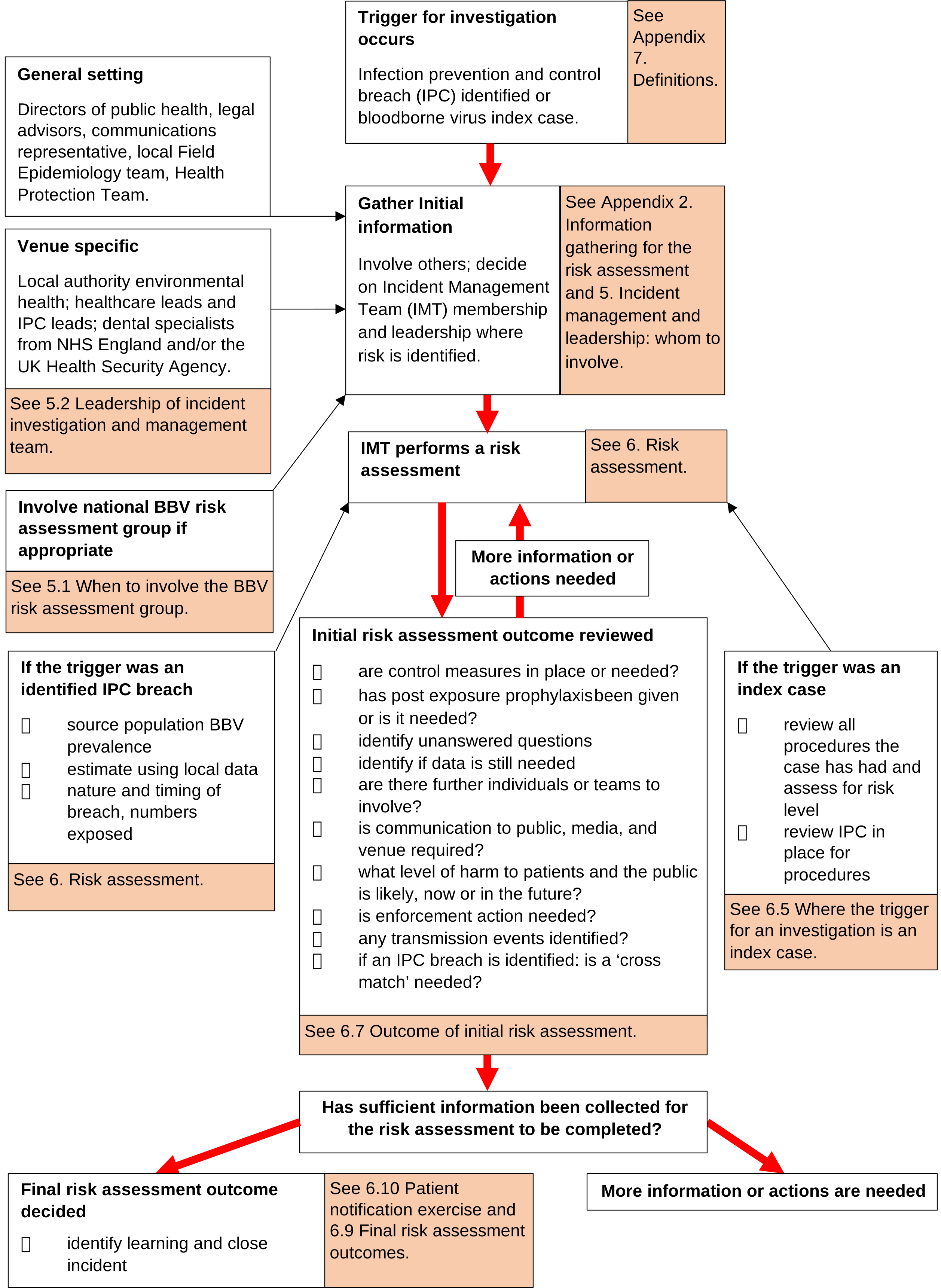
10. Appendix 4. Cross-matching process
Cross-matching is a process by which the patient details are compared against laboratory and surveillance databases for BBVs at local and national levels. This serves two primary purposes:
- to ascertain possible unrecognised BBV transmission
- to ascertain BBV status of the source population
The BBV risk assessment group will need to be involved whenever a cross-match is being considered and contribute to the decision whether to proceed with this. A team should be nominated to manage the patient list and coordinate cross-matching.
10.1 Process
The main components of cross-matching are to:
- generate a patient list
- cross-match against local laboratory BBV data
- cross-match against national BBV data sets
10.2 Information governance and data protection
The collection of clinical data for the cross-matching is required for health protection purposes as part of a public health investigation; therefore, ethical approval is not required.
All data held by the NHS is managed in accordance with the Data Protection Act 2018, NHS Caldicott Guidelines and the UKHSA privacy notice. Any individual accessing patient information must comply with these and maintain confidentiality.
UKHSA staff are trained to treat any personal details in the strictest confidence and to comply with the Data Protection Act 2018 and NHS Caldicott Guidelines. Any deliberate or negligent breaches of these guidelines may be disciplinary offences.
10.3 Patient list
A patient list of the source population and those potentially exposed will be required as guided by the IMT regarding the period of interest.
This can be used as a basis to cross check against local laboratory information and national UKHSA BBV data sets.
Personal identifiable information must be included in order to support the cross-match comparison with known BBV cases.
The Patient Demographic Service should be used to enrich the patient list with missing patient information. This is particularly useful for instances where NHS number, first name, last name, date of birth or sex are missing.
10.4 Field list
The following are suggested fields for this data set:
- your identification (ID) number
- NHS number
- hospital number
- hospital
- first name
- surname all (double barrel names included)
- surnames 1 (first of double barrel names separated)
- surname 2 (second of double barrel names separated)
- date of birth (dd/mm/yyyy)
- sex (male (M) or female (F))
- postcode of residence
- local authority of residence
- Lower Super Output Area (LSOA)
- first relevant date of interest for example date of procedure
- second relevant date of interest for example date of procedure
- third relevant date of interest for example date of procedure
10.5 Data cleaning prior to cross-match
The following steps should be followed when cleaning data prior to cross-match:
- ensure the variable holding the patient NHS number is of a numerical type and not string or free text
- generate separate variables for first name and last name (if the data is not already structured as such)
- amend the first name and surname variable types to free text, removing any capitalisations (in case the cross-matching software package used is case-sensitive) and removing hyphens
- identify and split multiple and hyphenated first names and last names, storing these as separate variables: surname 1 and surname 2 (code with sequential unique names) for example ‘smith-davis’ becomes ‘smith’ and ‘davis’
- remove any extraneous spaces before or after each data item recorded in each variable for example ‘ smith ’ becomes ‘smith’
- where there are multiple dates of interest for the same patient, for example procedure dates, reshape the data to wide format such that each row represents a single patient (code additional procedures with sequential unique names) for example date_1, date_2 and so on
- save the cleaned data with a unique filename
10.6 Cross-matching against local laboratory data
Laboratory data serving the healthcare providers should be sent by the local laboratories. This is in case BBV positive patients have not been reported to UKHSA, that is they are on the laboratory information management system (LIMS) but have not been reported to UKHSA’s Second Generation Surveillance System (SGSS).
To do this, healthcare providers should generate a list of positive isolates for the BBV of interest from their local microbiology laboratory as follows:
- LIMS should be searched to provide the requested data and each laboratory should have technical staff skilled and trained to undertake such tasks
- local healthcare providers should have clear guidance from the incident lead regarding the specified dates they should use to generate the laboratory list
- UKHSA teams (usually the Field Epidemiology Service) should compare the LIMS extracted data with SGSS data to detect any BBV patients not reported to UKHSA
10.7 Local cross-match process
Once the cross-match data has been provided locally, the following actions are recommended.
1. Open the cleaned patient list data.
2. Using a computer package such as STATA, merge this data set with the cleaned laboratory data file, using combinations of NHS number, last name, first name and date of birth:
- where multiple or hyphenated first names and last names exist, cross-matching should also be performed on the sequentially named variables holding the data
3. Any identified positive matches should be reviewed to confirm the veracity of these (that is number of matched identifiers, specific fields matched and so on):
- the specimen date of each matched isolate should be reviewed with reference to the date of interest, noting if the specimen date preceded the date of interest or was less than the incubation period of the BBV
- healthcare providers should record if any positive matches fall into the following groups:
- deceased (consider identifying the cause of death)
- stillbirths and neonatal deaths
- terminally ill
- patients using the healthcare provider
4. Following completion of each local cross-matching exercise, healthcare providers should record the outcome of:
- the summary of the process: period of interest, number of positives checked, number of matches
- details of individuals with a match and provide these to the designated coordinator in a secure manner
The above rigorous approach to matching on combinations of patient identifiers is suggested due to possible differences between data sets in how these variables may be coded or recorded. For instance, differences in spelling names and multiple NHS numbers relating to the same patient have been identified in cross-matching.
10.8 National cross-match process
Contact should be made with the UKHSA National HIV and Hepatitis teams regarding cross-matching against national data sets (details below).
10.9 HIV cross-matching
Please contact the HIV and AIDS Reporting Section (HARS) Team to arrange cross-matching for people living with HIV (email HARSQueries@UKHSA.gov.uk). The HARS team will carry out the cross-matching within 10 working days.
The HARS Team holds a database of individuals who have ever been diagnosed with HIV in the UK, and those accessing HIV care. This data is used to inform the public health response to HIV infection and for the planning of services. Due to the sensitive nature of this data, the HIV team does not directly collect full name and address, but use a ‘surname soundex’, and first initial. Together with date of birth and gender, this provides a reliable mechanism for surveillance purposes for de-duplicating patients diagnosed at more than one setting, and to follow up patients in care to assess their clinical outcomes. However, while this level of information is sufficient for surveillance purposes, at the individual level the HIV team cannot definitively use this information to confirm whether individuals have been diagnosed with HIV.
The following additional caveats apply regarding the national cross-matching process:
- there are a small number of people who use different personal identifiers when accessing HIV care; therefore, matching based on soundex, date of birth and sex may not have detected such individuals
- individuals with an undiagnosed infection will not be detected through this linkage as the databases contain only individuals who have been diagnosed with HIV infection
The HARS team needs the following core information:
- first name
- surname (no hyphens)
- date of birth (dd/mm/yyyy)
- sex (M or F)
The following fields will also help the cross-matching process so should be provided if available:
- ID number
- hospital number
- hospital name
- postcode of residence
- local authority of residence
- LSOA
The HARS Team will code the first name and surname into initial and soundex code respectively for matching and the first name and surname will then be deleted.
The patient information should be transferred via the HARS Team’s secure web portal (and not via the email address above unless instructed to). The HARS Team can set you up a web portal account.
10.10 Hepatitis B and C cross-matching
To arrange hepatitis cross-matching for hepatitis B and C please alert the BBV risk assessment group initially, without any patient data, by email (hepatitis@ukhsa.gov.uk) to agree a secure method to transfer the confidential patient data. Note that confidential patient information must be sent securely in line with current organisational policies. When in doubt, check with the receiving organisation to ensure the transfer route is considered secure. Depending on whether either hepatitis B or C is required or both, this cross-matching can take several weeks.
National hepatitis surveillance databases include laboratory reports of acute and chronic hepatitis B diagnoses and hepatitis C reported from England and Wales going back to the early 1990s and updated on a monthly basis from SGSS.
Data should be sent by a secure method using current organisational policies in the following format with the following core variables:
- your ID number
- first name
- surname (no hyphens)
- date of birth (dd/mm/yyyy)
- sex (M or F)
The following fields will also help the cross-matching process so should be provided if available:
- NHS number
- postcode of residence
Please ensure that there are no commas, full stops, question marks, exclamation marks, asterisks or any other characters in any of the data fields apart from the required text as set out below.
Table 1. Formatting of data for cross-match of exposed persons with national data (fictional patient details for illustrative purposes only)
| Your ID number | First name | Surname | Date of birth | Sex |
|---|---|---|---|---|
| 1 | George | Smith | 22/11/1944 | M |
| 2 | Sandra | Leah Carter | 13/09/2011 | F |
| 3 | Simone | De Souza | 23/05/ 1979 | F |
| 4 | William | O’Leary | 12 /11/1965 | M |
| 5 | Katy Sarah | Jones | 03/09/2001 | F |
Of note to include:
- first name (if a second and third name or more please include in the same column as the first name, as in 5)
- apostrophes in forenames or surnames are acceptable
The patient list will be matched against the national hepatitis surveillance database. The highest-level match will be those that match on first name, surname, date of birth (and sex). These highest-level matches will be returned by password protected Excel spreadsheet to the local requesting team.
11. Appendix 5. Information sharing in relation to public health incidents
11.1 Guidance and Regulations
General principles are set out in the Communicable disease outbreak management guidance and its associated Toolkit 7: communications and media approach gives more details.
The Health Service (Control of Patient Information) Regulations 2002 describes the regulatory context for information sharing.
The regulations around duty of candour are summarised in Patient safety incident guidance and duty of candour.
Confidentiality publications by the GMC include:
- Confidentiality: good practice in handling patient information
- Confidentiality: disclosing information about serious diseases
- Confidentiality: good practice in handling patient information (see in particular paragraphs 61 to 72 on disclosure of information for public protection purposes)
- The professional duty of candour for GMC registered individuals
Guidance from the GDC includes Standards for the dental team (see Standard 4.3 on information sharing).
11.2 Sources of support for specific incidents
The UKHSA Clinical and Health Protection Quality Team (qualityteam@ukhsa.gov.uk) can support with any questions around quality and safety.
The Health Equity and Inclusion Health (HEIH) division can provide:
- consideration for incidents on equity issues, including ethnicity, deprivation and faith
- advice on community engagement and how to tailor communications for diverse audiences
- insights on specific settings and populations affected by severe health inequalities
Contact healthequityinclusionhealth@ukhsa.gov.uk
The UKHSA legal team can support where there are legal queries (see UKHSA intranet or email the legal business manager).
The Caldicott guardian may be contacted where there is a potential breach of Caldicott standards (caldicott@UKHSA.gov.uk)
Communications colleagues in UKHSA can support with communications to the public (contacts can be found on the UKHSA intranet).
12. Appendix 6. Terminology for describing risk to the public
It is important that the terms used to describe risk in these incidents are used consistently. In an ideal situation, the actions recommended would also be consistent for incidents of the same level of risk. However, as noted below there are often other factors that may lead to different outcomes of the risk assessment. These factors include the exposure, the population involved or the responsible organisation’s wider remit.
The Calman Risk communication tool is a method of illustrating numerical risks (often involving large numbers) with real world examples. It is useful for providing context regarding terminology, but in BBV-infection control type incidents it should be considered as part of the discussion, with an awareness of the range of assumptions that any calculation is based on. Table 2 is adapted from the Calman Risk communication tool.
Table 2. Descriptions of risk
| Term used | Risk range | Example | Risk estimate |
|---|---|---|---|
| High | Greater than 1:100 | Transmission to susceptible household contacts of measles and chickenpox Gastrointestinal effects of antibiotics |
1:1 to 1:2 1:10 to 1:20 |
| Moderate | 1:100 to1:1000 | Death from smoking 10 cigarettes a day Death all natural causes, age 40 |
1:200 1:850 |
| Low | 1:1000 to 1:10,000 | Death from influenza Death accident on road |
1:5000 1:8000 |
| Very low | 1:10,000 to 1:100,000 | Death from accident at work Homicide |
1:43,000 1:100,000 |
| Minimal | 1:100,000 to 1:1,000,000 | Accident on railway | 1:500,000 |
| Negligible | Less than 1:1,000,000 | Hit by lightning | 1:10,000,000 |
Most BBV infection control incidents would be considered very low or minimal risk, although calculating a numerical estimate of risk in these types of incidents is difficult.
13. Appendix 7. Definitions
13.1 Decontamination
Any combination of cleaning, disinfection and sterilisation that makes a reusable item safe for re-use for the specified clinical procedure.
13.2 Exposed person or population
A person or population of people linked to at least one person known to have a BBV of infectious potential via a procedure which carries a potential risk of BBV transmission:
- either because correct IPC guidance was not followed
- or there is no safe recommended practice
See Infectiousness of source persons, where identified. An exposed person can also be referred to as a ‘contact’ defined as an ‘exposure to a source of an infection, or a person so exposed’.
13.3 A7.3 Exposure prone procedures (EPPs)
EPPs include procedures where the worker’s gloved hands may be in contact with sharp instruments, needle tips or sharp tissues inside a patient’s open body cavity, wound or confined anatomical space, where the hands or fingertips may not be completely visible at all times.
UKAP provides more information to support categorisation of EPPs.
13.4 Index cases
An index case is a person diagnosed with a BBV who has no evident source to explain their infection that is more plausible than:
- from a suspected IPC breach
- or from a procedure for which there is no safe recommended practice
The identification of an index case triggers an investigation.
An investigation may not have an index case, for example if the investigation was triggered by a known IPC breach.
13.5 Patient notification exercise (PNE) (lookback)
A PNE, also known as a ‘lookback’, is a process that is triggered when a clinical incident or concern leads to the notification and tracking of affected or potentially affected groups of patients.
13.6 Potentially exposed person
Potentially exposed persons are people who are subject to a procedure which carries a potential risk of BBV transmission, where correct IPC guidance was not followed, or there is no safe recommended practice.
13.7 Source persons
Source persons are those with a pre-existing BBV who has or have been through a procedure where correct IPC guidance was not followed, or for which there is no safe recommended practice, resulting in a likely BBV transmission to another person or other people.
13.8 Source population
The source population is the population from which BBVs may be acquired, in the event of:
- either an identified IPC breach
- or from activities for which there is no safe recommended practice for avoiding BBV transmission
The IMT may look at local disease prevalence in order to estimate the prevalence of a BBV in the source population after a known IPC breach, and therefore the risk of a person in the source population having a transmissible BBV. The source and exposed populations are frequently the same in BBV IPC breaches.
For the purposes of illustration, if in a dental clinic there was an IPC breach in decontamination affecting every procedure performed on one specific day after 10am, then the source population is every person that had a procedure after 10am on that specific day. The exposed population is also every person that had a procedure after 10am on that specific day.
13.9 Successfully traced contacts
Successfully traced contacts are people from the exposed population with clear evidence of infection or non-infection after exposure, for example laboratory evidence or a clinical diagnosis.
Exposed people may be defined as successfully traced when there is clear evidence of infection or non-infection after exposure, for example laboratory evidence or a clinical diagnosis. This information will not be available immediately. The lapse time before someone can be declared to have or not to have an infection will depend on the infection.
14. Acknowledgements
14.1 Contributors
This guidance was prepared by the BBV Risk assessment working group, UKHSA IPC team and HPTs.
Members of the original group: Koye Balogun, Su Brailsford, Valerie Delpech, Kirsty Foster, Peter Hoffman, Sema Mandal, Emily Phipps, Paul Crook (all NIS), Emma Crawley-Boevey, Suzi Coles, Roger Gajraj, Chaamala Klinger, Vanessa McGregor, Kristina Poole, Jennifer Taylor (all HPT centres and regions).
14.2 2026 revision
Writing committee: Sophie Candfield, Koye Balogun, Miranda Mindlin, Joanna Harris, Karren Staniforth, Debbie Mou, Sarah Murdoch.
External dental review: Allan Reid, NHSE Midlands, Huw Winstone, NHSE South East, Melanie Wilson, UKAP.
Reviewing group: Sema Mandal (Deputy Director Blood Safety, Hepatitis, STI, and HIV Division, UKHSA), Will Welfare (Director, Health Protection in Regions), Monica Desai (Head of Hepatitis Section, UKHSA), Joanna Harris (Infection, Prevention and Control team, UKHSA), Mamoona Tahir (Viral Hepatitis Leads Group), Clare Humphreys and Sultan Salimee (Consultants in Health Protection, UKHSA), Sue Ibbotson (UKHSA Head of Clinical and Health Protection Quality).
14.3 Suggested citation
Bloodborne virus-related infection control breaches: toolkit for risk assessment, investigation and incident management. London: UKHSA. July 2026.