Advanced nuclear framework (accessible webpage)
Updated 11 March 2026
Applies to England and Wales

© Crown copyright 2026
This publication is licensed under the terms of the Open Government Licence v3.0 except where otherwise stated. To view this licence, visit nationalarchives.gov.uk/doc/open-government-licence/version/3 or write to the Information Policy Team, The National Archives, Kew, London TW9 4DU, or email: psi@nationalarchives.gov.uk.
Where we have identified any third party copyright information you will need to obtain permission from the copyright holders concerned.
This publication is available at https://www.gov.uk/government/publications/advanced-nuclear-framework/advanced-nuclear-framework-accessible-webpage
Ministerial Foreword
Lord Vallance
Minister for Science, Innovation, Research and Nuclear
We came into government with a clear promise: taking back control of Britain’s energy future and putting consumers at the heart of our energy system.
For too long, households and businesses have been exposed to the volatility of global fossil fuel markets that we have no control over. The consequences have been stark: soaring bills, uncertainty for families, and pressure on businesses.
These challenges have underscored a simple truth: energy security is not a luxury; it is a necessity. And our response has been decisive. We are acting now to deliver a cleaner, more secure, and more affordable energy system for the long term.
That means accelerating the transition to homegrown, low‑carbon power that we can rely on, protecting consumers from price shocks, and consolidating Britain’s position as a global leader in clean energy.
Nuclear energy is central to this mission. It provides the stable, low‑carbon baseload that keeps the lights on and supports our economy.
That is why we have launched a new golden age of nuclear, committing £17 billion to the most ambitious programme of new plants for a generation, and revitalizing our communities as we get Britain building again.
From Sizewell C in Suffolk, which will power the equivalent of six million of today’s homes, provide around 10,000 jobs at peak construction and offer 1,500 apprenticeships, to the newly announced Small Modular Reactors (SMRs) at Wylfa on Anglesey, the most significant industrial investment in North Wales for a generation.
Once these projects come online in the 2030s, combined with Hinkley Point C, more new nuclear energy will have been delivered to the grid than over the entire previous half century.
Now, we are taking the next steps to power Britain’s future by being among the first to champion the deployment of cutting‑edge advanced nuclear projects driven by the private sector. These technologies offer new opportunities to deploy capacity more quickly, at a lower cost, and with greater flexibility, helping us to meet rising demand whilst cutting emissions.
Investing in these technologies supports skilled jobs and reinforces Britain’s energy security, reflecting our pledge for a sustainable and affordable energy future.
The Advanced Nuclear Framework (the Framework) sets out how we will support this. It introduces the UK Advanced Nuclear Pipeline (the Pipeline), which provides a route for privately led projects, helping projects unlock private investment and creating an environment that bolsters developers’ confidence to undertake nuclear projects at their own commercial risk.
Alongside this, we are strengthening the foundations for growth: world‑class regulation, planning and siting reforms, investment in fuel cycle capabilities such as High‑Assay Low‑Enriched Uranium (HALEU), and support from our national laboratories and research institutions. This enabling environment for privately led projects will drive the spread of nuclear power across the country at scale.
The UK is open for business, and this framework is the next step in our ambition to remain one of the most attractive destinations for nuclear innovation anywhere in the world.
We invite developers, investors, and end users to engage with us and help turn this vision into reality. Together, we can build a cleaner, stronger, more self‑sufficient energy system that works for everyone.
Lord Vallance
Minister for Science, Innovation, Research and Nuclear
Executive summary
Nuclear power is a cornerstone of the UK’s clean, secure energy system, providing reliable, continuous, low‑carbon power that complements intermittent renewables and underpins grid stability. Advanced nuclear technologies (Small Modular Reactors (SMRs), Advanced Modular Reactors (AMRs), and Micro Modular Reactors (MMRs)) can offer faster, more predictable deployment through modular, factory‑based fabrication; lower upfront capital requirements than traditional gigawatt‑scale plants; and new applications including industrial process heat, hydrogen and synthetic fuel production, and firm power for data centres.
The government is delivering the most ambitious civil nuclear programme in half a century: at the Spending Review, we committed £14.2 billion to Sizewell C and over £2.5 billion to the Great British Energy – Nuclear (GBE‑N) SMR project at Wylfa. Together with Hinkley Point C, these projects will add almost 8 GW of capacity in the 2030s, enough to power the equivalent of around 15 million of today’s homes, with GBE‑N’s initial three‑unit programme intended to catalyse a longer‑term fleet.
Our ambition extends beyond government‑backed projects; the government intends to enable privately led advanced nuclear projects so that credible developers can rapidly progress projects supported by risk‑bearing private capital under an enabling policy framework.
Traditionally, nuclear projects have relied on significant state underwriting or delivery by state‑owned entities, reflecting the scale, complexity, and capital intensity of gigawatt‑scale plants. Advanced nuclear technologies have the potential to transform this model. Their modular design enables factory‑based fabrication and replicable units, reducing construction timelines and improving predictability. With far smaller capital requirements than conventional large reactors, these technologies open the door to nuclear projects owned, delivered and financed by the private sector.
Industry engagement indicates that privately led projects are viable in the UK where the enabling environment is clear. Needs vary by technology and business model, supplying electricity to the grid, delivering heat to industry, providing private‑wire power to data centres, or hybrid combinations, and so too will funding and financing requirements and the form of support sought from government. This Advanced Nuclear Framework sets out that enabling environment.
The scope of this framework is tightly focused on enabling advanced nuclear projects. Large-scale nuclear technologies are not included though the government continues to support GW-scale nuclear power. In addition to the current Hinkley Point C and Sizewell C projects, the government tasked GBE-N in November 2025 with identifying suitable UK sites that could potentially host future large-scale projects.
Part One introduces the UK Advanced Nuclear Pipeline, a new government‑managed process through which projects submit detailed plans across five core areas:
- technology and supply chain;
- developer capability;
- finance / funding / investment;
- siting; and
- operator / end‑user arrangements.
The Department for Energy Security and Net Zero (DESNZ) and GBE‑N will then conduct eligibility checks and a structured Project Readiness Assessment (PRA) (rapid triage, then deep dive). Projects assessed at or above the threshold may be invited to join the Pipeline, subject to ministerial approval and agreement to Pipeline terms.
Pipeline Membership confers a Statement of Limited In‑Principle Endorsement, signalling that government considers the project credible and potentially deliverable in the UK, thereby helping developers and investors progress financing and due diligence. Pipeline projects may engage with DESNZ on potential revenue support, e.g., a Contracts for Difference (CfD)‑style mechanism that stabilises future revenues, and High Impact, Low Probability (HILP) risk protections where private markets cannot efficiently bear residual risks. Note that any offer of support will be on a case‑by‑case basis, subject to approvals, including affordability and value for money.
In parallel, all companies can approach the National Wealth Fund (NWF), who bring £27.8 billion of capital, a dedicated nuclear team, and a full suite of debt, equity and hybrid instruments, to explore investment opportunities aligned with strategic priorities. The NWF can act as a catalytic investor, which will work alongside private capital.
Part Two sets out wider enablers that the government is putting in place to support nuclear deployment, reforming the planning system, grid connection process, and regulatory process, to ease and accelerate deployment of new plants. Planning reform via the National Policy Statement for Nuclear Energy Generation (EN‑7) provides a flexible, criteria‑based approach to siting, brings SMRs and AMRs within the development consent framework, and supports co‑location with energy‑intensive industry.
Grid connection reforms led by the National Energy System Operator (NESO), including the Gate‑2‑to‑Whole‑Queue (G2TWQ) process within the Decision on Connections Reform Package (TM04+), prioritise ready projects and reduce delays, with further system planning through the Strategic Spatial Energy Plan (SSEP) due in 2027.
Regulatory innovation is advancing: the independent Nuclear Regulatory Taskforce reported 47 recommendations at the Budget, which government has accepted in principle, with an implementation plan to follow in early 2026; regulators offer voluntary early engagement to de‑risk pathways before formal steps such as Generic Design Assessment (GDA) or site licensing. Internationally, we are deepening collaboration through the International Atomic Energy Agency (IAEA), bilateral partnerships such as the Atlantic Partnership for Advanced Nuclear Energy with the US, and regulator‑to‑regulator arrangements to support design harmonisation and efficient cross‑jurisdictional assessments.
Fuel strategy clarity underpins investor confidence: all civil fission reactors deployed in the UK must use uranium fuel enriched to less than 20% U‑235. To secure supply for advanced reactors, government has announced up to £300 million for a domestic HALEU supply chain, including £196 million awarded to Urenco to deliver commercial‑scale enrichment by the early 2030s.
The UK also has outstanding research capabilities. The UK’s National Nuclear Laboratory (UKNNL) provides world‑class facilities such as the unique Post‑Irradiation Examination capability at the Active Handling Facility, technical services and licensing support to de‑risk technology validation and deployment. The High Value Manufacturing Catapult acts as a strategic delivery partner for nuclear manufacturing readiness, qualification, and assurance across welding / joining, additive and near‑net‑shape manufacturing, automation / robotics, large‑scale machining, modularisation, and digital engineering / inspection.
We want to see new developments on public land: GBE‑N sites such as Oldbury and Nuclear Decommissioning Authority (NDA) locations such as Pioneer Park in Cumbria and Trawsfynydd offer opportunities where technical and regulatory conditions are met. Skills are scaling through the Nuclear Skills Plan, with thousands of early‑career starters and new doctoral training capacity to support civil and defence programmes.
This is a holistic and enabling framework for the private sector, covering financing, funding, planning, regulation, fuels, skills, sites, and supply chain. This framework is designed to support and accelerate credible, privately led advanced nuclear projects backed by private capital, while maintaining consumer value for money and high standards of safety, security, and environmental protection. The government wants to make the UK one of the best countries in the world to develop private nuclear projects.
To support the delivery of the Framework, a dedicated business-focussed team in DESNZ will be established to act as a concierge-style service for companies to help them navigate the UK system. This Advanced Nuclear Business Engagement Unit will act as facilitators for projects, helping them progress, and supporting wide-ranging engagement with government and other key bodies in the UK such as the Office for Nuclear Regulation (ONR), National Wealth Fund, and local authorities.
We look forward to engaging with developers, investors, end users, and communities on specific project proposals. For contact with the department, please email advancednuclear@energysecurity.gov.uk.
Introduction
The UK’s clean energy ambitions
The UK is striving to become a clean energy superpower, with a commitment to achieving zero carbon electricity by 2030 and accelerating progress towards net zero by 2050.
As the UK navigates a period of rapid change in its energy landscape, it faces significant challenges, as well as opportunities, in establishing its long‑term energy security. Recent global events have demonstrated the risks associated with dependence on imported fossil fuels, with consequences for both affordability and national resilience.
Moving away from carbon‑intensive fuels is fundamental to achieving legally binding climate targets, improving air quality, and reducing exposure to the volatility of global energy markets. Clean energy underpins the UK’s ambitions for decarbonisation, economic growth, resilience and energy independence. A reliable and low‑carbon energy system supports industrial growth and competitiveness, investment, sustains high‑quality jobs, and protects consumers and businesses from unpredictable cost pressures.
The government’s Industrial Strategy [footnote 1] underscores this message and highlights the important contribution of energy to economic growth. It emphasises the need to tackle high industrial electricity costs, enhance energy security, streamline regulatory processes, and remove planning barriers.
The role of nuclear energy
Central to these ambitions is the development of secure, homegrown, low-carbon energy sources such as nuclear energy, which is unique in its ability to deliver reliable and continuous low‑carbon electricity. Unlike intermittent renewables, nuclear energy can provide consistent baseload supply, which is essential for maintaining grid stability as the energy system integrates greater shares of wind, solar, and other variable sources. Nuclear projects have the potential to accelerate the transition to a clean, secure, and fair energy system as reflected by the COP28 commitment to triple nuclear capacity by 2050 [footnote 2].
The government has announced a significant new phase for nuclear, with the largest expansion of new nuclear energy in decades, including the advancement of the Sizewell C project, pioneering one of Europe’s first SMR programmes through GBE‑N at Wylfa in North Wales, and record levels of investment in fusion.
Advanced Nuclear Technologies
Advanced nuclear technologies, including both established and next generation reactor designs (SMRs, AMRs and MMRs) are poised to deliver additional benefits beyond those of traditional nuclear power plants.
SMRs are designed to produce less than 500 megawatts (MW) of electricity. They use low‑enriched uranium fuel up to 5% and are based on proven light‑water and boiling‑water reactor technology already widely deployed around the world.
AMRs are modular reactors where vendors propose to change one or more of the fuel, reactor coolant or neutron spectrum of the design compared to common water‑cooled reactors. Advanced nuclear technologies offer a variety of exciting benefits, including higher heat output, new applications for energy such as industrial processes and hydrogen production, and improved passive safety features. However, these innovations also bring new challenges. Managing nuclear waste responsibly, ensuring robust security measures, and addressing proliferation risks will be critical as these technologies move toward deployment.
MMRs represent the smallest class of advanced nuclear technologies, typically generating around 20MW or less. Unlike larger reactors designed for national grids, MMRs are tailored for specialised applications where highly reliable heat or power is essential but other low‑carbon options are unavailable. These reactors can provide clean energy to remote communities, support industrial sites in isolated regions, and even power critical infrastructure in areas without access to traditional energy networks. By offering flexibility and resilience, MMRs open new possibilities for decarbonisation in places that have historically relied on diesel or other carbon‑intensive fuels.
SMRs, AMRs, and MMRs share a common manufacturing approach: the intention for extensive off‑site fabrication in factory settings. This modular method allows components to be built in controlled environments and assembled on‑site, reducing construction time, costs, and risks. This approach allows for skilled jobs to be located across multiple regions rather than concentrating work in one location. By enabling faster, more predictable deployment and efficient use of capital, modular reactors offer flexibility in how and where nuclear power can be delivered making them a compelling solution as the UK accelerates its transition to net zero.
Whether SMRs, AMRs, or MMRs, advanced nuclear technologies hold enormous potential for the UK’s future, and these are the focus of this framework. These innovations offer greater flexibility, allowing nuclear plants to complement renewables by supporting grid stability and balancing supply and demand. They can deliver high‑temperature heat and power for industrial processes, helping to decarbonise manufacturing and other energy‑intensive sectors. Advanced reactors are also expected to support large‑scale production of low‑carbon hydrogen and synthetic fuels critical for reducing emissions in hard‑to‑abate areas such as civil aviation, shipping and heavy and domestic transport. In addition, their integration with digital infrastructure could provide the reliable, scalable energy needed to power data centres and emerging technologies like artificial intelligence. By meeting both traditional and future energy demands, advanced nuclear projects have the potential to strengthen energy security, boost industrial competitiveness, and help the UK meet its climate commitments.
Nuclear in the UK
The UK boasts a distinguished nuclear heritage; in 1956, Calder Hall became the world’s first commercial nuclear power station, and this ground‑breaking achievement paved the way for the expansion of the Magnox and Advanced Gas‑Cooled Reactor (AGR) fleets in the decades that followed. The sector reached a milestone in 1995 with the commissioning of Sizewell B, at a time when nuclear energy contributed to over a quarter of the nation’s electricity supply.
Building on this rich legacy, the UK is committed to delivering a revitalised nuclear future. The government has already made substantial investments in the sector, including £14.2 billion for funding the construction of Sizewell C alongside the private sector and over £2.5 billion to facilitate the SMR project delivered through GBE‑N in Wylfa, North Wales.
GBE‑N is an arm’s length body of the Department for Energy Security and Net Zero (DESNZ), with statutory powers designated to it under the Energy Act 2023 to facilitate the design, construction, commissioning and operation of nuclear energy generation projects for the purpose of furthering any policies published by His Majesty’s Government. GBE‑N is progressing the SMR programme, reinforcing the UK’s aspiration to be a global leader in advanced nuclear technology.
In a decisive step towards energy sovereignty and global nuclear leadership, in 2023 the government announced up to £300 million to establish a domestic High Assay Low-Enriched Uranium (HALEU) supply chain, which is essential for fuelling AMRs. Establishing a UK domestic HALEU capability reduces global reliance on Russian supply chains, which currently dominate the global market, and mitigates strategic vulnerabilities for the UK and its allies. By investing early, the UK is ready to be a trusted supplier of HALEU to international partners. The HALEU Programme opens the door to bilateral fuel agreements, strengthens global partnerships, and could ensure uninterrupted fuel supply for domestic AMR deployment.
The UK is home to world‑class research, delivered through leading academic institutions and our national laboratory, United Kingdom National Nuclear Laboratory (UKNNL). The UK has decades of proven expertise in regulating nuclear projects across their full lifecycle, from research and development (R&D), commissioning and operation to decommissioning, alongside robust capabilities in waste management and disposal with a supply chain to support. The UK’s highly skilled workforce brings extensive experience in delivering complex nuclear projects, supported by a comprehensive skills strategy [footnote 3] that builds new talent and enables professionals from other sectors to transition and develop the expertise needed for nuclear innovation. For generations, the UK has played a pivotal role in international collaboration, advancing regulatory frameworks, sharing lessons learned, driving research and development, and championing a safe, secure, and forward‑thinking nuclear industry.
Barriers to Market
The government is keen to see the advanced nuclear sector succeed and to move quickly. Industry has signalled that it can deliver projects using private finance and with minimal government support. Advanced nuclear technologies not only introduce new applications for nuclear energy but are also expected to be quicker and more cost‑effective to build. This could help overcome market barriers that have challenged traditional large‑scale projects, which are often supported by significant government funding.
Despite these opportunities, engagement with industry has identified several challenges that must be addressed to unlock privately financed projects in the UK. Industry has called for a clear policy signal and certainty from government to support investment. This Advanced Nuclear Framework (the Framework) aims to do that, specifically for the new generation of reactors.
A challenge raised by stakeholders is the lack of an established, structured process by which government can engage with specific project proposals. To address this, industry has called for a mechanism that allows government to evaluate proposals and publicly endorse those with strong merit. Such endorsement, stakeholders argue, would boost investor confidence in a project’s long‑term prospects, unlocking additional private investment and improving the likelihood of successful deployment. This framework introduces these mechanisms through the UK Advanced Nuclear Pipeline (the Pipeline) and the Project Readiness Assessment (PRA) process.
An additional challenge identified by stakeholders is investor concern over risks that are difficult to insure and the absence of clear pathways to achieving reliable returns. Investors are also cautious about the high development costs incurred before financial close on nuclear projects. Industry argues that targeted government action on funding and financing would help investors price risk, assess potential returns, and gain confidence in policy stability, enabling them to commit private capital. This framework sets out that government may consider insurance and revenue support for credible private projects, provided such support offers value for money and economic risk remains with the developer. It also confirms that the National Wealth Fund (NWF) will explore investment opportunities in viable projects during both development and construction phases.
The Framework has been designed to address the market barriers identified by stakeholders and, in doing so, help to enable privately financed projects to enter the UK nuclear market. Its aim is to allow developers to progress projects independently and open the door to nuclear projects owned, delivered and financed by the private sector, while providing the clarity needed to attract private investment. The mechanisms for doing this are laid out in Part One.
Additionally, a dedicated business-focussed team in DESNZ will be established to act as a concierge-style service for companies to help them navigate the UK system and barriers to market. This Advanced Nuclear Business Engagement Unit will act as facilitators for projects, helping them progress, and supporting wide-ranging engagement with government and other key bodies in the UK such as the ONR, National Wealth Fund, and local authorities.
Why now?
We are at a pivotal point in the development of advanced nuclear power. These next‑generation technologies are moving from concept to reality, with first‑of‑a‑kind projects making real progress in engineering, licensing, and demonstration. Around the world, dozens of demonstrations and commercialisation projects are already underway.
The demand for reliable, low‑carbon energy is growing fast. Businesses and consumers alike are looking for solutions that can deliver cheap clean power at scale. Markets have shown strong interest in supporting advanced nuclear, but success depends on having the right policies and regulations in place to create a supportive landscape and environment.
The market is evolving rapidly, with the International Atomic Energy Agency (IAEA) monitoring numerous projects internationally [footnote 4]. Recent developments demonstrate the potential for privately funded projects to become a reality, with commercial agreements being announced in the US and Europe for First of a Kind (FOAK) projects, and deployment plans being announced in the UK. There is a noticeable increase in demand from end‑users, including Microsoft, Amazon, and Google, who have already signed Power Purchase Agreements (PPAs) with advanced nuclear vendors to supply electricity to future data centres in the US creating a market for advanced nuclear. This trend is expected to intensify as AI workloads scale, with the UK’s emerging AI Growth Zones (AIGZs) and other large AI clusters projected to drive substantial new demand for clean, firm power.
The scale of the opportunity for the UK was made clear in September 2025, when, during the State Visit by the US President, a series of industry announcements were made, with companies setting out their intentions to deploy advanced nuclear technologies in the UK:
- X‑Energy and Centrica plan to build up to 12 advanced modular reactors in Hartlepool, as part of a UK‑wide programme targeting 6GW of nuclear capacity.
- Holtec, EDF and Tritax plan to transform the former Cottam coal‑fired power station in Nottinghamshire into a hub for advanced data centres powered by SMRs, a project worth £11 billion.
- Last Energy and DP World intend to create one of the world’s first micro modular nuclear plants at London Gateway, backed by £80 million in private investment.
- Urenco and Radiant signed a £4 million deal to supply HALEU fuel to the US, alongside plans for an Advanced Fuels Facility in the UK.
- TerraPower and KBR announced they were evaluating UK sites for Natrium reactors, with each project potentially supporting 1,600 construction jobs.
Introducing the Advanced Nuclear Framework
The Advanced Nuclear Framework for privately led projects explains how government will create the enabling policy landscape for the private sector to initiate and deliver advanced nuclear projects. The Framework is specifically intended for civil nuclear projects and does not apply to defence or military‑related nuclear activities. It is focused on supporting the development, commercialisation, and deployment of advanced civil nuclear private projects within the UK’s energy sector.
The Framework is made up of two parts:
Part One introduces the UK Advanced Nuclear Pipeline and the Project Readiness Assessment (PRA) process. The Pipeline identifies advanced nuclear projects with well‑developed plans for technology, supply chain development, funding and investment, siting, and operational readiness. Projects that join the Pipeline will receive a limited in principle endorsement and will be able to access conversations about possible future support measures, such as revenue support or protections against high‑impact low‑probability investor risks. Of course, any support offered after joining the Pipeline remains subject to due diligence, value‑for‑money assessments, and all necessary approvals and the HMT Green Book.
Part Two sets out some of the key policy, regulatory and institutional features of the UK that are important for, and help enable, private nuclear projects in the UK. It includes the regulatory environment, planning processes, skills and supply chain development, advances in UK technical capabilities, and nuclear fuels, ensuring that projects have the right environment to potentially succeed.
Scope
The government is interested in a wide range of advanced nuclear technologies that can support the UK’s clean energy and industrial strategies. The Framework is designed to support advanced nuclear projects. By this we mean projects which seek to deploy Small, Advanced and Micro Modular Reactors (SMRs, AMRs and MMRs respectively) in the UK for civil energy use. However, the government recognises that some advanced nuclear innovations present risk as well as opportunity. Therefore, DESNZ has set that eligible projects must be fuelled by Uranium‑235 enriched less than 20%.
The Framework aims to provide flexibility for each project to be driven by its commercial objectives and market demand rather than prescribed government targets. This approach seeks to encourage innovation and to ensure the private sector drives the direction of individual projects according to commercial factors.
While the scope of this framework is tightly focused on enabling advanced nuclear projects such that large-scale nuclear technologies are not within scope, the government continues to support GW-scale nuclear power. In addition to the current Hinkley Point C and Sizewell C projects, the government tasked GBE-N in November 2025 with identifying suitable UK sites that could potentially host future large-scale projects. Moreover, DESNZ reserves the right to extend the scope of Framework to other nuclear projects in the future if there is a sufficient market need.
Nuclear energy applications
The Framework aims to support private projects that use advanced nuclear technologies for civil energy purposes. This includes projects that supply energy as heat and/or electricity and where the energy is supplied to the National Grid and/or to private energy users.
The government recognises that some advanced nuclear advocates are exploring novel applications or novel deployments of nuclear technology. In some cases, new uses or novel deployments can raise unique regulatory, legal, safety, and/or strategic challenges that government must carefully consider. For this reason, this framework specifically excludes:
- Offshore or floating nuclear platforms
- Civil nuclear propulsion
- Space‑based reactors
- Transportable nuclear solutions.
Government is considering its position with respect to these applications as they mature and may produce a new scope of the Framework for these applications in future.
How the Framework applies across the UK
Nuclear policy is set at a UK‑wide level by the UK government. However, the devolved administrations hold important powers over infrastructure delivery, including planning, environmental protection, and consent. At present the Scottish Government’s policy is that it will not give planning consent to new nuclear projects in Scotland. This means private advanced nuclear projects can only apply for planning consent in England and Wales.
The UK government would like to see new nuclear deployed across the country. So were the Scottish Government to change its policy, the measures in the Framework would apply in Scotland as elsewhere, supporting investment, jobs and growth in Scotland.
In the meantime, the government hopes the economic benefits of new projects in England and Wales will be felt across the UK, through the supply chain, making use of the world‑class academic, engineering, and manufacturing expertise found in all four nations.
Policy Review
The Advanced Nuclear Framework is a UK government policy. As with all policy the details contained within this document may be reviewed, modified or withdrawn.
Part One: UK advanced nuclear pipeline
Introduction
The government is establishing the Pipeline to review key elements of advanced nuclear project proposals and assess their potential viability for deployment in the UK.
The Pipeline is a register of privately led advanced nuclear projects that DESNZ believes are in principle sufficiently mature, meaning that projects could credibly be delivered in the UK, subject to all applicable UK regulatory and government approvals.
The Pipeline will play an important role in how the government supports the development of nuclear projects for the market. It is designed to provide a structured and transparent channel for UK‑based, privately led projects to engage with government. The Pipeline is not a dedicated funding mechanism nor a procurement tool. Instead, it is intended to provide a clear process to assess eligible projects and, where appropriate, offer limited in-principle endorsement and indicate potential future support.
Entry to the Pipeline is composed of three main stages:
- A preliminary eligibility check to confirm that project proposals and their project proposers are within the scope of the Pipeline.
- A phased Project Readiness Assessment (PRA) to determine an eligible project’s level of maturity and potential viability against criteria set out in the UK Advanced Nuclear Pipeline Guidance (the Guidance). This assessment will be jointly undertaken by DESNZ and GBE‑N.
- Invitation to the Pipeline – Eligible projects which have been assessed at or above the threshold set in the Guidance may be invited to join the Pipeline. Issuing an invitation is subject to final ministerial approval in their absolute discretion.
Project proposers will be required to agree Terms of Participation as a condition of submission to and membership of the Pipeline.
Purpose
The Pipeline is designed to give project developers a route to demonstrate the maturity of their project proposals to government, thereby enabling DESNZ to take an informed decision on whether to signal limited in principle endorsement of projects. DESNZ anticipates that signals of limited in principle endorsement will provide project developers and their investors with greater confidence to progress and accelerate their plans.
Membership
Membership of the Pipeline is voluntary for advanced nuclear projects.
The government anticipates that entry onto the Pipeline will be seen as a significant milestone for these projects, as it signals that government believes that a project is credible and potentially deliverable in the UK. Although the Statement of Limited In-Principle Endorsement does not constitute investment advice, it signals to investors, regulators, partners, and the wider market that a particular project could play a very significant role in shaping the UK’s future nuclear landscape.
Projects within the Pipeline will:
- Receive a Statement of Limited. In‑Principle, Endorsement setting out DESNZ and GBE‑N’s assessment of the potential viability of their project.
- Be listed on the DESNZ publicly available Pipeline of advanced nuclear projects, together with key project information.
- Be able to undertake engagement with DESNZ on any future mechanisms which may include the provision of revenue support and High Impact Low Probability (HILP) investor risk protections. The timeline for funding model engagement will be agreed with projects depending on their status when joining the Pipeline. Entry into bespoke negotiations may require further consideration of project readiness and government capacity to resource negotiations. Any potential UK government support would remain subject to future government approvals.
- Participate in coordinated engagement with the Advanced Nuclear Business Engagement Unit in DESNZ regarding other enabling elements set out in Part Two of the Framework.
Participation in the Pipeline and its entry process will be subject to agreeing Terms of Participation including:
- A protocol for use of branding and agreement of procedures and common lines for external communications in respect of the Pipeline.
- Adherence to a code of conduct.
- A high‑level review process with projects to understand and document their progress towards deployment, together with a management process for significant changes
Terms of Participation will be provided, on request, to organisations seeking to submit project proposals.
The Process
DESNZ, supported by GBE‑N, will engage directly with industry to undertake a Project Readiness Assessment (PRA) of proposals to ascertain the level of maturity and potential viability of the proposed project. This will comprise a phased process of engagement and structured due diligence, including a rapid triage process and a deeper dive into the information and evidence underpinning project proposals and assertions.
This process is designed to allow DESNZ to undertake the necessary due diligence such that government can take an informed decision to give limited, in principle, endorsement to a significant infrastructure project. The process is also designed to be repeatable, open, fair and consistent across proposals.
The exact time needed for DESNZ and GBE‑N to undertake engagement, due-diligence and assessment of each proposal may vary and is subject to discussion with individual projects but we want to be quick and to move at the pace of business.
DESNZ and GBE‑N will consider project readiness in five core areas that are essential for a substantive advanced nuclear project proposal. These are:
- Technology and supply chain plan
- Developer plan
- Finance, funding and investment plan
- Siting plan
- Operator and end user plan.
Detailed guidance has been published alongside this framework on GOV.UK to provide greater clarity of the information required and the engagement expected during the PRA process, with the high‑level principles set out below. Figure 1 provides a simple flow diagram of the process.
Figure 1: Flow diagram of the PRA process
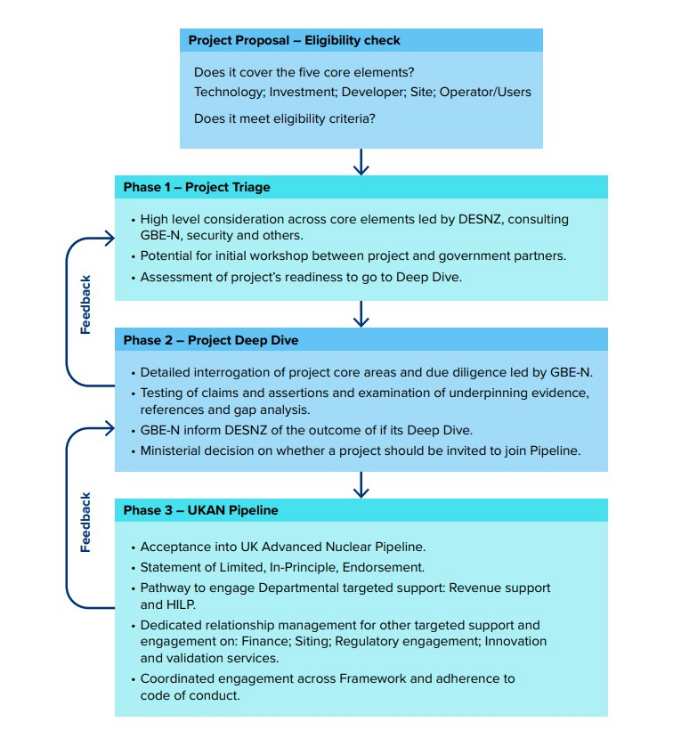
Figure 1: Flow diagram of the PRA process (text version)
Project Proposal - Eligibility check
Does it cover the five core elements?
- Technology
- Investment
- Developer
- Site
- Operator / Users
Does it meet eligibility criteria?
Phase 1 - Project Triage
- High level consideration across core areas led by DESNZ, consulting GBE-N, security and others.
- Potential for initial workshop between project and government partners.
- Assessment of project’s readiness to go to deep dive.
[Feedback taken on board during this Phase]
Phase 2 - Project Deep Dive
- Detailed interrogation of project core areas and due diligence led by GBE-N.
- Testing of claims and assertions and examination of underpinning evidence, references and gap analysis.
- GBE-N inform DESNZ of the outcome of its Deep Dive
- Ministerial decision on whether a project should be invited to join pipeline.
[Feedback taken on board during this Phase]
Phase 3 - UKAN Pipeline
- Acceptance into UK Advanced Nuclear Pipeline.
- Statement of limited, in-principle, endorsement
- Pathway to engage Departmental targeted support: Revenue support and HILP
- Dedicated relationship management for other targeted support and engagement on:
- Finance;
- Siting;
- Regulatory engagement;
- Innovation
- Validation services.
- Coordinated engagement across Framework and adherence to code of conduct.
Eligible projects
Proposals are welcomed from projects that that meet the scope of the Framework, and which are aligned with the UK’s national security and non-proliferation responsibilities. DESNZ has set eligibility criteria so that the Pipeline is only open to projects that are within the Framework’s scope, and which meet initial security controls.
The Pipeline also has eligibility criteria regarding projects’ potential timeline to deployment. These have been set so that government can focus limited bandwidth on more mature projects that have a higher likelihood of earlier deployment. This is so that the Pipeline encourages projects that are potentially better able to support the UK’s acceleration to net zero.
Full details of eligibility criteria and additional exclusions are included in the detailed guidance that has been published on GOV.UK alongside this Framework.
At a high level, eligibility criteria include:
- Projects must support land-based, non-mobile, fission technologies that are either SMRs, AMRs or MMRs fuelled by Uranium-235 enriched up to 20%.
- Projects must be seeking deployment on mainland sites in England or Wales.
- Projects must be seeking to commence construction within 10 years of joining the Pipeline.
- The project proposer must be a registered company.
- Other criteria around solvency and international sanctions.
Proposals from projects outside of the eligibility criteria will not be considered for inclusion on the Pipeline.
Note that information justifying exclusions may come to light during the PRA process or after a project joins the Pipeline. DESNZ reserves the right to disqualify a proposal or remove a Pipeline project if the department becomes aware of relevant issues later in the PRA process or subsequent engagements.
The opportunity to submit a project proposal will commence on 4 March 2026 and remain open as a continuous, ongoing process.
For contact with the Department, please email advancednuclear@energysecurity.gov.uk.
Scope and limitations
The Framework, (including the Guidance which sets out further detail of the PRA process) and the Pipeline, are not intended to, and do not, limit the discretion of ministers, DESNZ or UK regulatory bodies in the exercise of existing or future powers (including decision making powers) including (without limitation) in relation to policy, legislation, licences and codes. Furthermore, the Framework (including the Guidance) and the Pipeline are not intended to, and do not, create any expectation as to any other future procedure, policy or support mechanisms (including financial) that may or may not be established, including as to whether a project is or is not completed and over what timeframe or in what form.
Membership of the Pipeline is a signal of limited in-principle endorsement. This endorsement denotes that, through the structured due diligence of the PRA process, DESNZ has determined that the proposed project appears credible such that DESNZ believes the project developers could feasibly deliver the project in the UK. This endorsement does not guarantee that a Pipeline project will be successfully deployed, including over what timeframe or in what form, which are matters subject to relevant UK statutory and regulatory approvals.
The UK government’s limited in-principle endorsement does not constitute investment advice. Anyone considering investment in a Pipeline project should seek independent investment advice and carry out due diligence.
If DESNZ considers it appropriate, where future decisions involve DESNZ ministerial or official decision-makers, the department will take steps to ensure the integrity of decision-making processes such as creating a separation between officials and ministers involved in a Pipeline decision for a particular project and officials and ministers involved in future decisions regarding that project.
The Framework is without prejudice to the application of the National Security and Investment Act 2021, and that certain investments in nuclear projects may require mandatory notification and approval from the Secretary of State or be called in for review.
Financing and funding policy
Introduction
This chapter sets out the finance and funding support policies that the government is willing, in principle, to offer to credible private advanced nuclear projects. The final structure of any such mechanism will depend on the agreement of a risk-sharing arrangement between government and a developer, where the developer bears most of the economic risks and costs of the project. Any offer of support will be subject to full government approvals including, but not limited to, affordability and value for money assessments.
The government recognises that advanced nuclear projects with different characteristics will adopt a diverse range of business models. Some models may be designed primarily to supply electricity via private wire to privately operated data centres; others to deliver power to the grid; and others to provide heat to support industrial decarbonisation. Many projects are expected to pursue hybrid models, offering more than one of these services. Consequently, a project’s funding and financing requirements and the type of enabling support sought by a project from government will vary according to its chosen business model.
Through engagement with the market, the government understands that most models will intersect with one or more of three broad policy areas to become investable propositions for private capital:
- Revenue Support: Providing market and price certainty to help developers secure investment and deliver long-term returns.
- HILP Risk Protections: Safeguarding projects against rare but severe risks that private markets cannot efficiently bear.
- Financing via the NWF [footnote 5]: Mobilising strategic capital to support viable projects and attract further private investment.
Projects that enter the Pipeline will be able to engage with DESNZ on the first two methods of support. All companies can approach the NWF to discuss options for the third.
Once projects enter the Pipeline, DESNZ will conduct detailed conversations with developers exploring project cost, schedule, risks, and expected risk allocation. This will inform the potential design of a revenue support mechanism and any government protections for HILP risks. Given resource constraints, where there is a higher-than-expected number of projects in the Pipeline, DESNZ reserves the right to prioritise engagement based on project maturity, with the department looking more favourably on projects that require less government subsidy.
Note that entry into the Pipeline will not guarantee that government will provide support. Projects will only be offered assistance if they have a credible delivery plan, provide value for money for the consumer and/or taxpayer, and where most of the economic costs of the project are borne by private investors, such that it can open the door to nuclear projects owned, delivered and financed by the private sector. This is a framework to support private projects, not to develop a portfolio of government-funded projects.
Revenue Support
Government is willing, in principle, to provide a mechanism such as a Contract for Difference (CfD) that stabilises future revenue for a project, thereby enabling developers to manage market risks and attract private capital. The final structure of any such mechanism will depend on the agreement of a risk-sharing arrangement between government and a developer, where the developer bears most of the economic risks and costs of the project.
Government will approach this on the basis that support will will be allocated on a case-by-case basis to projects in the Pipeline, following engagement with DESNZ and full government approvals, including a value for money assessment.
Government recognises that new technologies offer the potential for faster construction schedules and a reduction in upfront costs. Due to this, government does not expect to provide revenue support to projects during their construction phase as part of this mechanism.
Any consideration of consumer-backed mechanisms will be focused on projects that deliver direct benefits to consumers.
High Impact, Low Probability Protections
Nuclear projects face specific financial and delivery risks that private markets cannot easily manage. These include rare but severe risks that, if not appropriately managed, could lead to project failure. Government intends to support developers in mitigating these risks to enhance investor confidence and facilitate the progression of viable projects.
Government is willing, in principle, to provide protections for uninsurable risks to credible private projects. Recognising that different projects and developers have varying circumstances and risk appetites, any protections offered by government will be subject to project-specific engagement and due diligence. As with all areas of financing and funding policy, any support offered will be subject to full government approvals, including a value for money assessment.
The following protections are examples that government is considering:
- Political and regulatory protection: Nuclear projects are capital-intensive and span decades. Investors need assurance that their assets will not be stranded due to sudden political shifts or regulatory changes. Without this certainty, the cost of capital rises, making projects less viable. Government is exploring providing protections against these risks to provide long-term stability and investor confidence.
- Last resort insurance backstop: Nuclear projects face certain risks that are either uninsurable or prohibitively expensive. A government-backed insurance mechanism may be required in these cases. Its purpose is to prevent residual risks from undermining project viability while leaving ordinary commercial risks with the private sector.
The National Wealth Fund
To further support the deployment of private advanced nuclear projects, government, through the NWF, its independent principal investor and policy bank, can provide support. With £27.8 billion in capital, the NWF is designed to support projects that align with the UK’s strategic priorities, including clean energy and economic growth, while delivering value for money and returns for the taxpayer.
The NWF offers a range of financial products including debt, equity, and hybrid instruments to unlock investment in large-scale, complex projects that may otherwise struggle to secure financing. NWF seeks to ensure its investments deliver measurable environmental, societal, and economic impact. The NWF has a dedicated nuclear team and has already played a key role in helping Sizewell C reach financial close.
Government recognises that nuclear development presents unique challenges. To support this, the NWF is the natural home of government finance for new projects. NWF will focus engagement on projects that are members of the Pipeline. Through the Pipeline process, government will encourage Pipeline projects to engage with NWF on financing proposals. This will enable government’s financing and technical expertise to bring forward the UK’s most viable private advanced nuclear projects.
NWF has its own independent assessment and investment principles for projects. NWF’s risk appetite is intentionally higher than the typical commercial investor to unlock investment in priority sectors for government, however, this must be offset with the NWF’s investment principle to be profitable across their portfolio and demonstrate clear value for money. Nuclear deals remain high-risk investments and investment decisions will be based on NWF’s rigorous due diligence, commercial assessments and internal governance processes. Detailed information about the NWF can be found on the NWF website [footnote 6].
Part Two: Project enablers
Introduction
The government is driving transformative change across the energy and infrastructure landscape. We are modernising the planning system, unlocking faster and fairer access to the electricity grid, and strategically reusing public land to accelerate delivery. We are also intent on reforming our regulatory system to deliver projects quicker and cheaper while maintaining safety standards. The government has accepted the principle of all the recommendations made in Nuclear Regulatory Review and has committed to publish an implementation plan. These reforms are central to our ambition to boost UK economic growth, strengthen energy security, and create the right conditions for advanced nuclear projects to thrive.
This section explains how these enablers support the deployment of advanced nuclear projects. It outlines the policies and capabilities in place, setting out what they mean for organisations planning to deliver credible projects in the UK.
The government recognises that there is a wide array of support mechanisms, regulatory interfaces and other touch points that successful advanced nuclear projects will work with. The Advanced Nuclear Business Engagement Unit within DESNZ is being established to help projects engage with government and other key bodies in the UK. This includes acting as facilitators with organisations responsible for project enablers set out in this Part of Framework, such as the Office for Nuclear Regulation and Nuclear Decommissioning Authority.
UK capabilities
The UK is home to a world-class nuclear knowledge base, science and innovation facilities and nuclear engineering and supply chain capabilities. These are built on decades of technical excellence, specialised infrastructure, and a highly skilled workforce. Developers of privately led projects can access and benefit from UK capabilities as they bring new advanced nuclear technologies to the market. The government strongly encourages project developers to actively engage with UK capabilities and fully consider the strategic value of incorporating UK content in their proposals. Leveraging domestic expertise not only strengthens supply chains and drives innovation but also maximises economic benefits for the UK, helping to build a world-class nuclear sector that delivers long-term energy security and growth.
The UK is a nation with a proud history in sovereign nuclear technology. The Civil and Defence nuclear sectors are investing heavily in capabilities and infrastructure to deliver the ambition of the Industrial Strategy for a Nuclear Nation.
The United Kingdom National Nuclear Laboratory (UKNNL)
UKNNL is the government’s lead civil nuclear fission laboratory whose mission is twofold: to enable and deliver nuclear outcomes for government, and to support growth of the UK nuclear sector.
As set out in the government’s 2024 strategic review of the NNL [footnote 7], a core function of the laboratory is to provide expertise, facilities and support that enable the private sector to derisk and accelerate the development and commercialisation of advanced nuclear technologies. UKNNL offers:
- Specialist facilities including fuel fabrication, materials performance, access to irradiation testing, and post-irradiation examination laboratories.
- Technical services and consultancy covering reactor design, fuel cycle analysis, safety case development, materials science, and waste management expertise, including dedicated laboratory facilities.
- Collaborative research and development programmes enabling joint projects with industry and academia.
- Regulatory and licensing support drawing on UKNNL’s experience to help developers meet requirements.
Any developer can approach UKNNL to discuss how its capabilities can support technology development, validation, and deployment. Engagement routes vary depending on project needs and may involve service contracts, research partnerships, or participation in innovation programmes.
Where it is available, advanced nuclear technology operators may continue to rely on international data to validate fuels for use in the UK. However, it is likely that some level of operational Post-Irradiation Examination (PIE) may be required to satisfy safety cases through a reactor’s lifespan. The UKNNL’s Active Handling Facility is the only place in the UK that houses the infrastructure and experience to provide PIE. Where it is required, we encourage operators to conduct their PIE in the UK at the national lab. This will reduce the need to transport fissile material overseas, ensuring safety risks are reduced. It will also ensure that the UK maintains the ability to understand how its reactors are operating, which is important from security and capability perspectives.
For further details on services and contact information visit UKNNL’s website [footnote 8] for advice on accessing laboratory support during the PRA process.
High Value Manufacturing Catapult: Strategic Delivery Partner for UK Civil Nuclear
The High Value Manufacturing (HVM) Catapult is a national delivery asset that plays a central role in shaping and enabling the UK’s civil nuclear programme. Working in close partnership with the UK supply chain, the HVM Catapult translates strategic technology roadmaps into nuclear-qualified manufacturing capability, supporting deployment at scale while strengthening domestic industrial resilience and promoting international market opportunities. Through its growing international engagements, including through the UK-US Atlantic Partnership, the HVM Catapult seeks to align UK and international nuclear manufacturing practice, standards and supply chains.
Through its integrated network of six specialist centres, the HVM Catapult fosters innovation by de-risking advanced manufacturing technologies and accelerating their transition from early concept through to large-scale prototypic manufacture, qualification and manufacturing readiness.
HVM Catapult provides a single, coordinated national capability, fully aligned with nuclear governance, regulatory and assurance requirements and capable of supporting both UK and international nuclear programmes.
The HVM Catapult’s grant work programmes are focused on projects critical to the safe, efficient and timely acceleration of nuclear build programmes aimed at supporting current and future advanced nuclear programmes and Sizewell C, while improving energy efficiency and environmental sustainability. The programmes deploy novel manufacturing practices across key technology disciplines, including:
- Welding and joining, including advanced and large-scale processes
- Near-net-shape and additive manufacturing for complex nuclear components
- Automation and robotics to improve repeatability, quality and productivity
- Subtractive manufacturing and large-scale machining
- Digital engineering, inspection and manufacturing assurance
- Modularisation and materials processing at scale, aligned to nuclear quality assurance
- Assurance and compliance aligned to international codes, standards and specifications.
Beyond technology delivery, the HVM Catapult acts as a trusted advisor to government, industry and international partners. It supports the development and harmonisation of nuclear regulations, codes and standards; enables UK industry compliance and international market entry; develops investment propositions for nuclear programmes; and strengthens public understanding of the role of civil nuclear in delivering secure, low-carbon energy.
HVM Catapult strengthens workforce capability through apprenticeships, doctoral training and nuclear programmes, while supporting industry cost reduction, inward investment and foreign direct investment through advanced manufacturing, modularised solutions, materials innovation, digital engineering and intelligent asset management. As part of an integrated national and international approach, HVM Catapult, with government and industry partners, makes UK nuclear manufacturing solutions credible, assured and deployable at pace.
In addition to the UKNNL and HMV Catapult, the UK boasts a strong set of R&D capabilities and facilities, relevant to nuclear fission. This includes the Dalton Nuclear Institute, Harwell Campus facilities, as well as facilities operated by universities that are included in the National Nuclear User Facilities (NNUF) catalogue and those operated by private sector organisations. More information on R&D capabilities, and access arrangements for facilities can be found in the UK Nuclear Fission R&D Catalogue [footnote 9].
Skills development
The UK government, through the industry led Nuclear Skills Plan [footnote 10], is committed to supporting its nuclear industry, both civil and defence to develop the next generation of nuclear skills to support current and future nuclear projects alongside an expanding decommissioning programme. The Nuclear Skills Plan outlines the actions required to build a skilled workforce to support the UK’s civil and defence nuclear ambitions. The Plan is already delivering for the sector, with nearly 3,500 early-careers starters entering the sector in 24/25, the launch of the first ever national recruitment campaign Destination Nuclear [footnote 11] to ensure opportunities in nuclear are visible and attractive to job seekers, and the establishment of Regional Skills Hubs to align workforce planning with regional skills needs.
The sector requires a strong pipeline of PhD-qualified technical experts for both civil and defence nuclear. Government, alongside industry and academia, are providing long-term investment to grow the number of PhDs in the years to come, with 73 new nuclear fission PhDs added in academic years 24/25 and 25/26. A long-term funding call is currently live, which could provide support for the establishment of up to seven new Centres for Doctoral Training supporting between 470 - 675 PhD students, with programmes expected to commence from 2026/27.
In October 2025, the government published the Clean Energy Jobs Plan [footnote 12]. This follows from the Clean Energy Industries Sector Plan [footnote 13], published in June 2025. The Clean Energy Jobs Plan sets out, for the first time, the workforce needed to deliver our clean energy superpower mission, and how the government will work in partnership with industry and trade unions to deliver it. It explains how we will help workers in all parts of the country benefit from these opportunities: supporting our existing workforce to find new opportunities, training up the next generation, and helping our young people to get good jobs.
Nuclear skills have been recognised as a priority within the clean energy jobs plan as a strong flow of nuclear skills will support the deployment of nuclear, providing secure, low-carbon power.
Supply Chain
With decades of experience, the UK’s civil nuclear supply chain is well-placed to build upon existing strengths (in for example equipment manufacturing, professional services and fuels) to take advantage of the new opportunities presented by advanced nuclear technologies. These technologies will offer long-term growth opportunities for supply chains throughout the UK and could create significant exports for UK companies as civil nuclear programmes are developed globally.
With decades of experience, the UK’s civil nuclear supply chain is well-placed to build upon existing strengths (in for example equipment manufacturing, professional services and fuels) to take advantage of the new opportunities presented by advanced nuclear technologies. These technologies will offer long-term growth opportunities for supply chains throughout the UK and could create significant exports for UK companies as civil nuclear programmes are developed globally.
The UK possesses extensive nuclear supply chain capabilities that cover the entire lifecycle, from R&D, design and new build to operations and decommissioning, in both the civil and defence sectors. The supply chain has over 60 years of experience with tens of thousands of skilled professionals, with a strong focus on safety and quality. In the civil sector, the capabilities are demonstrated in the ongoing construction of large-scale projects like Hinkley Point C and Sizewell C, as well as the push into advanced nuclear technologies, including SMRs.
The supply chain is also mature in the front-end fuel cycle, with domestic enrichment and fabrication capabilities through Urenco, which is developing new HALEU production to enhance fuel security. A significant portion of the civil work is managing the legacy of older power stations, where the supply chain provides innovative solutions for complex decommissioning and waste management challenges under the Nuclear Decommissioning Authority (NDA).
In the defence nuclear sector, the supply chain is a critical national capability, providing a key enabler to defence’s priority mission: the continuous at-sea deterrent provided by the submarine programme. This involves highly specialised design, manufacturing and maintenance of nuclear-powered submarines and associated infrastructure, currently provided by key industrial partners including BAE Systems, Babcock International and Rolls-Royce. There is a recognised and substantial overlap between civil and defence nuclear industrial capabilities and skills. Collaboration between the civil and defence sector ensures a resilient and experienced industrial base for both the UK’s energy security and its national security requirements across the entire lifecycle.
UK nuclear sites
The UK’s network of existing and former nuclear sites potentially provides a range of strategic locations suitable for new advanced nuclear projects. Some of these areas, like Hinkley Point and Sizewell, were previously determined to be suitable sites for nuclear development in EN-6, the previous National Policy Statement for Nuclear. The new National Policy Statement for Nuclear Energy Generation (EN-7) opens a pathway to development consent for other nuclear sites, (in addition to suitable sites which have not previously hosted nuclear installations). Many existing and former nuclear sites like Trawsfynydd and Dungeness have nearby skilled workforces, supporting infrastructure, and existing community engagement. Where available land meets technical and regulatory requirements, these areas are well suited for development.
The government, through GBE-N and NDA, is the landowner of some of the existing and former nuclear sites. The government encourages public sector landowners to explore options which could make publicly owned nuclear sites and/or adjacent land available for advanced nuclear projects.
Great British Energy-Nuclear Sites
In June 2024, GBE-N completed the purchase of land at the former operating nuclear sites of Oldbury and Wylfa. In November 2025 the government announced that the first GBE-N SMR project will be developed at Wylfa, with initial work set to start at the site in 2026.
GBE-N will continue early work to evaluate the Oldbury site to ensure it is ready for future deployment as part of the broad nuclear programme, including the potential to support any privately led projects that might be developed by the nuclear industry. Oldbury remains actively under consideration for future projects, and the intent is to utilise the site as soon as is possible.
Nuclear Decommissioning Authority Sites
The NDA was established by the UK government as part of the Energy Act 2004, to decommission the UK’s earliest nuclear sites. The UK boasts a proud nuclear history, and the NDA has been pivotal in cleaning up the legacy facilities once at the heart of national defence and energy generation. Since commencing operations on 1 April 2005, the NDA oversees the clean-up of 17 sites, with the aim of remediating them for their next use.
The value the NDA delivers for the country extends beyond its core decommissioning mission. The NDA is releasing surplus land for clean energy projects and is also exploring redevelopment opportunities on land that has been decommissioned or is no longer needed for its core mission:
- At Chapelcross, the NDA is working with CX Power as the strategic developer to support the delivery of the green energy hub masterplan, a programme set to transform the region.
- Pioneer Park, the NDA and Cumberland Council are developing a clean energy masterplan, with advanced nuclear options under consideration.
- At Trawsfynydd, nearly £600,000 has been awarded to Gwynedd Council to support its Gwynedd Economy programme, including its exploration of a science park on NDA land close to the site.
- Former nuclear sites such as Harwell and Berkeley are being transformed into innovation campuses and regeneration hubs.
These examples demonstrate that land reuse for clean energy projects enables development in areas with existing infrastructure and skilled workforces. This approach integrates projects into local economies and supports place-based growth.
Access to UK nuclear sites
The government is aware that prospective nuclear developers have expressed interest in existing and former nuclear-licensed sites in England and Wales. These sites are often considered attractive due to characteristics that may support nuclear development, including a history of nuclear use and access to skilled local workforces.
The government also recognises that some prospective developers report encountering challenges when engaging with landowners. The government is aware that landowners are reticent to release valuable assets into a nascent market where developers may not be able to make best use of them. Clearly, landowners are responsible for determining how they conduct their commercial affairs, and with whom they do business. It is right that they carry out due diligence on proposals involving important assets. However, this does create a complexity whereby potential developers cannot secure development rights to attractive sites until they can demonstrate project credibility to landowners, but which developers cannot do without access rights to a site.
The PRA process and the Pipeline could help address these issues by providing a lens through which developers can demonstrate to landowners the credibility of their project. Importantly, the PRA and Pipeline is not a mechanism for DESNZ to intervene in property deals, rather it gives developers and landowners a tool to inform their own decision-making using commercial options agreements.
Landowners and prospective developers are encouraged to seek independent legal advice before entering into any form of options agreement or other commercial-related arrangement.
Planning
The government is making changes to the planning system to make it easier and faster to deliver advanced nuclear projects. Unlike traditional large-scale nuclear plants, these projects usually need smaller sites, allowing more flexibility in where they can be built.
National Policy Statement for Nuclear Energy Generation
The new EN-7 sets out a flexible criteria-based framework for assessing the suitability of sites for nuclear development. It allows developers to identify potential new locations for advanced nuclear projects as well as use previously designated sites. EN-7 also brings SMRs and AMRs within the development consent framework.
The updated framework supports co-location of nuclear projects with energy-intensive industries to improve efficiency and reduce emissions. It also requires developers to engage with communities from the outset.
Government has also recently published Supplementary Information to EN-7 which aims to support developers by providing additional contact details for the statutory consultees, and where possible an estimate of potential costs and timings.
Grid Connection Reforms
Reliable and timely grid connection is essential for nuclear electricity projects. On 8 December 2025, the National Energy System Operator (NESO) [footnote 14] announced [footnote 15] the outcome of their Gate-2-to-Whole-Queue (G2TWQ) process to reform the electricity grid connections [footnote 16] queue. The process reduces the size of the queue by two-thirds, helping to speed up grid connections by prioritising projects that are ready and needed for 2030. NESO have prioritised connections for 132GW of projects by 2030, with a further 151GW worth of projects set for connection dates by 2035. The G2TWQ process is part of a collective package of reforms called Decision on Connections Reform Package (TMO4+), which NESO proposed and the Office of Gas and Electricity Markets (Ofgem) approved as the regulator in April 2025.
Strategic Spatial Energy Plan
NESO have been jointly commissioned by the UK, Scottish and Welsh governments to create the Strategic Spatial Energy Plan (SSEP) for Great Britain, to support a more actively planned approach to energy infrastructure across both land and sea. In the SSEP [footnote 17], NESO will map the optimal locations, quantities and types of electricity generation infrastructure for Great Britain. NESO will update the plan every three years to reflect market needs and new technologies, including AMRs. For nuclear developers, SSEP will provide a tool to guide site selection, investment decisions, and infrastructure planning. NESO will publish the SSEP in 2027, further details can be found on the NESO website.
Regulation
Robust nuclear regulation plays a vital role in sustaining public trust in the UK’s nuclear infrastructure. It is essential for the regulatory system to consistently uphold the high standards of safety, security, and environmental protection. Public recognition of these efforts is fundamental, as a regulatory framework that is both effective and transparent helps reassure the wider community about the integrity of nuclear operations.
These projects often require long development periods and involve complex processes. To address this, the government works directly with regulators, industry, and delivery partners to clarify regulatory requirements and outline the available pathways for project approval.
Effective progress in this area requires collaboration with the Office for Nuclear Regulation (ONR), the Environment Agency (EA), Natural Resources Wales (NRW), the Department for Environment, Food and Rural Affairs (DEFRA), the Planning Inspectorate (PINS), and other key organisations towards shared goals.
Initiatives such as the designation of EN-7 and the work of the independent Nuclear Regulatory Taskforce aim to ensure that regulation enables progress and does not create unnecessary barriers.
Regulatory Framework
The UK’s regulatory framework underpins all nuclear projects. It defines the standards for safety, security, and environmental protection throughout the lifecycle of a nuclear installation. Understanding this framework is essential as every requirement builds on these principles.
UK nuclear regulation is enshrined in law including through the Nuclear Installations Act 1965 and the Energy Act 2013, and environmental legislation. The Energy Act 2013 established the ONR as the independent regulator for safety, security, and safeguards. The UK’s nuclear regulatory system follows a goal-setting approach rather than one based on prescriptive rules. Under this approach, operators must show that risks are reduced as low as reasonably practicable (ALARP). This principle applies to safety, security, and environmental standards at every stage of development and operation. The Environment Agency regulates nuclear sites to ensure protection of people and the environment from the impact of disposal of radioactive wastes. This is achieved through application of Best Available Techniques (BAT).
Goal setting, ALARP and BAT encourage continuous improvement in safety and environmental standards. Developers assess risks and implement measures that achieve strong safety performance to protect workers, the public and the environment instead of following prescriptive rules. This approach supports innovation and helps projects maintain safety efficiently while managing project costs. Improving safety and environmental protection at reduced costs, benefits consumers by helping keep energy bills affordable without compromising safety.
Regulators provide detailed guidance to help projects meet these expectations. Key sources are available on ONR’s [footnote 18], EA’s [footnote 19] and NRW’s [footnote 20] websites.
Early Engagement with Regulators
The UK’s nuclear regulators, the ONR, EA, and NRW, offer a voluntary early engagement process for organisations developing new reactor technologies. This initiative provides developers, technology vendors, and operators the ability to work with regulators before entering formal steps such as the Generic Design Assessment (GDA) or nuclear site licensing.
Advanced nuclear technologies bring innovative designs and approaches that differ from conventional large-scale reactors. Early engagement provides a clear and structured way to:
- Understand regulatory expectations early: helping developers integrate safety, security, safeguards and environmental requirements into their designs from the start.
- Reduce risk and avoid delays: by identifying potential challenges before they become critical, projects can progress more efficiently.
- Build confidence for investors and stakeholders: clear regulatory pathways make projects more attractive and predictable.
- Support innovation and deployment: tailored advice ensures novel features, such as new fuel cycles or modular construction, meet UK standards.
- Strengthen public trust: proactive collaboration demonstrates commitment to safety and environmental protection.
This process is voluntary, flexible, and scalable, making it suitable for organisations working towards deploying advanced nuclear technologies. Early engagement helps projects progress efficiently and manage risk while supporting the UK’s clean energy goals.
For more details on how to participate, visit the ONR early engagement website [footnote 21].
Nuclear Regulatory Taskforce
The Prime Minister commissioned the Nuclear Regulatory Taskforce to propose radical reforms to nuclear regulation to promote better delivery without compromising safety. The taskforce, chaired by John Fingleton, operated independently from government and reported to the Prime Minister. The Taskforce examined all aspects of the regulation of civil and defence nuclear programmes including safety, environmental, planning, and other relevant areas. Its scope excluded nuclear security and safeguards, environmental protection in the devolved administrations, and nuclear fusion.
In November 2025 the taskforce published a comprehensive report [footnote 22], detailing 47 recommendations to reform the UK’s nuclear regulatory system.
The taskforce set out that these reforms could have a fundamental impact on the sector. They are intended to drive forward new nuclear in a safe, affordable way; save tens of billions from the cost of decommissioning legacy nuclear activities; and lower energy costs for consumers, industry, and public services.
This bold action will make nuclear energy more affordable, quicker to deploy, and will uphold high safety standards while boosting sector growth and investment. The strengthened regulatory framework will build a more agile, innovative, and collaborative environment, positioning the UK as a global leader.
As announced at the 2025 autumn budget, the government [footnote 23] has accepted the principle of all the recommendations. The government will present a full implementation plan within three months, taking account of our international obligations, national security considerations, and planning, environmental and court processes. The government will complete implementation within two years, subject to legislative timelines on elements requiring primary legislation. Delivering this ambition will require full engagement from government, regulators and industry. The government encourages the sector to engage meaningfully with the Nuclear Regulatory Review and the government’s response, once it is published, to help drive this work forward.
Delivering on one of the taskforce’s recommendations, the Prime Minister immediately issued a strategic steer to the nuclear sector. In it, he set clear expectations for the civil, defence, and decommissioning nuclear sectors to “push the boundaries of what is possible lawfully and transparently to serve the national interest” by accelerating safe and efficient delivery through proportionate regulation and stronger collaboration. Government departments, regulators, developers and operators are expected to embed this steer in their strategies now to speed up the delivery of new nuclear, reducing costs while boosting our energy security.
International collaboration
The UK aligns advanced nuclear regulation with international standards through global collaboration. The government works to harmonise regulatory frameworks and build strategic partnerships to enable efficient deployment of advanced technologies.
The government, together with the ONR and the EA, aligns UK regulatory requirements with IAEA standards. This approach ensures consistency with international frameworks and supports opportunities for UK regulated reactors to access export markets.
The government is actively strengthening international collaboration. The 2025 Atlantic Partnership for Advanced Nuclear Energy [footnote 24] and the Memorandum of Understanding with the US Nuclear Regulatory Commission [footnote 25] (USNRC), are examples of how government and UK regulators are working to harmonise regulatory approaches, reduce duplication, and accelerate deployment timelines. These partnerships reinforce the UK’s leadership in clean energy and support the government’s mission to strengthen energy independence.
Projects planning deployment in the UK are encouraged to take a coordinated global approach. Aligning reference designs, development timelines, and regulatory review strategies across jurisdictions can improve efficiency and strengthen international cooperation. This includes using regulatory submissions from other jurisdictions and considering joint or split assessments. Mechanisms such as the Memorandum of Cooperation between the ONR, USNRC, and Canadian Nuclear Safety Commission (CSNC) provide a framework for such collaboration.
UK Export Control
Export controls are a vital component of the UK regulatory framework, established to ensure that relevant exports, including those relating to advanced nuclear projects, adhere to domestic legislation and international commitments. Government ensures that export control policies are in line with national security objectives, non-proliferation commitments, and international obligations.
Developers and vendors engaged in nuclear projects must ensure strict compliance with UK export control laws, particularly when exporting relevant technology (including intellectual property), materials, equipment, or components.
Understanding the export controls process is highly recommended and early engagement will help avoid delays, facilitating more efficient licensing. UK companies are expected to be fully aware of export controls and are encouraged to integrate these requirements into their project planning and operational processes from the very beginning.
Official guidance for developers and vendors is provided by the Export Control Joint Unit (ECJU) [footnote 26], part of the Department for Business and Trade (DBT) as they are the UK’s licensing authority.
Non-compliance or delays in export licensing can result in significant presentational issues, including reputational harm and a loss of investor confidence, or penalties. Incomplete or late licence applications may cause project delays, underscoring the importance of early engagement and thorough preparation.
Finally, as export control policy applies across various sectors, changes to strategic controls can affect project viability and timelines, making continual awareness and effective risk management essential for successful project delivery.
Nuclear Third-Party Liability (NTPL) arrangements
NTPL treaties are a key component of the UK’s nuclear framework, ensuring effective routes to compensation are available in the unlikely event of a nuclear incident. International NTPL treaties ensure there is a minimum amount of compensation available to victims and the claims are channelled to the operator of a nuclear installation rather than the supply chain. These agreements also ensure that claims are heard in the country in which an incident occurs, giving clarity to victims regarding the appropriate jurisdiction for bringing claims, and they provide for strict liability, meaning claimants need only prove harm and not fault. This brings benefits to potential victims, while encouraging investment by limiting the potential liability of operators who can cover their liability through private insurance and protecting the supply chain from claims.
The UK is currently party to the Paris Convention on Third Party Liability in the Field of Nuclear Energy (the Paris Convention) [footnote 27] and the Brussels Convention Supplementary to the Paris Convention on Third Party Liability in the Field of Nuclear Energy (the Brussels Supplementary Convention) [footnote 28], which are under the auspices of the Nuclear Energy Agency (NEA).
In addition, on 1 January 2026, the UK acceded to a further international treaty, the Convention on Supplementary Compensation for Nuclear Damage (CSC) [footnote 29], under the auspices of the IAEA. This step further enhances the UK’s NTPL regime and ensures greater amounts of compensation would be available through an international fund contributed to by CSC members in the event of a nuclear incident. Accession will give greater confidence to private investors and the nuclear supply chain, helping to unlock new projects, and establishes treaty relations with 11 CSC member states, including Canada, Japan and the United States.
To date, NTPL treaties have focused on traditional large-scale reactors, given they are the most prevalent nuclear technologies that have currently been deployed. However, with the increasing likelihood of advanced nuclear technology deployment in the coming years, the government is keen to ensure NTPL arrangements are aligned for advanced nuclear technology. We will therefore launch a call for evidence in due course. This call for evidence will seek input and evidence, which will inform future policy development to ensure the NTPL regime remains as effective as possible and to support the future rollout of SMRs and AMRs.
Nuclear Fuel
Government recognises the importance of a clear nuclear fuels strategy which ensures confidence for industry and enables long-term planning and investment.
The government wants to build on the UK’s long history of success across the full uranium fuel cycle, providing focus for the nuclear industry towards the nuclear fuel cycles which are best prepared to benefit the UK’s Clean Energy Mission. In support of our commitment to the highest standards of nuclear security, we will ensure all civil nuclear fission reactors in the UK are fuelled by uranium, enriched to less than 20% U-235.
This announcement provides a clear response to the recommendations of the Nuclear Regulatory Taskforce by offering clarity for industry, helping to focus investment and skills for the next generation of nuclear energy in the UK. The UK government is committed to keeping this policy under review to ensure it reflects the latest evidence.
To strengthen investor confidence and direct capital towards projects aligned with UK priorities, the government has published a Statement on Civil Nuclear Fuel Use alongside this framework. This statement sets out the requirements for uranium-based fuels and provides guidance for projects. It ensures alignment with national objectives for energy security, environmental protection, and long-term spent fuel and waste management.
The UK HALEU Programme
In 2023, the government announced an up-to-£300 million investment to establish a domestic HALEU supply chain, the critical fuel needed for the deployment of AMRs under the UK’s net zero ambitions.
As part of this programme, the government has awarded £196 million to Urenco to develop a commercial-scale HALEU enrichment facility by the early 2030s.
This investment will enable the UK to supply HALEU for advanced nuclear developers, investors, and international partners.
It will also support future fuel agreements, strengthen partnerships, and provide a reliable fuel supply for domestic and allied AMR deployment.
Further information is available in the Statement on Civil Nuclear Fuel Use, published alongside this Framework, and on the government and Urenco website [footnote 30].
Decommissioning and Waste Management Requirements
Public engagement research indicates that waste storage and disposal is a key concern for communities when considering advanced nuclear technologies. Participants highlighted in the 2021 public dialogue [footnote 31] on advanced nuclear technologies, the need for solutions to be in place before deployment and for decisions to avoid leaving a long-term negative legacy.
The government expects all nuclear projects to design facilities with decommissioning in mind and to demonstrate the safe and effective management of waste, nuclear materials, and spent fuel, as set out in the Managing Radioactive Substances and Nuclear Decommissioning: UK policy framework [footnote 32].
Developers using novel coolants, moderators, or other reactor materials should demonstrate that waste and spent fuel can be managed and disposed of safely. This means developers may need to fund research and development regarding the disposability of any novel wastes within a UK Geological Disposal Facility (GDF). Developers may also need to plan for and allocate resources to any pre-disposal infrastructure necessary to process or manage wastes ahead of storage in a UK GDF. This will include storage facilities for spent fuel and for waste that is not suitable for disposal in the UK’s current radioactive waste disposal facilities.
The UK government is aware that other country’s governments and multilateral institutions are carrying out novel waste management R&D. The UK will consider participating in co-funded waste solutions led by other governments or multilaterals subject to availability of UK R&D funding and any future approvals.
The government remains committed to ensuring the responsible treatment, storage and disposal of any associated waste and nuclear materials from the deployment of nuclear technology. This includes identifying and addressing waste management challenges early, integrating appropriate funding into project plans, and meeting regulatory expectations for responsible deployment.
Project developers are encouraged to discuss waste management and related requirements with the UK nuclear regulators through the regulator’s early engagement process mentioned above. Developers can also contact Nuclear Waste Services [footnote 33] directly to discuss disposability.
Plutonium disposition
The UK manages an inventory of around 140 tonnes of civil separated plutonium. Implementing a long-term solution for this material is a UK government priority and is essential to dealing with the UK’s nuclear legacy and leaving the environment safer for future generations.
In January 2025, the government announced it will work with the NDA to immobilise the UK’s civil separated plutonium inventory at Sellafield [footnote 34], putting it in an inherently safer, more secure and stable form which simplifies storage and ensures it is suitable for disposal in a GDF. This announcement followed extensive analysis over several years to evaluate different options for a long-term solution for the plutonium. This work found that immobilisation is more likely to put the material into a safe and stable form soonest and with greatest delivery confidence and is expected to support thousands of skilled jobs in Cumbria and in the wider supply chain during the multidecade design, construction and operational period.
Glossary - Advanced Nuclear Framework
Advanced nuclear projects (Projects): By this we mean projects which seek to deploy Small, Advanced and Micro Modular Reactors in the UK for civil energy use. DESNZ reserves the right to extend this process to other nuclear projects in the future if there is a sufficient market need.
AI Growth Zones (AIGZs): will unlock investment in AI-enabled data centres and support infrastructure by improving access to power and providing planning support.
Advanced Nuclear Technologies (ANTs): Small Modular Reactors (SMRs), Advanced Modular Reactors (AMRs), and Micro Modular Reactors (MMRs) using uranium-based fuels for land-based, non-mobile deployment.
As Low As Reasonably Practicable (ALARP): a key principle in UK health and safety regulation, requiring risks to be reduced to the lowest level that is reasonably achievable, balancing the cost, time, and effort of further risk reduction against the benefit gained in terms of safety.
Advanced Modular Reactor (AMR): AMRs are factory-fabricated next generation reactors that use novel fuels and coolants beyond traditional light-water technology, enabling higher operating temperatures and versatile applications such as industrial heat and hydrogen production.
Best Available Technique (BAT): the available techniques which are the best for preventing or minimising emissions and impacts on the environment.
Contract for Difference (CfD): a key mechanism for supporting low carbon electricity generation. CfDs aim to incentivise investment by providing developers of projects with high upfront costs and long lifetimes with direct protection from volatile wholesale prices, and they protect consumers from paying increased support costs when electricity prices are high.
CNSC: Canadian Nuclear Safety Commission.
COP28: 28th Conference of the Parties.
Central Strategic Network Plan (CSNP): an independent, coordinated, and long-term whole-system approach to planning the electricity and natural gas transmissions networks as well as hydrogen transport and storage networks across Great Britain.
DEFRA: Department for Environment, Food and Rural Affairs.
DESNZ: Department for Energy Security and Net Zero.The government department responsible for managing the Pipeline and related nuclear innovation policy.
Environment Agency (EA): non-departmental body that works to create better places for people and wildlife and supports sustainable development.
EN-7: The name for the newest National Policy Statement, which sets out the UK government’s approach for considering development consent applications for new nuclear fission infrastructure.
Great British Energy – Nuclear (GBE-N): the government’s nuclear delivery body with the specialist capability and skills necessary to help deliver the government’s nuclear new build programme.
Generic Design Assessment (GDA): the UK’s regulatory process for assessing the safety, security, and environmental impact of new nuclear reactor designs.
Geological Disposal Facility (GDF): involves isolating radioactive waste deep underground, inside a suitable rock volume to prevent harmful quantities of radioactivity from reaching the surface.
Guidance: referring to the United Kingdom Advanced Nuclear Pipeline Guidance.
GW: gigawatts.
High Assay Low Enriched Uranium (HALEU): uranium enriched to greater than 5% and less than 20% of the U-235 isotope.
High Impact, Low Probability (HILP): government’s proposal to safeguard projects against rare but severe risks that private markets cannot efficiently bear.
International Atomic Energy Agency (IAEA): the world’s intergovernmental forum for scientific and technical cooperation in the nuclear field.
Low Enriched Uranium (LEU): uranium that has been enriched to contain less than 20% of the U-235 isotope.
Micro Modular Reactors (MMRs): ultra-small, factory-fabricated nuclear fission systems - typically producing less than 30 megawatts of electricity - that are designed for transportability and long-duration operation without refuelling, enabling reliable low-carbon power for remote, niche, or off-grid applications.
MoD: Ministry of Defence.
Mixed Oxide Fuel (MOX): a type of nuclear fuel that contains a mix of uranium and plutonium oxide.
MW: Megawatt.
Nuclear Decommissioning Authority (NDA): arm’s length body responsible for leading the clean-up and decommissioning of the UK’s earliest nuclear sites.
National Energy System Operator (NESO): independent system planner and operator for energy systems in Great Britain.
Net Zero: When the total greenhouse gas emissions are equal to the emissions removed from the atmosphere.
Natural Resource Wales (NRW): Welsh Government Sponsored Body, focussed on tackling the climate, nature and pollution emergencies.
Nuclear Regulatory Taskforce: an independent group examining all aspects of the regulation of civil and defence nuclear.
Office of Gas and Electricity Market (Ofgem): the UK’s energy regulator.
Office for Nuclear Regulation (ONR): the UK’s nuclear regulator.
Planning Inspectorate (PINS): deals with planning appeals, national infrastructure planning applications, examinations of local plans and other planning-related and specialist casework in England.
Project Proposal: A proposal in respect of a project submitted to DESNZ and GBE-N for assessment as to whether it could be added to the Pipeline.
Project Readiness Assessment (PRA): the structured, two-phase process (Rapid Triage and Deep Dive) used to evaluate the maturity, viability, and policy alignment of project proposals.
R&D: Research and Development.
Small Modular Reactor (SMR): SMRs are factory-fabricated, water-cooled fission reactors using up to 5% enriched uranium fuel with power outputs less than ~500MWe i.e. smaller variants of light-water and boiling water reactors that are the most prevalent types of reactors in operation worldwide.
Statement of Limited, In-Principle, Endorsement: A formal document issued by DESNZ to projects accepted onto the Pipeline, indicating government recognition of the project’s potential viability.
Strategic Spatial Energy Plan (SSEP): NESO are creating the SSEP to provide a pathway for electricity and hydrogen generation and storage types, locations, capacities, and timings in Great Britain.
Terms of Participation: These will set out the conditions of participation for organisations seeking to submit a proposal for assessment to join the Pipeline.
UKAN Pipeline or “Pipeline”: The United Kingdom Advanced Nuclear Pipeline - a government-managed process for assessing and endorsing privately led advanced nuclear projects for potential deployment in England and Wales.
United Kingdom National Nuclear Laboratory (UKNNL): government-owned but operationally independent, and the UK’s lead civil national laboratory for nuclear fission, delivering nuclear science to benefit society.
USNRC: United States Nuclear Regulatory Commission.
-
GOV.UK: Industrial Strategy ↩
-
IAEA: Nuclear Energy Makes History as Final COP28 Agreement Calls for Faster Deployment. ↩
-
Nuclear Skills Plan ↩
-
PRIS - Reactor status reports - In Operation & Suspended Operation - By Country ↩
-
Destination Nuclear: Destination Nuclear - Start your career in nuclear ↩
-
Clean Energy Jobs Plan: Creating a new generation of good jobs to deliver energy security. ↩
-
National Energy System Operator: Connections Reform Results ↩
-
National Energy System Operator: Connections Reform ↩
-
National Energy System Operator: Strategic Spatial Energy Planning (SSEP). ↩
-
GOV.UK: Environment Agency. ↩
-
Office for Nuclear Regulation: Early regulatory engagement on new nuclear projects. ↩
-
GOV.UK: Nuclear Regulatory Review 2025. ↩
-
GOV.UK: Budget 2025 document. ↩
-
GOV.UK: Golden age of nuclear delivers UK-US deal on energy security. ↩
-
Office for Nuclear Regulation: Nuclear regulators renew transatlantic collaborative agreement. ↩
-
GOV.UK: Export Control Joint Unit ↩
-
Nuclear Energy Agency (NEA): Paris Convention on Third Party Liability in the Field of Nuclear Energy (Paris Convention or PC). ↩
-
Nuclear Energy Agency (NEA): Brussels Convention Supplementary to the Paris Convention on Third Party Liability in the Field of Nuclear Energy (Brussels Supplementary Convention or BSC). ↩
-
IAEA: Convention on Supplementary Compensation for Nuclear Damage. ↩
-
Managing Radioactive Substances and Nuclear Decommissioning: UK policy framework. ↩
-
GOV.UK: NDA group welcomes Government decision on plutonium disposition. ↩