Canker stain of plane: identification and reporting
Information about canker stain of plane (Ceratocystis platani) including how to identify it and report sightings.
Canker stain of plane is a highly destructive fungal disease of plane trees (Platanus species).
The disease is caused by the fungus Ceratocystis platani. Infected trees can decline rapidly and can die within 2 to 10 years.
Plane trees are a valued feature of many towns, cities, parks and historic landscapes. London plane (Platanus × acerifolia) is one of the UK’s most widely planted urban tree species. It provides shade, improves air quality, support biodiversity and contributes to the character of many urban and historic landscapes.
Canker stain of plane is a quarantine pest and is currently not known to be present in the UK. There are plant health regulations to prevent its introduction and spread.
Symptoms and identification
Symptoms vary depending on the stage of infection.
Symptoms in the crown can include:
- wilting and yellowing foliage
- thinning of the crown
- branch dieback in sections of the crown
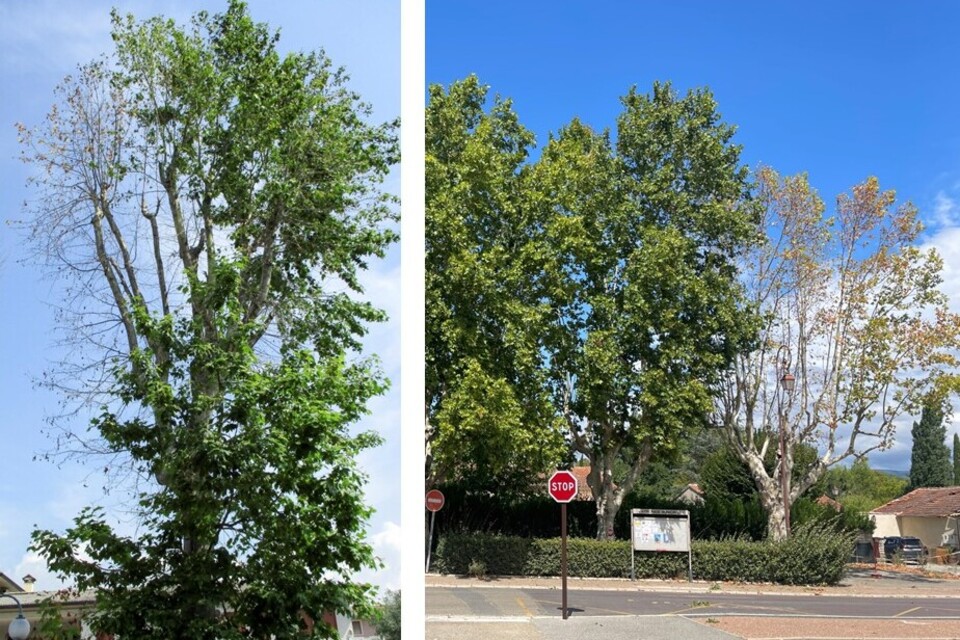
Left: Plane tree showing significant dieback on one side of the crown, with sparse or absent foliage on affected branches and healthy green leaves remaining on the unaffected side.
Right: Row of mature London plane trees beside a roadside. One tree shows a sparse, yellowing crown with significant leaf loss and dieback compared with the neighbouring trees, which have dense green foliage. Credit: Mick Biddle, Forest Research
Symptoms on stems and branches can include:
- cankers, often appearing as sunken lesions on thin-barked trees, with orange or purple staining around the margins
- distinctive brown to dark violet streaking, sometimes called ‘leopard spot’ staining beneath the bark
- vertical bark cracks associated with lesions
- brown to blue-black staining within the wood, visible when branches or stems are cut in cross-section
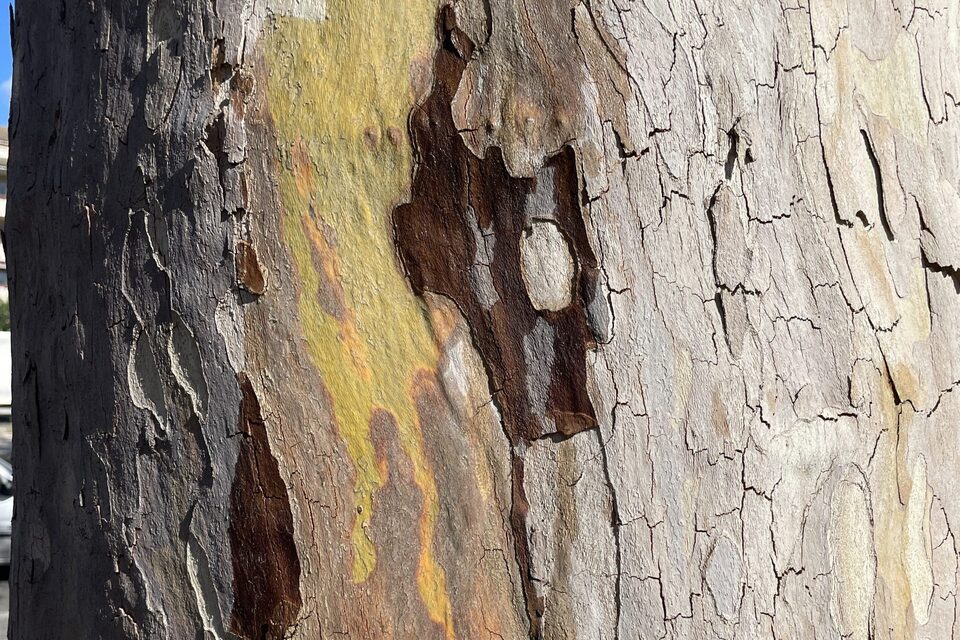
Close-up of canker stain symptoms on a plane tree trunk, showing bark lesions with exposed tissue and orange to purple staining around the lesion margins. Credit: Mick Biddle, Forest Research
These symptoms can sometimes be mistaken for damage caused by drought, other diseases or general tree decline. Laboratory testing is usually needed to confirm infection.
Reporting suspected sightings
If you see these symptoms on a plane tree, report it immediately using TreeAlert.
When you report, include:
- photographs of the symptoms
- the location of the tree
- details of the host tree, if known
- information about recent tree work, if available
Do not remove bark, cut into affected trees or take samples yourself. Forestry Commission or other plant health officials will arrange any necessary investigations.
How it spreads
The disease can spread over long distances through infected planting material, contaminated wood or contaminated soil. It can also spread on tools, machinery or equipment that have been used on infected trees.
The fungus commonly enters healthy trees through fresh wounds. These can be caused by pruning, maintenance work, storm damage or accidental injury.
Locally, the disease can spread directly between neighbouring trees. This happens through root-to-root contact and natural root grafts. Water can also carry the fungus – it is thought to have contributed to the spread of the disease along the Canal du Midi in southern France.
Groups of plane trees growing close together, such as avenues, streets, parks and riverside plantings, may be particularly vulnerable once infection takes hold.
Where it is found
Canker stain of plane is not known to be present in the UK. It is found in parts of Europe and North America. In Europe, it has been reported in countries including France, Italy, Switzerland, Greece and Albania.
Biosecurity advice
The disease could be introduced to the UK accidentally on infected material, tools, machinery or equipment brought from affected countries. Symptoms can take time to develop, so infected trees may not be identified straight away. This means the disease could spread before it is detected.
Good biosecurity is the most effective way to help prevent this.
If you own or manage plane trees
You should:
- familiarise yourself with the symptoms of canker stain of plane
- source plants responsibly – use reputable suppliers and comply with plant health requirements when importing or moving plant material, and where possible, choose suppliers with a Plant Healthy certification or Ready to Plant assessment
- report any suspected symptoms through TreeAlert
If you work on or around plane trees
You should:
- inspect trees before starting work
- remove sawdust, wood chip, bark and soil, then clean and disinfect tools, machinery and equipment
- clean and disinfect tools, machinery and equipment before moving between trees and sites
- clean machinery, vehicles and personal protective equipment before leaving site
- avoid causing unnecessary wounds to trees
- report any suspected symptoms through TreeAlert
These measures are particularly important if you work in areas overseas where canker stain of plane is present, before you return to the UK.
Read more about how biosecurity can prevent the introduction and spread of tree pests and diseases.
Status in law
Canker stain of plane is a quarantine pest for Great Britain and Northern Ireland. It is a notifiable pest. This means you must report it if you suspect its presence.
For an explanation of the regulations applying to importation visit:
- plants, seeds, cuttings or other planting material, or consult the Animal and Plant Health Agency
- wood, timber and materials made of wood, or contact the Forestry Commission’s Plant Health Forestry team
Further information
See detailed information about canker stain of plane from:
Contact us
If you require further advice, contact the Forestry Commission at plane@forestrycommission.gov.uk.