Annual UK VAT statistics 2024 to 2025 commentary
Updated 3 December 2025

© Crown copyright 2025
This publication is licensed under the terms of the Open Government Licence v3.0 except where otherwise stated. To view this licence, visit nationalarchives.gov.uk/doc/open-government-licence/version/3 or write to the Information Policy Team, The National Archives, Kew, London TW9 4DU, or email: psi@nationalarchives.gov.uk.
Where we have identified any third party copyright information you will need to obtain permission from the copyright holders concerned.
This publication is available at https://www.gov.uk/government/statistics/value-added-tax-vat-annual-statistics/annual-uk-vat-statistics-2023-to-2024-commentary
1. Headlines
The key points of Value Added Tax (VAT) statistics are:
- total VAT receipts in the financial year 2024 to 2025 increased by 2% to £171 billion compared to £168 billion in 2023 to 2024
- the VAT population in 2024 to 2025 was 2,330,400, with 234,000 new registrations and 218,000 de-registrations in-year, resulting in 2,285,900 live traders
- total net Home VAT liability in 2024 to 2025 was £177 billion
- the Wholesale and Retail sector was the largest contributor to net Home VAT liability (32%) with a total of £57 billion
- traders with an annual turnover of greater than £10 million paid 75% of total net Home VAT liability (£133 billion)
2. About this release
This official statistics publication provides information on VAT receipts, Home VAT and Import VAT. It also includes Home VAT declared on traders’ returns classified by sector, sub-sector and trade group as well as information on VAT registrations, de-registrations and trader population.
VAT is charged when a VAT-registered business sell goods or services to another business or non-business customer. When VAT-registered businesses buy goods or services, they can generally reclaim the VAT they have paid.
There are three rates of VAT depending on the goods or services the business provides:
- standard: 20%
- reduced: 5%
- zero: 0%
There are also some goods and services that are:
- exempt from VAT
- outside the UK VAT system completely
For further information, please go to VAT rates.
There are three main measures of VAT revenue:
- on an accruals basis (when the VAT liability arose)
- on a declared liability basis (when HMRC is notified of the VAT liability)
- on a cash receipts basis (when VAT was paid to HMRC)
This release incorporates the following changes to the tables outlined in the Consultation on changes to HMRC statistics publications 2025:
- combining tables 3 and 4a into one table (table 3)
- adding a sector level total to table 4b (table 4)
- combining tables 5a1 and 8 (table 5a1)
- removing tables 10a and 10b
- adding total net Home VAT liability to table 11 (table 9)
As part of a continuous improvement process, the publication as a whole has undergone several changes to enhance the user experience and achieve greater accessibility. HMRC welcomes user engagement to improve the departments National and Official Statistics. You can contact statistics producers via our feedback avenues.
3. VAT receipts
Total VAT receipts are equal to Home VAT receipts plus Non-postponed accounting import VAT receipts, which is the amount paid to HMRC. Total VAT receipts include accounting adjustments to remove penalties and occasional payment errors.
Receipts decreased between March 2020 and June 2020. The VAT payment deferment policy was one of the key drivers of this change. Further reductions in receipts across the 2020 to 2021 financial year can be attributed to economic impacts of the Covid-19 pandemic as well as the temporary reduced rate of 5% for hospitality, holiday accommodation and attractions.
Postponed VAT accounting was introduced in January 2021. Postponed VAT accounting allows traders to declare their Import VAT on their VAT return rather than paying Import VAT upfront when the goods are imported. Postponed accounting import VAT receipts cannot easily be separated out from the Home VAT receipts. Therefore, from February 2021 the Import VAT figures reported in this bulletin are for Non-postponed accounting import VAT only.
See Annual UK VAT statistics 2024 to 2025 background and references for changes to Home and Import VAT from 2021 onwards.
Figure 1 shows Total VAT, Home VAT and Import VAT receipts over the last 10 financial years. Some notable changes are:
- Total VAT receipts for 2024 to 2025 were £171 billion. This was composed of £162 billion of Home VAT receipts and £9 billion of Non-postponed accounting import VAT receipts
- Total VAT receipts have increased by £3 billion since 2023 to 2024
- Home VAT receipts have increased by £3 billion and Non-postponed accounting import VAT receipts have decreased by £1 billion since 2023 to 2024
- the changes in Total VAT receipts since 2023 to 2024 are a continuation of the increasing trend seen over the past 10 financial years, during which Total VAT receipts have increased by £56 billion (49%)
- Home VAT receipts have been making up an increasing share of Total VAT receipts since 2020 to 2021 due to the change in postponed VAT accounting.
Figure 1: VAT receipts for the previous ten financial years to 2024 to 2025.
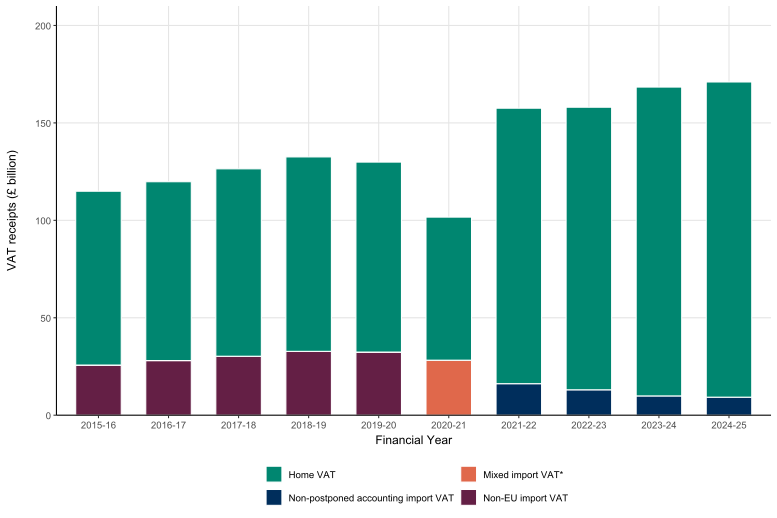
Table:
| Financial Year | Home VAT (£ billion) | Mixed Import VAT* (£ billion) | Non-Postponed Accounting Import VAT (£ billion) | Non-EU Import VAT (£ billion) | Total VAT (£ billion) |
|---|---|---|---|---|---|
| 2015-16 | 89 | 0 | 0 | 26 | 115 |
| 2016-17 | 92 | 0 | 0 | 28 | 120 |
| 2017-18 | 96 | 0 | 0 | 30 | 126 |
| 2018-19 | 100 | 0 | 0 | 33 | 133 |
| 2019-20 | 97 | 0 | 0 | 32 | 130 |
| 2020-21 | 73 | 28 | 0 | 0 | 102 |
| 2021-22 | 141 | 0 | 16 | 0 | 158 |
| 2022-23 | 145 | 0 | 13 | 0 | 158 |
| 2023-24 | 158 | 0 | 10 | 0 | 168 |
| 2024-25 | 162 | 0 | 9 | 0 | 171 |
For the full dataset that accompanies Figure 1 go to Value Added Tax (VAT) tables 2024 to 2025.
Net Home VAT receipts are equal to Home VAT payments made to HMRC by registered taxpayers minus Home VAT repayments made from HMRC to taxpayers. Taxpayers make payments to HMRC when their net Home VAT liability is positive and receive repayments from HMRC when their net Home VAT liability is negative.
Figure 2 illustrates the following changes in Home VAT receipts broken down into payment and repayment receipts over the last 10 financial years:
- Home VAT receipts for 2024 to 2025 were composed of £275 billion of payment receipts and -£113 billion of repayment receipts
- payment receipts increased by £5 billion and repayment receipts increased by £2 billion since 2023 to 2024
- the year-on-year increases in payment receipts have been larger since 2020 to 2021, reflecting the increasing share of Total VAT receipts which are Home VAT receipts
- payment receipts have increased by £109 billion (65%) and repayment receipts have increased by £36 billion (47%) during the past 10 financial years
Figure 2: VAT payment and repayment receipts for the previous ten financial years to 2024 to 2025.
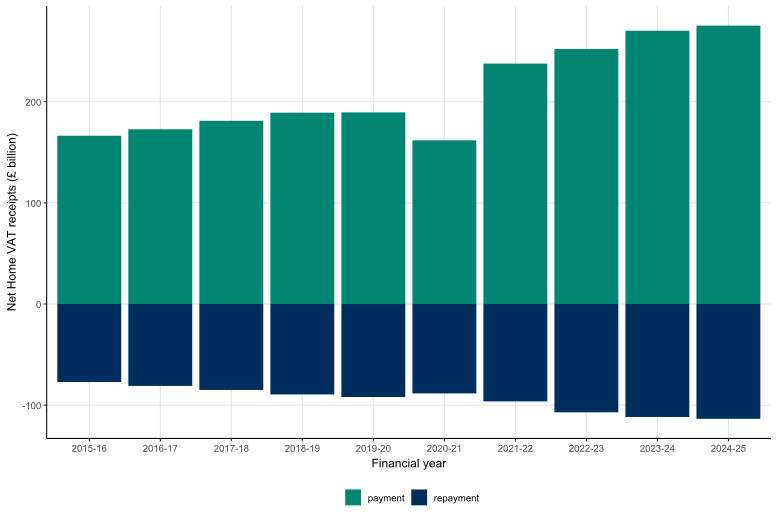
Table:
| Financial Year | Payments (£ billion) | Repayments (£ billion) | Net Home VAT receipts (£ billion) |
|---|---|---|---|
| 2015-16 | 166 | -77 | 89 |
| 2016-17 | 173 | -81 | 92 |
| 2017-18 | 181 | -85 | 96 |
| 2018-19 | 189 | -89 | 100 |
| 2019-20 | 189 | -92 | 97 |
| 2020-21 | 162 | -88 | 73 |
| 2021-22 | 238 | -96 | 141 |
| 2022-23 | 252 | -107 | 145 |
| 2023-24 | 270 | -112 | 158 |
| 2024-25 | 275 | -113 | 162 |
4. VAT population
VAT population figures refer to the active trader population during the year. Active traders are VAT registered traders who were live at 31 March of the financial year or who had submitted a non-nil return during the financial year.
Businesses need to register for VAT when their turnover of VAT taxable goods and services is over the VAT registration threshold.; businesses below the VAT registration threshold may also choose to voluntarily register.
4.1 Overview
Figure 3 illustrates the following changes in the VAT population over the last 10 financial years:
- the VAT population consisted of 2,330,400 traders in 2024 to 2025, 11,400 (+0%) higher than in 2023 to 2024
- the VAT population is now just 112,500 traders (5%) greater than 10 years ago following decreases in the VAT population between financial years 2021 to 2022 and 2023 to 2024.
Figure 3: Total VAT population over the last 10 years to 2024 to 2025.
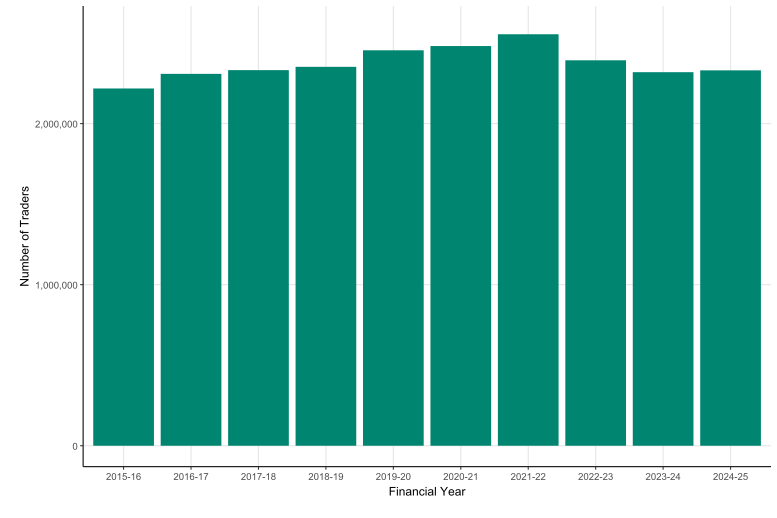
Table:
| Financial Year | VAT Population |
|---|---|
| 2015-16 | 2,217,800 |
| 2016-17 | 2,308,600 |
| 2017-18 | 2,331,700 |
| 2018-19 | 2,352,200 |
| 2019-20 | 2,454,900 |
| 2020-21 | 2,481,300 |
| 2021-22 | 2,554,500 |
| 2022-23 | 2,392,800 |
| 2023-24 | 2,319,000 |
| 2024-25 | 2,330,400 |
4.2 Sector
Figure 4 illustrates the VAT population from the top 10 trade sectors for the financial year ending March 2025:
- the largest sector in the VAT population was Wholesale and Retail with 511,300 traders, 22% of the total VAT population
- the Construction sector (349,600 traders) and Professional, Scientific and Technical Activities sector (336,200 traders) were also large contributors to the VAT population
Figure 4: Contribution to the VAT population from the top 10 trade sectors for the financial year ending March 2025.
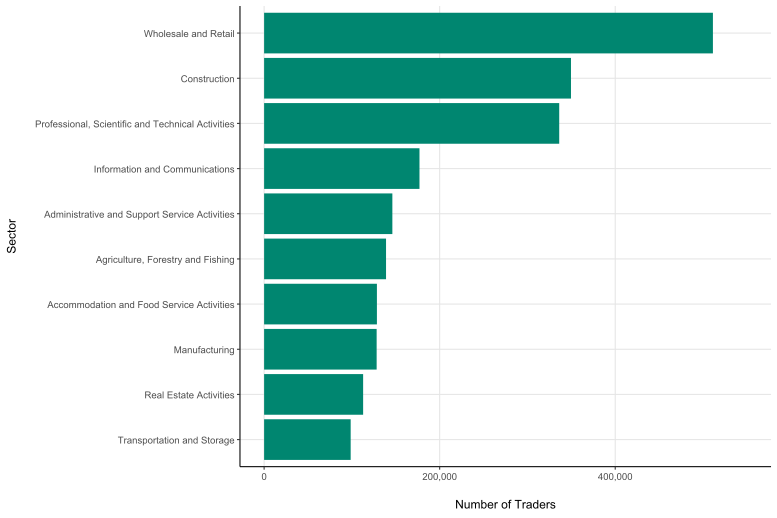
Table:
| Sector | Number of Traders |
|---|---|
| Wholesale and Retail | 511,300 |
| Construction | 349,600 |
| Professional, Scientific and Technical Activities | 336,200 |
| Information and Communications | 177,000 |
| Administrative and Support Service Activities | 146,100 |
| Agriculture, Forestry and Fishing | 138,900 |
| Accommodation and Food Service Activities | 128,500 |
| Manufacturing | 128,200 |
| Real Estate Activities | 112,800 |
| Transportation and Storage | 98,600 |
Figure 5 illustrates the 10 sectors which saw the largest changes in VAT population during the financial year ending March 2025:
- the VAT population in the Wholesale and Retail sector increased by 9,500 traders (+2%), the largest year-on-year change in the number of traders
- the VAT population in the Transportation and Storage sector decreased by 4,700 traders (-5%), the largest year-on-year decrease in the number of traders
Figure 5: Year-on-year change in VAT population of the top 10 contributing sectors for the financial year ending March 2025.
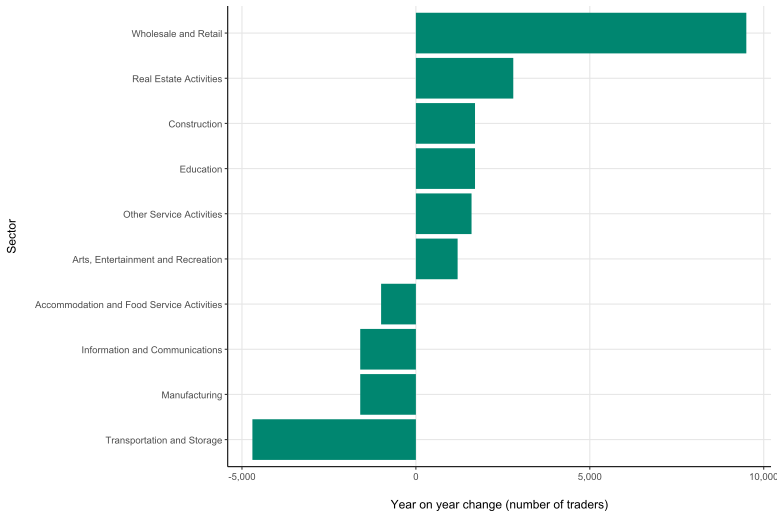
Table:
| Sector | Year on Year Change in VAT population |
|---|---|
| Wholesale and Retail | 9,500 |
| Real Estate Activities | 2,800 |
| Education | 1,700 |
| Construction | 1,700 |
| Other Service Activities | 1,600 |
| Arts, Entertainment and Recreation | 1,200 |
| Accommodation and Food Service Activities | -1,000 |
| Manufacturing | -1,600 |
| Information and Communications | -1,600 |
| Transportation and Storage | -4,700 |
4.3 Business type
Figure 6 illustrates the VAT population for the financial year ending March 2025 broken down by business type:
- the most common business type was incorporated companies which consisted of 1,766,000 traders (76% of the VAT population)
- the vast majority (98%) of traders were either incorporated companies, sole proprietors or partnerships
Figure 6: VAT population by business type for the financial year ending March 2025.
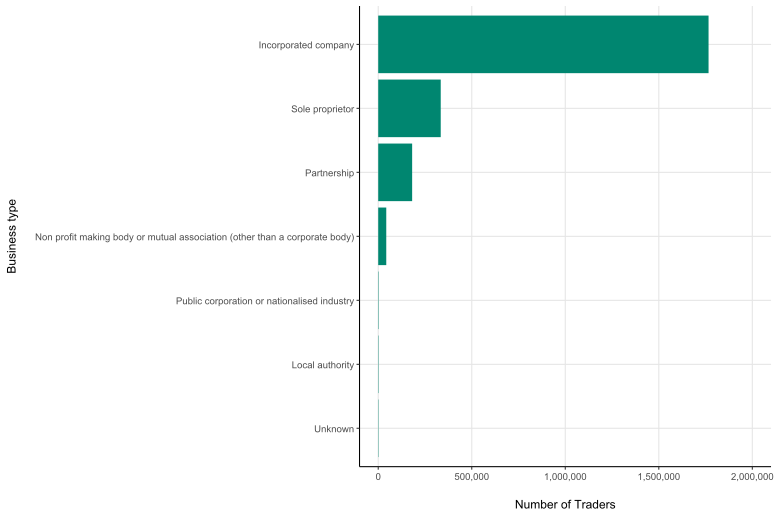
Table:
| Business Type | Number of Traders |
|---|---|
| Incorporated company | 1,766,000 |
| Sole proprietor | 334,100 |
| Partnership | 181,300 |
| Non profit making body or mutual association (other than a corporate body) | 42,900 |
| Public corporation or nationalised industry | 2,200 |
| Local authority | 2,000 |
| Unknown | 1,800 |
4.4 Turnover band
Before financial year 2022 to 2023, traders with a negative turnover were classified as having an unknown turnover. For financial year 2022 to 2023 onwards, traders with a negative turnover have been included in the ‘Negative or £0’ turnover band. It is not feasible to implement this improvement to previous years. Therefore, historic figures are not directly comparable.
Figure 7* illustrates the VAT population for the financial year ending March 2025 broken down by turnover band:
- the turnover band with the most traders was the £1 to threshold annual turnover band with 683,700 traders (29% of the VAT population)
- 38% of traders declared an annual turnover up to and including the VAT registration threshold (£90,000 in 2024 to 2025)
Figure 7: VAT population by annual turnover bands for the financial year ending March 2025.
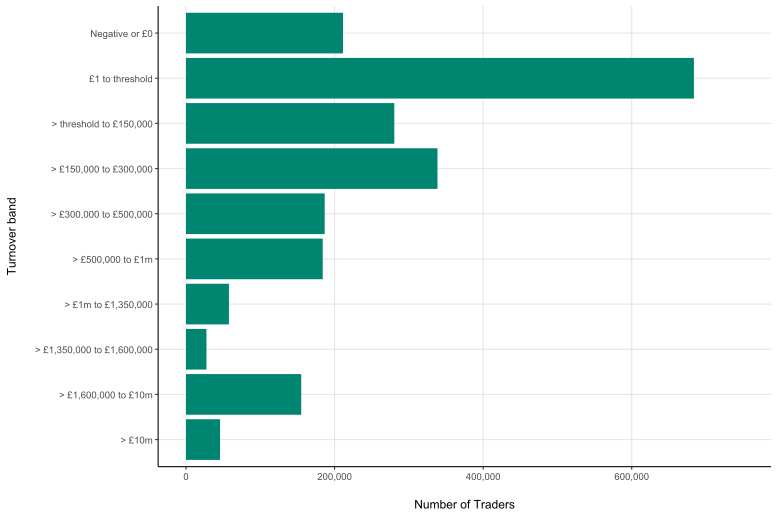
Table:
| Turnover Band | Number of Traders |
|---|---|
| Negative or £0 | 211,400 |
| £1 to threshold | 683,700 |
| > threshold to £150,000 | 280,400 |
| > £150,000 to £300,000 | 338,600 |
| > £300,000 to £500,000 | 186,700 |
| > £500,000 to £1m | 184,100 |
| > £1m to £1,350,000 | 57,800 |
| > £1,350,000 to £1,600,000 | 27,600 |
| > £1,600,000 to £10m | 155,100 |
| > £10m | 45,800 |
For the full dataset that accompanies Figure 7 go to Value Added Tax (VAT) tables 2024 to 2025.
5. VAT liabilities
The net Home VAT liability declared on VAT returns does not include:
- payments or repayments that are unrelated to the VAT return
- payments or repayments do not match the amount declared on the VAT return (for example where repayment is withheld by HMRC)
Therefore, the net Home VAT liability declared on VAT returns is not the same as the payments and repayments made by a business.
5.1 Overview
Figure 8 illustrates the following changes in net Home VAT liability over the last 10 financial years:
- net Home VAT liability in 2024 to 2025 was £177 billion
- net Home VAT liability has increased £5 billion (+3%) since 2023 to 2024
- the year-on-year increases in net Home VAT liabilities have been larger since 2020 to 2021, in line with changes to Home VAT receipts
- net Home VAT liability has increased by £80 billion (82%) during the past 10 financial years
Figure 8: Net Home VAT liability over the last 10 years to 2024 to 2025.
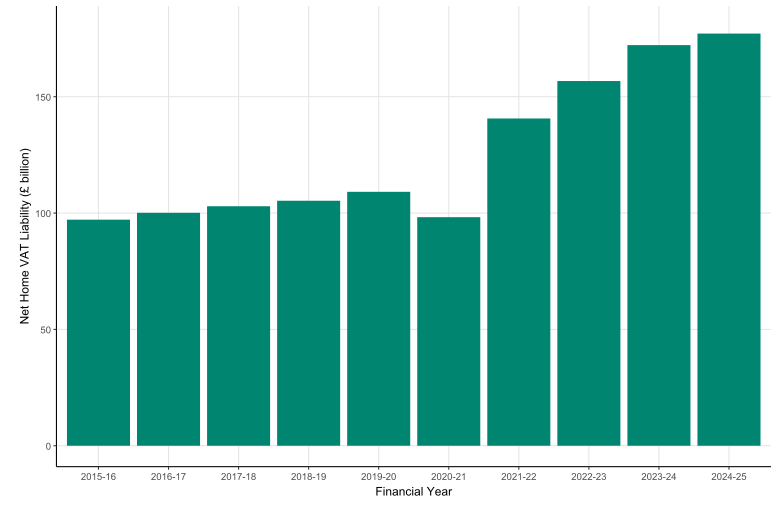
Table:
| Financial Year | Net Home VAT liability (£ billion) |
|---|---|
| 2015-16 | 97 |
| 2016-17 | 100 |
| 2017-18 | 103 |
| 2018-19 | 105 |
| 2019-20 | 109 |
| 2020-21 | 98 |
| 2021-22 | 141 |
| 2022-23 | 157 |
| 2023-24 | 172 |
| 2024-25 | 177 |
5.2 Sector
Figure 9 illustrates the net Home VAT liability from the top 10 trade sectors for the financial year ending March 2025:
- the largest contributor to the net Home VAT liability was Wholesale and Retail, with a net Home VAT liability of £57 billion
- the Professional, Scientific and Technical Activities sector (£29 billion) and Manufacturing sector (£24 billion) were also large contributors to the net Home VAT liability
Figure 9: Contribution to net Home VAT liability from the top 10 trade sectors for the financial year ending March 2025.
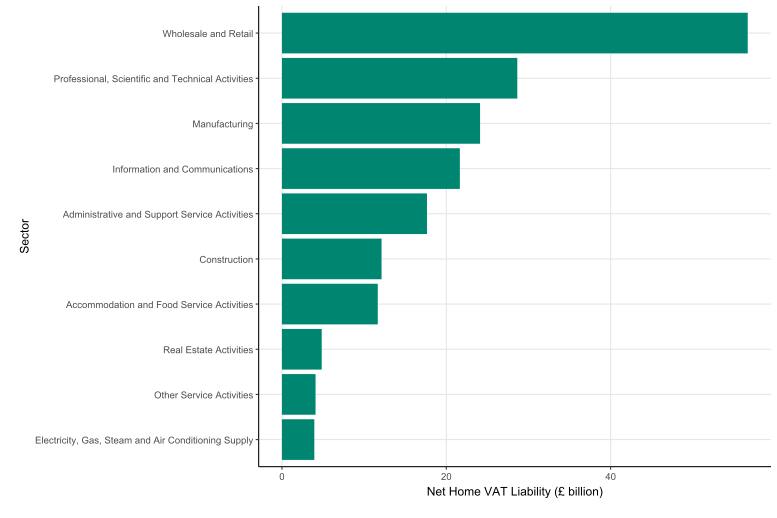
Table:
| Sector | Net Home VAT liability (£ billion) |
|---|---|
| Wholesale and Retail | 57 |
| Professional, Scientific and Technical Activities | 29 |
| Manufacturing | 24 |
| Information and Communications | 22 |
| Administrative and Support Service Activities | 18 |
| Construction | 12 |
| Accommodation and Food Service Activities | 12 |
| Real Estate Activities | 5 |
| Other Service Activities | 4 |
| Electricity, Gas, Steam and Air Conditioning Supply | 4 |
Figure 10 illustrates the 10 sectors which had the largest changes in net Home VAT liability during the financial year ending March 2025:
- the largest year-on-year change in net Home VAT liability was in the Information and Communications sector whose net Home VAT liability increased by £3 billion (+14%).
- the second largest year-on-year change in net Home VAT liability was in the Electricity, Gas, Steam and Air Conditioning Supply sector whose net Home VAT liability decreased by -£2 billion (-34%).
- the largest percentage change in Net Home VAT liability was in the Education sector whose Net Home VAT Liability increased by £1 billion (+129%)
Figure 10: Year-on-year actual change in Net Home VAT liability of the top 10 contributing sectors for the financial year ending March 2025.
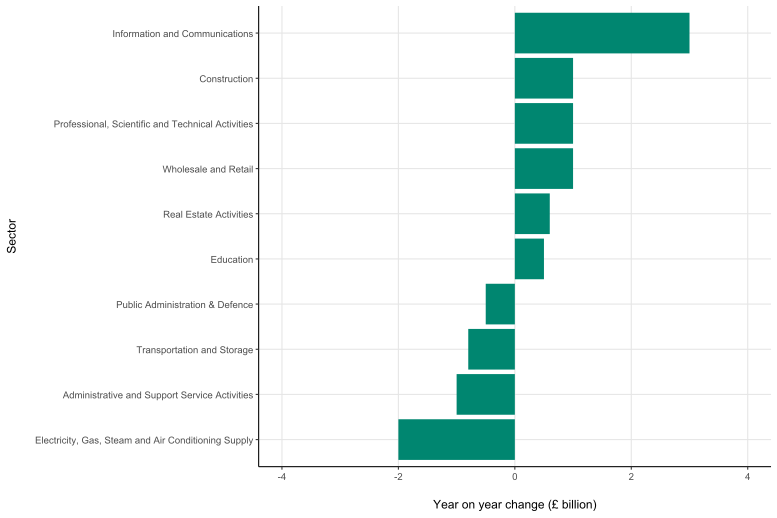
Table:
| Sector | Year on Year Change in Net Home VAT liability (£ billion) |
|---|---|
| Information and Communications | 3.0 |
| Wholesale and Retail | 1.0 |
| Professional, Scientific and Technical Activities | 1.0 |
| Construction | 1.0 |
| Real Estate Activities | 0.6 |
| Education | 0.5 |
| Public Administration & Defence | -0.5 |
| Transportation and Storage | -0.8 |
| Administrative and Support Service Activities | -1.0 |
| Electricity, Gas, Steam and Air Conditioning Supply | -2.0 |
For the full dataset that accompanies Figure 10 go to Value Added Tax (VAT) tables 2024 to 2025.
5.3 Business type
Figure 11 illustrates the net Home VAT liability for the financial year ending March 2025 broken down by business type:
- incorporated companies made the largest positive contribution of £178 billion to net Home VAT liability
- local authorities made the largest negative contribution of -£12 billion to net Home VAT liability
Figure 11: Net Home VAT liability by business type for the financial year ending March 2025.
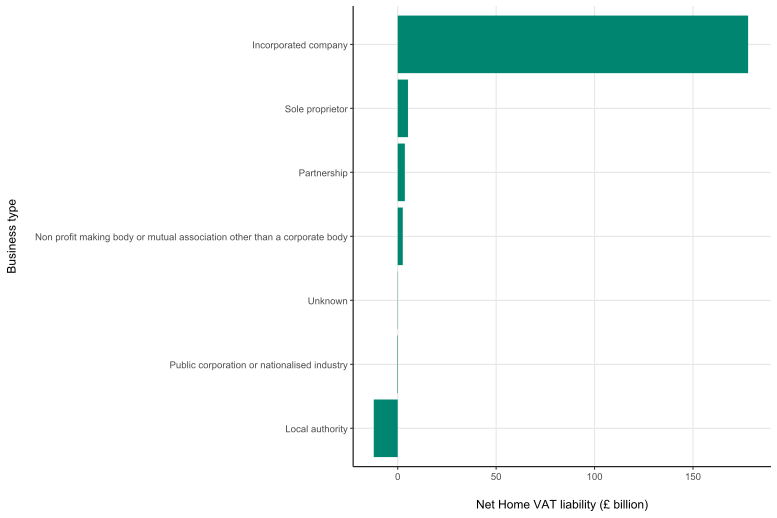
Table:
| Business Type | Net Home VAT liability (£ billion) |
|---|---|
| Incorporated company | 178.0 |
| Sole proprietor | 5.0 |
| Partnership | 4.0 |
| Non profit making body or mutual association other than a corporate body | 3.0 |
| Unknown | 0.1 |
| Public corporation or nationalised industry | -0.2 |
| Local authority | -12.0 |
5.4 Turnover band
Before financial year 2022 to 2023, traders with a negative turnover were previously classified as having an unknown turnover. For financial year 2022 to 2023 onwards, traders with a negative turnover are included in the ‘Negative or £0’ turnover band. It is not feasible to implement this improvement to previous years. Therefore, historic figures are not directly comparable.
Figure 12 illustrates the net Home VAT liability for the financial year ending March 2025 broken down by turnover band:
- traders with a turnover of greater than £10 million accounted for the largest amount of net Home VAT liability (£133 billion).
- traders with a turnover of up to and including the VAT registration threshold (£90,000 in 2024 to 2025) had a combined net Home VAT liability of -£3 billion.
Figure 12: Net Home VAT liability by annual turnover bands for the financial year ending March 2025.

Table:
| Turnover Band | Net Home VAT liability (£ billion) |
|---|---|
| Negative or £0 | -3.0 |
| £1 to threshold | -0.3 |
| > threshold to £150,000 | 2.0 |
| > £150,000 to £300,000 | 5.0 |
| > £300,000 to £500,000 | 4.0 |
| > £500,000 to £1m | 7.0 |
| > £1m to £1,350,000 | 3.0 |
| > £1,350,000 to £1,600,000 | 2.0 |
| > £1,600,000 to £10m | 24.0 |
| > £10m | 133.0 |
6. Contacts and User Engagement
The VAT annual statistics are produced by HMRC as part of the Excise duties, VAT and other indirect tax statistics collection.
A consultation on changes to HMRC statistics publications was held between 6 January 2025 and 10 April 2025 and the results have been published.
HMRC welcomes user engagement to improve the departments National and Official Statistics. You can contact statistics producers via our feedback avenues.
For statistical enquiries, contact: revenuemonitoring@hmrc.gov.uk
For media enquiries, see HMRC press office. Telephone: 03000 550 493