Universal Credit statistics, 29 April 2013 to 8 January 2026
Published 17 February 2026
Applies to England, Scotland and Wales

© Crown copyright 2026
This publication is licensed under the terms of the Open Government Licence v3.0 except where otherwise stated. To view this licence, visit nationalarchives.gov.uk/doc/open-government-licence/version/3 or write to the Information Policy Team, The National Archives, Kew, London TW9 4DU, or email: psi@nationalarchives.gov.uk.
Where we have identified any third party copyright information you will need to obtain permission from the copyright holders concerned.
This publication is available at https://www.gov.uk/government/statistics/universal-credit-statistics-29-april-2013-to-8-january-2026/universal-credit-statistics-29-april-2013-to-8-january-2026
This is the latest bulletin of official statistics on Universal Credit claims, starts, people and households (including payments, childcare, and deductions) for Great Britain (England, Scotland, and Wales). It provides context to emerging stories in the data.
1. Main stories
-
There were 8.4 million people on Universal Credit in January 2026, up from 7.4 million people on Universal Credit in January 2025.
-
The proportion of people in the ‘no work requirements’ conditionality regime (50%) continues to increase
-
Between December 2024 and December 2025, the number of people on Universal Credit increased by 990,000. Move to Universal Credit claimants made up 780,000, or 78.5% of this increase.
-
There were, on average, 33,000 claims and 26,000 starts per week in January 2026, lower than at the same point in January 2025
-
There were 7.1 million households on Universal Credit in November 2025, of which 6.6 million (92%) had a Universal Credit payment
-
Universal Credit households with children accounted for nearly half (45%) of all households with a payment in November 2025
-
In November 2025, 161,000 households received the Universal Credit childcare element, an 11% decrease since November 2024. This is approximately equivalent to a 1 percentage point fall in the proportion of households with children in which all claimants had earnings who were in receipt of Universal Credit childcare element.
-
Approximately 3.2 million Universal Credit households (46% of all Universal Credit households) had one or more deductions taken from their Universal Credit entitlement in November 2025.
2. What you need to know
Universal Credit official statistics cover 4 series:
-
Claims: the number of people who have made a new claim for Universal Credit
-
Starts: the number of people who verify their identity and accept their claimant commitment
-
People: the number of people who start on Universal Credit and have no end date recorded
-
Households: the number of households who have a calculated entitlement for Universal Credit, including dedicated deduction statistics and childcare statistics
The COVID-19 pandemic impacted these statistics. Operational and policy changes in response to the COVID-19 pandemic affected the time series for Universal Credit statistics. Therefore, we do not recommend making comparisons of statistics during the COVID-19 period with trends, either before or after.
Further guidance on these statistics is provided in the About these statistics section of this bulletin.
3. People on Universal Credit
In these statistics a person is counted as being on Universal Credit if they have accepted their claimant commitment, have a National Insurance number recorded and no end date to the claim for Universal Credit has been recorded. Not every person on Universal Credit will go on to have a calculated entitlement or receive a payment.
Figures for the latest month are provisional and subject to small revisions when the next figures are released. For the previous 12 months, the average percentage change between provisional and revised figures was a decrease of 1%.
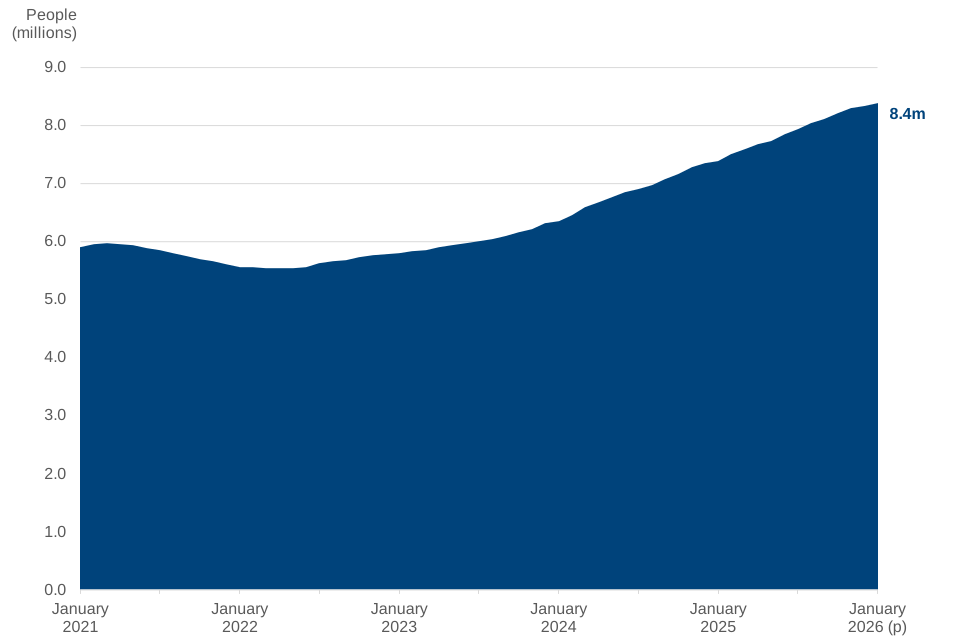
There were 8.4 million people on Universal Credit in January 2026
Figure 1: People on Universal Credit, Great Britain, January 2021 to January 2026
Note: (p) provisional
Source: DWP Stat-Xplore, People on Universal Credit
The number of people on Universal Credit in January 2026 was 8.4 million, the highest level it has been since the introduction of Universal Credit in 2013. This has been increasing since March 2022, when it was 5.5 million.
Move to Universal Credit statistics
Universal Credit has been available in all parts of the UK and for all eligible households since December 2018 for people who make new benefit claims, who claim because their circumstances change (‘natural migration’) or who choose to move from legacy benefits to Universal Credit (‘voluntary migration’). All remaining legacy benefit[footnote 1] claimants have been or are being contacted by the Department for Work and Pensions (DWP) as part of the Move to Universal Credit Programme and informed they must claim Universal Credit to continue to receive means-tested support (‘managed migration’).
Move to Universal Credit started at a small scale in May 2022, enabling the Department to learn, iterate and improve its approach to support the migration of these groups as it scaled up from mid-2023. Read the latest Move to Universal Credit statistics.
Claimants who are part of the managed migration process are sent a migration notice, informing them that they need to move to Universal Credit by a specified date. Therefore, in these statistics, an individual on Universal Credit at the count date will be recorded as a Move to Universal Credit claimant if they had been sent a migration notice and subsequently claimed Universal Credit as part of the Move to Universal Credit process.
Move to Universal Credit data is not as timely as it is for other Universal Credit measures, which avoids large, retrospective revisions to provisional figures. This is to allow for more robust and higher quality statistics. Therefore, statistics on Move to Universal Credit are published a further month in arrears.
20.4% of the people on Universal Credit were Move to Universal Credit claimants in December 2025
Figure 2: People on Universal Credit by Move to Universal Credit indicator, Great Britain, December 2020 to December 2025

Source: DWP Stat-Xplore, People on Universal Credit by Move to Universal Credit indicator
In December 2025, there were 8.3 million people on Universal Credit. Of those 8.3 million people, 1.7 million (20.4%) had joined the caseload as part of Move to Universal Credit. This means they were part of the managed migration from legacy benefits onto Universal Credit. In December 2025, the remaining 6.6 million (79.6%) people on Universal Credit were not part of the managed migration process, so were either new claims to Universal Credit or people who had naturally or voluntarily moved over to Universal Credit from other legacy benefits. Of those who moved to Universal Credit, 57% were female and 43% were male, and the median age was 49 years.
Between December 2024 and December 2025, the number of people on Universal Credit increased by 990,000. Move to Universal Credit claimants made up 780,000, or 78.5% of this increase.
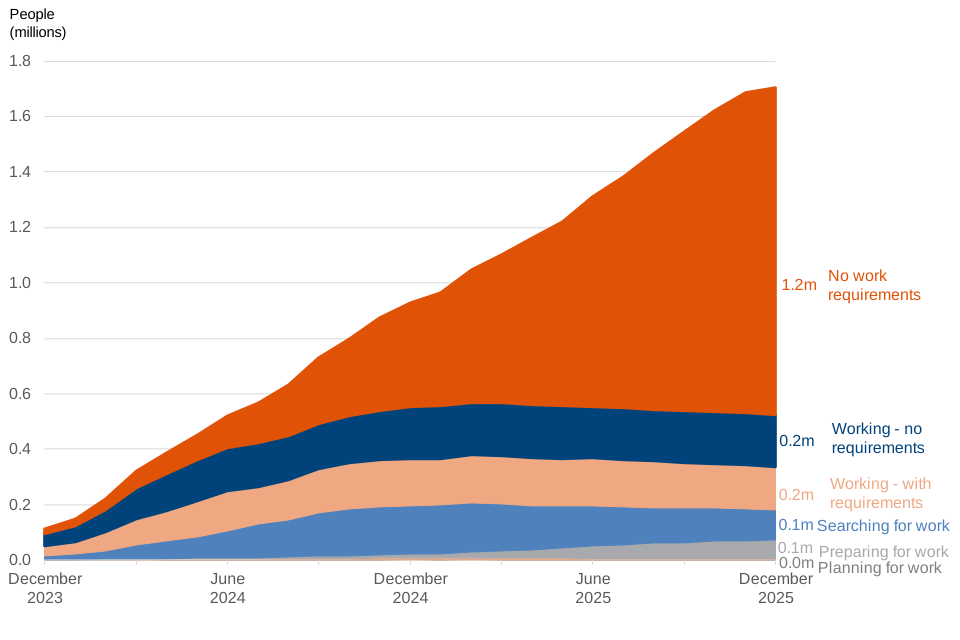
Figure 3: People on Universal Credit in each conditionality regime by Move to Universal Credit claimants, Great Britain, December 2023 to December 2025
Source: DWP Stat-Xplore, People on Universal Credit by Move to Universal Credit indicator in each conditionality regime.
In December 2025, 1.7 million people had joined Universal Credit as part of Move to Universal Credit. Of these, 1.2 million (69.2%) were in the ‘No work requirements’ conditionality regime, making up the majority of Move to Universal Credit claimants. A further 0.2 million (11.0%) were in the ‘Working - no requirements’ regime, 0.2 million (9.2%) were in the ‘Working - with requirements’ regime, 0.1 million (6.4%) were in the ‘Searching for work’ regime, 0.1 million (3.9%) were in the ‘Preparing for work’ regime and a very small proportion (0.3%) were in the ‘Planning for work’ conditionality regime.
Figure 4: People on Universal Credit in the ‘No work requirements’ conditionality regime by Move to Universal Credit indicator, Great Britain, December 2020 to December 2025

Source: DWP Stat-Xplore, People on Universal Credit by Move to Universal Credit indicator in the ‘No work requirements’ conditionality regime.
In December 2025, there were 4.2 million people on Universal Credit in the ‘no work requirements’ conditionality regime. Of these people, there were 1.2 million (28.3%) people who were Move to Universal Credit claimants, and 84.2% of them had been receiving legacy benefits linked to Employment and Support Allowance (ESA) or Housing Benefit (HB) before moving to Universal Credit. The remaining 3.0 million (71.7%) people on Universal Credit were not part of the managed migration process.
Between December 2024 and December 2025, the number of people on Universal Credit in the ‘no work requirements’ conditionality regime increased by 1.1 million people. Move to Universal Credit claimants made up 800,000, or 72.4% of this increase. Of these Move to Universal Credit claimants, around 770,000 (95.5%) had previously been receiving legacy benefits linked to ESA or HB before moving to Universal Credit.
The number of people on Universal Credit in the ‘No work requirements’ conditionality regime continues to increase
Claimants are required to do certain work-related activities to receive Universal Credit. These activities are set by which of the 6 conditionality regimes the claimant is placed in. The conditionality regime also determines the level of contact with the claimant, and the support that they will receive. More detail can be found in the About these statistics section of this bulletin.
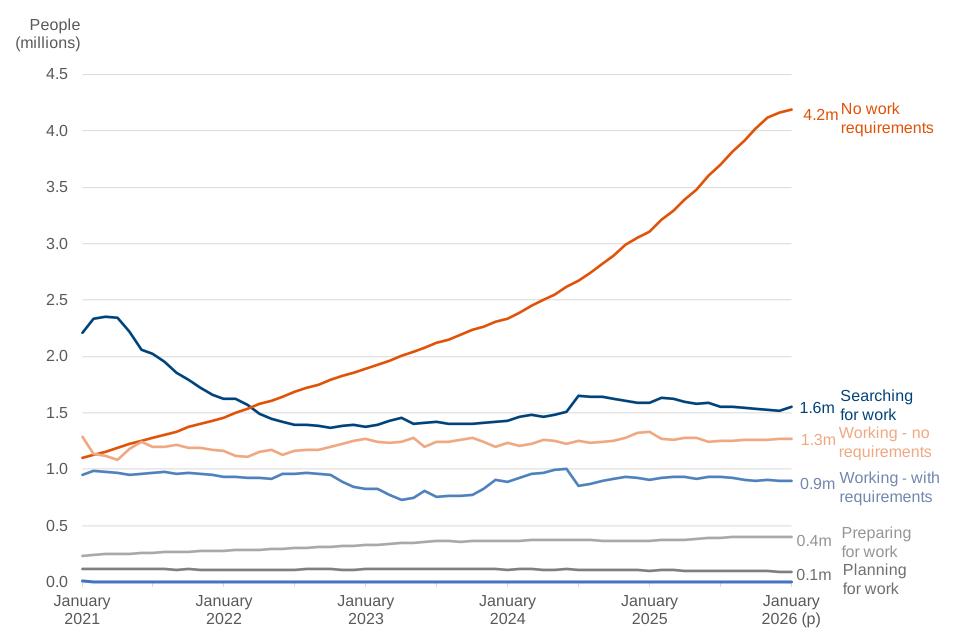
Figure 5: People on Universal Credit by conditionality regime, Great Britain, January 2021 to January 2026
Note: (p) provisional
Source: DWP Stat-Xplore, People on Universal Credit by conditionality regime
As people move across from legacy benefits, the composition of people on Universal Credit continues to change. At first, Universal Credit was only available to working age individuals with no children who were seeking employment. Over time, Universal Credit was made available to people in different circumstances, including those migrating over from health-related legacy benefits.
The number of people on Universal Credit in the ‘Searching for work’ conditionality regime had a peak of 2.4 million in March 2021. The latest number of people on Universal Credit in the ‘Searching for work’ conditionality regime was 1.6 million in January 2026.
The number of people on Universal Credit in the ‘No work requirements’ conditionality regime has been rising, reaching 4.2 million in January 2026. This overtook ‘Searching for work’ as the largest conditionality regime in April 2022 and is happening primarily as people migrate across as part of Move to Universal Credit, in particular from Employment and Support Allowance (ESA). Other factors include the increase in the number of claimants on incapacity benefits as well as increases in the working age population.
Changes seen in conditionalities in 2024 should be seen in context with the rise in the Administrative Earnings Threshold (AET) that took place in May 2024.
57% of the people on Universal Credit in January 2026 were women
Women made up 57% of the people on Universal Credit in January 2026, which is similar to the 58% seen in January 2025. The proportion of women remains among the highest it has been since the introduction of Universal Credit in 2013.
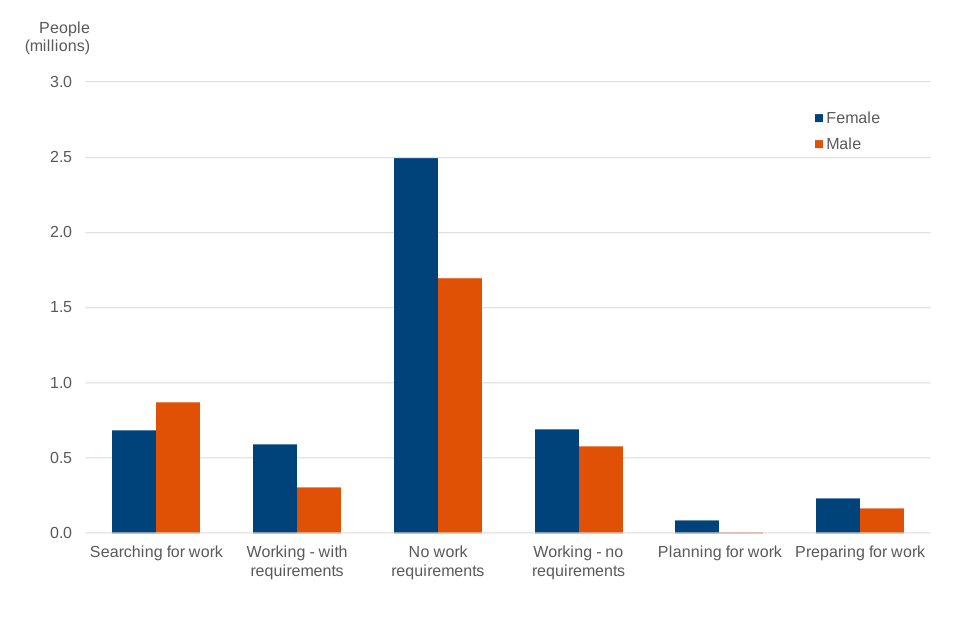
Figure 6: People on Universal Credit by gender and conditionality regime, Great Britain, January 2026
Source: DWP Stat-Xplore, People on Universal Credit by gender and conditionality regime
There are more women than men in all conditionality regimes apart from ‘Searching for work’.
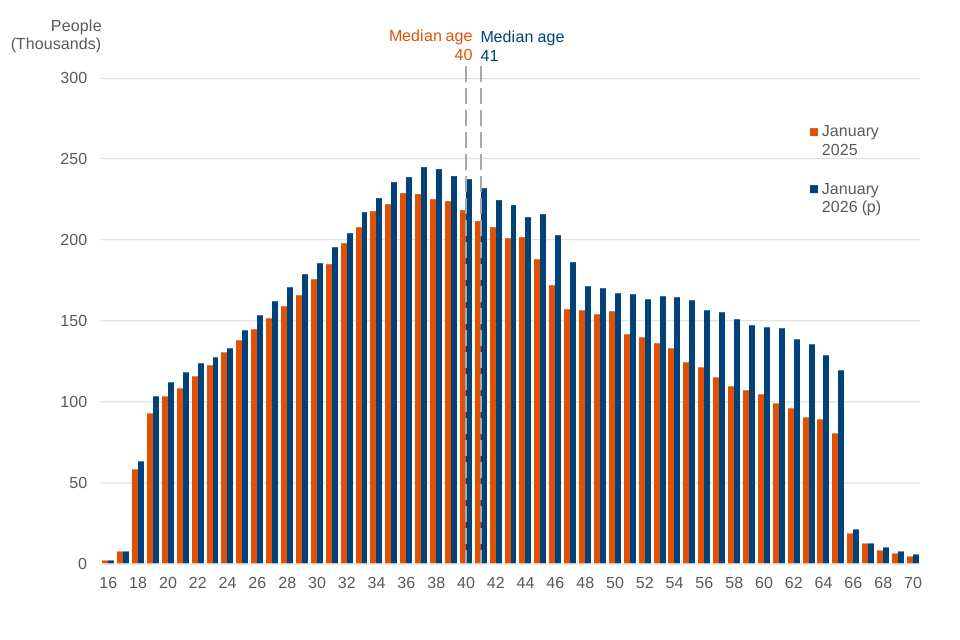
The average (median) age of people on Universal Credit is slowly rising.
Figure 7: People on Universal Credit by age, Great Britain, January 2026 compared to January 2025
Note: (p) provisional
Source: DWP Stat-Xplore, People on Universal Credit by age
The median age of people on Universal Credit has increased from 40 in January 2025 to 41 as of January 2026.
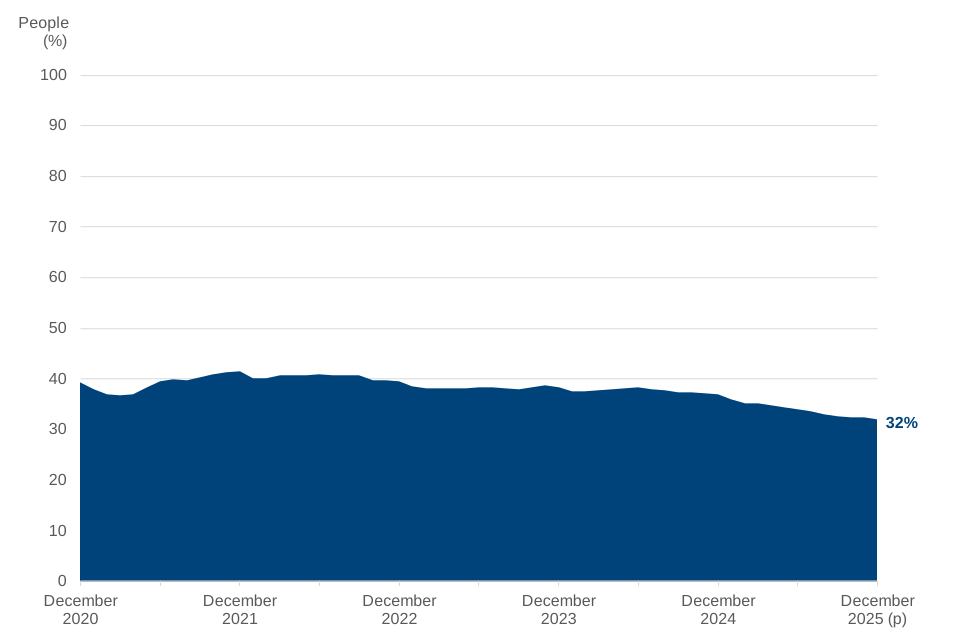
32% of the people on Universal Credit were in employment in December 2025
Universal Credit is available to people on a low income as well as those who are out of work.
These statistics define an individual as in employment if they receive employee earnings for the assessment period which includes the count date. The earnings data for each period can be received up to one month after the count date so they are not available until later than the other data on People on Universal Credit. For this reason, the statistics on employment are published a further month in arrears.
Figure 8: People on Universal Credit in employment, Great Britain, December 2020 to December 2025
Note: (p) provisional
Source: DWP Stat-Xplore, People on Universal Credit by employment indicator
There were 2.7 million people on Universal Credit in employment for December 2025, 32% of all people on Universal Credit.
Any increase in the employment rate during the COVID-19 pandemic should not be interpreted as more employment. It should be considered in the context of the policy changes, as more people in employment were eligible to receive Universal Credit as part of easements during the COVID-19 pandemic.
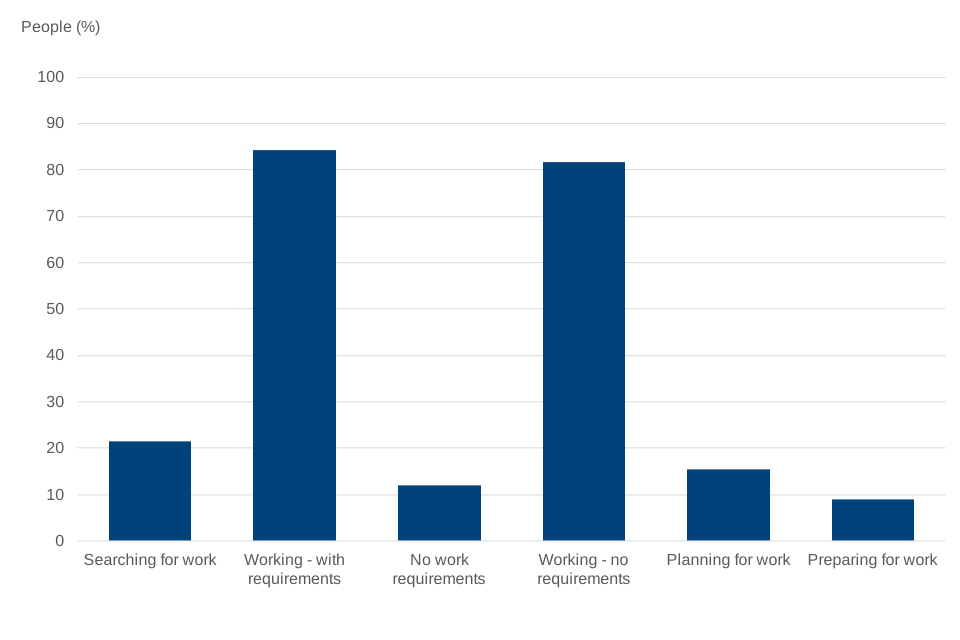
Figure 9: People on Universal Credit in employment by conditionality regime, Great Britain, December 2025
Source: DWP Stat-Xplore, People on Universal Credit with employment indicator by conditionality regime
A claimant’s conditionality regime is measured on the count date and may not represent their situation for the entire assessment period. Employment status is measured using employment earnings received during the assessment period that is active on the count date.
Care should be taken when comparing employment rate and conditionality regime as they measure different aspects of someone’s work-related circumstances.
For December 2025, 21% of claimants in ‘searching for work’ had earnings and were recorded as in employment because people with low earnings can be placed in this conditionality regime. To compare, 18% of people placed in the ‘working - no requirements’ conditionality regime were not in employment, usually due to earnings from the other adult in the home.
The proportion of people in employment in each conditionality regime has been consistent despite the distribution of people in each conditionality group changing over time.
Ethnicity statistics
Universal Credit claimants are asked to answer optional equality questions when making their claim.
In January 2026, 74.8% of Universal Credit claimants had provided information on their high-level ethnic group (5 options) or sub-group (18 options). –Therefore, Universal Credit ethnicity statistics should be treated with caution due to a degree of non-completion – See the background and methodology note for further information about this.
Note – Caution should also be taken when comparing ethnicity representation over time, because changes in response rate may impact this. Additionally, the balance of ethnicity diversity across the general population varies by geographical location and by age group, so changes in other demographics may have an impact to the ethnicity trends.
Ethnicity representation is presented as percentage of known declarations, which provides the best estimate of ethnicity representation in the Universal Credit caseload and enables meaningful comparison across time. Some of these Ethnic groups have been aggregated in Universal Credit statistics for clarity of presentation and to harmonise with other government statistics.
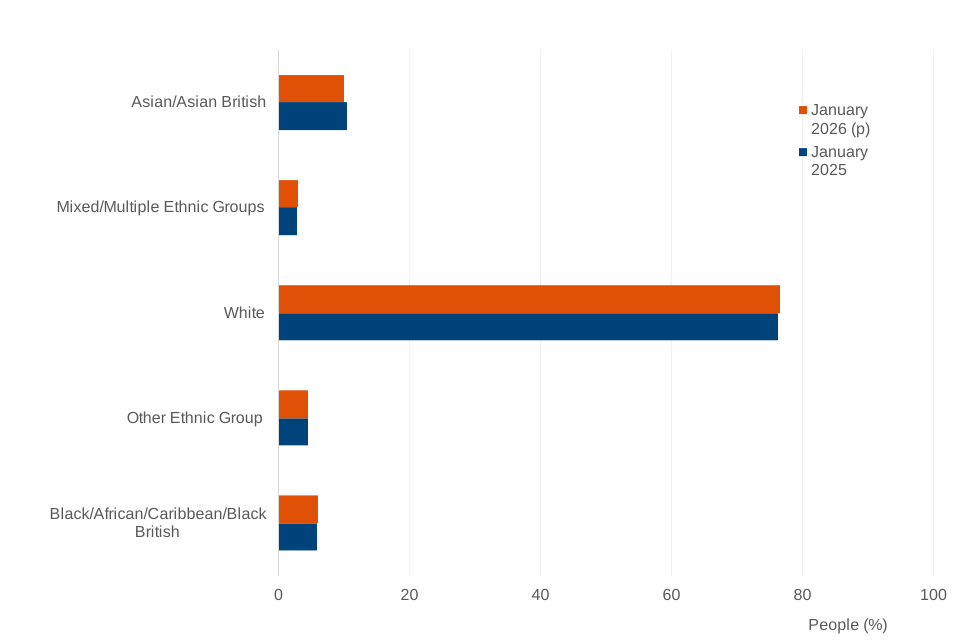
76.6% of people on Universal Credit identified as belonging to the “White” ethnicity group in January 2026
Figure 10: People on Universal Credit by ethnicity group, Great Britain, January 2026 compared to January 2025
Note: (p) provisional
Source: UC Collection Page - Latest Release, UC Ethnicity Statistics by ethnic group
White is the largest, high-level ethnic group for Universal Credit claimants. 76.6% of those claiming Universal Credit in January 2026 were from the White ethnic group. The Asian/Asian British ethnicity group is the second largest with 10.0% of claimants in January 2026. The Black/African/Caribbean/Black British ethnicity group accounts for 6.0% of claimants in January 2026, while the Other ethnic group accounts for 4.5%. The smallest ethnic group is the Mixed/Multiple with 3.0% of claimants in January 2026.
The proportion of claimants from the White ethnic group increased from 76.3% in January 2025 to 76.6% in January 2026. The proportion of claimants from the ‘Asian/Asian British’ ethnic group decreased from 10.4% in January 2025 to 10.0% in January 2026.
Further detailed ethnic group categories are available in the accompanying published data tables.
Immigration and Nationality statistics
The Immigration and Nationality section of these statistics is being released as statistics in development. We welcome feedback from users on this and other developments.
To access Universal Credit a person must be British, Irish, have a right of abode, or have a valid UK immigration status that permits recourse to public funds as well as meeting all the other entitlement conditions.
Immigration status is recorded and sourced from DWP’s Habitual Residence Test (HRT) data. The record at the time of assessment is used for statistical purposes. It is possible for all Universal Credit claimants to have an HRT assessment at any point in their claim (e.g. British nationals returning after an extended period abroad). Immigration status is taken when making a claim and again if an HRT occurs or the claimant has a change of circumstances. So, the record used for statistical purposes represents the current immigration status held. If no change has occurred, we use the immigration status at the point of claim as still current.
Nationality is self-reported and gathered as part of DWP’s operational processes. For statistical purposes, we use the latest record held as current (which may be updated during a change of circumstance).
“CTA” - The Common Travel Area (CTA) is a special travel zone that allows for free movement between the UK, Ireland, the Isle of Man, and the Channel Islands (Jersey, Guernsey)
“CTA – UK, Ireland, Right of Abode”: British nationals, Irish nationals, and people with right of abode in the UK do not need an immigration status to claim Universal Credit.
“EU Settlement Scheme”: People with EU Settlement Scheme (EUSS) Settled Status have a right to reside in the UK. People with EUSS pre-settled status, a certificate of application to the EUSS, or relevant joining family members with temporary protection will only have a qualifying right to reside if they are additionally undertaking a relevant activity, such as being a worker or self-employed, or they can derive a qualifying right to reside from a relevant family member.
“Humanitarian” includes people who hold an immigration status under safe and legal humanitarian immigration routes, for example schemes for Ukrainian and Afghan nationals and eligible members of their families.
“Refugee” includes individuals granted refugee status due to being forced to flee their country because of a well-founded fear of persecution, war, or violence.
“Indefinite Leave to Remain (not EU Settlement Scheme)”: This includes any individual that has Indefinite Leave to Remain in the UK. This is also called ‘settlement’. It gives a person the right to live, work and study here for as long as they like and apply for benefits if they are eligible.
“Limited Leave to Remain (not EU Settlement Scheme) including family reunion” includes individuals that have a temporary immigration status in the UK with a no recourse to public fund condition but in certain circumstances may have applied to have that condition lifted and others who due to the conditions of their visa are not restricted from accessing benefits. Not included in this group are people with temporary leave categorised by DWP as Refugee, Humanitarian Protection, Afghan Scheme and Ukraine Scheme. Note that in Home Office published statistics some of this group would be categorised differently, for example family reunion for refugees would be counted in the safe and legal route category.
“Other” includes those no longer receiving Universal Credit payments, ineligible partners of an eligible Universal Credit claimant and claimants who have their decision overturned at Mandatory Reconsideration or Appeal stage.
“No immigration status recorded on digital systems” includes cases where a recorded immigration status is not held on DWP administrative data. While every effort is made to collect data to the highest quality, as with all administrative data it is dependent on the accuracy of information entered into the system. Checks are made throughout the process from collection of the data to producing the statistics, but some data entry or processing errors may filter through to the data used to produce the statistics.
Table 1. Percentage of people on Universal Credit by Immigration status, Great Britain, January 2026
| January 2026 (%) (p) | |
|---|---|
| CTA – UK, Ireland, Right of Abode | 84.5% |
| EU Settlement Scheme | 9.0% |
| Humanitarian | 0.6% |
| Refugee | 1.6% |
| Indefinite Leave to Remain (not EU Settlement Scheme) | 2.6% |
| Limited Leave to Remain (not EU Settlement Scheme) including family reunion | 0.9% |
| Other | 0.4% |
| No immigration status recorded on digital systems | 0.3% |
Note. Figures are rounded to 1 decimal place. (p) provisional
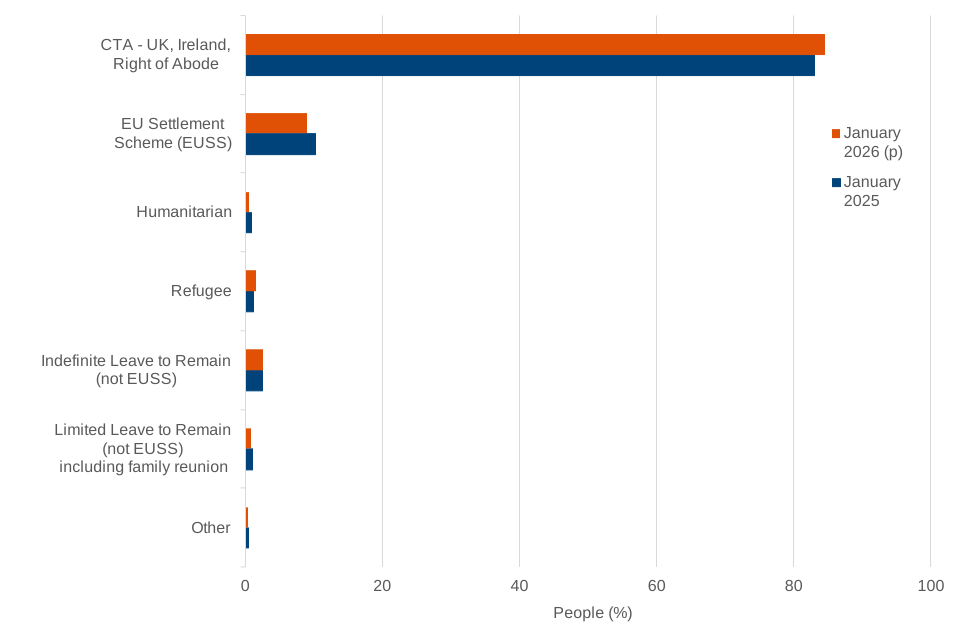
In the latest period, January 2026, 84.5% of people on Universal Credit were in the “CTA – UK, Ireland, Right of Abode” group. Of these, 99.9% are UK citizens.
9.0% of people on Universal Credit were in the “EU Settlement Scheme” group. 2.6% of people on Universal Credit were in the “Indefinite Leave to Remain (not EU Settlement Scheme)”.
“CTA – UK, Ireland, Right of Abode”, “EU Settlement Scheme”, and “Indefinite Leave to Remain (not EU Settlement Scheme)” together account for 96% of the Universal Credit caseload, with the remaining 4% being people with other types of immigration status. This is in line with the general principle that only people who are settled in the UK or protected by the EU Exit Withdrawal Agreement should be able to claim Universal Credit.
1.6% of people on Universal Credit were in the “Refugee” group. 0.9% of people on Universal Credit were in the “Limited Leave to Remain (not EU Settlement Scheme) including family reunion” group. 0.4% of people on Universal Credit were in the “Other” group.
84.5% of people on Universal Credit were in the “CTA – UK, Ireland, Right of Abode” group in January 2026
Figure 11: People on Universal Credit by Immigration status, Great Britain, January 2026 compared to January 2025
Note: (p) provisional
Source: UC Collection Page – Latest Release, UC Immigration status Statistics
The proportion of claimants from the “CTA – UK, Ireland, Right of Abode” group increased from 83.0% in January 2025 to 84.5% in January 2026. The proportion of claimants from the “EU Settlement Scheme” immigration status has decreased from 10.3% to 9.0%. The proportion of claimants from the “Indefinite Leave to Remain (not EU Settlement Scheme)” immigration status increased from 2.5% to 2.6%.
Between 18 December 2024 and 7 May 2025, some claimants with refugee status were incorrectly categorised by DWP to Humanitarian Protection. Refugee status and Humanitarian Protection status are both forms of protection route. We estimate this affected up to 34,000 individuals during this period. We would expect actual monthly volumes of those with Refugee status and Humanitarian Protection status to be in line with trends before December 2024 and after May 2025. It is not possible to retrospectively correct the statistical record for this period.
However, from June 2025 onwards, any affected claimants who remained on Universal Credit were correctly recorded as having refugee status.
This issue impacted how immigration status was grouped together into broader categories in the DWP administrative data system, but it did not impact claimants’ actual immigration status or the amount of Universal Credit they are entitled to.
46.5% of people on Universal Credit in the “EU Settlement Scheme” immigration status were in employment in December 2025
Figure 12: Proportion of people on Universal Credit in each immigration status who are in employment, Great Britain, December 2025

Note: (p) provisional
Source: UC Collection Page – Latest Release, UC Immigration status Statistics.
Overall, the employment rate on the Universal Credit caseload for December 2025 is 32%. This is broadly consistent with the employment rate for “CTA - UK, Ireland, Right of Abode” at 30.4%. Similarly, the employment rate for “Indefinite Leave to Remain (not EU Settlement Scheme)”, “Limited Leave to Remain (not EU Settlement Scheme) including family reunion”, and “Other” is 32.5%, 31.8%, and 33.9% respectively.
“EU Settlement Scheme” has the highest rate in employment at 46.5%. “Refugee” has the lowest rate of employment at 26.5%. Most asylum seekers are not permitted to work; however, some asylum seekers may have pre-existing work conditions and other asylum seekers can be given permission to work before the determination of their claim. As such, many of those granted refugee status will not be in work at the point they are granted this status.
4. Claims and Starts to Universal Credit
A claim is made when an individual applies for Universal Credit.
This is the first step a person needs to take to receive Universal Credit. Not everyone who makes a claim will then start on Universal Credit as their circumstances may change and they may close their claim before completing the process.
A person is counted as starting on Universal Credit when they have agreed their commitment requirements and had their identity verified.
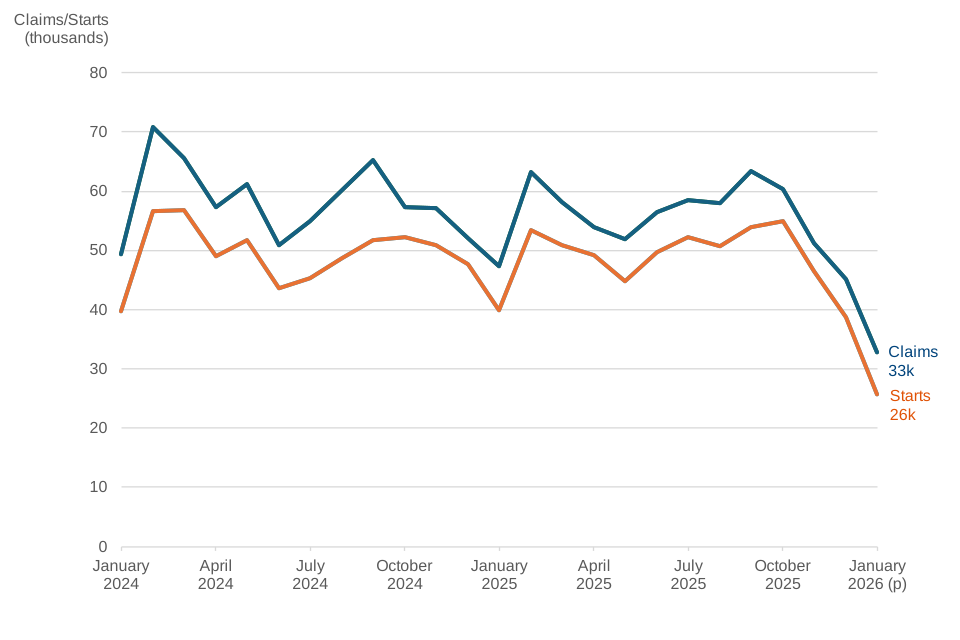
There were, on average, 33,000 claims and 26,000 starts per week in January 2026
Figure 13: Claims and Starts to Universal Credit, average weekly rates, Great Britain, January 2024 to January 2026
Note: (p) provisional (r) revised since last release
Source: DWP Stat-Xplore, Claims on Universal Credit and DWP Stat-Xplore, Starts on Universal Credit monthly counts divided by interval between count dates
There are seasonal highs and lows in the rates of claims and starts. For example, there are drops in December and January and rises in February.
The average weekly rate of claims and starts in the 4 weeks to the count date in January 2026 was 33,000 claims and 26,000 starts each week. This is lower than in January 2025, where there were on average 47,000 claims and 40,000 starts respectively.
Work continues to move legacy benefit claimants across to Universal Credit (Move to Universal Credit), which leads to new Universal Credit claims. Read the latest Move to Universal Credit statistics.
5. Households on Universal Credit
A household is a single person or co-habiting couple with or without dependent children. This is also referred to as a benefit unit in other statistics. A household is counted as being on Universal Credit when they have an entitlement calculated for the assessment period which includes the count date. Not all households will be due a payment after adjustment for deductions, sanctions, or the benefit cap. This bulletin focuses on those households with a payment indicator, i.e. those that were due a payment of Universal Credit.
The households series is produced three months in arrears.
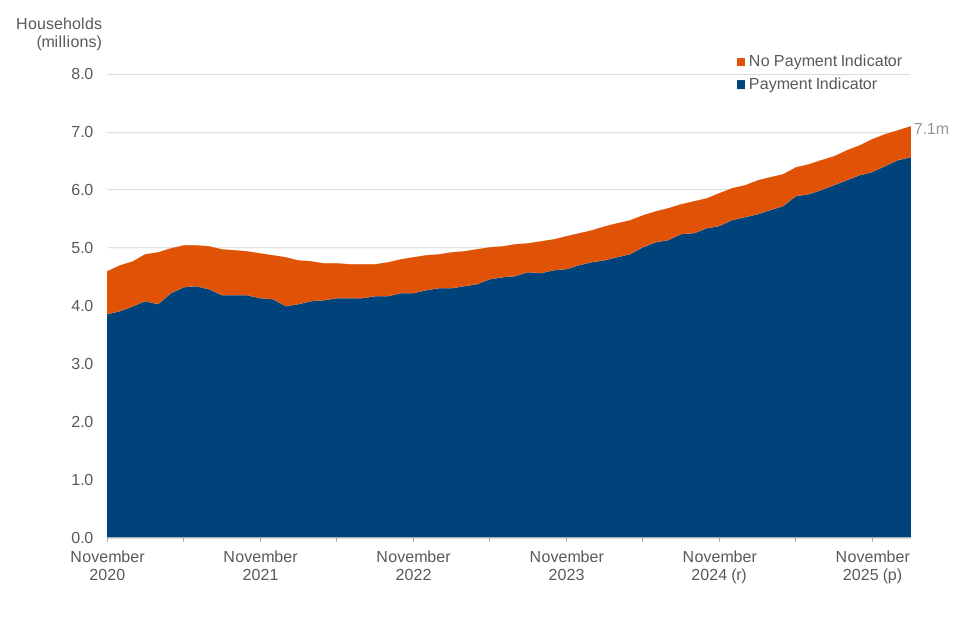
There were 7.1 million households on Universal Credit in November 2025
Figure 14: Households on Universal Credit by payment indicator, Great Britain, November 2020 to November 2025
Note: (p) provisional (r) revised since last release
Source: DWP Stat-Xplore, Households on Universal Credit by payment indicator
The number of households on Universal Credit is 7.1 million in November 2025, the highest it has been since the introduction of Universal Credit in 2013. This is higher than the 6.2 million households seen in November 2024.
The remaining statistics for households only look at those households with a payment indicator, showing they were due a payment. There were 6.6 million households with a payment in November 2025, 92% of all households on Universal Credit that month.
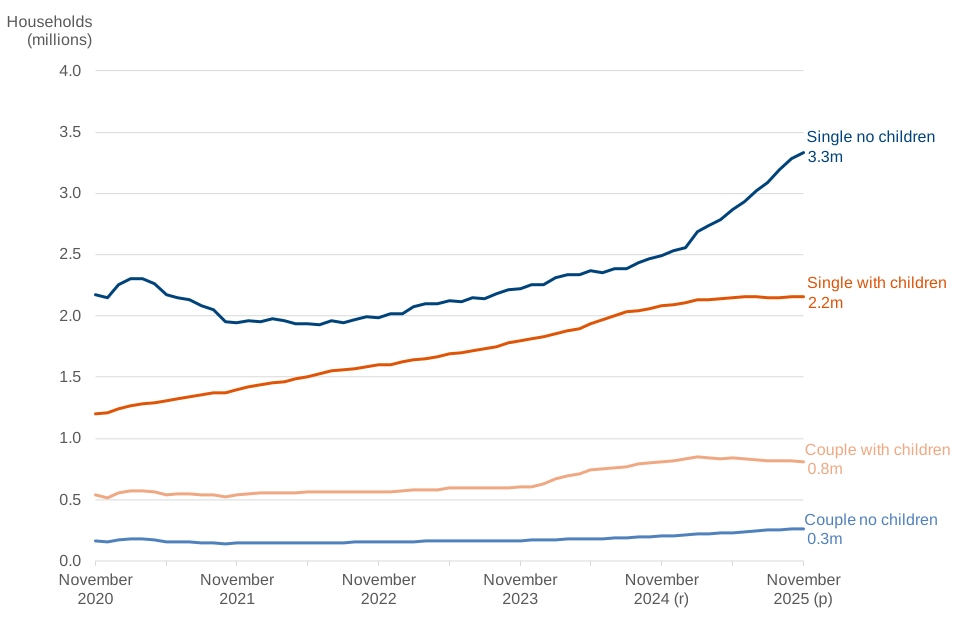
In November 2025, nearly half of households (45%) on Universal Credit with a payment had children
Figure 15: Households on Universal Credit with a payment by family type, Great Britain, November 2020 to November 2025
Note: (p) provisional (r) revised since last release
There was a methodology change affecting data from April 2019 onwards for this time series.
Source: DWP Stat-Xplore, Households on Universal Credit with payment indicator by family type
Households with children accounted for 45% of households on Universal Credit with a payment in November 2025.
For households on Universal Credit with a payment there is a long-term upward trend in ‘Single with children’ family type. At first, Universal Credit was only available to new benefit claims from individuals with no children who were seeking employment. Over time, Universal Credit was made available to people in different circumstances. Also, existing claimants of legacy benefits, such as Child Tax Credit, are being transferred onto Universal Credit, either due to a change in circumstances or as part of managed migration.
For those receiving a payment, the average Universal Credit amount was £1,030 in November 2025
The amount of Universal Credit that a household is entitled to is based on the standard allowance and additional entitlements such as housing or childcare, plus any additional amounts such as an advance or mortgage interest payment.
Benefit and pension rates increased from April 2025. This means the amount a household is entitled to based on the standard allowance and any additional entitlements has increased.
The amount paid to a household may be lower than their entitlement, for example, if a household is being sanctioned, limited by the benefit cap, or earning above the threshold so the taper rate is applied.
Figure 16: Households on Universal Credit with a payment, average (mean) payment by family type, Great Britain, November 2020 to November 2025

Note: (p) provisional (r) revised since last release
Source: DWP Stat-Xplore, Households on Universal Credit with payment indicator by family type
The average (mean) payment amount to households on Universal Credit varies by family type. For November 2025, the ‘Single no children’ family type had the lowest average payment amount of £800, while the highest average payment amount was £1,310 for the ‘Couple with children’ family type. The mean payment across all households is £1,030.
Increases seen in mean payments around Spring are due to annual April benefit and pension rate changes that took effect.
Figure 17: Households on Universal Credit with a payment, additional entitlements by family type, Great Britain, November 2025

Source: DWP Stat-Xplore, Households on Universal Credit with payment indicator, entitlements by family type
Households on Universal Credit can be entitled to a range of additional entitlements on top of the standard allowance to support costs for children, childcare, housing, health and disabilities, and carers. Households can be entitled to more than one of these additional entitlements.
Please note that childcare entitlement statistical breakdowns are no longer covered in this statistical bulletin. Please see our Universal Credit childcare element statistics to access these statistics.
Most households in each family type have a housing entitlement. Households with the ‘Couple no children’ family type have the highest proportion for the carer entitlement.
Nearly all Universal Credit households received some or all their payment on time in October 2025
Statistics on payment timeliness are produced 4 months in arrears to avoid large revisions to provisional figures caused by retrospection. This is to allow for more accurate and higher quality statistics.
These figures are subject to revision and any conclusions or comparisons, particularly using the most recent month, should be made with caution.
In October 2025, 99% of Universal Credit households with a payment were paid all or some of their payment on time for all successful claims. This figure has been largely consistent since April 2020.
In October 2025, 97% received all of their Universal Credit payment on time for all successful claims.
In October 2025, 88% of new successful Universal Credit claims received their first payment in full and on time
Figure 18: Households on Universal Credit with a payment, payment timeliness on new successful claims, Great Britain, October 2023 to October 2025

Note: (p) provisional
Source: Stat-Xplore, Households on Universal Credit with payment indicator by payment timeliness
Payment timeliness is lower for new successful Universal Credit claims in comparison to all successful Universal Credit claims. There are several one-off verification processes that must be completed by the claimant and by DWP at the start of the claim. These are to confirm the current circumstances of the claimant (or both claimants in a joint claim) and their entitlement to Universal Credit. Delays to completion of these processes can cause payments not to be made on time.
For new successful Universal Credit claims in October 2025 (claims in their first assessment period on the count date), 88% received all their payment on time, 93% received at least some of their payment on time and 7% did not receive any payment on time.
Universal Credit Deductions
Please note that Universal Credit deduction statistical breakdowns are not covered in this statistical bulletin. Please see our Universal Credit deduction statistics to access these statistics.
6. Related statistics
This publication complements other statistics bulletins that, together, provide a more coherent view of Universal Credit claimants and awards, and other benefits.
Move to Universal Credit statistics includes statistics on people having who have been sent managed migration notices inviting them to claim Universal Credit.
Benefit sanctions includes statistics on people having their award stopped or reduced for not meeting their agreed conditions.
Benefit Cap includes statistics on households who have had their Universal Credit award capped because their total amount received in benefits is higher than the maximum amount of benefits a household can receive.
Benefit Combination includes statistics as part of the quarterly DWP benefits collection and allow users to view the combinations of benefits that people claim at a point in time for almost all benefits administered by DWP, including Personal Independence Payment (PIP). The latest release included PIP, Disability Living Allowance, and Attendance Allowance award levels. The latest release can be found on Stat-Xplore.
Universal Credit Work Capability Assessments provides statistics that cover the number of people on Universal Credit with a health condition or disability restricting their ability to work.
DWP benefits provides statistics for benefits that Universal Credit is replacing.
Statistics related to the policy to provide support for a maximum of 2 children for Universal Credit and Child Tax Credits.
Fraud and error in the benefit system provides estimates of the number of households that may have been paid too much Universal Credit or not enough. These overpayments and underpayments happen as a consequence of fraud; claimant error; and official error (processing errors or delays by DWP, a Local Authority, or HM Revenue and Customs). ‘Fraud and error in the benefit system’ estimates how much money the department incorrectly pays.
Universal Credit statistics for Northern Ireland are published by the Department for Communities (Northern Ireland).
Claimant Count is a measure of the number of people claiming benefits principally for the reason of being unemployed, based on administrative data from the benefits system. It includes people on Universal Credit in the searching for work conditionality regime for the United Kingdom. Universal Credit statistics uses the same data excluding Northern Ireland.
European Social Fund 2014 to 2020 is an EU-funded employment, skills and social inclusion programme across England aimed at providing the help people need to achieve their potential. This publication uses Universal Credit data to show how many people who started on the programme were on Universal Credit.
7. About these statistics
The number of people and households reported are those at a particular count date each calendar month. The count dates are the second Thursday of each month. The number of claims and starts reported are those occurring between count dates, and they are reported against the month of the later count date. The time between count dates is either 4 or 5 weeks exactly, depending on when the count date falls in each calendar month.
These statistics are classified as Official Statistics.
What is Universal Credit?
Universal Credit is a single payment for each household to help with living costs for those on a low income or out of work. It is replacing six benefits, commonly referred to as the legacy benefits.
Support for housing costs, children and childcare costs are integrated into Universal Credit. It also provides additional support for people with a disability, health condition, or caring responsibilities which may prevent them from working.
Payments are contingent on certain work-related activities being carried out depending on the outcome of the claimant assessment. Payment amounts can be reduced for a variety of reasons, such as sanctions, debt repayment, removal of spare room subsidy, or the taper for earnings above the work allowance.
Conditionality Regimes
All people on Universal Credit are placed into one of six conditionality groups, depending on their personal circumstances. Which of these groups they are placed into will determine what activities they are required to do (if any) as part of their claim and the level of contact and support they receive. Universal Credit statistics uses the term conditionality regime in place of ‘conditionality group’ and ‘labour market regime’.
Different members of the same household may be subject to the same or different requirements. As circumstances change claimants will also transition between different levels of conditionality. This means that there is a ‘flow’ of claimants between these groups.
The table below shows the circumstances of individuals for each conditionality regime and the associated group and labour market regime.
| Conditionality regime | Description | Conditionality Group | Labour Market Regime |
|---|---|---|---|
| Searching for work | Not working, or with very low earnings. Claimant is required to take action to secure work - or more or better paid work. The Work Coach supports them to plan their work search and preparation activity. Typical examples of people in this regime include jobseekers and self-employed in start-up period. Claimants are only in this regime if they do not fit into one of the other regimes. | All work-related requirements | Intensive Work Search |
| Working – with requirements | In work, but could earn more, or not working but has a partner with low earnings. | All work-related requirements | Light touch |
| No work requirements | Not expected to work at present. Health or caring responsibility prevents claimant from working or preparing for work. Examples of people on this regime include those in full time education, over state pension age, has a child under 1 and those with no prospect for work. | No work-related requirements | No work-related requirements |
| Working – no requirements | Individual or household earnings over the level at which conditionality applies. Required to inform DWP of changes or circumstances, particularly at risk of earnings decreasing or job loss. | No work-related requirements | Working enough |
| Planning for work | Expected to work in the future/ Lead parent or lead carer of child aged 1 (aged 1 to 2, prior to April 2017). Claimant required to attend periodic interviews to plan for their return to work. | Work focused interview | Work focused interview |
| Preparing for work | Expected to start work in the future even with limited capability to work at the present time or a child aged 2 (aged 3 to 4, prior to April 2017). Claimant expected to take reasonable steps to prepare for working including Work Focused Interview. | Work preparation | Work preparation |
Universal Credit full service
Full service is the digital system that offers Universal Credit the full range of claimant groups. It was gradually introduced to Jobcentres from 2016 and was available in every Jobcentre across Great Britain and Northern Ireland by December 2018. When full service became available in a Jobcentre, existing Universal Credit claimants on live service were transferred to full service within 3 months. Prior to full service, Universal Credit was restricted to mostly single working age people seeking work with no children. These people were moved onto full service by March 2019.
Where to find out more
Information on these statistics is available in the following documents:
Detailed guidance on the policy and operational aspects of Universal Credit:
Data sources and limitations
These official statistics have been compiled using data in systems used by the department in the administration of Universal Credit and records of Universal Credit benefit payments made by the department.
While every effort is made to collect data to the highest quality, as with all administrative data it is dependent on the accuracy of information entered into the system. Checks are made throughout the process from collection of the data to producing the statistics, but some data entry or processing errors may filter through to the data used to produce the statistics. The quality assurance of administrative data report provides quality assessments on the data sources used in these statistics.
The proportion of ethnicity responses by Universal Credit claimants is now above our minimum reporting threshold of 70%. This is largely due to the re-prompting exercise with claimants that had previously left it unanswered that took place in December 2023. The required methodological threshold has been met since February 2023. As a result, ethnicity statistics are now published each month as part of Universal Credit Official Statistics.
As Universal Credit continues to develop, caution should be used when interpreting statistics over long time periods. Administrative system changes could cause discontinuities in the time series that were not the result of a policy decision or the economic environment.
To support households through the coronavirus pandemic, policy and operational changes were made to Universal Credit. These have had an impact on the time series for Universal Credit statistics.
A full discussion of strengths and limitations is in the background information and methodology.
Release schedule
The bulletin is published quarterly in February, May, August, and November, supplemented by monthly data updates for People on Universal Credit statistics in Stat-Xplore.
Next release of People on Universal Credit: 17 March 2026.
Next release for Claims, Starts, Households, Deductions and Childcare on Universal Credit: 12 May 2026.
We are investigating the possibility of adding further granularity on the individual country of nationality for Universal Credit claimants for future release within these statistics. We will keep users updated with progress towards this in future releases, in accordance with the Code of Practice for Statistics.
All releases for Universal Credit statistics can be found in the Universal Credit statistics collection.
Compliance check against the Code of Practice for Statistics
These statistics are produced in accordance with the Code of Practice for statistics.
A compliance check was conducted on Universal Credit statistics by the Office for Statistics Regulation in May 2019 and we have acted on their recommendations to improve the presentation and user understanding of these statistics.
Rounding
Volumes and amounts have been rounded as detailed in the background information and methodology document. Percentages are calculated using numbers prior to rounding and rounded to the nearest whole percentage point.
Revisions
Universal Credit statistics are subject to scheduled revisions as detailed in the background information and methodology document.
8. Contacts
Lead Statistician: Lee McGargill
Feedback on the content, relevance, accessibility and timeliness of these statistics and any non-media enquiries should be directed to:
Email: team.ucos@dwp.gov.uk
For media enquiries on these statistics, please contact the DWP press office
For statistics enquiries only. These contact details are unable to provide any information or assistance with claiming Universal Credit.
ISBN: 978-1-78659-913-1
-
Income-related Employment and Support Allowance, income-based Jobseeker’s Allowance, working age Housing Benefit, Income Support, Working Tax Credit, and Child Tax Credit. ↩