Alcohol and drug treatment in secure settings 2024 to 2025: report
Published 5 February 2026
Applies to England

© Crown copyright 2026
This publication is licensed under the terms of the Open Government Licence v3.0 except where otherwise stated. To view this licence, visit nationalarchives.gov.uk/doc/open-government-licence/version/3 or write to the Information Policy Team, The National Archives, Kew, London TW9 4DU, or email: psi@nationalarchives.gov.uk.
Where we have identified any third party copyright information you will need to obtain permission from the copyright holders concerned.
This publication is available at https://www.gov.uk/government/statistics/substance-misuse-treatment-in-secure-settings-2024-to-2025/alcohol-and-drug-treatment-in-secure-settings-2024-to-2025-report
Summary
Treatment numbers and substance use
There were 52,401 adults aged 18 and over in alcohol and drug treatment in prisons and secure settings between 1 April 2024 and 31 March 2025. This is a 5% rise compared to the previous year (49,881). The number of adults in treatment has increased year on year for the last 4 years.
Over three-quarters (79%, 41,381) of these people started treatment during this year, a similar proportion to last year.
The proportion of adults starting treatment for opiates, crack or both remained similar to last year, with 57% reporting problems with these substances compared to 58% in 2023 to 2024.
The proportions of people using opiates, either alone or alongside crack, fell 2 percentage points. The proportions of people using crack, either alone or alongside opiates, remained stable.
Adults in alcohol and drug treatment in secure settings tended to be younger than those in community-based treatment.
Adults leaving treatment
A total of 33,454 adults left treatment in secure settings in 2024 to 2025, compared to 31,050 in 2023 to 2024.
Nearly two-fifths (37%) of those were discharged after completing their treatment free of dependence. This is a 15 percentage point rise from 22% in 2015 to 2016, when reporting began.
Continuity of care
The proportion of adults released from prison and successfully starting community treatment within 3 weeks of release was 57% in 2024 to 2025. This is the highest ever level and a 4 percentage point increase from the proportion reported in 2023 to 2024 (53%) and is 27 percentage points higher than when this data was first reported in 2015 to 2016 (30%).
Rates of successfully transferring from prison to community treatment varied around the regions of England. The North West had the highest rate of continuing treatment (74%) and London had the lowest (43%).
Deaths in treatment
There were 62 adults who died while they were in treatment in secure settings in 2024 to 2025. This represents 0.12% of the total adults in treatment and is a small rise (0.08%) in the proportion to the previous year, when 38 people died.
Young people’s treatment
There were 576 young people receiving treatment for drug and alcohol problems in secure settings in 2024 to 2025, a small increase from the number in 2023 to 2024 (566).
Cannabis was the most common problem substance for young people in secure settings, with 93% saying they had a cannabis problem. This proportion has remained at similar levels since 2015 to 2016.
Of the 444 young people who left treatment in secure settings in 2024 to 2025, 46% completed their treatment successfully. This is a 2 percentage point decrease from 2023 to 2024 and is the second highest rate since reporting began.
Adults in prison treatment: overview
Definitions
This report presents information on adults (aged 18 and over) and people (aged 17 and under) who were receiving structured treatment for problems with drugs and alcohol in about 140 prisons and secure settings in England. It covers the year from 1 April 2024 to 31 March 2025.
In this report, secure settings are defined for adults as:
- prison (including local, training, high security and open prisons)
- young offender institutions (covering the ages of 18 to 21 years old)
- immigration removal centres
For young people, secure settings are defined as:
- youth offender institutions (covering the ages of 15 to 18 years old)
- secure children’s homes
- secure training centres
- welfare only homes
Many people experience difficulties with drugs and alcohol and receive treatment for both. While these people often share many similarities, they also have clear differences, so this report divides adults in treatment into 4 substance groups:
- opiate: people who are dependent on or have problems with opiates, mainly heroin
- non-opiate: people who have problems with non-opiate drugs only, such as cannabis, crack and ecstasy
- non-opiate and alcohol: people who have problems with both non-opiate drugs and alcohol
- alcohol only: people who have problems with alcohol but do not have problems with any other substances
Adults in treatment
There were 52,401 adults receiving treatment for drug and alcohol problems in secure settings between April 2024 and March 2025. Most adults received structured treatment in prison (98%). The remaining adults received treatment in young offender institutions (1.7%) and immigration removal centres (less than 0.5%).
You can find a definition of structured treatment in the National Drug Treatment Monitoring System (NDTMS) secure settings adult business definitions, in the ‘Adult secure settings’ section on the NDTMS data collection resources page of the NDTMS website.
Table 1: adults in treatment by substance group and setting
| Setting | Number of opiate (%) | Number of non-opiate only (%) | Number of non-opiate and alcohol (%) | Number of alcohol only (%) | Total (%) |
|---|---|---|---|---|---|
| Prisons | 23,818 (46.5%) | 11,266 (22%) | 10,423 (20.3%) | 5,732 (11.2%) | 51,239 (100%) |
| Immigration removal centres | 213 (79.5%) | 14 (5.2%) | 14 (5.2%) | 27 (10.1%) | 268 (100%) |
| Young offender institutions | 126 (14.1%) | 535 (59.8%) | 201 (22.5%) | 32 (3.6%) | 894 (100%) |
In prisons and immigration removal centres, the biggest substance category was for people being treated for problematic opiate use (46% and 79% respectively). Most adults in young offender institutions were treated for non-opiates only (60%) or non-opiates and alcohol (22%), with 14% reporting opiate use.
Forty-two per cent of people in treatment in prisons and 10% of people in immigration removal centres were in the non-opiate only and non-opiate and alcohol groups. A lower proportion of adults in young offender institutions were treated for alcohol only (4%) than in the rest of the secure estate (10% in immigration removal centres and 11% in prisons).
Sex
Table 2: breakdown of adults in treatment by sex and substance group
| Substance group | Number of men (%) | Number of women (%) | Total adults (%) |
|---|---|---|---|
| Opiate | 21,004 (44.1%) | 3,153 (66.4%) | 24,157 (46.1%) |
| Non-opiate only | 11,239 (23.6%) | 576 (12.1%) | 11,815 (22.5%) |
| Non-opiate and alcohol | 10,036 (21.1%) | 602 (12.7%) | 10,638 (20.3%) |
| Alcohol only | 5,375 (11.3%) | 416 (8.8%) | 5,791 (11.1%) |
Ninety-one per cent (47,654) of the people in treatment in adult secure settings were men. Nine per cent (4,747) were women, which is more than double the proportion of women in prison (4% at the end of March 2025), as reported in the HM Prison and Probation Service (HMPPS) offender management statistics quarterly: January to March 2025.
The substance groups showed big differences by sex, with a significantly higher proportion of women in the opiate group than men.
Age
Table 3: age of adults in treatment
| Age group | Number of opiate (%) | Number of non-opiate only (%) | Number of non-opiate and alcohol (%) | Number of alcohol only (%) | Total (%) |
|---|---|---|---|---|---|
| 18 to 20 | 165 (0.7%) | 587 (5.0%) | 279 (2.6%) | 66 (1.1%) | 1,097 (2.1%) |
| 21 to 24 | 596 (2.5%) | 1,700 (14.4%) | 910 (8.6%) | 226 (3.9%) | 3,432 (6.5%) |
| 25 to 29 | 1,906 (7.9%) | 2,547 (21.6%) | 1,849 (17.4%) | 604 (10.4%) | 6,906 (13.2%) |
| 30 to 39 | 9,037 (37.4%) | 4,506 (38.1%) | 4,800 (45.1%) | 2,019 (34.9%) | 20,362 (38.9%) |
| 40 to 49 | 9,152 (37.9%) | 1,840 (15.6%) | 2,096 (19.7%) | 1,696 (29.3%) | 14,784 (28.2%) |
| 50 to 59 | 3,014 (12.5%) | 522 (4.4%) | 574 (5.4%) | 865 (14.9%) | 4,975 (9.5%) |
| 60 and over | 287 (1.2%) | 113 (1.0%) | 130 (1.2%) | 315 (5.4%) | 845 (1.6%) |
Adults in alcohol and drug treatment in secure settings tended to be younger than those in community-based treatment. Like in community treatment, adults being treated for alcohol problems only or opiates tended to be older than those treated for other substances.
The most common age range for adults in treatment in a secure setting was 30 to 39 years old, followed by 40 to 49 years old. These groups together made up two-thirds (67%) of adults in treatment.
The largest substance group in both age groups was opiates, as well as in the 50 to 59 year old category. The largest group for adults aged 18 to 29 was non-opiates, and the largest group for those aged 60 and over was alcohol only.
The median ages of adults in treatment in secure settings for alcohol only and for opiate use were similar (39 and 40 years old respectively). This compares with 47 years and 45 years respectively for people in community treatment.
Adults in the non-opiate and alcohol and non-opiate only groups had median ages of 34 years and 32 years respectively. The median ages were 36 years and 32 years in community treatment.
Problem substances for adults in prison treatment
Figure 1: substances by group for adults in treatment
Opiate substance group
| Substances reported | Count of problem substances reported |
|---|---|
| Both opiates and crack cocaine | 16,666 |
| Opiates (not crack cocaine) | 7,491 |
| Cannabis | 3,562 |
| Cocaine | 2,629 |
| Benzodiazepines | 1,914 |
| Amphetamines | 318 |
| Gabapentinoids | 791 |
| Alcohol | 5,445 |
Non-opiate only substance group
| Substances reported | Count of problem substances reported |
|---|---|
| Crack cocaine (not opiates) | 2,773 |
| Cannabis | 7,316 |
| Cocaine | 4,639 |
| Benzodiazepines | 616 |
| Amphetamines | 472 |
| Gabapentinoids | 366 |
Non-opiate and alcohol substance group
| Substances reported | Count of problem substances reported |
|---|---|
| Crack cocaine (not opiates) | 2,434 |
| Cannabis | 4,989 |
| Cocaine | 5,725 |
| Benzodiazepines | 482 |
| Amphetamines | 260 |
| Gabapentinoids | 208 |
| Alcohol | 10,638 |
Alcohol only substance group
| Substances reported | Count of problem substances reported |
|---|---|
| Alcohol | 5,791 |
Figure 1 shows a breakdown of the substances reported by people in prison treatment in 2024 to 2025, split into the 4 substance groups. Up to 3 substances can be recorded at the start of treatment, so one person could be counted for several substances within their substance group. For example, somebody who has problems with cocaine, cannabis and alcohol use would be counted in the non-opiate and alcohol group for these 3 substances.
Opiates were the most reported drug by adults in treatment (46%) with 32% reporting both opiate and crack problems and 14% reporting problems with opiates but not crack. Ten per cent of people reported problems with crack but not opiates.
Over two-fifths (42%) of people said they had problems with alcohol, with just over a quarter (26%) of these people using alcohol only. Under a third (30%) of adults reported problems with cannabis and a quarter (25%) with powder cocaine.
Psychoactive substances (mainly synthetic cannabinoids) were a problem for 7% of people in treatment in secure settings. However, this may not reflect overall psychoactive substance use in prisons. This is because data is collected when people enter treatment, so does not include people who started using psychoactive substances while they were in prison. It is also possible that some people who used psychoactive substances did not report it as one of the 3 main drugs they had problems with.
Adults starting prison treatment: pathways, age, substances
Pathways into treatment
Figure 2: pathway into treatment for adults starting treatment in 2024 to 2025
| Substance group | Taken directly into custody | Transferred from another secure setting | Total |
|---|---|---|---|
| Opiate | 61.0% | 39.0% | 100% |
| Non-opiate only | 39.2% | 60.8% | 100% |
| Non-opiate and alcohol | 52.7% | 47.3% | 100% |
| Alcohol only | 68.5% | 31.5% | 100% |
| Total | 55.3% | 44.7% | 100% |
Over half (55%) of the people starting treatment in an adult secure setting between 2024 and 2025 were taken directly into custody or detention from the community. The other 45% started treatment after being transferred from another secure setting.
Most people starting treatment for opiate use or alcohol use only came directly into custody from the community (61% and 68% respectively). In the non-opiate only and non-opiate and alcohol groups, adults coming into treatment were transferred from another secure setting (61% and 47% respectively).
Most of the adults who were taken directly into custody from the community started treatment within 3 weeks of arriving at a secure setting (87%). Of the people transferring from another secure setting, 61% started treatment within 3 weeks of arrival.
Substances reported by adults starting treatment in secure settings
Figure 3: substances by group for adults starting treatment in 2024 to 2025
Opiate substance group
| Substances reported | Count of problem substances reported |
|---|---|
| Both opiates and crack cocaine | 13,770 |
| Opiates (not crack cocaine) | 5,641 |
| Cannabis | 2,788 |
| Cocaine | 2,028 |
| Benzodiazepines | 1,550 |
| Amphetamines | 209 |
| Gabapentinoids | 631 |
| Alcohol | 4,453 |
Non-opiate only substance group
| Substances reported | Count of problem substances reported |
|---|---|
| Crack cocaine (not opiates) | 2,246 |
| Cannabis | 5,586 |
| Cocaine | 3,578 |
| Benzodiazepines | 507 |
| Amphetamines | 349 |
| Gabapentinoids | 303 |
| Ketamine | 344 |
Non-opiate and alcohol substance group
| Substances reported | Count of problem substances reported |
|---|---|
| Crack cocaine (not opiates) | 2,001 |
| Cannabis | 3,653 |
| Cocaine | 4,367 |
| Benzodiazepines | 388 |
| Amphetamines | 189 |
| Gabapentinoids | 176 |
| Ketamine | 135 |
| Alcohol | 8,160 |
Alcohol only substance group
| Substances reported | Count of problem substances reported |
|---|---|
| Alcohol | 4,648 |
There were 41,381 people who started treatment for drug and alcohol problems in a secure setting in 2024 to 2025. This is where a person started a new treatment episode, which might also include returning to treatment.
Of the people starting treatment:
- 19,411 (47%) said they had a problem with opiate use
- 17,261 (42%) said they had a problem with alcohol, either alone or alongside other substances
- 12,027 (29%) said they had a problem with cannabis
- 9,973 (24%) said they had a problem with cocaine
- 4,648 (11%) said they had a problem with alcohol alone
Over half (9,239, 53%) of people in the non-opiate substance groups reported having problems with cannabis.
Mental health
Over a quarter (28%) of people starting treatment were identified as having a mental health treatment need. This proportion was consistent across the 4 substance groups, with the highest proportion in the non-opiate and alcohol group (30%) and the lowest (25%) in the alcohol only group.
The mental health needs recorded in NDTMS should reflect the needs identified by prison healthcare staff or identified in the community before the person was in the secure setting.
Injecting drugs
Figure 4: injecting status of adults starting treatment in 2024 to 2025
| Substance group | Currently injecting | Previously injected | Never injected | Declined to answer | Total |
|---|---|---|---|---|---|
| Opiate | 10.9% | 33.9% | 52.3% | 2.9% | 100% |
| Non-opiate only | 0.9% | 8.8% | 88.3% | 2.0% | 100% |
| Non-opiate and alcohol | 0.8% | 10.0% | 87.4% | 1.9% | 100% |
| Alcohol only | 0.4% | 4.8% | 92.3% | 2.5% | 100% |
| Total | 5.5% | 20.4% | 71.7% | 2.4% | 100% |
Most people starting treatment in 2024 to 2025 had never injected drugs (72%). This ranged from 52% of people in the opiate group to between 87% and 92% in the other substance groups. People in the opiate group were most likely to be currently injecting (11% compared to less than 1% for the other substance groups).
Parental status and safeguarding children
Table 4: parental status of adults in treatment in 2024 to 2025
| Parental status | Number of adults in treatment (%) |
|---|---|
| Not a parent and not in contact with children | 39,104 (76.7%) |
| Parent not living with children | 8,116 (15.9%) |
| Parent living with children | 3,356 (6.6%) |
| Other contact living with children | 386 (0.8%) |
Seven per cent of people in treatment in 2024 to 2025 were living with children, either their own or someone else’s, before coming into the secure setting.
Most people in treatment were not in contact with children before entering the secure setting. Seventy-seven per cent (39,104) reported that they were not parents and a further 16% (8,116) said they were parents but did not live with their children when entering the secure setting.
Treatment types
Figure 5: breakdown of adults in treatment types by substance group
| Substance group | No structured intervention started or recorded | Prescribing and psychosocial | Prescribing only | Psychosocial only | Total |
|---|---|---|---|---|---|
| Opiate | 0.2% | 75.1% | 4.0% | 20.7% | 100% |
| Non-opiate only | 0.2% | 5.3% | 0.5% | 94.0% | 100% |
| Non-opiate and alcohol | 0.3% | 12.3% | 0.7% | 86.7% | 100% |
| Alcohol only | 0.6% | 23.3% | 4.3% | 71.8% | 100% |
| Total | 0.3% | 40.9% | 2.6% | 56.3% | 100% |
Almost all adults in treatment in secure settings (97%) received psychosocial interventions. Three per cent received only prescribing interventions and less than 1% either did not start an intervention or an intervention was not recorded.
Psychosocial intervention only was the most common treatment type in the non-opiate only (94%), non-opiate and alcohol (87%) and alcohol only (72%) groups. Over one fifth (21%) of people in treatment for opiates received a psychosocial intervention only.
Nearly half (43%) of adults in treatment received prescribing interventions. Overall, by substance group, the percentage receiving prescribing interventions was:
- 79% of the opiate group
- 28% of the alcohol only group
- 6% of the non-opiate only group
- 13% of the non-opiate and alcohol group
Prescribing interventions are generally provided alongside psychosocial interventions to support a person’s recovery, as recommended by Drug misuse and dependence: UK guidelines on clinical management and Clinical guidelines for alcohol treatment. Forty-one per cent of people in treatment received both prescribing and psychosocial interventions.
Treatment outcomes
Treatment exits and successful completion
A total of 33,454 people left treatment in secure settings between 1 April 2024 and 31 March 2025. Over a third (37%) of those were discharged after completing their treatment free of dependence.
The alcohol only group (57%), non-opiate and alcohol group (53%) and the non-opiate only group (53%) had the highest rates of successfully completing their treatment. The opiate group had the lowest rate of successfully completing treatment (16%).
Half (50%) of adults leaving treatment were transferred for further treatment, either to community treatment (32%) or to treatment in another secure setting (17%).
Two per cent of people were transferred to another provider as part of a recommissioning process, so will likely still be in treatment. This happens when a new provider takes over treatment in the same secure establishment.
The remaining 11% of adults left treatment without completing it, mainly by dropping out of treatment (5%) or being discharged due to being released from court (3%).
Continuity of care
Continuity of care between treatment services in prisons and the community is monitored by the Public Health Outcomes Framework indicator C20. This indicator measures the numbers of adults with substance misuse problems who successfully engage in community-based structured treatment within 3 weeks of being released from prison.
The proportion of adults successfully starting community treatment within 3 weeks of release was 57% in 2024 to 2025. This is a 4 percentage point increase from the proportion reported in 2023 to 2024 (53%) and is 27 percentage points higher than when this data was first reported in 2015 to 2016 (30%).
Rates of successfully transferring from prison to community treatment varied around regions in England. The North West had the highest rate of continuing treatment (74%) and London had the lowest (43%).
Deaths in treatment
There were 62 adults who died while they were in treatment in 2024 to 2025, which represented 0.12% of all people in treatment. People with opiate problems accounted for 47% of these deaths.
‘Drug misuse and dependence: UK guidelines on clinical management’ emphasises the importance of take-home naloxone for previously heroin-dependent prisoners when they leave prison, to help reverse any overdose. Of all the people who were treated for opiate problems in prison, 54% were provided with take-home naloxone when they were released in 2024 to 2025.
Young people in treatment in secure settings
Young people’s treatment: overview
There were 576 young people receiving treatment for drug and alcohol problems in secure settings in 2024 to 2025. Most of them were receiving treatment in young offender institutions (63%), with 30% receiving treatment in secure children’s homes (including welfare only homes), and 7% receiving treatment in secure training centres (including secure schools).
Figure 6: young people in treatment by setting
| Setting | Proportion of young people |
|---|---|
| Young offender institutions | 63% |
| Secure children’s homes | 24% |
| Welfare only homes | 6% |
| Secure training centres | 7% |
Young people: age and sex
Figure 7: breakdown of young people by age and sex
| Age group | Girls | Boys |
|---|---|---|
| 13 and under | 13.9% | 1.3% |
| 14 years old | 25.0% | 5.2% |
| 15 years old | 25.0% | 16.1% |
| 16 years old | 8.3% | 28.3% |
| 17 and over | 27.8% | 49.1% |
Most (94%) of the young people in treatment in secure settings were boys. HMPPS youth custody data shows that 97% of the total youth custody population were boys in March 2025 (excluding welfare only places, but including secure settings in Wales).
Boys in treatment tended to be older, with the proportion of boys in each age group increasing with age. One per cent of boys in treatment were aged 13 and under and nearly half (49%) were aged 17 and over. This was different from girls, as only 28% of girls in treatment were aged 17 and over. Fifty per cent of the girls in treatment were aged 14 or 15.
The median age of boys was 16 and the median age of girls was 15.
Young people: substance use
Figure 8: substances used by young people
| Substance | Young people in treatment |
|---|---|
| Cannabis | 92.7% |
| Alcohol | 23.3% |
| Nicotine | 18.4% |
| Nitrous oxide | 15.5% |
| Cocaine | 14.1% |
| Opiates | 9.5% |
| Ketamine | 4.7% |
| Benzodiazepines | 4.7% |
| Gabapentinoids | 3.8% |
| Ecstasy | 3.5% |
| Crack | 1.0% |
| Psychoactive substances | 0.3% |
| Amphetamines | 0.2% |
Note: nicotine can only be reported alongside other problem substances.
Figure 8 shows the different problem substances reported by young people in secure settings.
When young people enter treatment, they can record up to 3 substances that they have a problem with. Numbers in this figure are based on all substances recorded during their treatment, so each young person may be counted more than once and proportions may add up to more than 100%.
The section ‘trends over time’ shows the numbers of young people in treatment in secure settings and the substances they had problems with since 2015 to 2016.
Vulnerabilities of young people starting treatment
Figure 9: vulnerabilities of young people starting treatment
| Vulnerability | Young people starting treatment |
|---|---|
| Polydrug use | 59.8% |
| Looked after child | 59.1% |
| Not in education, employment or training | 55.1% |
| Unsafe sex | 32.8% |
| Child protection plan | 30.8% |
| Involved in gangs | 28.0% |
| Criminal exploitation | 27.3% |
| Affected by others’ substance misuse | 24.7% |
Young people often enter specialist substance misuse services with a range of problems or vulnerabilities that are related (or in addition) to their substance use. These include using multiple substances (polydrug use), being a looked after child or being on a child protection plan.
The most common vulnerability was polydrug use (60% of young people starting treatment). A further 59% reported being a looked after child. Fifty-five per cent of young people were not in education, employment or training.
Young people: treatment type
Nearly two-thirds of young people in treatment (63%) in 2024 to 2025 received a harm reduction intervention. These interventions include support to manage risky behaviour associated with substance use, such as behaviour that can lead to overdose or accidental injury.
Apart from harm reduction, all other interventions delivered to young people in prisons and secure settings were psychosocial interventions. There were several types of these interventions, which had different proportions of young people receiving them. These were:
- 60.8% motivational interviewing
- 25.3% relapse prevention
- 14.1% counselling
- 0.2% family work
- 5.9% cognitive behavioural therapy
No young person received a prescribing intervention in 2024 to 2025.
Young people: treatment exits
There were 444 young people who left treatment in secure settings in 2024 to 2025. Of these, 46% completed their treatment successfully.
The 54% who did not complete their treatment successfully included:
- 18% who dropped out or had their treatment withdrawn by the provider
- 12% who declined treatment after being referred
- 12% who left treatment after being released from court
- 9% who were transferred to another treatment service in custody
- 2% who were released from custody and transferred to another treatment service in the community
Trends over time
Trends: adults in treatment and adults starting treatment
Figure 10: trends in the proportion of adults in treatment and adults starting treatment
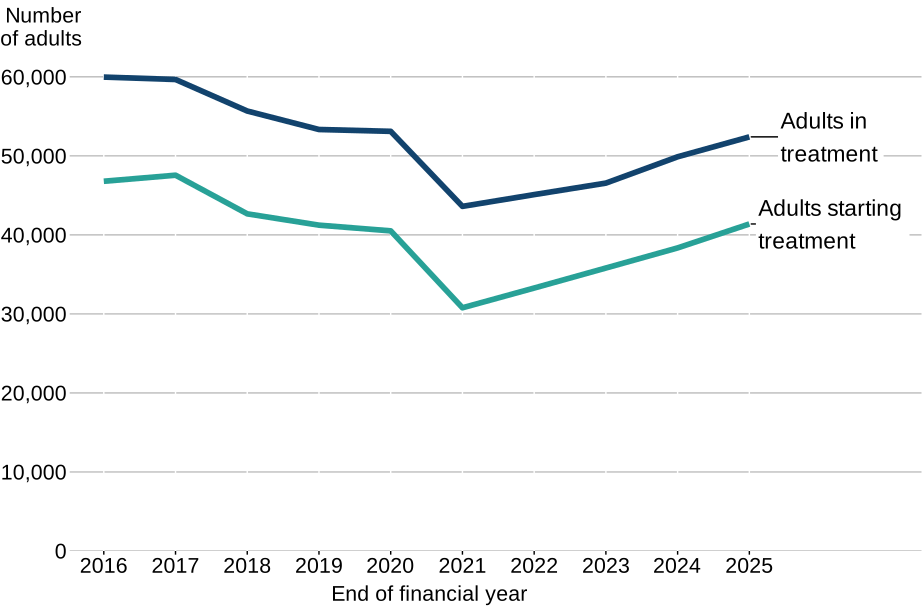
Figure 10 shows the trend of adults in treatment and adults starting treatment each year between 2015 to 2016 and 2024 to 2025.
There were 52,401 adults aged 18 and over in alcohol and drug treatment in prisons and secure settings between 1 April 2024 and 31 March 2025. The number of adults in treatment has increased year on year for the last 4 years, and the number in treatment this year is 20% higher than in 2020 to 2021 (43,607), although the lowest total in treatment in the last 10 years. So despite this upward trend in numbers in treatment, this total is still 13% lower than the first year these statistics were reported (59,963 in 2015 to 2016).
Over three-quarters (79%, 41,381) of the total adults in treatment started treatment during 2024 to 2025, a similar proportion as last year. Similarly to the trend in the total number of adults in treatment, the total number of adults starting treatment in 2024 to 2025 is 13% lower than the highest total reported (47,549 in 2016 to 2017).
These changes in the trends of adults in treatment and those starting treatment may reflect the rise in the prison population in the last few years.
Trends: adults starting treatment by substance group
Figure 11: trends in substance use by adults starting treatment

Figure 11 shows the proportion of adults starting treatment each year between 2015 to 2016 and 2024 to 2025 split by the 4 substance groups.
Between 2015 to 2016 and 2024 to 2025, opiates remained the largest group, generally accounting for around half of all new presentations. The peak opiates level was 53% in 2017 to 2018, falling to 46% in 2021 to 2022 and rising slightly this year (47%).
Of the other substance groups, proportions of the non-opiate only group and non-opiate and alcohol group have been comparatively stable since the start of reporting (between 17% and 20%), but the non-opiate only group reached its highest share this year (22%).
The alcohol only group has fallen 1.3 percentage points, from 12.4% in 2021 to 2022 to 11.1% this year.
Trends: opiate and crack use among adults starting treatment
Figure 12: trends in adults starting treatment reporting opiate or crack problems

The proportion of adults starting treatment for opiates, crack or both has remained stable at 57% in 2024 to 2025, compared to 58% in 2023 to 2024.
Thirty-three per cent of adults starting treatment in 2024 to 2025 reported problems with both crack and opiate use. This was a slight fall, after the proportion rose to 35% in 2023 to 2024. The peak was 37% in 2019 to 2020.
The proportion of adults starting treatment with opiate problems (but not crack problems) decreased from 25% in 2015 to 2016 to 14% in 2022 to 2023, where it still remains this year. In contrast, the proportion starting treatment with crack problems (but not opiate problems) has been increasing steadily from 5% in 2015 to 2016 to 10% in 2024 to 2025.
Figure 13: trends in adults starting treatment reporting problems with other substances

The proportion of adults starting treatment who reported alcohol problems was similar to previous years, with 42% of people in 2024 to 2025, the same as last year. The proportion of adults in treatment for cannabis has remained consistent between 2015 to 2016 (29%) and this year (also 29%).
Over time, proportions of adults in treatment for benzodiazepines and amphetamines have decreased since these statistics were first reported (both have decreased by 5 percentage points since 2015 to 2016). The proportion of adults in treatment for powder cocaine has increased over the same period (5 percentage points since 2015 to 2016).
Trends: adults leaving treatment
Figure 14: trends in adults completing treatment

A total of 33,454 adults left treatment in secure settings in 2024 to 2025, compared to 31,050 in 2023 to 2024.
Nearly two-fifths (37%) of adults were discharged after completing their treatment free of dependence, the second highest proportion recorded since reporting began. This is a 15 percentage point rise from 22% in 2015 to 2016.
Conversely, adults transferring treatment, either to community treatment after release or to treatment in another secure setting, has fallen to the second lowest proportion since reporting began (50%), compared to 74% in 2015 to 2016, but still remains the main reason for adults leaving treatment in secure settings.
Trends: continuity of care
Figure 15: trends in continuity of care

Improving continuity of care between custody and community-based treatment for people leaving prison contributes to reducing re-offending, improved health outcomes and reducing drug related deaths. The Ministry of Justice and Department of Health and Social Care have been working with HMPPS and NHS England, along with local authority substance misuse commissioners, to improve criminal justice pathways into treatment for prison leavers.
The proportion of adults released from prison and successfully starting community treatment within 3 weeks of release was 57% in 2024 to 2025. This is a 4 percentage point increase from the proportion reported in 2023 to 2024 (53%) and is 27 percentage points higher than when this data was first reported in 2015 to 2016 (30%).
Trends: deaths of adults in treatment
Figure 16: trends in deaths of adults in treatment

There were 62 adults who died in 2024 to 2025 while they were in contact with treatment services. This represents 0.12% of the total adults in treatment and is a similar proportion (0.08%) compared to the previous year when 38 adults died.
As in previous years, adults with opiate problems made up the biggest fraction of deaths, with 47% of all deaths occurring in this group.
Trends: young people in treatment
Figure 17: trends in numbers of young people in treatment

There were 576 young people receiving treatment for drug and alcohol problems in secure settings in 2024 to 2025, a small increase from 2023 to 2024 (566).
In contrast, there was a 5% decrease in the youth custody population for England and Wales between March 2024 and March 2025. You can find statistics on this from HMPPS in the latest youth custody data report.
Trends: substance use by young people in treatment
Figure 18: trends in young people in treatment by most commonly reported problematic substances

Cannabis was the most common problem substance for young people in secure settings with 93% saying they had a cannabis problem. This proportion has remained at similar levels since 2015 to 2016.
The proportion of young people reporting problems with cocaine (14%) has decreased 4 percentage points from 2015 to 2016, while the proportion with nicotine problems (18%) has increased 6 percentage points this year. However, this is still lower than the peak of 26% in 2020 to 2021.
The proportion of young people in treatment that said they had problems with alcohol use has more than halved in 2024 to 2025 (23%) since 2015 to 2016 (50%). This is the lowest proportion recorded since the start of reporting secure setting treatment data in 2015 to 2016.
Figure 19: trends in young people in treatment for problems with nitrous oxide, opiates, ketamine, benzodiazepines and gabapentinoids

The proportion of young people in treatment for opiate use was 10% in 2024 to 2025, a 3 percentage point increase to the previous year (7%).
Young people reporting problems with nitrous oxide use has fallen slightly, from 16% in 2023 to 2024 to 15% in 2024 to 2025. This remains close to the highest level since reporting began in 2015 to 2016, when 0.4% of young people in treatment reported a nitrous oxide problem.
The proportion of young people in treatment reporting problems with benzodiazepines, ketamine or gabapentinoids have all increased this year, with ketamine seeing the largest rise (2%).
Figure 20: trends in young people in treatment by other problematic substances

The proportion of young people reporting problems with psychoactive substances has fallen sharply from 7% in 2015 to 2016, to less than 1% in 2024 to 2025. Amphetamine use has also fallen sharply over the same period, from 8% to less than 1%.
Ecstasy use has fallen from 7% to around 4% over the same period.
Crack use peaked in 2018 to 2019 at 3% but has fallen to 1% this year.
Trends: young people’s treatment exits
Figure 21: trends in young people leaving treatment by completing treatment or being transferred
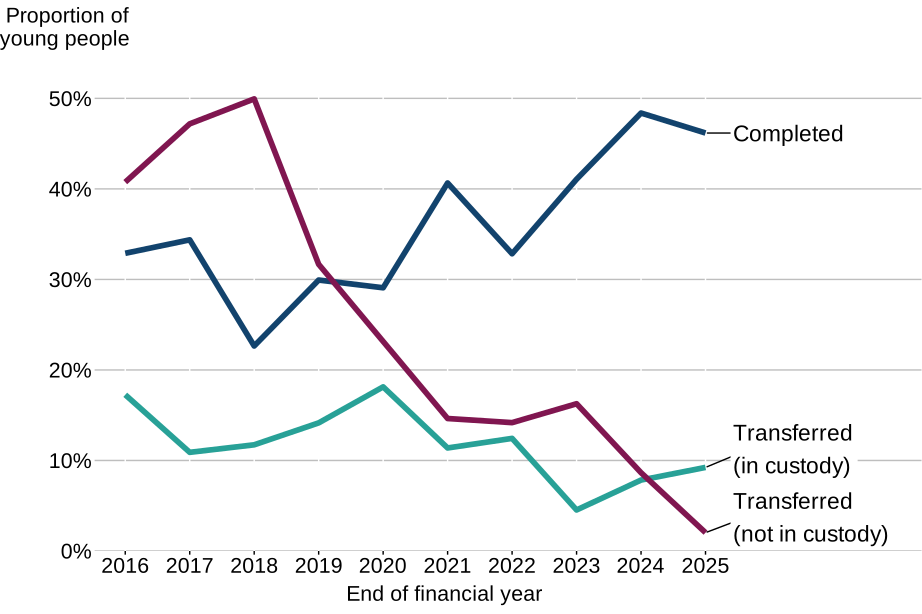
There were 444 young people who left treatment in secure settings in 2024 to 2025. Of those, 46% completed their treatment successfully. This is a 2 percentage point decrease from 2023 to 2024, but is the second highest rate since reporting began. The previous highest proportion was 48% in 2023 to 2024 and the lowest proportion recorded was 23% in 2017 to 2018.
Nine per cent of young people were transferred to another treatment service in custody, up from a low of 4.5% in 2022 to 2023. The proportion of young people who were released from custody and transferred to another treatment service in the community has been falling from a high of 50% in 2017 to 2018, and is down to 2% this year.
Figure 22: trends in young people leaving treatment by other reasons
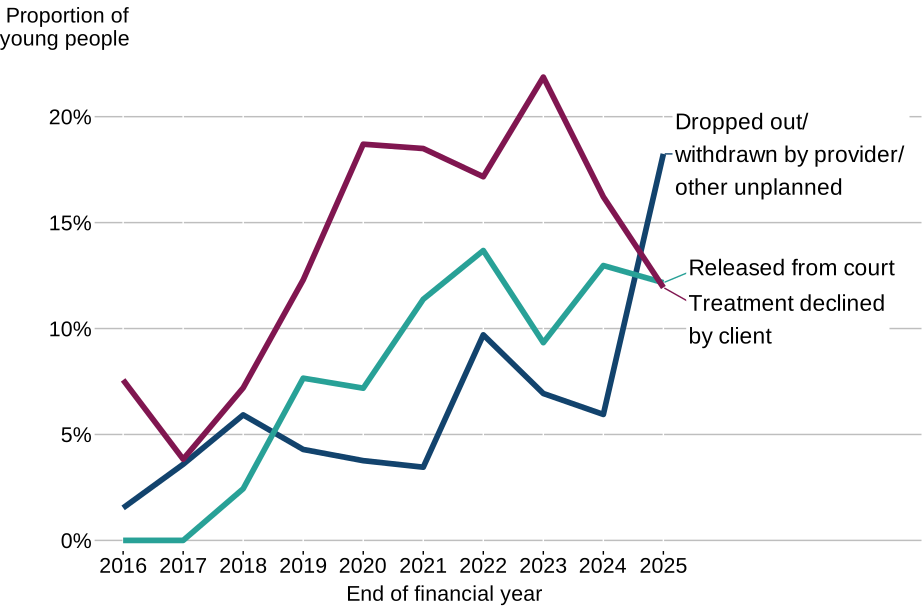
The proportion of young people in treatment who left treatment because they were released from court and discharged before a transfer to community services could be arranged was 12%; in 2023 to 2024 it was 13%.
The proportion of young people who dropped out, had their treatment withdrawn by the provider or left treatment for another unplanned reason has historically been consistently low (10% or less until 2021 to 2022). In 2024 to 2025 this proportion increased to 18%, from 6% in 2023 to 2024, with most of this rise attributable to recommissioning transfers. This is where there is a change in treatment provider, but people’s treatment is uninterrupted.
In 2022 to 2023, 22% of young people declined treatment, the highest proportion since reporting began. This year it was 12%.
Background and policy context
Background
This report presents statistics on the availability and effectiveness of alcohol and drug treatment in prisons and secure settings in England, and the profile of people accessing this treatment.
The statistics in this publication come from analysis of the NDTMS, which collects data from services providing structured substance misuse interventions to adults and young people in England.
The data collected includes information on the demographics and personal circumstances of people receiving treatment, as well as details of the interventions delivered and their outcomes.
You can find more details on the methodology used in the report in the ‘Quality and methodology information paper’ in the ‘Annual publications for NDTMS’ section of the NDTMS website.
Policy context
Alcohol and drug treatment services in prisons and secure settings for adults and young people are commissioned by NHS England.
NHS England commissions specialist treatment services in secure settings which are equivalent to community-based treatment and informed by evidence-based clinical guidance. Treatment includes interventions to reduce harm and to help people recover from alcohol and drug dependence.
You can read more about how NHS England commissions healthcare for young people and adults across secure settings at the health and justice page on the NHS England website.
The Royal College of Paediatrics and Child Health has published healthcare standards for children and young people in secure settings.
Following the increased investment in community-based substance misuse treatment announced as a part of the 2021 spending review, there has been a focus on enhancing criminal justice pathways into treatment. This led to a steady increase in referrals from criminal justice settings, particularly from prisons. The Public Health Outcomes Framework supports this by monitoring the numbers of adults who engage in community substance misuse treatment within 3 weeks of leaving prison.
Under the Children Act 1989, local authorities can place children into secure children’s homes and welfare only homes. In these circumstances, children and young people are held there because of concerns about their welfare, rather than because they have offended.
Enquiries or feedback
If you have any enquiries or feedback about these statistics, email evidenceapplicationteam@dhsc.gov.uk.