Children's substance misuse treatment statistics 2024 to 2025: report
Published 4 December 2025
Applies to England

© Crown copyright 2025
This publication is licensed under the terms of the Open Government Licence v3.0 except where otherwise stated. To view this licence, visit nationalarchives.gov.uk/doc/open-government-licence/version/3 or write to the Information Policy Team, The National Archives, Kew, London TW9 4DU, or email: psi@nationalarchives.gov.uk.
Where we have identified any third party copyright information you will need to obtain permission from the copyright holders concerned.
This publication is available at https://www.gov.uk/government/statistics/substance-misuse-treatment-for-children-2024-to-2025/childrens-substance-misuse-treatment-statistics-2024-to-2025-report
This report presents statistics on children aged 17 and under in drug and alcohol treatment. Most children in treatment are aged 14 to 17. This age group is often referred to as ‘young people’, but because the NHS and children’s social care define young people as up to 24 years old, we have only used the term ‘children’ in the report.
Summary
Trends in treatment numbers
There were 16,212 children (aged 17 and under) in alcohol and drug treatment between April 2024 and March 2025. This is a 13% increase from the previous year (14,352). However, the number in treatment is 34% lower than the peak of 24,494 in 2008 to 2009.
Trends in substance use
Cannabis remained the most common substance (86%) that children came to treatment for.
Around 2 in 5 children in treatment (38%) said they had problems with alcohol use, 8% had problems with ecstasy and 6% reported problems with powder cocaine use.
There has been a rise in the number reporting problems with ketamine, from 512 (5%) in 2021 to 2022 to 1,465 (9%) this year, which means more children reported problems with ketamine than with ecstasy for the first time.
The number of children in treatment for solvent and inhalant misuse, which includes using nitrous oxide, continued to increase. This has risen from 329 (3%) children reporting a problem in 2021 to 2022 to 919 (6%) in 2024 to 2025.
Vulnerabilities among children in treatment
Of the range of problems or vulnerabilities reported by children starting treatment, the most common was early onset of substance use. This means they first started using substances before the age of 15, with 4 in 5 children (82%) reporting this. This was followed by polydrug use (using multiple substances), which affected 53% of children.
Girls tended to report some vulnerabilities more than boys, particularly self-harming behaviour (48% compared with 16%) and sexual exploitation (9% compared with 1%). Boys reported some vulnerabilities more than girls, such as criminal exploitation (10% compared with 5%).
Mental health treatment need
Nearly half (48%) of children starting treatment in 2024 to 2025 said they had a mental health treatment need. This is slightly lower than last year but much higher than 2018 to 2019, when 32% reported a mental health treatment need. A higher proportion of girls reported a mental health treatment need than boys (62% compared with 39%).
Most children (73%) who reported a mental health treatment need received some form of treatment, usually from a community mental health team.
Treatment exits
Of the children who left treatment during the year, 85% left because they successfully completed their treatment programme. This is the same as last year’s proportion, which was the highest since records began in 2005 to 2006. The next most common reason for leaving treatment (11%) was dropping out before completing treatment, which is also the same proportion as the previous year.
Age and sex of children in treatment
There were 16,212 children in contact with drug and alcohol treatment services between 1 April 2024 and 31 March 2025. Just over 3 in 5 were boys (61%), a similar proportion to the previous year. The median age was nearly 16 years old for both girls and boys.
The number of younger children (aged 13 and under) in treatment remained low (1,832, 11%).
Figure 1: age and sex of children in treatment
| Age group | Girls | Boys |
|---|---|---|
| 11 years and under | 24 | 36 |
| 12 years old | 202 | 184 |
| 13 years old | 679 | 707 |
| 14 years old | 1,301 | 1,767 |
| 15 years old | 1,616 | 2,687 |
| 16 years old | 1,328 | 2,385 |
| 17 years old | 1,142 | 2,154 |
Substances used by children
When children enter treatment, they can record up to 3 substances that they have a problem with. Numbers in this section are based on all substances recorded during their treatment, so each child may be counted more than once.
Figure 2 shows the number of children in treatment that report having problems with different substances. Most children in treatment (86% of all in treatment) said they had a cannabis problem. Almost 2 in 5 (38%) said they had a problem with alcohol.
The section on trends over time in this report shows the numbers of children in treatment and the substances they had problems with since 2005 to 2006.
Figure 2: problem substances reported by children
| Substance | Number of children |
|---|---|
| Cannabis | 13,908 |
| Alcohol | 6,107 |
| Nicotine | 3,306 |
| Ketamine | 1,465 |
| Ecstasy | 1,243 |
| Cocaine | 998 |
| Solvents | 919 |
| Other | 493 |
| Psychoactive substances | 303 |
| Benzodiazepines | 223 |
| Codeine | 160 |
| Other opiates | 138 |
| Amphetamine | 58 |
| Crack | 57 |
| Heroin | 28 |
Notes on the figure:
The solvents category includes inhalants such as pressurised gases and aerosols.
The psychoactive substances category represents drugs made illegal by the Psychoactive Substances Act 2016. These are mainly synthetic cannabinoids, previously recorded as ‘new psychoactive substances’.
Other drugs include prescription drugs (such as barbiturates, tranquilisers and anti-depressants), hallucinogens other than ketamine, and caffeine.
Nicotine can only be reported alongside other problem substances.
Referral routes into treatment
Referral routes are similar to last year, following disruptions during the COVID-19 pandemic. The most common route into treatment was a referral from education services, with 3,921 or 33% of children entering this way. The second most common route for children into treatment services was a referral from social care, making up 23% of all referrals.
Figure 3: referral routes into treatment
| Referral route | Number of children |
|---|---|
| Education | 3,921 |
| Youth justice | 1,862 |
| Social care | 2,679 |
| Self, family and friends | 1,334 |
| Alcohol and drug treatment | 271 |
| Healthcare | 1,421 |
| Other | 293 |
Note on the figure: ‘other’ referral routes include non-alcohol and drug treatment outreach services, helplines, housing services and domestic abuse services.
Vulnerabilities of children in treatment
Vulnerabilities reported
Children often enter alcohol and drug services with a range of problems or vulnerabilities related to (or in addition to) their substance use. Vulnerabilities are reported here only for children who entered drug and alcohol treatment services during 2024 to 2025.
The most common vulnerability was early onset of substance use (82%), which means the child started using substances before the age of 15. Girls reported this more than boys (85% and 80% respectively). The second most common vulnerability was polydrug use (53%). Again, girls tended to report this more than boys (58% and 49% respectively).
Girls tend to report some vulnerabilities more than boys, particularly for self-harming behaviours (48% compared with 16%) and sexual exploitation (9% compared with 1%). In comparison, boys reported more criminal exploitation (10% compared with 5%) and were more likely to be not engaged in education, employment or training (17% compared with 12%).
Other vulnerabilities that were reported included:
- being affected by others’ substance use (24%)
- unsafe sex (17%)
- being affected by domestic abuse (18%)
- high risk alcohol use (3.7%)
- being at risk of homelessness (1.8%)
- opiate or crack use (2.6%)
- being pregnant or a parent (1.3%)
- housing problems (0.6%)
- injecting (0.5%)
Being involved with social care services as a looked after child (11%), a child in need (12%) or having a child protection plan (8%) were also recorded as vulnerabilities.
Figure 4: vulnerabilities among children starting treatment
| Vulnerability | Girls | Boys |
|---|---|---|
| Early onset of alcohol or drug use | 3,865 | 5,833 |
| Polydrug user | 2,656 | 3,555 |
| High risk alcohol user | 278 | 158 |
| Opiate and/or crack use | 95 | 208 |
| Injecting | 32 | 30 |
| Mental health treatment need | 2,821 | 2,843 |
| Self-harm | 2,191 | 1,180 |
| Unsafe sex | 931 | 1,121 |
| Pregnant and/or parent | 79 | 70 |
| Affected by others’ alcohol or drug use | 1,364 | 1,425 |
| Affected by domestic abuse | 1,089 | 1,058 |
| Looked after child | 527 | 723 |
| Child in need | 619 | 816 |
| Child protection plan | 387 | 547 |
| Sexual exploitation | 390 | 80 |
| Criminal exploitation | 231 | 761 |
| Involved in gangs | 81 | 464 |
| Not in education, employment or training | 562 | 1,222 |
| Housing problem | 35 | 37 |
| Risk of homelessness | 83 | 134 |
Child sexual exploitation
Child sexual exploitation: definition and guide for practitioners defines child sexual exploitation (CSE) as follows:
Child sexual exploitation is a form of child sexual abuse. It occurs where an individual or group takes advantage of an imbalance of power to coerce, manipulate or deceive a child or young person under the age of 18 into sexual activity (a) in exchange for something the victim needs or wants, and/or (b) for the financial advantage or increased status of the perpetrator or facilitator. The victim may have been sexually exploited even if the sexual activity appears consensual. Child sexual exploitation does not always involve physical contact; it can also occur through the use of technology.
Overall, 4% (470) of children that entered treatment in 2024 to 2025 reported CSE, including 5% of 17 year olds and 3.7% of those aged 16 or under.
Of the children who started treatment in 2024 to 2025, girls reported CSE much more than boys, with 390 girls (8.5% of all girls) and 80 boys (1.1% of all boys) reporting it.
Among girls, 10% of those aged 15 or older reported CSE compared to 6% of those aged 14 or younger. For boys, the proportion reporting CSE was under 2% for both these age groups.
Figure 5: girls and boys reporting sexual exploitation
| Sex | Number of girls and boys reporting sexual exploitation |
|---|---|
| Girls | 390 |
| Boys | 80 |
Figure 6: girls reporting sexual exploitation by age
| Age | Number of girls reporting sexual exploitation by age |
|---|---|
| 13 years and under | 34 |
| 14 years old | 70 |
| 15 years old | 100 |
| 16 years old | 87 |
| 17 years old | 99 |
Mental health needs
Nearly half (48%, 5,664) of children who started treatment in 2024 to 2025 said they needed mental health treatment. A higher proportion of girls reported needing mental health treatment than boys (62% compared with 39%).
Of those reporting a mental health treatment need, 73% were receiving some form of mental health treatment. A higher proportion of girls who said they needed mental health treatment were receiving a form of mental health treatment compared with boys (76% compared with 70%). Children can record receiving more than one type of mental health treatment.
The majority of children who reported needing mental health treatment were engaged with community or other mental health services (60%). Figure 7 shows that 1,824 girls and 1,590 boys received this type of mental health treatment.
Smaller numbers received mental health treatment from a GP (273 girls and 301 boys) or within drug and alcohol services (125 girls and 126 boys).
Some children also had an identified space in a health-based place of safety (70 girls and 101 boys) or were engaged with the NHS talking therapies for anxiety and depression service (98 girls and 80 boys). A health-based place of safety is a facility where people who are detained under sections 135 and 136 of the Mental Health Act 1983 (amended 2007) can be managed safely so that a mental health assessment can be done.
Some children reported an identified mental health treatment need, but either were not receiving treatment or refused treatment. In 2024 to 2025, this was 673 girls and 865 boys (24% of girls and 30% of boys).
Figure 7: mental health treatment received by children in alcohol and drug treatment
| Mental health treatment received | Girls | Boys |
|---|---|---|
| Community or other mental health services | 1,824 | 1,590 |
| No treatment received | 673 | 865 |
| Mental health treatment from GP | 273 | 301 |
| Other mental health treatment | 168 | 181 |
| Treatment within drug and alcohol services | 125 | 126 |
Treatment types
Most children in treatment for drug and alcohol problems received a psychosocial intervention (99.6%, 16,143 of 16,212 children in treatment). Psychosocial interventions include talking therapies that use psychological, psychotherapeutic and counselling skills to encourage behaviour change.
A structured harm reduction intervention is a type of psychosocial intervention, reported separately here. It involves support to manage risky behaviours associated with alcohol and drug use. This might include behaviours that can cause overdose or accidental injury, for example injecting and polydrug use. In 2024 to 2025, 12,199 children (76% of those receiving an intervention) received a structured harm reduction intervention.
In 2024 to 2025, 29 children in treatment (less than 1%) received a pharmacological intervention during treatment. These interventions involve medication prescribed by a clinician and can include detoxification, stabilisation, relapse prevention and substitute prescribing for opiates.
Almost all interventions were delivered in a community setting (99%). A small number of children received interventions in other settings, such as at home, in a residential rehabilitation centre, or in an inpatient unit. Children can receive a type of intervention, such as psychosocial, in more than one setting.
Figure 8: treatment types and settings
| Structured treatment type | Community | Other |
|---|---|---|
| Psychosocial | 15,937 | 275 |
| Harm reduction | 12,016 | 190 |
| Pharmacological | 21 | 13 |
Note on the figure: the ‘other’ setting is the sum of all interventions delivered outside of community settings, so children in treatment may be counted more than once here if they have, for example, pharmacological interventions in more than one setting, such as community detoxification and inpatient detoxification. See the data tables for more information about these other settings.
Treatment exits
There were 10,830 children who left treatment in 2024 to 2025. Of those who left, 9,152 (85%) successfully completed their treatment and 1,138 (11%) dropped out. A further 2.5% left during a transfer to another provider for treatment and 2% declined the treatment offered.
Figure 9: treatment exit reasons
| Treatment exit reason | Number of children |
|---|---|
| Completed | 9,152 |
| Dropped out or moved away | 1,138 |
| Transferred on to another drug and alcohol service | 272 |
| Treatment declined | 221 |
| Other | 36 |
| Retained in secure estate | 11 |
Wellbeing outcomes
At the start and end of treatment, children are asked a series of questions on their wellbeing, scored from 0 to 10. Comparing start and exit scores for children shows an improvement in average wellbeing across all questions at the point when they leave treatment.
Figure 10: average wellbeing outcome scores at the start and end of treatment
| Question | Average score at start | Average score at exit |
|---|---|---|
| How satisfied are you with your life today? | 6.1 | 7.2 |
| How anxious did you feel yesterday? | 3.7 | 2.7 |
| How happy did you feel yesterday? | 6.0 | 7.1 |
| How well do you get on with your family? | 6.8 | 7.5 |
| How well do you get on with your friends? | 7.8 | 8.2 |
Trends over time
Trends in age and numbers in treatment
There were 16,212 children in contact with alcohol and drug treatment services between April 2024 and March 2025. This is a 13% increase from the previous year (14,352). The number in treatment is 34% lower than a peak of 24,494 in 2008 to 2009.
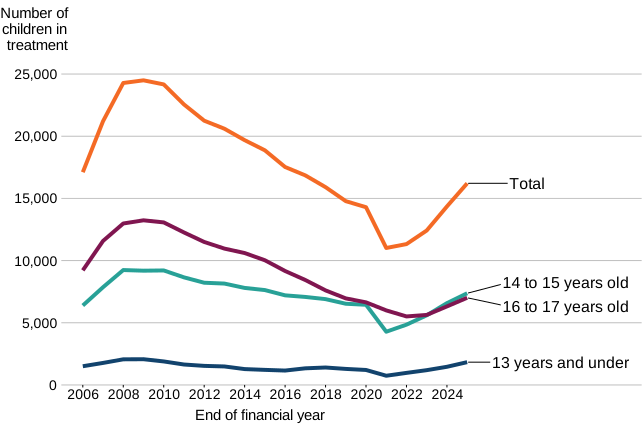
Figure 11 shows the trends in the numbers and ages of children in treatment since 2005 to 2006, split into 3 age groups, which are:
- 13 years and under
- 14 to 15 years old
- 16 to 17 years old
The total number in treatment increased from 17,105 in 2005 to 2006 to a high of 24,494 in 2008 to 2009. Since then, the number of children in treatment fell steadily up to 2020 to 2021, which saw a steeper fall to 11,013. Over the last 4 years, there has been a rise to 16,212 children in treatment in 2024 to 2025.
The 3 age groups shown have largely followed these trends since 2005 to 2006. Last year was the first year where 14 to 15 year olds were the largest age group in treatment, after 16 to 17 year olds being the largest age group for all previous years. The 13 years and under group makes up the smallest proportion for all years. The age profile of children in treatment has been getting progressively younger over the last 5 years.
Figure 11: trends in age and numbers in treatment
| Year | 13 years and under | 14 to 15 years old | 16 to 17 years old | Total |
|---|---|---|---|---|
| 2005 to 2006 | 1,504 | 6,386 | 9,215 | 17,105 |
| 2006 to 2007 | 1,770 | 7,858 | 11,579 | 21,207 |
| 2007 to 2008 | 2,060 | 9,238 | 12,982 | 24,280 |
| 2008 to 2009 | 2,069 | 9,187 | 13,238 | 24,494 |
| 2009 to 2010 | 1,890 | 9,206 | 13,069 | 24,165 |
| 2010 to 2011 | 1,643 | 8,651 | 12,261 | 22,555 |
| 2011 to 2012 | 1,533 | 8,219 | 11,497 | 21,249 |
| 2012 to 2013 | 1,487 | 8,151 | 10,963 | 20,601 |
| 2013 to 2014 | 1,275 | 7,801 | 10,606 | 19,682 |
| 2014 to 2015 | 1,211 | 7,628 | 10,026 | 18,865 |
| 2015 to 2016 | 1,157 | 7,205 | 9,161 | 17,523 |
| 2016 to 2017 | 1,337 | 7,076 | 8,436 | 16,849 |
| 2017 to 2018 | 1,402 | 6,899 | 7,601 | 15,902 |
| 2018 to 2019 | 1,289 | 6,529 | 6,959 | 14,777 |
| 2019 to 2020 | 1,204 | 6,446 | 6,641 | 14,291 |
| 2020 to 2021 | 740 | 4,280 | 5,993 | 11,013 |
| 2021 to 2022 | 969 | 4,848 | 5,509 | 11,326 |
| 2022 to 2023 | 1,188 | 5,600 | 5,630 | 12,418 |
| 2023 to 2024 | 1,459 | 6,578 | 6,315 | 14,352 |
| 2024 to 2025 | 1,832 | 7,371 | 7,009 | 16,212 |
Trends in recorded alcohol and drug use
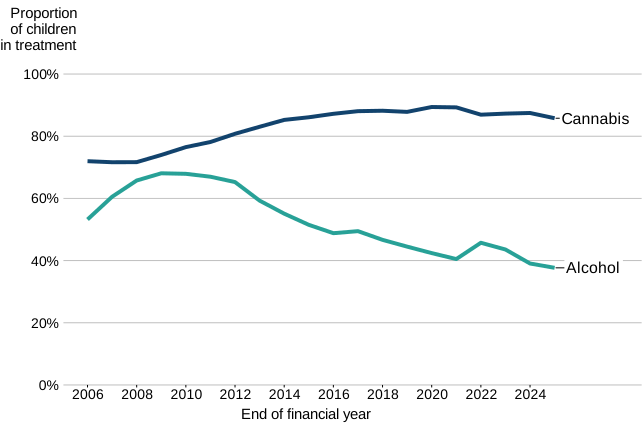
The proportion of children in treatment who said they had problems with cannabis has been between 85% and 90% since 2013 to 2014. The proportion who reported having alcohol problems has been largely declining from a peak of 68% in 2008 to 2009 to 38% in 2024 to 2025.
Figure 12: trends in reported substances
The proportion of children in treatment for ketamine problems was consistently low (under 2.5%) between 2005 and 2018. However, the proportion has increased from 1.3% in 2016 to 2017 to 9% in 2024 to 2025, an increase of 8 percentage points over 8 years. Ketamine is now the third most common problem substance, excluding nicotine.
The proportion of children treated for ecstasy has fluctuated. It decreased to 4% between 2010 and 2012 before rising to a peak of 14% between 2017 and 2019. It has decreased to 8% in 2024 to 2025.
The proportion of children in treatment for amphetamine use peaked at 12% in 2012 to 2013. Since then, there has been a trend of decreasing proportions of children in treatment for amphetamine use (0.4% this year).
The proportion of children in treatment for cocaine peaked in 2008 to 2009 (13%) and has since gradually fallen to 6% in 2024 to 2025.
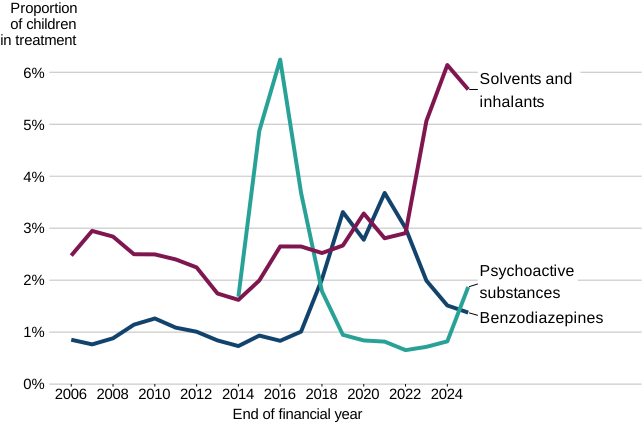
The proportion of children reporting psychoactive substances increased from 1% in the previous year to 2% in 2024 to 2025, following a long downward trend.
The proportion of children who reported benzodiazepines as a problematic substance was 2% or higher from 2017 to 2022 but has trended downwards to 1.4% in 2024 to 2025.
The proportion of children seeking help for heroin has remained stable and under 0.5% since 2017 to 2018.
The number of children in treatment for solvent and inhalant misuse, which includes nitrous oxide, increased sharply between 2021 to 2022 to 2023 to 2024 (from 2.9% to 6.1%), and has decreased slightly to 5.7% this year.
The data tables for this year’s statistics also contain trends by the primary substance. This is the main problem substance that the child reported when they entered treatment.
Figure 13: trends in amphetamine, cocaine, ecstasy and ketamine misuse
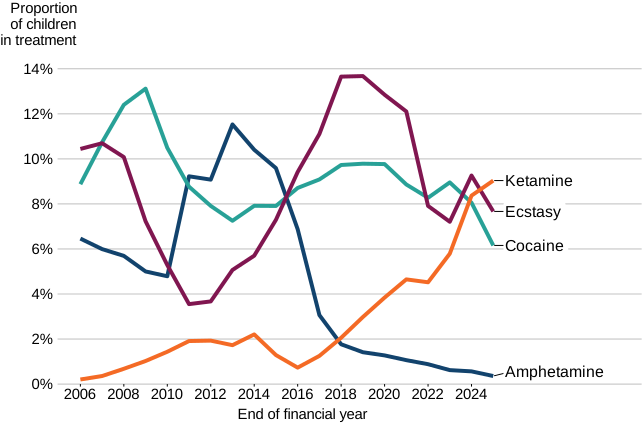
Figure 14: trends in solvents and inhalants, benzodiazepines and psychoactive substances
Background and policy context
Background to the data
This report presents statistics on the availability and effectiveness of children’s alcohol and drug treatment in England and the profile of those accessing treatment.
The statistics in this publication come from analysis of the National Drug Treatment Monitoring System (NDTMS). NDTMS collects data from sites providing structured alcohol and drug interventions to children in every local authority in England.
The data collected includes information on the demographics and personal circumstances of children receiving treatment, as well as details of the interventions delivered and their outcomes.
You can find more details on the methodology used in the report on the annual publications for NDTMS page.
Policy context
Alcohol and drug treatment in England is commissioned by local authorities using the public health grant. They are responsible for assessing local need for treatment and commissioning a range of services and interventions to meet that need.
Public health grants to local authorities: 2024 to 2025 makes it clear that:
A local authority must, in using the grant: have regard to the need to improve the take up of, and outcomes from, its drug and alcohol misuse treatment services, based on an assessment of local need and a plan which has been developed with local health and criminal justice partners.
The Office for Health Improvement and Disparities in the Department of Health and Social Care works with local authorities and provides them with bespoke data, guidance, tools and other support to help them commission services more effectively.
Guidance for alcohol and drug treatment is available in the Alcohol and drug misuse prevention and treatment guidance collection.
A wide range of NDTMS data is available on the NDTMS website, including some data reports that are only available to local authority commissioners (with a username and password).
NHS England publishes Smoking, drinking and drug use among young people in England. The reports include survey results from secondary school pupils in years 7 to 11 (mostly aged 11 to 15).
The effect of the COVID-19 pandemic
The COVID-19 pandemic may have affected trend data in this report. In 2020 to 2021, most services had to restrict face-to-face contact, which affected the types of interventions that service users received.
Enquiries or feedback
If you have any enquiries or feedback about these statistics, email evidenceapplicationteam@dhsc.gov.uk.