Student Loans in England: Financial Year 2025-26
Updated 2 July 2026
Applies to England

© Crown copyright 2026
This publication is licensed under the terms of the Open Government Licence v3.0 except where otherwise stated. To view this licence, visit nationalarchives.gov.uk/doc/open-government-licence/version/3 or write to the Information Policy Team, The National Archives, Kew, London TW9 4DU, or email: psi@nationalarchives.gov.uk.
Where we have identified any third party copyright information you will need to obtain permission from the copyright holders concerned.
This publication is available at https://www.gov.uk/government/statistics/student-loans-in-england-2025-to-2026/student-loans-in-england-financial-year-2025-26
Download a pdf version of this document.
If you wish to print the document, we’d suggest printing the pdf.
Introduction
This statistics publication presents figures and observations on student loan outlays, repayments and borrower activity for England domiciled Student Loans Company (SLC) customers. This covers students who are studying, or borrowers who have studied in higher education (HE) and further education (FE) in the United Kingdom (UK). Figures are also shown for European Union (EU) students studying in England.
Figures provided here are for Income Contingent Repayment (ICR) Loans administered by SLC, which were introduced in academic year 1998/99.
This publication covers financial years up to and including 2025-26.
Complete information on student finance arrangements in England is available at the Student Finance England website.
Accessibility
Public Sector Accessibility Regulations mean that all public sector organisations have a legal duty to make their websites accessible for everyone, including those with disabilities. In 2023, as part of SLC’s ongoing commitment to improving accessibility of our websites and content, we made changes to the way we publish our statistics.
The changes mainly affected the way we provided visual information, including:
- including descriptive information of the full time-series for each graph within the main body of the statistics publication.
- providing data used to form each graph in accessible / downloadable tables.
- changing the way we present charts and graphs to be more accessible, including changes to colour, labels and legends.
We create our statistics publications in a way that helps to ensure that the department’s statistical outputs are accessible, while continuing to meet the statistical needs of our users.
What can you use these statistics for?
These statistics can be used as a reference to the value of the Student Loans Company (SLC) loan balance at the end of the financial year, student outlay within a financial year and information on borrower activity and repayment amounts.
The data used in this publication is sourced from Student Loans Company’s ‘Customer Ledger Account Servicing System’ (CLASS). This system only holds information on borrowers who have received funding from SLC. This publication also only includes information on loan products and does not include information regarding grants and bursaries. Under normal circumstances grants and bursaries are not considered repayable.
Due to this, these statistics cannot be used to analyse trends or to draw conclusions regarding the full UK education funding landscape.
Things you need to know
More Frequent Data Sharing (MFDS)
From April 2019 the frequency in which repayments data is provided to SLC by HM Revenues and Customs (HMRC) increased. Before this SLC received customer repayment data, reported by employers, annually from HMRC after the end of the financial year. This increased to weekly. This meant for SLC customers being paid monthly through the Pay as You Earn (PAYE) system, SLC receives information of student loan deductions monthly. This increase in frequency resulted in a change in time series for repayments and interest applied for the 2019-20 financial year. From the 2020-21 financial year, the time series has normalised with a single years’ worth of repayments data being included (just those processed by SLC within that financial year).
For more information on how this affected repayments and resulting interest calculations, please refer to our Additional information section and for further detail, please refer to GOV.UK.
Self-Assessment data
Self-Assessment repayment data is supplied from HMRC to SLC via a different process to PAYE. As a result, this will still be provided annually after the end of the financial year (and not weekly as for PAYE customers). This will therefore still show in the financial year in which it was posted to the customer’s account, as in previous years. For this reason, financial year 2025-26 will mostly comprise of Self-Assessment repayments data from the previous financial year. This will also be true of the interest calculations being applied for these borrowers.
In Table 1A and 1B, in previous years we have had to mark the figures relating to Self-Assessment repayments as ‘estimated’ due to this being provided later than anticipated. From 2018-19 this has been provided as expected, allowing this to be included as final figures.
In Table 4A and 4B we therefore mark the latest financial year of repayment as ‘provisional’ as the 2025-26 Self-Assessment earnings information is received from HMRC after the 30 April effective date. The final figure is shown in the following years’ publication.
Rounding, totals and averages
All borrower numbers and amounts have been rounded to the nearest 100 and £100,000, the nearest 1 decimal point on the data tables given. Average amounts are rounded to the nearest £10. Totals and averages are calculated from un-rounded numbers, these therefore may differ from adding up rounded components.
Effective dates
The effective dates used in this publication are as follows:
Table 1 and 2: 31 March
Table 3, 4 and 5: 30 April
Tables 3, 4 and 5 provide information which requires annual PAYE end of year data supplied by HMRC to SLC, even after the introduction of MFDS. This is received after the financial year ends hence the later effective date.
Executive summary - Financial year 2025-26
For more detail, please click on the individual headline…
-
Higher education ICR student loan balance totals £294.6 billion
-
Further education student loan balance totals £2.0 billion
-
Plan 5 borrowing increases to equate 10.4% of higher education loan balance in financial year 2025-26
-
Undergraduate lending in 2025-26 totalled £20.5 billion, representing a 3.5% increase compared to the previous year
-
Financial year 2025-26 reports the second consecutive year of increase in postgraduate borrowing, up 8.7% to £0.8 billion
-
Total amount paid out in further education loans continues to reduce in 2025-26, down to £80.2 million
-
Continued reduction in RPI leads to a 19.4% fall in total interest applied to higher education loans, to £12.2 billion in financial year 2025-26
-
Average higher education borrower loan balance entering repayment reduces as first Plan 5 cohort becomes liable to repay in 2025/26, to £47,730
-
Average further education borrower loan balance entering repayment reduces as first Plan 5 borrowers becomes liable to repay in 2025-26, to £3,360
-
82.2% of all higher education borrowers who are liable to repay are in the UK tax system and 51.1% made a repayment in financial year 2025-26
-
72.1% of all further education borrowers who are liable to repay are in the UK tax system and 27.8% made a repayment in financial year 2025-26
-
6.4% increase in higher education borrower repayments in financial year 2025-26, to £5.3 billion
-
3.0% decrease in repayments made by further education borrowers, to £46.7 million
-
Provisional figures suggest the total amount repaid via HMRC by higher education borrowers has remained relatively stable when compared to the finalised figure for 2024-25, at £4.2 billion. Based on previous years, provisional figures are likely to rise when finalised.
-
Provisional figures indicate the total amount repaid via HMRC by further education borrowers reduced by 3.1% in 2025-26, to £118.5 million. Based on previous years, provisional figures are likely to rise when finalised
-
Small 1.0% decrease in the total amount repaid by higher education borrowers via scheduled repayments directly to SLC, at £174.9 million
-
4.8% increase in the total amount repaid via voluntary repayments directly to SLC by higher education borrowers, to £733.7 million
-
Finalised data for 2024-25 indicates an 2.7% increase in the average amount repaid by higher education ICR loan borrowers via HMRC, to £1,150
Income Contingent (ICR) Student Loan balance
Higher education ICR student loan balance totals £294.6 billion
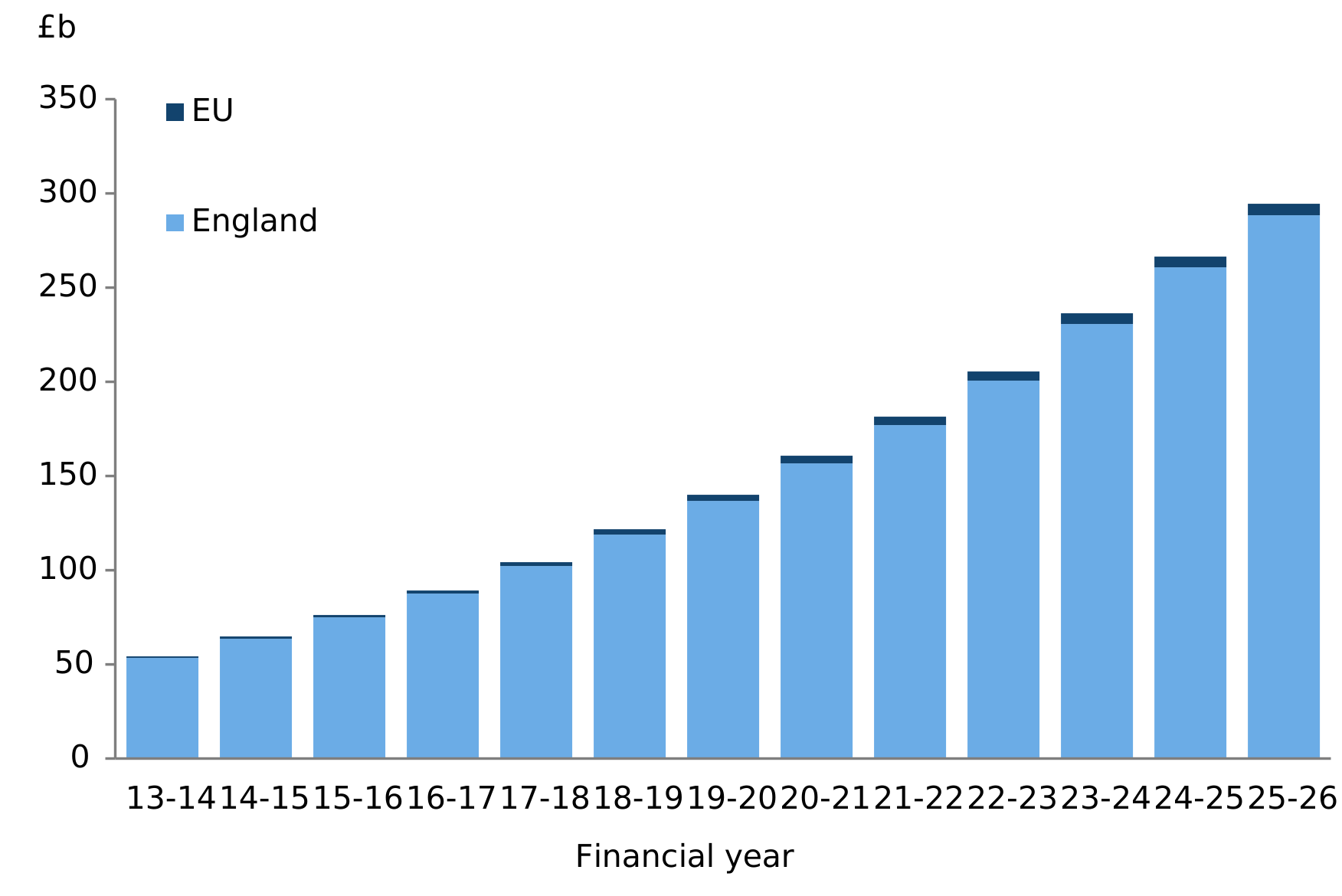
Figure 1: Total balance of ICR student loans at the end of financial year 2013-14 to 2025-26: Higher education (£ billion)
The legend follows the same order as the stacks in the bars.
Source: Table 1A
Download the data for Figure 1 (ODS, 6KB)
Figure 1 indicates that the loan balance grows year-on-year as new lending and interest added to existing balances outweighs repayments and write-offs.
The total higher education loan balance has increased from £54.4 billion in financial year 2013-14, to £294.6 billion by 2025-26. When comparing this figure to the 2024-25 year-end total of £266.6 billion, there has been an increase of 10.5% (+ £28.0 billion). This increase is lower than the average growth of 13.5% recorded over the previous four financial years.
The EU borrowers’ balance has increased from £0.7 billion in 2013-14, to £6.0 billion by 2025-26. This is 3.7% higher (+ £0.2 billion) than the 2024-25 financial year-end figure of £5.8 billion. Although the EU loan balance has increased, the rate of increase continues to slow (down from 39.7% in 2014-15).
Tuition fee funding for new EU students in England (without a ‘settled’ or ‘pre-settled status’) ceased in academic year 2021/22. However, those continuing a course remain eligible for financial support for the duration of their course.
Of the total balance, 78.0% are amounts which are liable for repayment. This means that a borrower has passed their Statutory Repayment Due Date (SRDD). This is the point they would become liable to begin repaying a loan (normally the April after graduating or otherwise leaving their course), provided they are earning above the relevant income threshold).
Further education ICR student loan balance totals £2.0 billion
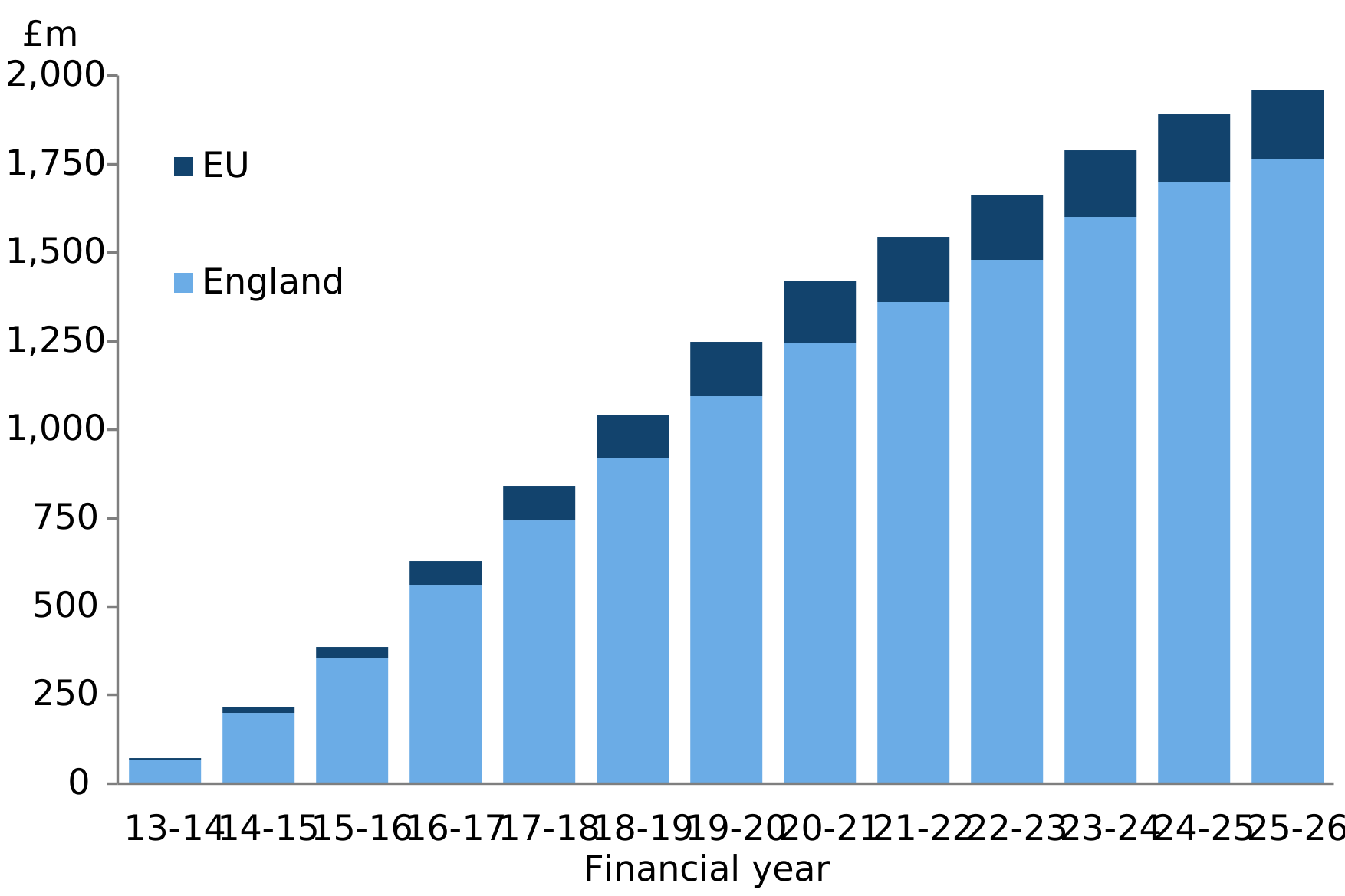
Figure 2: Total balance of ICR student loans at the end of financial year 2013-14 to 2025-26: Further education (£ million)
The legend follows the same order as the stacks in the bars.
Source: Table 1B
Download the data for Figure 2 (ODS, 6KB)
Figure 2 shows that the total loan balance for further education borrowers has increased from £72.4 million in financial year 2013-14, to £2.0 billion by 2025-26.
When comparing this figure to the 2024-25 year-end total of £1.9 billion, there has been an increase of 3.6% (+ £68.8 million). Although the balance continues to grow, the rate of increase has slowed consistently since 2014-15 (down from 199.6%).
The balance for 2025-26 is net of £40.5 million in written-off loans, the vast majority of which (£36.4 million) is attributed to the ‘Access to HE’ policy. Student Finance England will ‘write off’ any outstanding further education loan balance owed for an eligible ‘Access to HE’ course once the borrower has completed a higher education course. Compared to the previous financial year, the amount written-off in relation to ‘Access to HE’ is 8.6% lower (- £3.4 million). For more information on write-off policies, please refer to GOV.UK.
Of the total balance, 88.6% is amounts which are liable to repay, meaning that the borrower has passed their SRDD. This is a more significant percentage than noted in regard to the higher education balance, due to the continued reduction in new further education loans (known as Advanced Learner Loans) taken out.
EU further education borrower’s balance has increased from £5.0 million in financial year 2013-14, to £194.1 million by 2025-26. This is relatively in line with the previous year’s balance of £193.1 million (+ 0.5%). This continues the slowing year-on-year increase down from 219.8% in 2014-15.
In line with higher education support, new EU students in England (without a ‘settled’ or ‘pre-settled status’) are no longer eligible for tuition fee funding. However, those continuing a course in 2025/26 remain eligible for financial support for the duration of their course.
Income Contingent Student Loan balance by repayment plan
In financial year 2025-26, there were four repayment plans. Students who began their courses before 1 September 2012 are on Repayment Plan 1, while those who started between 1 September 2012 and 31 July 2023 are on Repayment Plan 2. Repayment Plan 5 is a new plan introduced for all undergraduates who began their courses on or after 1 August 2023. Students with postgraduate loans are on Repayment Plan 3. All further education loans (Advanced Learner Loans) fell under Plan 2 regulations until 1 August 2023, after which new students are included in Plan 5. Borrowers may be on multiple plans if they have studied multiple courses.
Plan 5 borrowing increases to equate 10.4% of higher education loan balance in financial year 2025-26
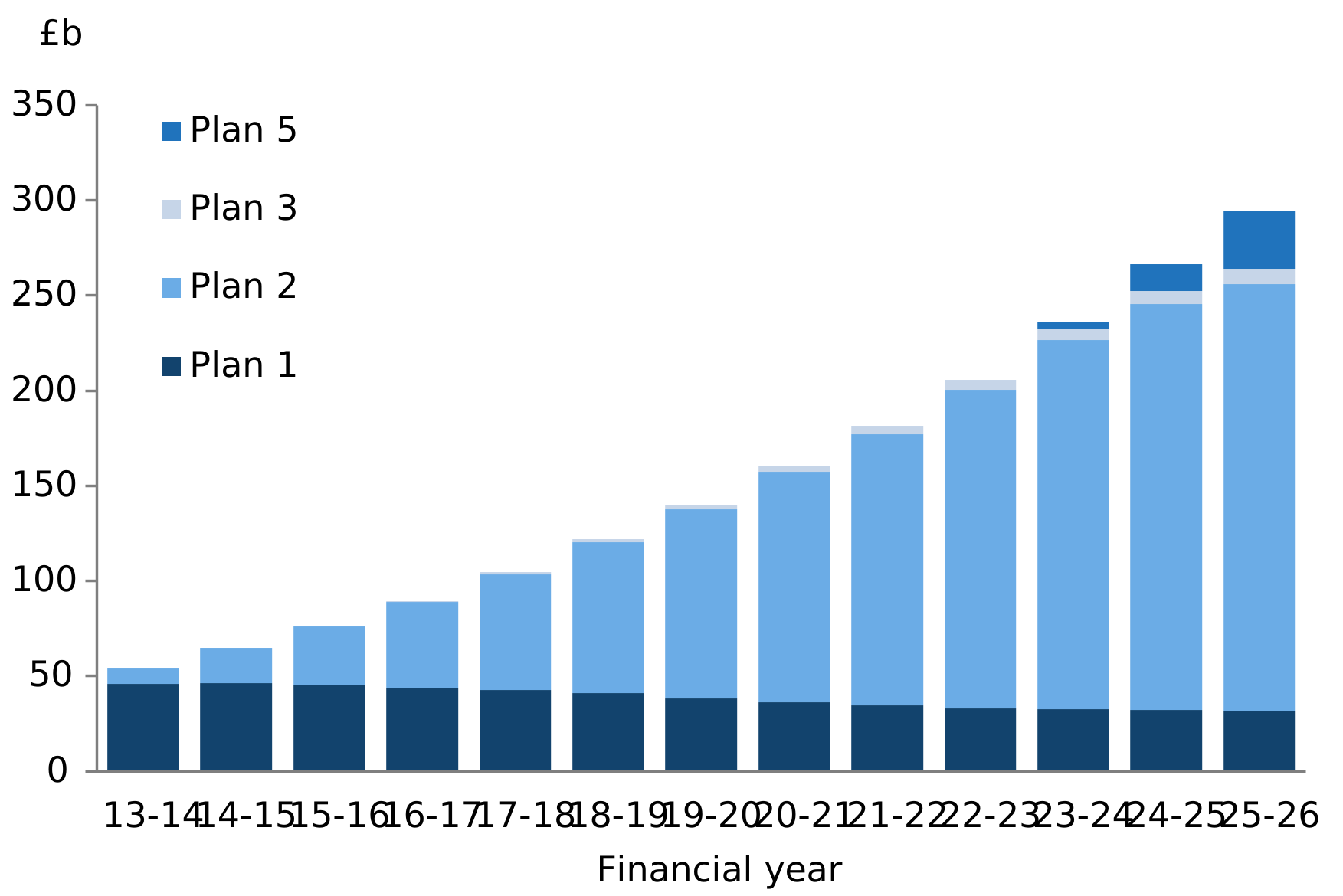
Figure 3: Total balance of ICR loans at the end of financial year 2013-14 to 2025-26: Higher education by repayment plan type (£ billion)
The legend follows the same order as the stacks in the bars.
Source: Table 1A
Download the data for Figure 3 (ODS, 6KB)
Figure 3 indicates the changing proportion of the higher education loan balance in respect to which repayment plan the loan relates to.
In financial year 2013-14, Plan 1 loans represented 84.6% of the entire higher education loan balance. By 2025-26 this had reduced to just 10.8%. This is as a result of no new Plan 1 loans being issued following the 2011/12 academic year.
Due to the replacement of Plan 1 loans with Plan 2 for all new borrowers in academic year 2012/13, the percentage of the balance attributed to Plan 2 loans increased from 15.4% in financial year 2013-14, to peak at 82.0% in 2023-24. In 2024-25, owing to the replacement of Plan 2 loans with Plan 5 for all new borrowers in academic year 2023/24, the percentage of the balance attributed to Plan 2 loans first decreased, down to 79.9%. By the end of the first financial year of Plan 5 loans, the related loan balance equated to 1.6%, rising to 10.4% in 2025-26, further reducing the Plan 2 proportion to 76.1%.
Following their introduction in academic year 2016/17, Plan 3 (postgraduate) loans made up just 0.4% of the total higher education loan balance. This slowly increased and has remained relatively static since 2021-22, averaging 2.6%. For the first two financial years, this included purely Masters loans and from 2018-19, included Doctoral loans.
For more information on repayment plans, please refer to the Income Contingent Student Loan repayment plans, interest rates and calculations section on GOV.UK.
Total amount paid out in loans to student borrowers
Loans discussed in this section include Tuition Fee Loans and Maintenance Loans for undergraduates, Masters and Doctoral Loans for postgraduates and Advanced Learner Loans for further education students.
Undergraduate lending in 2025-26 totalled £20.5 billion, representing a 3.5% increase compared to the previous year
Figure 4: Total amount paid in undergraduate loans in financial years 2013-14 to 2025-26 (£ billion)
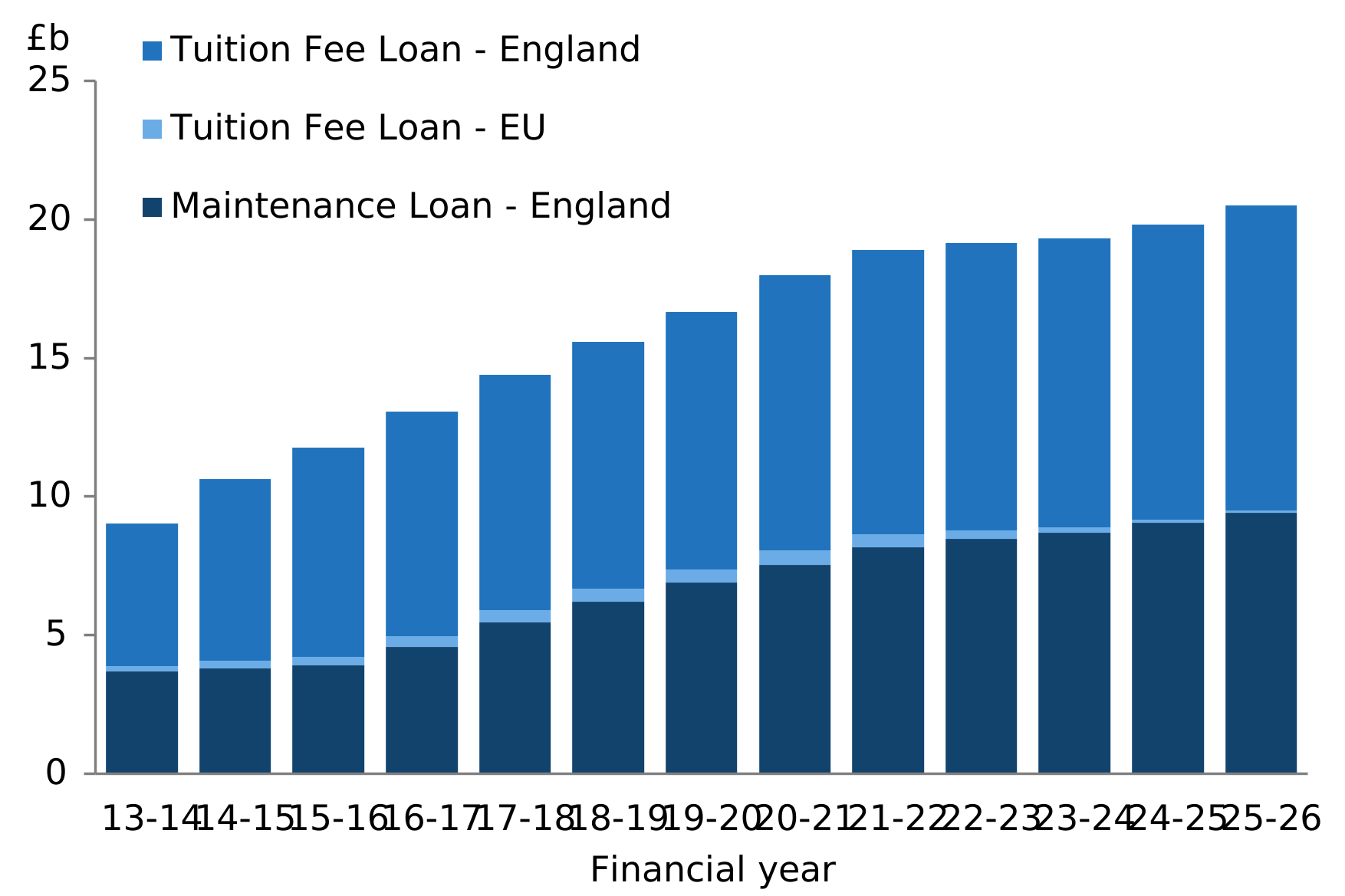
The legend follows the same order as the stacks in the bars.
Source: Table 1A
Download the data for Figure 4 (ODS, 6KB)
The total amount paid out in higher education loans (undergraduate and postgraduate) was £9.0 billion in financial year 2013-14, increasing to £21.3 billion by 2025-26. This is 3.7% higher than in the previous year. This is a more significant increase than the 2.5% increase reported in the previous year, and the 0.6% average in the two earlier years.
Figure 4 shows that the total amount paid out in the form of undergraduate ICR Loans has increased from £9.0 billion in financial year 2013-14, to £20.5 billion by 2025-26. When comparing this to the previous financial year, there has been an increase of 3.5%. While this represents a higher increase than the 2.5% recorded in the previous year, it remains below the % increases observed prior to 2022-23.
£5.1 billion in Tuition Fee Loans was paid out on behalf of England-domiciled undergraduates in 2013-14, increasing to £11.0 billion by 2025-26. This represents a 3.5% increase compared to the previous financial year, slightly higher than 2.1% growth noted in the previous year. This could be attributed to the increase in Tuition Fees in academic year 2025/26, from £9,250 to £9,535.
£0.20 billion in Tuition Fee Loans was paid on behalf of EU-domiciled undergraduates in 2013-14, gradually increasing to peak at £0.52 billion by 2020-21. The first reduction was reported in the following year (down by 11.5%) likely due to the discontinuation of EU student funding to new students. Reductions have continued since, with the most recent year noting a further 32.1% decrease, to £0.08 billion.
£3.7 billion was paid to undergraduate borrowers in the form of Maintenance Loans in financial year 2013-14, increasing to £9.4 billion by 2025-26. The most significant increase was reported in 2017-18 (+ 19.4%) due to the discontinuation of Maintenance Grants to new students. Since then, the rate of increase has slowed, falling to 4.1% in the most recent year, in line with the 4.0% reported in 2024-25.
Financial year 2025-26 reports the second consecutive year of increase in postgraduate borrowing, up 8.7% to £0.8 billion
Figure 5: Total amount paid in postgraduate loans in financial years 2013-14 to 2025-26 (£ million)
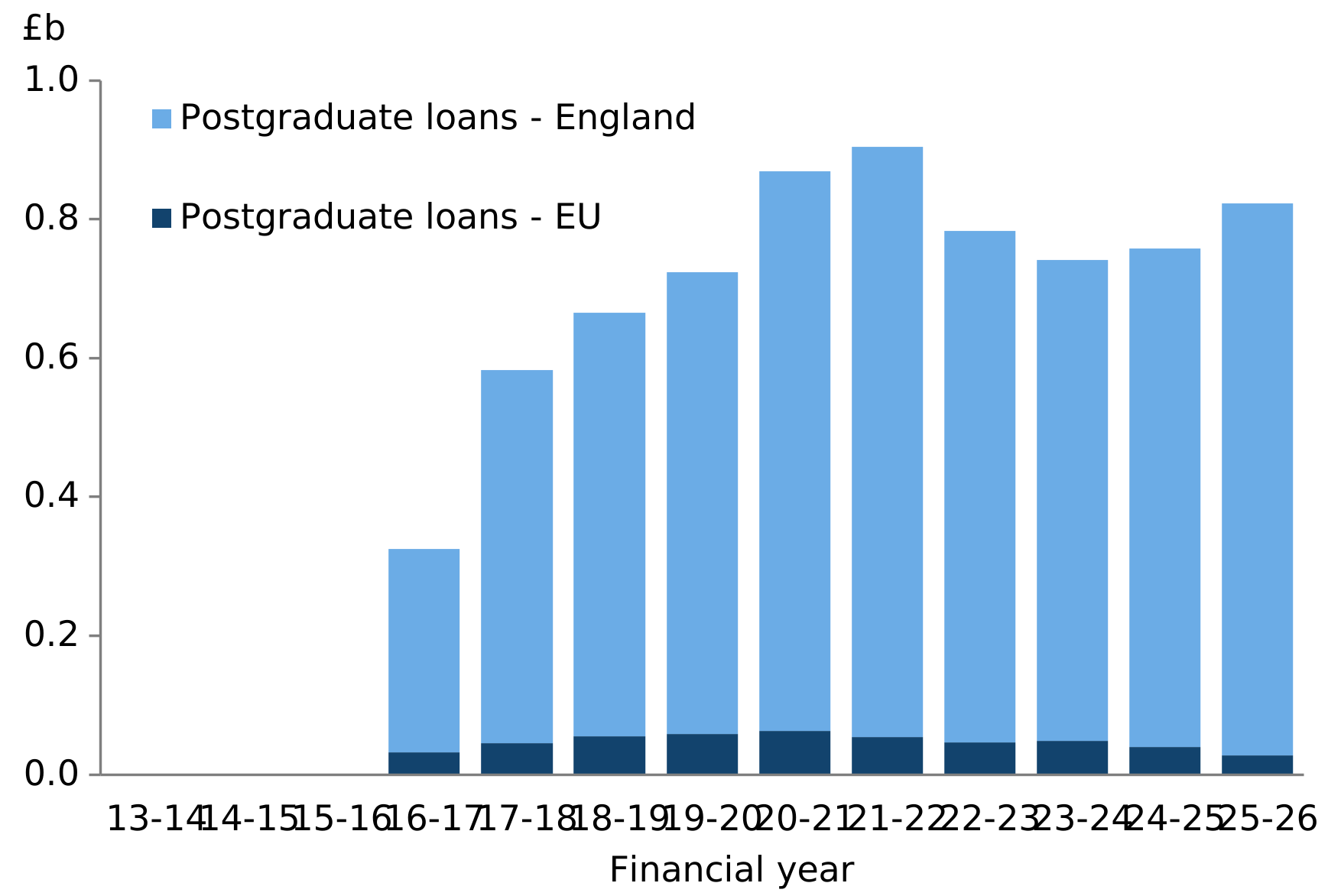
The legend follows the same order as the stacks in the bars.
Source: Table 1A
Download the data for Figure 5 (ODS, 5KB)
Figure 5 illustrates that postgraduate borrowing increased from £0.3 billion in its introductory financial year of 2016-17, to peak at £0.9 billion in 2021-22. Typically, the most significant increase occurred in the second year of availability (2017-18), up by 79.3%. 2020-21 also reported a notable increase, up by 20.1%, likely a result of the perceived reduced employment opportunity due to the COVID-19 pandemic, encouraging new students to pursue higher education and current students to continue their education. Financial year 2022-23 reported the first decrease in the amount paid out (down by 13.4%), with decline continuing in the following year. Since 2024-25, the amount has increased, first by 2.1%, then by a further, more significant 8.7% in the most recent year, up to £0.8 billion.
Total amount paid out in further education loans continues to reduce in 2025-26, down to £80.2 million
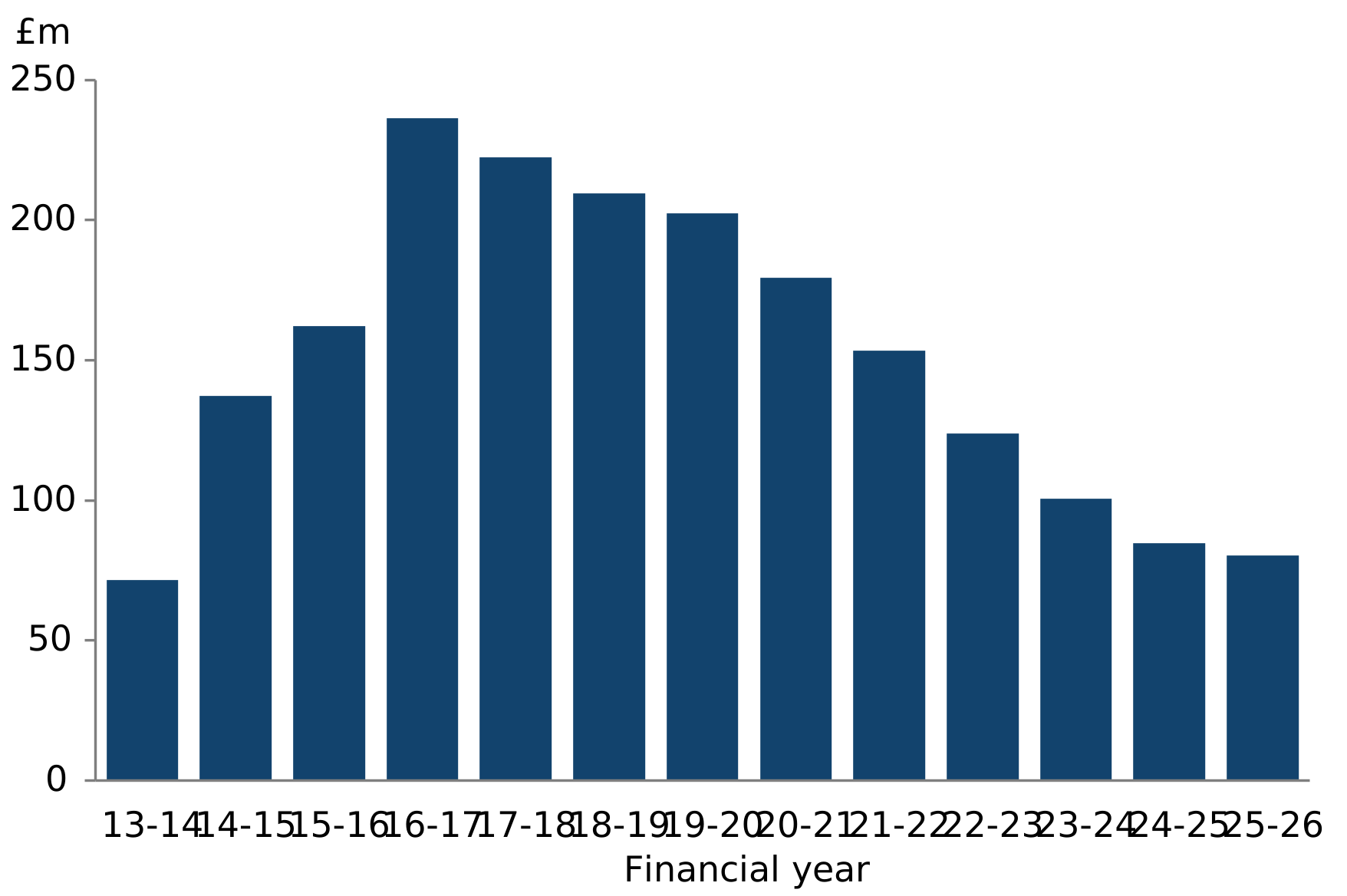
Figure 6: Total amount paid out in further education loans in financial years 2013-14 to 2025-26 (£ million)
Source: Table 1B
Download the data for Figure 6 (ODS, 5KB)
Figure 6 shows that in financial year 2013-14, £71.4 million was paid out in the form of Advanced Learner Loans. This increased to peak at £236.4 million by 2016-17. In 2017-18, the first decrease was reported, down 5.9% to £222.3 million. Since, the total has reduced each year, down to £80.2 million by 2025-26.
Interest added to Income Contingent Loans
The Retail Price Index (RPI), which measures inflation and changes in the UK cost of living, plays a key role in determining interest rates. The interest charged on higher education loans also depends on the repayment plan under which the loan falls. In the financial year 2025-26, there were four repayment plans.
- Plan 1 loan interest is subject to a low interest cap, calculated as the lower of the applicable RPI or the Bank of England Base Rate plus 1%
- Plan 2 loans, unlike other plans, apply a Variable Interest Rate (VIR), ranging from RPI to RPI + 3%, depending on the borrower’s income and whether they are in study or post-study.
- Plan 3 (Postgraduate loans) carry a fixed interest rate of RPI + 3%.
- Plan 5 loans have a fixed interest rate of RPI.
Continued reduction in RPI leads to a 19.4% fall in total interest applied to higher education loans, to £12.2 billion in financial year 2025-26
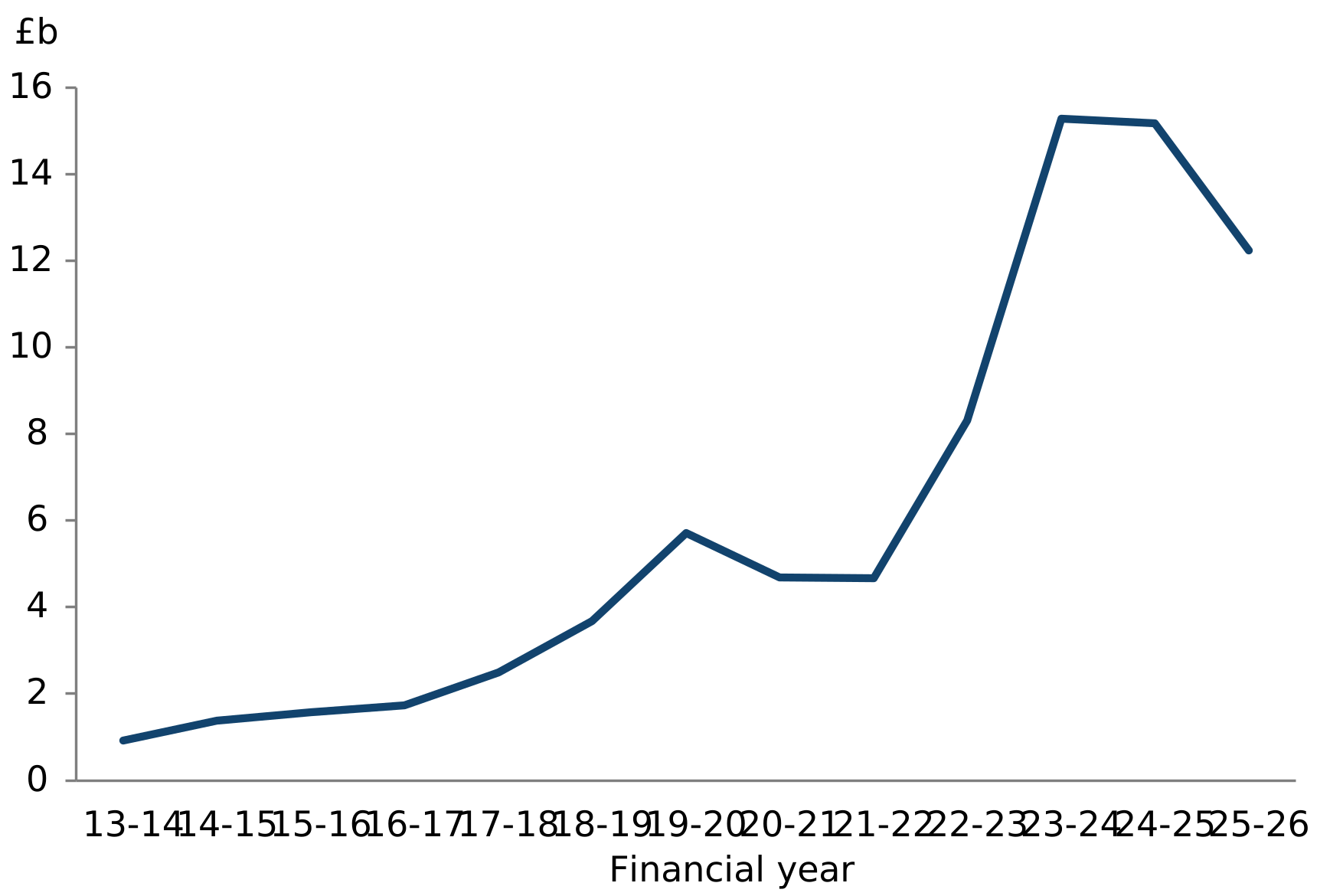
Figure 7: Total amount of interest accrued on higher education loans in financial years 2013-14 to 2025-26 (£ billion)
Source: Table 1A
Download the data for Figure 7 (ODS, 5KB)
Figure 7 shows that interest accrued on higher education (HE) loans increased from £0.9 billion in the 2013-14 financial year to £3.7 billion by 2018-19. A sharp rise occurred in 2019-20, when accrued interest increased by 55.7% to £5.7 billion. This was largely driven by the introduction of ‘More Frequent Data Sharing’ (MFDS), the more readily available data provided to SLC by HMRC. As a result, almost two years’ worth of customers’ PAYE repayments, and the associated interest calculations processed by SLC in both 2018-19 and 2019-20, were recorded within the 2019-20 financial year. Further details are provided in the Additional information section. The time series normalised in the following year.
Despite a 13.1% increase in the total HE loan balance, total interest accrued stabilised in 2021-22 at £4.7 billion. This was primarily due to lower interest rates being applied for most of the year, following the introduction of caps on Plan 2 and Plan 3 loan interest rates.
The Department for Education (DfE) routinely monitors student loan interest rates against prevailing market rates for comparable commercial loans. Where the DfE considers that the maximum interest rate for Plan 2, Plan 3, or Plan 5 loans exceeds market norms, it applies a ‘Prevailing Market Rate’ (PMR) cap for a period of one month or longer. This mechanism ensures that borrowers are not charged interest rates significantly above those available in the wider commercial market.
During the 2021-22 financial year, interest caps were introduced for Plan 2 and Plan 3 loans, averaging 4.5%. In response to further increases in RPI, these rates were capped again in September 2022, maintaining an average of 6.5% for the remainder of the year. Interest rate caps continued throughout 2023-24, with average rates rising to 7.3%.
Despite the continued application of caps, total interest accrued rose sharply, by 78.3% in 2022-23 and by a further 83.7% in 2023-24, to £15.3 billion. Without these caps however, the sustained rise in RPI would have resulted in interest rates of approximately 13.5% for Plan 2 and Plan 5 loans, and around 16.5% for Plan 3 loans during 2023-24.
For the first five months of the 2024-25 financial year, interest rates remained capped at varying levels, averaging 7.9%. Caps were lifted on 1 September 2024 after the applicable RPI rate fell to 4.3%. Consequently, total interest accrued in 2024-25 was £15.2 billion, representing a 0.7% decrease compared with the previous year. Following a further reduction in RPI to 3.2% in September 2025, total interest accrued for 2025-26 fell by a notable 19.4%, decreasing to £12.2 billion.
The total accrued interest to loans across all repayment plans in 2025-26 equated to 4.6% of the previous financial year’s total higher education loan balance, compared to 6.4% in 2024-25.
Typically, regardless of interest rates, the total interest accrued will increase as the loan balance grows year after year. However, due to the notable reduction in the interest rates applied, this has offset the increase in the most recent year. It should be noted that a borrower’s rate of interest does not affect their monthly repayment amount. For more information on interest rates, please refer to the Income Contingent Student Loan repayment plans, interest rates and calculations section on GOV.UK.
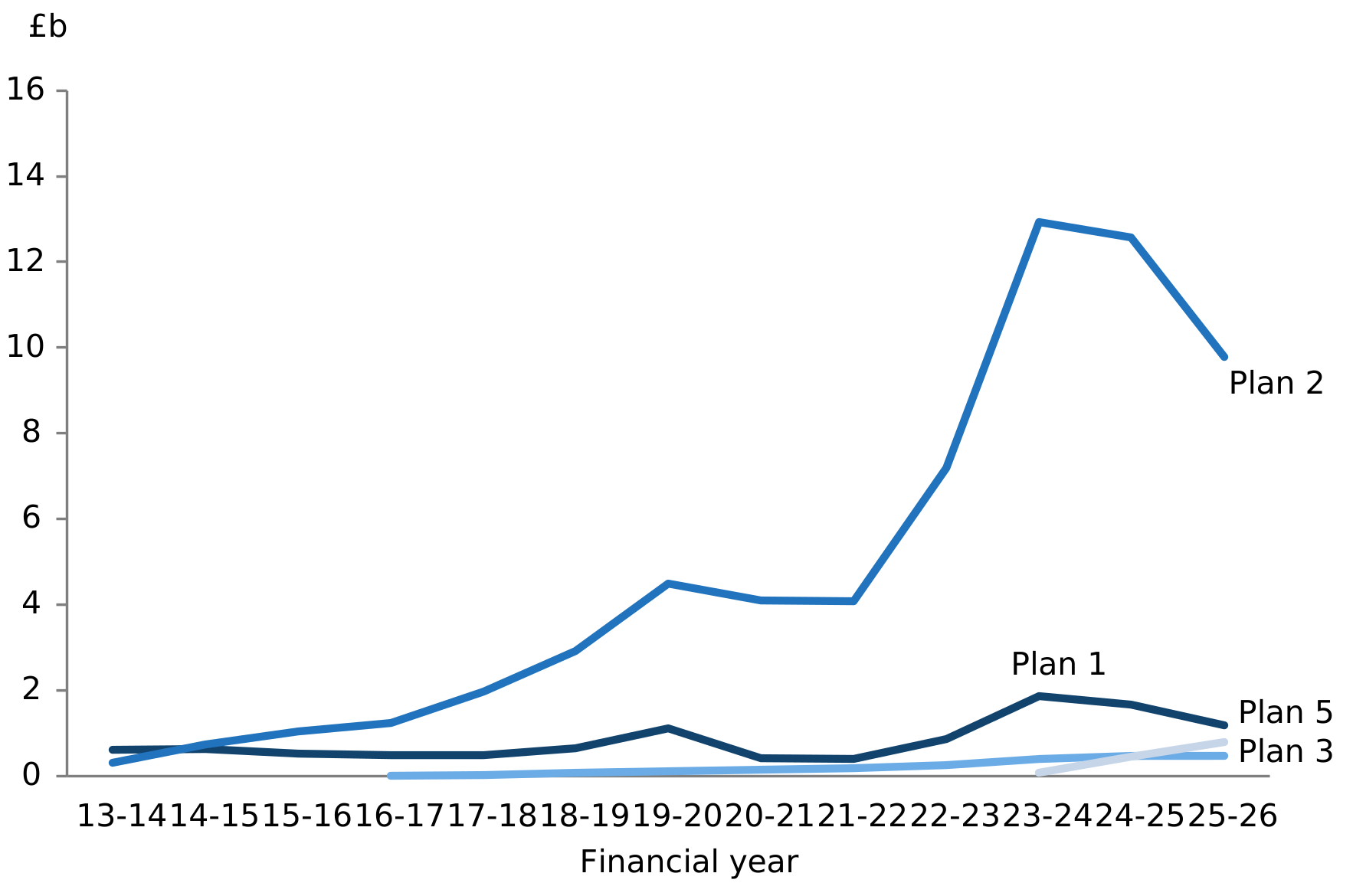
Figure 8: Total amount of interest accrued on higher education loans in financial years 2013-14 to 2025-26 by repayment plan (£ billion)
Source: Table 1A
Download the data for Figure 8 (ODS, 6KB)
Figure 8 indicates the amount of interest added by financial year, split by the four repayment plans.
The total amount of annual interest accrued to Plan 1 accounts averaged £0.6 billion between 2013-14 and 2021-22. Plan 1 interest is subject to a low interest cap, calculated as the lower of the applicable RPI or the Bank of England Base Rate plus 1%. Therefore, as a result of the notable increases in both rates during financial year 2022-23, the interest applied to these loans increased by 118.2% to £0.9 billion.
Owing to further rate increases in 2023-24, the amount accrued rose by a further 115.4% to £1.9 billion. From September 2024, interest rates applied to each plan type reduced, most significantly against Plan 1 loans which resulted in a decrease in the total interest accrued for financial year 2024-25 of 11.0%, down to £1.7 billion. The further rate reduction in interest rate applied from September 2025 resulted in the total interest accrued in 2025-26 reducing by a further and more notable 29.1%, to £1.2 billion.
9.7% of the total higher education loan interest accrued in financial year 2025-26 was attributed to Plan 1 loans (vs. 11.0% in the previous year). Plan 1 interest also represented 3.7% of the previous year’s Plan 1 loan balance in 2025-26, compared to 5.1% in 2024-25.
Plan 2, 3 and 5 loan interest rates are linked to the Retail Price Index (RPI). However, during the 2021-22 financial year, interest rates on these loans were capped to protect borrowers from sharp increases in inflation. The caps were subsequently lifted but were reintroduced during 2022-23. They remained in place throughout 2023-24 and into 2024-25, before being lifted again in September 2024.
The total annual interest accrued on Plan 2 loan accounts increased from £0.3 billion in 2013-14 to £4.1 billion by 2021-22. Despite the application of interest rate caps, significant increases in the applicable RPI led to a 76.0% rise in Plan 2 interest accrued in 2022-23, followed by a further 79.8% increase to £12.9 billion in 2023-24. In 2024-25, following the first reduction in the applicable RPI and the lifting of interest rate caps, interest applied to Plan 2 (as well as Plan 3 and Plan 5) loans fell. This resulted in a 2.7% decrease in total interest accrued on Plan 2 loans, to £12.6 billion. Owing to a further decrease in RPI in 2025-26, interest reduced by a further 22.3%, to £9.8 billion.
During periods when interest rate caps were applied to Plan 2 loans, the variable interest element did not apply. Once the caps were lifted, the variable interest rate element was reintroduced.
In financial year 2025-26, Plan 2 loans accounted for 79.9% of the total higher education loan interest accrued, down from 82.9% in the previous year. Interest represented 4.6% of the previous year’s Plan 2 loan balance, compared with 6.5% in 2024-25.
The total amount of annual interest accrued to Plan 3 loan accounts increased from £4.7 million in 2016-17 to £0.2 billion by 2021-22. Despite the introduction of interest caps, this increased by 41.5% in 2022-23 and by further by 53.1% in 2023-24, to £0.4 billion.
Although interest rates were reduced in the second half of 2024-25, the total interest accrued continued to increase, albeit at a much slower rate, rising by 20.3%. This was followed by a further, yet much smaller increase of 1.4% in 2025-26, bringing total accrued, £0.5 billion.
In financial year 2025-26, Plan 3 loans accounted for 3.9% of total higher education loan interest accrued, broadly in line with the 3.1% recorded in 2024-25. Interest represented 6.9% of the previous year’s Plan 3 loan balance in 2025-26, compared with 7.8% in 2024-25.
In financial year 2025-26, the total amount of interest accrued on Plan 5 loans (introduced in academic year 2023/24) increased from £0.5 billion to £0.8 billion. This rise was driven by a 56.8% increase in the total amount of Plan 5 loans paid out.
Plan 5 loan interest accounted for 6.5% of total higher education loan interest accrued in 2025-26, a notable increase from 3.0% in the previous year. This proportion will continue to rise, as all new higher education undergraduates now borrow under Plan 5. In contrast, the share of interest attributable to Plan 2 loans will continue to decline, reflecting the fact that no new Plan 2 loans have been issued since pre-August 2023. Interest accrued on Plan 5 loans represented 5.6% of the previous year’s Plan 5 loan balance in 2025-26, compared with 12.3% in 2024-25.
Note: The first cohort of Plan 5 borrowers became liable for repayment in April 2026, however, interest was accrued from the date the first loan payment was received.
Continued reduction in RPI leads to a 31.8% reduction in total interest applied to further education loans, to £73.0 million in financial year 2025-26
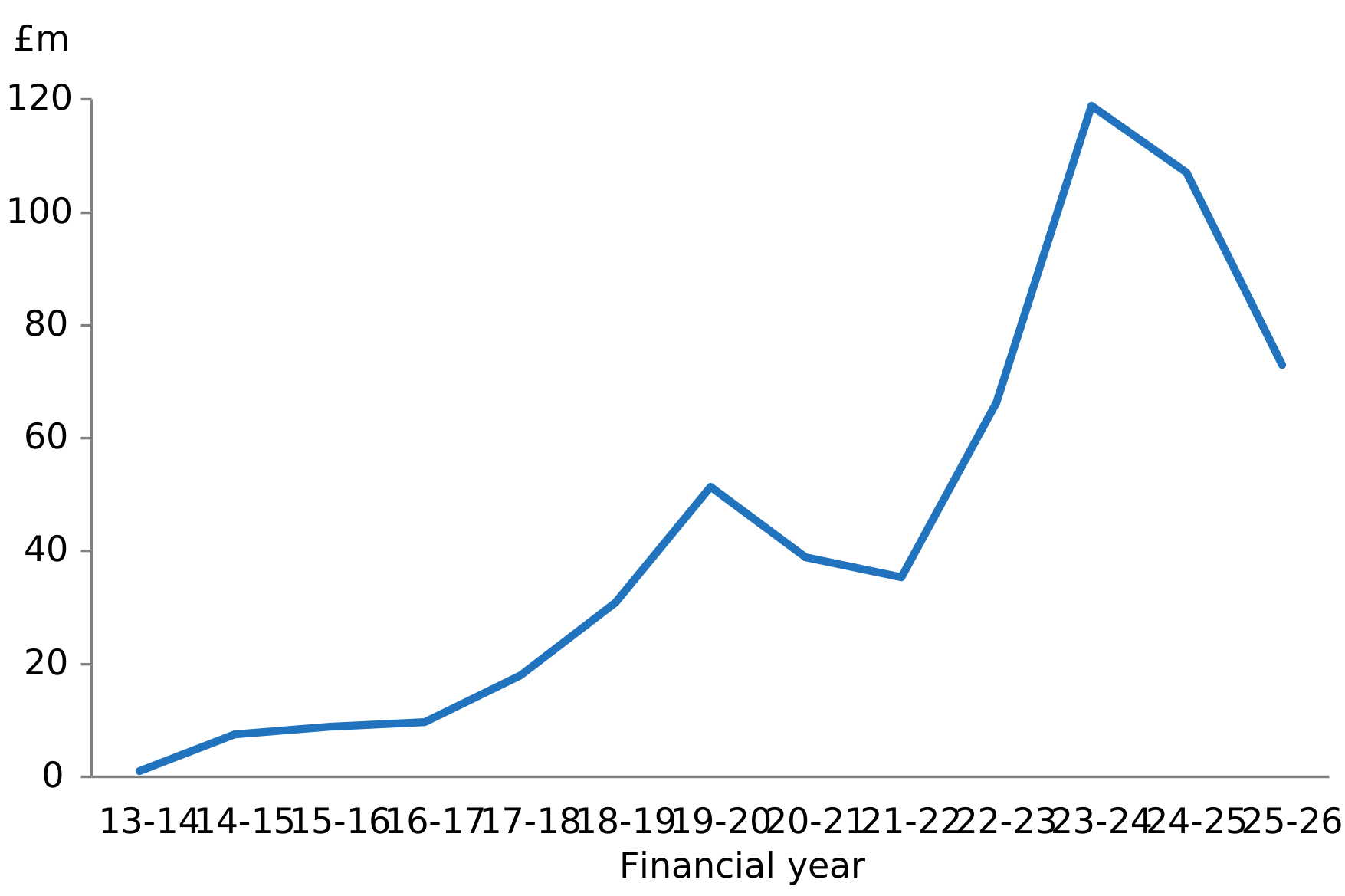
Figure 9: Total amount of interest accrued on further education loans in financial years 2013-14 to 2025-26 (£ million)
Source: Table 1B
Download the data for Figure 9 (ODS, 5KB)
All further education loans (known as Advanced Learner Loans) were issued under Plan 2 regulations until 1 August 2023, after which all new borrowers are under Plan 5. Continuing students who began study prior to August 2023 will remain under Plan 2. Whilst under Plan 2 regulations, interest rates for these loans range from RPI to RPI + 3%, depending on the borrower’s income and whether they are in study or post-study. Currently, Plan 5 loans have a fixed interest rate of RPI.
Figure 9 illustrates that interest accrued to further education loans equated to £1.0 million in financial year 2013-14, increasing to £30.9 million by 2018-19. A sharp increase is evident in 2019-20, up to £51.4 million due to ‘More Frequent Data Sharing’. The time series normalised in the following year.
As with higher education Plan 2 loans, interest rates for further education loans were capped, at varying rates for the majority of financial year 2021-22 and 2022-23 and remained in place throughout 2023-24 and into 2024-25. This was to help protect borrowers against the significant rises in inflation. Despite these caps, further education loan interest increased by 87.5% to £66.4 million in 2022-23 and again by a further 79.0% to £118.8 million in 2023-24.
For the first five months of the 2024-25 financial year, interest rates remained capped at varying levels, averaging 7.9%. Caps were lifted on 1 September 2024 after the applicable RPI rate fell to 4.3%. Consequently, total interest accrued in 2024-25 was £107.0 million, representing a 9.9% decrease compared with the previous year. Following a further reduction in RPI to 3.2% in September 2025, the total interest accrued for 2025-26 fell by a further 31.8%, to £73.0 million.
The interest accrued to further education loans in 2025-26 equated to 3.9% of the previous financial year’s further education loan balance, compared to 6.0% in the previous financial year.
For additional detail on the interest caps applied between 2021-22 and 2024-25, please refer to the higher education interest section. For more information on interest rates, please refer to the Income Contingent Student Loan repayment plans, interest rates and calculations section on GOV.UK.
Average Income Contingent Loan balances
This section looks at the average loan balance for borrowers in the first financial year in which their liability to repay first began. A borrower usually becomes liable to repay the April following the completion, or withdrawal from their course, provided they are earning above the relevant income threshold. The average loan balance reflects the amount paid to borrowers, plus interest added whilst they were studying, minus any voluntary repayments made by borrowers prior to them becoming liable to repay. The figures in this section are calculated as at 30 April following the relevant financial year-end.
Average higher education borrower loan balance entering repayment reduces as first Plan 5 cohort becomes liable to repay in 2025-26, to £47,730
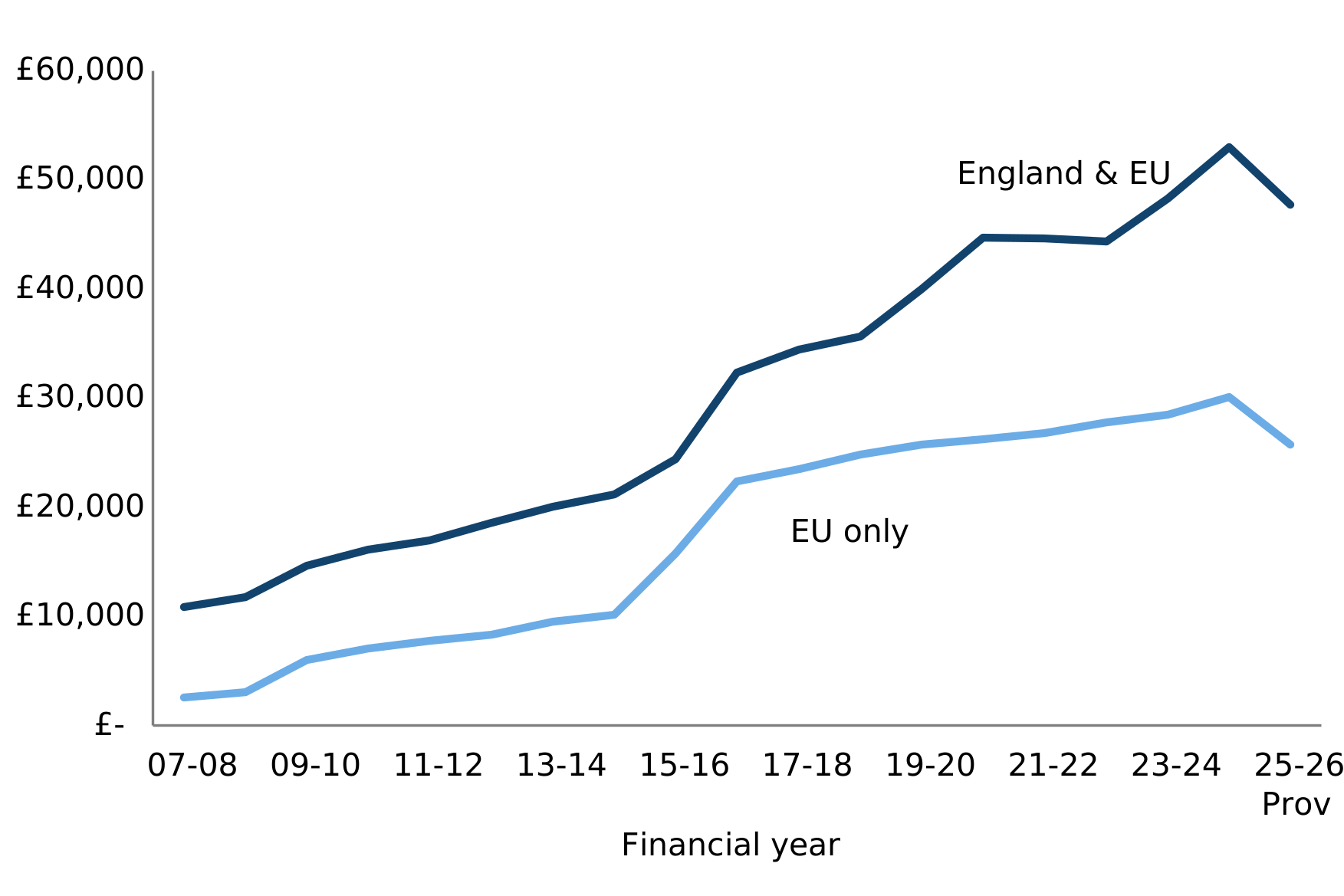
Figure 10: Average higher education loan balance on entry into repayment by financial year – 2006-07 to 2025-26 provisional: England & EU (£)
Source: Table 5(iii)
Download the data for Figure 10 (ODS, 5KB)
Figure 10 indicates that the average loan balance for a higher education borrower entering into repayment increased overall from £10,050 in financial year 2006-07, to a provisional position of £47,730 by 2025-26. This figure will be finalised in our 2027 publication.
The sizable rise in financial year 2016-17 (+ 32.6%) can be attributed to the increased maximum Maintenance Loan made available due to the discontinuation of Maintenance Grants for new students. This was coupled with the introduction of the Postgraduate Masters Loan. Two further notable increases were reported in 2019-20 and 2020-21 (of 12.1% and 11.8% respectively), partially as a result of the introduction of the Postgraduate Doctoral loan.
The average balance for a higher education borrower in the 2026 repayment cohort shows a provisional reduction of 9.9% compared with the 2025 cohort. While this figure will be finalised in next year’s publication, it is not anticipated to change excessively (2025 cohort’s average balance decreased by £10 compared to its provisional position).
The 2026 cohort decrease is likely attributed to several factors:
-
The 2026 repayment cohort is the first to include Plan 5 borrowers, whose earliest Statutory Repayment Due Date (SRDD) was in April 2026. As a result, these borrowers were not present in earlier cohorts. Given that Plan 5 borrowers are at an early stage in their borrowing lifecycle, they have lower outstanding balances and have accrued less interest. This reflects a similar pattern in borrower numbers to that observed when Plan 2 borrowers first entered repayment in April 2016. However, the impact on the total outstanding balance in the 2026 cohort appears less significant than in 2016. This is likely because, in 2016, the effect was amplified by policy changes such as the discontinuation of Maintenance Grants and the introduction of new postgraduate funding.
-
Since their introduction, Plan 5 loans accrued interest at the same rate as Plan 2 due to the interest rate caps. However, following the removal of these caps in September 2025, Plan 2 loans reverted to variable interest rates, while Plan 5 loans continued to accrue interest at a flat RPI rate. This is likely to have also contributed to differences in average balances across cohorts.
-
Plan 5 loans have a lower repayment threshold than Plan 2, which may result in earlier or higher repayments for some borrowers, contributing to lower average balances.
-
Reduced interest rates accrued across all plans in 2025-26.
Following a similar trend, for EU borrowers entering repayment the average balance has increased from £1,500 in financial year 2006-07 to a provisional £25,740 by 2025-26. This is a 14.4% decrease on the previous year.
EU borrowers have consistently had a lower average balance, predominantly because non‑England domiciled students are not eligible for maintenance funding. However, this average is expected to continue decreasing as borrowers fully repay their loans. From academic year 2021/22, new EU students in England (without ‘settled’ or ‘pre-settled status’) are no longer eligible for tuition fee loans. While those continuing courses in 2025/26 remain eligible for tuition fee support for the duration of their studies. The absence of new EU borrowers, alongside a growing proportion of loans being repaid, will reduce the overall outstanding balance over time.
Full-time students completing three- or four-year courses are included in these averages but are diluted by other borrower types such as those on longer or shorter courses, part time study and students that have withdrawn before completing their studies.
Average further education borrower loan balance entering repayment reduces as first Plan 5 borrowers becomes liable to repay in 2025-26, to £3,360
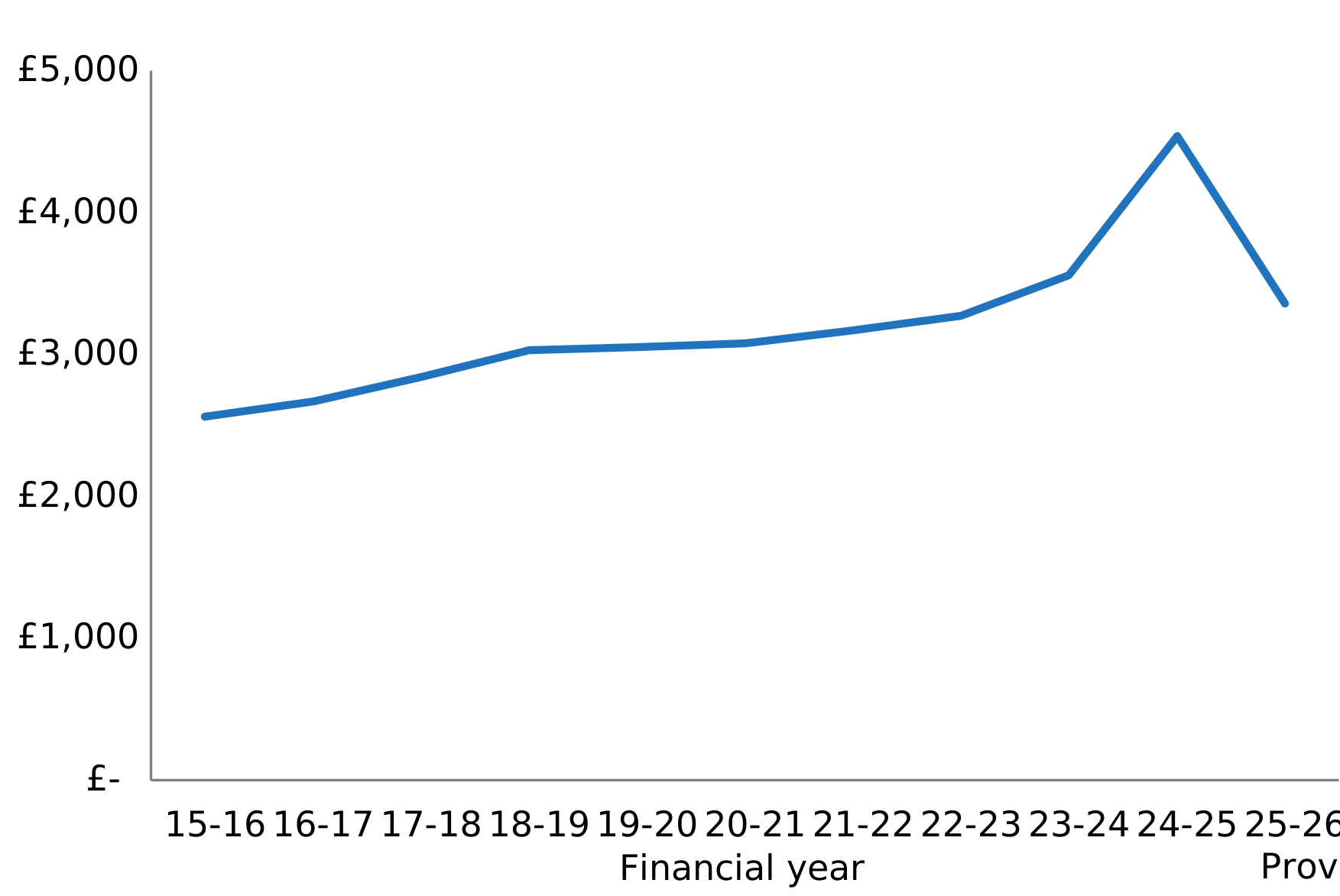
Figure 11: Average further education loan balance on entry into repayment by financial year – 2015-16 to 2025-26 provisional: England & EU (£)
Source: Table 5A (vi)
Download the data for Figure 11 (ODS, 5KB)
Figure 11 indicates that the average loan balance for a further education borrower entering into repayment increased overall from £2,560 in 2015-16, to a provisional £3,360 by 2025-26. This figure will be finalised in our 2027 publication.
The decrease in the most recent cohort is likely a result of being the first to include Plan 5 borrowers. These were not present in earlier cohorts, as the earliest SRDD for Plan 5 loans was April 2026. All further education loans (Advanced Learner Loans) issued to new students from 1 August 2023 are Plan 5. This, coupled with lower interest rates accrued in 2025-26.
In comparison to the average HE balance, there is much less movement in the average FE balance. This is due to considerably less change in the average loan taken out – from £2,070 in 2013/14 to £2,480 in 2024/25. For more information, please refer to our ‘Student support for further education (FE)’ statistics collection on GOV.UK.
Income Contingent Loan borrower repayment status
This section looks at borrowers categorised by their repayment status as at the end of the financial year. This status may change throughout the year depending on borrowers’ changing circumstances.
Note: In the 2026 edition of this publication, we have made some changes to Table 3, which are reflected in Figure 12 and 13. The ‘Account Closed’ column has been removed following the scheduled deletion of closed customer accounts. As a result of these, and future deletions, the figures within this column are no longer considered to be representative of ‘Fully repaid / cancelled’ borrowers. Going forward, Table 3 will only include borrowers with a loan balance. SLC’s deletion activity includes eligible fully settled customer accounts where more than six years have passed since full repayment. This approach aligns with SLC’s Records Management Policy and Master Retention Schedule in accordance with GDPR requirements.
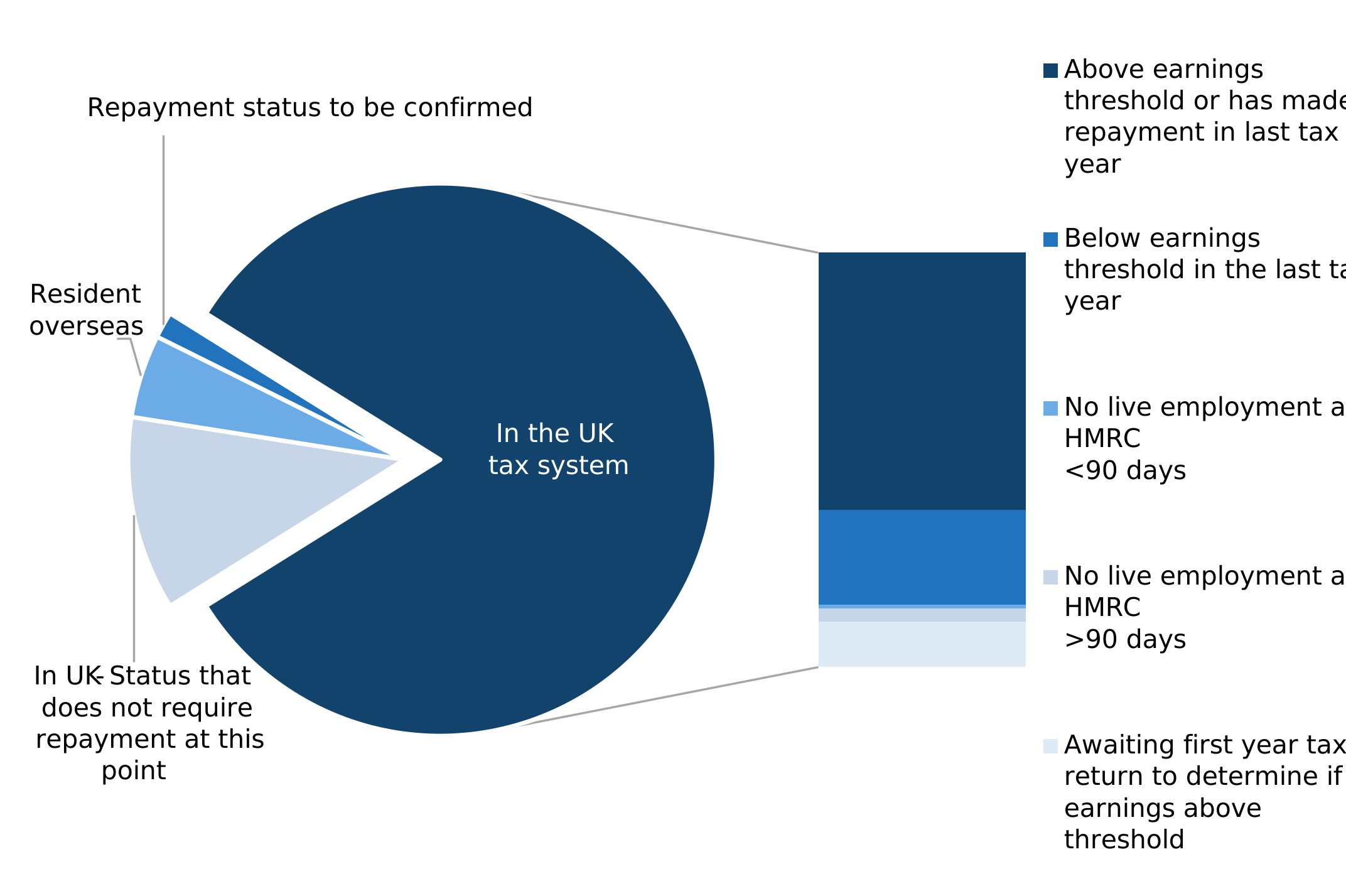
82.2% of all higher education borrowers who are liable to repay are in the UK tax system and 51.1% made a repayment in financial year 2025-26
Figure 12: ICR student loan borrowers by repayment status as at the beginning of FY 2026-27 (higher education)
Source: Table 3A (i) and (ii)
Download the data for Figure 12 (ODS, 5KB)
Figure 12 includes all ICR loan borrowers in all repayment cohorts who have become liable to repay as of 30 April 2026 and have an outstanding balance. Included in these figures is the 2026 repayment cohort. This cohort has been in repayment for less than one month from the effective date of these statistics, therefore the profile of this repayment cohort is very different to that of earlier repayment cohorts.
The number of borrowers who were liable to repay, were in live employment and made a payment in financial year 2025-26 was 3.1 million, an increase on the end-April position in 2025 of 3.0 million (+ 4.4%). The number of borrowers in the UK tax system but not yet required to make a repayment was 1.1 million in April 2026, 4.5% higher than in the previous year.
The number of borrowers liable to repay showing no live employment for less than 90 days increased from 41,800 to 44,900 compared to April 2025 (+ 7.4%). The number of those showing no live employment for over 90 days increased from 147,000 to 161,400 (+ 9.8%).
At end-April 2026, of those who were overseas and above the earnings threshold for that country, the number of those who made repayments increased by 5.7% to 61,100. Of those who were overseas and earning above the threshold, the number of those who have defaulted in arrears increased by 18.4% to 89,100.
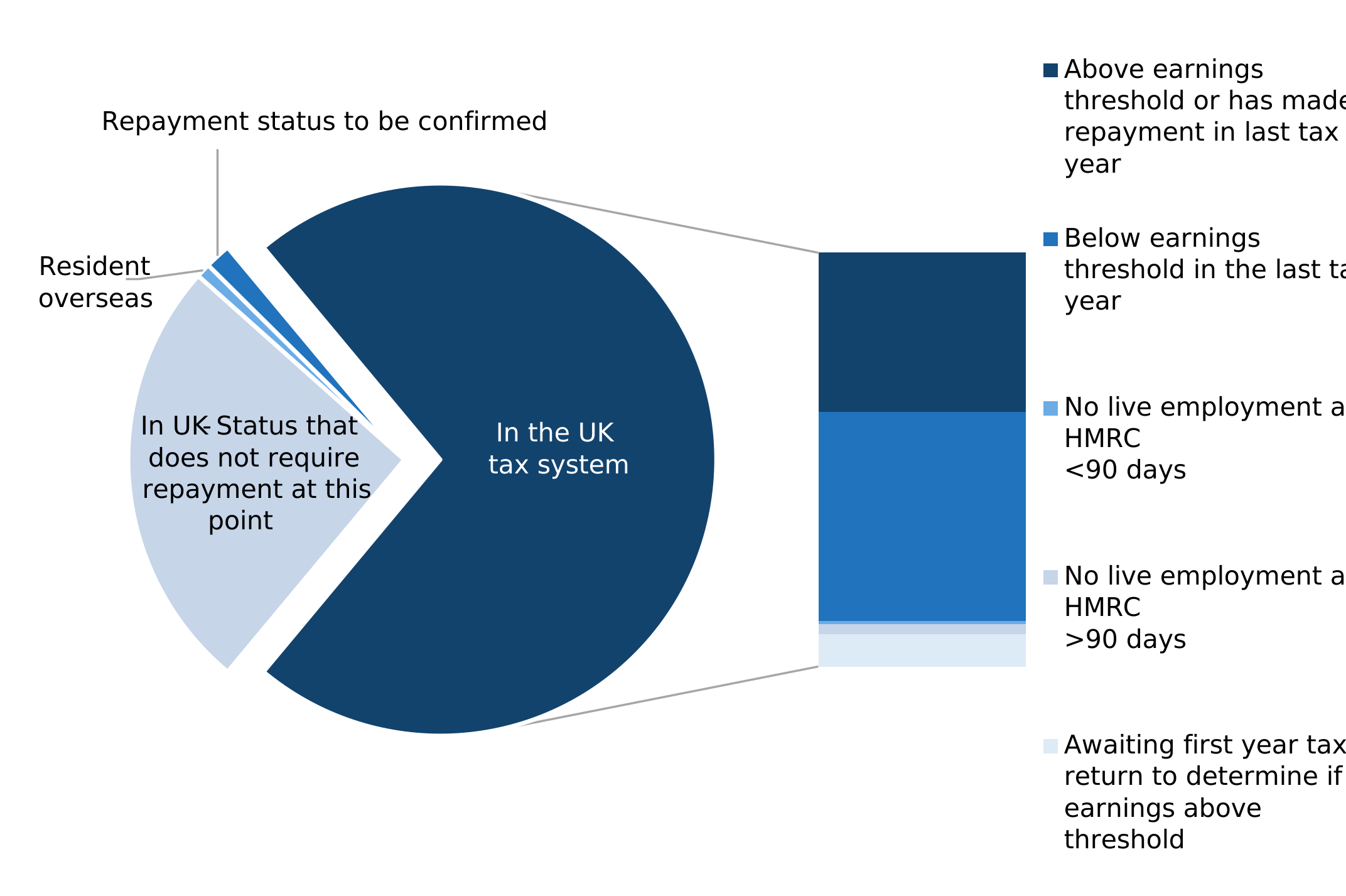
72.1% of all further education borrowers who are liable to repay are in the UK tax system and 27.8% made a repayment in financial year 2025-26
Figure 13: ICR student loan borrowers by repayment status as at the beginning of FY 2026-27 (further education)
Source: Table 3A (iii) and (iv)
Download the data for Figure 13 (ODS, 5KB)
Figure 13 includes all ICR loan borrowers in all repayment cohorts who have become liable to repay as of 30 April 2026 and have an outstanding balance. Included in these figures, is the 2026 repayment cohort. This cohort has been in repayment for less than one month from the effective date of these statistics, therefore the profile of this repayment cohort is very different to that of earlier repayment cohorts.
The number of borrowers who were liable to repay, were in live employment and made a payment in financial year 2025-26 was 144,200. This is a 5.9% increase on the end-April 2025 position of 136,200. The number of those in the UK tax system but not yet required to make a repayment was 188,800 by end-April 2026, relatively unchanged from the 187,800 reported in the previous April (+ 0.5%).
The number of borrowers liable to repay showing no live employment for less than 90 days increased from 1,800 to 2,600 by 30 April 2026. Those showing no live employment for over 90 days were 9,300, higher than the 8,300 noted in April 2025. At end-April 2026, of those overseas and earning above the threshold, the number of those who made a repayment increased by 38.0% to 400 in comparison to April 2025.
Of those who are overseas, above earnings thresholds for that country but have defaulted in arrears, numbers increased from 700 to 1,000.
Income Contingent Loan repayments
Borrowers normally become liable to make repayments from the April following the completion of, or withdrawal from their course, provided they are earning above the relevant income threshold. Repayments are either made via HMRC (either PAYE or Self-Assessment) or directly to Student Loans Company on a scheduled or voluntary basis. Repayment terms including thresholds and interest rates differ depending on the repayment plan type the loan falls under.
6.4% increase in higher education borrower repayments in financial year 2025-26, to £5.3 billion
Figure 14: Total amount repaid by higher education borrowers in financial years 2013-14 to 2025-26 by plan type (£ billion)
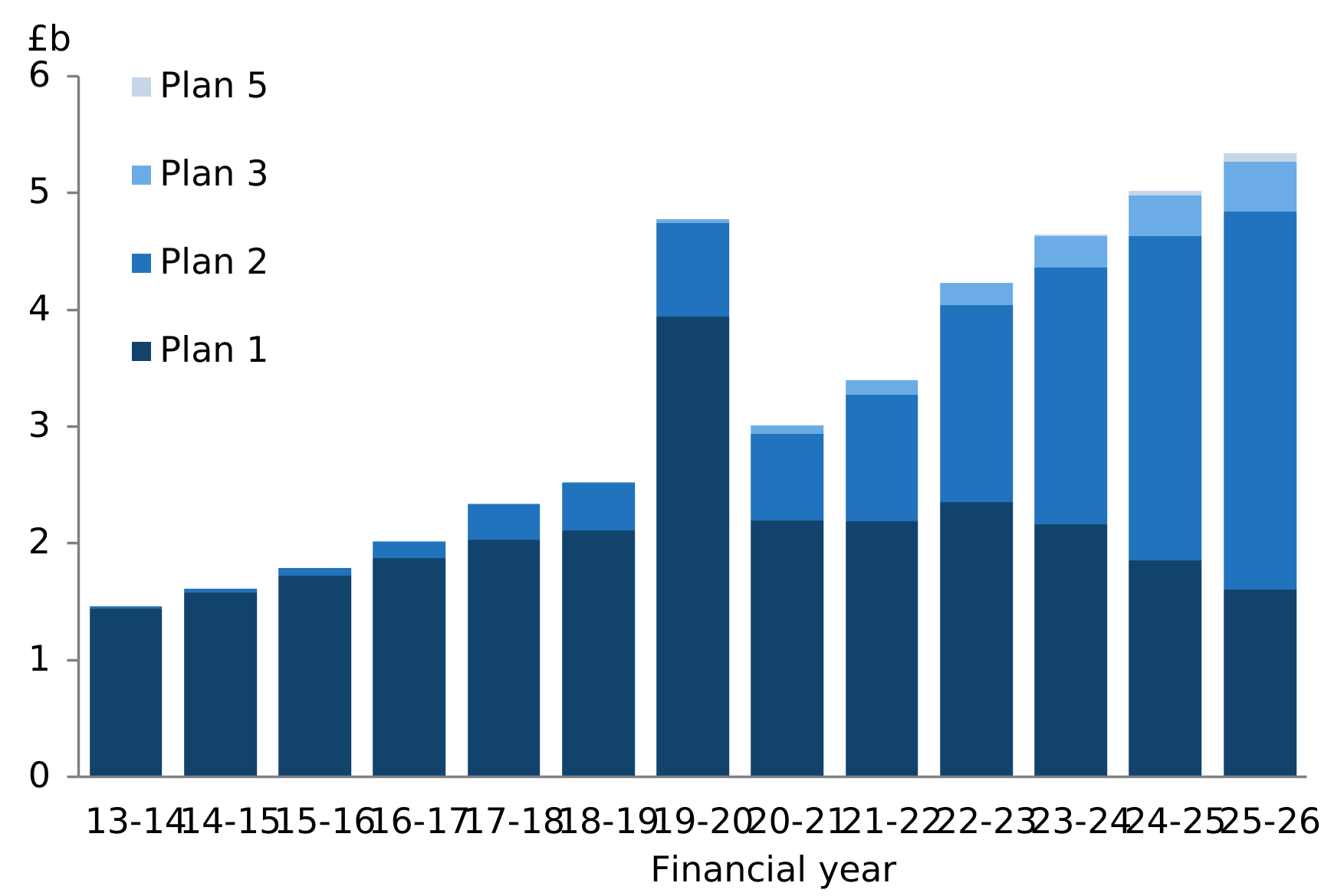
The legend follows the same order as the stacks in the bars.
Source: Table 1A
Download the data for Figure 14 (ODS, 6KB)
Figure 14 demonstrates that in financial year 2013-14, higher education borrower repayments totalled £1.5 billion. This steadily increased to £2.5 billion by 2018-19.
In 2019-20 a considerable increase of 89.2% (to £4.8 billion) was reported. This was largely driven by the introduction of ‘More Frequent Data Sharing’ (MFDS), the more readily available data provided to SLC by HMRC. As a result, almost two years’ worth of customers’ PAYE repayments processed by SLC in both 2018-19 and 2019-20, were recorded within the 2019-20 financial year. Further detail on MFDS can be found in the Additional information section. The time series normalised in the following year.
In 2022-23, a second notable increase of 24.6% was evident (+ £0.8 billion) to £4.2 billion. This could be partially attributed to the minimal change to repayment thresholds e.g. the Plan 1 threshold increased by just 1.5% (compared to 2.6% in 2021-22), whilst Plan 2 / Plan 3 thresholds remained unchanged compared to the previous year.
The total amount repaid in financial year 2025-26 totalled £5.3 billion. This is 6.4% (+ £0.3 billion) higher than noted in the previous year. This increase is less significant than the 8.0% increase reported in 2024-25, likely as a result of a 4.3% increase in both Plan 1 and 2 repayment thresholds (from £24,990 to £26,065 and from £27,295 to £28,470 respectively).
In financial year 2025-26, Plan 1 (loans prior to Sep-12) repayments decreased by a further 13.4% compared to the previous year, down to £1.6 billion. This follows an 14.3% decrease in 2024-25. These continuing decreases are likely attributed to the reducing Plan 1 loan balance.
Up until financial year 2016-17, over 93% of all higher education repayments related to Plan 1 loans. Each year, the share of Plan 1 loan repayments has decreased as these loans were replaced by Plan 2 loans (for new entrants in academic year 2012/13), falling to 30% in financial year 2025-26.
As a % of previous financial year’s Plan 1 loan balance, Plan 1 repayments are somewhat lower than in the prior year (at 5.0% vs. 5.7%).
Plan 2 (post Sep-12) repayments increased by 16.4% in 2025-26 to £3.2 billion, following a 26.2% increase in the previous year. These increases are primarily driven by the growing share of the Plan 2 loan balance becoming liable for repayment. By 2025-26, 85.6% of the total Plan 2 loan balance was liable, up from 78.1% in the previous year). This proportion will increase year-on-year at a higher rate than with Plan 3 or 5 loans, as no Plan 2 loans have been issued to new undergraduates since pre-1 August 2023. As a result, the existing Plan 2 cohort is ageing into repayment without being offset by new lending.
The proportion of total repayments attributed to Plan 2 has grown from 7% in 2016-17, to 61% by 2025-26.
As a % of the previous financial year’s Plan 2 loan balance, Plan 2 repayments remained relatively constant at 1.5% (vs. 1.4% in the prior year).
Postgraduate (Plan 3) repayments increased by 23.3% in 2025-26 to £0.4 billion, compared to a 29.1% increase in 2024-25. These increases can be predominantly attributed to the growing Plan 3 loan balance becoming liable for repayment e.g. 78.5% of the total Plan 3 loan balance was liable in 2024-25, increasing to 80.0% by 2025-26. Also, the repayment threshold remaining at £21,000.
Since the introduction of Plan 3 loans in academic year 2016/17, the share of related repayments has increased from 0.1%, to 8% of all repayments made in the most recent year.
As a % of previous year’s Plan 3 loan balance, Plan 3 repayments increased from 5.7% in 2024-25, to 6.1%.
Despite not becoming liable for repayment until April 2026, £73.7 million was repaid in regard to Plan 5 (post Aug-23) loans in 2025-26. As a % of the previous financial year’s Plan 5 loan balance, these repayments form 0.5%.
In 2025-26, the third year of Plan 5 loans, associated repayments made up 1.4% of all repayments made.
Typically, repayments across all plans will continue to increase due to the growing proportion of a rising total loan balance which is liable for repayment, irrespective of other factors.
81.3% of repayments were received via HMRC in 2025-26 and the remaining 18.7% were made directly to SLC (vs. 80.0% and 20.0% in 2024-25). This split does not take into account refunds made.
For more information on repayment plans and thresholds, please refer to the Income Contingent Student Loan repayment plans, interest rates and calculations section on GOV.UK.
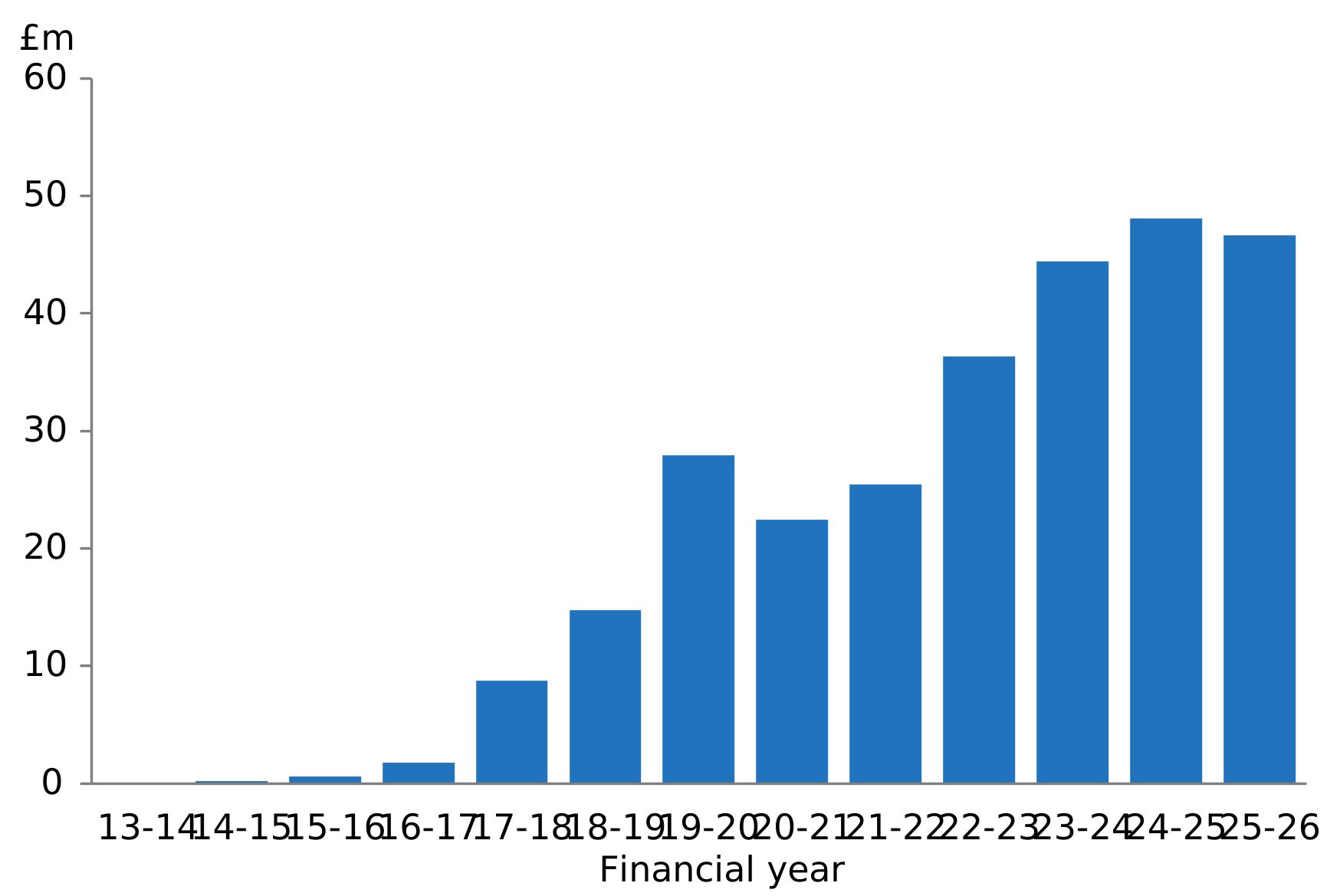
3.0% decrease in repayments made by further education borrowers, to £46.7 million
Figure 15: Total amount repaid by further education borrowers in financial years 2013-14 to 2025-26 by plan type (£ million)
Source: Table 1B
Download the data for Figure 15 (ODS, 5KB)
Figure 15 notes that repayments made by further education borrowers increased steadily and significantly from 2014-15 through to 2017-18, from £0.2 million to £8.7 million.
As with higher education repayments, an obvious ’spike’ is evident in 2019-20 predominantly as a result of more readily available data provided by HMRC (referred to as ‘MFDS’), effectively, almost two years’ worth of customers’ PAYE repayments processed by SLC in both 2018-19 and 2019-20, were recorded within the 2019-20 financial year. The time series normalised in the following year.
Following a 13.4% increase in 2021-22, financial year 2022-23 experienced a significant increase of 43.0% (+ £10.9 million) to £36.3 million. This is likely attributed to the repayment threshold freeze, coupled with the increased rate of inflation potentially positively affecting borrower salaries, resulting in increased PAYE. This was supported by a 45.4% increase in repayments made via HMRC in 2022-23.
Following a further 22.3% increase in the following year, again likely to be attributed to the threshold freeze, the increase slowed in 2024-25, to £48.1 million (+ 8.3%).
The total amount repaid in respect of further education loans in 2025-26 was £46.7 million, 3.0% less than in the previous year. This is the first decrease since 2020-21. This is likely as a result of the 4.3% increase in the repayment threshold for academic year 2025/26, from £27,295 to £28,470. This is the first increase since 2021-22.
2025-26 is the first year in which the balance of further education loans which are liable for repayment, remaining broadly unchanged from the previous year. This reflects the impact of all new further education loan borrowers taking loans after 1 August 2023 being allocated to Plan 5, which were not liable for repayment until at least April 2026. 92.0% of the total FE loan balance was liable to repay in 2024-25 vs. 88.6% in the most recent year. This has reduced owing to the move to Plan 5.
As a % of the previous year’s closing balance, further education repayments are 2.5% (a slight decrease on the 2.7% in the previous year). 90.1% of further education repayments were received via HMRC (vs. 91.1% in 2024-25) and 9.9% were made directly to SLC (vs. 8.9% in 2024-25). This split does not take into account refunds made.
For more information on repayment plans and thresholds, please refer to the Income Contingent Student Loan repayment plans, interest rates and calculations section on GOV.UK.
Income Contingent Loan repayments by repayment method
Repayments can be made by three methods, via HMRC (for UK taxpayers who are paid via PAYE or self-employed submitting Self-Assessment), along with scheduled and voluntary repayments which are made directly to SLC (outside of the HMRC deduction system). Scheduled repayments are made by borrowers nearing the end of their repayment term or from those overseas. Borrowers can opt to move onto a direct debit scheme paid directly to SLC to avoid overpayment via PAYE deductions. Voluntary repayments are additional repayments which a borrower can choose to make at any time and can be paid alongside scheduled repayments and those via HMRC.
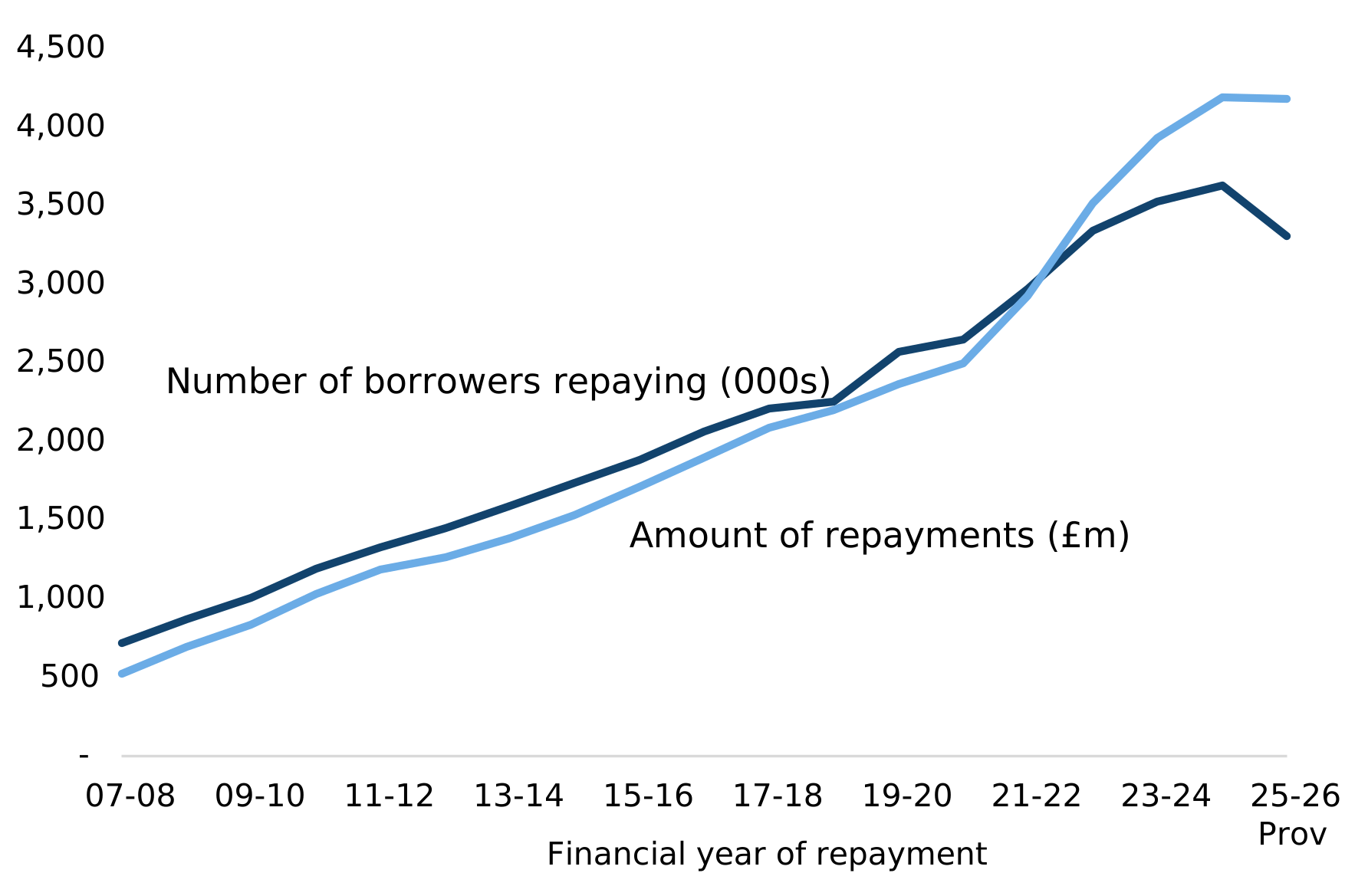
Provisional figures suggest the total amount repaid via HMRC by higher education borrowers has remained relatively stable when compared to the finalised figure for 2024-25, at £4.2 billion. Based on previous years, provisional figures are likely to rise when finalised.
Figure 16: Number of higher education ICR loan borrowers who made a repayment via HMRC & total amount repaid by financial year of repayment 2006-07 to 2025-26 (provisional)
Source: Table 4A(i) and (ii)
Download the data for Figure 16 (ODS, 6KB)
Figure 16 demonstrates that the number of higher education borrowers making repayments via HMRC has increased overall from 563,100 in financial year 2006-07 to 3.6 million by 2024-25. The total amount has followed a similar trend, from £343.6 million to £4.2 billion.
As at end-April 2026, the provisional amount repaid in financial year 2025-26 remained relatively stable at £4.2 billion, 0.2% lower (- £8.5 million) in comparison to the final figure for 2024-25. However, the provisional number of HE borrowers who made a repayment via HMRC was 3.3 million. This is 8.8% lower than the final figure for the previous year (- 321,000).
The most recent financial year’s figures are marked as ‘provisional’ due to the 2025-26 Self-Assessment earnings information being received from HMRC after Table 4A’s 30 April 2026 effective date. These provisional figures are therefore subject to change.
The movement between the provisional and final figures for financial year 2024-25 was an additional 2.5% in regard to the number of borrowers making a repayment, and an additional 6.2% in the amount repaid. These increases are slower than those in the previous year. The provisional position for financial year 2024-25 can be found in the previous year’s publication. 2025-26’s figures will be finalised in our 2027 publication.
Although the finalised figures are anticipated to exceed this provisional position, they may nonetheless remain below the levels reported for 2024-25. This could be attributable to several factors, including:
-
A 4.3% increase in both the Plan 1 and Plan 2 income thresholds, reducing the number of borrowers with earnings above the repayment threshold.
-
The growing share of total HE loan balance held under Plan 5, for which borrowers did not become liable to repay until April 2026.
Annual increases in repayments made via HMRC can be generally attributed to the growing proportion of loans becoming liable for repayment, up from 78.0% in 2025-26, from 76.6%. However, in 2056-26 other, previously mentioned factors have offset this.
Note: The impact of MFDS for the 2019-20 financial year is not reflected in Figure 16 as repayment figures were refreshed in the following year, with repayments attributed to the financial year to which they pertain, rather than the year in which they were reported to the SLC.
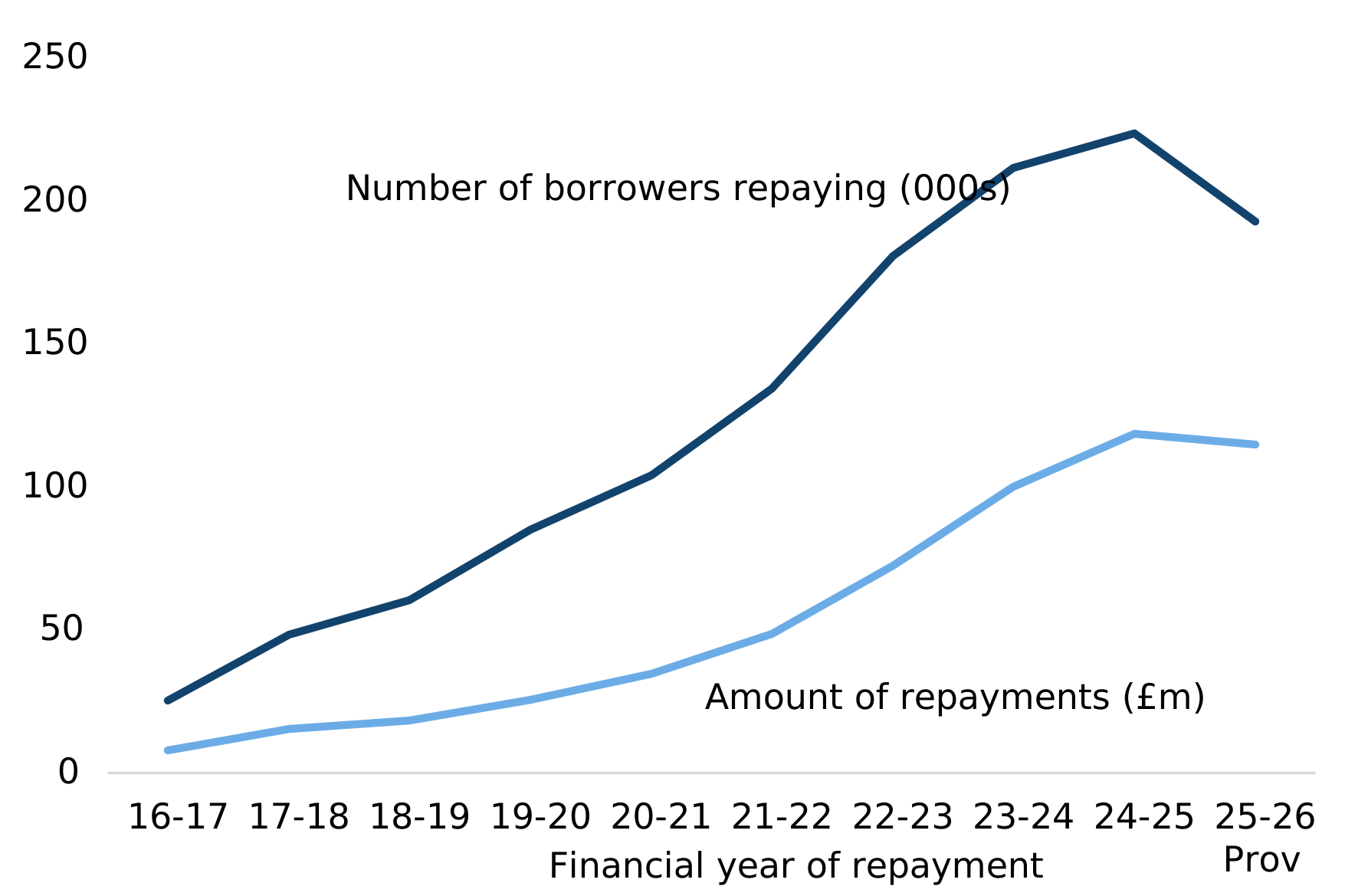
Provisional figures indicate the total amount repaid via HMRC by further education borrowers reduced by 3.1% in 2025-26, to £114.8 million. Based on previous years, provisional figures are likely to rise when finalised.
Figure 17: Number of further education ICR loan borrowers who made a repayment via HMRC & total amount repaid by financial year of repayment 2016-17 to 2025-26 (provisional)
Source: Table 4A(iv) and (v)
Download the data for Figure 17 (ODS, 6KB)
Figure 17 demonstrates that the total amount repaid via HMRC by further education (FE) borrowers has increased overall, from £7.7 million in financial year 2016-17to £118.5 million in 2024-25. The number of FE borrowers making repayments via HMRC has increased overall, from 25,300, to 223,700.
As at end-April 2026, the provisional number of FE borrowers who made a repayment via HMRC in financial year 2025-26 was 192,700. This is a 13.8% decrease on the final figure for 2024-25 (- 31,000). The provisional amount repaid was £114.8 million. This is 3.1% lower (- £3.7 million) in comparison to the final figure for the previous year.
The most recent financial year’s figures are marked as ‘provisional’ and are therefore subject to change. The movement between the provisional and final figures for financial year 2024-25 was an additional 11.7% in regard to the number of borrowers making a repayment (from 200,200), and an additional 12.3% in the amount repaid (from £105.5 million). The provisional position for financial year 2024-25 can be found in the previous year’s publication. 2025-26’s figures will be finalised in our 2027 publication.
Whilst we expect the finalised figures to be higher than the current provisional position, they may still remain below the levels reported for 2024-25. This could be due to several factors, including:
-
A 4.3% increase in the Plan 2 income threshold, reducing the number of borrowers with earnings above the repayment threshold.
-
The growing share of total FE loan balance held under Plan 5, for which borrowers did not become liable to repay until April 2026.
Annual increases in repayments made via HMRC can be predominantly attributed to the growing proportion of loans becoming liable for repayment, however, in 2025-26 this reduced from 92.0% to 88.6% in comparison to the previous year owing to all new loans issued from 1 August 2023 being allocated to Plan 5, which would not be liable for repayment until April 2026, at the earliest.
Note: The impact of MFDS for the 2019-20 financial year is not reflected in Figure 17 as repayment figures were refreshed in the following year.
Scheduled repayments made directly to SLC
Scheduled payments are repayments which have been made directly to SLC from borrowers who have arranged a repayment schedule. This includes those who have joined the ‘direct debit scheme’. SLC routinely encourages customers to join the direct debit scheme when they become eligible to do so, 23 months prior to the repayment of their loan. Also included in this data are borrowers who reside overseas, who are liable to repay, and are doing so via a repayment schedule. Both UK and non-UK EU domiciled borrowers may make scheduled overseas repayments.
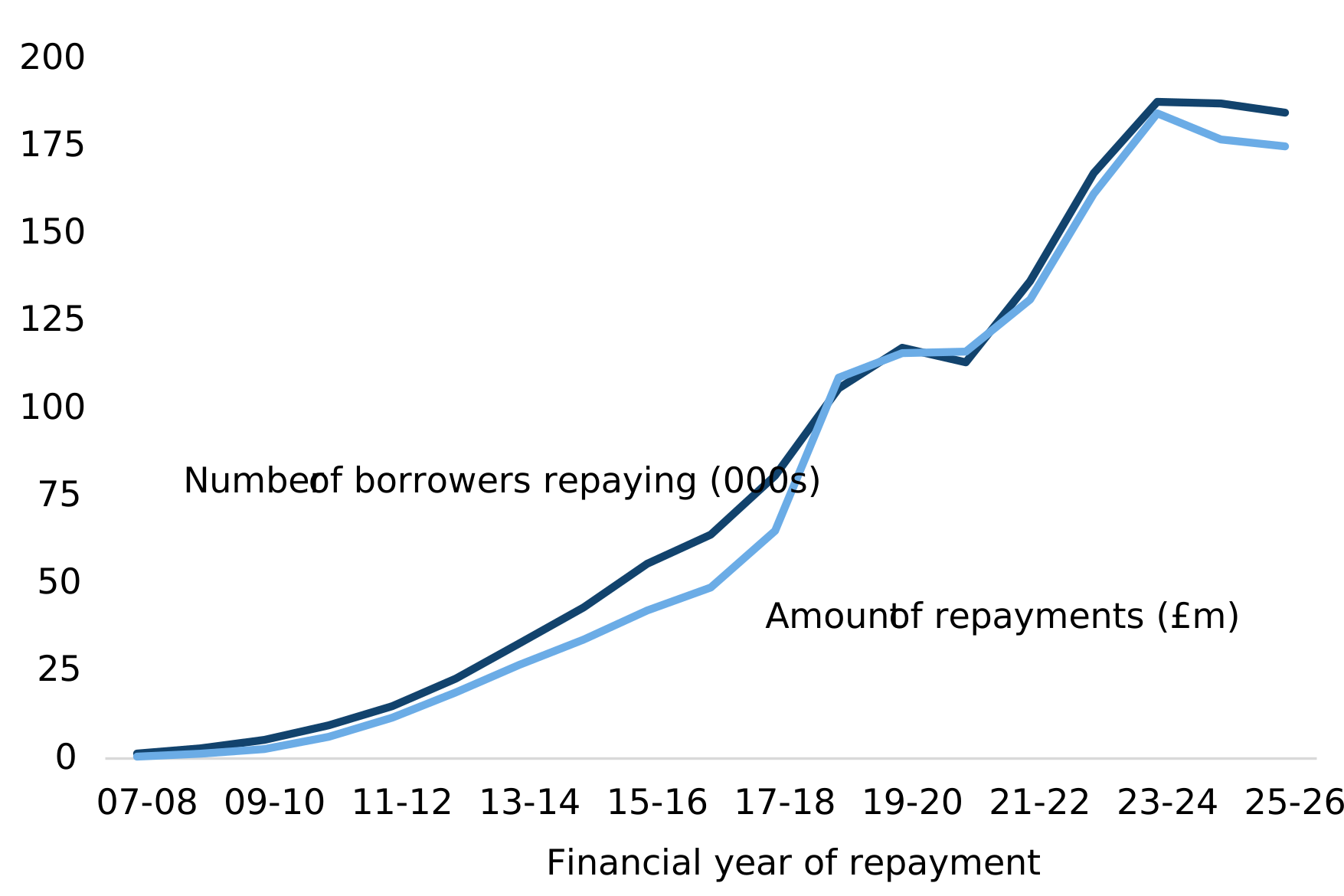
Small 1.0% decrease in the total amount repaid by higher education borrowers via scheduled repayments directly to SLC, at £174.9 million
Figure 18: Number of higher education ICR loan borrowers who made a scheduled repayment directly to SLC & total amount repaid by financial year of repayment 2006-07 to 2025-26
Source: Table 4C(i) and (ii)
Download the data for Figure 18 (ODS, 6KB)
Figure 18 shows that the number of higher education borrowers making scheduled repayments directly to SLC increased overall since financial year 2006-07 from just 400 to 184,500 by 2025-26. In comparison to the previous year, this is small decrease of 1.3%.
The total amount repaid via scheduled repayments follows a similar trend, increasing overall from £0.2 million in 2006-07, to £174.9 million in 2025-26. In comparison to 2024-25, this is 1.0% lower (- £1.8 million).
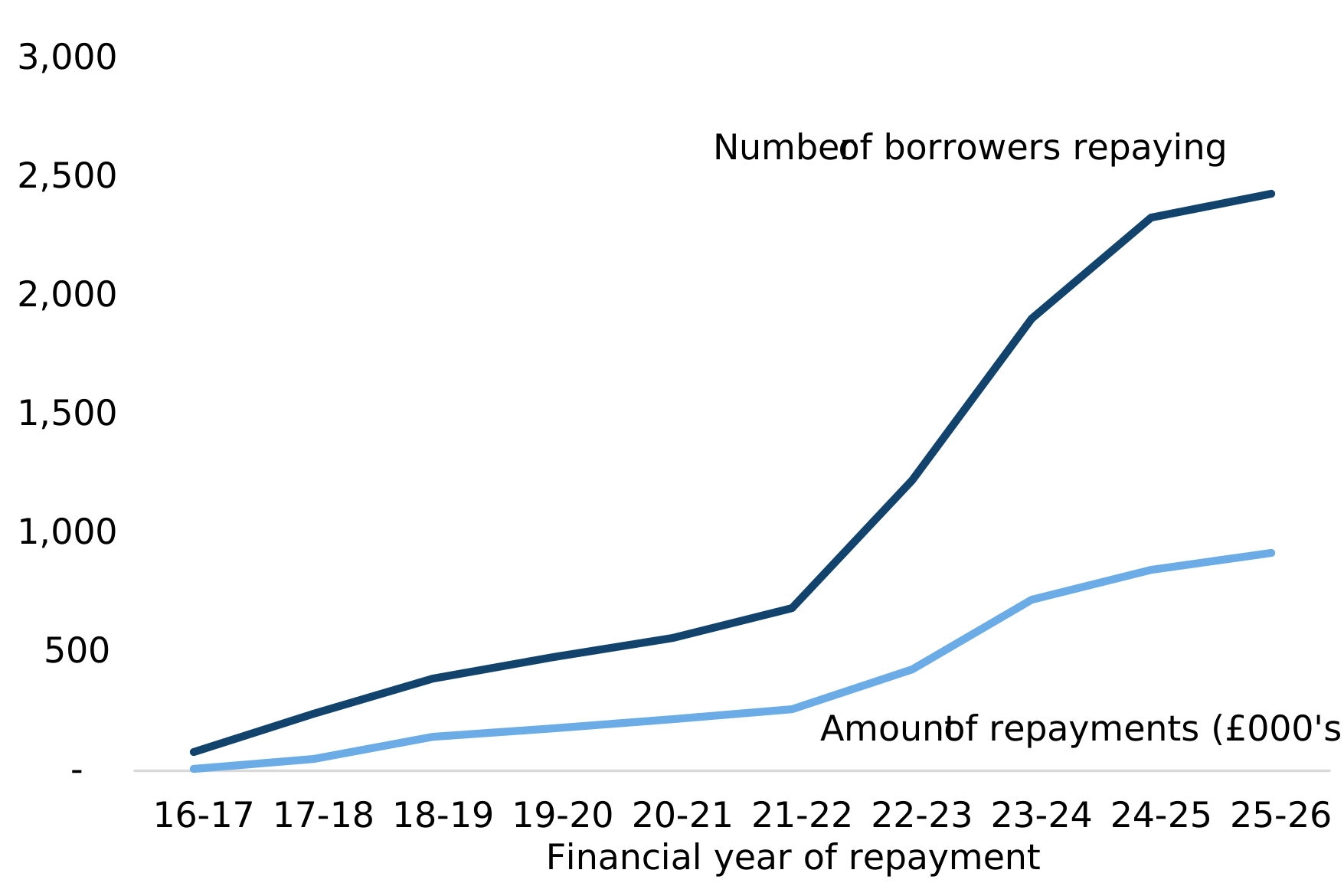
8.3% increase in the total amount repaid by further education borrowers via scheduled repayments directly to SLC, at £0.9 million
Figure 19: Number of further education ICR student loan borrowers who made a scheduled repayment directly to SLC & total amount repaid by financial year of repayment 2016-17 to 2025-26
Source: Table 4C(iv) and (v)
Download the data for Figure 19 (ODS, 6KB)
Figure 19 shows that the number of further education borrowers making scheduled repayments directly to SLC has increased year-on-year from just 80 in financial year 2016-17, to 2,430 in 2025-26.
The total amount repaid via scheduled repayments follows the same trend, increasing from £8,700 in 2016-17, to £0.9 million by 2025-26. When comparing to the previous year, there has been a 4.3% increase in the number of borrowers making scheduled repayments (+ 100) and an 8.3% increase in the total amount repaid (+ £70,000).
Voluntary Repayments made directly to SLC
Voluntary repayments are repayments which have been made directly to SLC from borrowers who are not yet liable to repay. Borrowers who are liable to repay and are making repayments via HMRC can also make additional voluntary repayments
4.8% increase in the total amount repaid via voluntary repayments directly to SLC by higher education borrowers, to £733.7 million
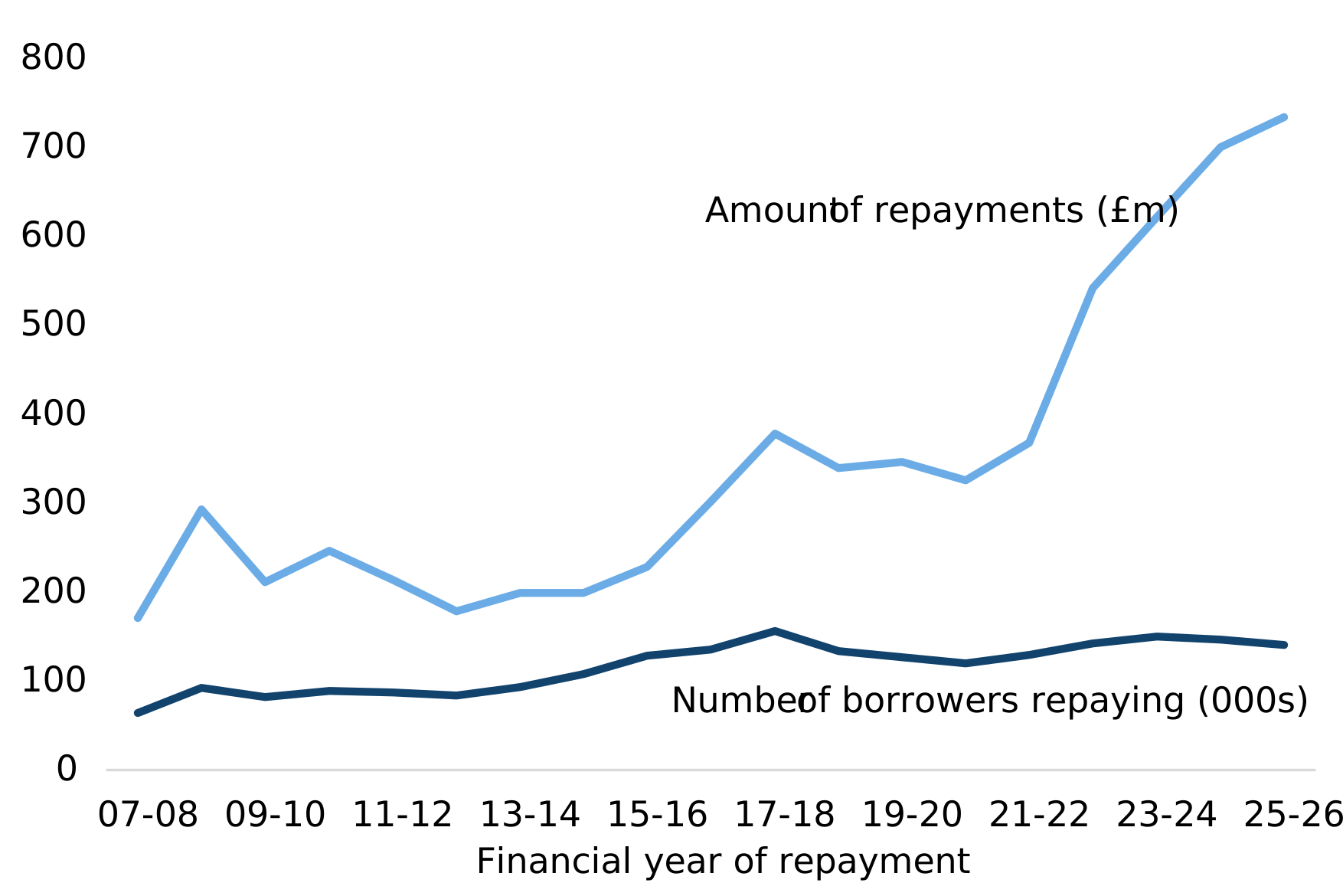
Figure 20: Number of higher education ICR loan borrowers who made a voluntary repayment directly to SLC & total amount repaid by financial year of repayment 2006-07 to 2025-26
Source: Table 4E(i) and (ii)
Download the data for Figure 20 (ODS, 6KB)
Figure 20 demonstrates that trends in voluntary repayments made directly to SLC are significantly more volatile than both HMRC and scheduled repayments. Therefore, variances to the previous year are not necessarily evidence of a trend.
Overall, the total amount of voluntary repayments made by higher education borrowers has increased from £137.6 million to £733.7 million between 2006-07 and 2025-26 yet has fluctuated significantly throughout this time-period.
The number of borrowers making voluntary repayments has increased overall from 53,900 to 141,000 over the same time period, also fluctuating, but to a lesser extent than the amount repaid. When comparing 2025-26 to the previous year, there was a 4.1% decrease in the number of higher education borrowers making voluntary repayments (- 6,000), yet a 4.8% increase in the amount repaid (+ £33.4 million).
7.7% increase in the total amount repaid via voluntary repayments directly to SLC by further education borrowers, to £4.0 million
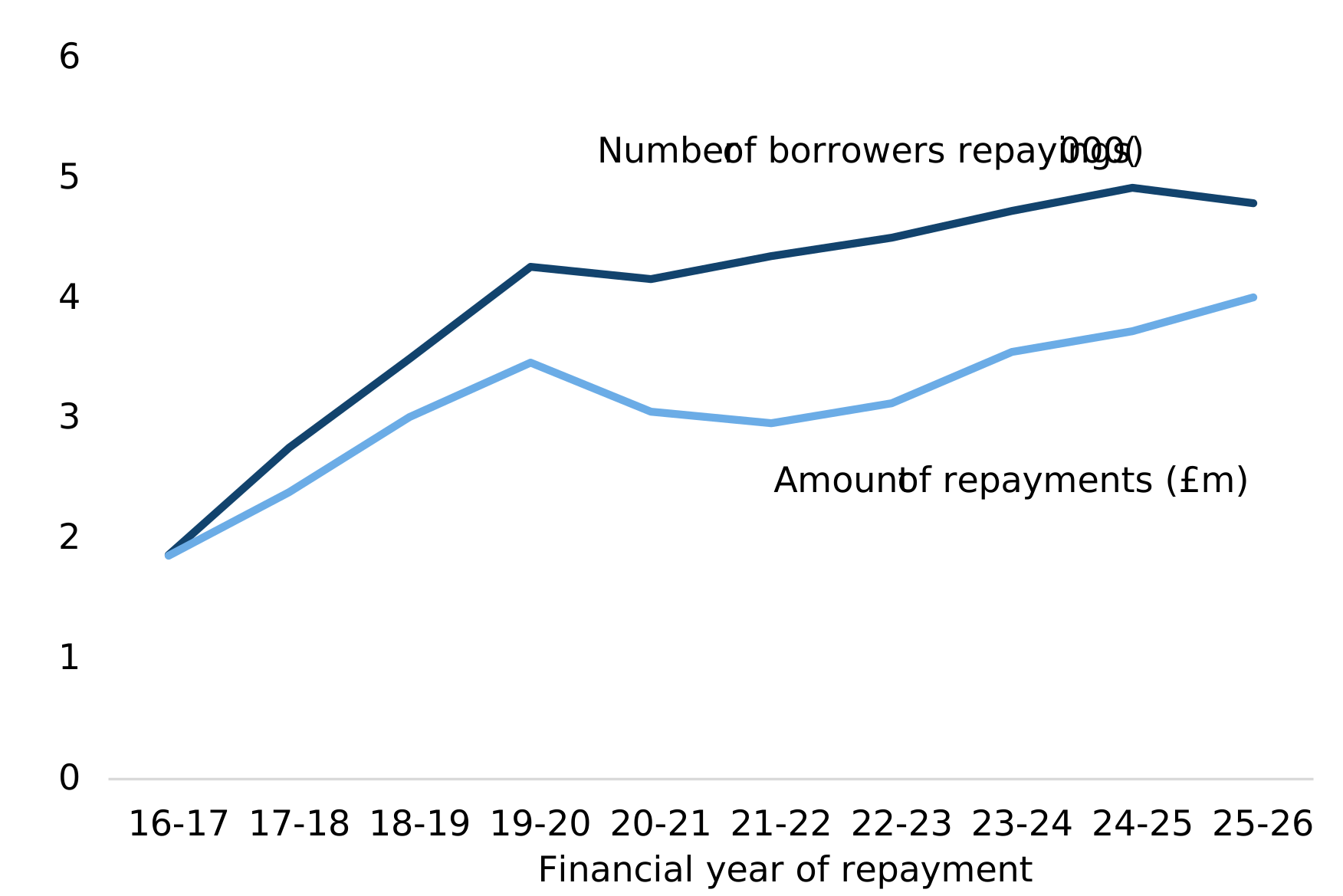
Figure 21: Number of further education ICR loan borrowers who made a voluntary repayment directly to SLC & total amount repaid by financial year of repayment 2016-17 to 2025-26
Source: Table 4E(iv) and (v)
Download the data for Figure 21 (ODS, 5KB)
Figure 21 shows that overall, the total amount of voluntary repayments made directly to SLC by further education borrowers increased from £1.9 million to £3.5 million between 2016-17 and 2025-26. The number of those making voluntary repayments increased from 1,865 to 4,790.
The number of borrowers and the amount repaid increased year-on-year until 2020-21 when the first reduction was reported. The number of borrowers increased in the following year, whereas the amount repaid took a further year to do so.
When comparing 2025-26 to the previous year, there was a 2.6% decrease in the number of further education borrowers making voluntary repayments (- 130), yet the amount repaid increased by 7.7% (+ £0.3 million).
Figure 21 also indicates that further education voluntary repayments fluctuate considerably less than those made by higher education borrowers.
Average amount repaid by repayment method
Finalised data for 2024-25 indicates an 2.7% increase in the average amount repaid by higher education ICR loan borrowers via HMRC, to £1,150
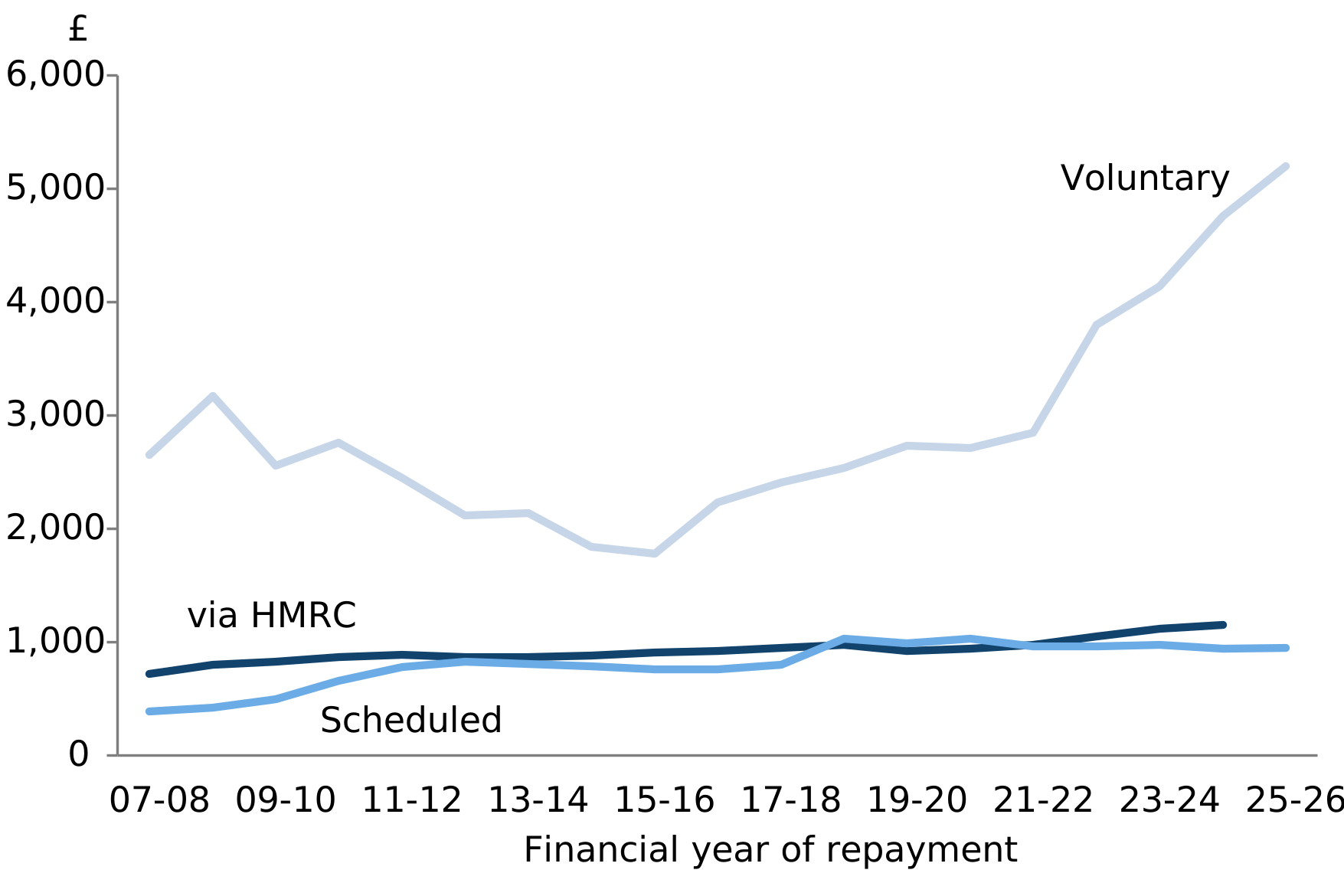
Figure 22: Average annual amount repaid by higher education ICR student loan borrowers by repayment method and financial year of repayment 2006-07 to 2025-26
Source: Table 4A(iii) and 4C(iii) and 4E(iii)
Download the data for Figure 22 (ODS, 6KB)
Figure 22 indicates the average amount repaid by repayment method.
Please note: Repayments made via HMRC within the 2025-26 financial year are not included in Figure 22 as the average is considered to be provisional until all Self-Assessment data is included. This figure will be finalised in the 2027 publication.
The average higher education loan repayment made via HMRC increased overall from £610 in financial year 2006-07 to £1,150 by 2024-25. When comparing to 2023-24 there was a £30 increase (+ 2.7%).
The average higher education loan scheduled repayment made directly to SLC was £480 in financial year 2006-07. This has fluctuated throughout the years, yet by 2025-26 was £950. In comparison to 2024-25, this is a £10 increase (+ 1.1%).
The average higher education loan voluntary repayment has fluctuated between £1,780 (in financial year 2015-16) and £5,200 (in the most recent year). Compared to 2024-25, the average is £440 higher (+ 9.2%).
Trends in voluntary repayments made directly to SLC are significantly more volatile than scheduled and HMRC repayments.
For both HMRC and scheduled repayments, this average includes only those borrowers who have become liable to repay (usually the April following the completion, or withdrawal from their course, provided they are earning above the relevant income threshold). For voluntary repayments, this includes all ICR borrowers who made a repayment (including those who are not yet liable to repay).
Finalised data for 2024-25 indicates an 12.8% increase in the average amount repaid by further education ICR loan borrowers via HMRC, to £530
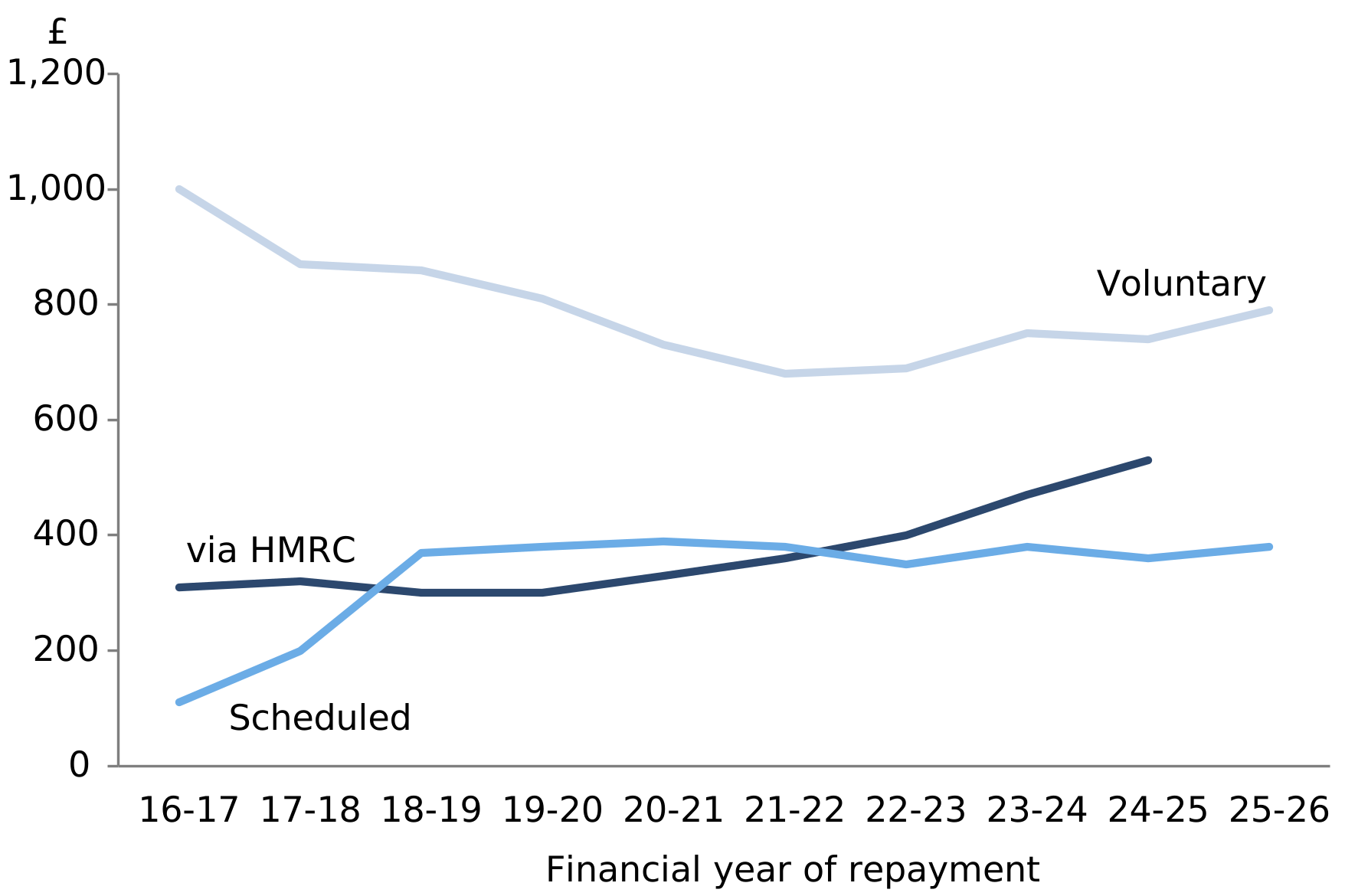
Figure 23: Average annual amount repaid by further education ICR student loan borrowers by repayment method and financial year of repayment 2016-17 to 2025-26 £
Source: Table 4A(vi) and 4C(vi) and 4E(vi)
Download the data for Figure 23 (ODS, 5KB)
Figure 23 shows that the average repayment made via HMRC has increased overall from £310 in 2016-17 to £530 in 2024-25. When comparing to 2023-24, there was a £60 increase (+ 12.8%).
Please note: As with higher education loan repayments, further education loan repayments made via HMRC within the 2025-26 financial year are not included as the provisional figure will be finalised in the 2027 publication.
The average further education loan scheduled repayment was £110 in financial year 2016-17. This has fluctuated throughout the years, peaking in 2020-21 at £390. 2025-26 reported an average of £380, this is £20 higher than in the previous year (+ 5.6%).
The average further education loan voluntary repayment has fluctuated between £680 (in 2021-22) and £1,000 (in 2016-17). In 2025-26, the average was £790. Compared to 2024-25, this is £50 higher (+ 6.8%). Trends in voluntary repayments made directly to SLC are significantly more volatile than scheduled and HMRC repayments.
For both HMRC and scheduled repayments, this average includes only those borrowers who have become liable to repay (usually the April following the completion, or withdrawal from their course, provided they are earning above the relevant income threshold). For voluntary repayments, this includes all ICR borrowers who made a repayment (including those who are not yet liable to repay).
Additional information
The MFDS Effect on repayments data in financial year 2019-20
Repayments of Income Contingent Loans are shown in this publication in the financial year they are posted to customer accounts. As SLC were previously notified of repayments by HMRC usually within one year of the financial year ending, the repayments shown in a given financial year (prior to FY 2019-20) were mainly for the year before. The same was also true for the associated interest calculations being applied to these customer accounts.
In the first financial year of receiving this information at a greater frequency (FY 2019-20) more repayments data was evident than in previous financial years. Almost two years’ worth of customer PAYE repayments and interest calculations (those processed by SLC in both FY 2018-19 and 2019-20) were included.
HMRC still provide SLC with annual information within one year of the financial year ending, which is reviewed and applied to customer accounts like before. This end of year file will be the end of financial year position for the borrower. This could result in minor adjustments to customer balances. These adjustments will be included in the following year’s reporting data.
It should be noted that this did not adversely affect the borrower’s balance – this effectively brought a more up-to-date representation of loan balances at that point in time.
The figures / trends in this publication which have been affected by MFDS are clearly marked throughout this publication but for additional information in regard to MFDS please refer to GOV.UK.
The MFDS effect on interest rate calculations in financial year 2019-20
The interest applied to accounts, like repayments, is reported within this publication in the financial year it was posted to the customer’s account, and not necessarily the year the interest was accrued. For PAYE repayers this is dependent on when repayment information is received from HMRC and thus affected by the introduction of MFDS in the 2019-20 financial year (explained above).
Pre MFDS, PAYE repayment information was received by SLC annually from HMRC for each borrower, usually after the end of the financial year. At this point the account was re-calculated using the repayment information supplied and interest backdated and applied. This would be reported within this publication in the following financial year data.
With the introduction of MFDS and repayments information more readily available, interest is also calculated and applied to the accounts more readily. This resulted in a change in time series for financial year 2019-20 for interest applied, as almost two years’ worth of customer PAYE repayments and interest calculations was included (those processed by SLC in both FY 2018-19 and 2019-20). From the 2020-21 financial year, the time series has normalised with a single years’ worth of repayments information and resulting interest calculations being included (just those processed by SLC within that financial year).
From financial year 2019-20 onwards Plan 2 customer’s interest is calculated at RPI rate only, for repayments information received within the same financial year for which it applies. The variable interest rate (VIR) portion (0-3%) of the interest rate is applied to the accounts once the year end repayment amount is known from the end of year file. This is supplied by HMRC annually usually after the end of the financial year. This means the VIR portion of the interest calculation will be in the following reporting financial year within this publication. For further information on VIR, please refer to the Income Contingent Student Loan repayment plans & interest rates and calculations section on GOV.UK.
Student loan sales
In 2013 the UK Government decided to sell a portion of student loans issued before 2012 (Plan 1 loans). This resulted in two loan sales, one in December 2017 and the other in December 2018, with a combined value of £3.6 billion. At time of writing there are no plans to sell further student loans. Sales of student loans were structured to ensure that borrowers were unaffected, with their loans continuing to be administered by SLC. Investors are unable to contact borrowers and have no control over the terms of sold loans. This applied to the England loan balance only - further detail can be found on the UK Government website.
The figures included in this publication include all ICR loans administered by SLC. This also includes loans which have been sold as part of the loan sales. Further information on the selling of student loans can be found on GOV.UK.
Office for National Statistics decision on student loans
In December 2018 the Office for National Statistics (ONS) reached a decision to partition UK student loans into lending (government assets) and expenditure (government spending) on the Government accounts. Up until this point they had been classed entirely as lending. This decision was implemented in September 2019.
This decision was because repayments associated with ICR loans are conditional on a borrower’s future income, and under certain conditions the loan obligation itself may be cancelled. These cancellation conditions are reported on Table 1 and 2 of this publication.
It has been calculated that the treatment of student loans in this manner will better reflect the government’s financial position. Government revenue will no longer include interest accrued that will never be paid due to the conditional nature of ICR repayments. Government expenditure related to the cancellation of student loans is also accounted for in the periods that loans are issued, rather than decades afterwards. The ONS decision on student loans has no effect on the figures produced within this publication. Further information on the ONS decision and the methodology used to partition student loans can be found on the ONS website.
Data sources
This publication uses data from SLC’s administrative systems. For details of the administrative data sources used in our publications refer to our Statement of Administrative Sources.
Data quality
SLC has published the quality guidelines that it follows. As per those guidelines a quality plan is produced for each publication. The quality plan stipulates two stages of quality assurance. Data is extracted from the administrative systems then reviewed using a standard quality assurance checklist. The statistical tables created using that data are quality assured using the statistical quality guidelines. Refer to our Quality Guidelines for further information.
Revisions and estimates
Revisions within the data are denoted with an [r]. Further details can be found on our revisions policy.
In earlier years (pre-2018-19) we have had to mark the figures relating to self-assessment repayment as estimated [e] due to this being provided later than anticipated. From 2018-19 this has been provided as expected, allowing this to be included as final figures.
Related statistics publications
As part of the same series this publication belongs to, SLC also publishes statistics on student loans for higher education for Wales, Northern Ireland and Scotland. These are released at the same time as part of the series entitled Student loans for higher and further education. SLC also publishes a series named Student support for higher education covering higher education funding for England, Wales and Northern Ireland, individually. The latest releases of this series were published on the 27 November 2025 covering academic year 2024/25.
The Student Awards Agency for Scotland (SAAS) publish details of higher education funding in Scotland in their publication Higher education student support in Scotland. The latest release of this series was published in August 2025 covering academic session 2024/25.
SLC also releases several ‘official statistics in development’ publications, covering themes including withdrawals, over-repayments etc. These can also be found in our ‘Other statistics’ section of GOV.UK.
National Statistics
This is a National Statistics publication. National Statistics are produced to high professional standards set out in the National Statistics Code of Practice. They undergo regular quality assurance reviews to ensure they meet customer needs. They are produced free from any political interference.
This publication series was awarded National Statistics status in October 2011 following a full assessment against the Code of Practice, which can be found on the Statistics Authority website. Tables 3, 4 and 5 were awarded National Statistics status in April 2014 having initially been assessed as a separate publication, which can also be found on the website. These tables were subsequently merged into this publication.
Since the assessments by the Office for Statistics Regulation, we have continued to comply with the Code of Practise for Statistics, and have made several improvements including the following:
-
Cross country comparisons – First introduced in 2014, providing a cross-country comparison of the total loan balance, in 2018 additional comparisons were introduced showing the average borrower balance on entry into repayment, average repayment (via HMRC, scheduled and voluntary).
-
Postgraduate loans - An additional breakdown for Plan 3 postgraduate loans was added, as loan payments have been made to borrowers in this education sector from September 2016. From 2019, this was split out into Masters and Doctoral loans.
-
Direct repayments – From 2017 onwards we have included tables to show borrower numbers for borrowers repaying directly to SLC. In 2018 we disaggregated these tables further to show borrower numbers for those making scheduled and voluntary payments.
-
Expanded main publication - Our main publication was completely redesigned in 2020. We introduced more charts along with written insight and analysis on all key elements in the excel tables, along with headlines to summarise the latest trends.
-
HTML - From 2022 we began to produce an HTML version of the main publication document.
-
Accessibility - In 2023 we made considerable strides in improving the accessibility of the publication. For more information, please refer to the introductory section.
-
Executive Summary - Additionally, in 2023, we incorporated an ‘Executive summary’ towards the beginning of the publication. This summarised all the headlines, with individual links to the detailed insights within the document.
-
Plan 5 - In 2024, an additional breakdown for Plan 5 borrowers was added. Undergraduates who began their course on or after 1 August 2023 were allocated to this new plan.
-
Changes to Table 3, 4 & 5 – To maintain statistical integrity, small changes have been made to tables within these sections following the routine deletion of closed customer accounts and associated financial transaction data in accordance with GDPR requirements.
- In Table 3, the ‘Account Closed’ column has been removed, and the table will now include only borrowers with an outstanding loan balance. As accounts continue to be deleted, this column would no longer provide an accurate representation of ‘Fully repaid / Cancelled’ borrowers.
- In Tables 4 and 5, financial years up to and including 2018–19 have been reinstated from the 2025 edition of this publication and will continue to be included going forward. As there is no material change in these earlier years, and given ongoing data deletions, their accuracy would otherwise diminish over time. The latest rolling seven-year period will be refreshed annually.
Definitions
For definitions of terms used in our publication, please refer to our Definitions page.