Shipping fleet statistics: 2025
Published 25 February 2026

© Crown copyright 2026
This publication is licensed under the terms of the Open Government Licence v3.0 except where otherwise stated. To view this licence, visit nationalarchives.gov.uk/doc/open-government-licence/version/3 or write to the Information Policy Team, The National Archives, Kew, London TW9 4DU, or email: psi@nationalarchives.gov.uk.
Where we have identified any third party copyright information you will need to obtain permission from the copyright holders concerned.
This publication is available at https://www.gov.uk/government/statistics/shipping-fleet-statistics-2025/shipping-fleet-statistics-2025
About this release
This statistical release presents summary statistics for UK and world shipping fleets. It provides different measures of UK shipping interests, set in the global context, including analysis by country of registration (flag) and trading vessel type. The analysis is carried out based on gross tonnage and deadweight tonnage. Every merchant ship must be registered in a country (the ‘flag state’), and ship registration can, in part, be considered an indicator of the overall health of a country’s maritime sector. All figures are based on vessels of 100 gross tonnes or over. Other variables and a longer time series are available in accompanying data tables.
In previous releases, only vessels with an International Maritime Organisation (IMO) number were included. For this release, some additional vessels have been included provided they possess Maritime Mobile Service Identity (MMSI) number (a unique 9-digit identifier for maritime radio systems). These vessels typically do not operate on international routes, as they do not hold an IMO number, but instead undertake coastal or domestic activities. Those vessels account for a small proportion of the world fleet by gross tonnage (1.8%), and deadweight (1.7%) in 2025.
These are official statistics. For more information, see the About these statistics section.
Headline figures
Gross tonnage on the UK Ship Register (UKSR) was 8.7 million gross tonnes at the end of December 2025, decreasing 12% from 2024 according to official data from the Maritime and Coastguard Agency (MCA), for all merchant and commercially operating pleasure vessels of 100 gross tonnes or over.
Based on world fleet data (supplied by Sea/ by Maritech (www.sea.live)) for trading vessels only, at the end of 2025, the UK registered trading fleet can be broken down in different ways.
By deadweight tonnage (a measure of cargo carrying capacity), the UK registered trading fleet, at the end of 2025:
-
accounted for 0.4% of the world trading fleet based on deadweight tonnes, this share has remained stable since 2022
-
was the 31st largest trading fleet in the world - this dropped 5 positions compared to 2024
-
this marks the third yearly consecutive decline (24th in 2023 and 26th in 2024) following a three-year broadly stable ranking up to 2023
-
accounted for 22% of deadweight tonnage of the Red Ensign Group trading fleet, which, when taken as a whole (that is UK, the Crown Dependencies and the Oversea Territories), would be the world’s 11th largest trading fleet
-
the UK share of Red Ensign Group trading fleet has remained stable in the last 4 years (around 22-23%)
By gross tonnage (a measure of vessel size), the UK registered trading fleet, at the end of 2025:
-
accounted for 0.5% of the world fleet when based on gross tonnage, this share has been gradually decreasing since 2017
-
was the 28th largest trading fleet in the world, this dropped from 27th in 2024
-
accounted for 22% of gross tonnage of the Red Ensign Group trading fleet which, when taken as a whole, would be the world’s 10th largest trading fleet
Things you need to know
Data source
This release presents figures from 2 different data sources, the Maritime and Coastguard Agency (MCA) official UK Ship Register data and commercially procured world shipping fleet data to put the UK fleet in the context of the global fleet.
DfT procure world shipping fleet data via open competition. In April 2022 the contract was awarded to Sea/ by Maritech (www.sea.live) for the first time. Therefore, the world fleet information from December 2022 onwards used in this release is based on data supplied by Sea/ while previous years are based on data provided by IHS.
UK shipping interests covered in section 3 has been updated and revamped in this release looking at different aspects of shipping ownership, however, data is not available for 2022. More details about the changes to our data can be found in notes and definitions.
This release presents figures from 2 different data sources:
-
section 1 presents figures for the UK Ship Register, provided by MCA, which show trends in the UK registered fleet using official data. Data, covers part I and IV of the UK Ship Register (Part I: merchant and commercially operating pleasure vessels, Part IV: Bareboat Charter)
-
sections 2 and 3 use data from a commercial source Sea/ (and predecessors prior to 2022) to provide context, giving the UK position in the global fleet (section 2)
Coverage differs between the 2 sources, for example, the MCA data does not include fishing vessels, and certain museum vessels. More information about coverage for both the MCA and Sea/ by Maritech can be found in the notes and definitions.
In sections 2 and 3 of this publication, data from the commercial source are presented for trading vessels only, so are not directly comparable with MCA figures in section 1 which also cover pleasure vessels.
Users are advised to use MCA figures for a definitive picture of the state of the UK Register. The commercial data provides access to a wider range of contextual information (such as the world fleet or Red Ensign group, ownership or vessel details) or a longer historic series. An overview of the main differences between the 2 sources are outlined in the notes and definitions.
Coverage
Time period: both sources relate to the fleet as of 31 December each year.
Vessel size: both sources relate to vessels of 100 gross tonnes (GT) or over.
Vessel type: UKSR figures cover merchant and commercially operating pleasure vessels, including bareboat charters (parts I and IV of the register). Data from Sea/ by Maritech covers all vessels in the water that are mechanically propelled and assessed as ready for sea operations. Figures from the Sea/ by Maritech data presented in this release relate to trading vessels - those which carry cargo or passengers for commercial purposes. However, the accompanying data tables also cover non-trading vessels (for example, fishing vessels). A large proportion of UK registered vessels classified as non-trading vessels in the Sea/ by Maritech data are included in the UKSR statistics given here.
Key definitions
Measures of ship size (tonnage) there are 2 alternative ways that the size of ships is measured within these statistics:
Gross Tonnage (GT): represents the size of the vessel and is not a measure of weight - it is calculated using a formula based on the volume of enclosed spaces of the vessel. It is used to assess the cost of vessel registration, and is the headline tonnage measure for the UKSR.
Deadweight Tonnage (DWT): measures the cargo carrying capacity of a vessel, excluding the weight of the ship itself.
The accompanying data tables contain figures for both DWT and GT.
Trading fleet: those vessels which carry cargo or passengers for commercial purposes.
Merchant vessels: vessel that is commercially operated. This includes vessels such as workboats, offshore supply vessel and tugs.
Measures of shipping interests: A country’s shipping interests may be measured in different ways. UKSR statistics relate to vessels which are registered in the UK. These vessels may be owned or managed by non-UK companies; the commercial data provides other measures of UK shipping including ownership and management in section 3.
Section 1: The UK Ship Register
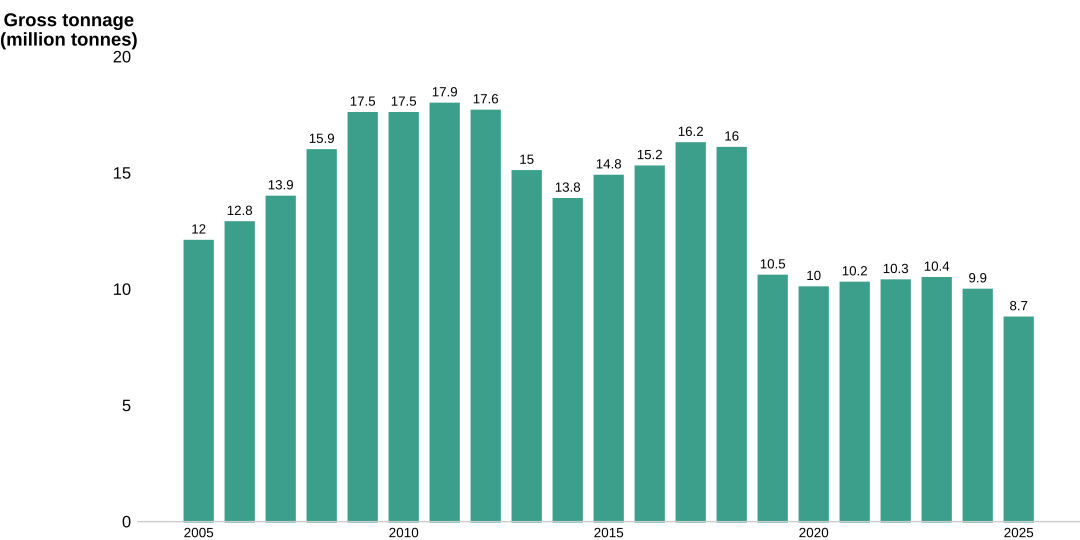
The figures in this section are based on UK Ship Register data from MCA as at the end of December 2025 (see Chart 1):
-
the UK registered merchant and commercially operating pleasure fleet decreased by 12% compared to 2024 to 8.7 million gross tonnes
-
the decline is driven by a small number of passenger vessels with a large gross tonnage leaving the flag
-
the number of vessels decreased to 1,034, down from 1,054 in 2024
The UK‑registered fleet was at low levels in the 1990s but grew steadily up to 2009, likely influenced by the introduction of the UK tonnage tax scheme in 2000. After 2011 the fleet declined again as some major companies moved away from the UK flag. In response, the UK Ship Register Advisory Panel explored measures to expand the UK flag and strengthen the sector.
The decline between 2018 and 2019 largely reflects one company’s decision to change the flag of its fleet. Decline in tonnage on the UK shipping register between 2018 and 2019 was also likely to be related to uncertainty over the UK’s exit from the EU.
Chart 1: Gross tonnage, in millions, on the UK Ship Register at end year, 2005 to 2025 (FLE0100)
The table FLE0100 presents end year and monthly statistics for the UK Ship Register.
Further information about the UKSR and ship registration is published by the MCA.
Section 2: World and Red Ensign Group trading fleet
Figures from 2022 onwards in section 2 and 3 are based on world fleet data supplied by Sea/ by Maritech. Any data prior to 2022 is based on IHS data.
These figures cover trading vessels of 100 gross tonnes or over, and are not directly comparable with the UKSR statistics presented in section 1 (a brief comparison of the 2 sources is given in the notes and definitions).
Based on data from Sea/ by Maritech (www.sea.live), at the end of 2025:
-
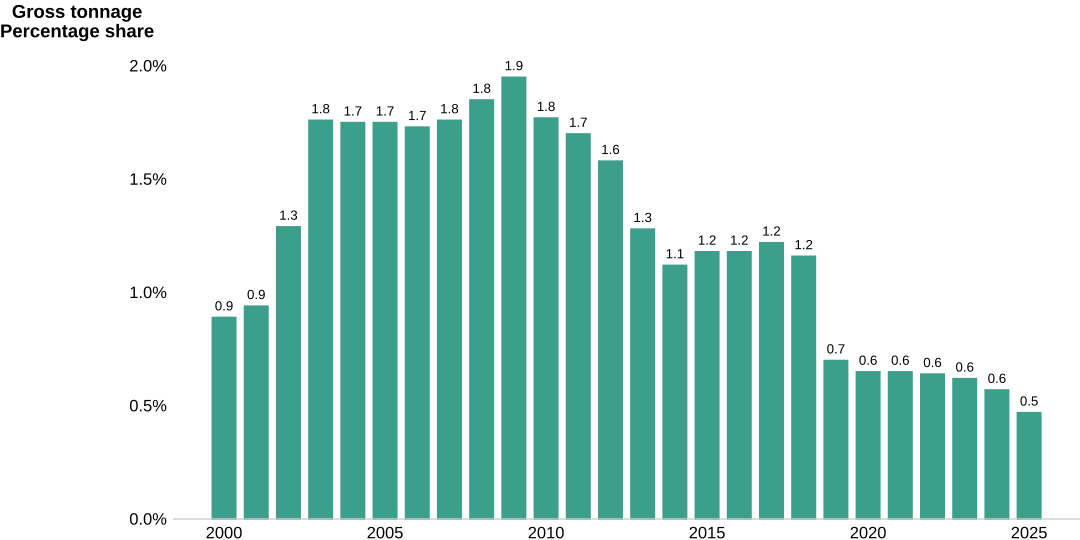
the UK share of the world trading fleet was 0.4% by deadweight tonnage and 0.5% by gross tonnage
-
the UK registered trading fleet was the 31st largest trading fleet in the world by deadweight tonnage and 28th by gross tonnage
-
the world trading fleet size was 2,421 million tonnes by deadweight tonnage, and 1,651 million tonnes by gross tonnage
Chart 2 shows that, by deadweight tonnage, the world trading fleet has been linearly increasing since 2005 and doubled in size in the last 20 years, and growth remains linear, increasing by 5% in 2025 compared to 2024.
Chart 2: World trading vessels of 100 gross tonnes or over, million deadweight tonnes (FLE0502)
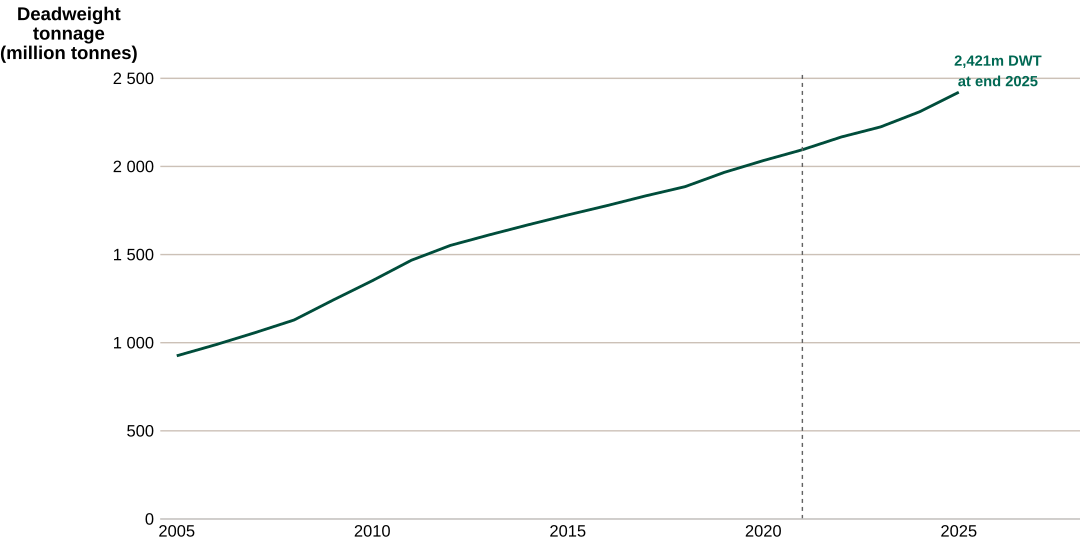
Chart 2 note
The dotted line in 2021 refers to a change in data provider.
Chart 3a shows that, in 2025, the UK registered share of the world trading fleet by deadweight tonnage decreased slightly compared to 2024 (although still rounding to the same percentage point figure). The UK registered share by gross tonnage also decreased slightly in 2025, down 0.1 percentage points compared to 2024 as shown in chart 3b.
Chart 3a: UK registered share (%) of world fleet deadweight tonnage - trading vessels of 100 gross tonnes or over (FLE0502)
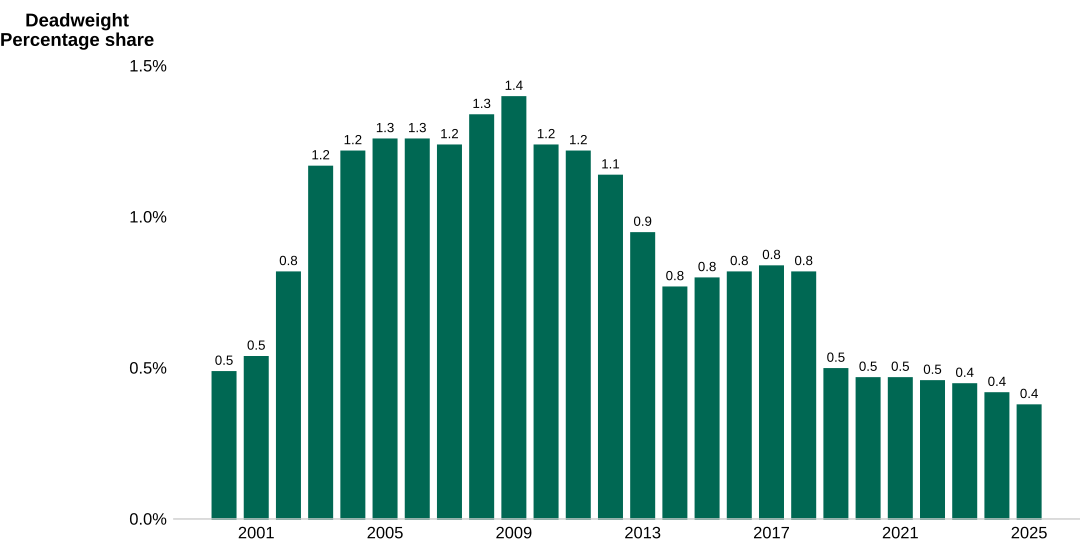
Chart 3b: UK registered share (%) of world fleet gross weight tonnage - trading vessels of 100 gross tonnes or over (FLE0501)
In 2025, the UK registered trading fleet was the 31st largest in the world by deadweight tonnage, down 5 positions compared to 2024 (was 26th). This is in part due to an almost twofold increase in Cameroon, Sierra Leone and Belgium flagged vessels compared to 2024. In gross tonnage, the UK registered trading fleet is the 28th largest fleet in the world, this dropped from 27th in 2024.
Chart 4 displays the UK position alongside the 10 largest ship registers, the Crown Dependencies and the Overseas Territories based on deadweight. The largest trading fleets, such as Panama and Liberia, are open registers (ORs), available to all ships regardless of the place of business of the owner. The UK register is a traditional, or national registry, which requires ships to be owned, at least in part, by national interests (registration information for the UK is published by MCA). The large open registers also account for a large proportion of the overall growth of the world fleet in recent years, most notably Liberia, the Marshall Islands and Panama.
Chart 4: The largest trading ship registers by deadweight tonnage (vessels of 100 gross tonnes or over, million deadweight tonnage), at the end of 2025
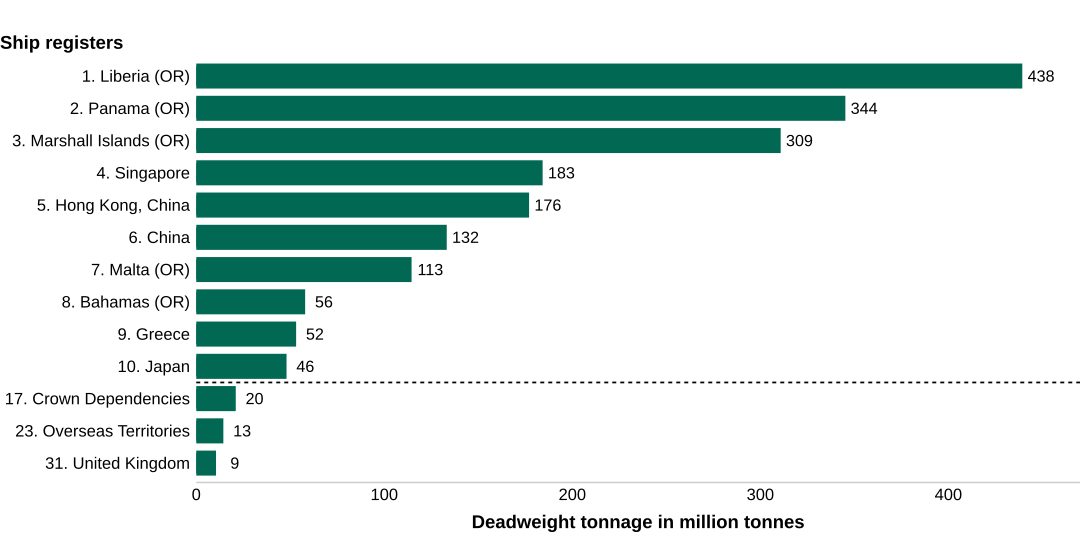
Chart 4 note
OR shows fleets that are open registers - registers available to ships regardless of the nationality of the business owner.
Red Ensign Group (REG) countries
The Red Ensign Group is the collective title for the shipping registers of the UK, the Crown Dependencies, and the Overseas Territories.
United Kingdom is England, Scotland, Northern Ireland and Wales.
The Crown Dependencies are the Isle of Man, Jersey, and Guernsey. Of these, the Isle of Man accounts for over 99.9% of the combined deadweight tonnage.
The Overseas Territories are Anguilla, Bermuda, British Virgin Islands, Cayman Islands, Falkland Islands, Gibraltar, St Helena, the Turks and Caicos Islands and Montserrat.
Registration with the Red Ensign Group provides vessels with the support of British consular services worldwide, UK defence and security responsibilities also extend to vessels flagged to the Red Ensign Group.
If taken as a group, the Red Ensign Group would have the 11th largest registered trading fleet in the world, based on deadweight, and 10th largest based on gross tonnage, at the end of 2025, broadly stable compared to 2024. The total REG deadweight tonnage has remained unchanged compared to 2024, but decreased by 1% by gross tonnage compared to 2025.
The UK accounts for 22% of the deadweight tonnage of the Red Ensign Group trading fleet, whilst the Crown Dependencies (effectively the Isle of Man) account for 47% and the Overseas Territories account for 31%. From 2003 to 2009 the UK and Isle of Man registered trading fleets were at a broadly similar level. From 2009 the Isle of Man trading fleet grew more than 70% up to 2018, while the UK registered trading fleet decreased in this period.
In 2025, the Isle of Man register has seen an increase of 1% by deadweight tonnage and remained broadly unchanged by gross tonnage when compared to 2024. The Isle of Man deadweight tonnage as a proportion of the total Red Ensign Group deadweight tonnage remains broadly unchanged in 2025 from 2024.
Statistical tables
FLE03: UK and Crown Dependency registered vessels (by type).
FLE04: Red Ensign Group.
In 2025, compared to 2024, there has been a decrease in trading fleet by deadweight tonnage in the UK (-6%), and a slight increase in Crown Dependencies (1%) and Overseas Territories (3%), as shown in Chart 5.
While the Red Ensign Group’s deadweight tonnage did broadly increase from 2009 to 2018 - with a dip between 2012 and 2015 - in 2019 it started declining sharply, and is now 31% lower compared to 2018. However, it has stabilised in more recently – the total deadweight tonnage of Red Ensign Group showed no change from 2024 to 2025. However, it has stabilised in more recently – the total deadweight tonnage of Red Ensign Group showed no change from 2024 to 2025.
The Crown Dependencies ranked as the 17th largest registered trading fleet in the world measured by deadweight tonnage at end 2025, and in combination, the Red Ensign Group would be in 11th place. Excluding the UK, Red Ensign Group members, like many non-European open registries, are able to offer very attractive fiscal regimes to potential customers.
Chart 5: Red Ensign Group registered trading vessels of 100 gross tonnes or over, million deadweight tonnes (FLE0402)
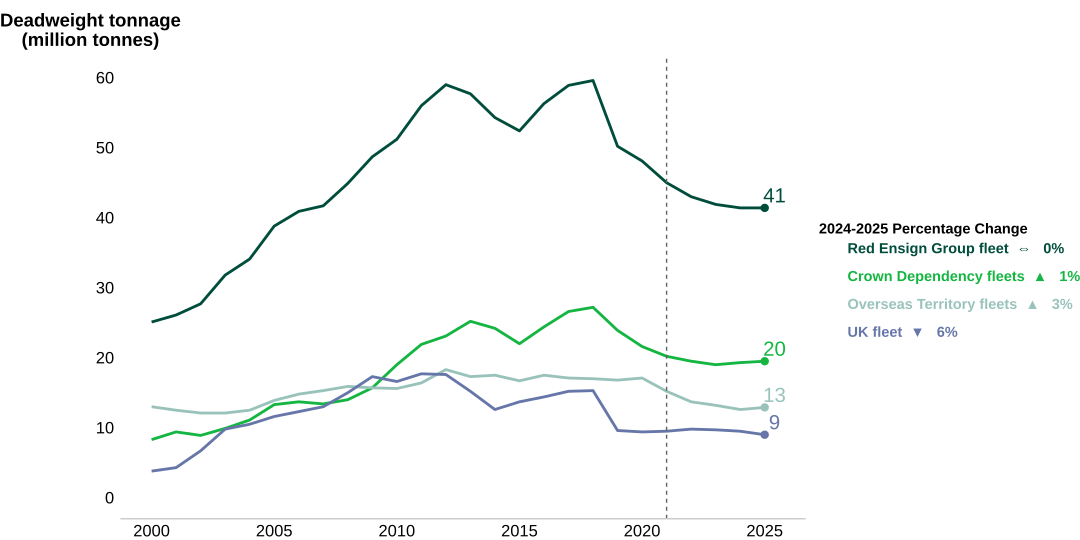
Chart 5 notes
The dotted line in 2021 refers to a change in data provider.
Percentage changes are rounded to the nearest whole number. Any changes of less than 0.5 are shown as 0.
Section 3: Other measures of UK Shipping interests
Direct owner level analysis is not included in this release due to additional time needed for quality assurance following a methodological change by the data provider to how direct owner information is collected. We are currently liaising with the data provider to understand the nature of the change and appropriately quality assure the data. We aim to include direct owner analysis again in next year’s release.
The ‘UK trading fleet’ of ships beneficial owned, managed or operated by the UK is considerably larger than the UK registered trading fleet. In total, the UK trading fleet accounted for 4% of the world trading fleet by deadweight tonnage compared to 0.4% UK registered in 2025. Shipping is a complex international business, and many different parties, often based in different countries, may have a commercial interest in a single vessel. Both ownership and management of shipping can have economic value to the country in which they are located. In comparison to the UK, many of the large open flags typically have relatively small fleets of beneficial owned vessels.
In these statistics, the following, non-mutually exclusive, definitions of the UK fleet are used:
UK registered: country flag where the ship is registered is UK.
UK direct owned: ships for which the headquarters of the company that owns the ship is registered in the United Kingdom (not including the Crown Dependencies and the Overseas Territories).
UK beneficial owned: the ultimate controlling owner of the vessel, who benefits from any profits the ship makes, is registered in the UK, such as having a UK headquarters.
UK managed: the company responsible for the day-to-day running of the ship is registered in the UK, such as having a UK headquarters.
The above categories are not mutually exclusive. For example, a vessel could be both UK directly owned, and UK managed.
Chart 6: UK interest in trading vessels of 100 gross tonnes or over, million deadweight tonnes (FLE0101)
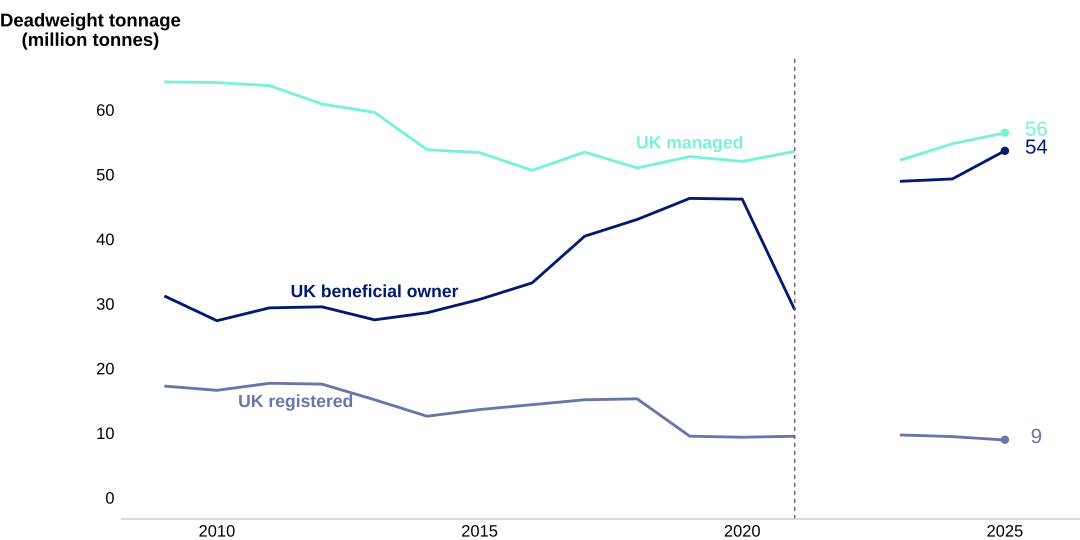
Chart 6 note:
The dotted line in 2021 refers to a change in data provider.
UK shipping interest data is not available for 2022. See the notes and definitions.
In 2025, 1,781 trading vessels totalling 102 million deadweight tonnes, equivalent to 4% of the world’s trading fleet deadweight tonnage, were beneficially owned, managed or operated by UK companies. In comparison, the UK registered trading fleet accounted for 9 million deadweight tonnes, 0.4% of the world fleet.
Based on data from Sea/ by Maritech (www.sea.live), at the end of 2025:
-
there were 1,085 UK beneficial owned trading vessels, totalling a deadweight tonnage of 54 million tonnes, this is a 9% increase compared to 2024
-
there were 1,130 trading vessels managed by UK registered companies totalling a deadweight tonnage of 56 million tonnes
About these statistics
These statistics are official statistics. They comply with the standards of trustworthiness, quality, and value in the Code of Practice for Statistics.
Further guidance on the methods used to compile these statistics can be found on the notes and definitions.
Further detail
Detailed statistical tables containing breakdowns and time series of the number, deadweight tonnage and gross tonnage of vessels by type of vessel, size of vessel, fleet definition, and selected international fleets can be found in the maritime and shipping statistics collection.
Related information
The Maritime and Coastguard Agency is responsible for ship registration in the UK, and maintains the definitive UK ship register, to which the figures in section 1 of this publication relate.
A range of other sources provide information on the global shipping fleet. For example, the UNCTAD annual Review of Maritime Transport includes a more in-depth analysis of trends in the global fleet (though based on an alternative source of data than is used for this publication).
Instructions for printing and saving
Depending on which browser you use and the type of device you use (such as a mobile or laptop) these instructions may vary.
You will find your print and save options in your browser’s menu. You may also have other options available on your device. Tablets and mobile device instructions will be specific to the make and model of the device
How to search
Select Ctrl and F on a Windows laptop or Command and F on a Mac.
This will open a search box in the top right-hand corner of the page. Type the word you are looking for in the search bar and press enter. Your browser will highlight the word, usually in yellow, wherever it appears on the page. Press enter to move to the next place it appears.
Contact us
Maritime and shipping statistics
Email maritime.stats@dft.gov.uk
Media enquiries 0300 7777 878
To hear more about DfT statistical publications as they are released, please follow us on X at DfTstats.