Rough sleeping snapshot in England: autumn 2025
Published 26 February 2026
Applies to England

© Crown copyright 2026
This publication is licensed under the terms of the Open Government Licence v3.0 except where otherwise stated. To view this licence, visit nationalarchives.gov.uk/doc/open-government-licence/version/3 or write to the Information Policy Team, The National Archives, Kew, London TW9 4DU, or email: psi@nationalarchives.gov.uk.
Where we have identified any third party copyright information you will need to obtain permission from the copyright holders concerned.
This publication is available at https://www.gov.uk/government/statistics/rough-sleeping-snapshot-in-england-autumn-2025/rough-sleeping-snapshot-in-england-autumn-2025
1. Main Findings
-
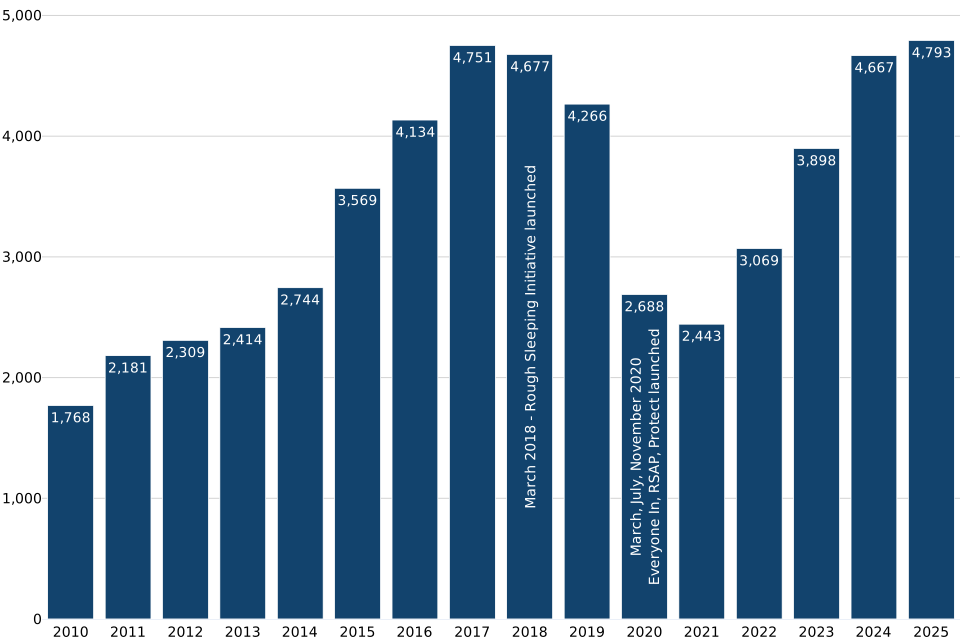
The number of people estimated to be sleeping rough on a single night in autumn 2025 is 4,793. This is a new record high, exceeding the previous peak of 4,751 in 2017. This is the fourth annual increase in a row, increasing 3% since 2024, and 171% higher than 2010 when the snapshot approach was introduced.
-
The rate of people sleeping rough in England has increased to 8.2 people per 100,000 in the population [footnote 1] in 2025 from 8.0 per 100,000 in 2024, though remains lower than the peak in 2017 (8.5 per 100,000).
-
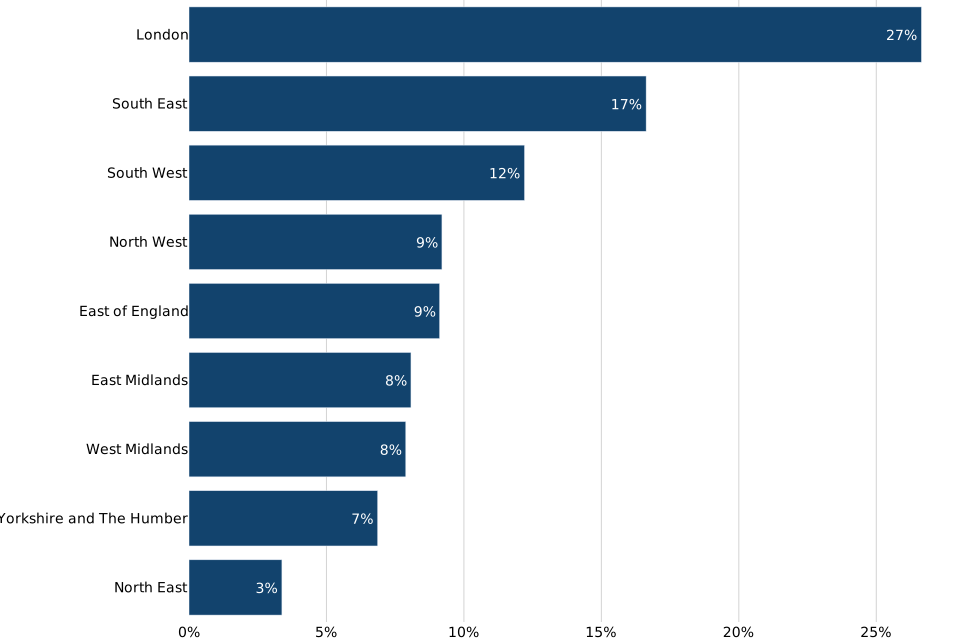
43% of all people sleeping rough on a single night in autumn are in London and the South East.
-
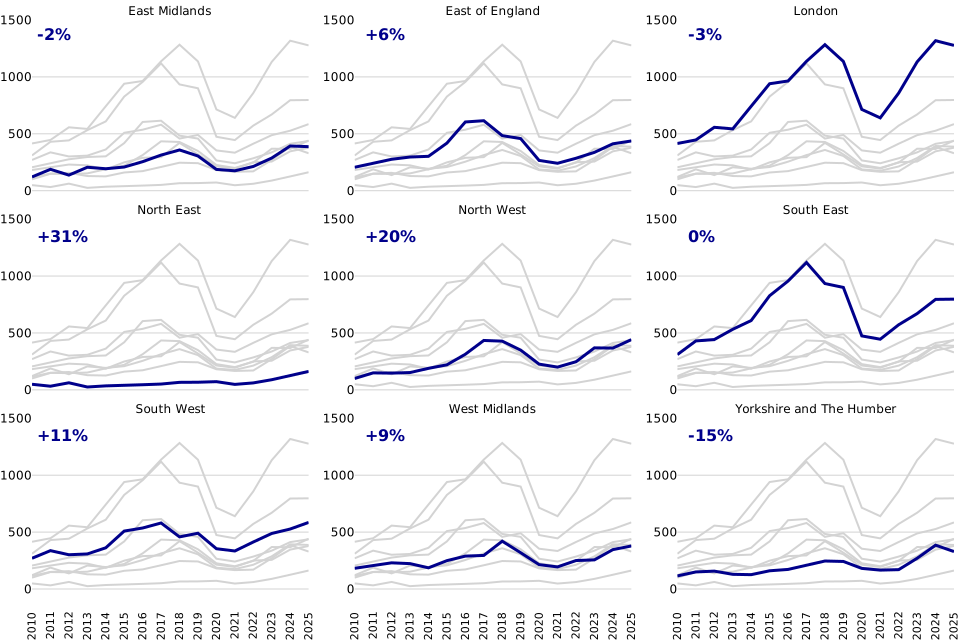
The largest regional increase was in the North West of England, rising from 367 in 2024 to 441 in 2025 - an increase of 74 people or 20%. A decrease is seen in three regions: Yorkshire and The Humber - a decrease of 56 people ( 15%), London – a decrease of 41 people (3%) and East Midlands - a decrease of 6 people (2%).
-
In 51% of local authorities the number of people sleeping rough increased, in 10% the number of people stayed the same and in 40% there was a decrease.
-
The majority of people sleeping rough in England are male, aged over 26 years old and from the UK. This is similar to previous years.
-
Alongside these statistics, we are also publishing the Rough sleeping data framework which uses more frequent, more recent and more detailed management information about people sleeping rough to help us better understand how far rough sleeping is prevented wherever possible, and where it does occur it is rare, brief, and non-recurring. The annual single night snapshot and the monthly single night snapshot are not directly comparable as the annual takes place in either October or November, and some local authorities use a different approach for their monthly snapshot.[footnote 2]
-
The more recent management information shows, in December 2025, there were 3,536 people estimated to be sleeping rough on a single night which is lower than the autumn snapshot. Rough sleeping numbers are usually lower in the winter due to colder weather or more temporary night shelters. These statistics also show there were 2.3 times more people sleeping rough over the month compared to a single night, illustrating that the flow of people onto and off the street over the course of a month is significantly higher than those seen on any given night due to the dynamic nature of rough sleeping.
Date of next publication: We expect to publish the autumn 2026 Rough sleeping snapshot in early 2027. The date will be pre-announced on the GOV.UK publication release calendar.
Figure 1: Estimated number of people sleeping rough on a single night in autumn in England, 2010 to 2025
1.1 Introduction
This publication provides the estimated number and age, gender, and nationality of people sleeping rough on a single night in autumn 2025. Local authorities choose a single date between 1 October and 30 November on which to base their snapshot estimate.
There are a range of factors that can affect the number of people who sleep rough on any given night, for example, the availability of night shelters, the weather, and where people choose to sleep. The date and the time chosen for the snapshot estimate can also impact the numbers. The figures in this release are therefore subject to some uncertainty and should be treated as estimates.
The annual snapshot statistics remain our official and most robust measure of rough sleeping on a single night given they are independently quality assured and are published in line with the Code of Practice for Statistics though it is important to consider how they can and cannot be used, as explained below.
1.2 Uses and limitations
These statistics can be used:
- To estimate the number of people sleeping rough on a single night in autumn
- To assess changes in the number of people sleeping rough over time
- To compare local authorities and regions in England
- To understand some basic characteristics about people who sleep rough
These statistics are not suitable:
- To estimate the total number of people sleeping rough across the year
- To estimate the total number of homeless people
- To compare with other countries in the UK
- To understand how long people sleep rough and the reasons why people sleep rough
Alongside the 2025 snapshot statistics, we have published the latest quarterly update of the rough sleeping data framework management information and the Accredited Official statutory homelessness statistics.
The rough sleeping data framework management information includes more timely and frequent insights on rough sleeping and the support for people compared to the annual rough sleeping snapshot. It uses a similar collection approach to annual rough sleeping statistics, albeit without the greater quality assurance of the annual statistics. This data framework is relevant to people working locally to reduce rough sleeping and is an important step towards driving better outcomes for vulnerable people.
2. Rough sleeping snapshot
2.1 National and sub-national
The number of people estimated to be sleeping rough in England on a single night in autumn 2025 has increased for the fourth year in a row to 4,793 and is at a record high.
In London the number of people estimated to be sleeping rough decreased compared to last year, whereas across the rest of England as a whole there was an increase.
The number of people estimated to be sleeping rough on a single night in autumn 2025 has increased for the fourth year in a row to 4,793. This is an increase of 126 people (3%) from 2024 and an increase of 42 people (1%), compared to the previous peak of 4,751 people in 2017. Also, this is an increase of 3,025 people (171%) since 2010, when the snapshot approach was first introduced.
Figure 2.1.1: Estimated number of people sleeping rough on a single night in autumn in London and Rest of England, 2010 to 2025
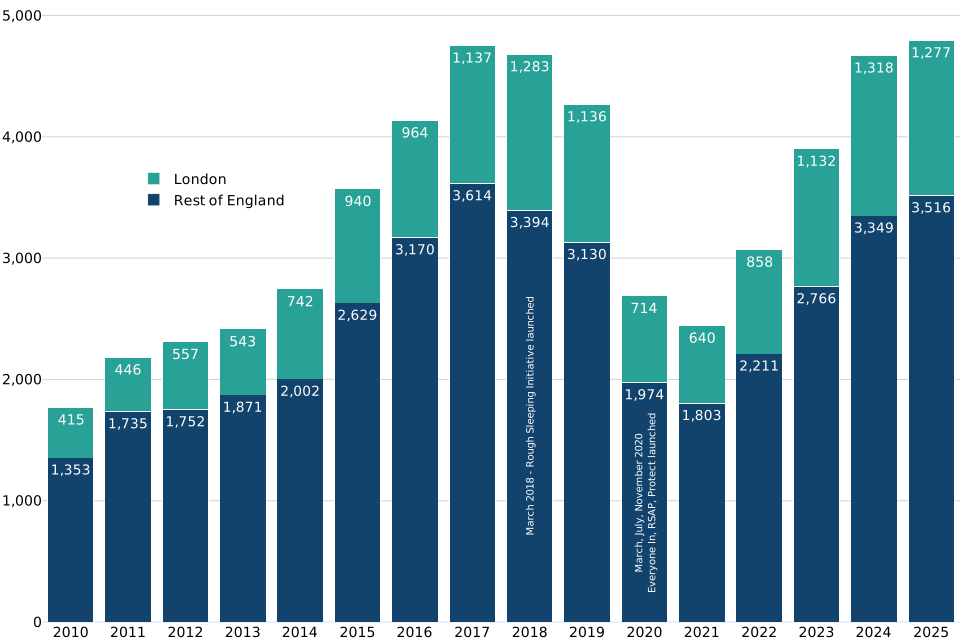
In London, there were 1,277 people estimated to be sleeping rough on a single night in autumn 2025. This is a decrease of 41 people (3%) from London’s peak in 2024 and an increase of 862 people (208%) since 2010.
Across the rest of England, there were 3,516 people estimated to be sleeping rough on a single night in autumn 2025. This is up by 167 people (5%) from last year but down by 98 people (3%) from its peak in 2017. However, this is an increase of 2,163 people (160%) since 2010.
Table 2.1.1: Estimated number of people sleeping rough on a single night in autumn in England, London and Rest of England, 2010 to 2025
| Year | England | % change on previous year (England) | London | % change on previous year (London) | Rest of England | % change on previous year (Rest of England) |
|---|---|---|---|---|---|---|
| 2010 | 1,768 | - | 415 | - | 1,353 | - |
| 2011 | 2,181 | 23 | 446 | 7 | 1,735 | 28 |
| 2012 | 2,309 | 6 | 557 | 25 | 1,752 | 1 |
| 2013 | 2,414 | 5 | 543 | -3 | 1,871 | 7 |
| 2014 | 2,744 | 14 | 742 | 37 | 2,002 | 7 |
| 2015 | 3,569 | 30 | 940 | 27 | 2,629 | 31 |
| 2016 | 4,134 | 16 | 964 | 3 | 3,170 | 21 |
| 2017 | 4,751 | 15 | 1,137 | 18 | 3,614 | 14 |
| 2018 | 4,677 | -2 | 1,283 | 13 | 3,394 | -6 |
| 2019 | 4,266 | -9 | 1,136 | -11 | 3,130 | -8 |
| 2020[footnote 3] | 2,688 | -37 | 714 | -37 | 1,974 | -37 |
| 2021[footnote 3] | 2,443 | -9 | 640 | -10 | 1,803 | -9 |
| 2022 | 3,069 | 26 | 858 | 34 | 2,211 | 23 |
| 2023 | 3,898 | 27 | 1,132 | 32 | 2,766 | 25 |
| 2024 | 4,667 | 20 | 1,318 | 16 | 3,349 | 21 |
| 2025 | 4,793 | 3 | 1,277 | -3 | 3,516 | 5 |
2.2 Regional
43% of all people sleeping rough on a single night in autumn 2025 were in London and the South East.
Rough sleeping increased in every region compared to the previous year except in Yorkshire and The Humber, London and East Midlands. The North West had the highest increase in absolute terms - with an increase of 74 people while the North East had the largest percentage increase - with an increase of 31%.
London and the South East accounted 43% of all the people estimated to be sleeping rough on a single night in autumn this year.
The North East of England is the region with the lowest number of people estimated to be sleeping rough on a single night in autumn this year, which is the same as all previous years.
Figure 2.2.1: Regional distribution of people sleeping rough on single night in autumn 2025
The region with the largest increase in the number of people estimated to be sleeping rough on a single night in autumn 2025 was the North West, with 441 people compared to 367 people in 2024.
The region with the largest percentage increase was the North East, up 31% from 124 people in 2024 to 162 people in 2025.
The region with the largest percentage decrease was Yorkshire and The Humber, down 15% from 385 people in 2024 to 329 people in 2025.
Table 2.2.1: Estimated number of people sleeping rough on a single night in autumn by region, 2024 and 2025
| Area | 2024 | 2025 | Change | % Change |
|---|---|---|---|---|
| Yorkshire and The Humber | 385 | 329 | -56 | -15 |
| London | 1,318 | 1,277 | -41 | -3 |
| East Midlands | 393 | 387 | -6 | -2 |
| South East | 795 | 797 | 2 | 0 |
| East of England | 412 | 437 | 25 | 6 |
| West Midlands | 346 | 378 | 32 | 9 |
| North East | 124 | 162 | 38 | 31 |
| South West | 527 | 585 | 58 | 11 |
| North West | 367 | 441 | 74 | 20 |
| Rest of England | 3,349 | 3,516 | 167 | 5 |
| England | 4,667 | 4,793 | 126 | 3 |
Figure 2.2.2: Estimated number of people sleeping rough on a single night in autumn by region, 2010 to 2025 (% change 2024 to 2025 for each region highlighted)
2.3 Local Authority
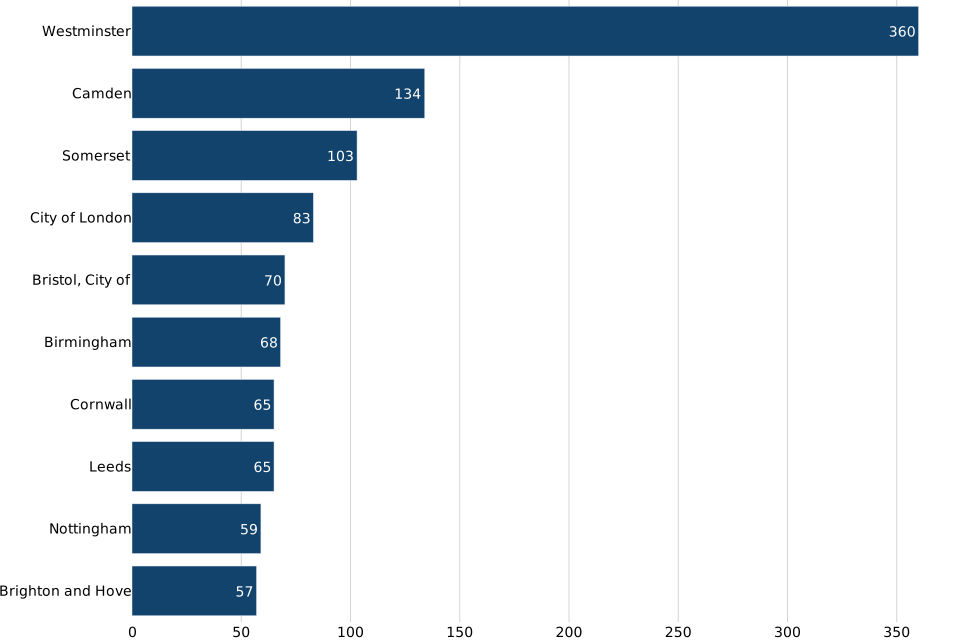
Whilst Westminster remains the local authority [footnote 4] with the highest number of people sleeping rough on a single night in autumn 2025, it has also seen the largest decrease since autumn 2024.
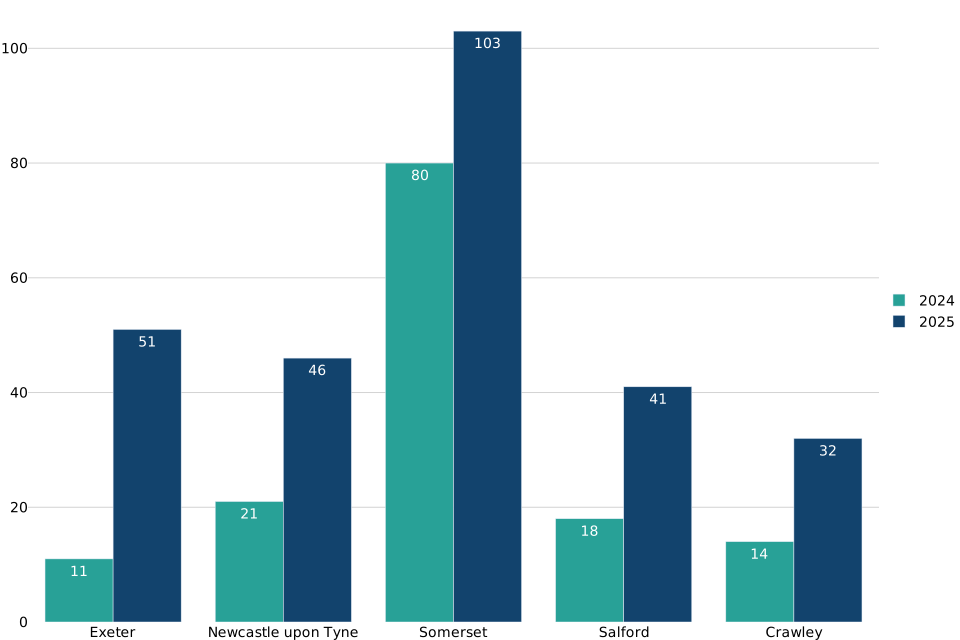
The largest increase in the number of people sleeping rough on a single night in autumn was in Exeter.
There is a mixed picture across local authorities. In 51% of local authorities the number of people sleeping rough increased, in 10% the number of people stayed the same and in 40% there was a decrease.
Seven of the top ten local authorities with the highest numbers of people sleeping rough this year were also in the top ten last year
In autumn 2025, the number of people sleeping rough on a single night ranged from 0 people in 15 local authorities across England to 360 people in Westminster. The median number of people sleeping rough on a single night was 10.
Local authorities are asked to provide possible reasons for any significant changes in the numbers of people who sleep rough compared to previous years.
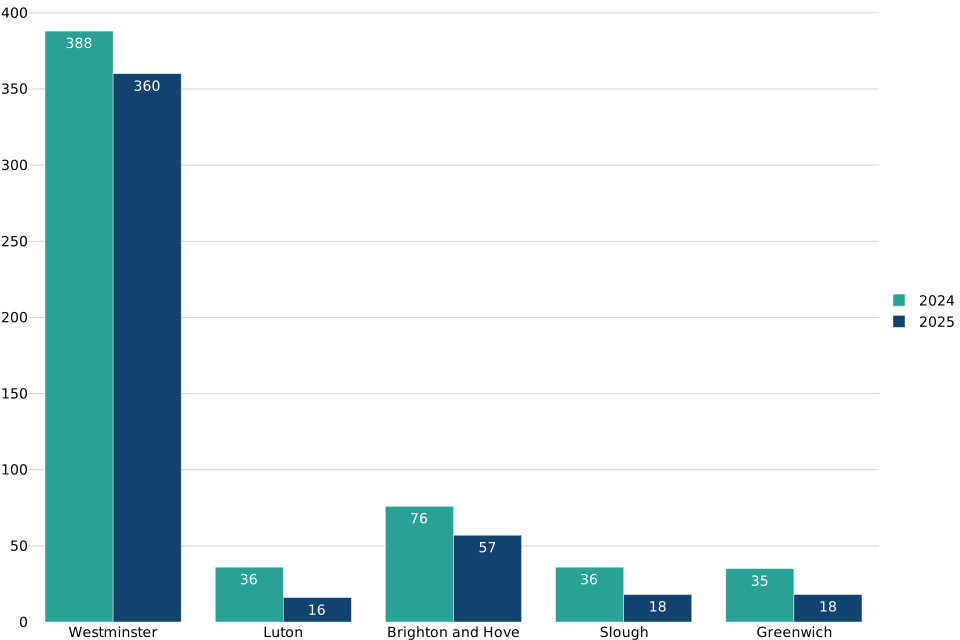
Westminster has consistently been the local authority with the highest number of people sleeping rough since the snapshot approach was introduced in 2010. It was also the local authority with the largest decrease in people estimated to be sleeping rough, where there were 360 people in 2025, compared to 388 in 2024, a decrease of 28 people, whereas last year it had the largest increase compared to all other local authorities. Westminster City Council published its Homelessness and Rough Sleeping Strategy and Action Plan 2025-2030. This suggests that Westminster has the highest number of people sleeping rough due to its central London location, which draws people from other parts of the UK and other countries.
Table 2.3.1: Local authorities with the highest estimated number of people sleeping rough on a single night in autumn 2025, compared to previous year
| Local Authority | 2024 | 2025 | Change | % Change |
|---|---|---|---|---|
| Westminster | 388 | 360 | -28 | -7 |
| Camden | 132 | 134 | 2 | 2 |
| Somerset | 80 | 103 | 23 | 29 |
| City of London | 86 | 83 | -3 | -3 |
| Bristol, City of | 77 | 70 | -7 | -9 |
| Birmingham | 59 | 68 | 9 | 15 |
| Leeds | 69 | 65 | -4 | -6 |
| Cornwall | 53 | 65 | 12 | 23 |
| Nottingham | 56 | 59 | 3 | 5 |
| Brighton and Hove | 76 | 57 | -19 | -25 |
Figure 2.3.1: Local authorities with the highest estimated number of people sleeping rough on a single night in autumn 2025
Local authorities with the largest increases, in absolute terms, reported that these were due to a range of factors which include, but are not limited to: improved planning and reporting to more accurately estimate rough sleeping; an increase in those with restricted eligibility to public funds, including those who have left asylum support accommodation; movement of people sleeping rough across nearby local authority boundaries and recent closure of squat accommodation; limited suitable available housing pathways; and the activation of Severe Weather Emergency Provision (SWEP), which meant more people were asking for support who would otherwise be sleeping rough.
Table 2.3.2: Local authorities with the largest absolute increase in the estimated number of people sleeping rough on a single night in autumn from 2024 to 2025
| Local Authority | 2024 | 2025 | Change | % Change |
|---|---|---|---|---|
| Exeter | 11 | 51 | 40 | 364 |
| Newcastle upon Tyne | 21 | 46 | 25 | 119 |
| Somerset | 80 | 103 | 23 | 29 |
| Salford | 18 | 41 | 23 | 128 |
| Crawley | 14 | 32 | 18 | 129 |
Figure 2.3.2: Local authorities with the largest increase in the estimated number of people sleeping rough on a single night in autumn 2025 compared to previous year
The local authority with the largest absolute decrease in the number of people sleeping rough was Westminster, where 360 people were estimated to be sleeping rough on a single night in autumn 2025 compared to 388 people in 2024.
Local authorities with the largest absolute decreases in the number of people sleeping rough reported that this was due to a range of factors including, but not limited to: additional capacity, available housing pathways and targeted advice for specific cohorts of people sleeping rough, including women and people with sleeping restricted eligibility to public funds; the weather conditions on the night compared to last year, in some cases where this year it was very cold which may have led to some people who usually sleeping rough to seek shelter elsewhere, and in other areas where Severe Weather Emergency Provision (SWEP) was activated last year but not this year, which may have meant more people accessing support who would otherwise be sleeping rough.
Table 2.3.3: Local authorities with the largest absolute decrease in the estimated number of people sleeping rough on a single night in autumn from 2024 to 2025
| Local Authority | 2024 | 2025 | Change | % Change |
|---|---|---|---|---|
| Westminster | 388 | 360 | -28 | -7 |
| Luton | 36 | 16 | -20 | -56 |
| Brighton and Hove | 76 | 57 | -19 | -25 |
| Slough | 36 | 18 | -18 | -50 |
| Greenwich | 35 | 18 | -17 | -49 |
When comparing the number of people sleeping rough on a single night in autumn across years, and between local authorities, there are a range of factors that should be considered. For example, the weather, where people choose to sleep, movement across local authority boundaries (particularly in London) and the availability of night shelters. The date and time chosen for the snapshot may also impact numbers.
Figure 2.3.3: Local authorities with the largest decrease in the estimated number of people sleeping rough on a single night in autumn 2025 compared to previous year
The following map of England details the number of people estimated to be sleeping rough on a single night in autumn 2025 in England.
Figure 2.3.4: Map showing the estimated number of people sleeping rough on a single night in autumn 2025 in England

3. Demographics
Since 2016, we have collected data on age, gender and nationality of people sleeping rough and consistent demographic data, which used the same categories, has been available from 2017 onwards [footnote 5].
Demographic information is collected either by asking the person found sleeping rough or by referring to existing knowledge (if that person was already known). If a person refused to give, or did not want to share, their personal information, they would still be recorded as sleeping rough and demographic information including age, gender and nationality would be recorded as ‘Not known’, if unknown. If it was not possible to record demographic information, due to an individual being asleep when they were approached for example, then it was recorded as ‘Not known’.
Caution should be taken when comparing the demographics of people sleeping rough compared to previous years due to the change in ‘Not known’ groups.
3.1 Age
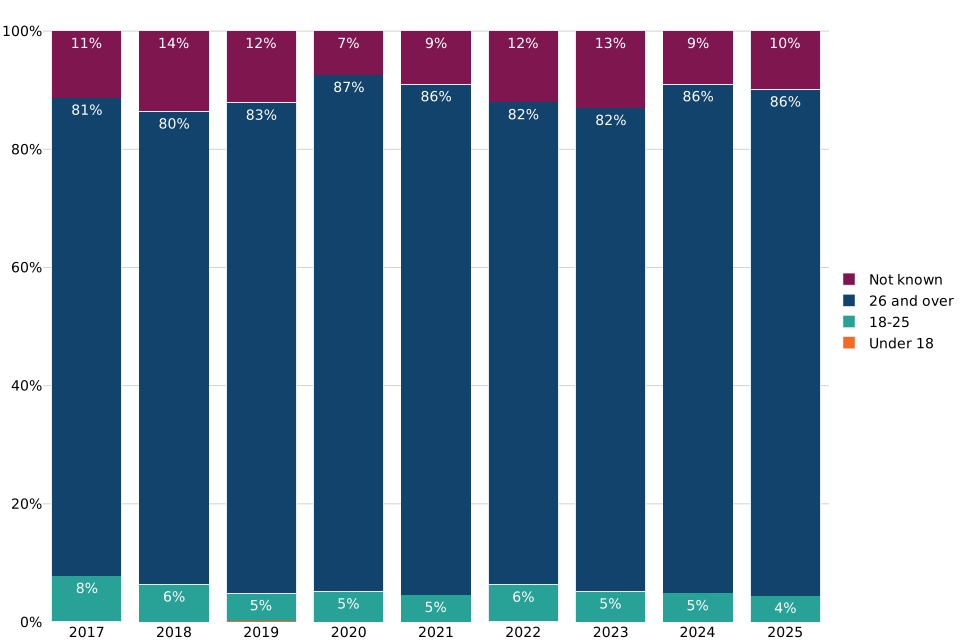
The majority of people sleeping rough on a single night in autumn were aged 26 and older – similar to previous years.
There were no people under the age of 18 found sleeping rough in 2025. Under 18s who are homeless should be provided with accommodation by Children’s Services in their local authority.
In 2025, 4,108 people (86% of the total) sleeping rough on a single night in autumn were 26 or older and 212 people (4% of the total) were between 18 and 25. The age of people sleeping rough was ‘Not known’ for 473 people (10% of the total), and none were under 18.
Table 3.1.1: Estimated number of people sleeping rough on a single night in autumn by age, 2017 to 2025
| Year | Under 18 | 18–25 | 26 and over | Not known | Total |
|---|---|---|---|---|---|
| 2017 | 3 | 366 | 3,846 | 536 | 4,751 |
| 2018 | 1 | 295 | 3,744 | 637 | 4,677 |
| 2019 | 6 | 201 | 3,542 | 517 | 4,266 |
| 2020 | 1 | 138 | 2,349 | 200 | 2,688 |
| 2021 | 0 | 112 | 2,111 | 220 | 2,443 |
| 2022 | 2 | 192 | 2,506 | 369 | 3,069 |
| 2023 | 1 | 201 | 3,189 | 507 | 3,898 |
| 2024 | 1 | 227 | 4,019 | 420 | 4,667 |
| 2025 | 0 | 212 | 4,108 | 473 | 4,793 |
Figure 3.1.1: Proportion of people sleeping rough on a single night in autumn by age, 2017 to 2025
The age breakdown of people sleeping rough was broadly similar across all regions in England.
Table 3.1.2: Proportion of people sleeping rough on a single night in autumn 2025 by age in England, London and Rest of England
| Area | Under 18 | 18–25 | 26 and over | Not known |
|---|---|---|---|---|
| England | 0 | 4 | 86 | 10 |
| London | 0 | 5 | 79 | 16 |
| Rest of England | 0 | 4 | 88 | 8 |
3.2 Gender
The majority of people sleeping rough on a single night in autumn 2025 were male – similar to previous years.
In 2025, there were 3,938 men (82% of the total) and 733 women (15% of the total) sleeping rough on a single night in autumn. Gender was ‘Not known’ for 122 people (3% of the total). The gender breakdown of people sleeping rough was similar across all regions in England, and was similar to previous years.
We recognise that sleeping patterns of females experiencing rough sleeping is more hidden, transient and intermittent and therefore may not be fully captured by the snapshot which requires people to be bedded down and takes place at night. For example, women who sleep rough may sit or sleep in places which are open all night, walk all night or engage in sex work during the night but not have anywhere to sleep during the day [footnote 6]. A new question on the gender of people sleeping rough over the month, was added to the monthly rough sleeping data framework to help improve the evidence on females experiencing rough sleeping.
Table 3.2.1: Estimated number of people sleeping rough on a single night in autumn by gender, 2017 to 2025
| Year | Male | Female | Not known | Total |
|---|---|---|---|---|
| 2017 | 3,965 | 653 | 133 | 4,751 |
| 2018 | 3,937 | 642 | 98 | 4,677 |
| 2019 | 3,534 | 614 | 118 | 4,266 |
| 2020 | 2,277 | 377 | 34 | 2,688 |
| 2021 | 2,079 | 322 | 42 | 2,443 |
| 2022 | 2,539 | 464 | 66 | 3,069 |
| 2023 | 3,214 | 568 | 116 | 3,898 |
| 2024 | 3,858 | 680 | 129 | 4,667 |
| 2025 | 3,938 | 733 | 122 | 4,793 |
Figure 3.2.1: Proportion of people sleeping rough on a single night in autumn by gender, 2017 to 2025

Table 3.2.2: Proportion of people sleeping rough on a single night in autumn 2025 by gender in England, London, and Rest of England
| Year | Male | Female | Not known |
|---|---|---|---|
| England | 82 | 15 | 3 |
| London | 81 | 14 | 5 |
| Rest of England | 83 | 16 | 2 |
3.3 Nationality
The majority of people sleeping rough on a single night in autumn 2025 were from the UK. This is the same as in previous years.
The largest increase in the number of people sleeping rough on a single night were those from the UK, whereas the largest percentage increase was for those people from outside the EU.
The majority (3,101 or 65%) of people estimated to be sleeping rough on a single night in autumn 2025 were from the UK, while 622 people (13% of the total) were EU nationals and 546 people (11% of the total) were from outside the EU. The nationality of 524 people (11% of the total) was ‘Not known’.
There were 3,101 people from the UK estimated to be sleeping rough on a single night in 2025 compared to 2,956 in 2024, which is an increase of 145 people (5%). The overall proportion has increased from 63% in 2024 to 65% in 2025.
There were 622 EU nationals estimated to be sleeping rough on a single night in 2025 compared to 765 people in 2024, which is a decrease of 143 people (19%). The overall proportion has decreased from 16% in 2024 to 13% in 2025. This is the third year in a row where the overall proportion of EU nationals sleeping rough has decreased.
There were 546 people from outside the EU and UK estimated to be sleeping rough on a single night in 2025 compared to 495 in 2024, an increase of 51 people (10%). The overall proportion has remained the same at 11% in 2025 compared to 2024. This has increased from 3% in 2018 and is now a similar overall proportion to those sleeping rough from the EU.
There was also an increase in the number of people sleeping rough whose nationality was ‘Not Known’ compared to 2024, rising from 451 in 2024 to 524 in 2025, which is an increase of 73 (16%).
Table 3.3.1: Estimated number of people sleeping rough on a single night in autumn by nationality, 2017 to 2025
| Year | UK | EU | Non-EU | Not known | Total |
|---|---|---|---|---|---|
| 2017 | 3,396 | 760 | 193 | 402 | 4,751 |
| 2018 | 3,013 | 1,048 | 153 | 463 | 4,677 |
| 2019 | 2,735 | 937 | 151 | 443 | 4,266 |
| 2020 | 1,922 | 472 | 128 | 166 | 2,688 |
| 2021 | 1,633 | 497 | 110 | 203 | 2,443 |
| 2022 | 1,966 | 632 | 179 | 292 | 3,069 |
| 2023 | 2,420 | 718 | 336 | 424 | 3,898 |
| 2024 | 2,956 | 765 | 495 | 451 | 4,667 |
| 2025 | 3,101 | 622 | 546 | 524 | 4,793 |
Figure 3.3.1: Proportion of people sleeping rough on a single night in autumn by nationality, 2017 to 2025
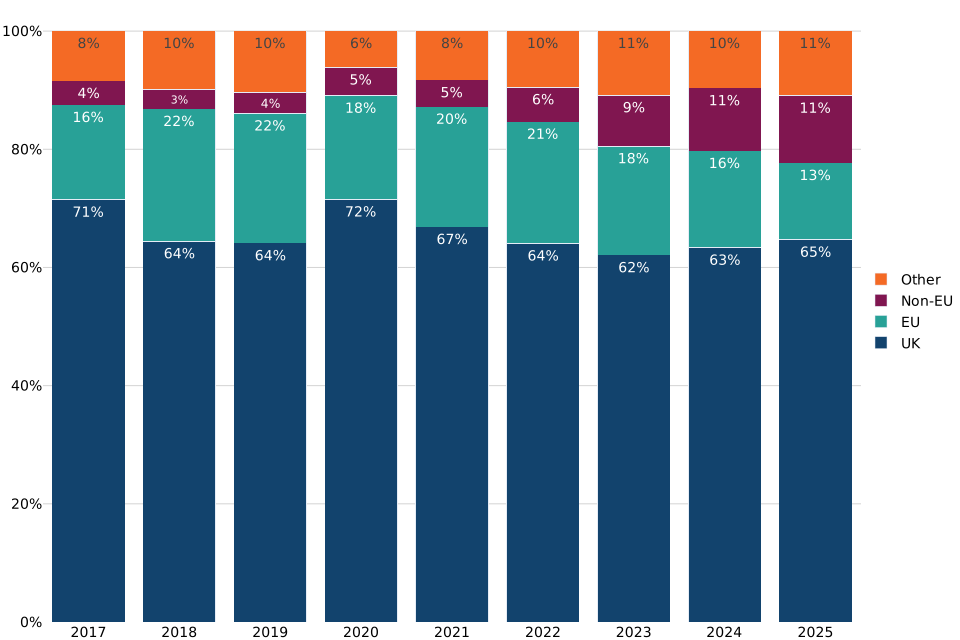
Of the 1,277 people sleeping rough in London in 2025, 447 (35%) were from the UK, 303 (24%) were EU nationals and 293 (23%) were from outside the EU and the UK. The nationality of 234 people (18%) was ‘Not known’.
Across the rest of England, 2,654 people estimated to be sleeping rough on a single night in autumn were from the UK (75%), 319 people were EU nationals (9%), 253 people were from outside the EU and the UK (7%) and for 290 people (8%) nationality was ‘Not known’.
Table 3.3.2: Proportion of people sleeping rough on a single night in autumn 2025 by nationality and region in England, London and Rest of England
| Year | UK | EU | Non-EU | Not known |
|---|---|---|---|---|
| England | 65 | 13 | 11 | 11 |
| London | 35 | 24 | 23 | 18 |
| Rest of England | 75 | 9 | 7 | 8 |
Table 3.3.3: Change in the number of people sleeping rough on a single night in autumn from 2024 to 2025
| Nationality | 2024 | 2025 | Change | % Change |
|---|---|---|---|---|
| UK | 2,956 | 3,101 | 145 | 5 |
| EU | 765 | 622 | -143 | -19 |
| Non-EU | 495 | 546 | 51 | 10 |
| Not known | 451 | 524 | 73 | 16 |
| Total | 4,667 | 4,793 | 126 | 3 |
4. Snapshot approach
The majority of local authorities (86%) used the same approach for their rough sleeping snapshot as they did last year.
Most local authorities used an evidence-based estimate meeting for their rough sleeping snapshot, which is similar to previous years.
Local authorities, in conjunction with local agencies, decide which approach to use for their snapshot of rough sleeping. They are advised to use the approach that will most accurately reflect the number of people sleeping rough in their local authority and will provide an estimate that best meets the local context. There are three different approaches a local authority can decide to use:
- A count-based estimate which is the number of people seen sleeping rough in the local authority on a ‘typical night’ - a single date chosen by the local authority between 1 October and 30 November.
- An evidence-based estimate meeting which is an evidence-based assessment by local agencies, leading to a single snapshot figure that represents the number of people thought to be sleeping rough in the local authority on a ‘typical night’ - a single date chosen by the local authority between 1 October and 30 November.
- An evidence-based estimate meeting including a spotlight count which is the same as an evidence-based estimate meeting, but with one of the evidence sources also being a street count, which might not be as extensive as the count-based estimate but has taken place after midnight on the ‘typical night’.
In 2025, 245 local authorities (83%) used an evidence-based estimate meeting or an evidence-based estimate meeting including spotlight count for their rough sleeping snapshot and 51 local authorities (17%) used a count-based estimate.
Figure 4.1: Approach used by local authorities for their rough sleeping snapshot since 2010
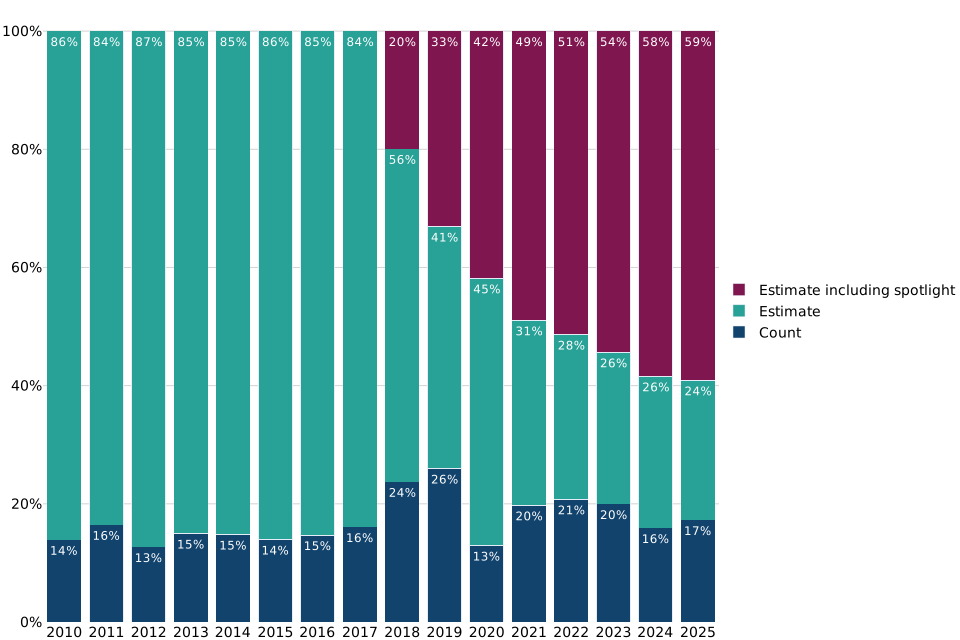
As in previous years, most local authorities used an evidence-based estimate meeting for their 2025 rough sleeping snapshot. More local authorities supplemented their evidence-based estimate meetings with a spotlight count compared to 2024. However, we do not know how this compares with earlier years (pre-2018) as, although this approach was available, only a distinction between evidence-based estimate meetings and count-based estimates were recorded and published at the time.
Table 4.1: Approach used by local authorities for their rough sleeping snapshot, 2024 and 2025
| Approach | 2024 | 2025 |
|---|---|---|
| Count-based estimate | 48 | 51 |
| Evidence-based estimate meeting | 76 | 70 |
| Evidence-based estimate meeting (inc. spotlight count) | 172 | 175 |
| Total | 296 | 296 |
Local authorities can change approach [footnote 7] from year to year but any decision to do so must be guided by whether it will produce the most accurate figure. Homeless Link, who independently quality assured the rough sleeping snapshot, ask for details of this decision-making as part of the quality assurance process to ensure any changes meet the guidance. If the reasons given for an approach change were deemed unsatisfactory, then the local authority snapshot figure would not be ‘Assured’. Further information about quality assurance is available in the technical report.
There are several reasons why a local authority may change from an evidence-based estimate to a count-based estimate or vice versa from year to year. For example, a local authority may change from an evidence-based estimate to a count-based estimate if there are a lack of local agencies with intelligence about where people are sleeping rough or if agencies refuse to share their data, making it difficult to form an accurate estimate. A local authority may change from a count-based estimate to an evidence-based estimate if there are new sleep sites which are inaccessible or unsafe to access, which would not be included in a count-based estimate.
The 2018 Rough Sleeping Initiative impact evaluation found that local authorities changing their approach to measuring rough sleeping from count-based estimate to evidence-based estimate and vice versa, was unlikely to account for the fall in rough sleeping seen in these local authorities. A more detailed analysis of the rough sleeping snapshot over time was carried out to examine the possible effects of local authorities changing their snapshot approach. This is available in the technical report.
5. Consultation with local agencies
64% of local authorities consulted five or more agencies for their snapshot estimate.
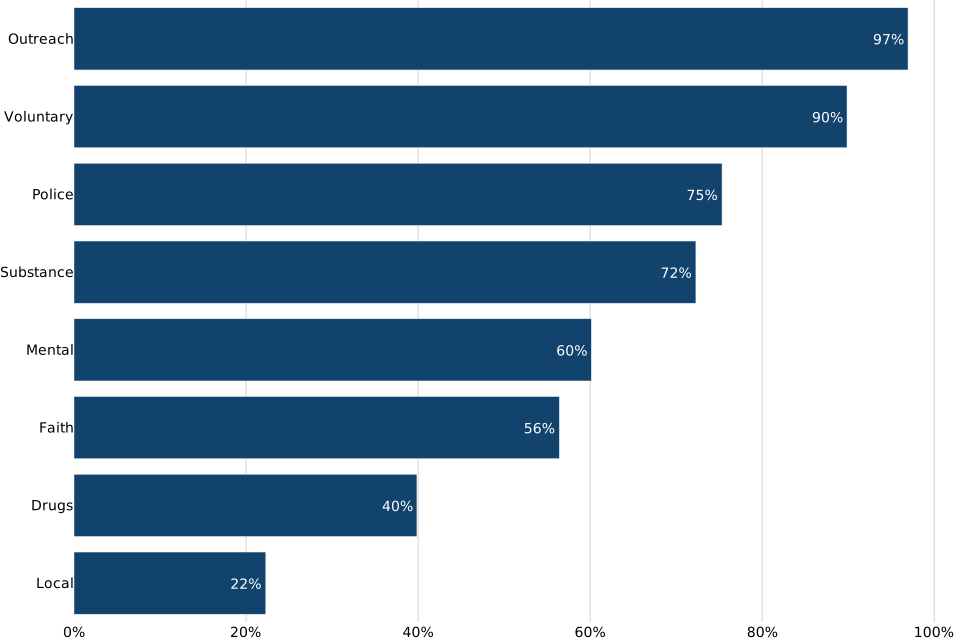
The majority of local authorities involved the police, voluntary sector and outreach teams for their snapshot estimate.
Local authorities consult local agencies, such as the police, voluntary sector and outreach teams to discuss what intelligence they have about rough sleeping locally to check if there are any factors that might affect the choice of a ‘typical night’ for the estimate. Furthermore, the local authority should involve those local agencies that have the most accurate information about who is sleeping rough. Every local authority reported that they had consulted with at least one type of local agency, and 64% reported that they had consulted five or more different groups.
The involvement of local agencies is an essential element of the rough sleeping snapshot. It ensures transparency about how the snapshot was carried out and enables Homeless Link to speak to independent local agencies as part of the quality assurance process.
Homeless Link provide quality assurance to ensure the rough sleeping figures are reliable and the correct processes have been followed. There are three types of assurance, including ‘Assured’, where all elements of the chosen approach have been followed and there no concerns about the process or execution; ‘Not Fully Assured’, where the chosen approach did not include an independent partner or snapshot began for before earlier than recommended; and ‘Not Assured’, where the chosen approach was not followed and a different approach would have provided a more robust figure.
This year 3 local authorities provided figures that were ‘Not Assured’ by Homeless Link and 17 were ‘Not Fully Assured’. Further information about quality assurance is available in the technical report.
Figure 5.1: Number of agencies consulted by local authorities for their rough sleeping snapshot 2025
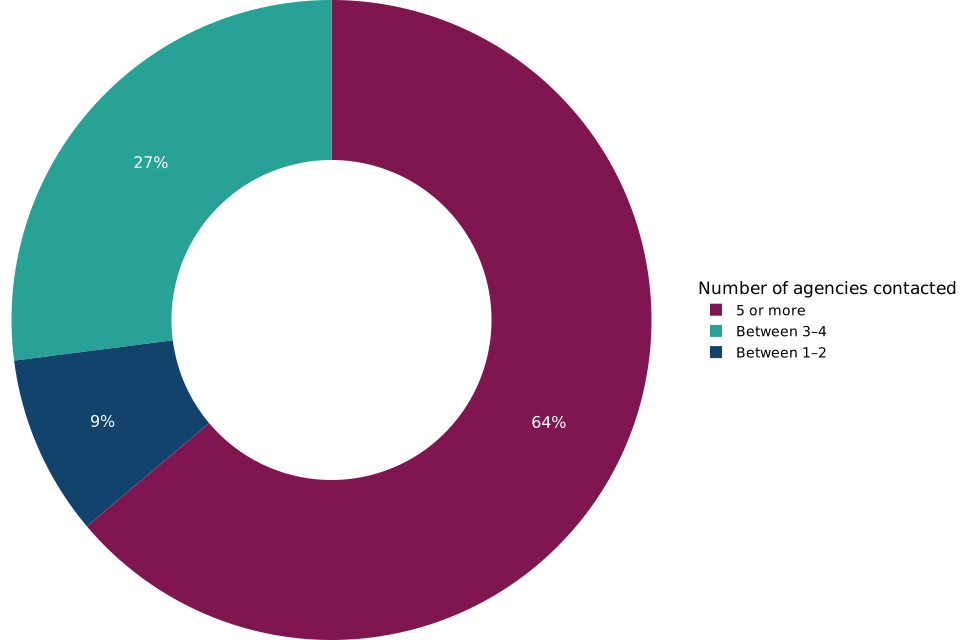
In 2025, nearly all local authorities involved outreach workers, the police and voluntary sector in their rough sleeping snapshot. The majority of local authorities also involved substance misuse teams, mental health teams and faith groups.
Figure 5.2: Local partners most commonly involved in the 2025 rough sleeping snapshot
6. Government support for people sleeping rough
- On 11 December 2025, the cross-government Strategy on Homelessness and Rough Sleeping: A National Plan to End Homelessness was published. The strategy sets out how Government will drive long-term sustainable change to address the root causes of homelessness - to build more homes, ensure social homes go to people who need them, reform renters’ rights, and tackle poverty.
- While Government delivers this long-term change, the strategy sets out how, in the shorter-term, Government’s ambition to move the system away from crisis response and towards prevention, whilst targeting resources to support people facing the worst forms of homelessness and facing the most complex needs. This includes a specific focus on a new national target to halve long-term rough sleeping.
- The new Local Outcomes Framework for local government sets out the national priority outcomes that we will be working with local councils to deliver across all service areas, including homelessness, rough sleeping and multiple disadvantage. It gives councils greater flexibility in how they prioritise and deliver services based on the needs of communities. Data from the annual snapshot, the rough sleeping data framework and the statutory homelessness release will play a key part in monitoring these priority outcomes and the Government targets.
7. Definitions
People sleeping rough are defined as:
- People sleeping, about to bed down (sitting on/in or standing next to their bedding) or bedded down in the open air (such as on the streets, in tents, doorways, parks, bus shelters or encampments).
- People in buildings or other places not designed for habitation (such as stairwells, barns, sheds, car parks, cars, derelict boats, stations, or ‘bashes’ which are makeshift shelters, often comprised of cardboard boxes).
The definition does not include:
- People in hostels or shelters
- People in campsites or other sites used for recreational purposes or organised protest
- Squatters
- Travellers
Bedded down means either lying down or sleeping.
About to bed down includes those who are sitting in/on or near a sleeping bag or other bedding.
8. Things you need to know
- Local authorities across England take an autumn single night snapshot of people sleeping rough. They either use a count-based estimate of visible rough sleeping, an evidence-based estimate meeting with local agencies to record those who are known to be sleeping rough or an evidence-based estimate meeting including a spotlight count.
- Local authorities, together with local agencies, decide which approach and date to use for their snapshot of rough sleeping. They are advised by Homeless Link to use the approach that will provide the most accurate estimate of the number of people sleeping rough in their local authority.
- The snapshot should take place on a ‘typical night’, on a single date between 1 October and 30 November, chosen by the local authority. The date can change from one year to the next and will not be the same for all local authorities. In some cases, this is coordinated with neighbouring local authorities to avoid double counting of people.
- The snapshot takes place in the autumn rather than summer (when numbers are likely to be higher due to warmer temperatures) or winter (when numbers may be lower as more temporary night shelters are set up).
- The snapshot is collated by outreach workers, local charities and community groups and is independently quality assured by Homeless Link.
- The snapshot does not provide a definitive number of people affected by homelessness in England. The term ‘homelessness’ is much broader than people sleeping rough, and can also include people who are in temporary accommodation or staying temporarily with friends or family.
- The snapshot does not include everyone in a local authority with a history of sleeping rough. Nor does it include everyone sleeping rough in the October to November period.
- Accurately estimating the number of people sleeping rough within a local authority is inherently difficult given the hidden nature of rough sleeping. For example, sleeping patterns of women experiencing rough sleeping may not be fully captured by the snapshot, as women who sleep rough may be more hidden, transient and intermittent and not bedded down at night[footnote 6].
- The snapshot methodology has been in place since 2010. From 1998 to 2010, local authorities who estimated that there were more than 10 people sleeping rough in their local authority were asked to conduct an annual street count. This was around a quarter of all local authorities.
- Rough sleeping, is the most visible and dangerous form of homelessness and is caused by a mixture of interrelated structural (eg poverty, affordable housing), individual (eg relationship breakdown, mental health and substance misuse) and interpersonal factors (eg people leaving institutions , people with no recourse to public funds).[footnote 8]
- Our statistical practice is regulated by the Office for Statistics Regulation (OSR).
9. Enquiries
Media
Telephone: 0303 444 1209
Email: newsdesk@communities.gov.uk
Statistical enquiries
Telephone: 0303 444 2623 or 2238
Email: roughsleepingstatistics@communities.gov.uk
Responsible Analysts: Jon White & Khizir Abid
Information on Official Statistics is available via the UK Statistics Authority website.
Information about statistics at MHCLG is available via the Department’s website.
-
Calculated using ONS mid-2024 population estimates. ↩
-
Technical report - Section 7: Comparability with other rough sleeping statistics Rough sleeping snapshot in England: autumn 2025 - technical report - GOV.UK ↩
-
Snapshot estimates for 2020 and 2021 were impacted by the range of measures introduced by the government to protect people during the COVID-19 pandemic. ↩ ↩2
-
In 2023, the unitary authorities Cumberland, Westmorland and Furness, North Yorkshire, and Somerset were formed. The authorities that they are comprised of have been retired and their previous rough sleeping figures have been aggregated. ONS have a list of all restructures since 1995 ↩
-
2016 totals included an option for ‘Not known’ but not all local authorities were able to provide exact numbers of these ‘Not known’ responses. Therefore, this information is not comparable with later years. ↩
-
Women’s Rough Sleeping Census 2024 report Women’s Rough Sleeping Census - Single Homeless Project ↩ ↩2
-
Only approach changes from a “Count-based estimate” to “Evidence-based estimate” or “Evidence-based estimate” to a “Count-based estimate” were considered as a change in approach. “Evidence-based estimate” to “Evidence-based estimate including spotlight” (or vice versa) were not recognised as a change in approach. We did not routinely collect and report information about evidence-based estimates including spotlight counts before 2018 despite this approach being available - these were all classified as estimates. ↩
-
MHCLG (2025) A National Plan to End Homelessness - GOV.UK – Analytical Annex ↩