Product Safety Database report 2025 to 2026
Updated 27 August 2026

© Crown copyright 2026
This publication is licensed under the terms of the Open Government Licence v3.0 except where otherwise stated. To view this licence, visit nationalarchives.gov.uk/doc/open-government-licence/version/3 or write to the Information Policy Team, The National Archives, Kew, London TW9 4DU, or email: psi@nationalarchives.gov.uk.
Where we have identified any third party copyright information you will need to obtain permission from the copyright holders concerned.
This publication is available at https://www.gov.uk/government/statistics/product-safety-database-annual-reports/product-safety-database-report-2025-to-2026
1) Introduction
The United Kingdom (UK) Product Safety Database (PSD) is the notification system used by local authority trading standards (or environmental health in Northern Ireland), certain national regulators, and enforcement teams from the Office for Product Safety and Standards (OPSS) to report unsafe and non-compliant products to the Secretary of State, as required under product safety legislation. [footnote 1]
Unsafe products are those that pose a risk to the health and safety of consumers, while non-compliant products are those that do not meet the requirements of relevant product safety legislation. A product may be both unsafe and non-compliant.
The PSD was introduced in November 2019 to replace two EU systems – Safety Gate [footnote 2] and ICSMS (Information and Communication System on Market Surveillance) - in preparation for the UK’s departure from the European Union. This allowed for a transitional period during which Safety Gate and ICSMS continued to be used until the end of the EU Exit transition period on 31 December 2020. OPSS no longer has access to these systems, except where necessary to fulfil commitments under the Northern Ireland Protocol.
OPSS is the UK’s national product regulator. It enforces regulations covering everyday products such as toys, electricals and cosmetics; weighing and measuring, so that consumers get what they pay for; construction products used in building; and products such as timber and electricals where sourcing or disposal can affect the environment. Whilst any regulated product can be reported on the PSD, there is no guarantee that the full range of products that OPSS regulates will appear, and coverage can vary by product.
The PSD is a core dataset for OPSS, offering insight into the market surveillance activities carried out by regulatory officers across the UK. It highlights where activity is most concentrated by product sector and provides an overview of the most frequently reported harms and corrective actions.
Analysis of PSD data can also help identify emerging safety issues, particularly for novel products or within specific sectors, which in turn informs OPSS’s regulatory priorities. These insights support evidence-based decision-making, helping to target market surveillance efforts, reduce risk, and protect consumers.
2) About this release
This report presents high-level findings from the PSD, incorporating notifications of unsafe and non-compliant products submitted by local authorities and national regulators.
The Methodology and Quality Report, published alongside this release, outlines how the data can and cannot be used.
This release does not include year-on-year comparisons, as Market Surveillance Authorities (MSAs) do not yet use the PSD consistently. Any such comparisons would require significant caveats to ensure that observed changes are fully understood. OPSS is working with authorities to improve the consistency and completeness of PSD usage.
In April 2025, OPSS adopted a new way of categorising products to improve data quality and support data sharing. As a result, the way PSD product record category and subcategory fields are recorded was updated so that main product categories align more closely with Safety Gate primary classifications, while product subcategories align with Global Product Classification (GPC) secondary classifications. This reduced the number of free-text entries and improved consistency with other datasets. Existing product records in the PSD were updated to reflect the new approach.
Users should be aware that the product categories displayed in the data tables may differ slightly from the categories used in previous statistics.
This report provides the official estimate of the number of product and notifications submitted to the PSD during the financial year. However, product notification figures should not be used to estimate the total number of unsafe or non-compliant goods at the national level, as there is no guarantee that all such products are reported through the PSD.
3) Total number of notifications
Between 1 April 2025 and 31 March 2026, a total of 2,396 notifications were received on the PSD, covering 3,368 notified products. A single notification may relate to multiple products, and the same product may appear in more than one notification. Of the notifications received, 563 (23%) were reported as presenting a serious risk, 259 (11%) as high risk, 127 (5%) as medium risk, 229 (10%) as low risk, and 144 (6%) as inconclusive.
In 2025 to 2026, 1,074 (45%) notifications did not have an assigned risk level, as providing this information is not mandatory at the point of submission.
Table 1. Risk levels reported in product safety notifications, 2025 to 2026
| Risk level | Number | Percentage (%) |
| Serious | 563 | 23 |
| High | 259 | 11 |
| Medium | 127 | 5 |
| Low | 229 | 10 |
| Not conclusive | 144 | 6 |
| Unknown | 1074 | 45 |
| Total | 2396 | 100 |
Source: OPSS Product Safety Database.
For more information on how risk levels are defined, please refer to the Methodology and Quality Report.
A full list of products identified as posing a serious or high risk, including those that have been recalled, is available on the Product Recalls and Alerts website.
4) Top 10 product categories
Each product safety notification includes a series of fields focused on product identification, one of which is a pre-coded list of product categories. These categories represent the highest level of product classification.
View the ODS file with the data table showing the full list of product categories.
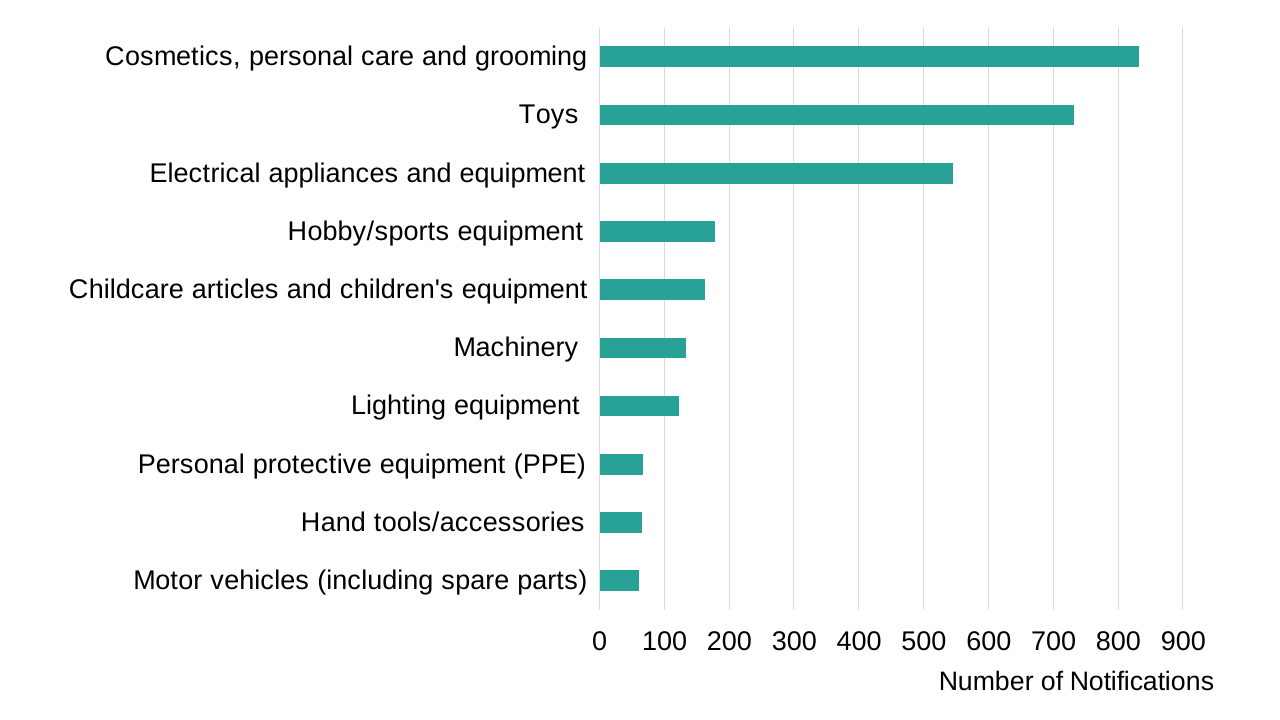
The most frequently notified product category on the PSD was cosmetics, personal care and grooming, accounting for 833 notified products (25%), followed by toys (732 products, 22%) and electrical appliances and equipment (545 products, 16%).
Figure 1. Ten most frequently notified product categories on the PSD, 2025 to 2026
Source: OPSS Product Safety Database.
Table 2. Ten most frequently notified product categories on the PSD, 2025 to 2026
| Category | Number | Percentage (%) |
| Cosmetics, personal care and grooming | 833 | 25 |
| Toys | 732 | 22 |
| Electrical appliances and equipment | 545 | 16 |
| Hobby/sports equipment | 178 | 5 |
| Childcare articles and children’s equipment | 163 | 5 |
| Machinery | 134 | 4 |
| Lighting equipment | 122 | 4 |
| Personal protective equipment (PPE) | 67 | 2 |
| Hand tools/accessories | 66 | 2 |
| Motor vehicles (including spare parts) | 61 | 2 |
| All other categories | 467 | 14 |
| Total | 3368 | 100 |
Source: OPSS Product Safety Database.
Notes:
-
The full set of categories is detailed in the accompanying data tables.
-
Motor vehicles (including spare parts) covers: E-motorcross bikes, any other specific vehicles, motor vehicle spare parts and part repair kits.
5) Top 10 harm types
Table 3 outlines the frequency of notifications recorded as ‘unsafe’ or ‘unsafe and non-compliant’ for different harm types on the PSD. The list of harms aligns with the Safety Gate system, ensuring continuity following the UK’s exit from the EU.
View the ODS file with the data table showing the full list of harm types.
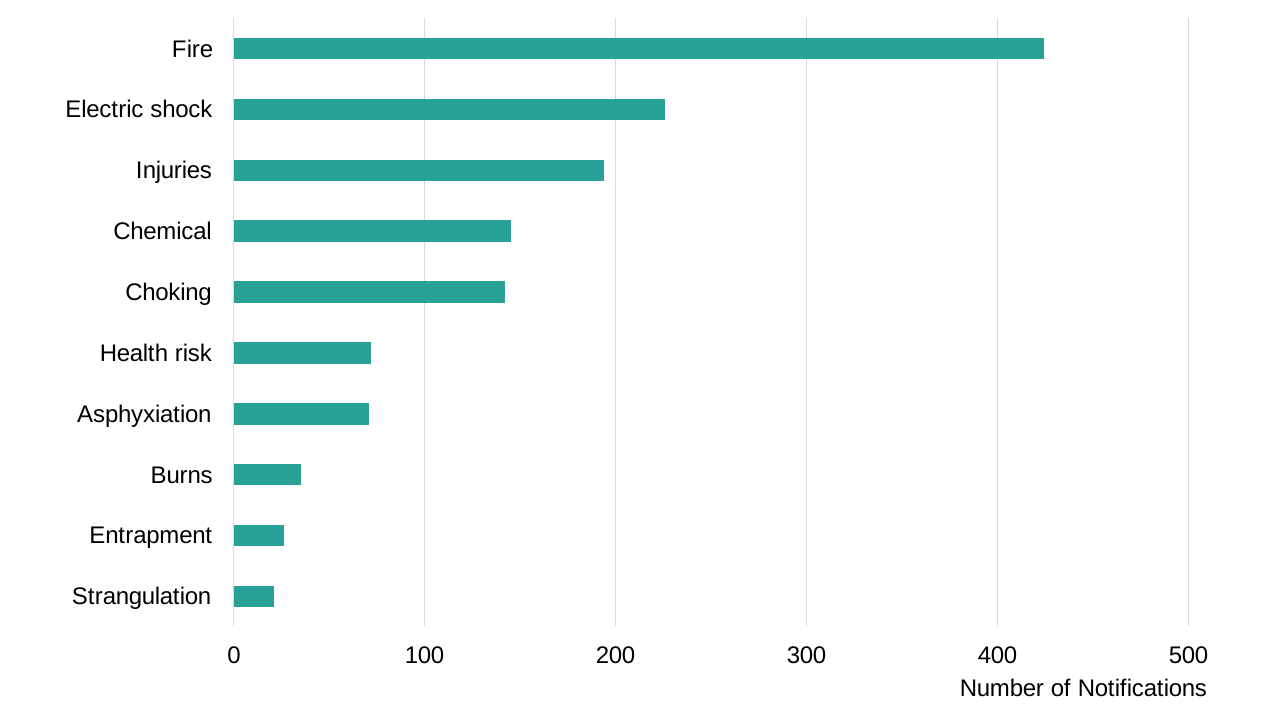
Of the notifications with an assigned harm type, the most frequently notified harm was fire with 424 notifications (30%), followed by electric shock (226 notifications, 16%) and injuries (194 notifications, 14%).
Figure 2. Ten most frequently notified harm types on the PSD, 2025 to 2026
Source: OPSS Product Safety Database.
Table 3. Ten most frequently notified harm types on the PSD, 2025 to 2026
| Harm type | Number | Percentage (%) |
| Fire | 424 | 30 |
| Electric Shock | 226 | 16 |
| Injuries | 194 | 14 |
| Chemical | 145 | 10 |
| Choking | 142 | 10 |
| Health risk | 72 | 5 |
| Asphyxiation | 71 | 5 |
| Burns | 35 | 2 |
| Entrapment | 26 | 2 |
| Strangulation | 21 | 1 |
| All other harm types | 60 | 4 |
| Total | 1416 | 100 |
Source: OPSS Product Safety Database.
Notes:
-
Notifications that were classified as ‘non-compliant’ only under the ‘reported reason’ category were excluded from the analysis and percentage calculations (980 in total). The harm typestypes figure and table include only those cases identified as ‘unsafe’ or both ‘unsafe and non-compliant’.
-
The full set of harm types is detailed in the accompanying data tables.
6) Top 10 corrective actions
Table 4 sets out the types of corrective action listed on the PSD along with the frequency of each type of corrective action notified in 2025 to 2026.
Each notification can include more than one product, and each product can be linked to more than one corrective action. However, not all products have corrective actions added. This may be because the investigation is still ongoing, for example awaiting test results, because the product was found to be safe and compliant, and no action was required, or because the database has not yet been updated.
Of the 3,368 products that were notified, 2,072 (62%) had at least one corrective action applied to them.
View the ODS file with the data table showing the full list of corrective actions.
In this release, the tables for the reporting years 2021 to 2025 have been updated.
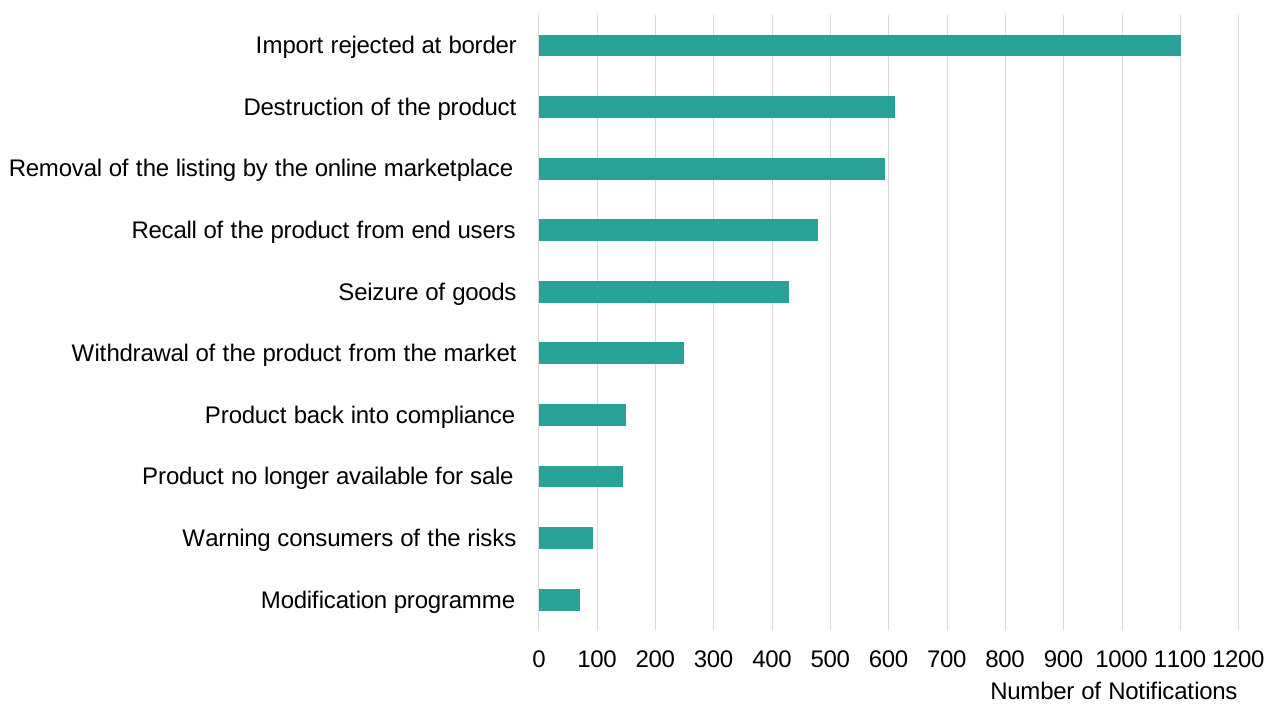
The most frequently notified corrective action in 2025 to 2026 was import rejected at border with 1,102 actions (28%), followed by destruction of the product (611 actions, 15%) and removal of the listing by the online marketplace (594 actions, 15%).
Note: More than one corrective action may be reported for each product; therefore, the categories are not mutually exclusive.
Figure 3. Ten most frequently notified corrective actions on the PSD, 2025 to 2026
Source: OPSS Product Safety Database.
Table 4. Ten most frequently notified corrective actions on the PSD, 2025 to 2026
| Corrective action | Number | Percentage (%) |
| Import rejected at border | 1102 | 28 |
| Destruction of the product | 611 | 15 |
| Removal of the listing by the online marketplace | 594 | 15 |
| Recall of the product from end users | 479 | 12 |
| Seizure of goods | 429 | 11 |
| Withdrawal of the product from the market | 249 | 6 |
| Product back into compliance | 150 | 4 |
| Product no longer available for sale | 145 | 4 |
| Warning consumers of the risks | 92 | 2 |
| Modification programme | 71 | 2 |
| All other corrective actions | 64 | 2 |
| Total | 3986 | 100 |
Source: OPSS Product Safety Database.
7) Notes
-
The full dataset of individual categories for products, harms, and corrective actions is published alongside this report in the accompanying data tables ODS file.
8) More about these statistics
More information about the PSD and revisions to these statistics can be found in the accompanying Methodology and Quality report.
Our statistical practice is regulated by the Office for Statistics Regulation (OSR), which sets the standards of trustworthiness, quality, and value in the Code of Practice for Statistics that all producers of official statistics are expected to follow.
We welcome feedback on how we meet these standards. You can contact us directly, or reach out to OSR by emailing regulation@statistics.gov.uk or visiting the OSR website.
Responsible statistician: Hannah Palmer
Public enquiries: OPSSanalysis@businessandtrade.gov.uk
Footnotes
-
General Product Safety Regulations 2005 (GPSR), Regulation on Accreditation and Market Surveillance (RAMS) and Market Surveillance and Compliance of Products Regulation 2019/1020. ↩
-
The European Union’s rapid alert system for dangerous non-food products, formerly known as RAPEX, has been renamed Safety Gate. This change was implemented to enhance clarity and better outreach to consumers, making it easier for them to understand and engage with the system. The Safety Gate system continues to facilitate the rapid exchange of information on dangerous products among EU member states and the European Commission. ↩