Police powers and procedures: Roads policing, to December 2024
Published 19 March 2026
Applies to England and Wales

© Crown copyright 2026
This publication is licensed under the terms of the Open Government Licence v3.0 except where otherwise stated. To view this licence, visit nationalarchives.gov.uk/doc/open-government-licence/version/3 or write to the Information Policy Team, The National Archives, Kew, London TW9 4DU, or email: psi@nationalarchives.gov.uk.
Where we have identified any third party copyright information you will need to obtain permission from the copyright holders concerned.
This publication is available at https://www.gov.uk/government/statistics/police-powers-and-procedures-roads-policing-to-december-2024/police-powers-and-procedures-roads-policing-to-december-2024
Frequency of release: Annual
Forthcoming releases: Home Office statistics release calendar
Home Office responsible statistician: Jodie Hargreaves
Press enquiries: 0300 123 3535
Public enquiries: policingstatistics@homeoffice.gov.uk
Key findings
This release contains statistics in England and Wales for the year ending 31 December 2024 on fixed penalty notices (FPNs) and other outcomes for motoring offences (Section 2 of this publication), and roadside breath tests (Section 3 of this publication).
Motoring offences
Excluding the Metropolitan Police Service (MPS)[footnote 1], and 490,272 cancelled cases:
| Year ending December 2024: | Comparison to year ending December 2023: |
|---|---|
| A total of 2,934,790 motoring offences were recorded, which resulted in a fixed penalty notice (FPN) or another outcome. The highest recorded since comparable records began in 2011. | This is an increase of 9%, where 2,695,492 motoring offences were recorded. |
| The majority (86%) of recorded motoring offences were for speed limit offences (2,536,194). The highest number recorded since 2011. | The number of speed limit offences recorded has increased by 9%; however, they make up the same proportion of offences as in 2024 (86%). |
| Around half (51%) of driving offences resulted in driver retraining, a fixed penalty notice was issued in a further 37% of cases, and 12% of cases involved court action (excluding those subsequently cancelled). | The proportion of offences resulting in retraining, FPNs and court action remains similar to proportions in 2023 (51%, 36% and 13% respectively). |
Excluding cancelled cases (353,577), the MPS recorded 596,782 motoring offences resulting in an FPN or other outcome in 2024, a 19% increase from the previous year (501,143).
Breath tests
When comparing data for 26 forces who were able to provide comparable data for both years:
| Year ending December 2024: | Comparison to year ending December 2023: |
|---|---|
| A total of 167,095 breath tests were carried out by police. | A small decrease of 0.2% compared to 2023, when 167,384 breath tests were recorded. |
| The month with the highest proportion of breath tests is December, representing 17% of total breath tests carried out. | In 2023, December was also the month with the highest proportion of tests, however it accounted for 15% of the annual total. |
| A total of 24,823 breath tests were positive or refused, representing 15% of all conducted tests. | This proportion is similar to 2023. |
1. About this release
Previously included within the wider Police Powers and Procedures publication, this data is now presented, for the second consecutive year, as a standalone Roads Policing release. Publications for data prior to the 2023 release can be found under ‘Police powers and procedures: Other PACE powers’, at: Police powers and procedures England and Wales statistics - GOV.UK.
This release contains information on the number of fixed penalty notices (FPNs) and other outcomes for motoring offences, and roadside breath tests, for 43 territorial police forces in England and Wales, for the year ending 31 December 2024.
The data in this release can be found in the accompanying data tables.
1.1 Official Statistics in Development status
These statistics were previously published as a part of the broader ‘Police Powers and procedures, England and Wales’ publication, which was designated as ‘Accredited Official Statistics’. Following the decision to separate roads policing into a stand-alone publication, with the agreement of the Office for Statistics Regulation, the Home Office has determined that these statistics should be designated separately, reflecting the distinct publication with distinct users and distinct data quality considerations.
These statistics are therefore classified as ‘Official Statistics in Development’, noting that they will undergo future development to address data quality issues and strengthen quality assurance processes. Users should interpret the data with caution due to potential uncertainty in figures while processes are being developed and validated. More information can be found in the OSR’s guidance on producing Official Statistics in Development.
Once development has concluded, this designation will be removed, and the statistics will be published as ‘Official Statistics’, with a clear explanation of their strengths and limitations.
The Home Office continues to collaborate with police forces and data providers to enhance data quality and increase the level of detail. More information can be found in Section 2.3.4, Section 2.3.5, Section 9, and Section 10 of the accompanying User guide.
1.2 User engagement
As these statistics are designated as Official Statistics in Development, the Home Office is committed to improving their completeness and quality, to enable more detailed future publications. To support this, the Home Office continues to engage with key users to ensure the statistics are developed to meet user needs.
We strongly encourage users to reach out with any feedback they may have about this publication at policingstatistics@homeoffice.gov.uk.
Your feedback will help shape future releases by allowing us to understand current uses of the data, and how this publication can better meet user needs.
1.3 Additional notes on these statistics
1.3.1 User guide
While explanations are provided throughout this release, the User guide contains further information on data considerations, quality, and limitations, and it includes a glossary with definitions of key terms used in this publication.
1.3.2 Fixed penalty notices - the PentiP and Dome systems and data quality considerations
The data in this release is obtained from PentiP and (for the MPS only) Dome, which are operational tools for the recording and processing of motoring offences resolved through fixed penalty notices, driver retraining, or court action. While the data has undergone some quality assurance checks, as with all administrative data used to produce statistics, there are known limitations and data quality considerations. Data in this report reflects cases as recorded on the PentiP and Dome systems, and when interpreting the data, users should consider the associated limitations, including areas where the data is known to be incomplete, as highlighted in Section 2.3.4 and Section 9 of the accompanying User guide.
1.3.3 Breath tests interpretation
Roadside breath alcohol screening tests indicate only the alcohol level in a breath sample and cannot determine whether a driver is over the legal limit; that requires evidential testing at a police station or hospital.
Since 2008, digital recording devices have improved the accuracy and detail of breath test data collected by police forces. By 2011, most forces had adopted these digital systems, though some manual recording remained, leading to variations and likely under reporting of negative tests under older methods. For more information, please see Section 2.3.5 and Section 10 of the User guide.
1.3.4 Breath tests data: comparisons with previous years
Upon submitting data for the calendar year 2024, a significant number of police forces reported changes in data-recording methodology, software systems, or operational tools (for example, new breath test devices). For some forces this resulted from substantial improvements to data collection processes, while for others, IT issues resulted in incomplete records.
Where forces have raised concerns about quality or completeness, data has been excluded from this release. Users should note that the data in this release is not comparable with years prior to 2023 due to these changes. Year on year comparisons should therefore be limited to the 2023 and 2024 figures in tables BT1a and BT2a; these should not be compared with previously published figures in tables BT1b and BT2b, which have not been updated.
For more details, please see Section 3 of this publication and Section 2.3.5 and Section 10 of the User guide. For a full list of excluded forces, see the notes associated with each table from the accompanying data tables.
2. Fixed penalty notices and other outcomes for motoring offences
Data on FPNs and other outcomes for motoring offences is provided for the 43 territorial police forces in England and Wales (excluding the British Transport Police (BTP)), on a calendar-year basis. The data contains information on the number of:
- endorsable and non-endorsable FPNs issued for a range of motoring offences
- FPNs issued as a result of camera-detected offences
- cases where the penalty was paid
- motoring offences that resulted in a driver retraining course, or court action
An FPN is a financial penalty which may be issued to a motorist as an alternative to prosecution. They can be issued for a limited range of motoring offences, such as speeding offences and using a handheld mobile phone while driving.
An FPN can be endorsable (accompanied by points on a driving licence) or non-endorsable (not accompanied by points on a driving licence).
The use of driver retraining courses is at the discretion of the police and the use of such courses can differ by police force area. An individual can only attend a driver retraining course once in a 3-year period for committing the same offence. Therefore, if the individual reoffends and commits the same offence within a 3-year period, having previously attended a driver retraining course, they cannot attend again and will be subject to other sanctions.
A simplified pipeline for motoring offences resolved through fixed penalty notices, driver retraining, or court action is described below. An expanded overview of the process can be found in Section 9.4 of the User guide.
For each motoring offence:
- The offence is logged by the police; this can be camera or officer-detected (non-camera).
- The police force judges whether the offence is FPN (or other outcome) eligible.
- Cases will then follow one of these disposal routes:
a) Fine paid: An FPN is issued, leading to the driver paying.
b) Fine registered: An FPN is issued, the driver accepts the FPN but fails to pay within the allowed time, leading to the penalty being registered as a fine by the court system.
c) Court action: There are several circumstances where police forces may refer the matter for court action, such as when an FPN is offered, but the driver rejects and elects a court hearing or the case is escalated (due to for example, the driver failing to take required action).
d) Driver retraining: As an alternative to an FPN a police force may offer driver retraining, such as a speed awareness course.
e) Cancelled (by the police force).
- The final outcome is then recorded.
2.1 Data collection and scope
2.1.1 Data sources
Data in this section is primarily taken directly from the PentiP system, a central database used by police forces in England and Wales to process FPNs since 2011. Further information on the PentiP system can be found in Section 9.2 of the User guide.
All motoring offences involving FPNs must be uploaded to the PentiP system in order to collect payment. However, the Home Office is aware that some forces have adopted alternative systems, and therefore no longer use PentiP as the sole system for recording motoring offences. In particular, cases which resulted in outcomes other than an FPN (driver retraining and court action) are not fully recorded by some forces on PentiP.
For example, since 2020, the MPS has adopted the Dome system to manage motoring offences. For camera detected offences, the Home Office has obtained data from Dome, which is included in this publication alongside PentiP data, providing a complete picture of offences. However, for non-camera detected offences (for example those detected by an officer at the roadside or through evidence submitted by members of the public), data is incomplete where outcomes alternative to FPNs are used.
For this reason, headline analysis in this chapter excludes the MPS. However, data provided by the MPS from their new FPN system (Dome) and from the PentiP system is reported separately in Section 2.6. The Home Office continues to work with the MPS to obtain fully comparable data.
For more information on other forces who have reported usage of alternative systems, and the impact on these statistics, see Section 9.3 of the User guide.
2.1.2 Scope: what is included as a ‘motoring offence’
It is only for certain motoring offences that police forces are granted powers to issue FPNs and refer drivers to retraining courses as an alternative to prosecution.
Offence types that carry higher penalties, or where a fixed penalty or retraining offer would not be appropriate are not eligible for FPNs or driver retraining. This includes cases of dangerous driving, driving under the influence of drugs or alcohol, or failing to report or stop after an accident.
For the purpose of these statistics, only offence types which may be eligible for FPNs are included as ‘Motoring offences’, found in table FPN2a of the data tables accompanying these statistics. Offence types which are entirely ineligible for FPNs (such as those listed above) are outside the scope of these statistics; further information about published data on these offences is included in the Section 4 Other data sources section of this publication.
Although an offence type may be eligible for an FPN, use of FPNs remains discretionary. Police forces may instead refer a case to court in situations where, for example, the driver fails to respond to a conditional offer, has circumstances warranting prosecution, or where the nature of the behaviour makes court action more appropriate. Such cases are included within the scope of these statistics; however, information on the outcome of those summoned to court is not provided.
2.1.3 Provisional data
PentiP is a live administrative database used by police forces, with data for previous years amended in an ongoing manner as case details are updated. The information in these statistics reflect an extract taken in autumn 2025.The latest data (covering the calendar year 2024) is therefore provisional, and it is expected that the count and outcomes of some motoring offences will be updated in subsequent publications.
In December 2025, the Department for Transport announced that an anomaly in National Highways variable speed cameras had been identified, impacting a small proportion of cameras on the strategic road network (motorways and major A-roads in England). National Highways are currently co-ordinating ongoing work to identify drivers affected, and are taking corrective action.
As the data included in this publication was collected before this announcement was made, outcomes presented are not reflective of any corrective actions since taken. Once this exercise is complete, the Home Office will review the need to revise these statistics in a future publication.
2.2 Number of motoring offences (England and Wales, excluding MPS)
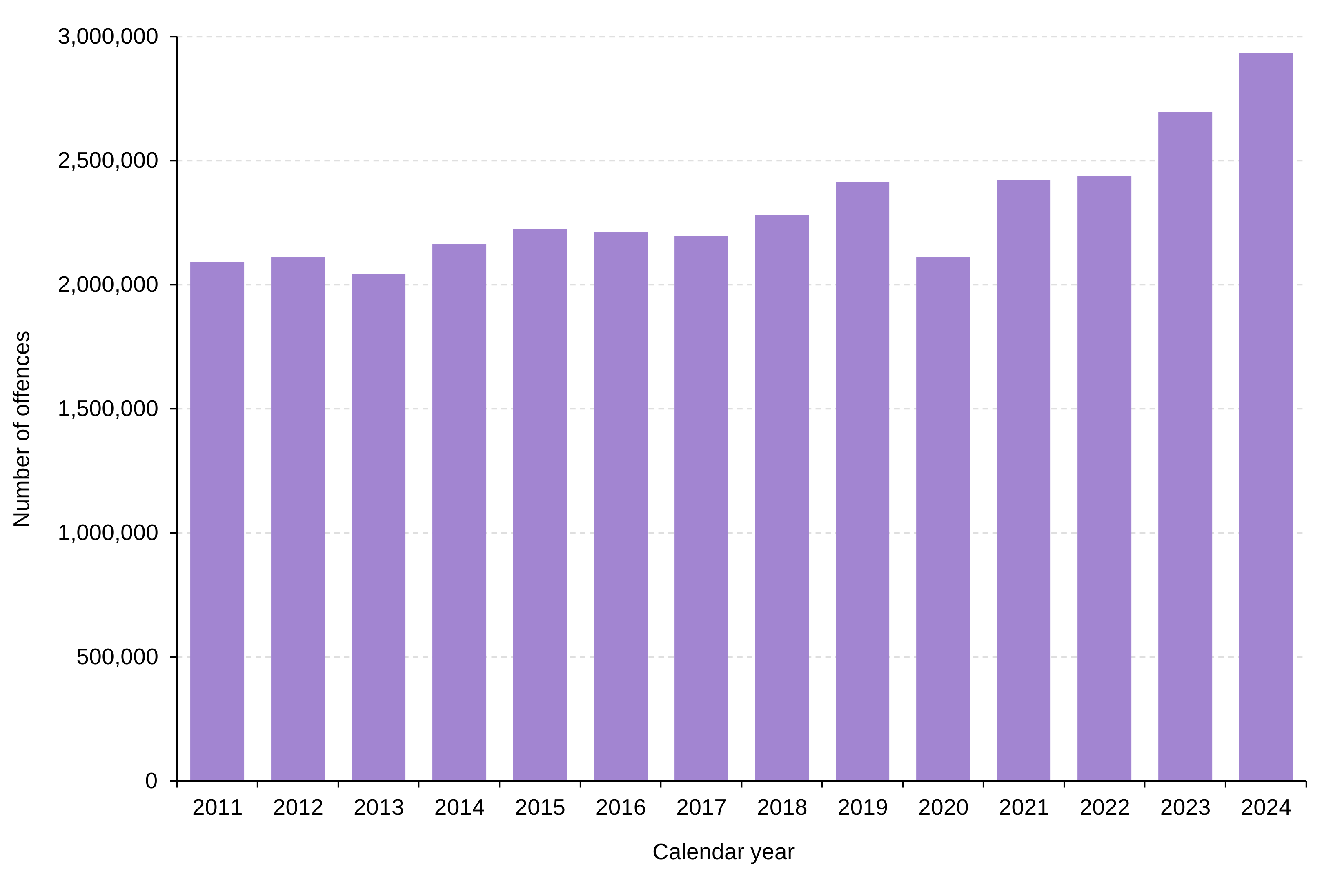
Excluding cancelled cases[footnote 2] and cases recorded by the MPS (excluded for the reasons discussed in Section 2), a total of 2,934,790 motoring offences (resolved through FPNs or other outcomes) were recorded on the PentiP system in 2024. This is the highest recorded since the comparable time series began in 2011.
This represents a 9% increase compared with 2023 (or an increase of 239,298 offences).
As shown in Figure 2.1, since 2011, there has been an overall trend of growth in the number of motoring offences recorded, with year-on-year increases seen in 9 out of 13 years.
Figure 2.1: Number of motoring offences recorded on the PentiP system, England and Wales (excluding MPS), 2011 to 2024
Notes:
- Does not include FPNs which were subsequently cancelled.
- Includes cases where an FPN was issued, the individual attended a driver retraining course or faced court action, as well as those where the outcome was incomplete.
- Does not include BTP or MPS.
Compared with 2011, the number of motoring offences recorded on PentiP has increased by 40%. Meanwhile, Road traffic statistics published by the Department for Transport estimate that in England and Wales (excluding London), vehicle miles travelled by motor vehicles has increased by 11% over this same period, from 258.2 billion miles to 286.4 billion miles.
While the number of motoring offences recorded has grown at a faster rate than overall road usage, the number of offences recorded remains low in absolute terms when viewed in the context of total miles travelled. In 2024, approximately 1.0 motoring offences were recorded per 100,000 vehicle miles travelled, compared with 0.8 per 100,000 vehicle miles in 2011.
In 2020, the number of motoring offences recorded fell by 13% (compared with 2019), coinciding with reduced traffic volumes during the COVID-19 pandemic, due to travel restrictions. Volumes increased back to pre-pandemic levels in 2021 and 2022 and have since increased further in 2023 and 2024.
2.3 Motoring offences by offence type (England and Wales, excluding MPS)
2.3.1 Speed limit offences recorded (England and Wales, excluding MPS)
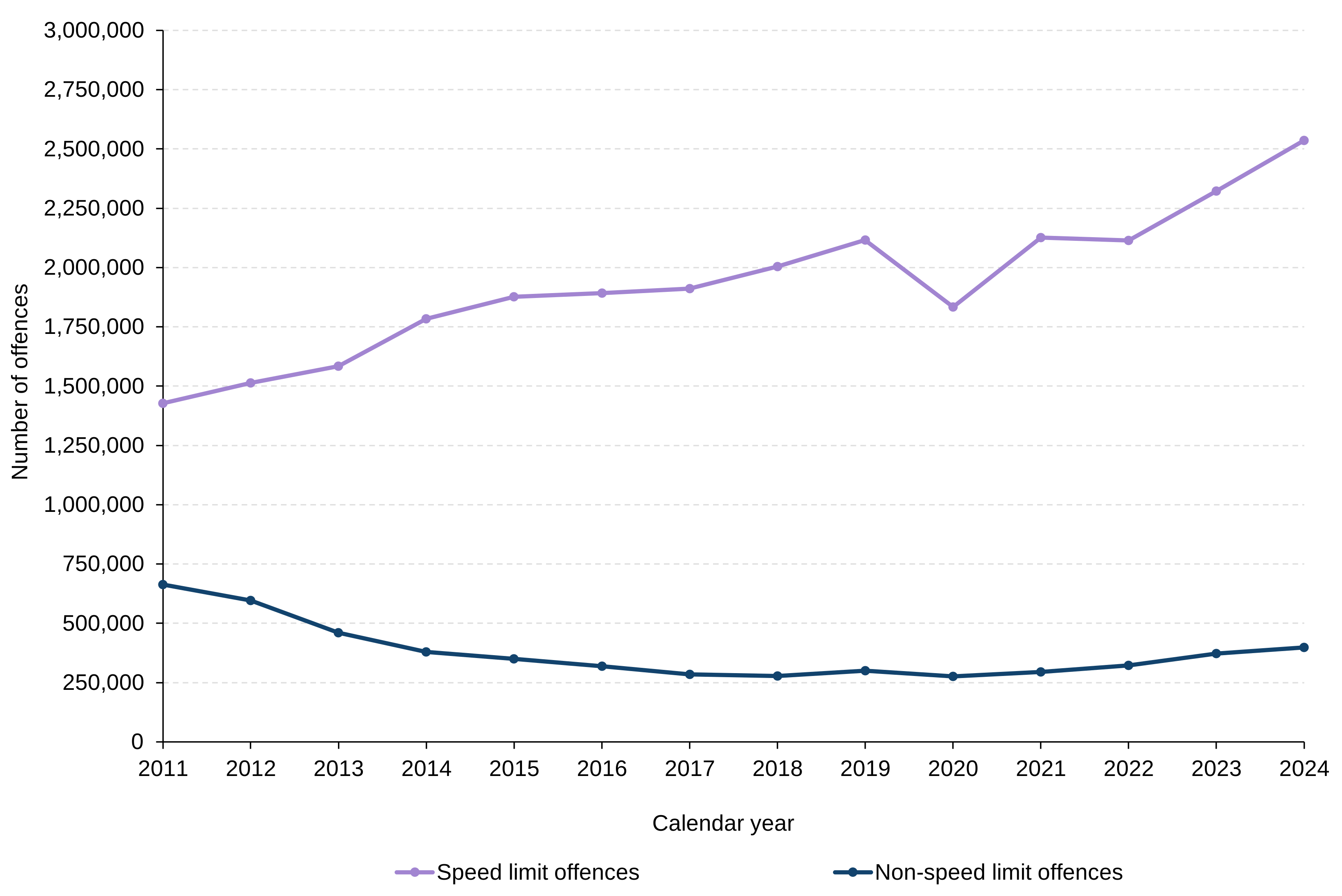
Of the of 2,934,790 motoring offences recorded on PentiP by police forces in England and Wales(excluding the MPS), 86% were speed limit offences (2,536,194).
The number of speed limit offences recorded has increased by 9% compared with 2023, while non-speed limit related offences have increased by 7%.
Figure 2.2 shows the number of speed limit offences and non-speed limit related offences recorded in each year (excluding those cancelled on PentiP) since 2011.
Between 2011 and 2024, the number of speeding offences has increased or remained steady in each year, with the only noteworthy year-on-year decline in speeding offences seen in 2020, occurring during the COVID-19 pandemic.
Figure 2.2: Number of speed limit and non-speed limit offences recorded on the PentiP system, England and Wales (excluding MPS), 2011 to 2024
Notes:
- Does not include FPNs which were subsequently cancelled.
- Includes cases where an FPN was issued, the individual attended a driver retraining course or faced court action, as well as those where the outcome was incomplete.
- Does not include BTP or MPS.
While the number of non-speed limit offences increased by 7% in 2024 compared to 2023, the number of non-speed limit offences remains below the peak seen on 2011 (398,596 in 2024 compared with 663,528 in 2011).
Speeding offences may be detected by traffic-enforcement cameras or by police officers. In 2024, the majority of speed limit offences (98%) were detected by a camera, a similar proportion to 2023.
2.3.2 Non-speed limit offences recorded (England and Wales, excluding MPS)
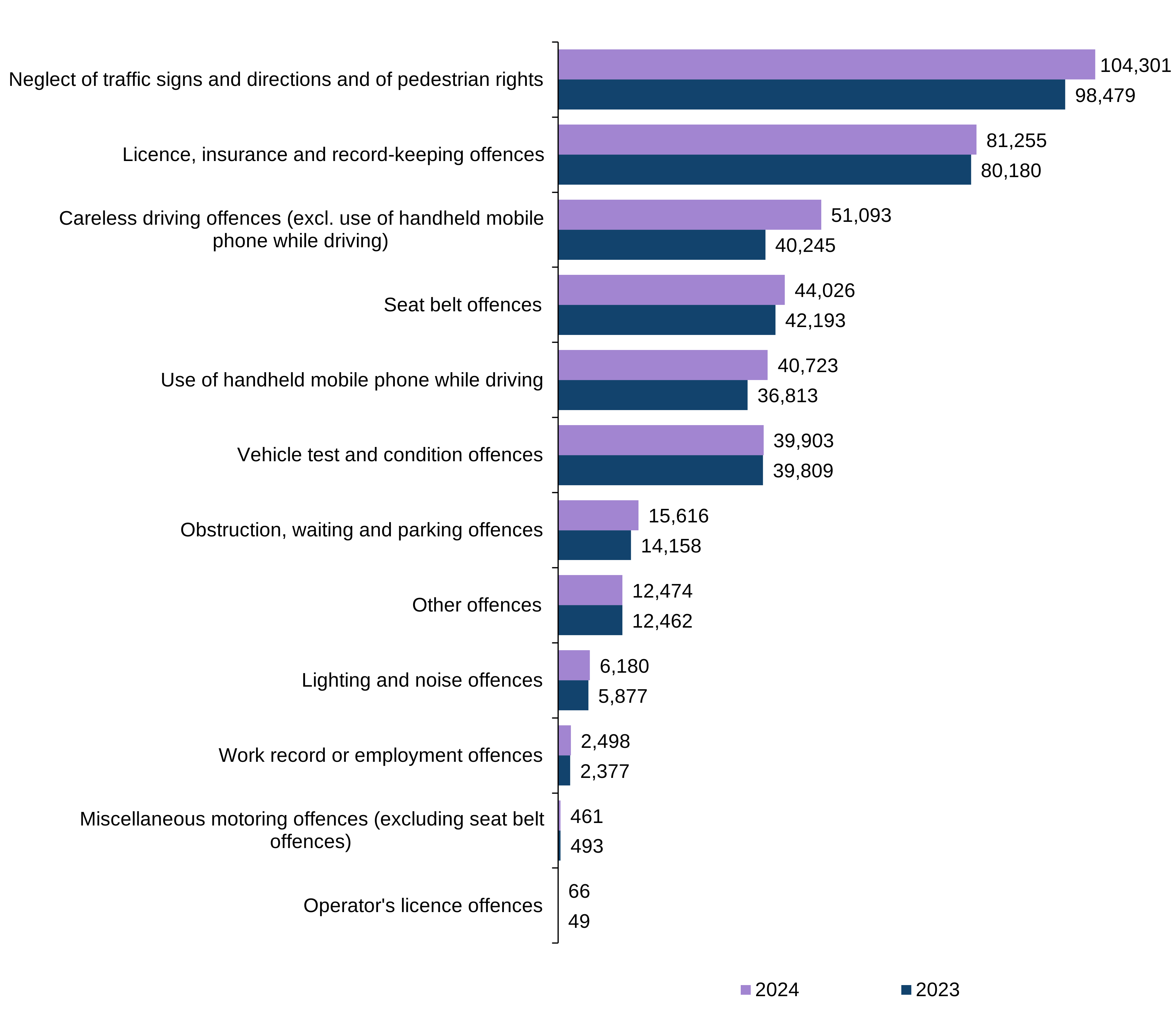
Of the 398,596 motoring offences recorded in 2024 by police forces in England and Wales (excluding the MPS) not relating to speed limit offences:
- 104,301 (26%) were ‘Neglect of traffic signs and directions and of pedestrian rights’ offences
- 81,255 (20%) were ‘Licence, insurance and record-keeping’ offences
- 51,093 (13%) were ‘Careless driving offences (excluding use of handheld mobile phone while driving)’ offences
Figure 2.3 shows the number of non-speed limit offences recorded in 2023 and 2024 handled via FPN, driver retraining, or court action (including those which are incomplete).
Figure 2.3: Number of non-speed limit related motoring offences, by offence type, England and Wales (excluding MPS), 2024 compared with 2023
Notes:
- Does not include FPNs which were subsequently cancelled.
- Includes cases where an FPN was issued, the individual attended a driver retraining course or faced court action, as well as those where the outcome was incomplete.
- Does not include BTP or MPS.
- The ‘other offences’ offence grouping includes load offences and offences peculiar to motorcycles.
With the exception of ‘Miscellaneous motoring offences’ (which make up 0.1% of all non-speed limit offences), the number of offences increased across all non-speed limit offence categories compared with 2023, though some offence categories saw greater increases than others.
Offences categorised in the ‘Careless driving offences (excluding use of handheld mobile phone whilst driving)’ offence group saw the largest increase in numerical terms, increasing by 10,848 (27%). Offences relating to ‘Neglect of traffic signs and directions and of pedestrian rights’ saw the next largest numerical increase, increasing by 5,822 (6%). Offences relating to ‘Use of handheld mobile phone while driving’ and ‘Obstruction, waiting and parking offences’, also saw larger percentage increases compared with 2023 (11% and 10% respectively).
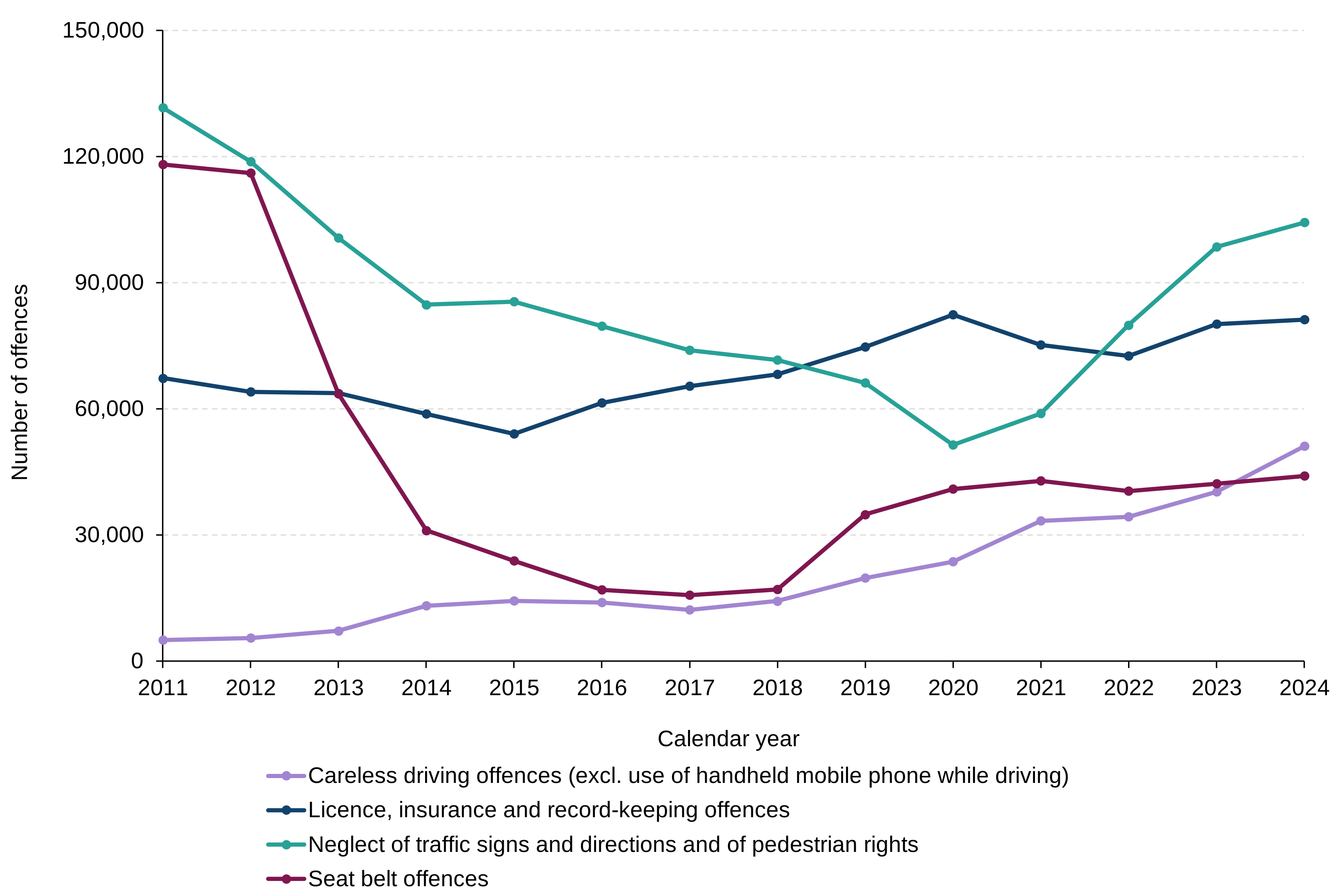
Figure 2.4 shows the longer-term trend (since 2011) for the 4 largest non-speeding limit offence categories recorded in 2024.
Figure 2.4: Number of non-speed limit related motoring offences recorded in the 4 largest offence categories (2024), England and Wales (excluding MPS), 2011 to 2024
Notes:
- Does not include FPNs which were subsequently cancelled.
- Includes cases where an FPN was issued, the individual attended a driver retraining course or faced court action, as well as those where the outcome was incomplete.
- Does not include BTP or MPS.
Although increases were seen compared with 2023, of the 4 largest non-speed limit offence categories, only ‘Careless driving offences (excluding use of handheld mobile phone while driving)’ exceeded previous peak levels.
The number of offences recorded in the ‘Careless driving offences (excluding use of handheld mobile phone while driving)’ category in 2024 is 10 times as many as those seen in 2011. Police powers to issue FPNs for careless and inconsiderate driving were introduced from 2013.
The number of offences recorded in the ‘Neglect of traffic signs and directions and of pedestrian rights’ category fell steadily between 2011 and 2020, though have increased between 2020 and 2024. As well as speed limit offences, ‘Neglect of traffic signs and directions and of pedestrian rights’ can be detected by traffic enforcement cameras. As a proportion of all these offences, 62% were detected by cameras in 2024. This is a decrease compared with 67% in 2023, as a result of a 17% increase in the number of non-camera detected offences of this type over this period.
2.4 Outcomes of motoring offences (England and Wales, excluding MPS)
After an individual is found to have committed a motoring offence, there are a number of possible outcomes:
- attend a driver retraining course
- receive an FPN and pay a fine
- court action which may lead to prosecution
2.4.1 Outcomes of motoring offences recorded (England and Wales, excluding MPS)
Of the 2,934,790 cases (excluding cancelled cases) recorded in the calendar year 2024:
- 1,074,062 cases resulted in the driver receiving an FPN (37%)
- an individual attended a driver retraining course in 1,501,618 cases (51%)
- 359,110 cases resulted in court action (12%)
As a proportion of all cases recorded on PentiP, these outcomes are similar to those seen in 2023 (36%, 51% and 13% respectively).
The volume of cases resulting in an FPN has increased by 10% compared with 2023 (from 973,355 to 1,074,062) and the volume resulting in driver retraining has increased by 10% (from 1,370,511 to 1,501,618).
The number of cases which resulted in court action has also increased, though at slower rate than other outcomes (up 2% compared with 2023).
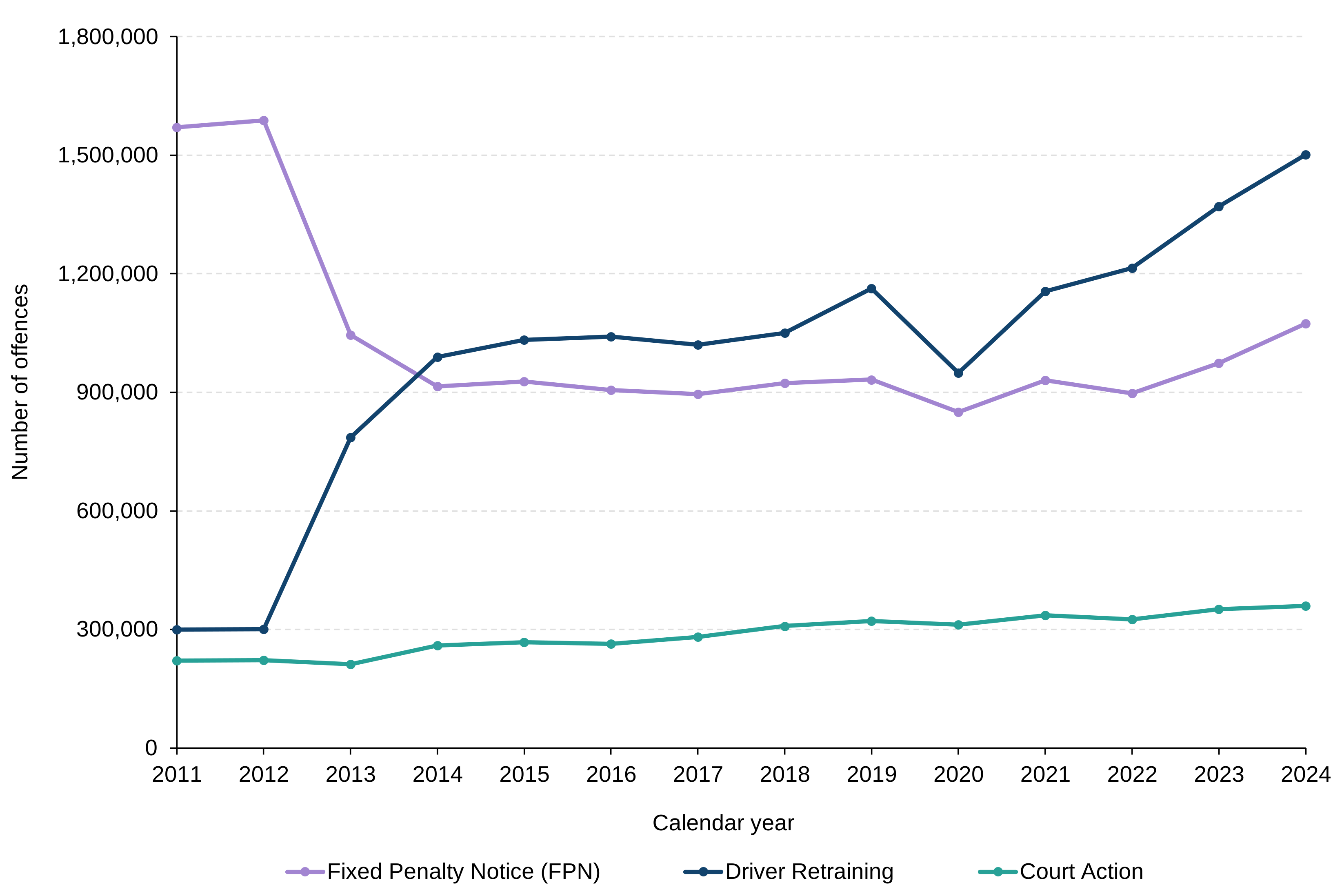
Figure 2.5 shows the trend in motoring offences, by outcome, since 2011. Between 2011 and 2014, the number of offences resulting in driver retraining increased substantially. This coincides with a fall in use of FPNs, with the proportion of offences resulting in retraining increasing from 14% in 2011 to 46% in 2014.
The initial increase between 2011 and 2014 can be attributed to an increase in the number of police forces joining NDORS[footnote 3], which was set up in 2010 as an alternative to prosecution.
The number of offences resulting in driver retraining or an FPN both remained relatively stable between 2014 and 2018. However, since 2018, the number of offences resulting in driver retraining has increased at a greater rate than those resulting in FPNs.
In light of the COVID-19 restrictions, virtual (online) courses were offered for driver retraining as a replacement for physical attendance. Many police forces still offer online courses in virtual classrooms as alternatives to in-person attendance and may allow for a greater number of persons to attend courses.
The number of motoring offences resulting in court action has steadily increased since 2011 (by 63% overall), though as a proportion, has remained relatively stable (between 10% and 15% of all outcomes, excluding cancelled outcomes).
The Ministry of Justice publishes quarterly statistics on court outcomes including the number of individuals successfully prosecuted for motoring offences.
Figure 2.5: Number of motoring offences recorded on the PentiP system, by outcome, England and Wales (excluding MPS), 2011 to 2024
Notes:
-
Does not include FPNs which were subsequently cancelled.
- Includes cases where an FPN was issued, the individual attended a driver retraining course or faced court action, as well as those where the outcome was incomplete.
- Does not include BTP or MPS.
Endorsable and non-endorsable FPNs recorded (England and Wales, excluding MPS).
Of the 1,074,062 cases recorded in the calendar year 2024 which resulted in an FPN:
- 961,861 cases resulted in an endorsable FPN (90%)
- 112,201 cases resulted in a non-endorsable FPN (10%)
As mentioned in the previous section, the number of FPNs recorded has increased by 10% compared with 2023, with endorsable FPNs increasing by 11% and non-endorsable FPNs increasing by 5%. The proportion of FPNs that are endorsable has remained stable since 2016 (between 89% and 90%).
At the point of data collection, 97% of endorsable FPNs and 93% of non-endorsable FPNs had been paid, with the remaining fines either registered or currently incomplete.
2.4.2 Cancelled FPNs (England and Wales, excluding MPS)
FPNs (and other outcomes) may be cancelled where the police were unable to identify the driver of the vehicle, when the vehicle belonged to the emergency services, or where the case has failed to progress to court within 6 months (the statute of limitations period, Limitation Act 1980).
In 2024, for England and Wales (excluding the MPS), there were 490,272 cancelled FPNs, a 3% increase from the previous year (476,911) and a 60% increase compared with 2019 (306,749).
During the COVID-19 pandemic several forces reported suffering staff shortages and a backlog in cases that required finalising. Additionally, some forces have reported that increased enforcement initiatives coupled with limited court capacity has resulted in some low priority offences being unable to progress to court within 6 months.
A small proportion 0.9% of all cases for 2024 in England and Wales (excluding the MPS), had an incomplete outcome at the point of compiling these statistics. It is expected that the outcomes of these motoring offences will be updated in subsequent publications.
2.5 Outcome of motoring offences, by offence type (England and Wales, excluding MPS)
Different outcomes may be more appropriate for different offence types. An offer of driver retraining is at the discretion of the police force, and may not always be appropriate for all offences.
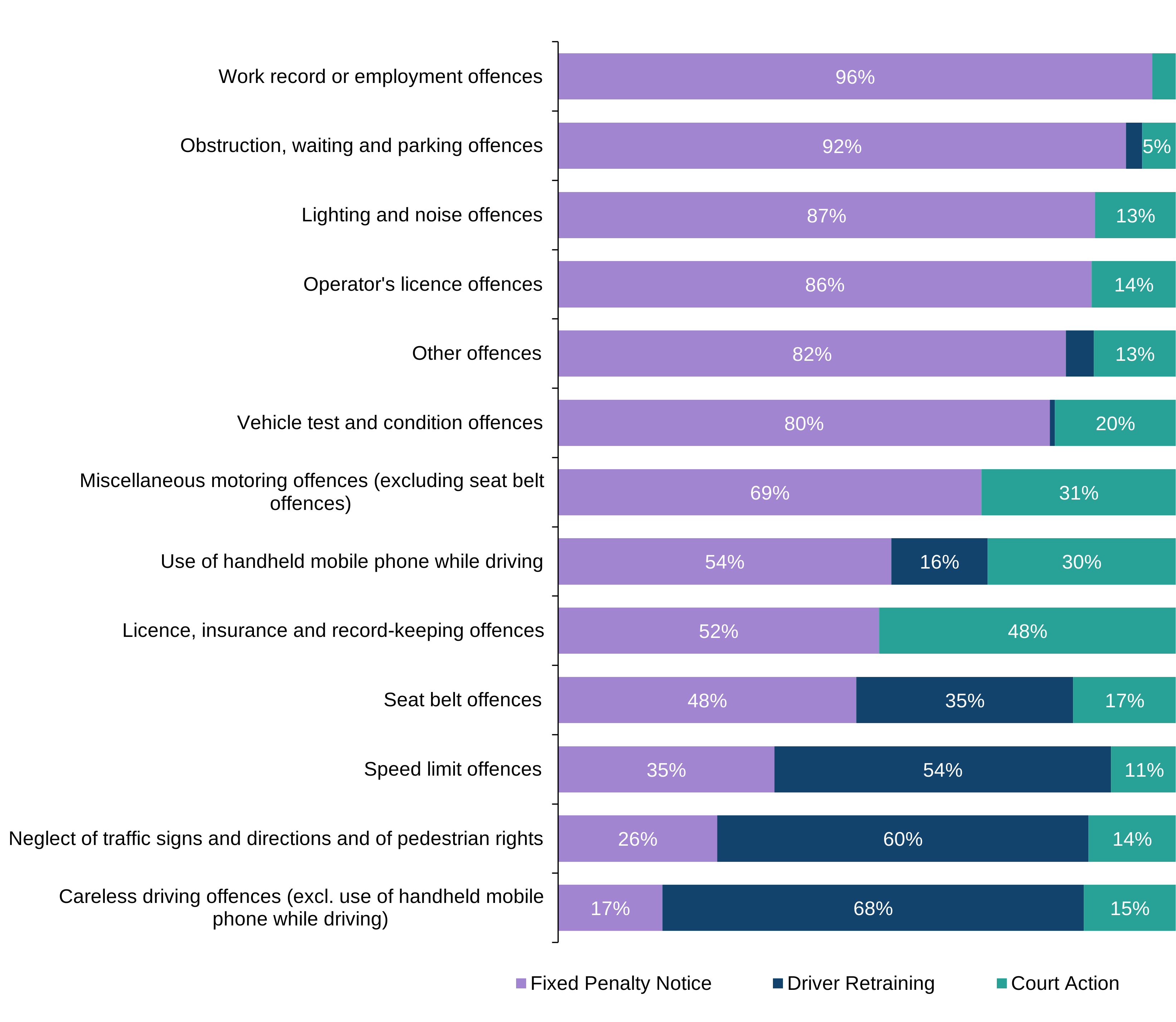
Figure 2.6 shows how outcome differs by offence type.
Offences recorded in 2024 under the categories ‘Careless driving offences (excluding use of handheld mobile phone while driving)’, ‘Neglect of traffic signs and directions and of pedestrian rights’, and ‘Speed limit offences’, were most likely to result in an outcome of driver retraining (68%, 60% and 54% respectively). These categories subsequently saw the smallest proportions where an FPN was issued.
‘License, insurance and record keeping-offences’ were the most likely to result in court action, with 48% (39,022 out of 81,255) receiving this outcome.
‘Work record or employment offences’, ‘Obstruction, waiting and parking offences’, and Lighting and noise offence’ were most likely to result in a fixed penalty notice (96%, 92% and 87% respectively).
Figure 2.6: Number of motoring offences recorded, by outcome and offence type, England and Wales (excluding MPS), 2024
Notes:
- Does not include FPNs which were subsequently cancelled.
- Includes cases where an FPN was issued, the individual attended a driver retraining course or faced court action, as well as those where the outcome was incomplete.
- Does not include BTP or MPS.
- The ‘other offences’ offence grouping includes load offences and offences peculiar to motorcycles.
These proportions are similar to those seen in 2023 (within 3 percentage points), with the exception of offences categorised under the ‘Operator’s licence offences’, ‘Miscellaneous motoring offences’, and ‘Use of handheld mobile phone while driving’ categories.
For example, the proportion of ‘Use of handheld mobile phone while driving’ offences handled via FPN increased from 49% to 54%. This is as a result of a 21% increase in the number of FPNs issued, and an 11% fall in driver retraining for these offences. The law surrounding use of mobile phones while driving was strengthened from March 2022.
Offences recorded under the ‘Operator’s licence offences’ and ‘Miscellaneous motoring offences’ make up a very small number of all motoring offences (0.02% collectively) and changes in proportions are therefore driven by small variations in volumes.
2.6 Metropolitan Police Service
As explained in Section 2.1, motoring offences data from the MPS is presented separately from the rest of England of Wales, and represents a combination of data from the Dome system and data from the PentiP system.
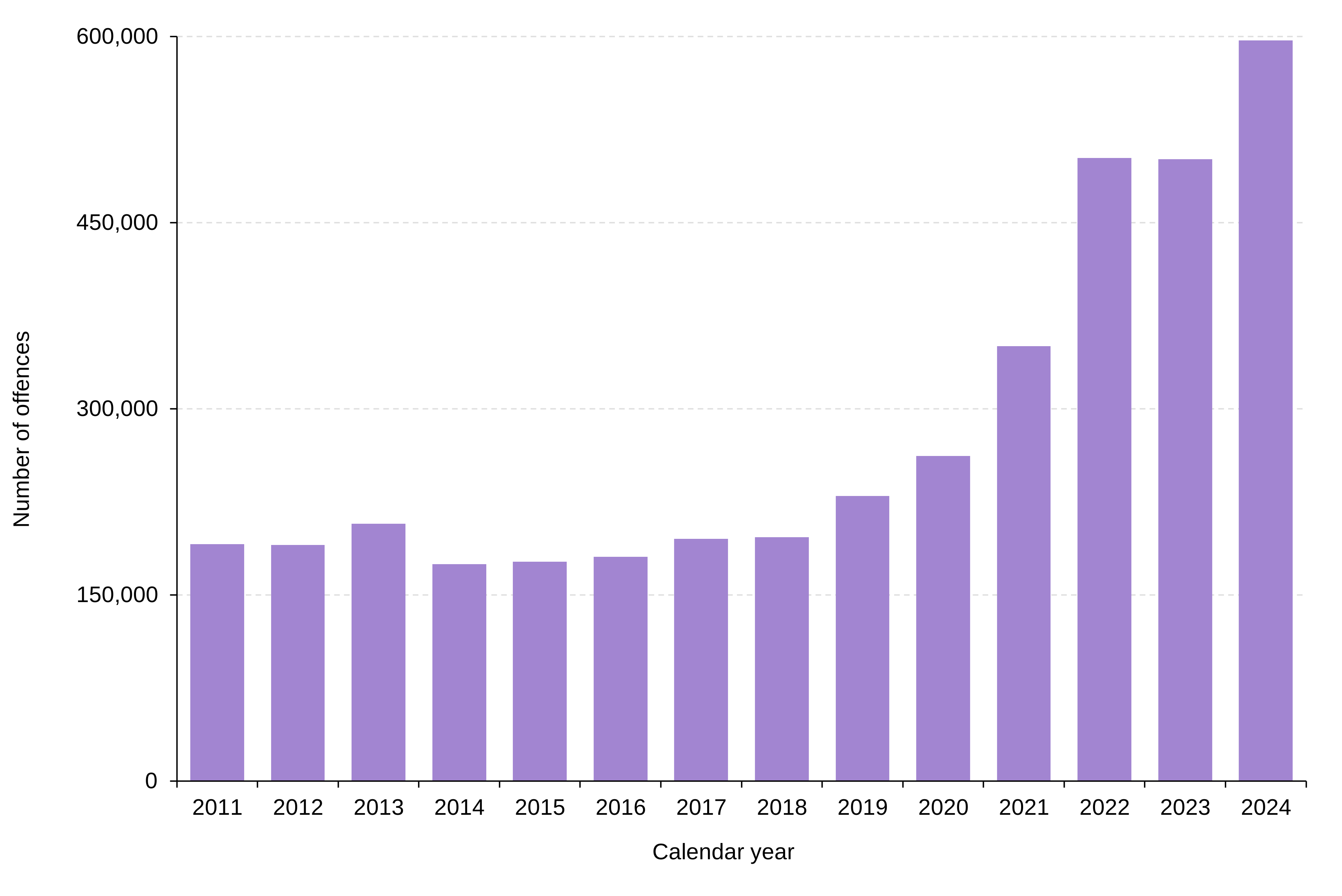
In 2024, excluding cancelled cases (353,577), the MPS reported 596,782 motoring offences which resulted in an FPN or another outcome. This represents a 19% increase compared with the previous year (501,143).
Figure 2.7 shows that the number of motoring offences recorded by the MPS have increased since 2018 (when there were 196,589), however, the long-term trend observed from 2011 onwards should be interpreted with caution, due to the adoption of the Dome system from 2020 onwards.
Figure 2.7 Number of motoring offences recorded on the PentiP or Dome system, MPS, 2011 to 2024
Notes:
- Does not include FPNs which were subsequently cancelled.
- Includes cases where an FPN was issued, the individual attended a driver retraining course or faced court action, as well as those where the outcome was incomplete.
- Data from 2020 is not fully comparable to previous years as it includes data from the MPS own recording system.
- Where an offence involves an FPN which has been issued for payment, it is uploaded to the PentiP system. In cases where the offence is instead referred to driver retraining, PentiP records may be incomplete. For camera-detected offences, data from Dome has been used to ensure the data is complete. However, for offences which involve driver retraining or court action that are non-camera detected (for example those detected by an officer at the roadside, or through evidence submitted by members of the public), data may be incomplete.
In 2024, the MPS recorded 491,828 speed limit offences, an increase of 25% compared with 2023 (393,233); this number is now 3.6 times higher than the number of offences recorded in 2019 (138,447). This rise may be partly linked to the Vision Zero action plan, under which the MPS and Transport for London aim to reduce harm on London’s roads by 2041, through initiatives such as the introduction of lower speed limits.
As discussed in Section 2.1, while efforts have been made to ensure the completeness of MPS camera data, data for offences not detected by traffic enforcement cameras (offences other than ‘Speed limit offences’ and ‘Neglect of traffic signs and directions and of pedestrian rights’) is likely to be only partly complete.
Looking at the 2024 MPS data by outcome, 229,057 motoring offence cases resulted in a driver receiving an FPN (38% of the overall cases, excluding cancelled FPNs). An individual attended a driver retraining course in 291,676 cases (49%) and 76,049 cases (13%) resulted in court action.
The MPS has also seen large increases in the number of cancelled FPNs in recent years, increasing from 77,010 in 2019 to 353,577 in 2024. In 2024, cancelled FPNs account for 37% of all issued FPNs. This coincides with the large increase in overall number of motoring offences handled, and the MPS continues to monitor case outcomes.
3. Breath tests
Under the Road Traffic Act 1988, police may conduct a breath test at the roadside to determine whether motorists are driving with alcohol in their body, beyond the legal limit. This section includes data on the number of breath tests carried out by police in England and Wales (excluding BTP). It presents data on a calendar-year basis up to and including 2024.
The data shows the number of:
- breath tests carried out by police in England and Wales
- positive or refused breath tests
- breath tests conducted per 1,000 population in each police force across England and Wales
Further details relating to definitions, legislation and procedure are given in the User guide.
3.0.1 Data quality and comparisons with previous data
Upon submitting data for the calendar year 2024, a significant number of police forces reported changes in data-recording methodology, software systems, or operational tools (for example, new breath test devices). For some forces this resulted from substantial improvements to collection processes, while for others, IT issues resulted in incomplete records.
This is in addition to 6 police forces which were already previously excluded from analysis of long-term trends due to historic changes in data collection or incomplete data.
For data relating to years 2023 and 2024, where forces have raised concerns about quality or completeness, data has been excluded from this release. Users should therefore note that the data presented in this release is not directly comparable with years prior to 2023.
Of the 43 territorial police forces in England and Wales, a total of 17 forces reported methodological changes or data quality concerns. As a result, this chapter focusses solely on the remaining 26 forces who were able to provide comparable data, and focusses on the change between 2023 and 2024 only. For a full list of excluded forces, see the notes associated with each table from the accompanying data tables.
Year‑on‑year comparisons between 2023 and 2024 can be made using accompanying tables BT1a and BT2a; however, these figures should not be compared with those published in previous years, which are now contained in tables BT1b, BT2b and BT3, and have not been updated.
While year-on-year comparisons between the 26 forces who were able to provide comparable data gives an indication of the direction of trends, caution should be taken when interpreting these trends, which may not be representative of those seen across England and Wales.
The Home Office will continue to work with police forces to understand and improve data quality in future publications. For more information, please see Section 2.3.5 and Section 10 of the User guide.
3.1 Trends in breath tests
In the year ending December 2024, across 26 territorial police forces (who were able to provide comparable data), there were 167,095 breath tests carried out by police. Compared to the previous year (ending December 2023), this represents a 0.2% decrease (from 167,384).
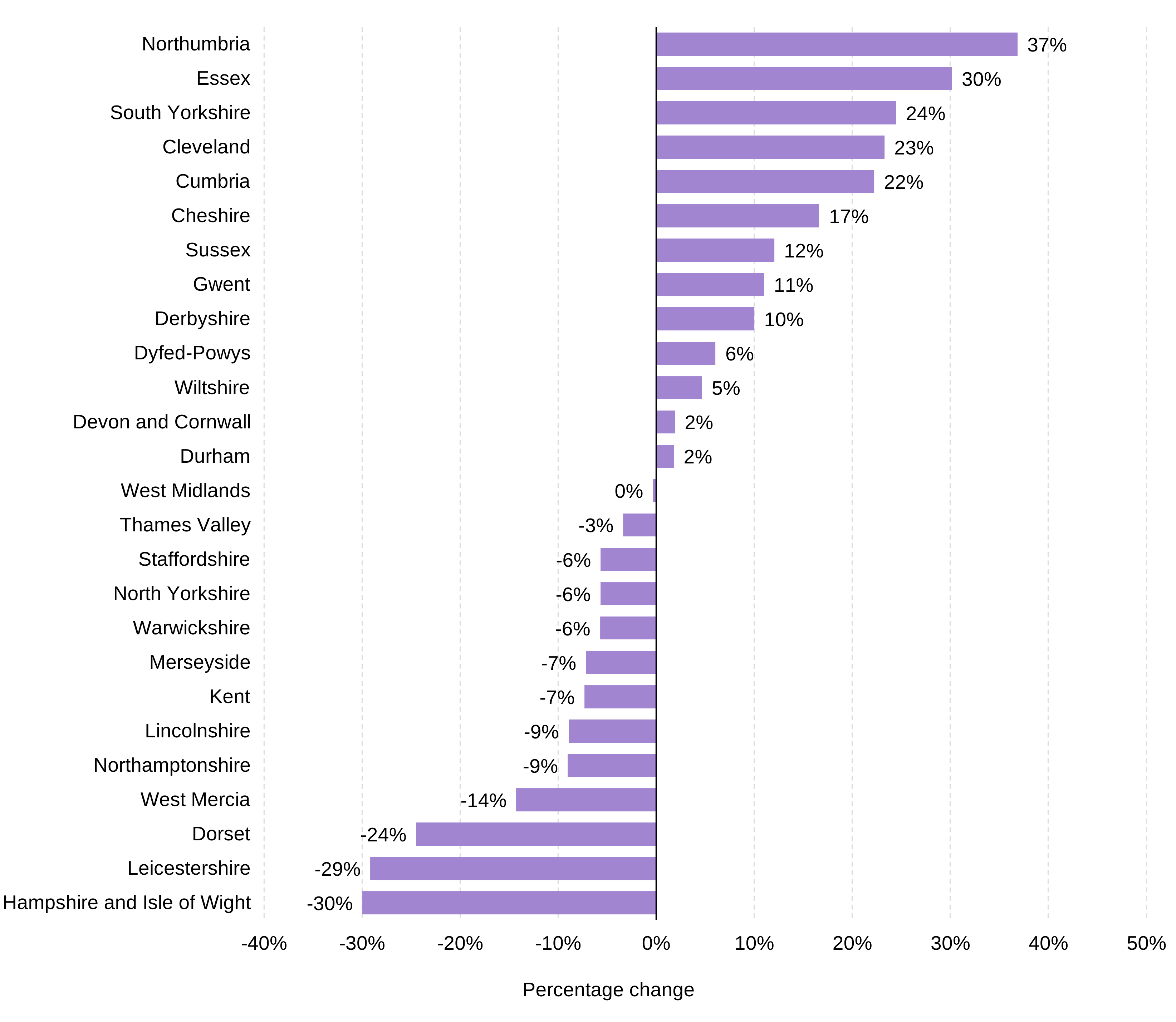
Although the overall change in number of breath tests carried out appears minimal, a breakdown by police force area shows substantial variation, with increases in some areas offsetting decreases in others. Northumbria saw the largest increase, with 37% more breath tests carried out in year ending December 2024 as compared to the previous year. Whereas Hampshire and Isle of Wight saw the largest decrease, with 30% fewer breath tests carried out compared to the previous year.
Figure 3.1 Year-on-year percentage change (2023 to 2024) in breath test volumes, 26 police forces in England and Wales
Notes:
- Excludes 17 of 43 police forces in England and Wales - for a full list of excluded forces, see the notes associated with table BT1a of the accompanying data tables.
Some forces who saw an increase in breath tests attributed this to targeted campaigns and increased proactive focus on the ‘fatal 4’ behaviours leading to road collisions (of which driving under the influence is one).
Other forces highlighted a decrease in the number of deployable officers in roads policing units, contributing to fewer breath tests. However, this was not true of all forces, with some highlighting the increased use of Special Constables in road safety operations.
For year ending December 2024, out of 167,095 breath tests carried out, 15% (24,823) were positive or refused. This overall proportion is similar to the previous year (ending December 2023), as shown in Table 3.1 below.
Table 3.1 Number of breath tests carried out by 26 police forces in England and Wales, 2023 and 2024
| Year | Number of breath tests | Number of positive or refused breath tests | Percentage positive or refused |
|---|---|---|---|
| 2023 | 167,384 | 25,168 | 15% |
| 2024 | 167,095 | 24,823 | 15% |
Notes:
- Excludes 17 of 43 police forces in England and Wales – for a full list of excluded forces, see the notes associated with table BT1a of the accompanying data tables.
The proportion of positive or refused tests varied across the 26 forces who were able to provide comparable data, ranging from 8% to 26%, with Cleveland and Leicestershire falling at the lower and upper ends of this range respectively. Generally, forces which saw increases in the number of breath tests conducted as compared to 2023, saw subsequent decreases in the percentage of positive or refused tests. Conversely, forces with decreases in the number of breath tests conducted, more often saw an increase in the percentage of positive or refused tests as compared to 2023.
Forces deploy their resources on roadside breath tests in different ways; for example some forces conduct targeted campaigns, while others focus on carrying out breath tests following road traffic collisions.
For more details, please see table BT1a of the data tables.
3.2 Seasonal and geographical variation
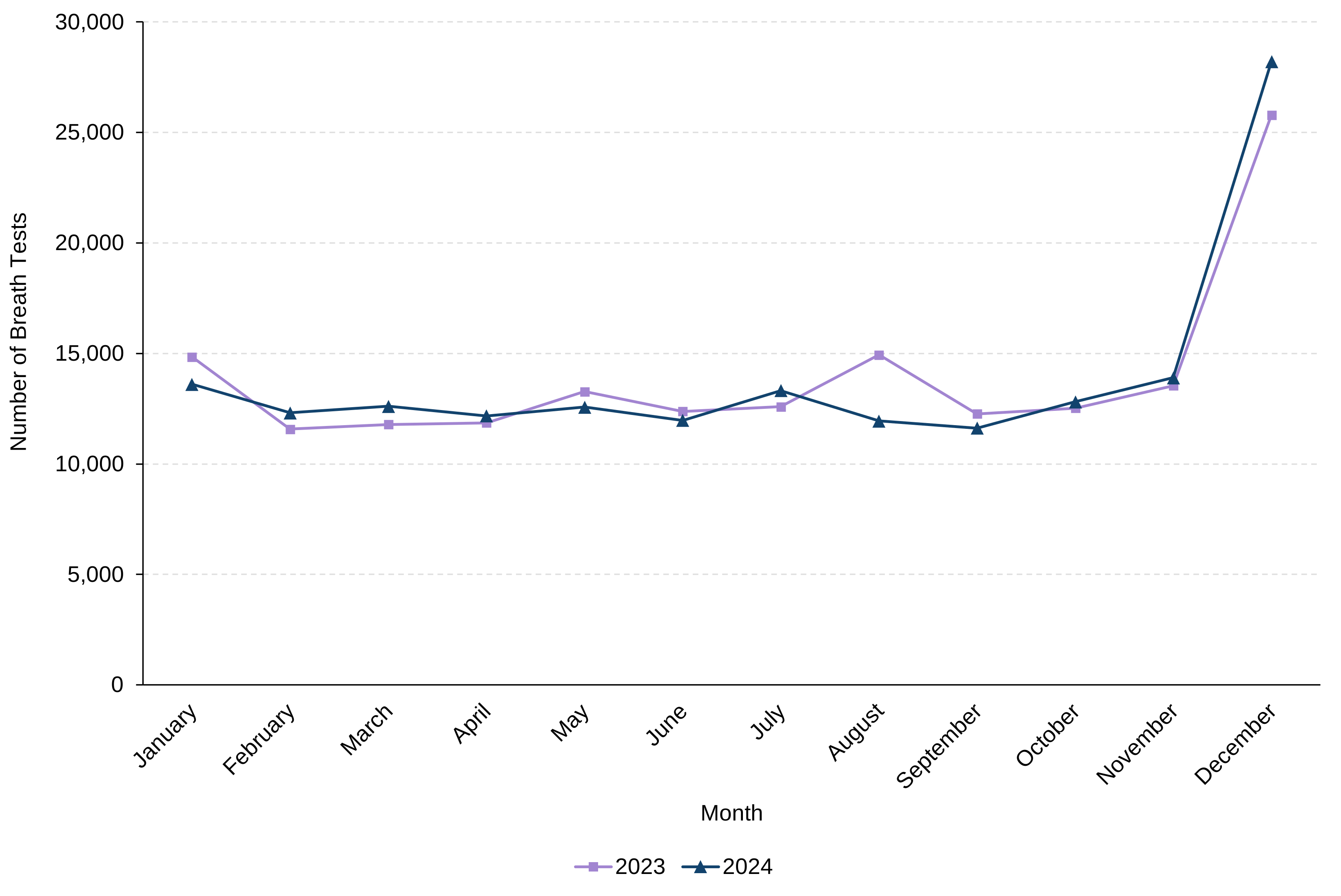
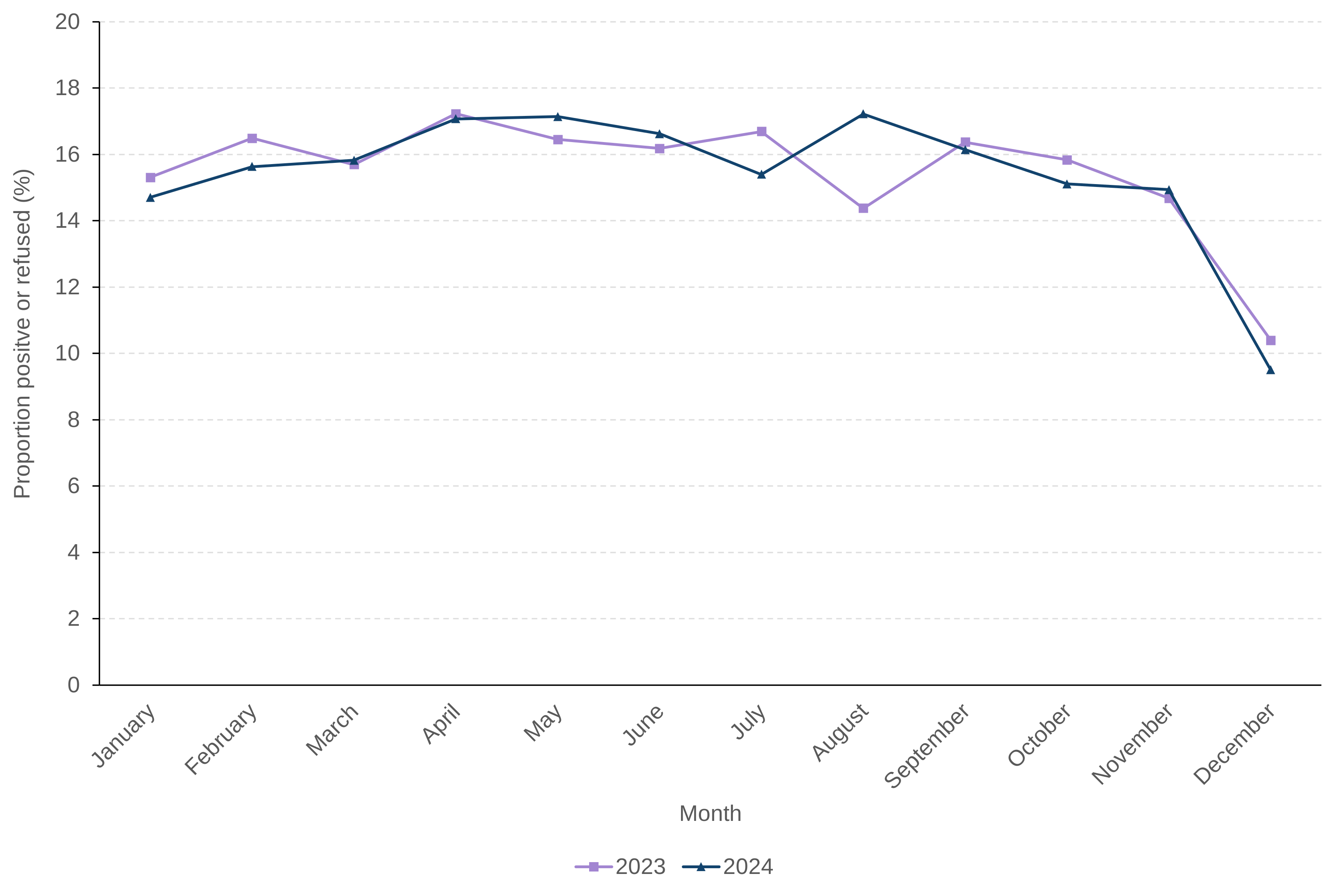
In the year ending December 2024, as was also the case in the previous year (ending December 2023), more breath tests were conducted in December than in any other month, accounting for 17% of all tests carried out by the 26 forces able to provide comparable data. This aligns with forces’ annual national Christmas drink and drug-driving campaigns. However, December 2024 also recorded the lowest proportion of positive or refused tests (10%), a similar pattern to that observed in the preceding year.
The month with the lowest volume of tests was September, with 11,624 breath tests conducted, accounting for 7% of all tests.
Volumes of breath tests by month in 2024 were largely similar to 2023, with one main exception for August, when 20% fewer breath tests were carried out in 2024 than in August 2023. December 2024 also saw 9% more tests carried out as compared to December 2023.
Figure 3.2 Number of breath tests carried out by 26 police forces in England and Wales, by month, 2023 and 2024
Source: Data table BT4 - Home Office, Breath tests tables, England and Wales, year ending December 2024.
Notes:
- Excludes 17 of 43 police forces in England and Wales – for a full list of excluded forces, see the notes associated with table BT4 of the accompanying data tables.
Excluding data from December, in which only 10% of tests were positive or refused, the percentage of tests which were positive or refused varied between 15% and 17% in every other month.
Despite a 20% reduction in breath tests in August 2024 compared with August 2023, the proportion of positive or refused results was 3 percentage points higher.
Figure 3.3 Proportion of positive or refused breath tests carried out by 26 police forces in England and Wales, by month, 2023 and 2024
Source: Data table BT4 - Home Office, Breath tests tables, England and Wales, year ending December 2024.
Notes:
- Excludes 17 of 43 police forces in England and Wales – for a full list of excluded forces, see the notes associated with table BT4 of the accompanying data tables.
In year ending December 2024, an average of 6 breath tests was conducted per 1,000 population[footnote 4] across the 26 forces in England and Wales that were able to provide comparable data. Rates varied across forces, ranging from 2 to 11 breath tests per 1,000 population. Cumbria had the highest rate (11 per 1,000), while West Midlands had the lowest (2 per 1,000). For more details, please see table BT2a of the data tables.
4. Other data sources
The Ministry of Justice publishes data in the Criminal justice statistics quarterly publication on:
- penalty notices for disorder (PNDs); these follow similar principles to FPNs and can be issued for low-level summary offences, for example, being drunk and disorderly, or petty theft
- prosecutions and convictions for motoring offences
The Department for Transport (DfT) publishes a number of Road accident and safety statistics including data on:
- road casualties
- drink and drug driving
- self-reported mobile phone use while driving
- breath tests for drivers or riders involved in reported road collisions
Some motoring offences, such as dangerous driving and driving offences causing death or serious injury, are considered notifiable offences and are therefore included in the ONS ‘Crime in England and Wales’ statistics.
5. Feedback
The data is designated ‘Official Statistics in Development’ to acknowledge that it is undergoing development and should be interpreted with caution. With each publication we continue to expand the scope and quality of these statistics.
Please send us any feedback you may have to policingstatistics@homeoffice.gov.uk
Press and media enquiries should be made through the Home Office news desk: 0300 123 3535.
-
Due to a difference in recording systems used, the MPS is counted separately to the remaining 42 territorial police forces for the purpose of the motoring offences section of this publication. For full details see Section 2. ↩
-
Examples of cancelled FPNs include cases where the police were unable to identify the driver of the vehicle, when the vehicle belonged to the emergency services or where the case has failed to progress to court within 6 months (the statute of limitations period, Limitation Act 1980). ↩
-
NDORS (National Driver Offender Retraining Scheme) is a scheme run in England and Wales that has been in place since 2010 whereby drivers who have committed a road traffic offence can be offered a driver retraining course as an alternative to prosecution ↩
-
Calculated using ONS population estimates for England and Wales: mid-2024 ↩