7. Tax gaps: Illustrative tax gap by behaviour
Updated 23 June 2026

© Crown copyright 2026
This publication is licensed under the terms of the Open Government Licence v3.0 except where otherwise stated. To view this licence, visit nationalarchives.gov.uk/doc/open-government-licence/version/3 or write to the Information Policy Team, The National Archives, Kew, London TW9 4DU, or email: psi@nationalarchives.gov.uk.
Where we have identified any third party copyright information you will need to obtain permission from the copyright holders concerned.
This publication is available at https://www.gov.uk/government/statistics/measuring-tax-gaps/7-tax-gaps-illustrative-tax-gap-by-behaviour
Tax gap by behaviour
The tax gap is composed of a range of customer behaviours:
-
avoidance — using the tax rules to gain a tax advantage not intended by Parliament
-
criminal attacks — organised and systematic attempts to defraud the tax system
-
error — mistakes in tax calculations or returns despite taking reasonable care
-
evasion —illegal activity where tax due is reduced by deliberately concealing or misrepresenting information
-
failure to take reasonable care — avoidable errors caused by carelessness or negligence
-
hidden economy — economic activity that is entirely undeclared to HMRC
-
legal interpretation — differences in how HMRC and the customer interpret tax law
-
non-payment — tax that is due but not ultimately collected
Avoidance is covered in more detail later in this chapter due to its distinct nature.
Full definitions are set out in Chapter 7 of the ‘Methodological annex’.
The estimates provide broad indicators of the customer behaviours contributing to the tax gap. They are illustrative and may not fully reflect how behaviours are changing over time.
Due to methodological improvements introduced in ‘Measuring tax gaps 2023 edition’, some of these estimates do not extend back to 2005 to 2006.
Main findings
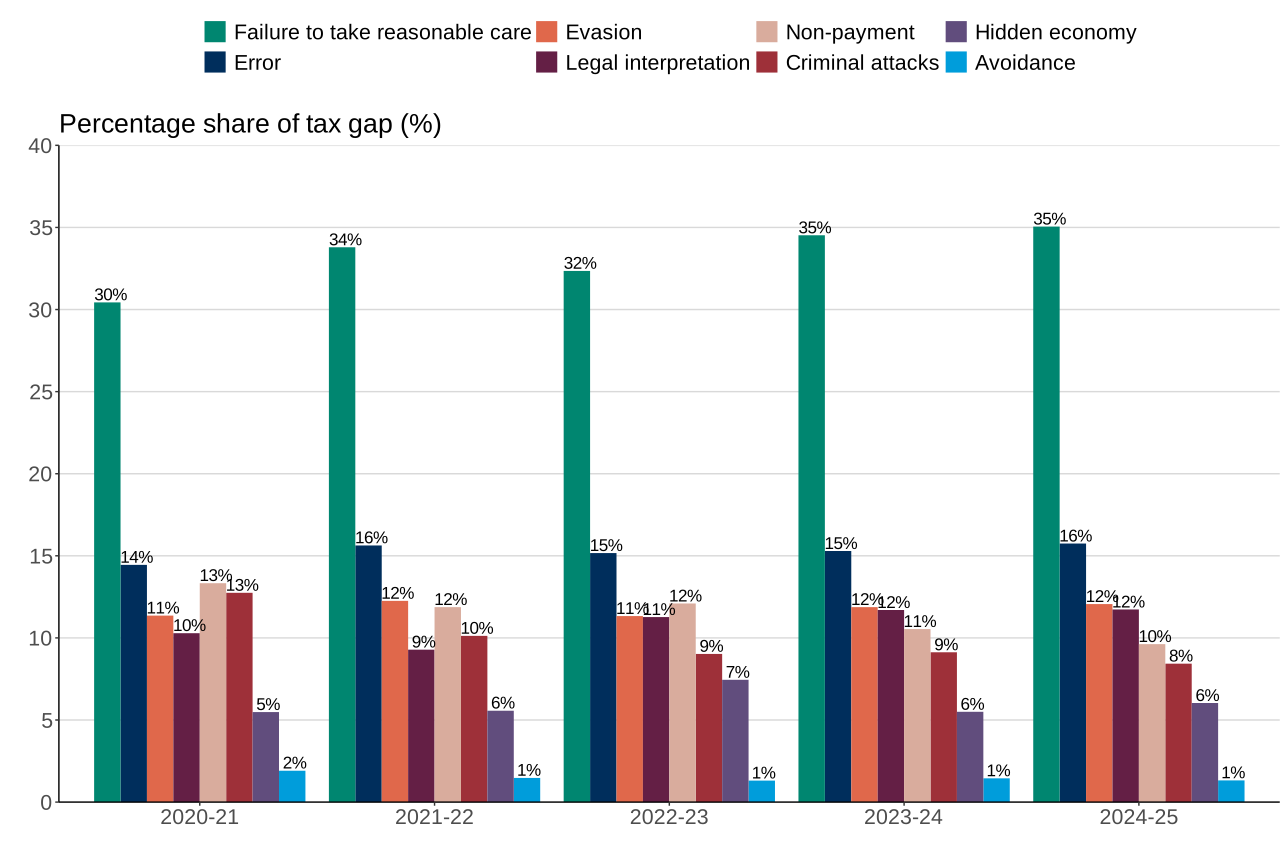
Figure 7.1 shows an illustrative tax gap breakdown into behaviours between 2020 to 2021 and 2024 to 2025.
In 2024 to 2025, failure to take reasonable care accounts for the largest proportion of the tax gap at 35%, increasing its share of the tax gap from 30% in 2020 to 2021.
Error and evasion account for the second and third largest proportions of the tax gap at 16% and 12% respectively of the overall tax gap in 2024 to 2025.
The proportion of the tax gap due to legal interpretation has increased from 10% in 2020 to 2021 to 12% in 2024 to 2025.
The proportion of the tax gap due to non-payment has decreased from 13% in 2020 to 2021 to 10% in 2024 to 2025.
The proportion of the tax gap due to criminal attacks has decreased from 13% in 2020 to 2021 to 8% in 2024 to 2025. Avoidance is the smallest proportion of the tax gap at 1%, and hidden economy is around 6% of the tax gap in 2024 to 2025.
Figure 7.1: Tax gap by customer behaviour — share of tax gap, 2020 to 2021 up to 2024 to 2025
Notes for Figure 7.1
-
The full data series can be seen in the online tables.
-
Figures may not sum due to rounding.
Revisions
In ‘Measuring tax gaps 2023 edition’ we updated some assumptions used to estimate the behavioural breakdown of the tax gap. These methodological improvements based on the latest data and operational insights, do not extend back to 2005 to 2006.
The tax gap breakdown by behaviour is calculated using management information, assumptions and expert judgement combined with projections from historical data.
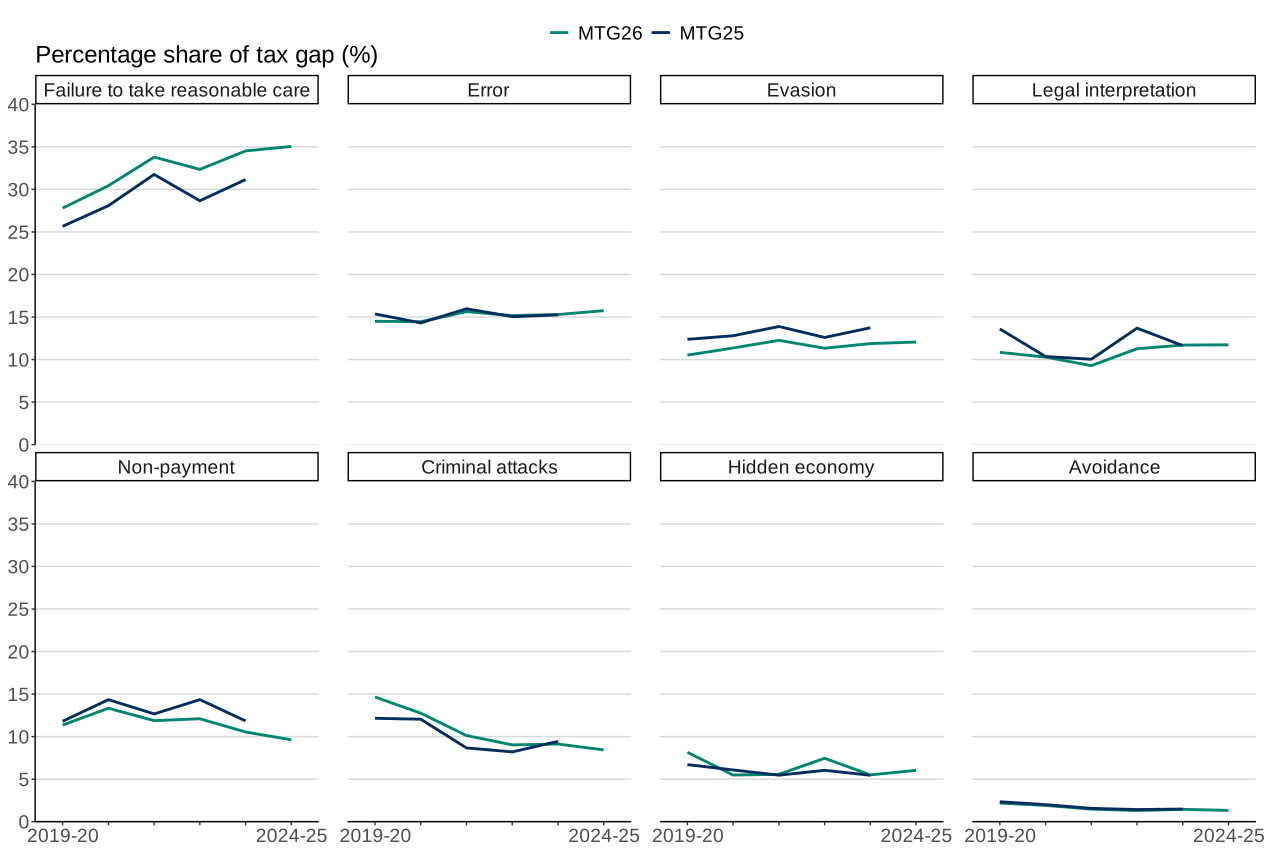
Figure 7.2 shows the revisions to the tax gap share by customer behaviour since the ‘Measuring tax gaps 2025 edition’. The main changes are upward revisions to failure to take reasonable care and subsequent downward revisions in evasion and non-payment. This is driven by a combination of changes in the underlying composition of the tax gap, updated management information and expert judgement.
More details can be found in the ‘Methodological annex’.
Figure 7.2: Revisions to the tax gap share by customer behaviour since the ‘Measuring tax gaps 2025 edition’.
Notes for Figure 7.2
- MTG stands for ‘Measuring tax gaps’.
Avoidance
Avoidance involves bending the rules of the tax system to try to gain a tax advantage that Parliament never intended. It often involves contrived, artificial transactions that serve little or no purpose other than to produce a tax advantage. It involves operating within the letter, but not the spirit, of the law.
Main findings
The avoidance tax gap is estimated to be £0.8 billion in 2024 to 2025. About £0.2 billion of this relates to marketed avoidance schemes made up of Income Tax, NICs and Capital Gains Tax. The avoidance tax gap estimates reflect the laws that were in place at the time and do not include any subsequent changes to the tax law that prevent further use of avoidance.
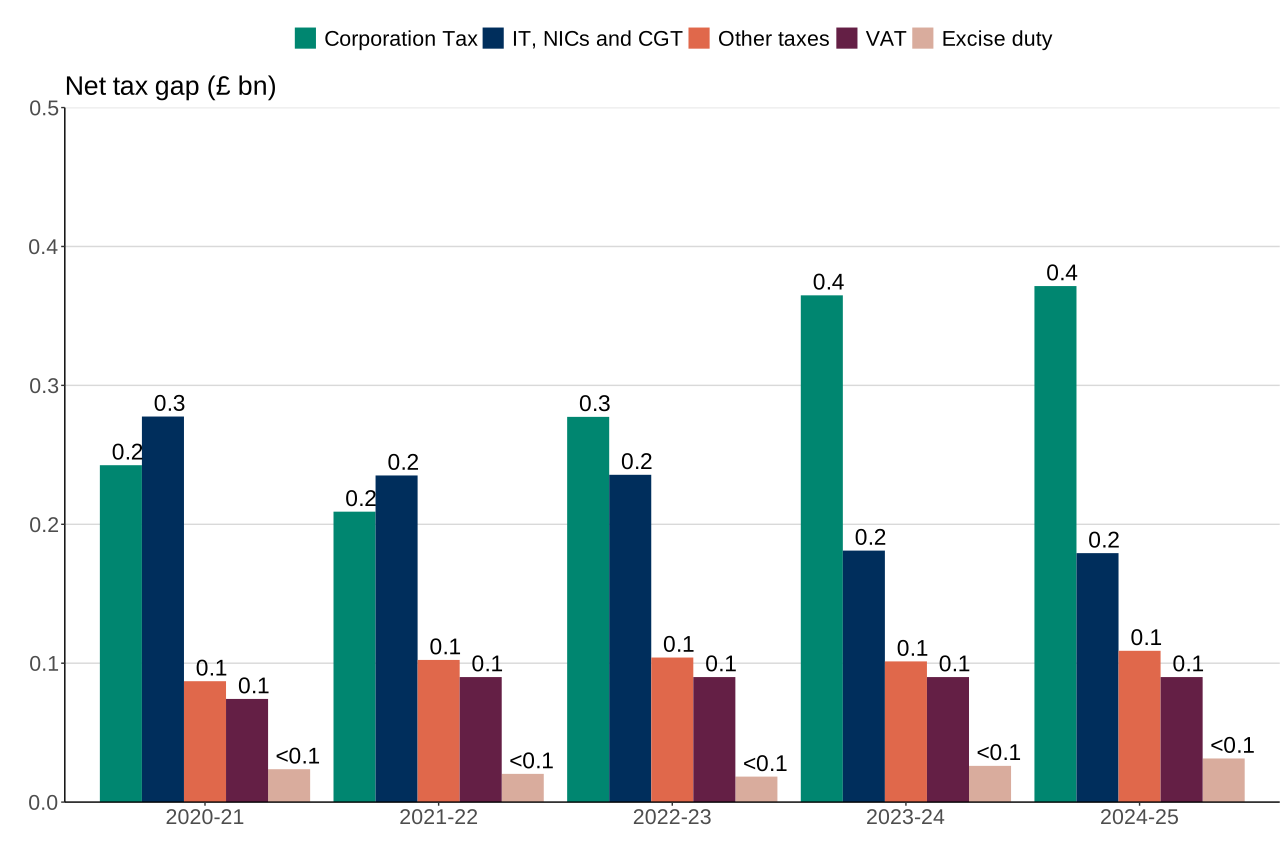
Figure 7.3 shows how the avoidance tax gap is split by type of tax from 2020 to 2021 up to 2024 to 2025. In 2024 to 2025, around half of the avoidance tax gap (£0.4 billion) is attributed to Corporation Tax, with £0.2 billion attributed to Income Tax, NICs and Capital Gains Tax (see ‘Chapter 4’ for further detail), £0.1 billion to ‘other taxes’ and £0.1 billion to VAT.
Figure 7.3: Avoidance tax gap by type of tax, 2020 to 2021 to 2024 to 2025 (£ billion)
Notes for Figure 7.3
-
The full data series can be seen in the online tables.
-
Figures may not sum due to rounding.
-
IT, NICs and CGT stands for ‘Income Tax, National Insurance contributions and Capital Gains Tax’.
-
‘Other taxes’ includes ‘other taxes, levies and duties’ (Aggregates Levy, Air Passenger Duty, Customs Duty, Climate Change Levy, Digital Services Tax, Insurance Premium Tax, Plastic Packaging Tax, and Soft Drinks Industry Levy), Landfill Tax, stamp taxes, and Inheritance Tax.