Measures from ASCOF, England: 2024 to 2025 - client level data quality statement
Updated 12 October 2026
Applies to England

© Crown copyright 2026
This publication is licensed under the terms of the Open Government Licence v3.0 except where otherwise stated. To view this licence, visit nationalarchives.gov.uk/doc/open-government-licence/version/3 or write to the Information Policy Team, The National Archives, Kew, London TW9 4DU, or email: psi@nationalarchives.gov.uk.
Where we have identified any third party copyright information you will need to obtain permission from the copyright holders concerned.
This publication is available at https://www.gov.uk/government/statistics/measures-from-the-adult-social-care-outcomes-framework-england-2024-to-2025/measures-from-ascof-england-2024-to-2025-client-level-data-quality-statement
Introduction
This document describes the quality of statistics for 6 measures (also called metrics) derived from client level data (CLD), published in the Measures from the adult social care outcomes framework, England: 2024 to 2025 in December 2025, against the principles in the Code of Practice for Statistics. It covers the data and methods used to create the statistics with a particular focus on comparisons to metrics in the previous social care outcomes framework (ASCOF), derived from the previous data source, the short and long term (SALT) data collection. These were last published in the 2023 to 2024 ASCOF report.
CLD is a quarterly event-level data collection from all 153 councils with adult social services responsibilities (CASSRs). CASSRs will be referred to as local authorities throughout this report. CLD became mandatory for local authorities to return in 2023 to 2024. Data quality for the year 2024 to 2025 was improved across a number of areas.
Statistics have been developed to closely match the metrics previously derived from the SALT collection, with input from the CLD local authority reference group, made up of a regionally representative group of analysts who are consulted on decisions regarding the CLD collection and its uses. However, moving from aggregated, year-end SALT reporting to the central calculation of metrics from CLD event records has required new methods and some changes to definitions.
The statistics derived from CLD are classified as ‘official statistics in development’ because the methods are newly developed and some statistics are published for the first time in the ASCOF report. The outcomes in ASCOF derived from CLD are designed to align with the activity statistics published as part of the Adult social care activity report, England: 2024 to 2025.
Adult social care CLD collection
The CLD collection is the first national collection of social care records, covering requests for support, assessments, reviews and services provided or arranged by local authorities as part of their duties under the Care Act 2014. CLD is administrative data, drawn from records held on local authorities’ case management systems for their own operational purposes.
The aim of the new CLD collection is to improve knowledge about the care and support provided or arranged by local authorities for adults. From 1 April 2024, CLD replaced the existing SALT data collection as the primary source of information about local authority adult social care activity. The transition from annual aggregate to quarterly client level returns also enables more timely and flexible analysis of adult social care data and of linking it at person level to health or other data that includes NHS numbers, enabling much broader analysis.
The CLD project was developed from a data linkage pilot in north-west England that ran between 2015 and 2017. The pilot involved local authorities and clinical commissioning groups in partnership with NHS Arden and Greater East Midlands Commissioning Support Unit (AGEM CSU) and the Department of Health and Social Care (DHSC). The national voluntary collection was established in 2018 and the CLD data specification was developed by DHSC in consultation with the CLD local authority reference group of analysts representing all regions. The ‘CLD data specification’ is in the ‘ASC CLD specification’ section of the AGEM CLD information pages for local authorities.
In line with directions given by the Secretary of State for Health and Social Care, CLD became mandatory from 1 April 2023 and local authorities have been required to submit records to NHS England on a quarterly basis since July 2023. The national data collection is operated by AGEM CSU, acting as a regional data processor for NHS England.
DHSC continues to work with partners in AGEM CSU and NHS England to deliver CLD centrally, engaging with local authorities through the CLD reference group, Local Government Association (LGA) and Association of Directors of Adult Social Services (ADASS). All adult social care local authority data collections, including CLD, are ultimately overseen by the Data and Outcomes Board. See contact information for the Adult Social Care - Data Outcomes Board in annex B of ‘The Single Data List: a guide’ on the Single Data List page.
For further details about the collection, see the AGEM CLD information pages for local authorities. The following documents on the AGEM page are referenced in this data quality statement:
- in the ‘ASC CLD specification’ tab:
- CLD collection guidance
- CLD data specification
- in the ‘Submitting ASC CLD Data’ tab:
- submission timetable
- in the ‘Using the data’ tab:
- methodology for deriving ASCOF metrics from CLD
CLD coverage
Through CLD, local authorities provide individual records of activity undertaken to support adults and their unpaid carers as part of their duties under the Care Act 2014. It includes most local authority activity under part 1 of the Care Act to provide information, advice and support to adults (18 and older) and their unpaid carers, except for safeguarding. It excludes:
- self-funders who also arrange their care independently, meaning they do not request or take up any offer of support planning or care management (for example, regular reviews) offered by the local authority. Self-funders are people who pay the full cost of the care they receive
- children’s social care activity
- deprivation of liberty safeguards assessments and activity covered by the Mental Capacity Act 2005 (and amendments to it)
- assessments and activity under the Mental Health Act 1983
- housing and homelessness services provided under the relevant legislation:
- services that are wholly funded by the NHS under section 256 of the 2006 NHS Act (formerly section 28(a)). This includes arrangements put in place by the local authority on behalf of the NHS and/or where the costs are recharged to the NHS
Note on self-funders: CLD should include support provided to people who do take up the offer of support planning or care management from the local authority under section 18(3) of the Care Act 2014, referred to in the previous SALT activity data collection as ‘full cost clients’. Self-funders could also be included in statistics on requests or non-chargeable short-term support, for example reablement.
Local authorities have informed us of gaps in coverage for specific areas of activity that should be included in CLD. These typically arise where individual records are not held on their local case management systems and are not easily retrievable from external systems or partners.
There are known gaps in coverage of:
- unpaid carer support, especially where support is commissioned externally and delivered through block contracts. Statistics on unpaid carer support derived from CLD have been excluded from this year’s ASCOF report due to incomplete coverage
- jointly funded reablement services provided by external NHS partners, where data sharing arrangements are yet to be established
CLD is based on administrative data from local authority case management systems, which are primarily designed for service delivery. As such, while the data collection is intended to collect gender, and has a gender field (which is defined in the CLD collection guidance as ‘the gender the individual considers themselves to be’, which gives ‘male’, ‘female’ and ‘other’ options), recording practices for sex and gender can vary across councils.
Using CLD
CLD is still a relatively new collection of administrative data, with expected data quality issues and other complexities. It is the first major national collection of individual records in adult social care and has also involved a shift from year-end reporting to quarterly submission of records extracted from live case management systems. Consequently, it has involved a change in approach to data collection and quality assurance.
Through engagement with local authorities, DHSC is aware of implementation challenges and of variation in how services are organised and recorded locally. In line with the Office for Statistics Regulation’s standard for administrative data, we work with local authorities to develop and improve the CLD collection guidance and to improve consistency in interpretation and data quality.
DHSC works with local authorities through the CLD reference group, LGA and ADASS to understand how local authorities’ operational and commissioning practices differ. This work aims to produce insights into the common activities carried out by local authorities and to develop methods that generate comparable figures. When developing statistics for publication, DHSC assesses the data against the core dimensions of data quality set out in the government’s data quality framework and against the dimensions of quality set out by the Government Statistical Service for statistical outputs.
LGA and the CLD local authority reference group have been consulted in the development of these published statistics. Local authorities have been able to view summaries of their ASCOF figures from CLD while in development since August 2024 through the DHSC CLD dashboard and have been able to view their ASCOF figures for 2024 to 2025 since September 2025.
To find out more about how DHSC uses CLD, see:
- DHSC’s transparency statement for local authorities, which explains DHSC’s approach to using the data (published as annex D to the Care data matters publication)
- the CLD privacy notice
Comparability and coherence of statistics
While SALT collected annual aggregated activity data, CLD collects individual event records quarterly that are processed and aggregated centrally. Statistics derived from CLD in the 2024 to 2025 ASCOF report were designed to align with the previous SALT derived metrics, published in the 2023 to 2024 ASCOF.
However, statistics may differ due to the substantial change in data source and methodologies, which include:
- changes in definitions - the shift from retrospective SALT reporting to centrally calculated CLD-based statistics has required some changes in definitions. DHSC has worked with local authority analysts and users to balance comparability with the adoption of consistent, pragmatic methods. In some cases, definitions intentionally diverge from SALT to improve the accuracy, coherence and usefulness of the statistics. For full methodological details, see ‘Measures from ASCOF, England: 2024 to 2025 - methodologies for metrics derived from client level data’, published alongside this report
- incomplete CLD submissions - as outlined in the ‘CLD coverage’ section above, some local authorities have not submitted all relevant person level records of activity and submissions may only partially cover certain services or events such as short-term reablement support that is jointly NHS-funded or delivered
- missing or invalid data in CLD fields - many of these statistics rely on particular data fields being complete and accurate. If required fields (such as event dates or client type) are incomplete or incorrect, it may not be possible to correctly identify, deduplicate and link records for inclusion in the statistics. This is summarised in the ‘CLD quality’ section below, but issues directly affecting comparability are outlined for each metric in this section
In addition, variation in local authority operational and recording practices affect comparability. While SALT provided guidance for calculating metrics locally, some aspects were open to interpretation. This flexibility allowed local authorities to adapt definitions to local processes but also introduced inconsistencies, making it harder to compare figures between some local authorities. For example, SALT did not specify a time frame for identifying sequels to events (‘what happened next’), whereas defined time frames have been adopted for each metric using CLD submissions. Although developed in consultation with the CLD local authority reference group, applying these common rules to all CLD records is likely to differ from previous interpretations and processing rules applied to the information used to produce SALT data locally.
In this context, although the shift to CLD introduces greater transparency and consistency overall, the process of creating CLD returns from local authority systems also leads to potential inaccuracies and differences from SALT figures, including:
- loss of local context - the CLD specification does not include all information that is available to local authorities to help understand and correctly categorise activity
- introduction of inaccuracies - when converting local case management system records to the CLD format, records may be altered where local definitions and systems do not match perfectly with the CLD specification. There are also opportunities for additional errors to occur in this process
Due to the substantial change in data source and methodologies outlined above, CLD metrics in ASCOF for 2024 to 2025 should not be compared to previous years’ figures to assess changes in outcomes over time. Comparisons are provided within this data quality statement to help assess the combined impacts of data quality and methodological changes, although genuine changes over time may also influence the results.
Across all metrics derived from CLD in the ASCOF report, the data has been processed consistently as follows, to ensure the latest information is used:
- each CLD submission covers a rolling 12-month period, with 9 months of events superseding each quarter. The latest submission for each quarter is typically more accurate and often of higher quality than previous submissions. Therefore, for each local authority the latest submission for each quarter is selected and they are joined together to form the data covering the required reporting period
- a data set was created to capture the most recent known details for each individual in CLD, across a range of demographic characteristics. For each reporting period, the data set provides a single curated record per person, containing selected fields. This approach ensures the latest known information is used, minimises unknown values and maintains consistency in person details across different metrics. For more information, see ‘Measures from ASCOF, England: 2024 to 2025 - methodologies for metrics derived from client level data’, published alongside this report
ASCOF 2A: the proportion of people who received reablement during the year, who previously were not receiving services, where no further request was made for ongoing support
There have been significant changes to the ASCOF 2A methodology to adapt methods to suit a live event-level data collection. This means that ASCOF 2A is not comparable to previous years, where the metric was derived from SALT.
Detailed information on the steps taken to process the data to produce ASCOF 2A is available in the accompanying methodology document. The main changes are that:
- there is no longer a requirement for a reablement service to have a prior request in ASCOF 2A, as discussed with and supported by local authorities. This is because linking reablement to a prior request is not always feasible due to case management system processes and the ability to accurately link requests to related activity. There is an underestimation of requests in CLD as some requests may not be recorded as contacts on case management systems by all authorities
- the definition of a new client for this metric has changed in CLD. It is now defined as anyone who did not receive local authority commissioned long-term support in the 3 months prior to the reablement service. Previously in SALT, short-term support to maximise independence (ST-Max) episodes were counted if the person was not receiving long-term support at the time of their request, however this metric no longer requires the prior request record. As supported by local authorities, 3 months is more appropriate for identifying the relevant cohort
- the sequel to an ST-Max service is now identified based on the events and event outcomes which occurred during the service and in the 7 days following. This approach therefore identifies the immediate outcome following reablement, which was endorsed by local authority analysts in the CLD reference group to best align with the SALT derived metric. However, previously it was possible to use additional local context to identify an individual’s outcome, which is no longer feasible with CLD
- if the event outcome of reablement indicates that further support may be required but there is no evidence of support being provided in the short-term, this is excluded
- ST-Max events are included if they are solely or jointly provided or arranged by the local authority and reported in the CLD submission. It will not include intermediate care provided solely by the NHS. For some local authorities, this may represent a large proportion of reablement in their area
- there has been a change in some of the outcomes included in the numerator and denominator due to different categories introduced in CLD
CLD figures for ST-Max are also not comparable to SALT. Figures are lower in some local authorities than those from SALT due to incomplete CLD submissions, especially for reablement services commissioned by the local authority but jointly funded or provided by the NHS. Annex A provides a list of local authorities that have reported data quality issues in their CLD submissions and a description of how this has affected their ASCOF metrics.
Figure 1: ASCOF 2A outcome by local authority, SALT 2023 to 2024, CLD 2024 to 2025
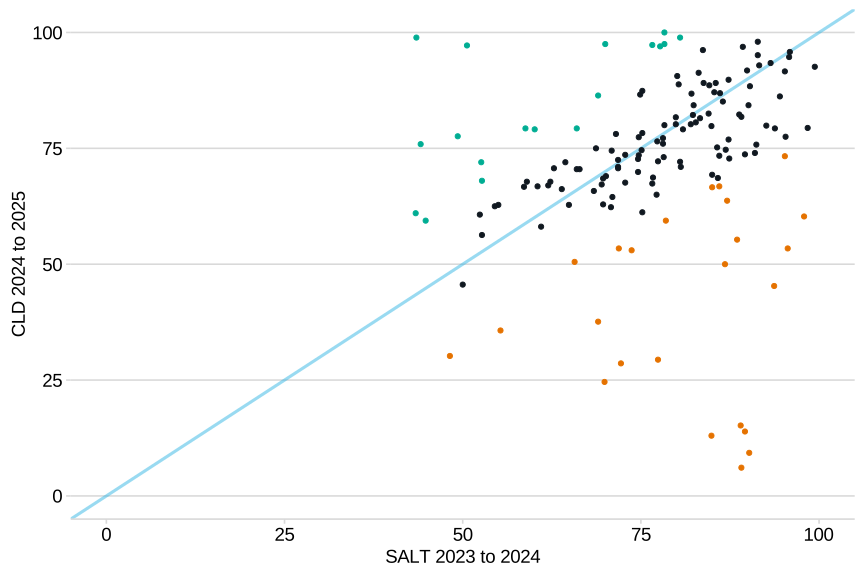
Figure 1 compares the ASCOF 2A outcomes from CLD for 2024 to 2025 with the outcomes from SALT for 2023 to 2024 by local authority. This comparison reflects combined impacts of methodological changes and data quality issues, as well as changes over time. Of the 145 local authorities that have data from both CLD and SALT:
- 103 local authorities (in black) have a CLD based outcome in 2024 to 2025 which is within 20% above or below the SALT equivalent in 2023 to 2024
- 24 local authorities (in orange below the line) have a CLD based outcome in 2024 to 2025 which is over 20% lower than the SALT equivalent in 2023 to 2024
- 18 local authorities (in green above the line) have a CLD based outcome in 2024 to 2025 which is over 20% higher than the SALT equivalent in 2023 to 2024
The following local authorities did not submit any ST-Max records:
- Royal Borough of Windsor and Maidenhead
- Bournemouth, Christchurch and Poole
- Portsmouth
ASCOF 2B and 2C: the number of adults aged 18 to 64 and 65 and above whose long-term support needs are met by admission to residential and nursing care homes (per 100,000 population)
Long-term support is consistently recorded on local authority case management systems and CLD and SALT figures describing long-term support use can be similar. However, there have been methodological changes to metrics 2B and 2C derived from CLD and these metrics should not be compared with historic figures from SALT. The main changes include that:
- the definition of a ‘new’ admission is based on whether there is a period of at least 12 months when someone did not previously receive long-term residential or nursing services
- a person’s age is now calculated from the start date of their long-term residential or nursing service, rather than at the end of the reporting period
- CLD does not differentiate between temporary and permanent residential placements and therefore some temporary admissions may be included
Neither this metric or the previous SALT metric capture people who self-fund and organise their own care without involvement from the local authority. Self-funding will be most prevalent in local authorities with higher levels of income and wealth, which may affect these local authorities’ results.
Figure 2: ASCOF 2C numerator by local authority, SALT 2023 to 2024, CLD 2024 to 2025
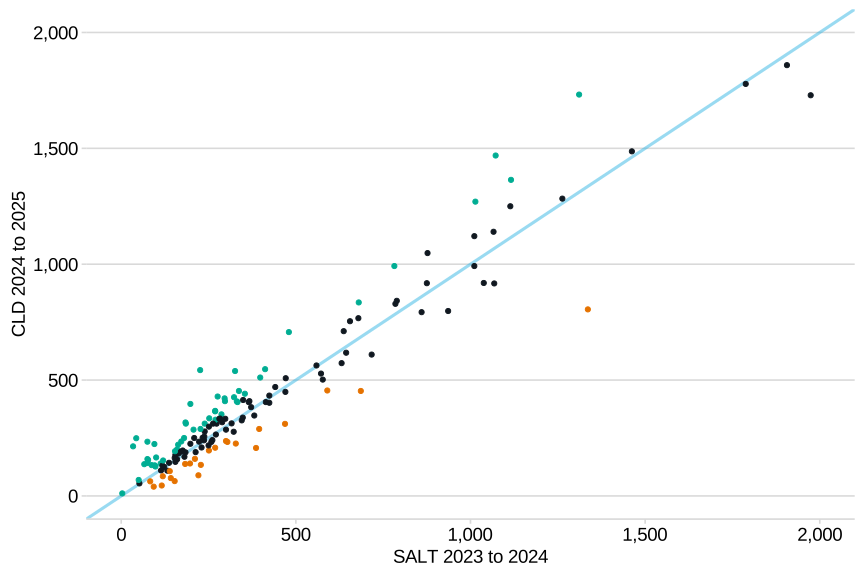
Figure 2 compares the ASCOF 2C numerator from CLD for 2024 to 2025 with the numerator from SALT for 2023 to 2024 by local authority. Of the 151 local authorities that have data from both CLD and SALT:
- 77 local authorities (in black) have a CLD based numerator in 2024 to 2025 which is within 20% above or below the SALT equivalent in 2023 to 2024
- 23 local authorities (in orange below the line) have a CLD based numerator in 2024 to 2025 which is 20% lower than the SALT equivalent in 2023 to 2024
- 51 local authorities (in green above the line) have a CLD based numerator in 2024 to 2025 which is 20% higher than the SALT equivalent in 2023 to 2024
The ASCOF 2B numerators have not been compared, as the values are too small to allow meaningful analysis.
Figure 3: ASCOF 2C outcomes by local authority, SALT 2023 to 2024, CLD 2024 to 2025
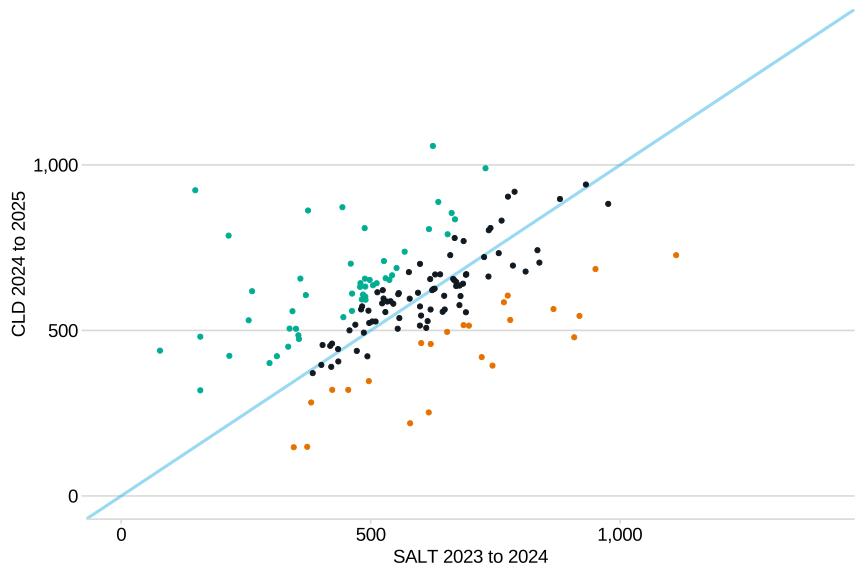
Figure 3 compares the ASCOF 2C outcomes scores from CLD for 2024 to 2025 with the outcomes from SALT for 2023 to 2024 by local authority. Of the 151 local authorities that have data from both CLD and SALT:
- 79 local authorities (in black) have a CLD based outcome in 2024 to 2025 which is within 20% above or below the SALT equivalent in 2023 to 2024
- 23 local authorities (in orange below the line) have a CLD based outcome in 2024 to 2025 which is over 20% lower than the SALT equivalent in 2023 to 2024
- 49 local authorities (in green above the line) have a CLD based outcome in 2024 to 2025 which is over 20% higher than the SALT equivalent in 2023 to 2024
Figure 4: ASCOF 2B outcomes by local authority, SALT 2023 to 2024, CLD 2024 to 2025
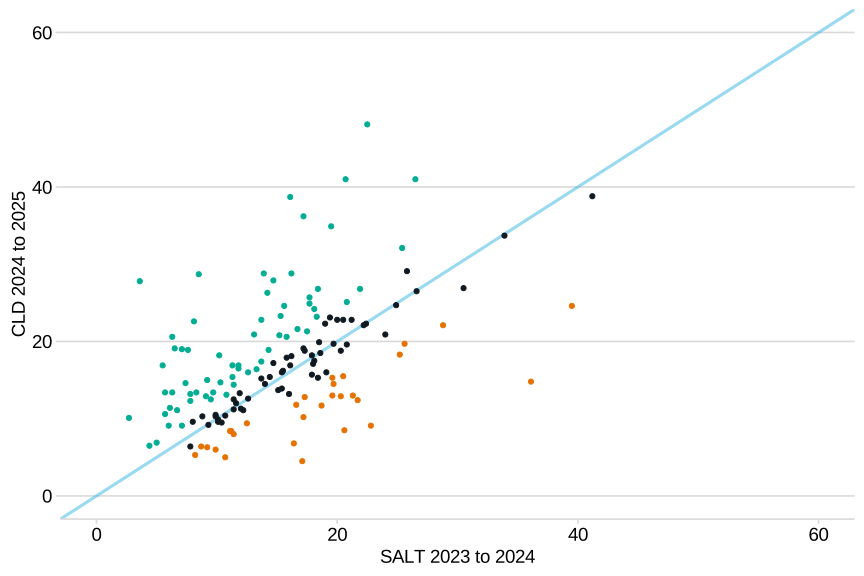
Figure 4 compares the ASCOF 2B outcomes scores from CLD for 2024 to 2025 with the outcomes from SALT for 2023 to 2024 by local authority. Of the 149 local authorities that have data from both CLD and SALT:
- 56 local authorities (in black) have a CLD based outcome in 2024 to 2025 which is within 20% above or below the SALT equivalent in 2023 to 2024
- 29 local authorities (in orange below the line) have a CLD based outcome in 2024 to 2025 which is over 20% lower than the SALT equivalent in 2023 to 2024
- 64 local authorities (in green above the line) have a CLD based outcome in 2024 to 2025 which is over 20% higher than the SALT equivalent in 2023 to 2024
While figure 2 shows that many local authorities have an ASCOF 2C numerator in line with their previous ASCOF 2C numerator derived from SALT, the outcomes for 2B and 2C in figures 3 and 4 have a lower correlation. This demonstrates that small differences in the counts of people admitted to nursing or residential care (due to various factors such as data source, methodological and reporting period differences), can have a large effect on the outcome when presented as a rate per 100,000 population.
ASCOF 2D: the proportion of people aged 65 and over who were discharged from hospital into reablement and who remained in the community in the 12 weeks following discharge
ASCOF 2D is a new metric for ASCOF from 2024 to 2025 onwards which uses CLD linked with secondary uses service (SUS) data, which contains information on hospital episodes. While this metric continues to measure outcomes for individuals who received reablement following hospital discharge, changes to the data sources, definitions and methodology mean this is a fundamentally different metric and cannot be compared with the previous ASCOF 2D metric. The main changes include:
- how we identify who received reablement after hospital discharge - CLD records are linked with individual hospital records in SUS using the NHS number. Previously those receiving reablement after hospital discharge were identified locally and reported through SALT
- the time period covered - it now includes all reablement events across a 12-month period rather than just 3 months between October to December in the previous metric. Therefore, seasonal variations may contribute to differences observed between the current and previous metric
- when outcomes are measured following reablement - the metric considers events which occurred throughout the 12-week follow-up period, whereas the previous metric only considered whether a person was in their home on the 91st day following hospital discharge
- the short-term services included - only home-based reablement is captured in this metric, where it is organised or funded by the local authority. Other forms such as bed-based care and rehabilitation centres are all excluded
- what outcomes are measures following reablement - additional outcomes of hospital readmission and death are considered within the 12-week period following hospital discharge, therefore by capturing a broader range of events the overall outcome is likely to be lower
- changes to the cohort - it includes those discharged from acute and community hospitals, as per the previous metric. However, those who had a zero-day length of stay in hospital (those who are admitted and discharged on the same day) are now excluded from this metric as they are much less likely to require reablement support and the data quality in SUS for this group of patients is much poorer
As previously mentioned in relation to ASCOF 2A, there are known data gaps in CLD for reablement service events, particularly those that are jointly funded by the NHS. These gaps stem from difficulties obtaining information at the record level. There are 13 local authorities which are known or presumed to have missing reablement data for 2D - this is indicated as [x] in the accompanying data tables. For these local authorities, the total number of hospital discharges of people aged 65 and over, sourced from SUS, is excluded from the part 2 denominator for England and the relevant regions. This ensures the regional and national outcomes are less affected by incomplete data.
Three additional data quality considerations to be aware of regarding ASCOF 2D are:
- date of death is identified in CLD, which may have incomplete coverage. The Office for National Statistics (ONS) mortality data set will be used, once it’s available in the relevant secure data environment
- hospital spells are only available in the SUS data set once a person has been discharged, that is, their stay has been completed. For this reason, readmissions to hospital following discharge may exclude some readmissions where the patient has not yet been discharged. A snapshot of the SUS data is taken approximately 2 months after the 12-week follow up period to reduce the impact of this on the statistics
- SUS data is currently used because it is accessible within the same environment as CLD, allowing timely analysis of operational datasets. Hospital episode statistics (HES), a cleaned version of SUS, is the preferred data set, but its future use will depend on consideration of timeliness, availability and access
ASCOF 2E: the proportion of people who receive long-term support who live in their home or with family
ASCOF 2E relies on the accommodation status information captured in CLD. Previously, accommodation status was only collected in SALT for people who were aged 18 to 64 and receiving learning disability support. Accommodation status is mandatory for all people in CLD for the purposes of deriving ASCOF 2E for all clients. However, some local authorities have had to undertake work to extend recording to routinely capture this information in assessments and reviews, and this can take some time. Among the group receiving long-term learning disability support, 96% had a known accommodation status whereas 88% of all people receiving long-term support had a known accommodation status.
Figure 5: ASCOF 2E part 1 outcome by local authority, SALT method 2023 to 2024, CLD method 2024 to 2025
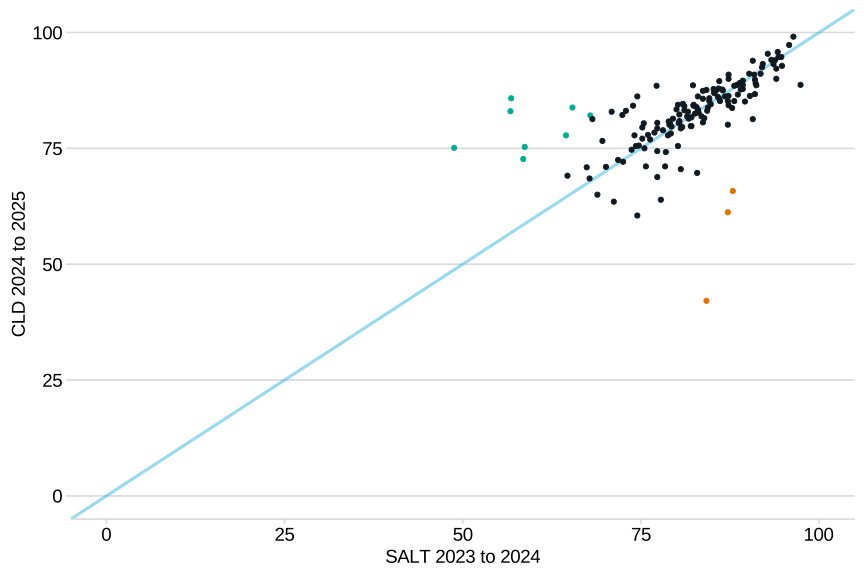
Figure 5 shows that the majority of local authorities have an ASCOF 2E outcome for CLD 2024 to 2025 broadly in line with their SALT equivalent for 2023 to 2024. Of the 150 local authorities that have data from both CLD and SALT:
- 139 local authorities (in black) have a CLD based outcome in 2024 to 2025 which is within 20% above or below the SALT equivalent in 2023 to 2024
- 3 local authorities (in orange below the line) have a CLD based outcome in 2024 to 2025 which is 20% lower than the SALT equivalent in 2023 to 2024
- 8 local authorities (in green above the line) have a CLD based outcome in 2024 to 2025 which is 20% higher than the SALT equivalent in 2023 to 2024
Although the figures are closely matched, CLD figures should not be compared with those from previous years due to the substantial changes in data source and methods.
ASCOF 3D: the proportion of people using social care who receive self-directed support, and those receiving direct payments
ASCOF 3D parts 1a and 2a rely on information captured in the delivery mechanism field within CLD for people receiving long-term community support at the end of the reporting period. This field was not mandatory in the initial CLD specification and is therefore blank for a high proportion of records. For this reason, and due to changes in the data sources and methods, ASCOF 3D from CLD is not comparable with previous SALT based figures.
To improve the quality of data for this metric, the direct payments are identified in CLD where ‘direct payment’ is recorded in either the service component field (a mandatory field for all services) or the delivery mechanism field. The self-directed payment metric (part 1) captures all the people receiving direct payments but also includes those with a ‘CASSR managed personal budget’, information which is only recorded in the delivery mechanism field. Where the delivery mechanism field is blank, the other types of self-directed support are not reported, therefore for some local authorities only the direct payments identified through the service component field appear in both part 1 and part 2 of the metric.
Figure 6: ASCOF 3D part 1 outcome by local authority, SALT method 2023 to 2024, CLD method 2024 to 2025
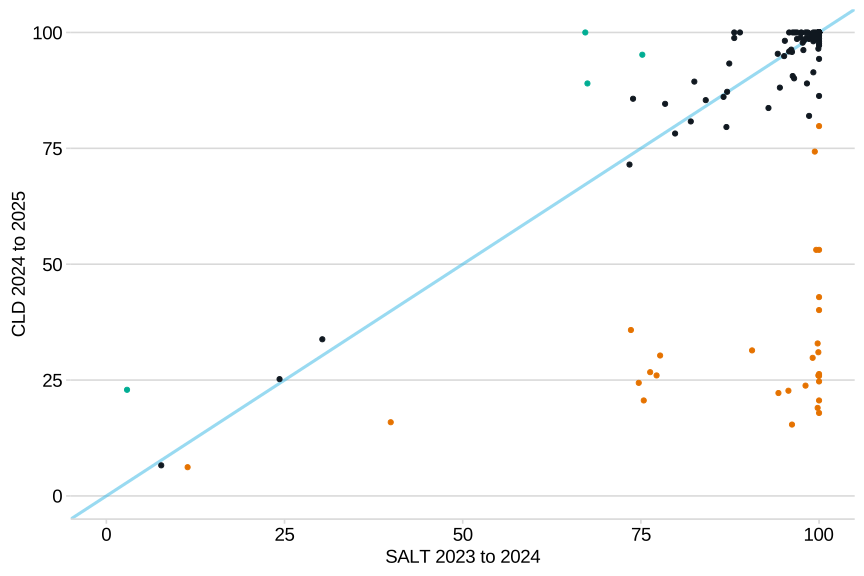
Figure 6 shows low comparability between the ASCOF 3D part 1 outcome for CLD 2024 to 2025 with its SALT equivalent for 2023 to 2024. This is due to the incompleteness of the delivery mechanism field for those with ‘CASSR managed personal budget’. Of the 151 local authorities that have data from both CLD and SALT:
- 118 local authorities (in black) have a CLD based outcome in 2024 to 2025 which is within 20% above or below the SALT equivalent in 2023 to 2024
- 29 local authorities (in orange below the line) have a CLD based outcome in 2024 to 2025 which is 20% lower than the SALT equivalent in 2023 to 2024
- 4 local authorities (in green above the line) have a CLD based outcome in 2024 to 2025 which is 20% higher than the SALT equivalent in 2023 to 2024
Nearly everyone receiving long-term community support should have a personal budget, meaning that the proportion of people receiving self-directed support should be close to 100%. However, figures for 2024 to 2025 derived from CLD for many local authorities fall below this, likely due to data quality issues rather than practice. Previous years’ figures based on SALT data were near 100%. For this reason, figures for 3D(1a) are included in the data tables for completeness but have been excluded from the statistical commentary as comparisons are not meaningful.
Figure 7: ASCOF 3D part 2 outcome by local authority, SALT method 2023 to 2024, CLD method 2024 to 2025
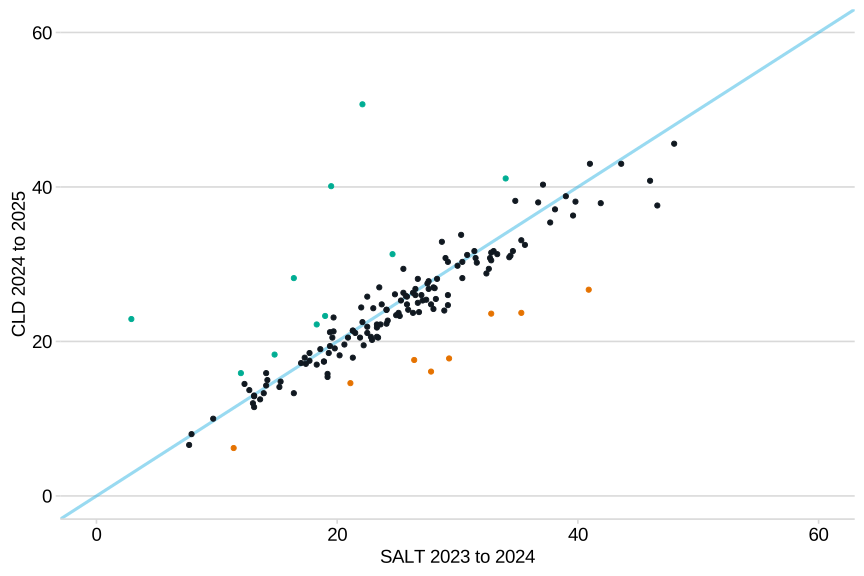
Figure 7 shows the part 2 outcome for ASCOF 3D comparing SALT 2023 to 2024 to CLD 2024 to 2025. The correlation is higher compared with part 1, as it includes only those receiving direct payments which can be determined from both service component and delivery mechanism fields. Of the 151 local authorities that have data from both CLD and SALT:
- 133 local authorities (in black) have a CLD based outcome in 2024 to 2025 which is within 20% of the SALT equivalent in 2023 to 2024
- 8 local authorities (in orange below the line) have a CLD based outcome in 2024 to 2025 which is over 20% lower than the SALT equivalent in 2023 to 2024
- 10 local authorities (in green above the line) have a CLD based outcome in 2024 to 2025 which is over 20% higher than the SALT equivalent in 2023 to 2024
ASCOF 3D parts 1b and 2B measure the proportion of unpaid carers receiving direct payments and self-directed support. As described in the ‘CLD coverage’ section, there are several known quality issues relating to the collection of unpaid carer activity data. Following our review of the July CLD submissions, the national number of unpaid carers recorded in CLD for 2024 to 2025 remains significantly below the figure reported through SALT 2023 to 2024. There is particularly poor coverage of universal services. To avoid misinterpretation, ASCOF 3D parts 1b and 2b measuring outcomes for unpaid carers have been excluded.
How the statistics can be used
The data can be used to gain insights into outcomes nationally and at local authority level. These statistics derived from CLD should not be used to gain insights into national trends over time, due to the change in data source and methods.
Caution is advised when using the data to compare local authorities, with reference to those noted as having reported poor coverage or other data quality issues listed in annex A.
CLD statistics are published as official statistics in development, because the methods are newly developed and some statistics are published for the first time in the ASCOF report. As a new data collection, we expect there to be data quality issues and other complexities, and these should be considered in any use of this data.
CLD quality
This section measures the adult social care statistics against the dimensions of quality set out by the Government Statistical Service for statistical outputs. You can send feedback on these statistics to asc.statistics@dhsc.gov.uk.
Relevance
These statistics are published to provide an overview of local authority commissioned adult social care, providing transparency and insight. The publication aims to improve access to various data on adult social care by providing a comprehensive, easily accessible report and analysis.
Accuracy and reliability
The accuracy and reliability of the data is dependent on the quality of data submitted by local authorities. CLD returns are drawn from local authorities’ case management systems and should reflect the activity and outcomes at the time of the event with minimal additional processing required. Differences in local case management IT systems, processes and procedures influence how data is recorded and reported for the CLD collection. Even where the returns are an accurate description of local activity, differences in the way that activity is organised and recorded by local authorities needs to be appreciated and considered when attempting any comparative analysis or benchmarking.
As a new collection of administrative data, there will also be some unquantifiable data quality issues that could affect the accuracy and reliability of the published statistics.
DHSC has worked with the CLD local authority reference group to develop the CLD data specification and the CLD collection guidance. DHSC and AGEM CSU also provide tools to local authorities to assess and improve the quality of their data and ensure their data aligns with the specification. The emphasis is on correcting data quality issues at source, with quality assurance processes to support this.
Local authorities are asked to use the comments box on the NHS England Data Landing Portal (DLP) when they submit their data, to indicate where information is not currently available and describe plans to include it in future returns. Local authorities can also contact DHSC directly if further clarification of the guidance is needed. A list of local authorities that have reported data coverage or data quality issues through the comments box is included in annex A.
Several local authorities have notified us of data quality issues that they intend to correct in future submissions, so we expect data quality and coverage to improve over time for these local authorities. Improvements in data quality have already been seen each year since the national data CLD collection began.
Statistical disclosure control methods
Statistical disclosure control methods are applied to the CLD statistics in the ASCOF publication to protect individuals from being identified. Counts below 5 are suppressed, indicated by [c] in the data tables. If either the numerator or denominator is less than 5 then both are suppressed to prevent figures being worked out. Similarly, if figures for one demographic group are suppressed, secondary suppression is applied to another group, while totals remain visible.
Regional, council type and national figures are created based on the unsuppressed counts and have been rounded to the nearest 5 to prevent low counts being deduced.
Timeliness and punctuality
CLD is a quarterly collection and the submission timetable mandates that data must be provided by the end of the month following the mandatory reporting period.
Statistics in this ASCOF publication use CLD covering activity for the financial year 2024 to 2025. Data for 2024 to 2025 was initially submitted in April 2025, and local authorities could resubmit data until 31 July 2025. For metrics that require information about peoples’ care history, earlier submissions containing data before 1 April 2024 were also used. For ASCOF 2D, which assesses outcomes over the 12 weeks following the reporting period, the July submission (including data up to 30 June 2025) was used. The data extracted for this publication includes submissions made up to and on 6 August 2025.
Historically, ASCOF was an annual publication. With the shift to a quarterly collection for CLD, there is an opportunity to publish some of these statistics more frequently and DHSC will consult with users, local authorities and other stakeholders on a future publication timetable and its content in due course.
Accessibility and clarity
These statistics are available on GOV.UK, with all documents published in an accessible format. The statistical reports and this data quality statement are published in HTML and accompanying data tables are published in OpenDocument Spreadsheet (ODS) format. Additionally, the commentary is written with the aim of being clear and impartial.
The sections on how the statistics can be used are included to ensure users have sufficient information to use and interpret the data appropriately.
The CLD statistics are published as official statistics in development. As such DHSC will continue to work with users and stakeholders to ensure the statistics develop in line with user needs with the aim of them becoming official statistics in due course.
Quality assurance
Working with AGEM CSU, DHSC provides accessible data quality reports to local authorities to help them improve the completeness and accuracy of their data as it relates to specific areas of analysis. We will continue to make clarifications to the CLD collection guidance where needed to support consistent returns.
CLD is submitted quarterly by local authorities. To produce their returns, local authorities extract data from their case management and financial systems, and in some cases collect data from partners (where activity is outsourced and appropriate data sharing agreements are in place). Local authorities carry out processing to compile their return as a CSV file, in line with the CLD specification. An Excel data validation tool is provided to enable local authorities to check that their data conforms to the formatting of the specification, and outputs basic aggregations to support sense checking.
The collection is operated by AGEM CSU in their capacity as NHS England’s North West Data Services for Commissioners regional office. Local authorities upload their returns to the DLP and AGEM CSU transfers the data into a central NHS England database. Automated data validation checks are carried out to evaluate whether the data meets expected data types and defined list values and NHS number tracing is performed. AGEM CSU then provides data validation reports back to local authorities, including optional NHS number tracing results.
Due to the variation in the way that activity is organised and recorded across local authorities, the CLD data specification will not always fit with local terminology or recording. Support is provided to local authorities for mapping local definitions to the specification. DHSC regularly reviews and updates this support with NHS England and the CLD local authority reference group.
DHSC analysts access CLD remotely through a secure repository hosted by AGEM CSU. Checks are carried out after each quarterly submission deadline to ensure that all local authorities have submitted a return covering the required reporting period. These checks identify any data quality issues that need to be addressed, and analysts will contact local authorities where issues are identified.
Data validity
Data is evaluated as valid where it meets expected data types and defined list values, in line with the CLD data specification, or where it is provided blank and may be legitimately blank. For example, ‘event end date’ should be left blank for services that are open and ongoing. Data validation will not pick up incorrect data where a valid value has been supplied. For example, invalid blanks will be incorrectly evaluated as valid, for example, where an event has ended but the ‘event end date’ has been left blank. Similarly, where client type has been categorised as ‘unknown’, this will be evaluated as valid but may be excluded from statistics in this report. Invalid responses have been corrected where the intended valid response is clear.
Data processing
The data is processed every quarter through a reproducible analytical pipeline (RAP). This RAP has been set up so that only limited manual intervention is necessary each month to produce updated outputs. This means that the risk of human error is minimised throughout the process.
All production code is written by DHSC staff. Any changes made to the code, or new code added, is rigorously tested and peer reviewed before it is incorporated in the production process.
In addition, version control is assured through the use of Git and GitHub. This version control software is used to track changes in code files and to ensure thorough verification and validation is performed every time the code is edited. Changes to a piece of code are systematically reviewed by a different analyst who takes on the role of quality assurer.
Statistical commentary
Text changes in the report are made by one person and are then checked and cleared by another person afterwards.
Revisions to CLD statistics
Submissions cover a 12-month rolling reporting period. The data for 2024 to 2025 was first submitted in April 2025. Local authorities had the opportunity to resubmit their 2024 to 2025 data up until 31 July 2025. The future revision policy will be developed to align with the future publication timetable, in consultation with users and stakeholders.
Annex A: list of local authorities reporting issues
Each quarter, local authorities upload to the DLP a CSV file containing individual records of activity from the last 12 months. The CLD collection guidance recommends that local authorities use the comments box on the DLP to indicate when mandatory data is not yet available or is incomplete for specific fields.
This annex lists issues reported by local authorities through the DLP or formally reported to DHSC for data submitted in April and July 2025 covering 2024 to 2025, grouped by the ASCOF metric that these issues are likely to affect.
Some local authorities are known or presumed to have missing data for some metrics. These are marked as [x] in the accompanying data tables.
All metrics derived from CLD
Calderdale reported a technical error which results in incomplete data being submitted for long-term support. All ASCOF metrics derived from CLD rely on analysing long-term support services to some extent, therefore care should be taken when interpreting the figures from Calderdale.
Tameside reported that their mental health services data may be incomplete due to an ongoing data migration.
Warwickshire’s July 2025 submission contained an error where some service event end dates were incorrectly left blank. This makes it appear that more people are receiving open or ongoing services than is the case. As a result, ASCOF metrics that rely on a person’s service history to determine whether they previously received long-term support may be affected. This error was corrected in their October submission, so should not affect any future publications of the data.
West Northamptonshire reported a range of issues with the completeness of submissions and fields following migration to a new case management system, and limitations in reporting functionality with the new system.
ST-Max services (ASCOF 2A and 2D)
Calderdale’s reablement services are currently not recorded in their case management system as the service is externally commissioned. Figures for ASCOF 2A are therefore underestimating the volume of ST-Max services provided and there is no reablement data included in ASCOF 2D.
Lambeth’s July 2025 submission did not include complete data for reablement services. This is because Lambeth’s reablement service is integrated with their NHS trust and some of the data comes from the health provider.
Medway’s commissioned reablement service had an information and communication technology (ICT) issue, leading to incomplete coverage of their ST-Max services in their CLD submission.
Oxfordshire reported a technical issue which caused the incorrect recording of event start and end dates for reablement services in their July 2025 submission. The ASCOF 2A and 2D figures in this report would have therefore underestimated the number of people who received further support following reablement by around 20%. To mitigate this and improve data quality, Oxfordshire’s April 2025 submission has been used instead for all metrics. See the section on replacement data below for more information.
Portsmouth were unable to capture ST-Max services to maximise independence as they are jointly provided with the NHS and captured in a separate system where the record level information is not currently available. Since this reporting period, a solution has been developed which should resolve this issue for future reporting purposes.
Redbridge reported that their July 2025 submission was missing data on reablement services provided under section 75 partnership arrangements with the NHS for April to June 2024. Figures for ASCOF 2A and 2D are therefore underestimating the volume of reablement activity by approximately 25%.
The Royal Borough of Kensington and Chelsea has reported incomplete coverage of the NHS number in their CLD submission for reablement services. This impacts ASCOF 2D as this metric relies on the NHS number to link hospital data with CLD.
Rutland reported a technical error in their July 2025 submission which meant that the majority of Rutland’s reablement episodes were not considered for the ASCOF 2A and 2D metrics. Rutland’s case management system uses a care plan for ST-Max activity, meaning that the client type field was wrongly categorised as ‘unknown’ if no subsequent service is provided. The DHSC methodology for this metric excludes service events where the client type is not ‘service user’. As a result, Rutland’s figures would have underestimated their ST-Max activity and disproportionately omitted episodes where no further support was required. To mitigate this and improve data quality, Rutland’s April 2025 submission has been used instead for all metrics. See the section on replacement data below for more information.
Somerset reported ongoing challenges with the recording of ST-Max services in their case management system and the difficulty in accurately identifying whether a service followed a reablement package. This should be improved with the deployment of a new module to their case management system in the near future.
West Berkshire do not include health-led reablement services in their CLD submission. This represents approximately 50% of the reablement provision in West Berkshire and therefore the volume of this activity reported in ASCOF 2A and 2D is significantly underreported.
West Sussex reported their CLD submission includes short-term services following reablement which are provided as part of the reablement service but reported as a separate short-term service. Consequently, long term services following these interim short-term services are not captured within the 7 days following reablement. Their ASCOF 2A figure is therefore overestimating the proportion of people who did not require further support. This will be corrected in future CLD submissions.
Westminster reported incomplete coverage of the NHS number in their CLD submission, including for reablement services. This will impact ASCOF 2D as this metric relies on the NHS number to link hospital data with CLD.
Worcestershire have a high proportion of invalid event outcomes for short-term support services, likely due to a mapping issue in their system. This impacts their figures for ASCOF 2A, however this should improve in a future submission.
Accommodation status of people receiving long-term support (ASCOF 2E)
Brent reported some missing values for the accommodation status field since this data was not previously collected in some of their data collection forms.
Calderdale do not currently record events using the primary support reason of ‘learning disability support’. Consequently, Calderdale do not have any figures for LTS004 for this cohort.
Kirklees have reported that 75% of people have an unknown accommodation status in their CLD submission.
West Northamptonshire reported that records for some people who draw on care services may hold incorrect accommodation statuses.
Replacement data
As summarised above, Rutland and Oxfordshire highlighted technical issues in their resubmission of data in July 2025. To improve data quality, we have used Rutland and Oxfordshire’s April 2025 submissions for the financial year for all metrics, which are not impacted by the technical issues found. As a result, Oxfordshire and Rutland do not have any figures for ASCOF 2D since this metric requires an additional 12 weeks of data from April to June 2025 to determine outcomes.