How many small boat arrivals have claimed asylum or been referred to the National Referral Mechanism?
Updated 16 July 2026

© Crown copyright 2026
This publication is licensed under the terms of the Open Government Licence v3.0 except where otherwise stated. To view this licence, visit nationalarchives.gov.uk/doc/open-government-licence/version/3 or write to the Information Policy Team, The National Archives, Kew, London TW9 4DU, or email: psi@nationalarchives.gov.uk.
Where we have identified any third party copyright information you will need to obtain permission from the copyright holders concerned.
This publication is available at https://www.gov.uk/government/statistics/immigration-system-statistics-year-ending-march-2026/how-many-small-boat-arrivals-have-claimed-asylum-or-been-referred-to-the-national-referral-mechanism
Back to ‘Immigration system statistics, year ending March 2026’ contents page
This is not the latest release. View latest release.
This release goes up to the year ending (YE) December 2025. The “year ending” period includes the 12 months up to and including the YE month. For example, YE December 2025 includes the 12 months between 1 January 2025 and 31 December 2025. This data is published annually and with a 3-month lag compared to the rest of the Immigration system statistics, to allow sufficient time for asylum claims, modern slavery referrals, and decisions to be made and recorded on the system.
Additional information is provided in the ‘About the statistics’ section and in the user guide. Data on quarterly arrivals via illegal entry routes including small boat arrivals is published in other chapters of this report - ‘How many people come to the UK via illegal entry routes?’.
Total small boat arrivals in this chapter will differ slightly between the 2 sections and from the total small boat arrivals cited elsewhere in this publication due to differences in data source and the dates on which data was extracted.
1. Asylum claims from small boat arrivals
Since 2018, the majority of people arriving in the UK on a small boat have claimed asylum.
Since 2018, 95% of the people arriving on a small boat have claimed asylum. Of the 178,845 small boat arrivals claiming asylum since 2018, almost three-quarters (74% or 132,894) had received a substantive decision on their claim. Of these, 79,589 were granted asylum or some other protection status and 53,305 were refused (Table 1).
Table 1: Small boat arrivals claiming asylum and initial decision outcomes on their claims, by arrival date, January 2018 to December 20251,2,3,4
| January 2018 to December 2025 (people) | January 2018 to December 2025 (cases) | |
|---|---|---|
| Small boat arrivals | 187,779 | Not applicable |
| Asylum claims | 178,845 | 162,007 |
| Awaiting a decision | 12,538 | 10,875 |
| Received an initial decision (% of claims) | 132,894 (74%) |
119,637 (74%) |
| of which: | ||
| granted refugee status or other leave (grant rate) |
79,589 | 72,236 (60%) |
| refused | 53,305 | 47,401 |
| Withdrawn / Received an administrative outcome | 33,413 | 31,495 |
Source: Illegal entry routes to the UK detailed dataset, year ending March 2026 - IER_D02 and IER_D03
Notes:
- People includes main applicants and dependants, whereas cases include main applicants only.
- The time periods relate to the date of the small boat arrival, not the date of the asylum claim or outcome.
- Claims granted include grants of refugee status, humanitarian protection and other forms of leave.
- Grant rate is the percentage of claims that resulted in a grant of protection or some form of leave at initial decision, excluding withdrawn claims and claims which received an administrative outcome.
For small boat arrivals who have received an initial decision on their asylum claim, outcomes vary by nationality and individual circumstance. Some nationalities have relatively high asylum grant rates (for example, 86% of Eritreans who arrived in 2025 via small boat were granted at initial decision), whereas others have much lower grant rates (for example, 34% for Afghans).
Additional data on asylum claims from small boat arrivals by claim date, alongside data on all asylum claims, is available in the ‘How many people claim asylum in the UK?’ chapter of this report and more detail on the outcomes of all asylum claims is available in the ‘How many people are granted asylum in the UK?’ chapter. This includes definitions on asylum case outcome types in the asylum detailed datasets. Figures for asylum claims from small boat arrivals in the illegal entry routes datasets may differ from those in ‘Asy_D01a’ (and corresponding summary tables). This is due to differences in extraction dates from a live database and because the illegal entry routes datasets are based on the date of arrival, whereas the Asylum claims datasets are based on the date of claim.
For information on returns of small boat arrivals (and all returns from the UK), see the ‘How many people are returned from the UK?’ chapter.
2. Referrals to the National Referral Mechanism for small boat arrivals
Modern slavery includes any form of human trafficking, slavery, servitude or forced labour. Potential victims of modern slavery in the UK are referred to the National Referral Mechanism (NRM) by designated First Responder Organisations (including local authorities, police forces, specified non-governmental organisations, and parts of the Home Office such as Border Force). For more information on NRM referrals, see the ‘user guide’. For statistics on all modern slavery referrals (not just those relating to people arriving on small boats), see the ‘National Referral Mechanism statistics’.
NRM referrals can be made at any stage after arrival into the UK. NRM referrals may be triggered by, or occur after, other immigration events (such as, detention in preparation for return).
2.1 Small boat arrivals with modern slavery referrals
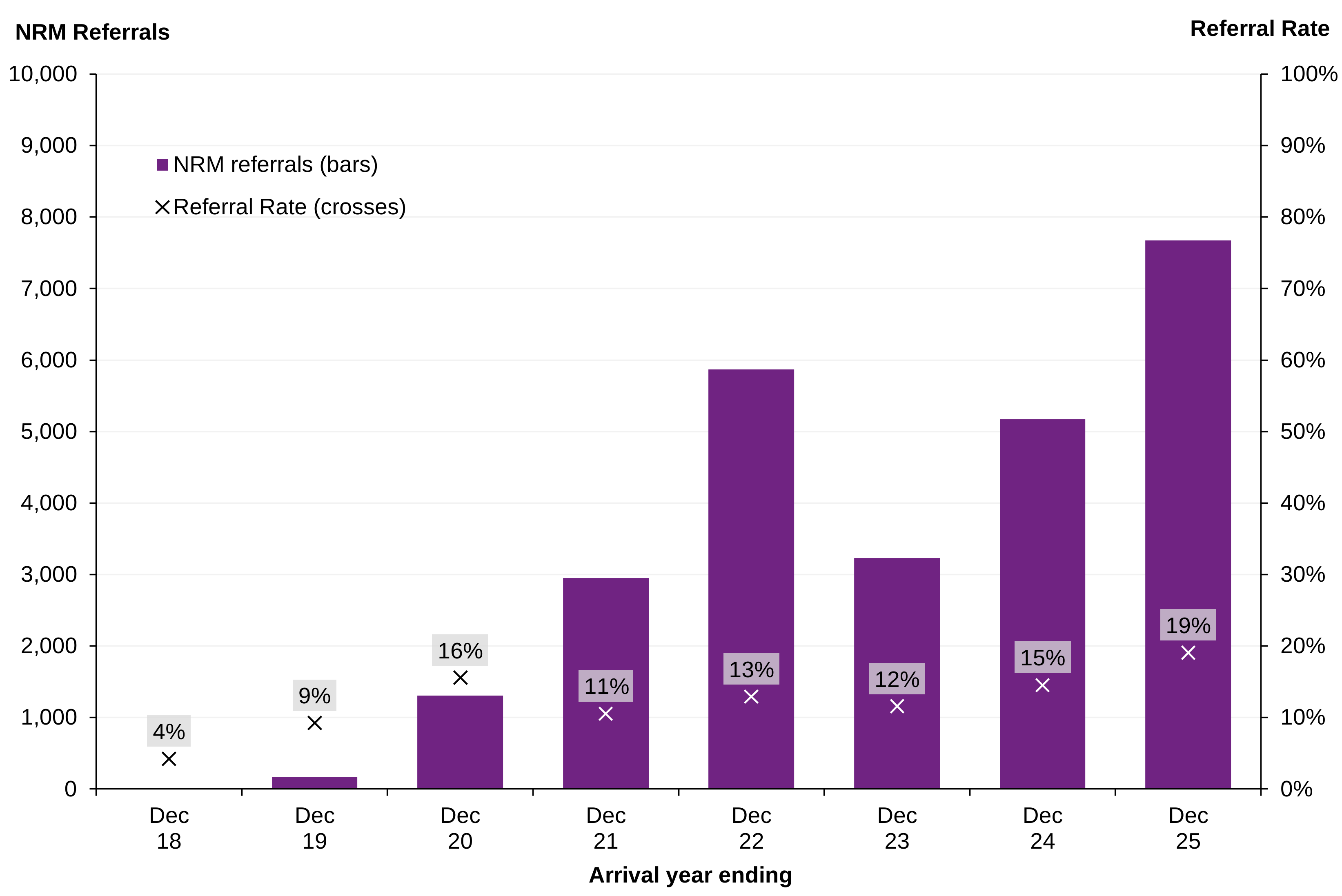
Around one in 7 people arriving to the UK by small boat since 2018 have been referred to the NRM as a potential victim of modern slavery.
Of the 187,778 small boat arrivals between 2018 and 2025, 26,383 people were referred to the NRM (14%). The majority of these individuals had also claimed asylum.
For small boat arrivals between 2021 and 2024, the proportion referred to the NRM fluctuated between 11% and 15% each year (Figure 1). For arrivals in the YE December 2025, the proportion increased to 19% (or 7,671 people) referred to the NRM (as of the 15 April 2026 when the data used in this release was extracted).
Trends in referrals among small boat arrivals may partly reflect changes in the mix of nationalities arriving. Differences in routes to the UK from their country of origin, circumstances prior to arrival, and experiences during journeys and once in the UK can affect vulnerability to exploitation, as well as the likelihood of identification and referral. The Annex: An analysis of NRM referrals and DtN reports for potential victims of modern slavery, 2024 to 2025 has more information on the reported location of exploitation and types of exploitation, by referral year, for all referrals not just those of people who arrived by small boat. It also highlights the influence of small boat arrivals referred to the NRM on the wider statistics on modern slavery referrals, with an increase in 2025 in referrals made by government agencies, particularly UK Border Force, and an increase in referrals reporting exploitation exclusively overseas. This was particularly the case for Eritrean and Somali nationals.
The number and proportion of small boat arrivals in each calendar year with NRM referrals may increase, as time will allow more people to be identified as potential victims and be referred into the NRM.
Figure 1: Small boat arrivals referred to the NRM and referral rate into the NRM, YE December 2018 to YE December 20251,2
Source: Illegal entry routes to the UK detailed dataset, year ending March 2026 - IER_D04
Notes:
- Referral rate is the proportion of small boat arrivals in each calendar year who have been referred into the NRM.
- The number and proportion of small boat arrivals in each calendar year with NRM referrals may increase, as time will allow more people to be identified as potential victims and be referred into the NRM.
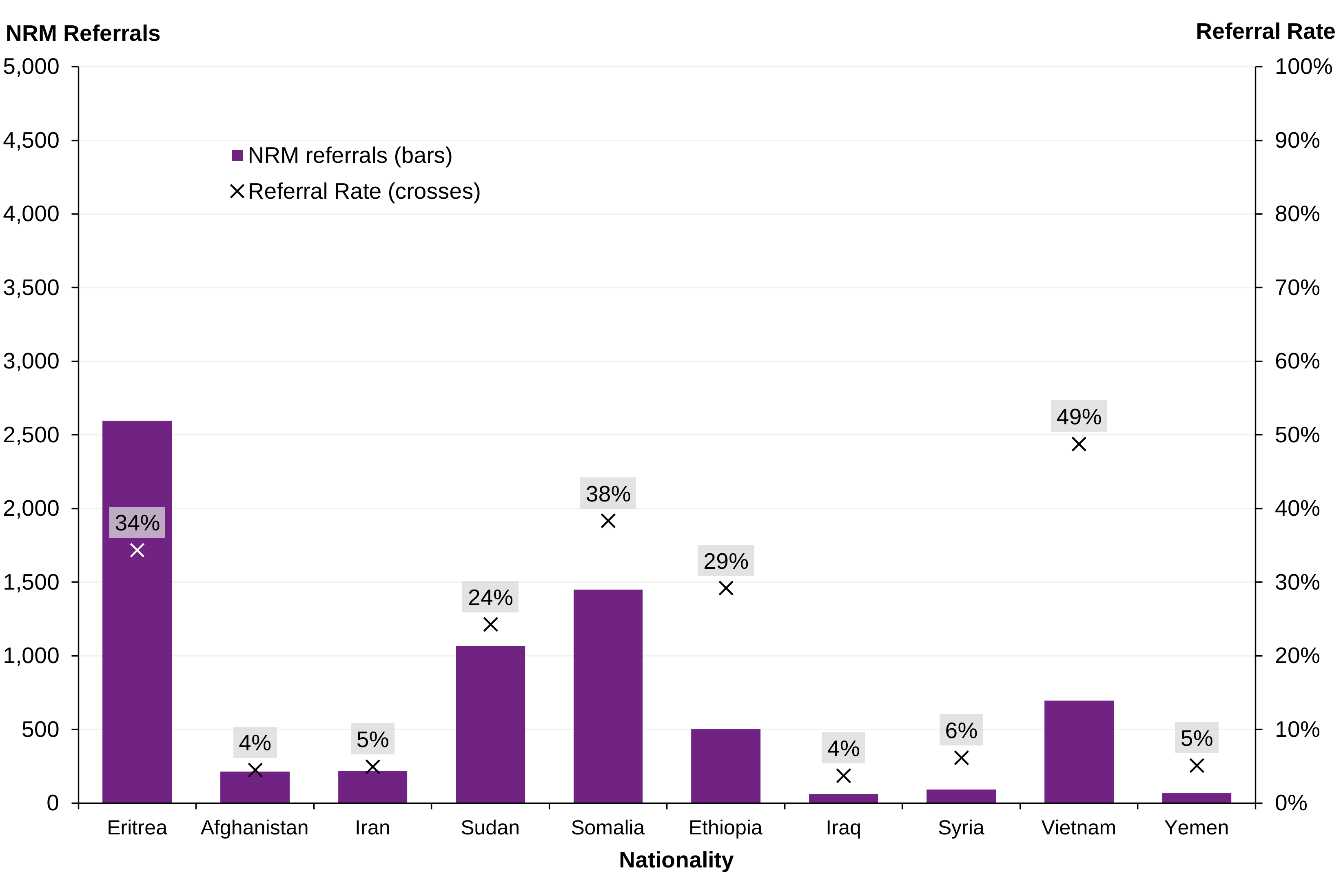
More than half of small boat arrivals referred to the NRM who arrived in the YE December 2025 were Eritrean and Somali nationals.
Eritrean and Somali nationals account for 34% and 19% respectively of small boat arrivals in the YE December 2025 who have been referred to the NRM so far (as of April 2026). The referral rate into the NRM varies for different nationalities arriving by small boat. Figure 2 shows that whilst Eritreans were both the most common small boat arrival nationality and the most common small boat arrival nationality referred to the NRM in the YE December 2025, Vietnamese and Somali nationals have a higher referral rate into the NRM.
Figure 2: NRM referrals and referral rate into the NRM for 10 most common nationalities arriving to the UK by small boat in 20251,2
Source: Illegal entry routes to the UK detailed dataset, year ending March 2026 - IER_D04
Notes:
- Referral rate is the proportion of small boat arrivals in each year who have been referred into the NRM.
- The number and proportion of small boat arrivals in each year with NRM referrals may increase, as time will allow more people to be identified as potential victims and be referred into the NRM.
2.2 Outcomes of small boat arrivals’ modern slavery referrals
Individuals referred to the NRM receive decisions on 2 grounds: reasonable grounds and conclusive grounds.
Just over half of reasonable grounds decisions issued since 2018 were positive and just over half of conclusive grounds decisions issued since 2018 were positive.
A positive reasonable grounds decision means the decision-maker must agree with the statement that there are “reasonable grounds to believe that a person is a victim of modern slavery”. This takes the victim’s account into consideration and any other relevant information, and considers whether, in the circumstances of the case, it is reasonable to expect supporting information to be available.
Following a positive reasonable grounds decision, a conclusive grounds decision will be made. A positive conclusive grounds decision indicates that, on the balance of probabilities, there is sufficient information to consider the individual is a victim of modern slavery.
The proportion of positive conclusive grounds decisions varies for different nationalities. Out of the 6 small boat arrival nationalities in the YE December 2025 who have received at least 50 conclusive grounds decisions, Somali nationals had the highest proportion of positive conclusive grounds decisions (72%), with the proportion for the other nationalities ranging from 54% to 70%.
There are 1,950 referrals awaiting a conclusive grounds decision; therefore, the proportion receiving a positive decision may change once these decisions have been made.
Table 2: Outcomes of small boat arrivals’ modern slavery referrals, by arrival date, January 2018 to December 20251,2,3,4
| January 2018 to December 2025 | |
|---|---|
| Small boat arrivals | 187,778 |
| Arrivals referred to the NRM | 26,383 |
| Reasonable grounds (RG) decisions | 24,903 |
| Positive (%) | 13,338 (54%) |
| Negative (%) | 11,565 (46%) |
| Awaiting RG decision | 116 |
| Conclusive grounds (CG) decisions | 11,294 |
| Positive (%) | 6,296 (56%) |
| Negative (%) | 4,998 (44%) |
| Awaiting CG decision | 1,950 |
| Awaiting reconsideration | 103 |
| Referrals withdrawn / closed | 1,355 |
Source: Illegal entry routes to the UK detailed dataset, year ending March 2026 - IER_D04 and IER_D05
Notes:
- The time periods relate to the date of the small boat arrival, not the date of NRM referral or decision. NRM referrals can be made at any stage after arrival into the UK.
- Individuals referred to the NRM receive decisions on 2 grounds: reasonable grounds and conclusive grounds. Therefore, individuals will be counted in multiple groups shown in the table. For example, those who are awaiting, or have received, a conclusive grounds decision will have previously received a positive reasonable grounds decision. Some individuals who are awaiting reconsideration and some of those whose referrals have since been withdrawn / closed will also have previously received a positive reasonable grounds decision.
- Referrals withdrawn / closed includes some cases where contact with the individual has been lost. These may be reopened if the individual makes contact in future.
- Cases awaiting reconsideration includes both those awaiting a new reasonable grounds decision and those awaiting a new conclusive grounds decision.
3. About the statistics
The small boat arrivals statistics were first published in February 2022 as ‘Official Statistics’. For more information, please see Section 13.5 of the Immigration system statistics user guide.
The underlying casework and data systems on which this data is based are undergoing a process of change and therefore the published numbers may change in future quarters. For more information see Section 2.8 of the Immigration system statistics user guide.
All statistics in this chapter relate to people who come to the UK on a small boat across the English Channel (a ‘small boat arrival’).
Data on asylum claims includes claims made within 14 days of a small boat arrival. Data on asylum claim initial decisions and NRM referrals and outcomes for 2023 to 2025 small boat arrivals include referrals and decisions up to the 15 April 2026. Data from pre-2023 has not been revised in this release.
For more information on the data in this chapter, please see the ‘user guide’.
4. Data tables
Data referred to here can be found in the following tables:
We welcome your feedback
If you have any comments or suggestions for the development of this report, please provide feedback by emailing MigrationStatsEnquiries@homeoffice.gov.uk. Please include the words ‘PUBLICATION FEEDBACK’ in the subject of your email.
We’re always looking to improve the accessibility of our documents. If you find any problems or have any feedback relating to accessibility, please email us.
See Section 6 of the ‘About this release’ section for more details.