Annex: An analysis of NRM referrals and DtN reports for potential victims of modern slavery, 2024 to 2025
Published 19 February 2026

© Crown copyright 2026
This publication is licensed under the terms of the Open Government Licence v3.0 except where otherwise stated. To view this licence, visit nationalarchives.gov.uk/doc/open-government-licence/version/3 or write to the Information Policy Team, The National Archives, Kew, London TW9 4DU, or email: psi@nationalarchives.gov.uk.
Where we have identified any third party copyright information you will need to obtain permission from the copyright holders concerned.
This publication is available at https://www.gov.uk/government/statistics/modern-slavery-nrm-and-dtn-statistics-end-of-year-summary-2025/annex-an-analysis-of-nrm-referrals-and-dtn-reports-for-potential-victims-of-modern-slavery-2024-to-2025
This annex analyses the differences in National Referral Mechanism (NRM) referrals and Duty to Notify (DtN) reports for potential victims of modern slavery between 2024 and 2025. A summary of the 2025 NRM and DtN statistics can be found in the main bulletin.
Key points
- record increases in referral: 2025 saw the highest ever total of NRM referrals (up 22% to 23,411) and DtN reports (up 27% to 7,130), with growth largely due to an increase in referrals of Eritrean and Somali nationals
- nationality trends have changed: UK nationals remained the largest nationality group in 2025, referrals for Eritrean and Somali nationals rose sharply (up 81% and 337% respectively), while referrals for Albanian and Vietnamese nationals fell
- marked changes in exploitation types: labour exploitation, particularly for those exploited overseas, accounted for a large proportion of the overall increase in referrals, with rises among adult Eritrean and Somali nationals particularly notable; child male UK nationals referred for criminal exploitation continued to account for most of the increase in referrals for UK nationals
- location of exploitation trends: referrals reporting exploitation exclusively overseas increased by 44%, mainly due to an increase in referrals for Eritrean, Sudanese and Somali nationals; referrals reporting exploitation exclusively in the UK increased by 13%, with male children reporting criminal exploitation accounting for most of this increase; referrals reporting exploitation both in UK and overseas declined
- first responder dynamics: referrals made by government agencies increased by 34%, with UK Border Force accounting for most of this increase, particularly for Eritrean and Somali nationals; NGO referrals were the only category to see a decrease in NRM referrals
- DtN changes mirrored NRM trends: Eritrean nationals became the most reported DtN nationality (1,790; up 101%), reports for Sudanese nationals increased, while reports for Vietnamese nationals fell; reports from government agencies accounted for most of the increase in DtN reports
1. Referrals into the National Referral Mechanism
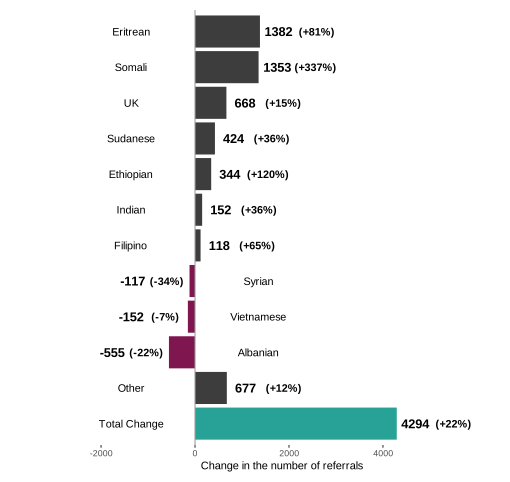
Overall, referrals into the NRM increased by 22% (4,294) from 19,117 in 2024 to 23,411 in 2025 (Figure 2).
1.1 Nationalities: General trends
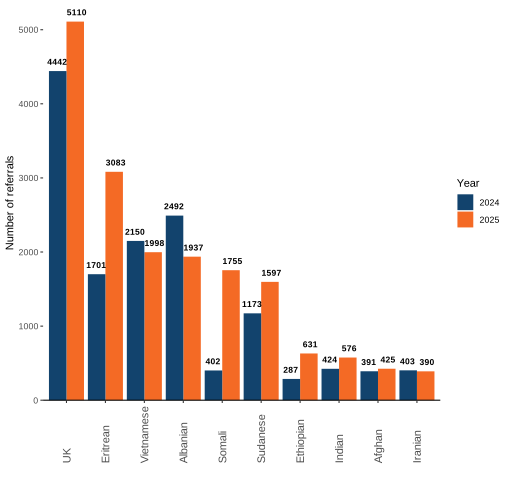
In 2025, UK nationals remained the most referred nationality (5,110; 22%), consistent with 2024 (Figure 1). Eritrean nationals became the second most common group referred (3,083; 13%), moving up from fourth in 2024. Vietnamese nationals remained third, although their referrals fell slightly from 2,150 in 2024 to 1,998 in 2025 (9%).
Referrals for Albanian nationals also fell in 2025. This continued the decline seen between 2023 and 2024 and moved this nationality group from second to fourth place (1,937; 8%). Somali nationals recorded a sharp increase in referrals, increasing by 337% to overtake Sudanese nationals as the fifth most referred group (1,755; 7%) (Figure 1; Table 1).
Figure 1: The number of NRM referrals in 2024 and 2025 for the 10 most referred nationalities in 2025
Source: SCA, IECA
Notes:
- Does not include dual nationals.
Table 1: Change in NRM referrals between 2024 and 2025 for the 10 nationalities with the most referrals in 2025
| Rank | Nationality | 2024 | 2025 | % change | Direction |
|---|---|---|---|---|---|
| 1 | UK | 4,442 | 5,110 | +15% | ↑ Increase |
| 2 | Eritrean | 1,701 | 3,083 | +81% | ↑ Increase |
| 3 | Vietnamese | 2,150 | 1,998 | −7% | ↓ Decrease |
| 4 | Albanian | 2,492 | 1,937 | −22% | ↓ Decrease |
| 5 | Somali | 402 | 1,755 | +337% | ↑ Increase |
| 6 | Sudanese | 1,173 | 1,597 | +36% | ↑ Increase |
| 7 | Ethiopian | 287 | 631 | +120% | ↑ Increase |
| 8 | Indian | 424 | 576 | +36% | ↑ Increase |
| 9 | Afghan | 391 | 425 | +9% | ↑ Increase |
| 10 | Iranian | 403 | 390 | −3% | ↓ Decrease |
Source: SCA, IECA
Notes:
- Does not include dual nationals.
Figure 2: The 10 largest changes in the number of referrals by nationality from 2024 to 2025
Source: SCA, IECA
Notes:
- ‘Other’ includes all nationalities referred into the NRM not included in the graph.
- Types shown in this chart may differ to those in the previous figure as this chart shows the 10 largest changes in referrals of all referred types, not just the most referred types.
1.1.1 UK nationals
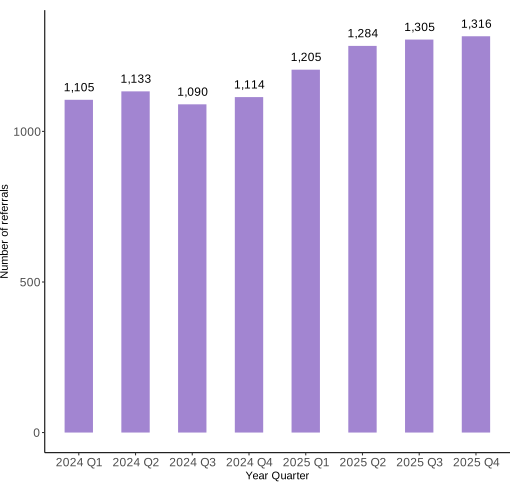
Referrals for UK nationals increased by 15% from 4,442 in 2024 to 5,110 in 2025. The number of referrals made for UK nationals increased every quarter in 2025 (Figure 3).
Figure 3: The number of NRM referrals for UK nationals in each quarter, 2024 and 2025
Source: SCA
Notes:
- Does not include dual nationals.
Key statistics
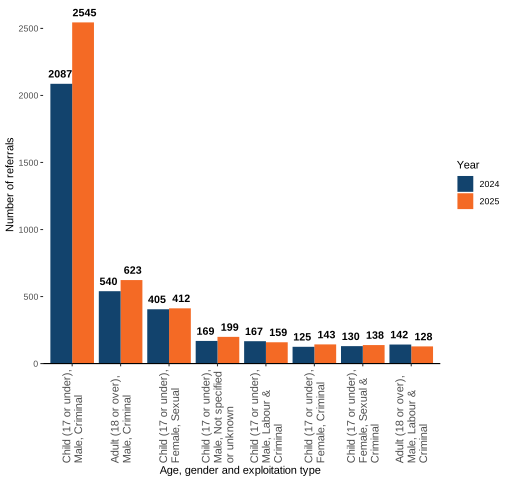
- consistent with 2024, the most common type of referral for UK nationals in 2025 was male children reporting criminal exploitation, accounting for 50% of all referrals for UK nationals
- 2,545 referrals were made for male children reporting criminal exploitation in 2025, an increase of 22% compared to the 2,087 referrals in 2024
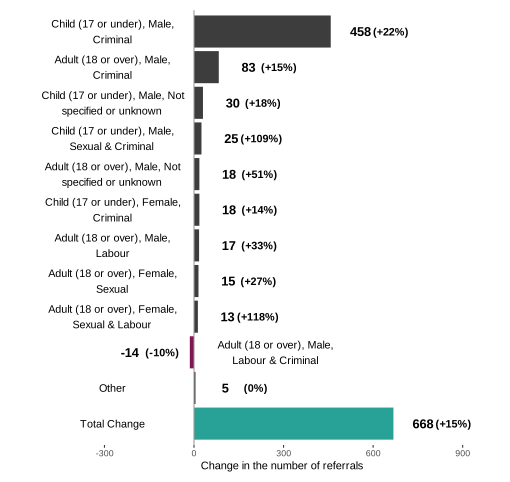
- this was the largest increase in referrals of all UK national groups in 2025 (Figure 4, Figure 5)
- 2 of the top 8 types saw a fall in referrals: male children reporting labour and criminal exploitation decreased by 5%, from 167 to 159 (Figure 4), and male adults reporting labour and criminal exploitation decreased by 10%, from 142 to 128 (Figure 4, Figure 5)
Figure 4: The number of referrals for UK nationals in 2024 and 2025 by type, for the 8 most referred types in 2025
Source: SCA
Figure 5: The 10 largest changes in the number of referrals by type for UK nationals from 2024 to 2025
Source: SCA
Notes:
- ‘Other’ includes all types referred into the NRM not specifically included in the chart.
- Types shown in this chart may differ to those in the previous figure as this chart shows the 10 largest changes in referrals of all referred types, not just the most referred types.
1.1.2 Eritrean nationals
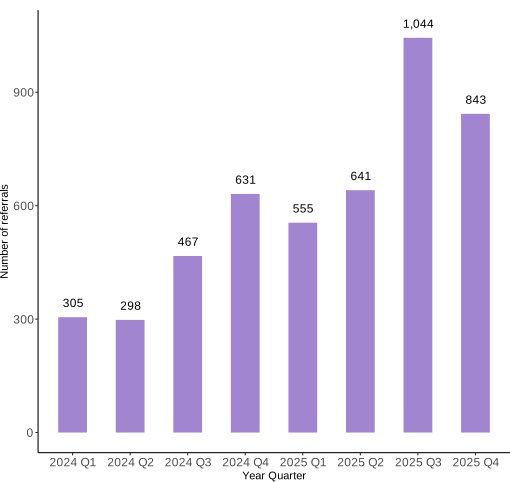
Referrals for Eritrean nationals increased by 81%, from 1,701 in 2024 to 3,083 in 2025. The number of referrals peaked in July to September (quarter 3) 2025 at 1,044 referrals, a 63% increase compared to the preceding quarter (Figure 6). This is linked to an increase in small boat arrivals which increased in this period.
Figure 6: The number of NRM referrals for Eritrean nationals each quarter, 2024 and 2025
Source: SCA, IECA
Notes:
- Does not include dual nationals.
Key statistics
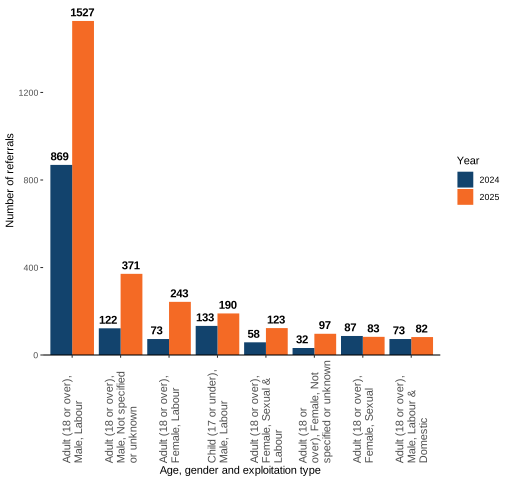
- consistent with 2024, the most common type of referral for Eritrean nationals in 2025 was male adults reporting labour exploitation, accounting for 50% of all referrals for Eritrean nationals
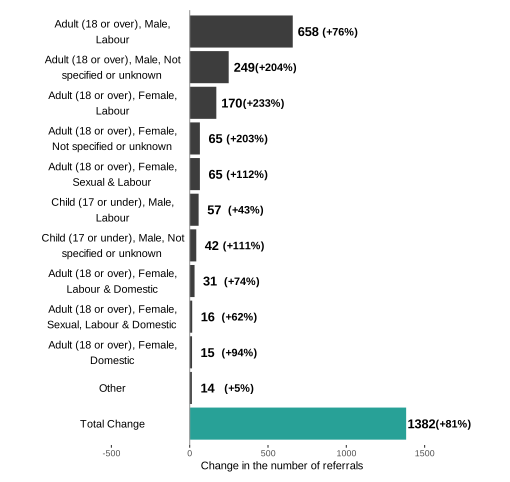
- 1,527 referrals were made for this group in 2025, an increase of 76% compared to the 869 referrals in 2024 (Figure 7, Figure 8)
- of the most common types referred in 2025, the group with the highest percentage increase in referrals was female adults reporting labour exploitation, a 233% increase from 73 in 2024 to 243 in 2025 (Figure 7, Figure 8)
- referrals increased for most types in 2025, however female adults reporting sexual exploitation were an exception, with a 5% fall from 87 in 2024 to 83 in 2025 (Figure 7)
Figure 7: The number of referrals for Eritrean nationals in 2024 and 2025 by type, for the 8 most referred types in 2025
Source: SCA, IECA
Figure 8: The 10 largest changes in the number of referrals by type for Eritrean nationals from 2024 to 2025
Source: SCA, IECA
Notes:
- ‘Other’ includes all types referred into the NRM not specifically included in the chart.
- Types shown in this chart may differ to those in the previous figure as this chart shows the 10 largest changes in referrals of all referred types, not just the most referred types.
1.1.3 Vietnamese nationals
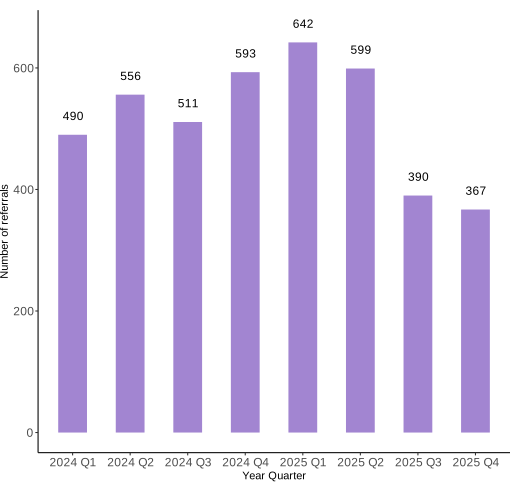
Referrals for Vietnamese nationals decreased by 7%, from 2,150 in 2024 to 1,998 in 2025. The number of referrals decreased in every quarter of 2025 (Figure 9).
Figure 9: The number of NRM referrals for Vietnamese nationals each quarter, 2024 and 2025
Source: SCA, IECA
Notes:
- Does not include dual nationals.
Key statistics
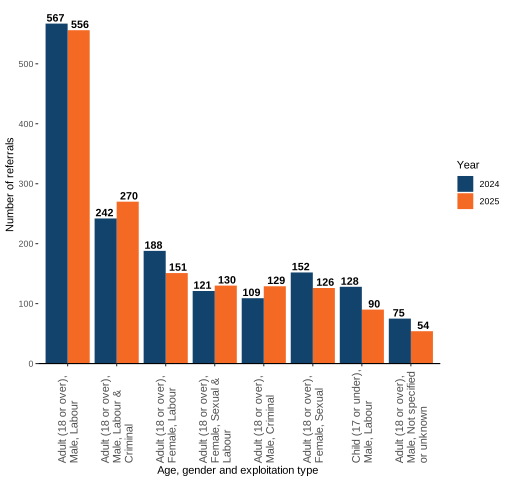
- consistent with 2024, the most common type of referral for Vietnamese nationals were male adults reporting labour exploitation, accounting for 28% of all referrals for Vietnamese nationals in 2025
- 556 referrals were made for this group in 2025, a decrease of 2% compared to the 567 referrals in 2024 (Figure 10)
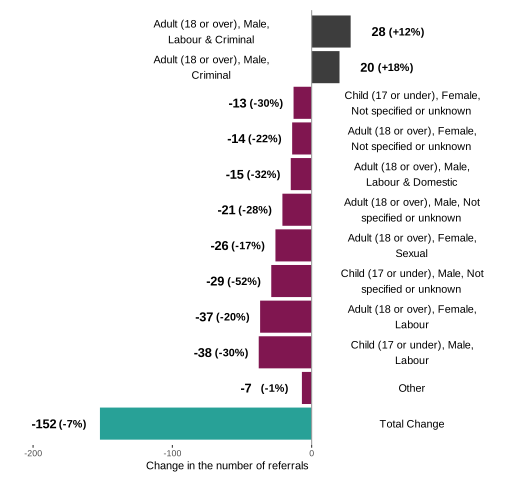
- of the 8 most common types in 2025, the type with the largest percentage decrease in referrals was male children reporting labour exploitation, a 30% decrease from 128 in 2024 to 90 in 2025 (Figure 10, Figure 11)
- some types did have an increase in the number of referrals between 2024 and 2025
- male adults reporting labour and criminal exploitation was the second most common type of referral in 2025 and increased by 12%, from 242 in 2024 to 270 in 2025
- adult males reporting exclusively criminal exploitation also increased, by 18%, from 109 in 2024 to 129 in 2025 (Figure 10, Figure 11)
Figure 10: The number of referrals for Vietnamese nationals in 2024 and 2025 by type for the 8 most referred types in 2025
Source: SCA, IECA
Figure 11: The 10 largest changes in the number of referrals by type for Vietnamese nationals from 2024 to 2025
Source: SCA, IECA
Notes:
- ‘Other’ includes all types referred into the NRM not specifically included in the chart.
- Types shown in this chart may differ to those in the previous figure as this chart shows the 10 largest changes in referrals of all referred types, not just the most referred types.
1.1.4 Albanian nationals
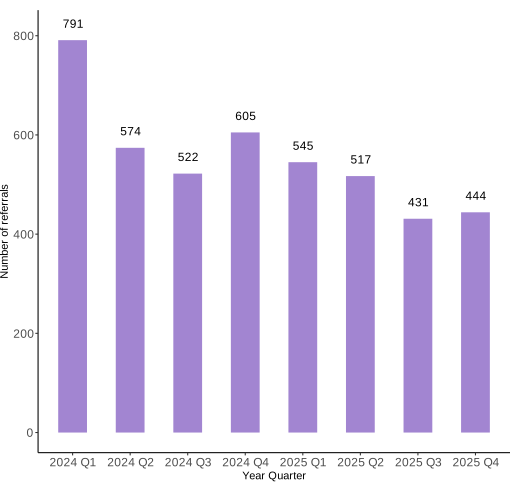
Referrals for Albanian nationals decreased by 22%, from 2,492 in 2024 to 1,937 in 2025. Referrals in all quarters were lower than the same quarter in the previous year. The period of July to September (quarter 3) 2025 had the lowest number of referrals in 2024 and 2025 (Figure 12).
Figure 12: The number of NRM referrals for Albanian nationals each quarter, 2024 and 2025
Source: SCA, IECA
Notes:
- Does not include dual nationals.
Key statistics
- in 2025 the most common type of referral was male adults reporting labour exploitation, accounting for 25% of referrals for Albanian nationals in 2025
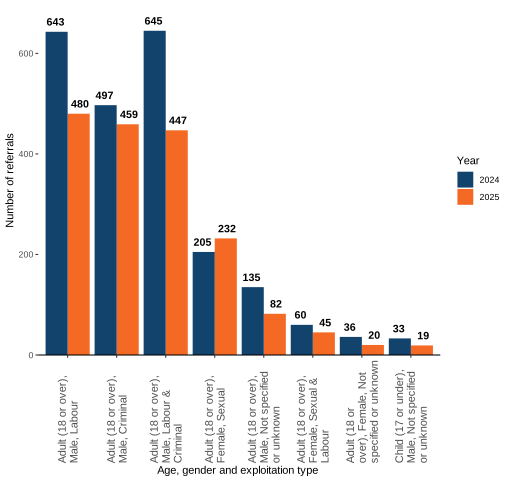
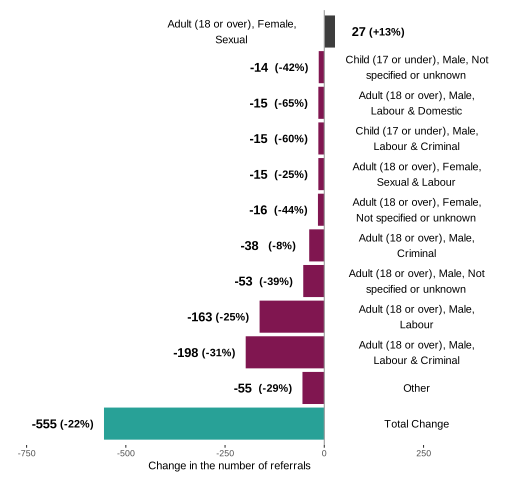
- 480 referrals were made for this type in 2025, a decrease of 25% compared to the 643 referrals in 2024 (Figure 13, Figure 14)
- adult males reporting labour and criminal exploitation was the most common type in 2024 and the third most common type in 2025
- referrals for this type decreased by 31%, from 645 in 2024 to 447 in 2025 (Figure 13, Figure 14)
- referrals fell for most other common types in 2025, an exception to this was referrals for female adults reporting sexual exploitation which increased by 13%, from 205 in 2024 to 232 in 2025 (Figure 13, Figure 14)
Figure 13: The number of referrals for Albanian nationals in 2024 and 2025 by type for the 8 most referred types in 2025
Source: SCA, IECA
Figure 14: The 10 largest changes in the number of referrals by type for Albanian nationals from 2024 to 2025
Source: SCA, IECA
Notes:
- ‘Other’ includes all types referred into the NRM not specifically included in the chart.
- Types shown in this chart may differ to those in the previous figure as this chart shows the 10 largest changes in referrals of all referred types, not just the most referred types.
1.1.5 Somali nationals
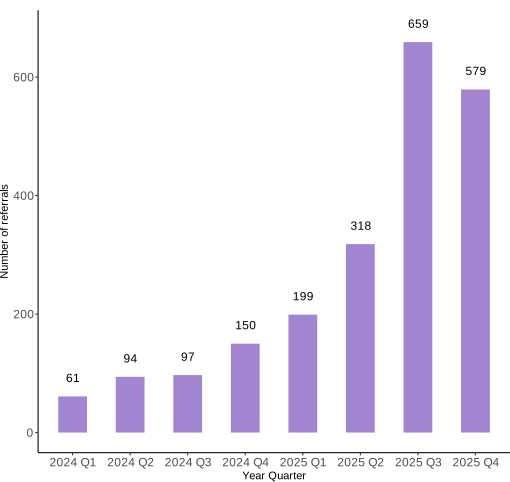
Referrals for Somali nationals increased by 337%, from 402 in 2024 to 1,755 in 2025. The number of referrals for Somali nationals increased gradually each quarter over 2024 and early 2025, then more than doubled to a high of 659 referrals in the period of July to September 2025 (quarter 3) (Figure 15). This is linked to an increase in small boat arrivals which increased in this period.
Figure 15: The number of NRM referrals for Somali nationals each quarter, 2024 to 2025
Source: SCA, IECA
Notes:
- Does not include dual nationals.
Key statistics
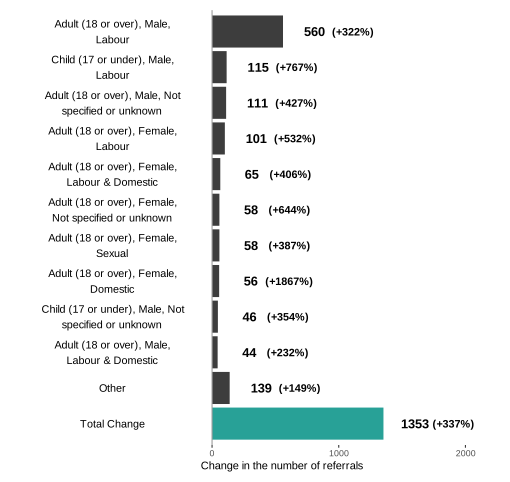
- consistent with 2024, the most common type of referral for Somali nationals in 2025 was male adults reporting labour exploitation, accounting for 42% of all referrals for Somali nationals in 2025
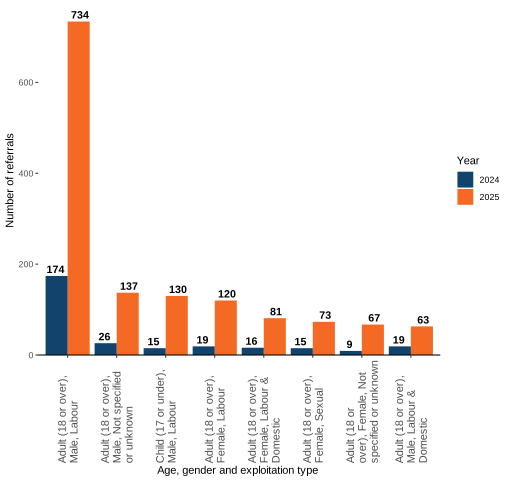
- 734 referrals were made for this group in 2025, an increase of 322% compared to the 174 referrals in 2024 (Figure 16)
- of the most common types of referral in 2025, the type with the highest percentage increase in referrals was male children reporting labour exploitation, a 767% increase from 15 in 2024 to 130 in 2025 (Figure 16)
- all of the most common types of referral saw an increase in referrals between 2024 and 2025
Figure 16: The number of referrals for Somali nationals in 2024 and 2025 by type for the 8 most referred types in 2025
Source: SCA, IECA
Figure 17: The 10 largest changes in the number of referrals by type for Somali nationals from 2024 to 2025
Source: SCA, IECA
Notes:
- ‘Other’ includes all types referred into the NRM not specifically included in the chart.
- Referral types shown in this chart may differ to those in the previous figure as this chart shows the 10 largest changes in referrals of all referral types, not just the most referred types.
1.2 Location of exploitation
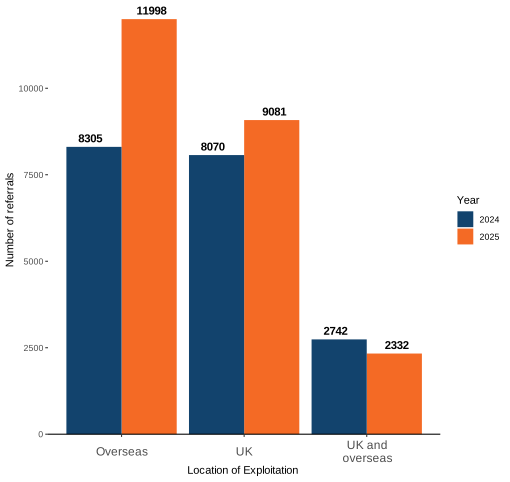
In 2025, the number of referrals reporting exploitation exclusively overseas and exclusively in the UK both increased. Referrals reporting exploitation exclusively overseas saw the largest rise, increasing by 44% from 8,305 to 11,998 (Figure 18). Referrals reporting exploitation exclusively in the UK increased by 13% from 8,070 to 9,081 (Figure 18). In contrast, referrals reporting joint UK and overseas exploitation fell by 15%, from 2,742 to 2,332 (Figure 18).
Figure 18: The number of NRM referrals in 2024 and 2025 by location of exploitation
Source: SCA, IECA
1.2.1 Overseas exploitation
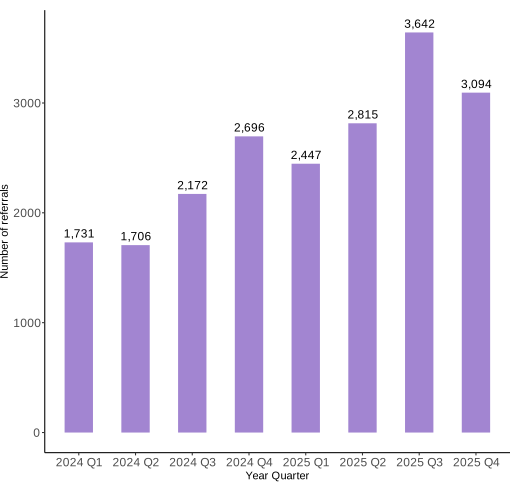
Referrals made for exploitation that occurred exclusively overseas increased by 44%, from 8,305 in 2024 to 11,998 in 2025, and became the most reported location of exploitation in 2025. The period from July to September 2025 (quarter 3) saw the largest number of referrals in any quarter in 2024 and 2025 (Figure 19).
Figure 19: The number of NRM referrals for those reporting exploitation exclusively overseas each quarter, 2024 and 2025
Source: SCA, IECA
Key statistics
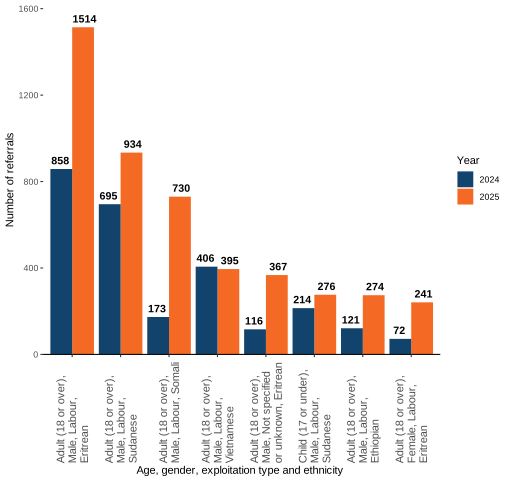
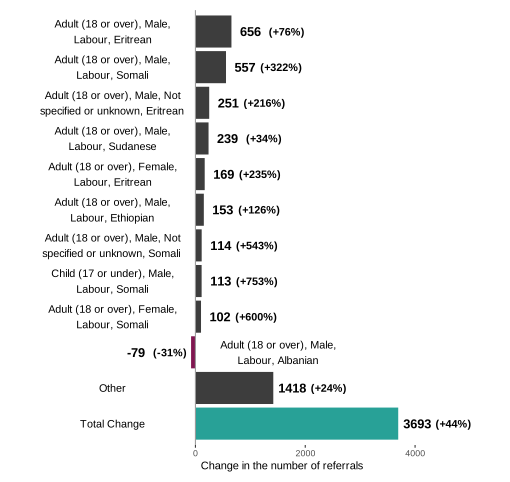
- consistent with 2024, the most common type of referral for exploitation reported exclusively overseas in 2025 was for male, adult, Eritrean nationals reporting labour exploitation, accounting for 13% of referrals
- 1,514 referrals were made for this type in 2025, a 76% increase compared to the 858 referrals in 2024 (Figure 20, Figure 21)
- of the most referred types in 2025, the type with the highest percentage increase in referrals was for male, adult, Somali nationals reporting labour exploitation, a 322% increase from 173 in 2024 to 730 in 2025 (Figure 20, Figure 21)
- there was an increase for almost all of the most common referral types in 2025, however there was a decrease in referrals for male, adult, Vietnamese nationals reporting labour exploitation, with a 3% decrease from 406 in 2024 to 395 in 2025 (Figure 20)
Figure 20: The number of referrals for exploitation reported exclusively overseas in 2024 and 2025 by type, for the 8 most referred types in 2025
Source: SCA, IECA
Figure 21: The 10 largest changes in the number of referrals by type for exploitation reported exclusively overseas from 2024 to 2025
Source: SCA, IECA
Notes:
- ‘Other’ includes all types referred into the NRM not specifically included in the chart.
- Types shown in this chart may differ to those in the previous figure as this chart shows the 10 largest changes in referrals of all referred types, not just the most referred types.
1.2.2 UK exploitation
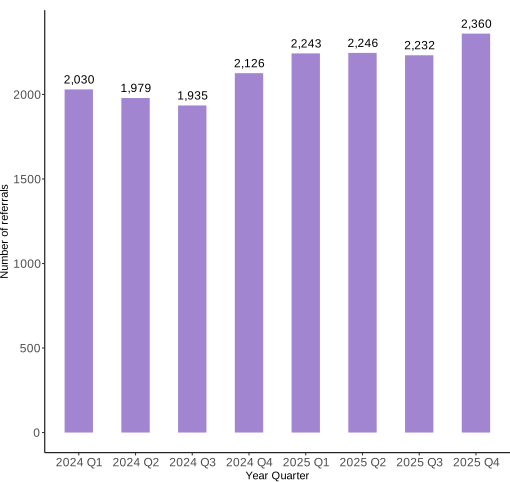
Referrals made for exploitation that occurred exclusively in the UK increased by 13%, from 8,070 in 2024 to 9,081 in 2025. The period from October to December 2025 (quarter 4) saw the largest number of referrals in any quarter in 2024 and 2025 (Figure 22).
Figure 22: The number of NRM referrals for those reporting exploitation exclusively in the UK each quarter, 2024 and 2025
Source: SCA, IECA
Key statistics
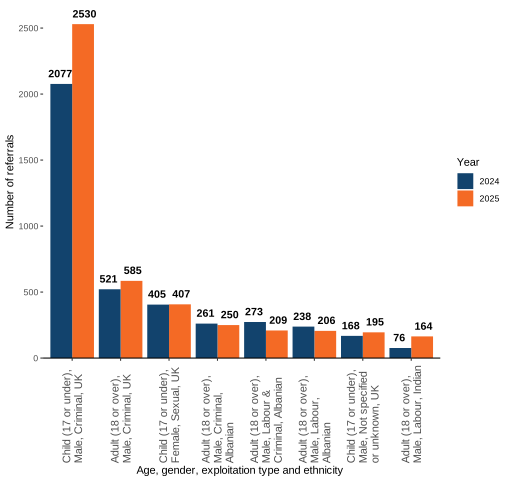
- consistent with 2024, the most common type of referral for exploitation reported exclusively in the UK in 2025 was for male, child, UK nationals reporting criminal exploitation, accounting for 28% of all referrals
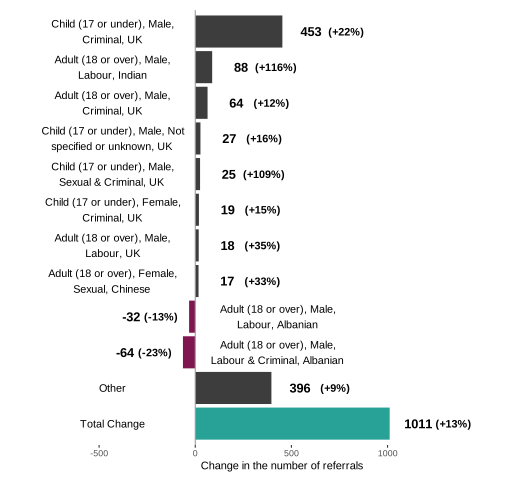
- 2,530 referrals were made for this type in 2025, an increase of 22% compared to 2,077 referrals in 2024 (Figure 23, Figure 24)
- of the most reported referral types in 2025, the type with the highest percentage increase in referrals was male, adult, Indian nationals reporting labour exploitation, with a 116% increase from 76 in 2024 to 164 in 2025 (Figure 23, Figure 24)
- the type with the highest percentage decrease in referrals was male, adult, Albanian nationals reporting labour and criminal exploitation, with a decrease of 23%
Figure 23: The number of referrals for exploitation reported exclusively in the UK in 2024 and 2025 by type for the 8 most referred types in 2025
Source: SCA, IECA
Figure 24: The 10 largest changes in the number of referrals by type for exploitation reported exclusively in the UK from 2024 to 2025
Source: SCA, IECA
Notes:
- ‘Other’ includes all types referred into the NRM not specifically included in the chart.
- Types shown in this chart may differ to those in the previous figure as this chart shows the 10 largest changes in referrals of all referred types, not just the most referred types.
1.2.3 UK and overseas exploitation
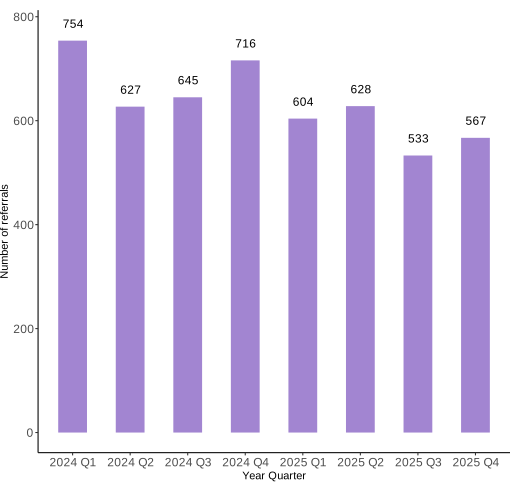
Consistently (since NRM recording began in 2009), there has been a smaller proportion of referrals reporting exploitation in both the UK and overseas compared to exclusively in the UK or exclusively overseas. Referrals made for this exploitation type decreased by 15% from 2,742 in 2024 to 2,332 in 2025. Overall, the number of referrals per quarter has been on a downward trend over 2024 and 2025, notwithstanding small quarter-to-quarter increases (Figure 25).
Figure 25: The number of NRM referrals for those reporting exploitation in the UK and overseas, each quarter, 2024 and 2025
Source: SCA, IECA
Key statistics
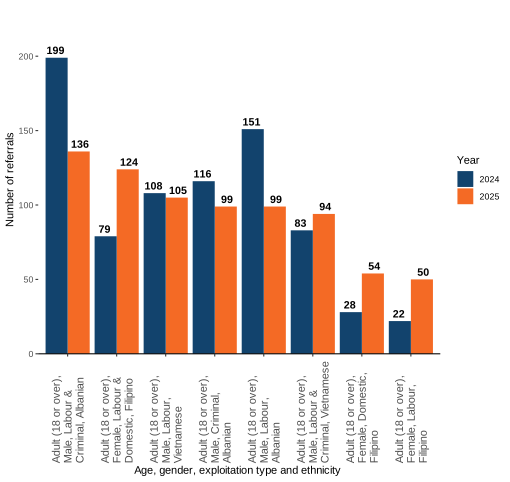
- consistent with 2024, the most common type of referral for exploitation reported in the UK and overseas in 2025 was for male, adult, Albanian nationals reporting labour and criminal exploitation, accounting for 6% of referrals
- 136 referrals were made for this type in 2025, a 32% decrease compared to the 199 referrals in 2024 (Figure 26, Figure 27)
- of the most referred types in 2025, the one with the highest percentage decrease in referrals was male, adult, Albanian nationals reporting labour exploitation, a 34% decrease from 151 in 2024 to 99 in 2025 (Figure 26, Figure 27)
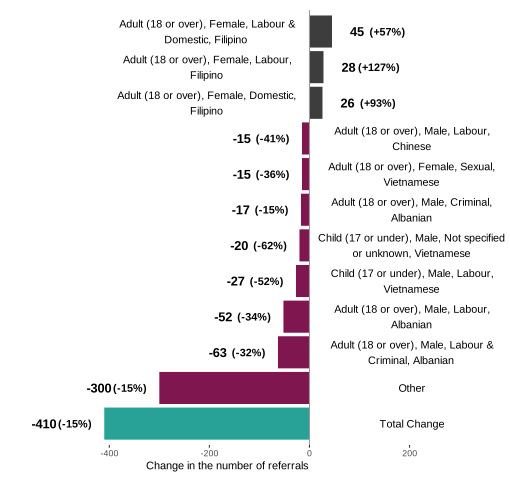
- the referral type with the highest percentage increase in referrals was female, adult, Filipino nationals reporting labour exploitation, a 127% increase from 22 in 2024 to 50 in 2025
Figure 26: The number of referrals for exploitation reported in the UK and overseas by type for the 8 most referred types in 2025
Source: SCA, IECA
Figure 27: The 10 largest changes in the number of referrals by type for exploitation reported in the UK and overseas from 2024 to 2025
Source: SCA, IECA
Notes:
- ‘Other’ includes all types referred into the NRM not specifically included in the chart.
- Referral types shown in this chart may differ to those in the previous figure as this chart shows the 10 largest changes in referrals of all referred types, not just the most referred types.
1.2.4 UK counties
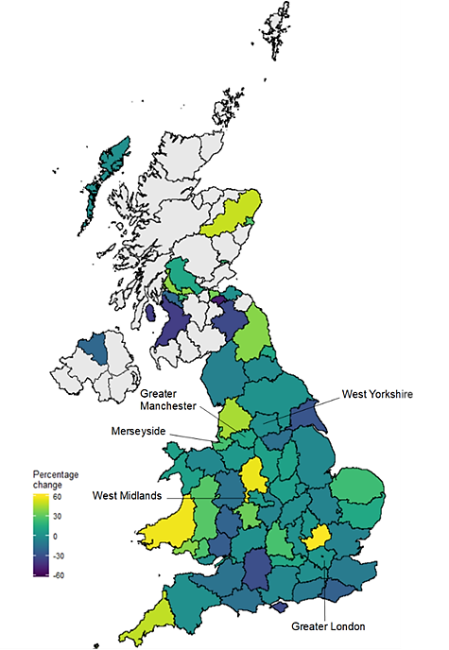
The top 4 counties reporting the highest number of referrals citing exploitation in the UK in 2025 remained the same when compared to the previous year. The fifth highest county has changed, with Merseyside replacing Essex as the county with the fifth most referrals.
As with previous years, exploitation in Greater London was most reported, with 2,871 referrals. The next most reported counties were the West Midlands with 937 referrals and Greater Manchester with 647 referrals. West Yorkshire (499) was the fourth most reported county, followed by Merseyside (333). Greater London, the West Midlands, Greater Manchester and Merseyside saw an increase in the number of referrals citing exploitation in these locations between 2024 and 2025, whilst West Yorkshire saw a decrease in referrals (Table 2).
Table 2: Change in NRM referrals between 2024 and 2025 for the 10 UK counties with the most reports of exploitation in 2025
| Rank | County | 2024 | 2025 | % change | Direction |
|---|---|---|---|---|---|
| 1 | Greater London | 2,804 | 2,871 | +2% | ↑ Increase |
| 2 | West Midlands | 890 | 937 | +5% | ↑ Increase |
| 3 | Greater Manchester | 585 | 647 | +11% | ↑ Increase |
| 4 | West Yorkshire | 506 | 499 | −1% | ↓ Decrease |
| 5 | Merseyside | 267 | 333 | +25% | ↑ Increase |
| 6 | Essex | 285 | 266 | −7% | ↓ Decrease |
| 7 | Kent | 269 | 241 | −10% | ↓ Decrease |
| 8 | South Yorkshire | 262 | 219 | −16% | ↓ Decrease |
| 9 | Hampshire | 220 | 210 | −5% | ↓ Decrease |
| 10 | City of Glasgow | 169 | 205 | +21% | ↑ Increase |
Figure 28: The percentage change of NRM referrals in each UK county from 2024 to 2025
Source: SCA, IECA
Notes:
- Includes referrals which have reported exploitation in the UK, or a combination of the UK and overseas.
- It is not advised to combine statistics for multiple counties as each referral may report multiple places of exploitation.
- May not capture all places of exploitation if they are not recorded on referral forms.
- To improve map visibility, a limit of –60% to 60% percentage change was imposed, resulting in 13 counties being excluded from this map. None of these counties had over 50 referrals in 2025.
1.2.5 Countries
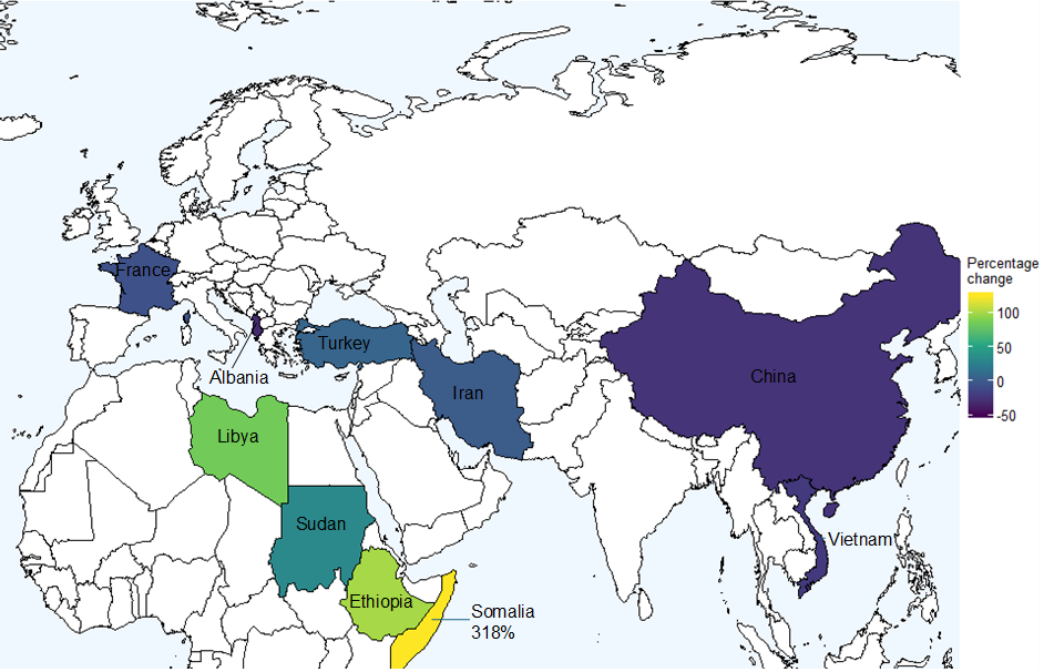
In 2025, Libya continued to be the country where overseas exploitation was most reported to have occurred (5,982), whilst Sudan overtook Albania as the second most reported country (1,365). Albania was the third most reported country (917) followed by Vietnam (891) and Somalia (835). France (808) dropped out of the top 5 and became the sixth most reported location of exploitation (Table 3).
Table 3: Change in NRM referrals between 2024 and 2025 for the 10 countries with the most reports of exploitation in 2025
| Rank | Country | 2024 | 2025 | % change | Direction |
|---|---|---|---|---|---|
| 1 | Libya | 3,230 | 5,982 | +85% | ↑ Increase |
| 2 | Sudan | 1,032 | 1,365 | +32% | ↑ Increase |
| 3 | Albania | 1,313 | 917 | −30% | ↓ Decrease |
| 4 | Vietnam | 1,131 | 891 | −21% | ↓ Decrease |
| 5 | Somalia | 200 | 835 | +318% | ↑ Increase |
| 6 | France | 862 | 808 | −6% | ↓ Decrease |
| 7 | Ethiopia | 354 | 710 | +101% | ↑ Increase |
| 8 | Turkey | 569 | 610 | +7% | ↑ Increase |
| 9 | China | 803 | 601 | −25% | ↓ Decrease |
| 10 | Iran | 327 | 331 | +1% | ↑ Increase |
Source: SCA, IECA
Figure 29: The percentage change in reports of exploitation in the 10 overseas countries with the highest numbers of 2025 referrals between 2024 and 2025
Source: SCA, IECA
Notes:
- Country borders do not necessarily reflect the UK Government’s official position.
- Includes referrals which have reported exploitation overseas, or a combination of the UK and overseas.
- It is not advised to combine statistics for multiple countries as referrals may report multiple places of exploitation.
- May not capture all places of exploitation if they are not recorded on referral forms.
1.3 First responders
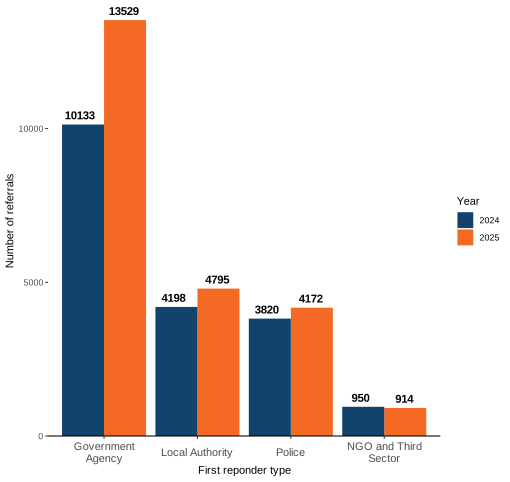
As in the previous year, government agencies made the largest proportion of total referrals (58%, 13,529) in 2025. Local authorities made the second highest number of referrals (20%, 4,795) in 2025, followed by the Police (18%, 4,172). Referrals from NGO and third sector organisations were the least common source of referrals (4%, 914) and were the only type to see a decrease in the number of referrals made (Figure 30, Table 4).
Figure 30: Number of referrals by first responder type, 2024 and 2025
Source: SCA, IECA
Table 4: Change in NRM referrals by first responder type, 2024 and 2025
| Rank | First responder type | 2024 | 2025 | % change | Direction |
|---|---|---|---|---|---|
| 1 | Government agencies | 10,133 | 13,529 | +34% | ↑ Increase |
| 2 | Local authorities | 4,198 | 4,795 | +14% | ↑ Increase |
| 3 | Police forces | 3,820 | 4,172 | +9% | ↑ Increase |
| 4 | NGO and third sector organisations | 950 | 914 | −4% | ↓ Decrease |
Source: SCA, IECA
1.3.1 Government agencies
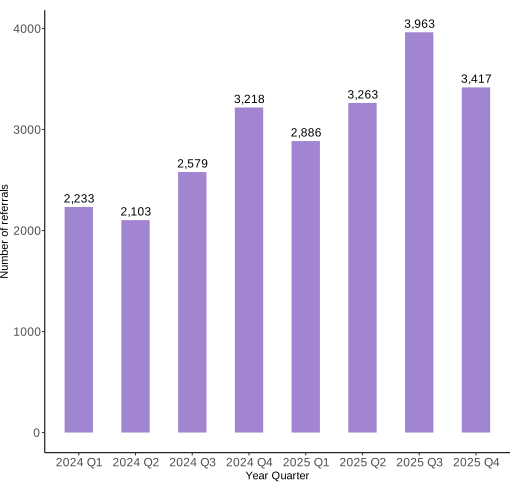
Referrals made by government agencies increased by 34% from 10,133 in 2024 to 13,529 in 2025, with increases in referrals from UK Border Force (up 191% to 3,947) and UK Visas and Immigration (up 12% to 6,633) accounting for most of this increase. This was the highest number of referrals made by government agencies since the NRM began in 2009. Overall, the number of referrals per quarter was on an upward trend over 2024 and 2025, notwithstanding small quarter-to-quarter increases, with referrals peaking in the period from July to September 2025 (quarter 3) (Figure 31).
Figure 31: The number of NRM referrals made by government agencies each quarter, 2024 and 2025
Source: SCA, IECA
Notes:
- ‘Other’ includes less commonly reported exploitation types and combinations.
Key statistics
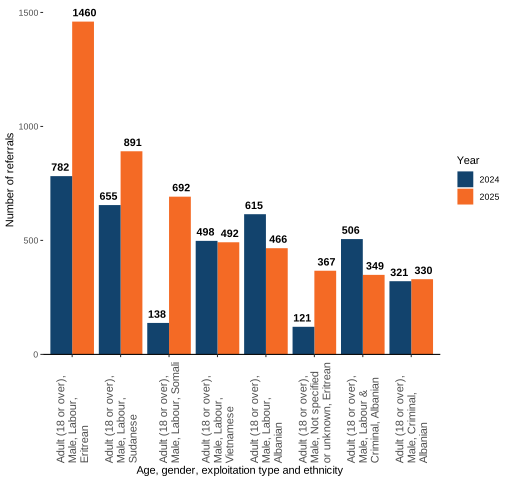
- consistent with 2024, the most common type of referral made by government agencies in 2025 was for male, adult, Eritrean nationals reporting labour exploitation, accounting for 11% of referrals
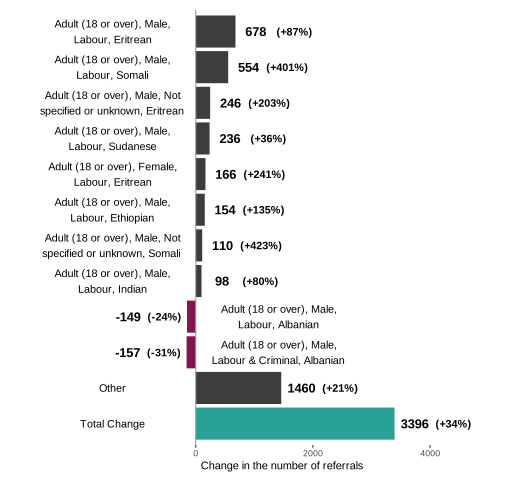
- 1,460 referrals were made for this group in 2025, an 87% increase compared to 782 referrals in 2024 (Figure 32, Figure 33)
- of the most common referral types in 2025, the type with the highest percentage increase in referrals was male, adult, Somali nationals reporting labour exploitation, a 401% increase from 138 in 2024 to 692 in 2025 (Figure 32, Figure 33)
- referrals fell for male, adult, Albanian nationals reporting labour exploitation (24% decrease from 615 in 2024 to 466 in 2025) and labour and criminal exploitation (31% decrease from 506 in 2024 to 349 in 2025) (Figure 33)
- however, referrals did increase for male, adult, Albanian nationals reporting criminal exploitation (3% increase, from 321 in 2024 to 330 in 2025) (Figure 32)
Figure 32: The number of NRM referrals made by government agencies in 2024 and 2025 by type for the 8 most referred types in 2025
Source: SCA, IECA
Figure 33: The 10 largest changes in the number of NRM referrals made by government agencies from 2024 to 2025 by type
Source: SCA, IECA
Notes:
- ‘Other’ includes all types referred into the NRM not specifically included in the chart.
- Types shown in this chart may differ to those in the previous figure as this chart shows the 10 largest changes in referrals of all referred types, not just the most referred types.
1.3.2 Local authorities
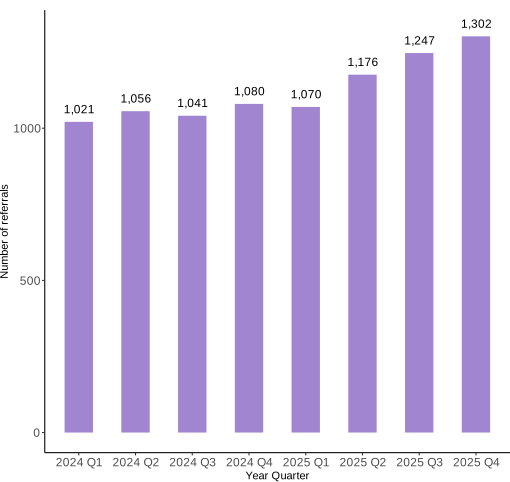
Referrals made by local authorities increased by 14% from 4,198 in 2024 to 4,795 in 2025. Referrals increased every quarter throughout 2025. The period between October to December 2025 (quarter 4) saw the highest number of referrals in 2024 and 2025, a 21% increase compared to the same quarter in 2024 (Figure 34).
Figure 34: The number of NRM referrals made by local authorities each quarter, 2024 and 2025
Source: SCA, IECA
Key statistics
- consistent with 2024, the most common type of referral made by local authorities in 2025 was for male, child, UK nationals reporting criminal exploitation, accounting for 36% of referrals from local authorities
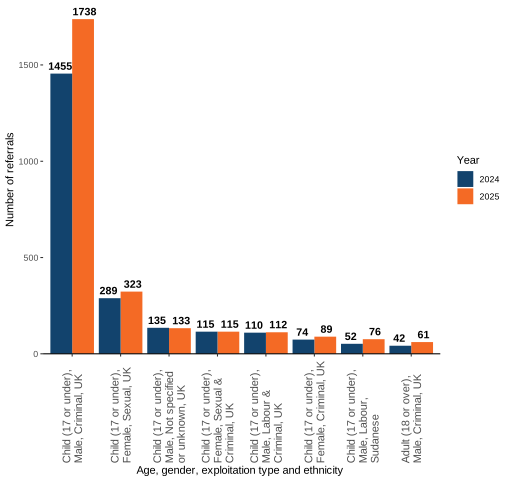
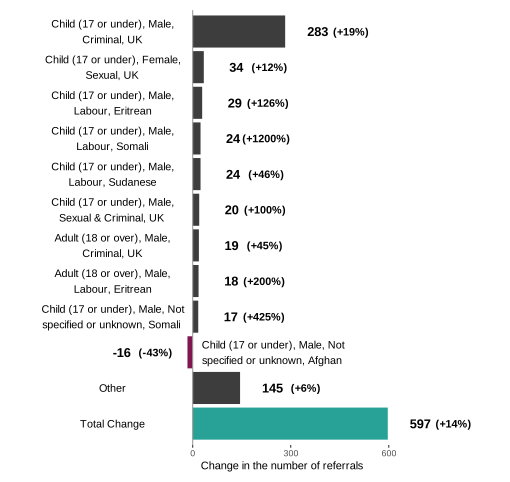
- 1,738 referrals were made for this referral type in 2025, a 19% increase compared to the 1,455 referrals in 2024 (Figure 35, Figure 36)
- of the most common referral types in 2025, the type with the highest percentage increase in referrals was male, child, Sudanese nationals reporting labour exploitation, a 46% increase from 52 in 2024 to 76 in 2025 (Figure 35, Figure 36)
- referrals for female, child, UK nationals reporting sexual exploitation was the second most common referral type in 2025, increasing by 12%, from 289 in 2024 to 323 in 2025 (Figure 35, Figure 36)
Figure 35: The number of referrals for exploitation made by local authorities in 2024 and 2025 by type for the 8 most referred types in 2025
Source: SCA, IECA
Figure 36: The 10 largest changes in the number of NRM referrals made by local authorities from 2024 to 2025 by type
Source: SCA, IECA
Notes:
- ‘Other’ includes all types referred into the NRM not specifically included in the chart.
- Types shown in this chart may differ to those in the previous figure as this chart shows the 10 largest changes in referrals of all referred types, not just the most referred types.
1.3.3 Police
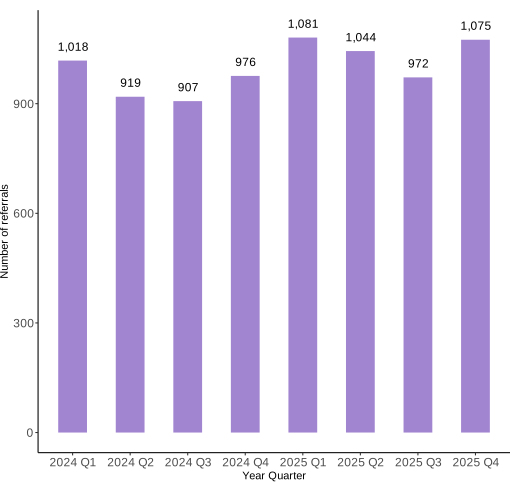
Referrals made by police increased by 9% from 3,820 in 2024 to 4,172 in 2025. The period of January to March (quarter 1) 2025 had the highest number of referrals ever made by police in a quarter since the NRM began in 2009, at 1,081 (Figure 37).
Figure 37: The number of NRM referrals made by police each quarter, 2024 and 2025
Source: SCA, IECA
Key statistics
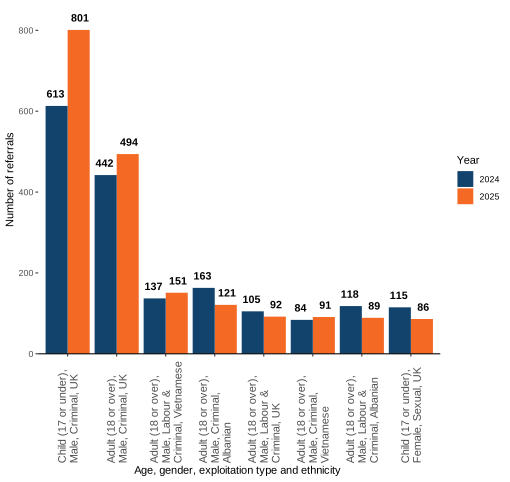
- consistent with 2024, the most common type of referral made by police in 2025 was for male, child, UK nationals reporting criminal exploitation, accounting for 19% of referrals from police
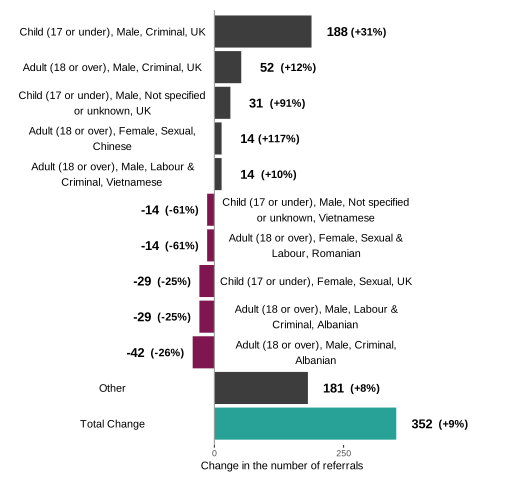
- 801 referrals were made for this type, a 31% increase compared to 613 referrals in 2024. This was the largest increase in referrals of all types referred by the police (Figure 38, Figure 39)
- of the most referred types in 2025, the one with the largest decrease in referrals from the police was male, adult, Albanian nationals reporting criminal exploitation
- 121 referrals were made for this type, a 26% decrease compared to 163 referrals in 2024
Figure 38: The number of referrals for exploitation made by the police in 2024 and 2025 by type for the 8 most referred types in 2025
Source: SCA, IECA
Figure 39: The 10 largest changes in the number of NRM referrals made by police from 2024 to 2025 by type
Source: SCA, IECA
Notes:
- ‘Other’ includes less commonly reported exploitation types and combinations.
- Referral types shown in this chart may differ to those in the previous figure as this chart shows the 10 largest changes in referrals of all referred types, not just the most referred types.
1.3.4 NGOs and third sector
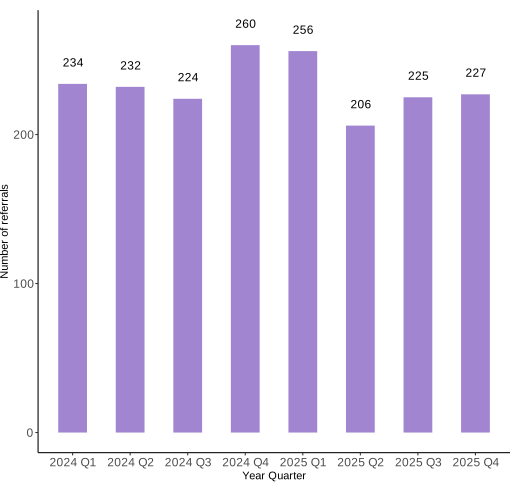
Referrals made by NGOs and third sector organisations decreased by 4% from 950 in 2024 to 914 in 2025. The quarterly numbers of NRM referrals made by NGOs and third sector organisations fluctuated slightly over 2024 and 2025 (Figure 40).
Figure 40: The number of NRM referrals made by NGOs and third sector organisations each quarter, 2024 and 2025
Source: SCA, IECA
Key statistics
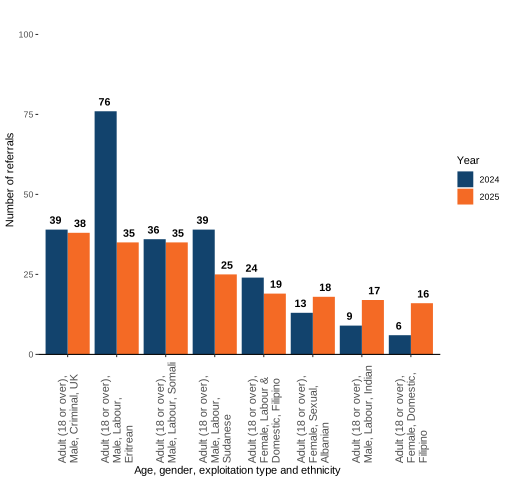
- in 2025, the most common type of referral made by NGOs and third sector organisations was for male, adult, UK nationals reporting criminal exploitation, accounting for 4% of referrals from NGOs and third sector organisations
- 38 referrals were made for this referral type in 2025, a 3% decrease compared to the 39 referrals in 2024 (Figure 41)
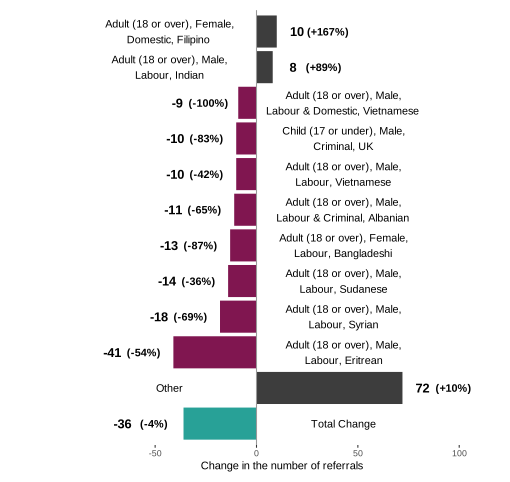
- of the most referred types in 2025, the one with the largest decrease in referrals was for male, adult, Eritrean nationals reporting labour exploitation, a 54% decrease from 76 in 2024 to 35 in 2025 (Figure 41, Figure 42)
Figure 41: The number of referrals for exploitation made by NGOs and third sector organisations in 2024 and 2025 by type for the 8 most referred types in 2025
Source: SCA, IECA
Figure 42: The 10 largest changes in the number of NRM referrals made by NGOs and third sector organisations from 2024 to 2025 by type
Source: SCA, IECA
Notes:
- ‘Other’ includes less commonly reported exploitation types and combinations.
- Referral types shown in this chart may differ to those in the previous figure as this chart shows the 10 largest changes in referrals of all referred types, not just the most referred types.
2. Duty to Notify (DtN)
Overall, reports into Duty to Notify (DtN) increased by 27% from 5,598 in 2024 to 7,130 in 2025.
2.1 Nationality
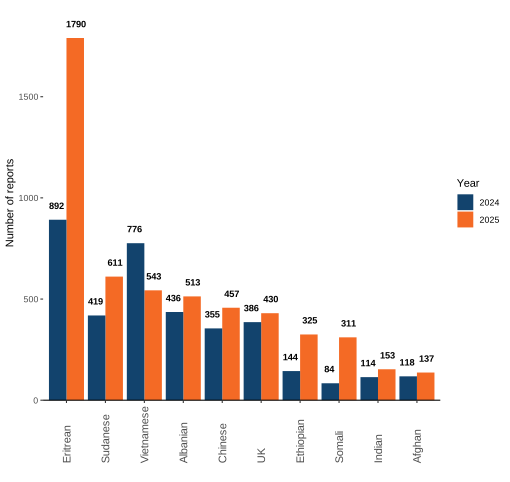
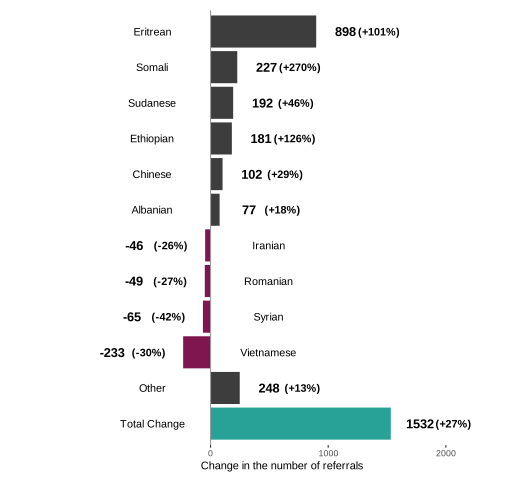
In 2025, Eritrean nationals remained the most commonly reported nationality (1,790; 25%), consistent with 2024. There were, however, some shifts among other types. Sudanese nationals became the second most commonly reported nationality (611; 9%), rising from fourth place in 2024 after a 46% increase. Vietnamese nationals were the third most common group (543; 8%), having fallen from second place in 2024 following a 30% decrease in reports.
Albanian nationals were the fourth most commonly reported group in 2025 (513; 7%), falling from third place in 2024 despite an 18% rise in reports. Chinese nationals became the fifth most common group (457; 6%), moving up from sixth in 2024 after a 29% increase (Figure 43, Figure 44, Table 5). Although the number of UK nationals reported increased in 2025, this group fell from the fifth most common nationality in 2024 to sixth in 2025 (Figure 43, Table 5).
Figure 43: The number of DtN reports in 2024 and 2025 for the 10 most reported nationalities in 2025
Source: SCA, IECA
Notes:
- Does not include dual nationals.
Table 5: Change in DtN reports between 2024 and 2025 for the 10 nationalities with the most reports in 2025
| Rank | Nationality | 2024 | 2025 | % change | Direction |
|---|---|---|---|---|---|
| 1 | Eritrean | 892 | 1,790 | +101% | ↑ Increase |
| 2 | Sudanese | 419 | 611 | +46% | ↑ Increase |
| 3 | Vietnamese | 776 | 543 | −30% | ↓ Decrease |
| 4 | Albanian | 436 | 513 | +18% | ↑ Increase |
| 5 | Chinese | 355 | 457 | +29% | ↑ Increase |
| 6 | UK | 360 | 430 | +19% | ↑ Increase |
| 7 | Ethiopian | 144 | 325 | +126% | ↑ Increase |
| 8 | Somali | 84 | 311 | +270% | ↑ Increase |
| 9 | Indian | 114 | 153 | +34% | ↑ Increase |
| 10 | Afghan | 118 | 137 | +16% | ↑ Increase |
Source: SCA, IECA
Notes:
- Does not include dual nationals.
Figure 44: The 10 largest changes in the number of DtN reports by nationality from 2024 to 2025
Source: SCA, IECA
Notes:
- ‘Other’ includes all types reported not specifically included in the chart.
- Referral types shown in this chart may differ to those in the previous figure as this chart shows the 10 largest changes in referrals of all referred types, not just the most referred types.
2.1.1 Eritrean nationals
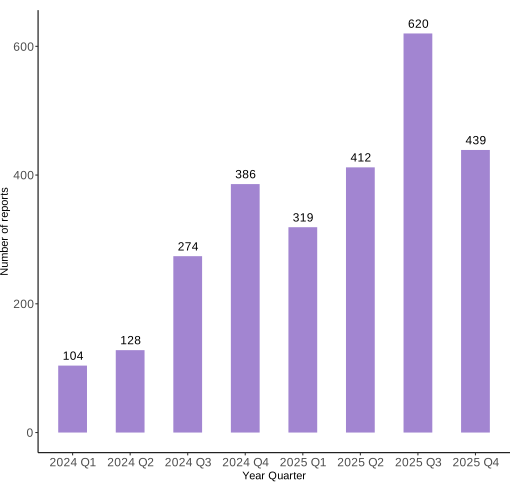
Reports for Eritrean nationals increased by 101%, from 892 in 2024 to 1,790 in 2025. The number of reports per quarter broadly increased throughout 2024 and 2025, peaking in the period of July to September (quarter 3) 2025 (Figure 45).
Figure 45: The number of DtN reports made for Eritrean nationals each quarter, 2024 and 2025
Source: SCA, IECA
Key statistics
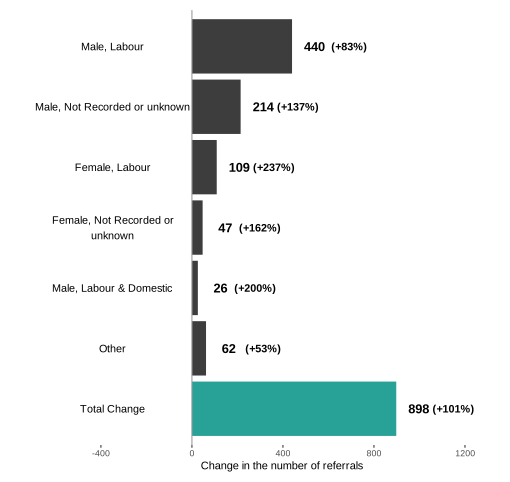
- an increase in reports for male, Eritrean nationals reporting labour exploitation accounted for most of the increase in DtN reports for Eritrean nationals in 2025
- there was an 83% increase in reports for this type, from 530 in 2024 to 970 in 2025 (Figure 46)
- the type with the highest percentage increase in reports was female, adult, Eritrean nationals reporting labour exploitation, with an increase of 237% from 46 in 2024 to 155 in 2025 (Figure 46)
Figure 46: The 5 largest changes in the number of DtN reports for Eritrean nationals from 2024 to 2025 by gender and exploitation type
Source: SCA, IECA
Notes:
- ‘Other’ includes all types reported not specifically included in the chart.
2.1.2 Sudanese nationals
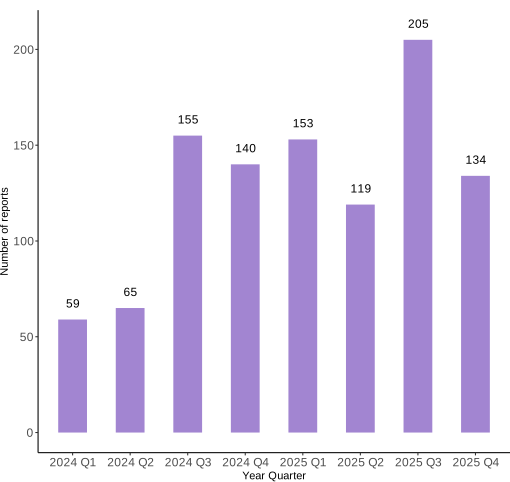
Reports for Sudanese nationals increased by 46% from 419 in 2024 to 611 in 2025. The number of reports fluctuated from quarter to quarter. They peaked in July to September 2025 (quarter 3), and reports were higher in the first 3 quarters of 2025 when compared with 2024 (Figure 47).
Figure 47: The number of DtN reports made for Sudanese nationals each quarter, 2024 and 2025
Source: SCA, IECA
Key statistics
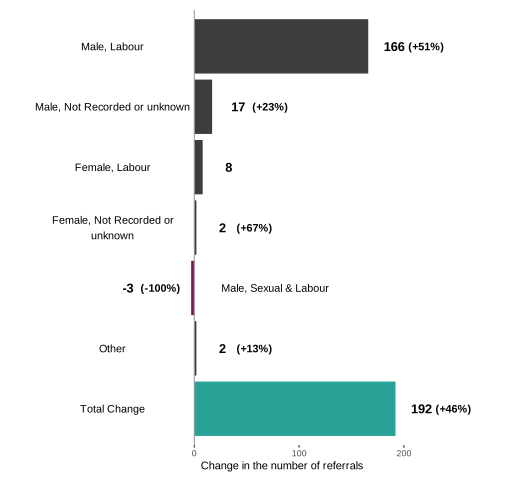
- an increase in reports for male, Sudanese nationals reporting labour exploitation accounted for most of the increase in DtN reports for Sudanese nationals in 2025
- reports for this type increased by 51%, from 325 in 2024 to 491 in 2025 (Figure 48)
Figure 48: The 5 largest changes in the number of DtN reports for Sudanese nationals from 2024 to 2025 by gender and exploitation type
Source: SCA, IECA
Notes:
- ‘Other’ includes all types reported not specifically included in the chart.
- Percentage change for ‘Female, Labour’ type cannot be calculated due to this group having 0 reports in 2024.
2.1.3 Vietnamese nationals
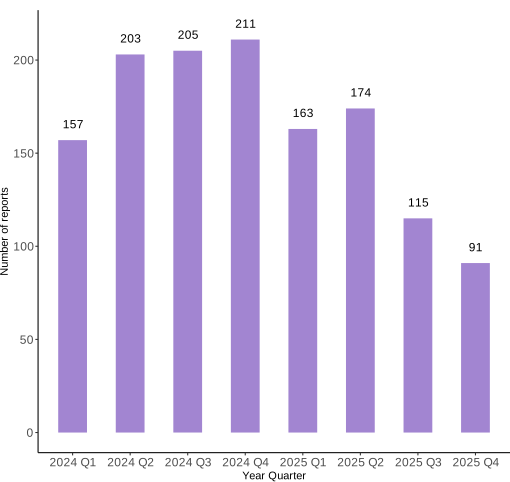
Reports for Vietnamese nationals decreased by 30% from 776 in 2024 to 543 in 2025. The number of reports made per quarter remained relatively consistent over 2024 but fell in 2025, particularly during July to December 2025 (quarter 3 and quarter 4) (Figure 49).
Figure 49: The number of DtN reports made for Vietnamese nationals each quarter, 2024 and 2025
Source: SCA, IECA
Key statistics
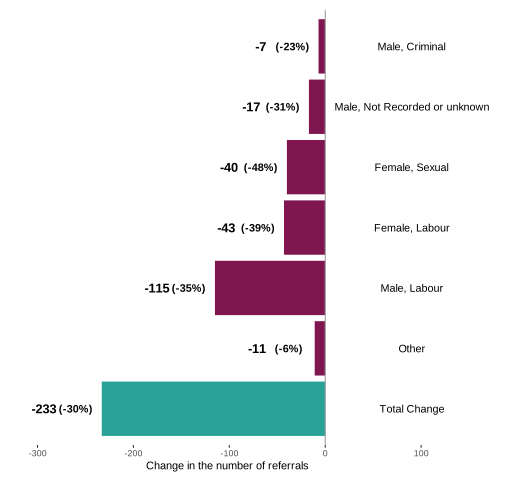
- a decrease in reports for male, Vietnamese nationals reporting labour exploitation accounted for most of the decrease in DtN reports for Vietnamese nationals in 2025
- reports for this type fell by 35%, from 327 in 2024 to 212 in 2025 (Figure 50)
- there was also a decrease in reports for female, Vietnamese nationals reporting labour exploitation (a 39% decrease, from 109 in 2024 to 66 in 2025) and sexual exploitation (a 48% decrease, from 83 in 2024 to 43 in 2025) (Figure 50)
Figure 50: The 5 largest changes in the number of DtN reports for Vietnamese nationals from 2024 to 2025 by gender and exploitation type
Source: SCA, IECA
Notes:
- ‘Other’ includes all types reported not specifically included in the chart.
2.1.4 Albanian nationals
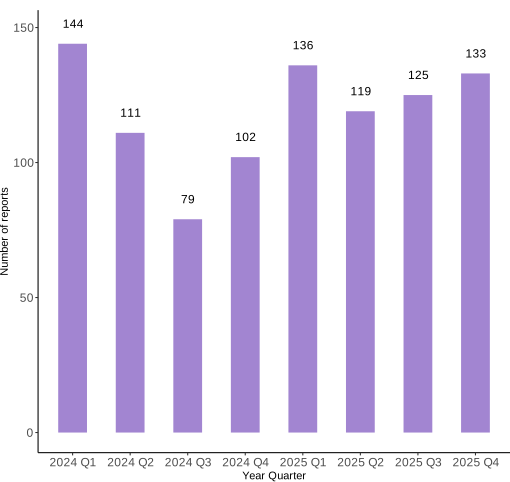
Reports for Albanian nationals increased by 22% from 436 in 2024 to 513 in 2025. The number of reports per quarter was generally higher in 2025 than in 2024 (Figure 51).
Figure 51: The number of DtN reports made for Albanian nationals each quarter, 2024 and 2025
Source: SCA, IECA
Key statistics
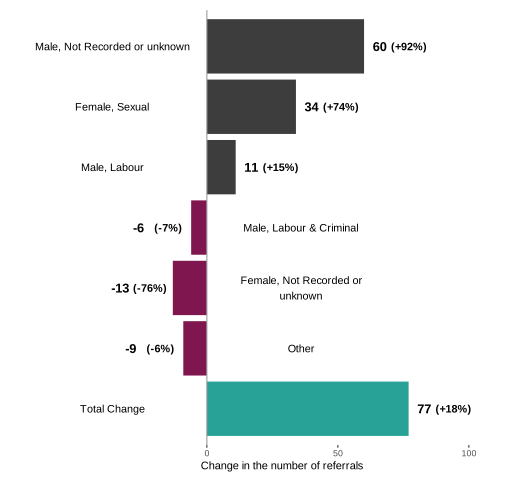
- an increase in reports for male, Albanian nationals where the exploitation type was not recorded or was unknown accounted for most of the increase in DtN reports for Albanian nationals in 2025
- reports for this group increased by 92%, from 65 in 2024 to 125 in 2025 (Figure 52)
- there was also an increase in reports for female, Albanian nationals reporting sexual exploitation, a 74% rise from 46 in 2024 to 80 in 2025 (Figure 52)
Figure 52: The 5 largest changes in the number of DtN reports for Albanian nationals from 2024 to 2025 by gender and exploitation type
Source: SCA, IECA
Notes:
- ‘Other’ includes all types reported not specifically included in the chart.
2.1.5 Chinese nationals
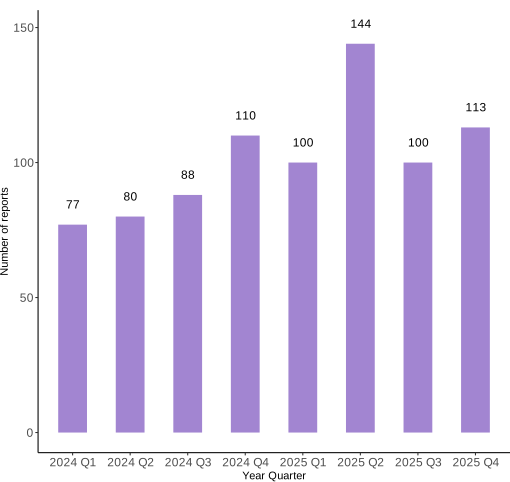
Reports for Chinese nationals increased by 29%, from 355 in 2024 to 457 in 2025. Reports per quarter were generally higher in 2025 than in 2024 and reports peaked in April to June (quarter 2) 2025 (Figure 53).
Figure 53: The number of DtN reports made for Chinese nationals each quarter, 2024 and 2025
Source: SCA, IECA
Key statistics
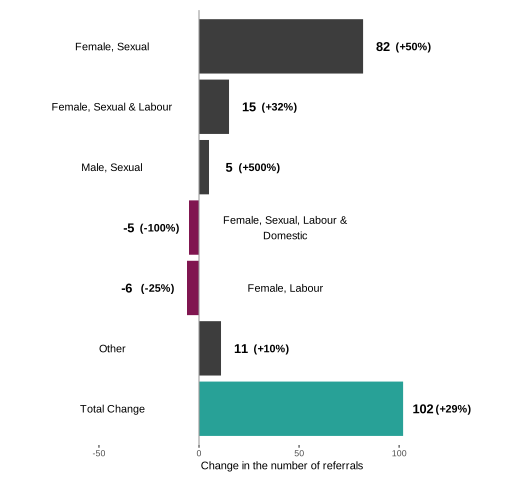
- an increase in reports for female, Chinese nationals reporting sexual exploitation accounted for most of the increase in DtN reports for Chinese nationals in 2025, a 50% rise from 164 in 2024 to 246 in 2025 (Figure 54)
Figure 54: The 5 largest changes in the number of DtN reports for Chinese nationals from 2024 to 2025 by gender and exploitation type
Source: SCA, IECA
Notes:
- ‘Other’ includes all types reported not specifically included in the chart.
2.2 First responders
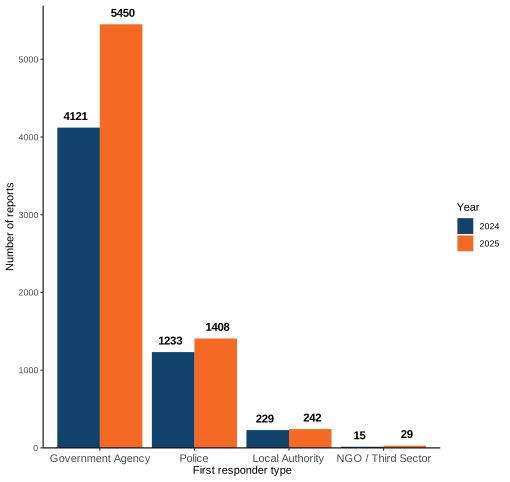
There was an increase in DtN reports from government agencies and the police in 2025 compared to 2024, whilst reports from local authorities and NGO and third sector organisations remained stable.
Key statistics
- government agency reports increased by 32% from 4,121 in 2024 to 5,450 in 2025, accounting for 76% of all DtN reports in 2025 (Figure 55)
- Home Office – UK Visas and Immigration made 3,100 reports (57%), increasing by 4% from 2,995 in 2024
- Home Office – UK Border Force made 1,782 reports (33%), increasing by 164% from 675 in 2024
- police reports increased by 14% from 1,233 in 2024 to 1,408 in 2025, accounting for 20% of all DtN reports in 2025 (Figure 55)
- local authority reports increased by 6% from 229 in 2024 to 242 in 2025, accounting for 3% of all DtN reports in 2025 (Figure 55)
- NGO and third sector reports increased by 93% from 15 in 2024 to 29 in 2025, accounting for less than 1% of DtN reports in 2025 (Figure 55)
Figure 55: The number of referrals for each first responder type, 2024 and 2025
Source: SCA, IECA
2.2.1 Government agencies
Key statistics
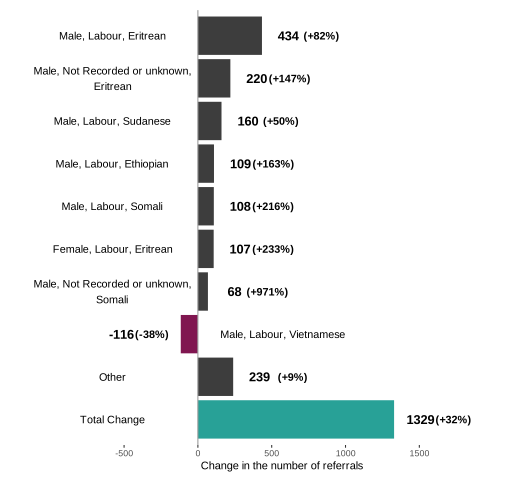
- consistent with 2024, the most reported type from government agencies in 2025 was male, Eritrean nationals reporting labour exploitation, accounting for 54% of reports
- 962 referrals were made for this group in 2025, an 82% increase compared to the 528 referrals made in 2024 (Figure 56)
- male, Vietnamese nationals reporting labour exploitation had the largest decrease in referrals, a 38% reduction from 308 in 2024 to 192 in 2025 (Figure 56)
Figure 56: The 8 largest changes in the number of DtN reports made by government agencies from 2024 to 2025 by type of report
Source: SCA, IECA