How many people come to the UK via illegal entry routes?
Updated 16 July 2026

© Crown copyright 2026
This publication is licensed under the terms of the Open Government Licence v3.0 except where otherwise stated. To view this licence, visit nationalarchives.gov.uk/doc/open-government-licence/version/3 or write to the Information Policy Team, The National Archives, Kew, London TW9 4DU, or email: psi@nationalarchives.gov.uk.
Where we have identified any third party copyright information you will need to obtain permission from the copyright holders concerned.
This publication is available at https://www.gov.uk/government/statistics/immigration-system-statistics-year-ending-march-2026/how-many-people-come-to-the-uk-via-illegal-entry-routes
Back to ‘Immigration system statistics, year ending March 2026’ contents page
This is not the latest release. View latest release.
This release goes up to the year ending (YE) March 2026. The “year ending” period includes the 12 months up to and including the YE month. For example, YE March 2026 includes the 12 months between 1 April 2025 and 31 March 2026.
Data on small boat arrivals’ asylum claims and National Referral Mechanism (NRM) referrals is now published in a separate chapter, updated annually, called ‘How many small boat arrivals have claimed asylum or been referred to the National Referral Mechanism?’. This change improves user experience by separating content that is updated quarterly on arrivals to the UK via illegal entry routes from annually updated information on what happens to small boat arrivals after arrival in the UK, whilst keeping underlying statistics unchanged.
1. Arrivals via illegal entry routes
Not all people arriving to the UK via illegal entry routes will be detected and the proportion of arrivals detected will vary by method and route. Therefore, it is not advisable to directly compare recorded detection numbers on different methods of entry. However, some broad trends can be observed.
The number of people arriving to the UK via illegal entry routes in the latest year was similar to the previous year.
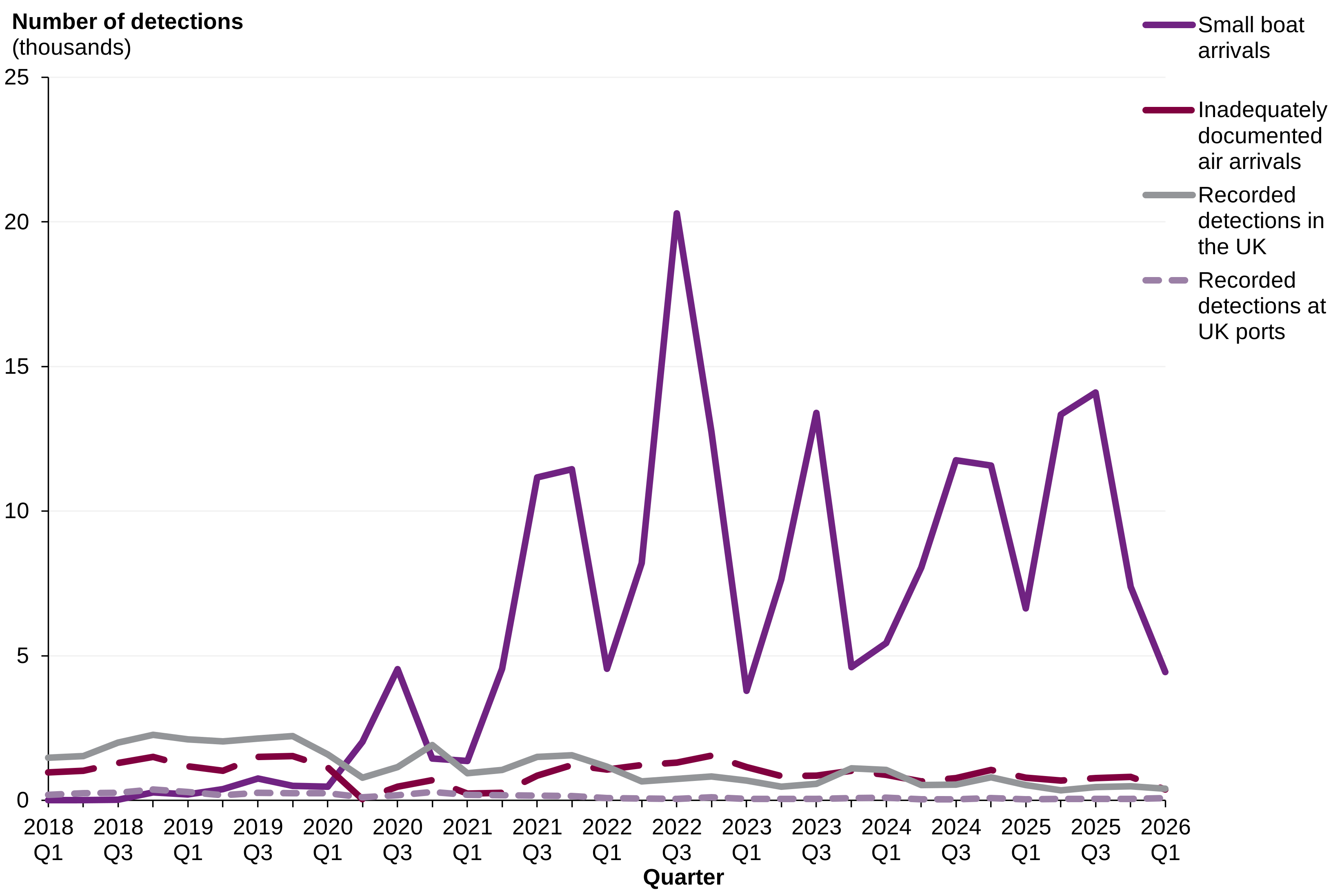
In the YE March 2026, there were 43,806 detected arrivals via illegal routes. Small boat arrivals accounted for 90% of these arrivals. Small boats have been the predominant recorded entry method for people arriving via illegal routes since 2020, when detected arrivals increased rapidly and detections on other illegal entry methods declined. This decline was likely in part due to the COVID-19 pandemic making other methods of illegal entry, such as air or ferry, less viable. Small boat arrivals are also the most visible of the illegal methods of entry, so the most likely to be detected (and therefore recorded), and numbers have remained high even as other routes have become more viable again.
In addition to small boat arrivals, covered in more detail in Section 2, arrivals via other illegal routes comprised of inadequately documented air arrivals (6% in the latest year), recorded detections in the UK within 72 hours of arrival (4%), and recorded detections at UK ports (1%).
The YE March 2026 data on inadequately documented air arrivals is for April 2025 to February 2026 only. Data for March 2026 was unavailable at the time of publication and will be included in a future publication.
In the YE March 2026, 1,687 people were detected in the UK, within 72 hours of arriving via an illegal route, 80% fewer than the recent peak of 8,492 in the YE December 2019. Many of these will have arrived clandestinely, for example in a vehicle or on a ferry.
Recorded detections at UK ports have decreased year on year over the statistical series starting 2018, down 80% since the recent peak in YE March 2019 (1,150). The number of detections has been below 300 in each of the last 4 years, with 227 in the YE March 2026.
Figure 1: People detected entering the UK by illegal method of entry, January 2018 to March 20261
Source: Illegal entry routes to the UK detailed dataset, year ending March 2026 - IER_D01
Notes:
- The 2026 quarter 1 data on inadequately documented air arrivals is for January to February 2026 only. Data for March 2026 was unavailable at the time of publication and will be included in a future publication.
1.1 Nationalities and demographics of people arriving via illegal routes
Since 2018, almost three-quarters (71%) of people detected arriving via illegal routes to the UK have been adult males aged 18 and over.
Since 2018, just under one-fifth (18%) of people detected arriving via illegal routes have been aged 17 and under.
Three-fifths (60%) of people detected arriving via illegal routes to the UK in the YE March 2026 were from 5 nationalities (Eritreans, Iranians, Sudanese, Afghans and Somali).
The most common nationality of people detected arriving via illegal routes in the latest year was Eritrean (7,301 people detected arriving via illegal routes), of whom 96% arrived on small boats (see Section 2.3).
Georgians were the most common nationality arriving inadequately documented by air (379 arrivals) and Sudanese nationals were the most common nationality detected in the UK, having arrived via an illegal route within 72 hours (412 detections). The most common nationality detected arriving illegally at UK ports were Albanians (60 detections).
For most of the nationalities in Table 1, their most common illegal method of entry was on small boats, reflecting the dominance of that method as a route for illegal entry (see Section 2.3). However, for Georgian and Chinese nationals, the most common illegal method of entry was by air.
Financial, social, physical and geographical factors may influence the method of entry individuals use and the types of individuals detected arriving. These factors may also change over time.
Table 1: 5 most common nationalities detected arriving to the UK by illegal method of entry, in the YE March 20261,2,3,4,5
| Small boat arrivals (% of total) | Inadequately documented air arrivals (% of total) | Recorded detections in the UK (% of total) | |
|---|---|---|---|
| Eritrea, 19% |
Georgia, 14% |
Sudan, 24% |
|
| Afghanistan, 12% |
Iran, 14% |
Iran, 16% |
|
| Sudan, 12% |
China, 12% |
Eritrea, 13% |
|
| Iran, 12% |
Stateless, 9% |
Iraq, 13% |
|
| Somalia, 10% |
Sri Lanka, 9% |
Ethiopia, 7% |
|
| Total (excluding those where nationality is not yet available) | 37,970 | 2,621 | 1,687 |
Source: Illegal entry routes to the UK detailed dataset, year ending March 2026 - IER_D01
Notes:
- The most common nationalities are those with the highest number of people detected arriving for each separate illegal method of entry in the YE March 2026.
- Excludes small boat arrivals labelled as ‘Not currently recorded’, for whom information on nationality is not yet available.
- The nationality recorded as stateless includes those officially recognised as stateless, including those recognised as Kuwaiti Bidoon.
- The most common nationalities detected arriving illegally at UK ports are not included in this table due to the low volume of arrivals for this method of entry; however, nationality data is published in table IER_D01 of the illegal entry routes detailed datasets.
- The YE March 2026 data on inadequately documented air arrivals is for April 2025 to February 2026 only. Data for March 2026 was unavailable at the time of publication.
2. Small boat arrivals
2.1 Number of small boat arrivals
Statistics on small boat arrivals include individuals who were detected on arrival to the UK, detected in the Channel and subsequently brought to the UK, and those encountered in the UK who were suspected of having arrived on a small boat within the previous 72 hours. They do not include any people who arrived on larger vessels (such as a ferry), those who arrived in the UK undetected, or those prevented from departing France or intercepted by French authorities and returned to France (see the ‘user guide’). A weekly summary of small boat arrivals and preventions is also published by the Home Office, along with the latest daily data on Small boat activity in the English Channel - GOV.UK.
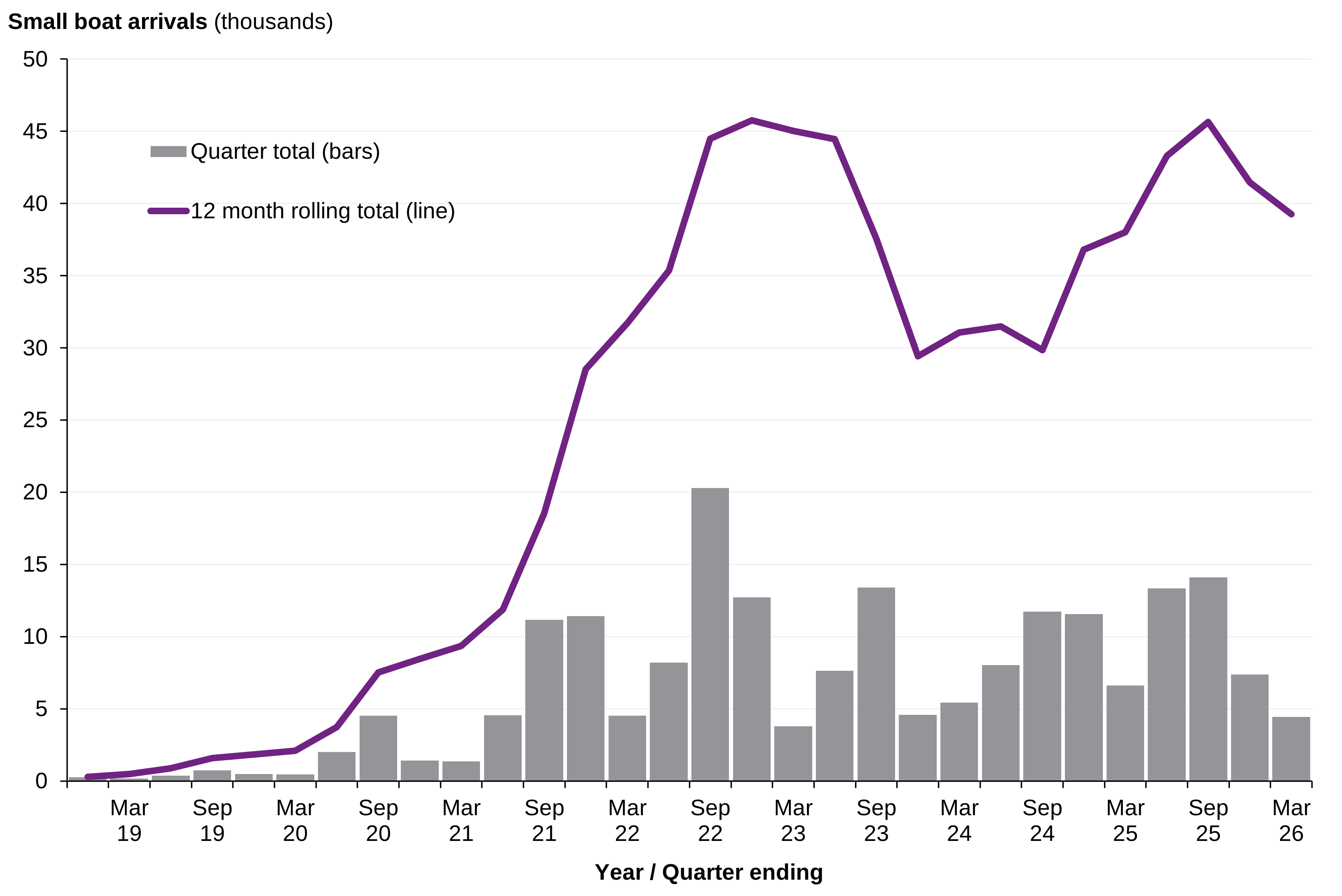
The number of small boat arrivals to the UK increased slightly in the YE March 2026 but was lower than the peak number of arrivals in the YE December 2022.
Small boat arrivals in the YE March 2026 (39,271) were 3% higher than in the YE March 2025 (38,023). Small boat arrivals were relatively low from 2018 to 2020, with 10,608 arrivals in total across these 3 years. However, since the YE December 2021 there have been between 29,000 and 46,000 small boat arrivals each year, with the highest number of arrivals in the YE December 2022 (45,774). Small boat arrivals decreased in the YE December 2023 and have since remained below the 2022 peak.
Small boat arrival numbers fluctuate, often due to changes in the weather. Warmer summer months typically see higher numbers due to more favourable crossing conditions. Comparisons of arrivals between months or years should take this seasonality and differences in weather conditions into account and we do not advise making comparisons between short periods or different times of the year.
Figure 2: Yearly and quarterly small boat arrivals, YE December 2018 to YE March 2026
Source: Illegal entry routes to the UK detailed dataset, year ending March 2026 - IER_D01
2.2 Number of boats and people per boat
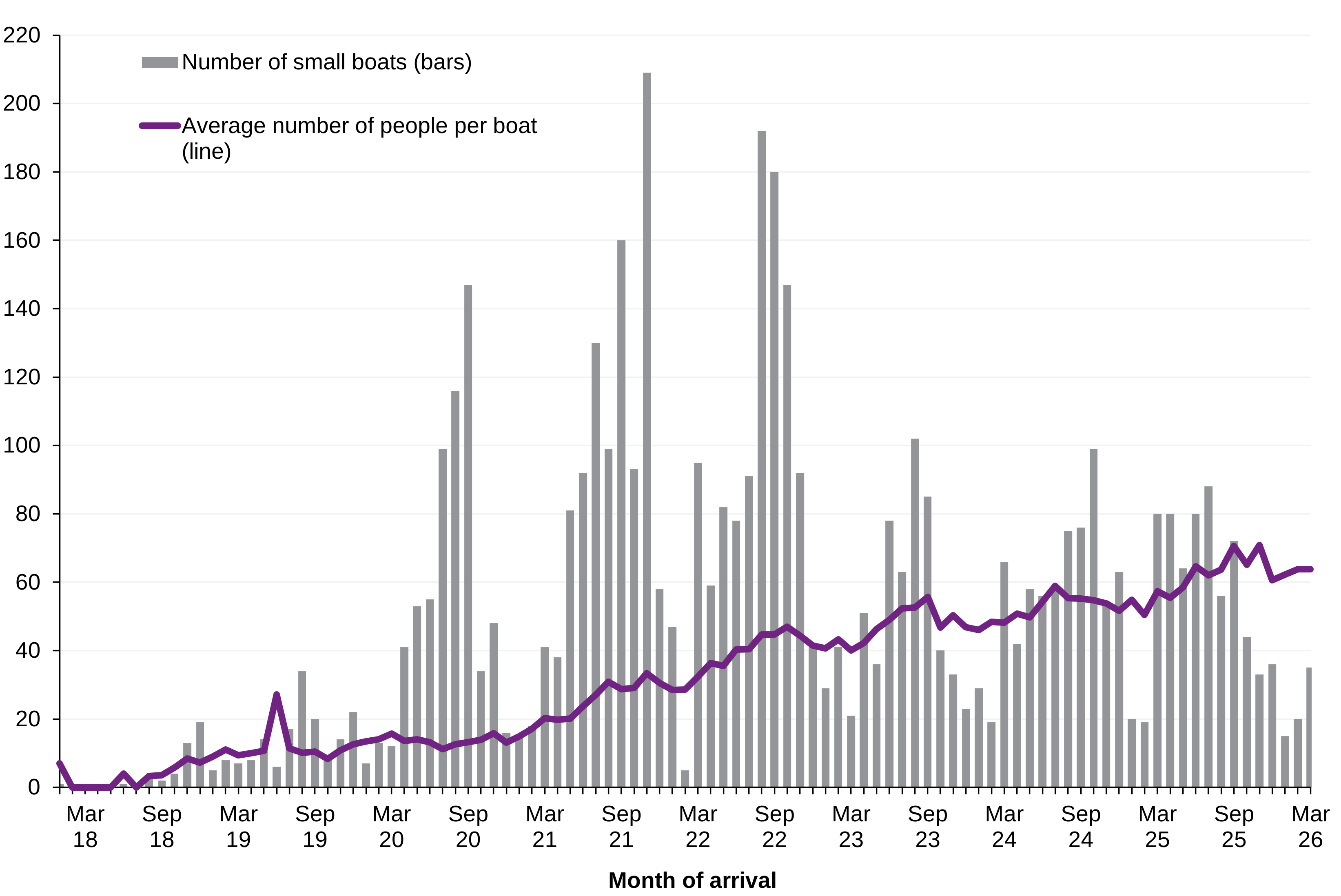
The average number of people per small boat has increased year on year since 2018.
Figure 3: Monthly numbers of small boats arriving and average number of people per boat, January 2018 to March 2026
Source: Illegal entry routes to the UK summary tables, year ending March 2026 - IER_02a
The average number of people per small boat has increased each year since 2018, to 63 people per boat in the YE March 2026, compared with 54 people per boat in the YE March 2024 and 41 in the YE December 2022. The months of September and November in the YE March 2026 saw an average of 71 people per boat, the highest monthly average on record. Consequently, the number of small boat arrivals in the YE March 2026 was only 14% fewer than in the YE December 2022, despite there being 44% fewer boats.
2.3 Nationalities of small boat arrivals
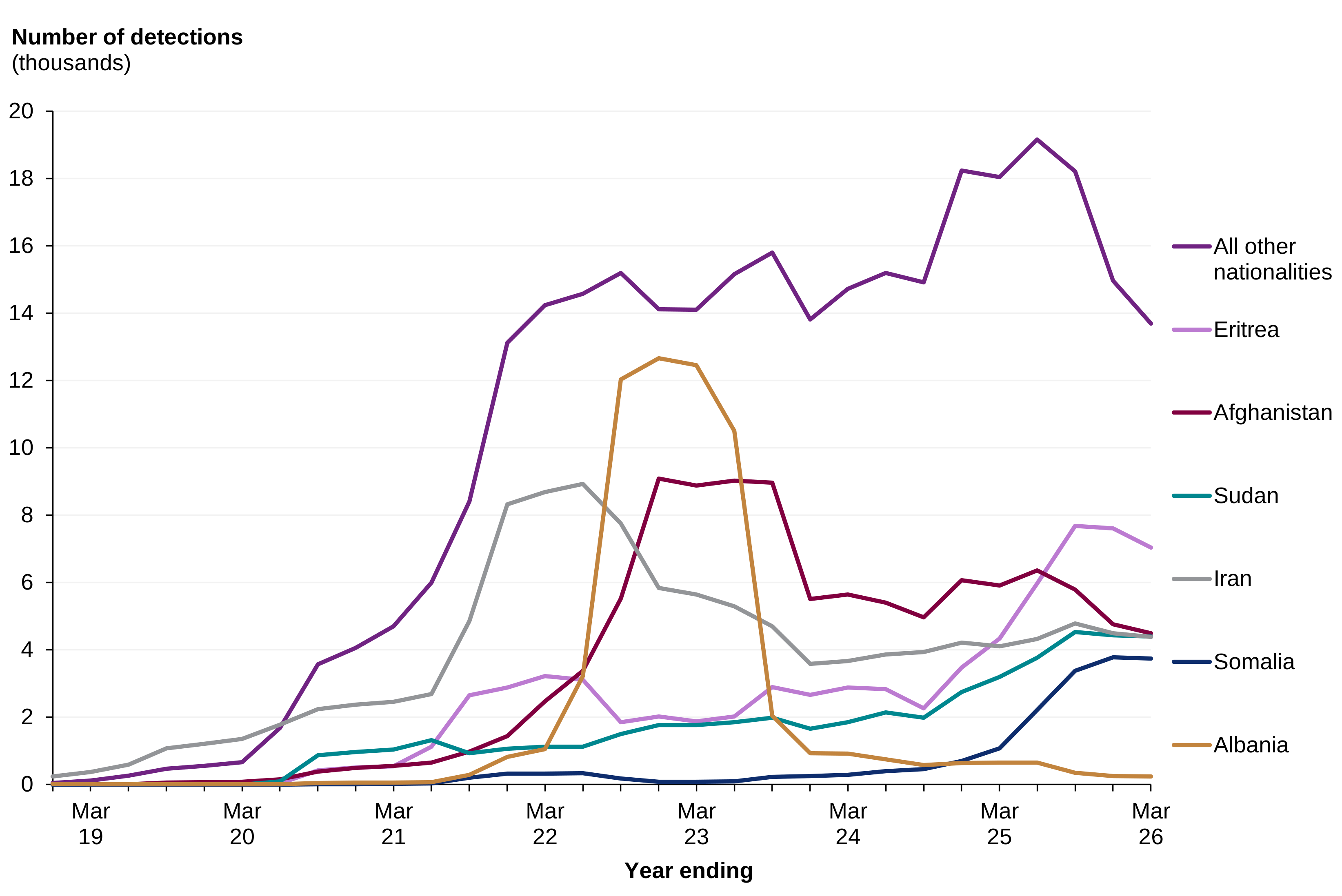
The top 5 most common nationalities (Eritrean, Afghan, Sudanese, Iranian, and Somali) arriving on small boats in the YE March 2026 accounted for more than three-fifths of all small boat arrivals in that period.
Eritreans were the most common nationality arriving by small boat in the YE March 2026, with 7,042 arrivals, 62% more than in the previous year (Figure 4).
The number of Sudanese nationals arriving by small boat in the YE March 2026 (4,389 arrivals) was 38% higher than in the previous year. The number of Somali nationals arriving by small boat also increased in the YE March 2026, with 3,740 arrivals, more than 3 times the previous year.
In contrast, the number of Syrian nationals arriving by small boat in the YE March 2026 (1,329 arrivals) was 70% fewer than in the YE March 2025. This reduction follows the fall of the Assad regime in December 2024.
Figure 4: Most common nationalities arriving on small boats, YE December 2018 to YE March 20261,2,3
Source: Illegal entry routes to the UK detailed dataset, year ending March 2026 - IER_D01
Notes:
- The 5 most common nationalities of small boat arrivals in the YE March 2026 plus Albania. Albania has been presented to reflect that it was a nationality with a large number of small boat arrivals over recent years but is no longer in the 5 most common nationalities.
- Excludes arrivals where information on nationality was not recorded in the dataset.
- The order of the legend matches the order of the lines, descending by volume of arrivals in the YE March 2026.
3. About the statistics
The Illegal entry routes (formerly ‘irregular migration’) statistics were first published in February 2022 as ‘Official Statistics’. For more information, please see Section 13.5 of the Immigration system statistics user guide.
The underlying casework and data systems on which this data is based are undergoing a process of change and therefore the published numbers may change in future quarters. For more information see Section 2.8 of the Immigration system statistics user guide.
This release uses the term ‘illegal entry routes’ when referring to the act of entering into the UK unlawfully. Some individuals entering via illegal routes may go on to claim asylum, regularise their status in the UK, or be found to have been a victim of modern slavery.
All statistics in this chapter relate to people who come to the UK via illegal routes. It includes those arriving on a small boat across the English Channel (a ‘small boat arrival’), along with some other groups arriving without prior lawful permission.
The statistics presented here relate to the number of people detected on, or shortly after, arrival to the UK through various illegal methods of entry. They do not include all those who enter the UK through illegal routes, nor the number of people currently present in the UK without permission. It is not possible to know the exact number of people currently resident in the UK without permission, nor the total number of people who enter the UK via illegal routes, and so we have not produced any official estimates for this number.
This is because:
- some people will successfully evade border controls and remain in the UK undetected
- some people may enter the UK on regular routes, but their status can change over time – for example, if they overstay a visa (it should be noted that there are a number of ways in which a person’s departure from the UK may legitimately not be recorded on the system)
- the data sources available count the number of recorded detections - in some instances the same person may be detected multiple times, either for the same method of entry or across different methods of entry (such individuals will be counted multiple times in the statistics)
- some people may enter the UK via illegal routes but subsequently go on to get legal status – for example, following a successful asylum claim
Figures on detections may be affected by the levels of operational activity at the border and overseas, so should not be used to infer levels of entry via illegal routes. Changes in detection could be a result of changes in operational activity as well as changes in the number of people attempting to enter the UK via illegal routes and recording practices.
Some people seek to enter the UK without valid permission but are prevented from reaching the UK border (for example, at the juxtaposed controls in France and Belgium, or further afield, if prevented from travelling). Prevented attempts are not reported in this chapter. However, a weekly summary of small boat arrivals and preventions is published separately by the Home Office, including definitions of what these figures include. This data on small boat preventions can be used to provide more context on people attempting to cross the English Channel in small boats. Any counts of arrivals and attempted entries may relate to multiple arrivals or attempts by the same individual, and therefore will not relate to numbers of people.
For more information on the data in this chapter, please see the ‘user guide’.
4. Data tables
Data referred to here can be found in the following tables:
We welcome your feedback
If you have any comments or suggestions for the development of this report, please provide feedback by emailing MigrationStatsEnquiries@homeoffice.gov.uk. Please include the words ‘PUBLICATION FEEDBACK’ in the subject of your email.
We’re always looking to improve the accessibility of our documents. If you find any problems or have any feedback relating to accessibility, please email us.
See Section 6 of the ‘About this release’ section for more details.