How many people come to the UK each year?
Published 27 August 2026

© Crown copyright 2026
This publication is licensed under the terms of the Open Government Licence v3.0 except where otherwise stated. To view this licence, visit nationalarchives.gov.uk/doc/open-government-licence/version/3 or write to the Information Policy Team, The National Archives, Kew, London TW9 4DU, or email: psi@nationalarchives.gov.uk.
Where we have identified any third party copyright information you will need to obtain permission from the copyright holders concerned.
This publication is available at https://www.gov.uk/government/statistics/immigration-system-statistics-year-ending-june-2026/how-many-people-come-to-the-uk-each-year
Back to ‘Immigration system statistics, year ending June 2026’ contents page
This release goes up to the year ending (YE) June 2026. The “year ending” period includes the 12 months up to and including the YE month. For example, YE June 2026 includes the 12 months between 1 July 2025 and 30 June 2026.
1. Overview
In the YE June 2026 there were 136.8 million arrivals to the UK. The majority (57%) were British nationals. Of the non-British arrivals, most will be short-term arrivals such as visitors, with smaller numbers arriving for other reasons (such as work, study, family and humanitarian reasons).
There are several ways a non-British national may receive permission to come to the UK:
- visa nationals must apply for an entry clearance visa in advance of travel to visit or transit through the UK – there were 2.2 million Visitor visas and 19,684 Transit visas granted in the YE June 2026
- electronic travel authorisations (ETAs) have been introduced for visitors to the UK who do not currently need a visa for short stays, or who do not already have a UK immigration status; the ETA scheme was first introduced in October 2023 and was rolled out in stages up until March 2025 – there were 23.2 million ETAs granted in the YE June 2026
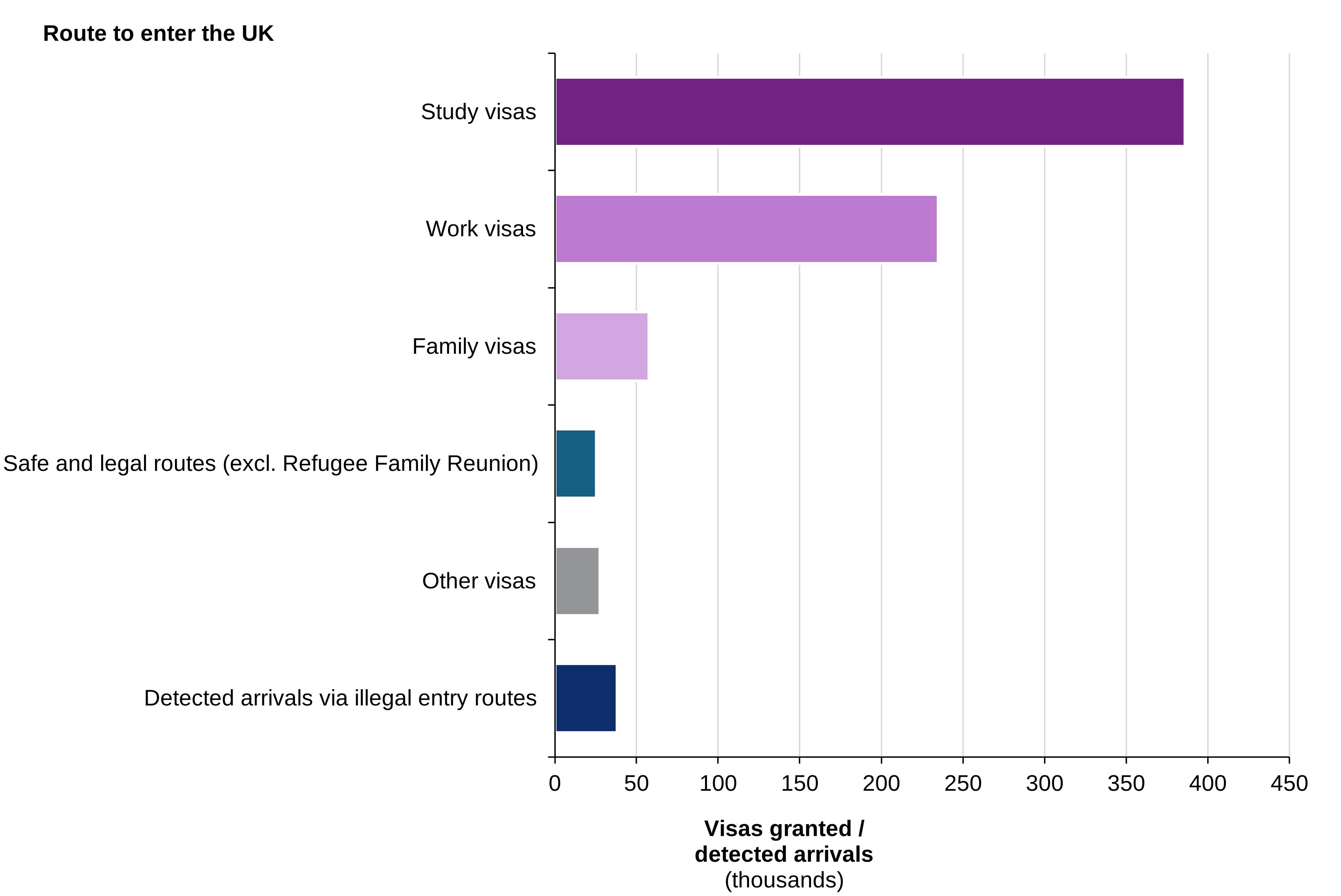
- people from any foreign country (other than Ireland) coming to the UK for other reasons, such as work, study, family and humanitarian reasons usually require an entry clearance visa – there were 727,487 visas issued for a non-visit reason in the YE June 2026
Figure 1 provides a further breakdown of the types of visas issued. People with existing immigration status do not need additional documents to come to the UK (for example, people with indefinite leave to remain, including those with settled status on the EU Settlement Scheme).
As some people will not require a visa or ETA to enter the UK, and some people may enter the UK multiple times with the same document, there are considerably fewer visas or ETAs granted than there are passenger arrivals.
A number of people also enter the UK via illegal routes, some of whom will be detected on arrival (such as those arriving without a visa on a small boat), and others may enter undetected.
There were 38,086 people detected arriving via illegal entry routes in the YE June 2026. These are not included in the total number of passenger arrivals. Further details can be found in the ‘How many people come to the UK via illegal entry routes?’ chapter.
Figure 1: Number of visas granted to come to the UK by main category (excluding visitors and transit), and number of detected arrivals via illegal routes, YE June 2026 (main applicants and dependants)1, 2, 3, 4
Source: Entry clearance visa applications and outcomes – Vis_D02, Safe and legal (humanitarian) routes summary tables - Hum_01, Illegal entry routes to the UK - IER_D01
Notes:
- ‘Other visas’ include settlement visas, temporary visas (excluding transit), EUSS family permits and some other family members coming to accompany others.
- ‘Safe and legal’ includes out-of-country humanitarian routes, such as the Ukraine and BN(O) schemes and refugee resettlement. It excludes Refugee Family Reunion visas which are included in ‘Family visas’.
- The chart does not include visitors or transit visas, those coming to the UK who have indefinite leave to remain or status on the EU Settlement Scheme, non-visa national visits, or people arriving undetected via illegal routes.
2. Passenger arrivals to the UK
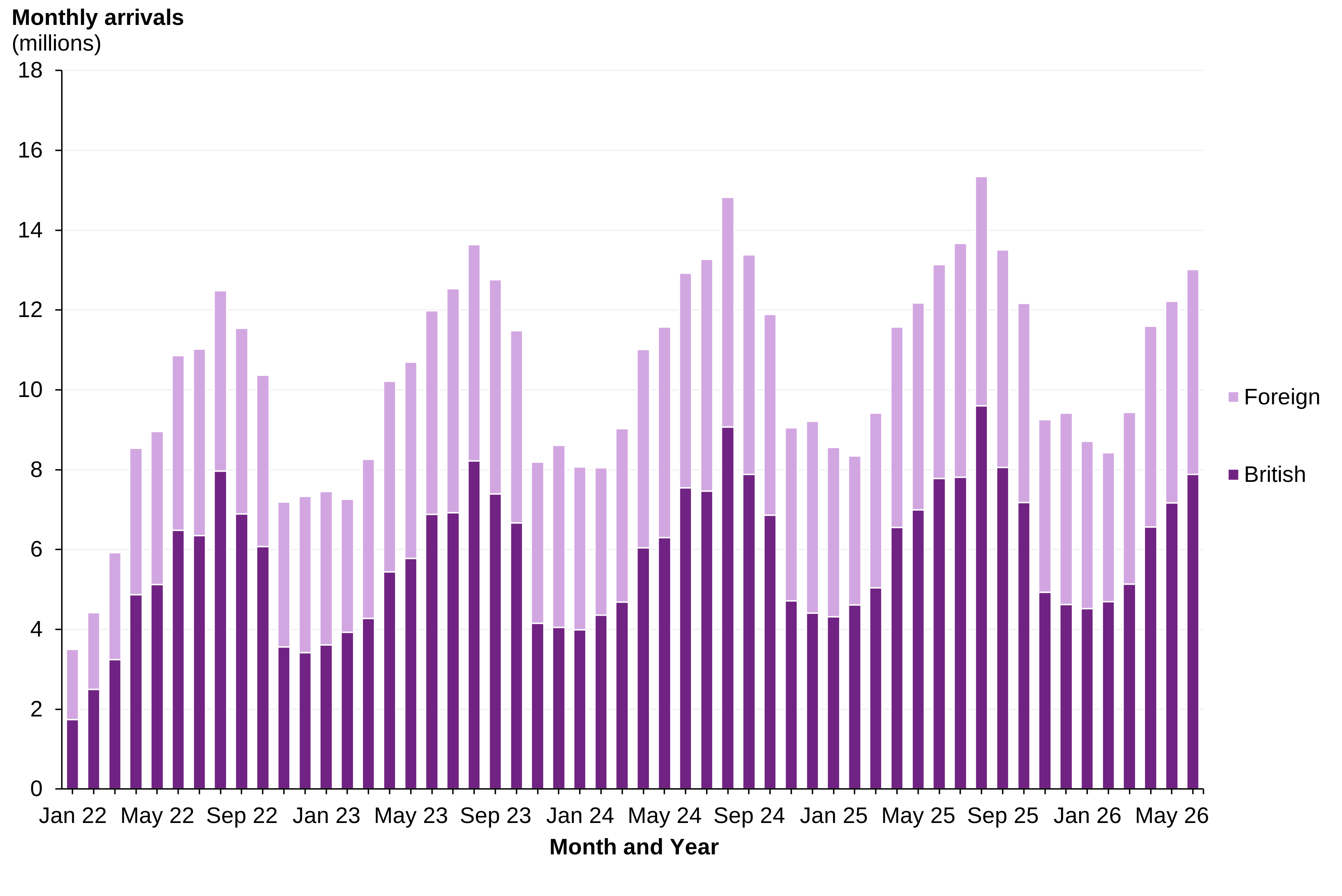
In the YE June 2026, there were 136.8 million arrivals to the UK, 1% more than the previous year. Passengers arriving by air accounted for 88% of all passenger arrivals to the UK (across all routes) in the YE June 2026, with 7% arriving by rail and 5% by sea.
In the YE June 2026, 57% of total arrivals were British nationals, which is broadly consistent with previous years.
Figure 2: Monthly passenger arrivals to the UK, British and foreign, January 2022 to June 2026
Source: Passenger arrivals - Arr_02
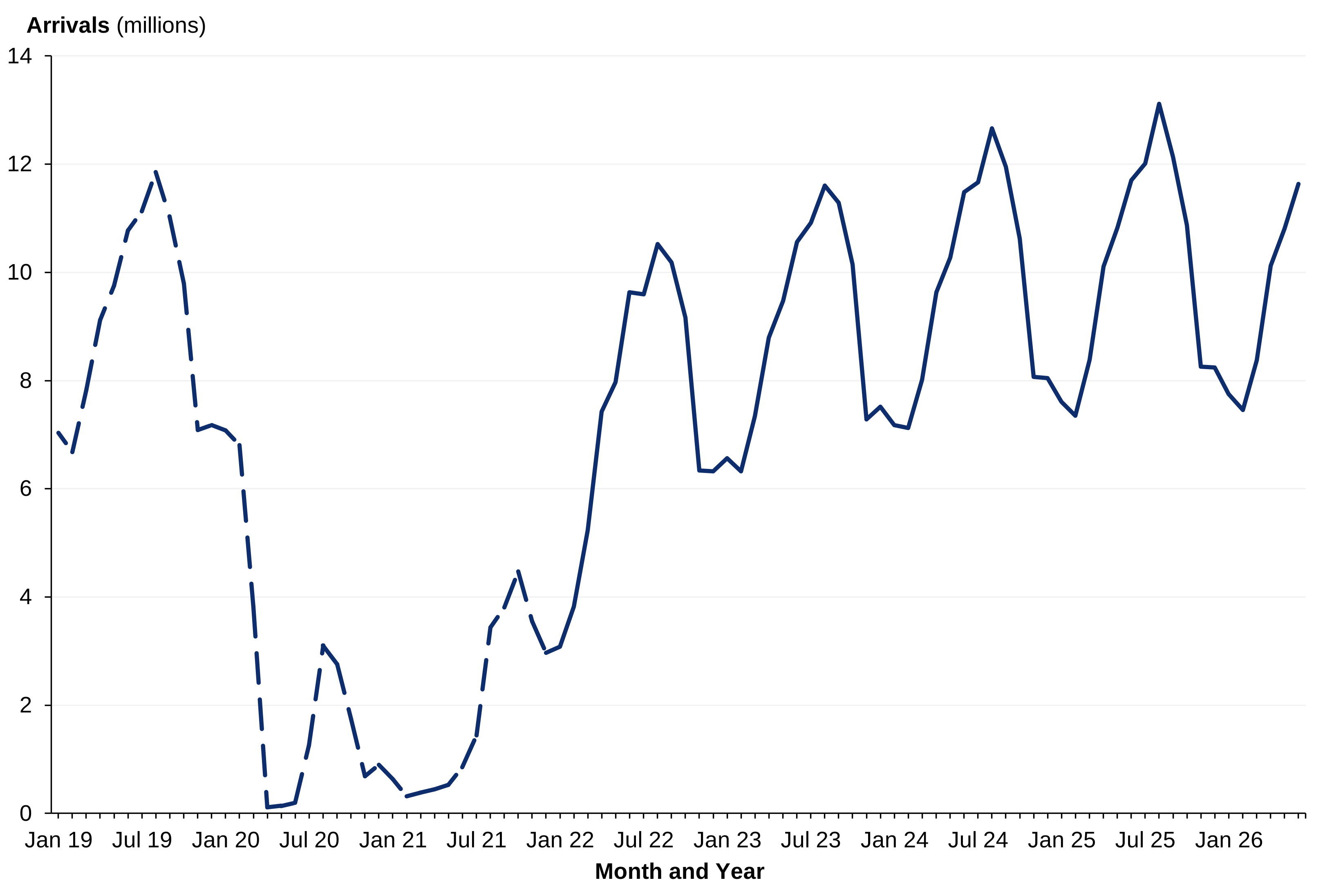
Data in this topic prior to 2022 relates to air arrivals only. From March 2020, following the start of the COVID-19 pandemic, a variety of measures were introduced to restrict global travel and the spread of the virus. These measures were phased out in the UK during the first few months of 2022. Following this disruption to global travel, travel to the UK largely recovering over the course of 2022. Air arrivals in the YE June 2026 were 11% higher than before the pandemic (YE date) (see Figure 3).
Figure 3: Monthly air passenger arrivals to the UK, January 2019 to June 20261, 2, 3
Source: Passenger arrivals - Arr_01
Notes:
- Data prior to 2022 comes from Advance Passenger Information (API).
- API data is represented by a dashed line, whilst the solid line represents BITD data.
- For more information on sources of passenger arrivals data, see the ‘About the Statistics’ section.
3. Visitors and short-term stays
Only certain nationalities (‘visa-nationals’) are required to obtain an entry clearance visa before coming to visit the UK. Many nationalities, such as United States (US) and European Union (EU) nationals, do not normally require a visa to visit the UK; they can apply for an Electronic Travel Authorisation (ETA) to visit for short stays if they do not already have a UK immigration status.
3.1 Visitor visas
The number of visas granted to visitors in the YE June 2026 (2.2 million) was similar (-1%) to the previous year, and remained below their peak in the YE December 2019 (2.4 million). Numbers remain lower than the pre-pandemic period largely due to the introduction of the ETA scheme starting in October 2023, with nationalities who previously required a visa (for example Saudi Arabia) now eligible for an ETA. Other factors include global events, such as the Ukraine War, which preceded a reduction in the number of Russians applying for a Visitor visa. However, recent changes to ETA eligibility have contributed to increases in Visitor visa applications from certain nationalities in the latest year, as nationals of some countries (such as Jordan and Colombia) are now required to obtain a visa to visit the UK.
Indian nationals accounted for the highest number of Visitor visas granted, with 514,398 issued in the YE June 2026, 9% fewer compared to the previous year. Grants to Chinese nationals have steadily declined in recent years, though they remain the second largest nationality (474,039) in the YE June 2026. Visas issued to Turkish nationals have increased over the last 3 years, up 18% in the latest year to 244,894 grants.
Although Indian nationals were issued the highest number of Visitor visas in the latest year, this figure is outnumbered by the number of ETAs issued to some nationalities (primarily those from the European Union and the United States).
3.2 Electronic travel authorisations
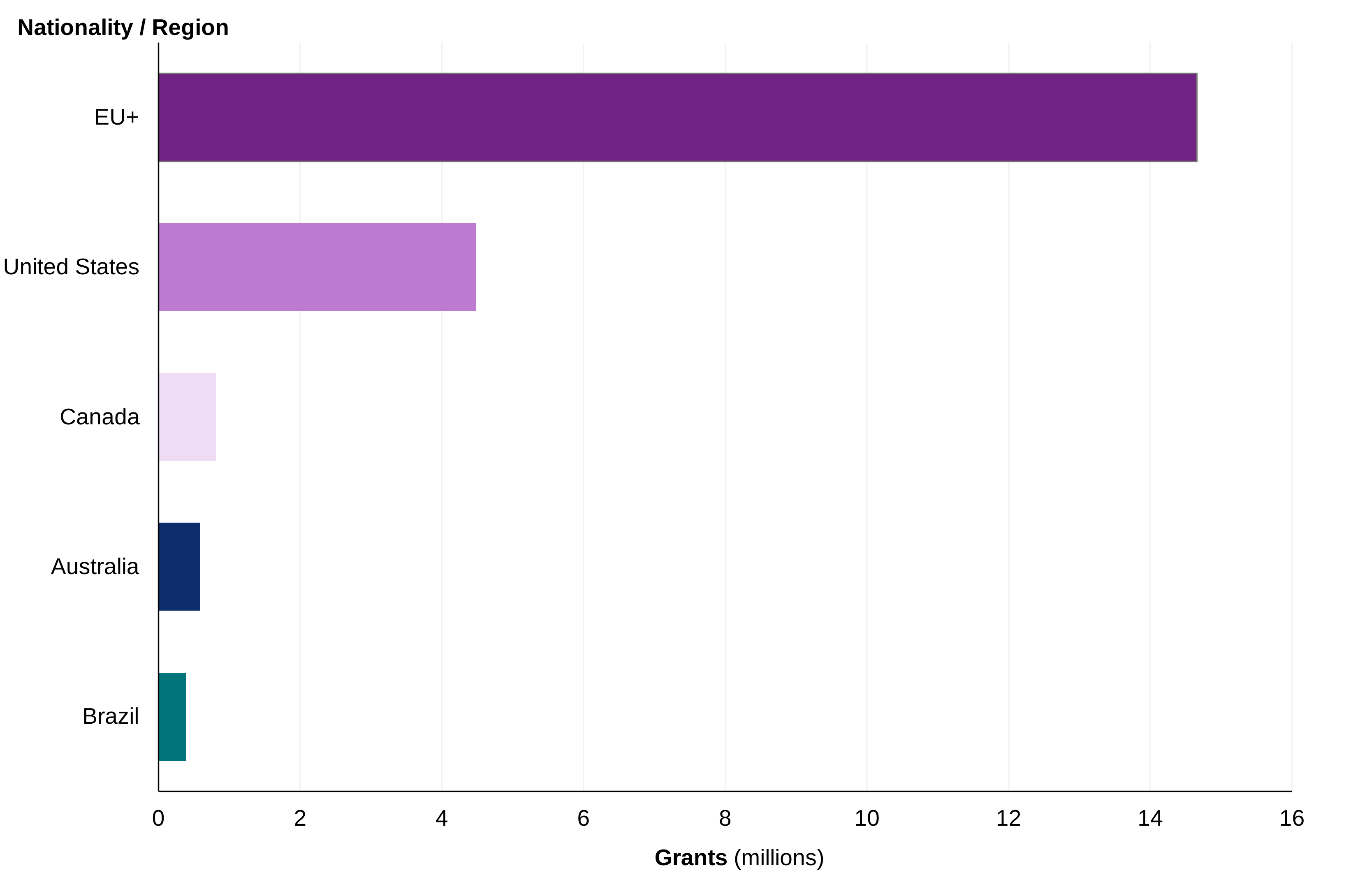
There have been 23.2 million ETAs granted in the YE June 2026. US nationals account for the highest number of ETAs grants to a single nationality in the latest year (4.5 million). German citizens account for the next highest number of ETAs granted (2.4 million), followed by France (2.2 million). Together nationals of the European Union (plus the European Economic Area and Switzerland) accounted for nearly two-thirds (63%) of all ETAs issued in the YE June 2026.
Figure 4: Electronic travel authorisations granted to EU+ and other top nationalities in the YE June 20261
Source: ETA applications and outcomes - Eta_02
Notes:
- ‘EU+’ includes the European Union member states (excluding Ireland) plus Iceland, Liechtenstein, Norway and Switzerland.
4. Other grants of entry clearance visas
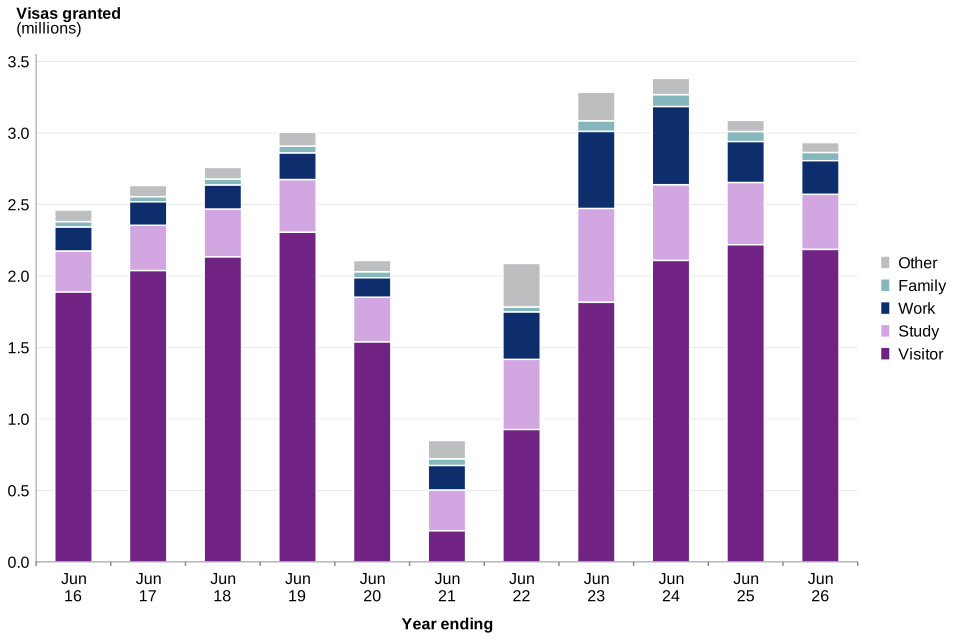
The number of non-visit or transit visas issued has decreased in the YE June 2026, predominantly due to fewer work and study visas being issued
There were 727,487 non-Visitor or Transit visas granted in the YE June 2026, 15% fewer than the previous year. The total is made up of Study (including both sponsored and short-term study) (385,974), Work (234,841), Family (57,590) and Other (49,082) visas. The total is made up of Study (including both sponsored study and short-term study) (385,974), Work (234,841), Family (57,590) and Other (49,082) visas.
Figure 5: Entry clearance visas granted by route (main applicants and dependants) between the YE June 2016 and the YE June 20261
Source: Entry clearance visa applications and outcomes – Vis_D02
Notes:
- Other includes Ukraine Scheme, British National (Overseas), and Dependants joining or accompanying visas, as well as EEA and EUSS Permits.
Further analysis of those visas granted for work, study, family and humanitarian reasons can be found in the relevant topics.
5. Extensions of stay
Extensions of stay relate to people who are already in the UK and apply to extend or change their permission to remain when their existing leave is due to expire. The volume of extensions granted largely reflects earlier patterns of entry clearance.
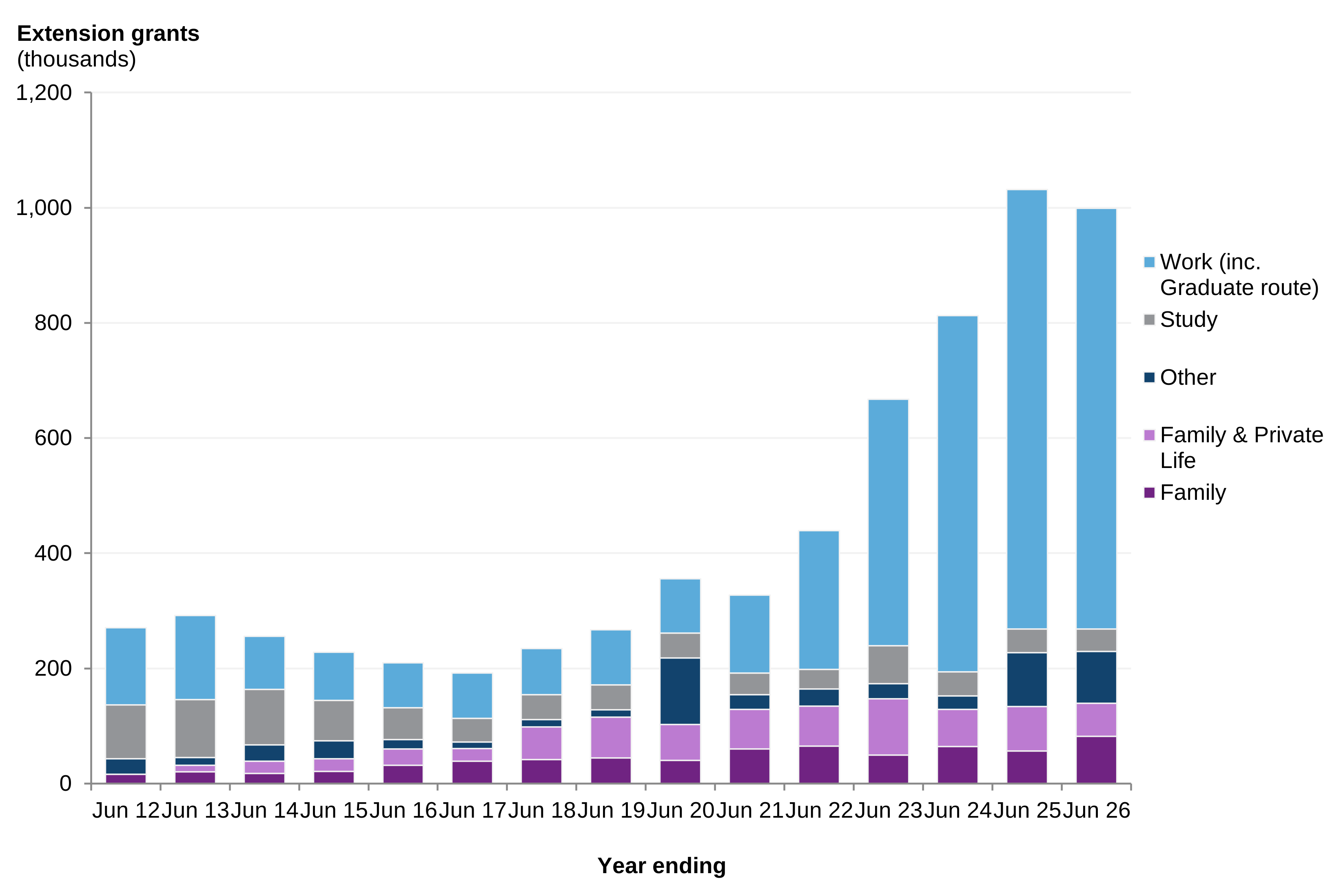
The number of in-country extensions fell slightly in the year ending June 2026, mainly reflecting lower grants in Work and Family and Private Life routes.
Figure 6: Extension of stay grants in the UK, by category of leave (main applicants and dependants), between YE June 2012 and YE June 20261, 2, 3
Source: Extensions detailed tables – Exe_D01
Notes:
- The Graduate route is included within the Work category. Although most applicants previously held a Study visa, the Graduate route provides permission to work, or look for work, in the UK.
- ‘Other’ includes Safe and Legal routes (including Ukraine Permission Extension Scheme and British National (Overseas)), and Visitor based extensions.
- Extensions granted to individuals on the Family or Private Life routes are reported together under a combined leave group, ‘Family and Private Life’. This group is distinct from the ‘Family’ category used within the extensions data. Further information is available in Section 3 – About these statistics within ‘Why do people come to the UK - Family?’.
There were 999,233 extensions of stay granted (including dependants) in the YE June 2026, remaining one of the highest annual totals on record despite a 3% fall compared with the YE June 2025.
Work-route extensions continued to account for most extension grants, representing almost three-quarters of all extensions issued in the YE June 2026. Although several work routes recorded growth, including Skilled Worker extensions (up 11% to 196,097) and Health and Care Worker extensions (up 19% to 336,215), total work-route extensions declined by 4% overall. This decrease was driven primarily by a 39% fall in Graduate route extensions, with 157,356 grants in the latest year. The decline is likely linked to policy changes introduced in January 2024 that restricted most international students on taught courses from bringing dependants to the UK. As a result, Graduate route visas granted to dependants fell by 81% in the latest year. Study-route extensions also decreased, falling by 5% compared with the previous year.
‘Other’ extensions decreased by 4% to 89,697 in the YE June 2026. This follows a period of growth driven by the introduction of the Ukraine Permission Extension Scheme in February 2025, which has accounted for 159,341 grants since its launch. Family and Private Life extensions declined by 26%, from 77,636 to 57,293, in the year ending June 2026.
By contrast, Family extensions increased by 46% in the YE June 2026. Nearly all Family visa extension grants were under the Partner route, with the increase likely reflecting the higher volume of people granted a Partner visa from late 2021 onwards who have gone on to extend their stay in the UK. While many of these grants relate to Partner visa holders extending their stay, the total also includes children granted further leave as dependants of a parent on the Partner route.
6. About these statistics
The statistics in this section provide an indication of the number of people who enter the UK. Many nationalities do not normally require a visa to visit the UK. As a result, they will be counted in the passenger arrivals data but not in the visa data. A list of designated nationalities referred to as ‘visa nationals’ who do require a visa to visit the UK can be found in Immigration Rules Appendix Visitor: visa national list.
For several reasons, data on passenger arrivals is not directly comparable with data on Entry clearance visas granted. A summary of what each dataset counts is provided in Section 6.1 below and Section 6.2.
6.1 Passenger arrivals
The statistics in this release relate to the number of passengers crossing the border through legitimate routes. The method used to measure those arriving in the UK have been improved and differ from methods used previously and published regularly in the ‘admissions’ data tables, which are now a part of the discontinued ‘Passengers refused entry at the border’ summary tables. Further information on the differences between these methods can be found in the user guide. Any nationality breakdowns are based on the nationality associated with the passport used to enter the UK (regardless of any dual nationality held).
The statistics include people entering the UK on most air, sea and rail routes, and while they include the vast majority of arrivals, there are some coverage gaps. For example, people entering the UK via the Common Travel Area (CTA) between the UK and Ireland are not required to present their passport on entry to the UK and will not be included in the data.
Previous Passenger Arrivals reports used API data, which primarily relates to passengers coming to the UK via commercial aviation routes. The data used does not include those arriving by sea or rail routes. As a result, figures in this report may differ from passenger arrival statistics published elsewhere, however, the levels should be broadly comparable.
6.2 Entry clearance visas
Data on entry clearance visas in this section refer to the number of visas granted for all reasons within the period. References in the statistics to ‘visas’ will also include other documents that recognise an individual’s permission to enter the UK, such as EEA and EU Settlement Scheme Family permits, Frontier Worker permits, or Certificates of entitlement to right of abode. If an individual was granted multiple visas in a given period, this will be counted as multiple grants in the statistics. If an individual entered the UK multiple times within the period for which a visa was valid, this will be counted as one grant in the visa statistics, but multiple arrivals in the passenger arrivals data.
Year-on-year comparisons of the number of decisions can be affected by quarterly fluctuations in the data. Such fluctuations can be examined in more detail in the quarterly data that is available in the published tables.
Several known factors may have affected the number of applications and outcomes of visit-related visas over time. For example, the Home Office launched a 2-year Chinese visa pilot in January 2016 for Chinese nationals. The increase in longer-term Visitor visas may affect the number of subsequent re-applications by Chinese nationals.
More information on non-visitor arrival and visa data by category is included in ‘Why do people come to the UK - Work?’, ‘Why do people come to the UK - Study?’ and ‘Why do people come to the UK - Family?’.
For more information on specific routes to the UK, including Ukraine Visa Schemes and British National (Overseas) (BN(O)) visas, see ‘How many people come to the UK via safe and legal (humanitarian) routes’.
6.3 Electronic travel authorisations
Data on ETAs in this section refers to the number of ETAs applied for, and either granted, refused, or rejected within this period. If an individual was granted multiple ETAs in a given period, this will be counted as multiple grants in the statistics. If an individual entered the UK multiple times within the period for which an ETA was valid, this will be counted as one grant in the ETA statistics, but multiple arrivals in the passenger arrivals data. ETA statistics remain in development as tools used to report on ETA applications are continuing to be improved.
7. Data tables
- Entry clearance visas summary tables
- Detailed entry clearance visas datasets
- Detailed electronic travel authorisation
- Passenger arrivals summary tables
- Illegal entry routes summary tables
- Detailed illegal entry routes datasets
We welcome your feedback
If you have any comments or suggestions for the development of this report, please provide feedback by emailing MigrationStatsEnquiries@homeoffice.gov.uk. Please include the words ‘PUBLICATION FEEDBACK’ in the subject of your email.
We’re always looking to improve the accessibility of our documents. If you find any problems or have any feedback relating to accessibility, please email us.
See Section 6 of the ‘About this release’ section for more details.