Housing supply: net additional dwellings, England: 2024 to 2025
Published 20 November 2025
Applies to England

© Crown copyright 2025
This publication is licensed under the terms of the Open Government Licence v3.0 except where otherwise stated. To view this licence, visit nationalarchives.gov.uk/doc/open-government-licence/version/3 or write to the Information Policy Team, The National Archives, Kew, London TW9 4DU, or email: psi@nationalarchives.gov.uk.
Where we have identified any third party copyright information you will need to obtain permission from the copyright holders concerned.
This publication is available at https://www.gov.uk/government/statistics/housing-supply-net-additional-dwellings-england-2024-to-2025/housing-supply-net-additional-dwellings-england-2024-to-2025
Date of next publication: It is expected that the Housing supply: net additional dwellings, England: 2025-26 statistics will be published in November 2026 (provisional). The date will be pre-announced on the GOV.UK publication release calendar.
1. Key statistics
Annual housing supply in England amounted to 208,600 net additional dwellings in 2024-25, a 6% decrease on 2023-24.
This resulted from 190,600 new build homes, 17,710 gains from change of use between non-domestic and residential, 3,850 from conversions between houses and flats and 1,080 other gains (caravans, house boats, etc), offset by 4,630 demolitions.
304 of the net additions from new build homes were through ‘permitted development rights’ (full planning permission not required).
7,681 of the net additions from change of use were through ‘permitted development rights’ (full planning permission not required). These comprised 5,154 additional dwellings from former offices, 462 from agricultural buildings, 94 from light industrial buildings, 1,048 from commercial, business and service use buildings and 923 from other non-domestic buildings.
The loss of 349 dwellings from demolitions were through ‘permitted development rights’ (full planning permission not required).
1.1 Estimating net additional dwellings since 1 April 2025
With the publication of weekly domestic Energy Performance Certificate lodgements up to 9 November 2025:
We estimate that 124,800 net additional homes have been delivered in England between 1 April 2025 and 9 November 2025.
We estimate that 275,600 net additional homes have been delivered in England between the start of Parliament, on 9 July 2024, and 9 November 2025.
2. Introduction
This statistical release presents National Statistics[footnote 1] [footnote 2] on net additional dwellings in England up to 2024-25. The figures use the Census as a baseline and show the net change in the dwelling stock in England between the 1st April and the 31st March the following year. Figures for 2011-12 to 2020-21 have been previously revised, as scheduled, to calibrate to the Census 2021 dwelling count. For details see the Technical Notes.
The ‘net additional dwelling’ figures are based on local authority estimates of gains and losses of dwellings during each year and are calculated using the most comprehensive list of sources available. This includes the council tax base, building control, site visits and any other management information available to the local authority.
‘Net additional dwellings’ is the primary and most comprehensive measure of total housing supply.
The Ministry of Housing, Communities and Local Government (MHCLG) also publishes a quarterly release titled Housing supply: indicators of new supply, which cover the building control reported estimates of new build dwellings, estimates of net additional dwellings, as well as estimates of housing supply using other additional sources. The indicators of new supply release should be regarded as a leading indicator of overall housing supply.
Our interactive dashboard illustrates results and historical trends.
3. Trends in net additional dwellings
As can be seen from Figure 1 and Table 1 below, net additional dwellings reached a previous peak of 223,530 in 2007-08 and then decreased to 130,610 in 2012-13 with the economic downturn. Net additions then increased to a peak of 248,590 in 2019-20, before falling to 217,750 in 2020-21, the lowest level for 5 years. This decrease may be due, in part, to the restrictions introduced during Spring 2020 in response to the COVID-19 pandemic. Net additions then recovered to 234,460 in 2021-22, remained broadly similar at 234,290 in 2022-23, before falling to 221,410 in 2023-24 [footnote 3]. In 2024-25, net additions were 208,600, a 6% decrease on 2023-24.
Net additional dwellings in 2024-25 are 16% below their 2019-20 peak and are 60% above their 2012-13 trough.
The 208,600 net additional dwellings in 2024-25 represents a 0.81% increase on the previous dwelling stock estimate of 25.6 million dwellings in England as at 31 March 2024.
Figure 1. Trends in net additional dwellings, England, 2001-02 to 2024-25
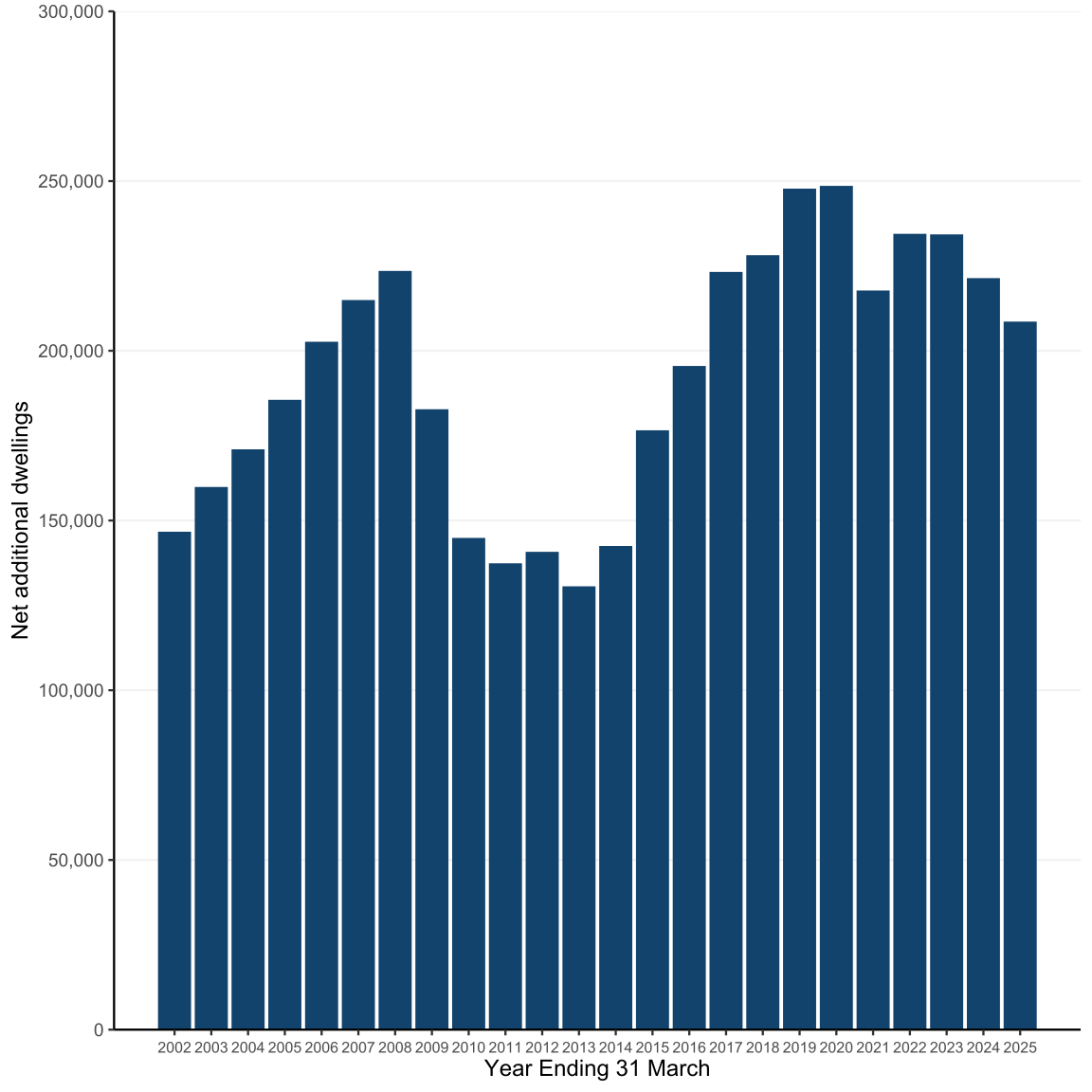
Table 1. Net additional dwellings, England, 1991-92 to 2024-25[footnote 1],[footnote 4]
| Financial year | Net additional dwellings | Percentage change from previous year |
|---|---|---|
| 1991-92 | 165,000 | |
| 1992-93 | 151,000 | -8% |
| 1993-94 | 152,000 | 1% |
| 1994-95 | 166,000 | 9% |
| 1995-96 | 163,000 | -2% |
| 1996-97 | 154,000 | -6% |
| 1997-98 | 156,000 | 1% |
| 1998-99 | 149,000 | -4% |
| 1999-00 | 148,000 | -1% |
| 2000-01 | 132,000 | -11% |
| 2001-02 | 146,700 | 11% |
| 2002-03 | 159,880 | 9% |
| 2003-04 | 170,970 | 7% |
| 2004-05 | 185,550 | 9% |
| 2005-06 | 202,650 | 9% |
| 2006-07 | 214,940 | 6% |
| 2007-08 | 223,530 | 4% |
| 2008-09 | 182,770 | -18% |
| 2009-10 | 144,870 | -21% |
| 2010-11 | 137,390 | -5% |
| 2011-12 | 140,790 | 2% |
| 2012-13 | 130,610 | -7% |
| 2013-14 | 142,490 | 9% |
| 2014-15 | 176,580 | 24% |
| 2015-16 | 195,530 | 11% |
| 2016-17 | 223,230 | 14% |
| 2017-18 | 228,170 | 2% |
| 2018-19 | 247,770 | 9% |
| 2019-20 | 248,590 | 0% |
| 2020-21 | 217,750 | -12% |
| 2021-22 | 234,460 | 8% |
| 2022-23 | 234,290 | 0% |
| 2023-24 | 221,410 | -5% |
| 2024-25 | 208,600 | -6% |
4. Components of net additional dwellings
The annual net change in the dwelling stock breaks down as follows:
-
New house building completions
-
Gains or losses through conversions (for example, a house into flats)
-
Changes of use (for example, a shop into a house or a barn conversion)
-
Demolitions and
-
Other changes to the dwelling stock (caravans, houseboats, etc)
Further details are available in the Technical Notes.
As can be seen from Figure 2 and Table 2 below, in 2024-25, the 190,600 new build completions accounted for 91% of the net change, the 17,710 additional dwellings resulting from change of use accounted for 8% of the net change, the 3,850 conversions accounted for 2% of the net change and the 1,080 other gains accounted for 1% of the net change. The loss of 4,630 demolitions accounted for -2% of the net change.
Since 2015-16, new data have been collected on dwellings from change of use under ‘permitted development rights’ making it easier to change buildings to residential use. Since 2022-23, new data have been collected on dwellings from change of use under ‘permitted development rights’ from commercial, business and service use. In 2024-25, the 17,710 additional dwellings resulting from change of use included 7,681 through permitted development rights. These comprised 5,154 office to residential, 462 agricultural to residential, 94 light industrial to residential, 1,048 commercial, business and service use to residential, 907 any other to residential and 16 unspecified to residential.
Since 2020-21, new data have been collected on dwellings from new build under ‘permitted development rights’. In 2024-25, the 190,600 new build dwellings included 304 through permitted development rights.
Since 2020-21, new data have been collected on demolitions under ‘permitted development rights’. In 2024-25, the loss of 4,630 dwellings under demolitions included 349 through permitted development rights.
Figure 2. Components of net additional dwellings, England, 2024-25
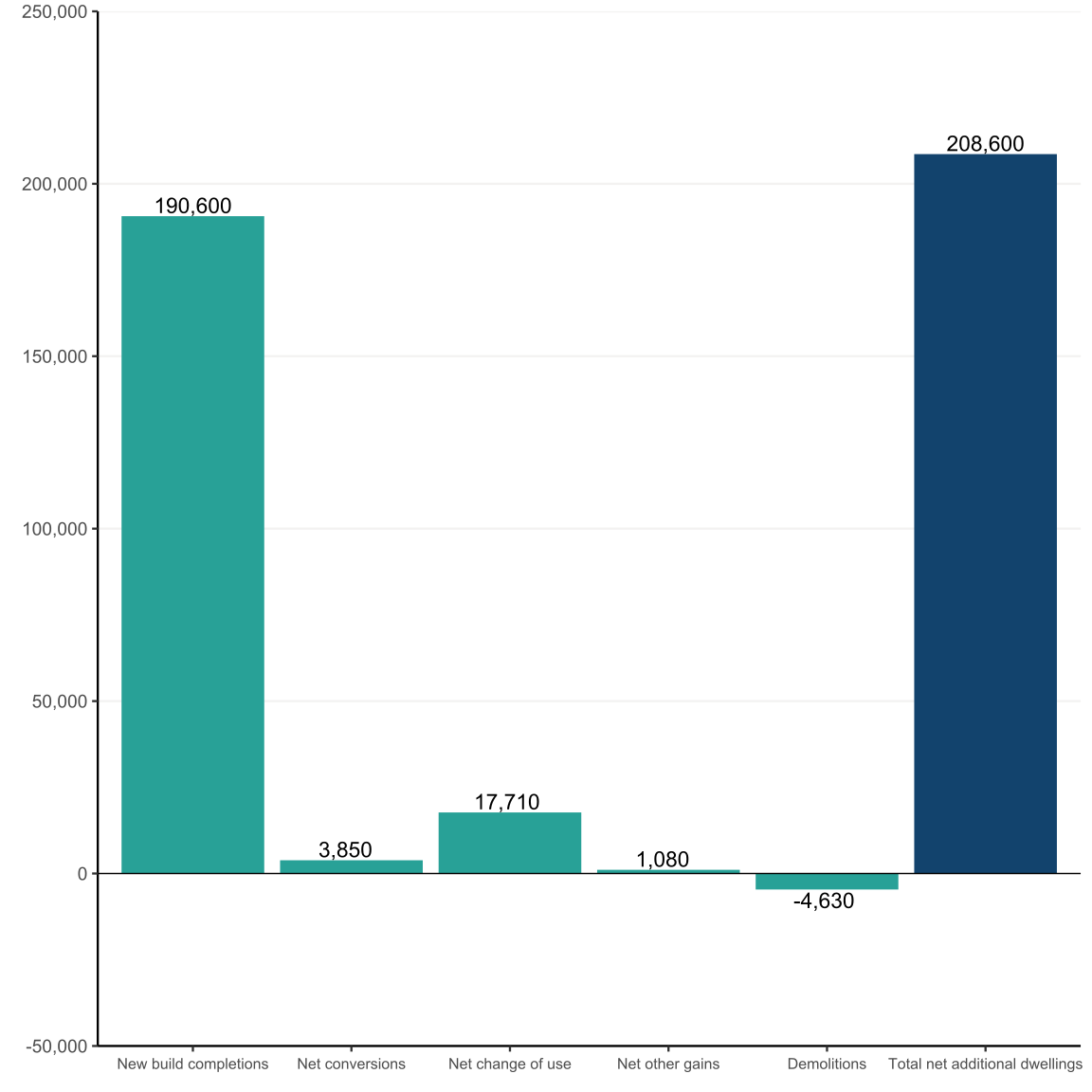
Table 2. Components of net additional dwellings, England, 2023-24[footnote 1] to 2024-25[footnote 5]
| Components of net housing supply | 2023-24 | 2024-25 | Change |
|---|---|---|---|
| New build completions | 198,680 | 190,600 | -8,080 |
| Of which under permitted development right - Building upwards to create dwelling houses on detached blocks of flats | 37 | 43 | 6 |
| Of which under permitted development right - Building upwards to create dwelling houses on detached commercial or mixed-use buildings | 38 | 3 | -35 |
| Of which under permitted development right - Building upwards to create dwelling houses on commercial or mixed-use buildings in a terrace | 0 | 6 | 6 |
| Of which under permitted development right - Building upwards to create dwelling houses on dwelling houses in a terrace | 0 | 0 | 0 |
| Of which under permitted development right - Building upwards to create dwelling houses on detached dwelling houses | 0 | 0 | 0 |
| Of which under permitted development right - Demolition of buildings and construction of dwelling houses | 0 | 10 | 10 |
| Of which under permitted development right - Unspecified (new build) | 698 | 242 | -456 |
| Of which under permitted development right - Total (new build) | 773 | 304 | -469 |
| Net conversions | 4,370 | 3,850 | -520 |
| Net change of use | 21,620 | 17,710 | -3,910 |
| Of which under permitted development right - Agricultural to residential | 565 | 462 | -103 |
| Of which under permitted development right - Office to residential | 6,695 | 5,154 | -1,541 |
| Of which under permitted development right - Storage to residential [footnote 6] | 99 | NA | NA |
| Of which under permitted development right - Light industrial use to residential | 62 | 94 | 32 |
| Of which under permitted development right - Commercial, business and service use to residential | 803 | 1,048 | 245 |
| Of which under permitted development right - Any other | 570 | 907 | 337 |
| Of which under permitted development right - Unspecified (change of use) | 30 | 16 | -14 |
| Of which under permitted development right - Total (change of use) | 8,824 | 7,681 | -1,143 |
| Net other gains | 2,100 | 1,080 | -1,020 |
| Demolitions | 5,350 | 4,630 | -720 |
| Of which under permitted development right - Demolitions | 23 | 349 | 326 |
| Total net additional dwellings | 221,410 | 208,600 | -12,810 |
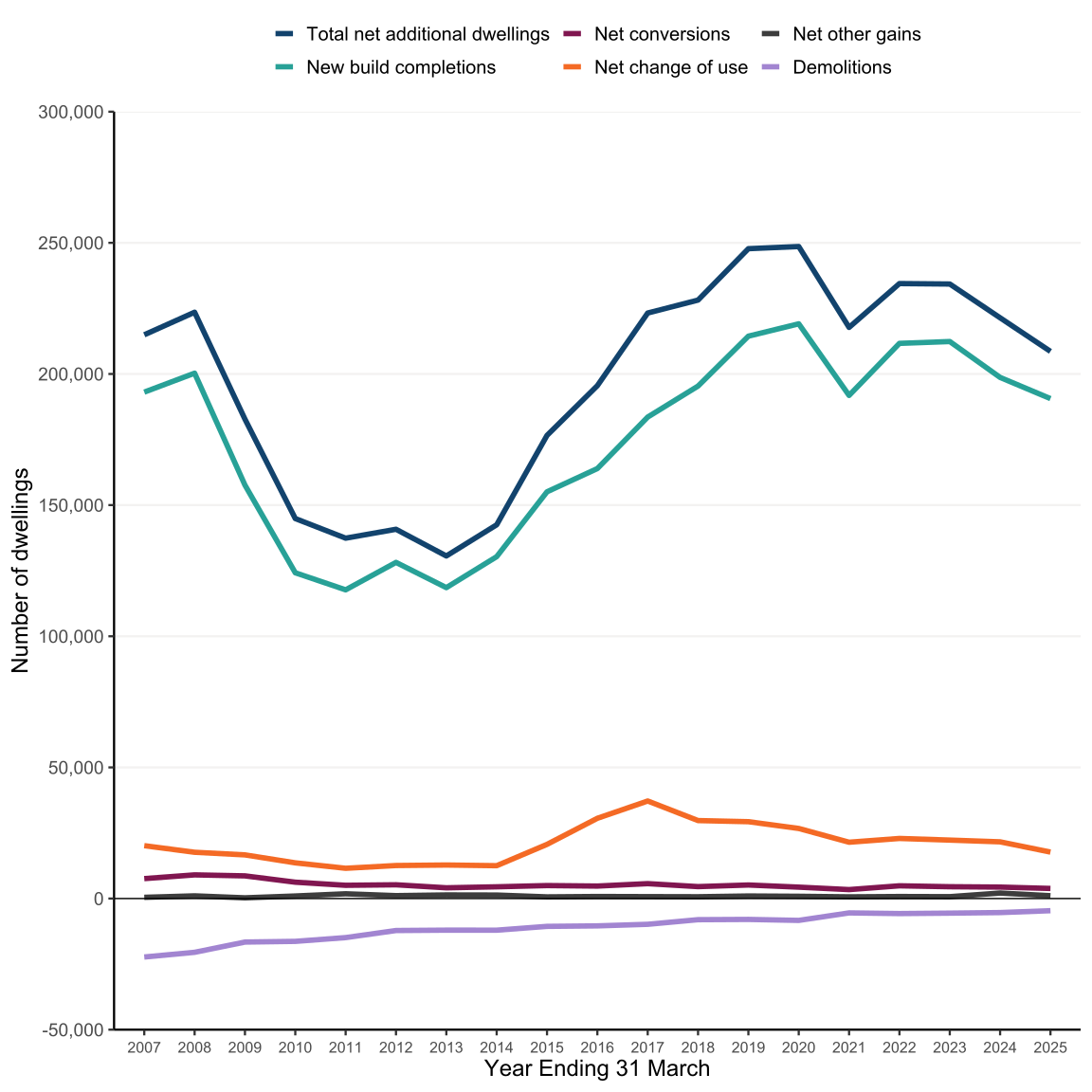
As can be seen from Figure 3 below, in 2024-25, net additions from new builds decreased by 4%, net additions from conversions decreased by 12%, net additions from change of use decreased by 18%, net additions from other gains decreased by 49% and losses from demolitions decreased by 13% from 2023-24.
Figure 3. Time series of the components of net additional dwellings, England, 2006-07 to 2024-25
5. Local authority figures
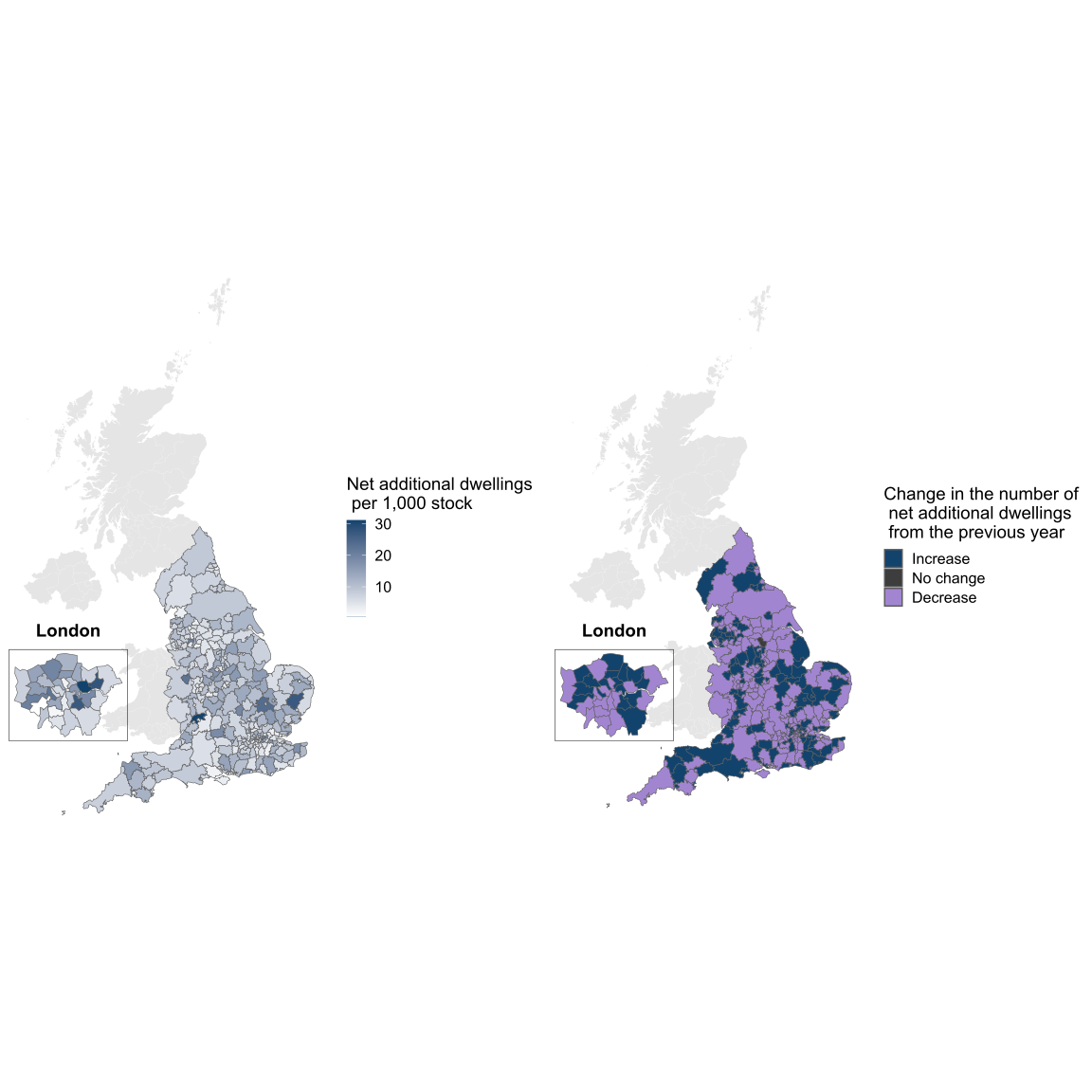
As can be seen from Figure 4 (left) below, net additions per 1,000 dwellings in 2024-25 varied across England. Areas with high levels of net additions per 1,000 dwellings are geographically varied. The highest three net additions rates per 1,000 of the stock were in Tewkesbury (31.2), Mid Suffolk (27.1) and South Cambridgeshire (23.6). Areas with low levels of net additions per 1,000 dwellings are also geographically varied. The lowest three net additions rates per 1,000 of the stock were in Castle Point (0.5), Portsmouth (0.7) and Richmond upon Thames (1.0). London presents a mixed picture, with 7 of the top 50 net addition rates per 1,000 dwellings (Newham, Barking and Dagenham, Lewisham, Hammersmith and Fulham, Hounslow, Barnet and Greenwich) and 7 of the lowest 50 net addition rates (Richmond upon Thames, City of London, Merton, Islington, Lambeth, Sutton and Bexley).
As can be seen from Figure 4 (right) below, changes in the level of net additional dwellings between 2023-24 and 2024-25 also varied across England, increasing in 129 out of 296 authorities. The geographic spread of increases and decreases is mixed. In London, 16 out of 33 London Boroughs have experienced an increase.
Figure 4. Net additions per 1,000 dwellings[footnote 7] (left) and change from previous year (right), by each English local authority district, 2024-25
6. Regional figures
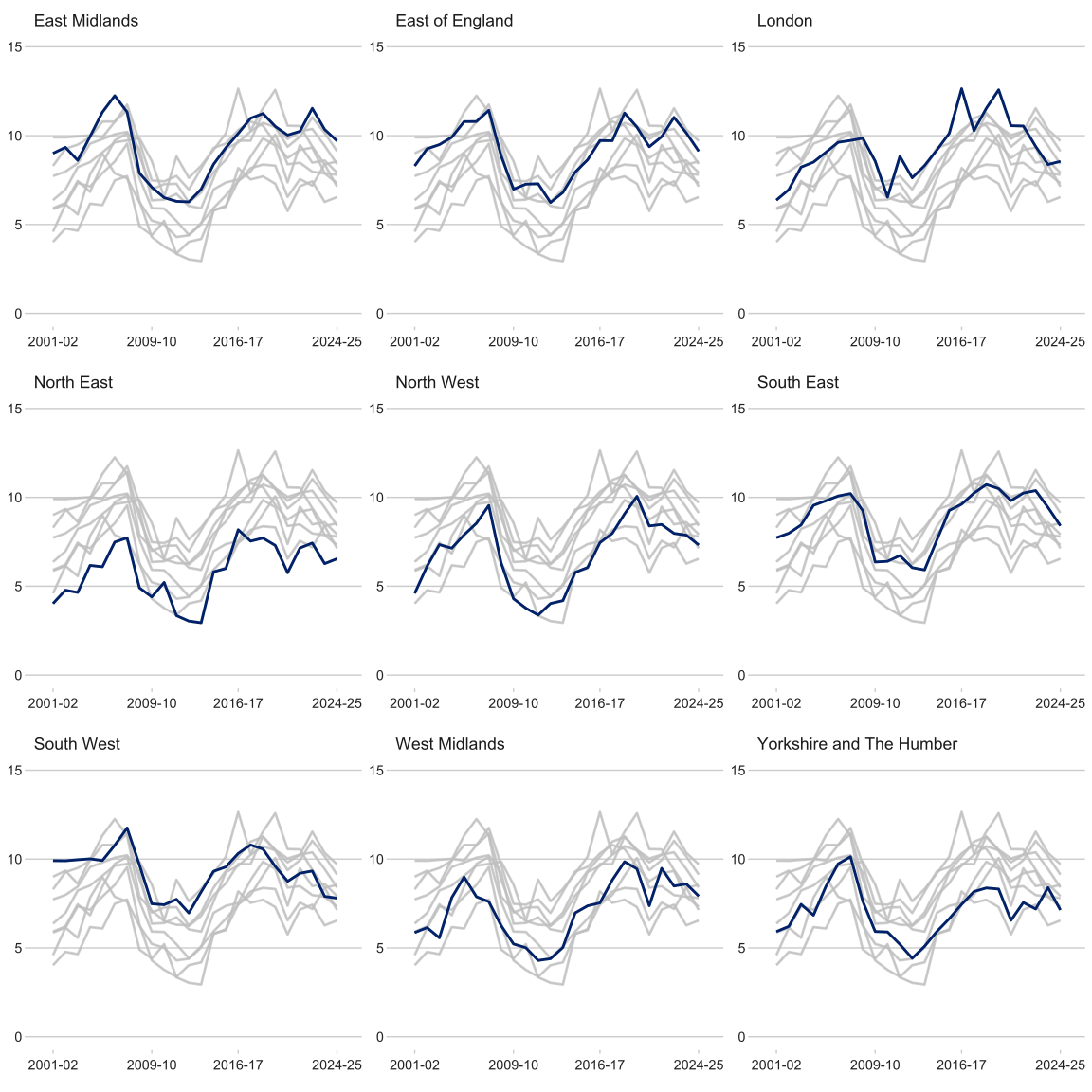
The region with the highest level of net additions per 1,000 dwellings in 2024-25 was the East Midlands (9.7), while the lowest was in the North East (6.5), as can be seen from Figure 5 below.
The East Midlands also had the highest level of net additions per 1,000 dwellings in 2022-23 and 2023-24, with London previously having the highest level of net additions per 1,000 dwellings in each year from 2018-19 to 2021-22. The North East has consistently shown the lowest level of net additions per 1,000 dwellings in each year since 2017-18, with the exception of 2022-23 when Yorkshire and The Humber had the lowest level.
Figure 5. Time series of net additions per 1,000 dwellings[footnote 4] by English region, 2001-02 to 2024-25
7. Communal accommodation
This publication includes separate data on additions and losses from the stock of communal accommodation. These figures are not included in the main net additions figures. Communal accommodation is distinguished from the dwellings in the main net additions figures as it does not provide self-contained household spaces with kitchens and bathrooms. Communal accommodation, thus defined, does not include ‘student or other cluster flats’ which are included in the main net additional dwellings figures. Each cluster flat typically has several bedrooms and shared and cooking and living space behind a lockable door. Communal accommodation, however, has a number of individual bedrooms sharing communal facilities such as a refectory or lounge. Further details are available in the Technical Notes.
Figures for communal accommodation are split into ‘student’ and ‘other’ communal accommodation. Student communal accommodation is the traditional ‘student hall’ style with many student rooms and a single refectory. Other communal accommodation includes care homes or hostels where rooms are arranged along corridors with one or more communal sitting and dining rooms.
As can be seen from Table 3 below, in 2024-25, there was a net change of 540 student communal accommodation units and a net change of 980 other communal accommodation units, bringing the total net change to 1,520 communal accommodation units.
Table 3. Components of communal accommodation[footnote 8], England, 2023-24[footnote 1] to 2024-25[footnote 3]
| Components of communal accommodation | 2023-24 | 2024-25 | Change |
|---|---|---|---|
| Student gain | 270 | 600 | 330 |
| Student loss | 120 | 60 | -60 |
| Student net change | 150 | 540 | 390 |
| Other gain | 500 | 1,080 | 580 |
| Other loss | 150 | 100 | -50 |
| Other net change | 350 | 980 | 630 |
| Total net change | 500 | 1,520 | 1,020 |
8. Comparison with affordable housing supply
The Ministry of Housing, Communities and Local Government (MHCLG) also publishes an annual statistical release titled Affordable Housing Supply which is the primary and most comprehensive measure of affordable housing supply.
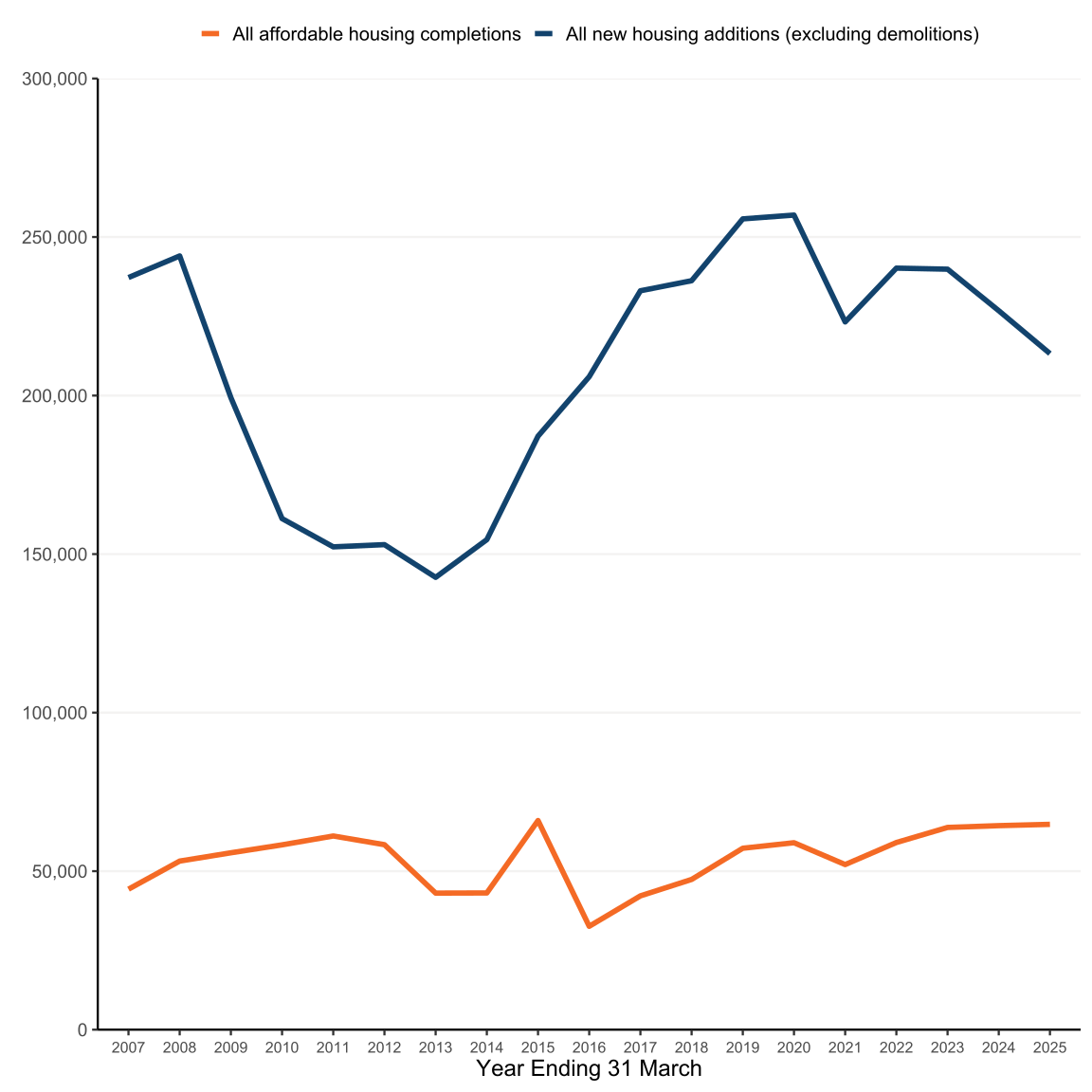
As can be seen from Figure 6 below, in 2024-25, there were 64,760 affordable homes delivered, representing an estimated 30% of the total number of new additions to the housing stock (i.e. excluding demolitions). This proportion has varied considerably since 2006-07, with a peak of 40% in 2010-11 and a trough of 16% in 2015-16.
Affordable homes delivered includes new build completions and acquisitions of existing stock. There were 58,960 new build affordable homes completed in 2024-25, an estimated 31% of the total number of new build completions in England.
Figure 6. Time series of affordable housing and all new housing additions, England, 2006-07 to 2024-25
9. Estimating net additional dwellings since 1 April 2025
Net additional dwellings is our primary and most comprehensive measure of overall additional housing supply in England. However, these statistics are an annual measure, providing figures for each whole financial year, and take more than 6 months to compile and publish. This means they do not yet tell us about homes delivered from April 2025 onwards, and cannot be used to measure time periods that do not align with financial years.
To address these limitations, we are including estimates of net housing supply based on published figures for new Energy Performance Certificate (EPC) lodgements for new homes, adjusted to account for demolitions. These are also published each quarter in our Housing supply: indicators of new supply series. The methodology for this was originally developed and published in May 2024 and can be found in Measuring progress towards 1 million homes.
The method begins with net additions, the primary measure of additional housing supply, but then makes two adjustments:
1. To estimate new housing supply occurring after the latest published net additions statistics – currently up to March 2025: the method uses published figures on EPCs lodged for new homes from April 2025 onwards, adjusted to account for demolitions.
2. To measure progress towards the government’s target to deliver 1.5 million homes during the current parliament: This means adjusting estimated 2024-25 net additions (or outturn net additions when available) to exclude those delivered before 9 July 2024 (the day the current Parliament first met). The method does so using the weekly profile of new EPC lodgements for new homes over that period.
MHCLG publishes both quarterly and weekly figures for EPCs and these estimates make use of both. The EPC figures have been shown over recent years to be a close proxy for gross additional dwellings (net additional dwellings excluding demolitions). Therefore, to produce estimates of net additional dwellings we apply a small downward adjustment to the EPC data to subtract an estimate of demolitions over the period. This adjustment is calculated as a 5-year rolling average of demolitions from the net additions release, as a proportion of new EPC lodgements over the same period. To produce the England estimate, we use the ratio for England as a whole, and to produce regional estimates we use the individual ratios for each region. For the small proportion of EPC data for which the region is unknown we use the England ratio.
Table 4 shows the estimate of net additional dwellings for the current financial year to date (1 April 2025 to 9 November 2025); and the estimate of net additional dwellings in this parliament (9 July 2024 to 9 November 2025).
Table 4. Estimated net additional dwellings since 1 April 2025 and in this parliament, by time period and data source
| Area | 2024-25 | 1 April 2025 to 9 November 2025 | 9 July 2024 to 9 November 2025 |
|---|---|---|---|
| England | 208,600 | 124,800 | 275,600 |
| North East | 8,340 | 5,200 | 11,300 |
| North West | 25,200 | 15,600 | 33,700 |
| Yorkshire and The Humber | 18,100 | 9,900 | 3,200 |
| East Midlands | 21,610 | 13,100 | 28,900 |
| West Midlands | 20,730 | 11,000 | 26,000 |
| East of England | 26,010 | 16,800 | 36,100 |
| London | 32,680 | 19,700 | 42,600 |
| South East | 34,870 | 21,500 | 46,500 |
| South West | 21,060 | 11,900 | 27,300 |
| Unknown | 0 | 0 | |
| Method/Source | Outturn net additions | Quarterly/weekly EPCs adjusted for demolitions | Outturn net additions plus quarterly/weekly EPCs adjusted for demolitions |
Sources: Housing supply; net additional dwellings, Live Table 118
EPCs for all new domestic properties, Live Table NHB1 and Weekly EPCs for domestic properties (new dwellings) table
Notes: The EPC-based estimates of net additional dwellings are rounded to the nearest 100 because they are more subject to uncertainty and revision than the annual net additions statistics. The rounded values may not exactly sum to the total. Values will be replaced by annual net additions statistics when they are published for the relevant time period. Additionally, figures for EPC’s are themselves subject to revision.
We would welcome comments or suggestions from users on the inclusion of these estimates in this regular statistical series on indicators of housing supply, on the methodology or any other aspect of the statistics. Your views and feedback help us to maximise the quality and value of our statistics to users. You can contact us at housing.statistics@communities.gov.uk.
10. Accompanying tables and open data
10.1 Tables
Accompanying tables are available to download alongside this release.
10.2 Open data
These statistics are available in fully open and linkable data formats at Open Data Communities.
11. Technical notes
Please see the accompanying Technical Notes for further details.
12. Enquiries
Media enquiries:
Office hours: 0303 444 1209
Email: NewsDesk@communities.gov.uk
Public enquiries and Responsible Statistician: Neil Higgins
Email: housing.statistics@communities.gov.uk
Information on Official Statistics is available via the UK Statistics Authority website.
Information about statistics at MHCLG is available via the Department’s website.
-
National Statistics are accredited official statistics. Accredited official statistics are called National Statistics in the Statistics and Registration Service Act 2007. Please see the Office for Statistics Regulation website for further details. ↩ ↩2 ↩3 ↩4
-
Our statistical practice is regulated by the Office for Statistics Regulation (OSR). OSR sets the standards of trustworthiness, quality and value in the Code of Practice for Statistics that all producers of official statistics should adhere to. You are welcome to contact us directly with any comments about how we meet these standards. Alternatively, you can contact OSR by emailing regulation@statistics.gov.uk or via the OSR website. ↩
-
The 2023-24 figures have been revised from 221,070 to 221,410 due to 26 local authorities submitting revised data in accordance with the published scheduled revisions policy. Figures for 2011-12 to 2020-21 have been previously revised, as scheduled, to calibrate to the Census 2021 dwelling count. Figures for 2024-25 are provisional and subject to revision. For details see the Technical Notes. ↩ ↩2
-
From 2000-01 all local authorities submitted data to the Department through the Housing Flows Reconciliation form. Figures from 1990-91 to 1999-2000 are annual differences from the Department’s Dwelling Stock Estimates Live Table 104. For further details see the Technical Notes. ↩ ↩2
-
Totals may not equal the sum of component parts due to rounding to the nearest 10. ↩
-
From 2024-25, Permitted Development Right (storage to residential) has been removed. The relevant permitted development right was retired in 2019 with the last home under the permitted development right deliverable around 2022 (not accounting for, for example, appeal decisions). After allowing an extra year for any appeal permissions it has now been removed. ↩
-
To show housing supply in proportion to the size of each local authority district, we divide the net additions in the year by the existing dwelling stock. The result is multiplied by 1,000 to give a figure that is easier to interpret. For example, a region with 570 net additional dwellings over the previous year where there are 100,000 dwellings would give a value of 5.7 net additional dwellings per thousand of existing stock and would therefore be shaded in light blue in the coloured map. Rates of net additions are not uniform across England and can vary considerably between local authority areas. ↩
-
The number of communal accommodation units corresponds to the number of council tax valuation listings for the accommodation as described on the Valuations Office Agency website. Figures from 2015-16 have also been collected in the communal accommodation units of bedspaces and are published in Live Table 124b. Figures for previous years are available, however, these are not directly comparable (as London figures previously referred to the number of bedrooms provided, rather than council tax valuation listings). The Greater London Authority were unable to provide communal accommodation in council tax listings units for London Boroughs for 2020-21 to 2024-25 by the data collection deadline but did provide communal accommodation data for 2020-21 to 2024-25 in bedspace units, published in Live Table 124b. ↩