Get Britain Working: Labour Market Insights April 2026
Published 30 April 2026

© Crown copyright 2026
This publication is licensed under the terms of the Open Government Licence v3.0 except where otherwise stated. To view this licence, visit nationalarchives.gov.uk/doc/open-government-licence/version/3 or write to the Information Policy Team, The National Archives, Kew, London TW9 4DU, or email: psi@nationalarchives.gov.uk.
Where we have identified any third party copyright information you will need to obtain permission from the copyright holders concerned.
This publication is available at https://www.gov.uk/government/statistics/get-britain-working-labour-market-insights-april-2026/get-britain-working-labour-market-insights-april-2026
The Get Britain Working: Labour Market Insights publication series builds on the Get Britain Working White Paper Analytical Annex, which included new analysis of the UK labour market.
The publication contains some core statistics which will be updated with each release, while other statistics will be published on a one-off basis or updated less frequently. Every other edition will include a contextual chapter offering deeper analysis on a specific topic, helping readers build understanding on a different subject with each release. In this publication the contextual chapter focuses on skills and employment in different industrial sectors.
Please note that because these statistics are new, they are ‘Official Statistics in Development’. They will be tested with users in line with the standards of trustworthiness, quality, and value in the Code of Practice for Statistics..
1. Main stories
Here are the main headlines from the publication:
-
In December 2025, the overall into-work rate for customers in the ‘Searching for work’ conditionality regime in Britain was 7.9%.
-
In England, into-work rates are highest for ‘Searching for work’ customers that have a level 4 educational qualification or above.
-
The proportion of Universal Credit (UC) customers who move into work who sustain employment for at least 3 months fluctuates around 70%.
-
The 6-month worklessness rate for customers in the UC ‘Searching for work’ conditionality regime has ranged between 50% and 60% in recent years.
-
In October to December 2025, the employment rate of people aged 18 to 66 in Britain was 75.8%. In October to December 2025, the employment rate of women aged 18 to 66 years in Britain was 72.8%.
-
The NEET rate for people aged 18 to 24 years in the United Kingdom was 15.2% in October to December 2025. England has considerable variation in NEET rates.
-
In October to December 2025, economic inactivity due to long-term sickness for people aged 18 to 66 years in Britain was 6.7%.
-
In England, UC customers are more likely than the wider population to have a highest educational qualification at level 2 and less likely to hold qualifications at level 3 and above.
-
Individuals on UC are more likely to change sectors compared to the wider UK population. There are large flows towards ‘Administrative and support services’ for those on UC.
2. What you need to know
Get Britain Working outcome metrics
Sections 7a-j of this publication contain the annual Get Britain Working outcome metrics. These were previously published in a publication, but going forward will be published in the April edition of the Get Britain Working: Labour Market Insights publication.
Universal Credit
Universal Credit (UC) is a single, usually monthly payment, administered by the Department for Work and Pensions (DWP). It is the primary working-age benefit.
UC customers are required to do certain work-related activities to receive UC. These activities depend on which of the 6 conditionality regimes the customer is placed in[footnote 1]. Each person will be assigned one of 6 conditionality regimes, based on their assessed capability and circumstances. These 6 conditionality regimes are:
1. Searching for work
2. Working - with requirements
3. No work requirements
4. Working - no requirements
5. Planning for work
6. Preparing for work
For more information on the definition of UC and the conditionality regimes please see the glossary section of the accompanying Background Information and Methodology paper
Statistics about the people on UC, including their conditionality regime are also published on Stat Xplore monthly.
Most of the analysis focuses on the ‘Searching for work’ conditionality regime. This conditionality regime is for customers who are not working or working with low earnings. In this regime a customer is required to take action to secure work - or more or better paid work if they already have a job.
Into-work rate
The into-work rate is defined as the proportion of UC ‘Searching for work’ regime customers who have earnings in one assessment period who did not have earnings in the preceding assessment period.
Given this definition, the rate could miss some movements out of, and back into, work which happens within the time of 2 assessment periods if earnings are present in both. Higher into-work rates do not always correspond with a higher number of people moving into work. For example, if the same number of people start work in 2 different months, the into-work rate will be lower in the month with more people looking for work.
The amount of UC someone is eligible for is calculated based on their circumstances each month. These are called ‘assessment periods’. A customer’s UC payment is based on their circumstances in the previous assessment period, and their first assessment period starts on the day they make a claim. Assessment periods are monthly and begin on the same day each month.
Sustained employment rate
The 3-month (and 6-month) sustained employment rate is defined as the proportion of UC ‘Searching for work’, ‘Working - with requirements’ and ‘Working - no requirements’ conditionality regime customers who started earning in a given assessment period and who have continued to earn for each of the following 2 (or 5) assessment periods. This means that they will have sustained earnings for 3 (or 6) months – and therefore sustained employment.
Measure of worklessness amongst UC ‘Searching for work’ customers
The worklessness rate is defined as the proportion of UC ‘Searching for work’ conditionality regime customers in a given assessment period, who have had at least 6 consecutive months of no earnings and been in the ‘Searching for work’ conditionality regime for at least 6 consecutive months. Individuals can count towards the indicator in multiple assessment periods, if worklessness continues or reappears. Each assessment period without earnings is a base month that the individual can be included in the indicator.
We have updated the methodology used to calculate the measure of worklessness since the last Get Britain Working: Labour Market Insights publication in January 2026. These changes are designed to make the statistic clearer and easier to interpret.
Previously, the measure included customers who either moved from the ‘Searching for work’ conditionality regime into other regimes, or who left UC during the 6-month tracking period. Under the revised methodology, the measure now focuses solely on individuals who remain in the ‘Searching for work’ conditionality regime with no earnings for the entire 6-month tracking period.
Not in education, employment or training (NEET)
People are considered to be in education or training if they are enrolled on an education course and are still attending or waiting for term to start or restart; are doing an apprenticeship; are on a government-supported employment or training programme; are working or studying towards a qualification; have had job-related training or education in the last 4 weeks. People not in education, employment or training (NEET) is anybody who is not in any of the forms of education or training listed above and not in employment. As a result, a person identified as NEET will always be either unemployed or economically inactive.
Young people who are NEET meet this definition and are aged 16 to 24 years.
The methodology behind constructing the estimates of young people who are NEET by region has been altered meaning that, although the change is minor and the figures are similar, the regional NEET figures published in this publication cannot be compared with similar figures in the Get Britain Working: Labour Market Insights January 2026 and the Get Britain Working White Paper Analytical Annex. The updated time series can be found in the accompanying data tables. The regional NEET figures in this publication supersede those in January 2026’s publication. This methodology change is to align with the methodology behind the UK NEET statistics published by the ONS, which is explained in the Background Information and Methodology paper accompanying this publication.
This publication also includes a NEET measure for people aged 18 to 24 years, which is part of the Get Britain Working suite of outcome metrics (in section 7f). This is taken from the published official statistics by the Office for National Statistics (ONS).
Level of educational qualification
There are 9 educational qualification levels. The details of what each qualification level means can be found here.
Industrial sector
Industrial sector classification is based on SIC 2007 codes, assigned to PAYE schemes. This is the main industrial sector of the employer, it may not directly relate to the occupation which someone works in. For example, someone could be a lorry driver for a retail employer, but would show as retail not logistics.
3a. The into-work rate
The following statistics focus on customers in the ‘Searching for work’ conditionality regime. For customers in this regime who are out of work, we monitor proportions of customers who move into work. This is referred to as the ‘into-work rate’.
Universal Credit (UC) is not just a benefit for those who are out of work; it is also for those who are working, but whose earnings are low enough to qualify. Someone may move into work and remain on UC.
In December 2025, the overall into-work rate for customers in the ‘Searching for work’ conditionality regime in Great Britain was 7.9%
There is seasonality of into-work rates with lowest rates often seen at the start of the year, and highest rates in April and October
Figure 1: Monthly into-work rates, Great Britain, January 2019 to December 2025
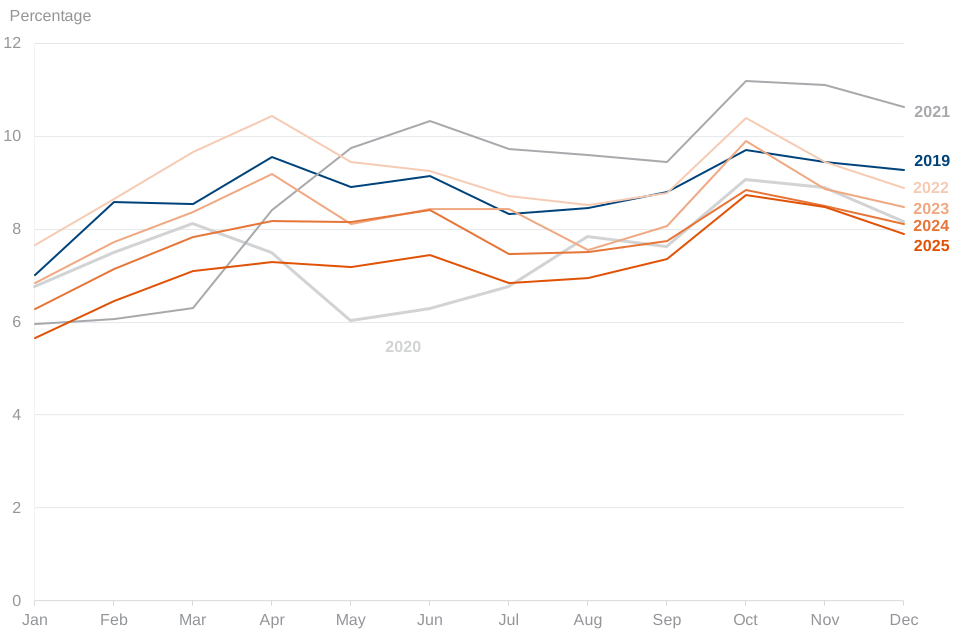
The into-work rate is influenced by the time of year. When comparing into-work rates, it is important to compare the same month across years due to this seasonality. Rates are generally lower in January and February, and the highest rates are seen in April and October, with a fall in rates over the summer. These seasonal trends are highlighted in figure 1.
Figure 1 also shows the fall in the proportion of customers moving into work in more recent years. Given that into-work rates in 2020 and 2021 were heavily influenced by the COVID-19 pandemic, the into-work rates for these years are represented in grey.
3b. Into-work rate by local authority and Jobcentre Plus district
The following statistics focus on customers in the ‘Searching for work’ conditionality regime. For customers in this regime who are out of work, we monitor proportions of customers who move into work. This is referred to as the ‘into-work rate’.
Into-work rates are influenced by the local labour market, and some variation between local authorities and Jobcentre Plus districts is to be expected.
Note that the data tables published alongside this publication include a longer time series of into-work rates by local authority and Jobcentre Plus district (from 2019).
There is variation in into-work rates across Britain with higher rates often found in more rural local authorities
From January 2025 to December 2025, a quarter of local authorities had an average monthly into-work rate of 9.0% or higher. The local authorities with the highest average monthly into-work rate were Boston (12.3%), Test Valley (11.4%), Mid Suffolk (11.1%) and North Yorkshire (11.1%). In contrast, Birmingham and Bradford had the lowest average into-work rate over this period (5.1% and 5.3% respectively).
There is variation in into-work rates between Jobcentre Plus districts with higher rates often found in districts predominantly made up of rural areas
Over the 12 months from January 2025 to December 2025, 20 of the 34 Jobcentre Plus districts had an average monthly into-work rate in the range 7.1% to 9.0%. The districts with the highest average monthly into-work rate were North East Yorkshire and Lincolnshire (9.7%), Norfolk and Suffolk (9.3%) and Devon and Cornwall (9.2%). In contrast, Birmingham and Solihull had the lowest average into-work rate over this period (5.2%).
3c. Into-work rate by duration on Universal Credit
Understanding the relationship between characteristics and into-work rates can be helpful in contextualising changes to the overall into-work rate, particularly where the composition of characteristic groups has changed. If characteristics associated with lower into-work rates become more prevalent, then this could help explain why the overall into-work rate has decreased over time.
Into-work rates are higher for customers who have been in the ‘Searching for work’ regime for up to 3 months
Figure 2: Monthly into-work rates by duration in the ‘Searching for work’ regime, UK, January 2019 to December 2025
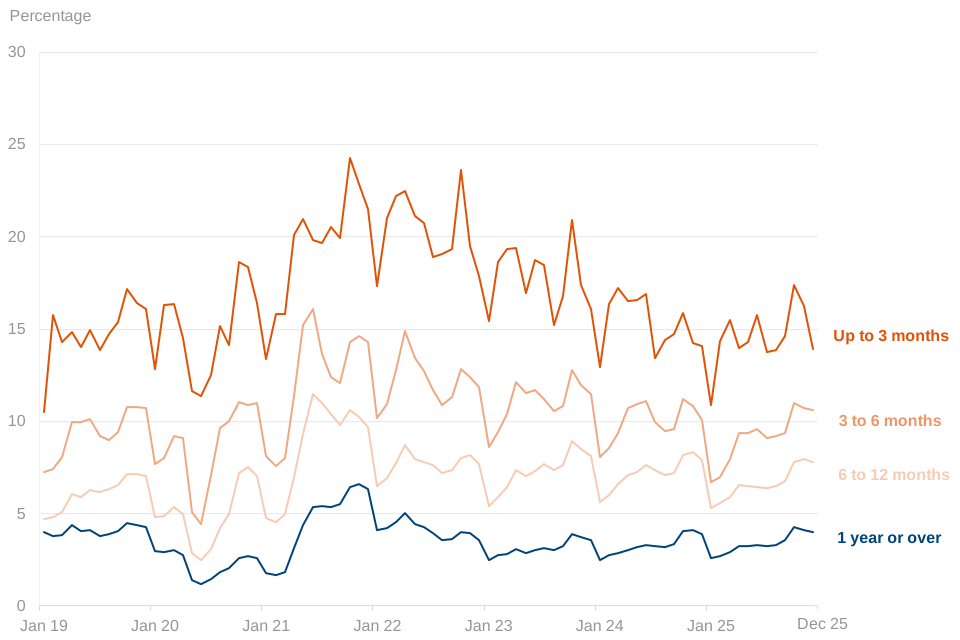
Figure 2 shows how into-work rates are higher for customers who have newly joined the ‘Searching for work’ conditionality regime compared to those who have been in this regime for longer. While these customers are new to the ‘Searching for work’ regime, they may not be new customers of UC. They may have moved from other UC conditionality regimes following a change in their circumstances.
The effect of the COVID-19 pandemic is also reflected in this graph. There is a significant reduction in into-work rates in mid-2020 followed by sizeable increases in the summer of 2021, across all durations in ‘Searching for work’. These elevated into-work rates persisted through late 2021 and into 2022 but are now more aligned with pre-COVID-19 pandemic trends. Into-work rates are lowest for those in the ‘1 year or over’ group.
Proportions of customers who have spent one year or more in the ‘Searching for work’ conditionality regime are significantly higher than prior to the COVID-19 pandemic
Figure 3: Proportion of ‘Searching for work’ caseload, restricted to those out of work, by duration in the ‘Searching for work’ conditionality regime, Great Britain, January 2019 to December 2025
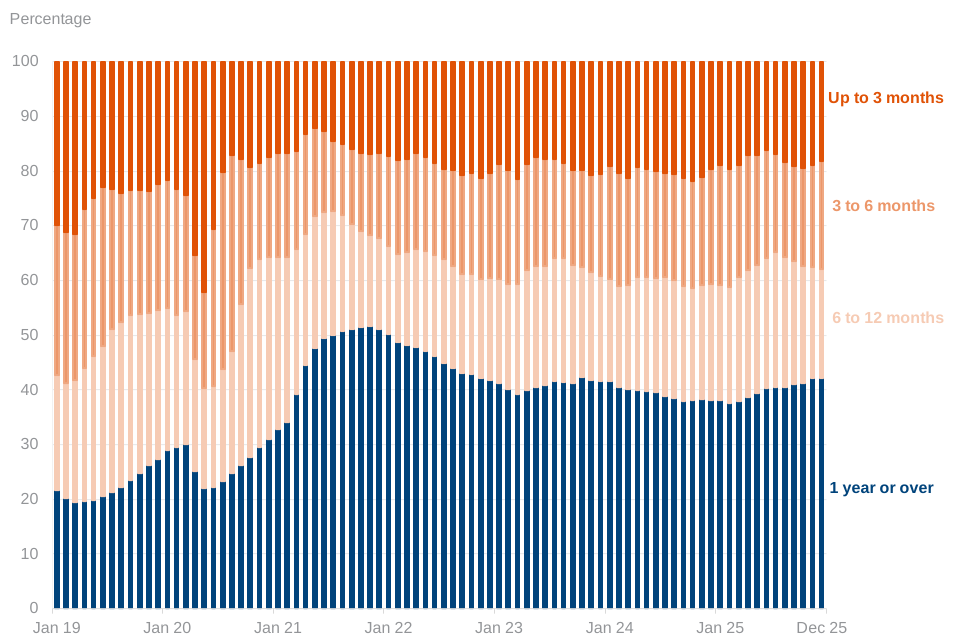
In December 2025, 42% of those out of work in ‘Searching for work’ had been in this conditionality regime for one year or more. 18% had spent fewer than 3 months in this regime. Since 2019, there has been a considerable change in the time that customers spend in the ‘Searching for work’ regime.
Figure 3 highlights the proportions of groupings of customers based on their duration in ‘Searching for work’, restricted to those out of work at each specific month. This shows a considerable shift in the composition of the group because of the first COVID-19 lockdown. There is a spike in customers with a duration of fewer than 3 months between April and June 2020 (the impact of the first national lockdown). This increase led to staggered increases in the ‘3 up to 6 months’, ‘6 up to 12 months’, and ‘1 year or over’ groups’ proportions of the caseload in subsequent months.
The share of the caseload with a duration of ‘1 year or over’ has fallen overall since its highest point in November 2021, although it has increased across 2025. While there have been some decreases to the ‘1 year or over’ group, the proportion of customers in this group remains significantly higher than it was before the COVID-19 pandemic.
More recently, the number of customers in the ‘Up to 3 months’ group has decreased. This, in addition to the fact that the number of customers in the other duration groups have increased, has led to a reduction in the proportion of customers in the ‘Up to 3 months’ duration group. As the ‘Up to 3 months’ group has consistently had higher into-work rates than other duration groups, the reduction in the proportion of customers in this group could lead to a comparative reduction in the overall into-work rate, all else equal.
3d. Into-work rate by age of Universal Credit customer
Into-work rates are lowest for customers aged 50 and over, and higher for younger customers
Figure 4: Monthly into-work rates by age group of customers in the ‘Searching for work’ regime, Great Britain, January 2019 to December 2025
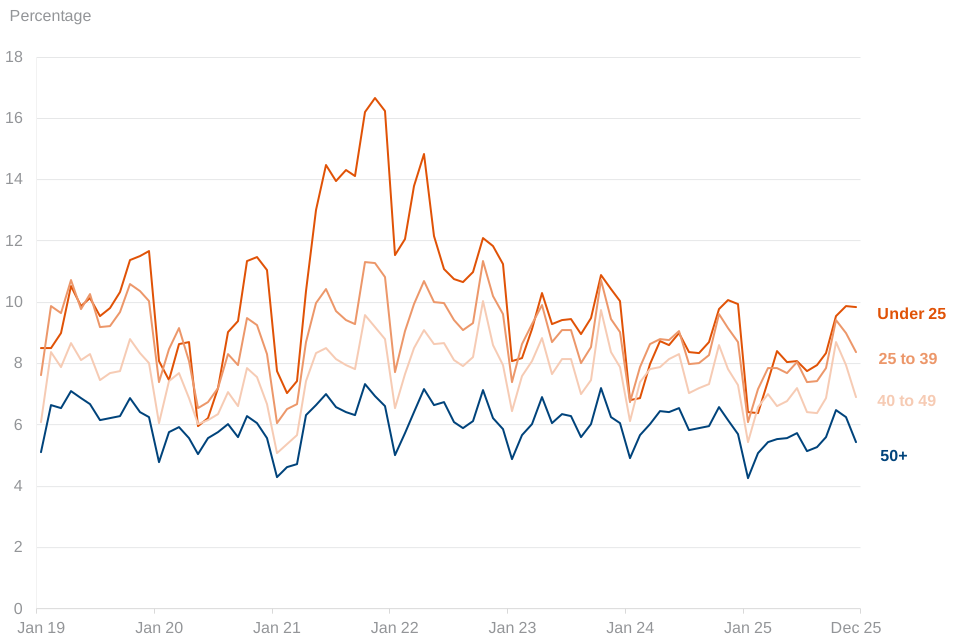
Figure 4 shows how into-work rates are highest for younger customers, particularly those aged under 25, and lowest for people aged 50 and over. Figure 4 also shows how into-work rates were particularly high for young people following the COVID-19 pandemic, especially between July 2021 and July 2022. Rates have reduced considerably since then and are lower now than they were before the COVID-19 pandemic both for those aged under 25 and those aged 25 to 39. People aged over 50 saw less variation in into-work rates over the post-pandemic period. Into-work rates for this group remain low.
Those aged 25 to 39 make up the largest proportion of the out of work in the ‘Searching for work’ conditionality regime
Figure 5: Proportion of ‘Searching for work’ caseload, restricted to those out of work, by age group, Great Britain, January 2019 to December 2025
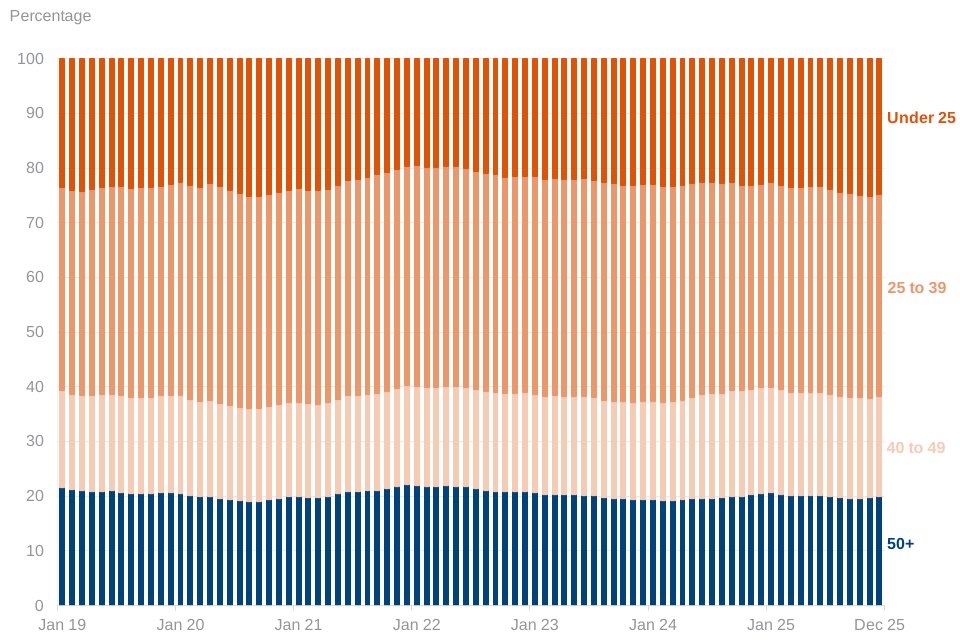
In December 2025, 37% of the customers in the ‘Searching for work’ conditionality regime were aged 25 to 39, the largest age group proportion. Age group proportions have been relatively stable in the conditionality regime. However, the summer of 2020 saw an increase in the proportion of customers aged under 25. This was because of the first COVID-19 lockdown which reduced hiring by employers, which disproportionately affects young people. This proportion decreased over 2021 but has been gradually increasing since late 2022. In December 2025, 25% of ‘Searching for work’ customers were under 25.
More recently the proportion in the 25 to 39 group has decreased. This decrease is not due to changes in the size of this group but rather increases across other age groups over this period. As the two age groups for those aged over 40 have the lowest into-work rates, changes in the proportions of these groups will influence the overall into-work rate.
4. Sustained employment of Universal Credit customers
The focus of the sustained employment rate is on ‘Searching for work’, ‘Working – with requirements’ and ‘Working – no requirements’ conditionality regime customers, who have started to earn and who have managed to immediately sustain earnings.
The proportion of customers who move into work who sustain employment for at least 3 months (the 3-month sustained employment rate) fluctuates around 70%
Figure 6: 3-month sustained employment rate, Great Britain, January 2019 to December 2025
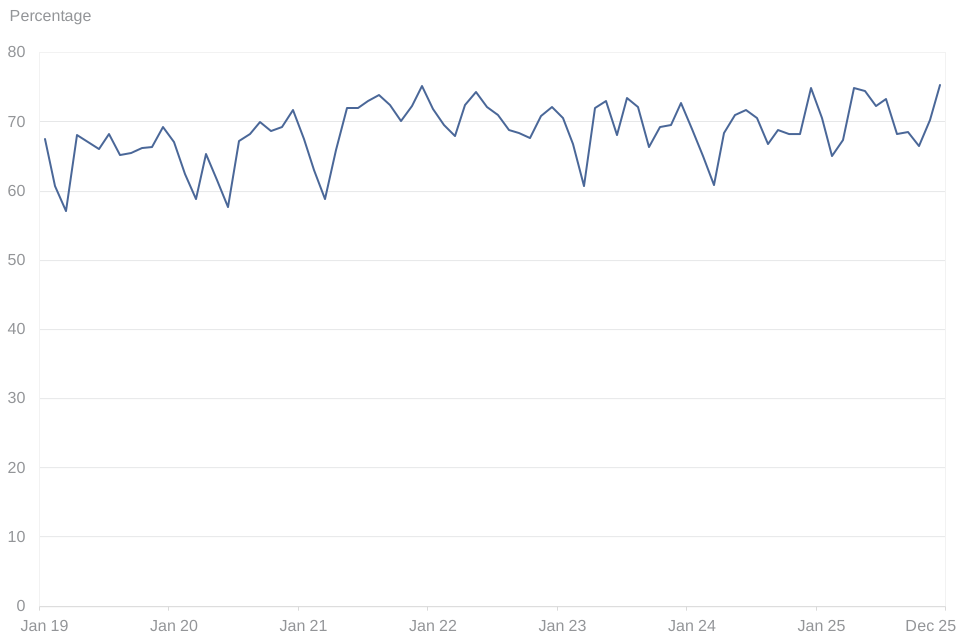
Figure 6 shows the 3-month sustained employment rate has marginally increased in recent years. In December 2025 the 3-month sustained employment rate was 75.3%. This means, of those who started working 3 months prior (in October 2025), 75.3% remained in work throughout November and December 2025, and so sustained employment for 3 months.
The proportion of customers who move into work who sustain employment for at least 6 months (the 6-month sustained employment rate) fluctuates around 50%
Figure 7: 6-month sustained employment rate, Great Britain, January 2019 to December 2025
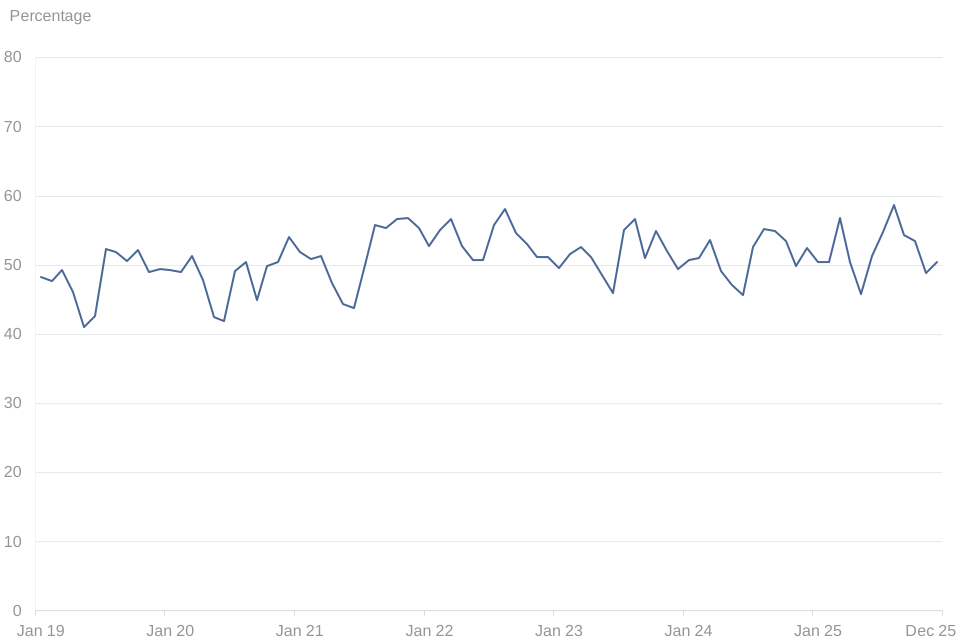
Figure 7 shows the 6-month sustained employment rate has marginally increased in recent years. In December 2025 the 6-month sustained employment rate was 50.5%. This means, of those who started working 6 months prior (in July 2025), 50.5% remained in work for all months between July 2025 and December 2025, and so sustained employment for 6 months.
5. Measure of worklessness of Universal Credit customers
The focus of the worklessness rate is on customers in the UC ‘Searching for work’ conditionality regime who have at least 6 consecutive months of no earnings.
We have updated the methodology used to calculate the measure of worklessness since the last publication in January 2026. These changes are designed to make the statistic clearer and easier to interpret.
Previously, the measure included customers who either moved from the ‘Searching for work’ conditionality regime into other regimes, or who left UC during the 6-month tracking period. Under the revised methodology, the measure now focuses solely on individuals who remain in the ‘Searching for work’ conditionality regime with no earnings for the entire 6-month tracking period.
The proportion of ‘Searching for work’ conditionality regime customers who have at least 6 consecutive months of no earnings (the worklessness rate) has ranged between 50% and 60% in recent years
Figure 8: Worklessness rate, Great Britain, January 2019 to December 2025
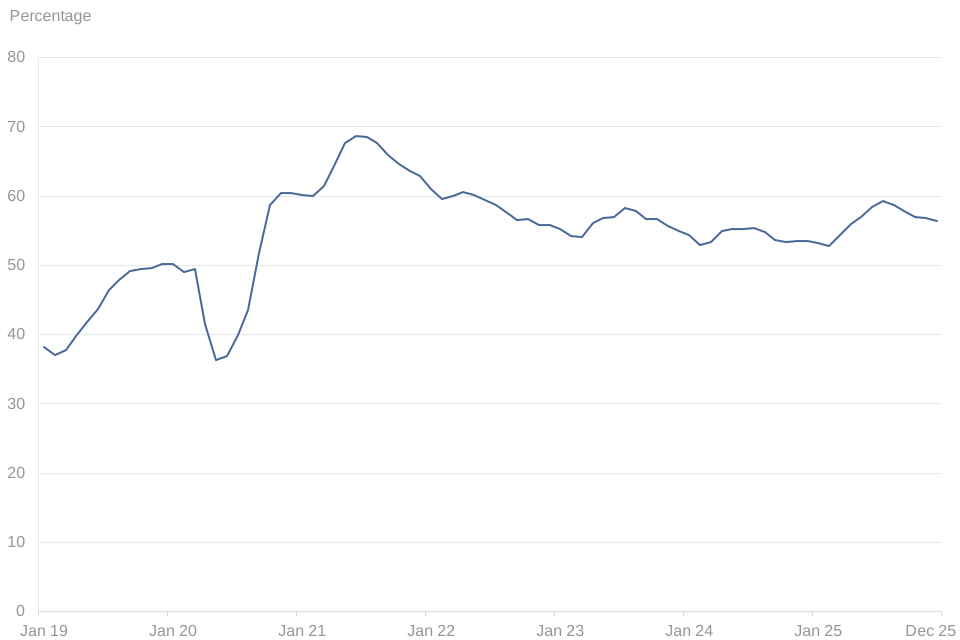
Figure 8 shows that the measure of worklessness for customers in the ‘Searching for work’ conditionality regime has ranged between 50% and 60% in recent years. The worklessness rate for December 2025 was 56.5%. This means, of those in the ‘Searching for work’ conditionality regime who were not working in December 2025, 56.5% have been out of work for at least 6 consecutive months and have been in ‘Searching for work’ for at least 6 consecutive months.
The worklessness rate is lowest for younger customers, and higher for customers aged 50 and over
Figure 9: Worklessness rate by age group, Great Britain, January 2019 to December 2025
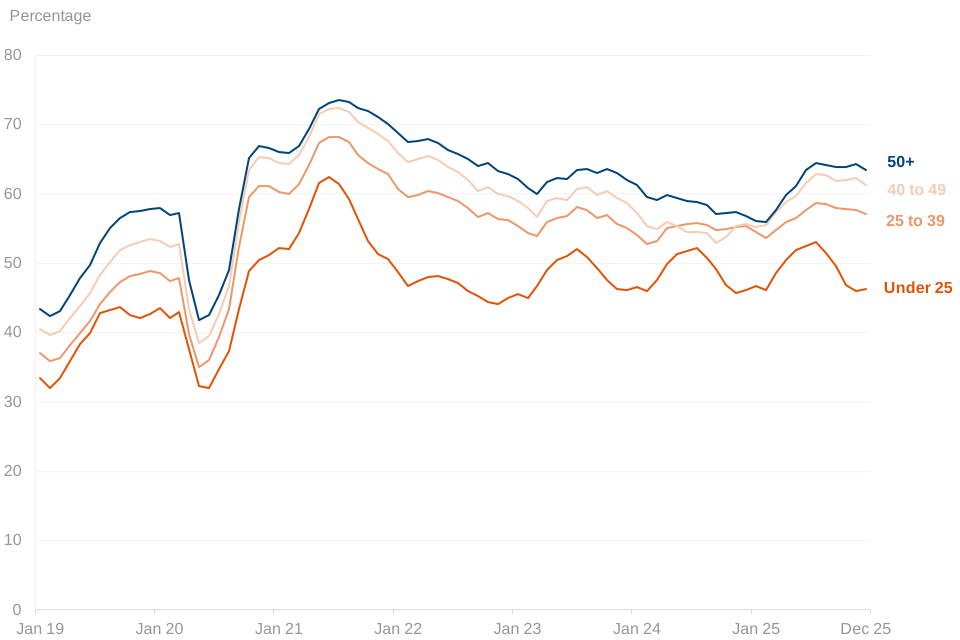
Figure 9 shows that the worklessness rate for customers in the ‘Searching for work’ conditionality regime varies with age group and that it increases as age increases. Figure 9 also shows how the worklessness rate increased across all age groups during the COVID-19 pandemic. Customers in the younger age groups saw a bigger decrease over the post-COVID-19 pandemic period. There is a seasonality pattern emerging for those in the ‘Under 25’ age group, with lower worklessness rates seen over the winter months and higher rates in the summer.
6. Young people aged 16 to 24 years who are not in education, employment or training (NEET) across England’s regions
The methodology behind constructing these estimates has been altered meaning that, although the change is minor and the figures are similar, the figures published in this publication cannot be compared with similar figures in the Get Britain Working: Labour Market Insights January 2026 and the Get Britain Working White Paper Analytical Annex. This methodology change is to increase alignment with the ONS methodology which is explained in the Background Information and Methodology paper accompanying this publication.
England has considerable variation in NEET rates. For the year ending October to December 2025, estimates suggest the North East had the highest NEET rate and the South West had the lowest NEET rate, although there is some uncertainty in the data
Figure 10: NEET rates for those aged 16 to 24 years, with 95% confidence intervals, by England’s regions, for the year ending October to December 2025
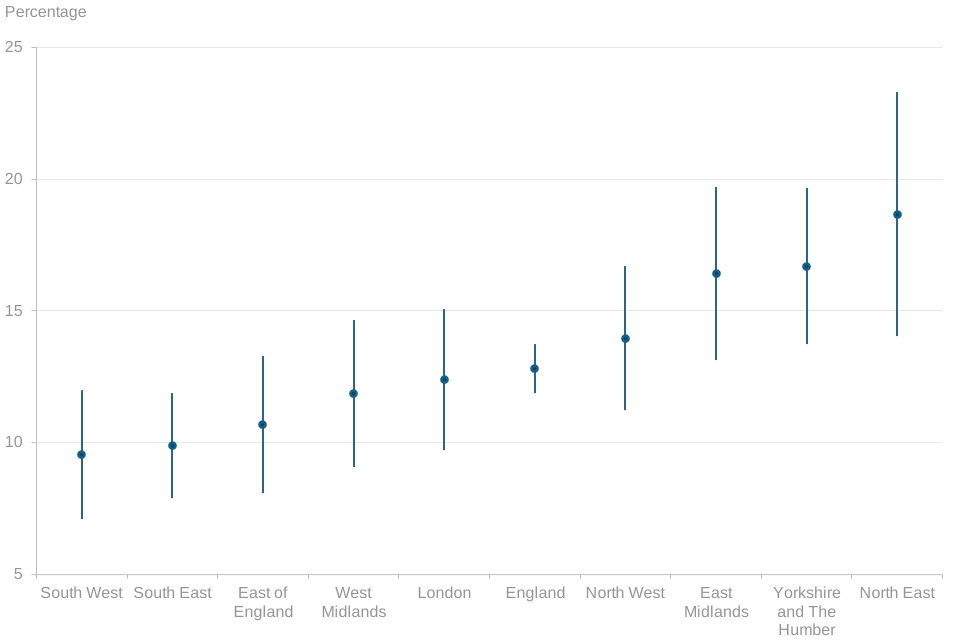
For the year ending October to December 2025 the North East is estimated to have the highest NEET rate, meaning young people who are NEET make up a larger proportion of that age group in comparison to other regions. Table 12 of the accompanying data tables provides data on the number of young people that are NEET by region.
7a. Employment rate of people aged 18 to 66 years
Sections 7a‑j of this publication contain the annual Get Britain Working outcome metrics. These were previously published in a separate publication, but going forward will be published in the April edition of the Get Britain Working: Labour Market Insights publication.
In October to December 2025 the employment rate of people aged 18 to 66 years was 75.8%
Figure 11: Employment rate of people aged 18 to 66 years, Great Britain, January to March 2017 to October to December 2025
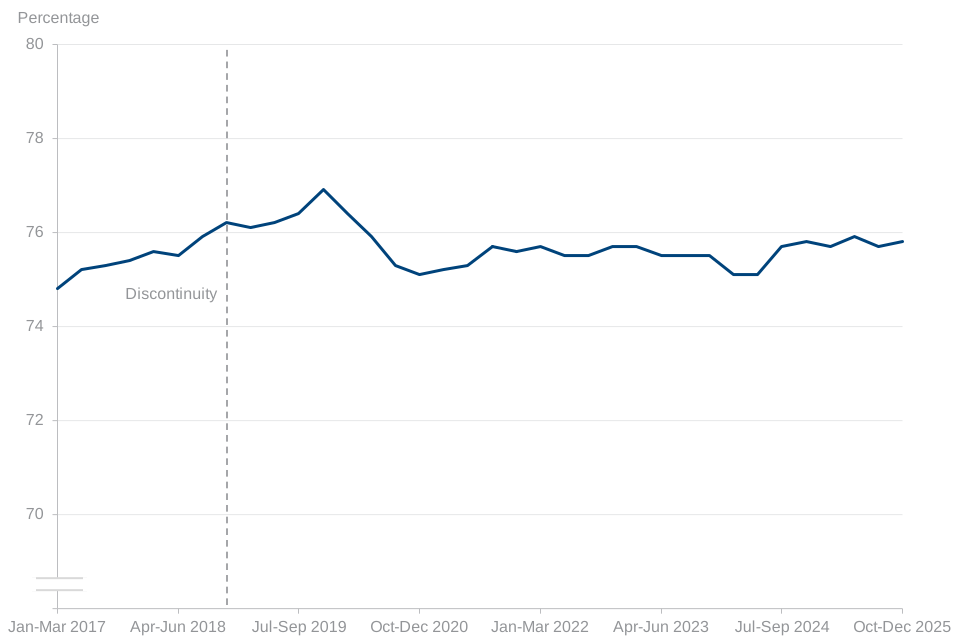
As shown in figure 11 the employment rate of people aged 18 to 66 years is 75.8% (October to December 2025). [footnote 2] This is the same as last year and 1.1 percentage points down on the pre-COVID-19 period (October to December 2019).
7b. Real earnings of working households with a focus on the bottom half of the income distribution (5th decile and below)
There has been a slight increase in real earnings amongst working households, especially in the bottom half of the income distribution
Figure 12: Real earnings at the bottom half of income distribution (5th decile and below) (2024/25 prices), Great Britain, 2014/15 to 2024/25
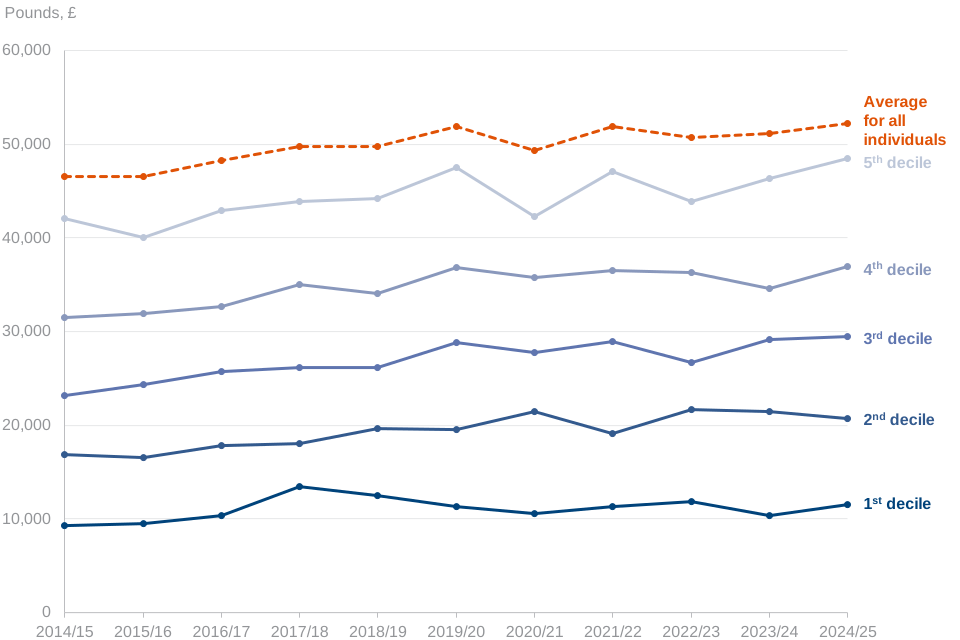
Figure 12 shows that the average (median) real earnings for all individuals have been on a slight upward trend and increased in 2024/25. At the bottom half of the income distribution (average (mean) of 5th decile and below), most deciles showed some improvements, apart from the 2nd decile which saw a small decrease. As these figures are estimates based on a household survey, they are subject to some measurement error so any changes from one year to the next should be treated with caution.
7c. Local authorities employment rate gap between bottom decile and median for people aged 18 to 66 years
Local authorities’ employment rate gap between bottom decile and median for people aged 18 to 66 years was 6.6 percentage points in 2025
Figure 13: Local authorities employment rate gap between bottom decile and median for people aged 18 to 66 years, Great Britain, 2014 to 2025
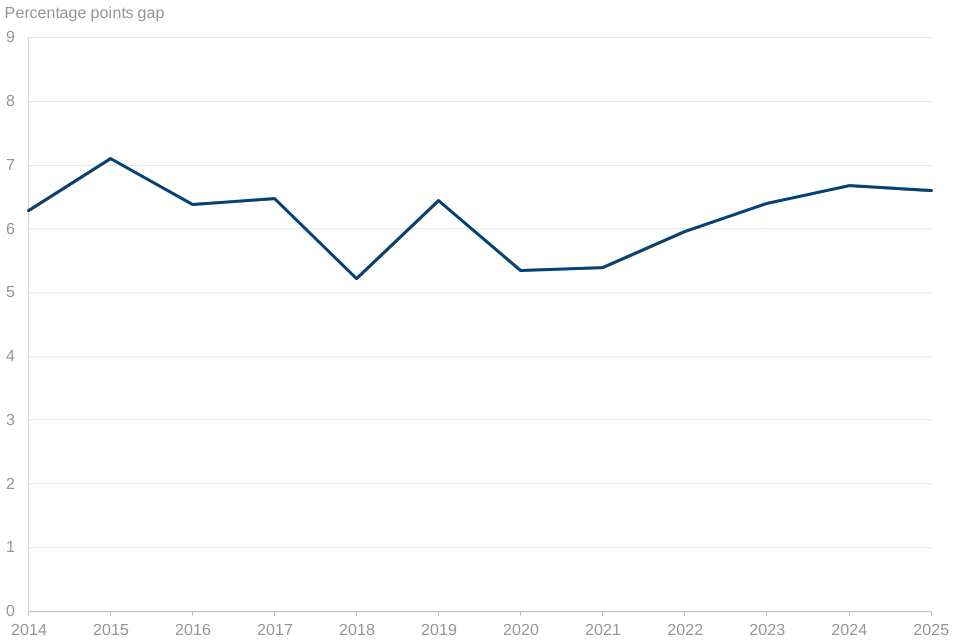
Figure 13 shows the gap between the bottom decile, and the median is currently around 6.6 percentage points. There has been a general upward trend since 2020, however, there was a slight fall from 2024 to 2025 by 0.1 percentage point.
Figure 14: Variation in local authority employment rate - people aged 18 to 66 years (by decile), Great Britain, 2014 to 2025
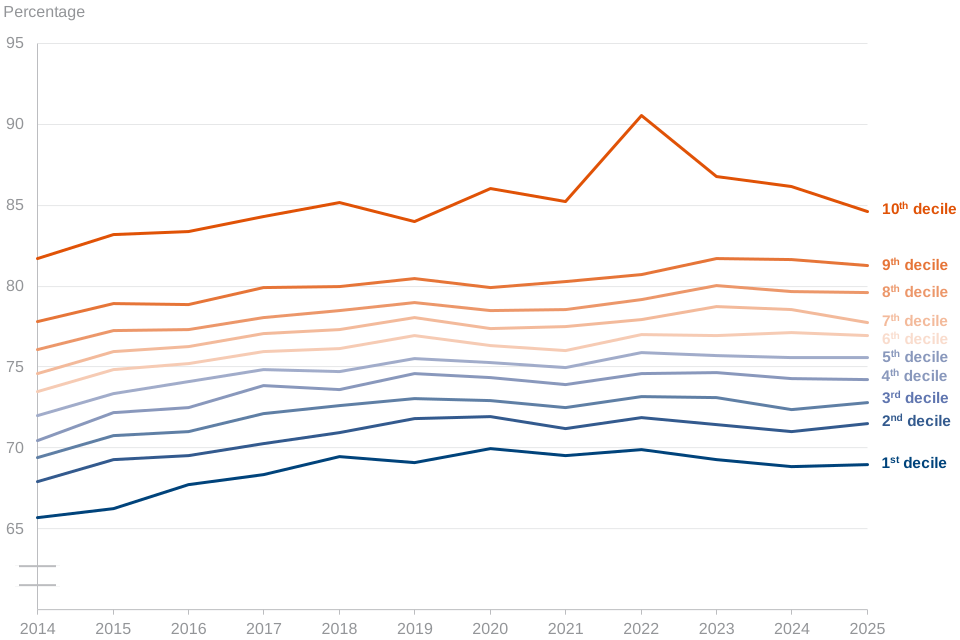
Figure 14 shows considerable variation in local authority employment rates, with it ranging from 69% to 84.6% in 2025.
7d. Economic inactivity due to long-term sickness for people aged 18 to 66 years
In October to December 2025 economic inactivity due to long-term sickness for people aged 18 to 66 years was 6.7%
Figure 15: Economic inactivity due to long-term sickness, people aged 18 to 66 years, Great Britain, January to March 2017 to October to December 2025
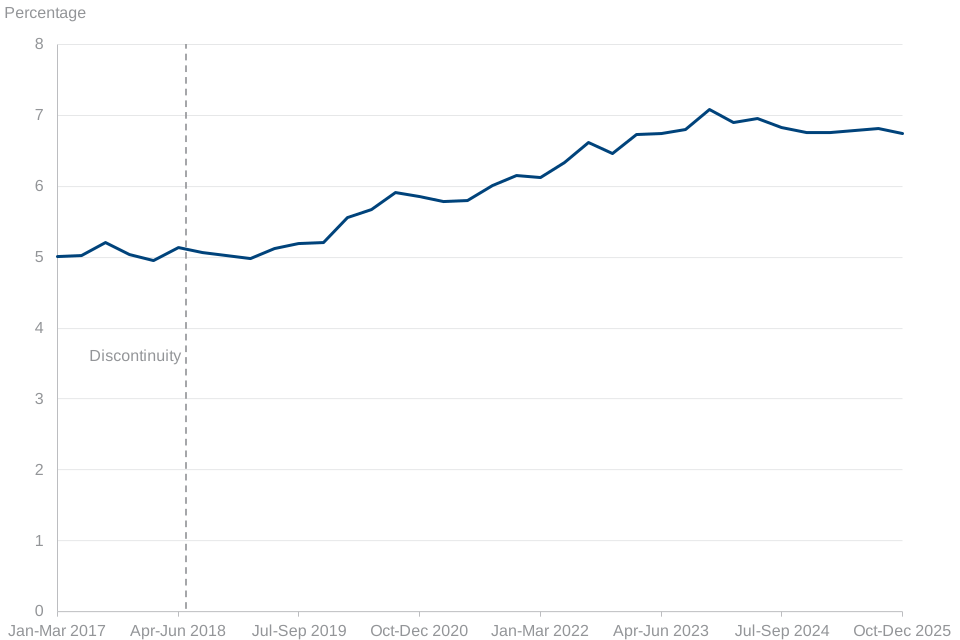
As shown in figure 15 economic inactivity due to long-term sickness had been trending upwards among people aged 18 to 66 years since 2019.[footnote 3] It has since flattened and is currently at 6.7%, unchanged on the year and 1.5 percentage points above the pre-COVID-19 period (October to December 2019).
7e. Disability employment rate gap, people aged 18 to 66 years
In October to December 2025 the disability employment rate gap for people aged 18 to 66 years was 31.2 percentage points
Figure 16: Disability employment rate gap, people aged 18 to 66 years, Great Britain, January to March 2017 to October to December 2025
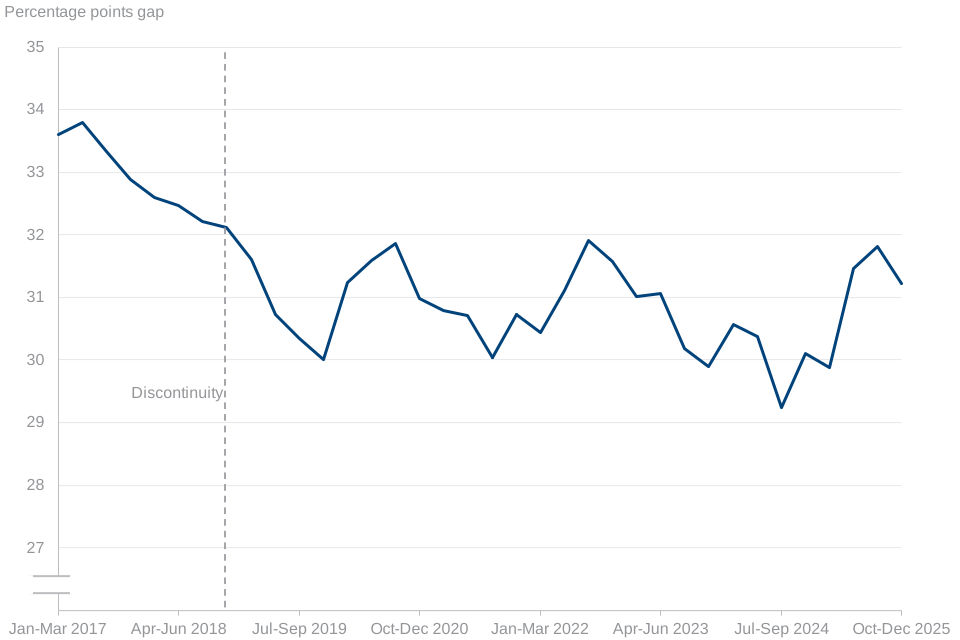
As shown in figure 16 the gap between the employment rates of disabled and non-disabled people, aged 18 to 66 years, had been reducing over time.[footnote 4] There is, however, a recent volatility in the data. In October to December 2025 the disability employment rate gap for people aged 18 to 66 years was 31.2 percentage points, a 1.1 percentage point increase on the year.
7f. Proportion of young people not in education, employment or training (NEET) for people aged 18 to 24 years
The NEET rate for people aged 18 to 24 years was 15.2% in October to December 2025
Figure 17: Proportion of young people not in education, employment or training (NEET), people aged 18 to 24 years, United Kingdom, October to December 2016 to October to December 2025
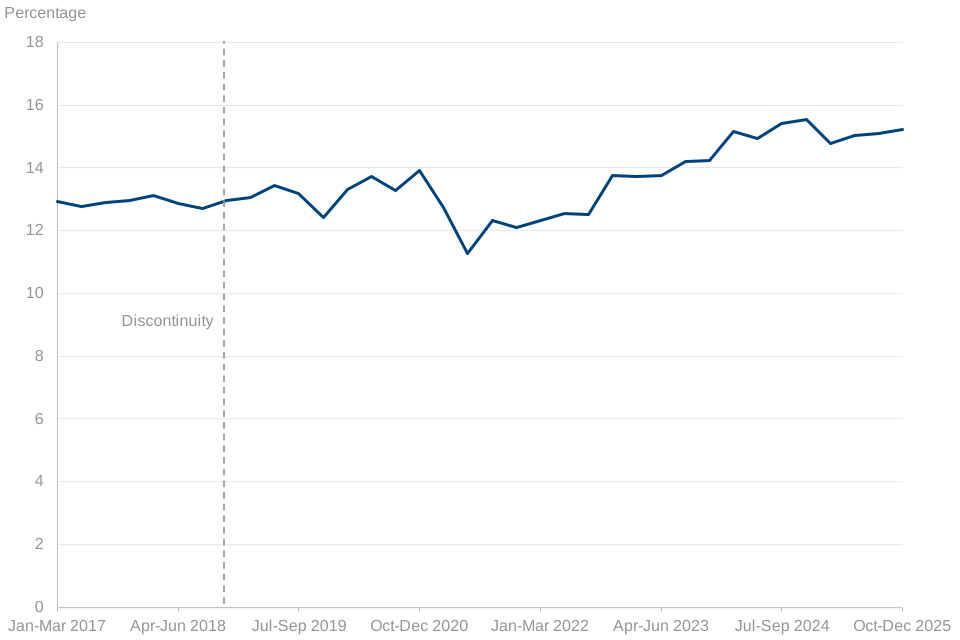
As shown in figure 17 the NEET rate[footnote 5] for people aged 18 to 24 years has been trending upwards over the last four years. It is currently at 15.2%, a decrease of 0.3 percentage points on the year but 2.8 percentage points above same period in the pre-COVID-19 period (October to December 2019).
7g. Proportion of people aged 16 to 21 years in education or training in England
At the end of 2025 the proportion of people aged 16 to 21 years in education or training in England was 72.2%
Figure 18: Proportion of people aged 16 to 21 in education or training, England, 2000 Q4 to 2025 Q4
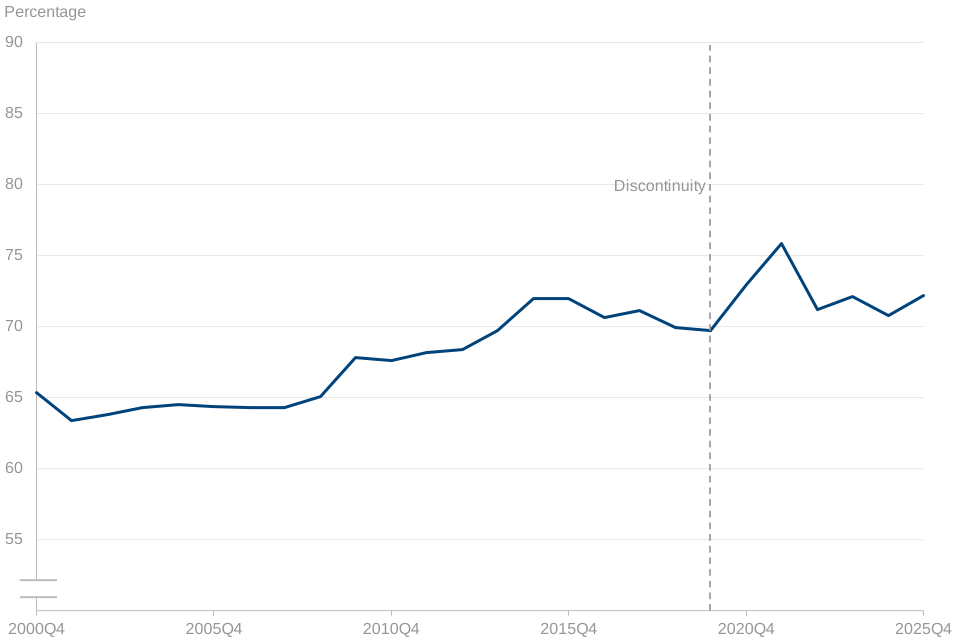
As shown in figure 18 the proportion of people aged 16 to 21 participating in education or training has gone up since 2000.[footnote 6] There was noticeable increase post COVID-19 which subsequently reduced. It was 72.2% at the end of 2025.
7h. Employment rate gap between lone parents and parents in a couple for people aged 18 to 66 years
In October to December 2025 the parental employment rate gap between lone parents and parents in a couple for people aged 18 to 66 years was at 20.4 percentage points
Figure 19: Employment rate gap between lone parents and parents in a couple, people aged 18 to 66 years, Great Britain, January to March 2017 to October to December 2025
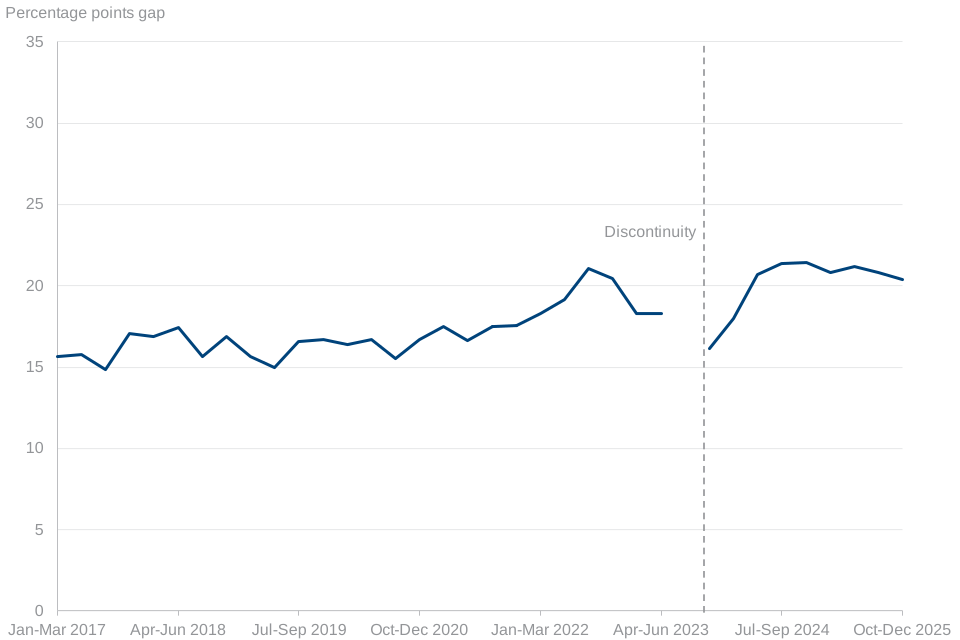
As shown in figure 19, the employment rate gap between lone parents and parents in a couple was 20.4 percentage points in October to December 2025. Lone parents’ employment rate has been consistently lower than coupled parents.
7i. Percentage of coupled households where at least one parent is out of work for people aged 18 to 66 years
The percentage of coupled households where at least one parent is out of work for people aged 18 to 66 years was 22.4% in October to December 2025
Figure 20: Percentage of coupled households where at least one parent is out of work, people aged 18 to 66 years, Great Britain, January to March 2017 to October to December 2025
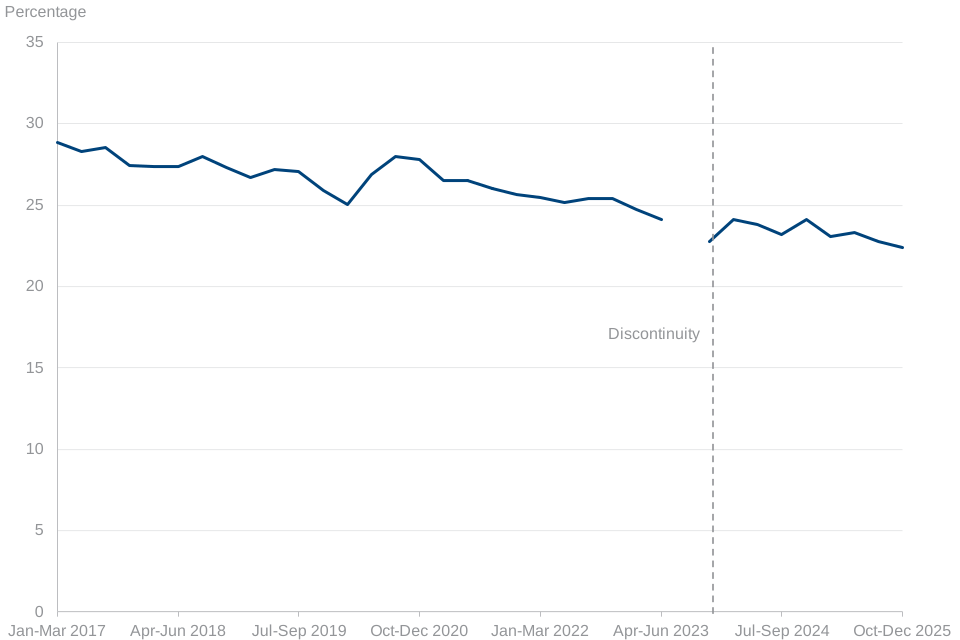
As shown in figure 20, in October to December 2025, 22.4% of all coupled families had at least one parent out of work. There has been a gradual decline in this figure since 2017.[footnote 7]
7j. Employment rate of women aged 18 to 66 years
In October to December 2025 the employment rate of women aged 18 to 66 years was 72.8%
Figure 21: Employment rate of women aged 18 to 66 years, Great Britain, January to March 2017 to October to December 2025
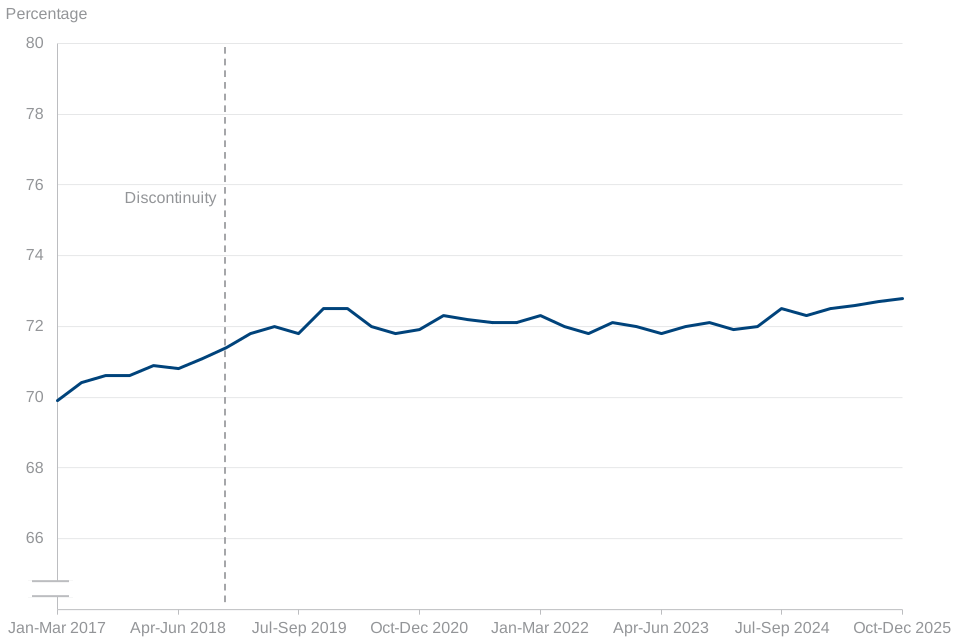
As shown in figure 21 the employment rate of women aged 18 to 66 years is 72.8%. This is up 0.5 percentage points on the year and 0.3 percentage points above the pre-COVID-19 period (October to December 2019). The female employment rate is 6.2 percentage points lower than the employment rate of men in the same age group (79.0%).
8a. Highest level of educational qualification for Universal Credit customers compared to the 2021 England census cohort
Highest educational qualification level data covers only those educated in England who were born from 1988 onwards. Given these coverage constraints, all of the analysis in section 8 has been restricted to only consider individuals with an address in England at the date of interest, and a date of birth from 1988 onwards. Individuals who do not have education and training data available are excluded.
Almost two-thirds of UC customers have a highest qualification of level 2 qualification or below
Figure 22: Highest qualification level for UC customers compared to the 2021 England Census cohort, England, March 2023
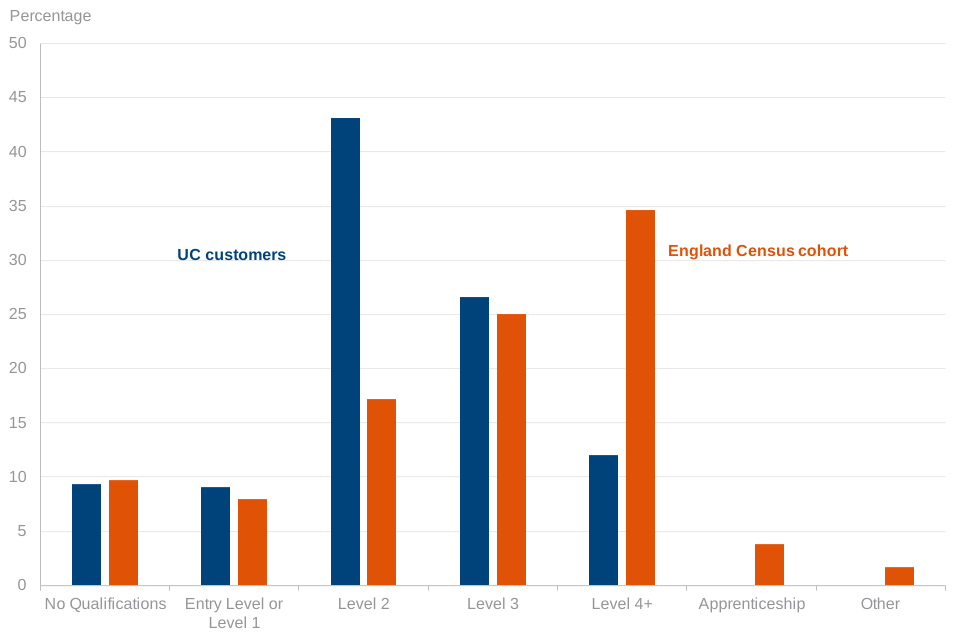
Figure 22 shows a breakdown of the highest qualification level attained by UC customers who were in receipt of UC in March 2023[footnote 8] compared to people’s highest qualification level reported in England in the 2021 Census.
UC customers are more likely than the wider population to have a highest qualification at level 2 and less likely to hold qualifications at level 3 and above. However, around 1 in 10 (12%) UC customers had a level 4 qualification or higher.
In March 2023, almost two-thirds (61%) of UC customers had a level 2 qualification or below. In comparison, almost two-thirds (60%) of the wider population in England had a level 3 qualification or above.
UC customers were just as likely as people in England to have no qualifications or only entry level or level 1 qualifications. Around 1 in 10 (9%) UC customers had no qualifications and around 1 in 10 (9%) had attained highest qualifications at entry level or level 1. The proportion of people in England with no qualifications (10%) and with entry level or level 1 qualifications (8%) was similar.
A full breakdown of the proportion of UC customers with each highest qualification level is available in the accompanying data tables and shows that nearly 1 in 10 (9%) UC customers have a degree or higher.
In the Census data, ‘Apprenticeships’ and ‘Other qualifications’ are grouped separately. We do not have direct comparator groupings for UC customers.
UC customers with no work requirements are more likely to have no or low educational qualifications
Figure 23: Highest qualification level for UC customers split by conditionality regime, England, March 2023
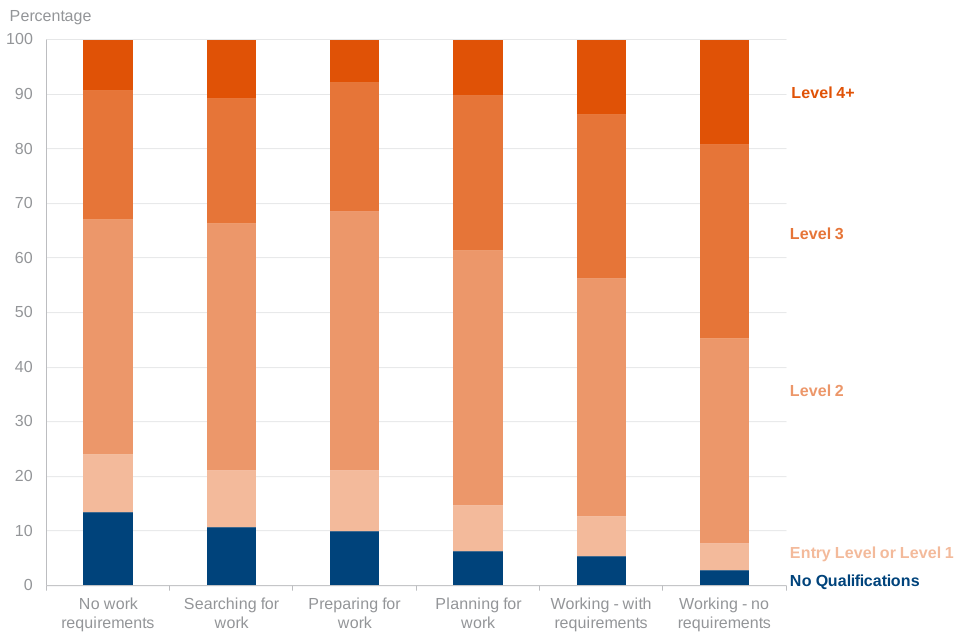
Figure 23 shows a breakdown of the highest qualification level attained by UC customers in each of the 6 UC conditionality regimes. This is a more detailed breakdown of Figure 22 above which shows the highest qualification level attained by UC customers who were in receipt of UC in March 2023. Those furthest from the labour market tended to have lower qualifications while customers in work were more likely to hold higher-level qualifications.
UC customers in the ‘No work requirements’ conditionality regime were the most likely to have no qualifications, with around 1 in 8 (13%) of customers recorded as having no qualifications.
Across all regimes, most customers had a highest qualification at level 2 or level 3.
Higher-level qualifications (level 4 and above) were more common among customers who were already in work. Those in the ‘Working – with requirements’ and ‘Working – no requirements’ conditionality regimes had the highest proportions of customers who had attained at least a level 4 qualification.
More than half (55%) of the UC customers in the ‘Working – no requirements’ conditionality regime had a level 3 qualification or higher compared to around a third (33%) of UC customers in the ‘No work requirements’ conditionality regime.
8b. Median time since last employment by highest level of educational qualification for Universal Credit customers for England
UC customers with no qualifications have the longest gaps between employment spells
Figure 24: Median days between employment spells for UC customers and those not on UC by highest qualification level, England, 2023/24
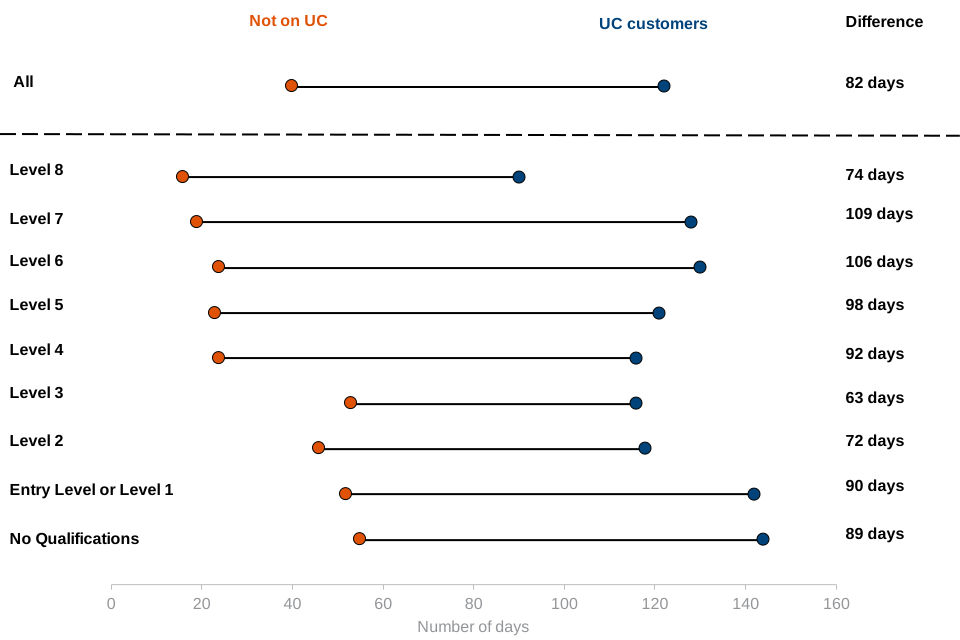
Figure 24 shows the median number of days since an individual’s previous employment spell, for employment spells starting in the 2023/24 financial year.
On average, individuals who were on UC when they started an employment spell spent longer out of employment compared to those not on UC. This is true regardless of an individual’s highest qualification level. This is to be expected as those not on UC will include those naturally moving between two jobs, with those becoming unemployed being more likely to claim UC and have a longer period of time between employments. Leaving employment without another job lined up is likely to trigger a claim to UC.
For individuals on UC, the median number of days between employment spells was 122 days and for those not on UC, it was 40 days. This is a difference of 82 days.
For both individuals on UC and not on UC, those with no qualifications have the longest gaps between employment spells (on average, 144 days and 55 days respectively). Those with level 8 qualifications have the shortest gaps between employment spells (on average, 90 days for individuals on UC and 16 days for individuals not on UC).
The biggest difference in the median days since last employment spell is for individuals whose highest qualification is a level 7. On average, UC customers with a level 7 as their highest qualification spent 128 days out of employment compared to 19 days for those not on UC. This is a difference of 109 days.
The smallest difference is for individuals whose highest qualification is a level 3. On average, these UC customers spent 116 days out of employment compared to 53 days for those not on UC. This is a difference of 63 days.
For individuals not on UC, as their highest qualification level increases, the average gap between employment spells decreases.
UC customers take longer to return to employment than individuals not on UC
Figure 25: Cumulative distribution of days between employment spells for UC customers and those not on UC, England, 2023/24
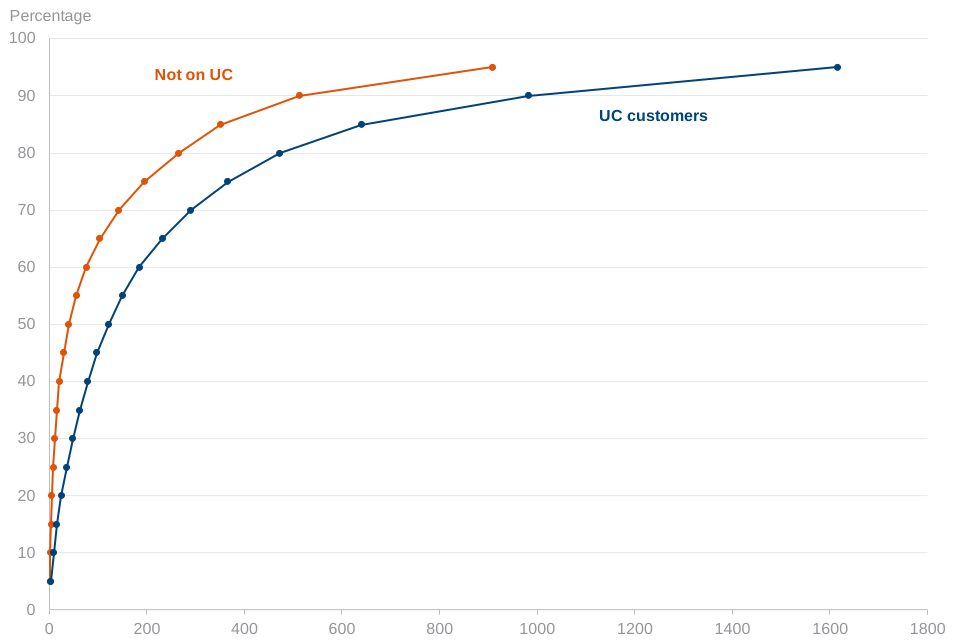
Figure 25 shows the cumulative distribution of days between employment spells for UC customers compared to individuals not on UC at the time of starting employment. From the 5th percentile onwards, the difference between UC customers and those not on UC starts to widen.
1 in 4 individuals not on UC have a gap between employment spells of around a week (8 days). In comparison, 1 in 4 UC customers have a gap of around a month (36 days) between employment spells.
8c. Into-work rate for Universal Credit customers in the ‘Searching for work’ conditionality regime by highest level of educational qualification for England
Into-work rates are highest for customers that have a level 4 qualification or above
Figure 26: Monthly into-work rates for UC customers in the ‘Searching for work’ conditionality regime by highest level of qualification, England, January 2019 to December 2025
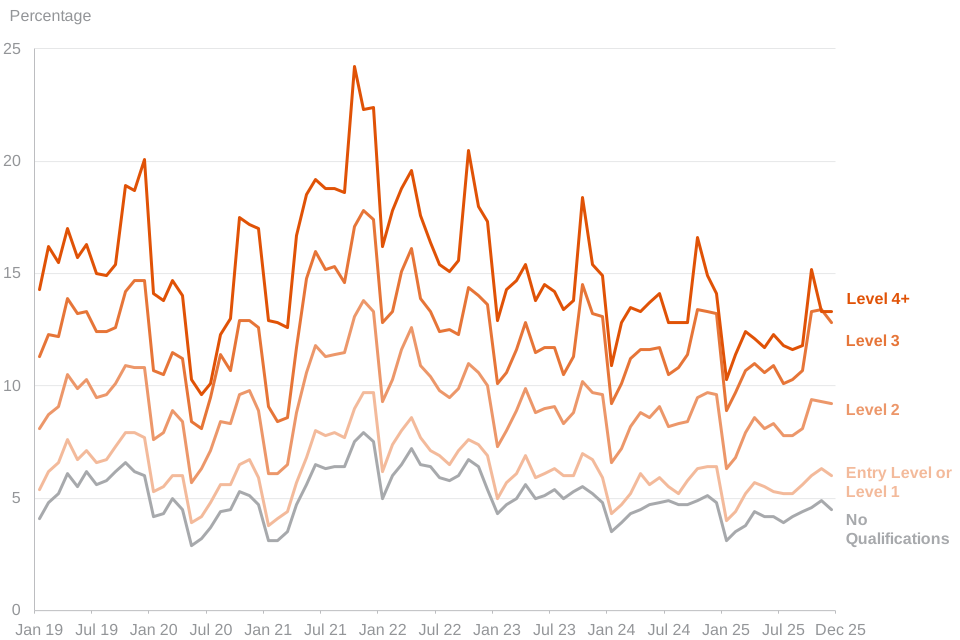
Figure 26 shows how into-work rates are highest for customers with a level 4 qualification or above, and lowest for customers with no qualifications. While there is variation in the into-work rate for all customers across the period from January 2019 to December 2025, as highest qualification level increases, so too does the into-work rate.
Figure 26 also shows how into-work rates were especially high for customers with a level 4 qualification or above after the COVID-19 pandemic, particularly between July 2021 and July 2022.
In the same post-COVID-19 time frame, the into-work rate increased slightly (peaking at 8% in November 2021) for customers with no qualifications but has remained at roughly 5% across the full period from January 2019 to December 2025.
9a. Flows between industrial sectors for Universal Credit customers and the wider UK population
70% of UC customers started employment spells in one of five industrial sectors
Figure 27: Industrial sector start breakdown for UC customers and those not on UC, Great Britain, 2023/24
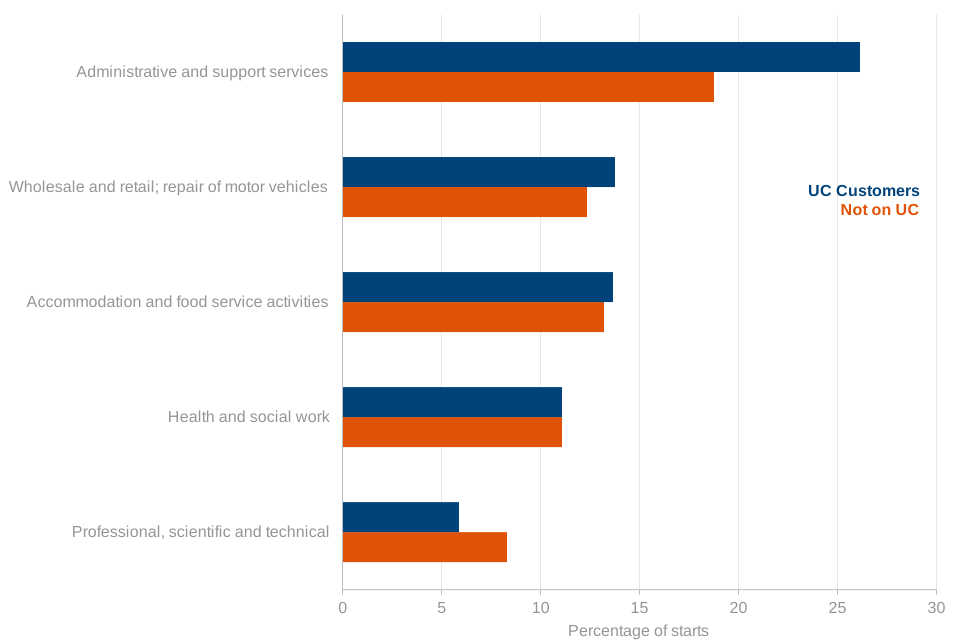
Figure 27 shows the proportion of starts for UC customers and those not on UC for the five most common sectors. These sectors are the most common for both UC customers and those not on UC.
The most common sector was ‘Administrative and support services’, with 26% of starts for UC customers, and 19% for those not on UC. Industrial sector concentrations are slightly higher for UC customers, with 70% of starts coming from these five sectors for UC customers, and 64% for those not on UC.
UC customers are more likely to move into ‘Administrative and support services’ compared to non-UC customers, whereas those not on UC are more likely to move into ‘Professional, scientific and technical’.
20% of employment flows into ‘Administrative and support services’ are UC Customers
Figure 28: Industrial sectors with the highest proportion of employment flows coming from Universal Credit, Great Britain, 2023/24
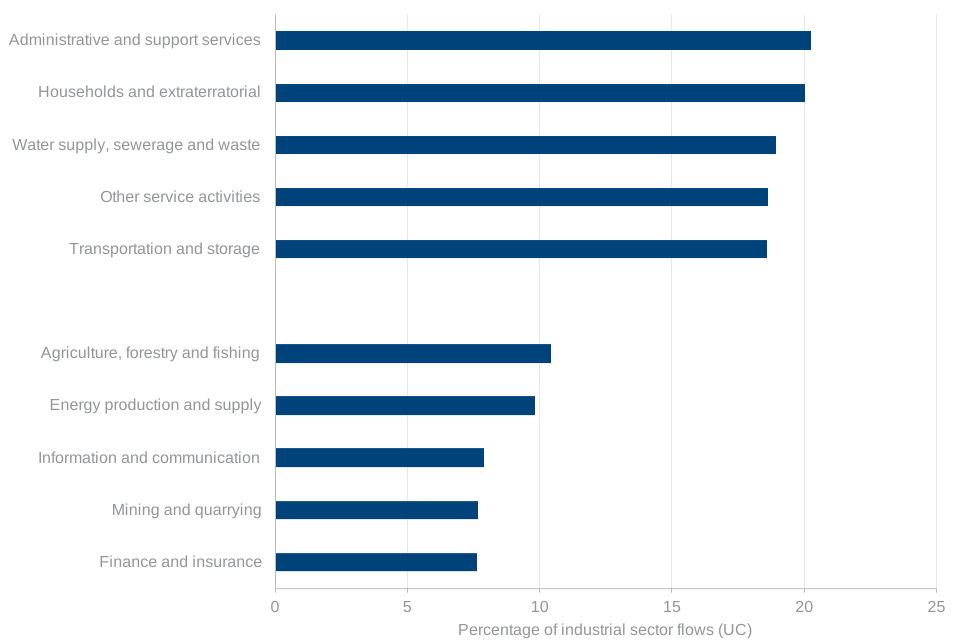
This chart shows the sectors with the highest proportion of employment flows coming from Universal Credit (UC), compared with non‑UC customers, among those starting work in each sector. ‘Administrative and support services’ and ‘Households and extraterritorial’ have the highest UC shares, with around one in five flows into these sectors coming from UC customers.
Other sectors with relatively high UC proportions include ‘Water supply, sewerage and waste’, ‘Other service activities’ and ‘Transportation and storage’. These sectors tend to have a higher reliance on UC customers as a source of labour compared with the average across industries.
In contrast, sectors such as ‘Finance and insurance’, ‘Mining and quarrying’, and ‘Information and communication’ have lower proportions of flows coming from UC, indicating that entrants to these sectors are less likely to have been on UC immediately prior to starting employment.
Around a third of employment moves are within the same industrial sector
Figure 29: Proportion of individuals moving jobs within the same industrial sector, Great Britain, 2023/24
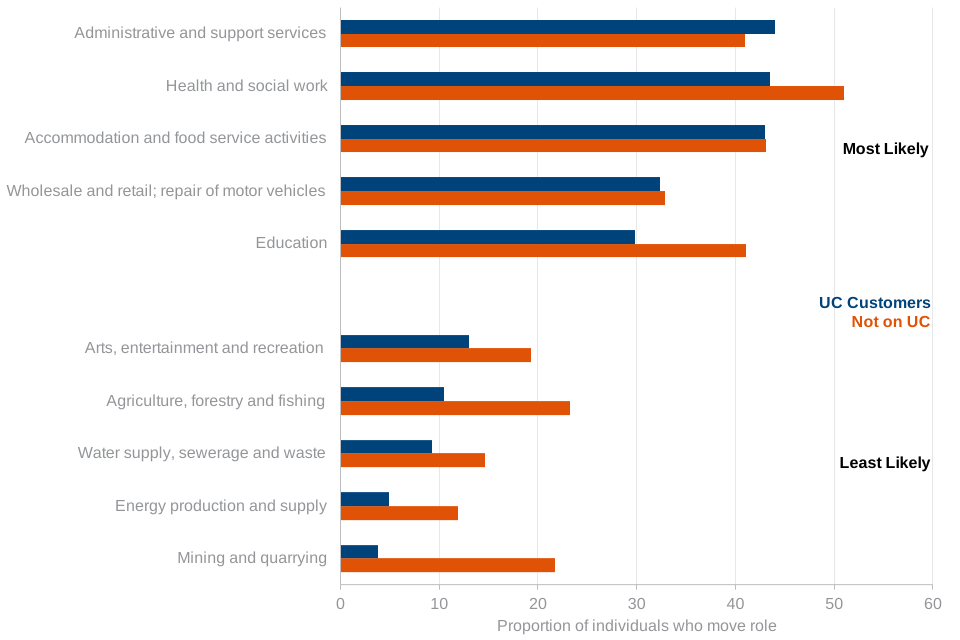
Figure 29 shows the five sectors where individuals are most and least likely to make employment moves within the same sector, rather than moving to different sectors. This includes all individuals who move into a new employment, that is defined as a change in employer in 2023/24, regardless of the time between their previous and current role. The sectors where people are most likely to remain overlap strongly with common starting sectors, with 44% of UC customers who move role within ‘Administrative and support services’ staying in the same sector.
Sectors where people are least likely to move within the sector tend to be more specialised, such as ‘Mining and quarrying’ where only 4% of people on UC who move stay in this sector. This may be due to the lack of transferable skills between specific roles, compared to other sectors.
Individuals not on UC are more likely to stay in the same sector across most sectors. The highest proportion for this group is in ‘Health and social work’, where 51% of people who move stay in this sector. Retention rates are higher in specialised sectors, with the individuals in ‘Mining and quarrying’ staying in the same sector 22% of the time.
Although individual sectors usually show that individuals not on UC are more likely to stay in the same sector, once these are aggregated the difference is small, with 38% of those not on UC staying in the same sector, compared to 35% of UC customers. This is driven by relatively small differences in the largest sectors.
Individuals generally move between a few key industrial sectors
Figure 30: Most common destinations for individuals changing industrial sector, Great Britain, 2023/24
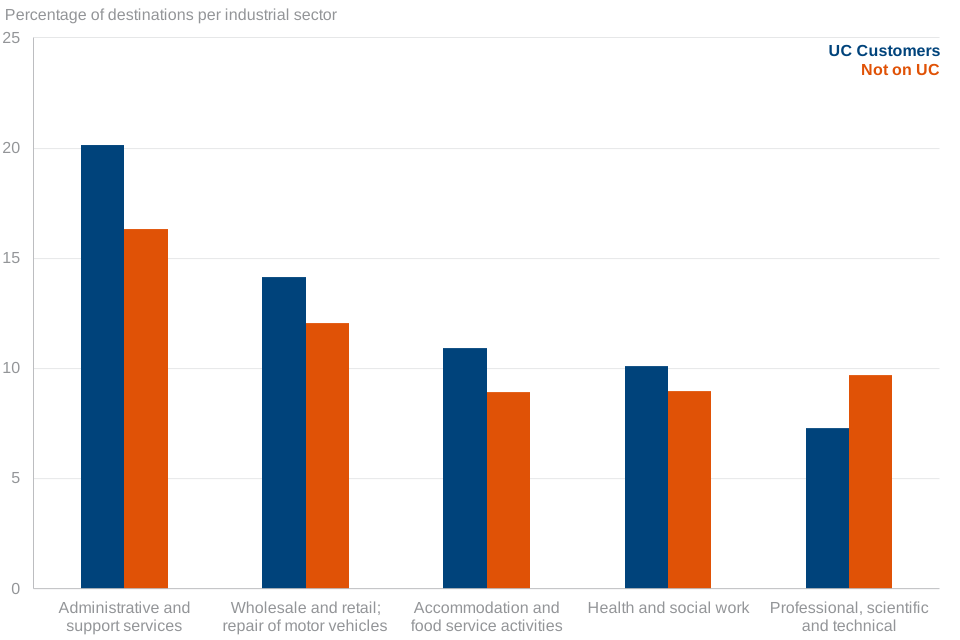
For individuals who move to a different sector over time, the same five sectors are most common compared to starts in figure 30. Roughly 20% of UC customers will move into ‘Administrative and support services’ from a different sector. A further 14% move into ‘Wholesale and retail; repair of motor vehicles’, and overall, these five sectors make up 63% of movements for UC customers.
For individuals not on UC, flows are more evenly distributed across different sectors, but the most popular are still the sectors shown above, making up 56% of movements. The largest group is still ‘Administrative and support services’ at 16%, but the second largest is ‘Professional, scientific and technical’, with an average of 10%.
There are large flows towards ‘Administrative and support services’ for those on UC
Figure 31: Proportional flows between industrial sectors for UC customers, Great Britain, 2023/24
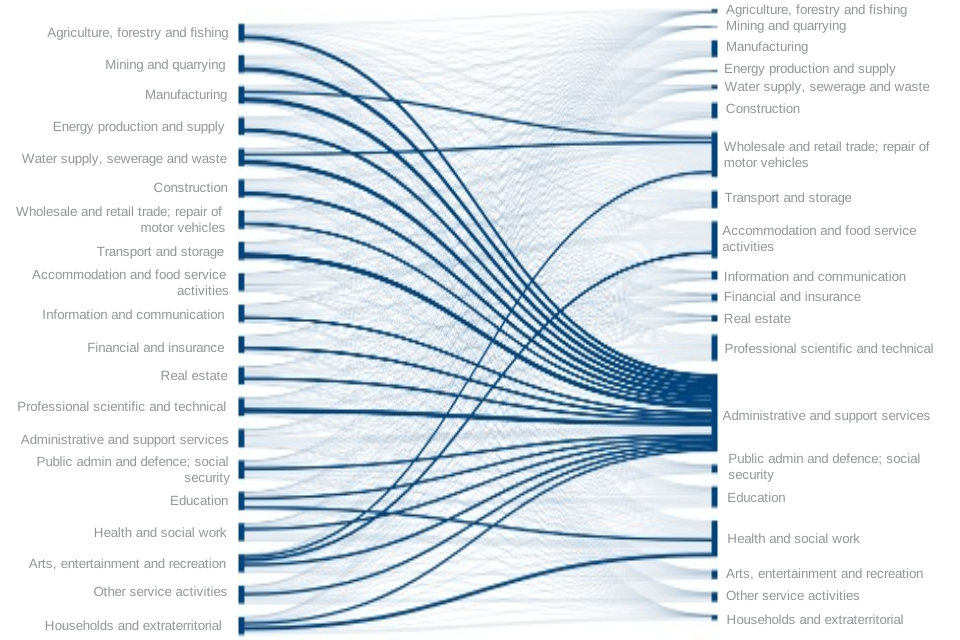
Figure 31 shows the flows in percentage terms between different sectors for UC customers, with the largest flows highlighted. There is a clear movement towards ‘Administrative and support services’ from a variety of sectors. This suggests that many are moving to broader roles where specialist skills are not required. There are also significant flows to ‘Wholesale and retail’, again from a variety of sectors.
There are significant flows to ‘Human health and social work’ from ‘Education’. This highlights consistent strong links between sectors with large public sector employment shares. There are also large flows from ‘Activities of households as employers’, linked by skills and experience in healthcare and social care. These flows are mainly in one direction, and there are significantly fewer flows the towards ‘Activities of households as employers’.
There are fewer major flows between industrial sectors for those not on UC
Figure 32: Proportional flows between industrial sectors for individuals not on UC, Great Britain, 2023/24
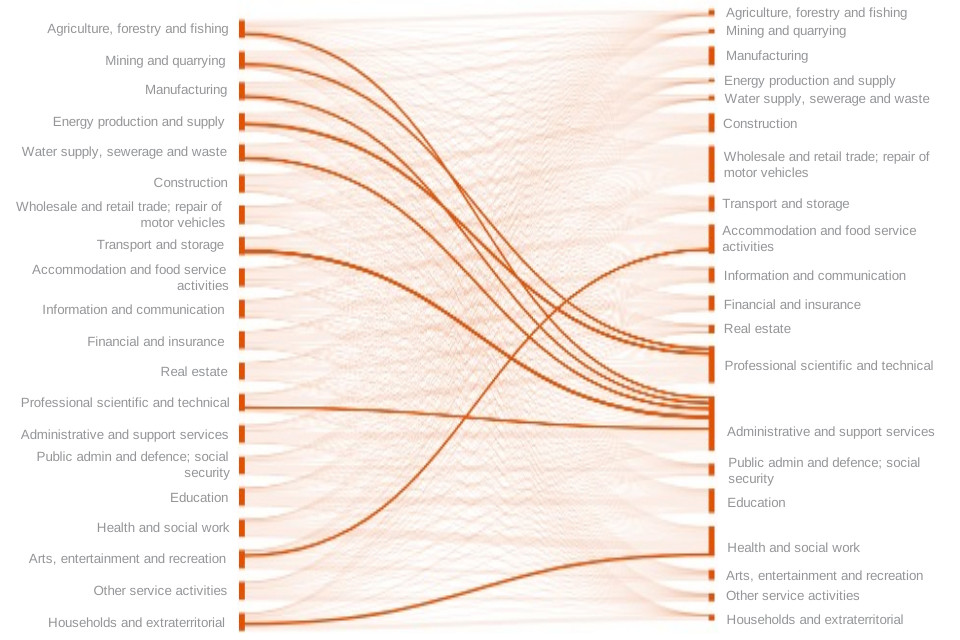
Figure 32 repeats the analysis above for individuals not on UC. There are fewer strong flows between sectors, as this group are more likely to flow within sectors, rather than between, as shown in figure 28.
There are still some large flows into ‘Administrative and support services’, but this sector has a much smaller influence compared to the UC customer labour market. This may be due to this group having more variance in skills, qualifications and experience. The large flows that remain suggest changes in skills needed for the role, rather than transferring specialist skills.
There also strong flows from ‘Mining and quarrying’ and ‘Energy production and supply’ to ‘Professional scientific and technical’. This does suggest a transfer of technical expertise to roles in a different sector, possibly linked to previous sector experience.
Some lower-level transferable skills flows can still be seen in this chart, for example large flows between ‘Arts, entertainment and recreation’ to ‘Accommodation and food service activities’, and ‘Activities of households as employers’ to ‘Human health and social work’. Although this group will have a wider set of characteristics, there will still be a subgroup moving to less specialised roles who are not in receipt of UC.
9b. Time since last employment by previous industrial sector of employment for Universal Credit customers
Individuals on UC have much longer gaps between employment spells than those not on UC
Figure 33: Median days between employment spells for UC customers and those not on UC by previous industrial sector, Great Britain, 2023/24
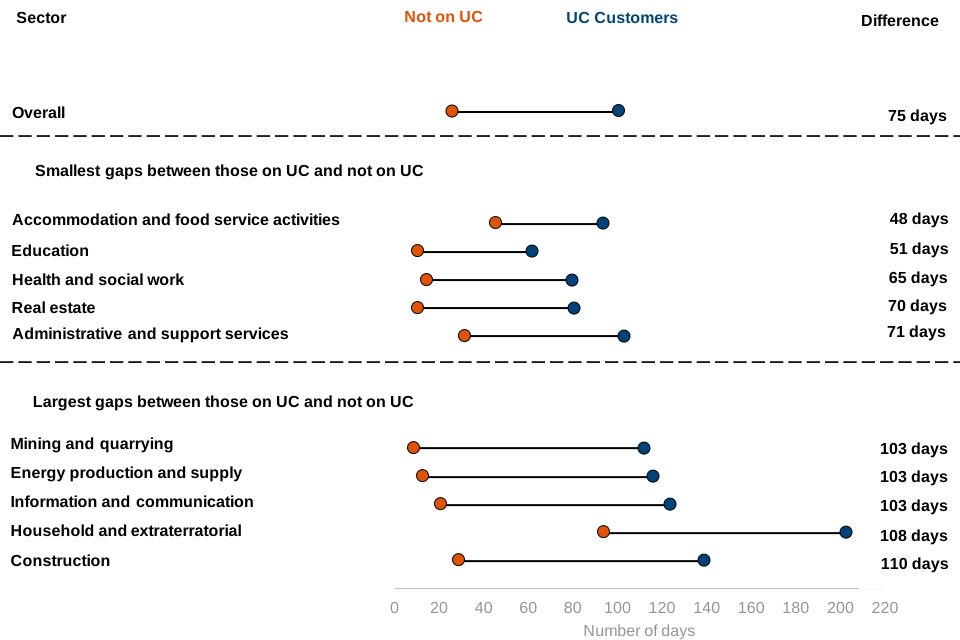
Figure 33 looks at the median average number of days between the end of a previous employment spell, and the start of the next. Overall, the median average for people not on UC was 26 days, and 101 days for UC customers, a difference of 75 days. These figures differ from figure 24, as it uses a different population of people.
On average, individuals not on UC have smaller gaps between employment spells across all sectors. Durations may be longer for those on UC because they may not have subsequent employment lined up for when they finish an employment spell, creating the need to apply for UC in the interim. There does not appear to be any sector specific trends to explain larger and smaller differences between UC customers and people not on UC.
9c. Time since last employment by new industrial sector of employment for Universal Credit customers
The findings are similar when looking at what sector someone is currently in compared to their previous sector
Figure 34: Median days between employment spells for UC customers and those not on UC by current industrial sector, Great Britain, 2023/24
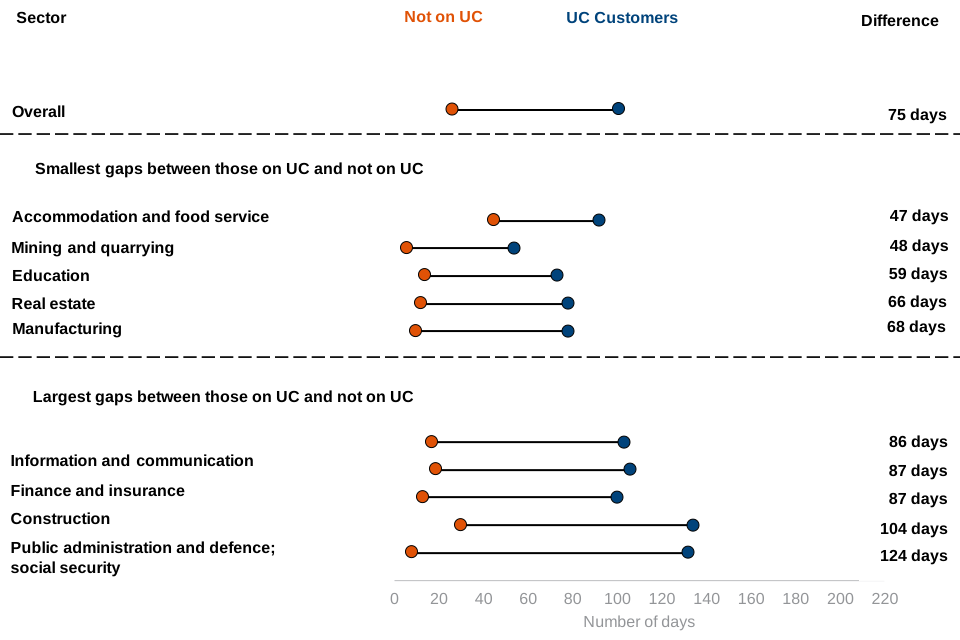
Figure 34 shows that durations are again much lower for individuals not on UC. Certain sectors such as ‘Accommodation and food service’ have consistently lower durations than other sectors, likely because a large proportion of people flow within this sector.
Other sectors such as ‘Mining and quarrying’ have much shorter durations for those leaving the sector, but higher durations for those joining it, suggesting it is harder particularly for UC customers to find a job in this sector.
10. About these statistics
An accompanying Background Information and Methodology paper and set of data tables complementing the results presented are available alongside the publication. This document, the statistics release and data tables can be found via the collections page.
These statistics are official statistics in development. Our statistical practice is regulated by the Office for Statistics Regulation (OSR). OSR sets the standards of trustworthiness, quality, and value in the Code of Practice for Statistics that all producers of official statistics should adhere to.
Contact information
For media enquiries contact the DWP Press Office.
Feedback is welcome.
ISBN: 978-1-78659-976-6
Next edition: July 2026
-
Users should note that UC statistics uses the term ‘conditionality regime’ in place of conditionality group and labour market regime. Available at: Universal Credit statistics: background information and methodology - GOV.UK ↩
-
Data from January to March 2019 onward has been ‘reweighted’ by the ONS to reflect newer population estimates, causing a step change discontinuity in estimates before and after this period. ↩
-
Data from January to March 2019 onward has been ‘reweighted’ by the ONS to reflect newer population estimates, causing a step change discontinuity in estimates before and after this period. ↩
-
Data from January to March 2019 onward has been ‘reweighted’ by the ONS to reflect newer population estimates, causing a step change discontinuity in estimates before and after this period. ↩
-
Data from January to March 2019 onward has been ‘reweighted’ by the ONS to reflect newer population estimates, causing a step change discontinuity in estimates before and after this period. ↩
-
Data from January to March 2019 onward has been ‘reweighted’ by the ONS to reflect newer population estimates, causing a step change discontinuity in estimates before and after this period. ↩
-
Data from October to December 2023 onward has been ‘reweighted’ by the ONS to reflect newer population estimates, causing a step change discontinuity in estimates before and after this period. Estimates for July to September 2023 are unavailable due to quality concerns. ↩
-
The most recent qualifications data available covers up to the 2022/23 academic year. ↩