Dwelling stock estimates, England: 31 March 2025
Published 21 May 2026
Applies to England

© Crown copyright 2026
This publication is licensed under the terms of the Open Government Licence v3.0 except where otherwise stated. To view this licence, visit nationalarchives.gov.uk/doc/open-government-licence/version/3 or write to the Information Policy Team, The National Archives, Kew, London TW9 4DU, or email: psi@nationalarchives.gov.uk.
Where we have identified any third party copyright information you will need to obtain permission from the copyright holders concerned.
This publication is available at https://www.gov.uk/government/statistics/dwelling-stock-estimates-in-england-2025/dwelling-stock-estimates-england-31-march-2025
Date of next publication: It is expected that the Dwelling stock estimates, England: 31 March 2026 statistics will be published in May 2027 (provisional). The date will be pre-announced on the GOV.UK publication release calendar.
1. Key statistics
There were 25.8 million dwellings in England as of 31 March 2025, an increase of 208,600 dwellings or 0.81% on the previous year.
16.6 million dwellings were owner-occupied dwellings, an increase of 131,000 dwellings on the previous year, 5 million dwellings were private rented dwellings, an increase of 54,000 dwellings on the previous year, 4.2 million dwellings were social and affordable rented dwellings (stock owned by Private Registered Providers and Local Authorities), an increase of 25,000 dwellings on the previous year and 28,200 dwellings were other public sector dwellings, a decrease of 900 dwellings on the previous year.
There were 754,264 vacant dwellings in England on 6 October 2025, an increase of 34,794 or 4.8% from 719,470 on 7 October 2024.
There were 303,185 long-term vacant dwellings in England on 6 October 2025, an increase of 38,301 or 14.5% from 264,884 on 7 October 2024.
England had a dwelling density of 1.98 dwellings per hectare as of 31 March 2025.
2. Introduction
This statistical release presents Accredited Official Statistics[footnote 1] [footnote 2] on estimates of the number of dwellings in England and in each local authority district as of 31 March 2025. The statistics use the Census as a baseline and apply annual net changes to the dwelling stock as measured by the related Housing supply: net additional dwellings statistics. Figures for 2025 are provisional and subject to revision. Further details are available in the technical notes.This release also includes figures on dwelling density represented by dwellings per hectare of land area.
Our interactive dashboard illustrates results and historical trends.
3. National estimates
As can be seen from Figure 1 and Table 1 below, there were 25.8 million dwellings in England as of 31 March 2025, an increase of 208,600 dwellings or 0.81% on the previous year.
Figure 1 Annual estimates of total dwelling stock and annual change as a percentage of existing stock, England, as of 31 March 2001 to 31 March 2025
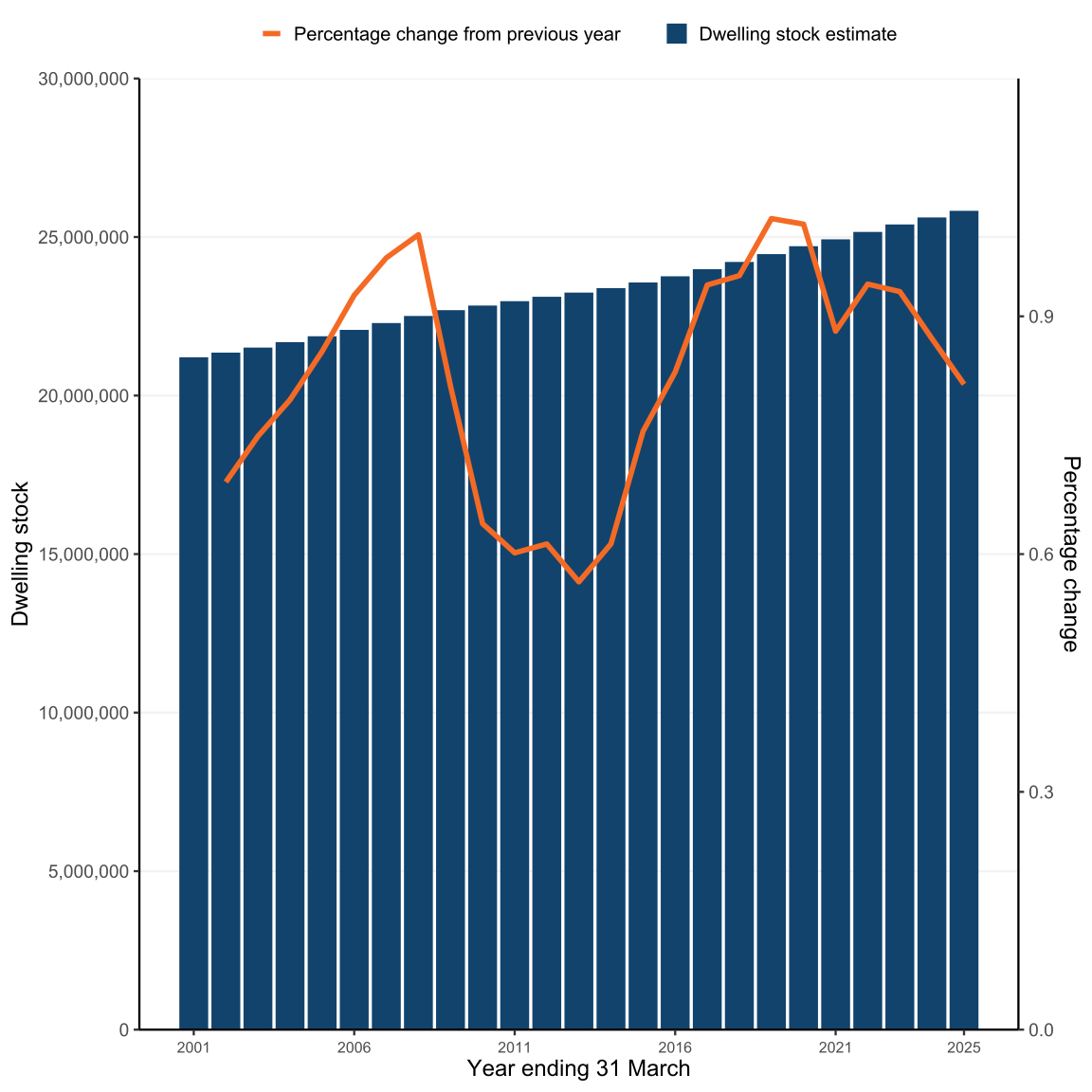
Table 1 Annual estimates of total dwelling stock, annual change in dwelling stock and annual change as a percentage of existing stock, England, as of 31 March 2001 to 31 March 2025
| Year ending 31 March | Dwelling stock estimate | Change from previous year | Change from previous year as a percentage of existing stock |
|---|---|---|---|
| 2001 | 21,210,000 | ||
| 2002 | 21,350,000 | 147,000 | 0.69% |
| 2003 | 21,510,000 | 160,000 | 0.75% |
| 2004 | 21,680,000 | 171,000 | 0.79% |
| 2005 | 21,870,000 | 186,000 | 0.86% |
| 2006 | 22,070,000 | 203,000 | 0.93% |
| 2007 | 22,290,000 | 215,000 | 0.97% |
| 2008 | 22,510,000 | 224,000 | 1.00% |
| 2009 | 22,690,000 | 183,000 | 0.81% |
| 2010 | 22,840,000 | 145,000 | 0.64% |
| 2011 | 22,980,000 | 137,000 | 0.60% |
| 2012 | 23,120,000 | 141,000 | 0.61% |
| 2013 | 23,250,000 | 131,000 | 0.57% |
| 2014 | 23,390,000 | 142,000 | 0.61% |
| 2015 | 23,570,000 | 177,000 | 0.75% |
| 2016 | 23,760,000 | 196,000 | 0.83% |
| 2017 | 23,990,000 | 223,000 | 0.94% |
| 2018 | 24,210,000 | 228,000 | 0.95% |
| 2019 | 24,460,000 | 248,000 | 1.02% |
| 2020 | 24,710,000 | 249,000 | 1.02% |
| 2021 | 24,930,000 | 218,000 | 0.88% |
| 2022 | 25,160,000 | 234,000 | 0.94% |
| 2023 | 25,400,000 | 234,000 | 0.93% |
| 2024 | 25,620,000 | 221,000 | 0.87% |
| 2025 | 25,830,000 | 209,000 | 0.81% |
4. Tenure
The tenure figures published in this release differ from those published from the English Housing Survey since the English Housing Survey statistics are in terms of households and not dwellings. In addition, the dwelling stock estimates include vacant dwellings. The trends between the Dwelling Stock Estimates and the English Housing Survey are consistent. However, the English Housing Survey is the primary measure of tenure, as the unit of households is the preferred metric, whilst the Dwelling Stock Estimates are a useful leading indicator.
As can be seen from Figure 2 and Table 2 below, the 25.8 million dwellings in England as of 31 March 2025 comprised of 16.6 million owner-occupied dwellings, 5 million private rented dwellings, 2.6 million dwellings rented from Private Registered Providers (also known as Housing Associations) and 1.6 million dwellings rented from Local Authorities.
Figure 2 Annual estimates of total dwelling stock by tenure, England, as of 31 March 2001 to 31 March 2025
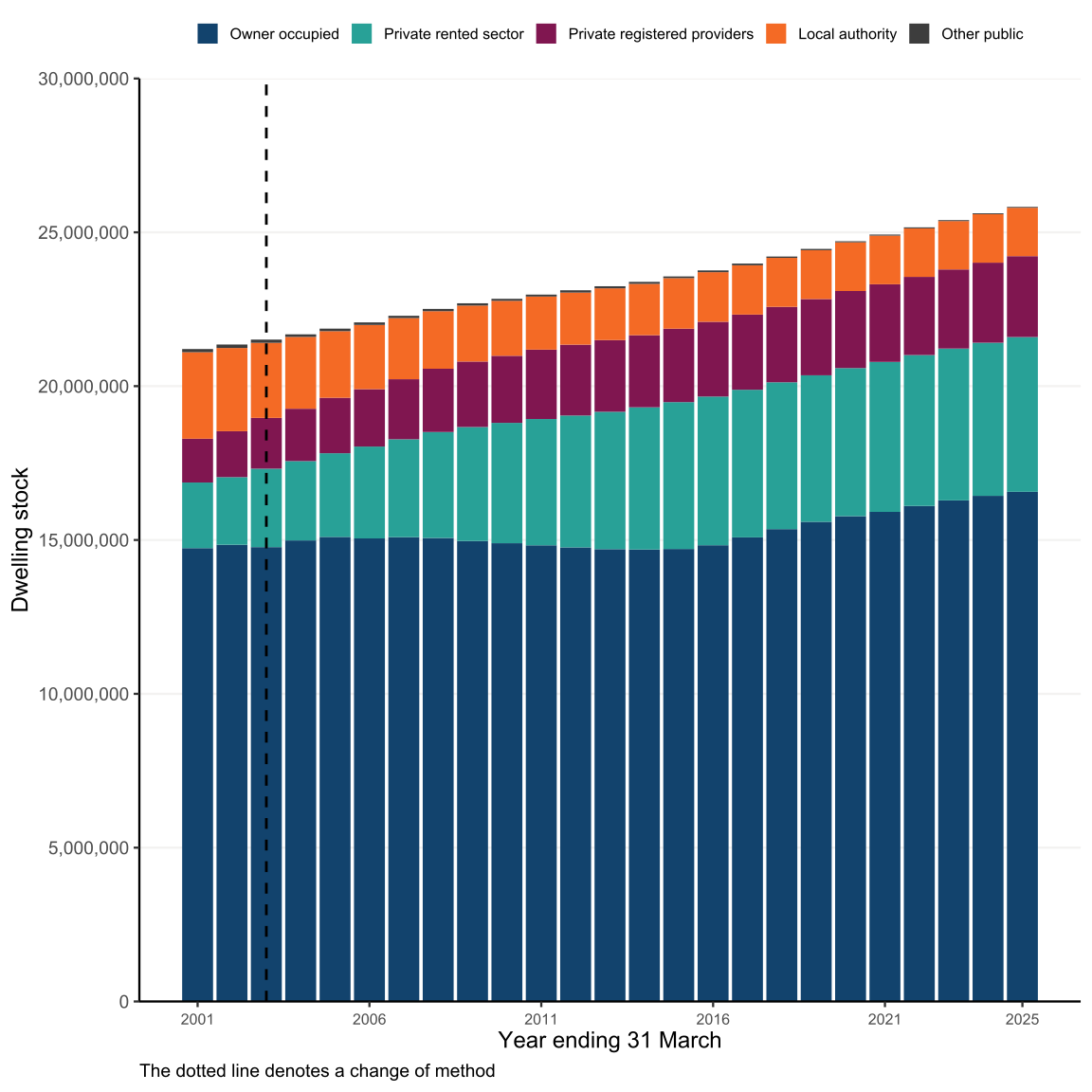
Table 2 Annual estimates of total dwelling stock by tenure, England, as of 31 March 2001 to 31 March 2025
| Year ending 31 March | Owner occupied | Private rented sector | Social and affordable rented | Other public |
|---|---|---|---|---|
| 2001 | 14,735,000 | 2,133,000 | 4,236,000 | 103,000 |
| 2002 | 14,846,000 | 2,197,000 | 4,198,000 | 112,000 |
| 2003 | 14,769,000 | 2,549,000 | 4,091,000 | 104,000 |
| 2004 | 14,986,000 | 2,578,000 | 4,037,000 | 83,000 |
| 2005 | 15,100,000 | 2,720,000 | 3,968,000 | 82,000 |
| 2006 | 15,050,000 | 2,987,000 | 3,953,000 | 82,000 |
| 2007 | 15,092,000 | 3,182,000 | 3,938,000 | 75,000 |
| 2008 | 15,067,000 | 3,443,000 | 3,927,000 | 74,000 |
| 2009 | 14,968,000 | 3,705,000 | 3,947,000 | 74,000 |
| 2010 | 14,896,000 | 3,912,000 | 3,967,000 | 65,000 |
| 2011 | 14,828,000 | 4,105,000 | 3,981,000 | 62,000 |
| 2012 | 14,760,000 | 4,286,000 | 3,997,000 | 75,000 |
| 2013 | 14,702,000 | 4,465,000 | 4,013,000 | 67,000 |
| 2014 | 14,691,000 | 4,623,000 | 4,012,000 | 64,000 |
| 2015 | 14,708,000 | 4,773,000 | 4,030,000 | 55,000 |
| 2016 | 14,830,000 | 4,832,000 | 4,043,000 | 57,000 |
| 2017 | 15,086,000 | 4,798,000 | 4,045,000 | 56,000 |
| 2018 | 15,353,000 | 4,773,000 | 4,045,000 | 43,000 |
| 2019 | 15,591,000 | 4,762,000 | 4,066,000 | 42,000 |
| 2020 | 15,775,000 | 4,813,000 | 4,088,000 | 34,000 |
| 2021 | 15,914,000 | 4,875,000 | 4,106,000 | 33,000 |
| 2022 | 16,107,000 | 4,904,000 | 4,117,000 | 33,000 |
| 2023 | 16,288,000 | 4,935,000 | 4,143,000 | 31,000 |
| 2024 | 16,436,000 | 4,976,000 | 4,177,000 | 29,000 |
| 2025 | 16,567,000 | 5,030,000 | 4,201,000 | 28,000 |
As can be seen from Figure 3 and Table 3 below, between 31 March 2024 and 31 March 2025, the number of owner-occupied dwellings increased by 131,000 dwellings, the number of private rented sector dwellings increased by 54,000 dwellings and the number of social and affordable rented dwellings (the total rented from Private Registered Providers and Local Authorities) increased by 25,000 dwellings. The increase resulted from a change of 26,000 in Private Registered Provider dwellings and a change of -2,000 in Local Authority dwellings. There was a decrease of 900 other public sector dwellings between 31 March 2024 and 31 March 2025.
Figure 3 Annual change in total dwelling stock by tenure, England, as of 31 March 2002 to 31 March 2025
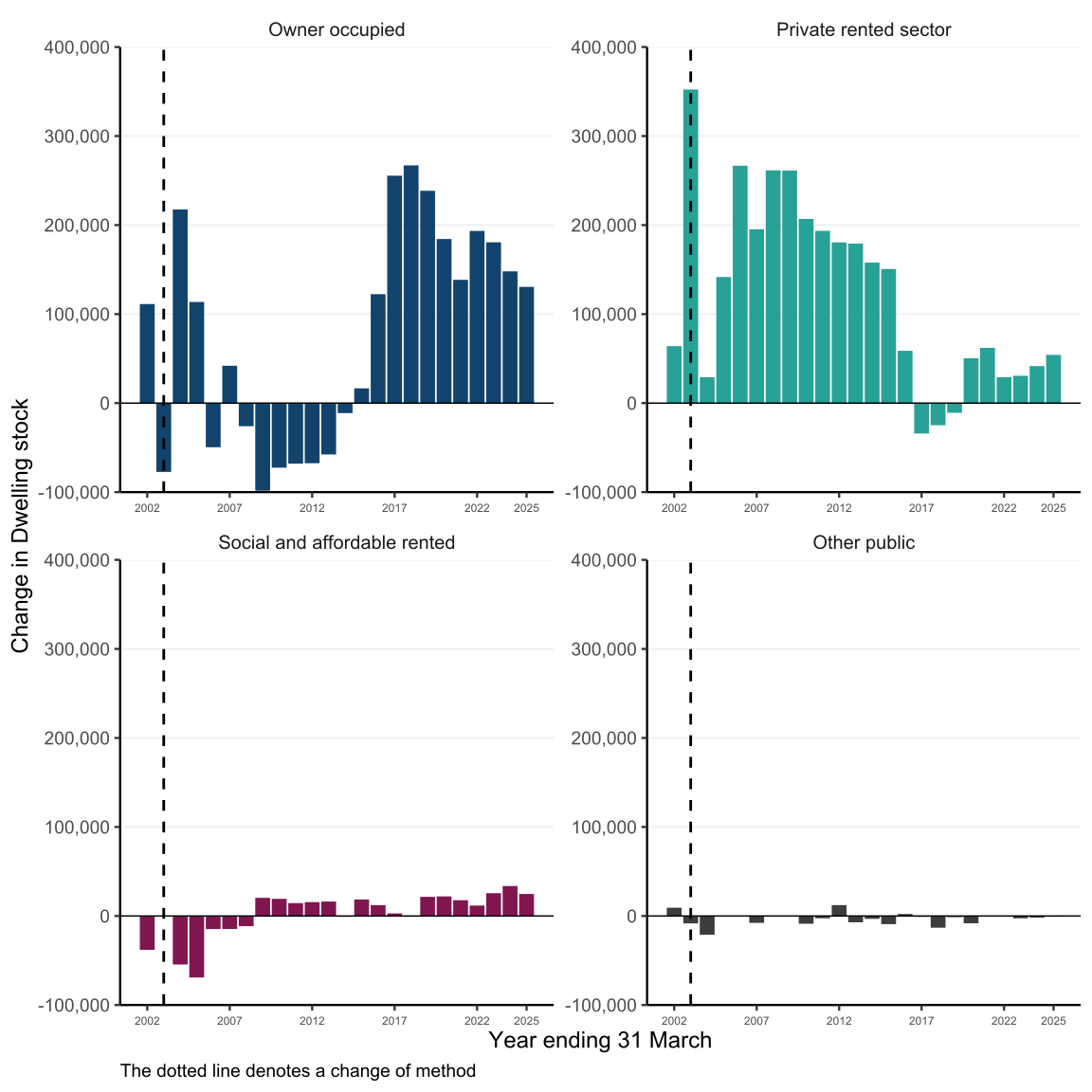
Table 3 Annual change in total dwelling stock by tenure, England, as of 31 March 2002 to 31 March 2025
| Year ending 31 March | Owner occupied | Private rented sector | Social and affordable rented | Other public |
|---|---|---|---|---|
| 2002 | 111,000 | 64,000 | -38,000 | 9,000 |
| 2003 | -77,000 | 352,000 | -107,000 | -8,000 |
| 2004 | 218,000 | 29,000 | -55,000 | -21,000 |
| 2005 | 114,000 | 142,000 | -69,000 | -1,000 |
| 2006 | -50,000 | 267,000 | -15,000 | 0 |
| 2007 | 42,000 | 195,000 | -15,000 | -8,000 |
| 2008 | -26,000 | 261,000 | -11,000 | -1,000 |
| 2009 | -98,000 | 261,000 | 20,000 | 0 |
| 2010 | -73,000 | 207,000 | 19,000 | -9,000 |
| 2011 | -68,000 | 194,000 | 14,000 | -3,000 |
| 2012 | -68,000 | 181,000 | 16,000 | 12,000 |
| 2013 | -58,000 | 179,000 | 16,000 | -7,000 |
| 2014 | -11,000 | 158,000 | -1,000 | -3,000 |
| 2015 | 17,000 | 151,000 | 19,000 | -9,000 |
| 2016 | 122,000 | 59,000 | 12,000 | 2,000 |
| 2017 | 255,000 | -34,000 | 3,000 | -1,000 |
| 2018 | 267,000 | -25,000 | -1,000 | -13,000 |
| 2019 | 238,000 | -11,000 | 21,000 | -1,000 |
| 2020 | 184,000 | 50,000 | 22,000 | -8,000 |
| 2021 | 138,000 | 62,000 | 18,000 | -1,000 |
| 2022 | 193,000 | 29,000 | 12,000 | 0 |
| 2023 | 181,000 | 31,000 | 26,000 | -3,000 |
| 2024 | 148,000 | 42,000 | 34,000 | -2,000 |
| 2025 | 131,000 | 54,000 | 25,000 | -1,000 |
As can be seen from Figure 4 and Table 4 below, the proportion of dwellings in owner occupation reached a peak of 69.5% in 2002. Since then, owner occupation has gradually declined to 62.4% in 2015 and 2016, but has increased slightly since, reaching 64.1% as at 31 March 2025 (down from 64.2% on 31 March 2024). This is comparable with the latest figures on households in owner occupation as revealed by the English Housing Survey, which show household owner occupation rates of 65% in 2024-25 (this proportion has been similar over the last decade but has seen an increase from 63% in 2016-17).
Correspondingly, the proportion of dwellings in the private rented sector has gradually increased to 20.3% in 2016, but has since fallen. As of 31 March 2025, the private rented sector are 19.5% of the total dwelling stock, up from 19.4% as of 31 March 2024.
Social and affordable rented dwellings are 16.3% of the total dwelling stock as of 31 March 2025, unchanged from the previous year.
Other public sector dwellings are 0.1% of the total dwelling stock as of 31 March 2025, unchanged from the previous year.
Figure 4 Proportion of total dwelling stock by tenure, England, as of 31 March 2001 to 31 March 2025
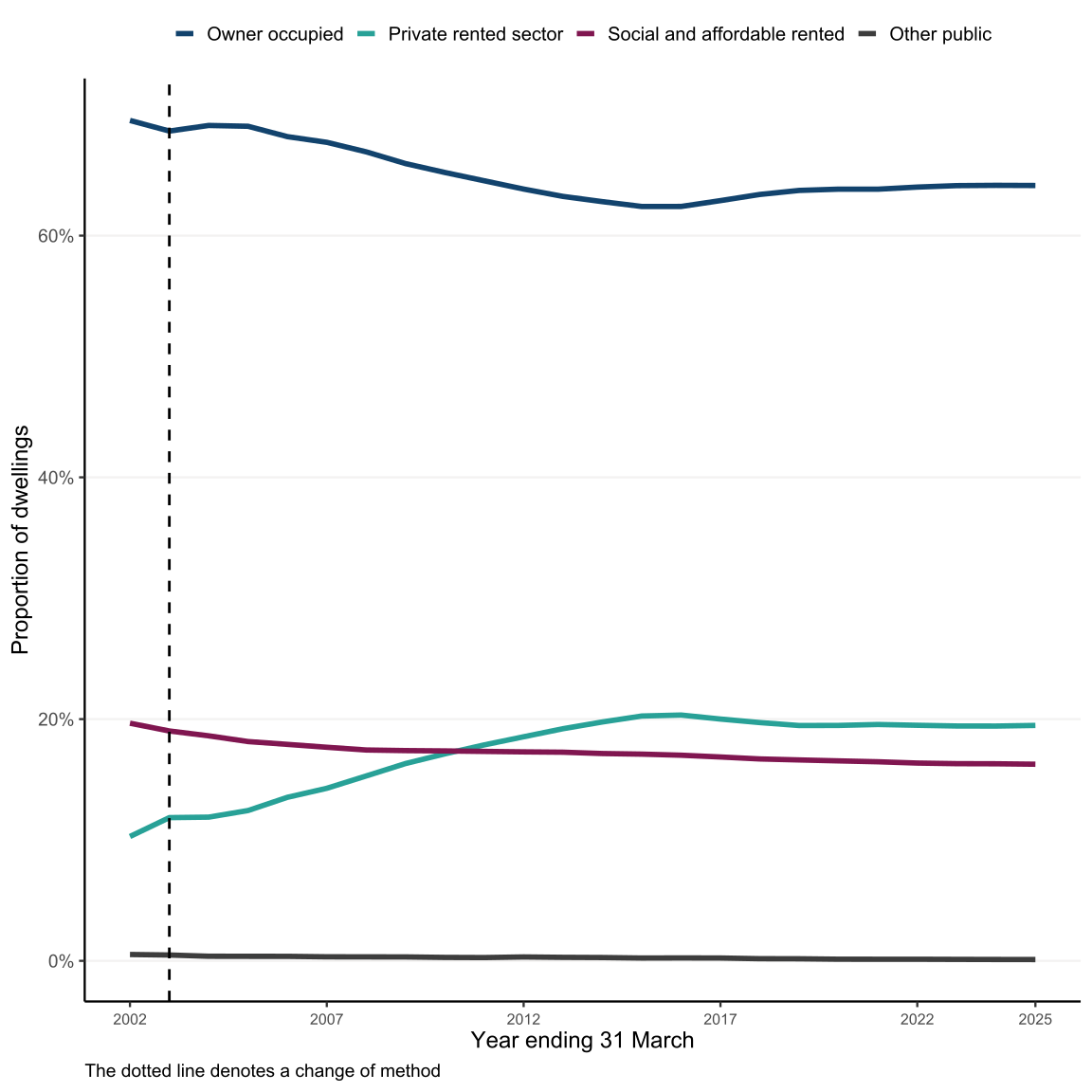
Table 4 Proportion of total dwelling stock by tenure, England, as of 31 March 2001 to 31 March 2025
| Year ending 31 March | Owner occupied | Private rented sector | Social and affordable rented | Other public |
|---|---|---|---|---|
| 2001 | 69.5% | 10.1% | 20.0% | 0.5% |
| 2002 | 69.5% | 10.3% | 19.7% | 0.5% |
| 2003 | 68.7% | 11.8% | 19.0% | 0.5% |
| 2004 | 69.1% | 11.9% | 18.6% | 0.4% |
| 2005 | 69.0% | 12.4% | 18.1% | 0.4% |
| 2006 | 68.2% | 13.5% | 17.9% | 0.4% |
| 2007 | 67.7% | 14.3% | 17.7% | 0.3% |
| 2008 | 66.9% | 15.3% | 17.4% | 0.3% |
| 2009 | 66.0% | 16.3% | 17.4% | 0.3% |
| 2010 | 65.2% | 17.1% | 17.4% | 0.3% |
| 2011 | 64.5% | 17.9% | 17.3% | 0.3% |
| 2012 | 63.8% | 18.5% | 17.3% | 0.3% |
| 2013 | 63.2% | 19.2% | 17.3% | 0.3% |
| 2014 | 62.8% | 19.8% | 17.2% | 0.3% |
| 2015 | 62.4% | 20.3% | 17.1% | 0.2% |
| 2016 | 62.4% | 20.3% | 17.0% | 0.2% |
| 2017 | 62.9% | 20.0% | 16.9% | 0.2% |
| 2018 | 63.4% | 19.7% | 16.7% | 0.2% |
| 2019 | 63.7% | 19.5% | 16.6% | 0.2% |
| 2020 | 63.8% | 19.5% | 16.5% | 0.1% |
| 2021 | 63.8% | 19.6% | 16.5% | 0.1% |
| 2022 | 64.0% | 19.5% | 16.4% | 0.1% |
| 2023 | 64.1% | 19.4% | 16.3% | 0.1% |
| 2024 | 64.2% | 19.4% | 16.3% | 0.1% |
| 2025 | 64.1% | 19.5% | 16.3% | 0.1% |
5. Subnational estimates
5.1 Regional estimates
The proportion of dwellings in the owner occupation sector increased in the West Midlands (1.1 percentage points), the East of England (0.3 percentage points) and the South West (0.8 percentage points) from 31 March 2024 to 31 March 2025.
By contrast, the proportion of dwellings in the owner occupation sector decreased in the North East (-0.4 percentage points), the North West (-0.5 percentage points), Yorkshire and the Humber (-0.4 percentage points), the East Midlands (-0.4 percentage points), London (-0.2 percentage points) and the South East (-0.3 percentage points) from 31 March 2024 to 31 March 2025.
5.2 Local authority estimates
The breakdown of the private sector into owner-occupied and privately rented dwelling stock at the local authority district is not available (as the split is based on survey information held at regional level only). For further details, please see the technical notes.
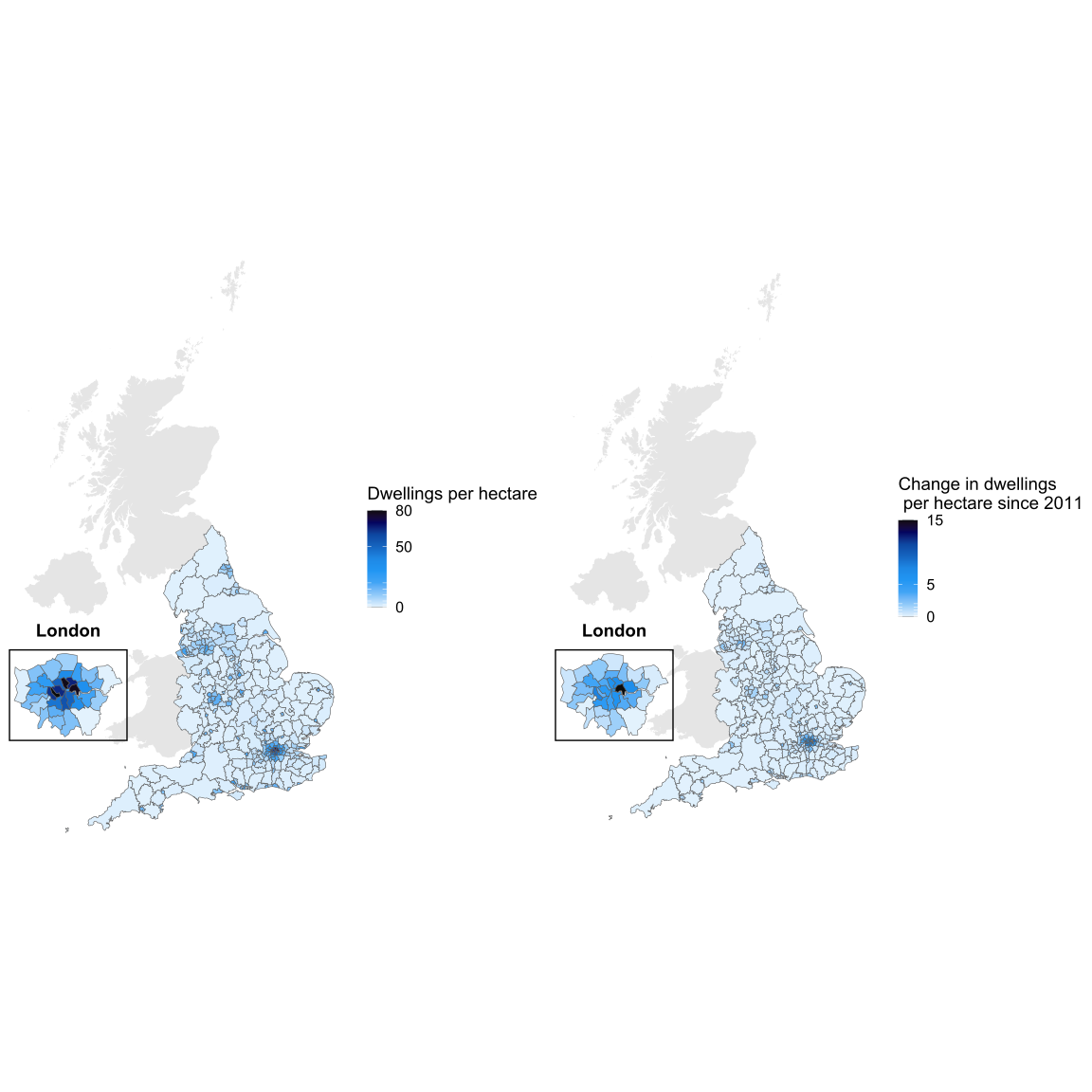
As of 31 March 2025, England had a mean dwelling density of 1.98 dwellings per hectare.
As can be seen from figure 5 (left) below, the local authority with the highest dwelling density was Kensington and Chelsea with 74.51 dwellings per hectare and the local authority with the lowest dwelling density was West Devon with 0.24 dwellings per hectare as of 31 March 2025.
As can be seen from Figure 5 (right) below, the local authority with the largest increase in dwelling density as of 31 March 2025 since the 2011 census was Tower Hamlets with 19.52 dwellings per hectare from 53.27 in 2011 to 72.79 in 2025. Outside of London, the local authority with the largest increase in dwelling density as of 31 March 2025 since the 2011 census was Watford with 3.25 dwellings per hectare from 17.46 in 2011 to 20.71 in 2025.
Figure 5 Dwellings per hectare[footnote 3] (left) and change in dwellings per hectare from 2011 (right), by each English local authority district, 31 March 2025
6. Vacant dwellings
The Ministry of Housing, Communities and Local Government’s previously published vacant dwellings table (live table 615) brings together figures on all vacant dwellings and all long-term vacant dwellings in England at local authority district level from 2004 (when records began). This is drawn from several separately published sources. The England figures have been previously published within the Council Taxbase statistics. The Council Tax Base reports on dwellings on the Council Tax list, and whether they are receiving discounts or are being charged premiums. This includes dwellings that have been reported as empty (ie unoccupied and unfurnished) for the purposes of council tax, and so may be subject to a discount or not, charged a premium or fall into an exempt category. The all vacants figures will also include properties that have a council tax exemption. The data are reported from all local authorities and taken as a snapshot of their Council Tax administration system in October.
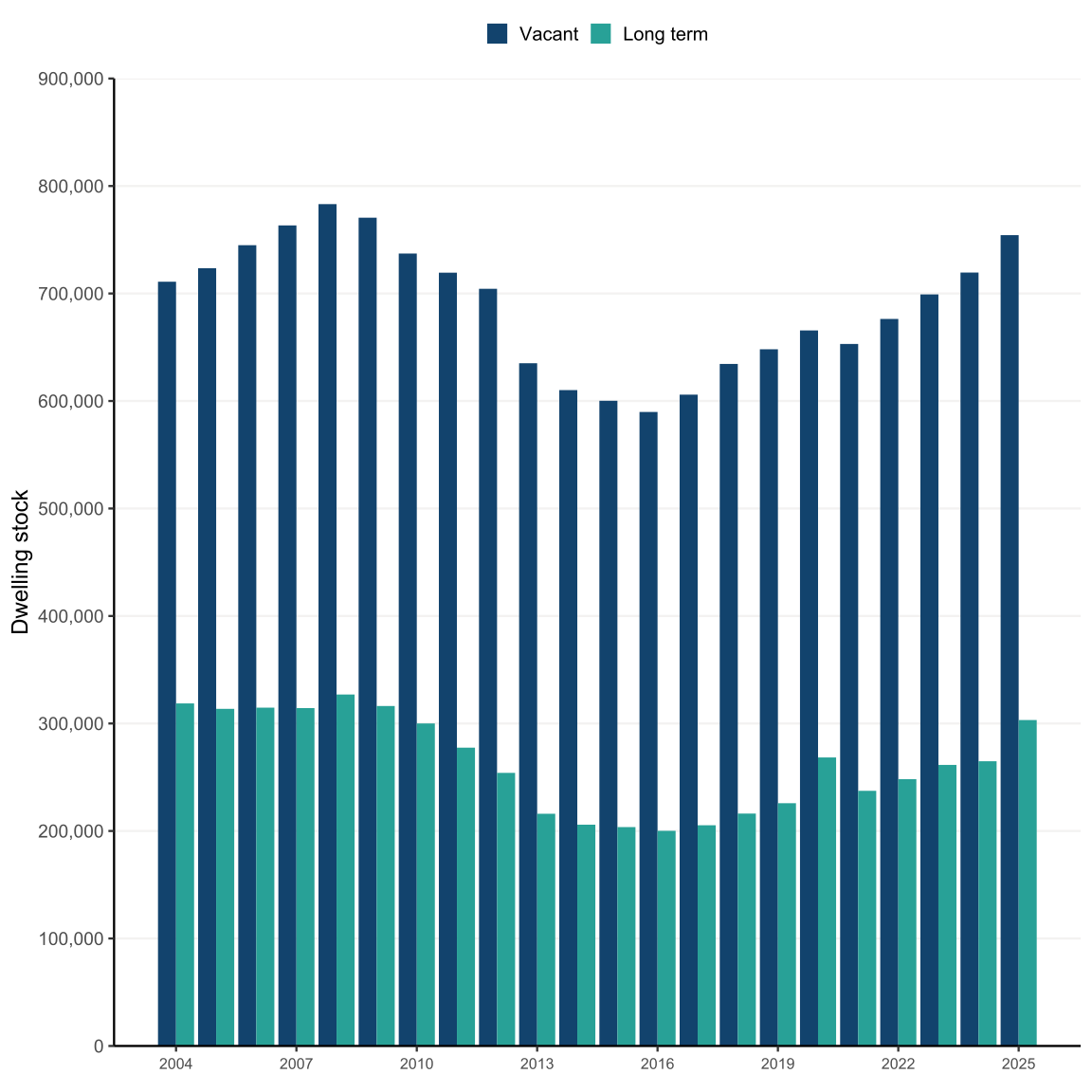
As can be seen from Figure 6 below, there were 754,264 vacant dwellings in England on 6 October 2025, an increase of 34,794 or 4.8% from 719,470 on 7 October 2024. On 6 October 2025, vacant dwellings are 2.9% of the dwelling stock in England.
Further, there were 303,185 long-term vacant dwellings in England on 6 October 2025, an increase of 38,301 or 14.5% from 264,884 on 7 October 2024. On 6 October 2025, long-term vacant dwellings are 1.2% of the dwelling stock in England.
Figure 6 Number of vacant and long-term vacant dwellings, England, 2004 to 2025
7. Accompanying tables and open data
7.1 Tables
Accompanying tables are available to download alongside this release.
7.2 Open data
These statistics are available in fully open and linkable data formats at Open Data Communities.
8. Technical notes
Please see the accompanying Technical Notes for further details.
9. Enquiries
Media enquiries:
Office hours: 0303 444 1209
Email: NewsDesk@communities.gov.uk
Public enquiries and Responsible Statistician: Ollie Jacob
Email: housing.statistics@communities.gov.uk
Information on Official Statistics is available via the UK Statistics Authority website.
Information about statistics at MHCLG is available via the Department’s website.
-
Accredited official statistics are called National Statistics in the Statistics and Registration Service Act 2007. Please see the Office for Statistics Regulation website for further details. ↩
-
Our statistical practice is regulated by the Office for Statistics Regulation (OSR). OSR sets the standards of trustworthiness, quality and value in the Code of Practice for Statistics that all producers of official statistics should adhere to. You are welcome to contact us directly with any comments about how we meet these standards. Alternatively, you can contact OSR by emailing regulation@statistics.gov.uk or via the OSR website. ↩
-
To calculate dwellings per hectare, we divide total dwelling stock by land area in hectares. ↩