Deprivation of Liberty Safeguards, England, 2024 to 2025: statistical commentary
Updated 26 March 2026
Applies to England

© Crown copyright 2026
This publication is licensed under the terms of the Open Government Licence v3.0 except where otherwise stated. To view this licence, visit nationalarchives.gov.uk/doc/open-government-licence/version/3 or write to the Information Policy Team, The National Archives, Kew, London TW9 4DU, or email: psi@nationalarchives.gov.uk.
Where we have identified any third party copyright information you will need to obtain permission from the copyright holders concerned.
This publication is available at https://www.gov.uk/government/statistics/deprivation-of-liberty-safeguards-england-2024-to-2025/deprivation-of-liberty-safeguards-england-2024-to-2025-statistical-commentary
Introduction
These official statistics provide findings for England from the Mental Capacity Act 2005, Deprivation of Liberty Safeguards (DoLS) data collection for the period 1 April 2024 to 31 March 2025. DoLS are a legal framework applying to individuals who lack the mental capacity to consent to the arrangements for their care. Where such care may amount to a ‘deprivation of liberty’ the arrangements are independently assessed to ensure they are in the best interests of the individual concerned. The data is collected from councils with adult social services responsibilities (CASSRs), who are the supervisory bodies for authorising deprivations of liberty of adults in care homes and hospitals. For ease of reading and consistency ‘local authority’ will be used subsequently to refer to CASSRs. All 153 local authorities provided data for 2024 to 2025.
The aim of this publication is to inform users about aspects of DoLS activity, including:
- the profile of people for whom a DoLS application was received
- applications completed and their outcome
- applications not completed
This is the first time that the DoLS report has been published by the Department of Health and Social Care (DHSC). It was previously published by NHS England (see Mental Capacity Act 2005, Deprivation of Liberty Safeguards).
Statistics on challenges to DoLS authorisations are published by the Ministry of Justice (see Ministry of Justice, family court statistics, quarterly).
Main points
During 2024 to 2025:
- 364,900 applications for DoLS were received (up 9.8% from 2023 to 2024). The proportion of DoLS applications which have an urgent authorisation attached was 58%
-
353,935 applications for DoLS were completed (up 9.3% from 2023 to 2024), of which:
- 159,665 (45.1%) were fully assessed
- 16,130 (4.6%) were partially assessed
- 178,140 (50.3%) were closed without any assessments
- 3,975 completed, fully assessed applications for DoLS were not granted (2.5% of all applications that were completed and fully assessed, down from 3.0% in 2023 to 2024)
- 118,850 applications for DoLS were not completed at year end (down by 4.0% from 123,790 in 2023 to 2024)
- 21.1% of applications for DoLS were completed within the statutory timeframe of 21 days (up 2.5 percentage points from 18.6% in 2023 to 2024)
- for DoLS applications that were completed, the average (mean) length of time from receiving an application to completion was 126 days (down from 144 days in 2023 to 2024)
All data can be found in the accompanying data tables.
DoLS applications
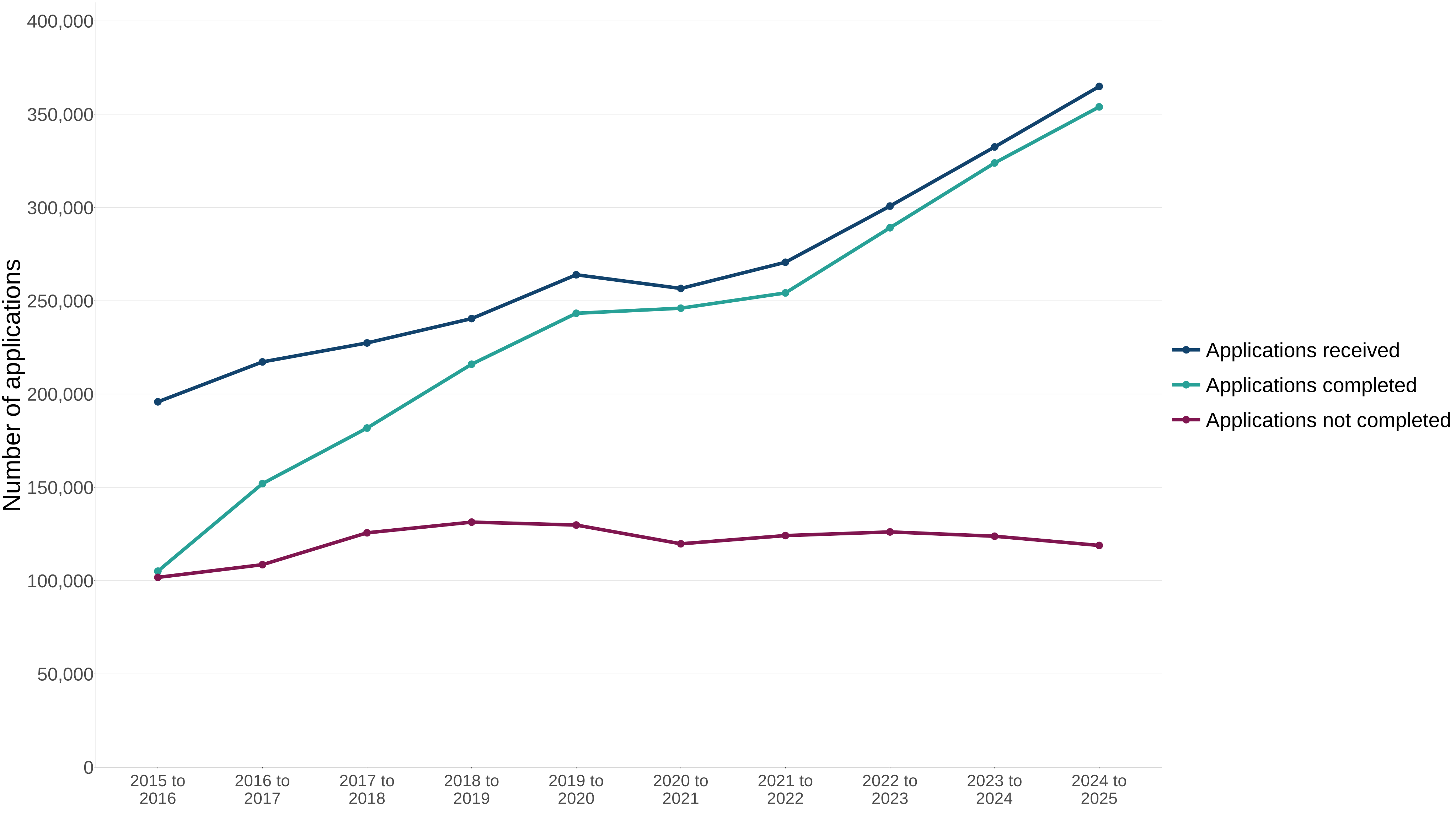
There were 364,900 applications for DoLS received during 2024 to 2025. During the year, 353,935 applications were completed and 118,150 applications were not completed by the end of the year. Figure 1 shows the equivalent time series for these figures back to the year 2015 to 2016.
Figure 1: number of DoLS applications by year, England
Source: DoLS collection, 2014 to 2015 to 2024 to 2025
Figure 1 shows trends in DoLS applications received, completed and not completed between 2015 to 2016 and 2024 to 2025. The number of applications received increased overall across the period, rising from 195,840 in 2015 to 2016 to 364,900 in 2024 to 2025. Growth was steady up to 2019 to 2020, dipped slightly in 2020 to 2021 during COVID-19, and then increased more sharply in the most recent years with an increase of 9.8% between 2023 to 2024 and the latest year of 2024 to 2025.
The number of completed applications has also risen over time, increasing from 105,055 in 2015 to 2016 to 353,935 in 2024 to 2025. The number of completed applications grew year on year up to 2019 to 2020, remained at a similar level in 2020 to 2021, and then increased steadily through to 2024 to 2025. Although the number of completed applications are consistently lower than the number of applications received, the gap between the 2 has narrowed from 90,785 in 2015 to 2016, to 10,965 in 2024 to 2025.
The number of applications not completed increased from 101,740 in 2015 to 2016 to a peak of 131,350 in 2018 to 2019, before falling in 2020 to 2021. In the most recent years, this figure remained relatively stable at around 120,000 to 126,000, decreasing further to 118,850 in 2024 to 2025.
Completed and not completed DoLS applications
Completed applications
During 2024 to 2025, 353,935 applications for DoLS were completed. Of these:
- 159,665 were fully assessed (up 9.4% from 2023 to 2024), of which 55,165 (34.6%) were fully assessed on urgent authorisation
- 16,130 were closed with partial assessment (up 5.6% from 2023 to 2024)
- 178,140 were closed without any assessments (up 9.5% from 2023 to 2024)
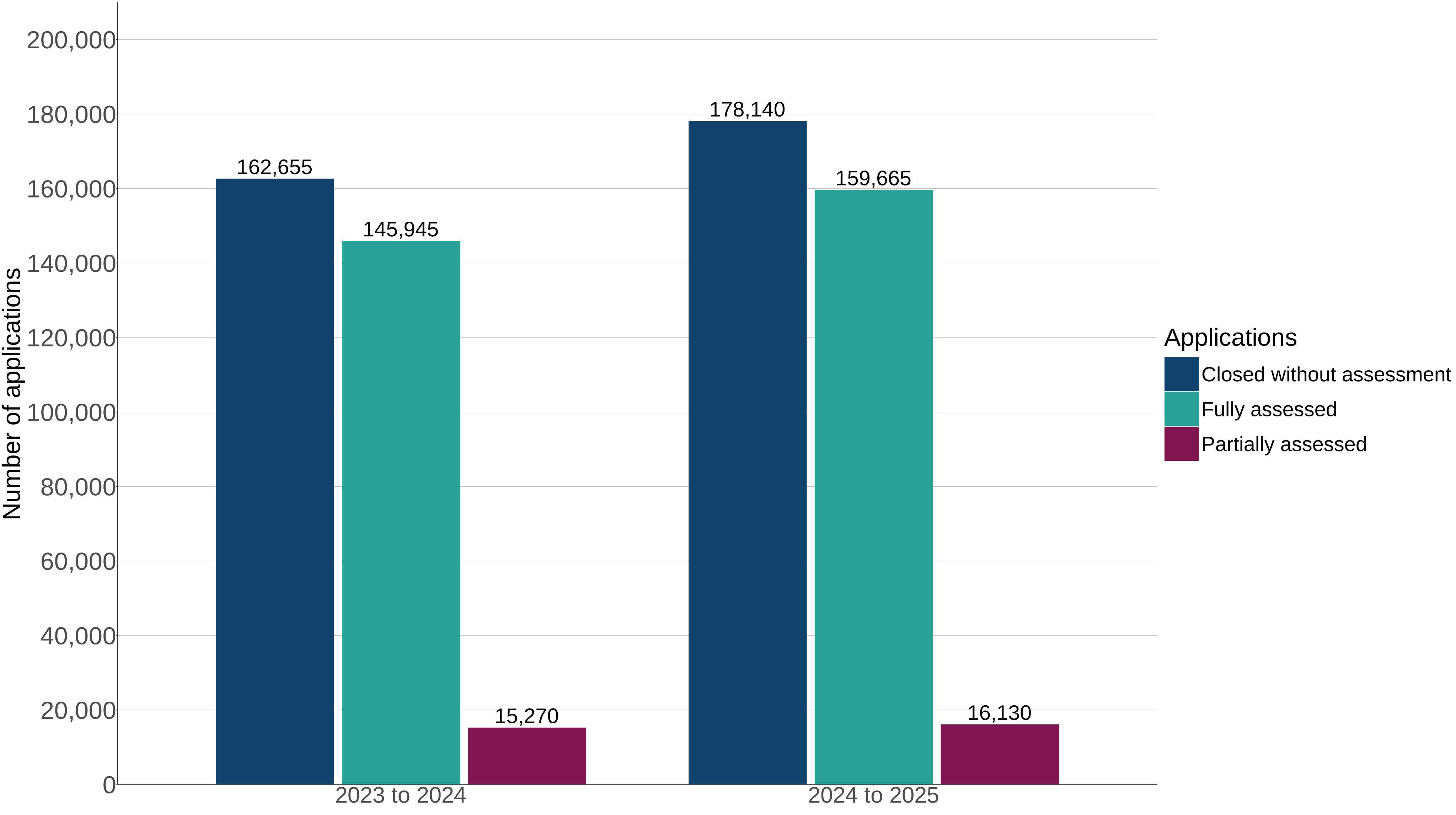
Figure 2: number of DoLS applications completed, England, 2023 to 2024 and 2024 to 2025
Source: DoLS collection, 2023 to 2024 and 2024 to 2025
Figure 2 shows the number of completed applications for DoLS that were fully assessed, partially assessed and closed without assessment for 2023 to 2024 and 2024 to 2025.
In both years, the largest category was applications closed without any assessments, increasing from 162,655 in 2023 to 2024 to 178,140 in 2024 to 2025. The number of fully assessed applications also increased over the period, from 145,945 to 159,665, remaining the second largest category in both years.
A smaller number of applications were closed with partial assessment, rising slightly from 15,270 in 2023 to 2024 to 16,130 in 2024 to 2025.
Fully assessed and not granted applications
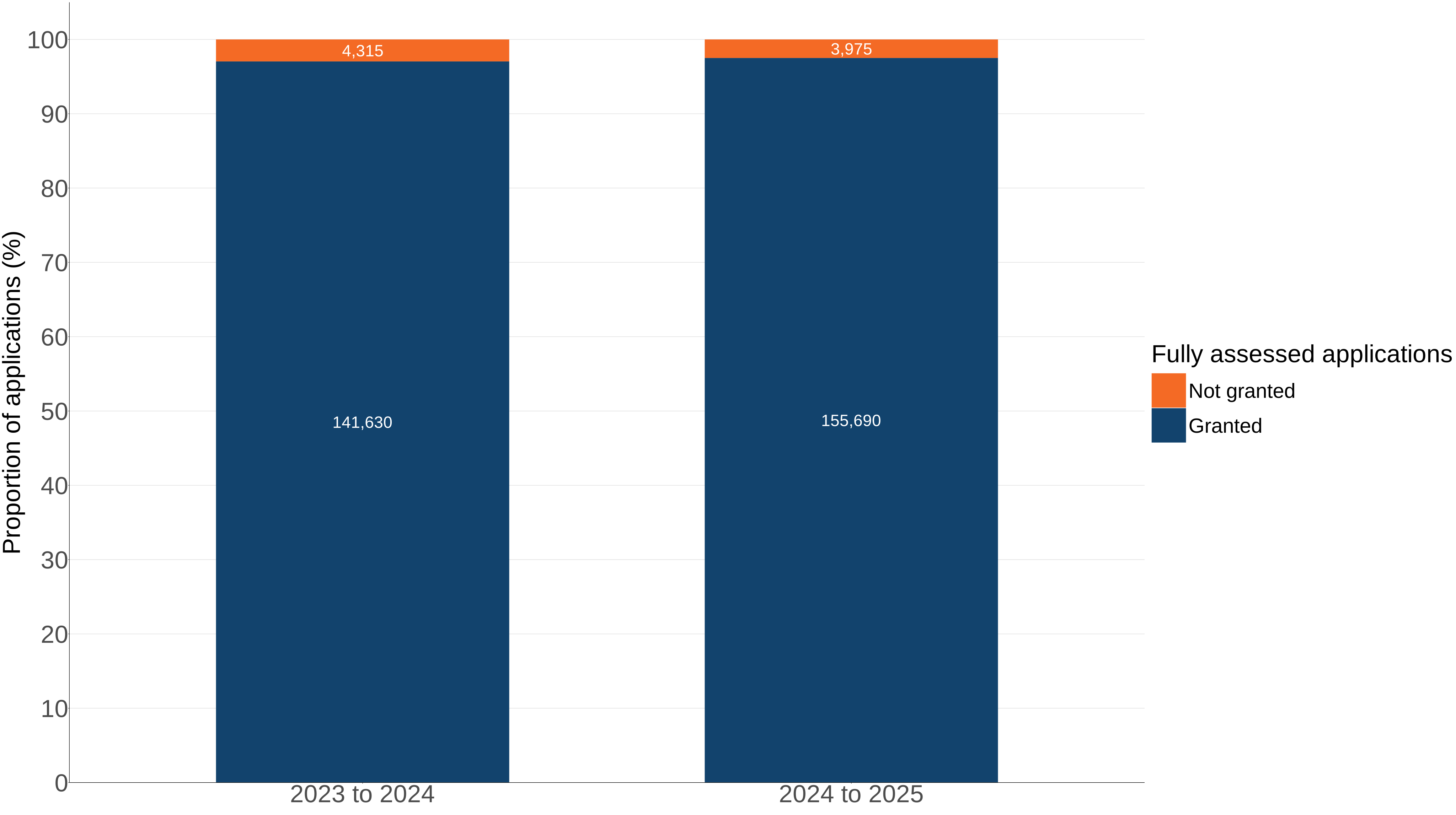
In 2024 to 2025, 3,975 completed, fully assessed applications for DoLS were not granted. This was 2.5% of all completed, fully assessed applications, down from 3.0% in 2023 to 2024.
Figure 3: proportion of completed, fully assessed applications for DoLS that were granted and not granted, England, 2023 to 2024 and 2024 to 2025
Source: DoLS collection, 2023 to 2024 and 2024 to 2025
Figure 3 shows the number and proportion of completed, fully assessed applications for DoLS that were granted and not granted. In 2024 to 2025, 155,690 (97.5%) were granted and 3,975 (2.5%) were not granted. This compares with 2023 to 2024 where 141,630 (97.0%) were granted and 4,315 (3.0%) were not granted.
Applications not completed
At the end of the 2024 to 2025 reporting year, 118,850 applications for DoLS were not completed (4.0% down from 123,790 in 2023 to 2024).
Duration of completed applications
Applications completed within the statutory timeframe of 21 days
Of the 353,935 applications for DoLS that were completed in 2024 to 2025, 149,755 were classed as standard (not urgent). Of these, 21.1% (31,670) were completed within the statutory timeframe of 21 days, up from 18.6% in 2023 to 2024.
Average length of time for a completed application to be completed
Of the 353,935 applications for DoLS that were completed in 2024 to 2025, the average (mean) length of time taken from receiving to completing an application was 126 days. This is down from 144 days in 2023 to 2024
Data source and methodology
The data used in this publication was collated by DHSC from the DoLS mandatory data collection of local authorities in England. Data was provided by all 153 local authorities for 2024 to 2025.
More detailed information about data sources and processing can be found in the accompanying background, quality and methodology for these statistics.
Terminology
Deprivation of liberty safeguards
DoLS are a legal framework applying to individuals who lack the mental capacity to consent to the arrangements for their care. Where such care may amount to a ‘deprivation of liberty’ the arrangements are independently assessed to ensure they are in the best interests of the individual concerned. See more information in the accompanying background, quality and methodology document.
Application completed
This is where an application has been completed during the reporting period 1 April to 31 March, irrespective of when it was received. An application is considered to be complete when:
- enough information has been gathered to enable a decision to either grant or not grant the application to take place
- the relevant form has been completed and signed by the relevant person at the local authority
Applications completed after 31 March are considered as incomplete for the reporting year and are therefore categorised as ‘not completed’.
Application not completed
This includes applications received by a council and not completed as at 1 April.
Application outcome
The status of the application on the final day of the reporting period, 31 March.
Application granted
The application has satisfied all 6 assessments and the decision has been made to grant the application. See more information in the accompanying background, quality and methodology.
Application not granted
The decision has been made to not grant the application for one or more of the following reasons:
- one or more of the assessment criteria have not been satisfied
- there has been a change of circumstances
- the individual has died
Duration of application
The duration of the application as of 31 March of the reporting period, determined by calculating the difference in the number of days between the day the application was received by the council and 31 March. Applications received on 31 March were calculated as 1 day.
Contact
We welcome feedback from our users on how you use our products, how well these products meet your needs and how they could be improved.
For feedback and any further questions, contact asc.statistics@dhsc.gov.uk.