Access to green and blue space in England
Published 4 March 2026
Applies to England

© Crown copyright 2026
This publication is licensed under the terms of the Open Government Licence v3.0 except where otherwise stated. To view this licence, visit nationalarchives.gov.uk/doc/open-government-licence/version/3 or write to the Information Policy Team, The National Archives, Kew, London TW9 4DU, or email: psi@nationalarchives.gov.uk.
Where we have identified any third party copyright information you will need to obtain permission from the copyright holders concerned.
This publication is available at https://www.gov.uk/government/statistics/access-to-green-and-blue-space-in-england/access-to-green-and-blue-space-in-england
Last updated: 2026
Latest data available: 2025
Contact
Enquires on this publication to: access.statistics.feedback@defra.gov.uk
Tel: 03459 335577 (Defra enquiries) - find out more about call charges at – GOV.UK
Responsible Statistician: Rhidian Thomas
Website: Access to Nature Statistics – GOV.UK
Key messages
- Households that meet the ‘15-minute commitment’ are defined as those which have access to either doorstep, local or neighbourhood standard green spaces, as well as some Public Rights of Way and blue spaces, within a 15-minute walk.
- 80% of households in England have access to at least one green or blue space within a 15-minute walk.
- A higher percentage of rural households (91%) have access to green or blue space compared to urban households (78%).
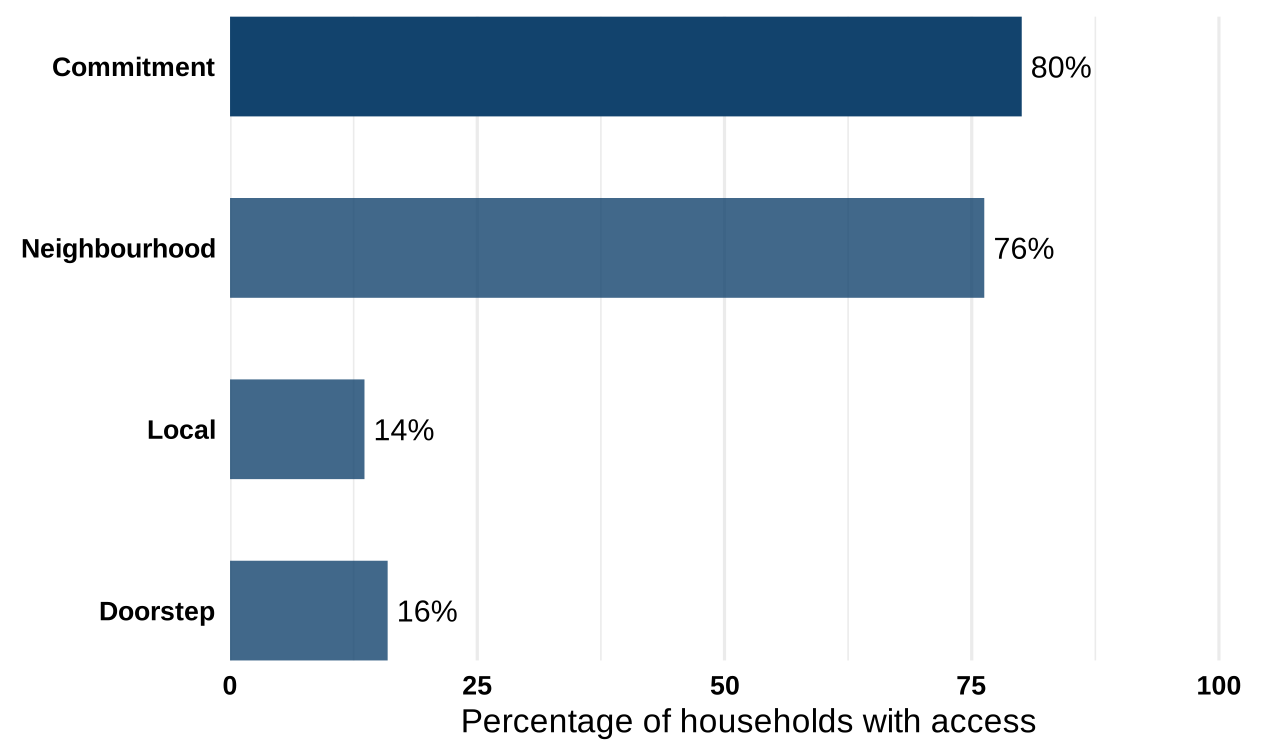
- Most households have access to at least one larger, neighbourhood standard space (76%) within a 15-minute walk, with fewer households having access to smaller local (14%) and doorstep (16%) standard spaces within shorter walking distances.
Introduction
In the Environmental Improvement Plan (EIP) 2025, the government reiterated its commitment to “make sure that everyone has access to green or blue spaces within a 15-minute walk from home”. This is known as the ‘15-minute commitment’.
Defra previously published official statistics in development on access to green space and access to blue space. This publication consolidates these statistics, showing household access to at least one green or blue space within a 15-minute walking distance, using an improved methodology. These are official statistics in development, and the first time statistics directly relating to the ‘15-minute commitment’ are being published for green and blue space combined. We particularly welcome feedback on the different parameters used within the ‘15-minute commitment’ statistics. To provide feedback, email the production team at access.statistics.feedback@defra.gov.uk or take part in our user feedback survey.
The results are presented below with geographic breakdowns by Middle layer Super Output Areas (MSOAs) and Local Authority Districts (LADs). The published data tables also include additional lower-level breakdowns by Output Areas (OAs) and Lower Super Output Areas (LSOAs). For further information regarding census geographies, see the accompanying technical document or the ONS Census 2021 Geographies page. We also intend to publish a household-level dataset via the Defra Data Services Platform alongside future iterations of this publication.
A network model was used to calculate the walking distance and time along walkable streets and paths between each household and green and blue space within its neighbourhood. The time taken to walk and the size and type of green or blue space were used to categorise each journey and classify whether the household fell under one of the three standards used to measure the ‘15-minute commitment’.
Previously, the access to green and blue space statistics were presented under different scenarios. The commitment has now been defined using parts of Natural England’s Green Infrastructure Standards, along with other parameters to reflect the broad scope of the commitment.
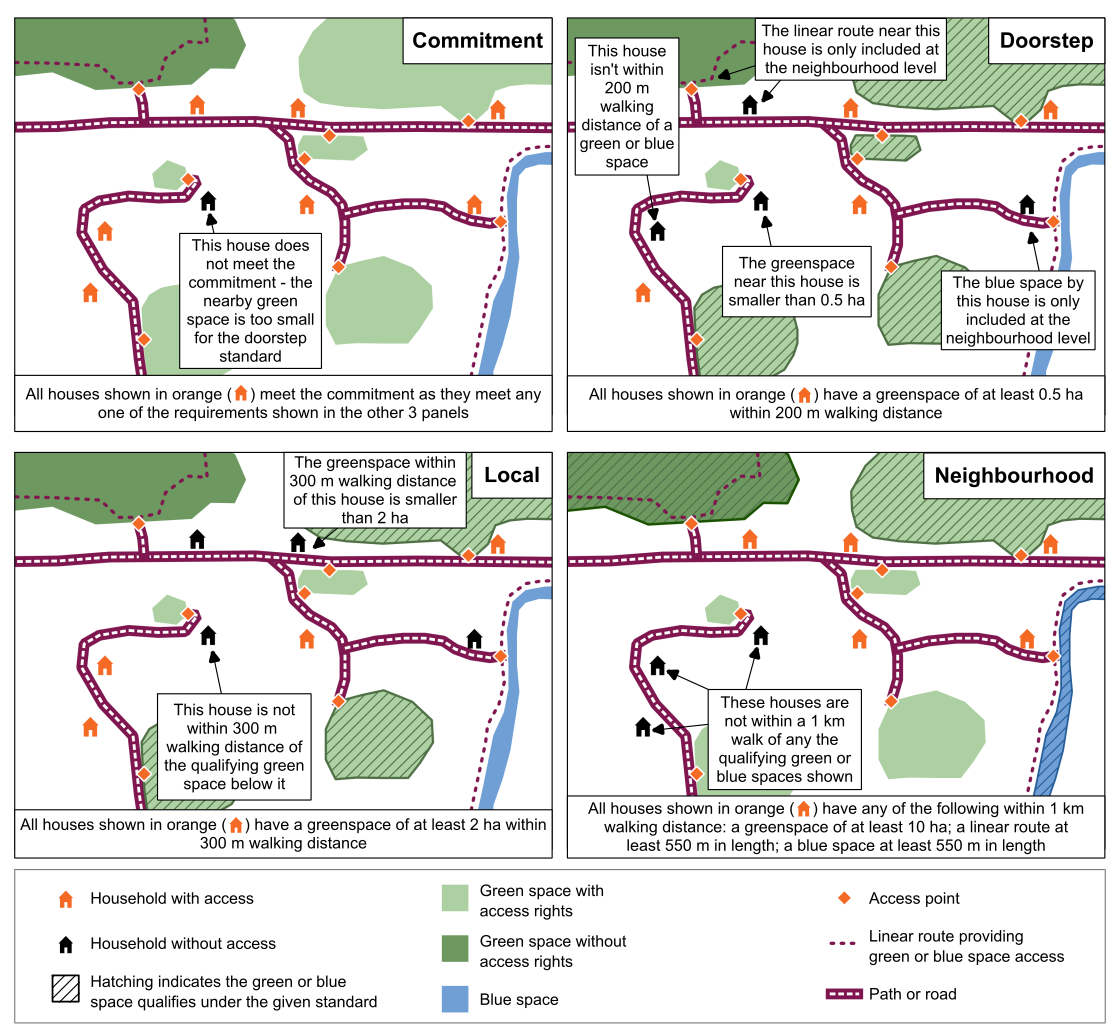
A household is defined as meeting the 15-minute commitment if it meets any of the criteria in Table 1.
Table 1: Criteria for household access to different green and blue space types
| Access standard | Space type | Size | Distance from household | Types of spaces included |
|---|---|---|---|---|
| Doorstep | Green space | 0.5 hectares | Within a 200 m walk | Playing Fields, Public Parks or Gardens, Millennium Greens, Country Parks, Doorstep Greens, Local Nature Reserves, Open Access Land |
| Local | Green space | 2 hectares | Within a 300 m walk | Public Parks or Gardens, Millennium Greens, Country Parks, Doorstep Greens, Local Nature Reserves, Open Access Land |
| Neighbourhood | Green space | 10 hectares | Within a 1 km walk | Public Parks or Gardens, Millennium Greens, Country Parks, Doorstep Greens, Local Nature Reserves, Open Access Land, Public Access Woodland |
| Neighbourhood (extended) | Linear route | 550 m | Within a 1 km walk | Public Rights of Way (of which, the majority is outside built-up areas), Public Rights of Way which are within National Nature Reserves or Golf Courses |
| Neighbourhood (extended) | Blue space | 550 m | Within 1 km walk | All waterside which is accessible on foot alongside waterbodies such as large ponds, lakes, rivers, canals, lakes, estuaries and the sea |
Notes on Table 1
- Walking distances are indicative. In the model, 1 km = 15 minutes of walking (200 m = 3 minutes, 300 m = 4.5 minutes), however, when accounting for elevation gain, a space that is at the upper distance limit from a household may fall out of the 15-minute commitment if the route involves uphill sections.
- Doorstep, local and neighbourhood access aligns with Natural England’s Green Infrastructure Standards. Neighbourhood (extended) builds on these to incorporate other types of green and blue spaces.
Figure 1 illustrates how households are classified under the three access standards: neighbourhood, local, and doorstep. A household meets the 15-minute commitment if it satisfies any of these criteria.
Figure 1: Illustration of household access to green and blue space under the 15-minute commitment, as well as doorstep, local and neighbourhood standards
Notes for Figure 1
- Each panel in the figure shows the same set of green and blue spaces and routes, though the number of households that are defined as having access varies depending on the standard used.
Access to green and blue space in England
Under the 15-minute commitment, 80% of households in England were found to have access to at least one green or blue space within a 15-minute walk (Figure 2). Households are included in this overall figure if they meet any of the three access standards. This includes 76% of households who have neighbourhood access, 14% of households who have local access, and 16% of households who have doorstep access.
Figure 2: The percentage of around 25,980,000 households in England with access to green or blue space, under the 15-minute commitment and neighbourhood, local and doorstep standards
Notes for Figure 2
- A household can meet more than one standard (i.e. have access to neighbourhood, local and/or doorstep) meaning that the sum of neighbourhood, local and doorstep won’t equal the commitment percentage.
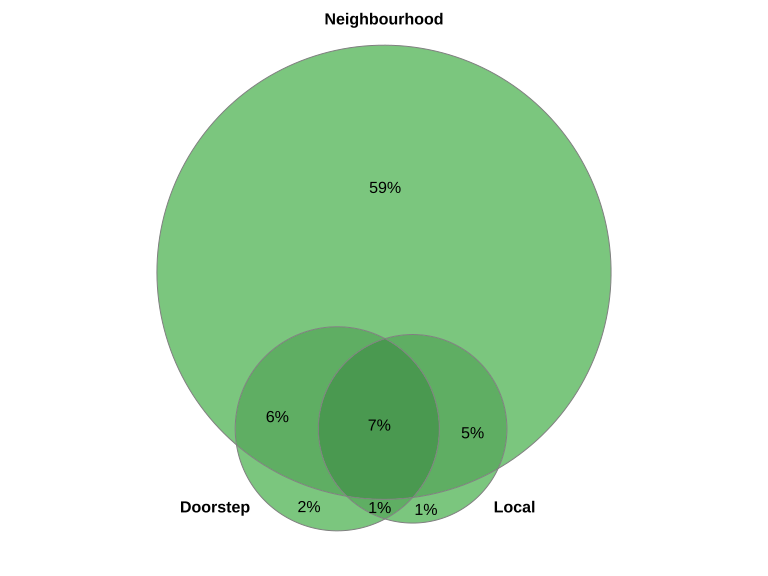
Households may have access to green and blue spaces under different combinations of access standards. Whilst 59% of households had access to green or blue space only under the neighbourhood standard (meaning larger green or blue spaces), a much smaller percentage had access to only doorstep (2%) or local (1%) green spaces. The percentage of households with access under more than one standard was 19%, with 7% of households having access to all three (Figure 3).
Figure 3: Overlap in household access to green or blue space in England under neighbourhood, local, and doorstep standards
Distribution of access
Middle layer Super Output Areas
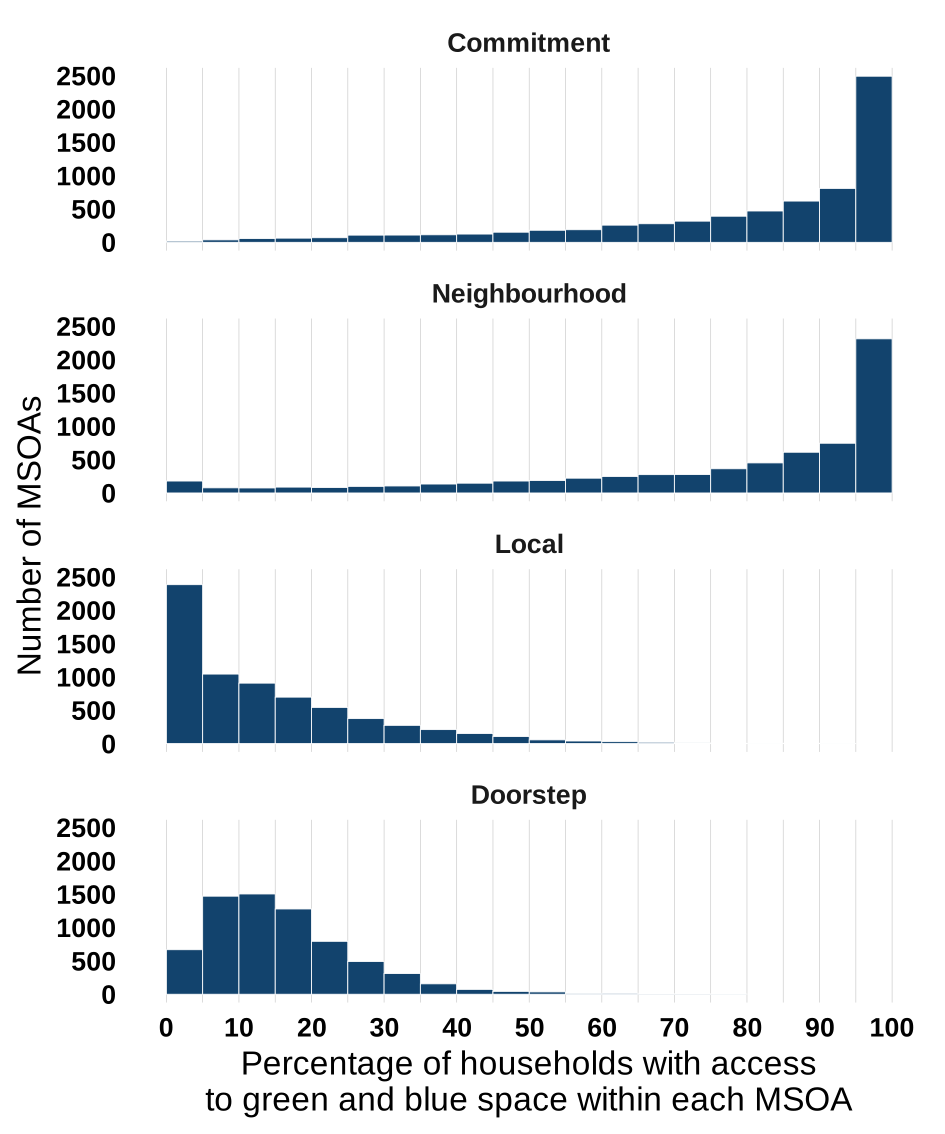
Middle layer Super Output Areas (MSOA) are medium-sized geographical areas with a resident population of between 5,000 and 15,000 people. Across all MSOAs in England (6,586), there was substantial variation in the percentage of households that have access to green or blue space. In the average MSOA (using a median), 89% of households have access to green or blue space under the 15-minute commitment, whereas 87% had access under the neighbourhood standard, 10% under the local standard and 14% under the doorstep standard.
The distribution of access across all MSOAs in England is highly skewed across the different access standards (Figure 4). MSOAs are most likely to have a high percentage of households within a 15-minute walk of a green or blue space of any size, or that fit the neighbourhood standard. In contrast, most MSOAs had a lower percentage of households that fit the local and doorstep standards.
Figure 4: The distribution of percentage of households within MSOAs with access to green and blue space, by access standard
Notes for Figure 4
- A household can meet more than one standard (i.e. have access to neighbourhood, local and/or doorstep) meaning that the sum of neighbourhood, local and doorstep won’t equal the commitment percentage.
Local Authority Districts (LADs)
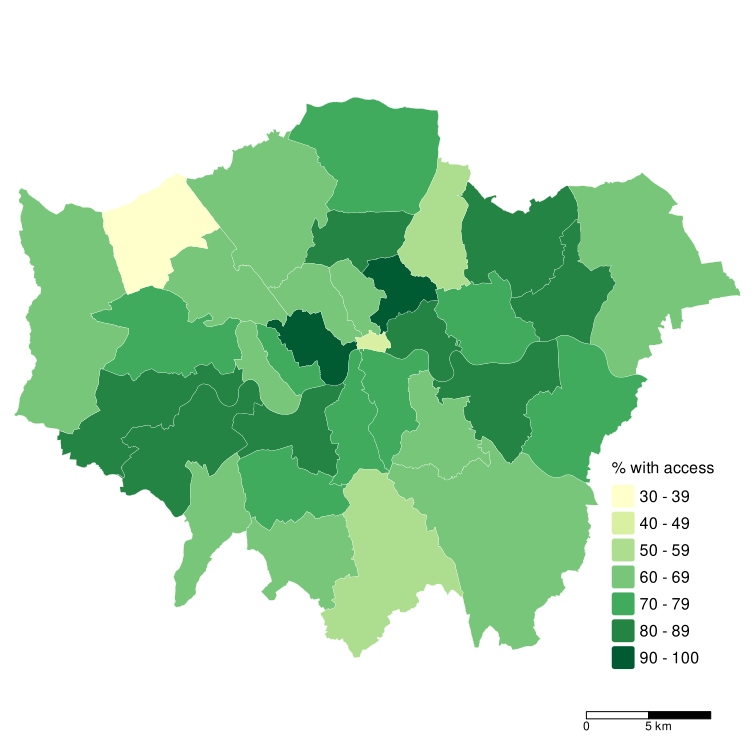
The distribution of access to green and blue space can also be examined at the Local Authority District (LAD) level. Of the 296 LADs in England, 62 LADs (21%) had between 90% and 100% access to green or blue space under the 15-minute commitment (the top bracket in Figure 5), while 1 LAD (0.3%) fell into the bottom bracket of Figure 5 with between 30% and 39% access.
It is important to note, however, that LADs vary in population size to a greater extent than MSOAs and so LAD-level averages can mask variation within areas and should be interpreted as indicative. A low percentage of households with access may also be driven by a lack of data in particular areas (e.g. public rights of way).
Figure 5: The percentage of households within Local Authority Districts (LADs) with access to green or blue space within a 15-minute walk, in a) England and b) London

Notes for Figure 5
- Due to the high density of LADs in the London area, this portion of the map is magnified for clarity.
Rural and urban access
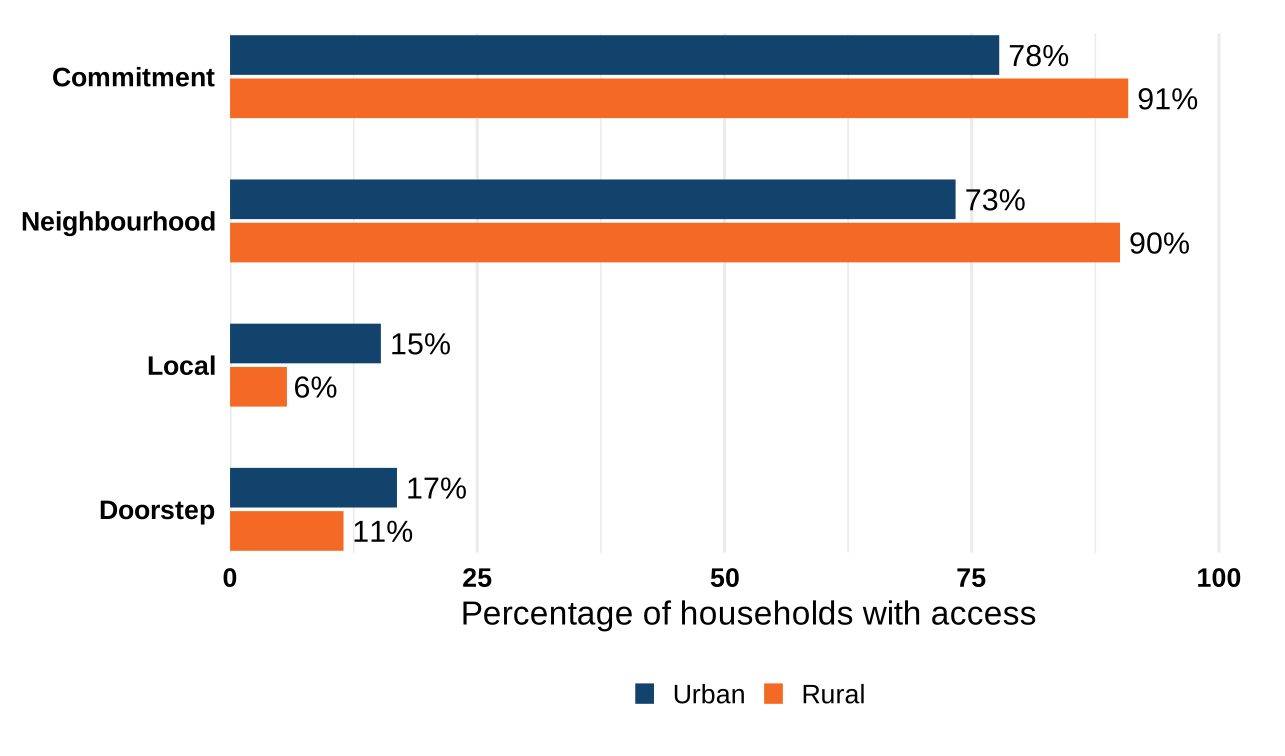
Under the 15-minute commitment, a higher percentage of rural households (91%) had access to at least one green or blue space compared to urban households (78%). This difference is driven primarily by neighbourhood access, where 90% of rural households have access under this standard compared with 73% of urban households.
In contrast, a higher percentage of urban households had access under the local (15%) and doorstep (17%) standards compared to rural households (6% local, 12% doorstep).
These results indicate that while rural households are more likely to have access to at least one green or blue space within a 15-minute walk overall, urban households are more likely to have access to smaller, closer green spaces.
Figure 6: The percentage of around 25,800,000 households in England with access to green or blue space, under the 15-minute commitment and neighbourhood, local, and doorstep standards, by rural–urban classification
Notes for Figure 6
- A household can meet more than one standard (i.e. have access to neighbourhood, local and/or doorstep) meaning that the sum of neighbourhood, local and doorstep won’t equal the commitment percentage
Access to blue space
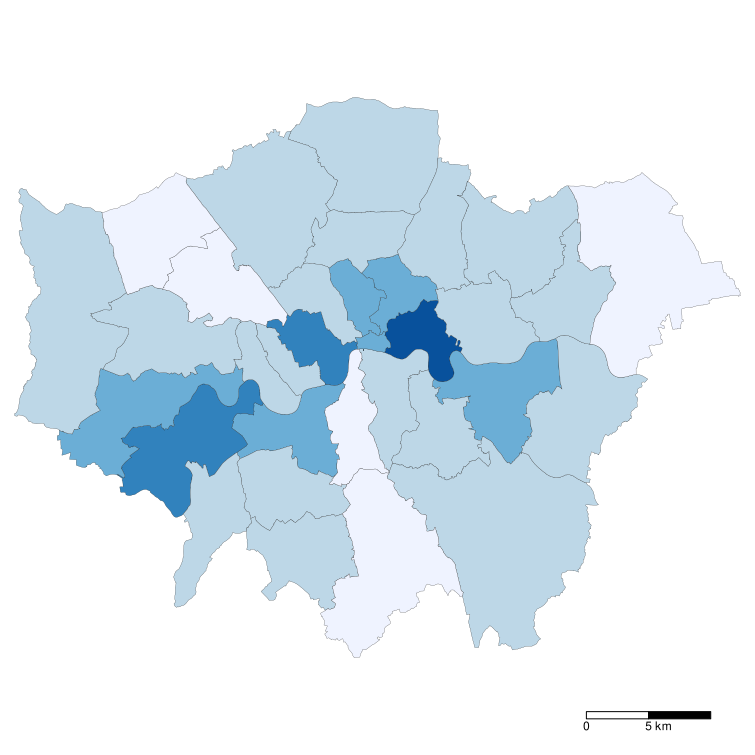
Defra previously published statistics relating to the percentage of households in England with access to blue space, alongside a blue space access point dataset. Blue spaces have been included under the extended neighbourhood standard of access in the 15-minute commitment (Table 1), though access to blue space can also be considered separately. Across England, 37% of households have access to blue space within a 15-minute walk.
Of the 296 LADs in England, 4 LADs (1%) had between 80% and 100% access to blue space within a 15-minute walk (the top bracket in Figure 7), while 30 LADs (10%) fell into the bottom bracket of Figure 7 with between 0% and 19% access.
It is important to note that LADs vary in population size to a greater extent than MSOAs and so LAD-level averages can mask variation within areas and should be interpreted as indicative. A low percentage of households with access may also be driven by a lack of data in particular areas.
Figure 7: The percentage of households within Local Authority Districts (LADs) with access to blue space within a 15-minute walk, in a) England and b) London

Notes for Figure 7
- Due to the high density of LADs in the London area, this portion of the map is magnified for clarity
While the primary focus of this publication is combined access to green or blue space under the 15-minute commitment, green space can also be considered separately using the data files published alongside these statistics.
Official statistics in development designation
Our statistical practice is regulated by the Office for Statistics Regulation (OSR). OSR sets the standards of trustworthiness, quality and value in the Code of Practice for Statistics that all producers of official statistics should adhere to. You can read about how Official Statistics in Defra comply with these standards on the Defra Statistics website.
This publication is an official statistic in development. Official statistics in development may be new or existing statistics, and will be tested with users, in line with the standards of trustworthiness, quality, and value in the Code of Practice for Statistics.
Details of how we plan to develop these statistics are laid out in the Development Plan.
Feedback and user engagement
In line with Defra’s User Engagement for Statistics Policy Statement and the Code of Practice for Statistics, we are committed to ensuring that our statistics are of value and meet user needs and welcome any feedback or suggestions regarding this publication.
A survey is available to collect feedback or alternatively, you can email us at: access.statistics.feedback@defra.gov.uk
You can also register as a user of the access to green and blue space publications. Registering as a user means we will be able to contact you regarding any user engagement activities that we may run, such as seeking feedback on proposed changes.
Alternatively, you can engage with us via the StatsUserNetwork forum Environment, Climate and Nature group. StatsUserNetwork is a forum for users and producers of statistics to share knowledge, ask questions, and discuss all things data.
Background and methodology
Detailed methodology and technical information can be found in the technical document , but a summary is provided here.
A shortest path algorithm was used to find the closest green or blue space access point to each household, given the walkable routes available. This type of model has three major components:
Source locations – the places where the shortest path calculation begins. For this analysis, source locations are households.
Destination locations – the places where the model finds the shortest path to. For this analysis, destination locations are green and blue space access points.
Network – consisting of links and nodes. Links represent transport infrastructure in line form, e.g. roads and paths, and nodes show the locations at which they interconnect. Together they form a traversable network, where each link has a length and two associated nodes. The path with the smallest sum of lengths between source and destination locations forms the shortest path.
The analysis involved assigning each household in England to a node in the network. This ‘start node’ provides a starting point in the network for routes calculated for each household. Each destination point was also then assigned a node in the network. This ‘destination node’ provides potential end points in the network for routes calculated for each source point.
For each source node (household), the shortest routes to all destination nodes (green or blue spaces) within a 20-minute typical walking time were calculated. The typical walking time calculated was then adjusted to account for travelling from the household to the start node, and from the destination node to the destination point. The data are then filtered to determine which green and blue spaces for each household meet each standard (neighbourhood, local or doorstep). A household is defined as meeting the 15-minute commitment if it fulfills any of the standards outlined in Table 1.
What’s new?
- In this publication the green and blue space statistics have been combined into a single statistic.
- Multiple scenario outputs are no longer provided for the statistic. Instead, the release reports on a 15-minute commitment statistic alongside breakdowns of the data under the local, doorstep and neighbourhood standards.
- Ordnance Survey (OS) National Geographic Database (NGD) Multi-modal Routing Network (MRN) data is now used to create the walking network, instead of OS Mastermap roads and paths. This is network ready data, that as part of the NGD is more future-proof than Mastermap products which are gradually being retired.
- We have implemented a more comprehensive approach to identifying households that are residential and show signs of life. We now use a methodology developed by the Office for National Statistics to subset AddressBase Premium UPRN data.
- Woods for All data have been incorporated to represent accessible woodlands. This dataset describes woodlands, or parts of woodlands, to which the public has access.
- The network model has been adjusted to account for slower walking speeds when walking uphill using Naismith’s Rule. See the accounting for elevation gain section in the technical document for more detail.
- Data on the presence of pavements is now used to weight the model towards safer walking routes when calculating shortest paths. See the accounting for pavements section in the technical document for more detail.
- Previously, the development Plan for these statistics included an intention to add weighting to the network model to discourage the use of restricted roads. However, further investigation has found that available data on restricted roads are not generally applicable to pedestrians. We have therefore decided it is inappropriate to use data on restricted roads to weight the network model. This highlights the need for data on pedestrian routes with restricted access.
Development plan
- We plan to review the inclusion of access points from OS Open Greenspace (and OS National Geographic Database in future). During quality assurance some locations without access points were identified where inspection of aerial imagery and street-level photography suggested access was possible. We will investigate methods for supplementing/replacing the currently used OS access points to better reflect real-world green space access.
- We intend to use the ONS’s National Statistical UPRN Lookup (NSUL) in future analysis. However, the ONS has recently discovered errors in these tables and so we will incorporate these into our methodology when this issue is resolved.
- We will investigate publishing access to green and blue space at the household level using Unique Property Reference Numbers.
- We will investigate the use of land use and land ownership data to identify routes with restricted pedestrian access.
- We will endeavor to fully integrate public rights of way into the roads and paths network to create a network where full rights of way coverage is present. Currently, only some rights of way are represented in the OS Multi modal routing network (MRN) data.