Launch of the UK’s new Approach to Africa: Baroness Chapman’s speech
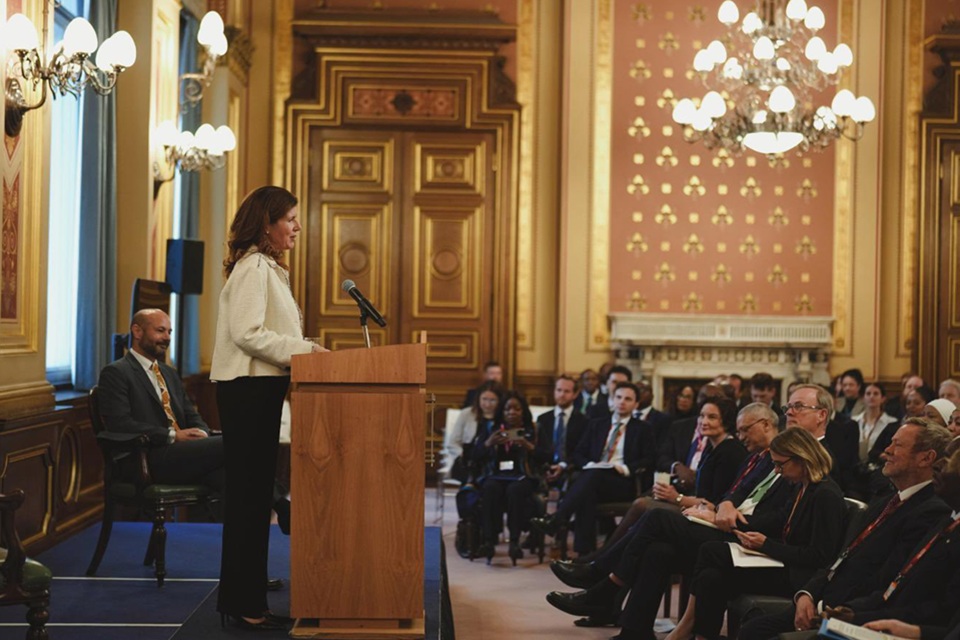
Baroness Chapman launches the UK’s new Approach to Africa in a speech in London to African Ambassadors and High Commissioners, UK parliamentarians, and Africa policy shapers in civil society and the private sector.
Ladies and Gentlemen,
Thank you so much for joining us here.
It is a pleasure to be with you and to welcome you all to the FCDO. I see many new friends and people I look forward to getting to know. I know many of you are frequent visitors to this building and I encourage you to see this as your home.
Your Excellencies, as the new Minister for Development and Africa, I look forward to building on the strong relationship of dialogue and trust laid by Lord Collins, my friend and predecessor as Minister for Africa. I will work hard to do justice to the work that Lord Collins has led.
When this government came into office last year, we were clear that a new kind of relationship with African countries was needed, and that this was long overdue. Overdue because what we inherited was an approach that reflected the past rather than being fit for the future.
It reflected, we felt, an era of aid programmes. But not enough of manufacturing opportunities, global supply chains and the need for economic growth that creates those mass high-quality jobs that we need.
An era of Western-driven blueprints, but not of AI, renewable energy technologies, illegal migration or great power competition. It was an era of G7 predominance, but not reflecting the G20 and fundamental shifts in the global balance of economic power.
And we thought too that reframing our relationship was not something to cook up here in London and then pretend that it was something we had done together. But that instead we needed to do some real listening. That was the first task. To first ask rather than tell. And to take stock of what we had been told.
Because it is very easy to speak of a language of partnership that isn’t borne out in practice. Taking steps for Africa rather than with Africa, not do things to. We felt very strongly that the we needed to put behind us the one size fits all.
Underplaying the vast diversity across the continent – because Kampala is very different to Cape Town, Addis isn’t Accra, and Nairobi isn’t N’Djamena – let alone the diversity within African countries, just as in my life Darlington is very different to Durham here in England.
And we know also that we need to be clear and up front about our own interests and what we want from our relationships.
So Lord Collins launched a five-month listening exercise, hearing from governments, from civil society, from diaspora communities, from businesses and universities, about what they valued, what they wanted to see from the UK. We had input from over 600 organisations – insightful and varied perspectives – including from many of you here today. But with a resounding common message: African nations and citizens want respectful, long-term relationships that deliver real change for people’s lives.
So I am pleased today to set out a modernised approach, designed to mark a new chapter in the UK’s relationship with African countries. Consistent with the principles of our modernised approach to international development, recognising we are not donors.
We are partners, investors, and, most of all, reformers. An approach that delivers for both British and African citizens alike. That aligns with the steps that African nations and we in the UK are already in many cases taking.
That’s about unlocking new growth opportunities, leading climate action, driving innovation, and pushing for reform of the international system.
It is an approach shaped by African leadership, by African ideas and by African energy. Bringing this together with UK strengths across seven distinct principles to advance shared interests:
First, we are moving from donor to investor. We are going to go further to unlock investment and trade, helping African and British businesses create quality jobs, economic opportunities, and prosperity.
From the UK-Kenya agreement to double trade in key sectors by 2030, which recently crossed £2 billion, to the Enhanced Trade and Investment Partnership with Nigeria, to our agreement with Morocco to support infrastructure ahead of the World Cup in 2030, to the deep growth partnership with South Africa the UK Prime Minister reaffirmed in Johannesburg just last month, we want growth to be at the heart of our partnership with you.
We want to champion trade for growth, whether by supporting the African Continental Free Trade Area, or strengthening UK-Africa trade through the Developing Countries Trading Scheme and our network of Economic Partnership Agreements.
The UK’s investment vehicles – from British International Investment to FSD Africa Investments and UK Export Finance - will continue to drive this innovative agenda.
Supporting local capital markets, mobilising private capital to invest sustainably, and scaling up promising African enterprises.
And as you know, the UK is a longstanding partner of the African Development Bank, Africa’s leading financial institution. Today, we are co-hosting with Ghana the 17th replenishment of the African Development Fund, and with the African Development Bank, we will co-host a Private Capital Mobilisation Day on Wednesday, using our convening power to bring together Development Finance Institutions, Export Credit Agencies, African governments, and investors.
And the whole point of this is to scale up private capital for Africa’s development priorities. This is about building wealth, and not dependency.
Secondly, we are working together on the challenges of migration. Migration should be fair, managed, and it must be controlled.
But this is undermined by illegal migration that harms both the UK and African partners, it funds organised criminal gangs and devastatingly puts lives at risk.
We will work with partners to address the drivers of illegal migration and support stronger border security. We will provide humanitarian support to alleviate suffering; help enable protection for displaced people in their regions of origin; and work together to disrupt criminal networks and facilitate returns.
And we will be unapologetic in pressing for high ambition and clear progress against these priorities.
And on visas, we know that the UK visa system can seem – and I’ve hear this a lot – a bit hard to navigate at times. So we are engaging African businesses to improve understanding, including uptake of the Global Partner Programme, working to get businesses travelling to build ties and stimulate investment.
Third, we are advancing shared interests on climate, nature, and clean energy. Despite its abundant natural resources, Africa has the lowest levels of modern energy access.
And despite contributing least to global emissions, African nations are among those shouldering the greatest climate risks. This isn’t right and it sets back growth, security, and development in every way.
So we have got to further to invest in renewables, protect biodiversity and champion sustainable agriculture and food systems. And ensure climate finance reaches those who need it most.
Backing initiatives like Mission 300 to connect 300 million people to electricity by 2030. Creating more opportunities for African countries by growing the scale and quality of carbon markets.
Protecting the world’s largest forest carbon stores in the Congo Basin through collaboration between UK and African scientists and mobilising finance through the Belem Call to Action. And of course, we look forward to supporting further African leadership on climate as Ethiopia hosts COP32 in 2027.
Fourth, we want to collaborate for peace and security. This I think is the most important thing we can do. It is the foundations of prosperity.
So we will continue to work closely with the African Union and other partners to support African efforts to “silence the guns” and promote post-conflict recovery. This includes urgent work to halt the horror of the current war in Sudan, working with African partners to help push the warring parties towards a ceasefire, to supply the lifesaving humanitarian aid where needed.
And to call out and to prevent and avert atrocities such as in El Fasher, where we know rape has been used systematically as a weapon of war.
More than 12 million women and girls are at risk in what the UN’s humanitarian chief has correctly called the epicentre of human suffering. We are determined to support Sudan and ensure the world does not forget this devastating conflict.
Beyond Sudan, we are supporting vital peacebuilding efforts in the Great Lakes region and working on locally owned conflict prevention with countries such as Nigeria, Ethiopia and Somalia.
Part of a wider push to tackle regional instability and shared threats and to champion respect for international humanitarian law, stand up for freedom of religion and belief, and go much further to tackle violence against women and girls.
Fifth, we are strengthening the systems that support people and growth. This is about building human capital - the engine of sustainable, inclusive growth. Not piecemeal funding to individual services, but working to improve whole systems for better health and nutrition, for education and social protection, investing also in vaccine manufacturing, disease prevention, and sexual and reproductive health and rights.
Last month, in South Africa, the UK announced our pledge of £850 million to the Global Fund. A pledge that stands to save over one million lives, prevent 20 million cases of HIV/AIDS, Tuberculosis (TB) and malaria, and deliver over £10 billion of economic returns. An investment that demonstrates the UK’s commitment to global health, multilateralism, and to modern development partnerships.
And we are applying the same principles to helping African countries become financially self-reliant – harnessing UK expertise in tax, finance, and technology.
And next year, the Foreign Secretary will host the Illicit Finance Summit in London, convening a diverse coalition of governments, multilateral organisations, the private sector, and other key stakeholders to tackle criminal and corrupt wealth.
Sixth, we are championing African voices in global decision-making. Amplifying and working alongside African calls for fairer representation in global forums to shape the rules and the outcomes that matter for Africa’s needs and priorities.
Right now, debt pressures mean 800 million Africans are living in countries where public spending on debt interests exceeds that on health, clearly this system needs reform.
Which is why the UK was a strong advocate for the establishment of a third seat for Sub-Saharan Africa at the IMF Board, why we are calling for lower income countries to have more voting power at the World Bank, and why we look forward to the establishment of a Borrowers’ Platform, following agreement at the Financing for Development Conference in Sevilla earlier this year.
As we look ahead to our G20 Presidency in 2027, we will work towards further reforms of the debt architecture to tackle this unsustainable debt, so that African countries have a greater stake in the decisions that affect them.
Lastly, we are supporting innovation and cultural partnerships. From AI and digital skills to music, sport, and design — there is so much potential to deepen our ties across science, technology, and the creative industries.
At South Africa’s Science Forum in November, we launched our first UK-South Africa AI Policy Training Programme, establishing a cohort of AI-savvy diplomats and officials from both countries, drawing on the expertise of leading UK and South African universities to navigate these challenges together.
Our forthcoming Soft Power collaboration will support alumni networks across the UK and Africa. We will maintain scholarships and strengthen our enduring research and education partnerships because you’ve told us you value them and we want to continue further.
These connections are not just economic — they are human, and they are powerful.
One such milestone is Imperial College London opening its first African hub in Ghana a year ago, marking a major step forward in UK-Africa scientific collaboration. This new centre will support fellowships in AI and climate science, accelerating joint research and innovation across medical diagnostics, vaccine research, and sustainable cities.
Together, all of this adds up to what I think is a new kind of partnership. One that works with African leadership at its very centre. One that is inclusive and respectful and strong enough to work through the difficulties and disagreements.
UK ministers will be out there, on the Continent, championing these principles and our High Commissions and Embassies will be at the forefront of embedding them – in spirit and in content.
And we will take this approach forward into the UK’s G20 Presidency in 2027.
So I have looked forward to launching this today. But this is the easy bit. I look forward to making this approach count. Doing so together for our shared interests and for a better future. We don’t do this for ourselves but for the citizens of our countries in the UK and all across Africa.
Thank you very much.