Veterans Strategy
Updated 17 February 2026

© Crown copyright 2026
This publication is licensed under the terms of the Open Government Licence v3.0 except where otherwise stated. To view this licence, visit nationalarchives.gov.uk/doc/open-government-licence/version/3 or write to the Information Policy Team, The National Archives, Kew, London TW9 4DU, or email: psi@nationalarchives.gov.uk.
Where we have identified any third party copyright information you will need to obtain permission from the copyright holders concerned.
This publication is available at https://www.gov.uk/government/publications/veterans-strategy/veterans-strategy
Ministerial foreword
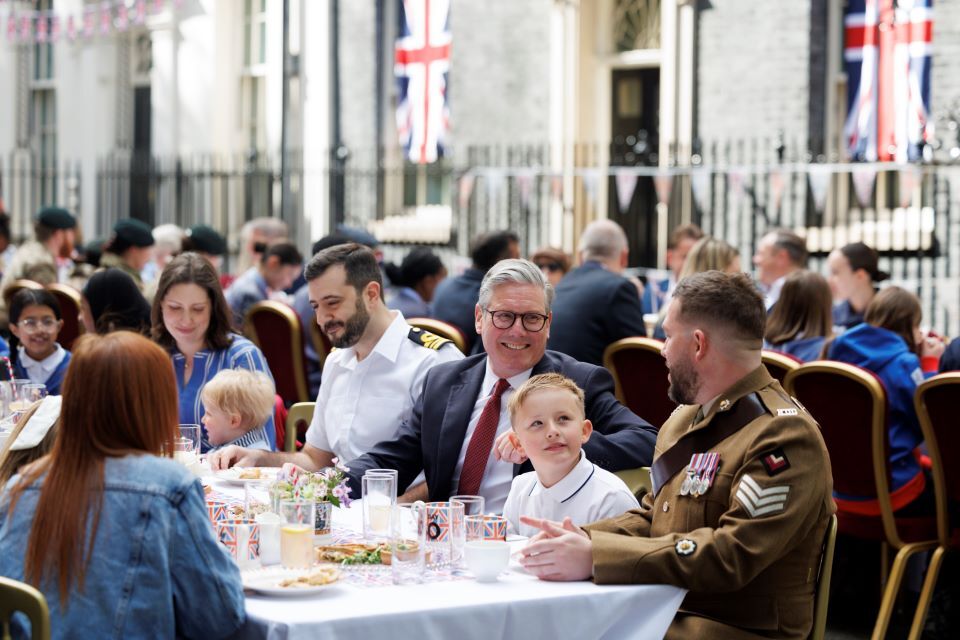
On taking office as Prime Minister, I made a promise that this would be a government of service dedicated to renewing our great nation. Nowhere is that spirit of service more profoundly realised than in the men and women of our armed forces.
Our country’s near-two-million veterans are a national asset, and we are determined to celebrate not only their service, but also the role they can play in building our nation’s future.
Most of our veterans go on to achieve extraordinary things in civilian life using the skills, experience and confidence acquired during their time in uniform. Yet, we know that more than a century on from the promise of ‘a country fit for heroes’, too many of our veterans still do not get the support which matches their service and their sacrifice. This government is putting that right.
We launched VALOUR to transform the way we provide support to veterans in need, backed by £50 million of government investment. We changed the law to allow Veteran Cards to be used in elections – and made them the first ever government document to be digitised, helping to make access to a wide range of services quicker and easier. Through our ‘Forces First’ approach, we have made sure that veterans will go to the front of the queue for new homes built on regenerated defence land. And we are delivering our manifesto commitment to bring the Armed Forces Covenant fully into law, ensuring the whole of society meets its obligations to our veterans and armed forces community. This is a personal commitment – we will renew our nation’s contract with those who serve and have served.
Veterans play a vital role in our society long after they take off their uniform. So we are going further to support and encourage our Veterans in their future contributions, whether that is in their communities, in critical industries, driving economic growth or in national security roles.
This strategy sets out our ambitious goals for supporting veterans and empowers the nation to deliver – that includes devolved governments, regional leaders, and civic society, all working in this shared effort in ways that reflect local needs and circumstances. Our defence ministers will be tasked with driving change across government. Critically, we will work hand-in-hand with the many remarkable organisations right across the country who share our mission to ensure support for our veterans is more coordinated than ever before.
To the veterans of our armed forces, your families, and all those that support you, I extend our government’s unending respect and gratitude. You make us proud. This strategy is for you.
The Rt Hon Sir Keir Starmer MP
Prime Minister
This strategy
Veterans[footnote 1] show time and again the spirit of public duty that embodies the best traditions of our armed forces. In return for their commitment, veterans benefited from a military career that provided unique skills, experience, confidence and opportunities that transfer readily into civilian life. For the overwhelming majority, their lives are better for having served.
This strategy sets the government’s new vision for veterans. In doing so we are clear about the security and growth challenges we face – and our plans to respond to them as set out in the Strategic Defence Review. This strategy challenges the whole of society to think differently about those who have served in the armed forces, their offer and their potential.
This strategy is grounded in 3 core themes, each an equal and vital part to ensuring the best outcomes for both veterans and the UK. Together, they represent a powerful new approach to recognising veterans as one of the UK’s great strategic assets, underpinned by this government’s commitment to the Armed Forces Covenant.
Celebrate
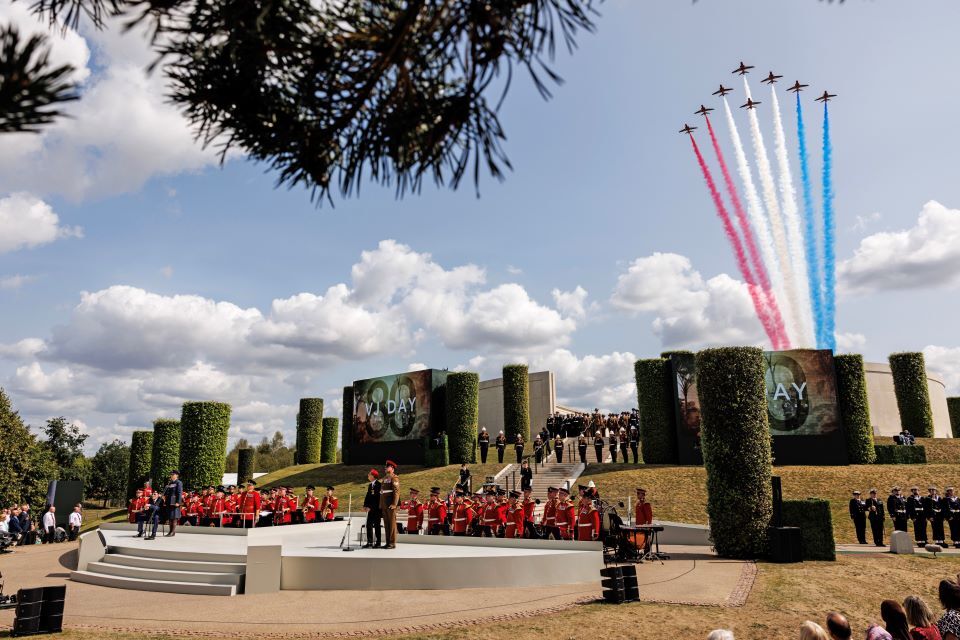
Society should be immensely proud of those who serve and have served. From Remembrance, Armed Forces Week and celebrations including unveiling the new LGBT+ Armed Forces Community Memorial, this government will ensure all veterans are able to take pride in their service. We will do more to ensure that the positive impact a career in the armed forces can make on individuals’ lives is better understood and that others are inspired to serve.
We will ensure government celebrates the service of veterans of past conflicts but also honours those of recent conflicts too.
Contribute
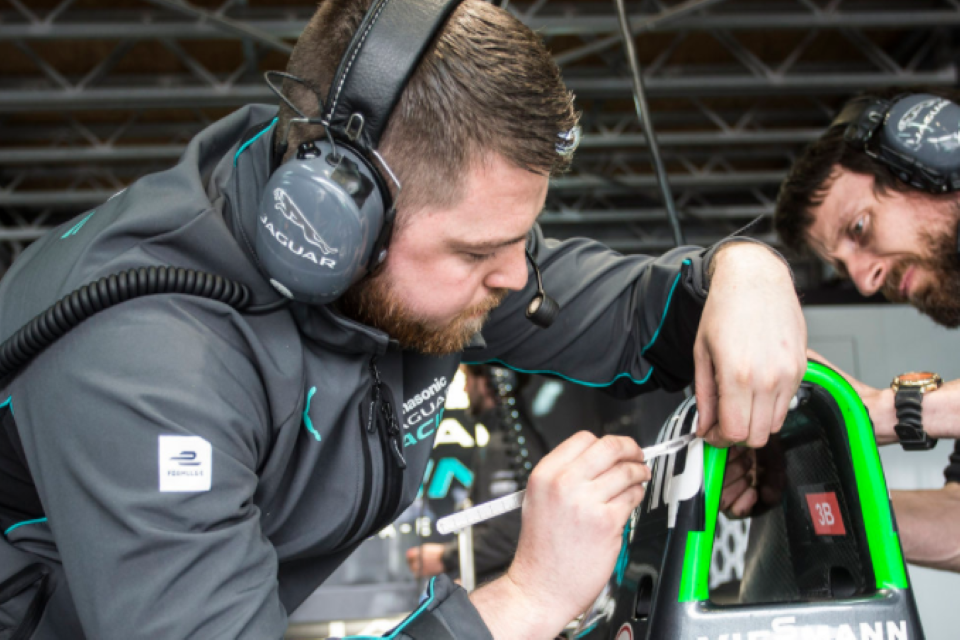
By recognising veterans’ skills and qualifications, government will do more to realise their potential and ensure they are fully embedded in the Plan for Change and the Defence Industrial Strategy. Through Op ASCEND and the Career Transition Partnership, we will match veterans to high skilled, high growth sectors and critical industries, including new careers in clean energy. We will also ensure veterans play their part in the whole of society approach set out in the Strategic Defence Review, including through more visible support to the Strategic Reserve.
We want to channel veterans’ sense of duty and team spirit into the heart of our society. Volunteering, including work with youth groups like the Cadets will bring veterans closer to their communities and help people better appreciate military life.
Support
Most veterans make a successful transition to civilian life. However, this government will honour our moral duty to those that require additional support.
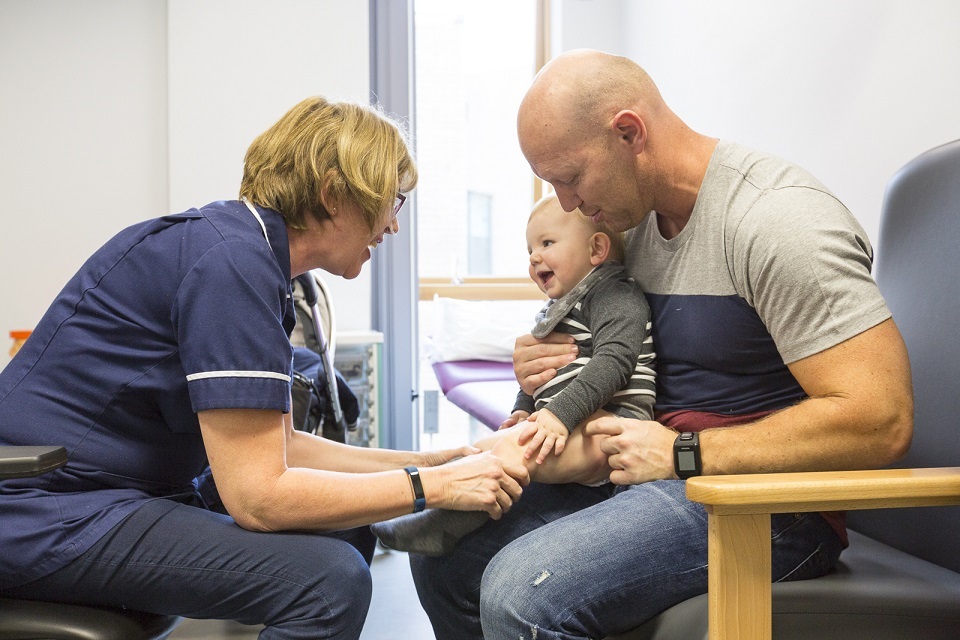
Through the new £50-million VALOUR programme, we will give veterans across the UK easier access to the essential care and support available to them. Where appropriate, we will continue to provide specialist support such as Ops COURAGE, RESTORE, NOVA and FORTITUDE and work with devolved governments to ensure veterans have excellent care right across the UK.
Government action alone cannot fully realise this new vision for veterans. This is a long-term framework, setting out our commitment to these 3 themes, and how they will shape the prioritisation of investment and effort. Through these themes, we will work collaboratively with the third sector, academics, business and communities to be better aligned, more focused and impactful in our work with veterans.
The success of this strategy will require empowerment of those best placed to deliver the most effective solutions. Initial actions for years 1 and 2 are included – along with interim metrics on the effectiveness of these activities. They are the first steps of this strategy and not a comprehensive action plan (with some initiatives applying only in England).
We will, however, drive progress against the outcomes, and so will deliver new governance, and continued investment in data and insights on veterans, their experiences and the success of this strategy.
Data and evaluation will be key to ensuring policy is informed by the best possible evidence of what works, and what does not, and we will report on progress after 5 years, to understand the impact and what further changes are required.
More information on next steps, including refreshed governance, is provided at the end of this strategy.
The veterans strategy and devolution
This strategy, like the Armed Forces Covenant, applies equally across the UK. While the vision, themes and outcomes of the strategy are a shared endeavour between UK and devolved governments, how the strategy is implemented will be for devolved governments to design, deliver and articulate in the form of their own strategy action plans.
Our vision
That veterans are celebrated for their service, their potential is fully realised, and the right support is in place to achieve this.
Strategic themes
| Celebrate | Contribute | Support |
|---|---|---|
| Society respects those who serve and have served. The enduring benefits of military service for individuals are recognised, and their role in defending our freedoms and society is celebrated. | The unique skills, experience and personal values of veterans are appreciated and understood. They contribute to our national security, our economy, and our communities. | Veterans can access timely, appropriate and effective support that meets their needs. |
Outcomes
| Celebrate | Contribute | Support |
|---|---|---|
| Veterans and society feel pride in their service. | Veterans are employed in ways that fully utilise their experience. | Veterans have access to services that are timely and effective. |
| Veterans’ service and lives is better understood and valued. | Veterans drive economic growth and improvements in public services. | Veterans are aware of and have access to services for them. |
| Veterans’ military service is viewed as a positive career choice. | Veterans are empowered and engaged in their community. | All veterans have the foundations for financial security. |
| Society commemorates veterans in a way that is accessible to all. | Veterans continue to contribute to UK national security. | Families of veterans are recognised and supported. |
Refreshed implementation framework
| Greater collaboration | Improved data and evaluation |
|---|---|
| Cross-government delivery. | Measuring performance transparently. |
| Cross-UK partnerships. | Better data and tackling the knowledge gap. |
| Cross-sector cooperation. | Improving the digital landscape. |
Celebrate

Society respects those who serve and have served. The enduring benefits of military service for individuals are recognised, and their role in defending our freedoms and society is celebrated.
Overview
The armed forces provide careers and opportunities unlike any other. The unique nature of military service lies at the heart of this government’s commitment to renew this country’s contract with those who serve, reflected in the Manifesto commitment to bring the Armed Forces Covenant fully into law. The commitment undertaken by those in our armed forces, its role as a driver of social mobility, and the breadth of experiences available should inspire others to serve too.
We want celebration and recognition to be championed in all parts of the UK and to reflect the breadth and diversity of the armed forces, one of its greatest strengths.
As the veteran population changes and as military life evolves, we will raise awareness of what military service means, reflecting not only experiences in conflict and operations of the past, but of the full spectrum of roles fulfilled by veterans during service.
We will celebrate all veterans, including LGBT+, women, non-UK and those from ethnic minorities, and ensure their voices play a vital part in the national conversation on defence and security set out in the Strategic Defence Review.
Priority outcomes
-
Veterans and society feel pride in their service
The overwhelming majority of veterans view their military service with pride and distinction. This reflects the breadth and depth of positive experiences, skills and knowledge that come from a career in the armed forces. However, not all veterans, including some LGBT+, women or underrepresented groups, see their service this way. For those who have had negative experiences, it can be difficult to take pride from their service or accept recognition from the armed forces and wider community. We want to change that.
We will continue to provide opportunities for the nation and society to express respect and gratitude to all veterans, united by their unique commitment and service. We will continue work to ensure all veterans can recognise and take pride in their service. -
That veterans’ service and lives are better understood and valued
Veterans are not – and have never been – a homogenous group, and we have more to learn about their experiences. The nature of veterans’ service, the impact this can have on families, and the diversity of those that make up the veteran population is sometimes perceived with inaccurate and negative stereotypes – we will do more to correct these misconceptions.
We will raise awareness of the skills, dedication and capability of veterans so they are better understood and appreciated. We will do more to record and celebrate veterans through oral history projects to ensure their voices are captured for future generations. -
Military service is viewed as a positive career choice
The overwhelming majority of veterans have positive experiences in the armed forces, building valuable lifelong skills and knowledge which are a key determinant of veterans’ life outcomes.
We will demonstrate the enduring benefits of serving in our armed forces, and the positive impact it has on veterans’ lives and careers after service including through social mobility. This will help encourage more people to consider a career in the armed forces and to champion the important value of public service. -
Society commemorates veterans in a way that is accessible to all
We will never forget the sacrifice that some have made, and we will always remember the personal cost of service beyond veterans’ time in uniform.
Moments of reflection must continue to take pride of place in our national identity, so we can pay special, enduring and sincere regard to those who serve and have served. We will support greater inclusion of our veterans – reflecting the breadth and diversity of those that serve and the nature of their service – in national events. This will include veterans of recent campaigns and of those campaigns that are less well known or overshadowed.
How we will have impact
Celebrating the positive impact of our veterans – and wider armed forces – is a national effort, reflected in moments of national significance and large-scale events, as well as in individual acts of appreciation. Government has its own role to play, which includes highlighting the diversity of veterans, including those that have been historically underrepresented.
Working with others, including national charities such as the Royal British Legion, we will champion veterans across the UK, change perceptions and ensure veterans can take pride in their service and achievements.

In the first 2 years, we will:
-
deliver and champion events that celebrate and respect veterans and their service
- back Invictus Games Birmingham 2027 with an underwrite of up to £26 million, working closely with the organising committee to deliver a memorable Games – in doing this, we demonstrate the government’s commitment to the welfare, recovery and recognition of veterans and serving personnel, celebrating their achievements and service, and acknowledging the important role of the families who support them
- pay tribute to LGBT+ veterans and serving personnel through the new LGBT+ Armed Forces Community Memorial at the National Memorial Arboretum, made possible by £350,000 of government funding
- run a competition in 2026 worth up to £350,000 to provide better recognition of women veterans’ contribution to defence
- ensure that Remembrance and commemorative events continue to be national and local moments of reflection, working with the Royal British Legion and other organisations, and committing to an annual government Remembrance reception with a representative group of veterans invited
- ensure veterans have the opportunity to play a full and public role at events across the country, such as those in Armed Forces Week
- support the remaining veterans of the Second World War who wish to travel to overseas commemorative events
-
raise awareness of veterans and their service
- deliver the digital Veteran Card in 2025, making it easier for veterans to prove their status, receive the recognition they deserve and get access to services and a growing number of retail offers and concessions – we will expand the card’s usage, building on its use as voter ID
- support new work with the Department for Education and the Department for Culture, Media and Sport to develop understanding of the armed forces among young people, including in schools
- establish a new Women Veterans forum in 2026 – building on work already funded and supported, this will ensure that the voices of women veterans inform how government responds to areas significant to their lives, including in the areas of employment, health and societal perceptions
- showcase the value women have made to the UK armed forces by working with the Female Veterans Transformation Programme to publicise new support material for a variety of settings, which will be launched by the end of 2025 – alongside this, we will ensure women veterans are able to access the support they need through VALOUR
- commission a new oral history project to capture the experiences of women veterans, showcasing their role in defence and their contribution to society after service
- work across government to engage veterans directly, showcasing their positive experiences and contribution to the UK and raising awareness of further opportunities and support
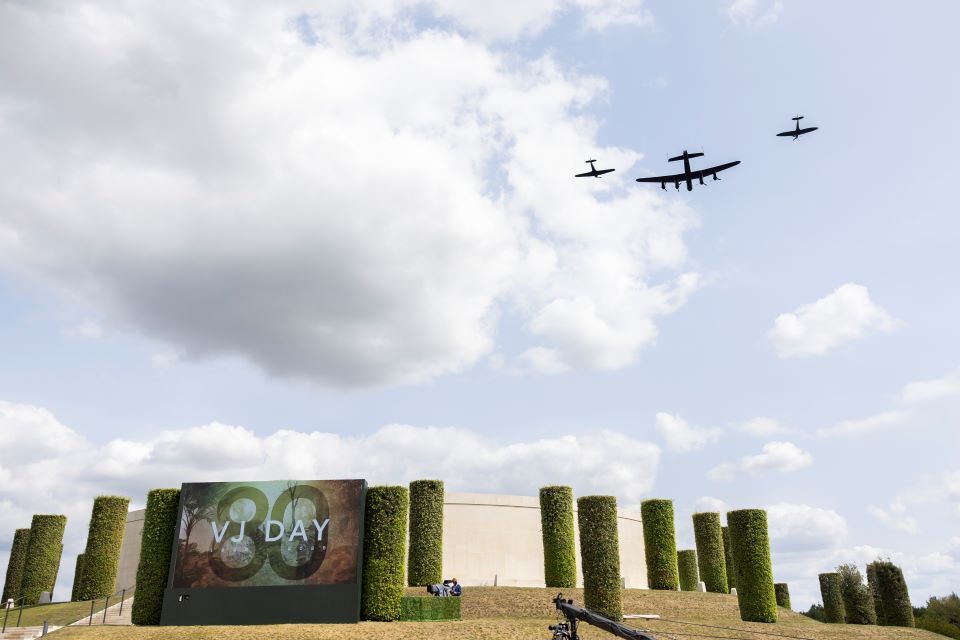
VE and VJ DAY 80 Commemorations
To mark 80 years since Victory in Europe and Victory over Japan Day (VE and VJ Day), communities across the UK and the Commonwealth came together in 2025 through a series of national and local events to pay tribute to the Second World War generation.
In May 2025, the UK government, in partnership with the wider armed forces community and devolved governments, led a 4-day programme of commemorative events, which featured a military procession and fly past, national 2 minutes of silence, a remembrance service at Westminster Abbey and a musical concert at Horse Guards Parade. Thousands of street parties were held by communities in all corners of the UK, echoing the jubilant celebrations that took place 80 years ago at the news that the war had ended in Europe.
On 15 August 2025, the King and Queen joined the Prime Minister, senior members of the government, over 400 members of the armed forces and 33 veterans in attending the Royal British Legion’s (RBL) remembrance service at Staffordshire’s National Memorial Arboretum. VJ commemorations took place throughout the week, including a reception for veterans hosted by the Prime Minister in Downing Street and a sunset wreath-laying ceremony at the Memorial Gates in London to pay tribute to Commonwealth personnel.
To honour the significant sacrifices made in the Far East, the government’s National Engagement Programme continues to run throughout the year. The government is continuing to work with the Commonwealth War Graves Commission on the For Evermore Tour and Arts Council England on funding local community-based commemorative activity around the UK in arts centres, libraries and museums.
The Department for Culture, Media and Sport will continue to promote a range of educational and cultural activities to help schools and communities to engage with the 80th year of commemoration, including through Our Shared Story, and the National Theatre’s year-long school engagement programme.
These commemorations are particularly poignant as they are one of the last opportunities to honour our living Second World War veterans, who fought to preserve peace and freedom that enables our shared way of life.
How we will measure the impact
Progress and performance
Initial metrics for monitoring progress and performance as part of the Celebrate theme are set out in the table below. These are a starting point, with new measures to be developed with input from stakeholders during the first year.
| Measures | Baseline metric |
|---|---|
| Percentage of veterans who express positive experiences of their service. | We will establish a baseline measure using Veterans’ Survey 2026. |
| Percentage of veterans who express pride in their service (new measure). | We will establish a baseline measure using Veterans’ Survey 2026. |
| Percentage of local authorities who are promoting/organising/facilitating engagement by veterans within their communities. | We will establish a baseline measure using Veterans’ Survey 2026 and/or VALOUR engagement. |
| Percentage of the public who feel pride towards veterans (new measure). | We will establish a baseline measure with new research in 2026. |
| Percentage of the public who consider military service as a worthwhile career choice for themselves/family/friends. | 49% of serving personnel would recommend joining the armed forces to others (Armed Forces Continuous Attitude Survey, 2025). We will establish a baseline measure for the UK public perceptions. |
| Percentage of the public who believe veterans are adequately recognised for their service (new measure). | We will establish a baseline measure with new research in 2026. |
| The number of veterans who sign up for a HM Armed Forces Veteran Card. | 150,572 applications in 2024 from people who left service prior to 2018 (of which 132,769 applied online, 17,753 applied by paper application). |
| The number of veterans who sign up for a Defence Privilege Card. | 46,053 Defence Privilege Cards were issued to veterans in 2024. We will work with Defence Discount Service to establish new metrics, ensuring veterans make the most of retail offers available to them. |
| The number of service leavers who would identify/self-describe as a veteran. | We will establish a baseline measure through collection of data by the Career Transition Partnership. |
Contribute
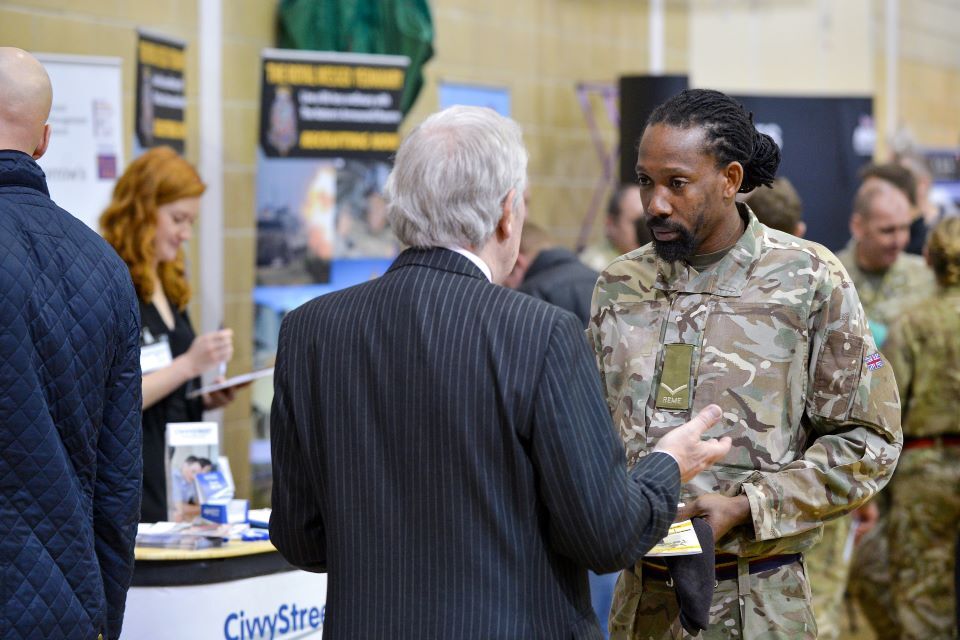
The unique skills, experience and personal values of veterans are appreciated and understood. They contribute to our national security, our economy and our communities.
Overview
Veterans are amongst the most skilled, talented and capable members of society, and they are well placed to make further contributions to the UK’s success. After ensuring they receive the best possible transition support in order to ‘leave well’, we want to do more to maximise their potential.
We will do so in alignment with the Strategic Defence Review’s ambitions for defence as an engine for growth and other cross-government priorities, such as the Industrial and Small Business Strategies.
We will ensure veterans can contribute to economic growth and prosperity, learning from the examples of best practice that already exist. We will also work to amplify the varied and rich contributions many veterans – of all ages – make to their communities.
Priority outcomes
-
Veterans are employed in ways that fully utilise their skills and experience
In general, employment outcomes for veterans are positive.[footnote 2] However, a minority of veterans still find themselves in roles that do not make the most of their skills and experience. As recognised in the Strategic Defence Review, this can be a result of difficulties in translating skills and qualifications gained through service or through unwarranted hesitancy on the part of some employers to hire veterans.
We will help veterans seeking new jobs to secure rewarding careers, building on existing initiatives such as the Armed Forces Champions Network within Jobcentre Plus and aligning with the Department for Work and Pensions’ Get Britain Working strategy. We will also continue to work with employers and through the Defence Employer Recognition Scheme to promote the value that veterans can bring to them, building on the more than 8,000 exemplar businesses that already hold an award through that scheme. -
Veterans drive economic growth as well as improvements in public services
Veterans bring a wealth of experience and unique skills to the economy and public services. Their strong sense of discipline, teamwork, resilience and leadership are essential qualities in high-pressure environments.
By encouraging more veterans into specific industries of national importance, whether that be areas such as advanced manufacturing, digital and data, or in financial and professional services, we will boost growth, employment and outcomes. By continuing to provide dedicated pathways into the public sector, we will all benefit from veterans’ contributions to strengthened public services. -
Veterans are empowered and engaged members of their community
Veterans come from all over the UK, the Commonwealth and beyond, with a diversity of backgrounds and ambitions, and are often united by a common sense of service. For many this commitment to serve and to work for others continues long after they leave the armed forces. Whether working with cadets or youth groups, as sports coaches or local councillors, community organisations benefit from veterans’ skills.
We will design new initiatives to support veterans as active, valued members and contributors to their communities. This will help veterans maintain a sense of pride, encourage smooth integration with civilian society and boost grassroots organisations. -
Veterans continue to contribute to UK national security
To secure the future readiness of our defence sector and wider national security, we will continue to encourage veterans to play an active role in defence, in defence industries and related support roles. Reforms will also provide a clearer role for those with previous military experience. From part-time reserve roles, retained readiness in the strategic reserve (which already includes 5% of veterans), or through volunteering with civil society organisations involved in emergency preparedness and resilience, the role of veterans in our enduring national security will be essential.
How veterans can continue to contribute to National Security
| Civilian opportunities to contribute to National Security | Ways to continue as part of the UK armed forces community |
|---|---|
| Private sector roles in defence industries, utilising skills developed in service. Public sector, filling critical national resilience roles in the NHS, Police and Fire services, HMPPS and elsewhere. Educating the public about the armed forces by engaging with schools and local communities. |
Options to remain a part of the armed forces as part of the reserve services. Ability to have zig-zag careers, returning into regular forces at some point in the future. Opportunities to attend training as part of the strategic reserve. Creating opportunities for young people by becoming an adult Cadet volunteer. |
Veterans in high-skilled, high-quality roles

This strategy builds on the success of Op ASCEND, a life-long support system for veterans and their families that provides clear, accessible career pathways into employment, ensuring they are empowered to succeed.
We will continue to work with veterans and employers across the public, private and third sector to harness veterans’ potential in high growth and critical industries, including:
- data and digital
- defence and security
- construction
- energy and renewables
- finance and professional services
- health and social care
- logistics
- manufacturing
How we will have impact
The Contribute theme is about maximising veterans’ positive impact on society. This can be through new careers, empowering their work in communities, or in defence, national security and adjacent industries. We will work across government to assess these opportunities, and work with partners in the public, private and third sector to ensure veterans are supported to continue delivering their full potential.
We will track veterans’ employment and volunteering rates, will continue to work with civil society to explore the role veterans hold within their communities, and will strengthen their involvement within the voluntary sector, in line with the Civil Society Covenant being led by the Department for Culture, Media and Sport.
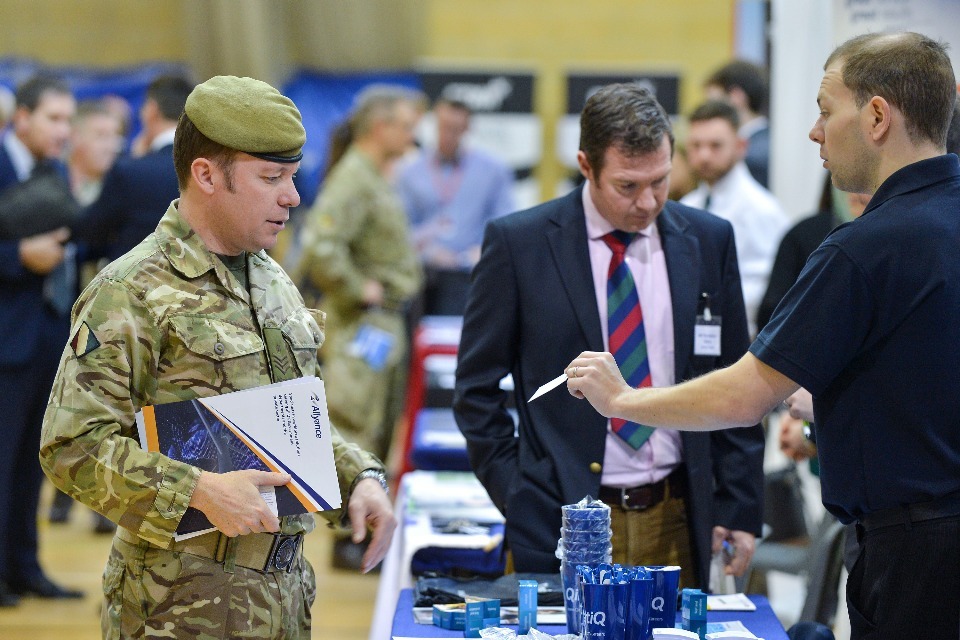
In the first 2 years, we will:
-
support veterans through the employment programme Op ASCEND into strategically important industries that make the most of their skills and add value to the UK economy
- work with the Department for Energy Security and Net Zero (DESNZ) to develop and promote new employment pathways and career opportunities for veterans, and their families, into the clean energy sector – this includes supporting a 12-month pilot led by Mission Renewable to connect veterans with high-skilled clean energy careers
- building on the success of Op ASCEND, work across government, including with the Department for Business and Trade and with partners in the public, private and third sector, to develop the support available for veterans looking to enhance their enterprise skills or enter self-employment
- formalise the cross-government approach to veteran employment through a new taskforce, meeting quarterly, bringing together representatives from MOD, DWP, DBT, DESNZ and others to ensure the unique skills, strengths and talents of veterans are reflected in the government’s employment strategies
- review and improve pathways to get veterans into the public sector, such as Great Place to Work, Step into Health and Get into Teaching, which includes the undergraduate bursary for veterans, helping those with skills to serve after service
-
Make it easier for veterans to fulfil their potential
- make veterans’ existing military qualifications more transferable to civilian employment, aligning to the SDR’s commitment to adopt civilian qualifications where possible
- working with Reserve Forces and Cadets, continue to grow the over 8,000 exemplar businesses who hold Employer Recognition Scheme status, while supporting veterans through the Career Transition Partnership and Op ASCEND
- align with DWP’s Get Britain Working strategy and Connect to Work programme to ensure veterans with disabilities and health conditions can attain sustained and fulfilling employment.
-
strengthen the bonds between veterans, wider society and defence
- encourage more veterans to serve as Adult Cadet Volunteers to support the defence aim to grow the Cadet force by 30% and reconnect wider society with the military
- engage veterans and the Strategic Reserve under a refreshed plan to articulate the defence offer to those who have left the armed forces and what defence may need from them in the future
- make it easier for veterans to utilise their skills through ‘zig-zag careers’ and support the piloting of a Defence Skills Passport that will enable smoother identification and transfer between the armed forces and defence industry
How we will measure the impact
Progress and performance
Initial metrics for monitoring progress and performance as part of the Contribute theme are set out in the table below. These are a starting point, with new measures to be developed with input from stakeholders during the first year.
| Measures | Baseline metric |
|---|---|
| Veteran employment rate. | 79% of working-age veterans in employment, compared to 70% working-age non-veterans (England & Wales Census 2021). Baseline measure to be verified using Veterans’ Survey 2026 and data from CTP. |
| Percentage of veterans who have taken a job below the experience and skill of their last role in the armed forces. | 52.5% of veterans had ever taken a job at a lower experience or skill level than their last role in the UK armed forces. Baseline measure to be verified using Veterans’ Survey 2026. |
| Percentage of veterans employed in roles that make good use of their skills and experience. | We will establish a baseline measure using Veterans’ Survey 2026. |
| Percentage of veterans who felt they had transferable skills and experience from their service. | 85.4% of veterans felt they had transferable skills from the UK armed forces (85.4%) or had used skills from the UK armed forces in a civilian role (81.4%). |
| Percentage of veterans who have transferable skills they could use outside of the armed forces. | 85.4% veterans felt they had transferable skills from the UK armed forces. Baseline measure to be verified using Veterans’ Survey 2026. |
| Percentage of veterans who have used skills from the armed forces in any civilian roles. | 81.4% had used skills from the UK armed forces in a civilian role. Baseline measure to be verified using Veterans’ Survey 2026. |
| Percentage of employers who believe veterans are likely to have gained transferable skills and experience from their service. | 42% of employers responded that veterans would be advantageous to their organisation in filling skills gaps and 31% in improving the professional skills of their existing employees according to the YouGov Perceptions Report 2022. Baseline measure to be verified using other employer survey opportunities. |
| Percentage of employers who believe there would likely be challenges associated with employing a veteran. | 84% of employers would feel comfortable working with ex-service personnel, whilst 11% believe there would be risks in working with ex-service personnel according to the YouGov Perceptions Report 2022. Baseline measure to be verified using other employer survey opportunities. |
| Percentage of service leavers who used a billable CTP service. | 71% of service leavers used a billable CTP service in 2023/24 (out of 15,665 service leavers). |
| Percentage of service leavers who quickly move onto employment following their service, to include data from CTP and Op ASCEND. | 88% of service leavers who used a billable CTP service and whose employment outcome was known were employed within 6 months of leaving service in 2023/24. |
| Number of veterans who are recruited into new roles in the Reserve Forces. | We will establish a baseline measure using new research in 2026. |
| Number of veterans who are recruited into other roles in defence-related industries. | To be baselined with new research in 2026. |
| Number of veterans recruited into other roles in critical industries. | To be baselined with new research in 2026. |
| Percentage of veterans who are active members of their local community. | 53% of veterans agreed that they feel like they belong to their local community according to the Veterans’ Survey 2022. Baseline measure to be verified using Veterans’ Survey 2026. |
Support
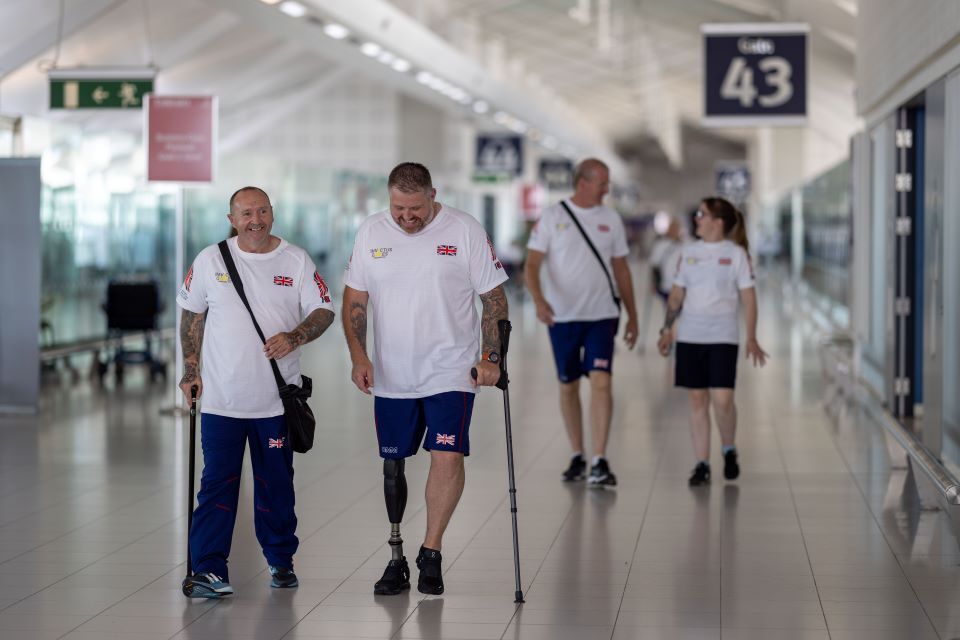
Veterans can access timely, appropriate and effective support that meets their needs.
Overview
Most veterans make a successful transition to civilian life. However, some require additional support immediately or long after service.
Recognising the unique demands placed on armed forces personnel and their families, we will ensure there is trusted, high-quality, timely and effective support, when and where it is needed. This support is our moral obligation as a nation.
Working collaboratively with partners across the UK, including devolved governments, and in alignment with broader public service reforms in areas such as health, housing and justice, we will step up our support for veterans.
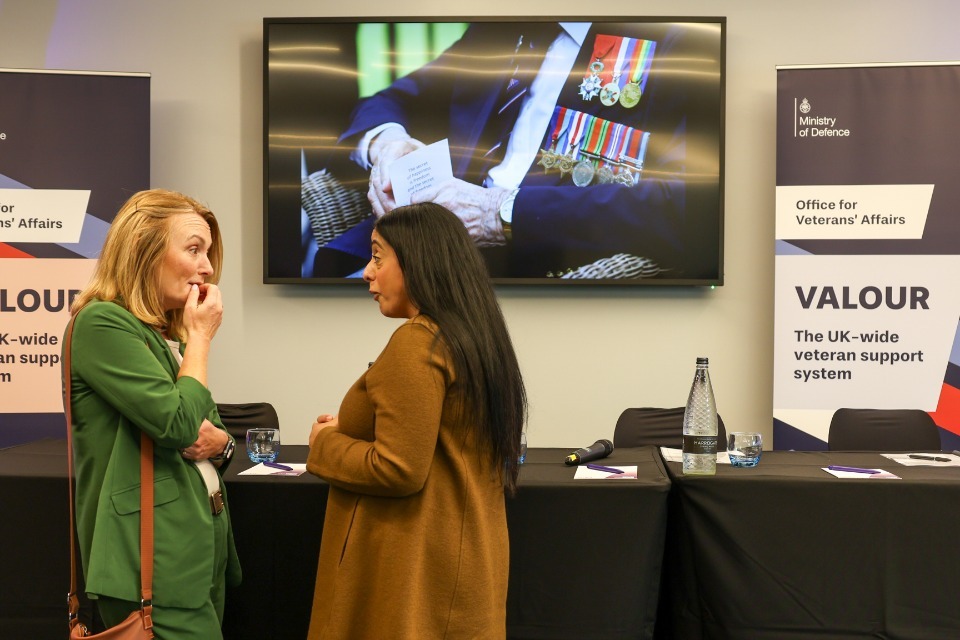
VALOUR
There are many fantastic services available for veterans in the UK. However, these services may not always be working together, and veterans are not always aware of what is available.
In May 2025, the government announced VALOUR – the first ever UK-wide government-led approach to veteran support. Building on successful existing provision, this programme, backed by £50 million of funding, will deliver easier access to care and support for our veterans connecting housing, employment, and health services across the UK.
VALOUR will consist of 3 main components:
-
VALOUR-recognised support centres. Building on existing provision and supported by VALOUR development funding, these centres will facilitate access to multiple services for veterans, and provide timely data about the needs and experiences of veterans to inform future service improvements.
-
VALOUR field officers. Networks will be supported by dedicated, locally based VALOUR field officers. They will bring together stakeholders across local government, public services and the third sector, and facilitate the exchange of data, insight and learning with the new VALOUR HQ.
-
VALOUR HQ. This team will sit in the Office for Veterans’ Affairs within the Ministry of Defence and will provide assurance and training across the VALOUR network. It will gather data and insight, working with policy and research teams to ensure services are designed to meet local needs.
Local, regional and national components will be supported by additional capacity for the Veterans Welfare Service, working across the country to support those veterans who need additional support. VALOUR will initially focus on veterans, but the service is designed to be scaled up to support the wider armed forces community, including applying the principles of the Armed Forces Covenant.
Delivery of VALOUR will necessarily be different across the nations of the UK. We will work closely with devolved governments and with other partners to implement an approach that works in these contexts and delivers for veterans in all parts of the UK.
Priority outcomes
-
Veterans have access to services that are timely, effective and informed
For some veterans, including those from underrepresented groups, the support they have received has been inconsistent or insensitive to their experiences in service and beyond. Through VALOUR, we are focused on creating a support system that is easy to understand and navigate, where local partners are empowered to solve challenges within their areas, with the government setting clear policies based on data and evidence.
All veterans should be met by providers who understand their specific experiences, circumstances and needs. With 99.6% of Primary Care Networks in England including at least 1 accredited GP practice, we will continue to build on significant progress and ensure, in both specialist and mainstream services, providers are made aware of veterans’ unique needs and circumstances. Those rough sleeping or at risk of homelessness should have dedicated support, including through Op FORTITUDE. -
Veterans are aware of and have access to the services available to them
Early intervention is key to preventing more complex issues later. Not all veterans or their families, particularly in underrepresented groups, are aware of the services available to them. For those that are aware, there are in some cases barriers to access.
We will work across government and more widely to address barriers to identifying and accessing support and develop policies that help veterans receive the support they need. -
All veterans have the foundations for financial security
Financial insecurity can exacerbate challenges felt by veterans. This can be particularly acute during transition, with increased financial independence, unexpected and often sudden costs, and sometimes not well-understood opportunities to access pensions, compensation or other payments.
We will ensure effective measures are in place to support veterans to achieve and sustain financial security. We will ensure training is delivered during service and transition to encourage long term financial planning. We will work with partners across government and the wider charity sector to ensure advice and support is in place for those who need it. -
Families of veterans are recognised and supported
Some families and children of veterans face specific challenges and support needs arising from a veteran’s service. In many cases, family members offer invaluable support during service and continue to do so during the transition into civilian life and beyond, such as caring for those with complex needs. Some family members are negatively impacted by service, including the long-term effects on their employment and education because of frequent relocation during service.
We recognise that the government has a key role to play, alongside the wide range of support provided by the wider armed forces community, in recognising and supporting the families of veterans.
How we will have impact
Support is available to all veterans as they transition out of service life. For the minority with acute needs, it is important that additional provision is provided in a timely and efficient way.
Alongside existing provision from government and the wider armed forces community that does vital work to support veterans, VALOUR will be key to achieving success. For veterans themselves, we will track uptake and provision of services. We will also measure trust in service delivery, whether a ‘no wrong door’ approach is being realised and aim to improve coordination across the sector.

In the first 2 years, we will:
-
Deliver VALOUR: A stronger, institutionally resilient and coherent support system for veterans
- Establish VALOUR – with £50 million of funding – a new UK-wide system to deliver easier access to tailored support for veterans
- raise awareness of available support and encourage engagement with it – through effective communication and an improved digital front door on GOV.UK.
-
ensure veterans get the support they need through dedicated pathways and specialist services where appropriate
- deliver specialist care, support and treatment for veterans with mental health and wellbeing needs through Op COURAGE and provide support to their family members
- provide specialist care and holistic treatment for veterans with physical health and wellbeing needs through Op RESTORE
- invest in innovative new approaches to support veterans, including the Catterick Integrated Care Centre, due to open in 2026, being developed by MOD and the NHS with £110 million funding
- make service delivery veteran-friendly, such as through GP accreditation and the NHS Veterans Covenant Healthcare Alliance ‘Veteran Aware’ Accreditation, and provide training and education to care homes accommodating veterans
- deliver the new NHS National Training and Education Programme, to ensure veterans and their families will benefit from improved and targeted healthcare, with £1.8 million funding over 3 years
- ensure support is available in the most difficult circumstances, through services such as Sexual Assault Referral Centres across England, which are available to all, including serving personnel, veterans and their families, regardless of when the incident happened – they are located across the country and offer specialist practical, medical, and emotional support 24/7
- ensure veterans experiencing or at risk of homelessness have access to the advice and support they need by building on the work of the Reducing Veteran Homelessness programme and making Op FORTITUDE a sustainable service
- deliver the new ‘Forces First’ approach to new homes built on surplus Ministry of Defence land, helping more veterans and their families benefit from priority access to high-quality, affordable homes and home-ownership opportunities they deserve
- deliver specialist support for those in contact with the justice system through the continued delivery of Op NOVA.
-
ensure all veterans receive appropriate and effective support through transition
- align Op ASCEND more closely with the Career Transition Partnership, ensuring veterans have continued access to employment support regardless of when they left service
- implement the accepted recommendations based on the Quinquennial Review 2023, conducted to ensure that the Armed Forces Compensation Scheme continues to work effectively
- raise awareness of veterans’ financial entitlements, including pensions, to ensure veterans receive that to which they are entitled
How we will measure the impact
Progress and performance
Initial metrics for monitoring progress and performance as part of the Support theme are set out in the table below. These are a starting point, with new measures to be developed with input from stakeholders during the first year.
| Measures | Baseline metric |
|---|---|
| Public perception that the UK government looks after veterans. | 15% think the UK government is effective in supporting UK armed forces ex-service personnel, compared to 43% who say they feel it is not effective (YouGov Perceptions Report 2022). |
| Percentage of veterans accessing a service who got the support they needed. | We will establish a baseline measure with new research in 2026 including through VALOUR. |
| Percentage of veterans aware of available support services. | We will establish a baseline measure using Veterans’ Survey 2026. |
| Percentage of veterans who express willingness to reach out to these services in time of need. | We will establish a baseline measure using Veterans’ Survey 2026. |
| Veteran health outcomes, including Op COURAGE and Op RESTORE. | The OVA will work with DHSC to report on referrals to Op COURAGE and Op RESTORE. We will start new work to report more meaningful data on outcomes, patient satisfaction and to demonstrate progress on continuous improvement in service and clinical provision. This will include relevant NHS services outside of Ops COURAGE and RESTORE where we know veterans are receiving support. |
| Number of veterans experiencing homelessness and rough sleeping. | 2,270 households that were owed a prevention or relief statutory homelessness duty that had a ‘served in HM forces’ support need. This was 0.7% of all households owed a statutory homelessness duty in 2023/24 in England (MHCLG homelessness data). These baseline figures do not capture the full extent of homelessness and rough sleeping, as not every homeless person will approach their local authority for support. |
| Rates of veterans who die by suicide. | We will work with the ONS, NRS and NISRA (where possible due to the sensitivity of recording veteran data in the Northern Ireland) and leading academics to ensure we continue to have the best available data on veteran suicide rates and that they remain available on GOV.UK. |
| Percentage of veterans claiming and receiving pensions that they are entitled to. | We will establish a baseline measure through new analysis and further work with partners including the Forces Pension Society. |
| The number of War Pensions and Armed Forces Pension Scheme which are unclaimed. | Baseline measure will be established in 2026. |
| Percentage of veterans who trust in government services to meet their needs effectively. | We will establish a baseline measure using Veterans’ Survey 2026. |
Next steps
Working with the veteran community to achieve improved outcomes
Government will redesign the underpinning governance and engagement that drives delivery of veterans’ priorities and decision making, and ensure it is mutually supportive of the Armed Forces Covenant.
New structures will be implemented to ensure ministers have greater oversight of activity, progress and data. Ministerial-led activity will take place regularly and will include:
- a new inter-ministerial group to ensure cross-government coordination
- formal dialogue with counterparts from the devolved governments
- dedicated time to discuss veterans’ affairs and the Armed Forces Covenant at Cabinet
Government will launch a new cross-government delivery group to coordinate activities, set priorities and encourage data sharing across government departments who support and work with veterans. This will ensure the whole of government is working collaboratively, and that cross-cutting issues are coordinated.
Government will work with the Confederation of Service Charities (Cobseo) and others to convene key stakeholders and civic society to share working, collaborate and to prioritise activities to support the outcomes of the strategy. This new forum will be instrumental in driving the best data and insight into decision making and by encouraging transparent ways of working to be more effective than ever.
The forum will be collaborative by design, with government and Cobseo leading a community of shared purpose against the themes of this strategy. This reflects the positive relationships between government and the wider armed forces community that already exist, while aiming to go further in line with the principles set out in the Civil Society Covenant.
This shared endeavour will benefit from the balance of views of the armed forces charity sector. We will continue to ensure veteran specific initiatives are developed holistically, with the whole of the armed forces community – serving personnel, veterans, families, and the bereaved – in mind.
Measuring performance – working openly and transparently
Alongside new governance structures, we will continue to monitor and communicate progress against the strategy to the public and to veterans.
Building on the existing progress measures set out in this strategy, we will establish a clear monitoring and evaluation framework for the strategy in 2026. To achieve this Government will work with independent stakeholders including the Forces in Mind Trust to explore options and ensure a rigorous, evidence-based approach going forwards.
Gathering the necessary data to monitor performance will require a marked change in how the armed forces community works together if we are to create a common understanding of the veteran population across the UK. Monitoring from government will include:
-
New insight gathered from VALOUR, providing a continuous feedback loop to shape policy and delivery.
-
Introducing standardised data definitions and measurement to enable organisations supporting veterans to benchmark their performance against the wider sector.
-
A recurring national survey of veterans to understand the changing experiences, perceptions and needs of veterans, their families and the wider armed forces community.
-
Analysis of public perceptions to understand how veterans are represented and perceived across the UK and what we might do to affect this.
-
Collating and analysing new and existing administrative data to monitor the performance of veteran services. This will include end-to-end measures to monitor if the intended outcomes are being achieved and gather feedback from veterans on their experiences.
-
Monitoring data against protected characteristics where possible to identify any trends in the outcomes being achieved for specific cohorts of veterans and determine where different interventions may be appropriate.
A new online performance platform will be introduced in 2026 to publish performance data openly.
Improving data and tackling the knowledge gap
The government will work across the UK veterans’ sector to improve data capture, sharing, analysis and decision making and will do so at pace, with an aim to co-create clear guidance so organisations collect data consistently. Working with the Office for National Statistics, National Records Scotland and the Northern Ireland Statistics and Research Agency (where possible due to the sensitivity of recording veteran data in Northern Ireland), we will build on the progress made in the 2021 and 2022 Censuses to better understand the lives of veterans further, by supporting their development work of the next Censuses in 2031 and other key data initiatives.
Government will also continue to work with and support partners to build the growing body of research that exists to better understand veterans’ diverse experiences and needs. We will continue to support collaboration and knowledge sharing with international partners, being open to learning from how other countries work with, and support, their veteran communities to thrive.
Improving the digital landscape for veterans
We understand how navigating the digital landscape when looking for help can be a challenge for some veterans, with a broad range of providers offering support across many different platforms and websites.
In line with the blueprint for modern digital government and work being led by the Department for Science, Innovation and Technology, we will look to improve and simplify this landscape, working towards a joined-up approach, whereby veterans can more easily find the right support for them based on their circumstances, support needs and where they live. This will support and complement VALOUR, and we will explore how the latest technological tools can be adopted to help achieve this, while also keeping in mind those that cannot so easily access information and services online.
-
Government defines a veteran as anyone who has served for at least 1 day in HM Armed Forces (Regular or Reserve), or Merchant Mariners who have seen duty on legally defined military operations. ↩
-
88% of service leavers who used a billable CTP service and whose employment outcome was known were employed within 6 months of leaving service in 2023/24, with just 5% reported as unemployed. More broadly, census data shows 79% of working-age veterans in employment compared to 70% working-age non-veterans (England & Wales Census 2021) ↩