Public health management of case and close contacts for TB
Published 6 October 2026

© Crown copyright 2026
This publication is licensed under the terms of the Open Government Licence v3.0 except where otherwise stated. To view this licence, visit nationalarchives.gov.uk/doc/open-government-licence/version/3 or write to the Information Policy Team, The National Archives, Kew, London TW9 4DU, or email: psi@nationalarchives.gov.uk.
Where we have identified any third party copyright information you will need to obtain permission from the copyright holders concerned.
This publication is available at https://www.gov.uk/government/publications/tuberculosis-tb-contact-tracing-guidance/public-health-management-of-case-and-close-contacts-for-tb
Initiation of contact tracing
Recommendation
All cases of pulmonary and laryngeal tuberculosis (infectious TB) should be considered index cases and as a minimum, their household and close contacts, irrespective of estimated contact duration, should be identified and offered testing for tuberculosis disease and infection [footnote 1].
Recommendation
Contact tracing should be initiated in the following cases:
- confirmed cases of pulmonary or laryngeal TB, as indicated by a clinical specimen which is either culture positive[footnote 2] for M. tuberculosis complex organism or PCR positive[footnote 3] for M. tuberculosis complex
- clinical cases, defined as individuals without laboratory microbiological confirmation who have clinical and/or radiological evidence of pulmonary TB, and a clinician has started a full course of anti-TB therapy
- all cases of TB in children aged under 16, regardless of the site of disease
Recommendation
Contact tracing is not routinely initiated in the following situations:
- cases that only meet the ‘possible’ case definition
- non-tuberculous mycobacterial (NTM) infections
While TB disease outside of the respiratory tract is not considered infectious, HPT and TB teams may opportunistically decide to extend TB screening to household and regular social contacts of cases of adult TB that is not pulmonary or laryngeal, based on local service provision and epidemiology. This strategy is likely to have the highest yield if the case originates from a country with the high TB burden see WHO country list. Studies have shown TB disease prevalence in extrapulmonary TB contacts to be similar to those in UK new entrant screening programmes (66, 67). TB services should also ensure extrapulmonary TB patients are asked about close contacts being symptomatic as a case finding exercise.
An algorithm to guide the initiation of contact tracing is included in Appendix 3.
Initial contact tracing roles and responsibilities
The initial phase of contact tracing following the identification of a case (confirmed or clinical) of TB is the responsibility of the NHS clinical TB service managing that case. The TB nursing team should identify, assess, and, if appropriate, screen for M. tuberculosis infection (in accordance with national and local guidance):
- close contacts, including people from the same household who share facilities (2, 3)
- contacts with vulnerabilities, such as children (all children aged under 16 years) and immunocompromised individuals (see Appendix 2) (1)
- visitors to the household who visited frequently and / or for extended periods for example where members of extended families may move regularly between 2 or more houses and may be considered effectively part of one larger household
Dependent on local arrangement NHS TB service will undertake initial contact tracing and screening without involving the UKHSA HPT where there are no public health implications beyond the immediate household.
Infectious period
Recommendation
The estimated start of the infectious period for a pulmonary or laryngeal case of TB is 3 months before the onset of respiratory symptoms or 3 months before the first finding consistent with TB disease (such as abnormal chest X-ray), whichever is earlier [footnote 4].
Recommendation
For drug-sensitive TB, completion of 2 weeks of effective treatment is conventionally regarded as the time point at which individuals will be rendered non-infectious. A risk assessment should be undertaken prior to hospital discharge to the community to consider any potential ongoing infectivity (for example, poor drug adherence or absorption, extensive disease or indicated by latest microbiology), the type of accommodation in which the person with TB will reside and the vulnerability of the individuals with whom they will reside.
Expanding contact tracing
General principles, roles and responsibilities
The index case’s close contacts may involve contacts from a non-household setting, for example at a workplace, healthcare setting, nursery/school or other congregate settings. TB services should refer any incident involving in a setting outside of the household to the local UKHSA HPT for risk assessment within 5 working days of suspicion of a potential incident (9). An algorithm of contact tracing processes is given in the Appendix.
The TB service should then undertake further risk assessment of these settings together with the HPT where the case is resident. Identification of contacts outside the household is based on the movements of the index case during the estimated infectious period. Such areas to consider are outlined in the Appendix. The HPT should provide advice and recommendations in relation to TB risk assessment, screening and further action.
In situations where contact tracing extends beyond the household, an IMT meeting with relevant stakeholders could be considered. The IMT should jointly agree the wider actions required and responsibilities for these, in accordance with local operating procedures.
The IMT should include all relevant stakeholders including the NHE TB service, Local Authority (LA) and commissioners (usually the local Integrated Care Board (ICB) as well as representation from the relevant communications team. The IMT may also extend to UKHSA Field Services team and the UKHSA National TB Unit. The principles of communicable disease outbreak management and investigation are outlined in the UKHSA Communicable disease outbreak management guidance.
The UKHSA WGS and cluster investigation handbook has further guidance on membership (67). The IMT will usually be chaired by a Consultant in Health Protection or a delegated representative from the HPT and should have minutes produced to maintain a record of key decisions made.
It is recognised that there is some geographical variability in the roles and responsibilities between HPTs and TB services in carrying out risk assessments and contact tracing in non-household settings, for example for small workplaces. Roles and responsibilities for risk assessment and contact tracing should therefore be agreed between the HPT, TB service and other stakeholders. The HPT should record information received, agreements made and actions taken on UKHSA’s Case and Incident Management System (CIMS).
If exposures are identified outside the HPT area of where the index case resides, the relevant HPTs should be informed, who will then lead on the associated risk assessment and contact tracing processes within their area. All linked HPTs should share the results of screening to inform ongoing risk assessment and determine whether further extension of contact tracing and screening may be required.
The UKHSA National TB Unit (TBunit@ukhsa.gov.uk) is available to support HPTs in discussion around complex situations or those that go across HPT geographical boundaries, and on the attendance of IMT meetings.
Notify the UKHSA National TB Unit and the International Health Regulations (IHR) focal point of any situations that cross international borders by email at ihrnfp@ukhsa.gov.uk. This should include people who may have travelled on airplanes internationally during their infectious period. If further guidance is required, Tuberculosis and Air Travel: Guidelines for Prevention and Control is available from the WHO. There is also internal UKHSA TB and Air Travel guidance available for HPTs.
If there are complex IPC issues identified at the IMT and further support is required outside the HPT and ICB, the UKHSA IPC team can be contacted at IPC@ukhsa.gov.uk
Contact tracing for healthcare workers and hospital in-patients
TB disease may be identified in a patient on a hospital ward or in a person working in hospital or healthcare. When this situation occurs the NHS Trust is responsible for contact tracing of patients and staff and associated actions including follow-up and testing for TB Infection (LTBI) in those potentially exposed within the healthcare setting the Infection Control Team (ICT) of the relevant NHS Trust will convene and lead an IMT as needed, with HPT representation and advice where requested.
As a guide an NHS Trust-convened IMT would normally be led and chaired by the Director of IPC, the TB Case Manager or their nominated deputy. A timeline of the patient’s journey should be presented, and the ICT should assess exposed individuals which may include patients and health care workers (HCWs), paying particular attention to vulnerable contacts (Appendix 2) and liaising with the occupational health (OH) team where appropriate. The principles of contact tracing should be the same as for cases in the community and should include identification and screening of contacts and provision of ‘inform and advise’ information where appropriate as well as ongoing education for HCW about TB.
Contact tracing in prisons and other secure settings
Management of TB in prisons and other secure settings, including contact tracing during a prison incident, is detailed in the UKHSA TB in secure settings guidance on the management of tuberculosis in secure settings in England (68).
Contact tracing in inclusions health groups
UKHSA have produced a tool to support tackling TB in inclusion health groups (IHGs). Inclusion health group definitions include, for example, people experiencing homelessness, vulnerable migrants, people in contact with criminal justice services and people with drug and alcohol dependency. TB services and HPTs should follow the guidance set out within this document and coordinate contact investigations at places where the index case spends significant amounts of time.
Social network questionnaires can be developed and used (see ‘Other approaches to contact tracing’). The aim is to help identify people who have been living with a case and people with whom they frequently socialise. Local teams may consider using digital mobile X-ray for active case finding in settings identified as sites of transmission from social network analysis or WGS (2).
Contact tracing approach for prioritising contacts
Recommendation
When obtaining information on close contacts, a review should be undertaken to assess contacts beyond the household, which can include intimate partners, frequent visitors to the household, contacts in other congregate settings, and healthcare workers when infection prevention and control procedures has not been observed.
Recommendation
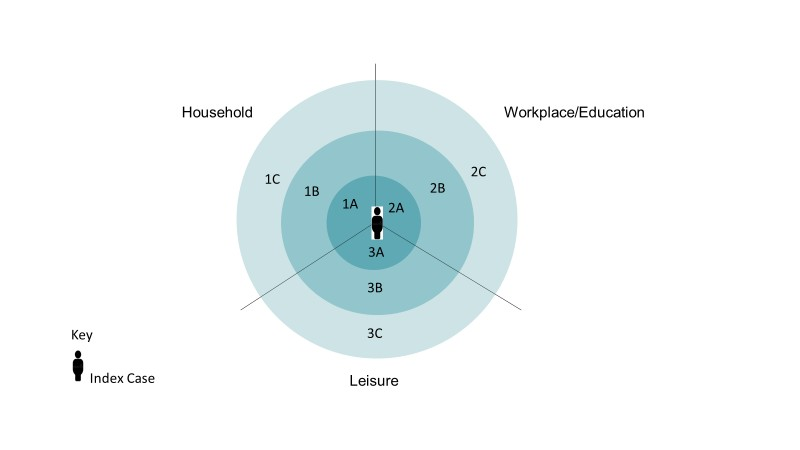
Conduct contact tracing according to the concentric circle (stone-in-pond) approach, whereby contacts with greatest exposure to the index case or with vulnerability are prioritised for testing.
A ‘stone-in-pond’ contact tracing model is recommended to organise and prioritise contacts, in which each ‘ripple’ represents a social circle with varying degrees of exposure to the index case (Figure 1). The ‘stone-in-pond’ approach to contact tracing has not been evaluated in a controlled trial, however it is in wide use internationally, and forms a pragmatic, risk stratified approach to contact tracing. WHO tuberculosis guidance recommends a risk‑based, concentric‑circles (“stone‑in‑the‑pond”) approach to contact investigation, whereby screening begins with household and other close contacts at highest risk of exposure and is progressively expanded to more distant contacts only if evidence of ongoing transmission is identified. This staged expansion is described in the WHO operational handbook on tuberculosis, which advises prioritisation of contacts according to intensity and duration of exposure and observed yield, rather than indiscriminate mass screening. This approach is consistent with broader WHO principles for contact tracing, which emphasise prioritising those with the highest probability of exposure and expanding tracing activities based on assessed transmission risk see WHO guidance and WHO guideline on contact tracing (3, 4, 10, 43).
Recommendation
The first round of contact tracing for infectious TB should be for all household and close contacts. A risk assessment would then determine if a wider round of testing is required. If indicated, further rounds of testing are considered in contacts who have had a total cumulative contact time of 8 or more hours with the index case whilst they were infectious. This time may be reduced to 4 or more hours for vulnerable contacts. These time limits should be used as a guide, rather than a definitive metric, acknowledging the different risk profiles that exist, for both cases and contacts, and should be further informed by the local dynamic risk assessment and investigation outcomes.
Following the diagnosis of a person with pulmonary or laryngeal TB, an individual risk assessment is undertaken to determine who are the closest contacts or the most vulnerable, recognising that these may include people outside the household. These ‘first ripple’ contacts identified at greatest risk then undergo the initial round of clinical assessment (1 to 3A in the figure). If TB infection (LTBI) is identified in the closest contacts a risk assessment should be carried out to establish the next potential circle of contacts to be assessed and or screened.
Should TB disease be confirmed within the initial close contacts, this may suggest there has been recent transmission of TB from the index case. If the proportion of contacts with disease or infection is above a defined level based on the estimated background rate in the population being screened or a proportion of contacts, then there should be consideration to extend contact tracing to the next ‘circle’ of contacts with less exposure (1 to 3B in the figure).
The expected background positivity rate will vary according to the demographic profile of contacts being traced and needs to be agreed by consensus between the local HPT and TB services. It may also be lowered or raised given perceived tolerable risk, for example, in contact tracing in MDR-TB or in a nursery setting.
Figure 1: Concentric circle approach to contact tracing Adapted from reference (72)
Recommendation
Contacts tracing should also be prioritised in the following situations:
- exposures in small, poorly-ventilated environments
- long durations of contact
- vulnerable contacts as described below
Recommendation
Vulnerable groups at greatest risk of progressing to active TB disease should be prioritised to be tested for TB disease or infection following exposure include. This includes:
- people with uncontrolled human immunodeficiency virus (HIV) infection
- young people
- older people [footnote 5]
- low weight
- immunosuppression related to co-morbidities (such as diabetes mellitus and chronic renal failure)
- immunosuppression related to pharmacological agents (some biological therapies, anti-rejection drugs for organ transplantation, chemotherapy and systemic steroids)
Priority for who should be most urgently assessed for TB disease or infection following exposure to a case of infectious TB should be given to contacts that:
- had repeated or extended exposure to the case while they were considered infectious
- were exposed to the case in an environment in which transmission was likely, such as a small, crowded, or poorly ventilated room or vehicle
- are clinically vulnerable or receiving immunosuppressive therapies and are therefore at greater risk of developing TB disease (see Appendix 2)
- already have symptoms of TB disease
- HCWs with significant exposure prior to confirmation of a TB diagnosis, particularly following aerosol generating procedures (AGPs) in which there have been inadequate IPC practices (including in the use of PPE), see the NHS 2022 Rapid Review of AGPs (73)
The number of close contacts identified should be entered into the National Tuberculosis Surveillance System (NTBS) by the TB service managing the index case and this data should be presented at local cohort review.
Risk assessments for settings beyond the household
Recommendation
Individuals with any of these clinical factors should be prioritised for contact tracing:
- pulmonary or laryngeal disease
- productive or frequent cough
- sputum smear positivity, short time-to-detection of Mycobacterium tuberculosis by culture and/or high TB polymerase chain reaction (PCR) positivity
- radiologically extensive disease and/or presence of cavities on chest x-ray
Recommendation
When considering wider screening beyond household and close contacts, consider convening an Incident Management Team (IMT) with relevant stakeholders.In this forum, a risk assessment should be undertaken to consider the infectiousness of the case, the location of the exposure and the duration of the exposure to the index case.
A risk assessment-based approach to contact tracing is recommended, where extended screening should be considered if there is evidence of transmission based on any of the following:
- the index case is judged to be particularly infectious, as evidenced by a high proportion of the index case’s initial close contacts testing positive for TB (infection or disease)
- TB disease linkage is identified through WGS, where epidemiological links are less clear but there is molecular evidence of transmission, for example in a casual contact or a contact with low screening priority
- TB disease (in any anatomical site) has been identified in children younger than 16 years of age (1)
- the index case has a form of drug-resistant TB and the consequences of onwards transmission may be considered more serious
TB infection (LTBI) identified through contact tracing and screening processes reflects a combination of both pre-existing risk in a population and exposure to the index case, unless TST or IGRA conversion has been established.
When deciding the threshold for the background level of infection in the population, factors to be considered include local population demographics, the overall TB rate of that area and the contextual settings involved. For example, rates of infection in asylum seeker accommodation or places of detention might be expected to differ from those in community workplaces or schools (74, 75, 76, 77). There is no absolute cut-off for the background level of infection, and extending screening should be considered as part of a dynamic risk assessment (ongoing evaluation of how infective the index case was to their contacts), alongside information about the settings, contacts and population from which they come.
The environment where contact has taken place also needs to be considered, for example:
- any congregate settings the index case has been to during their infectious period, including workplace, school or other place of education, healthcare settings, hostels, or prisons. The index case’s daily activities should be considered to determine places of intense contact other than the household
- the size of the environment and how closely people interact in the space
- the number of people in the environment
- the ventilation of the environment, including whether doors and windows were open or closed
A dynamic risk assessment or an IMT is indicated to review cases where transmission is likely to have occurred in a congregate setting.
Cases with smear-negative sputum results are likely to be less infectious than smear-positive cases and therefore further contact tracing in wider settings may not be indicated (52). However, the onset, duration, and nature of symptoms (particularly the presence of a prolonged cough or cavities on chest X-ray), the susceptibility of contacts, and time to culture should be taken into consideration when undertaking the initial risk assessment. If infection is identified in household or close contacts, or there are concerns regarding any of the aforementioned factors, then risk assessment in congregate settings should be discussed with the clinicians and with HPT leads.
Site visits may be helpful to complement initial contact tracing and can be used to help identify contacts. A site visit also offers an opportunity to assess environmental risk factors, such as the size of rooms, ventilation of the area, the potential numbers of people exposed and movement of the index case within the environment. An agreed local pathway between the TB service, HPT and LA should be in place, highlighting who should undertake this assessment.
The complexity and sensitivity of the incident, media interest and the level of experience of those undertaking the risk assessment may also inform the approach taken.
The contact tracing and screening process should be concluded when levels of infection detected in the tiers of at-risk contacts are estimated to be the same as those in the ‘general community’ – though this can be hard to define.
Recommendation
Where an IMT has been established, the IMT should agree when to conclude contact tracing and screening efforts. If further cases are subsequently identified (particularly where linkage has been identified by whole genome sequencing (WGS)) a dynamic risk assessment should be undertaken by the IMT, and further public health action considered.
Principles for outbreak management
Two or more epidemiologically linked cases of TB (for example by WGS data) outside of household contact may constitute an outbreak. An outbreak can indicate that the index case was infectious, that contacts were exposed for a substantial period and that the interval since exposure has been sufficient for infection to progress to disease. Refer to the Communicable Diseases Outbreak Management Guidance.
The identification of a second active case of TB during contact tracing investigations may indicate a second index case or co-primary case. WGS will be important in understanding whether the cases are linked. Contact tracing should be initiated for any additional active TB cases identified through the initial contact tracing exercise. An outbreak investigation may therefore involve several overlapping contact investigations and require prioritisation of HPT resources.
In low-incidence areas, any cluster may be suggestive of an outbreak. In higher-incidence areas, it may be difficult to identify linked cases due to the higher baseline incidence of TB in the population. Clusters may become apparent due to a noticeable increase in the number of cases, the identification of paediatric cases or WGS related M. tuberculosis isolates.
The primary objectives of outbreak management are to:
- recognise the outbreak
- define its epidemiological characteristics and aetiology
- prevent its further spread and recurrence
- maintain communications with appropriate stakeholders and the public
Management of local outbreaks of TB (for example in a school, residential care setting, prison, or community), including those identified by WGS where a setting has not yet been identified, requires a multi-agency response, and the HPT should convene an IMT.
Where the exposure is in a hospital setting the IMT should be convened and chaired by the identified responsible team within the hospital trust, which may differ between organisations, with support from the HPT.
For TB clusters linked by WGS that constitute an outbreak, representatives from affected settings should attend the IMT as appropriate, for example hospital IPC,school nursing service or prison service. Use the WGS Cluster Investigation Handbook.
Advice on outbreak investigation and management is available from the UKHSA TB Unit at TBunit@ukhsa.gov.uk (inbox covered during working hours).
Further guidance on the management of outbreaks is provided in the UKHSA communicable disease outbreak management guidance.
Actions once contacts are identified
UKHSA regional HPTs should agree a process to detail the management of contacts identified through the risk assessment and contact tracing process.
The following elements should be recorded on CIMS:
- the index case symptoms, infectiousness and period of infectiousness
- an assessment for risk factors for TB infection in those exposed to the index case, for example immunocompromise or young age
- an assessment of whether the case has attended a specific social or workplace where specific setting factors that may the increase risk of transmission; for example within healthcare or congregate settings where there may be vulnerable individuals such as a nursery
- a description of the risk assessment and agreement that an IMT is required and the outcome of the risk assessment
- confirmation of the numbers of people needing screening and or a clinical assessment via their local TB service
- provision of ‘inform and advise’ information for those who are offered screening and those who are not offered screening
Once screening has been offered:
- the number of people who are offered and accept screening should be recorded and presented back to the IMT to agree if a further round screening should be offered – the decision of the IMT should be clearly recorded
- if an identified contact declines TB screening, a letter should be sent to their GP to inform them that the individual has had contact with an infectious case of TB
- where appropriate, BCG vaccination should be arranged in line with the Green Book
Contact tracing among children and adolescents
Recommendation
Contact tracing should be undertaken for children aged under 16 years with TB in any site with the aim of finding a source for their infection (and co-primary cases) in accordance with BAPT guidance (1).
TB disease among young children aged under 5 years usually occurs within weeks to months of contracting infection with M. tuberculosis, therefore a young child with disease is a marker of recent transmission from someone in the child’s environment (78).
TB services and other healthcare professionals should always notify the HPT where they have a case of TB in someone aged under 16 years.
In all types of contact investigation scenarios (active case finding, incident or outbreak investigations) TB services should investigate all people who have been in contact with a child (under 16 years) who has pulmonary or extrapulmonary TB to identify the primary source of infection. If necessary, they should look beyond immediate close contacts to find the source (9). Record all details of childcare and educational establishments and congregate settings that the child had has attended on the CIMS record.
In children and adolescents, it is important to ascertain and investigate any potential exposures to identify potential sources of infection. This should include information on TB in household and other close contacts as well as visitors to the household from overseas particularly those from a TB high-burden country (incidence of at least 40 cases per 100,000 population list. The country of birth and year of arrival into UK should also be recorded if born overseas)
For additional guidance on managing TB in children, screening children who have been identified as close contacts of cases of pulmonary or laryngeal TB and management of cases in schools refer to BAPT guidance (1, 2).
Other considerations
Social network analysis
Occasionally, an additional approach to ‘stone-in-pond’ may be necessary, such as social network analysis. Social network questionnaires can be developed and used to understand the epidemiological links between cases (79). Regional field services teams, including cluster investigators, and the national TB unit can assist with these as required.
WGS, available on culture-confirmed individuals, also helps to identify links between cases that would otherwise not be recognised, allowing timely investigation and institution of control measures. All culture-positive isolates are typed by WGS at the relevant Mycobacterial Reference Laboratory (67).
Contact tracing timeframes
Contact tracing investigations should be prompt in order to maximise the opportunity to identify and treat active and latent infection, prevent disease and interrupt transmission. Cases of TB should be notified within 3 days of suspicion of the diagnosis to facilitate a timely risk assessment for appropriate clinical and public health responses to cases and their contacts (11).
Indicative timescales are outlined in Appendix 8. These are not intended to be prescriptive, as timescales will vary depending on the specific situation, but can be used as a guide.
Close contacts of pulmonary and laryngeal TB should have an initial screening immediately after exposure is known and should have a repeat screening at 8 weeks post-exposure. IGRA conversion to positive over this timeframe is supportive of recent infection (24, 80, 81). Given that only a proportion of contacts return for the second screening, the local multi-disciplinary teams (MDTs) may decide to screen asymptomatic and immunocompetent contacts of pulmonary smear negative and extrapulmonary cases only once and this should occur 8 weeks after any potential exposure. Vulnerable contacts including those who are immunocompromised and children, should be prioritised for screening when identified due to the risk of progression to active disease.
Post-mortem diagnosis of TB
For cases diagnosed with pulmonary or laryngeal TB disease at post-mortem, the case should be notified to NHS TB service and contact tracing investigations initiated. For such cases, it is possible that a delay in diagnosis has occurred, which could imply prolonged infectiousness and a need to increase the scope of the investigation.
Should a high number of positive cases be identified in close contacts, consideration should be given to expanding the contact tracing in line with recommendations within this document.
This should include HCWs with significant exposure prior to confirmation of a TB diagnosis, particularly following AGPs in which there have been inadequate IPC practices (including in the use of PPE), see the NHS 2022 Rapid Review of AGPs (73).
Confidentiality
Every effort should be made to maintain patient confidentiality as far as possible. However, maintaining confidentiality for an index case can be difficult in some circumstances. The index case should be informed that their information may need to be shared, for example with a workplace management representative, for risk assessment to be undertaken.
BCG vaccination
After TB screening, arrangements for BCG-vaccination with the local provider for close household contacts of pulmonary or laryngeal TB cases should be made if they meet all the following criteria and there are no contraindications (in accordance with Tuberculosis: the green book, chapter 32):
- aged under 16 years
- all tests for LTBI performed (Mantoux and/or IGRA) are negative
- not previously vaccinated (no adequate documentation or a BCG scar) (16)
It should also be taken into consideration whether there is likely to be ongoing exposure, the age of contacts, and if there is an opportunity to vaccinate high-risk individuals who missed BCG at birth.
BCG vaccination is not routinely offered by TB services and may need to be arranged locally by the appropriate team; specific arrangements will vary by region. Decisions regarding BCG administration to wider contacts identified outside the household (for example in a school or nursery setting) should be made through the IMT.
Evaluation of contact tracing
The evaluation of outcomes from contact tracing and screening is important for assessing the decisions made during the contact investigation and planning any further interventions.
The results of the investigation of each circle of contacts should be reviewed to determine the risk of transmission and inform the dynamic risk assessment.
The following information on close / household contacts should be collected and added to the NTBS by the notifying clinical team:
- number of contacts identified (particularly close contacts)
- number of contacts who underwent a full evaluation
- number of contacts diagnosed with active disease
- number of contacts diagnosed with LTBI and eligible for preventive therapy
- number of contacts who accepted and completed preventive therapy
Large or incident contact tracing is not currently recorded on NTBS.
Once a wider screening exercise has taken place it should be evaluated to see if further actions are required, with the outcomes of screening recorded on CIMS. When contact tracing and screening has been deemed complete the reasons for concluding contact tracing should be documented on CIMS by the HPT (for example there was no evidence of onward transmission within last group of close contacts identified). The provision of information on close contact screening should be requested by the HPT from the TB service.
Any lessons learnt should be discussed with wider stakeholders at the final IMT meeting.
Cohort reviews provide a means to evaluate contact tracing in localities and HPTs can support TB services in providing information for cohort review as required (82).
References
See the attached list of references for TB contact tracing guidance.
-
Testing for TB infection (LTBI) is not routinely offered for contacts over 65 years of age. ↩
-
Culture positive cases in England will be confirmed and undergo WGS through the National Mycobacterial Reference Service (NMRS) or through the Wales Centre for Mycobacteria (depending on the location of the laboratory isolating the organism). ↩
-
If patient has not been treated for TB in the past – PCR positivity can last more than 2 years after the completion of appropriate treatment ↩
-
HPTs may, through their risk assessment, determine a more appropriate start point for contact tracing (considering settings, findings on household contact screening, symptom history and clinical advice, for example). ↩
-
Testing for TB infection (LTBI) is not routinely offered for contacts over 65 years of age. ↩