Country policy and information note: internal relocation, Syria, December 2025 (accessible)
Updated 24 July 2026

© Crown copyright 2026
This publication is licensed under the terms of the Open Government Licence v3.0 except where otherwise stated. To view this licence, visit nationalarchives.gov.uk/doc/open-government-licence/version/3 or write to the Information Policy Team, The National Archives, Kew, London TW9 4DU, or email: psi@nationalarchives.gov.uk.
Where we have identified any third party copyright information you will need to obtain permission from the copyright holders concerned.
This publication is available at https://www.gov.uk/government/publications/syria-country-policy-and-information-notes/country-policy-and-information-note-internal-relocation-syria-december-2025-accessible
Version 1.0, December 2025
Executive summary
Article 13.3 of Syria’s constitutional declaration guarantees citizens the right to freedom of movement.
Freedom of movement in Syria has generally improved since the fall of the Assad regime. Checkpoints remain common across all governorates, where identity documents are routinely inspected and occasional searches take place during times of heightened security. While movement is largely unrestricted, personal security risks persist, including theft, harassment, kidnapping, and isolated mistreatment at checkpoints, though evidence does not indicate systematic or widespread abuses.
Women and certain demographic groups may self-limit travel due to safety concerns, yet legal barriers to movement or residency in areas of relocation are minimal.
In government-controlled areas of Syria, there are generally no restrictions or official permits required to reside in different governorates. Areas under control of the Syrian Democratic Forces (SDF) require residence permits and registration with local neighbourhood councils to access essential services.
Where the person has a well-founded fear of persecution or serious harm from the state, they are unlikely to be able to internally relocate to escape that risk.
Where the person has a well-founded fear of persecution or serious harm from a non-state or rogue state actor, internal relocation is likely to be reasonable for both males and females (including lone females) who are in good health and can either support themselves and/or have a support network in the area they relocate to or a support network that can provide financial assistance from another location that would enable them to meet their basic needs.
The evidence in this note indicates that, in general, there are not restrictions on movement across Syria that are unreasonable or insurmountable.
All cases must be considered on their individual facts.
Assessment
Section updated: 15 December 2025
About the assessment
This section considers the evidence relevant to this note – that is the country information, refugee/human rights laws and policies, and applicable caselaw – and provides an assessment of whether, in general:
- internal relocation is possible to avoid persecution/serious harm
Decision makers must, however, consider all claims on an individual basis, taking into account each case’s specific facts.
1. Material facts, credibility and other checks/referrals
1.1 Credibility
1.1.1 For information on assessing credibility, see the instruction on Assessing Credibility and Refugee Status.
1.1.2 Decision makers must also check if there has been a previous application for a UK visa or another form of leave. Asylum applications matched to visas should be investigated prior to the asylum interview (see the Asylum Instruction on Visa Matches, Asylum Claims from UK Visa Applicants).
1.1.3 Decision makers must also consider making an international biometric data-sharing check, when one has not already been undertaken (see Biometric data-sharing process (Migration 5 biometric data-sharing process)).
1.1.4 In cases where there are doubts surrounding a person’s claimed place of origin, decision makers should also consider language analysis testing, where available (see the Asylum Instruction on Language Analysis).
Official – sensitive: Not for disclosure – Start of section
The information on this page has been removed as it is restricted for internal Home Office use.
Official – sensitive: Not for disclosure – End of section
1.2 Exclusion
1.2.1 Under the Assad regime, human rights violations were systematic and widespread. Civilians also suffered human rights abuses at the hands of other parties to the conflict.
1.2.2 Decision makers must consider whether there are serious reasons to apply one (or more) of the exclusion clauses. Each case must be considered on its individual facts.
1.2.3 If the person is excluded from the Refugee Convention, they will also be excluded from a grant of humanitarian protection (which has a wider range of exclusions than refugee status).
1.2.4 For guidance on exclusion and restricted leave, see the Asylum Instruction on Exclusion under Articles 1F and 33(2) of the Refugee Convention, Humanitarian Protection and the instruction on Restricted Leave.
Official – sensitive: Not for disclosure – Start of section
The information on this page has been removed as it is restricted for internal Home Office use.
Official – sensitive: Not for disclosure – End of section
2. Internal relocation
2.1.1 Where the person has a well-founded fear of persecution or serious harm from the state, they are unlikely to be able to internally relocate to escape that risk.
2.1.2 Where the person has a well-founded fear of persecution or serious harm from a non-state or rogue state actor, they are likely to be able to internally relocate to escape that risk. The evidence in this note indicates that, in general, there are not restrictions on movement across Syria that are unreasonable or insurmountable.
2.1.3 Internal relocation is likely to be reasonable for both males and females (including lone females) who are in good health and can either support themselves and/or have a support network (e.g. friends, family, community or tribal affiliations) in the area they relocate to or a support network that can provide financial assistance from another location that would enable them to meet their basic needs.
2.1.4 Decision makers must identify any and all relevant factors before considering them cumulatively to determine whether internal relocation would be reasonable. As part of this assessment, decision makers must take into account the particular circumstances of the person, including but not limited to their: age, health, marital status, ethnicity, education level, work experience/skills and any financial savings or possible remittances from inside or outside of Syria. In cases where an individual lacks the means to support themselves and cannot access assistance through a support network, internal relocation is unlikely to be reasonable. Each case must be considered on its facts.
2.1.5 The security situation in Syria remains fragile and unpredictable. Outbreaks of sporadic, localised violence can occur. Decision makers are advised to consult the most recent information available when considering potential areas for internal relocation. See the CPIN Syria: Security situation for more information.
2.1.6 Article 13.3 of Syria’s constitutional declaration guarantees citizens the right to freedom of movement. Since the fall of the Assad regime, freedom of movement has generally improved across the country. People are able to travel more freely between governorates and within major cities, with fewer security checkpoints throughout the country. Private cars, public transport and passenger buses are commonly used for travel throughout Syria and although the transport system suffered damage and neglect during the 14-year conflict, evidence indicates that most of the major roads across Syria remain passable. The government has announced plans to repair and expand road and railway infrastructure (see In country movement, Infrastructure and Methods and cost).
2.1.7 While there are less than there were during the Assad regime, checkpoints are common throughout Syria. In areas under the control of the Syrian Government, they are primarily located at the entrances and exits of cities and along major highways connecting governorates, including the routes to and from Suwayda in the south. In territories controlled by the Syrian Democratic Forces (SDF), checkpoints are positioned at crossings between key cities, including Raqqa, Hasakeh, and Deir ez-Zor. The Syrian National Army (SNA) also maintains checkpoints within areas under its de facto control. Temporary or mobile checkpoints may be deployed in response to changing security conditions in any part of the country (see Checkpoints – locations, procedures, required documents and treatment).
2.1.8 At checkpoints, security personnel typically inspect people’s identity documents. During periods of heightened security, vehicles and persons may be searched for weapons and people may be questioned regarding their destination and purpose of travel. In general, most forms of photographic identification, such as national identity cards, driving licences, passports, family booklets, or civil extracts (a document that may be used temporarily while awaiting issuance of a new identity card) are accepted by the authorities operating the checkpoint. Former military personnel are generally required to present a ‘reconciliation card’ if they do not possess a civilian identity card. Reports of extortion at checkpoints, previously widespread under the Assad regime, have become rare, and mostly limited to incidents involving armed groups nominally affiliated with the state (see In country movement and Checkpoints – locations, procedures, required documents and treatment).
2.1.9 While movement is largely unrestricted, personal security risks remain across all governorates, particularly at night, and freedom of movement may be restricted by security measures or sporadic, localised violence. A May 2025 report by the Norwegian Refugee Council (NRC) noted that there have been reports of theft, harassment, kidnapping, and revenge killings, but did not provide any further information regarding the locations or scale and extent of these incidents. Instances of mistreatment at checkpoints, such as verbal abuse, arbitrary arrest, and physical violence, including cases resulting in fatalities have also been documented (see In country movement and Checkpoints – locations, procedures, required documents and treatment).
2.1.10 A study conducted by the International Organization for Migration (IOM), based on data collected in June 2025 from 11,256 key informants across all 14 governorates, found that 86% of communities reported no significant restrictions on freedom of movement. However, informants in Al-Hasakeh and Ar-Raqqa did report certain limitations, primarily linked to lack of identification documents, the presence of security checkpoints, and fears of conscription. Additional incidents were reported, including attacks involving non-firearm weapons, Housing, Land, and Property (HLP) disputes, and attacks involving firearms (see In country movement and Checkpoints – locations, procedures, required documents and treatment).
2.1.11 Despite the incidents mentioned above, the available evidence does not indicate that such abuses are systematic, consistent or widespread, nor that people travelling within Syria are, in general, at risk of treatment amounting to persecution or serious harm.
2.1.12 Women’s freedom of movement varies on the area and the individual checkpoint. Incidents of gender segregation on public transport have been reported but it is not formalised or consistent and it is unclear whether this has occurred based on regional or centralised instructions. While a fear of mistreatment may discourage a woman from travelling alone or cause them to limit their movement between cities, generally, there are no restrictions on a women’s ability to travel within Syria. There is no evidence to indicate that females face a more generalised risk of mistreatment when travelling than males (see Women).
2.1.13 The situation for lone female returnees (e.g. without a husband or male head of household) is difficult to generalise due to the many factors shaping individual circumstances (see paragraph 2.1.4 for examples of these factors). However, lone female returnees may face heightened vulnerability due to their economic situation and often depend on support from their extended family and community. When living with family members, they may experience restrictions on their living conditions, including reduced freedom of movement. The Danish Immigration Service (DIS) reported that some female-headed households have returned to Syria while their husbands remain abroad to earn an income, indicating that financial support can be provided through networks outside the household’s immediate location (see Women, Individual characteristics and the CPIN Syria: Women for more information).
2.1.14 While there are no legal or official impediments to movement, certain demographic groups may limit their movement due to safety concerns and previous incidents of violence and mistreatment. Kurds may limit their movement in areas controlled by the SDF to avoid conscription or in areas under control by the SNA. Persons previously linked to the Assad regime may limit their movement due to fears of reprisal attacks. Bedouins from Suwayda Governorate generally refrain from travelling to or through areas controlled by Druze groups, while those perceived as aligned with the government, including Druze, are not able to enter Suwayda at the time of writing (see Demographic groups and individual circumstances). See the relevant CPIN for more general information regarding the situation for different groups.
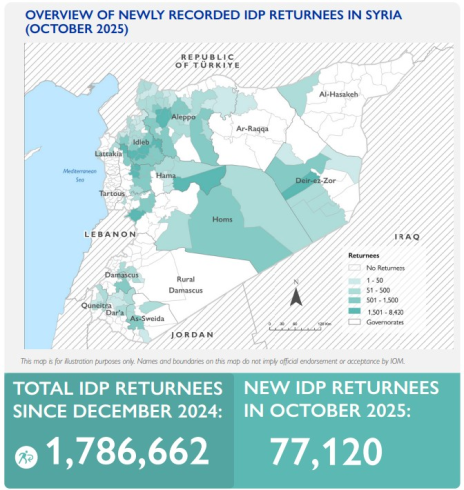
2.1.15 As of 31 October 2025, according to the IOM, 782,075 people have returned to Syria from abroad since December 2024. Of this figure, 710,605 returned to their place of origin while 71,470 travelled to a different location on return to Syria. An additional 1,786,662 internally displaced persons (IDPs) have returned to their area of origin since December 2024, of which 49% were male and 51% female. Based on the IOM data, the governorates that have had the highest combined numbers of both IDP and abroad returnees are Aleppo (~615,828), Idleb (~552,009), Hama (~368,044), Homs (~308,485) and Rural Damascus (~255,538). Transportation assistance to various governorates across Syria provided by the UNHCR is available free of charge to returnees arriving via Bab Al Hawa and Al-Salama border crossing with Turkey and the Joussieh border crossed with Lebanon (see Returnees and Assistance on return).
2.1.16 In government-controlled areas of Syria, there are generally no restrictions or official permits required to reside in different governorates. Kurdish people, like other Syrian nationals, are able to live in these areas without limitations. A person can rent or own property freely, though purchasing real estate requires prior approval to ensure that the person is not subject to legal, security, or financial restrictions that would prevent the purchase from occurring. Approval is typically obtained within about 15 days. Civil records are usually not updated following relocation unless legally required - such as in the case of marriage, when a wife’s records are transferred to her husband’s. New places of residence can be updated with the Civil Affairs Department when a person applies for a new identity card (See Residency requirements).
2.1.17 Areas under control of the SDF require residence permits and registration with local neighbourhood councils to access essential services. Those from outside SDF areas can relocate there but they must have a local sponsor, preferably a Kurdish resident, to vouch for them. This sponsorship system has faced criticism, though the SDF defends it as a security measure to prevent Daesh affiliates from settling in their territories (See Residency requirements).
2.1.18 While religious, ethnic, and sectarian groups tend to gather in specific neighbourhoods due to cultural similarities and historical geographic distribution, there are no legal barriers based on a person’s place of origin, religion, ethnicity, family ties, or real or perceived political opinion that affect their ability to reside or access employment, education and healthcare in different areas of Syria. However, these factors, alongside the most up to date information regarding the security situation, must be taken into account when considering areas of internal relocation (see Access to employment, education and healthcare, Individual characteristics and Sectarian and ethnic distribution).
2.1.19 There is extremely limited information regarding the situation for stateless Kurds. The UNHCR and the DIS both report that stateless Kurds can re-enter Syria provided that they have some form of proof that they previously resided there (for example a document issued by their local district mukhtar). However, CPIT was not able to find any further information in the sources consulted (see Entry requirements and documentation and Bibliography).
2.1.20 For further guidance on internal relocation and factors to consider, see the Asylum Instruction on Assessing Credibility and Refugee Status.
Country information
About the country information
This section contains publicly available or disclosable country of origin information (COI) which has been gathered, collated and analysed in line with the research methodology. It provides the evidence base for the assessment which, as stated in the About the assessment, is the guide to the current objective conditions.
The structure and content follow a terms of reference which sets out the general and specific topics relevant to the scope of this note.
This document is intended to be comprehensive but not exhaustive. If a particular event, person or organisation is not mentioned this does not mean that the event did or did not take place or that the person or organisation does or does not exist.
The COI included was published or made publicly available on or before 15 December 2025. Any event taking place or report published after this date will not be included.
Syrian Pound (SYP) to British pound (GBP) currency conversions throughout this note have been based on the exchange rate of 1000 SYP = 0.06 GBP (accurate as of 11 November 2025). CPIT used xe.com for these conversions.
Decision makers must use relevant COI as the evidential basis for decisions.
3. Returnees
NOTE: The maps in this section are not intended to reflect the UK Government’s views of any boundaries.
3.1 Returnees from outside of Syria
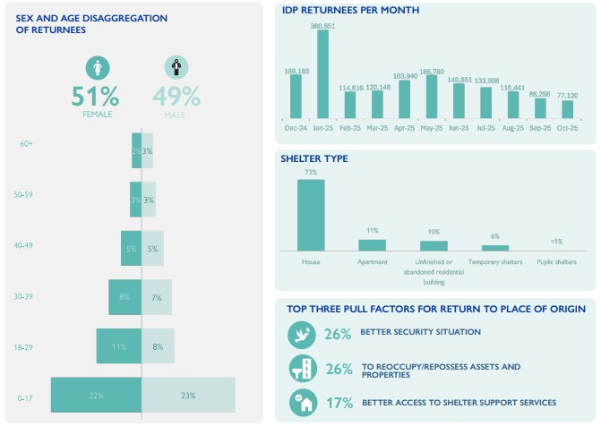
3.1.1 On 10 November 2025, the International Organization for Migration (IOM) published a report entitled ‘Syrian Arab Republic – Population Mobility and Baseline Assessment – Round 9’ (the November IOM report). The report ‘presents data from 1 to 31 October 2025, collected by 373 field enumerators and 36,369 Key Informants (KIs, 69% men, 31% women) across 10,090 locations’[footnote 1] and contained data regarding the number of returnees in Syria, both internally and from abroad, as of 31 October 2025. The report published the following infographics[footnote 2]:
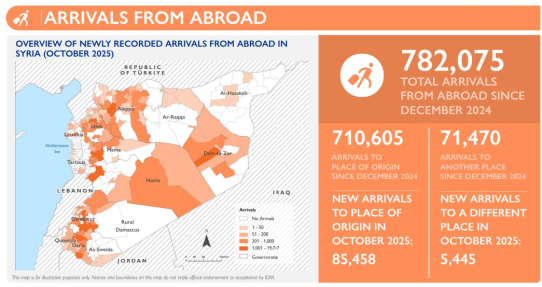
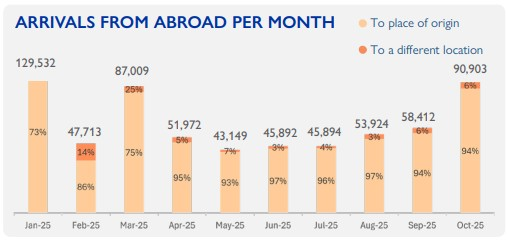
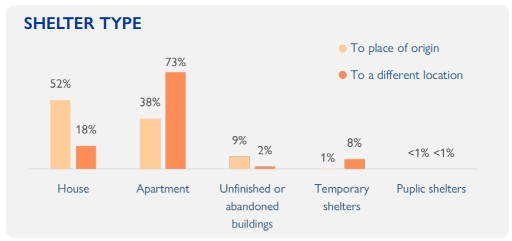
3.1.2 The same source stated:
‘During October 2025, a total of 90,903 individuals were recorded as new arrivals from abroad. The majority (94%) returned to their areas of origin, while a smaller share (6%) settled in different locations. Rural Damascus (51%), Aleppo (15%), and Homs (9%) Governorates received the highest shares of arrivals from abroad during this period.
‘In Homs, arrivals from abroad were significant in October, with [Key Informants] KIs attributing this to an increasingly stable security situation, and movements related to family reunification. Despite increased arrivals and return movements, limited economic opportunities and high living costs continue to threaten sustainable reintegration. KIs noted that housing remains unaffordable, forcing many returnees to live in damaged or rented accommodation.
‘… [I]ndividuals who returned to their original locations were omparatively more likely to have departed from European Union countries (3%) compared to those who settled in areas other than their place of origin (<1%).
‘According to KIs, the perception of improved security, greater access to livelihood and employment opportunities, and the availability of suitable shelter in their selected destinations continued to serve as the primary reasons individuals opted to resettle outside their areas of origin.’[footnote 3]
3.2 Internally displaced persons (IDPs) returnees
3.2.1 The November IOM report published the following infographics[footnote 4]:
3.2.2 The same source additionally stated:
‘During October 2025, 77,120 IDPs have returned to their areas of origin, bringing the number of IDP returnees since December 2024 to 1.8 million, of which 45 per cent are children. For the sixth consecutive month, the rate of IDP returns has continued to decrease, with 77,120 IDP returns recorded in October 2025, compared to 86,256 in the previous round (September 2025).
‘Aleppo and Idleb continue to host the largest displacement sites in the country, with the majority of IDPs originating from within the same governorates. The majority of IDP returnees were reported to have departed from Idleb (64%) and Aleppo (25%) Governorates. At the same time, Idleb (35%) remained the primary destination for IDP returnees, followed by Hama (23%) and Aleppo (21%).’[footnote 5]
3.3 Governorates of return
3.3.1 The November IOM report published the following infographic which shows the breakdown of the populations across the governorates in Syria[footnote 6]:
| Governorate | Total Population | % of IDPs | % of IDP returnees | % of Arrivals from abroad | % of Residents |
|---|---|---|---|---|---|
| Aleppo | 5,598,440 | 24% | 8% | 3% | 65% |
| Al-Hasakeh | 1,346,817 | 24% | 2 % | 76% | |
| Ar-Raqqa | 869,255 | 21% | 2% | 2% | 75% |
| As-Sweida | 480,581 | 22% | 5% | 1% | 72% |
| Damascus | 1,887,173 | 31% | 3% | 2% | 64% |
| Dar’a | 1,348,646 | 5% | 1% | 6% | 88% |
| Deir-ez-Zor | 1,356,851 | 2% | 6% | 2% | 90% |
| Hama | 1,937,074 | 6% | 16% | 3% | 75% |
| Homs | 1,542,427 | 8% | 11% | 9% | 72% |
| Idleb | 2,628,615 | 38% | 18% | 3% | 41% |
| Lattakia | 1,441,764 | 10% | 1% | 1% | 88% |
| Quneitra | 117,762 | 6% | 2% | 2% | 90% |
| Rural Damascus | 5,110,762 | 39% | 3% | 2% | 56% |
| Tartous | 1,260,720 | 4% | 1% | <1% | 95% |
| Total | 26,926,887 | 22% | 7% | 3% | 68% |
3.3.2 Using the data in the above infographic, CPIT created the below table which shows the governorates with the highest numbers of IDP returnees and returnees from abroad. Please note that these figures are derived from population percentages and may not align precisely with the total figures presented in subsections 4.1 and 4.2. Furthermore, the total number of arrivals from abroad in Tartous Governorate could not be calculated, as the reported value is indicated as less than 1% of the population in that governorate.
| Governorate | IDP Returnees | Arrivals from abroad | Combined total |
|---|---|---|---|
| Aleppo | 447,875 | 167,953 | 615,828 |
| Idleb | 473,151 | 78,858 | 552,009 |
| Hama | 309,932 | 58,112 | 368,044 |
| Homs | 169,667 | 138,818 | 308,485 |
| Rural Damascus | 153,323 | 102,215 | 255,538 |
| Deir-ez-Zor | 81,411 | 27,137 | 108,548 |
| Dar’a | 13,486 | 80,919 | 94,405 |
| Damascus | 56,615 | 37,743 | 94,358 |
| Ar-Raqqa | 17,385 | 17,385 | 34,770 |
| Lattakia | 14,418 | 14,418 | 28,836 |
| As-Sweida | 24,029 | 4,806 | 28,835 |
| Al-Hasakeh | 0 | 26,936 | 26,936 |
| Tartous | 12,607 | 0 | 12,607 |
| Quneitra | 2,355 | 2,355 | 4,710 |
4. Freedom of movement
4.1 Legal rights
4.1.1 Article 13.3 of Syria’s constitutional declaration, adopted on 13 March 2025 and covering a 5-year transitional period[footnote 7] states: ‘The citizen has the freedom of movement, and the citizen may not be deported from his homeland or prevented from returning.’[footnote 8]
4.1.2 In October 2025, CPIT requested information from the Syria Justice and Accountability Centre (SJAC), a Syrian human rights organisation[footnote 9], regarding freedom of movement in Syria and received a response in November 2025 (see Annex A). In response to the question ‘Are there any specific laws or regulations that restrict internal movement or relocation within Syria?’, SJAC stated ‘In areas controlled by the Syrian government, there are no laws or regulations that generally prohibit movement or travel within Syria.’[footnote 10]
4.1.3 In October 2025, CPIT requested information from UN High Commissioner for Refugees (UNHCR), regarding freedom of movement in Syria and received a response in November 2025. The response contained information provided by UNHCR and various other sources and stated: ‘There are no laws or regulations that restrict movement or internal relocation. Article 13(3) of the Constitutional Declaration explicitly guarantees citizens the right to freedom of movement.’[footnote 11]
4.2 In country movement
4.2.1 In June 2025, the Danish Immigration Service (DIS) published a report entitled ‘Syria: Security situation’ (The June 2025 DIS report). The report, covering the situation between 1 January 2025 and 31 May 2025, is ‘… primarily based on written sources, supplemented with information gathered via online interviews with two sources with in-depth knowledge of the situation in Syria: the Syrian Observatory for Human Rights (SOHR) and a Syrian journalist.’[footnote 12] The report stated:
‘Freedom of movement in Syria has generally improved since the fall of the former government. Civilians are now able to travel between governorates and within major cities, such as Damascus, Homs, and Aleppo, as well as in the cities in Rural Damascus without facing significant restrictions. Fixed checkpoints that previously impeded travel have largely disappeared from urban areas, with remaining checkpoints mainly situated along intercity highways and in considerably lower numbers than before. The level of scrutiny at these checkpoints has also decreased, and the risk of arbitrary arrests has been significantly reduced.
‘… The new authorities appear to actively ensure unobstructed movement on major roads to avoid negative publicity. Nevertheless, a degree of caution still governs people’s travel patterns, particularly after dark. People generally do not have anxieties about travelling during the daytime across most governorates; however, many civilians avoid nighttime travel due to persistent security concerns.’[footnote 13]
4.2.2 The same source further stated:
‘Despite the reduction in formal obstacles, the continued presence of checkpoints and military personnel manning them remains a source of irritation for many Syrians who perceive them as restrictions on their freedom of movement. Although civilians sometimes lodge complaints about mistreatment, responses from authorities are inconsistent.
‘… In north-eastern Syria, east of the Euphrates River, freedom of movement remains largely unchanged; however, the cessation of Turkish bombardments has alleviated some of the fear associated with traveling in the region, for instance moving between cities such as Hasakah and surrounding rural areas, including towns near the Turkish border like al-Malikiyah, as well as between Hasakah and Deir ez-Zor.
‘On smaller roads, security risks persist due to the presence of extremist groups who sometimes harass travellers at checkpoints. According to SOHR, although such actors are not authorised to operate independently and require orders from higher authorities, incidents of harassment remain widespread, and the authorities are allegedly aware of their prevalence.’[footnote 14]
4.2.3 In July 2025, the European Union Agency for Asylum (EUAA) published an updated iteration of its report entitled ‘Syria – Country Focus’ (the July 2025 EUAA report). The report, citing various sources, stated:
‘In an interview [on 11 June 2025] with EUAA, SJAC noted that it has not recorded violations regarding the freedom of movement in the country in general, in Damascus city or its suburbs.
‘… In a May 2025 report, the Norwegian Refugee Council (NRC) noted that across all governorates, personal security concerns persist, with reports of theft, harassment, kidnapping, and revenge killings. [Note: The source did not provide any additional detail or information regarding these reports of theft and mistreatment[footnote 15]]
‘… According to an IOM [International Organization for Migration] report [published in May 2025], freedom of movement was largely unrestricted across locations of return in all governorates of Syria, with 83% of key informants (KIs) reporting no significant limitations. However, despite this, most KIs noted incidents over the past 30 days, including petty crime (76%), HLP [Housing, Land, and Property] disputes (50%), and attacks involving non-firearm weapons (45%). These incidents were most frequently reported in the districts of Aleppo, Idlib, and Hama within the respective governorates. [Note: the sample size of the IOM report was made up of ‘3,492 key informants (KIs) across 1,100 communities in all 14 governorates Syria.’[footnote 16].’[footnote 17]
4.2.4 On 6 August 2025, the IOM published a report entitled ‘Syrian Arab Republic – Communities of Return Index – Round 2’. The report ‘… presents findings based on data collected between 2 to 28 June 2025, through a network of 302 field enumerators and 11,256 key informants (KIs) across 3,683 locations in all 14 governorates in Syria.’[footnote 18] The report stated:
‘Freedom of movement was largely unrestricted across locations, with KIs in 86 per cent of communities reporting no significant restrictions. Despite minimal reported restrictions to free movement across most governorates, the majority of KIs in Al-Hasakeh (96%) and Ar-Raqqa (92%) reported the presence of some restrictions to free movement, largely attributed to a lack of identification documentation, the presence of security checkpoints, alongside fears of conscription. Where restrictions were reported, incidents such as attacks involving non-firearm weapons (49%), Housing, Land, and Property (HLP) disputes (48%), and attacks involving firearm weapons (18%) were also reported in the previous 30 days.
‘Consistent with the previous round, KIs reported that residents in their communities generally feel safer during the day, with KIs in 98 per cent of assessed locations reporting daytime safety, compared to 78 per cent at night.’[footnote 19]
4.2.5 In November 2025, SJAC stated ‘In Suwayda, however, the Supreme Legal Committee has imposed conditions for leaving Suwayda province, specifically for areas controlled by the current government and in areas controlled by the Autonomous Administration of the Northeast.’[footnote 20] At the time of writing it is unclear whether the conditions imposed by the Supreme Legal Committee are temporary or permanent.
4.2.6 In November 2025, in correspondence with CPIT, UNHCR stated:
‘Freedom of movement may … be restricted by security measures or sporadic, localized violence, such as along the Damascus-Suweida route or near dividing lines between areas controlled by the Transitional Government and the Democratic Autonomous Administration of North and East Syria (DAANES). Movement is further constrained by checkpoints in areas under Israeli military presence. According to the Syrian Network for Human Rights (SNHR), Israeli forces in southern Syria have established temporary military checkpoints and conducted inspections of residents and passing vehicles.’[footnote 21]
4.2.7 The Logistics Cluster (LC), part of the Cluster system that was established by the Inter Agency Standing Committee (IASC) and led globally by the World Food Programme (WFP), coordinates humanitarian logistics during emergencies or in response to crises to address shared challenges among aid organizations[footnote 22]. The LC Logistics Information Exchange (LogIE) allows ‘… users to share relevant logistics information through an easy-to-use interface. The data, after being processed, is displayed in a multi-layer map, combining different layers of information. The tool facilitates the display and analysis of both the logistics and geographical information in a single map and users can customize the selection of layers according to their specific needs.’[footnote 23]
4.2.8 Among other interactive maps, LC provides live updates on physical access constraints across Syria, including information on the status of roads, airports, border crossings and bridges. The below map and key were produced by CPIT on 29 October 2025 using the LC LogIE tool[footnote 24]:
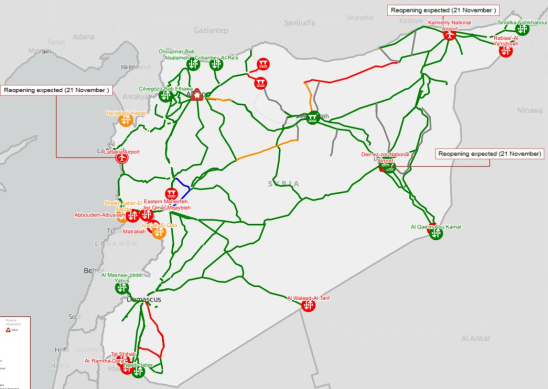
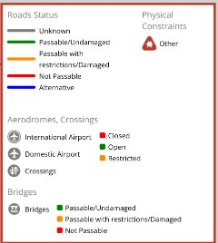
4.2.9 The above map indicates that at the time of writing most of the major roads across Syria are listed as being passable/undamaged. Additionally, the majority of border crossings between Syria and surrounding countries (Turkey, Lebanon, Jordan and Iraq) are listed as either ‘Open’ or ‘Restricted’ (the notes on the ‘Restricted’ border crossings state that they are open for pedestrian/passenger traffic but remain closed for commercial trucks/cargo). It should be noted that Damascus airport, which is not shown on the above map, reopened in January 2025.[footnote 25] See LogIE - Syria – Physical Access Constraints for the most up to date map.
4.2.10 In December 2025, the DIS published a report entitled ‘Syria: Security Situation, Return and Documents’ (The December 2025 DIS report). The report is based on ‘… written sources, as well as data collected through online and in-person meetings with interlocutors in Europe, Damascus (Syria), and Beirut (Lebanon).’[footnote 26] The report stated:
‘Movement within Syria has become easier than under the former government, and travel between major cities such as Damascus, Aleppo, Raqqa, and Hasakah is generally possible.
‘Major roads, including the M5 and M6 highways connecting Damascus with Homs and the coastal region, are open, and daytime travel on these routes is assessed by a consulted international security organisation as safe. Several national travel agencies now offer trips from Damascus to other parts of the country, including the coast. Returnees arriving in Damascus can usually travel to other government-controlled areas by private car or bus without difficulty. A consulted international organisation was not aware of any major restrictions on freedom of movement for returnees. Reportedly, most returnees did not experience significant safety or security concerns when travelling within the country.
‘However, isolated unforeseen incidents have occurred on certain roads. One such example was the attack on civilian vehicles by armed Bedouin groups along the Damascus-al-Suweida road amid broader sectarian and tribal tensions in summer 2025. Parts of the route remain influenced by non-state armed groups with a record of roadside attacks. As of September 2025, however, humanitarian and international organisations continued to access Suweida and Daraa without restriction, and local authorities remained cooperative towards aid efforts.
‘Movement along routes connecting Damascus with Daraa, Suweida, and Homs remains unsafe after dark, and night travel within the capital itself is generally discouraged due to remaining criminal and security risks.
‘… In the northeast, travel between Kurdish-administered areas and government-controlled territory is feasible, and civilians can typically cross inter-area checkpoints without major impediment, except when there is road closure due to security incidents.
‘One source described movement in the country as being affected by informal restrictions and arbitrary decisions from local security actors, however, the source did not specify what these restrictions or decisions entailed.’[footnote 27]
4.3 Checkpoints – locations, procedures, required documents and treatment
4.3.1 The June 2025 DIS report stated:
‘Reports of extortion at checkpoints, once widespread, are now rare and considered exceptions rather than the norm. Under the former government, extortion at checkpoints was particularly rampant. For instance, on routes between Damascus and [Syrian Democratic Forces] SDF-controlled areas, travellers were often stopped, forced to pay bribes, and questioned about their sectarian affiliations. This practice continued for two to three months after the fall of the previous government during which time travellers were also questioned about their sectarian background, including whether they were Alawites.’[footnote 28]
4.3.2 The July 2025 EUAA report stated:
‘At checkpoints, security forces typically inspect individuals’ IDs and check for the possession of weapons.
‘… Reports of extortion at checkpoints have become rare and mostly attributed to armed groups nominally affiliated with the state, such as [Syrian National Army] SNA factions in Afrin. Extortion has reportedly been largely eliminated at most checkpoints between SDF and government-controlled areas. However, some incidents have been reported, such as at an SDF checkpoint in the al-Tabqa area (Raqqa governorate), where passengers were allegedly charged an “exit fee” of 2,000 Syrian pounds [£0.12 GBP].’[footnote 29]
4.3.3 In August 2025, Syrians for Truth and Justice (STJ), an ‘independent, non-profit, impartial, non-governmental human rights organization’[footnote 30], published a report entitled ‘“Living Between Hope and Fear”: Testimonies Documenting the Persistence of Enforced Disappearance in Post-Assad Syria’, based on ‘eleven in-depth interviews online’.[footnote 31] The report included the testimonies of family members of 3 individuals who were arrested and then disappeared at checkpoints in Latakia and rural Tartous in March and April 2025. According to the testimonies, 2 of the individuals were arrested by the Turkey-backed Hamzat division, while the responsible actor for the arrest of the third individual was not identified.[footnote 32] The report noted that it does not purport to capture all cases of enforced disappearance since December 2024, but highlighted specific incidents, ‘particularly those committed or facilitated by the General Security Directorate and forces affiliated with the transitional government.’[footnote 33]
4.3.4 In November 2025, when asked if there are any impediments to internal movement and travel within Syria, SJAC stated:
‘In areas controlled by the Syrian government, there are road security forces that have set up checkpoints at the entrances and exits of major cities. These are there to monitor the entry and exit of vehicles and cars, and typically they do not interfere or request documents – except in suspicious cases. In suspicious cases, documents for the vehicle and/or passenger IDs are requested.
‘To and from Suwayda, there are military obstacles, including checkpoints, and passing through “dangerous areas.”
‘There are also mobile checkpoints in areas controlled by the Syrian Democratic Forces that impede movement to and from the Jazira region. These checkpoints do not have fixed locations but appear and disappear suddenly. There are also checkpoints for inspection at crossings in between cities, including Raqqa, Hasakeh, and Deir ez-Zor. At these checkpoints, mobile devices are sometimes inspected.
‘Civilians inside Aleppo city and those leaving SDF-controlled areas towards government-controlled areas are subject to security checks or scrutiny during periods of tension, whereas they are not subject to this under normal circumstances.’[footnote 34]
4.3.5 In November 2025, in correspondence with CPIT, UNHCR stated:
‘The Ministry of Defence operates checkpoints between governorates, while the Ministry of Interior manages those within cities. Although movement is not formally restricted, individuals and vehicles may undergo additional checks depending on the security situation in a given area. Checkpoints may be permanent or temporarily established in response to emerging security threats or ongoing security operations.
‘In areas under de facto control of the [Democratic Autonomous Administration of North and East Syria] DAANES, checkpoints are maintained by the SDF and the internal security forces (Asayish).’[footnote 35]
4.3.6 In November 2025, when asked what is required to pass through security checkpoints, SJAC stated:
‘In areas controlled by the Syrian government, most checkpoints do not require identity documents when passing through. However, in cases of doubt, Syrian personal IDs, local council IDs, or IDs from the former Salvation Government in Idlib are requested, as well as vehicle registration papers or purchase contracts. For buses belonging to well-known companies that depart from the garage, there is a document that lists the names and numbers of the passengers on the trip, the bus number, name of the bus driver and assistant, the trip number, and a crossing stamp on the document.
‘There are also some restrictions on those leaving Suwayda, as they must notify the National Guard security office in Suwayda of their reason for leaving the province for government-controlled areas. They must also provide supporting documents, which include proof of a medical appointment or a family visit.
‘In areas controlled by the SDF, an ID card is required for individuals while a family card is required if children are present. For those who do not have an ID or family card, an individual civil registry record is required.’[footnote 36]
4.3.7 In November 2025, when asked what is required to pass through security checkpoints, UNHCR stated:
‘Depending on the security situation in a given area, additional restrictions may be imposed at checkpoints, or mobile checkpoints may be established. Individuals are generally required to present an identification document. In practice, any photo ID, such as a work or student card, may be accepted at the discretion of the verifying officer.
‘Former military personnel are typically required to present a “reconciliation card” in the absence of a civilian ID card. For those without a Syrian ID card but who can provide proof of having applied for one, passage should, in principle, not pose a problem.
‘Note: Since the fall of the former government, the issuance of national identity cards has been suspended pending the introduction of a new version in 2026. In the meantime, individuals without a valid ID card can apply for an individual civil extract as a temporary substitute. This document can be presented at checkpoints.
‘… Individuals should carry personal identification documents, such as a national ID card, an individual civil extract, driving license, passport or family booklet, when travelling, as these may be requested at checkpoints. Without valid identification, the individual may be held at the checkpoint for verification and prevented from continuing their journey.’[footnote 37]
4.3.9 In November 2025, when asked if civil documentation is required to travel within Syria and if people could be prevented from travelling if they don’t have any documentation, SJAC stated:
‘In areas controlled by the Syrian government, personal identification documents or proof of identity is typically required when traveling between cities. When traveling by public transportation, identification is recorded. If a person is not carrying their identity documents during an inspection, they will be investigated at that checkpoint. If traveling in a private car, however, personal identification is not usually requested unless suspicion arises.
‘… [These investigations usually] entails questioning to verify identity and possible relation with the former government. If you are not carrying an ID (especially for males,) it’s a ground of suspicion that you were part of the former government’s security forces. In some cases, people were held at checkpoints until a family member texted them a photo of their ID card.
‘Yes, they [people without documentation] could be prevented from travelling. However, it’s quite arbitrary and no systematic practice is recorded. It’s up to the checkpoint or the armed group in charge of the area.
‘In some areas, it appears that demands for personal identification are more frequent for certain demographics, specifically young women who do not wear the hijab or younger individuals whose appearance is considered inappropriate (which can include being clean shaven, wearing immodest clothing, etc).
‘In areas controlled by the SDF, identities of individuals traveling to areas controlled by the Syrian government are checked.’[footnote 38]
4.3.9 In November 2025, when asked what generally occurs when an individual is stopped at a checkpoint, SJAC stated:
‘In areas controlled by the Syrian government, individuals are questioned about where they are coming from and where they are going to. Sometimes, their personal ID and vehicle documents are requested and inspected. In some coastal areas, it has been reported that individuals are also asked about their sect.
‘In areas controlled by the SDF, identity documents are also checked. However, individuals may also be taken to a special room for inspection whether they are male or female, with female personnel inspecting women.
‘There is no clear reasoning for the inspection, but the reason could be simple suspicion or random selection (arbitrary and more based on the mood of the security guards.) The inspection is a form of physical search for belongings, clothes, personal items, including patting the body to ensure nothing is hidden within clothes.’[footnote 39]
4.3.10 SJAC additionally stated:
‘Sometimes passengers are delayed at checkpoints for longer periods of time while their vehicle and belongings are searched. In some cases, passengers are removed from the vehicle and have been mistreated for carrying a settlement document, sitting next to a woman, or are wearing immodest clothing. This happens on the Syrian government checkpoints in areas of sectarian tension.
‘Mistreatments include lengthy questioning at the checkpoint, usually involves verbal slurs and abusive language, threats including threats of arrest or harm. Individuals who responded to verbal slurs were detained by the government forces.’[footnote 40]
4.3.11 Regarding the settlement document mentioned above, SJAC stated:
‘All members of the military or intelligence of the former regime were asked to hand over their old miliary ID cards and go through a “settlement agreement.” They would be issued a “Settlement verification document” that states their identity and confirms that they went through a background check and not wanted by the new authorities. However, the paper itself is a sign that someone was indeed a member of the former government’s military of security forces and is used as a base of discrimination, harassment, verbal abuses and some cases physical abuses at the checkpoints.’[footnote 41]
4.3.12 In November 2025, in correspondence with CPIT, UNHCR stated: ‘Reports document incidents of arbitrary arrests by government forces and the SDF/Asayish, which may occur at checkpoints. … In areas under de facto control of the SDF, arbitrary arrests occur at checkpoints, including for the purpose of forced recruitment into the “self-defence service”. Incidents involving the use of physical violence, in some cases resulting in fatalities, have also been documented.’[footnote 42]
4.3.13 See the CPIN Syria: Kurds and Kurdish Areas for information regarding conscription by the SDF.
4.3.14 The December 2025 DIS report stated:
‘The number of checkpoints on the major roads has decreased significantly since the fall of the former government. Unlike under Assad’s rule, the General Security Forces no longer routinely check ID documents, vehicles, or conduct searches. Lack of manpower, as well as command gaps within the government structure, may, however, cause occasional incidents at checkpoints.
‘According to Enab Baladi, the Ministry of Interior has dismantled most fixed checkpoints across the coastal region, including in key towns and villages in Latakia and Tartus governorates. Only a limited number of checkpoints reportedly remain on the outskirts of Baniyas and Jableh, mainly on the outskirts of those cities. However, ad hoc inspections may occur in response to emerging security concerns.’[footnote 43]
4.4 Women
4.4.1 The June 2025 DIS report stated:
‘Women’s freedom of movement, i.e. travelling from one city to another without being stopped or being subjected to harassment, also varies depending on the area and the checkpoint in question. Ad hoc gender segregation has been observed in public transportation, preventing unrelated men and women from sitting next to each other. This practice, however, is not formalised or consistent, and it is not clear whether it results from local initiatives or central directives.’[footnote 44]
4.4.2 In January 2025, Watan, an Arab American news media corporation[footnote 45], published an article entitled ‘Damascus to Enforce Gender Segregation on Public and Private Buses’ which stated:
‘A senior official at the General Company for Internal Transport in Damascus, “Zajal Transport,” revealed plans to implement gender segregation in public and private internal transport buses in the Syrian capital within a few days.
‘The newly appointed official stated, “We are actively working on this issue and will implement it on the ground within days, following the success of the trial we conducted in Idlib, Aleppo, Hama, and Homs, where it was highly appreciated by the residents.”
‘Regarding the new boarding and alighting procedures for passengers, the official explained, “We have extensive and proven experience in Idlib province. The segregation process will be applied to all forms of public and private collective transport, including service vehicles. Men will be prohibited from sitting next to women, with the general rule being that men sit in the front and women in the back.”’[footnote 46]
4.4.3 On 22 April 2025, Jinha, a women’s news agency[footnote 47], published an article entitled ‘Taliban’s practice in Damascus: Women banned from sitting at front of buses’ which stated:
‘An unofficial decision has sparked anger in Syria’s capital Damascus. People taking public transport buses see notices saying that women and men cannot sit next to each other and front seats are reserved for men. The notices have sparked discussion on social media platforms while Syria’s interim government led by Hay’at Tahrir al-Sham (HTS) has not issued a statement about the notices.
‘Some social media users criticize the notices, saying, “This practice reinforces gender inequality and gender bias.”
‘“This decision is a step backwards and does not reflect any progress,” said Reem Al-Ahmad, one woman in Damascus. “Problems faced by women such as harassment, theft and immoral behavior can not be stopped through gender discrimination but through deterrent laws and education.”’[footnote 48]
4.4.4 In June 2025, France 24 published an article entitled ‘Between freedom and restrictions, Syrians navigate new reality’ which stated:
‘Since longtime ruler Bashar al-Assad was overthrown on December 8 [2024], Syria’s new Islamist authorities have not officially imposed restrictions on public behaviour, but some incidents – mostly described as acts by “individual” perpetrators – have sparked worry about personal freedoms.
‘… Videos showing female university students wearing a face-covering niqab and rumours claiming the prohibition of gender-mixing in buses have caused heavy controversy.
‘AFP reporters did not observe gender segregation on buses at a major station in Damascus.
‘However, a traveller from Damascus to the north of the country said that a driver had asked her to sit far from her male friend in case the bus was stopped at a security checkpoint.’[footnote 49]
4.4.5 In October 2025, the UN Population Fund (UNFPA) published a report on gender-based violence (GBV) entitled ‘Voices from Syria 2025’. It was based on 53 focus group discussions (FGDs) conducted in January 2025 with a total of 424 ‘women and girls, wider community experts, and GBV experts’ [footnote 50] across the country. The report notes that the FGDs are a type of qualitative data and ‘are not designed to be statistically representative, but rather to surface lived experiences, signal emerging issues and contextualize broader trends.’[footnote 51] It should also be noted that, of the 424 focus group participants, 335 were internally displaced persons (IDPs), meaning that the information in the report is likely to skew towards reflecting the experiences of IDPs. The report stated:
‘Women and girls in Syria face extremely limited freedom of movement, which is linked directly to oppressive and discriminatory social norms, as well as ongoing and escalating insecurity … Many are prevented by husbands and fathers from leaving their homes, visiting with family and friends, going to a health clinic or going to school – while others do not leave their home, especially in the evening, out of fear for their safety … Restrictions on the movement and expression of women and girls are closely connected with gendered social norms related to shame, control and perceived “protection”… Restrictions on women’s and girls’ mobility have continued to increase, severely limiting their engagement in community life and their ability to access school, work and basic services. Restrictions were exerted and enforced through social and familial pressures, threats, physical violence and restraint, blame, judgement and social rejection …’[footnote 52]
4.4.6 The source did not define terms such as ‘extremely limited’ and ‘escalating insecurity’, nor did it provide sufficient information to support its claims that women’s mobility is worsening.
4.4.7 In November 2025, SJAC stated ‘Generally, there are no restrictions on a woman’s ability to travel. The security situation in some areas, however, discourages women from traveling alone or limiting their movement between cities. Fear is likely a dominant driver, especially in tense areas such as Suwayda, Aleppo, or when traveling between SDF and government-controlled areas.’[footnote 53]
4.4.8 The same source additionally stated that ‘The [procedures at] checkpoints also involved in the practice of getting women off the front seats (or a car of a bus) and forcing them to take the backseats. Couples traveling together needs to show some documents showing their relationship.’[footnote 54]
4.4.9 See Individual characteristics for a brief overview of the situation faced by women on return to Syria. For additional information see the CPIN Syria: Women.
4.5 Demographic groups and individual circumstances
4.5.1 In June 2025, Etana ‘an independent organisation authentically linked to the Syrian social fabric’[footnote 55], published a report entitled ‘Refugee Returns & Migration Dynamics after Assad’. The report, based on desk research, in-depth key informant interviews and multiple survey rounds (216 participants in total) between December 2024 and April 2025[footnote 56], stated:
‘Alawi, Christian, Druze and Ismaili participants recounted first-hand (or second-hand) experiences of abuse at checkpoints … A middle-aged female caterer from Tartous recounted stories of discrimination from neighbors and friends “especially at checkpoints where people are asked about their religion.
‘“If someone is Alawi, they are insulted or cursed. I have not personally encountered any such situation, however,” she said, adding tellingly, “because I haven’t been leaving the house lately […] due to the lack of security.”
‘While another Alawi participant, a 31-45-year-old teacher from rural Latakia, also described checkpoints as sites of discrimination and fear, she explained the many layers of discrimination at work: as an Alawi suspected of having pro-regime sympathies or affiliations and as a woman who, because of misogynistic, patriarchal and religious policies from interim authorities, felt she had “no value, except in the context of my own home” …’[footnote 57]
4.5.2 In November 2025, when asked for information about whether children or elderly people are subject to different treatment or restrictions when relocating internally, SJAC stated:
‘Children or the elderly do not face different restrictions when moving between cities. Broadly, they are treated leniently, and sometimes a family book or family statement proving kinship between elderly individuals and children traveling together is required.
‘In areas controlled by the SDF, some parents are afraid of letting their children travel alone due to ongoing concerns about forced recruitment, whether male or female.
‘In coastal areas, especially in places that have experienced security tensions, some parents are afraid to let their children move internally, especially boys. This is linked to previous acts of violence against men and young people in general.’[footnote 58]
4.5.3 When asked if there are any demographic groups that are generally unable to travel freely within Syria, SJAC stated:
‘There are no legal or official impediments to movement, but in situations of security tensions, certain demographic, ethnic, or sectarian groups are abused. For example, travel or movement of Kurds from their areas to the Syrian government area in Aleppo forces them to pass through the Turkish-based, Syrian National Army (SNA) areas, which have an abusive history with individuals of Kurdish ethnicity. Just recently, a Kurdish man was detained in Syria and sent to Turkey by the SNA with allegation of affiliation with SDF.
‘The Druze community faces similar issues. Passengers from Suwayda were attacked by the public or by extremist elements on the road between Suwayda and Damascus. The most recent incident had “unknowns” opening fire on a passenger bus, causing the death of two civilians and injuring several others.’[footnote 59]
4.5.4 In November 2025, in correspondence with CPIT, UNHCR stated:
‘Members of certain minority groups, including Alawites, Druze and Bedouins, may face heightened fears about travelling or relocating to specific areas, or even passing through checkpoints along the way. These concerns stem from recent incidents of violence in the Coastal Area (March 2025) and Suweida (July 2025), ongoing sectarian and ethnic tensions, distrust toward the transitional government, and perceptions among parts of society and the new authorities that members of minority communities were collectively affiliated with the former government.
‘Such fears are further compounded by the overall fragile and unpredictable security situation across Syria, where the new authorities are still in the process of establishing law and order amid reports of reprisal acts, sectarian-motivated violence, and criminality.
‘… Alawite women in the coastal and central areas reported feeling unsafe in public spaces, including as a result of reported abductions. …[I]ndividuals affiliated or perceived to have been affiliated with the former government, such as former members of the military, affiliated militias and the former security and intelligence agencies, may restrict their movements due to fears of potential risks linked to their past associations, including reprisal attacks. Such individuals typically hold either a military ID card issued by the former government or a “reconciliation card” (taswiya card), issued by the new authorities to those who surrendered themselves and their weapons following the fall of the former government. Both documents clearly identify them as members of the former government’s army or security/intelligence services.
‘… In areas under the de facto control of the Syrian Democratic Forces (SDF), men of military age often limit their movements to avoid arrest for mandatory “self-defence service”. Those who refuse to enlist face the risk of arrest, detention and forcible transfer to recruitment centres, particularly during raids and at checkpoints. Similarly, those who have defected from service risk arrest and detention and may also restrict their movements accordingly.’[footnote 60]
4.5.5 In November 2025, UNHCR additionally stated:
‘… [C]ertain demographic groups, such as Alawites, Druze, Kurds and Bedouins, may face restrictions due to security concerns and fear of violations. For example, Bedouins from Suweida Governorate generally avoid traveling to or within Druze-controlled areas, while individuals perceived as pro-government, including Druze, cannot safely enter Suweida. Kurds in or from areas under the de facto control of Syrian National Army (SNA) factions, such as Afrin (Aleppo Governorate), may limit their movements to avoid arrest and detention, including on account of their ethnicity or real or perceived affiliation with the DAANES/SDF. In conflict-affected areas, such restrictions and fears often apply to all sides. However, it is difficult to generalize about the security situation across Syria or to assess the extent of these violations, as conditions vary significantly, even within the same region.’[footnote 61]
5. Transport
5.1 Responsible government agencies
5.1.1 In an undated profile on Syria, the European Committee of the Regions (ECOR), a political assembly that represents local and regional authorities across the European Union[footnote 62], stated the following regarding what agencies are responsible for transport across Syria:
‘Central
‘The Ministry of Transport is the central government body responsible for transport.
‘Regional
‘The governorates have certain powers in relation to local transport, under the oversight of central government. Under the local administration law, districts and subdistricts exercise powers in the sphere of transport, under the oversight of governorate authorities.
‘Local
‘Under the local administration law, municipalities have certain powers in the sphere of transport, under the oversight of district and subdistrict authorities. The scope of these powers is unclear.’[footnote 63]
5.1.2 For more information see the Syrian Ministry of Transport website (in Arabic).
5.2 Infrastructure
NOTE: The maps in this subsection are not intended to reflect the UK Government’s views of any boundaries.
5.2.1 On 1 August 2022, UN Geospatial published the below map which shows the expressways, main roads and railroads across Syria [footnote 64]:
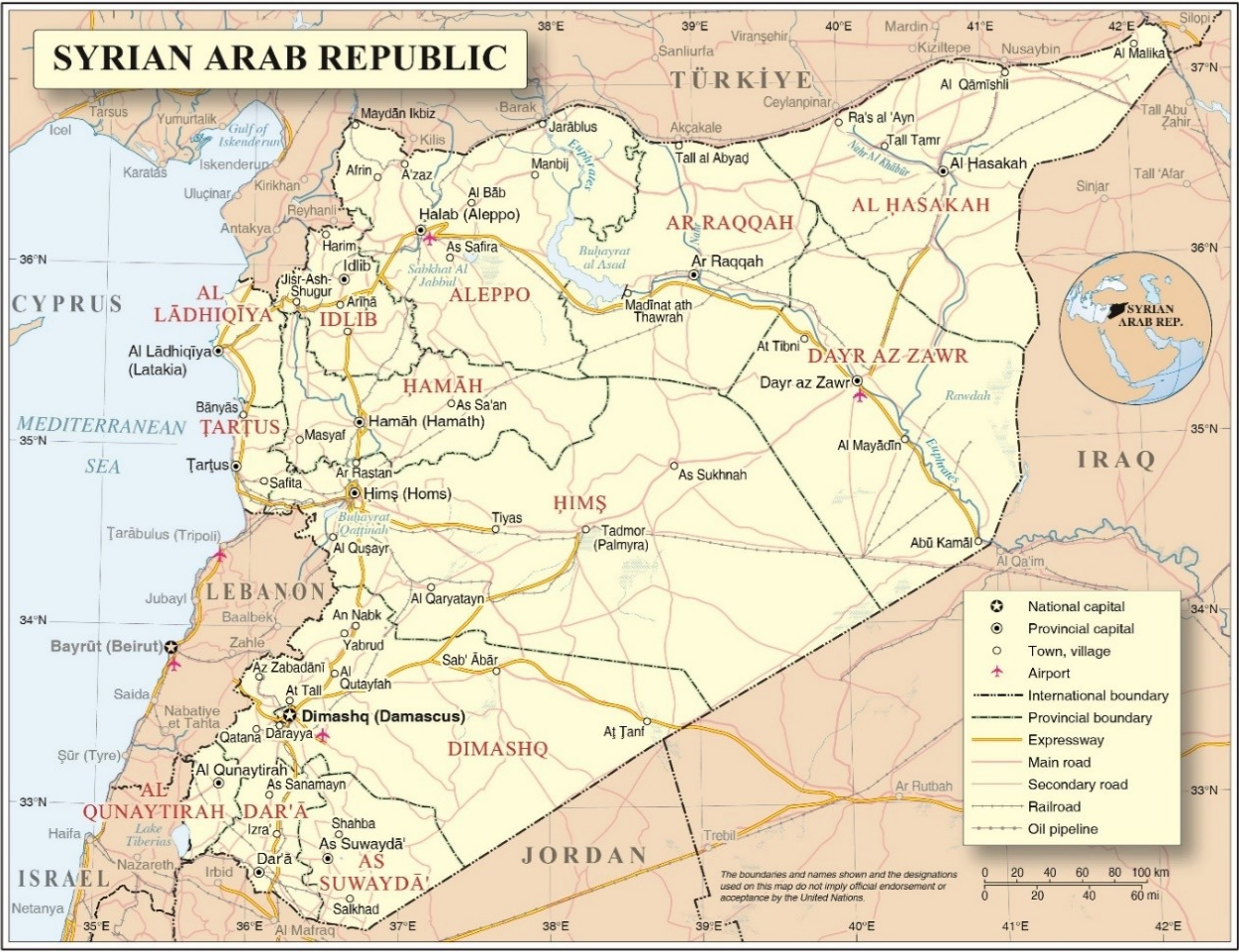
5.2.2 CPIT was unable to find any more recent maps displaying roads and railways within the sources consulted (see Bibliography).
5.2.3 On 10 October 2025, Daily News Egypt, an independent English language newspaper in Egypt[footnote 65], published a summary of an interview with the Syrian Minister of Transport, Yarob Badr. Responding to the question ‘How would you describe the condition of Syria’s transport networks when you assumed office?’, the article stated:
‘The reality was difficult. To give a clear example, the Syrian railway network extends about 2,500 kilometers, but only around 1,000 kilometers are currently usable. The remaining 1,500 kilometers are either heavily damaged or outside state control. So only 40% is in service, and even that is not at full efficiency.
‘As for the roads, Syria has about 50,000 kilometers of paved roads. Out of this, 9,252 kilometers constitute the central network linking governorates, production centers, seaports, and border crossings. This core network is under the authority of the Ministry of Transport, and we inherited it in a severely deteriorated state due to 15 years of chronic neglect in maintenance. Our top priority has therefore been to rehabilitate both roads and railways, restoring them to serviceable condition before moving toward expansion.’[footnote 66]
5.2.4 On 20 October 2025, Enab Baladi, an independent Syrian nonprofit media organisation[footnote 67], published an article entitled ‘Syrian Transport Minister: Railway rehabilitation requires 5.5 billion dollars’ which stated:
‘Syria needs about 5.5 billion US dollars in investment to repair and upgrade its railways to international standards, according to Transport Minister Yarub Badr.
‘Badr said that only 1,052 kilometers of Syria’s 2,800-kilometer railway network are currently in service, estimating that it will take three to five years for the country’s transport infrastructure to return to full operation.
‘… [T]he minister added that the current priority is fixing the corridor linking the phosphate mines to the export port in Tartus (a coastal governorate in western Syria) to bring it back online as soon as possible, in addition to reactivating the line between Latakia Port (western Syria) and the dry port in Aleppo (northern Syria).
‘… The General Establishment of Syrian Railways has set an emergency short-term plan for immediate, minimal repairs alongside the restart of parts of the network, as well as a five-year plan for comprehensive rehabilitation that could be accelerated by leasing heavy machinery instead of purchasing it, he said.’[footnote 68]
5.3 Methods and cost
5.3.1 In April 2025, Enab Baladi published an article entitled ‘Ministry of Transportation commits to reviewing minibus fares in al-Baramkeh station’ which stated:
‘The Ministry of Transportation issued decision number “108” on March 17 [2025] … determining public transport fares in Damascus governorate and its countryside based on the route length.
‘Minibus and bus drivers have imposed arbitrary prices on passengers, taking advantage of the chaos that followed the fall of the Assad regime.
‘Local residents previously reported to Enab Baladi that transportation costs in the Syrian capital increased by more than 200%. Before the regime’s fall, public transportation fares ranged from 1,000 to 5,000 Syrian pounds [0.06 to 0.34 GBP], due to fluctuating fuel prices.
‘… Abdul Jawad Kiyali, the public relations director at the Syrian Ministry of Transportation, previously stated that they are studying the fares for public transport (buses, minibuses) for all routes based on specific criteria, which will be adopted upon completion. … According to what Enab Baladi’s correspondent has observed in Damascus and its countryside, public transport fares vary starting from 2,000 Syrian pounds to 8,000 Syrian pounds [0.13 to 0.55 GBP], with prices determined by the drivers based on the route length before the official fares are issued by the Ministry of Transportation.’[footnote 69]
CPIT was unable to find a copy of the Ministry of Transportation issued decision number ‘108’ in the sources consulted (see Bibliography).
5.3.2 In April 2025, Enab Baladi published an article entitled ‘Syrian road trip uncovers life amid living hardships’ which stated: ‘Most Syrians use minibuses (a vehicle that accommodates between 10 to 12 passengers) to commute to their universities and workplaces, with some spending a third of their salaries on transportation …’[footnote 70]
5.3.3 In June 2025, Enab Baladi published an article entitled ‘Ride-hailing apps in Syria: Safer and cheaper’ which stated:
‘Despite the availability of public transportation and overall improvement in the minibus service in Damascus and its countryside after the Assad regime’s fall, citizens still scramble for a vacant seat in public transport.
‘Some citizens find themselves searching for safe transportation options that suit their income levels, amidst the declining regulation of public taxis and their rising fares, which has been addressed in recent years by emerging companies offering ride-hailing services through mobile apps.
‘Reliance on these applications has notably increased in Damascus and its countryside, as citizens have found in these means a middle ground between high transportation costs and the unorganized experience they face with public taxis.
‘Regarding fare pricing between areas, it is determined according to a dynamic pricing system that considers the distance traveled, estimated time, and peak hours.
‘The initial fare for the ride is determined before the passenger approves it, ensuring a minimum and maximum price limit that guarantees fairness for both parties.
‘Payments are often made in cash, given the limited electronic payment systems in Syria, but some companies are working to develop online gateways and digital wallet payment services when the appropriate legal and technical environment is available.
‘Many citizens now prefer to rely on ride-hailing apps instead of public taxis.’[footnote 71]
5.3.4 The June 2025 DIS report stated:
‘Challenges … persist with regard to transportation infrastructure and affordability. While bus connections between Damascus and other governorates are relatively functional, the availability of public transport between certain governorates remains limited; for instance, there are only three to four daily bus departures between rural areas near Hama and Hama city itself. Furthermore, the cost of public transportation remains high relative to ordinary Syrians’ purchasing power, even though the Syrian pound has recently appreciated.’[footnote 72]
5.3.5 In August 2025, Enab Baladi published an article entitled ‘After 13 Years of Suspension… The Aleppo - Hama Train Returns to Service’ which stated:
‘The Train Sit train group launched on 6 August [2025] the first trial journey of the train linking the cities of Aleppo and Hama, after it had been suspended for more than 13 years due to the war.
‘The head of the Train Sit group, Mohammad Hamza Abaram, told the Syrian Arab News Agency (SANA) that this journey is the “result of comprehensive maintenance operations that affected both the trains and the tracks,” considering it a “major achievement” following years of inactivity.
‘He noted that the ambitions do not stop at Hama Station, but include the full restoration of the railway network across Syria, with plans to link it to the Turkish railway network via Gaziantep.
‘The train, which covers the distance between Aleppo and Hama at speeds up to 160 km/h, is equipped with air-conditioning systems and service amenities, including an onboard refreshment area.
‘… On his part, the deputy head of the center in Aleppo, Mohammad Khair Abdul-Salam, told SANA that the Train Sit workshops have spent the past three months rehabilitating the halted trains, alongside repairing the electrical and mechanical infrastructure of the line, and preparing railway lines in several governorates.
‘Abdul-Salam stated that the Aleppo–Hama line is just the beginning, and the next step will be the operation of the Aleppo–Homs line, which will extend to Damascus and Latakia, with plans to connect the network to the eastern region and Turkey.’[footnote 73]
5.3.6 In November 2025, SJAC stated that ‘Public and private round transportation is available throughout Syria as public transportation companies and taxis exist. Public transportation prices between cities range from 100,000 to 250,000 Syrian pounds [6.88 to 17.21 GBP], depending on the distance. Taxis between cities range from 1 million to 2 million pounds [68.85 to 137.71 GBP], depending on the distance between cities.’[footnote 74]
5.3.7 In November 2025, in correspondence with CPIT, UNHCR stated that ‘Private cars, public transport, and passenger buses are commonly used for travel. The average cost of traveling by bus is estimated at 40,000 Syrian pounds (around 40 USD) per 100 kilometres, while car rentals are considerably more expensive, typically ranging from 100 to 500 USD, depending on the distance and vehicle type.’[footnote 75] Note: the Syrian pound to USD conversion used above by the UNHCR differs significantly from the exchange rate used by CPIT in this note, where 40,000 Syrian pounds equates to approximately 2.40 GBP.
5.3.8 Numbeo, a website which aims to provide ‘accurate and up-to-date information about the cost of living, quality of life, and various socio-economic factors across cities and countries worldwide’[footnote 76] lists transportation costs across different cities in Syria.
6. Procedures on return
6.1 Entry requirements and documentation
6.1.1 In April 2025, the UNHCR launched a website called Syria is Home which provides information on processes and services available to an individual on their return to Syria in the form of questions and answers. Regarding documentation and procedures on return, the UNHCR Syria is Home website stated:
‘Syrians returning to the country need to present valid identification documents, such as a Syrian national passport or identity card, for entry into Syria.
‘For those without identification documents but recorded in the Syrian civil registries, immigration officials at the borders have indicated that entry will still be permitted following a verification of identity through the Civil Affairs database that is accessible by Immigration Officials at the borders. Such individuals are provided with [a] civil record extract to be used for the entry.’[footnote 77]
6.1.2 Note: these civil record extracts can be used to pass through checkpoints within Syria, see paragraph 4.3.7 for more information.
6.1.3 The December 2025 DIS report stated:
‘Syrian authorities generally facilitate entry for returning Syrians. As of September 2025, they did not require returnees to present specific documents such as valid IDs or passports to enter the country, and they allowed Syrians to re-enter the country upon presentation of any document proving Syrian identity, including expired passports or ID cards. In the absence of formal documents, officials have also accepted alternative proofs of identity, such as photos of documents or papers issued by a local mukhtar (local district mayor).’[footnote 78]
6.1.4 Regarding children, the UNHCR Syria is Home website stated:
‘The interim authorities in Syria require that all children entering Syria have a birth certificate and are accompanied by a parent or legal guardian.
‘If your children were born outside Syria and have not been registered in Syrian records through diplomatic missions abroad or through civil affairs offices in Syria, they will need a birth certificate issued by the country of birth.
‘Birth notifications from medical institutions, such as hospitals, may exceptionally be accepted for unregistered children when entering Syria.’[footnote 79]
6.1.5 Regarding children, the December 2025 DIS report stated:
‘The Syrian authorities at the borders are particularly facilitative in cases involving children who have not been registered with the Syrian authorities. Such children are allowed to enter Syria if they can provide documentation proving their familial link to at least one parent with Syrian citizenship. For example, a birth notification from the hospital abroad where the child was born is considered sufficient documentation for entry into Syria, provided that the child is accompanied by his or her Syrian parent. Accepted foreign birth notifications include uncertified documents (i.e. without official stamps) issued by hospitals, midwives, or doctors. In some cases, a child may be allowed to enter the country without a birth notification, simply by presenting documents proving that the parents are married (e.g. a family booklet) or the parents’ Syrian citizenship (e.g. a copy of a passport).
‘Contrary to the above-mentioned information, SNHR stated that children without Syrian documents are permitted entry if they are accompanied by a father with valid Syrian documents; in such cases, foreign-issued documents confirming the parent-child relationship are accepted as sufficient proof for entry.’[footnote 80]
6.1.6 Regarding unregistered stateless Kurds, the UNHCR Syria is Home website stated: ‘Stateless individuals whose place of habitual residence is Syria can return to Syria. However, there is no clear framework regarding the rights of stateless persons in Syria.’[footnote 81]
6.1.7 The December 2025 DIS report stated: ‘Unregistered stateless Kurds, the so-called maktoumeen, may enter Syria if they can provide documentation proving that they are from Syria. This can, for instance, be done by presenting a statement from the mukhtar (local district mayor) of their area of origin confirming that the person in question has resided there before leaving Syria.’[footnote 82]
6.1.8 CPIT was unable to find any further additional information regarding the situation for stateless Kurds in the sources consulted (see Bibliography).
6.1.9 Regarding Palestinian refugees from Syria (PRS), the December 2025 DIS report stated: ‘Palestinian refugees from Syria (PRS) are generally permitted to re-enter Syria, and there are no reports of PRS being denied entry. Both [General Authority for Palestinian Arab Refugees] GAPAR-registered and unregistered PRS are usually allowed to enter, including those with expired or missing documents, as long as they were born and previously de facto resided in Syria as a habitual residential place …’[footnote 83]
6.1.10 See the December 2025 DIS report for information regarding entry requirements for individuals that were on the Assad regime’s wanted list.
6.2 Assistance on return
6.2.1 Regarding transportation assistance for returnees inside Syria, the UNHCR Syria is Home website stated:
‘Transportation support is currently available to returnees arriving via Bab Al Hawa and Al-Salama border crossings with Türkiye, and Joussieh border crossing with Lebanon. This support is free of charge and managed by UNHCR partners in Syria.
‘Details of how to access transportation support in each of these border crossings can be found below:
‘Bab Al Hawa: after finalizing immigration procedures, buses designated by the border authority will transport returnees to Sarmada bus station located about 5 kilometres from the border crossing. Returnees in need of support with transportation to continue their journey may approach the office of NGO Namaa located inside Sarmada bus station which operates daily from 9 am to 4:30 pm. Transportation assistance is provided through vouchers that can be used at Sarmada bus station. Destinations available at the bus station include Aleppo, Idleb, Homs, Hama, Damascus, Deir ez-Zor, Al-Hasakeh, and Ar-Raqqa. Each voucher entitles each family member to one bus seat and two travel bags.
‘Al-Salama: after finalizing immigration procedures, buses designated by the border authority will transport returnees to Sejjo bus station located about 1 kilometre from the border crossing. Returnees in need of support with transportation to continue their journey may approach the office of NGO Al-Ehsan located inside Sejjo bus station which operates daily from 9 am to 4:30 pm. Transportation assistance is provided through vouchers that can be used at Sejjo bus station. Destinations available at the bus station include Aleppo, Idleb, Homs, Hama, Damascus, Rural Damascus, among others. Each voucher entitles each family member to one bus seat and one travel bag.
‘Joussieh: transportation support is available at Joussieh border crossing through NGO Child Care Society (CCS). After finalising immigration procedures, returnees in need of transportation to continue their journey should contact CCS to request this support. CCS is present at the border daily from 9 am to 5 pm. Transportation assistance is provided after a quick assessment, through trucks available at the border up to destinations in Homs, Hama, Idleb and Aleppo governorates. Transportation to other areas in Syria can be provided on a case-by-case basis. Please take note that it’s not possible to plan the return movement in advance.’[footnote 84]
6.2.2 See the UNHCR Syria is Home website for information on additional reintegration assistance provided by the UNHCR.
6.2.3 On 23 October 2025, the Syrian Arab News Agency (SANA), the ‘official national news agency of Syria’[footnote 85], published an article which stated:
‘A convoy of 400 Syrian refugees returned to Syria on Thursday via al-Arida border crossing in Tartus countryside. This marks the second phase of the voluntary refugee return program.
‘Thabet Bseis, head of the Immigration and Passport Department at al-Arida crossing, confirmed that the return was coordinated with the United Nations High Commissioner for Refugees (UNHCR) in Lebanon, as well as local immigration authorities. While some returnees did not have official government-issued documents, Bseis explained that personal identification and UNHCR records were used to facilitate the process.
‘Ammar Al-Zir, Public Relations Director at al-Arida, stated that the returnees were transported to Syria’s Idleb and Homs provinces. He emphasized that efforts will continue to ensure the smooth return of additional refugees in the next phases of the program.
‘Adam Shukri, head of the UNHCR office in Syria’s coastal region, noted that the agency provided critical support for the returnees traveling to Idleb and Homs. He added that this is the second convoy of refugees to return, with further assistance planned once the refugees settle in their respective areas.’[footnote 86]
7. Conditions and requirements in areas of relocation
For information on humanitarian conditions across Syria, see the CPIN Syria: Humanitarian situation.
7.1 Residency requirements
7.1.1 The July 2025 EUAA report, citing various sources, stated:
‘Prior to the fall of the Assad regime, obtaining a security clearance was a prerequisite for establishing residence in any part of Damascus city. … According to SJAC, there are no longer legal requirements such as obtaining a security clearance for individuals wishing to settle in Damascus by renting or purchasing property. While rental leases must be registered with the municipality through a straightforward process, many residents choose to enter into short-term verbal agreements instead. In May [2025], the Syria Report stated that, since the fall of Assad, security clearances have not been issued but they are still required for registering real estate ownership transfers such as sales and donations in the Land Registry.
‘There is a degree of social discrimination against individuals relocating to Damascus from other parts of the country. While not driven by state policy, this bias stems from a long-standing distinction between Damascenes and non-locals. Locals are often reluctant to rent to newcomers or charge them higher prices, based on the perception that they may not properly maintain the property.’[footnote 87]
7.1.2 In November 2025, regarding areas which are controlled by the Syrian government, SJAC stated:
‘Are there any official permits or documentation required to reside in the different governorates throughout Syria?
‘In areas controlled by the Syrian government, there are no restrictions. …
‘Are Kurdish people able to reside in areas controlled by the Syrian government without any restriction?
‘In general, yes. There are no restrictions on their residency in the government areas. …
‘Are new residents required to obtain security clearance or local sponsorship to settle, rent or purchase housing across Syria?
‘In areas controlled by the Syrian government, there are no legal restrictions or security controls on Syrians owning property or signing rental agreements for housing. However, when purchasing real restate security approval must be obtained within approximately 15 days.
‘What is the process for registering a change of residence or updating civil records after relocation?
‘In government-controlled areas, civil records are not usually updated except in a few cases, as the law does not require a person to transfer their civil records except in the case of marriage, where a wife’s records are transferred to the husband’s.’[footnote 88]
7.1.3 In November 2025, regarding areas which are outside of Syrian government control, in particular areas controlled by the Syrian Democratic Forces (SDF), SJAC stated:
‘Are there any official permits or documentation required to reside in the different governorates throughout Syria?
‘In areas controlled by the SDF, citizens need residence permits and are required to register with the neighbourhood council to obtain services such as bread, fuel, employment, and more.
‘Are individuals who were originally from areas outside of SDF control able to register with neighbourhood councils?
‘Yes, they are able to register with neighbourhood councils. SDF requires a “sponsor” for the process; basically, a local person, preferably Kurdish, from the area, can provide a reference to the individual who wishes to reside in the SDF area. SDF was criticized for this practice and justified it as required to ensure no ISIS affiliates gets to reside in their areas.
‘Are there any specific documents required to register with neighbourhood councils in these areas?
‘Just the ID card and the sponsor. They would fill in a form at the council.
‘Are new residents required to obtain security clearance or local sponsorship to settle, rent or purchase housing across Syria?
‘In areas controlled by the SDF, citizens who wish to rent must register with the neighbourhood council and the municipality.
‘What is the process for registering a change of residence or updating civil records after relocation?
‘In areas controlled by the SDF, individuals must go to the neighbourhood council and obtain a stamped document indicating their current place of residence.’[footnote 89]
7.1.4 In November 2025, in correspondence with CPIT, UNHCR stated:
‘For rental arrangements, a signed lease agreement registered with the municipality is required, and the process incurs a small fee. If an individual or family is hosted by the property owner free of charge, this arrangement is currently unregulated. Under the former government, however, signing a hosting agreement was mandatory, and property owners were required to notify the municipality and obtain its approval.
‘… Under the former government, new residents were required to obtain special security permits to purchase property or register lease agreements in specific areas (such as presidential zones, security department areas and border regions). Currently, a “No Objection Certificate” is required for the sale of apartments. This certificate verifies that the individual requesting the transaction is not subject to legal, security, or financial restrictions that would prevent it. In practice, these requirements may pose significant challenges and may deter some individuals from formalizing HLP transactions. Concerns persist regarding transparency and the availability of appeal mechanisms.
‘… The [new] place of residence is recorded in the Civil Affairs Department when applying for an ID card. Apart from this, there is no requirement to report a change of address. However, individuals wishing to update their address must visit the Civil Affairs office and present a statement from the Mukhtar, based on a property deed or rental contract. The address will then be updated in the Civil Affairs records. Since the fall of the former government, these services have largely ceased to function.’[footnote 90]
7.2 Access to employment, education and healthcare
7.2.1 In November 2025, SJAC stated:
‘SJAC does not have data or evidence to suggest that there are legal or administrative barriers to accessing employment in areas of relocation.
‘In areas controlled by the Syrian government, individuals returning from outside Syria face problems enrolling their children in schools as there is a requirement to authenticate certificates from outside Syria. Children are then faced with two options: pass a placement test and enrol in the appropriate grade, which may be unfair to children not fluent in Arabic, or to have their papers certified by foreign embassies, the Syrian Foreign Ministry, and approved by the Syrian Directorate of Education, overall causing delays in in registration. As for healthcare services, there are generally no obstacles to access.
‘The SDF imposes conditions, such as registering with the neighbourhood council, for obtaining certain services. There are also obstacles in access health services, primarily financial barriers, as services are not free, and patients are referred to private clinics at their own expense. With regards to education, the SDF refused to adopt the Syrian government’s curriculum to impose its own. This decision was met with strong protests, resulting in individuals being displaced towards government-controlled areas to continue their education.
‘In places still experiencing security tension, like Suwayda, education processes have been suspended. As for university education, there are administrative decisions allowing students from Suwayda to attended Damascus University and its branches in Daraa or Quneitra, and safe passage of students to and from Suwayda is facilitated for their protection. However, parents remain unwilling to allow their children to leave due to ongoing fear around condescending attitudes and hatred between groups.’[footnote 91]
7.2.2 In November 2025, in correspondence with CPIT, UNHCR stated:
‘There are no legal or administrative barriers to accessing employment. However, individuals without political or family connections may struggle to find employment in areas of relocation, and even those with such connections may face difficulties to secure a livelihood. The ongoing severe economic crisis further exacerbates these challenges, as even those who have a job, including government employees, who make up a substantial portion of the workforce, do not earn sufficient income to meet their families’ basic needs.
‘Former government employees may face additional obstacles when seeking employment, often due to perceived political affiliations with the former government. Additionally, individuals belonging to certain minority communities, such as Alawites, may experience discrimination.
‘… There are no legal or administrative barriers to accessing public services such as healthcare and education.
‘On 11 September 2025, the Ministry of Education issued instructions to facilitate the school registration for children, especially those returning from abroad for the 2025-2026 academic year. For children lacking the required civil status documents, registration may proceed through conditional enrolment based on available documents or by submitting a written pledge confirming the accuracy of the information and committing to provide the necessary supporting documents (i.e., marriage certificate, statement of birth) before the start of the second semester. According to the Ministry of Education’s instructions, the parents or caregivers bear full responsibility for failing to provide the required documents, and no academic certificate will be issued in such cases.’[footnote 92]
7.3 Individual characteristics
7.3.1 In November 2025, when asked if a person’s place of origin, religion, ethnicity, family ties, or (perceived) political opinion affect their ability to reside or work in certain areas, SJAC stated:
‘There are no legal restrictions based on a person’s identities, but religious, ethnic, and sectarian groups tend to gather in specific neighbourhoods due to cultural similarities and historical geographic distribution. Priority is usually given to local residents over displaced persons for both, the ability to reside and to work.
‘In some places with sectarian and religious diversity, such as Homs, there is inflammatory rhetoric against minorities and semi-systematic campaigns to displace them.
‘In areas controlled by the SDF, priority is given to the Kurdish community in terms of the ability to resident and work.’[footnote 93]
7.3.2 In November 2025, when asked if a person’s place of origin, religion, ethnicity, family ties, or (perceived) political opinion affect their ability to reside or work in certain areas, UNHCR stated:
‘Legally, a person’s place of origin, religion, ethnicity, family ties, or real or perceived political opinion does not affect their ability to reside or work in different areas of Syria. In practice, however, widespread fears and security concerns often restrict freedom of movement and settlement for various groups, including Alawites, Druze, Kurds and Bedouins. Many individuals are unable to live or work in certain areas due to prevailing security conditions and their religious or ethnic background and/or real or perceived political affiliations. These challenges are often linked to whether an area was previously under control of the former government, opposition-held, or remains under de facto control of non-State armed groups.’[footnote 94]
7.3.3 The December 2025 DIS report stated:
‘Having strong community and family support is particularly important for women returnees. Many women returning to Syria without a husband or a male head of household rely heavily on their extended families and often move in with them, especially when they do not have access to their immediate families (e.g. due to displacement abroad).
‘An international NGO found it difficult to generalise about the situation of single women returning, as it depends on a number of factors, including conditions in the area of return and the individual woman’s economic situation. Nevertheless, the source noted certain trends: single women and female-headed households may face heightened vulnerability upon return and often rely on family members due to limited economic independence. In cases where a single mother returns, it is commonly expected that her family will host her, which can involve living restrictions, including reduced freedom of movement, imposed by the family. In addition, the security situation in the area may also affect women’s freedom of movement. Some female-headed households return while husbands remain abroad (e.g., in Lebanon or Türkiye) to secure income, illustrating cross border family dependence.
‘Women whose husbands are missing face complex reintegration, including reconnecting with relatives to clarify inheritance while coping with decisions about declaring the husband dead or continuing the search for him.’[footnote 95]
7.3.4 In December 2025, the DIS published a report entitled ‘Syria: Situation for Certain Groups’. The report is based on ‘… written sources, as well as data collected through online and in-person meetings with interlocutors in Europe, Damascus (Syria), and Beirut (Lebanon).’[footnote 96] Regarding the situation for Kurds in government-controlled areas, the report stated:
‘Apart from isolated incidents, ordinary Kurds residing in government-controlled areas generally continue their daily lives without major restrictions, harassment, mistreatment, discriminatory treatment, or attacks based on their ethnicity, provided they do not engage in political activity. According to a Syrian lawyer DIS consulted, individuals perceived as politically active or critical of the authorities may face reprisals comparable to those experienced by government critics of any background.
‘In Damascus, where an estimated one-third of the population is of Kurdish origin and where Kurdish communities have been established for centuries, Kurds are described as an integrated part of society. In long-established Kurdish-dominated Damascus neighbourhoods such as Rukn al-Din and Wadi al-Mashari, Kurds reportedly resemble other residents and are therefore difficult to identify ethnically; no changes or abuses affecting this particular group have been reported since the fall of the former government.
‘According to a Kurdish civil society activist, Kurds are not prevented from accessing housing or public services, nor have they faced ethnically motivated dismissals from public employment. The activist highlighted the presence of several high-ranking Kurdish officials within government institutions, including the Minister of Education. The source emphasised, however, that the current broader economic crisis affects Kurds in the same way as all other Syrians.
‘The same source stated that Kurds residing abroad are reportedly able to return without facing administrative or security obstacles, and the source personally knows of several such cases.’[footnote 97]
7.4 Sectarian and ethnic distribution
NOTE: The maps in this subsection are not intended to reflect the UK Government’s views of any boundaries.
7.4.1 In a report published by The Washington Institute in 2018, Fabrice Balanche, associate professor and research director at the University of Lyon 2, and adjunct fellow at The Washington Institute[footnote 98], created a map, based on his geographic information system (GIS) database and related work[footnote 99], showing Syria’s sectarian and ethnic distribution in 2011[footnote 100]:
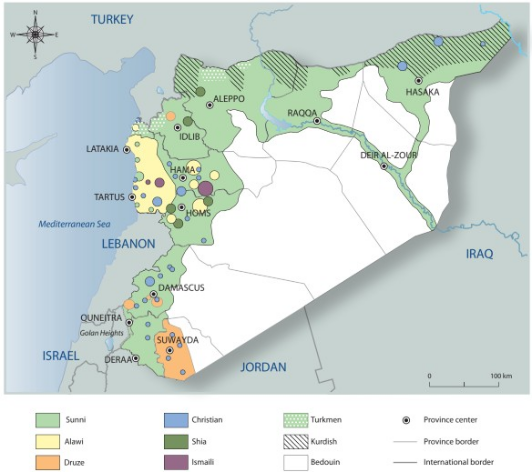
7.4.2 In April 2025, New Lines Institute, a non-partisan think tank focused on research in international affairs[footnote 101], published an article which contained the below map showing Syria’s sectarian and ethnic distribution as of 2023[footnote 102]:
7.4.3 For more information see the CPINs Syria: Religious minorities, Syria: Kurds and Kurdish areas and Syria: Alawites and Actual or Perceived Assadists.
7.5 Control of territory
NOTE: The maps in this subsection are not intended to reflect the UK Government’s views of any boundaries.
7.5.1 The Institute for the Study of War (ISW) and the American Enterprise Institute’s (AEI) Critical Threats Project team (CTP), produced an interactive map which is regularly updated. The latest version is accessible here. The following map shows the assessed territorial control as of 15 December 2025[footnote 103]:
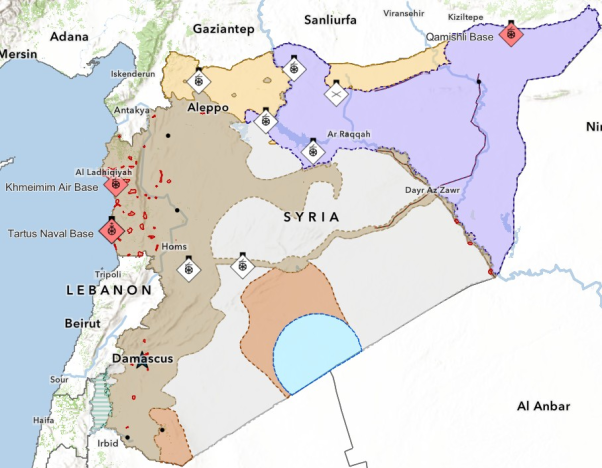
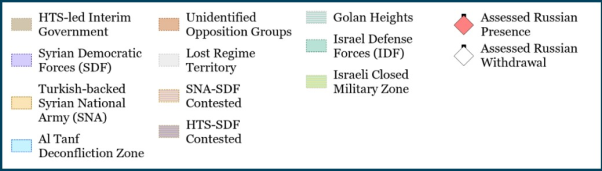
Annex A: Information provided by the Syria Justice and Accountability Centre (SJAC) – November 2025
1. Are there any specific laws or regulations that restrict internal movement or relocation within Syria?
In areas controlled by the Syrian government, there are no laws or regulations that generally prohibit movement or travel within Syria. In Suwayda, however, the Supreme Legal Committee has imposed conditions for leaving Suwayda province, specifically for areas controlled by the current government and in areas controlled by the Autonomous Administration of the Northeast.
2. Are there any impediments to internal movement and travel within Syria? If so, what are they?
In areas controlled by the Syrian government, there are road security forces that have set up checkpoints at the entrances and exits of major cities. These are there to monitor the entry and exit of vehicles and cars, and typically they do not interfere or request documents – except in suspicious cases. In suspicious cases, documents for the vehicle and/or passenger IDs are requested.
To and from Suwayda, there are military obstacles, including checkpoints, and passing through “dangerous areas.”
There are also mobile checkpoints in areas controlled by the Syrian Democratic Forces that impede movement to and from the Jazira region. These checkpoints do not have fixed locations but appear and disappear suddenly. There are also checkpoints for inspection at crossings in between cities, including Raqqa, Hasakeh, and Deir ez-Zor. At these checkpoints, mobile devices are sometimes inspected.
Civilians inside Aleppo city and those leaving SDF-controlled areas towards government-controlled areas are subject to security checks or scrutiny during periods of tension, whereas they are not subject to this under normal circumstances.
3. How do different controlling authorities regulate or restrict internal movement?
In areas under Syrian government control, and specifically inside public transport garages, passengers’ identities are recorded before buses leave the garage and are handed over to security authorities there. This security check sometimes includes inspecting and verifying the identities of civilian passengers. Mobile security checkpoints are also sometimes set up in areas with high rights of violations such as kidnapping and murder.
During times of security tensions between the SDF and General Security, phones are searched, and personal identities are checked. In addition, checkpoints and roadblocks are set up on roads and crossings connecting cities in Northeastern Syria.
4. If there are security controls (e.g. checkpoints etc), what is required to pass through them?
In areas controlled by the Syrian government, most checkpoints do not require identity documents when passing through. However, in cases of doubt, Syrian personal IDs, local council IDs, or IDs from the former Salvation Government in Idlib are requested, as well as vehicle registration papers or purchase contracts. For buses belonging to well-known companies that depart from the garage, there is a document that lists the names and numbers of the passengers on the trip, the bus number, name of the bus driver and assistant, the trip number, and a crossing stamp on the document.
There are also some restrictions on those leaving Suwayda, as they must notify the National Guard security office in Suwayda of their reason for leaving the province for government-controlled areas. They must also provide supporting documents, which include proof of a medical appointment or a family visit.
In areas controlled by the SDF, an ID card is required for individuals while a family card is required if children are present. For those who do not have an ID or family card, an individual civil registry record is required.
5. What generally occurs when an individual is stopped at a checkpoint?
In areas controlled by the Syrian government, individuals are questioned about where they are coming from and where they are going to. Sometimes, their personal ID and vehicle documents are requested and inspected. In some coastal areas, it has been reported that individuals are also asked about their sect.
In areas controlled by the SDF, identity documents are also checked. However, individuals may also be taken to a special room for inspection whether they are male or female, with female personnel inspecting women.
5.1 Under what circumstances would individuals be taken to a special room for inspection? What happens during these inspections?
There is no clear reasoning for the inspection, but the reason could be simple suspicion or random selection (arbitrary and more based on the mood of the security guards.) The inspection is a form of physical search for belongings, clothes, personal items, including patting the body to ensure nothing is hidden within clothes.
6. Are you aware of any mistreatment occurring at checkpoints? If so, what mistreatment takes place?
Sometimes passengers are delayed at checkpoints for longer periods of time while their vehicle and belongings are searched. In some cases, passengers are removed from the vehicle and have been mistreated for carrying a settlement document, sitting next to a woman, or are wearing immodest clothing. This happens on the Syrian government checkpoints in areas of sectarian tension.
6.1. Can you provide any further information about what sort of mistreatment takes place?
Mistreatments include lengthy questioning at the checkpoint, usually involves verbal slurs and abusive language, threats including threats of arrest or harm. Individuals who responded to verbal slurs were detained by the government forces.
The checkpoints also involved in the practice of getting women off the front seats (or a car of a bus) and forcing them to take the backseats. Couples traveling together need to show some documents showing their relationship.
6.2 Could you please provide some information on what a ‘settlement document’ is?
All members of the military or intelligence of the former regime were asked to hand over their old miliary ID cards and go through a “settlement agreement.” They would be issued a “Settlement verification document” that states their identity and confirms that they went through a background check and not wanted by the new authorities. However, the paper itself is a sign that someone was indeed a member of the former government’s military of security forces and is used as a base of discrimination, harassment, verbal abuses and some cases physical abuses at the checkpoints.
7. Is civil documentation required to travel within Syria? What happens if someone attempts to travel internally without such documentation?
In areas controlled by the Syrian government, personal identification documents or proof of identity is typically required when traveling between cities. When traveling by public transportation, identification is recorded. If a person is not carrying their identity documents during an inspection, they will be investigated at that checkpoint. If traveling in a private car, however, personal identification is not usually requested unless suspicion arises.
In some areas, it appears that demands for personal identification are more frequent for certain demographics, specifically young women who do not wear the hijab or younger individuals whose appearance is considered inappropriate (which can include being clean shaven, wearing immodest clothing, etc).
In areas controlled by the SDF, identities of individuals traveling to areas controlled by the Syrian government are checked.
7.1 Can you provide any information about what these investigations entail?
Usually, it entails questioning to verify identity and possible relation with the former government. If you are not carrying an ID (especially for males,) it’s a ground of suspicion that you were part of the former government’s security forces. In some cases, people were held at checkpoints until a family member texted them a photo of their ID card.
7.2 Are people ever prevented from travelling if they do not have any documentation?
Yes, they could be prevented from travelling. However, it’s quite arbitrary and no systematic practice is recorded. It’s up to the checkpoint or the armed group in charge of the area.
8. What methods of public or private transport are available for travel within Syria? What are the average costs involved?
Public and private round transportation is available throughout Syria as public transportation companies and taxis exist. Public transportation prices between cities range from 100,000 to 250,000 Syrian pounds, depending on the distance. Taxis between cities range from 1 million to 2 million pounds, depending on the distance between cities.
9. Are women generally able to travel freely within Syria? Do they face any restrictions or difficulties? If so, what are they?
Generally, there are no restrictions on a woman’s ability to travel. The security situation in some areas, however, discourages women from traveling alone or limiting their movement between cities. Fear is likely a dominant driver, especially in tense areas such as Suwayda, Aleppo, or when traveling between SDF and government-controlled areas.
10. Are children and elderly individuals subject to different treatment or restrictions when relocating internally?
Children or the elderly do not face different restrictions when moving between cities. Broadly, they are treated leniently, and sometimes a family book or family statement proving kinship between elderly individuals and children traveling together is required.
In areas controlled by the SDF, some parents are afraid of letting their children travel alone due to ongoing concerns about forced recruitment, whether male or female.
In coastal areas, especially in places that have experienced security tensions, some parents are afraid to let their children move internally, especially boys. This is linked to previous acts of violence against men and young people in general.
11. Are there any demographic groups that are generally unable to travel freely within Syria? If so, which groups are affected and why?
There are no legal or official impediments to movement, but in situations of security tensions, certain demographic, ethnic, or sectarian groups are abused. For example, travel or movement of Kurds from their areas to the Syrian government area in Aleppo forces them to pass through the Turkish-based, Syrian National Army (SNA) areas, which have an abusive history with individuals of Kurdish ethnicity. Just recently, a Kurdish man was detained in Syria and sent to Turkey by the SNA with allegation of affiliation with SDF.
The Druze community faces similar issues. Passengers from Suwayda were attacked by the public or by extremist elements on the road between Suwayda and Damascus. The most recent incident had “unknowns” opening fire on a passenger bus, causing the death of two civilians and injuring several others.
12. Are there any official permits or documentation required to reside in the different governorates throughout Syria?
In areas controlled by the Syrian government, there are no restrictions.
In areas controlled by the SDF, citizens need residence permits and are required to register with the neighbourhood council to obtain services such as bread, fuel, employment, and more.
12.1 Are Kurdish people able to reside in areas controlled by the Syrian government without any restriction?
In general, yes. There are no restrictions on their residency in the government areas.
12.2 Are individuals who were originally from areas outside of SDF control able to register with neighbourhood councils?
Yes, they are able to register with neighbourhood councils. SDF requires a “sponsor” for the process; basically, a local person, preferably Kurdish, from the area, can provide a reference to the individual who wishes to reside in the SDF area. SDF was criticized for this practice and justified it as required to ensure no ISIS affiliates gets to reside in their areas.
12.3 Are there any specific documents required to register with neighbourhood councils in these areas?
Just the ID card and the sponsor. They would fill in a form at the council.
13. Are new residents required to obtain security clearance or local sponsorship to settle, rent or purchase housing across Syria?
In areas controlled by the Syrian government, there are no legal restrictions or security controls on Syrians owning property or signing rental agreements for housing. However, when purchasing real restate security approval must be obtained within approximately 15 days.
In areas controlled by the SDF, citizens who wish to rent must register with the neighbourhood council and the municipality.
14. Does a person’s place of origin, religion, ethnicity, family ties, or (perceived) political opinion affect their ability to reside or work in certain areas?
There are no legal restrictions based on a person’s identities, but religious, ethnic, and sectarian groups tend to gather in specific neighbourhoods due to cultural similarities and historical geographic distribution. Priority is usually given to local residents over displaced persons for both, the ability to reside and to work.
In some places with sectarian and religious diversity, such as Homs, there is inflammatory rhetoric against minorities and semi-systematic campaigns to displace them.
In areas controlled by the SDF, priority is given to the Kurdish community in terms of the ability to resident and work.
15. Are there any legal or administrative barriers to accessing employment in areas of relocation?
SJAC does not have data or evidence to suggest that there are legal or administrative barriers to accessing employment in areas of relocation.
16. Are there any legal or administrative barriers to accessing public services (e.g., healthcare, education,) in areas of relocation?
In areas controlled by the Syrian government, individuals returning from outside Syria face problems enrolling their children in schools as there is a requirement to authenticate certificates from outside Syria. Children are then faced with two options: pass a placement test and enrol in the appropriate grade, which may be unfair to children not fluent in Arabic, or to have their papers certified by foreign embassies, the Syrian Foreign Ministry, and approved by the Syrian Directorate of Education, overall causing delays in in registration. As for healthcare services, there are generally no obstacles to access.
The SDF imposes conditions, such as registering with the neighbourhood council, for obtaining certain services. There are also obstacles in access health services, primarily financial barriers, as services are not free, and patients are referred to private clinics at their own expense. With regards to education, the SDF refused to adopt the Syrian government’s curriculum to impose its own. This decision was met with strong protests, resulting in individuals being displaced towards government-controlled areas to continue their education.
In places still experiencing security tension, like Suwayda, education processes have been suspended. As for university education, there are administrative decisions allowing students from Suwayda to attended Damascus University and its branches in Daraa or Quneitra, and safe passage of students to and from Suwayda is facilitated for their protection. However, parents remain unwilling to allow their children to leave due to ongoing fear around condescending attitudes and hatred between groups.
17. What is the process for registering a change of residence or updating civil records after relocation?
In government-controlled areas, civil records are not usually updated except in a few cases, as the law does not require a person to transfer their civil records except in the case of marriage, where a wife’s records are transferred to the husband’s.
In areas controlled by the SDF, individuals must go to the neighbourhood council and obtain a stamped document indicating their current place of residence.
18. How safe and sustainable is relocation to areas such as Damascus, Latakia, or Tartous for individuals returning from elsewhere?
Housing and rent in Damascus remains expensive, and the level of destruction in the Damascus countryside is very high, preventing many families from being able to return.
The Syrian coast, particularly in Latakia and Tartous, is experience a state of relative stability and security following the events in March 2025.
Research methodology
The country of origin information (COI) in this note has been carefully selected in accordance with the general principles of COI research as set out in the Common EU [European Union] Guidelines for Processing Country of Origin Information (COI), April 2008, and the Austrian Centre for Country of Origin and Asylum Research and Documentation’s (ACCORD), Researching Country Origin Information – Training Manual, 2024. Namely, taking into account the COI’s relevance, reliability, accuracy, balance, currency, transparency and traceability.
Sources and the information they provide are carefully considered before inclusion. Factors relevant to the assessment of the reliability of sources and information include:
- the motivation, purpose, knowledge and experience of the source
- how the information was obtained, including specific methodologies used
- the currency and detail of information
- whether the COI is consistent with and/or corroborated by other sources
Commentary may be provided on source(s) and information to help readers understand the meaning and limits of the COI.
Wherever possible, multiple sourcing is used and the COI compared to ensure that it is accurate and balanced, and provides a comprehensive and up-to-date picture of the issues relevant to this note at the time of publication.
The inclusion of a source is not, however, an endorsement of it or any view(s) expressed.
Each piece of information is referenced in a footnote.
Full details of all sources cited and consulted in compiling the note are listed alphabetically in the bibliography.
Terms of reference
The ‘Terms of Reference’ (ToR) provides a broad outline of the issues relevant to the scope of this note and forms the basis for the country information.
The following topics were identified prior to drafting as relevant and on which research was undertaken:
- laws regulating freedom of movement within Syria, including temporary restrictions such as curfews or controls put in place during states of emergency
- documentation required to travel internally, access the area of relocation and essential services such as education and healthcare
- availability and accessibility of different methods of travel and physical obstacles to travel
- cultural factors that may affect relocation, such as presence (or absence) of the same ethnic, family, religious or language groups
Bibliography
Sources cited
Al Jazeera
- Syria’s al-Sharaa signs temporary constitution, 13 March 2025. Accessed: 3 October 2025
Balanche F
- Sectarianism in Syria’s Civil War, 2018. Accessed: 15 December 2025
ConstitutionNet
- Constitutional Declaration of the Syrian Arabic Republic, 13 March 2025. Accessed: 3 October 2025
Daily News Egypt
-
Home, no date. Accessed: 3 November 2025
-
Syrian Transport Minister: We Deeply Appreciate Egypt for Hosting Syrians and Preserving Our Historic Brotherhood, 10 October 2025. Accessed: 3 November 2025
Danish Immigration Service (DIS)
-
Syria: Security situation, 19 June 2025. Accessed: 2 October 2025
-
Syria: Security situation, Return and Documents, 9 December 2025. Accessed: 15 December 2025
-
Syria: Situation of Certain Groups, 9 December 2025. Accessed: 15 December 2025
Enab Baladi
-
About us, no date. Accessed: 6 November 2025
-
After 13 Years of Suspension… The Aleppo-Hama Train Returns to Service, 8 August 2025. Accessed: 11 November 2025
-
Ministry of Transportation commits to reviewing minibus fares in al-Baramkeh station, 15 April 2025. Accessed: 11 November 2025
-
Ride-hailing apps in Syria: Safer and cheaper, 13 June 2025. Accessed: 11 November 2025
-
Syrian road trip uncovers life amid living hardships, 24 April 2025. Accessed: 11 November 2025
-
Syrian Transport Minister: Railway rehabilitation requires 5.5 billion dollars, 20 October 2025. Accessed: 6 November 2025
-
Why Suwayda’s Druze Spiritual Leadership Formed a New Local Administration in Syria, 11 August 2025. Accessed: 11 November 2025
Etana
-
About us, no date. Accessed: 19 November 2025
-
Refugee Returns & Migration Dynamics after Assad, June 2025. Accessed: 19 November 2025
European Committee of the Regions (ECOR)
-
About, no date. Accessed: 28 October 2025
-
Syria – Transport, no date. Accessed: 28 October 2025
European Union Agency for Asylum (EUAA)
- Syria: Country Focus, July 2025. Accessed: 2 October 2025
France 24
- Between freedom and restrictions, Syrians navigate new reality, 4 May 2025. Accessed: 11 November 2025
Institute for the Study of War (ISW) and the American Enterprise Institute’s (AEI) Critical Threats Project (CTP)
- Interactive Map: Assessed Control of Terrain in Syria, 15 December 2025. Accessed: 15 December 2025
International Organization for Migration (IOM)
-
Syrian Arab Republic – Communities of Return Index, 13 May 2025. Accessed: 2 October 2025
-
Syrian Arab Republic – Communities of Return Index – Round 2, 6 August 2025. Accessed: 3 October 2025
-
Syrian Arab Republic – Population Mobility and Baseline Assessment – Round 9, 10 November 2025. Accessed: 12 November 2025
Jinha
-
About, no date. Accessed: 3 November 2025
-
Taliban’s practice in Damascus: Women banned from sitting at front of buses, 22 April 2025. Accessed: 3 November 2025
Logistics Cluster (LC)
-
About us, no date. Accessed: 28 October 2025
-
Logistics Information Exchange (LogIE), no date. Accessed: 29 October 2025
-
LogIE - Syria – Physical Access Constraints. Accessed: 29 October 2025
New Lines Institute
-
About, no date. Accessed: 15 December 2025
-
Persecution of Syrian Minorities Risks the Future of Sanctions Relief, 15 April 2025. Accessed: 15 December 2025
Norwegian Refugee Council
- Beyond return: Ensuring sustainable recovery & (re)-integration in Syria, 15 May 2025. Accessed: 11 November 2025
Numbeo
-
About, no date. Accessed: 11 November 2025
-
Cost of Living in Syria, updated 31 October 2025. Accessed: 11 November 2025
Syria Justice and Accountability Centre
- About, no date. Accessed: 2 October 2025
Syrians for Truth and Justice (STJ)
-
About STJ, no date. Accessed: 14 November 2025
-
“Living Between Hope and Fear”: Testimonies Documenting the Persistence of Enforced Disappearance in Post-Assad Syria, 29 August 2025. Accessed: 14 November 2025
Syrian Arab News Agency (SANA)
-
400 Syrian Refugees Return from Lebanon in Second Voluntary Return, 23 October 2025. Accessed: 11 November 2025
-
Home, no date. Accessed: 11 November 2025
The Guardian
- Party time at Damascus airport as international flights resume, 7 January 2025. Accessed: 29 October 2025
UN Geospatial
- Syrian Arab Republic, 1 August 2022. Accessed: 29 October 2025
United Nations High Commissioner for Refugees (UNHCR)
- Syria is Home – Frequently Asked Questions, no date. Accessed: 27 October 2025
United Nations Population Fund (UNFPA)
- Voices from Syria 2025: Assessment Findings of the Humanitarian Needs Overview, 14 October 2025. Accessed: 11 November 2025
Watan
-
Damascus to Enforce Gender Segregation on Public and Private Buses, 11 January 2025. Accessed: 3 November 2025
-
Who we are, no date. Accessed: 3 November 2025
Xe.com
- 1000 SYP to GBP, 11 November 2025. Accessed: 11 November 2025
Sources consulted but not cited
Anadolu Ajansi (AA)
- Syria, UAE-based firm discuss funding, execution of Damascus Metro project, 5 August 2025. Accessed: 3 October 2025
Emirates Center for Strategic Studies and Research
- The New Syria and Logistics Projects in the Middle East Opportunities and Challenges, 27 January 2025. Accessed: 3 October 2025
Enab Baladi
-
Chaos in transportation fares in Damascus, 16 December 2024. Accessed: 6 November 2025
-
Damascus’ aging taxis: Drivers seek protection, passengers seek a meter, 5 October 2025. Accessed: 6 November 2025
-
Ministry of Transport Moves Toward Digital Transformation to Streamline Its Services, 17 July 2025. Accessed: 6 November 2025
-
Nighttime public transport halt disturbs Aleppo workers, 19 May 2025. Accessed: 6 November 2025
-
Rising prices paralyze transportation in Daraa, 19 March 2025. Accessed: 6 November 2025
-
Syrian Justice Ministry Cancels Nearly 290,000 Legal Pursuits from Former Regime, 3 October 2025. Accessed: 6 November 2025
-
Syrian Justice Ministry lifts millions of travel-ban notices on Syrians, 3 September 2025. Accessed: 6 October 2025
-
Transport fares rise by 300% in Damascus, 22 December 2024. Accessed: 6 November 2025
-
Transportation fees hinder return of displaced persons in Idlib, 16 January 2025. Accessed: 6 November 2025
Euronews
- Syria’s road ahead: How transport infrastructure could be the key to stability, 10 January 2025. Accessed: 13 October 2025
Freedom House
- Freedom in the World 2025 – Syria, 26 February 2025. Accessed: 3 October 2025
Independent
- A train station was the pride of Syria. Some hope it will connect them to the world again, 20 January 2025. Accessed: 3 October 2025
International Crisis Group
- A Helping Hand for Post-Assad Syria, 22 May 2025. Accessed: 8 October 2025
Jusoor For Studies
- Map of airports in Syria, April 2022. Accessed: 3 October 2025
Middle East Institute
- Lebanon and Syria October 2025: A Snapshot, 29 October 2025. Accessed: 3 November 2025
Rudaw
- Damascus reopens road to Aleppo’s Kurdish neighborhood, 22 October 2025. Accessed: 3 November 2025
SARI Global
- Sweida: Crisis Update and Ceasefire Agreement, 15 July 2025. Accessed: 18 October 2025
Syrian Arab News Agency (SANA)
-
President al-Sharaa discusses with Transport Minister plans to develop transportation networks, 1 May 2025. Accessed: 4 November 2025
-
Syria discusses possibility of cooperation in public transport sector with Norway, 7 May 2025. Accessed: 4 November 2025
Syrian Heritage Archive
- Fraternal help from the German Democratic Republic (GDR) – rail modernisation on the Syrian railways, no date. Accessed: 8 October 2025
United Nations Human Rights Council
- Report of the Commission of Inquiry on Syrian Arab Republic to the 58th regular session of the Human Rights Council, 14 March 2025. Accessed: 8 October 2025
United Nations Population Fund
- Voices from Syria, 12 October 2025. Accessed: 12 November 2025
US State Department (USSD)
- 2024 Country Report on Human Rights Practices, 12 August 2025. Accessed: 28 October 2025
Tesaa World
-
Syria discusses with Norway ways to support the public transportation sector, 7 May 2025. Accessed: 18 October 2025
-
The Syrian Minister of Transport and the Investment Authority discuss with an Italian company the development of the train and bus industry, 5 October 2025. Accessed: 6 November 2025
The Syrian Observer
- Syria Bans Import of Used Cards, Sparking Public Outcry and Government Justification, 1 July 2025. Accessed: 8 October 2025
Travelling the Unknown
- Syrian Railways: History and Current Situation, 3 April 2023. Accessed: 9 October 2025
Worldometer
- Syria Road Map, no date. Accessed: 15 October 2025
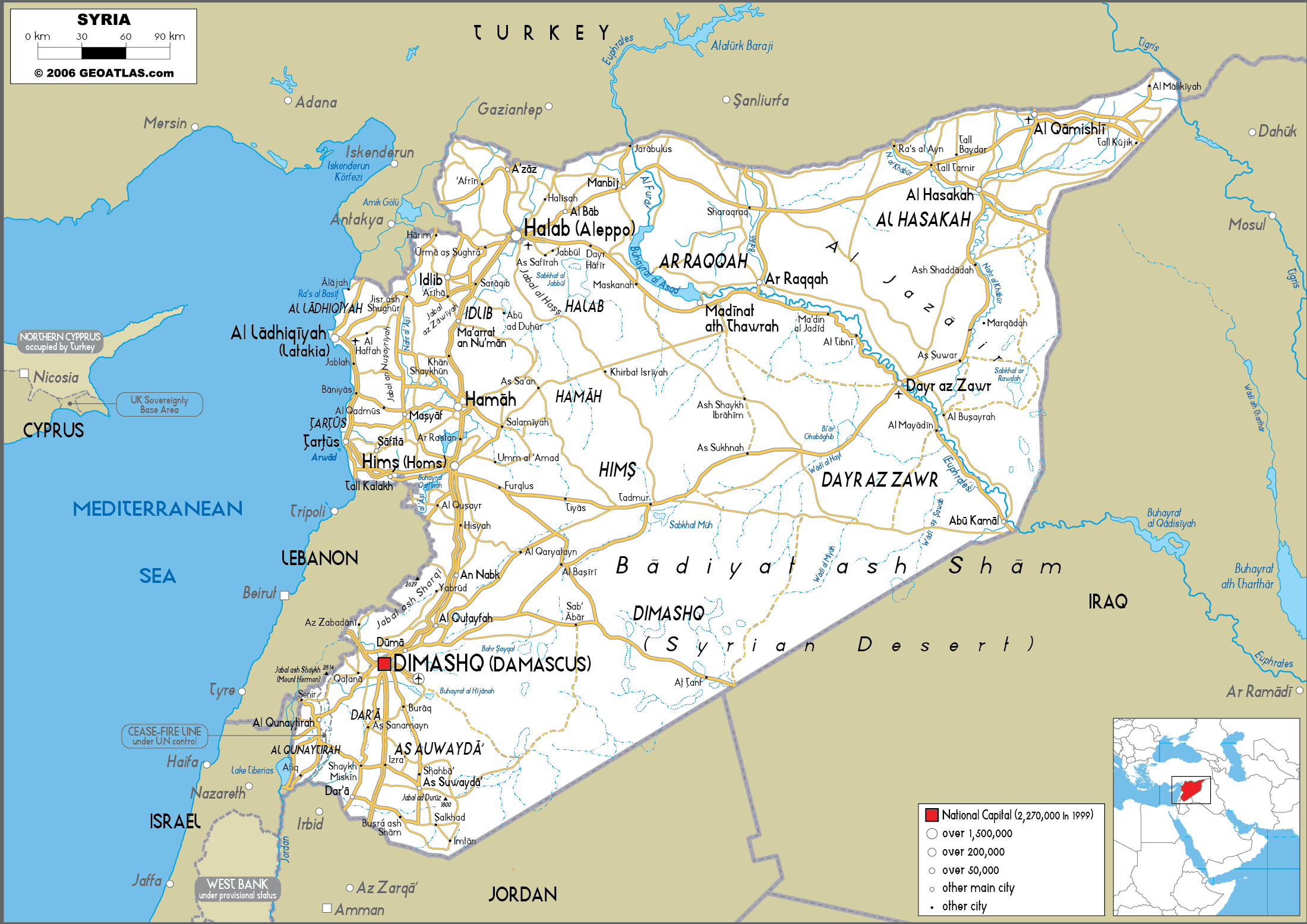
Version control and feedback
Clearance
Below is information on when this note was cleared:
- version 1.0
- valid from 22 December 2025
Official – sensitive: Not for disclosure – Start of section
The information on this page has been removed as it is restricted for internal Home Office use.
Official – sensitive: Not for disclosure – End of section
Changes from last version of this note
First version of this note.
Feedback to the Home Office
Our goal is to provide accurate, reliable and up-to-date COI and clear guidance. We welcome feedback on how to improve our products. If you would like to comment on this note, please email the Country Policy and Information Team.
Independent Advisory Group on Country Information
The Independent Advisory Group on Country Information (IAGCI) was set up in March 2009 by the Independent Chief Inspector of Borders and Immigration to support them in reviewing the efficiency, effectiveness and consistency of approach of COI produced by the Home Office.
The IAGCI welcomes feedback on the Home Office’s COI material. It is not the function of the IAGCI to endorse any Home Office material, procedures or policy. The IAGCI may be contacted at:
Independent Advisory Group on Country Information
Independent Chief Inspector of Borders and Immigration
3rd Floor
28 Kirby Street
London
EC1N 8TE
Email: chiefinspector@icibi.gov.uk
Information about the IAGCI’s work and a list of the documents which have been reviewed by the IAGCI can be found on the Independent Chief Inspector’s pages of the GOV.UK website.
-
IOM, Syrian Arab Republic – Population Mobility and Baseline … (page 3), 10 November 2025 ↩
-
IOM, Syrian Arab Republic – Population Mobility and Baseline … (page 7), 10 November 2025 ↩
-
IOM, Syrian Arab Republic – Population Mobility and Baseline … (page 7), 10 November 2025 ↩
-
IOM, Syrian Arab Republic – Population Mobility and Baseline … (page 6), 10 November 2025 ↩
-
IOM, Syrian Arab Republic – Population Mobility and Baseline … (page 6), 10 November 2025 ↩
-
IOM, Syrian Arab Republic – Population Mobility and Baseline … (page 8), 10 November 2025 ↩
-
Al Jazeera, Syria’s al-Sharaa signs temporary constitution, 13 March 2025 ↩
-
ConstitutionNet, Constitutional Declaration of the Syrian Arabic Republic, 13 March 2025 ↩
-
UNHCR, Query response to the UK Home Office, 17 November 2025 (available on request) ↩
-
DIS, Syria: Security situation (page 4), 19 June 2025 ↩
-
DIS, Syria: Security situation (page 31), 19 June 2025 ↩
-
DIS, Syria: Security situation (page 32), 19 June 2025 ↩
-
NRC, Beyond return: Ensuring sustainable recovery & (re)-integration in Syria, 15 May 2025 ↩
-
IOM, Syrian Arab Republic – Communities of Return Index (page 3), 13 May 2025 ↩
-
EUAA, Syria: Country Focus (page 75-76), July 2025 ↩
-
IOM, Syrian Arab Republic – Communities of Return Index … (page 3), 6 August 2025 ↩
-
IOM, Syrian Arab Republic – Communities of Return Index … (page 7), 6 August 2025 ↩
-
UNHCR, Query response to the UK Home Office, 17 November 2025 (available on request) ↩
-
LC, Logistics Information Exchange (LogIE), no date ↩
-
LC, LogIE - Syria – Physical Access Constraints, as of 29 October ↩
-
The Guardian, Party time at Damascus airport as international flights resume, 7 January 2025 ↩
-
DIS, Syria: Security situation, Return and Documents (page 3), 9 December 2025 ↩
-
DIS, Syria: Security situation, Return and Documents (page 17-18), 9 December 2025 ↩
-
DIS, Syria: Security situation (page 31), 19 June 2025 ↩
-
EUAA, Syria: Country Focus (page 75-76), July 2025 ↩
-
STJ, “Living Between Hope and Fear”… (page 4), 29 August 2025 ↩
-
STJ, “Living Between Hope and Fear”… (page 7-8), 29 August 2025 ↩
-
STJ, “Living Between Hope and Fear”… (page 4), 29 August 2025 ↩
-
UNHCR, Query response to the UK Home Office, 17 November 2025 (available on request) ↩
-
UNHCR, Query response to the UK Home Office, 17 November 2025 (available on request) ↩
-
SJAC, Annex A, (Question 7, 7.1, 7.2), 3 and 6 November 2025 ↩
-
UNHCR, Query response to the UK Home Office, 17 November 2025 (available on request) ↩
-
DIS, Syria: Security situation, Return and Documents (page 18), 9 December 2025 ↩
-
DIS, Syria: Security situation (page 31-32), 19 June 2025 ↩
-
Watan, Who we are, no date ↩
-
Watan, Damascus to Enforce Gender Segregation on Public and Private Buses, 11 January 2025 ↩
-
Jinha, Taliban’s practice in Damascus: Women banned from sitting at front of buses, 22 April 2025 ↩
-
France 24, Between freedom and restrictions, Syrians…, 4 May 2025 ↩
-
UNFPA, Voices from Syria 2025: Assessment Findings of… (page 14), 14 October 2025 ↩
-
UNFPA, Voices from Syria 2025: Assessment Findings of… (page 74), 14 October 2025 ↩
-
UNFPA, Voices from Syria 2025: Assessment Findings of… (page 24), 14 October 2025 ↩
-
Etana, Refugee Returns & Migration Dynamics after Assad (page 6), June 2025 ↩
-
Etana, Refugee Returns & Migration Dynamics after Assad (page 36), June 2025 ↩
-
UNHCR, Query response to the UK Home Office, 17 November 2025 (available on request) ↩
-
UNHCR, Query response to the UK Home Office, 17 November 2025 (available on request) ↩
-
ECOR, Syria – Transport, no date ↩
-
UN Geospatial, Syrian Arab Republic, 1 August 2022 ↩
-
Daily News Egypt, Syrian Transport Minister: We Deeply Appreciate Egypt …, 10 October 2025 ↩
-
Enab Baladi, Syrian Transport Minister: Railway rehabilitation requires …, 20 October 2025 ↩
-
Enab Baladi, Ministry of Transportation commits to reviewing minibus fares …, 15 April 2025 ↩
-
Enab Baladi, Syrian road trip uncovers life amid living hardships, 24 April 2025 ↩
-
Enab Baladi, Ride-hailing apps in Syria: Safer and cheaper, 13 June 2025 ↩
-
DIS, Syria: Security situation (page 32), 19 June 2025 ↩
-
Enab Baladi, After 13 Years of Suspension… The Aleppo-Hama Train Returns …, 8 August 2025 ↩
-
UNHCR, Query response to the UK Home Office, 17 November 2025 (available on request) ↩
-
UNHCR, Syria is Home – Frequently Asked Questions (Documentation and legal matters), no date ↩
-
DIS, Syria: Security situation, Return and Documents (page 22), 9 December 2025 ↩
-
UNHCR, Syria is Home – Frequently Asked Questions (Documentation and legal matters), no date ↩
-
DIS, Syria: Security situation, Return and Documents (page 23), 9 December 2025 ↩
-
UNHCR, Syria is Home – Frequently Asked Questions (Documentation and legal matters), no date ↩
-
DIS, Syria: Security situation, Return and Documents (page 24), 9 December 2025 ↩
-
DIS, Syria: Security situation, Return and Documents (page 24), 9 December 2025 ↩
-
UNHCR, Syria is Home – Frequently Asked Questions (Assistance and financial support), no date ↩
-
SANA, 400 Syrian Refugees Return from Lebanon in Second Voluntary …, 23 October 2025 ↩
-
EUAA, Syria: Country Focus (page 77-78), July 2025 ↩
-
SJAC, Annex A, (Question 12, 12.1, 13, 17), 3 and 6 November 2025 ↩
-
SJAC, Annex A, (Question 12, 12.2, 12.3, 13, 17), 3 and 6 November 2025 ↩
-
UNHCR, Query response to the UK Home Office, 17 November 2025 (available on request) ↩
-
UNHCR, Query response to the UK Home Office, 17 November 2025 (available on request) ↩
-
UNHCR, Query response to the UK Home Office, 17 November 2025 (available on request) ↩
-
DIS, Syria: Security situation, Return and Documents (page 32), 9 December 2025 ↩
-
DIS, Syria: Situation of Certain Groups (page 5), 9 December 2025 ↩
-
DIS, Syria: Situation of Certain Groups (page 31-32), 9 December 2025 ↩
-
Balanche F, Sectarianism in Syria’s Civil War (page 135), 2018 ↩
-
Balanche F, Sectarianism in Syria’s Civil War (page xvi), 2018 ↩
-
Balanche F, Sectarianism in Syria’s Civil War (page xii), 2018 ↩
-
New Lines Institute, Persecution of Syrian Minorities Risks …, 15 April 2025 ↩
-
ISW and AEI, Interactive Map: Assessed Control of Terrain in Syria, 15 December 2025 ↩