Rough Sleeping Questionnaire 2025: Expanded findings on mental health
Updated 28 May 2026
Applies to England

© Crown copyright 2026
This publication is licensed under the terms of the Open Government Licence v3.0 except where otherwise stated. To view this licence, visit nationalarchives.gov.uk/doc/open-government-licence/version/3 or write to the Information Policy Team, The National Archives, Kew, London TW9 4DU, or email: psi@nationalarchives.gov.uk.
Where we have identified any third party copyright information you will need to obtain permission from the copyright holders concerned.
This publication is available at https://www.gov.uk/government/publications/rough-sleeping-questionnaire-2025-findings/rough-sleeping-questionnaire-2025-expanded-findings-on-mental-health
1. Executive summary
The Rough Sleeping Questionnaire (RSQ) is one the largest surveys of people who sleep rough ever attempted in the UK. People who participated in the questionnaire provided details of their homelessness experience, support needs and vulnerabilities, and their use of public services. This survey was first run in 2019 to provide detailed information of rough sleeping experiences to the Ministry of Housing, Communities and Local Government (MHCLG). It was repeated in 2025 to continue MHCLG’s mission to improve services for people who sleep rough, and those at risk of sleeping rough, with the help of the latest data.
Supporting people experiencing homelessness, particularly in relation to their mental health needs, is a key priority for the department. To improve MHCLG’s understanding in this area, analysis of the questionnaire responses was undertaken, with a particular focus on mental ill health and conditions.
The findings of the analysis are provided in this report, based on answers from 966 respondents who had slept rough within the last year. Of these, 800 were identified as having some form of mental health need. Questionnaires were completed across 32 local authorities in England from January to April 2025.
Participation in the RSQ was voluntary and all answers are self-reported. Therefore, the sample may not be statistically representative of the rough sleeping population. However, the demographic profile of the participants was comparable to those reported in recent rough sleeping management information publications (up to April to June 2025).
Analysis of the questionnaire responses found that that mental ill health is widespread among people who sleep rough. It is also associated with earlier, prolonged and more complex experiences of homelessness and housing instability. Most respondents reported multiple mental health conditions, such as depression and anxiety, yet many lacked formal diagnoses or access to mental health treatment. The evidence suggests that earlier, better‑integrated mental health support could help prevent rough sleeping.
Key summary points from the analysis are provided below. Comparisons between the experiences of the 800 respondents who reported mental health support needs and the 166 who did not are further detailed in the results in Section 3.
Mental health support needs: Needs arising from mental ill health or psychological disorders that affect an individual’s experience of homelessness and may require additional support. Specific conditions can be seen in Table 3.6 in Section 3.4
1.1 Demographics
- Women more often reported a mental health need. Around nine in ten (91%) women said they had a mental health need, compared to eight in ten (81%) men
- A large proportion of respondents without mental health conditions were non-UK nationals (41%).
1.2 Experiences in youth
- Mental health problems were largely reported to start in teenage years and young adulthood. Half of the respondents had first experienced mental health difficulties by time they were 18 years old.
- Adverse experiences at school and in childhood were found to be more frequently reported among those with mental ill health. For example, over half (55%) of British respondents with mental health needs reported regularly truanting from school, compared to 37% of British respondents without mental health needs.
1.3 Rough sleeping experiences
- Most respondents were found to have first experienced problems with mental health before they first slept rough.
- Many respondents said they did not know how to find help seeking accommodation (29% of those with mental health needs, 41% of those without).
- Respondents without mental health conditions more often cited financial reasons for accommodation loss than those with mental health problems. 40% of respondents without mental ill health left their accommodation because they could not afford rent, compared with 19% of those with mental health issues. They also more frequently reported leaving due to a tenancy ending (16%) and being unable to secure alternative housing because of financial barriers (14% of those providing reasons).
1.4 Diagnosis of conditions
- Multiple mental health conditions were specified by respondents, averaging 3.7 per person. Depression (71%) and anxiety (65%) were the most commonly self-reported conditions.
- There were low rates of professional diagnosis for conditions such as eating disorders (52% of those self-reported), ADHD (61%), and autism (62%), indicating that many people sleeping rough may rely on self-assessment.
1.5 Mental health services
- Barriers to accessing mental health services were apparent. Among respondents who slept rough with mental health problems, only 44% received treatment in the past year.
- Despite anxiety and depression being the most common conditions, less than half of those affected had contacted mental health services within the past year (47% and 45%, respectively).
1.6 Homelessness and wider services
-
On average, those with mental health problems approached a higher number of service types (4.3) to those without (2.9).
- People in the mental health support need group more often engaged with housing officers (60%), food banks (45%), and substance treatment workers (27%).
- Despite this, 30% of the mental health support need group had not approached their local authority in over a year or ever, and 38% had never seen their local authority.
- While these figures are substantial, the group which did not report mental health support needs appeared to have even more limited contact, with 49% not approaching their local authority and 54% never having seen a housing officer. The lack of public service contact may be influenced by the large proportion of non-UK nationals within this group.
1.7 Substance use
- Most respondents with mental health needs (60%) reported a substance use support need in the past year. In comparison, only 24% of those without mental ill health reported that they have a substance use support need. This highlights a strong association between mental ill health and substance use.
- Mental health challenges coupled with substance use may be an early driver in rough sleeping pathways. Among those who provided the age of these events, 62% experienced mental health needs before or at the same age as their first drug misuse. The median age of the first mental health difficulty was 17 years, and 18 years for their first drug use problem.
2. Background
In 2025 the Ministry of Housing, Communities and Local Government (MHCLG) conducted research into people’s experiences of rough sleeping, interviewing a total of 1204 people, of whom 966 had slept rough in the 12 months before being surveyed (i.e. since Spring 2024).
Researchers at MHCLG, with input from survey experts, academics, government analysts, people with lived experience of sleeping rough, and frontline homelessness staff, first designed the ‘Rough Sleeping Questionnaire’ (RSQ) in 2018, with survey fieldwork conducted in 2019-20. The topics and questions were designed to provide a comprehensive understanding of respondents’ backgrounds, histories of homelessness, support needs, and public service use. The questionnaire was then updated in 2024 before this research was conducted.
This report contains findings from 966 respondents who had slept rough within the 12 months prior to completing the survey. Whilst the findings may not fully represent the experiences of people sleeping rough, the demographic profile in the Headline Findings was found to be similar that found in MHCLG’s most recent Rough Sleeping Snapshot in Autumn 2024.
Some of these findings relate to a subset of these respondents, the number of which is indicated by ‘n =’ on the graphics.
2.1 Questionnaire Fieldwork and Methodology
Rough sleeping: A definition of rough sleeping was provided to help the respondents answer the questionnaire. It referred to people sleeping in buildings or other places not designed for habitation (for example stairwells, barns, sheds, car parks, cars, derelict boats, stations, or ‘bashes’).
The fieldwork was conducted in 32 local authorities, across all regions of England, facilitated through the support of local authority rough sleeping leads and local rough sleeping and homelessness services. These areas were selected to obtain various perspectives from a wide range of geographical locations and urban sizes.
Most questionnaires were completed in day centres or hostels. On average, each wave of the fieldwork took place over a two-week window, with researchers in the field throughout. Respondents had the option to complete the questionnaire independently or assisted by a researcher. Most respondents completed the questionnaire with at least some input from interviewers.
Participation in the survey was voluntary and all answers are self-reported. Therefore, users of these findings must acknowledge that the survey may not necessarily be a true statistical representation of people sleeping rough in England.
Statistical tests were performed on questions of interest to determine which responses showed significant differences between respondents with mental health needs and those without. Answers that displayed significance are denoted by * or mentioned otherwise. Further details can be found in the technical annex.
The survey included several free-text questions to give participants the opportunity to share their experiences in their own words. Thematic analysis was applied to the responses. One analyst read the responses and assigned initial granular codes. These codes where then grouped into initial themes. A sub-sample of the data was coded by a second analyst and this coding compared to that of the first coder, to quality assure codes. A full report on the themes identified will be published in future. Themes that were of particular relevance to mental ill health and conditions are included in section 3 along with illustrative quotes.
2.2 Additional sources of information
In December 2020 MHCLG published findings from the first RSQ survey that ran from 2019 to 2020. Nearly the same proportion of those who had slept rough in the previous 12 months had a mental health need (82%) as those in the 2025 survey. Additionally, it found that the majority of respondents who reported current mental ill health had not received treatment recently.
The analysis from the 2025 questionnaire described in Section 3 below compares the rough sleeping experiences between two groups of people, the majority with mental ill health or disorders, to the minority without.
This report does not contain detailed comparisons with the previous RSQ. This is to avoid potentially misleading comparisons due to the different sampling approaches taken (see Section 2.1) and data reporting methods. The findings in this report form part of a much wider evidence base to understand experiences of rough sleeping in relation to mental health. It is intended to compliment other research in this area.
Rough sleeping management information is produced by MHCLG every quarter, based on estimates from local authorities. This contains metrics from the rough sleeping data framework, which was designed to better understand how far rough sleeping is prevented wherever possible, and where it does occur, if it is rare, brief, and non-recurring. MHCLG also produces the annual autumn snapshot as a way of estimating the number of people sleeping rough across England on a single night and assessing change over time. These publications provide a more complete overview of rough sleeping in England than the sample who participated in the RSQ. However, details of mental ill health or disorders are not part of these statistics.
Additionally, the department has conducted evaluations of the Changing Futures programme. This programme is led by MHCLG and aims to improve outcomes for outcomes experiencing multiple disadvantage, including mental health issues and homelessness.
3. Results
A total of 1,204 people completed the questionnaire, of which 966 had slept rough at some point in the 12 months prior to completing the questionnaire. Table 3.1 below shows that 83% of these respondents had a mental health need.
Table 3.1: Number of RSQ respondents by mental health status. 83% of respondents who had slept rough within the previous 12 months had reported having a mental health need.
| RSQ Respondents | Mental health need reported | No mental health need reported |
|---|---|---|
| All respondents (n = 1204) | 995 | 209 |
| …of which had slept rough within the previous 12 months (n = 966) | 800 | 166 |
The results in the sections below focus on those who had slept rough in the past year. This was identified in 966 respondents, composed of 800 with mental health needs and 166 without. These findings aim to highlight issues affecting each group by looking at the prevalence of selected topics based on their answers to the questionnaire.
3.1 Demographics
Key points:
- Around nine in ten (91%) women said they had a mental health need, compared to eight in ten (81%) men
- A large proportion of respondents without mental health conditions were non-UK nationals (41%).
Prevalence of mental ill health differed by gender, 91% of women reported having mental ill health or disorders, compared with 81% of men. Further analysis on gender patterns can be found in a separate report containing analytical findings on women.
Among respondents who reported a mental health need, 86% were British nationals. In comparison, 41% of those without mental health needs were non-UK nationals (16% from EU/EEA countries and 25% from other countries).
There was a similar proportion who reported mental health problems among respondents who identified as White (86%) and Asian (87%), which includes backgrounds such as Asian British and Chinese). This was substantially less for Black respondents (54%), but this may be influenced by over half (54%) of all Black respondents also being non-UK nationals.
3.2 Experiences in youth
Key points:
- Mental health problems were largely reported to start in teenage years and young adulthood. Half of the respondents had first experienced mental health difficulties by time they were 18 years old.
- Adverse experiences at school and childhood were found to be more frequently reported among those with mental ill health, even when accounting for nationality status.
Three quarters (76%) of participants reported the age when they first had difficulties with their mental health. The median age was 18 years, and 58% had experienced mental health difficulties by the age of 21 years old.
Nearly one quarter (23%) of those who reported mental health needs reported having spent time in care as a child, compared to 8% of those who did not report any condition. This difference was found to be statistically significant*.
Respondents were also asked about adverse experiences they had at school. To account for differences in education systems from other countries, the findings in Table 3.2 apply to only British nationals who participated. This relies on the assumption that all British nationals attended school in the UK.
Table 3.2 Prevalence of adverse school experiences, British nationals only (n = 786)
| School experience | Mental health need reported (n = 687) | No mental health need reported (n = 97) |
|---|---|---|
| Regularly truanted from school * | 55% | 37% |
| Permanently excluded from school * | 39% | 22% |
| Left school before 16 years old * | 41% | 29% |
| Experienced any of the above * | 70% | 51% |
Table 3.2 shows that for British nationals who have slept rough, there was a significant association between adverse experiences at school and having mental health problems. For comparison, Table 3.3 below shows the same data for the 182 non-UK nationals.
Table 3.3 Prevalence of adverse school experiences, non-UK nationals only (n = 182)
| School experience | Mental health need reported (n = 113) | No mental health need reported (n = 69) |
|---|---|---|
| Regularly truanted from school * | 37% | 20% |
| Permanently excluded from school | 14% | 6% |
| Left school before 16 years old | 13% | 12% |
| Experienced any of the above | 46% | 33% |
A significant association with mental health needs among respondents who regularly truanted from school was also seen among the non-UK nationals. Other adverse school experiences were more prevalent from the group with mental health needs, but to lesser extent when compared for British respondents.
3.3 Rough sleeping experiences
Key points:
- Most respondents were found to have first experienced problems with mental health before they first slept rough.
- Respondents without mental health conditions more often cited financial reasons for accommodation loss than those with mental health problems. For example, 40% of respondents without mental ill health left because they could not afford rent, compared with 19% of those with mental health issues.
- Those with mental health conditions also reported leaving accommodation due to evictions due to behaviour (18%) and relationship breakdowns (18%)
- A substantial proportion of respondents said they did not know how to find help when they were seeking accommodation (29%) compared with 41% of those without a mental health need.
Onset age: The age at which an event occurred for the first time to the respondent. In addition to rough sleeping and mental health, the questionnaire asked respondents for the onset ages relating to other events, such as sofa surfing, drug use and mental health treatment
Among the 708 respondents who provided ages at which both rough sleeping and mental ill health started, around two thirds (64%) reported experiencing mental health difficulties before their first episode of rough sleeping (Figure 3.1). An additional 14% reported first experiencing mental health problems and rough sleeping at the same ages.
Figure 3.1 is a scatter graph displaying the age of the respondents first rough sleeping experience against the of their first mental health issue (n = 708). 78% reported having their first mental health difficulty before or at the same age as their first episode of rough sleeping.
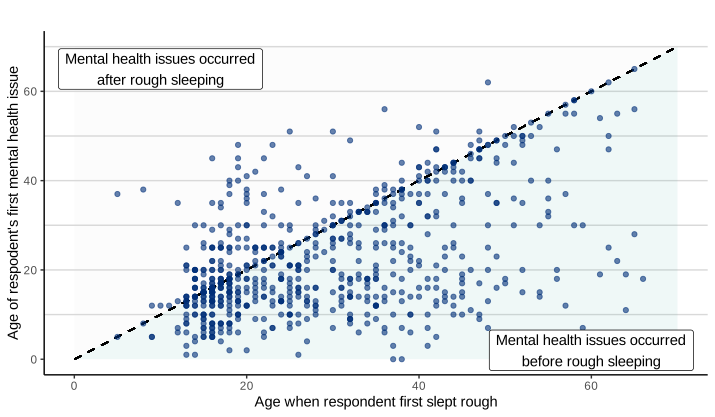
For the people with mental health needs, the first rough sleeping episode occurred at a median age of 26 years (mean age 29.4 years). In contrast, individuals without a mental health need tended to begin sleeping rough later in life, with a median age of 35 years (mean age 35.9 years).
Experiences of homelessness appeared to be more prolonged for those with mental health needs, with 37% reporting being homeless for over 10 years across their lifetime. Whereas this figure was 22% for people without mental ill health.
Just under half of all respondents (45% of those with mental health needs, 48% of those without) had spent most of the previous month rough sleeping.
Table 3.4: Types of homelessness experienced, by locations of sleeping
| Where slept last month | Mental health need reported (n = 800) | No reported mental health need reported (n=166) |
|---|---|---|
| Rough sleeping (or sleeping on transport, in a transport hub, tent or car) | 47% | 48% |
| Hostel (includes supported arrangements) | 15% | 25% |
| Supported housing (excludes hostel or refuge) | 13% | 5% |
| Other accommodation types | 27% | 23% |
Prior to their most recent period of rough sleeping, 21% of respondents with mental health problems had been sofa surfing. This was the most common accommodation type for this group compared with 13% of respondents without a mental health need. In contrast, respondents without mental health support needs were more likely to be living in private rented accommodation prior to rough sleeping. Other accommodation types reported before rough sleeping were broadly similar across the two groups.
A subset of respondents, those who had not been in long-term settled accommodation in the past month but had previously experienced it, were asked a multiple-choice question for the reasons they left their last settled home. This group included 345 respondents with a mental health need and 67 without. Results for this question are shown in Figure 3.2 below.
Figure 3.2 is a bar chart displaying the most prevalent reasons for leaving long settled accommodation. These are selected answers from an extensive list in the questionnaire.
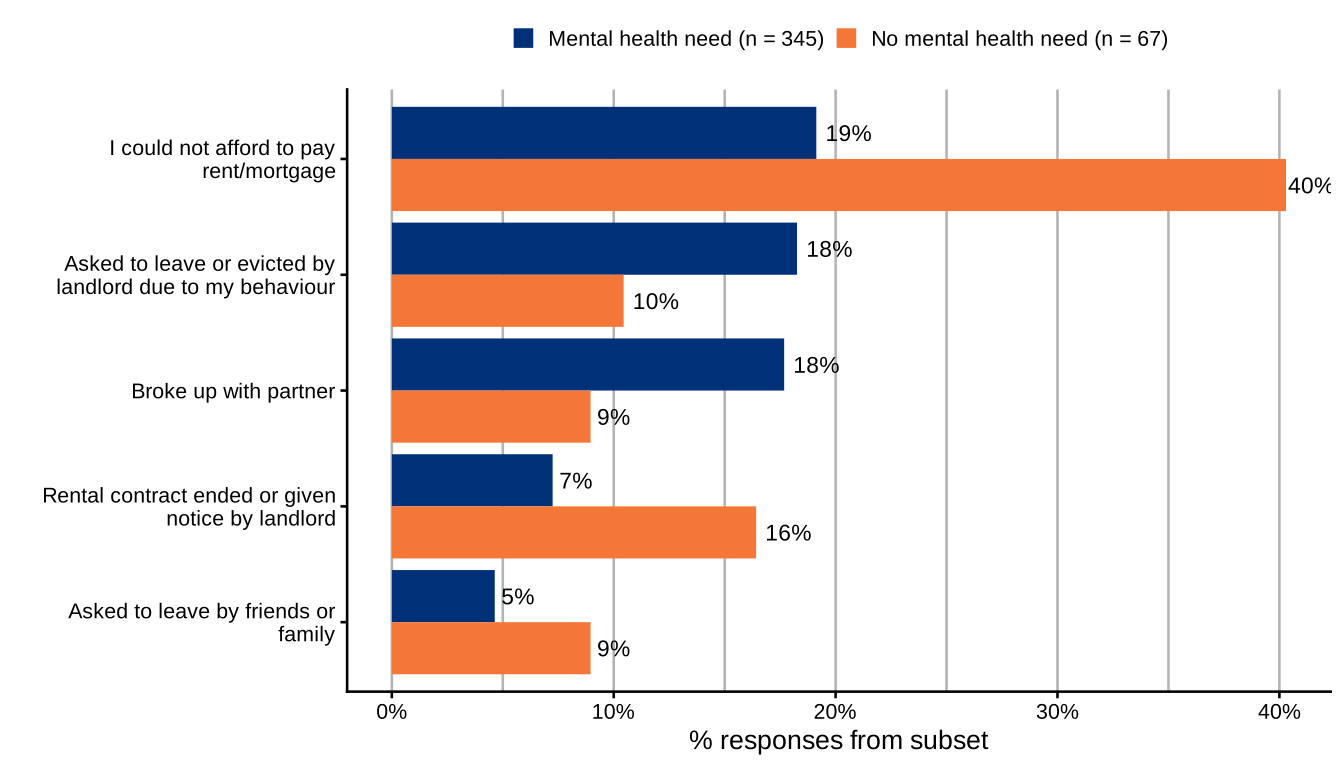
Figure 3.2 indicates that the reasons for leaving previous accommodation varied greatly. Nearly one in five (18%) respondents with mental health needs were asked to leave their previous accommodation due to their behaviour, compared to one in ten (10%) for respondents without a mental health need. Being released from prison was also a reason reported almost exclusively by those with mental health needs (8% compared with 1% of those without).
Additionally, respondents without mental health needs said affordability was the most common reason, with 40% stating that they could not afford their rent or mortgage. This was reported by only 19% of those with mental ill health or disorders. Ending of a rent contract was also more commonly reported by those without mental health needs (16%) than those with (7%). This suggests that financial reasons played less of role in pathways to rough sleeping when mental ill health was involved.
All 966 respondents answered a multiple-choice question for the reasons that prevented them from finding accommodation the last time slept rough.
Table 3.5: Reasons for sleeping rough after leaving prior accommodation
| Reason for rough sleeping | Mental health need reported (n = 800) | No mental health need reported (n = 166) |
|---|---|---|
| No homeless accommodation locally available | 29% | 19% |
| I didn’t know how to find accommodation or get help | 29% | 41% |
| I had no friends or family to ask for help | 16% | 21% |
| Financial reasons | 10% | 14% |
When asked why they slept rough after leaving their last accommodation, 29% of respondents with mental health needs cited a lack of available accommodation, compared to 19% of those without. Not knowing how to find help was more commonly reported by respondents without mental health needs (41%) than those with (29%). A lack of friends or family support was reported by 16% of those with mental health needs and 21% of those without. These observations suggest that those with mental health needs may have been more reliant on external support to find alternative accommodation.
Mental ill health was frequently mentioned as a reason for sleeping rough in the free text responses. For example, one respondent said the reason they were sleeping rough was “I had a mental breakdown and had nowhere to go”. Another said “My mental health issues have led me to be homeless as my family forced me to move out.” Others mentioned the impact or symptoms of their mental health conditions as a factor in their homelessness experience. One example is “I’ve isolated myself and still don’t want to ask for help.”
Some participants reported that mental ill health became part of a chain of events, for example: “I lost my home when my mum died, I had a breakdown and had to get away from [location redacted], I ran away with grief and mental health, and then it became a way of life, I survived, met many kind people as well as hostile people”.
Participants also noted that mental health needs could be a barrier to finding accommodation once sleeping rough. One stated: “I lack motivation, sometimes I don’t want to speak to people. I know what to do but just can’t sometimes”.
Some who had found accommodation were concerned that they may end up sleeping rough again due to mental ill health: “I know it will not last because of how I am with my mental health”.
3.4 Diagnosis of conditions
Key points:
- Multiple mental health conditions were specified, averaging 3.7 per person. Depression (71%) and anxiety (65%) were the most commonly self-reported conditions.
- There were low rates of professional diagnosis for conditions such as eating disorders (52% of those self-reported), ADHD (61%), and autism (62%), indicating that many people sleeping rough may rely on self-assessment.
Respondents were asked whether they experienced any of the mental health conditions or psychological disorders listed in Table 3.6. The most commonly reported conditions were depression (71%) and anxiety (65%). Among those who identified at least one condition (n = 800), the majority reported multiple conditions, with an average of 3.7 conditions per person from the mental health support need group.
A follow-up question asked whether these self-reported conditions had been formally diagnosed by a doctor. Conditions such as eating disorders (52% diagnosed), ADHD (61%), and Autism (62%) had the lowest rates of professional diagnosis. This suggests that many respondents may rely on self-assessment of their mental health conditions, potentially due to barriers in accessing formal diagnosis or healthcare services.
Table 3.6: Count (from a total of 966) of specific conditions relating to mental ill health or psychological disorders and the proportion diagnosed by a doctor
| Condition | Total with condition (n = 966) | Percentage of condition total diagnosed by a doctor |
|---|---|---|
| Depression | 685 | 85% |
| Anxiety | 625 | 83% |
| Post-traumatic stress disorder | 245 | 70% |
| ADHD or ADD | 237 | 61% |
| Trauma | 220 | 71% |
| Personality disorder | 162 | 65% |
| Psychosis or Schizophrenia | 156 | 78% |
| Learning difficulty (Dyslexia Dyspraxia, etc.) | 149 | 73% |
| Bipolar disorder | 121 | 69% |
| Learning disability (Intellectual disability) | 114 | 72% |
| Eating disorder | 102 | 52% |
| Autism or ASD | 95 | 62% |
| Acquired brain injury | 55 | 71% |
| Other condition | 28 | 82% |
3.5 Mental health services
Key points:
- Barriers to accessing mental health services were apparent. Among respondents who slept rough with mental health problems, only 44% received treatment in the past year
- Despite anxiety and depression being the most common conditions, less than half of those affected had contacted mental health services within the past year (47% and 45%, respectively)
Analysis of mental health service use highlighted potential barriers faced by people sleeping rough. Among those with a mental health need, just under half (44%) received treatment in the past year. 21% reported that they had refused treatment at any point, and 18% said they had sought help but were declined. Half (51%) said that they were currently taking medication prescribed for mental ill health or physiological disorders.
In the past year, 55% of women with a mental health condition had contacted a mental health service. This was higher than for men with mental health needs (42%), possibly due to barriers for men or differences in help-seeking behaviour.
Each condition specified by respondents was further cross-referenced to responses that stated if they had contacted mental health services within in the past year. Despite being the most prevalent conditions among the respondents, less than half of those with anxiety (47% of those reported with condition) and depression (45%) said that they contacted these services within that time.
Table 3.7 Access to mental health services, by condition specified
| Condition | Percentage contacted mental health services within past year |
|---|---|
| Psychosis or schizophrenia (n = 156) | 63% |
| Post-traumatic stress disorder (n = 245) | 58% |
| Personality Disorder (n = 162) | 56% |
| Trauma (n = 220) | 55% |
| Bipolar disorder (n = 121) | 55% |
| Autism or ASD (n = 95) | 54% |
| ADHD or ADD (n = 237) | 52% |
| Eating disorder (n = 102) | 47% |
| Anxiety (n = 625) | 47% |
| Depression (n = 685) | 45% |
Challenges accessing mental health services also came up in the free text responses. One respondent stated, “It was difficult to access my services face to face, you had to be suicidal to be seen. I have a very good therapist now who has saved my life. I was put on anti-depressants but my therapist feels this happens too easily, not enough talking therapies, just put you on anti-depressants”. Others mentioned challenges getting their mental health problems taken seriously, long waiting lists, and not knowing how to access help.
However some respondents mentioned positive experiences, and that mental health services had also helped them to access housing support. One said, “My mental [health] worker has been great and put me in touch with other services”.
Several respondents mentioned mental health treatment as one of their hopes or goals for the future in free text responses. One said they planned “To get help for mental health. My mental health is really bad. I left a very good lifestyle. PTSD is also a problem. I also need a roof over my head” and another said their goal was “To focus on dealing [with] my depression that is the main thing preventing me sorting things out”.
Mental ill health was cited by participants as one of the reasons they were turned away from temporary accommodation, or struggled to manage in communal setting such as hostels.
3.6 Homelessness and wider services
Key points:
- Respondents with mental health problems approached a greater number of service types on average (4.3), compared with 2.9 among those without mental health problems
- People in the mental health group were more likely to engage with housing officers (60%), food banks (45%), and substance treatment workers (27%)
- Despite this, 30% of those with mental health needs had not approached their local authority in over a year or ever, and 38% had never seen their local authority.
- While these figures are substantial, those without mental health support needs appeared to have even more limited contact, with 49% not approaching their local authority and 54% never having seen a housing officer. The lack of public service contact may be influenced the large proportion of non-UK nationals within this group.
The mental health support needs group reported engaging with a wider range of services for homelessness or housing-related issues, approaching a mean of 4.3 service types compared to 2.9 for those without mental health support needs. Homelessness organisations were the most commonly contacted service, accounting for similar proportions of those with (73%) and without (69%) mental health needs. Other service contacts were more prevalent among the mental health support needs group including housing officers (60%), health services (33%), substance misuse support (27%), and the police (23%).
Table 3.8: Types of organisations respondents reported they have ever been in contact with while experiencing homelessness or housing problems
| Types of services engaged with | Mental health need reported (n = 800) | No mental health need reported (n = 166) |
|---|---|---|
| Homelessness organisations | 73% | 69% |
| Housing Officer or council one stop shop | 60% | 45% |
| Food banks | 45% | 37% |
| Job Centre Plus Staff | 34% | 28% |
| Health professional | 33% | 14% |
| Drug or alcohol treatment worker | 27% | 8% |
| Soup run | 27% | 20% |
| Housing association | 25% | 15% |
| Police | 23% | 11% |
| Probation Officer | 21% | 5% |
| Citizen’s Advice Service | 18% | 11% |
| Social Worker | 18% | 13% |
Although all 966 respondents had slept rough in the past year, substantial portions had not approached their local authority when they were homeless or at risk of homelessness in this period. 30% of those with mental health needs said they last approached their local authority more than a year ago or had never done so, and 38% said they had not seen a housing officer. Whereas for those without mental health needs, these were 49% and 54% respectively. These observations may reflect the high proportion of non‑UK nationals in this group, and their varying levels of eligibility for, or awareness of, public services that could offer support.
Mental health problems were sometimes reported as a barrier to engaging with housing support services in the free text responses. One participant said “I think mental health problems put people off from helping”. Another reported that “I had a terrible temper due to schizophrenia, so nobody wanted to house me”.
3.7 Overlaps with substance use
Key points:
- Most (60%) respondents with mental health needs reported a substance use support need in the past year. In comparison, one quarter of those without mental ill health reported that they have a substance use need.
- Mental health challenges coupled with substance use may be an early driver in rough sleeping pathways. Among those providing onset ages, 62% experienced mental health needs before or at the same age as their first drug issue, with median onset ages of 17 for mental health and 18 for drug issues.
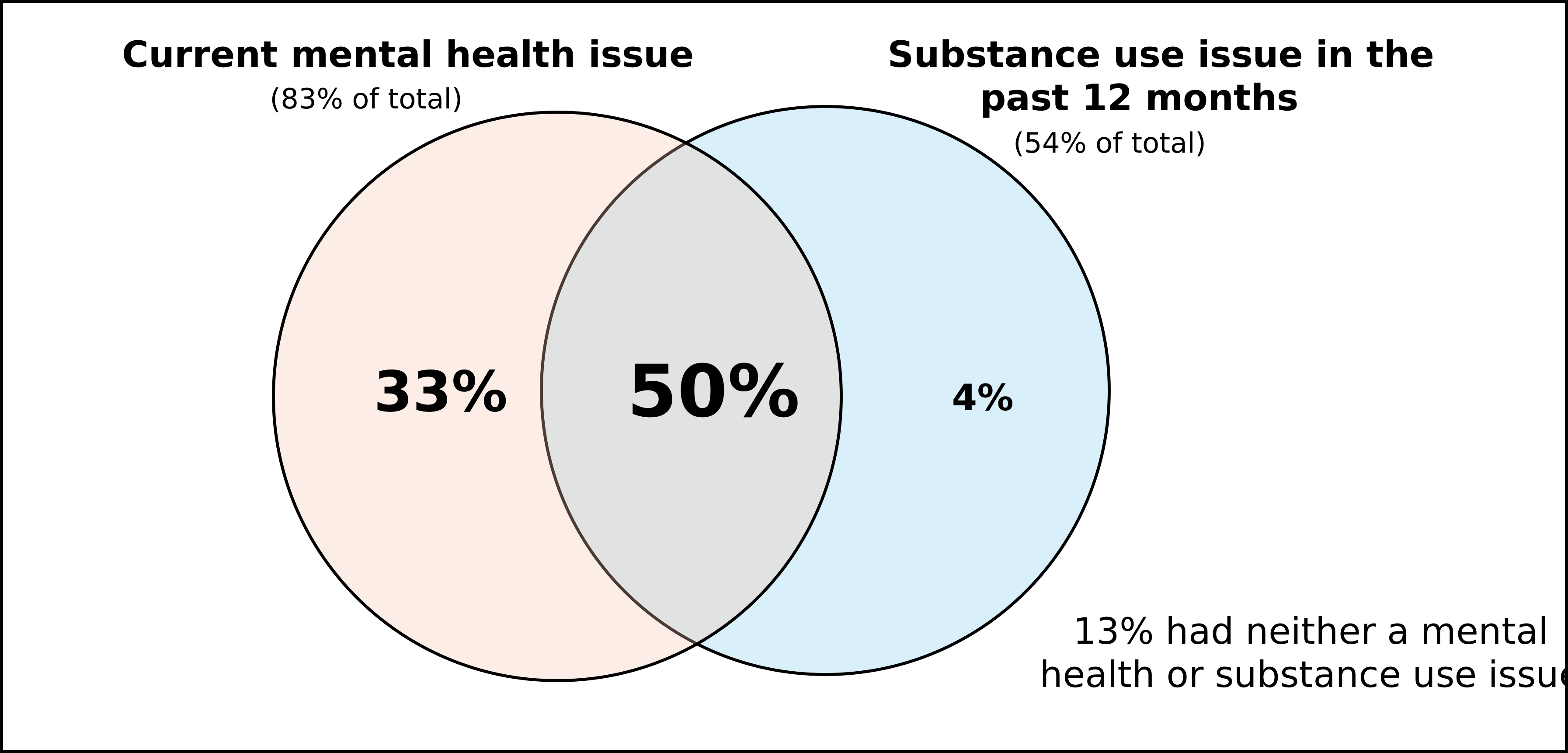
Associations with substance use (for both drugs and alcohol) and mental health support needs were found in questionnaire responses. Over half (60%) of the people with mental ill health were identified as having a substance use issue within the previous 12 months, compared to around one quarter (24%) of the those without a mental health support need. Figure 3.3 below shows the percentages who reported mental health or substance use needs out of all 966 respondents.
Figure 3.3 is a Venn diagram of respondents who reported either mental health or substance use needs (n = 966). 50% of all respondents reported having both.
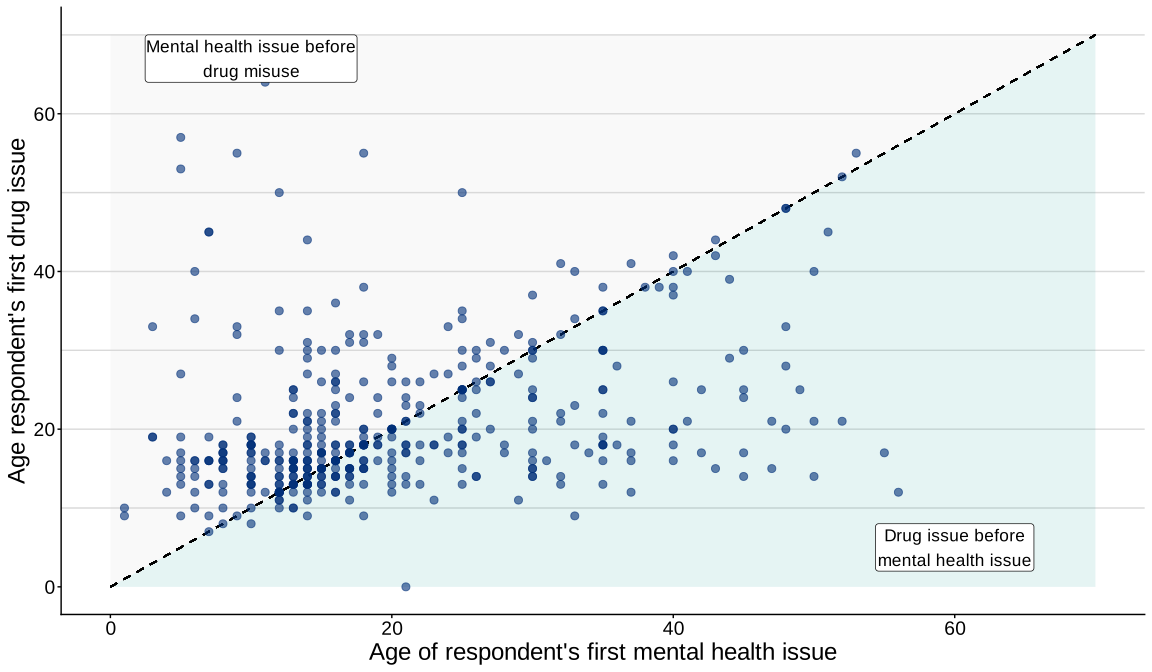
Among the 427 respondents who provided both mental health and drug misuse onset ages, 62% reported experiencing mental health needs either before (46%) or at the same age (16%) as the first time they had drug misuse issues (Figure 3.4). Overall, the median age of first mental health issues was 17 years old, and 18 years for drug use.
Figure 3.4 is a scatter graph displaying the age of the respondents first mental health difficulty against the age of their first drug use issue (n = 427). 62% reported having their first mental health difficulty before or at the same age as their first drug use issue.
Additional analysis looked at the order of events from 520 respondents who provided all three ages of their first experiences for mental health, rough sleeping and substance use. Half of these experienced a sequence of events where:
- Mental health problems first occurred either before or at the same age that substance use began
- Substance use needs were either followed by or the same age as onset rough sleeping.
These observations suggest a commonality of mental health difficulties followed by misuse of substances (often in youth) formed the early stages of their rough sleeping journeys. While this sequence was found in half of respondents, the other half displayed other patterns, including substance use or rough sleeping preceding mental health problems. This suggests multiple pathways into rough sleeping, where mental ill health and substance use may function as either contributing factors or responses.
Respondents were also able to specify any drugs that they had used within the previous 3 months. Those without mental health problems accounted for a small proportion of reported a substance use support need, with almost three quarters (72%) saying they have not used any of the substances listed (Table 3.9). In contrast, substance use was more common among respondents with mental ill health or disorders, for example 48% reported using cannabis and 35% reported crack cocaine.
Table 3.9: Substances used by respondents in the previous 3 months, by mental health status
| Substance | Mental health need reported (n = 800) | No mental health need reported (n = 166) |
|---|---|---|
| Cannabis | 48% | 20% |
| Crack cocaine | 35% | 10% |
| Powder cocaine | 24% | 7% |
| Heroin or other opiates | 22% | 6% |
| Methadone or Subutex | 18% | 4% |
| Misuse of prescription drugs | 15% | 2% |
| Stimulants | 8% | 2% |
| New psychoactive substances | 8% | 2% |
| Hallucinogens | 7% | 2% |
| Others | 11% | 2% |
| None of these | 32% | 72% |
| Don’t want to say | 2% | 2% |
Participants also mentioned the relationship between their mental health and substance use in the free text responses. One said “The mental health therapy has helped me a lot with drinking and my depression.” Another said, “Quite happy with help I’m getting with drug use. Mental health comes before drugs so want to get that sorted first”
However, some participants reported it was difficult to access help, and that some substance use treatment services didn’t help with underlying mental health and trauma support needs.
4. Conclusions
The 2025 Rough Sleeping Questionnaire provides detailed insights into the people who have slept rough in England and their experiences of mental ill health. The findings from this research demonstrate how mental health issues are central to experiences of people who sleep rough. It provides an evidence base on needs that affected most survey participants with experiences of sleeping rough. MHCLG are grateful for the large number of people who participated and thank those who shared their experiences.
This analysis highlights substantial differences in the experiences of homelessness between individuals with and without mental health needs. Those with mental health needs were more likely to experience earlier rough sleeping, longer periods of homelessness, and face greater barriers to securing stable housing. They also report higher engagement with services and more extensive support needs, alongside poorer health outcomes.
The data indicates the complexity of mental health support needs among people sleeping rough, with respondents reporting an average of nearly four conditions each. Of these, depression and anxiety were the most prevalent conditions reported.
In addition, many appeared to face barriers accessing suitable help. A substantial proportion of respondents lacked professional diagnoses for conditions such as ADHD, autism, and eating disorders. Fewer than half of respondents with mental ill health received any form of treatment in the past year, and engagement with services was inconsistent despite high levels of need. The evidences the need to integrate mental health support quickly within homelessness prevention or early relief strategies.
Finally, there was a strong association between mental health issues and substance misuse. For most respondents, difficulties with mental health preceded or coincided with the onset of substance misuse. This suggests that mental health problems may act as a driver for journeys into rough sleeping, particularly during adolescence and early adulthood. Addressing the mental health challenges of people sleeping rough will therefore also need to consider the impact of substance misuse.
Recognising these emerging issues, through data collections such as the RSQ, is an important step to inform rough sleeping services on how to effectively address how mental health influences rough sleeping experiences and housing instability.