
Providing clear and accurate information about prices: summary
Updated 7 January 2026

© Crown copyright 2026
This publication is licensed under the terms of the Open Government Licence v3.0 except where otherwise stated. To view this licence, visit nationalarchives.gov.uk/doc/open-government-licence/version/3 or write to the Information Policy Team, The National Archives, Kew, London TW9 4DU, or email: psi@nationalarchives.gov.uk.
Where we have identified any third party copyright information you will need to obtain permission from the copyright holders concerned.
This publication is available at https://www.gov.uk/government/publications/price-transparency-cma209/providing-clear-and-accurate-information-about-prices-summary
Prices must be clear, complete and accurate. Consumers should have the information they need to make informed decisions, shop around and compare the prices of competing products.
To help them, traders must provide their total prices up front. If you do not provide complete and accurate prices that include charges consumers cannot avoid, you may be breaking the law and undermine consumers’ trust in your business.
It’s illegal to hide additional fees, taxes or other charges that the customer will have to pay until later in the purchase process (sometimes called ‘drip pricing’).
If you’re found to have broken the law, you could be:
- fined up to 10% of your turnover, or £300,000, whichever is greater
- ordered to compensate affected customers
This applies to anyone who sells, advertises, markets or otherwise promotes a product to customers at any point in the purchase process, from early-stage advertising to the final sale.
This page summarises our guidance on price transparency (CMA209), which explains the relevant parts of the Digital Markets, Competition and Consumers Act 2024.
If you are in any doubt about what you need to do, read the full guidance or seek independent legal advice.
Like the full guidance, this page uses examples to show how the law may apply in practice. These examples are not exhaustive and there may be other ways to comply with the law.
Provide the total price of the product up front
When you tell a customer about a product and its price, this will normally be an ‘invitation to purchase’. This can take many forms, including:
- a price on a product in a shop
- an advert in a newspaper or on TV
- online marketing, like an email or a social media post
- a page on your website
An invitation to purchase does not need to include an opportunity for the customer actually to buy the product.
In the invitation to purchase, you must give the customer the total price of the product.
You must present the total price in a clear and timely manner that the customer is likely to see, no matter how you are communicating with them. If you don’t, the information will be treated as having been omitted.
The flowchart below shows what pricing information you must include in the price stated in the invitation to purchase (the total price).
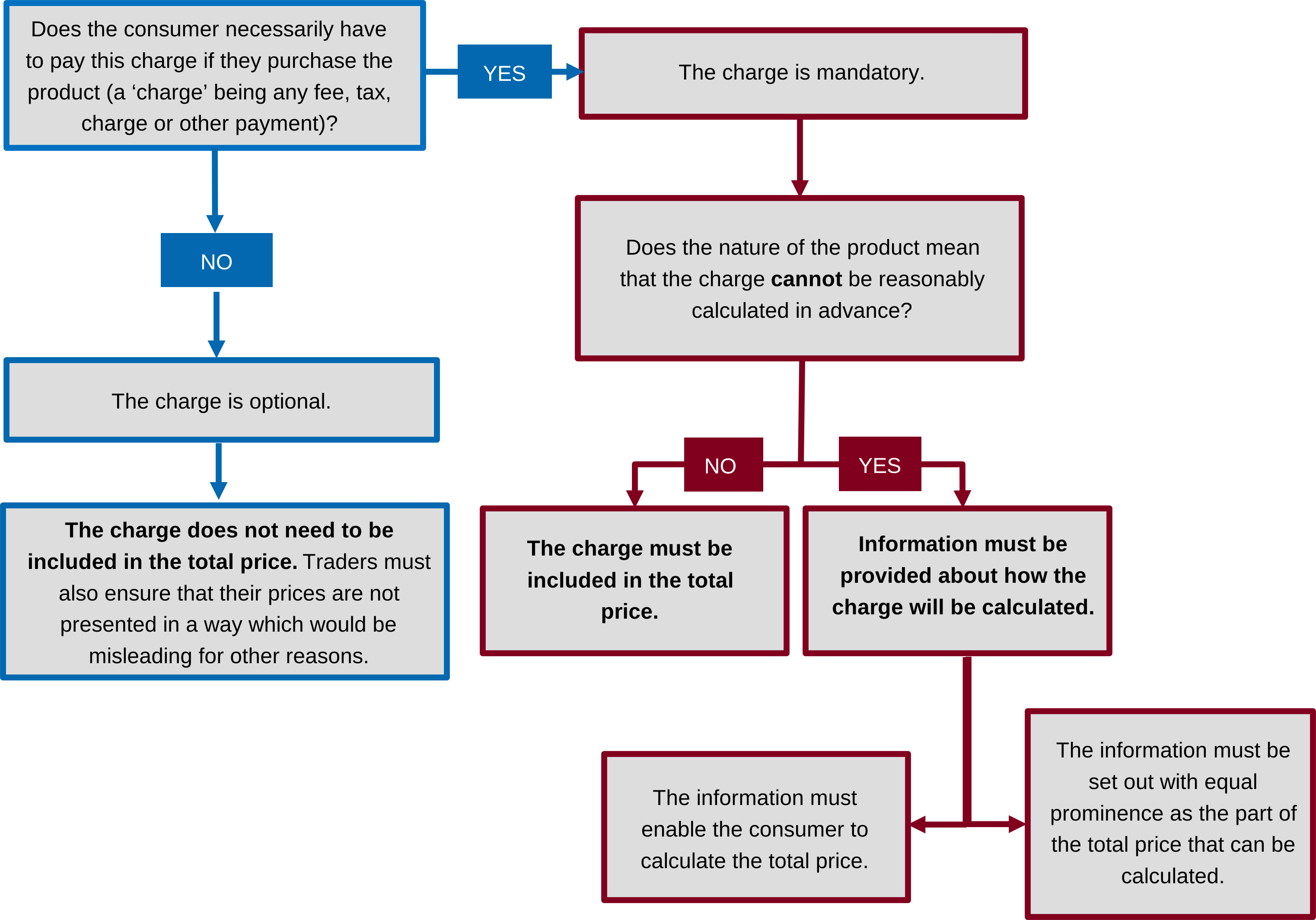
Image description: Steps for deciding what pricing information to include in the invitation to purchase, as described in the paragraphs above and below.
Include any mandatory charges
The total price should normally include any unavoidable or ‘mandatory’ charges. Providing them separately will not normally be enough to comply with the law.
A charge is mandatory if the customer must pay it to buy the product. This could be any:
- fee, like a delivery or booking fee
- tax, like VAT
- other unavoidable payment the customer would have to make to purchase or receive the product
If the nature of the product means you cannot show the total price, give customers what they need to work it out
Depending on the product, it might not be possible for you to calculate the whole or part of the total price. This will normally be because the total price depends on the customer’s requirements. In that case, you must give the customer the information they need to be able to calculate the total price themselves.
The information a customer needs to work out the total price must be as prominent as the part of the price that you can calculate. In practice, it should normally be set out next to the part of the price that you can calculate.

Image description: This online advert invites customers to buy curtains. The curtains are made to measure so the total price cannot be reasonably calculated, but the unit price of £25 per metre is shown prominently instead. The additional delivery charge of £9.95 is also shown directly below the headline price.
For more examples of what to do if you cannot calculate the total price of a product, read the full guidance.
Using an indicative or ‘from’ price
The total price can be an ‘indicative’ or ‘from’ price as long as it includes all applicable mandatory charges and does not mislead customers about what the price covers. For example:
- advertising the price of a holiday based on a 7-night stay for 2 people between specific dates
- advertising the price of photography services as being ‘from £X’
If the nature of the product means that you cannot reasonably calculate the charge in advance, you must provide prominent information about how the customer can calculate the charge, so they can work out the total price.
This does not affect how you take payment
Providing the total price up front does not stop you from, for example:
- taking payment for that price in instalments
- charging a pro-rata price (such as to use a gym membership for a shorter period than advertised)
- making the customer pay part of the price to a different trader, like a broker or other intermediary
What to do with specific charges
Delivery charges
Mandatory delivery charges must be included in the invitation to purchase. If you can reasonably calculate them, you must include them in the total price too.
Optional delivery charges (for example, next-day delivery) must also be included in the invitation to purchase, but they do not have to be part of the total cost – you can provide them separately.

Image description: this online ad for shoes shows a price of £90 that ‘includes standard delivery’, a mandatory charge. An optional charge for next-day delivery (an extra £5) is presented separately.
If the customer must choose between delivery charges, include the cheapest delivery option until the customer chooses a different one.
Some mandatory delivery changes may vary (for example, based on the customer’s location). If you don’t know what the charge will be, you must include enough information in the invitation to purchase to enable the consumer to calculate the total price and this information should be presented with the same prominence as the headline price. As soon as you can reasonably calculate the charge, you must include it the total price.
You can also present other pricing information to the customer in the invitation to purchase, such as the price of the product excluding delivery, as long as you present the total price in a clear and timely manner and in a way that the customer is likely to see it.
If you run a retail website, you may be able to comply by prominently showing the delivery fees you charge and providing a running total, including those fees, for the customer’s order throughout the purchase process. The running total must be presented in a clear and timely way that the customer will be likely to see.
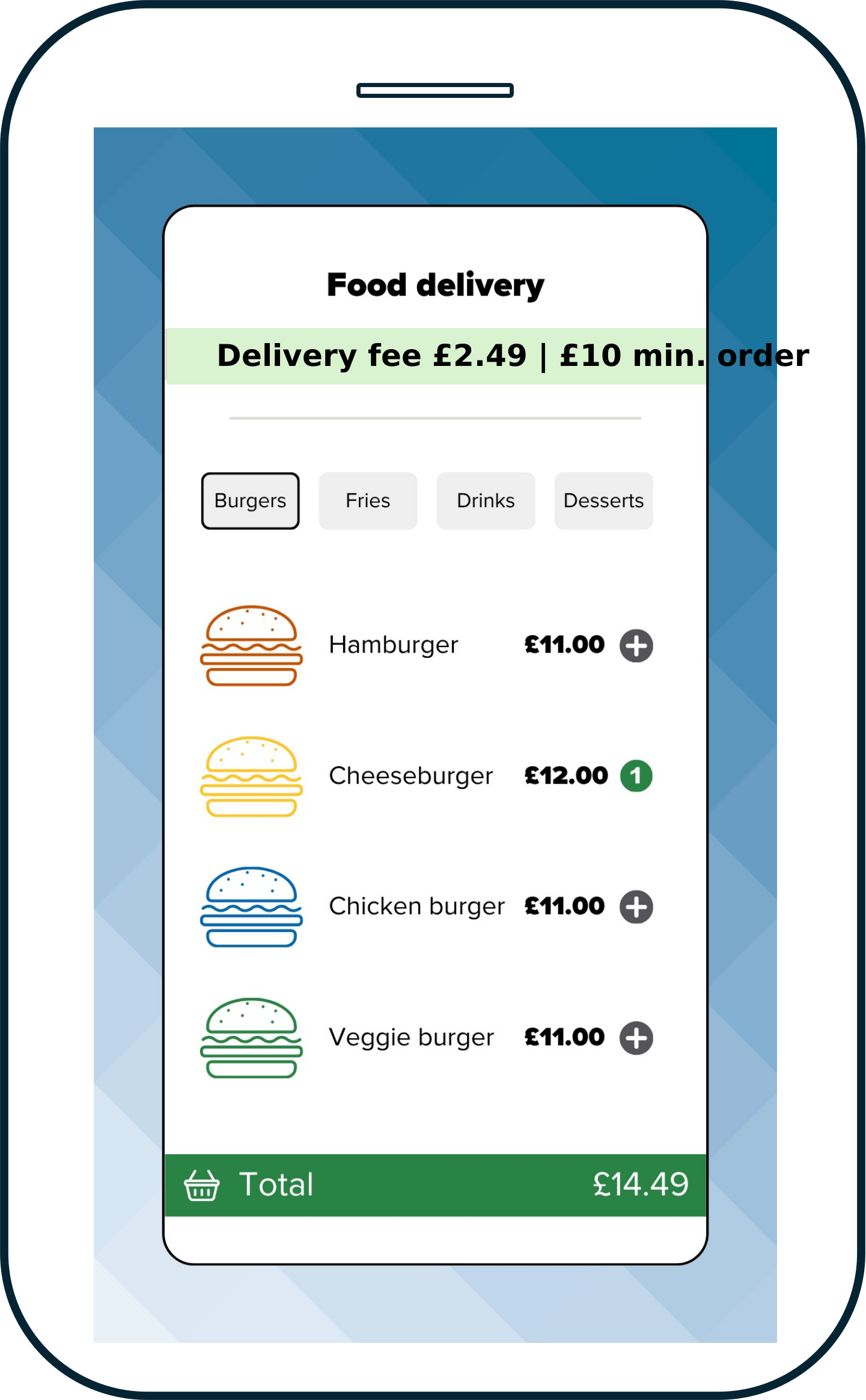
Image description: This online basket for a food delivery service shows the running total of the customer’s order, including a delivery fee. The total price is £14.49 as this price includes the £12.00 cheeseburger and £2.49 delivery fee.
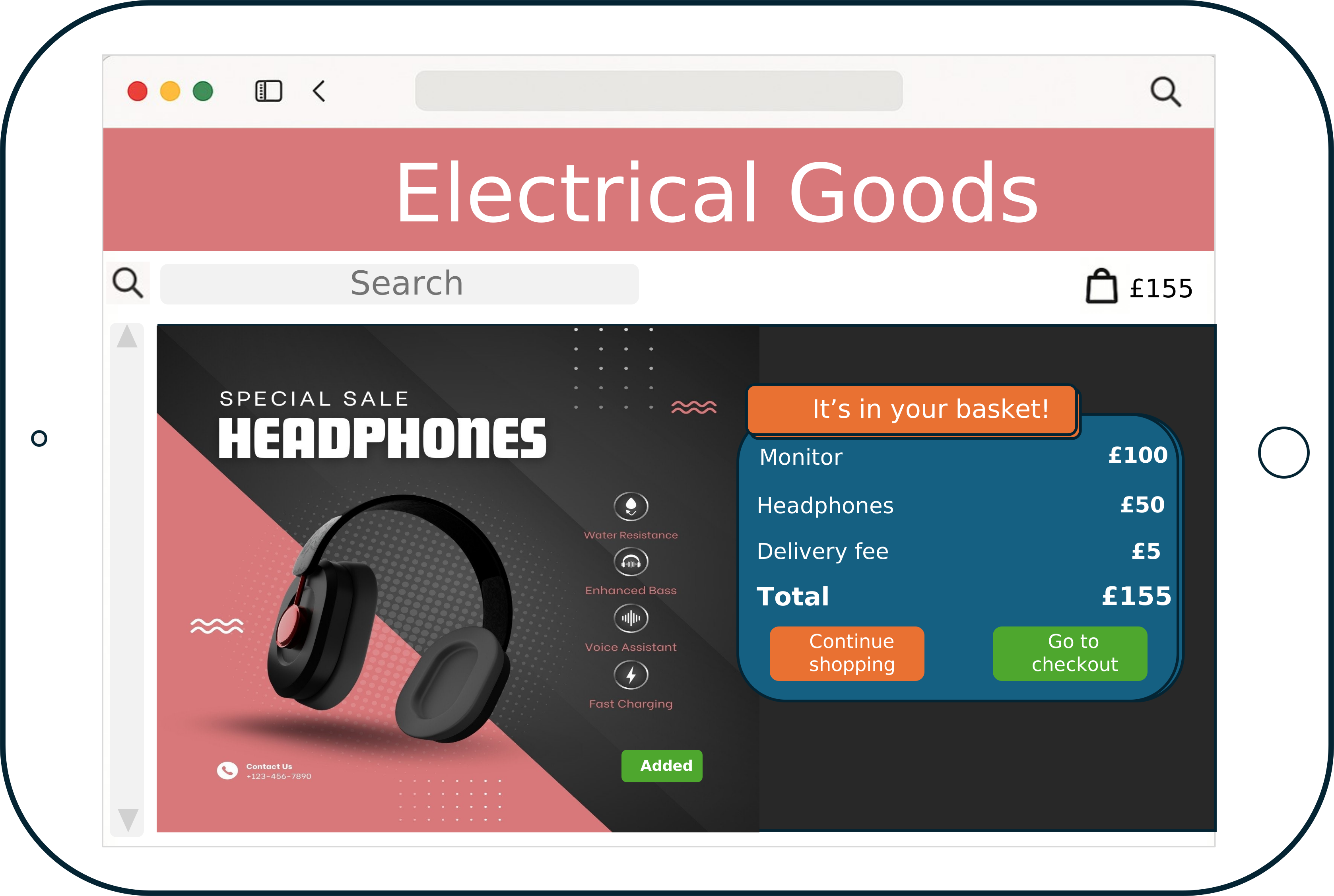
Image description: On this website, the customer’s basket is automatically shown when they click ‘add to basket’. The basket shows a running total of the items selected (monitor £100, headphones £50) and a mandatory delivery charge of £5, reflected in the total price of £155.
Per-transaction charges
A per-transaction charge is a mandatory charge that applies to a purchase or order, not to an individual product. A one-off, flat booking fee, for example.
What you must do
Include mandatory per-transaction charges in the total price of the product, even in early-stage advertising. If you use a ‘from’ price, it should include any mandatory per-transaction charges.

Image description: This early-stage advert for a theatre production includes a mandatory £2 per-transaction charge in the headline price.
Periodic pricing
Some products require the customer to make periodic (often monthly) payments in return for ongoing services. Examples include subscriptions, gym memberships and broadband contracts.
What you must do
If a contract is a rolling monthly contract, meaning the customer can cancel it at any time, then show the total price the customer will pay each month (the full price, including any mandatory charges the customer will pay in that period).
If a contract has a minimum term (for example, 12 months), then either show:
- the cumulative price for the whole contract
- the price payable each month, along with the number of months that price is payable
You can also present other pricing information to the customer in the invitation to purchase, as long as you still present the total price in a clear and timely manner and in a way that the customer is likely to see it.
For example, a gym could offer a membership as £70 per month for 12 months, plus a £30 joining fee (‘total annual membership: £870’).
Local charges and taxes
Always include mandatory local charges (like resort fees) and taxes in the invitation to purchase. It will normally be possible to calculate them and, where you can reasonably work them out, you must include them in the total price.
‘From’ prices or indicative prices (like the price for 2 adults staying for 7 nights) should always include any applicable taxes and charges.
If part of the total price is to be paid by the customer locally, give them clear ‘pay now’ / ‘pay locally’ amounts in addition to the overall total.
If part of the charge is to be paid locally in a foreign currency, either:
- convert the charge to pounds and include it in the total price
- provide the total price in the foreign currency
When converting from foreign currency, you should also tell customers what exchange rate you used to calculate the total price.