Laboratory confirmed cases of pertussis in England: annual report for 2025
Updated 25 June 2026
Applies to England

© Crown copyright 2026
This publication is licensed under the terms of the Open Government Licence v3.0 except where otherwise stated. To view this licence, visit nationalarchives.gov.uk/doc/open-government-licence/version/3 or write to the Information Policy Team, The National Archives, Kew, London TW9 4DU, or email: psi@nationalarchives.gov.uk.
Where we have identified any third party copyright information you will need to obtain permission from the copyright holders concerned.
This publication is available at https://www.gov.uk/government/publications/pertussis-laboratory-confirmed-cases-reported-in-england-2025/laboratory-confirmed-cases-of-pertussis-in-england-annual-report-for-2025
Introduction
This report summarises data on laboratory-confirmed cases of pertussis reported in England in the calendar year 2025. The report covers confirmed case numbers and their distribution, information on deaths related to pertussis, and data on vaccination uptake through the childhood and prenatal programmes.
Pertussis is a cyclical disease, with increases occurring every 3 to 5 years, and seasonal activity usually peaking each year in quarter 3 (July to September). Prior to the COVID-19 pandemic the last major outbreak occurred in 2012 and cyclical increase in 2016. Intervention measures implemented to help control the spread of COVID-19 also had an impact on other infectious diseases, including pertussis (1).
Consequently, pertussis activity was exceptionally low across England from April 2020 and persisted at very low levels until summer 2023 when case numbers began to increase (figure 1). This increase continued into 2024 and was observed across all age groups, including vulnerable infants, and in every region in England. This led to the UKHSA declaring a national (standard) incident for pertussis in England in May 2024. Number of laboratory-confirmed cases peaked in May 2024 and then decreased month on month reaching similar levels observed in the years preceding the COVID-19 pandemic.
Laboratory confirmed cases and incidence
In England, there were 674 new laboratory confirmed cases of pertussis (tested via culture, PCR, serology or oral fluid) reported to the UK Health Security Agency’s (UKHSA’s) pertussis enhanced surveillance programme in 2025 [footnote 1]. The number of laboratory-confirmed cases reported in 2025 were 95.5% lower than the 14,877 cases reported in 2024 which were the highest since the introduction of the Pertussis Enhanced Surveillance Programme in 1994. There was one reported death in an infant who developed pertussis between January and December 2025 [footnote 2].
The total number of samples (serum and oral fluid for antibody testing as well as PCR) submitted to UKHSA for testing was 67.6% lower in 2025 (11,791 samples) than in 2024 (36,495 samples) with a test positivity rate of 4.8% (566 of 11,758) compared with 37.3% (13,523 of 36,297) in 2024.
After the resurgence of pertussis in 2024, which peaked in May with 3,033 cases reported, the number of laboratory-confirmed cases reported decreased month on month from June to December 2024 and continued to decrease in 2025, from 149 cases reported in January to 31 cases reported in December 2025 (figure 1). The total number of cases reported in 2025 were the third lowest reported since 2008, with the COVID-19 pandemic years of 2021 and 2022 being lower.
There were 328 confirmed cases in quarter 1 of 2025; 168 cases in quarter 2; 101 cases in quarter 3 and 77 cases in quarter 4 (figure 1 and table 1).
The national incidence for all age groups, based on laboratory confirmed cases of pertussis in England and 2024 population estimates (2), decreased in 2025 reaching 1.1 per 100,000 compared to 25.4 per 100,000 in 2024 (figure 2).
Of the 674 cases confirmed between January and December 2025, 77.2% (520 cases) were in those aged 15 years or older with 8.2% in children aged between 10 and 14 years (55 cases) and 3.6% (24 cases) in children aged 5 to 9 years. Children aged between 1 and 4 years accounted for 6.1% (41) of cases and infants aged under one year for 5.0% (34) (table 2).
In 2025, 12 laboratory confirmed cases were reported in infants aged under 3 months compared to 433 cases in 2024. Prior to 2024 there had been an overall decline in pertussis cases in infants under 3 months of age since the introduction of the prenatal vaccination programme in 2012 and estimates of prenatal vaccine effectiveness against confirmed infant disease have been consistently high with the latest estimate at 89% (95% CI, 86 to 91%) (3). Despite this, the incidence of laboratory confirmed cases continues to be highest (8.4 per 100,000) in infants aged less than 3 months, who are at most risk of serious disease and too young to be fully vaccinated (figure 2).
Similarly, the number of cases in infants aged 3 to 5 months decreased from 231 cases in 2024 to 3 (2.1 per 100,000) in 2025 and in infants aged 6 to 11 cases decreased from 229 in 2024 to 19 (6.6 per 100,000) in 2025. Lower incidence in these infant age groups compared to the youngest infant age group is consistent with protection from primary vaccination offered at 8, 12 and 16 weeks of age.
Laboratory-confirmed case numbers in children aged one year and older and adults were markedly lower in 2025 than in 2024 (table 2):
- the number of children aged 1 to 4 years confirmed with pertussis decreased from 867 cases in 2024 to 41 cases in 2025
- in children aged 5 to 14 years, numbers of confirmed cases decreased from 4,361 cases in 2024 to 79 cases in 2025. Children aged between 10 and 14 years accounted for 8.2% of cases in 2025
- individuals aged 15 years and older accounted for 77.2% of laboratory confirmed cases in England in 2025, decreasing from 8,756 cases in 2024 to 520 in 2025
Ascertainment in those aged 5 to less than 17 years has improved with availability of oral fluid testing since 2013. From 1 May 2018, the availability of oral fluid testing was extended to all children aged from 2 up to and including 16-year-olds, which may underpin earlier increases observed in the 1 to 4 year age group. In 2025 oral fluid alone accounted for 53.3% (64 of 120) of cases in children aged between 1 and 14 years (table 3).
Deaths
In England, 14 deaths were reported in infants with confirmed pertussis in the 2012 outbreak year. Following the introduction of pertussis vaccination in pregnancy in October 2012, there have been 33 deaths in babies with confirmed pertussis to the end of 2025. There were no reported deaths in infants with confirmed pertussis between 2020 and 2022, one death reported in 2023, 11 reported deaths in 2024 and one reported death of an infant who contracted pertussis in 2025.
All the deaths in 2012, and those that have occurred following the introduction of the prenatal programme to end December 2025, occurred in infants who were too young to be fully protected by their primary vaccinations, some with co-infections and/or underlying health complications. Of the 33 infants that died, 27 were born to mothers who were not vaccinated in pregnancy.
Estimated vaccine effectiveness against death in infants with pertussis whose mothers had been vaccinated, including recent deaths to the end of August 2024, is estimated to be very high at around 91% (unpublished UKHSA data).
No pertussis-related deaths were reported in older children, adolescents and adults in 2025. In 2024, 11 people aged one year or older who died had a reported laboratory confirmation of pertussis and had pertussis listed as an ONS cause of death (4). Most of these cases were in individuals aged over 65 years of age (73%; 8 cases). In all cases, there was more than one cause of death documented in addition to pertussis. No pertussis-related deaths were reported in older children, adolescents or adults in 2023. This assessment is provisional as there can be delays to final confirmation of Office for National Statistics official cause of death (for example, in the event that an inquest is called).
Childhood vaccination uptake
The national vaccination schedule recommends pertussis vaccination at 8, 12 and 16 weeks of age and a pre-school booster at 3 years and 4 months.
Vaccine coverage estimates for 2024/2025 financial year, evaluated between April 2024 to March 2025 for DTaP/IPV/Hib/HepB immunisation across England, was 91.3% for 3 doses at 12 months of age and 81.3% for the booster dose by 5 years of age (5). Coverage estimates for DTaP/IPV/Hib at 12 months of age were slightly higher than the coverage estimates for 2023/2024 when the proportion of children vaccinated at 12 months was 91.2% and coverage estimates were lower for the booster dose reported at 82.7% in the same period (5).
Latest vaccine coverage estimates for 2025, evaluated between October and December 2025 for DTaP/IPV/Hib/HepB immunisation across England, was 90.5% for 3 doses at 12 months of age, 0.1 percentage point increase from the previous quarter. Coverage estimates for DTaP/IPV (pre-school booster) by fifth birthday was 81.8%, the same as the previous quarter (6).
From January 2026, for children born on or after 1 July 2024 an additional (fourth dose) of DTaP/IPV/Hib/HepB (hexavalent) vaccine will be offered at new routine vaccination appointment at 18 months.
Prenatal vaccination programme
The prenatal pertussis immunisation programme (7, 8) was introduced in response to the 2012 outbreak. It became permanent from June 2019 (9) based on evidence of disease impact, high effectiveness and safety (10,11,12,13). Women should normally receive their whooping cough vaccine around the time of their mid-pregnancy scan (usually 20 weeks) but can receive it from 16 weeks (9). To provide optimal protection to the baby the vaccine should be given before 32 weeks. Women can still have the vaccine later in pregnancy and those who miss prenatal vaccination can receive it up to the time their infant receives their first vaccines at 8 weeks of age.
The UKHSA reported that the proportion of mothers due to give birth in 2025 who had been immunised with a pertussis containing vaccine in pregnancy in England ranged from 69.8% (January) to 75.3% (November) compared to 2024 where monthly averages were lower ranging from 58.9% (February, March and April) to 68.2% (December) following a substantial decline during the pandemic period (14) [footnote 3]. Importantly, substantial improvements in prenatal coverage were seen over the course of 2025 nationally, with this trend to increasing coverage seen across all regions nationwide.
It is important that women are offered pertussis vaccination in pregnancy (ideally between 20 and 32 weeks), to optimise protection for their babies from birth, and for infants to complete the vaccination schedule on time.
Supplementary data tables from 1994 to 2025 are available to download.
Figure 1. Total number of laboratory-confirmed pertussis cases per evaluation quarter in England: 2011 to 2025
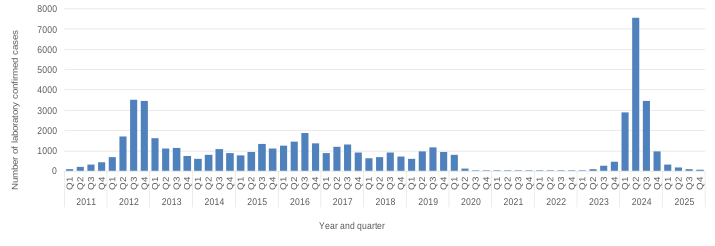
Figure 2. Incidence of laboratory confirmed pertussis cases by age group in England: 1998 to 2025
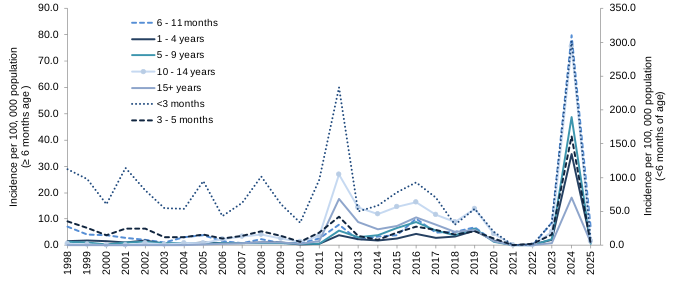
Table 1. Laboratory confirmed cases of pertussis by quarter and test method in England: 2025 [note 1]
| Quarter | Culture | PCR | Serology | OF | Not reported [note 2] | Total |
|---|---|---|---|---|---|---|
| January to March | 2 | 35 | 256 | 30 | 5 | 328 |
| April to June | 3 | 28 | 117 | 20 | 0 | 168 |
| July to September | 1 | 27 | 64 | 8 | 1 | 101 |
| October to December | 1 | 16 | 45 | 14 | 1 | 77 |
| Total | 7 | 106 | 482 | 72 | 7 | 674 |
Note 1: Culture confirmed cases may additionally have tested positive by any other method, PCR confirmed cases may have additionally tested positive by serology or oral fluid and serology confirmed cases may also have been confirmed by oral fluid. Cases are only represented once in the table. Submission of all presumptive B. pertussis isolates is encouraged for confirmation of identity and to allow further characterisation for epidemiological purposes.
Note 2: Details of test method were not reported.
Table 2. Total number of laboratory-confirmed pertussis cases per year and age group England: 2011 to 2025 [note 3]
| Year | Under 3 months | 3 to 5 months | 6 to 11 months | 1 to 4 years | 5 to 9 years | 10 to 14 years | 15 years and over | Total |
|---|---|---|---|---|---|---|---|---|
| 2011 | 164 | 32 | 9 | 16 | 18 | 113 | 699 | 1,051 |
| 2012 | 407 | 74 | 27 | 103 | 175 | 806 | 7,775 | 9,367 |
| 2013 | 85 | 24 | 7 | 65 | 99 | 429 | 3,912 | 4,621 |
| 2014 | 98 | 14 | 11 | 48 | 128 | 351 | 2,737 | 3,387 |
| 2015 | 130 | 32 | 13 | 70 | 218 | 437 | 3,291 | 4,191 |
| 2016 | 155 | 47 | 34 | 117 | 305 | 504 | 4,787 | 5,949 |
| 2017 | 115 | 37 | 16 | 75 | 198 | 370 | 3,529 | 4,340 |
| 2018 | 49 | 26 | 16 | 88 | 139 | 288 | 2,342 | 2,948 |
| 2019 | 83 | 32 | 21 | 147 | 222 | 467 | 2,706 | 3,680 |
| 2020 | 30 | 15 | 5 | 48 | 52 | 150 | 693 | 993 |
| 2021 | 1 | 1 | 0 | 3 | 2 | 3 | 39 | 49 |
| 2022 | 2 | 3 | 0 | 10 | 3 | 3 | 47 | 68 |
| 2023 | 48 | 23 | 25 | 52 | 78 | 178 | 453 | 857 |
| 2024 | 433 | 231 | 229 | 867 | 1,656 | 2,705 | 8,756 | 14,877 |
| 2025 | 12 | 3 | 19 | 41 | 24 | 55 | 520 | 674 |
Note 3: 2019 total includes 2 cases where the age was not known.
Table 3. Age distribution of laboratory confirmed cases of pertussis by test method in England: 2025 [note 4]
| Age group | Culture | PCR | Serology | Oral fluid only | Not reported [note 5] | Total |
|---|---|---|---|---|---|---|
| under 3 months | 1 | 10 | 1 | 0 | 0 | 12 |
| 3 to 5 months | 0 | 3 | 0 | 0 | 0 | 3 |
| 6 to 11 months | 1 | 16 | 0 | 0 | 2 | 19 |
| 1 to 4 years | 0 | 19 | 4 | 16 | 2 | 41 |
| 5 to 9 years | 1 | 3 | 5 | 15 | 0 | 24 |
| 10 to 14 years | 1 | 5 | 16 | 33 | 0 | 55 |
| 15 years and over | 3 | 50 | 456 | 8 | 3 | 520 |
| Total | 7 | 106 | 482 | 72 | 7 | 674 |
Note 4: Culture confirmed cases may additionally have tested positive by any other method, PCR confirmed cases may have additionally tested positive by serology or oral fluid and serology confirmed cases may also have been confirmed by oral fluid. Cases are only represented once in the table. Submission of all presumptive B. pertussis isolates is encouraged for confirmation of identity and to allow further characterisation for epidemiological purposes.
Note 5: Details of test method were not reported
References
1. E Tessier, and others (2022). Impact of the COVID-19 pandemic on Bordetella pertussis infections in England. BMC Public Health.
2. Office for National Statistics, 2024 population estimates.
3. G Amirthalingam, and others (2023). Optimization of Timing of Maternal Pertussis Immunization From 6 Years of Postimplementation Surveillance Data in England. Clinical Infectious Diseases.
4. C Alber, and others (2025). The impact of multiplex panel testing on ascertainment of pertussis-attributable deaths: national surveillance from England. medRxiv.
5. Vaccination coverage statistics for children aged up to 5 years, England (COVER programme) report: April 2024 to March 2025. UK Health Security Agency, August 2025.
6. Cover of vaccination evaluated rapidly (COVER) programme October to December 2025. UK Health Security Agency, August 2025.
7. Confirmed pertussis in England and Wales continues to increase. Health Protection Report volume 6 number 15, 13 April 2012.
8. Department of Health (2012). Pregnant women to be offered whooping cough vaccine (website news story, 28 September).
9. JCVI (2014). Minute of the meeting on 4 June 2014.
10. G Amirthalingam, and others (2014). Effectiveness of maternal pertussis vaccination in England: an observational study. The Lancet.
11. Dabrera G, and others (2014). A case-control study to estimate the effectiveness of maternal pertussis vaccination in protecting newborn infants in England and Wales, 2012 to 2013. Clinical Infectious Diseases.
12. Donegan K, and others (2014). Safety of pertussis vaccination in pregnant women in UK: observational study. British Medical Journal.
13. Amirthalingam G, and others (2016). Sustained effectiveness of the maternal pertussis immunization program in England three years following introduction. Clinical Infectious Diseases.
14. Pertussis vaccination programme for pregnant women update: vaccine coverage in England, October to December 2024. Health Protection Report volume 19 number 4, 24 April 2025.
-
The number of laboratory-confirmed cases presented are provisional and can decrease as follow-up of vaccination status continues. Cases who are confirmed as vaccinated within a year of a positive serology or oral fluid test are excluded: both recent vaccination and/or recent infection will give a positive result using these test methods. ↩
-
Deaths are reported to the UKHSA pertussis enhanced surveillance programme from Health Protection Teams, Office of National Statistics or Patient Demographic Service. These are also provisional as there can be delays in reporting of deaths in babies with whooping cough. ↩
-
A new point of care app developed by NHSE to record vaccination events was introduced in September 2024. The Record a Vaccination service (RAVs) has improved prenatal vaccination dataflows into general practice, which may partially account for the increase in coverage reported since its introduction. ↩