Ofgem Review: final report
Updated 22 April 2026

© Crown copyright 2026
This publication is licensed under the terms of the Open Government Licence v3.0 except where otherwise stated. To view this licence, visit nationalarchives.gov.uk/doc/open-government-licence/version/3 or write to the Information Policy Team, The National Archives, Kew, London TW9 4DU, or email: psi@nationalarchives.gov.uk.
Where we have identified any third party copyright information you will need to obtain permission from the copyright holders concerned.
This publication is available at https://www.gov.uk/government/publications/ofgem-review-2026/ofgem-review-final-report
Ministerial foreword
Families and businesses across Britain will worry about the ongoing impact of events in the Middle East on the cost of living here at home. Since the start of this crisis the government has been focused on fighting people’s corner while learning the right long-term lessons for our country.
Thanks to the decisions we took at the Budget last year, the energy price cap fell by 7% at the start of April, with savings locked in until the end of June. And in recent weeks we have acted to prevent unfair practices like price-gouging, help those who rely on heating oil, and ensure businesses get a fair deal on their bills.
Meanwhile, we are going further and faster to get off the rollercoaster of fossil fuel markets with clean homegrown power that we control—bringing forward our next renewables auction, speeding ahead on new nuclear power, and bringing “plug in solar” to the UK for the first time.
Today we publish the final report of the Ofgem Review—strengthening the energy regulator to protect families and businesses from bad practice, while driving forward our mission to take back control of Britain’s energy and bring down bills for good.
In December 2024 we kicked off the first comprehensive review in Ofgem’s 25-year history to ensure it has the powers to act as a strong consumer champion, while securing the investment in clean energy needed to deliver energy security and lower bills, and driving economic growth. What we heard was that Ofgem needed to evolve to stay ahead of a rapidly changing energy landscape across retail, networks, and new technologies.
The measures we are setting out today will empower Ofgem to enforce the highest standards and crack down on instances of bad practice in the energy market—with new powers to directly enforce consumer law without needing to go through the courts; hold executives individually accountable in cases of wrongdoing; and limit bonuses if rules are broken.
This review also marks the first step in giving Ofgem the power to regulate parts of the energy sector, such as heating oil, which for too long have lacked proper consumer protection. And it will support the steps we are taking to ensure billpayers will also get access to quicker, fairer and easier compensation when things go wrong.
In doing so, we will build a more focused, empowered and expert regulator that is fit for the future in a changing energy system—with the powers and capability needed to act decisively, stand up for consumers and help secure Britain’s energy independence.
The government looks forward to working with Ofgem, industry and others to implement these reforms. We will continue to do whatever it takes to stand up for consumers, as we build an energy system that will protect families and businesses over the years ahead.
The Rt Hon Ed Miliband MP,
Secretary of State for Energy Security and Net Zero
Executive summary
The UK energy system is undergoing profound transformation. The transition to clean energy, new technologies and business models, and the evolving role of energy in consumers’ lives are reshaping the market. This is a critical opportunity to ensure the regulatory framework remains fit for purpose.
The Department for Energy Security and Net Zero (DESNZ) will support the Office of Gas and Electricity Markets (Ofgem) to reform so it can meet the demands of a more dynamic energy system. This report sets out a focused programme to modernise Ofgem, strengthening consumer protection, enabling more proportionate and innovative regulation, and clarifying system boundaries while wider market and system reform continues. It strengthens Ofgem’s foundations so it can adapt as the market evolves, maintain a clear focus on consumers, and support more coherent roles and responsibilities across the system.
A core objective is to sharpen the division of responsibilities between government and the independent regulator. Government will set the strategic outcomes and priorities - the ‘what’ - through a reformed, Ofgem-specific Strategy and Policy Statement (SPS), while Ofgem will determine the ‘how’ within its remit. This provides greater clarity for consumers, investors and the wider market, supports transparent decision-making and long-term certainty, and strengthens accountability. As implementation begins, DESNZ and Ofgem will also work with the National Energy System Operator (NESO) and stakeholders to clarify and maintain aligned roles across the 3 organisations.
Ofgem was established in 2000 to regulate the newly liberalised energy supply sector and promote competition. It has delivered important benefits for households and businesses, including improved consumer protections and support for network delivery. However, the Review concludes that Ofgem’s current structure, tools and capabilities are no longer sufficient for a more complex and fast-changing energy system. To reduce the risk of consumer detriment, it needs clearer responsibilities, stronger and more agile enforcement, and enhanced organisational capability to anticipate risks and act decisively.
This is not about more regulation, but better regulation: targeted, proportionate and outcomes based. The reforms are designed to reduce unnecessary burden while raising standards and improving consumer experience, enabling Ofgem to regulate more effectively and efficiently in the interests of consumers.
The Review assessed whether Ofgem’s structure, statutory duties and organisational culture remain fit for purpose. It focused on 7 core objectives:
- Redefining regulatory boundaries
- Clarifying Ofgem’s mandate and duties
- Strengthening consumer protection and service standards
- Assessing and reforming regulatory powers
- Enhancing skills and capability
- Supporting economic growth and net zero
- Improving transparency and scrutiny
Stakeholder engagement highlighted a clear need for reform. Many pointed to confusion and duplication across Ofgem, DESNZ and NESO, creating inefficiency and blurred accountability. Suppliers described overlapping duties and reactive regulation; consumer groups raised concerns about weak enforcement and limited redress; and other firms highlighted high staff turnover and gaps in digital and financial expertise. Some also described a risk-averse, process-heavy culture that can slow decision-making and inhibit innovation.
The report sets out reforms to deliver 6 strategic outcomes for a reformed Ofgem (detailed in Section 5):
- A strategic, outcomes-focused regulator
- A clearly defined system and remit
- A high-performing, expert organisation
- An empowered regulator that protects and promotes consumer interests
- A regulator that enables innovation, investment, growth and the clean energy transition
- A transparent and accountable regulator
To deliver these outcomes, DESNZ and Ofgem will implement a focused set of reforms: clarifying institutional roles, modernising statutory duties to enable forward-looking regulation, strengthening enforcement and redress, and enhancing digital, financial and technical capability. Together, these changes will reinforce Ofgem’s independence, sharpen its regulatory tools, and strengthen its ability to oversee a dynamic, decarbonising energy market, improving service standards and supporting energy security and economic growth.
See Annex B for the Review’s full table of actions.
1. Context
The energy system plays an essential role in daily life, keeping homes warm, powering transport and supporting businesses and public services. Russia’s illegal invasion of Ukraine, and recent events in the Middle East, have exposed the UK’s vulnerability to volatile fossil fuel markets, contributing to higher bills. Clean, homegrown energy is central to improving energy security and reducing exposure to future shocks.
Delivering a clean, secure and fair energy system depends on an effective regulator and a regulatory framework that supports timely infrastructure delivery, maintains resilience and protects consumers. Public confidence also relies on high service standards and robust enforcement when companies fall short.
The government’s Industrial Strategy set out the importance of energy to economic growth. It noted the need to tackle high industrial electricity costs, strengthen economic security, reduce regulatory burdens, and remove planning barriers. Ofgem has a critical part to play in delivering those objectives, shaping incentives for investment in networks and clean energy, while protecting consumers. Ofgem is also an enabler of growth in high potential sectors, including clean energy manufacturing and innovation, advanced manufacturing, digital and technology, and foundational industries.[footnote 1] The UK Infrastructure: A 10 Year Strategy also underlined Ofgem’s role in driving investment across regulated sectors, including through timely regulatory approvals and improvements to regulatory processes.[footnote 2]
The government’s manifesto committed to putting in place a tougher system of regulation that puts energy consumers first and attracts the investment needed to cut bills. To do this, it pledged to strengthen the regulator to ensure it can hold companies to account for wrongdoing, require higher standards of performance, and ensure there is automatic customer compensation for failure. The government’s review of Ofgem is a critical step to delivering that commitment.
Ofgem
Ofgem (the Office of Gas and Electricity Markets) is the regulator for gas and electricity markets in Great Britain. The Gas and Electricity Markets Authority (GEMA) was created by the Utilities Act 2000, merging the functions of the Directors General of Gas Supply and Electricity Supply. Ofgem was established to support and deliver the functions of GEMA. At creation, it had a principal objective “to protect the interests of consumers […] wherever appropriate by promoting effective competition.” In carrying out that duty, it was required to have regard to:
- secure that demands for gas and electricity are met
- secure that licence holders are able to finance their activities
- the interests of specific consumers (for example, disabled consumers, those on low incomes)
Ofgem’s core role includes issuing the licences which energy suppliers, network operators, and generators need to carry out regulated activities. It sets licence conditions, monitors compliance against them, and takes enforcement action when they are not met.
Ofgem also manages changes to the energy industry codes, which set out the detailed rules that facilitate gas and electricity markets, and without which the energy regulatory system would not function. Energy industry codes are detailed rulebooks that govern the operation of the energy system, covering everything from how companies interact with the grid to how consumers are switched between suppliers. They are essential for ensuring the market runs smoothly, transparently, and in the interests of consumers and industry participants. Through the ongoing Code Governance Reform (CGR) Programme energy industry codes are undergoing significant reform.
Ofgem operates under a complicated legal framework with multiple responsibilities that have been introduced over the years. As the energy sector has changed and new goals for the regulator have emerged, Ofgem has taken on further duties. This has resulted in reduced clarity in Ofgem’s role and purpose. When Ofgem was first established, the initial focus was on promoting competition in a newly liberalised market, but over time there has been a shift in focus, with a greater emphasis on consumer protection and affordability. Competition remains an important factor, not least because Ofgem’s economic regulation of monopoly networks acts as a proxy for competition, but events such as doorstep mis-selling and supplier insolvencies have highlighted the need to ensure consumers are adequately protected. Whilst competition is, and must remain, inherent in an innovative and consumer-focused market, prioritising competition alone has been shown not to be sufficient.
As an organisation, Ofgem has also increased in size significantly over the last decade, particularly following the energy crisis. Ofgem’s workforce stood at 890 full-time equivalent (FTE) staff in the 2014/15 financial year.[footnote 3] In the 2020/21 financial year, Ofgem employed 1,187 full-time equivalent (FTE) staff, split relatively equally across Regulatory, e-Serve and Operations functions.[footnote 4] By the 2024/25 financial year, this had grown to 2,110. In Ofgem’s latest Annual Report and Accounts (ARA), the average number of people employed in Regulatory roles had increased above those in Delivery and Schemes.[footnote 5] As part of implementing this review, and examining the skills and capabilities of the organisation, Ofgem must ensure that it is operating in an efficient and cost effective way, with the right calibre and number of people, and in the right areas.
A changing energy market
The energy market, consumer expectations and the development of clean power and clean technologies have fundamentally changed since 2000. Ever increasing numbers of consumers are now adopting clean technologies from electric vehicles to heat pumps, are choosing smart and time of use tariffs, and engaging with their energy usage in different ways through smart meters. An effective regulator to oversee the energy system of 2030 and beyond differs significantly from one operating in 2000.
The composition of the retail market is fundamentally different, in terms of the companies operating within it, the requirements and expectations on suppliers, and the offer to consumers. These have been driven by the impacts of the energy crisis, and by changes such as smart meters, the emergence of consumer-led flexibility and in anticipation of market-wide half-hourly settlement (MHHS). The introduction of the price cap (2019), in particular, was a significant intervention in the market, which continues to play a key role in how the market is structured and regulated.
These changes, amongst others, will mean the retail market continues to evolve, bringing with them further opportunities for innovation. A regulator that can support that innovation and ensure the retail market is attractive and investable with pricing and service benefits to consumers will be key to capitalising on those opportunities.
The electricity system is undergoing rapid change, including the need to connect new generation, upgrade networks, and modernise planning and connections processes. This increases the importance of timely, transparent regulatory decisions on price controls, investment incentives and consumer impacts, and reinforces the need for clear roles across DESNZ, NESO and Ofgem.
Networks are also undergoing significant change. Grid strengthening and faster connections are needed to deliver clean power and support economic growth, alongside reforms to planning and the connections process to prioritise viable, strategically aligned projects. This reinforces the need for regulatory decisions that are timely, transparent and focused on long-term value for money.
Ofgem’s decisions increasingly involve complex trade-offs, including how to enable essential investment while protecting consumers and ensuring value for money over time. This report focuses on the reforms needed so Ofgem can make those decisions more strategically, transparently and at pace.
Similarly, generation has changed significantly in the time since Ofgem was created. In 2000, over a third of our electricity generation came from coal, and less than 1% from wind and solar.[footnote 6] By contrast in 2024, onshore wind, offshore wind, and solar accounted for 34.2% of electricity generated, and by Q2 2024 there was over 70 GW of wind and solar capacity, either currently installed or committed/under construction.[footnote 7]
The decisions Ofgem makes on price controls, infrastructure build-out, and investment are crucial. The way costs are allocated and recovered within the system including the costs which fall on consumer bills today and in the future will involve complex trade-offs to be made.
As the market and our energy infrastructure change, it will be vital that our approach to governance of the energy system, through the regulator and government, takes a whole system approach to consider carefully how we can deliver best value for money for consumers and drive down bills while delivering the essential investment needed to maintain and expand the energy system to keep pace with a changing and electrifying economy. Beyond this review, these issues and the appropriate role of different actors in the system, including Ofgem, will need to be considered on an ongoing basis alongside wider system and market reform.
Challenges to consumer confidence in the energy market have also emerged, including through failings in consumer protection. Failures by energy suppliers to follow the rules on the forced installation of prepayment meters saw Ofgem requiring suppliers to pay £18.6m in compensation and debt write offs to 40,000 customers. While Ofgem introduced stringent new rules for the installation of prepayment meters in 2023, there remains a need to reset and further improve consumer confidence in the regulator and the regulatory environment.
Energy crisis
The 2021/22 energy crisis exposed vulnerabilities in market oversight and consumer protection. Britain saw 30 suppliers fail, including Bulb entering the Special Administration Regime, and public trust was damaged by poor outcomes and the sense that risks were not identified early enough. The experience underlined the need for a regulator that can anticipate risks, act earlier, and enforce higher standards while remaining focused on its core remit and clear accountability.
In 2000, the average dual fuel bill for a customer paying by direct debit stood at less than £641 in 2010 prices[footnote 8] (around £1,000 when adjusted for inflation); by contrast, at the end of 2025 it stood, as measured by the energy price cap, at £1,755 for the typical household using electricity and gas[footnote 9] and paying by direct debit[footnote 10] - reflecting much higher wholesale gas costs. Household energy debt has also increased, with the total financial value of domestic energy customer debt and arrears now standing at over £4bn.[footnote 11]
This underlines the importance of bringing down bills. The government has already taken steps to tackle the high cost of energy, including additional funding towards the cost of the Renewables Obligation (RO) and ending levy funding for the Energy Company Obligation (ECO). The Warm Homes Plan, alongside Great British Energy, will support the roll out of clean energy and upgrades to homes to reduce bills. These measures support delivery of a clean power system that can lower bills sustainably and strengthen energy security. Ofgem also has a role in relation to bills, including through the price control framework and work to consider fairer and more efficient allocation of system costs through the Cost Allocation and Recovery Review.[footnote 12]
Regulator reform
In 2025 the government set out plans to ensure that the UK’s approach to regulators and regulation supports economic growth, recognising that well-designed and implemented regulation is an essential tool to promote growth and investment.[footnote 13]
A coherent, modern and transparent regulatory framework, delivered by an outcomes-focused and independent regulator, is essential for investor confidence and for protecting consumers. It should support investment and innovation while maintaining predictable, proportionate decision-making.
The government’s action plan set out commitments to overhaul our regulatory system so that it:
- supports growth: protecting consumers whilst encouraging new investment, innovation, and growth
- is targeted and proportionate: regulating only where necessary
- is transparent and predictable: fostering certainty for investment
- adapts to keep pace with innovation: allowing the UK to take advantage of new technologies and innovations
These expectations are particularly relevant for Ofgem, given its central role in consumer protection, network regulation and enabling investment.
Ofgem has committed to reducing administrative burdens, including reviewing its own costs and streamlining regulatory processes to support innovation and growth. These reforms aim to ensure that Ofgem is not only accountable for its decisions but also actively enabling investment, innovation, and consumer protection in a rapidly evolving energy system.
In addition, the action plan sets out Ofgem’s commitments to deliver a number of specific actions to ensure the regulatory framework it oversees delivers growth. These included working with the National Wealth Fund and Great British Energy to ensure regulation and government levers support new entrants into the market, considering the future of the retail market and its contribution to system transformation and growth, and updating its licence application guidance to support innovators.
This review builds upon those existing commitments and sets out further measures to ensure that Ofgem is equipped to support the government’s growth mission.
Ofgem Review
Given the manifesto commitment to strengthen Ofgem, the government’s ambitions to modernise the UK’s approach to regulation, and the fast-changing energy landscape, conducting a detailed review of Ofgem was timely and critical.
The review was launched with a call for evidence (CfE) in December 2024. The review’s terms of reference (Annex A) set out an aim to establish an energy regulator fit for the future.[footnote 14] It would consider how to set up Ofgem so it can regulate a fast-changing market to deliver a fair deal for consumers as we transition to net zero.
The terms of reference set out that the review would examine:
| Aims | Focus |
|---|---|
| Protecting consumers and delivering fair outcomes | Whether Ofgem has the right mandate and duties |
| - | Whether Ofgem’s scope and remit has kept pace with a changing energy market |
| - | Whether Ofgem has the right powers to protect consumers |
| - | Ofgem’s compliance and enforcement tools |
| Delivering investment and innovation in the transition | Ofgem’s role to support growth and the government’s industrial strategy |
| - | Ofgem’s role in a system driven by strategic planning, following the creation of NESO |
| Strengthening performance and accountability | Ensuring proper transparency and accountability of Ofgem |
| - | Ofgem’s capabilities to be an effective regulator |
The scope and focus of the review were on Ofgem as a regulator and an organisation, not the detailed regulatory framework put in place by Ofgem. The review considered evidence of both strengths and weaknesses in Ofgem’s approach. This report does not assess individual rules, licence conditions, or specific regulatory decisions; where examples are referenced, they are included only to illustrate evidence that informed the review’s conclusions.
Alongside its findings and conclusions, this report presents a set of actions to be taken forward by the government and Ofgem to deliver the reforms required to make Ofgem a regulator fit for the future. A summary table of actions is included at Annex B.
This report sets out a significant package of reform to make Ofgem a regulator fit for the future, but it is not the end of the Ofgem Review process. Some reforms require legislation (for example, changes to Ofgem’s duties), while others require Ofgem to improve its skills, capability, and organisational culture. Those changes will take time but are as integral to reform as changes to Ofgem’s legal mandate or powers. Section 6 (‘Implementing the Ofgem Review’s Findings’) sets out how the findings will be taken forward.
Further work is needed to clarify roles and responsibilities across the sector. While the review provided an opportunity to identify areas of overlap and ambiguity in Ofgem’s role, it did not seek to provide definitive answers at this stage. DESNZ will undertake more detailed work with NESO and Ofgem, including alongside work on reformed national pricing and implementation of the Strategic Spatial Energy Plan (SSEP), to better define roles and responsibilities and reduce duplication.
2. The Ofgem Review process
The Ofgem Review has been led by officials from DESNZ within the scope of the terms of reference published when the review was announced.
A public CfE was published in December 2024 to gather views from across the energy sector, including consumer representatives, regulated entities and investors. The CfE invited stakeholders to share their experiences of engaging with Ofgem, highlight challenges and propose solutions. Ofgem engaged constructively throughout to support a comprehensive evidence base.
The CfE received approximately 20,000 submissions, which informed the review’s findings and recommendations. Further detail is provided in the government’s published Summary of Responses.
DESNZ appointed an Independent Advisory Panel to provide advice and challenge throughout the review. The panel brought a range of expertise and perspectives to assess evidence and shape recommendations; membership is set out in Annex C.
We are grateful and record our thanks to the panel members for their valuable contributions, challenge and feedback as the review’s conclusions and proposals were developed.
Alongside this, DESNZ engaged Ofgem throughout the process to test evidence and ensure the review reflected operational realities, alongside wider stakeholder input.
In addition to the panel’s input, DESNZ held targeted roundtables and bilateral meetings at both official and ministerial level to explore the experiences of specific parts of the energy sector, ensuring the review was informed by a broad and representative evidence base.
DESNZ aligned this work with the Regulation Action Plan led by the Department for Business and Trade (DBT) and engaged other relevant departments, including Department for Environment, Food and Rural Affairs (Defra) Independent Water Commission work chaired by Sir Jon Cunliffe.[footnote 15]
3. The challenge
A complex statutory framework
Ofgem was established 25 years ago to promote competition in gas and electricity markets. Its remit has since expanded significantly, including delivery of social and environmental schemes and supporting the transition to clean energy. Duties have been added incrementally over time (see Annex D), creating a complex statutory framework that can make it harder to take clear, timely and strategic decisions in consumers’ interests.
Stakeholders raised concerns that the current duties can create ambiguity in how Ofgem balances affordability today with investment that protects consumers over time. Evidence suggests that focusing narrowly on short term bill impacts can store up higher costs later, for example where delayed investment leads to more urgent, expensive upgrades. Ofgem needs a framework that supports sustained, efficient investment and spreads costs fairly, so consumers see benefits sooner and are protected from avoidable future price shocks.
The review also found that Ofgem could go further in protecting consumers if its responsibilities were clearer and its mandate stronger. Stakeholders highlighted blurred boundaries between government and the regulator, with Ofgem at times stepping into decisions that may be better owned by government for example changes to standing charges for prepayment meter customers. Too often, interventions have been reactive addressing problems after harm has occurred rather than preventing detriment through clearer accountability and earlier action.
These issues are compounded by the limited strategic steer available from government. The current Strategy and Policy Statement (SPS)[footnote 16] is too broad to give Ofgem the clarity it needs to align decisions with long term national priorities particularly where trade-offs have distributional or political consequences. A clearer statutory framework and a sharper SPS would enable Ofgem to anticipate change, act at pace and regulate in a more outcomes focused way that delivers for consumers.
An evolving sector
The energy sector is changing rapidly in ways the current regulatory model was not designed for. New technologies, decentralised business models and changing consumer behaviours are reshaping how energy is generated, traded and consumed. Yet Ofgem’s framework remains rooted in historic legislation built for a simpler system, even as the boundaries around energy supply become less clear.
Innovation can bring better services and new ways for consumers to benefit, but it can also create new risks. Where new markets emerge especially outside Ofgem’s existing approach oversight can lag. Stakeholders described Ofgem as too reactive in closing gaps, contributing to consumer harm and uncertainty for innovators. A more proactive approach to monitoring, horizon scanning and early intervention is needed.
Greater collaboration is needed between Ofgem and other bodies, within and beyond the energy sector. Poor alignment between Ofgem, DESNZ and NESO can undermine regulatory coherence and blur accountability. More widely, limited coordination with other regulators can create gaps and inconsistencies, increasing the risk of consumer harm and giving unregulated actors an advantage.
Ofgem’s remit has expanded into scheme delivery, which can dilute focus and add organisational complexity. A clearer remit is needed so Ofgem can concentrate on effective regulation in a fast-changing energy system.
A changing context
The outcomes required from the energy system have shifted and will continue to evolve. In speeches to the Energy UK Conference in September 2024[footnote 17] and October 2025[footnote 18], the Secretary of State described a new context: beyond the traditional trilemma of affordability, security and stability, there is now a clean energy imperative investment at speed and scale to meet rising demand, reduce reliance on fossil fuels and build a more resilient system.
Delivering these objectives requires a different regulatory approach from one designed 25 years ago for a more fossil fuel based, less complex system. Market structures, technologies, cost drivers, and consumer expectations have all changed.
This sharpens the questions the regulator must answer: how to balance long-term investment and system transformation with affordability today; how to enable innovation while preventing harm; and how to ensure consumers share the benefits of the transition. Ofgem must be equipped to make these trade-offs transparently, at pace and within clear accountability.
An outdated approach
Stakeholders identified Ofgem’s prescriptive, rules-based approach as a barrier to new products, services, and business models. A shift towards more flexible, outcomes focused regulation would better reflect the complexity of today’s system and create stronger incentives for innovation while still protecting consumers and managing systemic risk where detailed rules are necessary.
Prescriptive rules will still be needed in some areas particularly to protect consumers and manage systemic risks, but they should not be the default. The regulatory model should evolve towards more principles based, proportionate and outcomes focused approaches that can adapt to a decarbonising, more dynamic energy system.
Rising complexity alongside supplier failures has exposed gaps and grey areas in Ofgem’s powers and responsibilities. These should be addressed so consumers get the protection they need and confidence in the sector can be rebuilt.
An ever-increasing remit
Originally, the regulator’s focus was relatively narrow: economic regulation and protecting consumers. Over time, expectations and responsibilities have expanded, including significant scheme delivery. This has pulled the organisation away from its core purpose as an economic and consumer protection regulator.
In parallel, the regulator has become more active in areas closer to public policy than independent regulation. Clearer boundaries are needed: government should set and own policy, while the regulator provides independent oversight, enforcement, and consumer protection. The regulator should avoid being drawn into contested political choices, especially as energy issues have become more polarised.
Evidence, analysis, and technical advice will always be a core contribution, but this review is an opportunity to re set roles. Ofgem’s leadership should routinely assess whether proposed interventions sit within its core regulatory purpose, or risk moving into policy in ways that are unhelpful for long term consumer interests and the regulator’s effectiveness.
DESNZ also noted concerns about blurred boundaries between DESNZ, Ofgem and NESO, creating duplication and ‘person marking’ of roles. Clarifying responsibilities is essential for stronger accountability and for keeping Ofgem focused on effective economic regulation and consumer protection.
Ensuring appropriate accountability
Ofgem’s operational independence is essential. However, some stakeholders felt decision-making is not sufficiently transparent, and industry participants described consultation and information requests as high in volume without clear feedback on how evidence is used.
Stakeholders also raised concerns about limited visibility of Ofgem’s internal processes, including how trade-offs are weighed and how stakeholder input influences outcomes. Where decisions have significant implications for markets and consumers, clearer explanations and stronger feedback loops would help build confidence in the regulator’s effectiveness and impartiality.
Expectations of Ofgem have also changed. Where regulatory failings have contributed to harm such as poorly capitalised suppliers ahead of the energy crisis, or wrongful prepayment meter installations, scrutiny from ministers and Parliament is appropriate. Some stakeholders felt this has also driven short term, reactive behaviour. Reform should clarify when government input is appropriate, while strengthening Ofgem’s ability to anticipate issues, act earlier and protect consumers without compromising its independence.
As a non-ministerial government department, Ofgem is accountable to Parliament. While its Annual Report and Accounts and select committee sessions provide oversight, stakeholders noted these routes do not always enable detailed scrutiny of day-to-day performance.
Capability and cultural challenges
Stakeholder engagement, including the call for evidence (CfE), identified persistent challenges in Ofgem’s skills, capability, and organisational culture.
These issues have become more acute as Ofgem’s remit has expanded and the system has grown more complex. Stakeholders highlighted difficulties attracting and retaining specialist skills, high turnover and loss of institutional knowledge. Pay was frequently cited as a constraint compared with other bodies such as the Competition and Markets Authority (CMA), Financial Conduct authority (FCA) and Office of Communications (Ofcom). Capability gaps can contribute to delays and inefficiencies, reducing confidence among licensees, investors and business consumers.
Stakeholders also described a culture that can feel opaque, risk averse and resistant to change, with staff not always empowered to take decisions at the right level. Ofgem’s previous transformation programme was viewed as disruptive, with uncertainty about the benefits achieved. Externally, some see Ofgem as process-heavy and slow, which can hinder constructive engagement. Low trust between parts of industry and the regulator can further limit collaboration.
Inadequate access to redress
DESNZ also heard concerns about access to redress. For many consumers, the market is hard to navigate, and it is not always clear where to complain or how to secure redress for poor service. Consumers may be unaware of compensation they are entitled to and claiming it can be slow and confusing.
Automatic compensation applies in only a limited set of circumstances. The Energy Ombudsman (EO), as Ofgem’s approved Alternative Dispute Resolution (ADR) body, can resolve complaints where consumers and suppliers cannot agree. However, it cannot currently enforce compliance where remedies are delayed or not delivered. While the EO can escalate issues to Ofgem, Ofgem’s role is to address systemic problems rather than intervene case-by-case. As a result, some consumers do not receive timely redress, undermining trust in the market.
4. A regulator fit for the future
While the government has conducted a review of Ofgem and this report sets out a package of reforms, it remains committed to the principle of Ofgem as an independent regulator for the energy sector in Great Britain. The reforms set out below will modernise Ofgem to ensure it is ready for regulating a rapidly changing market, with the right duties, remit, powers, skills, and capability for doing so.
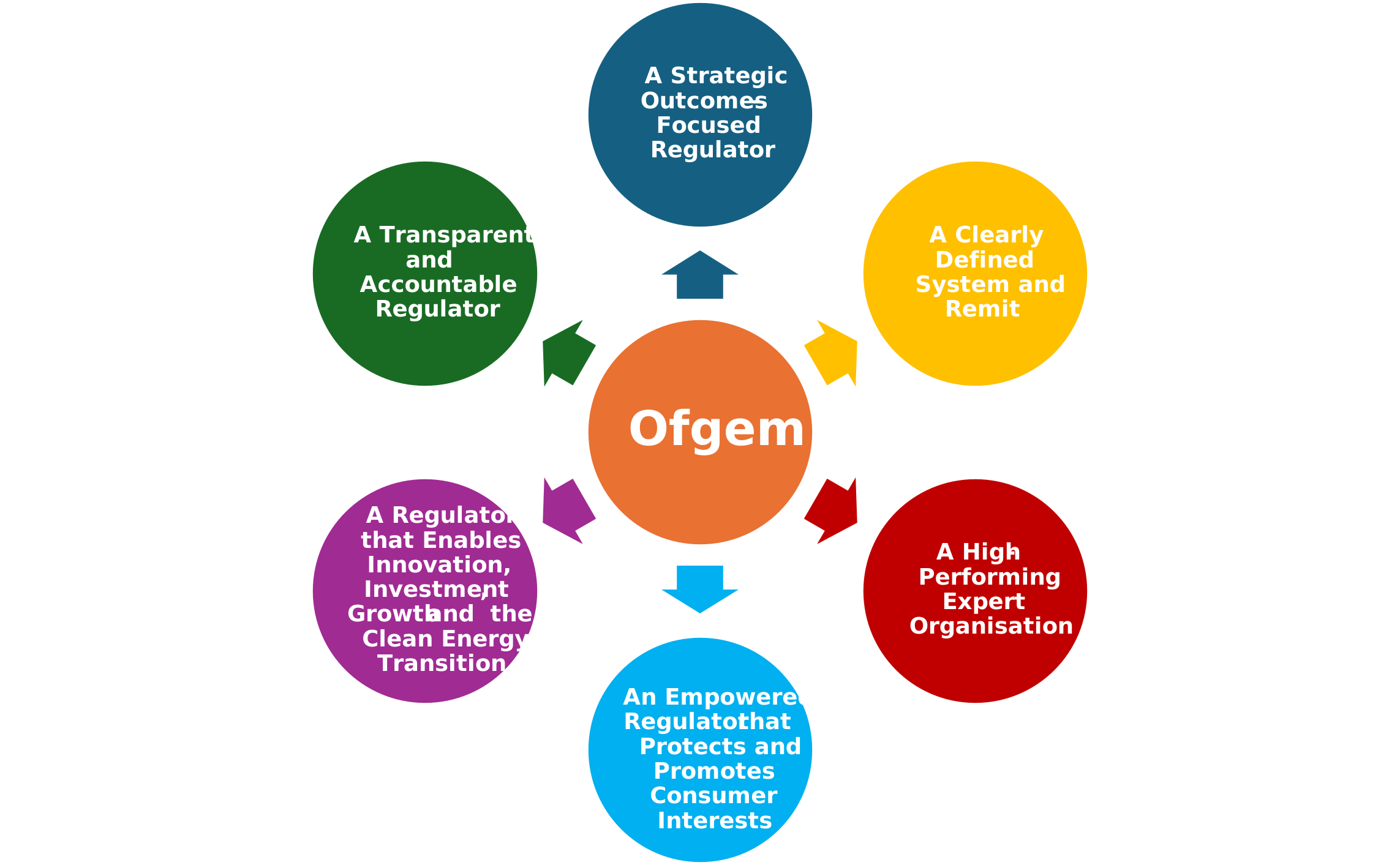
The government’s vision for a reformed Ofgem delivers 6 strategic outcomes:
- Outcome 1: A strategic, outcomes-focused regulator
- Outcome 2: A clearly defined system and remit
- Outcome 3: A high-performing, expert organisation
- Outcome 4: An empowered regulator that protects and promotes consumer interests
- Outcome 5: A regulator that enables innovation, investment, growth, and the clean energy transition
- Outcome 6: A transparent and accountable regulator
Outcome 1: A strategic, outcomes-focused regulator
The regulator should have a clearer focus on the outcomes its regulation is intended to deliver. This means a clearly defined set of duties for Ofgem, giving certainty to consumers and the market about the outcomes Ofgem will seek to deliver. It also means government should be clear on its priorities for Ofgem and how it expects the regulator to contribute to them, while safeguarding Ofgem’s regulatory independence. Finally, it means a regulator that is focused on its core functions of economic and consumer protection regulation.
Outcome 2: A clearly defined system and remit
There should be clear expectations on the regulator, both in terms of its role and what it regulates. Ofgem’s regulatory remit should be properly aligned with the market it is responsible for regulating, and it should be able to keep pace as the sector changes and evolves. It also means clarity on what Ofgem does and doesn’t do, including how it interfaces with and collaborates with other organisations, such as government, NESO and other regulators.
Outcome 3: A high-performing, expert organisation
Regulating a more digital, complex and fast-moving energy sector will rely on having the right skills, capability and culture. This means ensuring Ofgem will have the right industry and technical expertise to regulate effectively, will take a modern approach to regulation, and will be an organisation with an open and collaborative culture. It should build effective partnerships with industry, including on the development of regulatory initiatives and with other regulators. It should also be a regulator that retains and develops talent within the organisation.
Outcome 4: An empowered regulator that protects and promotes consumer interests
This means a regulator that will have the right tools to effectively regulate the market it oversees, both to support growth and innovation and to enforce good outcomes for consumers. Ofgem’s tools should be appropriately calibrated to its regulatory functions, so it can take timely, proportionate action to monitor the market, intervene where needed, and ensure consumer law, licence conditions and relevant rules are complied with. It also means the right accountability mechanisms should be in place, so regulated and licensed entities and senior individuals are incentivised to act in consumers’ best interests.
This outcome should be anchored in ensuring Ofgem exercises its powers in a predictable, proportionate, and accountable manner. The review recognises the need for balance and careful implementation, including where it recommends expanding Ofgem’s powers. The proposals for new or reformed powers are designed with the reformed regulator in mind and reflect the other strategic outcomes.
Outcome 5: A regulator that enables innovation, investment, growth, and the clean energy transition
Kickstarting economic growth is one of the government’s 5 missions, and Ofgem’s role in supporting growth was recognised through the addition of a growth duty in 2024. Ofgem’s approach to regulating the energy market should encourage new investment, innovation, and growth. This means a regulator with a clearer and more prominent focus on growth, ensuring its approach to economic regulation promotes investment and innovation in the energy sector and the wider economy, and supports an efficient energy system that reduces costs for consumers and businesses. It should challenge itself to keep regulation modern and proportionate, and work with industry to support investment and the delivery of the infrastructure needed for clean power and net zero.
Outcome 6: A transparent and accountable regulator
Independent regulation is and will remain the cornerstone of Ofgem’s role and functions. However, consumers, industry and investors should have confidence that the regulator will be transparent in how it operates and will be held to account for delivery. This means improving parliamentary scrutiny and oversight of Ofgem’s performance, ensuring Ofgem operates in a clear and accessible way, and putting effective mechanisms in place to scrutinise Ofgem. Ofgem’s annual report and accounts should provide a clear and balanced view of performance against its duties and priorities, including improved key performance indicators (KPIs). It also means clear, time bound targets for processing regulatory authorisations, and opportunities for stakeholders to provide constructive challenge on how the regulator conducts its functions.
As an independent regulator responsible for overseeing an essential service and a sector that attracted £23.6bn of investment in energy industries in 2024[footnote 19], it is important that Ofgem is transparent in how it operates and that appropriate mechanisms are in place to hold it to account. Building on the measures in the Regulation Action Plan, the government will embed measures to hold Ofgem to account for performance against its duties.
5. Strategic outcomes for reform
The government’s ambition is for Ofgem to be a modern, confident, and outcomes-focused regulator, one that protects consumers, supports investment and innovation, and delivers a fair, secure and affordable energy system. This is of increasing importance against a backdrop of rapid transformation in the energy sector.
Each outcome reflects a clear priority for reform whether it is clarifying Ofgem’s remit, strengthening consumer protection, enabling innovation and growth, or improving transparency and accountability. Together, these outcomes form a coherent package of actions designed to equip Ofgem with the statutory duties, powers, and organisational capability it needs to deliver for consumers and the country as a whole.
The following sections set out each outcome in detail, explaining the rationale for change, the specific reforms proposed, and the impact these changes are expected to have on the energy system and its users.
Outcome 1: A strategic, outcomes-focused regulator
Reform
Clearer focus and streamlined objectives/duties
Stakeholder feedback noted that Ofgem’s role and remit had expanded quite significantly over time. When Ofgem was formed in 2000, it had a principal objective to protect the interests of current and future consumers (wherever appropriate, by promoting competition) and primary duties around demand, supplier finance, and vulnerable consumers, some of which had already been in place since the privatisation of the energy sector in the 1980s.
By 2023, the number of primary duties had roughly tripled in number (see Annex D). This proliferation of duties reduced the strategic focus of the organisation, and we heard feedback that Ofgem’s need to balance such a large range of competing objectives hindered its decision-making processes. The Regulation Action Plan contained a commitment to streamline Ofgem’s duties, which the government will take forward through the review. Streamlining Ofgem’s duties will remove outdated and extraneous considerations from its statutory framework, allowing the regulator to refocus on its function as an economic and consumer protection regulator.
Stakeholders supported streamlining the duties, and frequently mentioned consumer protection, economic growth, investment, innovation, and the transition to cleaner energy as the areas Ofgem should focus on. As DESNZ considered the way to crystallise these considerations into as focused a set of duties as possible, it became clear that consumer interests, economic growth (including supporting investment and innovation), and the clean energy transition were the key thematic areas. These also align with wider government priorities, including 2 of the government’s 5 missions.
A new set of 3 equal principal objectives will be introduced, focusing on the interests of existing and future consumers, net zero and growth. The government will move away from a single, overriding principal objective. This does not downgrade the importance of consumer protection: Ofgem will still have a clear mandate to protect existing and future consumers. However, 2 additional principal objectives will enable Ofgem to take a more balanced view of wider consumer and societal benefit. This will be supported by a reformed Strategy and Policy Statement (SPS) to provide clearer and more targeted strategic priorities and policy outcomes to guide the regulator in balancing its duties and navigating trade-offs.
DESNZ considered whether Ofgem should retain an overarching principal objective. Stakeholder feedback suggested that the primacy of the current principal objective, which takes precedence over Ofgem’s other objectives, can make it harder for Ofgem to take a holistic, strategic view when making decisions. Acting through the lens of a single principal objective can be self-defeating where it leads to storing up higher costs that must be met later (often by consumers). In some instances, longer term considerations such as timely investment in energy networks have not been prioritised within Ofgem’s decision-making processes. Stakeholders also raised concerns that it could limit consideration of wider outcomes that support job creation and business investment.
This will also better align Ofgem with the context of the energy sector in the present day, and in the future, rather than the sector as it was decades ago. Each of its principal objectives will have equal legal status, providing Ofgem with a flexible statutory framework from which to take proactive and future-focused decisions, making the necessary trade-offs to ensure long-term outcomes and broader consumer benefit can be prioritised where required. Distilling Ofgem’s statutory framework to 3 core objectives (removing misaligned obligations) will reduce complexity and bring greater clarity to its decision-making processes. This will be supported by a targeted Ofgem-specific SPS, which will set out the relevant policy outcomes whose delivery Ofgem must seek to further when it carries out its regulatory functions. This will guide Ofgem in navigating complex trade-offs between its objectives and taking well-reasoned, strategic decisions when balancing the interests of both existing and future consumers.
It is our view that adopting this approach will, along with the provision of new powers detailed later in this report, strengthen Ofgem’s ability to protect consumers. Feedback from this review has clearly demonstrated that despite consumer protection being Ofgem’s current principal objective, this has not been sufficient to prevent severe issues developing that have resulted in consumer detriment. Allowing more equitable consideration of these wider objectives will elevate Ofgem’s ability to protect consumers from immediate harms and ensure continued optimal consumer outcomes in the future, whilst realising the full potential benefit to consumers from a modern and innovative energy system.
Refocusing Ofgem’s primary duties to include broader outcomes such as a cleaner energy system and economic growth expands its consumer protection mandate by providing an opportunity take a more holistic approach, particularly when coupled with enhanced powers to address immediate harms. This will include the ability to directly enforce consumer law, better hold companies to account through an Individual Accountability Mechanism and additional deterrents for interconnected companies. Together this will place holistic consumer protection front and centre for the regulator and position it as a proactive and robust consumer champion.
While the streamlined duties will replace the existing duties on issues like licensees’ financial security[footnote 20], investability / financiability and competition, these will continue to be important outcomes that Ofgem must take into account. In introducing these reforms alongside a future new SPS, the government will carefully consider the strategic direction and outcomes it sets for Ofgem, and how government perceives that factors such as energy security and competition should be considered. In particular, the removal of a stand-alone reference to competition from Ofgem’s statutory duties recognises that Ofgem should have greater flexibility over how and where it considers competition when protecting consumer interests and supporting economic growth.
Competition is inherent in a market that is innovating and focusing on the needs of consumers, but a narrow focus on competition for its own sake has been shown not to work as needed in the context of energy consumers. The SPS will also guide Ofgem on the considerations underpinning existing and future consumers, clean energy, and economic growth to support its operational decision-making. As explained below, the SPS reforms will also include the introducing of a mechanism for Ofgem to request input from government. This mechanism will support the SPS in retaining strategic relevance over its lifecycle and will ensure that Ofgem has a continued understanding over the context in which it makes its independent operational decisions.
Action 1: Streamline Ofgem’s existing duties to provide a clearer, strategic framework. This should retain its principal objective to protect existing and future consumers, alongside 2 additional principal objectives, on an equal footing, for facilitating net zero and promoting economic growth.
A focus on regulation
When it was established, Ofgem’s role was more narrowly focused on driving competition. Over time, this has changed with the organisation taking on further responsibility for delivery of environmental and social schemes. Through the review, we also heard concerns from stakeholders about blurred lines of responsibility between Ofgem and other organisations operating in the energy system. Ofgem’s role has also changed as it became the economic regulator for the NESO, the independent, public corporation responsible for strategic planning for the energy system and system operation for electricity.
Industry stakeholders, in particular, noted a need to clarify Ofgem’s role and remit with respect of the government and NESO, with calls to ensure that there is a transparent delineation of responsibilities between the 3 organisations. We received feedback both that there was a risk of duplication of responsibilities, or in some cases a lack of clear ownership of functions leading to a cap in accountability. Feedback from the call for evidence (CfE) also highlighted a clear preference for Ofgem’s role to be refocused back on its core regulatory functions.
As Ofgem has taken on further responsibilities, this has placed additional demands on its organisational and leadership capacity, diluting its strategic focus on economic and consumer protection regulation. A strong, effective regulator is critical to the delivery of a clean, secure, and fair energy system. Therefore, Ofgem’s role and remit will be returned to its core regulatory responsibilities. This means that as a rule, Ofgem will not be responsible for the administration and delivery of schemes except where it remains the best-placed body to do so. Where there are licence conditions or other regulatory requirements which underpin the delivery of schemes, Ofgem will still have powers to carry out compliance and enforcement activities.
This also means that Ofgem should prioritise the delivery of regulation over progressing policy initiatives. There is clearly a valuable contribution Ofgem can make to aid the delivery and development of government policy in a facilitative and supporting capacity. There will also be policy decisions in the regulatory policy space, for example on the design of future regulatory frameworks, where Ofgem will continue to play an active role. However, Ofgem’s priority should be on the implementing, delivering, and monitoring the regulatory framework, with policy being driven by government. This is complementary to the framework of the SPS, in which government sets out the policy outcomes that informs the manner in which Ofgem carries out its regulatory functions. As a regulator, Ofgem should focus on ensuring high standards of service are achieved across the sector and that services are reliable and not exploitative. Ofgem’s statutory duties should focus it on supporting policy goals, but a regulator like Ofgem does not have a role in setting energy policy or commenting on the impacts of energy policies.
To support clearer accountability across the sector, the government will take forward further work to improve clarity on the respective roles and responsibilities of government, NESO, and Ofgem and this will form part of the next steps in developing and consulting on future Strategy and Policy Statements.
Scheme delivery
In response to the CfE, numerous stakeholders noted that Ofgem had increasingly taken on a range of other responsibilities beyond its core functions of an economic and consumer regulator. Some stakeholders were concerned that this meant Ofgem had taken on too many (and sometimes disparate) responsibilities, which prevented a strategic focus on its core functions as a regulator.
The UK’s buildings decarbonisation and energy efficiency landscape has evolved over decades through various government policies and delivery bodies, resulting in a complex system of scheme delivery, substantially, but not solely, delivered via Ofgem. To meet the scale and urgency of current buildings decarbonisation challenges, a more coordinated, and effective delivery model is needed.
Recognising this, as contained within our Warm Homes Plan, the government is considering the wider delivery landscape for existing and future schemes. The Warm Homes Plan set out proposals to consolidate scheme administration across existing delivery partners, including Ofgem Delivery and Schemes, in a new Warm Homes Agency. The proposals within the Warm Homes Plan seek to streamline operations, improving outcomes for consumers and taxpayers through greater operational efficiency.
The process and timings of Ofgem continuing to deliver and transitioning schemes to alternative delivery organisations, will be set out in due course.
Action 2: Ofgem’s remit to be refocused on its core functions as an economic and consumer protection regulator.
Action 3: Ofgem will not take on any new scheme delivery on behalf of government unless there is a very strong strategic alignment or value for money case to do so.
Strategic steers
Under the provisions of the Energy Act 2013, a power was introduced to designate a Strategy and Policy Statement (SPS) to set out the government’s strategic priorities for energy policy, outcomes to be achieved through the implementation of policy, and the roles and responsibilities of those involved in implementing it. Ofgem must conduct applicable regulatory functions in the manner it considers is best calculated to further the delivery of the policy outcomes set out in the SPS, and Ofgem is required to have regard to the strategic priorities set out in the SPS when conducting those regulatory functions.
Owing to Ofgem’s independence, the SPS is one of the few tools that government has to provide Ofgem with a strategic and policy steer on government’s priorities. However, as supported by our engagement throughout the review, the current SPS is not sufficient in providing clear strategic direction directly to Ofgem because government, Ofgem and NESO all have some level of responsibility towards the SPS in some capacity. This limits the extent to which government can be specific in setting out the outcomes and priorities government would like Ofgem to further delivery of without inadvertently assigning an inappropriate outcome or priority to NESO, for example in relation to Ofgem’s duties and functions as an economic regulator. The provision of more targeted and explicit steers to Ofgem will be critical in enabling the regulator to effectively balance its duties and make the necessary trade-offs to achieve the outcomes set by government and agreed by Parliament.
Therefore, the government will ensure an Ofgem-specific SPS is created to replace the existing SPS. This Ofgem-specific SPS will sit alongside a NESO-specific SPS, setting out separate but aligned priorities and outcomes, whilst providing both organisations with clearer strategic direction that reflects their distinct roles. Where appropriate, the government will ensure that the content and process for the 2 SPS documents are joined up so they are complementary and effective.
In addition, the government will look to introduce a mechanism for Ofgem to request guidance from government on matters relating to the SPS. This is not expected to be routine, and Ofgem will remain the final decision-maker on matters within its remit and will be required to set out how it has balanced any advice or guidance received from the Secretary of State via this mechanism. The mechanism is intended to enable more informed decision-making where there are implications for the wider strategic framework set by government.
This does not undermine Ofgem’s regulatory independence, and this review does not seek to redraw the lines of independence. Instead, Ofgem will continue to be the independent regulatory authority for the energy sector directly accountable to Parliament. The SPS will continue to act as a tool to more effectively support the appropriate balance of roles and responsibilities between government and Ofgem, with government setting the ‘what’ (that is ‘what’ outcomes Ofgem must seek to further the delivery of and ‘what’ it must have regard to) whilst Ofgem, with its capabilities as an independent regulator, best determines ‘how’ these outcomes should be achieved when acting within its remit. This means that government sets the policy outcomes, and Ofgem’s strategy and policy should be devised in a way which it considers most effective for furthering delivery of those outcomes. Parliament will continue to scrutinise how well Ofgem has performed in doing this through Ofgem’s annual reporting requirements. In this sense, the SPS will set out strategic and policy direction for Ofgem, but not legal direction on operational decisions as this would involve changes to Ofgem’s level of independence.
Action 4: Remove the existing SPS and create an Ofgem-specific Strategy and Policy Statement (SPS) to provide more targeted strategic steers to support it in its unique role as a regulator. This will also necessitate the creation of a NESO-specific SPS.
Action 5: A new SPS to be designated as soon as practicable once the necessary provisions for a revised SPS process are in place.
Action 6: Reform the process for designating the SPS to ensure it can be put in place or amended more quickly, whilst retaining opportunities for stakeholder input and consultation and Parliamentary scrutiny.
Action 7: Introduce a mechanism for Ofgem to request steers from government to assist the regulator in performing its duties or managing trade-offs between them. Ofgem will continue to be the final decision-maker for decisions within its remit.
Impact
Ofgem will have the right framework, flexibility and guidance to take impactful decisions and regulate more effectively to deliver against both short and long-term strategic priorities. It will be better able to take decisions in a clear and transparent way, providing more regulatory certainty for industry and investors.
Outcome 2: A clearly defined system and remit
Reform
The energy system value chain - roles and responsibilities
Ofgem’s current regulatory remit encompasses companies involved in the generation, transmission, distribution, and supply of energy. It also regulates gas shippers, system operators/planners, and smart meters. Ofgem’s primary regulatory tool is the licensing framework, where it issues licences to companies which set the conditions they must meet (for example, through the gas supplier licence, the electricity generation licence).
Reflecting that the energy market has evolved significantly, Ofgem’s mandate has increased over the years as it has been appointed the regulator, for example, for heat networks, smart and secure energy systems, and hydrogen. The government has also made proposals to extend this further, for example, by making Ofgem the regulator for Third Party Intermediaries (TPIs) such as energy brokers in the retail energy market.
Currently, Ofgem’s remit is set out in primary legislation, and amendments require further primary legislation, which is slow and inflexible to deliver. Meanwhile, new actors and services are entering the market, creating potential further gaps in regulatory coverage.
A clear theme emerged throughout the review process that Ofgem’s regulatory remit had not kept pace with an energy market which had evolved quickly. The review identified issues such as:
- new products being offered to consumers, with unclear regulatory requirements
- unclear boundaries between regulatory bodies acting within the energy system, with stakeholders noting that there were both overlapping and underlapping responsibilities
- an unresponsive legislative framework, meaning the process to designate Ofgem as the regulator was slow, even where there is consensus in favour of this (for example, regulating TPIs)[footnote 21]
While CfE respondents expressed a range of views on Ofgem’s remit, there was a recurring theme that a clearer articulation of its responsibilities would enhance its effectiveness. A system-wide regulatory model is now needed to ensure coherent oversight, protect consumers and support strategic reforms, and to future-proof Ofgem’s regulatory remit.
To ensure that Ofgem’s regulatory boundaries remain up to date, they should be able to cover the full range of activities taking place within the energy market. This does not mean that Ofgem should or will introduce new rules or licences for this full range of activities, but it should have the ability to do so should it consider them to be necessary. Doing so would enable Ofgem to operate in a more agile manner, taking a less reactive response to regulation. This would mean that if a customer is consuming an energy service, a business is taking out a contract for a service, or an energy supplier is looking to offer a new, innovative service, they can have greater certainty of the regulator’s role and ability to take action.
The boundaries of energy sector regulation and Ofgem’s oversight will be defined through an Energy System Value Chain (ESVC) (Annex E). The ESVC is a new policy concept that maps all the activities involved in producing, delivering, and using energy, from generation and infrastructure to consumer services and installation. It provides a framework for defining what could be regulated and would give DESNZ the ability to introduce regulation for those areas following consultation by Ofgem, with such regulation to be conducted by Ofgem. The intention is not that Ofgem would necessarily regulate all of those areas directly: in many we would expect Ofgem to work in concert with other regulatory bodies. However, it would provide a basis for closing any regulatory underlaps and for Ofgem to introduce required new rules more quickly.
This does not necessitate immediate new rules or licences from Ofgem, nor does it mean that Ofgem will assume additional responsibility for regulating new areas immediately. In the first instance, Ofgem should work with government and other regulators to identify who the most appropriate body is to regulate a section of the value chain.
Figure 1: The Energy System Value Chain – regulated activities
Activities involved in producing, delivering and using energy. (Further detail in Annex E).
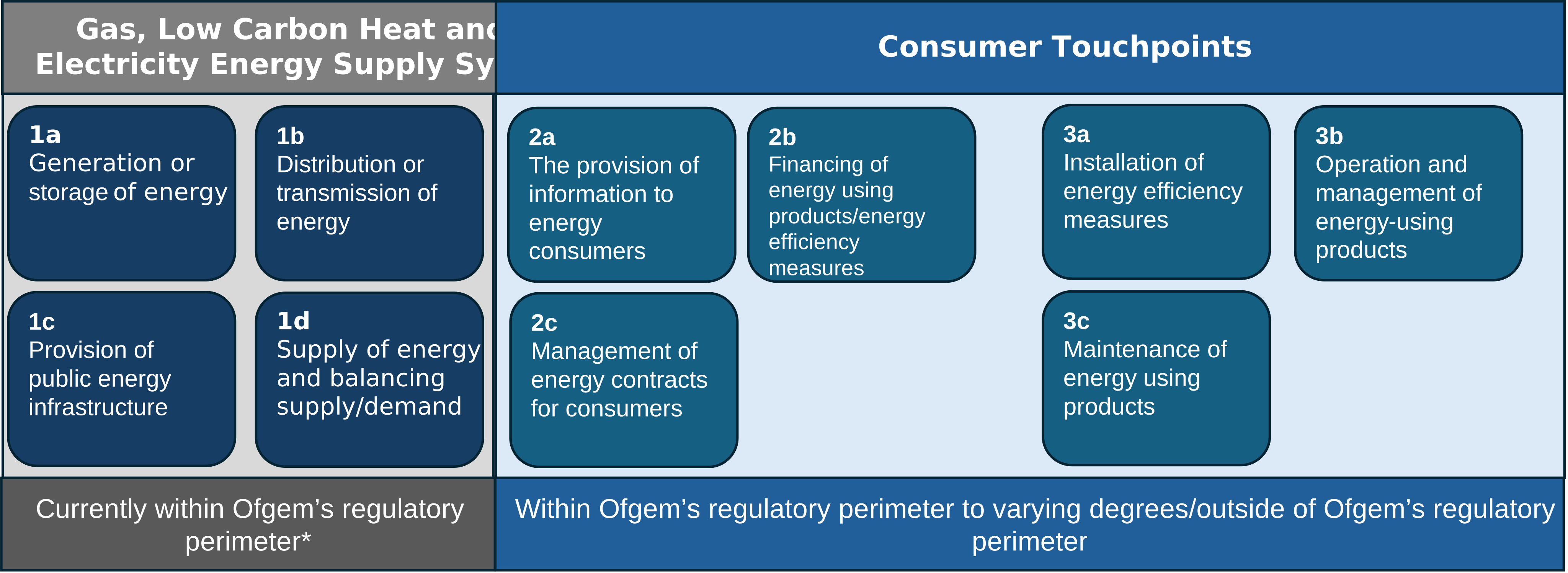
*Generation and gas disconnections not solely within Ofgem’s current remit
Description of figure 1: A diagram of the Energy System Value Chain (ESVC).
Gas, low carbon heat and electricity energy supply system:
- 1a Generation or storage of energy
- 1b Distribution or transmission of energy
- 1c Provision of public energy infrastructure
- 1d Supply of energy and balancing supply/demand
Currently within Ofgem’s regulatory perimeter. (Generation and gas disconnections not solely within Ofgem’s current remit).
Consumer touchpoints:
- 2a The provision of information to energy consumers
- 2b Financing of energy using products/energy efficiency measures
- 2c Management of energy contracts for consumers
- 3a Installation of energy efficiency measures
- 3b Operation and management of energy-using products
- 3c Maintenance of energy using products
Within Ofgem’s regulatory perimeter to varying degrees/outside of Ofgem’s regulatory perimeter.
Considered in conjunction with our proposals on outcomes-based regulation (see Outcome 5 below), the ESVC provides a clear departure from the current inflexible technology-based licensing model. Instead, it seeks to close existing regulatory gaps and ensure that potential harms created by new entities are addressed in an appropriate and timely manner. Moving to an ESVC-based approach will future-proof Ofgem’s remit, provide a structured way to define regulated activities and ensure that regulation is aligned with system outcomes, not just legacy market segments.
To support Ofgem’s role overseeing the ESVC, an Energy System Guidance Framework will be established, to be coordinated by Ofgem. This will guide the interpretation of its duties and regulatory decisions while embedding the desired consumer outcomes. It will also set out clear roles, responsibilities, and the regulated activities to be overseen by Ofgem, other regulators, and relevant organisations to protect consumers from harms and build trust in the sector. By embedding a set of core regulatory principles such as proportionality and transparency, set by the Secretary of State and reflected in the SPS, it will provide a shared strategic compass between DESNZ and Ofgem.
In modifying Ofgem’s regulatory boundaries in this way, DESNZ will also work with Ofgem and NESO to ensure that there are clear boundaries and hand-off points between the 3 organisations as we move towards an updated regulatory framework. This will include consideration of whether additional governance is needed to manage any boundary issues.
There are published documents which set out the roles and responsibilities of DESNZ, Ofgem and NESO, including the current Strategy and Policy Statement, Ofgem’s NESO Roles Guidance and the NESO framework document. However, during the review process, we heard feedback from stakeholders that more could be done to clarify this. We also recognise that the move to an ESVC and the broader conclusions of the Ofgem Review will have implications for how the 3 organisations work together. In the planned system we are moving towards, NESO will lead strategic system planning, DESNZ will set policy direction and investment missions, and Ofgem will regulate monopoly networks and enforce consumer and market standards. Consequently, DESNZ will work with Ofgem and NESO following the review’s conclusion to review governance and boundaries and consider options, including through the SPS, to clarifying them further both internally and externally.
In addition, Ofgem will use data from across the ESVC, including from consumer bodies, to monitor markets and identify potential consumer harms. This intelligence will inform strategy development and anticipatory regulation, enabling Ofgem to take a more proactive approach. Strengthened coordination with other regulators such as the FCA, CMA, and Trading Standards will support a more cohesive and consistent approach to consumer protection across the sector.
Ofgem should also consider how it collaborates with other key actors across the ESVC, including accreditation bodies, statutory consumer advocates (such as Citizens Advice, Consumer Scotland), and redress bodies (such as the Energy Ombudsman, the Extra Help Unit). These organisations play valuable roles in shaping the consumer journey in an evolving energy landscape, and will become even more significant as Ofgem adopts a broader, more adaptive regulatory remit across the full energy system.
Action 8: Amend Ofgem’s focus to reflect the full Energy System Value Chain (ESVC), for which Ofgem might be required to regulate, should there be a need, and it is the appropriate body, thus moving away from narrow technology-based regulation to a more consumer centric model.
Action 9: Ensure the Secretary of State has the power to appoint Ofgem as the regulatory body for activities within the ESVC, to ensure Ofgem’s regulatory remit remains up-to-date with market developments.
Action 10: Establish an Energy Systems Guidance Framework (ESGF) to define the outcomes the government expects from the energy system. The ESGF will not prescribe how Ofgem should regulate the market; Ofgem will retain discretion to determine how best to deliver these outcomes, in line with its statutory duties.
Action 11: Ofgem to improve processes and use of existing powers to collect and analyse data across the ESVC, and improve monitoring, risk assessment, anticipatory regulation, and horizon scanning.
Action 12: Ofgem and DESNZ to work with NESO to clarify regulatory boundaries, roles, and responsibilities across the ESVC. This should include identifying areas for better collaboration and considering governance mechanisms to manage boundary issues.
Impact
Reframing Ofgem’s regulatory boundaries and oversight through the ESVC will ensure comprehensive regulation of the sector and provide enhanced clarity regarding the roles and responsibilities of regulatory bodies particularly as new technologies, products and services enter the market. A more coherent approach towards regulation through coordination with other regulators and agencies will enable greater anticipatory regulation to prevent harms and more efficient intervention and enforcement action where required. This will enhance Ofgem’s ability to protect and deliver a fairer system for consumers.
Outcome 3: A high-performing, expert organisation
Reform
Having the right skills, capability, and culture in place is fundamental to reforming Ofgem, and restoring consumer and industry trust in the organisation. All of the measures set out within the Ofgem Review must be considered in the context of an organisation which is also upskilling and will display a more collaborative, outcomes-focused, and transparent approach to regulating the energy market. That said, it was also right that the Ofgem Review consider whether Ofgem had the right skills, capability, and organisational culture to be a best-in-class economic and consumer regulator.
Through the CfE and engagement with stakeholders, we regularly received feedback about experiences of working with Ofgem. There were instances – particularly in the energy generation sector – of positive feedback on Ofgem’s technical expertise and where effective relationships had been built with Ofgem counterparts.
We also received feedback which noted areas where Ofgem’s skills and capabilities had not kept pace with the changing market, and where this had hindered its effectiveness. Areas frequently cited included technical and digital skills (including in areas such as cybersecurity and AI), financial skills, and knowledge of energy industry practices, particularly outside of Ofgem’s leadership.
Respondents also noted that Ofgem’s skills and capabilities could be improved through greater recruitment of staff with direct experience from working in the energy industry (such as analysts, economists). Ofgem was compared unfavourably with other regulators such as the FCA and CMA which had a stronger track record of doing so. This was compounded by high staff turnover, with industry respondents in particular noting difficulties in building long term or trusted relationships with Ofgem teams.
Some stakeholders speculated that Ofgem’s pay and conditions compared with the Civil Service and other Arm’s Length Bodies (ALBs) contributed to this, and that reforms such as more competitive pay and career development opportunities, could improve its ability to attract and retain talent.
DESNZ also heard strong feedback from stakeholders in the retail energy market regarding their experiences of working with Ofgem, including the lack of predictability of engagement with Ofgem and concerns that Ofgem took an overly adversarial approach to engagement. While some degree of tension between a regulator and regulated entities is healthy and natural, there is a balance to strike. Our vision for a regulator with improved technical and industry expertise should help, though further measures on resetting industry relationships are set out in the section on Outcome 5 (a regulator that enables innovation, investment, growth, and the clean energy transition) below.
Stakeholders noted that Ofgem were perceived to have a particular risk averse culture, which some felt could be mitigated with more awareness of industry ways of working or technical knowledge. Some industry stakeholders felt that this manifested itself in overly burdensome reporting requirements and greater use of formal Requests for Information (RFIs).
Skills and capability
As Ofgem focuses on its core role as an economic and consumer regulator, using new powers as set out in this review, it must be equipped to deliver high-quality, proportionate regulation. We heard from stakeholders that Ofgem is lacking some of the skills, financial, IT and sector specific knowledge as examples, combined with industry experience needed to effectively oversee a complex and evolving sector.
Ofgem should build its internal capability to deliver more anticipatory, outcomes-focused regulation that supports innovation and protects consumers as the energy sector changes. In order to do this, Ofgem should conduct a forward-looking skills audit and a workforce plan developed to drive the delivery of organisational change. Through this process, Ofgem should take the findings and outcomes from the Ofgem Review, to develop a plan which sets out how to ensure it has the right skills and capability to deliver a modernised regulator. This should include a focus both on regulatory best practice, and the technical skills, including in areas such as digital and AI and their applications to the energy sector.
As well as identifying opportunities to further support the development of its existing staff’s skills and capabilities, Ofgem should also set out options to strengthen industry and technical expertise through bringing in more external expertise into Ofgem. There is a clear opportunity for Ofgem to recruit more staff with industry experience, whether through permanent recruitment, temporary secondments to/from industry, or through strategic partnerships. In addition to improving Ofgem’s technical skills, this would also contribute to rebuilding trust and engagement with industry. As part of this, Ofgem should consider lessons learnt from other regulators and public sector organisations who have undergone significant change in recent years, such as the CMA and FCA.
To support the delivery of wider reform, Ofgem should undertake a comprehensive change programme to deliver a cultural shift that empowers staff and enables confident decision-making. This should set out how Ofgem will embed the findings from the forward-looking skills audit within the organisation, and what this means for its approach to regulating the market. This should include how Ofgem updates and reviews its risk appetite and responds to poor practices in the energy market.
Action 13: Develop and publish a clear plan for cultural change and the development of outcomes-focused regulation. It should draw reference from the Competition and Markets Authority’s (CMA) 4P approach Pace, Predictability, Proportionality and Process to ensure meaningful impact both internally and externally. This should specifically consider how Ofgem updates and reviews its risk appetite and willingness to take action against poor practices in the energy market.
Action 14: Strengthen industry and technical expertise through recruitment, secondments, and strategic partnerships.
Leadership and cultural change
Effective regulation which delivers positive outcomes for consumers, net zero, and economic growth relies on a regulator with the right leadership and culture. Outcome 5 below (A regulator that enables innovation, investment, growth, and the clean energy transition) sets out the findings on how Ofgem engages with external stakeholders. Through the review process, we heard from stakeholders that Ofgem is an organisation which has a hierarchical culture, and that this can contribute to slow and opaque decision making. There is also a risk of poor decisions being made if they are not made by those who are close enough and expert enough on the matters at hand. Without reform, staff will not be empowered and could lack opportunities to develop skills, have low morale, and may look to leave the organisation.
These are issues that Ofgem, as a functionally independent regulatory body, will need to consider and address. As a government body, Ofgem already have a number of processes, such as the annual civil service People Survey and pulse surveys, to methodically seek and analyse staff feedback, and should continue to make use of these in order to inform how to address issues. As part of its response to action [36] below, we would recommend that Ofgem seek views from staff across the organisation on the organisational culture and how it can be improved so that Ofgem performs better.
Stakeholder views also focused on Ofgem’s approach to risk, where there were perceptions that it has an overly risk-averse approach to conducting its functions, to the possible detriment of consumer or market outcomes. We recognise and welcome the work which Ofgem is undertaking to review its risk appetite.
To support the delivery of wider reform, Ofgem should undertake a comprehensive change programme to deliver a cultural shift that delivers appropriate governance and greater empowerment and accountability amongst staff, enabling confident decision-making. This should set out how Ofgem will embed the findings from the forward-looking skills audit within the organisation, and what this means for its approach to regulating the market. This should include how Ofgem updates and reviews its risk appetite and responds to poor practices in the energy market.
Embedding change relies on senior sponsorship and engagement to ensure action is taken. Therefore, the Ofgem Chair should look to appoint a Board member to champion skills, capability, and cultural change. The Board member should have responsibility both for overseeing Ofgem’s progress against the specific actions set out in this report, and wider actions identified by Ofgem. Appointments to the Ofgem Board (GEMA) are made by the Secretary of State and we will consider how to ensure that, going forward, it has the right skills and experience, both in its core functions to set strategy and oversee Ofgem’s activities, but also in supporting the change and transformation required to respond to this review’s findings.
While preserving Ofgem’s independence, the government will collaborate through ongoing dialogue to help Ofgem foster an open, agile, and outcomes-focused culture. This partnership aims to empower Ofgem to fulfil its statutory duties and adapt to the changing energy sector, while respecting the regulator-government boundary.
Action 15: Ofgem to work with government (DBT and DESNZ) to swiftly undertake an evaluation of Ofgem’s future capability needs, to equip it to deliver more anticipatory, outcomes-focused regulation that supports innovation. This will inform a Cultural and Capability Transformation Plan in the second half of 2026.
Action 16: Ofgem’s Chair to ensure that the board has a representative to champion skills and culture change, including the recommendations from this review.
Becoming a high-performing, expert organisation will require Ofgem to review its existing workforce arrangements, to ensure it has the right people in the right places. This is an operational process for Ofgem to undertake and is outside of the scope of the Ofgem Review. However, we expect Ofgem to develop a workforce plan to support the delivery of the organisational transformation necessary to deliver the vision and actions set out in this report.
Action 17: Ofgem to develop a workforce plan to support the delivery of the organisational transformation necessary to deliver the outcomes of the Ofgem Review.
The government recognises that Ofgem’s organisational status places some restrictions on its ability to make significant changes. This is particularly true in areas such as pay, conditions, performance management, and recruitment. Some stakeholders noted that a different funding arrangement may be needed to ensure Ofgem is able to attract and retain the right skills, and this may require a change to Ofgem’s organisational status. Other regulators, such as the Nuclear Decommissioning Authority and Financial Conduct Authority, operate under a different public body status, which could be appropriate for Ofgem.
Any change of organisational status requires a robust business case, which includes evidence that all reasonable steps have been taken, but they have been insufficient to address the problems. Therefore, this review cannot decide on the matter, but as the review’s recommendations are implemented, government will work closely with Ofgem to assess progress in addressing the challenges regarding skills and capabilities.
In the immediate term, we are asking Ofgem to actively and creatively explore opportunities to reform its skills and capability within its existing legal status as a non-ministerial government department. We are confident that real change, including delivery of the Ofgem Review’s actions, is achievable within the current framework.
However, we recognise that there is a question as to whether Ofgem could be a more effective organisation with a different status, and we will gather and assess evidence on this issue with Ofgem alongside implementation of the review, leading to a possible future business case for changing Ofgem’s status.
Impact
Strengthening Ofgem’s skills and expertise will enable more efficient delivery of proactive anticipatory regulation and ensure that it is equipped to deal with the challenges of a fast-evolving sector. Cultural change will pave the way for resetting the relationship with industry, with staff empowered to take decisive action and adapt a collaborative and outcomes-focused approach to regulation.
Outcome 4: An empowered regulator that protects and promotes consumer interests
Reforms
The government’s manifesto committed to strengthen Ofgem so it will have the right powers to hold companies to account for wrongdoing and require higher standards of performance. Ofgem currently has access to a wide-ranging set of powers, including to tackle non-compliance with licence conditions and to introduce new rules when required. The CfE sought views on providing Ofgem with stronger investigatory and enforcement powers, similar to those available to the CMA. Many respondents supported this position, though some raised concerns about granting new powers without ensuring Ofgem uses its existing powers effectively.
There is a balance to strike. Growth and consumer protection have been central throughout the review, and a reformed Ofgem should both protect consumers and promote investment, innovation, and growth. However, the review identified areas where Ofgem’s powers are outdated and have not kept pace with a changing energy market. In others, Ofgem’s ability to use existing powers can be more burdensome than comparable regulators. In some areas, Ofgem already has the ability to introduce further rules or requirements on industry.
For example, respondents to the CfE noted the importance of a robust regulatory framework to promote supplier financial resilience, where Ofgem brought in new rules following the energy crisis such as the minimum capital requirement, the Financial Responsibility Principle, and an ability to direct consumer credit balance ringfencing.
DESNZ is also mindful that any changes to Ofgem’s powers need to be proportionate, with a clear use case for them.
The review recognises the need to balance identifying areas for improvement with recommending expanded powers in some areas. Wider reforms set out in this report are intended to ensure Ofgem will exercise its powers in a predictable, proportionate, and accountable manner. In particular, it will be critical that Ofgem continues to review and reduce the administrative burden it places on industry, so that new or reformed powers do not add unnecessary complexity. The proposals for new or reformed powers are designed with the reformed regulator in mind and should be read alongside proposals to strengthen Ofgem’s skills and capabilities, improve ways of working with industry, and enable more outcomes-based regulation.
The proposals on Ofgem’s powers have been considered carefully. In some areas, the review did not identify a sufficiently strong case for additional powers or requirements for example, introducing a Consumer Duty, as proposed in the CfE. Responses were mixed, and many stakeholders felt it could add significant burdens on businesses. Several stakeholders also raised concerns that a Consumer Duty could duplicate the requirements of Ofgem’s Standards of Conduct (SoC) rules[footnote 22], which require energy suppliers to treat customers fairly by being honest, transparent, and professional in all interactions. On balance, there was not enough evidence that this approach would deliver benefits proportionate to the additional burden, and other proposals being taken forward, such as a move towards more outcomes-based regulation, should achieve similar improvements in consumer standards.
However, the government is clear that consumer protections must improve as a result of these reforms. In several areas, the review proposes expanding Ofgem’s enforcement powers so the regulator will be better equipped to protect consumers in a rapidly evolving energy market.
Strengthening enforcement powers is intended to equip Ofgem to meet the demands of a changing market and to protect consumers from actors that exploit regulatory gaps. These reforms are designed to ensure Ofgem will be both empowered and expected to drive higher standards for consumers, while being held to account for how it uses its powers.
Enforcement and accountability
Direct Consumer Protection Enforcement: The deployment of low carbon and net zero technologies such as energy efficiency measures and heat pumps is vital to delivering the government’s Mission to make Britain a Clean Energy Superpower. Doing so means that the public enjoy the full benefits of home-grown clean power as we accelerate to net zero. This relies on consumers having confidence in the technologies being installed, and the companies providing those services.
Citizens Advice reports that trust in net zero technologies is at risk of being damaged by the actions of rogue traders and poor-quality installations.[footnote 23] This is echoed in the recent Consumer Scotland investigation into converting Scotland’s home heating, which highlights the importance of clear information, robust consumer protections, and effective redress mechanisms to support consumer confidence in the transition to low carbon heating technologies.[footnote 24] The investigation found that consumer trust is closely linked to the quality of installation, aftercare, and the ease of navigating complaints and redress processes.
Poor-quality installations and issues with low carbon technologies can have a major knock-on effect on further installations, since people rely on friends and family as a major source of advice when looking into new technologies. Without action, consumer confidence could be undermined at a critical point and put our net zero goals at risk.
The CMA was recently granted direct enforcement powers for consumer law infringements as part of the Digital Markets, Competition and Consumers Act 2024. This was because, previously, under Part 8 of the Enterprise Act 2002, the CMA was required to apply to a court to obtain enforcement orders in order to enforce consumer law. This was often time-consuming and resource-intensive, and delayed redress for consumers. These new powers enable the CMA to investigate, determine, and take direct enforcement action to address infringements of consumer protection law and breaches of undertakings without going through the courts.
Ofgem faces a similar constraint to the CMA prior to the commencement of the Digital Markets, Competition and Consumers Act 2024, in that it must apply to the court for enforcement orders. The market is expected to see growth in providers of low-carbon technology offering their services, and consumers should be adequately protected outside the supply licence environment. It is important that consumers receive the necessary protections because they will often be making significant financial investments in low-carbon technology for the first time. Consumers making such investments should have confidence both in the underlying technology and regulatory framework, and that action will be taken if the appropriate standards are not met. Improved consumer trust in low carbon technologies can also encourage further growth and investment in the sector.
Action 18: Grant Ofgem direct consumer law enforcement powers to remove the need to pursue compliance via the courts which is costly and time consuming.
Senior executive accountability: In the CfE, we sought views on introducing a Senior Managers Regime (SMR), similar to financial services or a streamlined version thereof (as subsequently proposed by the Cunliffe Review).[footnote 25] We noted that such a regime could potentially improve accountability and consumer standards in the energy sector.
Currently, for sectoral matters, Ofgem is able only to take action against licensees (meaning the regulated company) rather than against senior staff within the company.[footnote 26] This means Ofgem both cannot hold individuals directly accountable, and that it has at best indirect recourse when a senior individual leaves a licensee. In the past there have been instances where senior executives have made decisions that have resulted in harm to consumers. For example, United Gas and Power were found to have deliberately overcharged customers to remedy a shortfall in their budget.[footnote 27] The existence of senior manager accountability arrangements can help ensure that decisions always consider the interests of consumers.
This approach, when adopted by the FCA for the financial services sector, caused a culture shift in the industry. Industry and regulator-led reviews of the FCA Senior Manager and Certification Regime demonstrated widespread support for the objectives and principles underpinning the regime. The clear definitions and divisions of responsibility, and personal accountability, drove positive behavioural change in the financial services sector. UK Finance’s report on the banking sector in 2019 findings were that industry respondents regarded the introduction of the FCA’s SMR as a positive development which led to improvements in behaviours and processes within firms, with 93% of respondents agreeing that the regime had brought about meaningful change for the better.[footnote 28] Similarly, in their responses to a report carried out by the FCA in August 2019, many firms expressed the view that the regime was having an impact on the mindset of senior managers, with a stronger tone and ownership from the top.[footnote 29]
Some respondents to the CfE supported the introduction of enhanced executive accountability, believing it would promote a culture of responsibility in the sector and lead to more ethical decision making. They believed it would improve compliance and ensure executives were more responsible towards their consumers. Those against noted concerns about proportionality, Ofgem’s ability to effectively introduce or monitor such a regime, and concerns on investment and recruitment into the sector.
The government considers that directly replicating the FCA’s regime would not be appropriate for the energy sector. The operating context of the financial services and energy markets are different, and the evidence base does not suggest the same level of significant consumer harm driven by senior individuals. However, the government believes that the principle of greater senior executive accountability is right and will increase the focus on consumer standards and drive the higher standards of performance referenced in the government’s manifesto commitment.
Consequently, there is a case for a comparatively lighter-touch approach in the energy market: the Individual Accountability Mechanism (IAM). This could include requiring licensees to designate senior management functions and designated individuals could be personally accountable for areas such as customer service or debt services.
When parliamentary time allows, we will legislate to give Ofgem the necessary powers to introduce such a regime, including to sanction individuals personally, even after they have left the licensee, with the aim that in the most serious cases where senior managers exploit consumers, they can be blacklisted from working in the sector.
Recognising that the FCA consulted on proposed changes to its Senior Managers and Certification Regime, Ofgem should consult on such a framework before its introduction and the imposition of any licence conditions on licensees. Ofgem’s consultation should specifically set out proposals regarding how it would identify individual roles and the elements of compliance and performance. Ofgem’s consultation should specifically consider the proportionality of any such regime, including the size of licensee and specific roles it should apply to, and lessons learnt from the financial services and water sectors.
Action 19: Provide Ofgem with the power to introduce an Individual Accountability Mechanism (IAM) to allow it to hold senior energy company staff directly accountable for their actions. Ofgem to consult on proposals for an IAM before it can be introduced.
Executive remuneration: In considering options for enhanced senior accountability, we have considered the case for sanctions related to bonus payments for senior executives for the most serious breaches.
There is precedent for this in other sectors. The Water (Special Measures) Act 2025 included powers which require Ofwat to introduce rules to ensure water companies stop the payment of performance-related pay to the most senior staff where performance fails to meet specified standards.[footnote 30]
While the contexts of the energy and water sectors differ, we recognise the strength of impact that this sanction can have. We have noted instances where senior executives working for energy companies appeared to receive large bonuses despite their companies having an extremely poor compliance record with Ofgem. A power to restrict payments to executives might have better focused them on ensuring their companies were more resilient and providing good service to their customers. This could have helped prevent some of the past customer service failures and might even have meant that there were fewer supplier insolvencies during the gas crisis in 2021 and 2022.
The government considers that there is a need to create a cultural shift within energy companies so that they take compliance seriously and treat their customers fairly in all the decisions they take. There needs to be an additional sanction that can be levied against individuals rather than just the licensee in very limited but very serious instances. Imposing personal liability on senior executives will ensure that they cannot delegate away responsibility for regulatory compliance or consumer protection. It should foster a culture of diligence and ethical leadership, where the decision-makers are incentivised to proactively identify and mitigate risks. By closing this enforcement gap, personal liability should deter misconduct and strengthen public trust in the sector.
We recognise that many companies pride themselves on their customer service, but executives should consistently place consumers’ interests at the heart of decision-making. There may be benefits in giving Ofgem powers to prohibit or claw back performance-related bonuses for senior executives in cases of serious breaches against specified standards.
Such a power would have a high threshold for use and would be reserved for the most significant actions which can be linked to serious consumer detriment. Similar to Ofwat’s approach, a new power for Ofgem would enable them to limit performance-related bonuses in extreme cases involving significant breaches of their regulatory or statutory obligations. This could include serious failings in financial resilience or compliance with regulatory requirements. This sanction should only be deployed as a sanction following a full Ofgem investigation that has concluded the licensee was responsible for a breach.
Ofgem should consult before any such regime is introduced and the government’s expectation is that there would be a high threshold before such a sanction is used.
Action 20: Ofgem should be granted powers to enable it to direct companies to recover, or prevent, performance-related pay awards in scenarios where there have been extremely serious breaches.
Reforming the penalty ceiling: Currently, Ofgem’s ability to levy penalties is limited to a single combined cap of 10% of a company’s turnover in respect of a contravention for a sectoral breach, covering both penalties and consumer redress. However, there have been instances where, because a company has little or no turnover, being limited to applying a fine of 10% of turnover does not ensure that the gains are removed.
An example of this can be seen when breaches of the Capacity Market rules were committed by companies which had been set up to participate in specific auction rounds, meaning they had effectively zero turnover. Under the Capacity Market rules, the generating units concerned were excluded from participating in the capacity auctions for 2 years. However, Ofgem were unable to impose financial penalties even though this was considered an appropriate sanction. Ofgem’s existing penalty powers were not designed with this situation in mind, and limit Ofgem’s ability to be able to take the regulatory action it would otherwise choose to take. As this clearly does not provide an adequate deterrent in all circumstances, it is important that Ofgem has an appropriate sanction in instances of low or no turnover.
It is important to ensure that companies do not gain from non-compliance with regulatory requirements or licence conditions. We will legislate when parliamentary time allows, so that in cases where there is low or no turnover, Ofgem can impose a meaningful penalty thereby ensuring there is no gain from breaching the rules, thus making non-compliance not worthwhile.
Action 21: Reform the penalty limits to ensure that there can be no gain from breaching the rules.
Introducing simple, quasi-automatic penalties: Ofgem applies a set of prioritisation criteria to determine which issues are worthy of devoting the resources of an investigation. Understandably it focusses its attention on severe or widespread breaches. This means that minor, but clear, breaches of licence conditions are rarely tackled and so that kind of non-compliance can sometimes go unchallenged. Breaches of Ofgem rules should not give regulated parties an advantage, but undertaking a detailed investigation in all cases may be disproportionately resource intensive.
DESNZ considered whether Ofgem could be equipped with powers to impose swift and proportionate penalties for minor infractions, to create more effective deterrence. Such a power would be for cases which are undisputed such as continued non-payment of a levy obligation and similar cases where there is a clear breach in areas within a regulated party’s control and the facts do not require a detailed investigation.
The Review did not find a compelling case to justify the need for a general power to levy quasi-automatic penalties. We will keep the matter under consideration but have no current plans to legislate for such a power. Since this issue was first raised in the CfE, some key further consumer protections have been announced. Complaints to the Energy Ombudsman will be resolved more swiftly, the Ombudsman’s rulings will be enforceable and heat networks brought into scope of the Ombudsman. Ofgem has recently increased the level of compensation under the Guaranteed Standards of Performance (GSoP) arrangements and is looking at increasing the scope of GSoP.
However, we consider Ofgem does require the ability to easily enforce its obligations in relation to Third Party Intermediaries (TPIs), due to the different structure of the sector. Allowing quasi-automatic fines will enable Ofgem to penalise any clear-cut rule breaking which emerges as a consistent behaviour by large numbers of TPIs, but which would be disproportionately costly to enforce through formal investigations. For example, this power could be used for failing to provide information to Ofgem or failing to implement Alternative Dispute Resolution (ADR) service decisions.
Reforming provisional/final orders: Ofgem uses a provisional order when it believes a licensee is breaking the rules and urgent action is needed to protect customers or the energy system. For example, if a company is suspected of breaching financial resilience rules, Ofgem can issue an order setting out a number of measures, including requiring the company to ring fence customer credit balances and preventing the company from taking on any new customers.
Provisional Orders (POs) are used in response to ongoing (or imminent risk) of harm:
- POs have immediate effect to address urgent situations: Licensees are required to take specified action to end non-compliance as soon as possible
Figure 2: Overview of the provisional order process
Provisional Order (PO) - High level process and timeframes.
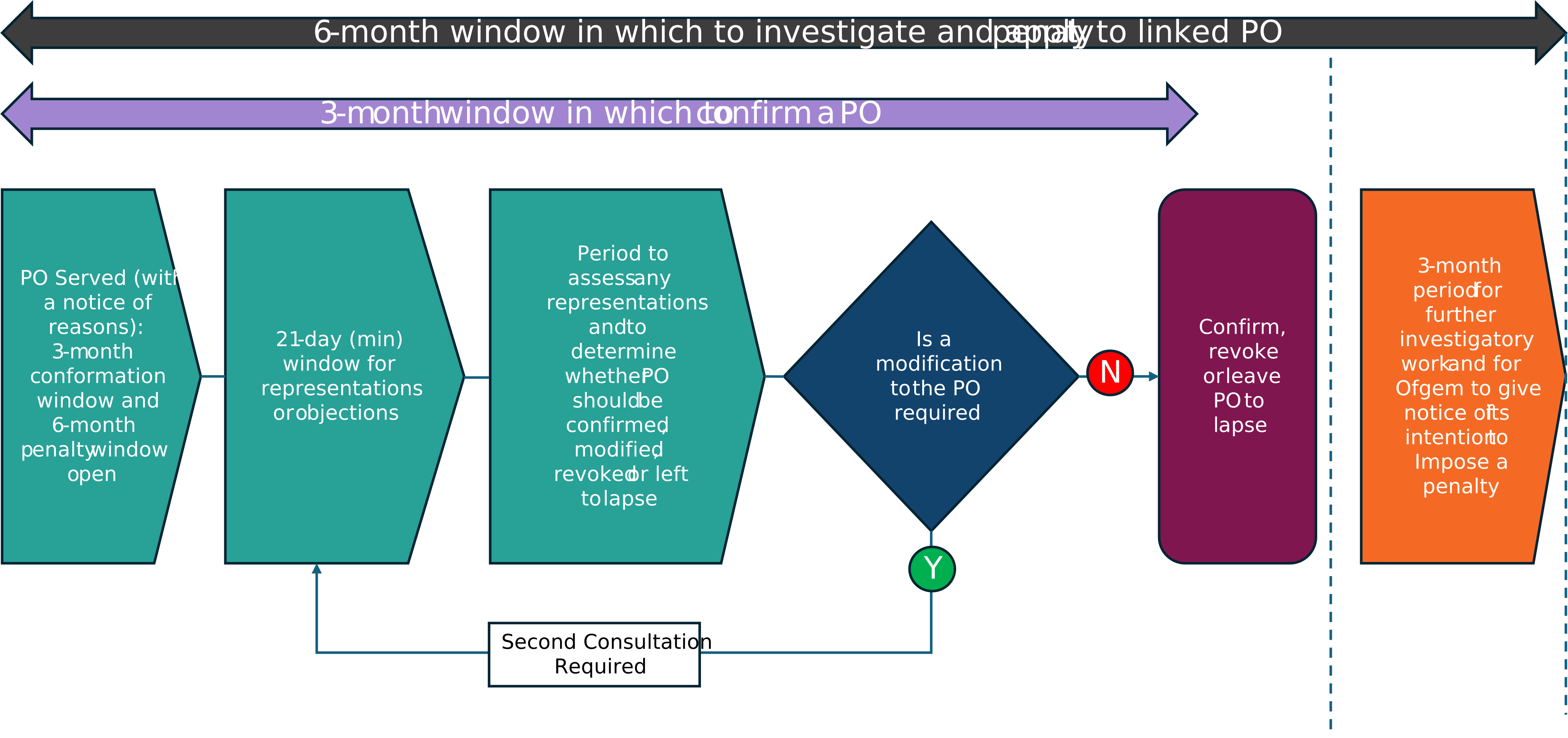
Description of figure 2: A diagram of the provisional order process, showing the steps and timescales under which a provisional order is processed.
6-month window in which to investigate and apply a penalty to linked PO (covers Step 1-4)
3-month window in which to confirm a PO (covers Step 5)
-
PO Served (with a notice of reasons): 3-month conformation window and 6-month penalty window open.
-
21-day (minimum) window for representations or objections.
-
Period to assess any representations and to determine whether PO should be confirmed, modified, revoked or left to lapse.
Is a modification to the PO required?
– If yes, a second consultation is required. Return to Step 2.
– If no, go to Step 4. -
Confirm, revoke or leave PO to lapse.
-
3-month period for further investigatory work and for Ofgem to give notice of its intention to Impose a penalty.
Final Orders (FOs) are used where there is less urgency:
- Ofgem are required to consult for at least 21 days on its intention to issue the FO before it can be confirmed. The Licensee is only required to comply once the FO is confirmed.
Figure 3: Overview of the final order process
Final Order (FO) - High level process and timeframes.
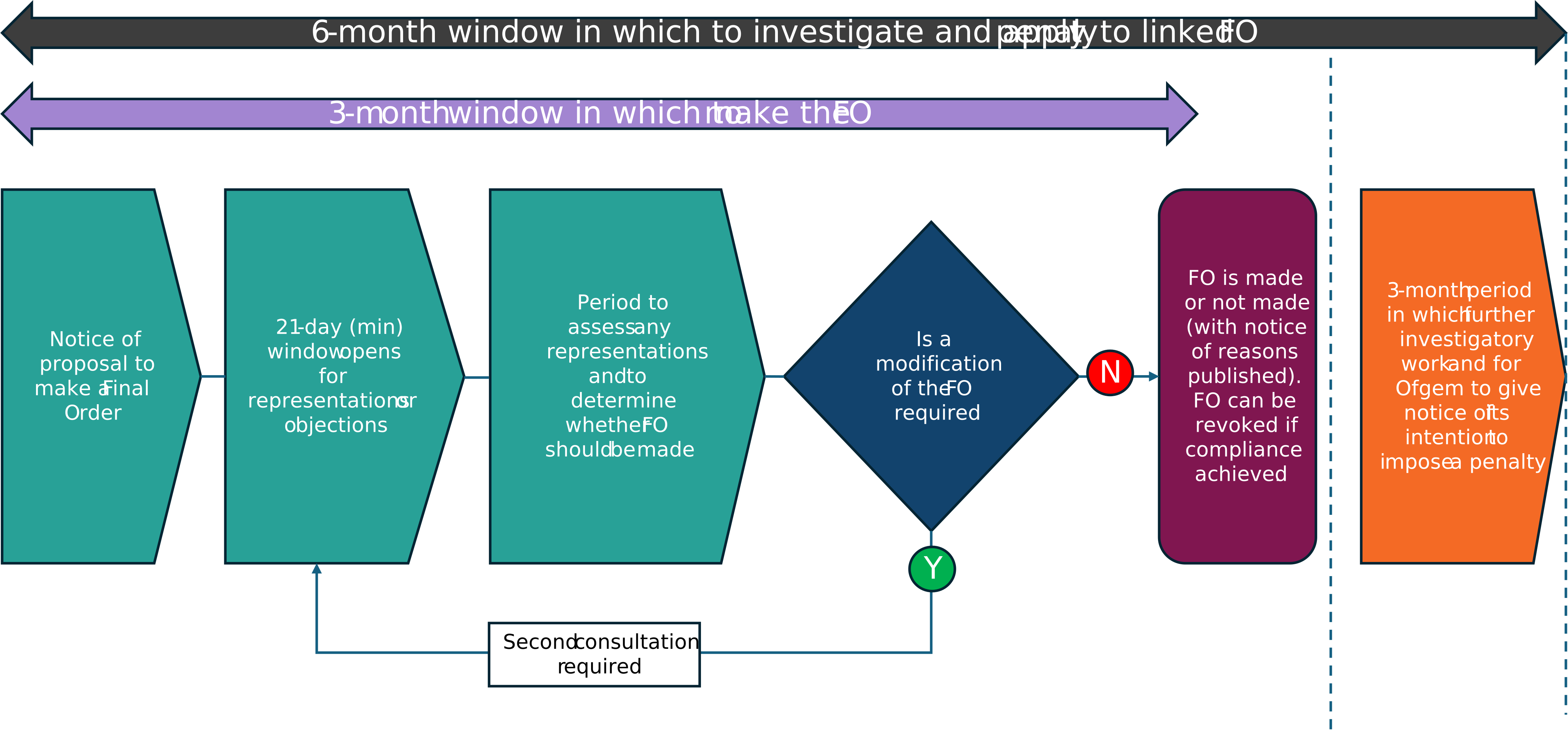
Description of figure 3: A diagram of the final order process, showing the steps and timescales under which a final order is processed.
3-month window in which to make the FO (covers Step 5)
6-month window in which to investigate and apply a penalty to linked FO (covers Step 1-4)
-
Notice of proposal to make a Final Order.
-
21-day (minimum) window opens for representations or objections.
-
Period to assess any representations and to determine whether FO should be made.
Is a modification of the FO required?
– If yes, a second consultation is required. Return to Step 2.
– If no, go to Step 4. -
FO is made or not made (with notice of reasons published). FO can be revoked if compliance achieved.
-
3-month period in which further investigatory work and for Ofgem to give notice of its intention to impose a penalty.
As part of the PO/FO process Ofgem can also seek to impose penalties, but there are strict time limits: the penalty notice must be served within 3 months of the making of a FO or confirmation of a PO. To properly apply a penalty, Ofgem needs time to gather and assess any additional evidence that might be required and then to determine an appropriate, robust and defensible penalty amount, which takes into account seriousness, conduct, aggravating and mitigating circumstances and other relevant factors. Non-compliance with a FO or PO can also result in proceedings to revoke a licence or Ofgem seeking court injunction.
Through the review process, Ofgem provided clear evidence that it has had significant problems in deploying POs/FOs. This was often because the deadlines for completing the process are too short. Levying a penalty in connection with breaches identified in either a PO or FO must be done within 3 months of a FO being made or a PO confirmed.
Fully assessing the facts about the breaches and establishing the harm they may have caused to make the case for levying a penalty and then justifying the penalty quantum, within a 3-month limit, is challenging. As a result, Ofgem is often faced with a binary choice at a relatively early stage. It must decide whether to pursue a PO/FO to bring a swift stop to harm and/or secure compliance, with this restrictive deadline for the imposition of a penalty (and therefore a significantly reduced time within which the facts can be ascertained). Alternatively, it may take the slower investigatory route because more time is needed to establish the facts of the case, but (in the absence of a PO or an FO) this risks the harm continuing throughout a potentially long investigation.
To ensure that Ofgem is able to utilise the POs and FOs to take action against non-compliance, we will increase the deadline to 15 months for the whole process from order to penalty. This will allow more frequent use and thereby ensure consumers are protected more rapidly.
Action 22: Amend the challenging deadlines for final and provisional orders so that Ofgem can use the powers to full effect.
Responding to crises
DESNZ has lessons from the gas crisis and other historical and current problems in the energy market. Issues arose where Ofgem’s powers did not extend to controlling the actions of parent companies and those actions frustrated Ofgem’s ability to regulate effectively. Similarly, during a crisis a regulator needs to act quickly, and the consultation process hampered Ofgem’s ability to make swift changes. The review explored options for how government can ensure that Ofgem has the tools to effectively protect consumers in such scenarios.
Urgent licence modifications: Ofgem primarily regulates the market through energy licences. An energy licence is a legal authorisation issued by Ofgem that allows companies to conduct specific activities in the gas and electricity markets. Most licences come with a set of Standard Licence Conditions (SLCs) that define the rules companies must follow. These cover areas such as billing, consumer protection, payment methods, and dispute resolution. Ofgem monitors compliance and can impose penalties or revoke licences for breaches. The legislation behind Ofgem’s ability to modify electricity and gas licence conditions (and the supporting process) is primarily set out in the Electricity Act 1989 Part 1 and the Gas Act 1986 Part 1, respectively.
Currently, to introduce a licence modification (introduce new rules) Ofgem must consult for 28 days, then must wait for a 56-day ‘standstill’ period before a modification can come into effect. This is so licensees have time to make the necessary modifications and become compliant. Ofgem is also able to use an expedited process under section 11AA of the Electricity Act 1989 to introduce a licence modification quicker than the 56-day period where it is considered necessary or expedient. However, this is limited to modifying electricity licences for the purpose of enabling or requiring half-hourly electricity imbalances to be calculated using information about customers’ actual consumption of electricity on a half-hourly basis.
DESNZ has factored in stakeholder views in its policy development and considers it proportionate to allow this expedited process to be used more widely than the current framework allows. This will retain the requirement for Ofgem to consult first but would allow for a gas or electricity licence modification to be implemented quicker than the 56 days where Ofgem considers it necessary or expedient. Additionally, to use this process, Ofgem will be required to publish the rationale for why a modification is being introduced via this process as part of the mandatory consultation.
It is therefore expected that the standard process (including the 56-day standstill period) will remain the norm and this expedited process will be used as an exception. However, government consider this recommendation important to meet the aims of setting Ofgem up as a regulator fit for the future which has the right tools available to protect consumers.
Action 23: Reform the licence modifications process to enable Ofgem to introduce rules more quickly in urgent situations. Ofgem has the tools to effectively protect consumers in such scenarios.
Interconnected bodies corporate: The corporate structures of many regulated entities (‘regulated person’), often for entirely legitimate reasons, can be complex, with entities being owned by and reporting into companies within its corporate group (‘interconnected companies’) that sit outside of Ofgem’s regulatory remit. In practice, this can mean that a regulated entity merely exists ‘on paper’ with critical functions and its ability to fulfil its obligations directly controlled by an interconnected company (for example, the parent company) which increases risks towards Ofgem’s ability to attach accountability and achieve redress for consumers.
While Ofgem has introduced asset control rules for supply licensees, risks still exist. Companies within an entity’s corporate group may exert direct control or take decisions over critical assets which are detrimental to the entity’s ability to meet regulatory requirements, allowing them to extract value.[footnote 31] This can pose a risk to Ofgem and the Secretary of State’s ability to deliver upon the current principal objective of protecting consumers and the new 3 core objectives of protecting consumers, delivering economic growth, and achieving net zero.
Therefore, as supported by the responses to the CfE, government will be seeking to introduce the ability for Ofgem to transfer liability to the interconnected company (including foreign-owned interconnected companies) when it has had a direct role in causing the regulated entity to breach its obligations. Government intends that this measure is proportional and fair. Additionally, Ofgem must also prepare a statement of policy in relation to liability of interconnected companies. Ofgem will still be required to initially seek redress via the directly regulated entity and where an interconnected company has not had a direct role in causing the regulated entity to breach (or risk breaching) its obligations, Ofgem will not be able to enforce against an interconnected company. We will also introduce appeal mechanisms to prevent mis-application of this measure.
Government considers it important that Ofgem should have such powers in order to prevent behaviour which expose consumers or other market participants to excessive risks and costs and pose risks to Ofgem and government’s ability to deliver upon statutory obligations. These measures will function as a deterrent to bad practice and allow Ofgem to tie accountability and achieve redress when options of enforcing through the regulated entity have been exhausted.
Action 24: Introduce a power to enable Ofgem to enforce against an interconnected company where it has a direct role in causing the regulated entity to breach, or be at risk of breaching, its obligations. This will enable Ofgem to protect consumers and other market participants from risks of harm posed by the actions of unregulated parties.
Access to redress
Strengthening Ofgem’s enforcement powers is only one part of ensuring consumers are properly protected in a rapidly changing energy market. Equally important is improving access to redress when things go wrong. In the government’s manifesto, there was a commitment to ensuring that consumers receive automatic compensation for energy company performance failures. Alongside the proposals in this report to strengthen Ofgem, options to expand automatic compensation and improve access to redress are actively being considered by Ofgem and DESNZ.
These steps will help ensure that redress is paid promptly where due, and that consumers receive fair treatment and positive outcomes when standards are not met. By embedding these reforms alongside enhanced enforcement powers, we aim to restore consumer trust, deliver fairer outcomes, and ensure the regulatory framework is responsive to the needs and experiences of consumers.
Reviewing automatic compensation arrangements: Earlier this year, the government announced that it will work with Ofgem to look at automatic compensation within the energy sector.[footnote 32] This includes considering options to expand automatic compensation to cover more key issues (for example, unexpectedly high bills when suppliers fail to adjust direct debits), and to look at further increasing the value of base-level compensation under the Guaranteed Standards of Performance (GSoPs). Ofgem’s Call for Input on these questions closed on 23 January 2026, and Ofgem will publish a response in due course.[footnote 33]
Alongside this, DESNZ had already been working with Ofgem to introduce new GSoPs related to smart metering. On 30 January, Ofgem published their Final Decision and Statutory Instrument for new rules that came into effect from 23 February. Consumers will receive a £40 payment from their energy supplier if they are not offered a first-time smart meter appointment within 6 weeks of a request, when the installation fails due to something in the supplier’s control, or when a consumer reports a problem with their smart meter and the supplier doesn’t provide a resolution plan within 5 working days
Action 25: Government will continue to support Ofgem as they consider expanding automatic compensation to more key issues and increase the size of compensation payments.
Energy Ombudsman reform: The government recently launched a consultation ‘Fairer, faster redress in the energy market’[footnote 34], on changes to the Energy Ombudsman to strengthen its effectiveness and make it easier for consumers to access redress. Proposals include shortening the window before consumers can take complaints to the Energy Ombudsman and strengthening the Ombudsman’s powers. The government will respond to this consultation in due course.
Action 26: Government is consulting on the role and powers of the Energy Ombudsman, including proposals to strengthen enforcement mechanisms, change the Ombudsman’s statutory status, shorten referral times, and consider how to make it easier for consumers to access the Ombudsman.
Impact
Amending and increasing Ofgem’s powers in this way will empower Ofgem to deliver better outcomes for consumers through more consistent and swift enforcement action. These changes will also support Ofgem in reducing the incentive for non-compliance and poor behaviour. As indicated, some measures will not be taken forward at this stage, however we felt it was appropriate to signal the options that we are continuing to explore.
Outcome 5: A regulator that enables innovation, investment, growth, and the clean energy transition
Reform
Ofgem has a critical role to play in enabling innovation, investment, and economic growth in the energy market and beyond. Energy UK calculate that the UK energy industry supports £258bn in economic activity through the energy sector and supply chain, with £100bn of planned investment in new energy sources in the next decade.[footnote 35]
Refocusing Ofgem back to its core functions of economic and consumer protection regulation and strengthening Ofgem’s growth duty supports this aim. The Regulation Action Plan also includes important steps to ensure Ofgem’s regulatory approach does not inhibit growth and investment. This will also ensure that long term strategic interests to support growth are a recognised priority, with the regulator ensuring that regulatory decisions and the design of the regulatory framework supporting the delivery of investment, innovation, and infrastructure delivery.
However, there are opportunities to go further. To ensure a modern regulatory framework, effective working relationships with industry, and continued support for innovation, Ofgem should be recognised as best in class to work with. This means an approach that is predictable and proportionate, with pace in delivering regulatory approvals. These foundations support investment in Britain’s energy market and the wider economy.
Refocus on economic regulation
Alongside the change in Ofgem’s statutory duties, the wider reform package will continue to reinforce and strengthen Ofgem’s core role as an economic regulator. We heard feedback during the review process that Ofgem had overly prioritised shorter term or retail market considerations over networks and core economic regulation considerations. Ofgem have taken recent steps to rebalance this, for example, with its work with government on accelerating investment in electricity transmission infrastructure by streamlining regulatory approvals and taking a strategic investment approach, which has been well received by stakeholders. Ofgem should continue to give due focus to regulating monopoly networks, setting price controls, and ensuring that investment, efficiency, and innovation deliver long-term value for consumers and the energy system. At the same time, government will consider the wider balance of responsibility between Ofgem, NESO and government as our energy system and market structures continue to change, including through the Reformed National Pricing programme.
Recent statutory changes have further clarified Ofgem’s strategic role. In 2023, its duty to support net zero was strengthened, requiring it to protect consumers’ interests in relation to the Secretary of State’s compliance with carbon budgets and the 2050 target. In 2024, the Growth Duty was extended to Ofgem, requiring it to consider the impact of its decisions on business growth and regulatory burden. These changes reinforce the expectation that regulation should support innovation and economic dynamism while maintaining robust consumer protections. However, as set out above, there are opportunities to further clarify Ofgem’s duties to strengthen its focus on growth and innovation.
Some steps have already been taken to support growth, investment, and innovation in the sector. Ofgem’s End-to-End Review of the Connections Regulatory Framework, work to review the connections queue, and support for strategic spatial energy planning have been welcomed by stakeholders. Work is also underway to take a more strategic and anticipatory approach to investment in electricity transmission and distribution networks. More generally, the effectiveness of the network price controls framework remains central to incentivising efficiency, innovation, and long term investment in infrastructure, including clean technologies and smart systems.
There are clear opportunities for Ofgem to go further in this space. Our expectations of Ofgem under this reform package are clear:
- Ofgem should prioritise its economic regulatory functions, stepping back from scheme delivery and policy development except where it is uniquely placed to add value
- Ofgem should adopt a more strategic, outcomes-focused approach, using its enhanced toolkit to proactively address market challenges and support investment in critical infrastructure
- Ofgem is expected to work collaboratively with government, NESO, and other regulators to ensure a coherent, joined-up approach across the energy system
- Ofgem should regularly review its approach to regulation to ensure it is proportionate and does not function as a barrier to innovation, investment, or growth
Ofgem will remain functionally independent in its role as the economic regulator, ensuring that decisions on price controls, market rules, and investment incentives are made on the basis of evidence and long-term consumer interest. At the same time, government will set the strategic direction for the sector ensuring that regulation supports broader objectives such as protecting consumer interests, including lower bills, net zero, and economic growth, and will hold Ofgem to account through transparent performance measures and regular democratic scrutiny. The reformed duties, and the new SPS will help to deliver these growth and investment goals by providing clarity of direction from government to Ofgem and NESO.
This report also builds upon the reforms outlined in the government’s Regulation Action Plan published earlier this year, which Ofgem should continue to deliver.
Regulation Action Plan reforms include:
- Ofgem must develop and report against a meaningful set of Key Performance Indicators (KPIs) that reflect its reformed statutory duties, including consumer protection, net zero, and growth
- Ofgem is required to participate in regular ministerial performance reviews, providing transparent updates on progress against government priorities and the impact of its regulatory decisions
- Ofgem to set out its contribution to cutting the administrative costs for business by 25% by the end of the Parliament
The plan also committed Ofgem to a broader set of actions which it should continue to deliver:
| Area | Commitment |
|---|---|
| New market entrants | Over the next 12 months, Ofgem will work with government, the National Wealth Fund and GB Energy to ensure regulation and the full range of government levers, subject to spending review decisions, support new entrants into the market and maximise economic opportunity. |
| Default tariff price cap | Ofgem will ensure that the price cap continues to protect consumers who are not able to engage, but that it can adapt to a changing market, with more options for consumers to take advantage of different pricing and to flex their usage accordingly. |
| Future of the retail market | DESNZ will work with Ofgem over the next 12 months to consider the future of the energy retail market; including how it could better enable innovation to support consumers, system transformation, and growth. |
| Retail flexibility | Offer flexibility in retail rules to allow new entrants or existing companies to try new commercial approaches. Ofgem will be updating its licence application guidance in the summer to help innovators who are looking to apply. Later in the year, Ofgem will set out next steps on more flexible retail rules, and in the meantime will work closely with DESNZ on how to support local energy. |
| Consumer-led flexibility | Ofgem will work with the government to develop ways of rewarding consumer-led flexibility - so customers can benefit from using energy at times when it is cheapest to produce, and system costs can be minimised for everyone. A package of measures will be announced in the summer.[footnote 36] |
Action 27: Ofgem to publish a report on how it will deliver on reducing administrative burdens to businesses, as per the Regulation Action Plan commitment.
Action 28: Ofgem to continue to deliver on its commitments in the Regulation Action Plan, with a renewed focus on proactive industry engagement.
Working with industry
During the Ofgem Review, a broad spectrum of stakeholders shared their experiences of collaborating with Ofgem. While acknowledging the significant challenges the organisation faced, especially in the wake of the energy crisis, many commended Ofgem for its swift and effective interventions that played a crucial role in stabilising the market. However, industry stakeholders across suppliers, network operators, generators, and investors noted challenges when working with Ofgem on a more business-as-usual basis.
Industry feedback focused on areas such as the need for greater technical and industry expertise within the organisation (covered above), desires for greater levels of predictability in compliance and enforcement action, and perceptions that Ofgem took an unduly reactive approach to regulation.
Suppliers also raised concerns about whether Ofgem has sufficient focus on the totality of costs within the system, including managing the impact of system costs on consumer bills. While there was an acknowledgment of the need for investment, there was a perception that Ofgem could have a stronger and more strategic focus on how system costs can be reduced to tackle consumers’ main concern: the cost of energy.
Industry representatives noted, during government-hosted roundtables, an increasingly heavy compliance burden through the use of formal Requests for Information (RFIs), a perceived preference for overly prescriptive rules and large numbers of consultations flowing from Ofgem. Multiple stakeholders voiced concern at the number of monitoring information requests that Ofgem issues. In the retail market, participants raised concerns about a perceived adversarial approach to engagement and reactive approach to regulation, focusing on short term issues rather than strategic issues, such as reducing energy system costs.
It is right and natural that there should be some tension between a regulator and the entities it regulates, and government wants a regulator which strongly advocates for and represents consumer interests. However, it is clear that work is needed for Ofgem to improve its working relationships with licensees.
Ofgem should transform its approach to stakeholder engagement, shifting from a confrontational stance towards fostering partnership and collaboration in achieving compliance.
At the same time, Ofgem must adopt a more proactive and flexible approach to regulate the energy market, anticipating challenges and addressing emerging issues before they escalate. By actively engaging with industry participants and identifying future risks and opportunities, Ofgem can help create a regulatory environment that not only supports compliance but also encourages innovation and resilience across the sector.
Rather than regarding licensees as adversaries, the regulator should prioritise collaborative support to ensure success from the outset. By working in partnership with licensees, sharing expertise, and fostering open dialogue, Ofgem can help build a foundation where prevention takes precedence over cure.
This collaborative approach includes providing clear, accessible, and readily available guidance on expectations, enabling licensees to fully understand and meet their obligations without unnecessary friction. Such a partnership not only streamlines compliance but also contributes to a healthier, more resilient energy sector.
In addition, enhancing transparency should be a key priority, with Ofgem providing clear and timely communication about its decision-making processes and regulatory expectations. By openly sharing information and rationale behind regulatory actions, Ofgem can build greater trust and understanding with industry stakeholders, enabling more effective collaboration, and ensuring that all parties are aligned in working towards shared goals.
This does not mean diluting Ofgem’s focus on safeguarding consumer interests, nor does it mean Ofgem should hesitate to act where company performance falls below expectations. However, it does mean identifying opportunities to rebuild trust with the sector it regulates, collaborating on win-wins, and fostering a more open and transparent working culture with the sector. This will pay dividends both in promoting better regulation and strengthening investor confidence in Britain’s energy market.
Empowering staff within Ofgem to make decisions at the appropriate level is essential for fostering an agile and responsive regulatory environment. By delegating authority and encouraging accountability, Ofgem can ensure that decisions are taken swiftly by those with the relevant expertise and proximity to the issues at hand. This approach not only streamlines internal processes but also builds confidence among stakeholders, as it demonstrates trust in the organisation’s workforce and enables more effective, informed engagement with industry participants.
In considering its response to the review, Ofgem should consider examples which have worked for similar organisations. We heard positive feedback for the CMA’s 4P’s framework as a potential example for Ofgem to draw from.[footnote 37] The framework focuses on 4 aspects of how the CMA is conducting its work, based on:
| Factor | Goal |
|---|---|
| Pace | Reaching faster decisions on mergers, and minimising in-depth reviews |
| Predictability | Clarifying the CMA’s remit |
| Proportionality | Getting the right outcomes while minimising burden on business, and sharpening our focus on UK impact |
| Process | A step change in direct business engagement, underpinned by a new Mergers Charter |
While this model does not directly translate to Ofgem or the energy market, we would encourage Ofgem to consider regulatory best practice as it responds to this action.
As part of this, Ofgem should also review its monitoring processes and ensure that information it receives from stakeholders is properly scrutinised and shared within Ofgem, in order to reduce the administrative burden on stakeholders having to submit the same information repeatedly.
Action 29: Ofgem to reset its approach to working with industry, including reviewing its use of consultations and decision-making processes.
Outcomes-based regulation
Throughout the review, industry stakeholders consistently called for a more flexible and proportionate approach to regulation that would enable new business models and technologies to enter the market without unnecessary barriers. In particular, energy suppliers call for greater use of outcomes-based and risk-based regulation as seen in other sectors.
While we welcome the steps Ofgem is already taking in this direction, for example through its Consumer Confidence programme of work, we recognise that there is scope to go further and there are some barriers for Ofgem to do so.
In response, we are proposing to enable Ofgem to introduce General Authorisation Regimes (GARs). GARs are a regulatory tool that allows Ofgem to oversee certain activities without requiring a full licence, instead applying proportionate requirements based on the level of risk. This approach is widely used in other regulated sectors (such as financial services) and was strongly supported by respondents as a way to encourage innovation, reduce administrative burdens, and ensure that regulation keeps pace with market developments Enabling Ofgem to implement GARs would therefore provide a more agile and supportive environment for new entrants, while continuing to maintain robust consumer protections.
GARs provide a flexible alternative to full licensing, allowing Ofgem to tailor its regulatory oversight to the level of risk. It supports innovation by enabling lighter-touch regulation for low-risk activities, while retaining stronger tools where needed. GARs would also provide a clearer and more consistent framework for enforcement. Strong monitoring and enforcement will be essential to ensure that outcomes-based regulation delivers in practice. This includes the ability to act proportionately and with flexibility where risks to consumers or the system emerge. Ofgem could adopt a hybrid approach, using different regulatory tools based on risk assessment, for example, public registers, fit-and-proper person checks, or targeted conditions, but it would be for Ofgem to decide how and when to apply these tools.
DESNZ will enable Ofgem to implement GARs to facilitate proportionate regulatory oversight in areas such as consumer protection, allowing Ofgem to regulate activities that fall outside traditional licensing structures. This would complement existing powers and provide a more flexible toolkit for regulating emerging business models and technologies.
More generally, in considering opportunities for greater use of outcomes-based regulation within existing regulatory frameworks and licences requirements, Ofgem should consider this as an alternative to the existing licence conditions, rather than layering new requirements on top of them. The aim should be to streamline unnecessary regulatory requirements and make them more proportionate, rather than adding complexity or additional burdens requirements.
For emerging areas of regulation, Ofgem should consider implementing a GAR, or a hybrid GAR model. This could involve replacing existing licences with a GAR over time, aligning with broader regulatory reform proposals being developed by the Department for Business and Trade (DBT).
Action 30: Enable the implementation of General Authorisation Regimes (GAR) within the ESVC, where appropriate, so that Ofgem has the tools to deliver more flexible, outcomes-based regulation.
Action 31: Following the conclusion of Ofgem’s Consumer Confidence programme, Ofgem will undertake work to identify further opportunities to introduce more outcomes-based regulation within the energy market. This should seek to replace and simplify, rather than add to, existing rules. Ofgem will report back on progress to do this within 12 months of the necessary powers being in place.
Supporting innovation – targeted licence derogations
DESNZ is already seeing energy companies in Britain developing and bringing to market new and innovative products. This innovation has potentially huge economic potential in the UK. The Clean Energy Industries Sector Plan set out a target to at least double current investment levels across clean energy industries to over £30bn per annum by 2035. This seeks to capitalise on the UK’s world leading innovation ecosystem, where we are ranked in the top 6 countries in the world in the global innovation index.[footnote 38]
However, Ofgem’s regulatory framework is constituted to encourage compliance with detailed and prescriptive licence conditions, which ensures that licensees are required to meet set requirements in order to provide energy services. This often requires companies to conduct an activity in a certain way or can entirely prohibit certain activities.
While this provides important consumer and public safeguards, it can also unduly limit an innovator’s ability to bring new products and services to the market. Often Ofgem is required to make permanent change to licence conditions in order to provide flexibilities for these new services, with restricted powers to issue derogations for a limited number of licence conditions. The current approach limits Ofgem’s ability to issue specific, individual derogations to trial new and innovative approaches.
There is a clear opportunity to reform Ofgem’s powers in this space, to enable it to change licence conditions and to issue individual derogations more easily. For example, this could be used to enable sandboxes to trial alternative licence conditions, or derogations from any supply licence condition to modify current licence conditions on a time-limited basis. The government will legislate to enable Ofgem to do this when parliamentary time allows.
Action 32: Enhance Ofgem’s ability to support innovation through the use of targeted licence derogations.
Digital documentation
Work is already underway to identify ways to collaborate more effectively with licensees. One issue identified through the Ofgem Review process was unduly prescriptive rules on how certain documents are served. In some circumstances, Ofgem can only provide documents electronically with express permission from the licensee. This is anachronistic in an increasingly digital market, and the government will remove this requirement.
Action 33: Simplify Ofgem’s requirements on serving documents to enable it to do so electronically, speeding up regulatory processes.
Impact
Reform of Ofgem’s statutory framework will equip it to deliver confident, strategic, and consumer-focused regulation in a rapidly evolving energy system. Refocusing on economic regulation and strengthening the position of growth within Ofgem’s duties will ensure that regulation supports rather than stifles business investment and innovation, and to promote a more proactive and supportive regulatory culture. Ofgem undertaking to reset its approach to working with industry will also lead to a more collaborative approach to regulation which delivers both economic growth and supports consumers’ interests.
This will help foster a stable and predictable environment conducive to long-term investment in energy infrastructure critical to achieving Clean Power 2030 and Net Zero 2050. GAR will support a modern regulatory framework by enabling proportionate oversight, particularly in consumer protection areas, while complementing traditional licensing where appropriate.
Outcome 6: A transparent and accountable regulator
Reform
A key challenge identified through the review is that Ofgem’s accountability and transparency mechanisms have not always provided stakeholders, Parliament, or the public with a clear view of its performance or the impact of its decisions. This has, at times, limited effective scrutiny and undermined confidence in Ofgem as an independent regulator and consumer champion.
Respondents to the CfE noted opportunities to improve transparency and accountability of Ofgem, including through more parliamentary oversight, opportunities to improve Ofgem’s Annual Report and Accounts (ARA), and clearer Key Performance Indicators (KPIs) on Ofgem’s performance.
The government’s Regulation Action Plan sets out a series of measures to strengthen regulatory accountability across the board. For Ofgem, this means not only improving the clarity and accessibility of its reporting but also embedding a more robust framework for performance management and ministerial oversight. This includes the development of meaningful KPIs which reflect Ofgem’s reformed statutory duties and government priorities, as well as the introduction of regular ministerial performance reviews and enhanced parliamentary scrutiny.
By implementing these reforms, DESNZ aims to ensure that Ofgem’s performance is subject to regular, informed, and independent review supporting a culture of continuous improvement and providing greater assurance to consumers, industry, and Parliament. These changes will help rebuild trust in Ofgem’s capability and approach and ensure it remains accountable for delivering on its core mission in a rapidly evolving energy landscape.
Parliamentary scrutiny
As a non-ministerial government department, Ofgem is directly accountable to Parliament. It is also required to provide copies of its ARA to the Scottish Government and the Welsh Government, with requirements for the respective government to lay copies before the Scottish Parliament and the Welsh Parliament/ Senedd Cymru.
In addition to its existing accountability to Parliament, the Regulation Action Plan has set out measures to improve government scrutiny of Ofgem’s work. We consider Parliament to be the most appropriate body to provide additional independent scrutiny of Ofgem’s work.
Some regulators undergo general scrutiny, in addition to issue-based scrutiny, by Parliamentary Committees.
To strengthen accountability, DESNZ proposes that the Energy Security and Net Zero (ESNZ) Select Committee will receive a copy of the 2028 independent review report on Ofgem’s overall performance. It will be for the Committee to determine, in line with its independent remit, whether further in-depth scrutiny is warranted following its consideration of the report. This approach ensures that any additional oversight is at the Committee’s discretion and complements the existing thematic inquiries that it undertakes, while supporting wider regulatory reform efforts such as the Regulation Action Plan.
While we have specifically considered the role of Parliament, we also encourage Ofgem to identify areas to ensure that the Scottish Parliament and Welsh Parliament/Senedd Cymru have sufficient oversight if its performance. We noted that other regulators, such as the CMA, lay their annual plan before devolved legislatures. We would encourage Ofgem to consider opportunities to ensure that the devolved governments and legislatures have sight of Ofgem’s forward work programmes.
Action 34: Invite the Energy Security and Net Zero (ESNZ) Select Committee to review the findings of Ofgem’s internal audit, with the option for the Committee to undertake more comprehensive scrutiny or a detailed investigation should they deem it necessary.
Ofgem reporting
The ARA is a critical tool for ensuring transparency, accountability, and public trust in Ofgem’s performance as the energy regulator. Stakeholders have highlighted that Ofgem’s reporting has not always provided a clear or comprehensive picture of how the regulator is delivering on its duties, priorities, and the outcomes that matter most to consumers, industry, and government. Too often, the focus has been on process and compliance, rather than on the real-world impact of regulatory decisions or the challenges faced in a rapidly evolving energy market. There was a call for more transparent KPIs that focus on outcomes, with regular public reporting and benchmarking.
To address this, Ofgem should reform the structure and content of its ARA. Our aim is to provide a more focused, balanced, and accessible account of Ofgem’s performance one that enables Parliament, stakeholders, and the public to understand not just what Ofgem has done, but how effectively it is delivering against its reformed statutory duties and government priorities. By improving the clarity and relevance of reporting, we seek to strengthen scrutiny, support better decision-making, and rebuild confidence in Ofgem as a strong, independent regulator and consumer champion. DESNZ also recognises the benefits which improved KPIs can bring to assessing Ofgem’s performance and improving transparency of Ofgem’s performance. Ofgem should also introduce new, clearer KPIs to enable consumers, businesses, and other stakeholders to develop a clearer view of its performance. This should include consideration of both Ofgem performance (for example, regulatory approval timings) and improved data on the market it regulates (for example, consumer complaints). Ofgem’s existing Data Portal already provides rich data relating to the energy industry, but the Ofgem Review provides an opportunity to consider refreshing and enhancing this.[footnote 39]
DESNZ proposes that changes be made to the form and content of Ofgem’s ARA. These changes will clearly show how Ofgem has delivered on its legal duties, the priorities set by HMG, including performance against key risks and relevant KPIs. It should also:
- address issues relating to regulatory boundaries, by setting out how it is working with other regulatory bodies to manage risks in the energy sector
- detail how Ofgem is developing the expertise and skills of its workforce
- report on staff retention and organisational performance
The report should offer a strategic perspective on how Ofgem has fulfilled its reformed statutory duties and outline the overall direction of its work. Additionally, it should identify emerging trends and external factors that may influence Ofgem’s future regulatory performance.
It is important to mention that the Accounts section of the ARA will remain unchanged to comply with Ofgem’s legal obligations to publish auditable accounts, as required under the Government Resources and Accounts Act 2000 and the relevant provisions of the Utilities Act 2000.
A reformed ARA should also support any review of Ofgem. More informed scrutiny may help Ofgem with issues outside its direct control and provide additional solutions that Ofgem could consider.
Action 35: Reform Ofgem’s Annual Report and Accounts, to include clearer insights on delivery against its duties and government priorities, as well as key regulatory decisions.
Action 36: Develop a meaningful set of Key Performance Indicators based on industry feedback, to better illustrate Ofgem’s performance, support disclosure in Ofgem’s reporting and inform future reviews.
Ongoing independent scrutiny
The Ofgem Review has been a valuable process for taking a holistic view of Ofgem and seeking stakeholder feedback on its performance as a regulator. While governments have undertaken periodic reviews of the regulator (such as a previous review in 2011), regular parliamentary oversight and ministerial performance reviews, and Ofgem itself seeks feedback (for example, through its stakeholder surveys), there are benefits to more systematic reviews of the regulator.[footnote 40] This can take a wide-ranging and strategic view of the regulator’s performance, including its effectiveness in meeting its reformed statutory duties, efficacy of its regulatory approach, and its impact on the market. There is particular benefit to this being done by an organisation independent of Ofgem and the government.
Ofgem should therefore commission an independent, external review of audit of its performance every 5 years. This should consider Ofgem’s performance against its duties and published work programmes, stakeholder feedback, and efficacy of its approach to regulating the market.
Action 37: Introduce a 5-yearly audit of Ofgem by an independent external reviewer/review team. The first such review should take place by 2028 at the latest.
Impact
Strengthening the mechanisms through which Ofgem can be scrutinised will improve Ofgem’s accountability to Parliament and the public, as well as support Ofgem’s cultural change. It will provide greater clarity for stakeholders and begin to rebuild trust in the Ofgem’s capability and approach as a strong independent regulator and consumer champion.
6. Implementing the Ofgem Review’s findings
This report sets out a significant programme of reform to make Ofgem a regulator fit for the future. This review is an important first step in transforming Ofgem into a modernised regulator which is a strong consumer champion, a critical enabler of economic growth, and a central partner in delivering clean power by 2030.
The report does not, and is not seeking to, encroach upon Ofgem’s operational independence. As an independent regulator, it is right that Ofgem should be the lead party for implementing the findings and actions set out in this report. That said, some of the measures outlined in this report require legislative or non-legislative action by government. Annex B provides a consolidated list of the review’s actions with a designated responsible party.
The Ofgem Review sets out a comprehensive package of reform, covering Ofgem’s legal basis, skills and capability, approach to working with industry, and the powers it needs deliver better outcomes for consumers. Those individual reforms should be considered holistically: the measures are consciously designed to support one another and cannot be viewed in isolation. Ofgem will be granted new powers once it has modernised and enhanced its skills and capability. Legislating for any new powers will take time, and the government expects Ofgem to make progress on wider reform before any new powers are used.
Many of the provisions set out in this report – including those to reform Ofgem’s duties, reform the SPS, update Ofgem’s regulatory boundaries to align with the ESVC, and grant/amend powers – will require primary legislation. The government is committed to introducing legislation to make those changes when parliamentary time allows, though it is not a prerequisite for beginning work to modernise Ofgem.
Throughout the process the team have heard candid feedback from consumer groups, suppliers, network operators, generators, and energy system investors on the opportunities and challenges. Stakeholders were also clear on the need to see action and meaningful change as the review’s outcomes are taken forward.
The report has set out measures for enhanced transparency and accountability of Ofgem’s regulatory activities. To ensure that there is visibility of the Ofgem’s response to the review’s findings, Ofgem should also publish updates at regular intervals on the actions it has following the review.
Action 38: Ofgem to publish updates on the actions it has taken in response to the Ofgem Review findings and actions within 12 and 24 months of publication of the review’s final report.
Approach to implementation
The government will also work closely with Ofgem to support the delivery of the review’s outcomes and to monitor the action it takes to respond to the review’s findings. This includes through the twice-yearly performance reviews held by DESNZ and Ofgem, as outlined under action 3 of the Regulation Action Plan.
Given delivery of the review outcomes will require action from both government and Ofgem, the government will work with Ofgem to agree a joint implementation plan for delivering the respective actions. Recognising that the majority of non-legislative provisions fall to Ofgem to deliver and any future legislation will be subject to its own governance arrangements, Ofgem should commence work on this implementation plan and include details on this as part of its response to the review. Ofgem should report against the implementation plan as part of its response to action 38 above, supported by government as appropriate.
The findings and conclusions of this review have been driven by detailed feedback and engagement with a variety of key stakeholders, such as consumer groups, licensees, energy system investors, and wider industry groups. They share the government’s ambition to modernise Ofgem to deliver a regulator which is fit for the future and able to deliver good consumer outcomes, support economic growth, and play a crucial role in delivering net zero. The government will also work with Ofgem to ensure that there is visibility of progress on the actions to those stakeholders.
While it is for Ofgem to respond to this report, we expect an indicative timeline for implementation would be as follows:
Figure 4: Indicative high-level timeline for Ofgem Review next steps
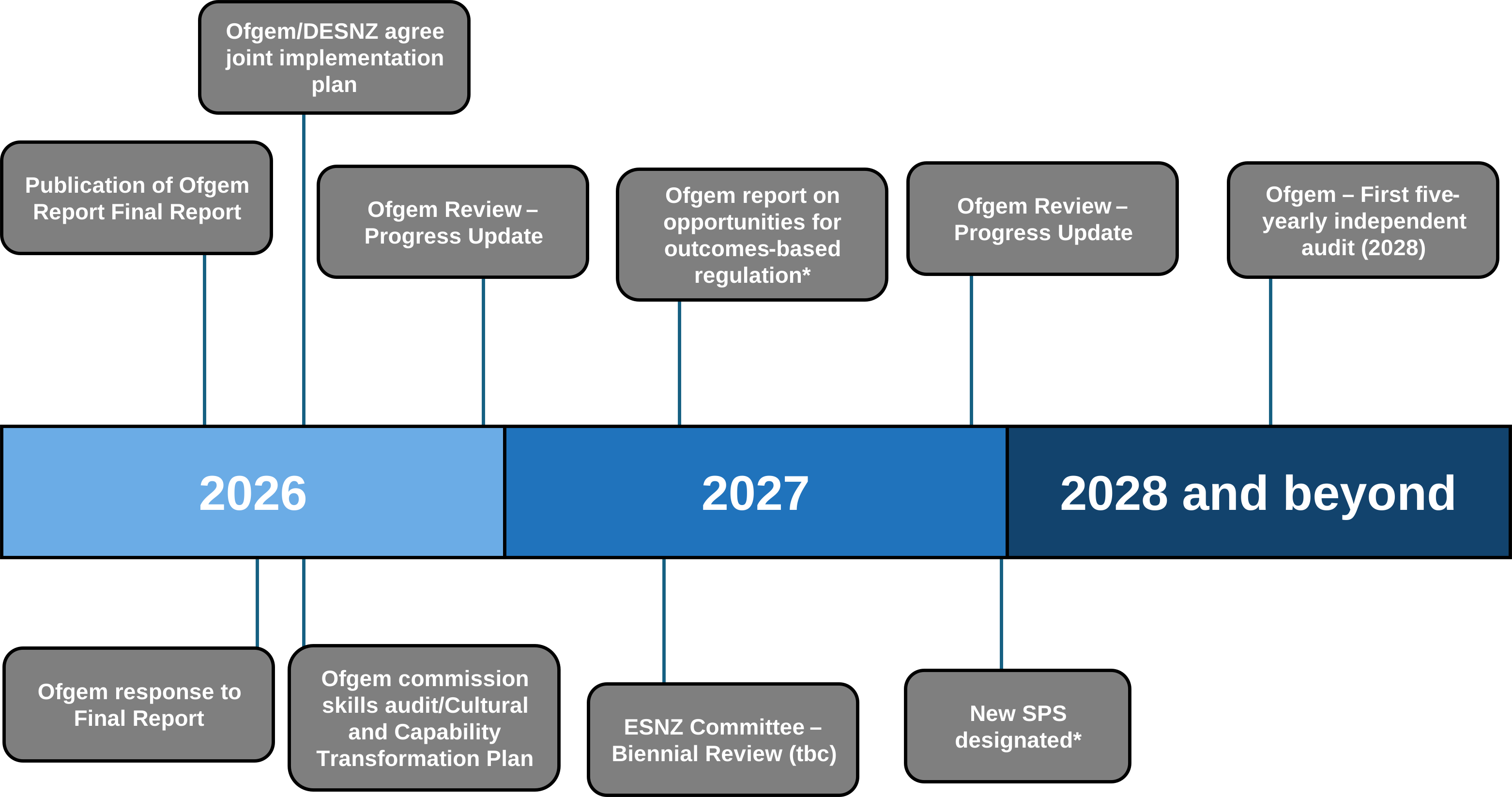
*Subject to necessary powers being in place
Description of figure 4: A high-level indicative timeline showing key milestones from 2026 to 2028 and beyond.
2026:
- Publication of Ofgem Review final report
- Ofgem response to final report
- Ofgem/DESNZ agree joint implementation plan
- Ofgem commission skills audit/Cultural and Capability Transformation Plan
- Ofgem Review – Progress update
2027:
- ESNZ Committee – Biennial Review (tbc)
- Ofgem report on opportunities for outcomes-based regulation*
- Ofgem Review – Progress Update
- New SPS designated*
2028 and beyond:
- Ofgem – First 5-yearly independent audit (2028)
*Subject to necessary powers being in place
Annex A: Ofgem Review – Terms of Reference
Rationale
The energy market is changing fast as we transition to net zero. Ofgem was established in 2000 when the main goal was to promote competition, and Britain’s decarbonisation journey had barely begun.
As that journey accelerates, the UK is moving to a more diverse energy market with the spread of electric vehicles (EVs), heat pumps, solar panels, and heat networks, alongside the move to a more strategically planned and procured energy system.
Consumer trust in this changing market will be key to delivering this transition. However, consumer trust and satisfaction in the energy market is systemically lower than where it needs to be. The recent energy crisis revealed weaknesses in consumer protection and the impact on people’s lives when the energy market is not working for consumers.
This is the right time to ask what kind of energy regulator the country needs to better protect consumers and facilitate the investment needed to deliver a rapid and cost-effective energy transition.
Aims
The aim of the review is to establish an energy regulator fit for the future. Critically, it will consider how to set up Ofgem so that it can regulate a fast-changing market to deliver a fair deal for consumers as we transition to net zero.
The review shall examine:
Protecting consumers and delivering fair outcomes:
- whether Ofgem has the right mandate and duties to meet the aims of the review. This shall examine what Ofgem’s role and priorities should be and whether its existing functions and duties enable it to deliver these
- whether Ofgem’s scope and remit is keeping up with a rapidly changing energy market. This will consider what the right regulatory boundaries are and how new markets should be regulated
- whether Ofgem has the right powers to protect consumers and give them confidence in the energy market. This shall examine lessons from the approaches taken by other regulators
- whether Ofgem has effective compliance and enforcement tools, so consumers can be confident that any failures will be investigated and rectified quickly, and what additional powers Ofgem might need to achieve this
Delivering investment and innovation in the transition:
- what role should Ofgem play to support growth and the government’s industrial strategy, so that investment and innovation reduce energy prices?
- what should the role of the regulator be in an energy system that is now, in part, driven by strategic planning and with the creation of the National Energy System Operator (NESO). In particular, how should we align regulatory strategy with strategic energy plans
Strengthening performance and accountability:
- how do we strengthen transparency and accountability on regulatory decisions and how to support parliamentary scrutiny of Ofgem’s performance
- the capabilities Ofgem needs to be an effective regulator in a more digital, fast-moving sector
Process
The review shall be conducted by officials in the Department for Energy Security and Net Zero, who shall engage across government and with external stakeholders. The review will set up an external group of advisors drawn from experts such as consumer groups, academia, the energy sector, and investor community to provide critical challenge and insight. The review shall involve public consultation.
Outcome and timing
The output from the review shall be a report, with recommendations to the Secretary of State. The review shall deliver a final report to the Secretary of State in Spring 2025.
Annex B: Table of actions
Strategic outcome 1: A strategic, outcomes-focused regulator
| Action | Detail | Responsible party | Legislation required? |
|---|---|---|---|
| 1. | Streamline Ofgem’s existing duties to provide a clearer, strategic framework. This should retain its principal objective to protect existing and future consumers, alongside 2 additional principal objectives, on an equal footing, for facilitating net zero and promoting economic growth. | DESNZ | Yes |
| 2. | Ofgem’s remit to be refocused on its core functions as an economic and consumer protection regulator. | DESNZ | No |
| 3. | Ofgem will not take on any new scheme delivery on behalf of government unless there is a very strong strategic alignment or value for money case to do so. | DESNZ | No |
| 4. | Remove the existing SPS and create an Ofgem-specific Strategy and Policy Statement (SPS) to provide more targeted strategic steers to support it in its unique role as a regulator. This will also necessitate the creation of a NESO-specific SPS. | DESNZ | Yes |
| 5. | A new SPS to be designated as soon as practicable once the necessary provisions for a revised SPS process are in place. | DESNZ | Yes |
| 6. | Reform the process for designating the SPS to ensure it can be put in place or amended more quickly, whilst retaining opportunities for stakeholder input and consultation and Parliamentary scrutiny. | DESNZ | Yes |
| 7. | Introduce a mechanism for Ofgem to request steers from government to assist the regulator in performing its duties or managing trade-offs between them. Ofgem will continue to be the final decision-maker for decisions within its remit. | DESNZ | Yes |
Strategic outcome 2: A clearly defined system and remit
| Action | Detail | Responsible party | Legislation required? |
|---|---|---|---|
| 8. | Amend Ofgem’s focus to reflect the full Energy System Value Chain (ESVC), for which Ofgem might be required to regulate, should there be a need, and it is the appropriate body, thus moving away from narrow technology-based regulation to a more consumer centric model. | DESNZ | Yes |
| 9. | Ensure the Secretary of State the power to appoint Ofgem has the regulatory body for activities within the ESVC, to ensure Ofgem’s regulatory remit remains up-to-date with market developments. | DESNZ | Yes |
| 10. | Establish an Energy Systems Guidance Framework (ESGF) to define the outcomes the government expects from the energy system. The ESGF will not prescribe how Ofgem should regulate the market; Ofgem will retain discretion to determine how best to deliver these outcomes, in line with its statutory duties. | DESNZ | No |
| 11. | Ofgem to improve processes and use of existing powers to collect and analyse data across the ESVC, and improve monitoring, risk assessment, anticipatory regulation, and horizon scanning. | Ofgem | No |
| 12. | Ofgem and DESNZ to work with NESO to clarify regulatory boundaries, roles, and responsibilities across the ESVC. This should include identifying areas for better collaboration and considering governance mechanisms to manage boundary issues. | Ofgem / DESNZ | No |
Strategic outcome 3: A high-performing, expert organisation
| Action | Detail | Responsible party | Legislation required? |
|---|---|---|---|
| 13. | Develop and publish a clear plan for cultural change and the development of outcomes-focused regulation. It should draw reference from the Competition and Markets Authority’s (CMA) 4P approach Pace, Predictability, Proportionality and Process to ensure meaningful impact both internally and externally. This should specifically consider how Ofgem updates and reviews its risk appetite and willingness to take action against poor practices in the energy market. | Ofgem | No |
| 14. | Strengthen industry and technical expertise through recruitment, secondments, and strategic partnerships. | Ofgem | No |
| 15. | Ofgem to work with government (DBT and DESNZ) to swiftly undertake an evaluation of Ofgem’s future capability needs, to equip it to deliver more anticipatory, outcomes-focused regulation that supports innovation. This will inform a Cultural and Capability Transformation Plan in the second half of 2026. | Ofgem | No |
| 16. | Ofgem’s Chair to ensure that the board has a representative to champion skills and culture change, including the recommendations from this review. | Ofgem | No |
| 17. | Ofgem to develop a workforce plan to support the delivery of the organisational transformation necessary to deliver the outcomes of the Ofgem Review. | Ofgem | No |
Strategic outcome 4: An empowered regulator that protects and promotes consumer interests
| Action | Detail | Responsible party | Legislation required? |
|---|---|---|---|
| 18. | Grant Ofgem direct consumer law enforcement powers to remove the need to pursue compliance via the courts which is costly and time consuming. |
DESNZ to legislate. Ofgem to consult and implement |
Yes |
| 19. | Provide Ofgem with the power to introduce an Individual Accountability Mechanism (IAM) to allow it to hold senior energy company staff directly accountable for their actions. Ofgem to consult on proposals for an IAM before it can be introduced. |
DESNZ to legislate. Ofgem to consult and implement |
Yes |
| 20. | Ofgem should be granted powers to enable it to direct companies to recover, or prevent, performance-related pay awards in scenarios where there have been extremely serious breaches. | DESNZ to legislate. | Yes |
| 21. | Reform the penalty limits to ensure that there can be no gain from breaching the rules. |
DESNZ to legislate. Ofgem to implement |
Yes |
| 22. | Amend the challenging deadlines for final and provisional orders so that Ofgem can use the powers to full effect. |
DESNZ to legislate. Ofgem to implement |
Yes |
| 23. | Reform the licence modifications process to enable Ofgem to introduce rules more quickly in urgent situations. |
DESNZ to legislate. Ofgem to implement |
Yes |
| 24. | Introduce a power to enable Ofgem to enforce against an interconnected company where it has a direct role in causing the regulated entity to breach, or be at risk of breaching, its obligations. This will enable Ofgem to protect consumers and other market participants from risks of harm posed by the actions of unregulated parties. |
DESNZ to legislate. Ofgem to implement |
Yes |
| 25. | Government will continue to support Ofgem as they consider expanding automatic compensation to more key issues and increase the size of compensation payments. | DESNZ | Yes |
| 26. | Government is consulting on the role and powers of the Energy Ombudsman, including proposals to strengthen enforcement mechanisms, change the Ombudsman’s statutory status, shorten referral times, and consider how to make it easier for consumers to access the Ombudsman. | Ofgem / DESNZ | No |
Strategic outcome 5: A regulator that enables innovation, investment, growth, and the clean energy transition
| Action | Detail | Responsible party | Legislation required? |
|---|---|---|---|
| 27. | Ofgem to publish a report on how it will deliver on reducing administrative burdens to businesses, as per the Regulation Action Plan commitment. | Ofgem | No |
| 28. | Ofgem to continue to deliver on its commitments in the Regulation Action Plan, with a renewed focus on proactive industry engagement. | Ofgem | No |
| 29. | Ofgem to reset its approach to working with industry, including reviewing its use of consultations and decision-making processes. | Ofgem | No |
| 30. | Enable the implementation of General Authorisation Regimes (GAR) within the ESVC, where appropriate, so that Ofgem has the tools to deliver more flexible, outcomes-based regulation. |
DESNZ to legislate. Ofgem to consult and implement |
Yes |
| 31. | Following the conclusion of Ofgem’s Consumer Confidence programme, Ofgem will undertake work to identify further opportunities to introduce more outcomes-based regulation within the energy market. This should seek to replace and simplify, rather than add to, existing rules. Ofgem will report back on progress to do this within 12 months of the necessary powers being in place. | Ofgem | No |
| 32. | Enhance Ofgem’s ability to support innovation through the use of targeted licence derogations. |
DESNZ to legislate. Ofgem to implement |
Yes |
| 33. | Simplify Ofgem’s requirements on serving documents to enable it to do so electronically, speeding up regulatory processes. |
DESNZ to legislate. Ofgem to implement |
Yes |
Strategic outcome 6: A transparent and accountable regulator
| Action | Detail | Responsible party | Legislation required? |
|---|---|---|---|
| 34. | Invite the Energy Security and Net Zero (ESNZ) Select Committee to review the findings of Ofgem’s internal audit, with the option for the Committee to undertake more comprehensive scrutiny or a detailed investigation should they deem it necessary. | DESNZ | No |
| 35. | Reform Ofgem’s Annual Report and Accounts, to include clearer insights on delivery against its duties and government priorities, as well as key regulatory decisions. Ofgem | No | |
| 36. | Develop a meaningful set of Key Performance Indicators based on industry feedback, to better illustrate Ofgem’s performance, support disclosure in Ofgem’s reporting and inform future reviews. | Ofgem | No |
| 37. | Introduce a 5-yearly audit of Ofgem by an independent external reviewer/review team. The first such review should take place by 2028 at the latest. | Ofgem | No |
| 38. | Ofgem to publish updates on the actions it has taken in response to the Ofgem Review findings and actions within 12 and 24 months of publication of the review’s final report. | Ofgem | No |
Annex C: Membership of the Ofgem Review Independent Advisory Panel
| Sector | Name | Role |
|---|---|---|
| Consumer Advocacy and Advice | Gillian Cooper | Director of Energy, Citizens Advice |
| Consumer Advocacy | Sam Ghibaldan | CEO, Consumer Scotland |
| Policy Expert (Net Zero and Innovation) | Ravi Gurumurthy | CEO, Nesta |
| Energy Policy Expert | Prof Catherine Mitchell | Professor Emerita of Energy Policy, Exeter University |
| Economist (Net Zero) | Dr James Richardson | Chief Economist, Climate Change Committee |
| Energy and regulation specialist | Laura Sandys CBE | Chair, Green Alliance |
Annex D: Evolution of Ofgem’s duties
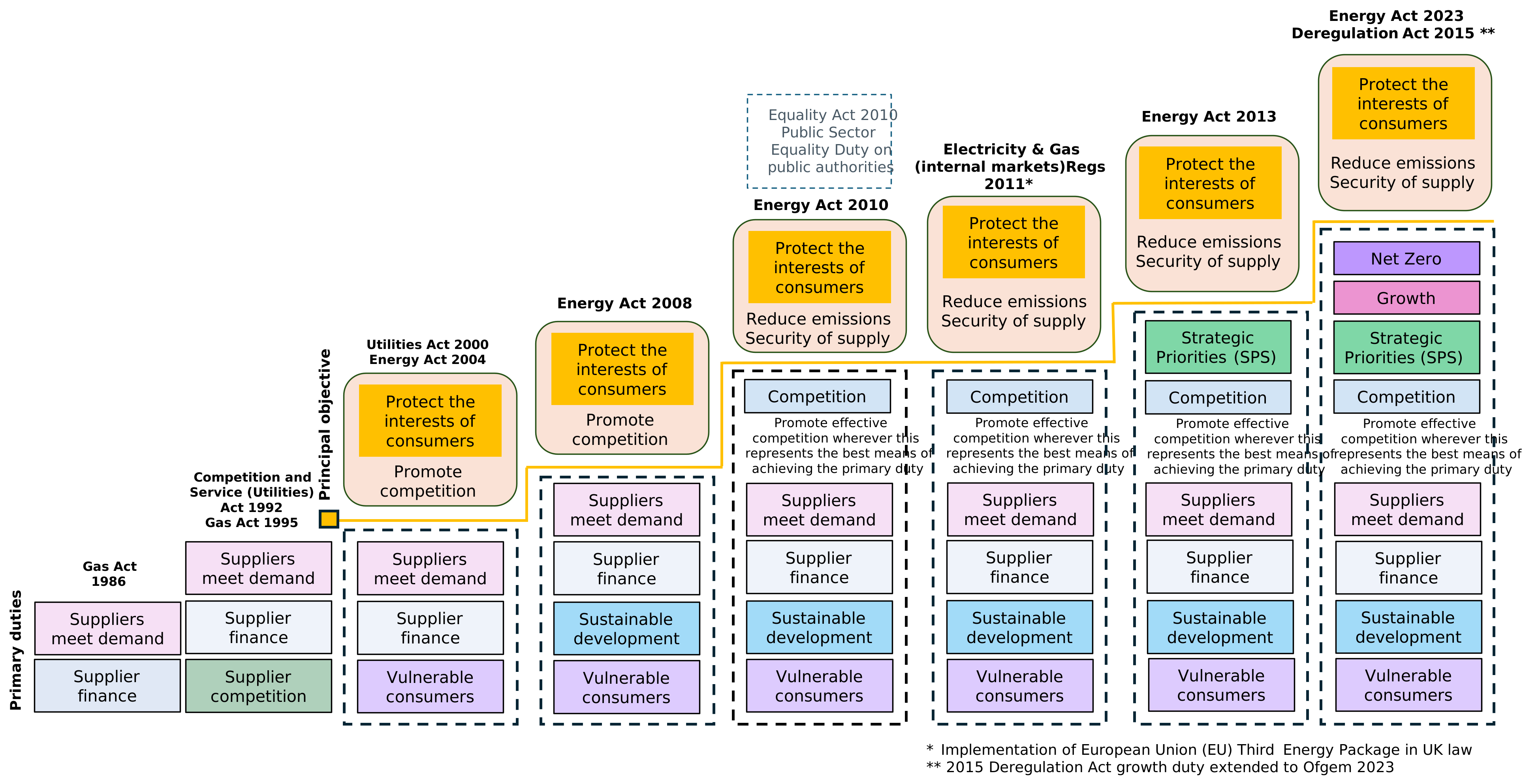
Description of diagram: A timeline diagram illustrating key legislative acts and regulatory changes affecting energy supply and competition in the UK from 1986 to 2023. The diagram highlights milestones such as supplier finance, competition phases, consumer protection measures, and strategic priorities.
Gas Act 1986
Primary duties:
- Suppliers meet demand
- Supplier finance
Competition and Service (Utilities) Act 1992 and Gas Act 1995
Primary duties:
- Suppliers meet demand
- Supplier finance
- Supplier competition
Utilities Act 2000 and Energy Act 2004
Principle objectives:
- Protect the interests of consumers
- Promote competition
Primary duties:
- Suppliers meet demand
- Supplier finance
- Vulnerable consumers
Energy Act 2008
Principle objectives:
- Protect the interests of consumers
- Promote competition
Primary duties:
- Suppliers meet demand
- Supplier finance
- Sustainable development
- Vulnerable consumers
Energy Act 2010
(Inc. Equality Act 2010 Public Sector Equality Duty on public authorities.)
Principle objectives:
- Protect the interests of consumers
- Reduce emissions
- Security of supply
Primary duties:
- Competition (Promote effective competition wherever this represents the best means of achieving the primary duty)
- Suppliers meet demand
- Supplier finance
- Sustainable development
- Vulnerable consumers
Electricity & Gas (internal markets) Regs 2011*
Principle objectives:
- Protect the interests of consumers
- Reduce emissions
- Security of supply
Primary duties:
- Competition (Promote effective competition wherever this represents the best means of achieving the primary duty)
- Suppliers meet demand
- Supplier finance
- Sustainable development
- Vulnerable consumers
Energy Act 2013
Principle objectives:
- Protect the interests of consumers
- Reduce emissions
- Security of supply
Primary duties:
- Strategic priorities (SPS)
- Competition (Promote effective competition wherever this represents the best means of achieving the primary duty)
- Suppliers meet demand
- Supplier finance
- Sustainable development
- Vulnerable consumers
Energy Act 2023 and Deregulation Act 2013**
Principle objectives:
- Net Zero
- Growth
- Protect the interests of consumers
- Reduce emissions
- Security of supply
Primary duties:
- Strategic priorities (SPS)
- Competition (Promote effective competition wherever this represents the best means of achieving the primary duty)
- Suppliers meet demand
- Supplier finance
- Sustainable development
- Vulnerable consumers
* Implementation of European Union (EU) Third Energy Package in UK law
** 2015 Deregulation Act growth duty extended to Ofgem 2023
Annex E: The Energy System Value Chain (ESVC)
Activities involved in producing, delivering and using energy.
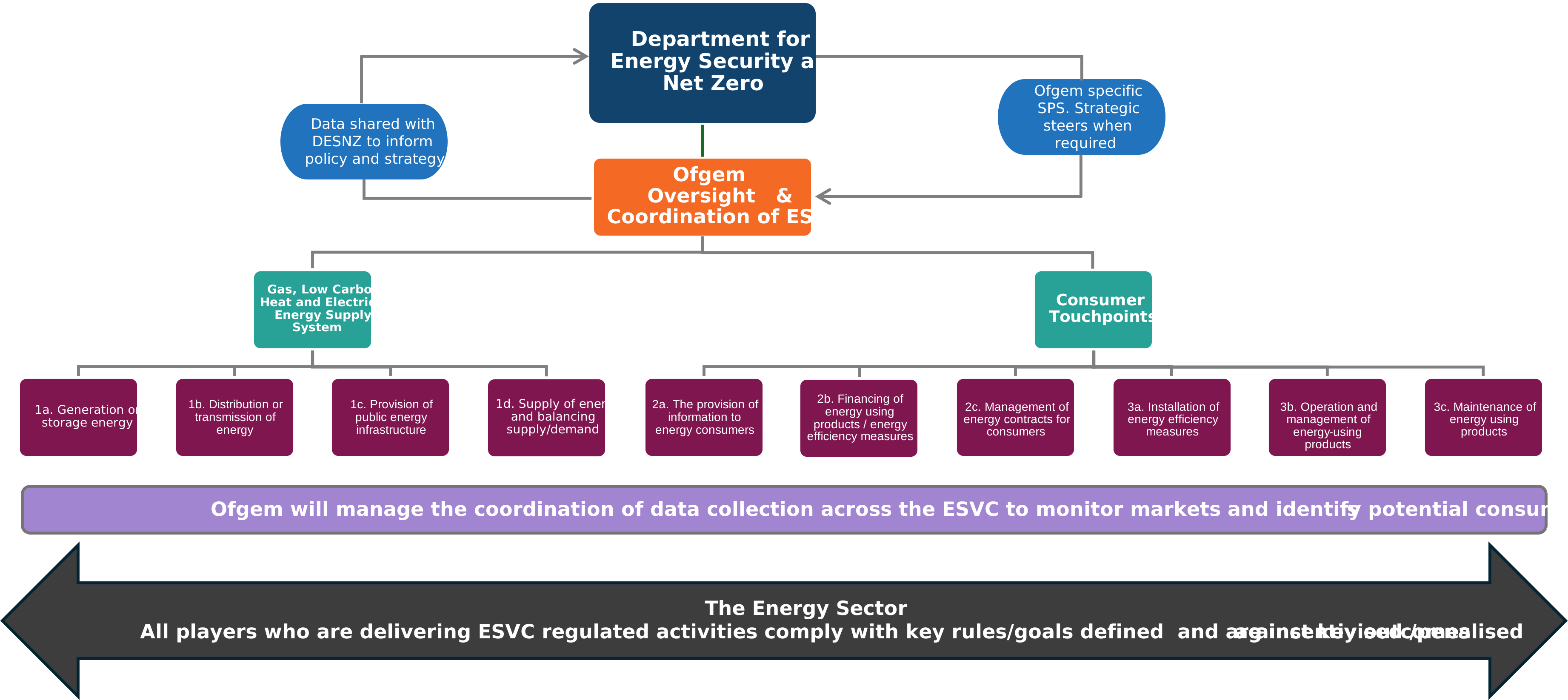
Description of diagram: Flowchart illustrating the Energy System Value Chain, detailing activities involved in producing, delivering, and using energy.
- DESNZ (shares Ofgem specific SPS, strategic steers when required)
-
Ofgem Oversight & Coordination of ESVC (data shared with DESNZ to inform policy and strategy)
- Gas, Low Carbon Heat and Electricity Energy Supply System:
- 1a – Generation or storage of energy
- 1b – Distribution or transmission of energy
- 1c – Provision of public energy infrastructure
- 1d – Supply of energy and balancing supply/demand
- Consumer touchpoints:
- 2a – The provision of information to energy consumers
- 2b – Financing of energy using products/energy efficiency measures
- 2c – Management of energy contracts for consumers
- 3a – Installation of energy efficiency measures
- 3b – Operation and management of energy-using products
- 3c – Maintenance of energy using products
- Gas, Low Carbon Heat and Electricity Energy Supply System:
Ofgem will manage the coordination of data collection across the ESVC to monitor markets and identify potential consumer harms.
The Energy Sector: All players who are delivering ESVC regulated activities comply with key rules/goals defined and are incentivised /penalised against key outcomes.
-
DBT (2025) ‘The UK’s Modern Industrial Strategy’ (CP 1451) ↩
-
HM Treasury / NISTA (2025) ‘UK Infrastructure: A 10 Year Strategy’ (CP 1344) ↩
-
Ofgem (2015) ‘Workforce Management Information 2014-15’ ↩
-
Ofgem (2021) ‘Ofgem Annual Report and Accounts 2020-21’ ↩
-
Ofgem (2025) ‘Ofgem Annual Report and Accounts 2024-25’ ↩
-
DESNZ (2025) ‘Digest of UK Energy Statistics (DUKES) 2025’, table 5.3 ↩
-
DESNZ (2025) ‘Energy Trends: UK renewables (June 2025)’, table 6.1; & DESNZ (2024) ‘Clean Power 2030 Action Plan: A new era of clean electricity’, main report ↩
-
House of Commons Library (2018) ‘Briefing Paper 04153 – Energy Prices’, average direct debit bill for a domestic gas (£281) and electricity (£346) in 2010 prices. To note, the Typical Domestic Consumption Values (TDCV) in these figures differ: at the time this paper was published, they were 3,800 kwh (electricity) and 15,000 kwh (gas) compared to 2,700 kwh (electricity) and 11,500 kwh (gas) now. ↩
-
DB-UK Community: Ofgem 1 January 2024 Energy Price Cap ↩
-
Ofgem: Energy price cap explained ↩
-
Ofgem: Debt and arrears indicators ↩
-
Ofgem (2025) ‘Energy system cost allocation and recovery review’ ↩
-
HM Treasury (2025) ‘A new approach to ensure regulators and regulation support growth’ ↩
-
DESNZ (2024) ‘Ofgem review: terms of reference’ ↩
-
Independent Water Commission (2025) ‘Review of the water sector’ ↩
-
DESNZ (2024) ‘Strategy and policy statement for energy policy in Great Britain’ ↩
-
DESNZ (2024) ‘Energy UK conference 2024: keynote speech by Ed Miliband’ ↩
-
DESNZ (2025) ‘Energy Secretary speech to Energy UK conference 2025’ ↩
-
The requirement to secure that license holders are able to finance their activities, as stipulated in the existing legislation, will be explicitly retained as a key consumer interest within the new statutory framework. ↩
-
Regulating Third-Party Intermediaries in the retail energy market: summary of consultation responses (HTML) - GOV.UK ↩
-
Ofgem (2019) ‘Licence guide: Standards of Conduct’ ↩
-
Citizens Advice (2024) ‘Hitting a Wall: Protecting consumers who install net zero technologies’ ↩
-
Consumer Scotland (2025) ‘Converting Scotland’s home heating’ ↩
-
FCA (2015) ‘Senior Managers and certification regime’; & Independent Water Commission (2025) ‘Review of the water sector’ (“recommendation 51: A new regime for senior accountability should be established by the UK and Welsh Government. The proposed regime should be subject to public consultation before implementation”) ↩
-
Ofgem currently has the ability to disqualify directors for competition rule breaches. ↩
-
Ofgem (2023) ‘Ofgem penalises United Gas & Power (UGP) following deliberate and significant overcharging of customers’, press release ↩
-
UK Finance (2019) ‘SMCR: Evolution and Reform’ ↩
-
FCA (2019) ‘Senior Managers and Certification Regime Banking Stocktake Report’ ↩
-
Defra (2025) ‘Water (Special Measures) Act: policy statement’ ↩
-
Ofgem (2022) ‘Review of Ofgem’s regulation of the energy supply market’ ↩
-
DESNZ (2025) ‘Delivering an energy market that works for consumers’ – press release ↩
-
Ofgem (2025) ‘Reviewing the supplier Guaranteed Standards of Performance (GSoP)’ ↩
-
DESNZ (2025) ‘Fairer, faster redress in the energy market’ ↩
-
Energy UK: UK Energy – The UK energy industry in numbers ↩
-
Subsequently delivered via the DESNZ (2025) ‘Clean flexibility roadmap’ ↩
-
CMA (2025) ‘New CMA proposals to drive growth, investment, and business confidence’ – blog post ↩
-
DESNZ (2025) ‘Clean Energy Industries Sector Plan’; & WIPO: United Kingdom Ranking in the Global Innovation Index ↩
-
Ofgem: Data Portal ↩
-
DECC (2011) ‘Ofgem Review, 2011’ ↩