Country policy and information note: Women fearing gender-based violence, Namibia, December 2025 (accessible)
Updated 6 January 2026

© Crown copyright 2026
This publication is licensed under the terms of the Open Government Licence v3.0 except where otherwise stated. To view this licence, visit nationalarchives.gov.uk/doc/open-government-licence/version/3 or write to the Information Policy Team, The National Archives, Kew, London TW9 4DU, or email: psi@nationalarchives.gov.uk.
Where we have identified any third party copyright information you will need to obtain permission from the copyright holders concerned.
This publication is available at https://www.gov.uk/government/publications/namibia-country-policy-and-information-notes/country-policy-and-information-note-women-fearing-gender-based-violence-namibia-december-2025-accessible
Version 2.0, December 2025
Executive summary
Women are protected from discrimination and violence in law. The government has developed and adopted a series of policies to empower women, counter negative cultural practices and end gender-based violence (GBV). The implementation of this legal-policy framework has improved women’s social, economic and political status considerably, with women reaching equality with men in areas such as education and healthcare.
Despite this progress Namibia remains a patriarchal society in which discriminatory gender stereotypes and harmful practices persist. Gender inequalities perpetuate harmful socio-cultural norms increasing women’s vulnerability to abuse. Physical, sexual and emotional GBV, including domestic violence, from family and community members is widespread although accurate, current and specific data is limited.
The government has a functioning criminal justice system that caters for victims of GBV, although there are concerns about resourcing, accessibility and speed of justice.
Women are able to move freely. Essential services and economic opportunities are accessible in different parts of the country.
Women who fear persecution or serious harm from non-state actors:
- do not form a particular social group within the meaning of the Refugee Convention - no other convention ground is likely to be applicable
- are not likely to be at risk of persecution or serious harm
- are likely to be able to obtain protection
- are likely to be able to relocate within Namibia
Where a claim is refused, it is likely to be certified as ‘clearly unfounded’.
All cases must be considered on their individual facts, with the onus on the person to demonstrate they face persecution or serious harm.
Assessment
Section updated: 18 December 2025
About the assessment
This section considers the evidence relevant to this note – that is the country information, refugee/human rights laws and policies, and applicable caselaw – and provides an assessment of whether, in general:
- a woman faces a real risk of persecution/serious harm by non-state actors because of her gender
- the state (or quasi state bodies) can provide effective protection
- internal relocation is possible to avoid persecution/serious harm
- if a claim is refused, it is likely to be certified as ‘clearly unfounded’ under section 94 of the Nationality, Immigration and Asylum Act 2002.
The note considers risks faced by women including domestic and stranger violence generally. It does not, however, specifically consider risks of or resulting from trafficking or modern slavery. For information on the treatment of lesbians, bisexual women and trans men and women, see the country policy and information note, Namibia: Sexual orientation and gender identity and expression.
Decision makers must, however, consider all claims on an individual basis, taking into account each case’s specific facts.
1. Material facts, credibility and other checks/referrals
1.1 Credibility
1.1.1 For information on assessing credibility, see the instruction on Assessing Credibility and Refugee Status and Gender issues in the asylum claim.
1.1.2 Decision makers must also check if there has been a previous application for a UK visa or another form of leave. Asylum applications matched to visas should be investigated prior to the asylum interview (see the Asylum Instruction on Visa Matches, Asylum Claims from UK Visa Applicants).
1.1.3 Decision makers must also consider making an international biometric data-sharing check, when one has not already been undertaken (see Biometric data-sharing process (Migration 5 biometric data-sharing process)).
1.1.4 In cases where there are doubts surrounding a person’s claimed place of origin, decision makers should also consider language analysis testing, where available (see the Asylum Instruction on Language Analysis).
Official – sensitive: Not for disclosure – Start of section
The information in this section has been removed as it is restricted for internal Home Office use.
Official – sensitive: Not for disclosure – End of section
1.2 Exclusion
1.2.1 Decision makers must consider whether there are serious reasons for considering whether one (or more) of the exclusion clauses is applicable. Each case must be considered on its individual facts.
1.2.2 If the person is excluded from the Refugee Convention, they will also be excluded from a grant of humanitarian protection (which has a wider range of exclusions than refugee status).
1.2.3 For guidance on exclusion and restricted leave, see the Asylum Instruction on Exclusion under Articles 1F and 33(2) of the Refugee Convention, Humanitarian Protection and the instruction on Restricted Leave.
2. Convention reason(s)
2.1.1 Women do not fall within the scope of the Refugee Convention for the reason of particular social group (PSG).
2.1.2 Women are not considered to form a PSG within the meaning of the Refugee Convention. This is because while they do share an innate characteristic, or a common background that cannot be changed, or share a characteristic or belief that is so fundamental to identity or conscience that a person should not be forced to renounce it – their sex and/or gender – they do not have a distinct identity in Namibia because the group is perceived as being different by the surrounding society.
2.1.3 Women have the same civil, legal and political rights as men, albeit they face some discrimination in customary law. Women also have parity to men in education and health outcomes and have made progress in other public and private areas of life. Although patriarchal attitudes persist and there is some societal discrimination this is not to the extent that as a group they are perceived as being different by the surrounding society (see Legal context, Government and policy context, Social, economic and political status and Cultural attitudes to women and girls).
2.1.4 In the absence of a link to one of the 5 Refugee Convention reasons necessary for the grant of asylum, the question is whether the person will face a real risk of serious harm to qualify for Humanitarian Protection (HP).
2.1.5 For further guidance on the 5 Refugee Convention grounds, see the Asylum Instruction, Assessing Credibility and Refugee Status and Gender issues in the asylum claim.
3. Risk
3.1.1 Women are unlikely to face discrimination and gender-based violence (GBV) that amounts to persecution or serious harm from non-state actors.
3.1.2 While GBV is described as ‘widespread’ – with around one in three married women reported to have experienced some form of it – it varies in nature, from insults and public shaming to beatings, killings and rape, and frequency. Not all such treatment will by its nature and/or repetition amount to persecution or serious harm. The onus will be on the woman to demonstrate such a risk.
3.1.3 Women are protected from discrimination and violence by law. The Government of the Republic of Namibia (GRN) is party to the principal international and regional instruments that promote and protect women’s rights (see International instruments). The Constitution provides for equality of men and women and advances disadvantaged groups including women (see Constitution). The GRN has also enacted a comprehensive package of laws to protect women and girls from discrimination and violence in public and family life. However, some elements of customary law provide for differential treatment between women and men. There are currently no laws preventing online abuse and violence (see Gender-specific legislation).
3.1.4 The GRN has publicly stated its commitment, developed and adopted policies, and actively run campaigns, to empower women, counter negative cultural practices and end GBV. The government of President Nandi-Ndaitwah, elected in November 2024 as Namibia’s first female president, has publicly stated its commitment to treating women’s empowerment as a high priority and taken a ‘zero-tolerance stance’ against GBV (see Official position). The Ministry of Gender Equality and Child Welfare (MGECW) is the government department tasked with creating, promoting and enabling gender equality (see Departmental responsibility). The MGECW has introduced a series of national gender policies to promote women’s equality and empowerment, including protection from violence, as well as developing mechanisms for achieving these aims. The Third National Gender Equality and Equity Plan, released in March 2025, seeks to reduce all forms of gender discrimination and GBV, and gender inequalities, in all spheres of life (see Policies to promote, protect and support women and girls). The GRN has also undertaken a series of anti-GBV campaigns, to raise awareness about GBV and negative cultural practices amongst all population groups. These include the 16-days of activism against GBV held annually on 25 November and the ‘#EndGBVNamibia’ campaign launched in June 2025 (see Government campaigns).
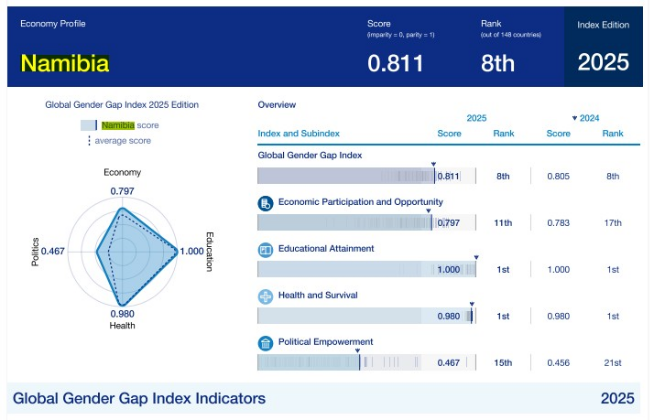
3.1.5 The GRN’s implementation of laws and policies have improved women’s social, economic and political status. The World Economic Forum’s Global Gender Gap index - which compares gender parity across 4 categories: economic participation and opportunity, educational attainment, health and survival, and political empowerment - ranked Namibia 8 out 148 countries in 2025 and top in Africa. Women have reached near parity with men in areas such as educational attainment and health and survival. While still not equal to men across all categories they have made progress in the political and economic opportunity spheres too. This includes in government which, for example, is headed by a female president and vice-president, and has a female majority cabinet (see Social, economic and political status).
3.1.6 Despite progress in women’s rights and status, Namibia remains a patriarchal society in which discriminatory gender stereotypes and harmful practices, such as child marriage and sexual initiations, remain. Gender inequality perpetuates these harmful socio-cultural norms increasing some women’s vulnerability to GBV and other forms of discrimination or disadvantage (see Cultural attitudes). Nonetheless, attitudes are changing. The majority of people surveyed in 2021 consider GBV the most important women’s rights issue, that it is never justified for a man to ‘physically discipline his wife’ and domestic violence should be treated as a criminal matter (see Societal attitudes to and perceptions of GBV)
3.1.7 A number of factors increase a woman’s risk to GBV. These include:
- poverty
- lack of education
- unemployment
- early marriage
- alcohol and substance abuse
- a family history of violence (see Factors increasing likelihood of GBV)
3.1.8 Sources do not provide an up to date or complete set of data on the levels of GBV (which may include a wide spectrum of acts from insults to serious physical and sexual violence). The GRN does not have an effective GBV Information Management System. Nor does it systematically make publicly available the number of GBV incidents reported to the police or other state agencies (see Limited availability of data. Sources also note that under-reporting of GBV – as well as not reporting incidents to the authorities but only to family and other members of communities – because, for example, of a fear of reprisal or shame. This means that the qualitative data available may under-estimate rates of violence (see Underreporting).
3.1.9 However, sources relying on the available statistical data - primarily the national demographic health survey of 2013 (NDHS 2013) - and anecdotal information are consistent in stating that GBV, particularly domestic violence, is widespread. The NDHS 2013 reported that one in 3 women aged between 15 and 49 who was or had been married had experienced physical, sexual, and/or emotional violence ranging from insults and public shaming to beatings and rape, with 28% experiencing it in the previous 12 months. Domestic violence includes physical aggression, threats, sexual and emotional abuse, controlling behaviours, intimidation, stalking, and covert forms such as neglect or economic deprivation. A MGECW youth survey of 2019 reported that violence was widespread among children, with 2 out of 5 girls surveyed experiencing physical, sexual or emotional violence before they were 18 (see Levels and nature of violence).
3.1.10 The NDHS 2013 found that married women are mostly likely to experience GBV from current or former partners. However, unmarried women are most likely to experience violence from their mothers than fathers or other family or community members. There is limited information in other sources about who perpetrators are (see Levels and nature of violence). Levels of violence reported in the NDHS 2013 varied with a woman’s characteristics such as age, education, employment and the number of children in her family and by region (see Underreporting and Levels and nature of violence).
3.1.11 While police statistics on reported crimes are not routinely made available by the GRN, some data is periodically released to the media including on GBV offences (although sources do not define what these include). Over the period from April 2022 to February 2025, the numbers of GBV cases nationally varied from a low of around 400 a month in 2023/2024 to a high of about 700 a month in 2022/2023. One source noted that between April 2024 and February 2025 there were 1,345 rapes recorded by the police. It is likely that most GBV offences are committed by men against women, but not all (see Levels and nature of violence).
3.1.12 For guidance and information on assessing risk faced by lesbian, bisexual women and trans people, see the country policy and information note, Namibia: Sexual orientation and gender identity and expression.
3.1.13 For further guidance on assessing risk, see the Asylum Instructions Assessing Credibility and Refugee Status and Gender issues in the asylum claim.
4. Protection
4.1.1 A woman who fears a rogue state actor and/or a non-state actor is likely to obtain protection from the state.
4.1.2 The GRN has taken reasonable steps to protect women by operating an effective legal system for the detection, prosecution and punishment of acts constituting persecution or serious harm and which is accessible to them although it may not be able to guarantee protection in all cases. These include:
- establishing legal and policy framework to protect women from discrimination and GBV (see Legal context and Government and policy context)
- establishing and maintaining control over a competent law enforcement agency – the Namibian Police Force (NamPol) – which is present throughout the country, including in small settlements and rural areas (see Police including gender-based violence protection units)
- establishing and operating 17 Gender Based Violence Protection Units (GBVPUs) across all 14 regions which are responsible for attending to GBV cases. The GBVPUs take a holistic approach to managing GBV cases by having present police, medical personnel, social workers and legal advisors to assist victims (see Police including gender-based violence protection units)
- operating GBV investigation units at hospitals to provide forensic examinations of victims of sexual violence. Hospitals and clinics also provide counselling for GBV survivors (see Support at public hospitals)
- operating at least 8 state-supported shelters, although sources indicate that these lack of resources and may only operate on ‘as-needed’ basis (see State-supported shelters), and face challenges such as a lack of appropriately trained staff.
- the Office of the Prosecutor General has a dedicated ‘Sexual Offenses Unit’ to assist in prosecuting cases (see Arrests and prosecutions)
- establishing and operating an independent and impartial judiciary which includes specialised courts to deal with GBV cases (see Structure, Independence and fair trial, and Gender-specific assistance)
- providing legal assistance to individuals who cannot afford to pay for a lawyer to ensure access to justice (see Legal aid)
4.1.3 The UN and some NGOs have criticised the effectiveness of the legal system. These include raising concerns about:
- structural bottlenecks which hamper co-ordination between health, protection, law enforcement and justice systems
- dysfunctional GBVPUs
- a lack of specialised training for service providers and a lack of human resources including doctors, police and social workers
- difficulties in accessing protection and assistance for women in rural areas (see State protection and assistance – General), including protection orders, reparations, shelters and psychosocial treatment and counselling.
4.1.4 The UN has also raised concerns about low rates of reporting of incidents of GBV, arrests and prosecutions (see Arrests and prosecutions and Hearings, convictions and sentencing).
4.1.5 The GRN does not systematically release data on the number of GBV cases investigated and prosecuted by the police. However, media reports and the US State Department’s (USSD) human rights report for 2023 indicate that NamPol arrested numerous (usually male) individuals for committing GBV offences, including rape, between 2023 and 2025. For example, in Oshikoto region, 143 rape cases reported in 2024 resulted in 143 arrests (106 Namibian and 37 Angolan men). Similarly, in Kavango West, 60 GBV cases recorded between January and June 2025 led to 48 arrests, including 18 arrests for 20 rape cases, arrests in two attempted rape cases, and suspects apprehended in domestic violence-related murders and assaults. By comparison, 55 GBV-related cases were reported by June 2024, with 41 arrests, reflecting a year-on-year increase of 9%. (see Arrests and prosecutions).
4.1.6 The GRN also does not systematically release data on the number of GBV cases tried and convicted in the justice system and there is limited information in other sources. The USSD reported that in 2023 numerous cases of rape were tried. However, the UN expressed concern in 2024 about the low number of convictions for perpetrators of GBV (although not all prosecutions will necessarily result in a conviction) without specifically referring to the basis of this (see Hearings, convictions and sentencing).
4.1.7 There may be various sound reasons why criminals may not be brought to justice.
4.1.8 There is limited information about the prison population, including grounds for prisoners’ incarceration. But an Africa Press article of December 2023, citing a regional commissioner in the Namibia Correctional Service (NCS), reported that there were over 4,500 prisoners nationally, the majority of whom were sentenced for GBV-related offences. This indicates the courts convict and sentence GBV offenders (see Prison population: numbers linked to GBV offences).
4.1.9 Beyond processing GBV offenders through the judicial system, the courts also routinely issue protection orders granting over 70% of the 4,552 applications in 2021 to 2022 (the most recent year data is available at the time of writing) (see Protection and maintenance orders). Protection orders restrain perpetrators from subjecting victims - usually partners – to domestic violence (see Protection orders).
4.1.10 The GRN has also established an independent and impartial Ombudsman with a mandate to promote fairness, accountability and transparency in the public sector by resolving complaints. The Ombudsman’s jurisdiction includes human rights violations and maladministration (for example by rogue state actors). The USSD observed that the Ombudsman was effective at identifying abuses but lacked an enforcement mandate or a means to correct problems (see Oversight of government and human rights: the Ombudsman).
4.1.11 Civil society organisations (CSOs) are not able to provide protection but can assist and support women who are victims of GBV, including accessing justice. Several CSOs provide services to support women including the Regain Trust, the Legal Assistance Centre and Lifeline/Childline which operates a national toll-free helpline for GBV victims (see Civil society assistance).
4.1.12 There are weaknesses in the organisation, location, funding and enforcement of the law which undermine its effectiveness and accessibility for some women, for example in remote rural areas. However, there is also clear and robust evidence indicating the state does not tolerate serious discrimination or other offensive acts against women and is both willing and able to provide protection.
4.1.13 For guidance and information on assessing the availability of protection for lesbian, bisexual women and trans people, see the country policy and information note, Namibia: Sexual orientation and gender identity and expression.
4.1.14 For further guidance on assessing state protection, see the Asylum Instruction on Assessing Credibility and Refugee Status Assessing Credibility and Refugee Status and Gender issues in the asylum claim.
5. Internal relocation
5.1.1 A person is likely to be able to internally relocate to escape persecution or serious harm by a rogue state and/or non-state actors.
5.1.2 This is because in general, there are parts of Namibia, such as Windhoek, Walvis Bay and Rundu, where it will be reasonable to expect a woman to relocate.
5.1.3 Namibia is large country – over 3 times larger than the UK – but with a relatively small, ethnically (tribally) diverse and young population of around 3 million split evenly between rural and urban areas. The largest city is Windhoek, with about 500,000 people. Other large towns include Rundu, Swakopmund and Walvis Bay all with populations over 75,000. About half of households are headed by women (see Geography).
5.1.4 Since Namibia’s independence, the GRN has improved the country’s economy, infrastructure and access to essential services which has continued under President Ndaitwah. While Namibia has become a lower-middle income country, poverty and inequality remain problems (see Economic context).
5.1.5 Women are able to move without restriction within the country. Many people have moved within the country, mostly from rural to urban areas in search of work, better access to healthcare and education, and improved living conditions (see Internal relocation).
5.1.6 There is no indication in the sources consulted that there are specific barriers preventing women from relocating within the country (see Internal relocation).
5.1.7 For guidance and information on assessing the viability of internal relocation for lesbian, bisexual women and trans people, see the country policy and information note, Namibia: Sexual orientation and gender identity and expression.
5.1.8 For further guidance on considering internal relocation and factors to be taken into account see the Asylum Instruction on Assessing Credibility and Refugee Status and Gender issues in the asylum claim.
6. Certification
6.1.1 Where a claim is refused, it is likely to be certifiable as ‘clearly unfounded’ under section 94 of the Nationality, Immigration and Asylum Act 2002.
6.1.2 For further guidance on certification, see Certification of Protection and Human Rights claims under section 94 of the Nationality, Immigration and Asylum Act 2002 (clearly unfounded claims).
Country information
About the country information
This section contains publicly available or disclosable country of origin information (COI) which has been gathered, collated and analysed in line with the research methodology. It provides the evidence base for the assessment.
The structure and content follow a terms of reference which sets out the general and specific topics relevant to the scope of this note.
This document is intended to be comprehensive but not exhaustive. If a particular event, person or organisation is not mentioned this does not mean that the event did or did not take place or that the person or organisation does or does not exist.
The COI included was published or made publicly available on or before 27 November 2025. Any event taking place or report published after this date will not be included.
Decision makers must use relevant COI as the evidential basis for decisions.
The table below includes frequently used abbreviations in this note:
| Term | Definition |
|---|---|
| CEDAW | UN Convention on the Elimination of Discrimination against Women |
| GRN | Government of the Republic of Namibia |
| ICCPR | UN International Covenant on Civil and Political Rights |
| MGECW | Ministry of Gender Equality and Child Welfare. Previously named Ministry of Gender Equality, Poverty Eradication and Social Welfare (MGEPESW) |
| MC | Marginalised communities |
| NDHS | National demographic health survey |
| NGEEP | National Gender Equality and Equity Plan |
| PWC | Persons with disabilities |
7. Geography
7.1.1 NOTE: The maps in this section are not intended to reflect the UK Government’s views of any boundaries.
7.1.2 Namibia is situated in south-west Africa and has a land area of 824,292 square km[footnote 1] (about 3.4 times larger than the UK).[footnote 2]
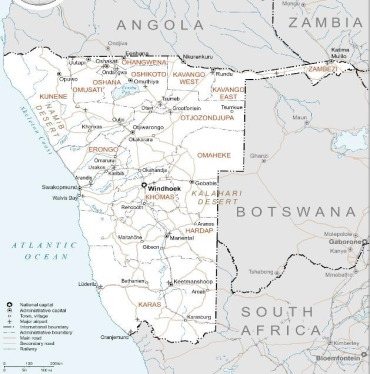
7.1.3 The map below shows the capital (Windhoek), main regional towns, main transport routes and airports:
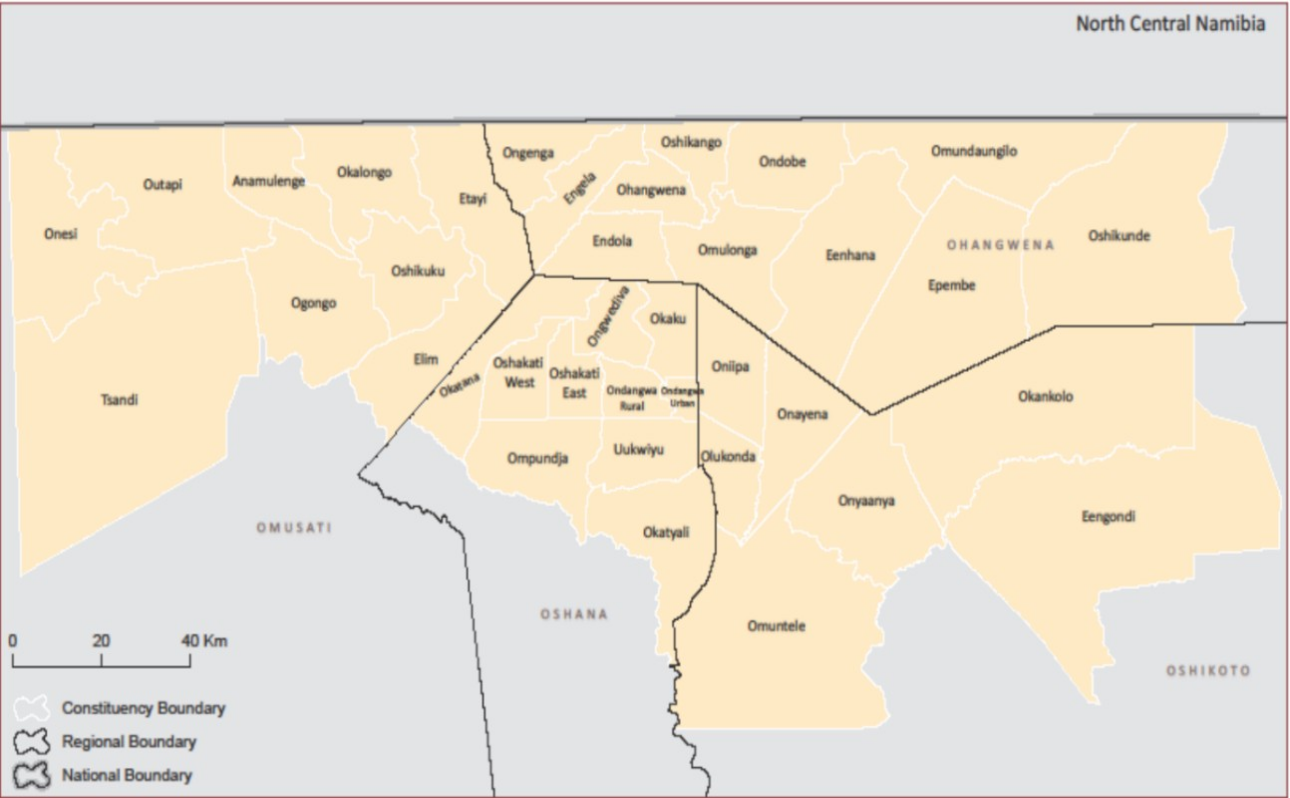
7.1.4 The map below shows regions and constituencies[footnote 4]:
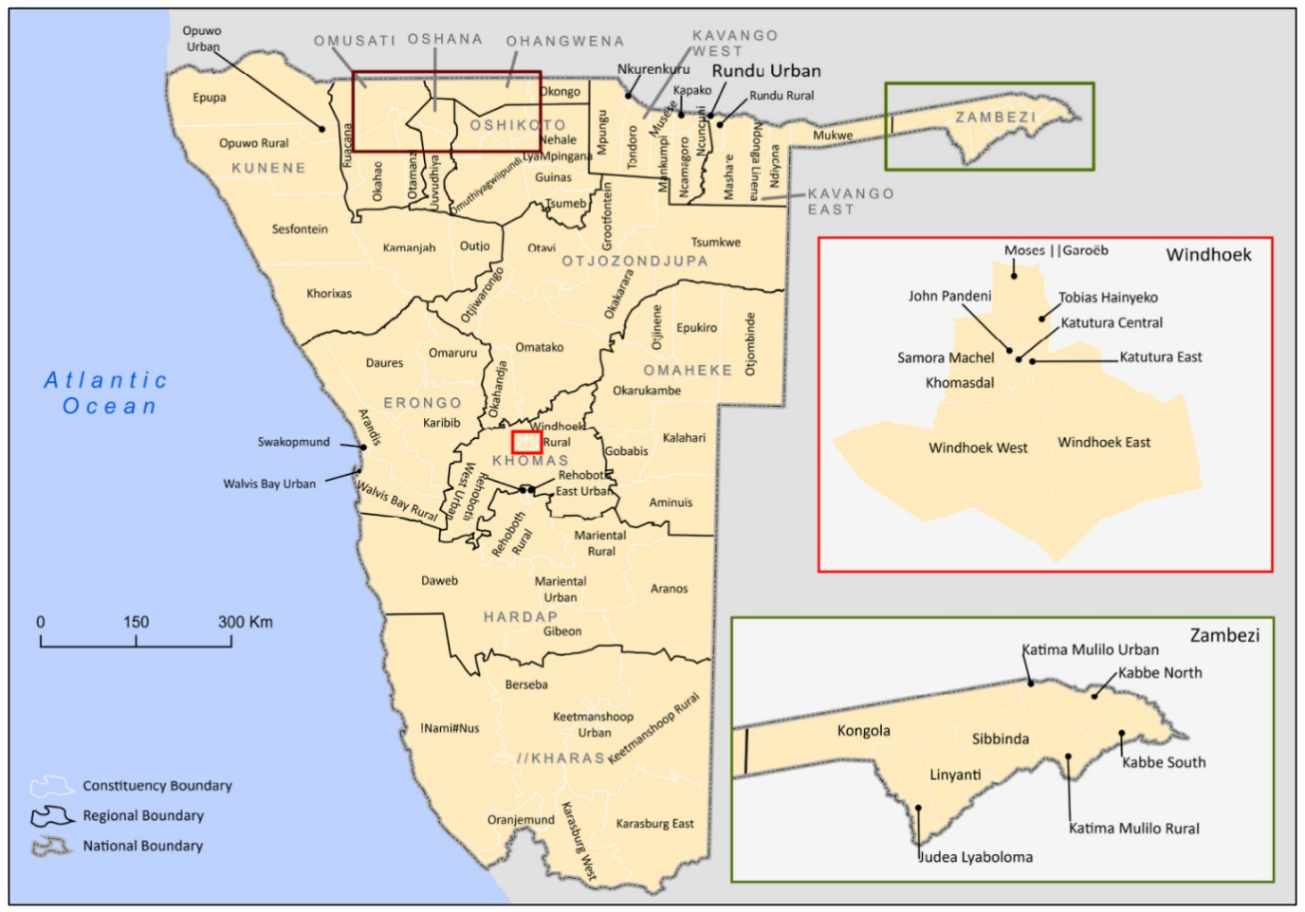
7.1.5 The national population was estimated to be just over 3 million in 2024[footnote 5] split evenly between rural and urban areas.[footnote 6] Population density is generally low with the largest clusters in north-central areas.[footnote 7] The largest town is the capital Windhoek (with just under 500,000 people) followed by Rundu, Walvis Bay and Swakopmund, all with populations over 75,000.[footnote 8]
7.1.6 The table below lists the population of the 14 regions (see map above) based on the census 2023[footnote 9]:
| Region | Total population |
|---|---|
| Kharas | 109,893 |
| Erongo | 240,206 |
| Hardap | 106,680 |
| Kavango East | 218,421 |
| Kavango West | 123,266 |
| Khomas | 494,605 |
| Kunene | 120,762 |
| Ohangwena | 337,729 |
| Omaheke | 102,881 |
| Omusati | 316,671 |
| Oshana | 230,801 |
| Oshikoto | 257,302 |
| Otjozondjupa | 220,811 |
| Zambezi | 142,373 |
7.1.7 Most Namibians are young (around 70% are under 34)[footnote 10], ethnically/tribally diverse (there are 78 identified groups with the 3 main groups - the Aakwanyama, Aandonga and Ovaherero[footnote 11] - comprising about 40% of the population) and literate (87%).[footnote 12]
7.1.8 Figure below shows the Literacy rate for the population aged 15 years and above by area and sex.[footnote 13]
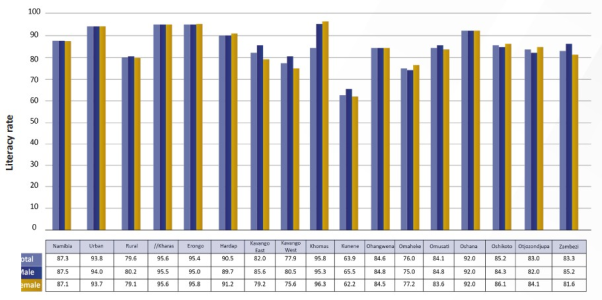
| Region | Total | Male | Female |
|---|---|---|---|
| Namibia | 87.3 | 87.5 | 87.1 |
| Urban | 93.8 | 94.0 | 93.7 |
| Rural | 79.6 | 80.2 | 79.1 |
| Kharas | 95.6 | 95.6 | 95.6 |
| Erongo | 95.4 | 89.7 | 91.2 |
| Hardap | 90.5 | 85.6 | 79.2 |
| Kavango East | 82.0 | 80.5 | 75.6 |
| Kavango West | 77.9 | 95.3 | 96.3 |
| Khomas | 95.8 | 65.5 | 62.2 |
| Kunene | 63.9 | 84.8 | 77.2 |
| Ohangwena | 84.6 | 76.0 | 83.6 |
| Omaheke | 76.0 | 84.1 | 92.0 |
| Omusati | 84.1 | 84.8 | 86.1 |
| Oshana | 92.0 | 92.0 | 92.0 |
| Oshikoto | 85.2 | 85.2 | 86.1 |
| Otjozondjupa | 83.0 | 84.1 | 84.1 |
| Zambezi | 83.3 | 85.2 | 81.6 |
7.1.9 Approximately 51%[footnote 14] - about 1.55 million - of the population was estimated to be female in 2023.[footnote 15]
7.1.10 Regarding women and girls specifically, the 2023 census found nationally (regions varied):
- of those over 15
- 67.3% had never married
- 15.9% were ‘married with a certificate’ (civil marriage)
- 5.5% married traditionally
- 4.2% were in a consensual union
- 4.8% were widowed
- 1.2% divorced
- 0.8% separated
- 87.1% were literate[footnote 16]
- 46.6% had completed primary school
- 24% had completed secondary school
- 12.2% had completed tertiary education[footnote 17]
- the average age of marriage was 28.3 years[footnote 18]
- 49% of households were headed by women[footnote 19]
- 93.4% of girls aged 6 to 13 years were enrolled in primary school[footnote 20]
7.1.11 The census 2023 data indicated that of women aged between 20 and 24 who were married, 2% were first married before they were 18 and 0.3% before they were 15.[footnote 21] The UN Women website in an undated entry reported that ‘6.9% of women aged 20–24 years old who were married or in a union before age 18’.[footnote 22] However, the UN Population Fund in its Country programme document for Namibia, July 2024, (UNFPA report 2024) stated ‘The prevalence of child marriage among women is 18.4 per cent’. The UNFPA report 2024 also noted, citing a 2022 report, that ‘Teenage pregnancy remains a significant concern, with a national prevalence rate of 19 per cent among girls aged 15-19 years.’[footnote 23]
8. Economic context
8.1.1 The World Bank in its overview of Namibia dated September 2025 stated:
‘Since gaining independence in 1990, Namibia has made substantial economic progress, including investments in infrastructure, education, and public health which have led to significant poverty reduction and increased access to essential services … This progress continues under new leadership following the November 2024 elections, which saw Netumbo Nandi-Ndaitwah elected as Namibia’s first female president. While the economy draws significant income from mining, along with agriculture and tourism, the legacy of colonial rule and racial segregation has resulted in one of the world’s most unequal societies. Key challenges persist, including high unemployment (36.9%), persistent poverty, acute climate vulnerability, and public debt at 70.3% of GDP.’[footnote 24]
8.1.2 The WB overview provided the following economic snapshot:
- ‘[Gross Domestic Product] GDP growth (2025 …): 3.1%
- Inflation (July 2025): 3.5%
- Unemployment: 36.9%
- [International] Poverty rate ([USD]$3/day, 2025 projected.): 27.5%
- Inequality (2022): Gini coefficient 59.1 [on a scale of 1 to 100, a high number indicates a high level of inequality]’[footnote 25]
8.1.3 The World Bank classed Namibia as a lower-middle income country.[footnote 26] In 2024 GDP per person was estimated to be US$4,413.1[footnote 27] (about £3,350[footnote 28]) and gross national income per person US$11,300[footnote 29] (about £8,575[footnote 30]) (based on the World Bank’s Atlas method for calculating income).
8.1.4 In 2024 the World Bank reported that 55.4% of women (compared to 63.3% of men) were economically active but 39.1% (compared to 25.4% of men) were estimated to be in ‘vulnerable employment’[footnote 31] (broadly defined as the ratio of wage earners compared to the number of self-employed).[footnote 32] ‘Vulnerable workers’ are the least ‘likely to have formal work arrangements, social protection, and safety nets to guard against economic shocks; thus they are more likely to fall into poverty.’[footnote 33]
8.1.5 However, World Bank data also noted that 76.8% of girls (compared to 67% of boys) completed lower secondary school. Additionally, 75% of women (compared to 70.7% of men) reported having an account ‘at a bank or another type of financial institution or report personally using a mobile money service in the past 12 months’ in 2024.[footnote 34]
9. Legal context
9.1 International instruments
9.1.1 The Ministry of Gender Equality and Child Welfare (MGECW) released a revised national gender policy, the National Gender Equality and Equity Policy (NGEEP) (2025-2035), in March 2025[footnote 35] (MGECW NGEEP 2025). The NGEEP 2025 listed the international instruments that the Government of the Republic of Namibia (GRN) is party to:
- ‘The Convention on the Elimination of All Forms of Discrimination Against Women (CEDAW, 1997), which under Article 2, obliges State Parties to condemn discrimination against women in all its forms and to pursue by all appropriate means and without delay a policy of eliminating discrimination against women.
- ‘The Beijing Declaration and Platform for Action (BPFA, 1995) under Chapter IV (Sections A to L) outlines commitments and strategies for empowering women in terms of poverty reduction, education and training, health, reduce violence against women and girls, economic empowerment, decision making, and governance.
- ‘Sustainable Development Goals Agenda 2030, Goal 5, which seeks to achieve gender equality and empower all women and girls.
- ‘The Convention on the Rights of the Child (CRC,1990), Article 2 states that State Parties shall take all appropriate measures to ensure that the child is protected against all forms of discrimination or punishment based on the status, activities, expressed opinions, or beliefs of the child’s parents, legal guardians, or family members.
- ‘The UN Convention against Transnational Organised Crime, 2000 (UNTOC) and the Protocol to Prevent, Suppress and Punish Trafficking in Persons, especially Women and Children (Palermo Protocol). Article 2 seeks to prevent and combat trafficking in persons, paying particular attention to women and children, protect and assist the victims of such trafficking with full respect for their human rights, and promote cooperation among State Parties to meet those objectives.
- ‘The UN Security Council Resolution 1325 on Women, Peace, and Security (2000), Resolution 1, which Urges Member States to ensure increased representation of women at all decision-making levels in national, regional and international institutions and mechanisms for the prevention, management, and resolution of conflict.
- ‘The Universal Declaration on Human Rights (UDHR) states under Article 1 that all human beings are born free and equal in dignity and rights.
- ‘International Covenant on Civil and Political Rights (ICCPR): Article 1 states that all peoples have the right to self-determination. By virtue of that right, they freely determine their political status and freely pursue their economic, social, and cultural development.
- ‘The UN Convention on the Rights of Persons with Disabilities, Article 1, aims to promote, protect, and ensure the full and equal enjoyment of all human rights and fundamental freedoms by all PWDs and promote respect for inherent dignity.
- ‘United Nations Declaration on the Rights of Indigenous People (UNDRP) 2007.’[footnote 36]
9.1.2 The MGECW NGEEP 2025 also reported the continental and regional frameworks that the GRN is aligned with:
- ‘[the Southern African Development Community] SADC Protocol on Gender and Development (2016) which calls on Member States to: review their legal and policy frameworks to ensure that men and women and boys and girls enjoy equal Constitutional and Legal Rights (Articles 4 to 11), ensure gender parity in representation and participation (Articles 12 and 13), ensure gender equality in education (Article 14), ensure equal access to productive resources and employment (Articles 15-19), eradicate GBV (Articles 20 to 25), ensure gender equality and equality in health (Articles 16 and 27), promote women participation in peacebuilding and conflict resolution (Article 28), and ensure gender equality and women participation and access to media, information and communication (Articles 29 to 31).
- ‘The Protocol to the African Charter on Human and Peoples’ Rights on the Rights of Women in Africa (2003) which calls for the Elimination of Discrimination Against Women (Article 2), the Right to Dignity (Article 3), Rights to Life, Integrity and Security of the Person (Article 4), and Elimination of Harmful Practices (Article 5).’[footnote 37]
9.2 Constitution
9.2.1 Article 10 of The Constitution of the Republic of Namibia provides for equality between men and women as well as freedom from discrimination on the basis of sex.[footnote 38]
9.2.2 Article 23 includes the provision to advance previously disadvantaged groups, including women. It states:
‘(2) Nothing contained in Article 10 hereof shall prevent Parliament from enacting legislation providing directly or indirectly for the advancement of persons within Namibia who have been socially, economically or educationally disadvantaged by past discriminatory laws or practices, or for the implementation of policies and programmes aimed at redressing social, economic or educational imbalances in the Namibian society arising out of past discriminatory laws or practices, or for achieving a balanced structuring of the public service, the defence force, the police force, and the correctional service.
‘(3) In the enactment of legislation and the application of any policies and practices contemplated by Sub-Article (2) hereof, it shall be permissible to have regard to the fact that women in Namibia have traditionally suffered special discrimination and that they need to be encouraged and enabled to play a full, equal and effective role in the political, social, economic and cultural life of the nation.’[footnote 39]
9.3 Gender-specific domestic legislation
9.3.1 The Namibia Legal Information Institute[footnote 40] list on their webpages legislation that protects women and girls from discrimination and violence in a range of private and public spheres. This legislation includes:
- Abortion and Sterilization Act, 1975
- Local Authorities Act, 1992
- Married Persons Equality Act, 1996
- Affirmative Action (Employment) Act, 1998
- The Combating Domestic Violence Act, 2003
- The Combating Rape Act, 2000
- Children’s Status Act, 2006
- Labour Act, 2007
- Child Care and Protection Act, 2015
- Combating of Trafficking in Persons Act, 2018
- Combating of Rape Amendment Act, 2022
9.3.2 The US Department of State 2023 Country Report on Human Rights Practices: Namibia (USSD 2023 HR report), published 22 April 2024, noted:
‘The law prohibited domestic violence. Penalties for conviction of domestic violence, including physical abuse, sexual abuse, economic abuse, intimidation, harassment, and serious emotional, verbal, or psychological abuse, ranged from a token fine for simple offenses to sentences of 10 years’ imprisonment, a substantial fine, or both for assault with intent to cause grievous bodily harm.
‘The law provided procedural safeguards such as protection orders for gender-based violence survivors.’[footnote 41]
9.3.3 Generis Global, an international ‘legal service’ provider, in an article dated 24 November 2024 (Generis article 2024) observed with regard to legal protection against domestic violence:
‘In Namibia, the legal framework addressing domestic violence is primarily governed by the Domestic Violence Act of 2007. This landmark legislation was enacted to provide comprehensive protection for individuals affected by domestic violence, recognizing the need for dedicated measures to address a pervasive social issue. The Domestic Violence Act defines domestic violence in a broad context, encompassing various forms of abuse, including physical, emotional, sexual, and economic abuse, thus allowing for a more inclusive interpretation of what constitutes violence within domestic settings … In addition to the Domestic Violence Act, other legislative instruments, such as the Criminal Procedure Act and the Sexual Offences Act, complement the framework for addressing domestic violence in Namibia. These laws mandate reporting obligations for various stakeholders, including medical professionals and social workers, who encounter situations of domestic violence. This requirement aims to reduce underreporting and to ensure that victims have access to necessary support services.’[footnote 42]
9.3.4 The USSD 2023 HR report, covering discrimination, noted:
‘Civil law prohibited gender-based discrimination, including discrimination regarding employment, divorce, education, housing, and business and property ownership … Some elements of customary family law provided for different treatment of women. Civil law granted maternity leave to mothers but not paternity leave to fathers. The law based marital property solely on the domicile of the husband at the time of the marriage and set grounds for divorce and divorce procedures differently for men and women. The law protected a widow’s right to remain on the land of her deceased husband, even if she remarried.’[footnote 43]
9.3.5 The USSD 2023 HR report noted that the law prohibited discrimination in employment and occupation based on sex. The law also required equal pay for equal work.[footnote 44]
9.3.6 The Freedom House report covering events in 2023 (FH report 2024) noted that ‘Private property rights are guaranteed in law and largely respected in practice … There are no legal barriers to women’s access to land. However, customs regarding inheritance procedures and property rights limit women.’[footnote 45]
9.3.7 The government’s National Action Plan on Women, Peace and Security 2019 - 2024 (NNAPWPS) published in 2019 listed further legislation such as the Defence Act (ACT1 of 2000) and Police Act 19 (1990) which address the protection of women.[footnote 46]
9.3.8 A combined report by 11 Namibian non-government organisations to the UN Human Rights Committee for its review of Namibia under the International Covenant on Civil on Political Rights dated 5 February 2024 (NGO ICCPR report 2024) observed ‘… Namibia fares relatively well in terms of frameworks that promote, enforce and monitor gender equality, [but] the country still faces considerable challenges.’[footnote 47]
9.3.9 The undated UN Women Namibia page stated that ‘In Namibia, 88.9% of legal frameworks that promote, enforce and monitor gender equality under the [UN’s sustainable development goal] SDG indicator [part of Agenda 2030], with a focus on violence against women, are in place.’[footnote 48] The SDG that relates to women is goal 5, ‘Achieve gender equality and empower all women and girls’. This includes ending discrimination against women and girls and the elimination of violence against women and girls in public and private spheres.[footnote 49]
9.3.10 The USSD human rights report covering events in 2024 (USSD HR report) does not comment on protections for women and girls other than to state that the legal age of marriage was 18 years old.[footnote 50]
9.3.11 The Freedom House report noted: ‘Namibia lacks cyberharassment or data-protection legislation. The lack of legislative responses to communication technology-facilitated abuse leaves victims of misogynistic online abuse—in particular prominent women, journalists, girls, the LGBT+ community, and other minority groups—without adequate legal recourse.’[footnote 51]
9.3.12 END GBV Africa noted: ‘Namibia has no specific laws criminalising online abuse – the Cybercrime Bill has been slow to progress and has been critiqued on various grounds. The Namibian Police Service and the Gender-Based Violence Investigation Units have had little to no training on gendered ICT-based violence. Additionally, the use of pseudonyms on social media platforms makes it challenging to hold cyberbullies accountable. Local laws lack fines or penalties, such as community work or imprisonment, for repeat offenders.’[footnote 52]
9.4 Protection orders
9.4.1 The Combating of Domestic Violence Act, 2003, makes provision for the issuance of protection orders against another person in a domestic relationship.[footnote 53] Applications for protection orders are made to the courts[footnote 54] and may be applied for on behalf of the complainant (victim) including by family members, police officers or social workers.[footnote 55] An order must be served on the partner or other person accused of domestic violence[footnote 56] and restrain the partner (or other person) from subjecting the complainant (victim) to domestic violence.[footnote 57]
9.4.2 The Generis article 2024 reported:
‘A key feature of the Domestic Violence Act is the provision for protection orders. Victims of domestic violence can apply for these orders to ensure their safety. The Act outlines the procedures for obtaining such orders, emphasizing prompt legal responses to requests for protection. This legal provision imposes a duty on law enforcement agencies to act swiftly when responding to incidents of domestic violence, thereby enhancing victim safety and reducing the implications of delay in legal proceedings.’[footnote 58]
9.4.3 Step Up Ark, a Namibia community organisation, published a GBV handbook in March 2025 (SUA guidebook 2025). This noted that a victim of GBV can obtain a protection order if they ‘… are experiencing ongoing abuse, which legally restricts the abuser from contacting or approaching [them] … Police officers or legal aid centers can guide [them] … through this application process.’[footnote 59]
9.4.4 See Judiciary, subsection Protection orders, for information on protection orders issued.
10. Government and policy context
10.1 Official position
10.1.1 President Nandi-Ndaitwah, who was elected Namibia’s first female president in November 2024, has, according to journalist Clemence Manyukwe writing in Development and Cooperation a magazine focussing on international cooperation, identified women’s empowerment as a high priority. ‘For instance, she wants to improve access to land, credit, markets and jobs; fight violence against women and strengthen women’s entrepreneurial skills. Another area of focus is protection from gender-specific violence, with help from specialised police units, for example.’[footnote 60]
10.1.2 The Windhoek Observer, a Namibian newspaper, reporting on the #EndGBVNamibia campaign launched in June 2025 (see Government campaigns against GBV below) noted ‘… the minister of gender equality and child welfare, Emma Kantema, reaffirmed the government’s stance on [GBV saying] … “The Namibian government has taken a zero-tolerance stance against gender-based violence,” … The zero-tolerance position, first declared by President Netumbo Nandi-Ndaitwah during her State of the Nation Address in April [2025], forms the foundation of the campaign.’[footnote 61]
10.2 Departmental responsibility
10.2.1 The GRN department responsible for matters related to gender is the Ministry of Gender Equality and Child Welfare (MGECW).[footnote 62] The ministry’s mission is ‘To create, promote and enabling [sic] environment for the attainment of gender equality and the well-being of children.’[footnote 63]
10.2.2 On the government’s engagement with stakeholders, the USSD HR 2023 noted: ‘The Ministry of Gender Equality, Poverty Eradication and Child Welfare [now named MGECW] convened quarterly, and include Human Rights Cluster meetings with stakeholders in government and civil society.’ [footnote 64]
10.2.3 An article in New Era live, a Namibian newspaper, of 15 May 2025 reported that Gladys Pickering, the executive director in the Office of the Prime Minister (OPM), had:
‘… reiterated [the] government’s commitment to tackling GBV through policy leadership and coordination.
‘The OPM plays a central role in aligning GBV responses with the National Gender Policy, National Development Plans (NDPs), and Vision 2030 … from a policy implementation perspective, the OPM ensures GBV concerns are mainstreamed across all sectors. They are also working to strengthen the capacity of all stakeholders to effectively use and contribute to the national [gender-based violence information management system] GBVIMS.’[footnote 65]
10.2.4 For more information on the GBVIMS, see Limited availability of data below.
10.3 Policies to promote, protect and supporting women and girls
10.3.1 The UN Women statistics assessment 2022 noted that the GRN’s:
‘… National Gender Policy (2010-2020) … create[d] an enabling environment for gender mainstreaming in response to and alignment with the National Development Plan, Vision 2030. In its preamble, the Policy identifies skills gaps and poor coordination as some of the main factors which hampered the effective implementation of the preceding plans. One of the key outcomes of this plan was the proposal of a specific coordination mechanism that can support the more effective implementation of the National Gender Policy. In addition to the National Gender Policy and coordination mechanism, Namibia also developed a National Plan of Action on Gender-Based Violence (2019-2023) with a Monitoring and Evaluation Plan20. Embedded in a socio-ecological model, the five-year plan combines short-term goals that improve response systems and community safety with long-term goals aimed at addressing the root causes of GBV. The plan focuses on coordinated action across multiple sectors and recognizes the importance of embedding the plan in existing initiatives while learning from lessons learned, best practice, and inputs from multiple groups and individuals.’[footnote 66]
10.3.2 Afrobarometer, a ‘pan-African, non-partisan research network’ that conducts public attitude surveys’[footnote 67] published an article on 7 April 2022 The article referred to information from the Afrobarometer Round 9 questionnaire (2021 to 2022) that explored experiences and perceptions of GBV ‘and of gender equality in control over assets, hiring, land ownership and political leadership’ (Afrobarometer article 2022).[footnote 68] It noted:
‘… Namibia’s National Gender Policy (2010-2020) seeks to ensure that every sector of the economy emphasises the importance of gender and empowerment (Ministry of Gender Equality and Child Welfare, 2010; UNFPA, 2012). The policy also provides a broad definition of gender-based violence (GBV) as referring to “all forms of violence that happen to women, girls, men, and boys because of the unequal relations between them” as well as all acts that could cause people “physical, sexual, psychological, emotional or economic harm,” citing among its causes “customs, traditions and beliefs, illiteracy and limited education, unequal power relations and the low status of women” … The policy was operationalised through a Regional Gender Permanent Task Force and the implementation clusters of the National Gender Plan of Action (2010-2020). The Child Care and Protection Act of 2015 and the National Plan of Action on Gender-based Violence (2012-2016) strengthened the legislative and policy framework for combating GBV and gender discrimination …’[footnote 69]
10.3.3 In its November 2023 article, African Feminism, which describes itself as a ‘pan-African digital platform and collaborative writing project’ for Africa writers[footnote 70], commented:
‘Namibia has pledged to stop all types of gender-based violence following international commitments such as the 10 Protocol on Gender and Development, the African Charter on Human and Peoples’ Rights, and the UN Convention on the Elimination of Discrimination Against Women (CEDAW). The National Gender Policy, Combating of Rape Act No. 8 of 2000 and the Combating of Domestic Violence Act No. 4 of 2003 are significant pieces of law that criminalizes gender-based violence in Namibia.’[footnote 71]
10.3.4 The MGECW NGEEP 2025 stated in its executive summary:
‘… gender equality gains have been made over the past 10 years in Namibia in some focus areas such as education, maternal and infant mortality, financial inclusion, and female representation in the National Assembly, Local Authority Councils, Judiciary, Cabinet, media houses and security sector. Despite this progress, significant gender inequalities persist in the areas of family relations, harmful norms and practices, feminisation of poverty, access to land and economic resources, access to education, health outcomes such as maternal and child mortality, and leadership and political participation among other areas where women continue to be disproportionally negatively impacted and under-represented.
‘The Third NGEEP (2025-2035) seeks to reduce all forms of gender discrimination, Gender Based Violence (GBV), and gender inequalities in all spheres of life in Namibia, leading to a gender-just society where women, men, girls, boys, [persons with disabilities] PWDs and [marginalised communities] MCs enjoy equal rights and live freely, in dignity, have equal access to opportunities, resources and participate equally and fully in the socio-economic development of the country.’[footnote 72]
10.3.5 There is no information in the sources consulted to indicate that the government has updated the National Plan of Action on Gender-Based Violence (2019-2023) (see Bibliography).
10.4 Government campaigns
10.4.1 The GRN’s submission to the UN Committee on Economic, Social and Cultural Rights as part of Namibia’s periodic review dated 3 May 2023 observed:
‘Efforts were made to address negative cultural practices; the Ministry of Gender Equality, Poverty Eradication and Social Welfare and stakeholders such as the Ministry of Justice and Legal Assistance Centre carried out a legal literacy programme in some regions including Omusati and Kavango East since 2015. The objective of the programme was to sensitise traditional … leaders on gender and GBV related Laws. Community Gender Liaison Officers in the regions were trained to carry out this programme in their respective regions. In addressing attitudes and behaviours towards violence against women and girls; the 2009 National Zero Tolerance Campaign, was revamped in July 2015 and is still ongoing under the theme “Love Is.” The campaign focuses on three main issues: Domestic Violence; Rape and Mental Illness. A series of radio dramas were developed in English and at present, are being translated into local Namibian Languages such as Oshiwambo; Silozi; Rukwangali; Afrikaans; Otjiherero; Khoekhoegowab; San languages and Setswana.’[footnote 73]
10.4.2 The USSD 2024 HR report does not comment on violence against women and girls.[footnote 74] However, the USSD HR 2023 report noted:
‘The government and media focused national attention on the issue. The president and first lady spoke out publicly against gender-based violence; the Office of the First Lady actively promoted awareness of the problem and remedies in every region. Civil society groups petitioned for the establishment of a register of convicted sexual offenders, a review of sentencing laws for conviction of sexual offenses and other gender-based violence (including killings), hastening the investigation of all reported sexual offenses, institution of armed neighborhood patrols, and an evaluation of school practices regarding survivor shaming. The matter remained under debate in parliament at year’s end.’[footnote 75]
10.4.3 The Namibian Sun, a Namibian newspaper, reported on 26 November 2024:
‘[Then] President Nangolo Mbumba on Monday launched the 16 Days of Activism against Gender-Based Violence (GBV) campaign under the theme “Towards Beijing +30: Unite to End Violence Against Women and Girls” … The 16-day activism campaign against GBV is an annual international initiative that starts on 25 November each year, the International Day for the Elimination of Violence Against Women, and ends on 10 December on International Human Rights Day and Namibian Women’s Day.’[footnote 76]
10.4.4 The Namibia Economist, a Namibian newspaper, reported that the MGECW launched #EndGBVNamibia, a national campaign against GBV, on 4 June 2025.[footnote 77] The Windhoek Observer also reporting on the launch noted:
‘The initiative aims to tackle gender-based violence through prevention, support, and public education. At the launch, the minister of gender equality and child welfare … reaffirmed the government’s stance on the issue … Namibia’s efforts align with a broader continental initiative. In February [2025], the African Union adopted the Convention on Ending Violence Against Women and Girls, which Kantema described as a landmark legal instrument.’[footnote 78]
10.4.5 The Namibian, a Namibian newspaper, in an article dated 23 November 2025reported on comments made by ‘First Gentleman’, Denga Ndaitwah, at a conference celebrating international men’s day in Keetmanshoop, Kharas region. Mr Ndaitwah ‘urged men to confront the reality of their behaviour and rebuild themselves if they hope to restore families and communities.’ The article further noted:
‘Ndaitwah said his role as first gentleman has motivated him to develop an agenda that focuses on boys’ and men’s well-being.
‘He said Namibia has made important gains in supporting girls, but men and boys have been left behind in areas of emotional support, social guidance and identity formation.
‘“When men rise with purpose, families will heal. When men take responsibility, communities will grow. When men lead with integrity, the nation will prosper … But we cannot prosper if men are breaking instead of building.”
‘He urged participants at the conference to use the next three days to interrogate the root causes of male-led violence, brokenness and self-harm, rather than merely addressing symptoms.’[footnote 79]
11. Social, economic and political status
11.1.1 The World Economic Forum, an international non-governmental organisation promoting public-private co-operation[footnote 80], publishes the annual Global Gender Gap (GGG) Index based on statistics from international organisations and a survey of executives. The index compares gender parity in 148 economies across 4 categories: economic participation and opportunity, educational attainment, health and survival, and political empowerment.[footnote 81] The GGG insight report of June 2025 noted:
‘Placing in the top 10 for the 6th time, Namibia ranks 8th in 2025 after closing its overall gender gap by 81.1%. The economy advances by +.6 percentage points, which contributes to a +12.4-point advance it has recorded since the index was first launched. This year’s results are bolstered by score increases in economic and political parity, the two dimensions where Namibia has made the most gains over time (+18.3 points and +29.5, respectively). Parity in estimated earned income decreased from last edition, despite values increasing for both men and women. However, men’s income rose more significantly than women’s, leading to higher income disparity. Gender parity in workforce representation indicators has not changed from the last edition. Newer values for both indicators – senior officials, managers and legislators as well as professional and technical workers – would be needed to determine meaningful changes over the past few years. Namibia continues to maintain full parity in Educational Attainment. Updates from last edition reveal, however, that in tertiary education both male and female shares of enrolment have decreased – women’s more significantly than men’s, but not sufficiently to place men’s enrolment rates on par with women’s (33.1% for women vs. 19.2% for men). In Health and Survival, Namibia also retains parity, although healthy life expectancy for both women and men has decreased since the last edition, from 58.6 and 53.4 years to 54.6 and 51 years, respectively. In Political Empowerment, Namibia saw its parity scores for women in ministerial positions as well as female head of state increase, by +12.2 and +3.2 percentage points, respectively. Notably, the ministerial representation of women rose from 31.6% to 38.8%. Parliamentary parity, on the other hand, decreased by –10.8 points since the last edition.’[footnote 82]
11.1.2 The GGG included the infographic[footnote 83] below describing Namibia:
11.1.3 The Bertelsmann Stiftung’s Transformation Index (BTI) Namibia Country Report 2024 covers the period from 1 February 2021 to 31 January 2023 (BTI country report 2024).[footnote 84] The report noted ‘School attendance rates are nearly 100%, and there is no gender-based discrimination in access to education. However, factors related to poverty often lead to unsatisfactory academic performances among students, and girls face high rates of pregnancies.’[footnote 85]
11.1.4 The BTI report also noted: ‘Although women’s participation in formal employment is nearly equal to that of men, a 2020 survey revealed that fewer than half of all women had access to information and communication technologies. While legislation promotes gender equality and women are increasingly accessing senior positions, significant gender disparities persist, including salary discrepancies for similar work.’[footnote 86]
11.1.5 The FH report 2024 noted:
‘The constitution guarantees political rights for all. Nevertheless, women are often discouraged from running for office, and few contested the November 2020 regional and local elections. Women comprise 49 percent of the members of local authorities and municipalities—attributable to legislated gender quotas at those levels—and between 19 and 23 percent of the candidates in regional elections. Women hold 46 of 96 National Assembly seats but are less represented in the National Council, where 6 of the 42 parliamentarians are female.’ [footnote 87]
11.1.6 The FH report 2024 also noted that ‘In March 2023, Geingob named a woman—Namibian deputy prime minister and SWAPO vice president Netumbo Nandi-Ndaitwah—as SWAPO’s presidential candidate for 2024.’[footnote 88] Ms Nandi-Ndaitwah was elected Namibia’s first female president in January 2025[footnote 89] and sworn in during March 2025. Following which she appointed Lucia Witbooi as vice president and ‘revealed a new-look Cabinet of 14 ministers, a reduction from 21 in the previous administration. This includes eight women and six men.’[footnote 90]
11.1.7 The FH 2024 report noted that ‘There are no legal barriers to women’s access to land. However, customs regarding inheritance procedures and property rights limit women.’[footnote 91]
11.1.8 The MGECW NGEEP 2025 stated:
‘Since attaining independence in 1990, the Government of the Republic of Namibia has prioritised gender equality and women’s empowerment to address historical injustices and enable equal participation in the country’s social, economic, political, and cultural development in line with the country’s Vision 2030.
‘Namibia’s efforts towards gender equality have shown mixed results. Namibia made great strides in reducing gender inequalities in some areas of focus such as education, maternal and infant mortality, financial inclusion, and female representation in the National Assembly, Local Authority Councils, judiciary, Cabinet, media houses and security sector. However, challenges and gaps still exist in areas of GBV, VAC, teenage pregnancies and child marriages, HIV and AIDS, maternal, infant and child mortality, gender inequality in the family, economic empowerment, and media and Information Communication Technology (ICT) access, among other areas of concern.’[footnote 92]
12. Cultural attitudes towards women and girls
12.1.1 The Concluding observations of the UN Committee on the Elimination of Discrimination against Women (UN CEDAW) on its review of Namibia dated 12 July 2022 (CEDAW concluding observations 2022) noted:
‘… the State party’s efforts to address discriminatory gender stereotypes and harmful practices, such as by conducting a study on child marriage, as well as awareness-raising campaigns targeting traditional leaders and men and boys. However, it notes with concern:
‘(a) The prevalence of child marriage;
‘(b) The persistence of discriminatory gender stereotypes and harmful practices, including child marriage, widow inheritance, sexual initiations and polygamy, in the State party.’[footnote 93]
12.1.2 In an opinion piece in African Feminism, Nambian researcher and writer Jermine April wrote:
‘Culture has a significant effect on how men and women relate. Namibian cultures enforce patriarchy, where men attain superiority over women … Men have a significant influence in decision-making. Culturally, people believe a husband has the right to chastise his wife if certain circumstances are met, like imposing discipline. These cultural customs in Namibia that condone the hitting of wives legitimize the means for men to assert authority over their spouses. Violence against women is a culturally acceptable way for men to demonstrate power and control, especially when their masculinity is questioned … Namibian cultures continue to practice harmful cultural practices such as the sikenge (sexual readiness practices), labia minora enlargement and child marriages, which depict structural gender inequality, sexism, oppression of women and violence as the female body is sexualized and exploited. Cultural violence is subtly normalized violence through using cultural beliefs, norms and practices. These are used to support violence against women, which is the very basis of institutional violence (structural violence). Ending violent cultural practices and creating spaces to empower young women is essential in combating SGBV.’[footnote 94]
12.1.3 Ms Jermine also commented:
‘Most Namibians are Christians. Churches do not preach or promote gender equality. Biblical teachings on how women should submit to their husbands are commonly presented. This further suppresses women and perpetuates gender inequality. Women are more likely advised to pray for their abusers as opposed to reporting or leaving them. Marriage counselling sponsored by the church instructs women to forgive. These cases go unreported as they are “resolved” by the pastors.’[footnote 95]
12.1.4 The UN Population Fund’s Country programme document for Namibia dated 1 July 2024 (UNFPA report 2024) observed: ‘The societal context of gender inequality perpetuates harmful socio-cultural norms and practices, disempowering women and girls and increasing their vulnerability to gender-based violence (GBV), unintended pregnancies, and sexually transmitted infections (STIs), including HIV.’[footnote 96]
12.1.5 Custon Ziwoni, lecturer at the International University of Management, Nambia, in a paper about women’s empowerment in Namibia based on a literature review published in June 2025 noted:
‘Namibia’s diverse cultural landscape presents both opportunities and challenges for women empowerment. Traditional norms have historically marginalized women, but contemporary shifts driven by advocacy and legal reforms are gradually altering societal perceptions (Oyayone Foundation, 2023). The role of grassroots movements and community engagement has been crucial in challenging gender stereotypes and promoting inclusive development. However, entrenched patriarchal structures continue to hinder progress, requiring sustained efforts to reshape societal attitudes toward gender roles (Observer, 2024).’[footnote 97]
13. Prevalence of GBV
13.1 Limited availability-of-data
13.1.1 The GRN does not systematically release or publish official statistics on the number of incidents of GBV reported to the police or other state agencies (see sources consulted in the Bibliography).
13.1.2 The UN CEDAW report 2022 noted: ‘The Committee is concerned that disaggregated data is available in some, but not all areas of relevance to the realization of the rights of women, in particular regarding harmful practices, gender-based violence against women, trafficking, prostitution, sexual harassment in the workplace and government aid provided to women.’[footnote 98]
13.1.3 The MGECW NGEEP 2025 observed:
‘Nationally representative data on GBV is, in most cases, obtained from population-based studies such as National Demographic Health Surveys [NDHS], Multiple Indicator Cluster Surveys (MICS) or integrated national GBV Information Management Systems (IMS) and databases. In Namibia, the NDHS only introduced the GBV module for the first time in 2013, and hence, it is difficult to obtain comparable DHS data on GBV before 2013 to determine prevalence over the years. The NDHS also focused on domestic violence or Intimate Partner Violence (IPV) and excluded other forms of GBV that are common in the country and that occur outside the domestic sphere. NDHS also only sampled those aged between 15-49 years, while GBV affects also those below 15 years and older than 49 years, outside the age brackets targeted by NDHS. The data from NDHS are therefore limited in that they provide information for only one form of GBV and only among those aged between 15-49 years. Therefore, this implies that the actual GBV prevalence might be much higher than that presented by the NDHS.’[footnote 99]
13.1.4 Based on sources consulted in this note, there are 2 principal quantitative datasets on GBV:
- Ministry of Health and Social Services (MHSS) and ICF International, The Namibia Demographic and Health Survey 2013 (NDHS 2013), undertaken in 2013 published September 2014
- MHSS, Namibia Population-based HIV Impact Assessment (NAMPHIA) 2017: Final Report, November, 2019
13.1.5 Additionally, useful data is provided in:
- the MGECW’s National gender based violence baseline study: consolidating GBV prevention effort and fast-tracking Namibia’s response, 2017
- Ministry of Gender Equality, Poverty Eradication and Social Welfare’s (now MGECW) Violence Against Children and Youth in Namibia: Findings from the Violence Against Children and Youth Survey, 2019 – Full report 2020
13.1.6 The Namibian Sun, a Namibian newspaper, reported on 14 May 2025, that ‘experts’ at a high-level stakeholder meeting:
‘… emphasised that persistent data and coordination failures continue to hamper the fight against GBV.
‘The meeting aimed to address critical shortcomings in the country’s GBV Information Management System (GBVIMS), which, although it has been introduced in pilot regions, is said to remain fragmented, underutilised and heavily reliant on manual processes … The meeting is expected to result in concrete steps towards a fully functional national GBVIMS, incorporating health, law enforcement, social welfare, education and judiciary inputs.’[footnote 100]
13.2 Societal attitudes to and perceptions of GBV
13.2.1 The Afrobarometer article 2022 set out the key findings of a survey in relation to GBV:
- ‘Namibians see gender-based violence (GBV) as the most important women’s-rights issue that the government and society must address.
- ‘Women are more likely than men to cite GBV as a top priority (56% vs. 47%).
- ‘A majority of citizens say violence against women is a “somewhat common” (28%) or “very common” (29%) occurrence in Namibia.
- ‘A majority (58%) of Namibians say it is “never” justified for a man to physically discipline his wife. About four in 10 think it is “sometimes” (26%) or “always” (13%) justified.
- ‘More than four in 10 respondents consider it “somewhat likely” (24%) or “very likely” (18%) that a woman will be criticised or harassed if she reports gender-based violence to the authorities. Only one in three (32%) say this is “very unlikely.”
- ‘But most (82%) believe that the police are likely to take cases of GBV seriously.
- ‘Almost three-fourths (73%) of Namibians say domestic violence should be treated as a criminal matter rather than as a private matter to be resolved within the family.’[footnote 101]
13.3 Factors increasing likelihood of GBV
13.3.1 The MGECW’s National gender-based violence baseline study: consolidating GBV prevention effort and fast-tracking Namibia’s response, 2017, is based on quantitative data provided in the National Demographic and Health Survey of 2013 (see Limited availability of data below) and qualitative data from ‘focus group discussions, i-stories with survivors of GBV, observation and key informant interviews’ (MGECW baseline study 2017).[footnote 102] The study stated that factors that lead to GBV included:
‘… unequal power social relations; [poor] safety and security around community and neighborhoods; poor local responses [by the police/authorities]; lack of employment and reaction opportunities; early marriage; disintegration of socially cohesive communities; family history [of domestic and gender-based violence] and inadequate sexual education. Alcohol consumption, gambling [of perpetrators] and poverty were identified [as] factors that fuels GBV. Alcohol and substance abuse are identified as key triggers for GBV with alcohol indicated as an issue for all regions.’[footnote 103]
13.3.2 The UN Population Fund’s Country programme document for Namibia dated 1 July 2024 observed:
‘The societal context of gender inequality perpetuates harmful socio-cultural norms and practices, disempowering women and girls and increasing their vulnerability to gender-based violence (GBV), unintended pregnancies, and sexually transmitted infections (STIs), including HIV … Poverty, lack of education, unemployment, and the impact of climate change, leading to protracted drought, and other external shocks, also serve as key drivers of violence against women and girls, which exacerbates existing vulnerabilities…’[footnote 104]
13.3.3 The MGECW NGEEP 2025 based on the findings of studies referred above similarly observed: ‘Across all studies conducted on GBV in the country … the following were identified as the main drivers of GBV in Namibia: Cultural and traditional norms and values which lead to unequal gender and power relations, poverty, alcohol abuse, unemployment, Inconsistent application of the law, and inadequate level of awareness on GBV.’[footnote 105]
13.4 Potential underreporting
13.4.1 The UN Human Rights Committee’s concluding observations on the GRN’s measures to implement the provisions of the International Covenant of Civil and Political Rights (ICCPR) based on submissions made by the GRN and stakeholders between 2021 and 2024, dated 3 May 2024, (UN HRC ICCPR report 2024) stated: ‘The Committee is also concerned about the low level of reporting of gender-based violence, including sexual violence, due to factors such as fear of reprisals …’[footnote 106]
13.4.2 The UNFPA report 2024 observed that GBV ‘… remains significantly underreported and contributes to the limited availability of high-quality disaggregated GBV data to guide decision-making. A UNFPA Namibia brief in 2020 revealed that over 15 per cent of GBV survivors do not seek support services and remain invisible to the system [this data appears derived from the NDHS report 2013].’ [footnote 107]
13.4.3 Similarly, the MGECW NGEEP 2025 report, also referencing the NDHS report 2013, noted ‘15 percent of those who experienced violence never sought help and never told anyone about the violence.’ [footnote 108]
13.4.4 The report also noted:
‘… according to the NDHS 2013, only 21.0 percent of women in Namibia who have ever experienced any form of physical violence have sought help from any source. The proportion of women who sought help was higher in rural areas (23.6%) compared to urban areas (18.7%). There were also regional variations with regions such as Otjozondiupa recording a low rate of 7.0 percent of GBV survivors seeking help while regions such as Oshikoto had a relatively high proportion of women seeking help (34.0%). The proportion of GBV survivors seeking help was higher among women with some education (primary and above 20.0 percent) compared to women with no education (11.0%). One in five women sought help from other unspecified sources and notably a few women sought help from neighbours, religious leaders, or their husband/ partner.
‘Furthermore, the majority of women who experienced GBV sought help from their own family (48.0%), followed by police (15.0%), friends (8.0%), doctor or medical personnel (7.0%) and social work organisations (5.0%).’ [footnote 109]
13.5 Levels and nature of violence
13.5.1 The USSD 2023 HR report stated that: ‘Gender-based violence, particularly domestic violence, was a widespread problem.’ (The USSD does not provide a definition of widespread or GBV[footnote 110].)
13.5.2 The BTI country report 2024 noted ‘… the prevalence of daily violence and signs of social anomy are striking. This includes high rates of gender-based violence, rape (including against toddlers and elderly women), other forms of sexual and domestic abuse, a significant number of suicides (including children), crimes (including killings over minor disputes and particularly involving female partners), and incidents of baby dumping.’[footnote 111]
13.5.3 The NGO ICCPR report 2024 claimed ‘According to Namibian Government and UN estimates about 30 cases of gender-based violence are reported every day, which would give an annual total of almost 11,000 reported cases. The real number of instances of such violence is probably much higher as most cases are estimated to remain unreported.’[footnote 112]
13.5.4 The UN HRC ICCPR report 2024 noted: ‘While noting the measures taken by the State party, the Committee is concerned about the prevalence of gender-based violence against women, including violence perpetrated through online means. It also notes with concern the continued prevalence of domestic violence, including marital rape and so-called “passion killings”.’[footnote 113]
13.5.5 The NDHS 2013 reported survey findings of domestic violence experienced by women aged 15 to 49. It stated in its key findings:
- ‘Thirty-two percent of ever-married women age 15-49 have experienced physical violence at least once since age 15, and 14 percent experienced physical violence within the 12 months prior to the survey.
- ‘Overall, 33 percent of ever-married women age 15-49 report ever having experienced physical, sexual, and/or emotional violence from their spouse, and 28 percent report having experienced such violence in the past 12 months.
- ‘Among ever-married women who had experienced spousal physical violence in the past 12 months, 36 percent reported experiencing physical injuries.
- ‘Six percent of women reported experiencing violence during pregnancy.
- ‘Fifteen percent of Namibian women who have experienced violence have never sought help and never told anyone about the violence.’[footnote 114]
13.5.6 The NDHS 2013 also defined domestic violence:
‘… also known as domestic abuse, spousal violence, family violence, and intimate partner violence, is broadly defined as a pattern of abusive behaviours by one or both partners in an intimate relationship. Domestic violence, so defined, has many forms, including physical aggression (hitting, kicking, biting, shoving, restraining, slapping, or throwing objects) as well as threats, sexual and emotional abuse, controlling or domineering behaviours, intimidation, stalking, and passive or covert abuse (e.g., neglect or economic deprivation).’[footnote 115]
13.5.7 The NDHS 2013: ‘The most commonly reported perpetrator of physical violence among ever-married women is their current husband (50 percent), indicating a high level of spousal violence. Twenty percent of women reported their former husband or partner as the perpetrator, and 10 percent reported others. Women were more likely to report mothers or stepmothers (9 percent) than fathers or stepfathers as perpetrators.’[footnote 116]
13.5.8 The MGECW NGEEP 2025 continued:
‘According to the NDHS (2013) … Rural women (32.0%) were slightly more likely to have ever experienced physical violence than urban women (31.0%) and 14.0 percent of both rural and urban women experienced physical violence in the 12 months before the survey. There were regional variations in physical violence with some regions recording a high GBV prevalence of 49.0 percent (Kavango) while the lowest was 19.0 percent in Omusati. Women with no education were more likely than women with at least some education to have experienced physical violence since age 15 (43.0%) …
‘About 18.4 percent of girls are married before the age of 18 even though the law puts the legal age of marriage at 18 years. The national teenage pregnancy rate is 19.0 percent but some regions such as Kunene have high teenage pregnancy rates of 38.9 percent …’[footnote 117]
13.5.9 The MGECW NGEEP 2025 further noted with regard to attitudes about wife beating:
‘In the NDHS (2013), attitudes toward wife beating were assessed among women and men. Twenty-eight percent of women agreed that a husband is justified in beating his wife for at least one reason, marking an improvement compared to the 2006-07 NDHS where 35.0 percent agreed. Among male respondents, there has been a positive shift in attitudes towards wife beating, with 22.0 percent agreeing it is justified for at least one specified reason, compared to 41.0 percent in the 2006-07 NDHS. This improvement reflects a positive change in societal views on GBV, attributed to national efforts aimed at addressing harmful social norms.’[footnote 118]
13.5.10 The MGECW NGEEP 2025 continued:
‘The Namibia Population-Based HIV Impact Assessment (NAMPHIA) in 2017 targeted individuals aged 15-64 and revealed that a lifetime prevalence of physically forced sex against women stood at 4.3 percent, with 15.0 percent [amongst those women who have ever reported having forced sex] reporting it within the last year. Similarly, pressured sex had a lifetime prevalence of 4.1 percent, with 13.2 percent [of women who had ever reported having pressured sex] reporting it within the last year. Namibian Police statistics indicate an average of 1,000 reported rape cases annually from 2003 to 2015, predominantly affecting women and girls … In 2015, 1,015 rape cases were recorded, indicating a rate of 40 cases per 100,000 people … However, these figures likely underestimate the true extent of GBV …
‘The GBV statistics in the 2013 NDHS, Namibian Police and other studies show that GBV and domestic violence are endemic in Namibia as almost one in every three women experience it in their lifetime. There are inadequate mechanisms to handle GBV cases involving PWDs and MCs. The Namibia Universal Periodic Review (UPR) noted that “Cases of GBV against PWDs remain high. There are no statistics to indicate incidences of this nature”.’[footnote 119]
13.5.11 The Ministry of Gender Equality, Poverty Eradication and Social Welfare (now MGECW) published a report, Violence Against Children and Youth in Namibia: Findings from the Violence Against Children and Youth Survey, in 2020. This was based on surveys of 4,211 females aged 13 to 24 and 980 males of the same age range between March and June 2019 documenting interviewees’ experiences before they reached 18 years old.[footnote 120] The report noted in its concluding overview:
‘The 2019 Namibia [violence against children study] VACS provides the first nationally representative data on the prevalence and epidemiology of sexual, physical, and emotional violence among 13-24-year-old female and male youth in Namibia … VACS results show that nearly two out of five (39.6%) females and males (45.0%) ages 18-24 experienced any [physical, sexual or emotional] violence in childhood. Physical violence in childhood is prevalent: nearly one in three (32.9%) females … ages 18-24 experienced physical violence before age 18. The data also show that participants aged 18-24-years old reported the prevalence of childhood sexual violence by any perpetrator and childhood emotional violence by parents, caregivers, and other adult relatives are similar, being experienced by about 12% of females and 7% of males. Among 13-17-year-olds, in the 12 months before the survey, 9.8% of females … experienced sexual violence; 28.5% of females… experienced any physical violence; and 42.2% of females … experienced any emotional violence.’[footnote 121]
13.5.12 On child marriage, the MGECW NGEEP 2025 noted:
‘Child marriage is driven by gender inequality and the belief that girls and women are somehow inferior to boys and men. The prevalence of child marriage among females in Namibia is 18.4 percent. By region, the highest prevalence of child marriage among females were reported in Kavango (39.7%) while Kunene (24.0%), Zambezi (23.8), Omaheke (23.0%) and Otjozondjupa (22.6%) also recorded high levels. The lowest prevalence was reported in the Oshana region (7.0%). Girls as young as 13 years are reportedly forced into marriage in several ethnic groups in Namibia, including the Ovahimba, indigenous San groups and in Owambo, Kavango and Zambezi communities. Harmful practices, cultural norms, and gender norms exacerbate child marriage in Namibia. Although the SDGs Baseline Report by the NSA found that child marriage is declining, cases of child marriage could be underreported because many marriages are carried out under traditional arrangements with little documentation or official registration.’[footnote 122]
13.5.13 The GRN does not systematically make available official statistics about the number of crimes reported to the Namibia Police Service (NamPol) generally or those of a GBV nature specifically (see sources consulted in Bibliography). However, statistics about crime and GBV related offences are periodically released from official sources and published in the media. These include the following: - between April 2022 to January 2023 there were 6,260 GBV cases [an average of just under 700 a month][footnote 123] - between April 2023 and March 2024, the police recorded 110,551 criminal cases nationally. These ranged from:
‘… robbery, rape, and violence against women and children to other forms of domestic violence, murder, theft of motor vehicles and livestock, drug dealing, housebreaking, and theft … most crimes were reported in the Khomas, Oshana, Otjozondjupa, and Erongo regions, with 32.5 percent, 11.3 percent, 8.3 percent, and 8 percent, respectively. The Kavango West, Kunene, and Omaheke regions were the least affected, with 1.5 percent, 3 percent, and 3 percent, respectively.’[footnote 124]
- ‘During the 2023/24 financial year (April 2023 to March 2024], the Namibian police recorded 4814 GBV-related cases countrywide, of which Khomas Region [including Windhoek] recorded the highest (758), followed by Erongo (493), and Oshana (463), respectively [an average of around 400 a month].’[footnote 125]
- between April 2024 and February 2025 there were 4,405 GBV cases including 1,345 incidents of rape [an average of around 440 a month][footnote 126]
13.5.14 Namibian media also reported on GBV-related incidents in particular regions:
- Oshikoto - The Namibian reported on 5 February 2025 that the police had registered 143 rape cases in 2024, a drop from 149 in 2023.[footnote 127]
- Kavanga West - a Namibian Sun article of 26 June 2025 noted 60 GBV cases, including 20 incidents of rape, were reported between January and June 2025, an increase from 55 in the same period in 2024. The article also stated:
‘Rape remains the most prevalent form of gender-based violence in the region, with minors most commonly affected, followed closely by elderly victims. Domestic violence, particularly assault by threat among intimate partners, is also prevalent.
‘The police commissioner … noted that all suspects in murder cases reported between 2024 and this year were male, with the majority of victims being women, including an infant.’[footnote 128]
- Kharas – The Namibian reported that between January 2024 and October 2025 men were responsible for ‘71 rape cases, 14 murders and 525 assault incidents … The police also recorded 70 incidents of malicious damage to property, bringing the total number of GBV incidents in the region to 680.’[footnote 129]
13.5.15 See Geography for information on location and population size of regions.
14. State protection and assistance
14.1 General
14.1.1 Some sources provide information about protection and support generally and has been included in this section. Information on protection and support provided by identified state agencies is provided in the following subsections.
14.1.2 The UN CEDAW report 2022 noted: ‘The limited access for women, in particular rural and indigenous women and girls, to protection orders, reparations, shelters and psychosocial treatment and counselling.’[footnote 130]
14.1.3 The NGO ICCPR report 2024 commented: ‘The state-run systems meant to assist victims and survivors of gender-based violence are broken – from the Ministry of Gender Equality, Poverty Eradication and Social Welfare (MGEPESW) experiencing a critical shortage of social workers to the Namibian Police’s GBV Protection Units being dysfunctional.’[footnote 131]
14.1.4 The UNFPA report 2024 stated: ‘Structural bottlenecks in addressing GBV persist due to inadequate coordination among the health, protection, law enforcement and justice systems.’[footnote 132]
14.1.5 The UNFPA report 2024 also, however, noted: ‘The [UNFPA] country programme evaluation highlighted key achievements in Namibia … with notable contributions in: (a) scaling up integrated [sexual and reproductive health] SRH, HIV and sexual and gender-based violence services nationwide; (b) strengthening an enabling policy environment for improved quality delivery of SRH and GBV services, particularly for adolescents, women, girls and key populations … (d) establishment of legislative frameworks to address violence against women, girls and children …’[footnote 133]
14.1.6 The MGECW NGEEP 2025 noted that:
‘The Government of the Republic of Namibia offers several protection services to its indigent citizens who are vulnerable to external shocks and GBV, particularly women, children, PWDs and MCs. These include, among other services, legal and physical protection from GBV, old age pension, disability grant, child maintenance, foster care grant, food bank, food for work, primary health care, and basic education. In addition, Namibia offers school feeding programmes in communities that are regarded as poor for improved access and retention in schools for needy children.’[footnote 134]
14.2 Police including gender-based violence protection units
14.2.1 The Police Act 19 of 1990 provides ‘… for the establishment, organization and administration of the Namibian Police Force; to regulate the powers and duties of the Force and to prescribe the procedures in order to secure the internal security of Namibia and to maintain law and order; to regulate the discipline, appointment, promotion and discharge of members of the Force; and to provide for incidental matters.’[footnote 135]
14.2.2 The US Overseas Security Advisory Council (OSAC), a public-private partnership to provide security information, in its Namibia security report dated 18 April 2025 noted (the OSAC report 2025): ‘The national police maintain internal security. The military is responsible for external security but also has some domestic security responsibilities. The Namibian Police Force (commonly known as NamPol) reports to the Ministry of Home Affairs, Immigration, Safety and Security (MHAISS). The Namibian Defense Force reports to the Ministry of Defense. Civilian authorities maintain effective control over the security forces.’[footnote 136]
14.2.3 The OSAC report 2025 noted that the police’s emergency contact number is 10111. Crimes can also be reported to local police on 112.[footnote 137]
14.2.4 The Brief, a Namibian newspaper, referring to the National Statistics Agency’s National Infrastructure Atlas 2023 in an article dated 26 March 2024 reported: ‘Namibia has a total of 187 police stations, an increase from the 167 recorded in 2016 with //Kharas and Otjozondjupa regions having the highest count of 19 each, while Kavango West has the lowest with four, marking an improvement from the previously reported one in 2016.’[footnote 138]The Atlas includes national and regional maps of the distribution of police stations. The national map is reproduced below[footnote 139]:
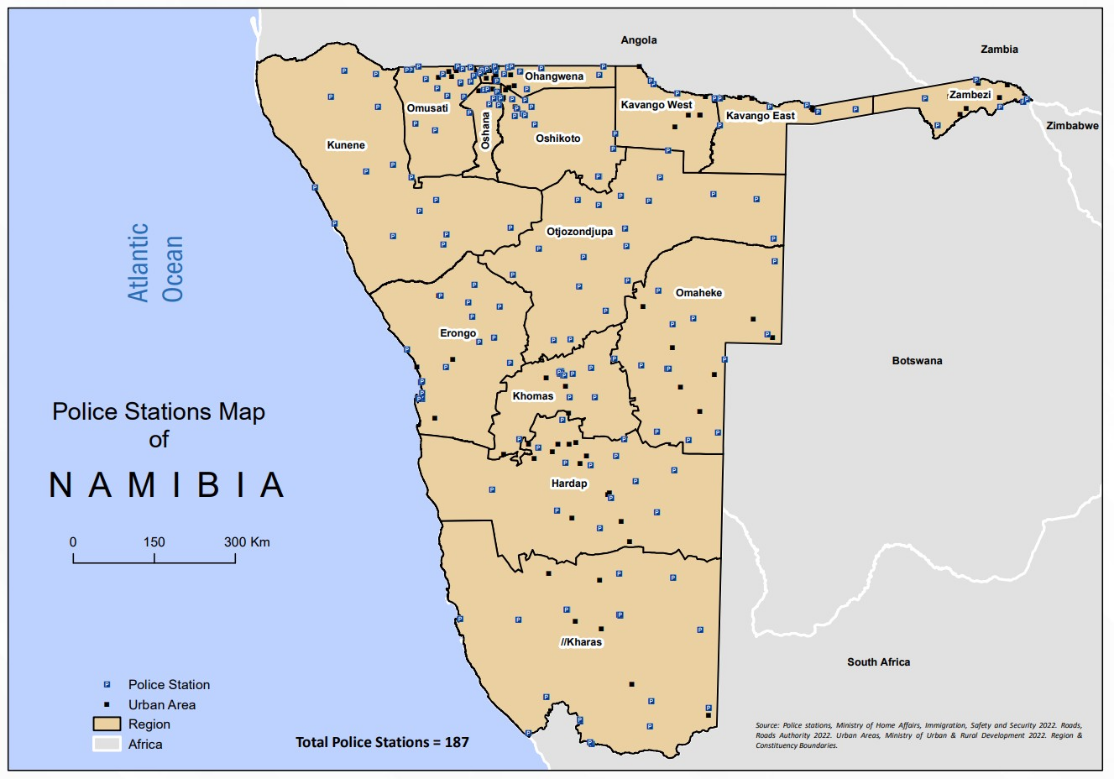
14.2.5 The Namibian government’s submission to the UN CEDAW received 7 May 2020 (GRN CEDAW submission 2020) noted: ‘Police stations or services offered by the police officers are widely found in almost every smallest [sic] settlement in the country which in turn assist rural women in accessing justice.’[footnote 140]
14.2.6 The GRN CEDAW submission 2020 also stated:
‘To provide effective comprehensive services to GBV victims and their families, the government through the Ministry of Safety and Security established seventeen (17) Gender Based Violence Protection Units (GBVPU), in 14 regions. The units adopt a multisectoral approach and key ministries involved are: Gender Equality and Child Welfare responsible for psycho-social support services; Safety and Security responsible for Protection Services and Health and Social Services responsible for care and treatment services.’[footnote 141]
14.2.7 A UN Namibia joint field visit report to Katutura GBV protection unit (GBVPU) undertaken on 19 April 2023 (UN Namibia Katutura visit report 2023) observed: ‘The first GBVPU was established in 1993 with the aim to provide specialized response for survivors of GBV/[violence against children] VAC. As of 2017, NAMPOL established 17 operational GBVPUs in 14 regions of the country. The GBVPU is responsible for attending to all cases of GBV.’[footnote 142]
14.2.8 The UN Namibia Katutura visit report 2023 further noted:
‘The GBVPU provides integrated service delivery by the police (investigate cases and take statements), a medical doctor (examination, treatment, forensic evidence collection[)], Ministries of Health and Social Services, and Gender Equality (crisis intervention, counseling, and statutory reports to the court). The GBVPU is under the leadership of the Ministry of Home Affairs, Immigration, Safety and Security, particularly the Namibian Police (NAMPOL) in partnership with the Ministry of Health and Social Services and Gender Equality and Poverty Eradication and Social Welfare. Also doing prevention work in the community …’[footnote 143]
14.2.9 USSD 2023 HR report noted: ‘When authorities received reports of domestic violence, protection units such as the NAMPOL Gender-based violence division intervened. Primarily in urban areas, such units were staffed with police officers, social workers, legal advisors, and medical personnel trained to assist survivors of sexual assault.’ [footnote 144]
14.2.10 The UN Namibia Katutura visit report 2023 listed issues observed at the Katutura site:
- ‘No database to capture GBV data in real-time.
- ‘Lack of specialized training of service providers to deliver comprehensive and survivor-centered services; No training for 4-5 years to new recruits on proper investigation of cases due to financial constraints.
- ‘Limited accessibility to the GBV services (after working hours and during weekends)
- ‘No dedicated budget for the GBV Protection Unit services.
- ‘… [The] Unit is closed after 17:00 hrs. and over the weekends, although staff are on standby for emergencies …
- ‘Insufficient human resources (doctors, police, social workers) with the need for ongoing capacity development
- ‘Limited availability of transport to executive [sic] duties in all constituencies
- ‘Limited operational space
- ‘Limited time dedicated to prevention interventions
- ‘No internet connectivity and non-functional phone lines
- ‘Required technical support to operationalize the [GBV reported incidents] database
- ‘… limited places of safety’[footnote 145]
14.2.11 The UN Namibia Katutura visit report 2023 noted that there were also:
- ‘Integrated services provision (under one room)
- ‘Challenges of space
- ‘Passion and commitment of the service providers (police and social workers)’[footnote 146]
14.2.12 The SUA guidebook 2025 noted ‘Women and Child Protection Units - are specialised police units that handle GBV cases, domestic violence, and sexual abuse. These units offer sensitive and private reporting environments …’[footnote 147]
14.2.13 On training, the GRN’s follow-up submission to the UN CEDAW received on 30 December 2024 stated:
‘[GRN] … continues to build capacity of law enforcement to handle GBV cases using the Pocket manual for Law enforcement. The Namibian Police Force Pocket Manual has formed part of training materials used at Police training colleges. The pocket manual covers issues related to GBV, Trafficking in Person (TIP) and Violence against Children (VAC). This manual is also used to conduct in-service training for investigators at the GBV Protective Units and Police officers at different Police Stations countrywide.
‘Thus far, approximately 1,207 Police officers have been trained. Trainings are ongoing. The Units continue to offer services ranging from investigations, psychosocial support, medical treatment and shelter to GBV victims and their families.’[footnote 148]
14.2.14 On resourcing, Informante, a Namibian newspaper, in an article of 22 July 2024 reported comments made by the Inspector-General of NamPol, Jospeh Shikongo, at the NamPol senior command conference 2024. Shikongo acknowledged ‘… that budgetary constraints are affecting police operations, a situation caused by global dynamics affecting economic growth and revenue generation … [and] that [NamPol] … need to optimally utilize the limited resources allocated to the police to achieve maximum output in delivering policing services.[footnote 149]
14.3 Arrests and prosecutions
14.3.1 No information was available in the sources consulted indicating that the GRN publishes official statistics on the number of arrests and prosecutions of GBV related offences including domestic violence and rape. There is only limited information in other sources consulted (see Bibliography).
14.3.2 The USSD 2023 HR report noted: ‘Police continued implementation of the gender-based violence National Action Plan to improve responsiveness, expedite investigations, and promote collaborative and consultative interventions with stakeholders.’ The report also noted: ‘Factors hampering rape prosecutions included limited police capacity and the withdrawal of allegations by survivors after filing charges. Survivors often withdrew charges because they received compensation from the accused; succumbed to family pressure, shame, or threats; or became discouraged by the length of time involved in prosecuting a case.’[footnote 150]
14.3.3 The USSD Trafficking in Persons report 2024 that the Office of the Prosecutor General has a specific ‘Sexual Offenses Unit’ which prosecuted trafficking cases (the report did not mention GBV offences).[footnote 151]
14.3.4 The UN HRC ICCPR report 2024, considering submissions and evidence provided between August 2021 and February 2024, noted that the UN HRC was concerned about low number of prosecutions of perpetrators of GBV.[footnote 152]
14.3.5 The USSD 2024 HR report did not comment on the effectiveness of the police in providing protection but did observe: ‘The law [to prevent marriage under 18] was not effectively implemented or enforced. Illegal child marriages, including those of girls younger than age 15, were common, especially in rural areas.’[footnote 153]
14.3.6 The Namibian article of 5 February 2025 citing 143 rape cases reported to the police in Oshikoto region in 2024 indicated that there had also been 143 arrests including 106 Namibian and 37 Angolan men. The article stated that the police regional crime investigations coordinator deputy commissioner had ‘urge[d] victims and survivors to report rape cases to the police and to consult hospitals or social workers for counselling.’[footnote 154]
14.3.7 The Namibian Sun reporting on 26 June 2025 about the number of GBV cases recorded between January and June 2025 in Kavango West region noted that ‘60 GBV cases have been recorded in the region, resulting in 48 arrests.’ The article further reported:
‘Breaking down the figures for 2025 so far, the region has recorded 20 rape cases, resulting in 18 arrests, and two attempted rape cases, with one arrest. Two cases of unlawful sexual acts with minors were also reported, with arrests made in both … police investigated five domestic violence-related murder cases, with suspects arrested in all cases. There were six attempted murder cases, leading to three arrests.
‘The region also recorded 14 cases of assault with intent to cause grievous bodily harm (GBH), with 11 arrests, and seven cases of assault by threat, resulting in five arrests.
‘One case of common assault and two general assault cases were reported, with arrests made in the latter. One case of malicious damage to property was also recorded.’[footnote 155]
14.3.8 However, the Namibian Sun article of June 2025 also noted ‘Only five cases have been finalised, which, according to [police regional commander Julia] Sakuwa-Neo, is due to the complex nature of GBV investigations. By comparison, 55 GBV-related cases were reported by June last year, with 41 arrests. The figures reflect a year-on-year increase of 9%.’[footnote 156]
14.4 Support at public hospitals
14.4.1 The USSD 2023 report noted that: ‘Gender-based violence investigation units present at most state hospitals provided forensic examinations to survivors of sexual violence, including prompt access to medication to prevent HIV, hepatitis B, and other diseases. Rape exams were only performed by doctors at government-run hospitals. Women in rural communities often needed to travel some distance to receive such an exam.’[footnote 157]
14.4.2 The SUA guidebook 2025 noted ‘Most government hospitals and clinics – offer post-GBV care, including medical examinations and counseling for GBV survivors … Counseling services are essential for coping with trauma. Many NGOs and government facilities offer free or subsidized counseling for GBV survivors.’[footnote 158]
14.5 State-supported shelters
14.5.1 No information was available in the sources consulted indicating that the GRN publishes official statistics on the number of women and girls assisted at state run or supported shelters (see Bibliography).
14.5.2 USSD 2023 HR report: ‘The Ministry of Gender Equality, Poverty Eradication and Social Welfare [now named the MGECW] operated shelters; however, due to staffing and funding shortfalls, the shelters operated only on an as-needed basis with social workers coordinating with volunteers to place survivors and provide them with food and other services.’[footnote 159]
14.5.3 A representative of the GRN at a meeting to consider the government’s ICCPR submissions to the UN HRC on 7 March 2024 observed:
‘The Ministry of Gender Equality, Poverty Eradication and Social Welfare had established about a dozen shelters throughout the country for victims of gender-based violence, some of which were run by the Government and others by private organizations with funding from the State. The Ministry had reported that some of the shelters were not operating properly and that it had begun addressing the problem by mobilizing the required human and financial resources. The Minister was deeply committed to ensuring support for victims of gender-based violence, who were considered a particularly vulnerable group.’[footnote 160]
14.5.4 Following submissions by the GRN and stakeholders as part of the ICCPR review, the UN HRC report 2024 noted ‘The Committee is … concerned … about reports of significant under resourcing of gender-based violence … shelters, resulting in, inter alia, limited opening hours and a lack of appropriately trained staff …’[footnote 161]
14.5.5 The Namibian reported on 13 March 2025 that Federico Links, a researcher at the Namibia think tank the Institute for Public Policy Research, had claimed that none of the government’s 8 GBV shelters were operational. ‘Links said the Namibian government’s submission last year to the United Nations Human Rights Committee (UNHRC) [as part of its review of Namibia’s implementation of the ICCPR, see above] revealed that GBV shelters were not operational.’ In response, a spokesperson for MGECW stated ‘all shelters are operational despite staff shortages in 2023 which hindered the opening of the facilities.’[footnote 162]
14.5.6 The Namibian March 2025 article also listed the location of 5 shelters, citing the town and region:
- Keetmanshoop in //Kharas
- Khorixas in Kunene
- Opuwo in Kunene
- Eenhana in Ohangwena
- Outapi in Omusati[footnote 163]
15. Judicial system
15.1 Structure
15.1.1 The Constitution establishes the judiciary comprised of the lower courts (presided over by magistrates with legal jurisdictions determined by acts of parliament), a High Court and a Supreme Court (both presided over by judge.[footnote 164] The High Court, among other things, hears and adjudicates upon civil and criminal prosecutions including appeals from the lower courts[footnote 165], while the Supreme Court, among other things, hears and adjudicates appeals from the High Court.[footnote 166]
15.1.2 The Namibia Judiciary’s website in an undated entry explained: ‘The Supreme Court is the apex court of the country … in addition to being a court of appeal … the Supreme Court also acts as the Constitutional Court of Namibia. The High Court is a court of appeal but also a trial court. The High Court takes cases on appeal or review from the lower courts. The Lower Courts ([a]lso known as Magistrate’s Courts) are courts of first instances … with limited criminal and civil jurisdiction.’[footnote 167]
15.1.3 The CIA World Factbook updated 17 September 2025 noted that subordinate courts to the Supreme Court included the ‘High Court; Electoral Court, Labor Court; regional and district magistrates’ courts; community courts’.[footnote 168]
15.1.4 An article in The Namibian Sun noted: ‘The lower courts consist of nine regional courts, 37 district courts and 35 periodical courts across Namibia …’ [footnote 169]
15.2 Independence and fair trial
15.2.1 The USSD HR 2023 report noted: ‘The constitution provided for an independent judiciary, and the government generally respected judicial independence and impartiality … The constitution and law provided for the right to a fair and public trial, and the judiciary generally enforced this right.’ [footnote 170] The USSD HR 2024 report does not comment on the judiciary or judicial independence or the availability of a fair trial.[footnote 171]
15.2.2 The FH report 2024 similarly noted: ‘By law and in practice, the separation of powers [of state] is observed, and judges are not frequently subject to undue influence’.[footnote 172] (FH published an abridged report for events in 2024 which does not comment on the effectiveness of the judiciary[footnote 173].) The FH report 2024 also stated:
‘Judges are appointed by the president upon the recommendation of the Judicial Service Commission (JSC), which the president has some influence over. Gender parity activists hailed the April 2023 appointment of three women to the Supreme Court, a first since Namibian independence. However, critics bemoaned the lack of transparency in the appointment process for acting and permanent judges. The JSC responded to the criticism by holding public interviews for candidates for a High Court judgeship in December.’ [footnote 174]
15.2.3 The USSD’s 2025 Investment Climate Statements: Namibia, published 29 September 2025, noted: ‘The Namibian court system is independent and is widely perceived to be free from government interference … The system provides effective means to enforce property and contractual rights, but the speed of justice is generally very slow due to a backlog of cases across the judicial spectrum …’[footnote 175]
15.3 Gender specific assistance
15.3.1 The GRN in its reply to the UN Committee on the Elimination of Discrimination against Women about issues and questions raised in regard to its initial submission to the Committee of May 2020, received on 27 July 2021, (GRN replies to CEDAW 2021) observed: ‘To increase women’s access to justice, specialised courts to deal with GBV cases have been established country wide. Training of Law enforcements and judiciary on Protection orders and handling of GBV cases have been conducted. [A] GBV Training Manual has been developed with the assistance of Development Partner (UNICEF) with the objective to sensitise new recruits on GBV and how to deal with GBV victims at the police stations once deployed.’[footnote 176]
15.3.2 The USSD HR 2023 noted: ‘Some magistrates’ courts provided special courtrooms with a cubicle constructed of one-way glass and child-friendly waiting rooms to protect vulnerable witnesses from open testimony … The Windhoek Magistrate’s Court operated a gender-based violence survivor-friendly lower court.’ [footnote 177]
15.4 Hearings, convictions and sentencing
15.4.1 No information was available in the sources consulted indicating that the GRN published official statistics on the number of GBV related courts cases heard and disposed of, including those resulting in convictions and imprisonment or other sanction (see Bibliography).
15.4.2 The Namibian Sun in an article dated 9 February 2023 observed ‘The majority of criminal trials presided over in the High Court of Namibia last year [2022] involved violence against women and children.’ The article further noted:
‘… Chief Justice Peter Shivute explained that the High Court has two divisions: The main division in Windhoek and the northern local division in Oshakati … judges presided over a total of 140 criminal trials … A total of 63 of these cases involved gender-based violence (GBV) … and 10 involved human trafficking … 20 cases were completed by the main division, representing a finalisation rate of 28%. The northern local division … had a finalisation rate of 17% … 57 cases remain on the court roll as a carry-over to this [2023] legal year [the article does not provide a breakdown of the types of GBV cases or outcomes].’[footnote 178]
15.4.3 The Namibian Sun article continued, without specifically identifying GBV cases, that:
‘[Chief Justice Shivute said] “During the period under review, the High Court attended to 2 917 criminal reviews from the lower courts and finalised 2 135 of them.” … criminal stream judges also heard 151 criminal appeals, and finalised 142. That represents a 98% clearance rate in respect of the main division and 86% for the northern local division.
‘Furthermore, during 2022, the judges in the criminal stream delivered 40 judgments after completion of trials, 83 criminal appeal judgments and 190 criminal review judgments … 66% of the judgments were delivered timeously within the approved guidelines at the main division and 65% at the northern local division.’[footnote 179]
15.4.4 The Namibian Sun also reported on hearings at magistrate courts (Magistracy) although did not provide specific information about GBV cases. The article reported Chief Justice Shivute’s observations about cases heard in the lower courts: “The Magistracy dealt with 64 536 cases over the period under review. This shows an increase of 10.4% from the 2021 legal year. A total of 26 756 cases were finalised.” However, this ‘left 37 983 cases [to be] … carried over to January 2023.’ The Chief Justice commented ‘“For us to see a reduction in the pending cases, we need more magistrates, more court rooms, more support staff and sufficient funds to run periodical courts and to pay witness fees.”’[footnote 180]
15.4.5 The USSD 2023 HR report noted: ‘The law criminalized rape of women and men, including spousal rape … The courts tried numerous cases of rape during the year. The government generally enforced court sentences of those convicted, which ranged between five to 45 years’ imprisonment.’[footnote 181]
15.4.6 The UN HRC ICCPR report 2024 expressed concern at the reports of ‘the low number of … convictions handed down to perpetrators’ of GBV.[footnote 182]
15.5 Protection and maintenance orders
15.5.1 The MGECW NGEEP 2025 noted:
‘Administrative data from the magistrates’ courts show that a total of 4,552 applications of Protection Orders were received during 2021/2022, and 73.0 percent of the applications were granted, 10.0 percent were dismissed, and 14.0 percent were withdrawn. During the same period, there were 7,285 Maintenance Order applications [issued by magistrates to provide financial support to another person], 72.0 percent were issued, 1.6 percent were dismissed, and 9.0 percent were withdrawn.’[footnote 183]
15.5.2 For the legal basis of protection orders see Protection orders above.
15.6 Prison population: numbers linked to GBV offences
15.6.1 No information was available in the sources consulted indicating that the GRN published official statistics on the number of prisoners sentenced for GBV-related offences. Information in other sources is limited (see Bibliography).
15.6.2 The World Prison Brief published by the Institute for Crime & Justice Policy Research at the University of London reported that as of 2021/22 there were about 8,900 people in prison just over half of whom were in pre-trial detention, over 97% were male.[footnote 184]
15.6.3 An article of 3 December 2023 in Africa Press, which describes itself as an independent news platform made of dozens of editors, correspondents and writers[footnote 185], reported comments made Eliakim Shikongo, North Western and Eastern Regional Commissioner of the Namibia Correctional Service (NCS). Mr Shikongo pointed out
‘… that the NCS’s mandate is to provide safe, secure, and humane custody of offenders, aiming to rehabilitate and reintegrate them into the community. Currently, the NCS houses 4,677 offenders, with 4,538 of them being men. The majority of these offenders are sentenced for gender-based violence-related offenses, including murder, assault, rape, and more … in response, the NCS has introduced various rehabilitation programs for offenders aimed at addressing the factors that led to these offenses.’[footnote 186]
15.7 Legal aid
15.7.1 The Ministry of Justice and Labour Relations (MJLR) in an undated entry on its website noted
‘The Legal Aid Directorate under the Ministry of Justice in Namibia provides legal assistance to individuals who cannot afford the services of a private lawyer. The organization’s primary goal is to ensure that everyone has access to justice, regardless of their financial situation. The Legal Aid Directorate provides legal advice, representation, and assistance in court proceedings, including criminal, civil, and family matters. The organization benefits individuals who are unable to afford legal representation and would otherwise be unable to access the justice system. This includes low-income earners, people living in poverty, and vulnerable groups such as women, children, and persons with disabilities. The Legal Aid Directorate also provides legal assistance to people who are in police custody or detention and require legal representation. In summary, the Legal Aid Directorate provides an essential service to the community by ensuring that everyone has access to legal representation, regardless of their financial situation.’[footnote 187]
15.7.2 The MJLR’s most recent annual report at the time of writing for 2022 to 2023 stated: ‘The Legal Aid Directorate operates under the mandate established by Article 12 and 95 of the Namibian Constitution, which led to the enactment of the Legal Aid Act of 1990 (Act 29 of 1990). This mandate underscores the Directorate’s responsibility to ensure access to justice by providing legal aid, including legal advice and representation, to individuals with insufficient income at State expense.’
15.7.3 The report also stated the directorate had received 9,883 applications for legal aid. Of these: 5,677 were granted, 3,425 were declined; and 781 were pending.[footnote 188]
15.7.4 The MJLR annual report however did not provide an explicit breakdown of the types of cases for which legal aid was provided.[footnote 189]
16. Oversight of government and human rights: the Ombudsman
16.1.1 Namibia has an independent and impartial Ombudsman:
- with a mandate ‘to promote fairness, accountability and transparency in the public sector by resolving and investigating public complaints and systemic issues within the Ombudsman’s jurisdiction, being human rights violations, maladministration (within the public sector) and protection of the environment.’[footnote 190]
- ‘… [who] investigates complaints about the adminstration [sic] of Government, including municipalities, town/village councils and parastatals such as Telecom and TransNamib, as well as human rights complaints against any person or institution in Namibia. If he finds something wrong, he will ask the guilty party to correct the mistake or to solve the problem.’[footnote 191]
16.1.2 The USSD 2023 HR report noted: ‘There was an autonomous ombudsman with whom government agencies cooperated. Observers considered the ombudsman effective in identifying human rights abuses, including denial of the right to a fair trial. The ombudsman lacked an enforcement mandate or other means to correct abuses, however.’[footnote 192]
16.1.3 The BTI Namibia report 2024 noted: ‘Public control institutions established by the state, such as the offices of the Ombudsman, the Auditor-General, and the Anti-Corruption Commission, are understaffed and face operational constraints. Their recommendations are often not given the seriousness they deserve, and they have limited power to enforce compliance.’[footnote 193]
16.1.4 The UN CEDAW report 2022 noted ‘… that the Office of the Ombudsman of Namibia lacks a specific mandate to protect and promote women’s rights.’[footnote 194]
17. Civil society assistance
17.1.1 On civil society generally, the FH report 2024 noted ‘Nongovernmental organizations generally operate without interference, though government leaders sometimes use public platforms to criticize them.’[footnote 195]
17.1.2 The USSD 2023 HR report noted:
‘A number of domestic and international human rights groups generally operated without government restriction to monitor or investigate human rights cases and publish their findings. Government officials were somewhat cooperative and responsive to the views of these groups. The government tolerated NGO reports provided to the United Nations that highlighted matters not raised by the government or that pointed out misleading government statements. The Office of the Ombudsman, local human rights NGOs, and the ACC reported NAMPOL cooperated and assisted in human rights investigations.’[footnote 196]
17.1.3 There are a number of organisations that provide assistance to women who have experienced GBV. These include: - Sister Namibia ‘a local organization working toward upholding women’s rights and empowering females in Namibia by “amplifying women’s voices.” The organization was founded in 1989 in Windhoek, Namibia, and has raised awareness on matters impacting women and other marginalized groups through its publications.’[footnote 197]
-
the Legal Assistance Centre (LAC) is a public interest law firm based in Windhoek, its website states that ‘The LAC’s main objective is to protect the human rights of all Namibians’.[footnote 198] LAC runs the Gender Research & Advocacy Project (GR&AP) which seeks to promote gender equality and the empowerment of women through legal research, law reform and related advocacy work.[footnote 199] LAC’s website also stated that one of the 5 broad areas of its work including providing legal information and advice on, amongst other things, ‘Gender Equality – including information on rape, domestic violence, sexual harassment in the workplace, inheritance, marriage, divorce and maintenance.’ All services are free of charge.[footnote 200] The SUA guidebook 2025 noted the LAC ‘provides legal advice and support for protection orders.’ [footnote 201]
-
Regain Trust – in an undated entry the website stated that it is ‘non-profit trust … with the aim of working towards addressing all forms of discrimination against women and children … offer[ing] free psychosocial support services such as counselling for survivors of GBV.’ The Trust has offices in Windhoek, Walvis Bay and Outapi.[footnote 202]
17.1.4 The SUA guidebook 2025 noted:
- ‘[The NGO] Lifeline/Childline (Tel: 061 226 889) runs a national helpline-based counselling service in Namibia to assist GBV Survivors and children in vulnerable situations. There are two lines you can contact …
- ‘Gender-based Violence Helpline – Dial: (+246) 106
- ‘Lifeline/Childline Number Helpline – Dial: (+264) 116’[footnote 203]
18. Internal relocation
18.1.1 There is no specific information about women (or girls) who have experienced GBV relocating within the country in the sources consulted (see Bibliography).
18.1.2 The FH report 2024 noted ‘Freedom of movement is constitutionally guaranteed and [was] in most cases observed in practice.’[footnote 204] Similarly, the USSD 2023 HR report noted: ‘The law provided for freedom of internal movement, foreign travel, emigration, and repatriation, and the government generally respected these rights.’[footnote 205] The USSD 2024 HR report did not comment on freedom of movement.[footnote 206]
18.1.3 NamibiaToday, a Namibian newspaper, reporting the findings of the 2022 census on migration trends on 26 January 2025. The article, which referred to migration generally and did not comment on migration by sex or gender, noted:
‘One of the most notable migration trends in Namibia is the continued rural-to-urban migration. The 2022 census revealed that more people are moving from rural areas to urban centers in search of better economic opportunities, access to healthcare, education, and improved living conditions. Namibia’s urbanization rate is steadily increasing, with the majority of the population now residing in urban areas. Cities such as Windhoek, Walvis Bay, Swakopmund, and Rundu have seen significant population growth due to this migration pattern. Windhoek, the capital city, remains the largest urban center, with a large proportion of the country’s population now calling it home. The influx of people into urban areas has created challenges in terms of housing, infrastructure, and services, which will require strategic urban planning and development to accommodate the growing population.
‘… In addition to the rural-to-urban migration trend, internal migration within Namibia’s various regions has been a significant factor. The 2022 census data showed that certain regions, particularly the Khomas, Erongo, and Omusati regions, experienced the highest levels of internal migration. These regions are known for their economic and infrastructure development, making them attractive to migrants seeking better opportunities. For example, the Khomas Region, which includes Windhoek, has witnessed a substantial population increase due to internal migration, while regions such as Zambezi and Kunene have seen relatively lower migration levels. This internal migration has contributed to an uneven distribution of the population across the country, placing pressure on certain regions to provide services and resources for the growing population.’[footnote 207]
18.1.4 The NamibiaToday article further reported:
‘Employment opportunities are a key driver of both internal and cross-border migration in Namibia. The 2022 census highlighted that most migrants tend to move to areas where they can find jobs, especially in urban centers with booming industries. Windhoek, for example, is a major hub for administrative, commercial, and industrial activities, attracting people from rural regions and neighboring countries seeking employment. Similarly, Walvis Bay and Swakopmund, located on the coast, are important centers for Namibia’s fishing, mining, and tourism industries. These cities have seen significant population growth due to employment opportunities, especially within the mining and industrial sectors. This trend is expected to continue as Namibia’s industrial and economic development grows.’[footnote 208]
18.1.5 See sections on Geography and Economic context for more information on those topics.
18.1.6 The Brief, referring to the publication of the National Statistics Agency’s National Infrastructure Atlas report, stated on 26 March 2024:
‘Namibia has recorded an increase in infrastructure for water, education and health facilities since 2016, the National Infrastructure Atlas of 2023 has shown … Of the total 2,047 educational facilities, the report states that primary schools lead the pack with 1,064 establishments, followed by 632 combined educational facilities. It is also reported that there are 14 facilities catering to special education needs.
‘Health facilities are made up of 49 hospitals, 421 clinics, and 60 health centres. Notably, the region with the least health facilities is Hardap with 21 facilities, while Khomas has the highest boasting 59, an improvement from the 37 recorded in 2016 … the country’s road network, spanning over 49,000 kilometres and consisting of bitumen, gravel, and earth tracks, has also seen improvement.’[footnote 209]
18.1.7The following sources provide useful information about settlement patterns, the economy and employment, education, health and welfare, and social support, which apply to the population generally including women:
- Bertelsmann Stiftung, Transformation Index – Namibia country report 2024 (covering the period February 2021 to January 2023), April 2024
- Centre for Affordable Housing Finance in Africa, 2024 Housing Finance Yearbook: Namibia profile, 30 January 2024
- Encyclopaedia Britannica, Namibia, updated 23 November 2025
- GRN, National Statistics Agency (NSA), 2023 Population and Housing Census Main Report, 30 October 2024
- GRN, NSA, National Infrastructure Atlas 2023, 19 June 2024
Research methodology
The country of origin information (COI) in this note has been carefully selected in accordance with the general principles of COI research as set out in the Common EU [European Union] Guidelines for Processing Country of Origin Information (COI), April 2008, and the Austrian Centre for Country of Origin and Asylum Research and Documentation’s (ACCORD), Researching Country Origin Information – Training Manual, 2024. Namely, taking into account the COI’s relevance, reliability, accuracy, balance, currency, transparency and traceability.
Sources and the information they provide are carefully considered before inclusion. Factors relevant to the assessment of the reliability of sources and information include:
- the motivation, purpose, knowledge and experience of the source
- how the information was obtained, including specific methodologies used
- the currency and detail of information
- whether the COI is consistent with and/or corroborated by other sources
Commentary may be provided on source(s) and information to help readers understand the meaning and limits of the COI.
Wherever possible, multiple sourcing is used and the COI compared to ensure that it is accurate and balanced, and provides a comprehensive and up-to-date picture of the issues relevant to this note at the time of publication.
The inclusion of a source is not, however, an endorsement of it or any view(s) expressed.
Each piece of information is referenced in a footnote.
Full details of all sources cited and consulted in compiling the note are listed alphabetically in the bibliography.
Terms of reference
The ‘Terms of Reference’ (ToR) provides a broad outline of the issues relevant to the scope of this note and forms the basis for the country information.
The following topics were identified prior to drafting as relevant and on which research was undertaken:
- Geographic context
- Economy context
- Legal rights and policy on promoting and protecting women and girls including
- International and domestic instruments
- Gender-specific policies
- State campaigns against GBV
- Socio-economic, cultural and political situation
- Prevalence of gender-based violence (GBV)
- Availability of information and potential under-reporting
- Factors influencing violence
- Societal perception
- Levels and nature
- State protection and support
- Police and gender-specific units
- Other forms of state support and assistance
- Arrests and prosecutions
- Judicial system
- Structure
- Independence and fair trial
- Gender-specific assistance
- Court cases and outcomes
- GBV linked prison population
- Legal aid
- Oversight – ombudsman and human rights commissions
- Civil society
- Internal relocation including freedom of movement. Other factors
- Economy
- Education
- Health
- Housing
Bibliography
Sources cited
African Feminism
-
About, no date. Accessed: 15 November 2025
-
Confronting Gender-Based Violence Across Culture, State, and Religion in Namibia, 9 November 2023. Accessed: 15 November 2025
Africa Press
-
About Us, no date. Accessed 25 November 2025
-
Only 20 Correctional Officers report GBV cases, 3 December 2023. Accessed 25 November 2025
Afrobarometer
- AD513: Amid progress on women’s rights, Namibians see gender-based violence as priority issue to address, 7 April 2022. Accessed: 4 September 2024
Bertelsmann Stiftung, Transformation Index (BTI)
- Namibia-Country Report 2024, February 2024. Accessed 15 November 2025
The Borgen Project
- Progress of women’s rights in Namibia, 15 June 2023. Accessed 15 November 2025
The Brief
- Namibia records growth in water, education and health infrastructure, 26 March 2024. Accessed 26 November 2025
Development and Cooperation
- A woman in power does not automatically guarantee gender equality, 11 July 2025. Accessed 23 November 2025
Freedom House
-
Freedom in the World Report 2024, 29 February 2024. Accessed 12 November 2025
-
Freedom in the World 2025 (Namibia), 2025. Accessed 23 November 2025
Generis Global
- Domestic Violence Protection Measures in Namibia: A Comprehensive Overview, 24 November 2024. Accessed 21 November 2025
Government of the Republic of Namibia (GRN)
-
The Constitution, last amended 2014. Accessed: 30 October 2025
-
Police Act 1990, last amended 21 July 2023. Accessed 21 November 2025
-
Namibia National Action Plan on Women, Peace and Security, March 2019. Accessed: 30 October 2025
-
Combating of Domestic Violence Act, 2003, last amended May 2024. Accessed 21 November 2025
Informante
-
NamPol records 4 815 GBV cases, 11 March 2024. Accessed 25 November 2025
-
NamPol records 110,551 criminal cases in FY23/24, 22 July 2024. Accessed 25 November 2025
Institute for Crime & Justice Policy Research
- World Prison Brief, no date. Accessed 25 November 2025
Legal Assistance Centre (LAC)
Namibia Judiciary
- Frequently asked questions, no date. Accessed 25 November 2025
Namibia Ministry of Gender Equality and Child Welfare
-
About Us, no date. Accessed 21 November 2025
-
National Gender Based Violence Baseline Study: Consolidating GBV Prevention Effort and Fast-Tracking Namibia’s Response, 2017. Accessed 21 November 2025
-
Violence Against Children and Youth in Namibia - Findings from the Violence Against Children and Youth Survey, 2019 - Full Report 2020, no date. Accessed 25 November 2025
-
National Gender Equality and Equity Policy (2025-2035), in March 2025. Accessed 21 November 2025
Namibia Ministry of Health and Social Services
- Namibia Demographic and Health Survey 2013, September 2014. Accessed 25 November 2025
Namibia Ministry of Justice and Labour Relations
-
Services, no date. Accessed 25 November 2025
-
Annual report 2022 – 2023, no date. Accessed 25 November 2025
Namibia National Statistics Agency
-
2023 Population and Housing Census – Main Report, 30 October 2024. Accessed 20 November 2025
-
National Infrastructure Atlas 2023, 19 June 2024. Accessed 25 November 2025
Namibia Ombudsman
-
Mandate Overview, no date. Accessed 25 November 2025
-
Ombudsman Brochure, circa December 2022. Accessed 25 November 2025
New Era Live
- GBV burning Namibia … over 4 400 cases recorded in 11 months, 15 May 2025. Accessed 21 November 2025
The Namibia Economist
- EndGBVNamibia campaign launched, 4 June 2025. Accessed 20 November 2025
The Namibian
- Oshikoto records 143 rape cases in 2024, 5 February 2025. Accessed 25 November 2025
The Namibian
-
All eight GBV shelters operational – ministry, 13 March 2025. Accessed 25 November 2025
-
Nandi-Ndaitwah’s Cabinet takes shape with a bold new direction, 24 March 2025. Accessed 25 November 2025
-
Men are failing society – first gentleman, 23 November 2025. Accessed 25 November 2025
Namibian Broadcasting Corporation
- Policy launched to end gender discrimination, March 2025. Accessed 20 November 2025
Namibia Legal Information Institute
- Legislation, no date. Accessed on 4 December 2025
Namibian Sun
-
GBV tops High Court criminal trials, 9 February 2023. Accessed 25 November 2025
-
Spike in rape cases exposes crucial gaps in GBV data system, 14 May 2025. Accessed 20 November 2025
-
Time to eliminate GBV, Mbumba says, 26 November 2024. Accessed 20 November 2025
-
GBV cases surge in Kavango West, 26 June 2025. Accessed 25 November 2025
NamibiaToday
-
Netumbo Nandi-Ndaitwah: Namibia’s First Female President Who is Leading Change, 14 January 2025. Accessed 25 November 2025
-
The 2022 Namibia Census: Insights into Migration Trends, 26 January 2025. Accessed 25 November 2025
Regain Trust
- About Us, no date. Accessed 25 November 2025
Step Up Ark
- Gender-Based Violence Guidebook 2025, March 2025. Accessed 20 November 2025
UN Convention on the Elimination of Discrimination Against Women (UN CEDAW)
-
Committee on the Elimination of Discrimination Against Women, Concluding observations on the sixth periodic report of Namibia, 12 July 2022. Accessed 20 November 2025
-
GRN, Sixth periodic report submitted by Namibia under article 18 of the Convention, due in 2019*, received 7 May 2020, published 18 September 2020. Accessed 20 November 2025
-
GRN, Replies of Namibia to the list of issues and questions in relation to its sixth periodic report*, received 27 July 2021, dated 23 February 2022. Accessed 25 November 2025
-
GRN, Information received from Namibia on follow-up to the concluding observations on its sixth periodic report*, received 30 December 20224, dated 7 January 2025. Accessed 25 November 2025
UN Department of Economic and Social Affairs
- Sustainable Development, no date. Accessed 20 November 2025
UN International Covenant on Civil and Political Rights
-
Summary record of the 4082nd meeting - Consideration of reports submitted by States parties under article 40 of the Covenant, 7 March 2024, record dated 14 March 2024. Accessed 20 November 2025
-
Human Rights Committee, Concluding observations on the third periodic report of Namibia*, 3 May 2024. Accessed 20 November 2025
-
The NGO Report To the UN Human Rights Committee for its 3rd Periodic Review of Namibia during the 140th Session, February 2024. Accessed 20 November 2025
UN International Covenant on Economic, Social and Cultural Rights
- Second periodic report submitted by Namibia under articles 16 and 17 of the Covenant, due in 2021*, received 30 January 2023, dated 3 May 2023. Accessed 23 November 2025
UN Namibia
- Joint field visit report - Social Transformation Pillar, 19 April 2023. Accessed 25 November 2025
UN Population Fund
- UNFPA Namibia Seventh Country Programme Document (7th CPD), 2025-2029, 23 September 2024. Accessed 20 November 2025
UN Women
-
Namibia, no date. Accessed 20 November 2025
-
Namibia National Gender Statistics Assessment, 12 December 2022. Accessed 20 November 2025
US Central Intelligence Agency
-
World Factbook (Namibia), updated 25 November 2025. Accessed 26 November 2025
-
World Factbook (United Kingdom), updated 26 November 2025. Accessed 26 November 2025
-
World Factbook (Maps), no date. Accessed 25 November 2025
US State Department (USSD)
-
Overseas Security Advisory Council, Namibia Country Security Report, 18 April 2025. Accessed 20 November 2025
-
2023 Country Reports on Human Rights Practices, 22 April 2024. Accessed 20 November 2025
-
2024 Country Reports on Human Rights Practices: Namibia, August 2025. Accessed 20 November 2025
-
Trafficking in Persons Report: Namibia, 29 September 2025. Accessed 25 November 2025
-
2025 Investment Climate Statements: Namibia, 29 September 2025. Accessed 25 November 2025
Windhoek Observer
- #EndGBVNamibia campaign launched, June 2025. Accessed 20 November 2025
World Bank
-
Data (Namibia), no date. Accessed 25 November 2025
-
Namibia (Overview), 30 September 2025. Accessed 25 November 2025
-
Understanding country income: World Bank Group income classifications for FY26 (July 1, 2025–June, 2026), 1 July 2025. Accessed 25 November 2025
-
Gender Data Portal (Namibia), no date. Accessed 25 November 2025
-
DataBank (Metadata Glossary), no date. Accessed 25 November 2025
World Economic Forum
-
About us (Our Mission), no date. Accessed 25 November 2025
-
Global Gender Gap Report 2025, 11 June 2025. Accessed 25 November 2025
Xe.com
- Convert US Dollars to British Pounds, conversion date 25 November 2025. Accessed 25 November 2025
Ziwoni, Custon
- Multifaceted Dimensions of Women Empowerment in Africa: A Critical Examination of Namibia’s Socioeconomic, Political, and Cultural Landscape, International Journal of Innovative Science and Research Technology, Volume 10 – 2025, Issue 6 – June. Accessed 25 November 2025
Version control and feedback
Clearance
Below is information on when this note was cleared:
- version 2.0
- valid from 23 December 2025
Official – sensitive: Not for disclosure – Start of section
The information in this section has been removed as it is restricted for internal Home Office use.
Official – sensitive: Not for disclosure – End of section
Changes from last version of this note
Country information updated.
Feedback to the Home Office
Our goal is to provide accurate, reliable and up-to-date COI and clear guidance. We welcome feedback on how to improve our products. If you would like to comment on this note, please email the Country Policy and Information Team.
Independent Advisory Group on Country Information
The Independent Advisory Group on Country Information (IAGCI) was set up in March 2009 by the Independent Chief Inspector of Borders and Immigration to support them in reviewing the efficiency, effectiveness and consistency of approach of COI produced by the Home Office.
The IAGCI welcomes feedback on the Home Office’s COI material. It is not the function of the IAGCI to endorse any Home Office material, procedures or policy. The IAGCI may be contacted at:
Independent Advisory Group on Country Information
Independent Chief Inspector of Borders and Immigration
3rd Floor
28 Kirby Street
London
EC1N 8TE
Email: chiefinspector@icibi.gov.uk
Information about the IAGCI’s work and a list of the documents which have been reviewed by the IAGCI can be found on the Independent Chief Inspector’s pages of the GOV.UK website.
-
CIA, World Factbook (Namibia), updated 25 November 2025 ↩
-
CIA, World Factbook (United Kingdom), updated 7 September 2025 ↩
-
CIA, World Factbook (Maps), no date ↩
-
NSA, Namibia 2023 Population and Housing Census … (page IX), 30 October 2024 ↩
-
NSA, Namibia 2023 Population and Housing Census … (page X), 30 October 2024 ↩
-
CIA, World Factbook (Namibia), updated 17 September 2025 ↩
-
NSA, Namibia 2023 … (Appendix II), 30 October 2024 ↩
-
NSA, Namibia 2023 Population and Housing Census … (Appendix I), 30 October 2024 ↩
-
NSA, Namibia 2023 Population and Housing Census … (page X), 30 October 2024 ↩
-
NSA, Namibia 2023 … (pages 20 and 21 and Appendix IV), 30 October 2024 ↩
-
NSA, Namibia 2023 Population and Housing Census … (page X), 30 October 2024 ↩
-
NSA, Namibia 2023 Population and Housing Census … (page 49), 30 October 2024 ↩
-
NSA, Namibia 2023 Population and Housing Census … (page X), 30 October 2024 ↩
-
NSA, Namibia 2023 Population and Housing Census … (page 49), 30 October 2024 ↩
-
NSA, Namibia 2023 Population and Housing Census … (page 53), 30 October 2024 ↩
-
NSA, Namibia 2023 Population and Housing Census … (page15), 30 October 2024 ↩
-
NSA, Namibia 2023 Population and Housing Census … (pages 55-56), 30 October 2024 ↩
-
NSA, Namibia 2023 Population and Housing Census … (page 52), 30 October 2024 ↩
-
NSA, Namibia 2023 Population and Housing Census … (page X), 30 October 2024 ↩
-
UNFPA, Country programme document for Namibia (paragraphs 5 and 8), 1 July 2024 ↩
-
World Bank, Understanding country income …, 1 July 2025 ↩
-
World Bank, Data (Namibia), no date ↩
-
Xe.com, Convert US Dollars to British Pounds, conversion date 25 November 2025 ↩
-
World Bank, accessed via Understanding country income …, 1 July 2025 ↩
-
Xe.com, Convert US Dollars to British Pounds, conversion date 25 November 2025 ↩
-
World Bank, Gender Data Portal (Namibia), no date ↩
-
World Bank, Gender Data Portal (Namibia), no date ↩
-
World Bank, Gender Data Portal (Namibia), no date ↩
-
NBC, Policy launched to end gender discrimination, March 2025 ↩
-
Namibia MGECW, Third National Gender Equality … (pages 22 to 23), published August 2025 ↩
-
Namibia MGECW, Third National Gender Equality … (page 24), published August 2025 ↩
-
GRN, The Constitution (article 10), 21 March 1990 ↩
-
GRN, The Constitution (article 23), 21 March 1990 ↩
-
Namibia Legal Information Institute, Legislation, no date ↩
-
USSD, 2023 Country Report on Human Rights Practices: Namibia (section 6), 22 April 2024 ↩
-
Generis Global, Domestic Violence Protection Measures in Namibia …, 24 November 2024 ↩
-
USSD, 2023 Country Report on Human Rights Practices: Namibia (section 6), 21 April 2024 ↩
-
USSD, 2023 Country Report on Human Rights Practices: Namibia (section 6), 21 April 2024 ↩
-
Freedom House, Freedom in the World 2024 (Namibia), February 2024 ↩
-
NGO coalition, The NGO Report To the UN Human Rights … (paragraph 15), February 2024 ↩
-
UN DESA, Sustainable Development (Goals – 5 Achieve gender equality …), no date ↩
-
USSD, 2024 Country Reports on Human Rights Practices: Namibia, August 2025 ↩
-
FH, Freedom in the World 2024 (Namibia), 29 February 2024 ↩
-
END GBV Africa, GBV trends and resources in Namibia - GBV trends and statistics, No date ↩
-
GRN, Combating of Domestic Violence Act, 2003 (part II), last amended May 2024 ↩
-
GRN, Combating of Domestic Violence Act, 2003 (article 6(1)), last amended May 2024 ↩
-
GRN, Combating of Domestic Violence Act, 2003 (article 4(2)), last amended May 2024 ↩
-
GRN, Combating of Domestic Violence Act, 2003 (article 13), last amended May 2024 ↩
-
GRN, Combating of Domestic Violence Act, 2003 (article 14), last amended May 2024 ↩
-
Generis Global, Domestic Violence Protection Measures in Namibia …, 24 November 2024 ↩
-
Step Up Ark, Gender-Based Violence Guidebook 2025, March 2025 ↩
-
Development and cooperation, A woman in power does not …, 11 July 2025 ↩
-
Windhoek Observer, #EndGBVNamibia campaign launched, June 2025 ↩
-
USSD, 2023 Country Report on Human Rights Practices: Namibia, Section 6, 21 April 2024 ↩
-
New Era Live, GBV burning Namibia … over 4 400 cases recorded in 11 months, 15 May 2025 ↩
-
UN Women, Gender Statistics Assessment (page 10), 2023 ↩
-
Afrobarometer, AD513: Amid progress on women’s rights … (page 2), 7 April 2022 ↩
-
Afrobarometer, AD513: Amid progress on women’s rights … (page 1), 7 April 2022 ↩
-
Afrobarometer, AD513: Amid progress on women’s rights … (page 1), 7 April 2022 ↩
-
African Feminism, Confronting Gender-Based Violence Across Culture…, 9 November 2023 ↩
-
Namibia MGECW, Third National Gender Equality … (page ix), published August 2025 ↩
-
GRN, Second periodic report submitted by Namibia … (paragraph 126), 3 May 2023 ↩
-
USSD, 2024 Country Reports on Human Rights Practices: Namibia, August 2025 ↩
-
USSD, 2023 Country Reports on Human Rights Practices: Namibia (section 6), April 2024 ↩
-
Namibian Sun, Time to eliminate GBV, Mbumba says, 26 November 2024 ↩
-
The Namibia Economist, EndGBVNamibia campaign launched, 4 June 2025 ↩
-
Windhoek Observer, #EndGBVNamibia campaign launched, June 2025 ↩
-
The Namibian, Men are failing society – first gentleman, 23 November 2025 ↩
-
WEF, Global Gender Gap Report 2025 (Terms of Use and Disclaimer), 11 June 2025 ↩
-
WEF, Global Gender Gap Report 2025 (pages 36 and 37), 11 June 2025 ↩
-
WEF, Global Gender Gap Report 2025 (page 275), 11 June 2025 ↩
-
BTI, Namibia - Country Report 2024, February 2024 ↩
-
BTI, Namibia - Country Report 2024, February 2024 ↩
-
BTI, Namibia - Country Report 2024, February 2024 ↩
-
FH, Freedom in the World 2024 (Namibia), 29 February 2024 ↩
-
FH, Freedom in the World 2024 (Namibia), 29 February 2024 ↩
-
NamibiaToday, Netumbo Nandi-Ndaitwah: Namibia’s First Female President …, 14 January 2025 ↩
-
The Namibian, Nandi-Ndaitwah’s Cabinet takes shape with a bold new direction, 24 March 2025 ↩
-
FH, Freedom in the World 2024 (Namibia), 29 February 2024 ↩
-
Namibia MGECW, Third National Gender Equality … (page 1), published August 2025 ↩
-
UN CEDAW, Concluding observations on the sixth periodic report of Namibia, 12 July 2022 ↩
-
African Feminism, Confronting Gender-Based Violence Across Culture …, 9 November 2023 ↩
-
African Feminism, Confronting Gender-Based Violence Across Culture …, 9 November 2023 ↩
-
UNFPA, Country programme document for Namibia (paragraph 9), 1 July 2024 ↩
-
IJISRT, Multifaceted Dimensions of Women Empowerment … (page 447), June 2025 ↩
-
UN CEDAW, Concluding observations on the sixth periodic report … (paragraph 55), July 2022 ↩
-
Namibia MGECW, Third National Gender Equality … (page 9), dated August 2025 ↩
-
Namibian Sun, Spike in rape cases exposes crucial gaps in GBV data system, 14 May 2025 ↩
-
Afrobarometer, AD513: Amid progress on women’s rights … (page 2), 7 April 2022 ↩
-
Namibia MGECW, National gender based violence baseline study … (page 9), 2017 ↩
-
Namibia MGECW, National gender based violence baseline study … (page 10), 2017 ↩
-
UNFPA, Country programme document for Namibia (paragraph 9), 1 July 2024 ↩
-
Namibia MGECW, Third National Gender Equality … (page 9), dated August 2025 ↩
-
UN HRC, Concluding observations on the third periodic report … (paragraph 12), 3 May 2024 ↩
-
UNFPA, Country programme document for Namibia (paragraph 9), 1 July 2024 ↩
-
Namibia MGECW, Third National Gender Equality … (page 9), dated August 2025 ↩
-
Namibia MGECW, Third National Gender Equality … (page 18), dated August 2025 ↩
-
USSD, 2023 Country Report on Human Rights Practices: Namibia (section 6), 21 April 2024 ↩
-
BTI, Namibia- Country Report 2024, 2024 ↩
-
NGO coalition, The NGO Report To the UN Human Rights … (paragraph 17), February 2024 ↩
-
UN HRC, Concluding observations on the third periodic report … (paragraph 12), 3 May 2024 ↩
-
Namibia MGECW, Third National Gender Equality … (page 9), dated August 2025 ↩
-
Namibia MGECW, Third National Gender Equality … (page 9), dated August 2025 ↩
-
Namibia MGECW, Third National Gender Equality … (page 9-10), dated March 2025 ↩
-
Namibia MGECW, Namibia Violence Against Children … (section 2), 2021 ↩
-
Namibia MGECW, Namibia Violence Against Children … (page 135), 2020 ↩
-
Namibia MGECW, Third National Gender Equality … (page 17), published August 2025 ↩
-
Informante, NamPol records 4 815 GBV cases, 11 March 2024 ↩
-
Informante, NamPol records 110,551 criminal cases in FY23/24, 22 July 2024 ↩
-
Namibian Sun, Time to eliminate GBV, Mbumba says, 26 November 2024 ↩
-
New Era Live, GBV burning Namibia … over 4 400 cases recorded in 11 months, 15 May 2025 ↩
-
The Namibian, Oshikoto records 143 rape cases in 2024, 5 February 2025 ↩
-
Namibian Sun, GBV cases surge in Kavango West, 26 June 2025 ↩
-
The Namibian, Men are failing society – first gentleman, 23 November 2025 ↩
-
UN CEDAW, Concluding observations on the sixth periodic report … (paragraph 27(d)), July 2022 ↩
-
NGO coalition, The NGO Report To the UN Human Rights … (paragraph 18), February 2024 ↩
-
UNFPA, Country programme document for Namibia (paragraph 9), 1 July 2024 ↩
-
UNFPA, Country programme document for Namibia (paragraph 11), 1 July 2024 ↩
-
Namibia MGECW, Third National Gender Equality … (page 18), dated August 2025 ↩
-
GRN, Police Act 1990, last amended 21 July 2023 ↩
-
US OSAC, Namibia Country Security Report, 18 April 2025 ↩
-
US OSAC, Namibia Country Security Report, 18 April 2025 ↩
-
The Brief, Namibia records growth in water, education and health infrastructure, 26 March 2024 ↩
-
Namibia NSA, National Infrastructure Atlas 2023 (chapter 7), 19 June 2024 ↩
-
GRN, Sixth periodic report submitted by Namibia … (paragraph 39), 7 May 2020 ↩
-
GRN, Sixth periodic report submitted by Namibia … (paragraph 112), 7 May 2020 ↩
-
UN Namibia, Joint field visit report … (page 4), 19 April 2023 ↩
-
UN Namibia, Joint field visit report … (page 5), 19 April 2023 ↩
-
USSD, 2023 Country Report on Human Rights Practices: Namibia (section 6), 21 April 2024 ↩
-
UN Namibia, Joint field visit report … (page 6), 19 April 2023 ↩
-
UN Namibia, Joint field visit report … (page 6), 19 April 2023 ↩
-
Step Up Ark, Gender-Based Violence Guidebook 2025, March 2025 ↩
-
GRN, Information received from Namibia … (paragraphs 10 and 11), received 30 December 2024 ↩
-
Informante, NamPol records 110,551 criminal cases in FY23/24, 22 July 2024 ↩
-
USSD, 2023 Country Report on Human Rights Practices: Namibia (section 6), 21 April 2024 ↩
-
USSD, Trafficking in Persons Report: Namibia (Prosecution), 29 September 2025 ↩
-
UN HRC, Concluding observations on the third periodic report … (paragraph 12), 3 May 2024 ↩
-
USSD, 2024 Country Reports on Human Rights Practices: Namibia (Section 3b), August 2025 ↩
-
The Namibian, Oshikoto records 143 rape cases in 2024, 5 February 2025 ↩
-
Namibian Sun, GBV cases surge in Kavango West, 26 June 2025 ↩
-
Namibian Sun, GBV cases surge in Kavango West, 26 June 2025 ↩
-
USSD, 2023 Country Report on Human Rights Practices: Namibia (section 6), 21 April 2024 ↩
-
Step Up Ark, Gender-Based Violence Guidebook 2025 (page 12), March 2025 ↩
-
USSD, 2023 Country Report on Human Rights Practices: Namibia, Section 6, 21 April 2024 ↩
-
UN HRC, Summary record of the 4082nd meeting (paragraph 4), 7 March 2024 ↩
-
UN HRC, Concluding observations on the third periodic report … (paragraph 12), 3 May 2024 ↩
-
The Namibian, All eight GBV shelters operational – ministry, 13 March 2025 ↩
-
The Namibian, All eight GBV shelters operational – ministry, 13 March 2025 ↩
-
GRN, Constitution (Articles 78 and 83), last amended 2014 ↩
-
GRN, Constitution (Article 80), last amended 2014 ↩
-
GRN, Constitution (Articles 79), last amended 2014 ↩
-
Namibia Judiciary, Frequently asked questions (Hierarchy of Courts), no date ↩
-
CIA, World Factbook (Namiba), updated 17 September 2025 ↩
-
Namibian Sun, GBV tops High Court criminal trials, 9 February 2023 ↩
-
USSD, 2023 Country Report on Human Rights Practices: Namibia (section 1e), 21 April 2024 ↩
-
USSD, 2024 Country Reports on Human Rights Practices: Namibia, August 2025 ↩
-
FH, Freedom in the World 2024 (Namibia), 29 February 2024 ↩
-
FH, Freedom in the World 2025 (Namibia), 2025 ↩
-
FH, Freedom in the World 2024 (Namibia), 29 February 2024 ↩
-
USSSD, 2025 Investment … (Legal System and Judicial Independence), 29 September 2025 ↩
-
GRN, Replies of Namibia to the list of issues and questions … (paragraph 17), 27 July 2021 ↩
-
USSD, 2023 Country Report on Human Rights Practices: Namibia (section 6), 21 April 2024 ↩
-
Namibia Sun, GBV tops High Court criminal trials, 9 February 2023 ↩
-
Namibia Sun, GBV tops High Court criminal trials, 9 February 2023 ↩
-
Namibia Sun, GBV tops High Court criminal trials, 9 February 2023 ↩
-
USSD, 2023 Country Report on Human Rights Practices: Namibia (section 6), 21 April 2024 ↩
-
UN HRC, Concluding observations on the third periodic report … (paragraph 12), 3 May 2024 ↩
-
Namibia MGECW, Third National Gender Equality … (page 19), dated August 2025 ↩
-
Institute for Crime & Justice Policy Research, World Prison Brief (Namibia), no date ↩
-
Africa Press, Only 20 Correctional Officers report GBV cases, 3 December 2023 ↩
-
Ministry of Justice and Labour Relations, Services (Legal aid), no date ↩
-
MJLR, Annual report 2022 – 2023 (page 22), no date ↩
-
MJLR, Annual report 2022 – 2023 (page 22), no date ↩
-
Namibia Ombudsman, Mandate Overview, no date ↩
-
Namibia Ombudsman, Ombudsman Brochure, circa December 2022 ↩
-
USSD, 2023 Country Report on Human Rights Practices: Namibia (section 5), 21 April 2024 ↩
-
BS, BTI – Namibia Country report 2024, April 2024 ↩
-
UN CEDAW, Concluding observations on the sixth periodic report … (paragraph 21) July 2022 ↩
-
FH, Freedom in the World 2024 (Namibia), 29 February 2024 ↩
-
USSD, 2023 Country Report on Human Rights Practices: Namibia (section 5), 21 April 2024 ↩
-
The Borgen Project, Progress of women’s rights in Namibia, 15 June 2023 ↩
-
Step Up Ark, Gender-Based Violence Guidebook 2025, March 2025 ↩
-
Step Up Ark, Gender-Based Violence Guidebook 2025, March 2025 ↩
-
Freedom House, Freedom in the World 2024 (Namibia), 2024 ↩
-
USSD, 2023 Country Report on Human Rights Practices: Namibia (section 2d), 21 April 2024 ↩
-
USSD, 2024 Country Reports on Human Rights Practices: Namibia, August 2025 ↩
-
NamibiaToday, The 2022 Namibia Census: Insights into Migration Trends, 26 January 2025 ↩
-
NamibiaToday, The 2022 Namibia Census: Insights into Migration Trends, 26 January 2025 ↩
-
The Brief, Namibia records growth in water, education and health infrastructure, 26 March 2024 ↩