Special categories of travel
Updated 31 July 2026

© Crown copyright 2026
This publication is licensed under the terms of the Open Government Licence v3.0 except where otherwise stated. To view this licence, visit nationalarchives.gov.uk/doc/open-government-licence/version/3 or write to the Information Policy Team, The National Archives, Kew, London TW9 4DU, or email: psi@nationalarchives.gov.uk.
Where we have identified any third party copyright information you will need to obtain permission from the copyright holders concerned.
This publication is available at https://www.gov.uk/government/publications/malaria-prevention-guidelines-for-travellers-from-the-uk-2026/special-categories-of-travel
Multi-trip travel
Those making several short visits to malarious areas in the same year, for example people travelling for work or expatriate contract employees, might end up taking chemoprophylaxis for most or all the year when including the periods before and after travel that prophylaxis is required.
The strategy for chemoprophylaxis will then be mainly influenced by the level of malaria risk in the areas to be visited. For example, in the highly malarious regions of West Africa, the risk- benefit assessment is strongly in favour of taking chemoprophylaxis, even if it means year- round administration. For less frequent trips, the regions visited should determine the chemoprophylactic agents from which to choose.
When the choice lies between mefloquine or doxycycline or atovaquone-proguanil combination preparation and the traveller wishes to have tablet-free periods between visits, the shorter period of 7 days post exposure for atovaquone-proguanil combination preparation prophylaxis versus the alternatives may be helpful.
Cruises
All travellers on cruises should use insect bite avoidance measures. The cruise itinerary should be reviewed carefully to determine the risk of exposure to malaria - if only ashore during daylight hours when Anopheles bites rarely occur, malaria chemoprophylaxis is not required. If the cruise includes a stop for a night or more in malarial ports and if passengers may be ashore or on deck after dusk, these itineraries will require malaria chemoprophylaxis.
Risks in specific destinations can be determined by referring to the Country recommendations table. Based on the destination, duration of exposure, and health of the traveller, the choice of malaria chemoprophylaxis can be made using the advice in these guidelines.
Oil rigs
Many staff are employed in the oil industry, predominantly based around West Africa. Employees commonly travel to these areas every 4 to 6 weeks, followed by a similar period of leave back in the UK. Oil rigs may be based in river estuaries or many miles offshore. Thus, the level of risk may be difficult to assess until one period of work has been completed, so antimalarial chemoprophylaxis should be taken for the whole of this first trip, by when the situation will be known, and then be reviewed for subsequent trips.
Antimalarial chemoprophylaxis is advised for workers on oil rigs based in river estuaries.
Offshore rigs pose little risk and antimalarial chemoprophylaxis may only be needed if staying overnight onshore during transit.
Visits to national parks
Travellers visiting countries where malaria is restricted in distribution may plan to make day trips to national parks in malarious regions of the country. They should be advised on awareness of risk, bite precautions and the need for prompt attention in the event of fever during the succeeding year. If they plan to stay overnight in the malarious area – for example, in a safari lodge – they should also take chemoprophylaxis.
Stopovers
Many stopovers (breaks in longer journeys) are in urban or tourist areas (particularly in Asia) and have minimal malaria risk. They are often situated in countries which may have malaria transmission in parts. Therefore, to assess risk, it is essential to establish where overnight accommodation will be.
Stopovers after dark in most of sub-Saharan Africa, including main cities, present a risk of malaria and antimalarial prophylaxis should be recommended.
Stops to change or refuel aircraft do not usually require chemoprophylaxis, but it may be considered if the trip entails an overnight stop away from the airfield (assessed as above).
Last-minute travellers
Last-minute visits to malarious regions, whether for vacation, business or family reasons, are now commonplace. This may leave the traveller little time to seek and act on travel advice.
Maloff Protect, a brand of atovaquone plus proguanil combination preparation is available to purchase from pharmacies. Maloff Protect is available for adults aged over 18 weighing 40kg and above. Retail pharmacy outlets also supply antimosquito products, and can supply chloroquine as an over-the-counter antimalarial (although there are very few geographical locations where it would provide protection).
Mefloquine, doxycycline and, for those less than 18 years old, atovaquone-proguanil combination preparation, are currently prescription-only medicines (POMs), but some pharmacists are now prescribers and thus able to prescribe these POMs. Some retail pharmacy outlets also supply these POMs under PGDs.
If the traveller cannot obtain a GP appointment at short notice, some commercial travel clinics cater for walk-in attendees.
Doxycycline or atovaquone-proguanil combination preparation should be started 2 days before travel to a malarious area. Chloroquine should be started one week before travel, and mefloquine 2 to 3 weeks before travel to ensure tolerance.
Nevertheless, it is better to start chemoprophylaxis late than not to take it at all, as suppressive prophylactics will begin to work by the end of the malaria incubation period.
Where the recommended choice for the region to be visited is mefloquine or doxycycline or atovaquone-proguanil combination preparation, it would be sensible to avoid mefloquine for last-minute prophylaxis as it takes time to reach steady state, and especially if the traveller has not taken and tolerated mefloquine in the past.
The UK Malaria Expert Advisory Group (UKMEAG) does not recommend loading doses of any prophylactic antimalarial. The dosages recommended in these guidelines should be followed.
Visiting friends and relatives
See Visiting friends and relatives abroad: health advice.
(Adapted from the HPA Migrant Health Report 2006 (119) updated 2011 (120). See also the Office for Health Improvement and Disparities Migrant Health Guide (121).)
In the UK, malaria predominantly affects the non-UK born population and their families, particularly those from Africa and south Asia, largely because of their high rates of travel to malarious areas. People visiting friends and relatives (VFR travellers) in Africa are at highest risk of acquiring malaria abroad (122).
There are also growing threats to malaria control from drug and insecticide resistance, changes in vector ecology and climate and conflict-related humanitarian crises (122). Data suggest that VFR travellers are significantly less likely to take malaria chemoprophylaxis than other travellers to Africa and are less likely to seek pre-travel malaria prevention advice (123, 124). Travellers of African origin may substantially underestimate the risk of acquiring malaria and overestimate the amount of protection that having been brought up in Africa may give them. Health beliefs that can deter uptake of malaria prevention in African VFR travellers include believing that malaria is a mild disease that does not need specific prevention, believing that being a carrier for haemoglobinopathies such as sickle cell disease affords immunity to malaria, and misconceptions about the risk of acquiring malaria in urban areas. Some travellers may face peer pressure not to use effective malaria chemoprophylaxis or bite prevention because it is deemed unnecessary, or they may avoid it themselves because they don’t want to feel like an ‘outsider’ in their community of origin (125).
Awareness needs to be raised that malaria cases are rising, that malaria is not a trivial disease and is preventable. Those born in malarious countries should be aware that any immunity they may have acquired is rapidly lost after migration to the UK and that past infection does not confer long-lasting immunity. The view that this group is relatively protected is a dangerous myth.
Migrants from malarious areas should be made aware that second-generation members of their families have no clinically relevant immunity to malaria, and that their children are particularly vulnerable. Similarly, pregnant travellers and those with medical co-morbidities are also at high risk of severe malaria and should have tailored advice about malaria prevention.
Effective chemoprophylaxis taken correctly reduces the risk of malaria by around 90%, especially if combined with use of effective bite avoidance measures, see Bite prevention. Bite avoidance has the additional benefit of protecting against other mosquito-borne disease and should be strongly encouraged in travellers. Some VFR travellers opt to purchase antimalarials for prevention after arriving in malarious regions. This practice leads to inadequate protection and runs the risk of exposure to substandard or inappropriate medication. It is important to reiterate that malaria chemoprophylaxis should be obtained from a reputable source in the UK, commenced before travel and continued as directed for maximum protection. VFR travellers may avoid malaria chemoprophylaxis because of experienced and/or perceived side effects, as well as their cost.
The cost implications of antimalarials can be a major deterring factor, especially for people travelling as a family. This can be mitigated by making VFR travellers aware of the different options for malaria chemoprophylaxis available at varying prices. African VFR travellers may also believe that malaria is a minor illness that can be treated easily in their country of origin. This can lead to them forgoing malaria prevention and instead opting to be treated in Africa if they develop symptoms of malaria. As well as exposing themselves to preventable illness with this approach, they also run the risk of substandard or falsified malaria treatment, similar to what can happen when buying chemoprophylaxis abroad. It is imperative to raise awareness among VFR travellers that malaria is not a trivial disease and that prevention is better than cure.
Appropriately tailored information about malaria should target migrant communities, especially those of African descent, in order to stress the importance of chemoprophylaxis, bite prevention and to signpost resources for malaria prevention. People of Asian descent with familial ties to Africa are another group to engage in malaria prevention advice ahead of travel to Africa because they may also underestimate the risk of malaria. VFR travellers to Asia should be informed about the current malaria situation in their region of travel. They also need to be aware that malaria prevention advice can change temporarily because of events such as flooding that can cause surges in malaria cases.
Community-based participatory work can identify obstacles to malaria prevention in VFR travellers such as language barriers or lack of engagement with health services, and can help implement suitable interventions (126). Health advisers for this group, including primary care practitioners working in areas with large numbers of migrants, can have a major role to play via opportunistic discussions with patients when they visit the practice for other reasons. Work is ongoing to develop a malaria prevention initiative aimed at the African diaspora in the UK which uses culturally-sensitive advice and community engagement strategies.
Those who feel unwell following any trip to tropical areas should be encouraged to present to a doctor early, and to inform their doctor that they are at risk of malaria. Travellers should also be made aware that malaria can present up to a year after travel to malarious regions. Patients of African origin, and occasionally doctors treating them, can underestimate the severity of malaria in this group.
Students and children at boarding school
Many people from malaria-endemic areas come to the UK for secondary or higher education.
Those who stay in Britain for a year or more will lose a significant degree of any malarial immunity they had acquired and become more susceptible to clinical malaria. When they return home, they should be advised as for the section on long-term visitors to the UK returning to live in malarious parts of the world.
Those who are making short visits home (for example, in school or college vacations) should be considered as VFR travellers and should be advised to use chemoprophylaxis in addition to personal protective measures against mosquito bites.
Students may become infected during their school or college vacations, but the first symptoms of clinical malaria may occur in term time while they are in the UK. Therefore, it is essential that school and/or college nursing and medical staff consider malaria from the outset in any pupil from, or with a history of travel to a malarious region and arrange a blood test for malaria without delay.
Adherence to antimalarial chemoprophylaxis is reported as poor in children who return home to malarious areas. This may be due to a lack of understanding that children who reside in the UK are at increased risk of acquiring malaria when they return home to malarious areas, compared to those who live there permanently.
Provision of specific written instruction and advice for their parents may be helpful and could include the following:
- children who reside in the UK lose natural immunity to malaria and are at increased risk of acquiring malaria compared to those who live permanently in malarious areas
- antimalarial chemoprophylaxis is recommended for children in UK boarding schools in accordance with UKMEAG guidance
- where chemoprophylaxis is taken correctly, along with all other malaria prevention measures, the risk of a child acquiring malaria will be significantly reduced
- parents should support advice given to children in the UK and should encourage adherence to the recommended antimalarial chemoprophylaxis
- where possible, the course of tablets supplied in the UK should be completed and not substituted with different tablets at the destination
- where tablets provided in the UK must be replaced with different tablets at the destination (for example, if they are lost or side effects occur) information on the replacement medication should be supplied to the nurse in writing when the child returns to the UK – this is important especially if the child becomes unwell after return and requires treatment with other medication
The long-term traveller
Risk assessment
The long-term traveller is defined here as those travelling through or visiting malaria-endemic countries for over 6 months.
One major problem for the long-term traveller is the variable access to and quality of medical care available overseas (127). The provision of details of healthcare facilities or points of information could be crucial.
The main issues influencing the choice of malaria chemoprophylaxis on a long-term basis are the same as for short-term use, that is malaria risk, adverse events profile, compliance and efficacy. However, the licensing criteria for antimalarial drugs often restrict the recommended periods of administration (usually due to a lack of formal trials of long-term administration, rather than from evidence of adverse effects). This leads to uncertainly about the safety of long-term prescribing.
A decision on whether chemoprophylaxis is continued on a long-term basis may be influenced by the overall length of stay, seasonal risk in the area, and access to medical facilities.
Travellers living or backpacking in rural areas may not be able to access appropriate medical attention quickly or easily and the need for standby emergency medication should also be considered. The continued use of chemoprophylaxis will also depend on current personal health, current medication, previous medical history and relevant family medical history. However, long-term travellers are at high risk from malaria and should not neglect necessary prophylaxis.
Health risks for the long-term traveller will vary considerably, depending in part on the reasons for travel, discussed below.
Visiting friends and relatives (VFR)
Individuals who originate from countries where malaria is transmitted but who have settled in the UK may later visit their country of origin and remain there for long periods of time while working or visiting friends and relatives. They may perceive little risk from malaria infection or believe they are immune, which is not true (see the section on Visiting friends and relatives).
Expatriates
Expatriates are usually based at a single location where the risk of malaria is known, they often have access to medical care, a good standard of accommodation and are usually more aware of the malaria risks. However, up to 30% of some expatriates develop malaria within 2 years and many cases can be attributed to poor adherence to prophylaxis (128).
Backpackers
Often younger than expatriates, backpackers may be less careful of their personal safety and less adherent to medical advice, in addition to having less experience of overseas travel in general. They have less control over their environment as they are constantly moving on.
Chemoprophylaxis for long-term travellers
Adverse events
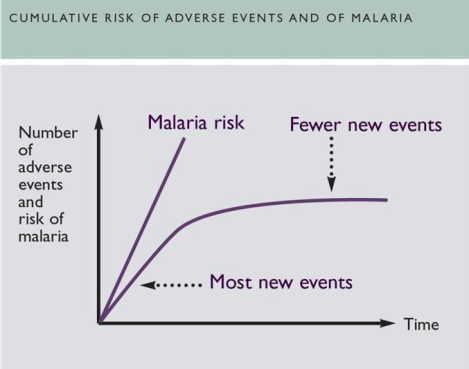
The cumulative risk of contracting malaria is roughly proportional to the length of stay in a malarious area over the first few months. A 3-month visit carries a risk around 6 times greater than a visit of 2 weeks.
While the risk of new adverse events falls off over time, the risk of contracting malaria continues to increase roughly linearly as exposure to malaria continues (see Figure 3). Thus, chemoprophylaxis in highly malarious areas is even more important for long-term visitors than it is for short-term travellers. Indeed, long-term travellers may wish to consider using malaria prophylaxis, or have standby medication, when short-term travellers might not, because of their sustained exposure to a small risk of infection.
Figure 3. Cumulative risk of adverse events and malaria
Adherence to chemoprophylaxis
Compliance has been shown to decrease with the duration of travel (129), except where military-style discipline tends to support adherence. There is also evidence of weekly regimens having increased adherence over daily regimens (129). Long-term adherence decreases for both daily and weekly prophylactic regimens (65).
Possible reasons for reduced compliance in long-term travellers may include:
- fear of long-term side effects
- actual adverse events on one or more regimens
- conflicting advice
- complex regimen or daily tablets
- reduced confidence if intercurrent fever misdiagnosed as malaria
- perception from anecdotal evidence that chemoprophylaxis is unnecessary (130).
In addition long-term travellers may overlook personal protective measures against mosquitoes (131).
Efficacy of regimens
It is important to stress that no chemoprophylactic regimen is 100% effective and that anti- mosquito measures should also be used. Travellers should be encouraged to continue chemoprophylaxis despite suffering what they believe to be a malarial illness. Many febrile episodes in long-term travellers or expatriates are incorrectly diagnosed as malaria.
Licensing restrictions
The specific problem relating to prophylaxis advice for long-term travellers is that long-term use of some of the currently advised antimalarial drugs falls outside the terms of their current Marketing Authorisation (Licence). Approaches in response to this time limit are:
- switching from one chemoprophylactic regimen to another as the time limit is reached
- discontinuing prophylaxis in favour of access to local advice and standby or physician-guided treatment
- continuing with one prophylactic regimen beyond its licensed length of use
General advice for all regimens
Once an individual is compliant on one prophylactic regimen and is tolerating it well, transfer to another regimen increases the likelihood of the development of side effects due to the introduction of a different drug.
There is no evidence of new side effects emerging during long-term use of any currently available prophylactics, though there may be risks associated with long-term use of chloroquine (see the section on chloroquine in Chemoprophylaxis).
Evidence for safety in long-term use comes more from an accumulating lack of evidence of harm than from scientific evidence of safety.
Individual risk assessments are important when deciding what advice should be given. In particular, advice on prophylaxis may be influenced by other measures that might be used by those staying in areas where the risk is seasonally variable.
Simplicity in regimen can, as always, be expected to improve adherence. The safest option is compliance with one of the most effective regimens.
Minimising exposure to infection is important, especially taking precautions against being bitten while asleep.
It is essential to seek medical advice promptly if symptoms develop.
The UKMEAG advice on long-term use of specific antimalarials is summarised in Table 15.
For specific considerations for pregnant and breastfeeding women, see the sections on pregnancy and breastfeeding in Special risk groups, which include advice on chemoprophylaxis prior to conception.
Specific considerations for infants and older children
Refer to the section on Children in Special risk groups.
Evidence in support of long-term use of antimalarials in infants and older children is limited. Advice for long-term use in these age groups is the same as for adults.
Chloroquine
Safe for both infants and young children.
Mefloquine
Long-term use of mefloquine is reported to be safe, well tolerated and not associated with an increase in adverse effects (132, 133, 134)
Doxycycline
Not for use in those under 12 years of age. No data available on the long-term use of doxycycline. However, long-term use of other tetracyclines for other indications is generally well tolerated (132).
Atovaquone-proguanil combination preparation
Both agents are highly effective and safe (73).
Long-term visitors to the UK returning to live in malarious parts of the world
People returning to their original homes in malarious regions after prolonged residence in the UK are likely to have suffered a decline in the partial immunity to malaria that develops during childhood and is maintained by repeated exposure in endemic regions. They may therefore be at increased risk of suffering an acute attack of malaria after returning home.
Pregnant women and small children are at higher risk than others of suffering severe disease.
Risk assessment and personal counselling is essential to warn individuals of the risk of suffering from malaria, emphasising avoidance measures, and the need for immediate diagnosis and treatment of acute feverish illnesses.
Preventive measures appropriate to an endemic setting
Summarised in the World Health Organization’s Malaria: factsheet number 94.
Bed nets
Bed nets and other personal barrier protective measures (for example, suitable clothing) are very low-cost, are effective long-term, have virtually no side effects and will also help to protect from other mosquito-borne infections.
Intermittent preventive therapy (IPT)
If intermittent preventative therapy (IPT) is local policy in their destination country to prevent malaria in pregnancy and childhood, the returning visitor should be advised to seek medical advice on this immediately on arrival.
Case management of illness
People should be advised to seek medical attention immediately if either they or their children develop a fever after repatriation in the endemic country. They should be warned that a malaria attack may be more serious because of diminished immunity.
Guidance
See the WHO and/or national country guidance on the appropriate measures in endemic settings which include IPT, insecticide-treated bed nets and case-management of illness with drug therapy.
Prophylaxis
Intended use
The UKMEAG prophylaxis guidance is for temporary protection for the UK traveller. This is not appropriate for individuals who are returning to permanent residence in their country of origin.
Table 15. Long-term chemoprophylaxis for adults
| Malaria chemoprophylaxis | UKMEAG advice on long-term use |
|---|---|
| Chloroquine | Considered safe for long-term use [note 7]. Consider ophthalmic examination for retinopathy 6 to 12 monthly, commencing at 6 years’ cumulative prophylactic usage. |
| Mefloquine | No evidence of harm in long-term use if tolerated in the short term. Suggest can be used safely for up to 3 years in the absence of side effects. Longer term use possible if justified by the risk of exposure to malaria. The SmPC suggests that periodic checks on liver function and eye assessments should be taken if used for a prolonged period. Any person presenting with a visual disorder should be referred to their treating physician as this may require stopping chemoprophylaxis. |
| Doxycycline | No evidence of harm in long-term use. Evidence suggests that it may be used safely for periods of at least up to 2 years. Longer term use possible if justified by the risk of exposure to malaria. |
| Atovaquone/Proguanil | No evidence of harm in long-term use. Can be used confidently for travel up to one year. Longer term use possible if justified by the risk of exposure to malaria. |
Note 7: Considered safe for long-term use but considerable concern regarding level of protective efficacy of chloroquine in the geographical areas where the regimen used to be useful.
Table 16. Half-lives of selected antimalarial drugs
| Drug | Half-life |
|---|---|
| Chloroquine | Can extend from 6 to 60 days |
| Mefloquine | 2 to 3 weeks |
| Doxycycline | 12 to 24 hours |
| Atovaquone | 2 to 3 days |
Exception for pregnant women and young children
A limited period of prophylaxis of 4 to 6 weeks for pregnant women and young children may be appropriate in some circumstances, to allow them to settle and arrange for future healthcare after arrival in the endemic country.
Emergency standby treatment
Offering emergency standby treatment is inappropriate where there are likely to be health services able to diagnose and manage malaria.
How long can a traveller take different antimalarial drugs
Guidelines for the long-term traveller are summarised in Special categories. Further detail is available in Malaria prophylaxis for long-term travellers.
The main issues influencing the choice of malaria chemoprophylaxis on a long-term basis are the same as for short-term, that is adverse event profile, ease of compliance and efficacy.
Long-term use of malaria chemoprophylaxis is based on the cumulative evidence of lack of harm rather than positive evidence of safety. This situation is unlikely to change.
Chloroquine
Chloroquine has been taken safely for periods of many years at doses used for malaria chemoprophylaxis. However, there has been concern expressed about the possible development of retinal toxicity with long-term use of chloroquine (or hydroxychloroquine, often used to treat rheumatological disorders). Retinal toxicity has been described in those on daily chloroquine dosage for rheumatic disorders. As a result, 2 thresholds for the risk of retinopathy have been suggested, which are:
- a total cumulative dose of 100 g of chloroquine base
- a daily dose of 250 mg base (4 mg/kg) (137)
The first threshold would require an adult to take chloroquine continuously, weekly, for a period of 6 years. The second threshold is far more than the prophylactic dosage. It has been concluded that the risk of retinopathy from prophylactic dosage alone is negligible (51). Further reassurance can be gained from the fact that retinopathy has only rarely been reported in patients taking weekly prophylactic dosages (137, 138).
UKMEAG advice suggests that chloroquine can be taken on a long-term basis. However, physicians should consider an ophthalmological examination every 6 to 12 months, beginning at 6 years’ cumulative use for those on long-term chloroquine.
Mefloquine
There is little data on the use of mefloquine for periods exceeding 2 years, although there is no evidence of cumulative toxicity, and mefloquine taken for over one year is well tolerated. Advice from the UKMEAG indicates that there is no evidence of harm in long-term use if the drug is tolerated in the short term and suggests that mefloquine can be used safely for up to 3 years; and beyond in the absence of significant side effects.
Doxycycline
The UKMEAG have concluded that there is no evidence of harm in long-term use of doxycycline and it may be taken safely for periods of up to 2 years; and beyond in the absence of significant side effects. Longer term use is possible if justified by the risk of exposure to malaria.
Atovaquone/proguanil
Both components of this combination preparation have been used individually on a long-term basis, although there is little experience of long-term use of the combination.
In a study of 154 travellers, 50% travelled for between 9 and 34 weeks with no excess of adverse effects and no appearance of unexpected adverse effects (139). The UKMEAG concludes that there is no evidence of harm in long-term use and suggests that it can be taken confidently for travel up to one year; and beyond in the absence of significant side effects.
References
Reference numbers derive from the complete list of references found in References.
13. Thrower Y, Goodyer LI. ‘Application of insect repellents by travellers to malaria-endemic areas’ Journal of Travel Medicine 2006: volume 13, pages 198 to 203
65. Tan KR, Magill AJ, Parise ME, Arguin PM. ‘Doxycycline for malaria chemoprophylaxis and treatment: report from the CDC expert meeting on malaria chemoprophylaxis’ The American Journal of Tropical Medicine and Hygiene 2011: volume 84, issue 4, pages 517 to 531
73. Faucher J-F, Binder R, Missinou MA, Matsiegui P-B, Gruss H, Neubauer R and others. ‘Efficacy of atovaquone/proguanil for malaria prophylaxis in children and its effect on the immunogenicity of live oral typhoid and cholera vaccines’ Clinical Infectious Diseases 2002: volume 35, issue 10, pages 1,147 to 1,154
119. Health Protection Agency (HPA). ‘Migrant Health: Infectious diseases in non-UK born populations in England, Wales and Northern Ireland: a baseline report, 2006’
120. HPA. ‘Migrant Health: infectious diseases in non-UK born populations in England, Wales, and Northern Ireland. An update to the baseline report, 2011’
121. PHE. ‘Migrant Health Guide 2014’ (updated 14 July 2014)
122. World Malaria Report 2023
123. Walz EJ, Volkman HR, Adedimeji AA, Abella J, Scott LA, Angelo KM and others. ‘Barriers to malaria prevention in US-based travelers visiting friends and relatives abroad: a qualitative study of West African immigrant travelers’ Journal of Travel Medicine 2019: volume 26, issue 2
124. Morgan M, Figueroa-Muñoz JI. ‘Barriers to uptake and adherence with malaria prophylaxis by the African community in London, England: focus group study’ Ethnicity and Health 2005: volume 10, issue 4, pages 355 and 372. pmid:16191732
125. Neave PE, Behrens RH, Jones COH. ‘“You’re losing your Ghanaianess”: understanding malaria decision-making among Africans visiting friends and relatives in the UK’ Malaria Journal 2014: volume 13, issue 1, page 287
126. Walz EJ, Wanduragala D, Adedimeji AA, Volkman HR, Gaines J, Angelo KM, Boumi AE, Coyle C, Dunlop SJ, Stauffer WM. ‘Community-based participatory research in travel medicine to identify barriers to preventing malaria in VFR travellers’ Journal of Travel Medicine January 2019: volume 26, issue 1
127. Stenbeck J. ‘Health hazards in Swedish field personnel in the tropics’ Travel Medicine International 1991: volume 9: pages 51 to 59
128. Schneider I, Bradley D. ‘Unpublished work’ 2003
129. Steffen R, Heusser R, Mächler R, Bruppacher R, Naef U, Chen D and others. ‘Malaria chemoprophylaxis among European tourists in tropical Africa: use, adverse reactions, and efficacy’
130. Janosi M. ‘Advice to long-term travellers’ Travel Medicine International 1998: volume 6, pages 110 to 112
131. Lobel HO, Phillips-Howard PA, Brandling-Bennett A, Steffen R, Campbell CC, Huong A and others. ‘Malaria incidence and prevention among European and North American travellers to Kenya’ Bulletin of the WHO 1990: volume 68, issue 2, page 209
132. Peragallo MS, Sabatinelli G, Sarnicola G. ‘Compliance and tolerability of mefloquine and chloroquine plus proguanil for long-term malaria chemoprophylaxis in groups at particular risk (the military)’ Transactions of the Royal Society of Tropical Medicine and Hygiene 1999: volume 93, issue 1, pages 73 to 77
133. Buma APH, Thiel PPv, Lobel HO, Ohrt C, Ameijden EJv, Veltink RL and others. ‘Long- term malaria chemoprophylaxis with mefloquine in Dutch marines in Cambodia’ Journal of Infectious Diseases 1996: volume 173, issue 6, pages 1,506 to 1,509
134. Lobel HO, Miani M, Eng T, Bernard KW, Hightower AH, Campbell CC. ‘Long-term malaria prophylaxis with weekly mefloquine’ The Lancet 1993: volume 341, issue 8,849, pages 848 to 851
135. WHO (2015). ‘Malaria: factsheet number 94’ (updated April 2015)