Life sciences competitiveness indicators 2026: user guide
Updated 23 March 2026

© Crown copyright 2026
This publication is licensed under the terms of the Open Government Licence v3.0 except where otherwise stated. To view this licence, visit nationalarchives.gov.uk/doc/open-government-licence/version/3 or write to the Information Policy Team, The National Archives, Kew, London TW9 4DU, or email: psi@nationalarchives.gov.uk.
Where we have identified any third party copyright information you will need to obtain permission from the copyright holders concerned.
This publication is available at https://www.gov.uk/government/publications/life-sciences-competitiveness-indicators-2026/life-sciences-competitiveness-indicators-2026-user-guide
This document accompanies the LSCIs 2026 report and outlines the methodology behind the indicators. For each section of the report, it provides detail on:
-
Any changes to the report compared to the LSCIs 2024 publication
-
Data sources used for the metrics
-
The methods used and caveats to be aware of when interpreting the report
Voluntary application the Code of Practice for Statistics
The LSCIs are published each year as part of a collection of ‘research and analysis’ reports. From the 2024 report and onwards, the Office for Life Sciences (OLS) has committed to a voluntary application of the Code of Practice for Statistics in the compilation and dissemination of these reports. This is to provide users with further information on the standards of the data and processes used in the LSCIs. The LSCIs is accompanied by a statement on voluntary application which outlines where the LSCIs applies principles from the code and highlights places where there are deviations or proposals for improvement in the longer term.
Metrics included in the LSCIs
The LSCIs, since 2022, have been published alongside an accompanying document, ‘Life sciences competitiveness indicators: life sciences ecosystem’. This outlines the set of interacting elements impacting the life sciences ‘value chain’. The value chain comprises of the activities carried out by the key players in the sector to achieve the twin goals of improving UK health outcomes and achieving economic growth.
The LSCIs have been aligned to the elements of the life sciences ecosystem they intend to measure. Please see the accompanying life sciences ecosystem document for more details.
Comparator countries
The LSCIs aims to measure the performance of the UK’s life sciences sector by benchmarking the UK in relation to different comparator countries. Each metric follows a different approach to selecting comparator countries. Further details of which comparator countries have been chosen is available for each metric in the relevant sections in this document.
For the research and development (R&D) and access to medicines metrics in the 2026 LSCIs, the country comparator methodology has changed compared to past releases. These metrics have been updated to provide consistency with the key targets set in the Life Sciences Sector Plan (LSSP). These metrics now compare the UK to all other countries with data available, with the top countries by ranking displayed in the data tables. Please see the R&D and access to medicines sections of this document for more details.
The visualisations in this report aim to compare the UK to the top comparator countries in each area (where data availability allows). Data for all comparator countries is available in the accompanying ‘Life sciences competitiveness indicators 2026: data tables’.
2026 publication updates
The 2026 collection for the LSCIs reports on the same metrics as the previous 2024 report, where data availability allows. There was no 2025 release of LSCIs.
The 2026 collection for the LSCIs reports on the same metrics as the previous 2024 report, where data availability allows. A summary of notable changes or lack of new data since the 2024 report is below:
-
international data for business enterprise expenditure on pharmaceutical R&D (BERD) has been added to the LSCIs for the first time. Due to data availability, only UK data was presented in past releases. This data comes from the Organisation for Economic Co-operation and Development (OECD) and the Office for National Statistics (ONS) for the UK
-
the source for equity finance and initial public offerings (IPOs) has been updated. The change in source has resulted in minor revisions to the equity finance and IPO values, but this has not had any notable impact on rankings
-
the metrics in the LSCIs currently each take a different approach to selecting comparator countries for the UK. For the research and development (R&D) and access to medicine metrics, the methodology for selecting country comparators has changed
The change in selecting comparator countries for the R&D and access metrics has been updated to provide consistency with the key targets set in the LSSP. In the 2026 report, these metrics now compare the UK to all other countries with available data. In previous LSCIs reports a selection of comparator countries were selected:
- for R&D metrics, countries with the highest gross domestic product (GDP) with available data from the Organisation for Economic Co-operation and Development (OECD)
- for access to medicines metrics, a selection of comparator countries were chosen based on a determination of the UK’s closest competitors in the relevant metric
Any further changes on metrics compared to the 2024 report are outlined below in the relevant sections.
Other sources of UK life sciences data
The LSCIs aim to compare the UK’s life sciences sector to other countries by using the most suitable sources available. For some data relating specifically to the UK life sciences sector there may not be equivalent data for other countries, meaning that it is not possible to include a standardised view of international competitiveness. It is therefore sometimes necessary in this publication to use international data sources in which the UK’s data differs slightly to other UK data sources available due to methodological differences. The accompanying user guide provides further details on where there are discrepancies between the sources used in this publication and other available data sources for the UK.
The OLS also produces the annual Bioscience and health technology sector statistics, which provides a comprehensive view on the size and composition of the UK life sciences sector. This is the recommended source for any figures relating to the number of businesses, sites, employees and the value of turnover generated within the UK life sciences sector when an international comparison is not needed.
Research and Development (R&D)
Changes from previous reports
The 2026 LSCIs has updated the methodology for selecting country comparators for the UK for the R&D metrics. The 2026 LSCIs selects all countries with available data from OECD. Previous LSCIs reports took a selection of comparator countries based on countries with the highest overall GDP in the OECD data. This has been updated to align with a key target in the LSSP: ‘The UK will have more investment in commercial R&D than any other European economy by 2030, and more than any other country globally (excluding the US and China) by 2035’.
OECD data on business enterprise expenditure on R&D has become available for a wider selection of countries on an industry orientation basis, meaning that it is possible to compare internationally expenditure on pharmaceuticals R&D performed by businesses for the first time in the 2026 LSCIs. The metric in this report uses data on the pharmaceutical product group from the Office for National Statistics’ (ONS) Business enterprise research and development (BERD) publication for UK data and equivalent figures from OECD for other countries.
Data source
The following list of indicators and estimates for GDP are all sourced from the OECD data explorer. The data is taken from the Science, Technology and Innovation metrics. For the UK these figures are provided by the Office for National Statistics (ONS) to OECD. The metrics used are:
- government budget allocations for health R&D
- gross domestic expenditure on medical and health sciences R&D performed by Government
- gross domestic expenditure on R&D performed by the private non-profit sector
- gross domestic expenditure on medical and health sciences R&D performed by the higher education sector
- gross domestic expenditure on R&D performed by business enterprises with an industry orientation of ‘manufacture of basic pharmaceutical products and pharmaceutical preparations’
For the UK, gross domestic expenditure on pharmaceutical R&D performed by business enterprises (UK only) as a percentage of GDP is sourced from ONS’s BERD publication The ONS figures are further categories by the following types of research:
- basic research: experimental or theoretical work undertaken primarily to acquire new knowledge of the underlying foundations of phenomena and observable facts, without any particular application or use in view
- applied research: original investigation undertaken in order to acquire new knowledge that is directed primarily towards a specific, practical aim or objective
- experimental development: systematic work, drawing on knowledge gained from research and practical experience and producing additional knowledge, which is directed to producing new products or processes or to improving existing products or processes.
Country comparators
The 2026 LSCIs compares the UK to all countries with available data in OECD’s data explorer.
Methodology
R&D can be measured by the expenditure on R&D performed by an organisation, or the amount of R&D funded by an organisation. Funding received to perform R&D can come from the organisation itself, organisations within the same sector (whether domestic or overseas) or a separate sector of the economy. The LSCIs measures:
- Government budget allocations for health R&D as a measure of funding for R&D
- Expenditure on R&D performed by the government, higher education, private-non-profit and business sectors
Government budget allocations for R&D (GBARD) on health are included as budget allocations can provide a more timely indication of how R&D is changing over time, particularly for sectors highly reliant on government funding, such as higher education. Health R&D is a classification of socio-economic objective as defined in the OECD Frascati Manual 2015. This is defined by the primary objective of the R&D.
The LSCIs also report on the amount of R&D relevant to certain aspects of life sciences performed by government, higher education, private non-profit, and business sectors. These are the 4 sectors of the economy defined in the Frascati Manual 2015. R&D data for these sectors is referred to collectively as gross domestic expenditure on R&D (GERD).
International data is available for expenditure on medical and health sciences R&D performed by the government and higher education sectors. Medical and health sciences is a subject classification of Field of Research and Development (FORD) used in the of the OECD Frascati Manual 2015. This includes the following second-level classifications:
- Basic medicine
- Clinical medicines
- Health sciences
- Medical biotechnology
- Other medical sciences
The private non-profit estimates in this publication represent R&D across all industries and not exclusively medical and health sciences. In the UK, the private non-profit R&D sector comprises mainly medical research charities, and it is assumed that the majority of private non-profit R&D will be in life sciences fields. This is not necessarily the case for other countries and the corresponding figures may include R&D outside life sciences to some degree.
Medical and health sciences is defined as a subject classification in the OECD Frascati Manual 2015.
Clinical trials
Changes from previous report
Metrics for clinical trials in the LSCIs 2026 report have remained the same since the LSCIs 2024 publication.
Data source
The LSCIs reports on 2 metrics for clinical trials:
- percentage of patients recruited to a subset of interventional commercial global trials
- median time between clinical trial application to a regulatory authority and the first patient receiving a first dose for a subset of interventional commercial trials
Both metrics collected from the Centre for Medicines Research (CMR) Global Clinical Performance Metrics, Clarivate. This includes data from 25 companies that participated in data collection activities.
The number of commercial trials used in the LSCIs release can be found in tables 6 and 7 in the LSCIs 2026: accompanying data tables.
Country comparators
A selection of comparator countries are chosen as a benchmark for the UK on clinical trials. These countries are Australia, Canada, France, Germany, Italy, Netherlands, Spain, Switzerland and the USA.
Methodology
Clinical trial data extracted from CMR only includes trials that meet all 3 of the below criteria:
- commercial (trials where a pharmaceutical company was the sponsor)
- interventional (where a new medicine is tested in participants)
- for novel medicines (newly launched medicines or recently launched for a new indication)
Data from CMR is collected from 25 pharmaceutical companies and is therefore a subset, and not a representative sample, of all commercial trials conducted across the comparator countries. The number of trials included in the analysis for each metric is available in the accompanying ‘Life sciences competitiveness indicators 2026: data tables’.
The data is based on a small subset of commercial trials that take place in the UK. For 2023 (the most recent data available), the UK data is based on:
- 164 trials for the metric on percentage share of patients recruited to a subset of interventional commercial global studies
- 97 trials for the metric on median number of days from clinical trial application to a regulatory authority and the first patient receiving a first dose for a subset of interventional commercial trials
As a result of the small number of trials in the data, the figures in this report can be used to benchmark how the UK compared to other similar countries up to 2023 but should not be used to make inferences on how many clinical trials are taking place in the UK, the number of patients recruited to trials in the UK nor how the UK is performing against targets set by the UK government. Data covering a wider range of trials taking place in the UK and is available through DHSC’s UK Clinical Research Delivery key performance indicators. This covers all trials on NIHR’s Central Portfolio Management System (CPMS) and reports on performance against key targets.
The ‘median number of days from clinical trial application to the first patient receiving a first dose for a subset of commercial trials’ metric takes the median time between the below milestones:
-
clinical trial application to a regulatory authority: This is the date on which the documentation for the clinical study was first submitted to the first authority within a country. The authority may be an Institutional Review Board or regulatory authority. This metric will take the date which occurred earlier if there are multiple submissions to separate bodies
-
first patient receiving a first dose: This is the date of the first dose of active substance or placebo for the study, following the recording of baseline measurements, for the first patient. This is intended to refer to the start of the treatment phase
For the UK, clinical trials need to be approved by both the Medicines and Healthcare products Regulatory Agency (MHRA) and the Research Ethics Service (RES) provided by the Health Research Authority (HRA). More information on approval from MHRA can be found at Clinical trials for medicines: apply for authorisation in the UK and from HRA at Research Ethics Service and Research Ethics Committees.
As of 2022, all trials applications in the UK are subject to combined review from MHRA and HRA. Before 2022, applications could be initially submitted to either body, with the timelines for approval not necessarily being sequential or through the combined review process.
For trials that were not approved through combined review before 2022, the starting point for the metric takes the date from whichever body the applicant submitted to first.
Data from CMR includes all therapeutic areas and the below trial phases:
Table 1: Trial phases included in the CMR data and definitions
| Phase | Phase definition |
|---|---|
| Phase I (in healthy volunteers) | Studies conducted in healthy human volunteers. This can include but is not limited to dose-ranging (single or multiple ascending dose), tolerability, pharmacokinetic, pharmacodynamic, metabolic and drug/food interactions studies |
| Phase I (in patients) | Phase I studies conducted in patients with the target disease either with the intention of treating the disease (i.e. to show a treatment effect) or pharmacokinetic testing or dose response studies where the intention is not to treat the disease |
| Phase II | Phase II studies are early controlled studies in a limited number of patients under closely monitored conditions to show efficacy and short-term safety. An important goal for this phase is to determine the dose(s) and regimen for Phase III studies. Additional objectives of clinical studies conducted in Phase II may include evaluation of potential study endpoints, therapeutic regimens (including concomitant medications) and target populations (e.g. mild versus severe disease) for further study in Phase II or III |
| Phase II a | Phase II studies which are initiated prior to clinical proof of concept |
| Phase II b | Phase II studies which are initiated after clinical proof of concept |
| Phase III | Phase III studies usually have the primary objective of demonstrating, or confirming therapeutic benefit. Phase III studies are designed to confirm the preliminary evidence accumulated in Phase II that a drug is safe and effective for use in the intended indication and recipient population. These studies are intended to provide an adequate basis for marketing approval |
| Phase III a | Phase III a studies are conducted after the efficacy of a drug is demonstrated, but prior to regulatory submission |
| Phase III b | Phase III b clinical studies are conducted following regulatory submission of a dossier, but prior to approval and launch |
| Post-marketing/post-approval commitment (PMC/PAC) clinical study | Any Phase IV clinical study that companies commit to at the time of approval, as required by or agreed with the regulatory authority |
Data is extracted from Clarivate’s CMR database annually for the most recent time period only. As a result, the data in the time series is not back dated with more recent information if it becomes available after extraction.
Citations
Changes from previous reports
Metrics for citations in the LSCIs 2026 report have remained the same since the LSCIs 2024 publication.
Data source
The data source for the two citations metrics is SciVal database, Elsevier B.V., http://www.scival.com (downloaded in January 2026) a web-based analytics solution providing access to research performance data. The main source of data for Scival is a citations database named Scopus.
Country comparators
A selection of comparator countries have been chosen as a benchmark for the UK on citations. These countries are Brazil, Canada, China, France, Germany, India, Italy, Japan, Russia, South Korea and the USA.
Methodology
For the two citations metrics, the Field of Research and Development (FORD) subject classification used in the Frascati Manual 2015 of the OECD is used. The data is filtered by this classification to acquire research performance data for ‘medical sciences’ publications for the UK and each of the comparator countries. The ‘medical sciences’ classification consists of the following second-level classifications:
- basic medicine
- clinical medicine
- health sciences
- medical biotechnology
- other medical sciences
The ‘Percentage share of global medical sciences academic citation count’ metric is calculated by taking the medical sciences citation count for each country and dividing by the world total medical sciences citation count.
The ‘output in the top 1% citation percentile (%)’ metric is calculated by taking the number of medical sciences publications for each country which are amongst the top 1% most cited globally as a proportion of that country’s total scholarly output (total publication count).
Scival updates on a weekly basis, and citations-based data is likely to differ depending on when the data was extracted, as citations accumulate over years and are ever-changing. The citations data presented here was correct as of the date of extraction from Scival in January 2026.
Patents
Changes from previous reports
Metrics for citations in the LSCIs 2026 report have remained the same since the LSCIs 2024 publication.
Data source
The data source for this metric is PATSTAT, a worldwide patent statistical database provided by the European Patent Office (EPO).
Country comparators
A selection of comparator countries were chosen as a benchmark for the UK on citations. These countries are Brazil, Canada, China, France, Germany, India, Italy, Japan, Russia, South Korea, Switzerland and the USA.
Methodology
To identify and extract life sciences-related patents from EPO’s data, a search strategy was developed in collaboration with colleagues from the Intellectual Property Office. This search strategy was broadly based upon the following 4 WIPO35 technology fields, which are designed using groupings of International Patent Classification (IPC) areas:
- 11: Analysis of biological materials
- 13: Medical technology
- 15: Biotechnology
- 16: Pharmaceuticals
A number of additional inclusions and exclusions were made to align our search strategy more closely with the definition of life sciences used in the OLS report on the Bioscience and Health Technology Sector Statistics (BaHTSS) - for more information see the BaHTSS user guide. This involves excluding patents related to cosmetics and veterinary products, and including patents relating to items not covered by the above 4 categories, such as surgical gowns and facemasks.
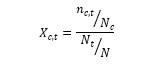
The relative Specialisation index (RSI) is based on the country in which a patent was filed (rather than the applicant country). Filing country can be used to infer intended markets for a product, and as an indication of where a product may be manufactured. Therefore RSI is indicative of the extent to which a country is a ‘specialist hub’ for marketing/manufacturing life sciences products.
It’s important to note that RSI is only one of many ways of measuring specialism, and it should not be used in isolation to evaluate the UK’s innovation/inventiveness in life sciences.
RSI is defined as:
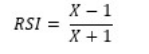
where X is given by:
Access to medicines
Changes from previous publications
The 2026 LSCIs has updated the methodology for selecting country comparators for the UK for the access to medicine metrics. The 2026 LSCIs selects all countries with available data from the EFPIA W.A.I.T Indicators. Previous LSCIs reports chose a selection of comparator countries based on a determination of the UK’s closest competitors. This has been updated to align with the key target in the LSSP for ‘By 2030, the UK will be one of the top 3 fastest places in Europe for patient access to medicines and MedTech’. All data points in the time series in this report have been backdated with the new approach.
The process for calculating values for the UK were revised from 2021, as the Medicines and Healthcare products Regulatory Agency (MHRA) became the sole regulator of medicines. As was reported in the 2024 publication, there was a change to the way median time to availability is calculated for England and Scotland after 2021, and this has not been backdated to previous time periods. This change affects data relating to the periods 2019-2022 onwards in the data tables.
Data source
Data on the metrics percentage of new medicines available and time to availability for new medicines is collated from the EFPIA Patients W.A.I.T (Waiting to Access Innovative Therapies) Indicator Survey which is publicly available through EFPIA’s publication page.
Country comparators
The EFPIA Patients W.A.I.T indicators include all available data for countries in Europe. The LSCIs has included the top 15 countries with data available for the period 2020 to 2023.
Methodology
The rate of new medicines available in based on the number of medicines that are new active substances and received central marketing authorisation in Europe in the relevant time periods. The text below on the central authorisation procedure is taken from the European Medicines Agency’s (EMA) page on authorisation of medicines, which provides more information on the subject.
Under the centralised authorisation procedure, pharmaceutical companies submit a single marketing-authorisation application to EMA. This allows the marketing-authorisation holder to market the medicine and make it available to patients and healthcare professionals throughout the EU on the basis of a single marketing authorisation.
Please note that for the UK, only England and Scotland are included in the rate of availability and time to access analysis due to the availability of data. Health Technology Assessment (HTA) submission and guidance typically varies among the UK countries. NICE positive guidance obligates mandatory funding in England and Wales, albeit with slightly different implementation timings, whilst Wales also has an independent HTA body – the All Wales Medicines Strategy Group (AWMSG). In Scotland, whilst NHS Boards are expected to follow SMC advice, the implementation of SMC accepted medicines is subject to local NHS Board decision regarding whether or not to include these in their formularies. Northern Ireland follow NICE guidance, but with some local interpretation.
For England and Scotland, medicines are considered to be available when:
- England: NICE has issued a positive recommendation. For the remaining medicines, IQVIA sales data are analysed to determine if routinely available.
- Scotland: SMC has issued a positive HTA recommendation. For the remaining medicines, IQVIA sales data are analysed to determine if routinely available
Medicines which are recommended for a restricted patient cohort relative to licenced indication (NICE’s optimised recommendation or SMC’s restricted recommendation) are considered in this analysis to be available. See NICE’s webpage on technology appraisal guidance and SMC’s How we decide webpage for more information on outcomes of their health technology assessments (HTA).
For more details on how medicines are defined to be available in other countries in the analysis and what medicines are included, please see the methodology section in the latest W.A.I.T indicator publication.
The time to availability takes the median length of time from authorisation received by the relevant medicines regulator to when a medicine is considered ‘available’ to patients. For medicines receiving regulatory approval in 2021 and later, a change was implemented which affects the marketing authorisation date from which UK time to availability is measured. For data relating to the period 2019 – 2022 onwards:
- for England and Scotland, the Medicines and Healthcare products Regulatory Agency (MHRA) marketing authorisation date is used for medicines that received marketing authorisation from 2021 and onwards. For medicines that received marketing authorisation before 2021, the date of central marketing authorisation from the European Medicines Agency (EMA) is used
for other countries, either the date of marketing authorisation from the European Medicines Authority (EMA) for EU countries or the relevant regulatory body in non-EU countries is used for all years.
For data relating to the periods 2018 to 2021 and before, all data for England and Scotland used the starting date of central marketing authorisation from the EMA. Following the UK’s exit from the EU, from 2021 onwards, the MHRA are the sole regulator to approve medicines for marketing authorisation in the UK. Data periods prior to 2019 to 2022 have not been backdated with this change so comparisons to past years should be made with caution.
From data relating to 2018 to 2021 onwards, medicines are considered available in England and Scotland when:
- England: For medicines with a positive NICE recommendation, the accessibility date is the date of published final draft guidance (cancer medicines) or date of published guidance + 90 days (non-cancer medicines). Cancer medicines benefit from earlier funding. For the remaining medicines, the IQVIA sales data is analysed to determine month of routine availability.
- Scotland: For medicines with a positive SMC recommendation, the accessibility date is the date of published final guidance. For remaining medicines, IQVIA sales data is analysed to determine month of routine availability.
For the periods prior to 2018 to 2021, the below milestones were used:
- England: For medicines with a positive NICE recommendation, the accessibility date is the date of published final guidance (cancer medicines) or date of published guidance + 90 days (non-cancer medicines). Cancer medicines benefit from earlier funding. For the remaining medicines, the IQVIA sales data is analysed to determine month of routine availability.
- Scotland: For medicines with a positive SMC recommendation, the accessibility date is the date of published final guidance + 90 days. For remaining medicines, IQVIA sales data is analysed to determine month of routine availability.
These changes reflect cancer medicines in England having earlier access to funding from the date of published final draft guidance via the cancer drugs fund (CDF). Non-cancer medicines in England must be funded by the NHS within 90 days of a positive NICE recommendation. The removal of the 90 days for non-cancer medicines in Scotland reflects the ability for Health Boards in Scotland to fund medicines as soon as SMC Guidance is published.
As a result of these changes the figures for the period 2018 to 2021 and onwards should be compared to past years with caution.
Other countries included in this report also use the date of central marketing authorisation in Europe, with the exception of Switzerland where local authorisation dates have been used. For more information on when a medicine is considered to be available in other countries, please see the methodology section in the latest W.A.I.T indicator publication.
Figures are only available for European countries in the EFPIA W.A.I.T Indicators and comparator countries for the LSCIs have been chosen based on the European countries used in the analysis of uptake. See the section on ‘Uptake’ for more information.
The data in the time series are based on the figures from published reports and past time periods are not revised in more recent reports. This means that the timeseries is not backdated with more up to date information if it becomes available.
The National Institute for Health and Care Excellence (NICE) adapted its priorities during the COVID-19 pandemic and paused appraisals of some new active substances. The rate of availability for England in the periods covering the years 2020 - 2022 may therefore be understated and trends over time should be treated with caution. Other countries included in the report may have faced similar impacts.
Uptake of medicines
Changes from previous publications
Metrics for uptake in the LSCIs 2026 report have remained the same since the LSCIs 2024 publication.
Data source
Association of British Pharmaceutical Industry (ABPI) analysis of IQVIA MIDAS monthly sales data and HTA accelerator.
Country comparators
A selection of comparator countries have been chosen as a benchmark for the UK on medicine uptake. These countries are Australia, Austria, Belgium, Canada, Finland, France, Germany, Ireland, Italy, Japan, Netherlands, Spain, Switzerland, Sweden and the USA.
Methodology
The uptake ratio measures the relative adoption of new medicines in the UK compared to other countries. The uptake ratio is a measure of relative uptake in terms of days of therapy (DOT) per capita for new medicines recommended by NICE and first launched between 2017 and 2023. A ratio of the UK DOT per capita to the average DOT per capita for comparator countries is calculated for each medicine, and then the median of these ratios is taken to summarise how uptake in the UK compares to other countries – this value is hereafter referred to as ‘uptake’.
The majority of products do not have data available for each of the 15 comparator countries, meaning that the average uptake for certain products covers only a subset of the comparator countries.
Uptake in the LSCIs only considers medicines that have received a positive appraisal from NICE. Uptake is predominantly measured from the decision date from the relevant Health Technology Assessment (HTA) in each country. The exceptions to this are for Germany, Switzerland and the United States, where the date of regulatory approval is used. The date of regulatory approval is also used when the date for HTA decision is unavailable. If the HTA decision date and regulatory decision date are not available, the launch date in IQVIA sales data is used.
Medicines have different HTA decision and launch dates in each country. The metric normalises monthly DOT data to ensure the first 12 months of sales and subsequent years are analysed for each country.
Each LSCIs publication routinely revises data for periods that were previously published in past publications. For example, the figure relating to 2018 – 2022 published in the 2024 publication has been revised in 2026. Medicines were only included in this analysis if they had UK sales above £1m in 2023 and were on sale for a minimum of 12 months in at least 4 of the comparator countries and the UK. Routine revisions can occur due to a different number of medicines meeting this criteria between publications.
The uptake ratio accounts for individual country population size, but not for need (number of cases and HTA authorities’ recommended coverage), standard clinical practice or total medicine spend in each country. It also does not adjust for the impact of different marketing or launch strategies in different countries. These factors are likely to have a substantial impact on uptake figures.
A median value for uptake is taken across all medicines for each country to show broadly how UK uptake compares to other countries. However, it should be noted that there is substantial variation between medicines in terms of the average uptake in the UK compared to other countries. Each medicine is weighted equally in the analysis but the eligible patient population varies substantially for different medicines and between different countries.
In many cases there is no consensus as to what the ideal level of uptake should be. As such, high or low usage should not be interpreted as good or bad performance in itself. Nonetheless, the uptake ratio with respect to an international benchmark may be used to understand how UK adoption of innovative products changes in the years following their introduction.
This metric considers all 4 nations of the UK (England, Scotland, Wales and Northern Ireland), however it should be noted that Health Technology Assessment (HTA) process varies amongst the UK countries. For consistency, only NICE recommendations have been considered. Positive NICE guidance obligates mandatory funding in England and Wales, albeit with slightly different implementation timings, whilst Wales also has an independent HTA body – the All Wales Medicines Strategy Group (AWMSG). In Scotland, whilst NHS Boards are expected to follow SMC advice, the implementation of SMC-accepted medicines is subject to a local NHS Board decision regarding whether or not to include these in their formularies. Northern Ireland follow NICE guidance, but with some local interpretation.
It is being investigated whether it is feasible to adjust for some of the factors that may affect the uptake ratio for future reports.
Availability and utilisation of diagnostic technologies
Changes from previous publication
Metrics for availability and utilisation of diagnostic technologies in the LSCIs 2026 report have remained the same since the LSCIs 2024 publication.
Data source
The data summarising both the availability and utilisation of diagnostic technologies is taken from the OECD data explorer. The underlying data can be found in the ‘Healthcare provider resource’ and ‘Healthcare use’ sections. The metrics used are:
- computed tomography (CT), magnetic resonance imaging (MRI) and positron emission tomography (PET) scanners per million population. Metrics for each individual scanner are combined to get an overall summary for number of scanners per country
- CT, MRI and PET scans exams per thousand population. Metrics for each inidivudal scan are combined to get an overall summary for exams per country
Country comparators
A selection of comparator countries have been chosen as a benchmark for the UK on diagnostic technologies. These are Australia, Austria, Belgium, Canada, Finland, France, Germany, Ireland, Italy, Japan, Netherlands, Spain, Switzerland, Sweden, USA
Methodology
These metrics give an indication of the differing levels of availability and utilisation in the UK and comparator countries for three diagnostic technologies: computed tomography (CT), magnetic resonance imaging (MRI) and positron emission tomography (PET).
Whilst these technologies have an important function in medical diagnosis, it is important to note that there is no general international benchmark for the ideal number of CT scanners, MRI units or PET scanners relative to the size of the population.
The UK’s count of diagnostic technologies per million population have been presented alongside data for 15 comparator countries (the same 15 used in the ‘uptake of medicines’ metric, see the section on uptake). Comparisons are drawn between countries based on their 2024 data (or nearest year, if 2024 data is not available).
For some countries, only data relating to equipment and exams within a hospital setting are available. For more information on the coverage of data used for each country, please see the OECD source data at:
- OECD ‘Health Care Resources Sources and Methods’, and
- OECD ‘Health Care Utilisation Sources and Methods’
Employment in pharmaceutical and medical technology manufacturing
Changes from previous reports
Metrics for manufacturing employment in the LSCIs 2026 report have remained the same since the LSCIs 2024 publication.
Data source
For the 2026 LSCIs publication, pharmaceutical manufacturing is extracted from OECD’s Data Explorer for the metric ‘Annual employment by detailed economic activity, domestic concept’ for the economic activity ‘manufacture of basic pharmaceutical products and pharmaceutical preparations’.
Data from OECD classifies companies by the Standard Industrial Classification of All Economic Activities (ISIC revision 4) and the pharmaceutical manufacturing employment used in this report selects companies categorised as ‘Manufacture of pharmaceuticals, medicinal chemical and botanical products’.
The OECD data source does not report on data at a sufficient level of granularity to be able to extract data on medical technology manufacturing employment, which means that the medical technology metric is not available for this publication.
Country comparators
A selection of comparator countries have been chosen as a benchmark for the UK on employment. These countries are Austria, Belgium, Finland, France, Germany, Ireland, Italy, Netherlands, Spain and Switzerland.
Methodology
The ISIC revision is a statistical classification of economic activities based on a set of internationally agreed concepts, definitions, principles and classification rules. The UK’s classification of economic activities is the Standard Industrial Classification (SIC) which is identical to the ISIC revision 4 classifications down to the 4-digit level. The figures in this report only include employment in manufacturing for businesses classified under the above classifications.
Employment figures are assigned to countries based on the location of the producer unit in the OECD data. ‘Employees’ are residents and non-residents employed by resident producer units, and ‘self-employed people’ are resident and non-resident self-employed people in resident producer units. The employment data presented in this publication represents ‘total employment’, which consists of both ‘employees’ and ‘self employed people’. These employment statistics are based on national accounting concepts, aligning workers to the industry in which their employer is allocated. For the UK, these differ to labour market statistics published by other parts of the ONS, which are compiled differently and using different sources.
Please note that some employment in pharmaceutical manufacturing may be captured within enterprises whose economic activity is classed under other categories (and therefore omitted from this data). The OLS uses a more comprehensive definition of the pharmaceutical sector within its definition of life sciences. Domestic figures for employment in the pharmaceutical sector as a whole, and in pharmaceutical manufacturing specifically, are presented within the ‘Bioscience and health technology sector statistics’ data. The data used in the LSCIs represents a narrower definition of the pharmaceuticals sector, covering businesses with a primary activity of manufacturing, to allow an internationally standardised comparison to other countries.
When only a domestic estimate is needed of employment in the pharmaceutical sector, it is recommended to refer to the ‘Bioscience and health technology sector statistics’. When an international comparison is needed, the data used within the LSCIs allows a standardised comparison of a subset of the pharmaceutical sector to benchmark the UK’s employment against other similar countries.
Pharmaceutical manufacturing gross value added (GVA)
Changes from previous publications
Metrics for manufacturing GVA in the LSCIs 2026 report have remained the same since the LSCIs 2024 publication.
Data source
For the 2026 LSCIs publication, pharmaceutical manufacturing GVA is extracted from OECD’s Data Explorer for the metric ‘Annual value added and its components by economic activity’ for the economic activity ‘manufacture of basic pharmaceutical products and pharmaceutical preparations’.
Data from OECD classifies companies by the Standard Industrial Classification of All Economic Activities (ISIC revision 4) and the pharmaceutical manufacturing employment used in this report selects companies categorised as ‘Manufacture of pharmaceuticals, medicinal chemical and botanical products’.
Country comparators
A selection of comparator countries have been chosen as a benchmark for the UK on GVA. These countries are Austria, Belgium, Canada, Finland, Germany, Italy, Spain and Switzerland.
Methodology
Data is extracted in national currency and chain linked volumes with a base year of 2015 from the OECD. Exchange rates are also extracted from the OECD and applied to the figures to get a standardised time series in GBP (£).
Figures for the UK are supplied to OECD from the ONS national accounts. The figures are based on output GVA and are not balanced to the income and expenditure measurements of GVA.
Please note that some pharmaceutical manufacturing GVA may be generated by enterprises whose economic activity is classed under categories other than ‘manufacture of basic pharmaceutical products and preparations’ (and therefore omitted from this data).
Export and imports of pharmaceutical and medical technology products
Changes from previous publications
Metrics for uptake in the LSCIs 2026 report have remained the same since the LSCIs 2024 publication.
Data source
Trade data is extracted from the UN Comtrade database using HS (harmonised system) codes associated with the life sciences sector.
Country comparators
UN Comtrade collects data for all countries globally. The LSCIs have included the top 20 countries with data available in 2024.
Methodology
Data is extracted from UN Comtrade at a HS6 level using a set of codes (identified by DHSC) for commodities related to healthcare.
For trade in pharmaceutical products, a total of 174 HS6 codes were used, covering commodities in the following groups:
- Vaccines
- Medicines
- Substances of human origin
- Pharmaceutical inputs
- Chemicals used primarily for medicinal/pharmaceutical purposes
For trade in medical technology products, a total of 79 HS6 codes were used, covering commodities in the following groups:
- Hospital and laboratory inputs
- Consumables
- PPE
- Medical equipment
Foreign direct investment (FDI)
Changes from previous publications
Metrics for FDI in the LSCIs 2026 report have remained the same since the LSCIs 2024 publication.
Data source
The data source for the FDI data is fDi Markets
Country comparators
A selection of comparator countries have been chosen as a benchmark for the UK on FDI. These countries are Austria, Belgium, Canada, Finland, Germany, Italy, Spain and Switzerland.
Methodology
Inward Foreign Direct Investment (FDI) is an investment from a foreign investor into an enterprise in a different country. The entity then becomes an affiliate enterprise, which is either a subsidiary, branch, or an affiliate company of the parent company – the foreign investor. In practical terms, a foreign company can either set up a version of itself in the country, or can acquire/merge with an existing company.
fDi markets only collects data on ‘greenfield’ investments. These are investments in which a parent company (or the foreign investor) creates a subsidiary in a different country, building its operation from the ground up. As a result, the data in this report only includes situations where a foreign company has set up a new entity in the relevant country and doesn’t include mergers or acquisitions. The data does not include investment into an existing facility in another country, nor a foreign investor making equity investments in another country.
The value of FDI comes from capital expenditure collected from fDi Markets data. Some projects do not have a known value for capital expenditure, and this is estimated by fDi markets.
The data in this report is based on fDi Markets data available at the industry ‘Cluster’ level definition for life sciences, which includes projects in pharmaceuticals, biotechnology, medical devices as well as some projects in adjacent sectors such as healthcare, software and IT, business services and various other industries where fDI Markets has tagged these projects as life sciences.
This data uses the fDi Markets definition of ‘life sciences’ and as a result some projects included do not necessarily align with the definition of life sciences considered in the Office for Life Sciences official statistics on ‘Bioscience and Health Technology Sector Statistics (BaHTSS). Despite this, the fDi data provides a consistent definition across countries to allow for international comparisons.
fDI Markets records publicly available data on FDI projects, and therefore underrepresents global investment, but has been chosen as the best available independent data source for making international comparisons.
The Department for Business and Trade (DBT) publishes statistics on inward investment results 2024 to 2025 for the UK and are a better representation of investment coming into the UK, showing annual results for inward investments for life sciences.
Initial public offerings (IPO)
Changes from previous publications
The source for equity finance and initial public offerings (IPOs) has been updated for the 2026 report. Prior to 2026, the data was sourced from S&P’s Capital IQ platform. The 2026 report uses S&P’s Capital IQ Pro platform. The Pro platform covers the same transaction information that is available in the ‘standard’ platform but additionally contains further data on a wider range of transactions. All data points in the timeseries have been updated to use the new source. The change in source has resulted in revisions to the equity finance and IPO metrics but this has not had any notable impact on rankings.
Data source
Data is extracted from S&P Capital IQ Pro.
Country Comparators
S&P Capital IQ Pro collects data for all countries globally. The LSCIs have included the top 20 countries with data available in 2024.
Methodology
An initial public offering (IPO) describes the act of a company offering their stock on a public stock exchange for the first time. An IPO allows a company to raise capital from public investors.
The IPOs assigned to each country in this analysis refer to the country in which the IPO took place, not the domicile of the company being listed.
Transactions in S&P Capital IQ Pro are assigned an industry according to the Global Industry Classification Standard (GICS). Data has been extracted by filtering for the following industry classifications to filter for IPOs in life sciences:
- Health Care Equipment and Supplies or
- Pharmaceuticals, Biotechnology and Life Sciences or
- Health Care Technology
IPOs belonging to the above categories were extracted if their transaction status was marked as completed, and the date the transaction was closed was between 1 January 2012 and 31 December 2024.
The data in this report includes companies that have previously listed on one country’s stock exchange and then relisting on another country’s. Both the initial offering and the relisting are included in these figures in the referenced time series.
Equity finance raised
Changes from previous publications
The source for equity finance and initial public offerings (IPOs) has been updated for the 2026 report. Prior to 2026, the data was sourced from S&P’s Capital IQ platform. The 2026 report uses S&P’s Capital IQ Pro platform. The Pro platform covers the same transaction information that is available in the ‘standard’ platform but additionally contains further data on a wider range of transactions. All data points in the timeseries have been updated to use the new source. The change in source has resulted in revisions to the equity finance and IPO metrics but this has not had any notable impact on rankings.
Data source
Data is extracted from S&P Capital IQ Pro.
Country Comparators
S&P Capital IQ Pro collects data for all countries globally. The LSCIs have included the top 20 countries with data available in 2024.
Methodology
Industry investment in this report refers to the amount of equity capital raised by the sale of shares from life sciences companies. This is the amount of capital that private and publicly-listed companies have raised through the issuance of new equity, and has been publicly disclosed.
IPOs are a form of equity financing and as a result the figures for IPOs are a subset of the total equity investment figures. The FDI figures in this report are not captured within the industry investment figures as the FDI data in this report does not include equity investments in another country.
Transactions in S&P Capital IQ Pro are assigned an industry according to the Global Industry Classification Standard (GICS). Data has been extracted by filtering for the following industry classifications to identify life sciences investment:
- Health Care Equipment and Supplies or
- Pharmaceuticals, Biotechnology and Life Sciences or
- Health Care Technology
Transactions included for the LSCIs are those defined in Capital IQ as:
- initial public offering, follow-on, early stage, venture, growth, mature
- Transactions where the status was ‘completed’
The data includes both public and private capital raises, but does not include all private investments. In some situations the value of private investments is only known by the company and the investors, as private companies are not obliged to report capital raises
Skills
Changes from previous publications
Metrics for skills in the LSCIs 2026 report have remained the same since the LSCIs 2024 publication.
Data source
The data source for the graduates metric is UNESCO Institute for Statistics (UIS). The dataset where the data is extracted can be found within the ‘Education’ theme, and is named ‘Percentage of graduates by field of education (tertiary education)’. The programme of study is filtered for ‘Natural Sciences, Mathematics and Statistics’.
The UK apprenticeships data comes from a Department for Education statistics publication on apprenticeships. To reach the total number of life sciences apprenticeships started, the following apprenticeship types have been summed together: Science Manufacturing Process Operative
- Laboratory Technicians
- Science Manufacturing Technician (2014 and 2023 courses included)
- Science Industry Maintenance Technician
- Laboratory Scientist
- Technician Scientist
- Science Industry Process and Plant Engineer
- Clinical Trials Specialist
- Research Scientist
- Bioinformatics Scientist
- Regulatory Affairs Specialist
Country comparators
A selection of comparator countries have been chosen as a benchmark for the UK on skills. These countries are Belgium, Brazil, France, Germany, India, Ireland, Italy, Netherlands, Russia, South Korea, Spain, Switzerland and the USA.