Country bulletin Iran: security situation, March 2026 (accessible)
Updated 26 August 2026

© Crown copyright 2026
This publication is licensed under the terms of the Open Government Licence v3.0 except where otherwise stated. To view this licence, visit nationalarchives.gov.uk/doc/open-government-licence/version/3 or write to the Information Policy Team, The National Archives, Kew, London TW9 4DU, or email: psi@nationalarchives.gov.uk.
Where we have identified any third party copyright information you will need to obtain permission from the copyright holders concerned.
This publication is available at https://www.gov.uk/government/publications/iran-country-policy-and-information-notes/country-bulletin-iran-security-situation-march-2026-accessible--2
Reference number: IRN-002-03-26
March 2026
Summary: Impact of the conflict inside Iran on Iranian civilians (28 February 2026 to 18 March 2026)
Summary
On Saturday 28 February 2026, the start of the working week in Iran, at approximately 10am local time, the US and Israel launched joint strikes in Iran, citing a lack of progress in nuclear talks and threats imposed by Iran.
The US and Israel, jointly the ‘combined force’, have stated various targets: Iran’s political and military leadership, its missile programme, its aerial defence systems, its navy, its broader military capabilities, Iran’s ability to develop a nuclear weapon, its intelligence and internal security apparatus, and its defence industrial assets.
Since the conflict began, Iran has been in a nationwide, state-enforced, near-total, internet blackout, limiting and delaying the ability of ordinary Iranians to access safety updates and the flow of information leaving Iran. Accounts by those able to temporarily access the internet, including via satellite internet devices, are available. However, recent reporting indicates the authorities are seizing such devices.
By 6 March 2026, the extent and geographical spread of strikes on Iran expanded. By 18 March 2026, at least 6,720 attacks in at least 2,566 separate incidents had been carried out, across all 31 of Iran’s provinces.
The combined force is reportedly meeting military objectives so far. Sources report that 2 weeks into the conflict, the US had sunk 60 Iranian naval vessels and the combined force had destroyed approximately 60% of Iran’s missile launchers, up to 80% of its air defences, and degraded up to 80% of its offensive capability. As many as 49 senior officials were killed in the combined force’s initial strikes including the country’s Supreme Leader, Ayatollah Ali Khamenei.
However, civilian sites have been struck during hostilities. Two schools were reportedly hit on the first day of strikes. Strikes hitting one of those schools, located in the southern town of Minab, adjacent to an Islamic Revolutionary Guards Corps (IRGC) naval base, resulted in the deaths of 168 people, mostly school children.
A US-registered press association of human rights advocates has monitored conflict-related civilian deaths daily. It confirmed at least 1,369 civilian deaths, including 207 children, between 28 February and 18 March 2026. With a further 627 reported deaths pending review, 1,996 is a cautious estimate of all civilian deaths, as of 18 March 2026. In an estimated population of approximately 93 million, this represents approximately 0.021 civilian deaths per 1,000 (or 2.15 deaths per 100,000) of the population. The actual figure may be higher due to the ongoing verification process.
This, taken alongside the very high threshold set out by Judgment of the ECJ (Grand Chamber) in Elgafaji (EUECJ C-465/07) [43] and the domestic courts in QD (Iraq) [36] and KH (Iraq), indicates that the security situation is such that there are not substantial grounds for believing there is a real risk of serious harm because there exists a serious and individual threat to a civilian’s life or person by reason of indiscriminate violence in a situation of international or internal armed conflict as within paragraphs 339C and 339CA(iv) of the Immigration Rules.
Until 9 March 2026, the number of conflict-related internally displaced persons (IDPs) remained at 100,000. However, by 11 March 2026, the most recent figures reported at the time of writing, IDP numbers had risen to between 1.9 and 3.2 million, representing between approximately 2% and 3.5% of the population.
All cases must be considered on their individual facts, with the onus on the person to demonstrate they face persecution or serious harm.
Country information
This bulletin contains publicly available or disclosable country of origin information (COI) which has been gathered, collated and analysed in line with the research methodology. It provides the basis for the summary.
The topic, structure and content are designed to provide a summary of the current security situation in Iran. It focusses on who or what is being impacted by the war and whether there is ‘indiscriminate violence at such a high level that a civilian faces a real risk to life or person simply by being there’.
This document is intended to be comprehensive but not exhaustive. If a particular event, person or organisation is not mentioned this does not mean that the event did or did not take place or that the person or organisation does or does not exist.
The COI included covers the period from 28 February 2026 to 18 March 2026. Any event taking place or report published after this date will not be included.
Decision makers must use relevant COI as the evidential basis for decisions.
This bulletin has been developed with assistance from Artificial Intelligence (AI). Where AI has been used, it has been reviewed by a human editor.
Note: The use of any maps are not intended to reflect the UK Government’s views of any boundaries.
1. Background
1.1 Start of the conflict
1.1.1 An article published on 28 February 2026 by Axios, a privately-owned, US-based, news media company[footnote 1], stated: ‘The U.S. and Israel began “major combat operations” in Iran overnight with the aim of destroying the country’s military capabilities and fostering regime change, President Trump announced in an overnight video statement.’[footnote 2]
1.1.2 An article published by The New York Times on 28 February 2026, and updated on 3 March 2026, stated: ‘… U.S. and Israeli warplanes launched their attack on Iran around 10 a.m. local time [on Saturday 28 February 2026]. Saturday is the start of the workweek in the country, and many Iranians had already dropped off their children and headed into their offices as explosions began to shake the capital and many cities across Iran.’[footnote 3]
1.1.3 A BBC News article published on 28 February 2026, and updated on 1 March 2026 stated:
… [The strikes] came after the US and Iran held three rounds of talks in attempts to reach a deal to curb Iran’s nuclear activities, and further negotiations had been expected next week. Mediators suggested “substantial progress” had been made and a deal was “within reach”. But [President] Trump said on Friday [27 February 2026] he was not “thrilled” with the way the talks were going, later adding that what he saw as the lack of progress led him to give the go-ahead for the strikes. Israeli Defence Minister Israel Katz described the attacks as a “pre-emptive strike” to “remove threats against the state of Israel” …[footnote 4]
1.1.4 On 6 March 2026, the International Crisis Group (ICG), an independent organisation which conducts ‘field research, analysis and engagement with policymakers across the world’[footnote 5], published an article entitled ‘A Sprawling Middle East War Explodes’ which stated:
On 28 February [2026], Israel and the United States joined in launching massive airstrikes on Iran, hitting government offices and military installations, among other sites. The campaign’s immediate aim was to decapitate the Islamic Republic’s leadership, and it quickly achieved this goal. An early Israeli missile smashed into a Tehran building, killing the regime’s supreme leader, Ayatollah Ali Khamenei, along with several other senior government and military officials. But the broader objectives of the operation, which the U.S. has dubbed Epic Fury and Israel calls Roaring Lion, remain clouded in uncertainty. U.S. and Israeli officials have spoken, among other things, about ending Iran’s nuclear program, eliminating its missile stockpiles, sapping its naval power and “creating conditions” for the regime’s demise.[footnote 6]
1.2 Availability of information
1.2.1 On 28 February 2026, Radio Free Europe/Radio Liberty (RFE/RL), an organisation which aims ‘to promote democratic values by providing accurate, uncensored news’[footnote 7], published an article entitled ‘Iran Plunged Into Digital Darkness As Internet Blocked Amid US, Israeli Air Strikes’ which stated:
Iran has been plunged into a “near-total” Internet blackout as the United States and Israel carry out a massive, coordinated aerial bombing campaign across the country. According to the Internet watchdog NetBlocks, connectivity in the country plummeted to just 4 percent of ordinary levels on February 28 [2026], severely limiting the flow of information as military operations intensify.
The digital shutdown began shortly after several Iranian news websites, including the official IRNA [Islamic Republic News Agency] news agency, reported they had been targeted by sophisticated cyberattacks. NetBlocks noted that the current disruption “matches measures” taken by the Iranian government during the 12-day conflict with Israel last June [2025], suggesting the blackout is a state-enforced effort.’[footnote 8]
1.2.2 The Human Rights Activists News Agency (HRANA), a US-registered press association of human rights advocates, reporting daily on human rights violations in Iran[footnote 9], has published daily conflict-focused updates. Its update on the 2nd day of the conflict, 1 March 2026, stated: ‘… [T]he continued severe disruption and near-total internet shutdown, which independent reports have described as “close to a nationwide blackout”, has effectively hindered the flow of information, on-the-ground verification, and citizens’ access to safety information, increasing the time gap between the occurrence of incidents and the documentation of their details.’[footnote 10]
1.2.3 The Institute for the Study of War (ISW), ‘a policy think tank based in Washington, D.C. that seeks to inform US military strategy’[footnote 11], and the Critical Threats Project (CTP), ‘a project run by the US think tank American Enterprise Institute (AEI)’[footnote 12] (jointly, ISW-CTP), publish a daily ‘Iran Update’, citing various sources. Since the first day of the current conflict, on 28 February 2026, ISW-CTP has published its updates in the form of ‘special reports’ on a bi-daily basis, until 14 March 2026, when it reverted to daily special reports. In its evening update of 3 March 2026, ISW-CTP stated: ‘The Iranian regime is continuing to securitize the country and prevent information about the war from leaving Iran … The regime has also continued its nationwide internet blackout. Iranian opposition media, citing a journalist rights group, reported on March 3 [2026] that the regime has sent intimidating messages to Iranian journalists to prevent them from spreading information about the war.’[footnote 13]
1.2.4 A BBC News article published on 3 March 2026 stated:
… [S]ome residents … have managed to find fleeting internet connections amid internet blackouts to speak to BBC Persian. International news organisations are often refused visas to Iran, which severely limits their ability to gather information about what’s going on inside the country. Internet blackouts make the situation even harder to report on … Internet packages have also risen in price, according to … a resident of the city of Karaj, about an hour’s drive from Tehran.[footnote 14]
1.2.5 In an article about strikes that hit a school in Minab [see Civilian impacts], published on 7 March 2026, Human Rights Watch (HRW) stated:
On February 28, 2026, internet traffic dropped significantly in Iran, indicating a nationwide blackout following strikes across the country by the United States and Israel. Cloudflare Radar, a network measurement platform that provides real-time information on internet traffic, said that internet traffic dropped by 98 percent, signaling a near-complete blackout. Iranian authorities have a track record of imposing internet disruptions and shutdowns during times of conflict and crisis … to restrict access to information, conceal atrocities they commit, and obstruct independent documentation of violations.[footnote 15]
1.2.6 In a review of the first 2 weeks of the conflict, published on 13 March 2026, HRANA stated:
… Data published by the international internet monitoring organization NetBlocks [which CPIT has been unable to directly access] indicate that the widespread internet outage in Iran has entered its fourteenth consecutive day.
According to the organization’s latest assessment, 312 hours after the onset of the large-scale disruption, internet connectivity in Iran remains at around one percent of its normal level. This situation has effectively restricted a large portion of the country’s population from accessing the open internet and has placed severe limitations on the flow of independent information.
NetBlocks emphasized in its report that under conditions where internet access is severely restricted, many citizens are unable to receive critical updates about local security conditions, safety warnings, and information related to ongoing attacks. In such an environment, the flow of public information becomes largely limited to official media and sources, while access to independent accounts or field reporting is significantly reduced.
The internet shutdown has also had a significant impact on the documentation of wartime events and the recording of potential human rights violations. Many images, videos, and field reports that would typically be shared through social media are reaching media outlets and independent organizations with delays or in a much more limited capacity under these conditions.[footnote 16]
1.2.7 In its 16 March 2026 update, ISW-CTP stated: ‘Internet monitor NetBlocks reported on March 16 [2026] that the regime has further tightened internet restrictions.’[footnote 17]
1.2.8 In its 18 March 2026 update, ISW-CTP stated: ‘The regime … continues to disrupt internet connectivity. Iranian media reported the seizure of 350 Starlink satellite internet devices to restrict access to independent communications, while nationwide internet disruptions have persisted.’[footnote 18]
1.2.9 For more information about internet and other types of communication restrictions generally imposed by the Iranian authorities, including surveillance of online activities, see Country Policy and Information Note, Iran: Social media, surveillance and sur place activities.
2. Strikes
2.1 Targets
2.1.1 The Axios article of 28 February 2026, citing President Trump, stated: ‘“We’re going to destroy their missiles and raze their missile industry to the ground … We’re going to annihilate their navy … And we will ensure that Iran does not obtain a nuclear weapon.”’[footnote 19]
2.1.2 In another article, also published on 28 February 2026, Axios stated:
Israeli officials said Israel is targeting the entire Iranian leadership - political and military, past, present, and future … Among those targeted, officials said, are President Masoud Pezeshkian, Islamic Revolutionary Guard Corps commander Mohammad Pakpour, Iranian Defense Minister Amir Nasirzadeh, Khamenei’s top security adviser Ali Shamkhani, and former President Mahmoud Ahmadinejad … Israel also targeted Khamenei’s sons …
A senior U.S. official told Axios that American strikes are focused on Iran’s missile program and missile launchers, while Israeli strikes are focused on both eliminating senior Iranian officials and targeting the missile program.[footnote 20]
2.1.3 In an article entitled ‘Why did US and Israel attack Iran and how long could the war last?’, published on 28 February 2026 and updated on 15 March 2026, BBC News stated: ‘The US and Israel first attacked Iran on 28 February [2026], targeting its missile infrastructure, military sites and leadership in the capital, Tehran, and across the country.’[footnote 21]
2.1.4 CBS News, the BBC’s US partner[footnote 22], in an article published on 28 February 2026, referring to Israeli strikes launched early (local time) on 1 March 2026, stated that, ‘… strikes targeted “aerial defense systems, missile launchers, regime targets and military command centers,” Israel Defense Forces said in a social media post.’[footnote 23]
2.1.5 An RFE/RL article published on 28 February 2026 stated: ‘In Tehran, the strikes have targeted the highest levels of the Islamic republic’s leadership.’[footnote 24]
2.1.6 An article published by the Associated Press (AP) News, an independent US-based global media outlet[footnote 25], on 1 March 2026 stated: ‘Targets in the Israeli campaign included Iran’s military, symbols of government and intelligence targets, according to an official briefed on the operation, who spoke on condition of anonymity to discuss nonpublic information on the attack.’[footnote 26]
2.1.7 The ISW-CTP morning update of 1 March 2026 stated: ‘The US-Israeli combined force appears to be increasingly targeting the Iranian internal security apparatus [‘responsible for maintaining security, suppressing protests, and spreading regime propaganda.’[footnote 27]], which is consistent with the US-Israeli stated objective of toppling the Iranian regime.’[footnote 28]
2.1.8 The ISW-CTP morning updates of 3 and 4 March 2026 both stated: ‘The combined force [also] continued to target Iranian defense industrial sites.’[footnote 29] [footnote 30]
2.1.9 On 4 March 2026, The Times of Israel, an English-language online newspaper[footnote 31], published an article which stated: ‘[US Chairman of the Joint Chiefs of Staff General Dan] Caine says the three military goals of the operation are currently to neutralize Iran’s ballistic missile threat, degrade or destroy the Iranian navy, and prevent Iran from quickly rebuilding its military capabilities … [and] “We will now begin to expand inland, striking progressively deeper into Iranian territory,” …’[footnote 32]
2.1.10 The ISW-CTP evening update of 5 March 2026 stated: ‘The US and Israeli combined force has advanced to the next phase of their campaign, which will focus on targeting Iranian defense industrial assets, especially missile production facilities …’[footnote 33]
2.1.11 An Al Jazeera article published on 6 March 2026 stated: ‘Israel’s military said on Friday [6 March 2026] morning it had begun a new wave of strikes on Tehran, targeting “regime infrastructure” in a “new phase” of the war …’[footnote 34]
2.1.12 In its review of the first 2 weeks of the conflict, HRANA stated: ‘Verified data collected by HRANA indicates that the attacks have simultaneously targeted a wide range of military objectives, civilian infrastructure, and residential areas.’[footnote 35] HRANA also stated that, ‘… in a significant number of cases there is still insufficient information to precisely determine the nature of the targeted sites.’[footnote 36] The report did not specify what exactly it meant by ‘targeted’ and therefore it is unclear whether the indication was that strikes deliberately targeted residential areas, or that residential areas were struck but not necessarily deliberately targeted.
2.2 Developments
2.2.1 In its daily updates, HRANA recorded numerous incidents of stated targets (or structures which appear to be categorised under the stated targets) having sustained some level of damage by strikes or blast effects, including, but not limited to:
- missile sites[footnote 37][footnote 38][footnote 39][footnote 40]
- air bases[footnote 41] [footnote 42] [footnote 43] [footnote 44] [footnote 45]
- air defence headquarters[footnote 46]
- army bases/ garrisons/ army aviation bases[footnote 47] [footnote 48] [footnote 49] [footnote 50] [footnote 51] [footnote 52] [footnote 53] [footnote 54] [footnote 55] [footnote 56] [footnote 57]
- army or other state-run training camps[footnote 58] [footnote 59]
- military headquarters/ unspecified military facilities[footnote 60] [footnote 61] [footnote 62]
- naval base/ facilities[footnote 63] [footnote 64]
- Islamic Revolutionary Guards Corps (IRGC) facilities (bases/ logistics warehouse/ garrisons / barracks / intelligence headquarters) [footnote 65] [footnote 66] [footnote 67] [footnote 68] [footnote 69] [footnote 70] [footnote 71] [footnote 72] [footnote 73] [footnote 74]
- intelligence/ Ministry of Intelligence offices/ buildings [footnote 75] [footnote 76]
- Basij bases/ command headquarters [footnote 77] [footnote 78] [footnote 79] [footnote 80] [footnote 81]
- police stations/ Law Enforcement Command (LEC) facilities/ headquarters [footnote 82] [footnote 83] [footnote 84] [footnote 85] [footnote 86] [footnote 87] [footnote 88] [footnote 89]
- Border Guard command centres/ headquarters[footnote 90] [footnote 91]
- industrial companies/ warehouses/ towns [footnote 92] [footnote 93] [footnote 94] [footnote 95] [footnote 96]
- military manufacturing facilities[footnote 97]
- Iran Space Research Center building[footnote 98]
2.2.2 A BBC News article published on 28 February 2026 and updated on 1 March 2026 stated: ‘Iran’s Supreme Leader, Ayatollah Ali Khamenei, has been killed in a joint American and Israeli strike, US president Donald Trump says. Satellite images showed damage to Khamenei’s compound in Tehran earlier on Saturday [28 February 2026] following the raids, and the Israeli prime minister said there were growing signs he was “gone”. Iranian state media later confirmed his death.’[footnote 99]
2.2.3 The evening ISW-CTP update of 28 February 2026 cited numerous examples of ‘the combined force’ strikes hitting Iranian air defences, missile launchers, missile bases which likely stored missile stockpiles, and navy assets including frigates and a navy base, during its first day of strikes against Iran.[footnote 100] The same update noted that explosions occurred at IRGC command-and-control facilities, including its headquarters and some of its bases.[footnote 101] Additionally, ISW-CTP reported that, ‘[t]he combined force struck several targets linked to Iran’s internal security apparatus … multiple industrial sites likely tied to Iran’s defense industrial base … [and] several other sites on February 28 [2026].’[footnote 102]
2.2.4 In an article published on 1 March 2026, CBS News stated: ‘Sources told CBS News the strikes are believed to have killed about 40 Iranian officials.’[footnote 103] In an earlier report of the same date, CBS News reported that Iranian defence official, General Abdol Rahim Mousavi, was also one of those officials killed.[footnote 104]
2.2.5 The ISW-CTP evening update of 1 March 2026 stated: ‘The combined US-Israeli force has struck over 2,000 targets in Iran and achieved air superiority over Tehran.’[footnote 105]
2.2.6 The ISW-CTP morning update of 2 March 2026 stated: ‘US President Donald Trump told Fox News on March 2 [2026] that the US-Israeli combined force killed 49 senior Iranian leaders in the first round of strikes on Iran on February 28 [2026] …’[footnote 106]
2.2.7 The morning update of 2 March 2026 also stated: ‘The combined force continues to degrade Iran’s retaliatory capabilities … [and] has continued to attack Iranian naval assets …’ [footnote 107] The update also cited commercially available satellite/ geolocated imagery as evidence of damage including at various missile bases across Iran and to a Basij base in northwestern Tehran.[footnote 108]
2.2.8 The same morning update, citing a Wall Street Journal article of 1 March 2026 which CPIT was unable to directly access, noted that the combined force had destroyed approximately half of Iran’s missile launchers as of 1 March 2026.[footnote 109]
2.2.9 The ISW-CTP evening update of 2 March 2026 stated: ‘The combined force struck the Natanz Nuclear Facility in Esfahan Province [Iran’s primary uranium enrichment site before the June 2025 Israel-Iran War[footnote 110]] on March 2 [2026], which marks the first attack on an Iranian nuclear site since the start of the US-Israeli campaign on February 28 [2026]. An Israeli analyst, citing March 2 satellite imagery, reported that strikes targeted Natanz and severely damaged at least three buildings.’[footnote 111]
2.2.10 The article published by The Times of Israel on 3 March 2026 stated: ‘The IDF [Israel Defense Forces] says Israeli airstrikes have struck 300 Iranian missile launchers since the start of the current conflict [with approximately 100 to 200 remaining[footnote 112]].’[footnote 113] The ISW-CTP evening update 3 March 2026 noted that the claim was ‘… consistent with an Israeli media report of a 70 percent drop in Iranian missile fire toward Israel.’[footnote 114]
2.2.11 In another article published on 3 March 2026, The Times of Israel stated:
Overnight, the Israeli Air Force struck Iran’s “leadership complex” in Tehran, the military says. The IDF says around 100 fighter jets dropped over 250 bombs on the complex. The buildings targeted in the complex included Iran’s presidential bureau, the headquarters of Iran’s Supreme National Security Council, a compound used by Iran’s “most senior forum” for meetings, as well as an “institution for training Iranian army officers,” according to the IDF.[footnote 115]
2.2.12 The ISW-CTP evening update of 3 March 2026 included the below map of Tehran, showing political institutions which were struck by US and Israeli strikes, as of 4pm Eastern Time (ET, the easternmost time zone in the US[footnote 116] on 3 March 2026[footnote 117]:
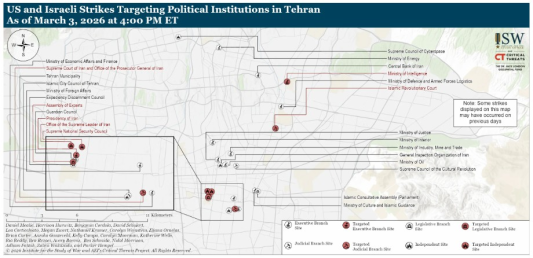
US and Israeli strikes targeting political institutions in Tehran. As of March 3, 2025 at 4:00 PM ET.
2.2.13 For a larger version of this infographic, where the text is more clearly readable, see the ISW-CTP website.
2.2.14 The ISW-CTP morning update of 4 March 2026 stated: ‘US Central Command (CENTCOM) Commander Admiral Brad Cooper stated on March 3 [2026] that the combined force has “severely degraded” Iran’s air defenses and destroyed hundreds of Iran’s ballistic missiles, drones, and launchers … The combined force continued to attack Iranian naval capabilities. CENTCOM announced on March 4 [2026] that the United States has struck or sunk more than 20 Iranian ships.’[footnote 118]
2.2.15 The ISW-CTP evening update of 5 March 2026 stated: ‘The first phase of the campaign suppressed Iranian air defenses, decapitated its command and control, and limited its ability to retaliate with ballistic missiles and drones …’[footnote 119]
2.2.16 Citing IDF Chief of Staff Major General Eyal Zamir, the evening update of 5 March 2026 also noted that, ‘… the IDF has destroyed around 80 percent of Iran’s air defense systems’.[footnote 120]
2.2.17 The ISW-CTP evening update of 6 March 2026 cited satellite imagery from 4, 5 and 6 March 2026, which it said showed strikes on multiple ballistic missile facilities, including in the provinces of Lorestan, Tehran, Zanjan, and Yazd.[footnote 121]
2.2.18 The same 6 March 2026 evening update also noted that CENTCOM Commander Admiral Brad Cooper said on 5 March 2026 that since 28 February 2026, ballistic missile attacks from Iran had declined by approximately 90% and US forces had destroyed over 30 Iranian naval vessels.[footnote 122]
2.2.19 The ISW-CTP morning update of 7 March 2026 noted that in addition to having established air superiority over Tehran, the combined force had likely also done so over parts of western Iran.[footnote 123]
2.2.20 The ISW-CTP evening update of 7 March 2026 stated: ‘The combined US-Israeli force struck Iranian military assets and headquarters, internal security forces, defense industrial sites, and oil infrastructure across western, southwestern, and central Iran on March 7 [2026] … The IDF struck the Islamic Revolutionary Guards Corps (IRGC) General Command headquarters and other internal security forces in southeastern Tehran on March 4 [2026].’[footnote 124] The update noted that satellite imagery captured numerous examples of combined force strikes having hit internal security infrastructure targets across Iran.[footnote 125]
2.2.21 The ISW-CTP evening update of 8 March 2026 stated: ‘The IDF has destroyed around 75 percent of Iran’s missile launchers.’[footnote 126]
2.2.22 The same evening update noted that commercially available satellite imagery captured between 6 and 8 March 2026 showed damage to multiple structures and cratered runways and taxiways at airbases in and around Esfahan, warehouses at an IRGC air defence command centre in southwestern Tehran, and damage to missile bases inside the provinces of Tehran, Fars, Bushehr, Alborz, and Hormozgan.[footnote 127]
2.2.23 The evening update of 8 March 2026 also included the below map, showing Iranian missile bases, missile production facilities, and defence industrial sites producing missile components, which the combined force struck between 28 February and 8 March 2026[footnote 128]:
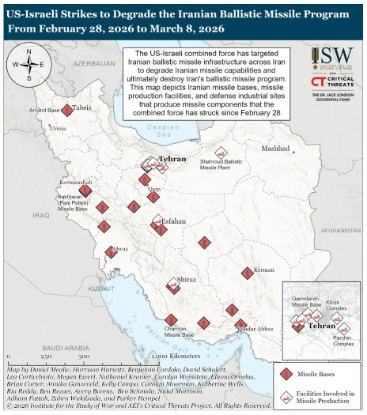
US-Israeli strikes to degrade the Iranian ballistic missile programme from February 28, 2026 to March 8, 2026.
2.2.24 A BBC News article, published on 9 March 2026, stated: ‘The US military said on Monday [9 March 2026] that it had struck 5,000 targets during the conflict, including more than 50 Iranian vessels, as well as air defence systems, ballistic missile sites, and military communications.’[footnote 129]
2.2.25 The ISW-CTP evening update of 9 March 2026 included the below map of southern Iran, showing US and Israeli strikes on drone production and facilities between 8am ET on 28 February 2026 and 3pm ET on 9 March 2026[footnote 130]:
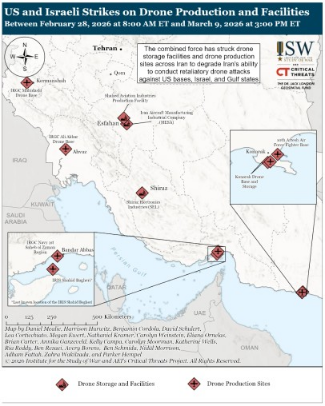
US and Israeli strikes on drone production and facilities.
2.2.26 The ISW-CTP morning update of 10 March 2026 included the below map of Iran, showing US and Israeli strikes on Artesh [the regular Iranian military[footnote 131]] Air Force and Ground Forces aviation bases as of 8am ET on 10 March 2026[footnote 132]:

US-Israeli strikes targeting Artesh Air Force and ground forces aviation bases in Iran.
2.2.27 The ISW-CTP evening update of 10 March 2026 included the below map of Iran, showing internal security sites struck by US and Israeli strikes, as of 3pm ET on 9 March 2026[footnote 133]:
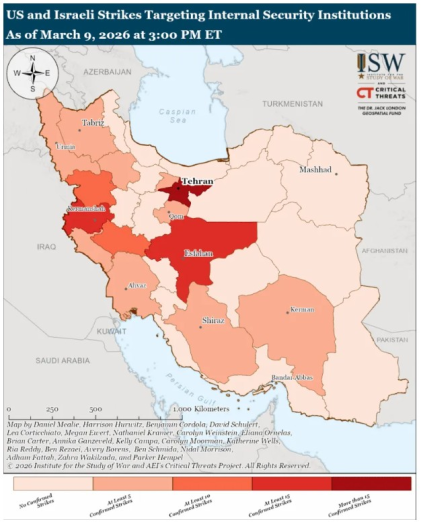
US and Israeli strikes targeting internal security institutions. As of March 9, 2026 at 3:00PM ET.
2.2.28 An RFE/RL article, published on 12 March 2026, stated: ‘The United States and Israel have largely destroyed Iran’s conventional naval fleet in a massive bombing campaign since February 28 [2026] … The US military said on March 11 [2026] that it had sunk 60 Iranian vessels. Satellite imagery and publicly disclosed military footage suggest most of Iran’s naval fleet has been damaged or destroyed … US Central Command [also] said on March 10 [2026] that it had sunk 16 Iranian mine-laying ships.’[footnote 134] The article also noted, however, that, ‘[b]esides Iran’s conventional navy, the powerful Islamic Revolutionary Guards Corps (IRGC), the elite branch of the country’s armed forces, has its own naval units …’[footnote 135]
2.2.29 The ISW-CTP evening update of 12 March 2026 included the below map of Tehran, showing internal security sites struck in Tehran by US and Israeli strikes, as of 3pm ET on 12 March 2026[footnote 136]:
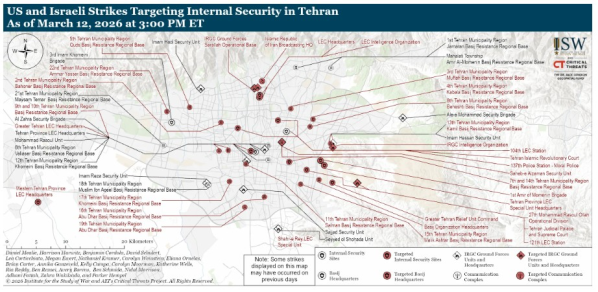
US and Israeli strikes targeting internal security in Tehran. As of March 12, 2026 at 3:00PM ET.
2.2.30 For a larger version of this infographic, where the text is more clearly readable, see the ISW-CTP website.
2.2.31 The same ISW-CTP update also included the below map of Iran, showing nuclear facilities struck in Iran by US and Israeli strikes, as of 3pm ET on 12 March 2026 (in addition to those struck in June 2025)[footnote 137]:
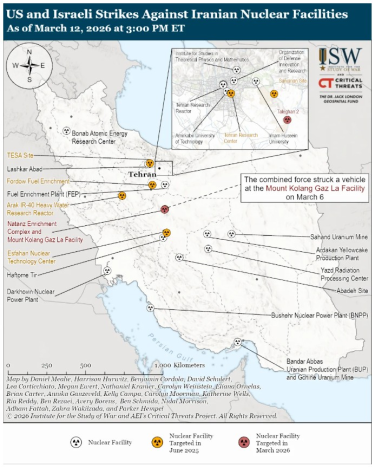
US and Israeli strikes against Iranian nuclear facilities. As of March 12, 2026 at 3:00PM ET.
2.2.32 Referring to an article that CPIT was unable to directly access, the ISW-CTP morning update of 13 March 2026 stated:
Bloomberg, citing Israeli assessments, reported on March 12 [2026] that US-Israeli strikes have destroyed up to 80 percent of Iran’s air defenses … Two Western assessments on March 12 [2026] estimated that combined force strikes have destroyed around 60 percent of Iran’s missile launchers, with one of the assessments estimating that the combined force has degraded up to 80 percent of Iran’s “offensive capability.”[footnote 138]
2.2.33 The ISW-CTP evening update of 13 March 2026 stated: ‘US Defense Secretary Pete Hegseth stated on March 13 [2026] that US and Israeli strikes have “functionally defeated” Iran’s ballistic missile production capacity by destroying Iran’s defense companies and production lines across Iran that manufacture missile components.’[footnote 139]
2.2.34 On 15 March 2026, ISW-CTP published an article entitled ‘The War in Iran: Operational Progress, but Challenges Remain’ which, citing various sources, stated:
A senior Israeli military official said that Israel has destroyed or rendered combat ineffective between 260 and 290 of an estimated 410 to 440 [missile] launchers … The campaign has struck drone launchers, though neither the United States nor Israel has released information about the numbers or type of drone targets struck … The available evidence supports the assessment that the combined campaign is achieving its military objectives thus far but is not yet complete … The collapse of Iranian drone and missile attacks - down significantly since February 28 [2026] - presents a compelling picture that the military campaign is degrading ballistic missile and drone capabilities.[footnote 140]
2.2.35 The same ISW-CTP article also included the below maps of Iran showing US and Israeli strikes as of 8am ET on 14 March 2026 on, respectively, Iranian naval facilities and Iranian retaliatory capabilities (including drone, missile and air bases, and air defence systems)[footnote 141]:

Coalition strikes on Iranian naval facilities and Iranian attacks on maritime vessels. As of 14 March, 2026 at 8:00AM ET.
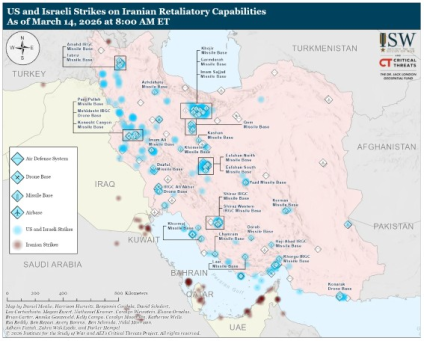
US and Israeli strikes on Iranian retaliatory capabilities. As of March 14, 2026 at 8:00AM ET.
2.2.36 A BBC News article, published on 28 February 2026 and updated on 16 March 2026, stated: ‘Satellite imagery reviewed by BBC Verify since the conflict began on 28 February [2026] has shown damage to a nuclear facility at Natanz and and [sic] three Iranian missile sites. BBC Verify has also seen damaged aircraft at Mehrabad airport in Tehran … BBC Verify found at least 11 Iranian naval vessels were left damaged or destroyed by strikes at the Konarak and Bandar Abbas naval bases.’[footnote 142]
2.2.37 The ISW-CTP update of 17 March 2026 included the below graph, showing reported and confirmed US and Israeli airstrikes on Iran, between 28 February and 3pm ET on 17 March 2026, aggregated by target type[footnote 143]:
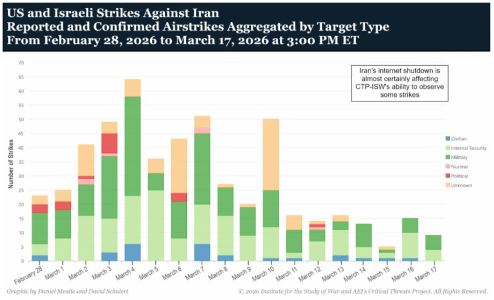
US and Israeli strikes against Iran. Reported and confirmed airstrikes aggregated by target type. From February 28, 2026 to March 17, 2026 at 3:00PM ET.
2.2.38 According to the above dataset, between 28 February and 17 March 2026, most reported and confirmed US and Israeli airstrikes against Iran were carried out against internal security and military targets. Other targets hit by strikes included political and nuclear targets. However, those classified as civilian were also hit by strikes, and a significant portion of airstrikes hit target types that were unknown. Additionally, it is highly likely that not all strikes were represented on the above graph due to Iran’s internet shutdown [see Availability of information] affecting ISW-CTP’s ability to observe some strikes.
2.2.39 The same ISW-CTP update also stated:
The Israel Defense Forces (IDF) confirmed that it struck the Islamic Revolutionary Guards Corps (IRGC) Navy headquarters in Tehran on March 16 [2026] … The IDF also killed Basij Organization Commander Brigadier General Gholamreza Soleimani and his deputy Ghassem Ghoureishi during strikes on a “makeshift headquarters” in Tehran … The combined force has [also] continued to strike Iranian ballistic missile infrastructure to degrade Iran’s missile capabilities … continued to degrade Iranian air capabilities … continued to strike Iranian defense industrial sites … [and] struck a number of internal security targets …[footnote 144]
2.2.40 A BBC News article published on 17 March 2026 included the below graphic, showing members of Iran’s senior leadership and defence figures to have been killed since the US-Israeli strikes on Iran began on 28 February 2026[footnote 145]:
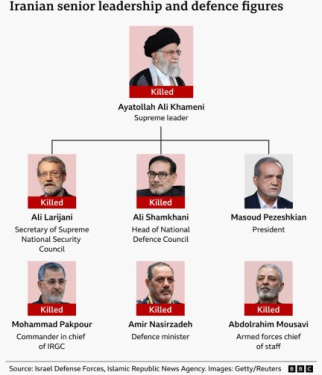
Iranian senior leadership and defence figures
2.2.41 The ISW-CTP update of 18 March 2026 included the below graphic, showing members of the Supreme National Security Council (SNSC) to have been killed as of 3pm ET on 18 March 2026[footnote 146]:
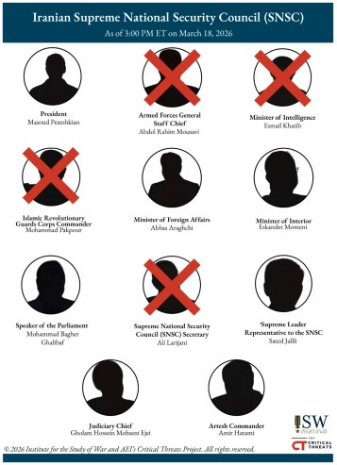
Iranian Supreme National Security Council (SNSC). As of 3:00PM ET on March 18, 2026.
2.2.42 The same ISW-CTP update also stated: ‘The combined force struck multiple Iranian internal security targets on March 18 [2026], including Islamic Revolutionary Guards Corps (IRGC), Basij, and Law Enforcement Command (LEC) facilities in Tehran, Alborz, and Lorestan Provinces.’[footnote 147]
2.3 Extent and locations
2.3.1 An article entitled ‘Middle East On Edge As Trump Launches “Major Combat Operation” Against Iran’ published by RFE/RL on 28 February 2026, about the first day of strikes in Iran, stated: ‘Iranian media reported explosions in several cities, including Tehran, Tabriz, Isfahan, Qom, Lorestan, and Chabahar. Video and photo images showed at least one large plume of smoke billowing over the capital … Explosions were first reported in central Tehran …’[footnote 148]
2.3.2 An article published by Fox News on 28 February 2026 stated: ‘During the first 12 hours of the operation, the U.S. launched nearly 900 strikes. Sources said the strikes came from land, air and sea - including drones …’[footnote 149]
2.3.3 The ISW-CTP evening update of 28 February 2026 stated: ‘The Israel Defense Forces (IDF) stated that it struck 500 Iranian targets. ISW-CTP has observed strikes across 17 provinces. The regime’s internet shutdown [see Availability of information] … has almost certainly limited the amount of information about US and Israeli strikes coming out of Iran. ISW-CTP’s strike data, therefore, only reflects a portion of the total amount of US and Israeli strikes.’[footnote 150]
2.3.4 A BBC News article published on 28 February 2026, and updated on 1 March 2026, stated:
The Israel Defense Forces (IDF) says [of the opening strikes on 28 February 2026, that] approximately 200 fighter jets completed “the largest ever military flyover in the history of the Israeli Air Force”, targeting approximately 500 objectives. Explosions were reportedly heard initially in Tehran, nearby Karaj, Isfahan and Qom in the centre of the country, and Kermanshah in the west. Several more waves of strikes targeted further locations around the country.[footnote 151]
2.3.5 The ISW-CTP evening update of 3 March 2026 stated:
The United States has struck over 1,700 Iranian targets since February 28 [2026] … The Israeli Air Force (IAF) announced that it has conducted 1,600 sorties [‘short, quick attack[s] by a military force, such as a small group of soldiers or an aircraft …’[footnote 152]] into Iranian territory since the start of the war on February 28. An IDF spokesperson said that the IDF has dropped over 4,000 munitions on Iranian targets since February 28. The spokesperson noted that the IDF dropped the same number of munitions on Iran during the entirety of the 12-day war [in June 2025[footnote 153]].[footnote 154]
2.3.6 The ISW-CTP evening update of 5 March 2026 stated: ‘IDF Chief of Staff Major General Eyal Zamir stated on March 5 that Israeli pilots have conducted approximately 2,500 strikes and used over 6,000 munitions during the campaign.’[footnote 155]
2.3.7 The Al Jazeera article published on 6 March 2026 stated: ‘Reporting from Tehran, Al Jazeera’s Tohid Asadi said the bombardment in the capital had been more intense than previously seen … Attacks were also reported in Iranian cities including Shiraz, Qom, Isfahan and Kermanshah, in an area home to multiple missile bases’[footnote 156]
2.3.8 The HRANA update of 6 March 2026 stated: ‘The recent attacks are estimated to be several times greater than in previous days and, geographically, have spread across the entire country, although the main focus of the attacks remains on Tehran and western Iran.’[footnote 157]
2.3.9 In its review of the first 2 weeks of the conflict, on 13 March 2026, HRANA stated: ‘Over the past fourteen days, cities across Iran, particularly the country’s capital, have witnessed one of the most extensive waves of military attacks in recent decades … The geographic scope of the attacks has also been significant. Recorded data show that all 31 provinces of Iran were targeted at least once. In total, 209 cities across the country experienced either direct attacks or damage resulting from them during this period.’[footnote 158]
2.3.10 The same HRANA report also published the following maps of Iran showing, respectively, the distribution of strikes in the first 2 weeks of the conflict, based on focal points and by cities.[footnote 159] It can be seen from the maps that the focus of the strikes has been concentrated predominantly on Tehran, Isfahan, western cities, and along the south coast of Iran:
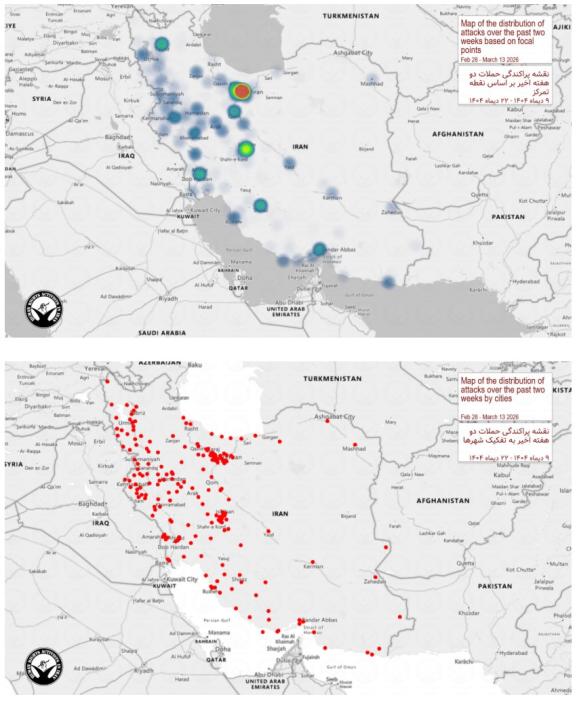
Maps of distributions of attacks between February 28 and March 13.
2.3.11 The same HRANA report also included the below pie chart, showing the share of strikes across Iran, by province.[footnote 160] It can be seen from the chart that the most significant share of strikes inside Iran, as of 13 March 2026, had been carried out in Tehran, followed by the provinces of Isfahan, Khuzestan, and Alborz:

The share of Iran's various provinces in the attacks carried out.
2.3.12 The ISW-CTP update of 16 March 2026 stated: ‘The combined force targeted a likely Iranian drone facility in South Khorasan Province in one of the combined force’s easternmost strikes since the war began. The strike indicates that combined force aircraft can operate deep inside Iranian territory.’[footnote 161]
2.3.13 The BBC News article, published on 28 February 2026 and updated on 16 March 2026, stated: ‘BBC Verify has so far confirmed visual evidence of at least 166 attacks across Iran, including at least 69 strikes in Tehran. The US said last week [week commencing 9 March 2026] it has attacked approximately 6,000 targets across Iran … On Friday [13 March 2026], US Central Command (Centcom) said 90 military targets had been hit on Kharg Island, which is vital for Iran’s oil exports and handles about 90% of shipments. BBC Verify has identified at least 12 locations that appear in Centcom’s footage.’[footnote 162]
2.3.14 The same article included a map of Tehran, showing the location of strikes there, as of 10:13 GMT on 16 March 2026[footnote 163]:
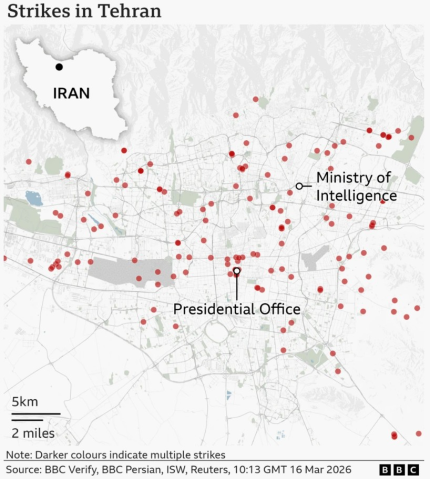
Strikes in Tehran.
2.3.15 The below table was produced by CPIT using data published by HRANA in its daily updates on the conflict, based on available information as of 5pm ET on each date of publication (Note: HRANA stated that, ‘[i]n a large portion of the incidents, the method/type of attack has not yet been confirmed and has been recorded as “undetermined.” In cases where the attack type was identifiable, airstrikes and drone attacks were reported.’[footnote 164] HRANA further stated that, ‘[t]he gap between the number of incidents and attacks indicates that many incidents included multiple attacks within the same geographic area or a short time frame.’[footnote 165]:
| Date | No. of Attacks | No. of Incidents | No. of Provinces |
|---|---|---|---|
| 28 February 2026[footnote 166] | - | 59 | 18 |
| 1 March 2026[footnote 167] | - | 72 | 20 |
| 2 March 2026[footnote 168] | - | 56 | 13 |
| 3 March 2026[footnote 169] | 104 | 85 | 19 |
| 4 March 2026[footnote 170] | 117 | 51 | 23 |
| 5 March 2026[footnote 171] | 170 | 113 | 19 |
| 6 March 2026[footnote 172] | 664 | 136 | 28 |
| 7 March 2026[footnote 173] | 485 | 133 | 30 |
| 8 March 2026[footnote 174] | 752 | 148 | 30 |
| 9 March 2026[footnote 175] | 285 | 147 | 17 |
| 10 March 2026[footnote 176] | 202 | 106 | 19 |
| 11 March 2026[footnote 177] | 208 | 119 | 22 |
| 12 March 2026[footnote 178] | 312 | 109 | 15 |
| 13 March 2026[footnote 179] | 5,480* | 2,061* | 31* |
| 14 March 2026[footnote 180] | 285 | 94 | 18 |
| 15 March 2026[footnote 181] | 454 | 165 | 16 |
| 16 March 2026[footnote 182] | 243 | 117 | 17 |
| 17 March 2026[footnote 183] | 179 | 89 | 17 |
| 18 March 2026[footnote 184] | 79 | 40 | 11 |
| Totals | 6,720 | 2,566 | 31 |
*Aggregated figures provided
2.3.16 According to the above dataset, as of 5pm (ET) on 18 March 2026, at least 6,720 attacks have taken place across 2,566 incidents, across all 31 provinces of Iran since strikes began on 28 February 2026. It is, however, noted that the actual figure may be higher due to HRANA’s ongoing verification process.
2.3.17 On 13 March 2026, HRANA stated: ‘All figures presented in this report are based on the minimum numbers that could be confirmed and may be updated as further investigations continue and new information becomes available.’[footnote 185] While HRANA noted that it had been able to fully verify approximately 57% of reports, it noted that approximately 9% of data remained in the preliminary verification stage (‘meaning that initial evidence supports their credibility but additional information is still required for full confirmation’[footnote 186] and a further 34% of reports remained under review.[footnote 187]
2.3.18 HRANA also went on to state that the ‘… complexity in the verification process is largely driven by severe communication restrictions. Widespread internet shutdowns in Iran, security limitations, and the difficulty of accessing the locations where attacks occurred have posed significant challenges to the independent verification of information [see also Availability of information].’[footnote 188]
2.3.19 For a slideshow of maps showing the geographical locations of US and Israeli strikes in Iran by 24 hour periods from 4pm ET on 27 February 2026 until 3pm ET on 8 March 2026 (switching from a 4pm to a 3pm start/cut-off time on 6 March 2026), see the ISW-CTP evening update of 8 March 2026, (towards the end of the ‘US and Israeli Air Campaign’ section). See individual ISW-CTP updates for maps showing the geographical locations of US and Israeli strikes in Iran by 24 hour periods from 3pm ET on 8 March 2026 to 3pm ET on 18 March 2026 (the evening updates up to 14 March 2026 when ISW-CTP reverted from bi-daily to daily updates, see Bibliography).
3. Civilian impacts
3.1.1 Death injuries
3.1.1 A BBC News article, published on 28 February 2026 and updated on 1 March 2026, stated:
At least 153 people including children have died after a reported strike hit a school in southern Iran, according to Iranian officials.
Iran has blamed the US and Israel. The US military’s Central Command (Centcom) said it was looking into reports of the incident, while Israel’s military said it was “not aware” of any IDF operations in the area.
The girls’ school was located in Minab, near [approximately 600 metres away from] an Islamic Revolutionary Guard Corps (IRGC) base which has previously been a target.
At least 201 people have been killed in air strikes in Iran and 747 hurt since Saturday [28 February 2026], the Iranian Red Crescent said.
… An official [of the Red Cross or Iranian Red Crescent] said that the school, in the town of Minab in Hormozgan province, had been “targeted by three missile attacks”.
The BBC has verified clips of the aftermath of the explosion, which show smoke rising from a building as crowds gather nearby and people can be heard screaming in panic.
But it has not been able to independently verify the death toll …
… Deep mistrust of the Iranian regime, however, makes official reports difficult for many to accept, and some Iranians directly blamed the regime for the attack.[footnote 189]
3.1.2 HRANA’s update on the 2nd day of the conflict, 1 March 2026, stated: ‘In terms of human casualties, reports indicate a rising number of child victims following the attack on a school that was targeted the previous day, an incident that, due to the nature of the site and the profile of the victims, has become one of the most sensitive aspects of the crisis.’[footnote 190]
3.1.3 The AP News article, published on 1 March 2026, stated: ‘Iran’s state news agency IRNA said at least 15 people were [also] killed in the southwest, quoting the governor of the Lamerd region, Ali Alizadeh, as saying a sports hall, two residential areas and a hall near a school were hit.’[footnote 191]
3.1.4 The New York Times’ article, published on 28 February and updated on 3 March 2026, stated:
The strike on an elementary school in the southern Iran town of Minab was one of two attacks that appear to have hit schools during U.S. and Israeli strikes on Iran on Saturday [28 February 2026].
… Dozens of people, probably most of them children, were killed … according to Iranian health officials and state media.
… Iran’s Red Crescent and several state news outlets said more than 60 people were killed in the strike on Shajarah Tayyebeh school in the southern town of Minab. By Saturday [28 February 2026] evening, Iran’s state news broadcaster, IRIB, raised the toll to 85 dead and 93 injured.
… Video verified by The New York Times showed damage to a building described as an elementary school …
… Hengaw, a Norway-based group that focuses on human rights violations in Iran … said in a statement [which CPIT was unable to directly access] that it was investigating the killings, and estimated that about 170 children were in class at the time.
Videos verified by The Times show that the school is adjacent to a naval base belonging to the country’s most powerful military force, the Islamic Revolutionary Guards Corps, or IRGC. Another video verified by The Times on Saturday [28 February 2026] showed a strike hitting the same IRGC base.
Asked to respond to reports of the strike, a CENTCOM spokesperson said: “We are aware of reports concerning civilian harm resulting from ongoing military operations. We take these reports seriously and are looking into them. The protection of civilians is of utmost importance, and we will continue to take all precautions available to minimize the risk of unintended harm.
… Another strike appeared to have hit the Hedayat High School in the capital, Tehran, near 72nd Square in the district of Narmak, local media and rights groups said. Two students died in that attack, according to the U.S.-based Human Rights Activists News Agency, which focuses on Iran.
A video from Mehr news, a semiofficial [Iranian] news agency, shows rescue workers using fire hoses to douse a building that had collapsed into a heap of rubble.
That school may have been hit in a blast that appears to have targeted the residence of Mahmoud Ahmadinejad, Iran’s hard-line former president. It is unclear whether Mr. Ahmadinejad was there at the time of the strike. The local Iran Newspaper reported that he was unharmed, but that three of his bodyguards were killed.[footnote 192]
3.1.5 HRANA noted that reported civilian injuries between 28 February 2026 and 2 and 3 March 2026 stood, respectively, at 971 (including 115 children) and 5,402 (including 100 children).[footnote 193][footnote 194]
3.1.6 On 3 March 2026, Amnesty International (AI) published an article in which it stated: ‘On 3 March [2026] the Iranian Red Crescent Society, reported that 787 people have been killed in Iran since the attacks began. On 28 February 2026, according to the Iranian authorities around 150 school children were among 165 people killed when a school in the southern city of Minab, Hormozgan province, was struck.’[footnote 195]
3.1.7 The ICG article, published on 6 March 2026, stated: ‘As of 6 March, Iranian authorities said more than 1,300 people had been killed in Iran, including at least 150 children at an elementary school in the southern city of Minab.’[footnote 196]
3.1.8 The BBC News article, published on 28 February 2026 and updated on 15 March 2026, noted that on 6 March 2026, Iran’s ambassador to the UN said that 168 people were killed in the Minab school strike, of whom approximately 110 were children.[footnote 197]
3.1.9 The HRW article, published on 7 March 2026, about the strikes that hit the Minab school, stated: ‘As of March 4 [2026], the death toll from this attack had risen to 168, Iranian state media reported. Human Rights Watch has not been able to independently verify that number.’[footnote 198]
3.1.10 An article published by IranWire, an Iranian news website[footnote 199], on 5 March 2026 stated:
On Thursday, March 5 [2026], Iran’s Martyr Foundation said that the country’s war death toll has climbed to 1,230 people. According to the Foundation, this statistic includes only those individuals who have “been buried so far.
The Martyr Foundation is one of the most influential and well-funded institutions in Iran, tasked with supporting the families of those killed in state-sanctioned conflicts. In the Islamic Republic, receiving the official designation of “Martyr” (Shahid) from this foundation carries considerable legal and social weight, providing surviving relatives with pensions, education quotas, and other state benefits. By stressing that the figures only include those who have been “buried,” the foundation’s statement implies that the real death toll may be significantly higher, as some victims could still be trapped under debris or awaiting formal identification.
Meanwhile, the Red Crescent Society has reported that the death toll in Iran over the past six days is at least 1,045 people.
Internal organizations and media outlets have not distinguished between forces affiliated with the Islamic Republic and civilian citizens in their statistics.
The head of Iran’s Emergency Medical Services earlier said that more than 6,000 people have been injured since the war began, with around 2,500 of them still hospitalized, according to official figures.’[footnote 200] CPIT has attached limited weight to the Martyr Foundation’s figures due to them relating to burials only, the lack of distinction between civilian and military fatalities and injuries, and the absence of evidence to support Iranian state-affiliated reporting which may contain bias.
3.1.11 The Al Jazeera article published on 6 March 2026 stated:
Of the more than 1,300 people killed in the strikes on Iran so far, at least 181 are children, UNICEF said on Friday [6 March 2026] … ‘… [T]he Iranian Red Crescent said the death toll from attacks since Saturday [28 February 2026] had risen to at least 1,332. Among the victims were 20 people killed and 30 injured in an attack in the Zibashahr area of Shiraz, Jalil Hasani, deputy governor of Iran’s Fars province, told Iranian state media. Iran’s Tasnim news agency reported that two paramedics had also been killed in the city. At least six people were injured by an Israeli missile attack on residential areas in Poldokhtar in Iran’s western Lorestan province, Tasnim reported.[footnote 201]
3.1.12 An article published by the World Health Organization (WHO) on 11 March 2026 stated: ‘National health authorities in Iran report more than 1300 deaths and 9000 injuries …’[footnote 202] See paragraph 3.1.10 for information regarding the weight attached by CPIT to state reported figures.
3.1.13 In its review of the first 2 weeks of the conflict, published on 13 March 2026, HRANA stated: ‘In total … attacks resulted in 4,765 recorded human casualties, a figure that includes both military and civilian fatalities and injuries … Among these victims, civilian casualties account for a significant portion of the overall figures. Based on available data … [i]n addition [to 1,298 civilian fatalities, see paragraph 3.1.17], 654 civilians were injured during the attacks.’[footnote 203]
3.1.14 The same HRANA report also noted that a further 1,092 injured individuals were, as of 13 March 2026, classified as ‘undetermined’, as it had not yet been possible to conclude whether those individuals were civilians or military personnel.[footnote 204] It stated: ‘This situation is largely due to limited information in the immediate aftermath of attacks, the lack of independent access to certain areas, and the difficulty of accurately identifying victims under crisis conditions.’[footnote 205]
3.1.15 The same HRANA report also stated: ‘Alongside the independent data recorded by HRANA, several Iranian officials and state institutions have also released figures regarding the consequences of the war … Iran’s Ministry of Health … announced that approximately 15,000 people have been injured during the conflict, although the report does not specify how many of these individuals were civilians or members of the military.’[footnote 206] See paragraph 3.1.10 for information regarding the weight attached by CPIT to state reported figures. It was also noted that HRANA did not include the above figures in its events-based calculations, ‘[g]iven the aggregated nature of these figures and the lack of a clear methodology to match them precisely with recorded incidents …’[footnote 207]
3.1.16 The BBC News article published on 17 March 2026 stated: ‘More than 1,300 people have been killed in Israeli and US strikes in Iran since the start of the war, including 226 women and 204 children, according to the Iranian government.’[footnote 208]
3.1.17 The below table was produced by CPIT using aggregated data collected by HRANA since the beginning of the conflict on 28 February 2026, based on incidents recorded, and using minimum values:
| Date | Aggregate no. of civilian fatalities | Aggregate no. of child fatalities (subset of civilian fatalities) | Aggregate no. of reported fatalities under review pending verification and classification (civilian/ military) |
|---|---|---|---|
| 28 February 2026[footnote 209] | 133 | - | - |
| 1 March 2026[footnote 210] | - | - | - |
| 2 March 2026[footnote 211] | 742 | 176 | 624 |
| 3 March 2026[footnote 212] | 1,097 | 181 | 880 |
| 4 March 2026[footnote 213] | 1,114 | 183 | 926 |
| 5 March 2026[footnote 214] | 1,168 | 194 | 336 |
| 6 March 2026[footnote 215] | 1,172 | 194 | 284 |
| 7 March 2026[footnote 216] | 1,205 | 194 | 283 |
| 8 March 2026[footnote 217] | 1,205 | 194 | 316 |
| 9 March 2026[footnote 218] | 1,245 | 194 | 327 |
| 10 March 2026[footnote 219] | 1,262 | 200 | 335 |
| 11 March 2026[footnote 220] | 1,276 | 200 | 352 |
| 12 March 2026[footnote 221] | 1,286 | 200 | 373 |
| 13 March 2026[footnote 222] | 1,298 | 205 | 599 |
| 14 March 2026[footnote 223] | 1,319 | 206 | 599 |
| 15 March 2026[footnote 224] | 1,330 | 206 | 613 |
| 16 March 2026[footnote 225] | 1,351 | 207 | 622 |
| 17 March 2026[footnote 226] | 1,354 | 207 | 622 |
| 18 March 2026[footnote 227] | 1,369 | 207 | 627 |
3.1.8 According to the above dataset, as of 5pm ET on 18 March 2026, at least 1,369 conflict-related civilian deaths, including at least 207 children, had occurred in Iran since strikes began on 28 February 2026.[footnote 228] A further 627 reported deaths remained under review, pending verification and classification (as either civilian or military deaths).[footnote 229] These figures should be viewed in the context of an estimated Iranian population of approximately 93 million.[footnote 230] On the cautious assumption that all 627 unclassified reported deaths were civilian, the total number of civilian deaths between 28 February 2026 and 18 March 2026 is estimated at 1,996, representing approximately 0.021 civilian deaths per 1,000 (or 2.15 deaths per 100,000) of the population. It is, however, noted that the actual figure may be higher due to HRANA’s ongoing verification process (see paragraphs 2.3.17 to 2.3.18).
3.2 Internal displacements
3.2.1 The below graph was produced by CPIT using data published by the UN High Commissioner for Refugees (UNHCR) in a series of fact sheets and situation maps, which cited various sources, showing the number of internally displaced people (IDPs) in Iran due to the current hostilities[footnote 231] [footnote 232] [footnote 233] [footnote 234] [footnote 235] [footnote 236] (Note: while the number of IDPs reported as of 11 March 2026 is shown on the below graph as 3.2 million, this figure was the upper estimate provided by UNHCR. UNHCR, more precisely, reported that between 600,000 and 1 million households, which amounted to an estimated 1.9 to 3.2 million individuals, had been internally displaced as of 11 March 2026[footnote 237]:
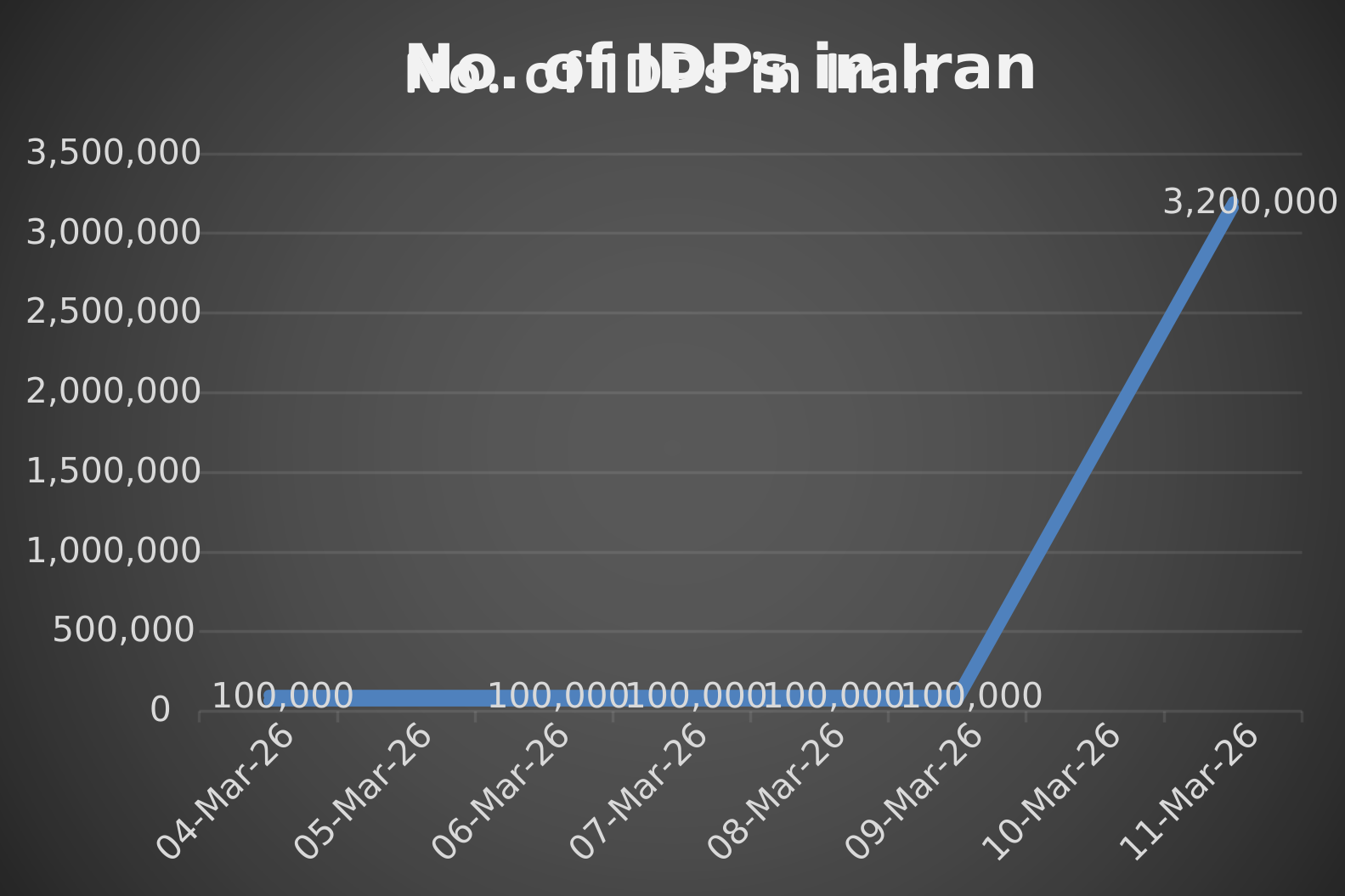
3.2.2 The UNHCR fact sheet published on 4 March 2026 stated: ‘In Iran, an estimated 100,000 people left Tehran in the first two days following the attacks, with approximately 1,000 – 2,000 vehicles per day reported departing the capital mostly towards the North.’[footnote 238]
3.2.2 While a number of UNHCR publications reported IDP numbers in Iran to have remained at 100,000 until after 9 March 2026, UNHCR fact sheets published on 6 and 9 March 2026 both stated: ‘The Iran figure [100,000 newly displaced IDPs] refers to the estimated number of people who left Tehran during the first two days of the crisis, as reported by the Iranian road police. Actual displacement within the country may be higher.’[footnote 239] [footnote 240] Furthermore, an article published by UNHCR on 6 March 2026, entitled ‘UNHCR responds to rising displacement in Middle East emergency’ stated: ‘Initial estimates from the authorities of 100,000 people leaving Tehran in the first two days of the crisis have now been surpassed.’[footnote 241]
3.2.4 The UNHCR fact sheet, showing displacement as of 11 March 2026 and published on 12 March 2026, stated: ‘Most Iranian households are reportedly temporarily fleeing from Tehran and other major urban centers towards the north of the country and rural areas to seek safety.’[footnote 242]
3.2.5 In its review of the first 2 weeks of the conflict, HRANA stated: ‘At least 3.2 million people have been internally displaced across Iran … [I]ncidents [involving air or missile attacks] have resulted in significant destruction of housing and the forced displacement of residents in affected communities.’[footnote 243]
3.3 Other impacts
3.3.1 In its daily updates, HRANA recorded numerous incidents of civilian infrastructure and facilities that sustained some level of damage by strikes or blast effects, including, but not limited to:
- hospitals/ other medical facilities/ emergency bases[footnote 244] [footnote 245] [footnote 246] [footnote 247] [footnote 248] [footnote 249] [footnote 250] [footnote 251] [footnote 252] [footnote 253]
- residential buildings or areas [footnote 254] [footnote 255] [footnote 256] [footnote 257] [footnote 258] [footnote 259] [footnote 260] [footnote 261] [footnote 262] [footnote 263] [footnote 264] [footnote 265]
- schools [footnote 266] [footnote 267] [footnote 268] [footnote 269] [footnote 270] [footnote 271] [footnote 272] [footnote 273] [footnote 274]
- workplaces [footnote 275]
- sports facilities [footnote 276] [footnote 277] [footnote 278] [footnote 279] [footnote 280] [footnote 281] [footnote 282] [footnote 283]
- mosques [footnote 284] [footnote 285]
- a humanitarian facility[footnote 286]
- a welfare organisation office[footnote 287]
- a food-related factory[footnote 288]
- water desalination plants[footnote 289] [footnote 290]
- a highway[footnote 291]
- a tourist camp[footnote 292]
- judicial buildings[footnote 293] [footnote 294] [footnote 295]
- a motor dealership[footnote 296]
- palace museums/ other historic buildings[footnote 297] [footnote 298]
- an electricity department building[footnote 299]
- fuel stations/ gas or oil facilities/ oil depots[footnote 300] [footnote 301] [footnote 302] [footnote 303]
3.3.2 HRANA’s first report on the conflict, published on 28 February 2026, stated: ‘In most cases, no estimate has been recorded of the number of people affected by damage to infrastructure, and therefore at this stage it is not possible to provide a reliable numerical summary of the scope of indirect human impacts (such as disruptions to transportation, education, or public services). Environmental impacts have also in most records either been reported as “no effect” or remain in need of further assessment.’[footnote 304]
3.3.3 The AI article published on 3 March 2026 stated: ‘According to the head of the Medical Council of Iran, 10 medical centres have been damaged by the Israeli and US attacks.’[footnote 305]
3.3.4 The BBC News article, published on 3 March 2026, stated:
‘People in Tehran are stocking up on essentials as uncertainty over how long the war might continue grows in the Iranian capital. Locals have told BBC Persian they are worried about the availability of groceries and price increases, as explosions continue to sound around the city … Iranian state news outlets have reported that “in line with the government decision to prioritise the provision of essentials”, the export of all food and agriculture products has been banned “until further notice” … However, not all shops remain open.’[footnote 306] No evidence was found, however, to indicate that food shortages were actualised as of 18 March 2026.
3.3.5 The ISW-CTP evening update of 5 March 2026 stated: ‘OSINT [Open Source Intelligence] analysts published footage of airstrikes in Kashan, Esfahan, on March 5 [2026], in which citizens claimed that the target was a civilian sports complex that the IRGC had been using.’[footnote 307]
3.3.6 The IranWire article, published on 5 March 2026, stated: ‘… [T]he head of the Iranian Red Crescent Society reported that 3,646 residential units have been damaged or destroyed in missile strikes. Pir-Hossein Kolivand also stated that 14 medical centers have been impacted so far, and three hospitals are no longer operational.’[footnote 308]
3.3.7 The Al Jazeera article published on 6 March 2026 stated:
Huge explosions pounded locations in the Iranian capital, including … residential areas and the vicinity of Tehran University, according to news reports and an Al Jazeera team on the ground … Residential buildings in Tehran were hit, Iran’s Noor News reported …
Iran’s Foreign Ministry spokesman Esmail Baghaei said on X that an elementary school in Tehran’s Niloufar Square had been hit, posting footage of destroyed classrooms. Several schools have been hit in Iran since the US-Israel bombardment began, including on the first day of the war in Minab in the south that killed at least 165 schoolgirls and staff [see Deaths and injuries].
… Strikes … reportedly hit civilian sites, including residential buildings, car parks and petrol stations, he [Al Jazeera reporter, Tohid Asadi] said.[footnote 309]
3.3.8 In its update on day 9 of the strikes, 8 March 2026, HRANA stated:
According to Skyler Thompson, Deputy Director of Human Rights Activists in Iran, the organization is increasingly concerned about the impact of the recent attacks on the civilian population: “Beyond the immediate deaths and injuries caused to civilians, reports that a water desalination plant was struck are particularly alarming … Strikes on oil refinery infrastructure are equally concerning given the environmental and public health consequences they may trigger in a densely populated capital city of over ten million people. Damage to such facilities risks releasing toxic pollutants and causing environmental harm that can endanger civilian health on a large scale.” The human rights advocate also stressed that the organization has received reports indicating that the consequences of these attacks have damaged critical infrastructure, including two dialysis centers upon which civilians depend for life-sustaining treatment.[footnote 310]
3.3.9 The HRANA review of the first 2 weeks of the conflict stated:
Among the cases where the target could be identified … [i]n approximately 3% of the cases, the attacks targeted dual-use facilities, meaning sites used for both military and civilian purposes … [A]bout 21% of the recorded attacks caused damage to civilian targets or protected facilities.
… At least 20 hospitals or medical centers were damaged during the attacks over the past two weeks. In some cases, the damage resulted from direct strikes, while in others it was caused by nearby explosions or blast waves affecting these facilities …
At least 98 residential buildings or residential areas were damaged in air or missile attacks. In many instances, strikes occurred near urban areas, with blast waves or debris causing extensive damage to nearby homes …
Schools are also among the infrastructures that have been damaged during these attacks. At least 36 schools across different parts of the country have sustained damage. In seven of these incidents, the damage to schools was accompanied by the death or injury of several students …
… [I]n many of the recorded cases it remains unclear whether the damage resulted from direct strikes or from nearby explosions and secondary effects. For this reason, the final classification of some of these incidents remains under review.[footnote 311]
3.3.10 The article published by the World Health Organization (WHO) on 11 March 2026 stated:
In Iran, WHO has verified 18 attacks on health care since 28 February [2026], resulting in 8 deaths among health workers. … These attacks not only cost lives but deprive communities of care when they need it most … [also i]n Iran, petroleum fires and smoke from damaged infrastructure exposed nearby communities to toxic pollutants that potentially cause breathing problems, eye and skin irritation, and contaminated water and food sources.[footnote 312]
Research methodology
The country of origin information (COI) in this note has been carefully selected in accordance with the general principles of COI research as set out in the Common EU [European Union] Guidelines for Processing Country of Origin Information (COI), April 2008, and the Austrian Centre for Country of Origin and Asylum Research and Documentation’s (ACCORD), Researching Country Origin Information – Training Manual, 2024. Namely, taking into account the COI’s relevance, reliability, accuracy, balance, currency, transparency and traceability.
Sources and the information they provide are carefully considered before inclusion. Factors relevant to the assessment of the reliability of sources and information include:
- the motivation, purpose, knowledge and experience of the source
- how the information was obtained, including specific methodologies used
- the currency and detail of information
- whether the COI is consistent with and/or corroborated by other sources
Commentary may be provided on source(s) and information to help readers understand the meaning and limits of the COI.
Wherever possible, multiple sourcing is used and the COI compared to ensure that it is accurate and balanced, and provides a comprehensive and up-to-date picture of the issues relevant to this note at the time of publication.
The inclusion of a source is not, however, an endorsement of it or any view(s) expressed.
Each piece of information is referenced in a footnote.
Full details of all sources cited and consulted in compiling the note are listed alphabetically in the bibliography.
Bibliography
Sources cited
Al Jazeera, Tehran hit by heavy bombing on day seven of US-Israel war on Iran, 6 March 2026. Accessed: 16 March 2026
Amnesty International (AI), Urgent call to protect civilians and respect international law amid escalating regional conflict following US and Israeli attacks on Iran, 3 March 2026. Accessed: 16 March 2026
Associated Press (AP) News:
-
About Us, no date. Accessed: 24 March 2026
-
Iran’s supreme leader killed in major attack by US and Israel, 1 March 2026. Accessed: 16 March 2026
Axios (articles accessed via free subscription):
-
About Axios, no date. Accessed: 18 March 2026
-
Israel targets Khamenei, top leaders in bid to bring down Iran’s regime, 28 February 2026. Accessed: 9 March 2026
-
U.S. and Israel begin “major combat operations” in Iran, 28 February 2026. Accessed: 9 March 2026
BBC Monitoring, Media Guide: Israel (Press and News Websites), 26 June 2024. Accessed: 12 March 2026
BBC News:
-
At least 153 dead after reported strike on school, Iran says, 28 February 2026, updated 1 March 2026. Accessed: 13 March 2026
-
Fears over food shortages in Tehran as residents worry about length of war, 3 March 2026. Accessed: 19 March 2026
-
Iranian security chief Ali Larijani killed in air strike, 17 March 2026. Accessed: 19 March 2026
-
Iran supreme leader acknowledges thousands killed during recent protests, 17 January 2026. Accessed: 18 March 2026
-
Iran’s Supreme Leader killed in joint US Israeli strikes, Trump says, 28 February 2026, updated 1 March 2026. Accessed: 13 March 2026
-
Strikes shake Iran cities as crowds rally in support of Mojtaba Khamenei, 9 March 2026. Accessed: 17 March 2026
-
Why did US and Israel attack Iran and how long could the war last?, 28 February 2026, updated 15 March 2026. Accessed: 16 March 2026
Cambridge Dictionary, Sortie, no date. Accessed: 19 March 2026
CBS News:
-
Iran announces 2 more top defense officials killed in airstrike, 1 March 2026. Accessed: 10 March 2026
-
Israeli military says it has targeted at least 30 sites in latest wave of strikes on Iran Sunday, 28 February 2026. Accessed: 10 March 2026
-
U.S. and Israel launch another round of strikes on Iran following Khamenei’s killing, 1 March 2026. Accessed: 10 March 2026
Critical Threats Project (CTP), Explainer: The Iranian Armed Forces, 17 June 2025. Accessed: 11 March 2026
Ecoi.net:
-
Source description: Critical Threats Project (CTP), 26 January 2023. Accessed: 9 March 2026
-
Source description: Institute for the Study of War (ISW), 30 May 2023. Accessed: 9 March 2026
Fox News, US believes Khamenei, top Iranian leaders killed in initial Israeli strike on compound: official, 28 February 2026. Accessed: 10 March 2026
Human Rights Activists News Agency (HRANA):
-
About Us, no date. Accessed: 17 March 2026
-
Day Eight of the U.S.-Israeli War on Iran: Roar of Explosions Across 30 Provinces of the Country, 7 March 2026. Accessed: 17 March 2026
-
Day Eleven of the U.S.-Israeli War on Iran: Tragedy on Resalat Highway, 10 March 2026. Accessed: 19 March 2026
-
Day Five of the U.S.–Israel War on Iran: Expansion of Areas Affected by Military Strikes, 4 March 2026. Accessed: 17 March 2026
-
Day Nine of the U.S.-Israeli War on Iran: Polluted Air and Black Rain in Tehran, 8 March 2026. Accessed: 17 March 2026
-
Day Six of the U.S.–Israel War on Iran: 170 Strikes in 19 Provinces, 5 March 2026. Accessed: 17 March 2026
-
Day Ten of the U.S.-Israeli War on Iran: Extensive Damage to Isfahan’s Historical Sites, 9 March 2026. Accessed: 19 March 2026
-
Day Twelve of the U.S.-Israeli War on Iran: 39 Percent of Strikes Concentrated in Tehran, 11 March 2026. Accessed: 19 March 2026
-
Day 13 of the U.S.-Israeli War on Iran: More Than Three Million Displaced, 12 March 2026. Accessed: 19 March 2026
-
Day 15 of the U.S.-Israeli War on Iran: Attacks on Isfahan, 14 March 2026. Accessed: 19 March 2026
-
Day 16 of the U.S.-Israeli War on Iran: Over 450 Attacks Recorded, 15 March 2026. Accessed: 19 March 2026
-
Day 17 of the U.S.-Israeli War on Iran: Increase in Civilian Casualties, 16 March 2026. Accessed: 19 March 2026
-
Day 18 of the U.S.-Israeli War on Iran: Report of 179 Strikes, 17 March 2026. Accessed: 19 March 2026
-
Day 19 of the U.S.-Israeli War on Iran: Widespread Strikes on Oil and Gas Facilities, 18 March 2026. Accessed: 19 March 2026
-
Day 7 of the U.S.-Israeli War on Iran: Relentless Explosions in Tehran, 6 March 2026. Accessed: 17 March 2026
-
Statistical Overview as the Second Week of War in Iran Concludes: Nearly 6,000 Attacks Recorded Nationwide, 13 March 2026. Accessed: 19 March 2026
-
The First Day of the U.S.–Israel and Iran War: Initial Report on the Scope of Attacks and Their Human Consequences, 28 February 2026. Accessed: 17 March 2026
-
The Fourth Day of the U.S.–Israel War on Iran: Strikes Continue in Western Regions of the Country, 3 March 2026. Accessed: 17 March 2026
-
The Second Day of the U.S.–Israel and Iran War: Rising Civilian Casualties, 1 March 2026. Accessed: 17 March 2026
-
The Third Day of the U.S.–Israel War on Iran: Rising Casualties and Intensified Strikes in Tehran and Western Provinces, 2 March 2026. Accessed: 17 March 2026
Human Rights Watch (HRW), US/Israel: Investigate Iran School Attack as a War Crime, 7 March 2026. Accessed: 16 March 2026
Institute for the Study of War and the Critical Threats Project (ISW-CTP):
-
Iran Update Evening Special Report, February 28, 2026, 28 February 2026. Accessed: 10 March 2026
-
Iran Update Evening Special Report, March 1, 2026, 1 March 2026. Accessed: 20 March 2026
-
Iran Update Evening Special Report, March 10, 2026, 10 March 2026. Accessed: 20 March 2026
-
Iran Update Evening Special Report, March 12, 2026, 12 March 2026. Accessed: 20 March 2026
-
Iran Update Evening Special Report, March 13, 2026, 13 March 2026. Accessed: 20 March 2026
-
Iran Update Evening Special Report, March 2, 2026, 2 March 2026. Accessed: 17 March 2026
-
Iran Update Evening Special Report, March 3, 2026, 3 March 2026. Accessed: 13 March 2026
-
Iran Update Evening Special Report, March 5, 2026, 5 March 2026. Accessed: 12 March 2026
-
Iran Update Evening Special Report, March 6, 2026, 6 March 2026. Accessed: 11 March 2026
-
Iran Update Evening Special Report, March 7, 2026, 7 March 2026. Accessed: 11 March 2026
-
Iran Update Evening Special Report, March 8, 2026, 8 March 2026. Accessed: 11 March 2026
-
Iran Update Evening Special Report: March 9, 2026, 9 March 2026. Accessed: 9 March 2026
-
Iran Update Morning Special Report: March 1, 2026, 1 March 2026. Accessed: 10 March 2026
-
Iran Update Morning Special Report, March 10, 2026, 1 March 2026. Accessed: 11 March 2026
-
Iran Update Morning Special Report, March 13, 2026, 13 March 2026. Accessed: 20 March 2026
-
Iran Update Morning Special Report, March 2, 2026, 2 March 2026. Accessed: 17 March 2026
-
Iran Update Morning Special Report, March 3, 2026, 3 March 2026. Accessed: 13 March 2026
-
Iran Update Morning Special Report, March 4, 2026, 4 March 2026. Accessed: 12 March 2026
-
Iran Update Morning Special Report, March 7, 2026, 7 March 2026. Accessed: 11 March 2026
-
Iran Update Special Report, March 16, 2026, 16 March 2026. Accessed: 20 March 2026
-
Iran Update Special Report, March 17, 2026, 17 March 2026. Accessed: 20 March 2026
-
Iran Update Special Report, March 18, 2026, 18 March 2026. Accessed: 20 March 2026
-
The War in Iran: Operational Progress, but Challenges Remain, 15 March 2026. Accessed: 20 March 2026
International Crisis Group (ICG):
-
A Sprawling Middle East War Explodes, 6 March 2026. Accessed: 16 March 2026
-
Who We Are, no date. Accessed: 18 March 2026
IranWire:
-
About IranWire, no date. Accessed: 19 March 2026
-
Iran’s Martyr Foundation Reports 1,230 War Dead, 5 March 2026. Accessed: 19 March 2026
Radio Free Europe/Radio Liberty (RFE/RL):
-
About RFE/RL, no date. Accessed: 13 March 2026
-
Iran Plunged Into Digital Darkness As Internet Blocked Amid US, Israeli Air Strikes, 28 February 2026. Accessed: 13 March 2026
-
Iran’s Navy Is Largely Gone. The Threat To The Strait Of Hormuz Is Not, 12 March 2026. Accessed: 19 March 2026
-
Middle East On Edge As Trump Launches ‘Major Combat Operation’ Against Iran, 28 February 2026. Accessed: 13 March 2026
The New York Times, Iran Says Dozens Are Killed in Strike on School (accessed via subscription), 28 February 2026, updated 3 March 2026. Accessed: 10 March 2026
The Times of Israel:
-
IDF: Air Force struck Iran’s ‘leadership complex,’ including presidential bureau, in Tehran overnight, 3 March 2026. Accessed: 13 March 2026
-
IDF says it hit 400 targets in western Iran today; estimates 100-200 ballistic missile launchers remain, 6 March 2026. Accessed: 17 March 2026
-
Israeli airstrikes have struck 300 Iranian missile launchers during war — IDF, 3 March 2026. Accessed: 13 March 2026
-
Top US general: Iran missile launches down 86% from first day of conflict, 4 March 2026. Accessed: 12 March 2026
Time and Date, Eastern Time (ET), no date. Accessed: 18 March 2026
UN High Commissioner for Refugees (UNHCR):
-
Middle East Situation as of 11 March 2026, 12 March 2026. Accessed: 19 March 2026
-
Middle East Situation as of 4 March 2026, 4 March 2026. Accessed: 19 March 2026
-
Middle East Situation as of 6 March 2026, 6 March 2026. Accessed: 19 March 2026
-
Middle East Situation as of 7 March 2026 5pm GMT, 7 March 2026. Accessed: 19 March 2026
-
Middle East Situation as of 8 March 2026 5pm GMT, 8 March 2026. Accessed: 19 March 2026
-
Middle East Situation as of 9 March 2026 5pm GMT, 9 March 2026. Accessed: 19 March 2026
-
UNHCR responds to rising displacement in Middle East emergency, 6 March 2026. Accessed: 19 March 2026
World Health Organization (WHO), Conflict deepens health crisis across Middle East, WHO says, 11 March 2026. Accessed: 17 March 2026
Worldometer, Iran Population, no date (live updates). Accessed: 19 March 2026
Sources consulted but not cited
Al Jazeera, US-Israel attacks on Iran: Death toll and injuries live tracker, 1 March 2026, updated 16 March 2026. Accessed: 16 March 2026
BBC News:
-
Ayatollah Khamenei’s iron grip on power in Iran comes to an end, 28 February 2026, updated 1 March 2026. Accessed: 13 March 2026
-
Checkpoints everywhere and internet blackouts: Life in Iran as US-Israeli strikes intensify, 4 March 2026, updated 5 March 2026. Accessed: 16 March 2026
-
In maps: two weeks of attacks across Iran and the Middle East, 28 February 2026, updated 16 March 2026. Accessed: 19 March 2026
-
Iran’s regime is still intact - the coming days will show if it can hold out, 1 March 2026. Accessed: 13 March 2026
Critical Threats Project (CTP), Israeli Retaliatory Strikes on Iran, 26 October 2024. Accessed: 12 March 2026
Deutsche Welle (DW), Iran after Khamenei: What happens next?, 1 March 2026. Accessed: 16 March 2026
Institute for the Study of War (ISW) and the Critical Threats Project (CTP) (ISW-CTP):
-
Hierarchy of the Iranian Armed Forces as of 8:00 AM ET on March 17, 2026, 17 March 2026. Accessed: 20 March 2026
-
Iranian Supreme National Security Council (SNSC) as of 8:00 AM ET on March 17, 2026, 17 March 2026. Accessed: 20 March 2026
-
Iran Update Evening Special Report, March 11, 2026, 11 March 2026. Accessed: 20 March 2026
-
Iran Update Evening Special Report, March 4, 2026, 4 March 2026. Accessed: 12 March 2026
-
Iran Update Morning Special Report, March 11, 2026, 11 March 2026. Accessed: 20 March 2026
-
Iran Update Morning Special Report, March 12, 2026, 12 March 2026. Accessed: 20 March 2026
-
Iran Update Morning Special Report, March 5, 2026, 5 March 2026. Accessed: 12 March 2026
-
Iran Update Morning Special Report, March 6, 2026, 6 March 2026. Accessed: 12 March 2026
-
Iran Update Morning Special Report, March 8, 2026, 8 March 2026. Accessed: 11 March 2026
-
Iran Update Morning Special Report, March 9, 2026, 9 March 2026. Accessed: 20 March 2026
-
Iran Update Special Report, March 14, 2026, 14 March 2026. Accessed: 20 March 2026
-
Iran Update Special Report, March 15, 2026, 15 March 2026. Accessed: 20 March 2026
-
Iran Update Special Report: US and Israeli Strikes, February 28, 2026, 28 February 2026. Accessed: 9 March 2026
Israel Defense Forces (IDF), Operation Roaring Lion, no date. Accessed: 11 March 2026
Israel National News, Report: Israel carried out ground operation in Iran, 3 March 2026. Accessed: 13 March 2026
Nuclear Threat Initiative (NTI), Parchin Military Complex (Missile), updated 19 June 2025. Accessed: 12 March 2026
Radio Free Europe/Radio Liberty (RFE/RL):
-
Ali Khamenei, Iran’s Supreme Leader, Killed, 1 March 2026. Accessed: 13 March 2026
-
Iranian State Media Confirm Khamenei’s Death After US, Israeli Air Strikes, 1 March 2026. Accessed: 13 March 2026
-
Iran’s Supreme Leader Is Dead. Who Will Succeed Him? It’s Complicated, 1 March 2026. Accessed: 13 March 2026
-
Israel, Iran Exchange New Strikes After Khamenei Death, 1 March 2026. Accessed: 13 March 2026
The New York Times:
-
Airstrikes Pound Middle East as Iran Conflict Enters Second Week (accessed via subscription), 28 February 2026, updated 9 March 2026. Accessed: 9 March 2026
-
Iran Says Dozens Are Killed in Strike on School (accessed via subscription), 28 February 2026, updated 3 March 2026. Accessed: 9 March 2026
The Times of Israel, IDF says it targeted senior Iran commander said to be acting chief of staff of slain supreme leader’s office, 6 March 2026. Accessed: 11 March 2026
UN High Commissioner for Refugees (UNHCR), Emergency Flash Update #3; Middle East Situation; 9 March 2026, 10 March 2026. Accessed: 19 March 2026
US Department of the Treasury, Treasury Sanctions Global Network Supporting Iran’s Military UAV Program, 31 July 2025. Accessed: 12 March 2026
Version control and feedback
Clearance
Below is information on when this note was cleared:
- valid from 26 March 2026
Official – sensitive: Not for disclosure – Start of section
The information on this page has been removed as it is restricted for internal Home Office use.
Official – sensitive: Not for disclosure – End of section
Feedback to the Home Office
Our goal is to provide accurate, reliable and up-to-date COI and clear guidance. We welcome feedback on how to improve our products. If you would like to comment on this note, please email the [mailto:cipu@homeoffice.gov.uk].
Independent Advisory Group on Country Information
The Independent Advisory Group on Country Information (IAGCI) was set up in March 2009 by the Independent Chief Inspector of Borders and Immigration to support them in reviewing the efficiency, effectiveness and consistency of approach of COI produced by the Home Office.
The IAGCI welcomes feedback on the Home Office’s COI material. It is not the function of the IAGCI to endorse any Home Office material, procedures or policy. The IAGCI may be contacted at:
Independent Advisory Group on Country Information
Independent Chief Inspector of Borders and Immigration
3rd Floor
28 Kirby Street
London
EC1N 8TE
Email: chiefinspector@icibi.gov.uk
Information about the IAGCI’s work and a list of the documents which have been reviewed by the IAGCI can be found on the Independent Chief Inspector’s pages of the GOV.UK website.
-
Axios, About Axios (Our Vision and How we make money), no date ↩
-
Axios, U.S. and Israel begin “major combat operations” … (via free subscription), 28 February 2026 ↩
-
The New York Times, Iran Says … (via subscription), 28 February 2026, updated 3 March 2026 ↩
-
BBC News, Iran’s Supreme Leader killed …, 28 February 2026, updated 1 March 2026 ↩
-
ICG, Who We Are, no date ↩
-
ICG, A Sprawling Middle East War Explodes, 6 March 2026 ↩
-
RFE/RL, About RFE/RL, no date ↩
-
RFE/RL, … Internet Blocked Amid US, Israeli Air Strikes, 28 February 2026 ↩
-
HRANA, The Second Day of the U.S.–Israel and Iran War …, 1 March 2026 ↩
-
Ecoi.net, Source description: Institute for the Study of War (ISW), 30 May 2023 ↩
-
Ecoi.net, Source description: Critical Threats Project (CTP), 26 January 2023 ↩
-
ISW-CTP, Iran Update Evening Special Report, March 3, 2026 (Internal Security), 3 March 2026 ↩
-
BBC News, … residents worry about length of war, 3 March 2026 ↩
-
HRW, US/Israel: Investigate Iran School Attack as a War Crime, 7 March 2026 ↩
-
HRANA, Statistical Overview as the Second Week of War in Iran Concludes …, 13 March 2026 ↩
-
ISW-CTP, Iran Update Special Report, March 16, 2026 (Key Takeaways), 16 March 2026 ↩
-
ISW-CTP, … Special Report, March 18, 2026 (US and Israeli Air Campaign), 18 March 2026 ↩
-
Axios, U.S. and Israel begin “major combat operations” … (via free subscription), 28 February 2026 ↩
-
Axios, Israel targets Khamenei, top leaders … (via free subscription), 28 February 2026 ↩
-
BBC News, Why did US and Israel attack Iran …?, 28 February 2026, updated 15 March 2026 ↩
-
BBC News, Iran supreme leader acknowledges thousands killed …, 17 January 2026 ↩
-
CBS News, Israeli military says it has targeted at least 30 sites …, 28 February 2026 ↩
-
RFE/RL, … Internet Blocked Amid US, Israeli Air Strikes, 28 February 2026 ↩
-
AP News, Iran’s supreme leader killed in major attack by US and Israel, 1 March 2026 ↩
-
ISW-CTP, Iran Update Evening Special Report, March 2, 2026 (Key Takeaways), 2 March 2026 ↩
-
ISW-CTP, Iran Update Morning Special Report: March 1, 2026 (Key Takeaways), 1 March 2026 ↩
-
ISW-CTP, … Morning Special Report, March 3, 2026 (US and Israeli Air Campaign), 3 March 2026 ↩
-
ISW-CTP, Iran Update Morning Special Report, March 4, 2026 (Key Takeaways), 4 March 2026 ↩
-
BBC Monitoring, Media Guide: Israel (Press and News Websites), 26 June 2024 ↩
-
The Times of Israel, Top US general: Iran missile launches down 86% …, 4 March 2026 ↩
-
ISW-CTP, Iran Update Evening Special Report, March 5, 2026 (Key Takeaways), 5 March 2026 ↩
-
Al Jazeera, Tehran hit by heavy bombing on day seven of US-Israel war on Iran, 6 March 2026 ↩
-
HRANA, Statistical Overview as the Second Week of War in Iran Concludes …, 13 March 2026 ↩
-
HRANA, Statistical Overview as the Second Week of War in Iran Concludes …, 13 March 2026 ↩
-
HRANA, The Second Day of the U.S.–Israel and Iran War …, 1 March 2026 ↩
-
HRANA, Day Twelve of the U.S.-Israeli War on Iran …, 11 March 2026 ↩
-
HRANA, Day 16 of the U.S.-Israeli War on Iran: Over 450 Attacks Recorded, 15 March 2026 ↩
-
HRANA, Day 18 of the U.S.-Israeli War on Iran: Report of 179 Strikes, 17 March 2026 ↩
-
HRANA, The Third Day of the U.S.–Israel War on Iran …, 2 March 2026 ↩
-
HRANA, Day Eight of the U.S.-Israeli War on Iran …, 7 March 2026 ↩
-
HRANA, Day Eleven of the U.S.-Israeli War on Iran: Tragedy on Resalat Highway, 10 March 2026 ↩
-
HRANA, Day 16 of the U.S.-Israeli War on Iran: Over 450 Attacks Recorded, 15 March 2026 ↩
-
HRANA, Day 17 of the U.S.-Israeli War on Iran: Increase in Civilian Casualties, 16 March 2026 ↩
-
HRANA, Day Eight of the U.S.-Israeli War on Iran …, 7 March 2026 ↩
-
HRANA, The Second Day of the U.S.–Israel and Iran War …, 1 March 2026 ↩
-
HRANA, The Third Day of the U.S.–Israel War on Iran …, 2 March 2026 ↩
-
HRANA, The Fourth Day of the U.S.–Israel War on Iran …, 3 March 2026 ↩
-
HRANA, Day Five of the U.S.–Israel War on Iran …, 4 March 2026 ↩
-
HRANA, Day Eight of the U.S.-Israeli War on Iran …, 7 March 2026 ↩
-
HRANA, Day Nine of the U.S.-Israeli War on Iran …, 8 March 2026 ↩
-
HRANA, Day Twelve of the U.S.-Israeli War on Iran …, 11 March 2026 ↩
-
HRANA, Day 13 of the U.S.-Israeli War on Iran …, 12 March 2026 ↩
-
HRANA, Day 16 of the U.S.-Israeli War on Iran: Over 450 Attacks Recorded, 15 March 2026 ↩
-
HRANA, Day 18 of the U.S.-Israeli War on Iran: Report of 179 Strikes, 17 March 2026 ↩
-
HRANA, Day 19 of the U.S.-Israeli War on Iran …, 18 March 2026 ↩
-
HRANA, Day Ten of the U.S.-Israeli War on Iran …, 9 March 2026 ↩
-
HRANA, Day Twelve of the U.S.-Israeli War on Iran …, 11 March 2026 ↩
-
HRANA, The First Day of the U.S.–Israel and Iran War: Initial Report … , 28 February 2026 ↩
-
HRANA, The Fourth Day of the U.S.–Israel War on Iran …, 3 March 2026 ↩
-
HRANA, Day 17 of the U.S.-Israeli War on Iran: Increase in Civilian Casualties, 16 March 2026 ↩
-
HRANA, Day 13 of the U.S.-Israeli War on Iran …, 12 March 2026 ↩
-
HRANA, Day 15 of the U.S.-Israeli War on Iran: Attacks on Isfahan, 14 March 2026 ↩
-
HRANA, The Second Day of the U.S.–Israel and Iran War …, 1 March 2026 ↩
-
HRANA, Day Five of the U.S.–Israel War on Iran …, 4 March 2026 ↩
-
HRANA, Day Five of the U.S.–Israel War on Iran …, 4 March 2026 ↩
-
HRANA, Day 7 of the U.S.-Israeli War on Iran: Relentless Explosions in Tehran, 6 March 2026 ↩
-
HRANA, Day Nine of the U.S.-Israeli War on Iran …, 8 March 2026 ↩
-
HRANA, Day Eleven of the U.S.-Israeli War on Iran: Tragedy on Resalat Highway, 10 March 2026 ↩
-
HRANA, Day Twelve of the U.S.-Israeli War on Iran …, 11 March 2026 ↩
-
HRANA, Day 13 of the U.S.-Israeli War on Iran …, 12 March 2026 ↩
-
HRANA, Day 17 of the U.S.-Israeli War on Iran: Increase in Civilian Casualties, 16 March 2026 ↩
-
HRANA, Day 18 of the U.S.-Israeli War on Iran: Report of 179 Strikes, 17 March 2026 ↩
-
HRANA, Day Five of the U.S.–Israel War on Iran …, 4 March 2026 ↩
-
HRANA, Day 7 of the U.S.-Israeli War on Iran: Relentless Explosions in Tehran, 6 March 2026 ↩
-
HRANA, The Second Day of the U.S.–Israel and Iran War …, 1 March 2026 ↩
-
HRANA, Day Five of the U.S.–Israel War on Iran …, 4 March 2026 ↩
-
HRANA, Day Nine of the U.S.-Israeli War on Iran …, 8 March 2026 ↩
-
HRANA, Day 17 of the U.S.-Israeli War on Iran: Increase in Civilian Casualties, 16 March 2026 ↩
-
HRANA, Day 18 of the U.S.-Israeli War on Iran: Report of 179 Strikes, 17 March 2026 ↩
-
HRANA, The Second Day of the U.S.–Israel and Iran War …, 1 March 2026 ↩
-
HRANA, The Third Day of the U.S.–Israel War on Iran …, 2 March 2026 ↩
-
HRANA, Day Five of the U.S.–Israel War on Iran …, 4 March 2026 ↩
-
HRANA, Day 7 of the U.S.-Israeli War on Iran: Relentless Explosions in Tehran, 6 March 2026 ↩
-
HRANA, Day Ten of the U.S.-Israeli War on Iran …, 9 March 2026 ↩
-
HRANA, Day Eleven of the U.S.-Israeli War on Iran: Tragedy on Resalat Highway, 10 March 2026 ↩
-
HRANA, Day Twelve of the U.S.-Israeli War on Iran …, 11 March 2026 ↩
-
HRANA, Day 19 of the U.S.-Israeli War on Iran …, 18 March 2026 ↩
-
HRANA, The Third Day of the U.S.–Israel War on Iran …, 2 March 2026 ↩
-
HRANA, Day Nine of the U.S.-Israeli War on Iran …, 8 March 2026 ↩
-
HRANA, The First Day of the U.S.–Israel and Iran War: Initial Report … , 28 February 2026 ↩
-
HRANA, Day Five of the U.S.–Israel War on Iran …, 4 March 2026 ↩
-
HRANA, Day 13 of the U.S.-Israeli War on Iran …, 12 March 2026 ↩
-
HRANA, Day 15 of the U.S.-Israeli War on Iran: Attacks on Isfahan, 14 March 2026 ↩
-
HRANA, Day 19 of the U.S.-Israeli War on Iran …, 18 March 2026 ↩
-
HRANA, Day Ten of the U.S.-Israeli War on Iran …, 9 March 2026 ↩
-
HRANA, Day 15 of the U.S.-Israeli War on Iran: Attacks on Isfahan, 14 March 2026 ↩
-
BBC News, Iran’s Supreme Leader killed …, 28 February 2026, updated 1 March 2026 ↩
-
ISW-CTP, Iran Update Evening Special Report, February 28, 2026 (Toplines), 28 February 2026 ↩
-
ISW-CTP, Iran Update Evening Special Report, February 28, 2026 (Toplines), 28 February 2026 ↩
-
ISW-CTP, Iran Update Evening Special Report, February 28, 2026 (Toplines), 28 February 2026 ↩
-
CBS News, U.S. and Israel launch another round of strikes on Iran …, 1 March 2026 ↩
-
CBS News, Iran announces 2 more top defense officials killed in airstrike, 1 March 2026 ↩
-
ISW-CTP, Iran Update Evening Special Report, March 1, 2026 (Key Takeaways), 1 March 2026 ↩
-
ISW-CTP, … Morning Special Report, March 2, 2026 (Decapitation Campaign), 2 March 2026 ↩
-
ISW-CTP, Iran Update Morning Special Report, March 2, 2026 (Key Takeaways), 2 March 2026 ↩
-
ISW-CTP, … Morning … March 2 … (Key Takeaways, US and Israeli Air …), 2 March 2026 ↩
-
ISW-CTP, … Morning Special Report, March 2, 2026 (Iran Retaliation), 2 March 2026 ↩
-
ISW-CTP, … Evening Special Report, March 2, 2026 (US and Israeli Air Campaign), 2 March 2026 ↩
-
ISW-CTP, Iran Update Evening Special Report, March 2, 2026 (Key Takeaways), 2 March 2026 ↩
-
The Times of Israel, IDF says it hit 400 targets in western Iran today …, 6 March 2026 ↩
-
The Times of Israel, Israeli airstrikes have struck 300 Iranian missile launchers …, 3 March 2026 ↩
-
ISW-CTP, Iran Update Evening Special Report, March 3, 2026 (Toplines), 3 March 2026 ↩
-
The Times of Israel, IDF: Air Force struck Iran’s ‘leadership complex,’ …, 3 March 2026 ↩
-
Time and Date, Eastern Time (ET), no date ↩
-
ISW-CTP, Iran Update Evening Special Report, March 3, 2026 (Toplines), 3 March 2026 ↩
-
ISW-CTP, Iran Update Morning Special Report, March 4, 2026 (Key Takeaways), 4 March 2026 ↩
-
ISW-CTP, Iran Update Evening Special Report, March 5, 2026 (Key Takeaways), 5 March 2026 ↩
-
ISW-CTP, Iran Update Evening Special Report, March 5, 2026 (Toplines), 5 March 2026 ↩
-
ISW-CTP, Iran Update Evening Special Report, March 6, 2026 (Toplines), 6 March 2026 ↩
-
ISW-CTP, … Evening … March 6, 2026 (Toplines and Israeli Air Campaign), 6 March 2026 ↩
-
ISW-CTP, Iran Update Morning Special Report, March 7, 2026 (Key Takeaways), 7 March 2026 ↩
-
ISW-CTP, … Evening Special Report, March 7, 2026 (US and Israeli Air Campaign), 7 March 2026 ↩
-
ISW-CTP, … Evening Special Report, March 7, 2026 (US and Israeli Air Campaign), 7 March 2026 ↩
-
ISW-CTP, Iran Update Evening Special Report, March 8, 2026 (Key Takeaways), 8 March 2026 ↩
-
ISW-CTP, … Evening Special Report, March 8, 2026 (US and Israeli Air Campaign), 8 March 2026 ↩
-
ISW-CTP, … Evening Special Report, March 8, 2026 (US and Israeli Air Campaign), 8 March 2026 ↩
-
BBC News, Strikes shake Iran cities as crowds rally in support of Mojtaba …, 9 March 2026 ↩
-
ISW-CTP, … Evening Special Report: March 9, 2026 (US and Israeli Air Campaign), 9 March 2026 ↩
-
CTP, Explainer: The Iranian Armed Forces, 17 June 2025 ↩
-
ISW-CTP, Iran Update Morning Special Report, March 10, 2026 (Toplines), 10 March 2026 ↩
-
ISW-CTP, Iran Update Evening Special Report, March 10, 2026 (Toplines), 10 March 2026 ↩
-
RFE/RL, Iran’s Navy Is Largely Gone. The Threat To The Strait Of Hormuz Is Not, 12 March 2026 ↩
-
RFE/RL, Iran’s Navy Is Largely Gone. The Threat To The Strait Of Hormuz Is Not, 12 March 2026 ↩
-
ISW-CTP, … Evening … March 12, 2026 (US and Israeli Air Campaign), 12 March 2026 ↩
-
ISW-CTP, … Evening … March 12, 2026 (US and Israeli Air Campaign), 12 March 2026 ↩
-
ISW-CTP, Iran Update Morning Special Report, March 13, 2026 (Key Takeaways), 13 March 2026 ↩
-
ISW-CTP, Iran Update Evening Special Report, March 13, 2026 (Key Takeaways), 13 March 2026 ↩
-
ISW-CTP, The War in Iran: Operational Progress, but Challenges Remain, 15 March 2026 ↩
-
ISW-CTP, The War in Iran: Operational Progress, but Challenges Remain, 15 March 2026 ↩
-
BBC News, … Attacks across Iran … enter third week, 28 February 2026, updated 16 March 2026 ↩
-
ISW-CTP, … Special Report, March 17, 2026 (US and Israeli Air Campaign), 17 March 2026 ↩
-
ISW-CTP, … March 17, 2026 (Toplines and US and Israeli Air Campaign), 17 March 2026 ↩
-
BBC News, Iranian security chief Ali Larijani killed in air strike, 17 March 2026 ↩
-
ISW-CTP, Iran Update Special Report, March 18, 2026 (Toplines), 18 March 2026 ↩
-
ISW-CTP, … Special Report, March 18, 2026 (US and Israeli Air Campaign), 18 March 2026 ↩
-
RFE/RL, … Trump Launches ‘Major Combat Operation’ Against Iran, 28 February 2026 ↩
-
Fox News, US believes Khamenei, top Iranian leaders killed …, 28 February 2026 ↩
-
ISW-CTP, Iran Update Evening Special Report, February 28, 2026 (Toplines), 28 February 2026 ↩
-
BBC News, Iran’s Supreme Leader killed …, 28 February 2026, updated 1 March 2026 ↩
-
RFE/RL, … Internet Blocked Amid US, Israeli Air Strikes, 28 February 2026 ↩
-
ISW-CTP, … Evening Special Report, March 3, 2026 (US and Israeli Air Campaign), 3 March 2026 ↩
-
ISW-CTP, Iran Update Evening Special Report, March 5, 2026 (Toplines), 5 March 2026 ↩
-
Al Jazeera, Tehran hit by heavy bombing on day seven of US-Israel war on Iran, 6 March 2026 ↩
-
HRANA, Day 7 of the U.S.-Israeli War on Iran: Relentless Explosions in Tehran, 6 March 2026 ↩
-
HRANA, Statistical Overview as the Second Week of War in Iran Concludes …, 13 March 2026 ↩
-
HRANA, Statistical Overview as the Second Week of War in Iran Concludes …, 13 March 2026 ↩
-
HRANA, Statistical Overview as the Second Week of War in Iran Concludes …, 13 March 2026 ↩
-
ISW-CTP, Iran Update Special Report, March 16, 2026 (Key Takeaways), 16 March 2026 ↩
-
BBC News, … Attacks across Iran … enter third week, 28 February 2026, updated 16 March 2026 ↩
-
BBC News, … Attacks across Iran … enter third week, 28 February 2026, updated 16 March 2026 ↩
-
HRANA, Day 17 of the U.S.-Israeli War on Iran: Increase in Civilian Casualties, 16 March 2026 ↩
-
HRANA, Statistical Overview as the Second Week of War in Iran Concludes …, 13 March 2026 ↩
-
HRANA, The First Day of the U.S.–Israel and Iran War: Initial Report … , 28 February 2026 ↩
-
HRANA, The Second Day of the U.S.–Israel and Iran War …, 1 March 2026 ↩
-
HRANA, The Third Day of the U.S.–Israel War on Iran …, 2 March 2026 ↩
-
HRANA, The Fourth Day of the U.S.–Israel War on Iran …, 3 March 2026 ↩
-
HRANA, Day Five of the U.S.–Israel War on Iran …, 4 March 2026 ↩
-
HRANA, Day Six of the U.S.–Israel War on Iran: 170 Strikes in 19 Provinces, 5 March 2026 ↩
-
HRANA, Day 7 of the U.S.-Israeli War on Iran: Relentless Explosions in Tehran, 6 March 2026 ↩
-
HRANA, Day Eight of the U.S.-Israeli War on Iran …, 7 March 2026 ↩
-
HRANA, Day Nine of the U.S.-Israeli War on Iran …, 8 March 2026 ↩
-
HRANA, Day Ten of the U.S.-Israeli War on Iran …, 9 March 2026 ↩
-
HRANA, Day Eleven of the U.S.-Israeli War on Iran: Tragedy on Resalat Highway, 10 March 2026 ↩
-
HRANA, Day Twelve of the U.S.-Israeli War on Iran …, 11 March 2026 ↩
-
HRANA, Day 13 of the U.S.-Israeli War on Iran …, 12 March 2026 ↩
-
HRANA, Statistical Overview as the Second Week of War in Iran Concludes …, 13 March 2026 ↩
-
HRANA, Day 15 of the U.S.-Israeli War on Iran: Attacks on Isfahan, 14 March 2026 ↩
-
HRANA, Day 16 of the U.S.-Israeli War on Iran: Over 450 Attacks Recorded, 15 March 2026 ↩
-
HRANA, Day 17 of the U.S.-Israeli War on Iran: Increase in Civilian Casualties, 16 March 2026 ↩
-
HRANA, Day 18 of the U.S.-Israeli War on Iran: Report of 179 Strikes, 17 March 2026 ↩
-
HRANA, Day 19 of the U.S.-Israeli War on Iran …, 18 March 2026 ↩
-
HRANA, Statistical Overview as the Second Week of War in Iran Concludes …, 13 March 2026 ↩
-
HRANA, Statistical Overview as the Second Week of War in Iran Concludes …, 13 March 2026 ↩
-
HRANA, Statistical Overview as the Second Week of War in Iran Concludes …, 13 March 2026 ↩
-
HRANA, Statistical Overview as the Second Week of War in Iran Concludes …, 13 March 2026 ↩
-
BBC News, At least 153 dead …, 28 February 2026, updated 1 March 2026 ↩
-
HRANA, The Second Day of the U.S.–Israel and Iran War …, 1 March 2026 ↩
-
AP News, Iran’s supreme leader killed in major attack by US and Israel, 1 March 2026 ↩
-
The New York Times, Iran Says … (via subscription), 28 February 2026, updated 3 March 2026 ↩
-
HRANA, The Third Day of the U.S.–Israel War on Iran …, 2 March 2026 ↩
-
HRANA, The Fourth Day of the U.S.–Israel War on Iran …, 3 March 2026 ↩
-
AI, … escalating regional conflict following US and Israeli attacks on Iran, 3 March 2026 ↩
-
ICG, A Sprawling Middle East War Explodes, 6 March 2026 ↩
-
BBC News, Why did US and Israel attack Iran …?, 28 February 2026, updated 15 March 2026 ↩
-
HRW, US/Israel: Investigate Iran School Attack as a War Crime, 7 March 2026 ↩
-
IranWire, About IranWire, no date ↩
-
IranWire, Iran’s Martyr Foundation Reports 1,230 War Dead, 5 March 2026 ↩
-
Al Jazeera, Tehran hit by heavy bombing on day seven of US-Israel war on Iran, 6 March 2026 ↩
-
WHO, Conflict deepens health crisis across Middle East, WHO says, 11 March 2026 ↩
-
HRANA, Statistical Overview as the Second Week of War in Iran Concludes …, 13 March 2026 ↩
-
HRANA, Statistical Overview as the Second Week of War in Iran Concludes …, 13 March 2026 ↩
-
HRANA, Statistical Overview as the Second Week of War in Iran Concludes …, 13 March 2026 ↩
-
HRANA, Statistical Overview as the Second Week of War in Iran Concludes …, 13 March 2026 ↩
-
HRANA, Statistical Overview as the Second Week of War in Iran Concludes …, 13 March 2026 ↩
-
BBC News, Iranian security chief Ali Larijani killed in air strike, 17 March 2026 ↩
-
HRANA, The First Day of the U.S.–Israel and Iran War: Initial Report … , 28 February 2026 ↩
-
HRANA, The Second Day of the U.S.–Israel and Iran War …, 1 March 2026 ↩
-
HRANA, The Third Day of the U.S.–Israel War on Iran …, 2 March 2026 ↩
-
HRANA, The Fourth Day of the U.S.–Israel War on Iran …, 3 March 2026 ↩
-
HRANA, Day Five of the U.S.–Israel War on Iran …, 4 March 2026 ↩
-
HRANA, Day Six of the U.S.–Israel War on Iran: 170 Strikes in 19 Provinces, 5 March 2026 ↩
-
HRANA, Day 7 of the U.S.-Israeli War on Iran: Relentless Explosions in Tehran, 6 March 2026 ↩
-
HRANA, Day Eight of the U.S.-Israeli War on Iran …, 7 March 2026 ↩
-
HRANA, Day Nine of the U.S.-Israeli War on Iran …, 8 March 2026 ↩
-
HRANA, Day Ten of the U.S.-Israeli War on Iran …, 9 March 2026 ↩
-
HRANA, Day Eleven of the U.S.-Israeli War on Iran: Tragedy on Resalat Highway, 10 March 2026 ↩
-
HRANA, Day Twelve of the U.S.-Israeli War on Iran …, 11 March 2026 ↩
-
HRANA, Day 13 of the U.S.-Israeli War on Iran …, 12 March 2026 ↩
-
HRANA, Statistical Overview as the Second Week of War in Iran Concludes …, 13 March 2026 ↩
-
HRANA, Day 15 of the U.S.-Israeli War on Iran: Attacks on Isfahan, 14 March 2026 ↩
-
HRANA, Day 16 of the U.S.-Israeli War on Iran: Over 450 Attacks Recorded, 15 March 2026 ↩
-
HRANA, Day 17 of the U.S.-Israeli War on Iran: Increase in Civilian Casualties, 16 March 2026 ↩
-
HRANA, Day 18 of the U.S.-Israeli War on Iran: Report of 179 Strikes, 17 March 2026 ↩
-
HRANA, Day 19 of the U.S.-Israeli War on Iran …, 18 March 2026 ↩
-
HRANA, Day 19 of the U.S.-Israeli War on Iran …, 18 March 2026 ↩
-
HRANA, Day 19 of the U.S.-Israeli War on Iran …, 18 March 2026 ↩
-
Worldometer, Iran Population, no date (live updates), accessed 19 March 2026 ↩
-
UNHCR, Middle East Situation as of 4 March 2026, 4 March 2026 ↩
-
UNHCR, Middle East Situation as of 6 March 2026, 6 March 2026 ↩
-
UNHCR, Middle East Situation as of 7 March 2026 5pm GMT, 7 March 2026 ↩
-
UNHCR, Middle East Situation as of 8 March 2026 5pm GMT, 8 March 2026 ↩
-
UNHCR, Middle East Situation as of 9 March 2026 5pm GMT, 9 March 2026 ↩
-
UNHCR, Middle East Situation as of 11 March 2026, 12 March 2026 ↩
-
UNHCR, Middle East Situation as of 11 March 2026, 12 March 2026 ↩
-
UNHCR, Middle East Situation as of 4 March 2026, 4 March 2026 ↩
-
UNHCR, Middle East Situation as of 6 March 2026, 6 March 2026 ↩
-
UNHCR, Middle East Situation as of 9 March 2026 5pm GMT, 9 March 2026 ↩
-
UNHCR, UNHCR responds to rising displacement in Middle East emergency, 6 March 2026 ↩
-
UNHCR, Middle East Situation as of 11 March 2026, 12 March 2026 ↩
-
HRANA, Statistical Overview as the Second Week of War in Iran Concludes …, 13 March 2026 ↩
-
HRANA, The Second Day of the U.S.–Israel and Iran War …, 1 March 2026 ↩
-
HRANA, The Fourth Day of the U.S.–Israel War on Iran …, 3 March 2026 ↩
-
HRANA, Day Five of the U.S.–Israel War on Iran …, 4 March 2026 ↩
-
HRANA, Day 7 of the U.S.-Israeli War on Iran: Relentless Explosions in Tehran, 6 March 2026 ↩
-
HRANA, Day Eight of the U.S.-Israeli War on Iran …, 7 March 2026 ↩
-
HRANA, Day Ten of the U.S.-Israeli War on Iran …, 9 March 2026 ↩
-
HRANA, Day Twelve of the U.S.-Israeli War on Iran …, 11 March 2026 ↩
-
HRANA, Day 13 of the U.S.-Israeli War on Iran …, 12 March 2026 ↩
-
HRANA, Day 16 of the U.S.-Israeli War on Iran: Over 450 Attacks Recorded, 15 March 2026 ↩
-
HRANA, Day 19 of the U.S.-Israeli War on Iran …, 18 March 2026 ↩
-
HRANA, The First Day of the U.S.–Israel and Iran War: Initial Report … , 28 February 2026 ↩
-
HRANA, The Second Day of the U.S.–Israel and Iran War …, 1 March 2026 ↩
-
HRANA, The Third Day of the U.S.–Israel War on Iran …, 2 March 2026 ↩
-
HRANA, Day Six of the U.S.–Israel War on Iran: 170 Strikes in 19 Provinces, 5 March 2026 ↩
-
HRANA, Day 7 of the U.S.-Israeli War on Iran: Relentless Explosions in Tehran, 6 March 2026 ↩
-
HRANA, Day Eight of the U.S.-Israeli War on Iran …, 7 March 2026 ↩
-
HRANA, Day Eleven of the U.S.-Israeli War on Iran: Tragedy on Resalat Highway, 10 March 2026 ↩
-
HRANA, Day Twelve of the U.S.-Israeli War on Iran …, 11 March 2026 ↩
-
HRANA, Day 13 of the U.S.-Israeli War on Iran …, 12 March 2026 ↩
-
HRANA, Day 15 of the U.S.-Israeli War on Iran: Attacks on Isfahan, 14 March 2026 ↩
-
HRANA, Day 17 of the U.S.-Israeli War on Iran: Increase in Civilian Casualties, 16 March 2026 ↩
-
HRANA, Day 19 of the U.S.-Israeli War on Iran …, 18 March 2026 ↩
-
HRANA, The First Day of the U.S.–Israel and Iran War: Initial Report … , 28 February 2026 ↩
-
HRANA, The Second Day of the U.S.–Israel and Iran War …, 1 March 2026 ↩
-
HRANA, Day Five of the U.S.–Israel War on Iran …, 4 March 2026 ↩
-
HRANA, Day Six of the U.S.–Israel War on Iran: 170 Strikes in 19 Provinces, 5 March 2026 ↩
-
HRANA, Day Eight of the U.S.-Israeli War on Iran …, 7 March 2026 ↩
-
HRANA, Day Nine of the U.S.-Israeli War on Iran …, 8 March 2026 ↩
-
HRANA, Day Twelve of the U.S.-Israeli War on Iran …, 11 March 2026 ↩
-
HRANA, Day 16 of the U.S.-Israeli War on Iran: Over 450 Attacks Recorded, 15 March 2026 ↩
-
HRANA, Day 17 of the U.S.-Israeli War on Iran: Increase in Civilian Casualties, 16 March 2026 ↩
-
HRANA, The First Day of the U.S.–Israel and Iran War: Initial Report … , 28 February 2026 ↩
-
HRANA, The First Day of the U.S.–Israel and Iran War: Initial Report … , 28 February 2026 ↩
-
HRANA, The Second Day of the U.S.–Israel and Iran War …, 1 March 2026 ↩
-
HRANA, Day Six of the U.S.–Israel War on Iran: 170 Strikes in 19 Provinces, 5 March 2026 ↩
-
HRANA, Day Nine of the U.S.-Israeli War on Iran …, 8 March 2026 ↩
-
HRANA, Day Ten of the U.S.-Israeli War on Iran …, 9 March 2026 ↩
-
HRANA, Day 15 of the U.S.-Israeli War on Iran: Attacks on Isfahan, 14 March 2026 ↩
-
HRANA, Day 16 of the U.S.-Israeli War on Iran: Over 450 Attacks Recorded, 15 March 2026 ↩
-
HRANA, Day 18 of the U.S.-Israeli War on Iran: Report of 179 Strikes, 17 March 2026 ↩
-
HRANA, The Third Day of the U.S.–Israel War on Iran …, 2 March 2026 ↩
-
HRANA, Day 15 of the U.S.-Israeli War on Iran: Attacks on Isfahan, 14 March 2026 ↩
-
HRANA, Day 7 of the U.S.-Israeli War on Iran: Relentless Explosions in Tehran, 6 March 2026 ↩
-
HRANA, Day 19 of the U.S.-Israeli War on Iran …, 18 March 2026 ↩
-
HRANA, Day 15 of the U.S.-Israeli War on Iran: Attacks on Isfahan, 14 March 2026 ↩
-
HRANA, Day Eight of the U.S.-Israeli War on Iran …, 7 March 2026 ↩
-
HRANA, Day 17 of the U.S.-Israeli War on Iran: Increase in Civilian Casualties, 16 March 2026 ↩
-
HRANA, Day Eleven of the U.S.-Israeli War on Iran: Tragedy on Resalat Highway, 10 March 2026 ↩
-
HRANA, Day 13 of the U.S.-Israeli War on Iran …, 12 March 2026 ↩
-
HRANA, Day Nine of the U.S.-Israeli War on Iran …, 8 March 2026 ↩
-
HRANA, Day Eleven of the U.S.-Israeli War on Iran: Tragedy on Resalat Highway, 10 March 2026 ↩
-
HRANA, Day 16 of the U.S.-Israeli War on Iran: Over 450 Attacks Recorded, 15 March 2026 ↩
-
HRANA, Day Ten of the U.S.-Israeli War on Iran …, 9 March 2026 ↩
-
HRANA, Day Ten of the U.S.-Israeli War on Iran …, 9 March 2026 ↩
-
HRANA, Day 18 of the U.S.-Israeli War on Iran: Report of 179 Strikes, 17 March 2026 ↩
-
HRANA, Day 17 of the U.S.-Israeli War on Iran: Increase in Civilian Casualties, 16 March 2026 ↩
-
HRANA, Day 7 of the U.S.-Israeli War on Iran: Relentless Explosions in Tehran, 6 March 2026 ↩
-
HRANA, Day Nine of the U.S.-Israeli War on Iran …, 8 March 2026 ↩
-
HRANA, Day Twelve of the U.S.-Israeli War on Iran …, 11 March 2026 ↩
-
HRANA, Day 19 of the U.S.-Israeli War on Iran …, 18 March 2026 ↩
-
HRANA, The First Day of the U.S.–Israel and Iran War: Initial Report … , 28 February 2026 ↩
-
AI, … escalating regional conflict following US and Israeli attacks on Iran, 3 March 2026 ↩
-
BBC News, Fears over food shortages in Tehran as residents worry about length …, 3 March 2026 ↩
-
ISW-CTP, Iran Update Evening Special Report, March 5, 2026 (Toplines), 5 March 2026 ↩
-
IranWire, Iran’s Martyr Foundation Reports 1,230 War Dead, 5 March 2026 ↩
-
Al Jazeera, Tehran hit by heavy bombing on day seven of US-Israel war on Iran, 6 March 2026 ↩
-
HRANA, Day Nine of the U.S.-Israeli War on Iran …, 8 March 2026 ↩
-
HRANA, Statistical Overview as the Second Week of War in Iran Concludes …, 13 March 2026 ↩
-
WHO, Conflict deepens health crisis across Middle East, WHO says, 11 March 2026 ↩