Country bulletin Iran: protests of December 2025 to January 2026 (accessible)
Updated 26 August 2026

© Crown copyright 2026
This publication is licensed under the terms of the Open Government Licence v3.0 except where otherwise stated. To view this licence, visit nationalarchives.gov.uk/doc/open-government-licence/version/3 or write to the Information Policy Team, The National Archives, Kew, London TW9 4DU, or email: psi@nationalarchives.gov.uk.
Where we have identified any third party copyright information you will need to obtain permission from the copyright holders concerned.
This publication is available at https://www.gov.uk/government/publications/iran-country-policy-and-information-notes/country-bulletin-iran-protests-of-december-2025-to-january-2026-accessible
Reference number: IRN-001-02-26
February 2026
Summary: Mass protests in Iran December 2025/ January 2026 – development of the protests and state treatment of protesters
Summary
The latest wave of protests in Iran began on 28 December 2025 inside markets in Tehran, with merchants closing their shops and speaking out against continued increases to inflation rates and the plummeting value of the Iranian rial.
The protests quickly became anti-regime in tone and spread both geographically and demographically. Hundreds of protests have taken place across 200 towns and cities in all 31 of Iran’s provinces, becoming the largest wave of protests in Iran since 1979. Iranians reportedly protested en masse, chanting slogans against the regime and the Supreme Leader, reaching a peak on 8 January 2026
A near-total communications blackout was imposed by the Iranian authorities since 8 January 2026, when they blocked the internet and telephone lines, restricting information about the protests from being shared within, and outside of, Iran.
Limited information has been obtained through videos and accounts sent by a small number of Iranians via Starlink satellite equipment (which is illegal in Iran), outbound telephone calls which resumed from 13 January 2026, and the eyewitness accounts of those who have since left Iran.
The Iranian authorities responded forcefully, implementing a violent crackdown to suppress the protests. Verified video has shown the use of lethal force by the security forces including the use of batons and firearms. The crackdown was successful in suppressing the protests, with much smaller numbers being recorded between 11 and 13 January 2026, and only one protest recorded since 14 January 2026, as of 28 January 2026.
The estimated number of deaths, predominantly of protesters, numbered between approximately 12,000 and 20,000 by mid-January 2026. One human rights news agency reported that as of 28 January 2026, there were 6,221 confirmed deaths (including 5,858 protesters), with a further 17,091 deaths under investigation, and more than 11,000 people severely injured.
The same human rights news agency additionally recorded 42,324 arrests, 261 cases of forced confessions being broadcast, and 11,026 people to have been summoned to security institutions as of 28 January 2026. The agency reports that the authorities are on a ‘large-scale arrest campaign’ in the aftermath of the protests.
Sources report the sentencing to death of more than 800 protesters whose executions were halted after US threats of intervention. It is not clear whether Iran intends to carry out protest-related death sentences.
In addition to the protests inside Iran, several protests against the Iranian regime have taken place in the UK between 3 and 17 January 2026, each with between approximately 100 and 1,000 protesters.
All cases must be considered on their individual facts, with the onus on the person to demonstrate they face persecution or serious harm.
Country information
This bulletin contains publicly available or disclosable country of origin information (COI) which has been gathered, collated and analysed in line with the research methodology. It provides the basis for the summary.
The topic, structure and content are designed to provide a summary the situation in Iran during the mass protests that took place from late December 2025 to January 2026, including the development of the protests and state treatment of protesters.
This document is intended to be comprehensive but not exhaustive. If a particular event, person or organisation is not mentioned this does not mean that the event did or did not take place or that the person or organisation does or does not exist.
The COI included covers the period from 28 December 2025 to 28 January 2026. Any event taking place or report published after this date will not be included.
Decision makers must use relevant COI as the evidential basis for decisions.
This bulletin has been developed with assistance from Artificial Intelligence (AI). Where AI has been used, it has been reviewed by a human editor.
Note: The use of any maps are not intended to reflect the UK Government’s views of any boundaries.
1. Availability of information
1.1 Communications blackout
1.1.1 An article published by Radio Free Europe/ Radio Liberty (RFE/RL), an organisation which aims ‘to promote democratic values by providing accurate, uncensored news’[footnote 1], on 8 January 2026 stated: ‘As demonstrations entered a 12th day on January 8 [2026], social media users in major cities like Tehran, Karaj, Isfahan, Shiraz, Mashhad, and Tabriz reported slow Internet connections. Experts have noted a marked decline in the speed of broadband and mobile Internet. Amir Rashidi, head of digital rights and security at the US-based Miaan Group, told Radio Farda that the authorities are preparing to shut down the Internet entirely.’[footnote 2]
1.1.2 An article published by The New York Times on 8 January 2026 stated: ‘As the protests grew, internet connectivity data showed an abrupt and near-total drop in connection levels in Iran on Thursday afternoon, according to NetBlocks, an internet monitoring group, and the Georgia Institute of Technology’s Internet Outage Detection and Analysis database. The data indicates that the country is almost completely offline.’[footnote 3]
1.1.3 According to Reporters Without Borders (RSF) in an article published on 9 January 2026, it was not only internet access that was cut ‘overnight’ on 8 January 2026, but telephone lines as well.[footnote 4] The article stated that since the evening of 8 January 2026, ‘… almost no calls to or from Iran have been possible via applications or telephone lines … News websites and Telegram news channels operating from Iran have also been prevented from continuing their work … Online applications commonly used by Iranians to circumvent [online] restrictions are also no longer functioning.’[footnote 5] The article further noted that, ‘[p]lunged into a blackout, journalists inside the country are now unable to communicate with the outside world.’[footnote 6]
1.1.4 The RSF article added that ‘In the days leading up to 8 January [2026], at least six media professionals received threats from the intelligence service of the Islamic Revolutionary Guard Corps, according to RSF. These independent journalists, who wish to remain anonymous, were warned not to publish information on the wave of protests over the deteriorating economic situation that has been shaking the Islamic Republic since 28 December 2025, failing which they face imprisonment.’[footnote 7]
1.1.5 An article published by CNN World, a US-based cable news organisation[footnote 8], on 13 January 2026 referred to the communications blackout being of an ‘unprecedented scale’. It stated: ‘For days, Iran became nearly impossible to reach from the outside world. Even SpaceX’s Starlink satellite internet terminals, used by Iranians to circumvent the restrictions, were jammed using what experts describe as military-grade technology.’[footnote 9]
1.1.6 An article published on 13 January 2026 by Iran International, a privately-owned, London-based media outlet that provides news for Iranians both in and outside of Iran[footnote 10], opined that the blackout was ‘… aimed not only at security control but at concealing the truth.’[footnote 11] The article went on to state that, ‘[m]edia outlets inside the country have been shut down. Hundreds of national and local newspapers, an unprecedented development in the history of Iran’s press, have fallen silent since Thursday [8 January 2026]. Today [13 January 2026], aside from the Islamic Republic of Iran Broadcasting (IRIB), only a handful of news websites remain active inside the country, and they too operate under censorship and the direct control of security institutions.’[footnote 12]
1.1.7 A BBC News article published on 14 January 2026 stated: ‘… On Tuesday [13 January 2026], Iranian intelligence forces said they had seized a large consignment of Starlink kits allegedly intended for “espionage and sabotage operations” inside the country.’[footnote 13]
1.1.8 An article published RFE/RL on 15 January 2026, stated: ‘Netblocks noted that the “online information vacuum is resulting in the amplification of pro-regime accounts, AI fakes, and other agendas.”’[footnote 14]
1.1.9 BBC News articles published on 15 and 16 January 2026 respectively, noted that international human rights groups have no direct access to Iran[footnote 15], while international media, including the BBC, is barred from reporting inside Iran.[footnote 16]
1.1.10 On 16 January 2026, Al Jazeera, a Qatari state-owned news organisation, published an article which stated:
‘Most of Iran’s 90 million-strong population remains cut off from the rest of the world more than one week after an unprecedented, state-imposed communications blackout … After the start of the blackout, it took authorities several days to restore an intranet designed to provide access to local websites and services. It is unclear when or to what extent access to the global internet will be restored. Local phone services have been restored but SMS text messages remain blocked.’[footnote 17]
1.1.11 A BBC News article published on 17 January 2026 stated: ‘On Saturday [17 January 2026] overall connectivity remained at about 2% of ordinary levels, according to cyber monitor NetBlocks.’[footnote 18]
1.1.12 An article published by RFE/RL on 19 January 2026 stated: ‘Watchdog Netblocks said on January 19 [2026] that access to the Internet remained blocked, though some messages occasionally got through, “suggesting that the regime is testing a more heavily filtered Intranet.” Hossein Afshin, Iran’s vice president for science, technology and the knowledge economy, said on state television on January 19 [2026] that the Internet would “gradually return to normal operations this week.”’[footnote 19]
1.1.13 An article published by RFE/RL on 20 January 2026 stated:
Iranians are living through one of the longest Internet shutdowns in history … While the authorities have quelled the weekslong demonstrations [see End of the protests] against Iran’s clerical rulers with the use of unprecedented brute force [see Use of force, injuries and deaths], it remains unclear when they will restore access to the Internet. Even when services resume, Iranians could be permanently cut off from the global Internet as the authorities force its citizens to use a domestically designed “intranet,” … [T]he news website IranWire reported on January 15 [2026] that government spokeswoman Fatemeh Mohajerani told journalists that international web access would not be available until at least the Persian New Year in March.[footnote 20]
1.1.14 On 27 January 2026, the Human Rights Activists News Agency (HRANA), a US-registered press association of human rights advocates, reporting daily on human rights violations in Iran[footnote 21], published an update regarding the protests and their aftermath which stated:
Following the aftermath of the protests, the “digital blackout” and severe restrictions on internet access continue to be reported as one of the main axes of controlling and managing the public sphere … [E]ven in cases where some networks have become “globally visible,” this does not mean a return to normal internet access, and public connectivity remains blocked or highly unstable. Within this framework, reports have emerged of entering the nineteenth day of a “complete internet shutdown,” alongside the formation of quota-based access mechanisms for certain groups. Among these, holders of commercial cards have reportedly been granted only limited and short-term access (approximately 20 minutes per day) at chambers of commerce and under supervision, a situation that effectively transforms the internet from a public service into a security-administrative privilege.
… Security measures targeting alternative means of internet access have also intensified. Reports indicate the discovery and confiscation of dozens of Starlink devices, explicitly described as “anti-security goods,” demonstrating that information control is not limited to cutting off official networks and that alternative communication routes have also become targets of security policies.[footnote 22]
1.1.15 For more information about internet and other types of communication restrictions generally imposed by the Iranian authorities, including surveillance of online activities, see Country Policy and Information Note, Iran: Social media, surveillance and sur place activities.
1.2 Sources of information
1.2.1 A BBC News article published on 14 January 2026 stated: ‘Before the blackout came into force on 8 January [2026], hundreds of videos from the protests were posted on social media. Iranians regularly spoke to foreign-based journalists to provide eyewitness accounts of the protests.’[footnote 23]
1.2.2 The New York Times article of 8 January 2026 noted that it obtained accounts from more than a dozen witnesses via telephone interviews.[footnote 24]
1.2.3 RSF, in its 9 January 2026 article, stated:
Only the telegram channel Tasnim - affiliated with the Islamic Revolutionary Guard Corps (IRGC), the armed branch of the regime under the power of Iran’s supreme leader Ali Khamenei - has been publishing news since 9 January [2026] at noon. It has notably only shared official state propaganda regarding the protests … Only limited connectivity via the Starlink satellite network remains available in certain parts of the country, but according to reports it is slow and unstable.[footnote 25]
1.2.4 A BBC News article published on 12 January 2026 noted that it obtained information via testimonies and video being sent to BBC Persian, which it stated, ‘… are mainly from larger cities such as Tehran, nearby Karaj, Rasht in the north, Mashhad in the north-east, and Shiraz in the south. These areas have greater access to the internet via the Starlink satellite network. Information from small towns - where many early casualties occurred - is scarce as their access to Starlink is very limited.’[footnote 26]
1.2.5 CBS News, the BBC’s US partner[footnote 27], published an article on 13 January 2026 which referred to video footage that was posted online by an Iranian activist and blogger who said it was sent to him from a source who travelled approximately 600 miles to upload the video amid the communications blackout.[footnote 28]
1.2.6 A BBC News article, updated on 14 January 2026, stated: ‘Some Iranians are managing to use Elon Musk’s Starlink satellite internet service to counter the shutdown, but the terminals are banned in Iran and authorities are reportedly attempting to trace them.’[footnote 29]
1.2.7 The BBC News article published on 14 January 2026 stated: ‘Since … [the blackout started on 8 January 2026], the flow of videos has been significantly reduced, and it has become extremely difficult to speak to people inside. [However, a] minority of Iranians have access to Starlink, and have been posting a few videos of the latest developments. Some have also managed to momentarily connect to the internet and share their observations with journalists, friends and family members living abroad.’[footnote 30]
1.2.8 A BBC News article published on 14 January 2026 stated:
The director of an organisation that helps Iranians get online … told BBC Persian that Starlink had been made free … Since the internet was shut down, it has become one of the last, if not the last, remaining channels for Iranians to communicate with the outside world … Mahsa Alimardani, who works as … associate director for technology, threats and opportunities [for human rights organisation, Witness], says the Iranian authorities have tried “aggressively jamming” Starlink to stop people accessing the internet but it has not been successful. “That’s why they are resorting to physical confiscations,” she adds.[footnote 31]
1.2.9 The 16 January 2026 Al Jazeera article stated: ‘Since Tuesday [13 January 2026], only outgoing international phone calls have been reconnected.’[footnote 32]
1.2.10 The Institute for the Study of War (ISW), ‘a policy think tank based in Washington, D.C. that seeks to inform US military strategy’[footnote 33], and the Critical Threats Project (CTP), ‘project run by the US think tank American Enterprise Institute (AEI)’[footnote 34], published a daily ‘Iran Update’ which, citing various sources, covered the protests in Iran beginning on 28 December 2025. Its update of 18 January 2026 stated: ‘The Iranian regime has [now] allowed Iranians access to domestic websites on the internet as part of the phase planned to resume internet access.’[footnote 35]
1.2.11 On 19 January 2026, ABC News, a US-owned mainstream media source[footnote 36], published an article in which it stated: ‘… [A]ccounts are emerging from people now able to use phone lines, those few with access to working Starlink satellite terminals and Iranians who have recently left the country … an Iranian activist based in Washington, D.C., says he has helped send in hundreds of Starlink terminals to citizen journalists and others in Iran to help get around the government blackout.’[footnote 37]
1.2.12 A BBC News article published on 21 January 2026 stated: ‘Despite the blackout entering its third week, a small number of people have managed to get some information out … Some Iranians have been posting the names of victims killed by security forces when they manage to connect to the internet through Starlink or even using networks from neighbouring countries, though these opportunities are incredibly rare.’[footnote 38]
2. Protests
2.1 Cause(s)
2.1.1 On 29 December 2025, RFE/RL published an article which stated:
Protests in Iran over a plummeting currency and inflation fears continued for a second day in the capital … RFE/RL’s Radio Farda reported on December 29 [2025] that crowds of people were seen chanting slogans about the economic situation and against the government at gatherings at the Grand Bazaar - where many merchants had closed their shops - and elsewhere in central Tehran. Amid signs of the economy collapsing under the weight of international sanctions, Iran’s currency plummeted to record lows on foreign exchange markets … There were [also] … reports of crowds chanting “death to the dictator,” …[footnote 39]
2.1.2 A BBC News article published on 6 January 2026 stated:
The demonstrations initially began as a backlash against what they say is the government’s mismanagement of the country’s struggling economy, which has increasingly floundered under the weight of international sanctions. Officials have also been accused of widespread corruption.
But in recent days the demonstrations have taken an anti-state tone, with protesters in numerous locations chanting slogans against Supreme Leader Ayatollah Ali Khamenei and the clerical establishment that has been ruling the country since the 1979 Islamic revolution. Verified videos have also shown chants in support of Reza Pahlavi, the exiled son of the Shah of Iran, and the pre-1979 revolution Pahlavi dynasty.[footnote 40]
2.1.3 An article published by RFE/RL on 7 January 2026 stated: ‘According to Mahmudian [Mehdi Mahmudian, a Tehran-based political activist and human rights defender], protesters are no longer calling for reforms to the clerically dominated political system but are demanding fundamental change.’[footnote 41]
2.1.4 The 13 January 2026 CBS News article stated: ‘The protests … were sparked in late December [2025] by anger over a new spike in the cost of living in Iran’s sanctions-hobbled economy.’[footnote 42]
2.1.5 An article published on 17 January 2026 by RFE/RL stated: ‘The protests erupted in late December 2025 amid mounting public anger over economic hardship, soaring inflation, and the sharp depreciation of the Iranian rial. Initial demonstrations over living costs and economic mismanagement quickly … evolved into broader antiestablishment protests …’[footnote 43]
2.2 Number, size and locations
2.2.1 An article published on 22 January 2026 by HRANA stated: ‘… [G]atherings and strikes by shopkeepers and bazaar merchants began in Tehran on Sunday, December 28 [2026], and after two days spread beyond markets and commercial centers …’[footnote 44]
2.2.2 An RFE/RL article that was published on 30 December 2025, showed that the protests spread quickly to other areas: ‘Demonstrations were reported in several cities, with markets and shops shuttered and students holding rallies at universities, on December 30 [2025].’[footnote 45]
2.2.3 A BBC News article published on 30 December 2025 stated: ‘Since … [protests began on Sunday 28 December 2025] videos verified by BBC Persian have shown demonstrations in the cities of Karaj, Hamedan, Qeshm, Malard, Isfahan, Kermanshah, Shiraz and Yazd.’[footnote 46]
2.2.4 A BBC article that was updated on 1 January 2026 stated: ‘The protests have been the most widespread since an uprising in 2022 … But they have not been on the same scale.’[footnote 47]
2.2.5 The ISW and CTP Iran update of 2 January 2026 stated: ‘The rate and geographic scope of protests in Iran increased on January 1 and 2 [2026]. ISW-CTP recorded 56 protests on January 1 and 70 protests on January 2, compared to 31 protests on December 31 [2025]. Protests took place in 17 out of Iran’s 31 provinces between December 28 and 31 and have since spread to five additional provinces … Protests have also spread to a greater number of cities within individual provinces … Protests have primarily taken place in small and medium-sized towns instead of in major cities. ISW-CTP has not observed significant protest activity in provinces with large Kurdish populations, such as Kurdistan and West Azerbaijan Province. The lack of protest activity in these provinces thus far is notable, given that a significant portion of protests during the Mahsa Amini movement took place in Kurdistan and West Azerbaijan provinces … Several funerals for killed protesters transformed into anti-regime protests on January 2.’[footnote 48]
2.2.6 On 6 January RFE/RL reported that protests were taking place ‘in dozens of cities and towns’[footnote 49], while a BBC News article published on the same date noted protests to ‘… have broken out in at least 17 of Iran’s 31 provinces …’[footnote 50] The BBC News article went on to state ‘The BBC’s analysis of protests includes only those for which we have verified video footage - the true number is almost certainly far higher. There are reports of protests in a further 11 provinces … Verified footage from the last 10 days shows evidence of anti-government demonstrations and gatherings in more than 50 towns and cities across the country, including in several regions previously perceived as being highly loyal to the state.’[footnote 51]
2.2.7 An article published by Human Rights Watch (HRW) on 6 January 2026 referred to the protests as having ‘… rapidly spread to at least 27 provinces across the country.’[footnote 52]
2.2.8 The ISW and CTP Iran update of 7 January 2026 stated: ‘Protests have continued to primarily take place in western Iran and in smaller, less populated areas. CTP-ISW has recorded 19 protests in Tehran City since its last data cutoff, however. CTP-ISW has also recorded 14 medium-sized protests since its last data cutoff, which CTP-ISW defines as protests with more than 100 [but fewer than 1,000[footnote 53]] participants.’[footnote 54]
2.2.9 The article published by RFE/RL on 8 January 2026 stated:
Protests against Iran’s clerical establishment are spreading, drawing in new cities and towns, social groups, and symbols … What began as scattered demonstrations … is now visible on the streets and in shuttered bazaars across the country of some 92 million people … Over the past 48 hours, protests have spread to more parts of the capital, Tehran, and the northeastern city of Mashhad, the country’s second-largest, as well as to a growing list of provincial centers and small cities, including Abadan in the southwest and Borujen in central Iran.[footnote 55]
2.2.10 The ISW and CTP Iran update of 8 January 2026 stated ‘Protest activity in Iran has expanded dramatically in both rate and magnitude since January 7 [2026], including in major cities like Tehran and in northwestern Iran … The individual protests are also much larger than those prior to January 8 and include 60 medium-sized protests (over 100 [but fewer than 1,000[footnote 56]] participants) throughout the country.’[footnote 57]
2.2.11 A BBC News article, updated on 9 January 2026, stated: ‘It was the 12th consecutive day of unrest [8 January 2026] … and has spread to more than 100 cities and towns across all 31 of Iran’s provinces, according to human rights groups … The protests are seen as the biggest since 2009, when millions of Iranians took to the streets of major cities’[footnote 58]
2.2.12 The ISW and CTP Iran update of 9 January 2026 stated: ‘ISW has recorded 116 protests across 22 provinces since … January 8. Twenty of these protests were large protests, which CTP-ISW defines as protests with more than 1,000 participants. CTP-ISW’s protest data since its last data cutoff likely reflects only part of the protest activity …’[footnote 59]
2.2.13 On 10 January 2026, a BBC News article stated: ‘What footage is emerging from Iran shows protesters in Tehran taking to the streets en masse on Friday [9 January 2026] night … [F]ormer UK ambassador to Iran Sir Simon Gass … noted the protests were “a much wider movement” than previous flare-ups …’[footnote 60]
2.1.14 The ISW and CTP Iran update of 10 January 2026 stated: ‘CTP-ISW has recorded 60 protests across 15 provinces since … January 10 [2026], 25 of which were medium-sized and eight of which were large. CTP-ISW defines medium protests as protests with between 100 and 1,000 participants and large protests as protests with more than 1,000 participants.’[footnote 61]
2.1.15 The ISW and CTP Iran update of 11 January 2026 stated: ‘CTP-ISW recorded a lower rate of protest activity [22 protests in 9 provinces] across Iran on January 11 [2026] compared to recent days.’[footnote 62]
2.1.16 The 13 January 2026 CBS News article stated that protests that began in late December 2025, ‘… quickly grew into mass rallies in all of Iran’s 31 provinces, with tens of thousands of people chanting for the downfall of the country’s Islamic rulers.’[footnote 63]
2.1.17 The CNN News Article of 13 January 2026 stated: ‘By Monday [12 January 2026], there were signs that protests in Tehran were not as big as they had been over the weekend, following the massive regime crackdown, though gauging the true scale is all but impossible given the ongoing communications blackout.’[footnote 64]
2.1.18 BBC News articles, both published on 14 January 2026, noted that while verified videos showed that protests had spread to more than 68 towns and cities, the true figure was likely much higher[footnote 65], and that reports were that the protests had spread to more than 180 towns and cities across all 31 provinces of Iran.[footnote 66]
2.1.19 Another BBC News article, also published on 14 January 2026, included a map of Iran, showing the verified locations of protests between 28 December 2025 and 13 January 2026[footnote 67]:
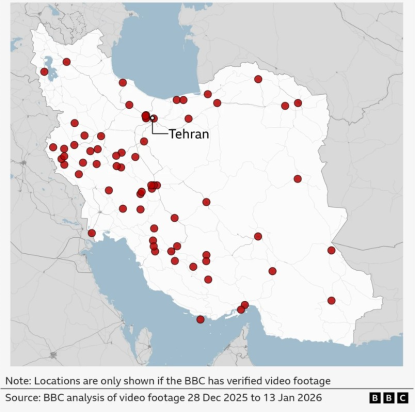
2.1.20 A RFE/RL article published on 15 January 2026 stated: ‘Iran has witnessed the biggest protests against the country’s clerical rulers since the Islamic Revolution in 1979.’[footnote 68]
2.2.21 The below graph, which shows the number of recorded protests in Iran by date, was produced by CPIT using data recorded and published by ISW and CTP in their ‘Iran Updates’ between 30 December 2025 and 17 January 2026, the last date that it recorded no protests to have taken place[footnote 69]:
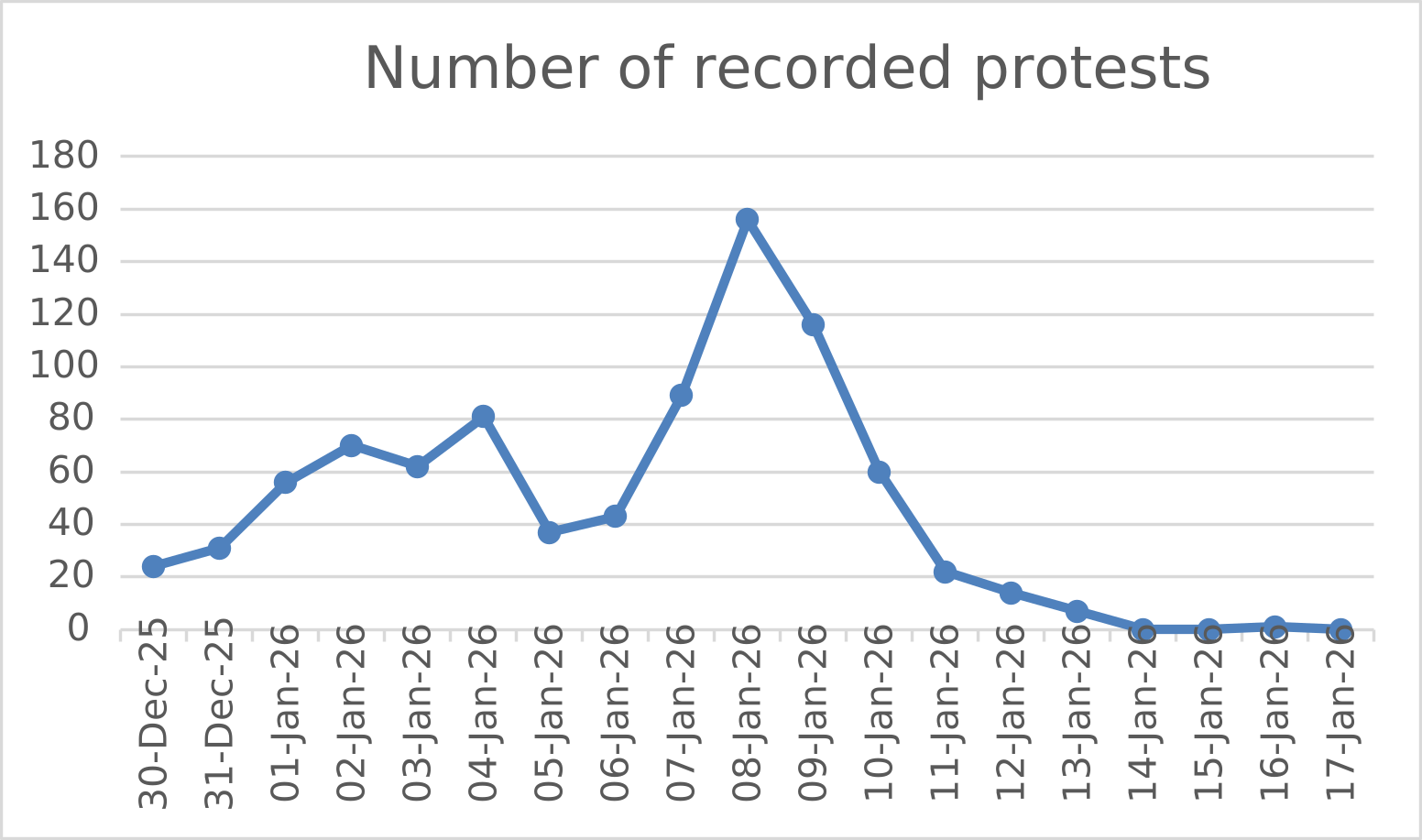
2.2.22 The above graph shows an overall increase in the number of protests in Iran from late December 2025 until a spike, and the peak of the protests, on 8 January 2025. The graph shows that the peak was followed by a sharp decrease between 9 and 11 January 2026, tailing off to zero protests from 14 January 2026 (with one isolated protest recorded to have occurred on 16 January 2026). It should be noted that in some of its updates, ISW and CTP noted that protests are likely to have occurred beyond what was recorded, due to the limiting of information by the Iranian authorities (see Communications blackout). [footnote 70] [footnote 71]
For maps showing the locations of the recorded protests, see the ISW and CTP Iran updates published from 29 December 2025 to 13 January 2026, and on 16 January 2026.
2.2.23 By 21 January 2026, BBC News reported that BBC Verify had tracked the protests to have taken place across 71 towns and cities, though it again noted that the true number of areas was likely much higher.[footnote 72]
2.2.24 HRANA’s update of 27 January 2026 included aggregated statistics up to the end of that day (the 31st day since the protests began). HRANA noted there had been 656 gatherings or protests across 201 cities (without duplication), in all 31 provinces.[footnote 73]
2.3 End of the protests
2.3.1 A BBC News article published on 12 January 2026 stated: ‘Iran’s Foreign Minister Abbas Araghchi told diplomats in Tehran today that “the situation is now under total control”. Outside, in the bright light of day, the streets of Tehran were filled with the crowds the government called on to come out and reclaim the streets from protesters.’[footnote 74]
2.3.2 The ISW and CTP Iran updates of 12 and 13 January 2026 noted that it recorded 14 protests across 6 provinces on January 12[footnote 75] and 7 protests across 6 provinces on 13 January 2026.[footnote 76]
2.3.3 The information provided by the ISW and CTP was broadly consistent with information provided in an RFE/RL article published on 13 January 2026, which stated that a ‘… doctor in southern Iran said the protests have “died down” …’[footnote 77]
2.3.4 A BBC News article, updated on 14 January 2026, stated:
On 14 January [2026], Araghchi’s ministry cited him as telling his counterpart from the United Arab Emirates that “calm has prevailed (in Iran) thanks to the vigilance of the people and law enforcement forces”. His comments echoed those of the Supreme Leader, Ayatollah Ali Khamenei, who had told supporters at state-organised rallies across the country on 12 January [2026] that they had “neutralised the plans by foreign enemies that were meant to be performed by domestic mercenaries”.[footnote 78]
2.3.5 Citing information provided to BBC Persian by a person living near Tehran with access to the Starlink satellite service, a BBC News article published on 14 January 2026, in the immediate aftermath of the protests, stated that, ‘… there were “checkpoints in every block”, where cars and the phones of their occupants were being inspected by security forces.’[footnote 79]
2.3.6 The ISW and CTP Iran update of 15 January 2026 stated: ‘An individual in Tehran … told a Paris-based journalist on January 15 [2026] that the regime has deployed tanks in Tehran. CTP-ISW has not observed any images or videos to corroborate this report …’[footnote 80]
2.3.7 The 16 January 2026 Al Jazeera article stated: ‘The streets of Tehran and other cities across the country have been relatively quiet in the aftermath of the deadly protests … There is a heavy presence of security forces on the streets, where countless checkpoints and armed patrols have been set up.’[footnote 81]
2.3.8 The BBC News article published on 16 January 2026 stated:
Iran’s regime has treated these protests as an existential threat. Its crackdown [see State treatment] seems to be working, and protesters are now thought to be largely staying at home, for fear of being shot or arrested … But several people … [at the Bashmaq border crossing between Iran and Iraqi Kurdistan] told us that demonstrations had continued, at least into this week [commencing 12 January 2026] … The BBC has seen no hard evidence that street protests are still continuing.[footnote 82]
2.3.9 The ISW and CTP Iran update of 16 January 2026 stated: ‘There are reports of a new protest in Zahedan, Sistan and Baluchistan Province, on January 16 [2026]. Protest activity in Zahedan is unique and may not reflect a resurgence in protest activity across Iran, however. A small group of protesters reportedly chanted anti-regime slogans, such as “Khamenei is a murderer” and “his rule is invalid.”’[footnote 83]
2.3.10 The BBC News article published on 17 January 2026 stated: ‘There have been fewer reports of unrest in recent days but with internet access still restricted developments on the ground remain unclear. A woman in Shiraz, south-western Iran, told BBC Persian that “security forces are still patrolling on motorbikes to keep the situation under control, but overall things have gone back to normal”.’[footnote 84]
2.3.11 The ABC News article stated:
An extraordinarily violent crackdown by Iranian security forces [see Use of force, injuries and deaths] appears to have succeeded for now in driving protesters from the streets, according to activists and analysts who managed to speak with people inside the country despite the information blackout … [P]eople describe an eerie calm over Iran’s cities, where heavily armed security forces are deployed on the streets enforcing what many are describing as a de-facto curfew. ‘“Unfortunately, the crackdown has been so severe the protests have pretty much come to a halt,” … [a Washington DC-based Iranian activist] told ABC News on Thursday [15 January 2026]. “There are security forces everywhere - there is a state of fear,” [he] said …[footnote 85]
2.3.12 While the ABC News article reported that the protests had largely been ‘quelled’ over the days up to 19 January 2026, it also stated that, ‘… in the past few days there are still signs of dissent - people were heard chanting anti-regime slogans from windows. In some neighborhoods groups of youths have also gathered and shouted slogans, before quickly fleeing when security forces arrive.’[footnote 86]
2.3.13 The ISW and CTP Iran updates of 14, 15 and 17 January 2026 all recorded zero protests, and no further protests have been reported by ISW and CTP in their Iran updates since 18 January 2026 (as of their most recent update, published on 28 January 2026).[footnote 87]
3. State treatment
3.1 State rhetoric
3.1.1 An article published by RFE/RL on 31 December 2025 stated: ‘Iran’s prosecutor-general said on December 31 [2025] that while the protests gripping the country were legitimate, any attempt to create insecurity would be met with a “decisive response.”.’[footnote 88]
3.1.2 The BBC News article published on 6 January 2026 stated: ‘Iran’s judiciary chief, Gholamhossein Mohseni Ejei, said authorities … would “deal firmly with those who seek to exploit the situation, incite riots, and undermine the security of the country and the people”. The powerful Islamic Revolutionary Guards Corps (IRGC) has also issued warnings to protesters in Lorestan province that they will no longer tolerate street gatherings.’[footnote 89]
3.1.3 The HRW article of 6 January 2026 stated: ‘As during previous protests, authorities, including senior officials, have vilified protesters by labeling them as “rioters” and threatened a harsher response if they continue to take to the streets. On January 3 [2026], Ali Khamenei, Iran’s supreme leader, said: “There is no use in talking to rioters; rioters must be put in their place.”’[footnote 90]
3.1.4 The New York Times article of 8 January 2026 stated:
Ebrahim Azizi, the head of the Parliament’s national security and foreign policy committee, said in a post on social media that … Israel … was behind the protests … As the protest movement has spread to cities across the country, the head of Iran’s judiciary, Gholam-Hossein Mohseni-Eje’i, told Iranian media that the protests were plotted by the country’s enemy and the government would show no mercy. “This time it’s different. This time there are no excuses left,” he said. “The enemy has officially announced its support. I tell the people and the families that this time no one will be spared.”[footnote 91]
3.1.5 An article published on 9 January 2026 by RFE/RL stated: ‘Tehran’s prosecutor Ali Salehi described protesters who burn public property and clash with security forces as “terrorists” who will be charged with “moharebeh,” or waging war against God, which can carry the death penalty.’[footnote 92]
3.1.6 An article published by RFE/RL on 11 January 2026 stated: ‘Supreme Leader Ayatollah Ali Khamenei - the ultimate power in the country - addressed supporters of the regime on January 9 [2026], saying that “saboteurs, agitators” had “destroyed the country’s buildings to please” [US President, Donald] Trump.’[footnote 93]
3.1.7 A BBC News article published on 12 January 2026 stated: ‘Legal language has … hardened in this time – “vandals” will be charged with “waging war against God” and face the death penalty.’[footnote 94]
3.1.8 The CNN World article of 13 January 2026 stated: ‘The increasingly paranoid government now frames the latest wave of domestic unrest as the “thirteenth day of war” with Israel, painting protesters as foreign agents that need to be “dealt with.”.’[footnote 95]
3.1.9 The ISW and CTP Iran update of 14 January 2026 stated: ‘The regime has abandoned any effort it made in the beginning of this protest movement to distinguish between legitimate economic protests and illegitimate anti-regime protests. Iranian media and officials, including those who expressed sympathy for protesters in the beginning of this protest movement, are categorically describing protesters as “terrorists.”’[footnote 96]
3.1.10 The 16 January 2026 Al Jazeera article stated:
The state continues to send many one-way text messages to people across the country daily, urging them not to fall victim to ploys by “enemies” and to report any suspicious activity … [O]fficials claim “terrorists” and “elements” trained and armed by the US, Israel and their allies are behind all of the mass killings as well as the “riots” that saw government buildings attacked, and public property burned across the country.
… The government has also organised massive counter-demonstrations across the country during the past several days and has held public funerals for the killed security forces in many cities, including Tehran.
.State television has referred to those participating in these displays “the real people of Iran” while Supreme Leader Ayatollah Ali Khamenei proclaimed that Iranians participating in state-organised demonstrations “diffused the plot by foreign enemies that was to be implemented by local mercenaries”.
… In his first interview with state television early this week to address the people after the protests, President Masoud Pezeshkian chose to focus on condemning violent “terrorists” and engaging in economic reform, making no mention of the fact that the entire country remained gripped by a state-imposed digital blackout.[footnote 97]
3.1.11 HRANA’s update of 27 January 2026 stated: ‘Official authorities have attempted to focus attention on the damages caused by the protests … At the same time, the government spokesperson, Fatemeh Mohajerani, referred to “collective mourning” and the state’s responsibility toward those affected, while also stressing a distinction between “legitimate protesters” and “deviant currents.” Such formulaic statements have repeatedly been used by state institutions to justify their conduct in suppressing protesters.’[footnote 98]
3.2 Use of force, injuries and deaths/extra-judicial killings
3.2.1 The RFE/RL article, published on 29 December 2025, stated: ‘Videos showed clashes with security forces using batons and tear gas.’[footnote 99]
3.2.2 An article published on 1 January 2026 by RFE/RL stated: ‘Domestic news agencies and international rights groups on January 1 [2026] reported at least six deaths related to the protests.’[footnote 100]
3.2.3 Numerous reports were made of a rising number of protester deaths over the following days[footnote 101] [footnote 102] [footnote 103] [footnote 104] [footnote 105] [footnote 106] [footnote 107] and the ISW and CTP Iran update of 2 January 2026 stated: ‘The protests in Iran have become more violent since January 1 [2026], primarily in less populated and more rural areas.’[footnote 108]
3.2.4 The BBC News article published on 6 January 2026 stated: ‘While the latest response by police and security forces initially appeared to be more restrained, verified footage has shown officers ramping up the use of force since Saturday [3 January 2026]. This change in approach coincided with Supreme Leader Ayatollah Ali Khamenei’s first public reaction to the protests on that day, in which he said that “rioters must be put in their place”.’[footnote 109] For more information on the public reactions of Iranian officials, see State rhetoric.
3.2.5 The HRW article of 6 January 2026 stated: ‘Reports by the media and Iranian human rights organizations show that security forces have used lethal force, including military grade weapons and metal pellets fired from shotguns, as well as tear gas and batons against unarmed protesters. Violent repression has included security force raids on Imam Khomeini Hospital in Ilam on January 4 and 5 [2026] in an apparent attempt to arrest injured protesters and confiscate the bodies of those killed.’[footnote 110]
3.2.6 An article jointly published by Amnesty International (AI) and HRW on 8 January 2026 claimed they had:
… found that protesters have been largely peaceful. While the organizations have reviewed some footage and reports indicating that some protesters have engaged in acts of violence, in all the incidents of shootings investigated by the organizations, there was no imminent threat to life or serious injury justifying the use of firearms.
… The organizations documented large-scale harm from the widespread use of metal pellets fired from shotguns, including head and eye injuries, as well as injuries caused by beatings and gunfire from rifles.
… The organizations found that the presence of security forces at hospitals has deterred many injured protesters from seeking medical care, increasing the risk of death.[footnote 111]
3.2.7 The BBC News article, updated on 9 January 2026, stated: ‘On Wednesday [7 January 2026], there were violent clashes between protesters and security forces in several cities and towns in western Iran, as well as other regions. [Norway-based monitor, Iran Human Rights] IHR said it had been the deadliest day of the unrest, with 13 protesters confirmed to have been killed across the country.’[footnote 112]
3.2.8 Citing the Director of IHR, Mahmood Amiry-Moghaddam, the same BBC News article stated: ‘“The evidence shows that the scope of crackdown is becoming more violent and more extensive every day,” …’[footnote 113]
3.2.9 The RFE/RL article published on 13 January 2026 stated: ‘… [E]yewitness accounts have emerged that suggest the state is waging one of its deadliest-ever crackdowns on street protesters … [after] the authorities launched a large-scale crackdown in major cities, including in Tehran, on January 8 and 9 [2026].’[footnote 114]
3.2.10 The same RFE/RL article stated ‘… Iranian security forces have used brute force, including firing live ammunition at protesters, according to videos verified by RFE/RL and testimony from eyewitnesses. Hospitals across Iran have been flooded with the dead and wounded, according to doctors and nurses … Human rights organizations have documented the use of metal pellets fired from shotguns, with security forces deliberately targeting the eyes and heads of protesters.’[footnote 115]
3.2.11 The 10 January 2026 BBC News article stated: ‘Staff at several hospitals in Iran have told the BBC their facilities are overwhelmed with dead or injured patients, as major anti-government protests continue … A hospital worker in Tehran described “very horrible scenes”, saying there were so many wounded that staff did not have time to perform CPR.’[footnote 116]
3.2.12 The RFE/RL article published on 11 January 2025 stated: ‘With the blackout now lasting more than 48 hours [see Communications blackout] there is no precise information about the number of people killed, injured, or detained across the country with widespread fears that the cut is being used to hide state violence against protesters.’[footnote 117]
3.2.13 A BBC News article, updated on 12 January 2026, stated: ‘… [F]ootage authenticated by BBC Persian and BBC Verify confirms that Iran’s security officers have been shooting at gatherings of protesters in several areas. They include Tehran, the western Kermanshah province, and the southern Bushehr region. Multiple verified videos filmed in the centre of the western city of Ilam last weekend also show security forces firing shots towards Imam Khomeini Hospital, where protesters were holding a rally.’[footnote 118]
3.2.14 A BBC News article published on 12 January 2026 stated: ‘Those who have given accounts to BBC Persian say … the death toll reported by international media so far only represents a fraction of their own estimates … Some local sources and eyewitnesses report very high numbers of people killed across different cities, ranging from several hundreds to thousands.’[footnote 119]
3.2.15 Another BBC News article published on 12 January 2026 stated: ‘Doctors’ accounts of hospitals overwhelmed by casualties, grim videos of open-air mortuaries dotted by long lines of black body bags, voice notes sent to journalists at the BBC Persian Service expressing shock and fear … The government doesn’t deny the bloodshed; state TV is also airing images of makeshift mortuaries, even admitting some protesters have been killed.’[footnote 120]
3.2.16 The 13 January 2026 Iran International article stated:
After cross-checking information obtained from reliable sources, including the Supreme National Security Council and the presidential office, the initial estimate by the Islamic Republic’s security institutions is that at least 12,000 people were killed in this nationwide killing.
From Sunday [11 January 2026], the volume of evidence and the convergence of accounts reached a point where a relatively accurate assessment became possible.
… Based on these reviews, we have concluded that:
In the largest killing in Iran’s contemporary history – carried out largely over two consecutive nights, Thursday and Friday, January 8 and 9 [2026] – at least 12,000 people were killed.
In terms of geographic scope, intensity of violence, and the number of deaths in a short time span, this killing is unprecedented in Iran’s history.
Based on information received, those killed were mainly shot by forces of the Islamic Revolutionary Guard Corps and the Basij.
This killing was fully organized, not the result of “sporadic” and “unplanned” clashes.
Information received from the Supreme National Security Council and the presidential office indicates that the killing was carried out on the direct order of Ali Khamenei, with the explicit knowledge and approval of the heads of all three branches of government, and with an order for live fire issued by the Supreme National Security Council.
Many of those killed were young people under the age of 30.
… It is clear that, under a communications blockade and without direct access to information, confirming a final figure will require further, detailed documentation.
Experience in recent years shows that security institutions have consistently withheld information and avoided recording and announcing accurate figures for those killed.[footnote 121]
3.2.17 The 13 January 2026 CBS News article stated:
A source inside Iran who was able to call out told CBS News on Tuesday [13 January 2026] that activist groups working to compile a full death toll from the protests, based on reports from medical officials across the country, believed the toll was at least 12,000, and possibly as high as 20,000 … CBS News has not been able to independently verify the massive death toll indicated by the source, which is some many times larger than the numbers reported by most activist groups independently in recent days — though those groups have always made it clear that their tallies are likely underestimated.[footnote 122]
3.2.18 The same article noted that some sources estimated that approximately 2,000 people had been killed since the start of the protests, though it also stated: ‘… Even the lower death toll … if confirmed, would surpass any officially reported casualty figure from past anti-regime protests in Iran since the 1979 Islamic Revolution …’[footnote 123]
3.2.19 In an undated article, Sky News stated:
Human rights organisations estimate that thousands have died, with some of the dead being verified through videos from morgues … showing hundreds of body bags, some with names written on them … Most of the deaths we have verified happened on 8 January [2026] - the day the internet was shut off. And people have been killed at protests all over the country … In almost all the cases we have reviewed, it’s clear that the vast majority of victims were killed by gunfire. But our reporting also reveals inconsistencies in how the regime is officially recording how they died.[footnote 124]
3.2.20 A BBC News article, updated on 14 January 2026, stated: ‘Authorities have cracked down violently. A range of weapons including water cannon, rubber bullets and live ammunition have been reportedly used against protesters. Medics said hospitals were “overwhelmed” with dead and injured.’[footnote 125]
3.2.21 On 14 January 2026, AI published an article which stated:
According to evidence gathered by Amnesty International, security forces positioned on the streets and rooftops, including of residential buildings, mosques and police stations, have repeatedly fired rifles and shotguns loaded with metal pellets, targeting unarmed protesters frequently in their heads and torsos … The evidence gathered by Amnesty International [which included the analysis of dozens of videos and photographs, text and voice messages shared by human rights defenders and journalists outside Iran, and other ‘informed sources’ both inside and outside Iran] points to a coordinated nationwide escalation in the security forces’ unlawful use of lethal force against mostly peaceful protesters and bystanders since the evening of 8 January [2026] … According to video analysis and eyewitness accounts, security forces involved in the deadly crackdown include the Islamic Revolutionary Guard Corps (IRGC), including its Basij battalions, and various divisions of Iran’s police force, known by its Persian acronym FARAJA, as well as plain-clothes agents[footnote 126]
3.2.22 The same AI article referred to eyewitness accounts of security forces in the Razavi Khorasan province having used stun grenades and tear gas against protesters, including having fired tear gas inside people’s homes.[footnote 127]
3.2.23 An RFE/RL article published on 15 January 2026 stated:
A journalist inside Iran who managed to send a report to RFE/RL’s Radio Farda on January 13 [2026] said a taxi driver they talked to spoke of security forces attacking medical centers, kidnapping wounded protesters, and killing those who could not be transported. His claims could not be independently verified by RFE/RL, but they do match up with human rights sources and other reports from inside the country about the severity of the crackdown on the protests and the “mass killing” of protesters.[footnote 128]
3.2.24 The Al Jazeera article, published on 16 January 2026, reported that the December 2025 / January 2026 wave of protests have ‘almost certainly’ been the most deadly in recent years.[footnote 129]
3.2.25 An article published by HRW on 16 January 2026 which cited witness accounts and verified footage, including from morgues and cemeteries, referred to the ‘… the state’s heavily militarized response to the protests in Tehran on January 8, 9, and 10 [2026]’ and the ‘… wide-scale, unjustified use of lethal force resulting in mass killings of protesters and bystanders …’ in several provinces in Iran.[footnote 130]
3.2.26 The BBC News article published on 17 January 2026 stated: ‘Iran’s supreme leader has for the first time publicly acknowledged that thousands of people were killed during recent protests. In a speech on Saturday [17 January 2026], Ayatollah Ali Khamenei said thousands had been killed, “some in an inhuman, savage manner”, and blamed the US for the deaths.’[footnote 131]
3.2.27 The RFE/RL article of 17 January 2026 stated: ‘Eyewitnesses and medical professionals speaking to RFE/RL’s Radio Farda describe hospitals overwhelmed by patients suffering from severe gunshot wounds, particularly to the head, eyes, chest, and abdomen.’[footnote 132]
3.2.28 A Reuters article, published on 19 January 2026, stated: ‘An Iranian official in the region said on Sunday [18 January 2026] the authorities had verified at least 5,000 people had been killed in protests in Iran, including about 500 security personnel … The official, who declined to be named due to the sensitivity of the issue, also told Reuters some of the heaviest clashes and highest number of deaths were in the Iranian Kurdish areas in northwest Iran … “The final toll is not expected to increase sharply,” the official said …’[footnote 133]
3.2.29 The ABC News article stated:
There are … allegations that during the mass killing, some severely injured protesters were removed from hospitals and executed, according to activists and analysts. The accusations are based on videos that show bodies still intubated or with catheters, but with bullet wounds to the head.
Reviewing the pictures of the bodies … an Iranian doctor, told ABC News that hospitals in Iran never send a body to the morgue without removing all medical tools and devices.
The Toronto-based Iranian doctor said that he had been in touch with doctors inside the country who reported security forces had raided hospitals and taken injured protesters.
Their accounts match videos verified by ABC News that shows security forces raiding hospitals in Ilam, a city in west Iran, during the early days of the protests.[footnote 134]
3.2.30 HRANA’s update of 27 January 2026 stated:
According to the latest aggregated data compiled by HRANA as of the end of the thirty-first day since the start of the protests, the total number of confirmed deaths has reached 6,221. Of these, 5,858 were protesters, 100 were children under the age of 18, 214 were forces affiliated with the government, and 49 were non-protester civilians. The number of deaths still under investigation has been reported as 17,091 … The number of severely injured individuals stands at 11,017 …[footnote 135]
3.3 Arrests, detentions and charges
3.3.1 The RFE/RL article published on 1 January 2026 stated: ‘Dozens of arrests were reported during the protests, although numbers could not immediately be determined. Iranian news agencies said that 30 people were detained in Tehran for “disturbing public order.” Iranian authorities have yet to confirm the reports and RFE/RL’s Radio Farda could not independently verify them.’[footnote 136]
3.3.2 Reports of a rising number of arrests were made over the following days, with HRW reporting on 6 January 2026 that ‘… authorities have arrested and detained over a thousand people, including children as young as 14’[footnote 137], and BBC News reporting on the same date over 2,000 people arrested during the unrest (according to HRANA).[footnote 138]
3.3.3 The HRW article published on 6 January 2026 also stated: ‘Torture and enforced disappearance have been reported.’[footnote 139] However, it did not provide any further information regarding the extent to which this was reported or may have occurred.
3.3.4 The joint AI and HRW article, published on 8 January 2026, stated:
Security forces have arbitrarily arrested hundreds of protesters, including children as young as 14, during protest dispersals and nightly raids on homes. Some were taken from hospitals.
The authorities subjected many to enforced disappearance and incommunicado detention, placing them at risk of torture and other ill-treatment.
The authorities have already broadcast coerced “confessions” of detainees. On 5 January 2026, Tasnim News, affiliated with the IRGC, aired “confessions” of an 18-year-old woman and 16-year-old girl, accusing them of “leading riots”.[footnote 140]
3.3.5 An article that was updated by RFE/RL on 13 January 2026, referring to the judiciary making indictments against protesters, stated: ‘Serious cases, including those charged with “waging war against God,” an offense subject to the death penalty under Islamic law in Iran, would be prioritized, the [Tasnim news] agency [which is close to the IRGC[footnote 141] [footnote 142]] said.’[footnote 143]
3.3.6 The CNN World article of 13 January 2026, referring to a video distributed by Iranian police, stated: ‘… [F]ootage showed a drone operator peering into residential windows to identify people chanting “death to the dictator,” followed by scenes of security officials marking buildings with warning stickers, and in some cases, arresting residents.’[footnote 144]
3.3.7 The 13 January 2026 CBS News article, citing a source inside Iran, stated: ‘… [S]ecurity forces were visiting the many private hospitals across Tehran, threatening staff to hand over the names and addresses of those being treated for injuries sustained in the protests.’[footnote 145]
3.3.8 A BBC News article published on 14 January 2026 stated: ‘… Iran’s judiciary denied reports … [that a] 26-year-old [Erfan Soltani, a man arrested in connection with the protests in Iran, see also paragraphs 3.4.1 to 3.4.5] was sentenced to death. Instead, the judiciary said Soltani faced security-related charges carrying prison terms only.’[footnote 146]
3.3.9 A BBC News article published on 15 January 2026 stated: ‘… [A]rrests have continued across the country. Security forces and Revolutionary Guard intelligence units have detained activists, lawyers, and ordinary citizens.’[footnote 147]
3.3.10 The RFE/RL article of 17 January 2026 stated:
Eyewitnesses and medical staff … reported a heavy security presence at hospitals, with armed forces restricting access and, in some cases, detaining patients before treatment was completed. Iranian Foreign Minister Abbas Araqchi acknowledged on January 11 [2026] that some wounded individuals had been “finished off” by what he called “terrorists,” not security forces. Doctors warn that many injured protesters remain in hiding, avoiding hospitals out of fear of arrest. Untreated gunshot wounds and infections, they say, place these individuals at serious risk of death …[footnote 148]
3.3.11 The ISW and CTP Iran update of 18 January 2026 stated: ‘The regime is conducting a large-scale arrest campaign following the protests …’[footnote 149]
3.3.12 The ABC News article of 19 January 2026, referring to the numbers of people reported by HRANA to have, at that time, been reported arrested since the protests began (24,669 including 2,107 injured protesters with serious wounds)[footnote 150], stated: ‘There are fears the arrests are just beginning as the regime moves to round up protesters, activists and independent analysts told ABC News. Injured people are frightened to visit hospitals or clinics because security officers are waiting for them there, according to [a Washington DC-based Iranian activist]’.[footnote 151]
3.3.13 An article published by HRANA on 21 January 2026 provided several individual examples of protesters who were reported by state media to have been arrested for setting fire to buildings in Qom, Sabzevar and Shahreza. The article stated: ‘In these reports, videos of the “confessions” of two of the detainees were published, although it remains unclear under what circumstances they were recorded.’[footnote 152]
3.3.14 The same HRANA article also stated: ‘In another report, the state broadcaster announced the arrest of 162 citizens by security forces in the cities of Shiraz, Marvdasht, Kovar, Kazerun, Nourabad, Pasargad, Abadeh, Fasa, Darab, and Neyriz. This report has accused the detained individuals of damaging banks and government centers and property, including municipal buildings. These reports do not mention the identities of the detainees or their place of detention.’[footnote 153]
3.3.15 The 22 January 2026 HRANA article reported the arrest of 11 people over ‘recent days’ in connection with the nationwide protests, including a lawyer in Shiraz, a 16-year-old teenager in Yasuj, and a student activist.[footnote 154] The article stated: ‘These citizens were transferred to undisclosed locations after their arrest.’[footnote 155] The same article noted there had been no information about the status or condition of a teacher from Izeh who was arrested more than 3 weeks prior, nor about several other individuals who had been detained for more than 2 weeks in the cities of Dehgolan and Ilam.[footnote 156]
3.3.16 Another HRANA article, also published on 22 January 2026, stated: ‘According to Tasnim News Agency, 33 citizens, described as “active leaders affiliated with monarchist groups on Instagram and Telegram,” who had issued calls on January 6, 2026, were arrested. It is also claimed that these individuals had formed 50 groups and teams in Kerman, Rafsanjan, and Sirjan, and that judicial cases have been opened against 125 people linked to these groups.’[footnote 157]
3.3.17 The same HRANA article also referred to IRIB, Iran’s state broadcaster, having published ‘vidoes of forced confessions’ of a further 7 individuals in Abadan and Tehran, arrested for having set fire to police stations.[footnote 158]
3.3.18 A BBC News article published on 23 January 2026 stated: ‘According to several health workers who spoke to the BBC, hospitals are monitored and controlled by security forces, and people with gunshot wounds in Isfahan are being arrested.’[footnote 159]
3.3.19 HRANA’s update of 27 January 2026 stated: ‘The total number of arrests has reached 42,324 … and 261 cases of forced confessions being broadcast have been recorded. Additionally, 11,026 people have been summoned to security institutions.’[footnote 160]
3.3.20 The same HRANA updated stated:
Aggregated reports from the days following the nationwide protests indicate that the wave of arrests and security crackdowns has continued across various cities, remaining scattered yet widespread … [The] geographic spread, alongside the large number of cases, points to the continuation of a pattern of “post-event cleansing” (arrests carried out after street protests subside) aimed at controlling social networks and local environments.
On a broader scale, reports have emerged of the arrest of 224 citizens, the majority of whom were detained in Qazvin. According to these reports, 219 individuals were arrested under the label of “leaders of the protests,” with additional cases reported in Qarchak and Shahroud. Alongside the arrests, there is also evidence of the detention of injured protesters, including reports indicating that some individuals were arrested while their medical treatment had not yet been completed, a pattern of conduct that violates the most fundamental human rights, including the right to medical care.
The holding of the “first court hearing related to the January protests” in Malard is regarded as the starting point of a broad series of trials. In this case, the subject of the court session was announced as the death of a FARJA (Law Enforcement Command) officer, and images from the hearing were also published. [A named man] has been introduced as the primary defendant in the case. The conduct of the trial, including statements by the court-appointed lawyer made against the interests of the defendant, has prompted criticism from human rights organizations over the lack of fair trial standards. This case also involves another defendant.[footnote 161]
3.3.21 The HRANA update also referred to the reported arrests of several healthcare workers for providing aid to injured protesters and the threatening of others with accusations such as ‘helping injured individuals escape from the hospital’.[footnote 162]
3.4 Death sentences and executions
3.4.1 The article that was updated by RFE/RL on 13 January 2026 stated: ‘… [R]ights groups said on January 13 [2026] that Iran is set to execute the first protester charged in the unrest. The groups, including Norway-based Iran Human Rights and Hengaw, quoted sources as saying that 26-year-old Erfan Soltani, charged with “waging war against God” due to his role in protests that have rocked the country since late last month, would be executed on January 14 [2026], six days after his arrest.’[footnote 163]
3.4.2 A BBC News article published on 14 January 2026 stated: ‘On Tuesday [13 January 2026], one of Soltani’s relatives told BBC Persian that a court had issued a death sentence “in an extremely rapid process, within just two days”.’[footnote 164]
3.4.3 However, the same BBC News article also stated: ‘A human rights group has said a man [Erfan Soltani] arrested in connection with protests in Iran has had his execution postponed, while the Iranian judiciary has denied reports he has been sentenced to death … according to information obtained through relatives, his execution was postponed.’[footnote 165]
3.4.4 A BBC News article dated 15 January 2026 stated:
Trump had earlier threatened “very strong action” against Iran if the government executed protesters, after reports emerged that a 26-year-old man who had been arrested during the height of the demonstrations [Erfan Soltani] had been sentenced to death.
… Speaking from the White House, Trump said his administration had been told “on good authority” that “the killing in Iran is stopping, and there’s no plan for executions”.
When questioned by a reporter, Trump said that “very important sources on the other side” had informed him of the developments, adding that he hoped the reports were true.[footnote 166]
3.4.5 A RFE/RL article published on 15 January 2026 stated: ‘Iran’s judiciary said on January 15 [2026] that the charges against Soltani, who is being held at the central penitentiary in the city of Karaj, do not carry a death sentence. The Iranian Judiciary Media Center said reports Soltani faced execution were “fabricated” and that he is charged with “gathering information and colluding against the country’s internal security and propaganda activities against the regime.”’[footnote 167]
3.4.6 The same RFE/RL article also stated: ‘On January 15 [2026], White House Press Secretary Karoline Leavitt said that “800 executions that were scheduled and supposed to take place” were halted.’[footnote 168]
3.4.7 The ABC News article, published on 19 January 2026, stated:
Trump applauded the Iranian regime for what he claims is the cancellation of over 800 scheduled hangings on Thursday [15 January 2026], according to what he said “are very important sources on the other side.” … The head of Iran’s judiciary, Gholamhossein Mohseni-Ejei, had suggested Wednesday [16 January 2026] that there would be expedited trials and executions for those who have been arrested in the nationwide protests. The Iranian government has yet to comment on Trump’s claim that the scheduled hangings have been halted.[footnote 169]
3.4.8 The RFE/RL article published on 19 January 2026 stated: ‘Trump … threatened to take “very strong action” if Iran hanged protesters amid reports of impending executions.’[footnote 170] It also stated: ‘He subsequently said he was holding off an attack after Iran had canceled 800 executions, although Tehran has not confirmed that number or said that hangings had been permanently called off. In response, Tehran’s hard-line rulers have renewed their hostile rhetoric and threatened to hand out the “severest punishments,” potentially including executions, against the protesters.’[footnote 171]
3.4.9 The ISW and CTP Iran update of 18 January 2026 noted that, as Iran carried out a large-scale arrest campaign in the aftermath of the protests, it was ‘… signaling its plans to execute some of the arrested.’[footnote 172]
4. Demonstrations in the UK
4.1.1 An article published by The Times of Israel on 4 January 2026 stated:
Members of the Iranian diaspora rallied in London on Saturday [3 January 2026] in support of protesters in Iran … Around 100 pro-democracy demonstrators gathered outside Downing Street for the rally organized by the Association of Anglo-Iranian Women in the UK, waving Iranian flags, chanting slogans and listening to speeches by speakers. A separate, similarly sized protest was held nearby in support of the late deposed Shah of Iran, Mohammad Reza Pahlavi, and his US-based son, Reza Pahlavi.[footnote 173]
4.1.2 The BBC News article, updated on 12 January 2026, stated: ‘In the UK, videos shared on social media appear to show protesters removing Iran’s flag from a balcony on its London embassy on both Saturday and Sunday [10 and 11 January 2026].’[footnote 174]
4.1.3 On 10 January 2026, The Guardian stated:
A protester has climbed on to the balcony of the Iranian embassy in central London and pulled down the country’s flag during an anti-regime demonstration. Social media footage appeared to show a man replacing the flag with the pre-Islamic revolution lion and sun flag, often used by opposition groups in the country. The Iranian embassy later posted a picture on its X account of the flag back in place with the caption “Iran’s flag is flying high”. The Metropolitan police said an estimated 500 to 1,000 people attended the protest on Saturday [10 January 2026] at its peak in Kensington.[footnote 175]
4.1.4 On 11 January 2026, The London Standard reported, of the protests on 10 January, that: ‘Protestors ordered for the [Iranian] embassy [in London] to be closed, branding it a “terrorist factory”. Images have emerged of people throwing things towards the embassy and protestors burning pictures of Iran’s supreme leader Ayatollah Ali Khamenei.’[footnote 176]
4.1.5 The article also stated: ‘Thousands of people joined a huge demonstration in London today [11 January 2026] protesting against the Iranian regime … The rally … started at the Iranian embassy in South Kensington before people walked to Whitehall to demand the [UK] government to be more involved.’[footnote 177]
4.1.6 An article published on 17 January 2026 by Sky News, quoting a Met Police spokesperson, stated: ‘… “During a protest at the Iranian embassy [in London] on Friday, 16 January [2026], a protester illegally accessed private property and climbed across multiple balconies on to the terrace of the embassy and removed its flag. An effort was made by a group of protesters to prevent his lawful arrest, and dispersal tactics were used by officers to ensure the safety of those concerned and prevent further disorder.’[footnote 178] The article noted that four police officers sustained minor injuries, while social media footage appeared to show that protesters were also hurt. A total of 14 people were arrested.[footnote 179]
4.1.7 For more information about sur place demonstrators, including their treatment on return to Iran, see Country Policy and Information Note, Iran: Social media, surveillance and sur place activities.
Research methodology
The country of origin information (COI) in this note has been carefully selected in accordance with the general principles of COI research as set out in the Common EU [European Union] Guidelines for Processing Country of Origin Information (COI), April 2008, and the Austrian Centre for Country of Origin and Asylum Research and Documentation’s (ACCORD), Researching Country Origin Information – Training Manual, 2024. Namely, taking into account the COI’s relevance, reliability, accuracy, balance, currency, transparency and traceability.
Sources and the information they provide are carefully considered before inclusion. Factors relevant to the assessment of the reliability of sources and information include:
- the motivation, purpose, knowledge and experience of the source
- how the information was obtained, including specific methodologies used
- the currency and detail of information
- whether the COI is consistent with and/or corroborated by other sources
Commentary may be provided on source(s) and information to help readers understand the meaning and limits of the COI.
Wherever possible, multiple sourcing is used and the COI compared to ensure that it is accurate and balanced, and provides a comprehensive and up-to-date picture of the issues relevant to this note at the time of publication.
The inclusion of a source is not, however, an endorsement of it or any view(s) expressed.
Each piece of information is referenced in a footnote.
Full details of all sources cited and consulted in compiling the note are listed alphabetically in the bibliography.
Bibliography
Sources cited
ABC (American Broadcasting Company) News, Bloody crackdown appears to have quelled Iran protests for now, 19 January 2026. Accessed: 22 January 2026
Al Jazeera, Iran in limbo: What’s next for country under internet blackout?, 16 January 2026. Accessed: 22 January 2026
Amnesty International (AI), Iran: Massacre of protesters demands global diplomatic action to signal an end to impunity, 14 January 2026. Accessed: 26 January 2026
Amnesty International (AI) and Human Rights Watch (HRW), Iran: Deaths and injuries rise amid authorities’ renewed cycle of protest bloodshed, 8 January 2026. Accessed: 27 January 2026
BBC Monitoring, Media Guide: Iran (accessed via subscription), 16 January 2025. Accessed: 2 February 2026
BBC News:
-
At least 36 people killed during Iran protests, rights group says, 6 January 2026. Accessed: 27 January 2026
-
Huge anti-government protests in Tehran and other Iranian cities, videos show, 8 January 2026. Accessed: 27 January 2026
-
‘I carried my wife’s body for an hour and a half’ - BBC hears stories of protesters killed in Iran, 14 January 2026. Accessed: 27 January 2026
-
‘I saw people getting shot’: Eyewitness tells of Iran protest crackdown, 23 January 2026. Accessed: 26 January 2026
-
Iran anti-government protests spread to majority of provinces, videos show, 6 January 2026. Accessed: 26 January 2026
-
Iran authorities demanding large sums for return of protesters’ bodies, BBC told, 15 January 2026. Accessed: 26 January 2026
-
Iran security force member killed during protests, officials say, updated 1 January 2026. Accessed: 27 January 2026
-
Iran supreme leader acknowledges thousands killed during recent protests, 17 January 2026. Accessed: 23 January 2026
-
Iran warns it will retaliate if US attacks, as hundreds killed in protests, updated 12 January 2026. Accessed: 27 January 2026
-
‘I was hit in the face by pellets’: Iranians on border describe violence and more protests, 16 January 2026. Accessed: 26 January 2026
-
Lyse Doucet: Iran’s rulers face biggest challenge since 1979 revolution, 12 January 2026. Accessed: 27 January 2026
-
More than 2,000 people reported killed at Iran protests as Trump says ‘help is on its way’, updated 14 January 2026. Accessed: 27 January 2026
-
Photos leaked to BBC show faces of hundreds killed in Iran’s brutal protest crackdown, 21 January 2026. Accessed: 27 January 2026
-
Protests spread across Iran for third day after currency hits record low, 30 December 2025. Accessed: 27 January 2026
-
Starlink reportedly made free in Iran - but protesters are taking huge risks by using it, 14 January 2026. Accessed: 27 January 2026
-
Tehran morgue videos show the brutality of Iran’s crackdown on protesters, 14 January 2026. Accessed: 27 January 2026
-
‘There wasn’t even time for CPR’: Iran medics describe hospitals overwhelmed with dead and injured protesters, 10 January 2026. Accessed: 27 January 2026
-
‘They just kept killing’: Eyewitnesses describe deadly crackdown in Iran, 12 January 2026. Accessed: 26 January 2026
-
Trump told ‘killing has stopped’ in Iran after violent protest crackdown, 15 January 2026. Accessed: 26 January 2026
-
Trump vows ‘very strong action’ if Iran executes protesters, 14 January 2026. Accessed: 26 January 2026
-
Who is Erfan Soltani, Iranian protester who reportedly had execution postponed?, 14 January 2026. Accessed: 26 January 2026
-
Why are there protests in Iran and what has Trump said about US action?, updated 14 January 2026. Accessed: 26 January 2026
CBS News, Over 12,000 feared dead after Iran protests, as video shows bodies lined up at morgue, 13 January 2026. Accessed: 23 January 2026
CNN World, Iran makes high-tech additions to its age-old playbook for crushing protests, 13 January 2026. Accessed: 23 January 2026
Ecoi.net:
-
Source description: Institute for the Study of War (ISW), 30 May 2023. Accessed: 28 January 2026
-
Source description: Critical Threats Project (CTP), 26 January 2023. Accessed: 28 January 2026
Institute for the Study of War (ISW) and the Critical Threats Project (CTP):
-
Iran Update, January 10, 2026, 10 January 2026. Accessed: 28 January 2026
-
Iran Update, January 11, 2026, 11 January 2026. Accessed: 28 January 2026
-
Iran Update, January 12, 2026, 12 January 2026. Accessed: 28 January 2026
-
Iran Update, January 13, 2026, 13 January 2026. Accessed: 28 January 2026
-
Iran Update, January 14, 2026, 14 January 2026. Accessed: 28 January 2026
-
Iran Update, January 15, 2026, 15 January 2026. Accessed: 28 January 2026
-
Iran Update, January 16, 2026, 16 January 2026. Accessed: 28 January 2026
-
Iran Update, January 18, 2026, 18 January 2026. Accessed: 28 January 2026
-
Iran Update, January 2, 2026, 2 January 2026. Accessed: 29 January 2026
-
Iran Update, January 7, 2026, 7 January 2026. Accessed: 28 January 2026
-
Iran Update, January 8, 2026, 8 January 2026. Accessed: 28 January 2026
-
Iran Update, January 9, 2026, 9 January 2026. Accessed: 28 January 2026
-
Research Library (Iran updates), no date. Accessed: 28 January 2026
Human Rights Activists News Agency (HRANA):
-
About Us, no date. Accessed: 22 January 2026
-
Arrest of 169 People in Various Cities Across Iran, 21 January 2026. Accessed: 22 January 2026
-
Iranian Authorities Brutally Repressing Protests, 6 January 2026. Accessed: 26 January 2026
-
Nationwide Protests: At Least 40 Citizens Arrested and Judicial Cases Opened Against 125 Others, 22 January 2026. Accessed: 22 January 2026
-
Nationwide Protests: Report on the Arrest of 11 Citizens, Including a Teenager, in Various Cities, 22 January 2026. Accessed: 22 January 2026
-
Thirty-First Day Since the Start of the Protests; Continued Internet Blackout, First Court Hearing Held, 27 January 2026. Accessed: 28 January 2026
Iran International:
-
About Us, no date. Accessed: 23 January 2026
-
At least 12,000 killed in Iran crackdown during internet blackout, 13 January 2026. Accessed: 23 January 2026
Media Bias / Fact Check, ABC News, no date. Accessed: 22 January 2026
Radio Free Europe/ Radio Liberty (RFE/RL):
-
About RFE/RL, no date. Accessed: 23 January 2026
-
A Boxer, A Truck Driver, And A Hip-Hop Artist: The Protesters Killed In Iran, 9 January 2026. Accessed: 27 January 2026
-
Behnam Ben Taleblu: Iran’s Mass Protests Are A ‘Social Revolution’ Against Clerical Rulers, 15 January 2026. Accessed: 26 January 2026
-
Bigger And Bolder: How Iran’s Protests Are Gaining Momentum, 8 January 2026. Accessed: 27 January 2026
-
Inside Iran, Activists Call For Internal Change, Not Foreign Intervention As Protests Rage On, 7 January 2026. Accessed: 27 January 2026
-
Iranian Doctor Says Security Forces ‘Shooting Inside’ Hospitals, 13 January 2026. Accessed: 27 January 2026
-
Iranian Doctors, Witnesses Describe Heavy Casualties After Protests, 17 January 2026. Accessed: 26 January 2026
-
Iranians Clash With Police During Second Day Of Protests Over Economic, Currency Woes, 29 December 2025. Accessed: 27 January 2026
-
Iran In ‘New Phase Of Turmoil’ As Protests Spread Beyond Capital, 30 December 2025. Accessed: 27 January 2026
-
Iran Is Still Offline. Will Access To The Global Internet Ever Be Restored?, 20 January 2026. Accessed: 27 January 2026
-
Iran Mulls Return Of Internet As Extent Of Deadly Crackdown Slowly Leaks Out, 19 January 2026. Accessed: 27 January 2026
-
Iranian Protester Recounts Security Forces ‘Shooting Directly’ At Crowds, 6 January 2026. Accessed: 27 January 2026
-
Iranian Protesters Remain On Streets As Trump Steps Up Pressure On Tehran, 11 January 2026. Accessed: 27 January 2026
-
Iran Protests Intensify Amid Rial Free Fall, Mounting Regional Tensions, 31 December 2025. Accessed: 27 January 2026
-
Several Protesters Reported Dead In Iran As Anger Builds Over Dismal Economy, 1 January 2026. Accessed: 27 January 2026
-
Trump Tells Iranian Protesters US Supports Them As Death Toll, Arrests Rise, 2 January 2026. Accessed: 27 January 2026
-
Trump Tells Iranians ‘Help On The Way’ As Death Toll In Protests Mounts, updated 13 January 2026. Accessed: 27 January 2026
-
Unrest In Iran Grows Despite Moves By Authorities To Stifle Dissent, 9 January 2026. Accessed: 27 January 2026
-
US Sanctions Iranian Officials Over Brutal Crackdown As Trump Says Killing Of Protesters Has Stopped, 15 January 2026. Accessed: 26 January 2026
Reporters Without Borders (RSF), Media blackout in Iran: journalists isolated and information stifled, 9 January 2026. Accessed: 27 January 2026
Reuters, Iranian official says verified deaths in Iran protests reaches at least 5,000, 19 January 2026. Accessed: 23 January 2026
Sky News:
-
How the Iran Uprising Unfolded and What Happened to the Victims of the Crackdown, no date. Accessed: 22 January 2026
-
‘Violent disorder’ at Iran’s London embassy leaves four police officers in hospital - with at least 14 arrested, 17 January 2026. Accessed: 28 January 2026
The Guardian, Protester pulls down national flag from Iranian embassy in London, 10 January 2026. Accessed: 28 January 2026
The New York Times, Iran Is Cut Off From Internet as Protests Calling for Regime Change Intensify, 8 January 2026. Accessed: 23 January 2026
The Times of Israel, ‘A turning point’: Iranian diaspora in UK rallies to support protesters in Iran, 4 January 2026. Accessed: 28 January 2026
Sources consulted but not cited
Al Jazeera, What is HRANA, the US-based group behind Iran’s death toll figures?, 15 January 2026. Accessed: 22 January 2026
Amnesty International, Iran: Internet shutdown hides violations in escalating deadly crackdown on protesters, 9 January 2026
BBC News, Trump warns US will intervene if Iran kills protesters, 2 January 2026. Accessed: 27 January 2026
Radio Free Europe/ Radio Liberty (RFE/RL):
-
‘Bodies Behind Every Car’: Witnesses Recount No-Mercy Killings In Iran’s Central Cities, 21 January 2026. Accessed: 27 January 2026
-
Iran Pushes Back At Trump As Protests Over Economic Crisis Intensify, 3 January 2026. Accessed: 27 January 2026
Version control and feedback
Clearance
Below is information on when this note was cleared:
- valid from 4 February 2026
Official – sensitive: Not for disclosure – Start of section
The information on this page has been removed as it is restricted for internal Home Office use.
Official – sensitive: Not for disclosure – End of section
Feedback to the Home Office
Our goal is to provide accurate, reliable and up-to-date COI and clear guidance. We welcome feedback on how to improve our products. If you would like to comment on this note, please email the Country Policy and Information Team.
Independent Advisory Group on Country Information
The Independent Advisory Group on Country Information (IAGCI) was set up in March 2009 by the Independent Chief Inspector of Borders and Immigration to support them in reviewing the efficiency, effectiveness and consistency of approach of COI produced by the Home Office.
The IAGCI welcomes feedback on the Home Office’s COI material. It is not the function of the IAGCI to endorse any Home Office material, procedures or policy. The IAGCI may be contacted at:
Independent Advisory Group on Country Information
Independent Chief Inspector of Borders and Immigration
3rd Floor
28 Kirby Street
London
EC1N 8TE
Email: chiefinspector@icibi.gov.uk
Information about the IAGCI’s work and a list of the documents which have been reviewed by the IAGCI can be found on the Independent Chief Inspector’s pages of the GOV.UK website.
-
RFE/RL, About RFE/RL, no date ↩
-
RFE/RL, Bigger And Bolder: How Iran’s Protests Are Gaining Momentum, 8 January 2026 ↩
-
The New York Times, Iran Is Cut Off From Internet as Protests … Intensify, 8 January 2026 ↩
-
RSF, Media blackout in Iran: journalists isolated …, 9 January 2026 ↩
-
RSF, Media blackout in Iran: journalists isolated …, 9 January 2026 ↩
-
RSF, Media blackout in Iran: journalists isolated …, 9 January 2026 ↩
-
RSF, Media blackout in Iran: journalists isolated …, 9 January 2026 ↩
-
CNN World, About CNN Worldwide, no date ↩
-
CNN World, Iran makes high-tech additions to … playbook for crushing protests, 13 January 2026 ↩
-
Iran International, At least 12,000 killed in Iran crackdown during internet blackout, 13 January 2026 ↩
-
Iran International, At least 12,000 killed in Iran crackdown during internet blackout, 13 January 2026 ↩
-
BBC News, Starlink reportedly made free in Iran …, 14 January 2026 ↩
-
RFE/RL, US Sanctions Iranian Officials Over Brutal Crackdown …, 15 January 2026 ↩
-
BBC News, Iran authorities demanding large sums for return of … bodies …, 15 January 2026 ↩
-
BBC News, ‘I was hit in the face by pellets’: Iranians on border describe …, 16 January 2026 ↩
-
Al Jazeera, Iran in limbo: What’s next for country under internet blackout?, 16 January 2026 ↩
-
BBC News, Iran supreme leader acknowledges thousands killed …, 17 January 2026 ↩
-
RFE/RL, Iran Mulls Return Of Internet As Extent Of Deadly Crackdown …, 19 January 2026 ↩
-
RFE/RL, Iran Is Still Offline. Will Access To The Global Internet … Be Restored?, 20 January 2026 ↩
-
HRANA, Thirty-First Day Since the Start of the Protests …, 27 January 2026 ↩
-
BBC News, Why are there protests in Iran and what has Trump said …?, updated 14 January 2026 ↩
-
The New York Times, Iran Is Cut Off From Internet as Protests … Intensify, 8 January 2026 ↩
-
RSF, Media blackout in Iran: journalists isolated …, 9 January 2026 ↩
-
BBC News, ‘They just kept killing’: Eyewitnesses describe deadly crackdown …, 12 January 2026 ↩
-
BBC News, Iran supreme leader acknowledges thousands killed …, 17 January 2026 ↩
-
CBS News, Over 12,000 feared dead after Iran protests …, 13 January 2026 ↩
-
BBC News, Why are there protests in Iran and what has Trump said …?, updated 14 January 2026 ↩
-
BBC News, Why are there protests in Iran and what has Trump said …?, updated 14 January 2026 ↩
-
BBC News, Starlink reportedly made free in Iran …, 14 January 2026 ↩
-
Al Jazeera, Iran in limbo: What’s next for country under internet blackout?, 16 January 2026 ↩
-
Ecoi.net, Source description: Institute for the Study of War (ISW), 30 May 2023 ↩
-
Ecoi.net, Source description: Critical Threats Project (CTP), 26 January 2023 ↩
-
ISW and CTP, Iran Update, January 18, 2026, 18 January 2026 ↩
-
ABC News, Bloody crackdown appears to have quelled Iran protests for now, 19 January 2026 ↩
-
BBC News, Photos leaked to BBC show faces of hundreds killed …, 21 January 2026 ↩
-
RFE/RL, Iranians Clash With Police During Second Day Of Protests …, 29 December 2025 ↩
-
BBC News, Iran anti-government protests spread to majority of provinces …, 6 January 2026 ↩
-
RFE/RL, Inside Iran, Activists Call For Internal Change …, 7 January 2026 ↩
-
CBS News, Over 12,000 feared dead after Iran protests …, 13 January 2026 ↩
-
RFE/RL, Iranian Doctors, Witnesses Describe Heavy Casualties After Protests, 17 January 2026 ↩
-
HRANA, Nationwide Protests: Report on the Arrest of 11 Citizens …, 22 January 2026 ↩
-
RFE/RL, Iran In ‘New Phase Of Turmoil’ As Protests Spread Beyond Capital, 30 December 2025 ↩
-
BBC News, Protests spread across Iran for third day after currency …, 30 December 2025 ↩
-
BBC News, Iran security force member killed during protests, officials say, updated 1 January 2026 ↩
-
ISW and CTP, Iran Update, January 2, 2026, 2 January 2026 ↩
-
RFE/RL, Iranian Protester Recounts Security Forces ‘Shooting Directly’ At Crowds, 6 January 2026 ↩
-
BBC News, Iran anti-government protests spread to majority of provinces …, 6 January 2026 ↩
-
BBC News, Iran anti-government protests spread to majority of provinces …, 6 January 2026 ↩
-
HRW, Iranian Authorities Brutally Repressing Protests, 6 January 2026 ↩
-
ISW and CTP, Iran Update, January 10, 2026, 10 January 2026 ↩
-
ISW and CTP, Iran Update, January 7, 2026, 7 January 2026 ↩
-
RFE/RL, Bigger And Bolder: How Iran’s Protests Are Gaining Momentum, 8 January 2026 ↩
-
ISW and CTP, Iran Update, January 10, 2026, 10 January 2026 ↩
-
ISW and CTP, Iran Update, January 8, 2026, 8 January 2026 ↩
-
BBC News, Huge anti-government protests in Tehran and other Iranian cities …, 8 January 2026 ↩
-
ISW and CTP, Iran Update, January 9, 2026, 9 January 2026 ↩
-
BBC News, … medics describe hospitals overwhelmed with dead and injured …, 10 January 2026 ↩
-
ISW and CTP, Iran Update, January 10, 2026, 10 January 2026 ↩
-
ISW and CTP, Iran Update, January 11, 2026, 11 January 2026 ↩
-
CBS News, Over 12,000 feared dead after Iran protests …, 13 January 2026 ↩
-
CNN World, Iran makes high-tech additions to … playbook for crushing protests, 13 January 2026 ↩
-
BBC News, Tehran morgue videos show the brutality of Iran’s crackdown …, 14 January 2026 ↩
-
BBC News, … Iranian protester who reportedly had execution postponed …, 14 January 2026 ↩
-
BBC News, … BBC hears stories of protesters killed in Iran, 14 January 2026 ↩
-
RFE/RL, … Iran’s Mass Protests Are A ‘Social Revolution’ Against Clerical Rulers, 15 January 2026 ↩
-
ISW and CTP, Research Library (Iran updates) , no date ↩
-
ISW and CTP, Iran Update, January 9, 2026, 9 January 2026 ↩
-
ISW and CTP, Iran Update, January 12, 2026, 12 January 2026 ↩
-
BBC News, Photos leaked to BBC show faces of hundreds killed …, 21 January 2026 ↩
-
HRANA, Thirty-First Day Since the Start of the Protests …, 27 January 2026 ↩
-
BBC News, Lyse Doucet: … rulers face biggest challenge since 1979 revolution, 12 January 2026 ↩
-
ISW and CTP, Iran Update, January 12, 2026, 12 January 2026 ↩
-
ISW and CTP, Iran Update, January 13, 2026, 13 January 2026 ↩
-
RFE/RL, Iranian Doctor Says Security Forces ‘Shooting Inside’ Hospitals, 13 January 2026 ↩
-
BBC News, Why are there protests in Iran and what has Trump said …?, updated 14 January 2026 ↩
-
BBC News, Trump vows ‘very strong action’ if Iran executes protesters, 14 January 2026 ↩
-
ISW and CTP, Iran Update, January 15, 2026, 15 January 2026 ↩
-
Al Jazeera, Iran in limbo: What’s next for country under internet blackout?, 16 January 2026 ↩
-
BBC News, ‘I was hit in the face by pellets’: Iranians on border describe …, 16 January 2026 ↩
-
ISW and CTP, Iran Update, January 16, 2026, 16 January 2026 ↩
-
BBC News, Iran supreme leader acknowledges thousands killed …, 17 January 2026 ↩
-
ABC News, Bloody crackdown appears to have quelled Iran protests for now, 19 January 2026 ↩
-
ABC News, Bloody crackdown appears to have quelled Iran protests for now, 19 January 2026 ↩
-
ISW and CTP, Research Library (Iran updates) , no date ↩
-
RFE/RL, Iran Protests Intensify Amid Rial Free Fall …, 31 December 2025 ↩
-
BBC News, Iran anti-government protests spread to majority of provinces …, 6 January 2026 ↩
-
HRW, Iranian Authorities Brutally Repressing Protests, 6 January 2026 ↩
-
The New York Times, Iran Is Cut Off From Internet as Protests … Intensify, 8 January 2026 ↩
-
RFE/RL, Unrest In Iran Grows Despite Moves By Authorities To Stifle Dissent, 9 January 2026 ↩
-
RFE/RL, Iranian Protesters Remain On Streets …, 11 January 2026 ↩
-
BBC News, Lyse Doucet: … rulers face biggest challenge since 1979 revolution, 12 January 2026 ↩
-
CNN World, Iran makes high-tech additions to … playbook for crushing protests, 13 January 2026 ↩
-
ISW and CTP, Iran Update, January 14, 2026, 14 January 2026 ↩
-
Al Jazeera, Iran in limbo: What’s next for country under internet blackout?, 16 January 2026 ↩
-
HRANA, Thirty-First Day Since the Start of the Protests …, 27 January 2026 ↩
-
RFE/RL, Iranians Clash With Police During Second Day Of Protests …, 29 December 2025 ↩
-
RFE/RL, Several Protesters Reported Dead In Iran As Anger Builds …, 1 January 2026 ↩
-
RFE/RL, Trump Tells Iranian Protesters US Supports Them …, 2 January 2026 ↩
-
HRW, Iranian Authorities Brutally Repressing Protests, 6 January 2026 ↩
-
BBC News, At least 36 people killed during Iran protests, rights group says, 6 January 2026 ↩
-
AI and HRW, Iran: Deaths and injuries rise …, 8 January 2026 ↩
-
RFE/RL, A Boxer, A Truck Driver, And A Hip-Hop Artist: The Protesters Killed …, 9 January 2026 ↩
-
RFE/RL, Iranian Protesters Remain On Streets …, 11 January 2026 ↩
-
BBC News, ‘They just kept killing’: Eyewitnesses describe deadly crackdown …, 12 January 2026 ↩
-
ISW and CTP, Iran Update, January 2, 2026, 2 January 2026 ↩
-
BBC News, Iran anti-government protests spread to majority of provinces …, 6 January 2026 ↩
-
HRW, Iranian Authorities Brutally Repressing Protests, 6 January 2026 ↩
-
AI and HRW, Iran: Deaths and injuries rise …, 8 January 2026 ↩
-
BBC News, Huge anti-government protests in Tehran and other Iranian cities …, 8 January 2026 ↩
-
BBC News, Huge anti-government protests in Tehran and other Iranian cities …, 8 January 2026 ↩
-
RFE/RL, Iranian Doctor Says Security Forces ‘Shooting Inside’ Hospitals, 13 January 2026 ↩
-
RFE/RL, Iranian Doctor Says Security Forces ‘Shooting Inside’ Hospitals, 13 January 2026 ↩
-
BBC News, … medics describe hospitals overwhelmed with dead and injured …, 10 January 2026 ↩
-
RFE/RL, Iranian Protesters Remain On Streets …, 11 January 2026 ↩
-
BBC News, Iran warns it will retaliate if US attacks …, updated 12 January 2026 ↩
-
BBC News, ‘They just kept killing’: Eyewitnesses describe deadly crackdown …, 12 January 2026 ↩
-
BBC News, Lyse Doucet: … rulers face biggest challenge since 1979 revolution, 12 January 2026 ↩
-
Iran International, At least 12,000 killed in Iran crackdown …, 13 January 2026 ↩
-
CBS News, Over 12,000 feared dead after Iran protests …, 13 January 2026 ↩
-
CBS News, Over 12,000 feared dead after Iran protests …, 13 January 2026 ↩
-
Sky News, How the Iran Uprising Unfolded and What Happened to the Victims …, no date ↩
-
BBC News, Why are there protests in Iran …?, updated 14 January 2026 ↩
-
AI, Iran: Massacre of protesters demands global diplomatic action …, 14 January 2026 ↩
-
AI, Iran: Massacre of protesters demands global diplomatic action …, 14 January 2026 ↩
-
RFE/RL, US Sanctions Iranian Officials Over Brutal Crackdown …, 15 January 2026 ↩
-
Al Jazeera, Iran in limbo: What’s next for country under internet blackout?, 16 January 2026 ↩
-
HRW, Iran: Growing Evidence of Countrywide Massacres, 16 January 2026 ↩
-
BBC News, Iran supreme leader acknowledges thousands killed …, 17 January 2026 ↩
-
RFE/RL, Iranian Doctors, Witnesses Describe Heavy Casualties After Protests, 17 January 2026 ↩
-
Reuters, Iranian official says verified deaths in Iran protests … at least 5,000, 19 January 2026 ↩
-
ABC News, Bloody crackdown appears to have quelled Iran protests for now, 19 January 2026 ↩
-
HRANA, Thirty-First Day Since the Start of the Protests …, 27 January 2026 ↩
-
RFE/RL, Several Protesters Reported Dead In Iran As Anger Builds …, 1 January 2026 ↩
-
HRW, Iranian Authorities Brutally Repressing Protests, 6 January 2026 ↩
-
BBC News, At least 36 people killed during Iran protests, rights group says, 6 January 2026 ↩
-
HRW, Iranian Authorities Brutally Repressing Protests, 6 January 2026 ↩
-
AI, Iran: Deaths and injuries rise …, 8 January 2026 ↩
-
RFE/RL, … Death Toll In Protests Mounts, updated 13 January 2026 ↩
-
BBC Monitoring, Media Guide: Iran (Main news agencies) (via subscription), 16 January 2025 ↩
-
RFE/RL, … Death Toll In Protests Mounts, updated 13 January 2026 ↩
-
CNN World, Iran makes high-tech additions to … playbook for crushing protests, 13 January 2026 ↩
-
CBS News, Over 12,000 feared dead after Iran protests …, 13 January 2026 ↩
-
BBC News, … Iranian protester who reportedly had execution postponed …, 14 January 2026 ↩
-
BBC News, Iran authorities demanding large sums for return of … bodies …, 15 January 2026 ↩
-
RFE/RL, Iranian Doctors, Witnesses Describe Heavy Casualties After Protests, 17 January 2026 ↩
-
ISW and CTP, Iran Update, January 18, 2026, 18 January 2026 ↩
-
ABC News, Bloody crackdown appears to have quelled Iran protests for now, 19 January 2026 ↩
-
ABC News, Bloody crackdown appears to have quelled Iran protests for now, 19 January 2026 ↩
-
HRANA, Arrest of 169 People in Various Cities Across Iran, 21 January 2026 ↩
-
HRANA, Arrest of 169 People in Various Cities Across Iran, 21 January 2026 ↩
-
HRANA, Nationwide Protests: Report on the Arrest of 11 Citizens …, 22 January 2026 ↩
-
HRANA, Nationwide Protests: Report on the Arrest of 11 Citizens …, 22 January 2026 ↩
-
HRANA, Nationwide Protests: Report on the Arrest of 11 Citizens …, 22 January 2026 ↩
-
HRANA, Nationwide Protests: At Least 40 Citizens Arrested …, 22 January 2026 ↩
-
HRANA, Nationwide Protests: At Least 40 Citizens Arrested …, 22 January 2026 ↩
-
BBC News, … Eyewitness tells of Iran protest crackdown, 23 January 2026 ↩
-
HRANA, Thirty-First Day Since the Start of the Protests …, 27 January 2026 ↩
-
HRANA, Thirty-First Day Since the Start of the Protests …, 27 January 2026 ↩
-
HRANA, Thirty-First Day Since the Start of the Protests …, 27 January 2026 ↩
-
RFE/RL, … Death Toll In Protests Mounts, updated 13 January 2026 ↩
-
BBC News, … Iranian protester who reportedly had execution postponed …, 14 January 2026 ↩
-
BBC News, … Iranian protester who reportedly had execution postponed …, 14 January 2026 ↩
-
BBC News, Trump told ‘killing has stopped’ in Iran after violent … crackdown, 15 January 2026 ↩
-
RFE/RL, US Sanctions Iranian Officials Over Brutal Crackdown …, 15 January 2026 ↩
-
RFE/RL, US Sanctions Iranian Officials Over Brutal Crackdown …, 15 January 2026 ↩
-
ABC News, Bloody crackdown appears to have quelled Iran protests for now, 19 January 2026 ↩
-
RFE/RL, Iran Mulls Return Of Internet As Extent Of Deadly Crackdown …, 19 January 2026 ↩
-
RFE/RL, Iran Mulls Return Of Internet As Extent Of Deadly Crackdown …, 19 January 2026 ↩
-
ISW and CTP, Iran Update, January 18, 2026, 18 January 2026 ↩
-
The Times of Israel, … Iranian diaspora in UK rallies to support protesters in Iran, 4 January 2026 ↩
-
BBC News, Iran warns it will retaliate if US attacks …, updated 12 January 2026 ↩
-
The Guardian, Protester pulls down national flag from Iranian embassy …, 10 January 2026 ↩
-
The London Standard, Thousands join rally in London to protest Iranian regime, 11 January 2026 ↩
-
The London Standard, Thousands join rally in London to protest Iranian regime, 11 January 2026 ↩
-
Sky News, ‘Violent disorder’ at Iran’s London embassy …, 17 January 2026 ↩
-
Sky News, ‘Violent disorder’ at Iran’s London embassy …, 17 January 2026 ↩