IPSPC Evaluation
Published 25 June 2026

© Crown copyright 2026
This publication is licensed under the terms of the Open Government Licence v3.0 except where otherwise stated. To view this licence, visit nationalarchives.gov.uk/doc/open-government-licence/version/3 or write to the Information Policy Team, The National Archives, Kew, London TW9 4DU, or email: psi@nationalarchives.gov.uk.
Where we have identified any third party copyright information you will need to obtain permission from the copyright holders concerned.
This publication is available at https://www.gov.uk/government/publications/individual-placement-and-support-in-primary-care-ipspc-evaluation-report/ipspc-evaluation
A report of research carried out by Ipsos and the Institute for Employment Studies on behalf of the Department for Work and Pensions.
DWP research report no. 1145
Crown copyright 2026.
You may re-use this information (not including logos) free of charge in any format or medium, under the terms of the Open Government Licence. To view this licence, visit Open Government Licence or write to the Information Policy Team, The National Archives, Kew, London TW9 4DU, or email psi@nationalarchives.gov.uk.
This document/publication is also available on our website at: Research at DWP - Department for Work and Pensions - GOV.UK
If you would like to know more about Department for Work and Pensions (DWP) research, email socialresearch@dwp.gov.uk
First published June 2026.
ISBN 978-1-80786-017-2
Views expressed in this report are not necessarily those of the DWP or any other government department.
Executive summary
This final report presents findings from an independent evaluation of the Individual Placement and Support in Primary Care (IPSPC) programme. The evaluation employed a mixed-methods approach, combining qualitative research with stakeholders, providers, participants and employers with quantitative survey data collected from programme participants. The survey was conducted across three waves: baseline (1,971 respondents), interim (1,631 respondents) and final (1,288 respondents). The evaluation employed a theory-driven approach, and data was analysed in line with the programme Theory of Change (ToC) and hypotheses.
The evaluation has found evidence that the IPSPC programme has led to positive outcomes for programme participants, including increases in employment and high levels of satisfaction with the programme overall. Participants reported particularly high satisfaction with the interpersonal aspects of the programme, including the support provided by Employment Specialists, high levels of trust between Employment Specialists and participants, and the flexibility of meeting times and locations.
Despite these positive outcomes, it should be noted that similar increases in employment were observed among participants who had disengaged from the programme, meaning changes cannot necessarily be attributed solely to IPSPC participation. There were also no significant increases from the baseline to final surveys on Job Search and Self-Efficacy (JSSE) measures and most health and well-being measures. Further impact work will be needed to understand the extent to which the programme contributes to employment outcomes and the pathway in which it does so.
Background
The IPSPC programme is a supported employment initiative that helps adults with physical or mental health conditions, as defined by the Equality Act 2010, to find and maintain competitive employment. Building on the original Individual Placement and Support (IPS) model, IPSPC expands referrals from primary care and introduces a job retention element. The program operates alongside normal health treatment, ensuring integrated medical and psychological support. DWP provides funding to local authorities and other organisations to deliver high-quality support. The programme was formally launched in April 2023.
Programme implementation and funding
Delays in confirming grants for local authorities created a knock-on effect, impacting mobilisation timelines and partnership development. The shortened mobilisation period created challenges in staff recruitment and training, leading to some providers starting delivery with reduced staffing levels and impacting the planned caseload sizes. This, in turn, may have had implications for the quality and intensity of support provided to participants during the initial phase of the programme which was evaluated. However, the grant funding process itself was rigorous and ensured the selection of suitably qualified organisations. The evaluation found that both local authorities and providers benefited from peer learning and sharing of best practices to some degree.
Health and employment integration
Engaging health partners, particularly at the primary care level, emerged as a complex and time-intensive undertaking. Establishing collaborative relationships with Integrated Care Boards (ICBs) and Primary Care Networks (PCNs) was crucial for programme success, but the level of success was variable across different locations. Similarly, engaging individual General Practitioner (GP) surgeries posed challenges due to capacity constraints within primary care. Notably, the integration of work and health services was limited, with challenges in co-locating Employment Specialists within GP practices and accessing patient records. This was reflected in programme monitoring information where 30% of all referrals came from primary care sources – well below the IPS expectation of 90%. Despite this, the community-based nature of the support was seen as a strength, allowing for greater flexibility and accessibility for participants.
Employer engagement
While employers expressed interest in the programme due to its free nature and focus on participant suitability, Employment Specialists experienced difficulties engaging employers on an ongoing basis. The evaluation also struggled to secure employer interviews, limiting employer perspectives in this report. Employment Specialists reported that limited employer engagement contributed to the challenges adopting a ‘place then train’ model, which was furthered by the complex needs and low baseline confidence among participants, as well as a lack of suitable tailored opportunities. Further support and training for Employment Specialists in employer engagement strategies were recommended by stakeholders interviewed for this evaluation.
Participant engagement
Stakeholders and referral partners generally had a good understanding of the programme’s eligibility criteria, and ineligible referrals were reported to be rare. Most survey respondents reported a health condition across all waves (70% to 72%), although a notable minority (23% to 27%) did not report one, which may reflect under-disclosure rather than ineligibility, given Monitoring Information showed all participants as having a health condition. Furthermore, the programme reached participants with diverse needs, including broad age ranges, different levels of work experience, and differences in level access to other forms of public funds.
Participants’ motivations for joining the programme reflected a wide range of circumstances, including seeking support to return to work, remain in work, or manage the interaction between work and health more effectively. The people-centred and community-based nature of IPSPC was viewed as an important driver of enrolment, and referral partners were positive about the way support was introduced. Early, personalised contact from Employment Specialists was seen as particularly important in building trust and encouraging engagement, although some participants felt they would have benefited from clearer information at the outset about what support would involve and whether it suited their needs. Overall, the referral and enrolment process was viewed positively, particularly where communication was timely and participants were kept informed throughout.
Support provided to participants
Participants expressed high levels of satisfaction with the support provided, which, despite declining throughout the programme, remained high overall (overall satisfaction was 83% at baseline, 79% at interim, and 76% at final). Satisfaction with specific aspects of the service, such as meeting times, locations and interactions with Employment Specialists, remained consistently high, albeit with small decreases across survey waves. Satisfaction was highest among participants with stronger wellbeing and JSSE scores, those who trusted their Employment Specialist, and those who did not report a health condition. However, satisfaction varied across delivery areas, with some regions maintaining stable satisfaction levels while others experienced more pronounced declines.
Delivery teams typically managed caseloads in line with policy expectations, usually between 20 and 30 participants, although this varied during early delivery and in areas with staffing pressures or high staff turnover. Participants reported regular contact with their Employment Specialist through a mix of in-person, telephone, email and messaging formats, with flexibility in appointment mode helping to accommodate health needs and personal circumstances.
Both quantitative and qualitative evidence highlighted the relationship between participants and Employment Specialists as a key driver of engagement, with high levels of trust reported throughout the programme (overall trust was 88% at baseline, 87% at interim, and 86% at final). In-work support was generally provided through regular check-ins and assistance with workplace adjustments where needed, while Employment Specialists also signposted participants to wider services such as health support, training and financial advice. The most common reasons participants disengaged with the programme is because they found work, did not find the support useful, or due to health-related barriers.
Outcomes
Survey findings show that the proportion of participants in paid employment increased from 28% at baseline to 39% at the final survey. Employment increased both among participants who remained engaged with IPSPC (27% to 34%) and among those who had disengaged (38% to 46%), meaning these changes cannot be attributed solely to programme participation. The most common reason participants disengaged from the programme was that they found a job (24%), followed by not finding the support useful (15%), and then their disability or health condition making participation too difficult (14%). Employment gains were somewhat larger among participants with lower-level support needs, including those not claiming benefits, those not reporting a health condition, and those with stronger prior attachment to the labour market. There was also variation across sites, with larger statistically significant improvements in areas such as Slough, South Yorkshire, Norfolk and Nottingham, and smaller, non-significant changes in others.
Qualitative evidence suggests that participants moved into a range of sectors, including construction, warehousing, education, retail, hospitality, transport, health and social care, IT and self-employment, and that some in-work participants were able to remain in employment through adjustments such as flexible working or home working. Across the survey waves, around seven in ten employed participants (68% to 72%) reported that IPSPC had contributed at least a little to them being or staying in work, and most employed respondents said their job matched their skills and interests.
The evaluation found no statistically significant change between baseline and final surveys on the overall JSSE measures, and participants’ confidence in discussing their health condition with an employer also remained unchanged. Similarly, most health and wellbeing measures stayed stable over time, with the exception of ‘feeling useful’, which increased from 34% to 41%. However, there were more positive results among some sub-groups, particularly participants who were more satisfied with the programme, had higher levels of trust with their Employment Specialist, or had higher JSSE scores across waves.
As per the survey, 74% of participants reported that IPSPC had helped them understand their strengths. Qualitative evidence suggests that participants valued support with CVs, interviews and identifying suitable opportunities, and some described improved motivation, confidence and mental wellbeing; however, these perceived benefits were not consistently reflected in the quantitative findings.
Conclusions and recommendations
We generated 11 conclusions based on the findings, which are covered in full in the main report, and are summarised here around 3 key areas:
Programme set-up
Delays in confirming funding to Local Authorities shortened the mobilisation period, reducing the time available to recruit and train staff and establish partnerships with health and employment stakeholders. Engaging health partners – particularly primary care settings – proved more complex and time-intensive than anticipated, often requiring the development of personal relationships with practice managers and clinicians. Employer engagement was also challenging, with Employment Specialists reporting difficulties developing and maintaining relationships with employers, despite employers generally viewing the programme positively once engaged.
Programme implementation
There was limited evidence of the IPS ‘place then train’ model being implemented consistently across delivery areas. Participants generally reported high satisfaction with the programme and valued the personalised support provided by Employment Specialists, with trust in Employment Specialists identified as a key driver of sustained engagement.
Programme outcomes
The evaluation observed improvements in employment outcomes among participants during the study period; however, similar improvements were also observed among participants who disengaged from the programme, meaning that the evaluation cannot attribute these changes directly to programme participation. Outcomes also varied across delivery areas and participant groups, with stronger results observed among participants with lower-level support needs and those with stronger prior attachment to the labour market.
Drawing on these findings, 5 recommendations are proposed for the rollout of the Connect to Work programme:
1. Programme delivery should maintain strong fidelity to the core IPS model, including strengthening employer engagement and rapid job search elements.
2. Delivery models should ensure that participants with higher-level or complex support needs can be effectively supported, including through greater flexibility in support and stronger integration with health services.
3. Regional variation in programme delivery and outcomes should be closely monitored, with targeted implementation support provided where needed.
4. Delivery teams should be supported to strengthen employer engagement, including through enhanced training and operational guidance.
5. The Connect to Work evaluation should incorporate robust methods to examine programme performance and refine the programme’s ToC, including better understanding the drivers of variation in outcomes across areas.
Acknowledgements
We would like to thank the team at DWP, particularly Jean Forsyth and Mishani Ketheswaran, for their support and guidance in delivering this evaluation. We would also like to thank the areas that took part in this evaluation, and their support in identifying and recruiting stakeholders.
Author details
The authors who contributed to this report, in alphabetical order, are:
Jonathan Buzzeo (Institute for Employment Studies)
Billy Campbell (Institute for Employment Studies)
Abi Clark (Institute for Employment Studies)
Noah Coltman (Ipsos)
Stephen Finlay (Ipsos)
Olivia Garner (Institute for Employment Studies)
Rosie Gloster (Institute for Employment Studies)
Louisa Illidge (Institute for Employment Studies)
Connie Rennie (Ipsos)
Spencer Rutherford (Ipsos)
Abbreviations
| Abbreviation | Definition |
|---|---|
| CATI | Computer Assisted Telephone Interviewing |
| DWP | Department for Work and Pensions |
| ESF | European Social Fund |
| ESOL | English for Speakers of Other Languages |
| GP | General Practice |
| HMRC | His Majesty’s Revenue and Customs |
| ICB | Integrated Care Board |
| IES | Institute for Employment Studies |
| IFS | Institute for Fiscal Studies |
| IPS | Individual Placement and Support |
| IPSPC | Individual Placement and Support in Primary Care |
| ITT | Invitation to Tender |
| IT | Information Technology |
| JSSE | Job Search Self-Efficacy |
| LA-PED | Local Authority Partnership Engagement Division |
| MSK | Musculoskeletal |
| NHS | National Health Service |
| PCN | Primary Care Network |
| RAG | Red Amber Green |
| STAR | Situation, Task, Action, Result |
| SWEMWEBS | Short Warwick-Edinburgh Mental Wellbeing Scale |
| ToC | Theory of Change |
1. Introduction
This section sets out the background and context, provides a brief overview of the IPSPC programme, and the methodology.
Context
The UK is experiencing a trend of rising work-limiting health conditions among its working-age population, impacting both individual livelihoods and the broader economy. Some 8.2 million working-age people report having a long-term health condition that limits their ability to work (The Health Foundation, 2024a), with 300,000 people leaving the workforce due to work-limiting health conditions (The Health Foundation, 2024b).
While progress has been made in raising employment rates for these groups, significant challenges remain, as once these individuals leave the workforce, their chances of returning are lower, being almost three times less likely to return to work than those without health conditions. The UK now has one of the highest reported rates of health limitations among those aged 16 to 64, with the employment gap between those with and without health limitations among the widest out of large European nations (Litsardopoulos et al, 2025). Between 2018 and 2022, a period encompassing the COVID-19 pandemic and its aftermath, the UK experienced an increase in the likelihood of individuals being out of work for those with health limitations.
The Institute for Fiscal Studies reports an increase in spending on working-age health-related benefits, rising from £36 billion in 2019 to 2020 to £48 billion in 2023 to 2024, with projections indicating a further increase to £63 billion in 2028 to 2029. The rise in spending is largely attributed to a growing caseload for both disability and incapacity benefits, with increases of 39% and 28% respectively between 2019 to 2020 and 2023 to 2024 (Latimer et al, 2024).
The IPSPC programme
The IPSPC programme therefore aims to support individuals with health conditions enter and sustain employment. Its development is rooted in the well-established Individual Placement and Support (IPS) model, which has a robust evidence base demonstrating its effectiveness for people with severe mental health conditions (Bond et al, 2008).
Background
The IPS model, originating in the United States in the 1990s, departs from traditional vocational rehabilitation approaches by integrating employment support directly within mental health treatment settings (Drake and Bond, 2023). Key principles of IPS include a focus on competitive employment, rapid job search, integration with mental health services, attention to individual preferences, and ongoing support (IPS Employment Centre, n.d.). Numerous studies have shown that IPS leads to significantly higher rates of employment compared to other vocational services for individuals with severe mental illness (Modini et al, 2018).
Recognising the success of IPS in mental health settings, policymakers and practitioners sought to adapt and expand the model to reach a broader population of individuals with various health conditions.
The Health Led Trials provided crucial evidence and insights that informed the development and implementation of IPSPC. The trials tested the feasibility and impact of IPS within the primary care setting. The trials found promising results linked to employment outcomes, although this varied across contexts, as well as highlighting the potential benefits of IPS in improving health and wellbeing (DWP and Department for Heath and Social Care, 2022).
Overview of the IPSPC programme
The IPSPC programme was designed to address several key gaps in existing employment support services. Firstly, it aimed to extend the benefits of IPS to individuals with a wider range of health conditions, including physical health problems and common mental disorders, by integrating employment support into primary care settings. Secondly, it sought to improve access to employment support for individuals who may not be actively engaged with specialist mental health services. Thirdly, it aimed to promote earlier intervention and prevention by providing employment support at an earlier stage in individuals’ health journeys.
The IPSPC programme operates by embedding Employment Specialists within primary care settings, such as GP surgeries. These Employment Specialists work closely with healthcare professionals to identify individuals who could benefit from employment support. Participants receive individualised assistance with job search, resume writing, interview skills, and on-the-job support. The programme emphasises a person-centred approach, with the Employment Specialist working collaboratively with the participant to identify their strengths, interests, and goals. The IPSPC model also includes an element of in-work support, to ensure that people are able to sustain employment.
The IPSPC programme is intended to work alongside existing health treatment, ensuring that people receive integrated medical and psychological support. DWP provides funding and a quality framework to deliver high-quality support. The first phase began in April 2023, and has been expanded to cover more people. By integrating employment support into primary care, the IPSPC programme aims to create a coordinated system of care that promotes both health and economic wellbeing for individuals with health conditions.
Methodology
Design and objectives
The current IPSPC evaluation is comprised of 2 inter-related strands of work, that will collectively seek to answer the key policy questions set out in the evaluation specification. This includes:
-
a process strand to understand how the IPSPC provision was delivered, what worked, for whom, and why
-
a theory-based impact strand to assess the difference made to participants, employers, and system-level outcomes and why
The evaluation aimed to answer the following key evaluation questions:
-
how does IPSPC affect individual work, health, and wellbeing outcomes in the new delivery areas?
-
what causal mechanisms between delivery structures and local relationships lead to successful employment and/or health outcomes for individuals?
-
how are employment and health services most effectively integrated? How can support provision most effectively engage with health services and employers?
-
how are staff best set up to deliver an IPSPC service?
The evaluation was designed to be mixed methods, and the data sources that have been used for this report include qualitative regional case studies and the quantitative baseline, interim, and final surveys. Further details are below, with additional details found in the Annex.
Quantitative methods
The quantitative research consisted of three mixed-mode surveys measuring responses from participants in 12 areas delivering IPSPC. The surveys were administered at baseline (the month after participants registered for IPSPC), interim (3 months after registration) and a final measurement (6 months after registration). They were administered both longitudinally (the same respondent responding to the survey at baseline, interim, and final[footnote 1]) and cross-sectionally (the respondent replying to just one survey). This report includes the findings of all 3 surveys.
Survey data was collected in monthly waves between August 2024 and October 2025. There was a total of 1,971 baseline survey completes, 1,731 interim survey completes, and 1,288 final survey completes. Given the intended audience, the survey was designed to be as accessible as possible. Therefore, it was designed to be mixed mode, meaning participants were given the option to complete the survey either by Computer Assisted Telephone Interviewing (CATI)[footnote 2] or online. Across all 3 waves, 60% of responses being completed via CATI, and 40% being completed online.
The results were weighted to the programme population according to gender, age and ethnicity. Further details, including the proportion of unweighted bases to weighted base sizes, as well as a full breakdown of responses by waves and by area, can be found in the Annex.
The baseline questionnaire covered a number of areas, which were aligned with the programme ToC and mapped against the evaluation hypotheses. Areas covered by the survey include:
-
work background
-
IPSPC experience
-
job search ability
-
current employment
-
health and wellbeing
-
demographics and context
-
data-linking and recontact
Qualitative methods
The qualitative research consisted of in-depth scoping interviews across the 12 areas delivering IPSPC and 6 area-based case studies.
Scoping interviews
In-depth scoping interviews were carried out with local authorities and contracted providers across 12 combined/local authority areas delivering IPSPC. In total, 12 interviews were completed with local authority IPSPC leads, while 22 interviews were conducted with delivery managers within IPSPC providers. Interviews took place from June to September 2024.
Case studies
6 case study areas were selected for conducting further in-depth interviews, which were carried out from September 2024 to April 2025. In selecting case studies, the research team collated information for each of the Local/Combined Authority areas delivering IPSPC. This included labour market and demographic data, as well as information on the nature of IPSPC delivery obtained through the in-depth scoping interviews with local authority and provider staff.
The areas selected for case studies included:
-
different tiers of local authority and a combined authority spread across different regions in England
-
a mix of urban and rural locations
-
a mix of delivery models and provider types (for example, public, private and voluntary sector organisations)
-
areas where rates of economic activity were higher than the national average
-
cases that might offer novel evaluation insights such as examples of best practice, challenges in delivery, providers’ delivery structures, target groups, and/or ways of working
The case study selection approach aimed to capture differences in delivery contexts that may affect the realisation of outcomes.
Across the 6 case study areas, 69 interviews were completed. A breakdown of the type and total number of interviews completed across the in-depth case study research is provided in Table 1.1. Per case study area, 9 to 14 interviews were conducted. The resulting differences between planned and achieved interviews are discussed further in the strengths and limitations of the data.
Table 1.1: Achieved qualitative interviews
| Interview participant | Maximum interviews planned | Interviews achieved |
|---|---|---|
| IPS participants | 25 | 23 |
| IPS employment specialists | 20 | 21 |
| IPS employment supervisors | 10 | 6 |
| Employers | 20 | 4 |
| Stakeholders (for example referral and health partners, strategic leads) | 25 | 15* |
| Total | 100 | 69 |
*7 health partners, 8 other stakeholders
Analysis and triangulation
Qualitative analysis
The qualitative analysis approach involved developing a thematic coding framework based on the research questions and hypotheses the evaluation aimed to test. Broad code groups included national programme support, programme contracting, referrals, enrolment, health integration, support provision, outcomes and effectiveness of the programme. The coding framework was then used to code all interview transcripts using Atlas.ti, a software tool designed for qualitative data analysis.
Quantitative analysis
The survey completes were weighted against age, gender, and ethnicity of the real population. The weighted figures are used throughout this report. Weighting efficiencies can be found in the Annex.
The data was analysed using Statistical Package for the Social Sciences software. Significance testing was conducted at the 95% confidence level to show where any differences between sub-groups are statistically significant. This was captured in data tables which were provided in Excel/Winyaps format. Further details can be found in the Annex.
Throughout this report, where findings are statistically significant between waves, this is marked directly on the figures: “*” indicates significance at the p<.05 level and “**” indicates significance at the p<.01 level.
Triangulation
The data was triangulated across the sources through a series of analytical workshops between the quantitative and qualitative research teams. The evaluation ToC and evaluation framework were used as a basis for analysis. Ipsos conducted a workshop with DWP stakeholders to reflect these results on 30 January 2026.
Hypothesis testing
Throughout this report, we have made an assessment against the evaluation hypotheses. Mixed-methods hypothesis testing is the process of using both qualitative and quantitative research data to determine whether the reality of an event (situation or scenario) described in a specific hypothesis is true or false, or occurred or will occur (Chigbu, 2019). It is different from quantitative hypothesis testing, which relies on significance testing to statistically determine whether to reject or accept the null hypothesis. Instead, multiple sources of data are gathered and used to test whether the hypothesis holds or not; this was primarily done through purposeful, deductive qualitative analysis, alongside triangulation with other data sources (Casula et al, 2021). The assessment was:
-
evidence supports the hypothesis
-
evidence partially supports the hypothesis
-
evidence does not support the hypothesis
-
insufficient data to assess the hypothesis
During reporting, we employed a strength of evidence rating for findings under each hypothesis to orient the reader to the strength of each finding based on the level of triangulation across methods that was possible. Assessing the strength of evidence required considering the underlying ‘quality’ of the evidence (for each data source, and within each source for each informant) as well as the triangulation/ ‘quantity’ of evidence (within and across data sources) and related to the internal validity of evaluation findings. We employed a RAG rating, which is as follows:
-
red: evidence comprises very limited evidence (single source, or a limited number of informants or documents within the sources) or incomplete or unreliable evidence
-
amber: evidence comprises multiple data sources (good triangulation) of lesser quality, or the finding is supported by fewer data sources (limited triangulation) of decent quality
-
green: evidence comprises multiple data sources (good triangulation) which are of decent quality; where fewer sources exist, supporting evidence is more factual and strongly aligned
Strengths and limitations of the data
Overall, the data was of robust quality and well-triangulated. There were few instances of mixed results arising from the data; where this occurred, this is clearly indicated in the main text of the report, with an explanation provided as to why this may have occurred.
The quantitative results are based on 3 surveys of data, including 1,971 completed interviews at baseline, 1,631 at interim, and 1,288 at final. The data at each wave was weighted to be representative of the participant population. Further details are included in Chapter 7 and in the Annex. In terms of limitations, the quantitative data was self-reported, meaning that some questions may be subject to individual biases, including memory bias and social desirability. For example, they survey asked where participants first heard about the programme, and they may be less likely to remember where they initially heard about the programme; the survey also asked participants to self-report whether they have a physical or mental health condition, and they may have felt that their condition was not severe enough to warrant disclosure. Additionally, for the baseline data, participants had already been enrolled on the programme and had been receiving support for up to 1 month, meaning that this data is not a baseline in the true sense. The data was captured this way as the evaluation team was unable to get contact details from participants until they had been enrolled in the programme.
Interviews were achieved across case studies with a range of research participants involved in IPS delivery. While sample diversity was achieved, the qualitative sample was not designed to be representative and as such is not generalisable to all other delivery staff, participants, employers and stakeholders in IPSPC delivery areas. In addition, all the findings are self-reported and based on recall so should be interpreted with caution.
The number of interviews completed with employers and stakeholders was lower than intended, and in some case study areas no employer and/or stakeholder interviews were obtained. As a result, their perspective is limited throughout the report. Our qualitative findings suggest these relationships were not as strong as anticipated across IPSPC delivery areas, which may partly explain the lower engagement in the qualitative research.
2. Programme contracting
This chapter summarises evidence about programme contracting and the support for Local Authorities from the DWP to manage their contracts, share learning, and oversee delivery of IPSPC.
Contracting process
| Hypothesis | Emerging findings |
|---|---|
| The contracting process enables effective procurement of suitably qualified and experienced organisations to deliver the contract. | Qualitative findings suggest that there is partial support for this hypothesis. The strength of evidence rating for this finding is Amber. |
There were delays to the notification of grant decisions to Local Authorities, which resulted in further delays to the delivery of the programme. The initial delivery period commissioned by DWP was set to run from April 2023 until March 2025. Local Authorities expected to be notified of the outcome of their grant application by late 2022 (around November/December) but were not notified by DWP until early 2023 (January/February). These delays resulted in Local Authorities and providers perceiving they had to mobilise over a shorter period (see mobilisation period section below).
Most Local Authorities chose to contract services out to external providers as opposed to delivering in-house. Local Authorities reported their procurement process to be rigorous, which led to high-quality applications and the appointment of appropriate providers. One Local Authority experienced challenges in their procurement process due to their local IPS market being less developed; as a result, contracted providers had difficulties recruiting suitable staff who required additional training once appointed. Only 2 Local Authorities chose to deliver the support in-house: this decision was made based on their experience delivering employment services and their reputation as the central point of contact for employment services.
Contract support and shared learning
| Hypothesis | Emerging findings |
|---|---|
| Local Authorities are effectively supported by DWP to manage their contracts, share learning, and oversee delivery of IPSPC. | Qualitative findings suggest that there is partial support for this hypothesis. The strength of evidence rating for this finding is Amber. |
Authorities were positive overall about the national support. DWP offered support through assigning them a lead contact from the Local Authority Partnership Engagement Division (LA-PED). Local Authority staff interviewed who had taken up this support found the LA-PED leads responsive and hands-on.
I find if I need to contact [them] or anybody else within [the LA-PED team], if I’ve got a query, question, anything, I always get a response. [They] come down every couple of months for a visit.
Local Authority
While Local Authorities reported having sufficient opportunity to share learning, they felt the Glasscubes platform could have better facilitated this. Glasscubes and Social Finance were contracted by DWP to support the programme. Authorities and providers welcomed opportunities to share practice and did so by visiting other authorities and holding regular meetings open to all IPSPC authorities and providers. These meetings were used to address issues within the group before seeking further support. Fewer Local Authorities used Glasscubes for peer learning, with one authority suggesting that the written forum was less conducive to sharing openly.
Local Authorities generally found Glasscubes useful for accessing training and resources but some felt it could be clearer and have more information. Local Authorities tended to find Glasscubes helpful for accessing training and receiving updates, such as changes to paperwork. However, there were examples where staff had found the information unclear; for example, 1 authority received a flowchart on Glasscubes which they were later told was not relevant to them.
Delivery providers
Local Authorities contracted multiple providers to create strong and complementary partnerships which offered various strengths. Procured providers reflected a mix of private and not for profit organisations, and included those with health links such as NHS trusts, local providers, and larger providers delivering in multiple regions. Local Authorities typically included one provider experienced with the IPS model, and another rooted in the locality, either with the authority and/or with health partners. Other factors considered by authorities when choosing providers included their experience working with people with health conditions as well as their links to local networks and hard-to-reach groups.
There were distinct benefits realised where providers delivered in multiple regions or had local experience. Those delivering in multiple regions highlighted benefits to implementation, such as improved fidelity, from drawing on cross-regional experience, shared learning and staff resources. Providers with local experience highlighted the efficiency benefits of having worked with the contracted authority previously and their knowledge of local networks.
Not only does [delivering nationally mean we] share best practice but actually, there’s additional support, there’s cover for holidays, sicknesses, etcetera.
IPSPC Delivery Manager
Mobilisation period
The length of time taken to contract Local Authorities reduced the mobilisation period and therefore the timescale to train staff, build partnerships, and build delivery processes. Given these delays, Local Authorities and providers felt they had insufficient time to build partnerships before referred participants applied, which affected central aspects of delivery in the long-term. Initial targets were submitted by Local Authorities at the application stage, which they were able to re-profile at the point of the grant being awarded, as well as revising their delivery start date should they wish. With consideration of these challenges, Local Authorities and providers reflected on their referral targets and suggested that in similar future initiatives these are reviewed regularly to ensure they appropriately reflect the mobilisation time available to them, and their capacity.
Particularly with the primary care aspect, and the engagement with primary care, a longer run in, I think would’ve strengthened our ability to engage with primary care.
Local Authority
There were challenges in recruiting staff due to the reduced mobilisation period, required skillset of the roles, and market competition. The reduced mobilisation period meant staff could not be as readily transferred from other contracts within the set-out timeframe. Additionally, Local Authorities reported the diverse skillset required for the positions made recruitment challenging. Finally, there was significant competition from other opportunities, and potential applicants were put off by the fixed-term contract and in-job travel. As a result, some areas began delivery without a full complement of Employment Specialists.
They almost need salespeople for the employer engagement stuff but then you want someone who’s empathetic when they’re helping clients. They don’t really go hand-in-hand.
IPSPC Delivery Manager
To overcome recruitment challenges, providers targeted people in job roles they perceived had the right skills set, such as social prescribers, and took advice from IPS-Grow to develop job descriptions and hiring processes, such as implementing role plays with candidates. Large providers were also able to ease recruitment by migrating staff from similar (European Social Fund funded) programmes that were ending.
Employment Specialists were positive towards their training, although in some cases, the reduced mobilisation period led to a shorter induction time. Initial training usually included a 1 to 4 week induction process with in-house and external training (for example, IPS-Grow and the Centre for Mental Health’s ‘Doing What Works’), as well as shadowing, followed by ongoing training. Employment Supervisors and Specialists felt well trained and confident to start their role as a result. In a small number of cases, recruitment challenges and the length of the mobilisation period meant that providers offered a compressed induction, which affected their confidence in the role.
3.Strategic partnerships: work and health integration
This chapter covers how Local Authorities and IPSPC providers sought to build partnerships with primary care services and wider community services. It details the work undertaken both to engage health partners at a strategic level and to build partnerships with individual primary care settings.
Where participants first heard about the programme
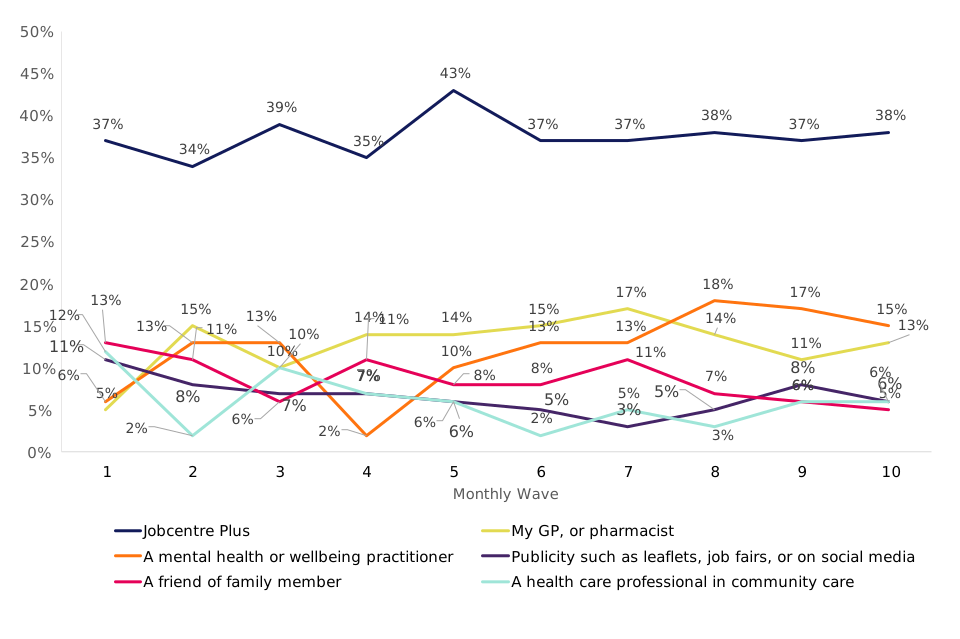
The Jobcentre Plus was the most common way in which participants heard about the IPSPC programme, although health routes were also common. The Jobcentre Plus was where most participants heard about IPSPC programme (36% across all waves); this was followed by GPs or pharmacists (13% to 14% across all waves), mental health or wellbeing practitioners (13% to 15% across all waves), and then Job fairs and social media (7% to 8% across all waves). Whilst the Job Centre Plus was the common way participants heard about the programme (36%), in aggregate, primary healthcare sources made up a significant portion (32% to 33% across all waves). This is mostly aligned with monitoring information, which identified primary care as the highest source of referrals (30%), followed by the Jobcentre Plus (20%), and then referral routes which were not signposted (16%) or signposted by another route (13%).
There was a slight trend in uptake in participants hearing about the programme through their GP or pharmacist, or a mental health well-being practitioner. The below figure 3.1 depicts the percentage of participants who heard about the programme through different channels across the 10 monthly waves of surveys where baseline data was conducted, between August 2024 to May 2025. Analysing the data this way enables the analysis of implementation findings, such as things that may have changed as local authorities implemented the programme. While there is a slight trend towards participants hearing about the programme through primary care routes, changes were not significant, and other sources remained relatively stable.
Figure 3.1: Where did you first hear about the [IPSPC programme]? [Baseline only – monthly wave]
Engaging strategic health partners
| Hypothesis | Emerging findings |
|---|---|
| In delivery, IPSPC Employment Specialists will liaise with relevant healthcare professionals to ensure that health and employment support is integrated, and that work is supportive of participant health. | The qualitative evidence collected suggests that there was partial support for this hypothesis. The evidence rating for this finding is Amber. |
From the start of delivery, IPSPC providers and Local Authorities tried to develop strategic partnerships with organisations that had oversight of the primary care system in their area. This chapter explores how Local Authorities achieved this, alongside the enablers and barriers they experienced engaging different health sector actors.
Local Authorities and providers built strategic connections by embedding ICBs [footnote 3] representatives into IPS programme steering boards. Local Authorities were instrumental in building these links, either as part of the initial application process, or leveraging relationships from WorkWell, a separate pilot initiative that also aimed to integrate local work and health services. This helped to realise further connections with Primary Care Networks (PCNs)[footnote 4] (for example, with ICB representatives introducing providers to PCN business managers) as well as GP surgeries and other primary care services. While interviewees were clear that this was only the first step in developing relationships with primary care, being able to utilise the knowledge of the health service and clinical standing of these partners was seen as beneficial in making early in-roads.
However, not all areas were able to realise the benefits of strategic partnerships with ICBs. This was either attributed to ICBs and/or clinical leads not being receptive to supporting the initiative, or ICBs not having sufficient influence over the operation of local PCNs to support their buy-in. One area circumvented these issues by joining the strategic Health and Wellbeing boards, run by Local Authorities, that covered their delivery area. They found these bodies an effective way to have direct contact with local GP surgeries and develop working partnerships. Elsewhere, providers felt that they had not had sufficient support from their commissioning Local Authority to develop strategic level connections with health partners. In their view, this made it more difficult to build relationships and generate the expected volume of referrals from primary care settings within the project timescales.
Two areas contracted NHS Foundation Trusts as a provider which helped to develop relationships with primary care services. This included mental health services, talking therapies, MSK (Musculoskeletal) services and occupational health. While this did not cover some of the target referral routes – namely, GP surgeries and social prescribers - interviewees felt that approaching these services using NHS branding helped in building trust and gaining access.
I think it’s definitely been an advantage [being part of a NHS Trust] when you’re talking about things like primary care mental health services, talking therapies…our Trust doesn’t cover things like GPs or a lot of the primary care services such as social prescribers or paramedics at sit-in GP surgeries…I do think that having an NHS badge and having an NHS email does carry weight. It automatically builds trust
IPSPC Delivery Manager
PCNs were identified as providing a direct pathway to local clinical leads and network managers of other primary care services. Providers sought to develop these links by attending PCN meetings, and meetings of clinical directors within the network. In 1 case this was achieved by contacting the Deputy Director for all PCNs within the area to support access and negotiate their involvement.
Providers had mixed success engaging PCNs. There were accounts of providers using PCN members to help promote awareness of IPSPC among their networks, while others found that contacts were not readily shared following meetings, with the PCN acting as a “gatekeeper”. Providers also noted that PCNs are structured differently across areas, which made it difficult to identify who was best placed to help build direct links with primary care services.
Engaging individual primary care settings
While there was a recognition that developing relationships with strategic health partners was beneficial in promoting awareness and buy-in for IPSPC within the primary care system, further work was needed by providers to develop relationships in individual primary care settings to generate referrals. In the few cases where providers had been unable to develop strategic relationships, this was their main approach to health partner engagement.
Providers used various channels for building relationships with GP surgeries, typically through practice managers. Interviewees were not consistently clear about which job roles in the health system they should target to support the engagement of GP practices as, in their experience, this could differ between settings. However, a prevailing view was that practice managers were best able to facilitate access. Marketing campaigns sought to raise awareness of the programme through leaflet drops and emails. Providers followed up this activity with requests for face-to-face meetings with senior leads. Providers also attended local GP Federation events and health forums to network and connect with senior managers. From the 3 surveys, we can see that only around 1 in 7 participants first heard about IPSPC through their GP or pharmacist (13% at baseline, 14% at interim, and 13% at final).
So, some of our employment specialists were going in and who was it they could speak to? Was it the practice manager? Was it the clinical lead? Was it the business manager? Is it the receptionist who could sort it for you or not? You know, there was quite a challenge around, how do you break through and get that decision-maker?
IPSPC Delivery Manager
Across all delivery areas, providers encountered challenges engaging GP surgeries. Interviewees pointed to capacity pressures in these settings, limiting the time GPs had to learn about IPSPC provision and integrate it into their everyday practice. Time was seen as a barrier both to GPs initial and on-going engagement in the programme. Several providers explained that even in cases where GP surgeries were engaged and made initial referrals, they had to continuously promote the programme and remind practices of the provision to maintain engagement. Given these widespread challenges, providers noted that health partner engagement work had required more staff resource than anticipated. This was exacerbated in rural locations where GP surgeries were spread out over a wider geography, increasing the travel time between locations.
We can get all the buy-in we want in the world from the Integrated Care Board, all the buy-in we want in the world from PCN managers, when it comes to GPs actually having the time and the headspace to signpost to our service, or to talk to us about participants, I think that’s a whole different kettle of fish
IPSPC Delivery Manager
Once providers had developed a working relationship with one GP surgery, they found it easier to develop relationships with other practices. This allowed them to demonstrate how the service was working. Several commissioned providers had previously delivered IPS services in secondary care and presented this as evidence of the effectiveness of the service to promote interest (for example, with patient outcomes and reduced demand on health services).
We’ve had to really show GP surgeries how much value we can add, really how much time we can save them. We can help them cut down on sick notes, we can help them cut down on appointment times because people won’t be coming in for depression and anxiety concerns. It’s really been a sales pitch to the GP surgeries
IPSPC Delivery Manager
Some Local Authorities were able to secure agreements to change GP’s IT system to accommodate direct referrals. This was done through engagement with strategic health partners, such as ICBs. Where these changes were made, this was reported to streamline the referral process. However, the extent to which changes to GP’s IT systems encouraged referrals further depended on strong strategic relationships which supported effective communication about IPSPC through local primary care networks; and delivery staff having an on-going presence and relationship with GP practices.
In other areas, providers had information about the IPSPC service added to Fit Notes and used GP text messaging systems to promote the programme to eligible participants. Both these measures were seen to increase referrals from primary care but took several months of negotiations to identify and implement.
In general, social prescribers appeared more open to signposting to IPSPC and were widely perceived to be a valuable source of primary care referrals. These connections were either initiated through PCN contacts, or via direct networking with social prescribers at community health events and through social media. Providers described a snowballing approach where they built further connections with their primary contact’s wider network. One area explained how their relationship with social prescribers enabled them to build connections with GP surgeries, “through the back door”, however, this was not the case in all areas.
Other primary care services were felt to be easier to engage. Across areas, providers received referrals from services such as mental health teams (for example, talking therapies) and MSK services. They felt these teams were more familiar with working in a multi-disciplinary team format and considering the wider social determinants of health in how they support patients. It was also easier to approach and collaborate with these services given their smaller size and less diversity in team structure.
Integration of work and health services
The integration of work and health services is assessed as part of fidelity of the service. In the IPS-Grow fidelity scale, Fidelity items 4 and 5 set out the requirements for a high-fidelity integrated service (see annex for full scale). While this evaluation did not have access to the fidelity review findings, the qualitative evidence found limited examples within the timeline of this study, of high-fidelity health integration.
At the time of the case studies, not all providers had negotiated access to GP surgeries for co-location and attendance at practice meetings. A starting point was securing agreement from the local health service to have NHS honorary contracts for some of their Employment Specialists. With these in place, providers felt it would be easier to agree co-location arrangements with GP practices in future so they could meet with patients on-site and be part of a warm handover.
There was a lack of physical space to support co-location of services, which was widely viewed as a challenge to working more closely with health teams. Some providers had negotiated access in a small number of settings, for example for Employment Specialists to have a dedicated meeting room or working from reception areas on a given day each week. Providers stated that this helped promote the service to both staff and patients, which in turn supported referrals.
There were limited examples of providers having negotiated access to practice meetings. Where Employment Specialists and delivery staff had gained access to these meetings, it was noted that it had taken time for practices to agree to this. Their access to these meetings was attributed to the strength of relationships they built with practice staff, regularly promoting the success stories of referred patients, and the level of enthusiasm and buy-in for service among senior practice leaders. Interviewees felt that via regular attendance at these meetings, where health practitioners heard how the IPSPC service could support a patient’s health and recovery, that true integration could being to take root, with health practitioners more frequently considering employment in consultations with patients.
There was only 1 example identified in the case studies of an Employment Specialist with access to clinical systems. This is a key enabler to better integrate records, in line with fidelity item 5, “documentation of primary and/or community care treatment and employment services is integrated in a single participant/client user record”. This occurred in an area with a high level of engagement from strategic health partners. This arrangement was seen by delivery staff in the area as having been challenging to secure and reflective of a high-level of trust between the GP practice, the service and Employment Specialist.
One of our employment advisors has got access to the GP system, the patient note system, and is now writing into the system, in the ideal IPS design way, but this is hard, this is hard to get the level of trust there to make it work
Local Authority
There were other limited examples of Employment Specialists providing updates to GP practices on the progress of participants. Others stated that they were reluctant to share updates about individual participants as they were mindful how busy health practitioners were and did not want to add to their workload.
Employment Specialists generally found it easier to integrate with other primary care services. This was attributed to their small size and greater familiarity with collaborating with other services. This included mental health teams, occupational therapists, MSK practitioners and social prescribers. The level of integration with these services generally extended to regularly attending multi-disciplinary team meetings, and co-location with social prescribers where they had the physical space to facilitate this.
Engagement with community partners
Across case study areas, providers found it easier to engage community rather than health partners. Often, the commissioned providers had been delivering employment support in the local area for several years and had a network of contacts across community organisations and statutory services to support referrals. Local Authorities were also often able to support providers to connect with LA delivered services to encourage referrals (for example, housing, social care and financial advice teams).
Local Authorities were also able to support providers to co-locate within publicly run facilities, such as libraries and community centres. Across several areas, this helped providers build in-person relationships with other services working from these locations. It also helped increase the visibility of the service among potential participants and supported walk-ins and self-referrals.
Providers also sought to engage local charities to support referrals. They typically targeted disability and mental health charities, as well as benefit and financial advice services, such as Citizens Advice. Several providers built links with their local Voluntary Action Service to promote IPSPC among their network of local charities.
Jobcentre Plus
Commissioned providers often had prior links with local Jobcentre Plus staff from previous employment support contracts. Where these were not in place, Local Authorities were well-placed to make introductions. Across areas, Employment Specialists were often able to arrange to co-locate within a Jobcentre Plus at least 1 day per week.
Employment Specialists commented that having a physical presence in Jobcentre Plus offices helped to develop relationships with Work Coaches and remind them of IPSPC as a referral option for customers. Various events held by Jobcentre Plus within the community – such as job, disability and wellbeing fairs – were seen to be effective in building interest in the programme and encouraging self-referrals. Employment Specialists attended monthly meetings at Jobcentre Plus with Work Coaches and their managers to provide updates about referral numbers and customer outcomes, which they felt further strengthened these relationships and Jobcentre Plus staff views of the provision.
One challenge in working with Jobcentre Plus identified by several providers was competing provision. Interviewees commented that they sometimes experienced a decrease in referrals within a given month. They attributed this to pressure among Work Coaches to meet agreed referral profiles for DWP contracted provision within their offices that was also suitable for the IPSPC eligible group.
4. Employer engagement
This chapter provides an overview of how IPSPC providers approached employer engagement. It outlines how Employment Specialists initially identified and met employers and maintained employer relationships.
Fidelity and training
Employment Specialists fidelity to making 6 or more face-to-face employer contacts per week (as per IPSPC) varied by location. In areas with a mix of rural and urban geographies, Employment Specialists in rural locations did not focus on employer engagement as much as their urban-based colleagues due to the amount of time they spent travelling to meet their caseload.
I would say, [rural area], their Employer Engagement is lower because obviously their caseload size and the travelling…I guess it’s harder as well because they’re covering so many different villages and things as well, to do what they need.
Employment Supervisor
Training helped to address low levels of confidence among Employment Specialists with employer engagement. Employment Specialists were felt to have little experience and low levels of confidence with employer engagement, which required ongoing training across all areas. This could take the form of field mentoring, where newer or less confident staff were paired up with Employment Specialists with more experience. This enabled less experienced staff to observe employer engagement and was viewed as a successful way of improving their confidence.
Providers had differing understandings about whether virtual contact could be recorded to meet IPS fidelity requirements. The evaluation found examples of providers engaging employers via online meetings or telephone where face to face contact was not possible, particularly for larger organisations. Employment Specialists who understood that this mode of contact could not be counted expressed frustration. They felt it was their only contact option for some employers but could not be logged, which in turn negatively impacted their fidelity scores.
This week I’ve done 3 [employers] and that’s just going around the shops. But I know if I go into [name of employer] and ask them if they’ve got any active vacancies, they’ll be like, ‘yes, but you have to apply online’. So, that’s not engagement, although I’ve been there and done it, I’m not going to bother putting that on my log because it’s just pointless because they’re not going to class it anyway.
Employment Specialist
Identifying employers
Employment Specialists worked to identify employers based on their current caseload participants’ interests, or proactively for future caseloads. Across case study areas, common jobs and sectors that Employment Specialists targeted included hospitality, retail, IT, the arts, caring, cleaning, and warehouse work. In addition, these sectors tended to have frequent vacancies, or multiple vacancies at a time, which influenced the openness of employers to working with providers. Other work could be seasonal and based around tourism.
I think the care sector is probably easier [to engage with] but I think maybe that is because they always have vacancies. So, they’ve always got something they want you to try and build or talk about.
Employment Supervisor
Approaching employers
Job fairs were often viewed positively by Employment Specialists. These were felt to provide in-person opportunities (albeit infrequent) to build connections with local employers and individuals involved in recruitment. Still, Employment Specialists working on face-to-face engagement highlighted how most employers preferred for applications to be made online, and would not take CVs in person.
Employment Specialists cited challenges related to contacting employers and in particular, submitting their participants’ CVs across all case study areas. Employment Specialists would often initially call or email employers to arrange an in-person meeting. However, they could also encounter difficulties trying to reach employers by telephone. Providers allowing this mode of engagement contact often found it difficult to speak with the person overseeing recruitment or felt that information was not being passed on to them by gatekeepers.
You speak to any Employment Specialist…’You say what’s the worst part of the job?’ Bar these 3 people on my team they’ll always say, ‘Employer engagement.’ Because it’s just like hitting your head against a brick wall, you know, look online, go online, that’s all anyone says to you these days, so it makes it a lot more difficult.
Employment Supervisor
Meeting with employers
A key enabler identified to building connections with employers identified by Employment Specialists was that the program was free and participants are specifically selected for the role. Employment Specialists reported that many employers initially thought they were from a recruitment agency and expected to be required to pay. Once the free nature of the programme was clarified, interviewees found employers were more receptive to engagement. Engagement tended to follow a staged approach, where Employment Specialists began by asking employers about their recruitment needs to learn more about the organisation, then promoting how IPSPC could benefit them, as well as participants. Some Employment Specialists also used the first meeting to promote the programmes in-work support, to ensure employers were aware of the breadth of the offer.
The first appointment with them, I would never speak about vacancies. It’s always about the company, finding out what’s important to them, making sure they know what we do. It’s a local initiative. It’s free. We try and place perfectly capable people with them, rather than sending anyone…the second appointment is more about vacancies. ‘Do you have any vacancies? If not, when are you likely to recruit? Here are my details, keep me in the loop.
Employment Specialist
While employers’ perspectives were limited in this study, those who were interviewed said that they were motivated to get involved because they had job vacancies. Consequently, subsequent meetings with employers would then focus on recruitment or vacancies. Sometimes, Employment Specialists would take participants to meet employers and have a more targeted conversation about what the employer and a participant could offer one another.
Maintaining relationships with employers
The participant-led approach taken by IPSPC was an enabler to building longer-term relationships with employers. Employment Specialists commented that employer relationships were strengthened once they had received good quality candidates who met the company’s recruitment needs. One employer reflected the benefits of working with an Employment Specialist with a good understanding of the role requirements and their organisation:
[The provider] know what goes into our work and how we work with the participants they refer to us. So, they have embedded the requirements needed.
Employer
Providers tried to coordinate employer engagement to avoid repeat contact from different Employment Specialists within the team. Across delivery areas, providers managed this by sharing information on employer contacts as part of team meetings, or by compiling databases of employer contacts.
Employment Specialists occasionally found employers were not open to an on-going relationship and viewed the programme as a ‘quick fix’. Employment Specialists would often attempt to maintain regular communication with employers to see if there were any vacancies or if they could provide in-work support. However, the support was felt to be viewed as transactional to address short-term recruitment or retention issue. Staff turnover within delivery teams was also seen to cause disruption to continuity of employer relationships.
5. Participant engagement
This chapter describes how providers approached participant engagement. It details where Employment Specialist were located within local communities and how they promoted the service. It covers the sources of referrals, and partners’ views on the quality and added value of the programme.
Employment Specialist location
Employment Specialists were based in a range of locations, which allowed them to support a diversity of caseloads with IPSPC participants. Some Employment Specialists made adjustments to their location to match where participants felt most comfortable to discuss issues with them and had the greatest privacy. In the qualitative interviews, participants reported that locations where meetings took place included libraries, community centres and foodbanks. Employment Specialists also met with participants in Jobcentre Plus offices, local cafes, and health settings such as GP surgeries or venues used by talking therapy/IAPT services. Employment Specialists commented that where they met participants was agreed on an individual basis, with a focus on ensuring the venue was accessible and comfortable.
However, Employment Specialists had different levels of comfort with meeting with participants within public spaces. One perspective was that venues, such as cafes, did not offer enough privacy and should be avoided, while others stated that they would sometimes compromise and meet in these settings to ensure the location was convenient for participants to access. In some cases, providers gained access to private meeting spaces (either their own offices or those of a partner) if the participant was not comfortable meeting in public.
How providers promoted the service
There was a consensus that having an in-person community presence was the most effective way of promoting the service and supporting referrals. Employment Specialists noted that, in line with IPS-Grow fidelity guidance, they spent most of their working week in the community, which enabled relationships to be developed directly with partners and prospective participants. However, qualitative interviews found that Employment Specialists used drop-ins with local charities and other support services, such as women’s groups and English for Speakers of Other Languages classes, to promote the programme. Other strategies to promote the support included via social media and putting up posters and leaving leaflets in community spaces. In a selection of case study areas, delivery teams had developed video animations to support referrals, which were being shown in waiting areas within GP surgeries.
Referral sources
As per Monitoring Information, primary care referrals made up the highest source of referrals. Fidelity item 4 in the IPS Grow fidelity scale states that, in the delivery of a high-fidelity service, 90% of an Employment Specialist’s caseload should come from primary care sources. As per figure 5.1, primary care referrals made up the highest source of referrals (30%), followed by those signposted by Jobcentre Plus (20%), not signposted (16%), signposted by another route (13%), other referral routes (12%), community care (6%) and by voluntary / charity sector (3%).
Figure 5.1: Source of referrals (Monitoring Information)
| % | |
|---|---|
| Primary care referral | 30% |
| Signposted by Jobcentre Plus | 20% |
| Not signposted | 16% |
| Signposted by other route | 13% |
| Other referral route | 12% |
| Community care referral | 6% |
| Signposted by voluntary / charity sector | 3% |
Base: All referred participants to the programme (49,068).
There is some evidence to suggest that the source of referrals varied by region. Essex and the West London Alliance saw the highest source of referrals from primary care (58% and 46% respectively), whilst South Yorkshire and Surrey saw the lowest source of referrals from primary care (19% for both). This is supported by the qualitative findings, where Employment Specialists reported a more even balance between primary care referrals and other sources in some areas over others.
Partner views on additionality and quality of IPSPC provision
Partners from local Jobcentre Plus offices were positive about the provision provided by the IPSPC programme. They felt that IPSPC support was more holistic than other contracted provision and had the advantage of providing several months of in-work support, which could be limited on other programmes. The qualitative findings explained that partners felt it filled a gap in employment support for claimants with complex needs who were further away from the labour market, especially following the closure of the Work and Health Programme.
Health partners were also positive in their views on the support provided by IPSPC. GPs and social prescribers complemented the broad and inclusive eligibility criteria, as well as the voluntary nature of the provision and non-pressurised approach that Employment Specialists took in finding suitable job opportunities. They felt the service was considerate of participant’s health issues and would not force someone into an unsuitable job. Health partners therefore felt that the IPSPC service filled a gap in provision by delivering tailored, and providing health-led, employment support. Interviewees felt encouraged to refer participants to the service based on positive feedback they received from patients they had previously referred.
I know that, in the past, patients, before they’ve signed up, [the provider] have approached them on the phone and they’ve given them more information. They’ve assured them about certain things, you know, ‘This isn’t going to affect your benefits. This isn’t going to do this. We’re not here to shoe-horn you into a job’, and I think that is really, really helpful and supportive.
Health partner
6. Eligibility and enrolment
This chapter summarises key findings on eligibility and enrolment. It explores the understanding of programme eligibility among delivery teams, referral partners and participants, and the successes and challenges in establishing eligibility. Following this, it provides detail on how participants were encouraged to enrol, and experiences of enrolment.
Eligibility selection
Identifying eligibility
Stakeholders had a good understanding of eligibility criteria, especially referral partners. Local Authority Leads indicated that the most effective way to raise awareness of eligibility was accessible marketing, presentations to referral partners, and targeted conversations with key partners, such as health partners and Jobcentre Plus. Health partners shared they would typically refer people who had been out of work for extended periods of time, or were struggling in work, due to health challenges. While the programme’s eligibility was broad, some health partners identified specific groups who they felt would particularly benefit from the support. For example, health partners in one area shared that they referred several new mums experiencing poor mental health and finding returning to work following maternity leave challenging.
Qualitative findings also demonstrated that participants had a clear understanding of the eligibility criteria. However, delivery teams shared that customers could feel that their health condition was not serious enough to deem them eligible for the support (for example, chronic asthma). Employment Specialists suggested that listing common health conditions participants felt would not meet eligibility criteria may encourage interest from these eligible groups.
Ineligible referrals were rare. The most common reasons for ineligibility outlined in interviews included not having access to public funds, not having a health condition, or not being ready to work within the duration of the support. In instances where a participant was deemed ineligible, delivery teams said they shared the reasons for this with the customer and signposted them to other relevant, local support services.
Employment Specialists noted that not all referrals from Jobcentre Plus were suitable. They explained that this may be because they were not always comfortable enrolling and felt pressure to engage to minimise any negative consequences on their Universal Credit entitlement.
Some people, even though they want to work, they’re pressured under the Jobcentre. I have got a couple of people using my service to get the Jobcentre to back off a little bit.
Employment Specialist
Although most survey respondents reported a health condition, a notable minority of respondents did not. As per figure 6.1, the majority of participants reported having some form of health condition (70%): this includes participants reporting a mental health condition (55%), a physical condition (41%), or both a physical and mental health condition (26%). However, close to 1 in 4 across the 3 surveys reported having no health condition (23%). As discussed in the limitations section, this may indicate that certain participants did not feel their condition was severe enough to warrant disclosure. Specifically, the survey is self-reported, and is therefore subject to social desirability biases, which is the tendency of survey participants to select answers which reflect social desirability and approval. This is well-documented in the literature (see Althubati, 2016, and Spitzer & Weber, 2019) and is especially true in cases of self-reported mental health conditions (see Mason et al., 2023). It should be noted that this does not align with the monitoring information, which identified all programme participants as having either a physical, mental health, or both conditions. Again, this may be due to response biases which are inherent to survey methodologies.
Figure 6.1: Do you have any physical or mental health conditions or illnesses lasting or expected to last for 12 months or more? [Baseline only]
| % | |
|---|---|
| Yes - mental health condition | 55% |
| Yes - physical condition | 41% |
| Yes - mental health condition | 55% |
| Yes - both physical and mental health condition | 26% |
| Total: Yes | 70% |
| No | 23% |
| Don’t know / prefer not to say | 7% |
Base: All baseline survey participants (1,971).
Enrolment
Participants prior work experience
Most participants had more work experience than less prior to joining the programme, although roughly quarter either never worked or spent most of their time not working. As per figure 6.2, most respondents had more work experience than less: most of these participants had been working continuously since education, with 1 or 2 breaks (38%) or working continuously without a break (15%). Those who were older, had children, or had caring responsibilities were more likely to have this prior experience. However, roughly one quarter had either spent most of their time not working (18%) or never worked (9%). Younger age groups (those aged 16 to 35) were more likely to have spent most of their time not working or having never worked before.
Figure 6.2: Which of the following best describe the time you have spent doing paid work since leaving education? [Baseline only]
| % | |
|---|---|
| I have worked continuously with one or two breaks | 38% |
| I have spent most of my time not working | 18% |
| I have worked continuously without a break | 15% |
| I have spent about as much time working as not working | 14% |
| I have never worked before | 9% |
Base: All respondents in the Baseline (1,971).
Prior to starting the programme at baseline, roughly half of unemployed respondents had not had work for more than 12 months. As per figure 6.3, at the baseline survey, 48% of respondents had last had work more than 12 months ago, and 15% had last worked more than 6 months ago. Relatively fewer respondents had more recent work experience, with 22% having worked 1 to 6 months ago, and only 6% having worked in the last month.
Figure 6.3: When did you last have paid work? [Baseline only]
| % | |
|---|---|
| Last month | 5% |
| 1-6 months ago | 22% |
| More than 6 months ago | 15% |
| More than 12 months ago | 48% |
| Don’t know / prefer not to say | 10% |
Base: All unemployed baseline participants (1,416).
Motivations for initial enrolment
Participants had a wide range of motivations for joining the program, which reflected the breadth of their personal circumstances and support needs. Across case studies, participants shared that they were looking for work search support and felt that the community-based nature of the provision offered this in a non-judgemental way.
I was having talking therapies through [the local authority], and they suggested that while I was having CBT that I talked to IPSPC and that they can support me in getting back to work. I agreed to it because that’s my aim.
IPSPC participant
Delivery teams shared that in-work referrals often followed an extended period of absence due to poor mental and/or physical health, exacerbated by unsuitable working conditions and/or breakdowns in relationships with colleagues. In these instances, it was explained that participants were seeking new employment, or support to navigate conflict with an employer.
Partners highlighted the people-centred nature of IPSPC was a key driver for referrals to the programme. This was particularly prominent amongst health partners in the area where IPSPC was well-integrated into local health services and Employment Specialists co-located with social prescribers. This meant they could introduce their patients to the support in a welcoming way that showcased its focus on managing health and work simultaneously.
Delivery of Initial information
The delivery of the initial information in an appropriate manner was crucial for the effective enrolment of participants. Ensuring the appropriate approach to enrolment was paramount in securing sign up and sustained engagement. In the earliest stages of introducing the support, Employment Specialists across case study areas indicated that meeting face-to-face with prospective participants helped to build rapport and trust in the programme. Employment Specialists acknowledged that this initial conversation alone can be a big step for participants. Consequently, they provided reassurance throughout the initial interaction and explained that support would be tailored by outlining the personalised nature of the support.
I kind of say, ‘We’re here to help you. We can support you however that looks.’ We’re a very one-to-one, personalised programme.
Employment Specialist
Some participants felt with hindsight that they had not had sufficient information to decide whether taking part was right for them, and as a result had not found the support appropriate to their circumstances. These participants would have liked a more detailed overview of the support, including more specific information about how the support could be tailored to their needs and employment interests.
I think if I were given more information… my time could have been used better if I knew that it wasn’t going to be of any use to me.
IPSPC Participant
The enrolment process
Provider staff aimed to make first contact with referred participants within 5 working days, however this varied predictably throughout the duration of the programme in line with case load sizes. IPSPC providers aimed to get into contact with referrals as soon as possible as this was seen as the best way of ensuring continued contact, but this was not always the case. In areas where there were low staffing levels at the outset this created waitlists for initial contact. As the programme continued and staffing levels increased, areas typically met the 5-day expectation. Employment Specialists aimed to have an initial appointment booked within 15 days of a referral. Delivery teams highlighted the importance of this turnaround for building on the momentum achieved by initial conversations and reducing anxiety that may build with a longer wait time. Like first contact however, this varied and was influenced by the time required to establish eligibility and match participants to an Employment Specialist, as well as staffing capacity. In one case study area for example, staff turnover required Employment Specialists to manage their active caseloads with new referrals, which were released gradually so as not to overwhelm them. This created delays in between initial contact and an initial appointment.
Partners shared positive views about the referral process for IPSPC, often attributed to good communication from delivery teams. Partners commended the quick acknowledgement of referrals and updates in case of delays. This allowed partners to keep the individuals they referred up to date on the status of their referral and maintain their motivation and confidence to engage. Good communication extended into later progress updates once a participant had been engaged.
I think this is one of the best services that we have… whether it’s the initial introduction, whether it’s the communication that takes place to monitor progress of customers as they move forward. It is literally a seamless process.
Wider partner
Employment Specialists explained that it could be challenging to contact participants to arrange initial appointments, because they can be apprehensive to answer telephone calls or emails from unknown contacts. To address this, Employment Specialists shared that they would text participants an introduction ahead of telephoning and would attempt to contact them 3 times before returning them to the referral organisation.
7. IPSPC participant profile
This section provides an overview of the demographic and working profiles of the participants engaged through the baseline survey.
Demographic profile
The below tables (7.1 to 7.3) show the key demographic profiles of survey respondents across waves. Overall, participants shared the following characteristics:
Gender: Across all 3 surveys around half of participants were either a woman (47%) or a man (50%).
Table 7.1: Gender by survey wave
| Gender | Baseline percentage | Interim percentage | Final percentage |
|---|---|---|---|
| Woman | 47% | 47% | 47% |
| Man | 50% | 50% | 50% |
| Non-binary | 2% | 2% | 2% |
| Prefer not to say | 2% | 1% | 1% |
Age: Across all 3 surveys around 2 in 10 were between 16 and 24 years old (18% to 19%), a quarter were 24 to 34 (23% to 24%), and roughly 2 in 10 were 35 to 44 (20% to 21%), 45 to 54 (18%), and 55 to 75 (15% to 17%).
Table 7.2: Age by survey wave
| Age | Baseline percentage | Interim percentage | Final percentage |
|---|---|---|---|
| 16-24 | 18% | 19% | 19% |
| 25-34 | 24% | 23% | 23% |
| 35-44 | 21% | 20% | 20% |
| 45-54 | 18% | 18% | 18% |
| 55-75 | 17% | 15% | 15% |
| Prefer not to say | 3% | 4% | 5% |
Ethnicity: Across all three surveys around six in ten participants had a White ethnic background (59% to 61%), 1 in 20 had a mixed ethnic background (4%), between 1 and 2 in 10 had a Black or Black British ethnic background (14% to 15%), and just under 2 in 10 had an Asian or Asian British background (15% to 16%).
Table 7.3: Ethnicity by survey wave
| Ethnicity | Baseline percentage | Interim percentage | Final percentage |
|---|---|---|---|
| White | 61% | 59% | 58% |
| Mixed | 4% | 4% | 4% |
| Black or Black British | 15% | 14% | 14% |
| Asian or Asian British | 16% | 15% | 15% |
| Other | 7% | 7% | 7% |
| Don’t know / Prefer not to say | 3% | 1% | 1% |
Participants work profiles
The below tables 7.4 to 7.8 show the key work profiles of survey respondents across waves. Overall, participants shared the following characteristics:
Working since education: Across all 3 surveys around 1 in 10 had never worked before (9% to 10%), just under 2 in 10 had spent most of their time not working (15% to 18%), just over 1 in 10 had spent about as much time working as not working (14%), 4 in 10 had worked continuously with 1 or 2 breaks (38% to 40%), and between 1 in 8 had worked continuously without a break (14% to 16%).
Table 7.4: Work history since education by survey wave
| Working since education | Baseline percentage | Interim percentage | Final percentage |
|---|---|---|---|
| I have never worked before | 10% | 10% | 9% |
| I have spent most of my time not working | 15% | 16% | 18% |
| I have spent about as much time working as not working | 14% | 14% | 14% |
| I have worked continuously with one or two breaks | 39% | 40% | 38% |
| I have worked continuously without a break | 16% | 14% | 15% |
| Don’t know / Prefer not to say | 6% | 6% | 6% |
Type of employment: For all participants at baseline, the majority (69%) were not working in paid employment. This was significantly higher amongst those aged 16 to 24 (76%), male respondents (74%), and those claiming benefits (76%). Just over a quarter (26%) were working for an employer in paid employment, including any temporary, part-time or zero hours contract work. A small minority (3%) of respondents were self-employed.
Table 7.5: Type of employment by survey wave
| Employment status | Baseline percentage | Interim percentage | Final percentage |
|---|---|---|---|
| Working for an employer in paid employment, including any temporary, part-time, or zero-hours contract work | 26% | 32%* | 35%** |
| Self-employed | 3% | 3% | 4%** |
| Total: Employed | 28% | 35%* | 39%** |
| Not working in paid employment | 69%** | 62% | 59% |
| Don’t know | 1% | 1% | 1% |
| Prefer not to say | 1% | 2% | 1% |
Income from paid work: Amongst employed participants, over 4 in 10 had an income of £20,000 or less (43% to 46%), under 3 in 10 had an income between £20,001 and £40,000 (25% to 29%), and under 1 in 10 had an income of £40,001 and over (4% to 8%). Changes in income bands did not significantly change between survey waves.
Table 7.6: Income from work by survey wave [those who are employed only]
| Income from paid work | Baseline percentage | Interim percentage | Final percentage |
|---|---|---|---|
| £20,000 or less | 43% | 44% | 46% |
| £20,001 to £40,000 | 29% | 27% | 25% |
| £40,001 or more | 8% | 4% | 4% |
| Don’t know | 15% | 18% | 17% |
| Prefer not to say | 5% | 7% | 8% |
Type of work: Amongst participants who were employed, the most common reported job was a manual job that required no special training or qualifications (33%), followed by skilled manual worker (24%), a junior managerial position (21%), an intermediate managerial position (9%) and then a higher managerial position (3%).
Table 7.7: Type of work by survey wave [those who are employed only]
| Current job | Baseline percentage | Interim percentage | Final percentage |
|---|---|---|---|
| A manual job that requires no special training or qualifications | 33% | 34% | 35% |
| Skilled manual worker | 24% | 22% | 25% |
| Junior managerial, professional, or administrative, or clerical and supervisory work | 21% | 22% | 19% |
| Intermediate managerial, professional, or administrative roles | 9% | 10% | 10% |
| Higher managerial, professional | 3% | 4% | 3% |
| Don’t know | 7% | 7% | 7% |
| Prefer not to say | 2% | 1% | 1% |
Hours worked per week: The hours worked per week by participants who were employed varied. The most common reported hours at the time of the survey was over 35 hours (36%), followed by 16 to 29 hours (21%), then 30 to 35 hours (12%), less than 10 hours (11%), then 10 to 15 hours (10%) and the hours varying week to week (10%).
Table 7.8: Hours worked per week by survey wave [those who are employed only]
| Current work hours | Baseline percentage | Interim percentage | Final percentage |
|---|---|---|---|
| Less than 10 hours | 11% | 11% | 11% |
| 10-15 hours | 10% | 11% | 11% |
| 16-29 hours | 21% | 24% | 24% |
| 30-35 hours | 12% | 9% | 13% |
| Over 35 hours | 36% | 31% | 29% |
| It varies from week to week | 10% | 11% | 11% |
| Don’t know | 1% | 2% | 1% |
| Prefer not to say | * (insignificant value) | 1% | 1% |
Participants health
The majority of participants at the baseline survey reported having a health condition (72%). This included a mental health condition (56%), physical health condition (41%) and both a physical and mental health condition (26%). Just under a quarter (23%) reported having no health condition[footnote 5].
Table 7.9: Health condition by survey wave
| Health condition | Baseline percentage | Interim percentage | Final percentage |
|---|---|---|---|
| Yes – physical condition | 41% | 42% | 41% |
| Yes – mental health condition | 56% | 55% | 55% |
| Yes – both physical and mental health condition | 26% | 27% | 26% |
| Total: Yes – health condition | 72% | 71% | 70% |
| No | 23% | 22% | 23% |
| Don’t know | 4% | 4% | 4% |
| Prefer not to say | 2% | 3% | 3% |
Other profile characteristics
Caring responsibilities: Across all 3 surveys around two thirds did not have any caring responsibilities (64% to 65%) whilst a third did (33%), the most common of which were for their child(ren) (19% to 20%), for their parent(s) (8% to 9%), for the spouse, civil partner or partner (5% to 6%), for another family member (5% to 6%), and for a friend (1%).
Table 7.10: Caring responsibilities by survey wave
| Caring responsibilities | Baseline percentage | Interim percentage | Final percentage |
|---|---|---|---|
| No | 65% | 64% | 64% |
| Total: Yes | 33% | 33% | 33% |
| Yes – for my child(ren) | 20% | 20% | 19% |
| Yes – for my parent(s) | 8% | 8% | 9% |
| Yes – for my spouse / civil partner / partner | 5% | 5% | 6% |
| Yes – for another family member | 5% | 5% | 6% |
| Yes – for a friend | 1% | 1% | 1% |
| Don’t know / Prefer not to say | 2% | 3% | 4% |
Benefits claimed: Across all 3 surveys a quarter of participants were not claiming benefits (25%), whilst around 7 in 10 were claiming benefits (72% to 74%), the most common of which were Universal Credit (56% to 59%) and Personal Independent Payments (18% to 21%).
Table 7.11: Benefits claimed by survey wave
| Benefits claimed | Baseline percentage | Interim percentage | Final percentage |
|---|---|---|---|
| No | 25% | 25% | 25% |
| Total: Yes | 74% | 73% | 72% |
| Universal Credit | 58% | 59% | 56% |
| Personal Independence Payments (PIP) | 19% | 18% | 21% |
| Child Benefit | 7% | 8% | 9% |
| Housing Benefit | 7% | 7% | 8% |
| Employment Support Allowance | 5% | 5% | 4% |
| Job Seekers Allowance | 5% | 5% | 4% |
| Don’t know / Prefer not to say | 2% | 2% | 2% |
8. Support provision
This chapter provides an initial overview of participants satisfaction with the programme and programme elements, followed by a discussion of Employment Specialists’ caseloads and the delivery of support. The key drivers for sustained engagement are discussed. The chapter then details experience of the elements of support, including initial appointments, employment and wider support, and in-work support.
Overall satisfaction with the programme
Whilst satisfaction declined from baseline to final, overall satisfaction with the programme was high and remained high. As per figure 8.1, satisfaction with participants’ overall experience of the service saw a decline of -7 ppts from 83% at baseline to 76% at final. Certain sub-groups saw higher levels of satisfaction which did not decline significantly however, including those who did not report a health condition (-1 ppts from 87% baseline to 86% at final) those with an above average health and wellbeing score (-2 ppts, from 91% at baseline to 89% at final), those who had high self-efficacy (-3 ppts, from 90% at baseline to 87% at final), and those with a higher trust in their advisor (-3 ppts from 88% at baseline to 85% at final).
There were also notable regional differences with the following regions showing no significant decline between surveys: Enfield (0 ppts at 84% from baseline to final), Nottingham (0 ppts at 76% from baseline to final), Manchester (-1 ppts from 79% to 78%), West Midlands (-2 ppts from 80% to 78%), Slough (-4 ppts from 88% at baseline to 84% at final), Norfolk (-5 ppts from 84% to 79%), West London (-5 ppts from 79% to 74%);
And the following regions showing significant decline between surveys: Cheshire West and Chester (-23 ppts from 92% at baseline to 69% at final), Essex (-21 ppts from 89% to 68%), Newham (-17 ppts from 78% to 61%), Surrey (-15 ppts from 85% to 70%), and South Yorkshire (-12 ppts from 90% at baseline, to 78% at final).
Figure 8.1: How satisfied are you with your overall experience of the service?
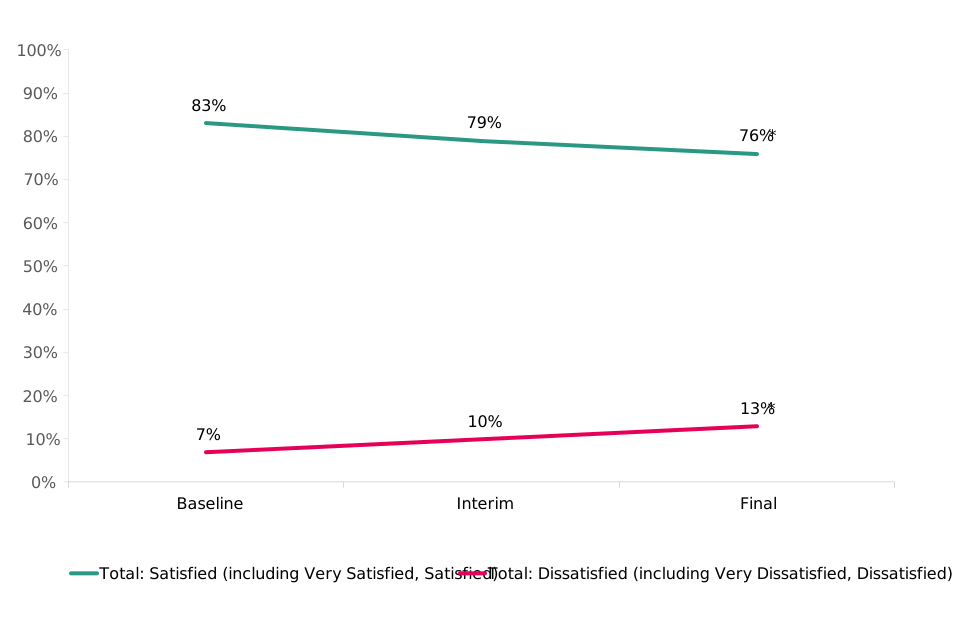
Base: All baseline survey participants (1,971), all interim survey participants (1,631), all final survey participants (1,288).
Satisfaction with other aspects of the programme was also generally high, but tended to decrease from baseline to final. As per figure 8.2, participants were more satisfied with aspects of their meetings which linked to the features of their meetings, and were less satisfied, but still highly satisfied with the utility of their meetings. Features of their meetings that participants were most satisfied with were the time of their meeting (89% at baseline, 88% at interim, 86% at final) and the location of their meeting (89% at baseline, 88% at interim, 85% at final), followed by the employment coaches they spoke to (87% at baseline, 83% at interim, 81% at final). Participants had a slightly lower level of satisfaction with the usefulness of their meetings (81% at baseline, 78% at interim, 76% at final), the support provided by the programme (80% at baseline, 76% at interim, and 74% at final), and how much their employment coach helped them understand their skills (76% at baseline, 76% at interim, 74% at final). Across almost all modalities, there was a statistically significant decrease in net satisfaction from baseline to final survey, with the exceptions of how much their Employment Coach helped them understand their skills and the time of their meeting.
Figure 8.2: How satisfied are you with each of these aspects of [the programme]?
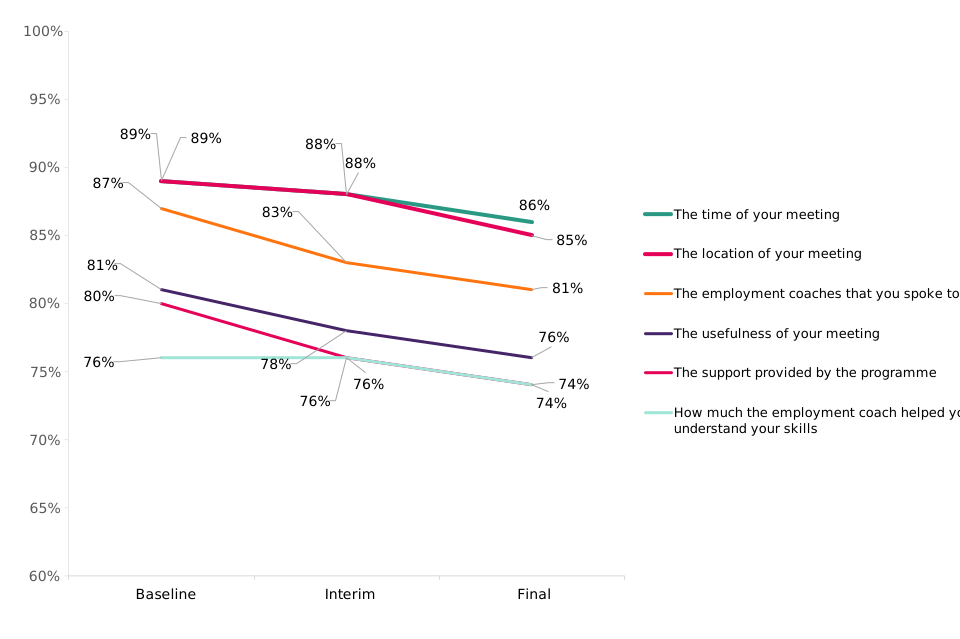
Base: All baseline survey participants (1,971), all interim survey participants (1,631), all final survey participants (1,288).
Caseloads and mode of support
On average, caseload sizes were in line with policy intent however sizes varied by stages of delivery and across areas. Across case studies, delivery teams shared that caseload sizes were generally in line with the policy intent, often ranging between 20 and 30 customers. Employment Specialists shared caseloads tended to be highest during the earlier stages of delivery, often exceeding the intent of 25. This was due to the time required to recruit and train staff, which was exacerbated by the short mobilisation period. During this time Employment Specialists already in post, often recruited from existing staff, would enrol participants beyond their expected caseload size before passing them on to other Employment Specialists as they completed training. Staff changes during delivery also affected caseload sizes; where Employment Specialists left, their caseloads were automatically reallocated to other Employment Specialists. In one exception, Employment Specialists in one case study area where high staff turnover was noted, described higher caseloads than in other areas. Here, staff reported that caseloads reached highs of up to 90 customers, with averages of around 50 throughout the programme.
I think I’m on about 70 now, so it’s high. But it’s always, kind of, been around the 50 mark. But again, just with the amount of staff turnover that we have it’s just been crazy
Employment Specialist
Managing caseloads in rural areas was considered challenging. In rural case study areas, caseloads were described as dispersed and Employment Specialists explained that they could spend up to 2 hours travelling between face-to-face appointments. This limited their time to complete administrative tasks, undertake training and employer engagement and in some cases, Employment Specialists reported working in the evenings and weekends to complete tasks. Seeking to overcome this, caseloads were allocated based on postcode, and Employment Specialists organised their diaries to cluster appointments in certain areas on specific days. This helped to mitigate the issue that prevented Employment Specialists from traveling to each individual costumer. However this depended on the referrals that came through and whether it was possible to cluster them logically. In the most rural areas where populations are most dispersed this had minimal impact.
We try and be sensible and match [employment specialists and participants] so we’re not driving around in circles all day. But obviously we can only take what comes through the system.
Employment Specialist
Mode of support
Contact with participants was high, and they met their employment coaches through a range of formats; however, this decreased as the programme progressed. As per the survey, most participants met with their employment coaches at least once in the past two weeks; although this decreased from baseline (92%) to final (85%). Those who were more likely to have met with their advisor in the last two weeks included those who had a lot or little trust in their adviser (93% at baseline, 89% at interim, 86% at final) compared to those who did not have a lot or any at all (73% at baseline, 71% at interim, 74% at final).
As per figure 8.3, the most common way in which participants met with their Employment Specialists at baseline was in person (44%), followed by email (41%), the telephone (39%), and then Text Messaging or WhatsApp (35%); however, all methods decreased by the final survey, with in person meetings being the least frequent mode (20%). Interviews revealed that while delivery teams consistently aimed for weekly, in-person appointments, they retained flexibility to adjust to individuals’ circumstances. Adjustments were made to accommodate health conditions and related appointments and typically included additional digital or telephone appointments.
Figure 8.3: In the last two weeks, how have you had contact with your employment coach from [IPSPC]? Please select all that apply
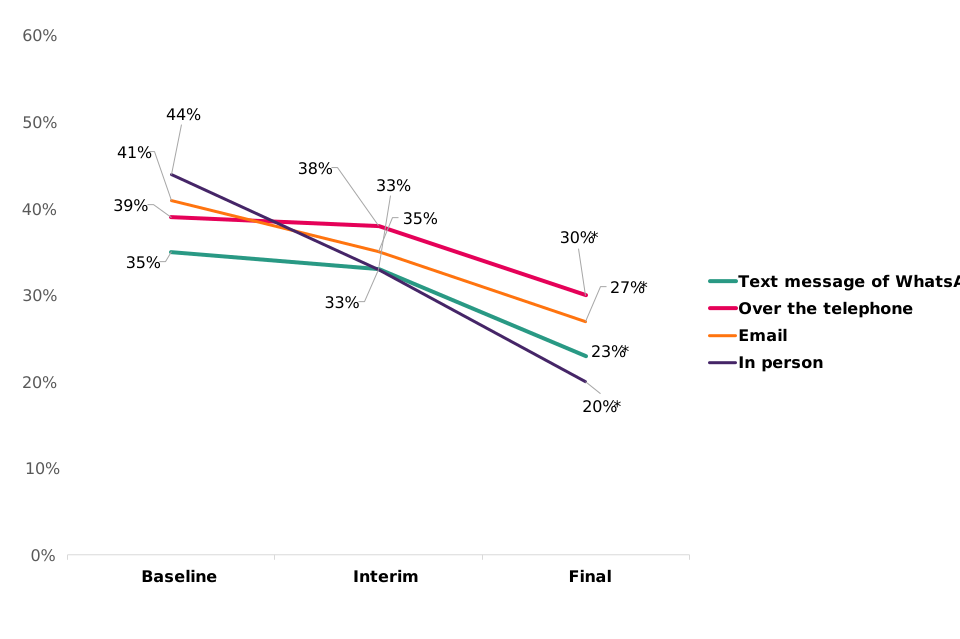
Base: All baseline survey participants (1,971), all interim survey participants (1,631), all final survey participants (1,288).
Interviewees were positive about the community-based nature of the support, however some participants required adjustments. Where appointments took place in person, these were often in community venues such as libraries, café’s, community centres or GP surgeries, and depended on an individuals’ preferences and accessibility needs. Both Employment Specialists and participants spoke positively of the community-based nature of the support, describing it to facilitate a comfortable support experience. Some participants, particularly neurodivergent customers, found busier spaces could be quite overwhelming, and felt uncomfortable disclosing their personal circumstances in public spaces.
Overview of appointments
Figure 8.4 outlines the participant journey for IPSPC. This section provides an overview of participant experience of each aspect.
Figure 8.4: Overview of IPSPC participant journey
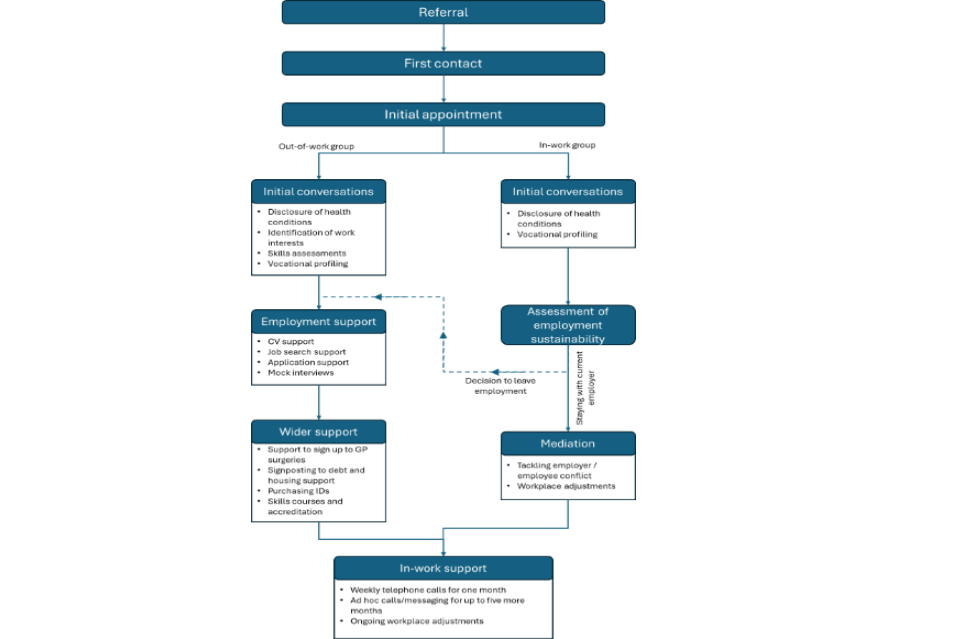
The journey is as follows:
-
Referral, first contact, and initial appointment: The participant is referred into the service, contacted by a practitioner, and attends an initial appointment to discuss their circumstances, needs, and employment goals.
-
Following the initial appointment, there are two participant pathways, based on whether the participant is in the in-work or out-of-work group.
-
Initial conversations for a participant in the out-of-work group focus on the disclosure of health conditions, identification of work interests, skills assessments and vocational profiling. Following this, employment support services would be provided, which could include CV support, job search and application support, as well as mock interviews. Wider support following employment support could include support with signing up to a GP, signposting to debt and housing support, purchasing IDs, and skills courses.
-
Initial conversations for a participant in the in-work group are around the disclosure of health conditions and vocational profiling. This is followed by an assessment of employment sustainability. If the participant decides to stay with their current employer, mediation provided could include tackling employee/employer conflicts, as well as arranging workplace adjustments. If the participant decides to leave their current employment, they would be offered employment support and wider support, as with the out-of-work group.
-
Once a participant is in work, in-work support includes weekly telephone calls for one month, ad hoc calls and messaging for up to five months, and the arrangement of ongoing workplace adjustments.
Relationship with Employment Specialist
| Hypothesis | Emerging findings |
|---|---|
| Engagement with an Employment Specialist will effectively sustain a participant’s motivation to work and this will be supported by a trusting relationship between the Employment Specialist and participant. | Both the qualitative and quantitative evidence suggest there is support for this hypothesis. The evidence rating for this is green. |
There were high levels of trust between participants and Employment Specialists. As shown figure 8.5, trust between participants and Employment Specialists was high and remained high from the baseline (88%) to final (86%) surveys. Those who had no caring responsibilities were more likely to say they trusted their employment coach (90% at baseline, 89% at interim, 86% at final) than those who had caring responsibilities (86% at baseline, 85% at interim, and 86% at final). This was matched with those who were satisfied (93% at baseline, 95% at interim, and 96% at final) compared to those who were dissatisfied (47% at baseline, 43% at interim, and 40% at final), those who were above mean standard deviation from the SWEMWEBS (Short Warwick-Edinburgh Mental Wellbeing Scale) score (93% at baseline, 91% at interim, 93% at final) compared to those with a below mean standard deviation (81% at baseline, 82% at interim, and 71% at final), and those with a high self-efficacy (92% at baseline, 91% at interim, and 94% at final) compared to those with a low self-efficacy (84% at baseline, 82% at interim, and 76% at final).
Figure 8.5: When thinking of the employment coach you have had the most contact with during your time on [IPSPC], how much [do / did] you trust them?
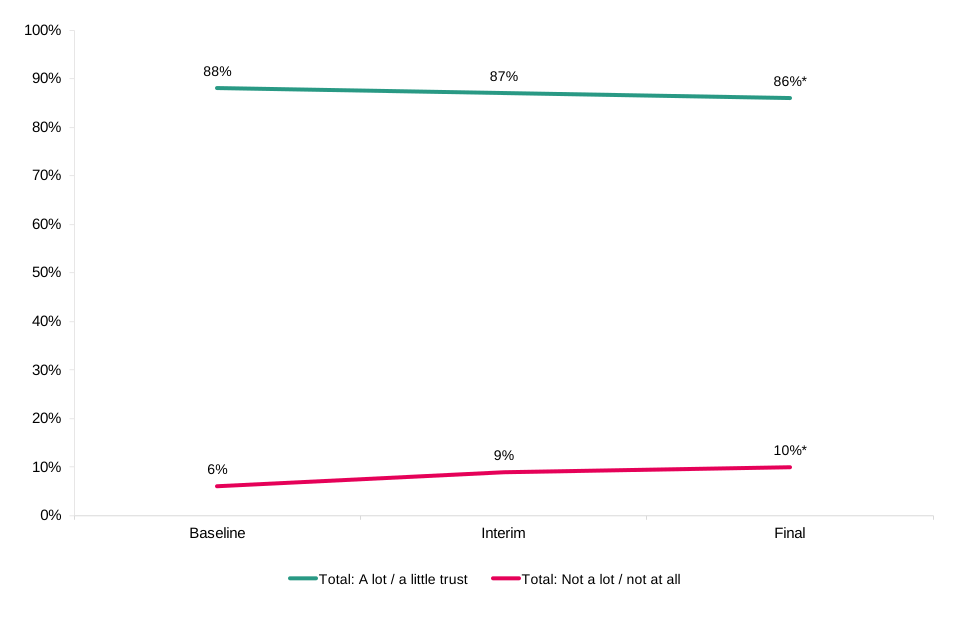
Base: All baseline survey participants (1,971), all interim survey participants (1,631), all final survey participants (1,288).
These findings were complimented by the interviews: participants shared that their Employment Specialist highlighted their transferrable skills and previous experience in ways they had not considered, providing them with confidence and a more positive outlook on their journey towards work. The degree of relatability with their Employment Specialist was also emphasised, and participants valued it when their Employment Specialist shared their own experiences of similar circumstances.
Employment Specialists undertook regular wellbeing check-ins with participants. Where this occurred, participants appreciated their Employment Specialist’s approach to listening, which meant they did not feel rushed when talking about their health. This feedback was particularly common among participants experiencing poor mental health.
If I turned up one day and I was in a really bad state mentally, I’m quite confident that she would recognise that and try and steer me. But equally, I know that fundamentally she’s not a mental health nurse.
IPSPC participant
Consistency of Employment Specialist was viewed as a key facilitator for both a positive relationship and support experience. Staff reported that changes to Employment Specialists were only made where necessary, for example where they left the organisation. Where a change needed to be made, 3-way handovers were used to ensure the participant was comfortable and supported during the change.
We try to do a period where ideally both Employment Specialists are still here. So before one leaves, the new person joins, and they can spend time together to do that joined up handover.
Delivery manager
In one case study, where staff turnover was high, participants described a lack of personalisation of support.
It was more like [my Employment Specialist] was more doing a job, rather than wanting to know me as a person. I’d say it wasn’t really person-centred.
IPSPC participant
Initial conversations and vocational profiling
| Hypothesis | Emerging findings |
|---|---|
| The Vocational Profile tool will effectively identify job opportunities that are suited to the participant and well matched to their interests. | The qualitative evidence suggests that this hypothesis is not supported. The evidence rating for this finding is amber. |
The initial appointments were considered sensitive, and Employment Specialists adapted them accordingly. Both participants and Employment Specialists used the initial appointments to complete enrolment forms. Employment Specialists outlined sensitivities associated with initial appointments, which asked participants to disclose their information around their personal circumstances and health conditions. Reflecting this, staff conducted these appointments either online or by telephone, aiming to minimise discomfort.
There were mixed views from Employment Specialists on the usefulness of the vocational profiling tool, while participants generally found it unhelpful for steering their support journey. Some Employment Specialists reported the form was long and sometimes took multiple appointments to complete. They felt it was repetitive and detracted from the personalised nature of the support given its structured nature.
When I get to that vocational profile point, I absolutely dread it… there’s so many questions… it’s so lengthy. People can, sort of, disengage when that form is being done.
Employment Specialist
Participants described the tool as unhelpful. Several reported that the results suggested occupations that were not suitable for their health condition, or that required retraining up to degree level. Consequently, they often disregarded the tool and continued to seek work in industries they had previously expressed interest in. Employment Specialists also shared mixed views on the vocational profiling tool. One view was that the tool was well rounded and captured essential information to tailor support and begin co-designing plans. Others felt that while the tool did not effectively identify interests specific to the participant, conversations around the tool were useful for understanding individuals’ work priorities. Conversely, others shared that the tool was not appropriate for their caseloads’ needs and could be quite disengaging due to its length.
Employability support
This section details the key types of support that was provided to participants by employment specialists, and participants feedback based on the qualitative analysis. Chapter 9: Outcomes, gives an overview of Job Search and Self-Efficacy (JSSE) measures from the survey, and triangulates this with participant feedback from the qualitative strand of work.
CV support
Participants were positive about the support provided by Employment Specialists on updating and tailoring their CV. Once a participant was onboarded and paperwork completed, Employment Specialists explained their next priority was to identify whether a participant had an up-to-date CV. This would be reviewed, with amendments made where necessary to improve accessibility for employers. In instances where a participant did not have a CV, or an up-to-date CV, Employment Specialists worked with them to build one ahead of beginning job search support. Employment Specialists’ approach varied. Some participants described a coaching process, wherein they made changes with guidance from their Employment Specialist, who outlined the key components of a good CV. Others, however, said that their Employment Specialist made amendments to their CV in between their appointments and were subsequently not provided this learning experience.
Job search support
| Hypothesis | Emerging findings |
|---|---|
| Employment Specialists liaise or support the participant to liaise with employers to ensure that work offers opportunities to train and is supportive of their health. | The qualitative evidence collected suggests that this hypothesis is not supported. The evidence rating for this finding is amber. |
Across case studies, there was limited evidence of a ‘place then train’ support model. Delivery teams explained that participants had often been out of work for extended periods of time and required focused support to develop their confidence and employability ahead of moving into work. Subsequently, delivery teams felt that the ‘place then train’ model was not appropriate in the context of their participants’ support needs. Similarly, those referred while in work had often had extended periods of absence, or had recent experience of conflict with their employer. These participants were described as needing emotional support before navigating job search. Further, the challenges associated with employer engagement outlined earlier were reported to have resulted in fewer tailored opportunities for participants.
It’s about giving them the confidence to overcome their anxieties. So, I do agree, get someone into work and then get them trained, but we’ve struggled to give them that confidence to actually start a job. That’s where our difficulties lie.
Wider partner
Employment Specialists aimed for job search support to begin as early as possible to build on initial participant preferences and, where appropriate, the vocational profiling tool. This allowed time in the support journey for Employment Specialists and participants to identify and refine the types of work participants were interested in. Occasionally, participants expressed interest in sectors where they did not have prior work experience. In these instances, both Employment Specialists and participants explained that they sought volunteering opportunities in the sector aiming to build experience and make contacts within the industry.
Job search support often involved guidance on where to find employment opportunities. This usually involved signposting participants to online job boards. However, case studies in more urban areas found evidence of Employment Specialists and participants walking through high streets together, identifying opportunities signposted in store windows, and on occasions introducing participants to employers. Not all job opportunities shared by Employment Specialists were appropriate for participants in terms of pay, hours and location, which may be reflective of the difficulties Employment Specialists had in identifying employers. This was particularly notable in rural areas, where participants had limited public transport connections.
I applied for a role at a youth project… [My Employment Specialist] arranged for her and I to go and visit them prior to me making the application… I got a bit of a feel for the place which then fed back into how best for me to represent myself in the application.
IPSPC participant
Other job search support included help completing applications and ways to identify good employers. Once a participant had identified an opportunity, Employment Specialists encouraged them to proactively contact the employer through email or phone call and provided guidance on this process. They were also encouraged to identify good employers through accreditations such as Disability Confident, Age Inclusive Employer, and Living Wage Employer. Some evidence shows that Employment Specialists collated good work opportunities from local employers, that they found online, and shared them with their wider caseload.
Interview practice
Interview practice was widely appreciated by participants, particularly those who had been out of work for extended periods of time, and provided the chance to practise bringing up their health condition and requests for adjustments. Participants were offered mock interviews and guidance on how to present themselves at interview. For some, the interview practice increased participants’ understanding of how to introduce their health condition to an employer or ask for adjustments to the interview process. The interviews are a useful introduction to interview techniques such as the Situation, Task, Action, Result (STAR) approach. Where possible, Employment Specialists explained that they attempted to tailor mock interviews to the industries participants were interested in. This included asking sector specific questions. Additionally, Employment Specialists reported that they matched typical interview formats for particular roles, for example offering digital mock interviews for office-based roles.
The use of mock interviews differed between case study areas. In areas where Employment Specialists reported having less time available, due to either high caseloads or extended travel time in between appointments, participants noted a lack of interview practice. Here, they explained that this was something they would have appreciated from the support.
| Hypothesis | Emerging findings |
|---|---|
| Employment Specialists liaise with participants in work and their employers to ensure that work is supportive of health, that support is provided to participants to ensure they can meet the demands of work and communicate their needs. | The qualitative evidence suggests that this hypothesis is supported. The evidence rating for this finding is amber. |
There was differing views on the extent of in-work support provided by delivery teams. In general, delivery teams outlined more support than participants recalled receiving. Employment Specialists outlined a structured approach to delivering in-work support, offering weekly check-ins for the first month of employment as standard. Thereafter, the frequency of in-work support was dependent on the needs and preferences of individual participants. Participants on the other hand felt communication was less regular. Both Employment Specialists and participants described in-work support as a space to ask questions that participants may feel uncomfortable asking a new employer. These included questions around breaks, annual leave allowances, and pay.
Everyone’s employment support when they’re in-work is completely different. I have some clients that just want a 10-minute conversation every week or every other week… But then other people will need reasonable adjustments put in place… so we will do Access to Work applications with them.
Employment Specialist
Support provided to participants referred while in work aimed to identify conflict in the workplace and explore adjustments. Case studies consistently identified that, ahead of Employment Specialists getting involved with an employer, participants would attempt to communicate their needs to the employer in the first instance. Where this was unsuccessful, or participants felt either unconfident approaching their employer or that their request would raise conflict, Employment Specialists would intervene. Employment Specialists would negotiate on their participants’ behalf to identify how these could be accommodated. Additionally, there was evidence of Employment Specialists, participants and employers meeting to discuss workplace adjustments and Access to Work applications among both the in-work and out-of-work groups. Following this, in-work support reflected the support received by those who were out of work on entry to the programme.
The Employment Specialists role as an intermediary in the employee and employer relationship was viewed positively and suggested to be helpful at fast tracking workplace adjustments, managing employer expectations and encouraging both parties to work collaboratively to identify suitable conditions for both.
I’ve had to have a 3-way meeting before. [The participant] was on the verge of losing his job. The employer wasn’t happy… it was quite a successful meeting, really. They both aired their sides to the story. We came up with a plan. He kept his job, ended up staying, and he’s still there now.
Employment Specialist
Some participants recalled intermittent contact with their Employment Specialist once they had moved into work. Often, this was described as a text message or short phone call every few weeks to confirm they were still in employment. In these instances, participants noted the limited personalisation within in-work support compared to the support they received before moving into work.
Wider support
Participants were receiving a wide range of additional support outside of the IPSPC programme. As per figure 8.6, most participants (64% to 59% across all 3 waves) reported receiving some form of additional support, including: finding work from other organisations (28% to 34% across all 3 waves), followed by health or mental health services (22% to 26% across all 3 waves), training or developing new skills (14% to 15% across all 3 waves), support for their finances or debt (6% to 7% across all 3 waves), and support for their digital skills (6% to 7% across all 3 waves). Those who were claiming benefits were more likely to have received support from other organisations (64% at baseline, 60% at interim, and 61% at final) and be more satisfied with the Programme (62% at baseline, 59% at interim, and 57% at final).
Figure 8.6: Excluding IPSPC, in the last month, which of the following types of advice and support have you had from other organisations?
| Final | Interim | Baseline | |
|---|---|---|---|
| Finding work | 28% | 34% | 28% |
| Accessing health or mental health services | 26% | 22% | 26% |
| Training or developing new skills | 15% | 14% | 15% |
| Finances or debt | 6% | 7% | 6% |
| Digital skills | 7% | 6% | 7% |
| No support from other organisations | 41% | 39% | 36% |
Base: All respondents in the Baseline (1,971), Interim (1,631) and Final (1,288) surveys.
Employment Specialists signposted participants to other services, including health, housing, and skill development support. For community-based health support, there was evidence of signposting participants to community-based health support organisations; however, participants often explained that they were receiving health support through other services prior to enrolling in the programme. In addition to health support, participants were often signposted to Citizens Advice for debt and housing support, as well as other locally based organisations that support access to digital technologies and that loan interview clothing. Other areas of support include signposting to improve digital skills and access, enabled through skills courses and library memberships, purchasing IDs, industry specific accreditations, and other skills courses.
Sustaining engagement
There was high sustained engagement with the support, which was enabled by the voluntary nature, activities of Employment Specialists, and accessibility of the programme. Both programme delivery teams and wider partners reported high levels of sustained engagement with support. This was frequently attributed to the programme’s voluntary nature, which was felt to attract participants that were actively seeking support to find and sustain work. Employment Specialists further explained that to encourage sustained engagement, they sought to build accountability into the programme. By encouraging participants to identify their own pathways into employment, Employment Specialists felt participants were more motivated to engage and achieve outcomes. Alongside this, Employment Specialists provided guidance and were a safety net, which they felt empowered participants and encouraged them to continue working towards identified work goals. Community-based delivery was also identified as increasing the programmes’ accessibility, and flexibility in appointment mode and frequency. Additionally, participants appreciated the Employment Specialist’s responsiveness in between appointments should queries or challenges in their job search or employment arise. This finding was limited to case studies where caseload sizes reflected policy intent.
It also helps to give participants tasks as well… after each appointment we’ll do an action plan to record what we’ve done and what actions we both agreed to do… it’s giving them more responsibility for their own job search. I think that helps a lot.
Employment Specialist
Participants disengaged with the programme for a diverse number of reasons. As per figure 8.7, the most common reason was that participants found a job (23% to 26% across waves), followed by not finding the support useful (14% to 19% across waves), then their disability or health condition making it too difficult to take part (12% to 18% across waves). These findings are partially supported by the qualitative evidence, which identified the participants health condition as the main reason for disengaging with the programme. Employment Specialists felt that in the context of the support needs presented by their caseloads this was unavoidable. Notably, in areas where the support was more integrated into health services Employment Specialists felt better equipped to address limited engagement for health reasons. They shared examples of contacting health partners and arranging 3-way interventions to understand how participants could be better supported to engage.
Figure 8.7: Why have you stopped using [IPSPC]? Please select all that apply
| Final | Interim | Baseline | |
| I did not find the information useful | 9% | 11% | 7% |
| I was too unwell to continue to take part in the programme | 8% | 11% | 8% |
| My time elapsed / expired / the programme ended | 17% | 0% | 0% |
| I found a different scheme that could help me | 5% | 10% | 6% |
| I started education or a training course | 6% | 5% | 7% |
| I did not have a good relationship with my employment coach | 4% | 6% | 6% |
| Don’t know / Prefer not to say | 3% | 4% | 9% |
Base: All baseline survey participants who were no longer taking part in IPSPC (207), all interim survey participants who were no longer taking part in IPSPC (309), all final survey participants who were no longer taking part in IPSPC (492). Showing responses over 5% only. “My time elapsed / expired / the programme ended” option was only available at the final survey.
9. Outcomes
This chapter outlines the employment, health and wellbeing, and personal outcomes of participants (from case study interviews and the baseline survey), as well as employer linked outcomes from the qualitative data. It further covers challenges, gaps and areas for improvement of the programme.
Participant outcomes
Employment outcomes
The programme improved employment outcomes, and the proportion of participants employed increased significantly from baseline to final. As per the below figure 9.1, across the whole sample, the number of participants who were employed increased by +11 ppts, from 28% at baseline to 39% at final. This was largely due to significant increases in paid work for an employer (26% at baseline to 35% at final), with relatively few participants finding self-employed work (3% at baseline to 4% at final, not significant).
While there was an increase in employment amongst those who were still on the IPSPC programme, this was also the case for those who had disengaged with the programme. As per figure 9.1, the proportion of participants who stayed on the programme and were employed increased by +7 ppts from 27% at baseline to 34% at final. However, the survey shows a similar trend for those who disengaged from the programme, with an increase of +8 ppts from 38% employed at baseline, to 46% at final. This partially aligns with participants’ reasons for leaving the programme, with nearly a quarter (24%) disengaging because they had found a job, although other reasons related to the support offered by the programme were also prominent.
Figure 9.1: What is your current employment status?
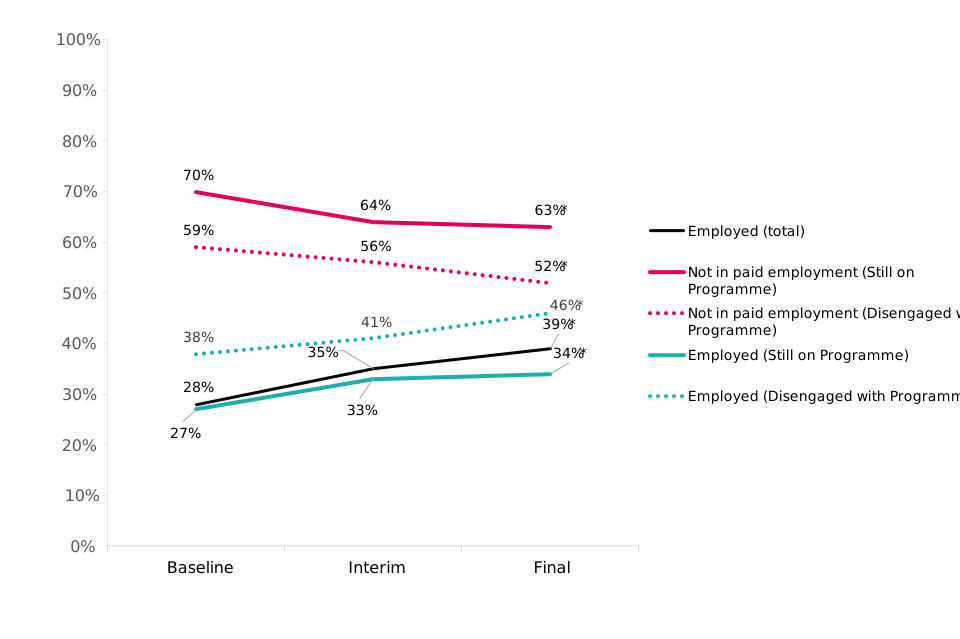
While all sub-groups saw an increase in employment, some saw greater increases than others. Groups which saw marginally larger employment increases from baseline to final tended to cluster around participants which likely had lower-level support needs, including those not claiming benefits (+19 ppts), those who did not report having a health condition (+16 ppts), and those who have continuously or mostly worked since education (+15 ppts).
There were further differences when broken down by area, although the reader should note the small sample sizes. Some regions saw statistically significant improvements in employment outcomes which were greater than the average, including Slough (+16 ppts from 18% to 34%), South Yorkshire (+16 ppts, from 17% to 33%), Norfolk (+12 ppts from 33% to 45%), and Nottingham (+11 ppts from 27% to 46%). However, other areas saw only marginal gains, which were not statistically significant, including Chester (+5 ppts from 35% to 40%), Enfield (+3 ppts from 30% to 33%), Newham (+3 ppts from 41% to 44%), and Essex (+2 ppts from 39% to 41%). Further evaluative impact work is needed to understand why these differences between areas exist.
Participants moved into a range of employment industries following support from IPSPC. Evidence from the case studies documented employment opportunities in construction, warehousing, education, retail, hospitality, transport, health and social care and IT, as well as self-employment, and that employment was sustained beyond 13 and 26 weeks.
The evidence suggests that participants referred while in-work had different experiences. Evidence from the case studies again revealed that some participants were able to stay in their role with adjustments in place, such as flexible working arrangements and increased working from home opportunities. Others moved into alternative employment, better suited for their needs.
I’ve actually changed my working arrangement with them… the confidence I’d gained over the first couple of months of [support] has enabled me to put in a flexible working request and its completely changed the way I’m working.
IPSPC Participant
Out-of-work participants had a more positive outlook on both their perceived employability and likelihood of continuing to work after engaging with the programme. Referral partners reported observing increased motivation to find work amongst participants they had referred to the service. Employment Specialists suggested that participants were more open to exploring opportunities they previously would not have considered.
She’s not found a job, but she’s very much still involved and looking and not feeling downtrodden… she was still very like, ‘yes, we’re looking for jobs, got my CV, I’m applying for this’ and very positive about it.
Wider partner
The majority of employed participants across the three surveys felt that IPSPC had contributed to them being or staying at work. As shown in the below figure 9.2, across all waves, roughly seven in ten (68% to 72%) reported that IPSPC had contributed a lot or a little to them being or staying in work; whilst less than a quarter (22% to 23%) reported that the programme contributed not a lot or not at all. Those who were satisfied with the programme, had above average scores on wellbeing, and had higher self-efficacy scores, were more likely to report the programming had contributed a lot to them being or staying in work. Conversely, those who had lower levels of trust in their advisor, had below average scores on wellbeing, and had lower self-efficacy scores, were less likely to report that the programme contributed a lot to being in work.
Figure 9.2: To what extent has [IPSPC] contributed to you being or staying in work?
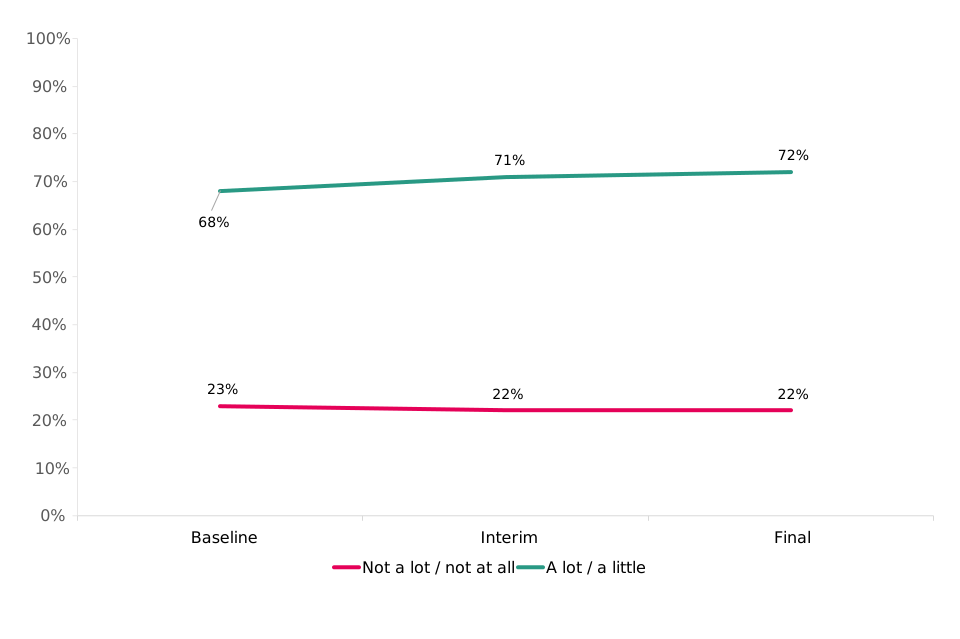
Base: All baseline survey participants who were employed (555), all interim survey participants who were employed (565), all final survey participants who were employed (501).
Participants reported their current job matched their work and skills interest and often spoke positively about the new roles they started, and how they generally felt. As per figure 9.3, across the interim and final waves, over three quarters (76% to 78%) agreed their current job matched their work skills and interests, whilst less than a quarter (18% to 20%) reported it did not. Despite these positive results, the qualitative strand identified evidence which suggests that a few participants experienced pressure to take up opportunities they were not interested in or felt were not suitable for their circumstances. In limited cases, this included insecure work. Additionally, respondents with degree level education felt that guidance on where to find graduate positions was limited, and the opportunities shared with them were not always tailored to their interests or career ambitions.
Figure 9.3: To what extent does your current job match your work skills and interests?
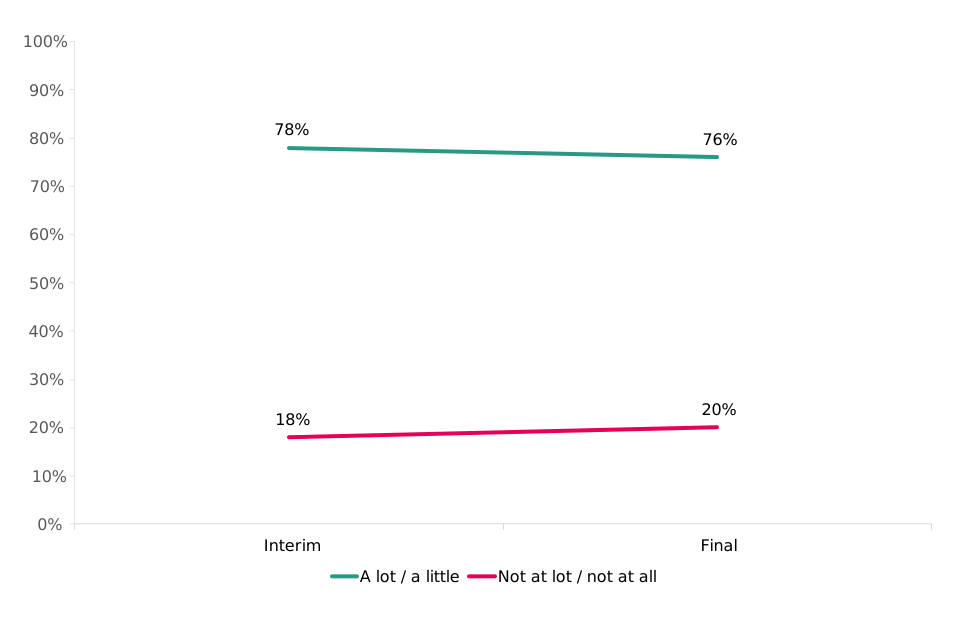
Base: All employed interim participants (565), and all employed final participants (501).
Job Confidence Outcomes
The evaluation did not identify any significant changes between the baseline and final surveys on any of the JSSE measures. As per figure 9.4, confidence across all 9 measures varied considerably, with the lowest confidence seen for contacting and persuading potential employers to consider you for a job (44% confident at baseline) and making the best impression and getting your points across in an interview (50% confident at baseline); to applying for jobs online (66% confident at baseline) and searching for jobs online (68% confident at baseline). However, there were not any statistically significant changes from the baseline to either interim or final surveys, and all measures stayed stable.
Figure 9.4: Whether or not you are employed or unemployed now, how confident do you feel about doing the following things?
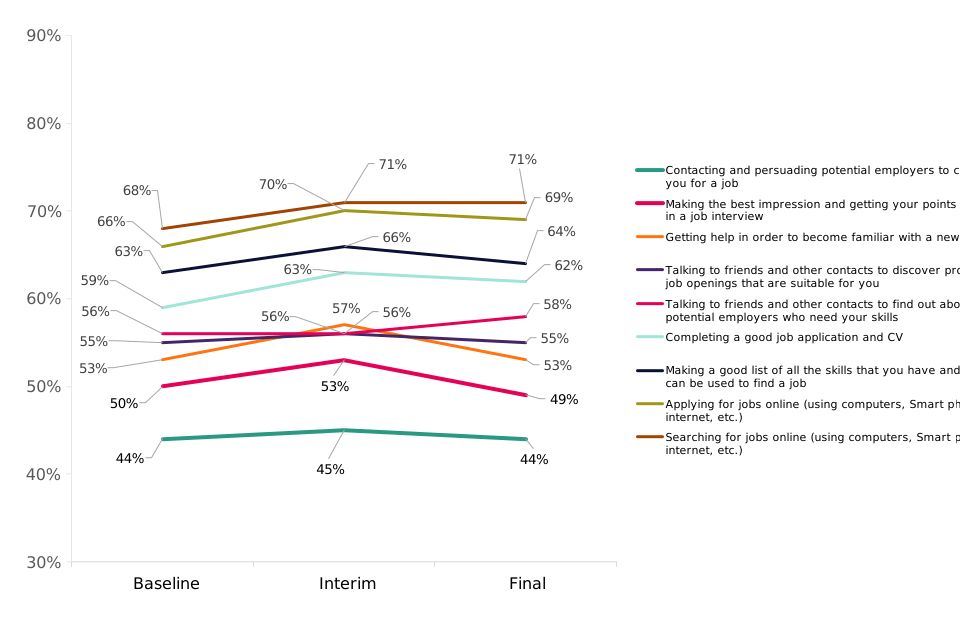
However, participants who were satisfied with the programme and/or trusted their advisor a little or a lot did see improvements in some JSSE measures from baseline to final. As per the below table 9.1, those who had more positive views towards the programme and/or their advisor saw their JSSE increase from baseline to final for “completing a good job application and CV”, “searching for jobs online”, and “applying for jobs online”; whilst those who were satisfied with the programme also saw their JSSE scores increase for “making a good list of all the skills that you have which can be used to find a job” (from 67% at baseline to 71% at final), and “talking to friends and other contacts to find out about potential employers who need your skills” (from 60% at baseline to 65% at final).
Table 9.1: Whether or not you are employed or unemployed now, how confident do you feel about doing the following things? [Only those with high satisfaction with the programme and high trust in Employment Specialists]
| JSSE measure - Total: Satisfied | Baseline | Interim | Final |
|---|---|---|---|
| JSSE1: Making a good list of all the skills that you have and which can be used to find a job | 67% | 72%* | 71%* |
| JSSE2: Talking to friends and other contacts to find out about potential employers who need your skills | 60% | 62% | 65%* |
| JSSE4: Completing a good job application and CV | 62% | 67%* | 69%* |
| JSSE7: Searching for jobs online (using computers, smart phones, internet, etc.) | 71% | 75%* | 77%* |
| JSSE8: Getting help in order to become familiar with a new job | 69% | 73%* | 74%* |
| JSSE measure - Total: Trust in advisor | Baseline | Interim | Final |
|---|---|---|---|
| JSSE4: Completing a good job application and CV | 61% | 66%* | 67%* |
| JSSE7: Searching for jobs online (using computers, smart phones, internet, etc.) | 71% | 74%* | 75%* |
| JSSE8: Getting help in order to become familiar with a new job | 69% | 72%* | 73%* |
Additionally, nearly 3 in 4 (74%) participants reported the IPSPC programme helping them to understand their strengths. At the final survey, nearly half (48%) of respondents reported that the IPSPC programme had helped them understand their strengths a lot, 26% felt it had helped them a little, 10% not a lot and 13% not at all.
This aligns with findings from the qualitative strand, where several participants reported positive outcomes linked to job searching skills. This includes feeling more confident identifying good employers, as well as opportunities suitable for both their interests and their personal circumstances. Participants explained that the interview support made them better equipped to apply for job opportunities, request adjustments to the application process and present themselves in an interview. Furthermore, participants also reported being generally pleased with their CV after amendments and felt more confident to begin applying for work. Participants explained they felt more confident in themselves, and their ability to socialise.
The first thing we did was she helped me rewrite my CV. That was very helpful, I appreciated that, I was very happy with what she did.
IPSPC participant
Participants confidence in discussing their health condition with an employer did not change from baseline to final. At shown in figure 9.6, across all waves, less than half (43% to 45% across all waves) of respondents said they felt confident discussing their health condition with an employer, whilst a little over a third (34% to 35%) of respondents felt they were unconfident in discussing their health condition with an employer. Unlike the JSSE measures, there were no exceptions to this across any of the sub-groups.
Figure 9.5: How confident or unconfident do you feel about discussing your health condition with an employer?
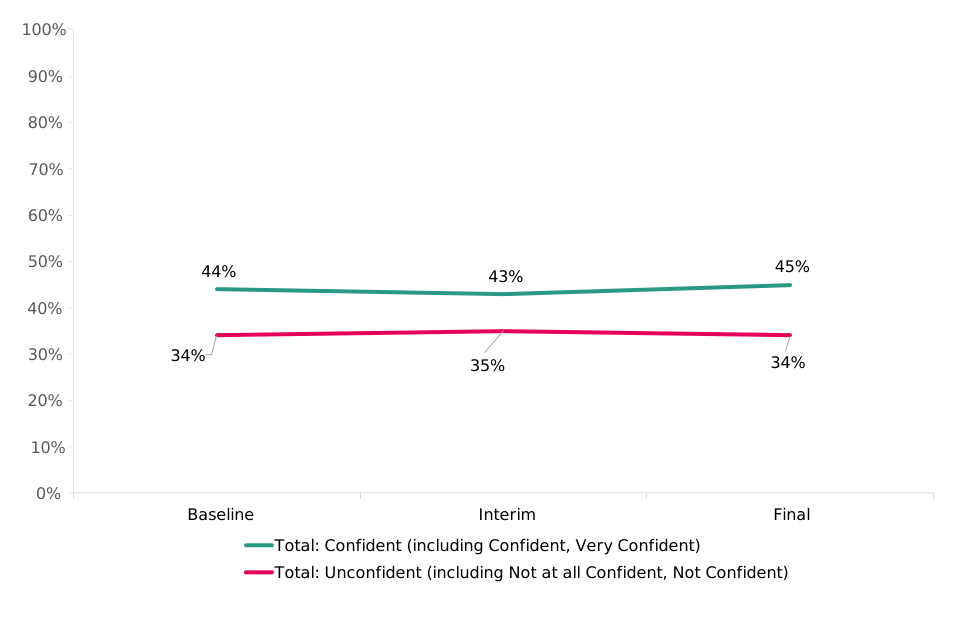
Base: All baseline survey participants (1,971), all interim survey participants (1,631), all final survey participants (1,288).
Health and Wellbeing Outcomes
Except for ‘feeling useful”, the evaluation did not identify any significant changes between the baseline and final surveys on Health and Wellbeing measures. As per figure 9.6, health and wellbeing measures were generally low at baseline, including “feeling relaxed” (29% at baseline), “feeling useful” (34% at baseline), and “feeling optimistic about the future” (35% at baseline). Nearly all these measures stayed stable from baseline to final, with the exception of “feeling useful”, which significantly increased from 34% at baseline to 41% at final.
Figure 9.6: Please select the response that best describes your experience of each over the last 2 weeks
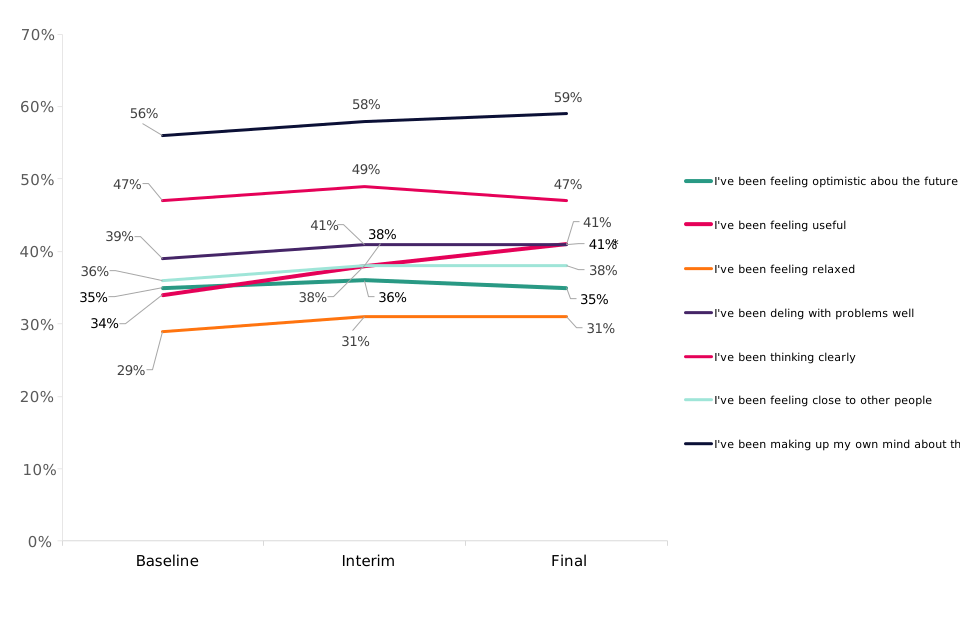
Base: All baseline survey participants (1,971), all interim survey participants (1,631), all final survey participants (1,288).
Similar to the JSSE measures, there were some improvements in health and wellbeing outcomes from baseline to final among certain sub-groups. As shown in the below table 9.2, specifically, whether the participant was satisfied with the programme, had a high trust in the advisor, and/or had high self-efficacy overall, saw improvements from baseline to final in participants “feeling relaxed”, being able to “deal with problems well”, “feeling close to other people”, and “making up their own mind about things”. Those who engaged with the programme also saw improvements for similar wellbeing measures, including being able to “deal with problems well” and “making up their own mind about things.”
Table 9.2: Please select the response that best describes your experience of each over the last 2 weeks [Only those with high satisfaction with the programme, high trust in Employment Specialists, high self-efficacy, and stayed engaged with the programme]
| QSWELL measure: satisfied with the programme | Baseline | Interim | Final |
|---|---|---|---|
| QSWELL3: I’ve been feeling relaxed | 31% | 34% | 36%* |
| QSWELL6: I’ve been feeling close to other people | 38% | 41% | 44%* |
| QSWELL7: I’ve been able to make up my own mind about things | 58% | 60% | 63%* |
| QSWELL measure: trust in advisor | Baseline | Interim | Final |
|---|---|---|---|
| QSWELL3: I’ve been feeling relaxed | 30% | 33% | 34%* |
| QSWELL7: I’ve been able to make up my own mind about things | 57% | 59% | 62%* |
| QSWELL measure: high self-efficacy | Baseline | Interim | Final |
|---|---|---|---|
| QSWELL4: I’ve been dealing with problems well | 51% | 53% | 57%* |
| QSWELL6: I’ve been feeling close to other people | 47% | 49% | 53%* |
| QSWELL measure: stayed engaged with the programme | Baseline | Interim | Final |
|---|---|---|---|
| QSWELL3: I’ve been feeling relaxed | 28% | 31% | 34%* |
| QSWELL6: I’ve been feeling close to other people | 36% | 39% | 41%* |
The qualitative evidence substantiates these findings, and the delivery teams interviewed reported improvements in participants’ health and wellbeing. Employment Supervisors shared that through feedback forms, they observed an increase in participants’ self-reported wellbeing scores. Feedback forms also reported a reduction in the number of GP and hospital appointments attended by participants, and evidence of medication dosages being lowered. Please note however that the evaluation team did not have access to these feedback forms.
Looking back on our feedback when they exit, we’ve seen that they’ve reported less NHS support, less trips to the doctors and some of them even not on medication.
Employment Supervisor
The qualitative work found evidence that participants with a health condition noticed improvements in their mental health, although this was not reflected in the quantitative findings. Participants reported that they attributed this improvement in their mental health to the routine and positive outlook gained from being in work. However, there were some examples of participants moving into work they found unsuitable, which caused relapses and/or flare ups in their conditions (however these jobs may or may not have been found by the Employment Specialists themselves).
When these challenges were communicated to their Employment Specialist, this was often resolved by seeking alternative employment with a different employer or in a different sector, rather than through workplace adjustments.
Enablers and barriers to participant outcomes
Participant characteristics
There is evidence to suggest that participants with lower-level needs saw better outcomes compared with other participants. Those who were more satisfied with the programme, more likely to be employed form baseline to final, and/or saw increases in JSSE and health and wellbeing measures included those who did not report any health condition, had higher self-efficacy scores, those not claiming benefits, and those who had worked continuously or mostly since education.
The suitability of participants for the ‘place then train’ model of support was identified as a key challenge to delivery. Delivery teams felt this was often not appropriate for their out-of-work participants, who needed extensive confidence and motivational support, as well as support for other needs, before they could consider moving into work. For the in-work group, there were also confidence needs and current employment challenges that needed to be addressed ahead of considering new opportunities. Employment Specialists suggested that the time limit for support should be extended to allow time to support participants’ confidence.
The harder ones I’ve found are people that are in a job… they only have 4 months with them, and that’s a really short time to find jobs, get an application in, get an interview, get success… they’ve got some working on their confidence, and they get to a stage where they’re looking and motivated but perhaps not getting any outcomes at that stage.
Employment Specialist
To address this challenge, Employment Specialists suggested the length of onboarding forms should be shortened to improve engagement and relationship building in the early stages of support. They felt this would increase autonomy within their role to tailor introductions to the programme in a way that is both true to IPS principles and tailored to individuals’ needs.
Just shortening down the forms completely. I feel like we should be trusted more as individuals that we know what we’re doing and asking the right questions.
Employment Specialist
Overall, the collaborative nature of support was identified as another key enabler. Both providers and participants felt community-based support facilitated open communication and supported the co-design of a tailored participant journey. Participants appreciated the collaborative feeling of support this created which enabled them to identify clearer pathways towards their desired outcomes.
Employment Specialists
The relationship between participants and Employment Specialists was widely felt to be an important enabler of positive outcomes. The quantitative surveys found that participants who had high levels of trust in their Employment Specialist also tended to see better improvements on JSSE and Health and well-being measures. Qualitative evidence found that this relationship was strengthened through consistency of interaction between the Employment specialist and participant. Furthermore, where Employment Specialists had time available to support their participants, which was enabled when caseload numbers were broadly in line with the policy intent. Combined, these factors empowered participants in their journey towards work and boosted their overall confidence.
There was a short training period prior to delivery which impacted the time available for Employment Specialists to manage caseloads as they had to complete training whilst working in the role. Employer Supervisors and area leads felt the training period was too short. This made it challenging to deliver core IPS principles from the outset of programme delivery and instead required Employment Specialists to carefully balance an active caseload with ongoing, essential training.
To address the challenge, providers suggested a longer lead in time ahead of delivery. They felt this would allow more rigorous training through more comprehensive induction plans, providing more local organisation and clarity on the expectations on Employment Specialists. Further, they this would provide more time to integrate with local health systems and employers.
We were so quick to get the service going that we on-boarded people who then disengaged very quickly… a slightly longer lead in time would enable more training, upskilling and development.
Delivery Manager
Outside of appointments, Employment Specialists indicated they had limited time to complete administration, training and employer engagement activities. This was particularly prominent in rural case studies where Employment Specialists had to travel long distances between appointments.
Employment Specialists made suggestions to both staffing structures and caseload sizes, with a view to support more personalised delivery. Firstly, in response to time constraints in their role, Employment Specialists felt there could be a separate employer engagement team responsible for sourcing local opportunities. This would free up Employment Specialists time to personalise support, while also allowing them to access a network of employers ready to engage in the service. Secondly, Employment Specialists in rural areas felt that their caseload size should be adjusted to better reflect the realities of serving participants within the geographical spread, and resulting travel time, of their participants.
Employment Specialists shared that tracking participants’ outcomes can be challenging. This was particularly prominent at the week 26 check in, where participants had typically settled into their role and disengaged from the support. This ultimately made it difficult for Employment Specialists to confirm and report sustainment.
To address this challenge, one Employment Specialist suggested the programme could be linked to HMRC data, as opposed to collecting payslips. This would allow instant access to the relevant information required to track outcomes, without requiring Employment Specialists to chase participants who had disengaged from the programme. This approach has been adopted for the Connect to Work programme.
Area differences
There were significant variations across areas for key programme and outcome measures. Some areas saw vastly different drops in satisfaction with the programme, as well as vastly different improvements in employment outcomes, compared to others. Regions which saw minimal drops in satisfaction and higher levels of employment outcomes (2 variables which as noted elsewhere, are interlinked with one another) include Norfolk, Nottingham, and Slough; conversely, regions which saw substantial drops in satisfaction and lower levels of employment outcomes include Cheshire West and Chester, Essex, and Newham. Without further impact work, it is difficult to say whether these differences are down to variations in the local job markets, local health outcomes and inequities, local authority architecture and features, and/or how the programme was implemented in each local authority.
Employment Specialists and wider partners identified the health focus of the programme to be unique within their local employment support. They each felt that this allowed Employment Specialists to deliver a more tailored intervention.
I do love this contract, that actually people with a health condition, we’re finding the right job for them. You see that there’s a job out there for everyone.
Employment Supervisor
Finally, in areas where the support was more integrated into the local health systems, Employment Specialists and health partners reported that showcasing NHS logos on advertising materials was key for driving engagement.
Engaging health partners and employers was considered a key challenge. This was attributed to workload pressures on both primary care workforce and employers. Notably, this was also reported in areas where the programme was delivered by NHS organisations. Smaller employers explained that it was challenging to make adaptations to their business without disrupting operations.
To address this challenge, delivery managers suggested that more responsibility should be placed on PCNs, ICBs, and Local Authorities to facilitate integration of the IPSPC programme with health services. By involving these stakeholders from the outset of contracting, Delivery Managers felt they could collaborate on local design and delivery more effectively. This would subsequently encourage equal accountability for health integration in the local area. Additionally, as mentioned in chapter 3, some Local Authorities were able to secure agreements to change GPs’ IT systems to accommodate direct referrals, which streamlined the referral process. One provider was able to integrate by tailoring their system to the needs of the PCNs, GPs and clinicians.
Employer outcomes
The evaluation team encountered challenges securing interviews with employers; consequently, findings on employer outcomes are based on limited evidence and should be treated accordingly.
Key feedback from employers who contributed commended the availability of the support and felt confident they would engage in the future, particularly to support existing employees manage health conditions.
One employer shared a specific change they planned following a trial shift attended by a participant. They explained that a neurodivergent participant had attended a trial shift during peak trading hours, and on a day the business had staff absence. This negatively impacted the trial shift experience and individual’s performance, which ultimately led to an unsuccessful application. Through discussions with the delivery organisation, the store planned to ensure trial shifts were held during quieter periods and were introducing an option to pause trial shifts when there were unexpected busy periods.
Further information shared by delivery teams outlined specific adjustments employers made to support individuals to enter and sustain employment. These varied and included providing specialised display screen equipment products for participants with musculoskeletal health conditions, as well as changes to working locations and offering quiet and private workspaces to support neurodivergent participants.
10. Conclusions
This section outlines overarching conclusions, as well as recommendations for the Connect to Work programme and evaluation, which has been approved and commissioned.
We have generated 11 conclusions based on findings from the evaluation to date:
1. The delays in confirming funding to Local Authorities caused knock-on effects which delayed other aspects of the programme.
These delays resulted in a reduced mobilisation period, meaning there was less time to build the necessary health and work partnerships, as well as recruit and train staff. In some cases, this resulted in high participant caseloads at the outset of the programme, which may have impacted the quality of support provided to participants.
2. Engaging health partners, including strategic partners and individual primary care settings, was more time-intensive than anticipated.
Local authorities were able to leverage their strategic connections with ICBs and PCNs, however the overall success was mixed. Engaging GP surgeries was considered challenging and required developing personal relationships with practice managers.
3. Employers who engaged with the programme generally viewed it positively, particularly where support was provided at no cost.
However, Employment Specialists found it challenging to meaningfully engage employers in the programme. This was influenced by two key factors, low confidence among Employment Specialists to complete employer engagement activities, and difficulties maintaining relationships. Once Employment Specialists explained to the employers that the programme was free, they were more likely to engage. The evaluation also struggled to engage employers and was unable to interview the target sample.
4. Employment specialists required additional training to effectively deliver specific aspects of the programme.
Delays to confirming funding to LAs meant there was less time to recruit and train programme staff, for example, the evaluation found evidence that Employment Specialists had lower levels of confidence in engaging employers which required training. Furthermore, and although participants were positive about the support provided to them by Employment Specialists, there was limited evidence of the ‘place then train’ model of support taking place, which may suggest further training in this area is warranted (for example, finding the right opportunities).
5. There was a strong understanding of the eligibility requirements for the programme, with the largest source of referrals coming from primary care.
There was minimal evidence of ineligible referrals moving onto receiving support, and stakeholders tended to have a strong understanding of the criteria required for the programme. As per monitoring information, the most referrals were from primary care (30%), the Jobcentre Plus (20%), not signposted (13%), signposted by another route (12%).
6. There was limited evidence of a ‘place then train’ support model.
Employment Specialists felt that their participants were not suitable for this model, and their mental and physical health needs had to be addressed before being placed in a working environment. Difficulties engaging employers also meant there were fewer suitable opportunities for participants which aligned with the requirements of this model.
7. Participants generally reported high satisfaction with the programme and valued the personalised support provided by Employment Specialists.
Satisfaction declined slightly over time but remained high overall, and the relationship between participants and Employment Specialists was consistently identified as a key driver of engagement.
8. The relationship between participants and Employment Specialist, particularly trust, is an important determinant of positive outcomes.
Those who reported higher trust in the Employment Specialists saw less of a decline in satisfaction from baseline to final, were more likely to see certain JSSE measures significantly raise from baseline to final, and were more likely to see certain health and wellbeing measures significantly raise from baseline to final.
9. Despite improvements in job outcomes among programme participants, the evaluation cannot fully attribute these changes directly to IPSPC participation.
Evidence from the evaluation shows that the proportion of participants in employment increased during the study period; however, similar increases were observed among participants who disengaged from the programme. Still, among participants who did find employment, the majority self-reported that the IPSPC programme contributed to this.
10. There is considerable variation in programme and employment outcomes across areas, although further research is needed to understand why this is.
Some evidence from the qualitative strands suggests that delivery of the programme may have be more challenging in rural areas, and across all case studies, rural areas struggled to meet with employers and participants. This was largely due to the amount of time they needed to spend traveling to meet with their caseloads, which were described as dispersed.
11. The programme appears to be more effective for participants with lower-level support needs.
Positive outcomes tended to cluster around certain participant characteristics, including among those who have higher JSSE scores, are not claiming benefits, did not report a health condition to the survey, and those with stronger prior attachment to the labour market.
Recommendations
We have provided 5 recommendations based on findings from this evaluation. We have targeted these recommendations towards the roll out of the Connect to Work programme.
1. Strengthen fidelity to the IPS model across delivery areas
The evaluation found limited evidence of the ‘place then train’ model being consistently implemented, with delivery teams often prioritising confidence-building and employability support before job placement. Qualitative interviews also suggested that some Employment Specialists had limited confidence engaging employers, indicating that additional training and fidelity monitoring may be beneficial.
As Connect to Work scales up nationally, maintaining fidelity to the core IPS model will be important to ensure the programme delivers as intended and aligns with the evidence base underpinning IPS approaches.
2. Ensure delivery models are equipped to support participants with higher-level support needs.
Survey analysis showed stronger employment improvements among participants with lower-level support needs. Connect to Work should ensure that programme structures, timelines and support mechanisms are appropriate for participants with complex health or employment barriers. This may include flexibility in support duration, stronger integration with health services, and tailored approaches to confidence-building and employability support before job placement where required.
3. Monitor regional variation and provide targeted implementation support where needed.
As Connect to Work expands, monitoring variation across areas will be important to ensure consistent delivery and outcomes. Where areas experience challenges, such as lower employment outcomes, reduced participant satisfaction, or difficulties engaging partners, targeted implementation support may help address barriers and share best practice.
4. Strengthen employer engagement capacity within delivery teams.
Both delivery teams and the evaluation reported challenges engaging employers and maintaining employer relationships. Connect to Work should ensure that delivery teams have the capacity, skills and time required to develop relationships with employers and identify suitable job opportunities for participants. This may include enhanced training, dedicated employer engagement roles, or additional operational guidance.
5. Ensure the Connect to Work evaluation examines drivers of programme performance.
The evaluation also found limited evidence supporting some expected outcome pathways in the programme’s Theory of Change and was unable to determine causality of the programme towards job outcomes. The Theory of Change should be re-evaluated, and pathways reassessed in light of the findings in this report.
Annex
Survey methodology
Survey design
Surveys took place every month. Participants who had been onboarded onto the IPSPC programme in the previous month were took part in the baseline survey, participants who had onboarded 3 months previously took part in the interim survey, and participants who had onboarded 6 months previously took part in the final survey. A total of 4,890 interviews took place between 28 August 2024 and 29 October 2025. The fieldwork was conducted over 15 waves, with the breakdown of completes per wave shown below:
Table A.1: Survey completes by monthly wave, across baseline, interim and final
| Wave | Timings | Baseline total | Interim total | Final total |
|---|---|---|---|---|
| 1 | August to September 2024 | 84 | n/a | n/a |
| 2 | September to October 2024 | 98 | n/a | n/a |
| 3 | October to November 2024 | 169 | 121 | n/a |
| 4 | November to December 2024 | 266 | 162 | n/a |
| 5 | January 2025 | 275 | 161 | n/a |
| 6 | January to February 2025 | 187 | 214 | 154 |
| 7 | February to March 2025 | 227 | 174 | 114 |
| 8 | March to April 2025 | 212 | 119 | 111 |
| 9 | April to May 2025 | 228 | 165 | 149 |
| 10 | May to June 2025 | 220 | 159 | 130 |
| 11 | June to July 2025 | n/a | 160 | 73 |
| 12 | July to August 2025 | n/a | 169 | 141 |
| 13 | August to September 2025 | n/a | n/a | 120 |
| 14 | September to October 2025 | n/a | n/a | 147 |
| 15 | October 2025 | n/a | n/a | 118 |
The surveys were push to web. Participants were sent an invitation email by the evaluation team which included a link to an online survey, and CATI interviews took place after a week of online fieldwork to create a mixed mode survey. Participants in the Manchester area were not sent a link by the evaluation team; instead an open link was sent directly to participants by the council. A breakdown of mode is shown below:
Table A.2: Survey completes by mode, across baseline, interim and final
| Mode | Baseline total | Interim total | Final total |
|---|---|---|---|
| CATI | 1,235 | 949 | 705 |
| Online | 736 | 682 | 583 |
| Overall | 1,971 | 1,631 | 1,288 |
Sampling
The sample was provided by regional delivery partners. Partners provide DWP with a monthly sample of their referrals onto the programme, which DWP shared with Ipsos monthly. This only included participants who agreed to be recontacted as part of the evaluation. A breakdown of completes by region is shown below:
Table A.3: Survey completes by region, across baseline, interim and final
| Mode | Baseline total | Interim total | Final total |
|---|---|---|---|
| Cheshire West and Chester | 92 | 72 | 42 |
| Enfield | 46 | 39 | 30 |
| Essex | 14 | 49 | 78 |
| Greater Manchester | 126 | 73 | 49 |
| Newham | 35 | 44 | 42 |
| Norfolk | 276 | 209 | 149 |
| Nottingham | 163 | 275 | 204 |
| Slough | 140 | 130 | 84 |
| South Yorkshire | 261 | 265 | 200 |
| Surrey | 142 | 97 | 65 |
| West London Alliance | 261 | 210 | 195 |
| West Midlands | 209 | 168 | 150 |
Analysis
Weighting
The data was weighted against certain demographic characteristics, based upon DWP IPSPC profile information. The data was weighted by age, gender, and ethnicity. The data was weighted to the below figures:
Table A.4: Gender, unweighted and weighted sample
| Gender | Unweighted proportion | Weighted Total |
|---|---|---|
| Male | 50% | 50% |
| Female, Non-binary, Other or Prefer not to say | 46% | 47% |
| Non-binary, other, or prefer not say | 3% | 3% |
Table A.5: Age, unweighted and weighted sample
| Age | Unweighted proportion | Weighted Total |
|---|---|---|
| 16-24 | 19% | 18% |
| 25-35 | 20% | 23% |
| 35-44 | 18% | 21% |
| 45-54 | 18% | 18% |
| 55+ | 22% | 17% |
| Don’t know / Prefer not to say | 3% | 3% |
Table A.6: Ethnicity, unweighted and weighted sample
| Ethnicity | Unweighted Total | Weighted Total |
|---|---|---|
| White | 69% | 61% |
| Asian or Asian British | 13% | 15% |
| Black or Black British | 9% | 14% |
| Other | 6% | 5% |
| Mixed | 5% | 3% |
| Don’t know / Prefer not to say | 4% | 2% |
For all variables, the study employed a quantitative analytical approach to evaluate differences among sub-groups. This includes:
- demographic variables, including age, gender, ethnicity, and region
- work, benefits, and caring-related variables, including employment status, time spent working, work history, self-reported annual personal income from work, whether the participant is currently on benefits, caring responsibilities, and whether they are caring for children
- health variables, including whether the participant has a health condition, SWEMWEBS score and JSSE group
- attitudinal variables, including satisfaction with the survey and trust in their advisor
Significance testing was conducted at the 95% Confidence Interval both within groups and compared to the average for each question. Analysis was conducted on the weighted sample sizes. Tables have been provided separate to this report.
Qualitative interviews
Case studies were conducted across six delivery sites. 5 case studies were with IPSPC delivery partners and 2 case studies were conducted with WHP delivery partners. The total number of interviews conducted with each site are shown below:
Table A.7: Interviews conducted by area
| IPSPC delivery area | Interviews conducted |
|---|---|
| Cheshire West and Chester | 14 |
| Essex | 17 |
| West Midlands | 14 |
| West London | 11 |
| Norfolk | 13 |
| Nottingham | 12 |
Interviews were conducted with 5 groups of participants:
- IPS participants
- IPS employment specialists
- IPS employment supervisors
- employers
- stakeholders (such as referral and health partners, strategic leads)
Theory of change
THEORY OF CHANGE IMAGE HERE
Overarching hypotheses
The evaluation had seven overarching hypotheses. These are presented in the below table, alongside an initial assessment against each hypothesis and the accompanying strength of evidence.
Table A.8: Evaluation hypotheses, assessments, and strength of evidence
| Hypothesis | Initial assessment | Strength of Evidence |
|---|---|---|
| The contracting process enables effective procurement of suitably qualified and experienced organisations to deliver the contract. | Qualitative findings suggest that there is partial support for this hypothesis. | The strength of evidence rating for this finding is Amber. |
| Local Authorities are effectively supported by DWP to manage their contracts, share learning, and oversee delivery of IPSPC. | Qualitative findings suggest that there is partial support for this hypothesis. | The strength of evidence rating for this finding is Amber. |
| In delivery, IPSPC Employment Specialists will liaise with relevant healthcare professionals to ensure that health and employment support is integrated, and that work is supportive of participant health. | Qualitative findings suggest that there is partial support for this hypothesis. | The evidence rating for this finding is Amber. |
| Engagement with an Employment Specialist will effectively sustain a participant’s motivation to work and this will be supported by a trusting relationship between the Employment Specialist and participant. | Qualitative and quantitative findings suggest there is support for this hypothesis. | The evidence rating for this is Green. |
| The Vocational Profile tool will effectively identify job opportunities that are suited to the participant and well matched to their interests. | Qualitative findings suggest that this hypothesis is not supported. | The evidence rating for this finding is Amber. |
| Employment Specialists liaise or supports the participant to liaise with employers to ensure that work offers opportunities to train and is supportive of their health. | Qualitative findings suggest that this hypothesis is not supported. | The evidence rating for this finding is Amber. |
| Employment Specialists liaise with participants in work and their employers to ensure that work is supportive of health, that support is provided to participants to ensure they can meet the demands of work and communicate their needs. | Qualitative findings suggest there is support for this hypothesis. | The evidence rating for this finding is Amber. |
Fidelity score
Fidelity scores 4 and 5 were used as part of the evaluation. Definitions of both can be found below:
Fidelity item 4: Integration of supported employment with primary and/or community health service through team assignment.
Employment specialists are part of up to 2 primary and/or community health services from which at least 90% of the employment specialist’s caseload is comprised.
| Points | Definition |
|---|---|
| 1 Point | Employment specialists are part of a vocational programme that functions separately from the primary and community health services |
| 2 Points | Employment specialists are attached to three or more primary and/or community health services or service users are served by individual health practitioners who are not organised into teams or Employment specialists are attached to one or two teams from which less than >50% off the employment specialist’s caseload is comprised. |
| 3 Points | Employment specialists are attached to one or two primary and/or community health services, from which at least 50% to 74% of the employment specialist’s caseload is comprised. |
| 4 Points | Employment specialists are attached to one or two primary and/or community health services, from which at least 75% to 89% of the employment specialist’s caseload is comprised |
| 5 Points | Employment specialists are attached to one or two primary and/or community health services, from which at least 90% to 100% of the employment specialist’s caseload is comprised. |
Fidelity item 5: Integration of supported employment with primary and/or community health services through frequent team member contact.
Employment specialists actively participate in weekly “participant/client focused” meetings with the treatment team, (not replaced by administrative meetings), that discuss individual participant/client and their employment goals with shared decision-making. Employment specialist’s office is in close proximity to (or shared with) their treatment team members. Documentation of primary and/or community care treatment and employment services is integrated in a single participant/client user record. Employment specialists help the team think about employment for people who haven’t yet been referred to IPS.
Point criteria
-
employment specialist attends weekly participant/client focused meetings with the treatment team
-
employment specialist participates actively in the team meetings with shared decision-making
-
employment service’s documentation (vocational assessment/profile, employment plan, progress notes) is integrated into the participant/client’s recovery/treatment plan
-
employment specialist’s office is in close proximity to (or shared with) the treatment service team members
-
employment specialist helps the team think about employment for people who haven’t yet been referred to supported employment services
| Points | Criteria present |
|---|---|
| 1 Point | One or none is present |
| 2 Points | Two are present |
| 3 Points | Three are present |
| 4 Points | Four are present |
| 5 Points | Five are present |
References
Althubaiti A. (2016). Information bias in health research: definition, pitfalls, and adjustment methods. J Multidiscip Healthc. 4;9:211-7. doi: 10.2147/JMDH.S104807. PMID: 27217764; PMCID: PMC4862344.
Bond, G. R., Drake, R. E., & Becker, D. R. (2008). An update on randomized controlled trials of evidence-based supported employment. Psychiatric Rehabilitation Journal, 31(4), 280–290. Retrieved from: psycnet.apa.org
Casula, M., Rangarajan, N. and Shields, P. (2021). The potential of working hypotheses for deductive exploratory research. Quality and Quantity, 55: 1703-1725. Retrieved from: link.springer.com
Chigbu, U. (2019). Visually Hypothesizing in Scientific Paper Writing: Confirming and Refuting Qualitative Research Hypotheses Using Diagrams. Publications. 2019; 7(1):22. Retrieved from: doi.org
Commission for Healthier Working Lives (2024a). Action for healthier working lives. The Health Foundation. Retrieved from: health.org.uk
Commission for Healthier Working Lives (2024b). Towards a healthier workforce. The Health Foundation. Retrieved from: health.org.uk
Drake RE, Bond GR. Individual placement and support: History, current status, and future directions. PCN Rep. 2023 Jul 24;2(3):e122. Retrieved from: pmc.ncbi.nlm.nih.gov
Department for Work and Pensions and Department for Health and Social Care. (2022). Health-led Employment Trials Evaluation. Retrieved from: Health-led Trials: Evaluation Synthesis Report - GOV.UK
IPS Employment Center. (n.d.). What is IPS? Retrieved July 2025, from: ipsworks.org
Latimer, E., Pfanz, F. and Waters, T. (2024). Health-related benefit claims post-pandemic: UK trends and global context. Institute for Fiscal Studies. Retrieved from: ifs.org.uk
Litsardopoulos N, Gifford J, Sharma M, Allen A, Bajorek Z, and Wilson T. (2025). Work and health: international comparisons with the UK. Institute for Employment Studies. Retrieved from: CHWL international report - final
Mason, J., Laporte, A., McDonald, J.T., Kurdyak, P., and de Oliveira, C. (2023). Health Reporting from Different Data Sources: Does it Matter for Mental Health? J Ment Health Policy Econ. 1;26(1):33-57. PMID: 37029904.
Modini, M., Tan, L., Brinchmann, B., Wang, M. J., Killackey, E., Glozier, N., Mykletun, A., & Harvey, S. B. (2018). Supported employment for people with severe mental illness: Systematic review and meta-analysis of the international evidence. The British Journal of Psychiatry, 209(1), 14–22. Retrieved from: cambridge.org
Spitzer, S. & Weber, D. (2019). Reporting biases in self-assessed physical and cognitive health status of older Europeans. Retrieved from: PLOS ONE 14(10): e0223526. doi.org
-
Please note that some longitudinal respondents completed only 2 of the 3 surveys. ↩
-
Computer Assisted Telephone Interviewing (CATI) is a survey method that involves using an online script read out by trained interviewers to conduct quantitative surveys. ↩
-
ICBs are NHS organisations responsible for planning health services for their local population. They work in partnership with councils and voluntary sector organisations to develop and deliver an integrated care strategy within a designated area. These partnerships aim to improve outcomes in population health and healthcare; tackle inequalities in outcomes, experience and access; enhance productivity and value for money; and help the NHS support broader social and economic development. ↩
-
PCNs are groups of GP practices that work together, and with other health and care providers, to deliver a wider range of services to the local population. ↩
-
The evaluation team notes discrepancies in how health conditions are reported; this is discussed in Chapter 6. ↩