Epidemiology of COVID-19 in England, July to December 2025
Updated 25 June 2026

© Crown copyright 2026
This publication is licensed under the terms of the Open Government Licence v3.0 except where otherwise stated. To view this licence, visit nationalarchives.gov.uk/doc/open-government-licence/version/3 or write to the Information Policy Team, The National Archives, Kew, London TW9 4DU, or email: psi@nationalarchives.gov.uk.
Where we have identified any third party copyright information you will need to obtain permission from the copyright holders concerned.
This publication is available at https://www.gov.uk/government/publications/epidemiology-of-covid-19-in-england/epidemiology-of-covid-19-in-england-july-to-december-2025
Executive summary
This report summarizes trends in COVID-19 epidemiology in England from July to December 2025.
The key recent COVID-19 epidemiological trends between 30 June and 28 December are as follows:
- cases saw one peak between 30 June and 28 December 2025, with a peak of 3,507 weekly cases and 13.3% positivity in October; following this, COVID-19 incidence and positivity remained at baseline levels for the remainder of the period, though a small increase in cases was noted in December (with 795 weekly cases) which did not coincide with any increases in positivity
- hospital outcome rates, including A&E attendances, hospital admissions and severe hospital admissions were similar to trends in cases during the time period, with a peak in October 2025; similarly, A&E attendances and hospital admissions also peaked in October 2025, with weekly rates of 10.3 and 22.4 admissions and attendances per 1,000,000 population respectively; weekly rates of severe hospital admissions were consistently below 1 admission per 1,000,000 during the time period
- weekly COVID-19 mortality rates also peaked in October 2025, with rates ranging between 0.665 and 3.34 per 1,000,000 during the time period
- in total, 61.7% of all people aged 75 to 79, 65.8% of all people aged 80 and over, and 29.1% of all people aged under 75 years and in a clinical risk group (immunosuppressed), who are resident in England had been vaccinated with an autumn 2025 booster dose by the end of the COVID-19 autumn 2025 vaccination campaign (which ran between 1 October 2025 to 31 January 2026)
- incremental effectiveness of the autumn 2025 vaccines against hospitalization was highest in the period 5 to 9 weeks post-vaccination at 47.6%; further follow-up time is required to assess waning; a degree of longer-term protection against hospitalization was seen for the spring 2025 vaccine campaign, with evidence of protection lasting more than 35 weeks
Subsequent reports will be published approximately every 6 months to describe COVID-19 activity in line with the current COVID-19 immunisation programme.
Introduction
The SARS-CoV-2 virus, which causes coronavirus disease 2019 (COVID-19), continues to circulate among the population in England and can be associated with severe health outcomes (1). Since its emergence, trends in COVID-19 activity have changed in response to control measures including the national vaccination programme as well as population immunity from natural infection. The evolving lineage profile of the virus has also been associated with varying disease severity (2 to 7). Changes to testing policy, practice and surveillance systems have also impacted COVID-19 data trends since its emergence.
This series of reports provides descriptive analyses and summarises trends in COVID-19 epidemiology in England, with a primary focus on the most recent epidemiological trends. Reports will be published approximately every 6 months and will describe COVID-19 activity in line with the current COVID-19 vaccination campaign schedules.
Case epidemiology
Laboratory and case surveillance
The Second Generation Surveillance System (SGSS) captures test result information for notifiable causative agents, from laboratories in England. This includes SARS-CoV-2, the causative agent behind COVID-19. These data are used to identify COVID-19 cases in hospital settings in England. Address information from these data is then used to classify residential property type for each case, providing information on particular risk groups such as care home residents and prisoners.
The unified sample dataset (USD) contains all SARS-CoV-2 test results reported to UKHSA and is used in this report to calculate the percentage of tests that are positive for SARS-CoV-2 among all SARS-CoV-2 tests. The majority of testing occurs through Pillar 1 testing which is performed at an NHS laboratory – further information around testing pillars is provided in the Methods section of this report.
The section provides COVID-19 case epidemiology and SARS-CoV-2 test positivity from July to December 2025. All stratified rates are age standardised.
In the second half of 2025, COVID-19 cases saw a single peak in October. Case numbers climbed steadily between July and October, peaking around 3,507 cases per week in October which coincided with the peak positivity rate of 13.3%. Case numbers declined for the rest of the year, bar a small, short increase in weekly cases in early December.
COVID-19 cases across residential property types followed similar trends to cumulative COVID-19 cases. The vast majority of cases were resident in private residential dwellings, peaking at 2,961 cases per week in October. Of the non-private dwelling settings, the highest number of cases were observed in care and nursing home settings, reaching around 218 cases in late September. Over the time period, 23.9% of cases were unable to be assigned a property type, due to incomplete or missing residential address information.
During this period, cumulative COVID-19 case rates and positivity were highest among those aged 85 and over (565.5 per 100,000 and 9% respectively), followed by 75 to 84 (245.2 per 100,000 and 7.6% respectively). Within the younger age groups, cumulative case rates were highest among those aged under 4 (127 per 100,000). Overall positivity was higher among those aged 15 to 44 (5.3%) compared to those aged under 4 (4.6%) despite lower case rates among this age group (23 per 100,000).
Case rates were slightly higher in males (72.2 per 100,000) than in females (64.8 per 100,000), while positivity was similar among males and females (6.1% and 6%) in the 6-month period.
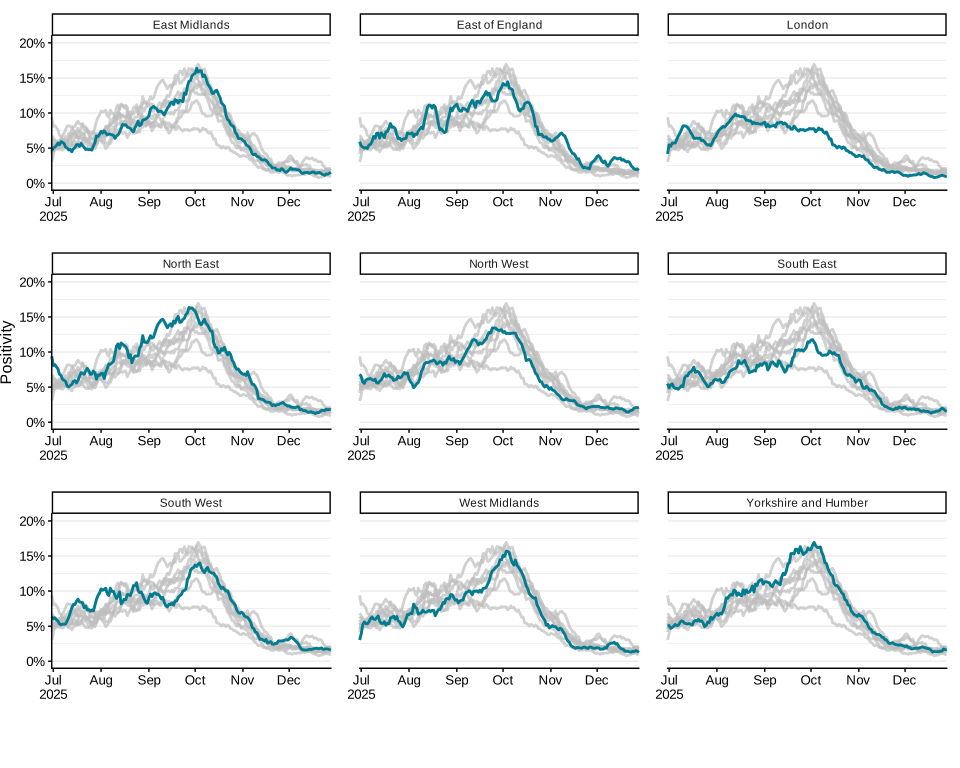
Case rates ranged between 44.3 and 107 per 100,000 among all regions, with North East having the highest case rates. During the time period the highest case positivity was observed among those resident in the East of England, with an average of 7.3%. Testing practices can vary across regions and may not be directly comparable.
The highest cumulative case rates were observed among those within the Mixed or Multiple ethnic groups at 217 per 100,000. The lowest rates were among those in the White (59.4 per 100,000) and Asian/Asian British (60.5 per 100,000) ethnic groups.
By IMD quintile, the highest rates were among those in the most deprived quintile (quintile 1) at 100.2 per 100,000. The rates decreased with decreasing deprivation level, with the lowest rates among the least deprived group at 49.3 per 100,000 (quintile 5).
Figure 1. Weekly COVID-19 cases, 30 June to 28 December 2025
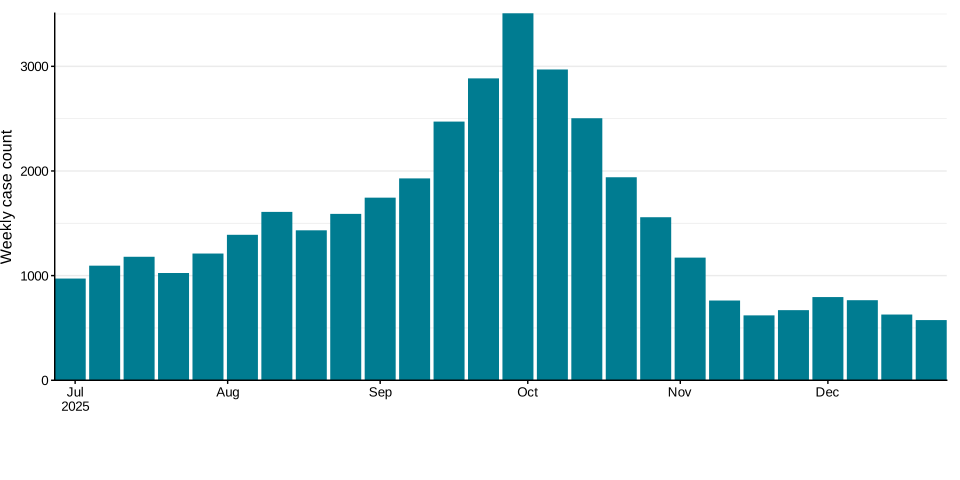
Figure 2. COVID-19 test positivity, 7-day moving average, 30 June to 28 December 2025
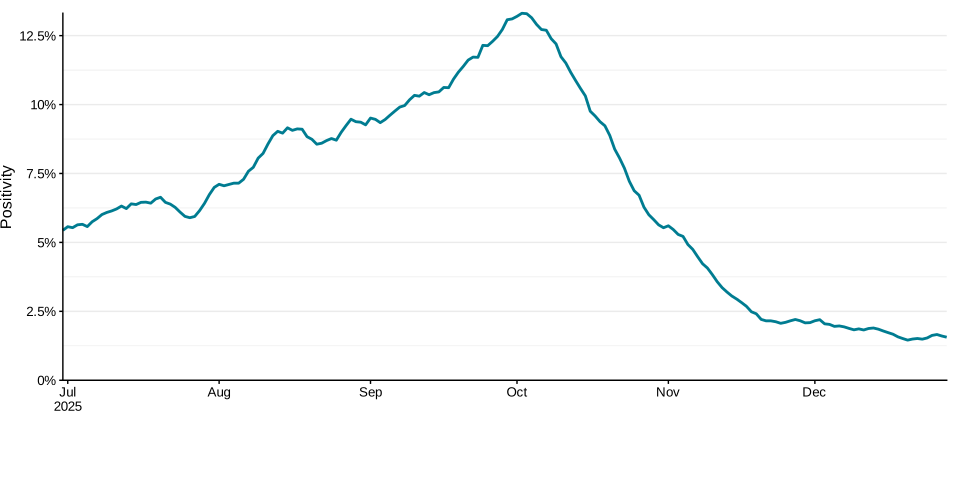
Figure 3. COVID-19 cases by property type, 30 June to 28 December 2025
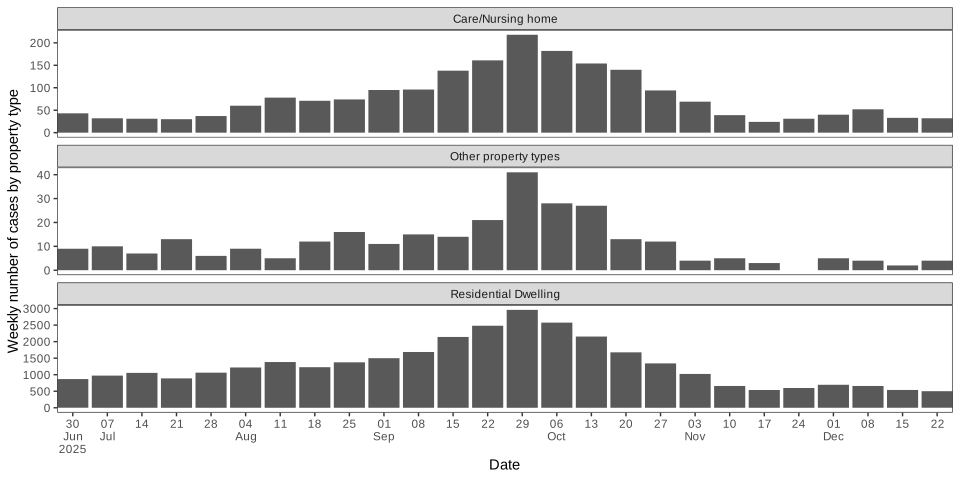
Note: there were 182 COVID-19 cases with an undetermined property type across pillars 1 and 2 (see Methods section), accounting for 23.9% of the total cases across all property types with specimen dates from 30 June 2025 to 28 December 2025.
Laboratory and case surveillance (July 2025 to December 2025) stratified by demographic
Figure 4A. COVID-19 case rates per 100,000 by age group, 7-day moving average (30 June to 28 December 2025)
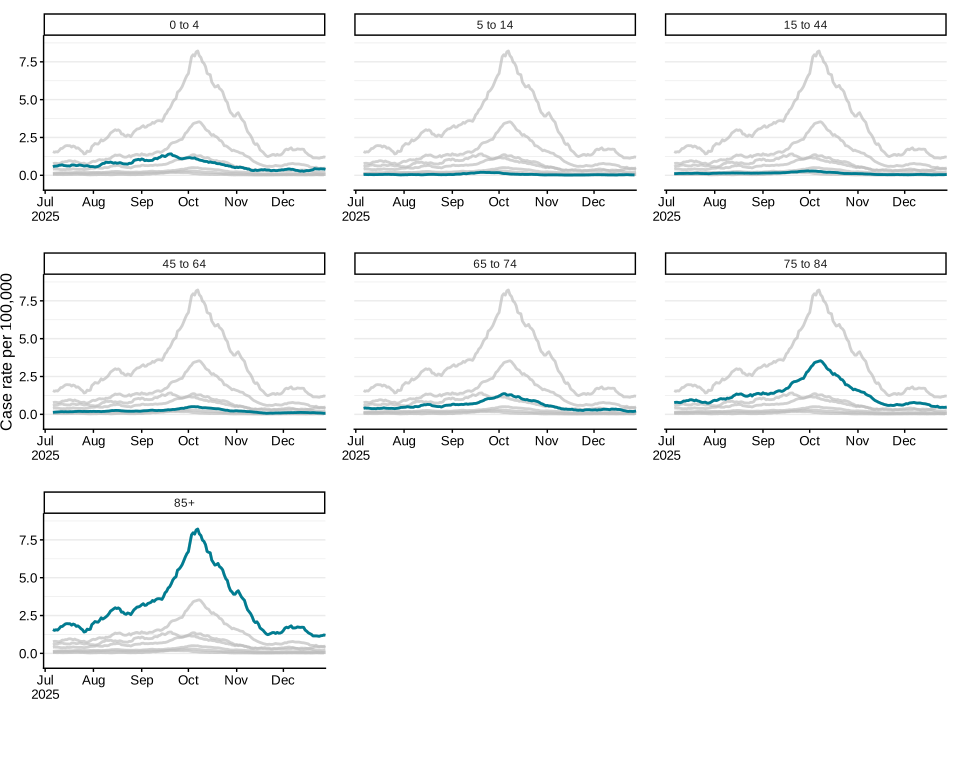
Figure 4B. Age-standardised COVID-19 case rates per 100,000 by sex, 7-day moving average (30 June to 28 December 2025)
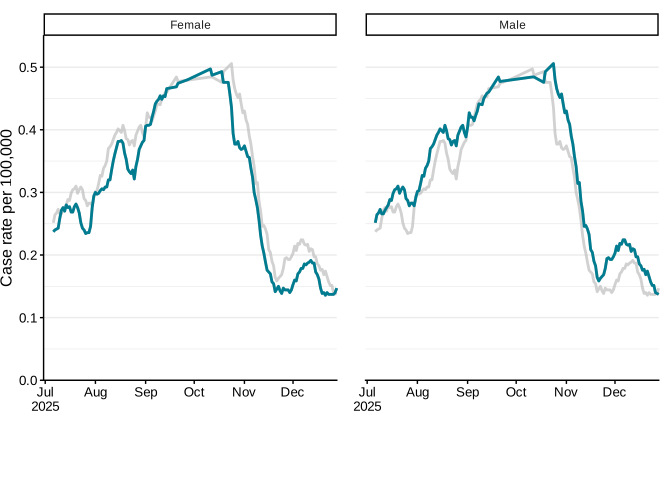
Figure 4C. Age-standardised COVID-19 case rates per 100,000 by region, 7-day moving average (30 June to 28 December 2025)
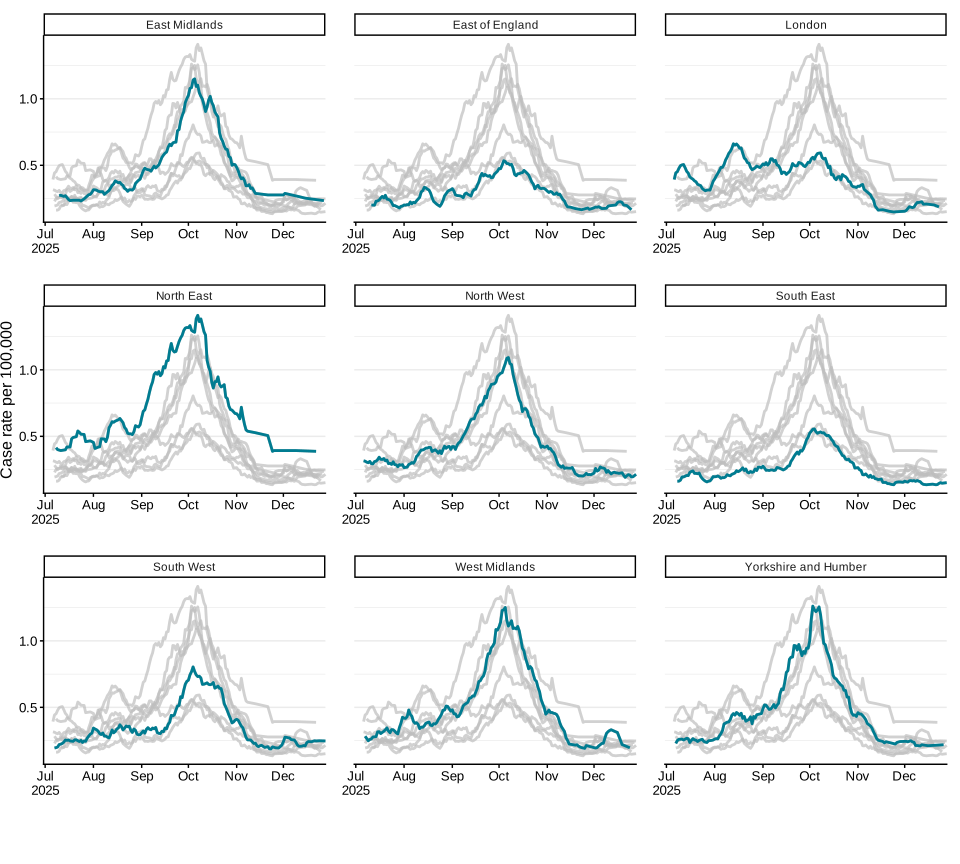
Figure 4D. Age-standardised COVID-19 case rates per 100,000 by ethnicity group, 7-day moving average (30 June to 28 December 2025)
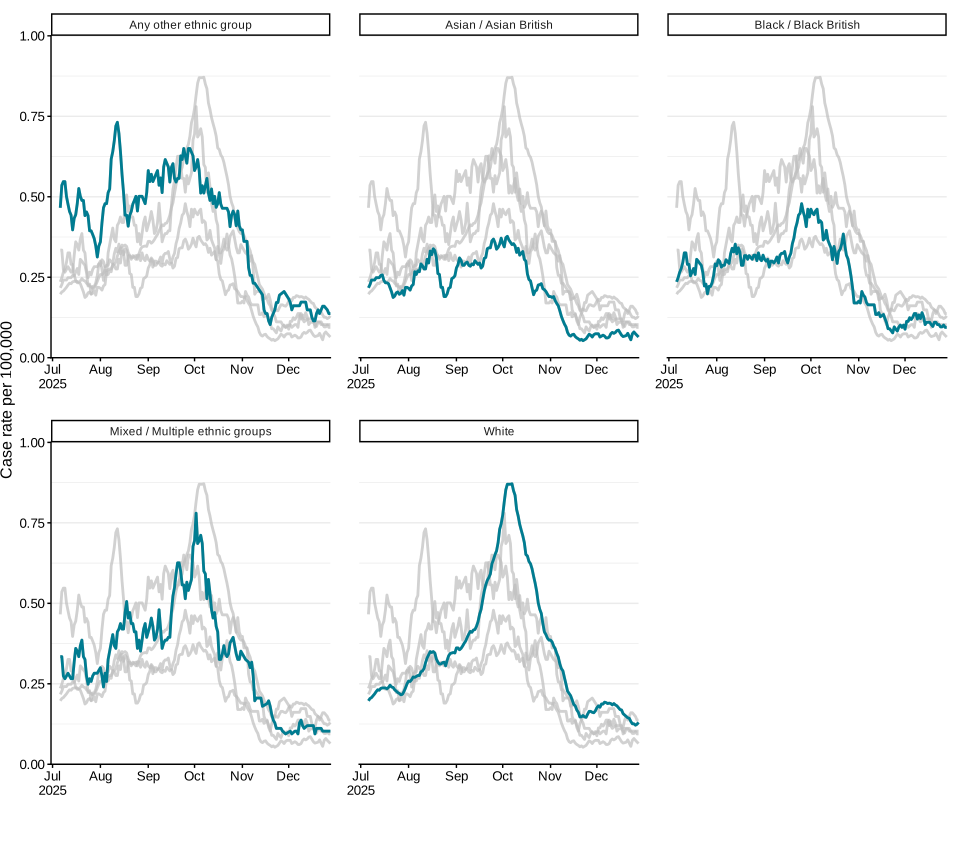
Figure 4E. Age-standardised COVID-19 case rates per 100,000 by index of multiple deprivation (IMD), 7-day moving average (30 June to 28 December 2025)
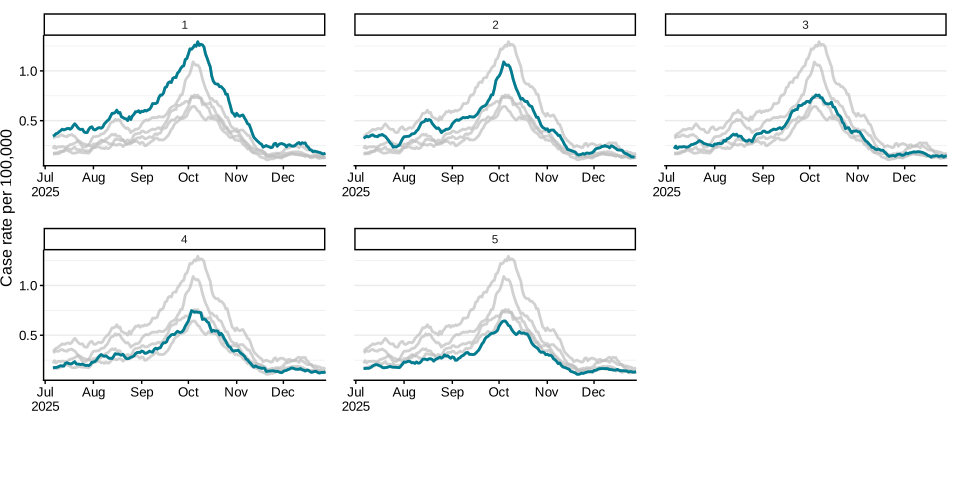
Figure 5A. COVID-19 test positivity by age group, 7-day moving average (30 June to 28 December 2025)
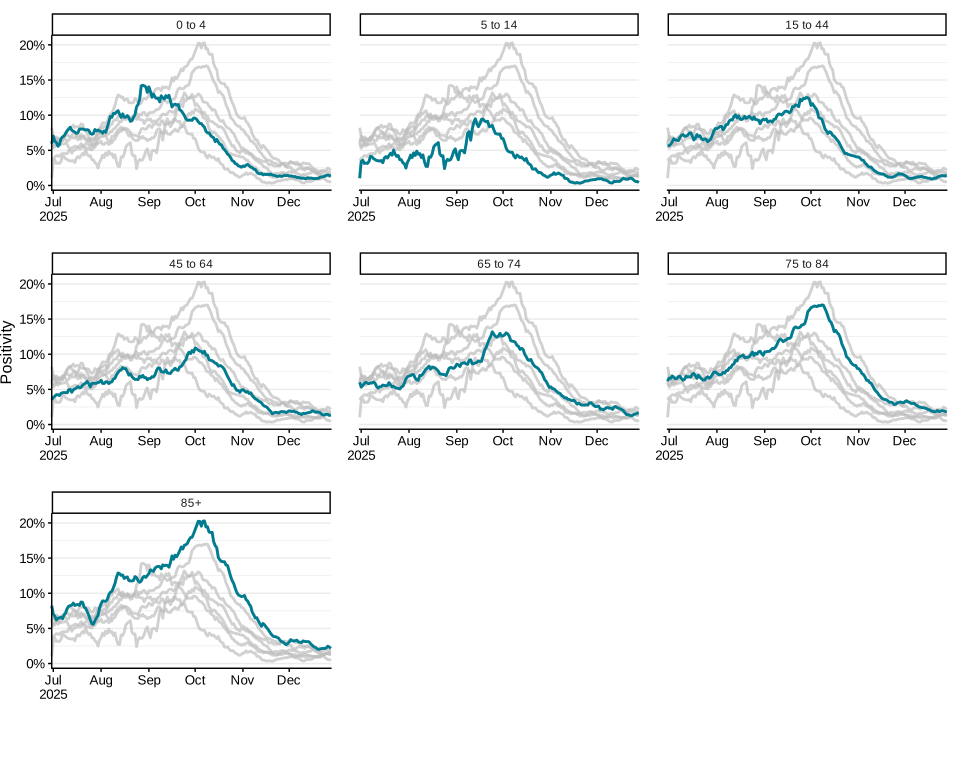
Figure 5B. COVID-19 test positivity by sex, 7-day moving average (30 June to 28 December 2025)
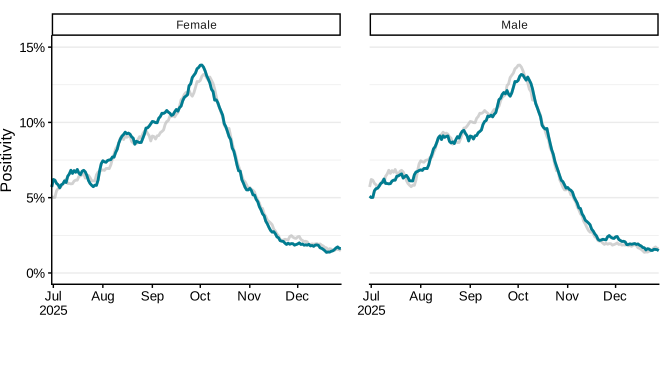
Figure 5C. COVID-19 test positivity by region, 7-day moving average (30 June to 28 December 2025)
Lineage surveillance
UKHSA conducts genomic surveillance of SARS-CoV-2 lineages. This section provides an overview of circulating lineages in England from July to December 2025, derived from data on sequenced PCR-positive SARS-CoV-2 samples in SGSS.
Surveillance of SARS-CoV-2 lineages provides a better understanding of how the virus is evolving, and which lineages may be responsible for changes in COVID-19 incidence, transmission, and severity.
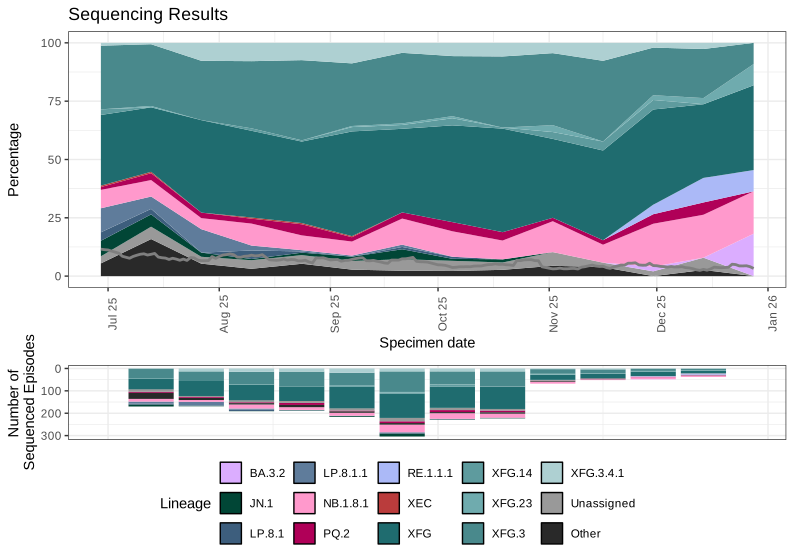
Between July to December 2025, the XFG lineage and its sub-lineages were dominant, with XFG and its sub lineage XFG.3 peaking at 44.9% and 34.6% in late September 2025 respectively. Lineage NB.1.8.1 prevalence was low at 4.7% in July 2025, however it increased rapidly around November 2025 and by December 2025 represented 18.4% of samples. BA.3.2, a novel Omicron lineage, and its sub-lineage RE.1.1.1, appeared in late November and represented 18.2% and 10.5% of samples respectively by the end of the year.
Please note that lineages will be grouped independently from their parent lineage once they reach sufficient prevalence and may be re-grouped into their parent lineage if their prevalence subsequently falls. For routine reporting of genomic surveillance of SARS-CoV-2 lineages, please refer to the weekly national influenza and COVID-19 surveillance reports.
Figure 6. Prevalence of SARS-CoV-2 lineages among sequenced SARS-CoV-2 samples, 30 June to 28 December 2025. Grey line represents % of cases sequenced per week
COVID-19 Accident and Emergency attendances, hospitalisations and deaths
UKHSA monitors outcomes of COVID-19 using routinely collected NHS hospital admission data and death registration data. More detail is provided in the Methods section of this report. Outcomes include accident and emergency (A&E) attendances, hospital admissions, severe hospitalisations (admissions to intensive care units (ICU) and ventilation or oxygen use), and deaths. This section provides a summary of clinical outcomes of COVID-19 from July to December 2025. All stratified rates are age standardised.
Accident and Emergency attendances and hospitalisations
The cumulative rates of A&E attendances and hospital admissions during this period were 119 and 282 per 1,000,000 population, respectively. A&E attendances and hospital admissions for COVID-19 were similar to case incidence trends between July and December 2025, peaking in October 2025 when A&E attendances reached a weekly rate of 10.3 attendances per 1,000,000. A smaller increase in activity was noted in August 2025, when A&E attendances reached a weekly rate of 7.7. Similarly, hospital attendances peaked at a weekly rate of 22.4 admissions per 1,000,000 in October. The cumulative rate of severe hospital admissions during this period was 2.31 per 1,000,000. Weekly rates were below 1 admission per 1,000,000 in the same time period. Infants under 6 months old had the highest weekly rates of A&E attendance (177, per 1,000,000) and hospital admission (366 per 1,000,000). This trend was also seen in severe hospital admissions, with a cumulative rate of 26.8 per 1,000,000 in the same age group. The next highest weekly rates were observed among those aged 80 and over, with 57.7 A&E attendances and 150 hospital admissions per 1,000,000 respectively.
Throughout the report period, males consistently had higher rates for all COVID-19 associated hospital outcomes compared to females. The highest weekly average A&E attendance rate for males was 9.05 per 1,000,000, exceeding the highest female rate of 7.67 per 1,000,000. The maximum weekly average hospital admissions rate for males was 22.4 per 1,000,000, whereas for females the maximum rate was 18.5 per 1,000,000 hospital admissions. Similarly, cumulative severe hospitalisation rates were higher among males, at 2.91 per 1,000,000, compared to 1.84 per 1,000,000 for females.
A&E attendance rates were highest among those residing in the North East, with quarterly A&E attendance rates peaking in the 15 August to 28 September 2025 report period quarter at 95.7 per 1,000,000. Weekly rates of hospital admissions in the North East peaked in October 2025 at 37.7 per 1,000,000. See the Methods section for further information around rate calculations and breakdowns.
A&E attendances and hospital admission rates varied by ethnicity group. Most ethnic groups saw A&E attendances and hospital admission rates peak in the first (30 June 2025 to 14 August 2025) or second (15 August to 28 September 2025) report quarters. The White ethnic group peaked the latest for both, in the third report quarter (29 September 2025 to 13 November 2025). The Asian or Asian British ethnic group had the highest hospital admission rate at 124 admissions per 1,000,000 in the second report quarter. The highest A&E attendance rate was seen among the Other Ethnic Groups at 60.6 admissions per 1,000,000 in the third report quarter. Data on severe hospitalisations stratified by ethnicity were omitted in this report due to small numbers and risk of deductive disclosure.
For all hospital outcomes, rates were highest among those in the most deprived quintile (quintile 1) with weekly rates peaking at 14.8 and 32.2 per 1,000,000 for A&E attendances and hospital admissions respectively, and cumulative rates of severe hospitalisations of 2.69 per 1,000,000.
Figure 7. Rate per 1,000,000 of COVID-19 A&E attendance by A&E attendance date, 1 January 2025 to 28 December 2025
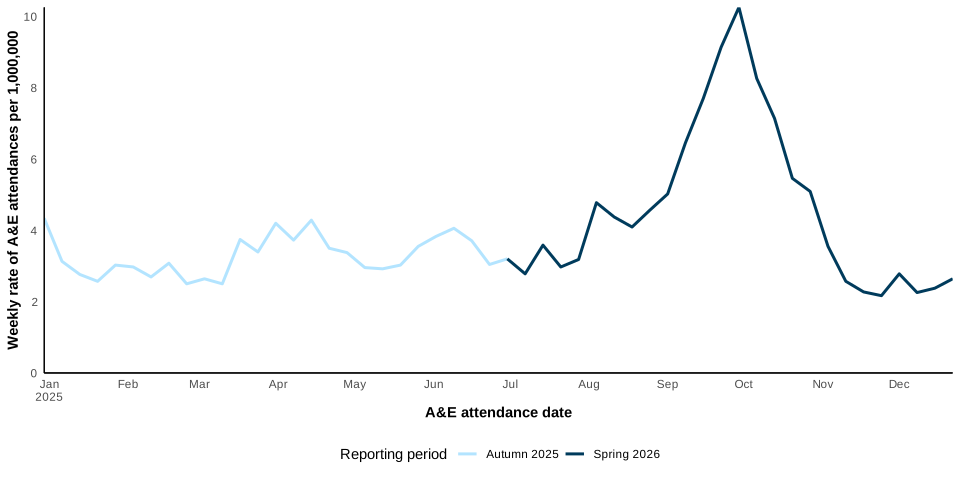
Figure 8. Rate per 1,000,000 of COVID-19 hospital admissions by hospital admission date, 1 January 2025 to 28 December 2025
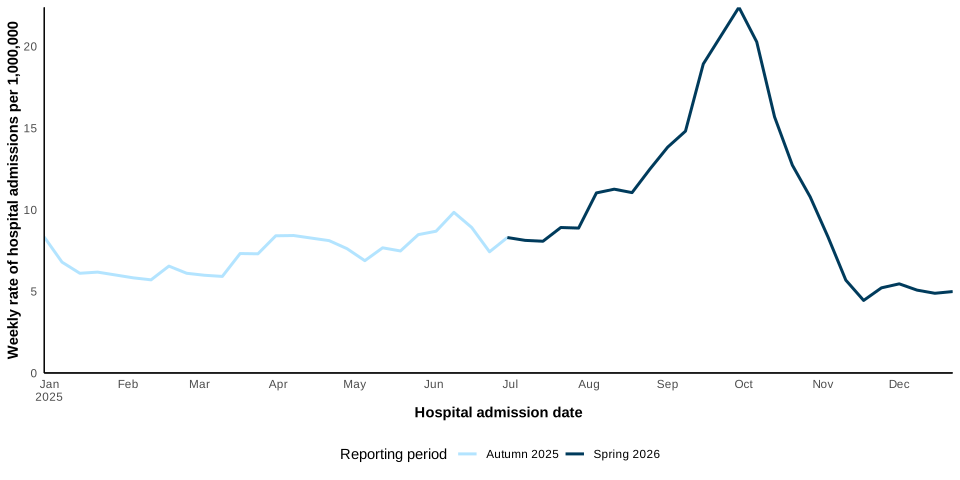
Figure 9. Rate per 1,000,000 of COVID-19 severe hospital admissions by hospital admission date, 1 January 2025 to 28 December 2025
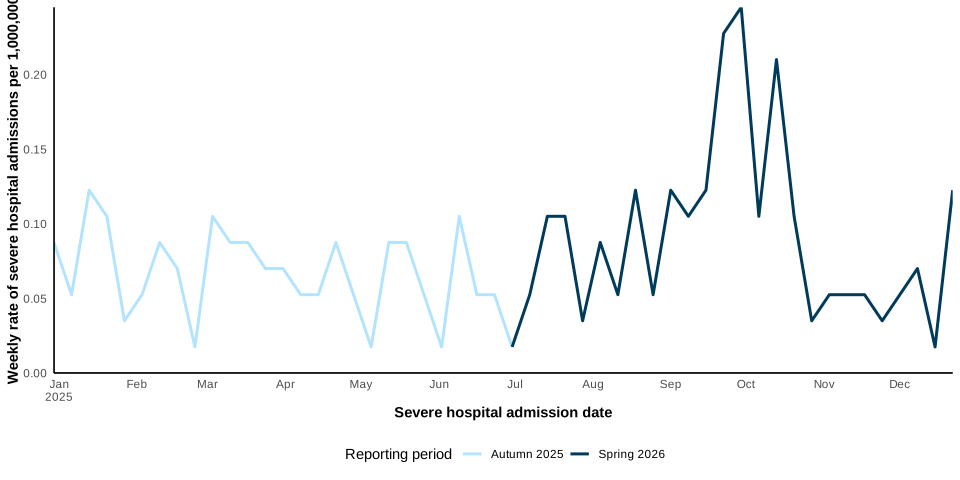
Figure 10A. Rate per 1,000,000 of COVID-19 A&E attendance by A&E attendance date stratified by age, 30 June to 28 December 2025
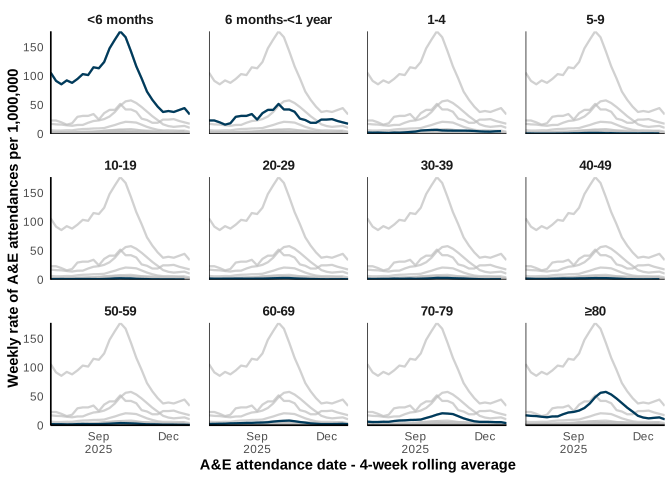
Note: data extracted on 28 May 2026. Grey lines represent total data for all age groups included in this plot.
Figure 10B. Age-standardised rate per 1,000,000 of COVID-19 A&E attendance by A&E attendance date stratified by sex, 30 June to 28 December 2025
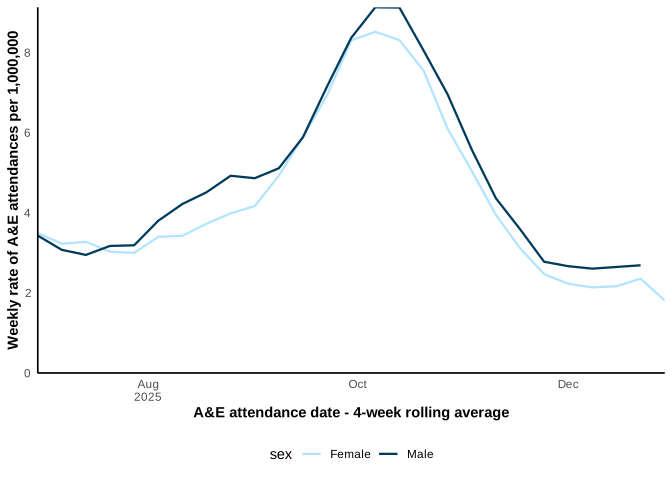
Table 1. Age-standardised rate per 1,000,000 of COVID-19 A&E attendance stratified by region, 30 June to 28 December 2025
| Region | 30 June to 14 August 2025 | 15 August to 28 September 2025 | 29 September to 13 November 2025 | 14 November to 28 December 2025 |
|---|---|---|---|---|
| East Midlands | 19.07 (15.46 to 23.27) |
37.40 (32.28 to 43.10) |
62.34 (55.65 to 69.60) |
22.12 (18.23 to 26.60) |
| East of England | 10.65 (8.37 to 13.35) |
12.61 (10.12 to 15.52) |
14.03 (11.39 to 17.08) |
5.20 (3.66 to 7.17) |
| London | 29.87 (26.03 to 34.11) |
36.82 (32.46 to 41.58) |
24.77 (21.13 to 28.83) |
8.99 (6.90 to 11.50) |
| North East | 38.90 (31.90 to 46.99) |
95.71 (84.55 to 107.93) |
77.29 (67.31 to 88.34) |
20.08 (15.16 to 26.09) |
| North West | 25.29 (21.85 to 29.13) |
45.04 (40.40 to 50.07) |
44.15 (39.54 to 49.13) |
16.67 (13.90 to 19.84) |
| South East | 13.11 (10.90 to 15.64) |
21.93 (19.05 to 25.12) |
23.20 (20.26 to 26.45) |
11.90 (9.82 to 14.29) |
| South West | 28.31 (24.24 to 32.86) |
40.84 (35.92 to 46.25) |
52.29 (46.79 to 58.24) |
25.80 (21.93 to 30.17) |
| West Midlands | 31.06 (26.79 to 35.82) |
48.46 (43.11 to 54.29) |
57.58 (51.72 to 63.93) |
14.84 (11.94 to 18.23) |
| Yorkshire and The Humber | 22.46 (18.72 to 26.73) |
49.55 (43.90 to 55.73) |
53.00 (47.15 to 59.36) |
21.48 (17.82 to 25.67) |
Note: data extracted on 28 May 2026.
Table 2. Age-standardised rate per 1,000,000 of COVID-19 A&E attendance stratified by ethnicity, 30 June to 28 December 2025
| Ethnicity group | 30 June to 14 August 2025 | 15 August to 28 September 2025 | 29 September to 13 November 2025 | 14 November to 28 December 2025 |
|---|---|---|---|---|
| Asian or Asian British | 35.08 (28.40 to 42.64) |
43.64 (36.10 to 52.08) |
26.42 (20.82 to 32.86) |
10.19 (6.76 to 14.51) |
| Black or Black British | 33.36 (23.95 to 44.76) |
33.16 (23.41 to 45.05) |
17.33 (11.11 to 25.37) |
13.66 (7.19 to 22.71) |
| Mixed | 24.61 (9.10 to 45.31) |
32.18 (14.74 to 54.34) |
18.49 (4.99 to 36.93) |
6.03 (1.10 to 13.63) |
| White | 18.23 (17.04 to 19.48) |
33.06 (31.45 to 34.73) |
37.42 (35.72 to 39.18) |
14.05 (13.01 to 15.16) |
| Other ethnic groups | 61.61 (43.49 to 83.60) |
49.51 (33.80 to 68.94) |
57.92 (39.02 to 81.48) |
16.34 (7.75 to 28.57) |
Note: data extracted on 28 May 2026. Rate (lower 95% confidence interval to upper 95% confidence interval). To avoid deductive disclosure, rates were not presented for categories with under 10 cases.
Figure 10C. Age-standardised rate per 1,000,000 of COVID-19 A&E attendance by A&E attendance date stratified by IMD, 30 June to 28 December 2025
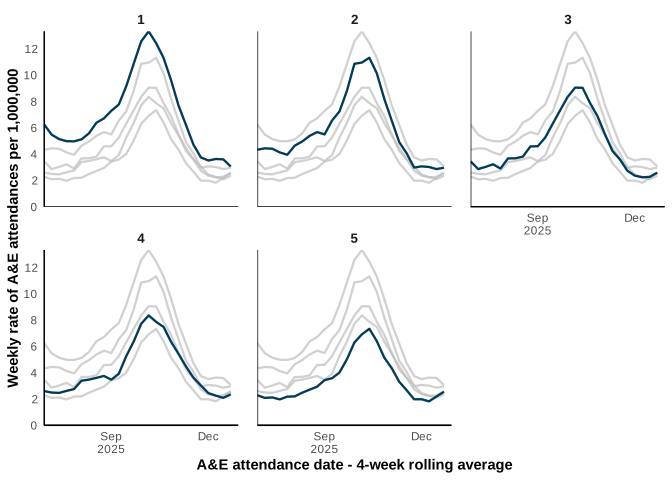
Note: data extracted on 28 May 2026. Grey lines represent total data for all IMD quintiles (1=most deprived) included in this plot.
Figure 11A. Rate per 1,000,000 of COVID-19 hospital admissions by hospital admission date stratified by age, 30 June to 28 December 2025
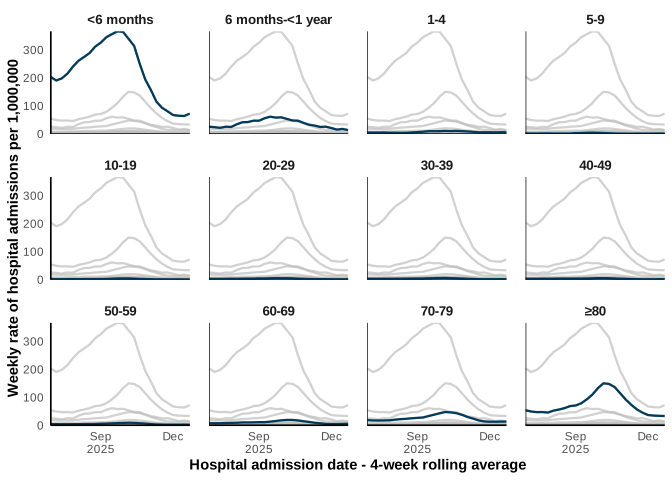
Note: data extracted on 28 May 2026. Grey lines represent total data for all age groups included in this plot.
Figure 11B. Age-standardised rate per 1,000,000 of COVID-19 hospital admissions by hospital admission date stratified by sex, 30 June to 28 December 2025
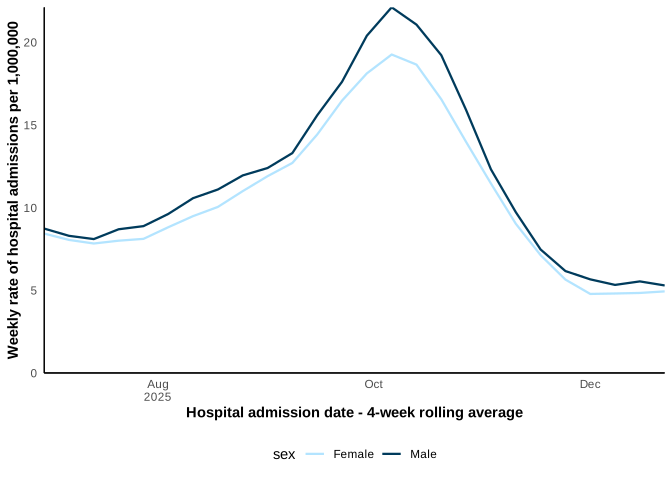
Figure 11C. Age-standardised rate per 1,000,000 of COVID-19 hospital admissions by hospital admission date and stratified by region, 30 June to 28 December 2025
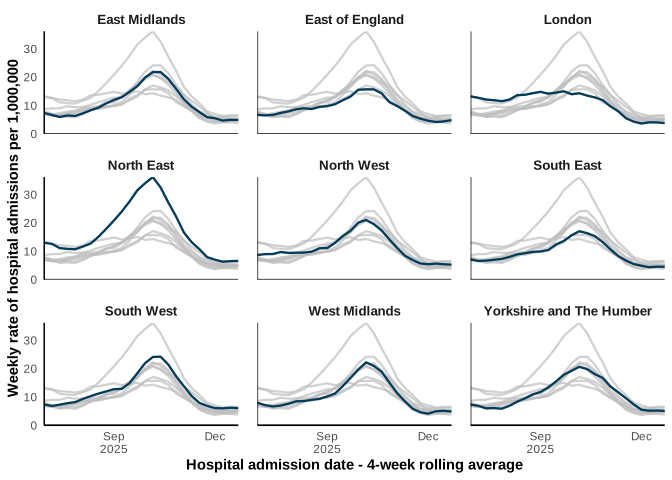
Note: data extracted on 28 May 2026. Grey lines represent total data for all regions included in this plot.
Table 3. Age-standardised rate per 1,000,000 of COVID-19 hospital admissions stratified by ethnicity, 30 June to 28 December 2025
| Ethnicity group | 30 June to 14 August 2025 | 15 August to 28 September 2025 | 29 September to 13 November 2025 | 14 November to 28 December 2025 |
|---|---|---|---|---|
| Asian or Asian British | 88.56 (77.81 to 100.17) |
124.89 (111.64 to 139.07) |
87.53 (76.29 to 99.73) |
29.90 (23.53 to 37.23) |
| Black or Black British | 92.26 (75.14 to 111.59) |
109.54 (90.51 to 130.83) |
71.00 (55.91 to 88.40) |
41.49 (29.50 to 56.09) |
| Mixed | 80.82 (51.64 to 115.18) |
100.99 (65.96 to 141.33) |
91.99 (57.90 to 132.72) |
16.25 (7.29 to 28.20) |
| Other ethnic groups | 70.39 (51.01 to 93.64) |
65.08 (45.03 to 89.65) |
65.49 (45.02 to 90.72) |
26.53 (14.14 to 44.02) |
| White | 55.58 (53.50 to 57.73) |
93.85 (91.14 to 96.62) |
95.09 (92.39 to 97.86) |
32.58 (31.00 to 34.22) |
Note: data extracted on 28 May 2026. Rate (lower 95% confidence interval to upper 95% confidence interval); To avoid deductive disclosure, rates were not presented for categories with less than 10 cases.
Figure 11D. Age-standardised rate per 1,000,000 of COVID-19 hospital admissions by hospital admission date stratified by IMD, 30 June to 28 December 2025
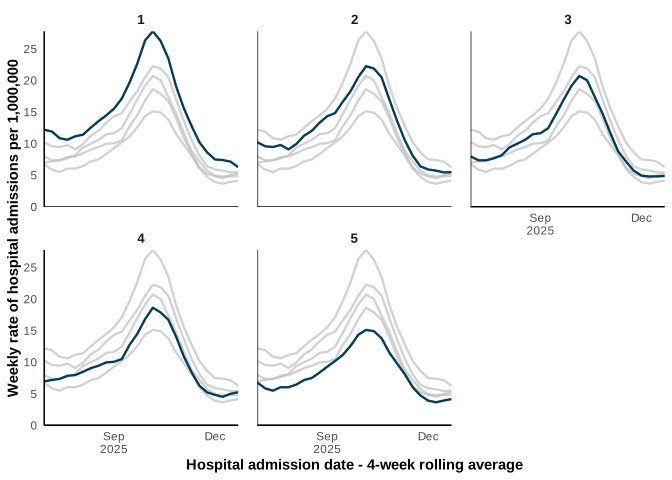
Note: data extracted on 28 May 2026. Grey lines represent total data for all IMD quintiles (1=most deprived) included in this plot.
Table 4. Rate per 1,000,000 of COVID-19 severe hospital admissions stratified by age, 30 June to 28 December 2025
| Age groups | July to December 2025 rate |
|---|---|
| Under 6 months | 26.83 (11.58 to 52.87) |
| 6 months to under 1 year | 9.53 (1.97 to 27.86) |
| 1 to 4 | 2.95 (1.27 to 5.81) |
| 5 to 9 | 0.30 (0.01 to 1.66) |
| 10 to 19 | 0.58 (0.16 to 1.48) |
| 20 to 29 | 0.41 (0.09 to 1.21) |
| 30 to 39 | 0.88 (0.35 to 1.81) |
| 40 to 49 | 1.11 (0.48 to 2.18) |
| 50 to 59 | 1.95 (1.09 to 3.22) |
| 60 to 69 | 5.04 (3.44 to 7.11) |
| 70 to 79 | 4.82 (3.09 to 7.18) |
| 80 and over | 6.50 (3.91 to 10.15) |
Table 5. Age-standardised rate per 1,000,000 of COVID-19 severe hospital admissions stratified by sex, 30 June to 28 December 2025
| Sex | July to December 2025 rate |
|---|---|
| Female | 1.84 (1.38 to 2.40) |
| Male | 2.91 (2.30 to 3.63) |
Note: rate (lower 95% confidence interval to upper 95% confidence interval). To avoid deductive disclosure, rates were not presented for categories with under 10 cases. Data extracted on 28 May 2026.
Table 6. Age-standardised rate per 1,000,000 of COVID-19 severe hospital admissions stratified by region, 30 June to 28 December 2025
In the following table z = not applicable.
| Region | Jul to December 2025 rate |
|---|---|
| East Midlands | z |
| East of England | 1.91 (1.01 to 3.27) |
| London | 3.77 (2.42 to 5.58) |
| North East | 4.33 (2.23 to 7.56) |
| North West | 2.77 (1.72 to 4.24) |
| South East | 3.40 (2.32 to 4.80) |
| South West | z |
| West Midlands | z |
| Yorkshire and The Humber | z |
Note: rate (lower 95% confidence interval - upper 95% confidence interval). To avoid deductive disclosure, rates were not presented for categories with under 10 cases. Data extracted on 28 May 2026.
Table 7. Age-standardised rate per 1,000,000 of COVID-19 severe hospital admissions by hospital admission date stratified by IMD, 30 June to 28 December 2025
| IMD quintile | July to December 2025 rate |
|---|---|
| 1 | 2.69 (1.72 to 3.98) |
| 2 | 1.83 (1.09 to 2.87) |
| 3 | 2.73 (1.84 to 3.91) |
| 4 | 2.22 (1.44 to 3.28) |
| 5 | 1.55 (0.92 to 2.46) |
Note: rate (lower 95% confidence interval to upper 95% confidence interval). To avoid deductive disclosure, rates were not presented for categories with under 10 cases. Data extracted on 28 May 2026.
Mortality
The cumulative COVID-19 mortality rate between July and December 2025 was 40.0 per 1,000,000, with the highest weekly rate occurring in October at 3.34 per 1,000,000 and the lowest weekly rate occurring in August at 0.665 per 1,000,000.
Cumulative mortality rates were highest among those aged 80 or over (498 per 1,000,000), followed by those aged 70 to 79 (112 per 1,000,000). No increased mortality rate was observed among infants.
Mortality rates were higher among males compared to females throughout the time period. The weekly mortality rate peaked in October 2025 at 4.45 and 2.95 per 1,000,000 respectively, which coincided with the peaks seen in COVID-19 incidence, positivity and hospitalisations.
When stratified by region, mortality rates where highest amongst those residing in the North East throughout the time period, with a peak quarterly mortality rate in the 29 September to 13 November quarter at 23.3 per 1,000,000.
The highest cumulative mortality rates were observed among those in the White ethnic group (37.8 per 1,000,000), followed by those in the Asian or Asian British group (30.5 per 1,000,000).
Mortality rates were highest among those in the most deprived quintile (quintile 1) (54.0 per 1,000,000); the rates decreased with decreasing deprivation level for all quintiles.
Figure 12. Rate per 1,000,000 of COVID-19 deaths by date of death, 30 June to 28 December 2025
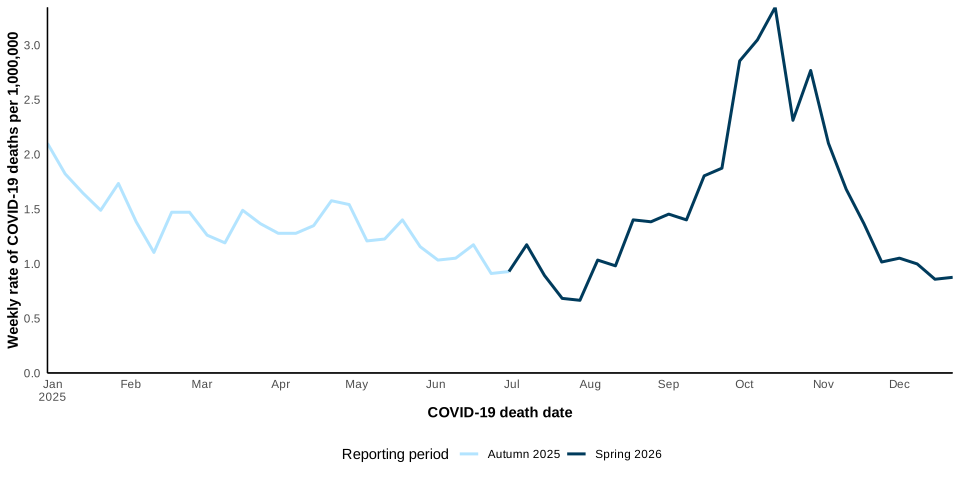
Table 8. Rate per 1,000,000 of COVID-19 deaths stratified by age, 30 June to 28 December 2025
| Age groups | July to December 2025 rate |
|---|---|
| Under 6 months | 0.00 (0.00 to 12.37) |
| 6 months to under 1 year | 0.00 (0.00 to 11.72) |
| 1 to 4 | 0.37 (0.01 to 2.06) |
| 5 to 9 | 0.00 (0.00 to 1.10) |
| 10 to 19 | 0.00 (0.00 to 0.53) |
| 20 to 29 | 0.00 (0.00 to 0.51) |
| 30 to 39 | 0.38 (0.08 to 1.10) |
| 40 to 49 | 2.63 (1.58 to 4.11) |
| 50 to 59 | 9.64 (7.57 to 12.11) |
| 60 to 69 | 27.39 (23.47 to 31.77) |
| 70 to 79 | 112.31 (103.20 to 122.02) |
| 80 and over | 498.44 (473.18 to 524.71) |
Note: rate (lower 95% confidence interval to upper 95% confidence interval). To avoid deductive disclosure, rates were not presented for categories with less than 10 cases.
Data extracted on 28 May 2026.
Figure 13. Age-standardised rate per 1,000,000 of COVID-19 deaths by date of death stratified by sex, 30 June to 28 December 2025
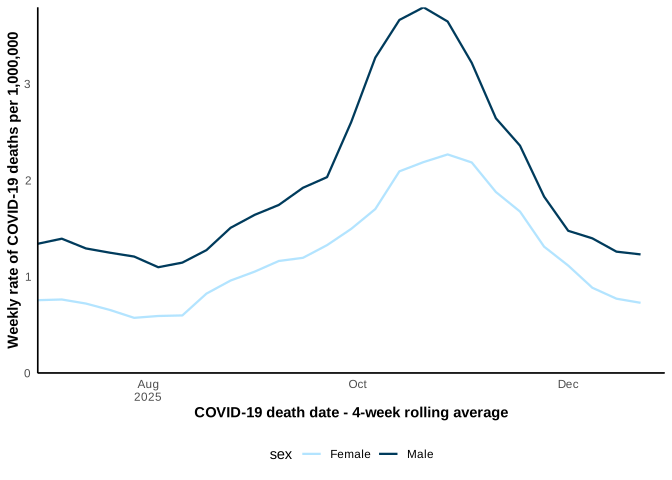
Table 9. Age-standardised rate per 1,000,000 of COVID-19 deaths stratified by region, 30 June to 28 December 2025
| Region | 30 June to 14 August 25 | 15 August to 28 September 2025 | 29 September to 13 November 2025 | 14 November to 28 December 2025 |
|---|---|---|---|---|
| East Midlands | 6.70 (4.64 to 9.37) |
8.15 (5.87 to 11.01) |
18.99 (15.42 to 23.15) |
7.39 (5.22 to 10.14) |
| East of England | 5.20 (3.66 to 7.17) |
8.68 (6.65 to 11.12) |
10.26 (8.04 to 12.91) |
8.13 (6.17 to 10.52) |
| London | 7.00 (5.00 to 9.54) |
10.03 (7.61 to 12.98) |
11.25 (8.66 to 14.37) |
5.54 (3.78 to 7.83) |
| North East | 8.79 (5.69 to 12.98) |
13.26 (9.38 to 18.20) |
23.29 (18.05 to 29.58) |
9.73 (6.46 to 14.06) |
| North West | 6.17 (4.52 to 8.24) |
8.59 (6.61 to 10.97) |
14.98 (12.33 to 18.02) |
6.57 (4.86 to 8.69) |
| South East | 4.85 (3.59 to 6.41) |
8.47 (6.76 to 10.47) |
16.67 (14.22 to 19.41) |
5.16 (3.84 to 6.79) |
| South West | 4.57 (3.12 to 6.45) |
8.59 (6.57 to 11.03) |
14.66 (11.97 to 17.77) |
6.57 (4.80 to 8.78) |
| West Midlands | 3.22 (1.96 to 4.97) |
5.63 (3.92 to 7.84) |
13.38 (10.66 to 16.59) |
4.48 (2.98 to 6.48) |
| Yorkshire and The Humber | 2.84 (1.62 to 4.61) |
8.89 (6.60 to 11.72) |
16.69 (13.48 to 20.42) |
5.49 (3.73 to 7.80) |
Note: rate (lower 95% confidence interval to upper 95% confidence interval). To avoid deductive disclosure, rates were not presented for categories with less than 10 cases. Data extracted on 28 May 2026.
Table 10. Age-standardised rate per 1,000,000 of COVID-19 deaths stratified by ethnicity, 30 June to 28 December 2025
In the following table z = not applicable.
| Ethnicity group | July to December 2025 rate |
|---|---|
| Asian or Asian British | 30.47 (23.02 to 39.52) |
| Black or Black British | 22.57 (13.60 to 35.02) |
| Mixed | z |
| White | 37.80 (36.13 to 39.52) |
| Other ethnic groups | z |
Note: rate (lower 95% confidence interval to upper 95% confidence interval). To avoid deductive disclosure, rates were not presented for categories with under 10 cases.
Data extracted on 28 May 2026.
Table 11. Age-standardised rate per 1,000,000 of COVID-19 deaths stratified by IMD, 30 June to 28 December 2025
| IMD quintile | July to December 2025 rate |
|---|---|
| 1 | 53.95 (48.66 to 59.65) |
| 2 | 48.07 (43.54 to 52.93) |
| 3 | 40.80 (36.98 to 44.90) |
| 4 | 39.67 (36.06 to 43.54) |
| 5 | 30.54 (27.44 to 33.89) |
Note: rate (lower 95% confidence interval to upper 95% confidence interval). To avoid deductive disclosure, rates were not presented for categories with less than 10 cases. Data extracted on 28 May 2026.
Vaccine surveillance
This section contains updates on vaccination coverage and vaccine effectiveness (VE) for the most recent vaccination campaigns.
COVID-19 vaccination has been shown to provide protection against hospitalisations and other severe outcomes throughout the changing disease profile of COVID-19. A primary course of COVID-19 vaccine was initially rolled out to all adults in England from 8 December 2020, followed by a booster dose launched in November 2021. From spring 2022, vaccinations have been offered to groups most vulnerable to severe disease, based on age and clinical risk, through bi-annual programmes occurring each spring and autumn.
UKHSA undertake routine monitoring of the coverage, effectiveness and impact of vaccines as they are rolled out in the population in order to continually ensure that clinical and public health guidance on the vaccination programme is built upon the best available evidence.
UKHSA works closely with the Medicines and Healthcare Regulatory Agency (MHRA), NHS England, and other government, devolved administration, and academic partners to monitor the COVID-19 vaccination programme through the COVID-19 vaccine surveillance strategy (8). While this report does not include information on COVID-19 vaccine safety, as with all vaccines, the safety of COVID-19 vaccines is continuously being monitored by the MHRA. They conclude that overall, the benefits of COVID-19 vaccines outweigh any potential risks (9).
Spring 2025 and autumn 2025 campaigns
The spring 2025 vaccine programme was recommended by the Joint Committee on Vaccination and Immunisation (JCVI) for adults aged 75 years and older, residents in care homes for older adults, and those aged 6 months and over who are immunosuppressed as defined by the COVID-19 Green Book chapter. The programme commenced on the 1 April 2025. The products offered were mRNA monovalent Omicron JN.1 vaccines (Pfizer-BioNTech and Moderna).
This was followed by the autumn 2025 COVID-19 vaccine programme, which commenced on 1 October 2025. The campaign was recommended by the Joint Committee on Vaccination and Immunisation (JCVI) for adults aged 75 and over, residents in care homes for older adults, and those aged 6 months and over who are immunosuppressed as defined by the COVID-19 Green Book chapter. The products offered were mRNA monovalent Omicron KP.2 vaccines (Pfizer-BioNTech) for eligible individuals aged 12 years and above, and mRNA monovalent LP.8.1 vaccines (Pfizer-BioNTech) for eligible children aged 6 months and over.
Seroprevalence during the spring 2025 vaccination campaign
This section presents data from the COVID-19 Vaccine Responses after Extended Immunisation Schedules (CONSENSUS) study for the first time.
UKHSA first set up the CONSENSUS audit in 2021 to measure and compare the antibody levels of individuals receiving COVID-19 vaccines following the extended primary schedule, with the initial recommended schedule (10). Immunocompetent adults aged 50 years or above residing in London were recruited through NHS hospitals and General Practitioners. The CONSENSUS audit has subsequently been extended to monitor the immune responses of the participants following biannual COVID-19 vaccination campaigns.
Participants were invited to contribute 2 blood samples prior to the start of and after the end of each vaccination campaign, irrespective of eligibility and vaccination status. Not all participants contributed paired samples, with some participants only contributing pre- or post-vaccination samples. COVID-19 vaccination records of participants for the 2025 spring vaccination campaign were extracted from the Immunisation Information System (IIS).
Due to the length of time required to collect samples for each campaign and subsequent analysis, the data present below presents data from the spring 2025 vaccination campaign. Data from the autumn 2025 vaccination campaign is expected to be published in the next edition of this report.
407 sera samples, of which 148 were paired, were tested by the UKHSA Vaccine Development and Evaluation Centre (VDEC) on neutralising antibody levels against different COVID-19 lineages using a micro-neutralising assay (11) against COVID-19 lineages XBB.1.5, XEC and JN.1. In addition, a subset of 148 paired samples from the 74 vaccinees were also tested by the Francis Crick Institute (FCI) for neutralising antibody levels against a panel of COVID-19 lineages (the ancestral strain, JN.1, NB.1.8.1 and XFG) using the high-throughput live virus neutralisation assay (12). The median age of participants included in the testing were 75.4 years (VDEC) and 78.2 years (FCI).
Immune response was measured by assessing the median fold changes between mean neutralisation antibody levels pre and post vaccination. Where blood samples were available from the same individuals before and after vaccination, changes in antibody levels were assessed by dividing the antibody level after vaccination by the level before vaccination for each individual. The middle of these changes was then calculated (the median fold change). The same approach was used for individuals who did not receive a spring booster, using samples taken before and after the typical vaccination date among those who were vaccinated, to allow comparison over a similar time period. Changes above 1.0 represent an increase in the levels after vaccination, whereas under 1 represents a decrease. A change of 1.0 would suggest no change in levels after vaccination.
In total, 50.1% of participants had received a COVID-19 vaccine during the spring 2025 vaccine campaign. The median interval between sample collection and vaccination was 41 (IQR: 17) days for the baseline and 58 (IQR: 7) days for the follow-up samples. The JN.1 vaccines used in the spring 2025 campaign elicited increases in neutralising antibody titres against multiple COVID-19 lineages circulating during 2025, including those that were prevalent at the time of the vaccination campaign and those that became increasingly prevalent following the campaign. As anticipated, the greatest boosting of responses in those receiving vaccination was observed for JN.1 and the most closely related lineages, though increases in relation to the ancestral strain were also observed. For individuals who were unvaccinated between the 2 sampling timepoints neutralising antibody responses to the lineages tested plateaued or decreased.
Table 12. Mean neutralising antibody levels against SARS-CoV-2 XBB.1.5, XEC and JN.1 live virus and median fold changes pre and post vaccination for vaccinated and unvaccinated participants in the spring 2025 vaccine campaign tested by the Vaccine Development and Evaluation Centre
| Lineage | Vaccination status | Sample size pre vaccination campaign | Sample size post vaccination campaign | Sample size fold change | Geometric mean pre vaccination campaign (CI) | Geometric mean post vaccination campaign (CI) | Median fold change |
|---|---|---|---|---|---|---|---|
| JN.1 | vaccinated | 91 | 82 | 68 | 2.71 (2.59 to 2.84) |
3.04 (2.94 to 3.15) |
2.22 |
| JN.1 | unvaccinated | 114 | 71 | 71 | 2.47 (2.35 to 2.6) |
2.51 (2.4 to 2.63) |
0.85 |
| XBB.1.5 | vaccinated | 90 | 78 | 64 | 2.55 (2.45 to 2.65) |
2.72 (2.64 to 2.8) |
1.00 |
| XBB.1.5 | unvaccinated | 114 | 69 | 70 | 2.35 (2.26 to 2.44) |
2.39 (2.28 to 2.49) |
0.98 |
| XEC | vaccinated | 85 | 77 | 62 | 2.55 (2.45 to 2.66) |
3 (2.9 to 3.11) |
2.41 |
| XEC | unvaccinated | 111 | 76 | 74 | 2.46 (2.37 to 2.55) |
2.37 (2.23 to 2.51) |
1.15 |
Note : where paired samples were available, median fold change was calculated for those that contributed both pre- and post-vaccination samples. For more information, see the Methods section of this report.
Table 13. Mean neutralising antibody levels against SARS-CoV-2 ancestral, JN.1, NB.1.8.1 and XFG authentic live virus and median fold changes pre and post vaccination for vaccinated participants in the spring 2025 campaign tested by the Francis Crick Institute
| Lineage | Sample size pre vaccination campaign | Sample size post vaccination campaign | Sample size fold change | Geometric mean pre vaccination campaign (CI) | Geometric mean post vaccination campaign (CI) | Median fold change |
|---|---|---|---|---|---|---|
| Ancestral | 74 | 74 | 74 | 3.46 (3.35 to 3.56) |
3.56 (3.48 to 3.65) |
1.35 |
| JN.1 | 74 | 74 | 74 | 2.94 (2.84 to 3.05) |
3.24 (3.16 to 3.32) |
1.78 |
| NB.1.8.1 | 74 | 74 | 74 | 2.77 (2.66 to 2.89) |
3.18 (3.08 to 3.28) |
2.20 |
| XFG | 74 | 74 | 74 | 2.84 (2.75 to 2.94) |
3.21 (3.12 to 3.3) |
1.84 |
Note: where paired samples were available, median fold change was calculated for those that contributed both pre- and post-vaccination samples. For more information, see the Methods section of this report.
Vaccine coverage
The COVID-19 vaccine uptake surveillance system provides an indication of COVID-19 vaccine coverage across England, stratified by populations of interest. It is used for the assessment of vaccine catch-up campaigns, planning and intervention by both clinicians and policy makers.
Data on the autumn 2025 COVID-19 vaccination campaign reported below covers any dose administered from 1 October 2025 to 31 January 2026 provided there are at least 20 days from the previous dose. Eligible groups for the campaign are defined in Green Book chapter on COVID-19 (13).
By the end of the campaign, 61.7% of all people aged 75 to 79 years, 65.8% of all people aged 80 and over, and 29.1% of all people aged under 75 years and immunosuppressed, who are living and resident in England had been vaccinated with an autumn 2025 booster dose since 1 October 2025.
Vaccine uptake was highest in the South West of England, with 67% of the population receiving an autumn 2025 dose. London saw the lowest uptake at 36.6% by the end of the campaign.
When stratified by ethnicity, the highest uptake was seen among those in the White ethnic groups at 61.4% by the end of the campaign. There was lower uptake in minority ethnic groups, particularly the Black/Black British at 16.1%.
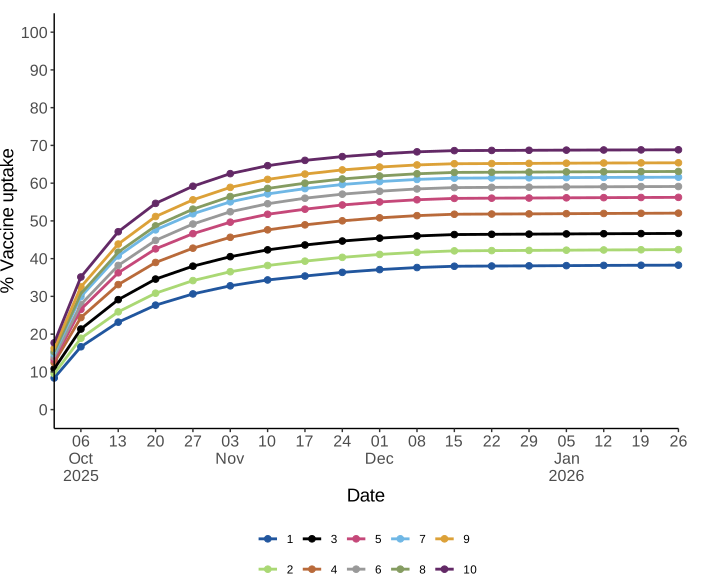
There is a positive correlation between deprivation index (IMD) and vaccine uptake, with least deprived populations having the highest uptake at 68.8, and the most deprived having the lowest uptake at 38.3%.
Figure 14A. COVID-19 vaccine coverage for last seasonal vaccine programme 1 October 2025 to 30 January 2026, by age/risk group
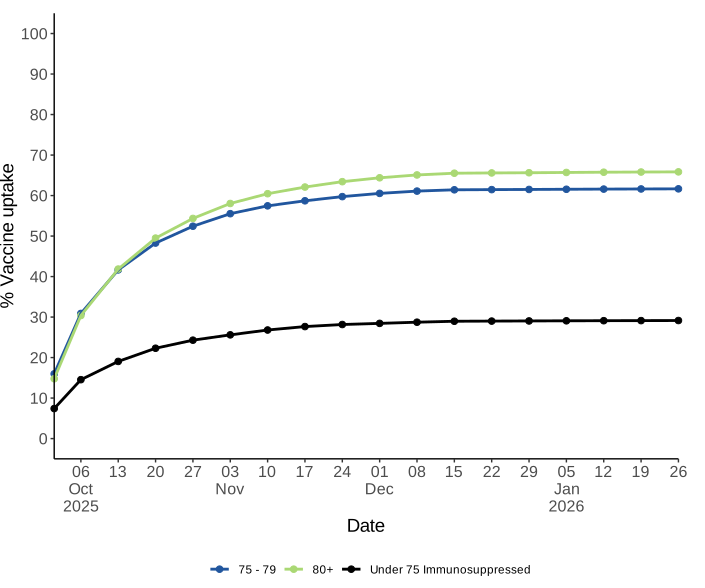
Figure 14B. COVID-19 vaccine coverage for last seasonal vaccine programme 1 October 2025 to 30 January 2026, by region
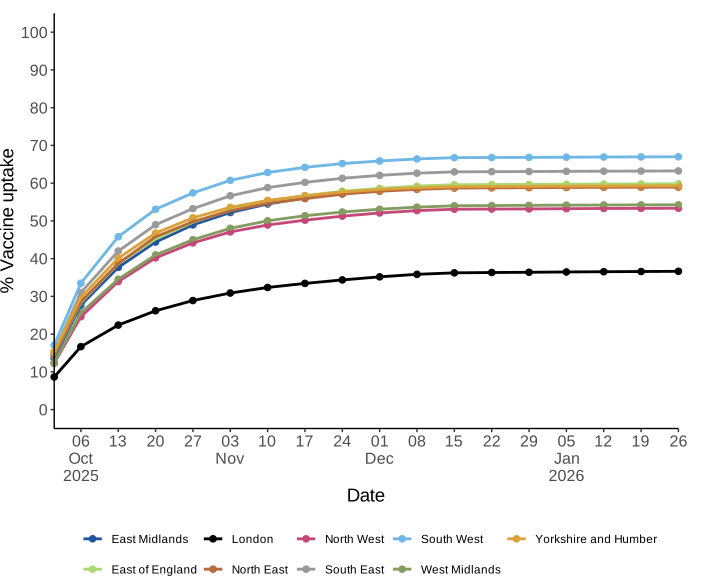
Figure 14C. COVID-19 vaccine coverage for last seasonal vaccine programme 1 October 2025 to 30 January 2026, by ethnicity
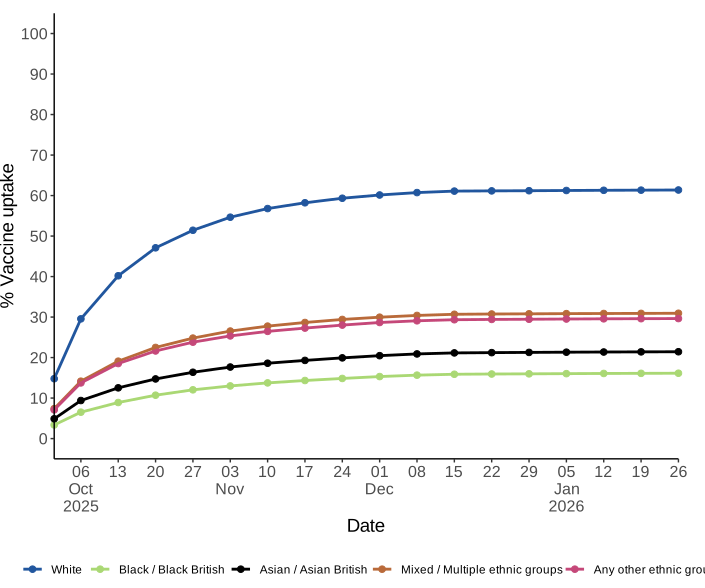
Figure 14D. COVID-19 vaccine coverage for last seasonal vaccine programme 1 October 2025 to 30 January 2026, by IMD
Vaccine effectiveness
The data sources and methods section outlines the methodology used for vaccine effectiveness calculations in further detail. For the assessment of autumn 2025 and long-term spring 2025 vaccine effectiveness, data was extracted on 08 May 2026, with hospital admissions up to 05 April 2026.
Long-term autumn 2024 vaccine effectiveness has previously been reported to 35 or more weeks (14).
VE of the autumn 2025 booster vaccines was estimated against hospitalisation amongst those aged 75 years and older from 1 October 2025 against all SARS-CoV-2 lineages in circulation at the time (Figure 15).
Effectiveness of the autumn 2025 vaccines against hospitalisation was highest in the period 5 to 9 weeks post-vaccination at 47.6%, with some evidence of waning to 35.3% by 20 weeks or more. Further follow-up time is required to fully assess waning for this vaccine.
Figure 15. Vaccine effectiveness (VE) of the COVID-19 autumn 2025 booster against hospitalisation amongst those aged 75 years and older in England
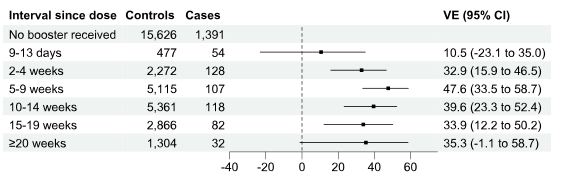
Data presented in Figure 15 is captured in the table below. Note: in the following table [x] indicates not applicable.
| Interval since dose | Controls | Cases | VE estimate | Lower confidence interval | Upper confidence interval |
|---|---|---|---|---|---|
| No booster received | 15,626 | 1,391 | [x] | [x] | [x] |
| 9 to 13 days | 477 | 54 | 10.54 | -23.09 | 34.99 |
| 2 to 4 weeks | 2,272 | 128 | 32.94 | 15.88 | 46.54 |
| 5 to 9 weeks | 5,115 | 107 | 47.63 | 33.54 | 58.73 |
| 10 to 14 weeks | 5,361 | 118 | 39.57 | 23.26 | 52.41 |
| 15 to 19 weeks | 2,866 | 82 | 33.86 | 12.15 | 50.20 |
| 20 weeks and over | 1,304 | 32 | 35.34 | -1.15 | 58.66 |
VE of the spring 2025 booster vaccines amongst those aged 75 years and older from 1 April 2025 was previously reported to 10 to 14 weeks (14). In this report, we provided updated estimates to assess the long-term effectiveness of the spring 2025 vaccines (Figure 16). In this analysis, 79% of the study population received a Moderna JN.1 vaccine, and 21% received a Pfizer-BioNTech JN.1 vaccine.
VE peaked at 54.5% 5 to 9 weeks post-vaccination, followed by waning to 17% by 35 weeks or more
Figure 16. Long-term vaccine effectiveness (VE) of the COVID-19 spring 2025 booster against hospitalisation amongst those aged 75 years and older in England
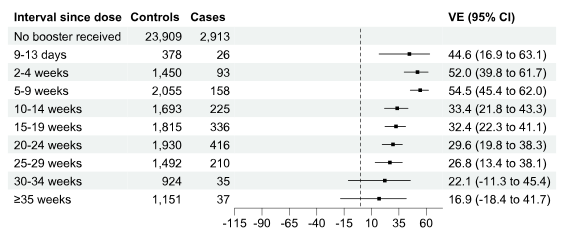
Data presented in Figure 16 is captured in the table below. Note: in the following table [x] indicates not applicable.
| Interval since dose | Controls | Cases | VE estimate | Lower confidence interval | Upper confidence interval |
|---|---|---|---|---|---|
| No booster received | 23,909 | 2,913 | [x] | [x] | [x] |
| 9 to 13 days | 378 | 26 | 44.62 | 16.89 | 63.10 |
| 2 to 4 weeks | 1,450 | 93 | 51.96 | 39.82 | 61.65 |
| 5 to 9 weeks | 2,055 | 158 | 54.46 | 45.38 | 62.03 |
| 10 to 14 weeks | 1,693 | 225 | 33.44 | 21.84 | 43.32 |
| 15 to 19 weeks | 1,815 | 336 | 32.37 | 22.33 | 41.10 |
| 20 to 24 weeks | 1,930 | 416 | 29.64 | 19.79 | 38.28 |
| 25 to 29 weeks | 1,492 | 210 | 26.79 | 13.38 | 38.13 |
| 30 to 34 weeks | 924 | 35 | 22.08 | -11.25 | 45.43 |
| 35 weeks and over | 1,151 | 37 | 16.94 | -18.35 | 41.70 |
Data sources, methods and definitions
Data sources
| Data source | Data source description | Data quality |
|---|---|---|
| Second Generation Surveillance System (SGSS) | SGSS stores and manages laboratory test result information for notifiable infectious diseases and antimicrobial resistance from diagnostic laboratories in England. SARS-CoV-2 testing data in SGSS includes polymerase chain reaction (PCR) tests from hospital settings and PCR and lateral flow device (LFD) tests from community settings up until 1 April 2022. SARS-CoV-2 testing data from SGSS are used to monitor trends in COVID-19 cases and as the basis for other areas of surveillance, such as monitoring SARS-CoV-2 lineage epidemiology and residential property type of cases. SGSS holds disease and demographic characteristics on COVID-19 cases (for example, age, sex, region, ethnicity, date of test). This is derived directly from laboratory reporting processes and linkage to electronic health record data. Data are held at episode-level, as defined in the Methods section. | Laboratory data from SGSS is updated daily; however, real-time data is subject to a lag of 2 to 3 days due to collection and reporting requirements. Completeness of SGSS data depends on the completeness of laboratory reporting forms and of linkage with electronic health record data. Missing data or inability to link to electronic health record data can affect the completeness of metrics. |
| Unified Sample Dataset (USD) | The USD is a repository for all SARS-CoV-2 positive and negative PCR and LFD tests, sourced from several surveillance systems including SGSS and sentinel laboratory reporting systems. USD holds disease and demographic characteristics on COVID-19 cases (for example, age, sex, region, date of test). This is derived directly from laboratory reporting processes and linkage to electronic health record data. | Laboratory data from USD is updated weekly; hence, these data are lagged by one week in addition to a lag of 2 to 3 days due to collection and reporting requirements. Completeness of USD data depends on the completeness of laboratory reporting forms and of linkage with electronic health record data. Missing data or inability to link to electronic health record data can affect the completeness of metrics. |
| SARS-CoV-2 sequencing data | SARS-CoV-2 genomic information is included in SGSS. In England, during the pandemic, genomic investigation and lineage assignment was coordinated by the COVID-19 Genomics UK consortium (COG-UK). A sample of eligible SARS-CoV-2 PCR samples underwent genomic investigation via: i) whole genome sequencing (WGS) ii) reflex (genotyping) assays to detect key mutations, and iii) S-gene target status of PCR tests carried out on the TaqPath assay. | Trends in lineage prevalence will be delayed as sequenced data follows a lag of 2 to 3 weeks due to collection, sequencing, and reporting requirements. |
| Immunisation Information System (IIS) | IIS is used to monitor the roll out of selected vaccination programmes, including flu and COVID-19. It is used to assess vaccine coverage and effectiveness, and also supports investigation and analysis of safety concerns, if and when these arise. The IIS collects person records for all individuals issued with an NHS number in England (the IIS population denominator). It was commissioned in 2020 as part of the national influenza and COVID-19 vaccination programmes. The dataset also contains information on administered vaccinations across a range of settings. These data contain detailed vaccination records for all individuals who have received at least one dose of SARS-CoV-2 vaccination. IIS holds disease and demographic characteristics on individuals eligible for SARS-CoV-2 vaccination (for example, age, sex, region, ethnicity). This is derived directly from linkage to electronic health record data. IIS also includes clinical risk status data for individuals included in the population denominator. These data are derived from NHS Cohorting as a Service (CaaS) data, an NHS England service, which uses existing individual electronic health records to identify people in clinical risk groups. Risk groups are defined in the COVID-19 Green Book as those with underlying health conditions that may put them at higher risk of severe COVID-19 disease. | Population denominator and vaccine data in the IIS are updated daily with a 24-hour lag. NHS CaaS began provision of person-level clinical risk flag data in autumn 2022. Risk flag data available prior to this date are subject to reduced accuracy. |
| Death registration data | COVID-19 mortality data are obtained from death registrations for England and Wales collated by the Office for National Statistics (ONS). ONS provide UKHSA a weekly extract of death registration data for routine processing of mortality statistics and for outcome assessments of specific diseases such as COVID-19. Data are reported at person level and contain information about the death and the deceased individual, including demographic information such as age and sex. Causes of death information is also provided, including underlying and primary cause of death are provided as International Classification of Diseases (ICD-10) codes. | Death registration data is subject to an 11-day lag to account for the time between death and registration of the death. |
| Secondary Uses Services (SUS) and Emergency Care Dataset (ECDS) | Data on A&E attendances and hospital admissions, including admission to intensive care units (ICU), were obtained from the Emergency Care Data Set (ECDS) and Secondary Users Service (SUS) data set respectively. These datasets contain national level data on hospital activity to inform management and planning of NHS services. These data are used in real time to inform severity of disease and disease-associated hospitalisations. These data include demographic information such as age, sex, ethnicity, and region of residence. Standardised codes for procedures, diagnoses and medical conditions are captured for each episode, including information on primary diagnosis, treatment, co-morbidities and complications. | Mandatory reporting of SUS and ECDS data occurs on a monthly and daily basis, respectively. SUS data within the most recent 4 months are considered provisional to account for lags in reporting and updating the data. Similarly, ECDS data within the last month are considered provisional. |
Methods
Every effort is made to ensure that data quality standards are maintained by conducting regular analysis and data quality assessments.
Definitions
The below definitions are regularly reviewed in relation to data availability and quality, epidemiology, and testing of COVID-19 and may be re-evaluated and updated in the future to support optimal reporting.
COVID-19 episode
COVID-19 cases in England are monitored using an episode-based definition to include possible reinfections. Positive test records from SGSS are converted to cases and infection episodes, deduplicating records using the Organism-Patient-Illness Episode (OPIE) principle, whereby episodes constitute a positive organism in a defined time-period. Each COVID-19 infection episode, beginning with the earliest positive test date, is counted separately if there are at least 91 days between positive test results (PCR or LFD test).
Testing pillar
Pillar 1 testing includes those with a clinical need and health and care workers and performed at an NHS laboratory. Pillar 2 testing includes symptomatic and asymptomatic individuals testing in the community, and includes community PCR testing sites, assisted-test or self-testing via lateral flow device (LFD) at schools and workplaces, and home delivery.
Residential property classification
To obtain residential property type information, we enhanced residential address information for all COVID-19 cases through geospatial address matching to obtain a Unique Property Reference Number (UPRN) and a Basic Land Property Unit (BLPU) class. UPRN and BLPU indicate the property type of the address, which include private residential dwellings, residential nursing or care homes, long-term care facilities, and prisons, detention centres and secure units.
A&E attendance
COVID-19 A&E attendances were defined as any attendance to A&E up to 14 days after or 1 day before the earliest positive test of a COVID-19 episode with an associated respiratory diagnosis code.
Hospital admissions
COVID-19 hospital admissions were defined as any hospital admission up to 14 days after or 1 day before the earliest positive test of a COVID-19 episode where the admission record was associated with a respiratory ICD-10 diagnosis code, or any hospital admission where the record was associated with a COVID-19 ICD-10 diagnosis code (including those without a record of a positive test). Please note that not all COVID-19 hospital admissions have a record of A&E attendance:
- some hospital admissions occur directly via GPs or consultants in ambulatory clinics
- A&E attendances and hospital admissions come from 2 different national data sets which do not always align on an individual level
Severe hospitalisations
COVID-19 severe hospitalisations were defined as any COVID-19 hospital admission, as above, where the length of stay was 2 or more days, and the main specialty code or treatment function related to intensive care medicine or ventilation use or oxygen use.
Deaths
COVID-19 deaths were defined as deaths of individuals whose death certificate mentioned COVID-19 as one of the causes of death.
Demographic characteristics
Age
Age is calculated as the difference, in years, between date of birth and the positive specimen date.
Sex
Information on sex is obtained from the test request or registration form. Where missing or incomplete, sex information is enriched by tracing against the Demographic Batch Service.
Ethnicity
Information on ethnicity is primarily obtained from self-reported ethnicity at the time of test. Where missing or incomplete, ethnicity information is enriched via linkage to healthcare records. Ethnic categories are based on ONS classifications. PCR test positivity is not presented by ethnicity because ethnicity is not reported for negative tests.
Region
Information on residential address is obtained from the test request or registration form. Where missing or incomplete, residential address information is enriched via linkage to healthcare records. Residential postcode is used to derive geographical groupings (LSOA, LTLA, regions and so on) through linking to ONS regional classifications.
Index of multiple deprivation (IMD)
Using residential address (as described above), residential lower super output area (LSOA) of residence is linked to 2019 IMD produced by Ministry of Housing, Communities and Local Government (MHCLG). IMD classifies these areas into 5 quintiles based on relative disadvantage, with quintile 1 being the most deprived and quintile 5 being the least. IMD is assigned to individuals based on the average level of deprivation for people living in the same postcode as the case and therefore does not necessarily represent the true disadvantage level for that individual. PCR test positivity is not presented by IMD because the reported postcode for negative tests has not been validated.
Metric calculations
SARS-CoV-2 test positivity
Positivity reports on the proportion of individuals who test positive for SARS-CoV-2 among all individuals tested for it. Calculations only include tests done through PCR. Positivity is calculated as a 7-day rolling average, with the number of individuals testing positive during the preceding 7 days divided by the number of individuals tested during the preceding 7 days through PCR testing.
Rate calculations
COVID-19 case rates are calculated per 100,000 population and COVID-19 outcome and mortality rates are calculated per 1,000,000 population. Rate calculations use population denominators from mid-year 2021 estimates from ONS for age and sex, mid-year 2020 estimates from ONS for region and IMD, and 2019 estimates for ethnicity.
Rate calculations are age-standardised to adjust for differences in the age structure of populations. The standard used throughout this report is the European Standard Population 2013.
To avoid deductive disclosure, rates were not presented for categories with less than 10 cases. When stratified by certain demographic groups, the number of cases may be insufficient to calculate reliable case, outcome, or mortality rates on a weekly basis. In these situations, rates were calculated on a quarterly basis of the reporting period or on a 6-month basis instead.
Vaccine effectiveness
Autumn 2025 vaccine effectiveness was assessed among individuals admitted to hospital with a respiratory illness as their primary diagnosis who also received a COVID-19 test. Odds of testing positive for COVID-19 were calculated for those who received an autumn vaccine against those who did not receive an autumn vaccine, regardless of previous vaccination history unless vaccinated within the previous 12 weeks. The effectiveness measured is therefore the incremental protection on top of any from previous vaccinations or infections. Individuals with 2 or more autumn vaccines and individuals who have received an autumn vaccine less than 12 weeks after their previous vaccine were excluded.
Long-term VE for the spring 2025 campaign was calculated in a similar manner, where the odds of testing positive in hospital for COVID-19 in those who received a spring vaccine were calculated against those who did not receive a spring booster, regardless of previous vaccination history. Individuals who have received an autumn 2025 vaccine before their test were removed from this analysis.
Estimates were adjusted for clinical risk status, age, sex, week of test, region, IMD quintile, ethnicity, and previous flu vaccination status.
Neutralising antibody level titre calculations
Neutralising antibody titres were measured using micro-neutralisation assays (MNA) using a protocol described by (11) at the VDEC, and using high throughput neutralization assays at the FCI (12). The neutralisation titres were calculated as the dilution of serum which resulted in 50% virus neutralisation (ND50). The geometric mean titre (GMT) and its 95% confidence interval (CI) was computed by sample type (baseline and follow-up sample), lineage and testing platform. Where paired pre- and post-vaccination samples were available, median fold change was calculated by taking the median of individual fold changes (post-vaccination titre / pre-vaccination titre). Median fold changes were also calculated for individuals who did not receive spring boosters and contributed to paired samples before and after the median vaccination date for vaccinees.
References
1. UK Health Security Agency (UKHSA). National flu and COVID-19 surveillance reports
2. Dabrera G, Allen H, Zaidi A, Flannagan J, Twohig K, Thelwall S, and others. ‘Assessment of mortality and hospital admissions associated with confirmed infection with SARS-CoV-2 Alpha variant: a matched cohort and time-to-event analysis, England, October to December 2020’ Euro Surveillance 2022: volume 27, issue 20, page 2100377
3. Twohig KA, Nyberg T, Zaidi A, Thelwall S, Sinnathamby MA, Aliabadi S, and others. ‘Hospital admission and emergency care attendance risk for SARS-CoV-2 delta (B.1.617.2) compared with alpha (B.1.1.7) variants of concern: a cohort study’ Lancet Infectious Diseases 2022: volume 22, issue 1, pages 35 to 42
4. Nyberg T, Ferguson NM, Nash SG, Webster HH, Flaxman S, Andrews N, and others.’ Comparative analysis of the risks of hospitalisation and death associated with SARS-CoV-2 omicron (B.1.1.529) and delta (B.1.617.2) variants in England: a cohort study’ Lancet 2022: volume 399, issue 10332, pages 1,303 to 1,312
5. Webster HH, Nyberg T, Sinnathamby MA and others. ‘Hospitalisation and mortality risk of SARS-COV-2 variant omicron sub-lineage BA.2 compared to BA.1 in England’ Nature Communications 2022: volume 13, page 6053
6. Abdul Aziz N, Nash SG, Zaidi A, Nyberg T, Groves N, Hope R, and others. ‘Risk of severe outcomes among SARS-CoV-2 Omicron BA.4 and BA.5 cases compared to BA.2 cases in England’ Journal of Infection 2023: volume 87, issue 1, pages e8 to e11
7. Quinot C, Kirsebom F, Andrews N, Stowe J, Ramsay M, Dabrera G, and others. ‘Severity of COVID-19 sub-lineages XBB/XBB 1.5/XBB1.16, EG.5.1 and JN.1 in England’ Lancet Regional Health Europe 2024: volume 43, page 100975
8. UKHSA (2021). COVID-19 vaccine surveillance strategy
9. Medicines & Healthcare products Regulatory Agency (MHRA). Coronavirus vaccine – summary of Yellow Card reporting 2021
10. Amirthalingam G AN Bernal JL. ‘Serological responses and vaccine effectiveness for extended COVID-19 vaccine schedules in England’ Nature Communications 2021: volume 12
11. Bewley KR GL Coombes NS. ‘Quantification of SARS-CoV-2 neutralizing antibody by wild-type plaque reduction neutralization, microneutralization and pseudotyped virus neutralization assays’ Nature Protocols 2021: volume 16
12. Bewley KR GL Coombes NS. ‘Neutralising immunity to omicron sublineages BQ.1.1, XBB, and XBB.1.5 in healthy adults is boosted by bivalent BA.1-containing mRNA vaccination and previous omicron infection’ The Lancet Infectious diseases 2023: volume 23
13. UKHSA (2021). COVID-19: the green book, chapter 14a
14. UKHSA (2025). Epidemiology of COVID-19 in England: January to June 2025